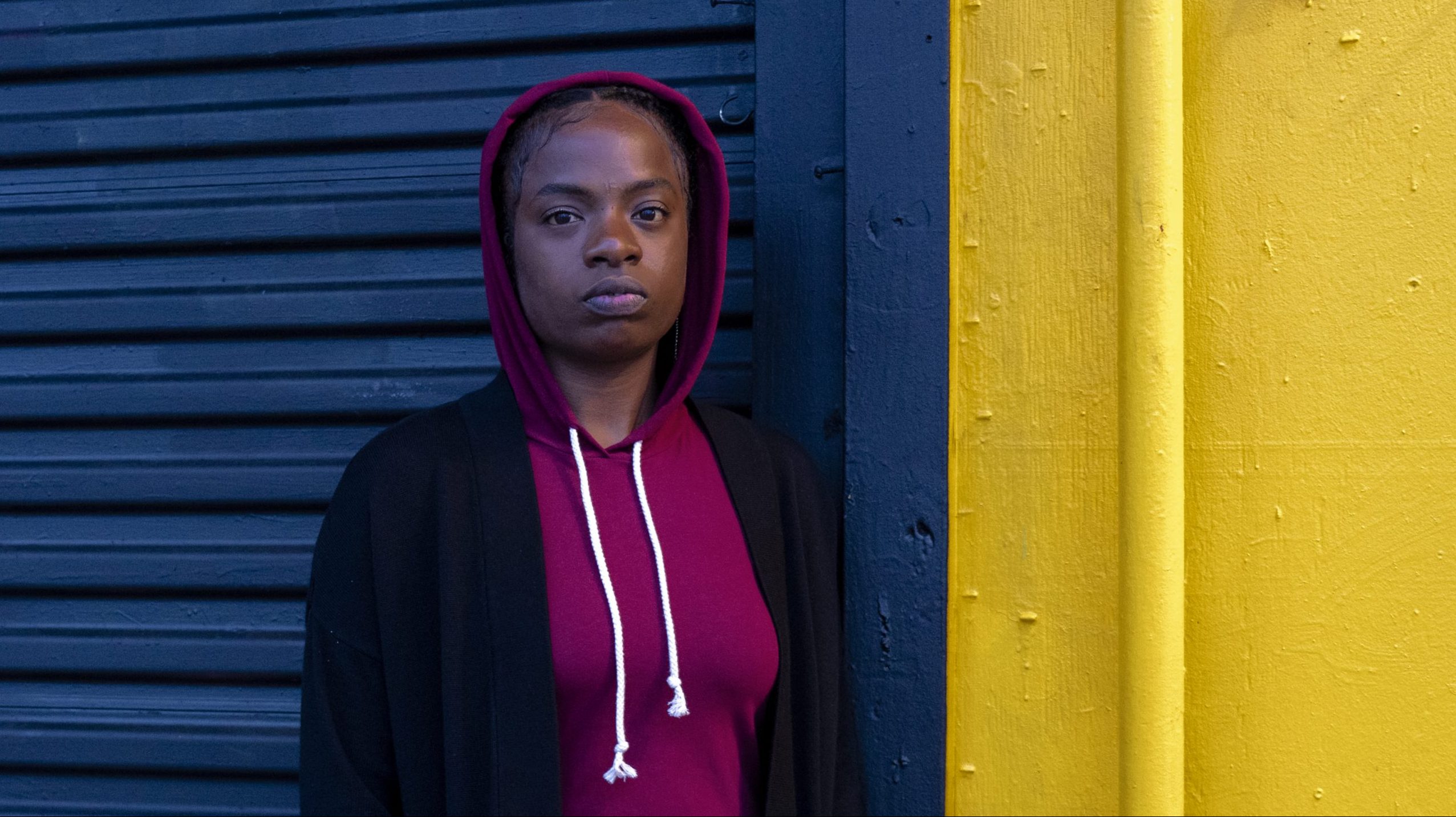
Fingerstyle Guitarist Sunny War Wants Punk’s Honesty Back in Music

Guitarist and singer/songwriter Sunny War doesn’t necessarily miss performing live, in-person shows — she’s not even sure she ever really liked playing shows that much in the “before COVID-19” times at all. But, as she connects with BGS over the phone in preparation for another pandemic-tailored event, her Shout & Shine livestream show on Wednesday, September 16 (live on BGS, Facebook, and YouTube at 7pm ET / 4pm PT) her general feelings regarding the pandemic and its far-reaching impact on the music industry are very clear: It’s all just really weird.

She, like many creators in the March-and-April maelstrom that swallowed up any/all meaningful work for an interminable period of time, became depressed, distant, and took some time to work her way back into a creative mode that feels respondent to our harsh everyday without being bogged down in it. A punk-influenced and inflected lyricist, she’s once again turning to her songwriting pen as an outlet. 

While her peers turn to that same outlet to process many of the myriad daily tragedies and injustices we’re all so attuned to in this global moment, War instead pauses. “I kinda don’t like protest songs from people who didn’t do it before,” she explains, calling to task the frantic and frenzied rush to pivot records, releases, and pressers into more “appropriate,” digestible bits for a newly awakened, activist reality — and consumer. 

(Watch Sunny War’s complete Shout & Shine performance above.)

But War’s identity, her selfhood, as evidenced through every note of her idiosyncratically finger-plucked songs and through her carefully chosen words in her lyrical poetry and our conversation, calls upon her to challenge that propriety. “[Democracy] actually is working” she explains, noting hypocrisy and/or tone deafness in our roots music communities. “It’s working, it’s always been working. It just hasn’t ever been in our favor.” 

BGS: I’m a banjo player, I came up through bluegrass, and there’s something about your right hand in your guitar playing that’s really entrancing and relatable to me. It conjures bluegrass and fingerstyle, but it is so unique to you, it’s idiosyncratic. Where did your style come from? What influenced your right hand technique, how did it develop? 

SW: I think it came from mimicking banjo, actually. My stepdad’s friend played banjo, so I was around a banjo player sometimes growing up. The first fingerpicking thing I learned was “Blackbird” by the Beatles and that was the first time I thought I sounded kinda good. When I was a kid, I thought, “Wow! This [fingerpicking] sounds way better than just strumming a chord.” I never really learned a lot of chords, I still just play a lot of chords in first position. I was just playing C and G and D open and I thought, “Well now I sound like I’m really playing something.” 

I didn’t listen to blues until I was in high school and then I was kind of imitating country, blues, and my stepdad’s friend on banjo. Later, I was trying to be like Mississippi John Hurt; and I kinda wanted to be like Chet Atkins. But I couldn’t ever figure that out. 

I see plenty of folks in the scene who idolize Derek Trucks or Joe Bonamassa or even Molly Tuttle and Billy Strings who are coming up. There are these guitar fans that just idolize and adore them. Have you seen guitar fans trying to capture what you’re doing with your playing?

Not really? I don’t know. There are some people on Facebook and Instagram who message [me] and want to talk about my guitar style, but they’re usually just into old-timey blues stuff. Then we just talk about that. Sometimes they ask who I listen to. But I think [the implication is], “You’re really close to maybe being like this person I know of.” 

I can think of a lot of shredders out there, but I do the same kind of riffs in every key that I play in. I feel like I can say I really do fingerpick well, but I know people that really do it and can play as well with their left hand as their right. I’m not quite there. [Laughs]

It’s hard to talk about music and performing right now without acknowledging the giant, COVID-19 elephant in the room. It’s interesting to me that this moment of pausing, of stopping everything, especially in the music industry, has given artists a chance to refocus or realign their priorities – have you been thinking about the future? Thinking about the present? How has the pandemic felt to you? 

The first three months I was just depressed and drinking a lot and not doing anything. Then recently, I’ve been trying to write. I’ve been jamming with my friend Milo, who plays a lot of lead guitar on two of my albums, and we’re going to make some demos together. I’ve also been thinking about going to school, trying to get into some kind of two-year program. Since music might not [come back], there might not be live music for two more years. I’m thinking about getting a job. [Laughs] 

It’s daunting to wake up every day like, “I’m going to keep doing this now, because I believe — I think — it’s going to happen in the future.” It’s a lot! 

Yeah, it’s like, “Maybe music is just not essential…” You know? [Sad chuckle] 

Then, with the whole Zoom thing and the livestream thing, I’m just not really into it. I’m not enjoying it at all, it feels weird. It’s just like, sitting in a room by yourself, trying to make a video, and then you think, “Should I look into the camera? Should there be talking in between?” You’re trying to imitate a set at a venue, but you’re just sitting by yourself. It just feels weird! I would rather just play by myself, without a camera. 

I liked playing shows [before] kind of, but I almost didn’t even like that. At least it felt like there was a reason for doing it. I was talking to my mom and we both realized we used to watch concerts before, too. Just then it was an actual concert on film. Even that would be better! If there were somehow an audience in the livestream… I guess that can’t be, but it’s just awkward [without them.] Seeing a band play off of the energy of the room is more what it’s about.

Well, for your Shout & Shine livestream performance we’ll have to ask our audience to be “loud” in the comments! Use that clapping hands emoji! [Laughs] Who would you like to see as a guest on Shout & Shine? Whose music is inspiring you right now and getting you through the day-to-day?

I like Tré Burt! Amythyst Kiah, too. 

Have you heard of Yes Ma’am? They’re from New Orleans – the singer sometimes plays solo, but also has a band. They used to busk on the street in New Orleans. It’s just really good, a great kinda folky string band. 

I like the new Run The Jewels album. I listen to Elliott Smith still, and a lot of ‘90s music. I like Black Pumas a lot.

What would you like to see from the music community, as far as a response to this moment in our culture’s history — not only the racial injustice and righteous rebellions against police brutality, but also how divided and polarized our musical community is now. It’s like half people who want music to “remain apolitical” and half folks who are like, “Music has always been political, where the fuck have you been all along?” What do you see as the urgent need of our community to reconcile all of this? I know that’s a huge question.

I think it just needs to become about honesty again. That’s something I would like to see. I’m not really that into “Americana” music, but even so I feel like [Americana] musicians are going to be faced with not being able to let these issues go unaddressed anymore. I think that’s interesting. At this point, you can’t just put out your weird corny love song that’s not even about anything that happened in your life, but is actually just something that makes sense pop-wise and hit-wise. You should have to really be honest. People don’t necessarily have to be “political,” they can just write about all the emotions they’re going through. We’re all dealing with the pandemic and with Trump and with police brutality — it’s a lot. Even if people don’t want to write a song about why we should get rid of the police, they could at least write about how scared they are. I don’t know, there’s a different, new kind of folk that could happen about just being freaked out and unsure of your future. I love shit like that. 

I kinda don’t like protest songs from people who didn’t do it before. It’s just not hitting right. I don’t want your protest music if you weren’t writing it before. Whatever issue is being highlighted, it’s always like, “Yeah, we’ve BEEN talking about that.” [Expectant pause] This has been the conversation. I’m into punk, I’ve always liked protest music. As far as folk, I do like its protest music, but I mostly like punk or really politically-charged hip-hop. It’s kind of annoying when say, a really poppy country person who’s never said anything about anything is writing a protest song. It’s just cashing in. It’s corny. It’s weird. 

And another thing, a lot of people who are going out to these Black Lives Matter protests and stuff, I still don’t feel like they would treat me any differently than they normally would. I saw people posing and taking pictures. This is a weird thing to just be a trend. 

Like Breonna Taylor now being a meme.

Yeah. It’s offensive, it’s too much. 

And how many times they show those videos [of Black people being murdered by police]. There’s a lot of murder porn going around! People are saying one thing, but showing someone die every day. I was kind of like, “You know, I don’t think they would show a video of a white person being killed, over and over again.” A lot of things happening right now are really dehumanizing and I don’t think people can see it unless they really, really think about it. Or maybe put themselves in that position. It’s murder porn.

I know what happened. I don’t want to see this over and over again. I don’t need to physically see it to be angry about it. Think of all the bad this is doing to our psyches on top of everything else, seeing people murdered every day. 

But, a lot of musicians are “activists” now, I guess. I just… don’t really know what that means. They were going to put out a song anyway. That’s what they do for a living. Obviously they can’t just put out the typical love song — that’s what people always write about, love. That would be “offensive.” Or, it wouldn’t be “appropriate.” So they all have to change and pretend to be “activists.” It’s just a reflection of what’s trending right now. 

I just want to know: Are they actually going to change in a year? I’m curious to know how long the Black Lives Matter profile pictures are going to stay up. 


Photo credit: Randi Steinberger
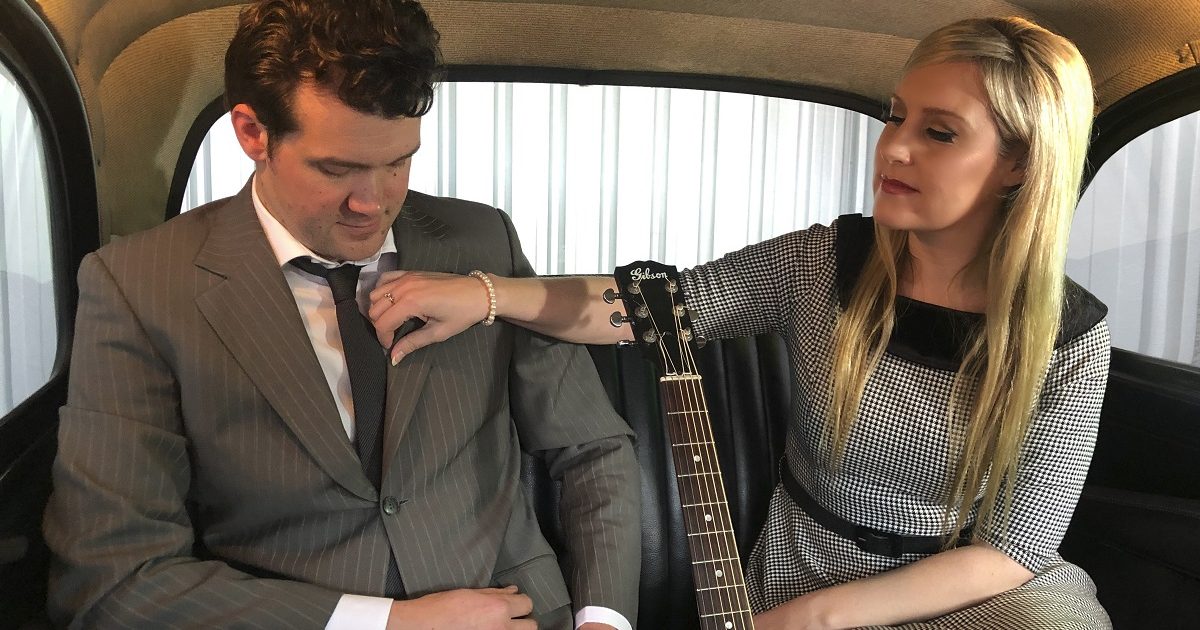
LISTEN: The Weeping Willows, “Wheels Won’t Roll”

Artist: The Weeping Willows
Hometown: Melbourne, Australia
Song: “Wheels Won’t Roll”
Release Date: August 14, 2020 (Single)

In Their Words: “Penned in 2019, ‘Wheels Won’t Roll’ is our ‘accidental isolation song’ about feeling stuck in a rut (we owe 2019 an apology!) Early last year we were spinning our wheels, struggling to move forward, crippled by self-doubt and writer’s block. But despite all that, we longed to be back out on the open road… ‘Wheels’ is our folkie homage to the great Australian song, ‘Rock and Roll (I Gave You the Best Years of My Life)’ written by Kevin Johnson, made famous by Mac Davis.” — Laura Coates and Andrew Wrigglesworth, The Weeping Willows


Photo credit: Lachlan Bryan

MIXTAPE: Songs That Changed Jon Stickley’s Life and Still Blow His Mind

When I was a senior in high school, my lacrosse teammate Andy Thorn loaned me a couple CDs and a mandolin. The two CDs were the original David Grisman Quintet album and Sam Bush’s Glamour and Grits. I was an angsty teen drummer in a punk band, and when I popped the Grisman album in my Sony Discman and pushed play, my life changed forever.

We started a little band and I started learning mandolin and making weekly trips to the local record store to buy every “newgrass” album I could. I didn’t know anything, so searching through the bluegrass/country section was an adventure of discovery. I learned to recognize the font that Rounder Records used and started using liner notes to find other musicians to listen to.

A lot of the tracks on this list are track #1 on the album, and I think that’s because when I heard them for the first time, they magically seared themselves into my brain. When I hear them today they inspire the same excitement as they did when I first heard them, and they have had an enormous impact on the music that I create for the Jon Stickley Trio. — Jon Stickley

David Grisman – “E.M.D.”

The first track I ever heard in the vein of bluegrass/newgrass. I heard David Count “1,2,3,4…” just like the Ramones! Then they launch into the most indescribable, unbelievable, clean, rockin’ jam I’ve ever heard. Also my first introduction to my guitar hero, Tony Rice. Nothing compares to this track!

Sam Bush – “Whayasay”

Another leading cut. This was my introduction to the one and only Sam Bush. His kickoff tells you everything you need to know about Sam’s music. It’s masterful, tasteful, and it freakin’ ROCKS. Then he goes totally Mark Knopfler at the end. Blew my young mind!

Jerry Douglas, Russ Barenburg & Edgar Meyer – “Big Sciota”

I picked this record up at the store because, on the back cover, they are dressed in gorilla suits. I thought, these dudes MUST be cool. Something about the tone of this record is unparalleled. It’s just the nicest-sounding acoustic record I’ve ever heard. Still cook dinner to it almost every night and my wife walked down the aisle to another track from the album called “The Years Between.”

Ricky Skaggs & Kentucky Thunder – “Pig In A Pen”

Holy crap. This is another album I bought blind at the record shop knowing absolute nothing about the music. To this day I have never heard anything rock this hard! Also, my first intro to a big guitar hero, Bryan Sutton.

Bryan Sutton – “Decision At Glady Fork”

Senior year of high school my uncle Pat took me to the Béla Fleck Bluegrass Sessions concert. I knew who Sam Bush and Béla were, but it was my first time hearing Jerry Douglas, Stuart Duncan, and the young Bryan Sutton. They played this song and the audience pooped their pants!

Béla Fleck – “Blue Mountain Hop”

The ultimate supergroup in my opinion. This song got me thinking about composition and arrangement in a new way. It seems like each new part of the song was written with each individual soloist in mind. Also the giggles and growls in the intro remind you that they’re having a ball.

Béla Fleck & the Flecktones – “Sinister Minister”

Two words. Victor Wooten. Blew. My. Young. Mind! I’ve listened to this version of this song more times than I can count, and it’s one of the covers that we do in the trio. The Flecktones probably had more of an impact on our trio than anyone else out there.

The Bluegrass Album Band – “Blue Ridge Cabin Home”

This is another album where I had no idea what I was buying. It wasn’t until I looked at the back of the CD that I realized that Tony Rice was on it. It was my introduction to J.D. Crowe, Doyle Lawson, Bobby Hicks, and Todd Phillips. I fell in love with bluegrass banjo by listening to this song, and I was thrilled to find out there were five more volumes!!!

The Nashville Bluegrass Band – “Dog Remembers Bacon”

Another record store score that I grabbed just because “bluegrass” was in the title. LOL. These guys became my favorite group for years and this was always one of my favorite tracks. I learned about Gillian Welch from this album. Stuart Duncan is the best fiddler in the world!

Acoustic Syndicate – “No Time”

Man, I love these dudes SO much. My Uncle Pat gave this album to my dad around ‘98, and I promptly stole it. The chill energy of this album really spoke to me and I feel like it really embodies the spirit of the North Carolina festival scene. Super sentimental band for me!

Tracks from our new album “Scripting the Flip” that draw heavy on these influences:

Jon Stickley Trio – “Scripting the Flip”

This song is pretty much a bluegrass fiddle tune turned on its head. It reminds me of some of my favorite newgrass instrumentals that take the music somewhere new.

Jon Stickley Trio – “Driver”

Well, given that my buddy Andy Thorn got me into this music waaaaay back in the day, I had to bring it full circle and write a tune for him to come in and play on. This piece definitely draws on the music of the Flecktones and some of the tunes they play in odd meters.

Jon Stickley Trio – “Bluegrass in the Backwoods”

Kenny Baker, Bill Monroe’s longtime fiddler, was surprisingly one of the most innovative of the classic bluegrass pickers! He is thought of as a traditional fiddler, but his music is really anything but. I think this tune was way ahead of its time and we love the elements of gypsy jazz and Latin music in the melody. We HAD to cover this on at some point and it was so much fun!


Photo credit: Sandlin Gaither

WATCH: Tommy Emmanuel, “Luttrell”

Artist: Tommy Emmanuel
Hometown: Muswellbrook, New South Wales, Australia + currently resides in San Jose, California
Song: “Luttrell”
Album: The Best of Tommysongs
Release Date: May 8, 2020
Label: CGP Sounds/Cruzen Street Records

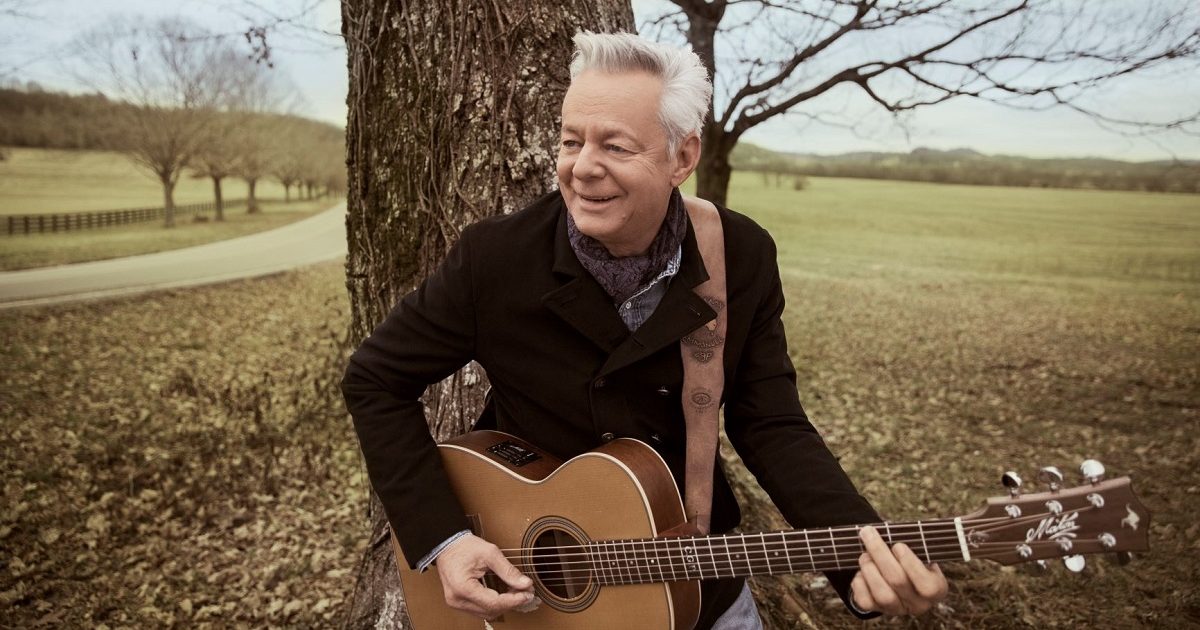
In Their Words: “Luttrell is a town in East Tennessee where my childhood hero, Chet Atkins, was born and raised. I took a trip out there, and I stood at the very spot where his house used to be, and I wrote this song. All my life, his love and encouragement has meant so much to me. He was a true friend, a great man, and one of the most important pioneers in the history of guitar playing.” — Tommy Emmanuel


Photo credit: Alysse Gafkjen

WATCH: Reflection and Unrest in Billy Strings’ “Enough to Leave”

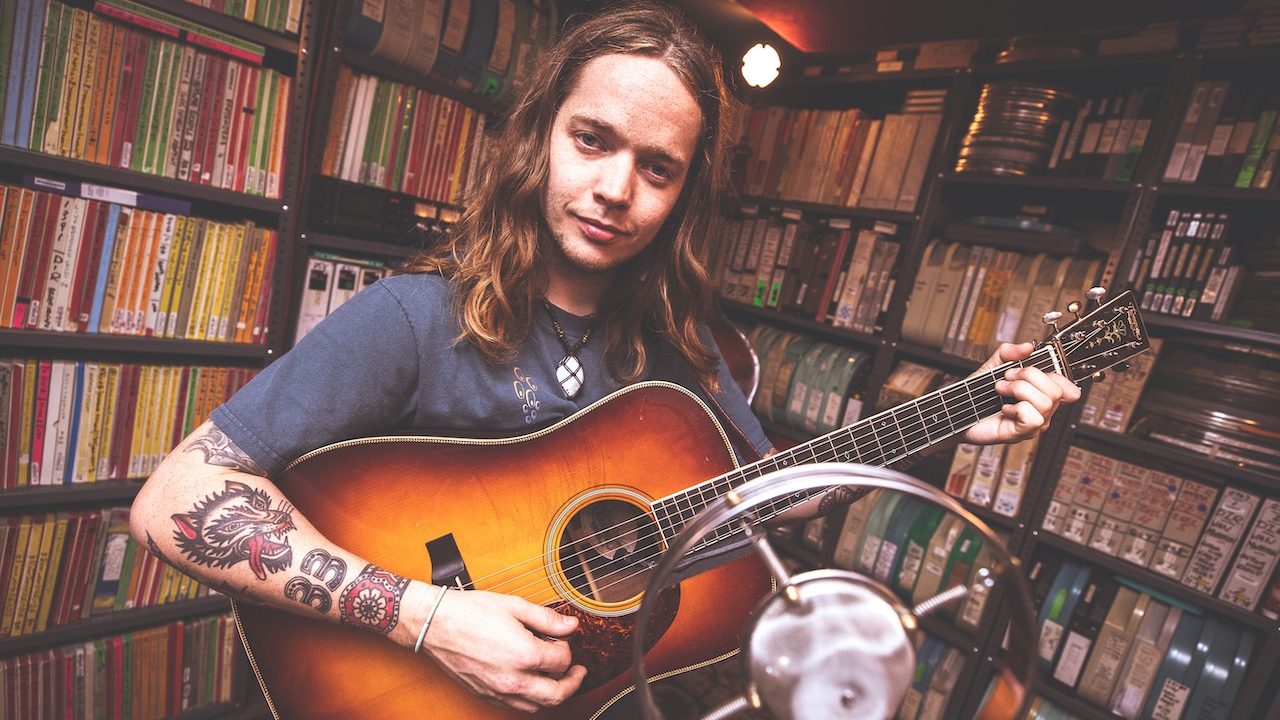
Following his newest record, Home, Billy Strings has sustained his success and enjoyed a rising position among the modern bluegrass ranks. With each subsequent release, he cements himself as a consummate bluegrasser, wowing audiences with his picking, singing, and writing.

“Enough to Leave” is a ponderous number, and Strings calmly delivers a performance wrought with apparent unrest; as the song moves through wonder and doubt, his firm guitar playing matches with a lead that slowly incorporates a distorted tone, adding dimensions to the theme of reflection in the song. Words can only do so much to describe Strings’ artistry — the real thrill of it has to be heard to be properly experienced. Watch the in-studio performance of  “Enough to Leave” on BGS.


Photo credit: Jesse Faatz

LISTEN: James Steinle, “Back Out on the Road”

Artist: James Steinle
Hometown: Pleasanton, Texas
Song: “Back Out on the Road”
Album: What I Came Here For
Release Date: February 7, 2020
Label: Shotgun House Records

In Their Words: “‘Back Out on the Road’ is about putting a face on in a relationship — and how one day the final straw breaks the camel’s back and you’re off to the races. One of the topics I visit a bunch on this record is the idea of being unhappy in a relationship and having the hunch it won’t work out in the long run, competing with a personality type that makes it hard to see people hurt. And so the vicious, drawn-out cycle begins. It always makes matters worse.” — James Steinle


Photo credit: Juliet McConkey

Shaun Richardson & Seth Taylor, “Chisholm”

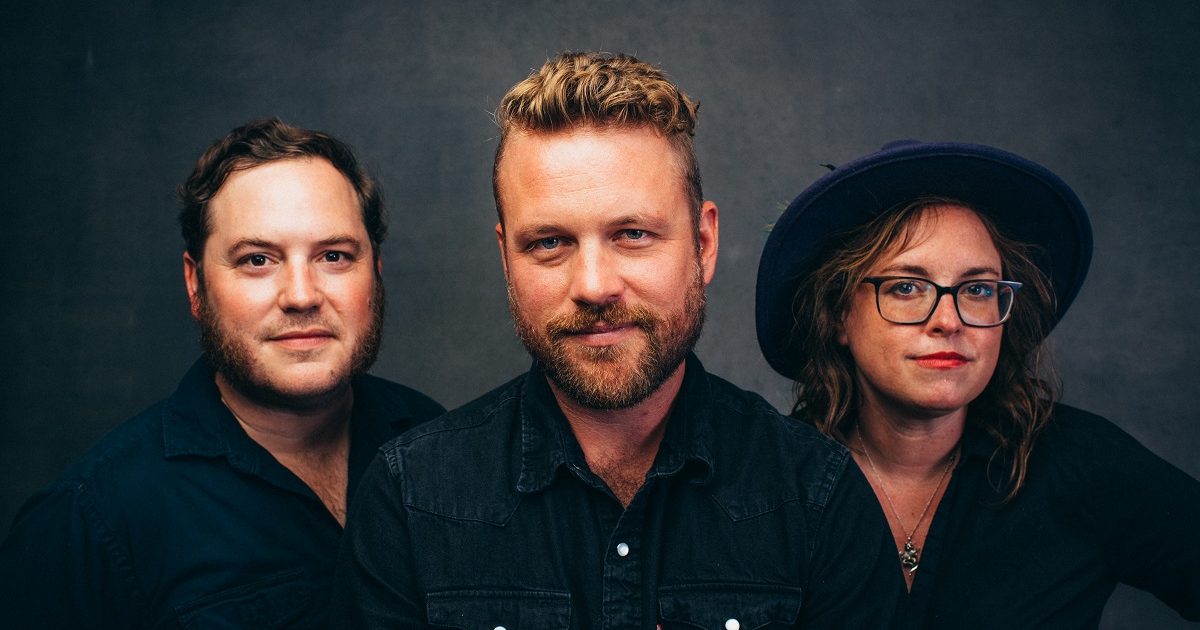
An expansive generation of simply ludicrous flatpickers has rendered bluegrass, old-time, Americana, and folk replete with acoustic guitar virtuosos. Pickers like Jake Stargel, Molly Tuttle, Presley Barker, and Billy Strings each have in common commanding right hands and withering technique. Others, like Jake Workman, Trey Hensley, and Chris Luquette play at incomprehensible, blistering speeds with pristine precision that defies explanation — down to the most infinitesimal note durations. We can clearly see the shredtastic legacies of Clarence White, Tony Rice, Dan Tyminski, and others living on, even if chiefly through their more mathematical, aggressive, and adventurous methods and tones. 

That adventurous aggression might just be why “Chisholm,” a new tune composed by guitarists Shaun Richardson and Seth Taylor, feels like such a calming breath of fresh air. It’s a welcome counterpoint and complement to the repeated face-peeling-off that we all enjoy in this current golden age of flatpicking guitar. Richardson and Taylor are both veterans of Dailey & Vincent’s bluegrass-based rootsy stage show, giving them ample experience in musical code-switching, from fiddle tunes and swinging numbers to country ballads and passionate gospel. Richardson has performed with Michael Martin Murphey as well, and Taylor is a member of the long-running, heady, Americana-tinged bluegrass group Mountain Heart. 

The versatility lent by these diverse experiences gives “Chisholm” a well-traveled, though relaxed, voluminous vibe. The melodies are resonant and tactile, conjuring six-string players and composers such as John Carlini and Beppe Gambetta — with just a dash of Tommy Emmanuel. Jazz complexities are utilized here not in a gratuitous way, but rather anchored in expressiveness and musical dialogue. Richardson and Taylor’s expertise is very clearly centered not on simply displaying prowess, but in musicality. In this calmer, more subdued setting, that dynamic is especially refreshing and subtly striking.


Photo and video shot by James Shipman

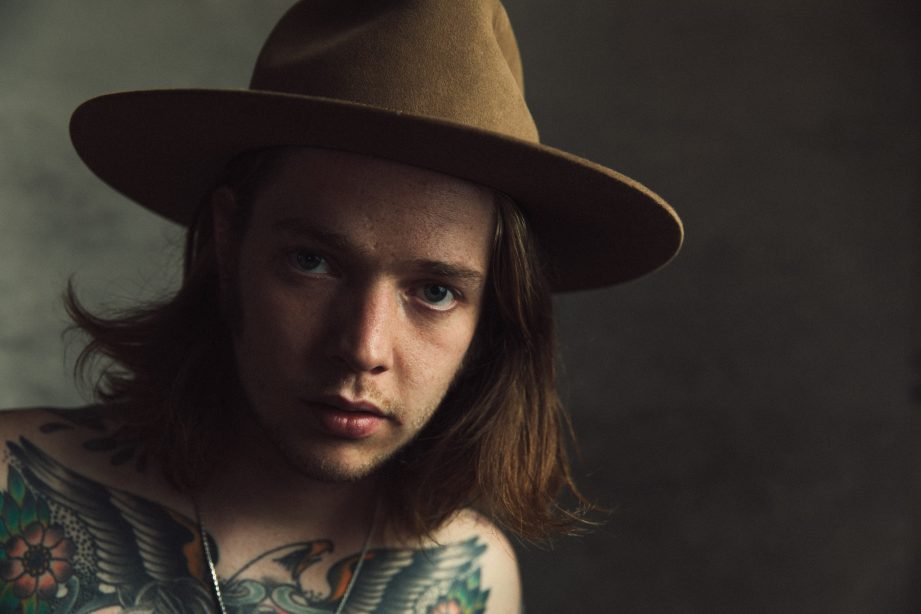
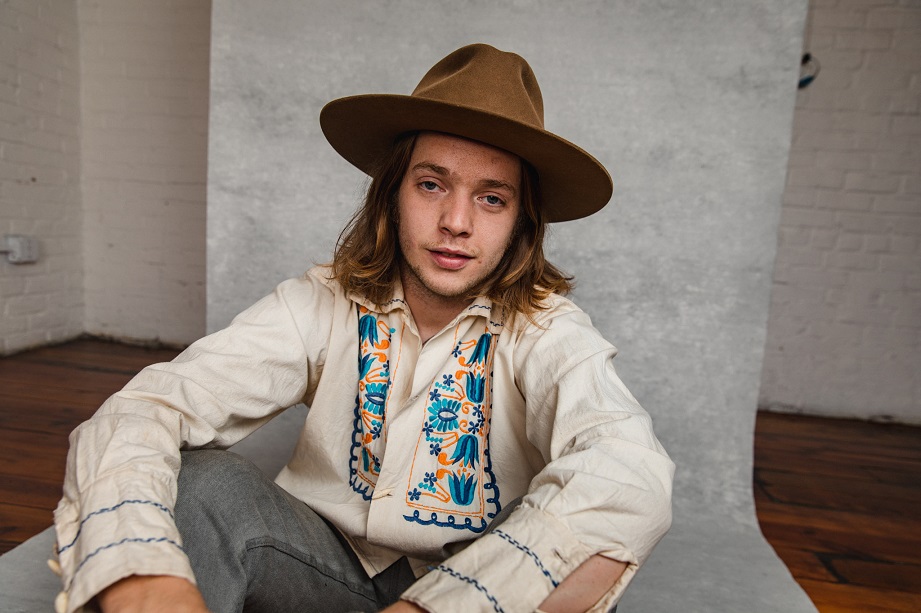
Despite Bleak Beginnings, Billy Strings Emerges as a Force in Bluegrass

Get Billy Strings on the phone, and the interaction will probably seem as much like a musical recital as a verbal conversation. He’ll most likely have a guitar in his hands, noodling around on scales or snatches of songs, sometimes as conversational punctuation marks. But mostly, it sounds like he’s thinking out loud with the instrument.

It’s a good time for Strings right now, who earned IBMA Awards last week for New Artist of the Year and Guitar Player of the Year. His very fine second album, Home, is out on Rounder Records. Checking at 50-plus minutes, Home is a wide-ranging album that showcases his remarkable, classic-bluegrass voice and even more remarkable six-string wizardry, confirming his status as one of the top young guns in the field. The album has 14 songs, pretty much every one of them a journey.

We caught up with Strings shortly before he hit the road on what will be a full season of touring across the U.S. this fall.

BGS: Is there ever a day when you DON’T play music?

Strings: Not usually. I do try to play all the time. Sometimes when I’m on the road playing every night, onstage more than two hours, I might feel like I want a little break: “When I get home, I’m not even going to touch it for a couple of days.” Never happens. It only takes about a day to get the itch and feel like I need to practice.

What form does practice usually take?

A little of everything. That right there is just doing some scales all over the neck in different keys. Metronome practice is good and I have not done enough of that lately. That will really whip your ass into shape. Playing along with records, too, or playing fiddle tunes, playing through songs I know and love. Coming up, I did not have these rigid practice regimens. I just played music.

But recently I’ve started getting into it more. I was inspired by the Rocky movies: “Man, he works out for months, running up and down stairs and training so hard for just one gig!” Every night I get in the ring, but I never train, never hit the bag. I need someone like Mickey yelling at me, “C’mon, kid, lemme see that major scale again! Now slip the G run!”

I saw a quote about how you learned to play with bluegrass, but learned to perform when you were in a metal band. What did you take away from your time playing metal?

I grew up watching bluegrass bands in suits and hats, singing and playing into the mic and standing very still. When I was playing in a metal band, we were all over the stage running into each other, spitting and headbanging. I remember I would start a show by running from the back of the stage into the audience, and they’d push me back onstage.

It was just this crazy energy and that was my first performing experience onstage in front of people. I do think bluegrass is more about music, listening to the notes. The metal band, we’d jump around so much it was difficult to play the correct notes. The music may have suffered, but we tried to put on one helluva show and I still sort of bring a little of that.

Your new album is called Home. Is there any significance to that as a title?

I would say there’s a lot. That came from a poem I wrote titled “Home” and turned into a song that was kind of obvious as the opus of the album once we recorded all the songs — the just kind of wild song of the bunch. So I figured we’d name it after that. I’m 26 years old, this is my second album and I’m sort of settling into life as a young adult. Up to now, not knowing what was happening kind of kept me alive.

Now I’m starting to feel a little bit like a grown-up. Also, on the road, we’re always dreaming about getting home. What does it mean to you? Home is something different for everybody — a place, a state of mind, a drink, a meal. When I get home, my friend’s grandpa grows some real good weed outdoors in Michigan soil. Smoking that is home right there. Home sweet home.

“Away From the Mire” is the longest song on the album and it seems like the centerpiece, a real journey. Did you know it was going to go that far when you started recording it?

It was spontaneous. We were recording, working on that one a couple of days and trying to figure out what to do with it. It felt like it needed a big guitar solo because I’m a fan of that. It’s a classic thing that always happened with ‘70s rock and roll bands: great song, verse, chorus, bridge and EPIC solo before it’s over.

A lot of times, me and the band will get into these moments and “Mire” was one of those we sort of landed on where I took my guitar and they followed along. It was not composed at all, just a jam. It did not take too many times through to get it. We were oiled up, had been in the studio a few days, and didn’t have to spend too much time on any of the songs. That whole jam in the middle, it’s all live.

Doc Watson seems like an obvious influence on your playing. Did you ever meet him?

Unfortunately, I never got the chance to meet Doc. I worshiped the man, you know? I started listening to his records and watching VHS tapes when I was 5 or 6 years old. Doc left a huge impression because his music was so alive with such heart and soul. I took my dad to see Doc once, the only time either of us got to see him. It was the Midland Theatre in Newark, Ohio, six hours away, the closest he was coming to us. So I got tickets for my dad, my mom, me and my friend Benji, who drove us there in his truck.

Seeing him in-person was incredible. He played “Shady Grove” and “Way Downtown,” and my mom and my dad and me were all crying because we could not believe that really was Doc right there. I enjoyed the hell out of it. That was in 2010, Doc with David Holt and T. Michael Coleman, and he forgot a lyric here and there but still picked something great. I’ll never forget it as long as I live and I’m so glad I brought my parents.

Growing up listening to Doc was something special, and a mutual love for Doc is a connection I share with my dad. We bond over Doc’s music, play it together and I think we do it justice, a little. He knows so many old Doc songs, the deepest cuts. He’ll pull out one he’s not played in years and remember all the words. He embodies the soul Doc put out there. We really worship Doc around my house. He was, is and always will be the best.

Were there other influential elders?

When I was little, my mom and dad took me to a couple of bluegrass festivals. Larry Sparks and Ralph Stanley made a huge impression. Those guys would walk through a crowd like a hot knife through butter, in their big hats and suits with banjo cases. That was the first time I heard bluegrass on a PA, loud. I’d heard it around the campfire all my life. But hearing Larry Sparks’ band up there with the fiddle and banjo and guitar and harmonies, I knew then what I had to do. I’d already been messing around on guitar. Seeing those dudes, I knew it was serious.

Have you ever thought about what else you might do if not for music?

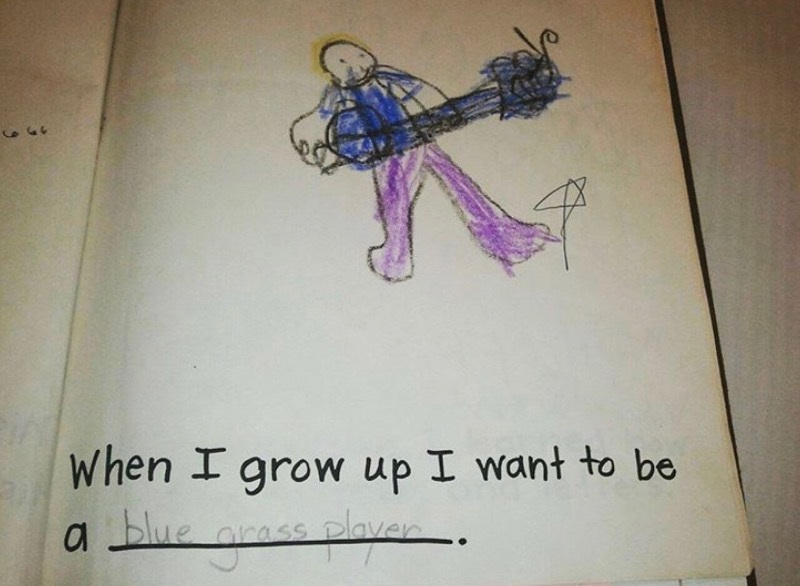
There was this picture I drew in kindergarten with a thing that said, “When I grow up I want to be a (blank).” I put “bluegrass player” and drew a picture of a guy with a banjo. So there it is. All I need now is the purple pants. I don’t know what else I’d do. I’m not a good mechanic or woodworker and I don’t like painting houses or carrying shingles up a ladder.

And I don’t like somebody wagging their finger in my face telling me what to do. I’m not good at dealing with authority figures. I’ve always had to do it my own way. I never thought music would even be possible as a career so I thought I’d always be a loser. But the last six or seven years have brought the incredible realization I can make it with music and not have to be a bum or drug addict.

Does that account for some of the heavy subjects on the record, like the song about drug overdoses (“Enough to Leave”)?

I always end up talking about this stuff, because it inspires a lot of my songwriting. When I reach down and look for what to write about, I always come up with things I’ve experienced in the past relating to substance abuse or loss or poverty. It’s sad how many people are struggling with all of that. I have a lot of friends who have gone in all sorts of directions, some good but some not. I’m lucky to have gotten out, and it haunts me. I still think about it a lot.

Maybe I’m looking in the rearview mirror too much when I should be looking out the windshield. But back there is what motivated me to get to where I’m at. It’s where I got my drive as a teenager, being around bums and meth-heads. I did not want to end up like that. It was either that, or keep running toward the light and working hard. I got a job in Traverse City, but I was playing gigs and realized, you can make a living that way even if you’re not a star. So that started to happen and I’ve been walking slowly upward ever since, reaching higher goals.

How much of a master plan do you have?

I know what I’m trying to go for, but at the same time I don’t. It’s a transparent vision where I know it’s something large and cool where I want to do good and be successful, but I don’t know what it looks like. I do feel like I’m moving toward dreams. More people are coming out to the shows, I’m able to explore more creatively and musically. That’s success and I feel good about it. I went from playing for tips to clubs and theaters, slowly working my way up. I remember renting minivans at Enterprise and having to sleep in parking lots because we could only afford one hotel room. I even got robbed once like that.

But I’ve always been willing to do whatever it takes to make the dream happen. If I have to stay up all night and drive 16 hours to play music, I’m willing to do it. The thing is, the more we grow as a band, we’re able to make those plans better so we don’t have to kill ourselves — play a few less gigs with a few less hours between them. It feels like it’s working, which I’m happy as hell about. I work hard but it’s so much fun it does not feel like work even though I’m physically exhausted. I’m sore and tired all the time but happy as shit, too. I’m lucky, man, really grateful.


Photo credit (live): Emily Butler; (portraits) Shane Timm

LISTEN: Courtney Hartman & Taylor Ashton, “Better”

Artist: Courtney Hartman & Taylor Ashton
Hometown: Brooklyn, New York
Song: “Better”
Album: Been on Your Side
Release Date: August 31, 2018
Label: Free Dirt Records

In Their Words: “Courtney and I and about 25 other songwriter friends around the world had an email thread going last year where we had a weekly deadline to send in a new song, as an exercise in mutual encouragement to keep in the practice of writing. One week I forgot about it until 1 a.m. on the night of the deadline, and even though I had a gig at 9 a.m. the next morning, I spent a couple hours with my banjo and “Better” came to me. It took a second to arrive at the first line and the rest all sort of fell into place. At some times in my life I’ve been attracted to the idea that you can’t force inspiration, and that it chooses when to strike. But this is an example of a time where if I hadn’t been holding myself to some arbitrary deadline I would definitely have just fallen asleep and never written this song.

The voice in the song is sort of an amalgam of myself and of a lot of people in my life so it feels good to sing it with Courtney — it brings it into a cool middle ground for me, between a specific personal sentiment and a more universal one. And to me it feels good to sing about your personal flaws in harmony with somebody else. I think the chorus is something we all want to cry out at certain times in our lives.” — Taylor Ashton


Photo credit: Shervin Lainez

WATCH: The Unseen Strangers, “Church Street Blues”

Artist: The Unseen Strangers
Hometown: Toronto, Ontario
Song: “Church Street Blues”

In Their Words: “We are massive Norman Blake fans in the Unseen Strangers and are always working up different songs of his. I started listening to this one when I first got into bluegrass guitar and digging into the music of Tony Rice, so there’s quite a bit of his version in there. ‘Church Street Blues’ is certainly a flatpicking classic and we are excited to share our arrangement with this video. It was recorded live in the Back 40 forest at the Tottenham Bluegrass Festival in Ontario. When we can’t agree on what song to play next we always just play this one.” — Adam Shier


Photo credit: Emma-Lee