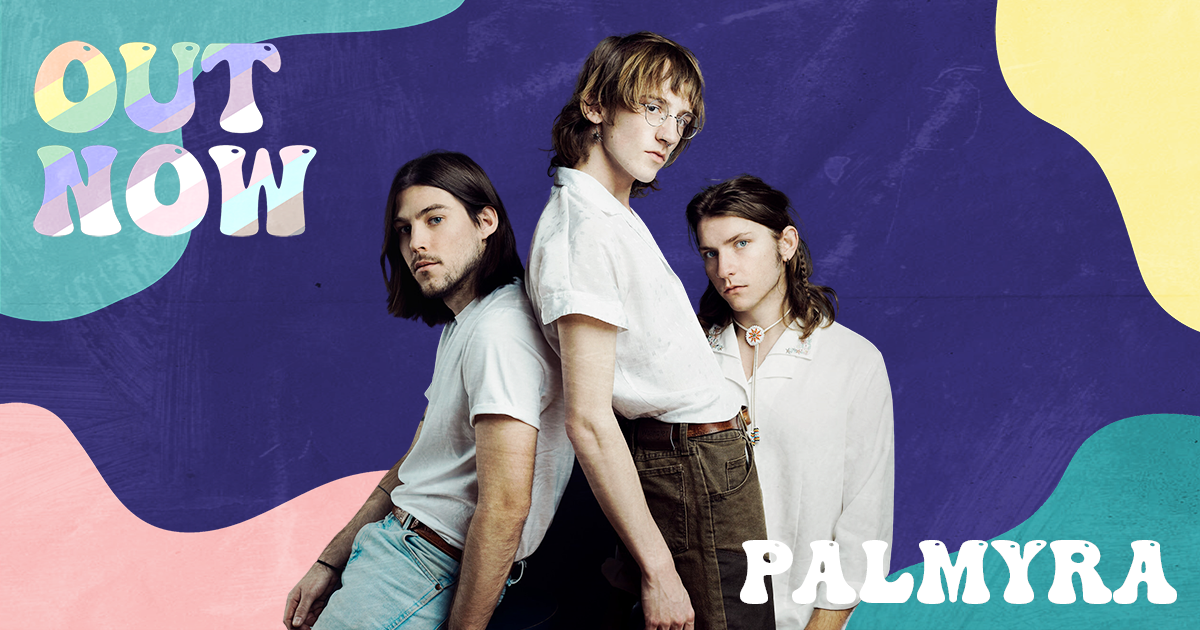
Out Now: Palmyra

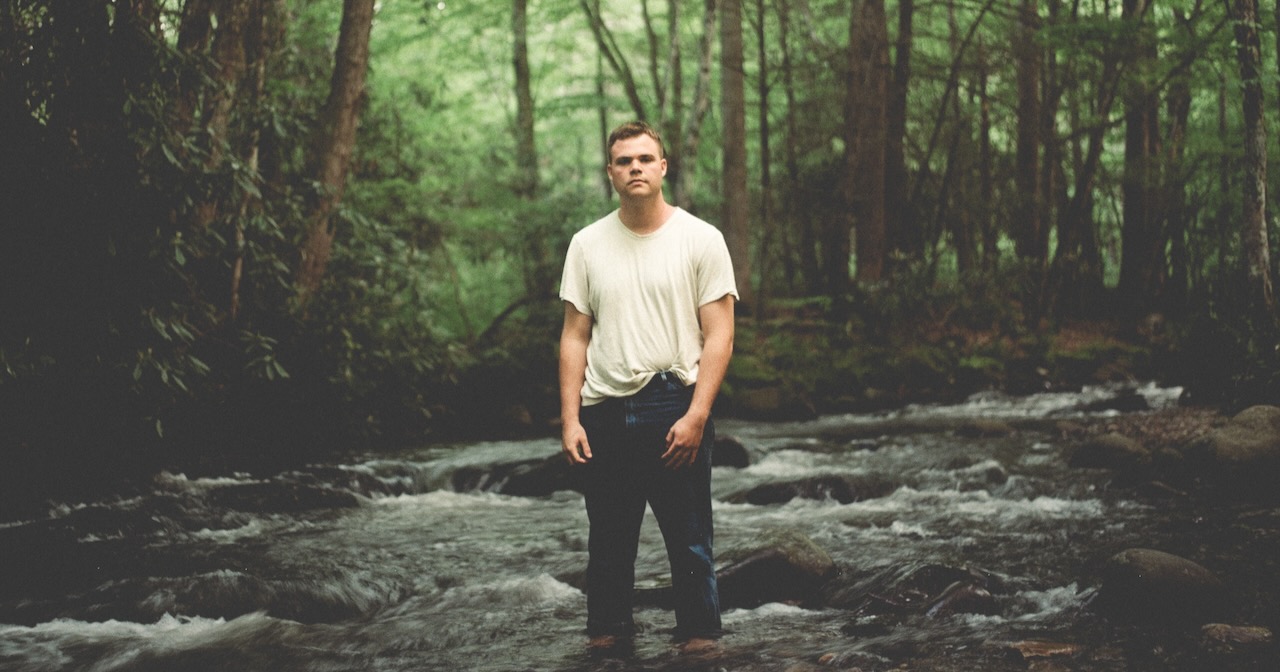
Palmyra is one of those bands you discover and can’t help but continue to come back to. They are not easily forgotten. They write lyrics that are poetic while being relatable – a duality that is not easy to accomplish. 

The musicality of these three highly skilled instrumentalists – Teddy, Manoa, and Sasha – is strong and their energy is quirky, fun, and engaging. Lately, they’ve been touring all over the East Coast, recording, working with artists like Liv Greene and Jobi Riccio, who was previously featured on our column. If you can’t tell yet, the queer music industry is incredibly small and interconnected! 

Palmyra uses their innovative songwriting and performance skills to transform traditional folk instruments and three-part harmonies into something you’ve never heard before. We hope you enjoy our Out Now interview featuring Palmyra.

(Editor’s Notes: Interview answers supplied by Sasha Them)

Who are your favorite LGBTQ+ artists and bands?

Among my absolute favorite things about our touring over the last few years are the moments that we get to share stages with other queer artists. Liv Greene is a personal favorite mine; all of their songs exist in their own world of brilliance and masterful craft. Brittany Ann Tranbaugh has songs that absolutely wreck me. Another artist that’s constantly on repeat in the van for us is Brennan Wedl! Their song “Bag of Bones” is one of the most incredible songs I have ever heard and turns me into a pulp every single time I revisit it.

For anyone reading this who might not be out of the closet, were there any specific people, musicians, or resources that helped you find yourself as a queer individual?

Yes! I am an out-and-proud queer person now, but it took quite a while to settle into the person I am today. There are so many artists that helped move the needle for me; particularly the abundance of queer and trans folks I connected with online during the lockdown. Backxwash is top of the list for me; she’s a killin’ rapper and producer based out of Canada and her music helped me to understand that as artists we can channel complicated emotions and inner turmoil to create something empowering and badass and beautiful.

What are your release and touring plans for the next year?

Touring has been our full time job for two-and-a-half years now, and we plan on continuing to hit the road in full force in 2024. Our hope is to branch out to some new regions and cities, and I am sure we’ll be visiting all of our favorite places along the East Coast, from Maine to Georgia. Now that I say that, I’m realizing that, as a band, we kind of follow the Appalachian Trail in our tour routing…

We’ve got two more singles coming out this year, and are planning on putting out a few projects in 2024. I am so excited to share the music we’ve been working on.

This year, you’ve been sharing stages with bands like Watchhouse, playing festivals, and touring all over the East Coast of the U.S. What has that been like for you?

This year has definitely been our wildest one yet. Some of the experiences we’ve had, like opening for Watchhouse, have been so surreal to me. It feels like the work we’ve been putting in for so long has started to pay off in very real ways. Getting to play Newport Folk Festival is one of the highest honors any of us have ever had and it is beyond cool to get to connect with folks all over just by doing the thing we all love most – playing and writing songs.

What does your songwriting process look like? You have incredibly strong lyrics that are both relatable and poetic. Do you map out the structure and content of the song first? Do you think about song structure and tools like prosody, lyrical placement, and rhyme types? Do you spend a lot of time editing?

The songwriting process looks pretty different for all three of us, but each song typically starts with one writer and then is brought to the group to arrange and flesh out. There’s a very special (and sometimes uncomfortable) moment that has to happen when one of us brings a song to the group; you have to be able to release ownership of the thing you’ve created so that it can become a collective version that everybody has had their hands on.

For me, I usually start with one line that comes to me when I’m away from any instruments – typically when I’m out driving or walking! I am very particular about what words feel good coming out of my mouth and what feels the most authentic to my own personhood. Prosody and internal rhyme schemes are almost always on my mind, especially when I’m reworking a tune. I love getting into the nitty gritty parts of a song, and I love the moment I am able to zoom out when a song is finished and take care to make sure everything fits together.


Photo Credit: Joey Wharton

Out Now is a partnership of Queerfest and BGS authored by Queerfest founder and director Sara Gougeon.

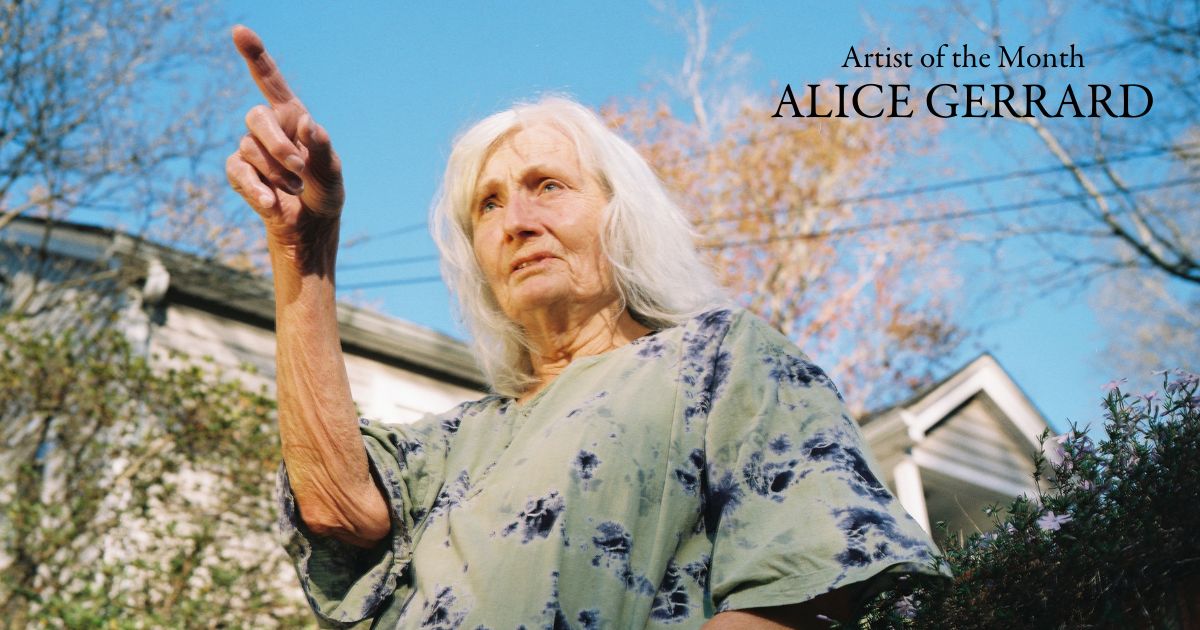
Artist of the Month: Folk Hero Alice Gerrard Is Unafraid to Be a Real Person

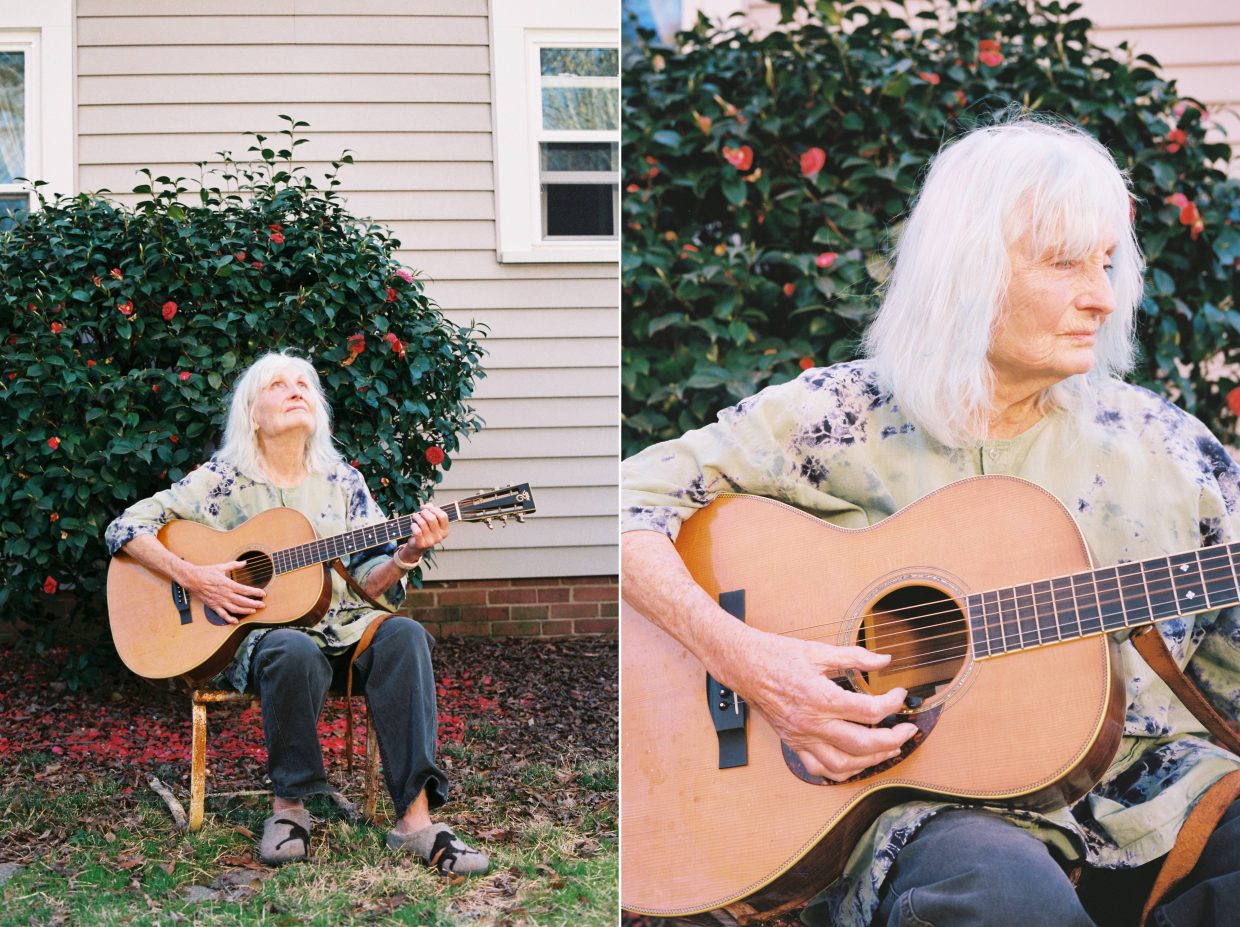
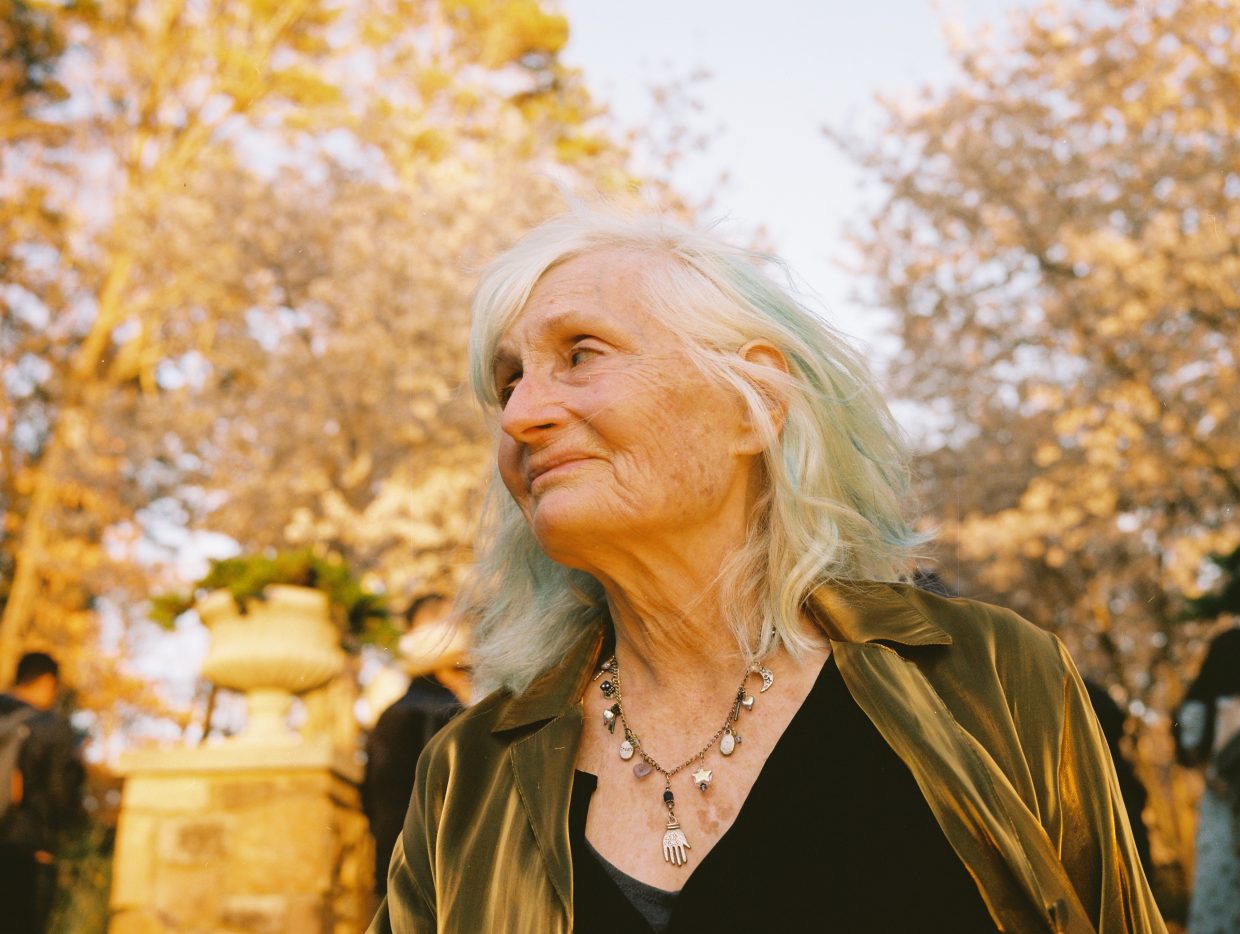
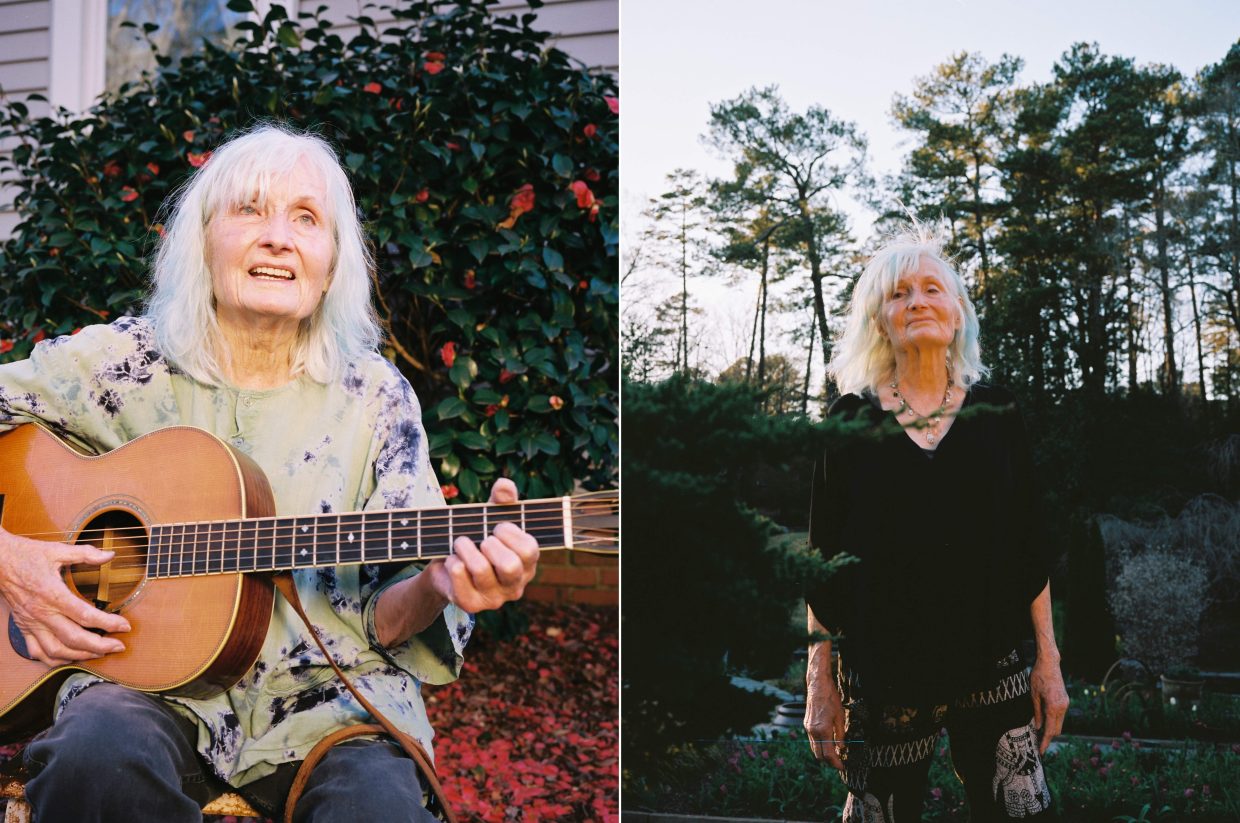
(Editor’s Note: Fiddler, songwriter, and creator Libby Rodenbough writes this personal essay on her friendship with and admiration for BGS Artist of the Month, Alice Gerrard, accompanied by her original photos taken for Gerrard’s new album, Sun to Sun.)

I remember first hearing Ola Belle Reed’s “Undone in Sorrow” when I was 19 or 20. I felt like a portal had been opened unto a world that had existed around me my whole life, unseen and unheard. I grew up in North Carolina going to visit my mom’s family in Madison County, along the Blue Ridge, where any of the graveyards on the mountain sides with their little mounds of clay outside my backseat window might have been the one from Ola Belle’s song.

That portal didn’t open for me in the mountains of North Carolina, though – it was in Chicago, at the Old Town School of Folk Music, an institution that had come out of the ‘50s folk revival. I was big on Pete Seeger and John Prine at that time in my life, and had found out my dad had a cousin with a spare room in Chicago, so I went on a little pilgrimage during a recess from college.

It was there that I learned my first old time fiddle tunes, belting the refrain “down in North Carolina” from “Waterbound” at the school’s open jam while the Chicago winter dumped three feet of snow outside. It was there I first learned the rudiments – very rude in my case – of clawhammer banjo. It was also there that I first heard a left hook of a song called “A Few Old Memories” by Hazel Dickens, which appeared on her 1973 duo record with Alice Gerrard, Hazel & Alice.

I went home from Chicago with new eyes and ears. Places I’d known forever became newly populated with epic figures, recast in the light of 200-year-old narratives. My first semester back in school, I was in an introductory folklore course taught by Mike Taylor (of Hiss Golden Messenger) and he started talking about his friend Alice Gerrard, who lived a town over in Durham. I was fairly well tangled up in time and place at that point – even the deceased people I’d been learning about were brand new to me – so I had to blink a few times to digest that she was the same person singing harmony on “A Few Old Memories.”

Today, 10-ish years later, I sit with Alice in preparation for writing this piece and she tells me about driving Ola Belle Reed in her Dodge van on tours through the South in the late ‘60s. She’s my oldest friend (nearly 90), and all competition lags behind her years pretty pathetically. She also makes a lot of the people I talk to seem boring. We’re in the same business: We sing songs and play shows and make records. She’s been doing it a lot longer, and I think she knows about five times as many songs.

Hanging out with Alice helps me understand why she wanted to be friends with people like Elizabeth Cotten and Luther Davis, who were elderly when she met them. She heard the way they played and sang and had to talk to them about their lives. “They knew exactly who they were,” she says. For a young person who had moved across the country from Oregon to Washington, D.C., without maintaining much contact with home, dropped out of college, and had four children, that self-knowledge was aspirational. Though their rootedness in their communities was part of what drew her to them, she didn’t think of them as avatars of bygone primitive ways of life, or as characters in a play – they were people. Elizabeth Cotten was somewhat guarded, but over years traveling and playing together, she told Alice about indignities she had suffered as a domestic worker and as a Black female folk performer, and about subtle acts of defiance she had worked into both vocations. Luther Davis talked about how lonely it was to get old and run out of witnesses to your own life.

Alice is likewise unafraid of being a person. She’ll tell you straightforwardly that she was unprepared to be a mother, that it was essentially impossible to pursue a music career – which was something she knew she wanted for herself – and still give adequate time to her kids. We commiserate about music industry bullshit and engage in light shit-talking about the idea of showmanship.

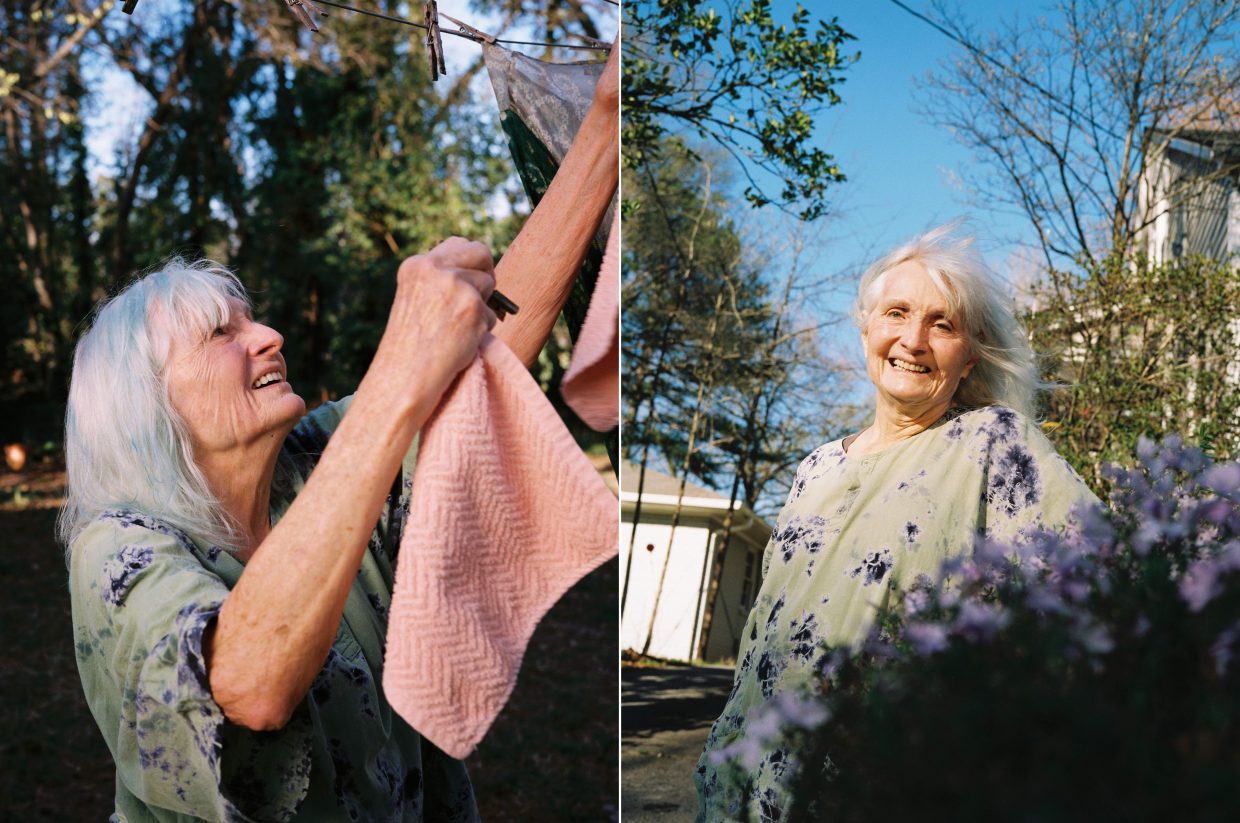
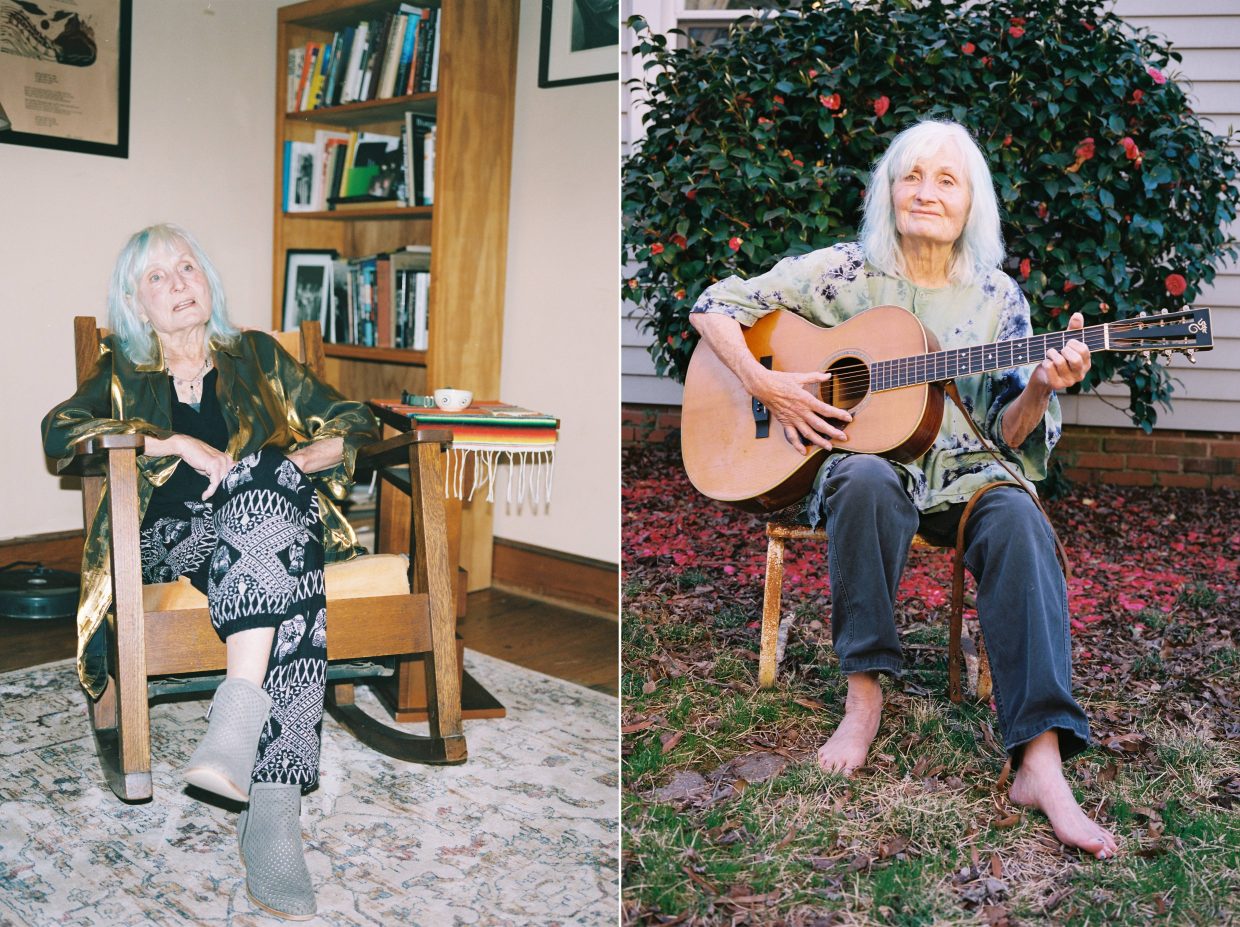
She’s usually wearing one of her collection of t-shirts that pertain to her dog Polly’s agility training facility (“Fast and Furryous”). This past March, when I took these photos of her to use for promotion of her new album, Sun to Sun, we went through her closet together and dug out some gems, including a bedazzled commemorative t-shirt from Obama’s inauguration.

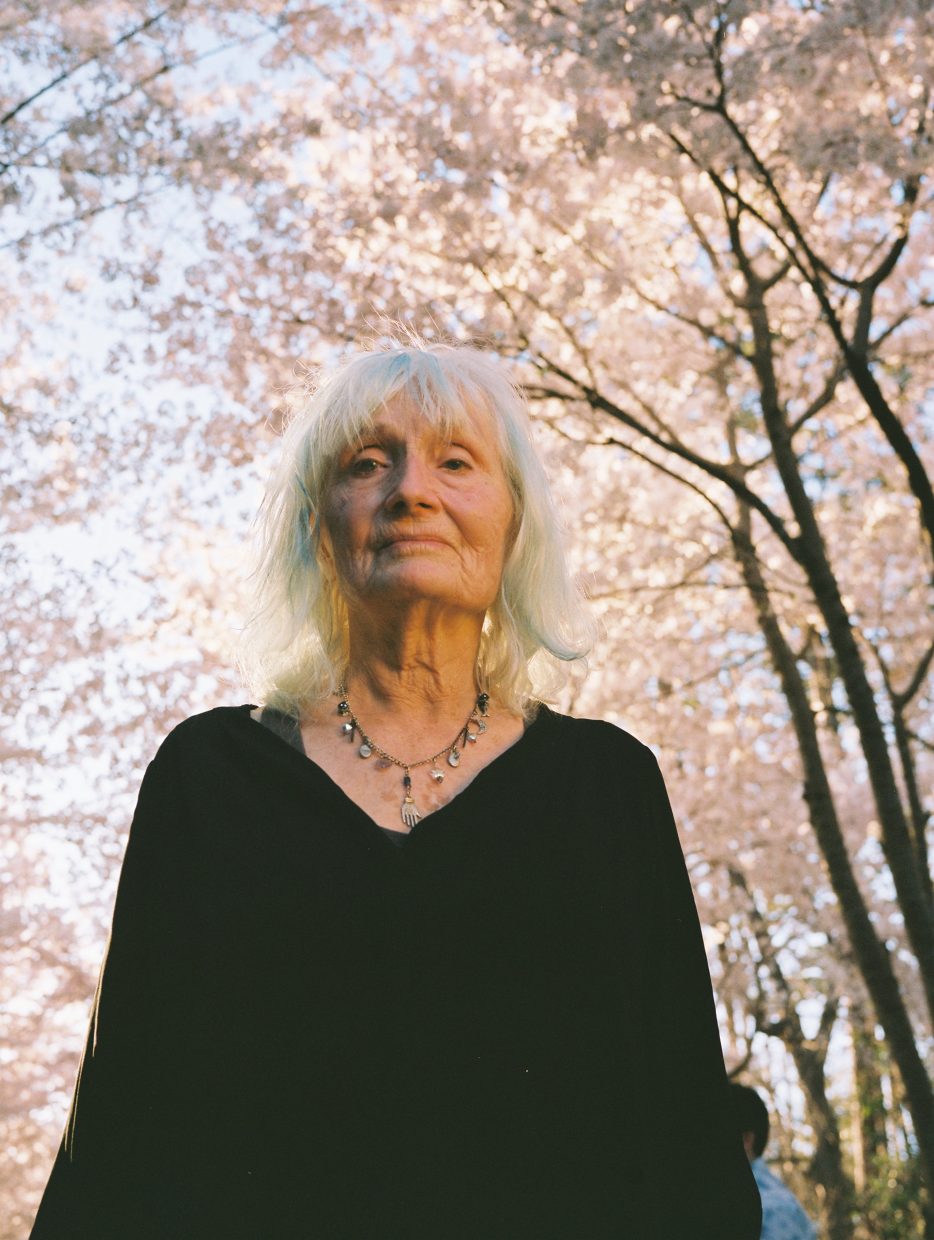
I have no training in photography – I shoot film because I enjoy the feeling of not really knowing how it works. We went to Duke Gardens in Durham, where we both live, on a week when the cherry trees had popcorned into glory. Alice looks radiant in the halo of those glowing blooms. But I also love the photos where she’s at home, standing in front of the brick retaining wall around her front yard, before she realized she still had her Apple Watch on. The sky was so blue that day, her white hair incandescent. She looks like she knows something you don’t, but in a warm way, like she knows you’ll get it eventually.

Alice is unafraid to treat a song like it can handle a little handling. She knows that songs are alive and she’s interested in being a part of their lives, not their memorialization. She smiles talking about how, in an old John Cohen film, the Madison County ballad singer Dillard Chandler starts a song in a key around here (she holds her hand at her waistline) and ends it here (she raises her hand up level with her temple). She’s delighted by the particularity of the human touch. She prefers singing voices with a bit of weirdness over purely pretty ones. Talking about Carter Stanley’s high whine, she says, “Whatever was eating on him from the inside, it was showing up in the way he sang. Nina Simone, the same way.” She tells me what a struggle it is to teach that kind of feeling to people accustomed to singing prettily. “If you’re trying to get somebody out of the soft, breathy voice, you say, ‘Look, your kid is running out into the street and you have to call your kid back.’ You don’t say,” — she coos — “‘Heyyyyy Brian, get back here.’ You say, ‘BRIAN! GET BACK HERE!’”

Whenever I’ve played music with her, Alice seems to lean into what people at the Old Town School liked – actually, loved – to call “the folk process;” she lets arrangements evolve as the spirit of the universe sees fit. I’m lucky she’s not a stickler for tradition, even traditions she could write encyclopedias about, because my fiddling style is distinctly unmoored. I was a half-rate Suzuki classical violin student growing up and then at the Old Town School I learned how to accompany folk singers on songs with three or fewer chords. I came home and started going to the old-time jam at Nightlight Bar & Club in Chapel Hill, where the jam leaders were American Studies PhD candidates who also grew up learning fiddle tunes from their hometown octogenarians. Some of my friends started a band called Mipso that was flirtatious with bluegrass and asked me to join, but I told them up front I didn’t know any licks. (They didn’t seem bothered by that.) I’ve since learned a few licks, and I would rather play an old time tune any day of the week than do almost anything else, but I never could sit still long enough to do what Alice calls “holding the line” — keeping and caring for the tradition.

I’m indebted to, and grateful in my heart for, people who do that work. I may roll my eyes at gatekeeping, but it’s more than wide-eyed would-be fiddle players at the gate; it’s the whole monster of monolithic, capitalist cultural imperialism, chomping down on everything small or strange. Songs can, and do, disappear, like cultures and forests, and not just by inertia but by clear-cutting. A lot of days I feel self-conscious about whatever it is I’m doing instead of holding that line. When I listen to Alice tell stories about the many singers and players she’s known over the years, though, I remind myself that they each have a distinct relationship with tradition – and with what it means to be an artist.

For a long time there’s been a divide, rhetorical and sometimes actual, between “the folk” and “the folkies,” which maybe means country people versus city people, or maybe people who grew up in a given musical tradition versus those who came to it later. Alice and I both fall into the latter category, though she’s had considerably sharper focus since her initiation. I’d rather replay a 10-second clip of a Mark O’Connor fiddle solo at one-quarter speed forty-seven times in a row than try to examine that dichotomy in any more detail at this moment, but I did spend a lot of my undergraduate days thinking about authenticity and who’s entitled to do what with old songs. Alice has often found herself among people who look at it from an academic angle – her ex-husband, Mike Seeger, came from a folklorist family – but her view remains that the compulsion to define and categorize is basically academia trying to justify itself. I don’t take that as bitter or glib, I just think she hasn’t found it necessary, in her personal relationship with the music she loves, to try to determine who gets to claim it. Or maybe, for Alice, the claim is in the singing. Talking about what makes a voice “authentic” (a word that sends a chill down my spine), she paraphrases Supreme Court Justice Potter Stewart from 1967 in his definition of pornography: “I know it when I see it.”

As we clink the ice around our $7 decaf specialty iced lattes, Alice tells me about a song she’d just heard, a haunting falsetto voice with nylon string guitar, in the opening scene of Pedro Almodóvar’s new short film, Strange Way of Life. After some Google sleuthing, she identified it as a recording by the Brazilian artist Caetano Veloso (in fact, the movie is named for it – “Estranha Forma de Vida.”) She’s head over heels for this song, itching to go home and dig into Veloso’s catalog. If they ever meet, I know she will have great questions for him, the type of questions that make a person believe songs must do real work in this world.

I ask her if she thinks of her music as having “a purpose.” “Not really,” she says. But she goes on, “I want people to hear what I hear in this music.”

In my view, that’s an altruistic goal, because it’s clear that whatever it is Alice hears in the music, it gives her life its very marrow. I admire the decades she has devoted to learning and documenting traditional music, but what I aspire to most is the way she still loves a song — viscerally, instinctively, with gusto. That’s what makes a line worth holding.

“There was something about the music, the quality of the voices,” she says, recalling first hearing Harry Smith’s Anthology of American Folk Music. “There’s so much beauty in it, it’s like, God, yeah.”

I had that “yeah” moment when I heard “Undone in Sorrow” and “A Few Old Memories” – and now, Sun to Sun. I hope to be saying “yeah” like that about songs for the rest of my life.


All photos: Libby Rodenbough
WATCH: Jaime Wyatt, “Althea”

Artist: Jaime Wyatt
Hometown: Nashville, Tennessee
Song: “Althea”
Album: Feel Good
Release Date: November 3, 2023
Label: New West Records

In Their Words: “In ‘Althea,’ Robert Hunter suspects betrayal, but perhaps is untrue himself. He references Shakespeare and many suspect he was referring to Jerry [Garcia’s] addiction to heroin, but I personally think it was about his own journey in learning to love.

“Thank you to LA-based director, editor, and animator Tee Vaden for bringing such beautiful images to this song. We compiled tour videos and live performances and meaningful symbols for healing and rebirth, as well as fun Grateful Dead-esque eye candy. I chose to record the Grateful Dead’s ‘Althea,’ as the song is just as true and applicable today as it was at its release in 1980.” – Jaime Wyatt


Photo Credit: Jody Domingue
Video Credit: Tee Vaden

WATCH: Sully Bright, “Appalachia” (Live in Appalachia Video Series)

Artist: Sully Bright
Hometown: Forest City, North Carolina; currently lives in Nashville, Tennessee
Song: “Appalachia”
Album: Darling, Wake Up
Release Date: October 13, 2023

(Editor’s Note: Over six weeks, singer-songwriter Sully Bright will premiere a series of four live performance videos shot in the mountains of North Carolina. Watch each installment every other week right here on BGS.)

In Their Words: “I got the idea for the song ‘Appalachia’ on my drive back home to North Carolina from Nashville. Driving the Blue Ridge Mountains is one of my favorite things to do, especially in the fall. The North Carolina mountains are my favorite place in the world; they are home to me. That’s what I wrote this song about: ‘Home is what you make of it, and darling you’re mine.’

“This is one of my favorite videos we captured in North Carolina. We recorded it on a river near Roan Mountain. There couldn’t be a better place to sing the song than in a cold mountain river in Appalachia. I hope you enjoy the video and check back for the next one in two weeks.” – Sully Bright


Photo & Video Credit: Seth and Jenna Herlich, Wonderfilmco

BGS 5+5: Jason Hawk Harris

Artist: Jason Hawk Harris
Hometown: Houston, Texas
Latest Album: Thin Places
Personal Nicknames (or rejected band names): “J,” “Jase”

What’s your favorite memory from being on stage?

I was playing at the Milk Bar in San Francisco with the Show Ponies once. The crowd was responsive to what we were playing in a way that I’ve never experienced before or since. We would get louder, and they would move like a wave of silk. We’d get quieter and they would be still as candles. It was a really wild moment that I’ll never forget. It’s a small, divey place, but even still, it’s like walking into a church for me these days, because I always remember that show.

What other art forms — literature, film, dance, painting, etc. — inform your music?

Lyrically, literature is a big influence on me. My favorite authors are those who write in the magic realism vein. Salman Rushdie, Gabriel García Márquez, Carmen Maria Machado, Haruki Murakami, and Charles Williams are some of my favorites. I like the genre (magic realism) because it seems to view the physical and spiritual plane of existence as one in the same. The world has always made more sense to me when I think of it in those terms. Empiricism holds no interest for me, personally. The nature of existence has always seemed bigger to me than what I can touch, taste, smell, hear, or see.

What was the first moment that you knew you wanted to be a musician?

I wish I had a more hip answer to this, but I don’t. When I heard Simba sing the song “I Just Can’t Wait to Be King” in the Lion King, I knew I wanted to sing in front of people for the rest of my life. I was 6 when I first saw it and that song absolutely enthralled me. I think there were earlier moments than that while watching my parents sing in church, but that song was a very formative moment for me. I remember my parents having to ask me to sing something besides the one song from Lion King.

What’s the toughest time you ever had writing a song?

“Jordan and the Nile” legitimately took me five years, from first spark to final mix. The refrain came to me in about 10 seconds, but everything else came at a crawl. I wrote around 40 verses and they all seemed wrong in one way or another. Then, when I’d finally finished the verses and felt good about them, I started arranging. It’s usually the lyrics that take me a while. The music almost always comes easy. Not the case with “Jordan.” I must’ve trashed everything and started over on this song at least five times. It was labor, but I’ve never been happier with a final product than I am with that song.

If you had to write a mission statement for your career, what would it be?

Don’t let the cynicism of the streaming age inform the music you write. This is, and has been, my mantra for a while now. I think in this day and age, musicians are under constant pressure to write music that people “like” instead of writing something that we think is good. The temptation is stronger than ever. Being placed on a Spotify sponsored playlist can make you thousands of dollars in a way that other avenues of income won’t. I have personal experience with this. The Show Ponies, the band I was a part of for seven years, were placed on a playlist back in 2013. We still receive monthly checks and we haven’t played a show in over four years. It’s powerful, but I don’t want a tech company deciding what music I make is or isn’t worthwhile.


Photo Credit: Daley Hake

Watch a Brand New Video From Americana Firebrand Sierra Ferrell

With a brand new, to-be-announced album coming in 2024, Americana singer, songwriter, and “musical vagabond” Sierra Ferrell has released “Fox Hunt,” a galloping, gothic track with a storybook-style animated video. (Watch above.) It’s one of her most sonically mainstream single releases to date, reminding of groups like the Lumineers — a shimmering polish on the deeply patina-ed, gritty sounds drawn from her West Virginia raising.

Ferrell is one of the fastest rising stars in American roots music, with a tour schedule and dance card filled to bursting. Listeners place her in musical constellations with such high energy and “back to basics” artists like Billy Strings, Molly Tuttle, Zach Bryan, Margo Price, and more – many of whom she calls friends and collaborators. But Ferrell, in a twist of homophonics, brings a feral and untethered mastery into her music, a quality that continually has fans begging for more. Her performance of femininity – and as often, her subversion of it – recalls other mountain music mavens like Dolly Parton, Ola Belle Reed, Wilma Lee Cooper, and Loretta Lynn, but with their often aspirational facades – qualities of each of their professional brands – exchanged for a devil-may-care attitude that’s just as deliberate and intentional. It’s as much an extension of Ferrell’s agency as any of the women who came before her donned their own rhinestones, big hair, and striking make-up as representations of their individuality.

2024 will undoubtedly find Sierra Ferrell notching many more career milestones as her ever-growing audience will be hanging on for every rollicking, frolicking note.


Photo Credit: Bobbi Rich

WATCH: Ynana Rose, “Strawberry Moon”

Artist: Ynana Rose
Hometown: I was born in Mendocino, California, and grew up in rural Northern California and Southern Oregon. I’ve lived in San Luis Obispo, California, for the last 20 years.
Song: “Strawberry Moon”
Album: Under a Cathedral Sky
Release Date: October 20, 2023 (song); November 3, 2023 (album)

In Their Words: “‘Strawberry Moon’ is an oldtime song of forbidden love and every time I play it I give thanks for being born in the here and now – where I can choose how to be and who to loveThis is the first song I wrote for my album and I play it at every show. It came together so easily in the studio: Co-producer Damon Castillo and I knew just how to bring it to life. Tammy Rogers (of The SteelDrivers) and Scotty Sanders add fiddle and Dobro to the already meaty mix of upright bass, drums, and electric guitar. The audio for the video is spare, just guitar and vocalssound engineer/producer Graham Ginsberg and I were really aiming for a haunted, yearning kind of a vibe. It’s a story that feels true, so I sing it that way.” – Ynana Rose

(Editor’s Note: You may also stream the studio version of “Strawberry Rose” below.)


Photo Credit: Barry Goyette

LISTEN: Heather Anne Lomax, “Be the One”

Artist: Heather Anne Lomax
Hometown: Los Angeles, California (via Kansas City, Missouri)
Song: “Be the One”
Album: The Doman Tracks
Release Date: November 3, 2023
Label: Blackbird Record Label

In Their Words: “‘Be the One’ is just a hopeful song about spending the rest of your life with a soulmate. Sometimes that happens for the lucky ones and sometimes not, I suppose. It was written at a time when I had thought a previous relationship was blossoming again in my life. This person and I had dreamed about growing older and sitting on a porch swing together, reminiscing about days past as the sun was setting. Michael [Doman, producer] wanted to make sure this had real movement and buoyancy and added the pounding of the bass drum throughout the song – I believe Jason Hiller did this with a handheld mallet. The three of us, Michael Doman, Jeff Sebens and I, laid down the song’s foundation of jangly guitars that kept the track afloat down a river of momentary joy.” – Heather Anne Lomax

Track Credits: Written by Heather Anne Lomax

Vocals – Heather Lomax
Guitars – Heather Lomax, Michael Doman, Jeff Sebens
Bass/ Kick Drums – Jason Hiller
Backing vocals – Michael Doman

Produced by Michael Doman.
Recorded at Electrosound Studios.
Jason Hiller – Engineer, mixing
Mastered at Pen Station Studios by Peter Barker.


Photo Credit: Shots By Morrison

Cover Story: Hogslop String Band Went From “We Are Not A Band” To the Opry

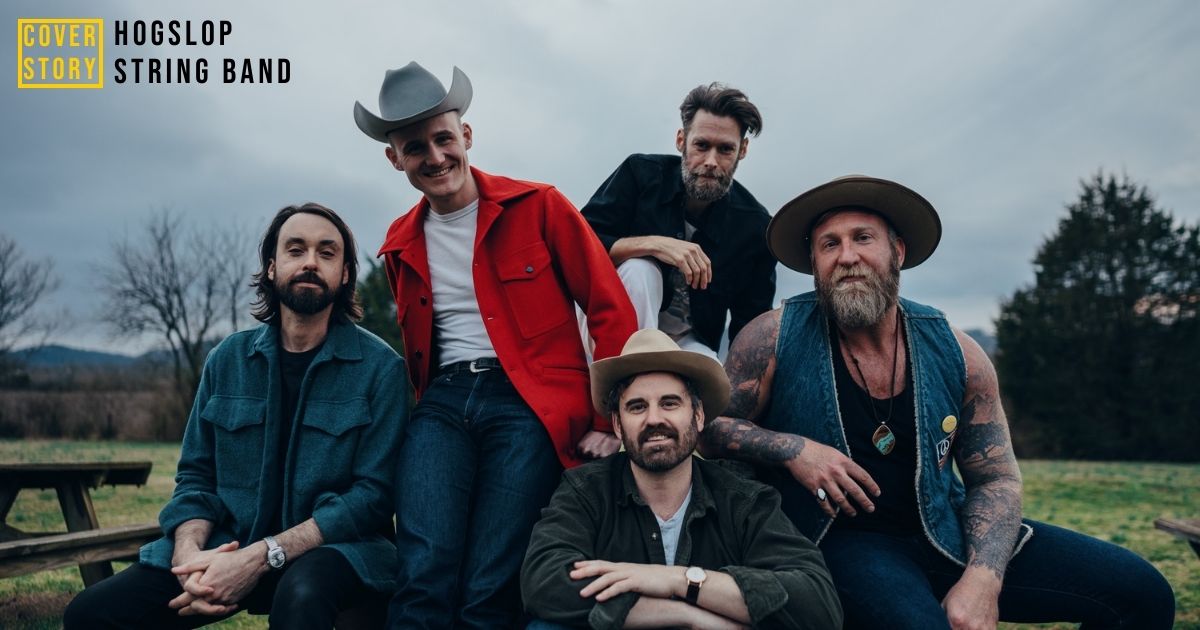
Few bands have benefitted from the same type of steady, organic growth as the Hogslop String Band. Originally formed in 2009 as a pickup band for a square dance, the group played together for 10 years before releasing their first album. In that time, their camaraderie strengthened – as did their songwriting, performance style, and fanbase.

Following their 2019 self-titled album, the group – Gabriel Kelley, Daniel Binkley, Kevin Martin, Will Harrison, and Pickle – has been hard at work on their next record (expected spring 2024). Produced by Kelley at his own Mobile Traveler Studios in Bells Bend, 10 miles west of Nashville, the record illuminates the purely original sound that the Hogslop String Band has found over nearly 15 years of making music together.

BGS caught up with Gabriel Kelley and Daniel Binkley to talk about the new music, the formations of the band, and where it’s all headed.

You formed in 2009, but it was 10 more years before your first album came out. What has the journey been like, coming from such casual origins to debuting on the Opry in 2022 and looking ahead to releasing your sophomore record?

Gabriel Kelley: We sure did. We were, to be honest, just a rag-tag bunch of buddies. Most of us had grown up playing old-time music or found it in our early years. For a very long time, our motto was a little more on the punk rock side: “We are not a band” is what we said for the first 10 years of the band. It was just a way to get together and have a good time. It wasn’t until a few years ago that we started taking it more seriously. One thing that’s cool about our Opry debut – and Binkley can fill you in – is that his family has been a part of the Opry since the ’20s.

Daniel Binkley: My family has been in Nashville forever – my great-grandfather, Amos, he had a band called the Binkley Brothers’ Dixie Cloghoppers, and they were a part of the very first Opry cast in 1926. Backstage they have a placard for every member and I found my family back there. That was a very special moment for me. They mentioned it during the broadcast, and we actually ended up playing one of the Binkley Brothers’ songs on the Opry.

For a band with a foundation in traditional music, i.e, fiddle tunes, where do you find the balance between introducing your own original material and digging from the old-time repertoire?

DB: Old-time music is sort of the school that we come from. So when we write original stuff, it’s gonna come through that lens. Once you run it through the “hogslop filter,” it’s gonna sound like hogslop. There’s just something about that foundation, and our knowledge of each other as musicians, that makes it come together – whether it’s traditional tunes or original material.

GK: We absolutely don’t ever want to lose the component of old-time string music and we’re currently in a time where that music seems a lot more accessible and is getting thrown under the big umbrella that everyone is calling Americana. We don’t do a show without old-time tunes in there. A lot of the other music we take influence from – blues, rock and roll – they were actually getting inspiration from early country and old-time music. So for us, it all goes in the same bucket.

You’re definitely known for that high energy string band sound, but this new album has quite a range of pace. How do you stay true to that sound while incorporating softer material like “Mississippi Queen?”

GK: We’re very much a live band and in that setting it’s about that high energy, rowdy thing. We love that, but amongst us in the band, three to four of us are songwriters and have very different approaches to songwriting. We’re very lucky to have Daniel in the band, he’s one of my favorite songwriters and has an ability to write some of that intimate, close to the chest material, like “Mississippi Queen.” And you need that delicate stuff just as much as you need the fast, hard hitting, and fun stuff. We feel that it’s very important to show audiences (and ourselves) that we have those dynamics.

DB: A lot of our shows at festivals are late night, midnight shows and it’s almost more like a punk-rock show. But there are also theaters or other venues where you can really showcase more of that dynamic. Kevin Martin has a few tunes on the album and he writes totally different that I do. He’s more rock and roll and I guess I’m the softy. It’s nice to have a little variety – especially on a record.

What’s special to you about this upcoming album, compared to music you’ve released in the past?

GK: Personally, watching this band shift and develop over 15 years has been pretty wild. This is the first record of the band’s that I’ve produced, and what’s special to me is (and I’m not saying that we’re reinventing the wheel), I’ve never heard quite the blend of genres that we’ve thrown together. It’s cool that Hogslop is still shifting and mutating and we’re still discovering that. And that we’re embracing our songwriting – everything on this record is our own material, and I’m really proud of that.

DB: I agree with all of that! One thing I’ll add that was a major game changer – and this is thanks to Gabe – was the ability to take our time in the studio and not be under the time constraints that’d you’d be under paying for studio time somewhere.

What else is on the horizon with the release in 2024?

GK: We’ll be in the studio most of November, and then we’ve got the Ryman show [supporting the Mavericks] on December 1. As different as this new music is, we’re really woodshedding and figuring out our live show. It sounds like our ‘24 is gonna be busy – we’re mainly a festival band, so that’s where we’re headed.


Photo Credit: Josh Goleman

Watch the Zany Music Video for Willi Carlisle’s Just-Announced Album, ‘Critterland’

Arkansas-based country and old-time troubadour Willi Carlisle has announced his upcoming, Darrell Scott-produced album, Critterland, with a delightful stop-motion music video. (Watch above.) Set for release January 26, 2024 on Signature Sounds, the collection once again draws on Carlisle’s apt self-positioning as a sort of rural, countercultural, folklorist guru, crafting poetic yet down-to-earth songs that feel all at once fantastic, resplendent, whimsical, and– well, trashy. It’s a dichotomy not unknown to American roots musics, but rarely is this paradoxical construct inhabited so intentionally and subverted so artfully. It’s a language Carlisle isn’t just fluent in, it oozes from his spirit and lives in his bones.

On “Critterland,” Carlisle positions himself not as an omniscient narrator, but well within his own communities – musical and otherwise – as he examines how the “big tent” of his prior album, Peculiar, Missouri, could be put into action. And, in doing so, he demonstrates how varied, broad, deep – and sometimes ugly – open arm, open heart policies can be. But in that mundane, in that bittersweet, there is endless beauty.

With that thought in mind, Darrell Scott as producer and collaborator here isn’t merely a solid choice, but a nearly perfect one. You hear his touches in the confidence Carlisle has stepped into – with hundreds and hundreds of shows under his belt – with his soaring, passionate vocal on “Critterland,” raising its possums and raccoons and armadillos to saint-like status. Because, after all, aren’t all living beings divine? Don’t we all have something to contribute to our own, particular critterlands? Carlisle says so, and makes a compelling case.

This 2024 album will be a must-listen.


Photo Credit: Madison Hurley