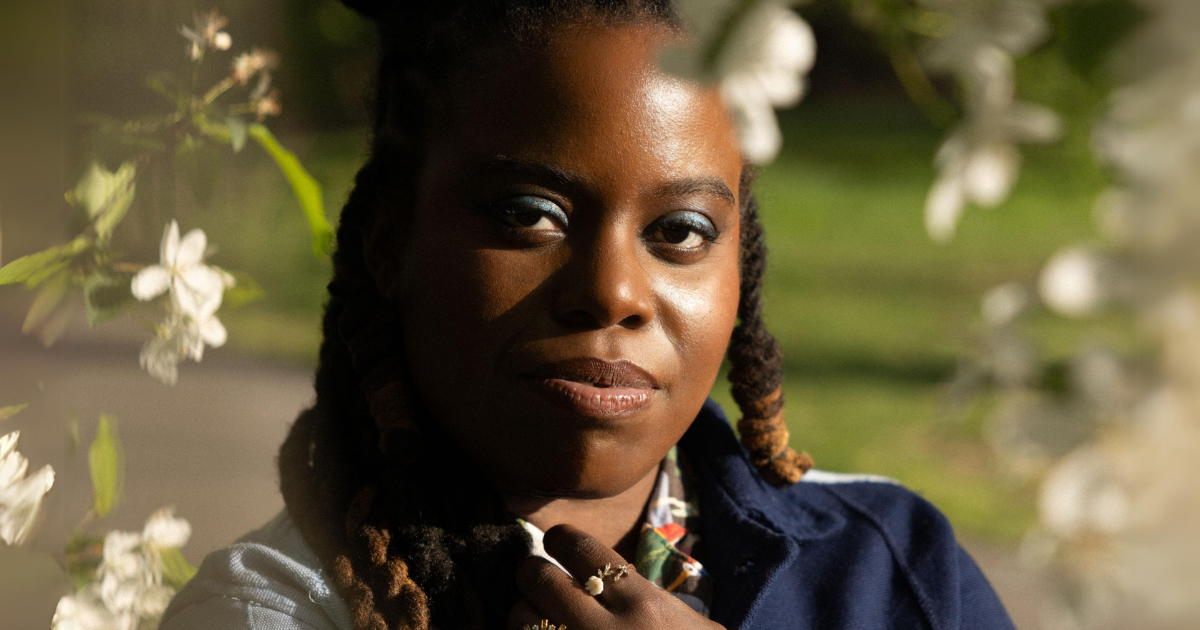
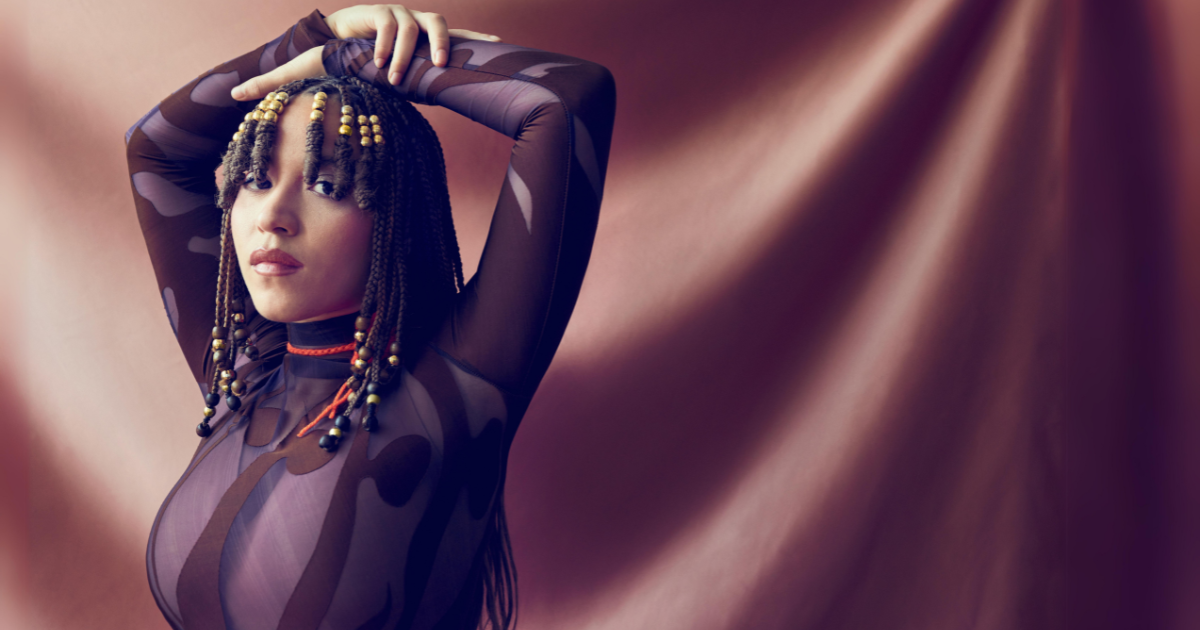
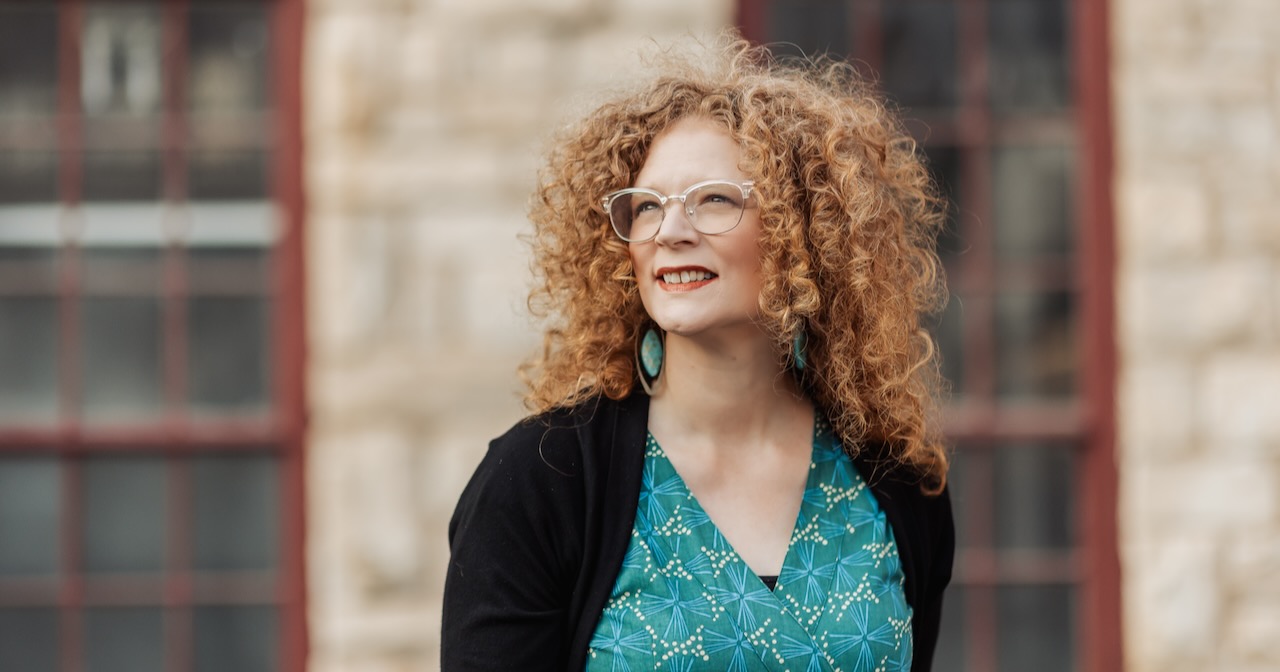
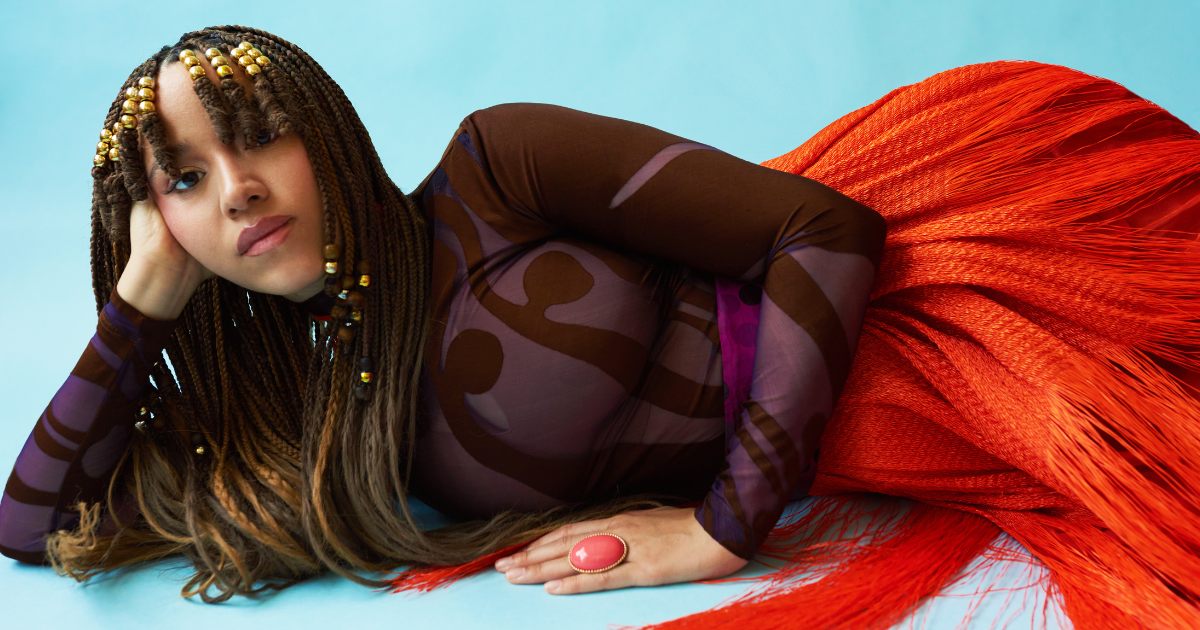
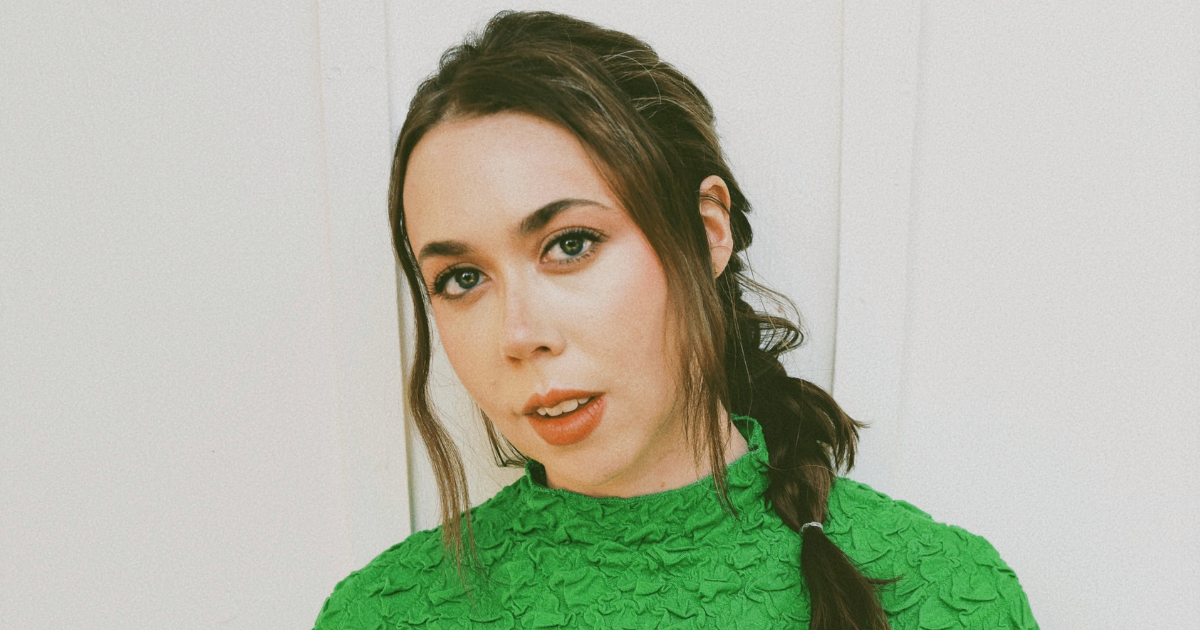
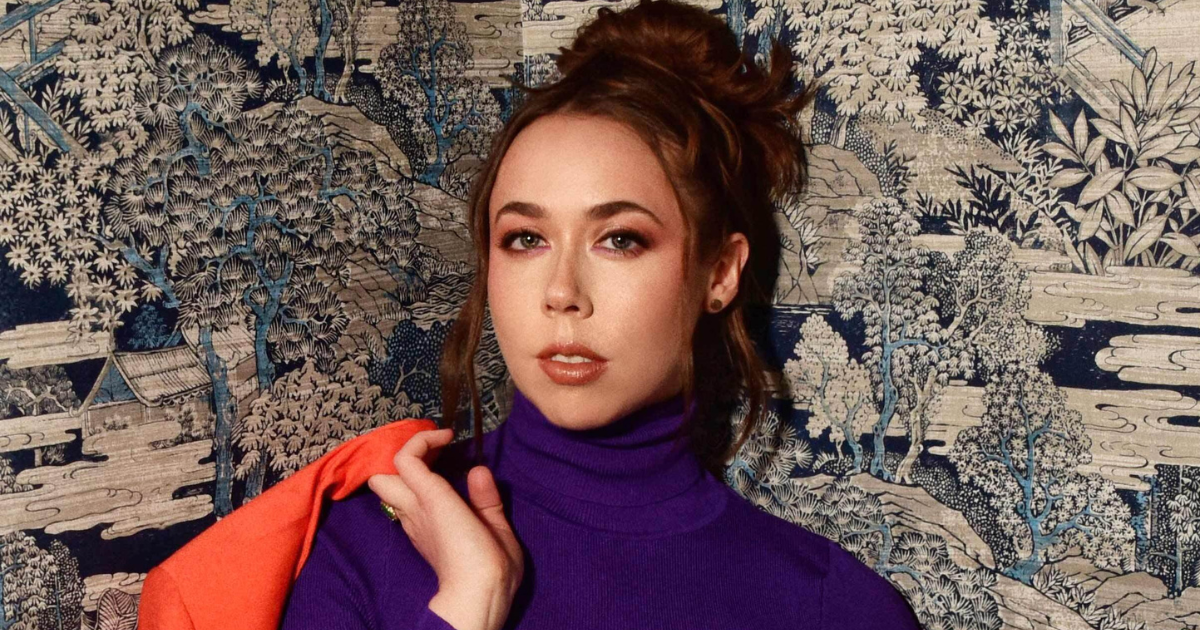
No one on earth plays the guitar like Yasmin Williams. When the BGS team was first introduced to her music – back a few years now, in 2017 or 2018, during our annual programming for our Shout & Shine diversity showcase – it was an objectively jaw-dropping discovery. We’ve covered many singular musicians, instrumentalists, and guitarists over the years on our site, but here was something completely and totally brand new. Then, in 2021, she wowed our BGS audience with her Shout & Shine livestream performance. From our staff to our followers, we were all hooked.
Immediately upon hearing Williams’ ethereal, otherworldly, and effortlessly charming guitar-centered compositions, it’s natural, reflexive even, to imagine how listeners may have first reacted to encountering Sister Rosetta Tharpe’s earth-stopping rock and roll, or Elizabeth Cotten’s unassuming backwards-and-upside-down guitar genius, or Jimi Hendrix’s showy shredding behind his head. There’s a jolt of electricity, a child-like wonder, and proper awe that each result from even the slightest encounter with Williams’ talents.
But, like those legends before her, this is not merely toxically masculine, performative, over-the-top “guitar culture” music. You can tell, from the first breath of tone from her instruments, that Williams is not now nor has ever been the guitarist trying to impress or outdo all of the AC/DC or Led Zeppelin rehearsers plucking through “Stairway to Heaven” at the local Guitar Center.
No, Williams’ approach to the instrument is totally brand new, too – and a remarkable breath of fresh air in a scene that is often derivative, competitive, exclusive, and rife with “Um, actually…” Instead of focusing her ambitions or goals entirely on the insular, inward-facing guitar world, Williams has demonstrated over two impeccable, critically-acclaimed albums – 2021’s Urban Driftwood and her first Nonesuch project, Acadia (out October 4) – that her community is far broader, richer, and truly incandescent.
Acadia builds on the rich and resplendent universe Williams built for Urban Driftwood – and has been cultivating for years, since her full length debut in 2018, Unwind. With a foundation centered on fingerstyle acoustic guitar with plenty of blues, bluegrass, flatpicking, and Americana infusions, Williams approaches the instrument as if a just-invented, novel machine; pedagogy, tradition, and technique are all present, but only ever in service of the melodies themselves – never as exercises in “correctness” or propriety. She’ll play with the guitar in her lap, tapping with both hands on the surface of the strings and fretboard. She’ll affix a kalimba to the face of the instrument and play both simultaneously. She quite literally turns her six-string (and her harp guitars, banjos, and more) on their ears, throwing all expectations and convention out the window.
There’s showmanship evident herein, of course, and a tinge of acrobatics, but these are merely knock-on effects and not the entire point. Instead, it seems Williams’ intention is to follow each and every tendril and tributary of her musical ideas to their natural conclusions, raising no barriers to herself in the process. Not even the barrier of the guitar itself. What even is a guitar, if you approach it from a unique perspective or through a fresh lens each time you pick it up? Williams shows us this common, everyday, century-spanning instrument can always find new sounds and styles.
Again, in contrast with “norms” in the guitar scene, Acadia is a testament to Williams’ community, as well. Her albums as yet never feel like guitar vanity projects, as the picker decidedly brings in so many facets of her musical and creative community to her music making. In just the first three singles from Acadia she taps an impressive array of featured artists, from Aoife O’Donovan to Darlingside to Allison de Groot & Tatiana Hargreaves. On prior releases, she’s recorded with the legendary Tommy Emmanuel, Taryn Wood, Dobrotto, and many more. Her approach to the instrument is singular, but it’s never solitary. Where other guitarists might prefer to leverage the instrument and their virtuosity to center themselves, Williams seems determined to do the opposite. The results are, as always, stunning.
Fingerstyle acoustic guitar is engaging and lovely music to begin with, but given her particular touch, her compositional voice, and her community collaborations, Yasmin Williams is showing roots music fans everywhere that even our most familiar instruments can be wellsprings of originality, inspiration, and joy. Acadia is a masterwork, and a perfect album to spotlight as we name Yasmin Williams our Artist of the Month. Enjoy our Essentials Playlist below to kick off the month and read our exclusive interview feature here. And, read an excellent op-ed on Williams written by buzzworthy viral guitarist and improviser Jackie Venson here. Plus, we’ll be dipping back into the BGS archives for all things Yasmin throughout October.
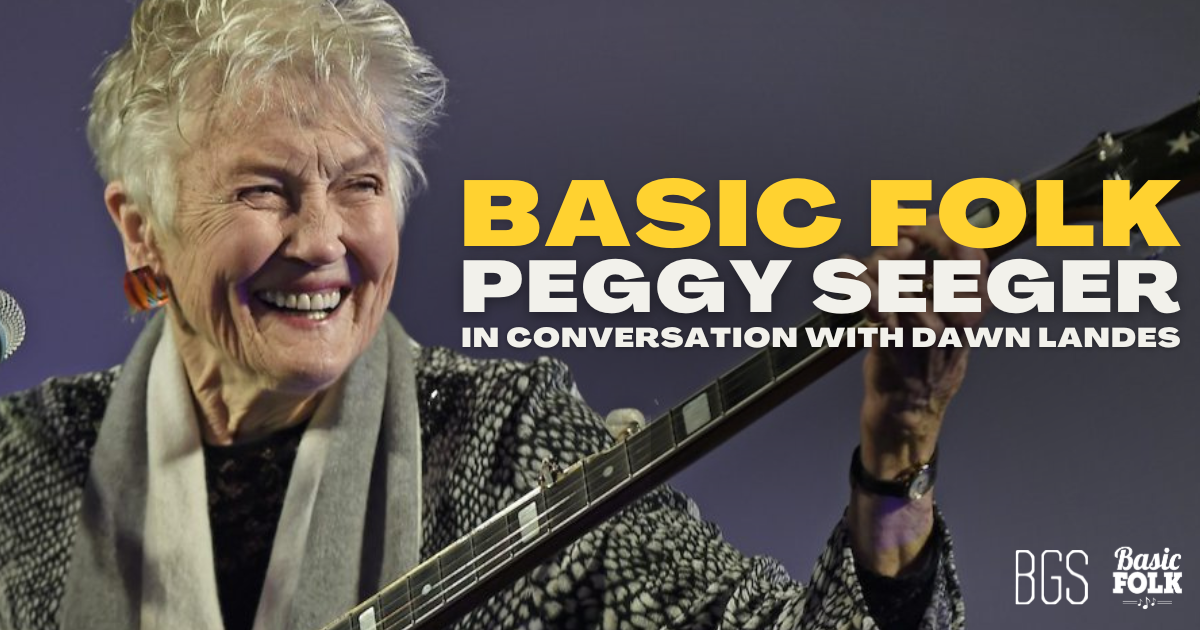
(Editor’s note: For this episode, we invited our friend Dawn Landes to interview Peggy Seeger, the perfect choice to interview this feminist folk icon. Landes also recently joined us on a special episode with Aoife O’Donovan to discuss their new feminist-themed albums. We’re thrilled to welcome Dawn back as guest host!)
I can’t believe it took me 40 years to come across Peggy Seeger’s music. I’m a little mad about this honestly, and have been trying to make up for lost time by diving deep into her songs and her story. I’ve been a fan of her older brother, Pete Seeger, since I was a kid, but didn’t realize the depth of talent and reach in the Seeger family. They are truly folk royalty! Peggy Seeger is the daughter of a celebrated modernist composer and a musicologist who grew up with people like Alan Lomax and Elizabeth Cotten hanging out in her family home. At 89 years old, she’s released 24 solo recordings and been a part of over 100 more. She’s built her career on wit, incredible musicianship, and unflappable activism.
On this episode of Basic Folk, I am honored to talk with Seeger about her beginnings in feminism, her decades-long partnership with Scottish singer Ewan MacColl, the creation of the BBC Radio Ballads, the importance of hope, and her dream tattoos! She even sang us a song from memory that I doubt she had sung in many years. Peggy is a repository of traditional songs and continues to tour and play music with her family, as she’s done throughout her whole life. Although she claims that she doesn’t write anthems, Seeger’s songs have become synonymous with women’s rights and environmental activism. Coming from a woman who once sang her defense in a courtroom, we should all take Peggy’s advice: “Something wrong? Make a song!” – Dawn Landes
A deep reflection born from a time of the extreme silence and noise of the pandemic, Kaïa Kater’s new album, Strange Medicine (out today, May 17), digs into the feelings society tells us not to feel, imagines healing and revenge from abuses, and reckons with themes of racism and sexism of the past and today. While the undercurrents are heavy, the arrangements are gentle and flowing, juxtaposing our expectations of what we think it means to process the darkness in life with the truth that many emotions can exist simultaneously.
Written from home in Montreal, Strange Medicine takes us on a cathartic journey imagining characters interwoven with parts of Kater and parts of the world she observes. Drawing on inspiration from artists like Steve Reich, Brian Blade, and Johnny Greenwood and partnering with Montreal-based producer Joe Grass (The Barr Brothers and Elisapie), she took a different musical path than in the past.
Leaning into her primary instrument, banjo, Grass and Kater built the framework for each of the tracks slowly, starting with bedroom tracks and expanding to include arrangers like Franky Rousseau (Andrew Bird, Chris Thile) and Dominic Mekky (Caroline Shaw, Sara Bareilles) and musicians Rob Moose (Bon Iver, Phoebe Bridgers, Paul Simon), Robbie Kuster (Patrick Watson), and Phil Melanson (Andy Shauf, Sam Gendel). Kater spoke to BGS via Zoom.
Hi! How are you?
Kaia Kater: I’m okay! A couple of days ago I dropped my phone directly onto my laptop screen and it cracked. I had to go to Apple. So I am without a laptop, but thankfully have my 10-year-old iPad, bless her!
Apple is coming in clutch. Also, Apple product destroying Apple product is kind of funny.
Yeah, it’s an Apple-on-Apple hate crime. It’s terrible. I feel so weird about it. But I have AppleCare, which is good.
With the couple of sentences that you just said it’s no wonder the Department of Justice is looking into Apple as a monopoly. Vertical integration. Well, how are things going other than Apple problems?
The record is out in a week, so I’m excited. Thank you for doing this piece. I never take any press for granted, especially after the pandemic, when things were so terrible and hard.
What a weird time. Is that when you started writing this record?
Yeah, pretty much. I wrote my first song in April of 2020. We finished the record in 2023. So I would say like 2020 to 2022, was the writing window.
This album is a pandemic baby!
It is. Yeah, I’m proud of my little pandemic baby. Born out of a lot of feelings of stasis and confusion, but also just so fun to record. I think that there’s a lot of grief in the lyrics. But you can still vibe to sad songs, especially when they feel groovy. So that was the intent.
So when did you start recording it?
Let’s see, we went in to record in October of 2022 but the official recording days were preceded by a ton of demo days. So throughout 2021 and into 2022, I would go to my co-producer Joe’s studio in Montreal. We would just track stuff and either bring people in or ship the songs out to people and pay them a demo fee and have them kind of like splash around and see what their interpretation of the song was. That was kind of like how we selected personnel. I think we had a pretty strong idea of what we wanted to do by the time we got into the studio, which is so different from other projects I’ve been part of and other records I’ve done.
How was it different?
I guess, with the pandemic, I had the blessing of time, which I never had before really. With Nine Pin, I recorded on my winter break from college in my senior year, and then Grenades was done from start to finish in two weeks. And so with Strange Medicine, it was about two years. There are advantages and drawbacks to that. It is very easy to start second guessing some choices that you’d made in the previous calendar year, but I think it was to me such a novelty to be able to write and then listen back, and send the arrangement to someone and have them send their work back. It was so much more thoughtful because we had the time to do that.
That makes total sense. So you started writing it during the pandemic. What was your writing process like? Did you have ideas that you came into the lockdown with, or were you processing things in real time?
Well, originally I was like, “I’m never gonna play banjo again.” I don’t know what I was thinking. I think I was trying, to a certain extent, to escape my roots, transform, or do this phoenix thing. Where people are like, “Whoa! She was a banjo player and now she’s an electronic pop musician.” That was maybe a facet of my mid-20s to late 20s, having that crackling feeling that all the different paths your life can take feel like they’re narrowing. And so you’re kind of like fighting against that and going, “No, I still can transform again, musically.”
Really what led me to write more songs on the banjo, especially for Strange Medicine, was that it was really comforting to me. I think I went back to it after wanting to spread my wings. Once I was alone in a room I was like, “What do I want to do right now? I just wanna play banjo.” And for a long time that’s all I did. I didn’t really write. The songs trickled in bit by bit. But you know I definitely gave up that idea of trying to metamorphosize in the way that I thought I was going to. I think I did it in a different way.
Can you talk a little bit about what it meant to be in Montreal writing this record and just in general? What influence did the town have on this particular record? And how does the music community there influence you?
Well, it’s very experimental there. And there’s a kind of freedom and risk-taking. People are not afraid to have things fail or to have things not quite work. Even now, I’m sort of deconstructing the idea that I grew up with, this idea of what a songwriter is, which is that you work really hard at your craft, you play the song down. And the way that you improve every night is how you perfect and tighten the song as much as possible. I’ve been getting into this idea of improvisation.
I don’t know if it’s because the rent is cheaper there, so you don’t have to hustle as much. I just felt so much more space to play around.
While we’re on the subject of Montreal, you collaborated with Allison Russell on “In Montreal” about your shared hometown. I was curious since Aoife O’Donovan is from Massachusetts and you’re talking about witches on “The Witch” – was that a purposeful choice?
No, but that occurred to me about a week ago. I was making dinner, and I was like, “Wait. Aoife’s from Massachusetts!” It must have been in some way subconscious. I kind of see people as the roots that they’ve grown from. And definitely, when thinking about the features I wanted, I wanted it to make sense with who that person is. For example, with Taj Mahal, he’s who I learned about the black roots of the banjo from first. He was doing that in the ‘60s, and he has a lot of Calypso and Caribbean influences and heritage. Bringing him into a song about a Caribbean revolutionary felt like, “Well, of course.” I even wrote him a little letter explaining the song, because he’s 80. He doesn’t need to be on anybody’s record. And so I was like, “Let me tell you what the song is about, and maybe you’ll want to sing on it.”
That’s so cool. And how did the collaboration on “The Witch” come about?
Aoife has always been really supportive of me as a person and as an artist, going back to 2017. She’s kept me in mind for a lot of things and she’s suggested me for opportunities. She’s also really community-oriented. She’s very cognizant of supporting women musicians and young musicians. I’m a mega fan of hers.
I had written “The Witch” and I thought she would sound great on it. Fast forward to the end of the process, when all we had left to do was harmony vocals and I was really nervous to ask her because I think I was scared to get a no. But I’ve been practicing. You have to ask, because if you don’t ask you don’t receive anything. I texted her, and she immediately responded yes without even hearing the song. Then she laid down all these like really intricate harmony parts. She’s a genius.
Your voices are beautiful together. It works really well. And the Massachusetts thing — it’s perfect. While we’re on the subject of that song, what connects you to the stories of these women who were accused of witchcraft or adultery and were punished for it?
To me, it is the juxtaposition of having this perceived power in the minds of men as being capable of influence, capable of seduction and luring, and superseding a man’s high intelligence and thoughts of himself and overtaking will power. But then, when women were accused of being witches, their already limited power just absolutely disintegrated and they were executed by mobs. I was thinking a lot about these kind of polar ideas of women having so much power over men, but then we’re struggling to be taken seriously in a workplace or struggling to feel like we are on equal footing.
I think sexism and racism today are much more insidious – as are homophobia and transphobia. It’s so palpable. Being able to give voice to someone in history who may meet a different fate; maybe they try to kill her, and she’s like,”Ha! I survived. And now, aren’t you scared of me?”
The influence came from a lot of different places; the witches from Macbeth, and the Roald Dahl witches. They are all in our popular consciousness to a certain extent, and I think we have a fascination with them.
Absolutely. Let’s talk about the song “Floodlights.” It reminded me of Joni Mitchell for two reasons. One is the sonic palette and the orchestration reminded me of her. Second, I saw a video of her recently and she was talking about how a good song should make a listener think of themselves rather than of her. That’s obviously an objective idea, but this song, though focused on a romantic relationship, reminded me of some of my own, but also friendships and working relationships and how the dynamic of one person’s power over another can be so incredibly detrimental. But there is hope and life on the other side of that. It is a special way you tell the story in a cafe where the protagonist is feeling herself rise over a past love for the first time. I was wondering if you find that you have clarity around power dynamics yourself as you grow older as the protagonist does?
I’ve recently turned 30. And to me, that seems to be the absolute blessing of your 30s, that you have this kind of clarity and understanding of who you are and what you are willing and not willing to tolerate. That song itself is about an age-gap relationship that I was in. We had an 11-year age difference. I was super young. I was 18 or 19 when we got together, and this whole conception that I had was, “I’m mature and I’m actually better than the other women my age, because I have someone who is super mature and who thinks that I’m interesting. I’m also better than the women his age. There’s something special about me,” like I felt chosen.
That was such a powerful feeling at that time when so much of my self-esteem was dependent on what other people thought of me. Slowly, through the course of this relationship, I realized that he chose me, but not for the reasons that I thought I had been chosen.
I mean he was a walking red flag and I just did not trust my intuition to understand that. This wasn’t a good scenario, and now, on the other side of it, at 30, I couldn’t imagine dating a 20-year-old. There’s an inherent power dynamic there. I wrote the beginning of the song two years before I finished it, because in the beginning, I couldn’t think of an ending. I couldn’t have seen him at a bar (which really happened) and just been scared and left. I wanted to give the protagonist a better ending than that.
It sounds like you did a lot of processing on this record through your writing, like maybe you released some frozen anger. I think most women can relate to that in general, because we are so often encouraged or told to suppress that emotion. I was wondering how your relationship with anger and revenge evolved and shifted through the creation of this album?
I think therapy seems to be a theme in a lot of artists’ albums these days. I didn’t realize how much anger I carried until I went to therapy. I had always grown up thinking that any kind of anger is debasing yourself. You’re losing power and you’re not being your highest, most evolved self.
Every time I got angry, I felt like I’d failed to access my more evolved emotions. It was through therapy that I learned that anger is, in many ways, necessary. We are refusing to be treated a certain way.
I think adventuring through these ideas of revenge where it’s like, “Well, what if I don’t choose forgiveness? What about that? Why do I have to be the peaceable one? Why do I have to be the one to absorb all of your violence, and then somehow process it out so that we’re good?” I have to say, it was really fun to write these lyrics and not shy away from some more violent imagery, especially in “The Witch.”
I heard someone say something like, “Anything that’s human is mentionable. And anything that’s mentionable is manageable.” I think singing it out is so nice because it’s mentionable. It’s manageable.
Speaking of, this is a great segue. How does it feel to perform these songs live?
It feels really good. It feels vulnerable too, having lived with them so long during the pandemic. It’s interesting to start sharing them with people. I have this ritual where the day before a single comes out, I listen to the song on a walk. And I’m like, “Okay, this is the last time this is gonna be only mine.” I think that ritual has really helped me. It’s a really personal album in a lot of ways for me.
I’m looking forward to trying it out in many different configurations, continuing the idea of play that we started out with this record, and seeing the different ways it can evolve and change.
With her work as a songwriter and as a sidewoman, Becky Buller made a name for herself long before she became a bandleader. In 2015, after becoming a mother, she realized the need to control her own schedule and reluctantly began a touring career under her own name. But for someone more comfortable outside of the spotlight, the pressure and stress of leading her own project took its toll and in 2020 Buller found herself in a mental health crisis.
Her new album, Jubilee (available May 17), chronicles her journey through depression in the form of a song cycle including instrumental interludes. This project was initially commissioned by the FreshGrass Foundation and was recorded almost entirely live with Buller’s band. The music is beautiful and vulnerable – and the group’s chemistry and musicianship shine.
In a BGS interview, Buller opens up about what triggered her mental health breakdown, about the stigma around mental health care, and how she found her way out of the dark through medication, songwriting, therapy, and prayer.
This album was commissioned as a long form composition by the FreshGrass Foundation for debut at their 2023 Bentonville, Arkansas festival. How was your experience as a writer working in a song cycle/conceptual format, versus previous songs and albums that you’ve written?
Becky Buller: I almost always follow the muse where she leads. Having an assignment generally tends to squelch my creativity. I’m so grateful to the FreshGrass Foundation for commissioning me to write this piece, but I’ll admit, after I hung up the phone last fall, I did panic a little bit. But once I settled on the topic for the cycle and decided that the previously unreleased song, “Jubilee” (co-written with Aoife O’Donovan), would be the seed I would plant and water to cultivate the entire project, the rest of the music came to me pretty quickly.
Tell me about your connection with Aoife – how did that come about, and where did it lead the project?
She and I were talking at the 2019 Newport Folk Festival about writing together at some point. She was there touring with I’m With Her, and I was there with the First Ladies of Bluegrass as part of a historic all-female Saturday night headliner set curated by Brandi Carlile, which included folks like Yola, Sheryl Crow, Linda Perry, and Dolly Parton.
Once I got back home, I ended up sending Aoife the first stanza of “Jubilee” and she said the idea of needing a rest resonated with her. We started writing “Jubilee” just before the pandemic shutdown, finishing it in December. Ironic that we were singing about needing a rest… and then we got one! [Laughs]
[Laughs] You manifested it! But the rest for you – it didn’t really help? From your bio it seems like it caused a crumbling of sorts?
No, I don’t know how to rest.
I’m the same. I find that when I have time to think it can be very confronting.
That totally resonates with me, it exposed all the cracks in my foundation.
I was really interested in the line, “She’s been told that she’s absurd,” as a potential crack in the foundation – the idea of the separation between an artist and a human. That one could feel respected as a musician, but not as a person… where is that line coming from for you?
Or not respected as either…
We all have so many voices and opinions whirling around us. Some louder than others. Some speak honey, some poison. Unfortunately, and more often than not, I tend to fall victim to the poison, trying my best to get others to change their opinion of me. Fruitless, I know.
So you’re speaking about personal and professional critics who you feel don’t respect you and your art, that type of chatter, seeing negative feedback or commentary?
I’ve always been more comfortable in the background.
Interesting! So how did you end up leading a band?
I was terrified of leading a band! There were folks that got mad at me, because I wouldn’t start my own band. I didn’t know how I would fund it. I definitely didn’t think I could handle the stress.
What made you decide to do it in the end?
I was a side person for the first half of my professional career. Wrote a lot of songs cut by colleagues and heroes in the bluegrass industry. In 2011, I took a break from the road. In 2012, Jeff and I were expecting [our daughter] Romy. That fall, I joined up with Darin & Brooke Aldridge’s band and toured with them for two seasons… We had our baby girl in March 2013.
I recorded a solo record, my first in 10 tears and my first with Dark Shaddow Recording. It officially came out October of 2014. By that point, Romy had started walking and Jeff and I determined that I needed to be able to create my own schedule. I was under contract to the label to sell a record, so I needed shows…
So I gave my notice to Darin & Brooke, held my nose, and walked out on the water. I’ve had my own band since 2015.
When I started the band, I also started going to a Christian counselor. I knew the stress of running a band would be too much for me… it helps. It helped untie all sorts of knots in my brain. Even after all of these years, I will wind up in situations where I feel myself leaning in a certain negative way and I’m so grateful when I catch myself and say, “No, I don’t have to think that way anymore.” But the counseling wasn’t enough when the world shut down.
I totally understand what you’re saying about the schedule. It’s so interesting how being a mother in some ways necessitates being a band leader rather than a hired gun on tour. It’s something I think about a lot, because you need control. But also, man, that’s a lot to take on at once!
It is. And I’m so grateful for a tight community of touring mamas who get it. My folks are working on moving to Tennessee, but up ‘til now, they’ve been in Minnesota and unable to help us much. I’m so grateful for the beautiful Tennessee family God planted me in. We also have the best neighbors and church family. I couldn’t do what I do without their love and support.
I wanted to thank you for your openness about mental health on this record. I saw in the liner notes that you said medication has been a really helpful part of your healing. I also take medication for mental health and I feel there’s a lot of stigma around it. Often on the road, I’m surrounded by folks self-medicating with drugs and alcohol who are afraid to take prescribed medication for their mental health issues. How has medication helped for you?
The culture I grew up in was very against prescription medication for mental health. More faith and prayer and less self-pity, that was supposed to take care of things. I’m like the fellow in the Gospel of Mark who fell at Jesus’s feet, crying out “I do believe, help my unbelief!”
Like you, I’ve also been around a lot of musicians who are self-medicating with drugs and alcohol. I never want to wake up not knowing where I’ve been, etc. For these reasons, I was afraid to take medication.
But in mid-2020, I literally felt something in my brain pop. I couldn’t make complete sentences. I couldn’t write my own name correctly. I needed the medicine to help me begin climbing out of the hole I was in.
My doctor is also a musician and understood where I was at. He told me to give him a year and we’d get it sorted out. And he was right. In the late summer of 2021, when we found a medicine that I responded to, it felt as if a cinder block was lifted off of my head. I know getting to debut at the Grand Ole Opry on September 3, 2021, was also a huge validation, and part of my healing journey.
Thanks so much for sharing all of this, Becky! You’ve made a beautiful record and one that I think will help a lot of people feel less alone in facing their own mental health journey.
BGS first had the opportunity to work with singer, songwriter, multi-instrumentalist, and composer Kaia Kater all the way back in 2016. She appeared on our inaugural Shout & Shine showcase stage that year at the International Bluegrass Music Association’s business conference in Raleigh, North Carolina. It was the first ever showcase celebrating diversity at the headline bluegrass event and it was also where I met her for the first time in person. We were both panelists for another first-ever, IBMA’s round-table style panel on inclusion that was convened the day after Shout & Shine. Partially planned in response to North Carolina’s just-passed transphobic measure, HB2 – one of the first anti-trans “bathroom bills,” beginning what would become a nearly decade-long and as yet unfinished battle in state houses around the country for equal rights for trans folks – the panel’s format was all about direct conversation and reaching folks where they were at.
A grassroots collective of musicians, artists, and industry professionals who represented often marginalized identities in bluegrass had decided enough was enough, we would have to stake out and hold space at IBMA’s conference to have these long overdue conversations about who is and who isn’t excluded from these roots music genres and what we can do to make all folks feel safe(r) and at home in these communities we love. Kater was right there, engaging and often leading dialogues on these important subjects. A handful of days later, she published her first byline on BGS, an incisive, compassionate, and necessary op-ed on Breaking the Wheel of Silence – calling out all too common “closing of ranks” and music industry status quos that reinforce and protect misogyny, patriarchy, and systems of sexual harassment and sexual violence and their perpetrators.
In short, Kater has long been a thought leader in roots music, especially in bluegrass, old-time, and our BGS family. We’ve been fortunate to get to collaborate with her in various ways on that vital work, from having her writing published on our site and in our year end round-ups to covering her own art and roots music creations.
Luckily, the music she crafts and the messages within it make it infinitely easier to spotlight these often touchy and incredibly nuanced issues. From her debut, 2015’s Sorrow Bound, to 2016’s impressive Nine Pin – which some call her “break out” record – Kater has been spinning complex and entrancing roots music threads that draw on her lived experiences as a Canadian-Grenadian banjo player and lifelong folk musician, turning over and examining what are often called “thorny” or “divisive” issues. Her music grounds abstract and theoretical concepts in the past, present, and future. But her songs don’t sound mired in these issues or concepts at all, just the opposite.
Over the course of her career, from her teens and young adulthood to today, on the cusp of releasing a new album, Strange Medicine (out May 17 via Free Dirt Records), this singular perspective Kater has cultivated continues to blossom, grow, and come into sharper focus. 2018’s Grenades, a sort of concept record placed decidedly in the Caribbean and tracing Kater’s roots back to the beautiful island of Grenada, processes generational traumas, the machinations and intricacies of culture, the nebulousness of belonging, and so many other colors and textures decidedly at home in folk music, but enlivened constantly through Kater’s creative lens. Grenades is a master work, demonstrating a creator and musician who knows who they are – even when they do not.
Six years later, enter Strange Medicine, another album masterpiece that finds Kater still more confident, more at ease, and just as convicting. Genre parameters, her prior records, and her strong positioning of community are all present here, but perhaps not as directly. Instead, Strange Medicine seems to be grown from the fertile, rich, and dense soil of Kater’s career to this point. There are indirect touches of all of the above, but overall this collection feels brand new. It is a novel synthesis of her values systems and worldview, one that feels assured while still exploratory, firm but flexible, responsive but not reactive. Strange, indeed, but never odd (or estranged).
With stunning collaborations with Taj Mahal, Allison Russell, and Aoife O’Donovan – who is featured on “The Witch,” a track made available today – Kater demonstrates how, more than ten years since she began her professional trajectory, her music shines with cross pollination, positioning the community members who helped shape her own music within that very body of work. It’s part of why her new band, New Dangerfield – with Jake Blount, Tray Wellington, and Nelson Williams – can be called a supergroup, though that moniker immediately feels reductive. Kater and her cohort are no longer simply adding their voices to an ongoing conversation, they are the conversation. The center of gravity – in folk, old-time, bluegrass, Americana, and beyond – has shifted, and with that shift we see Kater, many of her peers in her generation, as well as those collaborators and influences who came before continually advancing these discourses.
Her medium, as always, is music. Her dialogue, as always, is not simply with those who choose to consume her art, but specifically with those who engage with it, try it on, turn it inside out, and kick the tires. This is music that will stand up to that sort of holistic interaction. It’s infinitely listenable, incredibly fun, and grooving, too; Strange Medicine might be the danciest record in Kater’s catalog. It’s intellectual, yes, but more than that, Kater shows us that music can be nutritious, challenging, and dense while effervescent, joyful, and soaring.
All month long, we’ll be celebrating our pal, collaborator, and constant source of inspiration Kaia Kater as our Artist of the Month. Below, enjoy our Essential Kaia Kater Playlist and watch for an exclusive AOTM interview coming in just a couple of weeks, too.
Back then in 2015 and 2016, when we were just introduced to Kater and her music, if you had asked any of us if we’d expect her to be our Artist of the Month someday, down the line, I think almost any of us would’ve responded with a resounding, “Yes!” So we’re especially proud to celebrate Strange Medicine and Kaia Kateras our May Artist of the Month.
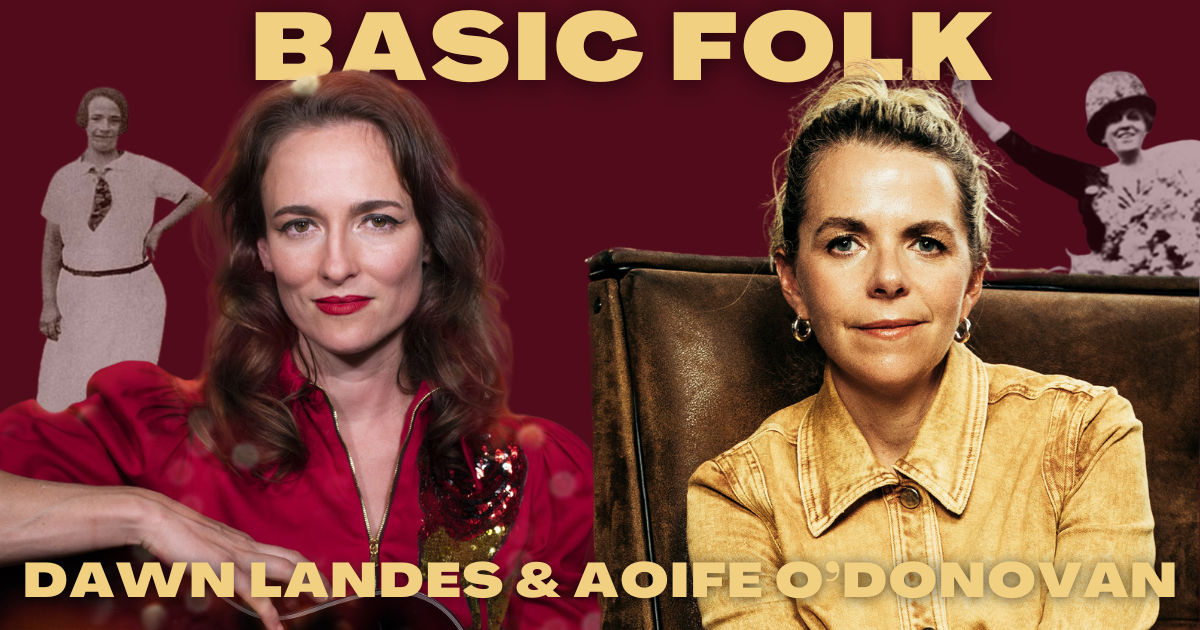
Aoife O’Donovan and Dawn Landes are long-time friends. Coincidentally, they both have new albums with strong feminist themes, so I wanted to interview them together and talk about WOMEN.
Aoife’s album, All My Friends, is specifically centered around Carrie Chapman Catt, a prominent leader in the suffragist movement. Inspired by speeches and letters, one song of Aoife’s, “War Measure,” is based on a letter of support from Woodrow Wilson to Chapman Catt. This album also marks the biggest project Aoife has worked on with her husband Eric Jacobsen, who conducts the Orlando Philharmonic and the Virginia Symphony Orchestras. It’s also the first record she’s released since becoming a mother. Of her song “Daughters,” she says she sings “as a modern woman, not wanting to leave the fight to the daughters of our daughters.”
Dawn Landes, also a mother, has a broader focus with her new album, The Liberated Woman’s Songbook. It features songs from the 1971 songbook of the same title, intended to inspire second wave feminists’ women’s liberation movement, and modern feminism of the 1970s. The songs span from 1830 (“Hard is the Fortune of All Womankind”) to 1970 (“There Was a Young Woman Who Swallowed a Lie,” “Liberation, Now!“), showcasing how women of the past expressed political activism in the struggle for gender equality.
Both Aoife and Dawn released their albums during Women’s History Month, which led us to a discussion of what that choice means to each of them. We also talk about protest signs, the Taylor Swift movie, gender stereotypes, and of course, all waves of feminism. Chatting about the 19th Amendment, we acknowledge that this only allowed white women to vote, which then leads to talk of how suffragists and feminist protest songwriters – like Meredith Tax – contributed to and gleaned inspiration from the civil rights movement.
Aoife and Dawn are legends! We start with what their internal dialogues were like when first undertaking these ambitious and important projects and end with Aoife putting Barbie on blast. All and all, this one’s a winner.
Photo Credit: Dawn Landes by Heather Evans Smith; Aoife O’Donovan by Sasha Israel.
Bearing witness to friends and collaborators Aoife O’Donovan and Sara Watkins in conversation is reminiscent of listening to their frequent musical partnerships, like their trio I’m With Her (with Sarah Jarosz). In moments, they blend perfectly, finishing each other’s sentences. They dance around each other, giving space for thoughtful responses and further questions.
In an artful, deeply reverent, and candid conversation, they delved into the intricacies of creating O’Donovan’s new release, All My Friends. The project originated from a commission by the Orlando Philharmonic Orchestra in 2019 and blossomed into what O’Donovan refers to as a “song burst,” inspired by the life and work of American Suffragette, Carrie Chapman Catt, and the centennial of the 19th Amendment.
The project propelled O’Donovan into unfamiliar territory as a songwriter and what emerged is a beautiful elegy to the women of the past who fought for the right to vote. It’s an homage to women of today – and future generations.
BGS spoke via Zoom with Artist of the Month O’Donovan from her home in Orlando and with Watkins joining from her home in Los Angeles.
Aoife O’Donovan: Hey! How are you?
Sara Watkins: I’m good. How are you doing?
AO: I’m so good. I love that I’m having an official conversation with one of my best friends. It’s sort of weird.
SW: When they called me to ask if I would be interested in interviewing you, it was an hour after I had just sent you that raving text about how much I adore the album and the music. I’m so blown away by it.
AO: Oh, my gosh! You’re so sweet! I love you!
SW: I’m not sweet, and you know that.
AO: You are. You’re a nice person. You just sometimes don’t hug strangers. That’s like your only quirk.
SW: I’ve been listening to the record since you sent it to me. But this week, I’ve been getting to really dive in and have the fun of trying to get inside your head a little bit. From that opening line, from the opening gesture at the beginning of the album, it’s just this gorgeous way of encompassing the whole record so beautifully. But it’s also so open. It’s not a thesis statement, but it powerfully contains the whole album. And I just wonder, where did that particular thing come from? And when did you know that that was going to be the way to start?
AO: It’s funny, that opening phrase, just the idea of “All my friends, all my friends,” that idea came to me many years ago, like maybe in 2018. I just had the melody and the chords and I kind of sat with it. It never was anything except for that. When I started working on the idea of this record, when Orlando (Philharmonic Orchestra) asked me to write 5 songs to commemorate the centennial of the 19th Amendment, I didn’t even go back to that tiny phrase immediately. I started elsewhere.
I started to write this other music, and then I remember sitting at the piano, actually at Full Sail, in the studio that I worked at here and I remember those words, “All my friends,” that was all that it was. I started thinking about what that meant, as even just a very simple, very kind of trite, almost overused lyric. There are tons of songs called “All My Friends.” There are movies called All My Friends. There’s a book that I just read called All My Friends Are Going to Be Strangers. It’s not a very original 3-word statement. But there was something about those words together with those chords, that all of a sudden felt like they belonged in this project. This is about the women who were before and the women who are yet to be born. It felt like this big circle all of a sudden of humanity and womanhood.
SW: It’s powerful on its own and then also with the context of the movement. I don’t often think of movements like that with friends. We think about it for younger generations. Let’s change policies to help younger generations, or to help the American people, but to put the word “friends” on it just makes it so heartbreaking. I just get sisterhood through this whole record in the most powerful way.
In “Daughters,” I have these 2 different visions of what’s happening in that song. With the way the band and the orchestration wrap around your guitar playing – the band does such a great job. You’ve played with Griffin Goldsmith, and with Alan Hampton a ton. The trio entity is so complete and so complementary to the songs and then to add to it, the way that you have the orchestration coming into play and the choir in such supportive ways. I had two images. One was this vision of a battlefield. Like when we were in grade school, where we talked about Gettysburg, or these legendary Revolutionary War battle sites and you see that field where the people are, and then you see these flanks coming in from the sides. That’s how that song feels to me.
AO: That’s like exactly what I was imagining when I wrote it. I’m not joking; that exact image of just being on a battlefield. And then, like the other voices coming in, or like the other people coming in to sort of fill the ranks. That’s exactly what I was envisioning. That’s so funny.
SW: It’s incredible.
AO: I’m so glad that that came across.
SW: It does. And it’s a credit to the arrangement, where you have the choir come in and there’s this rumbling support, or this foundational support from the orchestration before. When that chorus comes in, it just feels like you’re surrounded by kinship or by the sisterhood of support. And then the next verse opens up, and you’re alone again, or like fairly alone and you have to carry this battle by yourself, for yourself. It’s an individual fight. But then, going back to that “all my friends” lyric, it just feels like all of those entities are your friends coming to support you in your time of need.
AO: Exactly. That’s it exactly it. I feel like for me, when I made this record, and even now getting ready to put it out, it’s so specific and it’s so deeply personal. And it’s so not a record of like, “Check out this jam!” It’s just not that kind of record at all. And it’s not meant to be. I’m so glad that you listened to it in this way. This is what my hope for this record is, that people will be able to have the time to sort of process what it is. And these images and that exact thing of going into a battlefield. But then, there are moments when everything is stripped back, and you are sort of alone. But you’re also singing for your friends and for your community and for your mothers and your grandmothers and their mothers and their grandmothers. But also for the daughters of the daughters of the daughters. It just feels like this circle keeps on going.
In that song, specifically having the girl’s chorus, and on the whole record it was such an important thing for me to have the voices of young women, and not necessarily harmony vocals by my peers. I just felt there was something about the innocence of this young voice. The experience of getting to do it live with the Brooklyn Youth Chorus, and in Massachusetts, and even getting to do it in Glasgow with the girls’ chorus, it’s really powerful. It’s hard not to cry, even as a performer. It’s something about seeing young girls up on a stage, ready to give something. It just feels deeply emotional.
SW: And they are giving to you and you are getting to experience that support literally. Being on stage can feel very alienating and very vulnerable. It is a little bit of a fight sometimes within yourself if nothing else.
I feel like this is just such a powerful statement: grappling with change and growth. And obviously, that’s something that needs to be continually grappled with. It’s not like, “Oh, the change happens, and now we’re done. Check it off the list.” It’s a continual engagement, and it’s hard.
With “America Come,” when you get to that point in the album, it feels like the industrial revolution to me.
AO: Yes. I love that.
SW: Especially because you’re singing the words, “manpower, womanpower.” I feel like the machine is running.
AO: Right. I feel like that song with the, “dun, dun, dun, dun, dun, dun,” it becomes very steady. It is like the machine is running. That’s one of the songs on the record that really is so much about Carrie Chapman Catt, the suffragist who I was inspired to write about and write from the perspective of. That song is really heavily lifted from an actual speech that she gave. Some of those phrases are verbatim from her speeches.
That idea of this question, “What is this democracy for which the world is battling?” I feel like that’s a question that we can still ask ourselves. What are we doing here? What does this mean? What is America? I feel like that’s just such a deep question, and to be asking that in 1919 or 1918, or whenever that speech was from, and then to still feel it in 2022 – when I was writing this, it felt so relevant I feel like it’s almost eerie. We can’t give up the fight. We can’t stop. You don’t just check something off the list. As you said, it just kind of keeps going.
SW: And in that way, the album encompasses all the humanity, the micro versions of this, where for instance, in the institution of marriage, or a long-term relationship, or friendships, family, or whatever, it is about checking in every so often: “Wait! Life is running away with us. What do we want? What do we want in choosing this city, this school, this town, this job, this house?”
And that happens on individual levels. Like in my own life, I think, “Have I gotten away from this thing that I cared about five years ago? Have I checked in about this?” I feel like with the content of this album, I found myself thinking about the country, and I found myself thinking about me. Especially, with the more introspective song “The Right Time.” That’s the one where she talks to herself a little bit?
AO: Yeah, exactly. She’s like, “Don’t give them anything to laugh about.”
SW: Like a pep talk.
AO: Yeah, exactly that. It is a pep talk. That’s kind of my idea, about what she or anybody in her position would be going through as a woman with so much to offer, such a big brain, and so much potential. But, what do you have to climb over when you’re living in a time where you’re not valued and the only jobs available are to be a teacher in a one-room school house, or to leave the town that you grew up in? And people are going to look at you. People are gonna make fun of you if you’re a smart woman. People still make fun of smart women. It’s so weird.
Sara, we’ve talked about this a lot, being women in music, about how I feel like I’ve been so lucky and so respected throughout my career as a musician. You know I’ve always felt very valued and have very rarely been made to feel “less than” due to my gender. I feel so lucky that I’ve been in a community of musicians who have really supported me. But I know that that’s not the case for many musicians, and across other fields it is absolutely not the case.
SW: Yeah. I feel I have had a similar experience with that support. I can only imagine that in that era, when community really was the people around you – not people somewhere on the internet, in a town across the country that you can kind of connect with. She could physically rally the people in her region by convincing newspapers to publish things.
AO: By like getting up on stage and giving speeches or by writing a letter to the President and getting responses. Obviously, she’s not the only one. There were many women who were powerful and were doing amazing things. They just had to try so much harder, and that is what’s interesting. I think having a daughter in this time of life, in the 2020s, you want to give them the tools to always feel that they have the confidence and awareness to think of themselves as equal and powerful.
SW: Tell me about the research you did for this. So, the idea was presented to you and commissioned by The Orlando Philharmonic. Is that right?
AO: By the Orlando Phil, yep! So the OPO asked me in 2019. They said, “It’s the centennial of the passage of the 19th Amendment.” A lot of orchestras in the U.S. were asking female composers to write music for concerts they were doing. They were trying to diversify their programming. And when OPO asked me to do a piece, I was sort of like, “Why me?” That’s something I’ve never done before, writing an orchestral piece to be performed as a commission. It just felt like, that’s not how I operate. You know what I mean, I’m a songwriter. But I said, “Yes, that would be a good challenge.”
I didn’t think about it for a while, and then COVID happened, and everything kind of got crazy. I was like, “I’m never gonna write another song again, maybe this is it, maybe I’m done making music.” And then when I got down here to Florida, I started to regain some sense of artistic confidence and inspiration. I started to write a little bit of Age of Apathy that fall and then started to work on this 20- to 25-minute piece of music. So I went into the studio and really started to write it. But without text. I didn’t really even know what the text was going to be about yet. I wrote all the music first, because I had to get it to the orchestrator, Tanner Porter, who orchestrated all the charts for me. That was gonna take a lot of time.
That was November and the concert was supposed to be in May. I needed to get her the music. So I was working, working, working, and didn’t have any text. I wrote all the vocal parts and all the music sketched out to what I wanted it to be. We talked a ton about, “Hey, I want this to open with brass, and I want strings to come in here, and I want this line to be played on cello, and these are the brass lines that I want.” I would make these demos where I would play all that stuff for her, and then she orchestrated it. She also put together all the interludes that sort of stitch the songs together, which are so cool.
It was really fun to have this blank slate without any lyric goal or hesitancy to hold me back. I had simultaneously been doing research, reading, and figuring out what I wanted it to be. “All My Friends” is really just an imagining of the moment when these movements met up in Tennessee to get these votes ratified. And they did march. And they did plead their case and were ultimately successful. But those images are from my own head, like a reimagining of vague historical events.
SW: Let me just jump in really fast just to say that I love how much space you gave for yourself in imagining that imagery. I feel like my own temptation would be to report and do the research and make it rhyme. I feel like you’re the perfect artist for this kind of commission, because of the way that your melodies can float above or without the constraints of rigid time that a lot of us songwriters are tempted to do. The way you carry a line – I don’t think you always realize how extraordinarily unique it is. I think that because of the way that you do music like that, it lends itself to an orchestral project where we’re not dealing with 8-bar phrases and the occasional extra 2 bars and things.
I feel like you are the perfect singer-songwriter to receive this kind of commission. I am so happy that you indulged in that vision of the world, of the people descending into Tennessee, and what the fog was like and what the air was like. Because that is what the feeling was like and that’s the story. It’s not just, “on this date this happened.” I’m glad that you put yourself in the story, because that gave so much room for the arc and the heart of the thing and makes me wanna listen. If I had done this, it would sound like an eighth-grade book report.
AO: No, come on, give yourself more credit, Sara! I don’t have any idea what Carrie Chapman Catt was like personally, because I didn’t know her, but I felt like I could give her dialogue. You can make her personality be whatever it is that you want her to be.
I just read this amazing book called Wolf Hall. I was so fascinated by how the writer, [Hilary Mantel], makes Thomas Cromwell, this character, from the 1500s, feel like this modern, empathetic, shrewd, conniving, and complicated character. That also could have felt like an eighth-grade book report about Thomas Cromwell, but the author injected life into him. That’s the cool thing when you are an artist and when you are a writer, that’s what we do for people who were real or people who we’re making up. You’re taking these embellishments, and you’re telling a story with them.
With the song “Crisis,” [Carrie Chapman Catt] gave a speech called “Crisis” in 1916, and I read that speech and thought, “Oh, my God! This!” Yes, she’s using archaic language, and nobody speaks like this, but how can I imagine her as almost like a bluegrass singer getting up there and saying, “Alright, gather around girls. I’m gonna tell you about what’s going on and what we’re gonna do about it.”
Once I realized I could make it my own because this is my piece, it sort of like set me free into this new creative territory.
SW: And the way that you’re talking about “Crisis,” just the word itself makes you think of ominous minor chords and tension. And with those beautiful horns and flutes, it is just this wonderful, hopeful dawn of a movement. The dawn of a new time is here while you’re singing about the crisis. I love the optimism that’s contained in that and how you acknowledge that everything is all together.
AO: Exactly. One of my favorite things about “Crisis” is I really wanted there to be mandolin on it. It just has that folky feel to it. I had connected with Sierra Hull, who obviously, I’ve known for years and years, but we hadn’t really played that much music together, and I remember being on Cayamo in 2022, and really jamming with her for the first time. And then, you know, fast forward to eight months later I was like, “Oh, I think Sierra would totally kill this song.” I love her playing on it. It just has the right amount of weight to it.
SW: On “War Measure,” I’ve never heard you sing like you do on that chorus. The way you pull down those notes!
AO: It’s hard. It’s actually really hard for me to sing like that. It hurts my voice. But that’s actually my favorite one to do live, because there’s something about singing those lines, “If they pass this amendment to our constitution, we are gonna be talking about revolution.” That’s funny, because I had written that song without the lyrics. And then when I put the lyrics in, I was like, “Oh, this is actually, really rad.” It made it fun.
SW: I bet that was really fun. It makes sense that you wrote the lyrics after a lot of the music, because you get so much in there. It feels like you have room to expand the lines in ways that you might not if you’re writing it down on paper, right? And you get to really chew on certain lines for longer. I feel like there are some lines that get the time that they want to have rather than the time that might have been allotted to them.
AO: Exactly. It was odd, but I’m really glad that it worked out like that.
SW: I love “Over the Finish Line.”
AO: With Anaïs [Mitchell], who is a genius.
SW: And such a wonderful voice to have on here, both in terms of tonality – because you sound amazing together – but also because her songwriting voice has been a voice of movement, a voice of awareness. I love that choice.
AO: The idea kind of came after the fact. I recorded the song and I wanted there to be another voice. I didn’t want it to be me singing harmony with myself. I wanted something starkly different, tonally, from my voice. I’ve known Anaïs for almost 20 years. We’ve been in this same scene and the same world, but we’ve never really done anything together. It worked out so well. I love what she did and how she moves around through the melody and the unison part at the end of the song. I felt connected to her.
SW: I love how it is not the kind of harmony part where you are trying to blend them together. It is very much two individuals choosing to sing together. There are places where your phrasing is different and you’re shortening different lines. It is a perfect example of what you have throughout this record with the children’s choir and the orchestration. To have this lovely duet moment is another version of the sisterhood of letting everyone be themselves rather than needing to have it all looking so pretty and clean and tidy. It is like, “We are existing together, and it’s a beautiful thing.”
There’s a confidence and ease to Aoife O’Donovan‘s music making, brought forward throughout her career by her languid, tender, and emotive voice. Just as striking and crystalline as it is cozy and comforting, her voice is a truly iconic instrument in Americana, bluegrass, and new acoustic music. Still, as she readies her new solo album, All My Friends (out March 22 on Yep Roc), it feels as though O’Donovan is decidedly stepping into a new era of confidence and self-assuredness, devoid of any sense of desperation or flightiness or unfettered ambitions. There’s a steady, intentional march to the blossoming of her catalog and her artistry and it’s on full display on All My Friends.
The album was conceived as a sort of tribute to or reckoning with the cross-generational struggle for women’s rights, highlighting the passage of the 19th Amendment over 100 years ago and picking up that timeless mantle of ever-striding towards justice. It’s a perfect project to highlight during Women’s History Month; the intellectual and political messages within it are softened – though never outright whitewashed, revised, or sanitized – by O’Donovan’s perspective as a mother of a young daughter. With All My Friends, she is continuing her journey with another timeless tradition in string band music: the role of mother-activist-songwriter-composer.
One of the record’s lead singles, “Daughters,” was heralded in a press releases as “a meditation on the eternal quest for women’s rights and equality.” Meditative qualities might be the most tangible and original through line of O’Donovan’s songwriting, song collection, composition, and her vocal affectations – from as far back as her days with Crooked Still, or evidenced by the songs she brought to her supergroup trio, I’m With Her, with Sara Watkins and Sarah Jarosz. As on “Daughters,” O’Donovan more often than not opts for quiet-and-impassioned, subdued-while-soaring vocals. She’ll wrap you in the gauze and glitter of her one of a kind voice and, in doing so, prepare you ever so gently and kindly to receive the messages in her lyrics – however demonstrative or abstract they may be.
O’Donovan’s latest era of confidence is also well marked by her vast and varied resume of musical collaborations. Besides Crooked Still and I’m With Her, she’s released music with Goat Rodeo (Stuart Duncan, Yo-Yo Ma, Edgar Meyer, Chris Thile), Noam Pikelny, the Milk Carton Kids, Taylor Ashton, Donovan Woods, and so many more. In more recent months and years, she’s featured Allison Russell on a track (on 2022’s Age of Apathy), collaborated with mind-boggling guitarist Yasmin Williams and step-dancer Nic Gareiss on a stunning number entitled “Dawning,” and even “came back” to straight ahead bluegrass with a recent single feature on a Becky Buller track, “Jubilee.”
Her output is ceaseless, her art is prolific, but here – as in the new album, and across her discography – the hallmark of O’Donovan’s work isn’t volume, but intention. This is not breakneck, music industry ladder climbing, this is an artist deliberately expanding the universe of her music bit by bit, voice by voice, collaboration by collaboration. It’s part of why she’s such an effective voice and influence in control rooms, too. (Though her production credits are relatively few, they are mighty.) And it’s part of why, as you scroll through our Essential Aoife O’Donovan playlist, you’ll find as many surprising and eyebrow-raising selections as you will her mighty, familiar modern classics.
All My Friends – with appearances by The Knights, The Westerlies, Anaïs Mitchell, Sierra Hull, Pikelny, and more – is yet another demonstration of O’Donovan’s community, her central role within it, and her confidence in inhabiting that role wholly and completely. This is meditation without stagnation, orchestration without machinations, softness and tenderness, but with a steel spine. These are challenges to the status quo while knowing real progress is made with one foot placed in front of the other – and with many other footsteps following her own.
Throughout the month of March, as we highlight Women’s History Month, we’ll be celebrating the new album, All My Friends, and Aoife O’Donovan as our Artist of the Month. Stay tuned for a special “In Conversation” Artist of the Month feature to come later in March featuring an amazing artist and collaborator of O’Donovan, and we’ll also be dipping back into the BGS archives to resurface so many amazing songs, videos, articles, and stories that highlight the incredible music of Aoife O’Donovan.
Stripping away convention, honing in on narrative, and keeping complex melodies afloat with her ethereal vocals, Sarah Jarosz is a superlative presence in the roots music landscape. The daughter of two schoolteachers hailing from Wimberley, Texas, she began learning to play the mandolin at age 9. By the time she turned 12, Sarah was already gracing stages alongside the likes of musical giants David Grisman and Ricky Skaggs.
Her multi-instrumentalist capabilities and songwriting proficiency only grew from there; at the age of 16, Jarosz signed a deal with Sugar Hill Records and released her first album, Song Up in Her Head, in 2009. This critically acclaimed record would be the first of what now surmounts to seven full-length, tremendously lauded projects. Polaroid Lovers, Jarosz’s latest and the muse of her current tour, is set to be released on January 26, 2024.
Over the span of nearly two decades spent recording and touring, Sarah Jarosz has established herself as a foundational thread in the tapestry of modern roots music. From impeccable collaborations (with Punch Brothers, David Grisman, Sierra Ferrell), to forming a supergroup alongside Aoife O’Donovan and Sarah Watkins (I’m With Her), to a whopping 5 hours and 45 minutes of music published under her name, Jarosz stands firmly in her power. As she forges ahead, she only continues to outdo herself.
While her entire catalog is sure to edify any listener, this compilation showcases some of Jarosz’s most essential tracks. Tracing the arc of her musicianship from adolescence to adulthood, the following 17 songs demonstrate the particular sonic maturity, lyrical astuteness, and emotional evocation that span all she creates.
“Mansinneedof”
From Jarosz’s first album, Song Up in Her Head, this indelible instrumental boldly answers the question, “Can a mandolin be a lead instrument?” with a resounding, “Of course!” The first of many Grammy nominations acquired throughout her career, this tune was considered for Best Country Instrumental in 2009. Impossibly advanced beyond her years, Jarosz’s nimble and articulate melody is akin to a sonic coast through star-studded galaxies.
“Come On Up To The House”
In a clear demonstration of the range of her musical influences, the most-streamed song from Sarah’s inaugural album is a cover of Tom Waits’s “Come On Up To The House.” Her cool, slippery voice lends a new angle to the iconic tune. Paired with astute backing vocals from Tim O’Brien and a slick fiddle solo by Alex Hargreaves, this song grooves right along – an ingenious, albeit unlikely, bluegrass cover.
“Annabelle Lee”
Jarosz’s sophomore album, Follow Me Down, is latent with a mystical quality that reaches towards the ethers, shepherded into expansiveness by a creative spectrum of influences. The third track, “Annabelle Lee,” features lyrics adapted from the illustrious Edgar Allen Poe poem of the same name. Jarosz sets the eerie tale against a conglomerate of haunting textures – the heightened pace and drums evoke a sense of urgency while Jerry Douglas makes his lap steel wail, a somber cello moans, and Dan Tyminski’s backing vocals lend fullness to the ravenous depths of this dark tune. It is also worth noting that Jarosz performed and recorded this tune, very fittingly filmed in an old hunting lodge in the Scottish Highlands, for the Transatlantic Sessions in 2011. (Watch above.)
“The Tourist”
Sarah sure knows how to pick a cover. From Prince to the Decemberists to Joanna Newsom, she can masterfully braid her grace and artistry into anything. “The Tourist” offers Jarosz’s take on Radiohead, an influence cited among many of Jarosz’s contemporaries, including Madison Cunningham and Chris Thile. In fact, Punch Brothers provide the musical backdrop on this track, their syncopated rhythms and blustery fills meeting Jarosz and Thile’s airtight harmonies to create a sense of whirling, palpable, delicate angst.
“Build Me Up From Bones”
Off of her Grammy-nominated third album, this titular track received an additional nom for Best American Roots Song of 2014. This song is SJ’s most popular of all time, having racked up a total of 70.7M streams on Spotify. Here, Jarosz’s songwriting forges into new territory; her lyrics are both poetic and measured, imbued with textures of velvety longing. The form matches the content, from Aoife O’Donovan’s dewy harmonies to the pizzicato string section to the gorgeous cello solo. Effectively, listeners are bathed in a most intimate listening experience that beckons infinite re-listens.
“1,000 Things”
In another track off of Build Me Up From Bones, here SJ shares songwriting credits with the legendary Darrell Scott. The result? Pure synastry. Underscored by pulsating Celtic rhythms, this uptempo earworm says 1,000 things despite its brevity.
“House of Mercy”
This tune, along with the album carrying it – Undercurrent – won Sarah her first two Grammys in one night. “House of Mercy” was crowned Best American Roots Performance of 2017, and it was indubitably worthy. Jarosz shares songwriting credits with Australian singer-songwriter Jedd Hughes, and together they achieve a dark story arc as the encumbered narrator addresses an unwanted visitor. Jarosz opens up her sound into cutting, fierce Americana twang – effectively offering audiences a new layer to her multitudes of sound.
“Jacqueline”
The closing track of Undercurrent is stark, honest, and bewildering. The song is named after the Jacqueline Kennedy Onassis Reservoir in New York City where Jarosz, who once lived nearby, would often do her pondering. Accompanied solely by an electric guitar, Jarosz’s voice is agile and glimmering as liquid silver. She muses over the reflective surface and projected companion while disclosing her own state of unease, immersing listeners in an intimate, unyielding pensiveness.
“Your Water” (with Parker Millsap)
The first of a two-single release titled the Luck Mansion Sessions (2017), SJ here collaborates with fellow singer-songwriter and multi-instrumentalist Parker Millsap. The track, written and originally released by Millsap, is delivered as a duet. The groove opens up into a soul-type feel, allowing for Sarah to showcase a more raw, bluesy, unmeasured latitude of her voice.
“See You Around”
“See You Around” is the title track off of supergroup I’m With Her’s first and – to every listener’s chagrin – only full-length album. In 2018, Jarosz linked up with two of the most astounding women in roots music, Aoife O’Donovan and Sara Watkins, to form a trio of unadulterated excellence (it should be noted that that group won Americana Music Association’s Music Duo/Group of the Year). The album waffles between the three songwriters’ contributions, with each vocalist singing lead on an approximately even number of tracks. “See You Around” is driven by Jarosz’s signature poetic lyrics and fluttery melody, elevated to new horizons by the pristine, angelic blend of harmonies from Watkins and O’Donovan. The musical chemistry these women share evokes the divine; every single song on this album delivers listeners into the sublime.
“Johnny”
For her also Grammy-winning fifth studio album, World on the Ground (2020), Sarah Jarosz invites listeners to experience an array of vignettes; her songs on this album, more than ever, become vehicles for potent storytelling.“Johnny” is the second of three tracks on the album named, presumably, for a character the song aims to illustrate. Jarosz has said that during this album, she “[Tried] to take a step back and look out at the world in my songwriting, rather than looking inward,” and spent much time constructing the album as a patchwork of memories from her hometown in Texas, both faithful and fictionalized.
“Johnny” conveys the psychological landscape of a slightly drunk, slightly disillusioned man who is “just waitin’ on the stars/ that will never align.” It’s all slightly devastating, yet the melody latches onto an unforgettable earworm of a hook uplifted by its folk-pop flavor. Jarosz incorporates a strings section alongside drums, electric guitar, and mandolin, seamlessly using the nuances of sound to bolster the complex mundanities of Johnny’s life.
“Pay It No Mind”
Jarosz shares the songwriting credits on “Pay It No Mind” (also off of World on the Ground) with the renowned John Leventhal, who also produced the album and plays a slew of instruments sprinkled throughout. The song begins with just Sarah and a pensive guitar riff, musing upon a bird and her ponderings. The song then builds in dynamics, layering percussion and eventually a full orchestration of instruments and vocals. It’s slick, it’s sly, and it looks at the world with a cool sense of distance.
“I Still Haven’t Found What I’m Looking For” / “my future”
In the midst of quarantine, Sarah Jarosz committed to staying connected with fans by using Garageband and her home microphone to record one cover each week from July to October of 2020. In January 2021, she released two of the covers, U2’s “I Still Haven’t Found What I’m Looking For” and Billie Eilish’s “my future,” on streaming services. These barebones covers are a time capsule of a moment drenched in emotion, isolation, and fear. Catharsis swells through the minimalistic recordings – Jarosz cradles her whole soul into these songs, and the results are absolutely astounding.
“Mama”
For her sixth full-length studio album, Blue Heron Suite (2021), Sarah Jarosz released a song cycle that she first premiered at Freshgrass in 2017, whereupon she was awarded with the Freshgrass Composition Commission. At the time, Sarah was reckoning with her mother’s cancer diagnosis and reflecting upon childhood trips to the town of Port Aransas, Texas, which at that time had recently been severely affected by Hurricane Harvey. Named for the Great Blue Herons she and her mother used to observe along the town’s shore, this album is imbued with love and hope in its deepest forms. “Mama,” the opening track, is an utterly gorgeous, pared-down arrangement of voice and guitar – a most gentle and tender ode to Jarosz’s mother, who is thankfully now in remission.
“For Free” (with David Crosby)
An astonishing songwriter and pioneer of three-part harmony in American roots/folk music as we know it, David Crosby was a long time supporter of Sarah Jarosz’s work up until his passing last January. Sarah graced the title track of Crosby’s final full-length solo album, For Free (2021). The two sing the entirety of this Joni Mitchell cover in tight harmony, their voices mirroring one another perfectly. The pared back solo piano accompaniment highlights the duo’s vocal finesse; every riff is intertwined with precision and elegance.
“Jealous Moon”
“Jealous Moon” was the first of four singles SJ released from her upcoming album, Polaroid Lovers (out this Friday). Co-written alongside Daniel Tashian, the record’s producer, Sarah remarks of the song, “I’m always seeking to push myself into new sonic territory, and this song gave me permission to not hold back.” In this track, she boldly steps away from her traditional acoustic tethers and moves towards a more pop-rock-twang fusion. Jarosz successfully elicits a sense of novelty while still embodying the sense of fullness and depth she puts into all she creates – reminding us that we still have yet to see the full bloom of her artistry.
The songs of Sarah Jarosz have always been snapshots. Each, whether literally or obliquely, is a tableau – a window into a moment in time, an attempt to capture but never contain the intangible present. Whether demonstrable story songs or abstract, poetic text paintings, Jarosz’s catalog of material shows a ubiquitous skill – a writerly athleticism – for ushering her listeners into the scenes she inhabits or constructs. From her earliest release to her newest, Polaroid Lovers (out January 26 on Rounder Records), Jarosz’s point of view has been confident, relatable, and inviting.
Simultaneously, the expansive body of work she’s produced since her 2009 Sugar Hill debut, Song Up in Her Head, tells a tale as much of uncertainty as of skill and finesse and, within that uncertainty, a commitment to relishing the journey – rather than rushing toward an arbitrary destination.
A teenager when she first gained national notoriety, Jarosz was often compared to her mentor-peer-friend Chris Thile and her contemporary, Sierra Hull. While child bluegrass, Americana, and string band stars – proverbial and oft-mythologized prodigies – have a much more gentle route to adulthood than say, their Hollywood counterparts, it’s still a time hallmarked by experimentation, growing pains, exploration, and a prerequisite amount of floundering. Musically, Jarosz may have “floundered” a bit less than say, Hull or Thile or any kid whose teen years may have had a recorded, audio history. Nevertheless, you can trace a through line of angst, introspection, and finding oneself underlying the precocious self confidence of her early albums.
By the time Jarosz reached 2013’s Build Me Up From Bones, which gained her her first Best Folk Album Grammy nomination, that uncertainty was no longer an undertone, but a focal point in her music. On both Bones and the follow up full-length, Undercurrent, which then won the Grammy for Best Folk Album, Jarosz picks up and runs with those musical expectations, whether overt or projected. She plays with the dichotomy between the public nature of her growing up a heart-on-her-sleeve songwriter and bluegrass picker and the individual, private nature of seeking and finding her own agency within those paradigms. She purposefully built broad and appealing, commercial songs that are both assured in their sincerity and unconcerned with virtuosity or authenticity for their own sakes. She knows exactly what she’s doing, even – if not especially – when she does not.
Needless to say, the following projects World On The Ground and Blue Heron Suite feel like they are both indelible home bases built on the steady foundation of the albums that led to them. Each are distillations of Jarosz’s musical commitment to bringing her audience inside the turmoil and delight, growth and doubt, beauty and bittersweetness of life and song. Jarosz had arrived at her destination, hadn’t she? In her beloved New York City, a Grammy winning artist, picker, and songwriter who knows who she is and why she does what she does.
Ah, but remember, it’s the journey Sarah Jarosz is after and not the destination. Polaroid Lovers is a lens into the new growing pains, the new uncertainty, the new uprooting and, eventually, re-rooting Jarosz finds herself in the middle of now. She recently moved to Nashville, building a life with her new husband, bassist Jeff Picker. Polaroid Lovers, like its predecessors, brings the listener into how living in Nashville has reshaped Jarosz’s songwriting and creative and recording processes.
It may not sound like a Music Row album – it sounds, as all of her work does, exactly like Sarah Jarosz. Whatever that sounds like! – but it’s a collection that has the Row tangled among its roots and certainly in the water. Polaroid Lovers was recorded at Sound Emporium and produced by Daniel Tashian, plus it has many a credited co-writer, a bit of a departure for the songwriter who, besides in her work with Aoife O’Donovan and Sara Watkins in I’m With Her, rarely co-writes material for her own albums, preferring to pen most lyrics and tunes herself. Music Row and Americana hit writers like Ruston Kelly, Natalie Hemby, Jon Randall, Gordie Sampson, Tashian, and others each lent their own fingerprints and touches to this set of song snapshots.
Does Polaroid Lovers sound new? Does it sound like Nashville? Yes, it certainly does, but it doesn’t sound instant or ready-made either, and it always sounds like quintessential Jarosz. This is evidenced nowhere on the record as strongly as one of its lead singles, “Columbus & 89th.” Among more than a few masterworks in Jarosz’s catalog that center on her beloved, transplanted (former) hometown, New York City, “Columbus & 89th” is perhaps the best example of the form. Wistful and hopeful, with a tinge of bittersweetness from the wisdom that comes with age, it paints such a specific picture – of a literal street corner – but, as in all of her snapshots, this polaroid is not confining or finite, it’s resplendent and limitless. Following the photography metaphor one step further, it’s not difficult to see how the perspective Jarosz has gained by moving away from the city might have enabled her to render such a picture perfect homage to New York.
This is a vibrant, animated collection of Polaroid Lovers. This is Sarah Jarosz at her best– for now.
Watch for our Artist of the Month interview feature with Jarosz to come later this month, plus we’ll do a catalog deep dive and showcase plenty more content pulled from the BGS archives. For now, enjoy our Essential Sarah Jarosz Playlist:
Photo Credit: Shervin Lainez
This website uses cookies to improve your experience. We'll assume you're ok with this, but you can opt-out if you wish.AcceptRejectRead More
Privacy & Cookies Policy
Privacy Overview
This website uses cookies to improve your experience while you navigate through the website. Out of these, the cookies that are categorized as necessary are stored on your browser as they are essential for the working of basic functionalities of the website. We also use third-party cookies that help us analyze and understand how you use this website. These cookies will be stored in your browser only with your consent. You also have the option to opt-out of these cookies. But opting out of some of these cookies may affect your browsing experience.
Necessary cookies are absolutely essential for the website to function properly. This category only includes cookies that ensures basic functionalities and security features of the website. These cookies do not store any personal information.
Any cookies that may not be particularly necessary for the website to function and is used specifically to collect user personal data via analytics, ads, other embedded contents are termed as non-necessary cookies. It is mandatory to procure user consent prior to running these cookies on your website.