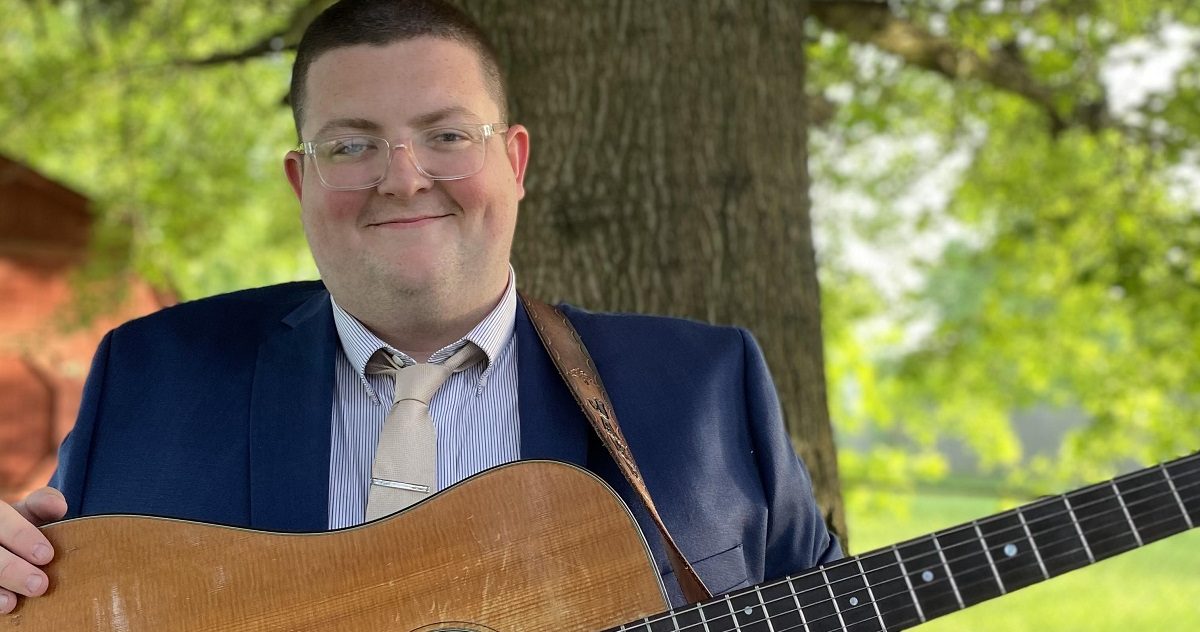
LISTEN: Jake Eddy Feat. Bryan Sutton, “Billy in the Lowground”

Artist: Jake Eddy featuring Bryan Sutton
Hometown: Parkersburg, West Virginia and splitting time in Nashville
Song: “Billy in the Lowground”
Album: Jake Eddy
Release Date: July 10, 2021

In Their Words: “This was easily one of the most incredible sessions I’ve ever been a part of. Bryan and I really connected in the studio and had a great time. It’s so fun to approach an old tune like this with an open mind and just see what happens (especially with a great player like Bryan). This tune did not have any special meaning to me, at first. I knew that I wanted to include Bryan in some capacity so we got together and just started playing through some tunes. ‘Billy in the Lowground’ came up and we both were into it — so that’s what we played. I think the fact that it was unplanned adds to the excitement. At the end of the track you can hear some banter between us that sums up the session perfectly.” — Jake Eddy


Photo credit : Teran Storey

John Reischman’s “Salt Spring,” Tune of a New Old-Time Generation

The “bluegrass songbook,” a suitably vague though well-known concept in bluegrass and old-time circles today, is a phrase that references the collective of songs and tunes most popular and most played by the community that makes up bluegrass and old-time music. Most of the melodies included in this informal — though often gatekept and debated — canon have well established origins, from source recordings, legendary writers and composers, famous performances, and so on. Even so, it’s difficult to trace each and every Bluegrass Album Band hit or Del McCoury favorite back to the beginning, when it was first being adopted and popularized among jam circles, as fiddle tunes, by and for laypeople as much as the performing professionals. 

With material by forebears like Flatt & Scruggs (“Foggy Mountain Breakdown” to “It Ain’t Me Babe”) or Bill Monroe (“Muleskinner Blues” to “Monroe’s Hornpipe”) or the Stanley Brothers (“Ridin’ that Midnight Train” to “Little Maggie”), the Osborne Brothers, Hazel & Alice, Reno & Smiley, and on down the line, it’s not so much a question of why or how their charming, archetypical songs made it to open mics and festival parking lot jams. But in modern times, as in bluegrass days of yore, just as many new, contemporary tunes, songs, lyrics, and melodies are being translated from professional studio recordings, radio singles, and on-stage hits to sing-alongs, play-alongs, and day-to-day jam fodder. And the process by which this happens is, part and parcel, what bluegrass and old-time are all about.

How did “Rebecca” become an almost meme-level instrumental in the past fifteen years? How did Frank Wakefield know that we needed a “New Camptown Races?” How many millennial and Gen Z pickers learned “Ode to a Butterfly” or “Jessamyn’s Reel” note for note? Each modern adoption into the bluegrass songbook, into that unflappable canon, is an idiosyncratic marvel unto itself — and perhaps no modern, original instrumental tune encapsulates this phenomenon better than John Reischman’s “Salt Spring.”

Being a picker myself, I first learned “Salt Spring” in Nashville in perhaps 2012 or 2013, taught to me by fiddlers who encountered the melody from John himself — and through the bluegrass and old-time camp scene in which he’s pretty much a ubiquitous figure, especially on the West Coast, where he lives and grew up. At that point, the song was regarded as a Colorado-grass staple, transplanted east by a regional genre phenotype that celebrates and capitalizes on timeless, sometimes ancient-sounding aesthetics played with chamber music-level intricacies and techniques. The forlorn, winsome — though simple — chord progression in the A part give way to a longing, pensive, and momentum-building B part — and no matter how “Salt Spring” is rendered, as an “everyone play at once” old-time jam song, or a thoughtful chamber-grass slow burn built to a raucous, defiant end, or as a no-holds-barred SPBGMA style MASH number, it’s a chameleonic composition, allowing itself to fit into every single context in which it’s applied. 

“Salt Spring” is truly the instrumental song of the post-Nickel Creek, post-Crooked Still, post-grass generation. As string band genre aesthetics dissolve in the global music marketplace, songs like “Salt Spring” typify this generation’s longing for music that feels honest, true, and real as much as it’s approachable, whimsical, and joyful; songs that celebrate the traditions that became the bedrock of these musics, without being predicated upon militaristic and arbitrary rules to “protect” or propagate those traditions. 

And, though modest to a fault, unassuming, and generally pretty subdued as a person and performer, Reischman has felt this phenomena metamorphosing his composition all along. With his first recording of “Salt Spring” available digitally and writ large, he’s communicating to everyone who loves the song that yes, he knows what it means to us, what it’s become, and what it could grow into still. It’s no wonder then, that when putting together the roster for this new recording and iteration of the track, that he didn’t simply call on his band, the Jaybirds, but he looked to the very generation that’s chosen “Salt Spring” as its own with Molly Tuttle on guitar, Alex Hargreaves on fiddle, Allison de Groot on clawhammer banjo, and Max Schwartz on bass.

A veteran of The Good Ol’ Persons, the Tony Rice Unit, and many other seminal acts of his own generation and time, Reischman knows firsthand the value of cross-generational knowledge sharing and his new album, New Time & Old Acoustic demonstrates this ethos in both conscious and subliminal ways. “Salt Spring” is a perfect distillation of these values and it’s truly fitting, as the tune will forever be enshrined and ensconced in the indelible, if not somewhat squirrelly and subjective, bluegrass and old-time songbook and canon.

(Editor’s note: New Time & Old Acoustic is available for pre-order now.)


Photo courtesy of the artist.

LISTEN: Tylor & the Train Robbers, “Lemonade”

Artist: Tylor & the Train Robbers
Hometown: Boise, Idaho
Song: “Lemonade”
Album: Non-Typical Find (produced by Cody Braun of Reckless Kelly)
Release Date: July 9, 2021

In Their Words: “Everyone has heard the saying ‘When life gives you lemons, make lemonade.’ I wanted to use that sentiment as the theme of this song without actually saying it and dig into the idea that when you don’t find a way to bring some good out of the bad, you’re just stuck with the same old lemons. When I’m writing about characters, I like to try to make them feel as real as possible, so I often end up using people I know as inspiration. This one started with the first character that the protagonist encounters, who was based on my grandfather (The Storyteller from our last album). He was a hard-working man who spent his weekends hunting in the hills with his hound dogs and was back at work in the mill come Monday. He was also very fond of bluegrass music so as an additional nod to him we brought in a little of the bluegrass sound featuring a banjo solo.” — Tylor Ketchum, Tylor & the Train Robbers


Photo credit: Maggie Grace Photography

WATCH: André Dal, “Dal’s Breakdown”

Artist: André Dal
Hometown: Lisbon, Portugal
Song: “Dal’s Breakdown”
Album: Beyond the Tagus River
Release Date: June 2021

In Their Words: “‘Dal’s Breakdown’ is an uptempo banjo tune that includes myself on banjo, Gil Pereira (PT) on upright bass, Bob Hamilton (USA) on guitar, Dave Bagdade (USA) on mandolin, Jeroen Schmohl (NL) on dobro and Meade Richter (USA) on fiddle. I first came up with the melody while looking for a breakdown style of tune. My good friend, Hildebrando Soares, came up with the idea for a homemade video inspired by what all bluegrass musicians want, which is to play all day, and on what all bluegrass musicians’ wives want, which is for their husbands to stop playing and do their household tasks.” — André Dal


Photo credit: Hildebrando Soares

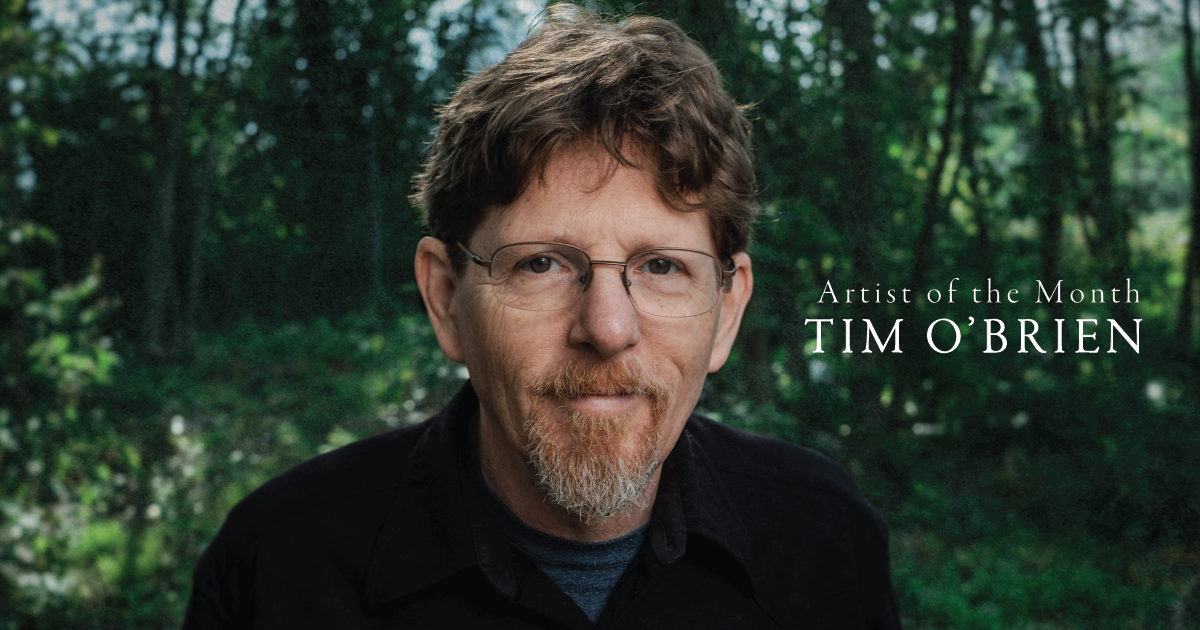
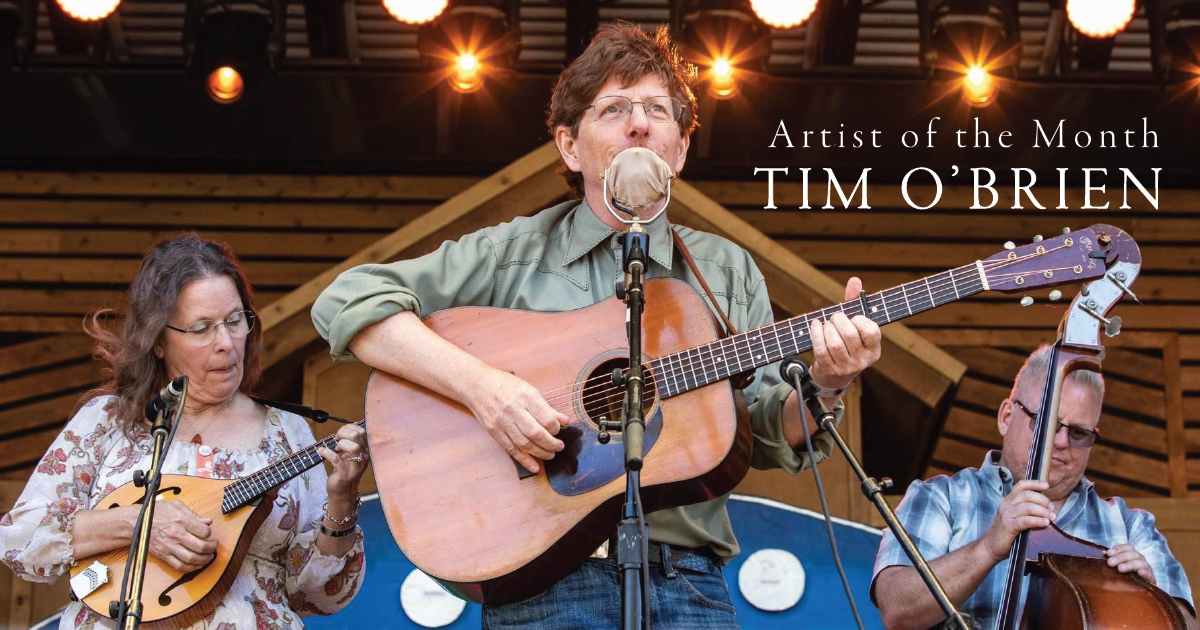
Artist of the Month: Tim O’Brien

Tim O’Brien is putting his best foot forward with He Walked On, a new collection of eight originals and five carefully chosen covers. Through his music he shares his worldview, by channeling significant figures like Thomas Jefferson and Sally Hemings, Congressman John Lewis, and John Prine. The topics on this self-produced record may be heavy, yet O’Brien believes that the music offers an opening for reflection.

“When you sing something, it kind of sneaks in, in that music is a powerful medium,” he says. “It’s a language that’s mysterious on its own — it tugs on the emotions. It grabs people’s attention in a certain way and prepares them to hear things, and music kind of draws people together.” O’Brien wrote the album’s lead single, “I Breathe In,” which BGS proudly premiered in May. He relied on longtime band members like Mike Bub on bass, Pete Abbott on drums, and fiancée Jan Fabricius on vocals to round out the record.

“The project is about what you need to do to survive in America,” he told BGS. “We all need a roof over our head and something to eat, of course, but we also need love. I’ve been grateful to have Jan beside me during the pandemic. The song stresses the need to take things one step or one breath at a time, and to keep those you love close as you do so.”

O’Brien’s own journey has carried him from his birthplace in West Virginia, through the Colorado bluegrass scene, and ultimately to Nashville, where he’s been a key figure in the roots music community since the ’90s. In some ways, He Walked On reads like a map, with distinctive songs like “Five Miles In and One Mile Down,” about the Upper Big Branch Mine disaster in West Virginia in 2010. (The banjo adds some serious mood to this narrative, too.) In addition, “El Comedor” was written with Fabricius after they joined a grassroots humanitarian effort to provide water and food to immigrants at the border near Tucson, Arizona.

“You talk about the music, where would we be in America if we didn’t have this mix of people from Africa and Europe and Native Americans,” he says. “We’re family, but we’re estranged, and we’ve never learned to be family in so many ways. And it’s crazy, and we’re still suffering from that. If you read James Baldwin — America’s insane. And until we figure out how to actually deal with reality here, we’re just going to stay insane.”

With a multi-tasking musician like Tim O’Brien, who plays mandolin, fiddle, guitar, mandola, and mandocello on this record, his creative path could carry him almost anywhere. And his comic timing is impeccable on songs like “Nervous” and “See You at the Funeral.” Until he brings us on his next adventure, let’s enjoy a few songs from He Walked On, mixed in with some classics, on our BGS Essentials playlist. Read part one of our Artist of the Month interview here. Read part two here.


Photo credit: Michael Lewis

WATCH: Rachel Sumner, “Lose My Love”

Artist: Rachel Sumner
Hometown: Boston, Massachusetts
Song: “Lose My Love”

In Their Words: “A lot of the songs I write are carefully crafted over long stretches of weeks, months, and even years. ‘Lose My Love,’ however, was one of those songs that came to me fully formed in an instant. I was in the shower when I started singing the chorus and realized there was a little film noir playing in my mind underneath it. I rushed out, wrote it down, and let my imaginary movie guide the verses. At the time I was one of the writers and lead singers of the bluegrass band Twisted Pine, so we recorded and included it on our eponymous album released in 2017. After parting ways with the group in 2019, I decided to reclaim and rearrange this song for my live solo shows where it’s become a favorite of mine to play amid the trove of new songs that I’ve been working on for my debut LP — more on that soon, so stay tuned!!” — Rachel Sumner


Photo credit: Hannah Cohen

LISTEN: Joe Troop, “Purdy Little Rainbows”

Artist: Joe Troop
Hometown: Winston-Salem, North Carolina
Song: “Purdy Little Rainbows”
Album: Borrowed Time
Release Date: August 20, 2021
Label: Free Dirt Records

In Their Words: “What we now know as ‘Pride’ began at Stonewall in an uprising of New York City LGBTQ people of color demanding the acknowledgement of their human dignity. But in today’s woke rat race for clout, middle-class theatrics flood the echo chamber, and marginalization has become a precious commodity for the privileged. The movement has been convoluted by capitalism to the benefit of corporations and the middle-class opportunist.

“Bourgeois antics coupled with McPride have glorified the contemporary queer, urban experience. Where does this leave rural queers — the groundhogs? In rural areas, LGBTQ people are still duking it out in the arena of backcountry politics, where anonymity is impossible and pride isn’t an asset that gets you ahead in life.

“Pork chop queens and pawn shop trash are down in the trenches. They don’t get to live in a wealthy hyperwoke bubble. They aren’t lauded for virtue signaling on social media. And many times they have to hide their identities just to exist. I wrote this song for them, all the little groundhogs, valiantly waddling far and wide amongst the trappers. For all the purdy little rainbows shining in dark places.” — Joe Troop


Photo credit: Kendall Atwater

LISTEN: Drew & Ellie Holcomb, “Keep on the Sunny Side”

Artist: Drew & Ellie Holcomb
Hometown: Nashville, Tennessee
Song: “Keep on the Sunny Side”
Album: Amerikinda: 20 Years of Dualtone
Label: Dualtone Records

Editor’s Note: The Amerikinda compilation features a slew of Dualtone artists and alumni all covering each other’s songs in celebration of the label’s landmark birthday. June Carter Cash won a Grammy for her recording of “Keep on the Sunny Side;” her version of The Carter Family classic was included on her 2003 album, Wildwood Flower, released by Dualtone.

In Their Words: “Congrats on 20 years Dualtone. Thanks for being one of the most artist friendly labels out there. You have a great team and we are honored to be a part of the family tree. What an honor to cover one of the greatest of American classic songs ‘Keep on the Sunny Side,’ made famous by the Carter Family. We tried to add some tension to our version, with the tough, real life lyrics of the verses, juxtaposed with the one of the happiest choruses out there.” — Drew & Ellie Holcomb


Photo credit: Ashtin Paige

The BGS Radio Hour – Episode 212

Welcome to the BGS Radio Hour! Since 2017, this weekly radio show and podcast has been a recap of all the great music, new and old, featured on the digital pages of BGS. This week, we bring you new music from John Hiatt and Jerry Douglas, Yola, and more from our Artist of the Month, Chris Thile! Remember to check back every week for a new episode of the BGS Radio Hour.

APPLE PODCASTS, SPOTIFY

Bill and the Belles – “Happy Again (I’ll Never Be)”

To kick things off on the Radio Hour this week is a new release from Johnson City, Tennessee-based Bill and the Belles. We caught up with them recently on our 5+5 series, where they discussed hosting the revived Farm & Fun Time series in Bristol, Virginia, as well as their musical influences and career-based mission statements. Between lead singer Kris’ songs, their great harmonies, and instrumental prowess, Bill and the Belles are just plain enjoyable.


Sam Filiatreau – “Wrecking Ball”

When asked about his musical influences on a recent 5+5, Louisville-based Sam Filiatreau highlighted country greats John Prine and Guy Clark. Those influences combined with his classic twang shine through on “Wrecking Ball.”

Loose Cattle – “He’s Old, She’s High”

Loose Cattle hope they’ve made Porter & Dolly, Johnny & June, and John Doe & Exene all equally proud with this track, written by their longtime friend and songwriter Paul Sanchez.

Miranda Lambert – “Tin Man”

In this new live version of “Tin Man,” Miranda Lambert reminds us how moving a simple performance can be. The solo acoustic version of the track comes from a new album and film that Lambert and fellow songwriters (and proud Texas natives) Jack Ingram and Jon Randall have crafted. Titled The Marfa Tapes, the album features the recordings that are shown in The Marfa Tapes Film.

Chris Thile – “Dionysus”

Our Artist of the Month, Chris Thile, has been the busiest man in bluegrass for a long time. Between hosting Live From Here, shows with the Punch Brothers, or Nickel Creek reunions, Chris didn’t get to slow down much before the pandemic forced him to. Recorded in an old church-turned-studio, his new album Laysongs reflects on his Christian upbringing and community, and how that relates to where he is now. 

Turner Cody and the Soldiers of Love – “Lonely Days in Hollywood”

In the words of Turner Cody and the Soldiers of Love, “Lonely Days in Hollywood” is a “kind of meditation on the transactional nature of our culture of celebrity; how our dreams belie reality and nothing is for free.”

Tray Wellington – “Pond Mountain Breakaway”

Tray Wellington originally wrote the main riff for “Pond Mountain Breakaway” on the electric guitar, but then realized it would be well-suited for an uptempo bluegrass tune.

John Hiatt and the Jerry Douglas Band – “Mississippi Phone Booth”

For his latest record, famed roots singer and songwriter John Hiatt enlisted the help of the Jerry Douglas Band. Recorded in famed RCA Studio B in Nashville, Leftover Feelings returned Hiatt to his earliest days in town when he lived in a $15-a-week rented room on Music Row. Although the space could easily intimidate due to the amount of classics recorded there, Hiatt suggested that you don’t actually think about it, because it’s such a comfortable environment.  

Paula Cole – “What a Wonderful World”

Paula Cole’s new album American Quilt showcases her impressive vocal range as she sings some of her favorite American standards. She chose “What a Wonderful World” to close the album intentionally, stating that the song “unifies people.”

Satsang – “Malachi”

We caught up with Drew McManus of Satsang recently, and he shared with us the touching story of “Malachi,” a song about his son, which he wrote in the hospital the night he was born.

Rhiannon Giddens with Francesco Turrisi – “O Death”

“O Death” is the latest installment in Rhiannon Giddens ongoing collaborations with her partner, Francesco Turrisi, a gifted Italian multi-instrumentalist. Their new record, They’re Calling Me Home, was inspired by the year they spent together in Ireland, amidst the pandemic. They’re Calling Me Home echoes the many ways that a tumultuous 2020 had many of us yearning for the comforts of home, of the past, or of those that were called home from this world.

Yola – “Stand For Myself”

“Stand For Myself” is Yola’s newest single from her upcoming album, set to release in July. The track is a mix of “symphonic soul and classic pop,” and its message is universal — that real change can come from thinking, living, and standing for ourselves. 

Merle Monroe – “Shelby Tell Me”

Tim Raybon & Daniel Grindstaff of Merle Monroe hope listeners will be captured by the classic sound and wonderful story line of “Shelby Tell Me.” In talking to BGS recently, they stated, “our intention is to move the listener emotionally through the lyrics and melody.”

Pilgrim – “Darkness of the Bar”

When BGS spoke with Beau Roberson of Pilgrim about “Darkness of the Bar,” he shared that the song “…is about the dark struggles of life, and trying to see the light in those dark times.”


Photos: (L to R) Miranda Lambert by Jim and Ilde Cook of CookHouseMedia; Yola by Joseph Ross Smith; John Hiatt by David McClister

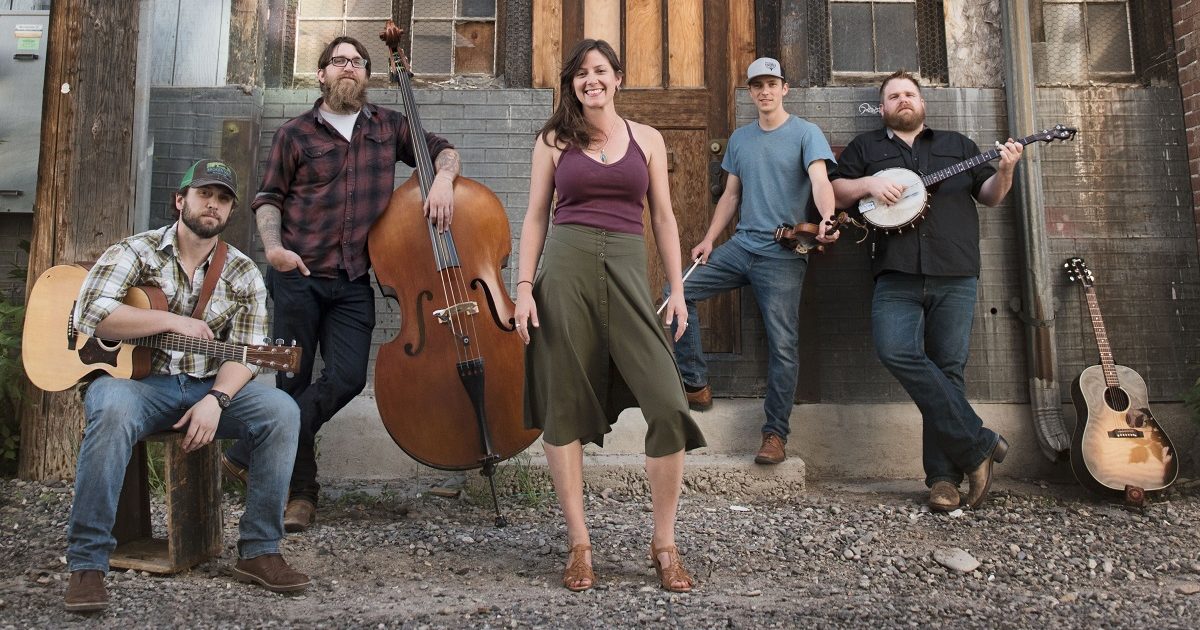
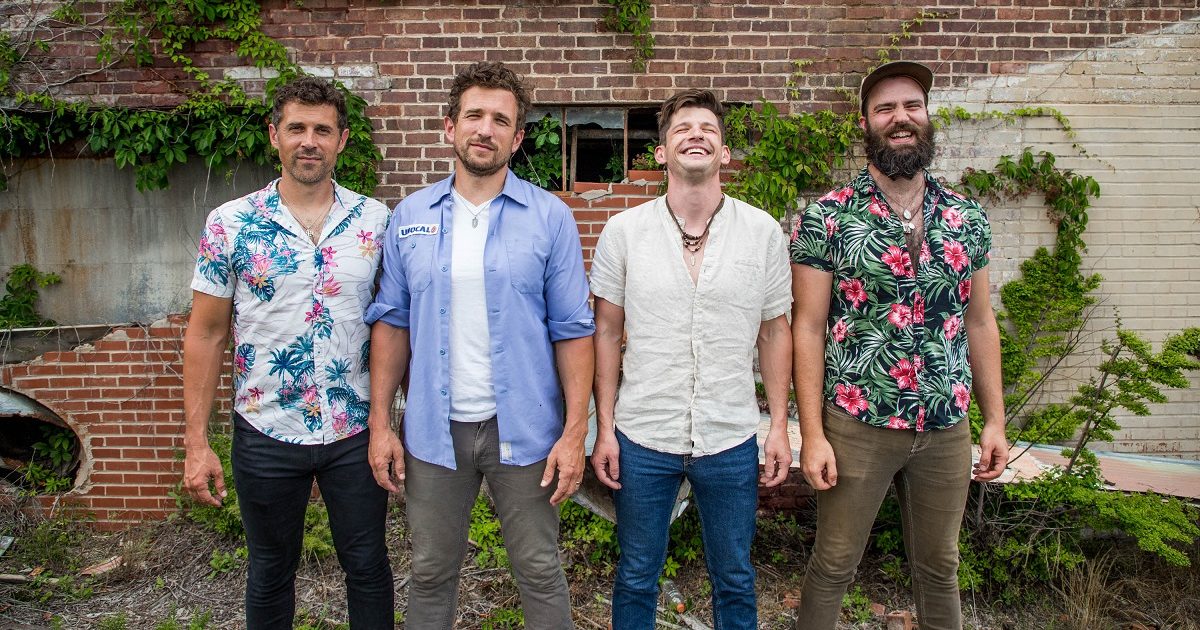
LISTEN: The Brothers Comatose, “Too Many Places”

Artist: The Brothers Comatose
Hometown: San Francisco, California
Song: “Too Many Places”
Release Date: July 2, 2021
Label: Swamp Jam Records

In Their Words: “This song was a big collaboration with the whole band. It started with a set of lyrics from our tour manager, Joe Pacini, and morphed into a story of a man fighting an internal battle between the road he believed he was destined for and a more domestic life with a woman he loves. It’s a constant push and pull and a common thread with most touring musicians we know. How does one balance a home life and life on the road? It’s a delicate dance that requires a lot of give and take in a relationship and for those that have figured it out, we applaud you! Tell us your secrets!” — The Brothers Comatose


Photo credit: Giant Eye