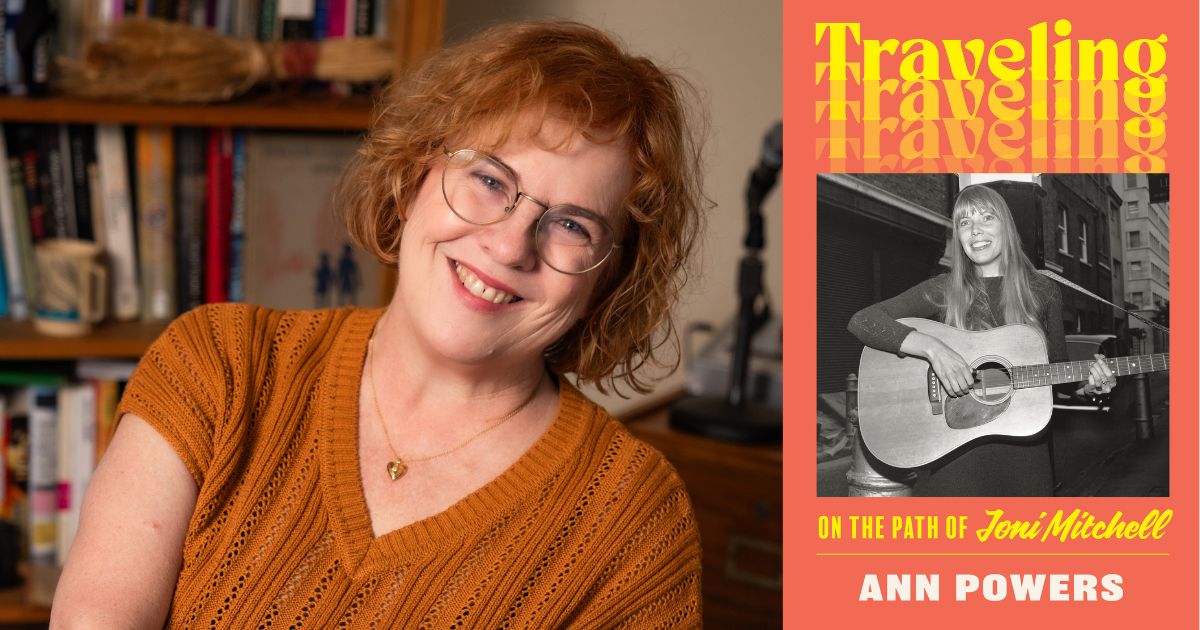
Writer Ann Powers Discusses Her Acclaimed Joni Mitchell Book, ‘Traveling’

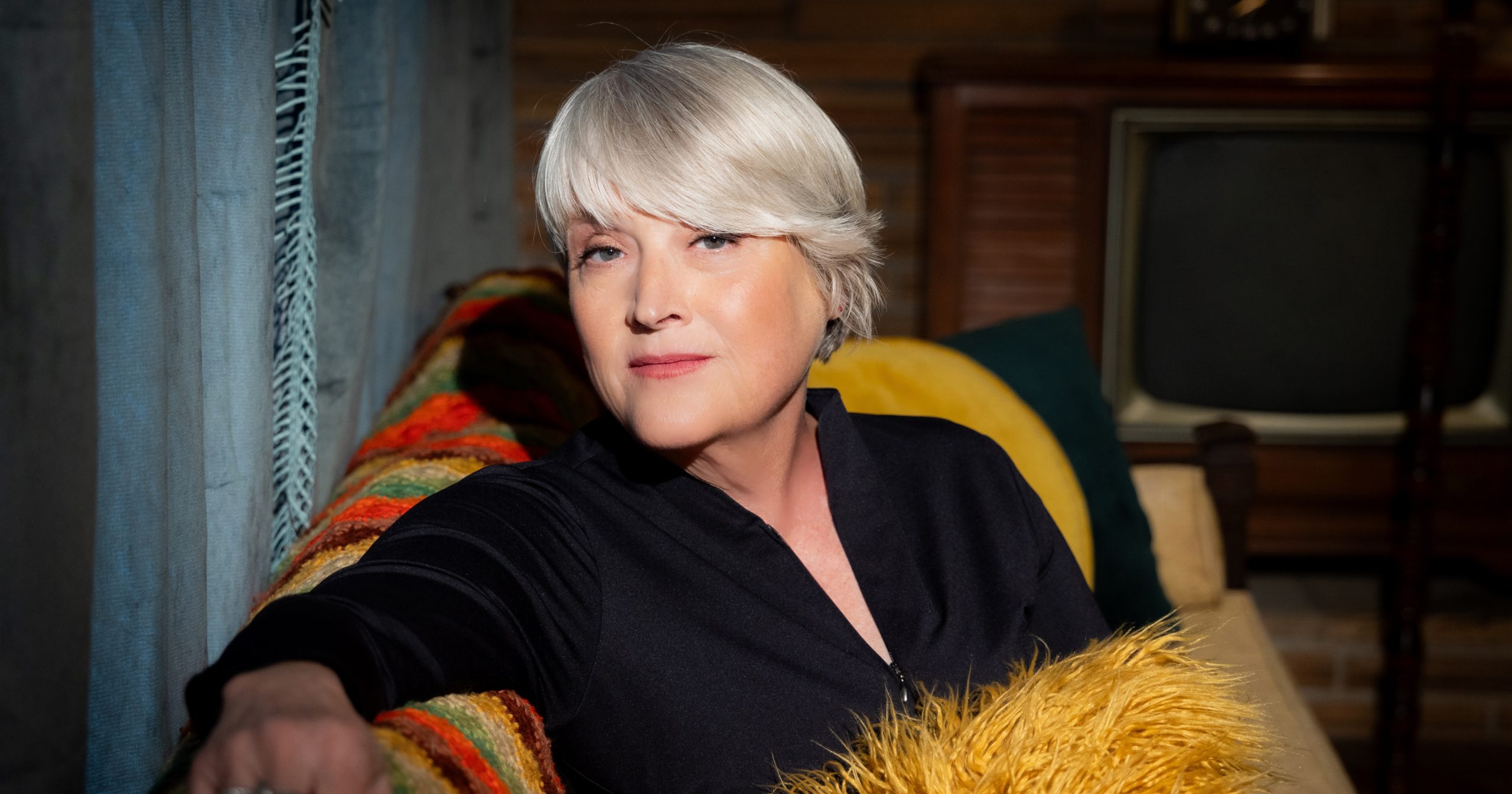
Journalist, author, and cultural critic Ann Powers released her latest book, Traveling: On the Path of Joni Mitchell, in June of this year. A thought leader in pop and pop culture criticism – and an occasional BGS contributor – Powers considers this legendary figure in folk and American music with deliberation and intention. Traveling isn’t merely a biography or a retelling of well-known and oft-repeated Mitchell lore; instead it’s a careful consideration of the artifice and sincerity, publicity and privacy, myth-making and universe-building of this iconic musician, songwriter, and celebrity.

“I wanted to think about how Joni Mitchell became JONI MITCHELL,” Powers relays in her conversation with BGS executive director Amy Reitnouer Jacobs. “How she fought against that in her own life, and how she reinforced the legend as well.”

And how well-timed is this book and conversation, with Mitchell’s mythos at perhaps its lifelong peak? With Brandi Carlile’s assist, Mitchell has been enjoying a “Joni-ssance” of late, with jaw-dropping public appearances over the past couple of years after an extended hiatus and star-studded Joni Jams delighting fans and acolytes from the Gorge in Washington state to Newport Folk Festival in Rhode Island.

Fresh off Mitchell’s headline-grabbing appearances at the Hollywood Bowl on October 19 and 20, we’re sharing our recent conversation with Powers about Traveling, its inception and writing, and how a truer telling of Mitchell’s life and creative journey requires a degree of skepticism – and may just result in becoming an even deeper fan of the one-and-only Joni Mitchell.

Right off the bat, I really connected with your hesitation to write this book, because I find that I have a complicated relationship and love of Joni, and I’ve never been able to put it into words. So when you start your introduction with that exact sentiment, I felt that really deeply.  What was your thought process in committing to the book?

Ann Powers: Well, Amy, you understand more than most the thorny relationship we as writers and as lovers and supporters of music have with not artists in particular, but kind of the edifice around the art, or as Joni herself says, “The star-making machinery.” I’m very aware of how artists exist in one space and then there’s like a room where the artist lives, and in between is this space where a lot of misconceptions can happen. A lot of fetishization can happen. I was kind of trying to walk between those rooms and think about her as a public figure, as a legend.

And then, also what I could know of her from a distance. I say from a distance, because I did not interview her for this book – which is not unusual for biographies, by the way – but I foreground that because I wanted to say, “Look, I’m also a stand-in for maybe not the average Joni fan, but for those of us who are kind of considering these people that we’ve made immortal through our love and adulation.”

I wanted to think about how Joni Mitchell became JONI MITCHELL, how she fought against that in her own life, and how she reinforced the legend as well. That was the strong thread for me and an attraction to the project. My hesitancy was that I wasn’t going to be able to overcome the legend.

You say multiple times in the book how you’re not a biographer, but despite the chronological order, the book felt almost like a guide to being a critical fan. How have you developed as a fan in this writing process? Are you still a fan?

I’m definitely more of a fan than I ever was before. I would count myself among those people who took Joni Mitchell for granted before I was approached to do this book. And part of it, I think, is my self-styled “outsider” status. That’s a weird thing to say, but [I say it] as a misfit or someone who came from punk. When I was at the right age to have my “Joni phase,” my idols were Kate Bush, Debbie Harry, Chrissie Hynde, women who I now realize were deeply influenced by Joni themselves, but at the time who seemed almost like an alternative to her and Dylan and Neil Young.

The ’90s [were] the natural time for me to go through another Joni phase and then I did. I did get to see her at that amazing show at the Fez [in 1995] with Brian Blade. I had some prime Joni moments and definitely was listening more than I had in the past, but that was sort of like that moment when Tori Amos, Sarah McLachlan, PJ Harvey, and so many amazing artists were breaking through the Lilith Fair generation.

And here’s Joni in the press, bad-mouthing them or saying, “I don’t want to have anything to do with them.” So again, I’m like, “Oh, who is this person? Why is this person so hostile?” It’s like all these moments that would have been the one where I stepped onto that path turned me away from it – until much later, when I had an occasion, this book, to go beyond the surface of my fandom. Then I just went completely, fully in. So deep. And every step I took that was closer to her actual music and her actual words, not just her song lyrics, but interviews she’s given or the circumstances of her life, I became more and more of a fan.

In that way, this book is the story of me becoming that defender in the end, even if I’m still a skeptical defender, but I believe that that is something Joni teaches us to be – to yourself and as a skeptical defender of those people she admires.

The funny thing about Joni is that she took every step she could to stay off of that pedestal throughout her career. Sometimes I think her desire to not be encased in amber came from her own anxieties, like her own unhappiness with what fame wrought. It’s a very delicate thing.

This is such an important part of her music and her songs as well, especially an album like The Hissing of Summer Lawns, which is basically a critique of Hollywood. She’s living in Bel Air. She’s hanging out with Jack Nicholson and Warren Beatty and the glitterati. She is of the glitterati. But then she’s also the one who runs away, who goes, “I’m living a monk-like existence outside Vancouver for a while.” Or, “I’m getting in my car by myself and driving across the South and using aliases and checking into hotels and hanging out with whoever’s in the lobby.”

This is something she kept doing in order to check herself and check the mechanisms around her and not become complacent with where she was. Same in terms of her collaborators. Instead of just doing what you’re advised to do in the music industry, which is just stick with the formula, she just kept blowing things up. She’s like, “I want to play with these jazz guys. I want to bring in like Brazilian percussionists.” That’s her curiosity, as I say in the book, but it’s also her refusal to be a conventional pop star. She’s always kind of trying to keep that at bay.

There’s something that you mentioned about the women you did look up to. When I think about Kate and Chrissie and Debbie, these women stand on their own; holding their own in a male-dominated scene and being surrounded by male collaborators and bands, but not necessarily lifting up other women. I’m trying to think of a female collaboration that Kate Bush ever did and I can’t think of one. 

Well, when we look historically at the place of women, particularly in rock, there were labels attached to women who primarily collaborated with women – “women’s music,” right? That was lesbian music. And I think there was a lot of fear, and frankly, internalized homophobia, among a lot of women and people in general in the more mainstream music business.

So you didn’t want to be associated with too many women or people might think you don’t like men, you know? Read any interview with a woman star from 1967 to probably like 2020 and you’re going to see that phrase. “I love men,” you know, “I like male energy,” all this stuff. And there’s no shame in liking to work with male collaborators, but it’s amazing how fearful so many women and their teams – the people guiding their careers – were of female collaboration and female affinity. It was like a forbidden zone.

Of course, I also love the Go-Go’s and the Bangles, but girl groups were [their] own kind of zone. They were taking on these personae. These are great musicians, why did they have to dress up like ’50s pin-ups? It’s like they’re saying “Look, don’t worry! We’re real women! We can play instruments, but we can be girls too!” And despite what we think, that’s still so alive and well today. Though I do think there’s been a shift in the mainstream recently with artists like Chappell Roan and boygenius. There’s definitely younger millennials and Gen Z fighting against being confined by gender roles.

I have also noticed that younger artists are more eager to welcome their women heroes on stage and older women are more comfortable embracing it. Olivia Rodrigo is constantly pulling her heroes on stage. Katie Crutchfield from Waxahatchee is like, “Where is Lucinda Williams? Let’s bring her out.” And that was something you actually didn’t see even during the Lilith Fair years. It didn’t happen. You didn’t really see older artists on the lineup.

I loved the line in the book, “A map maker must be open to new routes.” Were there any new routes that surprised you, or unexpected people that came out of the woodwork?

Definitely the whole Florida thing. When I found out she had spent time down there and met Bobby Ingram – who’s since passed away. And, I didn’t really know there was this whole kind of mirror folk scene in Florida to that in New York.

But I also didn’t know about how diverse the early folk revival was. This is something [for which] I give a lot of credit to Dom Flemons. He’s been doing the work on this, but it’s still so under-explored. When Joni started out, she wasn’t just seeing Pete Seeger wannabes. She was also seeing Caribbean musicians and people doing musical theater and jazz rock or jazz folk, and although it was still a predominantly white scene, there were very important nonwhite artists on that scene.

In my early days [of writing], I just wanted to write a book about that. Uncovering the stories of other musicians who we forget when we only talk about Guthrie or Seeger or Dylan or whatever. It’s like, how white and boring can it get? If it’s just that, it’s that same story every time and yet it was so much deeper and richer and more interesting. And it’s so important to understanding Joni’s music, because her music was never pure folk.

Somewhere in the last seven and eight years of putting this book together, Brandi Carlile kickstarted the “Joni-ssance” as you put it. How did that change your process?

I thought Brandi would stop at her Blue concerts [at Carnegie Hall and Walt Disney Concert Hall in 2021], but suddenly it was like, “Oh wait, there’s so much more!” It’s been such an exciting story in and of itself that goes beyond music. It’s really the story of recovery, healing, and having this epic return. So on that level, it’s a like beautiful human story that’s been edifying to watch.

But I made the choice to stand apart [from the Joni Jam concerts] so I could continue to keep my perspective focused. Now with the book out, I can finally just enjoy this woman who gave us so much and is receiving her accolades. There’s a world of elders – and especially women elders – that I want to continually acknowledge. And if this project could be helpful in that, then I’ve done something positive for the world.


Photo Credit: Emily April Allen
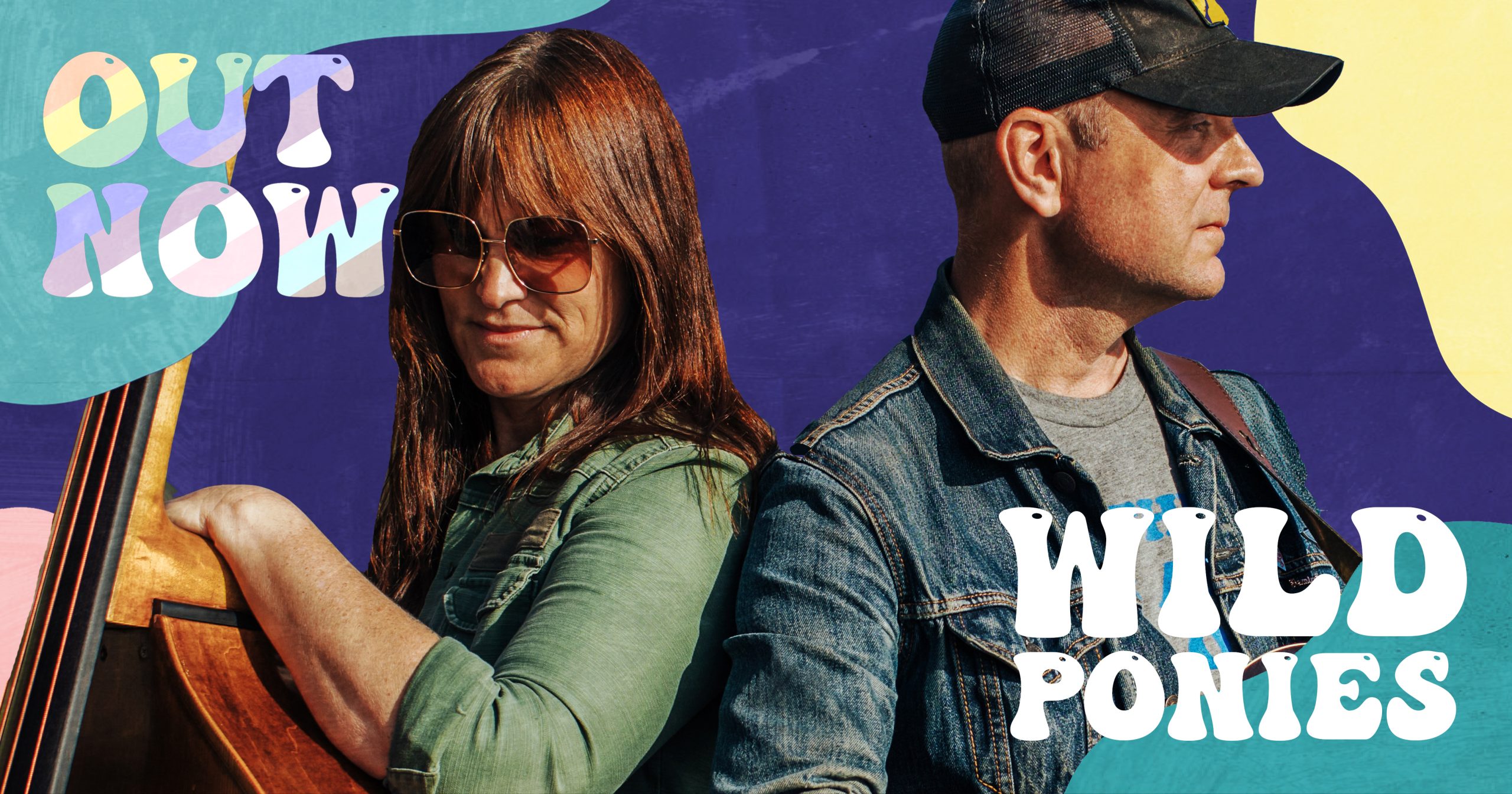
Out Now: Wild Ponies

Wild Ponies is a country-folk duo composed of Doug and Telisha Williams. As partners in music and life, they have developed a cohesive and refined sound. Their album, Dreamers, is out August 23, 2024. The album is an exploration of life, love, and loss, covering joy and grief, queerness and polyamory, and their journey pursuing fertility treatments. It’s a beautiful and touching collection of songs.

Before crafting Dreamers, the duo were asked by a fan where their dreams were. They reflected on the idea of where, not what, their dreams were and their response was, “Our dreams are everywhere, buzzing around like energetic bees… At times, our dreams are hard to wrangle – a wild pony…”

This idea of dreams set the concept for the new album. We are excited to dive into Dreamers and Doug and Telisha’s experiences as touring musicians in a queer, polyamorous family.

What does the album Dreamers mean to you personally? What excites you the most about sharing this release?

Telisha Williams: This record is very personal. We talk about becoming a polyamorous triad, being queer foster parents in the state of Tennessee, struggling with fertility issues, working on being more mindful. It’s basically a peak into our home, hearts, and heads. I’m excited about the way it sounds. Brandy ZDAN did a beautiful job producing this record. The band is amazing, and we couldn’t be more proud.

Doug Williams: Dreamers is the story of who we are. It’s not all easy and it’s not all pretty, but it’s all true. I love this record. Maybe that’s not something I should say about our own work but it’s true – I’m really proud of it.

Your song “Heartbeat” touches on your experience with fetal embryo transfer and even includes your child’s in-utero heartbeat. Is there anything you’d like to share about your journey with fertility treatments?

TW: Doug actually wrote that one after we thought that we had lost our pregnancy. We had a pretty traumatic “episode” when I was at about 5 weeks and we were sure that she was gone. The next morning, we went in for an ultrasound and there was her sweet little heartbeat on the screen. Strong and healthy. My process to becoming a mother was challenging and worth it. Our first embryo was a gift from a dear friend and we were so excited about the possibility of raising our genetic siblings together. Unfortunately, that one didn’t take and we didn’t know how to move forward. Our implications counselor connected us with another woman wanting to do an open embryo adoption. We met over zoom and now, we’re family. She has 2 boys that are the genetic siblings of our daughter. They live nearby and we all get to spend time together. It’s been an incredibly generous journey.

DW: This one was tough to write. We were sure we had lost another embryo. Sure of it. It was pretty difficult. So, we scheduled an emergency ultrasound, but we weren’t feeling good. The joy and tears when we saw that heartbeat on the screen is something that I just can’t describe. I tried to describe it in the song. Just pure joy and gratitude.

How do you balance a career in the music industry and touring with your roles as parents? How does polyamory play a role in this for you?

TW: We’re still figuring that part out. There are some advantages of being a three-parent household. Our partner Laura also travels for work as a photographer and we’re able to help each other as the parents that are holding down the homefront from time to time. We also enjoy traveling all together as a family of 5, but it’s hard to find room for the bass. [Laughs]

DW: I don’t know that there is really a good balance. Accepting that makes it easier, maybe? When you know it’s just going to be a little fucked from time to time, it’s just not as much of a surprise. But we’ve got to prioritize what’s best for the kiddos. And, I do think it’s good for them to see the possibility of living life on your own terms. That’s what we want for them, so we try to model it.

Is there anything you’d like to share with our audience about queerness, polyamory, and love, and how these experiences can vary for different people?

TW: We didn’t necessarily seek out polyamory. Doug and I are both bi/pansexual and have had an ethically non-monogamous relationship for a long time. When we met Laura and started spending time together as friends, we started having “more than friends” feelings for each other. We realized that it didn’t divide or diminish our experience as a couple. If anything, we felt stronger and more connected with each other and Laura. That realization that love was not a finite resource changed everything for us. We know that this relationship model is not for everyone. It requires a great deal of communication and intentionality, but we couldn’t be happier or more proud with this dream that we’re creating.

DW: Yeah, it takes a lot of communicating. A lot of talking. Check-ins. Podcasts. Books. Like Telisha said, we kept a lot of our identity fairly quiet for most of our career. It feels really good to be able to completely live our lives out in the open now. It can be a little scary in the state of Tennessee at times, but at this point it feels like the right thing to do is stay and fight to make it better here. Hopefully we’ll be able to continue to do that and make is safer not only for us, but for the rest of the queer community as well.

For anyone reading this who might not be out of the closet, were there any specific people, musicians, or resources that helped you find yourself as a queer individual?

TW: I can’t name anyone specifically, but I will say that when folks from the LGBTQ+ community show up at our shows or events we’re hosting, it means the world. Feeling seen and supported by this community has transformed me as a human and helped me to be more open and available to support others in and out of the community.

DW: That is a good question. Honestly, just our community. For us, or for me, it just took a lot of talking and a lot of checking in with folks we know. Friends who were already out and very public.

Who are your favorite LGBTQ+ artists and bands?

TW: I mean, we have to acknowledge what Brandi Carlile has done for our community, right?! She’s really elevated and supported the LGBTQ+ community in so many ways. From there, I’d say my friends, Heather Mae and Crys Matthews. I’m inspired by the music of Adeem the Artist. The community is strong and talented, y’all.

DW: Oh yeah, all of the above – I was so blown away by Adeem The Artist! Such amazing songs. And Crys and Heather both have killer new projects. I also love Ana Egge, Anne McCue, Amelia White, Aaron Lee Tasjan… just all of our friends, I guess.

What does it mean to you to be an LGBTQ+ musician?

TW: It means that I can sing about all of it. I don’t have to hide in the stories and the pronouns. I can share the beauty of the love I am so lucky to have in my life. I can share it out loud, and I dress in way more colors than I used to. Taste the Rainbow, people!

DW: [Laughs] I love T’s answer. Yeah, it’s new for us to be so public about our identities. We were mostly closeted for a long time. Definitely publicly [closeted]. It feels so good to live our authentic life in front of people now. There’s so much joy in it. So much love. It’s a powerful and beautiful thing that we weren’t sure we’d ever feel comfortable sharing so openly and now I wish we’d done that a long time ago. It took us a while and it was a slow coming out even when we started the process.

What’s your ideal vision for your future?

TW: We want to keep making art and connecting with people. That’s been our drive all along. That connection and building community. We plan to tour more intentionally in the coming years, because home has a bit more of a pull with the kiddos and family, these days. We also plan to travel with them, introduce them to the amazing community of music fans, and show them that families are made, not just born.

DW: Yeah, the ideal vision would be a life where our family and our career work together. We’re definitely finding ways to do that. It’s difficult, but I don’t think it’s impossible.

What is your greatest fear?

TW: I guess, since the pandemic, I’ve been a bit afraid of losing myself as an artist. When we couldn’t get out and “do what we do,” we weren’t exactly sure who we were anymore. It turns out that we’re still as connected to those fans and friends as we’ve always been, it just looks a little different now.

DW: Woof. You mean other than a second Donald Trump presidency? I don’t know – I think again, honestly, it has to do with identity. I love my new role as “Daddy.” I just want to do a good job and take care of these kids. I also really want them to see that it’s possible to live an artistic life. I guess my greatest fear is failing them in some way.

What would a “perfect day” look like for you?

TW: Oooo! I’d get to sleep until the big number is on the 7, then I’d have a fun morning with the kiddos, take them to their amazing daycare, come back for a walk/workout, morning pages and some time to write or play music. Then, the afternoon, I’d intentionally filter through some emails, pick the kiddos up, play, play, play, throw in a dance party and a jam walk, and sing them to sleep. Then, I’d have a little connected time with my partners and hit the hay. Throw in a coffee, walk, or cocktail date with a friend a few times a week, and that sounds pretty great to me!

DW: A perfect day… High of 82 and sunny. Like T said, sleeping a little late would be such a luxury. Then a little morning time with the kiddos before diving into work. Do a little writing, play some guitar? Then around lunch time take a nice twisty motorcycle ride to a great taco truck about 45 minutes away. Come home, get a little more work done, hang with the family and have a great dinner together. After the kids go to bed, maybe read a little while or listen to some vinyl and enjoy a drink or two. And if we’re really talking about a perfect day, there’s a little more… but we’ll stop there.

Why do you create music? What’s more satisfying to you, the process or the outcome?

TW: I think the outcome is more satisfying to me, but I also love the process and I believe to my core that the process is more important than the product. I know that music has healing powers. I have experienced that first hand, so that’s why I create music. To heal and experience joy, share or release sorrow, express disappointment or hope. Music and emotions are directly related, in my mind, so in order for me to be healthy and happy and present, I need to be creating.

DW: We talk about this all the time! Yeah, we’re huge believers in the process being more important than the product. But, still, it’s such a great feeling to have a new little song and watch it go out into the world and connect with people! I think that’s why most artists create – the desire to connect, to say something. The good that the process is doing in our lives and in our heads is something we usually discover later. Sometimes that even happens with songs no one else will ever hear.

What are your release and touring plans for the next year?

TW: Dreamers will be released on August 23. We’re touring very intentionally for the remainder of the year with shows in the Southeast and Midwest, mainly. We’ll continue to tour in support of the record in 2025, balancing our time at home with our family and out on the road. We’re excited to see where this new record takes us!

DW: Yeah, intentional touring is the main thing, I think. We won’t play as many shows, so if you see us coming to your town, get tickets! We’re just going to be a little more precious with our family time. But, still creating art, still connecting, still holding community events. We’re so excited to get this record out. I’m really proud of it.


Photo Credit: Laura Schneider

Kim Richey Travels the World in Search of ‘Every New Beginning’

With a voice that shimmers like sunlight on a rippling lake and songs that step deftly through ever-shifting emotional terrain, Kim Richey is the queen of understated finesse. On her latest album, Every New Beginning, she carefully tempers the ache of loss with moments of humor and even optimism. Produced by Doug Lancio (Patty Griffin, John Hiatt) and containing collaborations with Don Henry, Mando Saenz, Jay Knowles, Aaron Lee Tasjan, and Brian Wright, among others, it provides yet another elegantly nuanced reminder of why other singer-songwriters revere her talents.

Dozens of country and Americana artists have invited her to sing on their albums and/or recorded her songs or ones they co-wrote, including Rodney Crowell, Vince Gill, Martina McBride, Patty Loveless, Will Kimbrough, Chuck Prophet, the Chicks, and Brooks & Dunn. Radney Foster had a No. 2 hit with their co-write, “Nobody Wins;” Richey earned a Grammy nomination for co-writing Trisha Yearwood’s No. 1 song, “Believe Me Baby (I Lied).”

In October, she’ll open the final show of Jason Isbell’s annual Ryman Auditorium residency; last year, she helped celebrate the 10th anniversary of his career-making Southeastern album by reprising her vocal contributions. During Brandi Carlile’s solo-set debut at the 2019 30A Songwriters Festival, she spotted Richey and declared, “Kim Richey has been my hero since I was 16!” Citing the Ohio-born East Nashville resident as a major influence, Carlile beckoned Richey onstage to sing “A Place Called Home.” Turns out that wasn’t the first time — and, as Richey notes in this interview, conducted during her recent U.K. tour, it wouldn’t be the last.

Listening to these songs, one could assume this is a breakup album. But you’ve mentioned that songs like “Take the Cake” aren’t necessarily about a specific person. Are there breakups reflected within these songs?

Kim Richey: People always assume they’re breakup songs. [The “Feel This Way” line], “It hurts like it’s always gonna feel this way” — my mom passed away in November. It can be the loss of a friend, the loss of a family member, or it’s just a lot of looking back. COVID really had an effect on me that way, and maybe a lot of people as well, where I had old friends getting in touch out of the blue, and people taking stock, and that’s stuck with me.

You could hear “Feel This Way” as a song about grief or even generalized depression, which certainly doesn’t have to be precipitated by an event.

Or [the song] “A Way Around,” it’s like, “Oh, man, things are not going my way.” It can be general. That’s a great thing about songs; people can have their own interpretation of them and it can connect with them and help them. Maybe it’s something that they’re going through, which was not necessarily my intention when I wrote it, if that makes any sense. If I’m going through a hard time, it’s just nice to hear a song and think, “They know exactly how I feel.” You don’t feel alone.

I think that’s one of the major functions of songs — giving us something to connect to, even if it’s just to pull the tears out. Sometimes that’s all you have when you’re feeling like that. But let’s talk about something that must have been a really happy time: Brandi’s Girls Just Wanna Weekend in Mexico. Was that the first time you got invited, or the first time it worked out to go?

I actually did get invited a couple of years ago, but I’d already promised my parents I was going somewhere with them. But this was getting organized while my mom was in the hospital and everything, so I went down [in January] not really having any idea what to expect. When I got there, they asked if I could come to the rehearsal for Ladies of the ’80s, so I go to the rehearsal, and there’s Annie Lennox. And that was just the start of me crying the entire weekend.

Then I got to meet Wendy & Lisa, and Wendy was so sweet. And when the four of us — Brandy Clark, Brandi Carlile, Mary Chapin [Carpenter] and myself — were onstage playing songs, the crowd was so overwhelmingly amazing that Chapin and I just sat up there and cried in-between songs. It was absolutely one of the most intense and beautiful musical experiences, really, ever, for me. It’s hard to explain the vibe of it. The feel of the festival is so inclusive, and so kind and fun. I’ve never been to anything like that before.

Brandi’s always been really great to me. Like that year of the Pilgrimage Festival, that’s right outside of Nashville, got rained out [2018], her people called City Winery and said “Hey, can we come there and play?” and they packed it out. I had just gotten home from a tour and she texted and said, “Hey, you want to come and play with me tonight?” and I’m thinking, “Absolutely not. I don’t know who you are. I’m in a bathrobe, and I’m gonna watch TV and do absolutely nothing.” I texted back and said, “Who is this?” And it was Brandi and it’s like, “OK, I’ll be right over!”

I love seeing your Instagram traveling pictures. It seems like you seek out interesting places wherever you go. Is that something you’ve always done?

I always want to explore the places where I go, whether it’s a big famous place or some town nobody’s ever heard of. I don’t want to sit in a hotel. I like to find the local great food or coffee or something. One of my most favorite parts about doing music and playing shows is the touring and getting to go and see all these different places. It doesn’t have to be some really exotic place, because one of the things I love about touring in the states is you get to see some of these smaller towns and out-of-the-way places that you would never go to on purpose, because you don’t even know they’re there. I’ve found some fantastic restaurants and sites and hiking places; there’s all kinds of fantastic places in the states. Like, I love Michigan, the Great Lakes; that’s beautiful.

That brings me to the song about your home state, “Goodbye Ohio,” which you describe as “a leaving song.” Do you still have ties there?

Well my mom’s gone, but my stepdad still lives in Ohio and I’ve got my cousins and auntie. I still have a lot of people in Ohio. I go back up there pretty regularly.

So it’s not bittersweet to go home.

Oh, no, no, no. I got all the time in the world for Ohio. I like the people there. It’s very Midwest, and I like that. It’s interesting, too, because the different parts of Ohio are really different, like Southeastern Ohio has more in common probably with West Virginia. And then when you get further up toward Cleveland and Akron, that’s more Northeast-y vibes. It’s great; it’s got a lot going on.

What are some other destinations you would recommend?

I love Glasgow, that’s always been one of my most favorite places. Mostly these days, I’m not in a [tour] bus, I’m in a car or a van. You actually can see all these places you’re driving through, and then you have the ability to go, “Hey, what’s that weird shop there? Let’s pull in and see what that is.” When you’re on a bus, you’re just [taking] the quickest and easiest way to get from one point to the other. So I’ve really enjoyed that part of traveling in a car.

I’ll tell you someplace I just went that was absolutely amazing. My friend Dean Tidey was playing guitar with me and we had a couple days off on the West Coast, so we went to Sequoia National Park and stayed for a couple days in this Airbnb that was right on this beautiful mountain stream. And since it was still early springtime, there weren’t a lot of people there. There was still snow on the ground. I love doing stuff like that. The more I travel, the more I want to see. And the more I travel, the more I know there’s just so much stuff out there to experience and see.

Gosh, I’ve been all over the place. I love London; I lived here for five years. I love Belfast. I got to go to Croatia last year on a boat trip with the Accidentals, and that was amazing.

I love that band! Tell me how you wound up on a boat trip with them.

Well, they asked me to come along. It was a fan trip, and we played and slept on the boat and went to these different harbors. We docked in a different place every night – it was just a cool trip. There were bike rides; there was a lot of swimmin’. We went to Dubrovnik and toured different cities; we were all over the place. And I had no idea. I didn’t think of that as being a Mediterranean country. The food is fantastic. The people were super, super nice. I really loved being there.

You have such a great body of work, and younger artists who appreciate that, and appreciate you, they’re hooking into you and having you play. It seems so important for that kind of give-and-take to happen, in both directions.

It’s great for me, because I get excited about stuff. I love writing with Aaron Lee. He used to live just across the alley from me, so that’s how I got to know him. He’s definitely one of my favorites and one of the most talented musicians and songwriters. He’s great with lyrics and music, the whole deal, and a brilliant player. So it’s fun for me, too, to find somebody new that I really love writing with. It’s one of my favorite things, to write with other people.

Is there anything else you want to talk about?

Well, I would like to like thank the guys who played on the record, especially Doug Lancio, who did so much great work. He played most every string thing aside from when Aaron Lee played on a couple songs. And we had [bassist/mandolinist] Lex Price, who I’ve been wanting to work with for a long time. And Dan Mitchell and Neilson Hubbard; I’ve been playing with those guys for years. And the Accidentals came and put strings on a couple songs. So I just really want to give a shout out to the musicians, and my songwriting friends.

One song, “The World Is Flat” is an old one that I wrote with Peter Vetesse. He lives in Bristol, [England], and we played and he came and we got to play the song that we wrote together. I just never recorded it because it was so sad. I have a lot of sad songs, but there’s always a little kernel of something [positive]; “The World Is Flat” was like, you’ve just kind of given up. But the demo that he made was so beautiful, I just thought if I never make another record, I want people to hear that song.

You just said, “If I never make another record” – obviously, we hope that’s not true. Do you feel like you’re at a point now where you think in those terms?

A little bit. I do enjoy playing, but [touring is] tough physically. But I love to travel and I have super-close friends over here, in New York, in Washington state. Playing and touring allows me to go and spend time with those people. I do love playing for people and writing songs and making records, so we’ll see. I don’t know how much longer I’ll do it. This could be my last record, but you don’t want to say it is, because you never know.


Photo Credit: Stacie Huckeba

More Than A Trend

(Editor’s Note: Sign up here to receive Good Country issues when they launch, direct to your email inbox via Substack.)

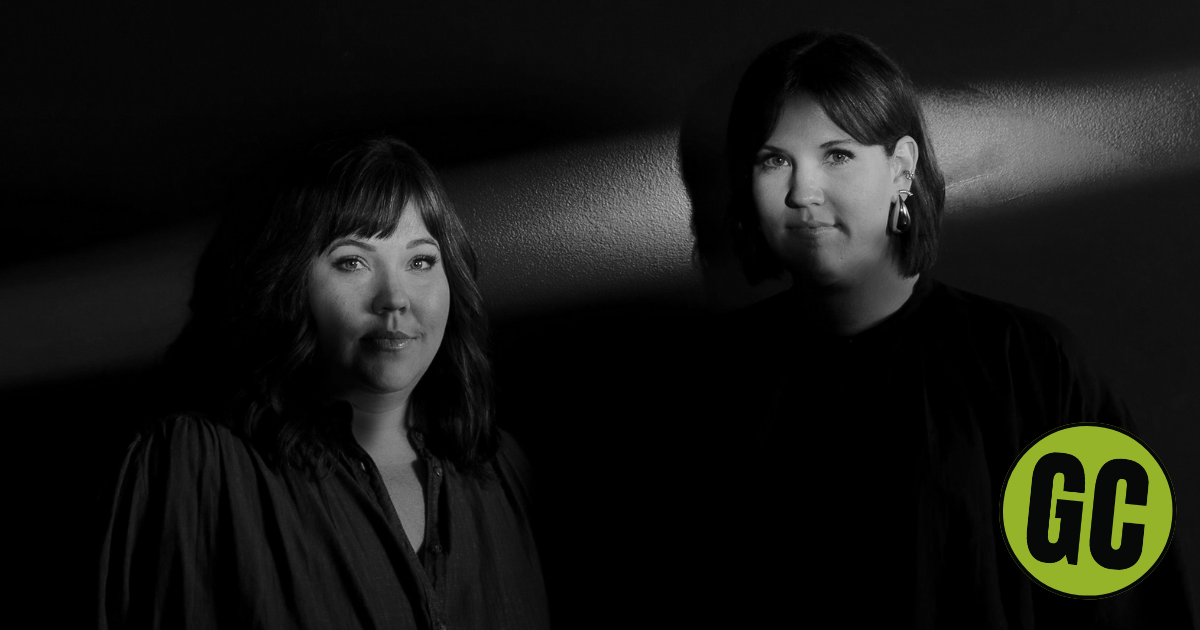
Based in northern Alabama with deep, organic ties to so many sounds and styles of the “Americana Music Triangle,” the Secret Sisters have built a musical brand on a distinct iteration of Southern gothic songwriting steeped in familial harmonies. Their music is grounded, but broad, specific but infinitely relatable.

Over the course of five studio albums released since 2010 – including 2020’s Grammy-nominated Saturn Return, which was produced by Brandi Carlile – the sisters, Laura Rogers and Lydia (Rogers) Slagle, have strayed very little from the sounds that first entranced audiences all across the South and around the country more than 14 years ago. Still, while they occupy a distinct and confident sonic aesthetic, their catalog never reads as tired, weary, or redundant. Mind, Man, Medicine, their latest record, was released on March 29 and while it listens like classic, iconoclastic Secret Sisters, it also registers as brand new, vital, and innovative.

It follows that two women proud to be Southerners and proud to be from Alabama would not feel limited by maintaining a stylistic brand that is rooted in one particular vein. At times, their songs remind of the Civil Wars but without affectation, of Shovels & Rope but with a more quiet and genuine anger, and of so many other Americana duos – Gillian & Dave, the Milk Carton Kids, War & Pierce – where the focal point is two voices and creatives in dialogue, collective music. But the indelible throughline, that centering “vein,” is simply being true to themselves.

Mind, Man, Medicine, among the siblings’ handful of releases, all at once feels like a comforting and cozy continuation of everything we love about the Secret Sisters rooted in northern Alabama, while also demonstrating the dawn of a new era. In our conversation with Laura and Lydia, we chat about the distinctions between style and redundancies, about compassion and community, about grounding and intention. Throughout, it’s clear that the Secret Sisters know exactly who they are, how they sound, and why they do what they do – even, if not especially, when each of those truths becomes clouded by the intricacies and complications of life.

I wanted to start by asking you about your specific brand of country and Americana. You have always made music that’s mindful, connected to the earth, and connected to your community. It often feels a little witchy and a little gothic, but it also feels like musically wandering down a winding garden path.

That style, that y’all have had present in all of your albums, it feels like it’s so “in” right now. From the new Kacey Musgraves album, Deeper Well, to Beyoncé’s Cowboy Carter, there are so many touches in country today that seem like something y’all have been doing for more than a decade. I wanted to see how you felt about this current landscape of Americana and country and how you feel your music relates to or fits into the constellation of this ongoing trend?

Laura Rogers: I have noticed that trend in a lot of ways. It seems like there are artists who are even more successful than we are who reach this point where, like you said, they reground or they just tap into something that’s maybe [been] suppressed by the other music that they’ve made. I don’t necessarily think that that’s a bad thing. I think that every artist has his or her own evolution, as far as what inspires them, whether it’s what they’re listening to or what they’re feeling or just what they want to sing. Some people don’t want to [tap] into their history or their community or their roots in any way.

I can understand that and sympathize with that, it’s just that’s who we are. It isn’t a trend for us. There’s no marketing scheme behind what we’re doing. I’m not implying that other artists who are doing that are just doing it for the moment, but for us, it’s always been [that] we don’t really know any other kind of music to play other than what you hear.

I don’t even know if it’s an intentional mindset. We want to be grounded and rooted and pay tribute to where we’re from. I don’t know if that’s like a conscious decision that we make. I think it just kind of happens naturally for us.

I know what it’s like to go through a journey of growing up and reconnecting to where you’re from and appreciating your history. I think it takes a minute sometimes, as an artist and a writer, to go back to that and see it as a good thing. Maybe other artists who are doing that, it’s probably a sincere moment in their life where they’ve reached a point of, “Hey, I want to go back to something that feels a little more like me.” I love that chapter of certain artists’ careers as much as I love the ones that maybe aren’t as rootsy and connected.

Lydia Slagle: I feel like some of that might be due to the pandemic. I might be taking liberties by saying that, but we were just home for so long and I think that probably grounded a lot of people in that way and made people get more in touch with their roots, musically.

I think you’re right. And you’ve both immediately grabbed onto the thread that I was pulling here, which is that there’s this trajectory that artists really enjoy bringing into their own art of “going back to basics.”

From the beginning of y’all’s career, from the first album, it seems like you always started “back” at the basics. I think what’s so interesting about that is how it never seems limiting to y’all. It feels like there’s always an entire universe for you to explore, even while you’re still remaining so close to that home base. You continue to showcase this sense of grounding and rootedness, highlighting where you’re from and who you are, but there’s still so much to explore.

LS: I think we can’t take credit for a lot of that, because we have had a lot of really great collaborators over the years.

We’ve had really good co-writers and great producers who are willing to stretch our limits of what we knew we were capable of. I think some of it is just our general involvement as artists, but a lot of it is who we work with and the people who play the instruments on the records and who produces them.

LR: I don’t know how Lydia feels, I’m sure she probably feels this to a degree, but it’s an insecurity of mine. I listen to other artists and I think, “Oh, if I could just write a song like that one.” I’m constantly doing that terrible thing that humans do, where I compare what I’m capable of producing to what everyone else is currently producing.

I’m so hard on myself about just wishing that I were better, you know? It’s nice to hear that, even after five records of writing music, that what we [make] is still the essence of who we are, but it isn’t overdone. I think that the fear of mine is like, how many more albums can we do before we have to venture into a crazy genre that we’ve never done before to keep people interested? [Laughs]

Thankfully, five albums in, it seems like people are not weary of what we do. But that is a total insecurity of mine, I hear so many songs and I think, “Man, I’m never going to be able to do that…” But then I also realize that there are people who hear our songs and think that they are works of art in ways that I think that was just a Tuesday afternoon!

LS: It’s also a struggle for me, but when I think of my favorite artists, I don’t get weary of the same stuff. I think of Gillian Welch and Dave Rawlings, they don’t really deviate from their original sound and it is just as fresh and exciting for me. Hopefully some people can see our music in the same way.

I think that if we were to just derail and do something completely different, I’m sure that would be exciting, but I’m also sure there would be a part of us that would be like, “What are we doing? What are we trying to prove?” I don’t even know how to describe it, but it would be very hard for us. So, we do what we know and what we like and hopefully people stay on board.

LR: I do think a huge part of it [is that] we’ve had multiple people who have produced things for us and songwriters that we’ve worked with kind of reassure us in this. But, any time we decide to do anything that’s maybe a little bit out of the box for us and that kind of pushes our limits, they always remind us, “What you are is not the sound that you work within, it’s your harmonies together and it’s the way that your voices blend.”

I do think that anytime I feel nervous about new territory or repetitive territory, I just remind myself we are two sisters who grew up singing together, who harmonize together, and for some reason, people really love the way that our voices blend. That seems to be the crux of it. It’s great if that’s framed with interesting sonic landscapes or up-tempo, energetic songs, or sad minor chords. All of those things are interesting, but at the end of the day, if you don’t have that two-part sibling harmony that we are known for– I do think our sound hinges on that, to me.

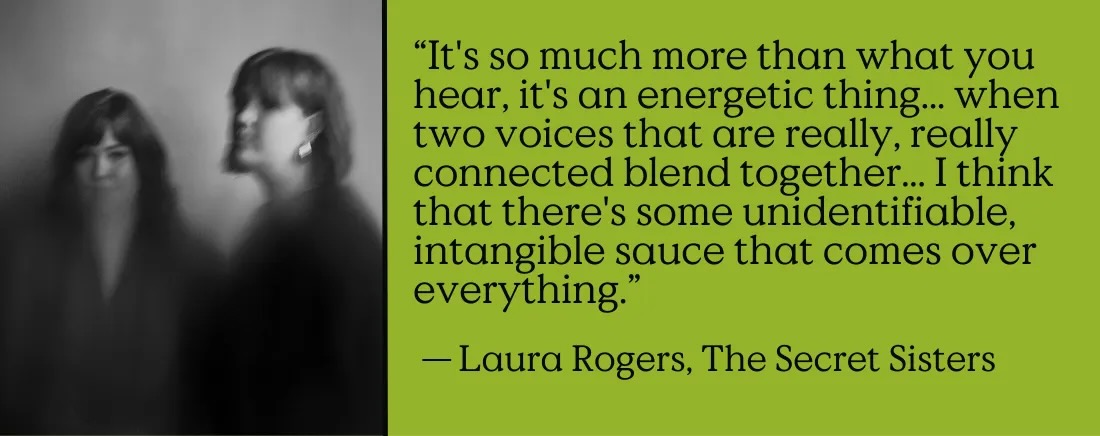
I don’t ever foresee us having a record where only one of us sings. Period. There’s always going to be both of us, even if we’re both singing in unison together. There’s just something about that. And it’s so much more than what you hear, it’s an energetic thing. You can hear the shared chemistry and energy that happens when two voices that are really, really connected blend together. It doesn’t have to be people who are related to one another, but I think that there’s some unidentifiable, intangible sauce that comes over everything. It’s almost like hypnosis or something.

I think probably every artist that we admire would be like, “Yeah, I have days where I really don’t know what my sound is. I don’t know what my genre is. I don’t know what my style is. I just make it.”

I’m glad that you mention singing in unison, because it was something that really jumped out at me from this record. There’s some tasty ass unison singing on this record! What’s so interesting to me is that you can hear the space in the room between your mouths and the mics – and you can hear that space almost more than the space between your voices, since you’re singing in unison.

LR: Yeah, unison’s hard. I would say for me unison is harder than harmony, getting that blend and making sure that your voices are not rubbing against each other in a way that’s kind of cringy.

LS: We get some of that on the road, I feel like. When we’re performing live and we do unison, there are times when one of us is just maybe a tad sharp or a tad flat and it does not sound like good tasty unison. So finding that perfect sweet spot is a little trickier than you might think.

Shifting gears, I love how y’all always have such a strong sense of place in your music, drawing from Muscle Shoals, drawing from the “Americana Music Triangle.” And I have been obsessed recently with the idea that music always exists in a space, in relationship with place. It feels a bit “forest for the trees” to say it, but without air we wouldn’t have music – without sound waves, without air, without space.

I thought it was so perfect that you start the album with “Space,” it feels like a beautiful, spiritual moment where you’re asking folks to enter a space with you. You’re holding this space with your voices and with your songs, and inviting all of us to enter that space with you.

So I wanted to ask you about that song, writing it, but also deciding that it would be the first in the sequence.

LR: I didn’t even think about that at all! This is what I love about making records, there are always things that you discover about it after it’s out and you’re like, “Oh, I didn’t even consciously decide to do that.”

But it makes so much sense. I never thought about having that song as the opening track of the record and it being an invitation of, “This is a space for you to enter and and it’s a safe place for you to feel.” I never thought about that and I love that you discovered that for us.

LS: I don’t feel like that was so much a conscious decision to frame it as this invitation into our record, but I love that perspective.

As far as sequencing, I think that it was more the production of that song and the sound that we approached it with that was pretty different for us. So we loved starting the record with a completely different sound for us. To let people know this is a little bit different from what you’ve heard in the past.

LR: We wrote that song with Jessie Baylin and Daniel Tashian, so when we got to Daniel’s studio to write with him, I just remember there being instruments all over the floor, all over the walls. It literally was like, come in and pick what you want to use. I’m not an adventurous instrumentalist at all, but he picked up this little tiny guitar that we plugged into this amp and we put this crazy effect on it. We just started strumming on it, and that was kind of the beginning of the song. I don’t even really remember what started the inspiration for that song, but I really feel like, timing-wise, where it landed was just after we had started writing with people after the pandemic. It was finally safe enough to sit in a co-writing situation in person. Coming from that place of the weird and divisive time of COVID, two songs, “Space” and “If The World Was a House,” were really just trying to capture that feeling that we gotta start being better to each other.

I think that there’s a quality in this album that you’re opening a space, you’re inviting folks into it, and then you’re kind of pointing out, “Hey, if the world was a house and that house was on fire, we would all do something about it, right?” I’m not sure if that message would feel as compassionate or as kind or as open if it didn’t come after this sense that you’re inviting us in, we’re on the same level, we’re in this space together. Then you can talk about these ideas and these songs that are challenging us to be in community, to be with each other, to make a better world. It doesn’t feel like you’re preaching.

LS: I hope people listen from that viewpoint. When we wrote that song with Ruston Kelly in Nashville, I think it was the beginning of 2022 when it was just starting to die down a little bit, but people were still very divided on COVID. It was ever present in our minds, so whenever we started writing “If The World Was a House” that day, it just came out. We could not get the words out quickly enough. I think it could have been a 10 minute song if we let it.

LR: “If The World Was a House,” now that I listen to it and process it as a finished product, I just keep thinking about how if you were passing by a neighborhood and there was a literal home on fire, it would not matter to you if they were Republican or Democrat or gay or straight or Christian or atheist or man or woman. It would not matter, you would do something! You would run in, you would call for help. You would make an effort, right?

When I feel the most dismal and depressed about humankind, I keep coming back to the thought that, if it’s really a matter of life and death, you’re going to step up for people. I do truly believe that most people have that sense of, “I got to do something.” I try to remember that it doesn’t matter that we have differences. The differences are always going to be there, but at the end of the day, would you fight for someone? Would you fight for someone who is different from you?

I like to believe that most people would. Once all the dust settles, of all the things that we bicker and separate ourselves over, I really like to think that everybody has a general sense of kindness that they could tap into. Maybe that’s a little naively optimistic, but…

I think that that message is so impactful coming from y’all, knowing that you place yourselves purposefully in your community in Alabama and in these parts of the country that people tend to write off as being “backwards” and not being capable of nuance. The South and rural places are always a scapegoat for the entire country and all of its problems. So, I think that it makes the message in your music so much more impactful, knowing that. You don’t see yourselves as outliers in the place that you’re from, you don’t see yourselves as exceptions to the rule or like you’re the only ones who think like this, who are “enlightened.”

LS: I think there’s more of us than people realize, there’s a lot of us in Alabama and Tennessee and Mississippi – we’re not the only ones. Hopefully we can represent that community of people a little bit better.

Another song I wanted to ask you about before we close is “Planted.” I love birdwatching, I love gardening and I feel like a lesson I learned – and so many of us learned – from COVID is that we need to have roots. We need to have nourishment and we need to be grounded, planted. I hear that song and I hear the love in it – the romantic partnership and the life partnership – but I also hear so much more. I love that I had already written down in my notes that this album is so “rooted” and then I got to “Planted” and I was like, literally!

LS: I think I wrote Planted in like 2015, a while back, and it had been sitting in my GarageBand for years and years. I think that when I first wrote it, it was about a year after I got married and my husband and I were going through a season where we were both traveling a lot, we’re both in artistic careers. So we were sort of rubbing up against each other, being like, “Whose job is more important? Which is more impactful?” I don’t know, we finally ended up in a place where we were like, it doesn’t matter. We’re in this together. We’re rooted together. It doesn’t matter if somebody is on a different trajectory, we’re in this thing together. I sort of tried to approach that song with that perspective, but yeah, I never thought that it would make it onto the record eight years later.

LR: There are songs you have for years and years that you think maybe there’s just not a place for it, and then all of a sudden it’s like, “This is the place!”

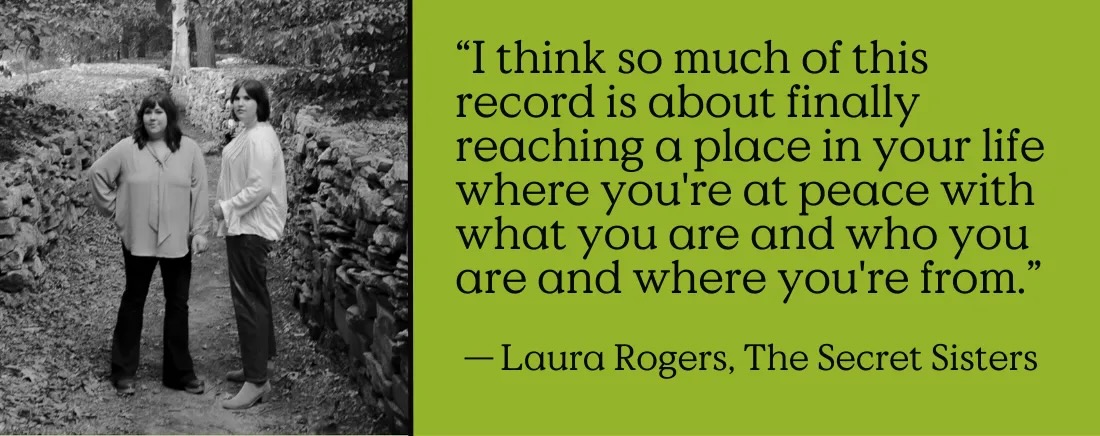
I feel like that song is very true to this record, even though it was written years ago about a romantic relationship, you’re completely right about it fitting into the narrative of this record, because I think so much of this record is about finally reaching a place in your life where you’re at peace with what you are and who you are and where you’re from. And, what your history is and what your sound is.

We have reached this point, hallelujah, where we are like, “What you see is what you get.” We are who we are and all we can really offer the world is a healthy, whole, self-satisfied version of ourselves.

We did the thing in our twenties where we said yes to every show opportunity, every appearance we could make, we said yes to everything. It was good in a lot of ways, but it was also just soul sucking, you know? I think one thing that I’ve really struggled with over the years is how I never thought that I was gonna be a professional musician. I’ve always just loved music for its therapy purposes. So it’s been hard for me to have my favorite hobby become a livelihood, because it feels like a lot of times the magic strips away and the comfort mechanism isn’t there anymore, because it’s your job. It’s like, “Well, this is what I do every day. This is how I keep the lights on.” And then it’s not what I want to do after hours. That’s been a hard thing for me to process.

I think that this record, in a nutshell for me, is about coming to a place of still loving what I do. I still want to make art that matters to me and that people respond to, but I do not have to kill myself in the process.

If I want to be home for someone’s birthday, I can say no to [an opportunity] for that. And, I’m finally at a place where I know I can always make money. I can always find a way to make money. But if I am going to sacrifice being home to watch my kid walk across his pre-k graduation stage, that’s not a fair trade for me anymore. Whereas years ago, in my youth – and I guess you would call it maybe ignorance or just immaturity – I would trade those for things that really mattered. Now I realize what I’m going to look back on in my life when I’m an old lady is not, “Did I play every show? Did I fall in bed exhausted? Did I come home and completely dissociate from everything around me, because I was so overstimulated by life on the road?”

I feel so happy to be in a place where music feels healthy again, because sometimes I think it’s easy for it to not feel healthy.

Sign up here to receive Good Country issues when they launch, direct to your email inbox via Substack.


Photo Credit: David McClister

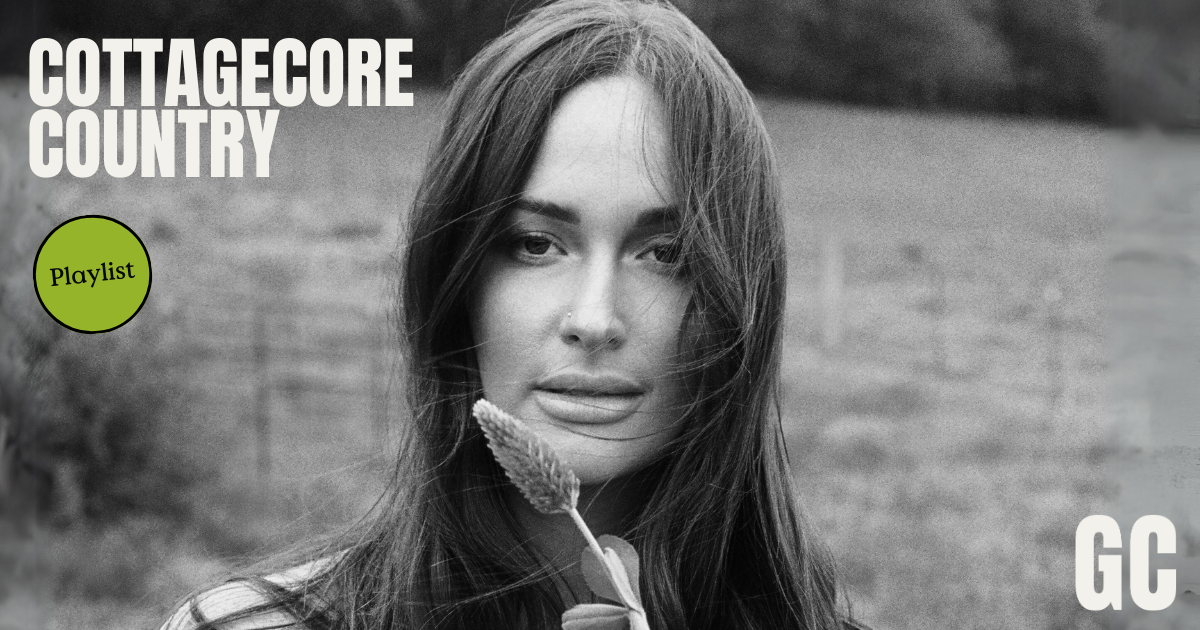
Cottagecore Country

(Editor’s Note: Sign up here to receive Good Country issues when they launch, direct to your email inbox via Substack.)

You can’t have country music without the country. (Us city slickers belong in the genre as artists and fans, of course, but we’ll get to that later.) There is a fundamental relationship between the natural world and folk music, and the artists featured on our cottagecore playlist demonstrate that. Humans have been mapping their emotions onto nature for as long as we’ve been around: so much of our inner life defies explanation, as does our outer world. And while we may find endless ways to make new environments for ourselves, there are few things as moving as a beautiful sunset or gorgeous vista.

While we can’t create those ourselves, we try to make beautiful – and cozy – spaces for ourselves. In creating our homes the way we like, we try to control the world around us – even though we know we can’t. The songs here look to animals and plants as metaphors for the people and emotions we don’t understand, the ones that got away and are beyond our comprehension – the things we can’t control, but we accept as natural as a bird’s migration.

But even as these songs can be melancholy, they inhabit a place of comfort and tradition – cottagecore. The term reached peak popularity in 2020 to describe a movement that celebrates home, attention to detail, nostalgia, cutesiness. (Back in my day, we called it “twee.”) The aesthetic is largely driven by white women who found comfort in going “back to the land” – but a specific type of return, one that celebrates rural life while sugar-coating the backbreaking labor that is actually involved in homesteading.

Like anything that relies on nostalgia, it’s a double-edged sword. Cottagcore has been claimed by some on the alt-right as the desirable expression for women: tending to the hearth, spending time on making beautiful pies, making everyone else around them feel as snug as a bug in a rug. On the other hand, cottagecore became popular in some queer subcultures precisely as a means of subverting that sort of wisdom. Still, cottagecore assumes that this idyllic lifestyle conforms to Eurocentric views of agrarianism, architecture, and holding oneself separate from nature – and some seek to use cottagecore to question that colonizer logic.

At Good Country, we don’t want to take the easy way out. This playlist is designed to embrace the desire for comfort and retreat, one that is all-too-understandable in a chaotic world. But we would never settle for anything simply reactionary, instead wanting to intentionally offer new ways our society must change for our survival. These are songs about awe, acceptance, change – and regeneration, an aspect of the natural world we would do well to embrace.

Sign up here to receive Good Country issues when they launch, direct to your email inbox via Substack.


Photo Credit: Kacey Musgraves by Kelly Christine Sutton

BGS 5+5: Hannah Connolly

Artist: Hannah Connolly
Hometown: Los Angeles, California (via Eau Claire, Wisconsin)
Latest Album: Shadowboxing
Personal nicknames (or rejected band names): Han, Hannah Banana, Hannah Montana, Hanny

How often do you hide behind a character in a song or use “you” when it’s actually “me?”

Most of the songs I’ve written and recorded so far have been very autobiographical and written from a first-person perspective. I often write songs as a way of processing my life and experiences. With my latest album, Shadowboxing, that was still very much the case, with the exception of the title track.

“Shadowboxing” was the first time I recorded and released an original song that felt like it may have been meant for someone else. I don’t think I was hiding behind a character necessarily, but it was the first time I felt a character surface within a song. It made me excited to lean further into that way of writing. I imagine my next record will draw more heavily on the concept of zooming out and drawing inspiration from the stories around me, rather than within me.

What’s your favorite memory from being on stage?

One of my favorite shows to date was in Dublin, Ireland last fall. I was opening for my partner’s band, Young the Giant, and the crowd of over five hundred was the largest audience I’d played in front of in a while. I was a little nervous to be playing a more stripped down format opening for a rock band, but the second I stepped out on stage the crowd made me feel comfortable, supported, and excited. Looking out at that audience, being at peace in the moment and within my music was a feeling I’d dreamt of for a long time. To experience it in reality was surreal. That is a memory I am going to hold onto for a long time.

What was the first moment that you knew you wanted to be a musician?

I first knew that I wanted to be a touring musician when I was a teenager and joined a pop punk band out of high school. We recorded an EP and self-booked a tour of the East Coast. Driving across the country in a van with friends, seeing new cities, and meeting new people was a highlight of my life up until that point. The minute we got home I wanted to go out and do it again. I’ve been chasing that feeling ever since and I feel so lucky to have returned to touring this year with my second album.

Which artist has influenced you the most – and how?

There are a lot of artists who have influenced me over the years, a lot of them being strong women with a clear message and powerful stage presence.

For me that list includes Dolly Parton, Brandi Carlile, Tracy Chapman, Sheryl Crow, Stevie Nicks, Ani DiFranco, Hayley Williams, and Shania Twain, among others.

Watching these women move through the world was an inspiration to me both as a musician and a person. I hope to pay forward the same kind of positive impact they had on me, in whatever capacity that may be.

If you had to write a mission statement for your career, what would it be?

One thing I’ve recently started to realize about my mission is that I want to show up as my full self, powerfully and unapologetically, so that others feel comfortable doing the same.

I spent a lot of my life wrestling self-doubt and fearing the judgment of others. Watching some of my favorite artists take ownership of their art and story helped model for me how I could do that for myself in my own way.

As an artist I aim to be free enough in my expression that others can feel more comfortable showing up as themselves as well. It’s a constant learning process and I find new ways that this goal challenges me everyday, but I am really proud of the ways I’ve been able to grow in recent months with this in mind.


Photo Credit: Cody Ackors

BGS Bytes: Your Roots Music Social Media Round-Up

Welcome to BGS Bytes! Our shiny new column has one goal: to bust – or enable – your social media scrolling habit by rounding up all the most important bluegrass and roots music related posts in one place. Give your thumbs a break — we’ll post all the hot goss and goings-on every month.

In no particular order, let’s take a look back at everything that happened in bluegrass social circles in February!

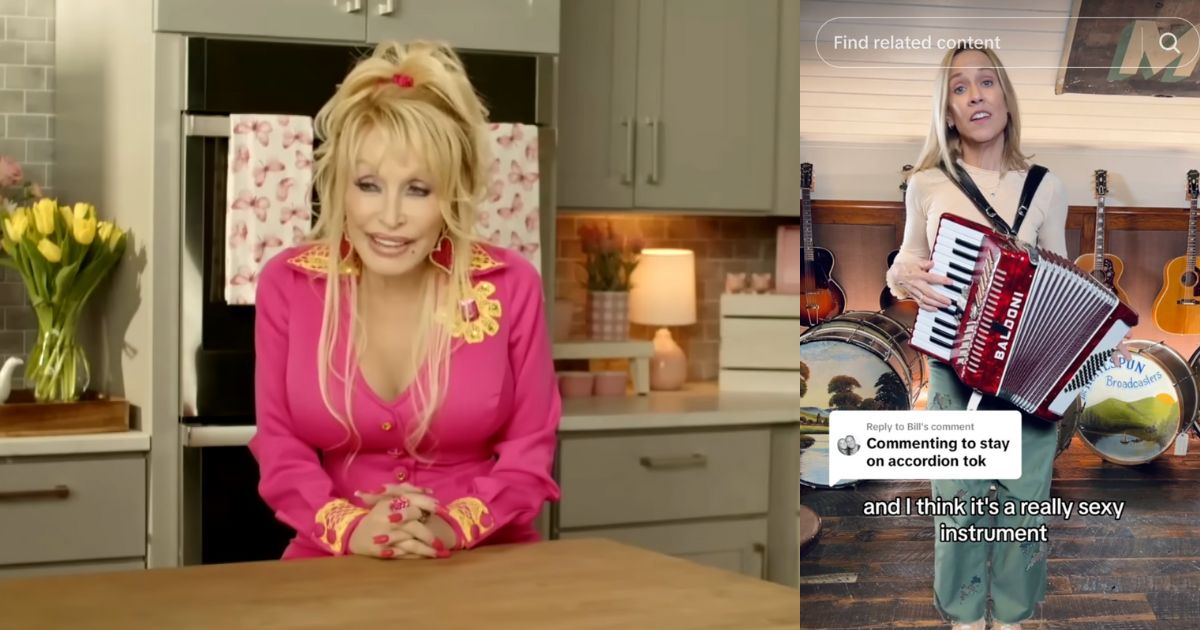
Dolly Parton Responded Gracefully to Elle King’s Grand Ole Opry Debacle

In a positive conclusion to a social media fiasco that lit up news feeds, Dolly Parton responded to Elle King’s controversial January Grand Ole Opry performance. The “Ex’s & Oh’s” singer appeared on the Opry stage January 19 as part of birthday celebration for Parton, who was turning 78. King, however, was quite inebriated and made comments that left some ticket holders and several social media commenters upset at her behavior. In February, though, Parton did an interview with E! News and encouraged everyone to show King support instead of condescension.

“Elle King is a doll,” Parton told the news outlet. “I called her, and I said, ‘You know, there are many F-words. Why don’t we use the right one? Forgiveness, friends, forget it.’ She feels worse about it than anybody. She’s going through some hard times, and I think she just had a little too much to drink and then that just hit her. So, we need to get over that, because she’s a great artist and a great person.”

If only everybody online was as gracious!


Sheryl Crow Plays Her Songs on TikTok Following UMG’s Decision to Pull Their Catalog

@sherylcrow

Anyone else have a Favorite Mistake? 🙋🏼‍♀️ #fyp #favoritemistake #acoustic #acousticcovers

♬ original sound – Sheryl Crow

It’s probably nobody’s favorite mistake — we’re talking about Universal Music Group choosing to remove many of their most popular tunes from TikTok, which is arguably one of the most important marketing tools for musicians currently. Understandably, many artists were upset. Some began to record live performances of their music to share on the app so fans can go on recording videos with their “sounds.”

Sheryl Crow joined the crowd making their songs available in other formats, and the “Soak Up the Sun” singer recorded acoustic versions of songs like “My Favorite Mistake” and “Strong Enough.” Many of the tunes she picked are requests, including “The First Cut is the Deepest.”


After the Tennessee Legislature Refused to Acknowledge Allison Russell, Celebs Voiced Support Online

In February, Tennessee State Rep. Justin Jones proposed resolutions to the Tennessee General Assembly designed to honor both Paramore — who won a Grammy for Best Rock Album and Best Alternative Music Performance — and Allison Russell, who took home her first Grammy for Best Americana Performance. Unfortunately, Tennessee House Republicans allowed the resolution honoring Paramore to pass, but blocked the similar measure honoring Russell, who is Black and won for her song, “Eve Was Black.”

Russell took to Twitter (now known as X) to respond:


“I take as a compliment,” Russell tweeted. “Their bigotry, sadly, is on relentless display. We have a chance this year to make a real change in TN.”

The clearly prejudiced act was at least answered online by celebrity support. Brandi Carlile posted on Twitter that the TN GOP is “scared of” Russell.

Paramore’s Hayley Williams also responded, taking the TN GOP on in media interviews.


Holly G of Black Opry Celebrated Beyoncé’s ‘Act II’

Highlighting everyone from Frankie Staton to Rhiannon Giddens, Miko Marks to The Kentucky Gentlemen, Black Opry co-founder Holly G recently took us all back to school. Class was in session on Twitter as Holly counted down some prolific Black country artists to celebrate Beyoncé’s upcoming album, Act II: Cowboy Carter.


Everyone and Their Mamas Are Line-Dancin’ on TikTok

Speaking of Beyoncé, her new single, “Texas Hold ‘Em,” is only one of many, many popular line dance tunes on TikTok right now. Whether it’s a duo gettin’ down on the pavement outside, or a group boot-stompin’ in a downtown Broadway bar, line dancing is officially cool again!

@lavbbe

This aint Texas 🤠 DC: Us ( me & @jacob.fj ) 🤎

♬ TEXAS HOLD ‘EM – Beyoncé


Willow Avalon Went Viral for New Single

Willow Avalon, an up-and-coming country singer-songwriter, went viral for debuting her new single, “Getting Rich Going Broke,” on TikTok. This tune also comes with a line dance — we told y’all this trend is on fire!

@willowavalon

Do y’all actually want this? #countrymusic #lorettalynn #dollyparton #oldcountry

♬ Getting Rich Going Broke – Willow Avalon


The Super Bowl Got Country-fied!

This year’s Super Bowl halftime show might’ve been dominated by Usher, but our favorite bits of the biggest sports event of the year happened before the game even began. Rapper Post Malone donned a clearly Western-inspired outfit and sang a stunning, acoustic version of “America the Beautiful.”

@postmalone

America The Beautiful 🇺🇸 #SuperBowl #SBLVIII

♬ original sound – Post Malone

And we’d be remiss to leave out Reba McEntire’s excellent version of “The Star Spangled Banner”!

@nfl

Reba McEntire performs the Star Spangled Banner 🇺🇸 #rebamcentire #nfl #superbowl

♬ original sound – NFL


Marcus King Celebrated Molly Tuttle’s Grammy Win With a Sharp Cover on TikTok

Last, but most certainly not least, alt-country singer-songwriter Marcus King gave an excellent cover performance of “Down Home Dispensary” online to celebrate Molly Tuttle‘s Grammy win. Tuttle even responded, commenting that he “crushed” the song — and we agree!

@marcusking

@MollyTuttle congrats on bringing home the Grammy for best bluegrass album! Well deserved!

♬ original sound – Marcus King

So, a lot happened in January, February, and the beginnings of March! We’ll continue rounding up the hottest social media conversations and goings-on for BGS readers every month — let us know on social media and tag us in a post if you think something deserves to make the list!


A Little Less Insecure: The Story Behind Brandy Clark’s First Grammy

Despite her well-earned reputation as one of Nashville’s strongest songwriters and nuanced singers, Brandy Clark had gotten used to not hearing her name called at Grammy Awards ceremonies. Two years ago, her friend Brandi Carlile decided to do something about that. Carlile produced Clark’s fourth studio album, Brandy Clark, which earned five of the six nominations she got this year, upping her tally to 17 — one of which turned into her first win. Clark was honored for Best Americana Performance for “Dear Insecurity,” a duet with Carlile. After her win, Clark told a backstage interviewer, “Brandi is the reason why I made this record and why this song is what it is.”

But as Clark explained in an earlier BGS interview, the catalyst for that collaboration — her most personal, affecting work yet — was one of those Grammys she didn’t win.

So how did Brandi’s involvement come about?

Brandy Clark: The label wanted me to record two more songs for a deluxe version of Your Life is a Record. I had made that record with Jay Joyce, and he couldn’t do it. Tracy Gershon, a mutual friend of Brandi and I, said, “What if Brandi produced?” And Brandi was willing to do it. It was a really good experience, mostly because Brandi really follows her gut instinct, which is so amazing. I tend to overthink. And then “Same Devil,” which was part of that, ended up nominated at the next Grammys. We didn’t win, and she leaned over to me and said I looked really devastated. I didn’t remember feeling particularly devastated, but she said I just looked really sad, so she said, “Hey, buddy, we’ll get one. I’d love to do a whole record with you.” I was like, “Really?” And she said, “Yeah, I’ve thought about it. I think these things through when I get involved in a project; I think about the artwork, I think about everything. I’d see it as your return to the Northwest, because I’m from the Northwest.”

It was such a different experience for me, because Brandi’s an artist. I think producers lead with whatever their original instrument is; if they were a guitar player, they lead with that. If they were a songwriter, they lead with that. I’ve never worked with a producer that could sing to me what they heard, and also keep me from over-singing. And she wanted as many live vocals as possible. That was different for me. And she really challenged me to get to the heart of who I am as an artist. No producer’s ever asked me to make lyric changes; she said, “I just want to believe that you believe everything you’re saying.”

What’s an example of a lyric she asked you to change?

“Buried;” the second verse used to start out, “I’ll read ‘Lonesome Dove,’ I’ll start doing yoga,” and she said, “I don’t like that yoga line.” I was thinking, “I don’t care if you like it or not.” That was my first [reaction]. I said, “Why not?” She’s like, “Well, I just don’t believe that you do yoga.” I said, “I don’t.” She’s like, “Then it shouldn’t be in the song.” And she was right.

You do heartbreak songs so extraordinarily well. Even the ones that aren’t sometimes feel like heartbreak songs, because they’re so full of emotion. “Dear Insecurity” — to hear that coming from the perspective of two women who are both stars now, and yet it’s so believable — it’s not like two women just singing “Oh, yeah, we’re insecure,” you really believe it. That’s what’s so striking about all of your songwriting, but to be able to do that, and do it well, and to know that it doesn’t matter how big you get, you still experience that …

Oh, I have massive insecurities. I think everybody does. That’s why I think that song hits; to be human is to be insecure. And the more willing you are to admit those insecurities, the less they rule you. That song came from— I had gotten my feelings hurt. A really great friend of mine says insecurity is the ugliest human emotion; it’s what makes people do mean things. So I was trying to remember that on the way to my writing appointment that morning, because I wanted to get into a good headspace to write with someone I had never written with. When I was sitting in the car, I started to think about my own insecurities, and the things that they have messed up along the way for me. I thought, “Wouldn’t that be something, to write a letter to insecurity?”

Why did you and Brandi choose to duet on that song?

Well, going in, I never heard that song as a duet. The first day we were in the studio, she said, “What do you think about ‘Dear Insecurity’ being a duet?” I loved the idea; I heard it as a duet with a guy, because men have insecurities just like women do. She really wanted Lucinda Williams. Because we hadn’t secured anybody yet, she said, “I’ll sing the scratch [vocal], and then we’ll see about getting Lucinda in here.” So she started to sing, and we really got lost in it.

Brandi had also been pretty adamant that she didn’t want to be a feature on this record, because of producing it, and because we had done that other feature, [“Same Devil”]. She just didn’t want it to look like she was trying to get featured. But when it was going down, I could just feel this magic happening. When I listened to the board mix, I thought, “Oh, God, what am I going to do? I don’t want to hear anybody but her on this now.” I loved the way that our voices battled each other and melded together. So I said the next day, “Brandi, I really want it to be you.” And she was like, “Oh, that’s all you had to say.” It was perfect because we have similar insecurities. We’re around the same age, both gay, like, there’s insecurities in that. We’re very similar, and very different. And it just worked.

In what other ways did she influence or impact this album?

There were a couple of things that I’ll take with me forever. When she was asking me to make lyric changes, that really bothered me. It felt disrespectful to the co-writers to do that on the fly, and I told her that. I said, “These songs, none of them were just slapped together, because I don’t write that way.” No offense to anyone who does, I just have to put a lot of thought into songs for ’em to be good. And it took other people to write these songs that I respect and that put their heart and soul into this, too. And I like to be in service to the song. And she said, “Well, I understand that. I think this time, you need to be in service to the artist.” It put me in a different space as an artist than I’ve ever been in. I always come at things as a songwriter first. This record, I came at it as an artist first.

The other thing – and I’m so glad that I asked her this question, and that she answered it the way she did, because it makes me think differently; I’ve never worked with a producer on a record that I was a co-writer with. So they’re always, to me, the last writer on the songs. The positive is that they’re making choices based on what they feel when they hear them the first time, like a listener. …I always give a producer probably 18 to 24 songs, then I’m just too close to pick the 10 or 12. So she picked the songs that she thought should be on this record. When she gave me her list of what she really wanted us to dive into, I said, “Why did you choose those 10?” And she said, “Well, they were all great songs; but I chose the songs that I felt like you wrote in your bedroom.” That was such a great thing… it reminded me that when all of us picked up a guitar or pad of paper the first time, it wasn’t to impress anybody. It was to just get some emotion out that we could only get out through song.

There’s another song on here, “She Smoked in the House,” that I wrote about my grandma that I never thought would be on any record. I thought I was just writing it for me. People have responded so strongly to that song, it just helps me know I need to double down on me and what I’m feeling, instead of what I think people want to hear. That sounds really simple, but it’s easy to forget that if we’re feeling something, other people are gonna feel it. And if we’re not, nobody’s gonna feel it.

You once told me your mission was to write a classic like “Crazy.” While listening to this album and Shucked [the Broadway musical for which she and Shane McAnally co-wrote the music and lyrics], it occurred to me that you have. A song like “Friends,” that’s gonna be sung at thousands of weddings and graduations, and “Take Mine” and “Up Above the Clouds” and these other tracks… I kept thinking of the great Randy Newman tearjerker songs in Pixar films.

I’ve always thought “Up Above the Clouds” should be in one of those.

Totally! Are you working on that?

Yes. It makes me feel amazing that you feel like I have written a classic song like that. I’m going to hang on to that today, and then I’m going to let it go. Because what keeps me hungry as a songwriter is to think I haven’t.

You mentioned you might do something else with Brandi. Are you already talking about that?

No, but we clearly work well together and people like what we do. She’s a little bit like Shane for me; I feel like the sum of our parts is greater than two people.

I love that you’re all part of this connected group of people, especially women. I remember Allison Russell crediting Brandi with elevating her family out of poverty, and to be able to do that for so many people …

That’s a testament to Brandi. She’s on top of the world and she’s choosing to elevate other people; she said to me when she approached me about this, “You deserve to be in the same spot as me on festival posters. That’s what I want.” A lot of people have a scarcity mindset. She has an abundant mindset and wants to raise up the music of other people that inspires her. That inspires me to do the same.

My trajectory is on a really great path right now. And then I look to someone like her and think, “OK, where do I pay it forward? Where do I lift someone else up?” Because it’s really easy when you’re just grinding and trying to get your own star to rise, to not look around and think, “Oh, how can I help someone else?” But she really inspires me to do that.


Photo Credit: Victoria Stevens

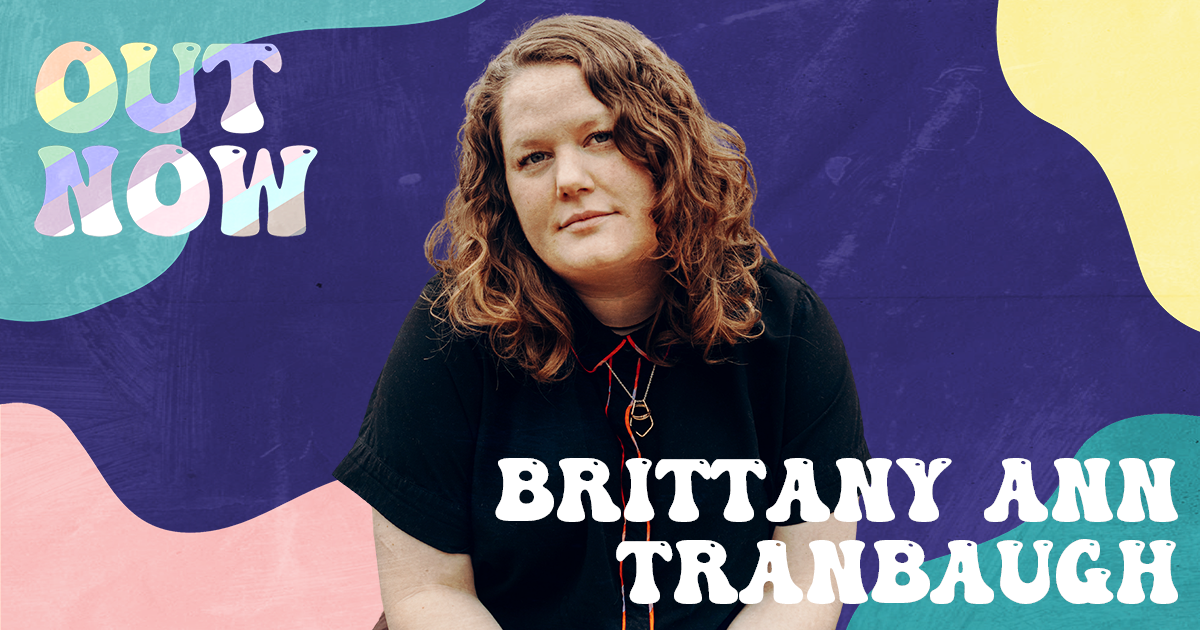
Out Now: Brittany Ann Tranbaugh

Brittany Ann Tranbaugh is the first artist we’ve featured in Out Now that I have yet to meet. She runs in queer music circles, playing with many LGBTQ+ artists – including Liv Greene and Jobi Riccio, who were featured on this column last year, as well as other queer-identifying artists like Sadie Gustafson-Zook and Mya Byrne.

I’m very much looking forward to hearing Brittany live at our next Queerfest show, also featuring Liv Greene and Carmen Dianne, at Dee’s Country Cocktail Lounge in Nashville on February 24 at 7 pm. Brittany writes with relatable lyrics, warm, inviting sounds, and sings with silky vocals.

Our Out Now conversation covers her upcoming touring plans, her favorite LGBTQ+ artists, and how she balances creativity and business as an independent artist.

What would a “perfect day” look like for you?

Sleeping in, but not too late (9 am is my ideal wake-up time), making a hearty homemade breakfast with a good podcast or record playing, walking my dog in the woods, taking a long shower, then playing a queer country night with my band and a bunch of friends, enjoying some excellent drinks and food together afterward.

Why do you create music? What’s more satisfying to you, the process or the outcome?

I think I’ve spent most of my creative life on the outcome-oriented side of the spectrum, but I’m learning to enjoy the process more. Having a band has taught me to love all of the steps of making a song, because they can evolve a lot when I bring them to the band. My bandmates make arranging and recording extra fun and satisfying. I’ve also begun to open myself up to co-writing, which is a process I enjoy deeply when it’s with the right people.

Do you create music primarily for yourself or for others?

I think above all else, I strive to create music I feel proud of, that effectively and artfully communicates my truth, that feels cathartic to sing and play. I’m incredibly lucky that a large enough number of other people resonate with it, to the point that I get to do it for a living and connect with wonderful folks all over the world.

Who are your favorite LGBTQ+ artists and bands?

Growing up, my favorite out queer artists were Brandi Carlile, Melissa Etheridge, Indigo Girls, Ani DiFranco, and Tegan and Sara. Lately I’m a huge fan of Adrianne Lenker/Big Thief, and honestly a lot of my favorite LGBTQ+ artists are people I consider friends, like Liv Greene and Jobi Riccio. Here’s a link to a Spotify playlist with my Queer Americana faves.

What are your release and touring plans for the next year?

I released an existential lullaby called “For Caroline” in January and in March I’ll be releasing a poignant short-story song called “Bushwick.” This winter I’m spending most of my time home, but doing a few weekend mini tours, going as far away as Nashville. I’ll be solidly on tour all spring and summer: April in the Northeast and New England with Blair Borax, May in the Midwest with Sadie Gustafson-Zook, June and early July on the West Coast with Joh Chase, mid-July in Germany and the UK, then back to the US for some festivals. I haven’t planned much for fall yet. Just leaving it open for magic.

As an independent artist, how do you find the balance between the creation of music and the business of managing, booking, and promoting your work?

It’s tough! I’m still figuring it out. I get easily wrapped up in all the business aspects of the job, because it takes a huge amount of that work just to pay my bills. I know that when I don’t nurture my curiosity and creativity, songwriting begins to feel tedious, then I avoid doing it, then my mental health declines. Recently I started two simple habits that have helped me access my creativity more easily: morning pages (3 pages of free-writing) after waking up and a phone-free bedtime and morning routine.

These habits let my “artist brain” wander, and allow songs to come easier. Another thing that’s been really helpful is scheduling retreats and/or residencies at least twice a year, where I get away and unplug from social media and just focus on songwriting and self care for at least a week. I did a communal retreat in a lake cottage with some songwriter friends last year that was life-changing, and I realized that retreats really work for me, so I made them a priority.

Like you mentioned, you’ve played shows and continue to play shows with other LGBTQ+ artists including Liv Greene, Sadie Gustafson-Zook, Jobi Riccio, and Mya Byrne, what has it been like for you to work with other queer-identifying artists?

I love playing with other queer artists! I definitely seek out fellow queer songwriters. I connected with all of the folks you mentioned on Instagram and now we’re friends in real life who tour and collaborate together. I’ve always been a deeply community-oriented artist. My favorite shows are the ones I play with friends. I think that the love and respect artists have for one another is palpable and sets the tone for everyone in the room. Here in Philly, I’ve been heavily involved with Baby’s First Rodeo Queer Country Night. We’ll be doing our third event in February. Those shows have been bliss for me: to see that many queer folks, who grew up listening to and loving country music, being so authentically themselves in a country music space makes me cry every time.


Photo courtesy of the artist.

Out Now: Mary Bragg

Mary Bragg crafts music with beauty and pain, vulnerability and authenticity, and raw emotions. Mary played Queerfest 2022 at The Basement East in Nashville. Tonight, January 23, 2024, she will be back on stage at The Basement to celebrate her new single, “Only So Much You Can Do.”

In addition to being a phenomenal songwriter and vocalist, Mary is also a producer. In 2022, she earned a Master of Arts in Songwriting and Production from Berklee NYC, elevating her skills to the next level. Her self-titled album centers around self-discovery with tender lyrics that touch on love, loss, and self-esteem. Mary writes compelling music filled with nostalgia and honesty. We’re delighted to feature this incredible artist, Mary Bragg.

What would you say is your current state of mind?

Mary Bragg: Wow, what a way to start the conversation; I love it. My current state of mind is as follows: Grateful – for my life, my love, my work. Steady – managing a wonderfully robust docket of creative work while continuing to establish balance in my everyday life and internal dialogue. Excited – always, about a song. Several actually, new ones, ever percolating.

When I co-write, songs typically arrive at a near-complete form pretty quickly, but when I write alone, I’m much more patient with the process. I move through the world keeping my antennae up, looking for a way back into a lyric I’m working on that gets me in the gut. I’m obsessed with it.

What would a “perfect day” look like for you?

Being a touring musician is a funny thing, because touring life is very, very different than home life. I’ll frame the “perfect day” for you on the road beginning at 2 or 3 p.m., when we load in and have a perfect soundcheck with a killer engineer. Doors at 6. Show at 7. (Did I mention I love early shows?). Merch table mayhem at 9. Cocktail at 10. In bed by 11:30, sleep until 8. Drive, fly, etc. to the next town, repeat.

At home, I’m an early bird. Up by 6:30 or 7, coffee, eggs, journal, write, attempting to avoid technology for a few hours. 11 a.m. workout. Afternoon – back to work – emails galore, phone calls, Zooms, everything. I wear a lot of hats (artist, writer, producer, occasional teacher), so there’s a lot of juggling to do. By 7 p.m. I force myself to stop working; my darling fiancé, by this point has probably created a ridiculously beautiful meal for us. I used to think I was a good cook until I met her. She blows me away every time she prepares a meal for us. It’s the best. And I’m a great dishwasher. Watch a little TV after dinner (okay sometimes during), and hit the sack by 10 p.m., otherwise I turn into a pumpkin on the couch.

Why do you create music? And what’s more satisfying to you, the process or the outcome?

The process is exhilarating – as a writer, the actual singing and playing in a small room, making music and hearing it travel through a space is one of my favorite things. No audience, just the song in a room. Hearing your thoughts as you’re framing them in melodic form is a bit of a head trip that has its own immediate reward. In the studio, there’s a whole other bag of satisfying tricks to uncover and of course performing live has its own rewards as well, mostly connecting with other people who feel what you feel. And, on the road I’m able to focus more on the enjoyment of singing; pushing my voice to try new things on the fly is incredibly fun. Up until that moment of live-show-exhilaration, I’m so focused on the writing and producing, but by the time I take it to the stage, I can really let go and dig back in to the music itself.

Could you tell us about your single that came out today? 

Ah, my new single! “Only So Much You Can Do” is about chasing joy in the company of another person. I’ve been thinking a lot lately about that New York Times article about the secret to happiness – and how relationships are the key to it. We are pack people; we need each other; we need other human beings around us in order to be our best, happiest selves. Friends plus community plus honesty equals joy. I wrote this song with my dear friend, Bill Demain, during the pandemic over Zoom; we craved connection again, waited eagerly for it to return. Now that we’re out from under it, the song is a nice reminder to spend time – actual face time – with your people; it sure does a lot of good.

Who are your favorite LGBTQ+ artists and bands?

Rufus Wainwright, The Indigo Girls, Brandi Carlile, Aaron Lee Tasjan, Jobi Riccio, Liv Greene.

What does it mean to you to be an LGBTQ+ musician?

Well, I’m a person who is a songwriter and artist who is also bisexual living in a world that, at the moment, likes to extend a great to deal of judgment, disdain, disapproval, and harm to people in the LGBTQ+ family. Most of the time I feel as happy as the next person, then I’m reminded of the threats to our community, to my own family, and I remember how important it is to speak my experience, write through my own pain, and sing about the things that break my heart.

I think every human being deserves to tell their story, express their feelings, and be heard. If I can do that – tell my own story of coming out, leaning in to love while experiencing deep, simultaneous loss, then reclaiming joy and autonomy – maybe some additional jolt of kindness, empathy, and love will be injected into the world.

In 2021, you moved from Nashville to New York City to pursue a Master of Arts in Songwriting and Production at Berklee NYC. How did this educational pursuit impact your creative process and the way you approach your work today?

It’s funny – getting a masters degree might suggest you’re taking your work very seriously, going deeper on process and theoretical approaches to your craft. While I did very much feel that way during the program, by the end of it I felt a newfound sense of taking myself less seriously. I wanted to reconnect with a sense of lightness, play, curiosity, remembering that songs are a gift, that humans have so much in common, and we all just need to be acknowledging those commonalities more frequently and willfully. The more I can get to the heart of those feelings, and sharing them, the better.

Also, at the end of my thesis defense, one of my professors said to me, “Remember who you are.” It was such a nice thing to hear, because I do know who I am, what I stand for, and what I want to do with my life. All I have to do when I get distracted, spin out, or lose track of my focus is remember who I am.

Your latest album addresses the universal themes of self-love, acceptance, discovery, loss, beauty, and pain. How did you personally grapple with these concepts during your own transformative journey, especially in the context of your relationships and coming out to your family?

Woof, the grappling was tough, but my gut was clear: I knew who I loved, what that meant for my place in a world that is obsessed with classifications, and how hard it would be for some people that I love deeply to accept.

I was raised in a huge, very conservative Christian family in South Georgia and coming out to them was the hardest thing I’ve ever been through. I love them so much, they love me so much, but many of them feel quite strongly that I’m, you name it, “living in sin,” “going to hell,” “choosing a ‘lifestyle’ that is wrong.” What I know in my bones is that none of that is true. The love I have for my partner and soon-to-be wife is as real and deep as any hetero relationship I’ve ever had or witnessed. Standing firm in that belief while also trying to hold on to relationships in my family that I don’t want to lose is pretty tough, but I’m grateful that my gut speaks very loudly and I have no interest in tamping it down.


Photo Credit: Anna Haas