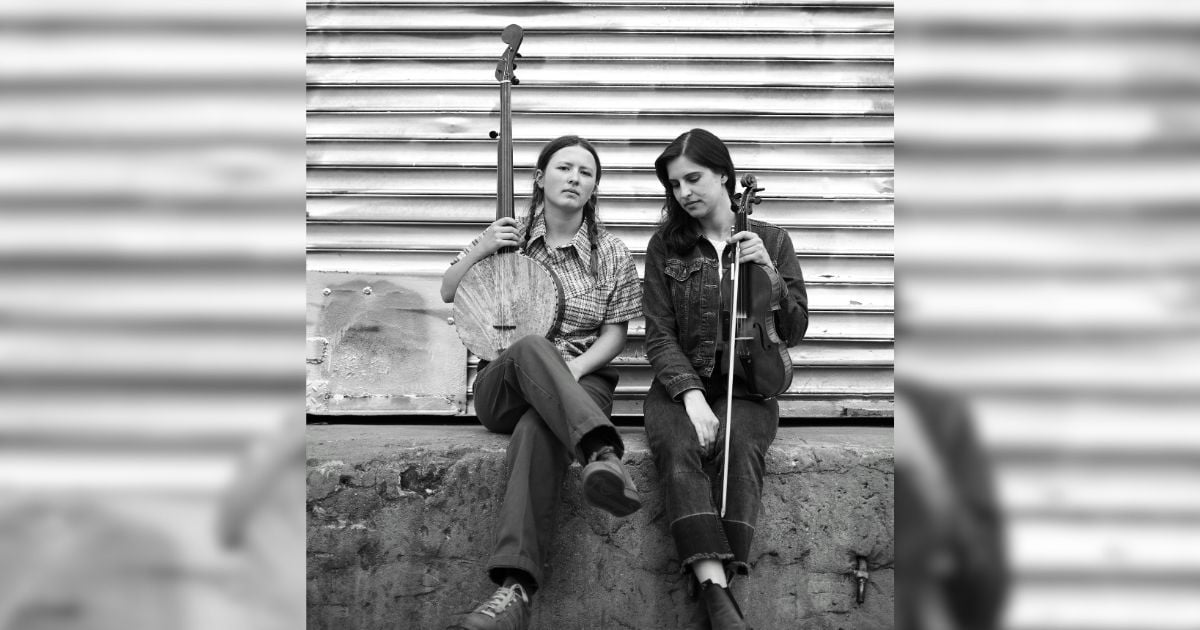
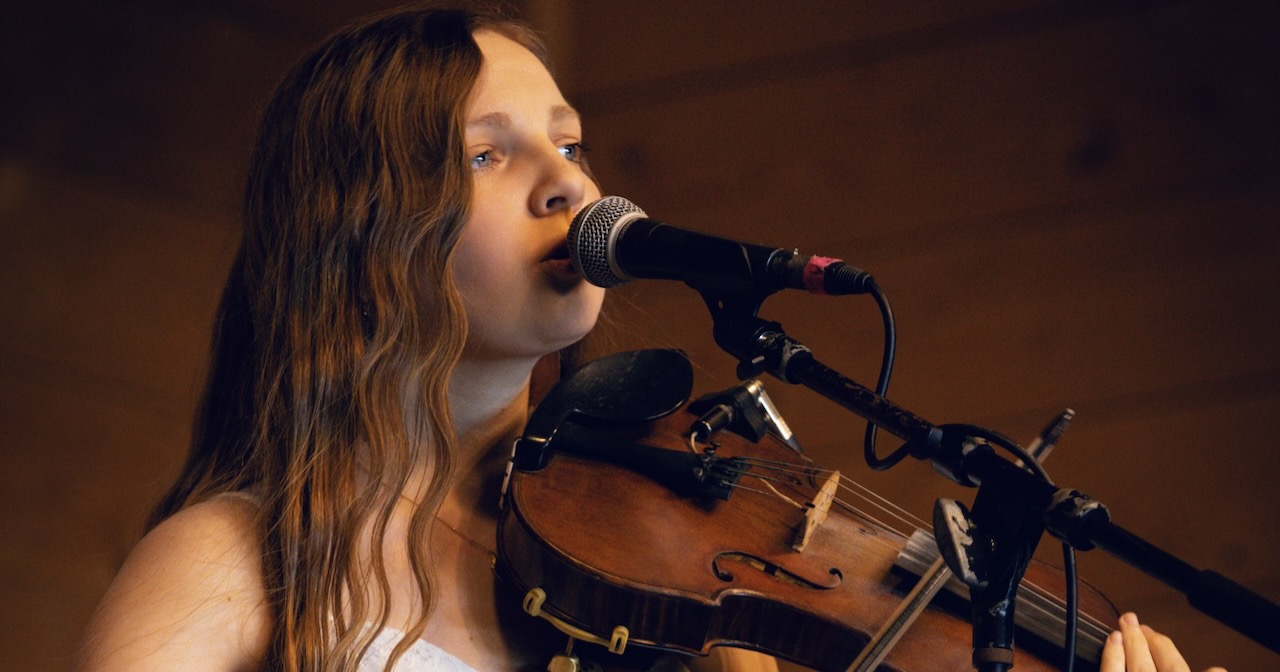
Perhaps the most remarkable skill of New York-based old-time duo Nora Brown and Stephanie Coleman is their ability to place canonical old-time material – fiddle tunes, ballads, breakdowns, hornpipes, transatlantic lyrics, and more – firmly in the present. Aided and abetted by their youth and their now longstanding musical collaboration, the two deftly entwine together timelessness and the fleeting, effervescent moment, leaving listeners on the edges of their seats as we cling to the temporal and seemingly miraculous space that opens up between them.
Brown and Coleman thrive behind NPR’s fabled Tiny Desk, all at once broad and bold while tender and understated, simple. Unadorned, but flush and full. Their new EP together, Lady of the Lake, features two of the numbers they performed at NPR’s headquarters in D.C., the title track and “Copper Kettle.” But they open their mini concert with a set, “Across the Rocky Mountains” and “The Old Blue Bonnet,” with Brown on guitar, before switching to her signature clawhammer banjo. For being so young – she only recently dropped the “Little” from her former stage moniker, Little Nora Brown – her voice carries an ancient ache. As their vocals resonate together in close harmony, Brown and Coleman remind of so many old-time, string band, and bluegrass duos that came before them, like Hazel & Alice, Laurie Lewis & Kathy Kallick, Cathy Fink & Marcy Marxer, and many more.
We hope then, like those impactful and influential duos that came before them, that Nora Brown and Stephanie Coleman continue to gift us with gorgeous music such as this for many decades to come.
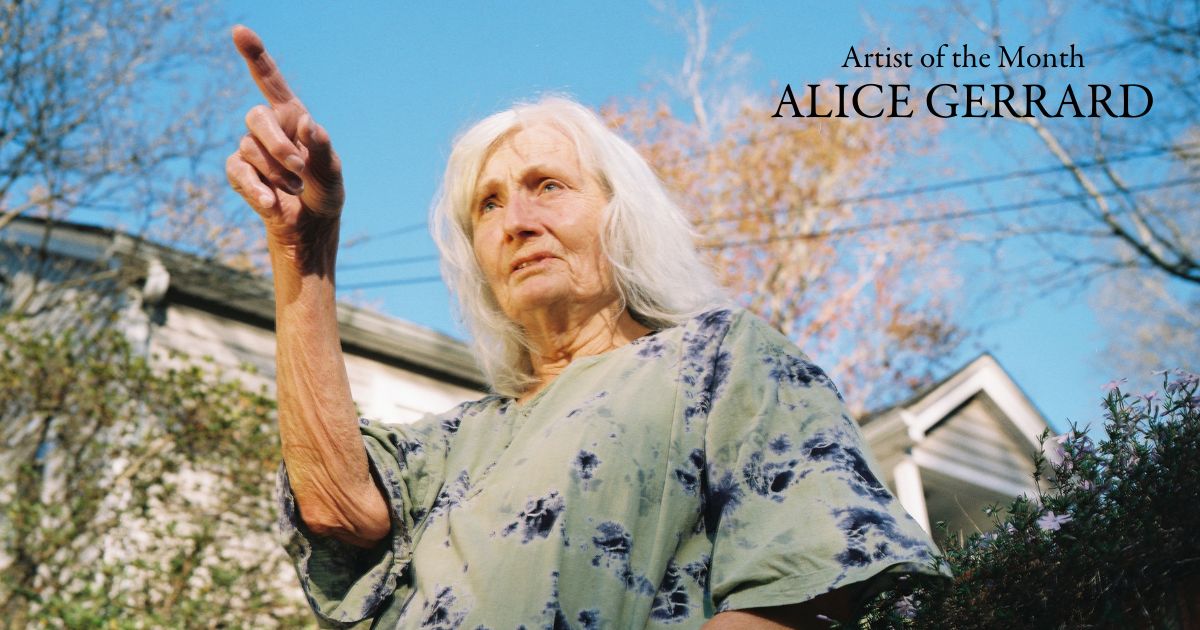
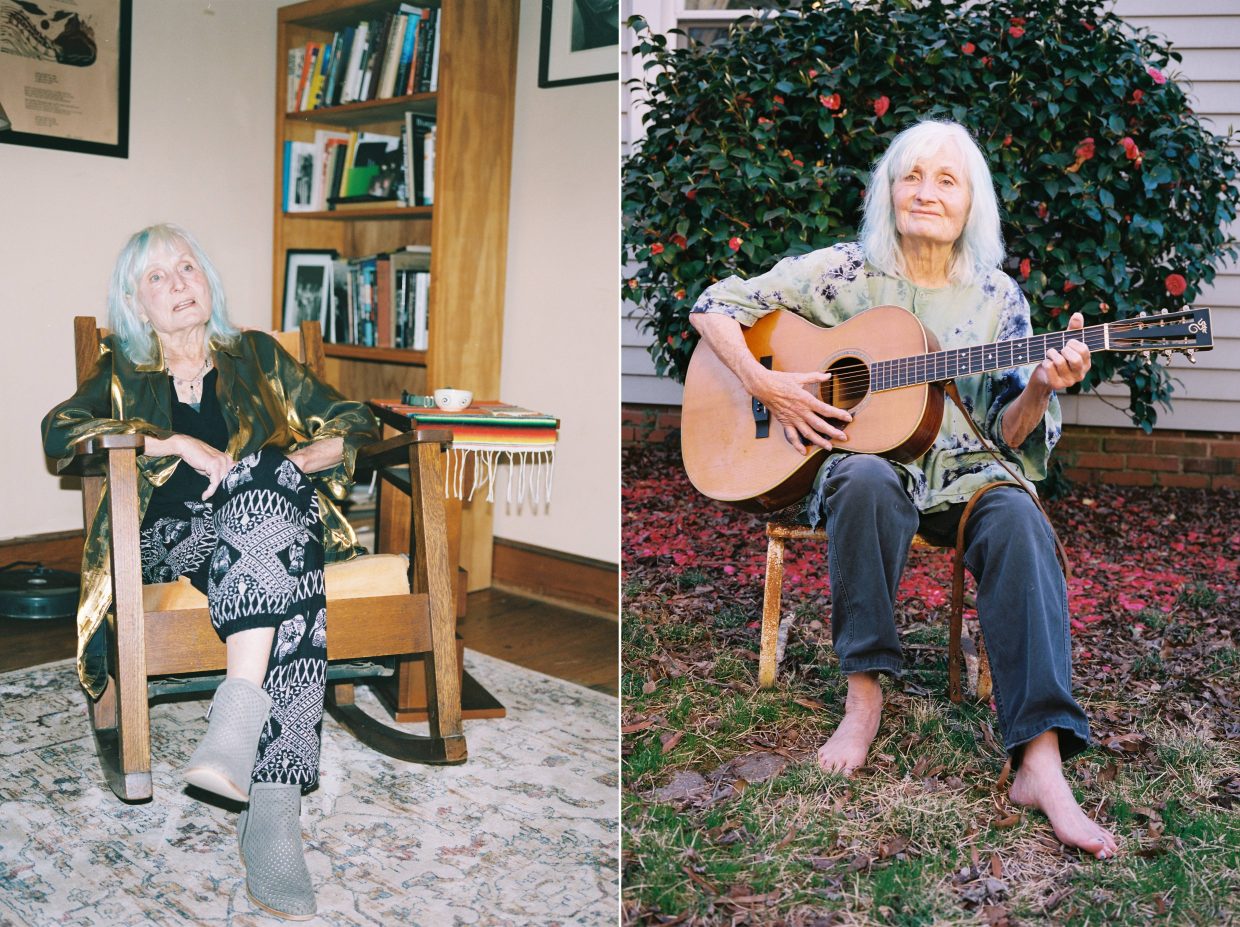
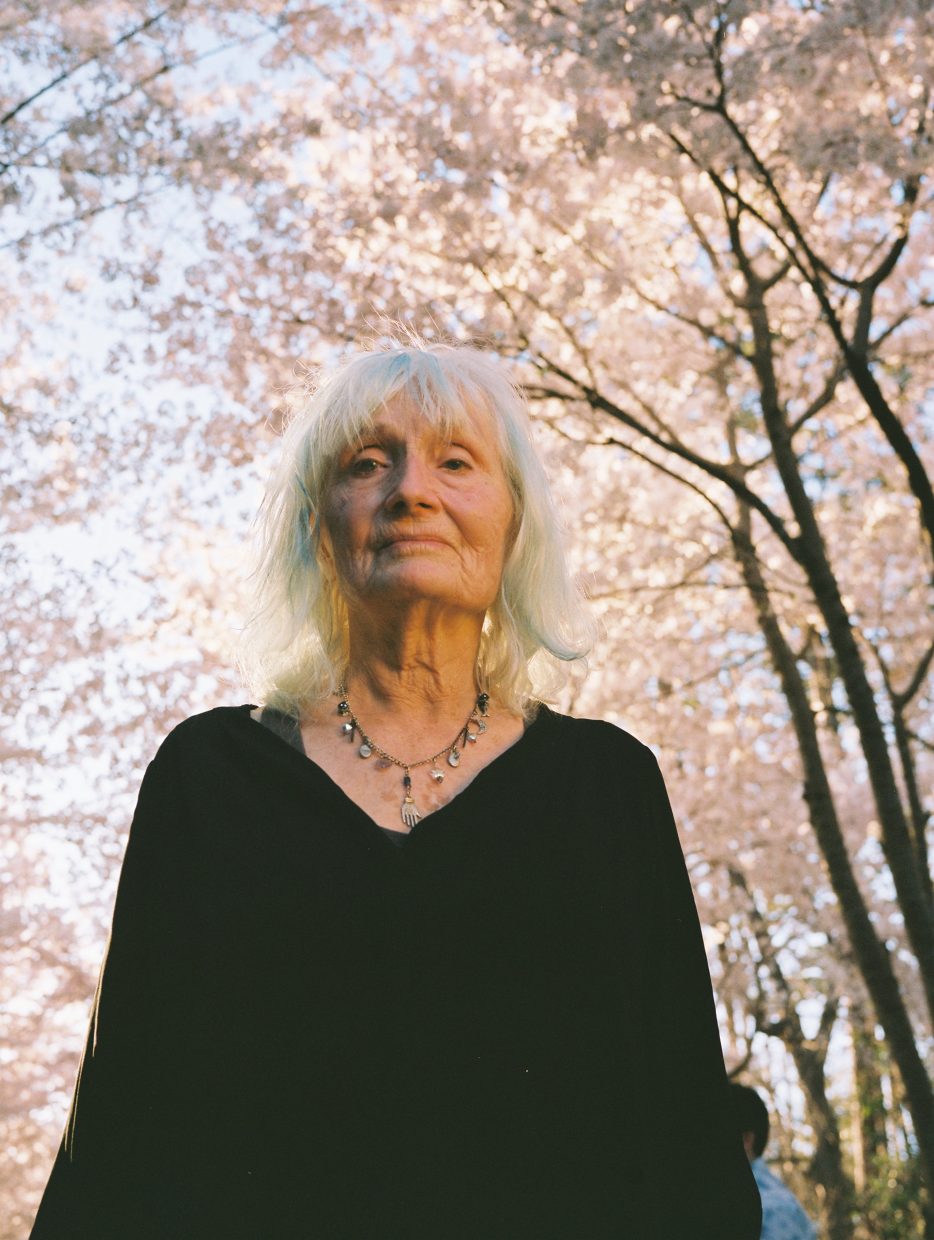
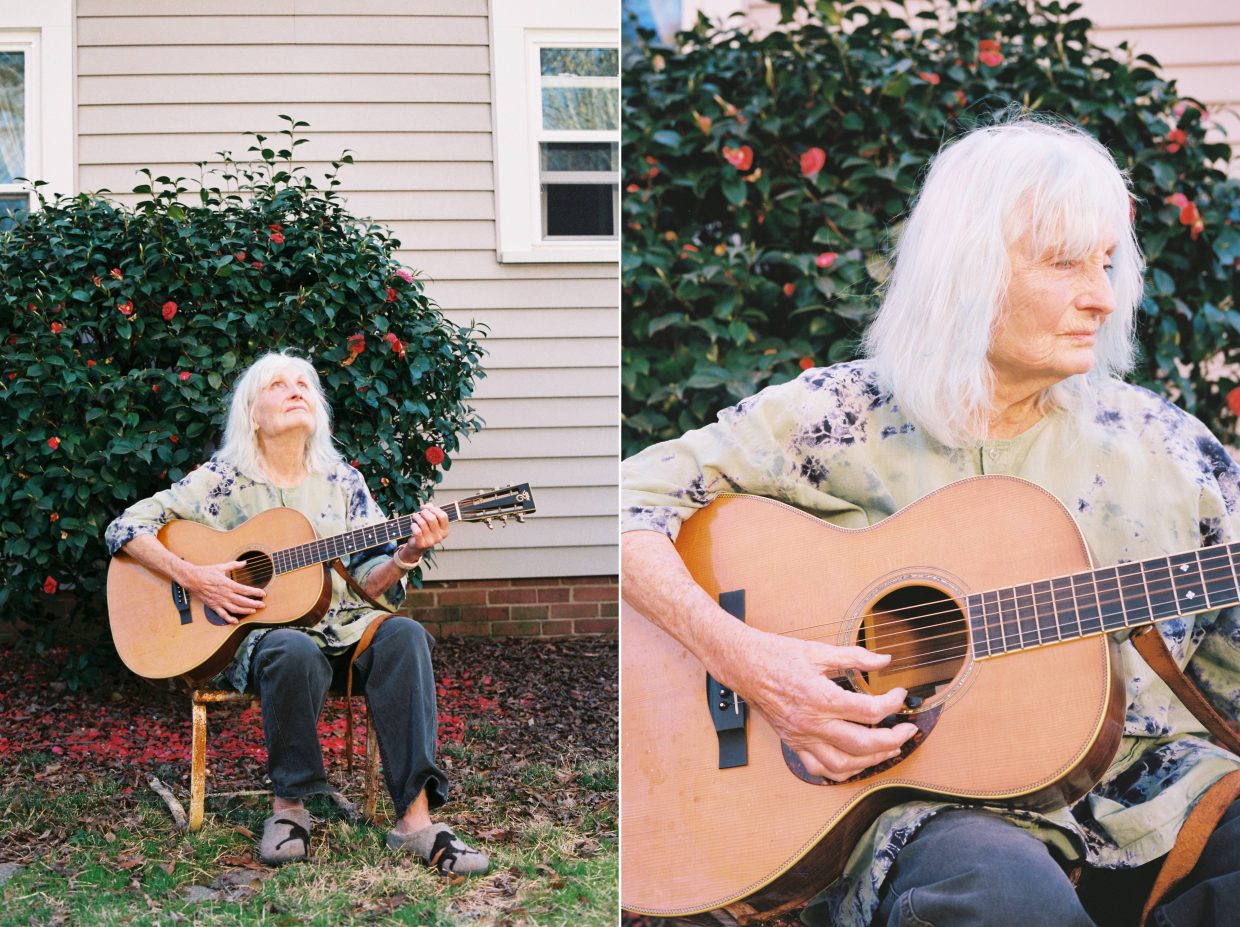
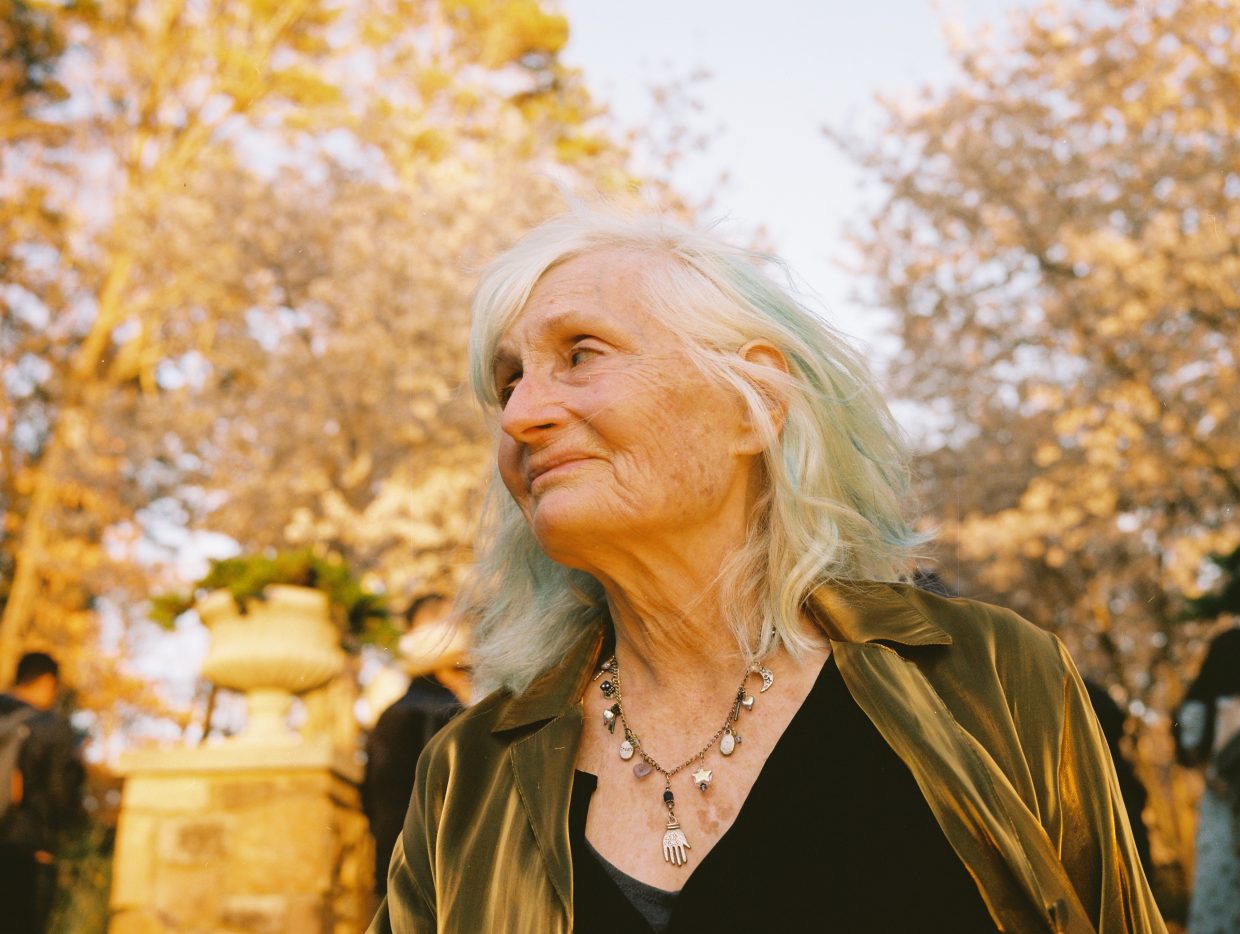
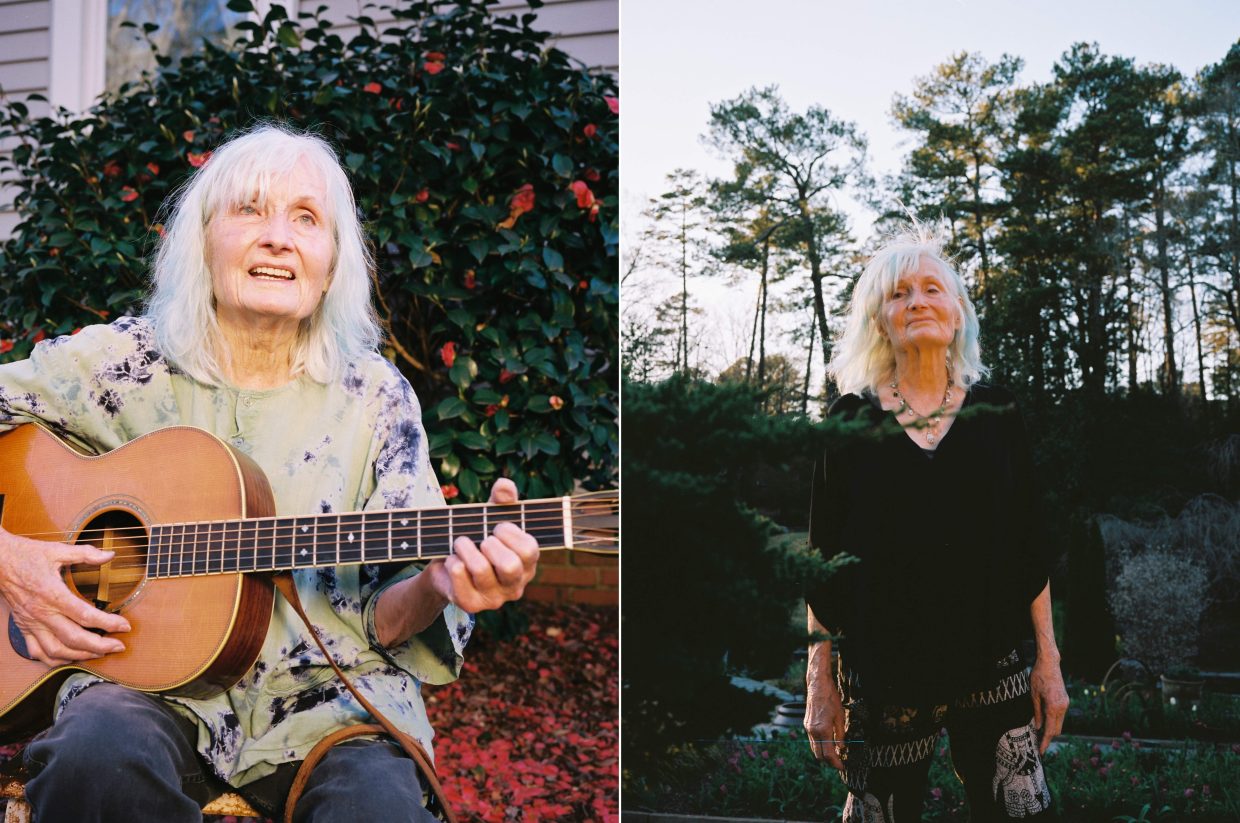
(Editor’s Note: Fiddler, songwriter, and creator Libby Rodenbough writes this personal essay on her friendship with and admiration for BGS Artist of the Month, Alice Gerrard, accompanied by her original photos taken for Gerrard’s new album, Sun to Sun.)
I remember first hearing Ola Belle Reed’s “Undone in Sorrow” when I was 19 or 20. I felt like a portal had been opened unto a world that had existed around me my whole life, unseen and unheard. I grew up in North Carolina going to visit my mom’s family in Madison County, along the Blue Ridge, where any of the graveyards on the mountain sides with their little mounds of clay outside my backseat window might have been the one from Ola Belle’s song.
That portal didn’t open for me in the mountains of North Carolina, though – it was in Chicago, at the Old Town School of Folk Music, an institution that had come out of the ‘50s folk revival. I was big on Pete Seeger and John Prine at that time in my life, and had found out my dad had a cousin with a spare room in Chicago, so I went on a little pilgrimage during a recess from college.
It was there that I learned my first old time fiddle tunes, belting the refrain “down in North Carolina” from “Waterbound” at the school’s open jam while the Chicago winter dumped three feet of snow outside. It was there I first learned the rudiments – very rude in my case – of clawhammer banjo. It was also there that I first heard a left hook of a song called “A Few Old Memories” by Hazel Dickens, which appeared on her 1973 duo record with Alice Gerrard, Hazel & Alice.
I went home from Chicago with new eyes and ears. Places I’d known forever became newly populated with epic figures, recast in the light of 200-year-old narratives. My first semester back in school, I was in an introductory folklore course taught by Mike Taylor (of Hiss Golden Messenger) and he started talking about his friend Alice Gerrard, who lived a town over in Durham. I was fairly well tangled up in time and place at that point – even the deceased people I’d been learning about were brand new to me – so I had to blink a few times to digest that she was the same person singing harmony on “A Few Old Memories.”
Today, 10-ish years later, I sit with Alice in preparation for writing this piece and she tells me about driving Ola Belle Reed in her Dodge van on tours through the South in the late ‘60s. She’s my oldest friend (nearly 90), and all competition lags behind her years pretty pathetically. She also makes a lot of the people I talk to seem boring. We’re in the same business: We sing songs and play shows and make records. She’s been doing it a lot longer, and I think she knows about five times as many songs.
Hanging out with Alice helps me understand why she wanted to be friends with people like Elizabeth Cotten and Luther Davis, who were elderly when she met them. She heard the way they played and sang and had to talk to them about their lives. “They knew exactly who they were,” she says. For a young person who had moved across the country from Oregon to Washington, D.C., without maintaining much contact with home, dropped out of college, and had four children, that self-knowledge was aspirational. Though their rootedness in their communities was part of what drew her to them, she didn’t think of them as avatars of bygone primitive ways of life, or as characters in a play – they were people. Elizabeth Cotten was somewhat guarded, but over years traveling and playing together, she told Alice about indignities she had suffered as a domestic worker and as a Black female folk performer, and about subtle acts of defiance she had worked into both vocations. Luther Davis talked about how lonely it was to get old and run out of witnesses to your own life.
Alice is likewise unafraid of being a person. She’ll tell you straightforwardly that she was unprepared to be a mother, that it was essentially impossible to pursue a music career – which was something she knew she wanted for herself – and still give adequate time to her kids. We commiserate about music industry bullshit and engage in light shit-talking about the idea of showmanship.
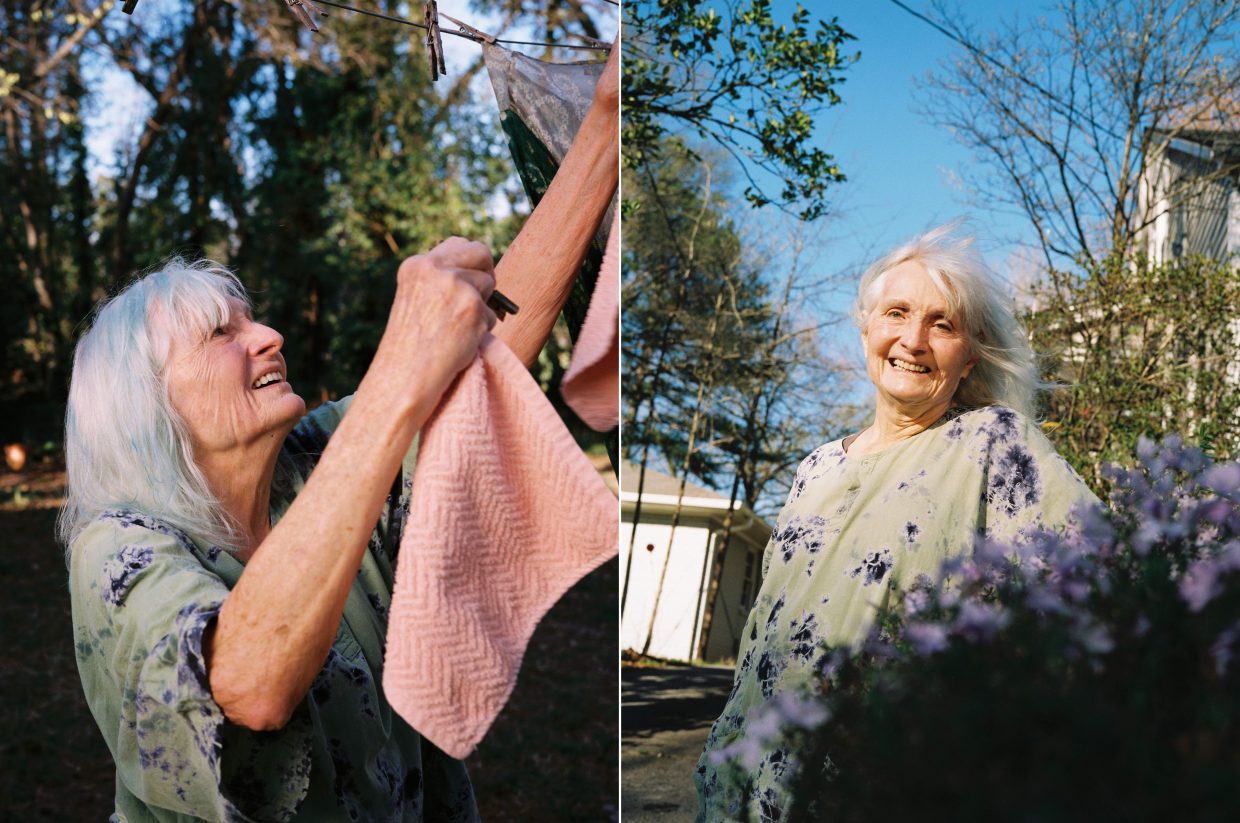
She’s usually wearing one of her collection of t-shirts that pertain to her dog Polly’s agility training facility (“Fast and Furryous”). This past March, when I took these photos of her to use for promotion of her new album, Sun to Sun, we went through her closet together and dug out some gems, including a bedazzled commemorative t-shirt from Obama’s inauguration.
I have no training in photography – I shoot film because I enjoy the feeling of not really knowing how it works. We went to Duke Gardens in Durham, where we both live, on a week when the cherry trees had popcorned into glory. Alice looks radiant in the halo of those glowing blooms. But I also love the photos where she’s at home, standing in front of the brick retaining wall around her front yard, before she realized she still had her Apple Watch on. The sky was so blue that day, her white hair incandescent. She looks like she knows something you don’t, but in a warm way, like she knows you’ll get it eventually.
Alice is unafraid to treat a song like it can handle a little handling. She knows that songs are alive and she’s interested in being a part of their lives, not their memorialization. She smiles talking about how, in an old John Cohen film, the Madison County ballad singer Dillard Chandler starts a song in a key around here (she holds her hand at her waistline) and ends it here (she raises her hand up level with her temple). She’s delighted by the particularity of the human touch. She prefers singing voices with a bit of weirdness over purely pretty ones. Talking about Carter Stanley’s high whine, she says, “Whatever was eating on him from the inside, it was showing up in the way he sang. Nina Simone, the same way.” She tells me what a struggle it is to teach that kind of feeling to people accustomed to singing prettily. “If you’re trying to get somebody out of the soft, breathy voice, you say, ‘Look, your kid is running out into the street and you have to call your kid back.’ You don’t say,” — she coos — “‘Heyyyyy Brian, get back here.’ You say, ‘BRIAN! GET BACK HERE!’”
Whenever I’ve played music with her, Alice seems to lean into what people at the Old Town School liked – actually, loved – to call “the folk process;” she lets arrangements evolve as the spirit of the universe sees fit. I’m lucky she’s not a stickler for tradition, even traditions she could write encyclopedias about, because my fiddling style is distinctly unmoored. I was a half-rate Suzuki classical violin student growing up and then at the Old Town School I learned how to accompany folk singers on songs with three or fewer chords. I came home and started going to the old-time jam at Nightlight Bar & Club in Chapel Hill, where the jam leaders were American Studies PhD candidates who also grew up learning fiddle tunes from their hometown octogenarians. Some of my friends started a band called Mipso that was flirtatious with bluegrass and asked me to join, but I told them up front I didn’t know any licks. (They didn’t seem bothered by that.) I’ve since learned a few licks, and I would rather play an old time tune any day of the week than do almost anything else, but I never could sit still long enough to do what Alice calls “holding the line” — keeping and caring for the tradition.
I’m indebted to, and grateful in my heart for, people who do that work. I may roll my eyes at gatekeeping, but it’s more than wide-eyed would-be fiddle players at the gate; it’s the whole monster of monolithic, capitalist cultural imperialism, chomping down on everything small or strange. Songs can, and do, disappear, like cultures and forests, and not just by inertia but by clear-cutting. A lot of days I feel self-conscious about whatever it is I’m doing instead of holding that line. When I listen to Alice tell stories about the many singers and players she’s known over the years, though, I remind myself that they each have a distinct relationship with tradition – and with what it means to be an artist.
For a long time there’s been a divide, rhetorical and sometimes actual, between “the folk” and “the folkies,” which maybe means country people versus city people, or maybe people who grew up in a given musical tradition versus those who came to it later. Alice and I both fall into the latter category, though she’s had considerably sharper focus since her initiation. I’d rather replay a 10-second clip of a Mark O’Connor fiddle solo at one-quarter speed forty-seven times in a row than try to examine that dichotomy in any more detail at this moment, but I did spend a lot of my undergraduate days thinking about authenticity and who’s entitled to do what with old songs. Alice has often found herself among people who look at it from an academic angle – her ex-husband, Mike Seeger, came from a folklorist family – but her view remains that the compulsion to define and categorize is basically academia trying to justify itself. I don’t take that as bitter or glib, I just think she hasn’t found it necessary, in her personal relationship with the music she loves, to try to determine who gets to claim it. Or maybe, for Alice, the claim is in the singing. Talking about what makes a voice “authentic” (a word that sends a chill down my spine), she paraphrases Supreme Court Justice Potter Stewart from 1967 in his definition of pornography: “I know it when I see it.”
As we clink the ice around our $7 decaf specialty iced lattes, Alice tells me about a song she’d just heard, a haunting falsetto voice with nylon string guitar, in the opening scene of Pedro Almodóvar’s new short film, Strange Way of Life. After some Google sleuthing, she identified it as a recording by the Brazilian artist Caetano Veloso (in fact, the movie is named for it – “Estranha Forma de Vida.”) She’s head over heels for this song, itching to go home and dig into Veloso’s catalog. If they ever meet, I know she will have great questions for him, the type of questions that make a person believe songs must do real work in this world.
I ask her if she thinks of her music as having “a purpose.” “Not really,” she says. But she goes on, “I want people to hear what I hear in this music.”
In my view, that’s an altruistic goal, because it’s clear that whatever it is Alice hears in the music, it gives her life its very marrow. I admire the decades she has devoted to learning and documenting traditional music, but what I aspire to most is the way she still loves a song — viscerally, instinctively, with gusto. That’s what makes a line worth holding.
“There was something about the music, the quality of the voices,” she says, recalling first hearing Harry Smith’s Anthology of American Folk Music. “There’s so much beauty in it, it’s like, God, yeah.”
I had that “yeah” moment when I heard “Undone in Sorrow” and “A Few Old Memories” – and now, Sun to Sun. I hope to be saying “yeah” like that about songs for the rest of my life.
Artist:Carley Arrowood Hometown: Newton, North Carolina Song: “Moondancer” Release Date: October 27, 2023 Label: Mountain Home Music Company
In Their Words: “‘Moondancer’ tells the story of a Cherokee girl who sneaks out at night and is obsessed with capturing a wild white horse. I started writing it one evening several years ago after looking for arrowheads in my Mamaw’s garden, ironically around this time of year. As that chilly breeze blew, the line, ‘Her longing echoes on the breeze, but it never finds relief,’ just took root in my mind, and the girl’s repetitious, hopeless calling is what shaped the chorus and the rest of the tune. Eventually she learns to just love the horse she names from afar, but the deep longing in her heart still lingers as she realizes Moondancer can never be hers. I’m so grateful to Daniel, Nick, Tabitha, Jeff, and Tony for lending their talents, and to Jim and Clay for producing and mixing what has become one of my favorite tunes on my upcoming record.” – Carley Arrowood
Track Credits:
Carley Arrowood – fiddle, vocal Daniel Thrailkill – acoustic guitar Jeff Partin – acoustic bass, Dobro Nick Dumas – mandolin Tony Creasman – drums Tabitha Benedict – banjo
Artist:Volume Five Hometown: Booneville, Mississippi Song: “You Don’t Care For Me Enough to Cry” Release Date: October 10, 2023 Label: Mountain Fever Records
In Their Words: “When I first heard this song it was performed by the writer and artist John Moreland. He played the song with a finger picking style. I loved it so much that I learned to play it fingerstyle. I had planned to record it that way, but when we got to the studio and began arranging the song we actually liked it better as a full band sound. This is a very well written song. If you listen closely to the lyrics, I’m sure it will completely captivate you as it did me.” – Glen Harrell, fiddle
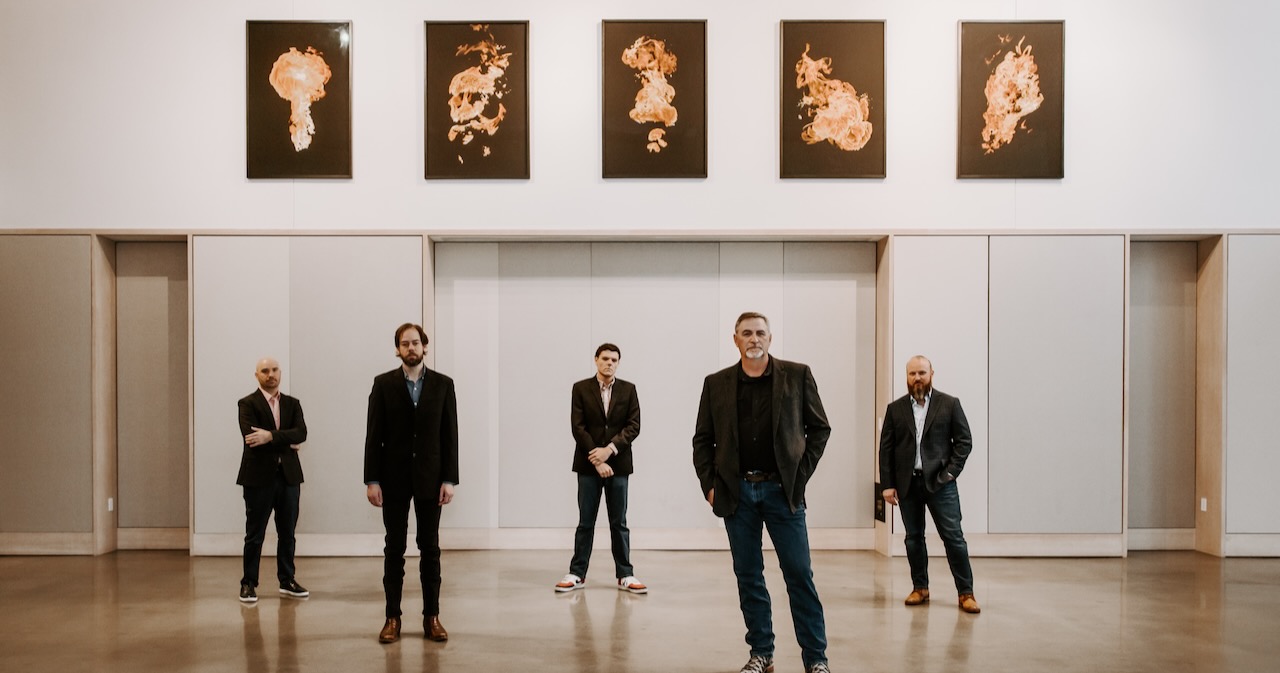
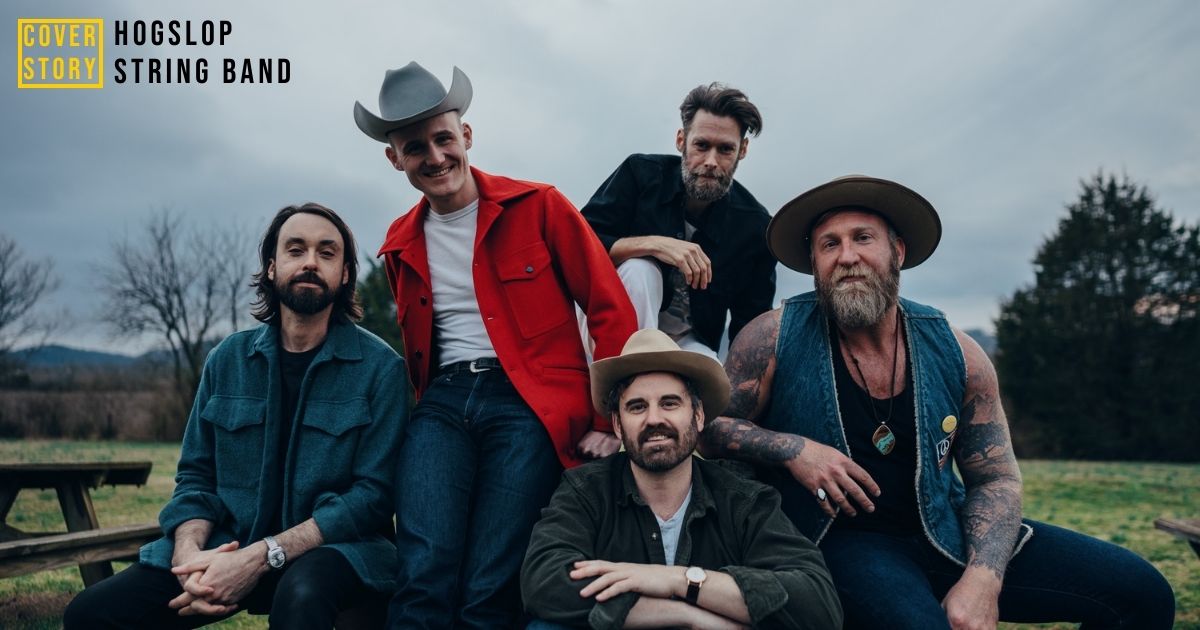
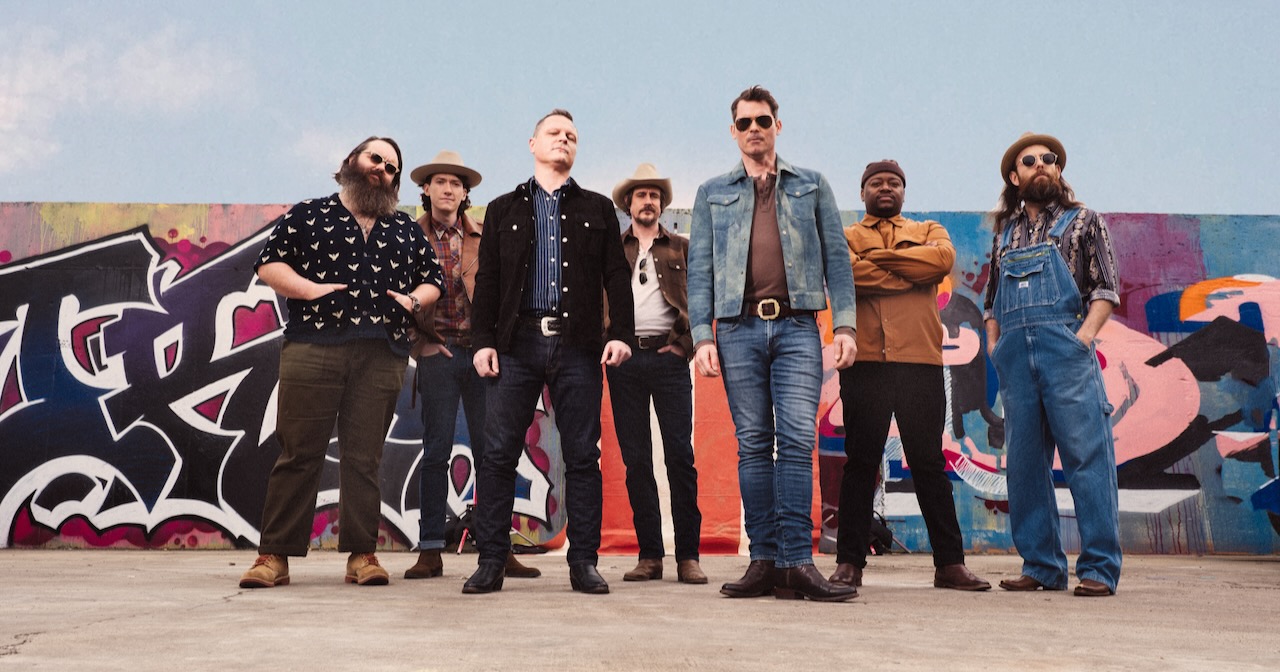
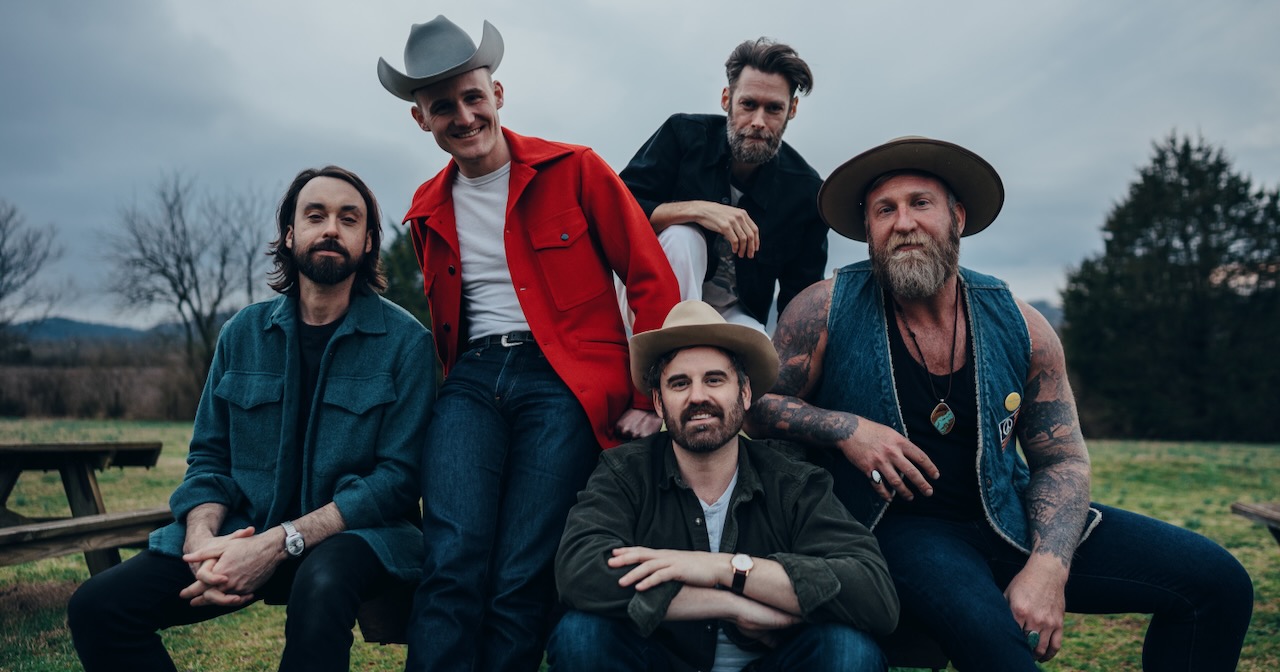
Few bands have benefitted from the same type of steady, organic growth as the Hogslop String Band. Originally formed in 2009 as a pickup band for a square dance, the group played together for 10 years before releasing their first album. In that time, their camaraderie strengthened – as did their songwriting, performance style, and fanbase.
Following their 2019 self-titled album, the group – Gabriel Kelley, Daniel Binkley, Kevin Martin, Will Harrison, and Pickle – has been hard at work on their next record (expected spring 2024). Produced by Kelley at his own Mobile Traveler Studios in Bells Bend, 10 miles west of Nashville, the record illuminates the purely original sound that the Hogslop String Band has found over nearly 15 years of making music together.
BGS caught up with Gabriel Kelley and Daniel Binkley to talk about the new music, the formations of the band, and where it’s all headed.
You formed in 2009, but it was 10 more years before your first album came out. What has the journey been like, coming from such casual origins to debuting on the Opry in 2022 and looking ahead to releasing your sophomore record?
Gabriel Kelley: We sure did. We were, to be honest, just a rag-tag bunch of buddies. Most of us had grown up playing old-time music or found it in our early years. For a very long time, our motto was a little more on the punk rock side: “We are not a band” is what we said for the first 10 years of the band. It was just a way to get together and have a good time. It wasn’t until a few years ago that we started taking it more seriously. One thing that’s cool about our Opry debut – and Binkley can fill you in – is that his family has been a part of the Opry since the ’20s.
Daniel Binkley: My family has been in Nashville forever – my great-grandfather, Amos, he had a band called the Binkley Brothers’ Dixie Cloghoppers, and they were a part of the very first Opry cast in 1926. Backstage they have a placard for every member and I found my family back there. That was a very special moment for me. They mentioned it during the broadcast, and we actually ended up playing one of the Binkley Brothers’ songs on the Opry.
For a band with a foundation in traditional music, i.e, fiddle tunes, where do you find the balance between introducing your own original material and digging from the old-time repertoire?
DB: Old-time music is sort of the school that we come from. So when we write original stuff, it’s gonna come through that lens. Once you run it through the “hogslop filter,” it’s gonna sound like hogslop. There’s just something about that foundation, and our knowledge of each other as musicians, that makes it come together – whether it’s traditional tunes or original material.
GK: We absolutely don’t ever want to lose the component of old-time string music and we’re currently in a time where that music seems a lot more accessible and is getting thrown under the big umbrella that everyone is calling Americana. We don’t do a show without old-time tunes in there. A lot of the other music we take influence from – blues, rock and roll – they were actually getting inspiration from early country and old-time music. So for us, it all goes in the same bucket.
You’re definitely known for that high energy string band sound, but this new album has quite a range of pace. How do you stay true to that sound while incorporating softer material like “Mississippi Queen?”
GK: We’re very much a live band and in that setting it’s about that high energy, rowdy thing. We love that, but amongst us in the band, three to four of us are songwriters and have very different approaches to songwriting. We’re very lucky to have Daniel in the band, he’s one of my favorite songwriters and has an ability to write some of that intimate, close to the chest material, like “Mississippi Queen.” And you need that delicate stuff just as much as you need the fast, hard hitting, and fun stuff. We feel that it’s very important to show audiences (and ourselves) that we have those dynamics.
DB: A lot of our shows at festivals are late night, midnight shows and it’s almost more like a punk-rock show. But there are also theaters or other venues where you can really showcase more of that dynamic. Kevin Martin has a few tunes on the album and he writes totally different that I do. He’s more rock and roll and I guess I’m the softy. It’s nice to have a little variety – especially on a record.
What’s special to you about this upcoming album, compared to music you’ve released in the past?
GK: Personally, watching this band shift and develop over 15 years has been pretty wild. This is the first record of the band’s that I’ve produced, and what’s special to me is (and I’m not saying that we’re reinventing the wheel), I’ve never heard quite the blend of genres that we’ve thrown together. It’s cool that Hogslop is still shifting and mutating and we’re still discovering that. And that we’re embracing our songwriting – everything on this record is our own material, and I’m really proud of that.
DB: I agree with all of that! One thing I’ll add that was a major game changer – and this is thanks to Gabe – was the ability to take our time in the studio and not be under the time constraints that’d you’d be under paying for studio time somewhere.
What else is on the horizon with the release in 2024?
GK: We’ll be in the studio most of November, and then we’ve got the Ryman show [supporting the Mavericks] on December 1. As different as this new music is, we’re really woodshedding and figuring out our live show. It sounds like our ‘24 is gonna be busy – we’re mainly a festival band, so that’s where we’re headed.
Artist:Bronwyn Keith-Hynes Hometown: Nashville, Tennessee Song: “Can’t Live Without Love” (Featuring Molly Tuttle, Sam Bush, Bryan Sutton, Jerry Douglas, and more) Release Date: October 13, 2023 (single); October 17, 2023 (video) Label: Sugar Petunia Records
In Their Words: “I’m so happy to share a behind the scenes studio video from the recording of my debut vocal single, ‘Can’t Live Without Love’ featuring Molly Tuttle and Sam Bush. This song is the first track I’ve released from my upcoming album, out in Spring 2024. We tracked it last fall in Nashville, at Brent Truitt’s studio, ‘The Cave,’ and it was actually the first song of the first day of recording the album, so it’s kind of fitting it should also be the first song to be released.
“I’m joined by some of my absolute favorite musicians: Jerry Douglas, Bryan Sutton, Dominick Leslie, Wesley Corbett and Jeff Picker. They all brought so much joy and magic to this track! And it was such an honor to get to sing with Molly Tuttle and Sam Bush, both of whom inspire me so much on a musical and personal level. This song by Jamie Hartford is a beautiful meditation on what we can and can’t live without in this life and how we can overcome challenges by focusing on what’s important.” – Bronwyn Keith-Hynes
Track Credits: Written by Jamie Hartford
Co-produced by Brent Truitt and Bronwyn Keith-Hynes Recorded by Brent Truitt. The Cave, Nashville, TN Mastered by Alex McCollough. True East Mastering, Nashville, TN
Bronwyn Keith-Hynes – lead vocal, fiddle Molly Tuttle – harmony vocal Sam Bush – harmony vocal Jerry Douglas – Dobro Bryan Sutton – guitar Dominick Leslie – mandolin Wesley Corbett – banjo Jeff Picker – bass
Photo Credit: Alexa King Stone Video Credits: Shot at The Cave in Nashville, TN; produced by Steve Voss of Solar Cabin.
Artist:Lonesome Ace Stringband Hometown: Toronto, Ontario, Canada Latest Album:Try to Make it Fly
(Editor’s Note: Answers provided by Lonesome Ace Stringband banjoist Chris Coole.)
Which artist has influenced you the most … and how?
Although I think the answer for each of us individually would be different, I think the most obvious single influence on us as an ensemble would be John Hartford. Specifically, the last several albums he made with the “John Hartford Stringband” (which featured Bob Carlin and Mike Compton, among others). Their approach to playing old-time fiddle tunes, especially on the albums Wild Hog In the Red Brush and Speed of the Old Long Bow, was based on a highly improvised and reimagined way of playing backup that Hartford called “Windows.” Although it wasn’t a conscious decision, and we don’t follow the approach to the letter, I think the spirit of those albums really influenced the way we play and perform old-time music, especially (instrumental) fiddle tunes.
What other art forms — literature, film, dance, painting, etc. — inform your music?
As a band, I think the art form outside of music that has had the biggest impact is the crank (prank) phone call. For years we’ve been listening to the Jerky Boys. We are old enough to remember the late ’80s and early ’90s when underground Jerky Boys cassette tapes were passed around organically and treasured by all who were lucky enough to possess them. About five years ago, the guys from The Henhouse Prowlers introduced us to Longmont Potion Castle, who has been anonymously releasing psychedelic crank calls since the ’80s (he’s still at it). You might think I’m being tongue in cheek when I say that these influence us as a band, but the attention to detail – especially in regard to language – and the level of improvisation are both relatable to music and inspiring. Most importantly though, it’s a great reminder that we live in a crazy world, and it’s best not to take yourself or anyone else too seriously.
What rituals do you have, either in the studio or before a show?
We like to get our heart rates up before a show if possible and maybe a bit of stretching. This often involves us having an aerobics dance party to ’80s pop and new wave. “Betty Davis Eyes” by Kim Carnes is a favorite, as is “Dance Hall Days” by Wang Chung. [John] Showman favours doing some version of the “Mountain Climber” while Max [Heineman] and I are usually doing jumping jacks, dancing on the spot, or some sort of hippie clogging. Seeing three middle-aged men dancing around in the green room to The Pretenders or Blondie seems to warm the hearts of promoters and venue staff and there are probably bootlegged videos of us doing it circulating around.
If you had to write a mission statement for your career, what would it be?
The title of our new album is Try to Make it Fly. That is a line from one of the songs called “Sweeter Sound.” I’d say that song encapsulates what our mission as a band is. We are all in our 50s and have been playing music professionally (mostly full time) since we were teenagers. That song is about not giving up, even when everything might seem to be pushing you in the other direction. It’s about keeping sight of what’s important – community, friends, family, art – and letting the quality of those things in your life be the gauge of your success. With where we are in our lives and careers, that seems to be the only way forward.
Since food and music go so well together, what is your dream pairing of a meal and a musician?
There’s a song on the new album called “Smoke on the Shoulder” which is basically a recipe for smoking pork shoulder. We all love to cook and appreciate good food. We rarely miss a chance to stop at a good BBQ joint when tour routing allows. With this in mind, I’m going to say the food would be smoked brisket and pulled pork with sides of coleslaw, beans, and macaroni. The musical accompaniment to this meal would be provided by, none other than, George Jones.
Old Crow Medicine Show co-founder and frontman Ketch Secor is always busy. In September, Secor and flatpicking master Molly Tuttle co-hosted the Annual IBMA Bluegrass Music Awards, a brief respite from the ongoing national tour Secor and Old Crow are currently on. They hit the road earlier this year after releasing Jubilee, their latest record, celebrating 25 years as a band. With a few recent lineup changes, their energy is still fresh and exciting — and in this exclusive BGS interview, Secor explains that you really just have to see them live to fully understand and appreciate the bit.
This will be the second tour with the current lineup, right? What do you think will be different with touring Jubilee?
Ketch Secor: In typical Old Crow fashion, an 11th-hour lineup change occurred as we were putting the finishing touches on this album. We’ve hired two new players, and that’s Dante’ Pope on drums and piano, and PJ George as a utility player, so with these two additional players we have yet another iteration of Old Crow that has subtle differences from any other one we’ve had before. This kind of thing just makes it fun. That fluidity of the lineup has made it a lot more palatable — it’s still Flagstaff in the fall, but getting to see it with somebody who’s never been before, and getting to share the stage with people who bring out something new in you musically.
I feel like music for the old-time string band – and maybe this is the same for bluegrass – but music is really relational. It’s about who you’re with. I play different with different people. The pitcher isn’t gonna play differently because of who the shortstop is, but in a string band, the fiddler’s following a groove that the banjo sets, and if there’s a great mandolin player with chops then the fiddler is going to weave in and out of something differently.
How did you choose the guest appearances on this album, like Sierra Ferrell and Mavis Staples?
KS: That kind of thing just evolves. Making records in the 21st century, collaborations are what’s on the menu more so than when we were kids. We didn’t think about who was going to be the guests when we were kids. For Sierra, we thought that song needed something, and we realized it was a duet. I’d been sitting on that one for a couple years. I rewrote it as a duet, and we called the best woman to sing on a cock-fighting song — we called out to West Virginia.
Why are collaborations more necessary now?
KS: If I could be frank, it’s because labels are trying to do anything they can to sell albums. It adds to social media platforms. It increases the scope in ways that are much more specific to these times than just making great music. When Lita Ford came out with Ozzy Osbourne, that probably had a different purpose to it than it does today. Independent labels are taking a cue from hip-hop artists who experiment with this all the time. Bluegrass and old-time and traditional music tends to be 10 years behind those types of styles, so it makes sense that nowadays we’re all making collaborative contributions.
Were there any surprising or touching moments working with Willie Watson in the studio again? Was the chemistry there after 12 years?
KS: Yeah, I think that having Willie back is just important to the ethos of Old Crow Medicine Show, and celebrating its 25th anniversary. We’ve been working together since COVID on some things from live streams to concert appearances, and this was sort of the next frontier for Old Crow and Willie in burying the hatchet and making music together. When you’re in a 25-year-old band you get a lot of ex-boyfriends. Hindsight is 20/20, and I just know that nowadays it’s better to be back on stage together.
How has your fiddling changed over the years? What are some of the areas you focus on when you practice? Old-time is known for being scrubby, but there’s a lot more going on there.
KS: Well, it’s changed over the years as I’ve gotten to be a lot better and gutsier as a violin player. I play it harder and stronger and faster than I did when I was 18 when I learned. For 25 or some years it’s been my dance partner. At the quarter century mark as a violin player, I feel like I know my partner well. I know where to take it, where on the neck to go. I know how to get the sounds that I’m looking for.
But I’m not a player who practices. My practice is just playing 95 concerts a year for 25 years and making 15 records in that period of time and being a special guest on 50 other records. I’ve grown up like a plant in the window when it comes to my violin playing. I see where the light is and I’ve grown towards it, and it’s bushier and brighter than it used to be when I was just a little twig. It just keeps growing all the time, but it’s not because I’m changing anything. There’s no additive to the soil.
You play old-time, but do you ever try other genres?
KS: I’ve played a few jazz gigs, but it’s not what I do well. I listen to all manner of songs. As a fiddle player, I like to think about all of the music that I’m channeling into the way I play, and a lot of it is traditional fiddle music, but a lot of it’s not. I feel like there’s Public Enemy and Nirvana and Bosco and the Carter Family, and other things that are not fiddle playing in my playing. But mostly what there is in my fiddle playing is mileage. It’s experience. It’s rust. It’s calcified. That’s the case with people who’ve played music for a lifetime. They get better not because they’re doing something different, but because they’re doing the same thing again and again.
You mentioned that folk music should be topical — not kept in a museum case. Do you think that kind of folk has a special place in the world right now given the political and economic hard times we’ve been seeing?
KS: I think that anybody who’s making genuine art has a reflection of the world around in that work. We the artists are sort of like poetic mirrors of what we see. There’s lot of songs now that reflect the discord, either in a lamentation or in a protest or in just a pure reflection. My music tends to talk about the plight of the people who are most associated with this music, so that can be the people of the Southern Highlands. It can be the hardship of the African American co-inventors of this music. But I’m also a real vessel for global topics, and I say that because when I read the news it’s almost like it starts riding on my back. So I’m thinking about flood waters in Libya and earthquakes in Morocco and school shootings in Nashville. To me they’re all part of a human struggle to find peace in the world.
What change do you hope comes about from songs like “Allegheny Lullaby?” How do people take that sentiment and make it actionable?
KS: That’s a song about a limitation of choice. That’s a matter of equity or inequity. So the equitable solution is: More choice. It’s widening the spectrum of options for people who live in the coal district, and that’s a very doable action item. It’s just a hard thing to do and live the exact same way, without a change in economics, but that’s the story of the American people. We adapt. And so I think the natural adaptation cycle in the Southern Highlands is in flux right now because of some strident efforts to hold it back. The results of those actions are that you got an opioid epidemic, a fentanyl epidemic — so many dysfunctions. I’m looking forward to the people eventually standing up and getting what they need. I wouldn’t put it past the people to get that. They got it before. They unionized in those situations and fought for livable wages, and they can do it again.
You talk a lot about nature, like mountains and feral critters, in your music. Is that an intentional part of folk or where does that come from?
KS: When I think about what made [American music] so rich, I know it’s the land and the soil and the people and the stories. So to evoke the same is just a natural link in the chain forged anew. And that’s all I’m doing. I’m just singing about the rivers that mean something to me when I sing them. I don’t think you’re ever going to get tired of thinking about the Big Sandy River, no matter if it’s clean or dirty. It’s called the Big Sandy, doesn’t that sound like freedom?
What do you hope listeners will take away from this album?
KS: You know, we make music because we’re a live band. We make albums because we’re a live act. Come and see us. If you like this record, go buy a ticket. We’re coming to your town; we have for a quarter of a century. We loved you then, and we love you even more now. And if you hear something on this record you like, then that’s just one more reason to come buy that ticket and see us when we come to your community and make a unique and special community in yours for one night. This is an age-old P.T. Barnum routine. The hat is magic, the ring is heavenly. Once you gaze on what lies behind the curtain, you will be dazzled. That’s where the magic is. The album is a big arrow.
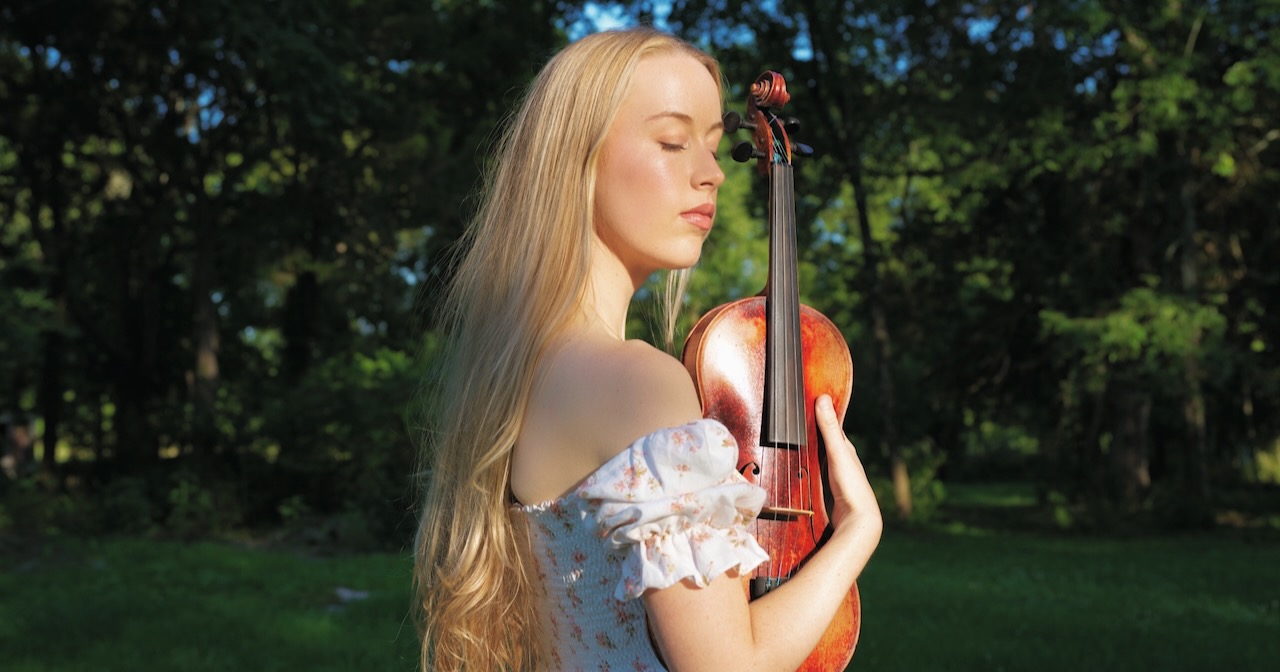
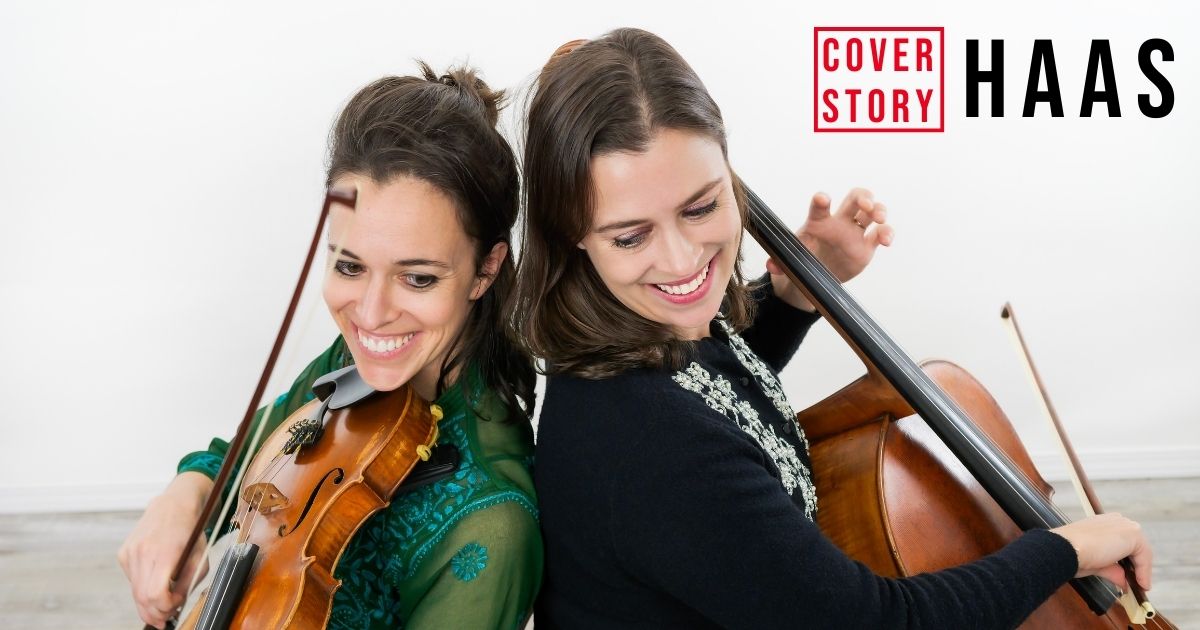
What changes about the oft championed phenomenon of “family harmonies” when the voices entwined together are not voices at all, but strings, plucked and bowed and fingered? It’s a question that immediately comes to mind as you hear the first notes of Haas, the recent duo album released by sisters, fiddler Brittany Haas and cellist Natalie Haas. It’s also a question that immediately came to mind as we chatted via Zoom last month.
“I feel like I connect more deeply with Brittany than anyone else from a rhythmic standpoint,” Natalie responds after a thoughtful pause. “That’s not so much the family harmony thing, but it does play into everything.”
The familial blend they’ve established as adults – in many ways, Haas is their first deliberate and intentional music making as a pair since their teen years – defies any and all boundaries and language, as they swap melodic hooks and call and respond and toggle between accompanying and leading, adding texture and tenderness or vigor and enthusiasm. Their interplay is as comfortable and cozy as you would expect these two sibling virtuosos to be together, their reunion the not-so-subtle underpinning that makes the entire collection of tunes and sets sparkle.
This is family harmony – and family rhythm – but unspooled, complicated, and set to a new acoustic, Celtic, chambergrass sound that defies categorization. Haas also gently and kindly stands in implied opposition to more masculine, performative, and competitive musicians and groups in similar spaces. It’s a brilliant, crave-able album that showcases how much can be accomplished musically when one’s goal isn’t just the cooperative music one creates, but the space one opens up with another in which you cultivate that cooperative music.
I wanted to start by just asking y’all how long it’s been since you put out music together, or since you’ve been in like a creative space together? How does it feel to be “reunited” in this way?
Natalie Haas: We sort of played together as kids in chamber music groups and youth symphony together. And we went to fiddle camps together – that was how we got excited about maybe doing music as a career. That would sort of continue throughout the year, because the way for us to continue all that excitement and motivation that we got at fiddle camps was for us to play together.
We did the odd gig together as teenagers, like farmers markets, school performances, and that kind of thing. Then we sort of went our separate ways and we’re both very busy doing our own thing, but we took every chance we got when other people would hire both of us to be on their gigs. We always said yes because we just wanted to hang out with each other. So this is like the first time that we’ve done anything like this and it’s pretty exciting.
The way that your musical paths have diverged, they don’t feel like they’re that separate from each other. It feels like the vocabulary that you both draw from is very similar. When you started sitting down to think about doing an album together, what changed about the way that you thought about music separately or together?
Brittany Haas: That’s a cool question. I think, it all felt kind of new in a way, but also so familiar, you know? Because it’s us. We have made a lot of music together. I think on my side, it was really cool because Nat already had a bunch of tunes. So some of [our collaboration] was just like, schedule based, it was like, “Okay, we know we want to do this thing, because we’ve been getting odd gigs.” It was really like motivated by the fact that we had shows coming up, and that was a reason to be like, “Let’s have new material for that.”
Then we were like, “Here’s our days when we can put together material.” Nat had just done a writing session where she had all this new stuff ready to go. These are the tunes that she’s cranking out and they feel very much like they come from something or some place that is like so near and dear to me, because it’s from our shared fiddle-camp upbringing. That’s like the source, the well, where the tunes come from, even though they’re new and different. It feels like very homey, I guess? The kind of tunes. And then I think we’ve just both grown a lot over the decades as musicians and as arrangers. We like bring more stuff to the table than when we were teenagers.
NH: I should certainly hope so! [Laughs]
That is the goal. [Laughs] That leads really naturally to my next question, which was going to be about material curation, especially because you both have demanding schedules that kept you apart, I’m sure, during the album creation to some degree. What was it actually like when you were like setting aside that time, like you’re talking about, to get together to make the music? What was the curation process like? It’s all originals, but one, yes?
NH: Yes. And yeah, that’s the nice thing about us both being busy is when you set aside a block of time, that’s all you are focused on. Brittany had all these amazing musical ideas and made all of my tunes better the minute she got her hands on them. The arranging process, it was pretty easy, because we’re both, comfortable switching back and forth between roles. I was just amazed at how much we got done in such a short amount of time, both in the arranging process and in the recording process. It all felt very easy. [Laughs]
BH: We did the bulk of it together, I think we had like a week or maybe slightly under a week when we first met to gather the material. And wasn’t that before we even knew we were making a record then?
NH: Oh yeah, that was preparing for a tour. Our first adult sister tour.
BH: No, no, no – second.
NH: Oh, second. Yeah! Because we toured Ireland. Right. We were playing all of these trad tunes, our shared repertoire from our of teenage years. And then for [Haas], we decided to make it all original. For the most part.
BH: Do you remember the moment when we actually said, “Let’s record this”?
NH: Uh… well, I think we toured it first. Then Brittany brings her handheld recorder to all of those gigs and recorded everything. We listened back to it and decided that it was actually pretty good and that we should make something of it. I think we had another tour coming up, of Australia, and we decided it would be fun to have something for people to take away with them.
BH: At that point, we didn’t meet again until a few days before the studio. We had arranged the material and toured it, so we kind of had it under our hands pretty good. And then a long amount of time passed, but during that time it was good to listen back to stuff and decide what we wanted to change.
We had like a couple days of rehearsals and revisions. That was from listening and emailing and saying like, “I have this idea about this. What do you think of that?” Then we had like three days in the studio before it went back to email, because Natalie lives in Spain and we’re also both busy doing stuff. So it was emailing like, “Do you like this take?” and, “Is it okay if I edit out the second B part on this?”
Did you trip into or over any sort of feeling like, “This reminds me of when we were playing together as kids” or did it feel like you were getting back on the bicycle in a way?
BH: I’d say mostly yes. It’s just really easy. I think in other collaborations, people aren’t always so willing to just try anything. We have this basis of, “I love you no matter what, and even though you’re being really annoying and you’re asking me to do something I don’t want to do, I’m still going to do it, because might as well.” It’s an ease of communication, which I think mostly comes from family. [Laughs]
NH: We were never really a band as kids. We did the odd gig, but it was always just for fun. Our parents weren’t pushing us into performing together. So yeah, no bad memories, really, associated with playing together as kids. But we do have the ease of having this shared history of fiddle camps and learning from the same kind of mentors.
BH: Since we’re both like primarily collaborators, this project was like running our own band. As adults we’ve both come into our own and we’ve probably become more opinionated about musical things as a result of that. So it’s fun to meet again where there’s a lot of give and take.
What do you think of the term, “chambergrass?” Is this album chambergrass? Is that even a thing?
BH: I like the term, but I’m not sure it applies here. I also don’t mind it applying here. I guess maybe that wouldn’t have been what I would have gone to, because from my perspective, it just feels so much more Celtic. It’s still in that sort of “past of American music,” that’s more over there in the Celtic Isles. It doesn’t feel very grassy, but I mean, that’s a part of me as a musician. So, it’s not like it’s not in there.
NH: It does feel like chamber music to me. Yeah… I’m not familiar with all of the myriad grass terms. [Laughs]
BH: We grew up going to Valley of the Moon Fiddle Camp, where there were a lot of genres meeting. So the boundaries were very blurred, and both of us having worked with Darol [Anger] from a young age, he’s all about blurring and negating the idea of boundaries. It’s everything, it’s all of that, it’s all the influences and where they’re going. I know the current Celtic world less than Nat does, but it seems like a lot of the forward-thinking, new tunes on stringed instruments are happening in chambergrass, the new acoustic realm, so it’s definitely an influence on both of us.
NH: It does have a Celtic bent, but it is Celtic from an American perspective – because we’re American. I’ve listened to a lot of stuff in the new acoustic realm – like Brittany said, all of our influences are coming out, and it’s hard to define a genre.
BH: I think Nat, for all of her “I don’t totally play bluegrass” sense of self, she can and she does sometimes. Some of the bluesier tunes that she writes lend themselves to that area.
You make very in-the-moment music, there’s a lot of improvisation, there’s a lot of dialogue, and this kind of music can often feel very – it’s silly to say this cause you’re literally performers – but it can often feel very performative and like there’s a lot of hubris in it. I also feel like new acoustic music, newgrass, jamgrass, and that sort of “Let’s jam out together, let’s be in the moment together!” music, it can often feel really masculine and toxic. How do you go about creating this space you’ve made together, to have those moments, to be together and present and making music, but it doesn’t feel like you’re being self-absorbed or self important?
BH: That is something I think about when I’m listening to music – and sometimes when I’m playing it. Sometimes I do feel like I’m uncomfortable, like that’s not something that I want to do. Even though you think that that’s what the music calls for in this moment, it can feel a little bit too masculine.
It’s like, “No, I don’t want to take a really long solo there.” I think I’m embracing that it’s okay to say, “No, I’m not gonna do that.” It’s a tricky one, because a lot of our heroes in that realm of creating this newer music, they’re men, and that nature is informing the music that they’re making and the way that they’re arranging it. It does have that hubris thing built into it. On some level, that is important and it does work well, for stepping into the moment and taking a great solo. You kind of have to have that attitude. But, it’s not necessarily masculine or feminine. Like it doesn’t have to be either one. It could be both.
What we’re trying to do, it’s a little more tune- or melody-based than based on soloing, so it lends itself well to a tight arrangement. That may not be the right term, because it still is loose, there still is a conversation going on. But, if there is a solo it’s pretty short, it’s this little thing we’re going to do to give a breath of fresh air here. It’s not like, “And now, we will rip for 50 more bars!”
“And now everybody look at me!”
BH: Yeah! I think in a duo especially, because we’re very equal and we like sharing, that’s just kind of part of the vibe. Even when Natalie’s filling more of an accompanist role, it’s still such a powerful, interesting sound. It’s so varied that it doesn’t fade into the background. It’s super interesting all the time. It’s like both voices are very equal, even if mine is higher.
NH: It’s interesting because, like Brittany said, a lot of our heroes are men. That’s definitely a generational thing in the Celtic music world, because like, the people that we grew up sort of – I don’t want to use a phrase like “hero worshipping” – that we admired and wanted to copy were mostly men, with a couple very key exceptions. But then, my generation in the Celtic music world is almost exclusively women. There are some men doing it, but it’s very different than the bluegrass thing.
Also like Brittany said, soloing is not as much a part of it. That changes the dynamic a little bit. But it is kind of a melody>accompaniment hierarchy going on. But I wouldn’t say that that’s necessarily a male thing, I don’t know.
As Brittany said before – and I hate to associate this with just feminine energy – but both of us coming from being collaborators in our other projects rather than soloists, per se, you could say that that is the more feminine approach, maybe, to music making. It does feel very equal because the melody playing is getting passed back and forth all the time. And it does feel very conversational, even though the soloing thing is not as prominent as it might be in some other genres.
I think that’s part of why you can listen through y’all’s entire album and it doesn’t feel stale, it doesn’t feel boring, while it also doesn’t feel like it’s trying too hard. It doesn’t feel like you guys have something to prove.
NH: That’s part of the thing with having done it at this point in our lives, it doesn’t feel like we have anything to prove anymore. We’re doing it because we want to, not because we’re trying to prove anything to the world.
Artist:Hogslop String Band Hometown: Nashville, Tennessee Song: “Mississippi Queen” Release Date: October 6, 2023 Label: Tone Tree Music
In Their Words: “‘Mississippi Queen’ is a story about an escaped inmate during the construction of the Richmond-Danville railroad. I wrote it years ago, and we have occasionally worked on it over the years, but we recently came up with a new arrangement of it that felt really good. The main character escapes on foot, follows the Tennessee River south, then across Alabama to find his family in North Mississippi. Ultimately, it’s a story about being separated from loved ones and doing whatever it takes to make it back home, which I think a lot of people can relate to.” – Daniel Binkley, banjo
Photo Credit: Josh Goleman
This website uses cookies to improve your experience. We'll assume you're ok with this, but you can opt-out if you wish.AcceptRejectRead More
Privacy & Cookies Policy
Privacy Overview
This website uses cookies to improve your experience while you navigate through the website. Out of these, the cookies that are categorized as necessary are stored on your browser as they are essential for the working of basic functionalities of the website. We also use third-party cookies that help us analyze and understand how you use this website. These cookies will be stored in your browser only with your consent. You also have the option to opt-out of these cookies. But opting out of some of these cookies may affect your browsing experience.
Necessary cookies are absolutely essential for the website to function properly. This category only includes cookies that ensures basic functionalities and security features of the website. These cookies do not store any personal information.
Any cookies that may not be particularly necessary for the website to function and is used specifically to collect user personal data via analytics, ads, other embedded contents are termed as non-necessary cookies. It is mandatory to procure user consent prior to running these cookies on your website.