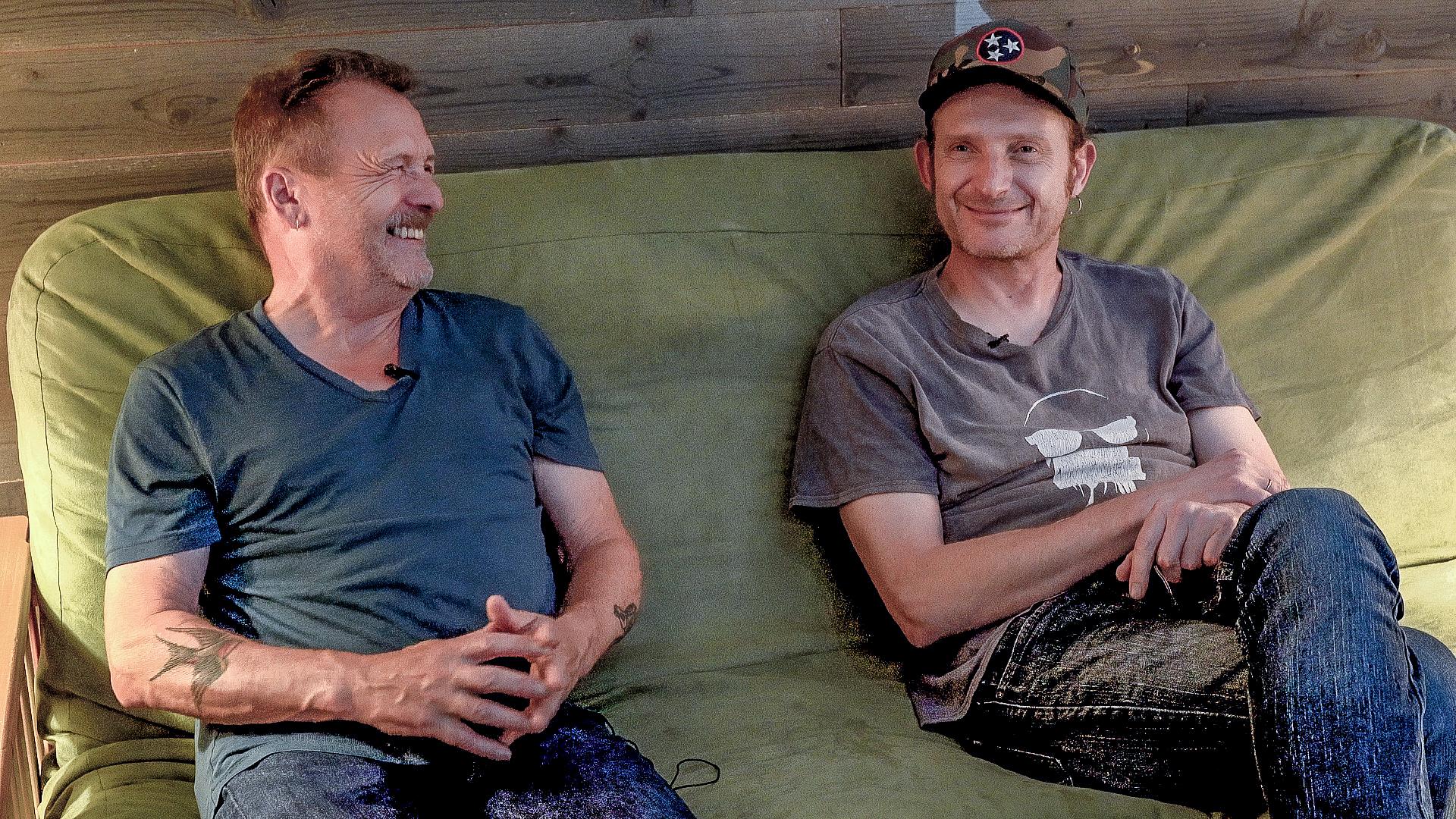
LISTEN: Martin Simpson & Thomm Jutz, “Come All You Fair And Tender Ladies” (feat. Cara Dillon)

Artist: Martin Simpson & Thomm Jutz
Hometown: Sheffield, England & Nashville, TN
Song: “Come All You Fair And Tender Ladies” (featuring Cara Dillon)
Album: Nothing But Green Willow: The Songs Of Mary Sands And Jane Gentry
Release Date: September 29, 2023
Label: Topic Records

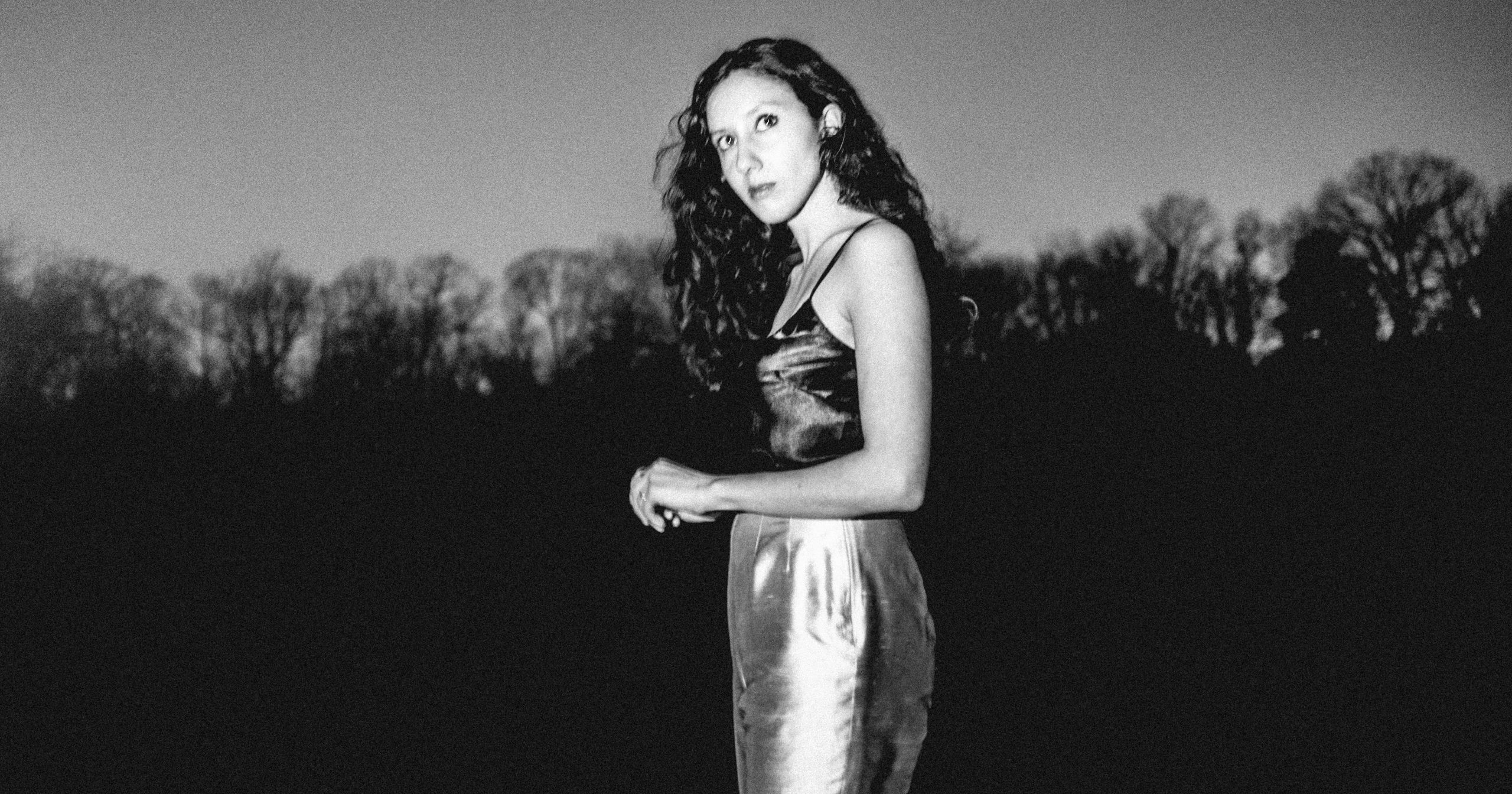
In Their Words: “‘Come All You Fair And Tender Ladies’ is one of the most hauntingly beautiful songs that I know. It is one of the better-known songs from the Sharp collection that is still sung on both sides of the Atlantic. Depending on where it is sung and by whom, different shades of meaning are illuminated – only a truly great song has this quality. We ran through this song twice in Cara’s kitchen, then headed upstairs to her studio and recorded it in one take. I have been a fan of Cara’s singing for a long time. Playing this song with her and Martin Simpson, one of the greatest guitarists on the planet, has been a highlight of my musical life.” – Thomm Jutz

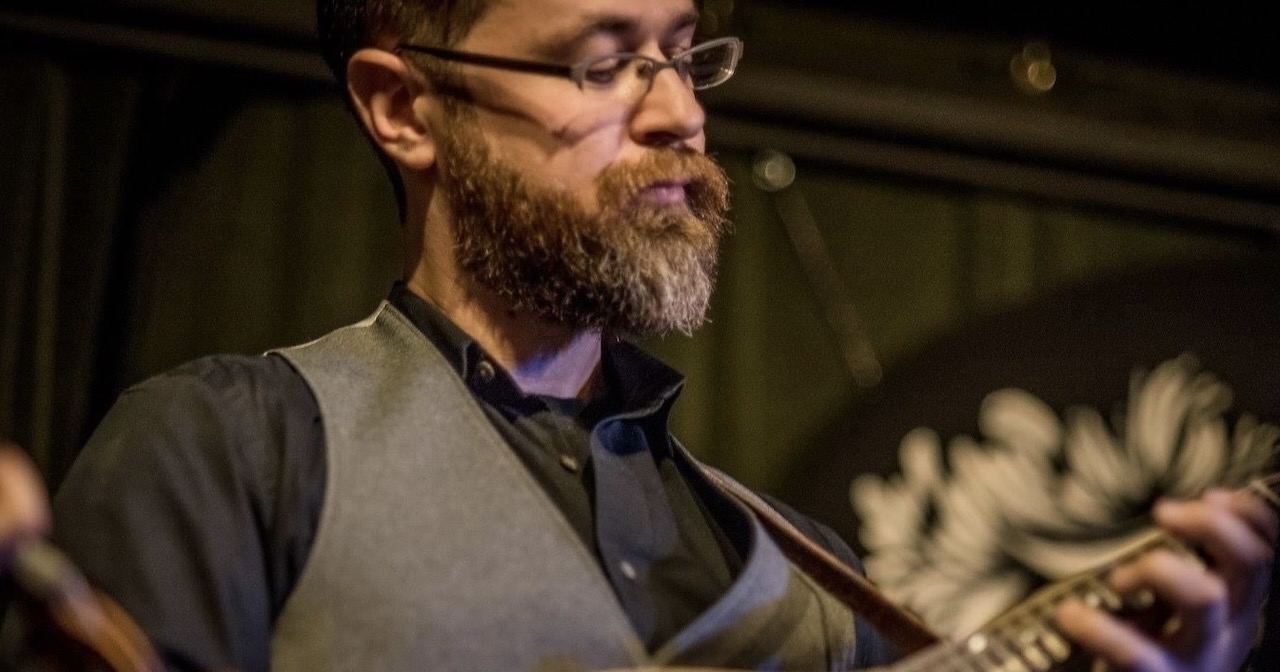
“I’ve long considered that ‘Come All You Fair And Tender Ladies’ was one of the brightest jewels of Anglo-American folk songs. It has a bitter lyrical intensity and an exquisite and poignant melody which serves it so well. This setting and performance was the work of no time in recording terms, but it is three lifetimes worth of musical and personal experience, which allowed it to be captured with such ease. I loved working with Thomm on Nothing But Green Willow, and Cara Dillon is simply one of the finest singers of traditional song, as she demonstrates here.” – Martin Simpson


Photo Credit: Booney Crawford

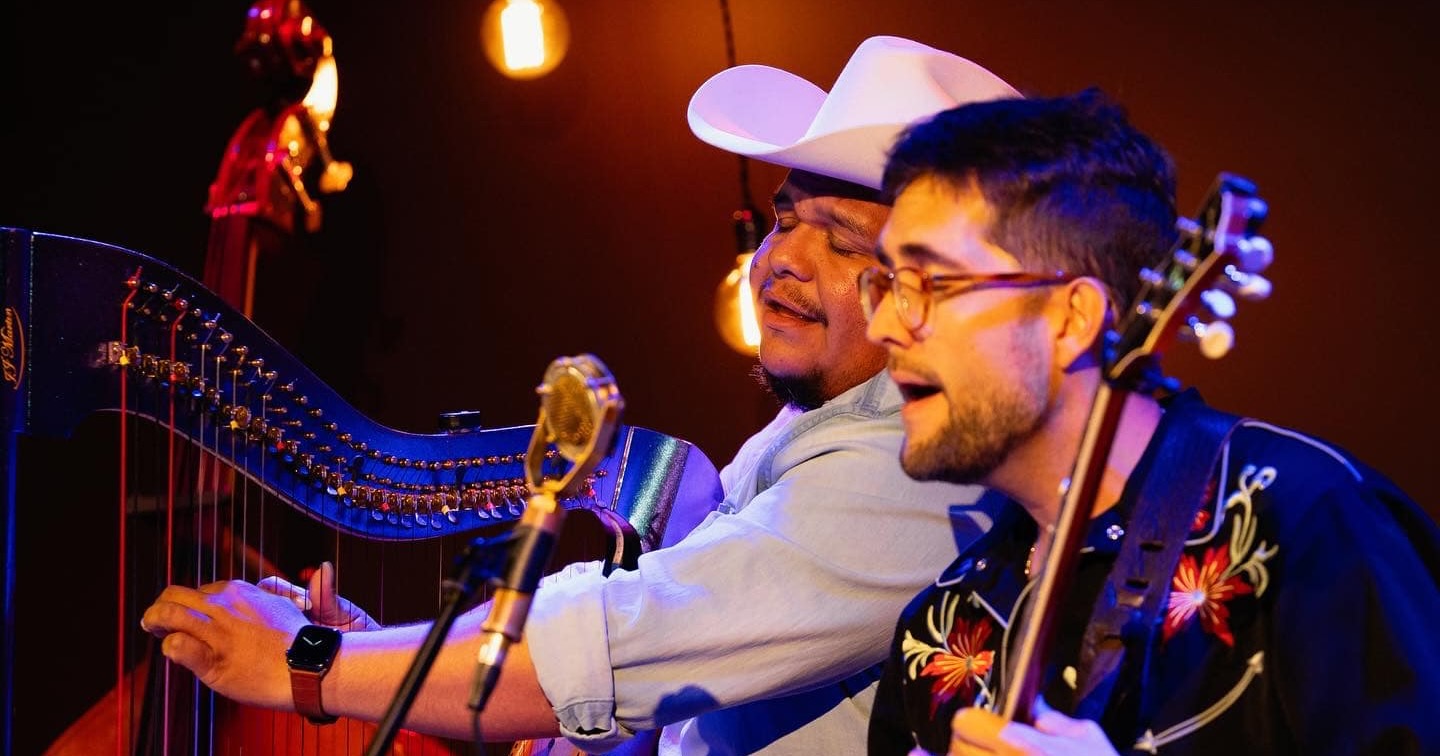
WATCH: Larry & Joe, “Linda Barinas”

Artist: Larry & Joe
Hometown: Durham, North Carolina
Song: “Linda Barinas”

In Their Words: “’Linda Barinas’ is a song so well known that most Venezuelans can sing along.

“Eladio Ramón Tarife composed ‘Linda Barinas’ to honor his homeland, Barinas. It’s part of the Llano region and where this style of music, llanera, originated.

“The typical música llanera rendition would include harp, cuatro, maracas, bass and vocals, which makes our harp and banjo version quite unorthodox. Nonetheless, many Venezuelan traditional musicians have taken note of how seamlessly the five-string banjo melds with their instrumentation.

“Though Venezuela and Appalachia are thousands of miles apart, our folk traditions aren’t so different, and the sounds of our strings come together like old friends. Who would’ve thought?” – Joe Troop


Photo Credit: Billie Wheeler

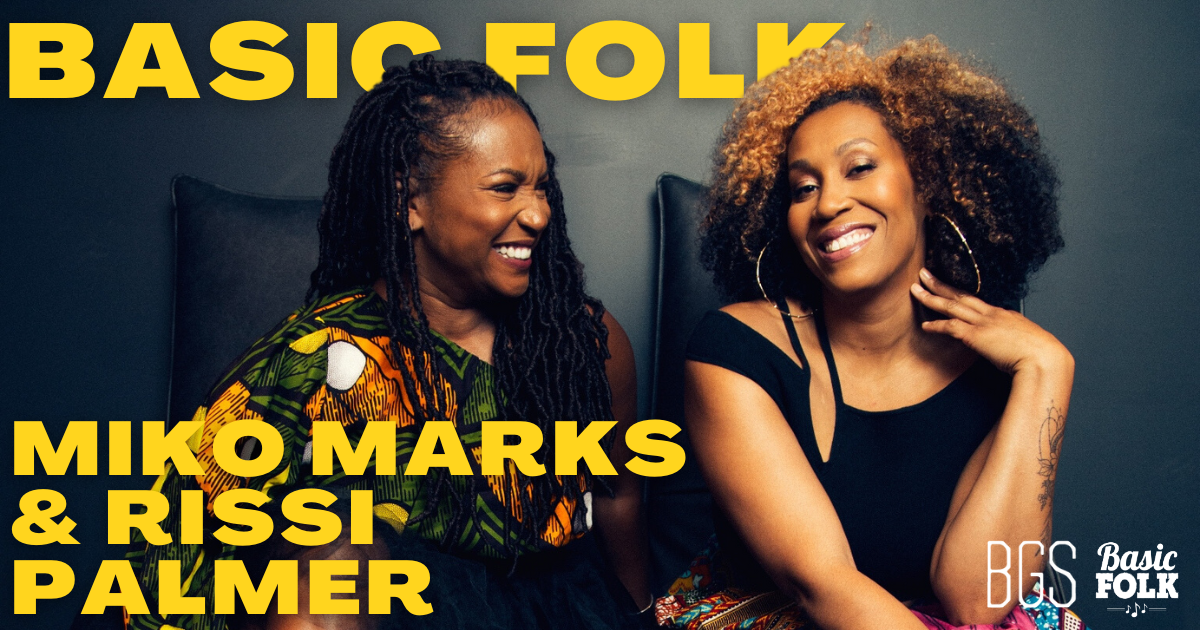
Basic Folk – Miko Marks & Rissi Palmer

Rissi Palmer and Miko Marks have been laying the foundation for country musicians and fans who are Black for almost 20 years. Back in the early 2000s, both experienced the trials and tribulations of being Black women in country. Despite their successes and large growing fanbase, they were separately discouraged by the ceilings and roadblocks they encountered from the white-dominated industry. Even though they each nearly quit music, they discovered a deep and meaningful ally and friend in each other. Now, they are back in the spotlight in a different era that has seen a rise of Black musicians – and The Black Opry in Nashville. Recently, Rissi and Miko have been touring together and we got them both on the show to talk about their parallel experiences, their friendship, and what they’ve been up to recently. It was a sincere honor and a blast to speak with these inspiring women.

LISTEN: APPLE • SPOTIFY • STITCHERAMAZON • MP3

This month The Bluegrass Situation is highlighting The Black Opry as Artist of the Month. Basic Folk, a part of The Bluegrass Situation Podcast Network, is proud to present this episode in collaboration with our BGS motherhost.


Photo Credit: Cedrick Jones

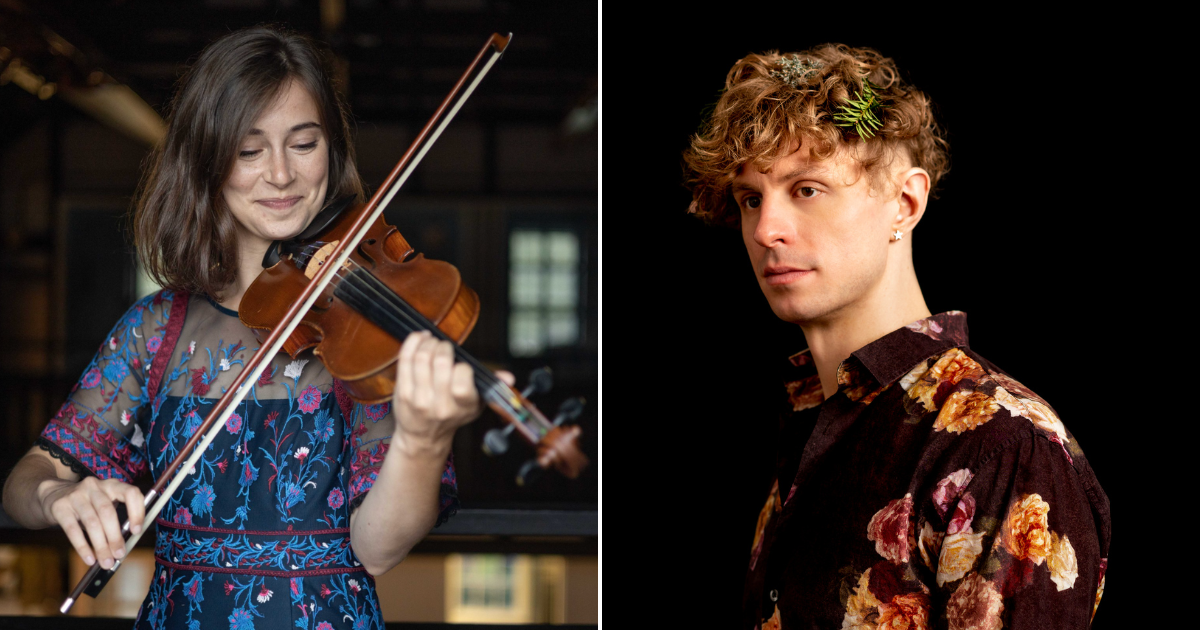
WATCH: Elias Alexander & Maura Shawn Scanlin, “Wildflower”

Artist: Elias Alexander, Maura Shawn Scanlin, Ramblxr
Hometown: Portland, OR
Song: “Wildflower”
Album: Wildflower (single)
Release Date: June 1, 2023 (single); June 7, 2023 (video)

In Their Words: “‘Wildflower’ combines a fiddle tune with a lo-fi disco groove to take the listener on a journey through a field of wildflowers to a sunset dance party with friends. I’ve always loved the presence and emotionality that Maura brings to her fiddle playing. When she sent me this newly composed reel that she had written within the bagpipe scale, I took a lot of time to listen to the tune and tease out the corners of the melody. Like many tunes in the bagpipe scale, the tonality could be interpreted a number of different ways, but as I played around with it, I found this sort-of disco counter melody emerging.

“During the lockdowns of 2020 and 2021 I became obsessed with music production, in the way that term is used in pop and hip-hop (i.e. beatmaking), and I’ve been most drawn to the kind of lo-fi groovy bedroom pop sounds of artists like Clairo or Dominic Fike.

“Electronic drum beats, synths, and other pop production techniques are often eschewed in folk and traditional music, but I think it’s time we re-evaluate that. These tools are technology, in the same way that the violin is technology, and they all serve as tools for expression of the human spirit. I started my project ‘Ramblxr’ as a way to bridge the two worlds of acoustic traditional music and electronics, with the goal of staying true to my musical roots, taste, and evolving sensibilities.

“Maura laid down some beautiful strings, and we both hummed the countermelody to bring the track to a climax that feels like a sunset dance party with friends in a field of wildflowers in early June. I hope you enjoy the ride!” – Elias Alexander


Photo Credit: Elias Alexander by Anna Colliton; Maura Shawn Scanlin by Louise Bichan.

MIXTAPE: Wila Frank’s Cinematic Folk

Ever since I started making music, it’s been in this sort of folk-infused soundtrack sort of style. When I was little, I would imagine that I was in a film constantly. I would hear music in my head supporting the emotions I may be feeling. It sort of helped me express my feelings to myself and figure out what sort of character I want to be in this life. My brother is famous for his excellent mixtapes and he introduced me to most of my favorite contemporary artists, many of whom make music in this way; fusing together modern attitudes and techniques with personal impressions of roots music.

There’s something about traditional sounds that really resonate with me. I grew up in a rural place and spent my childhood playing the fiddle. Folk music has always been connected to nature and the sounds that go along with it. Nature is where I do my best self-reflection. The hypnotic rhythm of an acoustic guitar line repeated. The rich, molasses drones of the violin. 

On my debut album Black Cloud, I intentionally challenged myself to produce in a more edgy, alt-rock style. However, I could not escape many of the musical sensibilities I grew up with. You can hear undertones of trad music in my guitar playing, in the song forms, vocal inflections, and choice of vocabulary. This playlist starts off with the first track on my new record and ends with a song from my folk duo with Emily Mann, Paper Wings. Both are songs I wrote and feel very close to my heart. The songs in between have all been inspirations to me over the years and demonstrate of the cinematic quality realized when folk techniques are fused into modern creations and vice-versa. Hope you enjoy. – Wila Frank

“Tonight” – Wila Frank

I wrote Tonight over a rolling guitar line inspired by traditional banjo techniques. While the rest of the production is quite contemporary, you can hear elements of folk influence in my singing. Especially in the line “It’s a long and lonesome road” — a reference to lyrics you would hear in a bluegrass song.

“Fire Snakes” – Laura Veirs 

This has been a favorite song of mine forever. I love the beautiful and unusual contradiction of the acoustic guitar line with the artificial beat. To me, it makes the song feel more emotionally vital and critical. The strings at the end are a luscious bonus.

“Desert Island Disk” – Radiohead

This song reminds me of the trance-like quality of a lot of traditional Malian guitar playing such as Ali Farke Toure who I’m also obsessed with. The simplicity of the production on this song is essential and perfectly supports the beautiful message of the lyrics.

“Walkin’ Boss” – Sam Amidon

This is the only trad American folk song on the playlist. Sam Amidon has a really neat way of taking old Appalachian songs and bringing them into a new contemporary light. The rhythm of the banjo and drums together make you wanna groove and bring out the power of the lyrics.

“Psyche” – Massive Attack

I included this one because the repeating artificial guitar line reminds me of the banjo and is a cool example of the magic achieved when electronic artists sample natural sounds. This particular song was an essential inspiration for me in coming up with the guitar line on my song “Tonight.” When it comes to cinematic music and transporting the listener to a new world, you can’t get any better than Massive Attack. 

“Imitosis” – Andrew Bird

I was obsessed with Andrew Bird when I was a kid for his witty lyrical style, use of the violin as a support instrument for his songs, and the unapologetic quirkiness of his music. On this album, he fuses all kinds of music and makes something completely unique.

“Ecstasy” – Crooked Still

I grew up going to a lot of music camps and owe much of my musical development to various members of Crooked Still. Aoife was one of the first singers I learned from and I was lucky enough to spend a lot of time around this music. I love this album in particular and how this song fuses Appalachian fiddle tones with classical string parts.

“The Weekend” – Dave Rawlings Machine

This song features pop chords, but has Dave Rawlings signature guitar style all over it. It’s a fun Americana-style story of a song. I like how the violin parts sound almost like they’re imitating synthetic strings. A cool example of folk music imitating pop music. 

“Dog Walkers of the New Age” – Breathe Owl Breathe

One of my favorite albums ever. Completely unique and vibey. The lyrics are quirky and witty, and somehow get at an essential emotion of feeling less alone. 

“Grizzly Man” – Rockettothesky

The shimmering acoustic guitar in this track brings this beautiful and spooky song to life. This is the only song I really know from this band, but the haunting, witchy vocal style in this song has stuck with me through the years and has an essence of woodsy appeal.

“Dyin Day” – Anaïs Mitchell

Anaïs Mitchell does a really nice job of innovating within the structure of a song itself. There are elements of traditional call and response in this song, religious references and images of nature, but somehow it still feels relevant and potent.

“Carrie & Lowell” – Sufjan Stevens

This was an incredibly influential album for a lot of people I think. Stevens’ swirling guitar style paired with the vocal effects and simplistic percussive elements make it feel like a pop song without any overly artificial elements. There’s even banjo on this song, but used almost like you would use an arpeggiated synth.

“Middle Distance Runner” – Sea Wolf

To me, this is a perfect pop song with a folk song structure. I love the natural guitar tones and the use of real sounds as percussion. 

“The History of a Cheating Heart” – Damon Albarn

One of my favorite artists, producers, and songwriters of all time. Damon Albarn released this solo record in 2014 upon which he plays this song paired down with acoustic guitar. There’s very minimal production featuring dry and stark strings along with a chorus of harmonies on the bridge. It’s rare to hear such a minimal song recorded at such a high level and the result is beautiful.

“Clementine” – Paper Wings

I wrote Clementine on a writing retreat we went on in Big Sur. Emily and I spent the week sitting in the sun amongst the trees and flowers overlooking the ocean. This is really a simple pop love song, but we paired it down and sang it in harmony over fiddle drones. Arranged this way, it became stark and vulnerable and the essence of the song revealed itself. The imagery of nature became more vivid, and the emotions came across as more sincere.


Photo Credit: David Piñeros

WATCH: David Sasso, “Lecha Dodi”

Artist: David Sasso
Hometown: Hamden, Connecticut
Song: “Lecha Dodi”
Album: Sasson v’Simcha: Selections from a Bluegrass Erev Shabbat
Release Date: June 9, 2023

In Their Words: “Here’s a straight-ahead bluegrass setting of a 16th-century Hebrew poem that’s central to the Friday night Jewish liturgy. I’m a classically-trained composer who grew up in Bill Monroe’s stomping grounds of Indiana, but found bluegrass in Connecticut, where I work by day as a psychiatrist.

“Over the pandemic, I wrote original bluegrass songs to the traditional Hebrew prayers of the Friday evening Sabbath service. I recorded seven of the songs in February along with members of the Boston-based Jewish bluegrass band, Jacob’s Ladder, and premiered them live at my father’s retirement as rabbi in Indianapolis. My parents are both rabbis, and these texts have always been close to my heart. The title of the album, Sasson v’Simcha, is Hebrew for Joy and Delight.

“This song, ‘Lecha Dodi,’ (the ‘ch’ pronounced like in Bach) is the high point of the service known as Kabbalat Shabbat, a collection of Psalms and poems that get us in the spiritual mood to welcome the Sabbath. The chorus translates to ‘Come, my beloved, to greet the Bride; let us welcome the Sabbath presence.’ Bluegrass can often feel like a transformative and prayerful experience, so I think the mash-up works … no knowledge of bluegrass or Hebrew required!” – David Sasso


Photo Credit: Sean Casini

If You Love Boygenius, You’ll Love These 18 Folk Bands

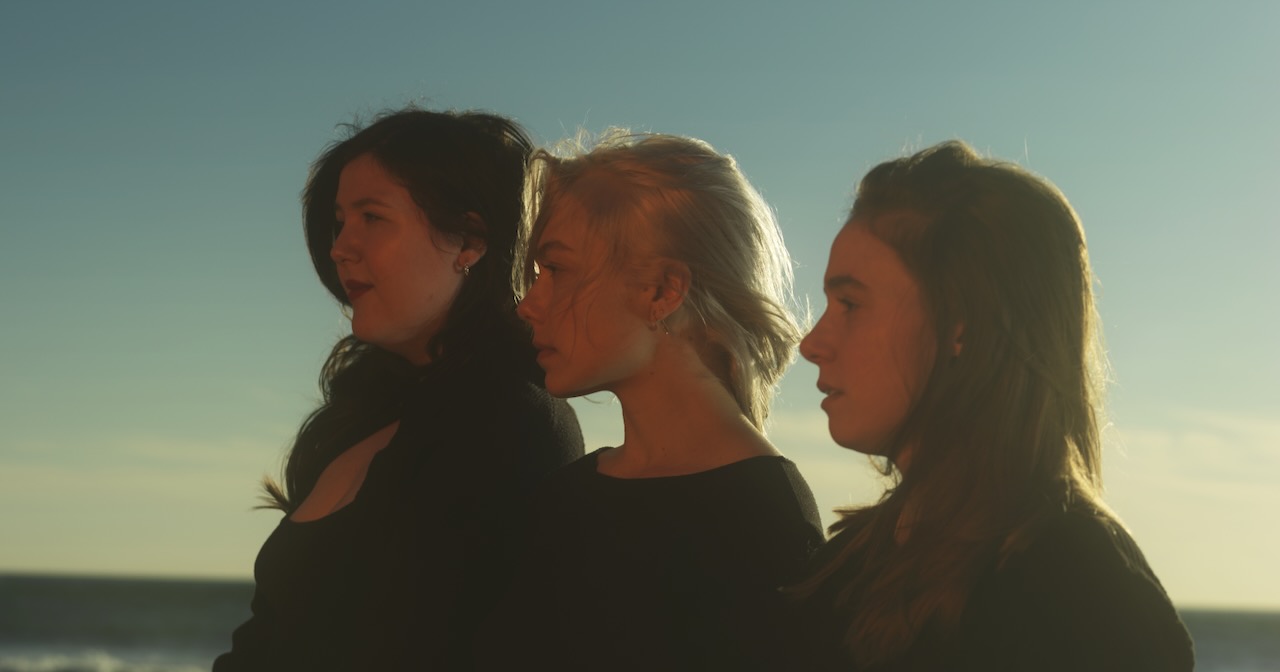
Can’t get enough of the record by boygenius? We understand and empathize. Did your ears perk up immediately when you heard the twinkle of the banjo on “Cool About It?” Do you rewatch the video of Julien Baker, Lucy Dacus, and Phoebe Bridgers performing The Chicks’ “Cowboy, Take Me Away” over and over and over again? If so, this list is for you. 

It’s not hard to place boygenius within the universe of folk music and its endless variations, with their perfectly blended, nearly familial harmonies, their lyrics and song structures that are so singable, cyclical, and relatable, and the way, together, they exceed the sum of their individual parts by leaps and bound. Comparisons to other iconic supergroups – Dolly, Linda, and Emmylou’s Trio, or Crosby, Stills, Nash, & Young – illustrate further that boygenius are often a string band and always a folk group. 

We’ve collected songs from 18 other folk groups that also center female and femme friendship, slippery harmonies, and egalitarian ensemble arrangements in their music. If you adore boygenius, these acoustic bands are for you. 

(Editor’s Note: Scroll for the playlist version of this collection.)

JOSEPH

The band JOSEPH’s latest release, The Sun, is perhaps their furthest foray into pop- and indie-folk, with a sound that’s not just adjacent to “the boys” of boygenius, but often parallels the genre and aesthetic territories explored by the latter trio. These songs are rich and fully realized, from the tender and contemplative to full-bore rock and roll. Remind you of anyone? 

Rainbow Girls

We’ve loved watching this California-based group grow and expand their listenership across the country and around the world, from the Bay Area to Cayamo and beyond. Like boygenius, Rainbow Girls have quite a few joyous, smile-inducing cover videos that are wildly popular on the internet, but the group really shines while singing sad, introspective songs that still make you feel so good. 

The Wailin’ Jennys

Since their first studio album in 2004, the Wailin’ Jennys have become one of the most beloved vocal trios in bluegrass, old-time, and folk music, with a robust, devoted international fan base. Perhaps best known for their appearances on public radio, the Juno Award-winning ensemble is in a phase of part-time, infrequent touring while balancing motherhood and solo projects, too. Their cover of “Wildflowers” remains one of the most popular BGS posts in the history of the site. 

The Chicks

An important addition to this list – the aforementioned “Cowboy, Take Me Away” cover by the boys notwithstanding – the similarities between the Chicks and boygenius are many. Righteous anger, agency, and collective rebellion, flouting gender roles, “tradition,” and industry norms – the list could go on and on. But perhaps the most striking throughline between both trios are their evident prowess as instrumentalists, whether guitar, fiddle, banjo, or voice. And there’s a tambour to Phoebe and Julien’s vocals that certainly conjures the crystalline, one of a kind singing of Natalie Maines. 

Mountain Man

What would boygenius be, together or separately, without longing? Without lost or waning or fading or burning or lustful or ethereal love? Love that’s sexual and romantic and hungry, but love that’s tender, platonic, and eternal, too. Mountain Man, who describe themselves as a “trio of devoted friends,” conjure all of the above within their catalog and certainly on “Baby Where You Are,” with a vocal arrangement that could have been pulled right from the record. 

Plains

Country-folk duo Plains, a duo made up of Katie Crutchfield (Waxahatchee) and Jess Williamson, could be described, in a boygenius-centric way, as sounding like that band dragged through… well, the plains. There’s an agnostic, informal country aesthetic here that sounds just like the prairie of which they sing on “Abilene.” And, their origin story matches the boys’, as well, with Crutchfield and Williamson first admiring each other’s music before joining forces. There are far worse impetuses to start a band than mutual admiration.

I’m With Her

Does the transitive property apply to trio supergroups? Because, if I’m With Her is a band of bona fide bluegrassers playing delicious indie-folk and folk-rock, then that makes boygenius, a delicious indie-folk and folk-rock band that much closer to being bluegrass, right? Right? Okay, it’s nonsense, but genre is dead. (Long live genre!) We love how our friends in I’m With Her, Sarah Jarosz, Aoife O’Donovan, and Sara Watkins have colored outside the genre lines across their entire careers, not just in their collaborations together. Now, for a collaboration between I’m With Her and boygenius. Please.

 Trio 

While Dolly Parton, Emmylou Harris, and Linda Ronstadt collaborated on Trio and Trio II at the heights of their careers, boygenius came together as a supergroup when each of its members were on steep ascents, launching into the stratosphere. Somehow, as with Trio, the collective art boygenius has created supersedes even their heightening fame, not just as artists and musicians but as celebrities, too. These are just some of the reasons Trio comes to mind in the same train of musical thought as boygenius. Another is the “True Blue” friendships underpinning both groups.

case/lang/veirs

Our hearts, be still, because a few short days ago kd lang shared a photo on Instagram with Laura Veirs captioned: “Waiting on Mr. @nekocaseofficial to bring the love…” Whatever they’re working on, it will be must-listen and anxiously awaited! There are so many connection points between this incredible assemblage of musicians and the boys. Queerness; ethereal production; poetic lyrics; swapped lead vocals; oh-so-much text painting. If you’ve never given case/lang/veirs’ 2016 self-titled album an in-depth listen, there’s no better time. But the lead track, “Atomic Number” is an excellent audio swatch for the entire record.

Lula Wiles

Though on indefinite hiatus, Lula Wiles remains one of BGS’ favorite folk groups to emerge from the New England / northeast string band scene in the 2010s. Like boygenius, Isa Burke, Eleanor Buckland, and Mali Obamsawin each have vibrant and widely variable (while interconnected) solo careers, so despite their music making as a group being on pause, there’s a wealth of music in their combined and individual catalogs to binge your way through. We suggest starting with “Hometown,” a track that’s stuck with us since its release on What Will We Do in 2019. 

Lucius

One in the solidly pop/pop-rock category, Lucius still have dabbled often and intentionally in Americana, folk, and country, as demonstrated by this track from their latest album, Second Nature, which features their friend and tourmate Brandi Carlile and country star Sheryl Crow. It listens more similar to Phoebe Bridgers’ or Lucy Dacus’ genre aesthetics overall, but still calls on two roots musicians and vocalists, highlighting the mainstream success such cross pollinations attract.

Kate & Anna McGarrigle

Known for their iconic, self-titled 1975 album Kate & Anna McGarrigle, often referred to as the McGarrigles or the McGarrigle Sisters, epitomized the post-folk revival appetite for sincerity, authenticity, and literature in song, but their music never felt trope-ish, cheesy, or painfully earnest at the same time. Instead, its impact comes from its vulnerability and raw emotion, as in “Go Leave,” a song written by Kate for her unfaithful husband (Loudon Wainwright III). The lyrics drip with an indelible pain, reminding of Lucy, Julien, and Phoebe all, who for ours and hopefully their own benefit, often bare their entire souls in song.

Our Native Daughters

There’s a quality to boygenius’ music that reminds of church, of songs intentionally crafted for group singing and raising our voices up together. Perhaps it’s their bond as friends or their love of seamlessly blended harmonies and unisons, perhaps it’s their own histories with and upbringings in/around the church, perhaps it’s the relatability of their lyrics, but whatever it is their music begs to be joined. The same is true for Songs of Our Native Daughters, by roots music allstars Rhiannon Giddens, Leyla McCalla, Amythyst Kiah, and Allison Russell. You can hear their voices twining not only in sound, but in message and mission, and listeners can’t help but feel the urge to sing along. Music by community and for community, that centers and celebrates the friendships of those creating it. 

The Secret Sisters

 The Secret Sisters have a penchant for the macabre, the spooky, the longest shadows and the darkest nights, often sung to a gritty minor key. They highlight the classic Southern Gothic aesthetics of their Alabama homeland with a groundedness and hair-raising realism. It’s not difficult to picture them, say, wearing rhinestoned skeleton suits. This collaboration with their friend and (sometimes) producer Brandi Carlile soars, highlighting the similarities between Laura Rogers’ and Lydia (Rogers) Slagle’s and Lucy Dacus’ voices. 

Larkin Poe

Now, from which folk and acoustic group can you get the rock and roll, shredding guitar solo, writhing on the ground, leaping into the crowd, pyrotechnic, Julien Baker-sprinting-across-the-stage, grand finale level energy for which boygenius is becoming known as they tour the record? It’s that caricature of a caricature of rockism that boygenius do so well. Look no further than blues duo Larkin Poe, made up of sisters Rebecca and Megan Lovell (who, the diehard fans will remember, began their careers as a family bluegrass band). Every song on their albums or in their live sets is dialed to eleven on the face-melting meter. They skewer the performative masculinity of the genres they inhabit – just like boygenius – not by mocking, but by doing it better. And we love the genderfuckery and queerness they bring performing a lyric like “She’s a Self Made Man.” Again, just like boygenius.

The Roches

What could be more archetypically boygenius than exploring familial trauma? A gutting hook standalone, taken in this context sung by sisters Maggie, Terre, and Suzzy Roche, “Runs in the Family” is jaw-dropping. Another group lauded and adored for their releases in ‘70s and into the ‘80s. Their music runs in the family, too, with Lucy Wainwright Roche (daughter of Suzzy), who is an accomplished singer-songwriter. Keep Dacus’ “Thumbs” and the record’s “Without You Without Them” in mind as you listen.

The Burney Sisters

Fuzzy, full, and angry guitar is the sound bed for this, the title track from The Burney Sisters’ latest album, Then We’ll Talk. One of the hallmarks of boygenius’ generation of women and femme rockers is that their expressions of anger, justice, agency, and self advocacy feel real, not just like costuming for a genre that prides itself on counterculture and middle fingers literal and proverbial. When you hear women express anger in rock and roll, it doesn’t feel affected or constructed, and that’s one of the main reasons why women continue to lead – and revive – the genre.

Shook Twins

Part of the appeal of a group like boygenius, and Shook Twins as well, is the beauty in lyrics simply stating exactly what they mean. These songs are accessible, listenable, resonant, and thereby incredibly impactful. “Safe” by Portland, Oregon-based twin sisters Katelyn Shook and Laurie Shook is one of their most popular numbers – especially their acoustic version. The singer cries out to be seen, heard, and loved. A common refrain for Phoebe, Lucy, and Julien as well. 


Photo Credit: Matt Grubb
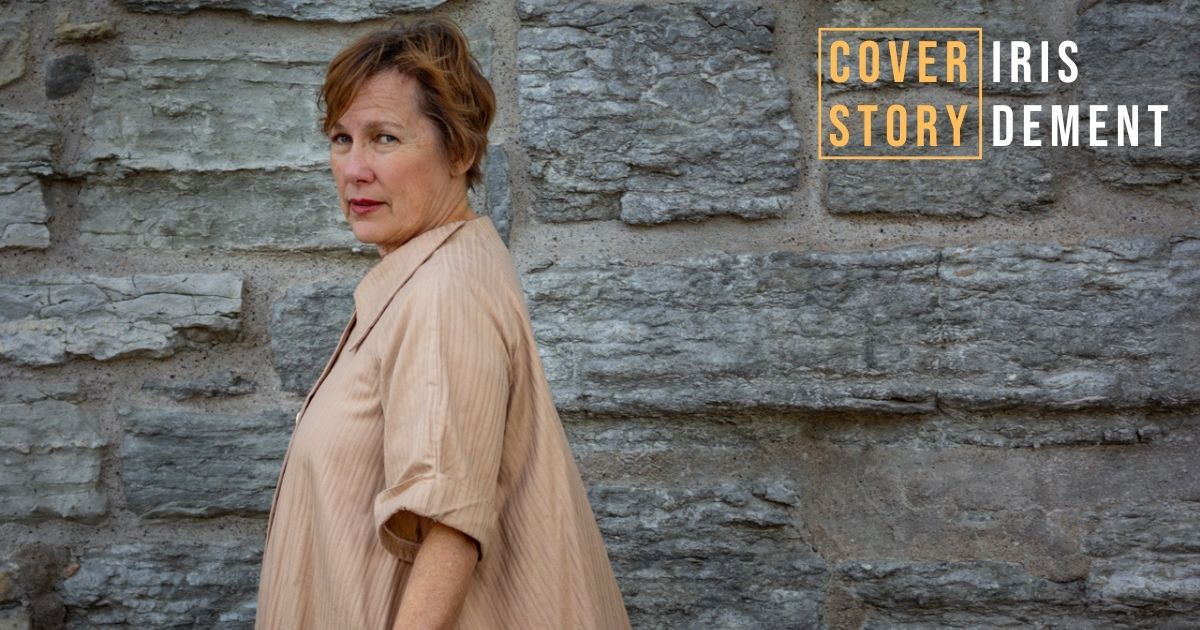
With Honesty and Openness, Iris DeMent Keeps ‘Workin’ on a World’

Rattled by the 2016 election and its aftermath, singer-songwriter Iris DeMent did what folk singers are supposed to do: She picked up her pen. But it took until February 2023 for Workin’ on a World, her seventh album, to reach listeners — and it might not have happened at all if her stepdaughter Pieta Brown hadn’t intervened. Brown (whose father is DeMent’s husband, Greg Brown), had cowritten “I Won’t Ask You Why” and “The Sacred Now” with DeMent and knew several tracks had been recorded before the project hit a pandemic-induced pause. When Brown inquired about the album’s status, DeMent confessed she’d stalled out and given up.

Brown asked to hear what DeMent and co-producers Richard Bennett and Jim Rooney had recorded, then declared an album did, indeed, exist, and helped shepherd it to completion. Then she joined DeMent on tour, opening a series of dates that included a March stop in Austin at which DeMent introduced her new work to a sold-out audience — who were particularly amused when she sang “Goin’ Down to Sing in Texas,” an oh-so-sharp skewering of open-carry laws, male privilege, one-percenters, racism and “war criminals who get to walk around free/like that president who lied about WMD.” (The Chicks, who famously called out that president, earn her thanks).

DeMent boldly speaks her mind throughout Workin’ on a World, mixing indictments of oppression, greed and the cult of personality with praise for righteous “Warriors of Love.” She also ruminates on love and loss, and addresses God frequently — not surprising for the youngest of a 14-child family raised in the Pentecostal church. But instead of drearily lamenting a world in turmoil or patly claiming prayer is the answer, she strives to induce hope. When she sings “workin’ on a world I may never see,” she’s reminding activists to keep fighting for future generations.

Back home in Iowa several days after her performance, DeMent discussed the facets of a career that took flight 31 years ago with her debut album, Infamous Angel. Two Grammy nominations, one Americana Music Association Trailblazer Award and dozens of collaborations later, she still likes to let the mystery be, so to speak, when it comes to certain aspects of her songwriting process. But when it comes to inspirations and emotions, she spoke just as she does in her songs — with honesty and openness.

BGS: You’ve said this album came about because you wanted to cut yourself a path through the wilderness of despair. Was there any other sense of mission involved?

DeMent: Initially, it was just a level of despair that was not sustainable, and I had to apply myself to something constructive. Beyond that, it was like, I want to fix things. I care about people here; I care about my children, I care about your children, I care about the world. So I want to see it be improved. And I can’t think of a more useful way to spend my time. The best way I know how to do it is to write songs. Because I know from my own experience, songs can energize me and give me hope and confidence to go do my job. I feel like the best thing I can do is contribute to other people — whatever their job is, some inspiring music can help ’em get it done, as we know.

I went through a phase; I did a lot of political, local things — which is incredibly important, don’t get me wrong. But I can’t do both; I noticed that. They’re two different sides of the brain. And I was either doing the phone banks and all that business, or I was gonna be a writer/singer. At some point, that became clear to me. A few people helped me figure that out: “Iris, that’s your gift, stop underrating it and go.” So I just went back into the songs, and as a result, there’s this record. It would not have happened otherwise. I decided to go back to believing in the value of singing some songs.

Did you originally have a target date for an album, or were you just kind of hoping to do something and then Pieta said, “Here it is”?

I think when I was a lot younger and just coming out of the chute, I probably had targets then, because there’s kind of that thing when you’re young; you’ve got to get your ball rolling. I certainly felt that. I had a really intense sense of momentum and urgency, and I don’t think you’ve got to be a songwriter to have that; it’s a time in life thing, in my opinion. And I’m glad to have had that. It was its own, exciting, awesome, wonderful time. But that started shifting, and rather than fight with that, I accepted it. And I’m really glad I did, because I feel like my music’s gotten better; my singing has gotten better.

I feel like allowing myself to relax a little bit, to trust that the songs will evolve as they need to as long as I keep showing up often enough, in my opinion, has worked. A lot of people who talk to me are really focused on these gap periods and all, which to me are not gap periods. It’s the time it took, plain and simple. There’s a lot of records out there; there’s a lot of music. I’m not interested in taking up somebody’s heart and mind space unless I really feel like I have something to say that warrants that.

If I were thinking in terms of a career, I’d have put out a lot more records. Because I’ll build up an audience, then I won’t put out a record for six years. A handful of people stay with me and a lot of others drift off somewhere else. That’s how that works. If I’d even put out a mediocre record here and there, I think I would have kept a lot of folks. People, if they don’t hear from you, they forget about you, by and large. But I’ve been really fortunate that I’ve had enough people who haven’t that I can still go out and play.

I posted a picture from your show on social media, and so many people responded, it was an obvious indicator that they have not forgotten you. Your sold-out show was another. That must be heartening.

Oh, sure. When you feel like you’ve got something to say that you believe somebody needs to hear, it’s a wonderful feeling when that actually happens. I’ll admit it’d be discouraging if I went out there and the rooms were half full. That said, that has never stopped me before, and never will. I’ve always thought that way. I used to get this vision when I started out; I’d conjure up a desperate person, and I have a model in my mind of who this desperate person is, which I won’t get into. But I conjure a picture of them. They walk in, they sit on the back seat, and I’m singing to that person. Nobody knows them. Nobody knows their name. They’re gonna wander out that door, but they’re gonna take something from that room that they needed, and it’s my job to give it to ’em. Yeah, my feelings and my ego and all that stuff come into play, but I’ve gotten really good at overriding all that and thinking of the mission that I’m on and the job that I have to do that isn’t about numbers. It’s about hearts; individuals. I gotta go there with ’em and let the rest go. That rest of it is just not my business.

The list of albums and tracks you’ve contributed to is really astonishing, but you’re probably best known for your duets with John Prine. How did those tend to come about?

John wrote liner notes on my first record. I became acquainted with him through Jim Rooney, who was friends with John, long before I met John. And then when my first record came out, John asked me to go out and open for him, which, of course, I gladly did. Right up till the end, I would always do a couple of shows a year with him, at least. Did quite a lot of shows throughout the years prior to that. And one thing led to another. We got to record those duets together. I just loved John like crazy, and I think he loved me. Singing with him was its own unique thing that’ll never happen again, and I’ll miss that forever.

You cite quite a list of heroes on this album. Did you have to leave many out?

Always. There’s always people. “Warriors of Love,” I could have made it 10 verses long.

How did you choose?

Oh, I couldn’t even begin to explain that. It’s just, you’re sitting there trying to get somewhere and your gut says, “I think this is the direction to go.” Obviously, the people I chose are more universally known. And that helps because you don’t have to write, “here’s the history of this person,” so you can bring people up to speed. Most people are far less familiar with (pro-Palestinian activist) Rachel Corrie than (U.S. Sen.) John Lewis or Dr. King, so that was a little bit of a stretch. But I think I gave enough details to make that picture fairly clear. And there’s lots of information out there if people want to gather it.

With “The Cherry Orchard,” you’re continuing the Russian literature connection you made on your last album (2015’s The Trackless Woods, on which she set poet Anna Akhmatova’s translated words to music; the song is inspired by Anton Chekhov’s play). You’ve got a Russian-born daughter, and you seem relatively steeped in that culture. What drew you to it?

Our daughter was 5½ when we adopted her from Siberia. She’s almost 24 now. So we had a little Russian speaker in our house. There was a lot of mystery there; she had a lot of qualities that were clearly unique to her culture. I can still see them today. So I wanted to understand as much as I could, which is still very minimal; I’m not going to pretend. But I wanted to find a way into that world to the degree that I could. So that’s what I did. I did those Anna Akhmatova poems and took a couple of Russian literature classes. And I found that I love the Russian writers. I must have some sort of natural affinity for the world that made my daughter.

Have you ever seen Chekhov’s plays performed?

I saw Uncle Vanya in Chicago. I cried through the whole damned thing. My husband and my daughter were by my side; they were just looking at me, like, “Is Mom having a breakdown?” I had the same reaction to The Cherry Orchard. I was in my class, this university class with, like, 12 people; I could hardly sit in my chair. There’s just something about the merging of intense elements in so much of Russian life and literature that something in me relates to. I actually had a lot of that in my own family history. Intense drama, poverty, violence, you name it, the whole male-female dynamic, the hierarchies. There’s something in it that is very familiar to me. I’ve just connected with a lot of that literature. Like, just in my body, I mean.

At your show, Pieta said the songs on this album feel really important, and she’s right. They do. You tackle some big topics, and you’re not afraid to name names and focus on divisive issues. I loved hearing you sing “Goin’ Down to Sing in Texas” in Texas, but putting a song like that out in today’s world, do you worry about blowback?

No, I worry about what would happen if I stay quiet. I worry about what will happen if I don’t speak up about these things. I’ve crossed over to that. When I was younger and wrote about the Vietnam War on “Wasteland of the Free,” I wasn’t worried. But then I became the target of a fair amount of hatefulness, to put it mildly, and that was surprising to me. But I’ve got my eyes pretty wide open about what’s going on here now.

No, I don’t feel worried about that. I feel worried about the people who will be hurt if I stay silent. My takeaway from my upbringing and the teachings of Jesus … you’re supposed to care about something bigger than you and invest yourself in it. I wouldn’t go so far as to say, “Oh, I don’t have fear.” Of course I do. But I do feel like that’s what we’re called to do. There’s a power and a confidence and a peace that can come with that as well. I feel that.


Photo Credit: Dasha Brown

WATCH: Vance Gilbert, “Black Rochelle”

Artist: Vance Gilbert
Hometown: Arlington, Massachusetts
Song: “Black Rochelle”
Album: The Mother of Trouble
Release Date: May 5, 2023

In Their Words: “It’s a true story. The cruelest kids are often the kids who have been treated most cruelly. One of the easiest and hardest songs ever to write. I am proud that I heard that melody so clearly in my head even as the words were cutting my chest wide open. Lori McKenna again foils with background vocal perfection.

“As for the video itself, the videographer Jon Sachs and I decided it would be most effective to do it in one pass, the only video break during Joey Landreth’s heartbreaking solo over the bridge. Don’t let anyone ever tell you that lip-synching is easy, or that real life feelings don’t happen with the sing-along-to-self. It was like double illumination, and I was shocked at how it struck me.

“Part of my job as a singer-songwriter is to be a vessel of sorts, the story coming through me, while it’s the listeners’ job — if I’ve done my part with any facility at all — to be moved. I was trying not to indicate or show all kinds of feels in my face to the camera. That said, I did all I could to keep it together, because I had to. When the concept finally came alive with the music and selected images, the brokenheartedness really was replaced by a sense of accomplishment at a story well-told.” — Vance Gilbert


Photo Credit: Rob Mattson

Putting Black History Month in Perspective with Brandi Waller-Pace

[Editor’s note: To mark the conclusion of Black History Month, we’ve invited BGS collaborator and contributor Brandi Waller-Pace to share her thoughts on how to take the ethos, mission, and action of BHM with us throughout the year.]

Dr. Carter G. Woodson, Black American writer and historian, is known as the Father of Black History Month. One of the first scholars of African American history, he founded the Association for the Study of African American Life and History in 1915 and established Negro History Week in February of 1926. He chose the week of February that contained the birthdays of both Frederick Douglas (February 14th) and Abraham Lincoln (February 12th) as both birthdays were already being celebrated in Black communities. In 1970 The Black United Students organization at Kent State University began a celebration of Black History Month, and in 1976 President Ford declared Black History Month nationwide.”

– Brandi Waller-Pace, Decolonizing the Music Room, 2001 

Dr. Woodson’s selection of Douglass and Lincoln’s birthday indicates how significant they were, especially since the 1920s being just one generation removed from the Civil War – with many formerly enslaved Black people still alive. Even today, we are not nearly as removed from that time period as we think we are. In 1976, the year of the United States’ bicentennial and fifty years after the first Negro History Week, President Ford expanded the commemoration to last an entire month and Black History Month was born. 

Some folks ask, “If Black history is important all the time, why is it just a month?” But the literal history of the month itself, the fact that it exists at all, is part of Black history. It was a push to validate and celebrate the experiences, culture, study, and background of Black people in the land that came to be known as the United States, people who were viewed legally and societally as less than fully human, alongside the denial of their contributions to this country’s foundation and culture. Negro History Week was created to shine light on everything Blackness has created in the U.S. – and that week of recognition itself was created by a Black scholar. We know that Blackness and Black history is broader than just the U.S., and I find it important to look at that expanse in the context of Black History Month. 

When we talk about heritage months in general, we have to think about how we use terms: “Black,” “African American,” and so on. These ideas and terms didn’t all begin at the same point, they didn’t come out of the same movements, and they aren’t all used interchangeably or even in the same fashion. They also are not universally claimed by people we would place under their umbrella.

This is exactly what this month is for, to have these conversations and to open up these spaces, not to relegate Blackness to one month. Celebrating Blackness isn’t geared toward denying other groups their history – framing the month in terms of what it means for the recognition of other groups perpetuates false binaries, as if the only options available are honoring BHM at others’ expense, or ignoring BHM altogether. Celebrating Blackness is just that– acknowledging the history and the continuing traditions, culture, and advances of Black folks, who continue to make history. That sort of celebration is huge, especially considering the erasure and exclusion of so much of Black history in curriculum, media, and literature. 

It’s interesting to consider our ideas around Black History Month as they relate to our changing perceptions of time. As the world became more industrialized, mass communication advanced, and now we’re in the age of the internet where things seem to move lightning-fast and we are inundated with content, with emphasis on trends. This contributes to the impression of even meatier information simply being trends and waves in popular culture or only being flashes in the pan. This helps reinforce the idea that our celebrations of heritage months are just a moment, something for short attention spans, to be consumed in a second before scrolling on. You’ll see memes or posts like, “Now everybody is doing such-and-such a thing!” When that “thing” – almost always mocked as “woke” or “politically correct” – has possibly been around for hundreds of years. 

It’s a function and arm of the myth of white supremacy to present the “other” as invalid, unless there is something about it upon which one can capitalize. Time and time again, Black folks’ creations – our foodways and folkways, our cultural creations, our music, our ways of dress – have been erased, ignored, or derided unless there’s a point at which some kind of value can be extracted from it. It is then taken up by the mainstream, gates are built around it, and Black folks are purposefully distanced from it while others profit from it.

It’s like so many of the linguistic trends that have pervaded TikTok and internet culture, which are referred to as “Gen Z language,” but they are really rooted in African American Vernacular English and Black language that have been adopted by the internet writ large, but without understanding of or general reference to their origins. Because of how quickly the world moves and how information is passed along in the age of the internet, these pieces of culture are picked up, stripped down, and decontextualized so quickly.

Or consider the banjo – which is still represented in the mainstream specifically as a “white Appalachian instrument.” In the past, this representation was even upheld broadly among many trad communities in a factual way. In recent decades – thanks to the labor and diligence of some great humans – the banjo’s true origins have become more and more widely known, along with the story of how it was taken up into mainstream popular culture and how many Black people were distanced from their connection to the instrument while many white people continued to profit materially and/or reputationally from playing it.

In this time, Black cultural appropriation is so often perpetuated that it’s easy to have no awareness of these phenomena as they happen. Part of the work here is understanding that intention – or lack of intention – doesn’t mitigate impact. It’s important for all of us to understand how we perpetuate what we perpetuate and how we co-opt what we co-opt, whether mistruths about the banjo, slang and language trends, or Black History Month.

When we talk about privilege and perpetuation of this sort of appropriation, we tend to individualize, because in our society and culture we are conditioned to think individually. This manifests itself in a lot of ways; for instance, many speak against funding community care for people who need it, against investing in and giving people what they need – income, shelter, nutrition, access, resources. This comes from being taught that each gets their own – if you do, it’s because you are sufficient as a person, if you don’t it’s because you are deficient. While our society individualizes, it’s important to remember these are systemic, holistic, endemic issues that must be solved collectively. We must collaborate to repair the legacy of antiblackness, erasure, and exclusion that Black folks have experienced on this land for centuries.

This doesn’t mean there isn’t individual responsibility. Each of us can and should make individual efforts – as well as collective – to reckon with our privilege and our roles in perpetuating this status quo. And I would caution against positioning the individual against the collective; it’s collective and individual work. People interact with one another individually and interact with collective systems and groups. It’s such a balance; not taking away the need for individual focus and responsibility, but understanding that that same individual is part of the collective and should also drive the collective. Something like voting– when you’re in that booth, you’re by yourself, but your vote is collective action.

So, what is needed for others to make progress toward Black people and their creations being treated equitably? Start by building human relationships, first of all. Representation within ranks shouldn’t just be for “diversity’s sake.” Diversify spaces not just for the sake of diversifying spaces, but so these spaces aren’t just white-dominated and white-led, talking about these issues and what to do about these issues. Having actual human connection, being in relationship with one another, is vital. Have a willingness to invest in real, human relationships with the Black folks that you’re inviting in. There’s a huge difference in how one cares for and handles people they’re in real relationships with – not as just a representative identity, but as a human, a community member. It’s easier to listen to folks and really hear them, if you care about them.

Make sure not to employ a “color avoidant” (AKA “colorblind”) approach. If you care about me as a Black person and my full humanity, don’t erase my Blackness, because it is an important part of my identity, of which I am proud. But it also is something society has painted as negative and caring for me means acknowledging that that affects me. The status quo, white supremacist norms, are intertwined with our particularly fierce brand of capitalism, and it all seeks to completely individualize us and strip away our sense of collective care. So, one must be intentional in building relationships. But don’t stop connecting at those of us who are the easiest to access, who have the most resources and the privilege to already be in exclusive spaces you regularly encounter. That has us tokenized and other Black folks still erased, outside of the gates.

Then, based on these real, personal relationships with Black folks, you can step in when necessary to check your peers who are perpetuating the erasure, marginalization, tokenization we regularly experience among organizations and groups. In bluegrass, old-time, and roots music the number of Black folks present is never equal to the true cultural contributions of Black folks, which can result in heavy tokenization. We can feel actions are being taken just to check a box, versus work being done to make structural change over time. 

There is a great deal of societal resistance against taking deliberate, intentional actions to address antiblackness. It is important to view this work through the lens of reparation, in a real material and financial sense and to direct resources to Black communities, giving Black folks the discretion to use those resources as they see fit, rather than insisting on providing your oversight. At the same time, those who hold this industry and community power should understand that people aren’t always going to want to be hired in or brought on to diversify or as a solution to a diversity problem.

 You can do both at the same time. I had a conversation recently with someone about the festival I founded, the Fort Worth African American Roots Music Festival, about pushes to diversify spaces, versus creating new ones. Both of these strategies are completely valid – if you run a festival, by all means bring on more Black artists next year. But at the same time, donate money to spaces specifically aimed at building a more involved Black community within roots music – ones in which we don’t often get to participate.

It’s also important to address the concept of inclusion. The word “inclusion” can be frustrating, because the baseline for inclusion is, “We made something in which you weren’t included upfront, and now we have to figure out how to put you in it.” The focus can’t always be on bringing Black presence into those spaces; there is also a responsibility to support what Black people are already building, letting us do our thing. If your support is given upon the condition that we stick within your established frameworks, is it really support?

I often remind people that it takes time and energy to process all this information, put it into a historical context, and really understand disparities caused by antiblackness – especially because, for instance, not all white folks are rich, not all privilege is financial privilege, and so on. On the grand scale, huge financial disparities exist between white and Black people in the U.S. Confronting this may cause discomfort; sitting in discomfort is hard. But I see it the way I see physical exercise – when you’re working out, if you aren’t pushing your muscles to failure you can’t grow. This work is building muscle. This is why understanding that you, even as individuals, are part of the collective is so important. Because, at this point, the individual gets fed up. The individual tires when it gets tough. It can feel so insurmountable, but this is when people can remind themselves that they are part of a collective and have others to help with the load.

When discomfort creeps up, one may go to, for lack of a better idiom, black-and-white thinking. So many people who aren’t Black want to ignore that antiblackness is so deeply rooted in the history of our country, in our economy, in this industry, in our perceptions of the world around us – whose full humanity is or isn’t acknowledged; what defines beauty; what defines intelligence; and much more. When we’re talking about these issues more broadly, going back to the original question of “Why Black History Month?” Why is this distinction, this specificity important? If you’re striving for justice, working to dismantle white supremacy, working toward creating pathways to success for Black folks in this industry and within capitalism, but aren’t talking at all about Blackness specifically, you’re missing something major. There’s something distinct about Black people’s position in this society – just as there’s something distinct about the position of Indigenous, Asian, Latine and other non-white folks in this society.

These white supremacist narratives that erase Blackness’ contributions on this land, that heritage months like Black History Month work to interrupt, became what they are today over centuries of very dedicated legal, cultural, and personal efforts to entrench them. That process took hundreds of years, so why do we expect one workshop, one presentation, one article to be all it takes?


Photo courtesy of Brandi Waller-Pace