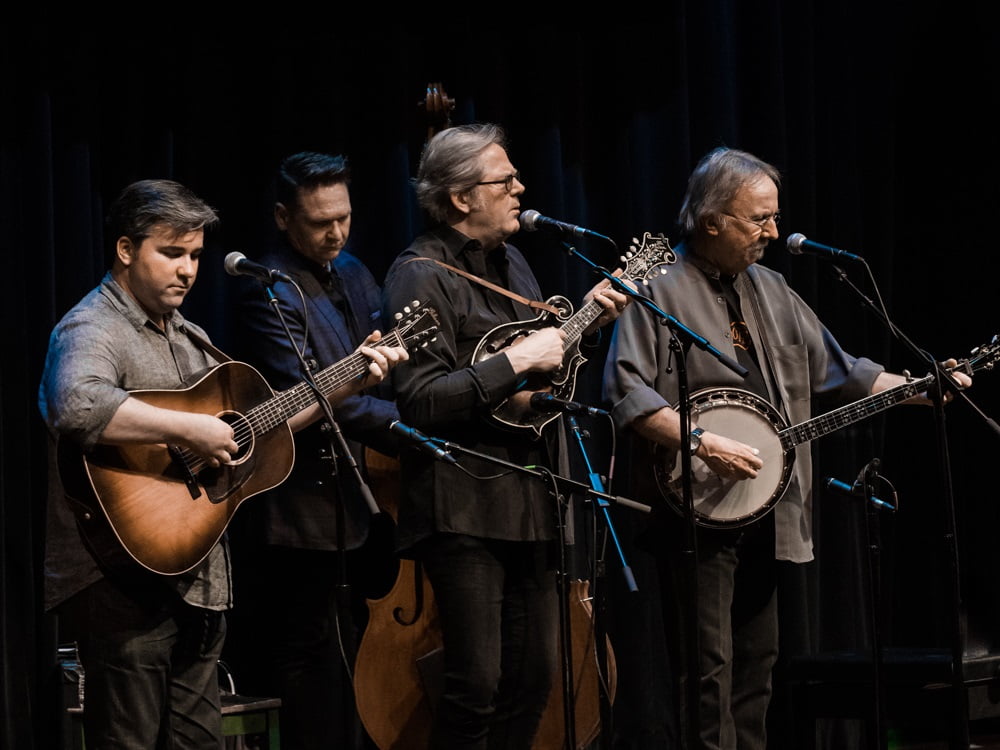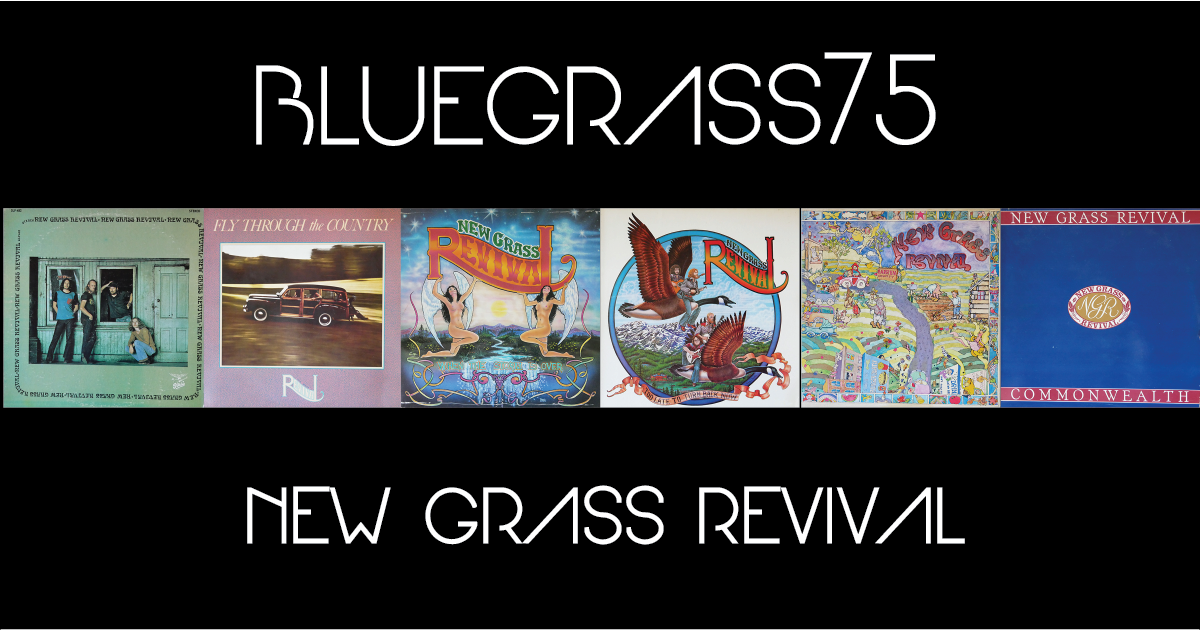
New Grass Revival: Sam Bush and John Cowan on the Early Years (Part 1 of 2)

One of the most celebrated and innovative bands of the 1980s, New Grass Revival will be inducted into the Bluegrass Music Hall of Fame during the IBMA Bluegrass Music Awards on October 1. As part of our coverage of the 75th anniversary of bluegrass music, BGS caught up with founding member Sam Bush and vocalist/bass player John Cowan to talk about the early years in this first of two stories exploring their remarkable discography. Read part two of the story here, featuring insight from Béla Fleck and Pat Flynn, as well as Bush and Cowan.

The four founding members of New Grass Revival are Curtis Burch on guitar and Dobro, Courtney Johnson on banjo, Ebo Walker on bass, and Sam Bush on mandolin. They had all played together in the five-piece band, Bluegrass Alliance.

Sam Bush: We wanted to fire our [Bluegrass Alliance] fiddle player Lonnie Peerce, and when we told him this he said, “You can’t fire me, I own the name of the band.” So we said, “Let us put it this way: we quit.” We were already influenced by the Country Gentlemen and the Osborne Brothers and Jim & Jesse and the Greenbriar Boys and a really great record by the Charles River Valley Boys called Beatle Country. That’s one of the reasons we called ourselves New Grass Revival — we were trying to point out that we were reviving a new bluegrass that had already been invented by those people. We were only hoping to further the progressiveness we already dug.

Bush had been friends with Courtney since he was a teenager, when the banjo player was lead singer in a band playing Stanley Brothers tunes.

SB: We had no particular plan to play differently but our very first practice I remember Ebo hitting a bass lick in D minor that we later discovered he got from Dolly Parton’s “Jolene.” We played licks back and forth over it and all of a sudden Courtney went into the melody of “Lonesome Fiddle Blues” by Vassar Clements. That’s how we came to work up “Lonesome Fiddle Blues” for our first album. It was like a band epiphany, that we could improvise over a riff the way rock ‘n’ roll bands did. We were just playing it the way we felt it.

Courtney and Curtis were steeped in traditional bluegrass, but Bush was a musical sponge, soaking up everything from Homer and Jethro to Jefferson Airplane to the Rolling Stones to French jazz violinist Jean-Luc Ponty. The band’s first, self-titled album, from 1972, included covers of Leon Russell’s “Prince of Peace” and Jerry Lee Lewis’s “Great Balls of Fire.

SB: This is the days before cars had cassette players, so Ebo had a tiny cassette player we took with us on the road, and we’d made a tape we could listen to. One side was John Hartford’s Aereo-Plain. And on the other side we had Leon Russell and the Shelter People. Without John Hartford there would be no newgrass. Growing up close to Nashville, I would watch him on local TV, and one night he did a bluegrass version of “Great Balls of Fire” on the Glen Campbell show, and I recorded it from the TV — that was the one we learned. Courtney even played his chromatic run the same way John did it.

While making their first album Bush encountered the man who would be his songwriting partner, Steve Brines.

SB: We lost our Louisville club gig when we ended Bluegrass Alliance, so in order to make a living that first winter in ’70-’71 I ended up playing electric bass with a folk group called the Cumberlands: Harold Thom and his wife Betty, and a banjo player called Jim Smoak. Jim had co-written a couple of songs with this poet-lyricist over in Lexington called Steve Brines and we played one on that early album — “Cold Sailor.” After I made his acquaintance Steve and I started trying to write together. Steve lived up in Lexington and I lived down in Barren County, and he’d send me five to ten sets of lyrics in the mail and I’d make up music, put it on a cassette and send them back. Our rule was I wouldn’t change one word, if he didn’t change one note.

It was a productive partnership – Bush and Brines wrote half the songs on their second album, Fly Through the Country. By then, Walker had left the band and they had gained a new player: John Cowan.

John Cowan: I joined in 1974. I did not grow up in bluegrass. I was a rock ‘n’ roll kid playing in local garage bands. But I had an awareness of New Grass Revival because I lived in Louisville, which was their home, and the woman who became my wife once dragged me to go see them. I didn’t want to go, but I was blown away. Six months later I got a phone call from Sam living down in Western Kentucky with Courtney and Curtis and he said he got my number from this guy, and would I be willing to come down and audition for us?

SB: He was a city guy, and when he pulled up and saw us, it was like “Oh my god what have I got myself into?”

JC: Courtney and Curtis were truly unique individuals. They were from South Georgia, super country dudes, born and raised playing bluegrass. I was wild-eyed and “What is all this stuff?” To their credit they welcomed me with open arms.

SB: We played some tunes together and asked him to join the band and he said, “I sing too — do you mind if I sing a song?” And in the tradition of Barney Fife I puffed up my chest and said, “Well, I’m the lead singer but yeah, go ahead.” And he sang “Some Old Day” in the same key as John Duffey did it in, only with this powerful voice and this beautiful vibrato. At the end of it I said, “John, I used to be the lead singer, now you are.”

JC: The day they hired me we rehearsed with the drummer. The next morning I got up and he was gone! I was like, “Where did Michael go?” Courtney said, “Oh hell, we fired him. We don’t need him with you!” I felt kind of bad about it, he was a really nice guy.

Soon the band’s rock ‘n’ roll influences were coming to the fore.

JC: They were already experimenting with jamming on traditional instruments over songs and it was right up my alley, because I was also a big prog rock fan. I was obsessed with Yes. On the title track of Fly Through the Country, Sam played this little thing that looked like a can of Spam — it was a resophonic mandolin, he played slide on it. When Béla joined, he said the big joke was that you could listen to the first part of the song, go out for lunch, come back, and you’d still be playing it.

SB: People would call us “The Grateful Dead of Bluegrass” because of our long tunes and our experimentation. We had to put it in our contract that we wouldn’t be billed like that, because then we had Deadheads coming expecting us to play their songs, and we didn’t do any.

JC: Our touchstone was the Allman Brothers. Their live album At Fillmore East came out three years before and we both knew it by heart; to this day I could sing every note and every solo. So that was a crucial record for our band. Sam exposed me to Jack Casady’s [of Jefferson Airplane] bass playing. When I joined the band I was 21, and Courtney was already 38, I was so out of my element. I’d only ever played with guitars and keyboards and drums, and I was smart enough to at least say, “I don’t know what I’m doing, you guys have to help me.” They’d give me a joint and say, “Go listen to this stuff — here’s John Hartford, here’s Norman Blake, here’s the Dillards….” It was so foreign and beautiful to me.

SB: One of the first songs John taught us was “These Days.” He sang like Gregg Allman when he first arrived, and his voice and vocal style changed to fit into what he had joined.

JC: I would imitate him [Gregg Allman], Lowell George, Stevie Wonder. But when I got in that band, now what do I do? I was smart enough to realize it wasn’t going to work for me to try and sing like Ricky Skaggs or Bill Monroe, that’s not in me. But Sam was very encouraging to me and the more I sang the more I developed my own voice.

SB: Garth [Fundis, the band’s producer] had introduced me to a piano player, Chuck Cochran, and Chuck played electric piano with us on “These Days” at the end of the Fly Through the Country. It was the last song we recorded, and we went, “Huh… We can make this fusion of more instruments into our sound.”

Their next album, When The Storm Is Over, went further, incorporating more of Cochran’s keyboards, as well as drums and percussion.

SB: We wanted to augment our sound and appeal to a wider audience, and Chuck and Garth introduced us to the great drummer Kenny Malone. He played on our next three records and I started producing the records myself. Stephen and I continued to write. The subject matter of our songs was totally different than bluegrass-style songs. I’ve always just said newgrass music is contemporary music played on bluegrass instruments.

JC: Sam’s going to solo for eight minutes, then he’s going to toss it to Courtney, then Curtis, and I’m the guy who’s in charge of keeping the train on the tracks and keeping the coal in the engine. That was my job and I loved it. To this day, when you’re playing that kind of music and all the players are in sync spiritually and musically and emotionally there’s nothing like it. To me that’s what punk music is: just this tremendous energy of people.

In 1977 their first live album, Too Late to Turn Back Now, was recorded at the Telluride Bluegrass Festival.

JC: It was such a fruitful time for music and we were in the middle of it. Jackson Browne, Miles Davis, the Mahavishnu Orchestra, John Coltrane, Little Feat…. Those people were our models, we listened and listened and it came out in our music. At Telluride we took this Willis Alan Ramsey track off this one solo album he made, the song “Watermelon Man,” and to me that was us doing Little Feat. That’s “Dixie Chicken.” That’s “Fat Man in the Bathtub.” There was a lot of Little Feat groove in what we were doing.

SB: We were trippier on stage than on most of our records, but you can hear it on that live record. Our association with Leon Russell — we’d opened for him in 1973 — had opened the doors. I don’t know that we were psychedelic exactly, but I was trying a phase shifter on my fiddle, like Jean-Luc Ponty, and Curtis would play lap steel with distortion.

JC: We had all grown together. Sam and I were fixated with Delaney & Bonnie at the time. We played “Lonesome and a Long Way from Home,” which Delaney co-wrote with Leon Russell, and we were so obsessed with them vocally that we talked about this: “I’m going to do Bonnie, you’re going to be Delaney.”

The band’s popularity was growing and they were finding their audience, thanks to the support of fellow musicians like the Dillards and Nitty Gritty Dirt Band. In 1979, Leon Russell had dropped in on the band’s soundcheck when they played at the Apollo Delman Theatre in his hometown of Tulsa, Oklahoma. The band released the album Barren County that same year.

SB: Leon saw our name on the marquee and hadn’t seen us for years so he stopped by. We went back to his house that night, we jammed all night, and then we went and recorded with him in Nashville and in Hollywood where his studio was. It was really cool. We were teaching Leon bluegrass songs.

The result was the album Rhythm and Bluegrass, Vol 4, which Russell recorded in 1980 under his country alter ego, Hank Wilson. However, the project stayed unreleased until 2001.

SB: We were always most proud of that record. I co-produced it, I just didn’t know that’s what you called it. Leon had a bluegrass songbook and he’d say, “What do you think, should we do this one?” And I’d say, “Nah, let’s try this one.” So that’s how we started as his backup band. For two years! John and I had so much fun singing harmony with him. I love singing baritone, and vocally we were glued to him. And the way John and I did call-and-response in our singing was very influenced by the way Leon and Mary [his wife] did it on their records.

A live album, recorded in 1981, captures the spirit of their collaboration with Leon Russell.

SB: There were shows where you’d see him bounce up and down on his piano stool and that’s when we knew we were going to go into this Pentecostal church service with him, and the songs would just keep speeding up and speeding up and the audience was getting more and more excited. It was amazing, the rock ‘n’ roll hysteria. We learned a lot about show business from him.

Russell played keyboards on Commonwealth, which was Johnson and Burch’s last album with the band.

SB: Listening to the solo that I played on “Deeper and Deeper” [on Commonwealth], having not heard it for years, that one I managed to go to place I hadn’t planned on. Of course you have a game plan and an outline of what you want to achieve with a solo, but that solo was one of the happiest surprises.
(Editor’s note: Read part two of our oral history of New Grass Revival.)


First Generation: Meet the Bluegrass Music Hall of Fame’s Earliest Inductees

Though it’s not that hard to find some who will argue the point, bluegrass is widely held to have originated when banjo phenom Earl Scruggs joined Grand Ole Opry star Bill Monroe’s band in early December, 1945. Bill Monroe and His Blue Grass Boys — the possessive wasn’t just there for show — were already among the anchors of the radio show’s cast, but contemporary accounts (and a handful of bootleg recordings) make clear that, to the ears of an almost instantly enraptured audience, Scruggs’ rapid-fire banjo playing elevated the group’s sound to a new level.

Almost instantly, groups sprang up — or reoriented themselves — in pursuit of the new sound, and although banjo players and fiddlers were the most obvious converts, the truth is that virtually all of the intricacies the band brought to their sound were soon emulated. By the time Scruggs and guitarist/lead singer Lester Flatt left the Blue Grass Boys at the beginning of 1948, the quintet’s live performances and a handful of recordings had already inspired some notable followers, who, out of artistic desire and commercial necessity, quickly busied themselves in developing their own distinctive takes on the sound of the “original bluegrass band.”

As we near the 75th anniversary of this foundational origin story, BGS will be looking back across the sweep of those years — and first up, of course, a clutch of true pioneers that share a common accomplishment: they are the acts honored by induction into the IBMA’s Hall of Fame in its first five years and their plaques proudly hang at the Bluegrass Music Hall of Fame & Museum in Owensboro, Kentucky.


Bill Monroe (inducted 1991)

A complex personality with a skill set that included equal measures of innovation and synthesis, the mandolin-playing Monroe (b. 1911) moved from a mid-1930s duo with his brother to assembling a hot string band during World War II to fronting that original bluegrass band — an achievement which earned him his “Father of Bluegrass” title. Though it’s easy to discern the elements he brought together in that music — old fiddle tunes; Scotch-Irish ballads; African-American blues, jazz and gospel; western swing and more — his creativity extended beyond simply stirring them together and kept him a central figure from its inception until his death in 1996.

Indeed, while his early classics are essential to the bluegrass canon, even his late-life instrumental compositions have enjoyed a growing influence among today’s hottest young players. In fact, he collected his first Grammy for 1988’s “Southern Flavor.” Monroe was inducted into the Country Music Hall of Fame in 1970, and as the composer of “Blue Moon of Kentucky,” he joined the Nashville Songwriters Hall of Fame in 1971, received a Lifetime Achievement Award from the Grammys in 1993, and entered the Rock and Roll Hall of Fame as an early influence in 1997.

Representative tracks: “Blue Yodel No. 4,“I’m Going Back to Old Kentucky,” “Lord Protect My Soul,” “Midnight on the Stormy Deep,” “Southern Flavor”


Earl Scruggs (inducted 1991)

Though he wasn’t yet 22 years old when he joined Monroe’s band at the end of 1945, Earl Scruggs (b. 1924) was ready to step into the spotlight, and, with the exception of a stretch of ill health in the late 1980s and early ‘90s, he never relinquished it until his death in 2012. Unlike many instrumentalists who change their approach according to musical context, Scruggs believed that his picking style — built around right-hand patterns called “rolls” — could fit anywhere, and after his groundbreaking years with Monroe and then Lester Flatt, his career seemed devoted to proving the point.

Having created much of the musical vocabulary for bluegrass banjo picking, he moved on to playing with his sons in the Earl Scruggs Revue, a country-rock-bluegrass fusion band that was arguably more successful — at least in commercial terms — than Flatt & Scruggs had ever been. In the 21st century, Scruggs championed a broad variety of younger musicians while continuing to play those same sweet rolls he’d created as a young man. He was awarded a Lifetime Achievement Award from the Grammys in 2008.

Representative tracks: “Blue Ridge Cabin Home” (Flatt & Scruggs), “Foggy Mountain Chimes” (Flatt & Scruggs), “Travelin’ Prayer” (Earl Scruggs Revue), “The Engineers Don’t Wave From the Trains Anymore” (with Tom T. Hall), “The Angels” (with Melissa Etheridge)


Lester Flatt (inducted 1991)

With an expressive, emotive voice and an impressive array of demeanors that ranged from dry and sly to devout and down-home, rhythm guitarist Lester Flatt (b. 1914) was the perfect musical complement to Earl Scruggs, and their 1948-1969 output was at least as influential as Monroe’s. Flatt & Scruggs won a 1968 Grammy for their classic recording of “Foggy Mountain Breakdown.”

But where Scruggs was not only interested in playing with his sons, but also interested in putting his banjo into a wider range of contexts, Flatt preferred sticking to the country side of bluegrass. In the aftermath of their breakup, Flatt’s drawl deepened and slowed as he presided over a series of gifted lineups that included peers like Josh Graves and Vassar Clements, alongside young up-and-comers from banjoist Kenny Ingram to a teenaged Marty Stuart. Flatt & Scruggs were inducted into the Country Music Hall of Fame in 1985.

Representative tracks: “I’ll Never Love Another” (Flatt & Scruggs), “I’ll Go Stepping Too” (Flatt & Scruggs), “On My Mind” (Flatt & Scruggs), “You Are My Flower” (Flatt & Scruggs), “Gonna Have Myself a Ball”


The Stanley Brothers (inducted 1992)

The career of Ralph Stanley (b. 1927) and Carter Stanley (b.1925) illustrates both the profound impact that the original bluegrass band had on their peers, as well as the complementary artistic and commercial drives that impelled those successors to create their own unique style. In their first recordings, made while Flatt and Scruggs were still Blue Grass Boys, you can hear the Virginia-born Stanley brothers revamp their old-time string band approach into an approximation of the pioneers’ sound, yet within a matter of months, they had found a compelling variant.

The Stanley sound was built in part around Ralph’s stolid but driving banjo and soulful tenor singing, but even more around Carter’s mournful lead vocals and powerful songs. Over the years, while they moved from the Nashville-based Columbia and Mercury labels to scrappy (and multi-racial) Cincinnati indie, King, their sound became even more recognizable, as owner Syd Nathan hectored them into de-emphasizing the fiddle and leaning more into the innovative work of flatpicking lead guitarists like George Shuffler. The brothers’ partnership came to an end in late 1966 with the early, alcohol-related death of Carter; Ralph would continue on with his own twist on the Stanley Brothers’ sound until his death in 2016.

Representative tracks: “The Lonesome River,” “Our Last Goodbye,” “Let Me Walk, Lord, By Your Side,” “I’ll Just Go Away,” “Pig in a Pen”


Reno & Smiley (inducted 1992)

The first banjo player to follow Scruggs, albeit briefly, in the Blue Grass Boys, Don Reno (b. 1926) deliberately sought to create a distinct and instantly recognizable style of his own on the instrument. By the time his partnership with singer-guitarist Red Smiley (b. 1925) had settled into regular recording for King Records in the early 1950s, he had succeeded completely, and for good measure had done the same with flatpicked guitar solos, too. As Grand Ole Opry announcer Eddie Stubbs once put it, Reno & Smiley were a country band with a banjo instead of a steel guitar.

Though Reno could and sometimes would blister a banjo solo, many of the band’s signature numbers were heart songs, country shuffles, earnest gospel outings and more, including occasional flashes of rockabilly and jazz. Reno wrote many of them, sang tenor and occasional leads, and shared the instrumental limelight with their steady fiddler, Mack Magaha, and occasionally with one or another mandolin player, including his son, Ronnie. The partners split for a few years in the mid-‘60s, then reunited for a brief period before Smiley’s death in 1972. Reno continued to record and perform with partners ranging from Bill Harrell to his sons until he passed away in 1984.

Representative tracks: “I’m Using My Bible for a Roadmap,” “I Know You’re Married,” “Little Rock Getaway,” “Please Remember That I Love You,” “Just About Then”


Jim & Jesse (inducted 1993)

Though Jim McReynolds (b. 1927) and Jesse McReynolds (b. 1929) were born just a few dozen miles from the Stanley Brothers, the music of Jim & Jesse could hardly have been a more different kind of bluegrass. The duo’s singing was smooth and refined — especially guitarist Jim’s silvery tenor — while the instrumental sound was driven by Jesse’s innovative mandolin cross-picking and their overall approach by the latter’s eclectic tastes and influences (he appeared, for instance, on The Doors’ 1969 album, The Soft Parade).

The brothers were comfortable in reaching for a more countrified sound, helped by banjo players like Allen Shelton and Carl Jackson, who were adept at playing radio-friendly licks on a dobro-banjo as well as ‘grassier fare when that was called for. Smart businessmen as well, the duo were among the first to appear on television in the early 1950s, recorded an entire album of Chuck Berry songs in the mid-1960s, started their own label in the early 1970s, and remained a popular fixture on the Grand Ole Opry until Jim’s death on the last day of 2002. As of this writing, Jesse McReynolds continues to perform — and to innovate, too, with releases like a 2010 Songs of the Grateful Dead collection.

Representative tracks: “Pardon Me,” “Are You Missing Me,” “She Left Me Standing on the Mountain,” “Cotton Mill Man,” “Memphis”


Mac Wiseman (inducted 1993)

Nicknamed “The Voice With a Heart,” Virginia’s Mac Wiseman (b. 1925) was a founding member of Flatt & Scruggs’ Foggy Mountain Boys in 1948, but soon left to join Monroe (and Don Reno) in the Blue Grass Boys. By the early 1950s, he’d started his own career, recording for Gallatin, Tennessee’s Dot Records — and then going to work for the label. A consummate professional, he also served as a musicians’ union official for a time, and was a founding member of the Country Music Association. He frequently recorded material other than bluegrass, especially when rock ’n’ roll and the pop-country Nashville sound beckoned in the late 1950s and early 1960s, and throughout his career, he was never afraid to use a variety of instruments besides the archetypal bluegrass ones.

Still, as a performer, bluegrass was his bread and butter from the mid-1960s on, and rather than carry a band, he would recruit players from other acts (and occasionally skilled amateurs, too) and lead them on stage with a heavy guitar strum and a quick “watch me, boys!” Wiseman’s songbook included old folk numbers, songs he heard on the radio as a polio-stricken child, big band tunes, Music Row compositions and much more. In later years, he recorded several memorable projects that highlighted songs his mother had taught him and songs that told his life story, before his death in 2019.

Representative tracks: “I Still Write Your Name in the Sand,” “I Wonder How the Old Folks Are at Home,” “Mother Knows Best,” “My Little Home in Tennessee,” “’Tis Sweet to Be Remembered”


The Osborne Brothers (inducted 1994)

Bobby Osborne (b. 1931) and Sonny Osborne (b. 1937) were among the first of what might be called “semi-second generation” bluegrass artists; unlike those who preceded them in the Bluegrass Hall of Fame, neither had performed professionally before 1950. By 1954, though, they’d hooked up with Jimmy Martin for a memorable set of recordings, and 1956 found them signed on to MGM on their own. Together with singer-guitarist Red Allen, the Brothers — Bobby singing lead and playing mandolin, Sonny singing baritone and playing banjo — had come up with an inventive new vocal arrangement that put the spotlight pretty much on them alone.

Lest that sound too cold, it should be noted that they deserved it, for not only was Bobby a formidable lead singer and Sonny brilliant in the support role, but their fearless, try-anything (the two recorded separately with avant-garde jazz vibraphonist Gary Burton in the mid-’60s) instrumental skills were profoundly original. The Brothers joined the Grand Ole Opry and signed with Decca Records in 1964, and spent the next decade fusing bluegrass and country in a way that eventually earned them a CMA Vocal Group award. Irascible, opinionated, and both artistically and commercially successful, the Osborne Brothers were at the forefront of the music until Sonny’s 2005 retirement — and while Bobby continues to perform to this day, the influence of their duo continues to grow, too.

Representative tracks: “Once More,” “The Cuckoo Bird,” “Tennessee Hound Dog,” “Pathway of Teardrops,” “Sweethearts Again”


Jimmy Martin (inducted 1995)

East Tennessee native Jimmy Martin (b. 1927) hungered to perform with Bill Monroe as a youngster, then got his chance in 1949 when Mac Wiseman quit the Blue Grass Boys. As lead vocalist and guitarist, he helped to make some of Monroe’s most memorable recordings, then partnered in various settings with Bobby and Sonny Osborne before taking the helm of his Sunny Mountain Boys in the mid-1950s. A brash, colorful guy who could boast with the best and then back it up, Martin served in the cast of the Louisiana Hayride (alongside Elvis) and the Wheeling (W.V.) Jamboree before a growing bluegrass festival circuit threw him a lifeline in the absence of a Grand Ole Opry membership.

Among early Hall of Fame inductees, he may be considered more influential than most of his peers. Service in his Sunny Mountain Boys constituted the training ground for several generations of musicians, from banjo man J.D. Crowe to newgrass pioneer Alan Munde to Americana favorite Greg Garing — and his appearance on the Nitty Gritty Dirt Band’s Will the Circle Be Unbroken was legendary. Martin was an unstoppable force of nature who knew exactly what he wanted from a musician, yet was unable to clearly explain it. Still, he did well enough that his records are instantly recognizable, even when you’ve never heard them before.

Representative tracks: “That’s How I Can Count on You” (with the Osborne Brothers), “Rock Hearts,” “You Don’t Know My Mind,” “Tennessee,” “Freeborn Man”


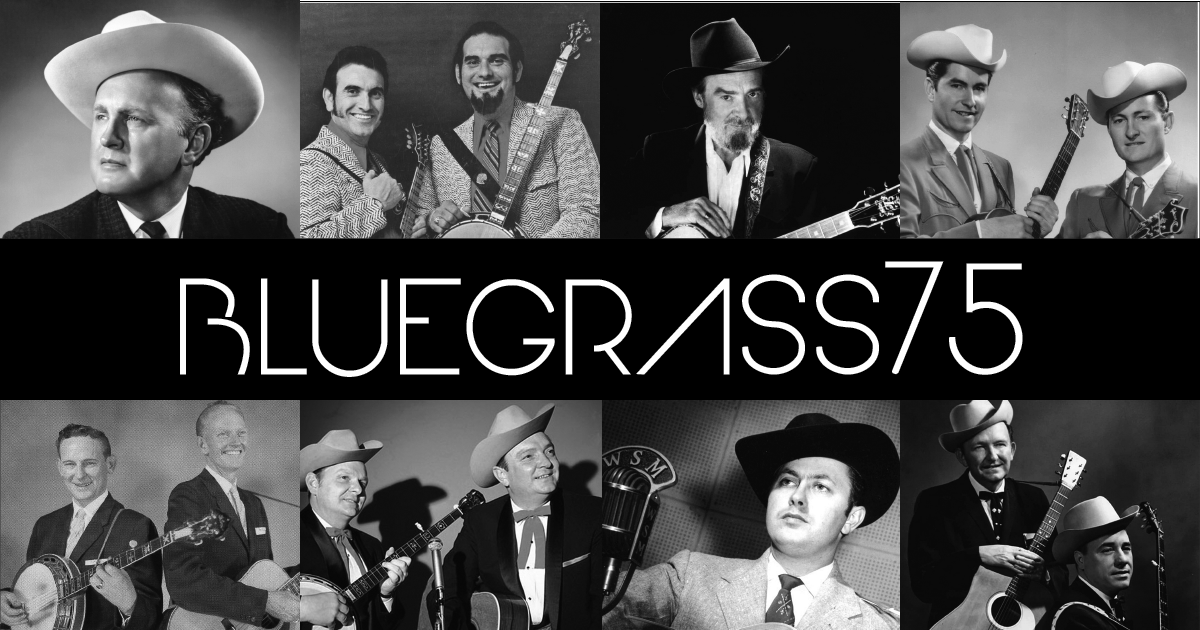
Pictured above, first row (L to R): Bill Monroe, The Osborne Brothers, Mac Wiseman, Jim & Jesse; Second row: Reno & Smiley, The Stanley Brothers, Jimmy Martin, Flatt & Scruggs

MIXTAPE: High Fidelity’s Traveling Music

While High Fidelity is known for representing a specific niche in the bluegrass music landscape from the 1950s and early ‘60s, each member brings a diverse palate of musical tastes and styles. This playlist is a fine example of some of the diverse listening one might hear on our travels. Some of us remember making mixtapes of our favorite songs and tunes in the days of the cassette. Well, our van still has a cassette player in it! I hope you’ll enjoy listening to some of the music that inspires us, and maybe I should run off a tape of this for our next trip! — Jeremy Stephens, High Fidelity

Flatt & Scruggs – “Earl’s Breakdown”

This is probably the first song that really lit a fire under me to love and play bluegrass music. I first heard it on a red 8-track tape. I was absolutely drawn to Earl’s banjo playing and the famous section of the song where he tunes the second string down a whole step and then brings it right back up. Honestly though, the part of the tune that tore me up and still tears me up is Everett Lilly’s mandolin break. When I first heard that break, I thought it was the most incredible thing ever. Still is the best 15 seconds of mandolin playing on record. — Kurt Stephenson

Don Reno – “Coffee Cup”

I love “Coffee Cup,” because it showcases Don Reno’s banjo playing and creativity to the max. Though Reno didn’t write the song, he had a masterful arrangement of it. I believe it demonstrates nearly every signature technique that is unique to Don Reno. Each solo (they’re all banjo solos) is an adventure, and a fun one at that! — KS

Lonesome River Band – “Say I Do”

I always credit Lonesome River Band with sparking my interest in contemporary bluegrass sounds. My first LRB album was One Step Forward and my favorite song on the album is “Say I Do.” I love the groove, the harmonies, the chord structure, and especially the musical groove. Kenny Smith plays an incredible and beautiful guitar solo, which is followed by a banjo solo from Sammy Shelor. That particular banjo solo taught me so much about dynamics; especially in regards to coming out of a solo and leading in to the vocal. — KS

Reno & Smiley – “Country Boy Rock ‘N Roll”

I’m a country boy and I like to rock and roll, so this song fits. I remember picking up the album that included this song at a flea market when I was about 12 or 13, and it was my very first introduction to Reno & Smiley. — Daniel Amick

Tim O’Brien – “Wind”

I like this song because it’s a good song. It speaks to my soul. We have wind at my house. — DA

Punch Brothers – “Boll Weevil”

As a farmer sometimes I deal with crop failure, bugs, and drought. The goal is of course to problem solve and see beyond the failures to the success just on the other side, but seeing this as a story from the bug’s perspective is pretty interesting. — DA

Jim & Jesse – “Did You Ever Go Sailing”

The In the Tradition album by Jim & Jesse is the first album I remember consciously listening to, the first instance I remember understanding what an album was and what it meant to be an artist. When I would go to 3-year-old preschool, I listened to this on cassette continually and just wore the tape out. My first favorite song was this one. I still love everything about that album and this song! Glen Duncan’s fiddling, Allen Shelton’s banjo playing, and of course Jesse’s mandolin playing are just the cream of the crop, with the added bonus of Roy Huskey Jr. on upright bass. Jim is featured here singing lead on the verses and jumping to harmony on the choruses, making for an all-around awesome arrangement! — Corrina Rose Logston

Red Smiley & the Bluegrass Cut-Ups – “It’s Raining Here This Morning”

Tater Tate’s fiddling has been a huge influence on me, and it’s something I go back to over and over again for inspiration. This particular cut features Tater front and center just wearing it out! I love a song in the key of F like this, and this cut is just exceptional. Red Smiley’s flawless lead singing is like golden drops of honey. Billy Edwards’s playing out of open F on the banjo is the epitome of my happy place. It just doesn’t get much better than this for me! — CRL

Sarah Siskind – “Lone Tree”

It might surprise fans of High Fidelity that most of my “newer” music listening is outside the realm of traditional bluegrass. In fact, outside of the High Fidelity setting, my own solo artistry and songwriting is like a musical amalgam drawn from many diverse sources throughout my life. I love Sarah Siskind’s artistry and draw so much inspiration from her music. It’s hard to pick favorites but this particular song is pretty high up on the list for me! And, fun fact, Jeremy Stephens was staying with Sarah’s mom and dad the year that Jeremy and I met each other at SPBGMA in 2009! — CRL

Homer & Jethro – “Tennessee, Tennessee”

I knew I wanted to include a Homer & Jethro number, but I didn’t know just which one. I’ve always admired their ability to integrate belly laugh-inducing lyrics to some serious mandolin precision. “Tennessee, Tennessee” is one that I’ve always wanted me and Corrina to cover. That last verse makes me lol every time. — Vickie Vaughn

Tim O’Brien & Darrell Scott – “Walk Beside Me”

This is the opening song to my desert island record. I just need one and this record, Real Time, is IT. That GROOVE, though. I’ve listened to this song at least a hundred times and the repeating mandolin hook paired with the mandola toward the end of it makes me feel like I. CAN. DO. ANYTHING. Thanks for that confidence, Tim & Darrell. — VV

Jim Oblon (with Larry Goldings & Jim Keltner) – “Copperhead”

I’ve known Jim for a while. I met him here in Nashville before I even knew what he was musically capable of. Friends later told me that he was Paul Simon’s drummer. Now we’re old friends and I try to be cool when I see him now and again at the gym and I try to refrain from nerding out over yet another musical discovery I had while listening to his records. Get a load of this RIFF on “Copperhead.” Not showcased on this recording is Jim’s incredible vocal prowess. Make sure you take time to find a song of his to hear that. You’re welcome. — VV

Kilby Snow – “Close By”

I’ve loved the autoharp since my Mamaw got me one for my sixth birthday from the secondhand store she worked at. I didn’t start playing it seriously until I saw my banjo mentor, Troy Brammer, playing autoharp when I was in my early teens. I’ve gone quite a few years without playing it seriously, but since we’ve all been shut in at home, I’ve been playing autoharp almost exclusively around the house for a couple months now. My favorite of all the autoharp players is Kilby Snow from Grayson County, Virginia. He played autoharp left-handed upside down, and did these open-bar “drag” notes to make it sound like the roll on a five-string banjo. This is a great Bill Monroe number played by Kilby on the harp, and it’s one I’ve found myself playing quite a bit lately. I learned to play his style right handed from his son Jim when I visited him in Oxford, Pennsylvania, in 2006. — JS

United Sacred Harp Convention – “Sherburne 186”

I first heard sacred harp shape-note singing on a 78 RPM record at Kinney Rorrer’s home. Kinney is a serious record collector and has been a mentor to me in the history of old time music. After first hearing the singing on that 78, I was hooked, and I couldn’t get enough of Sacred Harp. I learned to read and sing the shape notes and listened to many recordings of Sacred Harp conventions. Of all my listening, this recording of this tune has stood out to me, and I wanted to include it here. Hope y’all like it! — JS

Reno & Smiley and the Tennessee Cut-Ups – “Mountain Church”

There is no set of recordings that I have returned to over and over for more than 20 years, except for Reno & Smiley’s 1953 and early 1954 recordings. The tone, feel, playing, and singing of these 24 sides sum up everything that I really love about Reno & Smiley’s corner of bluegrass music. This era of their work has greatly informed what I bring to the table stylistically with High Fidelity. “Mountain Church” is one of my favorites of Reno & Smiley and we perform it occasionally in High Fidelity. — JS


Photo credit: Amy Richmond

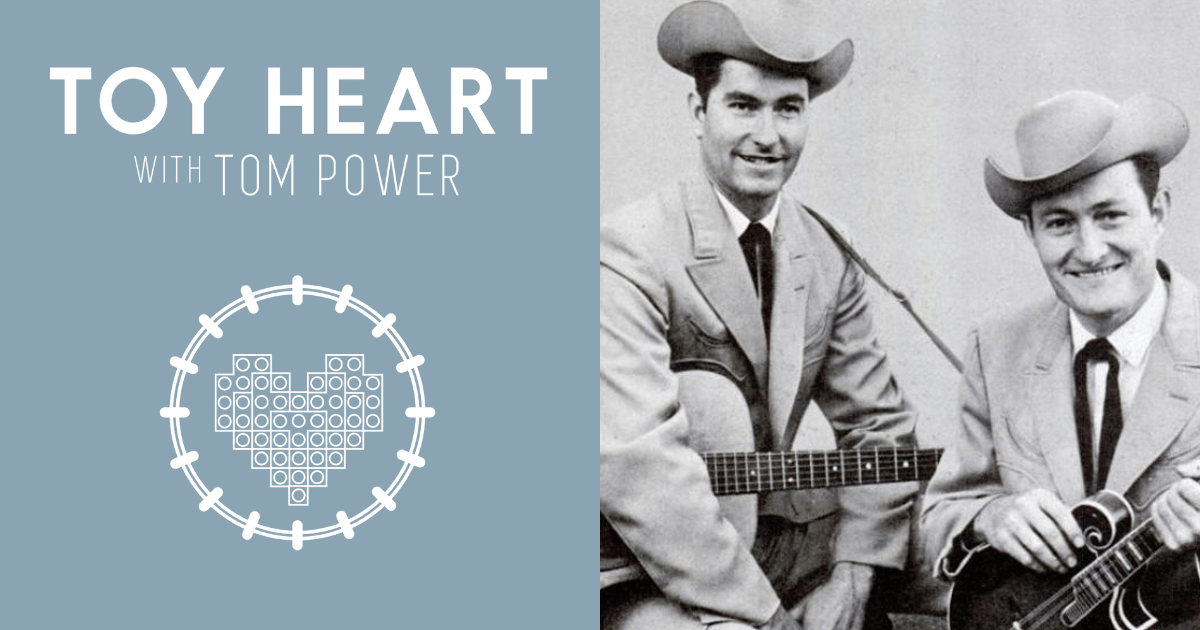
Jesse McReynolds – Toy Heart: A Podcast About Bluegrass

Host Tom Power talks to Bluegrass Hall of Fame member Jesse McReynolds of Jim & Jesse and the Virginia Boys about his career in bluegrass.

LISTEN: APPLE PODCASTS • MP3


One of the last founding fathers of bluegrass, Jesse McReynold’s story is the story of bluegrass — a music that emerged out of the country, into rural schoolhouses, onto rural radio, finding sponsorship along the way, enmeshing itself into the mainstream of American culture.

McReynolds tells the story of his grandfather, who played in the first recorded country music session, talks about being offered a gig with the Stanley Brothers, serving with the armed forces in Korea and singing alongside Charlie Louvin. He relates hunting down record deals and successes with his brother Jim, starting their own label, being sought out by counter cultural icons like the Grateful Dead and The Doors. Now nearing the age of 91, McReynolds spends some time reflecting as well, on his brother Jim’s death, his own struggles with the Opry, and how he feels about his legacy in the music. This is an icon of American music whose story isn’t often told, and we’re honored to play a part.

Junior Sisk Hitches His Wagon to the Stars of Traditional Bluegrass

Junior Sisk is on a mission. Although he’s been a fan of traditional bluegrass since childhood, he’s now fully focused on keeping that history alive. That passion for tradition is evident in Load the Wagon, the award-winning vocalist’s first release since disbanding Ramblers Choice.

“The Stanley Brothers, Flatt & Scruggs, Jim & Jesse, and all of them had big hits, but they also had hidden treasures on all those LPs. A lot of them that were never played and they’re not a jam tune. That’s what I’m looking for,” Sisk says. “It’s going to be like new tunes to a lot of folks. That’s what I’m after – to still pay tribute to the founding fathers of traditional bluegrass music, but in the Junior Sisk style.”

The Virginia musician’s recovery mission has unearthed a number of gems on Load the Wagon, like Flatt & Scruggs’ little-known “Lonesome and Blue” and the heartfelt “Lover’s Farewell,” a Carter Family gem suggested by his new bandmates Heather Berry-Mabe (guitar, vocals) and Tony Mabe (banjo, guitar, vocals). Jonathan Dillon (his mandolin player from Ramblers Choice), Gary Creed (bass, vocals), and Douglas Bartlett (fiddle, vocals) round out the lineup.

Sisk also re-cut the song that remains his most requested number, “He Died a Rounder at 21,” from his time with Wyatt Rice & Santa Cruz in the mid-‘90s. Leading up to a show at Station Inn, he invited BGS on the bus for a chat.

BGS: The first song on this album, “Get in Line, Buddy,” will be a familiar tune for fans of the Country Gentlemen. What made you want to record it here?

Sisk: Me and Bill Yates got to be good friends there for a long time right toward the end, and every time we’d play together at a festival, I’d always get together with him and ask him to do “Living on the Hallelujah Side” that he’d done with the Country Gentlemen, and this one right here — “Get in Line, Buddy.” Those are a couple that he sang solo on. It was just great, great singing.

It’s like what I’m trying to do right now. I’m in line with Flatt & Scruggs, the Stanley Brothers, and all that. I’m way down the line, but I’m in line anyway. And it still rings true today when you come to Nashville. When you walk the streets, you see them on the streets. You see them in all the clubs and everything. Everyone’s standing in line. I feel like I’m still standing in line for traditional bluegrass music.

With “Get in Line, Buddy” and “Best Female Actress,” there’s a sad story there, but you find a way to put humor into those songs. It’s not an easy thing to pull off. How do you approach that?

Well, when I go into the studio and start to record, I’ve always done a lot of tongue-in-cheek songs. I’m noted for that, but I sing with a lot of emotion. I sing with a lot of feelings. That’s why a lot of times I’ll lose my voice, to tell you the truth, because I’m singing so hard and with as much feeling as I can.

I love to look out in the crowd and see them either crying, if I’m singing a pitiful song, and if I’m singing a tongue-in-cheek song, I like to see them laugh and carry on. It just makes for a good show, I think. And Charlie Moore has been one of my favorites. He’s one of the most underrated bluegrass artists ever. He’s a great singer.

You also have some songs on here, like “Just Load the Wagon,” which are plain-and-simple funny. I’m curious, where did you get your sense of humor? Was there someone in your family where you picked that up?

Yeah, my dad. He’s a songwriter. He’s probably got a thousand songs at the house for me to choose from. But every song he writes, at the top of the page he writes the date he wrote it, and he writes, “Sing in the key of D and sing like Carter Stanley.” [Laughs] I said, “Dad, you can’t sing ‘em all like Carter Stanley and they can’t all be in D!” But if he had his druthers, that’s what it would be. That’s pretty much me, too. I was raised, born and bred, on the Stanley Brothers’ music.

This one here, I thought the folks would really enjoy, and now that I’ve gotten rid of the Rambler’s Choice name and went to the Junior Sisk Band, I’m trying to pay tribute to traditional bluegrass music, so we brought back the old-style banjo, the mountain-style banjo-playing with the clawhammer on this one. And it’s turning out to be one of my favorite tunes that we’re playing now. It’s a lot of fun and the crowd can react to it. It’s a toe-tapping tune.

You mentioned that the Ramblers Choice name is gone. Why was that an important move for you to shift to Junior Sisk Band?

Well, Jason Davis, Kameron Keller, and a couple of guys left. My dad always says when wintertime comes around and things start getting slow, somebody blows a whistle and everybody switches. It’s pretty much like that. If you don’t have any work, I’m going where the work is. But I was actually straying away from my heart – I was straying away from traditional bluegrass music a little bit. I just did not want to do that. I finally came to the conclusion that what I’m going to do until the end of my career is pay tribute to traditional bluegrass music, and try to keep it alive as long as I can. That’s what we’re trying to do today, is keep it straight-ahead bluegrass, right in the middle of the road, and turn the younger fans onto traditional bluegrass music.

Why is it important for you to carry that torch for traditional bluegrass?

I’m just tickled to death to see the young’uns out here today that come to our shows, or to see them out jamming at festivals and playing the old-style music. You don’t see that a lot anymore. It seems that the younger generations is trying to play every note they know. …When I hear somebody with real emotion, and real feeling, who’s a traditional young’un coming up, I love it. Because we’ve lost so many — Ralph Stanley, James King, and a lot of traditional artists here lately. I think I’m a torch holder and that’s what I hope to be until the end of my career. As long as I’m able to breathe and sing, I’m going to keep their music alive.

It hurt to lose James King, didn’t it?

Oh, it was hard. I was there holding his hand on the day he died, in the hospital. I was on one side and Dudley Connell was on the other. And we told him we would keep his music alive. I’m getting chills now, but it meant the world to me, just to be there. He was a torch holder as well.

You re-recorded “He Died a Rounder at 21” from your days with Wyatt Rice & Santa Cruz. What’s it like to sing about that guy now, 24 years later? Does it bring out a different emotion in the song for you?

It’s still the same. The story in that song is awesome. I’ve grown up with a lot of folks in the bluegrass industry and I’ve seen a lot of ‘em pass away from alcoholism and just the hard life, the bluegrass life. People around home say, “Wow, you’ve got it made. You go on stage and play 45 minutes…” They don’t know about the 15 hours you travel to get there. It’s a hard life. You don’t eat right. You don’t take care of yourself. And I can understand where this guy came from. He only lived 21 years – but 21 years was like a thousand years in his time. I understand that, and that’s why I put everything I got in that song. Because it rings true.

Was there a pivotal moment for you when you decided to go into bluegrass full-time?

In my early teens, I lived and breathed it. I sat at the end of the bed in my mom and dad’s room with an old LP player and played Dave Evans, Larry Sparks, the Stanley Brothers, just trying to learn everything George Shuffler ever did on guitar. I was in it hot and heavy, and eat up with it.

In the early ‘80s, I moved up around the DC area and that’s when the Johnson Mountain Boys came on the scene. I followed them everywhere they went. They brought me back to life, and still today if I get to feeling sad, or get down about the music, I can put a Johnson Mountain Boys DVD in, and it will bring me right back. There was so much excitement and energy, they just tore me all to pieces. That’s what it’s all about.


Photo credit: Susie Neel

The Breakdown – Jim & Jesse, ‘The Jim & Jesse Show’

Advertisement

Season 2 of The Breakdown continues with an in-depth exploration of Jim & Jesse McReynolds’ 1975 live album, The Jim & Jesse Show.

LISTEN: APPLE PODCASTS • MP3

Bluegrass and Japan are like peanut butter & jelly – it might not seem the most obvious match up, but boy, does it work. Patrick and Emma talk to Jesse McReynolds, one of the oldest living Opry members, about Jim and Jesse’s 1972 trip to Tokyo – and the awesome live album it resulted in.

Season 2 of The Breakdown is sponsored by The Soundtrack of America: Made In Tennessee. Visit TNvacation.com to start planning your trip.

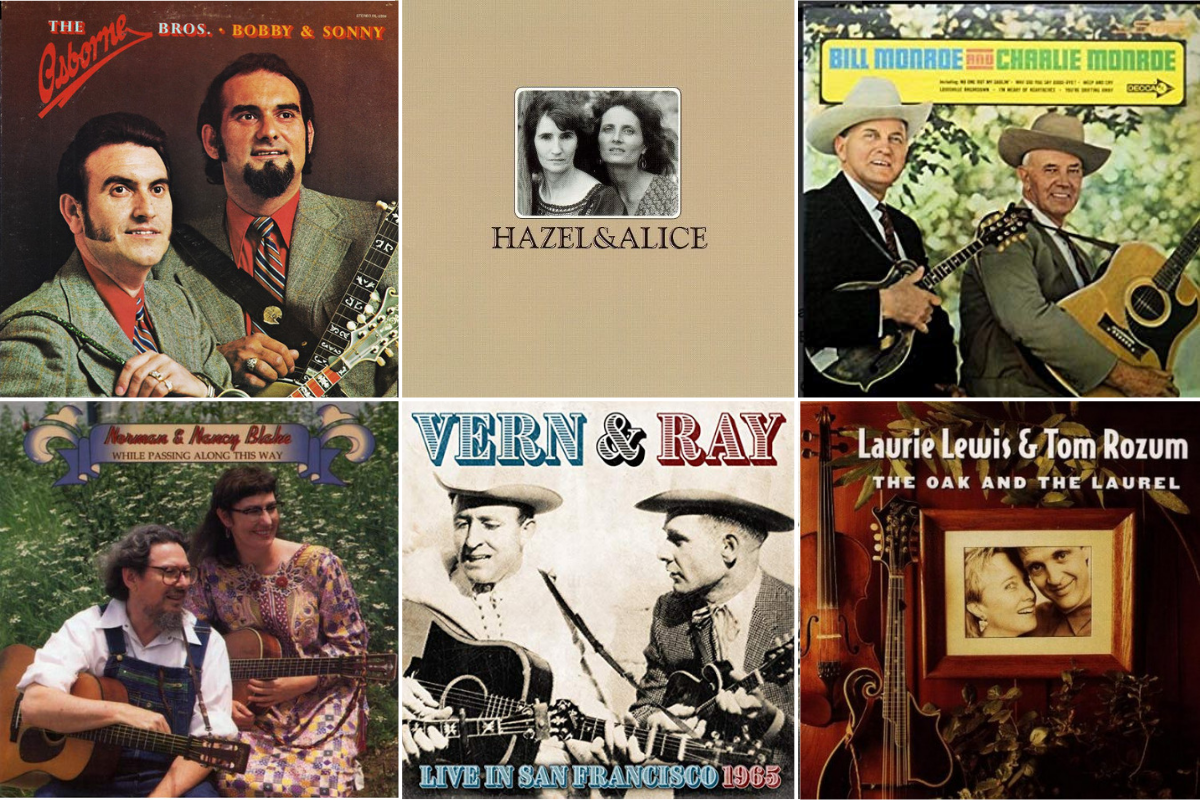
22 Top Bluegrass Duos

Everyone knows that in the early days of bluegrass, before that term was even coined, all you needed to make a “band” was two people and two instruments. Fiddle and banjo? Sure. But in those days, they’d take whatever they could get. Duos are still a strong presence in the music today, in brother/sibling duos, spouse-led bands, and legendary collaborations.

Check out these twenty-two bluegrass pairings — and their accoutrement — on BGS:

Bill & Charlie Monroe

Before Bill Monroe, the Father of Bluegrass, made his indelible mark on the genre (quite literally giving it its name), he was already a popular performer with his brothers Charlie and Birch. Birch left The Monroe Brothers in the mid-1930s, and Charlie and Bill went on to enjoy success on the road, in the studio, and on the radio — until rising tensions and a fateful fight in 1938 caused them to split ways. But, without that fight, we may not have “bluegrass” at all.

Flatt & Scruggs

December 1945. The Ryman Auditorium. Nashville, Tennessee. Bill Monroe and his Blue Grass Boys stepped on stage for the Grand Ole Opry with Lester Flatt and Earl Scruggs among their ranks for the very first time and bluegrass as we know it today was born. Flatt & Scruggs left Monroe in 1948 to join forces and went on to become one of the few ubiquitous, household names of bluegrass.

Hazel Dickens & Alice Gerrard

Undeniably trailblazers, Hazel Dickens & Alice Gerrard are widely regarded as the first women in bluegrass to capture the “high lonesome” sound popularized by Monroe, the Stanley Brothers, and others. They toured across the U.S., often supporting causes that benefited forgotten, downtrodden people from all backgrounds and walks of life. They were inducted into the Bluegrass Music Hall of Fame in 2017.

The Stanley Brothers

Natives of the music-rich southwest corner of Virginia, Carter and Ralph Stanley were prolific recording artists and touring musicians in bluegrass’s first generation. Countless songs written and/or popularized by the Stanley Brothers and their backing band, the Clinch Mountain Boys, are staples of the genre today. Carter passed in 1966 and Ralph continued until his death in 2016 with the Clinch Mountain Boys — who still tour today with Ralph’s son, Ralph II.

Don Reno & Red Smiley

Unsung trailblazers of the first generation of bluegrass pickers, Reno & Smiley were tireless innovators with a jovial, sometimes silly flair to their songs and instrumental prowess. Their duets are simply some of the best in all of bluegrass. The duo performed together off and on from the early 1950s to the 1970s — but both passed away much too young, Smiley in 1972 at the age of 46 and Reno in 1984 at the age of 58. Reno’s frenetic, electric and pedal steel guitar-infused licks remain unmatched in banjo picking today.

Jim & Jesse McReynolds

With matching suits and impeccable pompadours brothers Jim and Jesse McReynolds often brought rockabilly, rock ‘n’ roll, mainstream country and pop sensibilities to their take on sibling harmonies and bluegrass brother duos. Jesse’s crosspicking on the mandolin was — and continues to be — absolutely astonishing. Jim passed in 2002, Jesse continues to perform on the Grand Ole Opry to this day. At the time of this writing, he is ninety years old.

Laurie Lewis & Tom Rozum

Laurie Lewis often takes top billing — as leader of the Right Hands and before that, the Bluegrass Pals, and others — but since 1986 her musical partner Tom Rozum has almost constantly been at her side on the mandolin and harmonies. Their duo recording, The Oak and the Laurel, was nominated for a Grammy in 1995. Here is the album’s title track:

Bill Monroe & Doc Watson

What is there to say? Two of the folks who paved the way for this genre, laying a foundation so strong and far-reaching that we still can’t fully comprehend its impact. Bill and Doc collaborated on more than one occasion and we, as fans and disciples, are lucky that so many of these moments are captured in recordings and videos.

Del McCoury & David “Dawg” Grisman

At face value, an unlikely combo, but their friendship goes back to the early 1960s and their musical endeavors together began soon after. As Del slowly but surely became a bastion for traditional bluegrass aesthetics applied broadly, Dawg embraced jammy, jazzy, new acoustic sounds that sometimes only register as bluegrass-adjacent because they come from the mandolin. Opposite sides of the same coin, their duet makes total sense while at the same time challenging everything we think we know about the music. In this clip, Dawg sings tenor to Del — not many would be brave enough to try!

Ricky Skaggs & Keith Whitley

They got their start together in the Clinch Mountain Boys with Ralph Stanley, making some of the best recordings in the history of the band’s many iterations. Before they both struck out on wildly successful, mainstream careers they recorded a seminal duo album together, Second Generation. It remains one of the most important albums in the bluegrass canon — especially as far as duos/duets go.

Norman & Nancy Blake

Norman is well known for his flatpicking prowess, which has graced recordings by John Hartford, Bob Dylan, the Nitty Gritty Dirt Band, and so many others. He and his wife, Nancy, were married in 1975 after having begun their musical forays together a year or so earlier. Nancy’s command of many instruments — cello, mandolin, and fiddle among them — balances neatly with Norman’s jaw-dropping, singular style on the flattop. Their inseparable harmonies and timeless repertoire are merely icing on the cake.

Jimmy Martin & Ralph Stanley

How their first album together, First Time Together (cough), is not more well-known is truly impossible to understand. The King of Bluegrass and the Man of Constant Sorrow twining their extraordinary voices must have been ordained by a higher power. It’s a good thing they answered the call. Be careful, Jimmy’s percussive G-runs feel like a slap in the face — in the best way.

Darrell Scott & Tim O’Brien

Their live albums together and their co-written masterpieces belong in every museum and shrine to roots music around the world. Both of these triple threat (Quadruple? Quintuple? When do we stop counting?) musicians are rampantly successful in their own right, but together they are simply transcendent. Their cut of “Brother Wind” deserves a listen right this instant and “House of Gold” gives you the harmony acrobatics gut punch you need every time. It was nearly impossible to choose just one, but here’s a hit that was recorded once by a little group called the Dixie Chicks.

Ricky Skaggs & Tony Rice

Again, words fail. Skaggs & Rice is a desert island record. Each and every time these two have graced a recording or a stage together, magic has been made, from their days with J.D. Crowe & the New South and on. We only wish that they could have done more together.

Vern & Ray

Vern Williams and Ray Park were California’s original bluegrass sons. Though they were both born and raised in Arkansas, they relocated to Stockton, California, as adults. They’re often credited with “introducing” bluegrass music to the West Coast. They disbanded in 1974 (both passed in the early 2000s), but their influence is palpable to this day, even if they’re sorely unheard of east of the Mississippi. This deserves correction! Immediately!

Eddie & Martha Adcock

Eddie is a pioneering banjo player who’s a veteran of both Bill Monroe’s Blue Grass Boys and The Country Gentlemen, two decidedly legendary and influential acts. His style is somewhat wacky, certainly singular, but effortlessly bluegrass and traditional as well. He married Martha in the late 1970s and the pair have toured prolifically as a duo. In 2008, Eddie underwent brain surgery to correct debilitating hand tremors. He was kept awake, playing the banjo during the procedure — and there is jaw-dropping film of this online!

Dailey & Vincent

When Dailey & Vincent burst onto the scene in the mid-aughts after both having notable careers as sidemen, the bluegrass community rejoiced at the reemergence of a wavering art form within the genre — traditional duo singing. However, Jamie and Darrin, whether they knew it at the time or not, had their sights set much higher. Now more of a full-blown stage show than a bluegrass band, their recordings and concerts are a high-energy, charismatic, and downright entertaining mix of classic country, Southern gospel, quartet singing, and yes, bluegrass.

Kenny & Amanda Smith

Husband and wife Kenny and Amanda first recorded together in 2001, going on to win IBMA’s Emerging Artist of the Year award two years later. They’ve now cut eight albums together, all clean, clear, crisp modern bluegrass that centers on Amanda’s impossibly bright vocals, which maintain a personal, country hue alongside Kenny’s fantastic flatpicking. SON!

Tom T. & Dixie Hall

Two of the most recent inductees into the Bluegrass Music Hall of Fame, Tom T. and Dixie Hall wrote hundreds and hundreds of songs cut by country, bluegrass, and Americana artists alike. Tom T.’s reputation and chart-topping originals tend to eclipse Dixie, but he is unyielding in his efforts to point that same spotlight at his beloved wife instead, who passed away in 2015. Though she never performed — definitely not to the extent that Tom T. did — the marks she left on bluegrass, country, and her partnership with her husband are indelible. This number was co-written by the pair:

The Louvin Brothers

Recipients of IBMA’s Distinguished Achievement Award in 1992, the Louvin Brothers are another example of early bluegrassers who enjoyed the amorphous, primordial days of the genre before it became more and more sequestered from mainstream country and country radio. Their duets are iconic, with counter-intuitive contours and lines that bands and singers still have difficulty replicating to this day. Their most famous contribution to the American music zeitgeist, though, might not be their music, but the spectacular cover art for their 1959 album, Satan Is Real. If you haven’t seen it, Google it right now.

Delia Bell & Bill Grant

Natives of Texas and Oklahoma, respectively, Delia Bell and Bill Grant met through Bell’s husband, Bobby, in the late 1950s. Between their band, the Kiamichi Mountain Boys, and their duo project they recorded more than a dozen albums together through the 1980s. Famously, Emmylou Harris became a fan when she heard their cut of “Roses in the Snow,” which Harris went on to record on her eponymous bluegrass record. Bell died in 2018.

The Osborne Brothers

Though they popularized a style of three-part harmony that had never been heard before — the infamous “high lead” harmony stack — their band, no matter who it may have included over the years, was undeniably helmed and anchored by Bobby and Sonny. (Which does explain the name.) You may remember “Rocky Top” and “Ruby” first and foremost in their discography, but the hits they’ve contributed to the bluegrass songbook are innumerable. Here’s one such classic.

Joe Mullins & the Radio Ramblers Turn the Dial to Bluegrass Tradition

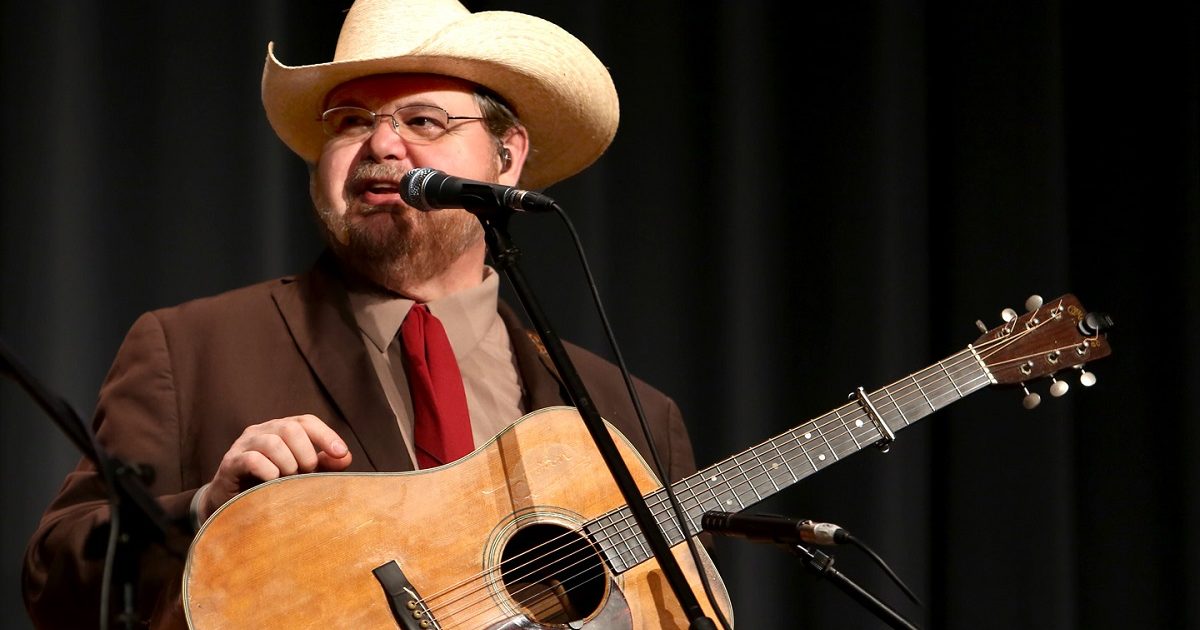
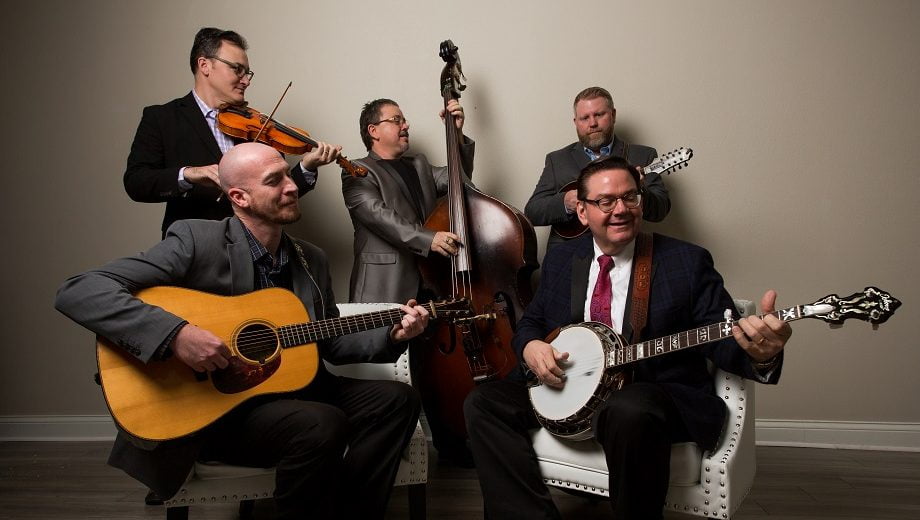
For the record, Joe Mullins is a cornerstone of the modern bluegrass community. He’s chairman of the International Bluegrass Music Association, as well as a radio station owner and an award-winning musician. Plus he’s just an easy guy to talk to. During a visit with the Bluegrass Situation, Mullins traced his decades-long career, from teenage gigs to For the Record, his latest album with the Radio Ramblers, featuring Jason Barie on fiddle, Mike Terry on mandolin and vocals, Duane Sparks on guitar and vocals, and Randy Barnes on upright bass and vocals.

BGS: Did you go into these latest sessions with a certain sound or musical direction in mind?

Mullins: We had three or four new songs that we wanted to do, and wanted to make those our own. I try to make certain that when we combine rare tunes that we want to cover with new songs, that we get the perfect balance of a variety of vocal and instrumental arrangements. I don’t like the same ol’, same ol’. We’re fortunate in the band to have so much vocal versatility. There are three of us that can sing any part, plus a bass singer if we want to do a quartet number. So, I make certain there’s a good balance vocal arrangements, keys, tempos, subject matter… If you listen to all 12 songs in a row, I don’t want you to get bored and go to sleep.

That’s harder than it sounds.

It is! Especially when you combine original material with some rare tunes that you want to cover, and that you want your audience to hear. I always find a few of those. We’re called the Radio Ramblers because I have been on radio and on stage since ’82. I was 16 the first time I played a major bluegrass event as a banjo player, the same year I started in broadcasting. So I’ve got a real deep well to draw from, everything from old-time stuff to contemporary country, classic country, Americana music, and everything bluegrass. On this new album, we’re covering a Johnny Cash/Hank Jr. tune (“That Old Wheel”), and doing new songs, and something from a hundred years ago, out of a hymnbook. So there’s a little bit of everything.

I’ve heard you talk before about the bluegrass history in Southwestern Ohio, and you made a reference to Sonny Osborne and J.D. Crowe as being mentors to you. What was that relationship like?

My dad was a broadcaster and a good bluegrass fiddle player. He was in and out of bands. He sat in with the Osborne Brothers a bunch when I was a kid. He sat in with J.D. Crowe when Doyle Lawson and J.D. had the Kentucky Mountain Boys going. He was on a ton of recording sessions in the ‘60s and ‘70s with a variety of bands. In Southwestern Ohio, the Cincinnati/Dayton region, it’s just thick with bluegrass history. Everybody from Flatt & Scruggs to the Stanley Brothers — they all recorded in this area at one time or another. Larry Sparks started here and grew up here.

The Osborne Brothers started here. Their parents had left Kentucky to get a job in Dayton, Ohio, when they were boys. Bobby and Sonny started their career right here in the same neighborhood where the Radio Ramblers started. They started in the late ‘40s, early ‘50s, and we started in the early 2000s. Matter of fact, Bobby started singing on the radio in Middletown, Ohio, in 1949 — the same station my dad started working at in 1964, and the same station I started working at in 1983. So there’s just a lot of connection there.

The Osborne Brothers and J.D. Crowe and Ralph Stanley and Don Reno — all these first-generation bluegrass leaders were all family friends. They were in and out of the house when I was a kid. My mom fixed breakfast or supper for everybody I just mentioned, multiple times. Dad sat in with them and played on Larry Sparks’ first record, and played on all kinds of recordings in the area. I saw these guys growing up a lot.

So when I decided to attempt the five-string banjo, I had seen J.D. Crowe and Sonny Osborne and Ralph Stanley in their prime, multiple times, and had all the recordings already in my bedroom. Then, when it came to me pretty naturally, and I had the opportunity to play and perform and record as a young guy, if I was having a struggle with something, I always had access to J.D. Crowe or Sonny Osborne or Don Reno or Ralph Stanley. “How do you do this?” “How do you that?” I got to see them often and I got some one-on-one time with all of them.

Did that strike you as amazing at the time? Or was it later in life that you realized how incredible that was?

Later in life I realized I am the most blessed guy in the world. The most fortunate cat, you know? To be 15 or 16 years old, trying to learn how to play banjo, and have access to these guys always – and get to be encouraged by them, and sing by them… Sonny especially, he would lecture about all kinds of stuff besides banjo playing. “Make sure you go to college! Quit smokin’!” That’s just who he is. We still talk often and I play one of his banjos on this record. He’s had custom banjos built and designed for many years and I’ve had one of them for the last six years.

I wanted to ask about your dad and touring with the Traditional Grass. Was he easy to travel with?

Not always. [Laughs] I often look back on the Traditional Grass – we had it going on in the late ‘80s and early ‘90s. We had a ball! We were on the road all the time and back then it was just wide open. Us, the Del McCoury Band, the Bluegrass Cardinals, the Lost & Found Band — and the first generation guys were still out there. We saw the Osborne Brothers, Ralph Stanley, and Jim & Jesse all the time.

I was real young and I look back on it now a ton, because Dad was my age then. He still was a pretty hard-charger. All the other guys in the band were young and it didn’t matter how late the show was, or how long the party went on, he hung in there with us. [Laughs] He wasn’t really hard to get along with. He just got tired and cantankerous sooner than all of us young cats did, I guess. But he didn’t worry about details. He worried the most about playing great music and having a good time.

In the ‘90s, you were pretty visible with Longview, too.

Very fortunate. Worked out great. Traditional Grass toured like crazy in the early ‘90s. We burned it up from ’89 to about ’95. I about burned myself out and burned myself up, just living hard on the road. I was very fortunate to have an opportunity to buy a local radio station here in this wonderfully historic bluegrass neighborhood in Southwestern Ohio.

The Longview thing was already in the works before I came off the road with the Traditional Grass. We started conversations around ’94. I was on the road with that band through the summer of ’95 and launched my first radio station as an owner in the summer of ’95. And Longview recorded first in December of ’95, so by the time the album came out, there was a good buzz with it and it was an immediate success. And we had to go out and tour part-time.

So I had just enough time to get my radio business started and established without a heavy tour schedule. And then I had this wonderful, high-profile gig as a special event recording band that also got to tour and play everything from MerleFest to Wintergrass, from Telluride to Myrtle Beach. We played everywhere as a special event band in the late ‘90s and it kept me from falling off the radar.

If you look back on the late ‘70s when you were developing, to now, where you’re thriving in a lot of different areas, so many things have changed in bluegrass. But what would you say has been a consistent thread from those days until now?

You’ve still got to be able to play in time and sing in tune. [Laughs] I don’t care how young or old you are! Some of the consistent threads are that there’s nothing to hide behind in bluegrass music. You still have to be able to cut the gig. You still have to be able to bring it. I’m still on stage every night with five guys who have to know exactly how to manhandle their instrument, and vocally, it’s all out there.

The simplicity of that part of it — for my band and the sound we look for — it hasn’t changed. It hasn’t changed from the original formula that Monroe and the Stanleys and the Osbornes and all of ‘em have put on stage since the ‘40s and the ‘50s. It’s still got to be players that are masters at the craft. It’s still a combination of art, entertainment, and blood, sweat and tears. That’s bluegrass.


Photo credit: Amanda Martin Photography

John Jorgenson Revisits His Southern California Bluegrass Roots

John Jorgenson is not only a man of many talents, he’s a musician with many interests. Perhaps you’ve heard his gypsy jazz, or remember when the Desert Rose Band — a neo-trad country group that included Jorgenson, Chris Hillman and other luminaries of the California country and country-rock scene — was riding high at radio, or perhaps you saw him playing an indispensable role in Elton John’s touring band. As Jim Reeves might have put it, he’s done a lot in his time.

Even so, you might not know that John Jorgenson is also a bluegrass guy — unless, that is, you saw him on the road with Earl Scruggs during the legend’s final touring years, or happened to buy his 2015 box set, Divertuoso, which included a disc of bluegrass alongside one of gypsy jazz and another of eclectic, electric music. Earlier this year, that disc was issued as a standalone album, From the Crow’s Nest. Featuring the regular (and equally eclectic) members of the John Jorgenson Bluegrass Band (J2B2) — Herb Pedersen, Mark Fain and Jon Randall — it’s a delicious collection that scatters well-known songs (Pedersen’s “Wait a Minute”; Randall’s “Whiskey Lullaby” co-write; and the Dillards’ “There Is a Time”) among a trove of newer material, much of it written or co-written by Jorgenson.

From the Crow’s Nest ought to go some distance in alerting wider audiences to a new standard-bearer for a style of bluegrass that, while its roots trace back to the early 1950s, hasn’t gotten the attention it deserves. Though Southern California is a long way from the Grand Ole Opry and other spawning grounds for the original bluegrass sound, it served in the post-World War II years as a magnet for job seekers from both sides of the Mississippi River, and that meant bluegrass pickers, too — and so, when we met up, that made for a good starting point for our conversation.

Listening to your album reminds me that you are a product of a Southern California roots music scene that included bluegrass from early on. How did you get exposed to it?

Probably the first time was when a band came to my high school and I thought they were from another planet, because I’d never heard anything so fast in my life. I played music already — I played classical music, and rock — but that was sort of an anomaly, and then I didn’t really see it again for a while.

I came to it sort of in a backwards way. I had a scholarship to the Aspen Music Festival. They brought me in as a jazz bass player; they wanted to start a jazz program. And I accepted the scholarship as long as I could also be in their classical program, playing the bassoon. Well, I had my tuition paid for, and my room paid for, but I didn’t have money for meals. So I needed to figure out how to make some money, and then I saw an ad that said: Wanted: strict jazz player for immediate gigs. So I checked out an upright bass from the school and went to this audition. And they weren’t playing jazz — what they were playing was David Grisman’s first album. This was the summer of 1978, so this album was new. I’d never heard it.

So they’re playing all instrumental stuff and I thought, OK, I really like the sound, especially of that mandolin. I liked the flatpicking guitar, too. I was already a guitar player, but I just loved the mandolin. When I got home that summer, my neighbors had a Gibson A model and I borrowed it. Not too long after that, I ran into a friend who had been instructed to put together a band that could play bluegrass and Dixieland to cover two different areas of Disneyland. And he asked, “Hey, do you know anybody that could play bluegrass fiddle and Dixieland cornet?” And needing a job at the time, I said, “I can play mandolin and clarinet.”

And then I kind of learned backwards, whatever I could. I learned from New Grass Revival, and then Bill Monroe, and Flatt & Scruggs, and the Stanley Brothers, and the Osborne Brothers. And all the others — Tony Rice, Sam Bush, the Bluegrass Cardinals, whoever was playing around at the time. Larry Stephenson was playing with the Cardinals at that time, and I remember I was — I don’t want to say shy, but I’m shy around people I don’t know. And to me at the time, they were real bluegrass musicians and I was a pretender. I sort of felt an attitude from some people, too, but he was not like that at all. He was really friendly.

Did playing bluegrass at Disneyland motivate you to build connections with the larger bluegrass scene, or was it a standalone kind of gig?

Actually, when we first started, we were terrible! We learned three songs and then we’d play those, move to a different place and play them again. But everyone was ambitious, so we all practiced; we learned songs, we got better. And then we started to play out around Los Angeles. I think the first time we played out as an act, we opened for Jim & Jesse at McCabe’s [Guitar Shop]. There was also a venue called the Banjo Cafe, with bluegrass every night, on Lincoln [Boulevard] in Santa Monica. So the Cardinals played there; Berline, Hickman & Crary would play there; and touring acts, too — Ralph Stanley would play there. And a young Alison Brown, a young Stuart Duncan.

I know that there are a lot fans of Desert Rose Band among bluegrassers, and some gypsy jazz fans, too, but for a lot of people, you came onto the radar when you were going places with Earl Scruggs — 15 years ago, maybe? How’d that come about?

Actually, it was because of Brad Davis. He was playing with Earl, and we were kind of guitar geek friends. We ended up sitting next to each other on a plane one time, and were chatting, and he said, “I’m playing with Earl Scruggs,” and I said, “I’d love to do that.” He said, “You know, they like to have an electric guitar, maybe there might be a spot.” He really set that up for me.

I said, “OK, I’m happy to play electric guitar, but I would really love to play the mandolin.” So I would bring both, and if I played too much mandolin, Louise [Scruggs] would say, “John, don’t forget that electric guitar.” Then they said, “Don’t you play saxophone? We used to have that on a song called ‘Step It Up and Go.’” So I said, “What about the clarinet? It’s not quite so loud.” And as it turns out, Earl said his favorite musician was Pete Fountain, and he loved the clarinet. So every time after that, Gary Scruggs would call me up: “Dad says don’t forget the moneymaker.”

The J2B2 record was originally part of a box set — a disc of gypsy jazz, one of bluegrass, one of electric stuff. So you have these different musical itches, and some musicians would choose to try to synthesize these things into something new and different and unique, but you seem to have an interest in keeping them each their own thing. Why is that?

It’s because, to me, the things that I love about bluegrass are what make it bluegrass. I love the trio harmony, I love these instruments, the way each instrument functions in the band. And I love gypsy jazz, and some folks might say they’re closely related — they’re string band music, they both have acoustic bass and fiddle and acoustic guitar, and each instrument has a role. There are a lot of similarities, but the things that I like about each one are what make them different. I think each music has an accent, and a history and a perspective, and I really want to be true to those, because those are the elements that touch my heart.

I feel like what I do and what this group does is quite traditional, compared to a lot of people. It’s not jamgrass. It’s not Americana. It’s bluegrass. There are folk elements, and all those other things, of course. But really, my touchstones for that style of music are all the classics: the trio harmonies of the Osborne Brothers, and the slightly softer Seldom Scene and Country Gentlemen sounds, the early Dillards, the Country Gazette, and the whole Southern California sound… you don’t think of Tony Rice’s roots as Southern California, but they are.

And probably at one point, if I could have sounded like I was from Kentucky, I wouldn’t have minded that. But at the end of the day, well, I love Bill Monroe as much as the next guy, and I’m going to take inspiration, but I feel like I’m part of a lineage of bluegrass that’s just as viable as any other, and why not have that sound be a part of me?


Photo credit: Mike Melnyk

9 Bluegrass Songs to Whet Your Appetite

No one really needs any help gearing up for the beautiful gluttony of the holiday season, but in the spirit of gorging oneself on cookies, pie, turkey, ham, and all manner of seasonal treats, here are nine bluegrass songs to get your stomach growling.

Flatt & Scruggs — “Hot Corn, Cold Corn” 

Hot corn goes with your meal. Cold corn makes your meal (and your loud relatives) bearable. If the chickens all a-runnin’ and the toenails a flyin’, this is your best bet.

Ricky Skaggs & Kentucky Thunder — “Pig in a Pen”

Bake them biscuits! Raise a barrel of sorghum! We’re Alabamy-bound!

Reno & Smiley — “Dill Pickle Rag”

Have a pickle with your leftover turkey sandwich!

Doc Watson & Clarence Ashley — “Keep My Skillet Good and Greasy”

The importance of proper cast-iron care cannot be overstated. Do not use soap or any cleaning agents (scrub with salt on stubborn grime when needed), oil after rinsing and washing in warm water, and make sure to re-season regularly.

Lost and Found — “Leftover Biscuits”

Sure, this describes a pretty misogynistic scenario in which the kitchen is dirty because the singer’s wife left him, but maybe also it can just be the day after Christmas when no one wants to even acknowledge the tower of dishes in the sink and everyone’s content to eat cold ham on day-old rolls? Maybe?

Jim & Jesse — “Y’all Come!”

Eating everything from soup to hay! HAY!?

Bruce Molsky — “Shove the Pig’s Foot a Little Bit Further into the Fire”

No one wants an underdone pig’s foot.

David Grier — “Angeline the Baker”

Angeline, could you bake me up some cinnamon rolls, chocolate chip cookies, yeasty rolls, and a pie or three, a fruitcake, a pumpkin roll …

The Nashville Bluegrass Band — “Soppin’ the Gravy”

A clean plate does not count as a truly clean plate, until you’ve taken whatever bread you have on hand and have completely sopped up all that gravy. Soppin’ veterans will then move to the gravy pan and sop up all of that, too. Don’t think about your arteries. It’s the holidays!


Photo credit: Philip Clifford on Foter.com / CC BY-SA