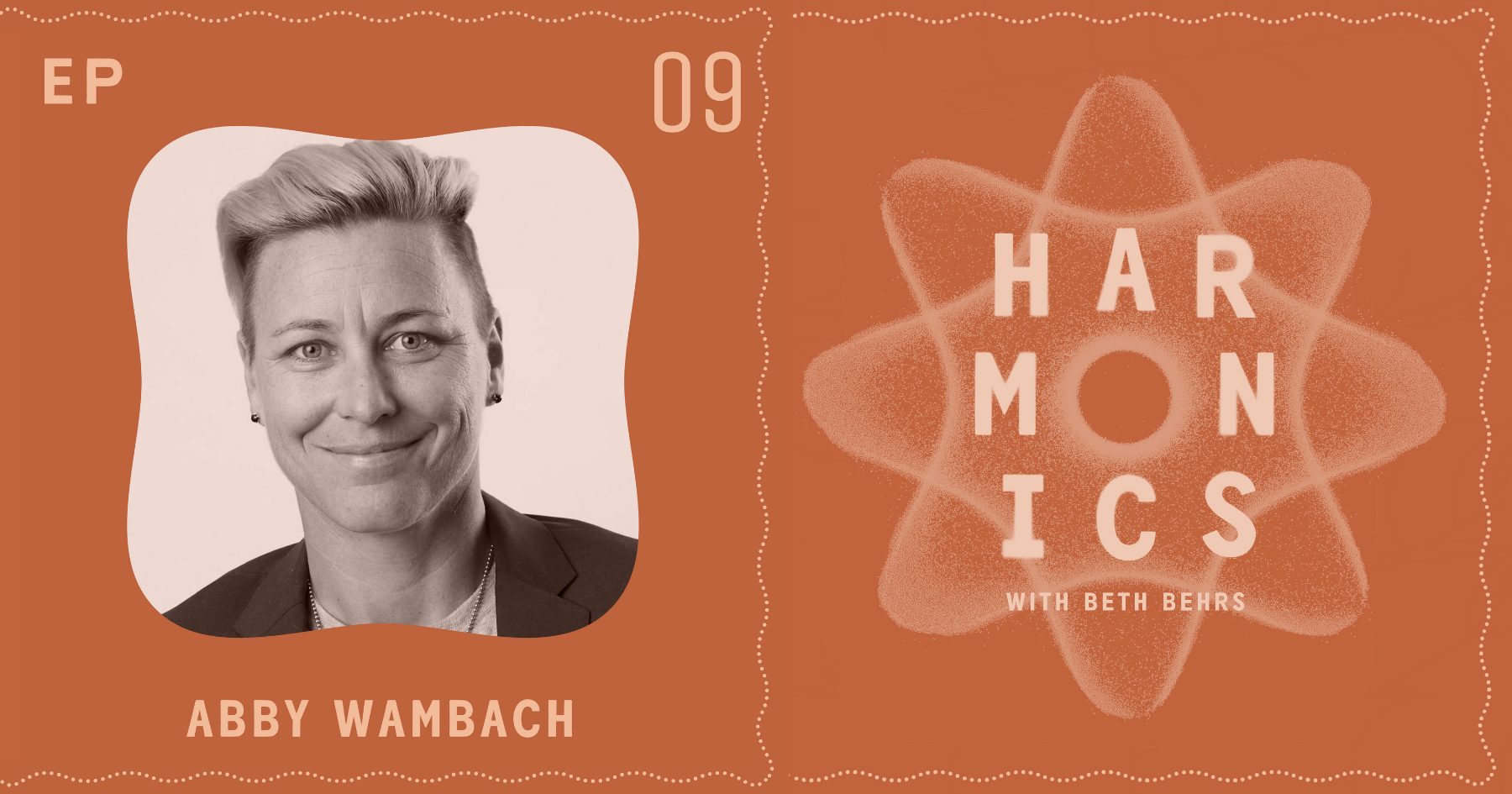
Harmonics with Beth Behrs: Abby Wambach

For our final episode of Harmonics season 2, we bring you a conversation with two-time Olympic gold medalist and FIFA Women’s World Cup champion, Abby Wambach.

LISTEN: APPLE • SPOTIFY • STITCHERAMAZON • MP3

Wambach and host Beth Behrs have an honest and open conversation about sobriety, religion, and Abby’s youth in the Catholic church — and her relationship to it as she accepted her sexuality at a young age. She explains the importance of sports for all kids to develop an ability to take care of themselves, discusses the necessity of exercise and movement for maintaining her mental health, and the disparity between men and women’s earnings and treatment in professional sports. Plus, she relates a huge realization she had while standing onstage between Kobe Bryant and Peyton Manning as they were all three honored upon their retirements.


Listen and subscribe to Harmonics through all podcast platforms and follow Harmonics and Beth Behrs on Instagram for series updates!

Garrison Starr’s ‘Girl I Used to Be’ Makes Peace With the Woman She Is Now

For the last decade, many queer singer-songwriters have doubled down on laconic melancholy, so it’s pleasant to hear Garrison Starr’s new album, Girl I Used to Be, has the ease of Dave Matthews or Sheryl Crow, but Starr is more open about her sexuality on this album than her previous work. At 45, she is older than a cluster of younger generation of performers (some queer, some writing about queerness) who are still working through experiences of gender, sexuality, and religion.

Listening to her new album, one can hear connections to work like Semler’s “Youth Group,” a small, pointed folk song about discovering that you are queer after a youth group lock-in, or Stephanie Lambring’s lacerating attack against homophobia, “Joys of Jesus.” There are also echoes of the joyous call for selfhood in some of Katie Pruitt’s best work. Starr has written with Pruitt, and “The Devil in Me” from Girl I Used to Be was at first intended for her.

“I was sure that would be a song for Katie’s upcoming record,” Starr tells BGS in an email interview. “But she didn’t take to it like I did, and truthfully, I’m happy because I realize how much that song really is a biography of my experience and of my questions as well. I love the curiosity in it and the sense of breaking away from something that doesn’t serve me anymore. I’m not sure where I fit in with Christianity at this point and even if I’m drawn to it, really. The hypocrisy and elitism, at least in the evangelical church, is repulsive to me, and though I think the story of Jesus’ love and redemption is the best thing about any of it, I’m still searching. I believe in a power greater than myself that I choose to call God — that’s all I really know.”

Lyrically there are places where Girl I Used to Be points to the woman she is now, while still drawing on the memories of her childhood in Mississippi, trying to fit in. This merging of past and present give Starr an authority which leads to a commitment to declarative sentences via a voice that is often plainer and clearer than younger queer performers. She is most declarative about issues of sexuality and geography, particularly on her best West Coast songs.

On “Downtown Hollywood,” Starr tells the story of a runaway that gradually shifts from third-person into first-person. She sings about how “they were raising and they were failing” and trying to “cash it all in.” It has a jab against kids with so much privilege that they didn’t need to grow up, and thus, is a grown-up song, almost burnt out, almost jaded about a town Starr still claims to love.

“My only advice to anybody is to find your authenticity, lean into it and never look back,” she says about her adopted hometown. “Los Angeles is a funny place… it’s changed so much and it hasn’t changed at all. The homeless situation here is definitely worse since I came in the late ‘90s. Some of my favorite old haunts aren’t there anymore, but new stuff has popped up in its place. The hustle, the funkiness, the freedom and the hills haven’t changed, and that’s really what made me fall in love with it in the first place.”

Starr grew up in the Deep South, spending some of her undergrad years at Ole Miss, where she was in a sorority. Feeling restricted in that environment, she moved to Los Angeles in the early 1990s. Her major label debut, Eighteen Over Me, was released by Geffen in 1997, and the sudden attention was complex for this queer songwriter. She has mentioned in an interview with Mississippi Today that in her mid-1990s heyday she was told by handlers not to butch it up too much, to avoid the tomboy aesthetic.

Her subsequent career was as an independent touring artist and a successful jobbing musician. She has sung back up for Mary Chapin Carpenter, worked with Josh Joplin, covered the Indigo Girls, and ended up on the soundtrack to multiple television shows, including The Fosters and Grey’s Anatomy. In 2019, her song “Better Day Comin’” was featured in a trailer for the Oscar-nominated Mister Rogers biopic, A Beautiful Day in the Neighborhood. In addition, her production credits include Margaret Cho’s Grammy-nominated comedy album, American Tragedy. “Margaret is one of the most generous and down to earth people on the planet. I am grateful to know her and have had the opportunity to work with her,” Starr says.

Girl I Used to Be builds upon all of this complex history, while at the same time, provides a way into the future.

“I’ve spent a lot more time in my studio, working on production and mixing, and I’ve been able to continue to create content,” she says about the past year. “My business hasn’t been dependent on touring, thank god. I realized a while ago that if I want to make a living in this business, I gotta figure out how to diversify. So, I write a lot of songs with a lot of people, and I make sure some of them make it into TV and film so I can afford to be an artist for a living.”

Like many contemporary singer-songwriters, a paradox exists between the authority she shows in her music and the helplessness she felt about the political situation as she was writing the record. She says that the song “Dam That’s Breaking” is a response to the administration of the 45th president. He was, she says, “empowered and embraced by evangelicals, even though they knew it was wrong. It’s definitely about religious hypocrisy as well as greed and power, cowardice, selfishness and everything else that makes you feel like the walls are closing in on you and you are powerless to stop it.”

What Starr has to say about long-won battles, about landscape, and about power, through the lens of knowing, has something to teach younger queer artists, and can be an example for a young artist striving to write with a strong sense of place, delicate emotion, and a talent for observation. For example, her song “Train That’s Bound for Glory” is inspired by a remark by her late grandfather at his birthday party.

“He loved to goof around and he loved to pick on you,” she says. “They were singing him ‘Happy Birthday,’ and he carried on about not being around for his next birthday and that it was ‘probably gonna be my last birthday. … He ended it with, ‘Yep, I can hear the whistle on the train that’s bound for glory, calling me home.’ I knew of the Guthrie song, but I had honestly never heard it until after I wrote my version.”

As a whole, Girl I Used to Be answers the question of who the girl is now: a queer woman attempting to reconcile her history and her present. She embodies a queer desire to reinvent oneself in another space. You can have a career anywhere these days, and stories of the Midwest and the South have become central to new LGBTQIA stories — and so the exile motif in Starr’s work might be another kind of lived-in quality. Her experience shows that finding home does not mean exile.

One such example is “Make Peace With It,” among the album’s most trenchant moments. Starr says, “Well, the lyric is, ‘If I’m ever gonna live this life, I gotta make peace with it.’ I was thinking in that moment about how much I was struggling to hold onto blame for the rejection I experienced in the church, for the way I felt like my career wasn’t working like I wanted it to, and name whatever else I felt victim to for a long time in my life. I finally got to a place, through what I’m calling grace, and I’ll explain that in a second, where I realized I’d rather be happy than be right. (Thank you, Alanon.).”

She concludes, “What I mean by grace is that there have been so many times in my life where I have been accepted, as I am, by people who truly love me, when I’ve been at my absolute worst. That is what I mean when I say grace. Grace is love, no matter what.”


Photo credit: Heather Holty-Newton

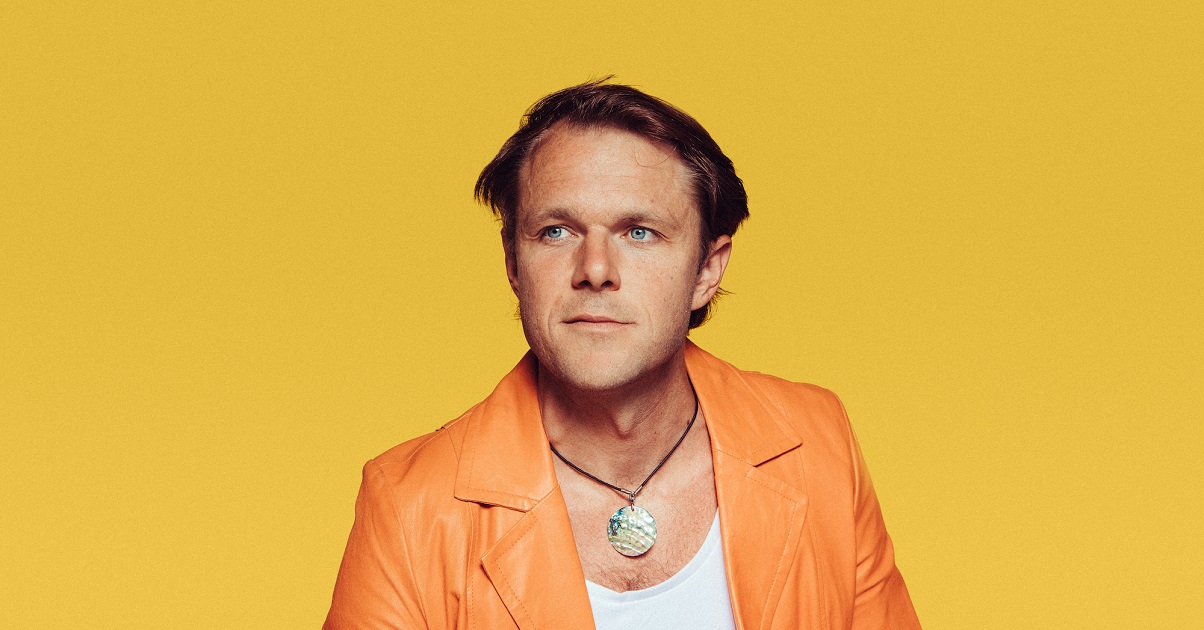
Aaron Lee Tasjan Exclaims His Love of Guitars, Games, and Silly Little Songs

Not every songwriter can get away with an opening line like: “The world outside my window / looks like Nintendo / but I’m not playing games anymore.” Leave it to Aaron Lee Tasjan, who guides us past those lyrics into “Not That Bad,” a subtle and sincere song about confidence and capability that showcases the Nashville-based musician’s gift as an acoustic instrumentalist as well.

Tasjan wrote the song just after suggesting to his longtime label that he wanted to produce the next album — an idea that the executives weren’t sure about. So, Tasjan went ahead and did it anyway, working with co-producer Gregory Lattimer. The result is Tasjan! Tasjan! Tasjan!, likely his most revealing album yet, and one that embraces his fondness of guitar, video games, and his own self-proclaimed dumb songs. He chatted with BGS by phone leading up to the release.

BGS: “Up All Night” sounds like a pop song, but it’s also very personal. What was on your mind as you were writing that song?

Tasjan: A couple of things. I love songs that I would call silly little pop songs. Something as simple as “Sugar” by the Archies. I just love simple, but with a good hook. I’ve been listening to music like that for a long time. As far as the lyrical content, all that stuff came directly out of my life. There’s not one thing that I’m singing about in that song that isn’t 100 percent me, really. And honestly, if I could say there was a mission statement for the record, it was to just be as unabashedly me as I possibly could. So, “Up All Night” became a front-runner early on, a cool blueprint of anything else that I wanted to do.

To me, that song is about the things in life that come and go — you mention money and love and health. And then you’re ultimately realizing that’s just how life is. Is that a fair assessment?

Exactly. I’ve been a very analytical person in my life. And there are some things that you don’t have to analyze. Like, if you are analyzing it, you’re spinning your wheels, or in some cases, creating scenarios that wouldn’t even exist otherwise. It’s kind of a mental health tip for myself to realize, “Look, man, that’s just the way it is, dude.” [Laughs]

It’s refreshing when you come to that realization and you just go on and live your life.

Right! I think that’s true. Control is part of it — you want to feel like you’re in control. But all of that is an illusion. Certainly we have been witness to several moments recently where it feels like reality is coming undone, so we’ve had to reckon with how little control we have over everything. But at the same time, for a guy like me, it’s helped me to reassert the parts of what I can do, of being seen, asking to be seen, and seeing others. That’s not something that I’ve always been that comfortable with — the asking to be seen part. It’s been hard for me, but on this record, I felt more called to do that.

Speaking of that, there’s a lyric in “Up All Night” about breaking up with your boyfriend to go out with your girlfriend. Is that the first time you’ve addressed that topic on a record?

I think so, yeah. Well… on the Silver Tears album, there’s a song called “Hard Life,” and a verse in that where I sang, “There’s a redneck bummer in an H2 Hummer and he sure does hate the queers.” That was true. That happened to me. I got stuck in a drive-through at Taco Bell one time in small-town Ohio with some football team kids who, in their mind, had me pegged. They were yelling all kinds of stuff. I parked my car later to eat the food I’d gotten in the drive-through and they came over and were banging on the windows, calling me names. It was scary, man.

I didn’t know that happened to you. That’s frightening.

But at the same time, that is a tiny part of what someone who is transgender encounters. You kind of put in perspective. What’s it like for somebody who has to deal with that every day? It’s heartbreaking. In a lot of ways, I’m trying to show this side of myself because I feel like, especially if I’m going to be the most “me” that I’ve ever been on a record, it’s imperative to stand in that truth.

The videos for “Up All Night” and a few other songs resemble really cool arcade games. What is it about that visual presentation that grabbed you?

I think a lot of it is in because of the time I grew up in, which was the late ‘80s and the ‘90s. Video games were just huge! And something to do was to go over to the arcade for the whole day. [Laughs] Like, drop me off at 11 in the morning and come pick me up at 8 p.m., and I’ll have the time of my life! I thought with the music, sonically, I wanted to create sounds that were almost like a Polaroid picture, colors that didn’t quite exist in real life. There’s a lot of guitars on the record that sound like synthesizers almost. They’re sort of this weird hybrid combination somewhere between a guitar and a synthesizer, which was very intentional.

When did you get interested in guitar?

I was really young! In fact, I remember when it was. I was 8 or 9 years and my family took a summer vacation and my parents hired a girl who went to the local high school to watch me and my sister, because we were so young. And this girl was obsessed with MTV, of course! So, that’s what we watched all summer long.

My two favorite music videos were “Runaway Train” by Soul Asylum — because I loved that driving, strumming, acoustic guitar, which has become something I use in my own music all the time — and the other one that I really, really loved was the Black Crowes’ cover of “Hard to Handle.” I loved how Chris Robinson looked and I loved how the song sounded. It made me turn every single thing that I had in my possession that could be a guitar, into a guitar. So, my tennis racket became a guitar. My baseball bat became a guitar.

The place where we staying that summer at the beach, somebody who played guitar must have stayed there before, because I actually found a tortoise-shell guitar pick in that house. I didn’t play guitar for years after that, but I carried that pick with me EVERYWHERE. It was my most prized possession. So, when my family moved to Southern California a few years later, there wasn’t a lot to do when I first got there, and I was able to talk my parents into letting me get a guitar and start trying to go for it. I was 11 or 12 by that point.

Were you listening to any bluegrass or country at that time?

The first thing I heard that set me off in that direction was played for me by my mom, and that was early Bob Dylan stuff. That got me into acoustic music, and I remembered the “Runaway Train” video, and I thought, “Let me find some more stuff like that.” I actually started writing songs almost right away. I was a really funny kid, you know what I mean? I was like the class clown, so making my songs kind of humorous felt natural to me. I was only 13 or 14 years old when I played a song I had written to an older guy, and he said, “Man, let me help you out. It sounds like what you’re trying to do, is something like what this guy does.”

And he gave me a cassette tape of Prime Prine, which was a John Prine greatest hits collection. And that was the day I decided that I wanted to be a songwriter. [Laughs] Not only was he doing what I had been trying to do, he was doing it in this way where it was like I’d only ever seen Clark Kent – this super-nice guy, mild-mannered, kind of plain. Then you press play and you hear “Please don’t bury me down in the cold cold ground…” and Superman showed up! That was everything, you know? I got obsessed with that.

Listening to your new album on the whole now, what do you like most about it?

I just love how dumb it is. [Laughs] I love how simple it is! I know that sounds silly, but it forces you to consider how much of what’s there really needs to be there. I really do like hearing people sing about their stories, so the more that’s in the way of that, the less enchanted I am. I just wanted to make these songs kind of simple and plain spoken. To have some poetry, certainly, if it’s possible for me to do that, but also to really lay it out there in this dumb but hopefully sweet way. I don’t look at it as though I’ve made some sort of amazing artistic statement or whatever. I just got really got down to it and said what I wanted to say, how I wanted to say it.


Photo credit: Curtis Wayne Millard

BGS 5+5: Hardened and Tempered

Artist: Hardened and Tempered
Hometown: Austin, Texas
Latest album: Hold the Line
Personal nicknames (or rejected band names): Less of a nickname than a consequence of a band name for a duo that uses the conjunction “and” is that we are often asked, “which one are you?”

Answers provided by Kristin Davidson

Which artist has influenced you the most … and how?

I was 12 when I discovered a mixtape of the Indigo Girls in my older sister’s room. Their songs captured my ears, mind, and heart, and remained constant company for me growing up. I think it was the first time I felt transformed and transported by music. But the pantheon of my musical influences is full of powerful writers, and I can pair just about every childhood memory with songs by Indigo Girls, Mary Chapin Carpenter, Nanci Griffith, Tracy Chapman, Lucinda Williams, Patty Griffin, Emmylou Harris, Dolly Parton, Patti Smith, and Ani DiFranco.

What other art forms — literature, film, dance, painting, etc. — inform your music?

I love street photography and am drawn to the captured moments that expose the illusion of anonymity — that split second of absurdity or loneliness on a crowded street. I enjoy the process of finding words and sounds for the images that evoke emotion.

What rituals do you have, either in the studio or before a show?

We love to laugh and try to bring a joyful lightness to the stage. We are big fans of Maria Bamford. In the second season of her show, Lady Dynamite, Ana Gasteyer’s character keeps shouting a particular line as a rallying cry that we think is hilarious. We usually say that line to each other, giggle, and then walk onto the stage.

If you had to write a mission statement for your career, what would it be?

Hard enough to hold an edge; soft enough not to break. The band name, Hardened and Tempered, sums up the dynamic and delicate balance we try to keep in our lives and our music. Both Carolyn and I have intense personalities, we are drawn to big adventures and hard challenges, and we work with a lot of suffering. Slowly but surely, we are learning the artful balance of easing up a little and looking for light in dark places.

Since food and music go so well together, what is your dream pairing of a meal and a musician?

I have dreamed about finding refuge from a cold, big city night in a basement bar room, only to discover Nina Simone playing an impromptu set on an intimate stage. I order my favorite bourbon, but don’t drink it. How could I?!


Photo credit: Norah Levine Photography

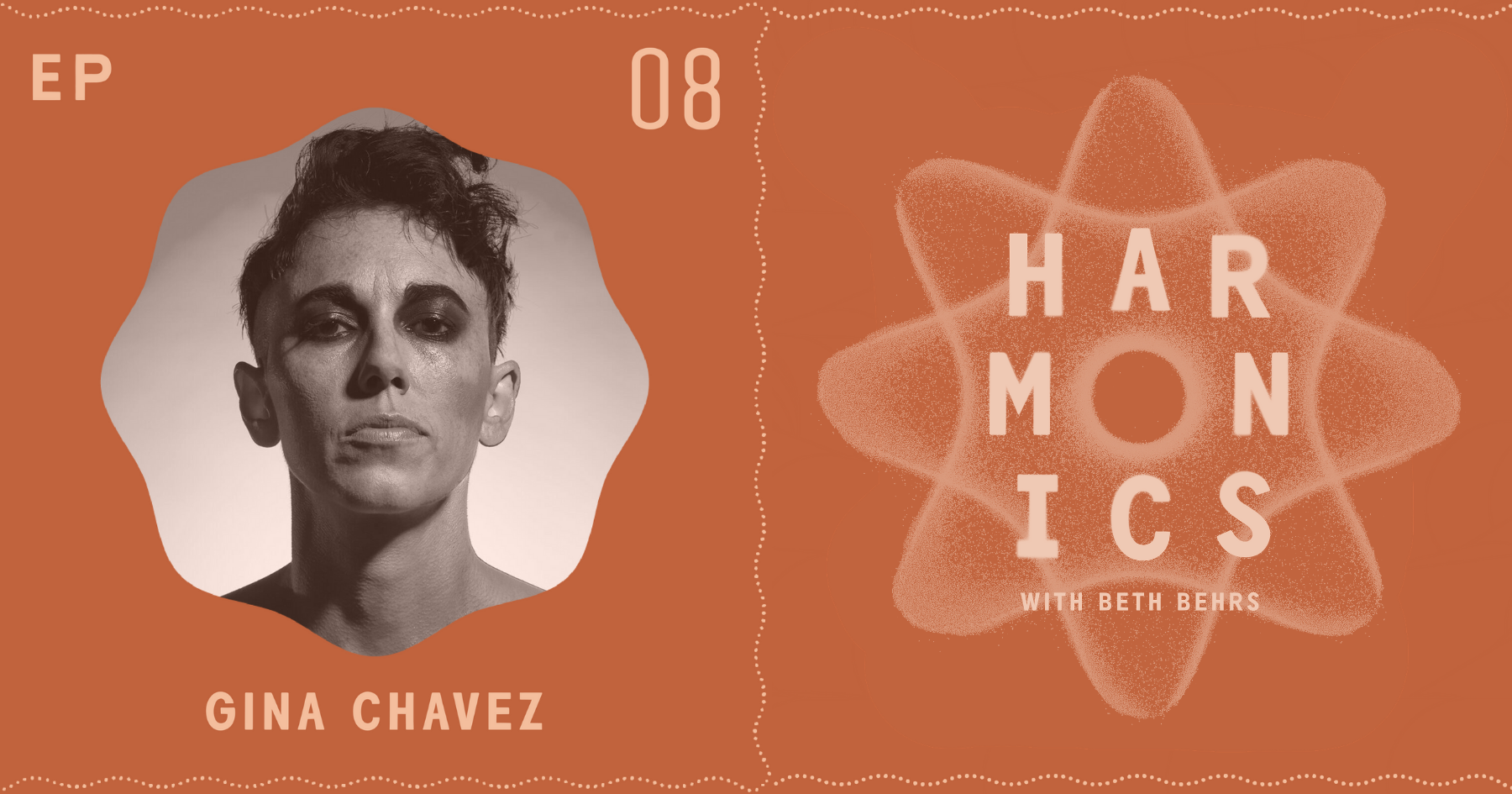
Harmonics with Beth Behrs: Episode 8, Gina Chavez

This week on Harmonics, Beth Behrs talks with Austin native Gina Chavez, a Latin Grammy nominee, queer Catholic, and an internationally acclaimed Latinx pop artist who is redefining Latin music in Texas and beyond.


LISTEN: APPLE • SPOTIFY • STITCHERAMAZON • POCKET CASTS • MP3

A 12-time Austin Music Award winner, including 2015 Musician of the Year and 2019 Best Female Vocals, Chavez is an Austin icon. She has more than one-million views on her NPR Tiny Desk Concert, and she has done a 12-country tour through Latin America, the Middle East, and Central Asia as a cultural ambassador with the U.S. State Department. With host Beth Behrs, Chavez touches on the universality of music, growing up Catholic and coming out as lesbian in college, the ancient Latin American traditions that inform her music, and so much more.

Listen and subscribe to Harmonics through your favorite podcast platforms and follow BGS and Beth Behrs on Instagram for series updates!


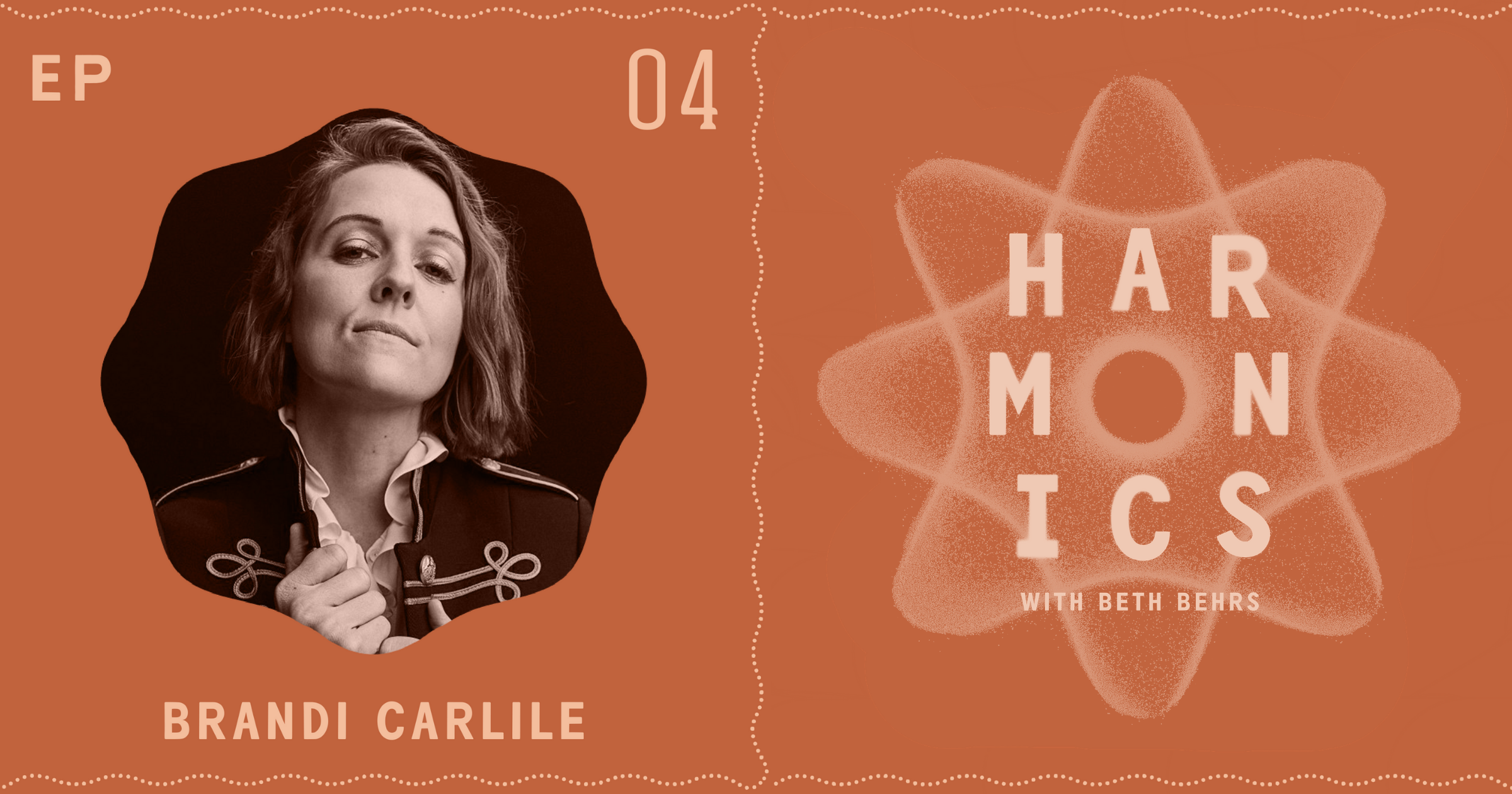
Harmonics with Beth Behrs: Episode 4, Brandi Carlile

Harmonics with Beth Behrs is the newest show from the BGS Podcast Network, which delves into the intersection of music and wellness. The podcast’s third week features Brandi Carlile, Americana icon and advocate for the empowerment of women and the LGBTQ+ community.

LISTEN: APPLE • SPOTIFY • STITCHERAMAZON • POCKET CASTS • MP3


Harmonics host Beth Behrs talks with Carlile about spirituality and wisdom found through horses and nature, performing the album Blue for Joni Mitchell, the joy and connection of live music, anxiety, and singing with Dolly Parton at the Newport Folk Festival.

For many folks, the first time they heard of Brandi Carlile was during her show-stopping performance of “The Joke” at the 2019 Grammy awards. Carlile walked away with three trophies that night for her record, By The Way, I Forgive You (including Best Americana Album). She’s been honing her distinctive voice and building a dedicated audience for over twenty years, all the while staying committed to building a family and community with her band and team.

That commitment has made her a godmother of modern American roots music — as a curator of festival stages, interpreter of the legendary artists who came before, and producer and collaborator for a whole new generation of female artists.

Listen and subscribe to Harmonics through all podcast platforms and follow BGS and Beth Behrs on Instagram for series updates!

LISTEN: Josiah Johnson, “Woman in a Man’s Life”

Artist: Josiah Johnson
Hometown: San Francisco, California
Song: “Woman in a Man’s Life”
Album: Every Feeling on a Loop
Release Date: September 4, 2020
Label: ANTI- Records

In Their Words: “We are beginning as a culture to reckon with gender roles and expectations, different standards and power dynamics. As someone who can fall back on presenting pretty straight, but has known I’m queer for a long time, I have been in process shedding my internalized homophobia and claiming my sensitivity, nurturing nature, my yin qualities as strengths. So when I sing ‘I’m a woman in a man’s life,’ it holds empowerment for me.

“I’ve learned to love my process. I’ve learned to love when I’ve taken the long way and where I get to admit mistakes. Humility and uncertainty are welcome. Being seen for who I am and where I’m at is my priority. And I am exactly where I am supposed to be. The result of that new courage bears out in how I’m able to be a better friend to the people I love. That’s the gift.” — Josiah Johnson


Photo credit: Sela Shiloni

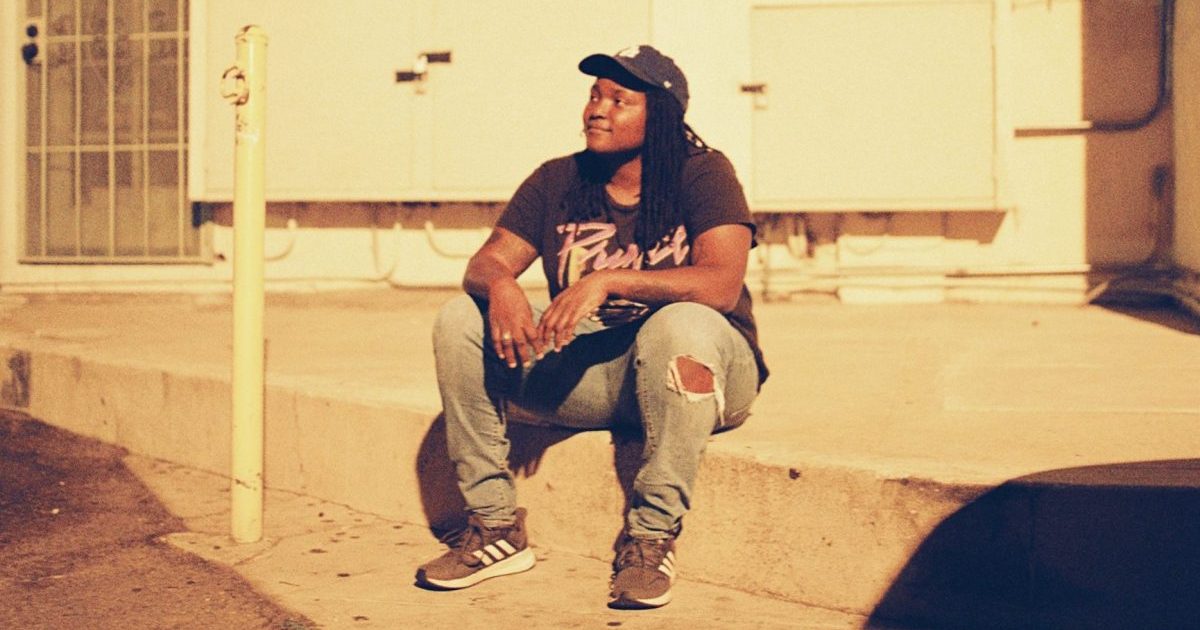
By Defending Her Own Happiness, Joy Oladokun’s Determination Pays Off

It was far from a given that Joy Oladokun would settle on her present path as a singer-songwriter of pensive folk-pop. She absorbed an array of musical models earlier in life — those that culturally linked her family to their Nigerian roots; reflected the rural pride of her peers in agriculture-rich Arizona; united her evangelical congregation in upward-aimed worship; and offered various styles of self-expression, emotional catharsis or social critique.

But on her texturally varied second album, in defense of my own happiness (vol. 1), much of which she self-produced, she sketches the distance between where she stands, sorting out her sources of pain, anxiety, and pleasure, and what she’s chosen to leave behind. Throughout, she’s exploring knotty interiority with warm yet watchful vulnerability. Oladokun paused her daily songwriting schedule to talk with BGS about how she made her way here.

BGS: After your parents immigrated to the U.S., did they maintain an attachment to traditional or contemporary Nigerian music and share it with you?

My parents came here in the ‘80s, so the Nigerian music they listened to growing up is definitely still a part of their everyday life today. I think one of my first introductions to the guitar was this Nigerian artist named King Sunny Adé, just these crazy, cascading, arpeggiated guitar riffs. They’re not as in touch with contemporary Nigerian music, but Nigeria had a pretty rich and interesting musical history.

You’ve said in past interviews that you grew up in an Arizona farming town that prized folk and country music. What role did that music actually play in community life?

There is not a music scene to speak of in Casa Grande, Arizona, that is for sure. My high school was big into Future Farmers of America. Lots of big trucks and dairy farms, that vibe is the vibe of my town. Some of the country I wasn’t very interested in, but I had a short fascination with ‘90s country. I mean, Martina McBride, Alan Jackson, Brooks & Dunn, it’s a lot, but in a good way. Everyone around me was listening to ‘90s country.

And my dad, for some reason, has an affinity for country-gospel music. He has all these records of Johnny Cash or Charley Pride, all these different people singing old country-gospel standards. So there’s this dusty, Southwestern country sound that I also grew up around that I think is the country that I gravitate to now, more than the big trucks and farms.

Along with hearing King Sunny Adé’s playing, you’ve said that seeing concert footage of Tracy Chapman with acoustic guitar in hand really caught your attention. What was it about those moments that moved you to pick up the instrument yourself?

I was always a really shy and reserved kid, and pretty smart, but had a hard time focusing or applying myself for long amounts of time. I think what I found in myself when I saw the guitar and decided to learn, and what my family saw in me, was a determination that hadn’t been applied to anything else ever.

I just know that the gift of self-expression that it’s given me has been pretty lifesaving. King Sunny Adé and Tracy Chapman, those are two very different expressions of how to use the guitar and how to make music, but they both took the inner workings of themselves and the world around them, and they expressed it through the music they made. I think that’s pretty dope and especially appealing to a kid who has a hard time talking.

Since you were so shy, how did you wind up playing music in front of a congregation?

If you wanted to get me to do anything as a kid, convince me that it would make God happy, or if I didn’t do it, God would be upset. That’s a pretty good motivator to any kid, but especially for me. I think I was so driven because I was so enmeshed in Christian culture. I was driven by this narrative of, “You need to do something big with your life and you can’t just spectate. You have to participate.” I honestly think had I been a little atheist in middle school, or had language been different, I maybe wouldn’t have ever done it or stepped on a stage. But I think it was the, “I feel this duty to use my gift for something bigger than myself.”

What did it take for you to leave behind what you thought might be a lasting career path in praise & worship music?

I often laugh at how much my adult life parallels my mother’s. Growing up, she would always tell this story about how her dad really wanted her to be a teacher. She spent a year or so teaching school and freaking hated it. So she became a nurse and she still does that to this day. I think I honored the thing that is spiritual in myself by working at a church and by falling in line and doing the thing for as long as I did. When I realized, “OK, I’m queer. There’s no getting around that. And I maybe don’t believe these things politically or theologically that I sometimes said on a day-to-day basis.”

I just got to a place where it became more important for me to live a life of integrity on all fronts than to keep up appearances or do what I thought God or my parents or my old boss wanted me to do. When I left, I made the decision pretty much on my own. And in circles like that, that is a no-no. I think the reason I did step into it by myself, though, is because I have to live this life. I would rather pursue something that feels more authentic to me. And once that decision was made, then the career decision was easy. I honestly tie it back to hearing my mom every day since I was born tell the story of how she made that decision for herself.

These days you’re signed to the Nashville office of a publishing company, operating in a world with its own customs and practices when it comes to being creative and collaborative. How’d you adjust to things like co-writing?

I honestly don’t think the worlds are that different, or maybe just people are the same. I do write a considerable amount by myself, so co-writing was maybe the biggest leap that I’ve made into discomfort. To me, even if I have a bad session, there is something that can be learned or gleaned or laughed about from it. If someone has a bad ego during a write it’s, “OK, I’m not going to work with that person again.”

You chose a loaded title for this album, in defense of my own happiness (vol. 1). What were you getting at?

Every time I post something on Instagram or Twitter or Facebook that someone from my past dislikes, I hear about it. I didn’t realize that that was a strange practice until I was talking to my girlfriend. She was like, “That’s so bizarre that people you worked with five years ago still feel the need to tell you that they’re disappointed in you, or say that they’re praying that you’ll become straight again one day.”

It is the source of a lot of my anxiety, to be honest. I don’t regret anything that I am or anything that I’m doing, but there’s this part of me that wants to defend that who I am is good. So many of the songs we ended up picking for the album speak to that. I think the idea of in defense of my own happiness is, it’s maybe an open letter to all these people.

Also it’s a letter to myself saying, “You deserve this life. You deserve to have a girlfriend who loves you and live in a beautiful house, and you deserve to be working a job that you enjoy. You’ve made mistakes, but none of that disqualifies you from what you found.” The album is literally just, “Please let me live.”

As much as I hear you insisting on your right to happiness on the album, I can also hear you sitting with your melancholy, and not hurrying past it.

I don’t know that there’s any other way to actually be happy or healthy without acknowledging how you’ve been hurt in the past, who you’ve hurt in the past, acknowledging the things that you don’t understand or the things that scare you, and sitting with them. I’ve been doing a lot of meditation, because it’s 2020 and the world’s on fire. I was reading a quote about how emotions and our thoughts, we should entertain them as friends, as opposed to treating them as these things that we can’t control. I do feel like melancholy is like a friend that I entertained on this record.

That definitely applies to your song “Who Do I Turn To?” Tell me about the choice you made to phrase the chorus as one long, uncomfortable, unresolved question.

I credit the open-endedness of it to Natalie Hemby, who I wrote the song with. I am a big fan of open-ended things, but I think I wanted an answer. I wanted to write a protest song. I think Natalie could see in my face just the heaviness and the sadness. I was, like, four months old when the LA riots happened, and the fact that we’re still marching for the same thing in 2020 is so bizarre. It’s so heartbreaking. Black people have been showing up for themselves from the beginning of time, countless Civil Rights leaders and movements.

Even to this day, you can point to people like Angela Davis that are alive and doing the work. But we are a minority group, so we cannot be the only people doing the work to protect and honor our lives, especially in this climate. It became open-ended because it’s like, “You keep saying that it’s not your fault, but you let your grandpa make racist remarks while I’m at dinner.” There’s all these little actions and behaviors that play into it. Leaving it open-ended just allows people to think and reflect.


Photo credit: Shannon Beveridge

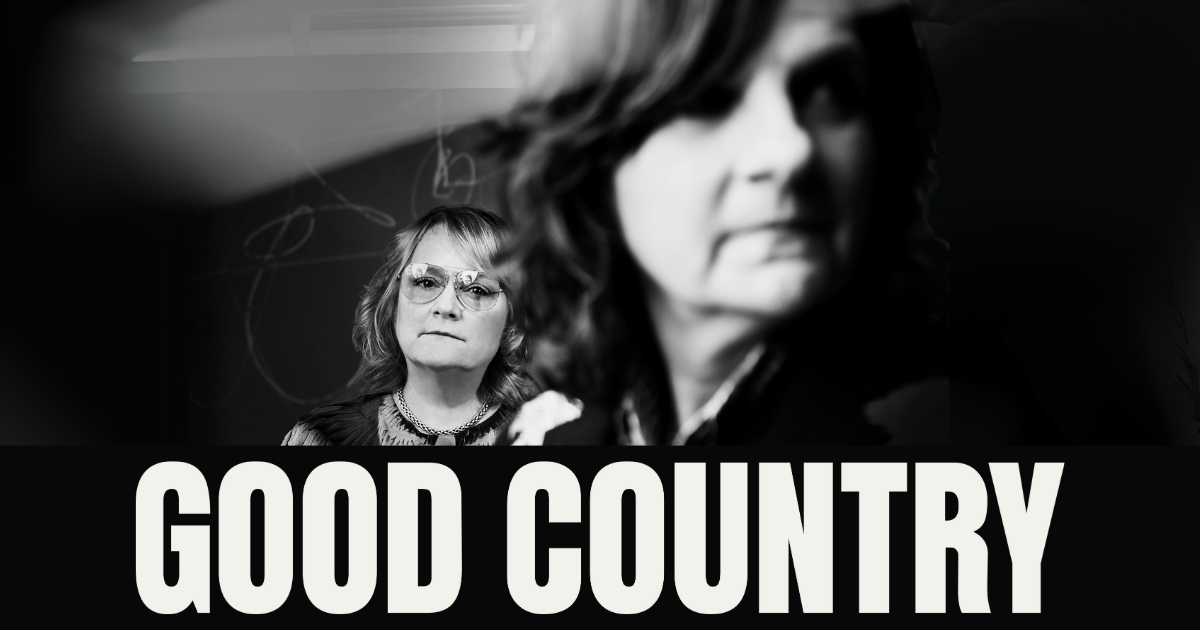
Indigo Girls Expand “Country Radio” With Black, Brown and Queer Musicians

Hollywood, the 2020 Netflix series from director-screenwriter Ryan Murphy, is a resplendent show dripping in Art Deco that does not wholly reimagine Los Angeles’ golden era, but rather subtly inserts a quintessential question: “What if?”

What if Hollywood hadn’t been as… ___-ist? (Sexist, racist, misogynist, ageist, etc.) If one happens to be born into a region, a folkway, a culture, an art form that doesn’t include you, or that doesn’t quite love you back, one often doesn’t realize it until it’s too late. And then what? Do we, the rural, country-loving queers, wait around for our Ryan Murphy to reimagine the world to better include us? Not quite.

For Emily Saliers and Amy Ray of Indigo Girls — and, for that matter, almost each and every queer who has ever loved roots music — that “What if?” question is existential, but it also doesn’t matter. What if country music loved LGBTQ+ folks? The lyrics of “Country Radio,” a track off the duo’s sixteenth studio album, Look Long, tell it plainly: “But as far as these songs will take me/ Is as far as I’ll go/ I’m just a gay kid in a small town/ Who loves country radio.”

While curating the following playlist of their favorites from country music airwaves and songs they wish were included there, Saliers and Ray offer a quite simple solution actionable in each present moment: Be who you are, listen to the music that brings you joy, love who you love — and be anti-racist.

Emily Saliers: [I began with the idea:] What are the songs that I listened to that I latched onto, that sort of gave me a feeling of “I can’t get into this song [because of its heteronormativity], but I love this song so much”? One of the first songs that came to mind is “Mama’s Song” by Carrie Underwood. 

I should preface this by saying, I don’t expect that there can’t be heteronormative country songs, or that queer life has to be explicitly represented in songs, it’s not that. It’s the feeling of the way a song moves me emotionally, but then it stops me a little bit short of being able to fully experience it because of the language or the obvious implications of man and woman.

I love Carrie Underwood’s voice and she’s taken more of a harder, pop direction since “Mama’s Song,” but she sings this so beautifully. She’s talking to her mother, “He is good… he treats me like a real man should,” and yet the beauty of her song [is in] her telling her mom that’s she’s going to be okay. 

Amy Ray: For me it’s a little different because I never had the experience of feeling like I wish I could put myself in a song. I think it’s because, gender-wise, I always just related to the male singers. I kinda have that gender dysphoria, you know? [Chuckles] I have these filters that sort of make it my own — probably out of necessity, from growing up loving the Allman Brothers, Pure Prairie League, and Randy Travis so much. [Sings] “Amie, whatcha gonna do?” Pure Prairie League!

It’s very odd — Emily’s perspective on this is something I can understand, and I agree that it’s this weird disconnect with country music. We have to kind of acclimate it to ourselves, in some way, using some kind of trick in our minds. But I’ve always had that internal translator…

ES: Another example is Brett Young’s “In Case You Didn’t Know.” Now this is a song that you can listen to and fit your own queer life into it — as far as I remember it doesn’t have any gender pronouns. Then I watched the video and of course he’s singing to a woman who comes into the audience and he plays to her, alone. It’s a love song to his girlfriend — or wife or partner or whatever — so I could live in that song and think back to relationships and apply it in my own life, but then I watched the video and that door shut a little bit.

AR: I love Angaleena Presley, the Pistol Annies. Presley is such a great writer. “Better Off Red” is one of my favorite songs that she’s written… Honestly, if I hear songs, if I like it, I just put myself in it. I don’t really think about it or worry about it. It’s a survival mechanism from my youth, not that it’s the right thing to do. It’s built inside me.

…I thought you couldn’t be a country singer if you were gay and left-wing and a complete dyke. That made me feel more alienated than the songs themselves, that idea of its inaccessibility. Or, if you went to a show and you were sitting there in that audience, in the early days before it all kind of busted open, you would feel scared. Or judged. Or uncomfortable.

ES: Think about what a splash that song by Little Big Town, “Girl Crush,” had. Just the implication of a lesbian relationship or feelings! That song was a big hit, but it got people talking. [Probably] the majority of the people in this world lean more heteronormative, so they’re representing themselves in these songs. There’s absolutely nothing wrong with that. 

I wouldn’t want to listen to just albums that are for and by queer people, oh my god. No way! But we have to have them as part. I think about what an influence Ferron was, how much Amy and I love Ferron. When her first album came out, it was like, “Oh my gosh this is one of the best songwriters in the country and she’s queer!” I can’t describe how important it was to have an artist like that.

Even Lil Nas X, who had the number one hit forever-ever-ever with Billy Ray Cyrus. It’s awesome to know that he’s queer! And a guy like Young Thug, a rapper out of Atlanta, who’s not gender normative by any stretch, to me. It’s interesting. It’s good to have a mish mosh! It’s not that the majority of songwriters out there can’t be represented in their own songwriting, we just have to have ours, as well.

AR: [We] should add Amythyst Kiah. Amythyst is amazing.

[Racism] is the pivotal struggle of the Americana scene and the roots scene. How do you honor Black and Brown folks who want to be in this scene — and maybe some of them don’t even want to be in this scene because even Americana is rooted in questionable legacy. How much do people of color want to be immersed in that scene when it still feels so racist? Even the best parts of it. It’s a huge question to unwrap and it has to do with such a long history of where country music came from.

We stole the banjo and put it in our hillbilly music in the mountains and called it our own. We forgot all the stuff we learned from “our slaves,” you know? It’s crazy to me, if you think about the racist roots of where a lot of this comes from. Merging this racist legacy with this incredible populist music — music for the people, like Woody Guthrie, like the Carter Family. You get those two things bumping up against each other constantly, how do you entangle that and make this a space where it doesn’t matter what color you are? Where it doesn’t matter what your religious persuasion, or your political party, or your gender, or your sexual preference, or anything.

I think the way we deal with it is by all of us thinking all the time and being mindful of [that racist history]. And including [Black artists] in our playlists and touring with them. Some people are like, “What does it mean if you’re forcing this integration? Is it just going through the motions?” No! No, no, no.

ES: I’ll [echo] the things that Amy said, practically: Tour with Black musicians or Brown musicians or musicians who have not been able to feel that they’re welcome and make everybody welcome. Like Amythyst or Chastity Brown. Those are artists of color who have been discriminated against, who feel other-than in the world of their genres.

I think, first, we all — we white people, we people “of no color,” we “colorless” people — should dig deep, identify our own racism and how far it goes, how much we use it. Break it down, talk about it, identify it in each other. Really start from the core of things and hopefully act outwardly as a result of what we’ve dug through, inwardly. Try to heal and fix, you know? We’ve got to ask artists of color what their experience is like and why it’s like that. I’ve got to assume that there must be some Black artists, who if they hear a song from a white, country, roots singer about the freedom of driving down a dark, country road, they’re not going to feel the same way about the history of Black people down dark country roads. A lot of it is context and, as Amy says, there’s so much to be unraveled. But we are at a tipping point.

AR: Sister Rosetta Tharpe, I feel like there’s a lot of crossover, to me from that and the beginnings of early rock ‘n’ roll. That’s kind of what Elvis Presley was doing and borrowing from. I think about that sometimes, that territory. I like old recordings, like field recordings almost, of all the Alan Lomax type stuff he would collect. Field songs, prison songs. I think a lot of country writers have taken from that stuff, you know? 

I remember an interview with Kathleen Hanna that really resonated with me. She said, when they ask you who your favorite artists are, most of us name all these male artists. That’s who we can think of, because that’s who’s archived the best. Straight men, bands, and writers. If you sit down and really think about who you love and make a list of the women and the queer folks — this is what she was talking about, she wasn’t talking about color at the time or race or the social construct of race — and you take that list to your interviews and rattle off those names, you’ll be more honest, because you’ll be talking about who you really listen to and not just trying to remember [anyone] off the top of your head. 

People are so out of the habit — and so in the habit — of white supremacy that we don’t even know how to do the right things, just in our instincts. We have to learn, write it down, so we remember to do it.


Photo credit: Jeremy Cowart

This interview has been edited and condensed for clarity.

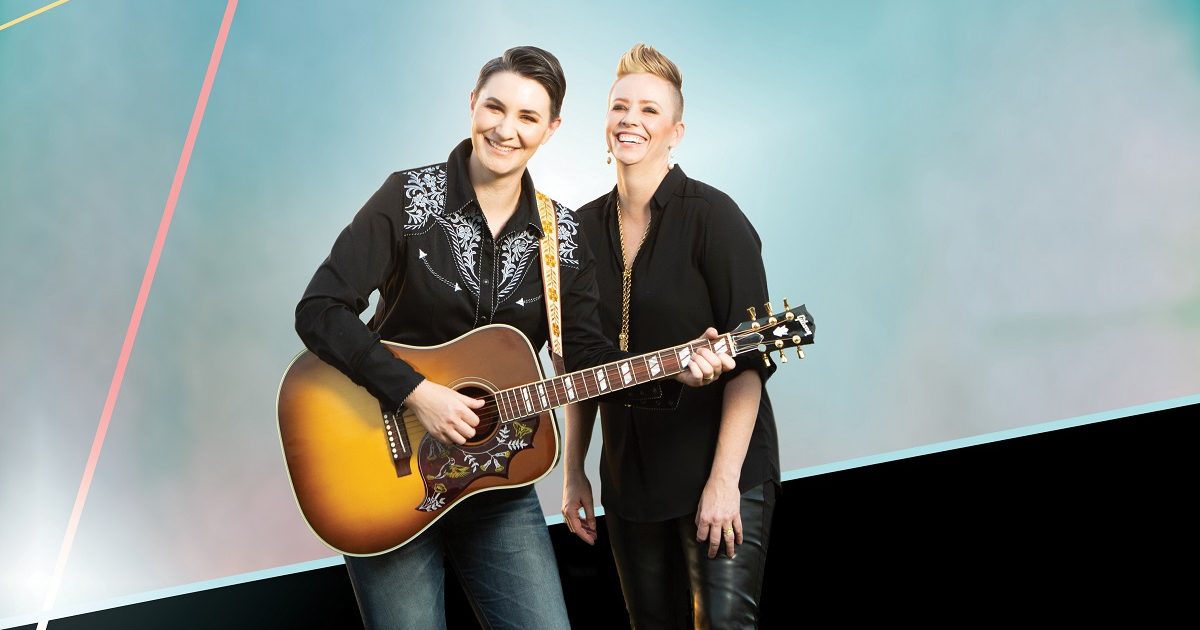
LISTEN: Crys Matthews & Heather Mae, “Six Feet Apart”

Artist: Crys Matthews & Heather Mae
Single: “Six Feet Apart”
Latest Project: The Singing OUT Tour, a celebration of LGBTQ+ Pride

In Their Words: “Until our love is accepted as universally as everyone else’s, LGBTQ+ love songs will, by their very existence, be protest songs. ‘Six Feet Apart’ is a snapshot of the current time: love in the time of a pandemic. It’s about actively making the choice to turn away from fear and lean in to one another. For LGBTQ+ people, Pride is a time to celebrate who we are and how we express, identify, and love. It’s a time for us to lean into our community. Right now, we aren’t able to gather in-person but we don’t cancel Pride — we adapt. This would have been our third year of the national Pride tour — Singing OUT — and when social distancing threatened to cancel all our in-person shows, we went virtual. As our song says ‘six feet apart won’t stop us,’ and it won’t stop the Singing OUT Tour either.” — Crys Matthews & Heather Mae


Photo courtesy of the artists.