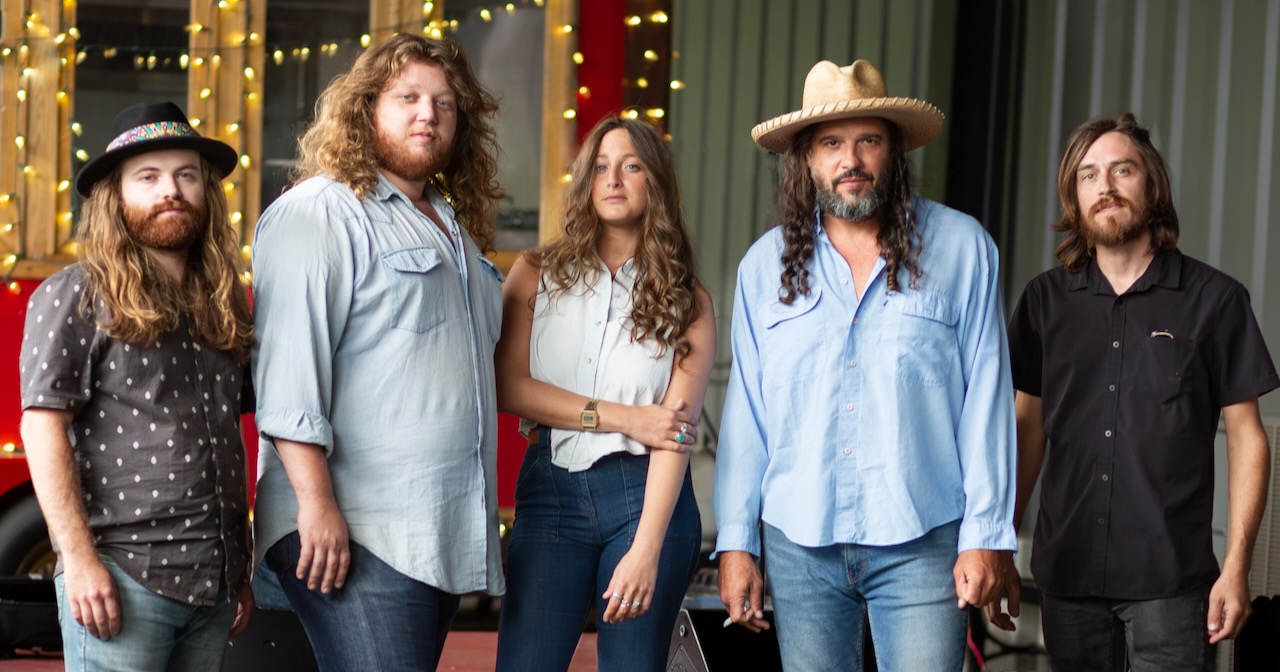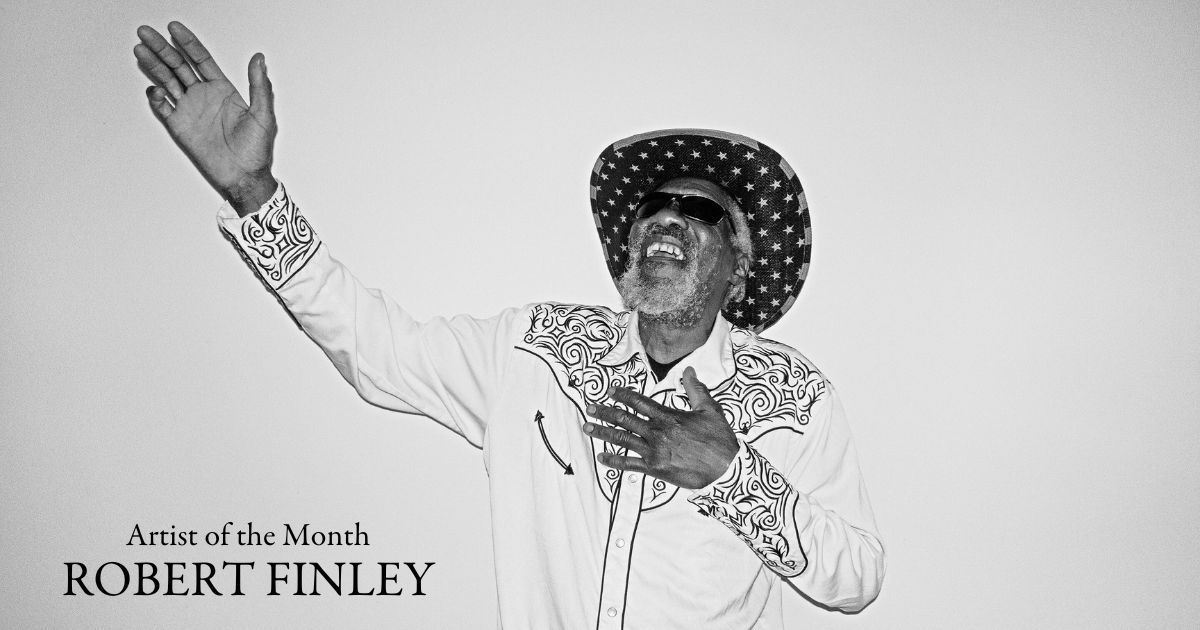
From “Alligator Bait” to “Gospel Blues,” Joy Is Central on Robert Finley’s ‘Black Bayou’

Been around the world, seen some of everything, but what I like about it the most is the joy that I bring…

– Robert Finley,Livin’ Out A Suitcase

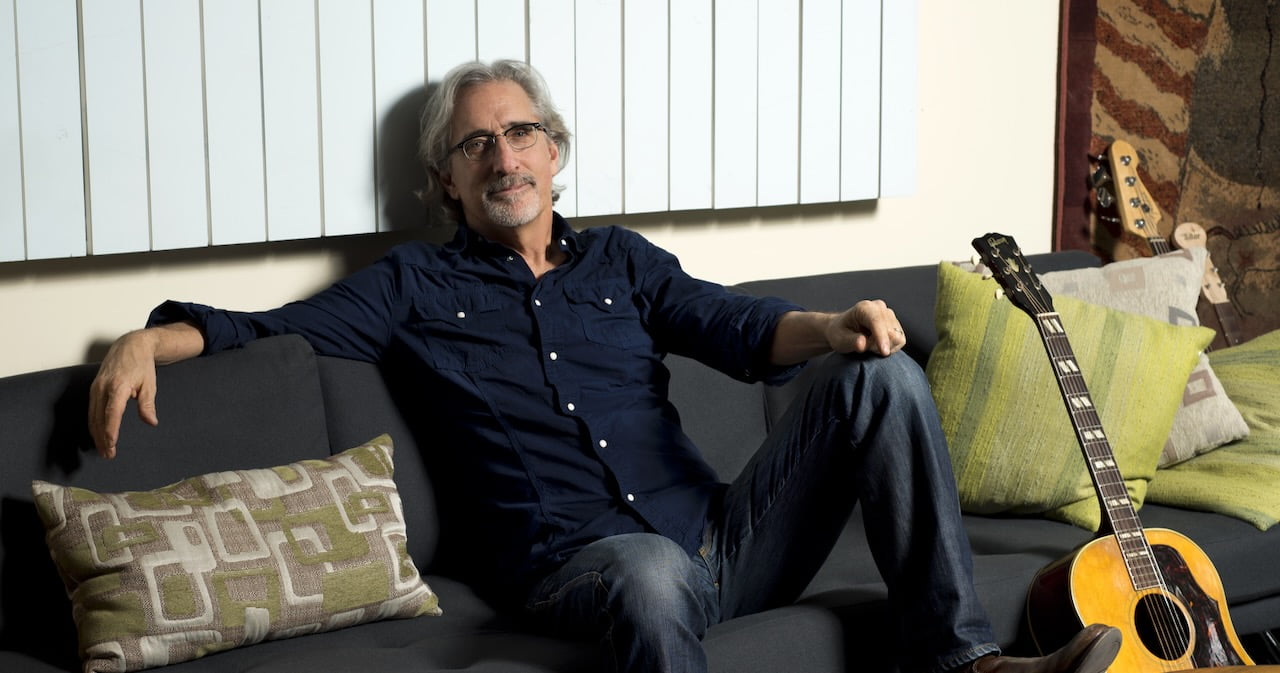
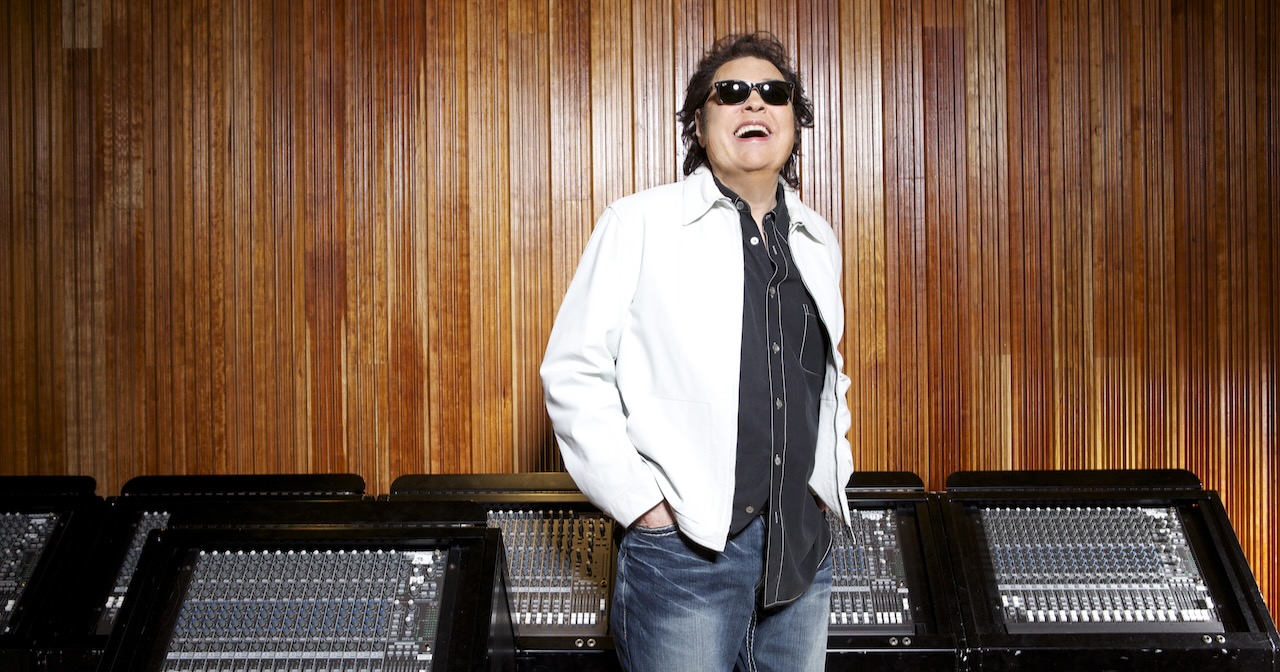
Whether it’s at home or abroad, Robert Finley’s youthful exuberance has a knack for not only lighting up rooms, but people’s faces as well. On his latest batch of songs, the former sharecropper and carpenter – who got his start in music during a stint in the Army – continues that trend with 11 stories pulled from his Louisiana upbringing that include everything from the poignant “No One Wants To Be Lonely” to the cheeky and overly embellished “Alligator Bait.”

Pulling from rock, soul, blues and a whole lot of gospel, Black Bayou is easily Finley’s most personal and sonically developed record to date. His third project with Dan Auerbach and Easy Eye Sound, the record is one that came about organically, feeding on the artist’s energetic live performances with lyrics and arrangements put together on the spot in the studio with no pre-fabricated blueprint.

“When we did this album there was no pencil or paper in the room,” Finley tells BGS of the process. “The band was free to jam what they felt and I had the freedom to say what I felt. Nothing was written beforehand, it all came to life in the moment.”

Born in Winnsboro and now based in Bernice, a North Louisiana hamlet only thirty miles from the Arkansas border, Finley has excelled at living in the moment despite the fast moving world around him. That essence is what accelerates his storytelling throughout Black Bayou, particularly on songs like the aforementioned “Livin’ Out A Suitcase” and “Nobody Wants To Be Lonely,” the latter of which has the artist crooning about the elderly sitting at nursing homes around the country with no family wanting or able to keep in touch or care for them. It’s a topic that Finley doesn’t just sing about from the studio, though. He visits nursing homes in his community on a regular basis to serenade its residents.

“So many people have been forgotten,” says Finley. “Their kids drop them off and go on with their lives. I go down occasionally and perform at the old folks home in Bernice. Just take my guitar and play for 30 minutes or so, try to get them to dance, try to bring some joy to them.”

Whether in those homes or the local clubs, Finley is determined to use his platform to give back to the community that made him. In addition to never turning down a conversation or photo op, he also aims to lift up the next generation of musicians, offering support and guidance to those cutting their teeth and in need of a role model as they pursue their own musical dreams.

“I always go back whenever I’m not on tour, simply because that’s where I got my start,” says Finley. “It also gives me a chance to encourage the young artists there to pursue their dreams, because I can share how I started busking over there on the corner eight years ago and now I’m touring the world. Had I not made that first step, then nobody would even know what I was capable of doing.”

As listeners have come to expect from Finley, Black Bayou is full of lust, love, spirituality, and humor as well. Tunes like “Sneakin’ Around,” “Miss Kitty,” and “Can’t Blame Me For Trying” showcase Finley’s flamboyant and flirtatious side, which goes hand in hand with his center-stage shimmying and shaking at live shows. On the flip side, cuts like the swampy album closer, “Alligator Bait,” unravels as a spoken word recollection of a formative day on the bayou with his grandfather with a gnarly and always evolving backbeat oozing with attitude.

Together these stories make a patchwork quilt of sounds, emotions, and stories that only Finley could piece together. Calling into his North Louisiana home, we spoke with Finley — our November Artist of the Month — in detail about Black Bayou, making music with his family, the similarities between performing and preaching, and more.

What has busking taught you about performing and holding an audience’s attention?

I’ve learned that you don’t need to put all of your eggs in one basket. I’m always trying to shake it up and introduce new things to the crowd at my shows, because no matter how good a movie is, if you watch it two or three times you’re going to know exactly what happens next. It doesn’t mean it’s not a great movie, it just means you’re not going to watch something that you already know the result of. I don’t want to rehearse and be programmed to do the same thing over and over, I need to have the freedom of the spirit of the moment.

Your daughter Christy Johnson and granddaughter LaQuindrelyn McMahon both joined you on this record. What’s it mean to you to share your love for music with them?

It’s great being able to have three generations of Finleys singing together. I’ve always admired Pop Staples and The Staple Singers for him and his daughters. I have two other daughters as well, but they both work in the medical field and can’t just uproot and follow me around the world. My oldest is a licensed beautician, but put it on hold to help me pursue my career due to my sight being bad. She saw that I was determined to do it either way, so she sacrificed hers to make sure I wasn’t alone. Because of that I want to share the spotlight with her every chance I get.

She first came on during the audition process for America’s Got Talent, which was her introduction to the world. The label loved her so much that they were willing to use her on the albums. Soon we needed a second background singer, so I let Dan [Auerbach] know about my granddaughter. He and the label were immediately supportive and have been willing to [incorporate] as much of my family as possible into my career. This is mostly just me trying to open a gateway for them, because they have the potential to be bigger and better successes than me. Or at least it won’t take them 69 years to get discovered.

You’re often referred to as a bluesman, but Black Bayou could also just as easily be described as a gospel album. What are your thoughts on the dynamic between the two genres and how you’re able to tie them together on the record?

The only difference between the gospel and the blues is really the choice of words you use. The same music that you hear in the club is being played in the church and the same music that we grew up on in the church is being played in the clubs. The only difference is that if you want blues you sing “oh baby” and if you want gospel you sing “oh lord.” Other than that, a lot of the rhythms and dances are the same.

What’re your thoughts on continuing to make this type of music in the modern age?

I don’t even look at it as gospel or blues anymore. I look at it as just saying the truth. Regardless of what you’re going through, there’s someone else who’s somewhere who’s been through the same thing. The fact that they made it through gives hope that you can do it, too.

As artists, we’re blessed with fans that will pay to come see you and even take your advice home with them. The same people who go to church will not remember a thing the preacher talked about, but if they like your song they’ll remember it word for word. If you’re really trying to reach people, you’ve got a better chance to reach a lot more folks by singing than you would preaching. Nobody wants to listen to an hour and a half or two hour sermon, but they will stay around a concert for an encore. That’s why it’s so important when you have the world’s attention to tell them something positive with it.

It almost sounds like you view yourself performing on stage like a minister preaching from the pulpit?

That’s it. I can get a bigger crowd than the average preacher even though church is always free, but even then people will flock to the clubs. I’ve also sang “Amazing Grace” in nightclubs and had people put down their glasses, sing-a-long, and go to church with me. You just don’t know what people will do. Everyone’s going through something. If you stop the church people from going to the club then the club will shut down, because most of the people frequenting there are church folks from the other side of town. The problem is that while there they’re not getting the truth. They’re getting the water, but not the wine.

There’s not a better song on the album that ties these influences together than the aptly named “Gospel Blues.” Are you hypothesizing what you’ll do in heaven on it?

I’m trying to tell people not to be so judgmental. That’s why I sing, “I do drink a little whiskey, and I’ll take a little shot of wine” – because it’s better to be real with people than to try and fool them. Whether I have some whiskey [or not] isn’t going to have anything to do with whether or not I go to heaven or hell.

Another song I’ve been captivated by is “Alligator Bait.” Is that a true story?

That song was actually designed more or less as a joke. I never met my grandfather on either side, but I did hear stories when I was sitting around with my dad and his brothers about things like that. It seemed like I had a cruel, cruel grandfather, but that wasn’t the message I was trying to convey. I was trying to prove that any song where you think you’re right needs to be like you just read a novel. It needs to tell a story. It’s more about being a convincing writer than deceiving.

On the cover of Black Bayou is the pond that I used to swim in and got baptized in. For a while it’s just been deserted, but we went back there, because it conjured up a lot of those childhood memories. Even just standing there taking photos my mind flashed back to the things we used to do there like swimming on one end and fishing on the other. Us jumping in the water would scare the fish over to the other side where they could get caught easier, which in many ways is similar to how the alligator is lured in the song.

What has music taught you about yourself?

It’s helped me to find and be myself. I used to try imitating everyone from James Brown to Ray Charles, but soon I realized that the only person I could be the best version of was myself. Nobody can beat you being you. If you just be yourself then you’re automatically different from everybody else anyway. Being real with myself and my music has opened so many doors for me, because of that.


Photo Credit: Jim Herrington
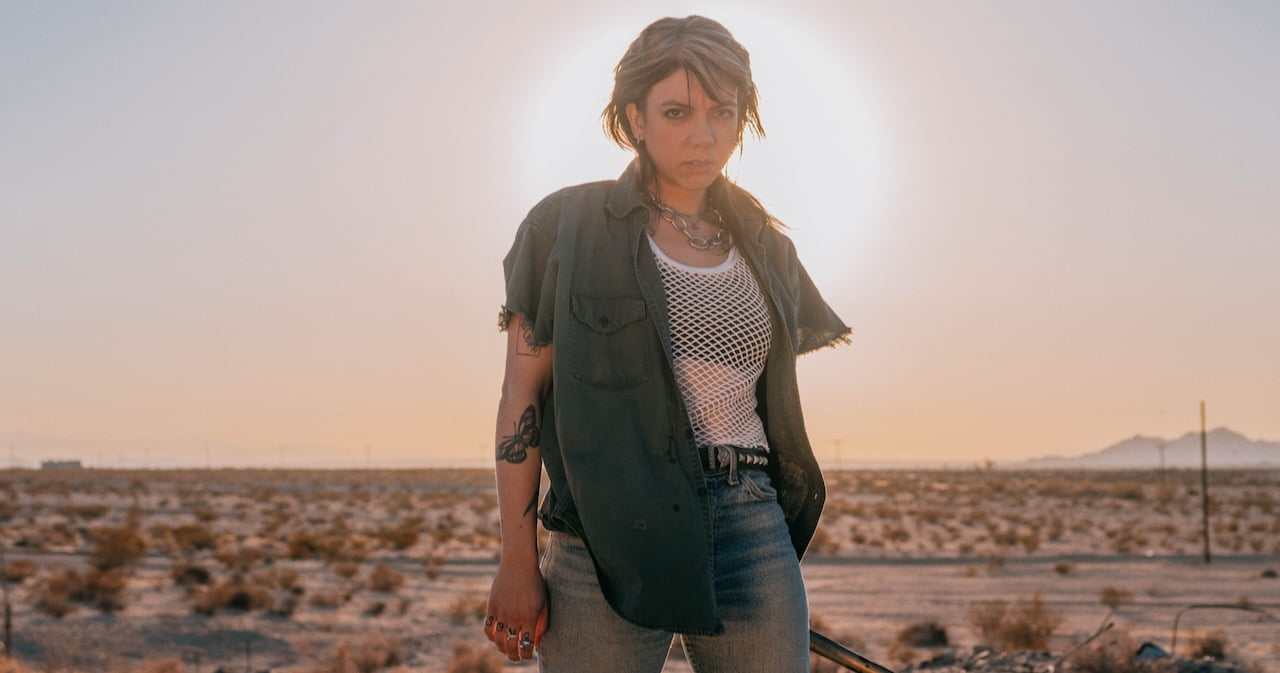
Hurray for the Riff Raff Announce New Album, ‘The Past Is Still Alive,’ with Music Video

Alynda Segarra, creative and frontperson extraordinaire of Hurray for the Riff Raff, has announced a brand new album for the Americana/indie folk-rock group that they have spearheaded for now more than 15 years. The Past Is Still Alive (out February 23, 2024 on Nonesuch Records) was heralded last week with a new music video – watch above. “Alibi” showcases a tender, more subdued, and more country-fied sound following the anger and passion of 2022’s LIFE ON EARTH. Segarra has always made their home directly in American roots music, even while they and their ensemble have played most often in its fringes and margins. The Past Is Still Alive feels a bit like a return to the bread-and-butter genre aesthetics that first launched HFTRR into the upper, superlative reaches of indie Americana.

The Past Is Still Alive also showcases Segarra’s incredible talent for processing and displaying all of the beautiful and hideous facets of grief and loss – this time, losses and griefs much more personal than those highlighted on recent albums and songs.

The Past Is Still Alive is an album grappling with time, memory, love and loss, recorded in Durham, NC a month after losing my father,” Segarra explains via press release. “‘Alibi’ is a plea, a last ditch effort to get through to someone you already know you’re gonna lose. It’s a song to myself, to my father, almost fooling myself because I know what’s done is done. But it feels good to beg. A reckoning with time and memory. The song is exhausted with loving someone so much it hurts. Addiction separates us. With memories of the Lower East Side in the early 2000s of my childhood, mixed with imagery of the endless West that calls to artists and wanderers.”

Even with subject matter as heart-stopping and human as this, it’s difficult to anticipate this new album with anything other than excitement. Segarra is a master of transparent vulnerability, painting and evoking with their queerness, their identity, their cultural background in ways that complicate internalized narratives and stereotypes – while also contextualizing all of these intellectual explorations in a down-to-earth, everyday fashion. That The Past Is Still Alive will engage this sort of exploration within country, Americana, and string band sounds – however experimental or mainstream or “normative” or genre-blending – adds up perfectly.


Photo Credit: Tommy Kha

WATCH & LISTEN: Two Tracks from John Leventhal’s “Debut” Album

Earlier this week renowned guitarist, producer, and engineer John Leventhal announced his debut album, Rumble Strip, to be released on RumbleStrip Records, a label founded with his wife and collaborator Rosanne Cash that will be distributed by Thirty Tigers. Yes, you read that right, a man known for his nearly 50-year, multi-hyphenate career in roots music is releasing his first ever proper solo album. Leventhal made the announcement with the release of two tracks, an instrumental guitar piece entitled “JL’s Hymn No. 2” and a gritty, rockin’ Americana duet with Cash called “That’s All I Know About Arkansas.”

“JL’s Hymn No. 2” showcases the guitar prowess that has made Leventhal such an in-demand sideman and session player across his entire career. On both of these tracks, his playing reminds of such country and roots renaissance men as Marty Stuart, Buddy Miller, David Bromberg, and Larry Williams with each of his constituent musical skills – as engineer, producer, and picker – on full display. “That’s All I Know About Arkansas” is like a post-modern “brother” duet, with Cash stepping into the role of Buddy’s Julie Miller, or Larry’s Theresa Williams, bolstering and supporting her musical- and life-partner in a touching and artistically successful role reversal for the pair. You can hear the passion they have for each other’s music, for each being members of each other’s “bands.”

With a resume and career as exhaustive and expansive as Leventhal’s, it’s remarkable that he’s only reached this pivotal, “debut” milestone at this late-stage point. And, more remarkable still, is that Rumble Strip is clearly another opportunity for Leventhal to challenge himself, break new ground, experiment with new sounds and textures, and continue to grow, morph, and develop as a quintessential musician-producer. It’s engaging and exciting to hear him turn his studio control room magnifying glass onto his own music, his own record.

Rumble Strip will be released on January 26. Enjoy these two tracks from the project now, right here on BGS.


Photo Credit: Wes Bender

Ronnie Milsap’s Final Nashville Show Displays His Broad Musical Impact

The career of singer-songwriter Ronnie Milsap has been remarkably inclusive from an idiomatic standpoint, even if it’s also accurate to say his greatest acclaim has come within country circles. But over the course of five plus decades in the performing and recording arena, Milsap has also toured with James Brown and Ray Charles, been a pianist for JJ Cale, had R&B hits – with songs penned by Ashford & Simpson or previously recorded by Chuck Jackson – cut successful gospel and adult contemporary songs and albums, and even worked the oldies circuit while covering ’50s classic rock and roll and doo-wop.

Still, it’s his poignant, soul-tinged country tunes that have made Ronnie Milsap so beloved, while earning him induction into the Country Music Hall of Fame and membership in the Grand Ole Opry. A two-time Country Music Association Male Vocalist of the Year, Milsap also helped induct longtime friend and mentor Charles (who once encouraged him to choose music over law school) into the Country Hall of Fame. During the ’70s and ’80s Milsap enjoyed a frequent presence on the country charts, and during the ’80s scored thirteen of his thirty-five number one hits. 

Even as times and tastes changed, Milsap adapted and continued to enjoy success through the ’90s and into the next millennium. Now, at 80, he recently decided it was time to call a halt to performing in Music City. Pausing a couple of weeks before his final Nashville show at Bridgestone Arena October 3, Milsap told BGS that there’s one idiom he loves that folks don’t often cite or acknowledge when discussing his influences.

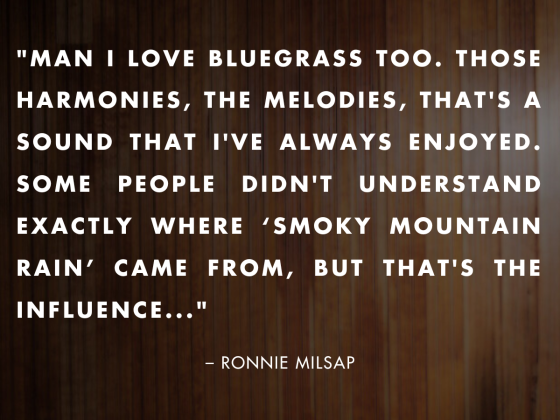
“Man I love bluegrass too,” Milsap said. “Those harmonies, the melodies, that’s a sound that I’ve always enjoyed. Some people didn’t understand exactly where ‘Smoky Mountain Rain’ came from, but that’s the influence. Also gospel is a big influence and of course, I’ve always loved country and soul music. All of it I just absorbed and worked into my own style.”

That sound, an inspired blend of mellow tone and emphatic delivery has made the list of unforgettable Milsap tunes a lengthy one: “(There’s) No Gettin’ Over Me,” “Pure Love,” “Only One Love In My Live,” “(I’m A) Stand By My Woman Man,” or “Daydreams About Night Things,” to cite just five of his numerous hits. Milsap has managed the difficult task of being both sentimental and evocative, never letting his vocals become maudlin or exaggerated, and always credible and persuasive in his stories and testimonies.

Milsap’s also maintained a healthy interest in contemporary happenings and performers, as evidenced by his 2018 LP The Duets, which he called “one of my favorites.”

“Man I love that Kelly Clarkson,” he added. “She’s fantastic. Working with her was a thrill and I love how she sings. Ricky Skaggs, he’s one of the all-time greatest musicians I’ve ever seen and heard. He’s incredible. There are still so many good young singers out there and great musicians in Nashville. It’s a real pleasure to hear them, and I’m so happy about this show coming up. It’s such an honor.”

The last Milsap concert was billed as “The Final Nashville Show,” and a packed house filled Bridgestone Arena two weeks ago. Twenty-nine artists across the country spectrum performed 30 tunes to mark Milsap’s 50 years. The event was co-hosted by radio veterans Storme Warren (The Big 615) and Bill Cody (WSM), while such luminaries as Reba McEntire, Dolly Parton, Clint Black, and Luke Bryan whose schedules didn’t permit them to attend or participate sent videotaped tributes. In addition, prior to the show, new Nashville mayor Freddie O’Connell declared it “Ronnie Milsap Day,” and Tennessee governor Bill Lee added an official proclamation honoring Milsap’s “Final Nashville Show.”

Depending on personal perspective and taste, there were multiple highlights. One contemporary star who got maximum exposure and delivered a powerhouse performance was Scotty McCreery, whose version of “Pure Love” was a big audience winner, as was Randy Houser’s “Don’t You Ever Get Tired (of Hurting Me)” and Trace Adkins’ “She Keeps the Home Fires Burning.” 

Kelly Clarkson’s “It Was Almost Like a Song” was a show stopper, as powerful and dynamic as anything anyone did during the evening, and a rousing rebuttal to those who think her iconic daytime status protects another overrated celebrity. A pair of surprises were gospel vocalist/pianist Gordon Mote and contemporary Christian star Steven Curtis Chapman. Both took secular tunes and soared on them; Mote on “Lost In the Fifties Tonight (In the Still of the Night)” and Chapman on “What a Difference You’ve Made In My Life.”

Band of Heathen’s rendition of “Houston Solution” and Breland’s cover of “Any Day Now” got polite applause, while rousing songs performed by Sara Evans (“Let’s Take the Long Way Around the World,”), The McCrary Sisters (“Stand By Me,” and also appearing backing Clarkson), Terri Clark (“My Love”) and Lorrie Morgan (“I’d Be A Legend In My Time”) reaffirmed the appeal Milsap’s best tunes have had for both men and women vocalists. Elizabeth Cook’s “Nobody Likes Sad Songs” added another element, that of a fresh, lesser known but emerging artist enhancing her reputation with a strong and impressive performance.

Appropriately, the guest of honor closed the show, and while Milsap at 80 isn’t the singer he was in his prime, he remains an effective entertainer. His closing set began with “Smoky Mountain Rain,” and also included “America the Beautiful,” “Stranger In My House,” and “There’s No Getting Over Me.” The night ended with a stage full of the performers who’d previously paid homage to Milsap backing him on an engaging version of the Rolling Stones’ “Honky Tonk Woman.”

Throughout the evening, all the performers were superbly supported by the Nashville session band Sixwire, augmented by special guests like the great Country Music Hall of Famer Charlie McCoy and saxophonist/steel guitarist John Heinrich, a longtime Milsap band member. It was a memorable night, and a wonderful celebration of a premier American musical talent.


Photo courtesy of Gold Mountain Entertainment

WATCH: Cidny Bullens, “Little Pieces”

Artist: Cidny Bullens
Hometown: Nashville, Tennessee
Song: “Little Pieces”
Album: Little Pieces
Release Date: September 14, 2023
Label: Kill Rock Stars

In Their Words: “‘Little Pieces’ is the very first song I wrote after I started transitioning. It took months to even notice what would or what eventually did start happening to me. The ‘old’ me was falling away piece by piece, but I could not yet see the ‘new’ me. In this song I ask myself the question, ‘What will I become?’ Knowing that whatever that was going to be — I had gone too far to turn back. I think every human has this experience at some point in their lives — a decision or choice that we make to change our reality from one thing to another. No matter how big or small, there is most likely some fear that accompanies the ‘not knowing’ of that choice.” — Cidny Bullens


Photo Credit: Travis Commeau

WATCH: Billy Raffoul, “In My Arms”

Artist: Billy Raffoul
Hometown: Leamington, Ontario, Canada
Song: “In My Arms”
Album: For All These Years 
Release Date: July 28, 2023 (single); October 20, 2023 (album)
Label: Nettwerk Music Group

In Their Words: “‘In My Arms’ is a special one for me, because it’s something I wrote with my brother. For the first half of 2022 I was writing nearly a song every other day getting ready for this album, and there were about two weeks that Peter and I wrote at our place in Nashville. We would get six songs, and ‘In My Arms’ was one of them.

“I wrote it on my ’59 Gibson 335. I’m a lefty who plays right-handed guitars upside down and this song requires me to get pretty high up the neck for some of these chord shapes. Needed something with a double cutaway and the 335 did the trick. There’s no real picking pattern to this one. Just kind of raking into the chords and quite a bit of palm muting. This one was more about the tone, a ’40s tweed deluxe right at its breaking point.

“Playing the guitar upside down can be super inspiring when I’m writing. Having the bass strings on the bottom allows me to use my index, middle, and ring fingers to make some different bass patterns while my thumb plays the melody on the higher strings. These patterns are found all over this new album, particularly in songs like ‘Jim Carrey’ and ‘I Can’t Love You Anymore.’ I’m thrilled about this new album, because it’s the first time all of my influences are rolled into one record. Recording songs has always just been a vehicle to get people in a room together to hear them live, and the dynamic of this album is a good representation of what you’d hear from me in a live setting. I can’t wait to bring these songs to life on stage.” – Billy Raffoul


Photo Credit: Vanessa Heins

LISTEN: Jen Ambrose, “Plenty Of Nothin’ To Do”

Artist: Jen Ambrose
Hometown: Elmira, NY
Song: “Plenty Of Nothin’ To Do”
Album: Plenty Of Nothin’ To Do
Release Date: July 7, 2023 (single); October 6, 2023 (album)

In Their Words: “An evergreen blues tune and tempo, a smoking and biting band, and a voice as smooth as molasses. A winning recipe and you all are not ready to be swept away from it. ‘Plenty Of Nothing Nothing To Do’ is the second single from the homonym album, a feel good song to get over that nasty heartbreak.
“The level of catchiness is over the roof, thanks to the biting guitar riffs from the mind of Ken Orsow, co-writer on the album, and the lyrics, sung with a Shania-Twain-arrogance.” – Jen Ambrose


Photo Credit: Craig Alan

WATCH: Cordovas, “Fallen Angels of Rock ‘n’ Roll”

Artist: Cordovas
Hometown: Nashville, Tennessee
Song: “Fallen Angels of Rock ‘n’ Roll”
Album: The Rose Of Aces
Release Date: June 14, 2023 (song); August 11, 2023 (album)
Label: ATO Records

In Their Words: “This is a song about the friends back in the day who didn’t make it. The important part is don’t forget what music does for you. It can make you sad, it can make you happy, it can remind you of a better time. With The Rose Of Aces, we started to catch a flow. We set the songs to the wind. And slowly the figure emerged from the block of clay.” – Joe Firstman


Photo Courtesy of ATO Records

LISTEN: Sara Petite, “The Empress”

Artist: Sara Petite
Hometown: San Diego, CA
Song: “The Empress”
Album: The Empress
Release Date: June 9, 2023
Label: 40 Below Records

In Their Words: “The Empress rides with a sword of Justice by her side. A tale of the feminine energy through the hand and sands of time. From Joan of Arc to Mary Magdalene and other heroines. A tale of love, perseverance, and rising above.” – Sara Petite


Photo Credit: Kaelan Barowsky

MIXTAPE: Wila Frank’s Cinematic Folk

Ever since I started making music, it’s been in this sort of folk-infused soundtrack sort of style. When I was little, I would imagine that I was in a film constantly. I would hear music in my head supporting the emotions I may be feeling. It sort of helped me express my feelings to myself and figure out what sort of character I want to be in this life. My brother is famous for his excellent mixtapes and he introduced me to most of my favorite contemporary artists, many of whom make music in this way; fusing together modern attitudes and techniques with personal impressions of roots music.

There’s something about traditional sounds that really resonate with me. I grew up in a rural place and spent my childhood playing the fiddle. Folk music has always been connected to nature and the sounds that go along with it. Nature is where I do my best self-reflection. The hypnotic rhythm of an acoustic guitar line repeated. The rich, molasses drones of the violin. 

On my debut album Black Cloud, I intentionally challenged myself to produce in a more edgy, alt-rock style. However, I could not escape many of the musical sensibilities I grew up with. You can hear undertones of trad music in my guitar playing, in the song forms, vocal inflections, and choice of vocabulary. This playlist starts off with the first track on my new record and ends with a song from my folk duo with Emily Mann, Paper Wings. Both are songs I wrote and feel very close to my heart. The songs in between have all been inspirations to me over the years and demonstrate of the cinematic quality realized when folk techniques are fused into modern creations and vice-versa. Hope you enjoy. – Wila Frank

“Tonight” – Wila Frank

I wrote Tonight over a rolling guitar line inspired by traditional banjo techniques. While the rest of the production is quite contemporary, you can hear elements of folk influence in my singing. Especially in the line “It’s a long and lonesome road” — a reference to lyrics you would hear in a bluegrass song.

“Fire Snakes” – Laura Veirs 

This has been a favorite song of mine forever. I love the beautiful and unusual contradiction of the acoustic guitar line with the artificial beat. To me, it makes the song feel more emotionally vital and critical. The strings at the end are a luscious bonus.

“Desert Island Disk” – Radiohead

This song reminds me of the trance-like quality of a lot of traditional Malian guitar playing such as Ali Farke Toure who I’m also obsessed with. The simplicity of the production on this song is essential and perfectly supports the beautiful message of the lyrics.

“Walkin’ Boss” – Sam Amidon

This is the only trad American folk song on the playlist. Sam Amidon has a really neat way of taking old Appalachian songs and bringing them into a new contemporary light. The rhythm of the banjo and drums together make you wanna groove and bring out the power of the lyrics.

“Psyche” – Massive Attack

I included this one because the repeating artificial guitar line reminds me of the banjo and is a cool example of the magic achieved when electronic artists sample natural sounds. This particular song was an essential inspiration for me in coming up with the guitar line on my song “Tonight.” When it comes to cinematic music and transporting the listener to a new world, you can’t get any better than Massive Attack. 

“Imitosis” – Andrew Bird

I was obsessed with Andrew Bird when I was a kid for his witty lyrical style, use of the violin as a support instrument for his songs, and the unapologetic quirkiness of his music. On this album, he fuses all kinds of music and makes something completely unique.

“Ecstasy” – Crooked Still

I grew up going to a lot of music camps and owe much of my musical development to various members of Crooked Still. Aoife was one of the first singers I learned from and I was lucky enough to spend a lot of time around this music. I love this album in particular and how this song fuses Appalachian fiddle tones with classical string parts.

“The Weekend” – Dave Rawlings Machine

This song features pop chords, but has Dave Rawlings signature guitar style all over it. It’s a fun Americana-style story of a song. I like how the violin parts sound almost like they’re imitating synthetic strings. A cool example of folk music imitating pop music. 

“Dog Walkers of the New Age” – Breathe Owl Breathe

One of my favorite albums ever. Completely unique and vibey. The lyrics are quirky and witty, and somehow get at an essential emotion of feeling less alone. 

“Grizzly Man” – Rockettothesky

The shimmering acoustic guitar in this track brings this beautiful and spooky song to life. This is the only song I really know from this band, but the haunting, witchy vocal style in this song has stuck with me through the years and has an essence of woodsy appeal.

“Dyin Day” – Anaïs Mitchell

Anaïs Mitchell does a really nice job of innovating within the structure of a song itself. There are elements of traditional call and response in this song, religious references and images of nature, but somehow it still feels relevant and potent.

“Carrie & Lowell” – Sufjan Stevens

This was an incredibly influential album for a lot of people I think. Stevens’ swirling guitar style paired with the vocal effects and simplistic percussive elements make it feel like a pop song without any overly artificial elements. There’s even banjo on this song, but used almost like you would use an arpeggiated synth.

“Middle Distance Runner” – Sea Wolf

To me, this is a perfect pop song with a folk song structure. I love the natural guitar tones and the use of real sounds as percussion. 

“The History of a Cheating Heart” – Damon Albarn

One of my favorite artists, producers, and songwriters of all time. Damon Albarn released this solo record in 2014 upon which he plays this song paired down with acoustic guitar. There’s very minimal production featuring dry and stark strings along with a chorus of harmonies on the bridge. It’s rare to hear such a minimal song recorded at such a high level and the result is beautiful.

“Clementine” – Paper Wings

I wrote Clementine on a writing retreat we went on in Big Sur. Emily and I spent the week sitting in the sun amongst the trees and flowers overlooking the ocean. This is really a simple pop love song, but we paired it down and sang it in harmony over fiddle drones. Arranged this way, it became stark and vulnerable and the essence of the song revealed itself. The imagery of nature became more vivid, and the emotions came across as more sincere.


Photo Credit: David Piñeros