MIXTAPE: Ben Reddell’s Stars of the Grand Ole Echo

Heya! I’m Ben Reddell, GM of Bedrock LA, and curator of the Grand Ole Echo. What a year, am I right? 2020 had the music world completely shut down, which saddened me to no end. Through the power of computers I was able to remotely finish my EP, LA Baby! And live music is possible soon? Don’t tempt me with a good time! With that being a possibility, this month has found me taking out the ole Rolodex and seeing what all my LA pals have been making in this trying time, this new normal, on this road to recovery. (Don’t hit me!)

If you’re new to Grand Ole Echo, it’s the swinging Los Angeles country and roots show here in beautiful Echo Park on Sunday afternoons. As you will see proven by this playlist, I curate the GOE with a very eclectic mix of roots music. We love our traditional country here in Echo Park, but we also like to let our freak flag fly with the hippie-dippie, pot-smoking types as well. Hopefully all of these folks will be playing live on my stages again, and when they do, I hope to cut a rug with you. Here’s a playlist of some of those folks. — Ben Reddell

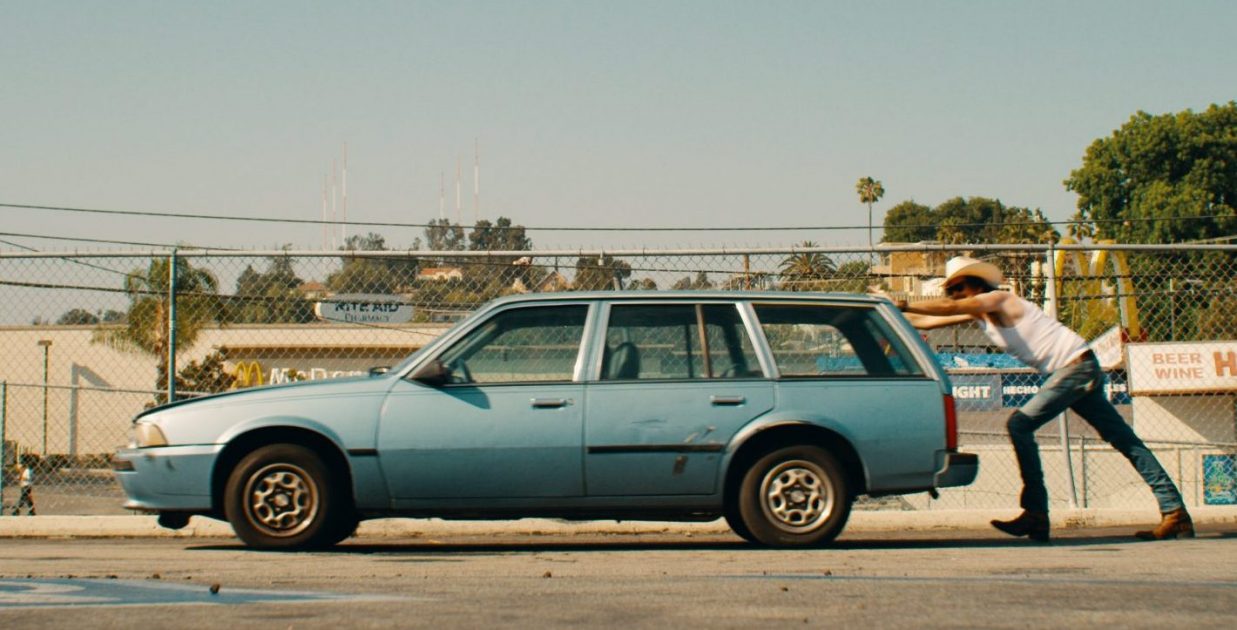
Tony Hannah – “My Old Car”

Tony is kinda new to my attention. She was booked for 2020 GOE, but you know. Anyway she is super fun, and this track is pure LA bliss, Beach Boys, ’80s country punk. A little bit of everything.

Mara Connor – “Blues Runs the Game”

My pal Mara Connor made an awesome EP this year of some beautiful tunes. My favorite on this one is her cover of Jackson C. Franks’ “Blues Runs The Game.” The whole EP is like you’re floating on a cloud, it’s simply divine.

Sam Morrow – “Getting by on Getting Down”

I can’t wait to see all of these bands live again. But boy howdy am I ready to have my face melted with some loud, guitar-driven music. And boy does Sam Morrow deliver that here with this tune. The whole record really cooks.

Joe Bourdet – “Unwritten Story”

My pal Joe Bourdet really delivered a beautiful country-rocker opus with his EP Meadow Rock. This is the perfect summer song to sit on the porch and feel the wind caress your face. And that’s not hyperbole!

Sie Sie Benhoff – “Night Train”

My pal Sie Sie released this country cooker, “Night Train.” The song is so sweet and so tough at the same time — emblematic of what I love about Sie Sie. She the nicest gal you’re ever gonna meet, but she could also probably chew on nails.

Victoria Bailey – “Skid Row”

My buddy Victoria made an amazing record last year despite it all. The whole thing has awesome honky-tonk energy and she sings it with some great power. “Skid Row” is like an Asleep at the Wheel-style number that really makes you wanna dance.

Eric Roebuck – “Need a Change”

My buddy Eric put out the single “Need a Change” this year and it’s a mean, heady, ’70s rock jam. Really great guitar playing by Eric on this one. Eric’s previous band, Professor Colombo, was one of my favorites. But I just know this kid is on to something and I expect some sick stuff coming from him in the future.

Katie Jo – “I Don’t Know Where Your Heart’s Been”

My pal Katie Jo is a real sensation. She put out this single this year and I simply love the Patsy Cline vibes. Katie’s got an amazing voice and live she’s a showstopper.

Trevor Beld Jimenez – “Get Ready to Fly”

My pal Trevor put out his solo record, I Like It Here, last year and it’s simply divine. My favorite tune is “Get Ready to Fly.” It’s just so sweet and happy, much like Trevor.

Pacific Range – “Studio Walk”

My friends Pacific Range put out their amazing album High up the Mountain. These dudes were one of my favorite bands to book on the porch at GOE when they were first starting out. They just would electrify the air when they were out there.

Mail Order Cowgirls – “Brand New Start”

I’ve was made aware of this band through my co-worker Meg at Bedrock. I’ve seen them show up to the studio in western regalia a few times, but I’ve never met them. Anyway I think they are cool as shit. They had a self-titled EP come out this year which is great. Hoping to get them on a GOE soon.

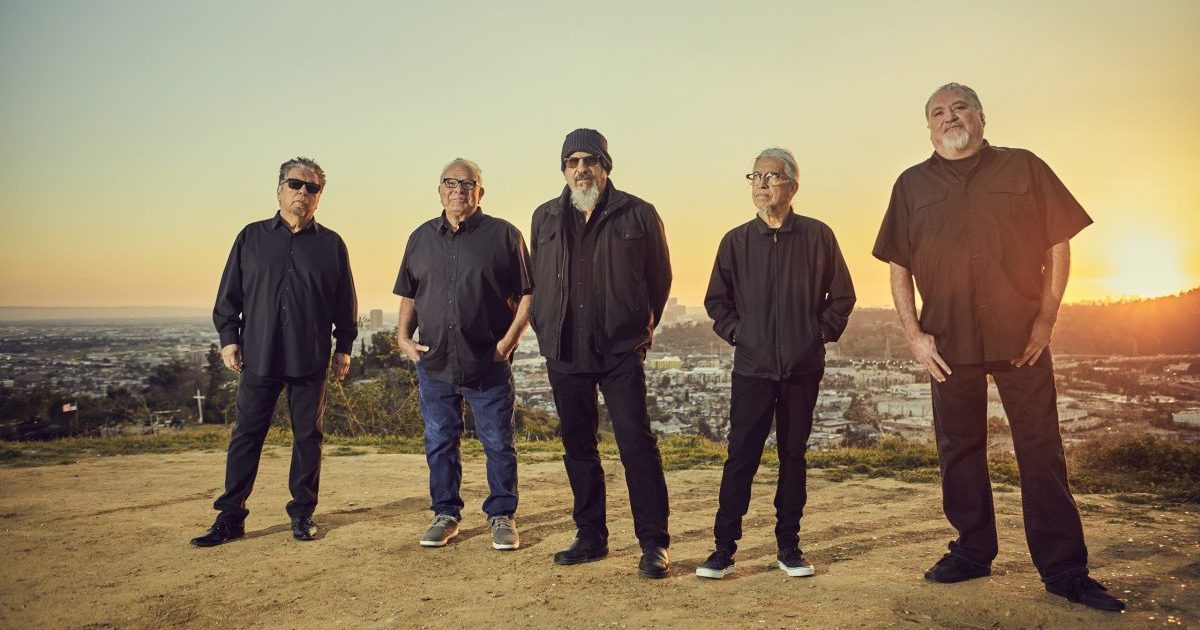
Los Bolos – “Why Get Sober”

This year Los Bolos put out The Best of the Greatest Hits and it was really hard not to crack open an afternoon beer when I put it on for the first time. Sure I was in lockdown, but there was a real good party going on in my head.


Photo credit: Chris Phelps

LISTEN: Los Lobos, “Jamaica Say You Will”

Artist: Los Lobos (David Hidalgo, Louie Pérez Jr., Cesar Rosas, Conrad Lozano, and Steve Berlin)
Hometown: East Los Angeles, California
Song: “Jamaica Say You Will” (Jackson Browne cover)
Album: Native Sons
Release Date: July 30, 2021
Label: New West Records

In Their Words: “I used to go over to David’s house after school and listen to records with him, and this song always resonated for me — such a beautiful melody. And the narrative was something I was attracted to. The storytelling. This song in particular inspired me to write from introspection — and I saw that my songs could be personal, but I could still write them to be universal. To this day, that’s been the template.” — Louie Perez Jr.

“A very delicate track. I know it’s a big favorite of Dave’s and he brought it in, but I was surprised — I mean, that’s kind of a heavy lift! Dave knocked it out of the park. Everybody did great work on it. I think we did it justice.” — Steve Berlin

“Another old favorite. Great song. Louie introduced me to Jackson. We’ve worked together on projects and become friends.” — David Hidalgo

(Artist quotes from Native Sons‘ album liner notes.)


Photo credit: Piero F. Giunti


LISTEN: Chris J Norwood, “Good Guy With a Gun”

Artist: Chris J Norwood
Hometown: Dallas, Texas
Song: “Good Guy With a Gun”
Album: I Am Not Cool
Release Date: August 20, 2021
Label: State Fair Records

In Their Words: “I struggled with whether or not to include this song on the album. I’d already written several songs about my father’s suicide that appeared on my last album, so I worried that I was rehashing something lyrically that I’d already covered. But I realized that losing a parent at a young age is always going to be a part of me. It’s part of my story. It’s tangled all in my roots. And it’s good for me on a personal/spiritual/emotional level to keep talking about it, writing songs about it, and singing about it. Truth be told, we as a country need to talk more openly about suicide. Especially as it relates to the gun debate and gun culture. This song also happens to be one of my kids’ favorite songs off the new album. They love the music, and they’re too young to understand all the nuance in the lyrics. The only part they really like singing is, ‘Daddy was a good guy, and always did the best he could. He’d do anything to protect the ones he loved.’ And honestly, that’s how I chose to remember my father.” — Chris J Norwood


Photo credit: Alyssa Leigh Cates

WATCH: Ramblin’ Ricky Tate, “Drifting”

Artist: Ramblin’ Ricky Tate
Hometown: Birmingham, Alabama
Song: “Drifting”
Release Date: July 30, 2021

In Their Words: “Everyone has lost a love or felt homesick, I’d bet a lot of those people have reached for a whiskey glass a time or two as well. ‘Drifting’ is a tune I wrote about just that. This song is about having hope for better days to come when you feel down. Recorded and filmed field recording style on location in a 140-year-old building, this song has a natural reverb unlike anything you will hear in a studio. I put my heart into this song and I love how the video turned out and I’m honored to share it with y’all.” — Ramblin’ Ricky Tate


Photo credit: Jordan Hudecz

The BGS Radio Hour – Episode 213

Welcome to the BGS Radio Hour! Since 2017, this weekly radio show and podcast has been a recap of all the great music, new and old, featured on the digital pages of BGS. This week, we bring you new music off of the beautiful new album Quietly Blowing It from Hiss Golden Messenger, as well as new music from Chris Thile, Maya De Vitry, and many more! Remember to check back every week for a new episode of the BGS Radio Hour.

APPLE PODCASTS, SPOTIFY

Nefesh Mountain – “Somewhere On This Mountain”

BGS caught up with Nefesh Mountain on a recent 5+5, where the duo shared a mission statement for their career: “Invent, inspire, repeat!” They also told us about their favorite onstage moment and about the artists that have influenced them greatly.


Beta Radio – “I Need My Prayers”

Beta Radio’s new track, “I Need My Prayers,” was a surprise to Benjamin Mabry when he wrote it within 15 minutes. In speaking about the song’s meaning, he told BGS, “I was in a mental and spiritual place of needing something to hold onto, I felt like I had lost all my footing in the world and didn’t know where to turn. And a lot of personal things felt like they were falling apart. So… I guess I just needed my prayers.”

Maya De Vitry – “Working Man”

Maya De Vitry’s “Working Man” was inspired by the creation of railroads in the United States, and more specifically, how the men who physically laid down the tracks are often not the ones credited with building them. This led her to reflect upon the people in our society who are overworked, underpaid, and overlooked, which ultimately helped her write “Working Man.”

Rory Feek – “Time Won’t Tell”

In speaking with BGS recently about “Time Won’t Tell,” Rory Feek shared how he first heard this song, and how it has become even more special to him after his wife’s passing.

Wilson Banjo Co. – “When The Crow Comes Down”

Wilson Banjo Co. co-wrote “When The Crow Comes Down” with acclaimed Nashville songwriter Jordan Rainer. The song features a “spooky theme” and pure Appalachian tone, and has a wonderful music video to accompany it.

Chris Thile – “Ecclesiastes”

Chris Thile has long woven religious themes into his songwriting, but never so much as on his new album, Laysongs. When we asked him if he enjoyed talking about religion outside of his art, Thile stated that it’s always been an instinct of his to intertwine what he’s thinking about with religious imagery. “Ecclesiastes” expresses the depth of Bible verse Ecclesiastes 2:24 instrumentally, which Thile did purposefully. In his words: “What language is incapable of properly expressing, instrumental music steps up and says, ‘I got this.’”

Hiss Golden Messenger – “Glory Strums (Loneliness of the Long-Distance Runner)”

“Glory Strums (Loneliness of the Long-Distance Runner)” comes from Hiss Golden Messenger’s latest album, Quietly Blowing It. Recorded in the summer of 2020 in Durham, NC, Quietly Blowing It reflects a joyful spirit that combines N.C. warmth with an LA glow.

Phil Leadbetter – “I Will Always Love You”

When Phil Leadbetter first heard Dolly Parton’s “I Will Always Love You” live, he was blown away. Years later in 2010, he recorded the track with his Scheerhorn guitar, but it was ultimately lost after some time. However, when Leadbetter recently found the track, he knew it would work perfectly for his new collection of resophonic guitar songs, Masters of Slide: Spider Sessions. 

Mason Via – “Big City”

Mason Via’s “Big City” is what he calls, “a personal hillbilly mantra of sorts,” and it’s the first single off of the American Idol contestant’s debut album with Mountain Fever Records.

Johnny Flynn, Robert Macfarlane – “Ten Degrees of Strange”

This Duos of Summer feature, “Ten Degrees of Strange,” comes from Robert Macfarlane and Johnny Flynn’s recent collaboration, Lost in the Cedar Wood. A week into lockdown, Macfarlane, a Cambridge University academic and bestselling author, reached out to his good friend and musician, Johnny Flynn, asking if he would like to write a song together. In speaking about working with Macfarlane and writing during the midst of the pandemic, Flynn said: It started as just a song, and then it became a few songs… but it held me in place and kept me from completely spinning out.”

Joe Mullins & The Radio Ramblers – “Living Left to Do”

In the words of Joe Mullins, “‘Living Left To Do’ is about enjoying our calling, celebrating God’s goodness, and the blessed assurance of life eternal. We’re ready to live, love, laugh, and have a lot more to do!'”

Lea Thomas – “Hummingbird”

Lea Thomas’ “Hummingbird” was inspired by a dream she had, in which she turned into a white wolf and ran across the countryside, taken aback by the beauty and interconnectedness of life.


Photos: (L to R) Chris Thile by Josh Goleman; Maya de Vitry by Kaitlyn Raitz; Hiss Golden Messenger by Chris Frisina

BGS 5+5: Anna Tivel

Artist: Anna Tivel
Hometown: Portland, Oregon
Latest Album: Blue World

What other art forms — literature, film, dance, painting, etc. — inform your music?

Literature and poetry really get in my bloodstream and make me want to write, all those vivid words and ways of telling a thing. I get the itch to write the most from reading things that unravel like a song but are in much longer form. Right now I’m digging deep through the novels and short stories of Annie Proulx and finding so much inspiration. The way she spins a story, unadorned and brutally human, feels honest in this way I’m forever working toward with songs. Andre Dubus sparks a similar feeling, this gut-punch of everyday struggle told in a way that feels just like reality, but more stunningly laid out in bite-sized, brilliantly observed and relatable moments. I dream of writing songs that make people feel that way.

What was the first moment that you knew you wanted to be a musician?

Music has always been the place I felt most at home in my mind, where I could just be, work things out and communicate in a slower, more intentional way. I first found that freedom playing violin as a kid, backing people up later, learning that kind of conversation without speaking that feels so powerful. I started writing songs when I was about 23 and it was a completely magnetic force of expression that I must have been really hurting for because it took hold of me immediately and forcefully. I don’t remember consciously thinking, “This is what I want to do with my life,” just couldn’t seem to think about anything else. I’m forever grateful to be able to move through the world this way. It constantly pushes me out of my box, allows me to bump up against the world, try to see it more clearly and with more curiosity all the time, try to reflect something true.

Which elements of nature do you spend the most time with and how do those impact your work?

Seems like touring is always shaping the way nature plays out in my writing. You’re on these long expansive drives through empty country, red canyon cliffs, vultures, sun bleached sagebrush, and heat waves on the blacktop that stretch out farther than you can see. And then two days later you’re in a dense forest, lush and wet and forty shades of green darkness. And then you’re suddenly in a giant metropolis. Watching it all change for hours and hours out the window feels like a recipe of sorts, like gathering all the images that hold an emotion to draw on later when a song is forming. I love to set a scene for the emotion of a story to play out in, and this constant observing of the natural (and man-made) world through car and plane windows seems to help tie human struggle and beauty to place and landscape in a way that feels necessary.

What rituals do you have, either in the studio or before a show?

I want so badly to have pre-show and studio rituals, like vocal warmups or a three-piece show suit or something, anything. Mostly I let shows eat me alive in good and bad ways and I’m trying to work on being more intentional about that stuff. When I have time and space, I like to read something beautiful or listen to something that moves me before a show, sit somewhere all alone and take in some words and music that make me feel free and vast and inspired. It feels really good to get up on stage and get the chance to play my heart out after that. I’m going to do it more, just decided. OK I have a ritual starting now.

If you had to write a mission statement for your career, what would it be?

Write and write. And play songs for people. And try to be 90 years old someday and still loving these two things with wild abandon.


Photo credit: Matt Kennelly

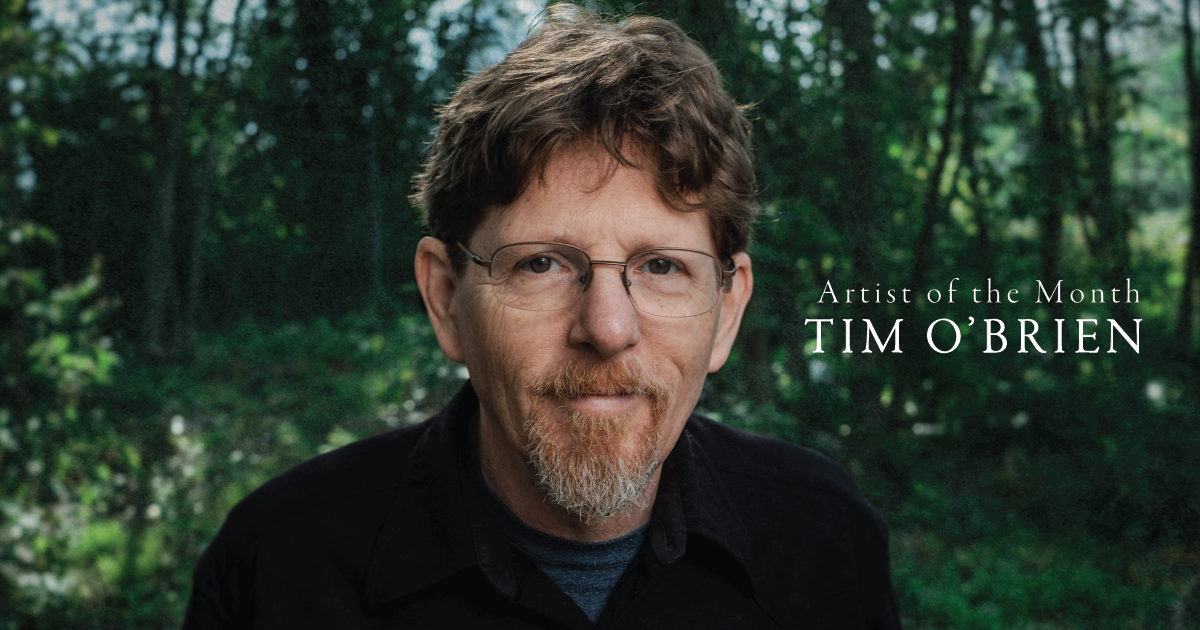
Tim O’Brien Recalls the Origins of Hot Rize… and That Other Band (Part 2 of 2)

Tim O’Brien’s seemingly effortless tenor singing, musicianship, and songwriting have kept him in great esteem in the bluegrass community for more than four decades. One might say “seemingly effortless” is a fitting way to describe his career path, too. So much of it seems natural, as if each new thing was the obvious next step, whether it was creating a Western swing band alter ego within a bluegrass band, recording duet albums with his sister Mollie O’Brien, earning a Grammy nomination with an collection of Bob Dylan covers, or connecting lines between Appalachian music and traditional Irish music, tying back to his own heritage as a West Virginian of Irish descent.

Yet beneath his quiet demeanor is a thoughtful artist who brings a tremendous amount of intentionality to his work. We sat down with O’Brien, our BGS Artist of the Month for July, to ask him about how he got started and how some of these projects came to light.

(Editor’s Note: Read the first half of our interview with Tim O’Brien.)

BGS: When did you first start trying to play music professionally?

TO: In the fall of ‘73 I gave up on the idea of college and decided that maybe I could support myself playing guitar and a little bit of fiddle. I was just learning back then. I saved up for a car and I went to Jackson Hole and played shows in bars and whatever I could get. I had some friends that I had worked with as part of a summer camp out near there that were out there to spend the winter. Then, in the fall of ‘74, I ended up in Boulder and briefly played in a bluegrass band called Town and Country Revue with two guys who were affiliated with a music store that I worked for a short time. Then I met up with a guy that started a band called the Ophelia Swing Band and I joined them for about three years. Our front man was Dan Sadowsky, who later became known as “Pastor Mustard” at the Telluride Bluegrass Festival.

We did some bluegrass things, but we weren’t portraying ourselves as a bluegrass band. We had strings, but it was mostly a swing band. I had been playing guitar and fiddle at this point and ended up borrowing a mandolin for a while until I eventually got my Nugget in ‘76. We were into that Cab Calloway kind of a hepster swing and there was another violin player in the group named Linda Joseph so we’d play some twin fiddle parts in a Western swing style. We tried to make big band arrangements with a lot of call and response between the instruments. We were making it up as we went along, but very much enjoying it.

We made a record, [Swing Tunes of the 30’s & 40’s], for the same label that my solo record came out on, a Denver label called Biscuit City. That record came out in ‘77, but I quit the band right before the record came out. I briefly moved to Minneapolis but I went back and did a little run of gigs with them in the summertime. I went back and was trying to dig in in Minneapolis, and then Pete Wernick called and suggested that we should get a group together. My girlfriend at the time, shortly before we ended up getting married, was thinking that maybe we should move back to Colorado anyway. So we went back in January of ‘78 to start up Hot Rize.

Your description of the Ophelia Swing Band’s material reminds me a lot of Red Knuckles and The Trailblazers. I’ve always enjoyed the Trailblazers portion of Hot Rize shows because the music is so good but it’s almost hiding behind the facade of a well-presented comedy show. Sort of like Homer & Jethro. How did you end up presenting it in that way? Or playing that music in the first place?

What happened was, Pete said that we should get a bluegrass band together and promote these two records. I had just put out Guess Who’s in Town on Biscuit City and Pete had just released Dr. Banjo Steps Out. I said, “That sounds good, I’ll do it, but I’d like to venture out into some other kinds of music other than straight bluegrass” and I mentioned Hank Williams kind of stuff or Western Swing. I asked Pete if he’d ever play Dobro. He had never played Dobro, but he said he’d look into getting one (he ended up getting a lap steel) and said we could work some of that stuff in.

Our first guitar player was a brilliant instrumentalist named Mike Scapp [who also played with the Ophelia Swing Band]. He didn’t last very long though and when he quit, Charles Sawtelle had been playing bass, but switched to guitar. When Nick Forster came along we told him we were doing this country and western material and he said that he had a Charlie Christian Gibson [electric archtop] guitar and played that kind of stuff. So all of a sudden, we had electric guitar, steel guitar, acoustic guitar, and bass. (Charles would go back to the bass for that because he didn’t play that kind of music on guitar.) So, when we would play four sets at a bar or something, we’d feature some of that stuff on the third set just to break it up. We would say, “We’re going to bring another band up here,” but we would just stay on the stage and switch instruments. We’d make a joke about the name of the band — we had different silly names that we used — and it was just a stage patter and a bit of a different kind of music.

Then, about two years into the band, we had a formal concert at the City Park in Denver in a nice theater sponsored by the Denver Folklore Center. I’m not sure who said it but I think it was Charles who said, “Why don’t we do a quick change? We’ll wear cowboy outfits and actually be a different band.” So we worked out the basic formula in rehearsal where Pete would introduce us while three of the four change clothes and then we’d come on and he’d make his quick change and all of a sudden we were a different band. That night, we called ourselves Red Knuckles and the Trailblazers. Rather than this just being some bar, these were mostly bluegrass and folk music fans and Pete and Charles were well-known in that community at that time. So we changed clothes and played a part and never let on that we were the same people and everybody knew it, but they got into it. That seemed to work, so we kept doing it.

The following fall, we played in Louisville at the free bluegrass festival that was put on by Kentucky Fried Chicken. We were interviewed by a radio host there and she said, “Well, I want to interview Hot Rize, but who I really want to interview is Red Knuckles and the Trailblazers.” So we said, OK, and acted like the Trailblazers. When she asked us stuff about where we’re from, we were just making up these answers. All of that stuff about us being from Wyoming, Montana, which is on the border of Wyoming and Montana, and the Eat Cafe was all just jokes that we might have said while we were driving around in the car. But it became our story after that interview. After we’d finished we all looked at each other and said, “Well, I guess that’s our story. Now we have to remember it.” [Laughs]

That’s how it started. I had always wanted to play that music so I wanted to do the music justice, but the act was about not taking yourself seriously. It helped Hot Rize immeasurably to have that as a foil. Whenever we’d mention the name of that band we’d make a snide remark about them as if they were a different band and we were rivals. This helped create an understanding that this was a lighthearted event which helped a lot.

Yeah, I could imagine it helped a lot. Not only as a way to stand out with something different, but since you guys were from Colorado playing a progressive style of bluegrass I’m sure the Hot Rize material sounded even more like traditional bluegrass when juxtaposed against the Trailblazers.

That’s why we got Entertainer of the Year the first year that they awarded it at IBMA; we had a show. At that time you had bands starting like Doyle Lawson & Quicksilver, The Johnson Mountain Boys, and the Nashville Bluegrass Band. The Johnson Mountain Boys were also working on a show, but those other two bands were still standing by their individual microphones. I loved those bands a lot and still do but having a show was good for us because it took a little stress off the music and let our music just be what it could be. We weren’t measuring ourselves against those other bands quite as much as we might have been otherwise.

It took a while for the promoters to understand it. There were some traditional festivals that wouldn’t let us do that. Out in Grass Valley, California, at the CBA festival, they didn’t even really want electric bass there, but they’ve made an exception for Hot Rize. But they wouldn’t let us do the Trailblazers. The same thing happened at Doyle Lawson’s festival the first time we played there. Milton Harkey said, “Oh, don’t get me wrong, I love the harmonies,” which proved that he had never heard it since the Trailblazers didn’t really have a lot of harmony singing. But after we played his fans got to him and asked why they didn’t let us play that Trailblazers stuff and explained it to him and they started letting us.

For some of those festivals like the one in Grass Valley, I think they just have their rules about what is and isn’t bluegrass. But the other ones like Doyle Lawson’s festival, they just didn’t want a bunch of bikers coming in. They didn’t want hippies taking a lot of drugs with electric music because it might get out of control.

What was it like to play in these traditional, sometimes conservative spaces?

We were always the funny ones. Our hair was too big and too long and our ties were wrong. We wanted to fit in so we wore suits, but we never hid who we were. Bluegrass, since the ‘60s at least, has always had lots of different fans. They might be Northerners or city folks that didn’t grow up with the banjo but they love it and kind of poke fun at themselves for being involved in a way. I think that’s the thing that’s sort of wonderful about music; it’s a free pass. It’s whatever anybody thinks it is and anybody can like any kind of music and art. How you react to it is up for grabs and, in a way, all responses are valid. People all respond to music differently and people will change it to express themselves within it.

(Editor’s Note: Read the first half of our interview with Tim O’Brien.)


Photo credit: Scott Simontacchi

LISTEN: Naomi Westwater, “Americana”

Artist: Naomi Westwater
Hometown: Brockton, Massachusetts
Song: “Americana”
Album: Feelings
Release Date: September 3, 2021

In Their Words: “‘Americana’ is a song about race and pain. It’s a song about being in the in-between. This is a song for multiracial Americans — for every person who’s been asked, ‘What are you?’ This is for the people who are white, and Black, and brown all at once, and at the same time never white, or Black, or brown enough. This is my love letter to America, I think we need to break up? This song is me asking, post-racial America? For who?” — Naomi Westwater


Photo credit: blahnik x westwater

BGS 5+5: Aaron Burdett

Artist: Aaron Burdett
Hometown: Saluda, North Carolina
Latest Album: Dream Rich, Dirt Poor

Which artist has influenced you the most … and how?

There have been many and they have all influenced me in different aspects of my music. From the control of Broadway and operatic singers to the technique of multiple guitarists to the artistic approach and craft of various songwriters, it’s not just one or two sources. And honestly I’m not sure that a lesson I learned from an artist 20 years ago would strike me as at all meaningful today if presented with it, but that lesson at that time is what got me to the next stage and is why I am where I am today.

I refer to John Hiatt a lot as an influence; his music meant a lot to me at one time and conceptually means just as much to me today. He writes with heart and emotion and incredible depth, but also with a lightness and humor. He’s a serious songwriter who does not come across as taking himself too seriously. I’ve never met him but that’s the impression I get. He writes songs with personality and a unique voice. He uses phrases that don’t necessarily make literal sense. He’s his own person and does not sound quite like anyone else. I like that.

How often do you hide behind a character in a song or use “you” when it’s actually “me”?

I don’t think songs work unless there’s some of the writer’s own truth in there. The emotional connection can’t happen if there’s not some of my own feeling included in the work. The flip side of that coin is that without adding in some observed or fabricated content there are only so many things you can write about from your own experience. I think that ratio is the secret sauce — enough of yourself that you can connect to the character, and enough diversity in the content that the listener stays interested in the narrative.

What was the first moment that you knew you wanted to be a musician?

It’s been a long process for me and it’s still ongoing. I’m not sure if I’m a musician yet. I connected with music and singing in particular pretty early on, and I started playing guitar in my early teens. At first listening to music was inspiring, and a place to have new experiences, but then eventually performing and creating my own music became my focus. Then when the music industry questions get thrown into the mix, I’m still not sure what being a musician is all about. Is it being someone who creates music? Someone who performs music? Someone who makes a living performing? I ask myself these questions a lot.

If you had to write a mission statement for your career, what would it be?

Keep going and keep creating. Don’t get complacent and don’t stop. Keep reading and following the signs and don’t be too rigid in your vision for the future. Stuff happens and most of it is good. Adjust as necessary. Get good people to help you and utilize them, if it’s management or booking or your spiritual advisor or whatever. Do the next right thing, and then the next. Don’t let the big picture overwhelm you, keep breaking it down to the next step. Be an artist. Be in the world but not of it. Be kind to others and be kind to yourself. Trust the process. Be patient and persistent. Do not be discouraged.

Since food and music go so well together, what is your dream pairing of a meal and a musician?

I’d love to have a full Korean multi-course meal with all the trimmings, with Jerry Garcia and Doc Watson. I imagine that pairing would produce a few good anecdotes.


Photo credit: Sandlin Gaither

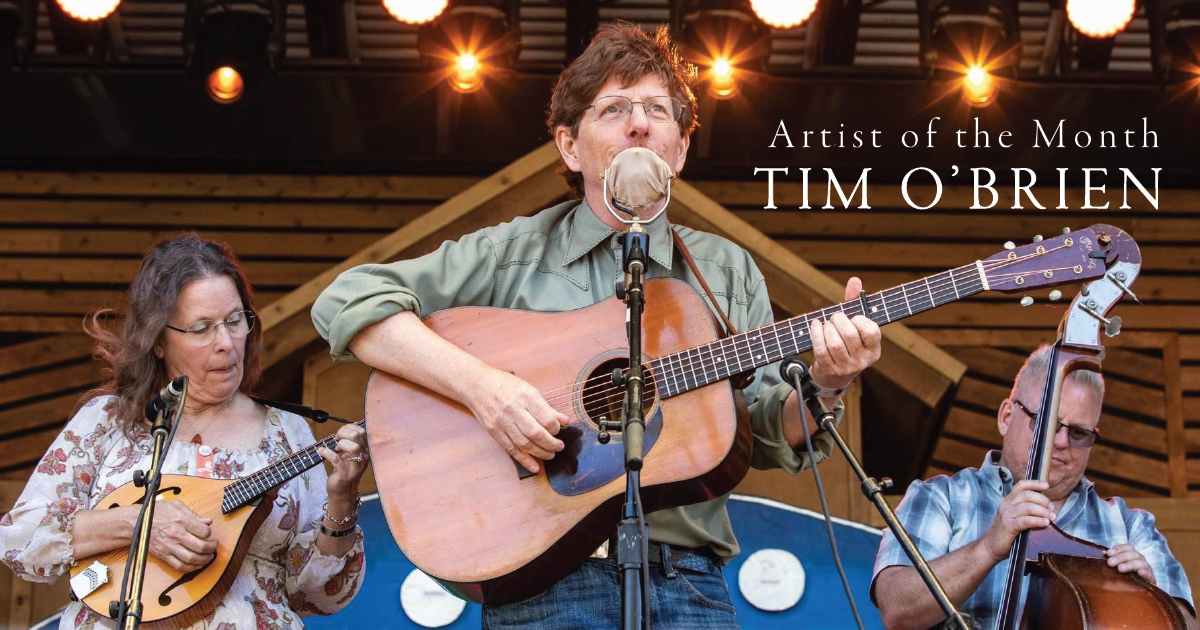
Tim O’Brien Sings of American Life, Then and Now, on ‘He Walked On’ (Part 1 of 2)

Tim O’Brien’s latest album, He Walked On, explores the many realities and histories of what it means and what it has meant to be American. With his well-known ability to tell a story through song and his less recognized, but equally powerful ability to pick and perform covers, O’Brien shares intimate and intriguing stories including the traditions of the Irish Travellers living in the U.S., Volga German immigrants turned sodbusters, or Thomas Jefferson’s children birthed by his slave, Sally Hemings.

Such stories and topics are not uncommon for O’Brien to write about, but in the wake of the murder of George Floyd and the protests that followed, as well as the Black Lives Matter movement, these songs feel even more topical and personal. His music is often presented with a lightheartedness that settles the listener and reminds them not to take themselves too seriously. And while some of that can still be found here, there is a somber tone that reflects the state of the country today. He’s joined on the album by bassist Mike Bub, drummer Pete Abbott, fiddler Shad Cobb, and vocalist (and fiancée) Jan Fabricius.

In the first of a two-part interview, BGS catches up with O’Brien, our Artist of the Month for July, to discuss the songs from He Walked On. (Editor’s note: Read part two here.)

BGS: The songs on this album speak to a lot of current events and the theme is more “political” than some of your previous work — although I don’t like thinking of human rights issues as being political.

TO: Yeah, they are politics nowadays. I think that the artist’s job is to reflect and respond to what’s going on around you and in your life. I don’t know anybody that creates original stuff who’s not doing that. Of course, this is an exceptional year for that. There’s a lot of things going on that were highly, highly provocative such as the Black Lives Matter movement and the pandemic itself and the way the politics entered into that, which was unfortunate. And then related to that is paying attention to history, the developments of technology, and how it affects society. That’s where songs like “Nervous” came from and they’re not “political,” but they’re kind of a report on the state of humanity.

You’ve often written about your experience in the modern world and talked about technology before but usually with a humorous tone. When I heard “Nervous” and “Pushing on Buttons,” it made me think of “Phantom Phone Call” from Chameleon.

You know, actually, I think one of the saddest things I’ve ever written is “Pushing on Buttons.”

Yeah, that’s what I was getting at. There’s usually a lot of whimsy when you’re talking about modern stuff, but “Pushing on Buttons” is pretty somber.

Yeah, I almost left it off because I thought, “Nobody wants to hear how sad this is.” But I was able to get Chris Scruggs in the studio and said, “I ought to cut this song so let’s make it like a Hank Williams number, if I can.”

The tone on the album felt more serious, in general, than your previous work. Do you feel that way?

Yeah, I suppose so. I don’t know how it will ring with everybody, but I felt like this was the thing to do. The Black Lives Matter movement is another step on a long road of reckoning with our history and the racial divide in this country. When stuff gets thrown up in the air like it did with George Floyd it’s time to look at all that’s been going on from day one and try to make sense of it. I could have written these songs like “When You Pray” and “Can You See Me, Sister?” any time. But it was staring me in the face much more so this year. Whimsy is good and all, but I couldn’t ignore these things.

But, in general, I try to stay light on my feet and that’s more of the tone of “When You Pray, Move Your Feet” which is a pretty happy song in a lot of ways. And I hope that means something. “He Walked On” is like, well, the only way to really get through this is just to try and notice the good. Notice when it’s really good and when you don’t just keep going and try to find it again. So it is sort of a mission statement for living in the United States. You have people doing their various jobs — farming, or trading mules, or coal mining, or looking at a computer — and we’re all kind of looking for the same things. It’s nice to have somebody to share your love with and a roof over your head. It’s nice to help other people find that as you’re going along to help yourself.

Songs like “He Walked On” or “Can You See Me, Sister?” — like a lot of songs that you’ve written — are told from a different perspective than your own life experience. How do you approach writing those stories in particular?

I don’t know. Maybe my age is telling me to look at it in different ways. But I don’t know that I was conscious about trying to write differently. Back working with Darrell Scott, I realized that he had so much personal detail in his songs and it made them more universal. Which is counterintuitive, but I’ve noticed that that’s the case. So, “He Walked On” is about changing your perspective and getting a glimpse of the divine. We’re not always paying attention but about one percent of my time, I wake up and go “gee, look at that” and really appreciate it and really be present and in the moment.

In the case of “Can You See Me, Sister?” it was such a fascinating story. I kind of knew about Sally Hemings and Thomas Jefferson because in the early days of Hot Rize, we played in Charlottesville, Virginia. A bluegrass fan brought us around to Monticello and took us on a personal tour. Jefferson is a really interesting character in American history in so many ways, but you and I can relate to him in that he was a fiddler. He was really interested in old-time fiddling. He played tunes like “Money Musk” and they have his handwritten transcriptions of some of these tunes at Monticello. He was a renaissance man — an artist, a writer — and apparently he carried a pocket fiddle around with him. He had a little mini-fiddle you could put in your overcoat pocket.

So I had known some about him but I recently learned more about the children he had with Sally Hemings. It was a great loss for him when his wife [Martha Jefferson] died. He promised her he wouldn’t get remarried and he didn’t. But he turned to Sally Hemings, who had been a slave at Monticello and was brought to France to nanny his daughter. She birthed at least six of Jefferson’s children and I hadn’t realized until recently that a couple of them passed as white and lived their adult lives in white society.

The decision to have a spoken word introduction to “Can You See Me, Sister?” was interesting. I don’t remember ever hearing one in any of your other songs.

Mike Bub brought it up because when I sent the demos around he heard it and liked it, and then I told him what it was about. He said, “Wow, there’s a lot more punch to it when you know what it’s about.” He said most of the radio listeners wouldn’t know that so he recommended having some kind of explanation. It was a conscious choice and it was interesting to write. I don’t usually  write stage dialogue. I guess I hone it as I go and I get more succinct and more pointed and more efficient with it as I learn. But this was before I ever performed it on stage. I wanted to have the right introduction that would say what needed to be said; no more and no less.

What inspired you to write “See You at the Funeral?”

“See You at the Funeral” is kind of an odd one. It’s about Irish Travellers in America, which is a subset of American society that’s kind of unknown. The song is about the once-yearly reunion in Nashville of the greater clan of the Sherlocks families and their relatives. They have all their funerals and weddings for the year in one week so everybody can be there and then they scatter and go do their own thing. … It’s all the happy parts and the sad parts and the big ball of wax. By the end of that week, you would have a sense of where you come from, who you are, and what’s next. Those rituals are part of what helps us get by. That’s Americana. It’s from a lesser-known part of our history and our society. That is the part that I’m interested in. And if it means something to me, maybe I can make it into something to someone else.

What about some of the covers like “Sod Buster”?

Jan’s family is from western Kansas and her great-grandfather was another type of migrant. Their background is what they call Volga German; they were German farmers that got recruited by Catherine the Great of Russia to farm wheat on the Volga River. Then the politics changed and they were going to have to serve in the Russian army. That’s when everybody started coming to the American plains. The railroads had started and they were advertising for people to move. Her great-grandfather was one of the earliest sodbusters in the late 1800s.

It’s a Bill Caswell song that I just love and I ended up talking to him about it and he said, “Oh, yeah, that’s about my grandfather. He was out there at that time and plowed with a team of horses.” I love Bill Caswell and I love this song. And I wondered why nobody had yet recorded it. So we worked it up and it means something because of Jan’s connection. We go out there sometimes and I really love being out in someplace exotic like that. I grew up where there’s hills everywhere and being on an absolute flat plain with the sky and the grass is an amazing thing.

I’ve always admired how much of a personal connection to all of your music that you have. It all feels very intentional.

John Hartford gave good advice to Hot Rize one time. He said, “You don’t want to get famous doing something you don’t like doing.” So I want to try to aim for the intersection of what people might enjoy and what I’m interested in and it ends up attracting people that think like me. I’m a bit of a bleeding heart liberal, if we got down to it. But I try to mostly put something out that people could enjoy and then maybe give them something to think about and maybe they’ll think poorly of it, or maybe they’ll change. You know, that’s a Buddhist thing. You work towards conscious change. Change and betterment and creativity. You just try to find your opening and hopefully I’ve found a few here.

(Editor’s Note: Read the second half of our interview with Tim O’Brien here.)


Photo courtesy of Tim O’Brien