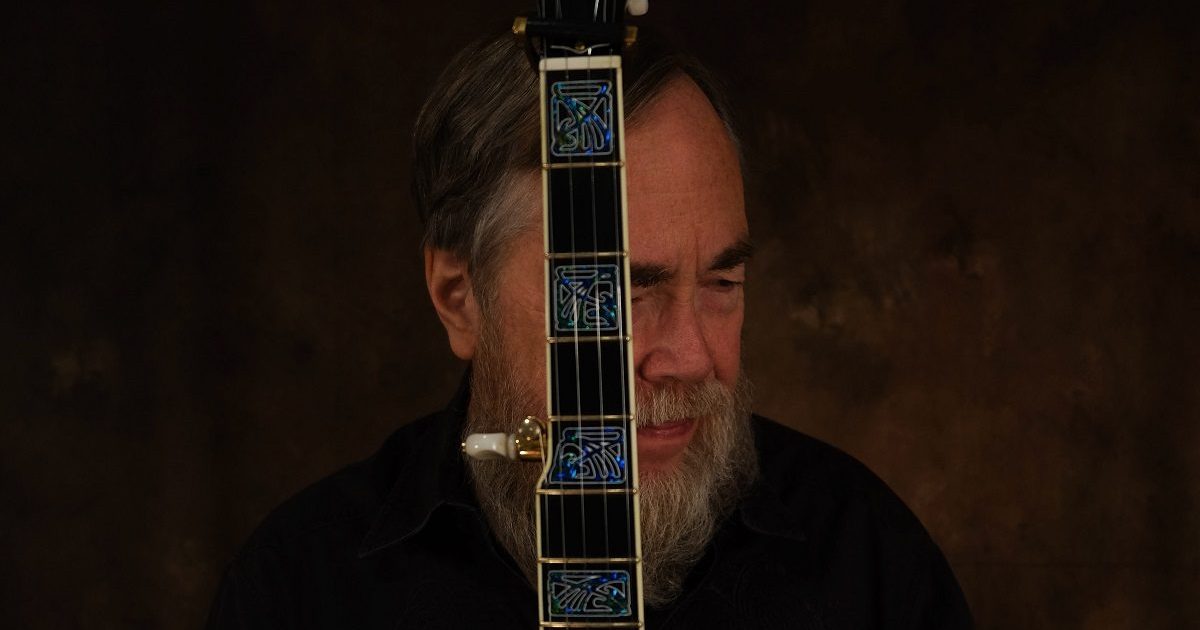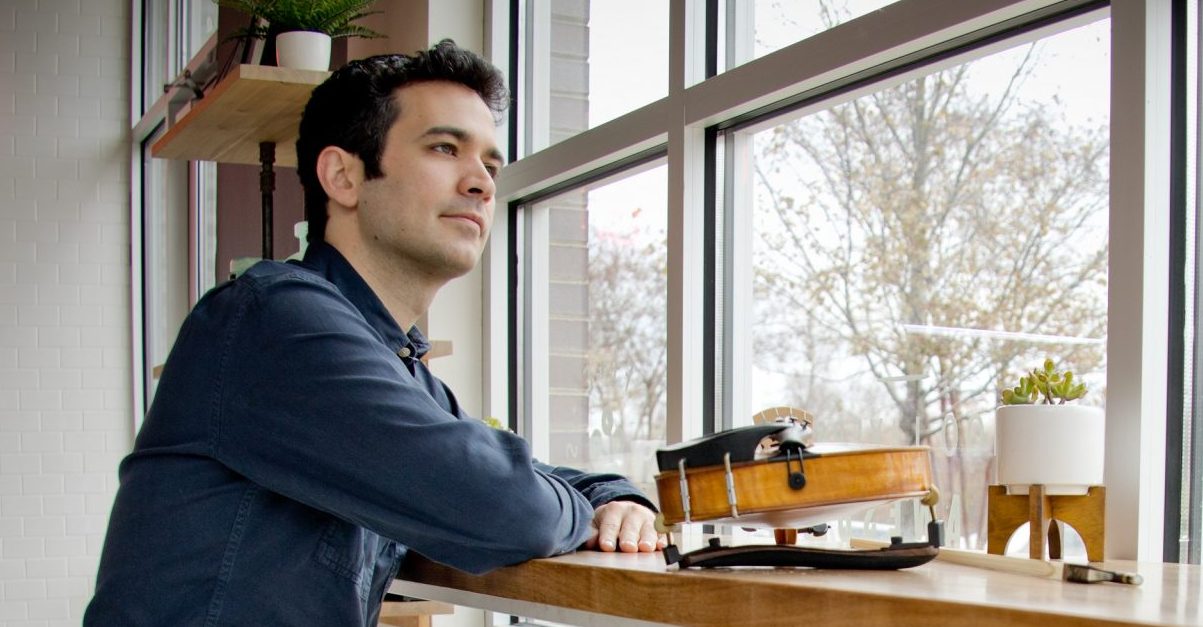
Banjo Innovator Danny Barnes Lands a Grammy Nomination With ‘Man on Fire’

The spring is often the peak time for artists to drop a new release — the festival season is just warming up, and a new album can bring about immense plans for an exciting year on the road. But for many road warriors like Danny Barnes, who released a new album in March 2020, release tours were turned upside down by the pandemic. Fortunately, in his true spirit, Barnes has managed to stay as creative as ever.

Man on Fire is Barnes’ 10th major solo release, not to mention his ‘barnyard electronic’ Bandcamp work, and an extensive collaborative discography including the likes of Bad Livers and David Grisman’s Dawg Trio. Though he often utilizes taste over flash, Barnes has been long recognized among the top banjo players — for example, he was the 2015 recipient of the Steve Martin Prize for Excellence in Banjo and Bluegrass. The new record, though released during an unprecedented time, garnered a Grammy nomination for Best Bluegrass Album.

BGS caught up with Barnes to talk about recording Man on Fire, how he’s filled his time during the pandemic at home in Washington, and his major creative methods, from finding the right collaborators to populating his songs with characters who will surprise you.

BGS: With the release of Man on Fire last March, how have you managed to best stay creative during the pandemic?

Barnes: One great thing is not spending so much time in transit. I was flying three weekends a month for decades, really. The amount of time I spent in a hotel, rental car, or airplane was astronomical. So when you pull all that out of the equation, I can just make stuff like crazy. I’ve been writing a bunch of songs, studying music like crazy, studying art, I just make things like crazy. I have a lot of ideas, you know.

I’ve heard you talk about using the banjo as a pencil. Can you explain that idea, and how it informs your creative process?

If you’re trying to play an instrument, say if you take up the saxophone or something like that, you spend a lot of years just chasing the instrument. I’m in my 50th year of playing [the banjo], and after a few years of working on it, it sort of gets where you can go the other way with it, where you’re expressing things through it. It’s like a different operating system; typically it takes a lot of years to get that familiarity with something. Over time, you develop this atomic understanding of things, a really good objective look, you know. I use the banjo to get ideas out. 

There’s so much music in the banjo itself that’s untapped… In the traditional styles it has a certain role, like the shortstop on the baseball team. There’s a lot of guys like John Hartford that pointed the way before me. My experience was, I spent a lot of years just trying to wrench something out of it. With a pencil too, it’s a really simple thing, but you can do incredibly complex things with it. Similar to a 5-string banjo, it’s real simple in a certain way. Spending time figuring out how to play the banjo gives you a way of putting energy out the other way. 

You’ve done a lot of collaborating with folks throughout the years. Can you tell me about some of the friendships that went into Man on Fire?

A lot of those guys I’ve known for a long time. I guess I met Bill [Frisell] right when I first got up [to the Pacific Northwest], I met Dave [Matthews] shortly after that, and I’ve known John Paul Jones since around there too as a matter of fact, early 2000s. I’d never met Geoff [Stanfield], who produced the record. I was talking about making a record and Dave suggested Geoff, who’s a friend of his. He’s a Seattle guy, so I could work here, I wouldn’t have to fly to L.A. or something like that. 

I’m really blessed to have really close friends that care about me, and are super-elevated in the art where they really have another way of looking at things. It’s been a real honor to be able to work with those guys, I’ll tell you that. It’s tough when you’re in the music world, because everybody is involved in it. There are certain subjects that people just in general don’t have opinions about, say for instance like microscopes or something. Music though, people are so used to manning the ship as it were. I’m talking about the audience, people that would potentially listen. So you’ve really gotta think about how you want to stage things and get things out.

The trick about music is that it’s tough to get really really good opinions about stuff. Sometimes guys will make criticisms about stuff just because they want to work on it, you know what I mean? So you still don’t know anything. There’s a lot of ego. What I’ve found is that you have people that know you really well — I’ve been really blessed to work with a lot of what I call true masters of music, guys who are super elevated in my field. Those guys, when they have something to say, you can really count on it. Especially if they love you and care about you. If you know them and their kids, you know… it’s relationships. It’s not like you met them at Folk Alliance or somewhere and you’re just gonna make a record with this guy. 

You have one of the most unique songwriting styles, between the vastness of your characters from beautiful love songs (“Fun” off of Rocket) and angry men mad at the world (“Bone” from Pizza Box). What is your inspiration behind creating the characters and stories surrounding them?

It’s really like being a poet or something like that. I feel like there’s something that happens to you, I’m not trying to brag on myself, but when you put out a lot of records over the years, there’s a place where you kind of meet yourself. And you go, “Oh, there I am, this is what I do.” If I wanna deviate from this, I now have something to deviate from. I figured out from my poetry that it’s sort of this southern outsider art, like art brut, the French saying for raw art. Kinda like Reverend Howard Finster, Flannery O’Connor, Walker Percy, sort of southern gothic, bleak but funny at the same time. And that’s who populates a lot of my little movies. I find it fascinating, when you can make all these characters, and they can do all of these things and have all these experiences.

The video for “Hey Man” is one of my favorite pieces from the new album. What was your inspiration behind that song, as well as creating the video?

I got this idea from a friend of mine, who went out to his garage, whipped the door open, and there was a dude living in his garage. I just use stuff like that for songs. I thought about telling the story from the homeless guy’s view, and he’s trying to explain why he’s in there as he’s getting all his stuff and getting out of there. Like on that show Cops, they’re stuffing a guy in a car and he’s trying to explain how he got into this situation, and no one is really listening. 

David (Dave Matthews) really liked that song, and he’s got this guy Fenton, his lighting guy, who’s really smart about imagery, along with a couple dudes from the DMB crew who are really into editing. We storyboarded the whole thing, shot it in a couple of days over in Seattle. We put a lot of work and time into it. I’m really proud of it. I’ve never been able to do a budgeted video before. It was a real honor to get that out. 

Any major plans you’re looking forward to when things resume?

I’m always doing stuff with David Grisman. He and I have a record that we put out a year or so ago, and a whole new record written, just waiting for a good time to record it. The Bad Livers, we’re kinda working on a record. I’m working on this music for tuba and banjo, kind want to make a record build around that. I’ve been writing a bunch of music for the 12-string guitar. I kinda want to make another ambient record. I’ve always got a lot of ideas.


Photo by Sarah Cass
Bluegrass is Trance (And Old-Time, Too)

Bluegrass is trance. Old-time, too. 

With a slightly more zoomed out perspective, this fact comes into focus pretty quickly. American roots music and its precursors, especially their string band forms, have been interwoven with dance for eons. Before the advent of recorded music, when the popular musics of the day could often only be consumed by upper classes, dancing and other social group activities were the center places music inhabited. Before radio shaved popular music down into bite-sized, three-minute chunks, the tunes would last as long as necessary to provide a backdrop for a reel, a hornpipe, or a square dance, extending fiddle tunes into ten- to twenty-minute, cyclical, musical meditations. “Turkey in the Straw” as mantra, “Chicken Reel” as a slightly wonky, onomatopoeic sound bed.

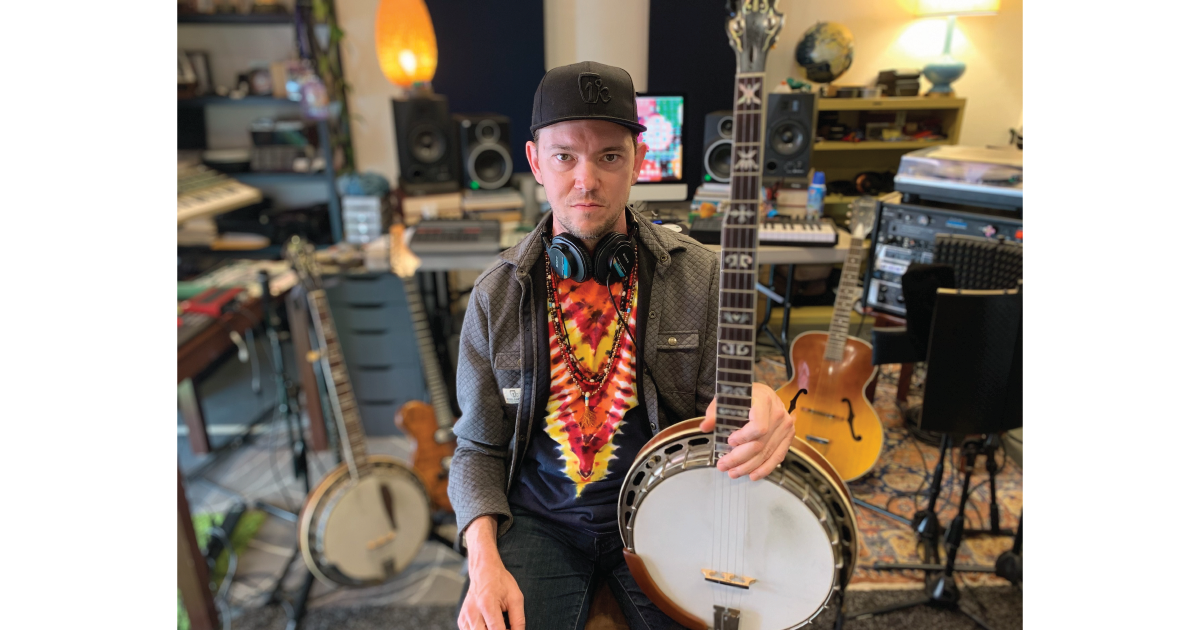
Detached from dance, it’s easy to forget that string band music has been designed with trance embedded within its structures. Chris Pandolfi is a banjo player who’s explored quite a bit in trance and trance-adjacent music with the Infamous Stringdusters, a seminal jamgrass band with a level of bluegrass’s technical virtuosity that’s unmatched in all but a select few ensembles in a similar vein. Pandolfi’s new record, Trance Banjo, which was released under his solo stage name, Trad Plus, moves further and further beyond American roots aesthetics, cementing the banjo and its musical vernacular within trance – the electronica variety as well as the age-old, human kind.

Trance Banjo, and tracks such as “Wallfacer” — whose trippy visualizer music video almost cements this article’s central argument — recalls albums by Scott Vestal, or live shows by post-metal shredders like Billy Strings, or experimental, avant garde compositions by cattywompus flattop mashers like Stash Wyslouch. It’s not just a simple coincidence that so many players from bluegrass and old-time backgrounds find themselves dabbling with trance.

John Mailander, a fiddler who’s toured with Molly Tuttle and Bruce Hornsby and has been hired as a side-musician with many a jamgrass-leaning band, is comfortably uncomfortable in a very similar musical realm as Trance Banjo. On an EP of sketches and improvisations released last summer (from the same sessions and experimentations that became his upcoming album, Forecast) Mailander and his bluegrass-veteran backing band play with trance centered on sparseness, vacancy, and negative space in a way that’s engaging and baffling, both. Mailander’s rubric of vulnerable, emotive, and transparent expression as a foundation for improv is key here.

That personal touch, the personality endemic in these trance experimentations, is certainly what makes them most compelling and it must be, at least in part, what ties these songs to the centuries-old tradition of music as meditation. Rhiannon Giddens and Francesco Turrisi make more than just a musical brand of showcasing their personalities and identities in the music they create, it’s more like a mission statement. Giddens has an incredible aptitude for writing and composing music based on empathy and human connection and Turrisi holds expansive knowledge of world folk music and percussion.

Their compositions and collaborations illustrate that, when we connect our music to dance, percussion, and trance, we’re connecting it to thousands and thousands of years of history — of humans of all ethnicities, cultures, backgrounds, and identities, gathering, connecting, sharing, and loving through music, dance, and trance. On stage, Turrisi and Giddens deliberately connect these dots as well, utilizing stage banter to educate their audiences about these exact connections.

While old-time has held onto its penchant for movement and choreography through the generations, bluegrass continues to grow distant from this and many of the other cultural phenomena that gave rise to it. Trance Banjo, and projects like it, while they seem to gleefully run away from what we perceive as “traditional” aspects of these genres, are in many ways guiding us right back to the very folkways that birthed them. 


Photo credit: Chris Pandolfi by Chris Pandolfi

The BGS Radio Hour – Episode 199

Welcome to the BGS Radio Hour! Since 2017, the show has been a weekly recap of all the great music, new and old, featured on BGS. This week we’ve got everything from quirky pop hooks by Aaron Lee Tasjan to outcries about workers’ rights by the Local Honeys. Remember to check back every Monday for a new episode of the BGS Radio Hour. 

APPLE PODCASTS, SPOTIFY

Black Pumas – “Black Moon Rising”

As we welcome the spring, we bid farewell to our February Artist of the Month – Black Pumas. The duo, up for a total of three Grammy Awards this March with their breakout album, sat down with BGS this month to talk about Black Pumas (Deluxe Edition), and the influences that brought them together.

Terrible Sons – “What A Friend”

From Christchurch, New Zealand, Terrible Sons brings us a song this week from their newly released Mass EP. “The song looks into a life that is unravelling internally and externally, a character who struggles to communicate, someone who’s on the edge,” the duo tells BGS. “We’re really singing about being a failure as a friend, about not being there.”

Aaron Espe – “Take You Home”

February brought many great releases; Aaron Espe’s Rock & Roll Man EP is certainly no exception. As the Nashville-based songwriter told BGS, songs can mean many things to many people, all of which are valid, and shouldn’t be ruined by the songwriter explaining it to them – so best for us not to spoil this one!

Lonesome River Band – “Love Songs”

Steve Martin used to tell a joke about how no one could be sad while playing the banjo. And while the banjo strikes a happy tone, songs from the bluegrass repertoire just aren’t the most optimistic – often, they are about heartbreak, loneliness, or death. In their new single, the Lonesome River Band recognizes that we have to write about what we know – and it ain’t always love songs.

Judith Hill – “Baby, I’m Hollywood!”

For Judith Hill, “Baby, I’m Hollywood!” is a defining statement, summing up the drama, love, and pain that surrounds her life as an entertainer in an epic performance and video.

Cristina Vane – “Prayer For the Blind”

From her upcoming Nowhere Sounds Lovely, Italy-born and Nashville-based Cristina Vane brings us an old-time banjo meditation on finding levity in heavy situations, and the bonds and intergenerational burdens shared between mothers and daughters.

The Wild West – “Better Way”

Women-led upergroup The Wild West strike on uniting us all amongst the differences that divide us – touching the idea of being born with love and without hate, and calling us to find our way back to innocence, understanding, and compassion.

Aaron Lee Tasjan – “Up All Night”

This Nashville artist is no stranger to BGS. Tasjan is his own producer on his newest release Tasjan! Tasjan! Tasjan!, the most-Tasjan album that he’s released so far — quite literally. From deep personal experiences in his writing to silly pop hooks, Tasjan’s newest album is one worth hearing.

Lily B Moonflower – “Midnight Song”

One thing we’re all surely missing is community, be it local jams, concerts, or just visiting with your neighbors. From Lawrence, Kansas, Lily B Moonflower brings us a song inspired by her community coming together through music and love, and the magic that follows on the honky-tonk floor.

Spencer Burton – “Memories We Won’t Soon Forget”

From Ontario, singer-songwriter Spencer Burton joins us for a 5+5 this week – that is, five questions, five songs to go along. From favorite stage memories to a dream musician and meal pairing, our conversation with Burton is one we won’t soon forget.

The Local Honeys – “Dying to Make a Living”

Even while they’re stuck at home like the rest of us, the Local Honeys continue to get their message out to the world. While in past times they’d be touring Europe with Colter Wall or Tyler Childers, the Kentucky-based duet now sit down with BGS to talk about the problems created by extractive industries like coal mining in Appalachia, reflected in their new two-song release.

Chris Pandolfi – “Astral Plane”

From Grammy Award-winning band the Infamous Stringdusters, ‘Panda’ joins us this week on a 5+5 in celebration of his latest album, Trad Plus Presents Trance Banjo. What’s better than banjos, beats, and Stuart Duncan?

Moira Smiley – “Days of War” (feat. Sam Amidon and Seamus Egan)

With the accompaniment of Sam Amidon and Seamus Egan, Moira Smiley brings us “Days of War,” a song written after yet another shockwave of white supremacy in 2017. While Amidon sings the ‘human’ voice in this song, Smiley is the ‘bird,’ who flies and sings in spite of all.


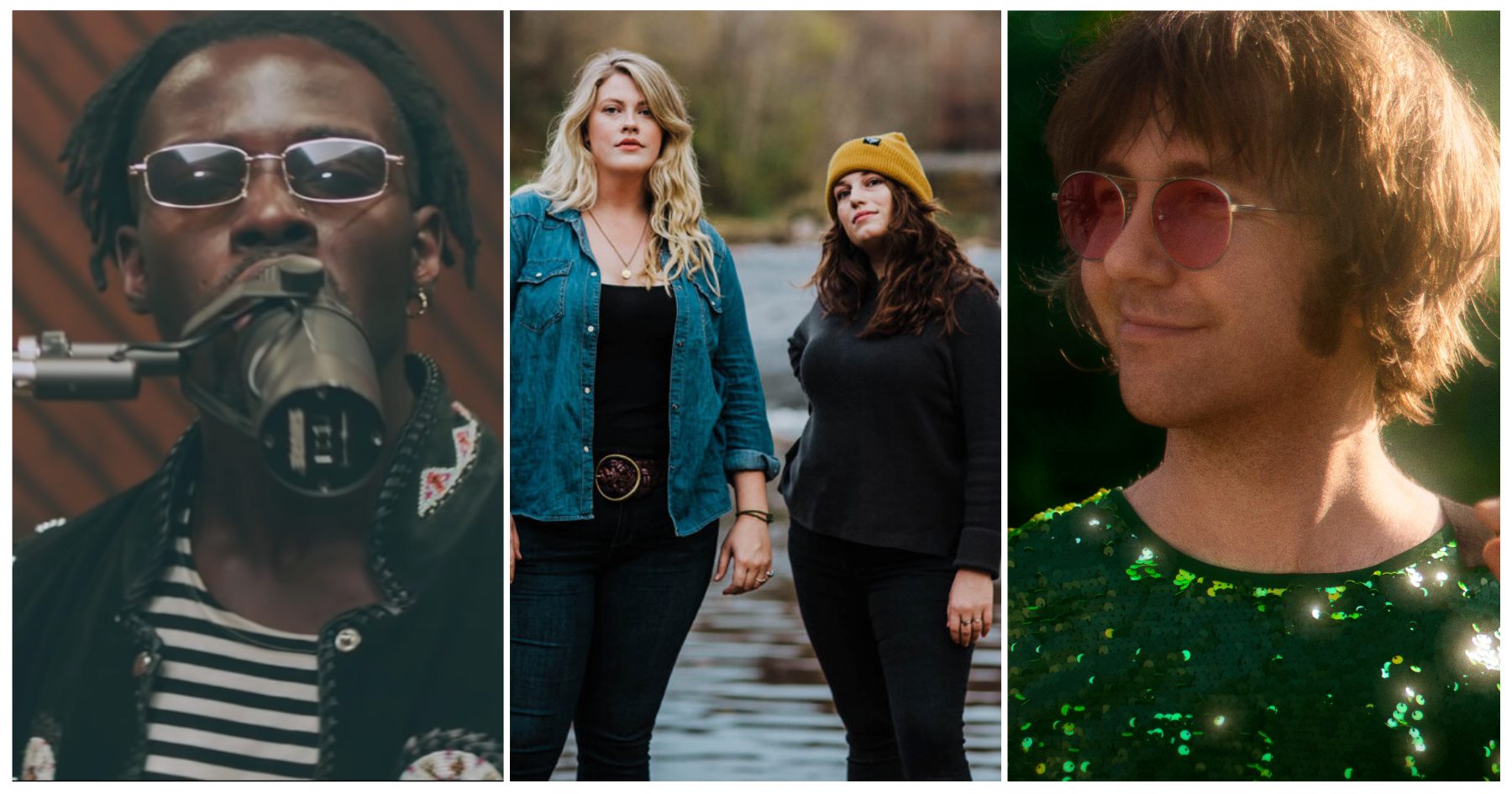
Photos: (L to R) Black Pumas; The Local Honeys by Melissa Stilwell; Aaron Lee Tasjan by Curtis Wayne

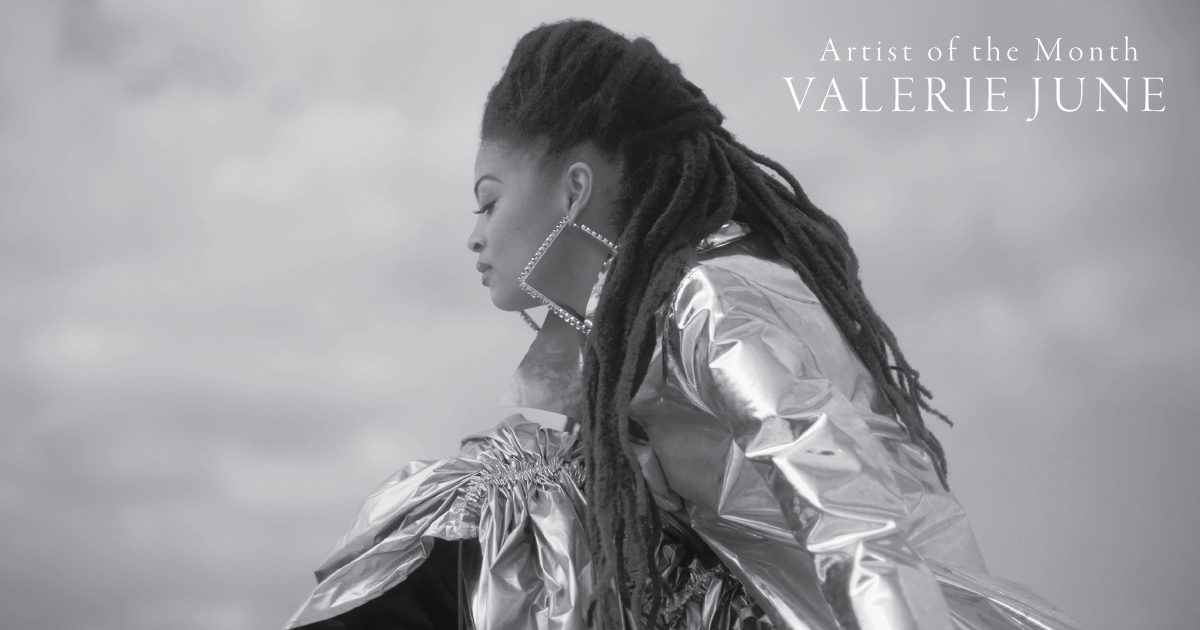
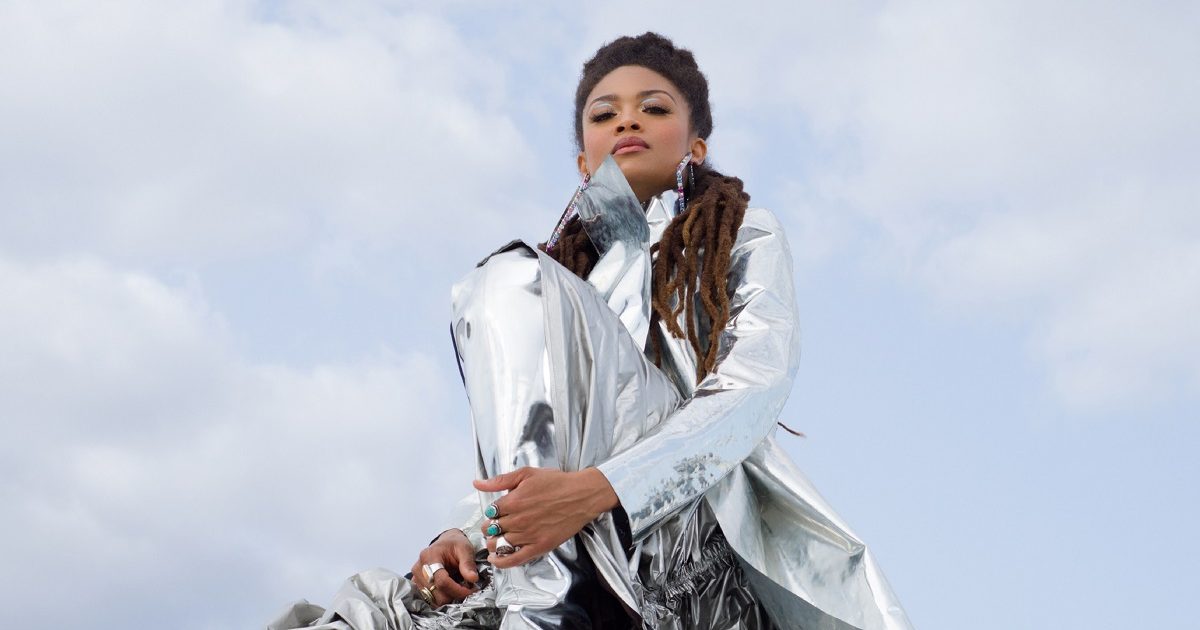
Artist of the Month: Valerie June

Valerie June is broadening her horizons with The Moon and Stars: Prescriptions For Dreamers, a new album arriving this month on Fantasy Records. Upon revealing the project, she stated, “For this album I wanted to see how we could bring some modern elements into that band-in-the-room approach I’ve taken with my records in the past.”

To achieve that concept, she worked with producer Jack Splash, who incorporated a spectrum of sonic textures into her familiar folk approach. They recorded in Los Angeles and Miami without losing sight of her West Tennessee roots. Indeed, Stax Records legend Carla Thomas makes a guest appearance on one of the album’s early singles, “Call Me a Fool.”

According to June, who’s now based in Brooklyn, The Moon and Stars: Prescriptions for Dreamers marks a moment of clarity: “With this record, it finally became clear why I have this dream of making music. It’s not for earthly reasons of wanting to be awarded or to win anybody’s love — it’s because dreaming keeps me inquisitive and keeps me on that path of learning what I have to share with the world. When we allow ourselves to dream like we did when we were kids, it ignites the light that we all have within us and helps us to have a sort of magic about the way we live.”

In the weeks ahead, we’ll have an exclusive interview with this remarkable singer-songwriter, who is also our BGS Artist of the Month for March. Until then, we’re prescribing this BGS Essentials playlist of Valerie June’s music just for you.


Photo credit: Renata Raksha

WATCH: Cristina Vane, “Prayer For the Blind”

Artist: Cristina Vane
Hometown: Turin, Italy
Song: “Prayer For the Blind”
Album: Nowhere Sounds Lovely
Release Date: April 2, 2021

In Their Words: “‘Prayer For the Blind’ is inspired by a friendly couple I met while camping on the border of Nebraska and Iowa. She told me her mother suffered from dementia, but that it couldn’t help but make her laugh when her mother claimed that her husband was cheating on her, going dancing with a woman with two peg legs, and that she was going to wring her neck. The anecdote got me thinking about how we try and find levity in heavy situations, and also about the bond between mothers and daughters and the intergenerational burdens that can be passed along through them. I wanted to find a tone that matched the difficult nature of these questions, and the lonesome modal banjo seemed perfect for that, paired with Nate Leath’s great fiddling. The issues of motherhood and illness are no new phenomenon, so I thought old time sounds fit the theme well — you can’t beat a fiddle and banjo!” — Cristina Vane


Photo credit: Oceana Colgan
Video credit: Jeremy Harris

WATCH: Moira Smiley, “Days of War” (Feat. Sam Amidon and Seamus Egan)

Artist: Moira Smiley
Hometown: New Haven, Vermont
Song: “Days of War” (feat. Sam Amidon and Seamus Egan)
Album: In Our Voices
Release Date: February 19, 2021
Label: Moira Smiley Music

In Their Words: “As I write these words for the Bluegrass Situation, I’m traveling for the first time in nine months. I’m seeing the birds-eye view that ‘Days of War’ imagines… and it’s extraordinary to see this beautiful earth today. I’m flying to my beloved California to work with Tune-Yards and write some new music. ‘I fly because I must carry on.’ ‘Days of War’ is one of three banjo-driven tracks on my new album, In Our Voices. This album returns me to my a cappella, collaborative roots and kicks up a lot of percussive dust while bowing deeply to American folk music.

“Seamus Egan (Solas, Seamus Egan Project) and I wrote the core of this song after yet another shockwave of white supremacist hate hurt more people in 2017. It evolved into this form when my old friend and fellow Vermonter, Sam Amidon, said ‘yes!’ to singing the ‘human’ voice so I could converse with him as ‘the bird’ who flies and sings in spite of all. The bird is also the voice of our inner resilience — our artistic and humanistic gifts that carry us through times of upheaval and violence.” — Moira Smiley


Photo credit: Alexandra Defurio Photography

BGS 5+5: Chris Pandolfi

Artist: Chris Pandolfi
Hometown: Golden, Colorado
Latest Album: Trance Banjo
Personal nicknames: Panda

Which artist has influenced you the most … and how?

From one perspective, this is a really tough question for me because there are many sides to my music, and many influences that have factored in really heavily at different periods. But from another perspective, it’s easy. I wouldn’t be playing the banjo if it wasn’t for Béla Fleck. I discovered the Flecktones in high school and was just blown away in every possible way. It was a moment of pure inspiration, and after a handful of shows all I wanted to do was learn how to play the banjo. That was the start of my journey as a musician, and none of that happens had I not discovered Béla’s music.

But his influence doesn’t end there. He’s a legendary improviser on the instrument, and that’s a big part of what the Stringdusters do. But maybe even more importantly, he’s made his mark by recontextualizing the banjo, combining it with so many eclectic sounds and bringing it to many new genres. That’s a big goal of mine as well, and that’s very much inspired by Béla. He didn’t leave too much undiscovered territory! But the bigger your imagination, the more territory there is to explore, and I love that challenge.

What’s your favorite memory from being on stage?

I have many great memories of being on stage, but the night that we played in Covington, Kentucky, in the summer of 2019 stands out. It was an electric show, and the moment we walked off stage we all sort of simultaneously decided that we had just made a live album. That has only happened a handful of times in our career, even though we have had many gratifying shows. But this was one of those stand out nights where something connected on a deeper level. It seemed like everything we did just hit the crowd with maximum power, and then they were feeding us with so much energy and emotion. That’s what can happen at a show. It can happen any night, even when a venue is not packed out, and that possibility is one of the great thrills of this career. On a night like that, everyone there is an equal participant in the performance. There’s no divide between the performers and the crowd, and the possibilities are endless.

What other art forms — literature, film, dance, painting, etc — inform your music?

I get inspiration from a lot of places, but books and visual art are high on that list. I love artists and writers who surprise you. It may not inspire a specific melody or song, but it definitely stokes the idea inside me that anything is possible, and with imagination and creativity you can always find new paths to travel. Lately, I have really enjoyed the work of Clyfford Still. Still was an American, abstract painter whos work is bold and stunning. There’s a beautiful museum dedicated to his work here in Denver, and it turned me into a big fan.

I also love reading science fiction, mainly because the imagination factor of good sci-fi is off the charts. I read a trilogy of books in recent years called The Three Body Problem by a Chinese author named Cixin Liu that blew my mind. The story is gripping and endlessly creative. Two song titles on my new record, Trance Banjo, are references to that trilogy, both from the second book, Dark Forest, which is my favorite. Great art of any kind transports you to a place that feels very free, where there’s no strong sense of self. I get a lot of inspiration from that feeling.

What rituals do you have, either in the studio or before a show?

Playing music is one challenge, but performing is a whole other hill to climb. When I am getting ready to play live or record, I always try to spend some time with my instrument (15-45 minutes or so) playing really mindfully and getting in the zone. That zone of being deeply focused on the music has seemed like a mystery at points in my career, and will forever be elusive in some way. But there is also something methodical about it, and that’s where practice comes in. When I practice I spend some time focusing on more mechanical elements, a new technique, transcribing or that sort of thing. But ultimately, I want to devote a good chunk of every practice session to building that zone. A good practice session should be like a meditation. The more time you can log in that focused zone, the more you know what it feels like and the easier it will be to conjure up in a performance setting. It’s a lifelong journey, and it certainly keeps you humble! But it’s not magic, it just takes practice.

If you had to write a mission statement for your career, what would it be?

I think my most consistent goal is to sound like myself as a player, and craft music that is unique as a producer. Bluegrass is the banjo’s native territory, and a common goal among proficient bluegrass players is to study and copy the styles of the early masters. For banjo players, that’s Earl Scruggs, and I would give anything to sound like Earl! There is so much great knowledge there, and so much expression as well. It’s a bedrock element of the instrument that practically every great player has a deep knowledge of.

While I have spent much time working on the fundamentals of Earl’s style, that is more of a starting point for me, and not an end-game. There are times on stage when I really try to emulate that older sound. But when it comes to crafting my own style and my own music, I try to use those old school bluegrass rudiments — timing, power, tone — but then add my own voice as well. The same goes for producing. It’s all about identifying and connecting with sounds that move you, and then using your imagination to grow from there and utilize those tools to bring your own vision to life.


Photo credit: Chris Pandolfi

BGS 5+5: Tony Trischka

Artist: Tony Trischka
Hometown:: Fair Lawn, New Jersey
Album: Shall We Hope
Release Date: January 29, 2021
Record Label: Shefa Records

Which artist has influenced you the most … and how?

Earl Scruggs. Pretty much a no-brainer for me. He changed my life when I was 14 years old. His playing is at the heart of everything I do. And on a larger scale, indirectly because of him, I have the wonderful family I have, have had a successful career and many friends around the world.

What was the first moment that you knew you wanted to be a musician?

I can’t say there was a moment like that. I first earned money playing music when I was 14, and continued to do so regularly through college. Though I was a Fine Arts major in school, and had very abstractly thought of a career as a museum curator (who was I kidding?).

What’s your favorite memory from being on stage?

In 1988, our band Skyline was invited to tour communist Czechoslovakia. Since my background is Czech on my father’s side, it was a particularly moving experience. While there, we performed in front of 30,000 people at the Porta Festival in Plzeň. We played a nighttime set and every second or third person in the audience was holding a candle, which made for an unbelievable sight. We were called for a second encore, and the emcee asked us to leave our instruments backstage and just walk to the front of the stage. As we were standing there facing this incredible candle-dappled crowd the emcee said, “You’ve given your gift of music to us, now we want to give you a gift.” He proceeded to divide the audience into thirds and had each third, of 10,000 each, sing a separate note of a major chord for us. Especially considering this was when Czechoslovakia was still communist, it was a profound experience.

If you had to write a mission statement for your career, what would it be?

Push boundaries and explore new areas on the 5-string banjo, but honor the history of the instrument. Don’t get bored.

Since food and music go so well together, what is your dream pairing of a meal and a musician?

Can I bring back Aaron Copland? On an emotional level he has had as much influence on me as Earl Scruggs. As for a meal, we’d have to start with a nice cocktail, and I guess it would have to be a Manhattan. Dinner would be hearty beef brisket with all the sides, and finish off with some good ol’ apple and cherry pie. I think that would cover all of the appropriate culinary bases.


Photo credit: Zoe Trischka

LISTEN: Mike Barnett, “Hybrid Hoss”

Artist: Mike Barnett
Hometown: Nashville, Tennessee
Song: “Hybrid Hoss”
Album: + 1
Release Date: March 19, 2021
Label: Compass Records

Editor’s Note: Fiddle player Mike Barnett’s collaborative album, + 1, was slated for a late summer 2020 release, but plans were derailed when he suffered a cerebral hemorrhage at his home in Nashville in July. He underwent two successful surgeries and an initial round of rehabilitation in Atlanta, and will soon begin intensive rehabilitation in Chicago. There, accompanied by his wife, fiddler Annalise Ohse, he will work to “reconnect his brain to his fingers.” In the midst of continuing his recovery, Barnett is very excited about getting the music on + 1 to the fans and community that have offered him so much support. Go to Mike Barnett’s GoFundMe page to contribute to his recovery fund.

In Their Words: “Here’s a good old Bill Monroe classic… oh wait, except for the ‘A’ part. I put one note per ping pong ball and played lottery bingo for that part… just kidding, though it might sound that way. I sometimes enjoy taking tunes outside the box, but still maintain some semblance of where it came from. This is a hybrid of ‘outside’ and ‘in’ based on Bill Monroe’s ‘Wheel Hoss.’ Grounding this in the tradition of banjo/fiddle seemed appropriate. Cory Walker’s instincts and diverse musical pallet make him one of very few people who could tackle this.” — Mike Barnett


Photo credit: Stacie Huckeba

Whether Your Dream Is Big or Small, Valerie June Dedicates This Song to You

Valerie June blends her roots writing and singing styles with a markedly modern production quality in her new single, “Call Me a Fool,” giving the music a fresh yet familiar feeling. The upcoming album, titled The Moon and Stars: Prescriptions for Dreamers, was produced by June and Jack Splash, whose resume includes powerhouse names like Kendrick Lamar, Alicia Keys, and John Legend.

“With this record, it finally became clear why I have this dream of making music,” says June, who was raised in Tennessee and now lives in Brooklyn. “It’s not for earthly reasons of wanting to be awarded or to win anybody’s love — it’s because dreaming keeps me inquisitive and keeps me on that path of learning what I have to share with the world. When we allow ourselves to dream like we did when we were kids, it ignites the light that we all have within us and helps us to have a sort of magic about the way we live.”

Embracing an experimental approach, Valerie June and Jack Splash recorded the project at Los Angeles and Miami studios. She notes, “For this album I wanted to see how we could bring some modern elements into that band-in-the-room approach I’ve taken with my records in the past.” To compound that marriage between old school and new, “Call Me a Fool” features none other than the Queen of Memphis Soul, Stax legend Carla Thomas. Crisp yet warm, sleek yet comfortable, Valerie June’s new music is everything we’ve been waiting for and then some. The Moon and Stars: Prescriptions for Dreamers will be available on March 12 on Fantasy Records.

Upon releasing the video, she wrote on Instagram, “Have you ever been a fool for a dream? It might have been a little dream like a kiss from a lover or a big one like the dream of peace that Dr. King, John Lennon, and so many others have had for humanity. No matter how big or how small your dream may be, keep believing, and let the world call you a fool!”


Photo credit: Renata Raksha