Greensky Bluegrass Capture the Live Jam on ‘All For Money’

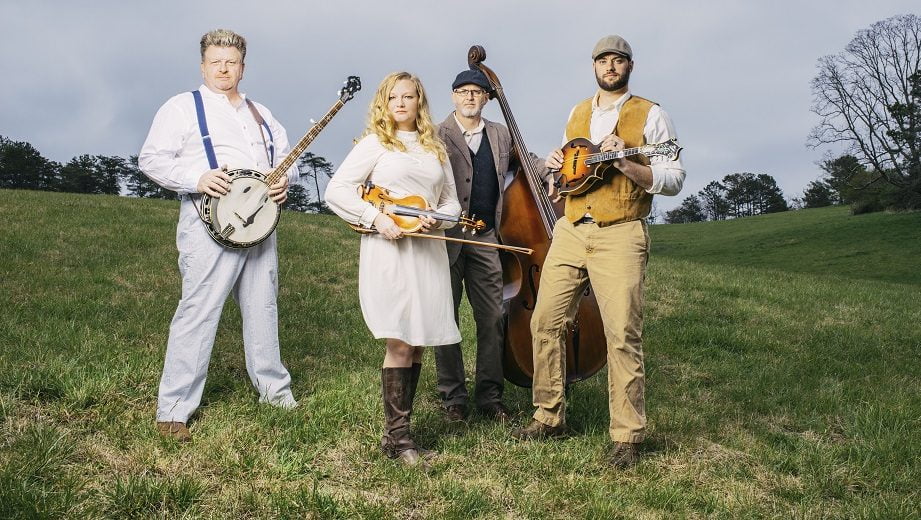
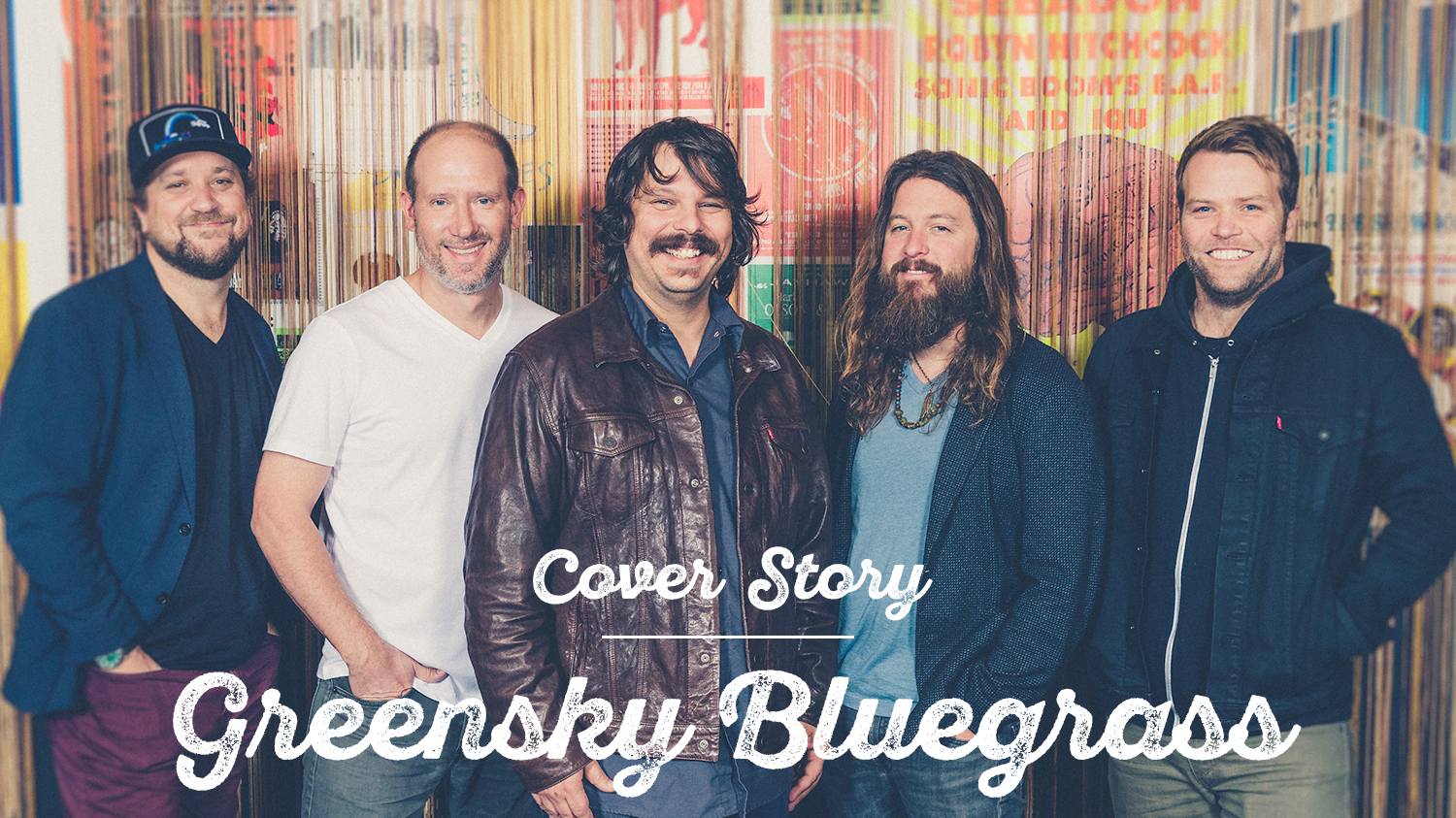
With their progressive mindset and undying faith in the power of the jam, the electrifying live shows put on by Greensky Bluegrass have captivated roots and rock fans alike for nearly two decades – but the Midwestern five piece has always been more than a group of gifted musicians. Layered, thought-provoking songcraft is also a big part of their DNA, and with their new album, All For Money, those two worlds come together like never before.

This month, the band – composed of mandolin player and primary songwriter Paul Hoffman, guitarist Dave Bruzza, banjo picker Michael Arlen Bont, Dobro player Anders Beck, and bassist Mike Devol – embarked on a milestone tour of listening halls that are well suited to showcase both sides of the Greensky Bluegrass double helix, and according to Hoffman, that everything-at-once approach is the next step of their journey.

“We don’t have any grandiose dreams or visions of things we haven’t accomplished,” he says, “and I think it’s been that way for the last 10 years. Being able to go out and play the right venue in all the right towns where we can put on a big show and present everything we do … it’s about getting that to happen everywhere now.”

BGS: You guys were inspired early on by The Grateful Dead, and I hear that improvisational spirit on the new album. Do you feel like All For Money is a return to your roots?

Paul Hoffman: We talk about this album being a lot more like a show than previous records because for us, [studio work and being onstage are] kind of two separate art forms. … With this record we went for the show aspect right from the get-go. It’s a little loose, and a little improvised, and we’ve succeeded with that more and more on every record – finding ways to capture that live spirit but still utilize all the tools available to us in the studio. Like for example, maybe there’s a place where there’s two mandolins at once. We couldn’t do that live, but if it sounds cool on the record, let’s do it.

Tell me about recording in Asheville. What kind of vibe do you guys get there?

We love that town. In the young days of the band we thought we should move there and maybe it would spark our career. We didn’t, and it was probably for the best, but the studio is really cool. It’s like an old church and it’s got a lot of room to work in. All our early records were done in Michigan in this studio that’s really small, and you don’t need a big room or an extra room downstairs with a ping pong table and video games and a kitchen and three couches. You don’t need any of those luxuries, but as soon as we went to [the studio,] Echo Mountain, to record the last record, it was like “Man, this is nice” … and now we probably do need them. [Laughs]

Digging into the live show versus studio album idea, you have a couple of really lengthy songs here. “Courage for the Road” is over nine minutes long, and I get that in a live setting, but why stretch it out for the album?

I think sometimes we’ve found that our fans are separate. Some of them are live music aficionados and don’t really enjoy listening to the records, and some people who like our records come to the show and are like “Why are all these songs so long and psychedelic?” I think there’s a part of us that figures those things don’t need to be separate, and maybe if we did a bit more from both sides of the equation, there’s something there for everybody.

The goal for that song is for it to remain interesting the whole time, and when I listen to it I feel like I’m listening to a well-mixed, well-recorded, live jam. It was so organic with how it happened that it kind of had to be left alone, and I think that translates to the listener as live energy. That’s the thing you sacrifice in the studio if you start overdubbing too much, and that’s when some people complain. What they’re really complaining about is that it loses some of that honest energy and integrity, so those jams should preserve that.

Tell me about the inspiration behind that song. Is this literally about being on the road, or more of a relationship thing?

It’s all of the things. I like to write about multiple things at the same time, and I think it helps. People are gonna read into it how they want anyway. So I’ll often start talking about something and then realize I’m talking about something else, too. It works really well as a simple song about being on tour, but it also works as a song about being in love with someone and not being able to let go, or being obsessed with something for the wrong reasons.

Why might you need some courage for being on the road?

It’s a lonely place sometimes, and that in itself is a paradox. You’re surrounded by people who love you every night, but then the lights go down and the crowd goes home and you’re all alone again. It’s hard to even have an argument for feeling lonely on tour when so many people are coming to see us and support us, but they are real things. And even in general, when you make that commitment to quit your job and leave your family for six weeks at a time, and maybe come home with little to show for it, it’s hard for musicians to keep sticking it out.

Tell me about the song “All For Money” and the interlude in the middle. When you were writing it, were you thinking, “It would be cool to do two minutes of jamming right here”?

Sometimes it comes up in the moment, but with that song it was real intentional. I wanted to explore this idea of the pressure of success and the whole “Be careful what you wish for” kind of thing. Back in the day when we were playing in a bar and all we had to do was win over some fans, in hindsight that’s almost easier than living up to the expectations of all these fans now, who travel and spend money to see us all the time.

They see us a lot so it’s like you’ve got to come up with new tricks and something happened in the last couple of years where it was like the pressure built up. That’s not to say it was too much or that we don’t love it, but it occurred to me that there was a real paradox of success happening where it was like “Man, this is hard!” Sometimes we joke around like “Why don’t they stop following us?!” … Which is absolutely not what we want.

So there’s a joke there, or at least a duality to be explored, and I wanted to set the song up in a way that it’s supposed to get creepy or disorienting, and to make you feel uncomfortable. I talk about being supported but surrounded, contained but captured, and then it comes around to that triumphant chorus that’s all about the love and the songs creating emotion and camaraderie. It goes on this journey of joking around and all these lies we were told in the beginning, and then it gets scary and uncomfortable on purpose. It’s almost supposed to be discomforting, more than a jam.

I love your lyrics, because as you explained there are lots of layers and you’re not afraid to question yourself. What were you trying to get at with “Do It Alone”?

I was trying to touch on this angst-y, rock and roll thing. I wanted something that had an anthem vibe, something a crowd would cheer along with, and again I was thinking about a couple of different things at once. One moment I’ll be thinking about a friend of mine who’s in love with a girl who doesn’t love him anymore, and the next I’m like “Man, I miss my dog.” [Laughs] Sometimes really specific lyrics about really different things can help you get some insight into that other thing.


Photo credit: Dylan Langille/ontheDL Photo
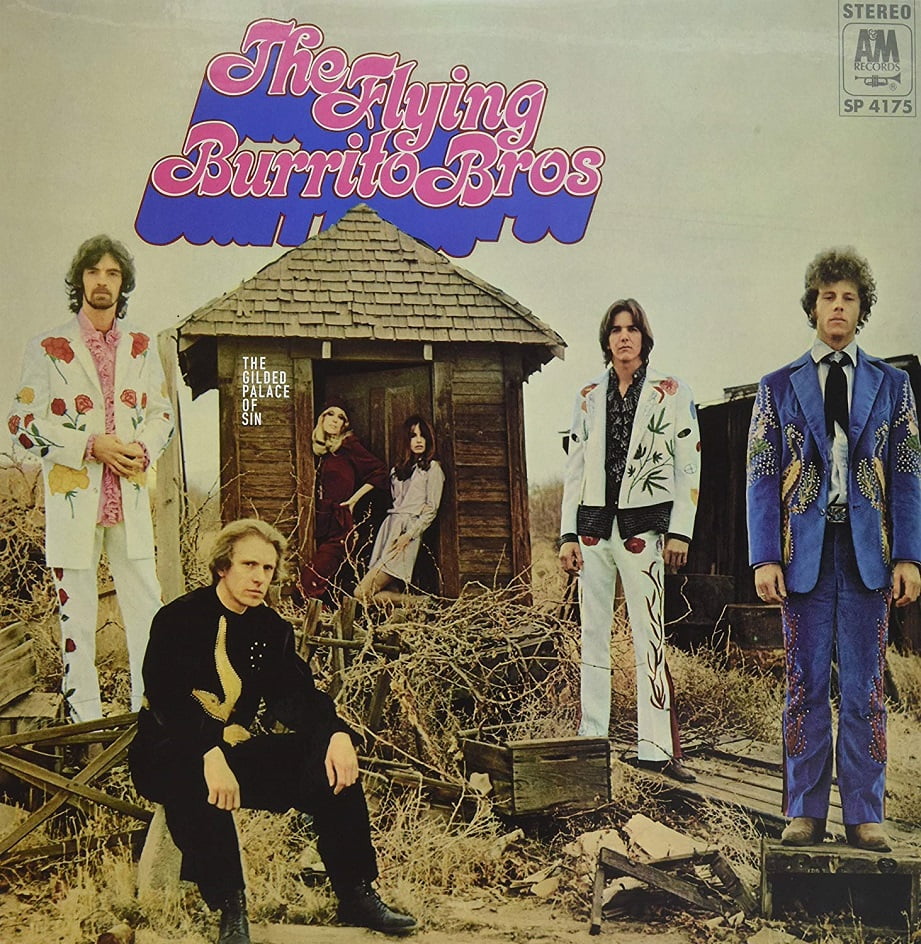
Canon Fodder: The Flying Burrito Brothers, ‘The Gilded Palace of Sin’

A spry country tune driven by Chris Hillman’s hyperactive mandolin and Sneaky Pete Kleinow’s spacy guitar solo, the Flying Burrito Brothers’ “My Uncle” is not a song about family. The uncle they’re harmonizing about is Uncle Sam, who in the late 1960s wanted members of the band to kill others and possibly be killed in Vietnam. Gram Parsons had already secured a somewhat dubious 4-F deferment, making him ineligible for military services for health reasons, but the Army continued its pursuit. “So I’m heading for the nearest foreign border,” Parsons sings, resigning himself to the ignoble fate of a draft dodger.

In the late 1960s, rock and roll was rife with anti-war songs. Some were angry, like Creedence Clearwater Revival’s “Fortunate Son.” Others were riddled with mortal dread, like “Feel Like I’m Fixin’ to Die Rag” by Country Joe & the Fish. But few sounded anything like “My Uncle,” an album cut from The Gilded Palace of Sin. For one thing, as the Flying Burrito Brothers ponder what they owe their country, they sound more melancholy than outraged, as though they’re singing a breakup song with America.

For another thing, they dressed their anti-war sentiments up in the threads of country music, which was already viewed as both musically and politically conservative: a counter to the counterculture, representing the moral/silent majority that finally put Nixon in the White House in 1968. “Okie From Muskogee” was the defining country hit of the era, a song that tsk-tsks the hippies, roustabouts, and even the conscientious objectors burning their draft cards. Merle Haggard may have written it to gently puncture the sanctimonies of an older generation, but listeners heard no irony or distance in lyrics about wearing boots instead of sandals and respecting the college dean.

Given the canonization of Parsons over the last few decades, as well as the gradual breakdown of genres and styles over time, it’s easy to forget just how contrarian it would have been for a West Coast rock band to embrace country and bluegrass. The Flying Burrito Brothers had risen from the ashes of the Byrds, a group which earlier in the decade had included Gram Parsons for just one album, Sweetheart of the Rodeo. A relative flop upon release, it nevertheless invented country rock with a set of twangy originals and covers of songs by Cindy Walker, Haggard, and the Louvin Brothers. Aside from Dylan, who was covered by everybody in the late 60s, these weren’t especially hip influences at the time.

Draft dodging may have been anathema to country music, but “My Uncle” is at its heart about more than just protest. “A sad old soldier once told me a story about a battlefield that he was on,” Parsons and Hillman harmonize. “He said a man should never fight for glory, he must know what is right and what is wrong.” The Flying Burrito Brothers plumb that stark moral divide on “My Uncle” and every other song on their debut, parsing temptation from salvation, wickedness from righteousness, and painting a picture of an America where you might easily confuse one for the other. Country music becomes the ideal vehicle to explore ideas about violence, consumerism, free love, and more broadly, the notion of sin.

The idea of sin illuminates every song on The Gilded Palace of Sin. The rollicking “Christine’s Theme” opens the album with a woman bearing false witness: “She’s a devil in disguise, she’s telling dirty lies.” “Juanita” imagines an angel rescuing the band from booze and pills. “Hot Burrito #2” invokes Jesus Christ by name — not cussin’ but praying. “Do Right Woman,” a Dan Penn/Chips Moman number popularized by Aretha Franklin, is transformed from a lover’s plea into a preacher’s wagging finger. “Dark End of the Street,” by the same Memphis songwriting duo, is about coveting your neighbor’s wife: “It’s a sin and we know that we’re wrong.” When the Flying Brothers get to the bridge, “They’re gonna find us,” they might as well be talking about angels and demons.

“Sin City,” the album’s centerpiece, is the band’s version of Jonathan Edwards’ “Sinners in the Hands of an Angry God,” which mixes Biblical imagery with twangy country harmonies to create a startlingly dire depiction of Los Angeles as both Sodom and Gomorrah. It’s a place where avarice rules all, leaving even the determined and upright struggling for footing. “That ol’ earthquake’s gonna leave me in the poorhouse,” the Brothers sing, echoing Edwards’ assertion that all humans as sinners are “exposed to sudden unexpected destruction.” Wealth won’t buy redemption or avert damnation: “On the thirty-first floor, that gold-plated door won’t keep out the Lord’s burning rain.” (That’s likely a sly reference to Larry Spector, the Byrds’ former manager, who lived on the thirty-first floor of a luxury LA high-rise).

Jesus shows up for a verse of “Sin City,” and he may or may not reappear in the close “Hippie Boy,” a spoken-word homily in the style of Hank Williams’ moralizing alter ego Luke the Drifter. Hillman tells the story of a boy caught up in the violence between the right and the left. In his 33 1/3 book on Gilded Palace of Sin, Bob Proehl suggests the band might have been inspired by the riots at the Democratic National Convention the year before. “The so-called riots in Chicago were actually more of a police action,” he writes, “a beatdown instigated by the gestapo tactics of Mayor Daley’s police force right in front of the delegates’ hotels.” Even before the song concludes with a rousing chorus of the old hymn “Peace in the Valley,” the song is a damning attack on anyone who would employ violence in the name of morality.

While they are using country music to interrogate the genre’s own high moral standards, the Flying Burrito Brothers don’t come across as scolds. Instead, they’re doing something more ambitious yet far more personal: They’re trying to find their own way in this sinful America, trying to find the moral high ground in shifting sands. On “My Uncle” they sing about dodging the draft with guilt and sadness, but they understand it is a moral predicament. “Heading for the nearest foreign border” is preferable to enlisting and killing. That makes The Gilded Palace of Sin unsettlingly prophetic fifty years after its release, maybe even inspiring in its spirit of dissent and moral defiance.

None of the Brothers would ever sound quite so political or quite so driven by moral inquisition on subsequent albums. Their follow-up, 1970’s Burrito Deluxe, sounds good but has little of the brimstone determination of their debut. Parsons left the group shortly after its release, and his pair of solo albums drive the roads of a murky, mythological America.

However, less than a year after the release of The Gilded Palace of Sin, the Brothers witnessed Biblical calamity firsthand when they played the Altamont Free Concert. Billed as a West Coast alternative to Woodstock, it included San Francisco bands Santana and the Jefferson Airplane, with the Rolling Stones headlining. The crowd of 300,000 was already agitated when the Brothers played their early set, and by the time the Stones took the stage, they were volatile, and hostile. During a performance of “Under My Thumb,” one of the Hell’s Angels working security stabbed and killed a black man named Meredith Hunter, stopping the show and casting a pallor over the event, if not the entire decade. It was intended as a show of countercultural unity, but it must have seemed like God smiting the hippie generation: the end of the 6os in great and gory conflagration.

WATCH: NewTown, “Long Hard Road”

Artist name: NewTown
Hometown: Lexington, Kentucky
Song: “Long Hard Road”
Album: Old World
Label: Mountain Home Music Company

In Their Words: “This is one of the coolest tunes Tyler Childers has written. It speaks about the hardship of a long-distance relationship, something I’m sure a lot of folks can connect with. The video for the song was such a joy to make, surrounded by a few close friends and family. We used The Burl in Lexington, Kentucky, for the shoot — a beautiful venue! We hope people will enjoy the labor we put into this; we think it was well worth it. Enjoy!!” — Jr. Williams, NewTown banjo player and vocalist


Photo credit: Sandlin Gaither

Dolly Parton Proudly Shows Her Bluegrass Influences

[Editor’s Note: On Tuesday, August 25, 2026, the Parton family, represented by Dolly Parton’s nephew and head of security, Bryan Seaver, posted a video to social media announcing the passing of Dolly Rebecca Parton at the age of 80.

We are at a loss for words as we bid farewell to our beloved Dolly. For now, we would like to simply take a moment to remember her life and career with this essay from our archive about Dolly’s influence in bluegrass music. Like the rest of the world, we will always love Dolly.]

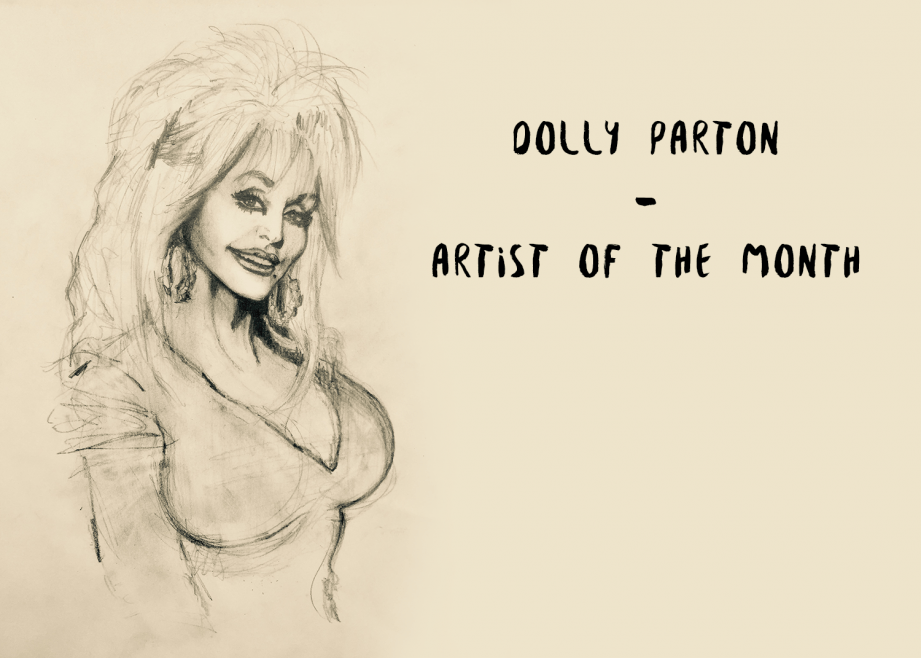
No genre of American music has been untouched by the influence of Dolly Parton and bluegrass is surely no different. Given Dolly’s homegrown, East Tennessee roots and her pickin’ chops on many of bluegrass’s signature instruments, her connection to the genre perhaps runs deeper than any other style she’s accomplished — besides good ol’ classic country, of course.

In April 2020, Dolly announced six albums – including Little Sparrow, one of her bluegrass forays – from her back catalog would be made available on digital streaming services for the first time. In an episode of 2019’s Peabody-Award winning podcast, Dolly Parton’s America, a portion featuring the London debut of Parton’s 9 to 5 musical details that many of Parton’s inner team regard her 1999 release, The Grass Is Blue, as one of her best – critically and otherwise. We even featured The Grass Is Blue in an episode of The Breakdown. Trio and Trio II, Heartsongs, and even the genre-mashing White Limozeen all contain heavily bluegrass and string-band inflected songs – the influence of her home turf and its musical accompaniment are evident throughout her artistic output.

Live and from the studio, through cover songs, collaborations, and in casual jam circles, Dolly and her songs have fully infiltrated bluegrass. It’s no surprise she speaks of it often, simply referring to the music as she did in her youth (and all throughout her career): as “Mountain music.” To celebrate Dolly in December, here are a few of our favorite Dolly/bluegrass cross-pollination moments:

“Sleep With One Eye Open” — Dolly Parton

Her 1999 all-bluegrass album, The Grass Is Blue, was named one of our 50 Most Greatest Bluegrass Albums Made by Women — and for excellent reason. It may very well be the one of the best bluegrass recordings born in the past few decades (check out that roster of pickers!!) and it brought bluegrass to Dolly’s greater audience — Norah Jones went on to cover the title track. Dolly even made an appearance at the International Bluegrass Music Association’s award show in 2000, as the project won Album of the Year. Dolly’s bluegrass skills are no better displayed than on this perfectly-executed cover of an all-time bluegrass classic.


“I Feel the Blues Movin’ In” — Trio

Both Trio albums (Dolly Parton, Emmylou Harris, and Linda Ronstadt) could arguably be categorized as bluegrass, but Trio II ticked quite a few more of traditional bluegrass’s boxes, especially with this cover of a Del McCoury original. To this day he’ll announce the song on stage as being the best, “Because Dolly Parton sang it!”


“Heartbreaker’s Alibi” — Rhonda Vincent & Dolly Parton

Dolly and the Queen of Bluegrass collaborate on this 2006 release from Vincent’s All American Bluegrass Girl. Vincent and Dolly have gone on to work together on a handful of other projects, as well. Something about that bluegrass vocal blend… Mmmm.


“Jolene” — Alison Krauss with Suzanne Cox and Cheryl White

And of course, covers of Dolly’s countless songs have filtered into the bluegrass songbook across the years. Alison Krauss leads an all-star band on this cover of perhaps Dolly’s most iconic song, “Jolene,” for the 2006 Kennedy Center Honors show.


“Islands in the Stream” — Love Canon with Lauren Balthrop

And it’s not just Dolly’s more country and bluegrass adjacent songs that have found themselves homes in bluegrass set lists and cover projects. Charlottesville, Virginia-based, bluegrass-meets-the-80s band Love Canon covered the iconic Dolly and Kenny duet “Islands in the Stream” for a BGS Sitch Session.


“Muleskinner” — Bill Monroe and Dolly Parton

They both had hit versions of this song, after all. Though this writer might be partial to the version that gleefully shouts, “I’m a lady muleskinner!” It’s badass no matter how you cut it, really. The Big Mon and Dolly, doing it right. And there’s something just so beautiful about Dolly Parton cueing the Kenny Baker into his solo.


“Little Sparrow” — Dolly Parton

2001’s follow up to The Grass is Blue, Little Sparrow continued Dolly’s bluegrass explorations, but with folk and transatlantic sounds joining the mix.


“Viva Las Vegas” — The Grascals with Dolly Parton

The Grascals take the CMA Fan Fest stage in Las Vegas with Dolly Parton singing an absolute classic with a good ol’ dose of bluegrass fire.


“Banks of the Ohio” — Dolly Parton

Not all of Dolly’s bluegrass forays have been… well, bluegrass. Here, she adds her theatrical, dramatic touches with a fresh-written preamble to the classic lyrics of “Banks of the Ohio.” Her soft spoken-word, the sumptuous strings, and a soaring, Dolly-vocal-run-filled arrangement give this staple a special hue that’s 100% herself.


“Why’d You Come in Here Lookin’ Like That” — Della Mae

Della Mae has plenty of experience covering Dolly, even once being the house band for a Dolly Parton tribute show in the UK. Once again, they’re pulling a cover that comes from outside Dolly’s bluegrass-y songs, and it’s fantastic.


“Just a Few Old Memories” — Dolly Parton

A legendary combination. Dolly Parton sings Hazel Dickens. What more would we ever need?

Well… Hazel’s in the Bluegrass Hall of Fame. Maybe it’s time Dolly ought to be inducted, too. After all, you just took a split second scroll over her major influence on bluegrass and vice versa — and her bluegrass outreach, as well. The case is made for itself. Dolly for the Bluegrass Hall of Fame!


Allison de Groot & Tatiana Hargreaves, “Eighth Of January”

It’s become something of an unofficial tradition here at BGS to celebrate the eighth day of the first of the month of the year with a nod to one of old-time’s finest instrumentals, to be sure: “Eighth Of January.” This year, the stars and calendars have aligned, allowing the first ever Tunesday Tuesday + “Eighth Of January” celebratory post. Hoorah!

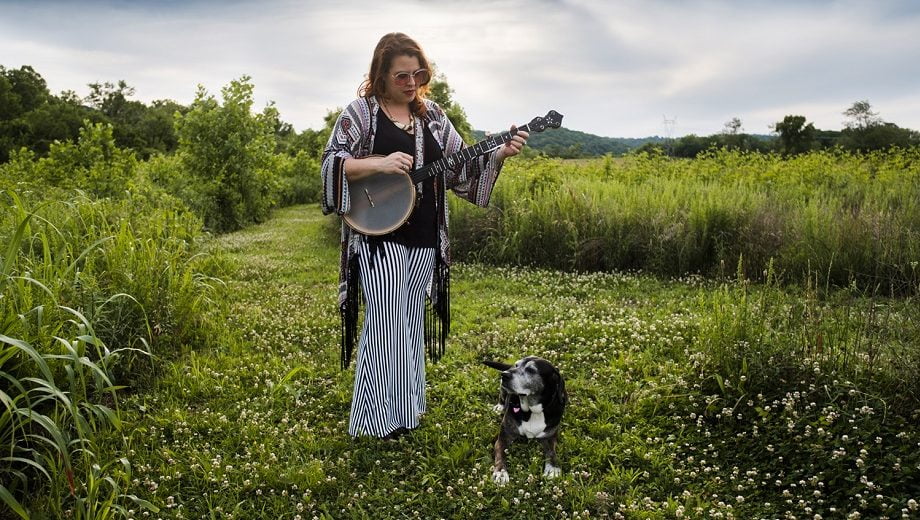
Now, those same stars and calendar have aligned even further, allowing Tunesday, January 8, and a brand new collection of fiddle/banjo tunes from clawhammerist Allison de Groot (Molksy’s Mountain Drifters) and fiddler Tatiana Hargreaves (Laurie Lewis & the Right Hands) to coincide so perfectly that we’re able to premiere de Groot’s and Hargreaves’ rendition of “Eighth Of January” on its namesake day. Fortuitous, indeed.

Even more fortuitous is the care, attention, and finesse given the often-rowdy, haphazard old-time melody. This duo, despite their youth — and often because of their youth — are two of the foremost old-time virtuosos on the scene today, executing these timeless songs and melodies with a clean and straightforward approach that sacrifices neither innovative thought nor modern embellishments to do so.

Furthermore, de Groot and Hargreaves are committed to making music that tells the full, unrevised, unabridged history of American roots music, with overt attribution to the amazingly diverse humans who pioneered these vernacular art forms. An old-time standard isn’t just an old-time standard, after all, and this fantastically talented pair of pickers demonstrate that and more on their upcoming self-titled album (out March 22 on Free Dirt Records) and this, its lead-off track.

The Best of Sitch Sessions: 13 Must-See Musical Moments

As we enter the new year, we look back on our favorite moments shared with some of our favorite artists in 2018. Check out our top Sitch Sessions, filmed in Los Angeles, Nashville, Philadelphia, and beyond.


“Ain’t That Fine” – I’m With Her

Fresh off the release of their debut full-length album See You Around in February, Sara Watkins, Aoife O’Donovan, and Sarah Jarosz serenaded us among the palms of the Fairmont Park Horticultural Center in Philadelphia.


 “Mal Hombre” – Rhiannon Giddens

Rhiannon Giddens brought Tejano to East Nashville with her powerful version of the legendary Lydia Mendoza’s classic “Mal Hombre.”


 “Long Gone Out West Blues” – Joe Mullins & the Radio Ramblers

Traditional bluegrass proselytes Joe Mullins & the Radio Ramblers joined us in Nashville, gearing up for the return of Huck Finn Jubilee in Southern California last October.


“The Traveling Kind” – Rodney Crowell and Emmylou Harris

Looking back on their 40+ years of friendship and collaboration, with no intention of stopping, Rodney Crowell and Emmylou Harris claim to be members of an “elite group” of those from their generation still traveling, touring, and performing. They laugh, “We’ve traveled so far, it became a song, at last”.


“Islands in the Stream” – Love Canon

How can you not smile from this bluegrass-inspired version of this Kenny Rogers and Dolly Parton classic?


“Rygar” – Julian Lage and Chris Eldridge

The duo gifted us with the building, joyous “Rygar”, off their album Mount Royal, which they describe as being comprised of “experiments” — songs that allowed them to explore their own capabilities and push the boundaries of what can be done on the acoustic guitar.


“The Restless” – The Lone Bellow

With this stunningly stripped-down rendition of “The Restless,” The Lone Bellow reminded us to keep our heads up and our hearts open in the face of adversity, something to hold on to for a fresh start in the new year.


“Alison” – Jamie Drake

Gearing up to release her solo album Everything’s Fine in 2019, alt-folk singer/songwriter Jamie Drake joined us in Los Angeles and regaled us with her immaculate tune “Alison.”


“Different, I Guess” – Lilly Hiatt

Lilly Hiatt, in the way only she can, ponders the dangers and glories of being vulnerable and allowing yourself to fall in love.


 “Coming Down the Mountain” – Mipso

Mipso muses on retreating from the madness of society in this beautiful song, taken from their 2017 album of the same name.


“Took You Up” – Courtney Marie Andrews

Courtney Marie Andrews’ breathtaking vocals stunned us once again in a solo acoustic version of this track from her latest album May Your Kindness Remain.


“Thirty” – The Weather Station

The Weather Station (AKA Tara Lindeman) gave us the haunting and tense, yet fluid, “Thirty” from their self-titled album. They met us to perform the song at BOK, a historic Philadelphia trade school, closed five years ago, now re-purposed for its space to be used by the community for small businesses, job training, non-profits, and more.


“Firestarter” – Andrew Combs

And to close out the year, we have singer/songwriter Andrew Combs with a solo acoustic performance of this captivating, previously unreleased tune.


LISTEN: Ashleigh Caudill, “The Road Rolls On”

Artist: Ashleigh Caudill
Hometown: Nashville, Tennessee
Song: “The Road Rolls On”
Album: The Road Rolls On, Songwriter Sessions Volume II
Release Date: February 1, 2019

In Their Words: “Life is pretty uncertain and there aren’t always neat endings to the stories that make up our lives. You never really know what’s coming next and sometimes things don’t turn out the way you planned, but the wheels keep turning and the road rolls on. In that spirit, this track was captured live at Sound Wave Studio by engineer and co-producer Daniel Rice. I played guitar and sang, along with John Mailander on the fiddle and Colin O’Brien on the percussive dancing. I overdubbed the upright and electric bass later on.” — Ashleigh Caudill


Photo credit: Scott Simontacchi

Dolly Parton Carries Childhood Memories Throughout Her Career

Back through the years, I go wandering once again
Back to the seasons of my youth…

So begins “Coat of Many Colors,” which Dolly Parton frequently cites as the favorite song she’s written. That 1971 country classic is just one example of Parton’s ability to view the world through a child’s eye, whether she’s writing about her own life, placing a fictional young character in dramatic circumstances, or simply making a connection to a new generation of kids.

The newest example of this gift is Dumplin’ – a Netflix film where an overweight teenager finds solace in Dolly’s music. Leading up to the movie’s release, Parton released a duet version of “Here I Am” with Sia – an ironic choice, as the pop star is famous for singing with her back to the audience. But that anthem of self-declaration sets the tone for the Dumplin’ soundtrack, underscoring one of the reasons that a teenage girl would love Parton’s music in the first place. The heartfelt film is based on a young adult novel by Julie Murphy.

Seeing an early cut of Dumplin’ inspired Parton to write “Girl in the Movies,” a thoughtful song that finds her identifying with that very character — the “girl in the movies.” Parton told NPR that she wrote it for every little boy and girl. The song carries a strong message, she says: “Don’t just live in a fantasy of watching someone else live their lives. You star in your own role. You be the star of your own life.”

Parton has embodied that perspective for 60 years. In fact, 2019 is the 60th anniversary of the first time she released a song she wrote – in this case, “Puppy Love,” composed with her uncle Bill Owens. Parton was 11 years old when she wrote it, 12 when she recorded it, and 13 when it was released as a single on the tiny Goldband Records. She sang locally around Knoxville, Tennessee, and moved to Nashville on the day after she graduated from high school in 1964. Two years later and still chasing her dreams, she married Carl Dean, a lasting union that nonetheless yielded no children of their own.

Yet time and time again she incorporated a child into the storyline of her music. For example, in “Mommie, Ain’t That Daddy,” Parton sings from the perspective of a woman whose kids happen to see their father begging for money. In “Jeannie’s Afraid of the Dark,” Parton describes Jeannie as a child who feared burial; her duet partner Porter Wagoner then reveals that Jeannie dies. “Malena” is another doomed child who dies on the night of her birthday, finally receiving the set of wings she’d asked for.

By 1970, Parton had carved out a solo career in addition to her role on Porter Wagoner’s TV show. Her first No. 1 hit, “Joshua,” tells the story of an orphaned girl who hears about a mysterious man living a good ways down the railroad track. Curious, she seeks him out – and then promptly moves in with him. (“Why, you’re just what I’ve been lookin’ for!” she exclaims.) The poetic “Coat of Many Colors” arrived a year later, serving as a morality tale that still resonates decades later.

Parton employed that same autobiographical approach for “In the Good Old Days (When Times Were Bad),” a gem from My Tennessee Mountain Home. Reflecting on her childhood years, she sings, “No amount of money could buy from me the memories I have of them / No amount of money could pay me to go back and live through it again.” (Merle Haggard identified with the lyrics so much that he recorded a version, too.) Another of the compositions on that album is simply titled “I Remember” and finds her blissfully recalling those seasons of her youth. Of course, as she matured, so did her songwriting, most notably on poignant compositions like “I Will Always Love You,” “Light of a Clear Blue Morning,” and of course, “Jolene.”

Still, if you dig into her albums from this era, you’ll find songs like “Me and Little Andy,” about a poor girl and her dog who wind up on Dolly’s doorstep. She agrees to let them spend the night; by morning, the girl and the dog are both dead. Another one, “Mammie,” is about a midwife who raises a child after the mother dies at birth and then teaches the child to sing and play guitar — but Mammie herself doesn’t live to the end of song. “Silver Sandals” recounts the story of a disabled young girl who couldn’t walk; when she inevitably dies, Dolly and Porter imagine her happily walking up the golden stairs of Heaven.

On a brighter note, Dolly reminisces about a banjo picker she knew as a kid named “Applejack.” Almost like a precursor to Dumplin’, Parton composed “Shattered Image” about sitting on a bridge as a girl and throwing rocks into her reflection in the water. She compares the experience to the way people were shattering her public image as an adult. A 1979 album cut, “Nickels and Dimes,” is a co-write with her brother Floyd Parton, who died in December. While writing it, Dolly thought about how she’d open up her guitar case in downtown Knoxville as a young girl and busk in order to get enough quarters to buy hamburgers. By the time the song ends, she’s a star, but here’s how it begins:

“I used to stand on the corner and sing as a child
And I’d play my guitar and sing as the people went by
The sidewalks were crowded but I’d just sing louder ‘cause I didn’t mind
Spending my time, spinning my rhymes, and singing for nickels and dimes.”

Even beyond her musical output, Parton has kept a strong bond between herself and a younger generation. In 1986, she invested in a theme park in East Tennessee and rebranded it as Dollywood – a gift that keeps on giving, with new attractions added nearly every year. And it’s not all roller coasters. Parton’s mother sewed a replica of the fabled coat of many colors to display in the museum dedicated to Dolly’s life and career.

Nearly a decade later, Parton instituted the Imagination Library, where pre-school children receive a monthly book at no charge. To these lucky kids, Parton is known as “The Book Lady.” Meanwhile, “Coat of Many Colors” has been successfully transformed into a children’s book and an award-winning TV movie, in addition to being recorded by the likes of Eva Cassidy, Emmylou Harris, Joey & Rory, and Alison Krauss & Shania Twain.

When Parton was 70 years old, she secured a No. 1 country album with 2016’s Pure & Simple. One of the most charming songs on it is titled “I’m Sixteen,” where she sings, “It goes to show you’re never old / Unless you choose to be / And I will be sixteen forever / Just as long as you love me.” A year later she released her first-ever children’s album, I Believe in You.

As 2019 begins, Parton is in the spotlight again. On January 6, “Girl in the Movies” will compete for a Golden Globe award in the category of  Best Original Song in a Motion Picture. A month later, she will be recognized as the MusiCares Person of the Year at an all-star concert event, just a day before the Grammy awards. Along with celebrating her magnificent musical achievements, the presentation also acknowledges the fact that the Imagination Library has given out 100 million books since its inception. Parton is the first member of the Nashville music community to be honored at the annual MusiCares gala.

Way down in the fall, Parton will return to the Grand Ole Opry, celebrating the 50th anniversary of her induction in October. But her history to the Opry stretches about a decade before that. When she was 13, Parton and her uncle Bill Owens had lingered outside the Ryman to meet Johnny Cash. When he emerged, a starstruck Parton begged Cash to let her sing on stage – but it would take a while for this dream to be realized. In time, Opry star Jimmy C. Newman gave up his slot for her, although Cash handled the introduction that night. According to Parton’s autobiography, Cash told the audience, “We’ve got a little girl from up here in East Tennessee. Her daddy’s listening to the radio at home, and she’s gonna be in real trouble if she doesn’t sing tonight, so let’s bring her out here!”

Parton wrote about this career milestone in her book: “I know I had never heard a crowd cheer and shout and clap that way. And they were doing it all for me. I got three encores. This time I was prepared for an encore, but not three, not at the Grand Ole Opry. Someone told me later, ‘You looked like you were out there saying, “Here I am, this is me.”’ I was. Not just to that audience but to the whole world.”


Illustration: Zachary Johnson

Want to Write a Protest Song? Read This First

“There’s no such thing as someone else’s war
Your creature comforts aren’t the only things worth fighting for
Still breathing, it’s not too late
We’re all carrying one big burden, sharing one fate.”
                                                                                                  — Jason Isbell, “White Man’s World”

If one musical phenomenon united the year 2018 from the very moment the ball dropped over Times Square, it was the protest song. The soundtrack of the resistance clearly had enough time to percolate, deliberate, and incubate since our 45th president’s administration began in January 2017, because protest emerged as a recurring theme.

In the summer of 2017, Americana speak-your-mind hero Jason Isbell may have been the earliest adopter with “White Man’s World,” where he was decrying his own privilege while championing our common humanity and our shared fate. A year later, string band virtuosos Punch Brothers went so far as to name the elephant in the room and describe him thusly on “Jumbo:” “Whoa, here comes Jumbo with a knife and a tan/ And an elephant’s tail for his Instagram/ Grown up brave on the fat of the land of the free…”

Falling in line with this common theme, in an interview earlier this year River Whyless’ drummer Alex Waters described their creative process for their latest album, Kindness, A Rebel, as grappling with the fact that, “it’s just hard to avoid the elephant in the room as far as the current political situation and feeling like we didn’t say or do enough.” Boston-based bluegrass outfit, the Lonely Heartstring Band, opted to protest by not protesting — a press release described their single, “The Other Side,” as, “a song that takes no sides, but encourages empathy and understanding for people regardless of political beliefs.” Korby Lenker and Nora Jane Struthers took that perspective directly to far-right cable television show, Huckabee, performing a co-written plea for the sanctity of the dinner table, “Let’s Just Have Supper.”

Several issues arise when you start to consider the commonalities between all of these songs, the coincidence of their releases, and the apparent level to which political mayhem must reach before the greater community sees these songs as necessary. Look, we’ve got at least two more years of this level of political division and discourse ahead of us. Before you sit down to write your scathing, politically-minded, resistance-inspired anthem perhaps consider these few questions and suggestions:

Is this your story to tell?

Story songs and character songs can be sensationally moving and evocative, and they’re an integral part of American roots music’s songwriting traditions, but writers should be careful not to simply co-opt and capitalize on stories, concepts, ideas, and experiences of a marginalized person or group of people. Try not to appropriate any identity or culture, especially if there are marginalized voices out there already telling these stories. Which leads us neatly to the next question:

Is a marginalized or underprivileged person already telling this story?

One of the best ways folks can utilize their privilege to support resistance and activism is to pointedly and intentionally step aside to let a marginalized person own their own stories, their truths, and to be able to speak to those stories and truths. Ask yourself if telling a certain story, especially someone else’s story, could deny someone else their agency. Use your privilege, whether it be simply tied to your identity or to your professional position, to bring in the voices of forgotten folks who are already telling these stories. Use their points of view to strengthen and reinforce yours, rather than assuming that, by taking on these stories of our own accord, we’re strengthening and reinforcing those who don’t have the access or advantages that we have.

Furthermore, is this song already written?

Consider how galvanized our intersectional movements can be if we draw upon all of our constituent strengths from each and every individual’s personal story. Think of the power of protest music from across the generations. If your song is “already written,” it doesn’t mean that your feelings and your convictions are invalid. It means you aren’t alone. Your goals are the goals of someone — perhaps many someones else. Sometimes you just don’t need to reinvent the wheel.

Stay away from rhetoric such as “we’re better than this,” “this is not who we are,” “we should go back to the way things used to be,” etc.

Ask yourself if the particular phenomenon you’re writing about is truly unprecedented and unique to this era. For instance, indigenous Americans’ experiences are erased if we allow ourselves to believe the narrative that this is the first time our country has detained and imprisoned thousands of children. What about decrying the travel ban on majority-Muslim countries? Not a new occurrence, either. Mourning innocent drone deaths? Those casualty numbers actually don’t neatly correlate to which party holds the White House, as one might assume.

Try to avoid opining for “normalcy” or to “go back to normal.”

As individuals from almost any marginalized people group in this country would be happy to report, there is not an “again” to which we can return the United States that would truly be best, better, or “great” for all Americans. Whether we’re talking about Native Americans, stolen African slaves, African Americans, Americans with disabilities, LGBTQ+ Americans, or women in America — none of these groups have ever enjoyed a period of time in this country that was truly, equally great for any or all of the above. Wishing for something that never existed, except perhaps to the most privileged Americans throughout history, is the self-fulfilling prophecy of erasure at work. There ain’t no such thing as the good ol’ days.

Consider your audience, but not too closely.

Are you writing a protest song knowing that the majority, if not the entirety, of your audience already agrees with you? If so, why? Landing ourselves in echo chambers of our own political and ideological views doesn’t actually do anyone any good. Are you writing the song as a pat on the back? However, having an audience that may diametrically oppose your personal beliefs doesn’t mean that any subject, any cause, or any identity, is yours to take on as your gauntlet. Keep in mind, the most relatable songs, especially politically-minded or motivated songs, are at their best when they’re truly personal.

Speak to your own experiences, unapologetically, and speak to others’ as they relate to yours. It’s called being human. But, don’t get too bogged down considering your audience, either. If you find yourself debating whether or not a song is right for a certain audience, it’s time for a privilege check. Is your anti-gun anthem the best fit for an audience in rural Montana? Maybe not. But consider the artists and songwriters out in the world whose identities are already politicized. The trans artist. The songwriter who uses a wheelchair. An artist of color.

There is no choice, when any of these artists come into the spotlight, of whether or not the political statement of their very existence is too much for their audience. If you are able to avoid a certain song or a political point of view for the convenience of potentially not offending someone, you have an ability that many artists do not possess. That should be in the front of your mind each time you take the stage to find an audience with which you might not feel totally comfortable. For some artists, every audience conjures that feeling. Directly in the face of their art.

Are you simply, innocently following a songwriting trend?

Nope. You’re complicit. Stop. If you’re writing a protest song simply because it’s “in,” something is very broken. (Not capitalism though. That would be very much in tact.)

Write your truth!

Write what you feel. Write what pours out. Let it be personal, let it be real and vulnerable, let it process all of the confusing, complicated, and often treacherous peaks and valleys that we’ve all been crossing together these days. If you’ll stop and consider a few of these points listed above with kindness and empathy, and if you continue with only one metric against which you measure yourself, let it be this: that you are as true to yourself and your truth as you are careful and cautious with the selfhood and truths of others. Carry that with you and you almost can’t go wrong.

Isbell has it pretty much right. And he’ll be the first to admit that he wasn’t the first person to conceptualize the straightforward profundity in his lyrics. We really do all share a common fate–and our own creature comforts, however they’re provided to us, cannot be the only factors that we consider. It’s going to require active, progressive change, allyship realized as a verb, not a noun, to take what has begun as simply a quorum of protest songs from the past year and morph them into a true vehicle for change on the right side of history.

“I’m a white man living in a white man’s nation
I think the man upstairs must’a took a vacation
I still have faith, but I don’t know why
Maybe it’s the fire in my little girl’s eyes…”


Photo by Daniel Jackson

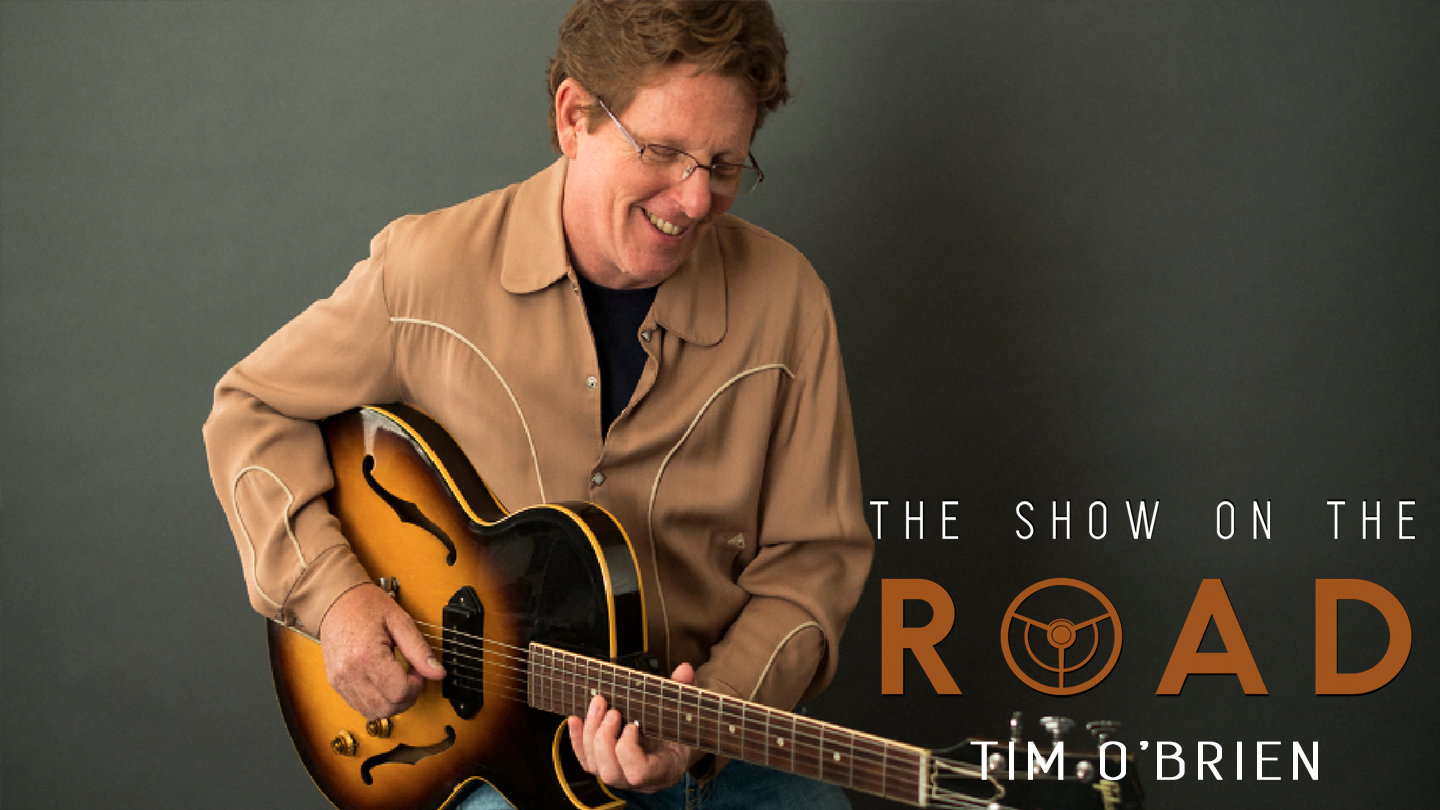
The Show On The Road – Tim O’Brien

Starting in the late 1970s with the pioneering string band Hot Rize, Tim O’Brien has trailblazed a quietly powerful and influential solo career that includes 16 albums and multiple Grammy awards, writing what many consider to be the new standards of bluegrass music.

LISTEN: APPLE PODCASTS • MP3

Now that he’s a bluegrass elder statesmen, O’Brien has made the time to produce albums for a new crop of festival headliners like Yonder Mountain String Band and the Infamous Stringdusters. He’s recorded and toured with Mark Knopfler and Steve Martin, had his songs covered by the Dixie Chicks and Garth Brooks — not bad for the small, bespectacled kid from Wheeling, West Virginia who dropped out of college and headed west with the idea that maybe, just maybe — if he learned enough songs — he could make it.