Americana Music Association Reveals 2020 Nominees, Expands Ballot

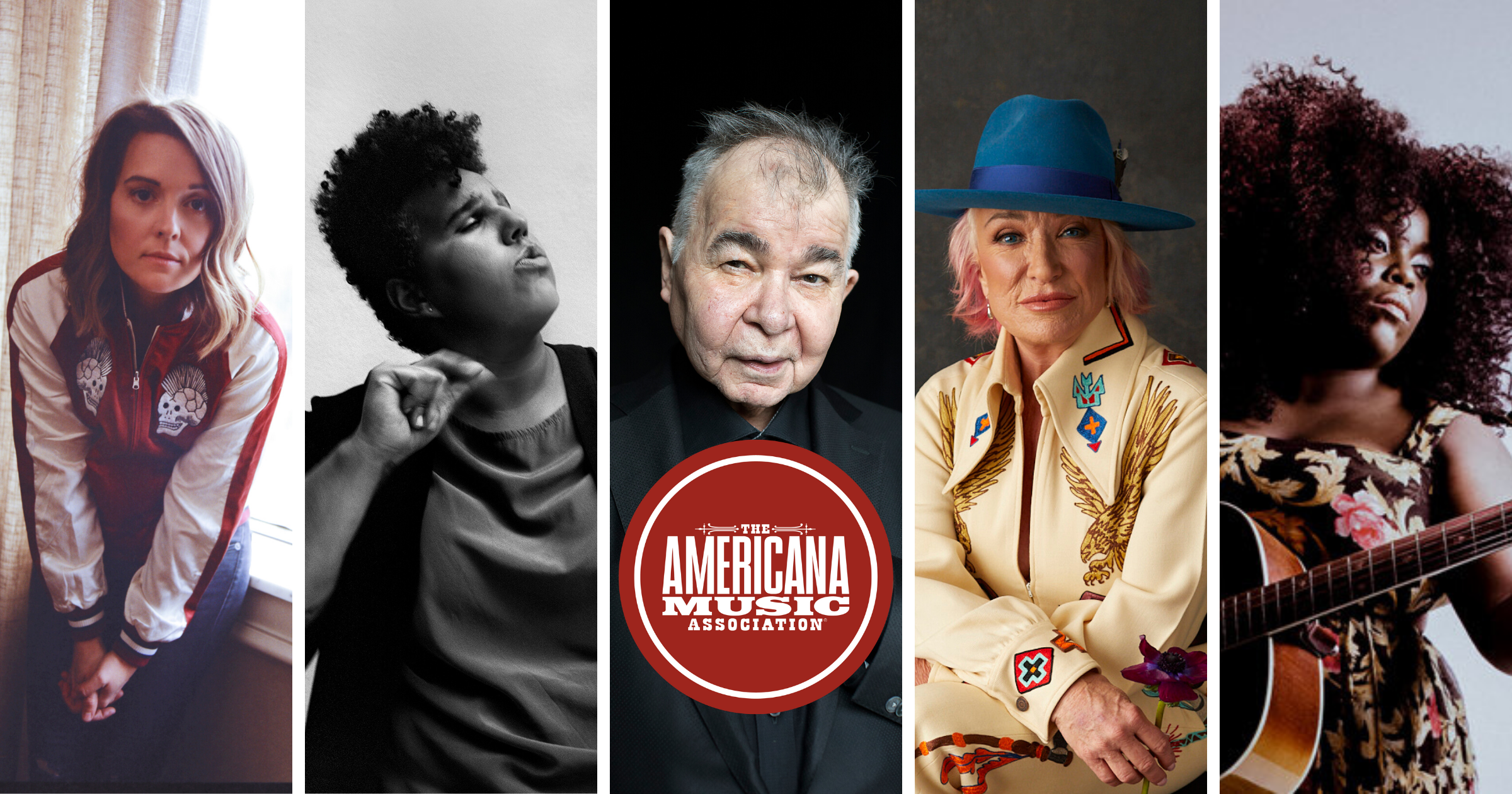
The Americana Music Association has revealed the nominees for its 19th annual Americana Honors & Awards, with Brandi Carlile, Brittany Howard, John Prine, Tanya Tucker, and Yola nominated for Artist of the Year. Nominees in the Duo/Group category are Black Pumas, Drive-By Truckers, The Highwomen, Buddy & Julie Miller, and Our Native Daughters. Nathaniel Rateliff and Aubrie Sellers received multiple nominations as well.

This year, the Americana Music Association expands its award categories to include five nominees instead of four, with the exception of Song of the Year, totaling six due to a nomination tie. The winners of each category will be announced during the Americana Honors & Awards on Wednesday, Sept. 16, 2020, at the Ryman Auditorium in Nashville.

However, a press release states that “the health and safety of the Americana music community is the association’s utmost concern, and the event organizers will continue to monitor the COVID-19 situation closely while following all national, state and local guidelines as they approach the scheduled ceremony date.” Ticketing information will be announced as plans unfold.

Here are the nominees for the 19th Annual Americana Honors & Awards

Artist of the Year:
Brandi Carlile
Brittany Howard
John Prine
Tanya Tucker
Yola

Duo/Group of the Year:
Black Pumas
Drive-By Truckers
The Highwomen
Buddy & Julie Miller
Our Native Daughters

Album of the Year:
And It’s Still Alright, Nathaniel Rateliff, produced by James Barone, Patrick Meese and Nathaniel Rateliff
Country Squire, Tyler Childers, produced by David Ferguson and Sturgill Simpson
The Highwomen, The Highwomen, produced by Dave Cobb
Jaime, Brittany Howard, produced by Brittany Howard
While I’m Livin’, Tanya Tucker, produced by Brandi Carlile and Shooter Jennings

Song of the Year:
“And It’s Still Alright,” Nathaniel Rateliff, written by Nathaniel Rateliff
“Bring My Flowers Now,” Tanya Tucker, written by Brandi Carlile, Phil Hanseroth, Tim Hanseroth and Tanya Tucker
“Crowded Table,” The Highwomen, written by Brandi Carlile, Natalie Hemby and Lori McKenna
“My Love Will Not Change,” Aubrie Sellers featuring Steve Earle, written by Billy Burnette and Shawn Camp
“Stay High,” Brittany Howard, written by Brittany Howard
“Thoughts and Prayers,” Drive-By Truckers, written by Patterson Hood

Emerging Act of the Year:
Black Pumas
Katie Pruitt
Aubrie Sellers
Billy Strings
Kelsey Waldon

Instrumentalist of the Year:
Ellen Angelico
Annie Clements
Brittany Haas
Zachariah Hickman
Rich Hinman


Photo credit: Brandi Carlile by Alysse Gafkjen; Brittany Howard by Danny Clinch; John Prine by Danny Clinch; Tanya Tucker by Danny Clinch; and Yola by Alysse Gafkjen.

AMA logo courtesy of the Americana Music Association.

BGS Long Reads of the Week // May 15

Welcome to another week of long reads! The BGS archives are simply chocked full of golden content from across the years. So each week we’re sharing our favorite longer, more in-depth articles, stories, and features to help you pass the time. If you haven’t already, follow us on social media [on FacebookTwitter, and Instagram] for our #longreadoftheday picks — and as always, we’ll put them all together right here at the end of each week.

Our long reads this week are bluegrass two by two by two, they’re historic, they’re virtuosic, and they remain unbroken, too. Read more:

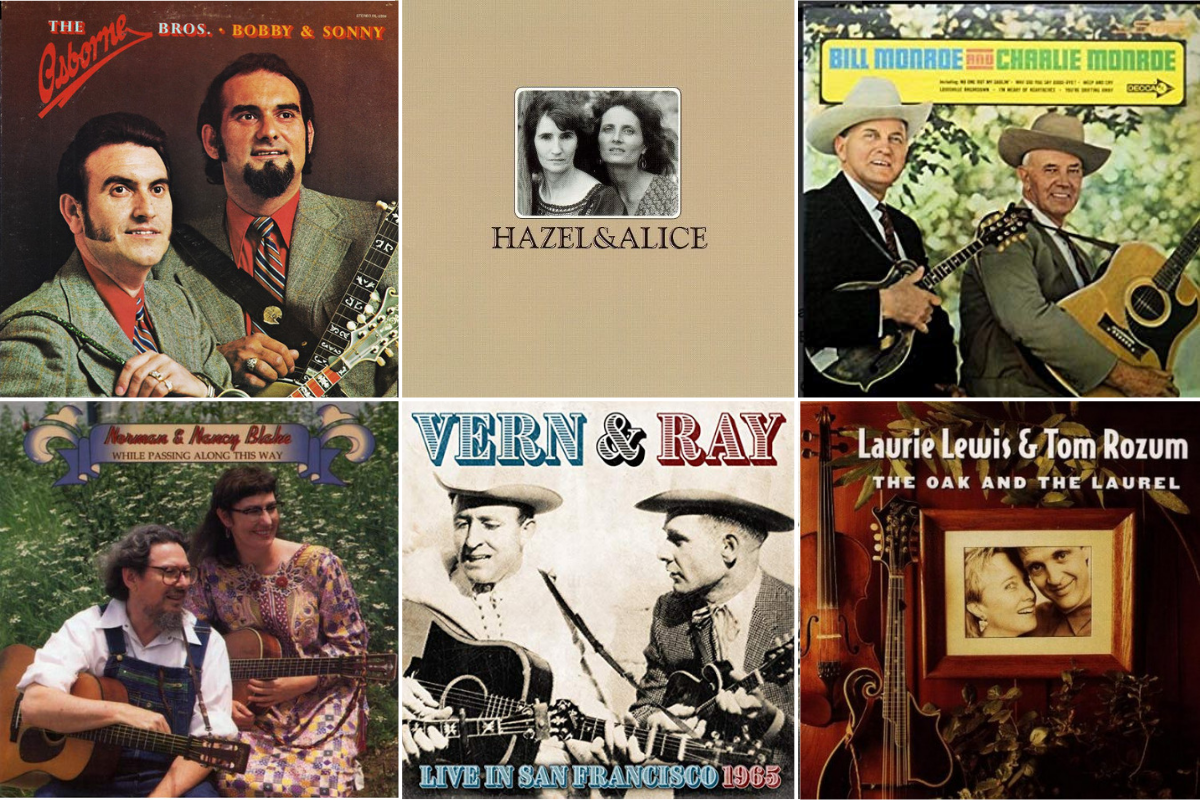
22 Top Bluegrass Duos

Ever since the earliest days of bluegrass and old-time all anyone has ever needed to start a “band” is just two folks, pickin’, singin’, and otherwise. This long read, a delightful collection of twenty-two of the greatest pairs to ever render a number together and call it bluegrass, could easily kill and an entire afternoon or evening — it’s a rabbit hole you’ll want to follow to its end. From Charlie and Bill to Skaggs and Rice and so much more, too. [Check out the full story]


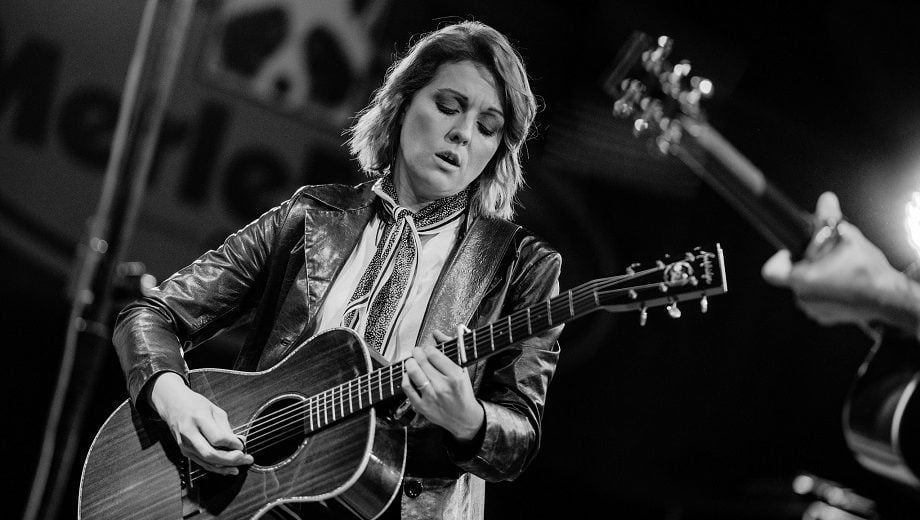
Brandi Carlile: An Interview from Doc Watson’s Dressing Room

Just about a year ago now, in the afterglow of MerleFest 2019, we published this conversation with Brandi Carlile that we had in Doc Watson’s dressing room backstage at the festival grounds in Wilkesboro, NC. Carlile was about to headline the iconic bluegrass, Americana, and roots festival for the very first time — a somewhat historic occurrence that was not lost on those gathered in the storied main stage green rooms of the thirty-plus-year event. [Read the conversation]


Sierra Hull Seizes the Moment in 25 Trips


In our interview with singer/songwriter, mandolinist, and multi-instrumentalist Sierra Hull, we dig into the fresh sonic territory she explores on her most recent album, 25 Trips. For the first time, Hull worked with producer Shani Gandhi, who helped shape the album’s diverse production styles — from stripped down tracks with just guitar and vocals, to familiar bluegrass arrangements, to songs with fuller production than those found on Hull’s first four albums. [Read more]


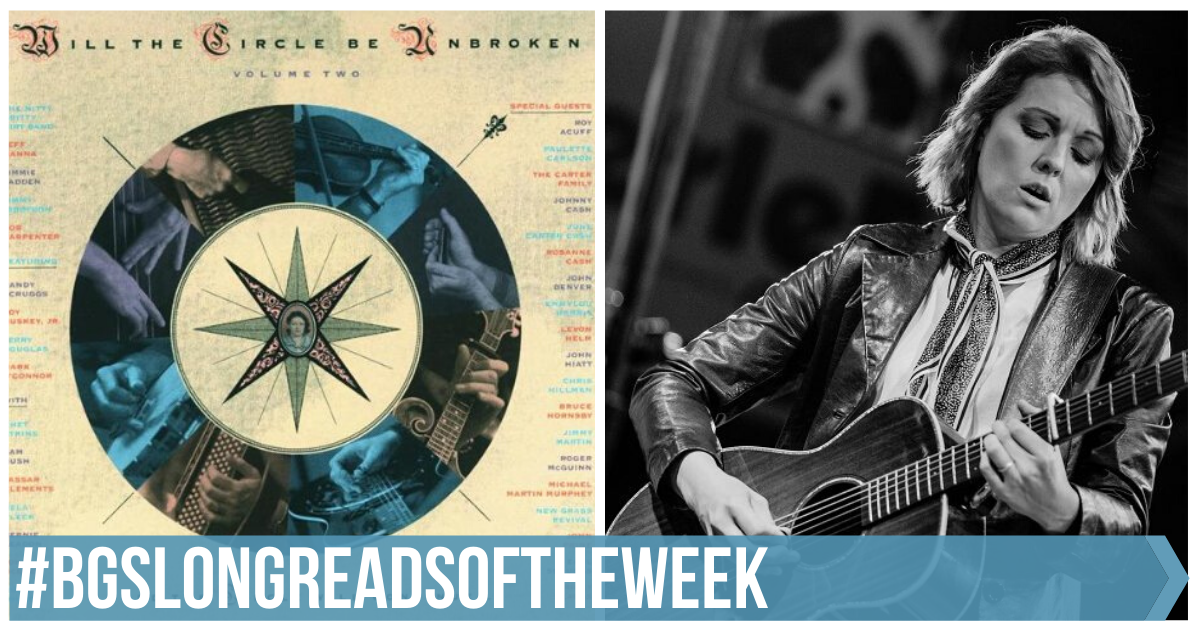
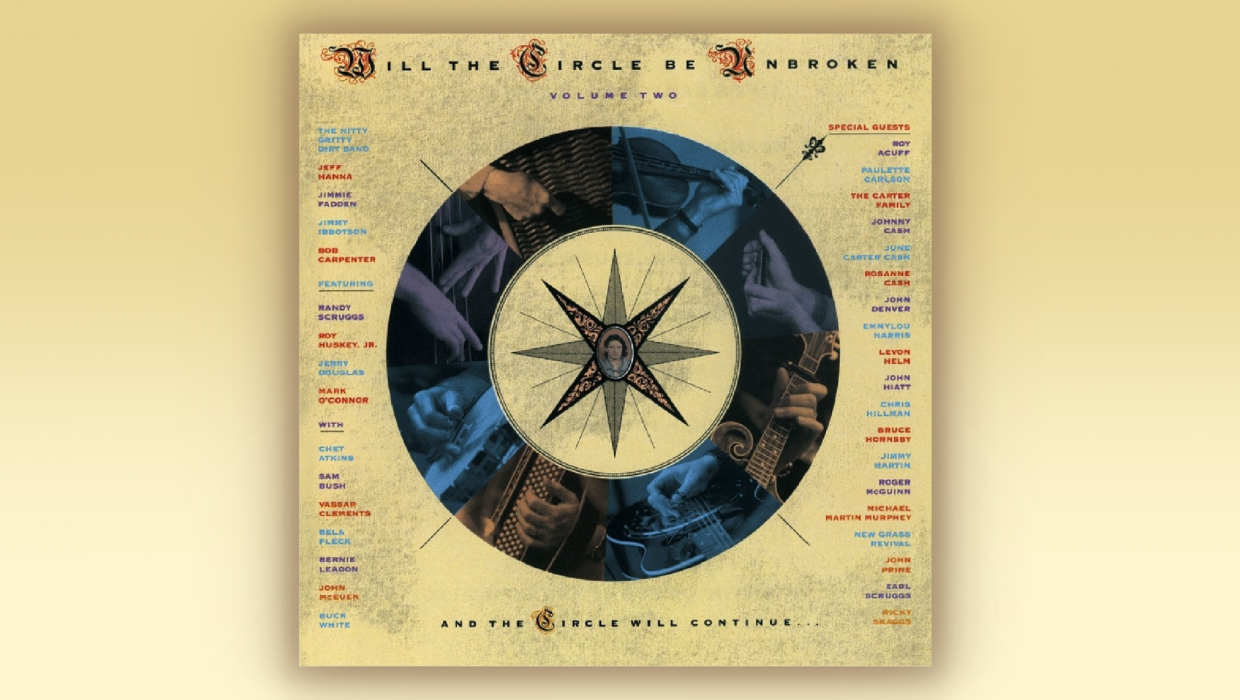
Nitty Gritty Dirt Band’s Jeff Hanna Reflects on Will the Circle Be Unbroken, Volume 2

In September of last year, to mark the 30th anniversary of the “Circle 2” album, we had a conversation with Jeff Hanna about how the group was able to issue a follow-up to the first iconic Will the Circle be Unbroken record that somehow recaptured that magic while covering plenty of new ground. We coupled our interview with a special screening of archival footage from the documentary film about the making of Circle 2 at the Country Music Hall of Fame and Museum. [Read the interview on BGS]


MIXTAPE: Marie Miller’s Quiet Hope From Home

“Music has always been a source of hope in the most difficult seasons of life. It possesses that strange quality to make mosaics out of even the most broken places and emotions. As we face this pandemic as a world community, I pray this music fills your heart and gives you quiet hope from home.” — Marie Miller

The Collection – “Becoming My Own Home”

I remember the first time I heard this whole album, and I honestly gasped in joy! This song is about finding home within yourself. I think it speaks to this time as many of us are reconnecting with ourselves in our homes.

Brandi Carlile – “The Mother”

We have all lost something in this pandemic, but we haven’t lost who we are. Brandi Carlile I will love you forever.

Marie Miller – “Little Dreams”

I’m going to be super awkward and put myself on here for two reasons. 1. This song is about believing in your dream when EVERYTHING is falling apart. 2. I just want to be near Brandi in any way I can.

Lowland Hum – “I Will”

I can’t count how many nights I have looked at the sky and listened to this with wonder at the dark sky and bright stars. It just makes me feel like we are going to be OK.

Kelly Hunt – “Across the Great Divide”

Speaking of soothing music, Kelly Hunt makes truly lovely and peaceful music. Also I have yet to meet her, but I imagine she would be the kindest person in the world.

Punch Brothers – “Soon or Never”

I don’t think I will ever get tired of this song. It’s almost hauntingly beautiful. It breaks my heart, but puts it back together before the end of the song.

Joy Williams – “Front Porch”

Going with theme, I feel like I am at the front porch of forgiving myself and loving myself and that’s still home even if its not quite inside. “The light is on. Whatcha waiting for?”

Josh Ritter – “Change of Time”

As we all let go of what we thought this year would be, I am allowing Josh Ritter to serenade me and remind me all will be well.

Fleet Foxes – “White Winter Hymnal”

The first time I heard this song I was in love with this boy, and I felt like he might like me. I don’t know that boy anymore, but I feel that hope every time I hear it.

Robby Hecht and Caroline Spence – “I’ll Keep You”

I think Robby Hecht could fill any heart with hope. This song is about keeping things that matter, and I think it’s a great song for today.

The Wailin’ Jennys – “Glory Bound”

This song is about heaven, and the Wailin’ Jennys sing like angels. It would be hard to find something more hopeful and beautiful.

Michelle Mandico – “1,000 Feet”

The world needs to braver and kinder than its ever before to make beauty out of this sorrow. I believe we are far kinder and braver than we know. This song reminds us of just that.


WATCH: The Secret Sisters Welcome Solace of Spring with “Late Bloomer”

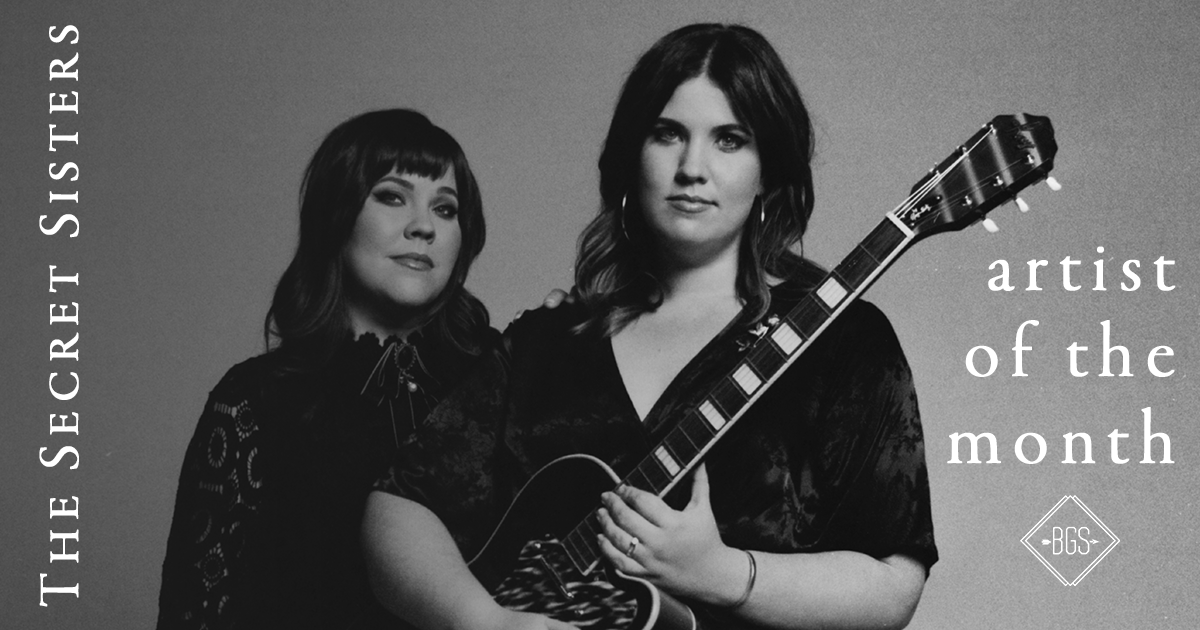
With spring just arriving, our BGS Artist of the Month has just given us a seasonal freshen-up with a lovely new release. Siblings Laura Rogers and Lydia Slagle, known as The Secret Sisters, released their latest album, Saturn Return, at the end of February. The new record was produced by Brandi Carlile along with Phil and Tim Hanseroth and was released on New West Records.

“Late Bloomer” and its accompanying video have the same glow that an old photo album or a home-cooked meal with your family might have: welcoming, heart-warming, and encouraging. The message of the song is one of affirmation and reassurance, reiterating that everyone’s story is different and every path is unique. For a peak into what Saturn Return holds, watch the Secret Sisters’ touching music video for “Late Bloomer,” a spring of solace for those who feel the familiar impulse to compare and pass judgment on their own experience.


Photo credit: Alysse Gafkjen

The Secret Sisters’ Lydia Slagle: Good People With Great Purpose (Part 2 of 2)

Hearing the Secret Sisters sing captivates you immediately. Known best for their entrancing harmonies, the Alabama-born artists write songs about everyday hardships and headline-grabbing injustices, with a balance of poetry and punch in every lyric. It’s made fast fans of many, including Brandi Carlile, who called sisters Lydia Slagle and Laura Rogers in 2015 and offered to produce their next record, 2017’s You Don’t Own Me Anymore.

On the new Saturn Return, co-produced by Carlile and Phil and Tim Hanseroth, the duo expands beyond their well-known harmonies by exploring the previously untapped power that their voices have solo, recording many segments separately for the first time in their decade-long career. In a nod to that milestone, BGS spoke to each sister individually in advance of the album’s release. Here, Lydia Slagle talks about Carlile’s strength as a producer, finding hope despite hardship, and the distinct pride in being a late bloomer.

Tell me about your upbringing and your first memories with music.

We’re from rural Northwest Alabama. We grew up running through the woods and making forts and playing in the creek. We spent a lot of time outside with our cousins, and it was really family-oriented. Our dad is in a bluegrass band, so we were going to bluegrass festivals every Saturday. We went to church every Sunday, and the church that we grew up in was all congregational. Everybody sang together, so from a very early age, you had to learn to sing harmony.

You were the main writer on “Late Bloomer,” one of my favorite tracks from Saturn Return. Has anything ever made you feel like a late bloomer? How did you reframe that feeling with the positivity we hear in the song?

I’ve always felt a little bit behind. People in my grade, or my age… I always felt like they got there before I did. Part of that is being a Southern woman. I think that we are a little more pressured to have children faster, or get married at an earlier age. Even though I’d been all around the world, I still felt that pressure — I still felt behind. When I wrote “Late Bloomer,” my husband and I had been trying for a baby for almost a year. That particular day, I was just really frustrated with the whole situation. I thought, of course, this happens to me. I’ve been behind in every other aspect of my life, so of course I’m gonna be last for this, too — which sounds dramatic, I know…

No, it sounds… relatable.

Well, it was September, and I was at the piano looking out the window. I had been told that March or April was when I should hang my hummingbird feeders, because that’s when they’d come to the house. And I had not seen a hummingbird all year until the day I wrote this song. It made me start thinking about that aspect differently: they’re late coming to the party, so it’s OK for me to be, too. It’s OK to feel behind. Whatever timeline you set for yourself, it doesn’t matter, because we’re all on our own path. It was a really encouraging way to look at it. I’ve tried to look at it like that ever since.

Brandi Carlile produced your third album, You Don’t Own Me Anymore, and you chose to work with her again on Saturn Return. What made her the right person to produce this album?

We had a lot of fun with our third record. Not that we didn’t with our others, but we were so serious in the beginning, so concerned with being perfect, with having every note be exactly right. With the third record, we were this big family, just playing music together, just jamming. We really wanted to have that same experience again with the fourth record, especially because we had gone through some stuff before this record that was really hard. I was struggling with infertility; I didn’t really understand what was going to happen with our careers. We needed the positivity that Brandi tends to bring to a situation. She always helps us remember that we do this for a reason — and that we’re good at it. It was a really great communal effort, and I would say we were more comrades this time around. It felt like a bunch of friends playing together.

She recommended you and Laura record your vocals separately for the first time ever. What was going through your mind, from the first time you tried it to when you heard it played back?

It felt like an out-of-body experience in so many ways, just because we were so used to singing at the same time, into the same mic. So it was a new, refreshing experience to remember that we are separate people, with our own voices and our own things to say. That’s what Brandi is so good at doing — helping us remember what our talents are. It was a really important part of this recording process itself: finding our own voices and being who we are separately, but still being a band; and learning how to still sing together, even when we have our own perspectives to draw from.

As the album’s closing track, “Healer in the Sky” has a deeply spiritual and peaceful theme — a message of hope. Through the making of this record, what’s something that made you feel hopeful?

Even though we were on separate paths, Laura and I, there was a common thread going through our situations when we were recording. We were kind of settling into adulthood. Our grandmothers had just passed away within a week of each other, and we could see that our parents are getting older and going through health issues. We were both at a time in our lives when we were trying to reconcile things that don’t seem fair, seeing how other people around us have struggled. The reality of adulthood had set in, and you can hear that in a lot of the songs on the record.

But what gives us hope is that we’re people of faith. You do hear it especially on “Healer in the Sky” — we try to remember that we have a bigger hope, and we have a reason for why we do this. It’s easy to get ‘in our heads’ about things that seem hard at the time, but when you look at the grand scheme of things, those things are usually actually pretty petty. So for us, it’s been important to remember our purpose, and to just try to be good people along the way. That’s all that really matters.

Read the first part of our Artist of the Month interview with the Secret Sisters’ Laura Rogers.


Photo credit: Alysse Gafkjen

The Secret Sisters’ Laura Rogers: From Separation to ‘Saturn Return’ (Part 1 of 2)

Laura Rogers and Lydia Slagle are best known for doing things together. As sisters, they’ve celebrated birthdays, graduations, and many more of life’s big milestones together. As the Secret Sisters, they’ve made a name for themselves singing together, with intuitive harmonies that lend a honeyed sheen to folk tunes, country anthems, and the occasional murder ballad, too. But for their latest album, Saturn Return, the duo tried things a little differently.

At the suggestion of Brandi Carlile (who co-produced Saturn Return with twins Tim and Phil Hanseroth), Laura and Lydia recorded their vocals separately for the first time, integrating lengthy solo segments in addition to their trademark harmonies. The resulting record reveals two women at the top of their crafts, reveling in their independence while cherishing the inimitable depth of their voices together.

In tribute to their recording individually for the first time, BGS spoke to each sister separately, too. In part one of our Artist of the Month interviews, Laura talks about the influence of her hometown, self-inflicted career pressure, and how Carlile introduced the sisters to new sides of themselves — both individually and as a group.

BGS: You sang separately from your sister on this album for the first time. What did that feel like at first, and how did your feelings about it evolve?

Laura Rogers: I was very uncomfortable about it at first. I play off of Lydia, and I choose my notes based on what Lydia chooses. We read each other so closely when we sing together. Singing without her felt like driving a car for the first time without your parent in there. But when Lydia sang by herself, even though I know she was uncomfortable, I sat there listening to her and thinking, She is so good. She’s so good. I remember thinking about how glad I was that her voice was finally going to get a chance to be heard without mine, because her voice has so much beauty to it.

I thought, It’s time for people to hear what Lydia sounds like without me distracting them. But I was super scared to sing by my self, just because I … Well, I just don’t feel like I sing as well without Lydia. I’m more critical of myself, and I don’t have her to kind of pick up the slack that I need. [Laughs] So in the moment, I remember thinking, I don’t know if this is the right thing. How are we going to pull it off live? But then of course, after the record was done, we would listen back to it, and Brandi’s theory about it was so… right. And so beautiful.

How so?

While we were recording, Lydia and I really were in really separate places for the first time in our lives. I was pregnant and Lydia was trying to get pregnant. We felt this chasm, the two of us. We felt like we were in different places. Brandi could see that, in her bird’s-eye view of our circle. She knew that she needed to capture that moment.

Lo and behold, a few months later, we found out that Lydia was pregnant too, and we were back on another path together. We had been separate for only a moment. So I’m really thankful. I feel like Brandi is a really good photographer who caught the perfect moment with the perfect light and the perfect ambiance — this really special moment that will never come again.

You’ve recorded murder ballads and darker songs, and “Cabin” on this record — which you’ve said grew out of coverage on the Kavanaugh hearings — touches on a crime that was never brought to justice. What are the challenges and nuances you have to consider when broaching topics like those?

That’s a good question. “Cabin” can really be about a pretty broad range of crime. But we were specifically writing about sexual crime: abuse, harassment, and mistreatment of people by those in places of power. We had a message that we wanted to convey, but it felt like we had to tiptoe around some things to try to avoid any sort of heavy political slant.

Lydia and I are not political songwriters. We just aren’t, and don’t want to be. But there are certain elements of that that do come up in our writing that we feel like we have to kind of carefully craft in order to express ourselves, but not isolate. That’s also true with murder ballads. It is a sensitive subject matter, and our protection — up until we wrote “Cabin” — was the fact that those songs that we had written were mostly fiction.

When [our songs] talk about getting your heart broken, or going through bankruptcy, or being done wrong by someone who is supposed to be your friend, those are actually based in truth. We would never specifically mention anyone by name, but if they hear the song, they’ll know that we’re talking to them. If you feel like we’re singing to you, we are.

That’s the way that we view our music — as therapy. The murder ballads have always been about us challenging ourselves to write songs about things that we didn’t experience. On the flip side of that coin, there are a lot of songs that we went through firsthand and had to process through writing.

You sing about the push-pull of success in “Nowhere Baby.” What does that song mean to you, and how do you fight back against the low moments?

I hope that people can find their own story in a song like that. For us, “Nowhere Baby” is about constantly feeling like we’re arm wrestling the music industry; feeling the need to say yes to everything that comes along, because you’re afraid that if you say no you’re going to set yourself back or miss an opportunity; feeling like you need to prove yourself. As artists, creative souls, and women, sometimes we put that on ourselves. We make these ridiculous schedules that we think we have to stick to. “If we don’t go do this show, what’s gonna happen? Are we gonna miss something that could be really important, could get us to the next level?”

We are so hard on ourselves about our careers. We love music, and we love that we’ve gotten to make a lifestyle of playing our songs on the road, but it’s a hard life. You sacrifice more than people on the outside ever realize. You miss the birthday celebrations and the holiday events. Through experience in the ten years that we’ve been on the road, we’ve learned that it’s OK if you need to just be a person for a minute. It’s OK if you want to just sit at home for a few weeks. Nobody’s gonna forget about you, you’re not going to lose your edge.

You’re from just outside of Florence, Alabama, and started singing harmonies with your sister at church. Did your hometown have any impact on the artist you are today?

Oh yes, 100 percent. We grew up pretty close to Muscle Shoals, which is obviously a legendary place for music. But we weren’t exposed to the music of Muscle Shoals as much as you might think. We listened to more folk music, bluegrass, gospel, and country. And where we are geographically had influence on us as musicians — I mean, it’s this weird little place that’s so perfectly located. It’s close to Nashville, so you get the country music influence. It’s close to Memphis, so you get a little bit of the blues. It’s close to the mountains, so you get some Appalachian music. You get gospel music, because we’re in the middle of the Bible Belt. It’s this perfect spot where these little genres of roots music all began.

I think living in a rural place, and growing up where there isn’t a lot to do other than hang out with your family or do sports or play music, is why we are the way that we are, and why we’ve become the musicians that we’ve become. We are so spiritually tied to our hometown. When I leave, I become a different person, and it’s almost like I have to go back to regroup and establish myself again. I come home and I’m like, oh, that’s who I am. [Laughs] I may get to go to all these great places, but when I come back, I’ve still got to scoop up chicken poop off my porch.

Read our interview with Lydia Slagle here.


Photo credit: Alysse Gafkjen

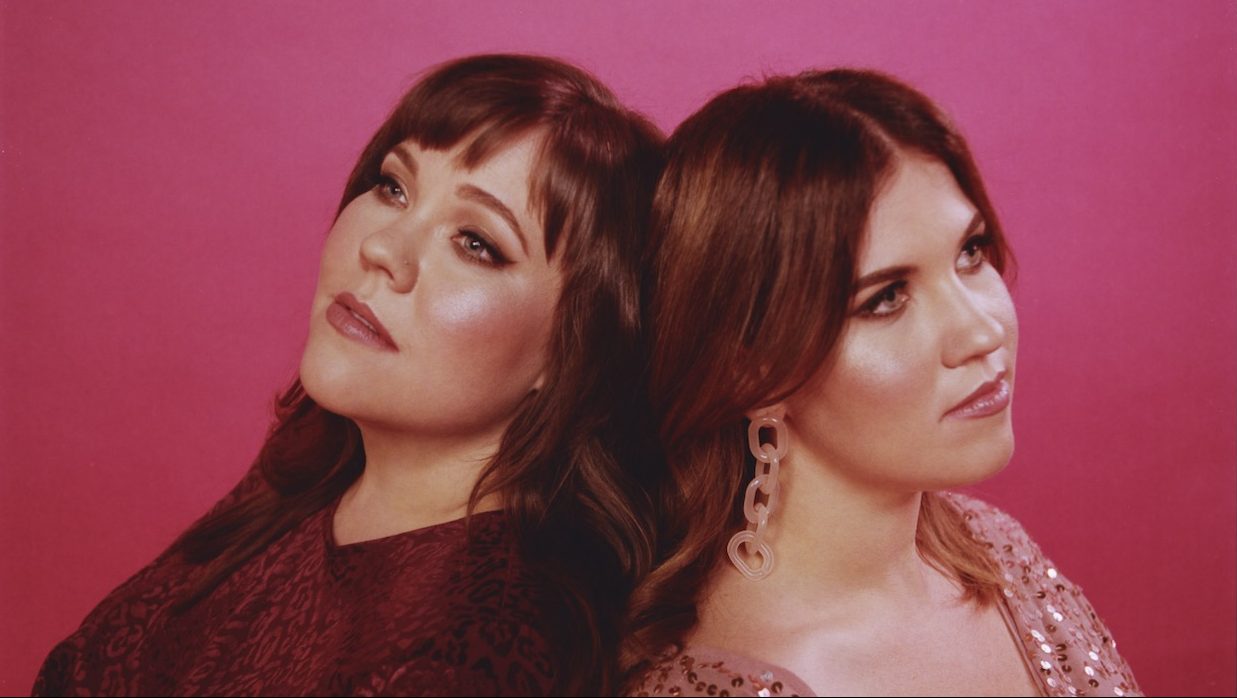
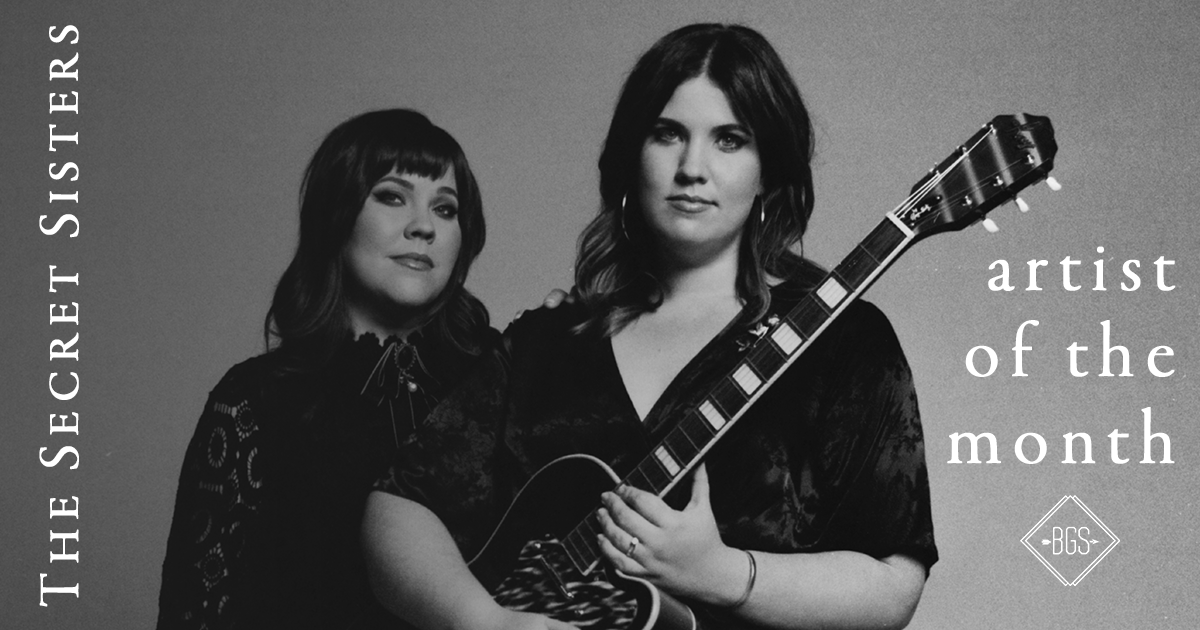
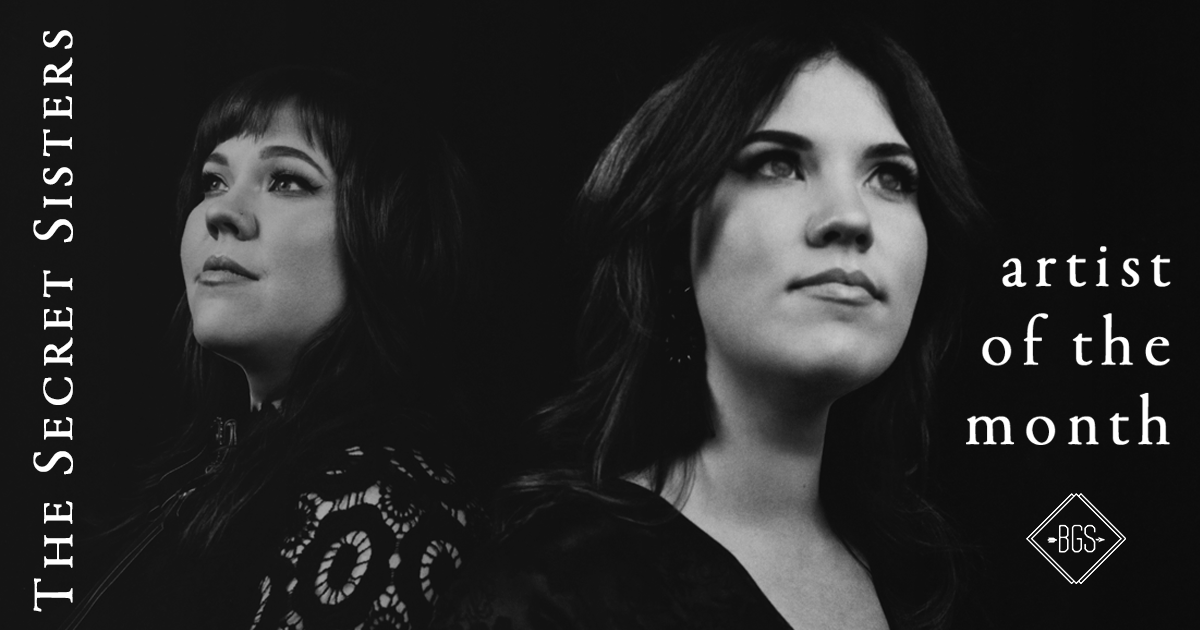
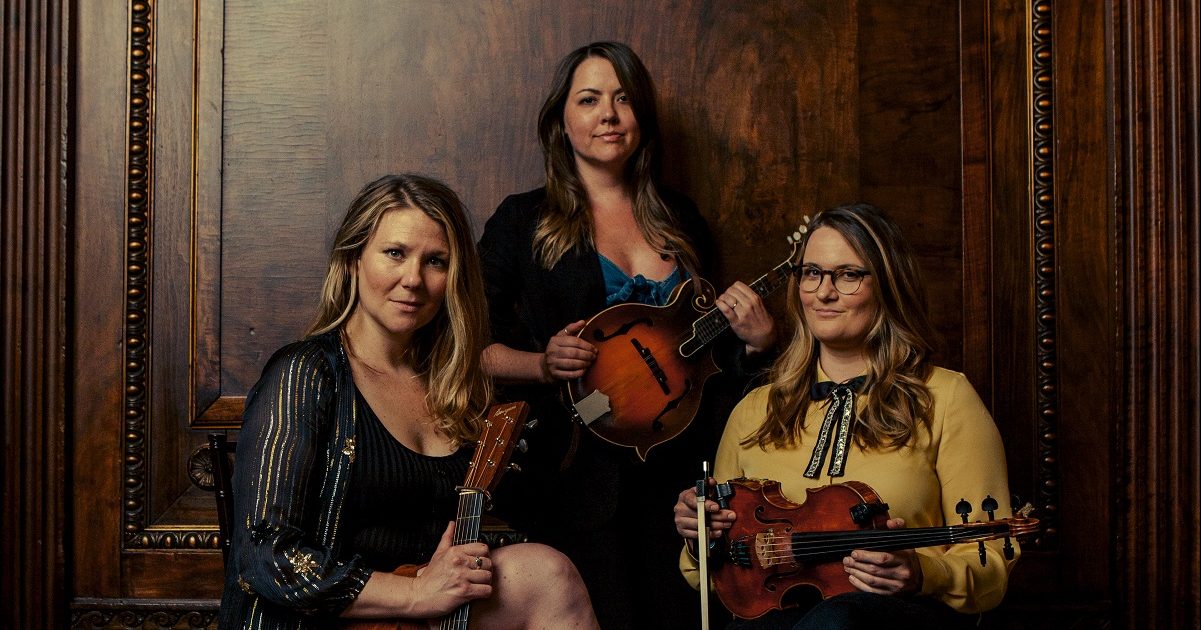
Artist of the Month: The Secret Sisters

The secret is out, as the Secret Sisters have finally issued their newest album, Saturn Return. Time is a through line of the project, heard in songs like “Late Bloomer,” as well as the album title, which is an astrological reference to Saturn returning to the same location in the sky as it was when you were born. Motherhood also informs the music, as sisters Lydia and Laura Rogers were new mothers at the time, but also grieving the recent loss of their grandmothers.

Produced by Brandi Carlile and Phil and Tim Hanseroth (aka “The Twins”), Saturn Return positions the sisters as solo vocalists to some degree, as both Lydia and Laura recorded separately for the first time. And in contrast to their other albums, they wrote all of the material here themselves. A sweet celebration of the women who came before them can be found in the opening track, “Silver,” while the final track, “Healer in the Sky” is poignant, vivid, and simply beautiful.

Look for a two-part interview with the Secret Sisters — our BGS Artist of the Month for March — in the weeks ahead. (Read part one here. Read part two here.) In the meantime, enjoy our Essentials playlist, comprising choice covers (including one of Carlile’s songs), rare and interesting collaborations, and new music you’ll want to hear from Saturn Return.


Photo credit: Alysse Gafkjen

Della Mae Offer Encouragement and Illumination on ‘Headlight’

Della Mae have shaken up bluegrass and old-time stages for the better part of the last decade, with a mile-long resume that even includes a stint as cultural diplomats with the U.S. State Department. With Headlight, the Boston band’s first full-length album in five years, they’re providing their most powerful statement yet.

Written primarily on retreat at MOXE, a women-owned creative retreat outside of Nashville, the band taps into a more overt kind of activism than we’ve seen from them before, with lyrics that lift up victims of abuse, lend solace to the weary, and offer a single directive in the fight for change: to always keep moving forward.

Produced by Dan Knobler and recorded at Sound Emporium Studios in Nashville, the album features vocal powerhouses like the McCrary Sisters alongside instrumental heavyweights such as keyboardist Jen Gunderman and guitarist Molly Tuttle. Its tracks boast the fast picking and sublime harmonies that Della Mae fans have come to expect. BGS caught up with lead singer and songwriter Celia Woodsmith, discussing the new music and the band’s long record of working for equality in bluegrass and beyond.

BGS: The album opens with “Headlight,” a powerful song about standing up in the face of abuse. What drove you to write it?

Woodsmith: “Headlight” was definitely a hard one to write but it came out really quickly. I had been trying to write a song that could capture this feeling, the #MeToo movement feeling, and nothing was coming out. It really was after Christine Blasey Ford testified in front of Congress that it happened — the song came out in about twenty minutes, a very quick thing. I think I’d finally just had it.

As we [the band] have gotten older and more mature as human beings and as women and as musicians, it’s been easier and easier to not really care what other people think of us. [Laughs] It’s easier to say what we want to say, without fear that we might “ruin our career” or that the backlash will be too hard to handle. Truly, I didn’t write it as a political song, and I didn’t write it as something to divide people. I wrote it as an anthem, an ode to all the women in my life and the women I’ve seen all over the world who have stood up and been brave and been ridiculed for it.

Are there ways that you feel like your fans and your listeners could be “headlights” in their communities?

One of the lyrics is, “No need to be rude, just sit back and listen.” I think right now, especially, we really don’t listen to one another; we don’t want to listen to one another. There are a lot of takeaways that I hope people can grab from this song, but if standing up for women’s rights is beyond them, then I hope that they can just get through the song, just listen to it, just think about it. That’s all I can hope for.

As a listener yourself, what’s something in music in the last year or two that has made you particularly hopeful about what’s to come?

The first thing that comes to mind is the album by The Highwomen — Brandi Carlile, Maren Morris, Amanda Shires, and Natalie Hemby. That album, that project, really made me happy. First of all, that these women were badass enough to stand up and say, ‘This is a problem in country music. You don’t play our songs and you don’t play our albums, and we are absolutely going to stick this in your face.”

You have people constantly, your whole life, telling you that you’re “pretty good for a girl.” Believe me, Della Mae has gotten plenty of that. And it’s so frustrating. But when these high-profile women stand up for the rest of us, it elevates all of our voices. To have an album like The Highwomen do so well, be so well done — and by these four powerhouses — made me so hopeful for the future, hopeful that other young women are going to see this same thing and say, yeah, you know what? You should play our music. We are good enough.

Della Mae has been a presence like that for women all over the world, working with the State Department, performing in countries where women might not always see other women on stage. In your travels, were there times when you encountered a bluegrass community in places where people might not expect to find it?

Yeah, absolutely. We have found really amazing bluegrass musicians in Russia, and we’ve found them in the Czech Republic, and we’ve found them in France. Bluegrass is everywhere. It’s quite amazing to me, actually. We met a really amazing three-finger-style banjo player in Uzbekistan. This woman just learned how to do it from YouTube, and we were the first bluegrass musicians she’d ever jammed with.

Another time, these young Russian bluegrass musicians we sat down to pick with asked us to play [one of our songs] “Sweet Verona,” and they played right along with us. It was truly astonishing. That goes to show how small the world is. If you have an internet connection, you can listen to just about whatever you want, and you can learn. Bluegrass is a global thing, it’s everywhere. But it’s everywhere because it’s folk music, and I think that people can really relate to it.

I’ve seen quotes where Della Mae describe Headlight as the album you’ve always wanted to make. What were you enabled or empowered to do here that you haven’t been able to do in the past?

I think that kind of ties back into the “not-giving-a-crap-anymore” thing. We had always been afraid to have drums on an album, we’d always been afraid to plug in, use effects. [Because] we were in bluegrass, and kind of cornered into that genre, it felt like we couldn’t expand our musicianship, because we didn’t want to anger our fans.

We obviously care a lot about our fans, but [now] we think that we can take our fans with us, take them along for the ride. We’ve been playing for ten years. Our fans know that we can play a fiddle tune, and that we can play bluegrass standards. But we can also plug in and rock out and really perform songs that have meaning behind them, and do it with a lot of flair.

Do you think the pressure to adhere to tradition can be an obstacle for bluegrass musicians today?

I think that’s a problem being faced by bluegrass musicians, I think especially young musicians, but I think it’s getting better. Alison Brown, an absolute legend on the banjo, said it last year in her IBMA keynote speech: Change is coming to bluegrass, whether or not they want it. We have to start opening our arms more to different expressions of bluegrass.

There can be traditional bluegrass — that’s fine — but if someone has drums, or someone plugs in, or someone plays in an untraditional way, that doesn’t mean that we have to eliminate them completely from the genre. If we do that, then bluegrass music will slowly start to die. People won’t want to play it when they can’t play around with it, when they can’t give to it their own expression and their own creativity.

Recently I think there’s more openness to what bluegrass is, as opposed to what it isn’t. People will always say, “Well, that’s not bluegrass, they don’t have a fiddle,” or, “That’s not bluegrass, they don’t have a banjo.” More often lately, though, it’s been more like, “Oh, these musicians can play bluegrass, but they can also play a bunch of other stuff.” It’s better to celebrate that than to distance yourself.

Your new song “The Long Game” tackles the idea of temporary sacrifice for an ultimate goal. What are some of your challenges in playing the long game, and what keeps you looking forward?

We’re very lucky that this is our career, that we can travel around the world, meet people, write songs. But the day-to-day stuff is really hard. You’re kind of coaching yourself — “Just drink another cup of coffee and you’ll be fine.” When you’ve been a band for ten years, a lot of interpersonal stuff comes up. You may lose members over the years. We’ve had members turn over, and each time it’s difficult. It’s always the closing of a chapter, and then moving on a new way of thinking about Della Mae.

I love this band, and I love the women I play with, and I feel so grateful that we’re able to do this together. We’re really a family and a team, so I think that’s part of the long game, too — accepting change and learning to deal with it in a positive way, as opposed to a negative way. You’re always going to have surprises along the road, and you’ve just got to, well, keep playing the long game.


Photo credit: David McLister
Best of: Friends & Neighbors 2019

At BGS HQ one of our favorite, most-used phrases is “the BGS family.” Roots music is all about community, the people who coalesce around these genres and the spaces they inhabit being just as integral as the actual music-making itself. We always enjoy turning the spotlight on these communities, and one of the ways we do this best is by celebrating and lifting up the folks who’ve always been part of our BGS family, while constantly being on the prowl for new faces and stories to bring into the fold.

This year one of the most tangible representations of our BGS family through our content and coverage was our Friends & Neighbors column, simple features of must-see videos by artists, songwriters, and musicians we consider family (and friends and neighbors!) Y’all were on board. So many of our F&N posts were our most-popular, most-engaged with, and most-enjoyed music of the year! Thank you for being another essential part of our BGS family and for seeing what we’re trying to accomplish here and making that happen. Enjoy our best of Friends & Neighbors from 2019.

Boyz II Men and Steep Canyon Rangers, “Be Still Moses”

Boyz to bluegrass?! You read that right. R&B legends and vocal virtuosos Boyz II Men collaborated with North Carolina’s Steep Canyon Rangers for this stunning reproduction of the bluegrass group’s 2007 song,“Be Still Moses.” During a Boyz II Men performance at Nashville’s Schermerhorn Symphony Center, twelve members of the Asheville Symphony joined the Rangers for this video, capturing what may very well be a once-in-a-lifetime performance of the song.


Rhiannon Giddens, Tiny Desk Concert

Former Carolina Chocolate Drops leader and old-time music maven Rhiannon Giddens has the uncanny ability to sing through an audience. In May, she released her third full-length, studio album, there is no Other, with Nonesuch Records. In this new chapter, Giddens collaborated with Italian multi-instrumentalist Francesco Turrisi, who is known for his virtuosity on percussion and jazz piano. Giddens, Turrisi, and bassist Jason Sypher stopped by NPR to perform some music from the latest record; watch as they stun the audience huddled around the Tiny Desk.


The Highwomen, “Redesigning Women”

Four world-class artists, one incredible supergroup — what’s not to love? The Highwomen have been taking the world by storm as they bring together some of country and Americana’s finest singers and songwriters. It’s no wonder their album has made many a year-end “best of” list — including our Top Moments of 2019.


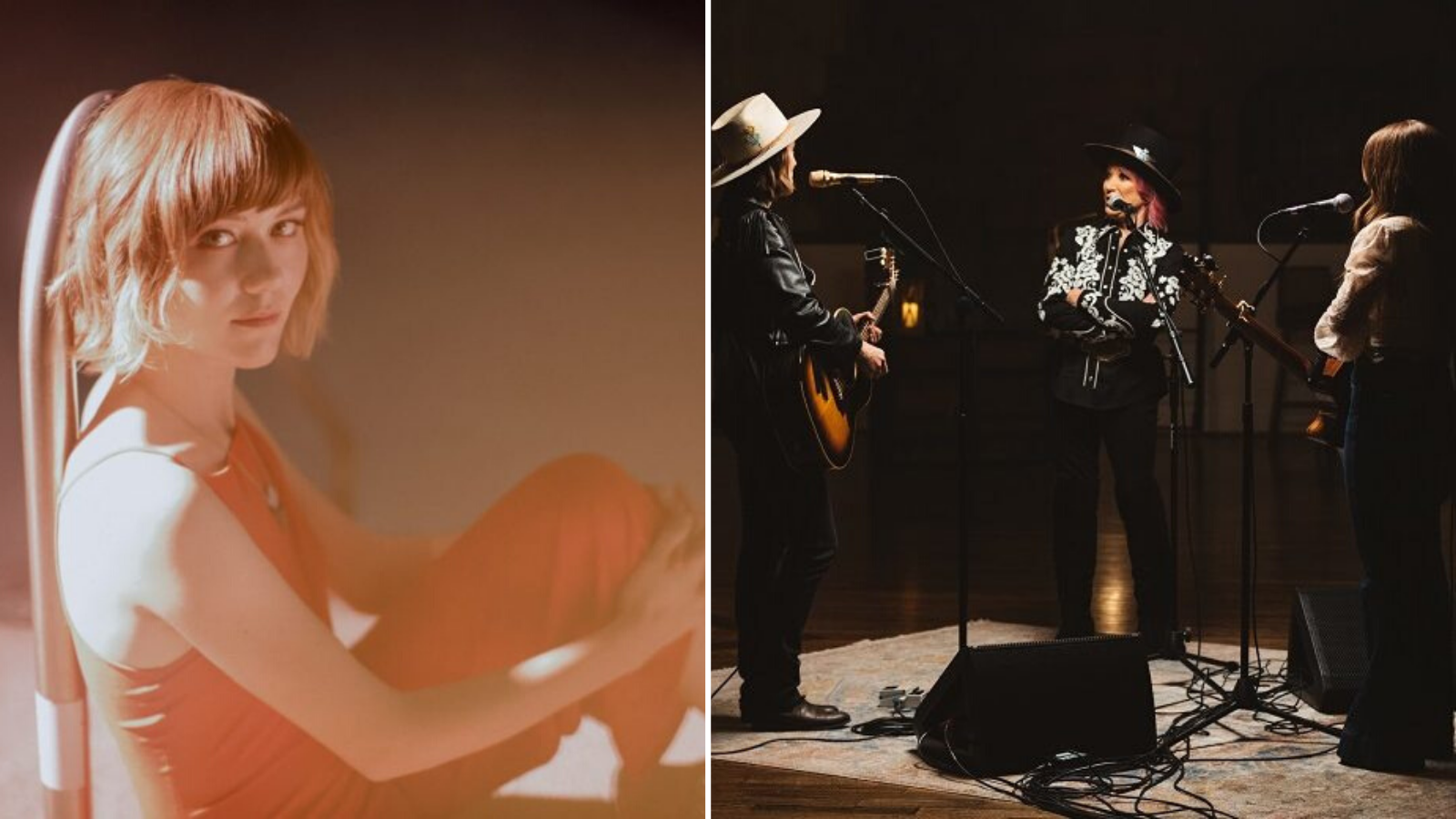
Tanya Tucker, Brandi Carlile, and Tenille Townes, “Delta Dawn”

Three generations of country music come together in one performance: Tenille Townes, a newbie on the country block; Brandi Carlile, a soon-to-be modern legend at the peak of her career; and Tanya Tucker, a legendary performer whose album, While I’m Livin’, was one of our favorites of the year. Together, the trio performs “Delta Dawn,” one of Tucker’s signature songs.


Molly Tuttle, “Take the Journey”

It’s been a huge year for Molly Tuttle. She’s blazed a trail through modern bluegrass, become one of the most prominent pickers around, and now she’s taking on roots music realms further and further from the string band territory in which she grew up. Feel the rhythm and energy in Tuttle’s national television debut performance  of “Take the Journey,” our most popular Friends & Neighbors post of the year!


Photo of Molly Tuttle courtesy of Compass Records
Photo of Tanya Tucker, Brandi Carlile, and Tenille Townes courtesy of Cracker Barrel

BGS Top Moments of 2019

If music happened in 2019, but wasn’t a “song” or an “album,” does it make a sound– er… does it warrant real estate in any of the many year-end pieces, wrap-ups, and lists hitting the internet on a daily (sometimes hourly) basis? Why, of course it does! Each year BGS notes Top Moments of roots music — whatever form they may take — as a way of reminding ourselves that the art we each consume, especially of the musical variety, is often at its best when it eschews the formats and media we expect and/or most closely associate with it. What changes about the way we view a year in music when we alter the context as such? First and foremost, we change just that — our viewpoint. Turns out that makes a world of difference.

Speaking of top moments, one of the best for the BGS team took place just last week, as we premiered a brand new look with an updated homepage and logo. A lighter color palate, clean modern lines, and updated fonts usher in a new era for the site, and hopefully a positive reading experience for you, our beloved fans and readers. Not unlike the state of roots music itself, our new look is constantly evolving, but what’s at the heart of it remains timeless. Now, read about more moments that turned our heads and caught our ears over the course of the past 12 months.

Chris Stapleton Creates LEGO Alter Ego

When Chris Stapleton’s music video for “Second One to Know” hit YouTube, I found myself musing, “What are the benchmarks we use to determine someone’s level of notoriety? What are their claims to fame? Owning a tour bus? Having your first number one hit? Being the musical guest on SNL? Having a highway named after you? Or perhaps a proclamation from your local public figures designating a [Named After You] Day?” Seriously, can you imagine getting to a point in your country pickin’ / singin’ / songwritin’ career where your Game of Thrones cameo falls into the background of your music video star LEGO-self?

I would be remiss if in this blurb I did not mention another real-ass country singer/songwriter/rabble-rouser who dabbled in alternative visual media this year, too — that would be Sturgill Simpson’s “Sing Along.” More of this oddball, non sequitur energy in country in 2020, please. – Justin Hiltner


Dolly Parton’s America Podcast Finds Common Ground

Epiphanies in the podcast series Dolly Parton’s America are too many to count, as host Jad Abumrad and his team explore the notion that the Tennessee songbird is a rare unifying force in the fractured socio-cultural universe — everyone loves Dolly! But the fourth episode, titled “Neon Moss,” finding the common ground of Dolly’s Tennessee mountain home and the Lebanon mountain home in which Abumrad’s dad (a doctor who became friends with Parton after treating her in Nashville) grew up is gripping on a cultural and emotional level. Bonus: BGS’ own Justin Hiltner and his banjo pop up as a key part of a later episode. – Steve Hochman


Duos, Duos, and More Duos

Were you seeing double this summer? Mandolin Orange, Tedeschi Trucks Band, and Shovels & Rope offered exceptional albums and sold tons of tickets. From the sweeping San Isabel from Jamestown Revival to the intimacy of Buddy & Julie Miller’s Breakdown on 20th Avenue South, roots duos were having their moment. Personal favorites included The Small Glories and Bruce Robison & Kelly Willis, but the true discovery for me was Dravus House, a Seattle duo who delivered an understated and beautiful album that blends Elena Loper’s vocal with Cooper Stouli’s soft touch on guitar to stunning effect. – Craig Shelburne


Del McCoury Turns 80

At 80 years old, Del McCoury has witnessed the rise of bluegrass while still being actively involved in it. (In fact, he’s got a gig this weekend in New York with David Grisman, Jerry Douglas, Drew Emmitt, Andy Falco, and Vince Herman.) An all-star tribute at the Grand Ole Opry provided perhaps the most musically satisfying night of music this year for me, mostly because The Del McCoury Band has still got it (and they make it look like so much fun). Check out their 2019 performance on Live From Here With Chris Thile. – Craig Shelburne


Hadestown Wins Big on Broadway

In an era when Broadway has seemingly been taken over by jukebox musicals that rehash the catalogs of legacy artists, watching Anaïs Mitchell pick up eight Tony Awards for Hadestown was a surreal triumph. For those of us who have followed Mitchell’s career over the past couple of decades, it was truly remarkable to see a grassroots musical that she first staged in 2006 reach the heights of Broadway, earning her a win for Best Musical and Best Original Score. “Wait for Me,” indeed. – Chris Jacobs


Ken Burns Digs Deep into the Roots of Country Music

Ken Burns has a long history of digging into America’s deepest roots, through documentaries like The Civil War, Jazz, Baseball, and The National Parks. In 2019 he took those roots in a more on-the-nose direction, exploring the long and varied history of American Roots Music through his PBS documentary series Country Music, which premiered in September. As the filmmaker himself said in a recent interview, “Country Music is about two four-letter words: love and loss.” Thanks to Burns, who looks unflinchingly at all of the different stories that have shaped this music, we get to see the love, the loss, and everything in between. – Amy Reitnouer Jacobs


MerleFest and IBMA, Rediscovered

After a long break, I made an effort to reconnect with two of the preeminent roots music festivals  in 2019 – MerleFest and IBMA’s World of Bluegrass. With other obligations in Nashville, it had been five or six years since I’d attended either, and both surprised me for different reasons. At MerleFest, I was struck by the caliber and diversity of artists, in particular for landing a headlining set by Brandi Carlile in her breakout year. Five months later, I returned to North Carolina to see IBMA in action, amazed by the way that the city of Raleigh has embraced the musical experience, from the Bluegrass Ramble to the StreetFest with plenty of outdoor stages. North Carolina, I’ve got you in my 2020 vision. #ComeHearNC – Craig Shelburne


“Old Town Road” Can Lead Anywhere

Is “Old Town Road” country? Like millions, maybe even billions of fans, I’m inclined to answer that question with an emphatic “Of course it is!” But I’m also inclined to ask: What else is this song? Is it roots music? Is it folk? Blues? Yes, yes, and yes. That chorus is powerful in its simplicity, and it’s not hard to imagine Doc Watson singing those lines or Geechie Wiley intoning that sentiment mysteriously from some lost B-side, accompanied by a century of acetate scratches and surface noise. Almost accidentally existential, the chorus speaks to an unnamed American melancholy, and it can mean anything you want it to mean and be anything you want it to be. – Stephen Deusner


Roots Music Don’t Need No Man

No, like literally. After 2019 we can definitively say that roots music as a whole does not need any men. From the first albums of the year (say, Maya de Vitry’s Adaptations or Mary Bragg’s Violets as Camouflage), followed by two indomitable women of the Grammys (Kacey Musgraves and Brandi Carlile), then two universally regarded supergroups (Our Native Daughters, the Highwomen), the resurgence of true legends (like Reba McEntire’s Stronger Than the Truth and Tanya Tucker’s While I’m Livin’), to a Newport Folk Fest collaboration that combined nearly all of our favorites, this year in Americana, bluegrass, old-time, and folk has been defined by women. There were pickers (Molly Tuttle, Nora Brown, Gina Furtado), there were scholars (Allison de Groot & Tatiana Hargreaves, Our Native Daughters), there were poets (Caroline Spence, Jamie Drake) — repeatedly this year I found myself in musical spaces that, if all of the men were subtracted, I would still want for nothing. #GiveWomenAmericana – Justin Hiltner


Yola’s Meteoric Rise

Co-write sessions and frontwoman-for-hire gigs aptly prepared Yola for the non-stop successes she’s had in 2019, from sharing stages with childhood heroes Mavis Staples and Dolly Parton to nabbing a whopping four Grammy nominations, including a coveted Best New Artist nod. Kicking off the whirlwind year was her Dan Auerbach-produced debut solo album, Walk Through Fire, a beginning-to-end stunner and a sure sign that Yola’s star power will only continue to rise. The ample steel guitar on “Rock Me Gently,” the countrypolitan charm of “Ride Out in the Country,” and the buoyant old-school soul of a new bonus track “I Don’t Wanna Lie” show off an eclectic roster of influences and a striking vocal range. But the album standout might be its only number written solely by Yola, “It Ain’t Easier,” a slow-burner with a hell of a bridge that pays tribute to the hard work behind even the greatest of loves. On the stage, in the studio, and in everything she does, Yola is putting in the work — and we can’t wait to see what 2020 holds. – Dacey Orr