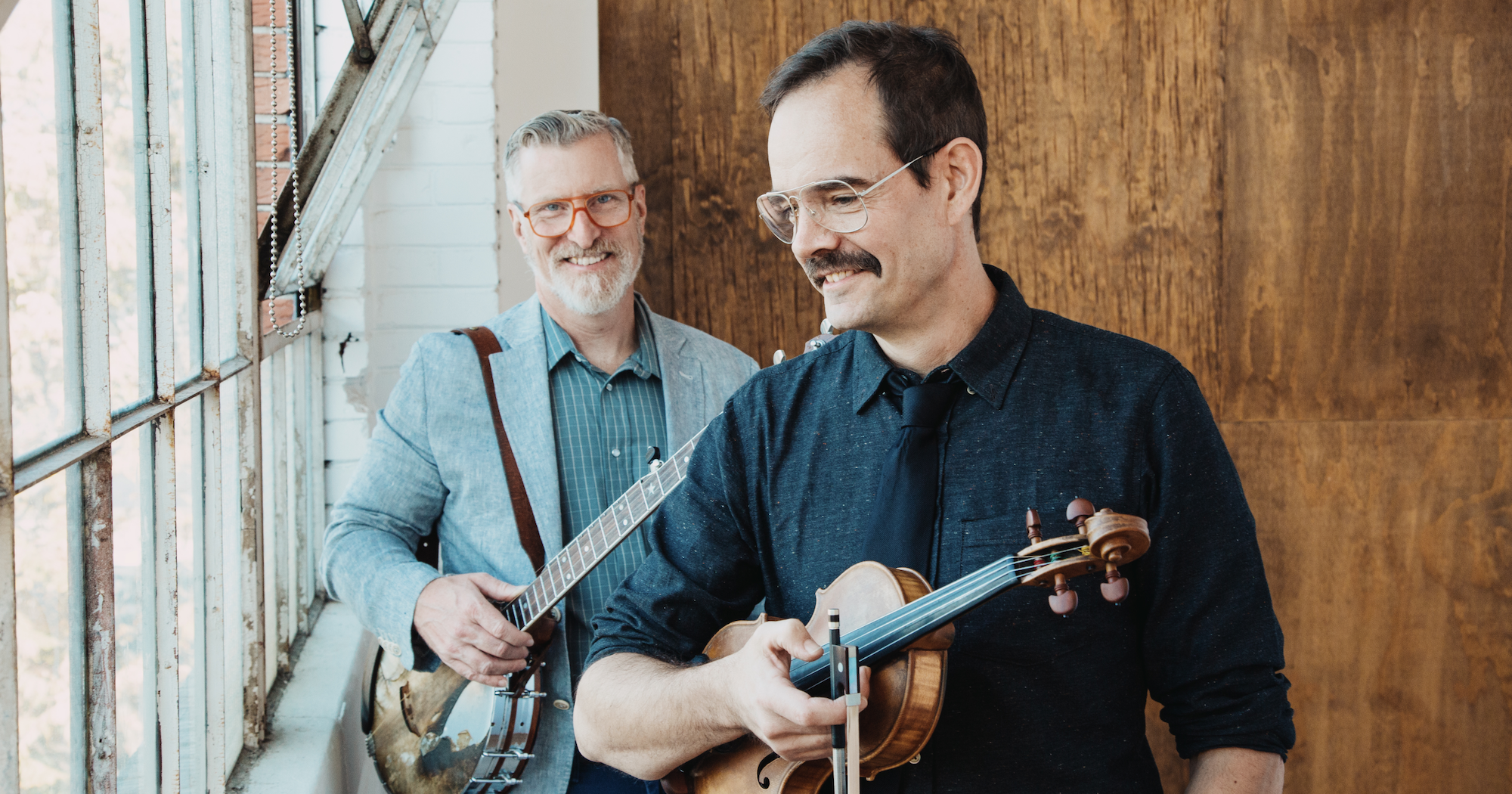
Artist:The Unfaithful Servants Hometown: Victoria, British Columbia, Canada Latest Album:Fallen Angel (released October 17, 2025) Personal Nicknames (or rejected band names): Quince/Quincy; Cobby; Dyl/Dilly; Cuss
(Editor’s Note: Answers supplied by mandolinist Jesse Cobb.)
Which artist has influenced you the most – and how?
Sam Bush, both solo and with New Grass Revival, Strength in Numbers, and many others. When I first started playing mandolin, I learned old-time fiddle tunes from the likes of Gus Ingo, Blind Kenny Hall, Bill Monroe, Bobby Osborne, and others all from LPs, by ear. I also had a few books around – Jack Tottle’s mandolin book, fakebooks, and some others. I recall going to the library in Superior, Wisconsin, and checking out albums/tapes of many artists.
Among the picks one time was New Grass Revival’s On The Boulevard. I was likely 10-12 years old and pretty new to playing at the time. I remember putting on the record and just being blown away by the overall intensity, sound, clarity, timing – everything seemed so leveled-up compared to the bluegrass and old-time music I’d been listening to. Sam particularly caught my ear as a mandolin player. The tone, attack, intensity, rhythm, changed my whole view of a mandolin’s role in a band. I still get this feeling every time I hear Sam’s music or get the opportunity to play with him! A real game changer for me.
What’s your favorite memory from being on stage?
My first time on the main stage at Telluride Bluegrass. I had been listening to recordings/watching videos of that stage with the house band, New Grass Revival, and others for literally my whole childhood! When I first played there with The Stringdusters, the feeling of looking over the massive crowd and up to the mountains in the distance was very special. It felt like a dream being there at that time and was a very emotional affirmation that all the time, sacrifice and hard work was worth it.
Genre is dead (long live genre!), but how would you describe the genres and styles your music inhabits?
The Unfaithful Servants draw from such a deep well of influences: old-time fiddle tunes to Vulfpeck; Doc Watson and Townes [Van Zandt] to Rush; Edgar Meyer to Jaco Pistorius; The Band to Polyphia; Bach to the Flecktones! Given our varied influences and our span of four decades in ages, we try to put this all together to inform our sound.
In my mind, the closest genre that encapsulates this is Americana. I think that we have more in common with artists like Sierra Ferrell and the Avett Brothers than with traditional bluegrass bands, although that influence/drive is incorporated as well. With the intensity of the Stanley Brothers and the technical aspirations of Punch Brothers, the groove of classic funk and lyrical depth of Neil Young, we try to create our own sound encompassing them all!
What is a genre, album, artist, musician, or song that you adore that would surprise people?
I really like ’80s rock music – think Steve Vai, Damn Yankees, Warrant, Def Leppard. I grew up listening to old-time music almost exclusively and working very hard to live up to the feel and sounds I was hearing in that. I recall being at a soundcheck at a theatre in northern Minnesota one time, probably around 13-14 years old. Walking into the venue for soundcheck, the crew was ringing out the room with the most exciting thing I’d ever heard. The song was “Peace of Mind” by Boston and I was blown away, very similar to the way Sam Bush hit me! I recall asking the crew, “What is this?” This started a long infatuation with ’80s hair bands, electric guitar shredding, and the crazy vocalists in the genre. I know a surprising amount of lyrics to ’80s hair bands and love to karaoke them when I can, for better or worse!
Does pineapple belong on pizza?
While I can confidently answer no for me, it’s kind of like asking, “What is bluegrass?” except without a point. I don’t like the flavor of pizza sauce and pineapple together, personally, but that doesn’t make it wrong for everyone! Much like trying to define genres, it’s completely up to personal taste.
Artist:Frank Evans Hometown: Toronto, Ontario, Canada Latest Album: Debut album is in the works
Which artist has influenced you the most – and how?
It’s always difficult to narrow that question down to one artist, but if it has to be one, I would say Alan O’Bryant of the Nashville Bluegrass Band. His ability to sing and play banjo at the same time, with so much dynamic intensity, still gives me chills whenever I hear it. When I was just starting out on the banjo, my teacher, Chris Coole, gave me a compilation CD of all these different banjo styles. “When I Get Where I’m Goin'” was on there and I must have listened to it on repeat ten thousand times. That band has really influenced how I arrange songs for a full bluegrass outfit. It was a huge honor to have Alan come into the studio to produce The Slocan Ramblers’ latest album. He was such a joy to work with.
What’s your favorite memory from being on stage?
All the guys in The Slocan Ramblers used to joke that if you’re a banjo player, you’re never safe from another banjo player appearing out of nowhere and asking you a very specific question about your instrument. I guarantee I’ve been that person.
A funny example of that happened back in 2015 when we were at MerleFest. They’d asked a few bands to do some early-morning TV interviews to help promote the festival. It was 5 a.m. and the gates were all closed. We had just gone live with the first interview when a guy popped out from behind a bush about 50 yards away and shouted, “Is that a Presto tailpiece on your Style 11?” How he knew what kind of banjo I was playing from that far away, I have no idea – but it was almost impossible to keep my composure after that.
What other art forms – literature, film, dance, painting, etc. – inform your music?
I’ve always been a fan of graphic novels and comic art. Growing up in Toronto, I was lucky to be surrounded by a healthy community of artists and great comic shops – especially my favorite, The Beguiling. Chester Brown, Harvey Pekar, and R. Crumb have always been some of my favorite artists.
Back in eighth grade, we had a year-long culminating project that could be on any topic and I decided to write a graphic novel about Edden Hammons, the old-time fiddler from West Virginia. It was a lot of fun and a ton of work, but I got to sell a few copies at The Beguiling, which was pretty cool. The last time this hobby came up was when The Slocan Ramblers asked me to come up with a cover for their Queen City Jubilee album. It’s a little out there, but I like how it turned out.
Does pineapple really belong on pizza?
Being born in Ontario — the birthplace of the Hawaiian pizza — I firmly believe that pineapple belongs on pizza. It actually took me a long time to come around to it, but a fresh Hawaiian slice from the right place is hard to beat. One of my favourites was a little spot called 2 for 1 Pizza in Kensington Market, Toronto. They’d pull a regular-sized slice from the oven, cut it in half, and hand you “two for one.”
What would a perfect day as an artist and creator look like to you?
I’ve really enjoyed the days I’ve spent in the studio since moving to Nashville. I feel very lucky to have been invited to be part of a number of projects here, ranging from experimental old-time records to working on the soundtrack for King of the Hill. If you’ve ever been unsure about what to practice, spending a day in the studio among amazing musicians will fix that. Recording has a way of putting everything under a microscope, which can sometimes feel crippling, but it’s also extremely rewarding when you notice tangible improvement from the last session.
I’ve also started working on my own solo record, which has been both rewarding and humbling. I plan to start releasing some of the tracks next year.
Artist:Ocie Elliott Hometown: Victoria, British Columbia, Canada Latest Album:Bungalow (released October 24, 2025) Personal Nicknames (or rejected band names): Jon and Ra
What has been the best advice you’ve received in your career so far?
Keep playing, keep writing. Don’t be precious with songs. There isn’t one right way, be yourself goddamnit!
What’s your favorite memory from being on stage?
Somewhat unexpectedly being invited to join Zach Bryan for his song “28” when we opened for him at Red Rocks this summer. We were handed wireless mics backstage and, not knowing when to sing or where to stand, were instructed to “just go for it!” – in front of thousands of people wrapped in towers of sandstone formations enveloping the sound. It felt like my sense of self dipped and pure elation took its place… like there was nothing I could do to stop my entire body from singing.
Another experience that comes to mind was one of our earlier shows, playing for 10 to 20 people in a secret locker room during a local festival in Victoria, BC. – Sierra
What other art forms – literature, film, dance, painting, etc. – influence your music?
For me, it’s mainly literature and films that influence my music and I suppose they do so more in a lyrical sense, by informing how I see the world and interact within it. I know for me, the times I feel most inspired in life is when I have been reading a great book or have just finished watching a really inspiring film. I love foreign films, especially, because they can often give such unique and also universal perspectives and open your frame of mind. – Jon
What musician has influenced you the most – and how?
Kurt Cobain. When I first heard and saw Kurt Cobain in the “Smells Like Teen Spirit” video my life changed forever. I can still recall the weird feeling of hearing his voice and almost not understanding it, in a way, and being so pulled in that I was dumbfounded. Kurt Cobain and his songs and voice made me really fall in love with music in an intense way. The fact that sound could have such an effect and inspire such feelings of pleasure and energy was life-changing and life-affirming.
What is a genre, artist, song you adore that may surprise people?
I love hip-hop/rap music, not that that should really surprise anyone, since the vast majority of musicians listen to every style of music, I think. But there was definitely a long period of my life (four to five years, at least) where I mostly listened to hip-hop. A Tribe Called Quest, Wu-Tang Clan, De La Soul, People Under the Stairs, and Outkast being my favorite artists overall.
A few years back, we put out an album called Modern Old-Time Sounds for the Bluegrass and Folksong Jamboree. The title was a nod to that 1960s trend of naming records in a way that tried to cover every possible base. It was tongue-in-cheek, but it still sums up what we do – and what you’ll hear on our latest Lonesome Ace Stringband album, Big Wing. We don’t really play old-time music so much as make a modern old-time sound, and that’s exactly what this playlist is all about
Up here in Canada, we have a wealth of traditional music – distinct regional fiddle styles from coast to coast, songs and ballads that reflect the multicultural makeup of our country, and Indigenous music that predates all of it. Even with this abundance of homegrown music to draw from, many of us have found ourselves charmed by the traditional “old-time” sounds of the American South.
Being far away – geographically and culturally – from the source of the music you love presents some challenges, but it also affords a certain freedom. The first step is always to understand where the music comes from and its history; eventually, though, we all need to find our own voice within it. That’s sometimes easier to do when you’re removed from entrenched scenes and long-established communities.
One way I see this playing out in the old-time music coming from Canada is that writing original tunes and songs seems to come naturally and early in the journey. Whether it’s composing new tunes in the tradition or letting the sounds and themes of traditional music color our lyric writing, we’ve developed a wealth of modern old-time sounds up here – and I’m excited to share a few examples in this playlist. – Chris Coole, Lonesome Ace Stringband
“Maggie At The Door” – Arnie Naiman
Arnie Naiman has been playing old-time music longer than anyone else on this list. When I first met him in the early ’90s, he’d already been playing for around 20 years. Back then, he was mostly on fiddle, but sometimes he’d pull out the banjo at the end of the night and share some of the original tunes he always seemed to be writing. This led to us making a couple of albums together – and to me becoming a lifelong fan. “Maggie at the Door” is a great example of how he can write a banjo tune that also works on the fiddle – not as easy as it sounds. It was written for his dog and it’s probably the most badass-sounding tune ever written for a golden retriever.
“Lonesome Song” – Rube & Rake
Rube & Rake are Josh Sandu and Andrew Laite. Both live in St. John’s, Newfoundland, and are writing beautiful songs while touring hard. We ran into them in the UK last year and were instantly taken by their deft playing and the “low lonesome” sound of their harmony singing. “Lonesome Song” is a moody example of all that.
“Platform Four” – The Slocan Ramblers
The Slocan Ramblers are Canada’s bluegrass band – at least as far as I’m concerned. Although Frank Evans no longer plays full-time with the group, I chose this tune to remind everyone that while he’s mostly known for his three-finger bluegrass playing these days, he’s also on another level as a clawhammer player. There are a few licks on “Platform Four” that he’ll probably take to the grave.
“Narrow Line” – Mama’s Broke
Mama’s Broke are another duo from Eastern Canada (Nova Scotia). We crossed paths with Lisa Maria and Amy Lou Keeler at the Baltimore Old-Time Gathering a few years ago. They put on a riveting show and blew us away with their singing and playing. The arrangements on their records are so imaginative – they capture the spaciousness of their live sound while layering on subtle textures. “Narrow Line” is an excellent example of this and one hell of a song.
“White Horse Plains” – The Red River Ramblers
The Red River Ramblers feature the music of Douglas Richard Sinclair, a Red River Métis musician whose last album, Reverie, showcased original tunes inspired by the Métis fiddle tradition. “White Horse Plains” highlights Douglas’ tuneful guitar playing and answers the question: What would Norman Blake have sounded like if he’d been Métis?
“Saint Elizabeth” – Kaia Kater
Kaia Kater’s 2016 album Nine Pin made a lot of folks take notice of this exceptionally talented songwriter. Kaia is a perfect example of someone who’s really tried to get to the roots of the music; she studied Appalachian traditions at Davis & Elkins College in West Virginia. She’s taken what she learned there and carried it to a creative place that defies genre or categorization. “Saint Elizabeth” is a perfect example.
“New Caledonia” – Pharis & Jason Romero
Pharis & Jason Romero probably need no introduction to anyone here. They’re old friends of ours and we’re big fans of their music. It almost seems remiss to share a song that doesn’t feature their beautiful singing and lyrics, but we’re always enchanted by Jason’s tune writing, backed by Pharis’ always-right-on-the-money guitar playing. “New Caledonia” is one of those tunes that instantly takes you somewhere. It manages to say a lot without a single word.
“The Wheels Won’t Go” – Hannah Shira Naiman
Hannah Shira Naiman comes to the music honestly. She grew up learning fiddle and banjo from her dad, Arnie Naiman, while listening to her mom, Kathy Reid-Naiman, sing the songs of Jean Ritchie, the Georgia Sea Island Singers, and the Delmore Brothers. Hannah has taken it all in and made something uniquely her own. “The Wheels Won’t Go” is the title track of her 2022 album.
“Wellington” – Allison de Groot & Tatiana Hargreaves
Allison de Groot is one of our most treasured banjo exports – clean, hard-driving, and full of tone. Best known these days for her work with Tatiana Hargreaves, she’s also a fine composer. “Wellington” is one of her own tunes, a reminder that she’s as creative as she is technical.
“Mama’s Boy” – Lotus Wight
Lotus Wight (AKA Sam Allison) is best known for his work with Sheesham and Lotus & Son. He’s a beautiful banjo player, a lovely jaw-harpist, a rock-solid bassist, and even plays the contrabass harmoniphoneum. I didn’t know until his last album that he’s also a moving songwriter, somewhere between John Hartford and Leon Redbone. “Mama’s Boy” tells the story of the three men who were fathers to Sam over the course of his life. I can’t remember the last time I heard such an honest and tender song.
“From Silence” – Daniel Koulack
Daniel Koulack hails from Winnipeg, Manitoba, where he’s been making music and teaching banjo for many years. (Allison de Groot is one of his students.) Daniel has always been game to take the clawhammer banjo to new and unexpected places – which might explain “From Silence,” possibly the only clawhammer banjo and saxophone duet in the known universe.
“At the Airport” – Old Man Luedecke
Old Man Luedecke is one of the crown jewels of Canadian singer-songwriters and he also happens to be one hell of a clawhammer banjo player. He’s written most of his songs on the banjo (at least the early ones), which gives them those unmistakable twists and turns – in both phrase and melody. And he has that rare gift for putting a bit of hope into everything he writes, whether the song is sad, funny, or introspective. “At the Airport” is a perfect example.
“May Day” – The Andrew Collins Trio with The Lonesome Ace Stringband
The Andrew Collins Trio (Andrew Collins, James McEleney, Adam Shire) collaborated with us on “May Day,” a tune Andrew and I wrote together many years ago. These three are next-level players who are always pushing the boundaries of what’s possible on their instruments. Known for mixing new acoustic bluegrass with classical and jazz influences, we had fun diving into some weird old-time with them on this track from our new album.
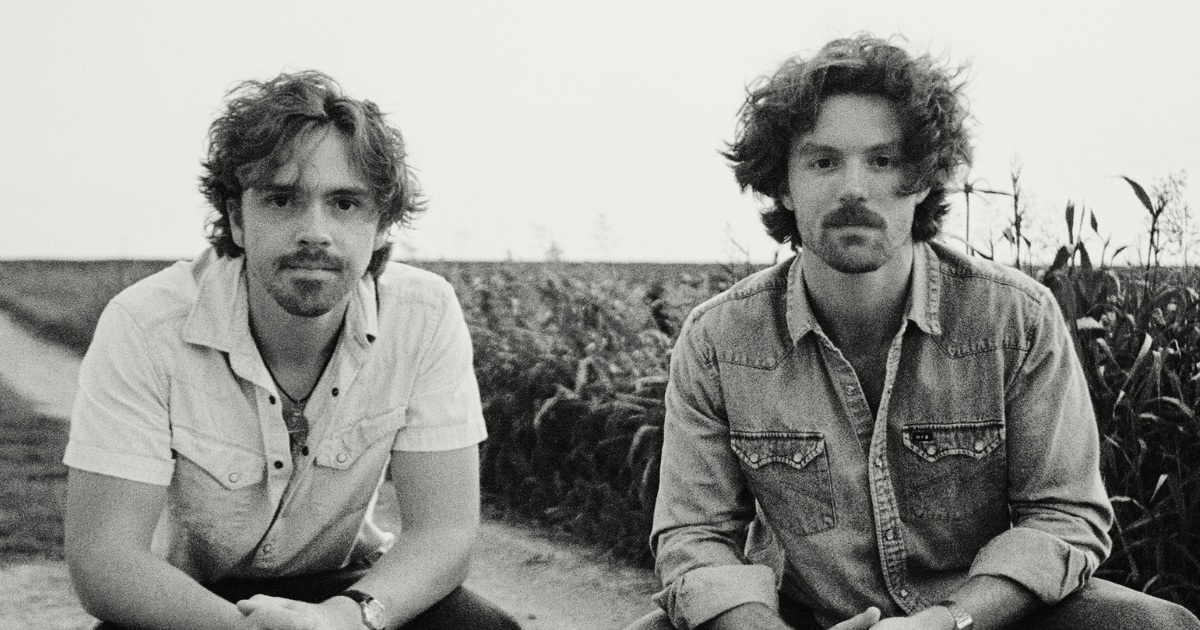
Through the windshield of their Ford Transit van, the duo Briscoe drew songwriting inspiration from the Southwestern landscape during a long, meandering road trip after graduating from the University of Texas. However, this trek was more than just a rite of passage, as band members Philip Lupton and Truett Heintzelman were launching their first national tour. In those seemingly endless miles between show dates, they would trade lyrical ideas to flesh out once they got back home to Austin.
Described by the band as “Texas folk-rock,” those cinematic songs have now surfaced on Briscoe’s second album, Heat of July. Produced by Brad Cook and released by ATO Records, the collection is a generally optimistic highway companion set against the backdrop of sunsets somewhere south of Alpine, Texas, long drives to Denver, and Mexican eagles circling overhead.
During a brief break from the road, Briscoe spoke with Good Country about how banjo fits into their sound, discovering bluegrass through YouTube videos, and the John Prine classic that set it all in motion.
I found it interesting that you were writing this album as you were driving around the country. You’re going 80 miles an hour as these songs are coming to you. Can you set the scene of what that looked like?
Philip Lupton: Yeah, that’s a great question. A lot of this record was written on the road just because we were touring hard on our debut album, West of It All. You’re in the van for so many hours a day that you eventually get tired of listening to music, no matter how much you like music. You just need some silence. I think that’s when Truett and I can find a little bit of inspiration. Like, “OK, cut the music.”
“Arizona Shining,” the second song on the record, is very much written as I’m taking in the landscape through the window. You just start to mumble a few things under your breath. And then you hold up your phone and take a little voice memo. You get back home in a couple weeks, you come back to that idea, and then, finally, get to put it to a progression and bring it to life.
When you’re out on tour, coming out of your hotel, and you see that van hooked up to a trailer, does it ever strike you, like, “We’re really out here making this happen”?
PL: Yeah, absolutely it does! There’s this old Hayes Carll song called “I Got a Gig.” I listen to that song and I’m like, “OK, we’re doing it. We’re road dogging it.” We’re staying at the cheap hotels and playing gigs for cash at the door and whatever. We’ve seen a lot of growth and success in a lot of markets, but when you’re taking it all across the country, up into Canada, there’s a lot of those same stories you can experience any time on the road.
The opening song, “Saving Grace,” seems to set a tone for the album. There’s a very positive tone in that song. Is that a fair statement, do you think?
Truett Heintzelman: Super fair, yeah. A lot of this record is written over the last year and a half to two years and one of the big components of that time for both of us is that we both got married. So that’s what we were wanting to convey. We view marriage in a positive light and, God willing, we’ll always view it in a positive light. “Saving Grace” was written about marrying our respective wives.
For me, that song was about meeting my wife and realizing early on, “OK, this feels different and I don’t want this to go away.” We just tried to write as much as we could about our lives and experiences and our time between now and the last record. And, obviously, getting married is something that takes up a lot of your brain, you naturally end up thinking about it a lot.
You’ve got a cool banjo vibe on “Saving Grace” and a couple other songs on the album, too. Philip, what pulled you into the sound of the banjo?
PL: It goes back to learning guitar when I was middle school-age. I just had a desire to learn an instrument that was different and would allow me to jam with my buddies. So, I bought a banjo at a secondhand music store in San Angelo, where I’m from, for like 150 bucks, and I ended up really falling in love with the Avett Brothers. Back in the day, when Truett and I were both learning to play guitar and sing, I’d play the banjo and Truett would play the guitar and we’d cover the Avett Brothers. That was how we fell in love with playing together.
The banjo always had a strong presence. When we started writing, it was almost second nature to incorporate the banjo in some way. If Truett was handling most of the rhythm guitar, I picked up the banjo in lieu of a lead guitar. We just kind of rolled with that, way back when.
You mentioned middle school. Is that around the same time you guys met?
PL: Yeah, I was a year older than Truett in school and we met at summer camp. We just hit it off and we were both learning guitar and both interested in similar music. We saw each other every year after that at camp and became really close in high school. San Angelo is a smaller town and we’d have to go to a major city for any big need, like a big hospital system. So, my family would go to San Antonio quite a bit. I’d get dropped off at Truett’s house and we’d play guitar until my family was ready to go back to San Angelo.
Do you guys remember the first time you sang together?
TH: Oh yeah, that first summer we met at camp, we met on the first day of the session, which was two weeks long. We both brought acoustic guitars, so it was like, “All right. You play, I play.” “What do you like to play?” “Oh, I like that song too.”
We started going back and forth, kind of jamming all throughout that week. At the end of that week, we played “Paradise” by John Prine at our camp talent show, which was really just for us. We joke that I don’t think anyone else in that camp auditorium had any idea what we were saying, but they were just excited that we were singing and we were too.
How did John Prine hit your radar in middle school?
TH: There’s a guy named Joshua Lee Turner who’s in a band called the Other Favorites and he has this YouTube channel, it’s like a gold mine. He’s super talented, an awesome artist, and he and his buddies cover all these incredible songs. I owe watching Joshua Lee Turner on YouTube for a good chunk of the artists and the music that I love. I consume a ton of bluegrass music and a lot of that is because of him. The song “Old Home Place” is one that I fell in love with after watching him. When Philip and I put it together that we both loved him, that served as a blueprint, too, for us to start posting videos on YouTube.
How did you come up with the name Briscoe?
PL: Briscoe was my grandfather’s middle name. I never met that granddad, but I always loved that name. It’s a name that goes back in my family on that side a few generations. It was in consideration for my name before I was born, but my grandma on the other side of the family didn’t like it. I always liked the name and I started Briscoe in San Angelo before we got to UT, just as a name to put music under. I knew someday Truett and I would be able to do it together, so I just chose Briscoe and rolled with it and then we never had any reason to consider changing it. And that was that.
You guys have seen the whole country by now, touring coast to coast. What is it about living in Texas that makes you want to settle there?
TH: I’ll just get this out of the way now – when you’re born in Texas and raised in Texas, you’re just inherently proud of that. So, from the get-go, you probably have an inflated sense of pride to be from Texas. But we’re now at this place where we’ve gotten to see everything in North America, pretty much. There are so many beautiful parts of this country, and of Canada and Mexico. In all these cities, you’re like, “Wow, this is such a great city. It would be fun to live here.” But I have never found a place where I’ve been like, “I would rather live here than where I live in Texas.” This is where our roots are.
Philip, how about you?
PL: The older I get, the more I appreciate Texas’ contribution in the music world on all different levels, and especially this Texas country/outlaw kind of thing. To name a few guys in particular, Jerry Jeff Walker, Guy Clark, Lyle Lovett, and Robert Earl Keen. The more we appreciate them, the more that we want to resemble what they did. No matter what level of popularity or success they achieved as musicians, they never forgot where they were from. We respect those guys a lot for that, and how they blazed their own path.
We are very proud to be part of the greater Texas subgenre of Americana, folk, and country music, and we feel like that’s where we’re always going to want to be.
Last week, GRAMMY winner and renowned Canadian singer-songwriter Sarah McLachlan performed on Jimmy Kimmel Live!, the first musical guest on the show after its controversial short-lived suspension and return to the air. McLachlan performed “Better Broken,” the title track from her brand new album – her first in 11 years – which released September 19. In her signature style, simple unadorned piano and vocals in duet, McLachlan reminds the Kimmel audience exactly why she’s so beloved all around the world. Her voice is rich and plaintive, leaning into the sadness and reckoning in the lyric. It’s immediately clear a decade-plus is too long to wait for new music from McLachlan.
Not only was she appearing on late night television to promote Better Broken, but also Lilith Fair: Building A Mystery – The Untold Story, a new documentary directed by Ally Pankiw that celebrates, explores, and canonizes the enormous impact the Lilith Fair all-women festivals had on folk, indie, and popular music in the late ’90s. (Watch the official trailer below.) An excellent and moving documentary, Building A Mystery is available to stream now via Hulu, a film and television streaming platform that, like Jimmy Kimmel Live!, is owned by ABC / Disney. At the documentary’s Los Angeles premiere, McLachlan and several of her artist colleagues refused to perform music from the film as previously planned, standing in solidarity with Kimmel as he was mid-suspension for his comedic remarks on the murder of Charlie Kirk.
On Kimmel’s historic first night back on the air, just a few days later, it was a perfect full circle moment as McLachlan performed as if honoring a raincheck for her refusing to play at the documentary premiere in protest. With Margo Price as the final musical guest before Kimmel’s suspension and McLachlan the first after its return, it was a mighty pair of activism-minded artist bookends to help reinforce the importance of freedom of speech and expression for creatives who work in any/all media and formats. From Lilith Fair to JimmyKimmel Live!, these rights are vital for everyone in this country and around the world – and for the art that they create.
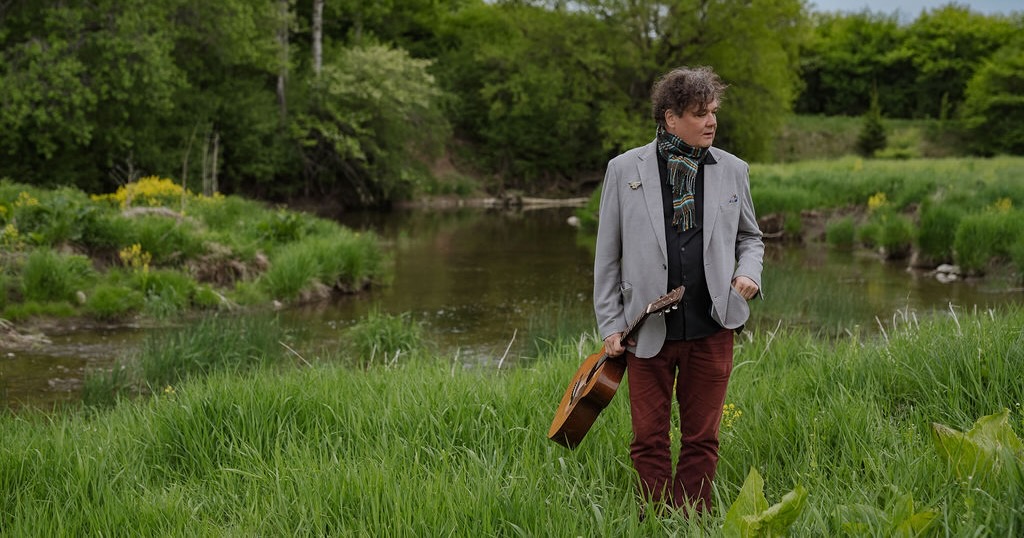
Now appearing in the role of nasty Bill Sikes in the musical Oliver! — Ron Sexsmith?
Well, not exactly. But Sexsmith had the character of Sikes in mind (specifically as played by Oliver Reed in the movie) when he wrote the original version of “Damn Well Please,” a jaunty, pointed highlight of his new album, Hangover Terrace.
The song was initially intended as part of a musical Sexsmith was creating based on Deer Life, a fairytale book he wrote and illustrated, that was published in 2017.
“There’s this villain character that was going to sing that song,” Sexsmith, a great fan of classic musical theater, says on a video chat with BGS from his home in Stratford, Ontario, Canada. “I just remember thinking how Oliver Reed played Bill Sikes. But he didn’t sing, because the director said as soon as the villain starts singing it takes away from his threatening element. And I thought that was smart.”
So, while he is still looking to bring the musical to the stage, he had put this song in a drawer. Eventually, though, he reworked it as a screed against what he sees as oversensitivity endemic to our era, with everyone so easily offended, and set it to perky Baroque-pop music and a tone bearing more than a shadow of classic Ray Davies.
“I refashioned the lyrics to be more about a kind of grumpy, bickering kind of thing,” he says. “Just because sometimes I’ll get mad or because [he and his wife Colleen Hixenbaugh] will bicker sometimes about my wine consumption. And I’ll be like, ‘I can have wine.’ Or whatever. And I just felt that it was fun to sing. We tried it out in a concert recently and it went over really big.”
Now, just in case you’re confused, yes, this is that Ron Sexsmith – Mr. Sensitive himself, Mr. Melancholy, Mr. “Secret Heart” (the first song on his first real album, 1995’s Ron Sexsmith, and arguably his most enduring and much-covered number). All vulnerable and romantic.
Yes, it’s him, the guy known for wearing his heart on his sleeve, weaving his feelings into stunningly indelible melodies sung with engaging understatement, all endearing him to fans throughout North America and Europe, earning him 15 Juno Awards (including eight as Canadian Songwriter of the Year) and a 2010 documentary, Love Shines. The guy who has been lavishly praised by countless fellow artists, notably among them Elvis Costello, Nick Lowe, Steve Earle, Daniel Lanois, and Feist.
That Ron Sexsmith is here, slinging arrows at people he sees as too sensitive. “I’m intent on poking the bear,” he sings.
“It’s just kind of a song about the culture we’re in now, there were a lot of people tip-toeing around and afraid to offend all the time,” he says of “Damn Well Please.” “And I think maybe we’re coming out of that a bit now. When I played it live, there were some people who came up afterwards and told me they found it really empowering.”
He laughs.
“I don’t want to empower the wrong people, though.”
The fact is, he is feeling empowered to show that edgy side a bit more. While there is plenty of the sensitivity, the romance, the explorations of heart on this, his 17th studio album in three decades, there are several songs that show this trait, lashing out some at matters both cultural and personal.
In “Camelot Towers,” another with a clear nod to his Kinks devotion in its sharp view and Baroque-pop tones, he expresses disgust at the proliferation of fancifully named housing projects that in reality are blights. In “Outside Looking In,” with Hixenbaugh chiming in as something of a Greek chorus, he suggests that “some friends should come with expiry dates.”
Mr. Costello, one of his biggest heroes and biggest fans (as a songwriter he has ranked Sexsmith with Paul McCartney and Tim Hardin), famously arrived in the punk era bearing the tag of “angry young man” before later evolving with great emotional nuance. Has Sexsmith gone the other way, from genteel young balladeer to, at 61, an angry, uh… mature man?
“I guess it’s better late than never,” he says, a wry smile and shrug tilting his country-gentleman hat and large wire-rim glasses.
“I mean, my earlier albums were more melancholy and kind of sad, just based on what was happening. But I had a song on [2004’s] Retriever called ‘Wishing Wells’ that was kind of angry. And I’m sure I could go and find those songs throughout my career. They exist before this. Maybe they don’t all exist in one place like on this album.”
Make no mistake: He still wears his heart on his sleeve. In fact, the opening line of “Easy For You to Say” is “I wear my heart is on my sleeve.” And the very first words of the album’s first song, “Don’t Lose Sight,” are “Hearts get broken,” sung with great vulnerability.
In other places there’s the romance of wistful, poignant nostalgia, as in “Cigarette and Cocktail,” a colorful portrait of the seemingly carefree life of earlier generations with “a cigarette in one hand and a cocktail in the other.”
“I wanted to express the full range of emotions, human emotions. I don’t want to be the master of one emotion, like some people do these days. ‘That’s the guy who writes all the sad songs,’ or ‘that’s the guy who writes all the ironic songs,’ you know. I want to be an actual human being.”
Hence Hangover Terrace spans from pastoral (“House of Love,” a lovely ballad with brass that’s an ode to “a dirty happy home” filled with play and laughter) to perky pop (“It’s Been a While,” his account of a reunion with his old bandmates, with “shades of our yesterdays” and ‘80s-ish Casio-like keyboard lines) to pumping power-chords (“Burgoyne Woods,” with a little spirit of the Who). Produced by Martin Terefe – who has worked with artists from James Blunt to Engelbert Humperdinck and produced three Sexsmith albums in the 2000s – at his bustling London studio complex, it features among its musicians former Pretenders/Paul McCartney guitarist Robbie McIntosh (he provided the Townshend-esque licks to “Burgoyne”) and keyboardist Ed Harcourt (a fine singer-songwriter in his own right). But for the variety, or because of it, there’s a flow, an arc – it’s not a big leap to imagine the album as being the tuneful bones of a musical or narrative song cycle.
“I think I could probably write a story where these songs would fit,” he says, noting that no one had mentioned that before. “In all my albums there is a document of a particular time or phase that I was going through. So definitely with this record it was coming off the heels of the pandemic and all that stuff. You could probably write a story. I don’t know if I’m the guy to do it. But yeah, I’m going to think about that.”
Much of this, he says, reflects the life he and Hixenbaugh have led since moving from Toronto to Stratford seven years ago. Especially the theater orientation.
“Stratford, where I live now, is an internationally renowned theater town,” he says. “People come here from all over to see the plays and musicals. Maggie Smith worked here, and Christopher Plummer. I really love the theater and feel we’ve landed in a kind of oasis. The world is going crazy and we’re going to plays and all. I can’t believe our luck that we ended up here.”
Even outside the theaters, in this Stratford, as that bard from the other Stratford put it, all the world’s a stage. The players there? Superb. And for this Canadian bard?
“It’s been inspiring,” he says. “We have a yard with all these critters running around, like rabbits and things. We had an owl. Didn’t have that in Toronto. I feel like Beatrix Potter or Huckleberry Finn. It’s a whole different way to live.”
That has also brought out a wistfulness that counters, or at least complements, some of the hotter feelings expressed. Take “Burgoyne Woods,” a look back to a time in his life when the world was open and the radio rocked.
“It’s a very nostalgic song for me,” he says. “Every song on this album has its own character and personality. Here, I like rock. I love The Who and all that stuff. I was trying to write that kind of thing they do. It’s about a time in my life with my high school friends and we’d just go on trips through the woods near our house.”
That was his hometown of St. Catherines, down near the Niagara Falls/Buffalo area.
“It was that free-range period where your parents don’t know what you’re doing,” he says. “You’re just out there and just, you know, doing things you shouldn’t do. And drinking.”
So sort of his “Cigarette and Cocktail.”
“Yes,” he says. “Exactly.”
Even in “Camelot Towers” Sexsmith has found himself considering the humanity within the walls of the eyesores. “I’m just noticing, I mean, obviously people live there and they make the most of it,” he says. “And my son [one of two adult children from a previous marriage] lives in a place like that. You walk the halls and you can hear the people or you smell the different foods that everyone’s cooking. I kind of get into that in the last verse. Everybody needs a home and a home is what you make it.”
So yeah. Mr. Sensitive hasn’t gone anywhere.
And how does he bring the curtain down on Hangover Terrace? Well, he’s sensitive there too. Several songs before the album’s close, in “Please Don’t Tell Me Why,” a buoyant folk-rocker reminiscent perhaps of the Beatles’ “I Will,” he lets us know what to expect, or not to expect. He’s all about cherishing the moment, relishing the life and love he’s built with Hixenbaugh, savoring the theater and the wildlife around their home, without looking down the road:
I don’t want to hear Don’t want to know The trouble that surrounds The happiness we’ve found Don’t want to see The way our story ends
That might even bring a tear to Bill Sikes’ cold eyes.
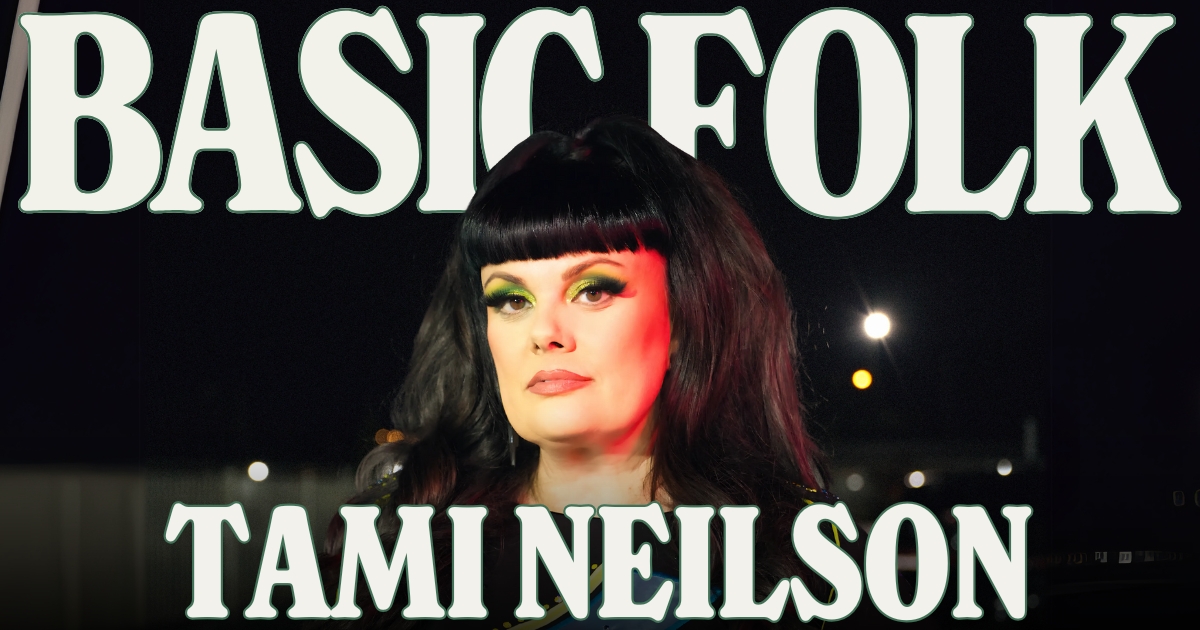
In recent years, Tami Neilson has been learning to carry both great joy and great sorrow simultaneously. The New Zealand-based, Canada-born powerhouse’s new album, Neon Cowgirl, is named after the towering electric figure on a sign that’s overlooked Broadway in Nashville watching over Tami’s career since she was 16 years old. The songs were born from a five-month family road trip combined with a major musical tour that would allow Tami the once-in-a-lifetime chance to really give it her all with her career. It was the chance for her children to experience what her life was like at their age, when she toured the country with her family’s band, led by her eccentric and wildly lovable dreamer-father, Ron Neilson. Before she got the chance to hit the road for that trip, Tami landed in the ICU with sepsis and nearly lost her life. She blessedly recovered, but found that all her priorities centered around trip/tour had changed.
In our Basic Folk conversation, we talk about the songs on Neon Cowgirl, her dear friendship and collaborations with Willie Nelson, and Tami’s exciting performances at the Grand Ole Opry. One of the songs on Neon Cowgirl, “Keep On,” was inspired by a cosmic conversation she had with Wynonna Judd. Judd, to her surprise, quoted the same exact phrase – “Keep on, keep on, keep on” – that Tami’s late father had written in one of her most cherished letters.We also talk a lot about her brother, Jay Neilson. For all of her career and life, Jay has been by her side as her guitarist, co-writer, and musical partner. Last July, Jay suffered a rare and debilitating brain injury that he is still recovering from. Tami and Jay have not been able to perform together since that injury. She shares what it’s been like to be without Jay and how it’s been for him to be so public about his condition.
Tami Neilson and I first connected during the pandemic. She was a guest on the podcast after she released her 2020 album, Chickaboom!and again after she released her fifth album, Kingmaker, in 2022. Since those chats, I have loved following her career, listening to her new music, and experiencing her highs and lows with her. She’s one of my favorite guests and I’m thrilled to welcome Tami back to talk about her wonderful new record.
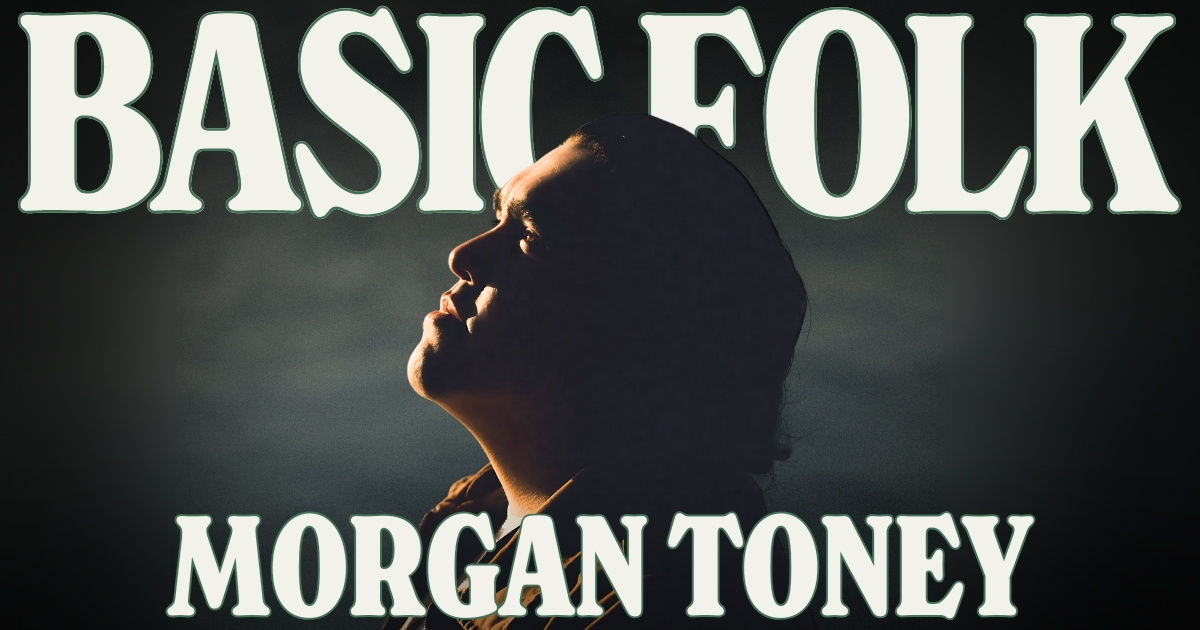
Circles have played a huge role in fiddler and singer Morgan Toney‘s life thus far: from drum circles, to talking circles, to the Earth itself (a circle!). In our Basic Folk conversation, Morgan talks about his L’nu (also known as Mi’kmaq) heritage and growing up on what’s now called Cape Breton, Nova Scotia, where his ancestors have lived since time immemorial. He elaborates on the significance of the terms ‘Mi’kmaq’ and ‘Nu,’ explaining the shift in terminology among his people. As a teenager, he discovered his Indigenous heritage and cultural roots from his elders after he moved to Wagmatcook (a First Nations reserve) and learned about how the power of music could shape his life. He shares the story of first hearing Phil Collins at his uncle’s house after school, which inspired him to take up the drums. He soon discovered First Nations drumming by directly learning the songs from elders in talking circles. Morgan also talks about his transition from a shy teenager to a confident musician deeply immersed in both Mi’kmaq and Celtic musical traditions, creating a unique fusion which Morgan calls “Mi’kmaltic.”
We also talk about Morgan’s emotional connection to his community and the importance of music in rediscovering and celebrating his Indigenous heritage. He recounts how his exposure to traditional Mi’kmaq songs and ceremonies as a teenager was a transformative experience that reignited his cultural pride. In music and in our conversation Morgan pays homage to his family members, especially his elders, who played pivotal roles in nurturing his musical talents and helping him embrace his cultural identity. Finally, Morgan reflects on his musical collaborations, including his close partnership with producer Keith Mullins, and the creation of his new album, Heal The Divide. He further explains the innovative process of blending Mi’kmaq and Celtic musical elements, the album’s thematic focus on community and healing, and his aspirations to inspire the younger generation of his community. This was truly an inspiring conversation exploring the intersections of culture, history, and music with a very special musician!
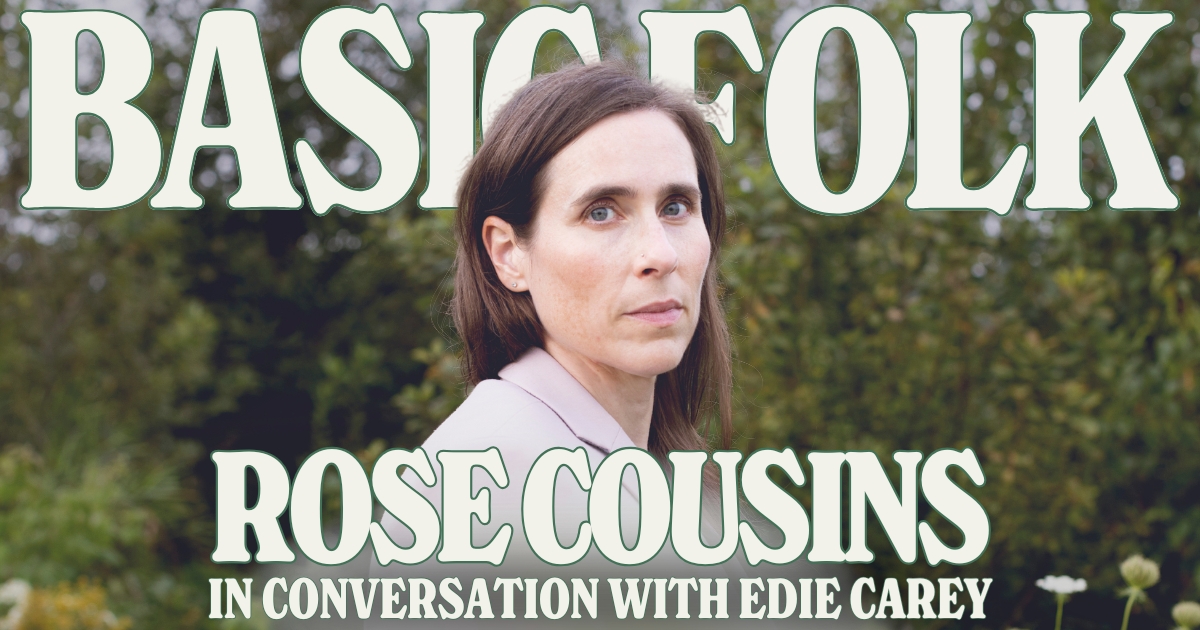
Rose Cousins and Edie Carey‘s friendship has blossomed for over two decades. On the occasion of Rose releasing her new album, Conditions of Love – Vol 1, the pair appear on Basic Folk to discuss the new music. They reflect on their early days and their first meeting as well as the ways they’ve influenced each other’s careers and personal growth.
To witness Rose’s new album through the eyes (and ears) of her best friend feels like a huge privilege, a front-row seat looking into what the human heart and mind are capable of. Edie prompts Rose to expand on the challenges of balancing love and freedom, the complexities of navigating midlife, and why the piano is her soulmate. With humor and depth, they tackle the big questions of life, love, and the creative process, revealing the layers of their artistic identities.
“I just had a really moving, hilarious, enlightening conversation with my best friend Rose Cousins,” Edie reflects. “We talked about vulnerability, middle-aged gardening, accidentally putting in one another’s eye contacts, and befriending our own mortality. We also talked about her stunning new record, Conditions of Love – Vol 1.”
Explore more of our Artist of the Month coverage of Rose Cousins here.
Photo Credit: Lindsay Duncan
This website uses cookies to improve your experience. We'll assume you're ok with this, but you can opt-out if you wish.AcceptRejectRead More
Privacy & Cookies Policy
Privacy Overview
This website uses cookies to improve your experience while you navigate through the website. Out of these, the cookies that are categorized as necessary are stored on your browser as they are essential for the working of basic functionalities of the website. We also use third-party cookies that help us analyze and understand how you use this website. These cookies will be stored in your browser only with your consent. You also have the option to opt-out of these cookies. But opting out of some of these cookies may affect your browsing experience.
Necessary cookies are absolutely essential for the website to function properly. This category only includes cookies that ensures basic functionalities and security features of the website. These cookies do not store any personal information.
Any cookies that may not be particularly necessary for the website to function and is used specifically to collect user personal data via analytics, ads, other embedded contents are termed as non-necessary cookies. It is mandatory to procure user consent prior to running these cookies on your website.