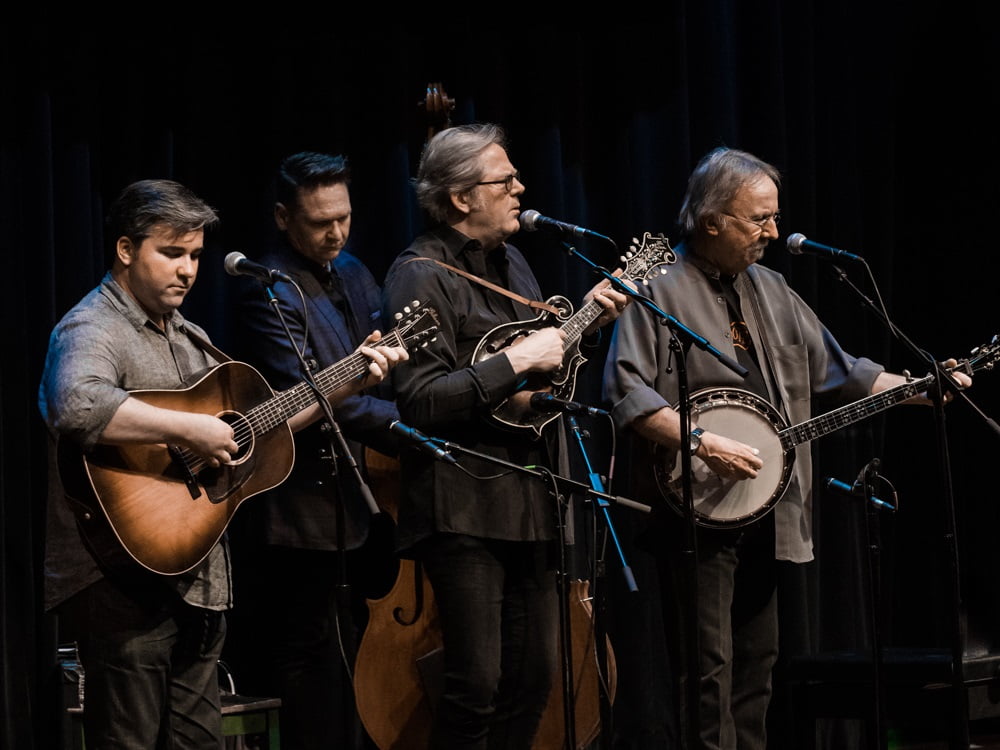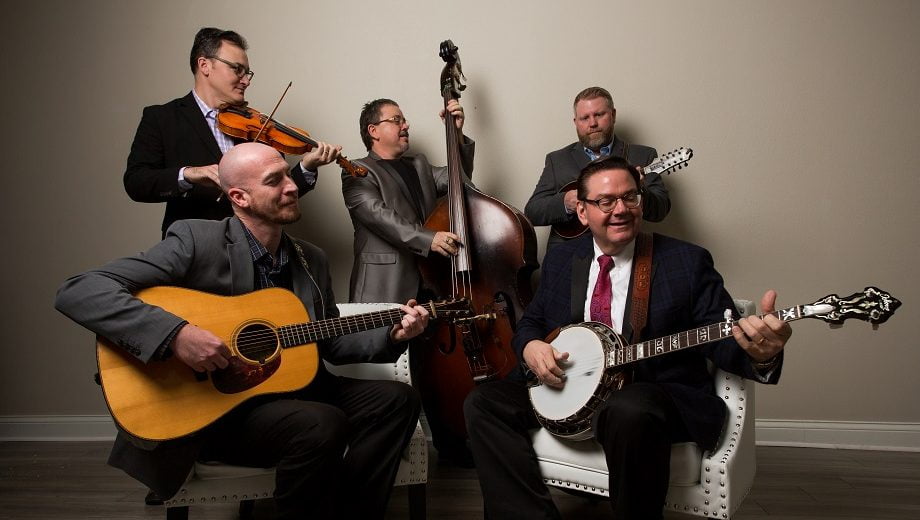
Gimme a Breakdown: 10 Tunes to Get You Going

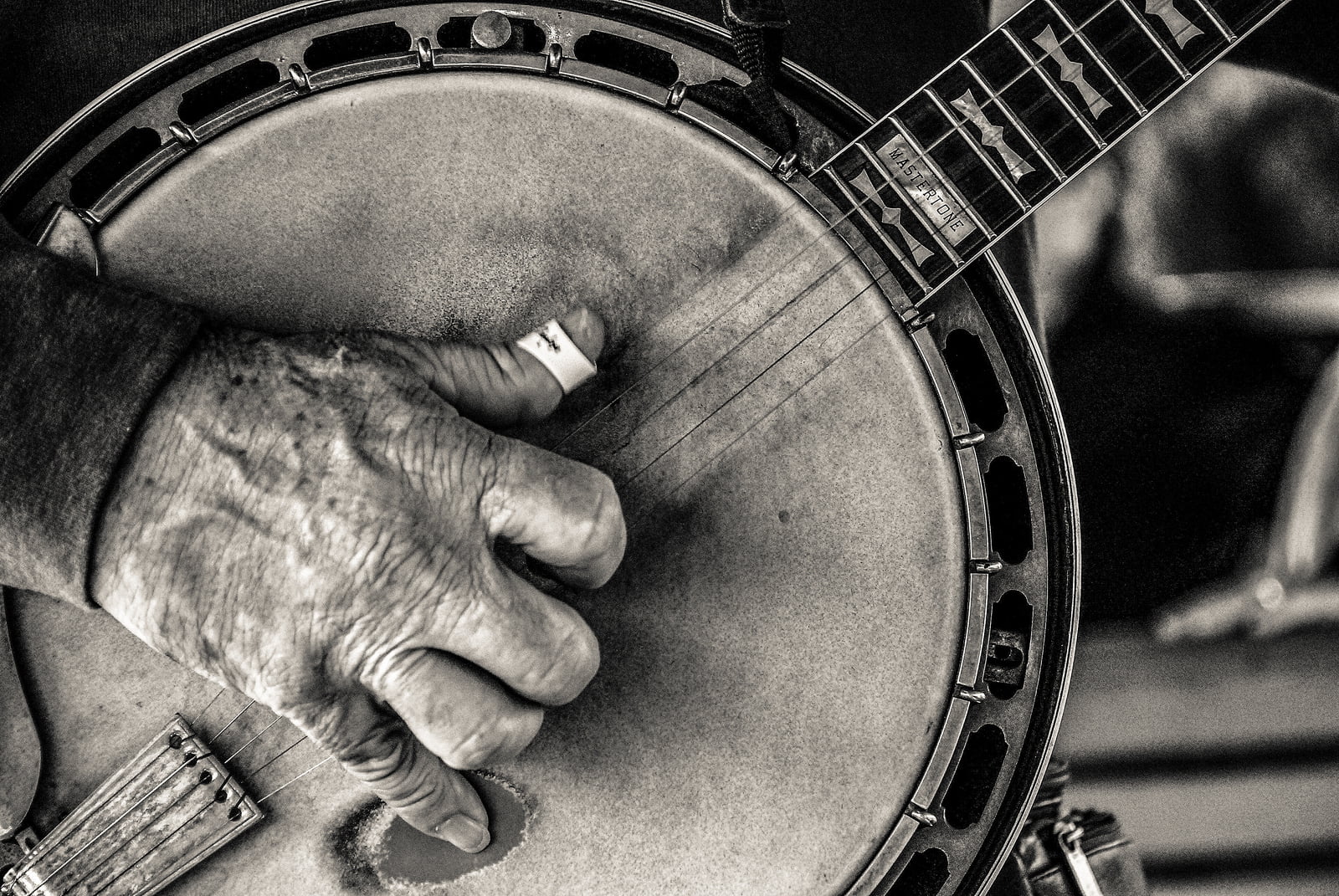
Breakdowns are the barn-burning, breakneck, slapdash stalwarts of bluegrass and old-time traditions. They can be banjo songs, mandolin songs, fiddle songs — but every single one is truly a dancing song. Sometimes, all you need is an up-tempo bluegrass tune to get you going, so here are 10 breakdowns that will help you avoid any/all other types of breakdown.

“Foggy Mountain Breakdown”

Of course we had to lead off with this icon! Earl Scruggs’ most popular instrumental, for sure. It may be overplayed, but going back to Earl’s original reminds us why it’s ended up getting so many miles. It deserves the recognition and repetition, that’s for sure.

“Shenandoah (Valley) Breakdown”

It’s like “Boil Them Cabbage Down” but fast fast fast. This one goes by two names because with a tune so nice, they named it twice. Alan Munde gives it the melodic treatment, but you’ll notice his bouncy melody-driven take doesn’t lose a single ounce of drive. That’s Munde for you.

“White Horse Breakdown”

Casey Campbell and Mike Compton give “White Horse Breakdown” an incredibly tasty mando duo treatment, juxtaposing their distinct approaches to traditional, Monroe-style mandolin. This one just lends itself to duos, whether fiddle/banjo, mando/mando, or whatever combination you fancy!

“Crucial County Breakdown”

Béla Fleck and his illustrious Drive band (Sam Bush, Jerry Douglas, Tony Rice, Mark Schatz, and Mark O’Connor) turn the breakdown format on its ear for this newgrass-meets-traditional take. A nice reminder of why Béla and Drive are absolute essentials in the modern bluegrass canon.

“Blue Grass Breakdown”

The best example of a mandolin-centered breakdown, this one was named before bluegrass had been combined into one word — before the genre itself existed! The Father of Bluegrass himself, Bill Monroe, wrote the tune and kicks it off as only he can. It’s like “Foggy Mountain” but with F chords!

“Champagne Breakdown”

It’s a decadent, indulgent, wild one that registers only barely as a breakdown as we know them — I mean, modulations?! — but the Country Gentlemen were always about pushing the envelope and this delightful tune surely does that. You never quite know where it’s going to go next and that, my friends, is what breakdowns are all about.

“Pike County Breakdown”

All I can tell you is, make sure you get that signature lick right in the A part or the jam circle might give you some sidelong stares. Scott Vestal nails it on this recording, of course — along with Aubrey Haynie, Wayne Benson, Adam Steffey, Barry Bales, and Clay Jones. STACKED. Clean, hard-driving bluegrass. It’s what the world wants.

“Old & In The Way Breakdown”

In 1973, Jerry Garcia, David Grisman, Vassar Clements, Peter Rowan, and John Kahn coalesced as Old & In The Way, becoming one of the most influential bluegrass ambassador bands in the history of the music. Jerry Garcia shows his five-string chops quite well on this tune, which also goes by the name “Patty on the Turnpike.” But then it wouldn’t be a breakdown, now would it?

“Snowflake Breakdown”

And now, a fiddlin’ breakdown. Breakdowns are an integral part of fiddle contests — contests often require each contestant to play a tune considered a “breakdown” during competition. This one, performed by Bluegrass Hall of Famer Bobby Hicks, is often heard in contest situations, if not for the unexpected chord changes, simply because emulating Hicks never hurt anyone in a fiddle competition. No one really wonders why that is, either.

Dawggy Mountain Breakdown”

Written by David “Dawg” Grisman, “Dawggy Mountain Breakdown” doesn’t just sound familiar because of its purposefully malapropistic name, it’s also the theme song for NPR’s incredibly popular radio show, Car Talk. The show’s hosts, Click and Clack the Tappet Brothers (AKA Tom and Ray Magliozzi), were/are big bluegrass fans and especially fans of Dawg and his music. It’s a beautiful little bluegrass easter egg on public radio — which are much too few and far between, if you ask me.

“Girl’s Breakdown”

(Edited to add:) Thank you to a commenter on social media for pointing out that, as is much-too-easy to do in bluegrass, our list of breakdowns didn’t include a single woman! Alison Brown, one of the world’s premier banjo players, even penned a satirically-titled tune to skewer this sexist paradigm in bluegrass. Y’all have heard “Earl’s Breakdown” plenty, it’s time for a dose of “Girl’s Breakdown.”


15 Bluegrass Covers of Bob Dylan

Bluegrassers have been covering Bob Dylan for decades. First generation stalwarts Flatt & Scruggs covered more than a handful of songs penned by the future Nobel Laureate, Ralph Stanley sang with him, and at this very moment there are almost certainly jam circles out there around the globe laying down “Girl From/Of the North Country” with mash’s reckless, head-bobbing abandon without even realizing Dylan wrote the dang thing. Bluegrass covers of Dylan are so prolific, we had to cap our list at 15 — with an additional three not-quite covers tacked on for good measure.

Explore Dylan’s broad-reaching impact on bluegrass:

“Blowin’ in the Wind” — The Country Gentlemen

It just makes sense. The Country Gentlemen epitomized the impact of the folk revival on bluegrass and string bands of that era.

“Girl Of the North Country” — Sam Bush

Perhaps the most common and least jambuster-y of Dylan’s bluegrass incarnations, this one has been covered by everyone from Flatt & Scruggs and the Country Gentlemen to Tony Rice and his newgrass compatriot, Sam Bush.

“Señor (Tales Of Yankee Power)” — Tim O’Brien

It takes a special kind of songwriter (I mean, Dylan. Duh.) to craft a song that can allow another artist to inhabit it, wholly. It takes a special kind of artist to be able to do that song and songwriter justice. Tim O’Brien singing “Señor” is the perfect example of both.

“Tomorrow Is A Long Time” — Nickel Creek

An entire generation’s most mainstream exposure to bluegrass — Nickel Creek — might have simultaneously tipped off their young audience to the voice of a generation.

“It Ain’t Me Babe” — Flatt & Scruggs

Did you ever stop to think about the similarities between Lester Flatt and Bob Dylan’s singing styles? Now you have.

“When I Paint My Masterpiece” — Greensky Bluegrass

Truegrass, newgrass, jamgrass — any kind of [fill-in-the-blank]grass works for a Dylan cover.

“Boots of Spanish Leather” — Seldom Scene

Hearing a bluegrass band relax into a slower, loping groove is always a breath of fresh air. Seldom Scene know how to own a decidedly non-bluegrass beat. And yet, it’s quintessentially bluegrass.

“Long Ago, Far Away” — Front Country

The current bluegrass generation isn’t immune to Dylan’s influence either. Front Country burns this one down with a more straight ahead, hammer down arrangement.

“One More Night” — Tony Rice

Tony is arguably at his absolute best, his most extraordinarily superlative when he renders the songs of singer/songwriters and troubadours like Gordon Lightfoot and of course, The Bard.

“Rambling, Gambling Willie” — The Lonely Heartstring Band

There’s ramblin’, there’s gamblin’, philanderin’, and lots more gamblin’. It’s a dyed in the wool bluegrass banger — showcased in that decadently clean Boston style by the Lonely Heartstring Band — straight from a Dylan bootleg.

“Subterranean Homesick Blues” — Tim O’Brien

Spit. Out. Those. Lyrics. Tim. Oh and that hambone!! Lawd. Just listen to this and try not to feel visceral joy.

“Just Like a Woman” — Old Crow Medicine Show

This is here because we didn’t want to add that one Dylan song Old Crow is pretty famous for. They did an entire-album cover of Dylan! Let’s hear those songs for a change! It’s got more of a country and Western flavor, but we know Old Crow’s bluegrass roots run deep.

“Simple Twist of Fate” — Sarah Jarosz

Another take outside of the bluegrass box, but inherently informed by bluegrass. You can feel Jarosz emulate the lilt of Dylan’s voice in her phrasing. Unencumbered, yet supported in full by the strings.

“Don’t Think Twice, It’s Alright” — Flatt & Scruggs

Everybody join in and sing! There’s something especially pleasing about hearing Scruggs comp over these iconic chord changes.

“Walkin’ Down the Line” — the Dillards

At their height, the Dillards’ sound was blended so purely with that iconic folk revival sound, but without giving up one shred of their traditional bluegrass sensibilities. This is a perfect example.

“East Virginia Blues” — Bob Dylan & Earl Scruggs

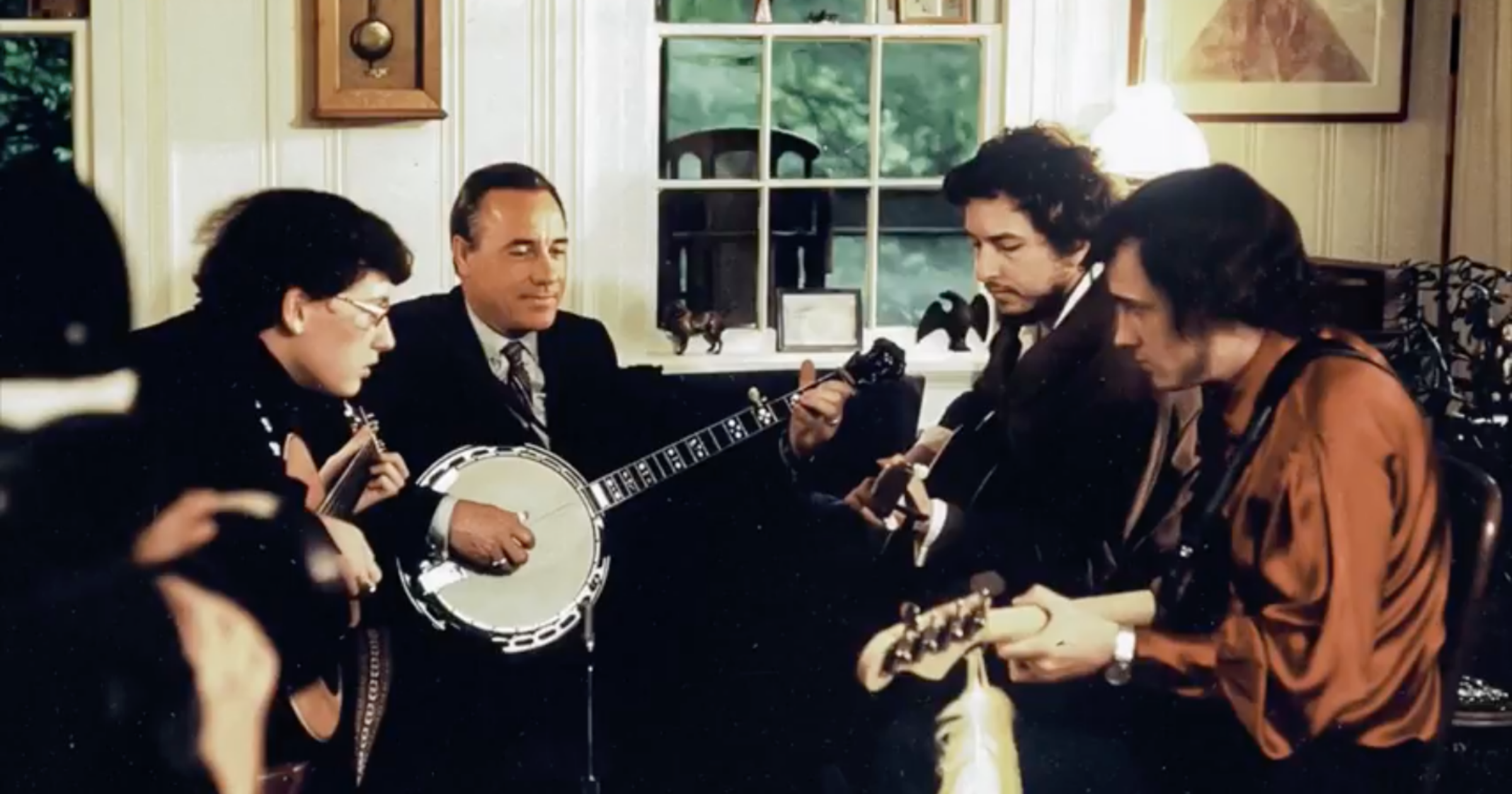
Now here’s your bonus. Bob Dylan and Earl Scruggs, with the Scruggs boys gathered around pick through “East Virginia Blues” for a TV documentary.

“Lonesome River” — Bob Dylan & Ralph Stanley

And of course, how could we have a list about Bob Dylan and bluegrass without a nod to the special relationship Dylan had with Ralph Stanley? Dylan consistently cites Stanley as an influence and they even collaborated on this recording of an iconic Stanley Brothers classic.

“Man of Constant Sorrow” — Bob Dylan

Remember that Ralph Stanley influence we mentioned? Here it is again. It’s a reverse Bob Dylan bluegrass cover to round out the set.


The Gibson Brothers Still Call It Music, Just Not Bluegrass

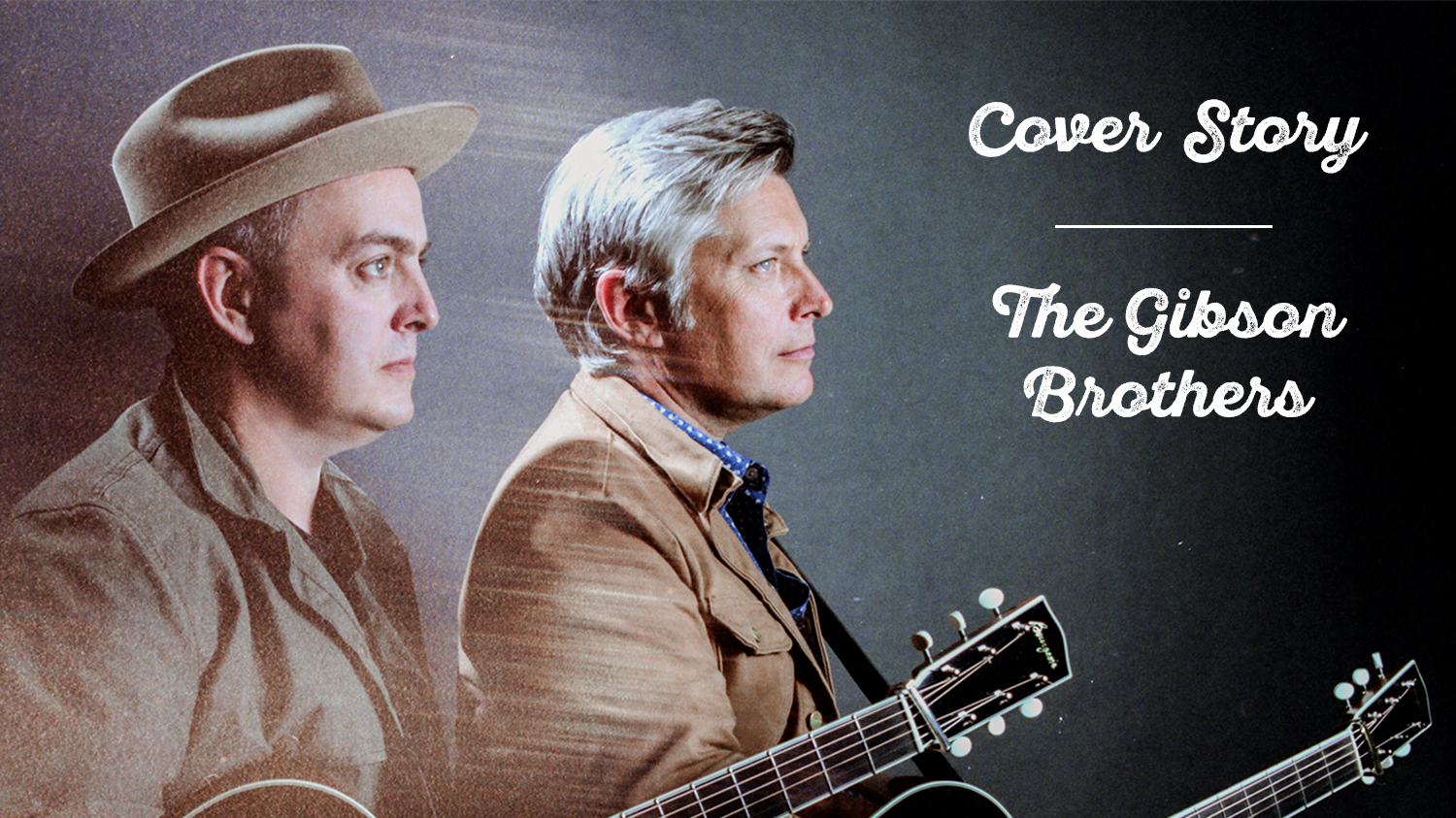
Featuring the stunning blood harmonies of days gone by and an abiding love for classic sounds, The Gibson Brothers long ago earned the respect of the bluegrass establishment – even scoring back-to-back wins as the International Bluegrass Music Association’s (IBMA) Entertainer of the Year in 2012 and 2013. Even so, they’ve always cultivated an adventurous spirit.

Having grown up on a dairy farm in the far north of New York State, sandwiched between the Adirondack Mountains and Quebec’s provincial border, their musical appetite was as varied as their home was removed from the bluegrass heartland – from Flatt & Scruggs to Celtic traditionals, and from Tom Petty and The Eagles to French-Canadian fiddle tunes. Throughout their two-decade recording career, The Gibson Brothers have subtly mixed bluegrass reverence with a hint of rock refreshment, but with their new album, Mockingbird, Eric and Leigh Gibson have taken a bold creative departure – at least for the time being.

Mockingbird’s 11 tracks still feature their celebrated close harmonies, but also pull heavily from the countrified world of late 60s/early 70s rock, all masterminded by producers Dan Auerbach (of The Black Keys) and David Ferguson (Johnny Cash’s American Recordings series). Freewheeling and fun, but also rooted in the crisp refinement of their past success, the boisterous rural funk of tracks like “Sweet Lucinda” stands alongside breezy Laurel-Canyon rock in “Cool Drink of Water,” while “Travelin’ Day” explores a trad-country template and R.E.M.’s seminal 90s hit “Everybody Hurts” becomes a swaying example of country R&B.

“The impetus behind the music was that we had done bluegrass our whole career, and when we got talking about the next record, we really just decided we didn’t want to do the same old thing again,” he explains. “It’s not because we were ashamed of what we were doing. We love what we do. There was no intention of anything. This all really happened naturally.”

“I think people love a band where they found them,” banjo-playing lead singer Eric Gibson adds. “But it was so exciting that we didn’t have time to think about ‘Oh, is this gonna upset people who are used to what we’ve done in the past?’ We just dove into the process and had a ball.”

Speaking with The Bluegrass Situation by phone, The Gibson Brothers dug into the inspiration for Mockingbird – and the creative avalanche that followed.

The obvious question here is “What made you want to get away from bluegrass?” But I feel like being from upstate New York might have had something to do with it. Is your approach to bluegrass a little different?

Leigh: We started learning how to play bluegrass when we were 11 and 12, and the guy who taught lessons at our local store played five-string banjo and guitar, among other things. Our father just happened to have both of those instruments, but he didn’t have a banjo because he was into Celtic music. So the guy we took lessons from taught Eric out of the Earl Scruggs method book, and I think that’s what pointed us in the direction of bluegrass.

Eric: Yeah, and once we heard Flatt & Scruggs it really drew us in, but if we hadn’t gotten into the Scruggs handbook, we probably would have played something else.

So what was the idea behind Mockingbird? Do you think of it as a rock and roll album?

Eric: There are definitely elements of rock and roll, but I hear country in it, too. I don’t know where it neatly fits. I’ve heard some people call it an Americana record, but on top of it all I hear the brother harmony. I think it’s that, weaving through a variety of styles.

Leigh: We wanted to do something different, and originally we had some tunes that didn’t fit neatly into the box of a bluegrass band. But we didn’t know we were gonna make a whole album. We were just looking to record some tracks.

Eric: And we ended up not recording any of the songs we were thinking about. We just wrote a bunch of new ones! … When we went to Nashville and started working with Dan Auerbach and David Ferguson, they asked us, “Do you wanna make a country record?” And we said, “Let’s just write songs and see what they need.” They handled the producing chores and did a beautiful job, and came up with sounds that I know I couldn’t have come up with.

You reached out to Ferguson to produce Mockingbird first, and I know he also engineered your first Nashville bluegrass album, Another Night of Waiting. Why was he at the top of the list for this project?

Leigh: [Laughs] Because he’s fun.

Eric: He’s a character and once you meet him you don’t forget him. We’d see him here or there and he’s been doing all kinds of big things in the last 20 years. He’s the one who engineered all those late-career Johnny Cash albums with Rick Rubin. He’s worked with U2, and lately he’s been working with Sturgill Simpson and Tyler Childers. We’d see him and he’d say, “Why don’t you come record some music with ol’ Ferg?”

Leigh: And I’d say “I don’t think we can afford you, Ferg.” And he’d be like, “You’re right, you can’t.” [Laughs]

Eric: But we were riding around DelFest on a golf cart with him in 2017 and he brought it up again, and by fall we were feeling a little restless. We kept listening to records that he worked on in the van, and I think Leigh was the one who said “Maybe we should call Ferg.” I said, “Why do you think I’ve been playing all these albums over and over again!”

So then Ferguson suggests bringing in Dan Auerbach from The Black Keys. Was that a surprise?

Leigh: I was floored, to be honest. Our manager called me and said, “Well, Ferg’s first action as your producer is to bring on another producer, and it’s Dan Auerbach.” [Laughs] So I called Eric and I couldn’t believe it.

Eric: What was funny was Leigh said, “Is this something you’d be interested in?” And I was like, “Duh!” This is the kind of thing that falls out of the sky and you have to go for it.

I read that the whole album was written and recorded in just a few days. Is that unusual for you?

Eric: Yeah, we’ve never worked like that before. … Every day it would be Leigh and Dan and me, plus one other writer. We didn’t go in with any melodies. I had a couple of lines jotted down but we hardly used any of those. A lot of it just came out of conversations we were having at Dan’s studio kitchen table, like “Travelin’ Day.” Dan said, “You know, Ferg lost his stepdad a few days ago,” and we got to talking about that. Ferg said, “He really showed us how it’s done. He was brave at the end.” We said, “Our dad was the same way.”

It’s interesting that you started off with something so heavy, because the album doesn’t come across heavy at all.

Eric: It’s not. That first song is pretty heavy, but there’s a lot of love songs on there, and we hadn’t written a lot of love songs in the past.

Leigh: Dan and Ferg showed us how to love. [Laughs]

“Love the Land” seems like a reference back to you roots on the farm. Where did that come from?

Eric: That was written with Joe Allen.

Leigh: With that song, obviously Eric and I have a background of shared memories, so we’re probably thinking about the same thing as we’re writing it. But Joe’s from Oklahoma and Dan’s from Ohio, so they’re thinking about different things. I remember talking to Dan and he said, “Man, I need to get outside more. I miss it.” It’s kind of funny that it’s wherever your head is at the time. If we sat down with the same guys tomorrow, something totally different would come out.

Eric: Dan loved that we kept showing up early. I’d apologize and Dan would say, “No, no, make yourselves at home.” So we’d go back to that kitchen area and he has this beautiful vinyl collection. We’d put on different records and I think sometimes they would influence the direction of the day. Like, that one has a very Don Williams feel, and I think we were listening to Don Williams that morning.

Why did you pull Mockingbird out of that song as the album title?

Eric: Just because that kept jumping out of my head. Joe came up with the line, something like “Mockingbird, if you haven’t heard / Never been a sound so sweet.” I loved that, so I actually Googled “mockingbird.” [Laughs] It turns out they can sing a variety of songs. They don’t just sing the same thing every day, and I thought “Wow, that’s kind of what we’re doing here.”

I’m sure you’ve been asked a million times, but did the cover of R.E.M.’s “Everybody Hurts” come out of left field?

Eric: Totally out of left field.

Leigh: Just before the last day of tracking, Dan said, “Think of a song from the 80s or 90s that everybody knows but no one would think of you doing.” So Eric and I talked about it on the way back to the hotel and came up with something by a female artist, and we got to the studio the next day and Ferg is like, “So what song did you choose?” We told him and he’s like, “Oh, I hate that song.” Allen Parker, who is Dan’s in-house engineer, said “Hey, how about ‘Everybody Hurts’?” I had heard the song – you couldn’t miss it if you’re a person my age – but I never in a million years would have thought about doing it. Those guys went and charted it, and it had such a comfortable, funky feel, that we were compelled to learn it.

Do you think your fans saw this album coming?

Eric: No. I mean, it’s a hard question. If they’ve really been paying attention to us over the years, it shouldn’t come as a big surprise because we’ve recorded stuff by Tom Petty and The Band and The Rolling Stones and Mark Knopfler. We have a variety of tastes.

Leigh: I think there are certain fans who see you as one thing, and if you do something else it can be upsetting, but no one twisted our arm to do this. It’s absolutely what we wanted to do and we’re proud of it, but we didn’t do this to offend anybody. If somebody is offended, there’s nothing we can really do about that except say, “Look at our track record and all this other stuff we’ve done that you really love. Why not give this a chance?”


Photo by Alysse Gafkjen

Roland White: A Tribute to a Bluegrass Hero

To begin, a disclosure: Roland White is kind of a hero of mine for his perseverance, his originality, his sense of humor, his experience and much more. Also, he’s an employer of mine; I’ve been playing in the Roland White Band on most of its dates for close to 15 years now, and I’ve recorded two albums with him, including his new one, which I also co-produced. Lastly, and maybe most importantly, Roland’s a friend of mine. And he has a great story.

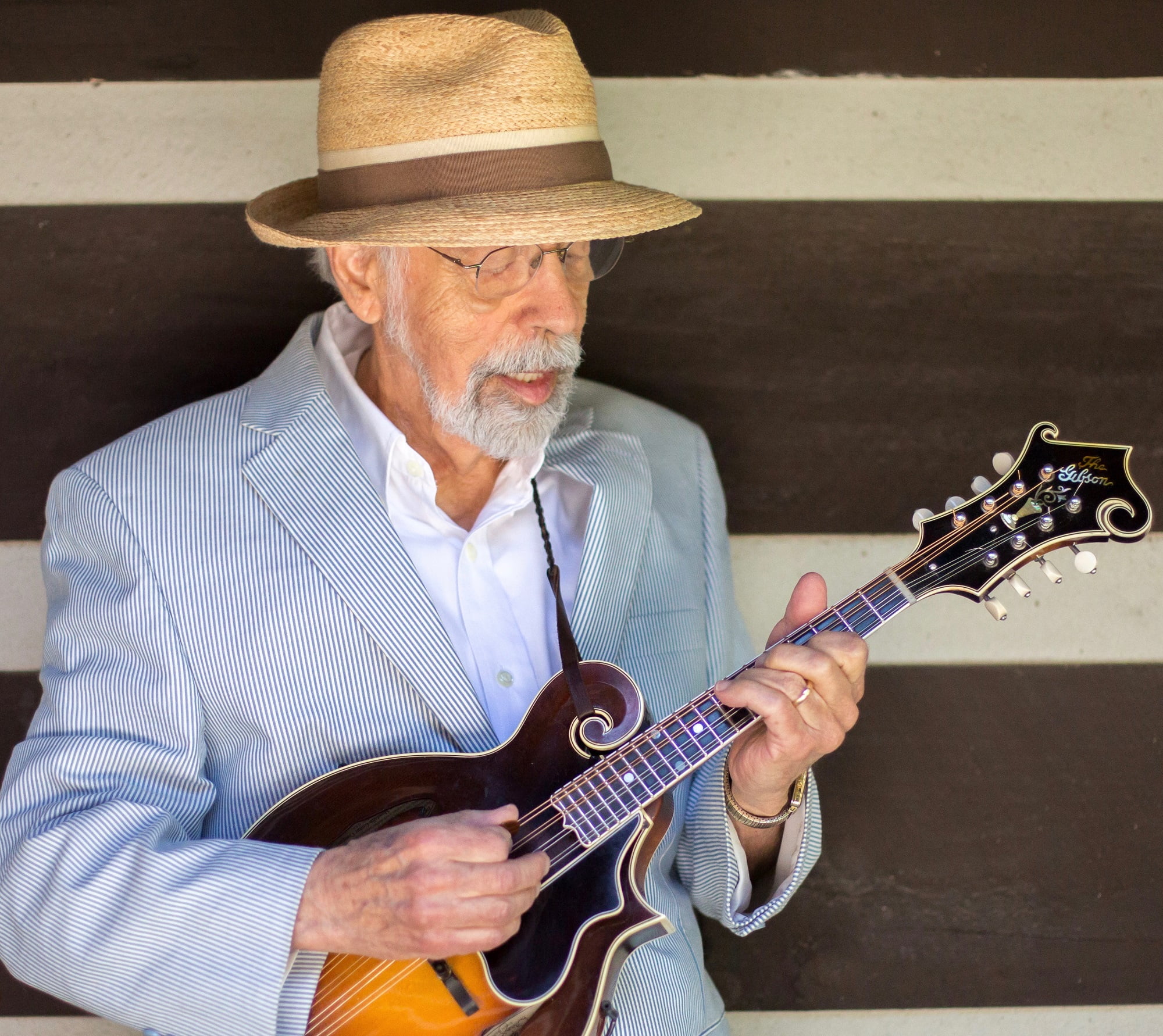
Played with Bill Monroe, the Father of Bluegrass? Check. Played with Lester Flatt? Check. Toured around the world as a member of the Country Gazette and then the Nashville Bluegrass Band? Check. Had a band with Béla Fleck? Check. Helped organize and make Jim Lauderdale’s very first album? Check. Fronted his own band since the turn of the century? Check.

That’s a lot of boxes, and any one of them could be turned into a meaty article. Here, though, I’m going to concentrate on the story of the group whose legacy inspired the new album, Roland White & Friends: A Tribute To The Kentucky Colonels; it’s the starting point for the larger Roland White story, illuminating the way it was for young bluegrass musicians in the 1950s and 60s and how Roland, his brother Clarence, and the rest of the Colonels were able to craft an enduring and influential body of music.

Shortly after he turned 16 in 1954, Roland’s family relocated from Maine to Southern California. He was already playing the mandolin by then, and younger brothers Clarence and Eric were playing guitar and banjo (tenor, not the bluegrass 5-string). They joined their sister, JoAnne, who sang, around the house and at local functions. Soon after moving to Burbank, the boys rather casually entered a talent contest, and in short order found themselves dressed in hillbilly clothes and, as The Three Little Country Boys, performing on a variety of local stages and radios shows — even, if briefly, on television. All of this before any of them had heard a lick of what was just beginning to be called bluegrass.

Roland recalls that it was in a comment from a visiting uncle in the middle of 1955 that he first heard Bill Monroe’s name — and naturally, it was in connection with the instrument they shared. “My uncle Armand asked me if I’d ever heard of Bill Monroe. He said, ‘He plays the mandolin, he’s on the Grand Ole Opry and,’” Roland adds with a grin, “‘he is fast!’” Not surprisingly, that piqued his interest — but to actually get hold of a record was, at the time and under the circumstances, something of a project, involving a walk into town to the music store, perusing a catalog, ordering it, waiting, and then picking up the little 45rpm disc of his choice: “Pike County Breakdown.” (It was actually the B-side of “A Mighty Pretty Waltz,” and yes, it was fast.)

What followed was a “conversion” experience of the kind that was happening around the same time to other people his age, give or take a few years — a cohort that includes the slightly older Mike Seeger and Ralph Rinzler; the slightly younger Del McCoury and Neil Rosenberg (like Roland and Clarence White, all members of the International Bluegrass Music Association’s Hall of Fame); and the slightly younger still Jerry Garcia, David Grisman, and Peter Rowan. What most of them had in common was some distance, geographic and sometimes sociological, from the Southeastern epicenter of the emerging bluegrass sound; what all of them had in common was a profound desire to hear and play more of it.

More records soon made their way into the White household, often mail-ordered from Cincinnati’s Jimmie Skinner Music Center, and so did a five-string banjo, which Roland learned to play in the Scruggs style. Eric moved over to bass, and the band, now just The Country Boys, began studying the picking and singing of Monroe, Flatt & Scruggs, Reno & Smiley, the Stanley Brothers, Jimmy Martin, and more. While they focused on the whole sound, there was room, too, for Clarence to study the lead guitar stylings of Earl Scruggs, Don Reno, and the Stanley Brothers’ George Shuffler, as well as the rhythm guitar playing of Flatt, Martin, and others. And though skilled banjo players were still rare — especially in California — by 1958, they’d met and recruited Arkansas native Billy Ray Lathum for the job, allowing Roland to devote himself once again exclusively to the mandolin.

1959 was a big year for The Country Boys. For one thing, they were joined by Leroy McNees — Leroy Mack, as he’s still known — whom they met first as a fan, but soon persuaded to take up the Dobro. Mack not only rounded out the band’s sound, but quickly became a valuable asset as a songwriter. For another, the band got its first bookings at the Ash Grove in Los Angeles, a key venue in the emerging folk revival, and one that also booked national bluegrass acts as they made their long journey out to the West Coast.

Indeed, the Ash Grove turned out to be an important place where folk audiences and bluegrass musicians could meet one another; as Roland put it, “Playing the Ash Grove opened the way for us to play to a totally new audience — a folk music audience that we had known nothing about. They dressed differently from the Country-Western audience (they were college students, professors, beatniks, doctors, and lawyers) and they paid close attention to the music.”

Not only did the Ash Grove provide the group a new audience, it gave them a different sound; the less raucous, more attentive audience and more sophisticated sound system allowed Clarence White to hear himself better than ever before. Within a matter of weeks, he began to take solos — plenty of practice time at home had allowed him to explore and build on what he’d been hearing on records — and The Country Boys started to build a unique sound that featured lead acoustic guitar in a way that reached well beyond their influences.

By 1961, The Country Boys — now a five-piece band — had built a good circuit for themselves, playing to folk audiences at the Ash Grove and on college campuses around Southern California while maintaining a foothold in the dynamic country music scene. Their prominence gave them an inside track that landed them an appearance on The Andy Griffith Show — just before Roland got his draft notice, a then-common occurrence. While he served for the next two years, the band continued without him, taking a couple of important steps, including the replacement of bass player Eric White with Roger Bush; a name change to The Kentucky Colonels; and recording their first LP in 1962. The project, which featured some of Leroy Mack’s most enduring originals, also debuted Clarence’s distinctive, increasingly powerful lead guitar work. Over in Germany, where he was stationed, Roland admits that “it floored me.”

By the time Roland was discharged from service in the fall of 1963, Mack had left the band, replaced by transplanted Kentucky fiddler Bobby Slone. With Mike Seeger’s then-wife, Marge, acting as their booking agent, the Colonels were booked for their first East Coast tour, playing folk clubs in the Boston area, New York, Washington D.C., Baltimore and beyond. In each, they made connections with local bluegrass musicians, ranging from melodic banjo pioneer Bill Keith to the members of the Country Gentlemen to David Grisman, and when they came east again in 1964 — a trip anchored by an appearance at the Newport Folk Festival — they did more of the same. Interestingly, though, and a sign of the distance that still separated the folk revival circuit from the country music one, they never got even as far south as Nashville; as Roland says, “there was nothing for us there.”

Sadly, while their focus on folk audiences had served to give them broader appreciation than they might have gotten while working in Southern California’s country music scene, it also meant that, as those audiences began turning their attention to more electrified folk-rock and newly emerging rock artists, the Colonels would see harder times. Though they continued playing into 1966, the group eventually disbanded, with Roland soon taking the guitar/lead singer job with Bill Monroe and moving to Nashville, and Clarence turning first to studio work, and then to electric guitar playing with the Byrds.

Even so, the magic that the Colonels had made continued to appeal to both Roland and Clarence, and in 1973, they reformed their original brother trio with Eric. Adding banjo man Herb Pedersen and dubbing themselves the New Kentucky Colonels, they embarked on an April tour of Europe and, though the banjo position remained unstable, they started to make plans for more touring and recording — only to have them come to an end when Clarence was killed by a drunk driver while loading out from a Palmdale, California club.

What did the band leave behind? Not much in the way of recordings, unfortunately. The Kentucky Colonels made hardly any in the studio — the album done while Roland was in the Army and an all-instrumental album, Appalachian Swing!, one of the most influential bluegrass recordings of the 1960s are the sum total — and while enough of their shows were recorded at the Newport Folk Festival, at California venues, and on that final European tour to fill a couple of albums, they’ve often been out of print or hard to find.

Yet it’s clear — and the new record makes the point with its wide-ranging roster of guests, from guitarists like Billy Strings, Molly Tuttle and Jon Stickley to banjoists such as Kristin Scott Benson (Grascals) and Russ Carson (Ricky Skaggs & Kentucky Thunder) and fiddlers like Brittany Haas (Hawktail), Kimber Ludiker (Della Mae) and Jeremy Garrett (The Infamous Stringdusters) — the legacy of the Colonels can’t be measured so simply. From songs like “If You’re Ever Gonna Love Me” and “I Might Take You Back”— both co-written by Leroy Mack, and recorded by scores of bluegrass artists — to guitar showcases like “Listen to the Mockingbird” and “I Am a Pilgrim,” their influence has been carried forward through the bluegrass generations, not only by Roland White, but by Tony Rice, Jerry Garcia, and a host of others who met and heard and jammed with them during those critical years in which they were playing the national folk music circuit.

And for Roland White, for whom those years were just the beginning of a storied career that has taken him, by turns, deeper into the heart of bluegrass and further out to broad-ranging audiences, the opportunity to revisit them in the company of new generations of musicians has been an exciting one. “I really enjoyed playing and singing with all these musicians,” he says. “They appreciate the old music that we made, but they brought their own touch to it, too. It’s good to know that these songs, and these sounds are in good hands.”


Illustration by Zachary Johnson
Photo by Russell Carson, Carson Photoworks

John Jorgenson Revisits His Southern California Bluegrass Roots

John Jorgenson is not only a man of many talents, he’s a musician with many interests. Perhaps you’ve heard his gypsy jazz, or remember when the Desert Rose Band — a neo-trad country group that included Jorgenson, Chris Hillman and other luminaries of the California country and country-rock scene — was riding high at radio, or perhaps you saw him playing an indispensable role in Elton John’s touring band. As Jim Reeves might have put it, he’s done a lot in his time.

Even so, you might not know that John Jorgenson is also a bluegrass guy — unless, that is, you saw him on the road with Earl Scruggs during the legend’s final touring years, or happened to buy his 2015 box set, Divertuoso, which included a disc of bluegrass alongside one of gypsy jazz and another of eclectic, electric music. Earlier this year, that disc was issued as a standalone album, From the Crow’s Nest. Featuring the regular (and equally eclectic) members of the John Jorgenson Bluegrass Band (J2B2) — Herb Pedersen, Mark Fain and Jon Randall — it’s a delicious collection that scatters well-known songs (Pedersen’s “Wait a Minute”; Randall’s “Whiskey Lullaby” co-write; and the Dillards’ “There Is a Time”) among a trove of newer material, much of it written or co-written by Jorgenson.

From the Crow’s Nest ought to go some distance in alerting wider audiences to a new standard-bearer for a style of bluegrass that, while its roots trace back to the early 1950s, hasn’t gotten the attention it deserves. Though Southern California is a long way from the Grand Ole Opry and other spawning grounds for the original bluegrass sound, it served in the post-World War II years as a magnet for job seekers from both sides of the Mississippi River, and that meant bluegrass pickers, too — and so, when we met up, that made for a good starting point for our conversation.

Listening to your album reminds me that you are a product of a Southern California roots music scene that included bluegrass from early on. How did you get exposed to it?

Probably the first time was when a band came to my high school and I thought they were from another planet, because I’d never heard anything so fast in my life. I played music already — I played classical music, and rock — but that was sort of an anomaly, and then I didn’t really see it again for a while.

I came to it sort of in a backwards way. I had a scholarship to the Aspen Music Festival. They brought me in as a jazz bass player; they wanted to start a jazz program. And I accepted the scholarship as long as I could also be in their classical program, playing the bassoon. Well, I had my tuition paid for, and my room paid for, but I didn’t have money for meals. So I needed to figure out how to make some money, and then I saw an ad that said: Wanted: strict jazz player for immediate gigs. So I checked out an upright bass from the school and went to this audition. And they weren’t playing jazz — what they were playing was David Grisman’s first album. This was the summer of 1978, so this album was new. I’d never heard it.

So they’re playing all instrumental stuff and I thought, OK, I really like the sound, especially of that mandolin. I liked the flatpicking guitar, too. I was already a guitar player, but I just loved the mandolin. When I got home that summer, my neighbors had a Gibson A model and I borrowed it. Not too long after that, I ran into a friend who had been instructed to put together a band that could play bluegrass and Dixieland to cover two different areas of Disneyland. And he asked, “Hey, do you know anybody that could play bluegrass fiddle and Dixieland cornet?” And needing a job at the time, I said, “I can play mandolin and clarinet.”

And then I kind of learned backwards, whatever I could. I learned from New Grass Revival, and then Bill Monroe, and Flatt & Scruggs, and the Stanley Brothers, and the Osborne Brothers. And all the others — Tony Rice, Sam Bush, the Bluegrass Cardinals, whoever was playing around at the time. Larry Stephenson was playing with the Cardinals at that time, and I remember I was — I don’t want to say shy, but I’m shy around people I don’t know. And to me at the time, they were real bluegrass musicians and I was a pretender. I sort of felt an attitude from some people, too, but he was not like that at all. He was really friendly.

Did playing bluegrass at Disneyland motivate you to build connections with the larger bluegrass scene, or was it a standalone kind of gig?

Actually, when we first started, we were terrible! We learned three songs and then we’d play those, move to a different place and play them again. But everyone was ambitious, so we all practiced; we learned songs, we got better. And then we started to play out around Los Angeles. I think the first time we played out as an act, we opened for Jim & Jesse at McCabe’s [Guitar Shop]. There was also a venue called the Banjo Cafe, with bluegrass every night, on Lincoln [Boulevard] in Santa Monica. So the Cardinals played there; Berline, Hickman & Crary would play there; and touring acts, too — Ralph Stanley would play there. And a young Alison Brown, a young Stuart Duncan.

I know that there are a lot fans of Desert Rose Band among bluegrassers, and some gypsy jazz fans, too, but for a lot of people, you came onto the radar when you were going places with Earl Scruggs — 15 years ago, maybe? How’d that come about?

Actually, it was because of Brad Davis. He was playing with Earl, and we were kind of guitar geek friends. We ended up sitting next to each other on a plane one time, and were chatting, and he said, “I’m playing with Earl Scruggs,” and I said, “I’d love to do that.” He said, “You know, they like to have an electric guitar, maybe there might be a spot.” He really set that up for me.

I said, “OK, I’m happy to play electric guitar, but I would really love to play the mandolin.” So I would bring both, and if I played too much mandolin, Louise [Scruggs] would say, “John, don’t forget that electric guitar.” Then they said, “Don’t you play saxophone? We used to have that on a song called ‘Step It Up and Go.’” So I said, “What about the clarinet? It’s not quite so loud.” And as it turns out, Earl said his favorite musician was Pete Fountain, and he loved the clarinet. So every time after that, Gary Scruggs would call me up: “Dad says don’t forget the moneymaker.”

The J2B2 record was originally part of a box set — a disc of gypsy jazz, one of bluegrass, one of electric stuff. So you have these different musical itches, and some musicians would choose to try to synthesize these things into something new and different and unique, but you seem to have an interest in keeping them each their own thing. Why is that?

It’s because, to me, the things that I love about bluegrass are what make it bluegrass. I love the trio harmony, I love these instruments, the way each instrument functions in the band. And I love gypsy jazz, and some folks might say they’re closely related — they’re string band music, they both have acoustic bass and fiddle and acoustic guitar, and each instrument has a role. There are a lot of similarities, but the things that I like about each one are what make them different. I think each music has an accent, and a history and a perspective, and I really want to be true to those, because those are the elements that touch my heart.

I feel like what I do and what this group does is quite traditional, compared to a lot of people. It’s not jamgrass. It’s not Americana. It’s bluegrass. There are folk elements, and all those other things, of course. But really, my touchstones for that style of music are all the classics: the trio harmonies of the Osborne Brothers, and the slightly softer Seldom Scene and Country Gentlemen sounds, the early Dillards, the Country Gazette, and the whole Southern California sound… you don’t think of Tony Rice’s roots as Southern California, but they are.

And probably at one point, if I could have sounded like I was from Kentucky, I wouldn’t have minded that. But at the end of the day, well, I love Bill Monroe as much as the next guy, and I’m going to take inspiration, but I feel like I’m part of a lineage of bluegrass that’s just as viable as any other, and why not have that sound be a part of me?


Photo credit: Mike Melnyk

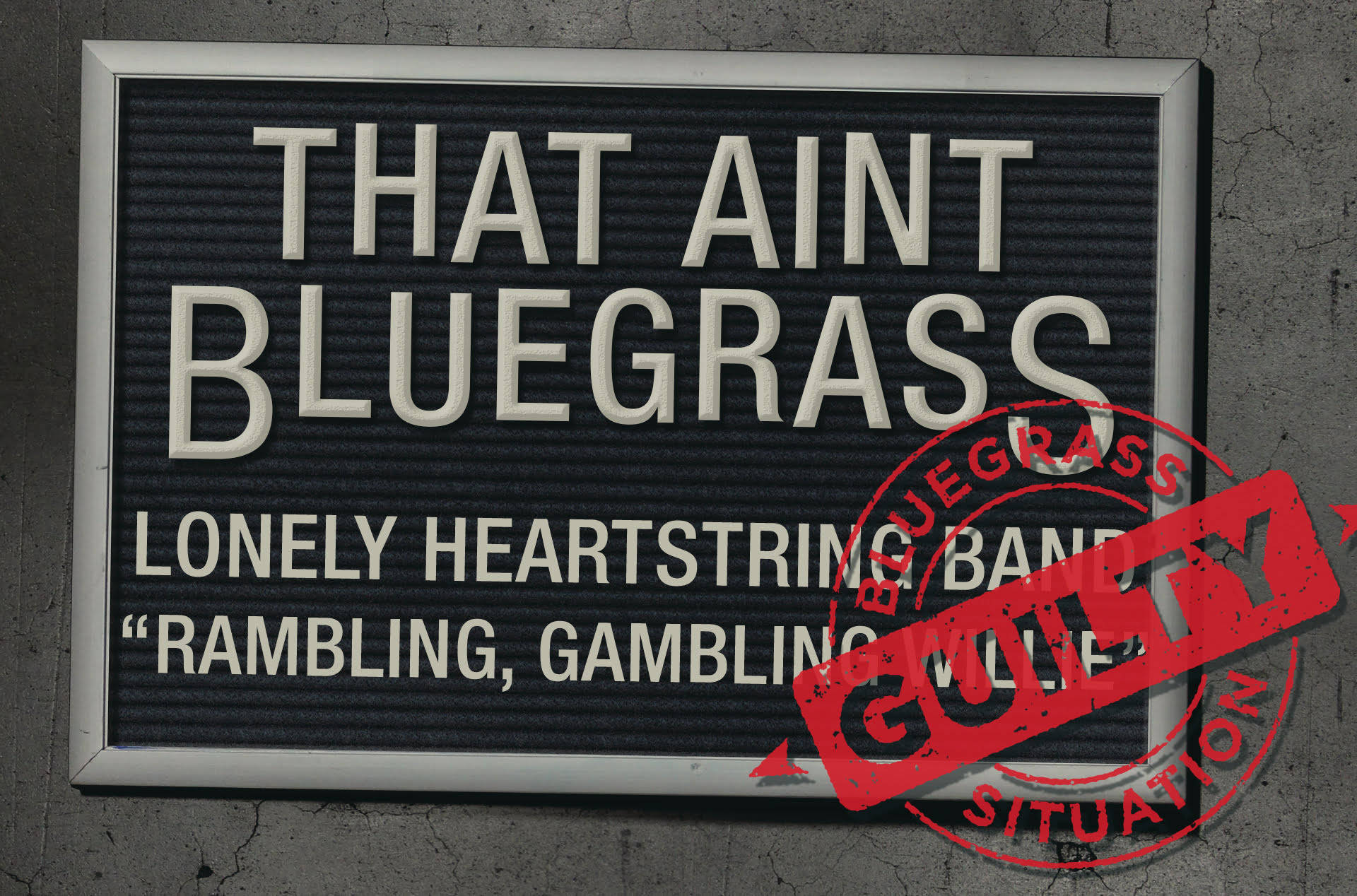
That Ain’t Bluegrass: Lonely Heartstring Band

Artist: Lonely Heartstring Band
Song: “Rambling, Gambling Willie” (originally by Bob Dylan)
Album: Deep Waters

Where did you first hear “Rambling, Gambling Willie?”

Patrick M’Gonigle: Matt [Witler] actually found the song. It was released probably seven or eight years ago now, as part of The Witmark Demos — a set of outtakes from when Bob Dylan recorded The Freewheelin’ sessions. He released a whole bunch of other music from that session. I think it was Matt that thought it would make a cool bluegrass song.

We actually have an interesting side note about that: We had a guy come to a show a couple of years ago and we played that song, introducing it as a song that didn’t make The Freewheelin’ Bob Dylan record. The guy said he went home very confused. He had The Freewheelin’ Bob Dylan album, and he said, “I grew up listening to that record. I know that song intimately. And I never had The Witmark Demos. So I don’t get this.” When he found his copy and looked at the track order, sure enough “Rambling, Gambling” was not on the track order. Then he put the record on and “Rambling, Gambling” was on it! He had one of a very small handful of misprints of the stereo version of that record, and it’s worth a ton of money.

I thought this was going to be a Mandela Effect kind of thing!

It was actually on there!

The title of the song almost answers this question, but what made you all think this would make a good bluegrass song?

It’s got a great, classic chord progression. Also, the timing of the words allowed us to speed it up and have it work. A lot of songs, you speed them up, and the words just become insane or crunched together. The song itself, the words are at a slower pace, so when we sped it up, they totally fit. It’s super fun to play on as a soloist. It had all of the elements. We did the same thing recently with a song that we learned from Willie Nelson. If we hear [three-chord] songs that are slow, but also have a slow word flow, they lend themselves to this. “Rambling, Gambling Willie” was our first experiment with that.

What was your process of arranging the song and putting it together?

It was a few years ago now. When we sped it up, the verses ended up being quite short. There are a lot of them — I think the original version has maybe eight or nine verses. We chose six of them. We chose the ones that told the story cohesively. We cut a bunch of them, and we realized, because we were speeding it up, it didn’t make sense to do verse-chorus-solo. So we did two verse-choruses in a row between solos, which kind of acted as one verse.

The other thing we did, when we worked up the harmonies on the first chorus of each pair, we would do a low harmony and, the second one, we’d do a high harmony, so it would still have kind of an arc over the two verses. One of our favorite, one of our most popular bluegrass songs when we arranged that song was “Born to Be with You” by J.D. Crowe and the New South, which we still play. That has a really cool arrangement style where the banjo finishes every break. We applied that to this song, too. When it gets to the chorus parts, because we would solo over verse-chorus, Gabe [Hirshfeld] on the banjo would always solo over the chorus part.

Bluegrass has always had this tradition of reworking and revamping songs from outside of bluegrass since the very beginning. Why do you think this still happens?

I feel like there are several answers to that. For us, we love — in terms of traditional bluegrass sounds — J.D. Crowe and the New South. J.D. is a great example of someone who does that. Like the song “Born to Be with You,” that’s a ‘50s doo-wop song by the Chordettes. The original sounds nothing like what J.D did with it.

Also, I think a lot of the bluegrass themes are pretty constant throughout bluegrass. We have a banter joke on stage that there are only like six themes in bluegrass: heartbreak, drinking or making alcohol, trains, God, and death. In pop music, especially folk revival — ‘60s, ‘70s pop music — there was a kind of poetic awakening and there was a lot more content. That’s one answer: You can talk about more complex themes.

Then, on the other hand, it’s just natural. Especially in this day and age, when there’s so much good music happening all over the place, if you grow up listening to the radio, it’s not just the Grand Ole Opry anymore. Everyone’s listening to everything.

You know that ain’t bluegrass, right?

Whatever, man. [Laughs] In our band, it’s different for everyone, but I think, in general, I see the term “bluegrass” as either a help or a hindrance. It’s a double-edged sword. On the one hand, sure, it’s bluegrass. In my opinion, bluegrass is whatever anyone wants to call bluegrass. I’m not concerned with it. Maybe it’s not traditional bluegrass, if you define traditional bluegrass as anything that happened before 1953 or whenever. I don’t feel like it’s constructive, especially in our band, to talk about what is or isn’t bluegrass. To us, that song is bluegrass because we’re taking pentatonic solos over essentially a 1-4-5 [chord progression,] the mandolin is chopping, the banjo is rolling, and we have three-part harmony that’s stacked in thirds. That’s awfully bluegrass, if you break it down as a specific musical form.

If you start trying to define what bluegrass means to us, it can start holding us back, because we can easily decide that nothing is bluegrass. I think it’s better for everyone, especially touring, performing musicians who are trying to expand their markets, trying to talk about diversity, or any sort of expansion, because if you start putting labels on whatever bluegrass is, the conversation is over pretty quickly. Everyone has a different idea.

But, at the same time, bluegrass as a positive aesthetic is really powerful. Bringing in the imagery of traditional bluegrass, in a good way, to any sort of music, incorporated into any of those styles can be super awesome. People can immediately conjure some sort of nostalgic, rural, aesthetic. Those are powerful aesthetics that are very popular in American culture. That’s the double-edged sword, to us.

Ken Irwin had a very interesting thing to say to us after we played at Pemi Valley Bluegrass Festival in New Hampshire — that’s a pretty traditional festival. We were up there playing our music, but at that point, we were probably playing more of the Flatt & Scruggs and Bluegrass Album Band kind of stuff. I kept saying, “Here’s one of our songs” and then, “Here’s a traditional bluegrass song.” Ken pointed out that, if we say that, people will start putting those divisions in their own minds about our music. If the audience loves traditional bluegrass and they want to call our music “bluegrass,” then we should let them. But as soon as we start saying what is or isn’t bluegrass from stage, we might be steering someone’s opinions in directions they wouldn’t otherwise go.

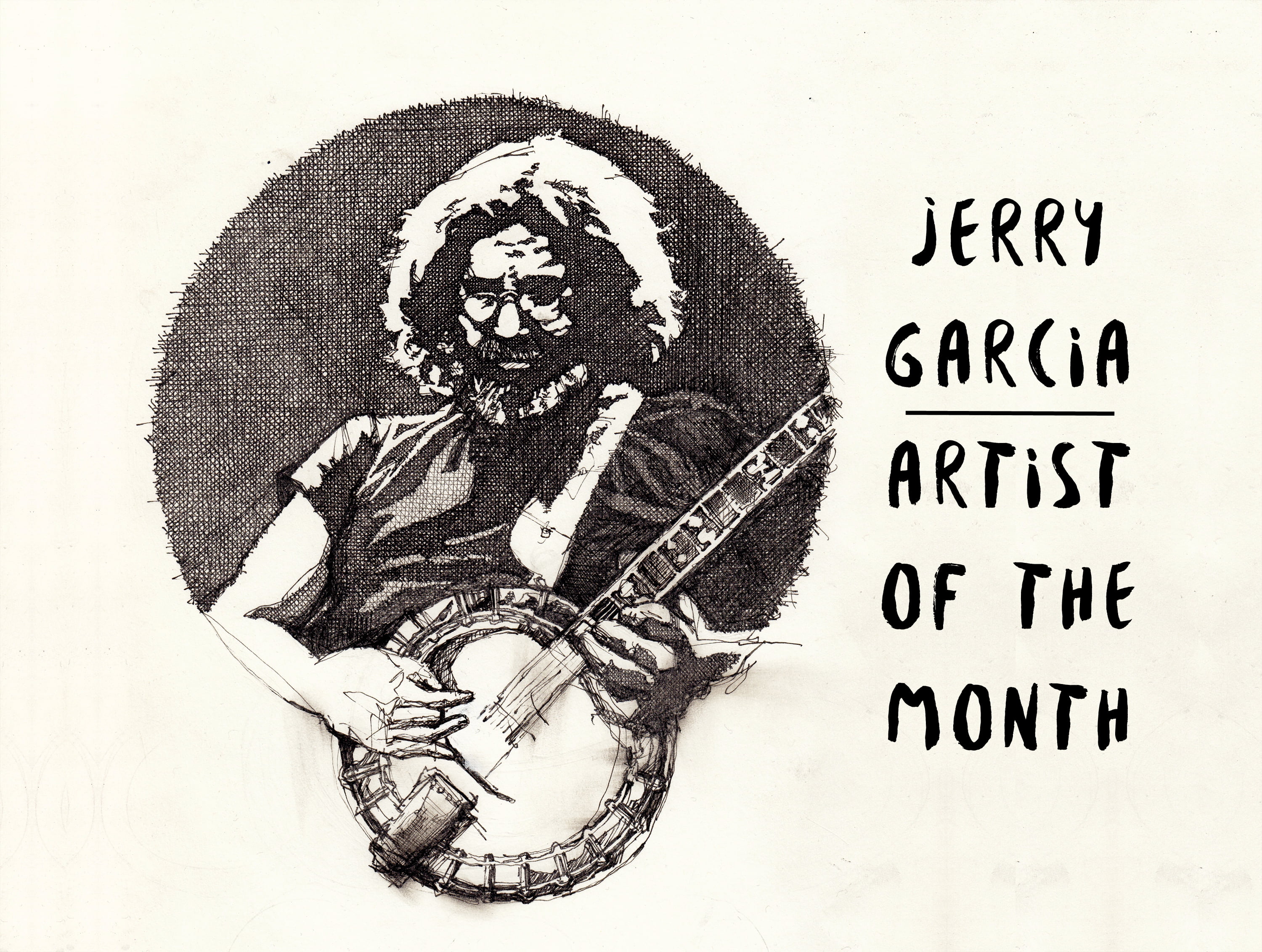
Jerry Garcia: Expanding the Musical Consciousness

Before becoming the psychedelic guitar-playing icon of the Grateful Dead, Jerry Garcia was already living a life completely dedicated to music. Heavily immersed in the folk idioms that coalesced with the beat poet scene in San Francisco — and in the peninsula towns of Menlo Park and Palo Alto — in the beginning of the 1960s, Garcia’s concentration, determination, and passion for musical collaboration planted the seeds for a force that would not only influence the world in song, but that would let loose a seamless tie to multiple genres through multiple generations. What’s now viewed as Americana, Garcia was creating with the Dead right from the outset. His impact looms far and wide, perhaps even greater as the years since his passing roll on. From the bluegrass world of the McCourys to esteemed guitarists like Mike Campbell of Tom Petty and the Heartbreakers, David Hidalgo of Los Lobos, and David Rawlings, to jam bands like Leftover Salmon, and the current generation of musicians like the National, Jenny Lewis, and Ryan Adams, Garcia’s ethos is being deeply felt and utilized.

Garcia had a mind hungry for knowledge and interested in art, comics, and horror films, even as music ran through his family. After initially getting an accordion for his 15th birthday and successfully trading that in for a guitar, the quest for constant improvement was born as he devoured the styles of Chuck Berry, Jimmy Reed, Buddy Holly, and Bo Diddley. As the ‘60s approached and the initial rock boom faded, Garcia and his friend (and soon to be Grateful Dead lyricist) Robert Hunter found themselves in the middle of a very fertile Bay Area folk scene. Being steeped in Harry Smith’s Anthology of American Folk Music led to a fascination with the Carter Family and then Flatt & Scruggs.

It was at this time, in 1962, that Garcia began his complete immersion into the banjo and the bluegrass style of Earl Scruggs. He formed the Hart Valley Drifters with Hunter and David Nelson (later of New Riders of the Purple Sage and the Jerry Garcia Acoustic Band), and the scene grew to encompass the likes of Eric Thompson, Jody Stecher, Sandy Rothman, Rodney Albin, Janis Joplin, Jorma Kaukonen, David Crosby, Paul Kantner, and Herb Pedersen. The Hart Valley Drifters performed at the Monterey Folk Festival in 1963 in the amateur division and won Best Group, and Garcia took the Best Banjo Player award, which strikes with irony as, throughout his career, Garcia would never consider music to be a competition of any kind. He was more into turning people on.

While absorbing as much music as possible and focusing on his craft with diligence, Garcia came into cahoots with people like Ron “Pigpen” McKernan and John “Marmaduke” Dawson through a string of continuous collaborations and a rotating cast of characters at joints like the Boar’s Head, Keppler’s Bookstore, and the Tangent. McKernan was the blues aficionado with the biker looks and heart of gold who would lead Garcia into the electric blues band the Warlocks, which then became the Grateful Dead, while Dawson would be the one who had the canon of songs for Garcia to base his pedal steel guitar learning around to form the New Riders of the Purple Sage.

But it was on a cross country road trip with Rothman in 1964 that Garcia met David Grisman, the young mandolin player to whom Thompson had tipped him off. It was at Sunset Park in West Grove, Pennsylvania, where acts like Bill Monroe and the Osborne Brothers were featured, where Garcia and Grisman first did some pickin’ together, and a friendship was born that would lead to musical ventures that would have more than a lasting impact.

Both Garcia and Grisman were imparted with some crucial advice from Monroe, which was to start your own style of music. Garcia, no doubt, led the Dead (as much as he refused to admit to any leadership role) to their unique musical domain, while Grisman created his own “Dawg” style of music that was the precursor of “New Grass” in the ‘70s. According to Grisman, “Jerry was always the true renaissance music man.”

While each had gone on to create their own paths, it was 1973 when they started hanging out together at Stinson Beach, picking and having fun, when Peter Rowan (a former Bill Monroe Bluegrass Boy member) joined in along with legendary fiddler Vassar Clements, and, needing a bass player, John Kahn was brought in. Old & In the Way was born. In typical Garcia nature, the musical fun led to some local gigs which, thankfully, were recorded by Owsley “Bear” Stanley. With the guitar and the Dead being Garcia’s main drive, getting back to the banjo and picking with his pals in Old & In the Way was not only stress free, but fun and a piece of his musical puzzle that really exemplified how the muse consumed him. It wouldn’t be out of the norm, at the time, to find him in the span of a week or two playing gigs with the Dead, Old & In the Way, and one of his other musical soulmates, Merl Saunders.

The release of Old & In the Way, taken from Bear’s recordings at the Boarding House in San Francisco in October of 1973, hit the world in 1975 on the Dead’s Round Records label. It was through the Dead Heads fan club mailing of a 7-inch, 33 rpm sampler that many fans got their first dose of Old & In the Way. Many of that generation — and a few that followed — were exposed to bluegrass thanks to that release. The album continued to turn on the masses and was widely respected as one of the best-selling bluegrass albums of all time.

While fame was never of interest to Garcia, the expansion of musical consciousness was, perhaps, the most beneficial and unintended consequence of his popularity. Just like the Dead were doing with their music — turning kids onto Merle Haggard, Buck Owens, and Johnny Cash songs — here, Garcia and Old & In the Way were turning rock and rollers onto bluegrass and the songs of Peter Rowan, the Stanley Brothers, and Jim and Jesse McReynolds. The aspect of turning people on to music was certainly not limited to bluegrass, where Garcia was concerned. The Jerry Garcia Band was his outlet for a good 20+ years, wherein he’d groove to just about any and everything. Motown, Louis Armstrong, Los Lobos, Allen Toussaint, Irving Berlin, Bob Dylan, Bob Marley, Van Morrison … the stream of tremendous musical taste was just about endless. And, of course, adding his own flair, passionate vocals, and one-of-a-kind guitar to it all made for hundreds of satisfying shows and numerous albums.

Jerry Garcia made music that was loaded with adventure. Improvisation was his nature, always seeking out what was around the bend, never wanting to play the same thing the same way twice. That adventure is what drew so many to him and his music. That adventure lives on, not only eternally in his music, but also through the lives, songs, and good deeds of those he inspires.


Illustration by Zachary Johnson

9 Bluegrass Songs to Whet Your Appetite

No one really needs any help gearing up for the beautiful gluttony of the holiday season, but in the spirit of gorging oneself on cookies, pie, turkey, ham, and all manner of seasonal treats, here are nine bluegrass songs to get your stomach growling.

Flatt & Scruggs — “Hot Corn, Cold Corn” 

Hot corn goes with your meal. Cold corn makes your meal (and your loud relatives) bearable. If the chickens all a-runnin’ and the toenails a flyin’, this is your best bet.

Ricky Skaggs & Kentucky Thunder — “Pig in a Pen”

Bake them biscuits! Raise a barrel of sorghum! We’re Alabamy-bound!

Reno & Smiley — “Dill Pickle Rag”

Have a pickle with your leftover turkey sandwich!

Doc Watson & Clarence Ashley — “Keep My Skillet Good and Greasy”

The importance of proper cast-iron care cannot be overstated. Do not use soap or any cleaning agents (scrub with salt on stubborn grime when needed), oil after rinsing and washing in warm water, and make sure to re-season regularly.

Lost and Found — “Leftover Biscuits”

Sure, this describes a pretty misogynistic scenario in which the kitchen is dirty because the singer’s wife left him, but maybe also it can just be the day after Christmas when no one wants to even acknowledge the tower of dishes in the sink and everyone’s content to eat cold ham on day-old rolls? Maybe?

Jim & Jesse — “Y’all Come!”

Eating everything from soup to hay! HAY!?

Bruce Molsky — “Shove the Pig’s Foot a Little Bit Further into the Fire”

No one wants an underdone pig’s foot.

David Grier — “Angeline the Baker”

Angeline, could you bake me up some cinnamon rolls, chocolate chip cookies, yeasty rolls, and a pie or three, a fruitcake, a pumpkin roll …

The Nashville Bluegrass Band — “Soppin’ the Gravy”

A clean plate does not count as a truly clean plate, until you’ve taken whatever bread you have on hand and have completely sopped up all that gravy. Soppin’ veterans will then move to the gravy pan and sop up all of that, too. Don’t think about your arteries. It’s the holidays!


Photo credit: Philip Clifford on Foter.com / CC BY-SA

8 Legendary Artists on Our Bluegrass Bucket List

It was 2012 which taught me that, even though bluegrass is a relatively young genre, I was taking that young age for granted. In just a few months, both Earl Scruggs and Doc Watson passed away before I had gotten the chance to see either of them live in concert. Being a banjo player, I was especially broken-hearted over never having met Earl and thanked him for everything he gave me, indirectly, via the banjo. Even though I resolved to catch shows by as many living legends as possible after that particularly devastating year, I have not done well enough. In order to learn from my personal shortcomings, here’s a list of the legends that we all simply must see and hear as much as we possibly can. There’s no time like the present.

Curly Seckler

Chances are, if you’re listening to a recording of Flatt & Scruggs, you’re hearing Curly Seckler sing the tenor. His singing and mandolin graced more than 100 songs during his tenure with the Foggy Mountain Boys. In the ’70s, he joined Lester Flatt’s Nashville Grass and inherited the act after Lester passed on. After retiring more than 20 years ago, he continued to release albums and appear as a guest with nearly every bluegrass band of note, on stage and in the studio. He’s a Bluegrass Hall of Famer, an IBMA Award Nominee, and one of the last surviving members of the first generation of bluegrass.

Mac Wiseman

AKA “the Voice with a Heart,” Mac Wiseman got his start with Flatt & Scruggs and the Foggy Mountain Boys, and went on to join Bill Monroe’s Blue Grass Boys before setting out on his own, carving out a solo career that continues to this day. Though he’s currently 91 years old, he just released a musical memoir, I Sang the Song (Life of the Voice with a Heart), on Mountain Fever Records and he has hundreds more songs backlogged for future release. The Country Music Hall of Fame and Bluegrass Hall of Fame inductee rarely performs these days, but musicians, writers, and fans continue to make the pilgrimage to his home just outside of Nashville where he holds court from his armchair — and still does his own vacuuming.

Jesse McReynolds

With his brother Jim, Jesse McReynolds toured and recorded some of the best brother duo bluegrass music ever created. A tireless innovator, Jesse has recorded an album of Chuck Berry covers, a Grateful Dead tribute album, and even appeared on the Doors’ Soft Parade. Lucky for all of us, Jesse still tours, playing festivals and concerts around the Southeast. He also performs quite frequently on the Grand Ole Opry and is the Opry’s oldest member. At 87 years old, he’s still got it — and you need not take our word for it, just catch him tearing through “El Cumbanchero.”

Eddie Adcock

Eddie Adcock is one of the wackiest, most joyful, ingenious banjo players to have graced bluegrass music with his playing. He, too, spent a stint playing with the Blue Grass Boys and went on to join the Country Gentlemen. He toured as a solo act with his wife, Martha, for many years. Their annual benefit concert for Room in the Inn, a homeless shelter network in Nashville, is always a highlight of the Christmas season. It’s worth attending just to catch Eddie, but the lineup is usually brilliantly star-studded. Interesting tidbit: Eddie had brain surgery to correct debilitating hand tremors and was kept awake during the surgery so he could play banjo and the doctors could determine to what extent they could eliminate the tremors. There’s video of this. Go find it.

Bobby Osborne

At 85 years old and after more than 60 years of performing professionally, Bobby Osborne filmed his first music video for “I’ve Gotta Get a Message to You,” the single off his brand new record, Original. That’s right, it’s a bluegrass Bee Gees cover. And it isn’t the only surprising cut on the new record, either. There’s “They Call the Wind Maria” from the Broadway musical Paint Your Wagon and Elvis’s “Don’t Be Cruel.” The record plays like a walk back through Bobby’s — and the Osborne Brothers’ — highly influential career in bluegrass, country, and the folk revival. You can catch Bobby touring across the country with the Rocky Top X-press and on the Grand Ole Opry. It might be the only context in which you hear Rocky Top without being mad about it.

Larry Sparks

Larry Sparks got his start with the Stanley Brothers in the early 1960s and, after Carter Stanley passed away, he became lead vocalist, singing some of Ralph Stanley and the Clinch Mountain Boys’ most iconic songs. His own band, the Lonesome Ramblers, continues to carry the torch for traditional, straight-ahead, no-nonsense bluegrass music, but without the hubris and self-righteousness that these uncompromising bands sometimes espouse. Larry was inducted into the Bluegrass Hall of Fame in 2015 and he is a two-time winner of IBMA’s Male Vocalist of the Year award. He’s still going strong with nary a sign of stopping. You need to do yourself a favor and see him live.

Roland White

Too often eclipsed by the fame and influence of his late brother, Clarence, Roland White is the quintessential bluegrass living legend. He appeared on the Andy Griffith Show with his brothers in its first season, he performed with the Kentucky Colonels, the Country Gazette, and the Nashville Bluegrass Band, and he founded the Roland White Band in 2000, after nearly 60 years in the industry. He recently turned 79, but he still teaches at camps and workshops, tours across the country, and plays monthly at the World Famous Station Inn in Nashville. Over the past few years, he’s re-released two live albums by the New Kentucky Colonels: Live in Sweden 1973 and Live in Holland 1973. These recordings should be required listening. Go get them.

Norman Blake

Do you know what Johnny Cash, Bob Dylan, Kris Kristofferson, Joan Baez, John Hartford, Nitty Gritty Dirt Band, Tony Rice, O Brother Where Art Thou?, Alison Krauss and Robert Plant, and Inside Llewyn Davis have in common? Norman. Blake. To call his guitar playing “iconic” would be sorely understating it. His influence reaches beyond bluegrass to almost any player who has ever picked up a flat-top box, whether those players know it or not. His latest record is Brushwood (Songs & Stories), recorded with his wife and longtime musical partner, Nancy. It’s a folk album that channels the roots of the music, but with a political bent that’s as unapologetic as it is classically folk.


Eddie Adcock photo by Eddie Janssens. All photos courtesy of the artists.

MIXTAPE: It’s a Cheating Situation

About two weeks into February, you’ll find that darlings in love glow; strong, single types treat themselves; and the unlucky who’ve been wronged get a brutal reminder of that wronging. Who needs all those normative flowers, heart-shaped boxes, chocolate-dipped strawberries, and bubbly? Who needs that ungrateful someone who-shall-not-be-named with the wandering eye? We’ll take depressing songs about heartbreak and infidelity instead, thanks. At least, that’s what we’ll keep telling ourselves.

Ricky Skaggs: “Don’t Cheat in Our Hometown”

Ricky started performing this song with Ralph Stanley and the Clinch Mountain Boys back when both he and a young Keith Whitley were in the band. (The best iteration of the Clinch Mountain Boys ever? Yes.) Now, it would seem like the subject of this song would go without saying. While we do not condone philandering, we do recommend sticking to this rule of thumb, if you find yourself thinking it’s smart to break his heart and run down his name. (As a bonus, check out the album artwork from Ricky’s eponymous country record. It is everything.)

Darrell Scott: “Too Close to Comfort”

There’s one line in this song that bugged me for a while: “Lying with strangers one more last time.” It felt clunky, the grammar felt off. Then one day, it just hit me. There have been plenty of “last times” before this one. It’s the singer’s last “last time.” Just once more. Anyone with first-hand experience of the foolin’ around kind knows that with this line — hell, the whole song — Darrell Scott delivers songwriting gold, once again.

J.D. Crowe & the New South: “Summer Wages”

It would seem that there’s a much higher rate of friends stealing friends’ girls in bluegrass music than other genres. Tony sings this with such conviction; it really is one of the best existentially sad songs of bluegrass. “Never leave your woman alone when your friends are out to steal her. She’ll be gambled and lost like summer wages.”

Dolly Parton: “I’m Gonna Sleep with One Eye Open”

Dolly has no shortage of cheating songs in her repertoire. (Let’s be honest: “Jolene” would’ve been too easy a choice.) It’s nice to hear a woman sing cheating songs because, despite the greater number of songs sung by jilted men, we know infidelity isn’t really a gender issue; it’s pretty much just a human one.

Flatt & Scruggs and the Foggy Mountain Boys: “I’ll Go Stepping Too”

Just a classic. Lester’s drawl, Earl’s banjo, the iconic fiddle turn-around kickoff … you gotta love it all. Equal footing in an unfaithful relationship might not be the best approach, though. Just make sure you put out the cat before you go stepping, too.

John Prine: “It’s a Cheating Situation”

John Prine and Irish folk singer Dolores Keane hit the nail so solidly on the head. They sing to the humanity we overlook in wandering spouses or significant others. “It’s a cheating situation. Just a cheap imitation. Doing what we have to do. When there’s no love at home.” This one was written by Moe Bandy, who happens to be so adept at penning cheating songs, we had to include him later on in this list, too.

Nickel Creek: “Can’t Complain”

This song feels like a sort of roots music trance experiment — with its title as mantra. To the offending party, cheating often feels like an inevitability, but does that absolve the sin? In retrospect, do the circumstances change the nature of the outcome? Or perhaps the crux is that, despite the way things end and the bridges burnt, maybe it’s all still worth it. There’s a redemptive message we can get behind.

The Kendalls: “Heaven’s Just a Sin Away”

Now this is a song with a hook. Yeah, it’s a little weird to hear a father and daughter sing in harmony about forbidden love, but let’s just gloss over that and enjoy it for what it is: a killer, old-fashioned, bittersweet, real country, cheatin’ duet with some sick twin electric guitar. Bonus: Check out their tune “Pittsburgh Stealers.” Once again, a cheating song, but with steel mills and, yes, football wordplay for a hook. Simply masterful.

Shania Twain: “Whose Bed Have Your Boots Been Under?”

Two words: guilty pleasure. This is like the country version of “Mambo No. 5” … “List a bunch of women’s names!” But damn, it’s an earworm. End of caption.

Moe Bandy: “I Just Started Hatin’ Cheatin’ Songs Today”

Listening to heartbreak song after heartbreak song can be particularly painful when you empathize a little too strongly with them. Throw-a-bottle-at-the-jukebox painful. But those moments are when we find the therapeutic power of song at its strongest. It is comforting to know there are other sad bastards out there taking out their hurt on depressing records, too, right?

Doyle & Debbie: “When You’re Screwin’ Other Women (Think of Me)”

The reason we had to put this song last on this list is because it renders all of the other songs above null and void. This is the only one that matters. This is the magnum opus of cheating songs done up right by America’s number one country sweethearts. Happy Valentine’s Day, y’all.


Photo credit: KTDrasky via Foter.com / CC BY