First Generation: Meet the Bluegrass Music Hall of Fame’s Earliest Inductees

Though it’s not that hard to find some who will argue the point, bluegrass is widely held to have originated when banjo phenom Earl Scruggs joined Grand Ole Opry star Bill Monroe’s band in early December, 1945. Bill Monroe and His Blue Grass Boys — the possessive wasn’t just there for show — were already among the anchors of the radio show’s cast, but contemporary accounts (and a handful of bootleg recordings) make clear that, to the ears of an almost instantly enraptured audience, Scruggs’ rapid-fire banjo playing elevated the group’s sound to a new level.

Almost instantly, groups sprang up — or reoriented themselves — in pursuit of the new sound, and although banjo players and fiddlers were the most obvious converts, the truth is that virtually all of the intricacies the band brought to their sound were soon emulated. By the time Scruggs and guitarist/lead singer Lester Flatt left the Blue Grass Boys at the beginning of 1948, the quintet’s live performances and a handful of recordings had already inspired some notable followers, who, out of artistic desire and commercial necessity, quickly busied themselves in developing their own distinctive takes on the sound of the “original bluegrass band.”

As we near the 75th anniversary of this foundational origin story, BGS will be looking back across the sweep of those years — and first up, of course, a clutch of true pioneers that share a common accomplishment: they are the acts honored by induction into the IBMA’s Hall of Fame in its first five years and their plaques proudly hang at the Bluegrass Music Hall of Fame & Museum in Owensboro, Kentucky.


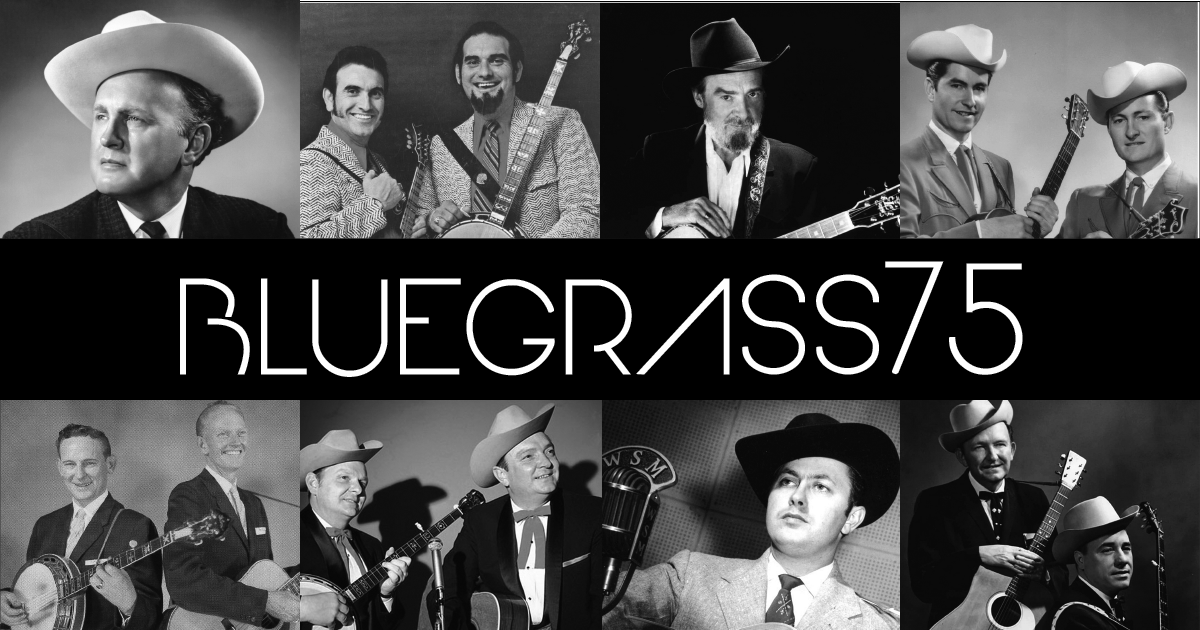
Bill Monroe (inducted 1991)

A complex personality with a skill set that included equal measures of innovation and synthesis, the mandolin-playing Monroe (b. 1911) moved from a mid-1930s duo with his brother to assembling a hot string band during World War II to fronting that original bluegrass band — an achievement which earned him his “Father of Bluegrass” title. Though it’s easy to discern the elements he brought together in that music — old fiddle tunes; Scotch-Irish ballads; African-American blues, jazz and gospel; western swing and more — his creativity extended beyond simply stirring them together and kept him a central figure from its inception until his death in 1996.

Indeed, while his early classics are essential to the bluegrass canon, even his late-life instrumental compositions have enjoyed a growing influence among today’s hottest young players. In fact, he collected his first Grammy for 1988’s “Southern Flavor.” Monroe was inducted into the Country Music Hall of Fame in 1970, and as the composer of “Blue Moon of Kentucky,” he joined the Nashville Songwriters Hall of Fame in 1971, received a Lifetime Achievement Award from the Grammys in 1993, and entered the Rock and Roll Hall of Fame as an early influence in 1997.

Representative tracks: “Blue Yodel No. 4,“I’m Going Back to Old Kentucky,” “Lord Protect My Soul,” “Midnight on the Stormy Deep,” “Southern Flavor”


Earl Scruggs (inducted 1991)

Though he wasn’t yet 22 years old when he joined Monroe’s band at the end of 1945, Earl Scruggs (b. 1924) was ready to step into the spotlight, and, with the exception of a stretch of ill health in the late 1980s and early ‘90s, he never relinquished it until his death in 2012. Unlike many instrumentalists who change their approach according to musical context, Scruggs believed that his picking style — built around right-hand patterns called “rolls” — could fit anywhere, and after his groundbreaking years with Monroe and then Lester Flatt, his career seemed devoted to proving the point.

Having created much of the musical vocabulary for bluegrass banjo picking, he moved on to playing with his sons in the Earl Scruggs Revue, a country-rock-bluegrass fusion band that was arguably more successful — at least in commercial terms — than Flatt & Scruggs had ever been. In the 21st century, Scruggs championed a broad variety of younger musicians while continuing to play those same sweet rolls he’d created as a young man. He was awarded a Lifetime Achievement Award from the Grammys in 2008.

Representative tracks: “Blue Ridge Cabin Home” (Flatt & Scruggs), “Foggy Mountain Chimes” (Flatt & Scruggs), “Travelin’ Prayer” (Earl Scruggs Revue), “The Engineers Don’t Wave From the Trains Anymore” (with Tom T. Hall), “The Angels” (with Melissa Etheridge)


Lester Flatt (inducted 1991)

With an expressive, emotive voice and an impressive array of demeanors that ranged from dry and sly to devout and down-home, rhythm guitarist Lester Flatt (b. 1914) was the perfect musical complement to Earl Scruggs, and their 1948-1969 output was at least as influential as Monroe’s. Flatt & Scruggs won a 1968 Grammy for their classic recording of “Foggy Mountain Breakdown.”

But where Scruggs was not only interested in playing with his sons, but also interested in putting his banjo into a wider range of contexts, Flatt preferred sticking to the country side of bluegrass. In the aftermath of their breakup, Flatt’s drawl deepened and slowed as he presided over a series of gifted lineups that included peers like Josh Graves and Vassar Clements, alongside young up-and-comers from banjoist Kenny Ingram to a teenaged Marty Stuart. Flatt & Scruggs were inducted into the Country Music Hall of Fame in 1985.

Representative tracks: “I’ll Never Love Another” (Flatt & Scruggs), “I’ll Go Stepping Too” (Flatt & Scruggs), “On My Mind” (Flatt & Scruggs), “You Are My Flower” (Flatt & Scruggs), “Gonna Have Myself a Ball”


The Stanley Brothers (inducted 1992)

The career of Ralph Stanley (b. 1927) and Carter Stanley (b.1925) illustrates both the profound impact that the original bluegrass band had on their peers, as well as the complementary artistic and commercial drives that impelled those successors to create their own unique style. In their first recordings, made while Flatt and Scruggs were still Blue Grass Boys, you can hear the Virginia-born Stanley brothers revamp their old-time string band approach into an approximation of the pioneers’ sound, yet within a matter of months, they had found a compelling variant.

The Stanley sound was built in part around Ralph’s stolid but driving banjo and soulful tenor singing, but even more around Carter’s mournful lead vocals and powerful songs. Over the years, while they moved from the Nashville-based Columbia and Mercury labels to scrappy (and multi-racial) Cincinnati indie, King, their sound became even more recognizable, as owner Syd Nathan hectored them into de-emphasizing the fiddle and leaning more into the innovative work of flatpicking lead guitarists like George Shuffler. The brothers’ partnership came to an end in late 1966 with the early, alcohol-related death of Carter; Ralph would continue on with his own twist on the Stanley Brothers’ sound until his death in 2016.

Representative tracks: “The Lonesome River,” “Our Last Goodbye,” “Let Me Walk, Lord, By Your Side,” “I’ll Just Go Away,” “Pig in a Pen”


Reno & Smiley (inducted 1992)

The first banjo player to follow Scruggs, albeit briefly, in the Blue Grass Boys, Don Reno (b. 1926) deliberately sought to create a distinct and instantly recognizable style of his own on the instrument. By the time his partnership with singer-guitarist Red Smiley (b. 1925) had settled into regular recording for King Records in the early 1950s, he had succeeded completely, and for good measure had done the same with flatpicked guitar solos, too. As Grand Ole Opry announcer Eddie Stubbs once put it, Reno & Smiley were a country band with a banjo instead of a steel guitar.

Though Reno could and sometimes would blister a banjo solo, many of the band’s signature numbers were heart songs, country shuffles, earnest gospel outings and more, including occasional flashes of rockabilly and jazz. Reno wrote many of them, sang tenor and occasional leads, and shared the instrumental limelight with their steady fiddler, Mack Magaha, and occasionally with one or another mandolin player, including his son, Ronnie. The partners split for a few years in the mid-‘60s, then reunited for a brief period before Smiley’s death in 1972. Reno continued to record and perform with partners ranging from Bill Harrell to his sons until he passed away in 1984.

Representative tracks: “I’m Using My Bible for a Roadmap,” “I Know You’re Married,” “Little Rock Getaway,” “Please Remember That I Love You,” “Just About Then”


Jim & Jesse (inducted 1993)

Though Jim McReynolds (b. 1927) and Jesse McReynolds (b. 1929) were born just a few dozen miles from the Stanley Brothers, the music of Jim & Jesse could hardly have been a more different kind of bluegrass. The duo’s singing was smooth and refined — especially guitarist Jim’s silvery tenor — while the instrumental sound was driven by Jesse’s innovative mandolin cross-picking and their overall approach by the latter’s eclectic tastes and influences (he appeared, for instance, on The Doors’ 1969 album, The Soft Parade).

The brothers were comfortable in reaching for a more countrified sound, helped by banjo players like Allen Shelton and Carl Jackson, who were adept at playing radio-friendly licks on a dobro-banjo as well as ‘grassier fare when that was called for. Smart businessmen as well, the duo were among the first to appear on television in the early 1950s, recorded an entire album of Chuck Berry songs in the mid-1960s, started their own label in the early 1970s, and remained a popular fixture on the Grand Ole Opry until Jim’s death on the last day of 2002. As of this writing, Jesse McReynolds continues to perform — and to innovate, too, with releases like a 2010 Songs of the Grateful Dead collection.

Representative tracks: “Pardon Me,” “Are You Missing Me,” “She Left Me Standing on the Mountain,” “Cotton Mill Man,” “Memphis”


Mac Wiseman (inducted 1993)

Nicknamed “The Voice With a Heart,” Virginia’s Mac Wiseman (b. 1925) was a founding member of Flatt & Scruggs’ Foggy Mountain Boys in 1948, but soon left to join Monroe (and Don Reno) in the Blue Grass Boys. By the early 1950s, he’d started his own career, recording for Gallatin, Tennessee’s Dot Records — and then going to work for the label. A consummate professional, he also served as a musicians’ union official for a time, and was a founding member of the Country Music Association. He frequently recorded material other than bluegrass, especially when rock ’n’ roll and the pop-country Nashville sound beckoned in the late 1950s and early 1960s, and throughout his career, he was never afraid to use a variety of instruments besides the archetypal bluegrass ones.

Still, as a performer, bluegrass was his bread and butter from the mid-1960s on, and rather than carry a band, he would recruit players from other acts (and occasionally skilled amateurs, too) and lead them on stage with a heavy guitar strum and a quick “watch me, boys!” Wiseman’s songbook included old folk numbers, songs he heard on the radio as a polio-stricken child, big band tunes, Music Row compositions and much more. In later years, he recorded several memorable projects that highlighted songs his mother had taught him and songs that told his life story, before his death in 2019.

Representative tracks: “I Still Write Your Name in the Sand,” “I Wonder How the Old Folks Are at Home,” “Mother Knows Best,” “My Little Home in Tennessee,” “’Tis Sweet to Be Remembered”


The Osborne Brothers (inducted 1994)

Bobby Osborne (b. 1931) and Sonny Osborne (b. 1937) were among the first of what might be called “semi-second generation” bluegrass artists; unlike those who preceded them in the Bluegrass Hall of Fame, neither had performed professionally before 1950. By 1954, though, they’d hooked up with Jimmy Martin for a memorable set of recordings, and 1956 found them signed on to MGM on their own. Together with singer-guitarist Red Allen, the Brothers — Bobby singing lead and playing mandolin, Sonny singing baritone and playing banjo — had come up with an inventive new vocal arrangement that put the spotlight pretty much on them alone.

Lest that sound too cold, it should be noted that they deserved it, for not only was Bobby a formidable lead singer and Sonny brilliant in the support role, but their fearless, try-anything (the two recorded separately with avant-garde jazz vibraphonist Gary Burton in the mid-’60s) instrumental skills were profoundly original. The Brothers joined the Grand Ole Opry and signed with Decca Records in 1964, and spent the next decade fusing bluegrass and country in a way that eventually earned them a CMA Vocal Group award. Irascible, opinionated, and both artistically and commercially successful, the Osborne Brothers were at the forefront of the music until Sonny’s 2005 retirement — and while Bobby continues to perform to this day, the influence of their duo continues to grow, too.

Representative tracks: “Once More,” “The Cuckoo Bird,” “Tennessee Hound Dog,” “Pathway of Teardrops,” “Sweethearts Again”


Jimmy Martin (inducted 1995)

East Tennessee native Jimmy Martin (b. 1927) hungered to perform with Bill Monroe as a youngster, then got his chance in 1949 when Mac Wiseman quit the Blue Grass Boys. As lead vocalist and guitarist, he helped to make some of Monroe’s most memorable recordings, then partnered in various settings with Bobby and Sonny Osborne before taking the helm of his Sunny Mountain Boys in the mid-1950s. A brash, colorful guy who could boast with the best and then back it up, Martin served in the cast of the Louisiana Hayride (alongside Elvis) and the Wheeling (W.V.) Jamboree before a growing bluegrass festival circuit threw him a lifeline in the absence of a Grand Ole Opry membership.

Among early Hall of Fame inductees, he may be considered more influential than most of his peers. Service in his Sunny Mountain Boys constituted the training ground for several generations of musicians, from banjo man J.D. Crowe to newgrass pioneer Alan Munde to Americana favorite Greg Garing — and his appearance on the Nitty Gritty Dirt Band’s Will the Circle Be Unbroken was legendary. Martin was an unstoppable force of nature who knew exactly what he wanted from a musician, yet was unable to clearly explain it. Still, he did well enough that his records are instantly recognizable, even when you’ve never heard them before.

Representative tracks: “That’s How I Can Count on You” (with the Osborne Brothers), “Rock Hearts,” “You Don’t Know My Mind,” “Tennessee,” “Freeborn Man”


Pictured above, first row (L to R): Bill Monroe, The Osborne Brothers, Mac Wiseman, Jim & Jesse; Second row: Reno & Smiley, The Stanley Brothers, Jimmy Martin, Flatt & Scruggs
Bluegrass Memoirs: Scruggs Pegs & Earl’s Hooks

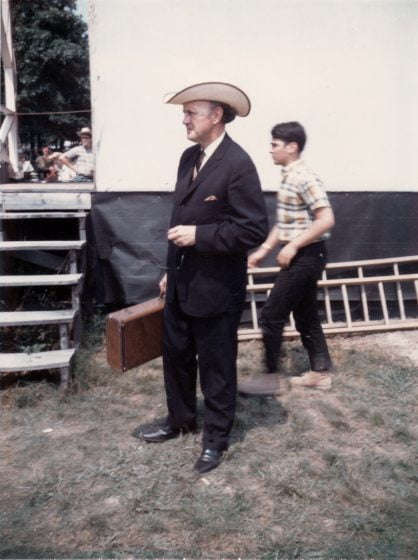
Let’s begin with a 45 RPM record I played banjo on. 

In July 1964, I was hired by the Rick Sutherlin Orchestra to play banjo for one night at the Monroe County Fair in Bloomington, Indiana. They needed a banjo player, because they were going to back up the fair’s featured music that night, the famous barbershop quartet, The Buffalo Bills

The Rick Sutherlin Orchestra was a big band based in Bloomington. Its leader Sutherlin, from a local family, was not a great musician. I remember him at the fair waving his baton at the front of the stage while one of the sidemen did the countdowns before each tune. I’m pretty certain I got the gig because Tom Hensley, who’d played bass in our bluegrass band, the Pigeon Hill Boys, played piano for the orchestra. They needed a banjo; he suggested my name. Hensley, like most of the other members of the big band, was at the Indiana University School of Music. He recently retired after over 40 years as Neil Diamond’s pianist.

A banjo solo was needed for the show, so one of the other orchestra members, trombonist Gary Potter, came to consult with me. Potter and I had been classmates at Oberlin College, playing in Dick Sudhalter’s jazz band in 1960. The following year we had roomed in the same boarding house, and he’d played bass with our campus bluegrass band, The Plum Creek Boys. Now he was at the start of a long career teaching music, principally at IU’s Jacobs School of Music. 

We decided on Bob Dylan’s “Don’t Think Twice,” a contemporary folk hit. I’d been playing it with David Satterfield in our Bloomington bluegrass band. Dave, an IU Grad student from Columbus, Indiana, had lived in Greenwich Village a few years before and done some singing with Dylan at that time. This song was in his repertoire.

I loaned Gary a copy of Sing Out! that had Dylan’s words and music so he could work on the arrangement. At this point he suggested inserting the sound of the Scruggs pegs, the musical hook in Flatt & Scruggs’ “Flint Hill Special.” Scruggs had added two additional tuning pegs to his banjo. They had cams which pushed on the second and third strings, enabling him to raise and lower the pitch of each string while it was being plucked. That created a slurred note sound resembling that of a slide guitar or a pedal steel.

Gary had heard that sound when we were at Oberlin and thought its riff with the strings being tuned down and back up would make a nice introduction for my banjo part. He enjoyed the challenge of arranging the sound of the pegs for the orchestra.

The performance at the fair went over well, and soon after that someone — maybe Sutherlin? — suggested we try doing a banjo + big band LP. Thus the Delmarti 45, intended as a demo, was born. The recording was made, as the label indicates, by Don Sheets. Sheets had a recording studio in Brown County on Highway 135 halfway between Bean Blossom and Nashville. He did custom recording work — high school bands, choirs, that sort of stuff — and specialized in jingles. I worked for him there occasionally. A gold record for one of his jingles hung on the studio wall.

The recording was made on the IU Bloomington campus in August 1964, at the Indiana Memorial Union building’s Alumni Hall. The band was on the hall’s stage. Sheets set up his recording equipment on the floor in front of the stage. What I recall most vividly about the recording session is how solid the rhythm section was. “The Marti Mae Singers” was Don’s wife Marti, who overdubbed the harmony voices in his studio afterward.

The record was published in the fall of 1964. Our banjo + big band idea didn’t find any takers at record companies. At the time, bluegrass banjo crossover projects like this one were already up and running, and the heyday for Scruggs pegs had passed.

Earl Scruggs invented his pegs in 1952 after recording “Earl’s Breakdown,” an instrumental that incorporated as its hook a musical trick he’d been playing since boyhood — making a slur by plucking the second string (a B note), tuning it down while still ringing to an A, and then quickly back up to B, right in the middle of an instrumental break. A quick twist! He and Lester recorded it in October 1951. 

It was released at the end of the year on a Columbia single, the B side of “‘Tis Sweet To Be Remembered,” the first Flatt & Scruggs title to make the Billboard charts. All winter long, Columbia advertised the single as a best-seller. The band, then based in Raleigh, was playing it on the radio and the road daily. 

The tedium of having to retune the string by ear every time he played it prompted Earl to invent a labor-saving device. He installed a tuning peg with an adjustable cam on it in the banjo’s peghead between the first and the second string. Turning the peg up made the cam stretch the second string up to B. Turning it down loosened it to A. That enabled him to play these peg hooks accurately every time.

At the same time as he installed the new tuning peg he placed an identical one between the third and the fourth string so that the third string could be moved down from a G to F# and back.

Earl did this because moving the second and third strings down is a natural part of tuning the banjo from an open G chord (the default, for Scruggs-style) to a D chord. This boyhood musical trick came from something he did whenever he played at a dance — change tunings. Certain dance pieces were in G, the most frequently used tuning. Others were in C or D, each with its own tuning. Scruggs used all three throughout his musical life.

In the spring of 1952 Earl could use his new tuners not only for “Earl’s Breakdown,” but also to move quickly from G to D in order to play “Reuben,” the old-time tune that had launched him as a three-finger picker, which he often picked with the band. 

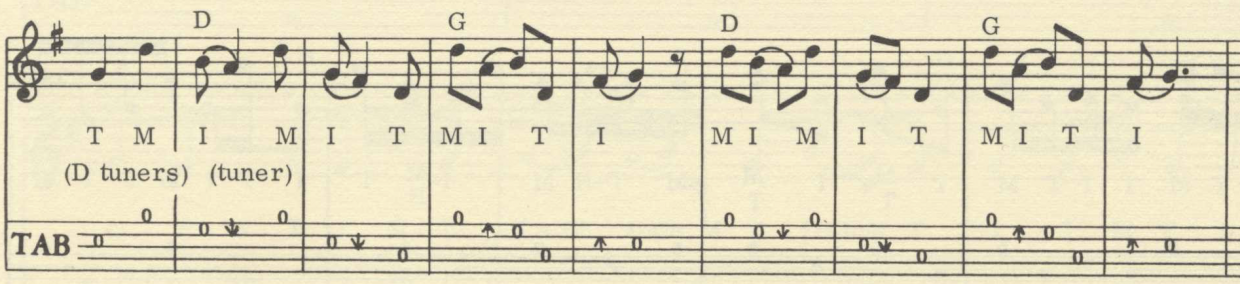
Tablature for “Flint Hill Special” from Earl Scruggs and the 5-String Banjo, p. 103

That fall, just after moving to Knoxville, they recorded “Flint Hill Special,” Earl’s newest composition. It used his new pegs for the tune’s hook.  This riff came at the start of the recording and was repeated at the end of each banjo chorus. That’s what Gary Potter incorporated into his charts for our version of “Don’t Think Twice.”

Released within weeks as the B side of “Dim Lights, Thick Smoke,” “Flint Hill Special” was advertised by Columbia as a best-seller all spring of 1953. It got a lot of radio play. 

At the end of August, not long after Lester and Earl started broadcasting for Martha White Flour in Nashville, they recorded another new peg hook instrumental, “Foggy Mountain Chimes.” In the second half of each chorus Earl tuned both strings down, changing the banjo’s open chord to a D, then played harmonics — “chimes” — in that key before tuning back up to G. 

“Foggy Mountain Chimes” was released in November 1953. The following month Decca released a single recorded in Nashville by the Shenandoah Valley Boys. On one side was “Plunkin’ Rag,” a new banjo instrumental with yet another Scruggs peg hook. 

With the pegs as with every other aspect of his music, Earl Scruggs was being listened to in Nashville and copied by young banjo players everywhere. “Plunkin’ Rag” was just the start. More about that next time!


Neil V. Rosenberg is an author, scholar, historian, banjo player, and Bluegrass Music Hall of Fame inductee.

Photo of Neil V. Rosenberg: Terri Thomson Rosenberg

Bluegrass Memoirs: Mayne Smith & Alice Gerrard

Tom Power’s recent Toy Heart episode with Alice Gerrard, whom I first knew as Alice Foster, reminded me of a 1959 visit several of us Oberlin College folkies made to Antioch College. In 2009, doing research on my early bluegrass experiences, I sent my friend Mayne Smith an email asking about his experiences when he met Alice and her late husband Jeremy Foster during that visit. 

Mayne and I are the same age and have known each other since 1953. We got into folk music as teens in Berkeley, California, and discovered bluegrass together from 1957 to 1959 while in Oberlin, Ohio. We first heard it on records and radio, and at this time had seen it live only once, when we met banjoists Eric Weissberg and Marshall Brickman at a 1958 spring vacation homecoming party in New York City. We had begun trying to play bluegrass with a circle of Oberlin classmates, folk music enthusiasts learning new music and working on new instruments. 

In the introduction to my memoir, Bluegrass Generation, I mention our trips to Antioch as undergrads, where we met the Fosters. 

Antioch was, like Oberlin, a liberal arts college that drew students from all over the country and beyond. At the time, its co-op system, which placed students in jobs every second semester or so, was thought to be radical. Unlike Oberlin, which still drew on a pious abolitionist point of view about many things, it tended to be a more socially relaxed place. A Fun Place to Party. 

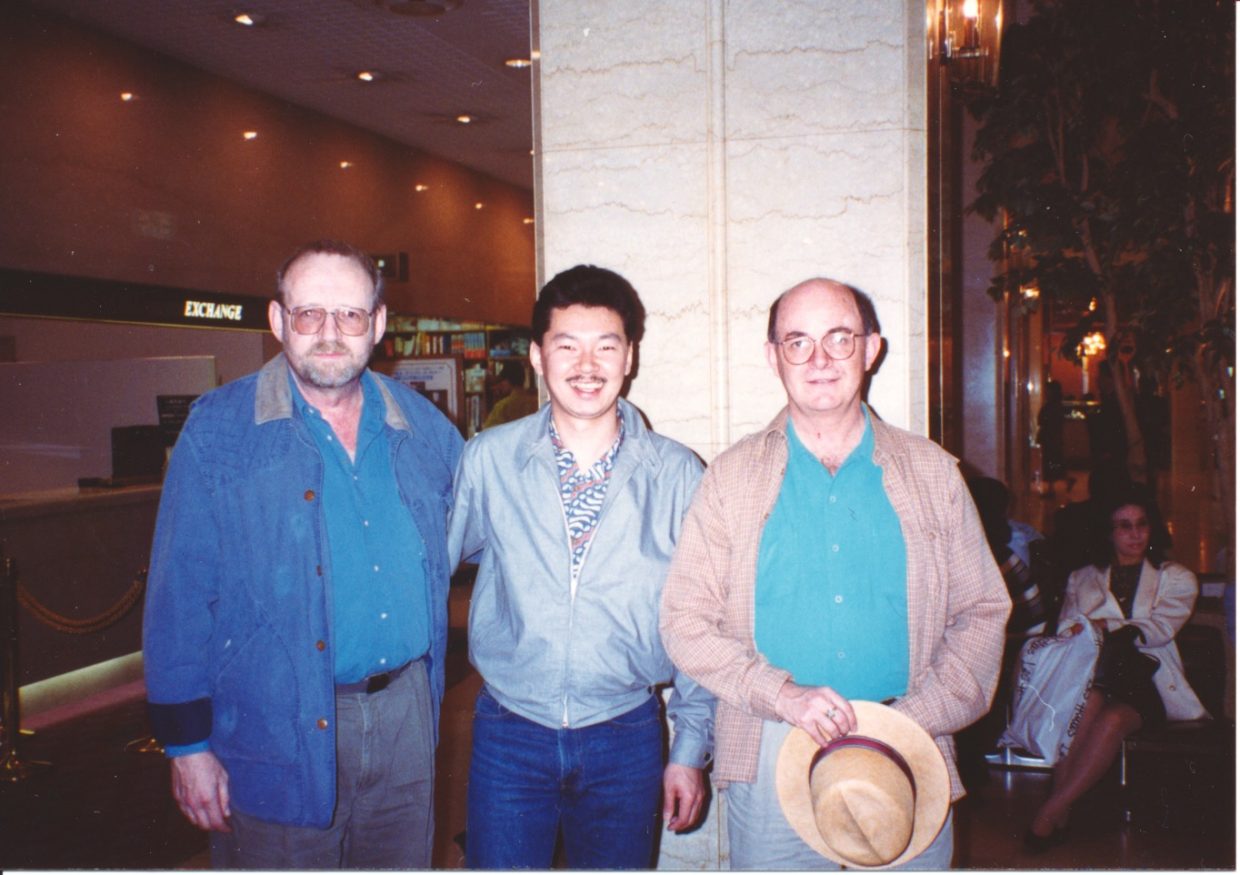
Mayne Smith, Kaz Inaba, and Neil Rosenberg after a morning of jamming at the Hotel New Hankyu in Osaka, Japan. April 31, 1991.

Mayne was the first of our Oberlin bluegrass circle to meet the Fosters during one of these trips. This music was still a new and distant thing to us; we didn’t own tape recorders. In my email I asked Mayne: 

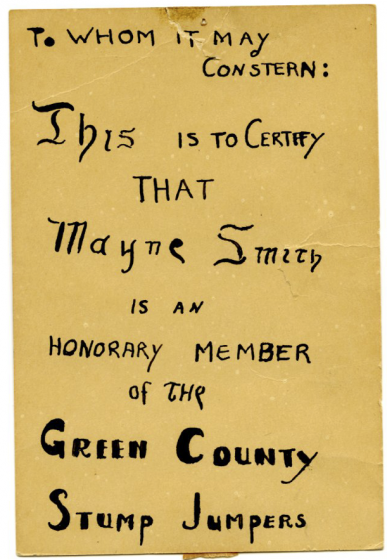
What memories do you have of visiting Antioch and meeting Alice and Jeremy? I went there several times and recall you being there, but don’t have any documents like tapes or photos that include you. Any recollections, however hazy, would be welcome. I remember that you had some kind of document from the Fosters giving you honorary membership in [their band] the Green County Stump Jumpers — do you still have that, was it dated? 

Mayne answered the next day: 

Neil, I have (for me) unusually vivid memories of our first visit to Antioch and hanging out at the Fosters’ place because it was there that I contracted the Stanley Brothers virus. I think it must have been in the spring of 1959 because I had already heard Flatt & Scruggs and understood that this was called bluegrass music. 

But first, Jeremy’s hand-drawn certificate (on a 4×6 card) is undated, but it reads: 

I also vaguely remember showing Marge [Ostrow] (later married to Mike Seeger for a while) how I played Carter Family style guitar. I think I got it from Dave Fredrickson — using the thumb to pick melody, then the index finger brushing down/up. I heard later that Mike was impressed by the fact that Marge had adopted this approach, and asked her where she learned it. 

But about the Stanley Brothers. I recall a thinly carpeted living room with expansive white bookshelves along the wall opposite the windows. At some point, in an afternoon I think, Jeremy put on a tape of the Stanley Brothers in live performance — my gut tells me it was one of the ones Mike Seeger had recorded at New River Ranch in like 1957. As soon as I heard that totally live, undoctored sound I was captivated, and I believe I sat and lay on that hard floor listening to live Stanley Brothers shows (several sets, at least) for hours. My mind was blown. Knowing it was totally live and without studio gimmicks and buried background effects, it came home to me how the fluctuating balance of instruments and voices was accomplished by movement in relation to the microphone and each other, how at times there were lovely breathing spaces in the sound while people shifted from instrumental breaks to solo vocals to harmony vocals. How nobody was using a lot of physical effort to project the sound, yet it penetrated, flowed, darted ahead, waxed and waned like the mating dance of a single complex organism — and how comfortable and familiar the musicians were with what they were singing and playing. 

I was learning not only about how bluegrass fits together, but also about what a band can be like when it’s been playing constantly together, day in and day out, for weeks — for years. 

I don’t believe I’ve ever had a more intense listening and learning experience, nor one that had such a profound effect on my life. 

I should also mention that this was partly possible because I could tell that [Jeremy] and Alice understood what I was going through and supported me by staying out of the way. I felt toward them the way a bridegroom feels about the best man and maid of honor: I could give myself over to the intensity of the music in a nurturing environment. (In retrospect, it was kind of like having a trusted support team when you first get stoned on something very strong.) 

I will always be grateful to them both. 

If you were around when this happened, I don’t remember it. I just blanked on everything else but those sounds. 

I wasn’t at the Fosters when this happened, which was not in the spring of 1959 as Mayne recalled, but a few months earlier, during the January break between semesters. While he visited them, I was off jamming with Guy Carawan, who’d given a concert at Antioch that weekend. I didn’t meet Alice and Jeremy until they brought the Green County Stump Jumpers to an Oberlin Hootenanny a year later. 

In May 1959, our old Berkeley folk scene friend Sandy Paton (co-founder of Folk Legacy records) was the headliner at the annual Oberlin Folk Festival. By then our circle had become The Lorain County String Band. Sandy heard our festival set and said he knew a British folk record company producer who was looking for American bluegrass and old-timey. He suggested we make a demo he could send to his friend. We cut it at the student radio station, but it was never sent. 

That summer, back home in Berkeley, we started The Redwood Canyon Ramblers, Northern California’s first bluegrass band. The story of that band, and of Mayne’s subsequent career as a singer/songwriter and steel guitarist with continuing excursions into bluegrass, is told well at Mayne’s website.

But it does not include an important detail — his groundbreaking work as a scholar. His Master’s Thesis, “Bluegrass Music and Musicians” (Indiana U., 1964) and the article he developed from it, “An Introduction to Bluegrass” (Journal of American Folklore, 1965) opened the door to the serious study of this music. His transcendent aural immersion at the Fosters was the seed that gave him the vision to accomplish this work. I and the many who have followed are indebted to Mayne Smith for blazing the trail.


Neil V. Rosenberg is an author, scholar, historian, banjo player, and Bluegrass Music Hall of Fame inductee.

Photo of Neil V. Rosenberg: Terri Thomson Rosenberg
Photo of Mayne Smith, Kaz Inaba, and Neil Rosenberg: Ed Neff

MIXTAPE: High Fidelity’s Traveling Music

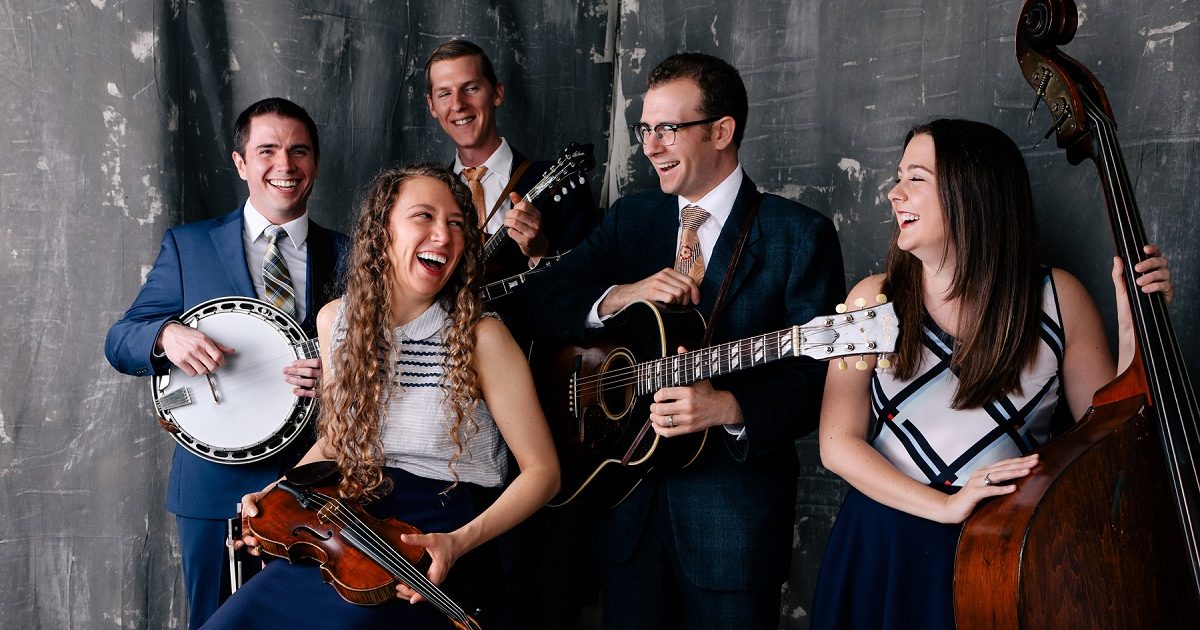
While High Fidelity is known for representing a specific niche in the bluegrass music landscape from the 1950s and early ‘60s, each member brings a diverse palate of musical tastes and styles. This playlist is a fine example of some of the diverse listening one might hear on our travels. Some of us remember making mixtapes of our favorite songs and tunes in the days of the cassette. Well, our van still has a cassette player in it! I hope you’ll enjoy listening to some of the music that inspires us, and maybe I should run off a tape of this for our next trip! — Jeremy Stephens, High Fidelity

Flatt & Scruggs – “Earl’s Breakdown”

This is probably the first song that really lit a fire under me to love and play bluegrass music. I first heard it on a red 8-track tape. I was absolutely drawn to Earl’s banjo playing and the famous section of the song where he tunes the second string down a whole step and then brings it right back up. Honestly though, the part of the tune that tore me up and still tears me up is Everett Lilly’s mandolin break. When I first heard that break, I thought it was the most incredible thing ever. Still is the best 15 seconds of mandolin playing on record. — Kurt Stephenson

Don Reno – “Coffee Cup”

I love “Coffee Cup,” because it showcases Don Reno’s banjo playing and creativity to the max. Though Reno didn’t write the song, he had a masterful arrangement of it. I believe it demonstrates nearly every signature technique that is unique to Don Reno. Each solo (they’re all banjo solos) is an adventure, and a fun one at that! — KS

Lonesome River Band – “Say I Do”

I always credit Lonesome River Band with sparking my interest in contemporary bluegrass sounds. My first LRB album was One Step Forward and my favorite song on the album is “Say I Do.” I love the groove, the harmonies, the chord structure, and especially the musical groove. Kenny Smith plays an incredible and beautiful guitar solo, which is followed by a banjo solo from Sammy Shelor. That particular banjo solo taught me so much about dynamics; especially in regards to coming out of a solo and leading in to the vocal. — KS

Reno & Smiley – “Country Boy Rock ‘N Roll”

I’m a country boy and I like to rock and roll, so this song fits. I remember picking up the album that included this song at a flea market when I was about 12 or 13, and it was my very first introduction to Reno & Smiley. — Daniel Amick

Tim O’Brien – “Wind”

I like this song because it’s a good song. It speaks to my soul. We have wind at my house. — DA

Punch Brothers – “Boll Weevil”

As a farmer sometimes I deal with crop failure, bugs, and drought. The goal is of course to problem solve and see beyond the failures to the success just on the other side, but seeing this as a story from the bug’s perspective is pretty interesting. — DA

Jim & Jesse – “Did You Ever Go Sailing”

The In the Tradition album by Jim & Jesse is the first album I remember consciously listening to, the first instance I remember understanding what an album was and what it meant to be an artist. When I would go to 3-year-old preschool, I listened to this on cassette continually and just wore the tape out. My first favorite song was this one. I still love everything about that album and this song! Glen Duncan’s fiddling, Allen Shelton’s banjo playing, and of course Jesse’s mandolin playing are just the cream of the crop, with the added bonus of Roy Huskey Jr. on upright bass. Jim is featured here singing lead on the verses and jumping to harmony on the choruses, making for an all-around awesome arrangement! — Corrina Rose Logston

Red Smiley & the Bluegrass Cut-Ups – “It’s Raining Here This Morning”

Tater Tate’s fiddling has been a huge influence on me, and it’s something I go back to over and over again for inspiration. This particular cut features Tater front and center just wearing it out! I love a song in the key of F like this, and this cut is just exceptional. Red Smiley’s flawless lead singing is like golden drops of honey. Billy Edwards’s playing out of open F on the banjo is the epitome of my happy place. It just doesn’t get much better than this for me! — CRL

Sarah Siskind – “Lone Tree”

It might surprise fans of High Fidelity that most of my “newer” music listening is outside the realm of traditional bluegrass. In fact, outside of the High Fidelity setting, my own solo artistry and songwriting is like a musical amalgam drawn from many diverse sources throughout my life. I love Sarah Siskind’s artistry and draw so much inspiration from her music. It’s hard to pick favorites but this particular song is pretty high up on the list for me! And, fun fact, Jeremy Stephens was staying with Sarah’s mom and dad the year that Jeremy and I met each other at SPBGMA in 2009! — CRL

Homer & Jethro – “Tennessee, Tennessee”

I knew I wanted to include a Homer & Jethro number, but I didn’t know just which one. I’ve always admired their ability to integrate belly laugh-inducing lyrics to some serious mandolin precision. “Tennessee, Tennessee” is one that I’ve always wanted me and Corrina to cover. That last verse makes me lol every time. — Vickie Vaughn

Tim O’Brien & Darrell Scott – “Walk Beside Me”

This is the opening song to my desert island record. I just need one and this record, Real Time, is IT. That GROOVE, though. I’ve listened to this song at least a hundred times and the repeating mandolin hook paired with the mandola toward the end of it makes me feel like I. CAN. DO. ANYTHING. Thanks for that confidence, Tim & Darrell. — VV

Jim Oblon (with Larry Goldings & Jim Keltner) – “Copperhead”

I’ve known Jim for a while. I met him here in Nashville before I even knew what he was musically capable of. Friends later told me that he was Paul Simon’s drummer. Now we’re old friends and I try to be cool when I see him now and again at the gym and I try to refrain from nerding out over yet another musical discovery I had while listening to his records. Get a load of this RIFF on “Copperhead.” Not showcased on this recording is Jim’s incredible vocal prowess. Make sure you take time to find a song of his to hear that. You’re welcome. — VV

Kilby Snow – “Close By”

I’ve loved the autoharp since my Mamaw got me one for my sixth birthday from the secondhand store she worked at. I didn’t start playing it seriously until I saw my banjo mentor, Troy Brammer, playing autoharp when I was in my early teens. I’ve gone quite a few years without playing it seriously, but since we’ve all been shut in at home, I’ve been playing autoharp almost exclusively around the house for a couple months now. My favorite of all the autoharp players is Kilby Snow from Grayson County, Virginia. He played autoharp left-handed upside down, and did these open-bar “drag” notes to make it sound like the roll on a five-string banjo. This is a great Bill Monroe number played by Kilby on the harp, and it’s one I’ve found myself playing quite a bit lately. I learned to play his style right handed from his son Jim when I visited him in Oxford, Pennsylvania, in 2006. — JS

United Sacred Harp Convention – “Sherburne 186”

I first heard sacred harp shape-note singing on a 78 RPM record at Kinney Rorrer’s home. Kinney is a serious record collector and has been a mentor to me in the history of old time music. After first hearing the singing on that 78, I was hooked, and I couldn’t get enough of Sacred Harp. I learned to read and sing the shape notes and listened to many recordings of Sacred Harp conventions. Of all my listening, this recording of this tune has stood out to me, and I wanted to include it here. Hope y’all like it! — JS

Reno & Smiley and the Tennessee Cut-Ups – “Mountain Church”

There is no set of recordings that I have returned to over and over for more than 20 years, except for Reno & Smiley’s 1953 and early 1954 recordings. The tone, feel, playing, and singing of these 24 sides sum up everything that I really love about Reno & Smiley’s corner of bluegrass music. This era of their work has greatly informed what I bring to the table stylistically with High Fidelity. “Mountain Church” is one of my favorites of Reno & Smiley and we perform it occasionally in High Fidelity. — JS


Photo credit: Amy Richmond

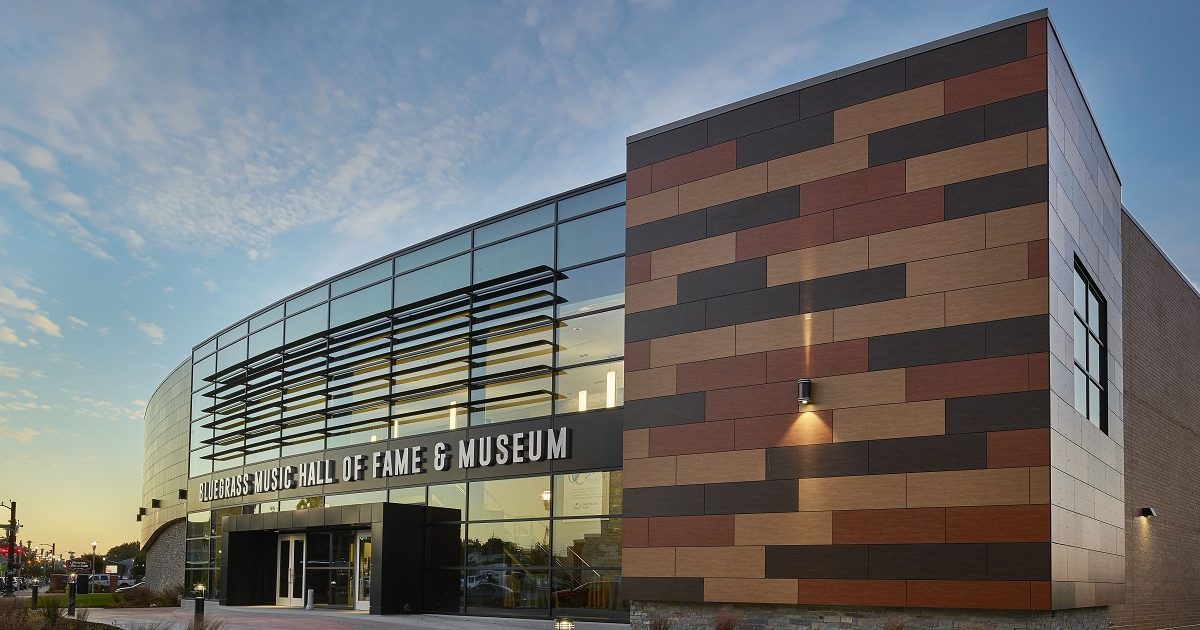
Bluegrass Music Hall of Fame & Museum: Take a Virtual Tour With New Videos

A visit to the Bluegrass Music Hall of Fame & Museum will enlighten and entertain any fan of acoustic music. While a road trip to Owensboro, Kentucky, will inevitably have to wait, you can enjoy these new videos with museum executive director Chris Joslin, who gives a close-up look at the history of bluegrass, as well as insight about what you’ve gotta have to play bluegrass.

From the early sources to contemporary interpretations, the museum exhibits tell the story of bluegrass music via documentary-style films, artifacts, images, and hands-on experiences with bluegrass instruments. Joslin takes virtual visitors through each area commenting on the exhibits and concluding each area with a live performance of a song that was significant to that specific era.

“Until you can travel to the Bluegrass Music Hall of Fame & Museum, we will bring it to you,” Joslin says. “The virtual tour is a great introduction, but I can’t wait for you to see the Hall of Fame in person and to experience the energy around the music firsthand. What Bill Monroe created is now enjoyed around the world, and Owensboro, Kentucky, is at the headwaters of this uniquely American genre of music.”

Curious about how bluegrass got its name? Wondering why bluegrass festivals became popular? Take a look and learn more about Bill Monroe, Flatt & Scruggs, and so many others, with this guided tour through the Bluegrass Music Hall of Fame & Museum.

Introduction & The Sources of Bluegrass Music


Dawn of the Bluegrass Era


Bluegrass Gets a Name


The Festival Era


Modern Era


Woodward Theatre & Audio/Video Production


Oral History & Hall of Fame Exhibit

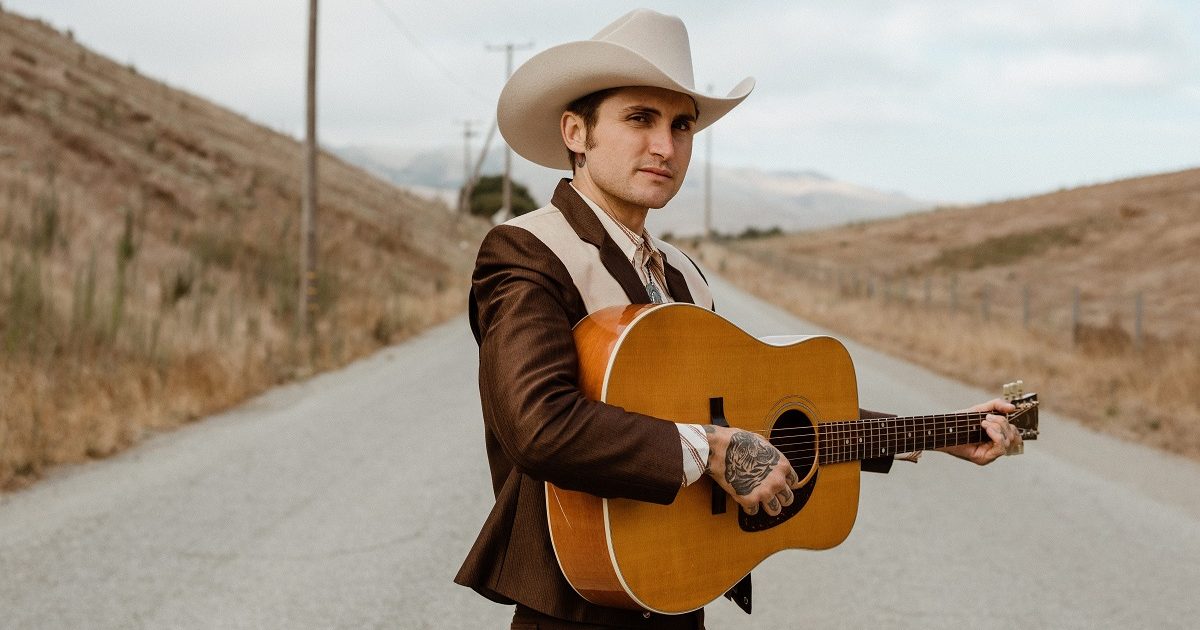
Jesse Daniel: ‘Rollin’ On’ After Rocky Times

To quote the title of his new album, Jesse Daniel is indeed rollin’ on, moving past the setbacks of his past and now celebrating three years sober. One thing that hasn’t changed? His dedication to classic country music. With its echoes of Buck Owens, Ray Price, and other legends of the ‘50s, Rollin’ On simply extends the traditional country sound Daniel explored on his self-titled debut album in 2018. He recorded it in San Antonio with producer Tommy Detamore.

“I’ve been telling people that the record I did before was songs that I had written over a period of years that dealt with a lot of past stuff,” he says. “This one has some of that, but it’s a lot more about moving forward, and to me, even physically driving, moving forward. It’s symbolic of that. I think it naturally fell into place with the theme of this record.”

That drive is evident in “Tar Snakes,” “The Mayo and the Mustard,” and the rousing title track. He knows something about mileage, too. Raised in a rural mountain town near Santa Cruz, California, and now living in Austin, Texas, Daniel caught up with BGS during a tour stop in Nashville.

BGS: I hear a positive attitude coming through several of these songs, like “If You Ain’t Happy Now (You Never Will Be)” as an example. Do you consider yourself an optimist, or in a pretty good place these days?

JD: Yeah, definitely. I’ve been a pessimist before in my life. I know what that’s like, but at this point, yeah, I definitely consider myself an optimist. And that song, it’s funny, the title of the song might seem almost like a slam on someone or something. When you listen to the lyrics, I wrote that song as a reminder to myself. You could have everything in the world and still be miserable if you’re not focusing on the here and now and what matters.

At what point did you begin to write songs?

I’ve been writing songs and short stories since I was a young kid in elementary school, and I would always write wild stories. You know, I had a crazy imagination as a kid, and then I got into punk rock when I was in my teen years. And country songwriting and writing in this style started as a cathartic thing because I always loved country music, but it naturally progressed.

How do you progress from punk to country? How did that happen?

I’ve seen there’s a common thread. I’ve talked to a lot of other musicians who play country music now that were into punk rock, and I think that there’s something about the spirit of it that was similar, that called me to it. …For me, I was introduced when I was really young to Buck Owens and Hank Williams and guys like that, and I always loved that music. There’s a lot of older punk rock guys that I knew that were listening to Black Flag and things like that. But they were also listening to old Hank Williams records. I got influenced by that. To me, it was almost the turning point, a maturity thing. I didn’t feel quite as angry, and even if I was, I wanted to do something constructive about it. And that, to me, was a more constructive form of expression.

Do you remember when you wrote your first country song you liked?

Mm-hmm [Affirmative]. I had been writing for a while and none of them really got completely finished. They were all ideas and things that turned into other things later on. But the first one that I finished that I remember liking was a song called “Don’t Push Your Luck.” I wrote that in a hospital bed in a rehabilitation center in Oakland, California. I was going through a lot of rough times in my life, and that was the head of everything where I decided to really start pouring myself into that. That was the first country song I was ever really proud of.

Was there a turning point where you got healthy or decided to take care of yourself?

Definitely, yeah. There was a guy who was in that program, and he worked there, and he’d come in and play guitar for us. I was sick for about a week detoxing, and I would hear him playing guitar in the other room. He’d come in playing Hank Williams songs and Emmylou Harris and all kinds of classic country songs. I went in and talked to him when I started feeling good enough to get up and walk around. I remember I said, “Man, I want to play music like you someday and do what you’re doing and play country music.” And he was like, “Why don’t you?” And he said it matter-of-fact, just like that. It really stuck with me and I always looked at that as a big turning point when he said that.

So I was sitting at a diner in Austin the other day, and I see this guy walk by, and I knew it was that guy, looked just like him. So I chased him down the street and it turned out that was the guy who told me that. He lives in Austin now, and I told him, “You changed my life, man. You really set this whole thing that I’m doing in motion.” And he is actually a musician and he’s going to sit in with us, hopefully, coming up at a couple of our shows. Pretty crazy twist of fate.

The musicianship on this record is really good. You and Tommy must’ve gotten along pretty well. What do you like about working with somebody a few generations older than you?

I’ve always had an affinity for older people and picking people’s brains, and I figured that it’s life experience. There’s something I can usually learn from those people, and with Tommy, that was definitely the case. He was full of stories and wisdom and experience. So yeah, working with him, with his age and experience, was awesome. Not to say that somebody younger wouldn’t have been great, too. My partner Jodi always jokes around that I will go someplace, and I’ll find the nearest 89-year-old person, and I’ll latch onto them. We’ll be hanging out and catching up.

Are you a bluegrass fan?

Yeah, I love bluegrass.

Tell me about how you discovered bluegrass music.

Oh, man. Actually there’s a lot of bluegrass where I grew up, up in the mountains and stuff, and there’s tons of players. But I first got my hands on a bluegrass compilation from a teacher I had, and she had a bunch of burned CDs. And one of them was a bluegrass mix. I remember she put it on one day, and my ears perked up. I was like, “I love that.” And it was Flatt & Scruggs, or something like that. I ended up borrowing it from her and taking it home and listening to it. I didn’t even know who all the artists were, but that was my intro to bluegrass. And then, over the years, I got exposed to it a lot growing up there.

How did you learn about who the artists were? Did you just start buying records?

Yeah, exactly. Buying records and finding records. I used to shop in the bargain bins a lot, and they had a bargain bluegrass section and country section at the local record shop. So I’d find a lot of stuff there. A lot of the guys that I’ve had in my bands over the years have also been bluegrass players. They’ve introduced me to a lot of that stuff. There’s also a really big old-time scene in Santa Cruz, so there’s an overlap with the old-time and bluegrass.

“Son of the San Lorenzo” is a neat way to close the record. It seems like a very personal song. What was on your mind when you were writing that?

“Son of the San Lorenzo” was really autobiographical. More than any of the other ones on the record, I think that is the most about myself and where I grew up in the San Lorenzo Valley. I didn’t mention it in the song outright, but I’ve had a lot of friends that I grew up with from that area pass away in the last four or five years. There’s a whole lot of drugs in that area, and that song was about leaving that area and leaving not those people, but those issues and past things behind. I’m glad that was the last one on the record, too. That’s why we put it there. It’s like a cathartic, moving forward type of thing.


Photo credit: Molly Gisholm

Junior Sisk Hitches His Wagon to the Stars of Traditional Bluegrass

Junior Sisk is on a mission. Although he’s been a fan of traditional bluegrass since childhood, he’s now fully focused on keeping that history alive. That passion for tradition is evident in Load the Wagon, the award-winning vocalist’s first release since disbanding Ramblers Choice.

“The Stanley Brothers, Flatt & Scruggs, Jim & Jesse, and all of them had big hits, but they also had hidden treasures on all those LPs. A lot of them that were never played and they’re not a jam tune. That’s what I’m looking for,” Sisk says. “It’s going to be like new tunes to a lot of folks. That’s what I’m after – to still pay tribute to the founding fathers of traditional bluegrass music, but in the Junior Sisk style.”

The Virginia musician’s recovery mission has unearthed a number of gems on Load the Wagon, like Flatt & Scruggs’ little-known “Lonesome and Blue” and the heartfelt “Lover’s Farewell,” a Carter Family gem suggested by his new bandmates Heather Berry-Mabe (guitar, vocals) and Tony Mabe (banjo, guitar, vocals). Jonathan Dillon (his mandolin player from Ramblers Choice), Gary Creed (bass, vocals), and Douglas Bartlett (fiddle, vocals) round out the lineup.

Sisk also re-cut the song that remains his most requested number, “He Died a Rounder at 21,” from his time with Wyatt Rice & Santa Cruz in the mid-‘90s. Leading up to a show at Station Inn, he invited BGS on the bus for a chat.

BGS: The first song on this album, “Get in Line, Buddy,” will be a familiar tune for fans of the Country Gentlemen. What made you want to record it here?

Sisk: Me and Bill Yates got to be good friends there for a long time right toward the end, and every time we’d play together at a festival, I’d always get together with him and ask him to do “Living on the Hallelujah Side” that he’d done with the Country Gentlemen, and this one right here — “Get in Line, Buddy.” Those are a couple that he sang solo on. It was just great, great singing.

It’s like what I’m trying to do right now. I’m in line with Flatt & Scruggs, the Stanley Brothers, and all that. I’m way down the line, but I’m in line anyway. And it still rings true today when you come to Nashville. When you walk the streets, you see them on the streets. You see them in all the clubs and everything. Everyone’s standing in line. I feel like I’m still standing in line for traditional bluegrass music.

With “Get in Line, Buddy” and “Best Female Actress,” there’s a sad story there, but you find a way to put humor into those songs. It’s not an easy thing to pull off. How do you approach that?

Well, when I go into the studio and start to record, I’ve always done a lot of tongue-in-cheek songs. I’m noted for that, but I sing with a lot of emotion. I sing with a lot of feelings. That’s why a lot of times I’ll lose my voice, to tell you the truth, because I’m singing so hard and with as much feeling as I can.

I love to look out in the crowd and see them either crying, if I’m singing a pitiful song, and if I’m singing a tongue-in-cheek song, I like to see them laugh and carry on. It just makes for a good show, I think. And Charlie Moore has been one of my favorites. He’s one of the most underrated bluegrass artists ever. He’s a great singer.

You also have some songs on here, like “Just Load the Wagon,” which are plain-and-simple funny. I’m curious, where did you get your sense of humor? Was there someone in your family where you picked that up?

Yeah, my dad. He’s a songwriter. He’s probably got a thousand songs at the house for me to choose from. But every song he writes, at the top of the page he writes the date he wrote it, and he writes, “Sing in the key of D and sing like Carter Stanley.” [Laughs] I said, “Dad, you can’t sing ‘em all like Carter Stanley and they can’t all be in D!” But if he had his druthers, that’s what it would be. That’s pretty much me, too. I was raised, born and bred, on the Stanley Brothers’ music.

This one here, I thought the folks would really enjoy, and now that I’ve gotten rid of the Rambler’s Choice name and went to the Junior Sisk Band, I’m trying to pay tribute to traditional bluegrass music, so we brought back the old-style banjo, the mountain-style banjo-playing with the clawhammer on this one. And it’s turning out to be one of my favorite tunes that we’re playing now. It’s a lot of fun and the crowd can react to it. It’s a toe-tapping tune.

You mentioned that the Ramblers Choice name is gone. Why was that an important move for you to shift to Junior Sisk Band?

Well, Jason Davis, Kameron Keller, and a couple of guys left. My dad always says when wintertime comes around and things start getting slow, somebody blows a whistle and everybody switches. It’s pretty much like that. If you don’t have any work, I’m going where the work is. But I was actually straying away from my heart – I was straying away from traditional bluegrass music a little bit. I just did not want to do that. I finally came to the conclusion that what I’m going to do until the end of my career is pay tribute to traditional bluegrass music, and try to keep it alive as long as I can. That’s what we’re trying to do today, is keep it straight-ahead bluegrass, right in the middle of the road, and turn the younger fans onto traditional bluegrass music.

Why is it important for you to carry that torch for traditional bluegrass?

I’m just tickled to death to see the young’uns out here today that come to our shows, or to see them out jamming at festivals and playing the old-style music. You don’t see that a lot anymore. It seems that the younger generations is trying to play every note they know. …When I hear somebody with real emotion, and real feeling, who’s a traditional young’un coming up, I love it. Because we’ve lost so many — Ralph Stanley, James King, and a lot of traditional artists here lately. I think I’m a torch holder and that’s what I hope to be until the end of my career. As long as I’m able to breathe and sing, I’m going to keep their music alive.

It hurt to lose James King, didn’t it?

Oh, it was hard. I was there holding his hand on the day he died, in the hospital. I was on one side and Dudley Connell was on the other. And we told him we would keep his music alive. I’m getting chills now, but it meant the world to me, just to be there. He was a torch holder as well.

You re-recorded “He Died a Rounder at 21” from your days with Wyatt Rice & Santa Cruz. What’s it like to sing about that guy now, 24 years later? Does it bring out a different emotion in the song for you?

It’s still the same. The story in that song is awesome. I’ve grown up with a lot of folks in the bluegrass industry and I’ve seen a lot of ‘em pass away from alcoholism and just the hard life, the bluegrass life. People around home say, “Wow, you’ve got it made. You go on stage and play 45 minutes…” They don’t know about the 15 hours you travel to get there. It’s a hard life. You don’t eat right. You don’t take care of yourself. And I can understand where this guy came from. He only lived 21 years – but 21 years was like a thousand years in his time. I understand that, and that’s why I put everything I got in that song. Because it rings true.

Was there a pivotal moment for you when you decided to go into bluegrass full-time?

In my early teens, I lived and breathed it. I sat at the end of the bed in my mom and dad’s room with an old LP player and played Dave Evans, Larry Sparks, the Stanley Brothers, just trying to learn everything George Shuffler ever did on guitar. I was in it hot and heavy, and eat up with it.

In the early ‘80s, I moved up around the DC area and that’s when the Johnson Mountain Boys came on the scene. I followed them everywhere they went. They brought me back to life, and still today if I get to feeling sad, or get down about the music, I can put a Johnson Mountain Boys DVD in, and it will bring me right back. There was so much excitement and energy, they just tore me all to pieces. That’s what it’s all about.


Photo credit: Susie Neel

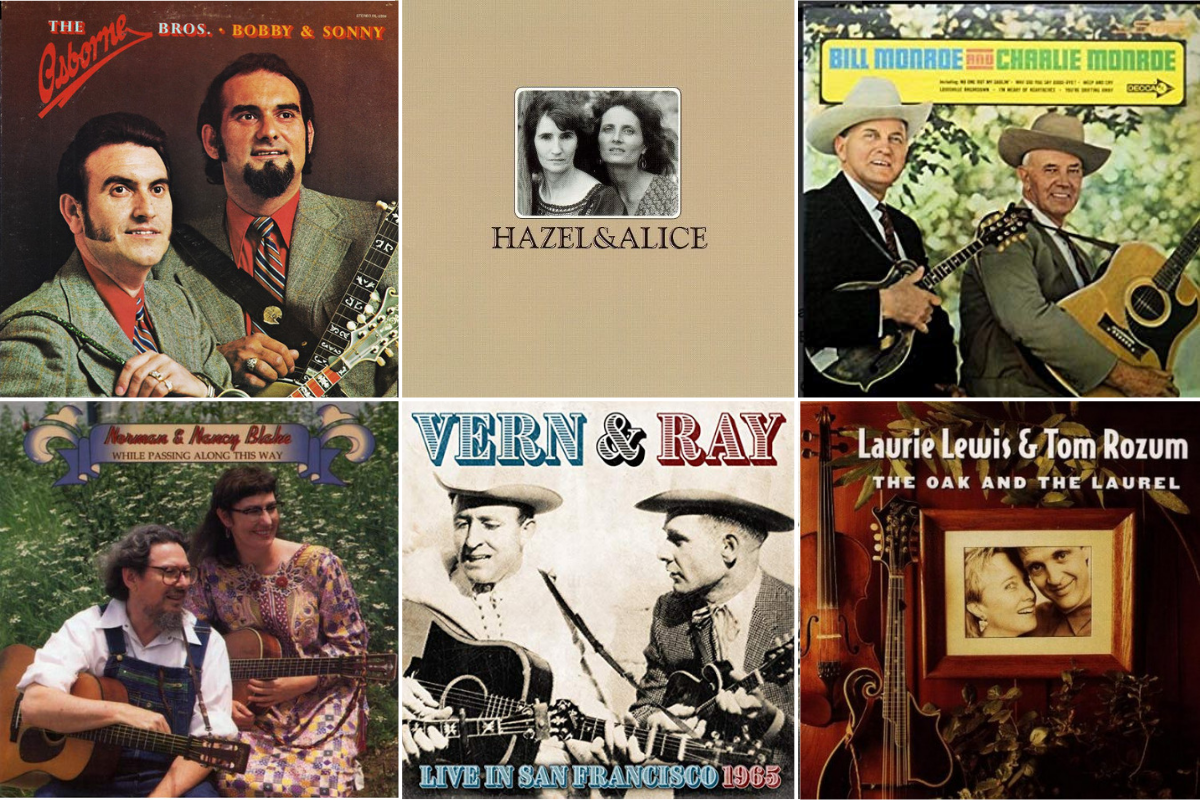
22 Top Bluegrass Duos

Everyone knows that in the early days of bluegrass, before that term was even coined, all you needed to make a “band” was two people and two instruments. Fiddle and banjo? Sure. But in those days, they’d take whatever they could get. Duos are still a strong presence in the music today, in brother/sibling duos, spouse-led bands, and legendary collaborations.

Check out these twenty-two bluegrass pairings — and their accoutrement — on BGS:

Bill & Charlie Monroe

Before Bill Monroe, the Father of Bluegrass, made his indelible mark on the genre (quite literally giving it its name), he was already a popular performer with his brothers Charlie and Birch. Birch left The Monroe Brothers in the mid-1930s, and Charlie and Bill went on to enjoy success on the road, in the studio, and on the radio — until rising tensions and a fateful fight in 1938 caused them to split ways. But, without that fight, we may not have “bluegrass” at all.

Flatt & Scruggs

December 1945. The Ryman Auditorium. Nashville, Tennessee. Bill Monroe and his Blue Grass Boys stepped on stage for the Grand Ole Opry with Lester Flatt and Earl Scruggs among their ranks for the very first time and bluegrass as we know it today was born. Flatt & Scruggs left Monroe in 1948 to join forces and went on to become one of the few ubiquitous, household names of bluegrass.

Hazel Dickens & Alice Gerrard

Undeniably trailblazers, Hazel Dickens & Alice Gerrard are widely regarded as the first women in bluegrass to capture the “high lonesome” sound popularized by Monroe, the Stanley Brothers, and others. They toured across the U.S., often supporting causes that benefited forgotten, downtrodden people from all backgrounds and walks of life. They were inducted into the Bluegrass Music Hall of Fame in 2017.

The Stanley Brothers

Natives of the music-rich southwest corner of Virginia, Carter and Ralph Stanley were prolific recording artists and touring musicians in bluegrass’s first generation. Countless songs written and/or popularized by the Stanley Brothers and their backing band, the Clinch Mountain Boys, are staples of the genre today. Carter passed in 1966 and Ralph continued until his death in 2016 with the Clinch Mountain Boys — who still tour today with Ralph’s son, Ralph II.

Don Reno & Red Smiley

Unsung trailblazers of the first generation of bluegrass pickers, Reno & Smiley were tireless innovators with a jovial, sometimes silly flair to their songs and instrumental prowess. Their duets are simply some of the best in all of bluegrass. The duo performed together off and on from the early 1950s to the 1970s — but both passed away much too young, Smiley in 1972 at the age of 46 and Reno in 1984 at the age of 58. Reno’s frenetic, electric and pedal steel guitar-infused licks remain unmatched in banjo picking today.

Jim & Jesse McReynolds

With matching suits and impeccable pompadours brothers Jim and Jesse McReynolds often brought rockabilly, rock ‘n’ roll, mainstream country and pop sensibilities to their take on sibling harmonies and bluegrass brother duos. Jesse’s crosspicking on the mandolin was — and continues to be — absolutely astonishing. Jim passed in 2002, Jesse continues to perform on the Grand Ole Opry to this day. At the time of this writing, he is ninety years old.

Laurie Lewis & Tom Rozum

Laurie Lewis often takes top billing — as leader of the Right Hands and before that, the Bluegrass Pals, and others — but since 1986 her musical partner Tom Rozum has almost constantly been at her side on the mandolin and harmonies. Their duo recording, The Oak and the Laurel, was nominated for a Grammy in 1995. Here is the album’s title track:

Bill Monroe & Doc Watson

What is there to say? Two of the folks who paved the way for this genre, laying a foundation so strong and far-reaching that we still can’t fully comprehend its impact. Bill and Doc collaborated on more than one occasion and we, as fans and disciples, are lucky that so many of these moments are captured in recordings and videos.

Del McCoury & David “Dawg” Grisman

At face value, an unlikely combo, but their friendship goes back to the early 1960s and their musical endeavors together began soon after. As Del slowly but surely became a bastion for traditional bluegrass aesthetics applied broadly, Dawg embraced jammy, jazzy, new acoustic sounds that sometimes only register as bluegrass-adjacent because they come from the mandolin. Opposite sides of the same coin, their duet makes total sense while at the same time challenging everything we think we know about the music. In this clip, Dawg sings tenor to Del — not many would be brave enough to try!

Ricky Skaggs & Keith Whitley

They got their start together in the Clinch Mountain Boys with Ralph Stanley, making some of the best recordings in the history of the band’s many iterations. Before they both struck out on wildly successful, mainstream careers they recorded a seminal duo album together, Second Generation. It remains one of the most important albums in the bluegrass canon — especially as far as duos/duets go.

Norman & Nancy Blake

Norman is well known for his flatpicking prowess, which has graced recordings by John Hartford, Bob Dylan, the Nitty Gritty Dirt Band, and so many others. He and his wife, Nancy, were married in 1975 after having begun their musical forays together a year or so earlier. Nancy’s command of many instruments — cello, mandolin, and fiddle among them — balances neatly with Norman’s jaw-dropping, singular style on the flattop. Their inseparable harmonies and timeless repertoire are merely icing on the cake.

Jimmy Martin & Ralph Stanley

How their first album together, First Time Together (cough), is not more well-known is truly impossible to understand. The King of Bluegrass and the Man of Constant Sorrow twining their extraordinary voices must have been ordained by a higher power. It’s a good thing they answered the call. Be careful, Jimmy’s percussive G-runs feel like a slap in the face — in the best way.

Darrell Scott & Tim O’Brien

Their live albums together and their co-written masterpieces belong in every museum and shrine to roots music around the world. Both of these triple threat (Quadruple? Quintuple? When do we stop counting?) musicians are rampantly successful in their own right, but together they are simply transcendent. Their cut of “Brother Wind” deserves a listen right this instant and “House of Gold” gives you the harmony acrobatics gut punch you need every time. It was nearly impossible to choose just one, but here’s a hit that was recorded once by a little group called the Dixie Chicks.

Ricky Skaggs & Tony Rice

Again, words fail. Skaggs & Rice is a desert island record. Each and every time these two have graced a recording or a stage together, magic has been made, from their days with J.D. Crowe & the New South and on. We only wish that they could have done more together.

Vern & Ray

Vern Williams and Ray Park were California’s original bluegrass sons. Though they were both born and raised in Arkansas, they relocated to Stockton, California, as adults. They’re often credited with “introducing” bluegrass music to the West Coast. They disbanded in 1974 (both passed in the early 2000s), but their influence is palpable to this day, even if they’re sorely unheard of east of the Mississippi. This deserves correction! Immediately!

Eddie & Martha Adcock

Eddie is a pioneering banjo player who’s a veteran of both Bill Monroe’s Blue Grass Boys and The Country Gentlemen, two decidedly legendary and influential acts. His style is somewhat wacky, certainly singular, but effortlessly bluegrass and traditional as well. He married Martha in the late 1970s and the pair have toured prolifically as a duo. In 2008, Eddie underwent brain surgery to correct debilitating hand tremors. He was kept awake, playing the banjo during the procedure — and there is jaw-dropping film of this online!

Dailey & Vincent

When Dailey & Vincent burst onto the scene in the mid-aughts after both having notable careers as sidemen, the bluegrass community rejoiced at the reemergence of a wavering art form within the genre — traditional duo singing. However, Jamie and Darrin, whether they knew it at the time or not, had their sights set much higher. Now more of a full-blown stage show than a bluegrass band, their recordings and concerts are a high-energy, charismatic, and downright entertaining mix of classic country, Southern gospel, quartet singing, and yes, bluegrass.

Kenny & Amanda Smith

Husband and wife Kenny and Amanda first recorded together in 2001, going on to win IBMA’s Emerging Artist of the Year award two years later. They’ve now cut eight albums together, all clean, clear, crisp modern bluegrass that centers on Amanda’s impossibly bright vocals, which maintain a personal, country hue alongside Kenny’s fantastic flatpicking. SON!

Tom T. & Dixie Hall

Two of the most recent inductees into the Bluegrass Music Hall of Fame, Tom T. and Dixie Hall wrote hundreds and hundreds of songs cut by country, bluegrass, and Americana artists alike. Tom T.’s reputation and chart-topping originals tend to eclipse Dixie, but he is unyielding in his efforts to point that same spotlight at his beloved wife instead, who passed away in 2015. Though she never performed — definitely not to the extent that Tom T. did — the marks she left on bluegrass, country, and her partnership with her husband are indelible. This number was co-written by the pair:

The Louvin Brothers

Recipients of IBMA’s Distinguished Achievement Award in 1992, the Louvin Brothers are another example of early bluegrassers who enjoyed the amorphous, primordial days of the genre before it became more and more sequestered from mainstream country and country radio. Their duets are iconic, with counter-intuitive contours and lines that bands and singers still have difficulty replicating to this day. Their most famous contribution to the American music zeitgeist, though, might not be their music, but the spectacular cover art for their 1959 album, Satan Is Real. If you haven’t seen it, Google it right now.

Delia Bell & Bill Grant

Natives of Texas and Oklahoma, respectively, Delia Bell and Bill Grant met through Bell’s husband, Bobby, in the late 1950s. Between their band, the Kiamichi Mountain Boys, and their duo project they recorded more than a dozen albums together through the 1980s. Famously, Emmylou Harris became a fan when she heard their cut of “Roses in the Snow,” which Harris went on to record on her eponymous bluegrass record. Bell died in 2018.

The Osborne Brothers

Though they popularized a style of three-part harmony that had never been heard before — the infamous “high lead” harmony stack — their band, no matter who it may have included over the years, was undeniably helmed and anchored by Bobby and Sonny. (Which does explain the name.) You may remember “Rocky Top” and “Ruby” first and foremost in their discography, but the hits they’ve contributed to the bluegrass songbook are innumerable. Here’s one such classic.

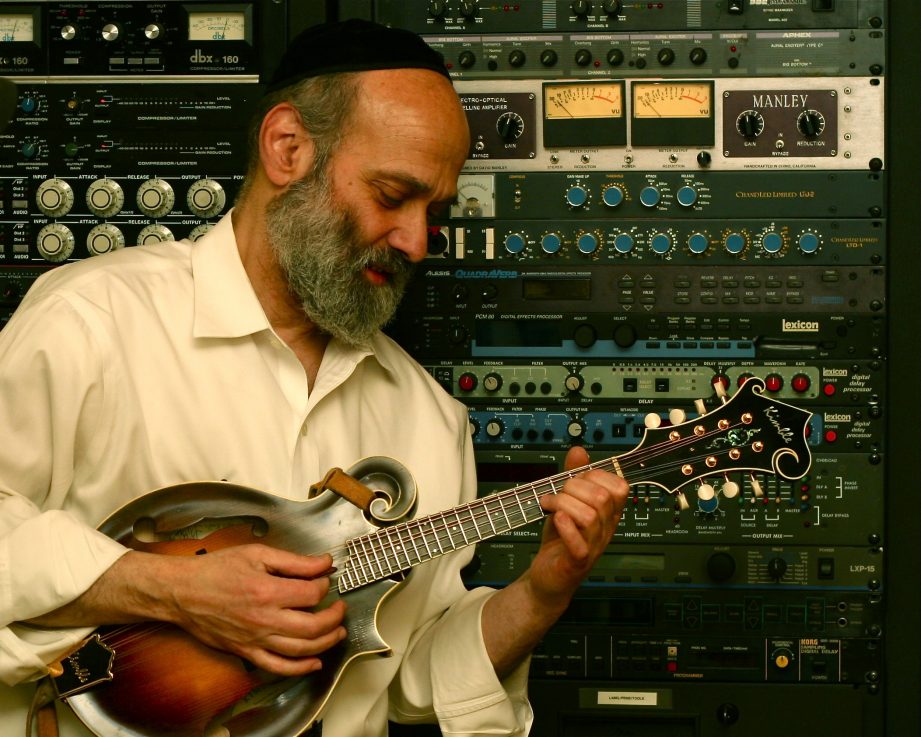
For Mandolinist Andy Statman, Music Is the Great Unifier

Mandolinist Andy Statman is quick to deny that his identity — he’s a devout modern Orthodox Jew — has anything to do with his music. “To tell you the truth,” he says, “it never entered the picture. I was just into the music…”

However, his latest album, Monroe Bus — an exploration of traditional mandolin techniques utilized in contexts as familiar as Bill Monroe standards and as far-reaching as klezmer and jazz-infused originals — belies that denial. And, as we converse about his history in music and the harlequin nature of the album it becomes obvious that his work isn’t devoid of his identity at all. In fact, the opposite is demonstrable.

Statman’s music is, of course, archetypically and idiosyncratically his own. He, as much or more so than any other mandolinist on the scene today, is truly original. He’s reached this destination not through purposeful attempts in his music to express his identity — religious, cultural, and otherwise. Instead he simply focuses on playing the most meaningful music he can, while remaining in the moment and establishing human connection with his fellow musicians. The rest, his whole identity, shines through his art organically and effortlessly as a result. Statman is a testament to roots music’s ability — whether consciously or subconsciously, overtly or covertly — to allow its purveyors’ souls to be the keystones on which entire albums, catalogs, and genres are built.

BGS: Your record strikes me as “melting pot” music. Whether you’re playing more jazzy music or bluegrass or klezmer, you’ve always considered your music to be quintessentially American. Why is that?

Statman: First of all, I’m an American, so the culture I grew up in was an American culture. I heard things through an American ear, I saw things from an American eye, and while there might be certain regional differences, all in all it’s all pretty much the same. I grew up right after World War II, my father was a veteran. I was born in 1950, so I grew up in the early 1950s in an area in Queens, New York called Jackson Heights. It was a diverse neighborhood. Everyone got along. Everyone grew up together. The other kids were just other kids, and it didn’t matter what their background was. The music played at this time was classical music, or jazz, or square dance music, or other stuff. As a kid we used to have square dances every week in public school. I remember every year we used to have a Lebanese American come and play songs for us. At that era you were able to sort of culturally imbue almost all of the last one hundred years of American culture. It was all there to be touched and heard and seen and lived. It was there, in the air, but it was America so it was live and let live.

What was your entry point to bluegrass, then?

My brother is about eight years older than me. He went to college in the ‘60s — 1960 I guess was his first year. He got very involved in listening to like the Kingston Trio, the Limeliters, the beginning of the folk revival. Then he started bringing home records of Dave Van Ronk, Bob Dylan, and Joan Baez. That wasn’t really so much for me, but then he started bringing home some New Lost City Ramblers records and this other record that Mike Seeger was involved in, Mountain Music Bluegrass Style, which basically was recordings of the incredible bluegrass scene in Baltimore, Maryand, and Washington D.C. in the late ‘50s and early ‘60s — people like Earl Taylor and Smiley Hobbs, just an amazing collection. I really gravitated to that. I remember for my birthday he got me Foggy Mountain Jamboree, a compilation of the early, classic Flatt & Scruggs Columbia 45s. He was also involved in what they used to call jug and skiffle bands and they used to rehearse at the house. He played guitar and sang and there was a banjo player in the band who played some bluegrass and I was just very excited by that whole thing. That just did it for me. All I wanted to do was play bluegrass.

What was it about the music that grabbed your ear?

On a very simple level, emotionally, I was excited and moved by the music. It really spoke to me. The singing, the harmonies, the instrumental playing. There was an excitement to it that I really liked. I was very moved by the slower, ballad types of things, also. I started listening on the AM radio to WWVA out of Wheeling, West Virginia, which was a bastion of country music back at that time. We had a guitar in the house, my brother’s guitar, so I started learning the Doc Williams guitar method, I learned some chords, but I really wanted to learn banjo. I finally was able to get a banjo and started taking lessons.

On Sundays back then in Washington Square Park people would go down and play outside in different groups. There’d be a group playing bluegrass, a group doing topical songs, a group doing blues, so I started meeting people doing bluegrass. On these records that I liked I was getting more and more moved by the mandolin playing — it was really exciting me. Earl Taylor’s playing and I think on the Scruggs records it was Everett Lilly playing one or two solos that were just like, wow. I was getting chills from hearing this stuff. I decided I would make the switch and become a mandolinist. I had already been playing banjo and guitar for a few years. I was still in my early teens, so when I stepped into the mandolin role I already had some muscles developed and some understanding of the music.

The record, Monroe Bus, really clearly illustrates the value and the beauty that comes from allowing our musical art forms to reflect our identities. How do you think we can help foster the idea that any background or identity is valid and can be showcased through these art forms?

You know, I don’t think that way. Forgive me. I’m just into playing music, playing the best music that I can, and I’ve been fortunate that I’ve been able to study with a lot of musicians of different cultures and different backgrounds, both playing American music and music that maybe isn’t played here so much. To me, it’s all about the music. When I’m playing, I’m just playing. Identity or background is really meaningless to me. It was always like that, but at this point in my life even more so. When I’m playing I’m just looking to play the most meaningful music I can play. Those are my only real concerns.


Bill Monroe (foreground) and Andy Statman at Fincastle Bluegrass 1966. Photo by Fred Robbins

You are always blending different musical forms in these crazy, unexpected ways. How do you respond to folks that are worried that that dilutes bluegrass or that it will kill the genre in the long run? What’s your response to the typical, “That ain’t bluegrass” kind of gripe? Do you have one?

First of all, this is not a bluegrass record, obviously.

But there are undeniable bluegrass threads throughout.

Of course, but I’m not presenting myself as [pure bluegrass.] I spent a lot of time studying bluegrass, and there are always new insights and things to learn, but for me, the original blossoming of bluegrass is where it’s at, where it reached its fullest expression. If I’m going to listen to bluegrass, I’m probably going to listen to bluegrass from before 1970. Not to say that what came after is bad, this is just my preference. The feelings and creativity of that particular period, to me, are really unsurpassed. And while the technical level might have gotten better, this doesn’t necessarily make for a more meaningful, deeper music, it just makes for a more athletic music. [Laughs]

Listen, people have to be who they are. It’s just music. There are always going to be people who hear things differently, who want to add or subtract things, and if you don’t like it, then you don’t like it. I can see that there’s a strong core of people who are really interested in playing music in the mode of what was played in the ‘40s, ‘50s, and ‘60s. I think there isn’t any danger of that not continuing.

I do believe, though, that it’s important for musicians to really try and master a traditional style. Because, if you’re going to try to build on something, you really need to understand where it’s coming from, to be able to relate to that music on its own terms. Which is getting back to the roots of all this music and being able to speak that language naturally, in your own way and find your own voice in it. You’ll understand phrasing, variation, improvisation, how to play melodies, how to bring out what’s in the melody, how to play rhythm. Without that firm grounding in a particular style, particularly when we’re talking about folk music, it won’t click.

It’s interesting that you say that, because I think that a song that perfectly illustrates what you’re talking about on the record is “Raw Ride,” a sort of version of Bill Monroe’s “Rawhide.” I love this version because the song is so iconic, but you’re still turning it on its ear. You’re demonstrating that foundation that you’re talking about, but you’re finding your own voice in it. How did you come up with this arrangement?

Well, I’ve been playing the tune for years. “Rawhide” is one of those tunes that, if played in the traditional Monroe manner, requires a lot of energy. It’s always a question of is it worth the energy for the payoff? [Laughs] It usually is. There’s obvious extensions of the melody or the chords that you hear if you’ve been involved in playing other types of music. So I just sort of followed those. As with all of these things, it reflects who I am, my musical experiences, and my studies.

…When you’re writing music and playing music it really just reflects who you are and what your experiences are and how you live. It’s a reflection of that. That’s what Bill Monroe did. His music was a synthesis, an ongoing synthesis, and he developed a certain kind of aesthetic.

When I came out of the closet and was going through that process of coming to terms with my identity as a gay man, I had a moment where I doubted my place in bluegrass. I thought maybe bluegrass wasn’t the place for me, it wasn’t a place where I could belong. Did you ever feel like your Jewishness made you question your place in bluegrass?

Not really, no. To me, it was all about the music. All the musicians I know are wonderful, thoughtful, and kind people — in the bluegrass scene and in others as well. We’re all in this together and we all have a common passion for the music. It’s a uniting force. It has a real life of its own, and we’re just sort of passing through it, so to speak. If you’re worried about the thoughts or beliefs of the people you’re playing music with, then you can’t really be playing music. Music, in its essence, is the great unifier. It can unify people in terms of ideas and feelings and speak to the commonality of everyone. At that point, all of these other things melt away.

It really has to do with heart. It’s a spiritual thing. In Hasidic teachings they say that music, particularly instrumental music, can go higher than anything. A song without words isn’t even bound by the concepts of those words. In certain ways, it’s a universal heartbeat. You can see the tremendous life force that music carries. To me it’s something that’s very sacred.


Photo credit:Bradley Klein 

Joe Mullins & the Radio Ramblers Turn the Dial to Bluegrass Tradition

For the record, Joe Mullins is a cornerstone of the modern bluegrass community. He’s chairman of the International Bluegrass Music Association, as well as a radio station owner and an award-winning musician. Plus he’s just an easy guy to talk to. During a visit with the Bluegrass Situation, Mullins traced his decades-long career, from teenage gigs to For the Record, his latest album with the Radio Ramblers, featuring Jason Barie on fiddle, Mike Terry on mandolin and vocals, Duane Sparks on guitar and vocals, and Randy Barnes on upright bass and vocals.

BGS: Did you go into these latest sessions with a certain sound or musical direction in mind?

Mullins: We had three or four new songs that we wanted to do, and wanted to make those our own. I try to make certain that when we combine rare tunes that we want to cover with new songs, that we get the perfect balance of a variety of vocal and instrumental arrangements. I don’t like the same ol’, same ol’. We’re fortunate in the band to have so much vocal versatility. There are three of us that can sing any part, plus a bass singer if we want to do a quartet number. So, I make certain there’s a good balance vocal arrangements, keys, tempos, subject matter… If you listen to all 12 songs in a row, I don’t want you to get bored and go to sleep.

That’s harder than it sounds.

It is! Especially when you combine original material with some rare tunes that you want to cover, and that you want your audience to hear. I always find a few of those. We’re called the Radio Ramblers because I have been on radio and on stage since ’82. I was 16 the first time I played a major bluegrass event as a banjo player, the same year I started in broadcasting. So I’ve got a real deep well to draw from, everything from old-time stuff to contemporary country, classic country, Americana music, and everything bluegrass. On this new album, we’re covering a Johnny Cash/Hank Jr. tune (“That Old Wheel”), and doing new songs, and something from a hundred years ago, out of a hymnbook. So there’s a little bit of everything.

I’ve heard you talk before about the bluegrass history in Southwestern Ohio, and you made a reference to Sonny Osborne and J.D. Crowe as being mentors to you. What was that relationship like?

My dad was a broadcaster and a good bluegrass fiddle player. He was in and out of bands. He sat in with the Osborne Brothers a bunch when I was a kid. He sat in with J.D. Crowe when Doyle Lawson and J.D. had the Kentucky Mountain Boys going. He was on a ton of recording sessions in the ‘60s and ‘70s with a variety of bands. In Southwestern Ohio, the Cincinnati/Dayton region, it’s just thick with bluegrass history. Everybody from Flatt & Scruggs to the Stanley Brothers — they all recorded in this area at one time or another. Larry Sparks started here and grew up here.

The Osborne Brothers started here. Their parents had left Kentucky to get a job in Dayton, Ohio, when they were boys. Bobby and Sonny started their career right here in the same neighborhood where the Radio Ramblers started. They started in the late ‘40s, early ‘50s, and we started in the early 2000s. Matter of fact, Bobby started singing on the radio in Middletown, Ohio, in 1949 — the same station my dad started working at in 1964, and the same station I started working at in 1983. So there’s just a lot of connection there.

The Osborne Brothers and J.D. Crowe and Ralph Stanley and Don Reno — all these first-generation bluegrass leaders were all family friends. They were in and out of the house when I was a kid. My mom fixed breakfast or supper for everybody I just mentioned, multiple times. Dad sat in with them and played on Larry Sparks’ first record, and played on all kinds of recordings in the area. I saw these guys growing up a lot.

So when I decided to attempt the five-string banjo, I had seen J.D. Crowe and Sonny Osborne and Ralph Stanley in their prime, multiple times, and had all the recordings already in my bedroom. Then, when it came to me pretty naturally, and I had the opportunity to play and perform and record as a young guy, if I was having a struggle with something, I always had access to J.D. Crowe or Sonny Osborne or Don Reno or Ralph Stanley. “How do you do this?” “How do you that?” I got to see them often and I got some one-on-one time with all of them.

Did that strike you as amazing at the time? Or was it later in life that you realized how incredible that was?

Later in life I realized I am the most blessed guy in the world. The most fortunate cat, you know? To be 15 or 16 years old, trying to learn how to play banjo, and have access to these guys always – and get to be encouraged by them, and sing by them… Sonny especially, he would lecture about all kinds of stuff besides banjo playing. “Make sure you go to college! Quit smokin’!” That’s just who he is. We still talk often and I play one of his banjos on this record. He’s had custom banjos built and designed for many years and I’ve had one of them for the last six years.

I wanted to ask about your dad and touring with the Traditional Grass. Was he easy to travel with?

Not always. [Laughs] I often look back on the Traditional Grass – we had it going on in the late ‘80s and early ‘90s. We had a ball! We were on the road all the time and back then it was just wide open. Us, the Del McCoury Band, the Bluegrass Cardinals, the Lost & Found Band — and the first generation guys were still out there. We saw the Osborne Brothers, Ralph Stanley, and Jim & Jesse all the time.

I was real young and I look back on it now a ton, because Dad was my age then. He still was a pretty hard-charger. All the other guys in the band were young and it didn’t matter how late the show was, or how long the party went on, he hung in there with us. [Laughs] He wasn’t really hard to get along with. He just got tired and cantankerous sooner than all of us young cats did, I guess. But he didn’t worry about details. He worried the most about playing great music and having a good time.

In the ‘90s, you were pretty visible with Longview, too.

Very fortunate. Worked out great. Traditional Grass toured like crazy in the early ‘90s. We burned it up from ’89 to about ’95. I about burned myself out and burned myself up, just living hard on the road. I was very fortunate to have an opportunity to buy a local radio station here in this wonderfully historic bluegrass neighborhood in Southwestern Ohio.

The Longview thing was already in the works before I came off the road with the Traditional Grass. We started conversations around ’94. I was on the road with that band through the summer of ’95 and launched my first radio station as an owner in the summer of ’95. And Longview recorded first in December of ’95, so by the time the album came out, there was a good buzz with it and it was an immediate success. And we had to go out and tour part-time.

So I had just enough time to get my radio business started and established without a heavy tour schedule. And then I had this wonderful, high-profile gig as a special event recording band that also got to tour and play everything from MerleFest to Wintergrass, from Telluride to Myrtle Beach. We played everywhere as a special event band in the late ‘90s and it kept me from falling off the radar.

If you look back on the late ‘70s when you were developing, to now, where you’re thriving in a lot of different areas, so many things have changed in bluegrass. But what would you say has been a consistent thread from those days until now?

You’ve still got to be able to play in time and sing in tune. [Laughs] I don’t care how young or old you are! Some of the consistent threads are that there’s nothing to hide behind in bluegrass music. You still have to be able to cut the gig. You still have to be able to bring it. I’m still on stage every night with five guys who have to know exactly how to manhandle their instrument, and vocally, it’s all out there.

The simplicity of that part of it — for my band and the sound we look for — it hasn’t changed. It hasn’t changed from the original formula that Monroe and the Stanleys and the Osbornes and all of ‘em have put on stage since the ‘40s and the ‘50s. It’s still got to be players that are masters at the craft. It’s still a combination of art, entertainment, and blood, sweat and tears. That’s bluegrass.


Photo credit: Amanda Martin Photography