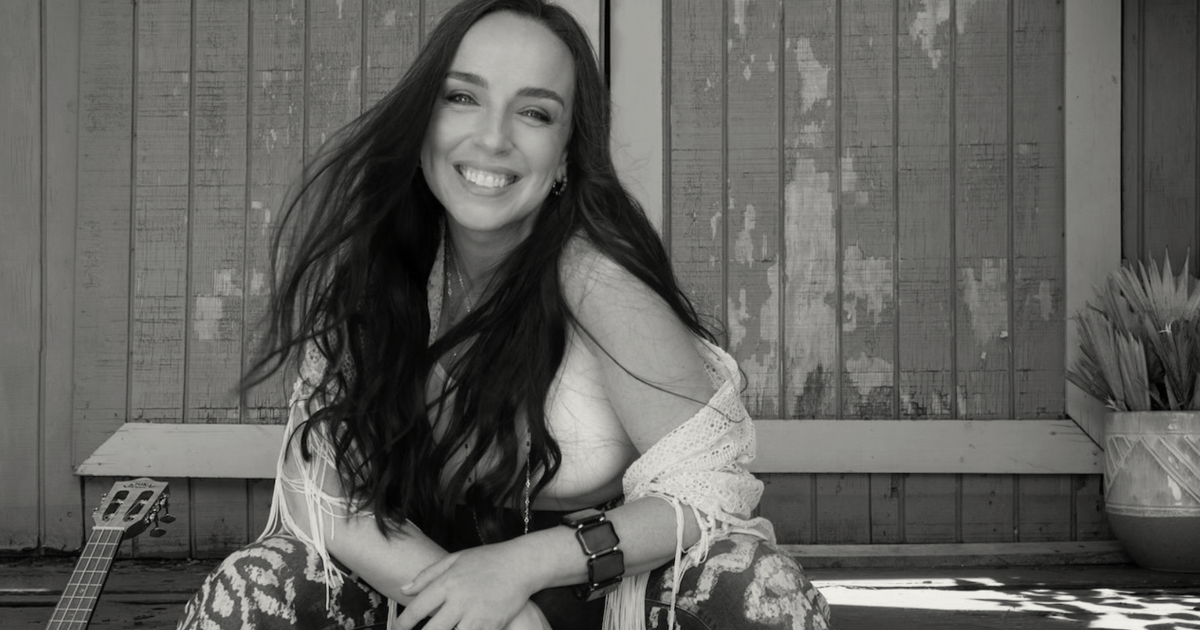
GC 5+5: Rebecca Lynn Howard

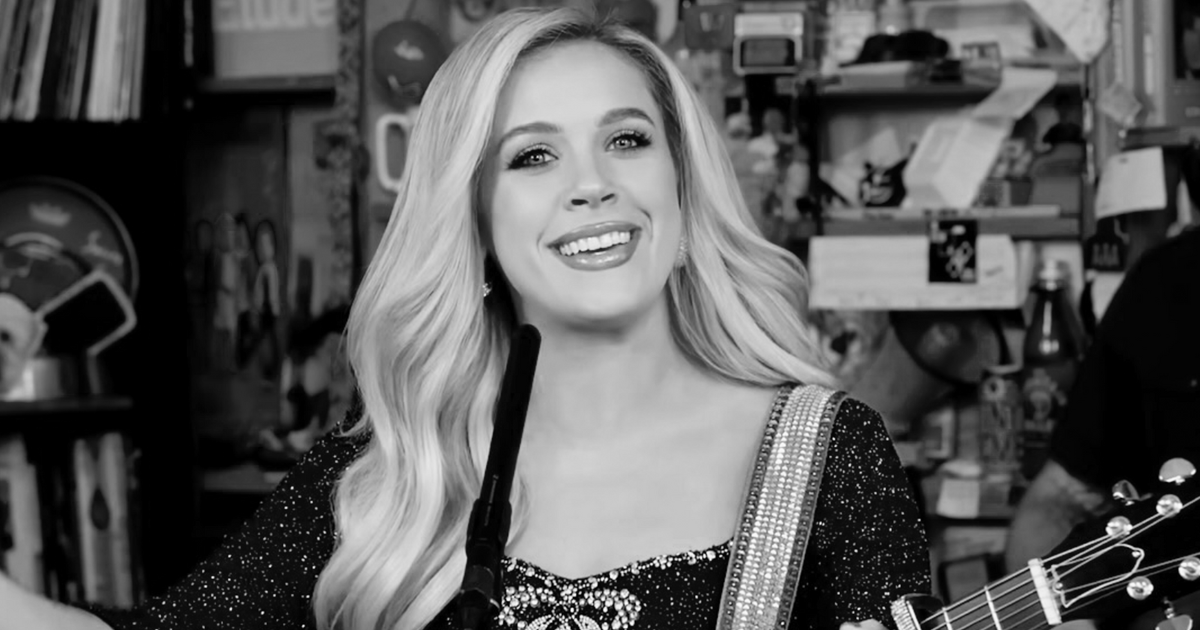
Artist: Rebecca Lynn Howard
Hometown: Salyersville, Kentucky
Latest Album: I’m Not Who You Think I Am (out May 2, 2025)
Personal Nicknames (or rejected band names): My family and friends call me Aunt B

What has been the best advice you’ve received in your career so far?

The best advice I’ve ever received is to tell the truth, no matter how hard, no matter how messy. People don’t connect with perfection, they connect with honesty. When I started writing from that place, everything changed. Music became more than just a craft. It became a way to heal, not just for me but for my fans too.

What’s the toughest time you ever had writing a song?

Honestly, the hardest songs to write are the ones I need to write the most. There was a time after my dad passed away when I couldn’t write at all. Every time I tried, it felt like I was staring into this giant void of grief and I didn’t have the words to make sense of it. Eventually, I stopped trying to force it and just let myself feel everything. When I finally sat down to write again, the song came out in one sitting. It was like the words had been there, waiting for me to be ready.

Which elements of nature do you spend the most time with and how do those impact your work?

Water, hands down! There’s something about being near water, whether it’s the ocean, a river, or even just a hard rain that takes away the noise in my head. It’s where I think the clearest and where my best lyrics come from. It helps me know that everything moves in seasons, especially the hard things.

If you were a color, what shade would you be – and why?

I’d be a deep blue… the kind that’s somewhere between dusk and the ocean just before a storm. That kind of blue is my favorite color cause it holds a lot of depth, beauty, a little bit of sadness, but also an understated kind of strength.

Since food and music go so well together, what is your dream pairing of a meal and a musician?

I’d love to sit down to a slow, home-cooked Southern meal. Something warm and comforting, like my mom’s homemade biscuits and honey butter, with a side of conversations about Jesus. And the perfect soundtrack? Probably someone like Johnny Cash or Brandi Carlile. Something raw – and real – and full of stories.


Photo Credit: Allister Ann

Opry 100: A Live Celebration

If you missed the Grand Ole Opry’s no-holds-barred 100th birthday party and live television broadcast extravaganza on NBC, we’ve got your recap right here on BGS.

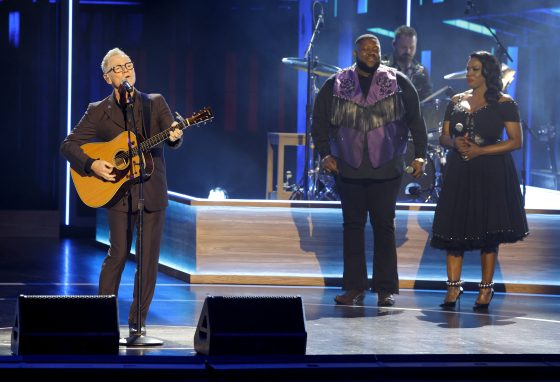
Hosted by Blake Shelton at the historic Grand Ole Opry House in Nashville, Tennessee, Opry 100 included performances by artists like Vince Gill, Alison Krauss & Union Station, Lainey Wilson, Brad Paisley, Ashley McBryde, Reba McEntire, Dierks Bentley, Garth Brooks, Trisha Yearwood, and many more. The primetime broadcast and streaming concert is just one event among an incredible, chocked-full effort by the Opry to celebrate their centennial – officially November 28, 2025 – throughout the entire calendar year.

Over the two-hour broadcast, there were dozens of show-stopping moments, from the brash, bold, and sensational to tender, intimate, and heart-wrenching performances. Good country of all varieties was on display from a wide array of artists at all levels of notoriety.

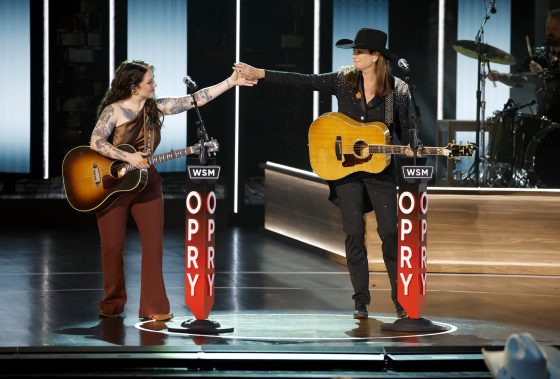
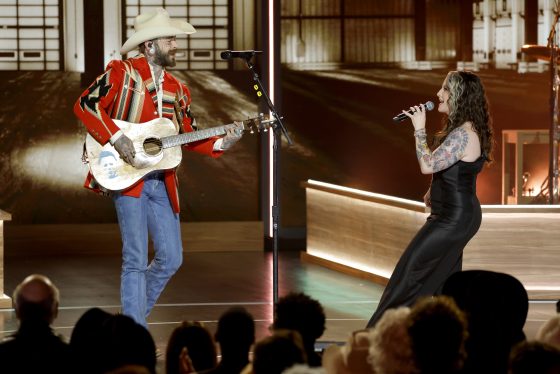
The War and Treaty sang alongside Steven Curtis Chapman and Amy Grant; Vince Gill reunited with his old pals Jeff Taylor and Ricky Skaggs; Ashley McBryde brought the house down alongside superstar country newcomer Post Malone and elsewhere in the show, ’90s stalwart Terri Clark; Lainey Wilson shared the stage with country picker and renaissance man Marty Stuart; husband-and-wife Trisha Yearwood and Garth Brooks were on hand; and Brad Paisley and Alison Krauss reunited for their 2003 smash hit duet, “Whiskey Lullaby.”

The show wrapped with a stunning full cast tribute to Dolly Parton, who greeted the Opry House audience via video and gave her sincere regrets for not being able to appear at the event. (Parton’s husband of 58 years, Carl Dean, recently passed away.) Dozens of the evening’s star artists took to the stage to pay tribute to Parton by singing her most famous hit, “I Will Always Love You,” a perfect, soaring sing along to close the momentous show.

There are truly too many once in a lifetime collaborations, songs, moments, and performances from Opry 100 to list, but we’ve collected a few of our favorite moments so you can relive this once-in-a-lifetime – or once-in-a-century – show! Get your fix by traveling through a few of our own favorite moments from Opry 100: A Live Celebration below.

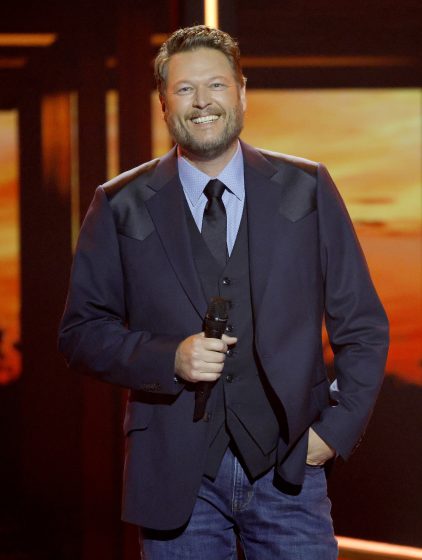
Blake Shelton Hosts

Country superstar, award winner, and television personality Blake Shelton was a more than qualified host for Opry 100: A Live Celebration. Of course, he also gave a rousing performance of Joe Diffie’s “Pickup Man” to the delight of everyone in the crowd who find somethin’ they like in a pickup man. It wouldn’t be a celebration of country or the Opry without a truck mention.


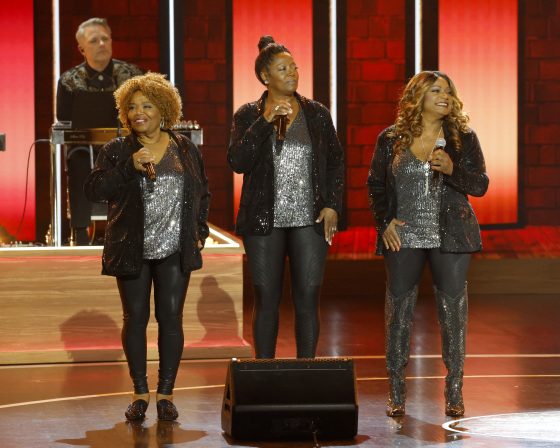
Nashville’s Own, the McCrary Sisters

Nashville’s favorite, in-demand singing siblings, the McCrary Sisters were on hand for Opry 100, too. It’s certainly not their first time on the hallowed Opry stage, but in the centennial context their appearance reminds of the legacies of similar groups who blazed trails at the Opry before them – like the Pointer Sisters – and those who’ve followed in their footsteps, like the Shindellas and Chapel Hart.


Steven Curtis Chapman and the War and Treaty Share a Sacred Moment

Grand Ole Opry member and contemporary Christian singer-songwriter Steven Curtis Chapman was joined by Americana/soul/country duo the War and Treaty for his performance on Opry 100.


Lainey Wilson and Hall of Famer Marty Stuart Duet

One of the biggest names in country at the moment, former GC and BGS

Artist of the Month Lainey Wilson was joined by bluegrasser, fiery picker, and Country Music Hall of Famer Marty Stuart backing her up on mandolin. They perform “Things a Man Oughta Know” from her huge 2021 album, Sayin’ What I’m Thinkin’, which many regard as her breakout release.


Ashley McBryde with Post Malone and Terri Clark

Ashley McBryde had multiple stellar moments during Opry 100, including these two prime duo performances. One with ’90s country star Terri Clark and another with a superstar newcomer to the genre, Post Malone. Her song selection with Postie was impeccable, too, taking the Opry 100 down to “Jackson” to mess around.


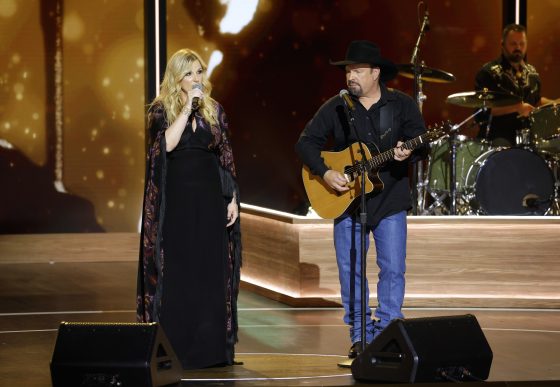
Trisha Yearwood with Garth Brooks and Reba McEntire

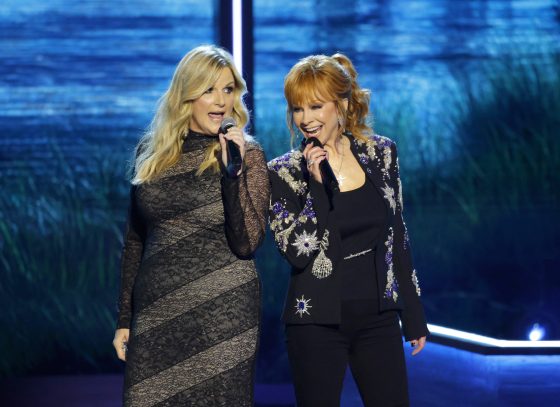
Country has boasted many amazing artist couples, but who better to take the Opry 100 stage than Trisha and Garth? Trisha also appeared with Reba McEntire to perform “The Night the Lights Went Out in Georgia,” a track that has been a huge generation-spanning hit for McEntire.


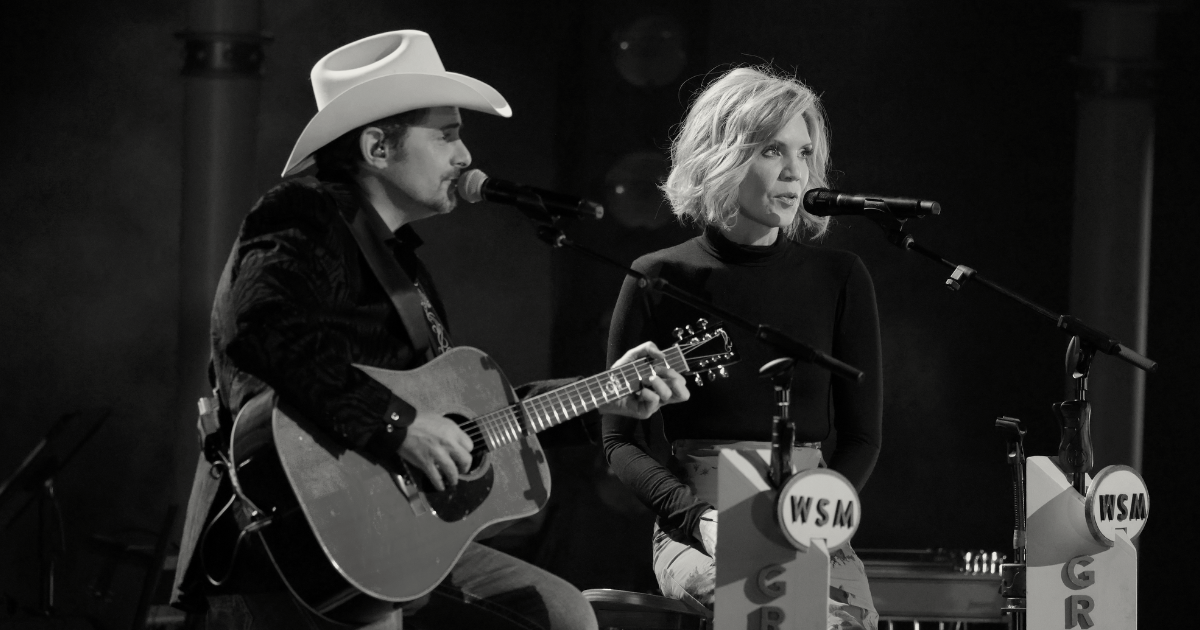
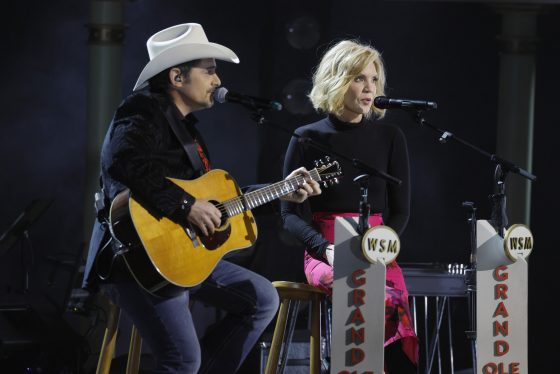
Brad Paisley and Alison Krauss Reunite

An iconoclastic example of a tear-jerker country story song, Paisley and Krauss’s recording of “Whiskey Lullaby” was released in the 2000s, but has had immense staying power. It shines from the Opry 100 stage in its simple and stripped-down styling. Is anyone a better duet partner and harmonizer than Alison Krauss? Perhaps not. Certainly a highlight among all of the many highlights of the broadcast


Alison Krauss & Union Station Perform, Too

On the precipice of their first album release in over 14 years, Alison Krauss also brought her band Union Station – including newest member,

Russell Moore – to the Opry 100 stage. Introduced by the Queen of Bluegrass, Rhonda Vincent, AKUS performed a hit from a prior era, “Let Me Touch You for Awhile” off 2001’s New Favorite. Their brand new project, Arcadia, releases March 28.


Country Music Hall of Fame Inductee, Vince Gill

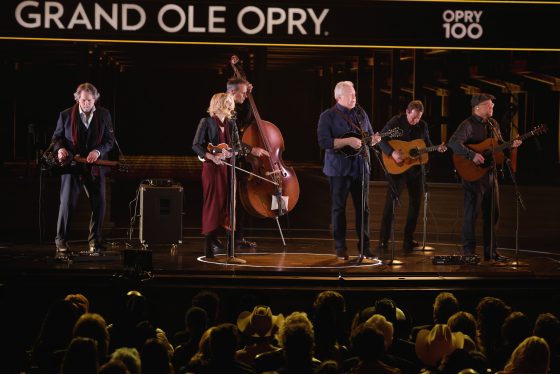
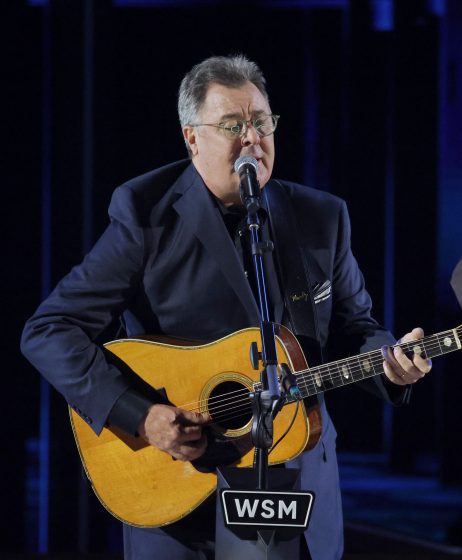
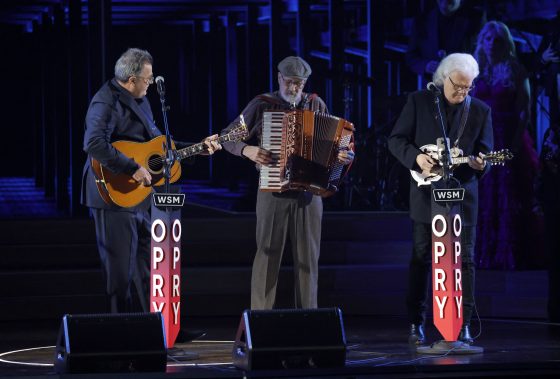
It wouldn’t have been a complete lineup for Opry 100 without Vince Gill! The Country Music Hall of Famer was joined by his old friends Jeff Taylor on accordion, Sonya Isaacs, and fellow inductee Ricky Skaggs, to sing perhaps his most famous song, “Go Rest High on that Mountain.” An impactful and inspiring number, the original has been a comfort to thousands of fans and listeners experiencing their own losses and grief. Of his deep-and-wide catalog of music, there’s not a better choice for an evening like Opry 100.


Ketch, Dierks, and Jamey

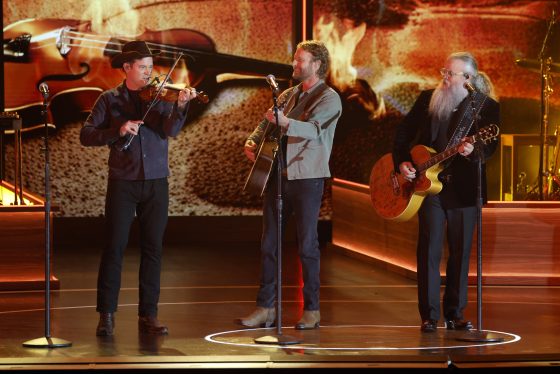
An Opry member trifecta, Dierks Bentley, Jamey Johnson, and old-time and bluegrass fiddler Ketch Secor (of Old Crow Medicine Show) paid tribute to the Charlie Daniels Band with a perfectly honky-tonkin’ medley of “Drinkin’ My Baby Goodbye” and, of course, “The Devil Went Down to Georgia.” From the sidewalks of Lower Broadway to the Grand Ole Opry stage, Charlie Daniel’s impact on country is indelible.


Luke Combs’ Mother Church Moment

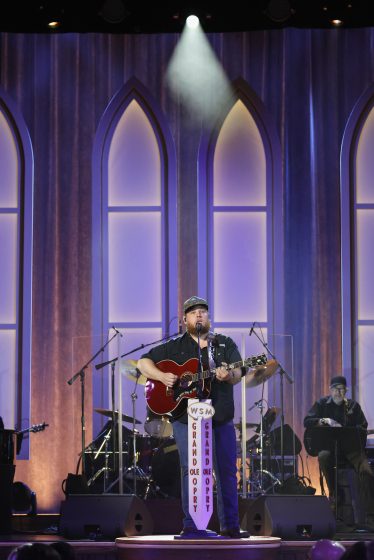
From the hallowed stage of the Ryman Auditorium, the most famous former home of the Grand Ole Opry, one of the most popular singers in all of country, Luke Combs, performed George Jones’ “The Grand Tour,” as well as “Hurricane,” for Opry 100. With more than 800 million streams (on Spotify alone), “Hurricane” is one of his biggest hits from his 2017 album, This One’s For You, which has been certified double platinum by RIAA.

This long list of our favorite Opry 100 moments is still, somehow, merely the tip of the country iceberg. Stay tuned as the Grand Ole Opry continues their 100th birthday celebration all year long.


All photos courtesy of the Grand Ole Opry; credit Getty/Jason Kempin.

Lead image: Brad Paisley and Alison Krauss perform “Whiskey Lullaby” live at Opry 100.

Want more Good Country? Sign up to receive our monthly email newsletter – and much more music! – direct to your inbox.

Tiny Desk Country Star

Now here’s some Good Country!

Last week, NPR Music released a brand new Tiny Desk Concert featuring country phenomenon Megan Moroney; it’s the starlet’s first visit to the fabled cubicle concert series. With an acoustic band and her fretboard inlays sparkling with her most recent hit album title, 2024’s Am I Okay?, Moroney plays through a handful of her hits – two selections from her Am I Okay? era and two from her 2023 breakout album, Lucky, which was certified Gold by RIAA.

Moroney’s brand of country is wholly mainstream and ripe for radio love (around ten of her titles have charted so far) and a sound that combines the polish and glamour of artists like Carrie Underwood with the grit, humor, and self-awareness of The Chicks and women country forebears from Loretta Lynn to Gretchen Wilson. It’s all packaged in a familiar brand of rhinestones and gorgeous blonde hair, sly humor, and manicured and idyllic while down-to-earth beauty, yet Moroney’s music ends up consistently striking her listeners as feeling totally brand new. It’s grounded in tradition, yes, but breaking new soil with each and every effort.

Critics and fans agree – what Moroney is doing works. She’s won a CMT Music Award, an ACM Award, and took home a CMA Award in 2024 for New Artist of the Year. Her Am I Okay? Tour kicks off this spring and continues through the fall, with dozens of dates at huge arenas, theaters, festivals, and venues across the country.

Her too-short 17-minute Tiny Desk Concert demonstrates why. “Tennessee Orange,” Moroney’s breakout hit and a viral internet sensation, is quippy, witty, and leverages a mighty Music Row hook. These songs are as sardonic as they are saccharine, a subtle siren plying us through our ears, eyes, and hearts. “I’m Not Pretty,” which leads off both her Tiny Desk appearance and 2023’s Lucky, certainly warrants her middle finger to the mentioned “ex-boyfriend,” leaning into the liberation and comeuppance dripping from the track you can still hear regularly over the airwaves. “No Caller ID” is found in delicious heartbreak that reminds listeners of ’90s and ’00s classics like Lee Ann Womack’s “Last Call,” but with 2025 production values and plenty of Moroney’s own spin. She introduces the final song, “Am I Okay?,” the titular track for her current album, tour, and the inspiration for her signature guitar’s inlays with even more of her biting wit and charm:

“[‘Am I Okay?’ is] proof that a man once made me happy, which is nice in my discography of sad songs. Full transparency, he did screw up, so this song is no longer true, but it was fun while it lasted, right?”

Yes, indeed. All of her music, from the sad to the salacious, is entirely fun, top-to-bottom. Megan Moroney is a mainstream country icon on the rise and her Tiny Desk Concert appearance illustrates why and how she will continue to win hearts and ears with her particular brand of Good Country.


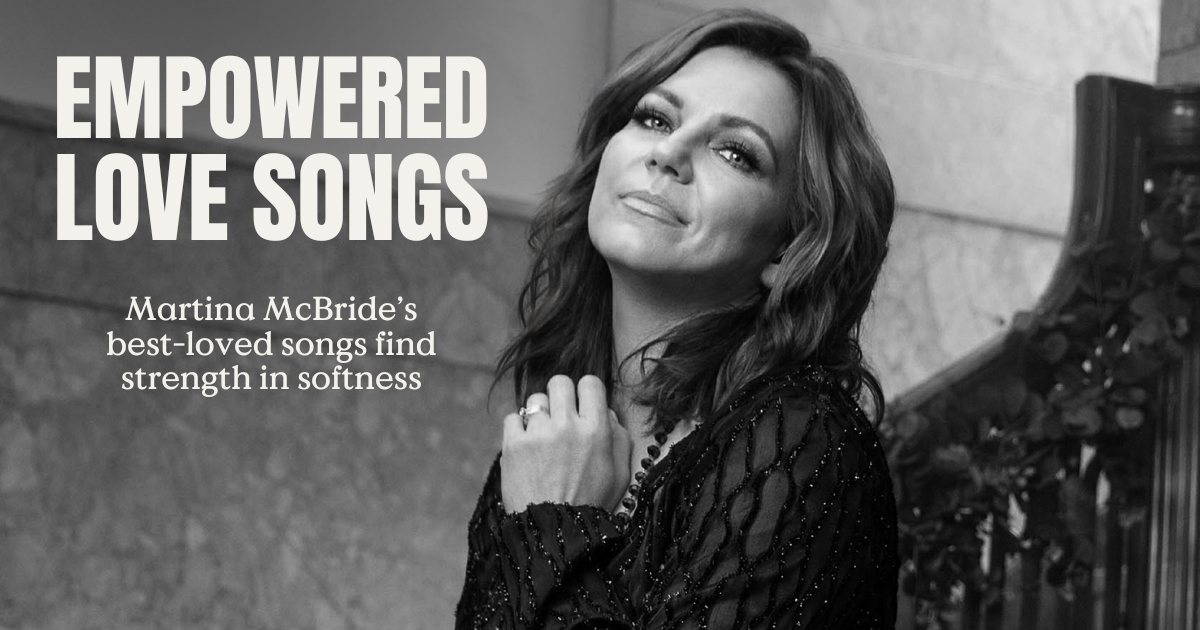
Empowered Love Songs

Consult the comments section of any Martina McBride music video and you will find paragraph-length, highly personal expressions of adversity and triumph. These entries are varied, but often take the form of earnest tributes to lost loved ones, painful confessions of romantic loneliness or haunting stories of abuse and neglect. It’s a testament to the power of McBride’s voice – that inimitable instrument that arguably did more than anyone else’s to popularize the wide, throaty belt style now common among female country singers – that her songs still provoke such intensely emotional reactions.

It also speaks to her choice of material. Many of McBride’s best-loved songs operate on a grand emotional scale, and she has singularly foregrounded issues of domestic violence and child abuse in her work. But even as social issues songs largely define her legacy, she has most often recorded love songs, approaching them with the same shrewdness and self-assurance that colors her most celebrated work.

Take, for example, “Safe in the Arms of Love,” a number four hit from 1995’s Wild Angels. Written by female songwriting trio Mary Ann Kennedy, Pam Rose and Pat Bunch, “Safe in the Arms of Love” was originally released in 1986 by Wild Choir, a short-lived country-rock outfit fronted by Gail Davies. More new wave than country, the Wild Choir version features a prominent bassline, heavy drums and synths, and little of the warmth or joy that McBride’s would bring to the song years later. McBride’s version is twangier and more streamlined, trading the original’s raw energy for country-pop polish and sunny bursts of fiddle and mandolin.

The first line of “Safe in the Arms of Love” is bracing, almost a cliche but not quite: “My heart’s not ready for the rocking chair.” It’s an off-kilter choice of words, immediately followed by a clarification: “I need somebody who really cares.” This first couplet sets the rules for the rest of the song, which moves between metaphor and straight-ahead, conversational lyricism as McBride voices her desire for a stabilizing partnership.

An avowed hater of “wimpy woman” and “doormat” songs, McBride brings a resolve that makes clear she isn’t looking to be rescued. Rather, like the narrator of Lucinda Williams’ “Passionate Kisses” – a number four country hit for Mary Chapin Carpenter in 1992 — she’s simply voicing her desires. (It’s no accident that the song’s chorus begins with the words I want.) McBride’s delivery is confident, never beseeching or desperate. Do we ever doubt she’ll achieve her romantic goals?

The song’s music video takes place in a circus-themed fantasy world inhabited by Cirque du Soleil performers dressed as children’s entertainers. There is, notably, no love interest in sight. In fact, men rarely figure in McBride’s videos, at least not as love objects. The men in her videos tend to appear only in glimpses, as with the abusive husband and father figures in “Independence Day” and “Concrete Angel,” flashes of motion that connote menace. In the videos for her love songs, she is more often than not alone, less a protagonist than a guide figure.

Consider the video for “Wild Angels” – filmed for whatever reason in a black and white, vérité style – which locates Martina on the roof of the Clock Tower Building in downtown Manhattan. The song is ostensibly about a couple whose bond prevails through thick and thin, but the video instead captures a group of citydwellers being visited by a mystical being. Then there’s the video for “My Baby Loves Me,” which features a barefoot Martina twirling in a floral dress as various, smiling couples pose behind an empty picture frame. (John McBride, Martina’s husband and long-time business partner, has a split-second cameo at the end of the video.)

Both “Wild Angels” and “My Baby Loves Me” continue the theme of the empowered love song. The rootsier “Wild Angels” presents a smartly egalitarian vision of love, with McBride expressing disbelief at her good fortune in finding such balance. “Somehow we wake up in each other’s arms,” she shrugs in the second verse before chalking it up to divine intervention in the song’s lofty, joyous chorus. The title track and opening song on McBride’s third album, “Wild Angels” also features the sound of McBride’s then-infant daughter Delaney giggling, a nod to the McBrides’ real-life love story and an indicator of how McBride would continue to foreground motherhood in her work.

Where “Safe in the Arms of Love” finds McBride searching for unconditional love, “My Baby Loves Me” takes the perspective of a woman who already has it. The song offers a typically country approach to beauty: fashion magazines, high heels, fancy clothes… who needs ‘em! It’s less feminist-presenting than, say, Shania Twain’s “Any Man of Mine,” but sets up a similar dynamic: This man is totally enthralled by me. In this country-pop version of the world, women run the show and men are their biggest cheerleaders.

Such was the utopian impulse of ‘90s country, particularly in the latter half of the decade, when a handful of female stars topped the charts nearly as often as their male peers and frequently sold more records. McBride was central to this moment and though she never quite reached the crossover heights of Twain or Faith Hill, she remained a steady presence on country radio even as the format purged female voices in the aughts and the wake of 9/11. She was in fact the only female country artist to notch a solo No. 1 during the entirety of 2002, a feat that wouldn’t be repeated until Gretchen Wilson took “Redneck Woman” to the top of the charts three years later. (This fact has depressing echoes of today’s hyper-masculine radio environment, in which it is nearly impossible for a woman to hit No. 1, even with the help of a male duet partner.)

To her detractors, McBride’s great sin at the turn of the millennium was her shift toward the smooth sounds of Adult Contemporary. She found great success in this format with “This One’s for the Girls” and “In My Daughter’s Eyes,” two hits from 2003’s Martina that reached No. 1 and No. 3, respectively. Critics have accused her of making “music for soccer moms,” an elitist term that equates suburban women with unrefined taste.

It’s true that McBride has at times leaned into inoffensive pop balladry, most successfully on “Valentine,” her hyper-smooth collaboration with pianist Jim Brickman that was her first brush with Adult Contemporary success in 1997. But to dismiss McBride’s music — which, yes, includes her honeyed love songs — as frothily unserious is to do a disservice to one of country’s great risk-takers. “Valentine” may not be hard-shell honky-tonk (for that, see cuts like “Cheap Whiskey” or her 2005 classic-country covers album, Timeless) but its softness isn’t a reason to reject it outright. It’s a symptom of country music’s eternal, exhausting authenticity debate that pop-leaning love songs, often the exact songs that allow women to break through country radio’s gender barrier and find commercial success, continue to be written off as superficial.

To be fair, not all of McBride’s more commercial instincts are brilliantly rendered; “I Love You” still smacks of a “This Kiss” retread, while “There You Are” is bland even as piano ballads go. But for every “I Love You” or “There You Are,” there’s an “I’m Gonna Love You Through It,” a 2011 cut about a breast cancer survivor who finds strength in the selfless love of her husband.

With its sweeping, string-laden sound, “I’m Gonna Love You Through It” risks being the kind of “soccer mom” fodder that McBride and her female peers have long been dinged for. But it’s also lyrically sober and undeniably moving, the kind of serious story song that has all but disappeared from the format. The song gave McBride her last top ten country hit and final GRAMMY nomination to date, for Best Country Solo Performance. (In one of the music industry’s great injustices, McBride has 14 GRAMMY nominations and zero wins.)

“Just take my hand, together we can do it,” McBride sings in the chorus, returning to the egalitarian vision of love that made her ‘90s work so disarming. Here, as in “Wild Angels,” McBride sees love not as a negation of self but rather as a mutual source of empowerment. Is it any wonder that her songs endure?


Want more Good Country? Sign up to receive our monthly email newsletter – and much more music! – direct to your inbox.

Photo Credit: Martina McBride courtesy of Red Light Management.

Julie Williams’ Star Rises

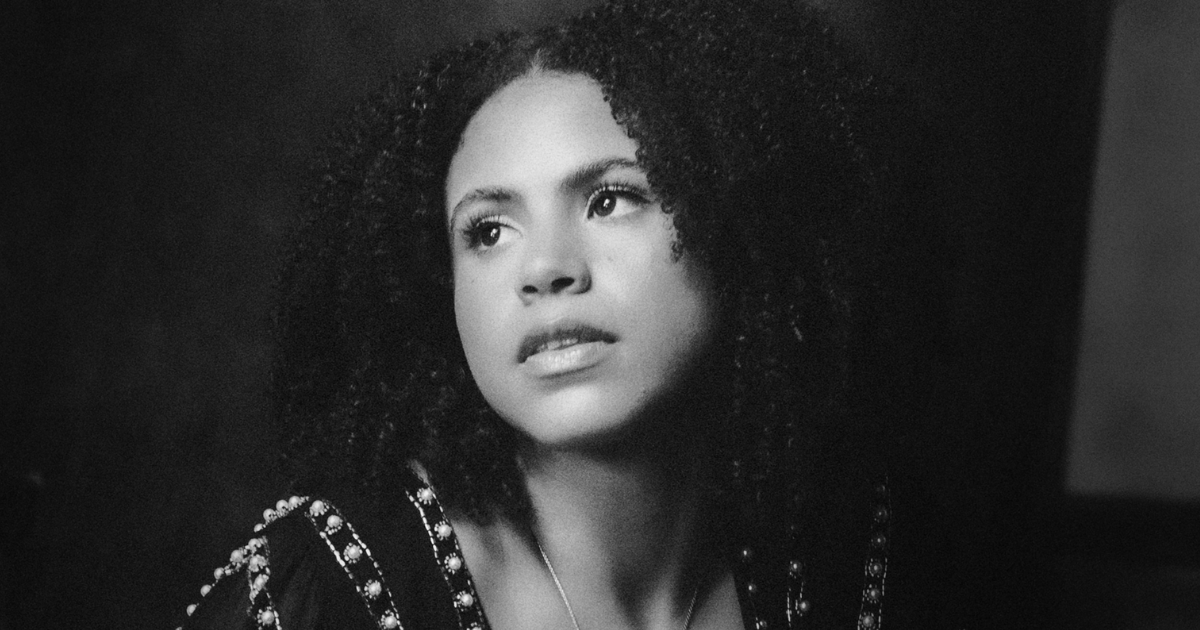
“I like to say my music is mixed, like me,” laughs Julie Williams, a queer, biracial Nashville-based songwriter who happens to be one of the strongest new voices to emerge in country music this decade. “I grew up loving ‘90s country, but before I moved to Nashville I didn’t necessarily think I could make that music. I didn’t think I had a place in the genre. I had so many other influences too – like the Indigo Girls, James Taylor, and other folk music – so I thought that would be more my world. But the song that changed everything for me was ‘Southern Curls.’ I was like, whoa, this is undeniably a country song, and it feels more like me than anything else I’ve ever written.”

Released back in 2021, “Southern Curls” was a breakout single for Williams and continues to inform her subsequent work in a lot of ways. Like many of the best country songs, the track flirts with an existing trope while flipping it entirely on its head, invoking the texture of her own Black hair as a foil to disrupt the traditional image of coiffed ringlets favored by white southern belles. Williams uses her hair as a gateway to discuss the still prevalent differences between how Black and white women are treated in this country, particularly in the South, and opens the conversation with a matter-of-fact account of her personal experience.

It’s a simple, riveting song, intimate and singular, but also broad enough to provide desperately needed representation for a whole diaspora of Black female artists who, like Williams, have had a hard time making space for themselves in the predominantly whitewashed genre of mainstream country. Almost immediately, the track earned the attention of fellow Black country artist and Apple Music host Rissi Palmer, who named Williams to her 2021 Color Me Country cohort, and also caught the ear of the Black Opry, who invited the young artist to join the collective on stage and on tour in 2022.

Following this up with a self-titled EP in 2023, an appearance on a PBS special about Black women in country, and a performance at Newport Folk Festival, Williams joined the CMT Next Women of Country Class of 2023. Now, she’s touring behind another new EP, Tennessee Moon, which includes a new version of the impactful song. Williams is excited about the prospect of expanding her sound – and her writing voice – even further.

“‘Southern Curls’ gave me the bravery to write songs that feel authentic to me,” Williams says. “From there, I’ve been really lucky to work with some incredible people, like my partner Jonathan Smalt, who produced my new EP, Tennessee Moon. This is a big release for me in that it feels like an arrival.”

Another part of that feeling? Williams and “Southern Curls” were featured prominently as part of a new documentary on Hulu, It’s All Country, which features legends like Luke Combs, Wynonna Judd, and Sheryl Crow, plus a never-before-seen performances from Williams herself.

While out on tour behind Tennessee Moon, which released in October, Williams called in to speak with Good Country from the road. She talked about her experience shifting from the world of public policy to the music industry, all things ’90s country, navigating the bounds of folk and other genres in her sound, and those deeply felt, close friendships that might have always been more than… just friends.

What was your relationship to country music like when you were growing up?

Julie Williams: My mom used to play a lot of ‘90s country in the car, artists like The Chicks, Shania Twain, Trisha Yearwood, and Sara Evans – but especially The Chicks. I’ve been thinking a lot about them recently, especially in the last few weeks [since the presidential election]. A huge part of my musical introduction was around the time when The Chicks were kicked off country radio. Their song, “Not Ready To Make Nice,” I remember my mom explaining the lyrics to me. That was really where my love for storytelling and lyrics came from.

I noticed the lyrics in your songs right away, they’re not filler or frivolous, they’re stories.

I always thought people would only want to listen to me if I was playing the songs they already knew and loved. Once I started writing, I realized my stories have value. Growing up in Florida, I’d sing covers of Jimmy Buffett and Tom Petty, whatever songs I thought would get me the tips from the snowbirds. I didn’t go to school for music, I went to Duke University and studied public policy. I wanted to work for a non-profit and become a lawyer. But we had a student record label I was a part of, Small Town Records, and that was the first time I got the chance to start writing my own songs. I started to see the power in my own story.

How did you make the jump from studying public policy back into music?

I wanted the work I did to make somebody’s life just a little bit better, but I didn’t realize I could do that with music too. Some of the things I cared a lot about, too – issues of race, queer issues, and women’s issues – how do you get people to care about them? Part of it is through telling stories that move people. I soon realized I didn’t have to sit behind a desk all day and be a policy analyst. Music can also get me in spaces and in front of people that I wouldn’t be around.

Is there an artist who has a career path that you’d like to follow in the industry?

I’ve always been such a fan of Kacey Musgraves and the way that she’s always stood up for what she believes in. She’s never backed down in that, and she’s always put herself in her songs. Part of it is about love and heartbreak, but it’s also about following your arrow, and being yourself. Even the ways in which she’s created a whole new sound in country and in folk with Golden Hour. I fell in love with that album when it came out. I’ve always looked up to the way she can capture the simplest feelings of being a human in her songs.

How do you feel about your music as country or as folk? There are so many other elements to it, and you have a very layered, textured sound.

I have so many influences that aren’t from country, but pairing all of those things creates that mixed sound that really feels like me. As an artist, I’m constantly thinking about “How am I going to market this?” or “What genre is this going to be in?” and that can sometimes feel limiting. I don’t think my music would fit into a traditional pop-country radio sound, but I don’t think it fully fits into other genres either. I’m just trying to make what feels good for me.

How does Tennessee Moon fit into your current discography? It feels like another level.

It’s definitely a big release for me. That’s a testament to being here in Nashville for a few years and trying things out. Every time I put out music or write a song, I hope there’s going to be better ones that keep coming. “Tennessee Moon” was a really special one for me. It started with a film photo that I took of an ex while we were kayaking at Percy Priest lake at sunset. That relationship didn’t work out, but I took the photo to a co-write with a friend of mine, Melody Walker. I said, “I want to write a song that feels like this picture,” and I knew everything else was going to be around that song.

“Just Friends” is another one of my favorite songs on Tennessee Moon, and it seems like so many people relate to the experience of the blurred line between best friends and something more. How did it feel to address that?

I wrote this one with Melody Walker as well and it’s also one of my favorites. I love women, and I realized that I can love anyone regardless of their gender identity. I came to that realization in my twenties, but now that I know who I am – and who I love – I was looking back at a specific friendship of mine. Retrospectively, I realized I had a crush on this person. I was in love with this person. But getting the chance to create a pretty sapphic music video felt like ripping the band-aid off as far as talking about my queer identity in my songs. I hadn’t done that before. I’m really excited to write and put out music freely now.


Photo Credit: Chase Denton

The Remarkable Rootsiness of the 2024 CMA Awards Nominations

(Editor’s Note: Sign up to receive even more Good Country content direct to your email inbox!)

The headline takeaways from this year’s CMA Awards nominations may be the inclusion (and exclusion) of pop superstars, with understandable interest in what that says about today’s country format. But the 2024 field features plenty of roots and bluegrass influence, too. Regular BGS and Good Country readers might even be surprised at the confluence of the modern mainstream and its traditional tributaries.

We want to highlight that dynamic as well. Country has always been a big tent, but is it now becoming more receptive to its roots?

Let’s start with the superstars. These days, many can claim a rootsy kind of rebelliousness, and chief among those is Chris Stapleton. With his long history – in bluegrass, in Southern rock, in classic country songwriting, and with a train load of CMA trophies – Stapleton vies once again for what would be his first Entertainer of the Year award – after a record-setting eight nominations. Yet he still sings with the fiery Appalachian soul he debuted at the front of The SteelDrivers.

Others earning top billing this year include Zach Bryan and Lainey Wilson – and both have a reputation for gritty, creative realism. Some of the hottest new names country has to offer, Bryan has been selling out stadiums with his confessional alt-country and Wilson’s bluesy Louisiana swagger earned her last year’s Entertainer of the Year title. Those are not the only established artists holding true to the cause, though.

Kacey Musgraves continues to show salt-of-the-earth songcraft is not mutually exclusive to shimmering pop decadence. And while Ashley McBryde has perfected the art of making arenas feel like a massive, county-line roadhouse, Cody Johnson proves the appetite for hardcore Texas twang did not die with King George’s (semi) abdication. All have become perennial fixtures in the format’s upper echelons.

Likewise, this year’s nominees offer excitement for the future, awash with fresh talent. Shaboozey turned heads with the Number One ear worm, “A Bar Song (Tipsy),” but dig beyond the single and his catalog marks an elusive missing link between the hard-times inspirations of both hip-hop and country. Artists like Zach Top – who also came up through bluegrass – accept no substitute for twangy telecasters and shuffling, two-step beats. And while The War and Treaty continue their mission to bring soul and gospel back into the heart of country, The Red Clay Strays find a home for their blend of heady roots rock and commanding, fire-and-brimstone vocals.

Even the behind-the-scenes nominees highlight this rootsy resurgence, with the Musician of the Year category dominated by keepers of the instrumental flame. Fiddle phenom Jenee Fleenor goes head to head with steel-guitar legend Paul Franklin and the multi-talented guitarist/Americana artist Charlie Worsham – while the other two, guitarists Tom Bukovac and Rob McNelley, are certainly no slouches when it comes to six-string scholarship.

In fact, the commonalities between this year’s CMA Awards nominees and the artists covered by BGS and GC are so striking, we wonder what you think. Take a look at the full list of nominees below, and let us know.

THE 58TH ANNUAL CMA AWARDS – FINAL NOMINEES (by ballot category order):

ENTERTAINER OF THE YEAR

Luke Combs
Jelly Roll
Chris Stapleton
Morgan Wallen
Lainey Wilson

SINGLE OF THE YEAR
Award goes to Artist(s), Producer(s) and Mix Engineer(s)

“A Bar Song (Tipsy)” – Shaboozey
Producers: Sean Cook, Nevin Sastry
Mix Engineer: Raul Lopez

“Dirt Cheap” – Cody Johnson
Producer: Trent Willmon
Mix Engineer: Jack Clarke

“I Had Some Help” – Post Malone (Feat. Morgan Wallen)
Producers: Louis Bell, Charlie Handsome, Hoskins
Mix Engineer: Ryan Gore

“Watermelon Moonshine” – Lainey Wilson
Producer: Jay Joyce
Mix Engineers: Jason Hall, Jay Joyce

“White Horse” – Chris Stapleton
Producers: Dave Cobb, Chris Stapleton, Morgane Stapleton
Mix Engineer: Vance Powell

ALBUM OF THE YEAR
Award goes to Artist, Producer(s) and Mix Engineer(s)

Deeper Well – Kacey Musgraves
Producers: Ian Fitchuk, Kacey Musgraves, Daniel Tashian
Mix Engineers: Shawn Everett, Konrad Snyder

Fathers & Sons – Luke Combs
Producers: Luke Combs, Chip Matthews, Jonathan Singleton
Mix Engineer: Chip Matthews

Higher – Chris Stapleton
Producers: Dave Cobb, Chris Stapleton, Morgane Stapleton
Mix Engineer: Vance Powell

Leather – Cody Johnson
Producer: Trent Willmon
Mix Engineer: Jack Clarke

Whitsitt Chapel – Jelly Roll
Producers: Andrew Baylis, Brock Berryhill, Zach Crowell, Jesse Frasure, David Garcia, Kevin “Thrasher” Gruft, Austin Nivarel, David Ray Stevens
Mix Engineers: Jeff Braun, Jim Cooley

SONG OF THE YEAR
Award goes to Songwriter(s)

“Burn It Down”
Songwriters: Hillary Lindsey, Parker McCollum, Lori McKenna, Liz Rose

“Dirt Cheap”
Songwriter: Josh Phillips

“I Had Some Help”
Songwriters: Louis Bell, Ashley Gorley, Charlie Handsome, Hoskins, Austin Post, Ernest Keith Smith, Morgan Wallen, Chandler Paul Walters

“The Painter”
Songwriters: Benjy Davis, Kat Higgins, Ryan Larkins

“White Horse”
Songwriters: Chris Stapleton, Dan Wilson

FEMALE VOCALIST OF THE YEAR

Kelsea Ballerini
Ashley McBryde
Megan Moroney
Kacey Musgraves
Lainey Wilson

MALE VOCALIST OF THE YEAR

Luke Combs
Jelly Roll
Cody Johnson
Chris Stapleton
Morgan Wallen

VOCAL GROUP OF THE YEAR

Lady A
Little Big Town
Old Dominion
The Red Clay Strays
Zac Brown Band

VOCAL DUO OF THE YEAR

Brooks & Dunn
Brothers Osborne
Dan + Shay
Maddie & Tae
The War And Treaty

MUSICAL EVENT OF THE YEAR
Award goes to Artists and Producer(s)

“Cowboys Cry Too” – Kelsea Ballerini (with Noah Kahan)
Producers: Kelsea Ballerini, Alysa Vanderheym

“I Had Some Help” – Post Malone (Feat. Morgan Wallen)
Producers: Louis Bell, Charlie Handsome, Hoskins

“I Remember Everything” – Zach Bryan (ft. Kacey Musgraves)
Producer: Zach Bryan

“Man Made A Bar” – Morgan Wallen (feat. Eric Church)
Producer: Joey Moi

“you look like you love me” – Ella Langley (feat. Riley Green)
Producer: Will Bundy

MUSICIAN OF THE YEAR

Tom Bukovac – Guitar
Jenee Fleenor – Fiddle
Paul Franklin – Steel Guitar
Rob McNelley – Guitar
Charlie Worsham – Guitar

MUSIC VIDEO OF THE YEAR
Award goes to Artist(s) and Director(s)

“Dirt Cheap” – Cody Johnson
Director: Dustin Haney

“I Had Some Help” – Post Malone (Feat. Morgan Wallen)
Director: Chris Villa

“I’m Not Pretty” – Megan Moroney
Directors: Jeff Johnson, Megan Moroney

“The Painter” – Cody Johnson
Director: Dustin Haney

“Wildflowers and Wild Horses” – Lainey Wilson
Director: Patrick Tracy

NEW ARTIST OF THE YEAR

Megan Moroney
Shaboozey
Nate Smith
Mitchell Tenpenny
Zach Top
Bailey Zimmerman


Sign up to receive even more Good Country content direct to your inbox!

Watch Brittney Spencer’s Gorgeous Tiny Desk Concert

Artists from all across the genre spectrum shine in the stripped down and focused setting of NPR’s Tiny Desk Concert series, but roots musicians often stand out from the rest. Even a big-voiced, high concept, maximally-produced country artist like Brittney Spencer is seemingly at her best in this simplified context, where her impeccable, controlled, and artful voice can deliver songs from her 2024 debut release, My Stupid Life, as if they were always intended to be played by only a handful of musicians behind a desk in a corporate headquarters.

Spencer and her ensemble utilize space and restraint to center her acrobatic and athletic vocals, which are tender and powerful, passionate and nuanced. The group kicks off their six-song Tiny Desk set with “Bigger Than The Song,” a track that’s something of a mission statement for Spencer and the new album. The lyrics name check artists who have inspired and blazed a trail for the vocalist and songwriter, from Beyoncé – with whom Spencer collaborated on Cowboy Carter and “Blackbiird” – to Whitney Houston to Maren Morris, an adept and technical singer who’s not only a peer of Spencer, but a community member of hers, as well. The number points out how, even in Music City and on Music Row, the priorities of creators in country and beyond should always be bigger than just a profitable, “hit” song.

The concert continues with an easy, deliberate flow and with Spencer confidently inhabiting a vibe that feels most like a living room guitar pull or a back porch jam session. Her energy may be off the cuff, but this singer is intentional and in the driver’s seat. The group play through a handful more tracks from My Stupid Life, culminating with “I Got Time,” an apropos closer that longs to run away from the noise and the rat race to a kudzu-draped back road. Spencer is more than comfortable playing around in these classic and familiar country idioms and she uses her variable and virtuosic singing to sell each and every archetype and stereotype she references. But it’s remarkable that she does so as often with touches and styles from outside of “traditional country” as from within it. And that might just be the most traditionally country thing about Brittney Spencer.

Read more about Spencer, My Stupid Life, and her unique approach to utilizing her voice as an instrument in our recent Good Country feature, from BGS and GC contributor Jewly Hight. You can find that story here.


Ed’s Picks: All Kinds of Country

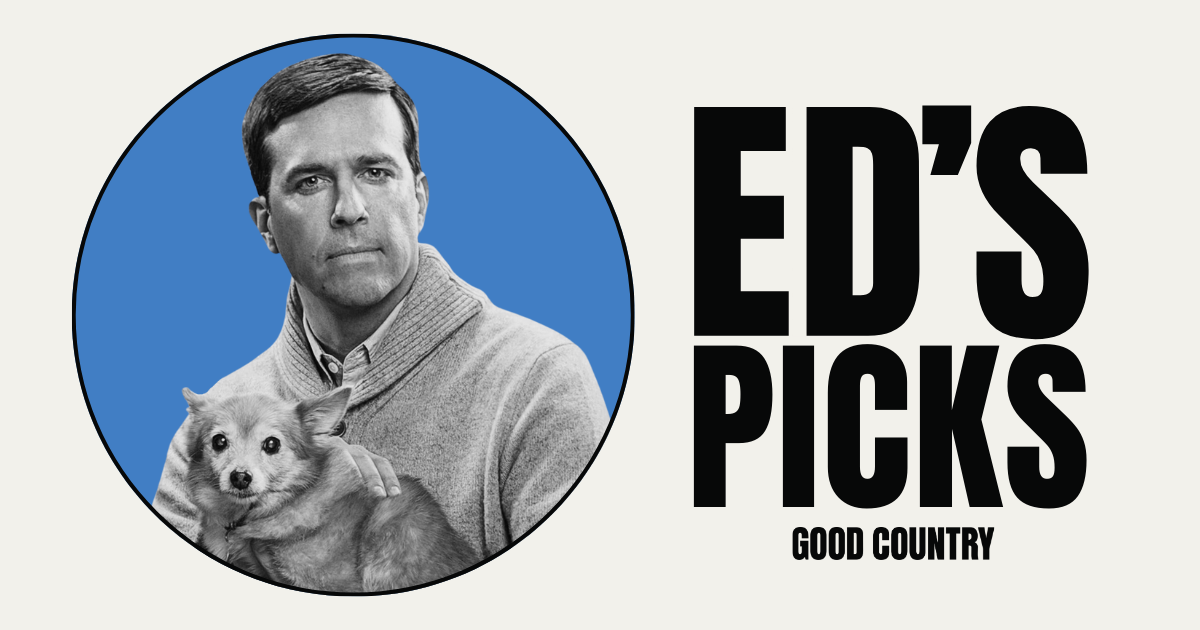
Editor’s note: Each issue, our co-founder Ed Helms will share a handful of good country artists, albums, and songs direct from his own earphones in Ed’s Picks.

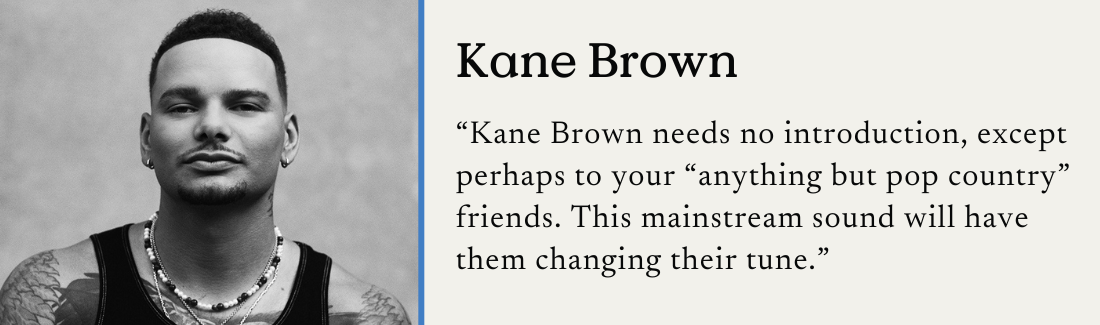
Kane Brown. "Kane Brown needs no introduction, except perhaps to your 'anything but pop country' friends. This mainstream sound will have them changing their tune."


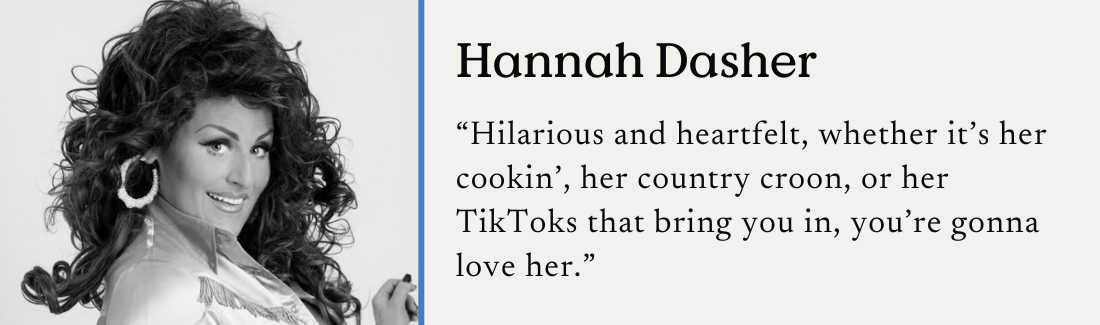
Hannah Dasher. "Hilarious and heartfelt, whether it's her cookin', her country croon, or her TikToks that bring you in, you're gonna love her."


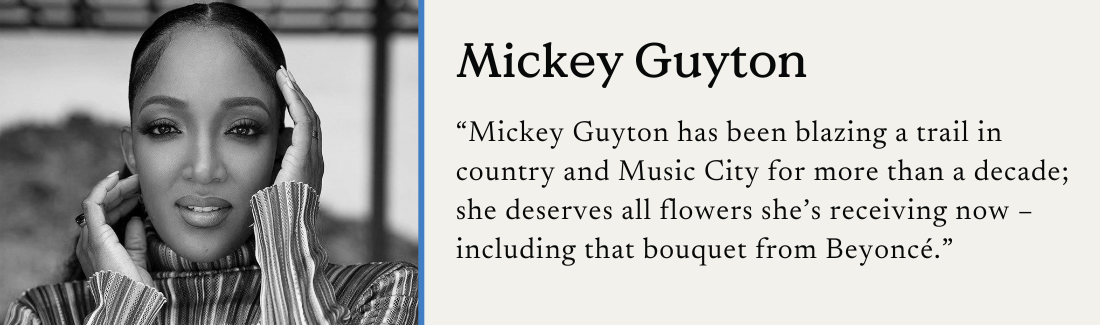
Mickey Guyton. "Mickey Guyton has been blazing a trail in country and Music City for more than a decade; she deserves all the flowers she's receiving now – including that bouquet from Beyoncé."


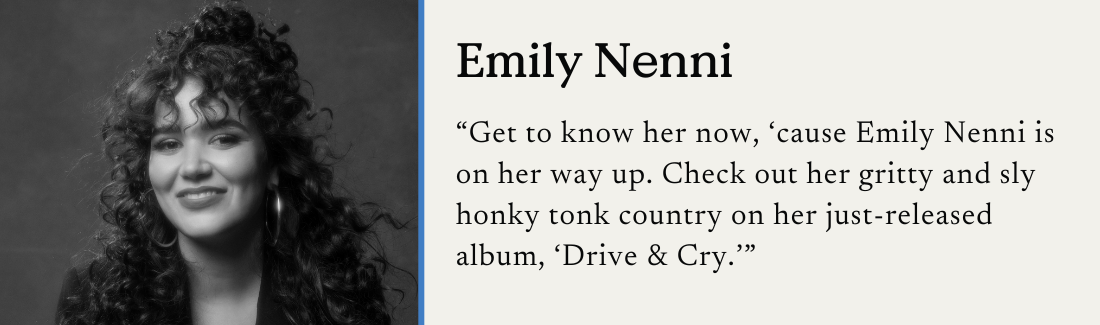
Emily Nenni. "Get to know her now, 'cause Emily Nenni is on her way up. Check out her gritty and sly honky-tonk country on her just-released album, 'Drive & Cry.'"


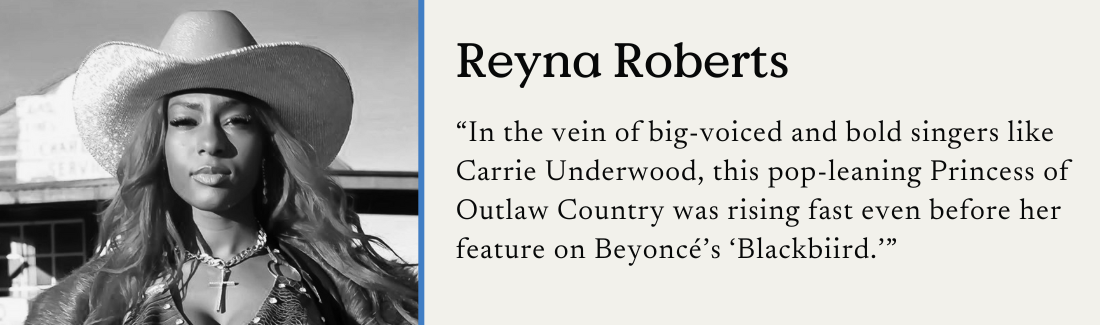
Reyna Roberts. "In the vein of big-voiced and bold singers like Carrie Underwood, this pop-leaning Princess of Outlaw Country was rising fast even before her feature on Beyoncé's 'Blackbiird.'"


Photos: Kane Brown by Diwang Valdez; Hannah Dasher, courtesy of the artist; Mickey Guyton by Bonnie Nichols; Emily Nenni by Alysse Gafkjen; Reyna Roberts, courtesy of the artist.

Shaboozey Goes #1

By this point, unless you don’t have either an internet connection or a radio set with operational antennas, you’ve heard Shaboozey’s smash hit single, “A Bar Song (Tipsy),” whether on your local Top 40 country station or scrolling on TikTok. The catchy, carousing track – which has garnered more than 130 million streams on Spotify alone – showcases the songwriter, musician, and producer fresh off his feature on Beyoncé’s Cowboy Carter; it was her own hit, “Texas Hold ‘Em” that he dethroned to land with “A Bar Song” at Number One on Billboard’s Hot Country Songs chart at the end of April.

“A Bar Song” is a crisp synthesization of the last decade of the highest performing country singles, a combination of country trap, looping beats and hand claps, and acoustic guitar and crying fiddle with a groove that straddles the fence between two-stepping and backing it up. Shaboozey, like so many Black creators on the country scene right now, demonstrates how comfortable and charming these mainstream, pop country stylizations feel in the hands of creators who know all of these idioms from all of their angles. Whether the dive bar saloon or the club, whether decked out with a Birkin or well-worn saddle bags, whether out in the barn with the livestock or line dancing with your friends at a downtown party, “A Bar Song” feels right at home.

It’s a track that perfectly illustrates the collective appeal country music has always had. This is music to be enjoyed together, raising a glass, and polishing the floorboards. Luckily, it’s just as fun on its thousandth listen as its first – and you will certainly hear “A Bar Song (Tipsy)” a thousand more times before the summer’s out. Because, as you know, everybody at the bar gettin’ tipsy…


Photo Credit: Shaboozey by Daniel Prakopcyk.

Saddle Up and Get to Know the Artists Behind ‘Cowboy Carter’

On March 29, Beyoncé rode sidesaddle onto the world stage and took us all by storm with the release of her eighth studio album, Cowboy Carter.

Cowboy Carter arrived as the second installment of a three-act project that commenced with Renaissance in 2022. Renaissance incorporated house, disco, hyperpop, R&B, and funk while reclaiming the Black queer roots of dance music. On Cowboy Carter, she similarly reclaims the Black roots of country, blending it with folk, rock, R&B, hip-hop, classical, house, and gospel throughout.

Prior to the release of Cowboy Carter, country has been a longstanding muse for Beyoncé. While her affiliation with the genre was popularized by Lemonade’s “Daddy Lessons,” her first country-leaning performance dates back to nearly a decade earlier when she performed “Irreplaceable” with Sugarland at the American Music Awards in 2007.

Potent and impeccably saturated, Cowboy Carter makes clear that country is inarguably a huge part of Beyoncé’s creative and cultural identity. However, her presence in the genre has not always been well-received; in an Instagram caption 10 days before the album’s release, Beyoncé revealed that CC was largely inspired by an experience where she “did not feel welcomed” into the country fold. Many speculate that this refers to her appearance at the 2016 CMA Awards. The network received racist backlash after she performed “Daddy Lessons” with the Chicks, prompting the erasure of the song’s video from the show’s website (though a representative from CMA later denied the correlation between those two events).

Of Cowboy Carter Beyoncé writes, “The criticisms I faced when I first entered this genre forced me to propel past the limitations that were put on me.”

Beyoncé alchemizes a multitude of influences and collaborators across the gargantuan album in order to achieve the monumental musical feats of CC. With a credits list that sprawls for seemingly miles, Beyoncé enlists a number of guest artists, co-writers, producers, and musicians. Between them, they represent the Black roots of country, pay tribute to Black Americans’ impact on the genre, include legendary country artists and well-known side musicians and collaborators that assert the project’s roots in country, and represent the bright and diverse present and future of country by featuring several lesser-known Black country artists, many of which are also genre-bending in their own work.

In a list that is by no means comprehensive, here are just a few of the contributors that brought their musical magic to Cowboy Carter.

Rhiannon Giddens

“Texas Hold ‘Em” made history as the first hit single by a solo Black woman to top the Billboard’s Hot Country Songs Chart and 10 weeks later, as of this writing, it maintains its gilded perch. Fittingly, the song opens with the warmth and drive of the legendary Rhiannon Giddens strumming a standalone fretless, clawhammer gourd banjo. The talented multi-instrumentalist, singer, composer of many mediums, and roots scholar also sprinkles notes of viola throughout the track.

It is no coincidence that Giddens’ banjo playing, like much of her work, pays homage to the lineage of Black influence throughout roots music. Referred to by many as a “performing historian,” Giddens has spent her career shedding light upon the cross-cultural interweavings of the genre. Here, in an interview, she details the West African origins of the banjo, an instrument essential to American country music that was initially brought to the Americas by enslaved Black folks who used gourds and other accessible materials to recreate instruments of their homelands. By showcasing Giddens on the track, Beyoncé introduces a sonic representative of overlooked histories while uplifting one of the most celebrated Black musicians in modern day roots music.

Robert Randolph

Raised in a secluded religious community, Robert Randolph grew up without secular music. The renowned pedal steel guitarist heard only the music played within the House of God Church of Orange, New Jersey, for decades. He learned the instrument through Sacred Steel, a Black gospel tradition developed in the ’30s that highlighted the steel guitar during religious services.

During his early adulthood, Randolph became exposed to the world of music beyond; as he absorbed jazz, blues, funk, rock, and soul, he soon set out layering his gorgeous pedal steel tones upon a fusion of genres, particularly alongside his band, Robert Randolph and the Family Band. Across his musical arc, he epitomizes Beyoncé’s philosophy that music is transcendent; “All music is related,” he says. “Gospel is the same as blues. The only thing that changes is hardcore gospel people are singing about God and Jesus and in the blues people are singing about ‘my baby left me’ and whiskey.”

Justin Schipper

Like Robert Randolph, Justin Schipper is also credited for steel guitar on the track “16 Carriages.” A Nashville-based composer, multi-instrumentalist, songwriter, and producer, Schipper is a prominent figure in the current country landscape. His talents have landed him on tour with Josh Turner and Shania Twain (playing pedal steel and dobro), and he has gigged with the likes of Carrie Underwood, Chris Stapleton, Kris Kristofferson, Florida Georgia Line, and more.

Cam

Cam (given name Camaron Ochs) co-produced and co-wrote five songs on CC. An American country singer and songwriter, Cam began her career songwriting for musical giants in the industry such as Sam Smith and Miley Cyrus. Since then, she’s released three of her own studio albums with songs inspired by the songwriting styles of Patsy Cline, Ray Charles, Bonnie Raitt, Willie Nelson, and Joni Mitchell, amongst others. A prominent figure in the current country landscape, Cam lends crucial insights and layers with each of her contributions.

Sean & Sara Watkins

Renowned in the current bluegrass/newgrass scene, this sibling duo lends guitar (Sean) and fiddle (Sara) to the track “II Most Wanted.” Sean and Sara epitomize the familial quality so integral to bluegrass; their first band, Nickel Creek, was formed in 1989 alongside virtuoso Chris Thile when Sara and Chris were only 8 years old and Sean was 12. The siblings have been playing together ever since; Nickel Creek would go on to release seven albums, the latest of which, Celebrants, was released last year.

In 2002, the pair began The Watkins Family Hour as a monthly musical showcase featuring their friends and other collaborators in Los Angeles. Spanning over 20 years, the WFH has blossomed expansively. In fact, the pair released their third studio album, Vol. II, in 2022, a celebration of the project and the community surrounding it. Similarly to CC, the list of features for Vol. II is extensive, featuring the likes of Madison Cunningham, Willie Watson, Jackson Browne, and Fiona Apple, amongst others.

Stevie Wonder

A child prodigy who became blind shortly after birth, Stevie Wonder is widely regarded as one of the most influential musicians of the 20th century. He makes his contribution to CC by layering tasteful harmonica atop the sonically rich layers of “Jolene,” a reimaginative cover in the shape of Dolly Parton’s 1973 classic. Much like Beyoncé herself, Wonder is a trailblazer who, as Beyoncé stated in her Innovator Award speech at the iHeartRadio Awards, “defied any label placed upon [him].” From jazz to soul to funk to R&B to gospel to pop and beyond, Stevie Wonder has influenced and inspired creators across infinite genres and blendings with his vibrant propensity for experimentation. In the same speech, Beyoncé poured out a fountain of gratitude towards the legend, who presented her award —“Thank you so much Stevie, I love you,” she said. “I love you and I honor you. I want to thank you for making a way for all of us. […] Whenever anyone asks me if there’s anyone I can listen to for the rest of my life, it’s always you. So thank you, God bless you.”

Brittney Spencer, Tanner Adell, Tiera Kennedy, and Reyna Roberts

These four women are responsible for the ethereal background and third verse vocals for “Blackbiird.” Additionally, Spencer, Roberts, and Kennedy also lend background vocals to “Tyrant,” while Adell’s voice is woven into the sweeping harmonies of “Ameriican Requiem.”

Initially released in 1968 on The Beatles’ self-titled album, (colloquially known as “The White Album”), Paul McCartney wrote “Blackbird” in response to witnessing on television the harassment and violence that Black students endured upon attending newly-integrated schools. In 2018, he told GQ that he was particularly influenced by the young women who constituted, in part, the Little Rock Nine in Alabama — a nickname for the first nine Black students to desegregate the formerly all-white Central High School in Little Rock, Arkansas.

As McCartney explained to TODAY, “In England, a ‘bird’ is a girl, so I was thinking of a Black girl going through this; now is your time to arise; set yourself free; take these broken wings.”

Within her illustrious arrangement of the classic, Beyoncé pairs the initial guitar track recorded by McCartney with the vocals of herself and these four Black women whose careers are actively altering the historically whitewashed landscape of country. By including them, Beyoncé nods towards McCartney’s intended meaning of the song while actively uplifting these young women so that they may prosper in a genre that undervalues and mistreats the Black artists who continue to give it wings. Brittney Spencer, Tanner Adell, Tiera Kennedy, and Reyna Roberts each have burgeoning careers in the genre that are largely influenced by traditional country sounds and themes.

Willie Nelson & Dolly Parton

In addition to inviting in many Black artists and roots musicians, Beyoncé strategically inserts more commercially successful country greats whose values align with her own. As Willie Nelson tells his faux-radio station listeners in the track “Smoke Hour II,” “Sometimes you don’t know what you like until someone you trust turns you onto some real good shit. And that, ladies and gentlemen, is why I’m here.” This line candidly demonstrates an awareness of the unfortunate truth that a vast array of today’s country fans are white listeners unlikely to take this music seriously without ample accreditation from respected white artists.

Merely four days after the release of CC, likely due in part to the inclusion of Willie and Dolly, the number of first-time listeners of Beyoncé’s music had increased by 85% on Spotify.

Willie Nelson, who celebrates his 91st birthday this year, is renowned for his left-leaning activism (especially advocating for the legalization of marijuana — hence the nomenclature of his feature tracks “Smoke Hour” and “Smoke Hour II”) and his role in pioneering the Outlaw Country movement. Outlaw Country began in the ’60s as a subgenre to rebel against the conservative suppressions, sonic and otherwise, of the country industry at the time. Willie and his like-minded contemporaries strove to achieve creative freedom beyond the political and sonic standards that dominated Nashville.

Similarly, Dolly Parton has used her platform, influence, and capital to enact social change. In addition to being an advocate for LGBTQ+ rights, she donated $1 million to Vanderbilt University in 2020 to go towards vaccine research amidst the early stages of the COVID-19 pandemic.

As of 2024, Willie Nelson and Dolly Parton are widely regarded as two of the most successful American country artists of all time. Nelson holds 12 Grammys from 57 nominations, and continues to tour (in fact, he is actively on the road again right now). Dolly has accrued a total of 11 Grammys from 50 nominations over the course of her career and recently gave a dazzling performance at the 2023 NFL Thanksgiving Halftime Show. The amount of esteem and respect each has garnered throughout their careers grants Cowboy Carter a certain amount of credibility within the wider country circuit.

However, it is clear that Beyoncé doesn’t just merely use these two for their name recognition. She is, indubitably, a seasoned scholar in the history of American country music and respects the discography of both artists immensely. While both give narrative voice-overs, Dolly also lends background vocals to “Tyrant” and, of course, shares songwriting credits for the innovative cover of her song “Jolene” that appears on the album.

Willie Jones & Shaboozey

Willie Jones joins Beyoncé on CC to lend his resonant, smoky vocals on the duet track, “Just for Fun,” and to “Jolene.” Having gotten his start as a contestant on the X Factor in 2012, Jones is currently making a name for himself as contemporary Black country artist that Grammy.com refers to as a “country-rap iconoclast.” As proves to be a crucial theme throughout Cowboy Carter, Jones galvanizes cross-genre musings to make a sound that is entirely his own.

Similarly, Shaboozey is a rapping Black country artist who represents the future of the genre. Combining hip-hop, rock, country, and Americana, Shaboozey further embodies the blending spirit behind CC. His contributions to the album include rapping verses on both “Spaghettii” and “Sweet Honey Buckiin.”

Linda Martell

Beyoncé ingeniously laced together Cowboy Carter to demonstrate the past, present, and future of Black musicians who have influenced the American roots music; and Linda Martell stands as a crowned example of the past. Martell, now 82, was the first commercially successful Black woman in country. In 1969, she made history as the first Black woman to play the Grand Ole Opry, and she held the status of highest peaking single by a Black woman on Billboard’s Hot Country Singles Chart for her song “Color Him Father” until Beyoncé’s very own “Texas Hold ‘Em” took its place.

However, Martell’s success was short-lived; she left Nashville and country music altogether in 1974 after receiving racist backlash following the release of her first album. Nearly every live show was corroded by racial slurs from belligerent audiences, and her label eventually shelved her music when her single, “Bad Case of the Blues,” failed to do the numbers they were expecting. As Martell postulates on the CC track “Spaghettii,” “Genres are a funny little concept, aren’t they? In theory, they have a simple definition that’s easy to understand. But in practice, well, some may feel confined.”

While Martell’s career arc fell victim to the confines of hegemonic racism within Nashville (and the country at large), her appearance on Cowboy Carter pays tribute to her historical strides for Black artists nevertheless. The track “The Linda Martell Show” (wherein Martell poses as the host of her own radio show) acts as a foil to Willie Nelson’s “Smoke Hour” — Beyoncé here reimagines the career of Martell, granting her the accreditation to host her own show, something history previously never afforded her.

Miley Cyrus & Post Malone

Beyoncé’s respect for innovation rings loud and clear in her inclusion of Miley Cyrus and Post Malone on CC. Each share a vocal duet with Beyoncé on the album — Miley sings “II Most Wanted” and Post Malone contributes to the track “Levii’s Jeans.”

Though both are primarily known as pop artists, each has a career largely informed by their capacity to genrebend. Miley, daughter of country icon Billy Ray Cyrus and God-daugher of Dolly Parton, adds additional credibility to Beyoncé’s country venture. Throughout her career, Miley has traversed country, rock, pop, and R&B.

Similarly, Post Malone has woven together pop, alternative R&B, hip-hop, and indie throughout his career, and many speculate that he will soon release a country album.

It should be noted that both Miley Cyrus and Post Malone have been able to immerse themselves in genres that are historically Black throughout their respective careers. That both have moved between country and R&B without controversy is telling; their capacity to do so seamlessly and successfully demonstrates how white artists are able to express themselves fluidly without systemic repercussions. It is this very ease that Beyoncé wishes to cultivate for artists of every race; in her Instagram post about the release of the album, she writes, “My hope is that years from now, the mention of an artist’s race, as it relates to releasing genres of music, will be irrelevant.”

Raphael Saddiq

Referred to by music critic Robert Chrisgau as the “preeminent R&B artist of the ’90s,” Raphael Saddiq made mark as an American singer, songwriter, record producer, and multi-instrumentalist. He rose to fame in the ’90s with his R&B/soul group, Tony! Toni! Toné!, and went on to have a successful solo career. Additionally, he has produced songs for musical giants such as Erykah Badu, Stevie Wonder, TLC, D’Angelo, Solange Knowles (Beyoncé’s sister), John Legend, and more.

He is credited 18 times over the course of Cowboy Carter for his producing, writing, and instrumental contributions to the tracklist.


Photo Credit: Mason Poole