Years before Katniss Everdeen became the bow-wielding, redneck antihero of impoverished coal-mining District 12, there was another — Lucy Gray Baird. In the new movie adaption of the dystopian prequel to the original Hunger Games trilogy, Baird must brave the deadly annual games as well as future-President Coriolanus Snow’s affections.
If it sounds like the makings of a country murder ballad, well, you’d not be far off. Aside from being a multi-million dollar blockbuster event, the new film, officially titled The Hunger Games: Ballad of Songbirds and Snakes, features an excellent original soundtrack produced by Dave Cobb and chock-full of BGS Friends and Neighbors we know and love. The rootsy songs are the perfect backdrop for boot-stomping bar scenes and the desperate struggle against an authoritarian regime that eventually led to the villainous Snow’s power grab. They’re also just plain good!
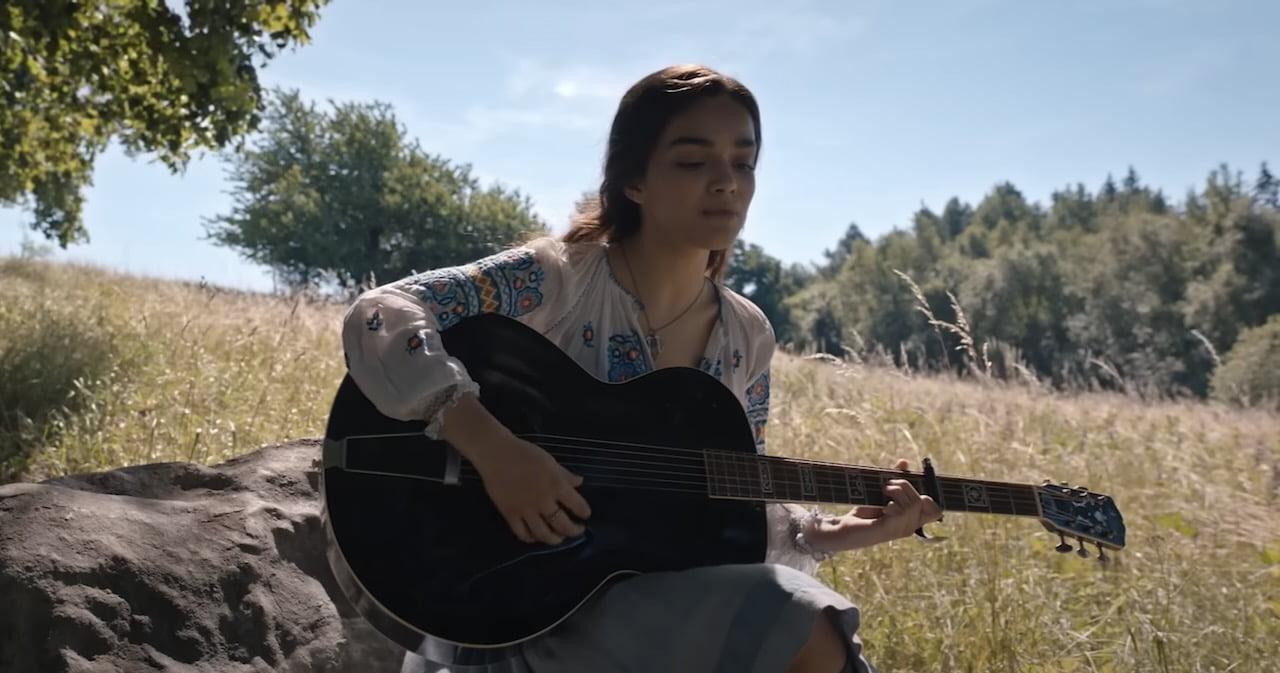
If you’re new to the Hunger Games, to these artists, or to roots music, we’re happy to be your guide. With performances from Molly Tuttle, Billy Strings, Sierra Ferrell, Charles Wesley Godwin, Bella White, and more there’s something here for bluegrass and Americana fans of all ages. But there are also hidden gems in Rachel Zegler’s performance. Zegler, who portrays Baird, plays a guitar influenced by a very famous finger picker indeed.
In no particular order, here are six of the best roots tunes on the official Hunger Games: Ballad of Songbirds and Snakes movie soundtrack.
“The Garden” – Sierra Ferrell
A slow-moving acoustic, country-ish standard with emotional fiddle swells, Americana firebrand Sierra Ferrell performs “The Garden” on the official soundtrack. The tune features a wistful dream of a green garden watered with something other than salty tears, and of better days ahead.
“Bury Me Beneath the Willow” – Molly Tuttle
Together, Molly Tuttle and Dominick Leslie provide the guitar and mandolin parts heard throughout much of the film, but also on “Bury Me Beneath the Willow.” This tune is more of a bluegrass standard and features Tuttle’s iconic picking style and vocals. The lyrics speak of deep betrayal by a lover.
“Nothing You Can Take From Me” – Rachel Zegler
In the official featurette video for this tune, Rachel Zegler whips a gathered crowd into a barn-stomping frenzy with her vocal performance on “Nothing You Can Take From Me.” While District 12 workers clap and dance and Zegler sings, Molly Tuttle revealed in an Instagram post that she provided the guitar parts.
“I played Lucy Gray Baird’s guitar parts and Dom [Leslie’s] parts are in the Covey Band,” Tuttle said in her Instagram caption. “I was nerding out the whole time we worked on this. Fun fact: the guitar I recorded with is the same one that you see [Zegler] play in the movie. The choice of guitar was inspired by the archtop Gibson that Maybelle Carter plays.”
“Burn Me Once” – Bella White
Bella White’s haunting, vibrato-filled vocals hang in the air on “Burn Me Once,” a finger-picked acoustic tune. The lyrics speak to being heartbroken and wishing for true love with a new, more mature partner.
“Cabin Song” – Billy Strings
By far one of the fastest, hardest-driving tunes comes – perhaps unsurprisingly – from Billy Strings. Employing his famous guitar-picking skills on “Cabin Song,” Strings sings of wishing to go back to the woods.
“Winter’s Come and Gone” – Charles Wesley Godwin
Seasonally appropriate given the movie’s November release date, Charles Wesley Godwin’s smooth but gritty vocals lends the perfect tinge of darkness to lyrics about a little bluebird, being left in the rain and snow, and not having enough money to see the winter through.
Even if you’re not a fan of The Hunger Games, it might be worth hitting up the theatre to support roots music featured in such a high-profile and recognizable title. Or, you know, you could just download, stream, or purchase the soundtrack — it’s available on Spotify, Apple Music, or wherever you get your folk-y tunes!
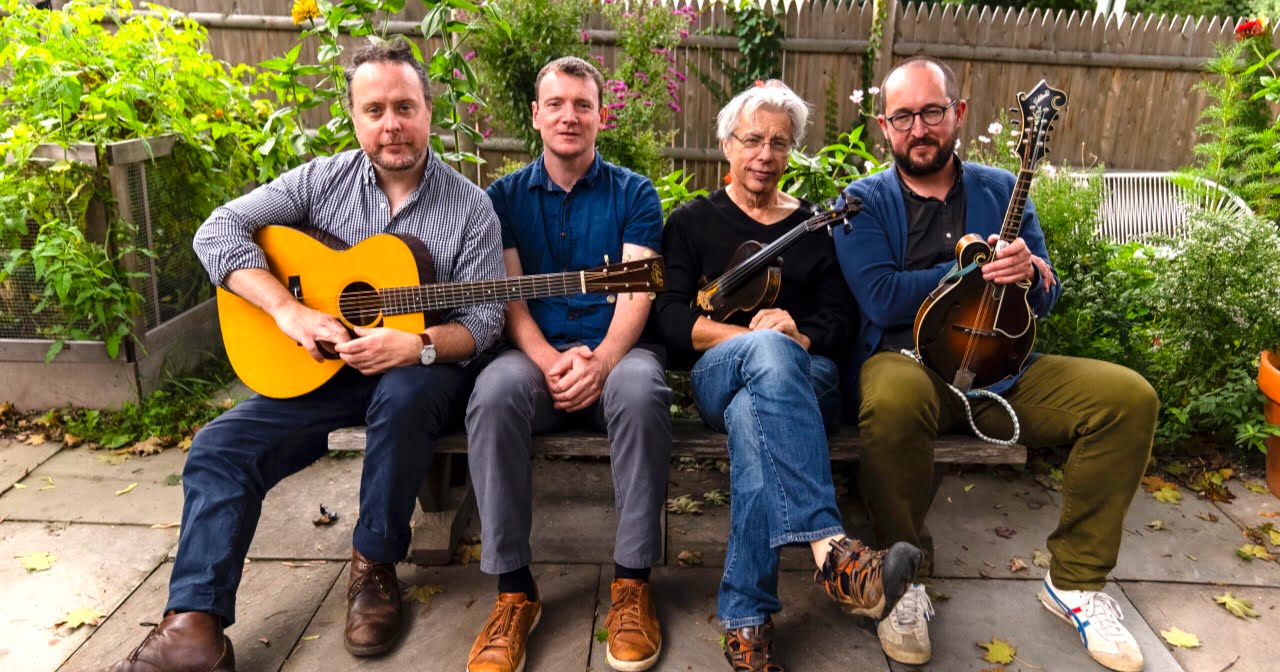
Artist:Mr Sun Hometown: Portland, Maine / Nashville, Tennessee / Brooklyn, New York Song: “Shovasky’s Transmogrifatron” (Ballet Snow Scene) Album:Mr Sun Plays Duke Ellington’s Nutcracker Suite Release Date: December 1, 2023 Label: Adhyâropa Records
In Their Words: “Everybody’s familiar with the Nutcracker Suite, but there’s this really beautiful recording of Duke Ellington and Billy Strayhorn’s arrangement of it – it was a really joyful, playful reimagining of this classic piece… It was an easy idea to propose, not fully appreciating the amount of time it would take to do it. Luckily, everyone in the band brings a tremendous skill set to the project.” – Joe K. Walsh, mandolin
“They basically said, ‘We’re gonna take this essential seed of an idea, but we’re gonna play it like us.’ And we’re doing the same thing – we’re playing it like Mr Sun, without doing anything too verbatim. It’s all about being ourselves. That’s the impression you get from Ellington, and that’s a thing we very much are: Ourselves.” – Grant Gordy, guitar
“It sounds simple, ‘Let’s just play this big band arrangement with four stringed instruments.’ In practice it’s been a little more complicated!” – Aidan O’Donnell, bass
“Duke Ellington of course was volcanically creative. He was one of the most creative musicians ever. He was beyond category. Melody, harmony, and rhythm – if you can put those things together in a way that reaches people, it’s gonna be successful in a way that means something.” – Darol Anger, fiddle
Artist:Jayme Stone Hometown: Longmont, Colorado Song: “Wreckage of the Fall” Release Date: November 10, 2023
In Their Words: “‘Wreckage of the Fall’ is a fever dream about transformation, mystical experience and emotional healing. I wrote it during a weeklong retreat at the Banff Center of the Arts. It emerged alongside a lot of tears, wild dreams, old wounds and a brief experience of clairvoyance. For a few days, I could see voices coming out my phone. I could feel the exact distance between me and other people in faraway cities like some kind of telepathic Google Earth. The song is full of witchy magic — runes, talismans, pentacles, and crystals. They started appearing and I just followed them.
“‘Wreckage’ is the first in a song cycle I’m currently calling ‘Anima,’ one the archetypes in Carl Jung’s map of the collective unconscious. I spent three years producing it — the longest I’ve ever worked on a track. There are many layers of guitar, my trusty Juno 106 from the late ’80s, an OB-6 synth and a lot of backup vocals care of Daniela Gesundheit. I programmed the drums in Abelton and then had John Hadfield play a real kit, which I then blended with the programming. The song feels like an MRI of my emotional state at the time. It’s some kind of magic to have a sonic postcard I can share now.” – Jayme Stone
Track Credits: Written by Jayme Stone.
Recorded and produced by Jayme Stone. Mixed and mastered by David Travers-Smith.
Jayme Stone – voice, guitar, synth, drum programming Emanuel Alexander – guitar, bass Daniela Gesundheit – voice John Hadfield – drums Greg Harris – synth
With the September release of her album Queen of Time, Nashville artist Lindsay Lou takes listeners beyond a creative journey – it’s more like a long, strange, and satisfying trip, where her “radical truth” conquers all.
A former bluegrass songsmith with roots in groups like her former backing band, the Flatbellys, and Sweet Water Warblers, Lou’s Queen of Time marks the start of another new solo chapter and follows a rough time in her life filled with earthquakes of change. She both lost a grandmother who was pivotal to her development and experienced the end of a marriage – all while her career picked up steam. But, through those endings came a new beginning. One where she better understood her place in the universe, both spiritually and musically.
On Queen of Time, Lou welcomes herself to that new identity (and all who care to follow), doing so with a fresh sound and some old friends. Featuring Billy Strings and Jerry Douglas, 11 thought-provoking tracks infuse her bluegrass roots with atmospheric folk, back-porch psychedelia, and more, as lyrics and voice weave together into something like a sonic dreamcatcher – snatching ethereal truths from the cosmos and translating them in ways the mind can just begin to process.
Recently, Lou spoke with BGS about this heady transformation, working with her friends, and how her “teacher-turned-Rainbow-Gathering-healer” of a grandma helped shape her radical spirituality.
BGS: Tell me how you’re feeling about music making these days? I know this album comes after a lot of change in your life, personally and professionally. Has the way you feel about making music changed, too?
Lindsay Lou: It felt like the most freeing recording endeavor that I have ever set out on. Working with [producer] Dave O’Donnell was really great. He held a ton of space for me creatively and emotionally and just in all the ways. So it was really nice. I brought in all of my friends, and what drew me to music to begin with was jams that my family would have, so feeling among my chosen family, being able to bring in the people who I’ve been jamming with in living rooms and on stages for the last several years, was really, really sweet.
Honestly, I’m feeling really inspired and just really happy about music. All of the tours have felt like they were in really good flow, and spiritually, it just feels very open and satisfying. I sort of blew up my life a few years ago, and the last three years or so I’ve been gestating and rebuilding my path. It was rebuilding on the foundation I had laid down with the Flatbellys and the Warblers, so it wasn’t out of nowhere, but it felt like there was a lot of unknown – and there were times where I felt there’s just some fear that goes into it. But now I’m on the cusp of watching all of this be born and come to life, and it feels so good. It’s like everything that I could have hoped for.
Seeing the record in the hands of people and hearing all the stories they send me about how it’s touched their lives has been very, very fulfilling. And I’m watching the album chart and watching different things on the horizon, different gigs and stuff – it’s just really inspiring, and I feel really excited to follow this new path that I’ve laid out for myself.
You don’t always get that payoff when your life blows up, so congrats! Tell me a little bit about the imagery behind the Queen of Time theme. You’re asking the listener if they know who they really are – did that come from an epiphany you had?
It definitely came from an epiphany and the ongoing question and journey of self-discovery, because it’s something you never achieve. It’s just a journey you’re always on. The imagery [for the song “Queen of Time”] was definitely from Absolem, the caterpillar from Alice in Wonderland. He challenges Alice, “Who are you?” And it was less about who she was and more about who she identified as, because we contain multitudes. So this is a broad and complex question, and as I’ve been playing it, the song has sort of come to life and revealed itself to me in new and unexpected ways. I always love that with songs.
You start the album off with this refrain saying, “I don’t need the world to hear me / I’m singing and nothing else matters.” What’s the significance of that to you?
I guess it’s just acknowledging the personal relationship. I always say that the voice is a window to the soul, but a lot of people have this horrible trauma that they carry with them – that they’re not a good singer and that they don’t have a good voice, and so they don’t ever sing. I feel so much grief thinking about people not even singing to themselves. In my darkest hour, the most soothing thing that I have found to do is to sing to myself. And it’s not because I think that I have the greatest voice, it’s because singing actually releases endorphins in your mind. It’s like a physiological truth that the experience of singing is medicinal and it’s a form of meditation.
The obvious interpretation of that is that as career musicians, you’re always wanting more people to hear you and wanting your fan base to expand. But at the end of the day, the reason that I sing and I think the reason anyone sings, is because it is a magical and medicinal way of expressing your soul, your spirit, your inner truth. So just remembering that value that I don’t need to be anywhere to let my voice ring and to connect with my own soul in that way, that’s really the most powerful thing.
I know your grandmother had a big part in influencing the record. But on top of everything else she was to you, did she also help you get into music?
I guess in a roundabout way, she did. Her greatest influence on me was spiritually. She was a preacher woman, and she lived her life the best that she could in the literal footstep of Jesus. So she took everyone in and she welcomed everyone. She was always preaching that [unless] you have not sinned, don’t cast the first stone and really strongly believed that no one will be left behind. Like if God said the greatest commandment was to love God and to love your brother, then she spent her whole life practicing that. Now, I call myself a praying atheist. I don’t necessarily connect with any institution of religion, but I do connect with the practice of spirituality and of love. Even Christianity says that God is love. So in my mind it’s like, “Well, then let’s just get right to the heart of the matter and call it love!” If we’re living in love and if we’re thinking critically and we’re following our radical truth, then we’re doing it right.
Was music a part of your childhood?
[My grandmother] had 12 children and she surrounded herself with hippies and counterculture. And her husband – the father of her 12 children – was a musician. He played the trumpet and he sang, so they always sang to their children, and the songs that she sang to them, they sang to their children. So I heard all the gospel songs that she sang to my mom, because my mom sang them to me, and there’s been various forms of family bands throughout the generations of all of her children. The older kids had a rock band, and they would get together and sing gospel songs in harmony and Beatles songs and folk songs, and the younger kids formed bands with the older cousins. There was just always music around, so I think she just held space for music.
She sounds like an amazing person. Is that her voice in the phone conversations you put on “Love Calls”?
Yeah. I played that song for a couple of my friends before she was in it. There was this long expansive jam and my girlfriends listening to it were like, “We want more Lou here.” I thought, “Well, what version of Lou makes sense to go there?” And it dawned on me that it was the version of Lou that interviewed grandma. I interviewed my grandma on the one hand to sort of preserve her radical life story for posterity. And on the other hand, as a way of knowing myself. I’ve collected about 27 hours of her telling me her life story and how she came to believe what she believes. It’s a little bit foggy now, but I had an idea of what story I wanted to put there, and once that conversation was in there, the song had the context that it was calling for.
What was the context?
The song is about someone being a guide of love for someone else. And the conversation is her telling me the story of meeting someone at a rainbow gathering who she had a conversation with, and later found out that that conversation talked them out of suicide. Many parts of this record came together in the context of me witnessing suicides in my music community, and addiction and mental health struggles. And pretty much all of my music goes back to that in some way, because of where I came from and the world that I see around me.
Other songs have that through line to it too, right? Like “Nothing’s Working”? I know you worked with Billy Strings on that one, how did it come together?
He and I get together every once in a while to write and we had gotten together and started that song. He had just been hanging out with Bryan Sutton and had this open B shape thing in his head that he started to play along with, and he was talking to me about Ionia – the town that he grew up in. He had just seen so many people get a job and try to make all the right decisions and try to always do the right thing, and just end up with nothing to show for it, because they’re stuck in a system that doesn’t support them and wasn’t built for them, or a scene that really wasn’t good for them.
We wrote the first verse, and kind of left it at that, and it sat in my voice memos for a couple years. Then I was on a plane on my way to the Jeff Austin tribute concert benefit [late member of Yonder Mountain String Band, who died in 2019], and I was just thinking about things. I think I finished it on my way home, but during that same week, I attended my cousin Emily’s funeral. She died in her 20s and was struggling with opiate addiction. I don’t mention either of them in the song necessarily, but it really got me into the headspace of thinking about people I know who are still alive, who are struggling with similar challenges. The song is about telling their story, and telling their story with compassion and honesty.
I noticed a lot of hard bluegrass influence on tracks like “Rules,” and along with Billy you have a collab with Jerry Douglas. Do you still feel like you can be creative in the bluegrass form these days? Or is it harder to do that as you grow as an artist?
Bluegrass gave me a lot of tools and a home. It gave me a place to belong and an opportunity to hone my craft, just in terms of tightening up rhythm and getting better at playing the guitar – and having an entire world of people I can get together with anytime, anywhere, and play any one of the many songs in the bluegrass canon and sing three-part harmony, like we’ve been a band our whole lives. It gave me so much, but I didn’t grow up in a family or a community that played bluegrass music. It was something I found in my early 20s. I’ve never been like people like Billy and Molly [Tuttle] – [bluegrass] is not just a part of their history, it’s like their earliest memories.
I grew up doing acoustic music, so there’s always going to be some element of that in my music. And I’m so grateful to have bluegrass now as a tool of expressing myself. But I don’t think I find it harder as I get older. I just find it easier to connect more authentically with my own voice, and bluegrass is a tool of doing that – but it’s not the only tool.
Personal nicknames (or rejected band names): A Justification for Playing the Banjo
Which artists have influenced you the most?
Our greatest source of fiddle tunes would be the American fiddler Rayna Gellert. We fell in love with her groovy playing and her taste in source material. Many of the tunes we play are from her record, Ways of the World, including the title track which we also recorded for our debut album, New Valley.
Sam Amidon is another source of inspiration. His exploration and retelling of the traditional material with a quite minimalist style of arranging is something that guides parts of our process and something we strive to achieve ourselves.
Anna & Elizabeth would be our go-to when it comes to vocals. What they do is just absolutely astounding and continues to give the shivers to this day, even after hearing their music many times over.
Lastly we have many inspirations from the Nordic, especially from the Swedish trad scene. The duo Hazelius/Hedin and the band Bäsk are both big inspirations. Just like us, they both play traditional fiddle/dance tunes in a modern style and arrange old songs and ballads with a lot of after thought.
If you had to write a mission statement for your career, what would it be?
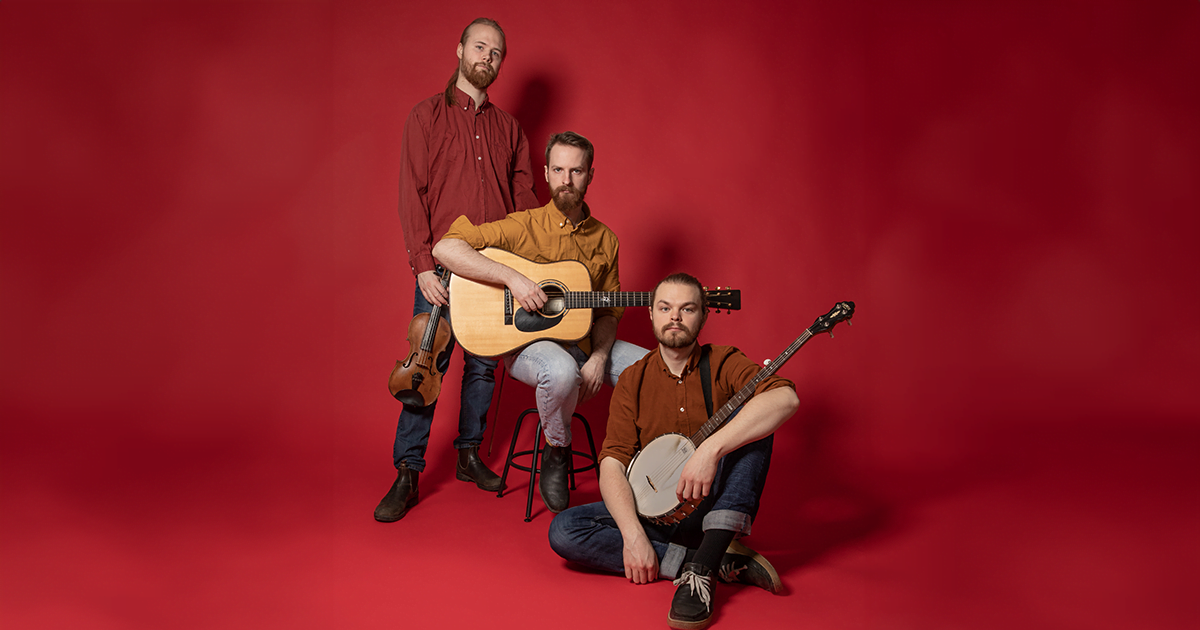
Musically, the three of us all come from the Nordic folk scene and the modern style of playing and arranging traditional Swedish dance tunes. When the band was formed we made a conscious choice that instead of fondly playing old-time music as historically or culturally accurate, we’d rather discover it and express ourselves in the way that we felt most natural. The result of that process became our own unique style of playing the old Appalachian fiddle tunes and songs. With interest and respect for the individual instrumental traditions, we arrange our music in a similar way that we would with the Swedish polskas or schottises. We call this style “Nordic Old Time” and we see it as our mission to explore this concept, and with it we can spread the traditional North American music to our peers and colleagues in the Nordic folk scene.
What has been the best advice you’ve received in your career so far?
Lukas, our banjo player, once met with the great Swedish folk musician Ale Möller, one of the founders of the Swedish world music scene. His advice to young musicians was to choose between being a specialist or a generalist. Either you can fit in any band or project or you establish your speciality so that when someone wants that, you’re the only one to ask. This spurred Lukas to both get more into the old time tradition that is otherwise a bit unknown in the Swedish folk scene, and to learn all stringed instruments there are. With all that being said, which path do you think he chose?
What’s your favorite memory from being on stage?
In April this year we performed at a small festival called Växjö Country Roots Festival. It’s a one day festival where six different bands that play American folk and roots music are doing one concert each during the evening. The event was sold out and there was a nice energy in the room. The performance went well and the audience seemed to like our way of interpreting the old time style, but the best thing about the festival was that it was a great way of gathering a lot of musicians doing bluegrass/Cajun/old-time/Americana music in Sweden.
It was really nice seeing the other concerts, but also jamming backstage, talking to other people doing a Nordic version of American folk music, and realizing how different it can sound. The arrangers did a great job with finding bands doing quite different sounds and even if it was a long night, the audience had a high energy the whole evening and it all ended with the musicians having a long jam session at the hotel until late night.
What rituals do you have, either in the studio or before a show?
As a band, the only ritual we have so far is to warm up our voices together. We’re including more and more songs in our repertoire, and to be able to push our voices on stage it’s important for us to do some warming up and check-ins with our intonation. Apart from that we all have some individual things we like to do before going up on stage.
If Adam has the time he likes to massage his feet. He picked that up from one of his teachers at a camp some years ago. According to this teacher, if you’re comfortable and grounded with your feet, you will be comfortable and grounded on stage.
Michael likes to take some time backstage to do some breathwork and settle his mind. If it’s possible, he also likes to take the time to get familiar with the room/venue from the perspective of the stage before the show, to be more comfortable and prepared for what to expect with that specific stage.
We’ve also learned from experience that Lukas needs to eat something before a show.
Artist:Hildaland Hometown: Portland, Maine Song: “The Selkie of Sule Skerry” Album:Sule Skerry Release Date: October 25, 2023 (single); November 3, 2023 (album) Label: Adhyâropa Records
In Their Words: “‘The Selkie of Sule Skerry’ is an old folk tale of which there are many versions. We love a rendition sung by Kris Drever in the band Fine Friday on their 2002 record, Gone Dancing. We took inspiration from this, wrote our own melody, and had a lot of fun with the arrangement. Ethan played both mandola and the electric mandocello on this one, we worked up a string arrangement together, and had Dan Klingsberg record some double bass for us, and Sam Kassirer laid down some synth.” – Louise Bichan
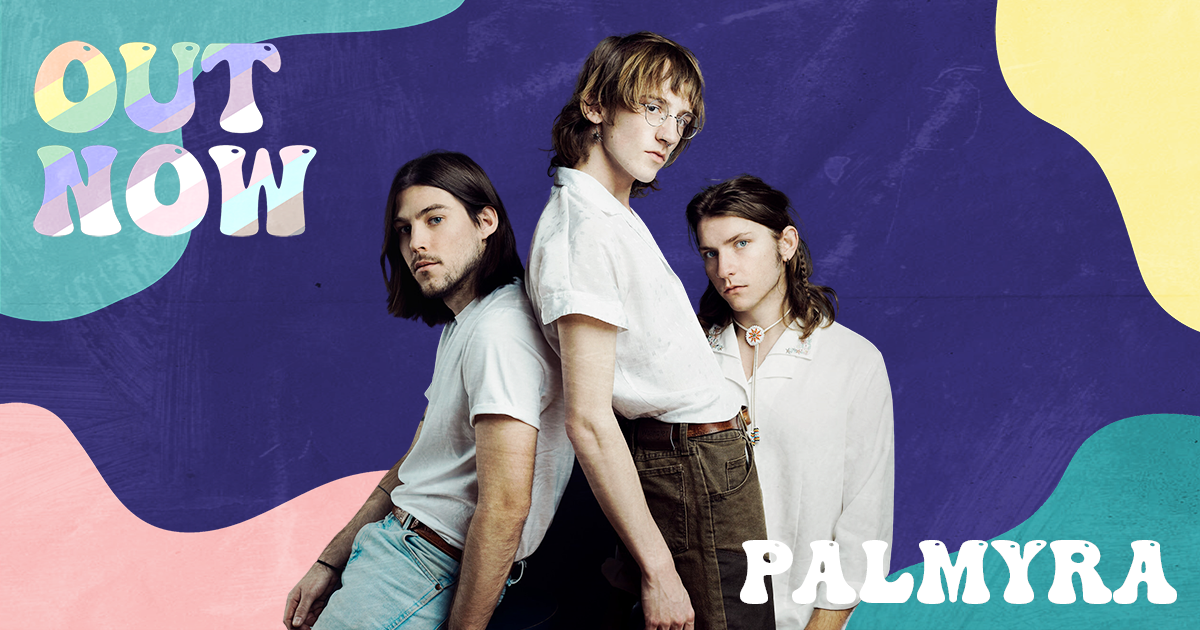
Palmyra is one of those bands you discover and can’t help but continue to come back to. They are not easily forgotten. They write lyrics that are poetic while being relatable – a duality that is not easy to accomplish.
The musicality of these three highly skilled instrumentalists – Teddy, Manoa, and Sasha – is strong and their energy is quirky, fun, and engaging. Lately, they’ve been touring all over the East Coast, recording, working with artists like Liv Greene and Jobi Riccio, who was previously featured on our column. If you can’t tell yet, the queer music industry is incredibly small and interconnected!
Palmyra uses their innovative songwriting and performance skills to transform traditional folk instruments and three-part harmonies into something you’ve never heard before. We hope you enjoy our Out Now interview featuring Palmyra.
(Editor’s Notes: Interview answers supplied by Sasha Them)
Who are your favorite LGBTQ+ artists and bands?
Among my absolute favorite things about our touring over the last few years are the moments that we get to share stages with other queer artists. Liv Greene is a personal favorite mine; all of their songs exist in their own world of brilliance and masterful craft. Brittany Ann Tranbaugh has songs that absolutely wreck me. Another artist that’s constantly on repeat in the van for us is Brennan Wedl! Their song “Bag of Bones” is one of the most incredible songs I have ever heard and turns me into a pulp every single time I revisit it.
For anyone reading this who might not be out of the closet, were there any specific people, musicians, or resources that helped you find yourself as a queer individual?
Yes! I am an out-and-proud queer person now, but it took quite a while to settle into the person I am today. There are so many artists that helped move the needle for me; particularly the abundance of queer and trans folks I connected with online during the lockdown. Backxwash is top of the list for me; she’s a killin’ rapper and producer based out of Canada and her music helped me to understand that as artists we can channel complicated emotions and inner turmoil to create something empowering and badass and beautiful.
What are your release and touring plans for the next year?
Touring has been our full time job for two-and-a-half years now, and we plan on continuing to hit the road in full force in 2024. Our hope is to branch out to some new regions and cities, and I am sure we’ll be visiting all of our favorite places along the East Coast, from Maine to Georgia. Now that I say that, I’m realizing that, as a band, we kind of follow the Appalachian Trail in our tour routing…
We’ve got two more singles coming out this year, and are planning on putting out a few projects in 2024. I am so excited to share the music we’ve been working on.
This year, you’ve been sharing stages with bands like Watchhouse, playing festivals, and touring all over the East Coast of the U.S. What has that been like for you?
This year has definitely been our wildest one yet. Some of the experiences we’ve had, like opening for Watchhouse, have been so surreal to me. It feels like the work we’ve been putting in for so long has started to pay off in very real ways. Getting to play Newport Folk Festival is one of the highest honors any of us have ever had and it is beyond cool to get to connect with folks all over just by doing the thing we all love most – playing and writing songs.
What does your songwriting process look like? You have incredibly strong lyrics that are both relatable and poetic. Do you map out the structure and content of the song first? Do you think about song structure and tools like prosody, lyrical placement, and rhyme types? Do you spend a lot of time editing?
The songwriting process looks pretty different for all three of us, but each song typically starts with one writer and then is brought to the group to arrange and flesh out. There’s a very special (and sometimes uncomfortable) moment that has to happen when one of us brings a song to the group; you have to be able to release ownership of the thing you’ve created so that it can become a collective version that everybody has had their hands on.
For me, I usually start with one line that comes to me when I’m away from any instruments – typically when I’m out driving or walking! I am very particular about what words feel good coming out of my mouth and what feels the most authentic to my own personhood. Prosody and internal rhyme schemes are almost always on my mind, especially when I’m reworking a tune. I love getting into the nitty gritty parts of a song, and I love the moment I am able to zoom out when a song is finished and take care to make sure everything fits together.
Photo Credit: Joey Wharton
Out Now is a partnership of Queerfest and BGS authored by Queerfest founder and director Sara Gougeon.
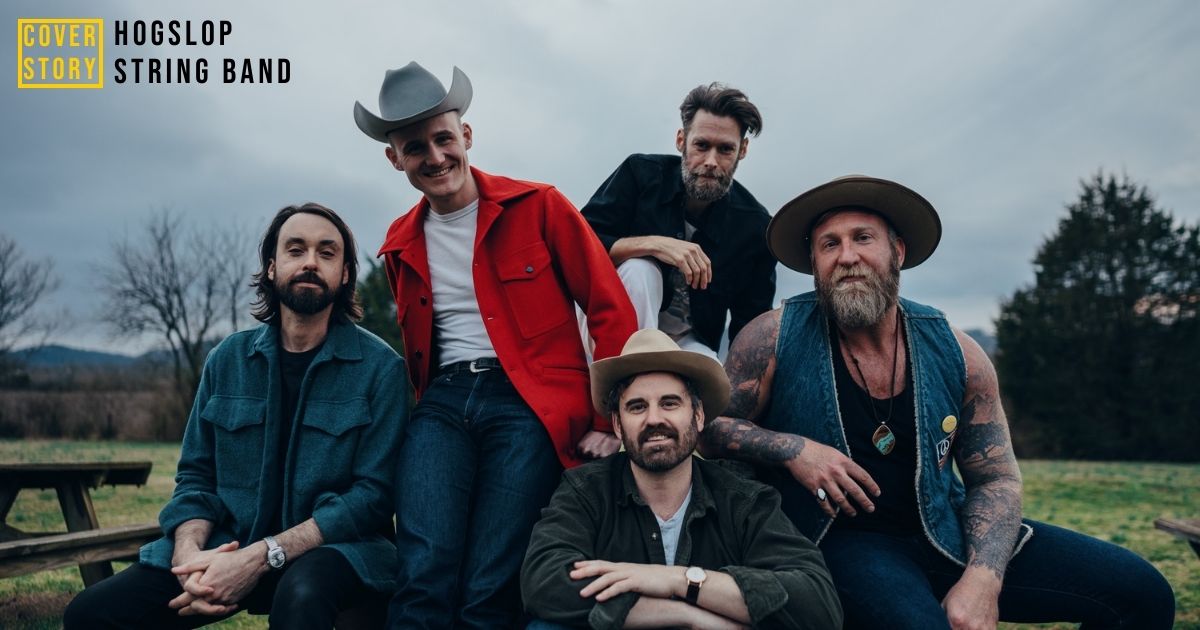
Few bands have benefitted from the same type of steady, organic growth as the Hogslop String Band. Originally formed in 2009 as a pickup band for a square dance, the group played together for 10 years before releasing their first album. In that time, their camaraderie strengthened – as did their songwriting, performance style, and fanbase.
Following their 2019 self-titled album, the group – Gabriel Kelley, Daniel Binkley, Kevin Martin, Will Harrison, and Pickle – has been hard at work on their next record (expected spring 2024). Produced by Kelley at his own Mobile Traveler Studios in Bells Bend, 10 miles west of Nashville, the record illuminates the purely original sound that the Hogslop String Band has found over nearly 15 years of making music together.
BGS caught up with Gabriel Kelley and Daniel Binkley to talk about the new music, the formations of the band, and where it’s all headed.
You formed in 2009, but it was 10 more years before your first album came out. What has the journey been like, coming from such casual origins to debuting on the Opry in 2022 and looking ahead to releasing your sophomore record?
Gabriel Kelley: We sure did. We were, to be honest, just a rag-tag bunch of buddies. Most of us had grown up playing old-time music or found it in our early years. For a very long time, our motto was a little more on the punk rock side: “We are not a band” is what we said for the first 10 years of the band. It was just a way to get together and have a good time. It wasn’t until a few years ago that we started taking it more seriously. One thing that’s cool about our Opry debut – and Binkley can fill you in – is that his family has been a part of the Opry since the ’20s.
Daniel Binkley: My family has been in Nashville forever – my great-grandfather, Amos, he had a band called the Binkley Brothers’ Dixie Cloghoppers, and they were a part of the very first Opry cast in 1926. Backstage they have a placard for every member and I found my family back there. That was a very special moment for me. They mentioned it during the broadcast, and we actually ended up playing one of the Binkley Brothers’ songs on the Opry.
For a band with a foundation in traditional music, i.e, fiddle tunes, where do you find the balance between introducing your own original material and digging from the old-time repertoire?
DB: Old-time music is sort of the school that we come from. So when we write original stuff, it’s gonna come through that lens. Once you run it through the “hogslop filter,” it’s gonna sound like hogslop. There’s just something about that foundation, and our knowledge of each other as musicians, that makes it come together – whether it’s traditional tunes or original material.
GK: We absolutely don’t ever want to lose the component of old-time string music and we’re currently in a time where that music seems a lot more accessible and is getting thrown under the big umbrella that everyone is calling Americana. We don’t do a show without old-time tunes in there. A lot of the other music we take influence from – blues, rock and roll – they were actually getting inspiration from early country and old-time music. So for us, it all goes in the same bucket.
You’re definitely known for that high energy string band sound, but this new album has quite a range of pace. How do you stay true to that sound while incorporating softer material like “Mississippi Queen?”
GK: We’re very much a live band and in that setting it’s about that high energy, rowdy thing. We love that, but amongst us in the band, three to four of us are songwriters and have very different approaches to songwriting. We’re very lucky to have Daniel in the band, he’s one of my favorite songwriters and has an ability to write some of that intimate, close to the chest material, like “Mississippi Queen.” And you need that delicate stuff just as much as you need the fast, hard hitting, and fun stuff. We feel that it’s very important to show audiences (and ourselves) that we have those dynamics.
DB: A lot of our shows at festivals are late night, midnight shows and it’s almost more like a punk-rock show. But there are also theaters or other venues where you can really showcase more of that dynamic. Kevin Martin has a few tunes on the album and he writes totally different that I do. He’s more rock and roll and I guess I’m the softy. It’s nice to have a little variety – especially on a record.
What’s special to you about this upcoming album, compared to music you’ve released in the past?
GK: Personally, watching this band shift and develop over 15 years has been pretty wild. This is the first record of the band’s that I’ve produced, and what’s special to me is (and I’m not saying that we’re reinventing the wheel), I’ve never heard quite the blend of genres that we’ve thrown together. It’s cool that Hogslop is still shifting and mutating and we’re still discovering that. And that we’re embracing our songwriting – everything on this record is our own material, and I’m really proud of that.
DB: I agree with all of that! One thing I’ll add that was a major game changer – and this is thanks to Gabe – was the ability to take our time in the studio and not be under the time constraints that’d you’d be under paying for studio time somewhere.
What else is on the horizon with the release in 2024?
GK: We’ll be in the studio most of November, and then we’ve got the Ryman show [supporting the Mavericks] on December 1. As different as this new music is, we’re really woodshedding and figuring out our live show. It sounds like our ‘24 is gonna be busy – we’re mainly a festival band, so that’s where we’re headed.
Arkansas-based country and old-time troubadour Willi Carlisle has announced his upcoming, Darrell Scott-produced album, Critterland, with a delightful stop-motion music video. (Watch above.) Set for release January 26, 2024 on Signature Sounds, the collection once again draws on Carlisle’s apt self-positioning as a sort of rural, countercultural, folklorist guru, crafting poetic yet down-to-earth songs that feel all at once fantastic, resplendent, whimsical, and– well, trashy. It’s a dichotomy not unknown to American roots musics, but rarely is this paradoxical construct inhabited so intentionally and subverted so artfully. It’s a language Carlisle isn’t just fluent in, it oozes from his spirit and lives in his bones.
On “Critterland,” Carlisle positions himself not as an omniscient narrator, but well within his own communities – musical and otherwise – as he examines how the “big tent” of his prior album, Peculiar, Missouri, could be put into action. And, in doing so, he demonstrates how varied, broad, deep – and sometimes ugly – open arm, open heart policies can be. But in that mundane, in that bittersweet, there is endless beauty.
With that thought in mind, Darrell Scott as producer and collaborator here isn’t merely a solid choice, but a nearly perfect one. You hear his touches in the confidence Carlisle has stepped into – with hundreds and hundreds of shows under his belt – with his soaring, passionate vocal on “Critterland,” raising its possums and raccoons and armadillos to saint-like status. Because, after all, aren’t all living beings divine? Don’t we all have something to contribute to our own, particular critterlands? Carlisle says so, and makes a compelling case.
Artist:Lonesome Ace Stringband Hometown: Toronto, Ontario, Canada Latest Album:Try to Make it Fly
(Editor’s Note: Answers provided by Lonesome Ace Stringband banjoist Chris Coole.)
Which artist has influenced you the most … and how?
Although I think the answer for each of us individually would be different, I think the most obvious single influence on us as an ensemble would be John Hartford. Specifically, the last several albums he made with the “John Hartford Stringband” (which featured Bob Carlin and Mike Compton, among others). Their approach to playing old-time fiddle tunes, especially on the albums Wild Hog In the Red Brush and Speed of the Old Long Bow, was based on a highly improvised and reimagined way of playing backup that Hartford called “Windows.” Although it wasn’t a conscious decision, and we don’t follow the approach to the letter, I think the spirit of those albums really influenced the way we play and perform old-time music, especially (instrumental) fiddle tunes.
What other art forms — literature, film, dance, painting, etc. — inform your music?
As a band, I think the art form outside of music that has had the biggest impact is the crank (prank) phone call. For years we’ve been listening to the Jerky Boys. We are old enough to remember the late ’80s and early ’90s when underground Jerky Boys cassette tapes were passed around organically and treasured by all who were lucky enough to possess them. About five years ago, the guys from The Henhouse Prowlers introduced us to Longmont Potion Castle, who has been anonymously releasing psychedelic crank calls since the ’80s (he’s still at it). You might think I’m being tongue in cheek when I say that these influence us as a band, but the attention to detail – especially in regard to language – and the level of improvisation are both relatable to music and inspiring. Most importantly though, it’s a great reminder that we live in a crazy world, and it’s best not to take yourself or anyone else too seriously.
What rituals do you have, either in the studio or before a show?
We like to get our heart rates up before a show if possible and maybe a bit of stretching. This often involves us having an aerobics dance party to ’80s pop and new wave. “Betty Davis Eyes” by Kim Carnes is a favorite, as is “Dance Hall Days” by Wang Chung. [John] Showman favours doing some version of the “Mountain Climber” while Max [Heineman] and I are usually doing jumping jacks, dancing on the spot, or some sort of hippie clogging. Seeing three middle-aged men dancing around in the green room to The Pretenders or Blondie seems to warm the hearts of promoters and venue staff and there are probably bootlegged videos of us doing it circulating around.
If you had to write a mission statement for your career, what would it be?
The title of our new album is Try to Make it Fly. That is a line from one of the songs called “Sweeter Sound.” I’d say that song encapsulates what our mission as a band is. We are all in our 50s and have been playing music professionally (mostly full time) since we were teenagers. That song is about not giving up, even when everything might seem to be pushing you in the other direction. It’s about keeping sight of what’s important – community, friends, family, art – and letting the quality of those things in your life be the gauge of your success. With where we are in our lives and careers, that seems to be the only way forward.
Since food and music go so well together, what is your dream pairing of a meal and a musician?
There’s a song on the new album called “Smoke on the Shoulder” which is basically a recipe for smoking pork shoulder. We all love to cook and appreciate good food. We rarely miss a chance to stop at a good BBQ joint when tour routing allows. With this in mind, I’m going to say the food would be smoked brisket and pulled pork with sides of coleslaw, beans, and macaroni. The musical accompaniment to this meal would be provided by, none other than, George Jones.
Photo Credit: Joel Varjassy
This website uses cookies to improve your experience. We'll assume you're ok with this, but you can opt-out if you wish.AcceptRejectRead More
Privacy & Cookies Policy
Privacy Overview
This website uses cookies to improve your experience while you navigate through the website. Out of these, the cookies that are categorized as necessary are stored on your browser as they are essential for the working of basic functionalities of the website. We also use third-party cookies that help us analyze and understand how you use this website. These cookies will be stored in your browser only with your consent. You also have the option to opt-out of these cookies. But opting out of some of these cookies may affect your browsing experience.
Necessary cookies are absolutely essential for the website to function properly. This category only includes cookies that ensures basic functionalities and security features of the website. These cookies do not store any personal information.
Any cookies that may not be particularly necessary for the website to function and is used specifically to collect user personal data via analytics, ads, other embedded contents are termed as non-necessary cookies. It is mandatory to procure user consent prior to running these cookies on your website.