Hard Drive, “Missouri Road”

Ask a bluegrasser to define “mash” — that driving, head-bobbing, modern iteration of traditional ‘grass that refuses to commit to a minor or major third — and their answer will more than likely include some sentiment similar to, “It’s hard to explain, but I know it when I hear it!!” It’s true. The SON!-inducing subgenre within a subgenre can be traced back to artists like Tony Rice, Alison Krauss & Union Station, Lonesome River Band, and many others, but it does not have one single, tangible origin point or dictionary definition. 

Today, you can hear mash-inflected tunes from major touring bands and festival campgrounds alike — and especially from the halls of the Society for the Preservation of Bluegrass Music of America’s (SPBGMA) annual gathering in Nashville. In the past, mash was generally relegated to the much more traditional-leaning spheres of bluegrass, but in recent years musicians and pickers from other circles such as old-time, Boston’s chamber-influenced bluegrass scene, and the Pacific Northwest and Colorado’s string-band vibes have championed mash as their own as well.

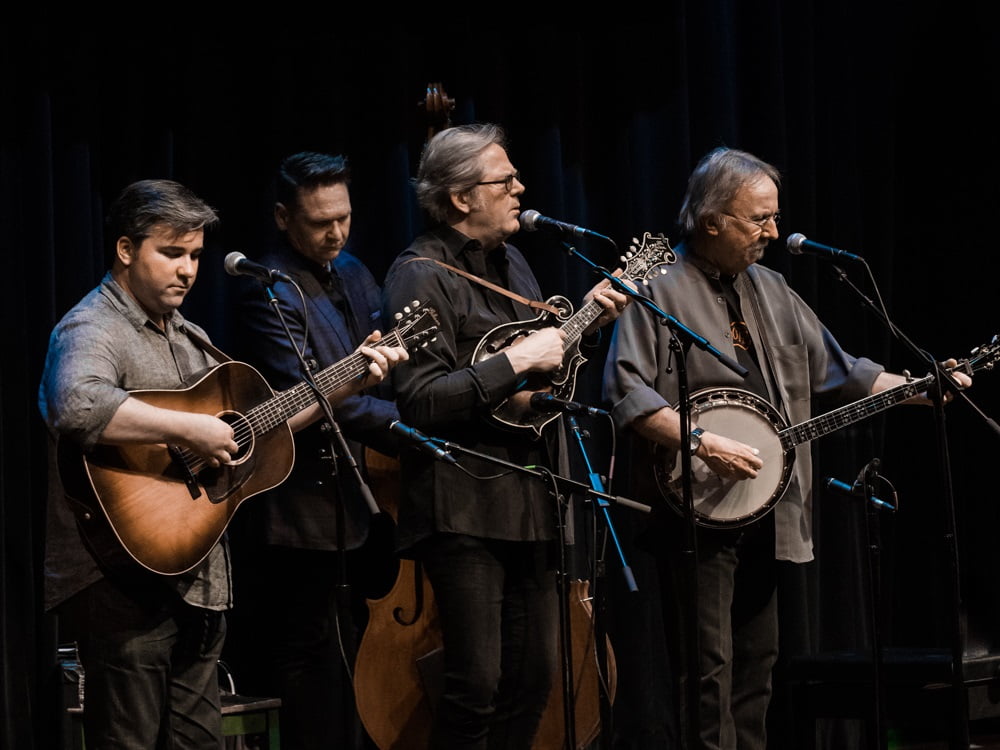
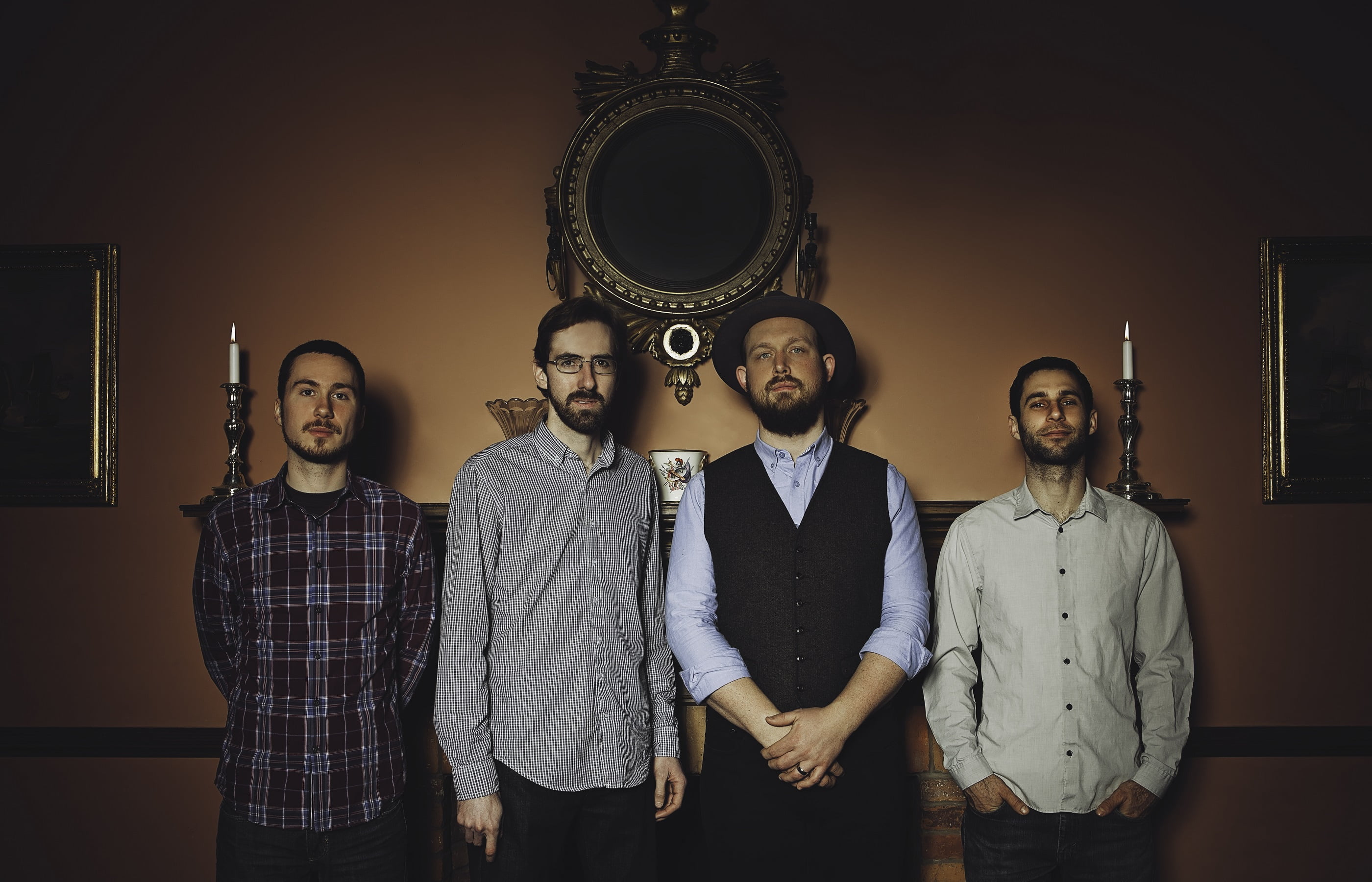
One such group is Hard Drive, a North Carolina-based bluegrass outfit that resulted from four musical roommates — Tatiana Hargreaves (fiddle), Aaron Tacke (banjo), Sonya Badigian (guitar), and Nokosee Fields (bass) — banding together. Their debut album, Random Access Mash, listens more as traditional, down home bluegrass with a fiddle focus and old time spirit, but it calls itself “mash.” Even the band name itself is a tongue-in-cheek reference to this specific picking culture. “Missouri Road” is a cheerfully loping rendition of a Kenny Baker tune that again finds the project straying from the ascribed format, but lets Hargreaves’ deliberate, timeless fiddling shine. The entire project is a delightful subversion of our expectations of what traditional bluegrass is supposed to be. And if it’s mash, it’s perhaps executed as artfully and subtly as humanly possible. Do we always know it when we hear it? 

22 Top Bluegrass Duos

Everyone knows that in the early days of bluegrass, before that term was even coined, all you needed to make a “band” was two people and two instruments. Fiddle and banjo? Sure. But in those days, they’d take whatever they could get. Duos are still a strong presence in the music today, in brother/sibling duos, spouse-led bands, and legendary collaborations.

Check out these twenty-two bluegrass pairings — and their accoutrement — on BGS:

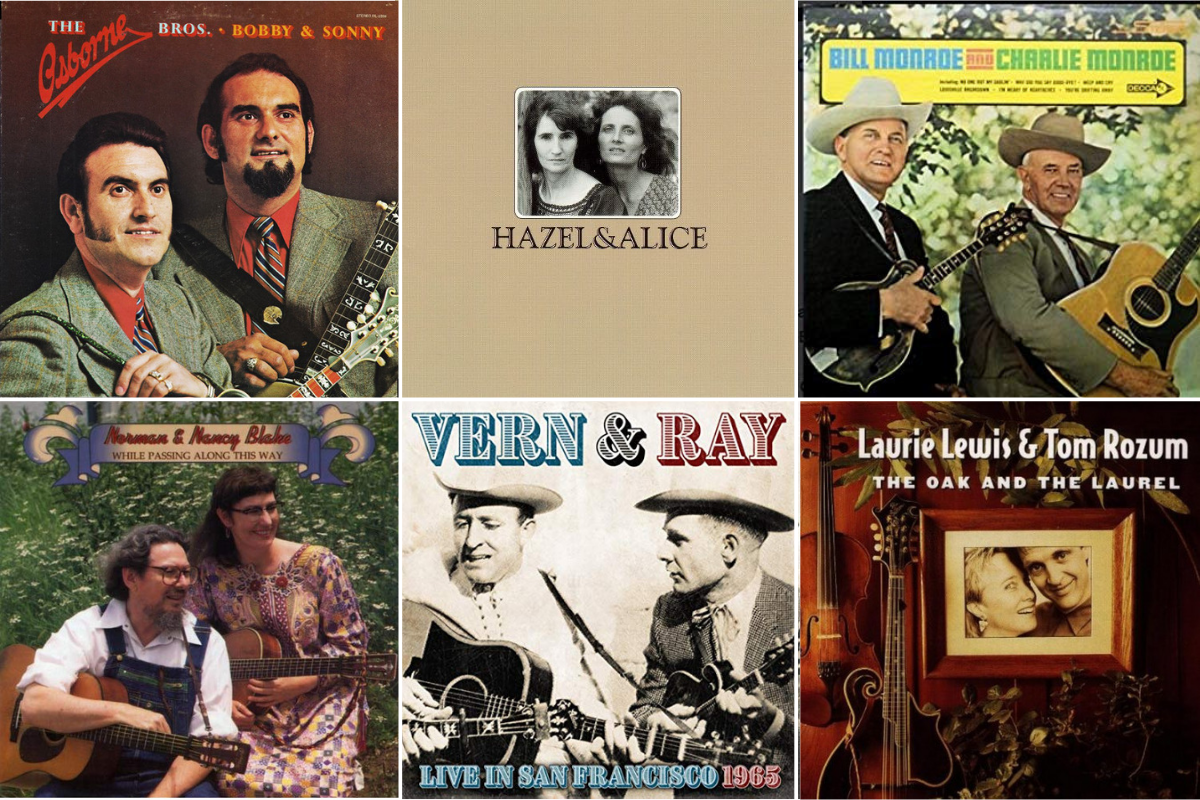
Bill & Charlie Monroe

Before Bill Monroe, the Father of Bluegrass, made his indelible mark on the genre (quite literally giving it its name), he was already a popular performer with his brothers Charlie and Birch. Birch left The Monroe Brothers in the mid-1930s, and Charlie and Bill went on to enjoy success on the road, in the studio, and on the radio — until rising tensions and a fateful fight in 1938 caused them to split ways. But, without that fight, we may not have “bluegrass” at all.

Flatt & Scruggs

December 1945. The Ryman Auditorium. Nashville, Tennessee. Bill Monroe and his Blue Grass Boys stepped on stage for the Grand Ole Opry with Lester Flatt and Earl Scruggs among their ranks for the very first time and bluegrass as we know it today was born. Flatt & Scruggs left Monroe in 1948 to join forces and went on to become one of the few ubiquitous, household names of bluegrass.

Hazel Dickens & Alice Gerrard

Undeniably trailblazers, Hazel Dickens & Alice Gerrard are widely regarded as the first women in bluegrass to capture the “high lonesome” sound popularized by Monroe, the Stanley Brothers, and others. They toured across the U.S., often supporting causes that benefited forgotten, downtrodden people from all backgrounds and walks of life. They were inducted into the Bluegrass Music Hall of Fame in 2017.

The Stanley Brothers

Natives of the music-rich southwest corner of Virginia, Carter and Ralph Stanley were prolific recording artists and touring musicians in bluegrass’s first generation. Countless songs written and/or popularized by the Stanley Brothers and their backing band, the Clinch Mountain Boys, are staples of the genre today. Carter passed in 1966 and Ralph continued until his death in 2016 with the Clinch Mountain Boys — who still tour today with Ralph’s son, Ralph II.

Don Reno & Red Smiley

Unsung trailblazers of the first generation of bluegrass pickers, Reno & Smiley were tireless innovators with a jovial, sometimes silly flair to their songs and instrumental prowess. Their duets are simply some of the best in all of bluegrass. The duo performed together off and on from the early 1950s to the 1970s — but both passed away much too young, Smiley in 1972 at the age of 46 and Reno in 1984 at the age of 58. Reno’s frenetic, electric and pedal steel guitar-infused licks remain unmatched in banjo picking today.

Jim & Jesse McReynolds

With matching suits and impeccable pompadours brothers Jim and Jesse McReynolds often brought rockabilly, rock ‘n’ roll, mainstream country and pop sensibilities to their take on sibling harmonies and bluegrass brother duos. Jesse’s crosspicking on the mandolin was — and continues to be — absolutely astonishing. Jim passed in 2002, Jesse continues to perform on the Grand Ole Opry to this day. At the time of this writing, he is ninety years old.

Laurie Lewis & Tom Rozum

Laurie Lewis often takes top billing — as leader of the Right Hands and before that, the Bluegrass Pals, and others — but since 1986 her musical partner Tom Rozum has almost constantly been at her side on the mandolin and harmonies. Their duo recording, The Oak and the Laurel, was nominated for a Grammy in 1995. Here is the album’s title track:

Bill Monroe & Doc Watson

What is there to say? Two of the folks who paved the way for this genre, laying a foundation so strong and far-reaching that we still can’t fully comprehend its impact. Bill and Doc collaborated on more than one occasion and we, as fans and disciples, are lucky that so many of these moments are captured in recordings and videos.

Del McCoury & David “Dawg” Grisman

At face value, an unlikely combo, but their friendship goes back to the early 1960s and their musical endeavors together began soon after. As Del slowly but surely became a bastion for traditional bluegrass aesthetics applied broadly, Dawg embraced jammy, jazzy, new acoustic sounds that sometimes only register as bluegrass-adjacent because they come from the mandolin. Opposite sides of the same coin, their duet makes total sense while at the same time challenging everything we think we know about the music. In this clip, Dawg sings tenor to Del — not many would be brave enough to try!

Ricky Skaggs & Keith Whitley

They got their start together in the Clinch Mountain Boys with Ralph Stanley, making some of the best recordings in the history of the band’s many iterations. Before they both struck out on wildly successful, mainstream careers they recorded a seminal duo album together, Second Generation. It remains one of the most important albums in the bluegrass canon — especially as far as duos/duets go.

Norman & Nancy Blake

Norman is well known for his flatpicking prowess, which has graced recordings by John Hartford, Bob Dylan, the Nitty Gritty Dirt Band, and so many others. He and his wife, Nancy, were married in 1975 after having begun their musical forays together a year or so earlier. Nancy’s command of many instruments — cello, mandolin, and fiddle among them — balances neatly with Norman’s jaw-dropping, singular style on the flattop. Their inseparable harmonies and timeless repertoire are merely icing on the cake.

Jimmy Martin & Ralph Stanley

How their first album together, First Time Together (cough), is not more well-known is truly impossible to understand. The King of Bluegrass and the Man of Constant Sorrow twining their extraordinary voices must have been ordained by a higher power. It’s a good thing they answered the call. Be careful, Jimmy’s percussive G-runs feel like a slap in the face — in the best way.

Darrell Scott & Tim O’Brien

Their live albums together and their co-written masterpieces belong in every museum and shrine to roots music around the world. Both of these triple threat (Quadruple? Quintuple? When do we stop counting?) musicians are rampantly successful in their own right, but together they are simply transcendent. Their cut of “Brother Wind” deserves a listen right this instant and “House of Gold” gives you the harmony acrobatics gut punch you need every time. It was nearly impossible to choose just one, but here’s a hit that was recorded once by a little group called the Dixie Chicks.

Ricky Skaggs & Tony Rice

Again, words fail. Skaggs & Rice is a desert island record. Each and every time these two have graced a recording or a stage together, magic has been made, from their days with J.D. Crowe & the New South and on. We only wish that they could have done more together.

Vern & Ray

Vern Williams and Ray Park were California’s original bluegrass sons. Though they were both born and raised in Arkansas, they relocated to Stockton, California, as adults. They’re often credited with “introducing” bluegrass music to the West Coast. They disbanded in 1974 (both passed in the early 2000s), but their influence is palpable to this day, even if they’re sorely unheard of east of the Mississippi. This deserves correction! Immediately!

Eddie & Martha Adcock

Eddie is a pioneering banjo player who’s a veteran of both Bill Monroe’s Blue Grass Boys and The Country Gentlemen, two decidedly legendary and influential acts. His style is somewhat wacky, certainly singular, but effortlessly bluegrass and traditional as well. He married Martha in the late 1970s and the pair have toured prolifically as a duo. In 2008, Eddie underwent brain surgery to correct debilitating hand tremors. He was kept awake, playing the banjo during the procedure — and there is jaw-dropping film of this online!

Dailey & Vincent

When Dailey & Vincent burst onto the scene in the mid-aughts after both having notable careers as sidemen, the bluegrass community rejoiced at the reemergence of a wavering art form within the genre — traditional duo singing. However, Jamie and Darrin, whether they knew it at the time or not, had their sights set much higher. Now more of a full-blown stage show than a bluegrass band, their recordings and concerts are a high-energy, charismatic, and downright entertaining mix of classic country, Southern gospel, quartet singing, and yes, bluegrass.

Kenny & Amanda Smith

Husband and wife Kenny and Amanda first recorded together in 2001, going on to win IBMA’s Emerging Artist of the Year award two years later. They’ve now cut eight albums together, all clean, clear, crisp modern bluegrass that centers on Amanda’s impossibly bright vocals, which maintain a personal, country hue alongside Kenny’s fantastic flatpicking. SON!

Tom T. & Dixie Hall

Two of the most recent inductees into the Bluegrass Music Hall of Fame, Tom T. and Dixie Hall wrote hundreds and hundreds of songs cut by country, bluegrass, and Americana artists alike. Tom T.’s reputation and chart-topping originals tend to eclipse Dixie, but he is unyielding in his efforts to point that same spotlight at his beloved wife instead, who passed away in 2015. Though she never performed — definitely not to the extent that Tom T. did — the marks she left on bluegrass, country, and her partnership with her husband are indelible. This number was co-written by the pair:

The Louvin Brothers

Recipients of IBMA’s Distinguished Achievement Award in 1992, the Louvin Brothers are another example of early bluegrassers who enjoyed the amorphous, primordial days of the genre before it became more and more sequestered from mainstream country and country radio. Their duets are iconic, with counter-intuitive contours and lines that bands and singers still have difficulty replicating to this day. Their most famous contribution to the American music zeitgeist, though, might not be their music, but the spectacular cover art for their 1959 album, Satan Is Real. If you haven’t seen it, Google it right now.

Delia Bell & Bill Grant

Natives of Texas and Oklahoma, respectively, Delia Bell and Bill Grant met through Bell’s husband, Bobby, in the late 1950s. Between their band, the Kiamichi Mountain Boys, and their duo project they recorded more than a dozen albums together through the 1980s. Famously, Emmylou Harris became a fan when she heard their cut of “Roses in the Snow,” which Harris went on to record on her eponymous bluegrass record. Bell died in 2018.

The Osborne Brothers

Though they popularized a style of three-part harmony that had never been heard before — the infamous “high lead” harmony stack — their band, no matter who it may have included over the years, was undeniably helmed and anchored by Bobby and Sonny. (Which does explain the name.) You may remember “Rocky Top” and “Ruby” first and foremost in their discography, but the hits they’ve contributed to the bluegrass songbook are innumerable. Here’s one such classic.
Brandi Carlile: An Interview from Doc Watson’s Dressing Room

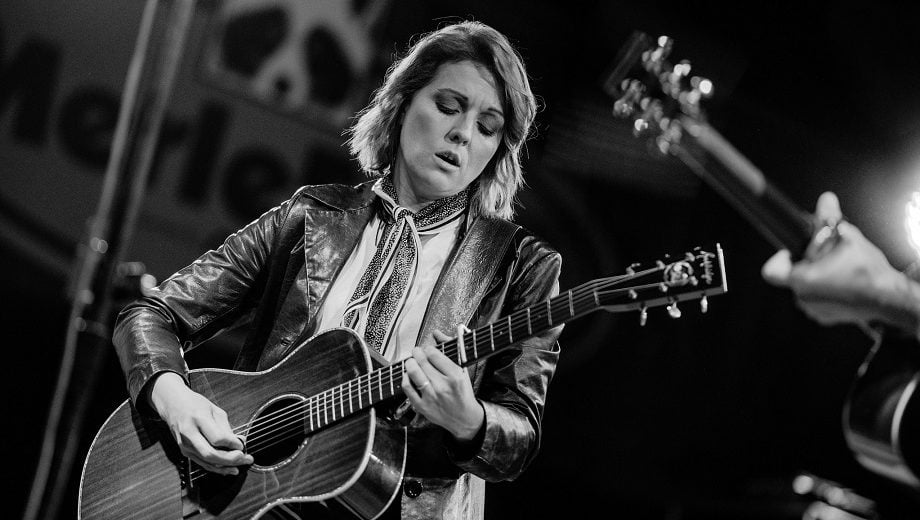
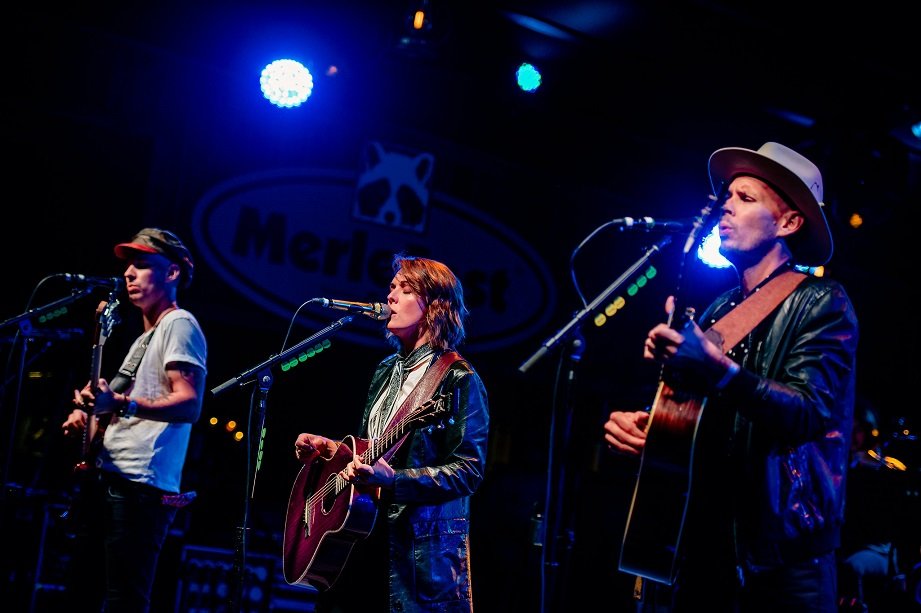
Give or take, it’s about 2,800 miles from Brandi Carlile’s native Seattle, Washington, to Wilkesboro, North Carolina, home to the renowned music gathering known as MerleFest. (See photos.) And as the Saturday night headliner this year, the award-winning singer-songwriter took to the Watson Stage during the 32nd annual MerleFest, surrounded by the Blue Ridge Mountains and an overzealous audience in the neighborhood of 30,000.

Backed by her rollicking Americana/indie-rock band, which includes founding members Phil and Tim Hanseroth (aka: “The Twins”), Carlile held court during an unforgettable performance that led to one of the festival’s finest moments — Carlile around a single microphone with North Carolinians Seth and Scott Avett for an encore of the Avett Brothers’ “Murder in the City.”

But a few hours before that performance, Carlile found herself standing backstage alone in the dressing room of the late Doc Watson, the guitar master who founded MerleFest. Gazing around the small square space, she looked at old photos of Watson and other legendary Americana and bluegrass performers that have played MerleFest over the years: Earl Scruggs, Alison Krauss, Peter Rowan, Rhonda Vincent, Tony Rice, and so forth.

Carlile smiled to herself in silence, truly feeling humbled in her craft and taking a moment to reflect on her wild and wondrous journey thus far, all while possessing a once-in-a-generation talent — something broadcasted across the world during her staggering performance of “The Joke” in February at the Grammys, and amid a standing ovation from the music industry. Remarkably she also picked up all three Grammys in the American Roots Music categories.

We met Carlile in Watson’s dressing room before the show for our interview and surveyed the steps she’s taken from Seattle to the MerleFest stage.

BGS: It seems as big as your career has gotten, the humble nature of where you came from still remains within you, as a headlining performer now.

Carlile: It does. Part of that reason why I feel that is part of who I am is because of the people that I’ve surrounded myself with — The Twins, our families, our kids, and our folks. They’re not going to let anybody get too heady or too ahead of themselves. Everybody puts you right back in your station if you’re getting there.

Growing up around Seattle, was Kurt Cobain’s songwriting or specifically the Unplugged in New York album by Nirvana ever a big influence on you as a performer?

It was later in life. It’s so funny, like when you live in the [Pacific] Northwest, the intensity that was directed towards country music for me was big because I didn’t have proximity to it. I was so far away from it. People in the South, I think so often they love country and western roots music, bluegrass, folk, and Americana music. It’s not that they take it for granted, but they don’t realize sometimes that they’re so close to it — it’s right here. And we don’t have that proximity, so I think we love it a little more intensely in the Northwest.

Because you’re seeking it out maybe?

Yeah. And [it’s] even more concentrated in the [United Kingdom]. I mean, if you want to meet some of the most potent country music fans, you go to the UK. And Seattle is kind of that same vibe. So, when I discovered grunge music and rock ‘n’ roll music, it was after it had already happened in my city, which had its own grief period with it, but also kind of an intense celebratory thing because I had missed it. I wanted to know everything about what happened in my city. And what I came away with was realizing we came up with something new. We didn’t repeat anything. We didn’t throw back to an era. We didn’t put on a Halloween costume. We did something brand new.

So, how does that apply to where you are today, in terms of what you want to create with your art?

I’m kind of a hybrid thinker, in general. I like putting ideas together and posing thoughts, things like that. I’ve never really been a great or very successful genre person.

You don’t want to be pigeon-holed…

It’s not that I don’t want to be pigeon-holed, it’s just that I don’t know if I’m able to be. Unfortunately I’ve always wanted to fit in, but I don’t know if I ever will.

Well, to that point, this last year, at least from an outsider’s perspective, has seemed like a whirlwind in your career, with the trajectory it’s on now. Has it been a slow burn to this point or is this a whirlwind, and how are you dealing with all of that?

That’s a good question. It’s both. It’s been a slow burn to this point. I’ve been working for a long time. But it was a really big change. That Grammy moment changed my life, and in a really, really big way. I can’t even catch up to it yet — I don’t even know how to catch up to it yet.

Or if you even want to embrace it. I mean, how do even wrap your head around something like that?

No, dude, I want to embrace it — I love it. I’ve always loved everything about music and the music business since I was such a little girl. I sat in my room wanting the biggest and the best of opportunities for myself, my family, and my friends. And so I’ll find a way to embrace it. And I want to — I’m really insanely grateful for it.

What do you remember from that moment? I was thinking, the stunning way your voice and the energy was going up and down, any frustration, any love or sadness you’ve experienced was put out through that microphone at that moment…

Yeah. I think I’m going to live to be 100 because that is how I do it, you know? I just let it all out. And in that moment, I don’t know — I was just so ready for it. I’m 38. I’m not a kid anymore. I’m not going to get too nervous or too excited and come undone. But, I am going to enjoy it while it’s happening. Like so many big things in your life you don’t really get to enjoy it.

Or maybe in hindsight you realize how important it was…

Yeah, man. Like loving everything in retrospect, enjoying everything in retrospect. And I was just so right there, right in the moment at the time — more so than maybe ever before while performing.

So, does that mean you subscribe to the idea of “the now,” to learn to be present, rather than worry about what was and what could be?

Yeah, but I’m horrible at it. But for some reason, that day I was able to get there. And I think it’s because I had been so nervous and then I won those three [Grammys]. I was like, “What do I got to lose? I’m just going to do this. I’m just going to show everybody [who I am].”

What is the role of the songwriter in the digital age, in all this chaos that is the 21st century?

To try to be as permanent as you can in a temporary environment.

In all the years you’ve created and performed music, traveling the world and meeting people from all walks of life, what has it taught you about what it means to be a human being?

Well, it’s taught me so much. I think you need to travel, in general, in life. You cannot stay put and not see the way that people live and then try and create an assumption about the way the world works. Travel, in general, has taught me so much about social justice and empathy. It’s enhanced me spiritually as a person, and that’s the thing I think I’ve garnered the most out of it. But I’ve met some really wise and special people as well. And to get to meet your heroes, people that you’ve admired – to find out if you were completely wrong about how much you admire them or being completely right — has been so enlightening.

And what about being in Doc Watson’s dressing right now, being at Merlefest?

Being in Doc Watson’s dressing room is really moving. I’ve been looking around at the pictures and the gravity of it. And when you’re here at this festival, you feel the reverence and you understand what it’s all about. And it’s something I’m coming to later in life. Just like I missed the greatest rock ‘n’ roll genre of all-time — grunge — in my very own city, I missed this experience, too — and I’m looking forward to diving in with both feet.


All photos: Michael Freas

Guitarist David Grier Steps Out as a Lead Singer, Too

David Grier gets asked all kinds of questions.

He’s asked about his phenomenal cross-picking guitar techniques, which put him among the greatest bluegrass/folk players of the last several decades, talked about in the same breath with Doc Watson, Clarence White, and Tony Rice.

He’s asked about his dad, Lamar, who played banjo with Bill Monroe. Yeah, that Bill Monroe, the Father of Bluegrass.

He’s asked about Clarence White’s brother Roland, the Kentucky Colonels mandolinist who was an early teacher of his. And of course he’s also asked Clarence, Grier’s big influence, who brought bluegrass guitar into the rock age with the Colonels and then, on electric guitar, powered early country-rock with the Byrds.

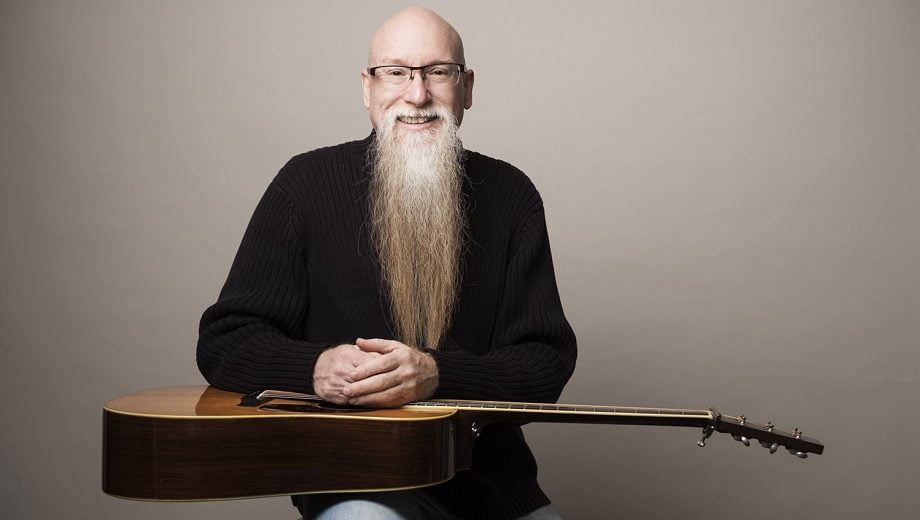
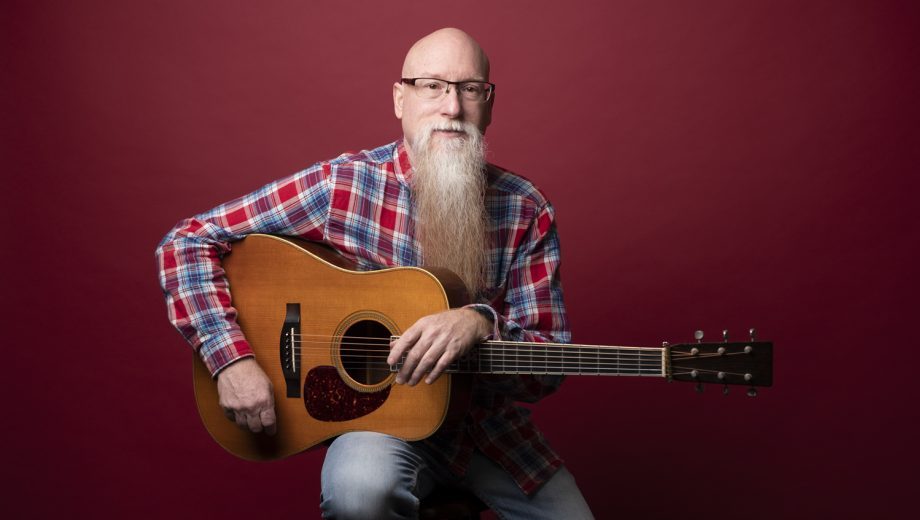
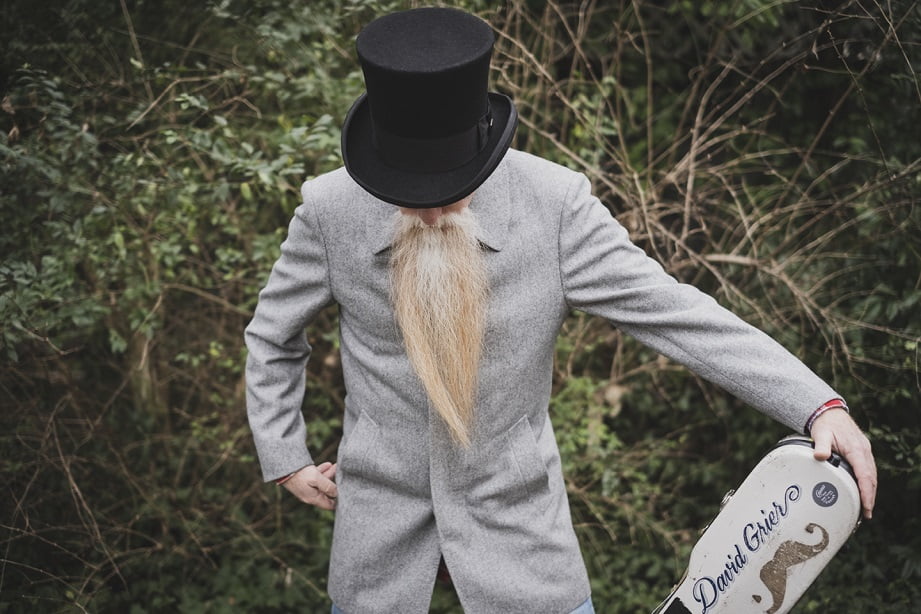
He’s asked, maybe too much, about his beard, a prodigious gray broadsword of whiskers stretching from chin to navel, an abstraction of which is the signature feature of his silhouette, featured on his T-shirts and other merch.

But one thing the D.C.-raised, Nashville-based musician is never really asked about: His singing. And for good reason. He’s never done it.

“It’s always been, ‘Why don’t you sing? You play guitar!’” he says, an irrepressible joviality marking his droll drawl.

Somehow, he sighs, people often seem to think that simply because he plays guitar he ought to sing too.

“I know I play guitar,” he says, more amused than exasperated. “I never donated any time toward [singing]. I tried once or twice through the years. Just like anything else, I gave it five or ten times and stopped.”

Until now.

His new album, Ways of the World, features five songs with him on lead vocals. That’s a first. In his career going back to the early ‘80s and covering ten solo albums now, several side projects (Psychograss, Helen Highwater Stringband), and hundreds of guest spots and sessions, he’s never stepped out as a vocalist before.

And in a rather bold move, he puts his lead vocals alongside some noted vocal talents: Maura O’Connell, Tim O’Brien, Shad Cobb, Andrea Zonn, and Mike Compton. What’s more, he’s feels pretty good about it.

“I do,” he says. “I know later I won’t, because every time I think something’s perfect, I listen to it later and go, ‘Gee, why didn’t I hear that before?’”

So the next question comes naturally: “Why now?”

“It was the Helen Highwater Stringband,” he says. “Three or four years ago they said they needed another singer for a vocal trio. They looked at me. I said, ‘I don’t sing!’ They said, ‘You do now!’ I went, ‘Wow.’ They were encouraging. It was helpful. All that went into account and then I did it on stage. People weren’t running for the exits, so this is good. And it just kept going.”

If he was going to sing, he needed words, and he dove right into that as well. Songwriting was another new challenge.

“I’d written the first two lines: ‘I’m afloat on the great big waves of the ocean, I drift on the ways of the world,’” he says of the title song, with Zonn singing with him, which opens the album. “I thought, ‘Hell! That’s going to be a song!’”

But he thought he’d need help and, while heading out for a five-and-a-half-week tour in South Africa, he went to a friend to have him finish it. That didn’t happen. So with two off-days he set to it himself.

“I finished it in an Airbnb on the beach in South Africa,” he says.

It was a whatever-it-takes approach to songwriting. “Dust Bowl Dream,” with harmonies by O’Brien, came from a bar bet for a round of drinks with some Nashville buddies as to who could write the best song in a week.

“I wasn’t even going to write a song,” he says. “Thought I’d just buy drinks for the buddies. But I had this melody that was lonesome and I thought, ‘Well, dust bowl is lonesome.’ Wrote the words in an airport, wrote the verse, chorus, second verse. I thought it was great. Got to the hotel later that day and started playing. First verse was great, second was great, last verse was horrible! I wrote another and that was worse. I went back to the first version I wrote and thought, ‘If I don’t sing it, that’s great.’ So I talk through it, like Bill Anderson would. It’s a recitation, and I think it really helped the tune. You feel it more.”

Now, all you who savor every splendiferous Grier guitar lick, dread not. The five songs featuring vocals are accompanied by eight sparkling instrumentals, and the ones with singing also feature, of course, his spectacular picking.

The heartfelt vocal numbers are surrounded by a selection of wryly titled original picking showcases (“Waiting on Daddy’s Money,” “The Curmudgeon’s Gait,” and so on) and sparkling interpretations of, or variations on, old fiddle tunes (“Billy in the Lowground”). And playing with Grier is a stellar cast of associates: a core of Casey Campbell on mandolin, Stuart Duncan on fiddle, Dennis Crouch on bass, with John Gardner on drums for some songs, and banjo from Justin Moses and Cory Walker. What’s more, there’s electric guitar by Bryan Sutton on one song (“Dustbowl Dream”) and on “Farewell to Redboots,” there’s trumpet by Rod McGaha — something perhaps even more surprising than Grier’s singing.

“For me having a trumpet on a song is brand new,” he says. “I just heard it in my head that way and imagined it that way. But having it happen was amazing.”

The whole experience, it seems, was liberating in a way that led Grier to try some different approaches to his picking, as if the pressure was off to make the album completely about that. The result is a rich, engaging tone throughout.

“I think on this record there’s less flash, just for flash’s sake,” he says. “Less, ‘Watch what I can do! Watch! This is hot!’ This is more reined in for a bit. Some of the solos are simplistic, and in my mind harken back to the beginnings of bluegrass music.”

He cites the intro to one song, “Dead Flowers,” an original, not the Rolling Stones song.

“That’s as basic as you can be,” he says, noting that it happened that way in the moment when he was caught off guard. “I got in the studio and thought someone else would kick it off. ‘Who’s gonna kick it off?’ Crickets. ‘You start it.’”

On the other hand, he also found himself spontaneously taking some other unexpected directions in “Red Boots.”

“There are three solos in that,” he says. “First one of me, then the horn, then me again. The first one’s just the melody, nothing fancy. The melody is cool. But the last solo is completely different, a little bit of Wes Montgomery, some string-bending in there. Just popped out! I’d never played that before. Every time I’d played that song it was just the melody, ‘cause I’m generally sitting here playing by myself. In the studio it was, ‘Well, I’ve done that. I want to do something different.’ I like that. Fresh and exciting. Note by note. Not the boring same old thing.”

And that’s the thread of the whole album.

“A lot of improvisation on this record,” he says. “From my viewpoint, it’s playful. All in the vibe. Not some hot lick thrown in just to show I can play a hot lick.”

Not that he isn’t proud of his playing here.

“There’s things in there people might want to learn when they hear it,” he says.

And speaking of learning, one more question: Has he ever tried fingerpicking?

Grier sighs.

“That’s another thing maybe I gave five minutes.”

Well… given what he said about singing, stay tuned for the next album.


Photo credit: Scott Simontacchi

MIXTAPE: Gangstagrass’ Standard Setters

As purveyors of genre crossing, we like to recognize standouts within a genre that innovated simply by epitomizing a sound with particular skill: tracks that demonstrated what virtuosity could do within a genre, that pushed the genre to new heights (or at least new places) for us, tracks that maybe we used to judge what came afterward. We could list a lot of classics, but this list is really about the tracks that were the standard setters for each of us personally, making a mark in how we thought about a genre or sound. For our Mixtape, we selected a few songs and described the impact the tracks made. — Gangstagrass

Flatt & Scruggs – “Foggy Mountain Special”

Earl’s fast, regular picking in songs like “Foggy Mountain Breakdown” made his three-finger rolls, like the Foggy Mountain roll, iconic. But this heavily-swung tune, while not a slow song by any standard, really explores the bluesy side of bluegrass banjo. The syncopated banjo kick, with the band entering on the second beat, throws off the listener’s perception of time. The main lick itself deserves to be as iconic as any fast-flowing Scruggs roll. And that solo! From the single-string bends to that chromatic octave line, Earl knows to keep playing it just a little bit longer. You couldn’t go back and redo any part of this any better, not in a hundred years. They nailed it.

Norman Blake and Tony Rice – “Little Beggarman/Gilderoy”

Tony Rice sounds his best on duo albums, whether it’s with country superstar Ricky Skaggs on a journey to reconnect with his bluegrass roots, or songster Norman Blake, whose clear-as-a-stream picking and earnest vocals are augmented by Tony’s unparalleled rhythm work and rich baritone. On this instrumental track, guitar and mandolin trade breaks and, unusually, trade tunes. Because they’re both in A, with similar chords and melodies, you almost don’t notice the transition, except that the tune Blake plays on mandolin is minor, while Tony’s guitar tune is major. It’s a beautiful, subtle effect that showcases both artists and enhances the sound of each instrument.

The Steeldrivers – “Ghosts of Mississippi”

Before Chris Stapleton was Chris Stapleton, he was in a band called the Steeldrivers. The mainstream music audience has rightly picked up on his powerful vocals and formidable songwriting, but arguably his best work has been with this band that gave him a perfect setting. From the smoldering growl of the banjo to the searing whine of the fiddle, the sound has not been surpassed by either Stapleton’s pop work or by any other bluesy bluegrass band. This track in particular sets the bar, serving up equal parts groove, emotion, and one hell of a catchy melody.

Béla Fleck and the Flecktones – “Hole in the Wall”

The Flecktones represent Béla’s furthest ventures outside traditional bluegrass, and this late track on their second album, Flight of the Cosmic Hippo, is a representative example of their early sound. Of note, Howard Levy’s keys get more room than on most other tracks which tended to feature more of his admittedly superlative harmonica work. Near the end, there’s enough sonic buildup to justify a fantastic extended banjo solo with fluidly shifting time signatures and tonalities. Banjo players who have tried to emulate this piece will have noticed that, like many Béla tunes, it centers around a particular lick, in a particular nonstandard key, played in open G tuning. But as with magic, sometimes understanding the trick doesn’t make it any less exciting to see it performed right in front of you. — Gangstagrass

Pharoahe Monch feat. Black Thought – “Rapid Eye Movement”

Every now and then there’s a collaboration that you just know is going to be dope just by the parties involved. “That’s what I figured when I saw these two MCs on a track from Pharoahe Monch’s 2014 album P.T.S.D. I wasn’t prepared for HOW DOPE, however,” says R-SON. Pharoahe Monch drops bars about being in a relationship with his ammunition and then filing for divorce and releasing his “ex-calibers.” Not to be outdone, Black Thought starts his verse with the last two lines of Pharoahe’s and goes on to “send shots to ancient Greece to pop Socrates.” Black Thought’s line “the ex-slave sado-masochist/who gave massa my ass to kiss” is, as R-SON puts it, “just another example of Black Thought’s conscious swagger that laces every verse that he blesses a track with.”

Black Star – “Thieves in the Night”

Mos Def and Talib Kweli came together on the Black Star album and created gems but this was the standard for R-SON. Their distinct flows built two very different parts — Kweli’s recounting what his man Louis said and thought and how those thoughts affected Kweli. Mos Def’s verse, on the other hand, had a breakdown of the hook where he responded to the things said in it. The song ends with one of the great lines in the genre’s history: “I give a damn if any fan recall my legacy, I’m tryina live life in the sight of God’s memory.” R-SON notes that “in my younger days the song brought tears to my eyes and I’m happy to say that it still does.”

Mos Def – “Mathematics”

We cannot think of another time when someone counting from 1 to 10 (Dolio the Sleuth on “Ain’t No Stopping” aside) has had more meaning. Mos raps, “5 dimensions, 6 senses, 7 firmaments of heaven and hell, 8 million stories to tell, 9 planets keep orbit around the probable 10th, the universe expands length….” He continues his “…numbers game, but shit don’t add up somehow,” speaking of the number of bars he has to do what he does, and the minimal amount of money he gets from it all. “6 million ways to die for the 7 deadly thrills / 8-year-olds getting found with 9 mils / it’s 10 p.m., where your seed, he’s on the hill/….pumping crills to keep they bellies filled.” His word (and number) play is immaculate.

UGK – “Int’l Players Anthem (I Choose You)”

A seminal “posse cut” that unites two legendary duos of Southern hip-hop, UGK and Outkast, exhibiting four distinct flows and approaches to the subject of being a “player.” Each emcee delivers a memorable verse complete with the stunning street poetry they’re known for, with cadences that ride the beat (or the lack of beat, in the case of Andre 3000’s intro verse) that samples heavily from Willie Hutch’s “I Choose You” from the soundtrack of 1970s Blaxploitation flick, The Mack.

Ralph Stanley and the Clinch Mountain Boys – “Nobody’s Love Is Like Mine”

Rench was listening to 1970s-era Clinch Mountain Boys when he started putting Gangstagrass together as a sound. There’s been a good deal of attention to the Stanley Brothers, but the sound was developed and refined to a new level with the addition of Ricky Skaggs and Keith Whitley. The vocal harmonies are tight and the full string section is on point in a way that epitomizes the best of classic bluegrass sound.

Stuff Smith – “Serenade for a Wealthy Widow”

Stuff Smith is one of the few truly iconic jazz fiddlers. His style is on Charlie Parker’s level. “In an alternate reality, where we weren’t so hung up on jazz’s horn players, I feel Stuff would have been one of the fathers of bebop,” says Brian. Stuff’s style pulls from such a diverse array of influences, from Stéphane Grappelli to the Western swing fiddlers like Bob Wills. The gruffness of his tone and clarity of his lines point to the meld between the character of string band/blues fiddlers players before him like Clifford Hayes and Robert Roberson, and the progressive harmonies that took over jazz after bebop. Stuff is the perfect example of harmonic personality over the harmonic intellectualism that followed. “This track is one of the more off-beat compositions that I love to surprise folks with,” Brian adds.

Slam Stewart – “Oh Me, Oh My, Oh Gosh”

“I feel much the same way about Slam as I feel of Stuff; his musical voice is synergistic of the eras before and after him,” Brian says. The way he rides the rhythm comes from an era of bassists mimicking the sound of tubas in marching bands, indicative of players like Bill Johnson, Wellman Braud, and Pops Foster. His style foreshadows others like Jimmy Blanton, Oscar Pettiford, and Ray Brown with their strong solo personalities. This tune is a favorite; it’s a slick lyric and showcases what Slam can do on all fronts.

Outkast – “Rosa Parks”

This one came out of left field in 1998 — when Southern rap was growing into national attention — and planted a flag with the trademark quirkiness of Outkast style, including a harmonica breakdown in the middle of the song. Their fast-flow style is undeniable and surgical here, while their unabashed Southern drawls in this radio hit opened the floodgates for Southern hip-hop to start dominating the charts.

Wilson Pickett – “Hey Jude”

This has a lot to do with the way the Swampers in Muscle Shoals epitomized the soul sound of the ‘60s in the best way, but this track in particular pushed boundaries by including what would later become familiar Southern rock sounds, courtesy of a young Duane Allman. Of course, the wicked Mr. Pickett kills it with a prime example of soul vocals just owning the track.


Photo credit: Sean Aikins

15 Bluegrass Covers of Bob Dylan

Bluegrassers have been covering Bob Dylan for decades. First generation stalwarts Flatt & Scruggs covered more than a handful of songs penned by the future Nobel Laureate, Ralph Stanley sang with him, and at this very moment there are almost certainly jam circles out there around the globe laying down “Girl From/Of the North Country” with mash’s reckless, head-bobbing abandon without even realizing Dylan wrote the dang thing. Bluegrass covers of Dylan are so prolific, we had to cap our list at 15 — with an additional three not-quite covers tacked on for good measure.

Explore Dylan’s broad-reaching impact on bluegrass:

“Blowin’ in the Wind” — The Country Gentlemen

It just makes sense. The Country Gentlemen epitomized the impact of the folk revival on bluegrass and string bands of that era.

“Girl Of the North Country” — Sam Bush

Perhaps the most common and least jambuster-y of Dylan’s bluegrass incarnations, this one has been covered by everyone from Flatt & Scruggs and the Country Gentlemen to Tony Rice and his newgrass compatriot, Sam Bush.

“Señor (Tales Of Yankee Power)” — Tim O’Brien

It takes a special kind of songwriter (I mean, Dylan. Duh.) to craft a song that can allow another artist to inhabit it, wholly. It takes a special kind of artist to be able to do that song and songwriter justice. Tim O’Brien singing “Señor” is the perfect example of both.

“Tomorrow Is A Long Time” — Nickel Creek

An entire generation’s most mainstream exposure to bluegrass — Nickel Creek — might have simultaneously tipped off their young audience to the voice of a generation.

“It Ain’t Me Babe” — Flatt & Scruggs

Did you ever stop to think about the similarities between Lester Flatt and Bob Dylan’s singing styles? Now you have.

“When I Paint My Masterpiece” — Greensky Bluegrass

Truegrass, newgrass, jamgrass — any kind of [fill-in-the-blank]grass works for a Dylan cover.

“Boots of Spanish Leather” — Seldom Scene

Hearing a bluegrass band relax into a slower, loping groove is always a breath of fresh air. Seldom Scene know how to own a decidedly non-bluegrass beat. And yet, it’s quintessentially bluegrass.

“Long Ago, Far Away” — Front Country

The current bluegrass generation isn’t immune to Dylan’s influence either. Front Country burns this one down with a more straight ahead, hammer down arrangement.

“One More Night” — Tony Rice

Tony is arguably at his absolute best, his most extraordinarily superlative when he renders the songs of singer/songwriters and troubadours like Gordon Lightfoot and of course, The Bard.

“Rambling, Gambling Willie” — The Lonely Heartstring Band

There’s ramblin’, there’s gamblin’, philanderin’, and lots more gamblin’. It’s a dyed in the wool bluegrass banger — showcased in that decadently clean Boston style by the Lonely Heartstring Band — straight from a Dylan bootleg.

“Subterranean Homesick Blues” — Tim O’Brien

Spit. Out. Those. Lyrics. Tim. Oh and that hambone!! Lawd. Just listen to this and try not to feel visceral joy.

“Just Like a Woman” — Old Crow Medicine Show

This is here because we didn’t want to add that one Dylan song Old Crow is pretty famous for. They did an entire-album cover of Dylan! Let’s hear those songs for a change! It’s got more of a country and Western flavor, but we know Old Crow’s bluegrass roots run deep.

“Simple Twist of Fate” — Sarah Jarosz

Another take outside of the bluegrass box, but inherently informed by bluegrass. You can feel Jarosz emulate the lilt of Dylan’s voice in her phrasing. Unencumbered, yet supported in full by the strings.

“Don’t Think Twice, It’s Alright” — Flatt & Scruggs

Everybody join in and sing! There’s something especially pleasing about hearing Scruggs comp over these iconic chord changes.

“Walkin’ Down the Line” — the Dillards

At their height, the Dillards’ sound was blended so purely with that iconic folk revival sound, but without giving up one shred of their traditional bluegrass sensibilities. This is a perfect example.

“East Virginia Blues” — Bob Dylan & Earl Scruggs

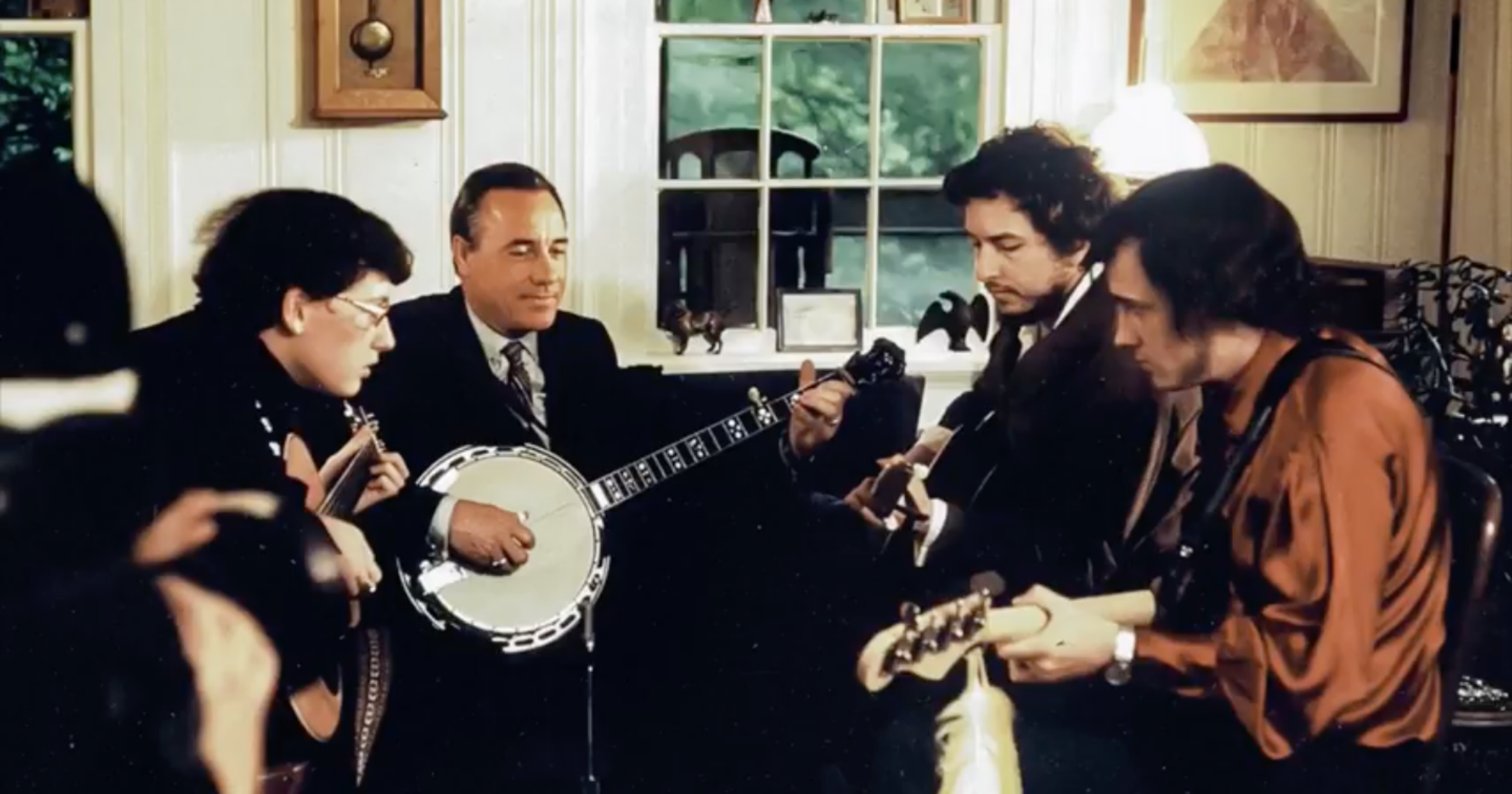
Now here’s your bonus. Bob Dylan and Earl Scruggs, with the Scruggs boys gathered around pick through “East Virginia Blues” for a TV documentary.

“Lonesome River” — Bob Dylan & Ralph Stanley

And of course, how could we have a list about Bob Dylan and bluegrass without a nod to the special relationship Dylan had with Ralph Stanley? Dylan consistently cites Stanley as an influence and they even collaborated on this recording of an iconic Stanley Brothers classic.

“Man of Constant Sorrow” — Bob Dylan

Remember that Ralph Stanley influence we mentioned? Here it is again. It’s a reverse Bob Dylan bluegrass cover to round out the set.


John Jorgenson Revisits His Southern California Bluegrass Roots

John Jorgenson is not only a man of many talents, he’s a musician with many interests. Perhaps you’ve heard his gypsy jazz, or remember when the Desert Rose Band — a neo-trad country group that included Jorgenson, Chris Hillman and other luminaries of the California country and country-rock scene — was riding high at radio, or perhaps you saw him playing an indispensable role in Elton John’s touring band. As Jim Reeves might have put it, he’s done a lot in his time.

Even so, you might not know that John Jorgenson is also a bluegrass guy — unless, that is, you saw him on the road with Earl Scruggs during the legend’s final touring years, or happened to buy his 2015 box set, Divertuoso, which included a disc of bluegrass alongside one of gypsy jazz and another of eclectic, electric music. Earlier this year, that disc was issued as a standalone album, From the Crow’s Nest. Featuring the regular (and equally eclectic) members of the John Jorgenson Bluegrass Band (J2B2) — Herb Pedersen, Mark Fain and Jon Randall — it’s a delicious collection that scatters well-known songs (Pedersen’s “Wait a Minute”; Randall’s “Whiskey Lullaby” co-write; and the Dillards’ “There Is a Time”) among a trove of newer material, much of it written or co-written by Jorgenson.

From the Crow’s Nest ought to go some distance in alerting wider audiences to a new standard-bearer for a style of bluegrass that, while its roots trace back to the early 1950s, hasn’t gotten the attention it deserves. Though Southern California is a long way from the Grand Ole Opry and other spawning grounds for the original bluegrass sound, it served in the post-World War II years as a magnet for job seekers from both sides of the Mississippi River, and that meant bluegrass pickers, too — and so, when we met up, that made for a good starting point for our conversation.

Listening to your album reminds me that you are a product of a Southern California roots music scene that included bluegrass from early on. How did you get exposed to it?

Probably the first time was when a band came to my high school and I thought they were from another planet, because I’d never heard anything so fast in my life. I played music already — I played classical music, and rock — but that was sort of an anomaly, and then I didn’t really see it again for a while.

I came to it sort of in a backwards way. I had a scholarship to the Aspen Music Festival. They brought me in as a jazz bass player; they wanted to start a jazz program. And I accepted the scholarship as long as I could also be in their classical program, playing the bassoon. Well, I had my tuition paid for, and my room paid for, but I didn’t have money for meals. So I needed to figure out how to make some money, and then I saw an ad that said: Wanted: strict jazz player for immediate gigs. So I checked out an upright bass from the school and went to this audition. And they weren’t playing jazz — what they were playing was David Grisman’s first album. This was the summer of 1978, so this album was new. I’d never heard it.

So they’re playing all instrumental stuff and I thought, OK, I really like the sound, especially of that mandolin. I liked the flatpicking guitar, too. I was already a guitar player, but I just loved the mandolin. When I got home that summer, my neighbors had a Gibson A model and I borrowed it. Not too long after that, I ran into a friend who had been instructed to put together a band that could play bluegrass and Dixieland to cover two different areas of Disneyland. And he asked, “Hey, do you know anybody that could play bluegrass fiddle and Dixieland cornet?” And needing a job at the time, I said, “I can play mandolin and clarinet.”

And then I kind of learned backwards, whatever I could. I learned from New Grass Revival, and then Bill Monroe, and Flatt & Scruggs, and the Stanley Brothers, and the Osborne Brothers. And all the others — Tony Rice, Sam Bush, the Bluegrass Cardinals, whoever was playing around at the time. Larry Stephenson was playing with the Cardinals at that time, and I remember I was — I don’t want to say shy, but I’m shy around people I don’t know. And to me at the time, they were real bluegrass musicians and I was a pretender. I sort of felt an attitude from some people, too, but he was not like that at all. He was really friendly.

Did playing bluegrass at Disneyland motivate you to build connections with the larger bluegrass scene, or was it a standalone kind of gig?

Actually, when we first started, we were terrible! We learned three songs and then we’d play those, move to a different place and play them again. But everyone was ambitious, so we all practiced; we learned songs, we got better. And then we started to play out around Los Angeles. I think the first time we played out as an act, we opened for Jim & Jesse at McCabe’s [Guitar Shop]. There was also a venue called the Banjo Cafe, with bluegrass every night, on Lincoln [Boulevard] in Santa Monica. So the Cardinals played there; Berline, Hickman & Crary would play there; and touring acts, too — Ralph Stanley would play there. And a young Alison Brown, a young Stuart Duncan.

I know that there are a lot fans of Desert Rose Band among bluegrassers, and some gypsy jazz fans, too, but for a lot of people, you came onto the radar when you were going places with Earl Scruggs — 15 years ago, maybe? How’d that come about?

Actually, it was because of Brad Davis. He was playing with Earl, and we were kind of guitar geek friends. We ended up sitting next to each other on a plane one time, and were chatting, and he said, “I’m playing with Earl Scruggs,” and I said, “I’d love to do that.” He said, “You know, they like to have an electric guitar, maybe there might be a spot.” He really set that up for me.

I said, “OK, I’m happy to play electric guitar, but I would really love to play the mandolin.” So I would bring both, and if I played too much mandolin, Louise [Scruggs] would say, “John, don’t forget that electric guitar.” Then they said, “Don’t you play saxophone? We used to have that on a song called ‘Step It Up and Go.’” So I said, “What about the clarinet? It’s not quite so loud.” And as it turns out, Earl said his favorite musician was Pete Fountain, and he loved the clarinet. So every time after that, Gary Scruggs would call me up: “Dad says don’t forget the moneymaker.”

The J2B2 record was originally part of a box set — a disc of gypsy jazz, one of bluegrass, one of electric stuff. So you have these different musical itches, and some musicians would choose to try to synthesize these things into something new and different and unique, but you seem to have an interest in keeping them each their own thing. Why is that?

It’s because, to me, the things that I love about bluegrass are what make it bluegrass. I love the trio harmony, I love these instruments, the way each instrument functions in the band. And I love gypsy jazz, and some folks might say they’re closely related — they’re string band music, they both have acoustic bass and fiddle and acoustic guitar, and each instrument has a role. There are a lot of similarities, but the things that I like about each one are what make them different. I think each music has an accent, and a history and a perspective, and I really want to be true to those, because those are the elements that touch my heart.

I feel like what I do and what this group does is quite traditional, compared to a lot of people. It’s not jamgrass. It’s not Americana. It’s bluegrass. There are folk elements, and all those other things, of course. But really, my touchstones for that style of music are all the classics: the trio harmonies of the Osborne Brothers, and the slightly softer Seldom Scene and Country Gentlemen sounds, the early Dillards, the Country Gazette, and the whole Southern California sound… you don’t think of Tony Rice’s roots as Southern California, but they are.

And probably at one point, if I could have sounded like I was from Kentucky, I wouldn’t have minded that. But at the end of the day, well, I love Bill Monroe as much as the next guy, and I’m going to take inspiration, but I feel like I’m part of a lineage of bluegrass that’s just as viable as any other, and why not have that sound be a part of me?


Photo credit: Mike Melnyk

WATCH: The Unseen Strangers, “Church Street Blues”

Artist: The Unseen Strangers
Hometown: Toronto, Ontario
Song: “Church Street Blues”

In Their Words: “We are massive Norman Blake fans in the Unseen Strangers and are always working up different songs of his. I started listening to this one when I first got into bluegrass guitar and digging into the music of Tony Rice, so there’s quite a bit of his version in there. ‘Church Street Blues’ is certainly a flatpicking classic and we are excited to share our arrangement with this video. It was recorded live in the Back 40 forest at the Tottenham Bluegrass Festival in Ontario. When we can’t agree on what song to play next we always just play this one.” — Adam Shier


Photo credit: Emma-Lee

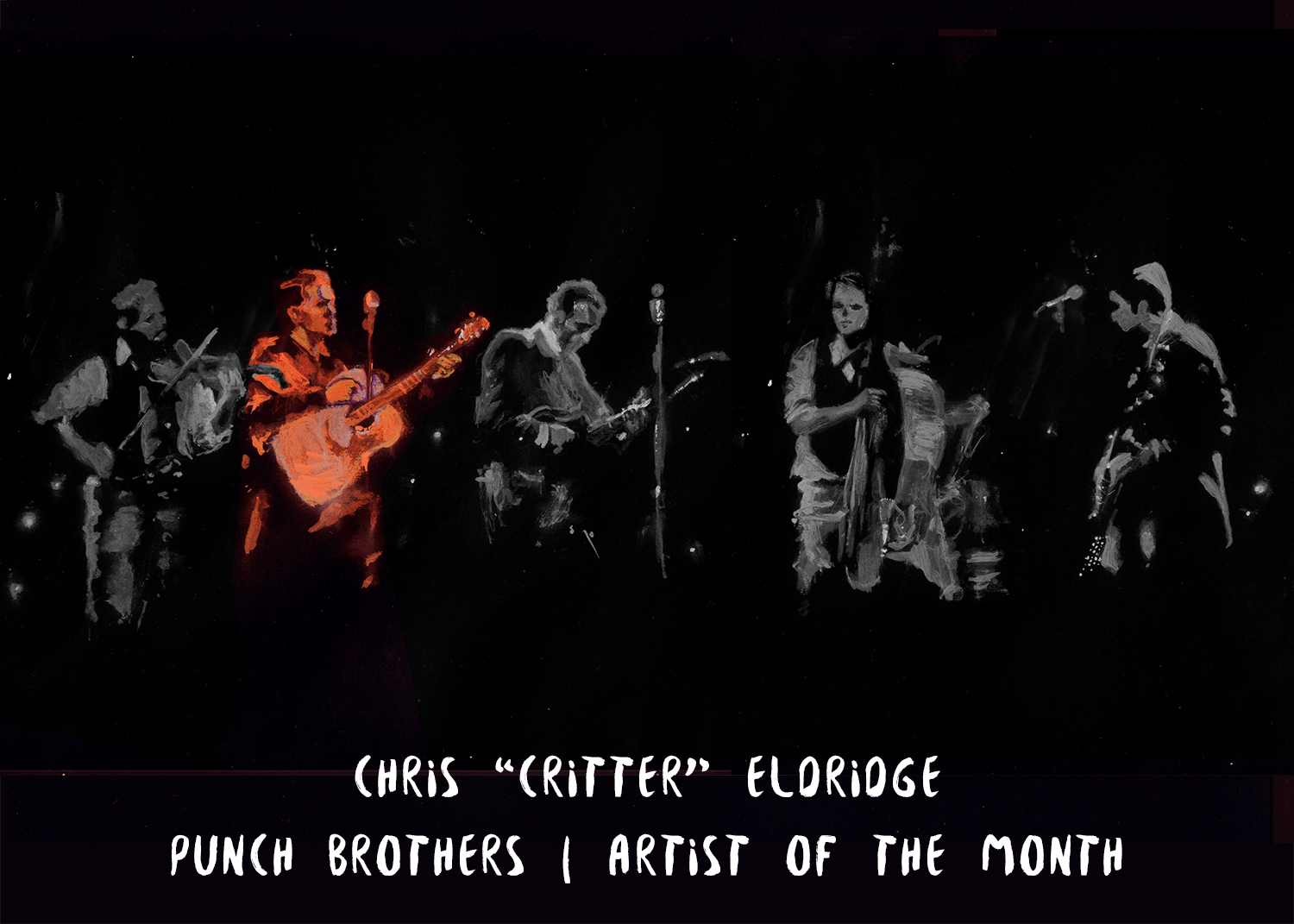
Punch Brothers’ Chris Eldridge: Influences and Integrity

Chris Eldridge, the good-natured guitarist for Punch Brothers, comes by his bluegrass pedigree honestly. As a young man, he attended innumerable shows by Seldom Scene, a pioneering ensemble whose lineup included his father, banjo player Ben Eldridge. After studying at Oberlin Conservatory, he co-founded the Infamous Stringdusters, which won three IBMA Awards following their 2007 debut project, Fork in the Road. Indeed that album title proved auspicious, as Eldridge took a different path with the formation of Punch Brothers – a rewarding partnership that a decade later has yielded their newest project, All Ashore.

This interview is the third of five installments as the Bluegrass Situation salutes the Artist of the Month: Punch Brothers.

When I saw you guys at the Ryman, I noticed you were wearing a Hawaiian lei, so I take that as a sign that things are going well on the tour. What’s the vibe so far?

The vibe has been really fun and it’s great because the band’s back together, as they say. We’ve been connected, all of us in various ways, even in this time off from the band. I see Thile a bunch because I’m usually playing guitar on Live From Here. Paul lives really close to me, so I see him like every other day in Nashville. And Noam is close, and I see Gabe, but to have all of us in the same place out on the road for me is a really fun thing because one of the real privileges of my life is getting to play music in Punch Brothers, getting to be the guitar player in a band with those guys.

One of my favorite songs on this record is “The Gardener.” I feel like it sets a nice tone and tells a hopeful story. Tell me what the band was hoping to capture with that song.

Well, the music was started on that years and years ago, probably in 2012. We were in London doing a thing with T Bone Burnett for a movie and this simple melody kinda just sprung up. We were trying to brainstorm some stuff for this movie and it almost sounded like a Christmas carol. And so it was this thing that we always really liked, and we didn’t give it to that project that we were there working on. We wanted to hold it close to our chest and keep it ourselves. It was something that we had sitting around, even for The Phosphorescent Blues, but we just didn’t develop it into anything.

And then Thile had come up with that kind of weird, modulating, tonally ambiguous guitar that starts the song. He showed that to me and it was really cool. The way it works for us is, we always work on music before there’s any content, in terms of story. That’s pretty much how it tends to progress for the band. We’re definitely a music-first band. So it was a matter of making both of those ideas interesting. And the original idea from 2012, the Christmas carol idea, was really neat and we really liked it but it had a limited amount of development. A lot of Punch Brothers music, the song will have to have a certain amount of development. It’ll tend to go places. Usually we won’t just repeat a thing over and over.

And as we were trying to develop that, someone had the idea, “What happens if we do that crazy, weird, finger-picked guitar thing — the ambiguous tonal thing – and pop it together?” We had to change the key around a little bit but we found a key relationship that worked and it solved this problem.

So then it’s a matter of figuring out what the song is going to be about. Thile had this idea about a gardener, some guy kinda tending. You know, because the music is not lonely exactly but there’s like a forlorn imagination, like optimistic vibes, that are encoded into the sound of that melody. So it was trying to find a story to go along with it. And it dovetailed with a lot of the things that we’ve been thinking about and talking about as a band, in terms of society today. People who have things and people who don’t have things. People who feel protective of themselves and their tribe. It’s a meditation on a lot of those kinds of thoughts. I’m barely touching on them, but that’s kind of where it came from.

You guys would make a pretty cool Christmas record. Has that ever come up?

We’ve talked about it before. I don’t know if we’ll ever do it, but I think that would actually be really fun. There are so many cool, beautiful songs. Really timeless, gorgeous melodies. There is some solid music there in that canon of holiday music. It’s so hard to get everybody’s schedules to align now. People have three children in the band at this point, and three wives, and essentially all of us are in completely and deeply committed relationships … and we’re all older. The band can’t sit totally in first place anymore, which is necessitated by having families and that’s now the most important thing. So we really have to be deliberate about our time and it means that we don’t do as much stuff together – but when we do, we try to really make it count. That being said, I would love to make a Christmas record.

I thought with your connection to Seldom Scene, I’d ask if you knew John Duffey well.

I didn’t know him that well, but I certainly grew up around him. John didn’t really know how to relate to little kids. I have a lot of memories of being around John, just being around the band, but I didn’t really interact with him much until towards the very end of his life. We’re talking probably the last less-than-six months he was alive really. He started to acknowledge me because I was probably 13 or 14 years old. I was just getting to the age where he related to me as more than just a small child. I was starting to feel a little more like someone he could relate to.

I remember the last time I saw him alive. I was sitting backstage at the Birchmere. They have these big chairs and I was sitting in one of them. He came up behind me and just scruffed me by the hair and said, “Hey there, guy.” That’s kind of where the story ends but I was just so blown away, like, “Whoa! John Duffey just talked to me!” That was an amazing thing!

I have very clear memories of the sound of his voice. I probably went to hundreds of Seldom Scene shows and I heard those guys play hundreds of times when I was a kid and the sound of Duffey’s tenor, the sound of his mandolin playing, the sound of Mike Auldridge’s Dobro bouncing off the walls. That stuff is burned so deeply within me. I’m so thankful and grateful for that. It’s this crazy privilege that I was just born to have those experiences. As I get older, I appreciate more and more how cool it was. But I don’t think I ever really took it for granted. I loved the music, I loved the sound of that band from the time I was a boy.

I know that Tony Rice is one of your heroes too. How has his music shaped the music that you’re making now?

Oh man, profoundly. He provided such a great example of musical integrity. In terms of rhythm, not just rhythm guitar playing, but actual timing, his sense of time and elegance and grace and power and intelligence – all these things that I really try to emulate. The goal was never to be a clone of Tony. I mean, it’s easy to learn the note that he plays. It’s not that hard but I feel like once you do that, then the real learning begins. What’s he doing with those notes? Why is it so good when he plays them? What’s going on there? That to me is when the rubber hits the road and that has everything to do with his musicianship and his sensibility. And so those are the lessons that I studied so hard and it affected my outlook and approach to how I want to present music on acoustic guitar. And just music in general.

But I would argue that Tony had strong ideas about that and his enormous integrity to those kind of musical values was really influential to everybody in the acoustic music community. His high level of musicianship – and how he retains some of the essence of bluegrass, the rhythmic essence – sets the stage for a lot of the modern music that we like. And certainly Punch Brothers. Certainly all of us were deeply influenced by that example of musicianship.


Illustration: Zachary Johnson

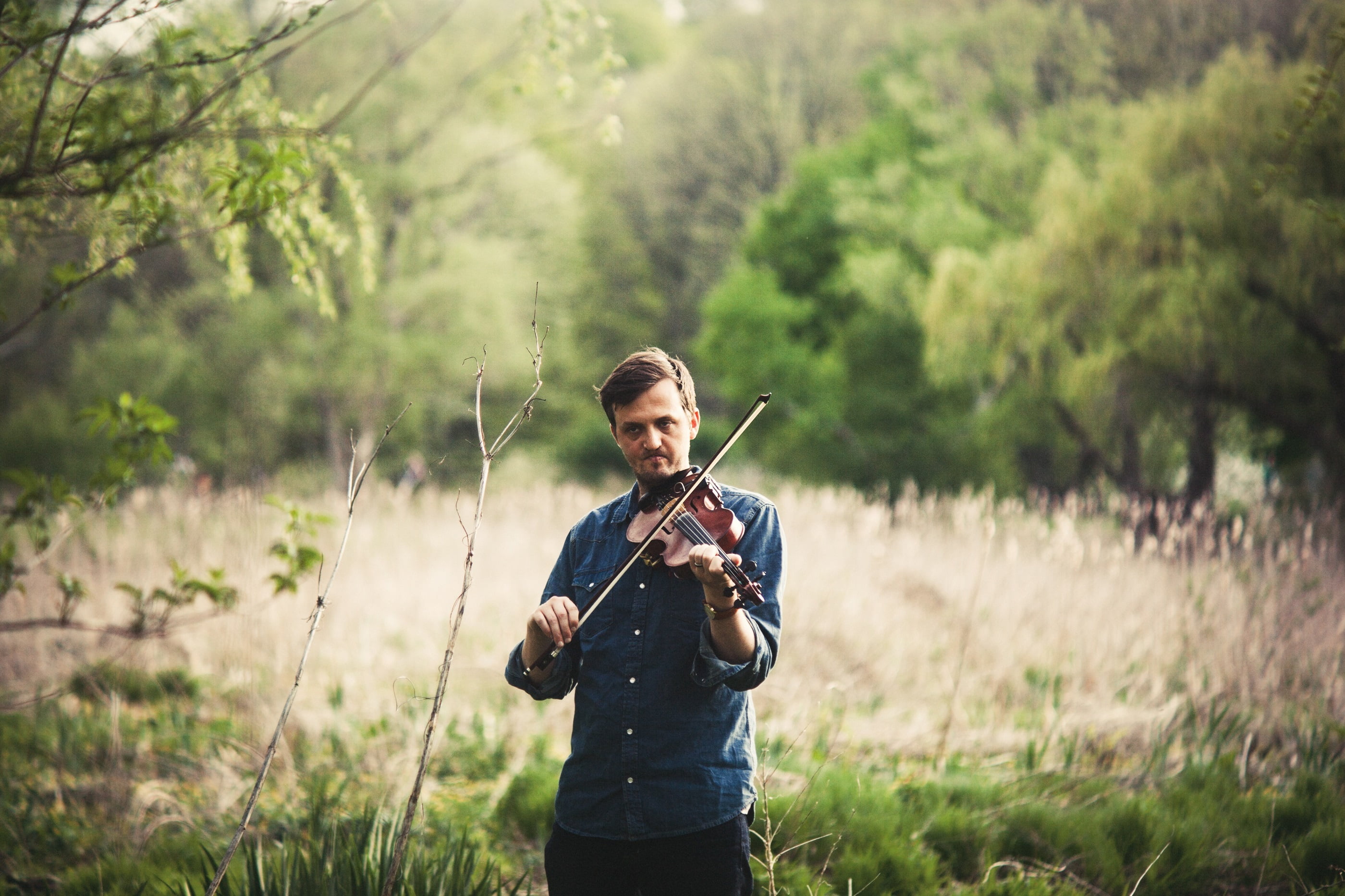
MIXTAPE: Bobby Britt’s Songs of Hard-Won Joy

The songs and artists on this playlist evoke a sense of hard-fought, hard-won, deep and rich joy. It is not a simple, one-dimensional joy. It has the sound of being churned about, tried and tested again. And now, just maybe, the joy being properly vetted, can be enjoyed. I look up to these artists, as they convey a message of calm and confident optimism.

We are all faced with the dualities of a temporal world…birth and death, gain and loss, pleasure and pain.

These songs speak to the strength of the human spirit amidst that world, and give me courage to carry on regardless of what’s happening, good or bad. They also provide a glimpse at an eternal reality of peace and balance (that has nothing to do with time, space or duality) that is hard to see or believe in when I am churning in the opposites…fear of loss, a craving for more and more solidity, and the dread that I will never have or be enough.

We need artists for this very reason; to go beyond our normal, conditioned ways of thinking about life, and to give us a new perspective with which to test our old and sometimes outdated paradigms.

My area of expertise is bluegrass and old-time fiddle. Though I am not a vocalist or pop artist, I gain inspiration from all styles. The feeling and sound of the above mentioned “hard-won joy” is what transcends specific genres for me. A goal of mine is to take this base emotional element, and with it, transfuse my fiddle playing and songwriting.

My hope is that you can find some joy and something to relate to in these songs as I did. Thank you for listening.


Photo Credit Louise Bichan