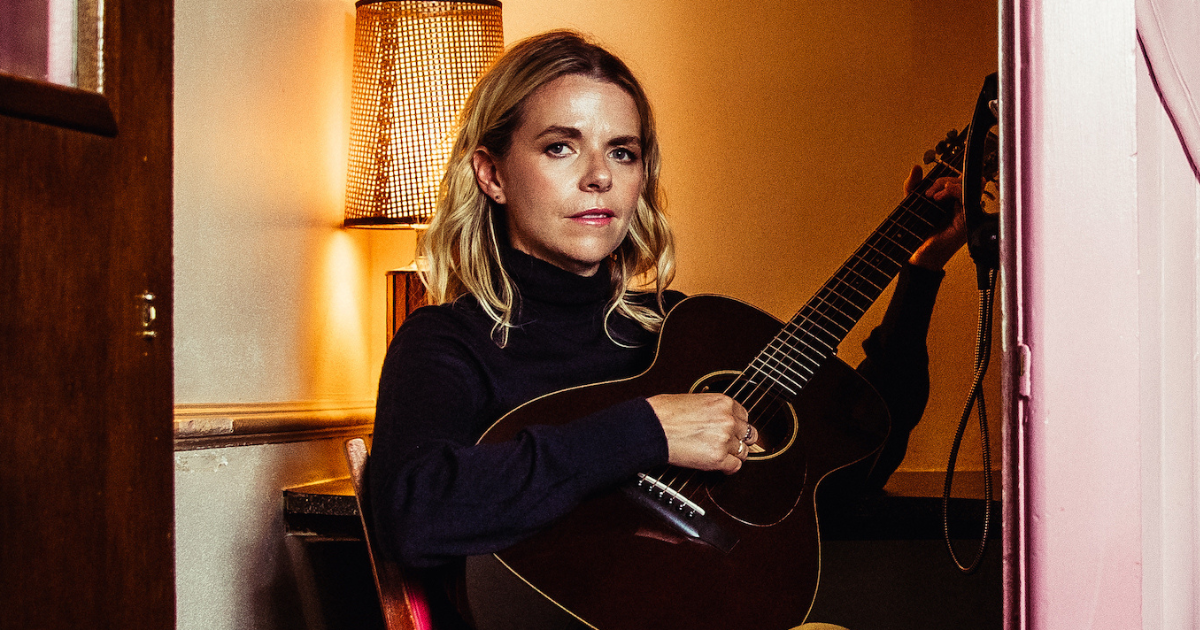
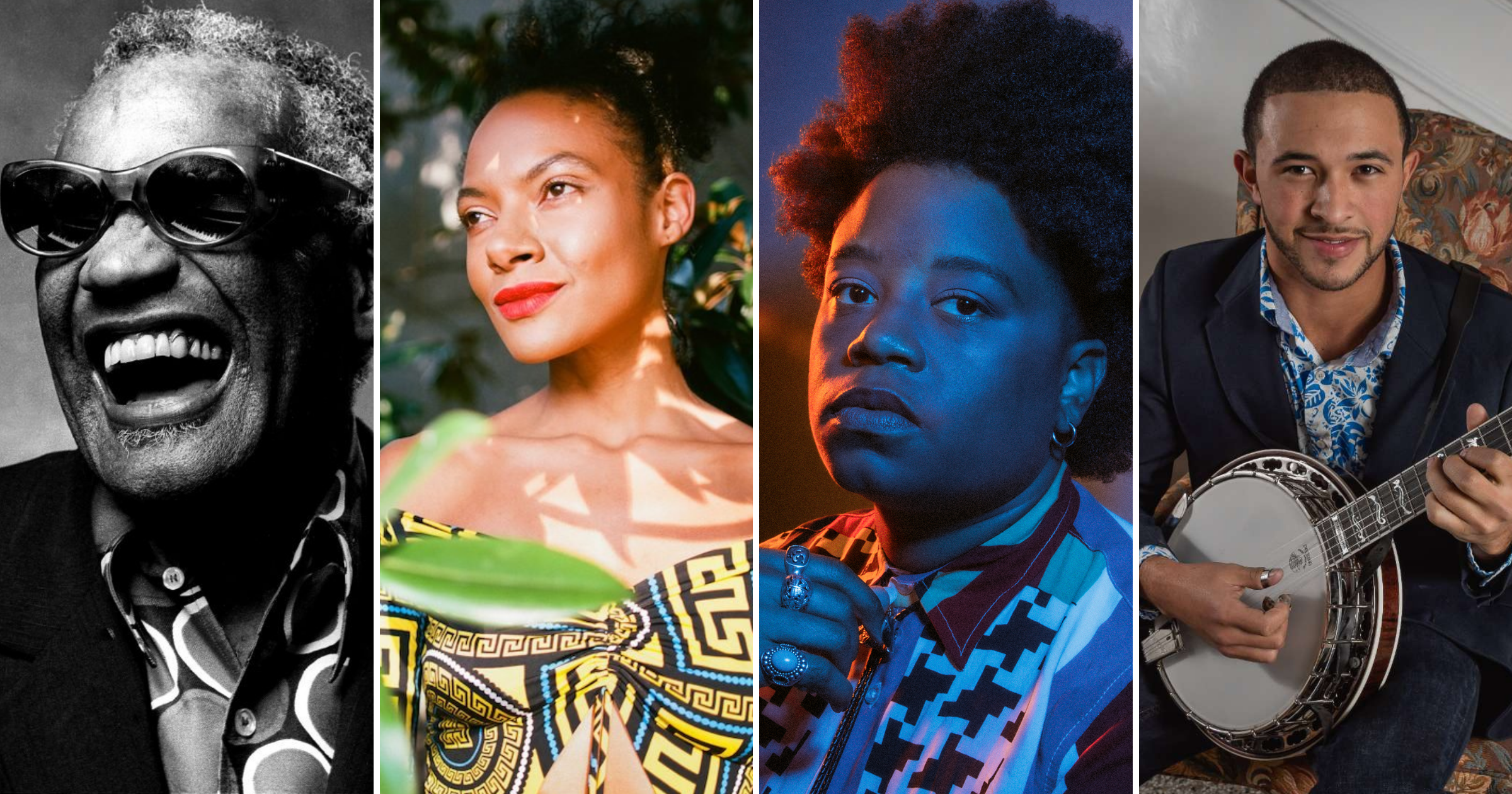
There’s a confidence and ease to Aoife O’Donovan‘s music making, brought forward throughout her career by her languid, tender, and emotive voice. Just as striking and crystalline as it is cozy and comforting, her voice is a truly iconic instrument in Americana, bluegrass, and new acoustic music. Still, as she readies her new solo album, All My Friends (out March 22 on Yep Roc), it feels as though O’Donovan is decidedly stepping into a new era of confidence and self-assuredness, devoid of any sense of desperation or flightiness or unfettered ambitions. There’s a steady, intentional march to the blossoming of her catalog and her artistry and it’s on full display on All My Friends.
The album was conceived as a sort of tribute to or reckoning with the cross-generational struggle for women’s rights, highlighting the passage of the 19th Amendment over 100 years ago and picking up that timeless mantle of ever-striding towards justice. It’s a perfect project to highlight during Women’s History Month; the intellectual and political messages within it are softened – though never outright whitewashed, revised, or sanitized – by O’Donovan’s perspective as a mother of a young daughter. With All My Friends, she is continuing her journey with another timeless tradition in string band music: the role of mother-activist-songwriter-composer.
One of the record’s lead singles, “Daughters,” was heralded in a press releases as “a meditation on the eternal quest for women’s rights and equality.” Meditative qualities might be the most tangible and original through line of O’Donovan’s songwriting, song collection, composition, and her vocal affectations – from as far back as her days with Crooked Still, or evidenced by the songs she brought to her supergroup trio, I’m With Her, with Sara Watkins and Sarah Jarosz. As on “Daughters,” O’Donovan more often than not opts for quiet-and-impassioned, subdued-while-soaring vocals. She’ll wrap you in the gauze and glitter of her one of a kind voice and, in doing so, prepare you ever so gently and kindly to receive the messages in her lyrics – however demonstrative or abstract they may be.
O’Donovan’s latest era of confidence is also well marked by her vast and varied resume of musical collaborations. Besides Crooked Still and I’m With Her, she’s released music with Goat Rodeo (Stuart Duncan, Yo-Yo Ma, Edgar Meyer, Chris Thile), Noam Pikelny, the Milk Carton Kids, Taylor Ashton, Donovan Woods, and so many more. In more recent months and years, she’s featured Allison Russell on a track (on 2022’s Age of Apathy), collaborated with mind-boggling guitarist Yasmin Williams and step-dancer Nic Gareiss on a stunning number entitled “Dawning,” and even “came back” to straight ahead bluegrass with a recent single feature on a Becky Buller track, “Jubilee.”
Her output is ceaseless, her art is prolific, but here – as in the new album, and across her discography – the hallmark of O’Donovan’s work isn’t volume, but intention. This is not breakneck, music industry ladder climbing, this is an artist deliberately expanding the universe of her music bit by bit, voice by voice, collaboration by collaboration. It’s part of why she’s such an effective voice and influence in control rooms, too. (Though her production credits are relatively few, they are mighty.) And it’s part of why, as you scroll through our Essential Aoife O’Donovan playlist, you’ll find as many surprising and eyebrow-raising selections as you will her mighty, familiar modern classics.
All My Friends – with appearances by The Knights, The Westerlies, Anaïs Mitchell, Sierra Hull, Pikelny, and more – is yet another demonstration of O’Donovan’s community, her central role within it, and her confidence in inhabiting that role wholly and completely. This is meditation without stagnation, orchestration without machinations, softness and tenderness, but with a steel spine. These are challenges to the status quo while knowing real progress is made with one foot placed in front of the other – and with many other footsteps following her own.
Throughout the month of March, as we highlight Women’s History Month, we’ll be celebrating the new album, All My Friends, and Aoife O’Donovan as our Artist of the Month. Stay tuned for a special “In Conversation” Artist of the Month feature to come later in March featuring an amazing artist and collaborator of O’Donovan, and we’ll also be dipping back into the BGS archives to resurface so many amazing songs, videos, articles, and stories that highlight the incredible music of Aoife O’Donovan.
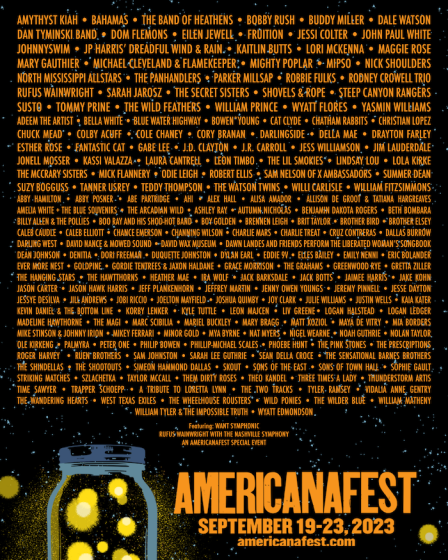
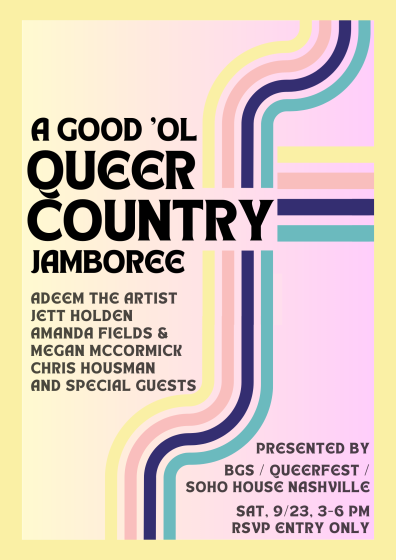
AmericanaFest is HERE! The annual festival, business conference and roots-music extravaganza will once again take over Nashville beginning today, September 19, through Saturday, September 23. While of course we’re most looking forward to our event presented with Queerfest, the Good Ol’ Queer Country Jamboree, on Saturday from 3 p.m. to 6 p.m., the entire week is filled to the brim with must-see, must-hear, must-do events, panels, showcases, parties and hangs.
As we do most years, below we lay out a variety of items starred by BGS staff on our AmericanaFest apps – which, BTW, is a festival and conference essential. You can add performances, panels, and keynotes to your own personalized scheduled complete with lineups, panel rosters, details and more. Plus, you’ll be able to easily see which events require special tickets or advance RSVP directly in the app and which are accessible with your conference badge or festival wristband. Download the official app on the app store here. Download via Google Play here.See the full AmericanaFest daily schedule in your browser here.
We want to hear from you, too! Which AmericanaFest events and shows are you most excited for? Which of the more than 200 showcasing bands and artists are at the top of your lists?
Panels, Parties,& Events
Check-in and pass pick-up begin today, Tuesday, September 19, at 12 noon at the Westin Nashville in the Gulch, but most panels and conference programming gets rolling tomorrow, on Wednesday. If you thought ahead, you already RSVP-ed to the Country Music Hall of Fame & Museum’s conversation and performance by two of our faves, Rosanne Cash and John Leventhal, this afternoon at 3 p.m. They’ll chat about their careers plus the 30th Anniversary re-issue of The Wheel – hear a track from that project on BGS here.
There are quite a few more conversations, panels and events we’re eyeing this week around Nashville:
Roots & Branches – Kentucky Music – WED. SEPT. 20 10:00 AM @ The Westin Vanderbilt III
Kentucky poet laureate Silas House – who recently wrote the story behind Tyler Childers’ sensational new music video – will chat with fellow Kentuckians and musicians S.G. Goodman, Kelsey Waldon and Nat Myers about “the history, legacy and current state of Kentucky’s music and the way it has helped to shape American music…” The bluegrass state means more to American roots music than just bluegrass and these folks know it. An enlightening conversation is sure to be had.
Where the Action Is: Americana Artists and Activism – WED. SEPT. 20 11:00 AM @ the Country Music Hall of Fame & Museum Ford Theater *RSVP REQUIRED*
Moderated by veteran BGS contributor Jewly Hight and hosted by the Country Music Hall of Fame, this conversation will feature performances by Adeem the Artist, Mya Byrne, Autumn Nicholas and Allison Russell, all artists who leverage their music making in Americana spaces to advance activist causes, social justice and representation and inclusion. The event promises to connect the present and each of these artists to this vibrant tradition in roots music and folk.
Hillbillies and Hot Dogs – WED. SEPT. 20 11:30 AM to 2:00 PM @ Compass Records *RSVP REQUIRED*
Our friends at Compass Records and No Depression host one of the best hoedowns every year at AmericanaFest, replete with hot dogs and the recording studio that birthed the Outlaw movement. Hear music by Robbie Fulks, Kelly Hunt, Mattie Schell and the business queen of banjo herself, Alison Brown.
NMAAM Songwriters Rounds – WED., THURS., FRI. SEPT 20, 21, 22 12:00 PM to 1:00 PM @ National Museum of African American Music
A music conference and festival in Nashville is the perfect time to visit the National Museum of African American Music, which opened during the pandemic and has slowly but surely built momentum and an audience for the history, culture, and tastemaking of African American music. And situated right in the heart of Nashville’s lower Broadway neighborhood, it’s the perfect venue to make such points. NMAAM’s daily writers rounds will feature artists and songwriters like AHI, guitar phenoms Joy Clark and Yasmin Williams, BGS One to Watch Julie Williams and more.
An Intimate Conversation with Nickel Creek & Sarah Silverman – WED. SEPT 20 1:00 PM @ RCA Studio A *RSVP Required*
You read that right! Nickel Creek and Sarah Silverman in conversation at RCA Studio A moderated by Jewly Hight!? Pinch us! Clearly one event not to miss this week. RSVP is required, hope yours has been submitted long ago!
Indigenous Americana – WED. SEPT 20 4:oo PM @ the Westin SoBro I & II
You are still on stolen land. While you occupy the historic lands of the Cherokee, Shawnee and Yuchi this week, set aside time to appreciate, ingest and center Indigenous music makers, their songs and their stories. This panel conversation on the future of the thriving Indigenous music community will feature Amanda Rheaume, Crystal Shawanda, Nicole Auger of the Indigenous Music Summit and Trenton Wheeler. More events for/about Indigenous music below.
Kentucky Bluegrass, Past and Future – THURS. SEPT. 21 2:30 PM @ the Westin Gulch I & II
From our friends at the Bluegrass Music Hall of Fame & Museum in Owensboro, a conversation about the arc of bluegrass in the bluegrass state featuring BGS contributor Craig Havighurst, Bluegrass Hall director Chris Joslin, fiddler Jason Carter, the legendary Sam Bush, educator and picker Scott Napier, and Jessica Blankenship of the Kentucky Music Hall of Fame.
Who Are the Gatekeepers of Americana Anyway? – THURS. SEPT. 21 4:00 PM @ the Westin Gulch I & II
If your immediate reaction to this panel title is skepticism, this is definitely for you! The roster of Omar Ruiz-Lopez (of Violet Bell), Rissi Palmer and Yasmin Williams immediately indicate this conversation will critically unpack and explore the construction of Americana as a format, just how multi-cultural the music really is, and why that strength is worth spotlighting while we dismantle systems of gatekeeping and exclusion.
Transgender Artists Arriving and Breaking Through in Americana – FRI. SEPT. 22 1:00 PM @ the Westin Gulch I & II
Just a few short years ago there were almost no LGBTQ+ spaces at AmericanaFest, so we’re ecstatic to see a trans-specific space like this opened up at the conference. Hear from Ally Free, Cidny Bullens, Mya Byrne, Paisley Fields and moderator Marcus K. Dowling on historic and current challenges and opportunities for trans, non-binary and gender non-conforming Americana musicians.
From ‘Queer Jolene’ to ‘Pay Gap’: Teaching Social Issues Through Americana in the Classroom – FRI. SEPT. 22 3:30 PM the Westin Gulch III
Using two songs as a springboard, scholar-musician Nadine Hubbs and showcasing artist Beth Bombara will be joined by Aimee Zoeller, Ethan Anderson, and renowned writer/thinker Tressie McMillan Cottom to discuss the use of Americana music and texts to teach and highlight current issues of race, class, gender, sexuality and identity in university and college classrooms and academic spaces.
Americana Honors & Awards
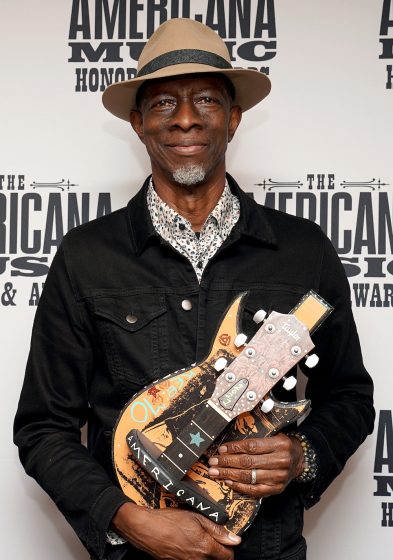
Keb’ Mo’ attends the 20th Annual Americana Honors & Awards in Nashville, Tennessee. (Photo by Erika Goldring/Getty Images for Americana Music Association)
The marquee event of the week, the 22nd Annual Americana Honors & Awards will take place on Wednesday evening beginning at 6:30 p.m. See the full list of honorees and nominees here. The awards show promises appearances and performances by so many Americana friends and neighbors: Adeem the Artist, Allison Russell, Brandy Clark, Jessi Colter, Marty Stuart, Nickel Creek, William Prince, Sunny War and many, many more. Recipients of this year’s Lifetime, Trailblazer and Legacy Awards include The Avett Brothers, George Fontaine Sr., Bettye LaVette, Patty Griffin and Nickel Creek.
Good Ol’ Queer Country Jamboree at Soho House Nashville
A rare opportunity to utilize the gorgeous facilities of Soho House Nashville at this members-only and conference passholders-only event! Plus, enjoy the absolute best in queer country being made today as we celebrate the announcement of BGS’s new outlet, Good Country, coming in 2024! Space is limited, so make sure your RSVP is in for the Good Ol’ Queer Country Jamboree featuring music by Adeem the Artist, Jett Holden, Amanda Fields & Megan McCormick, Chris Housman and special guests.
The Good Ol’ Queer Country Jamboree Featuring Adeem the Artist, Amanda Fields & Megan McCormick, Jett Holden, Chris Housman, and more. Saturday, September 23, 3 p.m. – 6 p.m. Soho House Nashville
Showcases, Artists & Bands
Here are just a handful of the showcases, lineups, artists and bands we’ve got our eye on this week:
Americana Proud: A Voice for All – TUE. SEPT. 19 8:00 PM & 9:30 PM @ the City Winery
Hosted by singer-songwriter Autumn Nicholas and Nashville-based drag queen Vidalia Anne Gentry, Americana Proud will bring two showtimes of their highly-anticipated showcase to the City Winery on Tuesday evening, the first at 8 p.m. and another immediately following at 9:30 p.m. Hear from artists and musicians such as ISMAY, Jobi Riccio, Kentucky Gentlemen, Palmyra and many more.
Bourbon & Bluegrass – FRI. SEPT. 22 4:oo PM to 6:30 PM @ the Vinyl Lounge
Join us and our friends from Visit Owensboro and LogStill Distillery for one of our most favorite pairings, bourbon and bluegrass presented by BGS! Fresh off of our rollicking time in Kentucky at Bourbon & Beyond, we’ve still got a hankering for whiskey and tunes – this time from Mama Said String Band and the Owensboro Bluegrass Band. Join us Friday afternoon at the Vinyl Lounge in Wedgewood Houston!
Willi Carlisle
We can’t get enough of this lonesome troubadour’s poetic, old-timey country. He’s in and out of Nashville quick this week, so catch Willi Carlisle’s official showcase at the Vinyl Lounge on Thursday, Sept. 21 at 8:00 p.m. (Read our most recent feature on Carlisle here.) Now THAT’S good country!
Michael Cleveland & Flamekeeper
Fiddler Michael Cleveland burnt down our BGS Stage at Bourbon & Beyond last weekend when he brought on his friend and ours, Billy Strings, as a surprise guest. Later that evening during Strings’ main stage set, he brought Michael out in front of 40,000 roaring fans. We LOVED that moment – don’t miss his official showcase with his band, Flamekeeper, at Analog at the Hutton Hotel on Thursday, Sept. 21 at 9 p.m.
Jessi Colter
This legend of country has a new, Margo Price-produced album, Edge of Forever, out on October 27, so it’s the perfect week to check her off your live performance bucket list. Colter will have an official showcase at 3rd & Lindsley on Wednesday, Sept. 20 at 10 p.m., plus she appears as part of Mojo’s Music City Mayhem on Thursday, Sept. 21 between 3 and 6 p.m. Also some good country.
Della Mae
We’ve been keeping up with Della Mae lately – from Earl Scruggs Music Festival to Bourbon & Beyond to AmericanaFest! – and we’ve loved every second. If you haven’t heard their new four-person lineup, it’s worth checking out this week. If you’re not in Nashville at the conference, stream their newly released Neil Young cover instead. (Below!)
Liv Greene
AmericanaFest is all about discovery and if you haven’t discovered this singer-songwriter yet, this week is your chance. Hear Greene’s award winning songwriting – which is equally winsome and pining while gritty and bluegrassy – on three different occasions throughout the week: Tuesday, Sept. 19, 8 p.m. at Americana Proud at City Winery; their official showcase on Thursday, Sept. 21 at 10 p.m. at the City Winery Lounge; and during the Tribute to the Songs of 1973 Part 3 on Friday, Sept. 22 at 10 p.m.
Jaimee Harris
You know what Jaimee Harris’s music is? Good country! It’s all over this AmericanaFest lineup, for sure. Harris will have your heart firmly in hand with her grounded, earnest and effacing nostalgia. It feels so country and effortlessly Americana, but with endless queer, subversive wrinkles. Get acquainted with Harris and her latest album, Boomerang Town, at several different performances during the week: Tuesday, Sept. 19, 8 p.m. at Americana Proud at City Winery; Thursday, Sept. 21, 4:30 p.m. at the Lone Star Shindig at the Bobby Hotel; Friday, Sept. 22, 1:20 p.m. at Bowery Vault for SHC East Coast Social Club; her official showcase on Friday, Sept. 22, 8 p.m. at the City Winery Lounge; Friday Sept. 22, 11 p.m. at the Basement East for A Tribute to the Songs of 1973; and Saturday, Sept. 23 at Dee’s Country Cocktail Lounge at 1 p.m.
Lola Kirke
All of Lola Kirke’s exes live in LA, so luckily she’s in Nashville this week! Kirke was a highlight of our BGS Stage last week at Bourbon & Beyond in Louisville before heading to AmericanaFest, where you can see her at SiriusXM Outlaw’s Americana Most Wanted guitar pull on Thursday, Sept. 21 at 12 p.m.; also see her official showcase at the Blue Room on Thursday, Sept. 21 at 10 p.m.; and at Imogene + Willie’s Round Up – a free, unofficial, buzzworthy event certainly worth a drop-by at least – on Friday, Sept. 22 at 7:15 p.m.
Native Guitars Tour – Voices of Native Americana – THURS. SEPT. 21 12:00 PM to 4:00 PM @ The Blue Room
Native leaders in music, art and fashion will bring authentic songs and stories to the Blue Room at Third Man Records on Thursday afternoon. Hear from Dach Martin, Jir Anderson, Levi Platero Band, Mike Bruno & the Myriad Mountains, Mozart Gabriel, Olivia Komahcheet, Rico Del Oro, Sage Bond and Scotti Clifford. From Native blues to crooning country and everything in between.
Emily Nenni
Get your boot scootin’ in while you’re in Nashville with honky-tonker Emily Nenni, whose country & western picked up a few tricks and twists in California’s Bay Area before landing in Music City. Nenni will jam a handful of Nashville shows into a packed tour week that takes her away from and back to AmericanaFest in the blink of an eye. Hear her at Honky Tonk Tuesday at the American Legion in East Nashville on Tuesday, Sept. 19; plus an appearance at Musician’s Corner at Centennial Park on Friday, Sept. 22 at 4:35 p.m.; and her official showcase at Eastside Bowl on Saturday, Sept. 23 at 10:30 p.m.
Autumn Nicholas
Nicholas has already appeared on this preview in a few places, and rightly so, as the North Carolinian Black Opry alumnus continues to build momentum behind their stratospheric voice and introspective, emotive songs. Hear the voice Nashville has been buzzing about for months – and that will open for Jason Isbell at the Ryman this fall – throughout the week: Tuesday, Sept. 19 at Americana Proud at City Winery, 8 p.m. and 9:30 p.m. shows; “Where the Action Is” panel at the Country Music Hall of Fame on Wednesday, Sept. 20 at 11 a.m.; and their official showcase at the Basement on Friday, Sept. 22 at 8 p.m.
Queer Cowpoke Roundup – SAT. SEPT. 23 2:00 PM to 5:00 PM @ the Groove
On your way to/from the Good Ol’ Queer Country Jamboree at Soho House on Saturday, stop by the Groove record shop in East Nashville for another LGBTQ+ centered event, the Queer Cowpoke Roundup! With music by Austin Lucas, Julian Talamantez Brolaski, Julie Nolen, Melody Walker, Mercy Bell, Secret Emchy Society, Shawna Virago and Wiley Gaby plus a special tribute to the legacy of Lavender Country and Patrick Haggerty to kick it all off.
Jobi Riccio
We are sweet on Jobi Riccio’s new album, Whiplash, a showcase of powerful, talented songwriting done up in checkered gingham and starchy denim and the perfume of broken in leather. We’ve had our eye on Riccio for a few years now, so it feels gratifying to watch the music industry discover and get behind the Berklee graduate. Hear Riccio perform during the Americana Honors & Awards on Wednesday night, but also elsewhere during AmericanaFest: Tuesday, Sept. 19 at Americana Proud at City Winery at 9:30 p.m.; Thursday, Sept. 21 at WMOT Day Stage at Eastside Bowl at 4 p.m.; and her official showcase will be at Exit/In on Thursday, Sept. 21 at 8 p.m. (Plus, Riccio’s social media tease a “to be announced” appearance on Friday, September 22, so keep your eyes peeled.)
The Shindellas
Americana is all about making music outside the lines, about exploring the rootsy fringes of these genres we all hold dear. The Shindellas are one of the most exciting groups to come out of Nashville in recent memory, but because of their glitz, polish and crisp production values they’re rarely categorized as Americana – which they certainly can lay claim to, through blues, R&B, soul and so much more. Their new Louis York-produced album, Shindo, drops in October, so make sure you catch them this week on Saturday. You’ll be glad you did! See the Shindellas at the 11th Annual Thirty Tigers Gospel Brunch at the City Winery, Saturday, Sept. 23 11:00 a.m. to 1:00 p.m.; and their official showcase at the Basement East on Saturday, Sept. 23 at 7 p.m..
Dan Tyminski
The man, the legend, he needs no introduction to the BGS reader (except, perhaps, when introduced as his mononym, Tyminski). Hear Dan fresh off his Bourbon & Beyond appearance on the BGS Stage with his new bluegrass band lineup, who are certainly worth a listen, at their official showcase on Thursday, Sept. 21 at 10 p.m. at the Analog at the Hutton Hotel. This new lineup of pickers backing up the famed voice of George Clooney on O Brother, Where Art Thou? are one of the most exciting things to come from Tyminski, musically, in the last handful of decades.
YasminWilliams
If you’ve never seen Yasmin Williams play guitar, prepare to have your mind blown. Her approach to the instrument doesn’t just wow her audiences, it wows her fellow guitarists as well, from Bryan Sutton to Tommy Emmanuel. We’ve been fans of Williams for more than a few years, since before her Shout & Shine appearance even, and we’re glad to catch her again this week at AmericanaFest: “Wide Open Spaces – The Rise of Ambient Americana” Panel, Thursday, Sept. 21, 1 p.m. at the Westin Gulch I & II; “Who are the Gatekeepers of Americana Anyway” Panel, Thursday, Sept. 21, at 4 p.m., the Westin Gulch I & II; NMAAM Songwriters Round Friday, Sept. 22 at 12 p.m.; and her official showcase Thursday, Sept. 21 at the Blue Room at 9 p.m.
Poster graphic and photo of Keb’ Mo’ courtesy of the Americana Music Association.
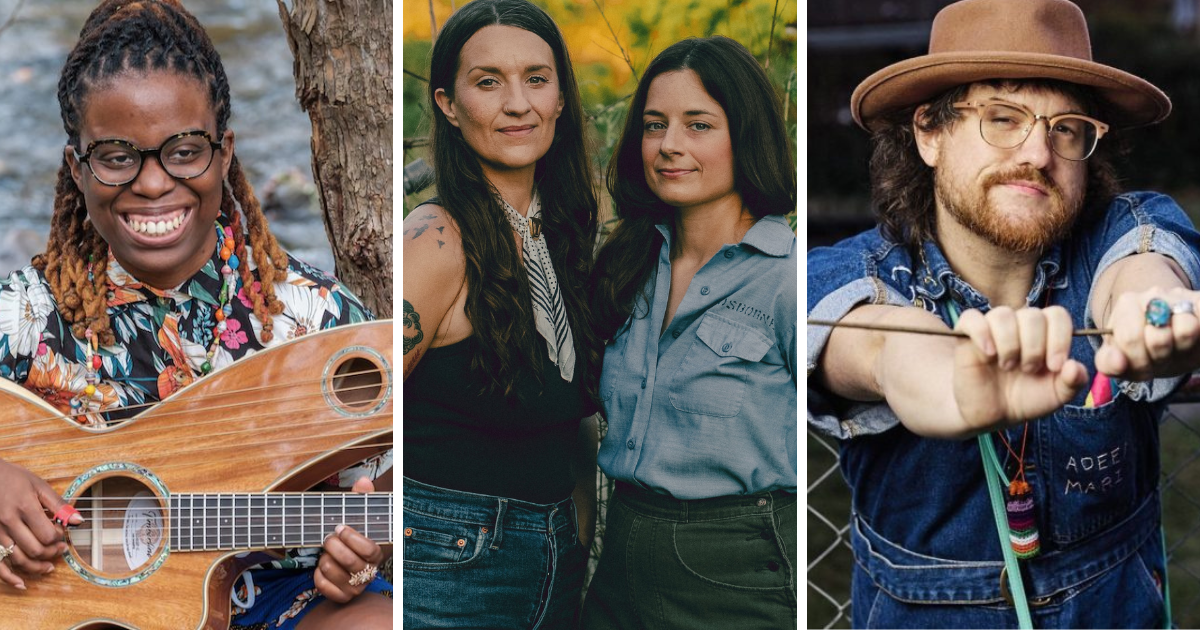
Lead images: Yasmin Williams by Kim Atkins Photography; Amanda Fields & Megan McCormick by Lindsey Patkos; Adeem the Artist by Shawn Poynter; Michael Cleveland by Amy Richmond.
(Editor’s Notes: Headline image of Béla Fleck & the Flecktones. Scroll to see a photo gallery.
To mark Planet Bluegrass’s 50th annual Telluride Bluegrass Festival, we asked author and music journalist David Menconi to reflect on its impact – and the vibrant community that’s grown up around this iconic roots music event.)
The circuit of roots music festivals in America has some similarities to the Professional Golf Association. There’s at least one festival as well as one golf tournament pretty much every week of the spring, summer and fall. But a few stand out as special and even career-making – golf’s four major championships, and the handful of prestigious main-event music festivals. North Carolina’s MerleFest is like The Masters, the early-season springtime kickoff each April, while late-season festivals like San Francisco’s Hardly Strictly Bluegrass line up nicely with the British Open.
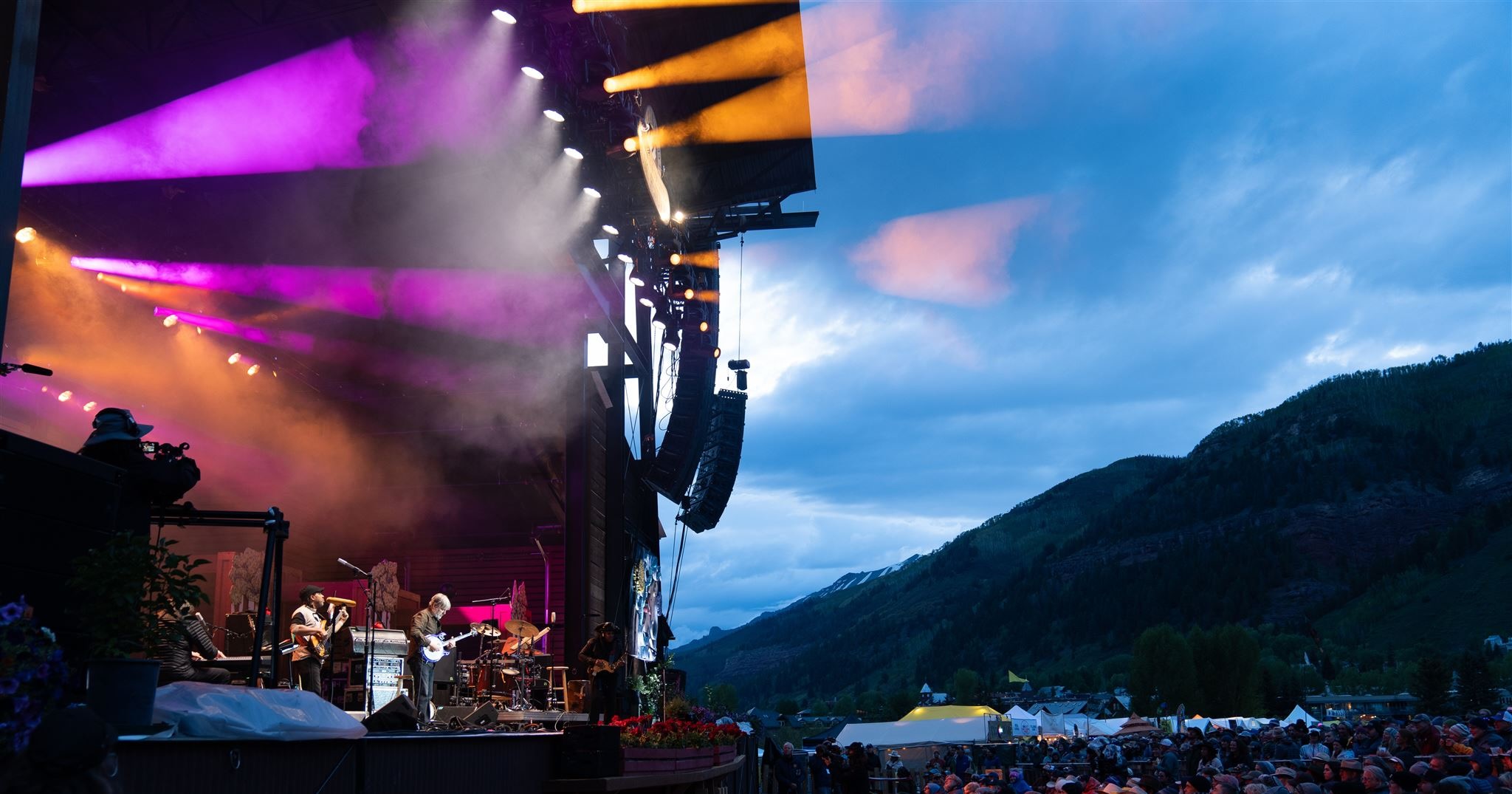
But there’s no question which music festival stands as the summit of the circuit, and not just because it’s in the mountains of Colorado. That’s the Telluride Bluegrass Festival, which marked its 50-year anniversary with the 2023 edition last weekend, June 15-18. The fact that Telluride has prospered for half a century makes Telluride something like golf’s U.S. Open championship, the big one that everybody wants to be a part of. Telluride’s status is something that the musicians who play it are well aware of.
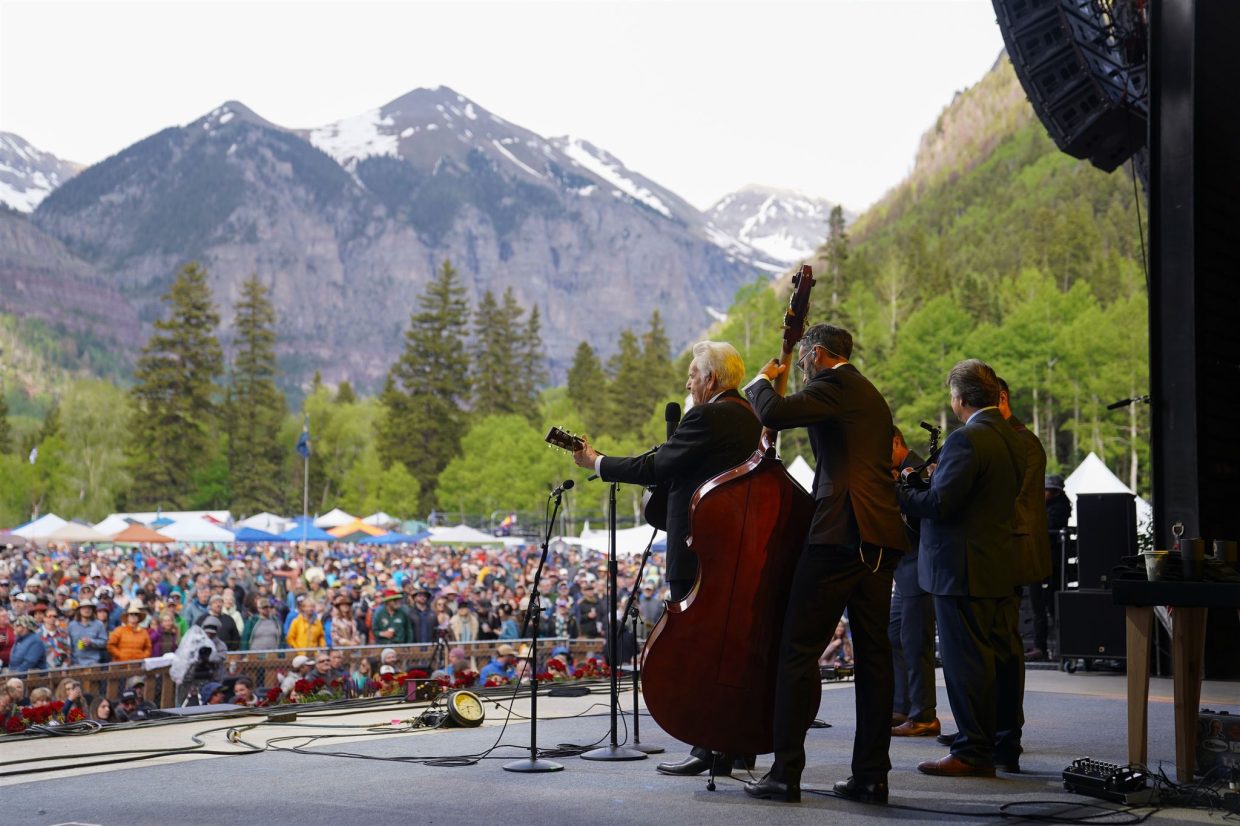
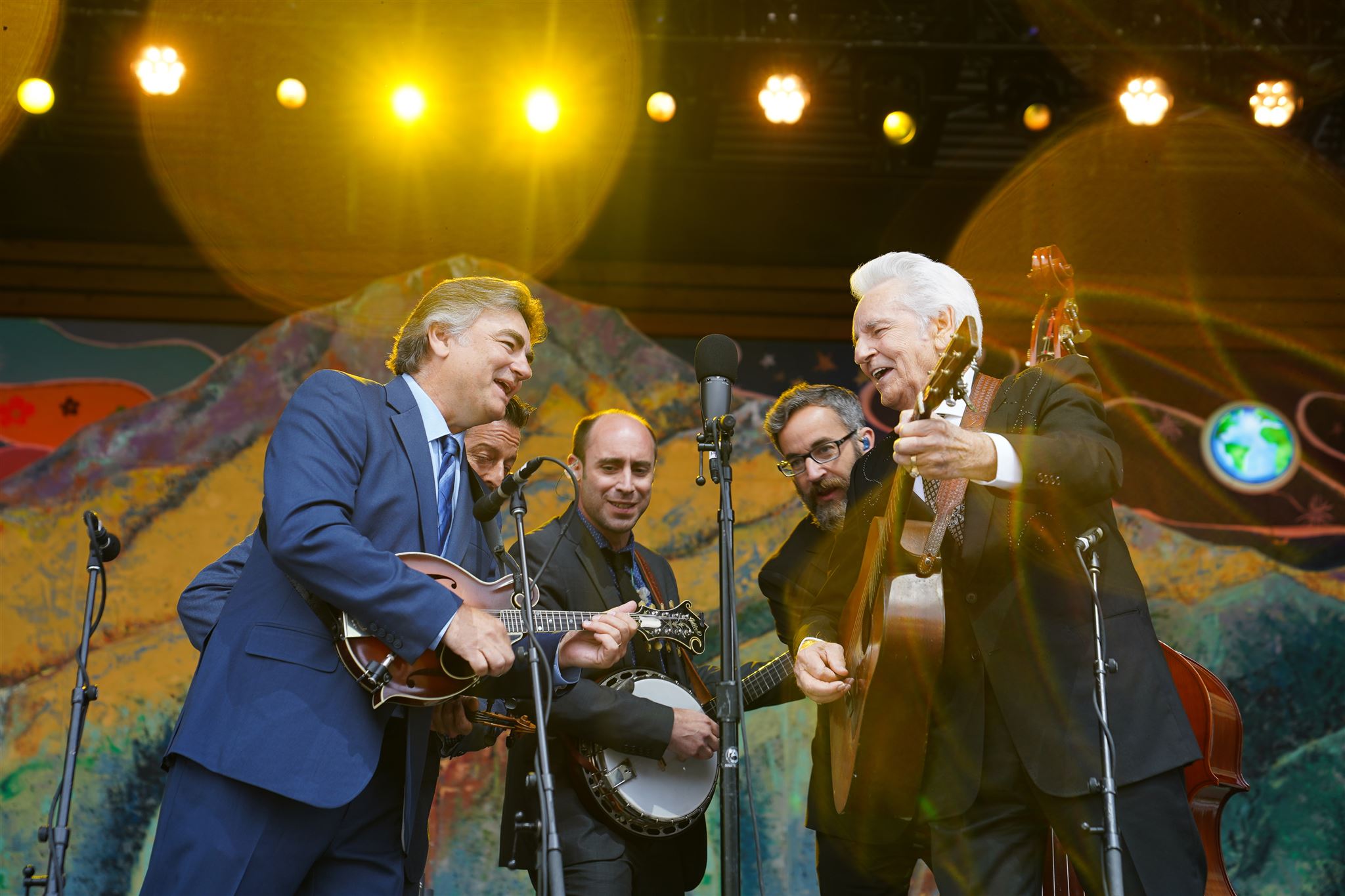
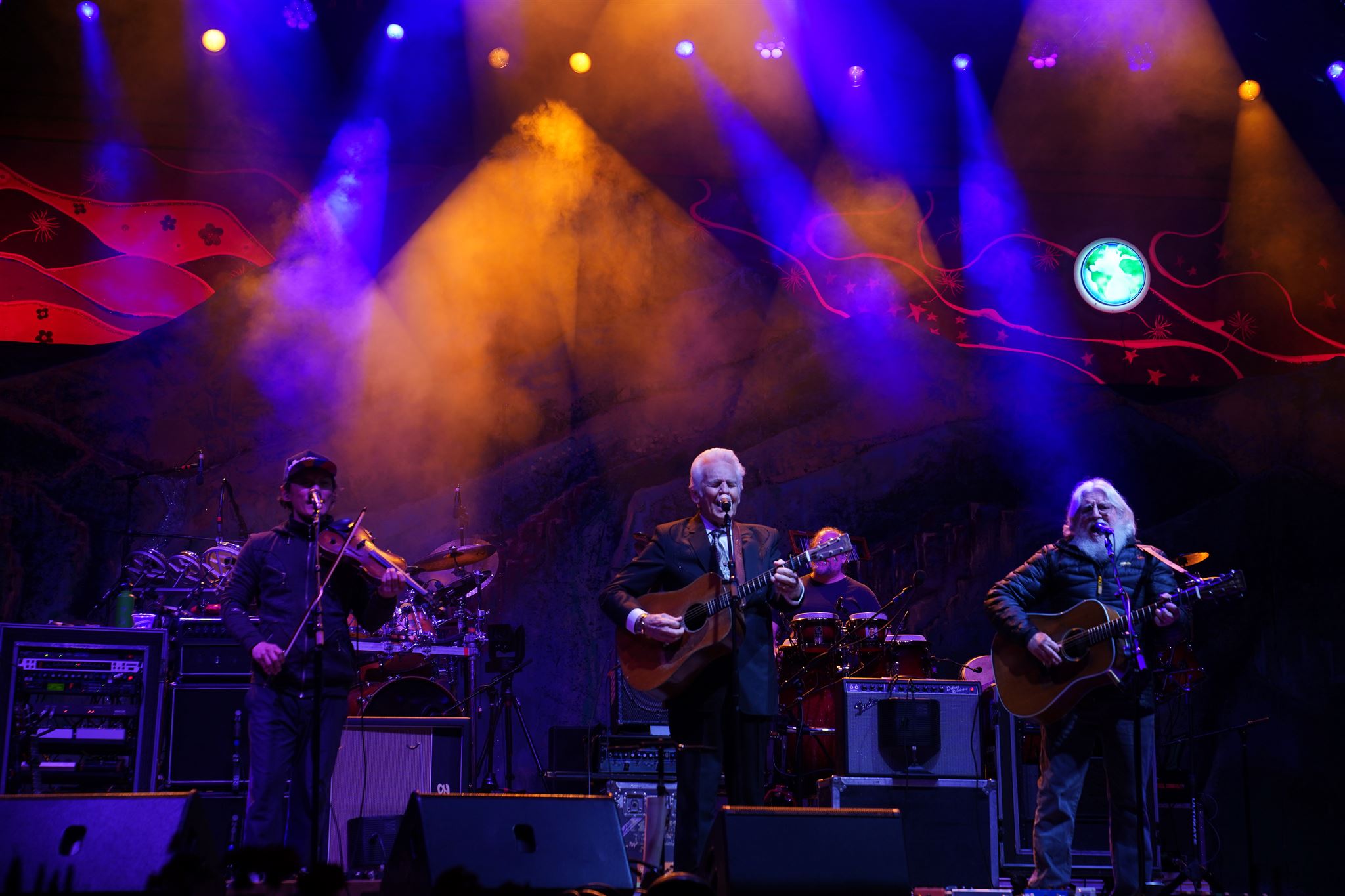
Del McCoury Band performs Thursday, June 15, at the 50th Annual Telluride Bluegrass Festival.
“Festivals and musical trends come and go, and acoustic music has been through some serious peaks and valleys the last 50 years,” says Chris “Panda” Pandolfi, banjo player for Telluride regulars The Infamous Stringdusters, who were on this year’s lineup. “The one mainstay throughout has been Telluride Bluegrass Festival. When we started out, Telluride was the place to be and the definitive crossroads we aspired to, and it still is. Lasting 50 years is an amazing testament to its importance. Bluegrass is more popular than ever now, and Telluride is a big part of that.”
There are literally hundreds of music festivals spanning every style imaginable nowadays, including massive annual gatherings like Bonnaroo in Tennessee and Coachella in the California desert. But there were just a small handful of festivals when Telluride Bluegrass Festival started up in 1973 in the scenic Colorado mountain town that bears its name. And even though Telluride’s daily capacity of 10,000 fans is significantly smaller than a lot of the other major festivals on the circuit, it has still maintained its prestige status.
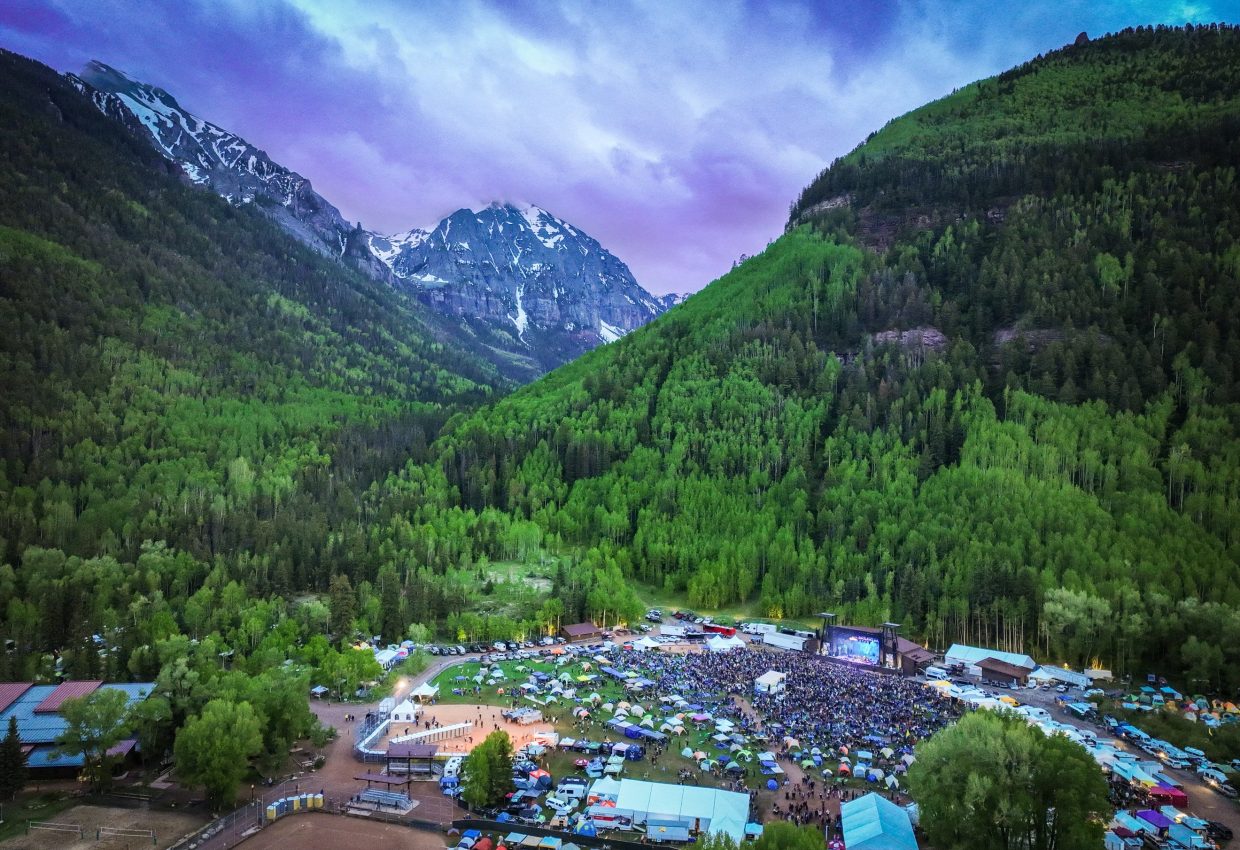
A drone shot of the festival grounds of Telluride Bluegrass Festival.
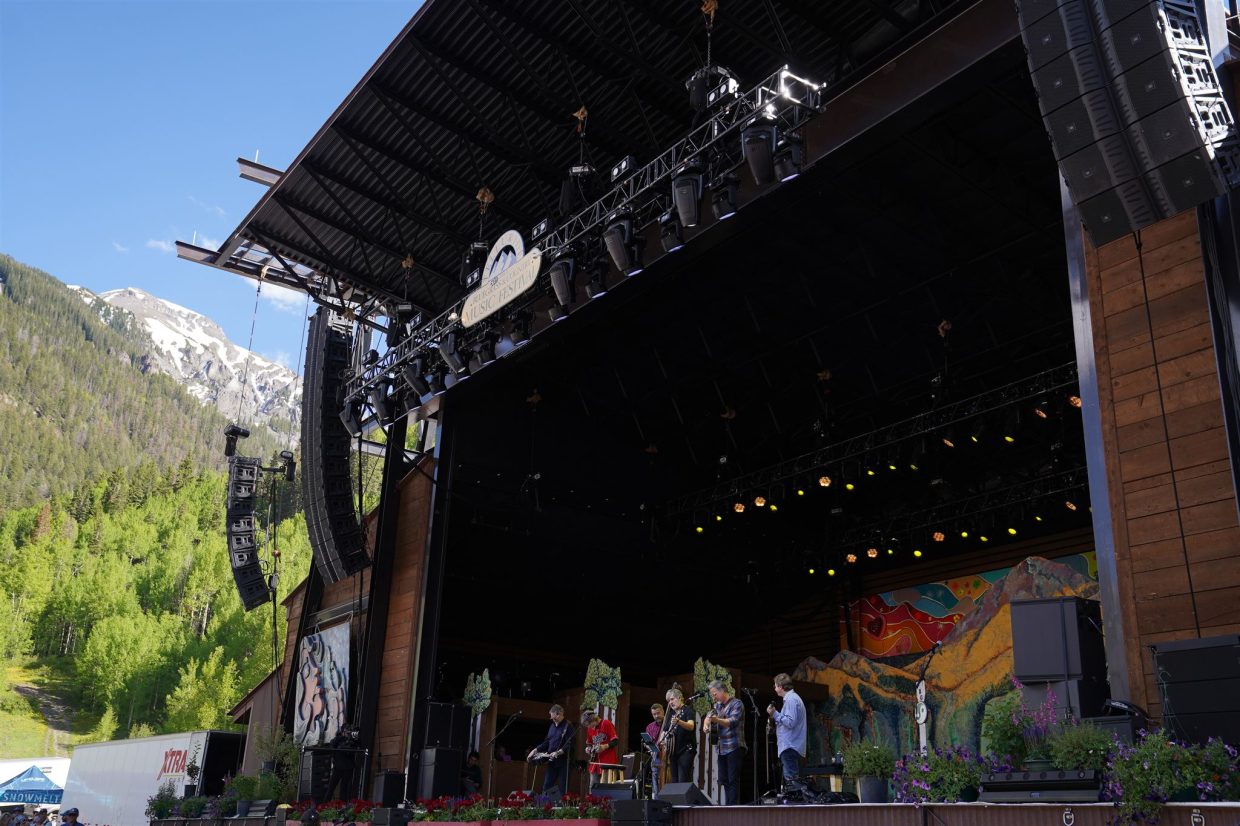
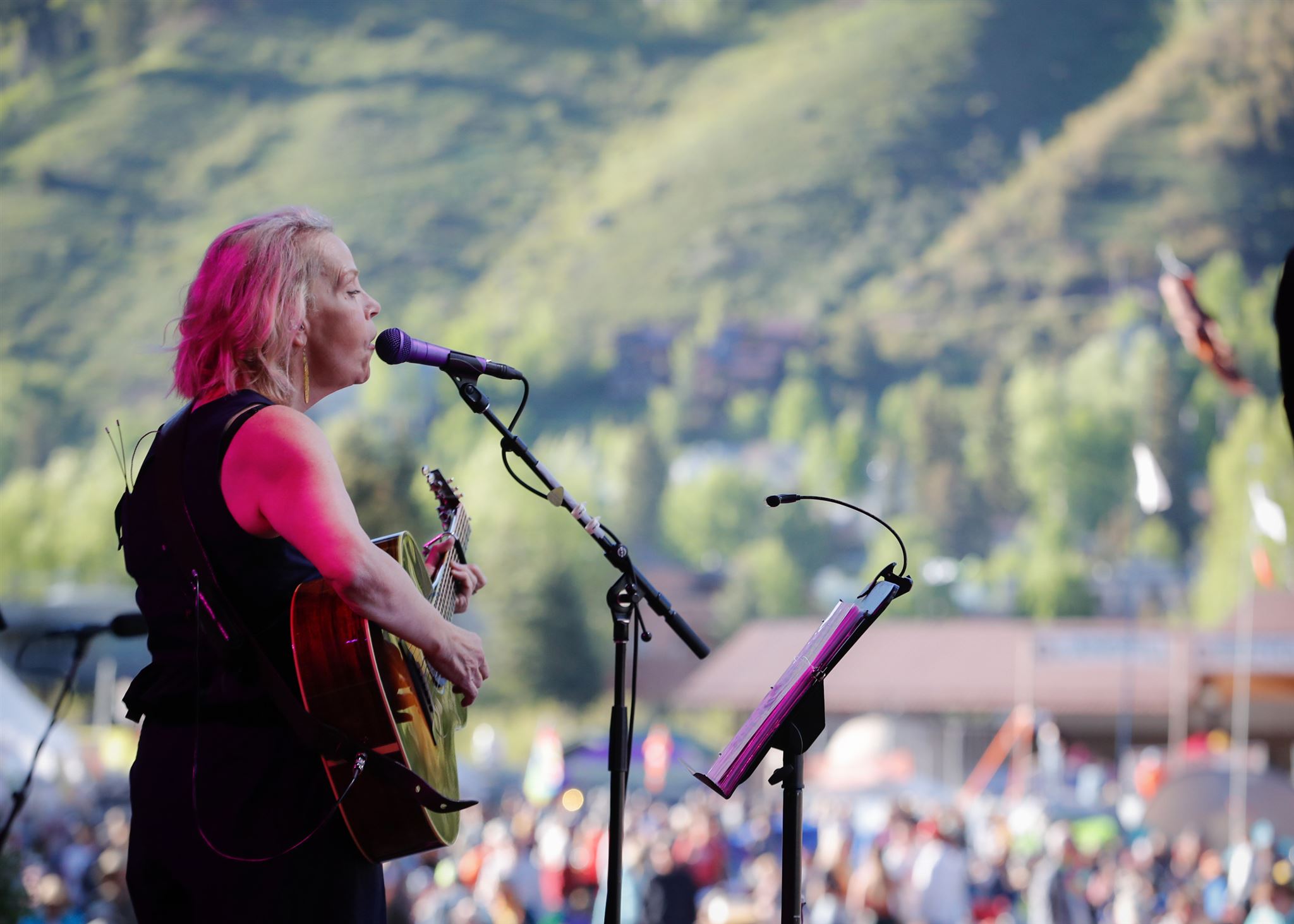
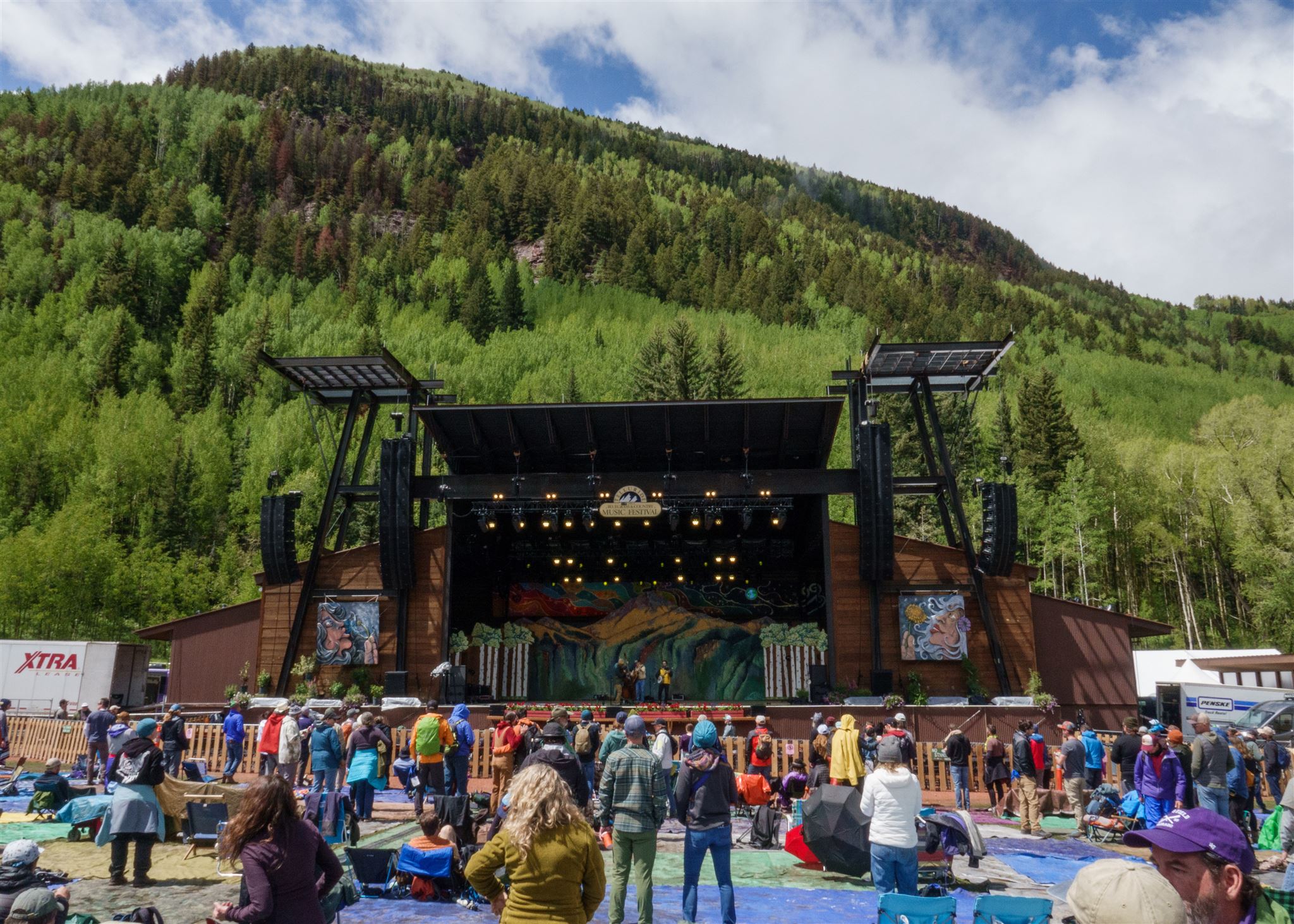
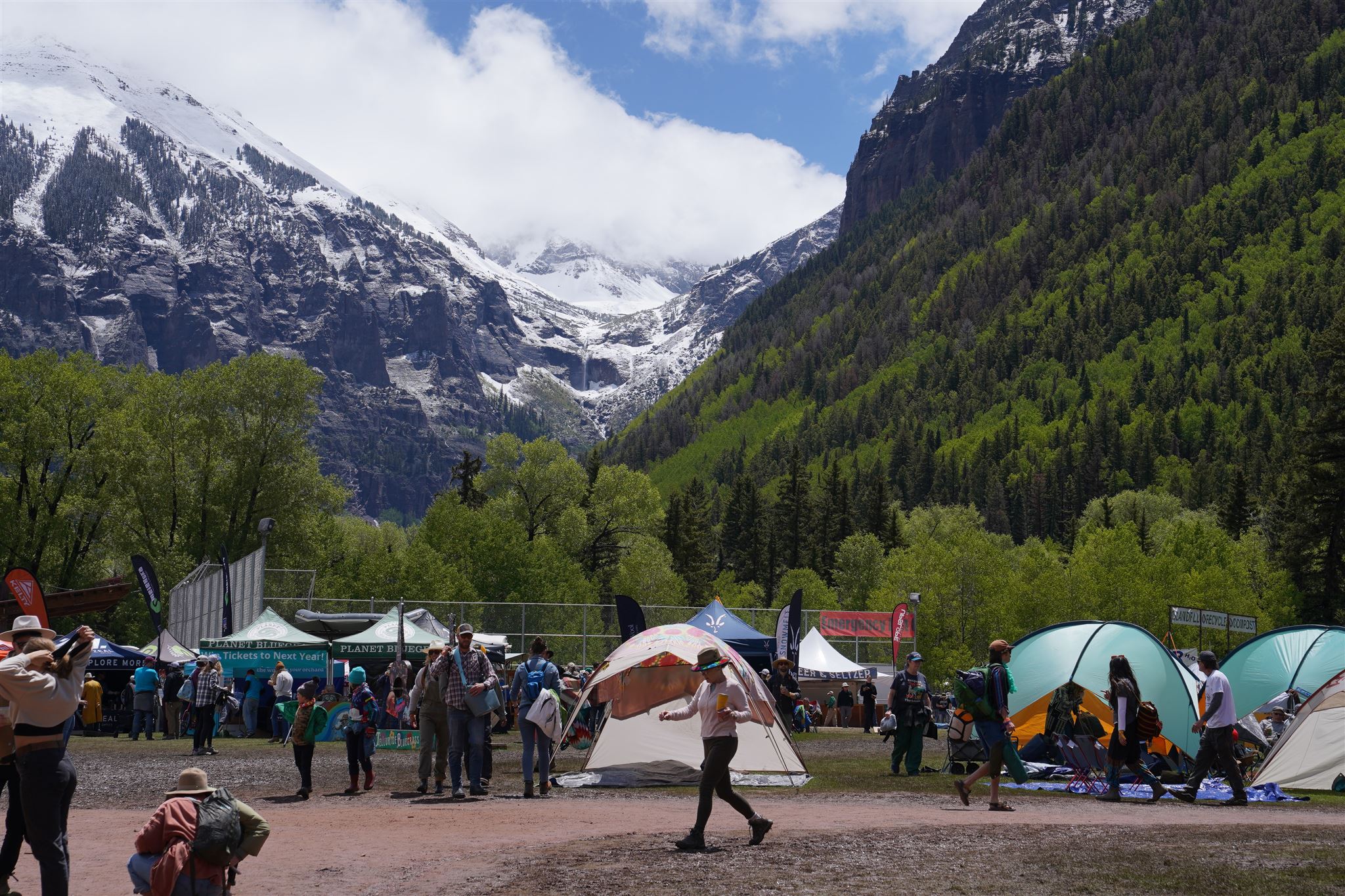
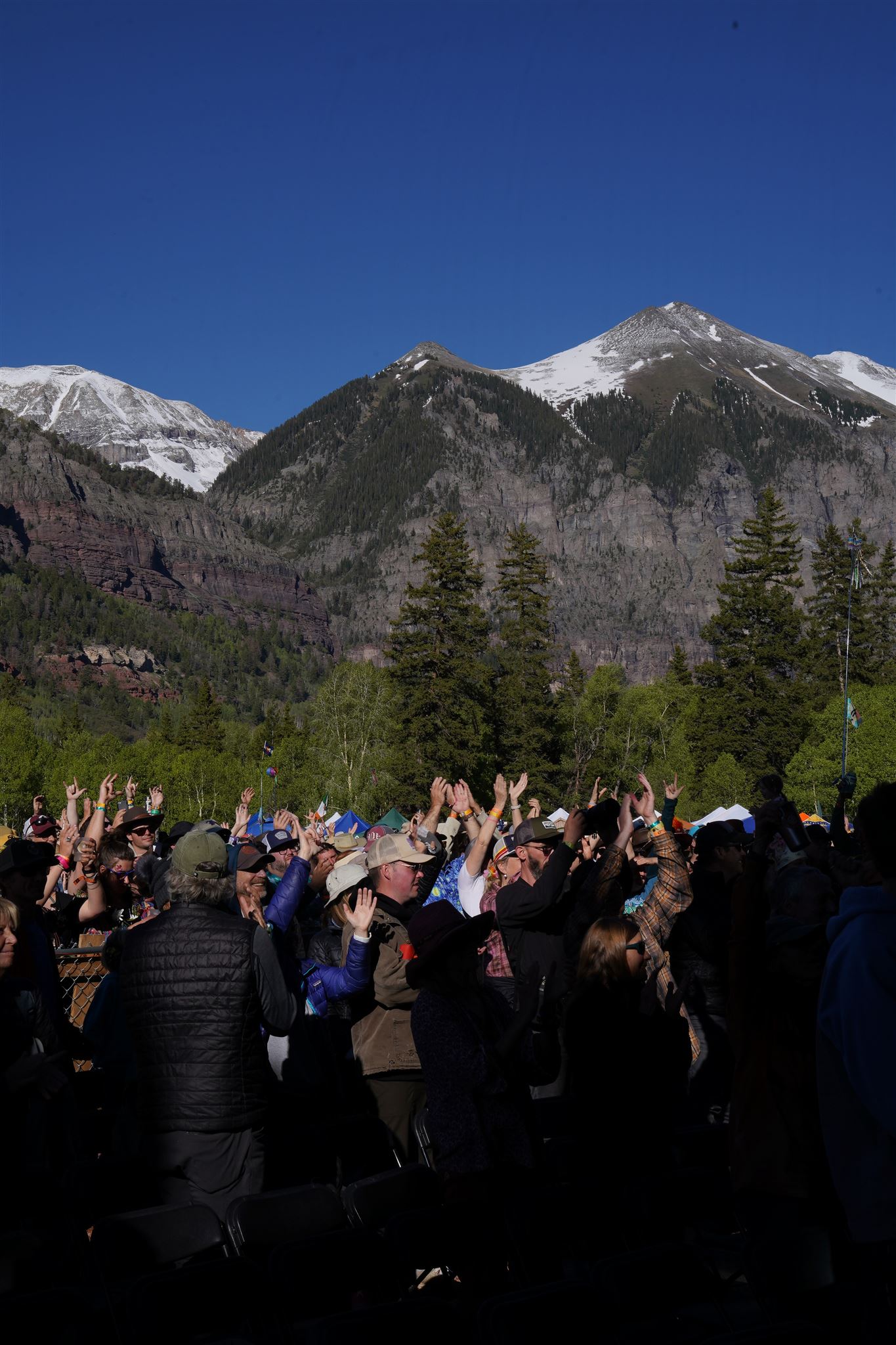
In spite of that smaller size, Telluride does have a few structural advantages that set it apart. One is a picturesque setting of surpassing natural beauty on the western edge of Southwestern Colorado’s San Juan Mountains. For performers as well as attendees, there’s not a better view anywhere than what you see at Telluride.
“The view from the crowd is amazing, but from the stage it’s the most incredible view imaginable as an artist,” says Pandolfi. “It’s this multi-layered inspirational snapshot of some of the best music fans, at the best-run festival, in the most beautiful environment in the world. I think a lot of people have this experience, knowing of Telluride as this iconic festival with an outsized reputation, but it more than lives up to the hype. First time we played there, I remember feeling intimidated because so many heavy-weight players we looked up to were there. But as soon as we got onstage, everything clicked.”
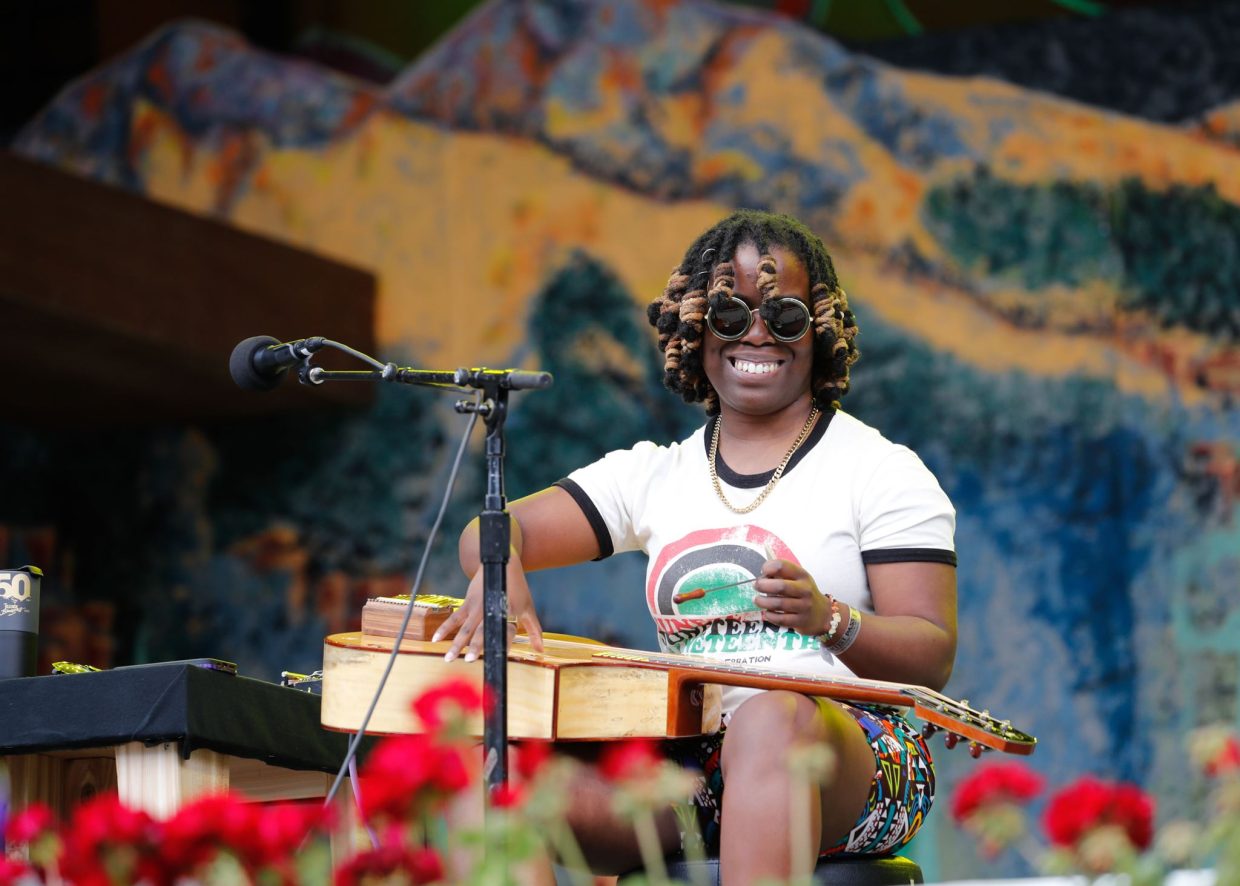
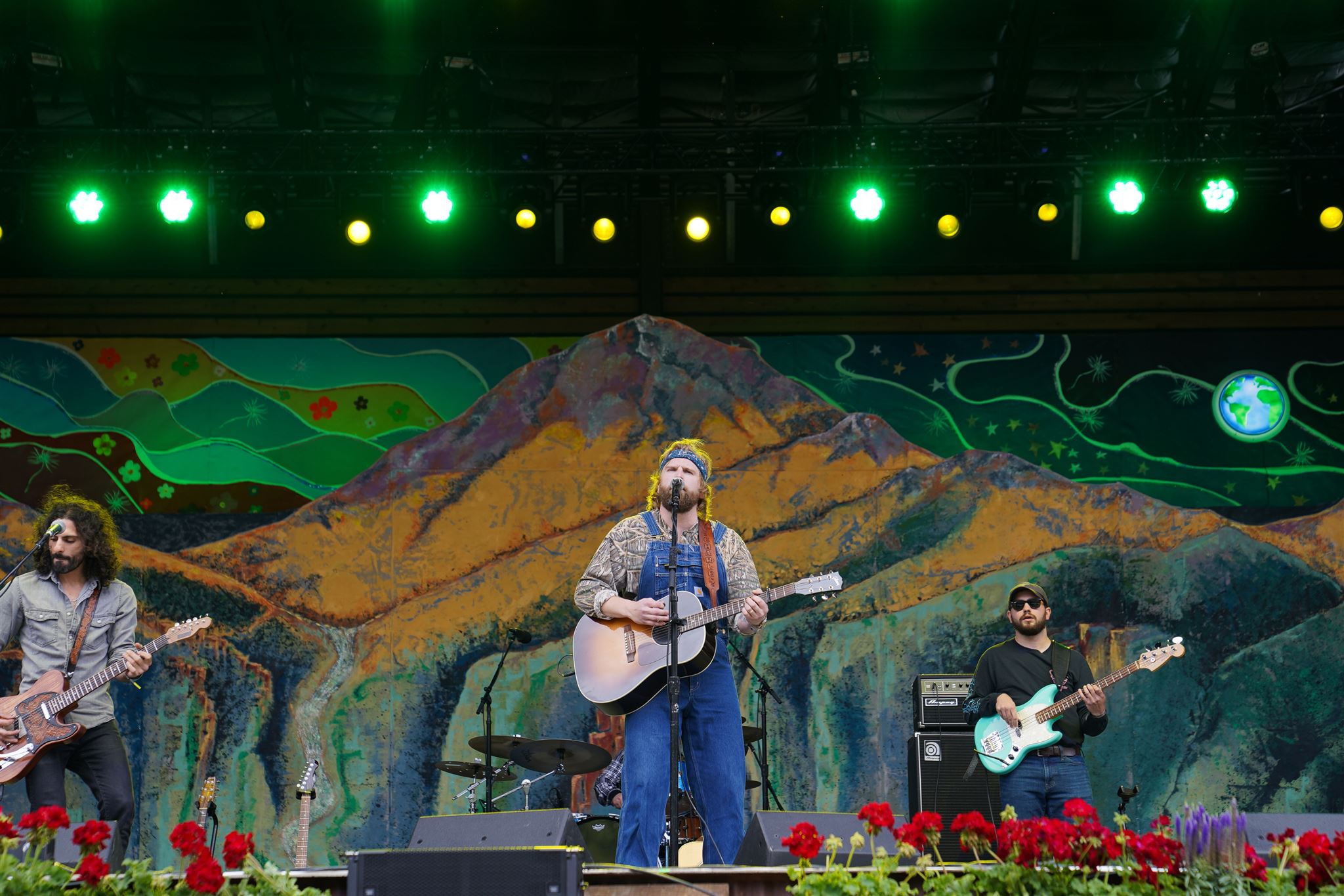
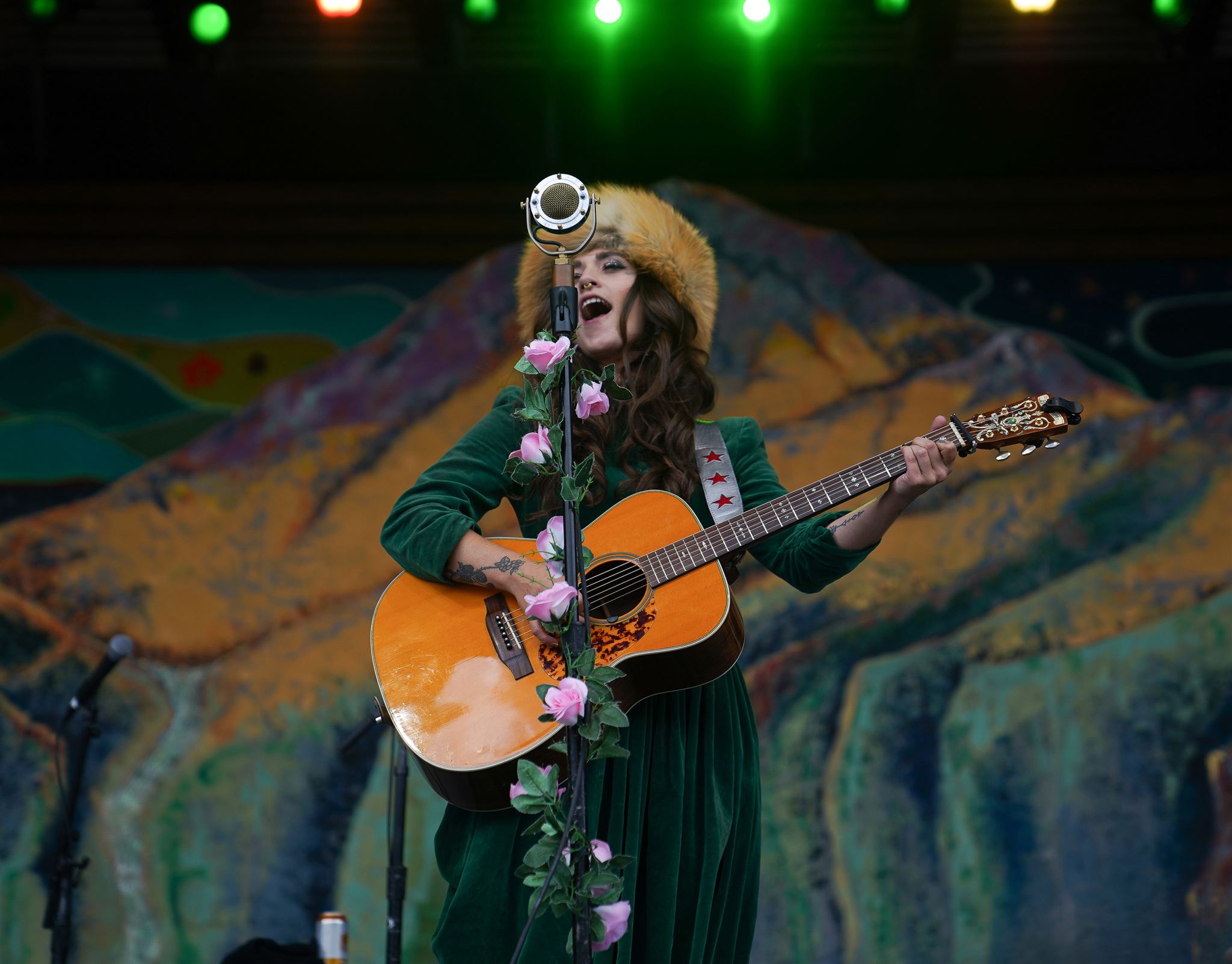
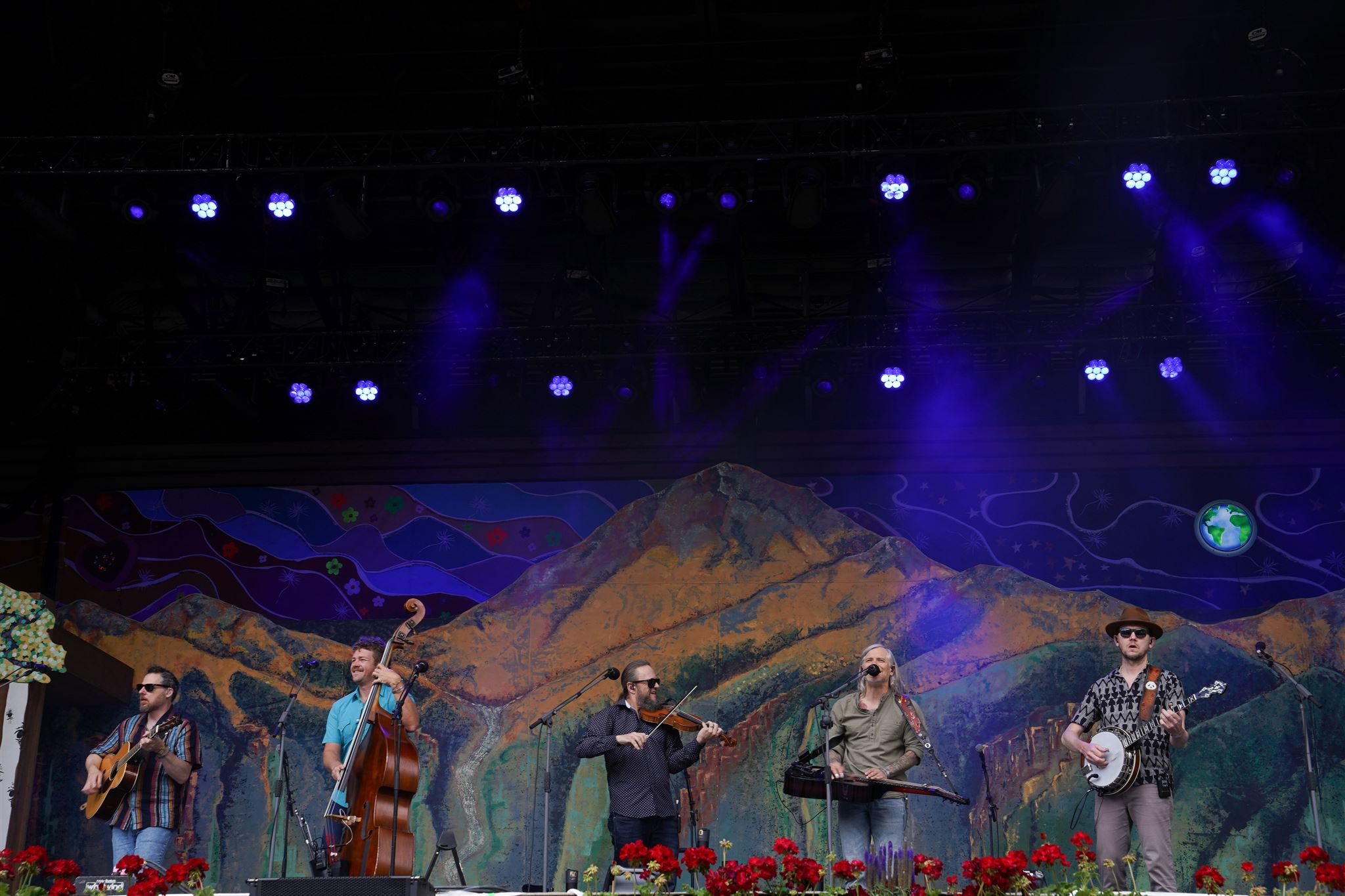
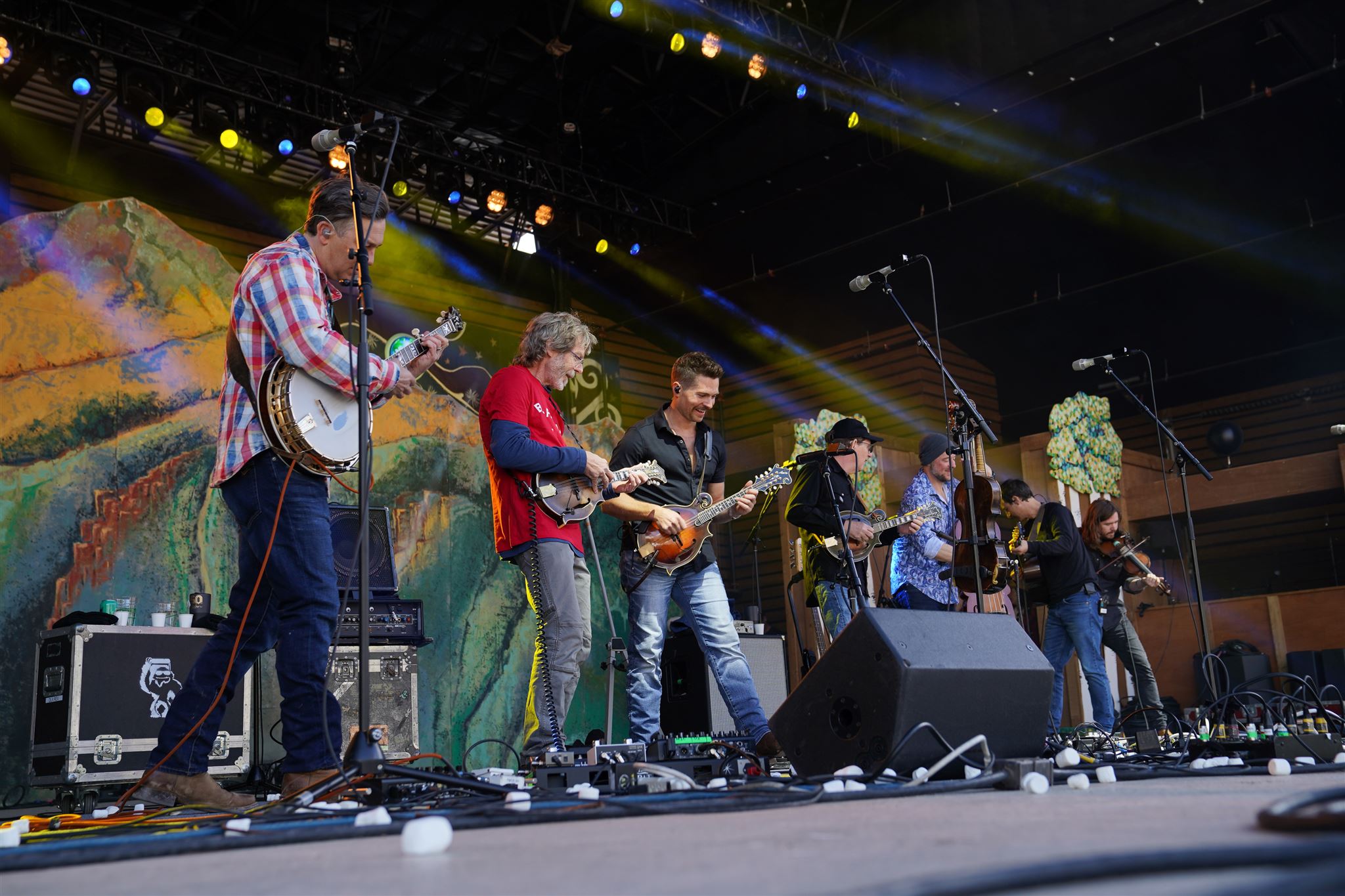
Yasmin Williams performs on Telluride Bluegrass Festival’s main stage – its sole stage.
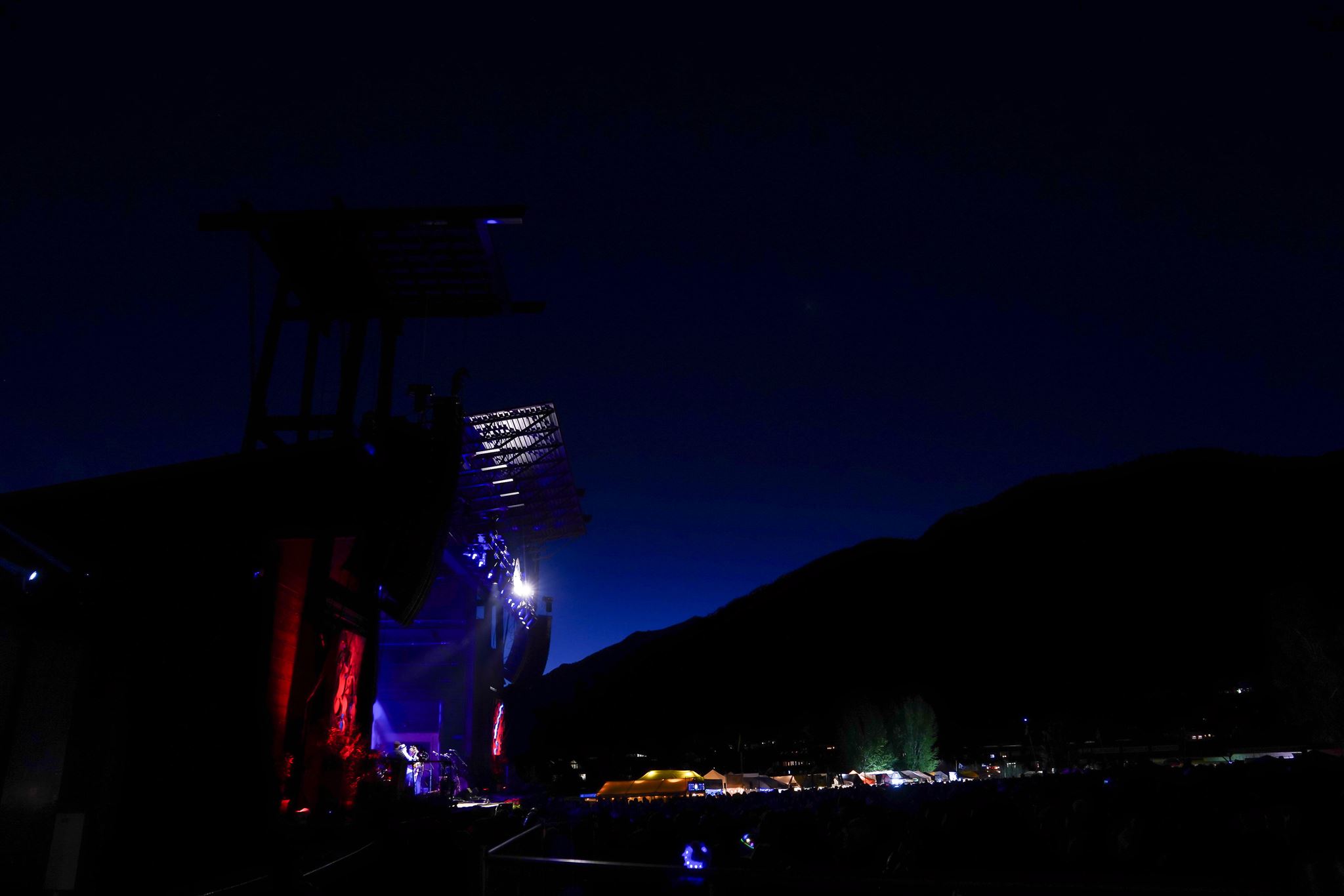
Another major difference between Telluride and its festival peers is scale, and not just in terms of the size of the crowds. Most festivals cram as many performers onto as many stages as possible, all of them running simultaneously, resulting in sensory overload as well as the fear that you’re missing out on something elsewhere. By contrast, Telluride still has just one stage. Every act gets a solo spotlight at Telluride.
“Every year’s festival lineup is an interesting thing,” says Craig Ferguson, who oversees Telluride Bluegrass Festival under the auspices of Planet Bluegrass. “I’ve always said, just watch and it will book itself, and that’s really true. Our process is unique because we have just the one stage and not a bunch of bands, so everybody in the crowd gets to have the same experience. There’s not 18 different stages, so we can create one festivarian experience that everyone shares. We do the booking one act at a time, and we often wind up with interesting combinations.”
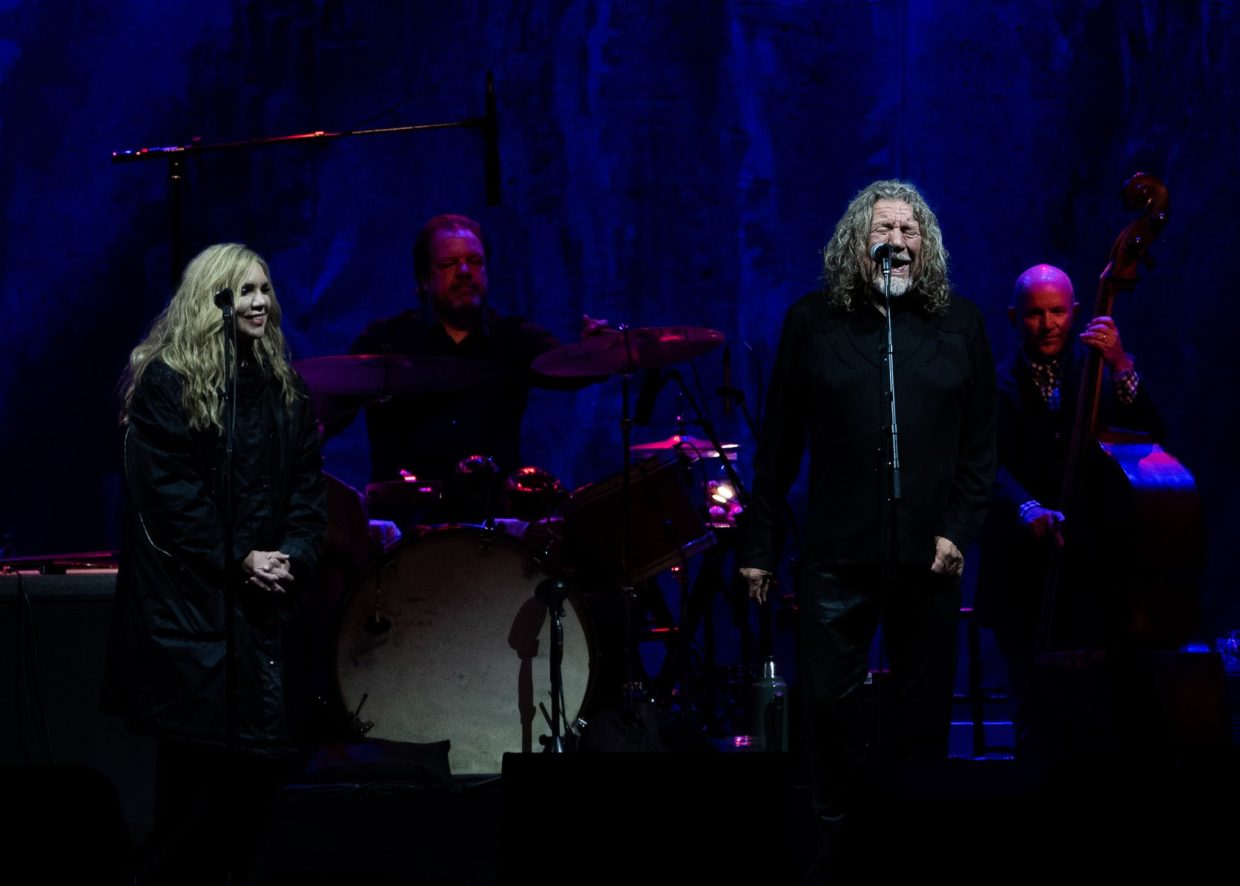
Robert Plant & Alison Krauss perform at Telluride Bluegrass Festival.
Indeed, those interesting combinations can venture well beyond what you see at a typical folk or bluegrass festival. Along with Sam Bush, Emmylou Harris, Peter Rowan, Del McCoury and The Infamous Stringdusters doing a Sunday morning gospel set, this year’s lineup features ringers like the West African ngoni master Bassekou Koyate and the venerable jam band String Cheese Incident. Some of the anomalous acts from previous years include pop-star jazz pianist Norah Jones, the comedic folk duo Tenacious D and even singer/rapper/actress Janelle Monae. Even with the unlikely acts, the Telluride experience sells itself. It doesn’t take much convincing to get any artist to play.
“Janelle Monae was the most interesting person to talk to,” Ferguson says. “I snuck into her RV just as she was sitting down to a meal by herself, and I was able to sit and talk to her for an hour. I think she would’ve signed up to play every year if she could have, she was so enthralled by the fact that there were elk in the park. It was the most wonderful conversation, and she was great. We’re famous for our curveballs and she was the oddest, I’ll give you that.”
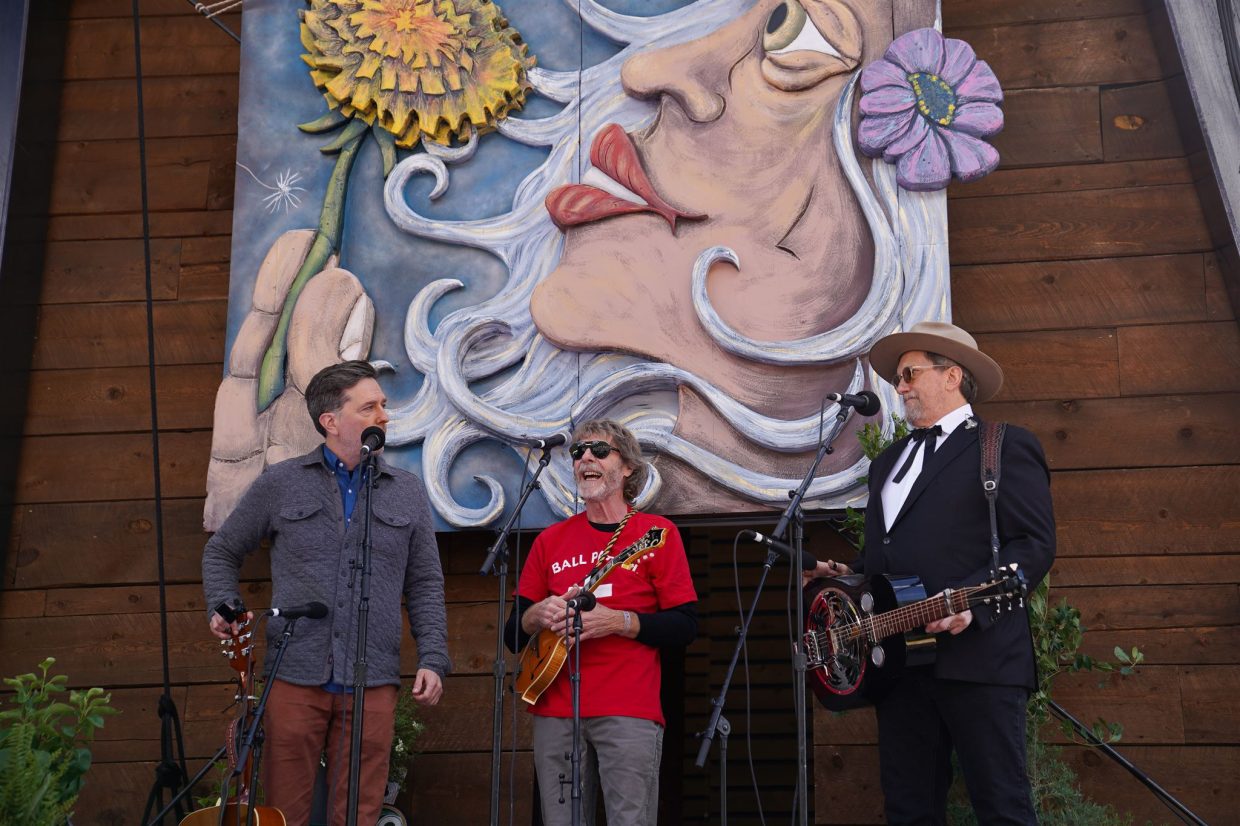
BGS’s own Ed Helms with Sam Bush and Jerry Douglas at Telluride Bluegrass Festival.
Apart from the change-ups, multiple generations of musicians in the world of acoustic music count Telluride among their major artistic, career and personal milestones. One of them is Sarah Jarosz, a four-time Grammy winner who first went to Telluride as a fan at age 14 and played it herself for the first time two years later. Telluride is where Jarosz first connected with idols and future peers like Gillian Welch and Abigail Washburn. It’s also where Gary Paczosa saw Jarosz for the first time at her 2007 Telluride debut. He subsequently signed her to Sugar Hill Records and produced her first four albums.
“It’s the quintessential place to see your heroes, and even get to jam with them,” says Jarosz, who is back on this year’s lineup. “You’ll hear, ‘There’s a jam at this house down the street after the shows.’ So I brought my mandolin and before I knew it, Chris Thile was showing up. Also Jerry Douglas, Tim O’Brien. That was really life-changing, this proximity to heroes that allowed me to become friends with them. And even though Telluride is rooted in bluegrass, they always bring in artists from beyond that world – Janelle Monae, Decemberists, Alison Krauss and Robert Plant. It feels like anything can happen, and the audience that goes is very supportive of that.”
The stalwart House Band of Telluride Bluegrass Festival.
Still, no matter how far afield the lineup wanders, Telluride is ultimately rooted in bluegrass.
“Bluegrass is a fable, and a team sport,” says Ferguson. “That informs how we create the lineup. Looking to the future, socially as well as musically, we think of bluegrass as an allegory. It’s a context that is invitational to all these other styles, country or jazz or classical, and it complements all of them. That remains the heart and soul of this festival, surrounding bluegrass with these other complimentary musics. We are fortunate to be of service to the festivarian community. It’s an annual privilege to see how much it brings to people’s lives, the connection to community.”
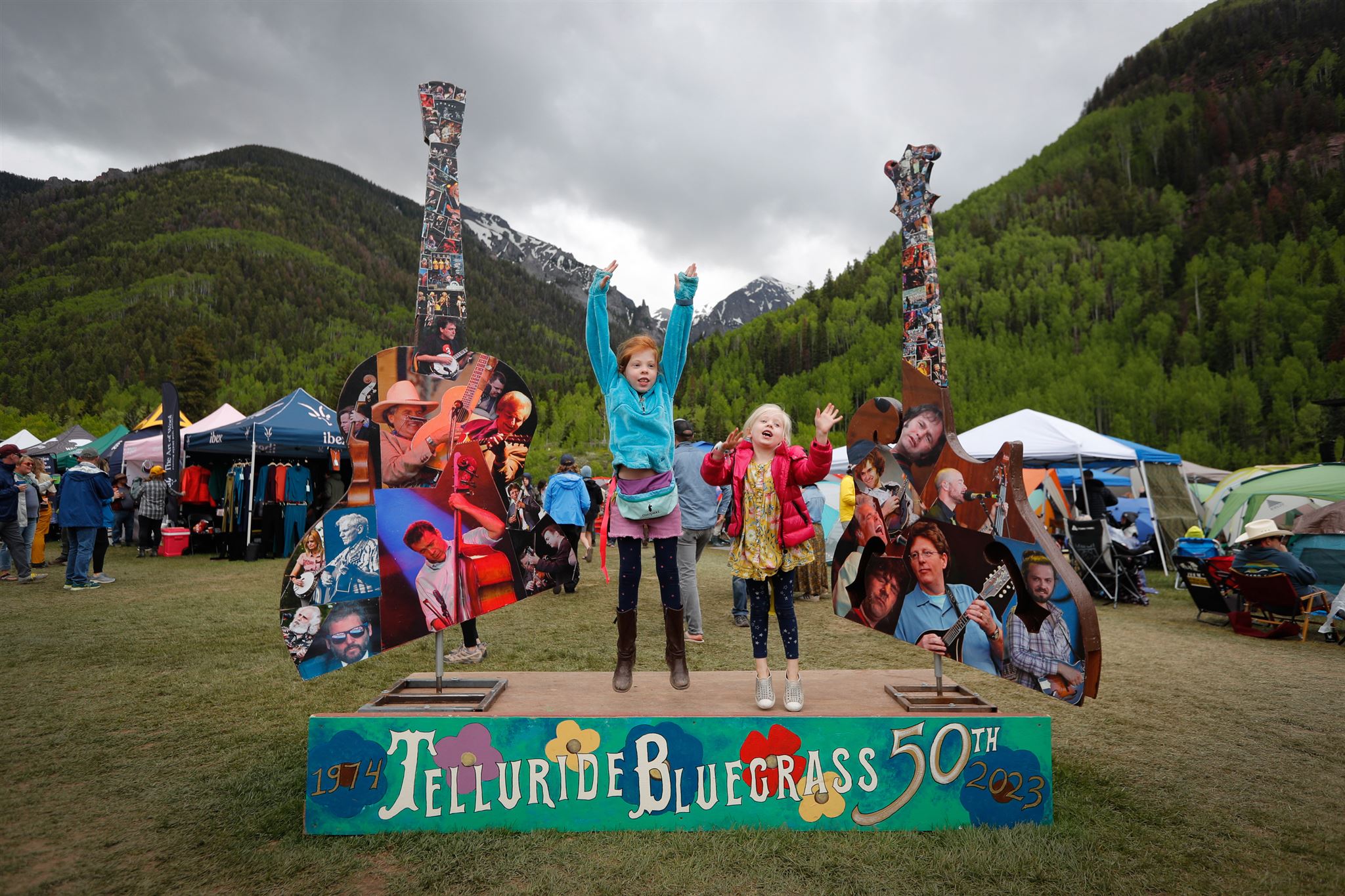
Young festivarians celebrate Telluride Bluegrass Festival's 50th Birthday.
Nickel Creek.
Bassekou Koyate.
Greensky Bluegrass.
Charles Wesley.
Sierra Ferrell.
Mary Chapin Carpenter.
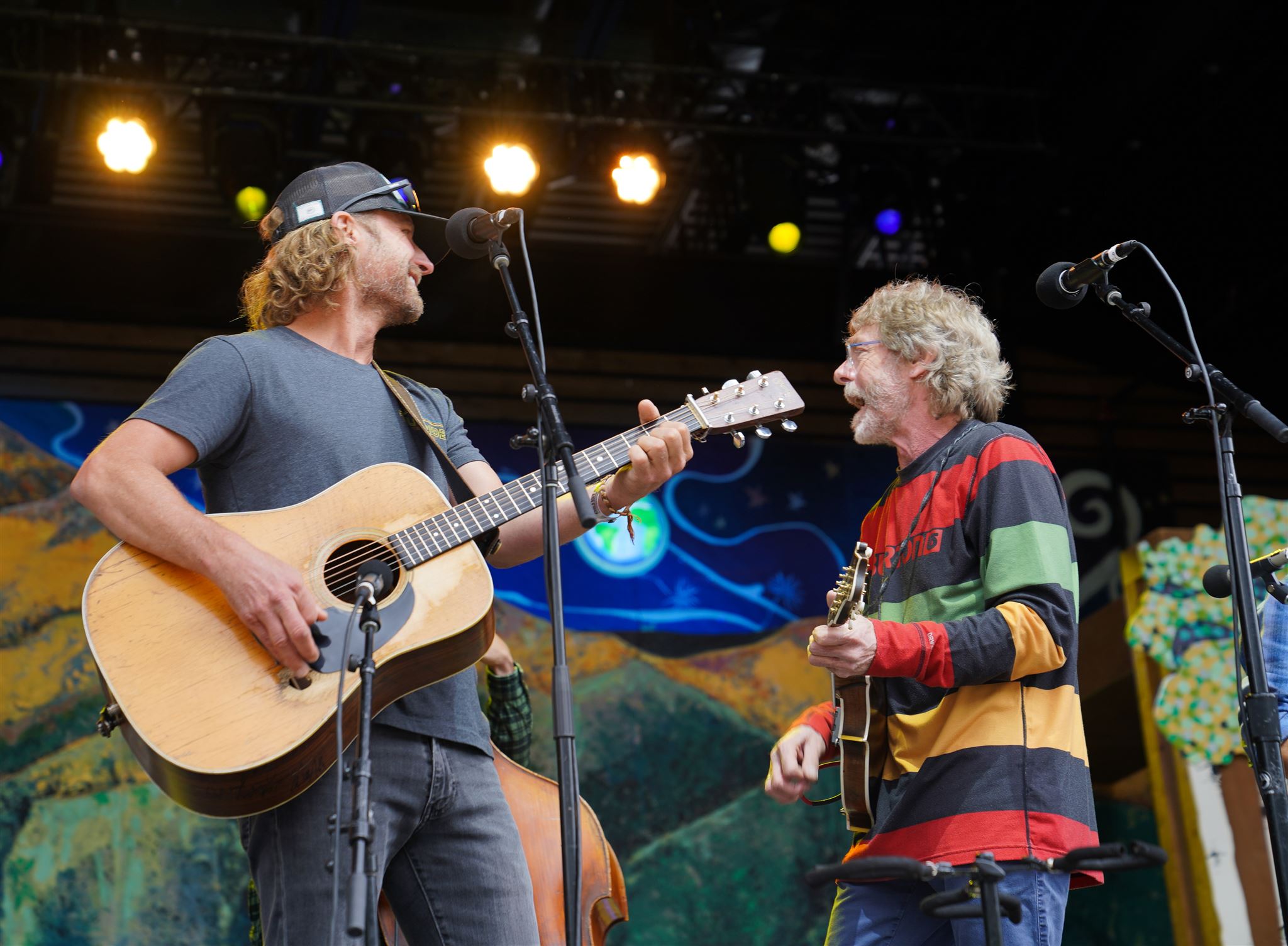
Dierks Bentley brings Long Jon to Telluride and Sam Bush up on stage.
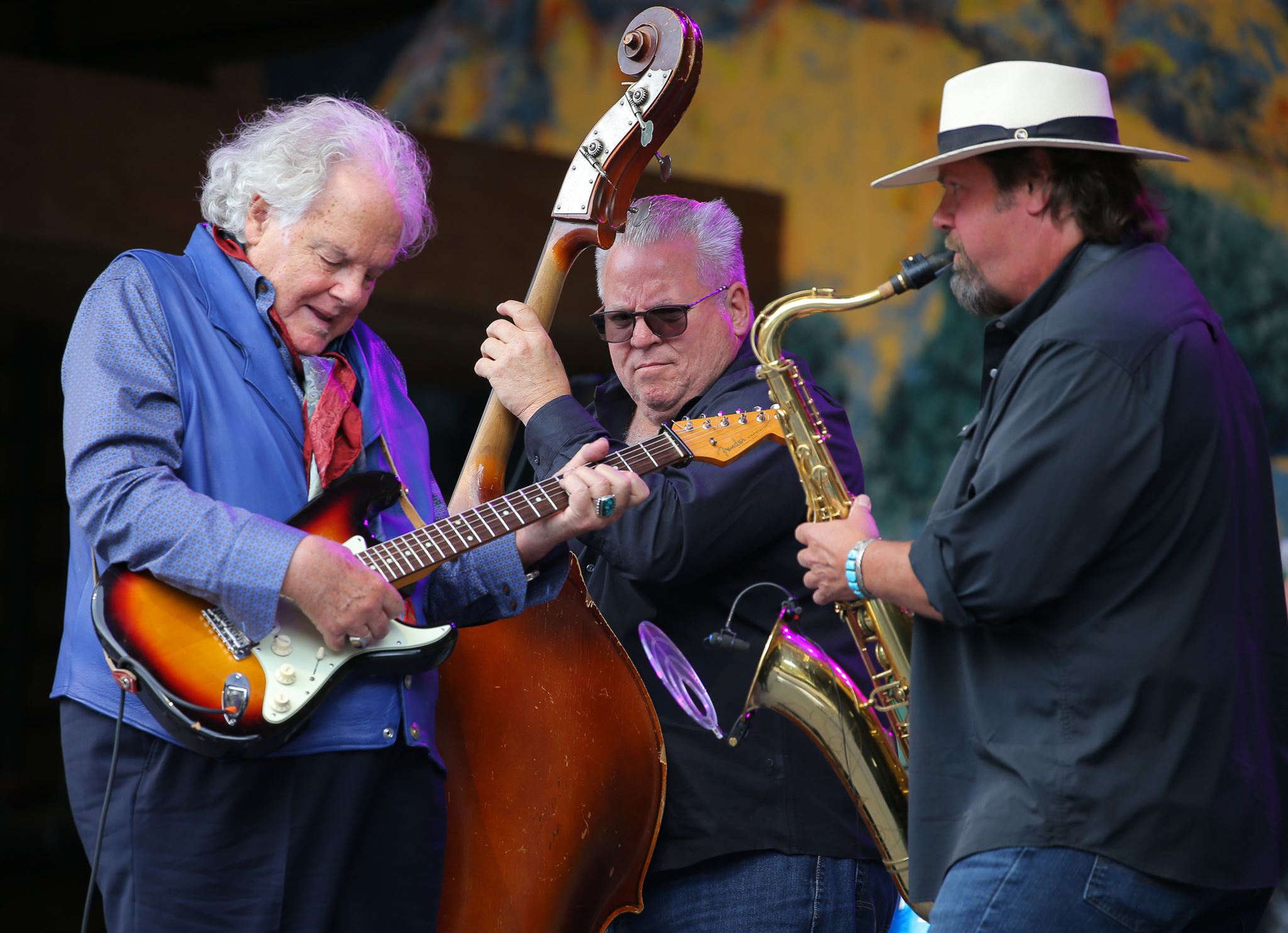
Peter Rowan.
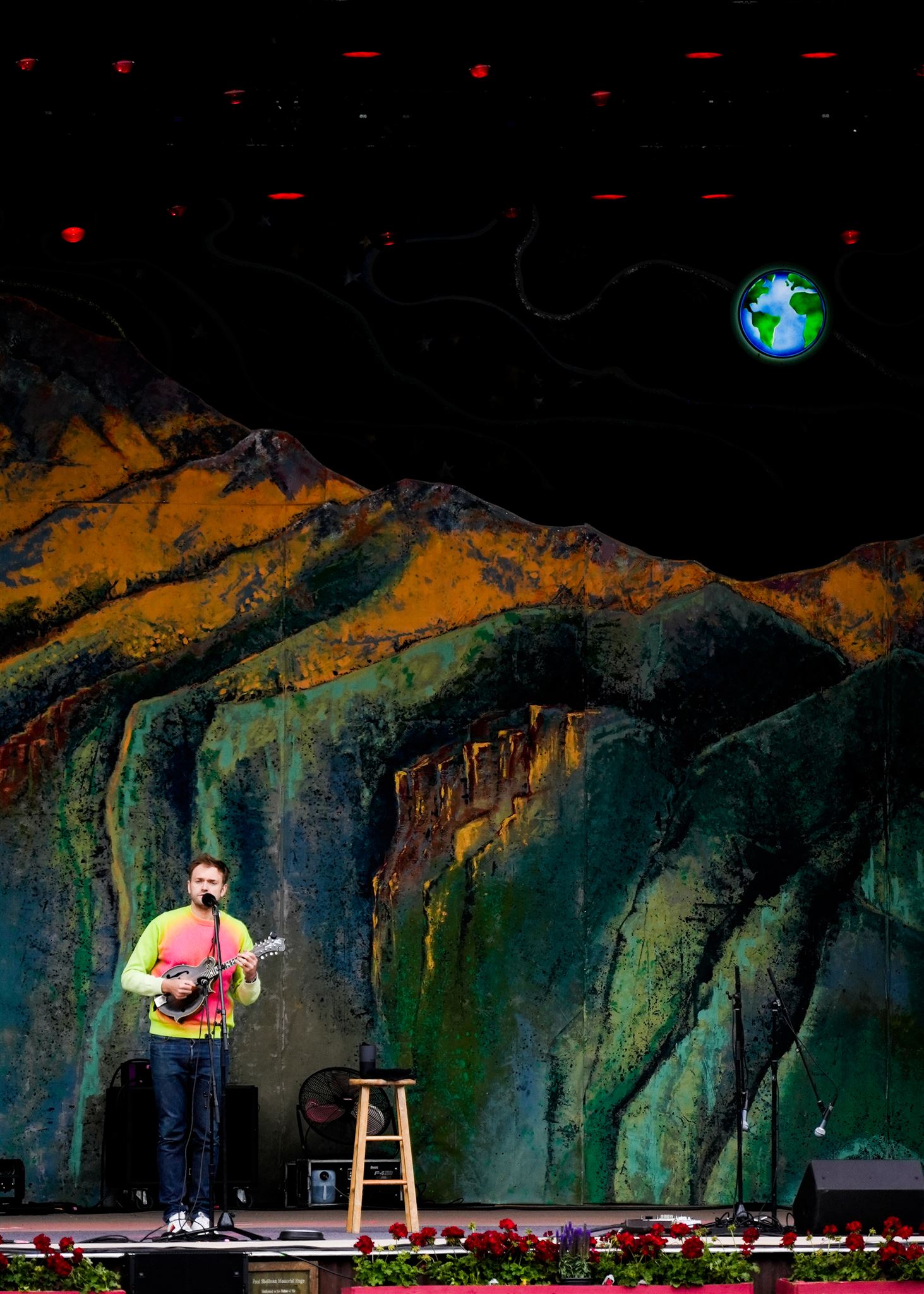
Chris Thile.
Gregory Alan Isakov.
The Infamous Stringdusters.
A gorgeous, though chilly, festival grounds.
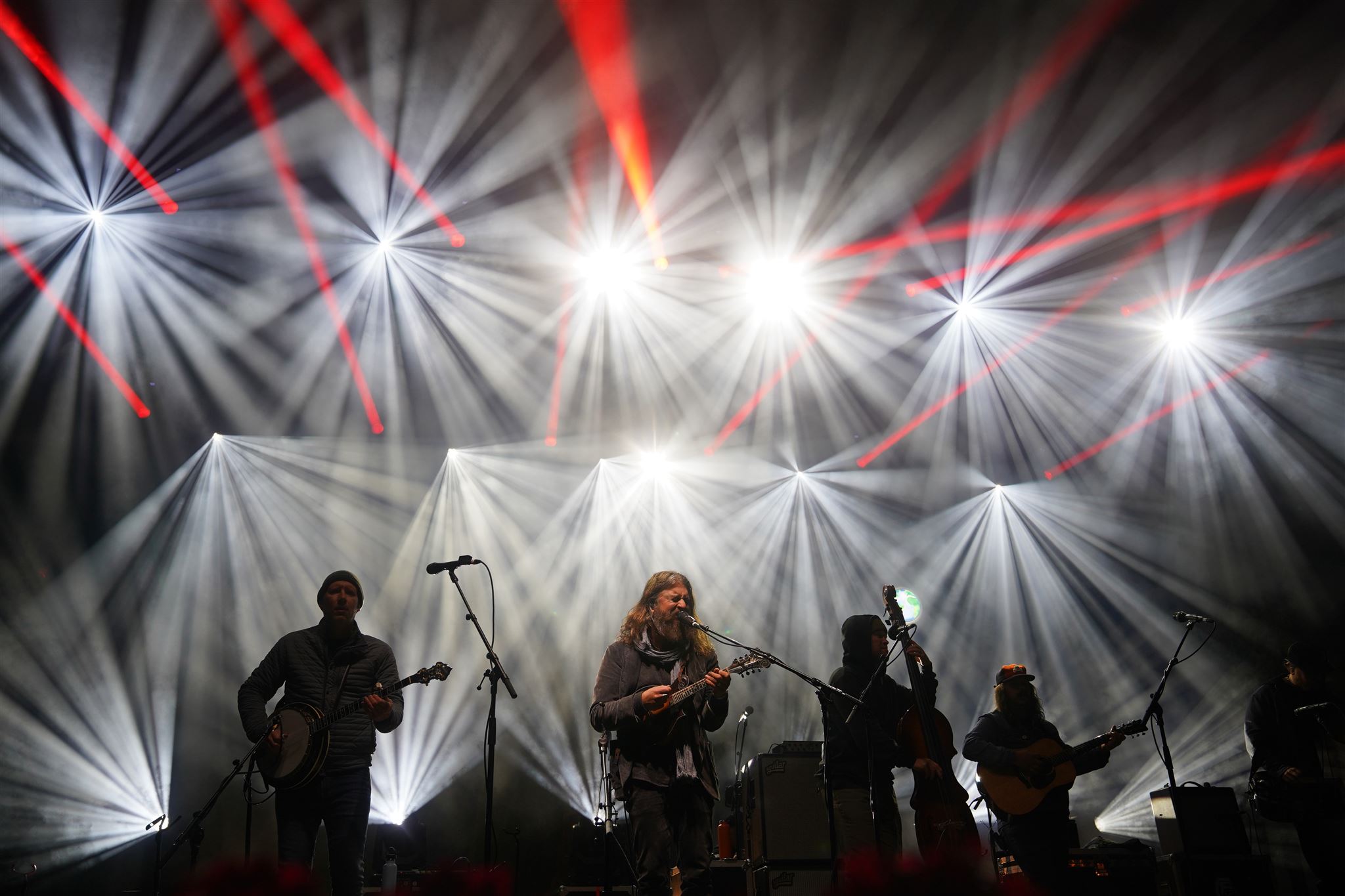
Leftover Salmon.
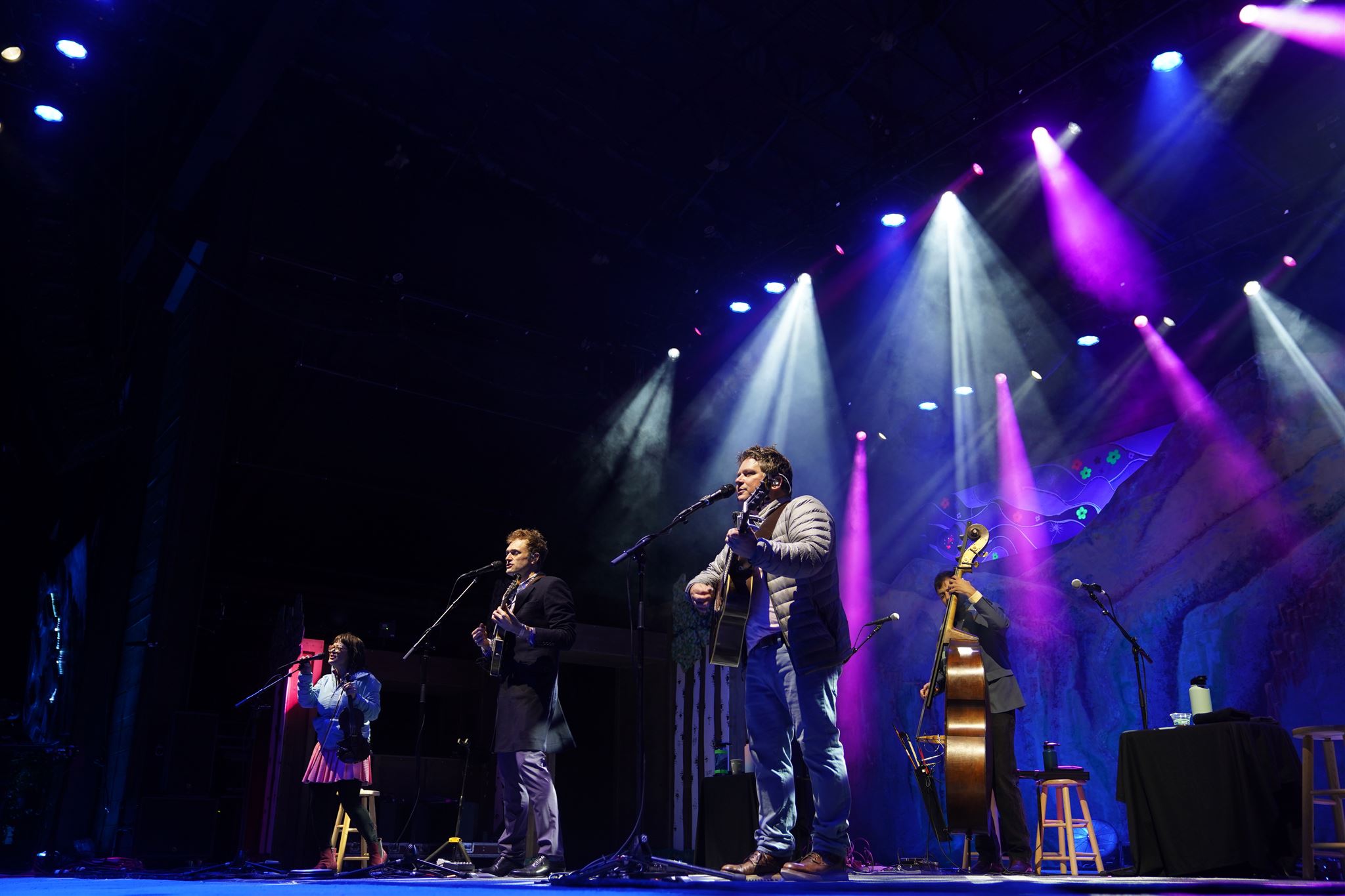
Punch Brothers performed their last sets with Gabe Witcher as a member of the band at Telluride.
Sarah Jarosz.
Sam Bush Band with special guest Emmylou Harris.
Del McCoury joins String Cheese Incident on stage at Telluride Bluegrass Festival.
The Earls of Leicester.
Tim O'Brien Band featuring Shad Cobb, Jan Fabricius, Mike Bub, and Noam Pikelny.
Watchhouse was joined by Emmylou Harris.
Yonder Mountain String Band with Sam Bush and guests.
The crowd cheers for Yonder Mountain String Band.
Sam Bush Band backgrounded by the mountains and evening sky.
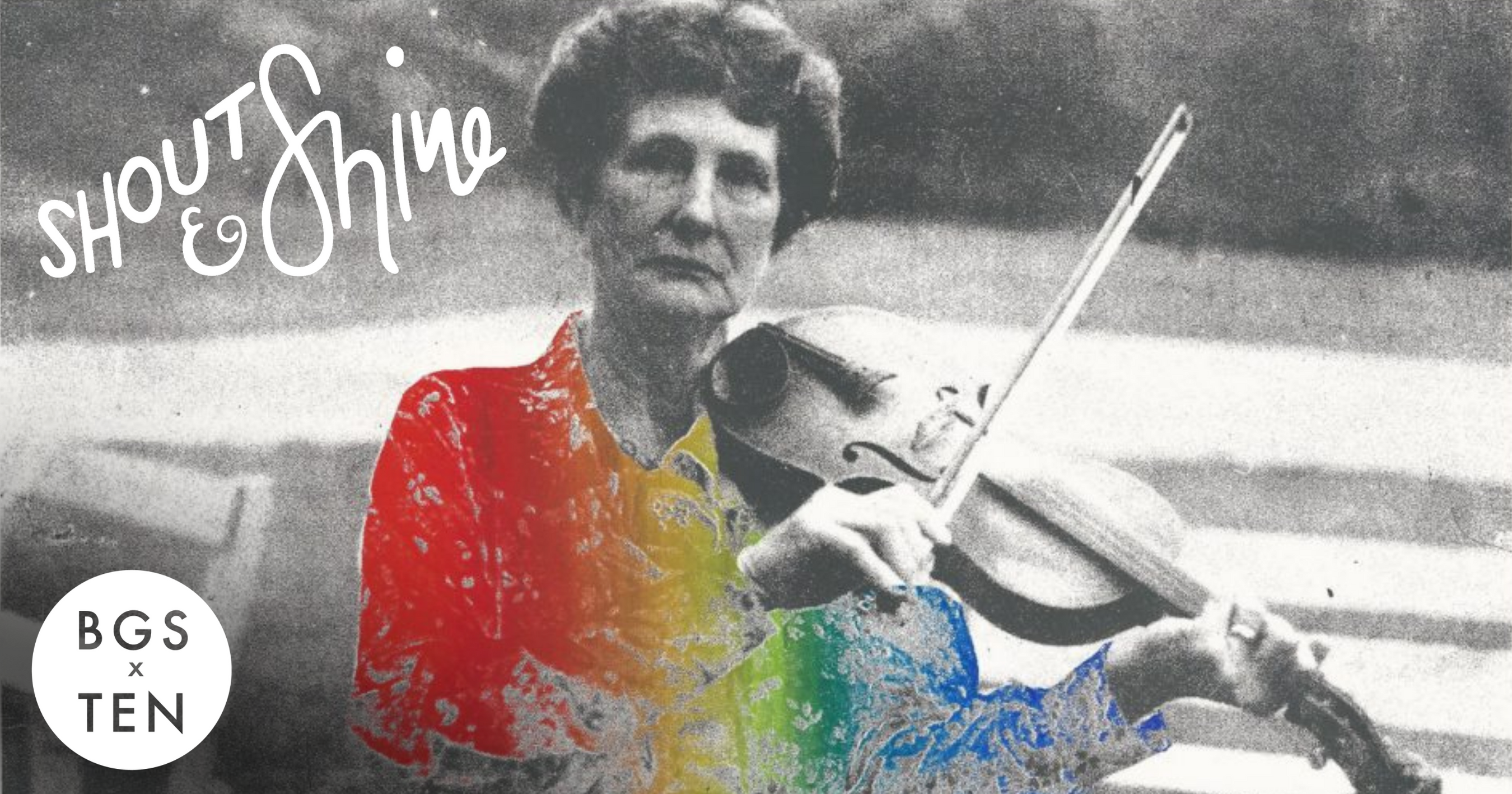
It was late 2016 when the world first learned of North Carolina’s HB2 – the “bathroom bill” – prohibiting trans folk from using bathrooms and locker rooms that aligned with their gender identity. The International Bluegrass Music Association was having its conference in Raleigh that autumn, and we at BGS were feeling restless about wanting to do something at the conference to create a safe space for marginalized artists who were already not feeling welcome at the annual event. And thus the first ever Shout & Shine was conceived and held at the Pour House in Raleigh on September 27, 2016.
In the years since its inception, Shout & Shine has taken on multiple forms – from a one-night showcase, to a day-long stage, to an ongoing editorial column and video series on the BGS homepage, Shout & Shine continues to create a dedicated space for diverse and underrepresented talent in the roots music world.
“Shout & Shine began with a simple mission, to create a space for marginalized and underrepresented folks in bluegrass to be celebrated for who they are, unencumbered by their identities,” explained Shout & Shine co-creator Justin Hiltner. “Since 2016, it’s grown into so much more but above all else, it continues to be exactly what we created it to be first and foremost: a community. Our Shout & Shine community demonstrates that these roots music genres are for everyone; they always have been and they will be in the future, too.”
Past lineups have included Amythyst Kiah, Nic Gareiss, Kaia Kater, Alice Gerrard, Jackie Venson, Lakota John, The Ebony Hillbillies, Cathy Fink & Marcy Marxer, Yasmin Williams, and many more.
You can read about the first Shout & Shine event from 2016 here and more Shout & Shine video sessions and features here.
In recognition of Black History Month, we have compiled these 12 features from the Bluegrass Situation archives to reexamine the breadth and sheer talent that Black artists are bringing to the roots music community. For additional stories, and to hear much, much more music, check out our Black Voices page on BGS.
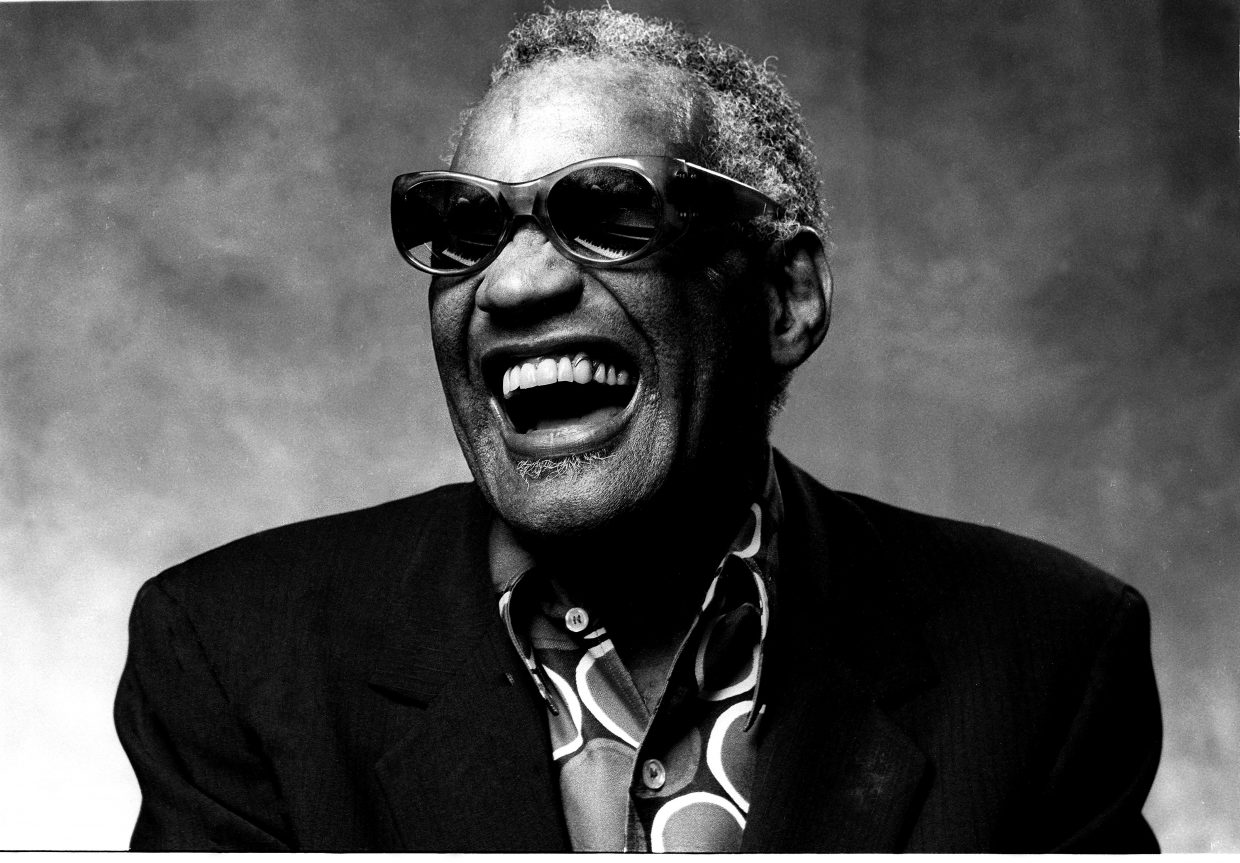
Ray Charles
The musical and cultural impact of Ray Charles is extraordinary and spans the pantheon of American popular music. He was an outstanding multi-instrumentalist (though best known for piano and alto sax), vocalist, bandleader, songwriter and composer in the non-lyrical sense. His innovations include helping craft and popularize the secularization of gospel music, now otherwise known as soul, and bringing new attention and expanded audiences to country music, which was the earliest idiom he loved and played before blues, jazz, R&B, or soul.
Though his earliest material was heavily influenced by Charles Brown and Nat “King” Cole, Charles (full name Ray Charles Robinson) quickly developed a highly stylized, immediately recognizable singing and playing approach. He became an expressive, evocative vocalist, one of the finest interpretative singers of all time, and a skilled improviser as an instrumentalist, able to deliver intense and memorable melodic statements or energetic solos while heading either small combos or large bands. Read more.
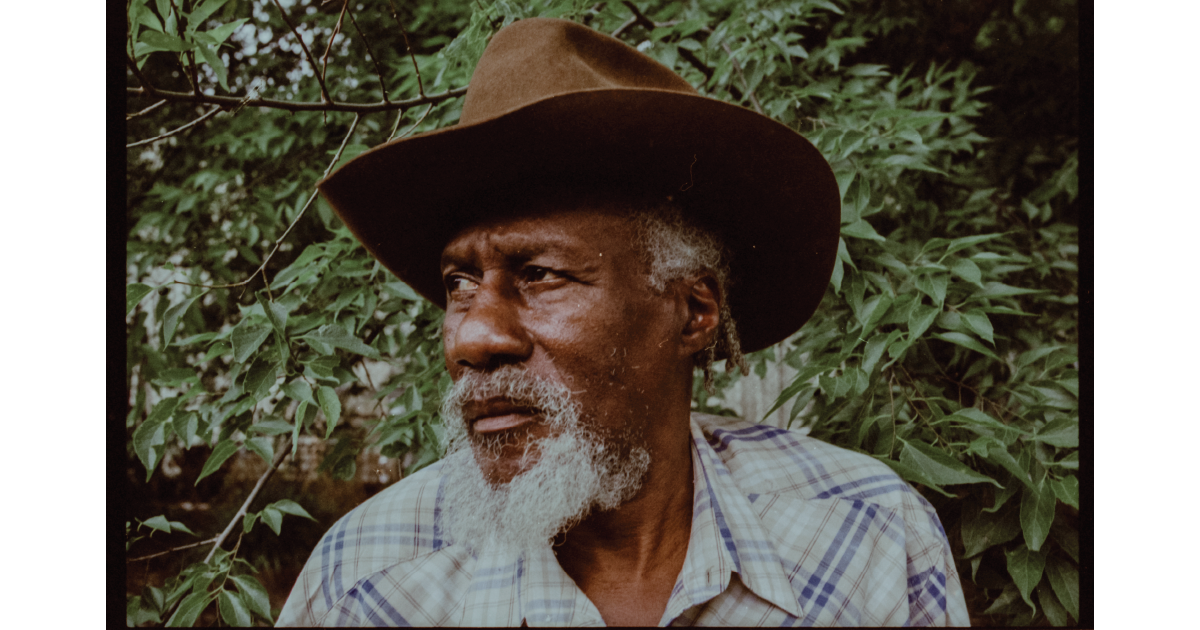
Robert Finley
Depending on how much attention one pays to labels, singer-songwriter Robert Finley could accurately be called both a blues and soul vocalist, even though he’s also performed plenty of gospel, and has a passionate faith that is often reflected in comments about his unlikely emergence as a national figure in his 60s.
“You can’t call it anything except the hand of God a lot of what’s happened in my life,” Finley tells BGS. “For me to be recording and performing now, to have met and established a friendship with a young white guy like Dan (the Black Keys’ Dan Auerbach), and to be in the studio now recording and singing these songs when that’s what I’ve always wanted to do all my life, well it’s just God’s hand in my life.” Read more.
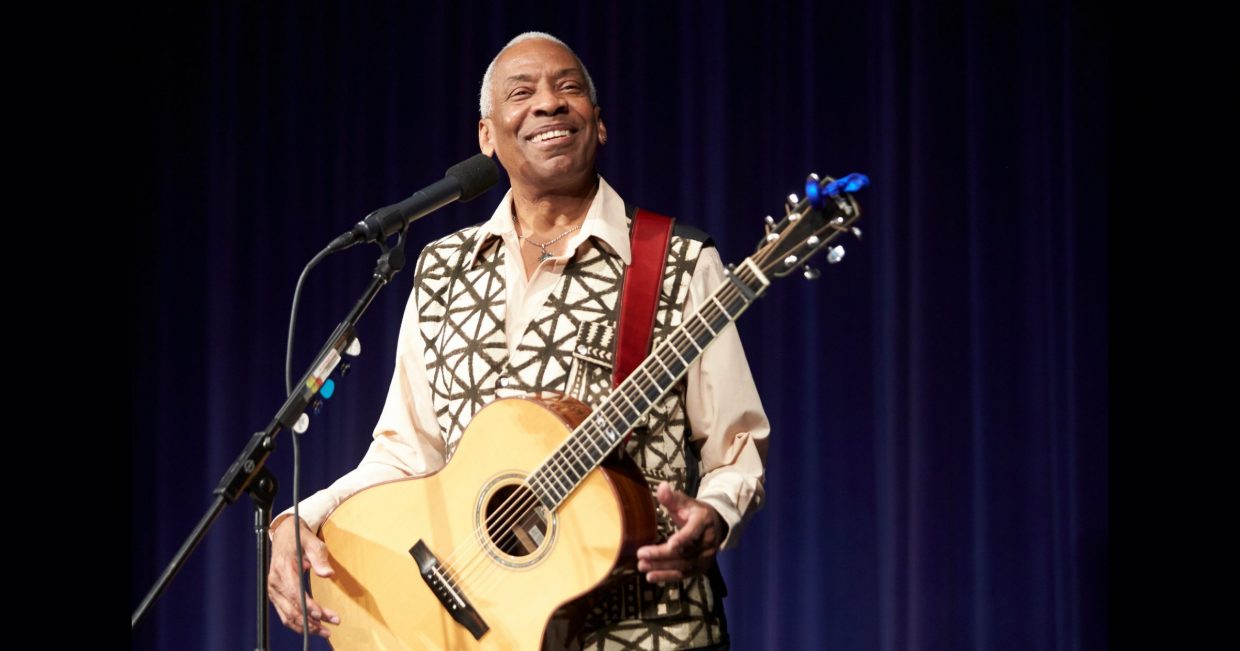
Reggie Harris
The joy and hope evident in Reggie Harris’ 2021 release, On Solid Ground, stem from a rooted sense of perseverance and from his intentional decision to face each and every moment, in the moment, and to find hope within each. It’s why such heavy topics don’t feel gargantuan or burdensome as they make appearances and anchor songs on the album. Harris, watching the social, political, and racial reckonings that bubbled onto the sidewalks and streets of every city in America over the course of the last year, didn’t sit down or give up in the face of the unclimbable summit of translating that reckoning into song.
Instead, Harris draws upon the wisdom, insight, and hope given to him by his own elders and communities throughout On Solid Ground. In choosing to keep himself open in each moment, Harris found himself receiving inspiration, nuggets of ideas and stories, glimpses of songs and arrangements in so many of those moments, simply because he was there, with a still heart and still soul, to receive them. Read more.
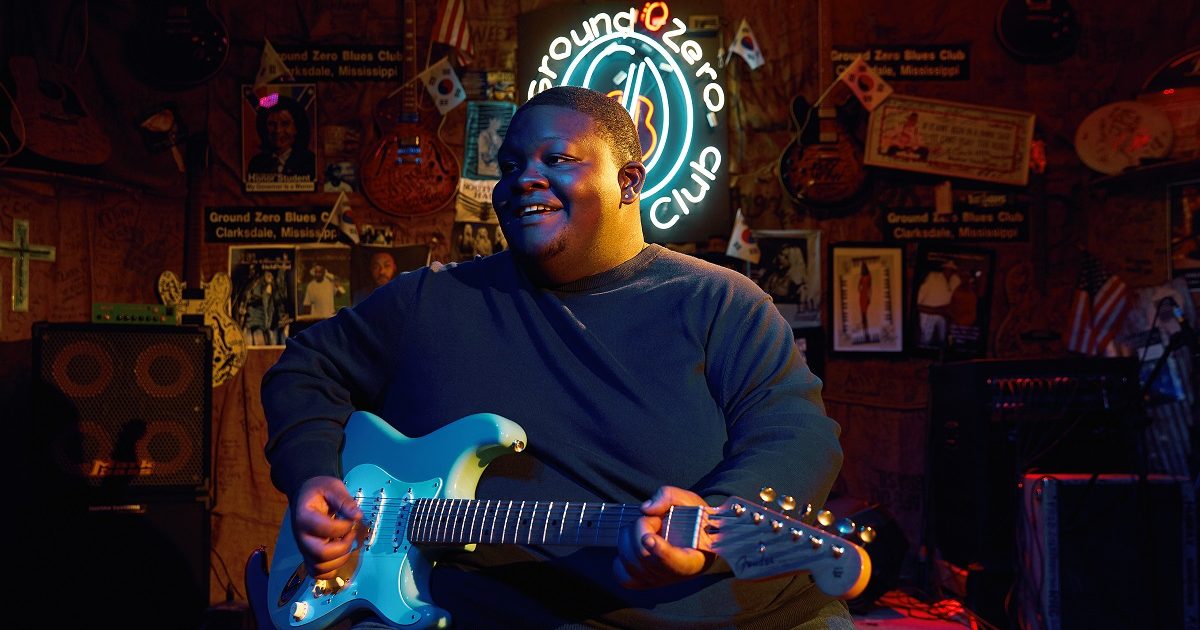
Christone “Kingfish” Ingram
Christone “Kingfish” Ingram seemed to come out of nowhere with his 2019 Alligator Records debut, Kingfish. At 20 years old, the native of Clarksdale, Mississippi, emerged as a fully-formed guitarist, vocalist, and songwriter and was quickly hailed as a defining blues voice of his generation. Since then, he’s toured the nation, performed with acts ranging from alt-rockers Vampire Weekend to Americana star Jason Isbell to blues godfather Buddy Guy.
In the midst of all this success, just as his career was taking off amidst over a year of non-stop touring, he lost his mother, Princess Pride Ingram, a devastating blow that the young man had to overcome. All of this life experience is reflected on Ingram’s second album, 662, named after the area code for his North Mississippi home. Read more.
Amythyst Kiah
When Amythyst Kiah was a teenager in the suburbs of Chattanooga, Tennessee, she wanted to be “the guitar-playing version of Tori Amos.” Locked away in her room with her headphones pulled over her ears, pouring over liner notes and listening intently for every nuance in her favorite records, she found solace in the way Amos told her darkest secrets in her songs and how she turned that vulnerability into something like a superpower. It made her feel less alone, especially as a young, closeted Black girl in a largely white suburb. Tori Amos helped her survive adolescence.
Kiah didn’t grow up to become any version of her hero. Instead, she simply became herself. Her new solo album, Wary + Strange, ingeniously mixes blues and folk with alternative and indie rock, devising a vivid palette to soundtrack her own songs that tell dark secrets. It’s one of the most bracing albums of the year, grappling with matters both personal (her mother’s suicide) and public (the struggles of Black Americans). “Now, when I’m in my mid-thirties,” says Kiah, “it’s amazing to make a vulnerable record and then have people at my shows tell me that my music helped them heal, helped them get through some hard times. To have someone connect with my music is really powerful.” Read more.
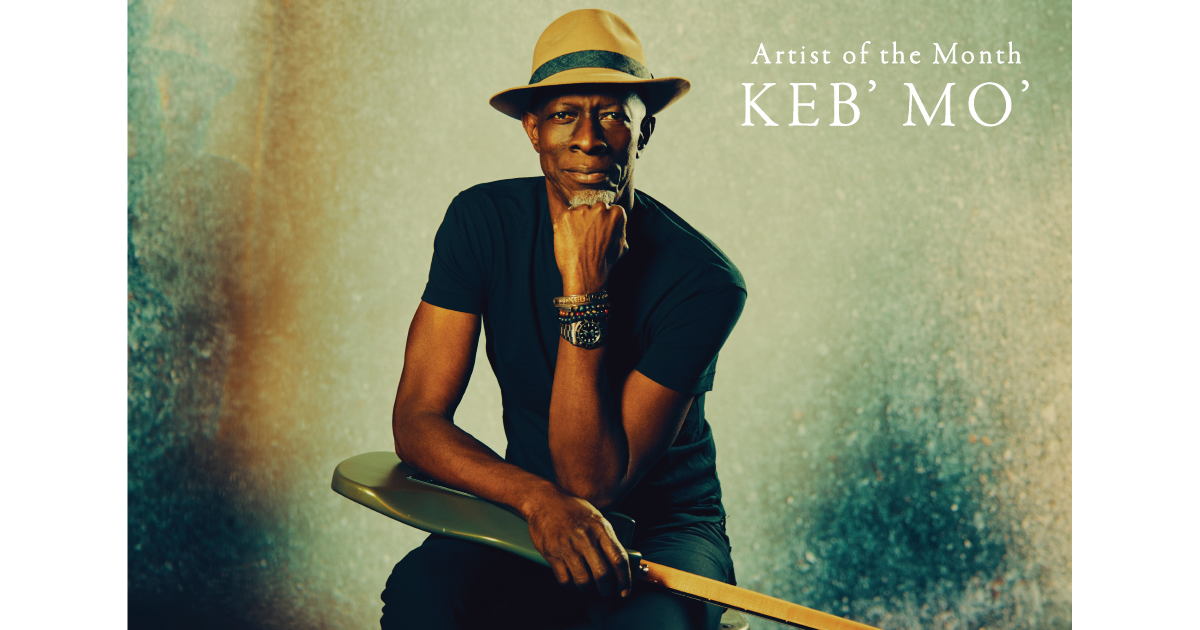
Keb’ Mo’
Keb’ Mo’ enjoyed a career milestone as he received a Lifetime Achievement in Performance Award from the Americana Music Association in 2021. Presented at the Ryman Auditorium in Nashville, the award joins a list of distinctions that include five Grammys and 14 Blues Foundation Awards. But in typically understated fashion, Mo’ (a.k.a. Kevin Moore) downplayed the latest honor during his Artist of the Month interview with the Bluegrass Situation.
“Well, for me I guess it represents the fact I’m getting old,” he said with a laugh. “But sure, you are honored whenever you get that kind of recognition from your peers. But I’ve still got a lot that I want to do and I’m still looking ahead.” A huge indication of that is his outstanding new LP, Good to Be. It is both a tribute to his background growing up in Compton, California, and a celebration of some 11 years in his current hometown, Nashville. Read more.
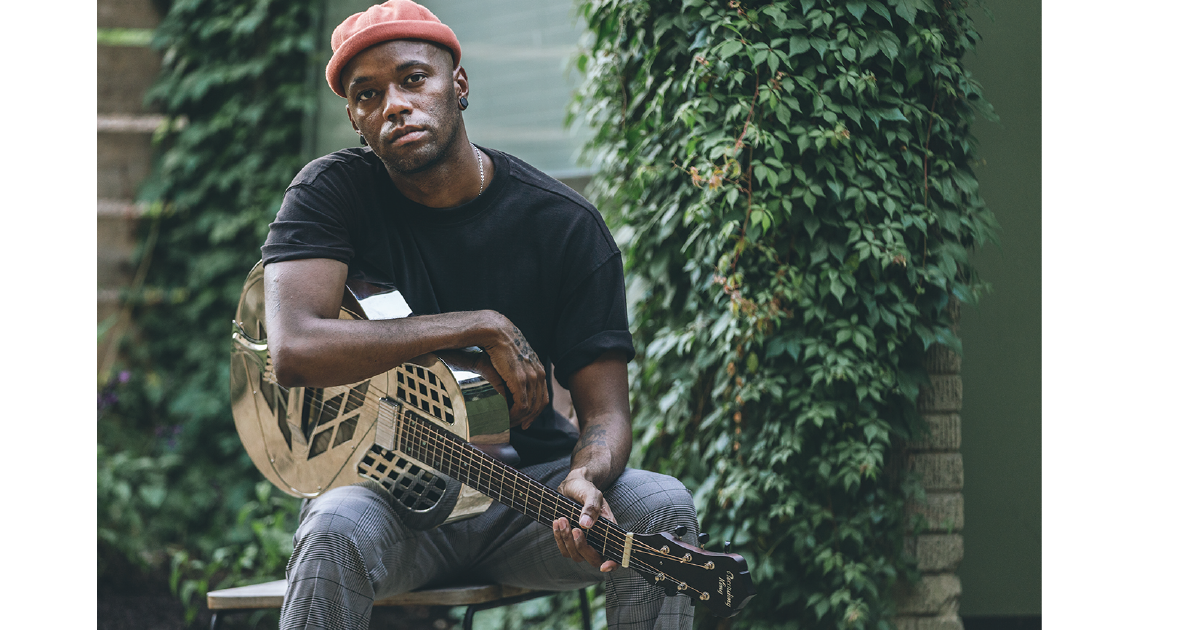
Buffalo Nichols
As the first solo blues artist signed to Fat Possum Records in 20 years, Buffalo Nichols faces high expectations. But on his self-titled debut, the musician (whose given name is Carl Nichols) more than meets them, stitching Black history and musical traditions with current events and experiences to craft the sonic equivalent of a quilt. And the story it tells is an important one.
Nichols was born in Houston and raised in Milwaukee, but when he got the urge to roam and the money to do it, he took off, immersing himself in creative scenes across Europe and West Africa. Although he’s been based in Austin since the fall of 2020, Nichols channels the Delta, North Mississippi and Chicago through his nimble fingers or resonator slide while wrapping his warm voice around words that cut to the core of oppression, and the many forms of heartbreak it causes. Read more.
Chris Pierce
Chris Pierce has cultivated a significant following in the Los Angeles area and beyond, usually writing soulful and emotional songs that have populated fifteen years’ worth of albums and appeared in TV shows like This Is Us. But in 2020, accompanied by little more than his 1949 Gibson J-45 (“Blondie”) or his 1973 Martin D-18 (“Doriella”), the California native recorded the album American Silence with a mission of social activism against racial disparities.
Pierce gained a love of language from his mother, an English teacher who taught at-risk youth. She introduced him to the lyrical writings of Shel Silverstein and Dr. Seuss, as well as essential writers like Langston Hughes and Walt Whitman. The economy of words in all of those authors is immediately evident in original compositions like “American Silence” and “It’s Been Burning for a While,” where Pierce gets his point across directly, and with power. His convictions are never more optimistically presented than in the album’s closing anthem, “Young, Black and Beautiful,” which details the experience of maturing from a cute little kid to a perceived threat. Read more.
Allison Russell
Within the songs of her new album Outside Child, Allison Russell delves deeply into the extreme trauma she experienced in her youth spent in Montreal both as a mechanism for personal relief, but also in the hopes that it might reach people with similar experiences.
“The writing process was having to delve deeply into the most painful parts of my past and childhood and history,” she says. “I experienced severe childhood abuse, sexual, physical, mental, and psychological. In many ways, I think the psychological is the toughest part to unpack and defang. I don’t know that I am ever going to be entirely free of that and the process of dealing with that. What was very beautiful about this to me is that I didn’t have to go on that fearsome journey alone. My partner J.T. [Nero] was with me every step of the way. He co-wrote many of the songs on this record with me. He scraped me up off the floor when I was in the depths of it.” Read more.
Tray Wellington
Banjo player Tray Wellington was everywhere to be found during the 2021 IBMA World of Bluegrass — performing, hosting the Momentum Awards luncheon, and playing a main stage set at the Red Hat Amphitheater. This is remarkable because if you had looked for Wellington at IBMA just a few short years ago, you might not have run into him except on the youth stage or in the halls, jamming.
Catapulted by his prior work with the talented young band Cane Mill Road, his studies at East Tennessee State University’s bluegrass program, and a stable of accomplished and connected mentors and peers, Wellington went from a newbie to a seasoned veteran faster than a global pandemic could subside — and during it. Efforts for better and more accurate representation in bluegrass have contributed to his momentum (no pun intended), but above all, his talent and his envelope-pushing approach to the five-string banjo are the root causes of his mounting and well-deserved notoriety. Read more.
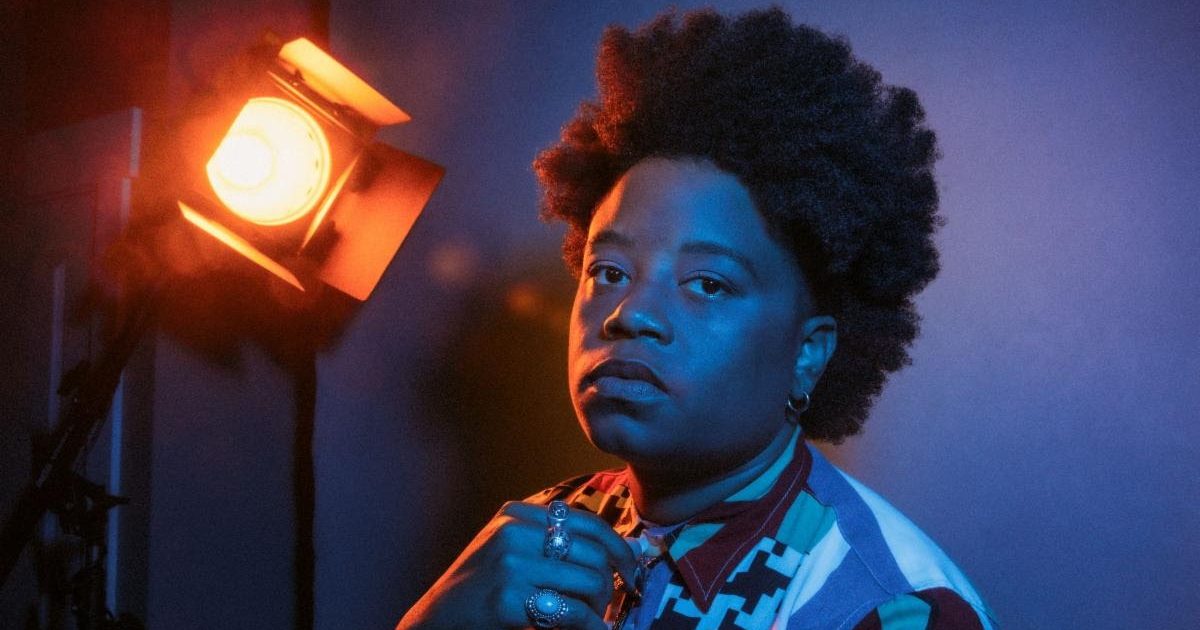
Yasmin Williams
Guitarists spend lifetimes — often gleefully, sometimes manically, or at times frustratingly — finessing techniques, especially with their picking hand. Entire careers can be made or broken by the idiosyncrasies of one picker’s striking and sounding strings. Fingerstyle guitarist and composer Yasmin Williams has mastered myriad forms of right-hand styles, each complicated enough for multiple lifetimes’ worth of study. But she doesn’t merely alternate techniques between pieces; to a transcendentally perplexing degree she effortlessly alternates her entire picking hand approach mid-song.
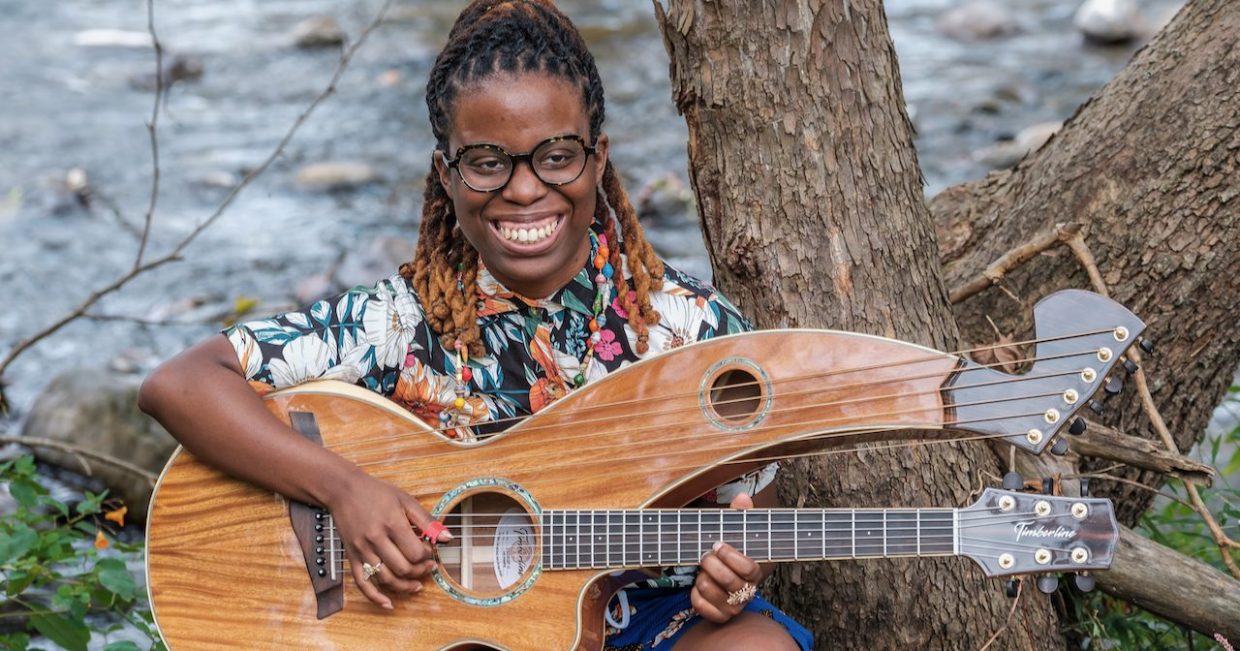
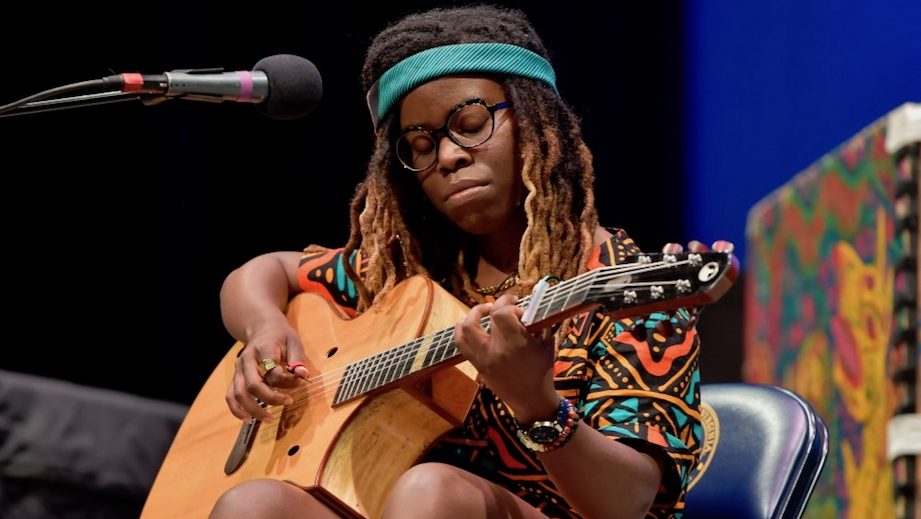
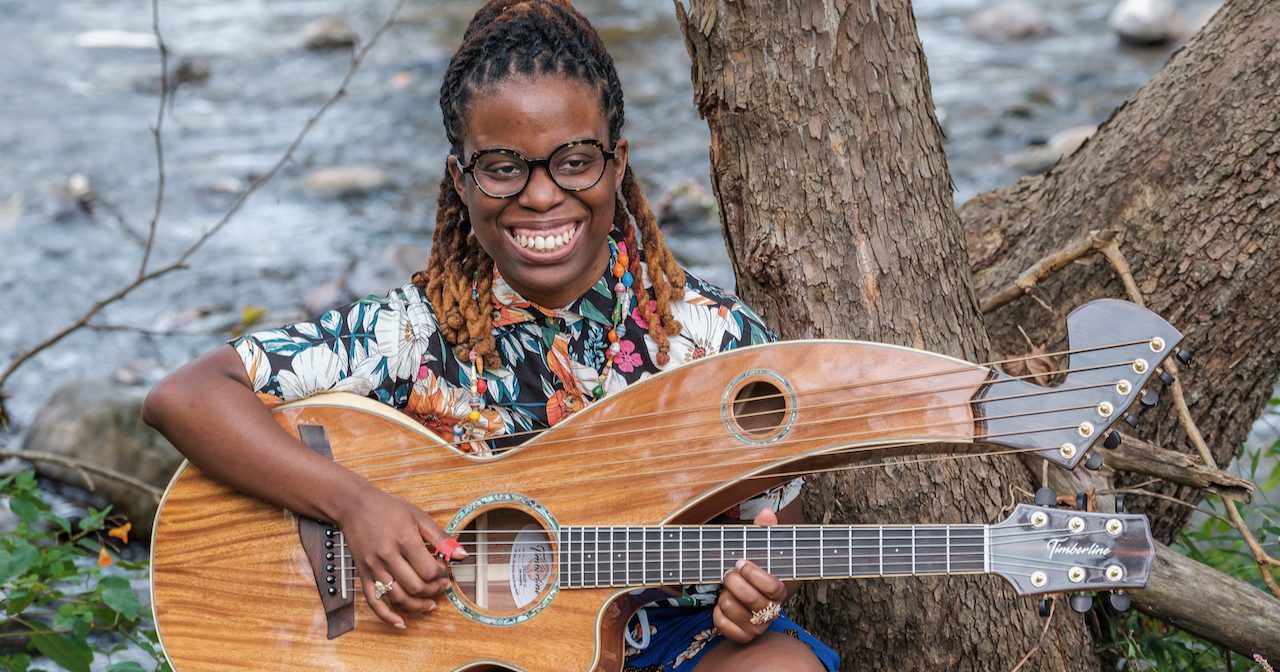
On her 2021 release, Urban Driftwood, a collection of thoughtful, dynamic, and engaging instrumentals written for fingerstyle guitar and harp guitar, Williams makes many of these technique-swaps while the compositions charge forward, each one earning tailor-made right-hand approaches. As a result, the songs don’t feel encumbered when Williams, mid-melody, goes from right hand fingerstyle to bowing her strings with a cello bow, or plunking out notes on a kalimba taped to her guitar’s face, now positioned laying across her lap. She utilizes hand percussion and tap shoes to fill out arrangements, interposing Afro-descended instruments from around the world into her compositions, and she picks up, puts down, and readjusts her stable of musical tools in real time — as a foley sound effect artist, prop master, or choreographer might. Read more.
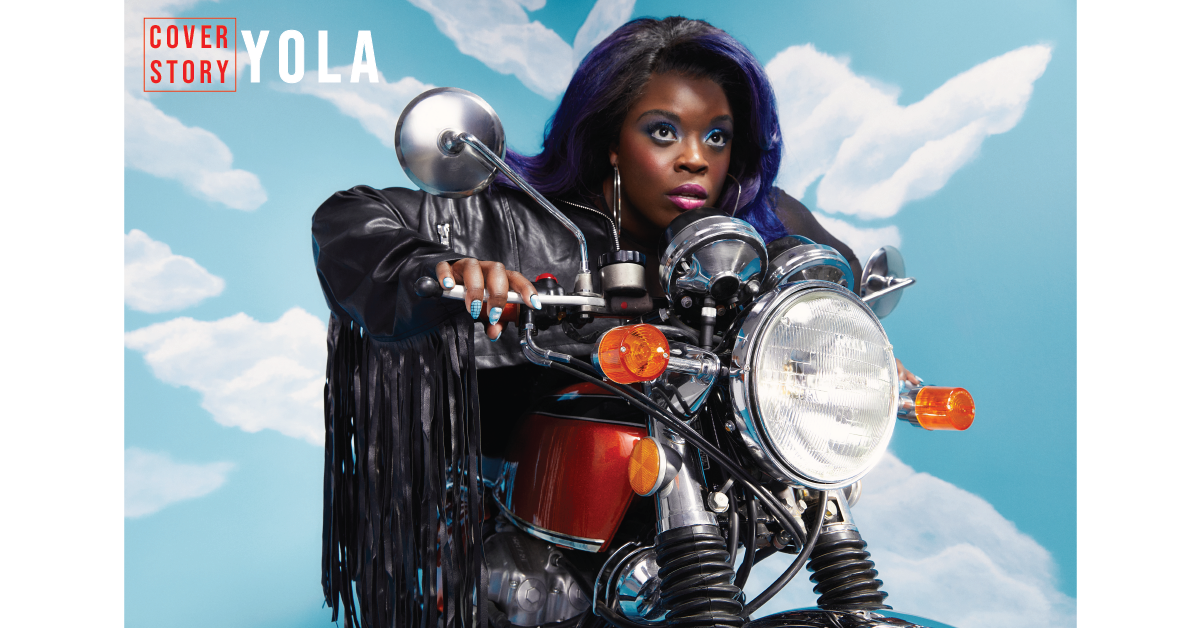
Yola
Speaking to Yola over Zoom is way more fun than a video call has any right to be. From the time she dials in from the UK, she’s ready to chat. Good thing, because there’s a lot to talk about. About a week earlier, she picked up two Grammy nominations in the American Roots Music category of Best American Roots Song (“Diamond Studded Shoes”) and Best Americana Album (Stand For Myself), and she’s clearly still exhilarated by it.
“It’s very hard for it to even land because it feels really super surreal,” she says. “I don’t know how else to describe it. I’m endlessly grateful to the work that everyone puts in to get me to this point, and honestly, the faith that people have to let me lead at all. I wasn’t always in positions like that, ones that would let me lead.”
She’s speaking of a different kind of leadership style than, say, former British Prime Minister Theresa May, whose sparkly footwear worn during a speech about childhood poverty led to the idea of writing “Diamond Studded Shoes.” Although it does have a feel-good groove, you can’t miss its message of inequality. “And that’s why we gots to fight,” she sings. Read more.
Photo Credit: Norman Seff (Ray Charles); Alysse Gafkjen (Robert Finley); Courtesy of Reggie Harris (Reggie Harris); Justin Hardiman (Christone “Kingfish” Ingram); Sandlin Gaither (Amythyst Kiah); Jeremy Cowart (Keb’ Mo’); Merrick Ales (Buffalo Nichols); Mathieu Bitton (Chris Pierce); Laura E. Partain (Allison Russell); Mountain Home Music Company (Tray Wellington); Kim Atkins Photography (Yasmin Williams); Joseph Ross Smith (Yola)
This collection of albums is not simply a “best of” 2021. That would be selling every single collection included herein far too short. These roots and roots-adjacent releases each stood as a testament to the music makers and communities that spawned them. Not simply in the face of a globe-halting, existentially challenging pandemic, but in the face of an industry, government, and culture that would just as soon have all of us pretend the last two years — and beyond — simply didn’t happen.
These artists and creators refused to let the pandemic define their artistic output through it, while simultaneously acknowledging, processing, and healing from the pandemic through this music. Not a single album below is a “pandemic record,” yet every single one is a resounding, joyful balm because the intention in each is not simply a reaction to a global disaster or an attempt to commodify it or its by-products. Not a single one is an attempt to “return to normalcy.” They’re each challenging us as listeners, in both overt and subtle ways, to walk into our collective new reality together, wide-eyed and open-armed, and with intention.
Daddy’s Country Gold, Melissa Carper
It was a sly move on Melissa Carper’s part to give her album, Daddy’s Country Gold, a title that works on so many levels, nodding to the passing down of sounds, to her road nickname and to her ability to casually loosen postwar country perceptions of masculinity and femininity. In her songs and performances, her gestures are even more beguilingly subtle. Enlisting a fellow upright bassist to produce with her, the Time Jumpers’ Dennis Crouch, Carper claimed western swing and early honky-tonk eras as her playground, and the shrewd, crooning intimacy of Billie Holiday as her guide. Carper sings in a slight, reedy rasp, deftly phrasing her lines and curling her words to suggest the lasting nature of longing and fleeting nature of pleasure. She’s written a movingly clever ballad of broken commitment (“My Old Chevy Van”), elegantly pining tunes of both torchy and down-home varieties (“I Almost Forgot About You,” “It’s Better If You Never Know”) and whimsical fantasies of rural homesteading, sometimes making clear that she’s cast a female partner in those stories (“Old Fashioned Gal,” “Would You Like to Get Some Goats?”) Her artful knowledgeable nudging of tradition is a revelation. — Jewly Hight
Music City USA, Charley Crockett
Few artists in the last few years have us as fired up as Charley Crockett. His unapologetically individual sound and aesthetic shine through once again on his 2021 release, Music City USA. The irony, of course, is that the album sounds nothing like most of what comes out of modern-day Nashville. It’s an amalgamation of influences both old and new — blues and classic country and soul with a peppering of Texas-tinged Americana on top. Charley Crockett absolutely represents what the future of Music City sounds (and looks) like in our book. — Amy Reitnouer Jacobs
Home Video, Lucy Dacus
We must forgo the existential “Is it roots?” question at this juncture, simply because this stunning and resplendent work by Lucy Dacus refused to be excluded from this list. Perhaps the superlative album of 2021, in a year filled to bursting with objectively and subjectively superlative albums, Home Video is impossibly resonant, relatable, down-to-earth, and touching — despite its intricate specificity and deeply vulnerable personality. Dacus’ queerness, and the beautiful, humane ways it refuses categorization and labels, is the crack beneath the door through which the light of this gorgeous, fully-realized universe is let into our hearts. Her post-evangelical pondering; the challenging while awe-inspiring abstract, amorphous gray zones she doesn’t just examine, but celebrates; the anger of rock and roll paired with the tenderness of folk and the spilled ink of singer-songwriters — whether taken as a masterpiece of genre-fluid postmodernity or an experiment on the fringes of roots music, Dacus’ Home Video establishes this ineffable artist as a subtle, intellect-defying (and -encouraging), empathetic genius of our time. — Justin Hiltner
My Bluegrass Heart, Béla Fleck
It’s been over twenty years since the eminent master of the banjo, Béla Fleck, recorded a bluegrass record. My Bluegrass Heart completes a trilogy of albums (following 1988’s Drive and 1999’s The Bluegrass Sessions) and is as much a who’s who of modern bluegrass – featuring the likes of Billy Strings, Chris Thile, Sierra Hull, Bryan Sutton, Molly Tuttle, Michael Cleveland, Sam Bush and many others – as it is a showcase of Fleck’s still-virtuoso level talent.
But as much as My Bluegrass Heart is an album for a bluegrass band, we would be hard pressed to call it a bluegrass album (in the best possible way). As he has done countless times before, Fleck effectively breaks every rule and pushes every boundary by surrounding himself with fellow legendary rule breakers, creating something wholly beautiful and unique in the process. — Amy Reitnouer Jacobs
A Tribute to Bill Monroe, The Infamous Stringdusters
Bluegrass loves a “back to bluegrass” album, no matter how far an artist or band may or may not have traveled from bluegrass before coming back to it. On A Tribute to Bill Monroe, the Infamous Stringdusters cement ‘80s and ‘90s ‘grass – “mash” and its subsidiaries – as an ancestor to the current generation of jamgrass. Or, at the very least, it cements that these two modern forms of bluegrass cooperatively evolved. It’s crisp, driving, bouncing bluegrass that’s as much traditional as it isn’t. Sounds like quintessential Stringdusters, doesn’t it? Their collective and individual personalities ooze through the Big Mon’s material, which is what we all want cover projects to do, in the end: Cast classics in a new light, into impossibly complicated refractions. And, in this case, infusing postgrass sensibilities back into the bluegrass forms that birthed them. — Justin Hiltner
Race Records, Miko Marks & the Resurrectors
One of the best bluegrass albums of the year most likely would not be “binned” as bluegrass, and that this album is titled Race Records demonstrates exactly why. Miko Marks returns to the primordial ooze aesthetic of country, old-time, blues and bluegrass — without a whiff of essentialism — and accomplishes a Bristol Sessions or ‘40s-era Grand Ole Opry sound that’s as firmly anchored in the present as it is elemental. Marks’ musical perspective has always highlighted her awareness that the death of genre, as it were, is nothing new, but a return to the traditions that birthed all of these roots genres, many of which can be attributed to the exact communities race records originally sought to erase. Marks & the Resurrectors joyfully and radically occupy songs and space on Race Records. The result is as light and carefree as it is profound; it’s devastatingly singular yet feels like a sing along. All quintessential elements of bluegrass and country. — Justin Hiltner
Dark in Here, Mountain Goats
John Darnielle sings at the velocity of a firehose torrent, and he writes songs with titles like “Let Me Bathe in Demonic Light” and “The Destruction of the Superdeep Kola Borehole Tower.” But rather than death metal, Mountain Goats play elegantly arranged folk-rock dressed up with saxophones and the occasional keyboard freak-out. Dark in Here, the best of five Mountain Goats albums released the past two years, coheres into tunefulness despite the clashing contrasts — especially “Mobile,” a gently gliding Biblical meditation on hurricane season, and also Darnielle’s prettiest song ever. Perfect for the whiplash jitters of this modern life. — David Menconi
In Defense Of My Own Happiness, Joy Oladokun
I don’t know if I’ve ever been so immediately captivated by an artist as I was when I first heard Joy Oladokun’s single, “Jordan,” earlier this year. On that song — and every other one on In Defense of My Own Happiness that I played over and over this year — her clear voice and searingly personal lyrics emerge as a calm, universal call to pursue something better, melting down her own painful past and re-molding it in the image of self-love, inner peace and … well, joy. Oladokun is indeed building her own promised land, and we’re all lucky to bear witness. — Dacey Orr Sivewright
Outside Child, Allison Russell
One might assume an album covering the subject of abuse could intimidate a listener with its potential heaviness. While Outside Child does indeed venture into the depths of those dark experiences, Allison Russell gleans profound lessons learned and treasures discovered from each and every detail of her experiences in her youth. The result is ethereal and uplifting — and a release of trauma through a bright musical experience swelling and overflowing with hope for the future. — Shelby Williamson
The Fray, John Smith
Most artists are pretty keen to play down the idea of a “lockdown record,” because they’re worried it will limit the music’s appeal or longevity. But the emotions John Smith pours into The Fray — born of that period when we were all taking stock of our lives, and wondering what to do next — will hold their currency for a long while yet. It’s honest, yes, but also pretty soothing on the ear, showcasing Smith’s fullest sound to date — both heart’s cry and soul’s balm at once. — Emma John
See You Next Time, Joshua Ray Walker
I wasn’t out after “Three Strikes.” Instead, I was all in. With the steel guitar weaving like a drunkard in a Buick, it sometimes seems like this Dallas musician’s third album is about to go off the rails, along with the lives of the people he’s created in these songs. It never does, though, and that’s a credit to Joshua Ray Walker’s commanding vocal and a willingness to bring his dry sense of humor to the country music landscape. From the pretty poser in “Cowboy” to the unsightly barfly known as “Welfare Chet,” these folks feel like true honky-tonk characters. — Craig Shelburne
Simple Syrup, Sunny War
“Tell me that I look like Nina,” sings Los Angeles singer-songwriter Sunny War in “Like Nina,” the keystone song of her fourth album, Simple Syrup. The Nina in question is, of course, Nina Simone. The look is the “same sad look in my eyes,” though in concert War often flashes a bright, disarmingly shy smile — that of a young Black artist demanding to be taken on her own, singular terms, not the terms of cultural expectations. She continues: She can’t dance like Tina, sing like Aretha, be styled like Beyoncé. But she can see injustice, seek love and respect, seek a sense of self, and sing about it, captivatingly, with her earthy voice and folk-blues-rooted fingerpicking, enhanced by a small cadre of friends led by producer Harlan Steinberger. Like Nina? No. Like Sunny War. — Steve Hochman
Sixteen Kings’ Daughters, Libby Weitnauer
There’s a new artist on the folk scene — Libby Weitnauer. Weitnauer is a fiddle player, violinist, singer and songwriter raised in East Tennessee and currently based in Nashville. Her debut EP and first solo effort, Sixteen Kings’ Daughters, was produced by Mike Robinson (Sarah Jarosz, Railroad Earth) and presents centuries-old Appalachian ballads that have been recast into a lush and unsettling sonic landscape. Weitnauer’s high lilting voice is reminiscent of Jean Ritchie, and she glides with ease atop eerie backdrops of electric guitar, bass, fiddle and pedal steel. A strong debut to say the least, and we’re excited to hear more. — Kaïa Kater
Urban Driftwood, Yasmin Williams
Watching Yasmin Williams play guitar can boggle your mind. She uses her full body to coax noise from the instrument, her fingers pounding on the strings, her feet clicking out counter rhythms in tap shoes, one hand even accompanying herself on kalimba. As impressive as her technique is, it’s less remarkable than her facility for compositions that are melodically direct yet structurally intricate. Urban Driftwood is a carefully and beautifully written album, and Williams’ songs lose none of their flair when she transfers them from the stage to the studio. Dense with earworm riffs and evocative textures, the album represents a crucial pivot away from the increasingly staid world of folk guitar, which has recently been dominated by white men indebted to the historical American Primitivism pioneered by John Fahey. Williams is opening that world up to new sounds and influences, insisting that her guitar can speak about our present moment in ways that are meaningful, moving, and subversive. — Stephen Deusner
Artist:Yasmin Williams Hometown: Woodbridge, Virginia Song: “Through the Woods” (Live on Mountain Stage) Album:Urban Driftwood Release Date: January 21, 2021
In Their Words: “When I first arrived at Mountain Stage, I was shown a long list of all of the past performers and was extremely excited to now be a part of that legacy. My song ‘Through the Woods’ is about embarking on a new journey, and I was especially excited to play this song on Mountain Stage given its history and that this was my first time playing on the program. For me, ‘Through the Woods’ symbolizes everything Mountain Stage is about: embracing new adventures by showcasing emerging artists, like me, and giving them a platform. I thoroughly enjoyed my time at Mountain Stage and would love to come back!” — Yasmin Williams
Guitarists spend lifetimes — often gleefully, sometimes manically, or at times frustratingly — finessing techniques, especially with their picking hand. Entire careers can be made or broken by the idiosyncrasies of one picker’s striking and sounding strings. Fingerstyle guitarist and composer Yasmin Williams has mastered myriad forms of right-hand styles, each complicated enough for multiple lifetimes’ worth of study. But she doesn’t merely alternate techniques between pieces; to a transcendentally perplexing degree she effortlessly alternates her entire picking hand approach mid-song.
On her 2021 release, Urban Driftwood, a collection of thoughtful, dynamic, and engaging instrumentals written for fingerstyle guitar and harp guitar, Williams makes many of these technique-swaps while the compositions charge forward, each one earning tailor-made right-hand approaches. As a result, the songs don’t feel encumbered when Williams, mid-melody, goes from right hand fingerstyle to bowing her strings with a cello bow, or plunking out notes on a kalimba taped to her guitar’s face, now positioned laying across her lap. She utilizes hand percussion and tap shoes to fill out arrangements, interposing Afro-descended instruments from around the world into her compositions, and she picks up, puts down, and readjusts her stable of musical tools in realtime — as a foley sound effect artist, prop master, or choreographer might.
In guitar-centered communities — which are, it’s worth pointing out, largely white, straight, and male — where the overwrought, complicated, and mind-bending are regarded as the highest value currencies, you might expect the intricacies of Williams’ compositions, and the physicality of these impressive, visually striking techniques, to be the entire point of the music. But, as Williams explains in our interview and demonstrates indelibly in her Shout & Shine livestream performance — which will air on BGS on March 31 at 4pm PDT / 7pm EDT (watch above) — the acrobatics of her playing are merely a means to an end. While entrancing, each fresh, inventive way Williams creates a dialogue with her instrument is merely a tool for her to execute each individual song, as close to how she hears it in her head as possible.
We began our conversation discussing this phenomenon and how it’s an active, deliberate choice on the part of Williams to serve her own songs.
BGS: There isn’t nearly as much variation in right hand or picking techniques in bluegrass and old-time as you use – tap, lap tapping, fingerstyle, harp guitar, I’ve even seen you bowing your guitar. So many of these contemporary guitar styles that you switch back and forth between are so different from each other, so what ties them all together for you? What does it feel like when you’re thinking about switching between these styles?
YW: I don’t really think about it much at all! Unless it’s logistically for a live performance, like, “Oh, I need to put my bow here, I need to put my kalimba here.” That [stage choreography] is really the only context in which I think about it. These different techniques, I just use them for whatever the song requires. They’re more like compositional tools. It’s more like I’m trying to find the sound that’s in my head or I’m trying to find a sound that’s different from [how] my guitar [already sounds], something to supplement whatever I’m writing. It’s not really like, “I want to make a lap tapping song!” It’s not conscious like that. These techniques are kind of my inventions and I only really come up with them to well, finish the song, basically.
I’ve never really been technique-forward – yeah, guitar culture is very nerdy and I’ve never been very into that, at least in terms of the techniques, I don’t usually care what people are doing. [Laughs] I care more about the result. However you choose to get there is cool, too! But I don’t really scout other people’s techniques or anything.
It makes me think of Elizabeth Cotten, who you have mentioned in past performances and interviews as an influence of yours. She was left-handed and played “upside down and backwards,” playing the guitar the way she needed to play it.
[Laughs] Yes! She just figured it out, she was determined! Elizabeth Cotten and Jimi Hendrix kind of served the same purpose for me. They’re both extremely unique, I love that about them, and they really didn’t care about how they were “supposed” to do things, they weren’t bogged down by tradition. Elizabeth Cotten, I love her because, somewhat obviously, she’s a Black woman who plays guitar fingerstyle, which is very cool — and banjo, too. How she played, I can’t figure it out! It’s fun to figure out and to watch, but it’s even cooler to not watch her play and just listen. All of her tunes are so catchy. She’s great, I’d love to be as great of a songwriter as her one day, hopefully.
Some of the songs on Urban Driftwood feel so huge and expansive, but some feel so introspective and meditative, despite the fact that most tracks have very similar, stripped down, simple instrumentation and arrangements. It’s not a lot of production and arranging. How do you accomplish that dynamic range? What is your own dialogue with your instrument like during the creative process, during recording and writing?
That’s a really interesting question! But, I don’t know! [Laughs] Sorry to say that, but I really need to think more about this.
Some songs, I definitely did want to be more introspective, like “I Wonder.” That was definitely one I wanted to be very intimate. And I did think about, in a live setting, how I wanted the song to feel more quiet and more intimate than other arrangements. “Swift Breeze” is another one I wanted to have an edgier sound. I don’t really think about it, I guess I’m just extremely tunnel-visioned. At the time of writing or recording a song I only think about what the song needs. Whatever that particular song that I’m working on in that moment needs. I didn’t think about live performance at all until after the album was already out and finished, which was probably not the best idea, [Laughs] I’m kind of regretting it now, but I’m working it out.
I did think about the arrangement for “Urban Driftwood” a lot. I didn’t want to use tons of overdubs or multi-tracks on many of the songs [on the album], because I don’t really “believe” in it, I guess. That one, I wanted it to sound expansive, but also I wanted it to be able to work in a more intimate setting, too. But even so, I’m not really thinking about it that much.
The guitar, when you take it out of the context of the average player’s experience — which is usually playing with a pick and using three or four chords — when you remove it from that context so many new and exciting ideas have to start flowing, like when you pick up a bow instead of a pick. What is your experimentation like when you’re composing/writing?
I tend to repeat things I like over and over again. I can do that for hours. [Laughs] It’s a bit of a mess, it’s not the most efficient way to write something, but I can make up a melodic line that I really like and play it for hours and hours and hours. Other things will start to form while I’m playing that. Then I’ll record it, or write it down in notation, whatever I need to do to remember it. That process can go on for months before I even finish a song.
I love experimenting. I love finding new, different things to use. Like a hammered dulcimer hammer or a bow or tap shoes, which are something else I use. Those were another example of problem solving. Now I’m into pedals a lot more so I’m experimenting with those, too. There are tons of great pedals out there, so it can be pretty difficult. It’s another world on its own! I’ve always been an experimental player, ever since I started playing.
Who are you listening to now who inspires you? And who – you already mentioned Jimi Hendrix and Elizabeth Cotten – do you look to and who influences you from past generations?
I kind of want to go back to where I’m from [in Northern Virginia], Chuck Brown is an influence — maybe not directly, I don’t really model my playing after his at all. He’s a guitar player from the D.C. area, he plays go-go music, a kind of regional style of music here. I’ve always loved him, from when I was a kid.
Libba Cotten, obviously, is a huge influence. I wish I had known about her when I was younger. I think I could’ve saved a lot of time by not trying to be something I was never going to be. I really wanted to be a shredding, metal-type guitarist. I think that’s what I associated the guitar with–
Is that where the tapping came in?
Yeah!
That’s amazing. There are a lot of post-metal pickers in bluegrass! We have quite a few.
[Laughs] I mean, I used to play Guitar Hero and that had so many rock songs and metal songs on it and tapping stuff. A bit of southern rock, too. But it was really rock- and male-centered and it would’ve been great to find Elizabeth Cotten sooner. That would’ve been great. I still like Paul Gilbert, I still like Buckethead, all of them, but it definitely would’ve been better if I had found Libba Cotten or Sister Rosetta Tharpe or Algia Mae Hinton sooner.
Ah! I love Algia Mae, when you mentioned tap shoes earlier I immediately thought of her and the tradition of buck dancing and clogging connected to finger-picking.
I know! I didn’t know anything about that until recently! I didn’t really know anything about that until the past couple of years, I’ve definitely gone down the rabbit hole of all of that now, though.
I guess I am listening to more guitar music these days than I ever have before. When I first started playing I didn’t really listen to any, because I didn’t really like it, the fingerstyle stuff and the technical stuff. Whatever you want to call it. But now, it’s great. There are a lot of contemporary players I really enjoy, I love Daniel Bachman’s stuff. [The band] The Americans have cool stuff. Chuck Johnson and Sarah Louise. There are a lot more people releasing music that isn’t just a derivative of what already exists in the guitar canon or in traditional guitar scenes.
This topic has come up recently — in my interview with Jackie Venson and also with Sunny War — but more and more when I find myself engaging with contemporary guitar music, it’s made by women. To a degree, I think the music women are making in fingerstyle guitar and in “guitar culture” right now is just not what you hear like… in the halls at NAMM. As a queer person, I think I avoid guitar culture a lot because it feels so toxically masculine. Do you feel that, too?
Yeah, I feel that now that I’m in the scene more. When I released my first album — and before that, when I was just learning and coming up — I didn’t feel anything like that, because I think I just ignored it. I didn’t really care. (I still don’t really care.) [Laughs] There are nicer sections in the guitar world as well as more “competitive” or kind of douchey sections. [Laughs again] Like the guy who will turn my amp on, cause he thinks I can’t turn it on. That happens a lot.
Looking ahead to the future, with vaccines rolling out and it feeling like we’re at this transition point from pre-COVID to the beginning of post-COVID — and you’re gaining so much momentum with this record even during the shutdown — what are you looking ahead to? And what does this transition from “before times” to “after times” feel like to you?
I’m actually kind of thankful for it. It’s giving me time to reflect — not only on the album’s success, but it’s giving me time to not worry about shows. I can plan and build a team around me and become more “professional” [to be ready] when touring does start up and venues do start opening again.
Creatively and musically I am all OVER the place! [Laughs] I’m writing a piece for a berimbau group called Projeto Arcomusical, the berimbau is an old, Afro-Brazilian instrument. I’m really excited for that, I can finally use my college degree and be a composer for once. I’m working with another group, based in NYC, called Contemporaneous, arranging songs from my new album for a summer concert, which is fun. I’m working on new music, trying to write more harp guitar stuff, playing my twelve-string guitar more. My head’s all over the place, really.
I definitely feel a sort of rejuvenation now that I’ve gotten past the “WTF is going to happen?” Now I’m just like, “Whatever happens happens,” and I’ve gotta make new music!
Photo credit: Kim Atkins Photography
This website uses cookies to improve your experience. We'll assume you're ok with this, but you can opt-out if you wish.AcceptRejectRead More
Privacy & Cookies Policy
Privacy Overview
This website uses cookies to improve your experience while you navigate through the website. Out of these, the cookies that are categorized as necessary are stored on your browser as they are essential for the working of basic functionalities of the website. We also use third-party cookies that help us analyze and understand how you use this website. These cookies will be stored in your browser only with your consent. You also have the option to opt-out of these cookies. But opting out of some of these cookies may affect your browsing experience.
Necessary cookies are absolutely essential for the website to function properly. This category only includes cookies that ensures basic functionalities and security features of the website. These cookies do not store any personal information.
Any cookies that may not be particularly necessary for the website to function and is used specifically to collect user personal data via analytics, ads, other embedded contents are termed as non-necessary cookies. It is mandatory to procure user consent prior to running these cookies on your website.