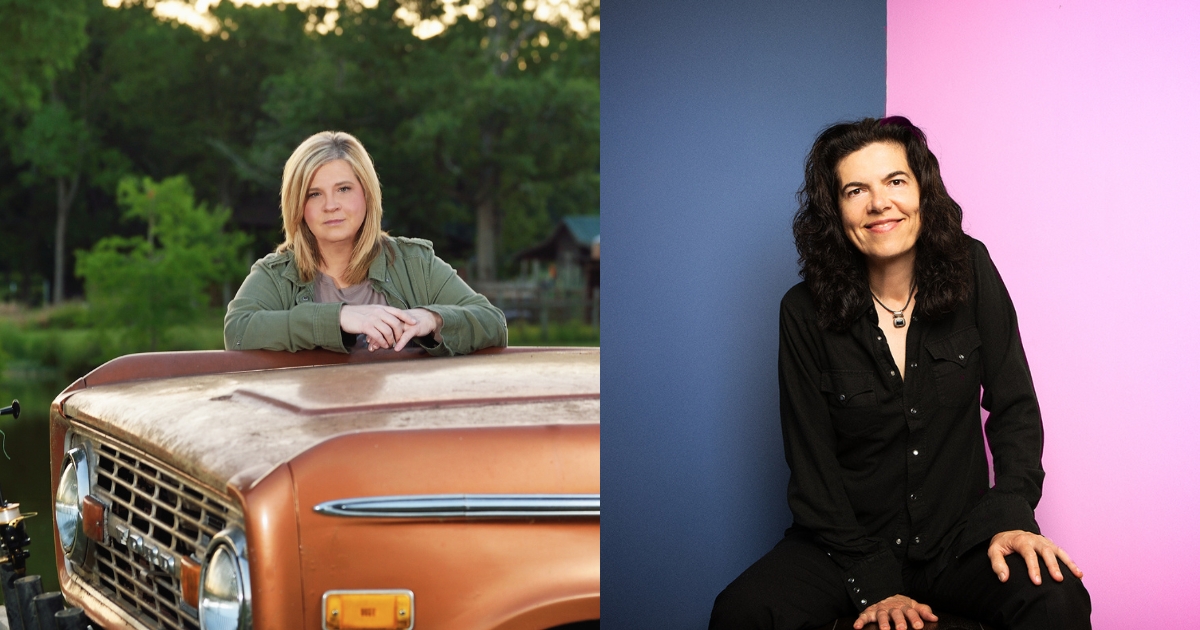
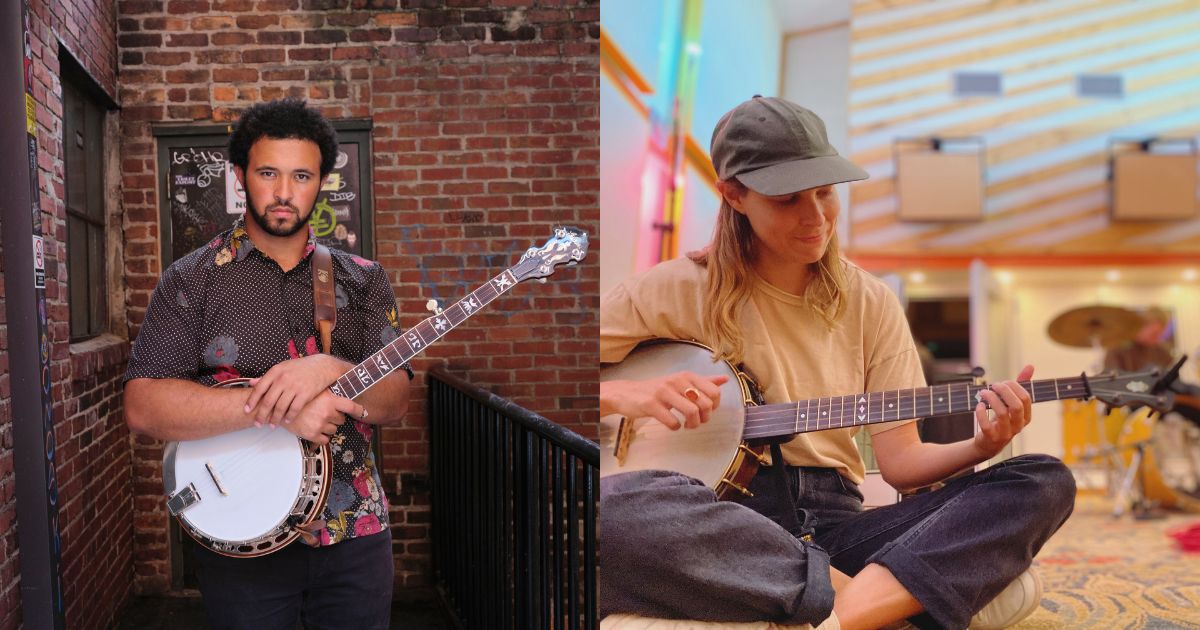
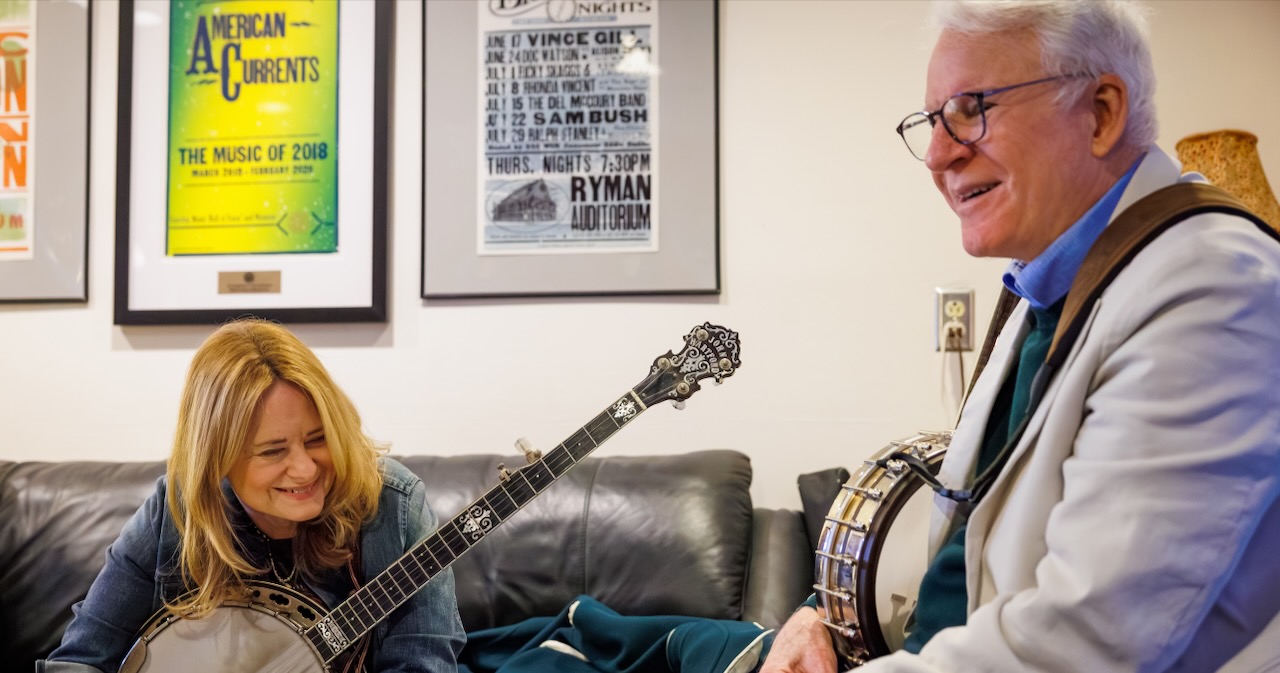
Leading up to Father’s Day, we have memories of dear old Dad shared by award-winning bluegrass musician Gena Britt as well as singer-songwriter Maia Sharp. Mike Thomas adds a spiritual approach to his song about being a father to a kid having a rough patch. Meanwhile, Kyle Morgan and Tamar Korn cover a Gillian Welch favorite, and Special Consensus, Alison Brown, and Robbie Fulks put their own spin on a country classic, “King of the Road.” Snap to it because you gotta hear this!
Artist:Gena Britt Hometown: Star, North Carolina Song: “He Likes to Fish” Label: Mountain Home Music Company
In Their Words: “I lost my dad back in 2009 and my most cherished and vivid memories are of going fishing with him. I had this idea for a song and told my friend Katelyn Ingardia about it. It resonated with her too, and she agreed to co-write it with me. She met me in Nashville one weekend when I was doing an all-star show at the Station Inn. We sat down to write this song and it just started flowing out of us. We wrote it in just a little over an hour or so. There are so many poignant moments in this song, beginning with the opening line talking about dad’s Bronco…My dad actually had an old Bronco that we would take to the coast and fish on the surf. A childhood memory like that is unforgettable. When we finished writing it, Katelyn and I looked at each other and tears were streaming down both our faces. It was in that moment that I knew I had to record this song.
“I miss my dad. He was my best friend and we could talk about anything. I hope this tune will reach out and tug on some heartstrings like it did mine. Once we started recording it, it became even more special. Hearing something like this being brought to life in the studio by some of my favorite people was so heartwarming. Alan Bartram, Jason Carter, John Meador and Johnathan Dillon knew this song meant a lot to me and they helped me arrange it. It turned out beautifully, and I’m grateful to them all for taking such a heartfelt approach. The addition of Tony Creasman on drums and Jeff Partin’s incredible dobro work was icing on the cake. I love it when songs come from such an authentic place and tell a story, and I believe this one does just that. Oh, and I hope you like to fish.” – Gena Britt
Track Credits: Gena Britt – Lead vocal John Meador – Acoustic guitar, harmony vocal Alan Bartram – Upright bass, harmony vocal Jason Carter – Fiddle Jonathan Dillon – Mandolin Jeff Partin – Dobro Tony Creasman – Drums
Maia Sharp, “Tomboy”
Artist:Maia Sharp Hometown: Nashville, Tennessee Song: “Tomboy” Album:Tomboy Release Date: September 12, 2025 Label: Crooked Crown Music
In Their Words: I’ve always been a tomboy. Dad says when I was two years old I hit him square in the forehead with a handful of spaghetti from my highchair across the table. He adds, ‘You already had a good arm.’ It came in handy when I played in a local boys’ baseball league for years until music (and girls’ softball) started calling. Athletic, makeup adverse, not afraid to get dirty, seeing boys (then) and men (now) as peers: that’s what the word tomboy means to me. I feel lucky to be those things today but when I was a kid trying to figure out where I fit in, it was an unstable combination of awkwardness and fearlessness. I didn’t want to be a boy. I just liked the clothes that happened to be in their section of the store, the sports they got to play at school and the haircuts designated as theirs. I may or may not have brought a picture of Shaun Cassidy into Supercuts when I was six and said, ‘Like this, please.’
“These memories became a song when a writing day conversation with co-writer and friend Emily Kopp turned into a competition of who looked more like a boy when we were kids. We exchanged photos, a lot of laughter and a celebration of our younger, athletic, singular little selves. It felt good to be proud of something that, at the time, from the inside looking out, I wasn’t ready to be proud of sometimes. But from the vantage point of the grown-up tomboy, I can see now how strong and ruthlessly authentic it was.” — Maia Sharp
Track Credits: Witten by Maia Sharp & Emily Kopp Eric Darken – Percussion Teddie Collinz – Beatbox Will Honaker – Bass Maia Sharp – Guitars, keyboards, synths, BG vocals & additional percussion
Mike Thomas, “A Different Story”
Artist:Mike Thomas Hometown: Nashville, Tennessee (originally from Knoxville, Tennessee) Song: “A Different Story” Label: Diamond Hill Music
In Their Words: “It was an early Saturday morning in the summer of 2024. I hadn’t slept well the night before. One of our kids was going through a rough patch, and my wife and I were trying our best to help her get through it all. I headed out to the patio with my morning coffee to read a little scripture, and I started thinking about how God’s grace and mercy have shown up in my own life at exactly the right moments. I had this overwhelming feeling come over me that the same grace and mercy would show up for my child. I picked up a guitar, and ‘A Different Story’ came rather quickly. While I often weave spirituality into my songs, this one is different than anything I have released in the past. It’s a gospel-infused celebration of grace, redemption, and perseverance.” — Mike Thomas
Track Credits: Written by Mike Thomas Mike Thomas – Acoustic & electric guitar, vocal Joanna Cotten – Vocal Tres Sasser – Bass Sten Nisswandt – Drums Michael Webb – piano & organ Produced by Tres Sasser Engineered & Mixed by Joe Costa Mastered by Pete Lyman Recorded at Tresland Studios – Franklin, Tennessee
Kyle Morgan & Tamar Korn, “Everything Is Free”
Artists:Kyle Morgan & Tamar Korn Featuring Wyndham Baird Hometown: Brooklyn, New York Song: “Everything is Free” (written by Gillian Welch) Album:Darkening Green Release Date: August 15, 2025 Label: Jalopy Records
In Their Words: “Sifting through songs one day with our friend and cohort Wyndham Baird, he went into playing the emblematic Gillian Welch tune. As we found harmonies above Wyndham’s beautiful baritone, it was so satisfying that we begged him to record it with us. ‘Everything is Free’ is the working musician’s anthem, a digital-age dirge acknowledging, lamenting, and perhaps transcending the modern entanglement of music-making & monetization, creative expression & intellectual exploitation. As musicians and songwriters, movers & makers of sound & story, we live the conundrum & partake in the work of dealing spiritual currency within a materialist economy. Our sovereignty seems to lay in valuing & ‘listen[ing] to the words in [our] heads,’ regardless who’s paying… attention.” — Kyle Morgan & Tamar Korn
Track Credits: Kyle Morgan – Guitar, harmony vocals Tamar Korn – Tenor guitar, vocals (lead chorus) Wyndham Baird – Mandolin, lead vocals on verses Jared Engel – Upright bass
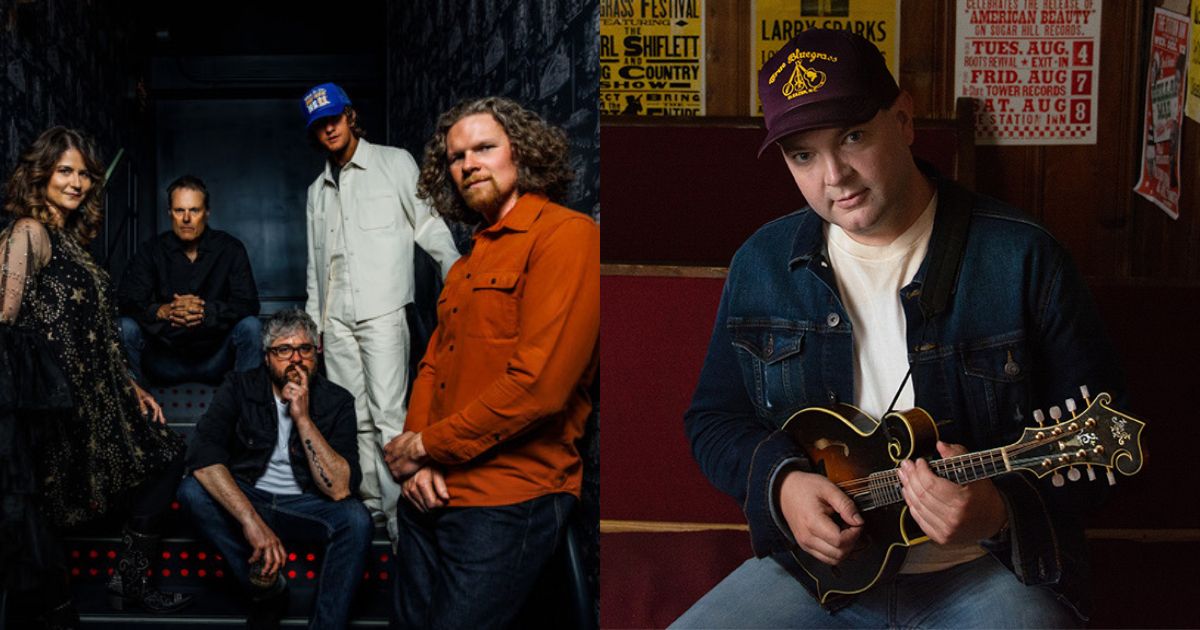
Special Consensus, “King of the Road” (Feat. Robbie Fulks)
Artist:Special Consensus Hometown: Chicago Song: “King of the Road” (Feat. Robbie Fulks) Album:Been All Around This World Release Date: June 20, 2025 Label: Compass Records
In Their Words: “This year is Special Consensus’ 50th anniversary. To celebrate, we invited six of our past lead singers to join us on a new album project. We came up with a list of songs with each of them in mind: some covers, a few new songs and a couple fan favorites from older records. Once we were together in the studio, we worked out each song around the coffee table with Alison [Brown, our producer], scratching out an arrangement on the spot before heading into the tracking room. As soon as we put on the headphones and got behind the mics, we felt a wonderful sense of joy to be making Special C music again together.
“In the middle of the two-week stretch of sessions while Robbie Fulks was in town, Alison spontaneously came up with the idea to try a version of ‘King of the Road.’ She thought it would be a perfect fit for Robbie to sing and, of course, he already knew it. Just a few minutes later, he was in the tracking room singing the song with Dan Eubanks playing the perfect bass lines – it was magical. We all jumped back in front of the mics and tracked the song: Greg Blake on harmony vocals, Ashby Frank on guitar, Brian McCarty and me copping the piano riffs on mandolin and banjo and all of us on the all-important finger snaps. I hope the thrill we felt making this music together comes through to the listener on this unplanned addition to the album!” – Greg Cahill, Special Consensus
Track Credits: Special Consensus featuring Robbie Fulks. Music produced by Alison Brown
Photo Credit: Mike Carter (Gena Britt); Emma-Lee Photography (Maia Sharp)
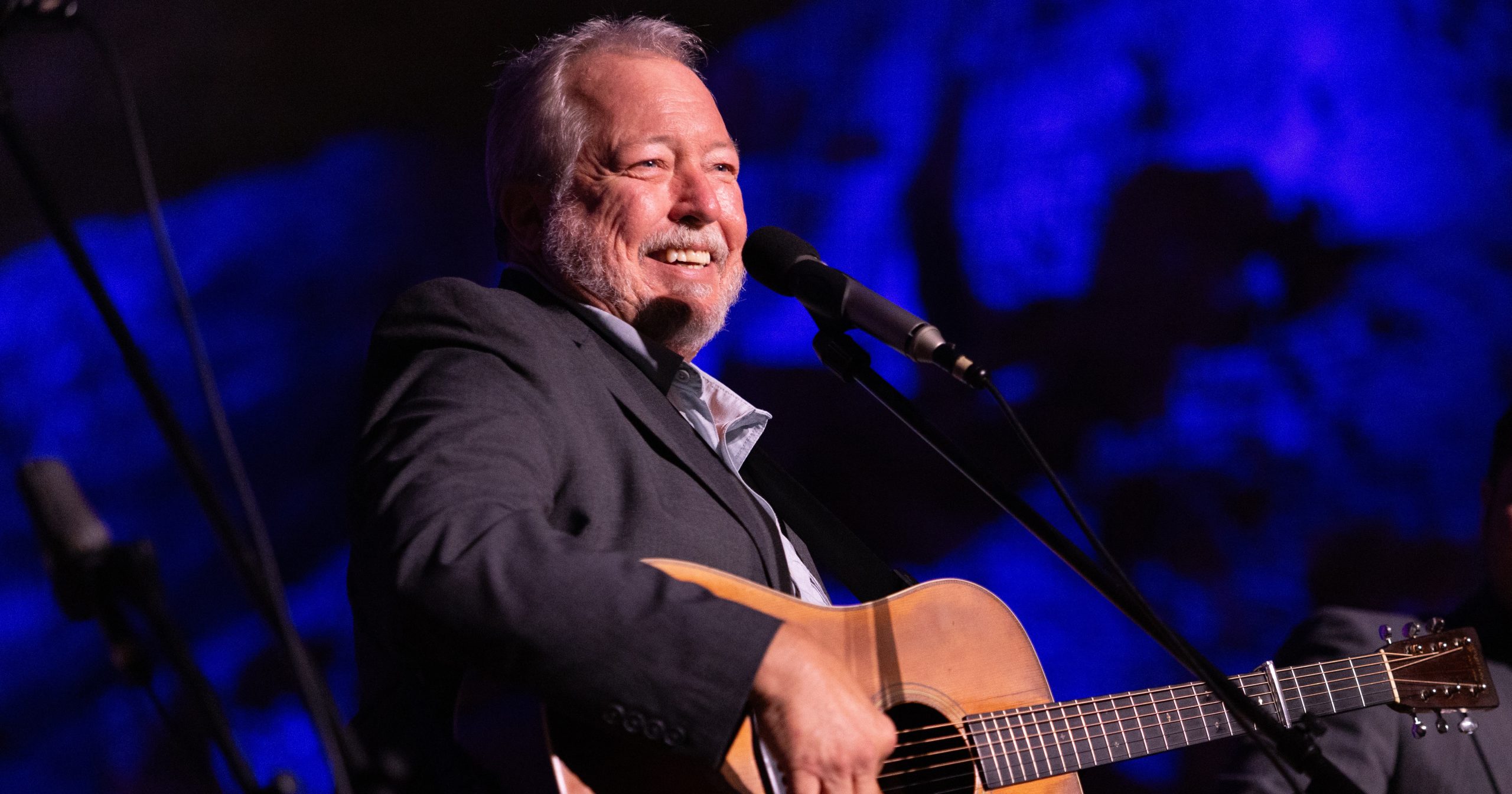
A quarter century removed from his passing, John Hartford’s music and overarching legacy may have a stronger hold on bluegrass and American roots music than ever before.
From modern-day stars like Billy Strings and Sam Bush playing his songs in front of thousands each night, to popping up in books, old-time jams, workshops, films, and other functions, Hartford’s songs are officially a part of the Americana zeitgeist.
This trend continues on Julia Belle: The John Hartford Fiddle Tune Project Volume 2. Released February 28, the follow-up to 2020’s inaugural installment of the Fiddle Tune Project features another 17 songs from the always grinnin’, GRAMMY award-winning, steamboat-loving singer – this time performed entirely by women. Nearly 50 artists, musicians, and singers feature throughout, ranging from Rachel Baiman, Phoebe Hunt, Ginger Boatwright, Brittany Haas, and Deanie Richardson, to Allison de Groot, Della Mae, The Price Sisters, Uncle Earl, Kathy Mattea, Alison Brown, and Sierra Hull.
According to Julia Belle co-producer Megan Lynch Chowning (who was joined in that role by Sharon Gilchrist and Katie Harford Hogue, John’s daughter), once the decision was made to move forward with an all-women cast it came time to narrow down who to include on it–something that was as much of a dilemma as it was “an incredibly cool revelation.”
“We decided about halfway through to just make it a reality rather than a selling point,” she jokes. “It’s in the same spirit of whenever you open up a record from the Bluegrass Album Band, nobody says, ‘Wow, what a great all-male band that is!'”
Ahead of Julia Belle‘s release, Harford Hogue, Lynch Chowning, and Gilchrist spoke with BGS about their involvement in the project, preserving John Hartford’s legacy, and favorite moments from recording.
(Editor’s Note: Thefollowingare three separate conversations combined into one and edited for brevity.)
Nearly 50 artists are involved in Julia Belle. How did you go about deciding who to include on the project and which songs they’d play on?
Sharon Gilchrist: It was really important for us to have a multi-generational presence on this record. One of Katie’s personal wishes for the album was that every artist on the record have some personal connection to Hartford. With it being an all-female record, I was also curious to find women who had actually worked with or had some kind of rapport with him. For example, Laurie Lewis, Kathy Kallick, and Suzy Thompson are all on “Champagne Blues” and were all peers of Hartford’s back in the day. Ginger Boatwright actually inspired the song that John wrote which she sings on, “Learning to Smile All Over Again.”
In addition to the sheer number of people involved, I love how you also really allowed them to lean into their own creative tendencies while at the same time staying true to the style and spirit of John Hartford.
Katie Harford Hogue: Since Volume I the whole premise of this album series has been to choose artists that play this vein of music or consider my dad a mentor or someone they look up to. We hand them the book [John Hartford’s Mammoth Collection of Fiddle Tunes] and tell them to choose the tunes that speak to you, then come to the studio and put them through your filter.
For me to tell an artist how to do art – why would I do that? The whole point of being an artist is that you’re putting yourself into it and are using your own expressions, your own metaphors, and your own way of relating to the music. So we wanted their expression in it and the really cool thing is that Dad comes through no matter what we do. His DNA is in these tunes and there’s no way to get them out, not that we would ever want to. Having people come in and just go for it was risky, but an incredibly fun way to make an album.
Megan Lynch Chowning: A lot of the tones, audio, and overall vibe check comes from Sharon, who has been a John Hartford fan her entire musical life and is somebody who is so incredibly in tune with the sounds and feel that comes from his songs. She worked tirelessly listening to everybody’s work before they came in to record to get an idea of what’s going to help each person be the best possible version of themselves while they’re here.
Then there’s the issue of none of these songs – at least the fiddle tunes – having any chords assigned to them. When John wrote them there were no chord progressions, so every artist had to write their own. That in itself was a big part of people getting to take each song in their own directions. It was amazing to watch over and over again, and Sharon handled it all like an absolute rock star.
While some people’s legacy fades over time, it seems like John Hartford’s only grows stronger. What are your thoughts on that and how this project aims to further propel that legacy forward?
KHH: I’ve heard it said before that the way he communicated wasn’t limited to a particular generation. I don’t know if it was the way he thought about things or if some of the ways he did things were more universal. … You can go back to the masters of music and art – da Vinci, Bach – and their methods of creativity are still very valid now, they simply don’t go out of style.
When you hone into the foundation of it the relevancy goes with it, because everyone’s just going back to what’s real, which is what I think my dad also did. He was very true to the way he made music and the way he thought. A lot of people trying to make a career might stop and think, “What does the public want?” or “What do the masses want and how can I provide for them?” There’s nothing wrong with that, but there is another way to do it, making the music you want to make and not worrying whether or not it’s commercially viable.
That being said, “Gentle On My Mind” [Hartford’s most successful song, written in 1966] was very helpful in allowing him to do that full-time. Most everyone else has to get a full-time job and do the music on the side to stay true to themselves, but he got the best of both worlds in that way. He was able to take the success of that song and then go do his art with his heart and soul in it. I mean, who else writes about steamboats? Who else would write about the things that he wrote about and try the things he did on stage or just go out on a limb? And it all worked! In a way, everything aligned for him. That’s why I think he continues to be so relevant – he took a big risk and it paid off.
MLC: In the very first meeting the three of us had to discuss Volume II, preserving and carrying on the Hartford legacy was the focus of what we were trying to accomplish. On any given day you’ve got Billy Strings and Sam Bush playing John Hartford songs in their live shows. The biggest takeaway I have from this whole thing is John Hartford’s unceasing dedication to learning. He started transcribing and learned to write standard notation after he was diagnosed with cancer and instead of saying, “Oh no, I’m sick and this is going to slow me down,” he took it as a sign to move forward and learn a bunch of new things. That’s what led to him becoming obsessed with the fiddle, traditional styles and all that. That to me is the whole message behind these albums, that there’s so much more to do and so much more to write, play and learn. That’s been the most inspiring thing about being a part of this project.
SG: He was both a student and innovator of traditional music who forged his way forward by not sounding anything like anybody else. John is one of the largest beacons shining the way forward on how you do that.
What were your favorite moments from recording these songs? I personally can’t get enough of “Spirit of the South.”
KHH: What was so fun for me about these sessions was that even in rehearsals everyone was shredding. Upon walking in the room you’re hit with this energy and you just want to jump in. It was so exciting talking with everyone and feeling their joy around each song. Then there were the stories from Ginger Boatwright and Kathy Chiavola – both good friends of my dad – and Alison Brown telling me about his influence over her on the banjo.
Not being a musician, that all fed me, because that was a part of my dad’s life that I wasn’t necessarily connected with very much when he was alive. But now I can hear his music and I can see what he was doing and it just has a whole different impact on me. I’ve now had my own kids, raised them, done some things, and can relate more to what he was doing, so every time someone comes back to the studio and records a song, tells a story or talks about his influence, it feel like there’s a drawing of Dad and everyone’s going in and adding details that I hadn’t known about before or that just flesh out the picture that little bit more.
MLC: One favorite was getting Katie’s mom and John’s first wife, Betty, to sing on “No End of Love,” which is a song that John wrote for her. She is an incredible musician who first met John when they were both up for a radio show slot in the St. Louis area. After they got married Betty put her singing career on hold to manage the family, so being able to get her in the studio to sing that song with Katie and her granddaughter Natalie [Hogue] on guitar and hearing her voice – which has been on hold for a long time as she lives other aspects of her life – gave me chills. To me, stuff like that is the essence of folk music and why we do what we do in terms of keeping these songs and traditions alive.
Megan, didn’t you play John’s Tambovsky & Krutz violin on “No End 0f Love”? What was that experience like?
MLC: I actually have John’s fiddle here at my house and play it in the John Hartford Fiddle Tune Project live show, so I’ve been handling it for a while now. Talk about chills – it’s the fiddle he used the last five or so years of his life. It was his main fiddle for the “Down From the Mountain” shows and The Speed of the Old Long Bow record. It’s actually the fiddle on the cover of that album. Katie called me last year out of the blue and said she was moving houses and had taken the fiddle from one closet to another before questioning why it was there in the first place and not in my hands being played at these shows.
To play it on [“No End of Love”] was funny, because it sounds a lot different than my fiddle even though both were set up by the same person. It always felt comfortable to play, but the first few months I had it it was kind of dead from sitting in a closet for two decades. Since I’ve been playing it regularly it’s really come to life. Just the metaphorical part of this fiddle coming to life at the same moment these tunes are being brought into the world is special. It’s how I believe everybody who has the opportunity to be involved in traditional music should be thinking about it. We should constantly be honoring the stuff that came before us while also bringing it into new spaces.
Katie, you mentioned not being too connected to your father’s music when he was still alive, but what do you remember most about those times?
KHH: People saw his stage persona when he was out, but even when he was home he was still playing. He didn’t go home and just say, “Oh, I’m tired of that.” He played some more. “Obsessive” is not too strong a word to use when it came to the way his brain worked about music or art. It would be Thanksgiving or Christmas and he’d be working out melodies in the living room with Benny Martin simply because they enjoyed it.
Later on, my wedding reception was held at my dad’s house and we had originally set up music on a sound system so as not to burden him, but he, my brother, and my uncle ended up all grabbing their instruments and playing as a trio for it. He wasn’t a musician because he was trying to be famous; he was a musician because he couldn’t not be one. As much as his right hand was a part of him, his fiddle and his banjo were a part of him too.
What has working on TheJohn Hartford Fiddle Tune Project taught you about yourself?
MLC: These experiences have taught me that I’m capable at parts of this job that I previously shied away from. I grew up as a contest fiddler; that was my background. Because of that I was very good at learning specific arrangements of things and then executing them with precision. While that’s all great and fine – one: it’s not a very good living, and two: it’s not all that great for having a very broad musical vision or sense of yourself. That’s why I started playing bluegrass and working for country artists. My skills and musicianship both expanded, but working on these albums – both as a player on Volume I and as a producer/player on Volume II – I’ve learned much more about my internal ability to hear things I didn’t know that I could hear and to make decisions I didn’t know I could make.
It reminds me of this exercise that John Hartford used to do with people at his jams or in his band – called the “window exercise” – where everybody who’s playing has to do something different than everybody else and then has to change that thing every eight bars. If you’ve got five or six people sitting around in a circle, one person can be chopping, one person can be playing longbows, melody, harmony, shuffle pattern… but only for eight bars. It requires you to not only come up with new things, but also be aware of what everyone else is doing simultaneously.
It was a musical brain exercise he invented that we teach at our workshops and sometimes even at the live show. To me, working on these albums has been like a real-life window exercise. It feels like even from beyond the grave John Hartford is challenging me to go bigger, be more creative, and more aware all the time. He’s just expanded who I am as a musician and what I now know that I’m capable of that I didn’t know I was capable of before. It’s weird to be grateful to someone who’s been dead for 25 years, but that’s how I feel because I’m a different person and a different player than I was before I started this.
SG: It showed me the importance of being hands-off with other people’s musicianship and to give them every opportunity to bring as much of themselves to any project as possible. That’s when you’re going to get the best music out of somebody. This project was a lesson in learning to do that, but also knowing when to jump in and direct or provide guidance when necessary.
Katie did a great job of that as well. This whole project is her brainchild and was a huge undertaking and the coolest part is the way she’s doing it. She’s doing it just like her dad. He would be so honored and pleased to see her fostering that in his own tunes and giving others the opportunity to share in and carry on that tradition.
KHH: I was a stay-at-home mom when my kids were born and poured a lot into them growing up, but once my youngest got to high school I began backing off and looking to do some of the things I’d been putting off. Coincidentally, the fiddle tune project was coming to fruition around the same time.
It was like walking out on a limb – especially as an older woman – to go out and start on some of these things not having been in the industry or corporate world in quite a while, but I did it. I have learned so much about not just the music industry, but things like how to use computer software like Photoshop and Illustrator and doing video for social media. It’s a lot of fun and something I’m very proud to be able to say that I did. I want to encourage other women to do the same. Don’t worry about what other people are saying, what you’ve done before, how old you are or what stage of life you’re in – don’t let anyone devalue your experience. If you’ve got an idea, go do it!
Russell Moore has been a professional musician and bandleader for 40 years and, though he wouldn’t describe himself as complacent, he does readily admit he generally knows what he can expect from that job.
“It’s almost like, ‘Okay, I know what this week is going to bring and what next week is going to bring,’” he shares over the phone. “It’s the same thing, even though you try to explore different opportunities … I never would have thought that at this point in my career that this opportunity would arise.”
Back in early December 2024, Alison Krauss & Union Station announced their first headline tour in nearly ten years and, with that announcement, that Moore himself would be joining the band. The bluegrass community responded with an outpouring of love for Moore, his talent, and his iconic, long-running bluegrass band IIIrd Tyme Out while marveling at how perfectly he and his voice would fit into one of the most prominent, best-loved, and best-selling string bands in music history.
Once fears of IIIrd Tyme Out being benched were totally allayed – the band has lasted 34 years so far and has no plans to curtail their efforts with Moore’s new gig – the ‘grass community set their sights on the next announcement from AKUS, which came in January: Arcadia, their first album since 2011’s Paper Airplane, will release March 28.
Arcadia will be the starting pistol for a breakneck six-month tour that will find Alison Krauss & Union Station (and their newest member, Moore) criss-crossing the continent to perform at some of the most notable venues and festivals in the scene. Many of which Moore will find himself checking off his bucket list for the very first time.
To mark the occasion, and as we anxiously count down the weeks to Arcadia and the Arcadia Tour, we sat down with Russell Moore to chat about his career, his plans for IIIrd Tyme Out, and how energized and excited he is by this once-in-a-lifetime chance. As he puts it, he has very big shoes to fill – but perhaps he is the only one concerned about having the chops to fill them.
You’ve been leading your own band for so long and you’ve been the person to “make the call” – hiring a sideman, or hiring someone to fill in, or finding a new band member. So how does it feel at this stage in your career to get this kind of call to join a band like Allison Krauss & Union Station? How does it feel to be on the receiving end for a change?
Russell Moore: What a blessing. It’s definitely the other side of the fence! For 34 years I’ve been running IIIrd Tyme Out and making the decisions or helping make the decisions. That’s a job in itself. You wear many different hats when you’re doing that.
The last time that I was in a situation like I’m going into with AKUS was back when I was with Doyle Lawson & Quicksilver. That was basically, “I’m the guy that plays guitar and I sing” and everything else was pretty much taken care of. Since then, up ‘til now with IIIrd Tyme Out, I’ve been heavily involved with all the decisions and making things happen, which like I said, it requires several different hats to wear day-in and day-out.
This is going back to that time, before IIIrd Tyme Out. And I’m excited about it. It really gives me the opportunity to focus totally on the music and my part in the band, rather than anything else that goes along with running a band. That’s exciting in itself. I will say, it’s going to take some getting used to, because I know that I’m going to be saying, “Oh, what can I do today to help this thing out?” That’s going to be a change of pace for me!
But I’m looking forward to it. Honestly, I’m looking forward to not having to worry about anything else other than my position in AKUS and just doing my job to the best of my ability and that’s it. That’s gonna be pretty cool. I guess you would say a little weight off of my shoulders.
You can set down the CEO hat and pick up the “being an instrumentalist and a vocalist and a technician” hat. Of course it’s got to feel exciting in some ways to get to step back into that role of being an equal part collaborator in a band instead of having to wear so many hats and having to be a lightning rod for everything.
RM: It is. It definitely is. I did experience just a little bit of this a few years ago. Jerry Douglas called and asked if I could go out for a few days with the Earls of Leicester, which I did and it was the same thing. I played mandolin and I sang my harmony parts with Shawn [Camp]. And I didn’t have to do anything else. That was all I had to do. For a few days there, I got to relieve myself of all the responsibilities of running a touring band on the road, and it was cool. I enjoyed it. I really did.
I’m not going to lie, I’m not saying that I don’t enjoy running a band, I’m not saying that whatsoever! But it was nice to step back for a few days and just be that. So I see this, for the six months between April and September, being sort of in the same picture. I wanna focus everything I can, all the time I’ve got, on playing the music, being in the position that I’m in, and doing the best I can. Just focusing on that. That’s going to be cool. I’m not going to have to worry about, “Did the bus get there on time? Is there something wrong with the bus?”
I know I’m not the only one who was super excited to hear this news and also thought immediately, “I never would have connected these dots myself, but who else has a better voice for that gig?” You think of Dan Tyminski, of Adam Steffey, the guys who have been singing vocals in this band, they have that sort of warm, honeyed, Mac Wiseman-like bluegrass voice – less of the high lonesome and piercing, even though you have the range and you can get up there, too.
So many people’s reaction to the announcement was that you have a voice that’s perfect for this gig and for what we all come to expect as the AKUS sound. Did you have that realization too? Did you think, “Oh yeah, this is perfect for my voice”? Or did you feel like, “I’m going to have to work at this.”
What was your general reaction, musically, to coming into this? Not just as a guitarist, but also as a vocalist – and then, I assume you’ll be playing some mandolin too, like you said you were doing with Earls of Leicester. So how are you approaching it musically?
RM: I will be playing a little bit of mandolin, not a whole lot, but my main gig I guess you’d say would be playing guitar and vocals – harmony vocals and some lead vocals as well. I’ll be honest with you, Justin, I was concerned about some of the harmony singing. That’s the biggest thing.
It’s really intricate.
RM: It is very intricate! It’s not in the same breath that I usually sing at. I tend to sing very full throated. For lack of a better term, it’s a male voice trying to sing very high. I do it in a robust way. I do have subtleties that I use as well, but this application of trying to blend with Alison’s voice is a different place to be, for me, for sure.
I do sing harmony and I have for years, here and there, but still my vocal technique has always been full throated and far more harsh, a male vocalist trying to sing very high. This is a different application. I tried to do that on all the songs that I’m going to be singing harmony on with Alison, it would be too abrasive. I’m learning how to make it work with my voice and her voice. That is a really nice combination, [you don’t want] me standing out because of my approach to the harmony.
Of course, I do have songs that I’ll be singing lead on. Those, I’m just back to my old self doing my thing. But when it comes to the harmony stuff, most of the time I’m having to really listen and focus on how to project my voice to make her sound as best as she can and not interfere.
Are you going to be singing lead on some of your own music with AKUS?
RM: No. There might be one song, and I’m not going to give away any of the stuff that she has planned for the set list, but there might be one song that people recognize from IIIrd Tyme Out during the performance. For the most part, this is Union Station. We’re not trying to bring in Russell Moore and IIIrd Tyme Out into the project whatsoever. We’re still around, we’re going to be performing when I’m not on the road with AKUS. There might be a small ode to IIIrd Tyme Out during the show, but it will be very small.
I’m not here to promote IIIrd Tyme Out with Alison Krauss. I’m here to promote Alison Krauss & Union Station and to be a part of that group and promote what this record release is and the stage show. I am a team player and I told them all, “You’ll never find anybody that’s more of a team player than I am, because I understand what that means.”
You’ve seen it on both sides. I’m glad you mentioned IIIrd Tyme Out continuing, because I think a lot of people’s natural reaction to the news was, “What about IIIrd Tyme Out!?” Of course IIIrd Tyme Out’s been going for so long, they’re gonna keep going.
RM: IIIrd Tyme Out is here to stay. When the conversations started about my being a part of Union Station going forward, I had a lot of questions. Can I do this? Should I do this? And that was one of them: “Will my band support me in this decision, or if I say yes, will they support me?”
[I consulted] my family, my wife, and everybody around me – it wasn’t a decision that was made quickly. I had to talk to people. Once I talked to my band members and I got their total support and thumbs-up affirmation – along with my wife, family, and friends – it was just like, “Okay, I have no reason not to do this. Everybody says I should and it’s a great opportunity.” At that point, I said yes.
Hopefully I can fulfill the position, because it’s not easy shoes to fill. I can tell you that right now I’m a huge Dan Tyminski fan. I have been since he came onto the scene way back – we’re talking Lonesome River Band days. He is so unique and his position with Union Station, until recently with his own band, that was the epitome of his career in my opinion.
Then, of course, he gets the head nod for Oh Brother, Where Art Thou? And the Stanley Brothers song, “Man of Constant Sorrow,” it’s still incorporated into his shows. I love the Stanley Brothers’ [version of the] song. I really do. But when I think about that song, I think about Dan Tyminski.
I guess the point is I’m a huge fan of Dan and his work. He is such an intricate part of what Union Station has been up to now. I think that those are big shoes to fill. I just hope I can facilitate that to everybody’s liking. I know there’s going to be some people that say, “No, it’s not Dan, it’s just not the same.” But I do want to say there are [many] eras of Union Station that were awesome, as well. You go back to when other people were in the group. Adam Steffey–
I’m partial to the Alison Brown era, too.
RM: Alison Brown! Oh, gosh, yes. Tim Stafford along that same time. I can’t say there’s been a bad ensemble for AKUS. It’s just evolved. And the fact that Dan was there for so long, that kind of solidifies that is the sound that most people – especially younger people who didn’t really start listening to AKUS until let’s say 20 years ago – are hearing. What they’re hearing is Dan Tyminski on guitar, singing harmony, and singing lead. That’s what they’re used to. That’s what they realize is AKUS music, and here’s this Texas guy coming in here trying to fill those shoes. I just hope I can satisfy everybody. I’ll do the best I can.
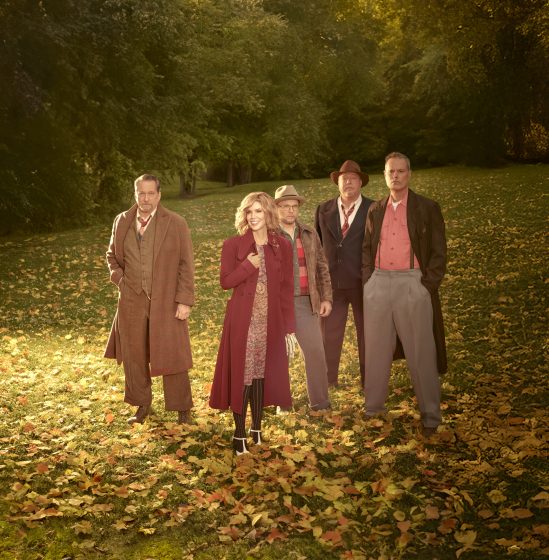
Alison Krauss & Union Station shot by Randee St. Nicholas with Russell Moore second from right.
It’s gotta feel exciting, especially after having done something like this your whole entire life, to have that sort of childlike wonder at it feeling so brand new and so fresh. Even after you have done literally exactly this for so long, there are still things that you’re excited to accomplish and new territory you’re excited to explore. That sounds really energizing and really positive.
RM: It is energizing. I’ll be honest, Justin, I’ve been playing music full time for a good 40 years. That’s awesome. And at this point, after 34 years of IIIrd Tyme Out – I’m not going to say I’ve become complacent, but it’s almost like, “Okay, I know what this week is going to bring and what next week is going to bring.” It’s the same thing, even though you try to explore different opportunities and things that come within that.
But this, I never would have thought that at this point in my career that this opportunity would arise and I’d get to do something like this. Because, like I said, I’m not so much complacent, but I know what’s ahead. When the phone call was made and we talked, I had no idea that I had another option, another fork in the road. This is absolutely surreal, in a lot of ways, for me to get this opportunity and without giving up IIIrd Tyme Out. All the support from everybody that I know, like I said, there was no reason to say no.
Another part of this that I’m really excited about [is being] able to experience some of these places, these venues, these shows that I’ve never been to before. Just being able to experience it – like playing Red Rocks Amphitheatre – and just so many places that I’ve always wanted to go to and perform at. I’m going to get to do that!
Checking them off the bucket list.
RM: There you go. It wouldn’t be possible, I don’t believe, with IIIrd Tyme Out. I was always exploring new opportunities and things like that, but I don’t think it would have been possible to perform at some of these places without being a part of AKUS.
To me, “Looks Like the End of the Road,” the first single from the upcoming album, feels like classic AKUS. The So Long, So Wrong era is what it reminded me of first. You still have those tinges of adult contemporary, you have the pads and the synth-y sound bed underneath it, and it almost feels transatlantic a bit here and there. Overall, it sounds like classic, iconic Allison Krauss & Union Station. What are your thoughts or feelings on the single or what can you tell us about that first track?
RM: I think that the song is a great representation of what is coming out with the full album release, Arcadia. It is a great nod to Alison Krauss & Union Station music over the last several years and the last several recordings.
I think that the song itself is just well written and perfect for Alison to sing. There’s a small part of harmony vocals – and what I love about the way she constructs her arrangements is that it’s not overdone with harmonies. This is Alison Krauss & Union Station, it’s not just Union Station. So the focus is on Alison and her vocals. In my opinion, that’s the way it should be. This song doesn’t come out from the get go with a five-string banjo just blasting off. It’s a great construction of the arrangement and the vocals.I think it was perfect.
The only thing that people have said is that the title itself made them think that this was the end of Allison Krauss & Union Station! Which is so far detached from the truth. It was just the first single that was released. It’s a beautifully constructed song. I will say, this song is just a piece of the puzzle to the rest of the recording. It just paints a beautiful picture and a wonderful listening experience. When people get to hear the full album, they’ll understand what I’m talking about. It’s just awesome. It’s just, it’s a piece of the puzzle.
You’re going to be blown away. Absolutely blown away, as I was. I had my headphones on. I can’t tell you how many nights before I’d go to sleep, I’d have my headphones on [listening]. I listened to it two, three times a night, just because it was so enjoyable. It was just that good. I know that everybody else is gonna feel the same way when they hear the whole project.
On Tuesday, December 17, actor, comedian, and banjoist Steve Martin and the board of his Steve Martin Banjo Prize – now in its fourteenth year – announced this year’s winners of the $25,000 prize. Founded in 2010, the Steve Martin Banjo Prize for Excellence in Banjo has since awarded more than $500,000 in unrestricted prize funds to banjo players across the genre and style spectrum. The inaugural awardee in 2010 was modern banjo luminary Noam Pikelny; in successive years the list of recipients has grown rapidly, including such players, leaders, and composers as Rhiannon Giddens, Terry Baucom, Don Vappie, Jake Blount, Victor Furtado, Eddie Adcock, and many more.
This year, the prize’s two recipients are banjo pickers on the cutting edge of the instrument’s bright future in two distinct styles, Allison de Groot (one of the foremost old-time, clawhammer/frailing banjo players of her generation) and Tray Wellington (a Scruggs-style picker with a striking postmodern, newgrass approach.)
“Exploring had always been part of my personality since I was a kid,” Wellington explained via press release. “Music is the same way for me. Since I started playing banjo at 14, I had ideas for how I could constantly expand my musical vision and make my personality shine through banjo. Every day I am still on that journey and cannot wait to continue this pursuit.”
And exploration is certainly a hallmark of Wellington’s approach to the instrument. His right-hand approach is decidedly traditional, it’s powerful and assertive with limitless drive. While his left hand is mind-bending in its virtuosity, combining influences and textures from envelope pushers like Pikelny and Béla Fleck, he pulls an equal measure of inspiration from outside of bluegrass and roots music, as well.
Take for instance his rendition of Kid Cudi’s “Pursuit of Happiness.” A layperson or bluegrass passerby might not ever expect a Kid Cudi cover performed at a roots music festival, let alone a straight-ahead bluegrass festival, but in almost every instance and context this writer has heard Wellington and band perform the number, the reaction from his audiences is electric. A buzzing excitement ripples through the crowd, murmuring recognition spreading like the most virulent contagion known to man (banjo) always does.
His live performances and through-composed instrumental pieces are out of this world, like his original “Moon in Motion 1” and “Spiral Staircase” from his most recent EP, Detour to the Moon. His 2022 full-length debut, Black Banjo, was critically acclaimed and well-received in bluegrass and beyond, combining new acoustic, jazz, Americana, and ‘grass together in his own particular blend. The project was something of a statement of perspective for Wellington, but that point of view has been anything but static since Black Banjo.
A nominee for multiple IBMA Awards – and 2019 winner of their Momentum Instrumentalist Award – Wellington is certainly right at home on bluegrass festival stages, but his music is expansive, broad, and fully-realized no matter the context. It’s clear he makes his musical and repertoire choices for himself first and foremost and following that, for a forward-thinking, equally broad audience to whom he’s directly bringing his songs and story.
This is the power of a picker like Wellington, to energize and electrify an audience – whether diehard banjo fans or new initiates – with a sound totally his own. It’s exactly how Earl Scruggs became the legendary figure of American music that he is today, by causing thousands of “What the hell is this magic?!” reactions from his listeners and bringing countless scores into the music with that inimitable sound alone.
For her part, de Groot is also a committed borderless musical explorer: “It still feels just as exciting as it did the first day I picked it up,” she relays in a press release. “I feel like I could live 100 lifetimes and explore the banjo.”
Meanwhile, her voice on the instrument would already seem to indicate multiple lifetimes lived on the banjo. A veteran of groups such as Bruce Molsky’s Mountain Drifters, the Goodbye Girls (with Lena Jonsson, Molly Tuttle, and Brittany Karlson), and duo outfits with folks like Nic Gareiss and Tatiana Hargreaves, de Groot has an absolutely idiosyncratic approach to old-time, clawhammer, and frailing styles.
Perhaps her most jaw-dropping achievement – to this banjo player, at least – is how melodic, intricate, and grounded her playing is. De Groot plays with the precision of a three-finger player and with a very similar rhythmic foundation, making it particularly compelling when she leans into melodic intricacies usually left to bluegrass strains of banjo playing. Her execution of Irish tunes on old-time banjo, too, are fantastic and baffling. How does she do it??
There may not be a more lyrical clawhammer banjo player around today, though de Groot has excellent company (Cathy Fink, Brad Kolodner, Victor Furtado, Nick Hornbuckle) in this rarest of niches she inhabits. Don’t get it twisted, though, this is a picker with grit; this frailing has teeth. At the same time, her playing never strays toward iconoclastic banjo pitfalls like showing off or territorialism or horse-measuring contests.
Her style is incisive, deliberate, and bold, and at the same time liberated by her commitment to listening and making music in partnership with her collaborators, whoever they may be and whatever styles they may dabble in. While the prize and the visibility it lends are beyond well-deserved, it’s clear that de Groot’s reputation as a superlative banjo technician is already well known across musical communities – take, for example, her and Hargreaves’ recent collaboration with guitarist and composer Yasmin Williams on “Hummingbird.”
As evidenced by this short primer on each of these fine banjo pickers, Wellington and de Groot are excellent choices to receive the Steve Martin Banjo Prize as selected by the award’s board – which currently includes Steve Martin, Alison Brown, Béla Fleck, Noam Pikelny, Anne Stringfield, Tony Trischka, Pete Wernick, Johnny Baier, Kristin Scott Benson, Roger Brown, Jaime Deering, Dom Flemons, Paul Schiminger, Chris Wadsworth, and Garry West.
Both Wellington and de Groot are young players poised to open minds and open up the instrument in exciting, engaging, and innovative ways – because that’s what the banjo has always been about.
Today, December 17, at 5:30pm ET / 2:30pm PT, viewers can tune into Deering Live to enjoy a livestream celebrating the two winners featuring Alison Brown as co-host and including interviews and performances. Tune in here.
Photo Credit: Allison de Groot by Phil Cook; Tray Wellington courtesy of the Steve Martin Banjo Prize.
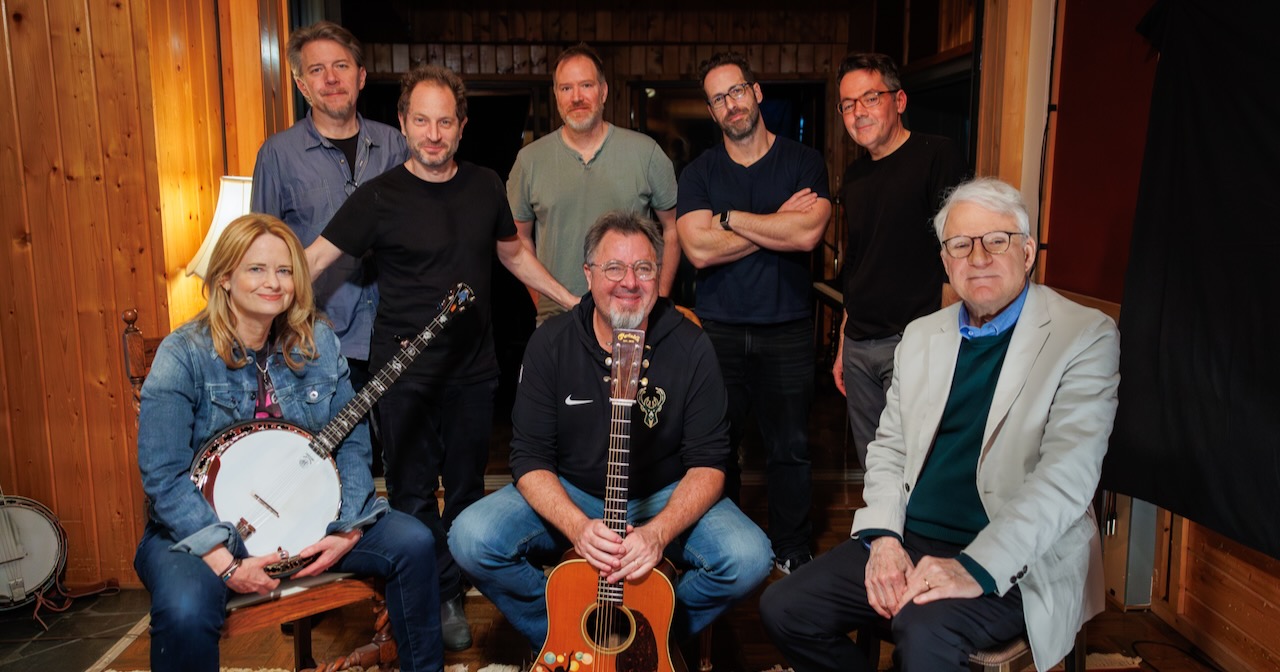
Two of the world’s preeminent banjo players, Alison Brown & Steve Martin, have returned with another delightful and gorgeous collaboration – this time, a bit less humorous than their last outing. On November 11, the pair debuted a brand new music video on The Kelly Clarkson Show. Featuring Country Music Hall of Fame inductee Vince Gill, the new track – and accompanying performance video – is a subtle stunner titled “Wall Guitar (Since You Said Goodbye).”
With lyrics by Martin and music by Brown, it’s an earnest and heart-wrenching number with a melancholy tone that’s served perfectly by Martin’s long-necked banjo and Brown’s low-tuned Deering Julia Belle model. Gill’s vocals are sweet and soaring as ever, with tasteful harmonies by Andrea Zonn and a backing band including Stuart Duncan, Rob Burger, Garry West, and Jordan Perlson. Bluegrass, old-time, and country combine here, with Martin utilizing classic roots music narrative references to tell a quintessential story of heartbreak and the music that gets us through it.
On Clarkson’s hit daytime television show, Martin & Brown chatted about the banjo, about Martin having performed on a recording of Clarkson’s in the past, about Brown’s career in Nashville and Compass Records, and much more. The pair even play a little banjo duet, walking Clarkson and the excited studio audience through the genesis of “Wall Guitar” and opening a window on their creative process.
“Don’t you feel like everything’s going to be alright?” Clarkson asks the audience to laughter while Martin and Brown pick the tune. It was a perfect reference to the message of the song and testament to the power of music – especially banjo music!
“Wall Guitar (Since You Said Goodbye)” is now available to stream and purchase everywhere you listen to music digitally.
In 1990, when banjo player Alison Brown released her debut album, Simple Pleasures, she had no idea where her career could or would lead. GRAMMY nominations, IBMA Awards, touring and performing with Alison Krauss, Michelle Shocked, the Indigo Girls, Steve Martin, and many more, founding a record label that would become a keystone in roots music – none of these impressive accomplishments were on her horizons, literal or hypothetical. Brown just wanted to play the banjo.
She had recently left her job in investment banking and wanted to give her musical career a legitimate go of it. Tasking herself with intentionally writing an album’s worth of original tunes, over the years from 1988 to the project’s release on Vanguard Records in ‘90, Brown pushed herself sonically, aesthetically, and compositionally. The result was demonstrably spectacular and effortlessly cutting-edge.
Simple Pleasures, which was produced by David “Dawg” Grisman and included Alison Krauss, Mike Marshall, Joe Craven, and more among its cast of collaborators, would help launch Brown’s now decades-long career as a bluegrass and roots music multi-hyphenate and business leader. Simple Pleasures broke the ground, fertilized it deeply, and helped cultivate one of the most innovative and forward-looking careers ever accomplished by a five-string picker.
Now, some 34 years after its original release, that debut album has been reissued – on vinyl and digital, with a handful of digital-exclusive bonus tracks recovered from a cassette tape of demos. The project is a delightful time capsule and a perfect representation of the vast and varied musical ground Brown has covered over the intervening years. She may not have known it then – she readily admits, as a picker in her twenties, she was just taking this “banjo thing” day by day – but Simple Pleasures would lay the groundwork for all of her many successes in the music industry and in bluegrass.
For a special edition of First & Latest, we spoke to Alison Brown by phone about her first release and her latest – which just so happen to be the same album, the original and the new reissue. It’s essential listening for bluegrass, banjo, and roots music fans.
Simple Pleasures was originally released in 1990, 34 years ago. I wanted to start by asking you about your frame of mind now versus then, about what’s changed in the interim. What’s changed regarding how you view yourself as a creator and as a banjo player? Looking back, in retrospect, do you recognize the person you were then? What do you remember about your frame of mind when you first put the album out?
Alison Brown: It was this time in my life during which I was writing this music and then trying to get a record deal; I had just left my investment banking job and had taken this bizarre leap of faith, which I didn’t necessarily get a lot of support for. My parents weren’t saying, “Hey, I think you should quit your investment banking job to play banjo.” [Laughs] It really was a leap of faith.
I just couldn’t stop thinking about the banjo. So, I gave myself the challenge of seeing if I could write an album’s worth of music that would hold up and just try to make a record. And then, in the course of working on that, I wrote these tunes and joined Alison Krauss & Union Station. By the time we recorded the tunes, I’d been in her band for a year. I was really at the beginning of what has become my career path since then, but when I was doing it, I didn’t really know how it would be received or if it would get any props or even if it would be any good. All the validation that came on the heels of releasing this, and then everything since then, has made me a much more confident musician than I was when I wrote the music and recorded the record.
Before this album, were you already writing tunes? Was that something that you always did? Or was this an intentional practice shift for you? Was making an album of your own tunes something you had always been working towards or was it part of that purposeful transition from investment banking to banjo?
That is a really good question. I had never written much music up until that point, but I’d always wanted to. Stuart Duncan and I did a record called Pre-sequel. That was like a teen record, but we had a couple original tunes, stuff like “Possum Gravy on Grandma’s Beard” and “The Great Lasagna Rebellion.” It was like teen stuff.
Anyways, I really had wanted to challenge myself to see if I could write some “real music” – that isn’t really quite the right word, but some more substantial tunes and some tunes that really took the instrument maybe to a new place, which took my voice to a new place. That was a lot of this exercise and those 12 tunes. I didn’t know if I could write them or even if they would be any good, but that was like the beginning of this kind of process of self discovery.
When you look at the credits list – Mike Marshall and David Grisman and Alison Krauss and more – you can see some of the fingerprints of you and your community, but it was a kind of a longer process of you writing and getting to the point of recording, right?
I’m trying to remember… yeah, probably from the time I started writing the tunes was maybe middle of 1988 and then we recorded them beginning in 1990. So yeah, there was definitely some time in there–
Was there some extrapolating in your head of, “What are these songs going to sound like? Who is going to play them?” What do you remember about deciding on how you were going to make the tunes and who was going to make them with you? Because I have a feeling that was just as important a part of the process as having the material to record.
Once the door opened for me to work with David Grisman, to produce the record and play on it, then I was pretty much like, “What do you think, David?” But I knew I wanted to have Alison on the record and I knew I wanted to have Mike, ‘cause I love his music no matter what he’s playing. I’m the head of the “Mike Marshall Plays Guitar Fan Club.” [Laughs] I love his guitar playing. And Mike was in the Bay Area, so that made perfect sense.
But then, in terms of bringing in the flute or percussion, I hadn’t really thought about those things. When I listen to this record now, it’s surprising really how much of a footprint the record created for what we’re doing now. ‘Cause we’ve got a rhythm section and flute in the band. In some ways, it feels like after all this time we’ve come full circle, at least back to the seed that record planted, sonically, for the music.
That’s so interesting, to be able to look back and trace that throughline, when at that point it may have felt like a one-off to have those instruments and those styles represented in the music. And now it’s present through lots of your work.
Yeah, it is really interesting. There’s obviously things that weren’t included [on Simple Pleasures]. We’ve had piano in the band pretty much since the beginning and we didn’t have piano on that record, obviously. But I don’t know, somehow that doesn’t seem as much of a template thing, the idea of percussion elements and certainly the flute. David really brought that – and the idea of incorporating cello. I’m not sure I was really thinking about those things. My thinking was probably more in the bluegrass-rooted box.
One of the things that’s definitely changed from the original Simple Pleasures to the reissue over those 30-some years is these bonus tracks that you’ve added – such a time capsule. I wanted to ask you about their… I want to say provenance, but I don’t mean to be that formal. Like, how did you hold onto the demos over time, did you always have them in your back pocket?
You know, as we were working on re-master I kept thinking I knew I had a cassette of the demos. I just dug around and I found it! That’s where the actual takes came from, but that between-take talking, to me, is my favorite part of the whole thing. Just hearing Mike and David and Richard Greene, who produced those demos, talking to each other – I just think that’s the coolest thing. That came off the 2-inch tapes that we had. But the 2-inch tapes, we didn’t have the final mixes of the demos. So, it just worked out that we dumped the cassette tapes into this computer and tried to sweeten it a little bit and that’s what we used.
Looking back, this was a big transition point for you with a GRAMMY nomination, winning IBMA Banjo Player of the Year as the first woman to win an instrumental award. Of course this would end up a seminal album and was a really important kickstart for your incredible career. But at that point, back in 1990, were you worried about it? What was your frame of mind as far as expectations for what this album could do and where it could go?
I’m sure that I had no expectations. [Laughs] It was just something that I really wanted to do myself. I wanted to see, could I write a bunch of music and would it stick together? And, can I get some great people to play on it? I was just happy that all those things came together and I got it on a label.
It was just so cool to be on Vanguard Records. The Welk Music Group had bought that catalog and they had just started signing artists. I was one of the first artists they signed to the Vanguard imprint. All that was enough, but then to get a GRAMMY nomination was completely a surprise. I didn’t expect that at all, or the IBMA recognition. That validation was huge, obviously, and it would be for anybody, but for me it was just so huge. I actually took my parents with me to Radio City Music hall for the GRAMMYs and that went a long way toward them accepting my career 180. [Laughs]
It seems like this was definitely proof of concept for, “I can do this banjo thing. I can make banjo records. I can do this as a career.”
And in retrospect, I completely agree. In the moment, none of those things [were certain]. That’s what they say, “Hindsight’s 20/20.” And that’s so true; when you’re in the moment, you just don’t know how it’s going to turn out. Then it turned out great! I feel so lucky every day that I get to play music or create music or help somebody else create music, all that is just such a gift. Because it was not a foregone conclusion, I could easily have gone back to investment banking or something else with my tail between my legs. I’m just so grateful that isn’t the case.
At this point in your career, people think of you as a multi-hyphenate, as somebody who runs a label, is so active in the industry, and picks a really mean banjo. But this project predated Compass Records by several years. Were you already planning that sort of multi-prong, multi-hyphenate approach then? Or do you think it would be a surprise to 1990 Simple Pleasures Alison that you are the multi-hyphenate you are now?
Yeah no, I did not know it was [in my future], I think I was really just taking it a step at a time. At that particular point in time, my goal was just to write tunes and play in Alison [Krauss’] band. Then, when I left her band, I was really at this juncture again. My parents kept saying, “We really think you’d enjoy going to law school!” I was on the edge of applying to Vanderbilt Law School when I got a call from Michelle Shocked looking for a band leader for her world tour in 1992.
So no, I definitely didn’t have the multi-hyphenate, as you put it, plot hatched at all yet. That’s really something that came during that time that I spent with Michelle and then Garry West, who was playing bass in the band [with her as well]. We connected on a personal level, on a business level, and we started talking about “the good life.” Like, how do you make a life out of music? That’s when we started envisioning the different spokes of the wheel, and one of them was a record label and one of them was playing banjo and touring. That 1990s Alison was really just taking in a day at a time.
There’s this quality that musicians talk about a lot, almost to trope-ish levels, of not liking listening to themselves, not liking going back and hearing their own musical ideas or their own creativity from the past. It can be cringey! When you hear your young adult voice on the banjo now, what’s your reaction? Do you bristle at it? Do you feel inspired by it or do you have a moment where you’re like, “I can’t believe that I played that or I did that”? You’ve been inhabiting these tunes to remix and re-master them, not just rubber stamping a reissue. What does that feel like, to be going back and forth between who you are now and who you were then?
I really thought it was going to be like a lot of cringey stuff, like listening to those tracks and thinking, “Oh god, why did I play that?” Instead, I had a completely different feeling, because I felt like I could hear and really remember both the joy of figuring out that I could do this thing and the uncertainty of, “I don’t know if it’s any good or if it’s going to connect with anybody at all.” I can hear both of those things, but at the end of the day, what I felt most was just wishing I could reach back in time and give myself a pat on the back [and say,] “It’s going to work out okay and you’re on the right path.”
Because I think that’s the thing, we’re all looking for our true path. Sometimes it’s really hard to see, and for me, it was definitely hard to see. I really thought that I would be like a respectable business person and instead – well, I hope I’m a respectable business person, but it’s certainly not what I expected to be! [Laughs] I really thought, banker, lawyer, doctor, that kind of thing.
Your portfolio as a banjo player, label head, and producer is so diverse. And I wondered if you feel that’s directly correlated to being a woman who plays the banjo, or if you think there’s something else that’s driven that or informed that? Because I firmly believe marginalized folks in roots music – really anyone who’s not a straight white man – we often have to have very diverse career paths just to make a living, to make ends meet.
One thing I do notice is that big opportunities that opened up for me early on, they were all created for me by other women. That’s really not lost on me – whether it was Alison Krauss or Michelle Shocked. It wasn’t a male band leaders inviting me in. I think that’s really significant and that’s one of the things that I think is interesting about the times we’re in now, the fact that there’s much more diversity – even though it’s not as much as we would like to see. But there are women peppered throughout the ecosystem of the bluegrass community. We’re really in a position to empower and bring up the next generation, where we weren’t so much before. That makes it a really exciting time. I know that’s something that I love to look for opportunities to do.
If I’m producing a record, I want to bring those other voices into the room and let’s raise the next generation. ‘Cause when you come out of investment banking, you can see how adept the guys are at bringing on the next generation of guys, but women in corporate situations just historically haven’t [had the same access]. There are many reasons, it’s not their shortcoming. I think it’s just the circumstances, but now it doesn’t have to be that way. I find that particularly exciting.
34 years later, these folks who played on Simple Pleasures are still part of your community and are collaborators of yours. Back then, were you thinking, “All right, these are my ride or dies! We’re going to go the distance together.” Or was it like, “I can’t believe I get to be in a room with these folks and I hope we can do it again”? How does it feel now to look back and have decades-long relationships with these folks that you made the album with and to have that community be such a present part of the music that you continue to make and the records that you put out?
It’s amazing to look back and to think about the fact that I’ve known Mike Marshall since, gosh, I think I was a teenager the first time I met Mike? To have 50-year-long relationships with some of these people, it’s an amazing thing and it’s such a gift. I think one of the best things about our community is that people can have careers that extend over decades and you can have friendships with people that extend over half a century or more. I’ve known Stuart Duncan since he was 10, so I’ve known him for half a century. It’s crazy and wonderful too. And it’s such an amazing aspect of our community.
I don’t know if it’s the same in other kinds of music, but I think the intergenerational aspect of bluegrass music and roots music just creates for some amazing lifelong friendships. I think it’s not uncommon for people to start when they’re 10 years old – or, Stuart started playing this music when he was six or seven. When I met him when he was 10, he was already a hotshot fiddle player. The fact that you can get into this music as such a youngster, keep playing it, and there’s room for you even when every hair on your head is gray, it’s just a great thing. I think in popular music the window is more narrow.
But in this music, people want to see you play your music whether you’re six or whatever age. How old was Bobby Osborne? He was 92! The record that I did with Bobby, Original, we was 86/87-years-old when we recorded that record. You wouldn’t see an 87-year-old pop artist probably making a record.
It’s seven months into the year and music and media outlets are looking back while looking forward, pondering and collating all of the incredible music that’s been released in 2024… so far. From Beyoncé to Zach Bryan to “brat summer,” there’s certainly been no shortage of seismic album drops – and in our bluegrass corner of the roots music world, the same holds true.
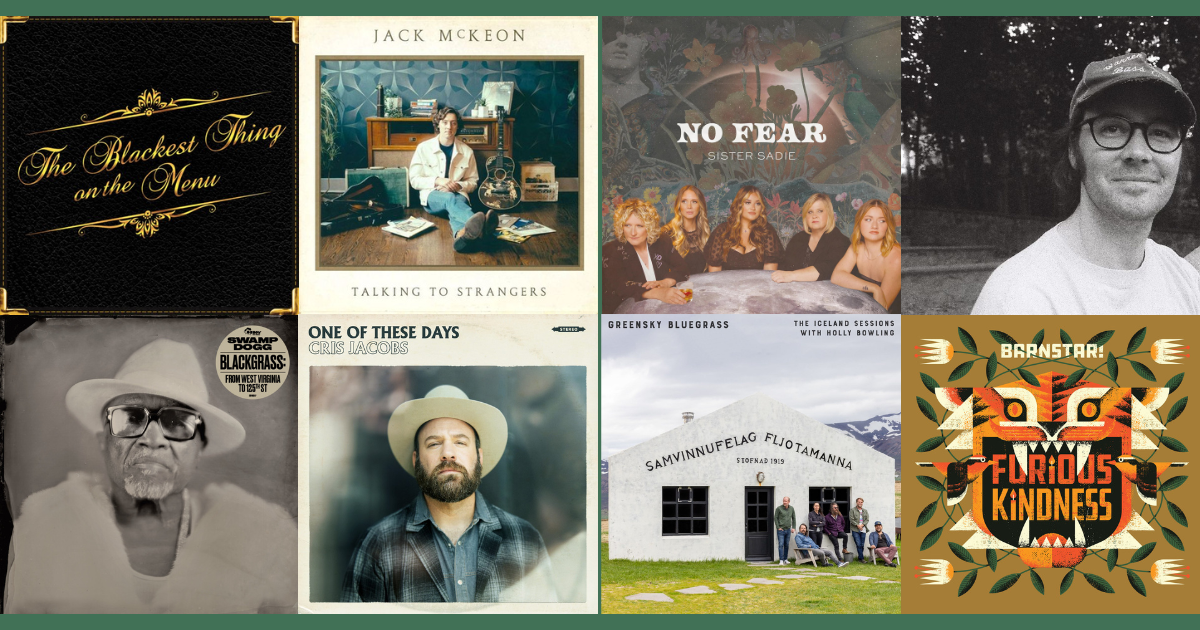
So far this year, there have been stellar releases by the biggest names in the genre, like Béla Fleck, Billy Strings, Tony Trischka, Laurie Lewis, and the Del McCoury Band. Country singer-songwriter Brit Taylor and roots-soul legend Swamp Dogg both released bluegrass titles this year as well, demonstrating how the age-old tradition of various styles and sounds cross-pollinating with bluegrass continues in the present day.
Supergroups like Sister Sadie, Greensky Bluegrass, and Gangstagrass have all unleashed critically-acclaimed projects in 2024, too, while newcomers like Wyatt Ellis and Jack McKeon impressed with records that sound mature and fully-realized for debut releases. And of course there’s plenty yet to come, as anticipation builds for long-awaited albums from bluegrass stalwarts and heroes like Jerry Douglas – who was just unveiled as a 2024 Bluegrass Hall of Fame inductee – and Gillian Welch & David Rawlings, who recently announced a new project, Woodland, their tenth studio album and first release in four years.
No matter how you cut it, 2024 has been a banner year for superlative bluegrass albums – and there is still so much more to come! Take a minute to amble through our favorite bluegrass releases of the year so far (in approximate chronological order), plus a few honorable mentions that pull heavily from bluegrass traditions and inspirations, and we’ll set the table for the albums we can’t wait to arrive later this year, too.
Cary Morin, Innocent Allies
A jaw-dropping acoustic guitarist who toggles between flatpicking, fingerstyle, blues, and many other styles, Cary Morin released a gorgeous visual art-inspired album earlier this year entitled Innocent Allies. The entire project oozes images of the West done up in bluegrass textures and tones, especially so in Morin’s rendition of “Whiskey Before Breakfast.” Read our feature on the album here.
Sister Sadie, No Fear
For a band that boasts alumni like Dale Ann Bradley and Tina Adair, it’s saying quite a lot to make the statement that this may be the best lineup of Sister Sadie yet. Their latest offering, No Fear, brings striking Nashville vibes together with a dash of the Chicks and features collaborations with country stars like Cam and Ashley McBryde. It’s no surprise this supergroup and their newest album are all over this year’s IBMA Awards nominations. Read our March Cover Story on No Fear here.
Wyatt Ellis, Happy Valley
A mere 15 years old, mandolin picker Wyatt Ellis certainly deserves the “bluegrass prodigy” designation he often receives, but dare not sell this young virtuoso short with such a moniker. There’s musicality, touch, and taste evident across his debut album, Happy Valley, well beyond his teenaged years. That’s just part of the reason behind why he’s able to attract such notable collaborators and guests as Marty Stuart, Sierra Hull, Mike Compton, and more. Keep an eye on this one, ‘cause there’s no telling just how far he will go in music, but it’s sure to be way up there!
Brit Taylor, Kentucky Bluegrassed
Pulling a page out of the bluegrass playbook of the ‘60s through ‘90s, country singer-songwriter Brit Taylor demonstrates the inseparable interconnectedness of country and bluegrass with Kentucky Bluegrassed, a reimagination of her 2023 country album, Kentucky Blue, played by a cracking bluegrass band. There are touches of Alan Jackson, Vince Gill, Patty Loveless, and so many more through the project. It certainly reminds of those eras, in which bluegrass artists and bands were just as likely to identify simply as “country” as they were “bluegrass.” The lines between these genres used to be much more blurry; we’re happy to see folks like Taylor – and many others – smear, complicate, and dirty up those genre demarcations once again. Kentucky Bluegrassed is a “don’t miss” album that may not be on every diehard grasser’s radar.
Missy Raines & Allegheny, Highlander
Missy Raines never left bluegrass, but Highlander feels like something of a return by this trophied and exalted bassist, singer, and songwriter after her last few more experimental and Americana-geared outings. This is her first recording with her “new” backing band, Allegheny, who have performed with her now for a handful of years. It’s a rollicking, up-tempo, dynamo of an album, but it’s never one note or stolid – or trying to pander to digital radio. There are calm moments, songs that will bring a tear to your eye, and political tones, too, all bolstering the tightness of the band and the trad-tastic, meta-mash energy herein. “Who Needs a Mine,” the stand out track in a superlative song sequence, will most likely go down in history as one of the best issues-oriented bluegrass songs ever written. Every bit as biting and timely as Hazel Dickens, Jean Ritchie, and so many other activist artists from the regions Raines grew up in. Read our recent feature interview here.
Béla Fleck, Rhapsody in Blue
The most traditional aspect of Béla Fleck’s music-making across his lifelong career is his constant and effortless innovation. As a community, we lose sight so easily of the fact that every first generation bluegrass star was an innovator, so many consummate musicians just “making it up as they go along.” Referring to Fleck’s Rhapsody in Blue as “making it up as he goes along” might raise an eyebrow at first, but one of the most fascinating threads throughout Fleck’s countless albums is his ability to ground whatever musical vocabulary he chooses within the traditions, styles, and physicality of bluegrass banjo. He doesn’t so much care what “does” or “doesn’t” fit on the banjo, he follows his whims, fancies, and inspirations and always makes it work. Perhaps only he could do so with Gerswhin! (And we are so glad that he did.)
Kyle Tuttle, Labor of Lust
Banjo player Kyle Tuttle released his second studio album, Labor of Lust, in February. You may know him from Molly Tuttle’s band, Golden Highway, or from his ubiquitous presence in jamgrass scenes over the past decade or so. The new album demonstrates his particular approach to newgrass, jamgrass, and engaging and exciting improvisational picking. His voice on the instrument is indelible. A modernist banjo player with endless panache, a strong sense of humor, and buckets of stamina and drive. We spoke to Tuttle about the project earlier this year.
Barnstar!, Furious Kindness
New Englander and Northeastern-based bluegrassers will be more than familiar with this raucous outfit, but the national bluegrass scene may need to be put onto the singular sounds of Barnstar! Made up of Mark Erelli, Zachariah Hickman, Charlie Rose, and Taylor and Jake Armerding, Barnstar! started as a side project for these in-demand musicians and songwriters and quickly blossomed into a chaotic, bombastic, and hilarious group that can just as easily go earnest, emotive, and touching. Furious Kindness is another selection here that you may not have yet encountered – and we’re here to rectify that. Need more? We hosted Erelli and Hickman on Basic Folk to chat about the project.
Cris Jacobs, One of These Days
If your first introduction to Cris Jacobs was the above song – “Poor Davey,” featuring Billy Strings – fed to you by the algorithm or a roots DJ or found via the “appears on” section of Strings’ streaming profiles, you certainly aren’t alone. A well-known musician in alt-country, rock and roll, and the often nebulous regions between these genres, Americana, and bluegrass, Jacobs may read as a newcomer in bluegrass, but his Jerry Douglas-produced album, One of These Days, is anything but a one-off or novelty project or ‘grassy interloping. This is deep and broad bluegrass that feels straight ahead and genre-expansive at the same time, drawing on guests like Lindsay Lou, the McCrary Sisters, Sam Bush, and more. The Strings track may be what first grabs you, but this album deserves a deep dive follow-up, immediately.
Greensky Bluegrass, The Iceland Sessions(featuring Holly Bowling)
An EP we loved so much it just had to be included on our Best Bluegrass Albums list. Pianist and keys player Holly Bowling joins illustrious jamgrass group Greensky Bluegrass to revive the often latent, near extinct, and severely underrated tradition of bluegrass piano. Over four tracks recorded in remote northern Iceland in 2023, the band and Bowling have curated a vibe that hinges on the present, focusing in on the exact moments in time wherein they captured these sounds and songs. It’s why we love jamgrass to begin with, right? The way the music calls all of us to be grounded in the present. That’s the exact spirit in which these recordings were made and the translation of that intention is more than just successful, it’s deeply resonant.
Bronwyn Keith-Hynes, I Built A World
Fiddler Bronwyn Keith-Hynes has found her voice – literally and figuratively. While her last studio release, Fiddler’s Pastime (2020), was more instrumental-focused, her latest project, I Built A World, finds her stepping up to the vocal mic with confidence. Her voice is strong and well-practiced while homey and down to earth, too. The song selections are bold, her collaborators are glitzy and first-rate, but each feature, guest, and musician serves the track they’re on and the album as a whole first and foremost. Keith-Hynes has certainly found her groove and her creative community, and we’re all reaping the benefits of her commitment to challenging herself and looking ahead to the future. We recently chatted with Bronwyn and her pal Brenna MacMillan about their respective solo projects – check it out here.
Swamp Dogg, Blackgrass: From West Virginia to 125th St
When the initial announcement of Swamp Dogg’s latest album, Blackgrass, reached the BGS team, electricity and excitement shot through our ranks. Here’s a project that speaks deeply to one of our highest-priority missions in bluegrass: to showcase the multi-ethnic, melting pot, diverse roots of our favorite genre of music. Bluegrass has never been a music for white folks only, no matter how prevalent that narrative is today, and this legendary multi-hyphenate musician, creator, and producer, Swamp Dogg, demonstrates that fact part and parcel over the course of this impeccable collection of music – with a backing band that includes many of the best pickers around today. There are countless remarkable aspects of this album, too many to include in this simple blurb, so head to Lizzie No’s feature on the project to learn more about why this project is purposefully rebellious and revolutionary.
Laurie Lewis, TREES
California bluegrass keystone Laurie Lewis was just announced as one recipient of this year’s IBMA Distinguished Achievement Awards. For decades she has been a center of gravity around which the California and West Coast bluegrass scenes orbit, like a perseverant mother tree from which so many young shoots and saplings have sprung. Her brand new album, TREES, draws upon her wellspring of through-hiking and naturalist knowledge to encounter, process, and challenge so many modern day realities – health issues, the ever-quickening climate crisis, personal and professional life hurdles, and much more. The result is touching, emotional, encouraging, and inspiring, wrapped in traditional bluegrass trappings that feel more in service to the songs than to legalistic genre criteria. Lewis is one of the best to ever make bluegrass and TREES is one of the best releases in her lauded and superlative catalog. We recently published our exclusive interview, which you won’t want to miss.
Tony Trischka, Earl Jam
One of the greatest banjo players today, our current Artist of the Month Tony Trischka has made a career trailblazing on melodic-style three-finger banjo, writing, composing, and recording music that only he could’ve made. For his latest album, Earl Jam, though, he instead leans on the timeless bluegrass task of emulating the greats – namely, Earl Scruggs. The track list is pulled from recordings of casual, at-home jam sessions between Earl, John Hartford, and others, and with his all-star band and fabulous guests, Trischka reiterates Earl’s idiosyncratic playing from these previously unheard recordings. It’s a fascinating context in which to rediscover the limitless intricacies behind Trischka’s playing and the way he synthesizes others’ influences into his own musical vocabulary. Whether stepping into the role – or, shall we say, roll – of Scruggs or making modern banjo compositions out on his own creative limbs, Tony Trischka makes it look effortless and executes everything he does at the highest level. Don’t miss our Artist of the Month feature and our discography deep dive.
Gangstagrass, The Blackest Thing on the Menu
With a band as incisive and forward-looking as Gangstagrass, there will always be countless reasons naysayers will attempt to use to disqualify their music as “bluegrass.” But when viewing this now 15-year-old group through an objective lens, you can see many more bluegrass qualities than not. Innovation (the oldest bluegrass tradition), improvisation, virtuosity, conversational lyrics, a blending of styles, genres, and textures, and the bringing together of creators and inspirations from a variety of backgrounds – that all sounds like bluegrass to us! Gangstagrass’s latest opus, The Blackest Thing on the Menu, finds the critically-acclaimed group at their strongest yet, with a Jerry Douglas track feature (“The Only Way Out is Through”) and plenty of hip-hop-meets-bluegrass excellence. In the present, folks may errantly write off this band as a novelty or an aberration, but in the future we will all view Gangstagrass as they have always been: one of the firsts in the quickly-developing tradition of roots hip-hop, rap string bands, and postmodern bluegrass re-interpreters.
Jack McKeon, Talking to Strangers
In the vein of country songwriters with bluegrass careers – or bluegrass songwriters with country careers (think Shawn Camp, Tom T. Hall, John Prine, Darrell Scott) – Jack McKeon’s debut album, Talking To Strangers, isn’t just bluegrass, but it certainly tracks as first class ‘grassy, down home, front porch music. These thoughtful, introspective lyrics are perfectly set, to a straight ahead bluegrass band like Ashby Frank, Justin Moses, Christian Sedelmeyer, and Vickie Vaughn. McKeon is inaugurating his catalog of recorded works demonstrating that his songs and his voice can be shapeshifters, at home on Music Row and on bluegrass stages and radio, both.
The Del McCoury Band, Songs of Love and Life
Del McCoury is one of the most-awarded personalities in the history of bluegrass and it’s truly no wonder why. He’s spent his entire life honing the family trade: the highest quality bluegrass around. At 85 years-old, every album, concert, performance, and festival we enjoy from Del and the boys is a gift that we’re determined to cherish and savor. His latest full length album, Songs of Love and Life, is sure to be shortlisted for the highest honors handed out by the Grammys and IBMA. This particular track, “Only the Lonely,” is a Roy Orbison cover that showcases Del’s lifelong penchant for not worrying about what is or isn’t bluegrass and instead doing his utmost to serve the song – hence the tasty, honky-tonkin’ bluegrass piano. (Bluegrass piano? Twice in one list??) The record includes a few more charming covers, plenty of brand new tracks, and a Molly Tuttle feature, too.
Brandon Godman, I Heard the Morgan Bell
A killer fiddler from Kentucky who’s performed with Laurie Lewis, Dale Ann Bradley, Jon Pardi, and many, many more, Brandon Godman recently released his first studio album as a solo artist since he was a teenager. Based in San Francisco, Godman is a touring fiddler turned luthier who remains an expert in so many musical styles from his home turf in northern Kentucky. From contest fiddling to western swing to pop country to bluegrass breakdowns and transatlantic hornpipes, Godman’s playing has grit, drive, and aggression, sure, but what stands out the most on I Heard the Morgan Bell, his album of all original compositions, is his emotional range, lyricism, and heartfelt tenderness. Throw in guests like Darol Anger, Patrick Sauber, Sam Reider, and more and you’ve got what will end up being one of the best fiddle-centric albums of this decade.
Tray Wellington, Detour to the Moon
Carrying the banjo innovation banner for millennial cuspers and Gen Z, Tray Wellington is anything but a traditional bluegrass banjo player – and that fact alone is what will always land him in the “solidly bluegrass” camp, by our reckoning. Like fellow listees Trischka, Tuttle, and Fleck, Wellington has found a voice of his very own on the five-string banjo and in recent years his musical offerings – which were already top-notch – have become exponentially more fascinating, fun, and entrancing as a result. His new EP, Detour to the Moon, includes seemingly through-composed, instrumental new acoustic music a la Punch Brothers alongside more straightforward original banjo tunes and a Kid Cudi cover that may just be the best bluegrass cover of a non-bluegrass hit in recent memory. Watching the excited recognition of “Pursuit of Happiness” ripple through the audience at a bluegrass festival while Tray Wellington Band is on stage kicking off the number will certainly never get old.
Billy Strings, Billy Strings Live Vol. 1
The People’s Bluegrass President, Billy Strings, is out with his first live album, Billy Strings Live Vol. 1. No one is doing it like Billy; selling out arenas, coliseums, and gigantic amphitheaters with what’s actually just a five-piece bluegrass band will always be remarkable and noteworthy. Plus, the way he and his team bring his audience into the creative process, feeding their insatiable appetites for content, for music, for four-hour-long tribute shows, is not simply to sell tickets, fill seats, and move product. Strings, at the beginning of the day and at the end of the day, is just a big ol’ bluegrass and guitar nerd. We love that about him. There’s almost no one else in the history of this music from whom we’d tolerate a 13 minute track. (By the way, that’s not the longest runtime on the album!) Keep doing it like only you do it, Billy, and we’ll all stick with you the whole entire way.
AJ Lee & Blue Summit, City of Glass
The last time we had a bluegrass artist take off on our website and socials like AJ Lee & Blue Summit are taking off now, it was Billy Strings playing “Meet Me at the Creek.” We’ve been following this Santa Cruz, California-based string band – featuring AJ Lee, Jan Purat, Scott Gates, and Sully Tuttle – for years, so it’s no surprise to us that the greater bluegrass audience is catching onto the special sound and style of Blue Summit and their brand new album, City of Glass. This is pointedly Californian bluegrass, meaning it is effortlessly traditional and organically inventive and generative. High lonesome harmonies and fiery pickin’ skills combine with soul, groove, emotion, and thoughtful writing. There are country moments, there are barn burners, but overall, it’s clear this young band have hit their stride and know who they are. We aren’t here to tell you the best of the best, per se, but if we were City of Glass would be at the very top.
Andrew Marlin, how dare you surprise release this divine album!? (Seriously, thank you, it was indeed a wonderful surprise.) Out last week with hardly more fanfare than a handful of social media posts, Marlin’s brand new collection, Phthalo Blue, has already charmed its way onto our “Best So Far” list. Featuring Stephanie Coleman, Allison de Groot, Clint Mullican, Josh Oliver, and Nat Smith, this is the perfect kind of bluegrass to put on while you work, tidy the house, or tend to your garden. You’ll find the healing effects herein don’t just come from rabbit tobacco.
Near-Bluegrass Honorable Mentions
Whatever you think about our list so far – and whether or not the albums on it qualify as bluegrass to you – here are just a handful of albums we would have regretted not including, but may have more tangential relationships to the genre than their fellows in this piece. Still, each of these fine records has obvious bluegrass bones, however subtle or overt they may be.
Willi Carlisle, Critterland
Many an old-time troubadour/poet such as Willi Carlisle has been a bluegrass musician, but perhaps Carlisle himself wouldn’t identify in that way. Still, there’s bluegrass throughout the critters and characters on this critically-acclaimed album, Critterland. We did a feature on the project, read that here.
Sierra Ferrell, Trail of Flowers
Her new album is markedly post-genre, but those in the know are already well aware that Sierra Ferrell came up through bluegrass circles. From her patinaed West Virginia voice – that brings Hazel Dickens to mind – to her cutting fiddle bowings, wherever she may roam musically, Ferrell will always have a home in bluegrass.
Rachel Sumner, Heartless Things
Rachel Sumner (formerly of Twisted Pine) is decidedly bluegrass, but somehow that seems too simplistic an umbrella for the nuanced music she creates and the special tones she strikes. She infuses so much of the Northeastern bluegrass, folk, Celtic, and jazz scenes and their respective vocabularies into her songs – they may not be exactly bluegrass, but they certainly don’t fall entirely outside that umbrella, either.
Zach Top, Cold Beer & Country Music
Now, this ain’t no bluegrass album – it’s Good Country, that’s for sure – but there’s a bluegrass story embedded within Zach Top’s hugely popular debut, Cold Beer & Country Music, that we’re determined to tell. Once a winner of SPBGMA’s band contest, Top grew up idolizing Tony Rice and Keith Whitley and playing in a bluegrass family band on the weekends. You can see bluegrass touches throughout this mainstream country record, just like when Ricky Skaggs, Whitley, the Osborne Brothers, and more targeted country radio with their songs and sound. Our Good Country feature interview explores all the ways bluegrass filters into his music.
Kaia Kater, Strange Medicine
Kaia Kater is another genre expander who hasn’t ever quite made bluegrass music, but has never been too far from that sonic space, either. She pulls more readily from indie and old-time and folk traditions, but her new album, Strange Medicine, feels like she’s developed an entirely new thing, where genre is a third space, something liminal, or purposefully transitional. Perhaps the most bluegrass thing about this stunning collection is groove, an ever present character through these gorgeous and intricate songs. Kater was our Artist of the Month in May.
Anticipated Albums Still to Come This Year
There’s plenty more where all that came from! Here are just a few of the as yet unreleased recordings we’re sure will be on our “Best Of” lists when we reach the end of the year. It’s not as far off as you think! Luckily, we’ll have a stellar soundtrack to get us there.
Alison Brown, Simple Pleasures (reissue) – available August 9
Rhonda Vincent, Destinations And Fun Places – available August 9
Bella White, Five For Silver– available August 16
Po’ Ramblin’ Boys, Wanderers Like Me – available August 16
Dan Tyminski, Whiskey Drinking Man – available August 16
Fruition, How to Make Mistakes – available August 23
Gillian Welch & David Rawlings, Woodland – available August 23
Caleb Caudle, Sweet Critters – available August 30
Various Artists, Bluegrass Sings Paxton – available August 30
Willie Watson, Willie Watson – available September 13
Jerry Douglas, The Set – available September 20
Twisted Pine, Love Your Mind– available October 18
Brenna MacMillan, Title TBA – release date TBA
BGS Staff also contributed to and assisted curating this list.
This week, our premiere round-up is chock-full of amazing new music. From a Chris Stapleton co-write from bluegrass-meets-country supergroup Wood Box Heroes to a Terry Baucom tribute from bluegrasser Ashby Frank, plus songs from Americana singer-songwriter Jack McKeon, guitarist Yann Falquet, and Asheville’s Holler Choir.
Plus, don’t miss exclusive premieres from banjo magnates Alison Brown and Steve Martin, and a posthumous release from Chick Corea with his friend and collaborator Béla Fleck.
It’s all right here on BGS – and really, You Gotta Hear This!
In Their Words: “‘Cannonball’ is a song I wrote a while back with Chris Stapleton. I was trying to figure out a new way to talk about the ‘love and war/love as war/love is war’ theme and of course, Chris helped to bring that to life so well. I never made a demo, just the voice memo. Hearing Chris’s amazing singing on it could be a daunting thing for lots of artists to get past, but I knew Josh Martin could handle it, so I pitched it to the Heroes for this project. It took a while to sink in with them, but I’m beyond thrilled with the treatment they gave it!” – Barry Bales
Track Credits:
Barry Bales – upright bass, vocals Jenee Fleenor – fiddle, vocals Josh Martin – guitar, vocals Matt Menefee – banjo Seth Taylor – mandolin, vocals
Produced by Wood Box Heroes. Recorded by Brandon Bell at Sound Emporium; Nashville, Tennessee. Mixed by Brandon Bell. Mastered by Eric Conn at Independent Mastering; Nashville, Tennessee.
Ashby Frank, “Knee Deep in Bluegrass”
Artist:Ashby Frank Hometown: Nashville, Tennessee Song: “Knee Deep In Bluegrass” Release Date: March 15, 2024 Label: Mountain Home Music Company
In Their Words: “‘Knee Deep in Bluegrass’ is a tune written and originally recorded by my friend and former Mashville Brigade bandmate, banjo legend Terry Baucom. Sadly, Terry passed away in December. When we recently gathered to start recording my next album, it happened to be the day after his funeral. All of us had Bauc and his wife, Cindy, on our minds. Remembering this song, I messaged Cindy, asking if it would be ok to record a slightly modified version of ‘Knee Deep’ as a tribute to him and she graciously approved. Bauc was performing at the first festival I ever attended in Denton, NC. His style and persona has been an inspiration to me ever since that first meeting. I think Matt Menefee, Travis Anderson, Jim Van Cleve, Seth Taylor, and Tony Creasman really nailed their parts on the tune. I hope our recording brings back fond memories for anyone who knew Terry and will honor him as he so richly deserves.” – Ashby Frank
Jack McKeon, “Last Slice of Heaven”
Artist:Jack McKeon Hometown: Chatham, New York; currently residing in Nashville, Tennessee Song: “Last Slice of Heaven” Album: Talking to Strangers Release Date: June 21, 2024
In Their Words: “I was working at a house in Williamson County, on a stretch of road that is flanked by two separate but equally cookie-cutter developments. Across from this house and squarely in the middle of all this new, was a vacant field, a decrepit barn festering in the corner. At some point that field must have meant food, crops, and a living. Now it seems to only conjure the image of an older person sitting on a potential windfall when they sell out to a developer. But with all that money comes the death of the beautiful things that made that life worth living. My boss noticed me looking at this field and facetiously said, ‘Oh, didn’t you know? These developments all come with their own complimentary field to look at.’ I wrote this song to give a voice to the person I imagined holding on to this ‘Last Slice of Heaven,’ a character at odds with the transformation around him who’s fighting to hold on to his own identity in spite of ‘a world that’s always changing what it means to be the same.'” – Jack McKeon
Track Credits:
Jack McKeon – Guitar/vocal Ashby Frank – Mandolin/harmony vocal Vickie Vaughn – Upright bass/harmony vocal Christian Sedelmyer – Fiddle Justin Moses – Banjo Engineered by Sean Sullivan at the Tractor Shed Goodlettsville, Tennessee. Mastered by Justin Perkins at Mystery Room Mastering.
Video Credit: Brooke Stevens
Yann Falquet, “Courage”
Artist:Yann Falquet Hometown: Brattleboro, Vermont Song: “Courage” Album:Les secrets du ciel Release Date: March 15, 2024 (single); May 3, 2024 (album)
In Their Words: “I moved from Québec to New England a couple of years ago. My instrumental background was compatible with the fiddle styles I encountered here (Appalachian, Irish, Scottish, etc.), but I quickly realized that I had to rethink the way I approached songs. Back in French Canada, traditional singers often perform unaccompanied, and rely heavily on others in the room to participate in the ‘response’ part of call-and-response songs. For this project, I began reframing these songs into a more English or American ‘folk singer’ format, and had a lot of fun coming up with interesting guitar parts in DADGAD tuning. I then collaborated with producer Quinn Bachand and a bunch of fantastic musicians to add extra musical layers to the song.
“‘Courage’ comes from the repertoire of the Voyageur folks who paddled across North America, using songs to keep paddling in rhythm. It tells the story of a young soldier who abandons war for the pursuit of love, knowing well the consequences if he gets caught.” – Yann Falquet
Track Credits:
Yann Falquet – Guitar, voice Julia Friend – Voice Keith Murphy – Pump organ Trent Freeman – Violin Quinn Bachand – Violin, bass pedal
Quinn Bachand – Producer, engineer Charles-Émile Beaudin – Mixing engineer Philip Shaw Bova – Masterin engineer
Holler Choir, “Hamlet Blues”
Artist:Holler Choir Hometown: Asheville, North Carolina Song: “Hamlet Blues” Album:Songs Before They Write Themselves Release Date: January 12, 2024
In Their Words: “I can’t speak to everyone else’s tastes, but for the purpose of songs that I perform and have written, ‘Hamlet Blues’ is my most timeless song. I know this because 10 years after having written it, it’s just now seeing a definitive release, and it feels no less personally relevant than the day I wrote it.
“There’s a very intentional juxtaposition between the carefree energy of the music and the existential crisis portrayed in the lyrics. It’s a cognitive dissonance that I’ve experienced in different settings many times in life, and I chose to channel that energy into this song. There’s a smiling nihilism that can be found at any college bar. Kids drinking to excess, with little regard for what’s happening tomorrow. Seemingly happy people, sitting on a fault line that is long overdue. I wanted to capture the dread that was the humming drone in my head beneath whatever pop song was blaring over the bar speakers at the time. I don’t find this sentiment any less relevant for bars I go into as an adult.” – Clint Roberts
Alison Brown & Steve Martin, “Bluegrass Radio”
Artist:Alison Brown & Steve Martin Hometown: La Jolla, California (Alison); Waco, Texas (Steve) Song: “Bluegrass Radio” Release Date: March 15, 2024 Label: Compass Records
In Their Words: “This little tune brings a ton of joy to me. Alison’s playing is flawless, and my singing is flaw-full.” – Steve Martin
Artist:Chick Corea & Béla Fleck Hometown: Nashville, Tennessee Song: “Remembrance” Album:Remembrance Release Date: May 10, 2024 Label: Béla Fleck Productions (Thirty Tigers)
In Their Words: “’Remembrance’ is one of the last pieces of music Chick ever recorded. It’s just one of those perfect Chick Corea tunes. It sounds to me like a New Orleans funeral march, even though it has a Latin component, like everything he did tended to.” – Béla Fleck
Artist:Alison Brown & Steve Martin Hometown: La Jolla, California (Alison); Waco, Texas (Steve) Song: “Bluegrass Radio” Release Date: March 15, 2024 Label: Compass Records
In Their Words: “This little tune brings a ton of joy to me. Alison’s playing is flawless, and my singing is flaw-full.” – Steve Martin
“I’m so grateful to all the DJs for playing ‘Foggy Morning Breaking’ and for inspiring Steve to write the lyrics to ‘Bluegrass Radio.’ Thanks to Sam, Stuart, Trey, and Todd for the great playing – and to Steve for the outstanding twin banjo picking.” – Alison Brown
Track Credits:
Steve Martin – vocals, banjo Alison Brown – banjo Sam Bush – mandolin, harmony vocals Stuart Duncan – fiddle Trey Hensley – guitar, harmony vocals Todd Phillips – bass
Recorded and mixed by Matt Coles at Compass Sound Studio, Nashville, TN. Additional recording by Matt Coles at Echo Mountain, Asheville, NC, assisted by Julian Dreyer. Mastered by Randy LeRoy. Produced by Alison Brown and Garry West.
Video Credit: Filmed at Compass Sound Studio by Joseph Spence Additional footage shot by Josh Blake and Shane Peters at Echo Mountain Edited by Joseph Spence Photo Credit: Madison Thorn
This website uses cookies to improve your experience. We'll assume you're ok with this, but you can opt-out if you wish.AcceptRejectRead More
Privacy & Cookies Policy
Privacy Overview
This website uses cookies to improve your experience while you navigate through the website. Out of these, the cookies that are categorized as necessary are stored on your browser as they are essential for the working of basic functionalities of the website. We also use third-party cookies that help us analyze and understand how you use this website. These cookies will be stored in your browser only with your consent. You also have the option to opt-out of these cookies. But opting out of some of these cookies may affect your browsing experience.
Necessary cookies are absolutely essential for the website to function properly. This category only includes cookies that ensures basic functionalities and security features of the website. These cookies do not store any personal information.
Any cookies that may not be particularly necessary for the website to function and is used specifically to collect user personal data via analytics, ads, other embedded contents are termed as non-necessary cookies. It is mandatory to procure user consent prior to running these cookies on your website.