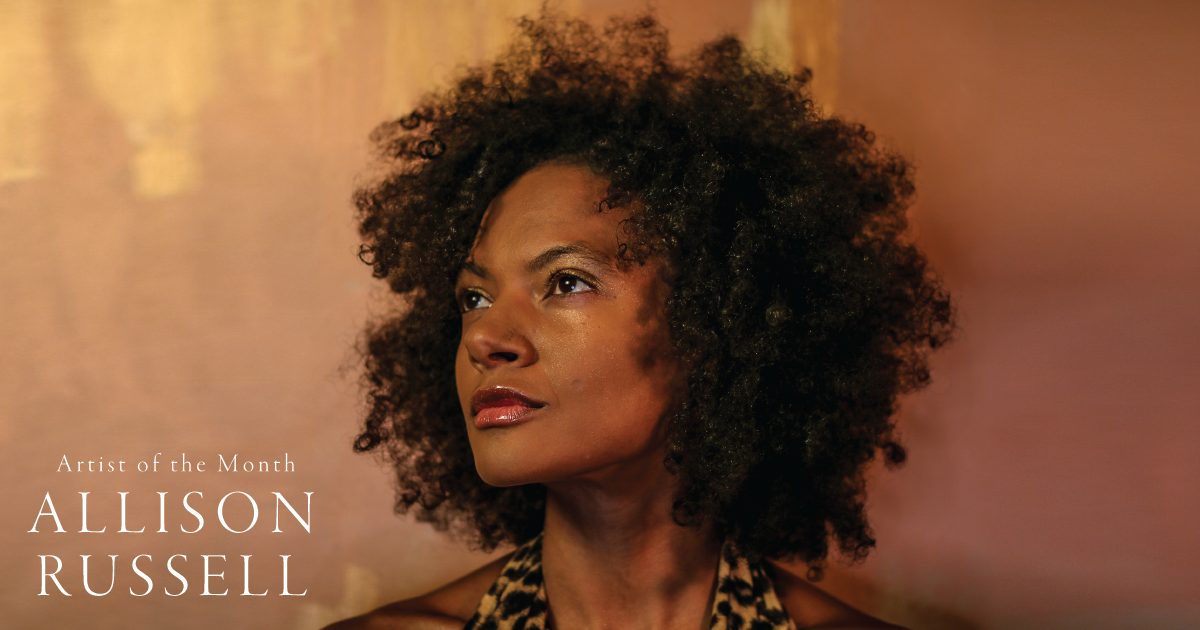
With Her Banjo and Best Friends, Allison Russell Delivers ‘Outside Child’ (Part 2 of 2)

Allison Russell’s first solo album offers an intimate look into her life, yet it’s far more than just her musical vision that elevates Outside Child to one of the year’s most eloquent albums. Working with Dan Knobler in Nashville, she populated the studio with musicians like Joe Pisapia, Jason Burger, Chris Merrill, Jamie Dick, and Drew Lindsay, as well as exceptional guests such as Yola, Ruth Moody, Erin Rae, and the McCrary Sisters. She describes them as her “chosen family,” accompanying her as she shares stories about other families in her life.

Enjoy the second half of our BGS Artist of the Month interview with Allison Russell. (Editor’s note: Read the first half of our AOTM feature here.)

BGS: You can feel that sense of community between the musicians on this record. Can you talk a little bit about what it felt like while you were tracking?

Allison Russell: These songs were recorded in four days. Everything that you are hearing, I sang live with the band. We did it at Sound Emporium Studio A. There’s a lovely, big room with glass doors that you can open up. Everyone was in a semi-circle. It was a magical experience. We would gather in the center of the room and work out an arrangement together and then we would record the song. Most of what you are hearing is the second take. That was sort of when it magically coalesced, when everyone was communing and free flowing.

Dan [Knobler] shares my deep conviction that it is not about perfection. It is about capturing the communication in as honest and as true of a way as you can. That has been my approach ever since working with Joe Henry four or five years ago on a record called Real Midnight. So what you are hearing is a community choosing to come together to uplift these songs. I will be grateful for that for the rest of my life, even if no one ever heard the record. That experience of getting to record that way with chosen family. I can’t imagine a more healing, supportive environment than I experienced.

This is your first solo record and though you’ve made many records with groups, I’m wondering if the feeling of picking the songs and the sounds was different for you as a solo artist?

I don’t know that I really picked them. I think that the songs just poured out. So much of the sound is my community of artists. I would never dream of telling any of those artists what to play. I trust their ears and I trusted Dan Knobler’s ears, who produced the record. And I trusted my own ears too, of course, but really what we did was cast the room with people who we love and trust. What was different is that I’d never worked with Dan before and I trusted him bringing in two of his brothers, Joe Pisapia and Jason Burger to join the family of musical kindred that I’ve been part of. A lot of the artists who played on the record were artists that I’d met over my many years and different projects. …

And then since I moved to Nashville in 2017, I’ve been going to hear the McCrary Sisters and loving them. I really got to know them through Yola, because they formed a friendship at a festival in Scotland and I got to know them through her. I’m a huge admirer of them and their work and their harmonies. I reached out to them thinking I wouldn’t be able to afford them and they were so generous. They came and sang for way less than they are worth and worked within my budget. I was honored that they came. So it was really a matter of casting the room and then letting people shine the way they do.
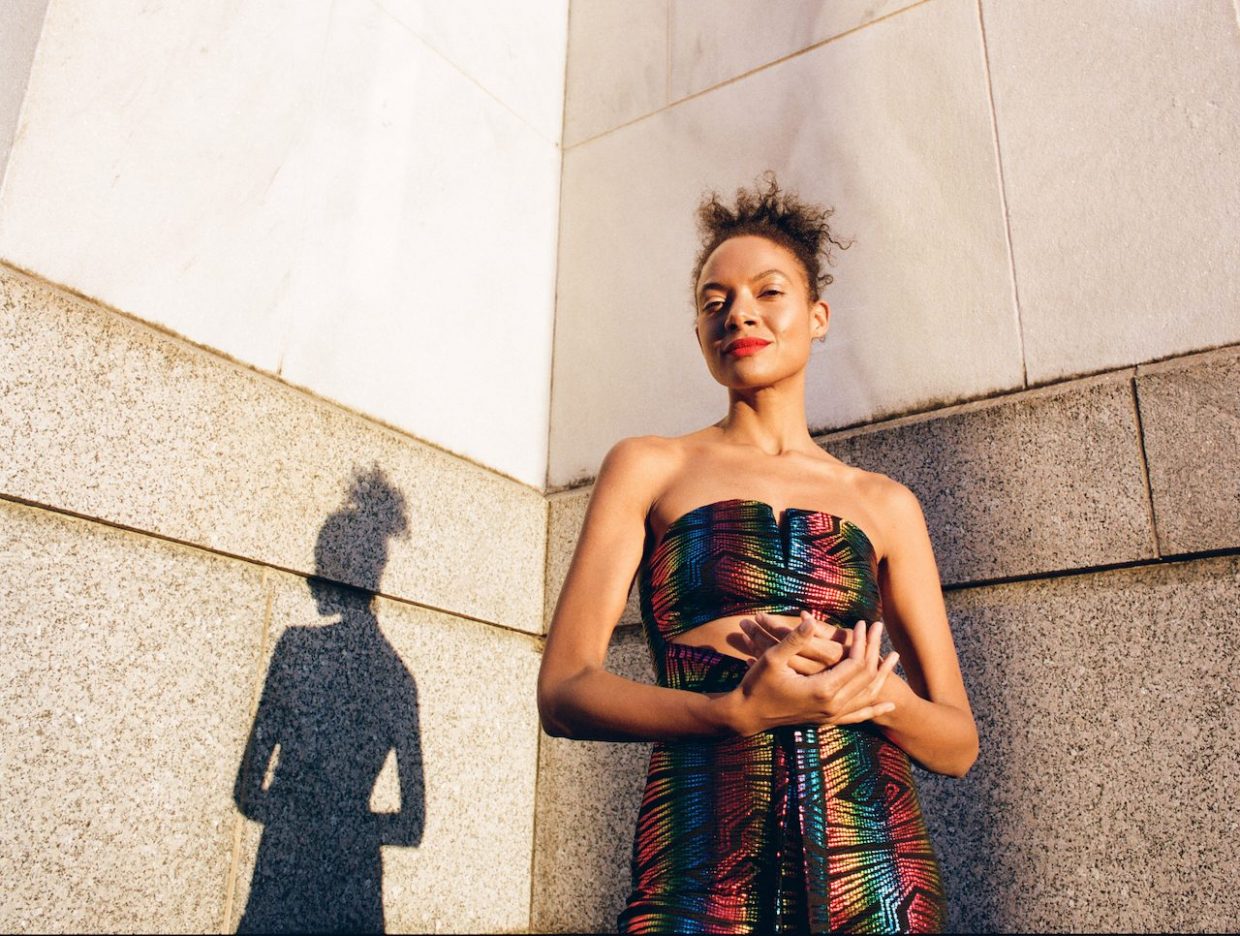
I read your speech from the [2020] Women’s March [in Nashville]. It is really gorgeous, thought- and emotion-provoking. In it you mention that you are the hero of your own story which is wildly inspiring and important for us all to remember – that there are some things we can save ourselves from. Can you talk a bit about ways in which you save yourself?

I feel like connection with a loving community is what saves me every day. Art and music save me every day. I’ve been a book worm my entire life and I can’t emphasize enough, I don’t think I would have survived my childhood if I hadn’t had the escape of literature. Being able to go into other worlds and other imaginings and literally inside of someone else’s mind and take refuge and find inspiration and comfort and strength. Disappearing into books was the first kind of way that I learned how to try to be brave. It was reading about brave protagonists and people in situations worse than I could imagine. I got very obsessed in my tweens with reading first person accounts of survival of the Holocaust. It put into context what was happening to me, that if people could survive that, then I could survive what I was experiencing.

Being in a community with people that uplift you and see you and value you and you do the same for them, that is life-changing. I have that with my partner J.T. I have that with my sisters in Our Native Daughters. We wrote a whole record together, uplifting each other and bringing forward the perspective of Black women within the diaspora and within the historical record. Our particular demographic is so often left out of any kind of historical record in any kind of first-person way, with agency and lived experience. That has been a source of great strength and resilience.

And then to connect with my ancestors. To delve into all of the history. With all of the intergenerational trauma and abuse, there is also incredible intergenerational strength and resilience and transcendence. The ability to overcome circumstances I cannot even dream of. My many-times-great-great-grandmother Quasheba survived being enslaved. She survived being ripped away from everything she knew, her family and language and home. She survived the horrible Middle Passage. She survived multiple plantations and having her children taken. If she can survive all that, I can get through this.

Do you remember what prompted you to pick up a banjo for the first time?

I was in a band called Po Girl, that was my first baby band and the woman I started the band with, Trish Klein, played the banjo. She taught me my first few chords and I just kept playing from there. I met Rhiannon Giddens in 2006 at the Vancouver Folk Music Festival and I was so excited to meet another Black woman that played banjo, because I was the only one that I knew. She told me about the Black Banjo Gathering, which I never got to attend. I’ve met so many dear friends who were a part of that, like Valerie June. All of us in Our Native Daughters play banjo and that has been a deep communion for us.

I think Rhiannon’s minstrel banjo is one of the most beautiful sounds I’ve ever heard. I’ve adapted my little Americana Goodtime banjo to sound as much like that as I can by adding gut strings and a fiber skin head. I’ve modified the bridge a bit to give it that deeper resonance. For me the banjo has allowed me to access my songwriting in a different way. I’ve noticed this over time as I’ve picked up more instruments. Different songs come through on different instruments and now for me, the banjo has become my primary songwriting instrument.

This album is coming out hopefully at the tail end of the pandemic so I’m guessing some of the songs have not been performed in front of an audience yet. Are there songs you are particularly excited about presenting on stage and on the flip side are there songs you are nervous or trepidatious about presenting to an audience?

Basically none of them. Of course I’ve done some virtual performances here and there of a couple of them. But they have not been played live. I am always nervous about everything. I’m just a very anxious person most of the time. But where that stops, usually, is on stage, when I get to be in communion with my fellow artists and with the people who have come to listen. That is very much a two-way exchange. The answer is, I’ll be nervous about all of it right up until the moment we are playing and then I will be in the happiest place I know.

(Editor’s note: Read part one of our Artist of the Month interview with Allison Russell here.)


Photo credit: Marc Baptiste (top); Laura E. Partain (in story)
LISTEN: Graber Gryass, “Your Body’s Border”

Artist: Graber Gryass
Hometown: Memphis, Tennessee
Song: “Your Body’s Border”
Album: Spaceman’s Wonderbox
Release Date: May 21, 2021
Label: Outer Orbits

In Their Words: “‘Your Body’s Border’ is a meditation on boundaries in song. From the pensive bouzouki that opens the tune to the first couplet, ‘you’re as old as the crow, fresh as an embryo,’ one can tell this song isn’t supposed to make linear sense and acts more like poetry than storytelling. The voyage is one of discovery — and the discovery is about the joys of being in love, working through stereotypes and clichés (‘if you get sweet and sour with me’), the lengths we go to find love, the transitory nature of national identity, and the repurposing of influence (notice the John Donne homage, ‘my love, my new found land’). Fiddle, banjo, mandolin, two guitars, bouzouki, and upright all play it cool, rather than hot as expected, letting the song take center stage.” — Graber Gryass


Photo credit: Eric Brice Swartz

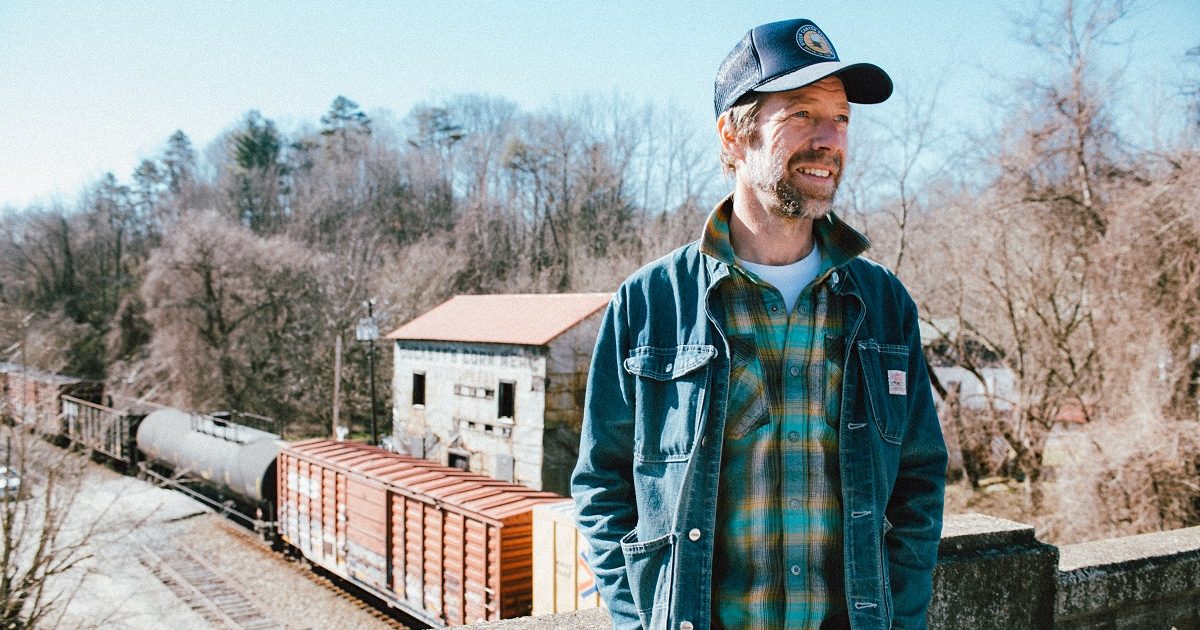
BGS 5+5: Graham Sharp

Artist: Graham Sharp
Hometown: Asheville, North Carolina
Latest Album: Truer Picture

Which artist has influenced you the most … and how?

I think Steve Martin has influenced me more than any other artist. The level of attention and devotion he brings to every project (music, film, books, etc.) is inspiring. I don’t think I know any other artist quite so single-minded as Steve. When we began working together I had no expectations, but could easily picture him resting on his past success and coasting; nothing could be further from the truth. Over and over again he’s shown that to be successful you have to put in the daily work, keep pushing yourself and not be afraid to take chances.

How often do you hide behind a character in a song or use “you” when it’s actually “me”?

I try to keep a few approaches in my toolkit, so if A isn’t happening one day maybe B, C, or D will. Sometimes I’ll try to remove myself completely from a song and let the story unfold. More often I can’t quite get away from myself and a lyric is my way of processing a situation. Likewise, I like to place myself in a more unfamiliar setting and try on a different voice or perspective. I think my songs, in general, have become more personal over the years and they’ve helped me be more empathetic. Often a song can encourage me to say what is otherwise scary or difficult to express.

What’s the toughest time you ever had writing a song?

The toughest time I had writing a song was probably “Honey on My Tongue” from the newest Steep Canyon Rangers album. We were holed up in a hotel in Vancouver for several days with no shows. I wanted to use the time to write a song for my daughter but sat there with paper and pen for hours on end with little or nothing to show for it. At some point I bought a ticket and visited a little Japanese garden nearby. But when we left town I still had nothing to show for it. It was familiar frustration of having something in sight but just out of reach. I try not to let that bother me too much, but it’s often in the background. When we got to the next tour stop, maybe Calgary, I got out my guitar backstage and the first thing that I played was a little melody. After that the whole tune just fell into place. Those are good moments.

Which elements of nature do you spend the most time with and how do those impact your work?

I write directly about nature a lot. The song “Deeper Family” is a good example. I was spending time in the woods hiking and had just read The Overstory by Richard Powers. The book talks about the interconnectedness of the forest and a vast life taking place underground. Other times, the woods is simply a great place to let the mind wander and find itself. The forests feel have the great effect of calming the brain while firing up the senses. After a bike ride I can usually count on a new line or perspective or melody.

What other art forms — literature, film, dance, painting, etc. — inform your music?

I tend to write best and most when I’m reading books, stories, or poems that I love. Short stories especially mirror what a song sets out to do. The scene is set and characters come to life so completely and economically. I think the same about the best songs, where no word is wasted and every line has a purpose.

Terry Allen – “The Beautiful Waitress”

The way he paints a scene, you find yourself sitting there in the booth with your bowl of chili and you can’t help but fall in love with the beautiful waitress. I admire writers who can set you down in a world so completely that you start filling in all the gaps from your own imagination. And the spoken word outro is the maybe the best ever.

Don Williams – “Some Broken Hearts Never Mend”

A perfect country song, outlaw with a soft touch. If I could trade my voice for anyone’s it would be Don Williams.

Nina Simone – “The Assignment Sequence”

The way this song starts in easy and builds to a monumentally intense groove never fails to get my heart pounding. Nina Simone is one of the absolute giants of American music, and she has long held my fascination and admiration.

Steep Canyon Rangers – “Honey on My Tongue”

A little song I wrote for my daughter. It’s hard to encapsulate everything that is the love of a parent but I’m proud of how this one turned out. I love the band’s take on it, from Barrett’s Astral Weeks-style bass to Ashworth (normally our drummer) playing a fantastical bubbly banjo line.

Graham Sharp – “Generation Blues”

When chaos seemed like it would swallow the world back last year, I wrote this while thinking about what we’ve inherited and what we can choose to bring with us or leave behind. Seth Kauffman, who produced the record, must have intuited how much I like The Kinks because the feel on this landed just where I didn’t know I wanted it; it seemed like he did that for every track on the record!


Photo credit: Sandlin Gaither

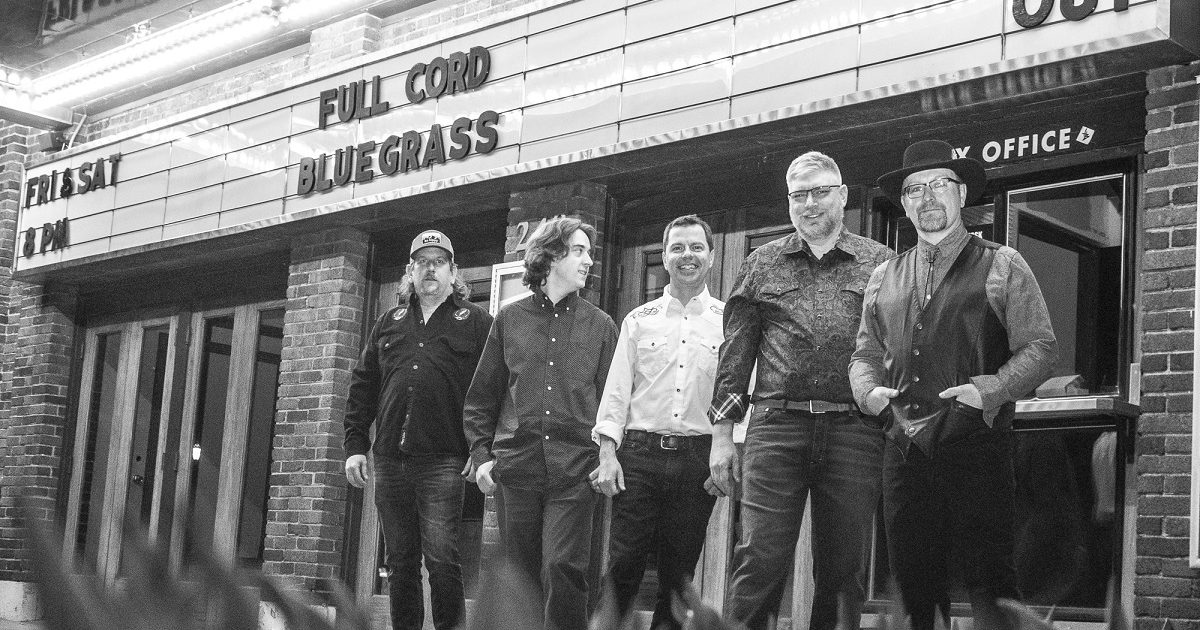
LISTEN: Full Cord, “Right in Step”

Artist: Full Cord
Hometown: Grand Haven, Michigan
Song: “Right in Step”
Album: Hindsight
Release Date: May 15, 2021

In Their Words: “‘Right in Step’ is lovingly referred to as a perfectly lovely bluegrass song. This song is the debut collaborative song by fiddler Grant Flick and mandolinist Brian Oberlin. The lyric content is love of music & hopefulness, gratification, and that unified feeling that music can deliver. Written in the late summer of 2020, it offers a respite amongst the uncertainty of a pandemic and a place where a musician can always feel at home in the music. Grant came to rehearsal one afternoon with his tenor guitar and a lick that immediately caught the attention of Brian. The one fallback for musicians is to continue doing what we love and that is making great music that makes everyone feel good — by the following afternoon ‘Right in Step’ was a complete song that we are immensely proud of.” — Full Cord


Photo credit: Derek Ketchum, Local Spins

When Springtime Comes Again: 12 Bluegrass Songs for Spring

We hope, wherever you’re reading this from, that snow, frost, and the cold are truly retreating, giving way to longer days, warmer weather, and the gorgeous, humid, cicada-soundtracked days of summer. But, before we get to full-blown bluegrass season – and, hopefully, our first live music forays since COVID-19 shut the industry down in early 2020 – let’s take a moment to intentionally enjoy spring with these 12 bluegrass songs perfect for collecting a wildflower bouquet, romping and frolicking in the meadow, and pickin’ on the back porch while the evenings are still cool. 

“Wild Mountain Flowers for Mary” – Lost & Found

A classic via Lost & Found, bluegrass certainly does not lack metaphors and analogies for love built around spring and the flowers re-emerging – see “Your Love is Like a Flower” below – but this somewhat melancholy track is an exceptional example of the form. And that banjo solo by Lost & Found founding member Gene Parker will stop you dead in your tracks.


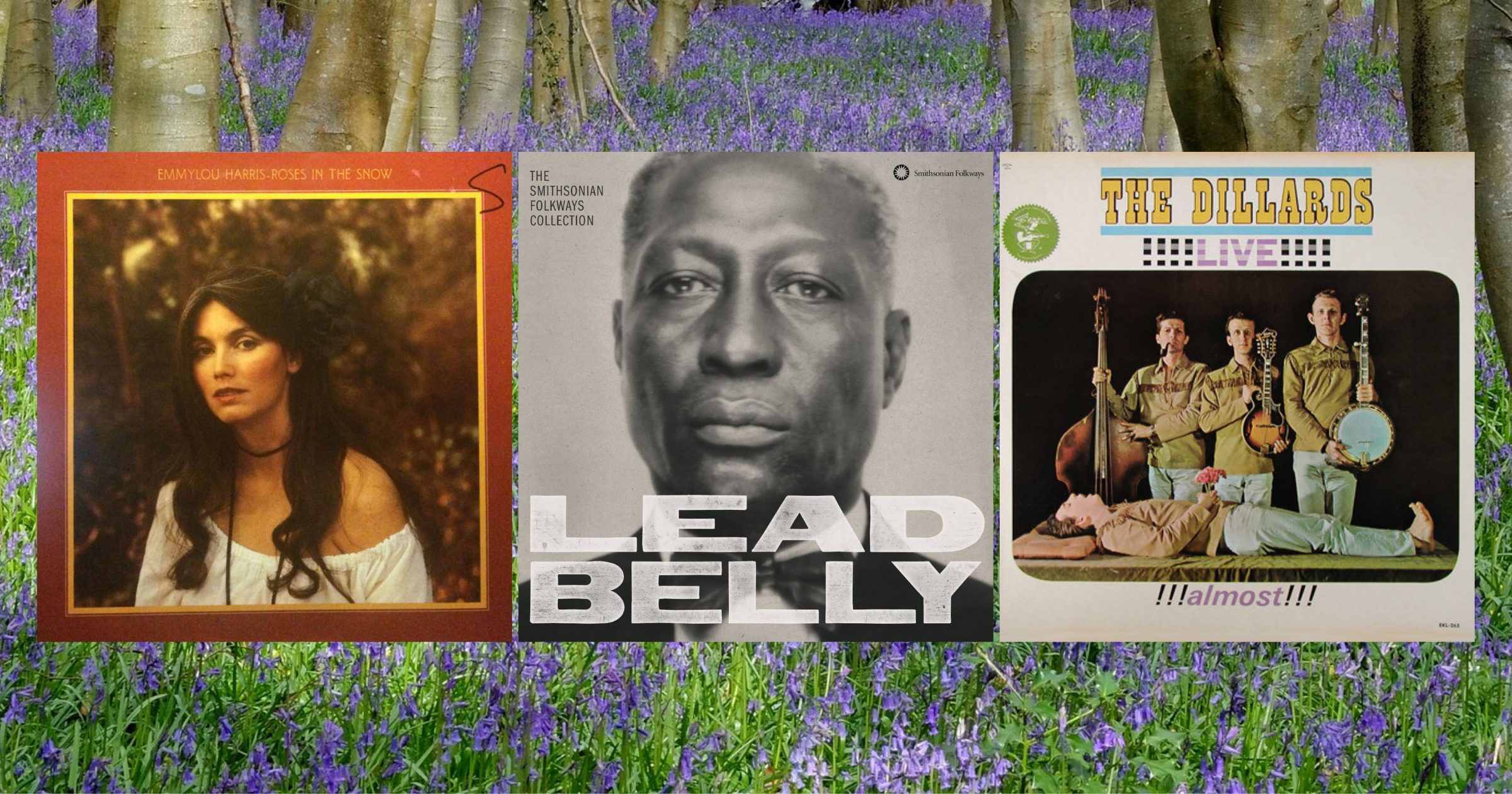
“There Is a Time” – The Dillards

Famous for the rendition sung by Charlene Darling of the ever-popular Darling family on The Andy Griffith Show, this haunting, seemingly timeless folky melody from The Dillards – who also played members of the Darling clan – cautions, “…Do your roaming in the springtime/ And you’ll find your love in the summer sun.” The suspensions in the banjo roll linger on the minor chord, echoing this sentiment and categorizing spring not by its own, shining qualities, but by the darkness in winter and fall. A true classic.


“Little Annie” – Molly Tuttle, Alison Brown, Kimber Ludiker, Missy Raines

A staple of impromptu pickin’ parties and jam circles, “Little Annie” is properly ensconced within the bluegrass canon, but is infused with new life in this application by Tuttle’s lead vocal, a slight queering of the lyric that’s perfectly at home in the hands of this veritable supergroup, assembled by D’Addario at Folk Alliance International’s conference in 2018. 


“Texas Bluebonnets” – Laurie Lewis 

Laurie Lewis is effortlessly, archetypically bluegrass even, if not especially, in applications that infuse other genres into the music, like this Tex-Mex flavored, twin fiddle arrangement of “Texas Bluebonnets” that truly never gets old. Yes, that’s Peter Rowan and Sally Van Meter guesting, and Tom Rozum jumping onto lead during the choruses so Lewis can utter the tastiest tenor harmony vocal. Stick around for the Texas double-fiddle break and do yourself a favor and bookmark the track for easy reference. You’ll be returning to it often, as this writer does. 


“The First Whippoorwill” – Bill Monroe 

The birds returning in spring are a sure sign of the seasons changing and the warm weather returning, though the whippoorwill’s role in folk music has always been as a bittersweet harbinger, never quite viewed without at least some semblance of suspicion, perhaps an acknowledgement of the whippoorwill’s mournful tendency of singing long into the dead of night. This recording of “The First Whippoorwill” is a tasty example of Monroe’s iconic high lonesome sound, with acrobatic breaks into entrancing falsetto woven into the harmonies. 


“Sitting on Top of the World” – Carolina Chocolate Drops

Whether you know this common blues, old-time, and bluegrass number from the Mississippi Sheiks, Doc Watson, John Oates, the Carolina Chocolate Drops, or any other of its many, many sources the fact still stands: Don’t like peaches? Don’t shake the tree. Demonstrably a song for spring, summer, and beyond.


“Roses in the Snow” – Emmylou Harris

Though BGS calls sunny southern California home – and BGS South is relatively temperate and mild in Nashville, TN – we know there are climes across this continent where spring promises snow as reliably as thaw. Emmylou Harris released her iconic bluegrass album in 1980 and its title track is another homage to love bringing warmth, newness, and growth even in the cold: “Our love was like a burning ember/ It warmed us as a golden glow/ We had sunshine in December/ And grew our roses in the snow…”


“Each Season Changes You” – The Osborne Brothers

Love is as fickle as the breeze! There’s a small irony in the song’s central conflict, that the singer’s love changes their mind as often as the seasons change – which, when taken whole, seems like a much more stable, predictable love than most? Even so, and done in so many different iterations, the central metaphor still holds, forever baked into the vernacular of these folk musics.


“One Morning in May” – Jeff Scroggins & Colorado

If you’ve been a bluegrass fan over the past five to ten years and you don’t immediately hear Greg Blake’s voice singing “One Morning in May” whenever it pops into your head, something must be awry. During Blake’s stint with Jeff Scroggins & Colorado, this spring-centered track was a highlight of their live show, a clean, modern rendering of what’s a properly ancient folk lyric. Lost love, war, nightingales, and yes, springtime – it has everything! 


“Your Love is Like a Flower” – Flatt & Scruggs

Perhaps the song that defines the form. Flatt’s languid, lazy phrasing seems to underline the leisure of spring that grows into the laziness of summer. The rhythm of love, tied to the seasons and the budding blooms. Another timeless sentiment, distilled into a favorite, stand-by bluegrass number.


“Springtime in the Rockies” – Lead Belly

You know the film and the country hit, but have you heard Lead Belly himself tell the story of hearing the tune from “Gene” coming by and playing him some music? Worth a listen and worth inclusion on this list, which would suffer if it didn’t include “When It’s Springtime in the Rockies” in one form or another!


“Spring Will Bring Flowers” – Balsam Range

Processing grief and loss through the ever- and unchanging seasons is a common thread through rootsy songs about spring. This more recent recording from powerful North Carolina bluegrass vocal group Balsam Range hearkens back to springy, ‘grassy numbers from across the ages – its intermittent banjo licks a call back to Jimmy Martin’s “world filled with flowers” in “Ocean of Diamonds.” 


Background photo by velodenz on Foter.com

STREAM: Christopher Jones, ‘Bach: The Goldberg Variations’

Artist: Christopher Jones
Hometown: Morgantown, West Virginia
Album: Bach: The Goldberg Variations
Release Date: May 7, 2021

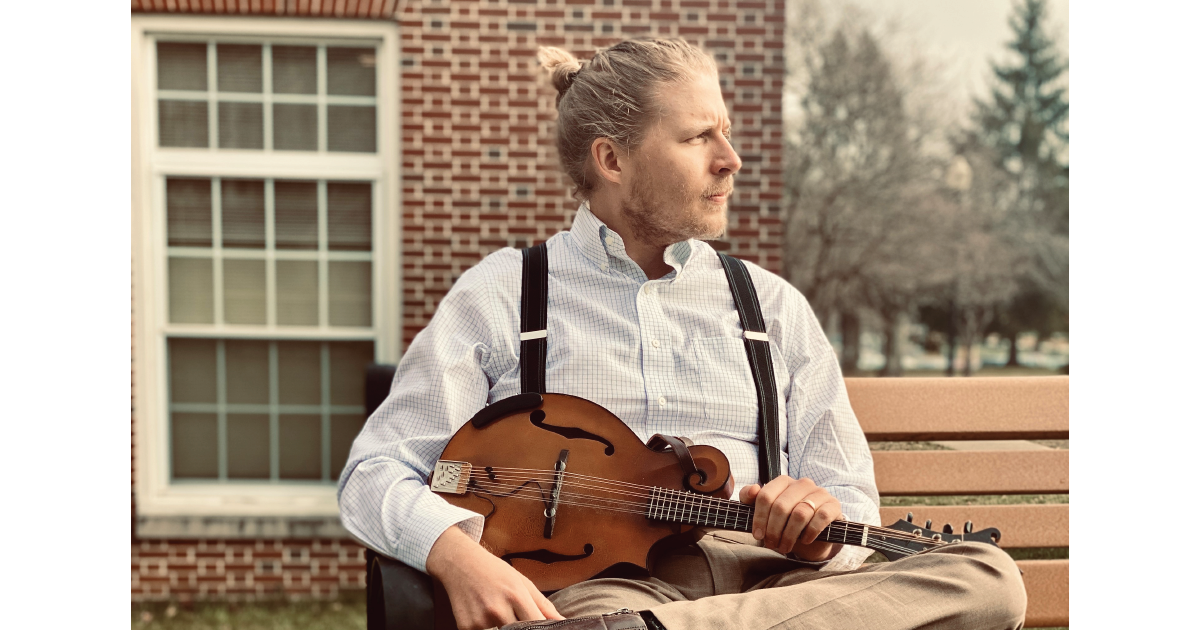
Editor’s Note: Christopher Jones is director of the Appalachian Music Ensemble, a performing group at West Virginia Wesleyan College. He got his start, however, in the classical world. He holds a bachelor’s degree in cello performance, and a master’s and doctorate degree in music composition from West Virginia University. For his newest project, he has reworked Bach’s iconic Goldberg Variations for mandolin, banjo, and guitar.

In Their Words: “This project is something that I had thought about for a long time. Not necessarily that I wanted to record it myself, but that it was something that I really wanted to hear. When everything shut down last year and the world was upended, I made a split-screen video of the ninth variation, and then the second, and realized I might as well do a studio recording of the entire thing. I think I turned to this piece as something that had that satisfying and comforting sense of order and normalcy, even though the scope of the whole thing can feel chaotic. Each variation is an exercise in perspective, begging the question of ‘How many different ways can I look at the same problem?’ It was a lens to try and make sense of things.” — Christopher Jones


Photo credit: Lauren Smith

Bluegrass Memoirs: The Earl Scruggs Celebration (Part 3)

(Editor’s note: Read part one of Neil V. Rosenberg’s Bluegrass Memoir on the Earl Scruggs Celebration of 1987 here. Read part two here.)

Boiling Springs, NC on Saturday, September 26, 1987: My workshop in the Gardner-Webb College Library with Snuffy Jenkins, Pappy Sherrill and the Hired Hands ended at 4:30 that afternoon when Dan X. Padgett presented Snuffy with a hat. From my diary:

Afterward I hung around and listened for a while to the Hired Hands’ young banjo picker Randy Lucas play the Bach “Bourrée,” “The Stars and Stripes Forever,” and another classical piece expertly on the banjo.

Here’s a nice example, from Bill’s Pickin’ Parlor, of Randy’s recent work in this milieu:

Then, supper time came.

I went for some barbecue (big regional difference thing — this barbecue was red, vinegary; with shredded pork) with Tom [Hanchett] and Carol [Sawyer] and then was kind of enticed away by Dan X Padgett…

I’d met Padgett the afternoon prior, when I first arrived in Boiling Springs; a respected local banjo elder, he was the teacher of the young banjo player in Horace Scruggs’ band whom I’d met earlier today. Padgett had a long and interesting career, with deep connections to Earl Scruggs and Snuffy Jenkins, as well as memories of an earlier generation of banjo greats. He was interviewed for the Earl Scruggs Center by Craig Havighurst in 2010. 

I went with him…

…to his car (an old Cadillac) to look at various memorabilia like photos of him with various important country and bluegrass people. He also showed me a very worn copy of the very first F&S songbook and when I expressed a strong interest in copying it he loaned it to me. I also talked with him about the possibility of obtaining a banjo like one he played during the afternoon, a miniature Mastertone about the size of a mandolin with an actual tone ring, flange, and resonator. He said he’d see about it and we ended up standing at his trunk trying out various instruments. 

I was picking away on “St. Anne’s Reel” when I noticed there were some people standing around me, and when I finished and looked around there was Doug Dillard looking at me with that big smile. Quite an introduction!

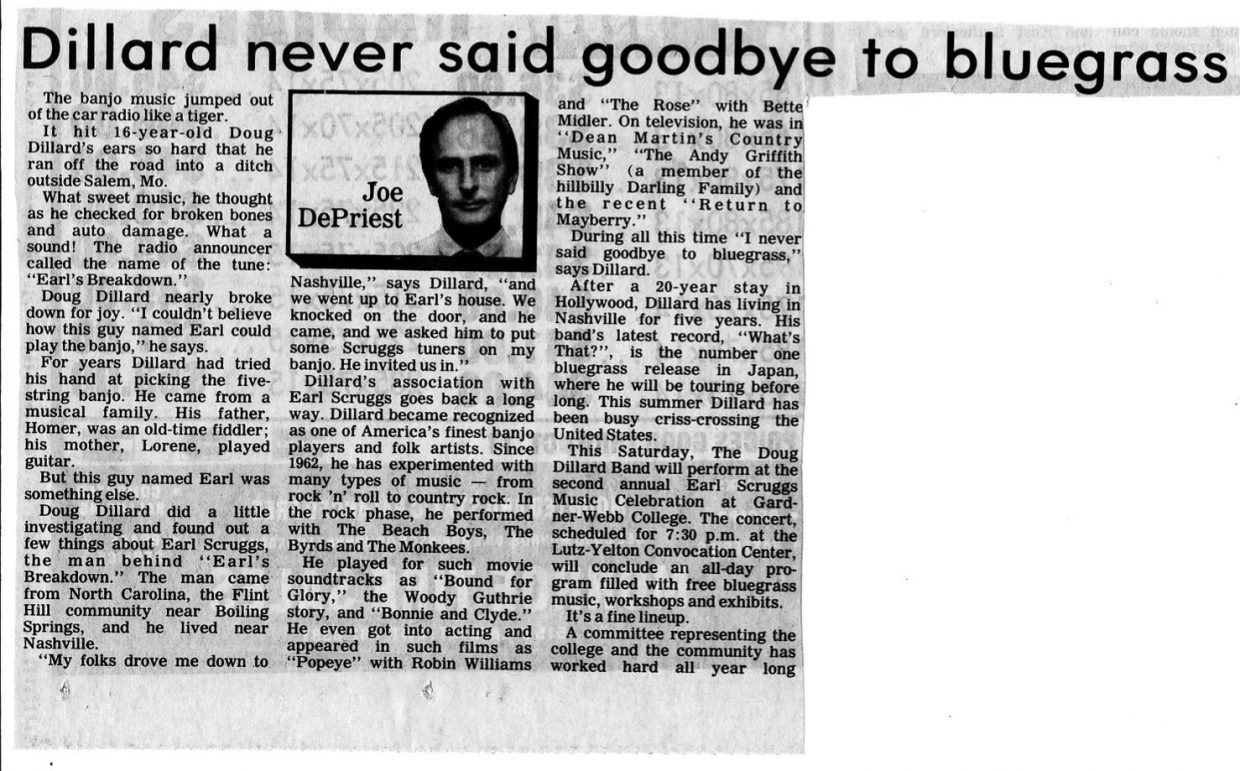
In an edition of the Shelby Star a week or so earlier, Joe DePriest wrote of Dillard’s association with Earl Scruggs, telling how in 1953 the Salem, Missouri teen first heard “Earl’s Breakdown” on the car radio. It hit him so hard “he ran off the road into a ditch.” Dillard got his folks to take him to Scruggs’s Nashville home. “We knocked on the door, and he came, and we asked him to put some Scruggs tuners on my banjo. He invited us in.”

A newspaper clipping from a 1987 edition of the ‘Shelby Star’ of an article by Joe DePriest on Doug Dillard

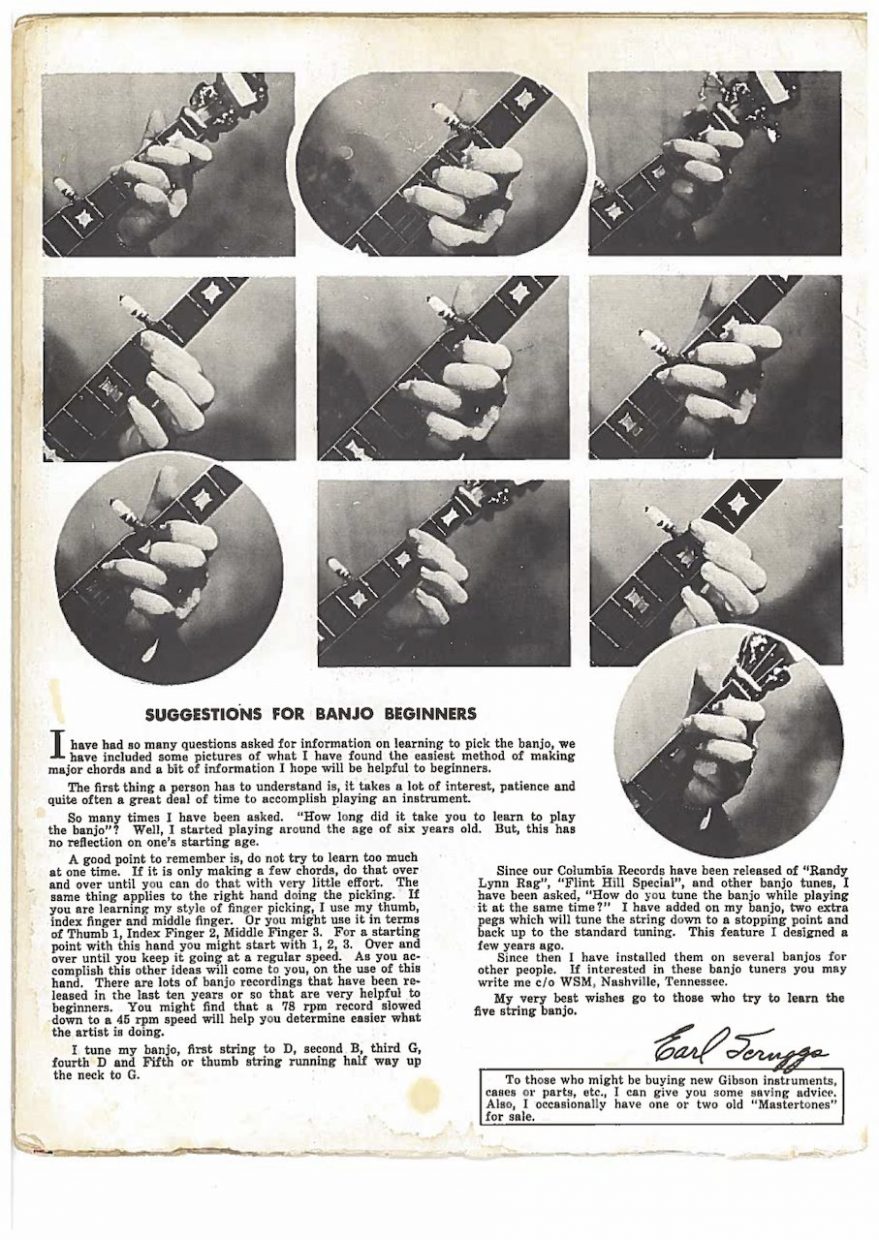
Earl welcomed banjo pickers to his home, especially if they wanted Scruggs Pegs. In the “Suggestions for Banjo Beginners” on the first page of Flatt & Scruggs Picture Album — Hymn and Songbook from 1958, Earl invited those interested to contact him in Nashville, and many did:

The first page of the 1958 ‘Flatt & Scruggs Picture Album — Hymn and Songbook’

In 1962 Doug and his brother Rodney went with their band The Dillards to LA, where they were “discovered” at the Hollywood folk club The Ash Grove. With best-selling Elektra LPs, they toured extensively in the West and appeared on CBS’s The Andy Griffith Show as “the Darling Family.” 

In 1966 Doug left The Dillards and ventured into what would soon be called “country-rock,” touring with the Byrds and forming a band with former Byrd, Gene Clark. Dillard’s banjo playing had been strongly shaped by his close listening to Scruggs. In the ’60s when players like Bill Keith and Eric Weissberg were pushing banjo boundaries in bluegrass, Doug was pushing boundaries in a different way by finding a place for Scruggs-style banjo in rock. He fitted solid, straight-ahead rolls into pieces like Gene Clark’s “The Radio Song”: 

Dillard was heard often on popular Hollywood studio recordings and movie soundtracks during the ’70s. He even had on-screen roles in Robin Williams’ Popeye and Bette Midler’s The Rose.

DePriest’s article quoted Dillard: “During all this time, ‘I never said goodbye to bluegrass.'” He moved to Nashville in 1983 and started a band. 

The bluegrass music business was booming in Nashville. A bunch of young pickers were there, touring in bands and doing studio sessions. New Grass Revival featured newcomers Bela Fleck and Pat Flynn; John Hartford, Mark O’Connor, Jerry Douglas — all were in town. The Nashville Bluegrass Band started in 1984; that year Ricky Skaggs won a Grammy for his version of Monroe’s “Wheel Hoss.” Up in the Gulch district, between the Opry and Vanderbilt, the Station Inn was serving bluegrass seven nights a week.

I was introduced to the Doug Dillard Band this afternoon right there where Dan X Padgett and I had been jamming. His four-piece outfit drew from a pool of talented bluegrass musicians. 

Rhythm guitarist, vocalist and emcee Ginger Boatwright was a seasoned veteran. During the ’70s she’d toured and recorded with Red White and Blue(grass), and later formed The Bushwackers, an all-female group that began as the house band at Nashville’s Old Time Picking Parlor. Her story is told well in Murphy Hicks Henry’s book Pretty Good for a Girl: Women in Bluegrass. Henry calls her “The first ‘modern’ woman in bluegrass” alluding to her folk revival roots, her styles of humor and dress, and, most importantly, “a softer, smoother, more lyrical quality” of singing.

Having a second guitar as a regular lead instrument in a four-piece band was uncommon at this time. When I met Doug’s young lead guitarist I was surprised to discover he was the son of Lamar Grier, whom I’d hung out with twenty years earlier when he was a Blue Grass Boy. David Grier was 26. He’d studied the lead guitar work of Clarence White (there’s a photo of him with White in Bluegrass Odyssey), Tony Rice, and Doc Watson. He was already an experienced pro.

Playing the electric bass, which was unusual for the time, was Roger Rasnake, a singer-songwriter from Bristol on the Tennessee-Virginia border.

In 1986 Flying Fish released this band’s first album, What’s That? (FF 377). Here’s the title cut. The band is augmented to six pieces by Vassar Clements on violin and Bobby Clark on mandolin; both played on the album. What we see and hear first is Ginger’s dynamic emcee work. Doug’s composition shows a banjo picker who knew fiddle music — a melodic “A” section followed by a punching Scruggs-style “B” part. 

Rasnake made a point of telling me Roland White had sent his regards. 

Roland was an old California friend, whom I’d met in 1964 and gotten to know when he was playing with Monroe. He’d just joined the Nashville Bluegrass Band. It was a pleasant surprise to hear from him.

Roger wanted to buy a copy of my book, so I took him up to the library and he bought one which I autographed. I signed several others during the day, including several that people brought with them.

I rested a bit before heading over to Gardner-Webb’s Lutz-Yelton Convocation Center. 

That evening was the Doug Dillard concert in the gym. It was good, with Ginger Boatwright doing the MC work, Lamar Grier’s son David picking some nice lead guitar, and good singing by Roger, Doug, and Ginger. 

Rasnake did one of his own songs from their album, “Endless Highway.” 

It’s familiar today because Alison Krauss covered it in her 1990 album, I’ve Got That Old Feeling.

There was a grand finale at the end with picking by Horace and the boys, and also fiddler Pee Wee Davis, whom I heard briefly in the back room for a while. I bought a souvenir photo of the Dillards with Andy Griffith. Home and in bed by 11.

On Sunday morning:

Up and away by 7:30, carried my bags to Tom and Carol’s dorm. We hit the road and drove to Shelby where we went, on Joe’s advice, to the Pancake House, a local place on the strip which was sure to have livermush. We went in and sat at a table and when the menu came I eagerly perused it. Sure enough, at the top of the list on the right-hand side was “Livermush and Eggs.” And, in case I’d missed it, about halfway down the same list was “Eggs and Livermush.” So I ordered that and actually ate some. Very peppery, other than that not much taste and what there was didn’t really excite me. I mixed it with eggs, like one does with grits. Maybe it’ll help my banjo-picking, who knows.

In Chapel Hill I stayed the night with Tom and Carol and had a bit of time to visit friends and relations and buy a box of instant grits at a supermarket. Next day I was back home in Newfoundland, writing up my diary.

The weekend at the Earl Scruggs Celebration brought me face to face with a music culture in which bluegrass nestled. Seeing, hearing and talking with Snuffy, Pappy, Horace, and Dan put me in touch with generations older than mine, what Bartenstein has called “The Pioneers” and “The Builders” of this music. I feel fortunate to have seen, met and heard them all. Just as important for me was hearing new younger performers like Ginger Boatwright, David Grier, and Randy Lucas.

This was my first opportunity see my folk guitar hero, Etta Baker. It came near the start of her late-in-life performance career. In 1989 the North Carolina Arts Council gave her the North Carolina Folk Heritage Award; in 1991 she won an NEA National Heritage Fellowship. Wayne Martin produced her first CD, for Rounder, in 1991. Later she collaborated with Taj Mahal. Meanwhile Music Maker Relief Foundation, an organization “fighting to preserve American musical traditions,” gave her the support she needed to pursue her career as a musician up to her passing at the age of 93.

It was also my first time to see Doug Dillard. If Snuffy and Pappy personified the era when bluegrass emerged from old-time, Dillard’s new band blended the contemporary sounds of an era when classic, progressive, and newgrass elements were shaping and blending the sounds heard as bluegrass thrived in a festival-dominated scene. 

Instead of an alpha male lead singer/emcee/rhythm guitarist, he had an alpha female. Replacing the mandolin or fiddle one expected in a band with a banjo was an acoustic lead guitar. Instead of an old “doghouse” upright the bass player had an electric. The lead vocals were shared between male and female. Repertoire ranged from bluegrass classics through old pop and rock favorites to band member compositions. The group was touring widely. State of the art bluegrass, 1987.

So how did all this fit together for me? I recalled the start of my visit when Joe DePriest took Tom, Carol, and me to visit the Shelby graveyard. 

He showed us three graves: first that of Thomas Dixon, the local writer whose The Clansmen was turned by D.W. Griffith into The Birth of a Nation. Not far away was the grave of W.J. Cash, author of the immensely influential The Mind of the South. Joe and Tom pondered how the two men would have felt about being buried so close to each other; the image that sticks with me is one of Cash glaring at Dixon.

Joe gave us copies of the Greater Shelby Chamber of Commerce’s glossy full-color brochure, Shelby…it’s home. In it Thomas Dixon is identified as the author “whose novel Birth of a Nation became the first million-dollar movie” thus avoiding the fact that book and movie inspired the racist revival of the KKK. It describes Pulitzer Prize-winning journalist W.J. Cash simply as “author,” not mentioning his progressive stances in print against the Klan and Nazism.

Tom wondered, what if the paths of Cash (who lived in Boiling Springs) and the young Scruggs had crossed at the time? He told us:

Cash … thought that the South had no “Culture” to speak of — what would he have had to say about Scruggs’s contribution?

Joe took us to a third gravesite, that of a local Confederate colonel killed in a Civil War battle; after detailing that part of his life its headstone:

… describes him as a lover of the arts who twice rode by horseback all the way to a far-off northern city (Baltimore? New York?) in order to hear Jenny Lind sing. This tells you where Cash’s mind was when he spoke of Culture.

The Shelby brochure ended its historical section saying “Cleveland County has also produced two North Carolina governors and an ambassador, but our most famous son is country singer Earl Scruggs.”

So much for official culture in 1987! 

Gardner-Webb’s decision to honor Earl Scruggs reflected a shifting intellectual landscape. A local musician of humble origins — a mill worker — had taken on new meaning and significance because of his national and international recognition and popular culture success. He deserved honor and celebration in his home. I was glad to help.

I don’t know if there were any further Earl Scruggs Celebrations at Gardner-Webb, but today there’s an Earl Scruggs Center in Shelby, which is planning to hold its inaugural Earl Scruggs Music Festival in September 2022. 

(Editor’s note: Read part one of Neil V. Rosenberg’s Bluegrass Memoir on the Earl Scruggs Celebration of 1987 here. Read part two here.)


Neil V. Rosenberg is an author, scholar, historian, banjo player, Bluegrass Music Hall of Fame inductee, and co-chair of the IBMA Foundation’s Arnold Shultz Fund.

Photo of Neil V. Rosenberg: Terri Thomson Rosenberg

LISTEN: Sam Armstrong-Zickefoose, “Heart of Mine”

Artist: Sam Armstrong-Zickefoose
Hometown: Colorado Springs, Colorado
Song: “Heart of Mine”
Album: Spark in Your Smile
Release Date: July 5, 2021

In Their Words: “I wrote this song about how it feels to not fit in and the things we do to get a sense of belonging. I imagine we can all get to feeling like we are on the outside looking in or that we are stuck between two worlds. For me I felt like I had to hide my queerness for a long time, but once I was out I felt like an impostor in queer spaces. Luckily, I have been supported by many of the people in my life and keep meeting more folks I can relate to (in part thanks to organizations like Bluegrass Pride). This song is brought to life by Joe D’Esposito on fiddle, Jean-Luc Davis on bass (both from The Railsplitters), Colton Liberatore on drums, Maggie Liberatore on harmony vocals and Aaron Youngberg on synthesizers.” — Sam Armstrong-Zickefoose


Photo credit: Grace Clark

LISTEN: Mark Rubin, Jew of Oklahoma, “My Resting Place” (Feat. Danny Barnes)

Artist: Mark Rubin, Jew of Oklahoma
Hometown: New Orleans, Louisiana
Song: “My Resting Place” (Feat. Danny Barnes)
Album: The Triumph of Assimilation
Release Date: June 1, 2021
Label: Rubinchik Recordings

In Their Words: “‘My Resting Place’ is an old-time bluegrass number inspired by the drive of Jimmy Martin and yet based on a 100-year-old Yiddish poem by Morris Rosenfeld. Known as the ‘poet laureate of the slum and the sweatshops,’ Rosenfeld’s ‘Mayn Rue Platz’ was written to commemorate the tragic events of the Triangle Shirtwaist Factory fire in NYC in 1911. The original Yiddish lyric brought to mind the Harlan Howard songs I grew up with as a kid, so the match seemed like a natural. My Bad Livers bandmate and acknowledged five-string banjo master Danny Barnes came in to seal the dark mood to match the lyric. If I’m being honest, I wrote it with Del McCoury in mind as the thought of a 100-year-old Yiddish labor ballad sung on bluegrass stages cheers me to no end.” — Mark Rubin


Photo credit: George Brainard

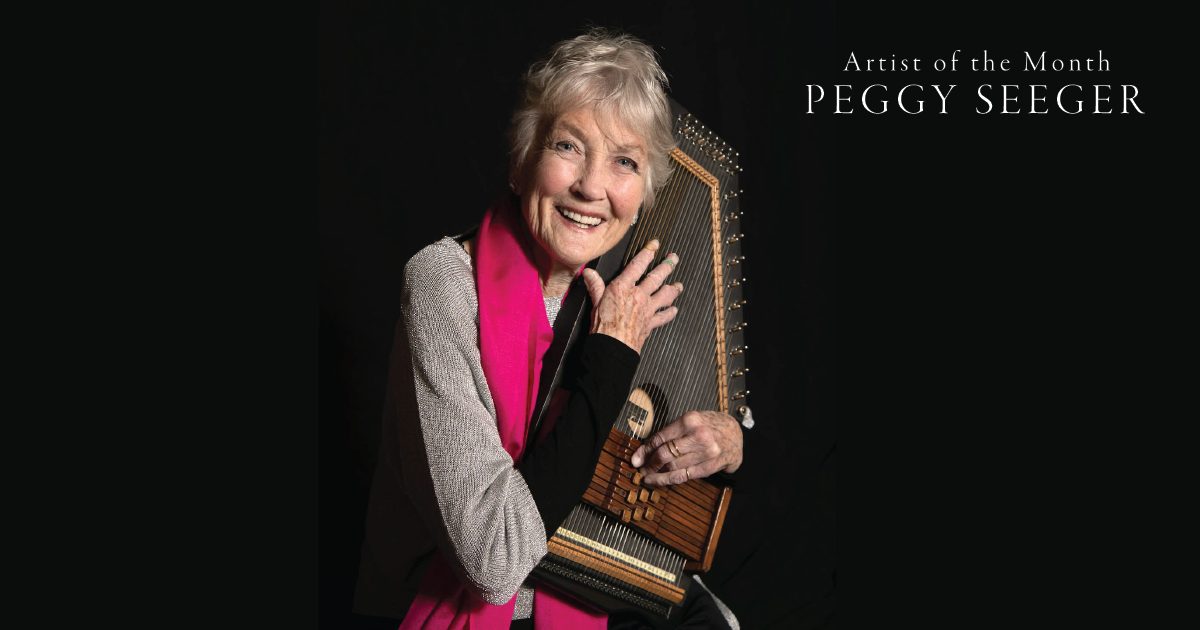
True to Her Activist Roots, Folk Legend Peggy Seeger Still Longs for Peace (Part 2 of 2)

At 85 years old, Peggy Seeger stands as one of the most accomplished figures in folk music. She has recorded 25 solo albums, plus dozens more with her late husband, Ewan MacColl, along with collaborations with her siblings and generations of other folk musicians. She is a multi-instrumentalist who has edited and compiled folk music anthologies, and she ran a well-known magazine featuring contemporary songs for 20 years. All that while touring, writing more than 200 songs, raising three children and serving as an immoveable force for peace and human rights. And hers was the face that inspired MacColl to write “The First Time Ever I Saw Your Face.”

From her home in England, Seeger spoke to BGS about her new album, First Farewell, and what that title really means.

(Editor’s Note: Read the first of our two-part Artist of the Month interview with Peggy Seeger.)

BGS: You wrote “How I Long for Peace” 20 years ago, but it’s really appropriate now. Can you talk about it?

When we decided to make a new CD, my son Calum had me sing to him any song that I hadn’t recorded. Because I lived in the United States for 16 years and wasn’t touring England, I wrote quite a number of songs that my kids never heard. “How I Long for Peace” was one of those. And when Calum heard it, he loved it. So, it went on the album, and so many people are commenting on it. It’s kind of like a hymn, and it has a very singable chorus, and it ties up nations and politics with climate change and the plunder of the planet. When I sing it, I feel such a longing in my heart. I feel the violence of the world. We’ve just had a horrendous murder here. In this country, a young girl who was walking home by herself disappeared. She was found two counties away in a woods. And there’s been a tremendous uprising here on the part of women. But it’s not until men uprise against this that it’ll ever be changed.

Can you talk about the project’s title, First Farewell?

I remember my brother Mike, who was with New Lost City Ramblers — once they broke up they had an annual farewell concert every year. I thought that was marvelously funny. So, I thought First Farewell will make people think. But it’s based on the two farewells that you give at the airport. You know, if you stay to wave goodbye to the person at our airport, you hug, and then they go through where only passengers are allowed. And they walk about 40 yards away, and then they turn to the right. So, the first farewell is the hug, and there is a second farewell where they wave goodbye just before they turn that corner.

In lots of ways at my age, I’m saying farewell to a lot of things, almost daily. When you’re my age, you see your body doing this, doing that, and you feel you’re slowly decaying. And it gives you a new feeling of togetherness with nature. I really have more of an attachment to nature and the birds and the daffodils and the trees than ever I did before. And I’m doing a lot of listening to books about nature. I’m beginning to feel that humanity is this very, very powerful paper-thin sandwich filling between what happens above the earth and below the earth, and we are just this kind of bacteria that is sitting along the edge of the earth. [Laughs]

Because I do feel that nature is calling us. Nature realizes that we are a danger. The same way as we’re trying to get rid of COVID, nature’s trying to get rid of us. And power to her if that’s her best way of teaching us anything, because we don’t learn at all. We just repeat everything that we’ve done before. But the first farewell is the recognition that I am near the goalpost. And within sight of the goalpost. I’ve been running like hell. But I run more slowly now.

Why did you move back to the United States in 2006, and then why did you return to Great Britain?

A tumultuous love affair brought me here permanently in 1959. I became a British subject in 1959 and settled down here. After Ewan MacColl died, 30 years ago, I had a new partner, a woman, my best friend, the only person that I’ve been head over heels in love with. And after four or five years, I had an incredible urge to go to America to find out who I had been before I came here – because I was a child when I moved here. And I immediately became totally involved in England. I grew up in England from age 24 and 54. That’s when I really became an adult. (I shouldn’t say that, because I’m not an adult yet.)

In 1994, I got this terrific urge to go back to America. I wanted my partner to come with me, but she couldn’t. So, I said, I’ll go and see what it’s like. It was the first time I’d lived on my own ever in my life. I toured America endlessly for 16 years. Then I began to realize that I really, really, really missed my kids. So, I just felt that urge to come back here. And now that I’m back here, I’m so glad I came back.

My children live in three corners of London. I can reach any of them in two hours. We talk on the phone, and I’m part of my family that I created again. My American family is very big, but very scattered. And the ones that I was really attached to are all gone. So, what made me move back was a gut feeling of where I belonged. And it’s so wonderful that my children are helping. They’re making it possible for me to keep going.

What do you see as the bright spots in today’s political and social movements? What gives you hope?

On all of the really big issues, what’s happening is small grassroots groups. People who want something done, want something changed, want something different are realizing that the government says it will take care of it — but it doesn’t. So, small groups are forming everywhere, saying, “We have to do this ourselves because our government is not doing it.” I’m part of a group like that here where I live, near the edge of Oxford. And Oxford has just spread and spread and spread and spread until it has incorporated one beautiful old village and then another old village. Then they become surrounded with new housing. And they have taken away the green land, taken away the beauty of the old villages.

I live in an old village called Iffley. Its church was built in the 1100s. And since 1964, 16 of its green spaces have been sequestered for housing. Plunk, they put 20 houses here; plunk, they put 50 houses there. Well, there are four acres left, two ancient fields that have not been touched for 1000 years. And our council wants to put 50 houses on them. I’m part of a group that is acting out of incandescent rage at this. If the housing is put in, it will be the end of our village – the end of it. I’ve always tried to be part of a small group that does something locally.

Parting words?

I’d like to thank you for the attention you gave to Laurie Lewis, because she is so good. She’s wonderful. I love that kind of music. I really, really do. And it’s something that I really miss over here, joining in on the radio with all of that wonderful singing that you can sing along with. I do miss the whole American scene, I do. But I’m a Gemini and I’ve chosen one of my twins, so I live here.

What I would like to say is that I have been very privileged in my life, extremely privileged, unlike a lot of people who need to struggle to make their names recognized. My name was recognizable due to my brother Pete, and my mother, my father. And I came at the end of other musicians who had smoothed the path out for me. I have had every possible advantage: two wonderful life partners, both of whom contributed to my career, and who have pushed me on and helped me. And children who don’t hate me! [Laughs] And a country that I kind of understand.

And enough money that I’m not in need in my old age. “First Time Ever I Saw Your Face” brings in a reasonable amount of income. People still hear it all over the place with some very funny covers. Oh, my god, it’s been covered over 400 times that we know of. There’s a rap version. There’s a country and western version. There’s a gospel version. There’s what I call a barbeque quartets version. There’s one with Scruggs banjo on it. I am just so fortunate, and I’m thankful that I’m being given an old age that makes me visible and worthwhile.

(Editor’s Note: Read the first of our two-part Artist of the Month interview with Peggy Seeger.)


Photo credit: Vicki Sharp