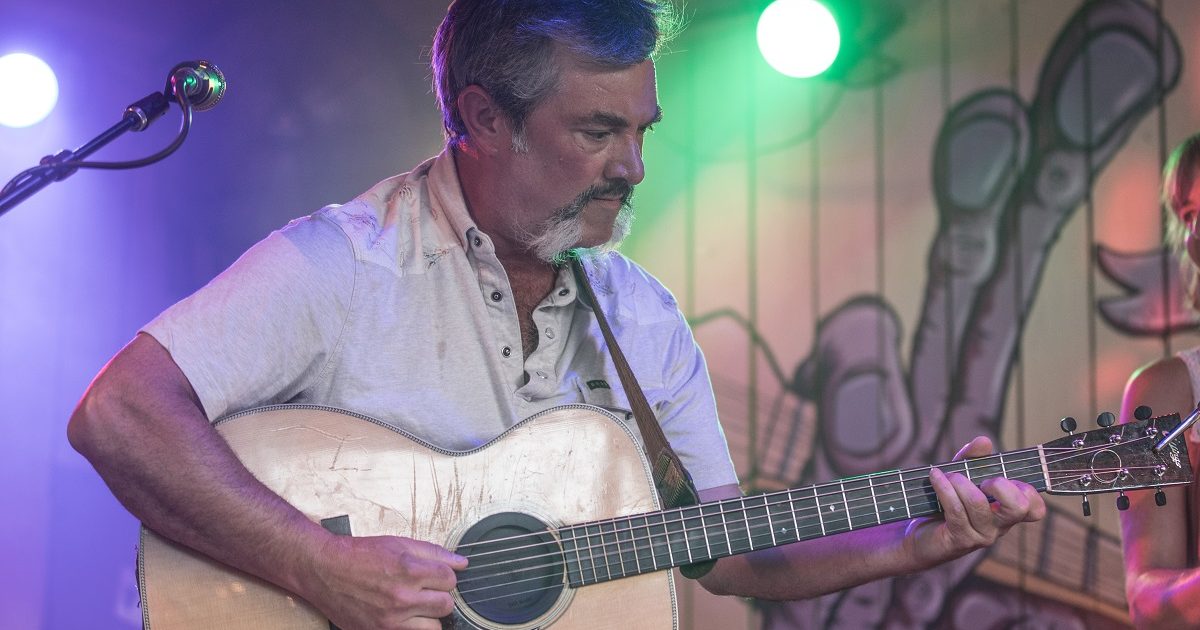
LISTEN: Susan Werner, “To Be There”

Artist: Susan Werner
Hometown: Philadelphia, Pennsylvania
Song: “To Be There”
Album: Flyover Country
Release Date: September 27, 2020

In Their Words: “In the early months of this year I’d been writing a ‘country’ album, and when the pandemic hit I thought, ‘Well, we aren’t the first generation to face something like this, somebody must have written a plenty good song already.’ I went through the Carter Family and Louvin Brothers and Hazel Dickens catalogs and couldn’t find anything about a flu; black lung yes, influenza no. Having written a ‘gospel’ album in 2007, I remembered that one element of the best gospel music is hope, the anticipation of something better, whether on Earth or in Heaven. And in this moment, everybody on Earth is united in hope, hope that we arrive safely on the other side of this dark time to see and embrace our friends and family, to hold them close, and for the musically inclined among us, to stand shoulder to shoulder with them and hear them singing on either side of us. That was always Heaven itself to me; I don’t know that until this year I realized it.

“I grew up in a kind of magically musical singing family; my farming parents and all six kids, we’d spontaneously harmonize in the car on the way to church, to my grandparents’ farms for holidays. We had no idea other families did not do this, by the way. I was home in Iowa this February (yes, for the caucuses) and went with my folks to church — I’m an agnostic, honestly, I just go to see friends and family and to sing with them. To my left I heard my father, to my right, my mother. Who knew that something could arise that would take that, singing, away from us? Unthinkable. So I had to weave that into the lyrics of this ‘hymn.’ Heaven might have singing angels, but I know for a fact Earth does and I can’t wait to get back in the company of others in church or on stage or in the bar, it’s all good and it’s all the work of God.” — Susan Werner


BGS & #ComeHearNC Celebrate the Cultural Legacy of North Carolina during #NCMusicMonth

On the national music scene, North Carolina sets itself apart by blending the heritage of traditional roots music with the innovation of modern indie and Americana sounds. The bluegrass canon of North Carolina encompasses pioneers like Charlie Poole and Earl Scruggs, as well as groundbreaking musicians like Elizabeth Cotten, Alice Gerrard, and Doc Watson. Today’s spectrum of talent spans from modern favorites such as Darin & Brooke Aldridge, Balsam Range, and Steep Canyon Rangers, and the progressive perspective of the Avett Brothers, Rhiannon Giddens, Mandolin Orange, Hiss Golden Messenger, Mipso, and many more.

One example of how the state is merging past with present is the recent opening of North Carolina’s only vinyl pressing plant — Citizen Vinyl in Asheville.


View this post on Instagram


Built over 15 months in 1938-1939, The Asheville Citizen Times Building (@citizentimes) was designed by architect Anthony Lord as the grand center for the city’s two newspapers and radio station WWNC. Located at 14 O’Henry Avenue, the massive three-story building of reinforced concrete, granite and limestone, utilizing 20,000 glass bricks, is considered Asheville’s finest example of Art Moderne design. In 2019, Citizen Vinyl claimed the first floor & mezzanine of this iconic landmark as the future home of a vinyl record pressing plant, as well as a café, bar and record store – and is reviving the historic third floor radio station as a modern recording and post-production facility.

A post shared by Citizen Vinyl (@citizenvinyl) on

According to press materials, the building’s third floor played host to Asheville’s historic WWNC (“Wonderful Western North Carolina”) which was once considered the most popular radio station in the United States. In 1927, the station hosted live performances by Jimmie Rodgers and made his first recordings shortly before he went to Bristol, Tennessee.  In 1939, the station featured  the first ever live performance by Bill Monroe and the Bluegrass Boys during its Mountain Music Time segment.  Citizen Vinyl expects to keep the live music tradition alive in this former newspaper building, too.

Here at BGS, we’ve been committed to North Carolina music from our launch, notably with our Merlefest Late Night Jams, which are always worth staying up for. And how much do we love the IBMA World of Bluegrass week in Raleigh? Looking back on our archive, we gathered these songs from the artists we’ve covered over the years — and looking ahead, you’ll see all-new interviews with the Avett Brothers and Mipso, examine the classic country stars with roots in North Carolina, and spotlight some rising talent with video performances at the state’s most scenic destinations.

In the meantime, you can discover more about the North Carolina music scene through their website and on Instagram at @comehearnc


Editor’s note: This content brought to you in part by our partners at Crossroads Label Group.

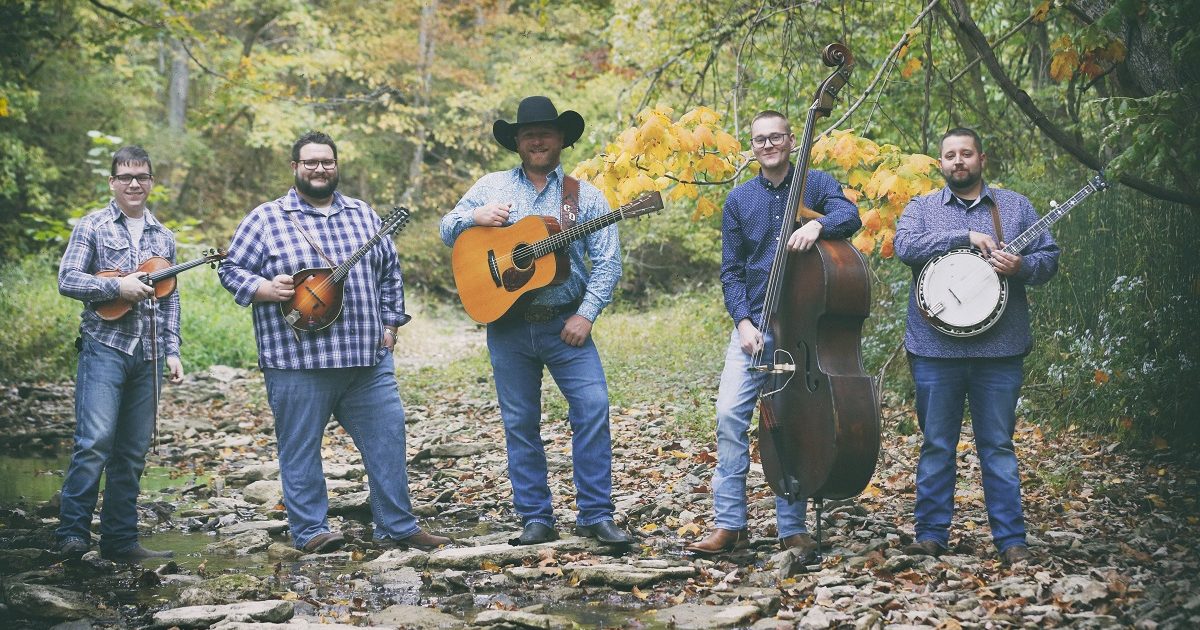
LISTEN: The Caleb Daugherty Band, “Daylight’s Burning”

Artist: The Caleb Daugherty Band
Hometown: Connersville, Indiana
Song: “Daylight’s Burning”
Release Date: October 30, 2020
Label: KDM Records

In Their Words: “Back in February 2020, Zion Napier and I were sitting around the fire listening to music way into the early hours of the morning. We were listening to old country and bluegrass trying to find some old gems that we could cut on our new project and I decided to play an album from The Boys from Indiana. That album led to us talking about the late Aubrey Holt (of TBFI) and eventually his son Tony Holt. It was not long into our conversation when ‘Daylight’s Burning’ came on and we both looked at each other and knew instantly that we wanted to record the song. We listened to it again and then at least another half dozen times! The song caused a flood of childhood memories for both of us and we really feel like it will do that to other folks, too. Our goal with recording ‘Daylight’s Burning’ is for everyone to experience the same nostalgia and happiness that we did and also enjoy the simplistic, but genius writing of Aubrey Holt.” — Caleb Daugherty


Photo credit: Kate Lunsford

LISTEN: Strung Like a Horse, “Lookin’ for Love”

Artist: Strung Like A Horse
Hometown: Chattanooga, Tennessee
Song: “Lookin’ for Love”
Album: WHOA!
Release Date: October 30, 2020
Label: Transoceanic Records

In Their Words: “‘Lookin’ For Love’ is a tune all about that exciting feeling you only get when first falling in love. It’s meant to invoke the joy of a relationship young enough to not be complicated. I know all our longtime fans are gonna be stoked on this one. The strings were cooling off just a little, and we needed to let them open up again and meet their quota. So we took care of business the way we used to — playing live in a room all together with a few mics scattered about. This one is a helluva good time, and I think our excitement for this song made its way through the wires. We all love to fall in love, and that’s the fun part to focus on. If you’re lookin’ for heartbreak, you’re in the wrong song.” — Clay Maselle, Strung Like a Horse


Photo credit: Vincent Ricardel

Justin Moses, “Taxland”

Multi-instrumentalist, sideman extraordinaire, podcast host, composer, and IBMA Award winner Justin Moses’ presence in bluegrass is as ubiquitous as it is unassuming — that is, in every way except when his picks meet the strings. Moses won Resophonic Guitar Player of the Year from the International Bluegrass Music Association in 2018 and 2020; he’s also recorded on countless sessions and albums, played on the Grand Ole Opry, and has toured with Dan Tyminski, Ricky Skaggs & Kentucky Thunder, and for more than a decade he’s been touring and recording music with his wife of three years, Sierra Hull.

A new track, “Taxland,” which features double mandolins played by Moses and Hull, marries his quiet, often humble virtuosity and his confidence on the mandolin. Moses can command any/all of bluegrass’s staple instruments, resulting in a melody that is all at once careening wildly towards its end and impossibly, impeccably clean. An unfamiliar listener might find it difficult to pick out which instrument belongs to Moses and which to Hull, a testament to their seamless musical gelling after years and years of collaborating. Inspired, loosely, by David “Dawg” Grisman’s new acoustic, post- jazz and swing bluegrass, the tune is housed in a cheerful minor key, as Dawg tunes often are, and Michael Cleveland’s wonky, edge-of-your-seat fiddle solo recalls Vassar Clements’ forays in new acoustic, but not without Cleveland’s own brand of idiosyncratic, bombastic bowing and double-stops peppered throughout. 

That a song could feel so improvisational, melodious, and frenetic while retaining its impossible polish once again points back to Moses’ lifelong career in bluegrass and his endless professionalism not only as a creator, but as a technician of each instrument he commands. With Barry Bales and Bryan Sutton — two more lifelong friends and fellow music makers — rounding out the fivesome, “Taxland” will stick with you for longer than just its nearly three minutes and thirty seconds. If you’re a musician like Moses, it just might last you from April ‘til your extension deadline.


Photo credit: Kady Carter

Ricky Skaggs Reunites With Bill Monroe’s Mandolin for ‘BIG NIGHT’ Event

On Wednesday, October 28, music fans had the chance to see and hear some of the most historic instruments in bluegrass played once again during an all-star fundraiser, BIG NIGHT (At the Museum). The Country Music Hall of Fame and Museum presented performances captured in the museum’s galleries and performance venues while the museum was closed, with select artists paired with instruments from the institution’s collection. The event debuted on the museum’s YouTube channel.

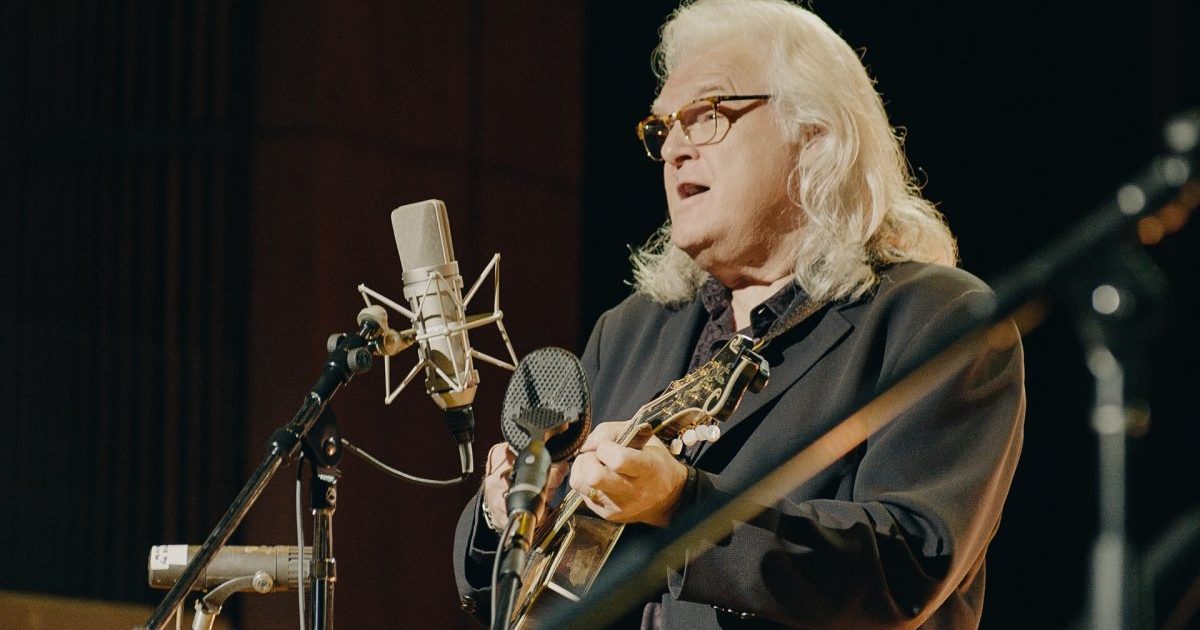
One such performance includes Alison Brown playing Earl Scruggs’s 1930 Gibson RB-Granada banjo, Ricky Skaggs playing Bill Monroe’s 1923 Gibson F-5 mandolin, and Marty Stuart playing Lester Flatt’s 1950 Martin D-28 guitar. Skaggs was elected to the Country Music Hall of Fame in 2018.

“I think it’s important to do anything we can to support the museum not as just members of the Hall of Fame, but as lovers of country music history,” Skaggs tells BGS. “I think it’s kind of our job to do that and it’s a privilege to know that my grandkids will be able to go there to see that history that we celebrated — and some of it I even got to be a part of. I’m thankful to be a part of it. It’s a wonderful thing.”

BIG NIGHT (At the Museum) generated support for the museum’s exhibitions, collections preservation, and educational programming. A closure of nearly six months due to COVID-19 caused significant loss of revenue for the museum, which was forced to cancel in-person educational events. During the BIG NIGHT program, viewers were encouraged to donate to the museum.

BGS spoke with Hall of Fame member Ricky Skaggs and museum CEO Kyle Young about the event.

BGS: Kyle, how have things been at the museum since the shutdown?

Young: We’re hanging in. We were closed for about six months. We opened back up September 10 under very limited capacity. As I look at the year, I think we will end up looking at lost revenue approaching thirty five million dollars, so it’s a matter of trying to navigate through and I’m hoping that we can stay open, even though it’s very limited.

Ricky, it’d be hard to imagine such an event without you there considering that you have such a deep connection to this music. What does it mean for you to get to play Mr. Monroe’s mandolin?

Skaggs: I can’t believe I’m getting to play it one more time. Every time I play it I’m sure it’s the last time, but then they’ll drag it out again and I’m always like, “Oh, God, thank you.” The first time I played it, I was 6 years old. So I didn’t really know that much about how priceless it was even then. And he wouldn’t just take it off and give it to you to play. He wasn’t that way, you know? Sometimes we’d shared a dressing room together. And he’d have the lid open in the case, but it would be pushed down in the case. I would always ask his permission if I could play it and he’d let me.

But, I didn’t play it that much when he was alive. I’ve played it so much more since he passed. There was a time before it went into the museum that the Opry House had it in a vault. There was a guy there that would let me play it, and two or three times a year, I’d go out and make sure that the bridge was OK and maybe I’d put new strings on it and stuff like that. But I played it quite a bit back then. When it went into the museum, I thought, “This is it.” You walk by and see it in the case and think, “Well, that ain’t ever coming out.” But I’ve been able to play it a few times and I’m always thankful.

It’s an amazing sounding instrument. And I made sure to mention, when I was inducted into the Hall of Fame, that Mr. Monroe did not create this music by himself. That instrument was his partner. That was his number one instrument from the time that he got it. He and that instrument created the sound of bluegrass. I mean, he was so creative after he got that instrument. If you think about the instrumentals that he wrote before when he had that F-9 with that short scale you can tell he was very limited. But when he got that 14 fret neck — goodness gracious! It gave him the room and the tone and the whole Loar experience to work with. It was meant to be. It was a heavenly meeting of two instruments: Monroe being one instrument and the mandolin being the other.

Listen to Ricky Skaggs on Toy Heart with Tom Power: APPLE MUSIC • STITCHER • SPOTIFY • MP3

That’s a beautiful sentiment and a good point about how inspiring that instrument was for him. That connection between instrument and musician existed with all of these instruments, so it’s going to be special to watch all of these performances. Were you all excited to get to perform a bit?

Skaggs: We were. None of us three — me, Marty or Alison — have had COVID, and we’ve certainly been pent up and cooped up. I recently did a video for Camping World with Steven Curtis Chapman, and after one of the faster instrumentals we played, I remember thinking, “Man, I have got COVID fingers,” you know? Kentucky Thunder hasn’t played a show since March 11 and that’s just crazy. So, it was a lot of fun to play with Marty and Alison. I think it’s going to be a really, really great show, and I hope it raises a lot of money for the Hall of Fame, because even though they’ve had to shut down, the building must be paid for every month like nothing happened. But, something has happened and that’s another example of how hard this virus has been on America in general, and which has been really, really unfortunate.

https://www.youtube.com/watch?v=Y1j5JYpSfTc

I know that those instruments almost never leave their display cases so what were the circumstances that allowed the instruments to get played for this event?

Young: We knew that there were a lot of things we couldn’t do while we were closed, but we tried to focus on what we might be able to do under these circumstances and what opportunities there might be. I don’t know if you remember this or not, but very early on in the shutdown, the Shedd Aquarium let a couple of penguins out and let them walk around the aquarium and posted videos of them looking at the other exhibits. That got us to thinking about what we could do. We are a very active museum with lots of programming, but we realized with an empty museum, we can carefully take these instruments out of their cases.

So, the penguins were the germ of it, to tell you the truth. We wanted to do something that looked like us and felt like us. The backbone of the museum, as you know, is the collection — and the collection is unbelievable. The curatorial staff enjoyed carefully choosing which instrument they wanted to take out and allow to be played. From that point, we decided which artists made sense.

That’s so special because I know it’s such a rare thing. The only time I can remember something like it was when Ricky played Bill Monroe’s mandolin at the Medallion Ceremony back in 2018.

Young: That was very, very unusual. And after a lot of discussion, we thought that’d be a great thing to do with Ricky that afternoon. And likewise, this is something we never do. It is only because we were closed and able to really control the circumstances by which we were moving these instruments and carefully handling them and letting the artists play them. They’re behind glass for a reason. That’s the best way to protect them. And they are in an environment that is intensely controlled from temperature to humidity to light exposure and so on. But we did feel like under these circumstances, and only these circumstances, could we see our way clear to take them out for a little while and let them be played.


Photos courtesy of the Country Music Hall of Fame & Museum


This article was updated on November 12, 2020

On ‘I’m With You,’ William Elliott Whitmore Puts Family Wisdom to Use

Over the last few years, William Elliott Whitmore has been thinking a lot about how we – as individuals and as a society – have a tendency to repeat our mistakes, and how we’re always trying not to. Yet the tone of his new album, I’m With You, is still infused with optimism, which often stems from the wisdom he’s learned from his family.

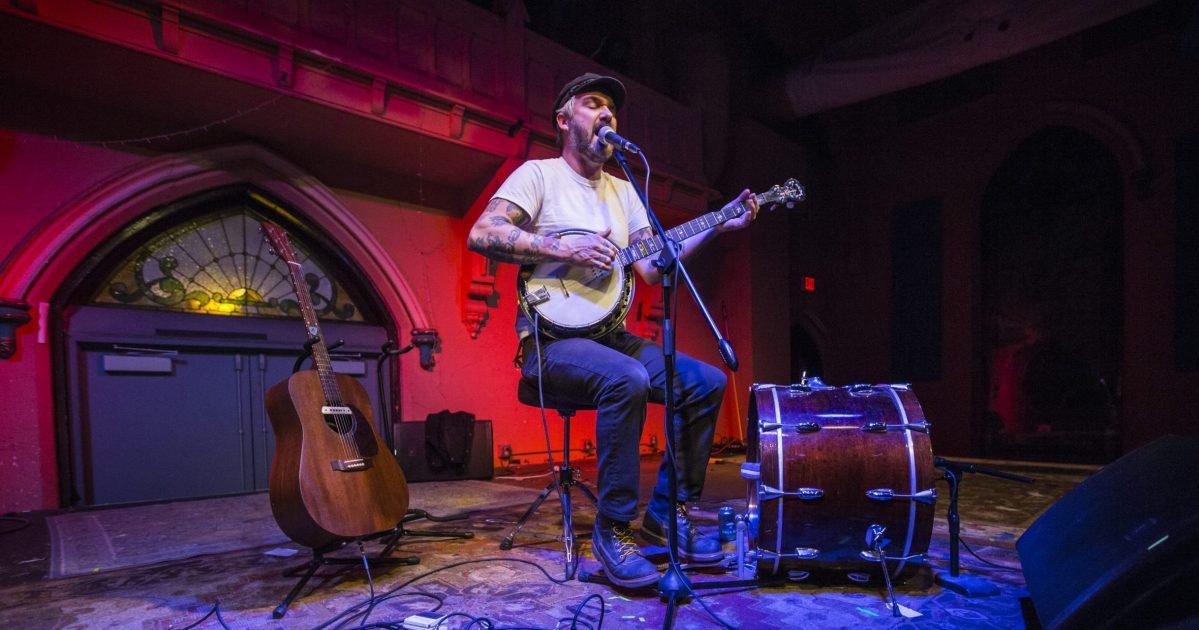
I’m With You is Whitmore’s first album of new material in five years, though its material wouldn’t sound out of place alongside his early songs like “Old Devils” or “Don’t Need It.” As always, his banjo and guitar are central to the album’s sound, while his raspy singing voice remains an effective tool at getting his point across.

Though the album does have some heavy themes, Whitmore often points out the silver lining in a situation, and moreover, he’s comfortable chatting up a stranger — a trait not uncommon to the Midwest. He spoke with BGS by phone from his farm in Lee County, Iowa, where he’s quarantining with his wife and their six-month-old baby.

BGS: There are several family relationships that you reference in the album’s first song, “Put It to Use,” and you’ve had family members as characters in your songs for a long time. Why is that bond with your family so inspiring?

Whitmore: Yeah, the bond with my family has always been inspiring. I’m pretty lucky in that I’ve got a big family that’s close by. Aunts and uncles and cousins. My folks were great people, full of wisdom and just caring, beautiful people, but through different circumstances they passed away when I was in my teens. So, that’s when I started writing songs, and in fact, that’s what made me start doing that — to codify what they had always been teaching me. And as a way to deal with it and not just go off the deep end. They pop up in songs a lot, and have since the beginning.

I don’t have them here, so I just think about their words of wisdom and lessons. I think we all get those lessons from someone, whether it’s your folks and a grandparent or a neighbor or a cool uncle or aunt. That cool person down the block that introduced you to The Ramones when you were a kid. [Laughs] It’s like, “Hey, check out Black Sabbath!” So you go, “I should listen up.” Not just music, but lessons, and we can gather that from anywhere. “Put It to Use” is about, OK, you’ve gathered all this good information. Now, put it to use. And more than just music — let’s try to love each other.

Was it someone in your family that introduced you to banjo?

Yeah, both of my grandpas played the banjo. One of them passed away when I was one year old, so I never knew him, but I actually have his old banjo. And one died when I was in my teens, and he was a banjo picker from the Ozark Mountains down in Missouri. My folks loved country music. My mom loved Willie Nelson and Charley Pride – those were her favorites. And in fact, my parents’ first date was a Charley Pride show at a county fair.

But [my interest in] the old-time stuff, Appalachia music and Ozark mountain music, came from my grandpa, and he played the banjo. When he passed away, I got his banjo because I was into playing guitar. I was like, “Oh, the banjo… it’s not THAT different than a guitar.” And I inherited all of his old records. He loved Roy Acuff and the Stanley Brothers. Again, it’s getting that influence from wherever you can.

Were those records your gateway to bluegrass? How did you become aware of bluegrass?

Yeah, those records. … He had a lot of compilations with 15 different artists on one record. You’d find out about a bunch of different stuff, like how Bill Monroe pretty much invented bluegrass by playing old-time music faster than everybody else. [Laughs] And the subtle differences between that and the old-time, slower stuff. A lot of it does have to do with tempo. The feeling is there for all of it, but Bill Monroe kicked it into that next gear.

It’s this whole rich history that’s really cool, and there’s still a lot to learn about, too. So I took that bluegrass influence, but I also liked Minor Threat and Bad Religion and Public Enemy, growing up in the ‘80s and ‘90s. There’s a theme running through all of this — punk and country and bluegrass and blues. Using simple tools to convey a message. No matter where you come from or what color you are, there’s a way to do this.

One thing you do well on this record, in my opinion, is setting the scene. While a lot of songwriters write primarily about themselves, or about love, you are writing about what’s around you. When did you become interested in environmentalism, for example?

That’s a great compliment, first of all. I’m right here on the farm I grew up on, and I’m very lucky to have that. So, the woods and nature and planting gardens — my folks were both naturalists. They wouldn’t have had the word for that, but they loved the land and they appreciated nature. That was passed on to us kids, the appreciation for the trees and the plants and the deer out in the field, and how we live among them and we’re part of it. We’re not above them. The grass in the meadow, the flora and the fauna that we see all around us, we’re just a part of that.

So it just doesn’t make sense to me, as an adult, why anyone would want to pour oil in the water, or level a whole forest, and cut every old-growth oak tree in the forest, just for the money! You want to live in harmony with nature, and sometimes you do have to cut a tree, but you want to be selective and do it in a smart way. … There are so many ways to do it mindfully. That’s my slant on it, and it all comes from living in the woods and living on a farm, and being instilled with those things at an early age.

Listening to your older records, I was struck by how much your singing voice has become more commanding. Did that come from you having to sing on stage, and use it as an instrument? At what point did you sense that your voice was becoming stronger?

That’s another great compliment. I didn’t even know if it was, but you know, it’s funny how things change over 20 years. I first started touring — gosh, it’s been over 20 years ago now. I used to smoke a lot of cigarettes and a lot of weed. … Well, maybe don’t write down “weed.” Oh, whatever, I don’t care. I just had a fucked up voice, but it was all I had. I was like, I wish I could croon like Dean Martin and Morrissey or Ralph Stanley, and have a beautiful voice, and I could never quite get there. So you just work with what you got, right?

So, I quit the cigarettes – and only the cigarettes. [Laughs] My voice changed after that, maybe, but it did come with playing a couple hundred shows a year, for years, and just being on stage, at least in the beginning, where they didn’t know who you are. It’s hard to be a presence when you’re by yourself. I was doing a lot of punk clubs and DIY spaces and bars, where they might not even care that you’re there. So you do have to make your presence known. I had to be more commanding. I am a loudmouth anyway, so it was natural. Put a microphone in front of me and I’ll make you listen! [Laughs] “I’m gonna start singing and you’re gonna wanna listen!” was my attitude, which is funny now.

But that did help me use it as almost a cudgel. Over the years, I’ve tried to sharpen that and make it more of a surgical thing and not a blunt instrument. [Laughs] I mean, I’m only dealing with guitar, banjo, and voice, and a beat — a kick drum now. Each one of them has to count. Any would singer would tell you, you take the time to write these lyrics, and in a live setting they just get lost. You’re just hollering. You have to learn to cut through. … Now it’s a bad habit to break because I’ll be singing in a quiet place, where everyone’s sitting down and listening and no one’s talking, and I’m just yelling like someone needs to hear me ten miles away. It’s those years of screaming over a bar room. I can’t shut it off.


Photo credit: Chris Casella
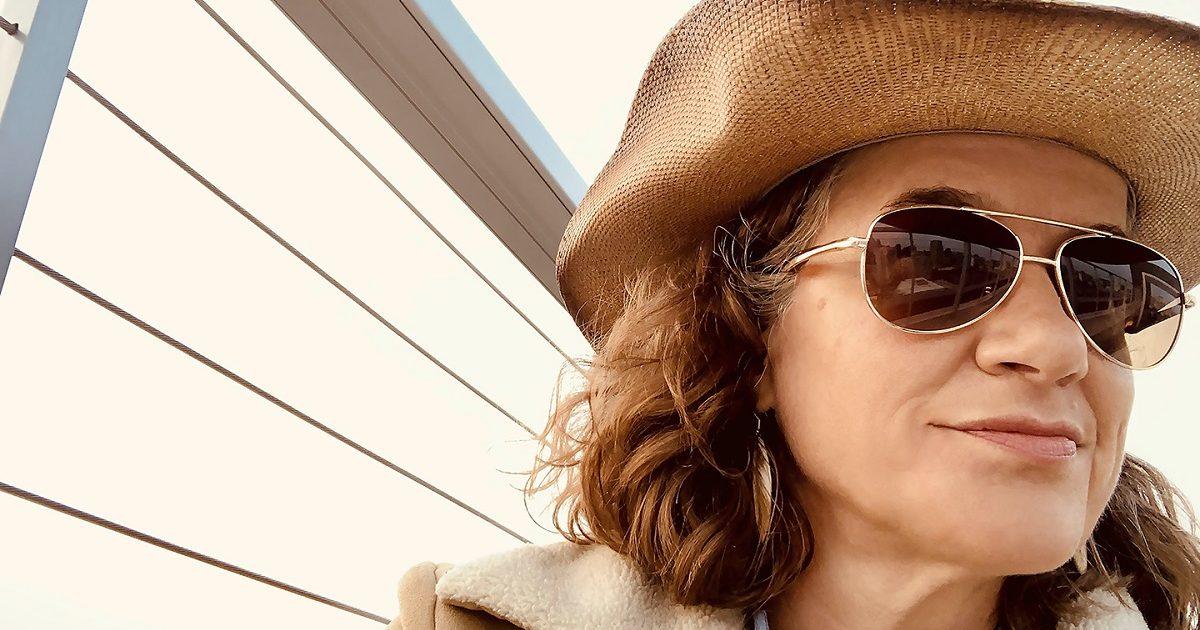
On New Solo Album, Resophonic Guitarist Andy Hall Reaches for the Jam Songs

Andy Hall is one of the fiercest slide guitarists we have around not just today, but probably ever. If there’s any doubt, you needn’t look further than his newest release, 12 Bluegrass Classics for Resophonic Guitar. The Denver-based singer and Dobro player of the Infamous Stringdusters has always pushed the envelope, but had never taken the time to put his own stamp on the formative tunes that all musicians of the genre play with one another. From teaching thousands of students online via ArtistWorks, to his work with Earl Scruggs, Dolly Parton, or Jack Black, it’s obvious that Hall is a master of the instrument, and the art itself.

BGS visited with Hall to talk all things pandemic, resophonic guitars, and what this record means in a time like our own. 

BGS: What was your initial inspiration for this recording?

Andy Hall: It was an interesting time in the spring when I was recording it, you know, but it’s all about taking opportunities that present themselves and making the most of the situation and what you can do. When everything stops, you have no idea what’s happening, you’re pretty quickly trying to figure out how to continue to be expressive. Our band the Stringdusters has toured so much for so long. …I don’t want to say I took it for granted, but when it all went away it was surprising — there was this withdrawal from doing the things that I love to do.

These are songs I’ve played for years and years, and I’ve always wanted to put my stamp on them, my take, you know? I totally overlooked them as anything I would record, because I always played them in jams. For most people, they don’t know these songs. So, I thought it would be the perfect opportunity to get a recorded version of all these jam songs. It was really just a matter of me sitting, playing, and enjoying these tunes enough to get a good representation of them.

At the same time that you’ve put your own stamp on these tunes, you said that they were formative. I noticed the speed-up in “House of the Rising sun,” just like Mike Auldridge of the Seldom Scene would do. Are there any influences you’re drawing from, more than others, on this record?

Everyone has their own version of what their “classic” tune would be for a certain instrument. So “House of the Rising Sun,” definitely based on the Mike Auldridge version. To me, if you do that song on Dobro, that’s just how it goes. “Dixie Hoedown” was on Jerry Douglas’ first solo record, and something like “Fireball Mail” couldn’t be a more quintessential dobro song. I was always too impatient to sit and get every nuance of somebody’s playing, so I kinda gloss over it for the general idea and fill in the blanks myself. So due to my impatience I have my own style with a lot of them.

So that’s what a lot of these are like, but you can trace most of them back to an original version — like “Cherokee Shuffle,” Sally Van Meter, a great dobro player from Colorado, did that on a record called the Great Dobro Sessions. One that’s totally my own is the first one on the record, “Leather Britches.” I’d never really heard a version of that, but I wanted to try and get that repetitive, cyclical, rolling sound of the fiddle. So a lot of them are jam tunes that I never heard a Dobro version of, and wanted to develop my own thing with. 

“Foggy Mountain Rock” really comes through that way. 

I actually was fortunate enough to get to play with Earl Scruggs some, and that tune is a perfect example of how I didn’t take the time to learn it officially like Josh Graves. When I auditioned for Scruggs’ band, I went to his house and jammed with both Earl and a fiddle player named Glen Duncan. My mind was just blown, you know, we’re just sitting in Earl’s living room playing “Foggy Mountain Rock.” When we finished playing it, it was clear I hadn’t done it the way he was used to hearing it. And he complimented it! “Oh, I love how you put that four chord in there. I love when people do their own thing.” That really justified my whole approach. If Earl Scruggs says it’s cool, then I’m good. 

Do you teach many of these in your class over at ArtistWorks?

There are a couple in my school. “Panhandle Rag” is in there, “Cherokee Shuffle.” I’m about to transcribe not just the melodies, but the solos for a few of these so that the students can have a crack at them. It seems primed for that kind of thing. This is a specialty project geared at Dobro nerds. With the Stringdusters or other projects I do it’s a bit more broad, usually song-based. This record definitely ties into ArtistWorks; it’s just getting deep into the slide guitar thing… because that’s what I love! 

“I am a Pilgrim” is so woody, while “Cherokee Shuffle” has that cutting metallic ring of the Dobro… Can you talk about some of the guitars you used on this record?

“I am a Pilgrim,” “Amazing Grace,” and maybe “Foggy Mountain Rock” were all played on a 1929 Squareneck Tricone National guitar. To me it just has a super unique blues sound. So I used it on the tunes that were slower, just to get some variety. I wrestled with how much variety to put on the record in that way, because I have a bunch of different slide instruments. I’ve got a Chaturangi, which is an Indian slide guitar with all of these resonant strings, of course lap steels and things of that nature, but I decided I wanted to keep it kind of Americana sounding. The National fit into that. All the rest I did on my favorite Beard guitar.

Speaking of formative years, I’m curious if there are any younger Dobro players that stick out to you, or even influence you?

For sure. As a Dobro player, when I was in my twenties, at a certain point I kinda felt like I had heard everything, because there weren’t all that many. I’d heard all of the Jerry Douglas and Rob Ickes, Mike Auldridge and Josh Graves. There’s a lot to dig into, but compared to any other instrument, there was a much smaller pool of stuff to draw on. It’s been cool as new players come up to hear new styles. I think the first guy that was new when I first moved to Nashville was Randy Kohrs. He had a technique that nobody else had.

Out of that came a couple of younger players that I really love like Josh Swift, who played in Doyle Lawson’s band for years. His technical ability is just insane — nobody else can do what he does. There’s a young guy named Gaven Largent who I remember teaching when he was probably 12. There’s a guy named Tommy Maher, who plays in a band called Fireside Collective. Andy Dunnigan from the Lil Smokies, he uses the Dobro very lyrically, and he’s the lead singer too. I love seeing that — a lead singer Dobro player!

I’d say one of my biggest influences in recent years is Roosevelt Collier, a lap steel player. I met him in 2013, on JamCruise, and of course became fast friends with the slide guitar connection. We stayed in touch and actually did a record together a few years back. Roosevelt’s very gospel, sacred steel, very singing, very emotive style, is something I’ve really tried to absorb. It just gets you in the chest. 

What do you foresee, or hope, will be the impact of this record?

There’s something about the coronavirus, or the lockdown, that made every part of life simpler. A lot of things got stripped away and we just got down to basics, be it hanging out with our families and making food, or with the music we’re not doing big tours or big production — we’re sitting in our basements by ourselves playing. It’s certainly one of the silver linings of the whole pandemic thing, the simplicity and the sweetness, and that’s what I was feeling with this. It’s just a reflection of me sitting and playing, and hopefully people will relate to that. People have had to strip everything down to being simple, and that’s what this record is. It’s a reflection of that return to the basics that the pandemic has put on us. It’s really forced us to get back to the root of why we do what we do!


Photo credit: Tobin Voggesser

The Show on the Road – Mipso

This week, we feature one of the leading roots-pop bands working today: Mipso. An affable and endlessly-creative quartet formed in Chapel Hill, NC, they are made up of fiddle player Libby Rodenbough, mandolinist Jacob Sharp, guitarist Joseph Terrell, and bassist Wood Robinson.


LISTEN: APPLE PODCASTSSPOTIFY • STITCHERMP3

Despite the anxious mood of their swing-state home base, it’s quite an exciting time for Mipso. Host Z. Lupetin was able to catch up with Libby and Jacob (via Zoom of course) to discuss their lushly orchestrated, self-titled record which just dropped last week; and if you walk down 8th Avenue in Nashville this week, you might catch a billboard with their sheepish grins large in the sky.

How did they get here? It’s hard to find a group where every member can effortlessly sing lead and write genre-bending songs that fit seamlessly on six acclaimed albums — and counting — in under ten years. Earlier standout records like the breakout Dark Holler Pop, produced by fellow North Carolinian Andrew Marlin of Mandolin Orange, and Edges Run, which features a veritable online hit in the broken-voiced, emotional “People Change,” show how Mipso appeals not only to folk fest-loving moms and dads, but also their edgier kids, who appreciate their subversive turns of phrase and playful gender-ambiguous, neon-tinted wardrobe.

As Z. found out during his conversation with Libby and Jacob, the band nearly broke up after a series of grueling 150-shows-a-year runs, a scary car wreck, and the pressure of putting out Edges Run for their rapidly growing fanbase. The forced slower pace of this last year and a half has been a gift in several ways — allowing the group to catch their breath and hole up to write more collaboratively than ever. The shimmering sonic backdrop that gifted producer and musician Sandro Perri was able to bring to the Mipso sessions at Echo Mountain studio in Asheville really makes the songs feel like they could exist in any era.

You wouldn’t be alone if you heard the connection between the honey-hooked newest record with the timeless, mellow-with-a-hint-of-menace hits of the 1970s (looking at you James Taylor and Carly Simon). Songs like “Never Knew You Were Gone” show off Terrell’s gift for gently asking the deepest questions, like where he might go when he transitions to the other side in a “silvery fire,” or the sardonically nostalgic “Let A Little Light In,” which wonders if the soft-focused images we have of the peaceful, boomtime 1990s (when Mipso was growing up) could use some real scrutiny. Rodenbough’s silky fiddle work stars throughout –and her courageous, vulnerable lead vocal on “Your Body” may be the most memorable moment on the new work.

Stick around to the end of the episode to hear mandolinist Jacob Sharp introduce his favorite contribution, “Just Want To Be Loved.”


Photo credit: D.L. Anderson

BGS 5+5: Larry Keel

Artist: Larry Keel
Hometown: Lexington, Virginia for the past 24 years.
Latest album: American Dream, out November 6, 2020
Personal nicknames (or rejected band names): My wife and I call each other “Ange” (pronounced “Aynge” with a long “a”) other nicknames are “Doghead” and “Late-night Man.”

What’s your favorite memory from being on stage?

My favorite memory is standing next to two of my heroes that I had studied all my life up to that point, and getting to collaborate and share in the music we made together on stage… I’m speaking of Tony Rice and Vassar Clements, during a period in my career when both of these iconic musicians played regularly in my band. Other major moments I cherish and will never forget are playing with Little Feat in Jamaica on a beach in Negril, playing Carnegie Hall in New York, playing Red Rocks Amphitheatre, and getting to play live music with my wife and my brother all throughout my career.

What other art forms — literature, film, dance, painting, etc. — inform your music?

I truly love to paint! Bob Ross got to me early in my childhood, and he’s still all up in my soul. I paint with watercolors, markers, pens, anything when I feel the urge. I guess poetry also influences my music, because I lean on that literary form for my songwriting. And I’m currently getting more into designing a meal and preparing the food, then plating it artistically.

What was the first moment that you knew you wanted to be a musician?

I knew I had to be a musician when I was little and I started paying more attention to my father and older brother playing (they both played guitar, my father also played banjo and sang). I loved watching them have such a good time and I could see how everyone playing music with them or listening to them all enjoyed it so much. Then, when I was 7, my brother bought me a guitar, helped me get started with chords and positions, and I never set the instrument down…I was hooked from then on.

If you had to write a mission statement for your career, what would it be?

The mission is to let the art take me and everyone listening on a journey together, to get us all on the same page for the time we’re connecting through the music. If I had to give myself or a budding musician advice, I’d say be ready to work HARD. Do your music and your business your own way. Let your own instincts and your own style guide your decisions. I’m a big believer in “march to the beat of your own drum…” and, be frugal and be kind.

Which elements of nature do you spend the most time with and how do those impact your work?

I spend lots of time in the garden, right here at my home. It’s such a zen feeling to plant seeds, nurture them, watch them grow and then enjoy the fruits and veggies of mine and my wife’s labor. Fishing and being on any water is another zen-like activity that keeps me grounded. All in all, I try to spend as much time as possible in nature, because it charges up my “feel-good” and gives me a connection to something timeless and eternal. I’m always trying to tap that genuine energy when I write and play music. That’s the goal.


Photo credit: Lyric Photography