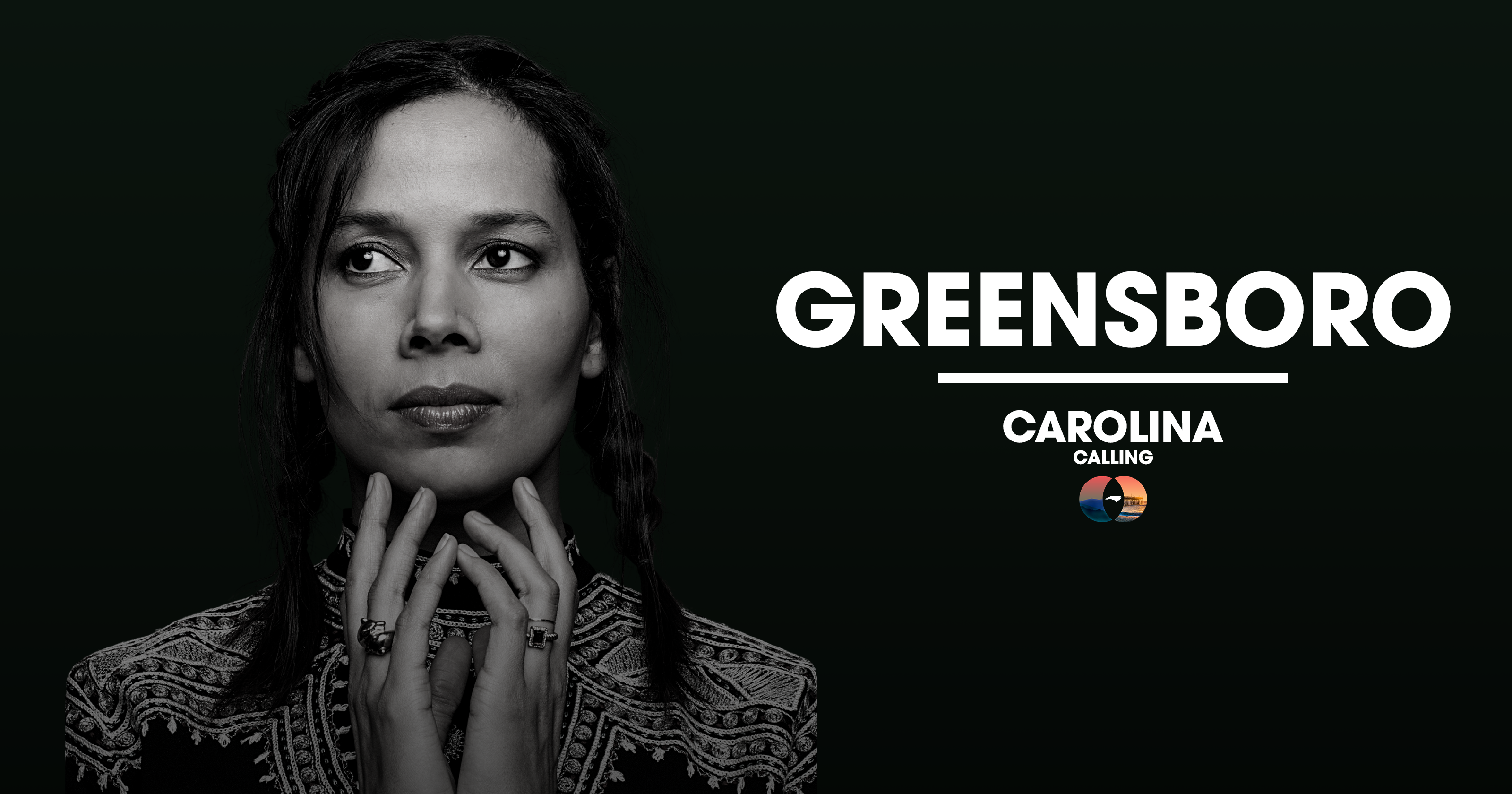
Known as the Gate City, Greensboro, North Carolina is a transitional town: hub of the Piedmont between the mountain high country to the west and coastal Sandhill Plains to the east, and a city defined by the people who have come, gone, and passed through over the years. As a crossroads location, it has long been a way station for many endeavors, including touring musicians – from the likes of the Rolling Stones and Jimi Hendrix at the Greensboro Coliseum, the state’s largest indoor arena, to James Brown and Otis Redding at clubs like the El Rocco on the Chitlin’ Circuit. Throw in the country and string band influences from the textile mill towns in the area, and the regional style of the Piedmont blues, and you’ve got yourself quite the musical melting pot.
This historical mixture was not lost on one of Greensboro’s own, Rhiannon Giddens – one of modern day Americana’s ultimate crossover artists. A child of black and white parents, she grew up in the area hearing folk and country music, participating in music programs in local public schools, and eventually going on to study opera at Oberlin Conservatory in Ohio. Once she returned to North Carolina and came under the study of fiddler Joe Thompson and the Black string band tradition, she began playing folk music and forged an artistic identity steeped in classical as well as vernacular music. In this episode of Carolina Calling, we spoke with Giddens about her background in Greensboro and how growing up mixed and immersed in various cultures, in a city so informed by its history of segregation and status as a key civil rights battleground, informed her artistic interests and endeavors, musical styles, and her mission in the music industry.
Subscribe to Carolina Calling on any and all podcast platforms to follow along as we journey across the Old North State, visiting towns like Durham, Wilmington, Shelby, and more.
Music featured in this episode:
Rhiannon Giddens – “Black is the Color” Andrew Marlin – “Erie Fiddler” Carolina Chocolate Drops – “Cornbread and Butterbeans” The Rolling Stones – “Rocks Off” Count Basie and His Orchestra – “Honeysuckle Rose” Roy Harvey – “Blue Eyes” Blind Boy Fuller – “Step It Up and Go” Rhiannon Giddens, Francesco Turrisi – “Avalon” Carolina Chocolate Drops – “Snowden’s Jig (Genuine Negro Jig)” Barbara Lewis -“Hello Stranger” The O’Kaysions – “Girl Watcher” Joe and Odell Thompson – “Donna Got a Rambling Mind” Carolina Chocolate Drops – “Country Girl” Carolina Chocolate Drops – “Hit ‘Em Up Style” Our Native Daughters – “Moon Meets the Sun” Rhiannon Giddens, Francesco Turrisi – “Si Dolce é’l Tormento”
BGS is proud to produce Carolina Calling in partnership with Come Hear NC, a campaign from the North Carolina Department of Natural & Cultural Resources designed to celebrate North Carolinians’ contribution to the canon of American music.
Photo Credit: Ebru Yildiz
Enter to win a prize bundle featuring a signed copy of author and Carolina Calling host David Menconi’s ‘Step It Up and Go: The Story of North Carolina Music,’ BGS Merch, and surprises from our friends at Come Hear North Carolina.
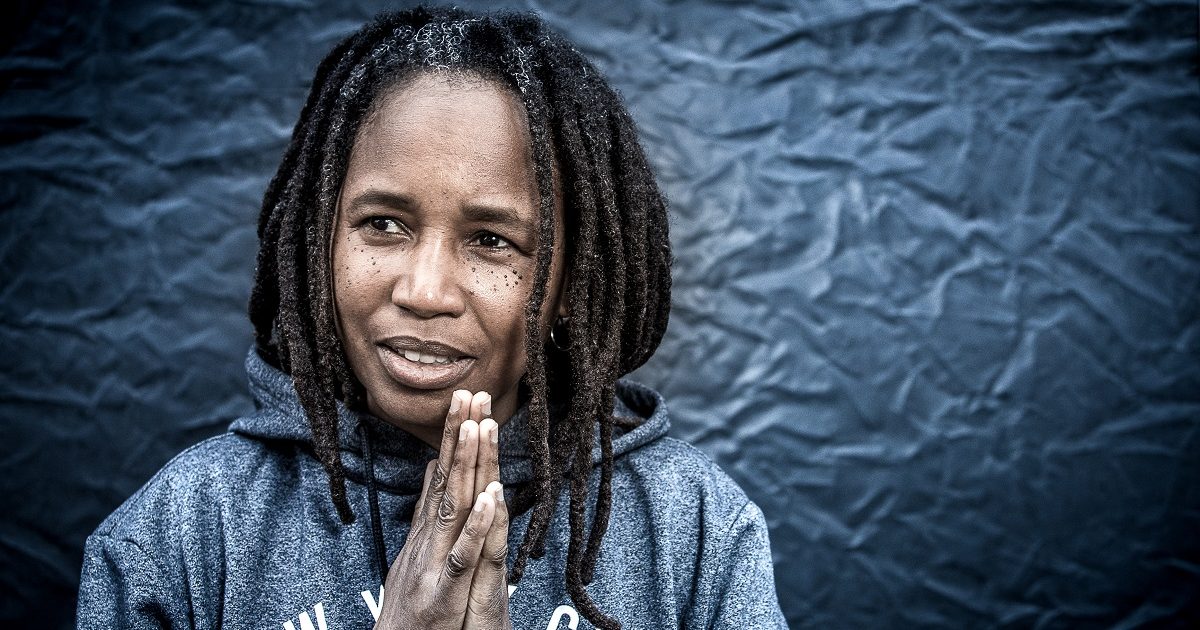
Artist:Natalia M. King Hometown: Brooklyn, NY, currently based in Paris Song: “One More Try” Album:Woman Mind Of My Own Release Date: February 18, 2022 Label: Dixiefrog Records
In Their Words: “When ‘One More Try’ by George Michael came out back in 1988 I was an itty bitty youngster who could relate to the emotion of the song but not the experience. All I knew in listening to him and feeling him was that something hurt, and it hurt bad…I was moved by his sadness and his necessity to be released, to be ‘let go’ from a love that was no longer serving his life or his heart. It was later on in life that his words were given sense and meaning with the different births of intense experiences of loves lost and found and lost again. The fact that I was also searching to define my sexuality at the time was a plus! His interpretation was so feminine! I was sure he was gay! With all that said and done, and to simply boil it down: ‘One More Try’ felt right! The timing, the knowing, the experience. Today, as a liberated, experienced, sexual, and quite emotional woman, it was almost commonsensical, logical for me to interpret this song! On this album! In my bluesy-folk way!” — Natalia M. King
Asheville, North Carolina’s history as a music center goes back to the 1920s and string-band troubadours like Lesley Riddle and Bascom Lamar Lunsford, and country-music pioneer Jimmie Rodgers. But there’s always been a lot more to this town than acoustic music and scenic mountain views. From the experimental Black Mountain College that drew a range of minds as diverse as German artist Josef Albers, composer John Cage, and Albert Einstein, Asheville was also the spiritual home for electronic-music pioneer Bob Moog, who invented the Moog synthesizer first popularized by experimental bands like Kraftwerk to giant disco hits like Donna Summer’s “I Feel Love.”
It’s also a town where busking culture ensures that music flows from every street corner, and it’s the adopted hometown of many modern musicians in a multitude of genres, including Pokey LaFarge, who spent his early career busking in Asheville, and Moses Sumney, a musician who’s sonic palette is so broad, it’s all but unclassifiable.
In this premiere episode of Carolina Calling, we wonder and explore what elements of this place of creative retreat have drawn individualist artists for over a century? Perhaps it’s the fact that whatever your style, Asheville is a place that allows creativity to grow and thrive.
Subscribe to Carolina Calling on any and all podcast platforms to follow along as we journey across the Old North State, visiting towns like Shelby, Greensboro, Durham, Wilmington, and more.
Music featured in this episode:
Bascom Lamar Lunsford – “Dry Bones”
Jimmie Rodgers – “My Carolina Sunshine Girl”
Kraftwerk – “Autobahn”
Donna Summer – “I Feel Love”
Pokey LaFarge – “End Of My Rope”
Moses Sumney – “Virile”
Andrew Marlin – “Erie Fiddler (Carolina Calling Theme)”
Moses Sumney – “Me In 20 Years”
Steep Canyon Rangers – “Honey on My Tongue”
Béla Bartók – “Romanian Folk Dances”
New Order – “Blue Monday”
Quindar – “Twin-Pole Sunshade for Rusty Schweickart”
Pokey LaFarge – “Fine To Me”
Bobby Hicks Feat. Del McCoury – “We’re Steppin’ Out”
Squirrel Nut Zippers – “Put A Lid On It”
Jimmie Rodgers – “Daddy and Home”
Lesley Riddle – “John Henry”
Steep Canyon Rangers – “Graveyard Fields”
BGS is proud to produce Carolina Calling in partnership with Come Hear NC, a campaign from the North Carolina Department of Natural & Cultural Resources designed to celebrate North Carolinians’ contribution to the canon of American music.
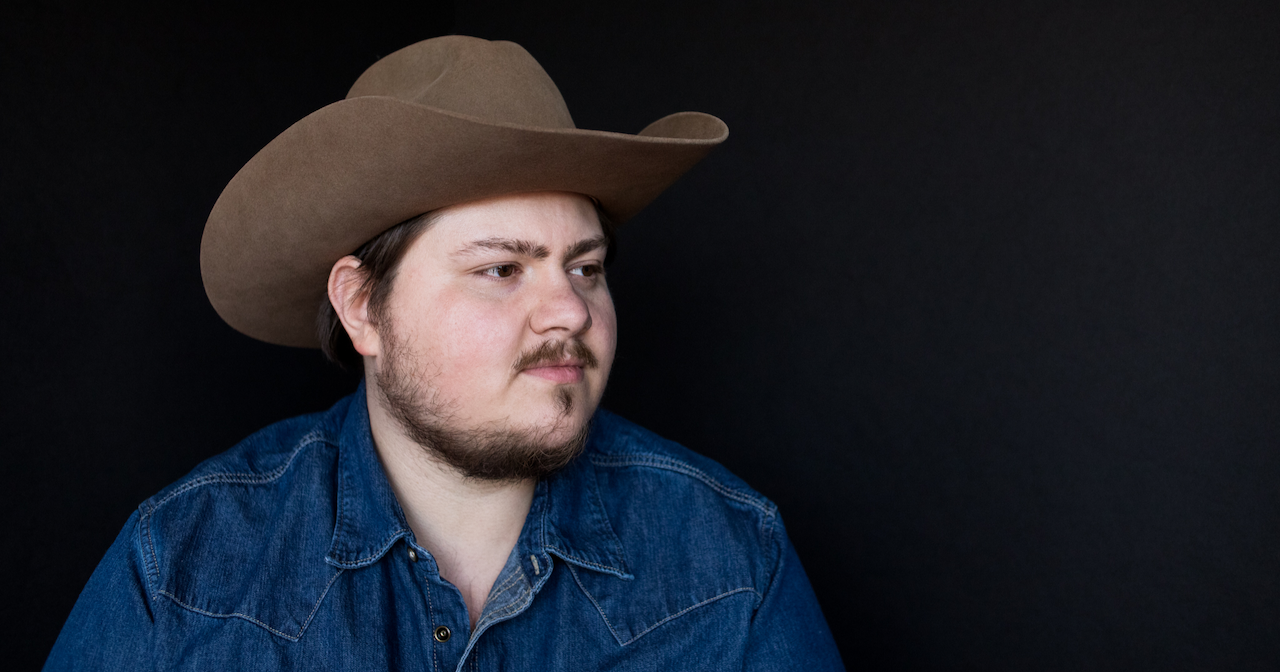
The self-titled country album by East Texan singer-songwriter Vincent Neil Emerson (Choctaw-Apache) oozes of the iconic “Wild West” with honky-tonk sensibilities and bluegrass touches that combine so many favorite textures and styles of country and Americana’s primordial ooze. His personality and identity are forward in every aspect of the project, from the lyrics to the production to the genre fluidity of each individual track – all of which marvelously combine into a cohesive whole.
In Emerson’s exclusive Shout & Shine live session (watch below), he performs two tracks from the album, “High on Gettin’ By” and “The Ballad of the Choctaw-Apache,” a song that dutifully tells the story of his grandmother’s community which was impacted by the creation of a man-made lake, the Toledo Bend Reservoir. The flooding of Toledo Bend had a disproportionate impact on impoverished, rural, and marginalized communities – including many Indigenous people – on the Texas-Louisiana border.
On first listen, “The Ballad of the Choctaw-Apache” feels like many classic country songs telling of injustice and standing in opposition to empire and “the man,” but Emerson’s personal connection to the tale is the entrancing spotlight under which this song shines. As you enjoy Emerson’s performance, take in our interview, when we connected via phone to discuss the album, Emerson’s creative process, and the overarching fact that, as he puts it, “Indigenous music is folk music. Indigenous stories are part of American folklore.”
BGS: I loved listening to the album and something that’s striking to me is that it feels so country, but also combines a lot of different genre aesthetics from different subsets of country in a unique way. I hear bluegrass in it, I hear string band music in it as well as western swing and classic country. How do you approach production and deciding which songs sound like what? There are a lot of different flavors here, but they still sound cohesive as well.
Emerson: With this one I got really lucky having Rodney Crowell producing the album. I think a lot of his ideas were what I was hearing in my head anyways. It matched up very well. As far as instrumentation, song by song we sat down and said, “Here’s what I think the song needs.” We were trying to fit the instrumentation around the song and around the story of the song. As opposed to doing it the other way around. If it sounded bluegrassy, that’s because it probably needed it, I guess!
To me it sounds like that golden age of country before it was divided into sub-genres and all country was just country.
I appreciate that!
What was it like working with Rodney? What was the balancing act like as far as his fingerprints being on the music and yours?
Nothing was forced, it was kind of like, “We got this song and this is what we’re going to do.” And, “Yeah, that sounds good!” [Chuckles] I wouldn’t say he was very hands-off, he knew exactly what he was doing. I didn’t really question any move that he made. It was kind of surreal getting to work with him.
A bystander, or a casual listener, when they hear “Ballad of the Choctaw-Apache” might just hear a country & western song, but I know for you it’s not just a classic, archetypical country song tale, it’s much more personal. It tells the iconic story of this country and this continent of the theft of land, culture, and ways of being from natives. I wonder if you could tell us a bit more about that song and how it’s more than just you writing a “rootsy” song.
I started writing that song after I sat down and talked with my grandmother about her upbringing, what she went through, and how the whole Toledo Bend Reservoir [creation in Texas and Louisiana and the displacement of natives and entire communities] affected her family. As I’ve been learning more about my tribe I felt that it was necessary to write something about that. I haven’t heard any songs written about it – in fact, not a lot of people talk about it. I thought it was needed.
Sometimes music like yours can get pigeonholed as “time capsule music” or throwback music. Something I love about this collection of songs is that, even though it’s classic and timeless, it doesn’t feel dusty or antiquated or divorced from the present. Can you talk a bit about that? Your music is down to earth, too, but it doesn’t feel like you’re trying to make music that’s retro.
There are a lot of bands out there that sort of play dress-up. There’s nothing wrong with that! I respect that and I’ve done it, too, but they’re trying really hard to be a certain era. I love all that music from the old school — I love Bob Wills — it’s just a personal choice. I don’t feel the need to “dress up” or try really hard to make the music sound like it was from back then. I’m so heavily influenced by the people around me and what’s going on around me constantly.
One guy who really had a good mix of that, too, was Justin Townes Earle. He had the old-time thing going on, then he could bust out “Rogers Park,” a piano ballad, and move in and out of [many different styles]. A personal style of songwriting should be a melting pot, it should be all eras – past and present.
Music is so subjective, I’m a firm believer in the idea that however you hear it is what it is. Whether that’s a positive thing or a negative thing to someone, I think it’s their right. I can’t tell anybody they’re wrong for forming their own opinion about my music – or anybody’s music.
It sounds like the process of letting a song have a life of its own is a big part of the process for you and that you understand an audience is always going to project onto or perceive meaning maybe where you didn’t yourself.
I don’t like to bounce my stuff off of people that much, because I’m going to write what I’m going to write. I don’t want to let people influence me too much in that way. But it is a really good feeling whenever you write something and you get a positive reaction or positive feedback. I think I’m more focused on the songwriting. As long as I’m being one hundred percent honest with myself in the song then I feel like it’s a tool for me to express myself completely. I feel that’s good enough.
A point that I always try to make about country, Americana – especially “country & western” specifically – Texas swing, and western swing traditions is that none of these genres would exist without the contributions of Indigenous folks. Especially when you think about Indigenous folks living in the occupied “Wild West” before any other folks did. And there were Black and brown folks who were cowboys before white folks ever were. I feel like that’s always missed, forest-for-the-trees style, by the roots music establishment these days. Country wouldn’t exist without Indigenous folks. Do you have thoughts on that? Have you thought about how your music draws on that legacy?
That’s something I’m still trying to understand myself and really learn about. I think you definitely have a great point there. If you think about it, the settlers came over and they didn’t know how to work the land, they didn’t know how to hunt over here. Natives taught them all that and the settlers took that information and they thrived with it. Our society would not exist in the U.S. if it weren’t for the people who were here before. And it applies to the music as well, yeah.
The album feels so western. Like rhinestones and cactuses and false-fronted buildings. It feels so “authentic,” but it’s not just about the nationalism of settling the Wild West and it’s not about these white supremacist myths about cowboys and western culture. Could you talk a bit about that aesthetic? How Texas and the West and something like cowboy poetry and storytelling come through your songwriting?
I never really set out to try to write about these things, it’s just the things I’ve been surrounded by. I worked on a ranch for a little while. “High on the Mountain,” that song came to me while I was literally on the top of a mountain – well, it was more of a hill – while I was in Palo Duro Canyon. Growing up in Texas, seeing all that stuff, it kinda [left an impression]. A lot of it, as far as stylistically, comes from listening to people like Bob Wills and Townes Van Zandt and Blaze Foley. Anyone that I’ve been influenced by, their influence creeps into it. It’s definitely not just a brand, it’s more my life. [Laughs] I never really thought about it, actually!
I grew up between a horse ranch and a cow pasture in East Texas. I grew up in the middle of nowhere. When you get into cities like Dallas, Fort Worth, Houston, Austin, San Antonio, these bigger cities, there’s a lot more to the area I’m from than just little podunk country towns. I learned that when I was 19. I moved over here [to the Fort Worth area] and was like, “Holy shit!” There was a lot going on. There’s a lot of rich, cultural, musical history. I’d like to dive more into that on the next record. I want to try to put some Tejano music in the blender. Maybe some polka and western swing. See what happens! If you go down around the Hill Country there’s a lot of German music, German immigrants, there are entire communities that still speak German over there.
Maybe this is a good way to wrap up our conversation: Who’s inspiring you right now? Who are you listening to?
As far as Indigenous artists go, I think folks really need to listen to Leo Rondeau. He is one of the baddest motherfuckers out there doing it right now. Really, really great music. In the realm of music I play, there’s not a whole lot of Indigenous people doing it. Of course, I think there are a lot of people with Indigenous heritage, but as far as being able to immediately trace your roots back like my grandmother who is Choctaw-Apache from Ebarb, Louisiana, there’s not a lot of that. It’s kind of a shame. And I’m not the end-all be-all on the subject! I’m not the most up to date on things. I’m sure there are a lot more, I’d love to learn more and hear more. It’s a good thing to bring up and a good question to ask, because it’s something people should be thinking about.
This collection of albums is not simply a “best of” 2021. That would be selling every single collection included herein far too short. These roots and roots-adjacent releases each stood as a testament to the music makers and communities that spawned them. Not simply in the face of a globe-halting, existentially challenging pandemic, but in the face of an industry, government, and culture that would just as soon have all of us pretend the last two years — and beyond — simply didn’t happen.
These artists and creators refused to let the pandemic define their artistic output through it, while simultaneously acknowledging, processing, and healing from the pandemic through this music. Not a single album below is a “pandemic record,” yet every single one is a resounding, joyful balm because the intention in each is not simply a reaction to a global disaster or an attempt to commodify it or its by-products. Not a single one is an attempt to “return to normalcy.” They’re each challenging us as listeners, in both overt and subtle ways, to walk into our collective new reality together, wide-eyed and open-armed, and with intention.
Daddy’s Country Gold, Melissa Carper
It was a sly move on Melissa Carper’s part to give her album, Daddy’s Country Gold, a title that works on so many levels, nodding to the passing down of sounds, to her road nickname and to her ability to casually loosen postwar country perceptions of masculinity and femininity. In her songs and performances, her gestures are even more beguilingly subtle. Enlisting a fellow upright bassist to produce with her, the Time Jumpers’ Dennis Crouch, Carper claimed western swing and early honky-tonk eras as her playground, and the shrewd, crooning intimacy of Billie Holiday as her guide. Carper sings in a slight, reedy rasp, deftly phrasing her lines and curling her words to suggest the lasting nature of longing and fleeting nature of pleasure. She’s written a movingly clever ballad of broken commitment (“My Old Chevy Van”), elegantly pining tunes of both torchy and down-home varieties (“I Almost Forgot About You,” “It’s Better If You Never Know”) and whimsical fantasies of rural homesteading, sometimes making clear that she’s cast a female partner in those stories (“Old Fashioned Gal,” “Would You Like to Get Some Goats?”) Her artful knowledgeable nudging of tradition is a revelation. — Jewly Hight
Music City USA, Charley Crockett
Few artists in the last few years have us as fired up as Charley Crockett. His unapologetically individual sound and aesthetic shine through once again on his 2021 release, Music City USA. The irony, of course, is that the album sounds nothing like most of what comes out of modern-day Nashville. It’s an amalgamation of influences both old and new — blues and classic country and soul with a peppering of Texas-tinged Americana on top. Charley Crockett absolutely represents what the future of Music City sounds (and looks) like in our book. — Amy Reitnouer Jacobs
Home Video, Lucy Dacus
We must forgo the existential “Is it roots?” question at this juncture, simply because this stunning and resplendent work by Lucy Dacus refused to be excluded from this list. Perhaps the superlative album of 2021, in a year filled to bursting with objectively and subjectively superlative albums, Home Video is impossibly resonant, relatable, down-to-earth, and touching — despite its intricate specificity and deeply vulnerable personality. Dacus’ queerness, and the beautiful, humane ways it refuses categorization and labels, is the crack beneath the door through which the light of this gorgeous, fully-realized universe is let into our hearts. Her post-evangelical pondering; the challenging while awe-inspiring abstract, amorphous gray zones she doesn’t just examine, but celebrates; the anger of rock and roll paired with the tenderness of folk and the spilled ink of singer-songwriters — whether taken as a masterpiece of genre-fluid postmodernity or an experiment on the fringes of roots music, Dacus’ Home Video establishes this ineffable artist as a subtle, intellect-defying (and -encouraging), empathetic genius of our time. — Justin Hiltner
My Bluegrass Heart, Béla Fleck
It’s been over twenty years since the eminent master of the banjo, Béla Fleck, recorded a bluegrass record. My Bluegrass Heart completes a trilogy of albums (following 1988’s Drive and 1999’s The Bluegrass Sessions) and is as much a who’s who of modern bluegrass – featuring the likes of Billy Strings, Chris Thile, Sierra Hull, Bryan Sutton, Molly Tuttle, Michael Cleveland, Sam Bush and many others – as it is a showcase of Fleck’s still-virtuoso level talent.
But as much as My Bluegrass Heart is an album for a bluegrass band, we would be hard pressed to call it a bluegrass album (in the best possible way). As he has done countless times before, Fleck effectively breaks every rule and pushes every boundary by surrounding himself with fellow legendary rule breakers, creating something wholly beautiful and unique in the process. — Amy Reitnouer Jacobs
A Tribute to Bill Monroe, The Infamous Stringdusters
Bluegrass loves a “back to bluegrass” album, no matter how far an artist or band may or may not have traveled from bluegrass before coming back to it. On A Tribute to Bill Monroe, the Infamous Stringdusters cement ‘80s and ‘90s ‘grass – “mash” and its subsidiaries – as an ancestor to the current generation of jamgrass. Or, at the very least, it cements that these two modern forms of bluegrass cooperatively evolved. It’s crisp, driving, bouncing bluegrass that’s as much traditional as it isn’t. Sounds like quintessential Stringdusters, doesn’t it? Their collective and individual personalities ooze through the Big Mon’s material, which is what we all want cover projects to do, in the end: Cast classics in a new light, into impossibly complicated refractions. And, in this case, infusing postgrass sensibilities back into the bluegrass forms that birthed them. — Justin Hiltner
Race Records, Miko Marks & the Resurrectors
One of the best bluegrass albums of the year most likely would not be “binned” as bluegrass, and that this album is titled Race Records demonstrates exactly why. Miko Marks returns to the primordial ooze aesthetic of country, old-time, blues and bluegrass — without a whiff of essentialism — and accomplishes a Bristol Sessions or ‘40s-era Grand Ole Opry sound that’s as firmly anchored in the present as it is elemental. Marks’ musical perspective has always highlighted her awareness that the death of genre, as it were, is nothing new, but a return to the traditions that birthed all of these roots genres, many of which can be attributed to the exact communities race records originally sought to erase. Marks & the Resurrectors joyfully and radically occupy songs and space on Race Records. The result is as light and carefree as it is profound; it’s devastatingly singular yet feels like a sing along. All quintessential elements of bluegrass and country. — Justin Hiltner
Dark in Here, Mountain Goats
John Darnielle sings at the velocity of a firehose torrent, and he writes songs with titles like “Let Me Bathe in Demonic Light” and “The Destruction of the Superdeep Kola Borehole Tower.” But rather than death metal, Mountain Goats play elegantly arranged folk-rock dressed up with saxophones and the occasional keyboard freak-out. Dark in Here, the best of five Mountain Goats albums released the past two years, coheres into tunefulness despite the clashing contrasts — especially “Mobile,” a gently gliding Biblical meditation on hurricane season, and also Darnielle’s prettiest song ever. Perfect for the whiplash jitters of this modern life. — David Menconi
In Defense Of My Own Happiness, Joy Oladokun
I don’t know if I’ve ever been so immediately captivated by an artist as I was when I first heard Joy Oladokun’s single, “Jordan,” earlier this year. On that song — and every other one on In Defense of My Own Happiness that I played over and over this year — her clear voice and searingly personal lyrics emerge as a calm, universal call to pursue something better, melting down her own painful past and re-molding it in the image of self-love, inner peace and … well, joy. Oladokun is indeed building her own promised land, and we’re all lucky to bear witness. — Dacey Orr Sivewright
Outside Child, Allison Russell
One might assume an album covering the subject of abuse could intimidate a listener with its potential heaviness. While Outside Child does indeed venture into the depths of those dark experiences, Allison Russell gleans profound lessons learned and treasures discovered from each and every detail of her experiences in her youth. The result is ethereal and uplifting — and a release of trauma through a bright musical experience swelling and overflowing with hope for the future. — Shelby Williamson
The Fray, John Smith
Most artists are pretty keen to play down the idea of a “lockdown record,” because they’re worried it will limit the music’s appeal or longevity. But the emotions John Smith pours into The Fray — born of that period when we were all taking stock of our lives, and wondering what to do next — will hold their currency for a long while yet. It’s honest, yes, but also pretty soothing on the ear, showcasing Smith’s fullest sound to date — both heart’s cry and soul’s balm at once. — Emma John
See You Next Time, Joshua Ray Walker
I wasn’t out after “Three Strikes.” Instead, I was all in. With the steel guitar weaving like a drunkard in a Buick, it sometimes seems like this Dallas musician’s third album is about to go off the rails, along with the lives of the people he’s created in these songs. It never does, though, and that’s a credit to Joshua Ray Walker’s commanding vocal and a willingness to bring his dry sense of humor to the country music landscape. From the pretty poser in “Cowboy” to the unsightly barfly known as “Welfare Chet,” these folks feel like true honky-tonk characters. — Craig Shelburne
Simple Syrup, Sunny War
“Tell me that I look like Nina,” sings Los Angeles singer-songwriter Sunny War in “Like Nina,” the keystone song of her fourth album, Simple Syrup. The Nina in question is, of course, Nina Simone. The look is the “same sad look in my eyes,” though in concert War often flashes a bright, disarmingly shy smile — that of a young Black artist demanding to be taken on her own, singular terms, not the terms of cultural expectations. She continues: She can’t dance like Tina, sing like Aretha, be styled like Beyoncé. But she can see injustice, seek love and respect, seek a sense of self, and sing about it, captivatingly, with her earthy voice and folk-blues-rooted fingerpicking, enhanced by a small cadre of friends led by producer Harlan Steinberger. Like Nina? No. Like Sunny War. — Steve Hochman
Sixteen Kings’ Daughters, Libby Weitnauer
There’s a new artist on the folk scene — Libby Weitnauer. Weitnauer is a fiddle player, violinist, singer and songwriter raised in East Tennessee and currently based in Nashville. Her debut EP and first solo effort, Sixteen Kings’ Daughters, was produced by Mike Robinson (Sarah Jarosz, Railroad Earth) and presents centuries-old Appalachian ballads that have been recast into a lush and unsettling sonic landscape. Weitnauer’s high lilting voice is reminiscent of Jean Ritchie, and she glides with ease atop eerie backdrops of electric guitar, bass, fiddle and pedal steel. A strong debut to say the least, and we’re excited to hear more. — Kaïa Kater
Urban Driftwood, Yasmin Williams
Watching Yasmin Williams play guitar can boggle your mind. She uses her full body to coax noise from the instrument, her fingers pounding on the strings, her feet clicking out counter rhythms in tap shoes, one hand even accompanying herself on kalimba. As impressive as her technique is, it’s less remarkable than her facility for compositions that are melodically direct yet structurally intricate. Urban Driftwood is a carefully and beautifully written album, and Williams’ songs lose none of their flair when she transfers them from the stage to the studio. Dense with earworm riffs and evocative textures, the album represents a crucial pivot away from the increasingly staid world of folk guitar, which has recently been dominated by white men indebted to the historical American Primitivism pioneered by John Fahey. Williams is opening that world up to new sounds and influences, insisting that her guitar can speak about our present moment in ways that are meaningful, moving, and subversive. — Stephen Deusner
This week, we call into the Catskills of New York for a deep conversation with James Felice: accordionist, pianist, songwriter and co-founder of fun-house-mirror Americana group, The Felice Brothers.
James started the band with his brothers (poet lead singer Ian) and percussionist Simone in 2006 as a busking folk pop experiment with a literary rebel streak within the subways of New York City. They’ve joined roots-pop luminaries like Bright Eyes at venues as storied as Radio City Music Hall — but somehow the gritty, back-alley bar seems like their natural habitat. Ian, James and their longtime quartet (Will Lawrence and bassist Jesske Hume round out the band) returned after years of hibernation to release their daring party-through-the-apocalypse rollercoaster of a new LP From Dreams To Dust in 2021 on Yep Roc Records.
Some bands record at home, or maybe in tricked-out cabins or plush studios, but The Felice Brothers seem to make records that use their unique and often bizarre surroundings as an added character in the band. Their beloved self-titled record, which came out 2008, feels like a gin-soaked saloon party where Hemingway and Lou Reed and Sly Stone would join in on swaying sing-alongs besides a sweat-soaked piano. It was somehow recorded in a converted chicken coop, while their brassy, bizarro-rock romp Celebration, Florida (2011) was recorded in a booming high school gymnasium. “Honda Civic” is a musical-theater-esque favorite, with an explosion at the local Wonder Bread warehouse taking center stage in the narrative. Does any of it make sense? Does it matter?
Their newest work is a more emotional, sonically lush, storytelling-driven operation, having been recorded in a church in Harlemville, New York, with award-winning mixer Mike Mogis at the helm. Mortality takes the spotlight. Ian Felice is in rare form here, spitting more words and setting more strange scenes per song than most slam-poets or absurdist playwrights. The lead song, “Jazz on the Autobahn,” has become a staple on Americana radio, showcasing what TFB have always done best: taking their listeners on a white-knuckle ride that has no predicable end or resolve in sight.
This week, we bring you an in-depth dive with vintage roots-n-soul excavator and beloved Illinois-born songwriter Pokey LaFarge. With his trusty guitar on his lap during the talk, taped in his LA breakfast nook, we go through the making of his funky and cheerful new LP, In the Blossom of Their Shade.
For the last decade and change, Pokey LaFarge (born Andrew Heissler in Bloomington-Normal) has crisscrossed the globe making his own brand of historic-minded, literary-tinged folk blues. Europe, especially, has become a second home. From his fashion sense, to his high-cutting delivery, LaFarge seems like he could have stepped out of a road show with Hank Williams and Sister Rosetta Tharpe, and yet, rock luminaries like Jack White saw something deeper than just a player of old-time covers.
Out on his own from a young age, Pokey began busking to get by and soon teamed up with the South City Three to create his first run of albums in 2009. Opening for White got LaFarge in front of huge crowds, and standout records like the danceable Something In The Water (2015) and the darker Rock Bottom Rhapsody (2020) saw him transition from front-porch country folk to muscular jangly rock-n-soul.
If there are a few things that helped the new release In The Blossom of Their Shade come to be, they may have been falling in love again, rediscovering his faith in a higher power, and taking plenty of power naps during his songwriting sessions. During the pandemic, Pokey also began helping the local homeless community in LA.
Stick around to hear an exclusive acoustic performance of his single, “Get It ’Fore It’s Gone.”
Artist:Maja Francis Hometown: Stockholm, Sweden Song: “Mama” Album:A Pink Soft Mess Release Date: September 24, 2021 Label: RMV Grammofon
In Their Words: “This song is for my mom…and about how it feels to be grown up and be able to comfort her the way she’s always comforted me. We’ve both experienced mental health issues through life and not until I became an adult I understood her struggles, because I have the same ones. It’s been both beautiful and painful to share that with each other…and I wanted to write a song about that intense and complex love. I was also thrilled when my dear friends Klara and Johanna (First Aid Kit) wanted to feature on it. They’ve been such a big part in me finding my voice again so it felt really good to have their voices and energy on the album.” — Maja Francis
Artist:John Scott Sherrill Hometown: Nashville, Tennessee Song: “Five Generations of Rock County Wilsons” Album:Copper Tears Release Date: October 15, 2021 Label: Lobo Libre
In Their Words: “People often ask me how long it takes me to write a song, and some songs I can write in a couple of hours. But ‘Five Generations of Rock County Wilsons’ took 17 years to write. I got the inspiration when I was taking a bus back in my college years to Illinois from New Hampshire. It took seven days, so I was sleeping as we drove, and waking up at all hours of the day, not knowing where I was. I woke up one morning, looked out the window of the bus, and saw all these men standing around, trying to hold their maps in the wind. I thought they must have plans to do something with that cornfield. I made a note in my notebook and left it until years later, when I found the notebook in my mother’s attic. I opened it up and saw my notations and thought that idea was worth writing about.” — John Scott Sherrill
Artist:Jane Bruce Hometown: Ogden, Utah Song: “Best of Me” Album:My Bed Release Date: February 11, 2022
In Their Words: “This song really flowed out of me. I find it (too) easy to write and sing about my insecurities and the pieces of myself that I don’t love, but I felt that writing a song that clearly laid out those things in the hopes that it might make someone love me more was an interesting twist on a ‘pining-for-you’ love song and an exploration of the ways we present ourselves to the people we desire. Growing up in Utah I felt constantly aware of my different-ness and keenly attuned to all the things that made me unlovable, or wrong. With time I have come to realize that these so-called shortcomings are human and that my deep-seated fears of disappointing others come from a place of empathy, not weakness.” — Jane Bruce
Photo credit: Angelina Castillo
This website uses cookies to improve your experience. We'll assume you're ok with this, but you can opt-out if you wish.AcceptRejectRead More
Privacy & Cookies Policy
Privacy Overview
This website uses cookies to improve your experience while you navigate through the website. Out of these, the cookies that are categorized as necessary are stored on your browser as they are essential for the working of basic functionalities of the website. We also use third-party cookies that help us analyze and understand how you use this website. These cookies will be stored in your browser only with your consent. You also have the option to opt-out of these cookies. But opting out of some of these cookies may affect your browsing experience.
Necessary cookies are absolutely essential for the website to function properly. This category only includes cookies that ensures basic functionalities and security features of the website. These cookies do not store any personal information.
Any cookies that may not be particularly necessary for the website to function and is used specifically to collect user personal data via analytics, ads, other embedded contents are termed as non-necessary cookies. It is mandatory to procure user consent prior to running these cookies on your website.