WATCH: Béla Fleck, “Round Rock” (Live)

Artist: Béla Fleck
Hometown: Nashville, Tennessee
Song: “Round Rock”
Album: My Bluegrass Heart
Release Date: September 10, 2021
Label: Renew Records/BMG

In Their Words: “I’ve been saving this tune for a long time, looking for the right band to play it — but nothing seemed right ’til this project. Then it seemed real right! I think it’s at least 20 years old, but I certainly spruced it up as the recording dates loomed closer, writing a pair of bridges — and at the last minute, the night before the session — an intro and outro sequence with apologies to Ravel and Debussy. The title references the circular chord progressions, and with these two bands, it rocks!” — Béla Fleck

Editor’s Note: Filmed by Abigail Washburn, this video features Michael Cleveland, Sierra Hull, Justin Moses, Mark Schatz and Bryan Sutton. The album version features Cleveland, Jerry Douglas, Cody Kilby, Paul Kowert, and Dominick Leslie.


Photo credit: Alan Messer

Justin Moses, “Taxland”

Multi-instrumentalist, sideman extraordinaire, podcast host, composer, and IBMA Award winner Justin Moses’ presence in bluegrass is as ubiquitous as it is unassuming — that is, in every way except when his picks meet the strings. Moses won Resophonic Guitar Player of the Year from the International Bluegrass Music Association in 2018 and 2020; he’s also recorded on countless sessions and albums, played on the Grand Ole Opry, and has toured with Dan Tyminski, Ricky Skaggs & Kentucky Thunder, and for more than a decade he’s been touring and recording music with his wife of three years, Sierra Hull.

A new track, “Taxland,” which features double mandolins played by Moses and Hull, marries his quiet, often humble virtuosity and his confidence on the mandolin. Moses can command any/all of bluegrass’s staple instruments, resulting in a melody that is all at once careening wildly towards its end and impossibly, impeccably clean. An unfamiliar listener might find it difficult to pick out which instrument belongs to Moses and which to Hull, a testament to their seamless musical gelling after years and years of collaborating. Inspired, loosely, by David “Dawg” Grisman’s new acoustic, post- jazz and swing bluegrass, the tune is housed in a cheerful minor key, as Dawg tunes often are, and Michael Cleveland’s wonky, edge-of-your-seat fiddle solo recalls Vassar Clements’ forays in new acoustic, but not without Cleveland’s own brand of idiosyncratic, bombastic bowing and double-stops peppered throughout. 

That a song could feel so improvisational, melodious, and frenetic while retaining its impossible polish once again points back to Moses’ lifelong career in bluegrass and his endless professionalism not only as a creator, but as a technician of each instrument he commands. With Barry Bales and Bryan Sutton — two more lifelong friends and fellow music makers — rounding out the fivesome, “Taxland” will stick with you for longer than just its nearly three minutes and thirty seconds. If you’re a musician like Moses, it just might last you from April ‘til your extension deadline.


Photo credit: Kady Carter

21st Century Bluegrass: a BGS Playlist of a New Generation

In the year 2000, a bunch of well-funded music websites were cropping up, with odd names like CDNow and SonicNet, so there was always a steady demand for country-related content — and luckily for me, that included bluegrass. I remember the buzz about O Brother Where Art Thou?, but the older writers claimed those assignments, and since I was still in my 20s, I often landed the interviews and reviews that involved promising new talent, which gave me an opportunity to see a generation of acoustic musicians like Nickel Creek, Michael Cleveland, and Steep Canyon Rangers come of age.

From 2002 to 2015, I had a full-time writing job for a cable network, which led to countless CDs arriving at the office and my name at the door for most country and bluegrass shows, but more often than anywhere I’d go to the Station Inn — and in 2007 ended up writing about the place itself. I’d go see the Infamous Stringdusters while they were still calling themselves Wheelhouse, line up for Old Crow Medicine Show before “Wagon Wheel” became a honky-tonk anthem, and go listen to exceptional singers like Alecia Nugent or Bradley Walker every time they played that stage.

After attending the IBMA conference for the first time in 2002, I watched Doyle Lawson & Quicksilver hit those harmonies on The Hard Game of Love album while I sat on the floor of a Louisville hotel room, literally at the feet of the master. I’d never been to anything quite like it and I did my best to learn everything about the history. I kept my bluegrass CDs in a separate drawer so I could always get to them when I needed to focus or unwind — I’m not a musician myself, but something about acoustic music helps me unplug, so to speak. To see the IBMA World of Bluegrass conference grow into a massive event in Raleigh is thrilling! Now, as managing editor of BGS, my role is to share new roots music with readers, though the 75th birthday of bluegrass seems like the right time to look back on 21st century arrivals on the scene.

Also, as part of our Bluegrass 75 series, be sure to read about the first generation of bluegrass, an exclusive interview with Rodney Dillard, our two-part oral history with New Grass Revival, and a tip of the hat to the women in the ’80s and ’90s who made bluegrass better.


MIXTAPE: Kyle Nix’s Fiddle Tunes & Bluegrass Songs That Inspire

Hey everyone! My name is Kyle Nix and I fiddle for the Turnpike Troubadours. I’m also a solo artist and have a record coming out June 26 called Lightning on the Mountain & Other Short Stories. As a bluegrass fiddler and songwriter, I’ve put together a list of fiddle tunes and bluegrass songs from artists that have inspired me through my journey and continue to do so every time I hear them play. Hope ya enjoy these ditties! — Kyle Nix

Michael Cleveland – “Lee Highway Blues”

Michael is the most dynamic fiddler I’ve ever seen and perhaps the most dynamic musician. Incredible player.

Sara Watkins – “Long Hot Summer Days”

Sara and I are close to the same age and I’d see her at bluegrass festivals from time to time. I think it’s pretty neat that my band (Turnpike Troubadours) and Sara both recorded John Hartford’s “Long Hot Summer Days” around the same time. Love her version!

Byron Berline – “Flyin’ Fingers”

Byron’s a friend and a hero of mine. I’m always learning from him and he’s still got a fire in his belly. He composed and recorded “Flyin’ Fingers” a few short years ago and it’s a fine example of how he’s still “got it.”

Sierra Hull – “From Now On”

Sierra is one of the virtuosos. She makes it look easy. Big fan right here! Dig the tune “From Now On.”

Chance McCoy and the Appalachian String Band – “Yew Piney Mountain”

Love this version of “Yew Piney Mountain” by Chance McCoy. Chance is a real talent, from The Appalachian String Band to Old Crow Medicine Show.

Kenny Baker “First Day in Town”

Huge fan of Kenny Baker’s fiddling and his melodies abound. “First Day in Town” is a mean one!

John Hartford – “Steamboat Whistle Blues”

John Hartford’s Aereo-Plain is one of my favorite albums and “Steamboat Whistle Blues” is one of my faves on the record.

Aubrey Haynie – “Bill Cheathem”

A stellar version of “Bill Cheathem” here by Aubrey Haynie — a fantastic, killer fiddler!

Alison Krauss & Union Station – “Man of Constant Sorrow”

This is the one that kicked off the bluegrass craze of the early 2000s. Each member of this band, a Giant.

Ricky Skaggs & Kentucky Thunder – “Shady Grove”

I remember the first time I heard this version…. My eyes about bugged out! Blisteringly fast, clean as a whistle. Outrageously good!

Byron Berline – “Sally Goodin”

Byron’s version of Sally Goodin is the quintessential version of the song. Here, he’s joined by Bill Monroe and Earl Scruggs… and it’s beautiful, man!


Photo Credit: Amber Watson

Hear Six of Our Favorite Instrumentals on IBMA’s Second-Round Ballot

We debuted Tunesday Tuesday in January 2018 for a pretty simple reason. Roots music has a world-class stable of talented pickers, and unlike other more commercial genres, that talent is something of a prerequisite. Whether blues or bluegrass or country or folk, there’s something about American roots music that goes hand in hand with virtuosic playing ability. It’s one of the main reasons BGS loves string band music. 

The 20 tunes that advanced to this year’s second-round IBMA ballot in the Instrumental Recording of the Year category showcase a wide range of the talent that draws us to instrumentals, so why not go through a half-dozen of our favorites? Some of these folks have been featured in their own Tunesday Tuesday before, some are newcomers, but two things unite all of them: You’ll be tapping a toe and looking up whether your IBMA membership has lapsed or not after listening to any of the following instrumentals. 

“Bish Bash Bosh” – David Benedict

An outlier in this category for more than one reason, mandolinist David Benedict’s “Bish Bash Bosh” is a breath of fresh air thanks to its tender intro, its languid tempo, and the musical wiggle room afforded to the track by each. Fiddler Mike Barnett and IBMA Award-winning veterans Missy Raines (bass) and David Grier (guitar) are each sensitive, empathetic sounding boards for Benedict’s themes, unspooling and embellishing them expertly. More tender-yet-gritty instrumentals in this category going forward, please!


“Big Country” – Gena Britt

Can’t get much more bluegrass than a tune like “Big Country” and Gena Britt’s right hand! The Sister Sadie banjo player’s solo album, Chronicle: Friends and Music, showcases not only her spotlessly crisp, bread-and-butter approach to Scruggs-style banjo, but her singing voice and her sparkly group of musical friends, too. It’s refreshing to hear banjo playing that’s truly unconcerned with ego, while remaining happily in a pretty much traditional lane. If it ain’t broke, after all… 


“Princess and the Pea” – The Gina Furtado Project

Two incredible, banjo-playing Ginas/Genas back to back! Gina Furtado’s debut record with her band, the Gina Furtado Project, features this delightfully medieval, fairy tale tune with a more-joyful-than-most minor-key motif. Furtado reminds all of us that her playing contains many more influences than we often assume, with subtle call backs to Tony Rice and John Carlini-tinged eras in bluegrass’s new acoustic circles. Even the tune’s production guides listeners’ ears in this direction. It’s another excellent sonic “ear break” on the ballot.


“Soldier’s Joy” – Jesse McReynolds (Feat. Michael Cleveland)

A Bluegrass Hall of Fame inductee and the oldest living member of the Grand Ole Opry, Jesse McReynolds epitomizes what it means to be a bluegrass legend and forebear — and he’s still picking. On a recording with umpteen-time IBMA Award-winning fiddler Michael Cleveland, McReynolds shows his audience exactly why he deserves every accolade he’s received and more. Given his age (McReynolds will turn 91 this year) and inevitable decline in mobility and dexterity, you’d expect a gracious caveat herein to allow for the recordings “warts” and “raw moments,” but damn if his playing isn’t as clean as ever! An award-winning, award-deserving mandolinist, no doubt.


“Chickens in the House” – Deanie Richardson

That fiddler, educator, and multi-instrumentalist Deanie Richardson does not have an IBMA Award unto herself yet is a true injustice. Also a member of Sister Sadie with Gena Britt, Richardson has been a lifelong presence in bluegrass and fiddle contest scenes around the US, and has toured with Vince Gill, Patty Loveless, Bob Seger, and been house fiddler on the Grand Ole Opry. “Chickens in the House” features some timeless fiddling chicken imitations, as well as a languid backstep feel that clicks up a few BPM as the band goes, so watch your feet should they get to shufflin’ without your say-so.


“Guitar Peace” – Billy Strings

Until snagging his first proper IBMA Awards just last year for Best New Artist and Guitar Player of the Year, flatpicking phenomenon Billy Strings has gone generally underappreciated by voting members. His crowds, his shows, and his fans are extraordinary in bluegrass, jamgrass, and similar communities – the roots music sphere continues to watch his ascent with something like a slack jaw. Though it’s unlikely he’ll dominate this year’s IBMA Awards, this trance, solo acoustic guitar track, “Guitar Peace,” which features a calming, buzzing drone and plenty of Strings’ trademark six-string acrobatics, deserves the nod. 


Photo credits: David Benedict by Louise Bichan; Gena Britt courtesy of the artist; Gina Furtado Project by Sandlin Gaither; Jesse McReynolds still; Deanie Richardson by Kerrie Richardson; Billy Strings by Shane Timm. 

WATCH: Becky Buller, “The Barber’s Fiddle”

Artist: Becky Buller
Hometown: St. James, Minnesota; adopted hometown: Manchester, Tennessee
Song: “The Barber’s Fiddle”
Album: Distance and Time
Release Date: September 18, 2020
Label: Dark Shadow Recording

In Their Words: “This is a celebration of the fiddle and the glorious tradition of passing music down from one generation to the next. I co-wrote this with Lynda Dawson and it is inspired by three fiddling barbers, including Gene Boyd of the Star Barber Shop in Bristol, Virginia, and Bill Womack from Woodbury, Tennessee. The song features my fantastic band (the Becky Buller Band — myself, Nate Lee, Prof. Dan Boner, Ned Luberecki, and Daniel Hardin) along with these special guest singers and fiddlers: Jason Carter, Kati Penn, Sam Bush, Laurie Lewis, Shawn Camp, Laura Orshaw, Michael Cleveland, Jason Barie, Stuart Duncan, Johnny Warren (playing Paul Warren’s fiddle), Bronwyn Keith-Hynes, Deanie Richardson, Tyler Andal, Brian Christianson, and Fred Carpenter.” — Becky Buller


Photo credit: Stephen Mougin

See the Grammy Award Winners in American Roots Music Categories

Here are the winners in the American Roots Music categories, presented today in Los Angeles.

Best American Roots Performance

For new vocal or instrumental American Roots recordings. This is for performances in the style of any of the subgenres encompassed in the American Roots Music field including Americana, bluegrass, blues, folk or regional roots. Award to the artist(s).

[WINNER] “Saint Honesty,” Sara Bareilles

“Father Mountain,” Calexico and Iron & Wine

“I’m on My Way,” Rhiannon Giddens With Francesco Turrisi

“Call My Name,” I’m With Her

“Faraway Look,” Yola


Best American Roots Song

A Songwriter(s) Award. Includes Americana, bluegrass, traditional blues, contemporary blues, folk or regional roots songs. A song is eligible if it was first released or if it first achieved prominence during the Eligibility Year. (Artist names appear in parentheses.) Singles or Tracks only.

“Black Myself,” Amythyst Kiah, songwriter (Our Native Daughters)

[WINNER] “Call My Name,” Sarah Jarosz, Aoife O’Donovan & Sara Watkins, songwriters (I’m With Her)

“Crossing to Jerusalem,” Rosanne Cash & John Leventhal, songwriters (Rosanne Cash)

“Faraway Look,” Dan Auerbach, Yola & Pat McLaughlin, songwriters (Yola)

“I Don’t Wanna Ride the Rails No More,” Vince Gill, songwriter (Vince Gill)


Best Americana Album

For albums containing at least 51% playing time of new vocal or instrumental Americana recordings.

Years to Burn, Calexico and Iron & Wine

Who Are You Now, Madison Cunningham

[WINNER] Oklahoma, Keb’ Mo’

Tales of America, J.S. Ondara

Walk Through Fire, Yola


Best Bluegrass Album

For albums containing at least 51% playing time of new vocal or instrumental bluegrass recordings.

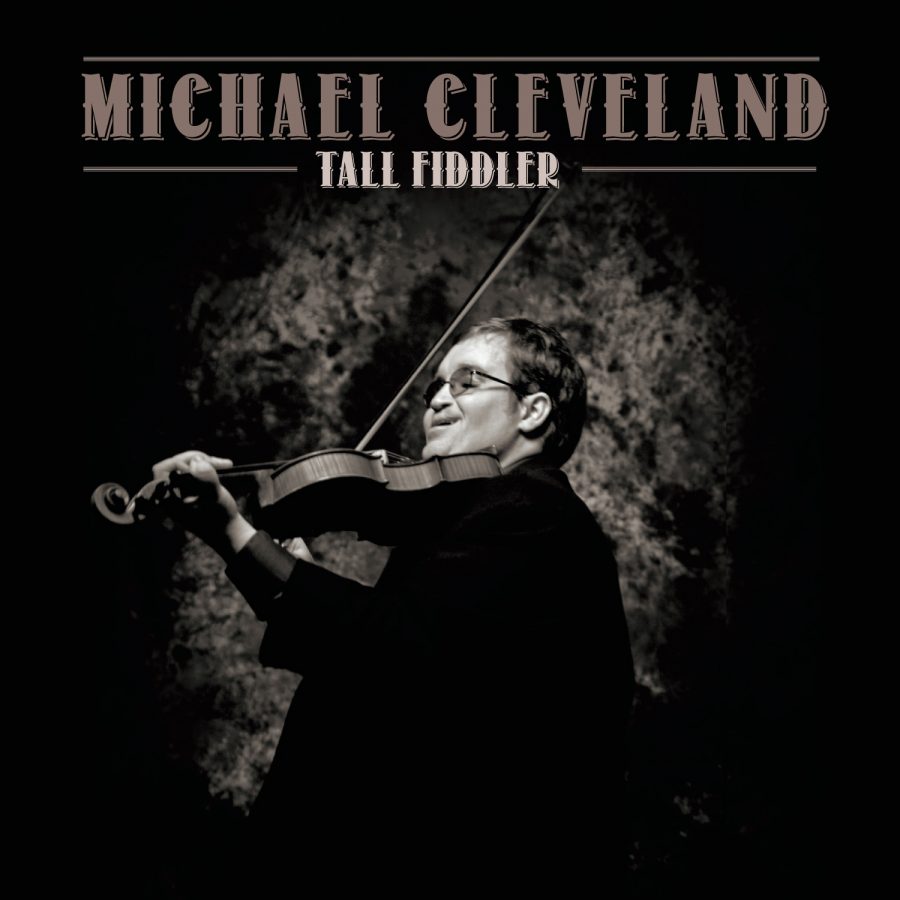
[WINNER] Tall Fiddler, Michael Cleveland

Live in Prague, Czech Republic, Doyle Lawson & Quicksilver

Toil, Tears & Trouble, The Po’ Ramblin’ Boys

Royal Traveller, Missy Raines

If You Can’t Stand the Heat, Frank Solivan & Dirty Kitchen


Best Traditional Blues Album

For albums containing at least 51% playing time of new vocal or instrumental traditional blues recordings.

Kingfish, Christone “Kingfish” Ingram

[WINNER] Tall, Dark & Handsome, Delbert McClinton & Self-Made Men + Dana

Sitting on Top of the Blues, Bobby Rush

Baby, Please Come Home, Jimmie Vaughan

Spectacular Class, Jontavious Willis


Best Contemporary Blues Album

For albums containing at least 51% playing time of new vocal or instrumental contemporary blues recordings.

[WINNER] This Land, Gary Clark Jr.

Venom & Faith, Larkin Poe

Brighter Days, Robert Randolph & The Family Band

Somebody Save Me, Sugaray Rayford

Keep On, Southern Avenue


Best Folk Album

For albums containing at least 51% playing time of new vocal or instrumental folk recordings.

My Finest Work Yet, Andrew Bird

Rearrange My Heart, Che Apalache

[WINNER] Patty Griffin, Patty Griffin

Evening Machines, Gregory Alan Isakov

Front Porch, Joy Williams


Best Regional Roots Music Album

For albums containing at least 51% playing time of new vocal or instrumental regional roots music recordings.

Kalawai’Anui, Amy Hānaiali’i

When It’s Cold – Cree Round Dance Songs, Northern Cree

[WINNER] Good Time, Ranky Tanky

Recorded Live at the 2019 New Orleans Jazz & Heritage Festival, Rebirth Brass Band

Hawaiian Lullaby, (Various Artists), Imua Garza & Kimié Miner, producers


Photo Credit of I’m With Her: Lindsey Byrnes
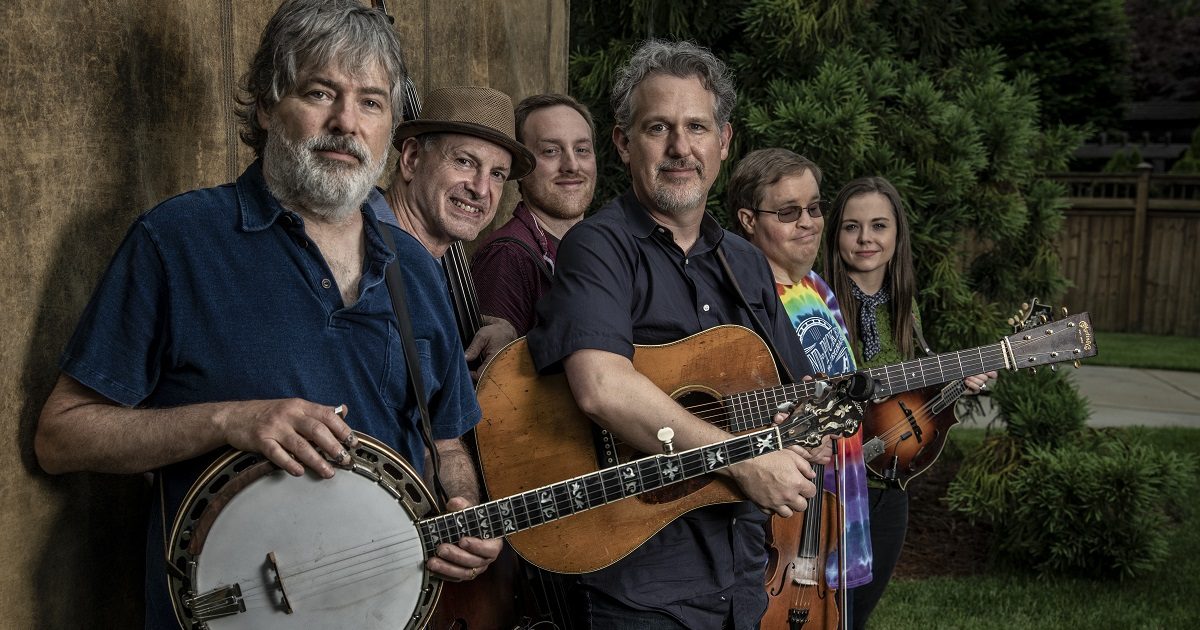
Michael Cleveland Grabs Grammy Nom for (Not Quite) Solo Album

Michael Cleveland is one of the defining fiddlers of his generation, known for his incredibly quick licks, deep groove, and shiver-inducing double stops. His virtuosity has been recognized by artists from many different genres and their thoughtful collaborations have proven that Cleveland is much more than just a flashy fiddler.

His talents were recognized at a young age by many of bluegrass music’s biggest stars and as a teenager he appeared as their guest in such settings as the Grand Ole Opry and A Prairie Home Companion. As one of the most-awarded musicians in IBMA history, Cleveland invited many of his heroes to collaborate on his 2019 album, Tall Fiddler. The project will compete for Best Bluegrass Album at the Grammy Awards on January 26.

Unlike many solo albums, Tall Fiddler features Cleveland’s band Flamekeeper throughout. Half of the record features selections from their popular touring show while the other half features Cleveland and band playing with masters such as Tim O’Brien, Béla Fleck, and Tommy Emmanuel. The origin of many of these collaborations were explored in Flamekeeper: The Michael Cleveland Story, a documentary detailing his journey, from being born blind to forming Flamekeeper.

Cleveland spoke to BGS by phone from his home in Indiana.

BGS: I wanted to ask you what it feels like to be nominated for a Grammy, but I have to imagine it feels pretty good! What does it mean to you?

MC: Well it’s pretty exciting! The last time I was nominated I thought I’d go through the list just to see who’s actually won and who’s been nominated in the past and it is mind-blowing for me to be considered.

And then to be nominated with the Po’ Ramblin’ Boys — I’ve known Jeremy Brown since he was probably a baby. None of my family ever played music, but my grandparents had a bluegrass association in Henryville, Indiana, which is just across the river from Louisville, Kentucky. So we got a lot of bands come out of the Louisville area and from other parts of Indiana. Jeremy’s dad, Tommy Brown, used to play with a band called Jim Simpson and the Kentucky Mountain Grass and it was one of the best bands in the area. Whenever they came to Henryville it was an event.

When they broke up Tommy formed his own band called Tommy Brown and the County Line Grass and I would see Jeremy playing on stage with his dad when he was a little kid. I’ve known all those guys for a while and have a connection with them so it’s really cool to be nominated at the same time as them and all the other artists.

Tall Fiddler is your eighth album. What makes this album stand out from the others?

This album was a little different because it wasn’t strictly a solo album or a band album. I wanted to do something where I could collaborate with other people, but I wanted my band to be on the album as well. It’s just a killer band, they’re who I tour with all the time, and I wanted to hear what they would do with the guests. So the band is on half the album and then there’s special guests on the other half.

We did the title cut, “Tall Fiddler,” with Tommy Emmanuel. That was especially cool because we got to do that live in the studio. Tommy came in and we had never played with him. We’d just worked this up based on a recording of his called Live! at the Ryman where he had played it. So Tommy comes in the studio and I think we knocked that out in just a few takes. It’s a dream come true for me, because I want to see my band collaborate with people like that.

Like Josh [Richards] singing with Del McCoury and getting to play with Tommy, and Dan Tyminski, and Jerry Douglas. The guys in my band are great players and deserve to play with people like that. That’s always been a goal of mine and for my career — to get to collaborate with as many great musicians and heroes of mine as I can. And that’s been possible because of this album and the Flamekeeper documentary, you know? Like, I’ve gotten to record with Béla Fleck.

Yeah, tell me about “Tarnation” and how that track came about.

When we made the Flamekeeper documentary we did some of the filming in Nashville. We got Del, Sam [Bush], Béla, Todd Phillips, and some other people that I’ve worked with in the past to be a part of it. John Presley, the producer of the documentary, said “I think it’d be cool to hear you play some of these guys’ music,” and I said “Yeah, that’d be great!”

We had just got done filming a lot of stuff and I was messing around and started playing a little bit of one of those tunes and Béla’s like, “Oh, you learned that? Let’s play it!” and after that he asked if I liked learning tunes and I told him I love learning new stuff and he said, “I’ll give you a call and maybe we can do something together.”

So then, when I was working on this record I reached out to him and I asked if he’d be interested in collaborating on something and I said “I would love for it to be something that you and I could write together.” He agreed, so we sent stuff back and forth for a while, like voice memos of ideas, and then he came up with that slow part in the beginning — which I really liked, it’s really bluesy. He asked if I could come down to his house to finish working on it.

To be able to go to Béla Fleck’s house and write a song with him. I mean, that’s something I would never dream that I would be able to do. But it’s cool for me to get to be around all these people that we worked with on this album. The thing that strikes me is not only that they’re incredible musicians — needless to say — but their whole [personalities]. They’re great people. They’re just having fun playing music, you know?

You’ve always struck me as a versatile musician because of your ability to collaborate with so many different artists and complement the style while still sounding like yourself. Like how you play on Andy Statman’s Superstring Theory album, for example.

See, that’s the thing. I’ve loved traditional bluegrass for a long time and would mostly just listen to that. But there’s so much music out there that I still haven’t heard that’s classic stuff to other people. I just started listening to Boston and they are awesome! My girlfriend says I live under a rock. But a lot of the music I play in places like Nashville, I don’t really have a whole lot of chances for experimentation. With someone like Andy [Statman] there’s no holds barred. Whenever Andy plays a song it’s going to be different every time.

I have noticed in your live shows that it seems like you’ve been experimenting with having a song or two with an extended solo section that’s a little more open ended than traditional bluegrass might be.

Yeah we’re trying to incorporate more of that because I think the audience like to see something and think, “Oh, this is not what happens every day.” And it’s a fine line because I’ve always been of the mind that you practice, you know the arrangements, and that’s what you play. Maybe you don’t play what’s on the record the whole time but you play it pretty close and you play that every day and that makes it good. And it does.

I always like to hear live recordings for the differences. Like when someone plays a different solo or somebody misses a note but it’s OK; it’s alive. It’s authentic. And it’s sometimes hard for me to remember that it’s music. It’s not supposed to be perfect. When we do the extended solos, that’s when I really pull out stuff and think of things that I would never play. If all you did was just play that arrangement every time and make it as perfect as possible, you might never be able to experience that.

I went to MerleFest one year and I came away thinking [about] all these guys like Sam [Bush], and the McCourys, and Béla, and Tim O’Brien, and Doc Watson. All these people are great instrumentalists and great old-time bluegrass players but they all do so much more than that. And just because somebody’s plugged in, and turned up loud, and improvises, that doesn’t mean they don’t know their stuff when it comes to traditional bluegrass.


Photo Credit: Stacie Huckeba

IBMA Awards 2019: See the Winners

With their first nomination in the top category, Joe Mullins & The Radio Ramblers secured the IBMA award for Entertainer of the Year on Thursday (September 26) from the International Bluegrass Music Association at a ceremony in Raleigh, North Carolina.

“Well, I don’t know how in the world this happened. I want every one of you guys right here,” he said to his band. “I’ve told them for years that one ol’ boy with a few corny jokes and a banjo in tune sometimes can’t do this by himself. It’s a team effort every time we leave the house and every time we climb on the stage.”

The group also picked up a trophy for Collaborative Recording of the Year with “The Guitar Song,” a duet between Mullins and Del McCoury. Meanwhile, McCoury won Album of the Year for Del McCoury Still Sings Bluegrass.

McCoury and longtime friend Jim Lauderdale traded introductions and hair jokes as co-hosts of the event, which has annually honored the top achievements in the thriving bluegrass community since 1990. Lauderdale opened the show with a performance of “When Carolina Comes Home” joined by all of the previous Instrumentalist of the Year winners. Moments later, a clip was shown from the inaugural 1990 event with Alison Brown (banjo), Alison Krauss (mandolin), Lynn Morris (guitar) Missy Raines (bass), and Andrea Zonn (fiddle).

A number of musicians made their first appearance at the podium in select categories, including Alan Bibey for Mandolin Player of the Year, Sideline for Song of the Year (“Thunder Dan”), and Sister Sadie for Vocal Group of the Year. Tina Adair spoke on behalf of the group, while her colleagues Dale Ann Bradley and Gena Britt barely held back their tears. (Deanie Richardson is also a member of the group.)

“You know what, I love making music,” Adair said. “I’ve been singing since I was 3 years old on stage. It’s something I’ve always loved to do but I love it even better with these gals right here.”

In addition, Billy Strings was named Guitar Player of the Year. The fast-rising talent also claimed the New Artist of the Year trophy. He was unable to attend.

Brooke Aldridge earned her third consecutive award as Female Vocalist, while IIIrd Tyme Out’s Russell Moore rebounded with a Male Vocalist Year win, his first since 2012 and sixth overall. Additional familiar faces include Michael Cleveland & Flamekeeper for Instrumental Group, their fifth win. Cleveland collected his 12th trophy in the fiddle category as well.

Other returning winners in instrumentalist categories are Kristin Scott Benson (banjo), Phil Leadbetter (resophonic guitar), and Missy Raines (bass). Raines also took home the Instrumental Recording of the Year honors for “Darlin’ Pal(s) of Mine,” which featured Alison Brown, Mike Bub, and Todd Phillips. Claire Lynch’s “Gonna Sing, Gonna Shout” earned the Gospel Recording of the Year award. But it was Leadbetter whose name brought the crowd to its feet, as the five-time cancer survivor shared the joy of his latest remarkable recovery.

The recipients of the 2019 International Bluegrass Music Awards are listed below:

ENTERTAINER OF THE YEAR:
Joe Mullins & The Radio Ramblers

VOCAL GROUP OF THE YEAR:
Sister Sadie (this is the band’s first win in this category)

INSTRUMENTAL GROUP OF THE YEAR:
Michael Cleveland & Flamekeeper

SONG OF THE YEAR:
“Thunder Dan” — Sideline (artist), Josh Manning (writer) Tim Surrett (producer), Mountain Home Music Company (label)

ALBUM OF THE YEAR:
Del McCoury Still Sings Bluegrass – Del McCoury Band (artist), Del and Ronnie McCoury (producer), McCoury Music (label)

GOSPEL RECORDING OF THE YEAR:
“Gonna Sing, Gonna Shout” – Claire Lynch (artist), Jerry Salley (producer), Billy Blue Records (label)

INSTRUMENTAL RECORDING OF THE YEAR:
“Darlin’ Pal(s) of Mine” – Missy Raines with Alison Brown, Mike Bub, and Todd Phillips (artist), Alison Brown (producer), Compass Records (label)

NEW ARTIST OF THE YEAR:
Billy Strings

COLLABORATIVE RECORDING OF THE YEAR:
“The Guitar Song” — Joe Mullins & The Radio Ramblers with Del McCoury (artists), Joe Mullins (producer), Jerry Salley (associate producer) Billy Blue (label)

FEMALE VOCALIST OF THE YEAR:
Brooke Aldridge

MALE VOCALIST OF THE YEAR:
Russell Moore

BANJO PLAYER OF THE YEAR:
Kristin Scott Benson

BASS PLAYER OF THE YEAR:
Missy Raines

FIDDLE PLAYER OF THE YEAR:
Michael Cleveland

GUITAR PLAYER OF THE YEAR:
Billy Strings

MANDOLIN PLAYER OF THE YEAR:
Alan Bibey

RESOPHONIC GUITAR PLAYER OF THE YEAR:
Phil Leadbetter

Previously announced inductees into the International Bluegrass Music Hall of Fame — Mike Auldridge, Bill Emerson, and The Kentucky Colonels — were honored at this evening’s show.

At the Industry Awards Luncheon held earlier in the day, these recipients were announced:

BROADCASTER OF THE YEAR:
Michelle Lee

EVENT OF THE YEAR:
Blueberry Bluegrass Festival – Stony Plain, Alberta, Canada

LINER NOTES OF THE YEAR:
Epilogue: A Tribute to John Duffey
Akira Otsuka, Dudley Connell, Jeff Place, Katy Daley

GRAPHIC DESIGNER OF THE YEAR:
Michael Armistead

WRITER OF THE YEAR:
David Morris

SONGWRITER OF THE YEAR:
Jerry Salley

SOUND ENGINEER OF THE YEAR:
Ben Surratt

The previously announced 2019 Distinguished Achievement Award recipients — Katy Daley, Mickey Gamble, Dan Hays, Allen Mills, and Moonshiner — were also honored at today’s luncheon.

Michael Cleveland, “5-String Swing”

Yes, Michael Cleveland’s brand new album, Tall Fiddler, includes a track called “5-String Swing,” and yes, perhaps the world’s foremost banjo player, Béla Fleck, is a guest on the song, but do not be fooled. This is not a banjo tune, this is is not an incendiary breakdown or a Scruggs-conjuring, “Foggy Mountain Special”-esque number. This is a fiddle tune. A five-string fiddle tune.

An eleven-time winner of IBMA’s Fiddle Player of the Year award (and current nominee for what may be his twelfth honor), Cleveland’s “ax” of choice has long been a fiddle with five strings — instead of the standard four — with a low, C-tuned string beyond the usually-lowest G string, essentially combining a viola and a violin on a violin’s frame.

In more standard, traditional bluegrass that fifth string doesn’t always jump out, but in a song such as this — skipping, gallivanting swing with a touch of Texas and a dash of Django bolstered by bluegrass — it can change a fiddler’s entire mindset, leading them toward sumptuous, lush double and triple stops that defy any sort of quantification. Cleveland is well known for milking these jazzy harmonies, leaning into quarter tones that no fretted instrument — and very few other fiddlers — could ever accomplish with such exact, scientific precision.

Besides Fleck, and his similarly innovative approach to combining rootsy aesthetics, Cleveland is joined by producer Jeff White on guitar, Tim O’Brien on mandolin, and Barry Bales on bass, perfect pals with which to swap licks over this cheery, energetic, toe-tapping tune.