It’s 2026 and the world remains deeply shaped by persistent conflicts and social divisions, making songs of peace and love an essential “universal language” for fostering unity. As global tensions in regions like Ukraine and the Middle East continue to create an us-versus-them mentality, music serves as a critical bridge that transcends cultural and linguistic barriers to remind us of our shared humanity.
These songs do more than provide comfort; they act as a tool for disarming hearts and promoting reconciliation in an increasingly polarized landscape. By lowering anxiety and increasing empathy – the emotional foundation for peaceful coexistence – music provides a rare space where diverse groups can connect without prejudice. Now more than ever, these songs are needed to shift the global narrative from division and “moral degradation” toward a future built on compassion, harmony, and collective resilience. The lyrics of these amazing songs epitomize “peace & love” and speak for themselves. – Jason Sinay
“Imagine” – John Lennon
This song still remains a timeless global anthem that serves as a “hymn for peace.” It transcends cultural and political boundaries by challenging listeners to envision a utopian reality free from the divisions of nationality, religion, and material possessions.
“Blowin’ in the Wind” – Bob Dylan
Dylan uses evocative symbols like the “white dove” to represent the enduring human quest for a world without conflict. Its series of rhetorical questions challenges listeners to confront social injustices and the “cannonballs” of war, suggesting that while the answers for global harmony are as ever-present as the wind, they require collective courage to grasp and implement.
“Get Up, Stand Up” – Bob Marley & the Wailers
Marley emphasizes that true harmony can only be achieved through justice and the active defense of human rights. The song challenges listeners to seek fulfillment and equity “on earth,” rather than waiting for divine intervention, serving as a global rallying cry for unity against all forms of oppression.
“Give Me Love (Give Me Peace On Earth)” – George Harrison
This amazing song’s lyrics act as a personal mantra for divine guidance, asking for the “light” and “life” necessary to heal a world filled with conflict and social burdens.
“Ripple” – Grateful Dead
“Ripple” promotes a sense of shared humanity by acknowledging that while every individual must walk their own path, we are all “in the same boat” and should reach out to help one another.
“Heart Of Gold” – Neil Young
Written while Neil was physically vulnerable and recovering from a back injury, he describes himself as a “miner” traveling across oceans and forests. The song emphasizes that the pursuit of a loving and compassionate soul is a lifelong, global journey that connects us all.
“She’s a Rainbow” – The Rolling Stones
This incredible tune captures the vibrant spirit of the Summer of Love through its whimsical, baroque-pop arrangement. It functions as a “pure love song,” departing from the Stones’ typically gritty style to offer a colorful, psychedelic tribute to femininity and universal beauty.
“Ophelia” – The Band
While this song is often interpreted as a lively, Dixieland-style track, it functions as a song of peace and love in exploring the deep emotional bonds and protective concerns shared between friends or lovers.
“Feels Like Home” – Randy Newman
This song truly captures the profound sense of safety and belonging found in a deep connection. The lyrics contrast a harsh external world with the sanctuary of a relationship.
“The Best Part of the Day” – Elton John & Leon Russell
This incredible tune celebrates the simple sanctuary of a deep, lifelong friendship. It portrays a serene “peace of mind” found in the presence of someone who has shared one’s “crazy ways” and provides comfort through life’s trials.
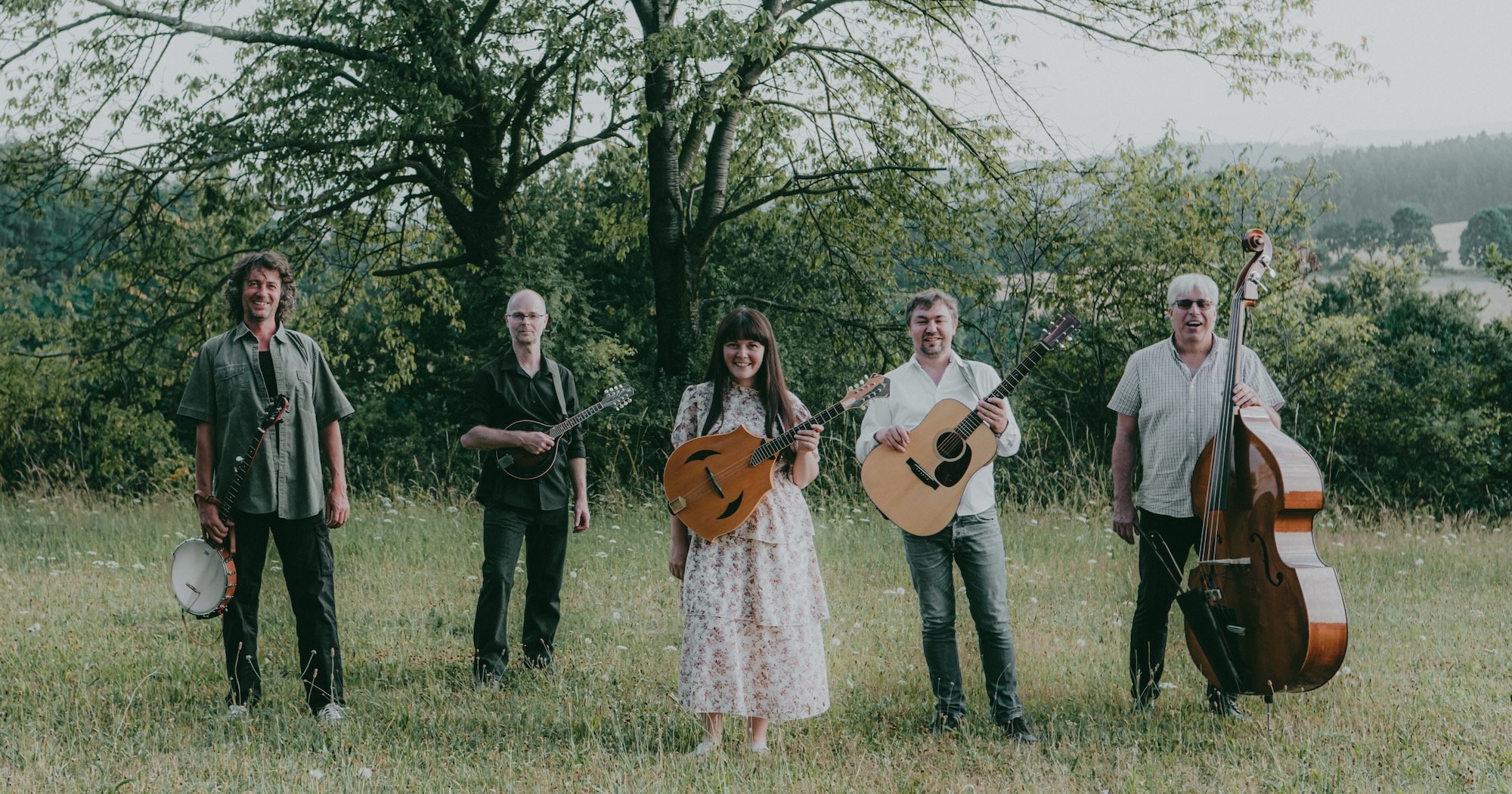
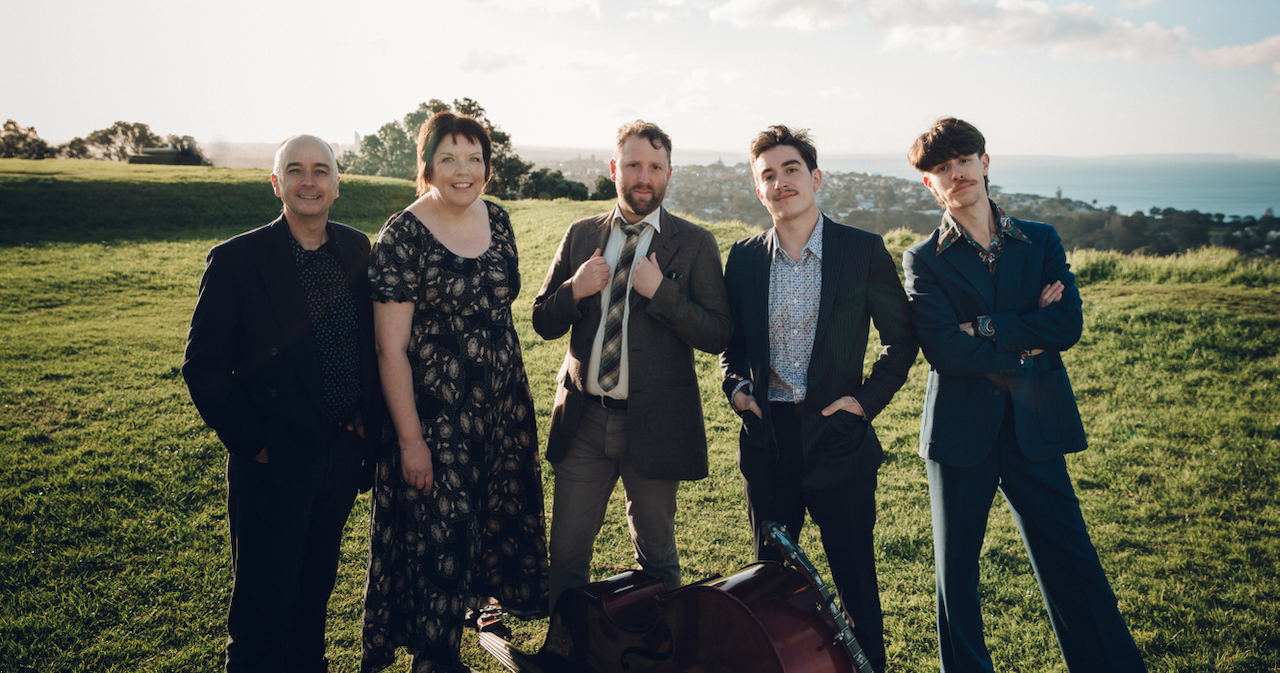
Aotearoa (New Zealand) doesn’t have a strong history of bluegrass bands – except one. If you mention bluegrass to New Zealanders, some will have at least heard of the Hamilton County Bluegrass Band. New Zealand has produced some great players, notably fiddle player George Jackson, banjo player BB Bowness, guitarist/singer Cy Winstanley, and bassist/singer Vanessa McGowan. (Now that we write this, these four would make a great NZ bluegrass band!) But while these names are well known in American bluegrass circles, it is fair to say they aren’t known (outside of folk circles) in Aotearoa.
Many of the songs on our new album, Midnight (out January 30, 2026), are situated within a day, or feature characters who are sitting at the cusp of who they have been before delving into something new. That sense of “in-between” also reflects our place within Aotearoa’s musical landscape, where bluegrass arrives without a long local history, but can be shaped in ways that feel natural to how we live and create here.
“Our Kiwi fans know bluegrass from traditional songs and contemporary artists such as Alison Krauss & Union Station, and Billy Strings. But they are more familiar with the other genres that bluegrass sits alongside. We’re also collectively members of the New Zealand folk, country, and jazz communities,” says our bassist, Rob Henderson.
Midnight starts with bluegrass at its core, but gently widens scope, bringing in different genres with their rhythms, broader chord progressions, and influences drawn from our own environment and lives lived in Aotearoa.
Here are the songs and tunes that anchor us in tradition and inspire us to find our own path as the clock strikes twelve. – You, Me, Everybody
“Ain’t No Grave” – Crooked Still
I love groove and the forward motion in all music, so when I heard this tune for the first time I was naturally inspired by the push of the cello part. This feel was a factor in my own bass playing across the album, especially for up-tempo tunes such as “Misdirection.” – Rob Henderson
“Dorrigo” – George Jackson
George Jackson’s tune “Dorrigo” feels friendly and familiar. It’s one of those tunes that will just keep going around and around the jam circle. When the Dorrigo Challenge did the rounds on the internet a couple years ago, it was a reminder of how a tune can bring people together. I had this in mind while writing “Sam’s Tune” on our album. – Sam Frangos-Rhodes
“Wildfire” – Watchhouse
I find when I sit down to write a song, I usually follow the same template or theme. Of course, there is variation in a lot of my songwriting, but I find rhythmically it’s always much of the same thing. A while back I wanted to break that cycle and try to write a more chilled out, slower tempo song, so I wrote “Heart of Stone,” which leads to “Wildfire” by Watchhouse. I enjoy this song because I think it has a very similar vibe to “Heart of Stone.” For me, it captures the same emotion and feeling I was looking for. I find it’s always nice to find what I was looking for in other people’s writing and relate that back to my own music. – LaurenceFrangos-Rhodes
“Heart of Stone” – You, Me, Everybody
Laurence originally wrote this while we were producing our previous album, Southern Sky. I love the backbeat to it, but he also writes great chord progressions; they feel natural and authentic to the song and surprising at the same time. I’ve known Sam and Laurence since they were in their early teens and while our audience love our instrumentation, singing harmonies with them feels like home to me. “Heart of Stone” gives us an opportunity to showcase our vocal blend and milk those beautiful chords Laurence gifts to his songs. – Kim Bonnington
“Railroad” – Béla Fleck & Abigail Washburn
When I try to serve the song with three-finger banjo, I frequently look to Béla Fleck’s work with Abigail Washburn. He plays parts and the two of them fill out the texture of a song so well! Ironically, when we arranged “Silver Spoon,” I was hearing Abigail-like clawhammer behind it, so I did my best to provide that kind of sound with three fingers. – Nat Torkington
“A Hundred and Sixty Acres” – Marty Robbins
Our track, “The Ballad of Bubs and Beautiful,” started when I overheard a conversation between two women shearers in a camp ground in Waipukarau. I knew that I wanted to capture their relationship to each other and their working life, all framed within a day. My Dad’s vinyl collection is 50% Marty Robbins and I remembered the picture that “A Hundred and Sixty Acres” colored of a life well lived. That’s why the first line in “Bubs and Beautiful” is, “Up ‘fore dawn to greet the sun.” There’s a tendency for NZ songwriters to still write about American experiences and places due to an inability to describe ourselves that has been labelled “cultural cringe.” But I knew the description of the women was genuine when I heard someone go, “Oh” as we played the last line live for the first time. – KB
“Orphan Annie” – Tony Rice
As a guitarist, I’ve been heavily influenced by Tony Rice – who hasn’t!? Whenever I listen to the Church Street Blues album it leaves me feeling creative and inspired. I love the minimalism; stripped back to one guitar and vocals telling a story. A lot of the songs on Midnight started in this exact same way, guitar and vocals alone. So it only feels appropriate to give credit to Church Street Blues where credit is due. I cannot pick one track from the album as a favorite because they are all great, but here is “Orphan Annie.” – LFR
“Was It You” – Joy Kills Sorrow
“Was It You” is a song I love for how it drives. That rapid mando chop over a fast rolling banjo held down by a thumping bass is a sure way to make a foot stomper. I took a lot of inspiration from Jacob Jolliff’s mandolin playing in “Was It You” when I put together my part for our song, “Busy Without Me.” – SFR
“Busy Without Me” – You, Me, Everybody
Kim writes wonderful slice-of-life songs. The Midnight album has everything from the plight of an unwed mother to mother/daughter sheep-shearers. “Busy Without Me” is perhaps more #relatable, though: we have a short life with ample temptation for busyness, it says, but it’s important to take moments to “sit and breathe and let the breeze wash over me with nothing in my way.” I love the way the busy-ness of the music reflects the lyrics. – NT
“Caleb Meyer” – Gillian Welch
Country/folk/bluegrass songwriters have always done a great job of writing songs about things we won’t talk about, but make us happy to sing about them. Our song “Silver Spoon” was initially written to an Irish jig. But the joyfulness didn’t eclipse the bleakness of the lyrics. At different times when we were arranging it, different band members would say, “What would Caleb Meyer do?” and our producer Rachel Baiman asked exactly the same question when she arrived for our sessions before we recorded. It’s become the quintessential modern murder ballad. – KB
“Distant Sun” – Crowded House
I grew up in ’90s New Zealand with parents who would play in a country band at the local barn dance while my brother was DJing at the rugby club rooms. So while Marty and Merle would be in one ear, Crowded House was in the other. If you think of great bridges in songwriting, “Distant Sun” has one of them. It also has my favorite line ever in a song: “I don’t pretend to know what you want, but I offer love.” The melody lines in our own track, “The Rest of Us,” hark back to years of admiring Neil Finn as a songwriter. – KB
“The Rest of Us” – You, Me, Everybody
When Kim first brought the concept of “The Rest of Us” to the band I was immediately a fan, and thought it would a great fit on the album. Before we went into the studio we all spent some time together to arrange the new material. As a band I feel like we work uniquely well when it comes to putting a song together and it’s one of our biggest strengths. I think “The Rest of Us” is a great example of Kim’s songwriting and a great example of how we function as a band. – LFR
“Natchez Trace” – Béla Fleck
In my mind, this is the classic G minor banjo instrumental, from Béla Fleck’s landmark album, Drive. Recorded with his B string tuned down to B flat, Fleck often plays it live out without the re-tuning. That was the inspiration for me to write my own Gm instrumental for a banjo tuned to open G major. – NT
“What a Fool Believes” – The Doobie Brothers
I wrote “She’s Alright With Me” a few years ago before I joined You, Me, Everybody. At the time, I had been deep diving into a lot of Doobie Brothers music and the moving parts within their songs. When “She’s Alright With Me” was born, it was originally a heavy keyboard driving tune – having written it on an old 1960s Wurlitizer Piano and styled it on some of the Doobies’ keyboard parts. It’s safe to say it’s transitioned a lot as we don’t have a keyboard part, but you can hear the rhythm now being driven in the same way by Laurence’s guitar. – RH
“Old Train” – Tony Rice Unit
Laurence’s epic album-opening “Misdirection” is a straight-ahead driving bluegrass song, which nonetheless has a few surprise chords in it. For some reason that reminds me of this epic Tony Rice track. – NT
“Misdirection” – You, Me, Everybody
“Misdirection” fits nicely as the opener on our album. It’s a fun example of progressive bluegrass while still staying true to its roots. “Misdirection” is my favorite track on the album and I would like to think the amount of fun we had recording this song is reflected in the final result. – SFR
The songs for my album Cry Love came like automatic writing, as if exhaled after too long at a high altitude. And they were recorded as if my band, the WPA Ballclub, had known them for a long time.
A common theme thematically and lyrically is absence. Absence can be volatile. The songs that inspired Cry Love have much in common, particularly a sense of space. Bedrock instruments such as bass or drums are absent or played as loops. Sometimes there’s hardly instruments at all.
Our decade since 2020 has been a slow developing picture of things absent or out of focus. First place. Then time. Then people. Then, this year, the absence for me and my family became the loss of a person. Earth, air, sky, salty sea, and sand were thrown amuck. Cry Love and these songs guard that space – that absence – with music. – Paul Burch
A while back, if I remember right, my life was one long party where all hearts were open wide, where all wines kept flowing.
I ran away. O witches, O misery, O hatred, my treasure’s been turned over to you!
I managed to make every trace of human hope vanish from my mind. I pounced on every joy like a ferocious animal eager to strangle it.
So…it dawned on me to look again for the key to that ancient party where I might find my appetite once more.
– A. Rimbaud, A Season in Hell
“Paris” – Moondog
The Viking of 6th Avenue, who lost his sight as a boy, spent most of his life performing on the corners between 52nd and 55th street. His compositions and collages made him friends like Charlie Parker, Benny Goodman, and Arturo Toscanini, who testified in court on Moondog’s behalf in his suit against DJ Alan Freed for co-opting “Moondog” for his radio show in Cleveland. Freed lost and apologized on air. This is Moondog’s late in life collaboration with the London Saxophonic. Beautiful.
“If I Lived in a Picture” – The Green Pajamas
The Green Pajamas are from Seattle and, like me, have never been on a major label. But that’s never stopped them from making gorgeous tunes like this one that upon first listen instantly vaulted them to one of my favorites ever.
“Telephone Blues” – Snoozer Quinn
My dear friend, supersonic guitarist and producer Richard Bennett, turned me on to Snoozer Quinn, the lost jazz pioneer who in the ’20s and ’30s scared the wits out of contemporaries Lonnie Johnson and Eddie Lang with his out of this world sound. There are stories of musicians filling hotel rooms and hallways to gander at a Snoozer jam session. Louis Armstrong was a great fan, as well.
Snoozer left the cutthroat NYC scene and went home to Louisiana where he died young from tuberculosis – but not before a musician pal captured him literally in his deathbed. The best part of this story is I turned Tim O’Brien onto Snoozer and Tim turned on his ole pal Bill Frisell. My good deed.
“How Much I Owe” – The Radio Four
All of the Nashboro gospel recordings are beautiful, but I’m especially drawn to the urgency of the Radio Four. Thanks to Jonathan Marx of Lambchop for the introduction. Featuring the great country bassist Lightning Chance, whose credits include Hank Williams and the Everly Brothers – and suggesting the Jordanaires’ “number system” for vocal parts be applied to Nashville sessions.
“Poinciana” – Ahmad Jamal Trio
Recorded live at the Pershing Hotel in Chicago. I especially love “Poinciana” for drummer Vernel Fournier, who reminds me of Nashville great and WPA batteur Justin Amaral. Bassist Israel played on Charlie Christian’s “Profoundly Blue.” Recorded by Chess Records engineer Malcolm Chisholm, who probably cut a session for Muddy Waters the next day.
“Sun Rays,” “Last of My Kind” – Pony Hunt
Jessie Antonick, who performs as Pony Hunt, is a musical gem. I love this live performance of “Sun Rays.” The finger snaps just send me.
I also dig their lovely version of my tune, “Last of My Kind,” which sounds like an alternative version of the WPA Ballclub.
“So Sweet You Are” – Dog On Fleas
I’m sure these lyrics got into my head for songs like “I Won’t Miss My Baby Anymore” and “Braggin'” which share the Willie Dixon “left is right, I may I might” school of playful revelation.
“Ready to Leave” – Emahoy Tsege Mariam Gebru
For me, all of Ethiopian composer and pianist Emahoy Tsege Mariam Gebru’s works are enchanting. But I especially love the album Souvenirs, her first vocal collection. Mississippi Records describes it as “songs of wisdom, loss, mourning, and exile sung directly into a boombox,” which aptly describes my feelings writing Cry Love.
“The Whale Has Swallowed Me” – J.B. Lenoir
Both John Lee Hooker and Mr. Lenoir excelled at sparse blues storying around a hypnotic, looping beat. And a whale of a story it is. The great Fred Below, on drums, powered hundreds of classics at Chess.
A hypnotic, menacing tune in which melancholy carries a blade and a broken bottle. Sung from the heart of misery itself by Motown’s first hit artist (“Money”). I love the looping carousel bass line. Los Lobos did a beautiful version, too.
“I Need Somebody to Lean On” – Elvis Presley
Elvis was having a hard time musically and spiritually in the early ’60s but still made some beautiful records. By Doc Pomus and Mort Shuman (“Save the Last Dance for Me”). Elvis sounds inspired and committed with phrasing that evokes a bit of Chet Baker.
”
“Complex” – Tristen
I’ve been crazy for Tristen’s music since I first heard her perform with a trio in front of Whole Foods (of all places) over a dozen years ago. That was the old Nashville. We both play Epiphone Casinos, which makes us siblings of sorts – members of an exclusive club. I’d like to think so, anyway. “You can have your way until you get in my way.”
“Blow Wind Blow” – Muddy Waters
A great era for Muddy on stage with fiercely driving rhythm courtesy three guitarists and Pinetop Perkins.
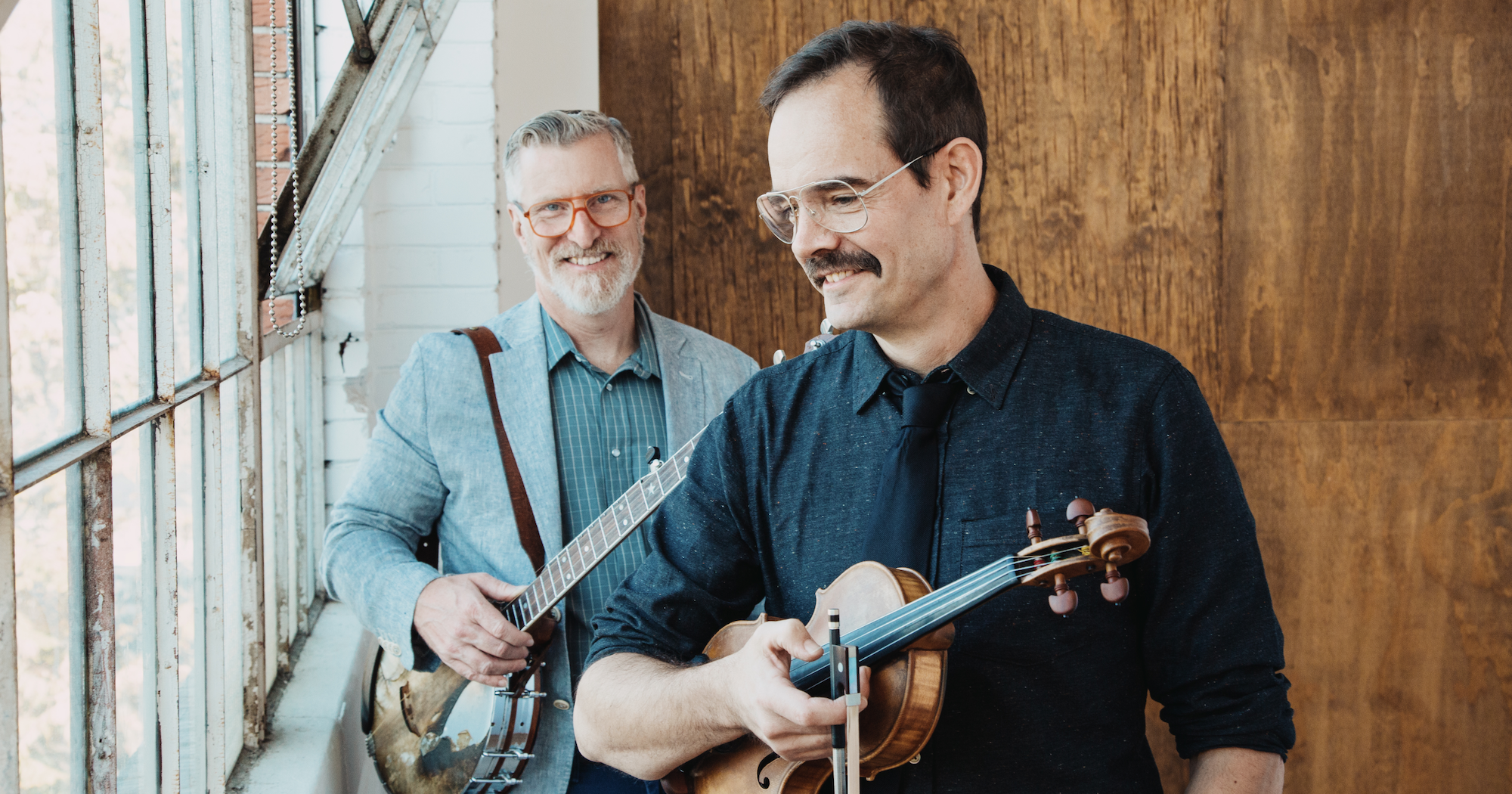
Photo Credit: Jim Herrington. Pictured: Paul Burch (L) and Fats Kaplin (R).
A few years back, we put out an album called Modern Old-Time Sounds for the Bluegrass and Folksong Jamboree. The title was a nod to that 1960s trend of naming records in a way that tried to cover every possible base. It was tongue-in-cheek, but it still sums up what we do – and what you’ll hear on our latest Lonesome Ace Stringband album, Big Wing. We don’t really play old-time music so much as make a modern old-time sound, and that’s exactly what this playlist is all about
Up here in Canada, we have a wealth of traditional music – distinct regional fiddle styles from coast to coast, songs and ballads that reflect the multicultural makeup of our country, and Indigenous music that predates all of it. Even with this abundance of homegrown music to draw from, many of us have found ourselves charmed by the traditional “old-time” sounds of the American South.
Being far away – geographically and culturally – from the source of the music you love presents some challenges, but it also affords a certain freedom. The first step is always to understand where the music comes from and its history; eventually, though, we all need to find our own voice within it. That’s sometimes easier to do when you’re removed from entrenched scenes and long-established communities.
One way I see this playing out in the old-time music coming from Canada is that writing original tunes and songs seems to come naturally and early in the journey. Whether it’s composing new tunes in the tradition or letting the sounds and themes of traditional music color our lyric writing, we’ve developed a wealth of modern old-time sounds up here – and I’m excited to share a few examples in this playlist. – Chris Coole, Lonesome Ace Stringband
“Maggie At The Door” – Arnie Naiman
Arnie Naiman has been playing old-time music longer than anyone else on this list. When I first met him in the early ’90s, he’d already been playing for around 20 years. Back then, he was mostly on fiddle, but sometimes he’d pull out the banjo at the end of the night and share some of the original tunes he always seemed to be writing. This led to us making a couple of albums together – and to me becoming a lifelong fan. “Maggie at the Door” is a great example of how he can write a banjo tune that also works on the fiddle – not as easy as it sounds. It was written for his dog and it’s probably the most badass-sounding tune ever written for a golden retriever.
“Lonesome Song” – Rube & Rake
Rube & Rake are Josh Sandu and Andrew Laite. Both live in St. John’s, Newfoundland, and are writing beautiful songs while touring hard. We ran into them in the UK last year and were instantly taken by their deft playing and the “low lonesome” sound of their harmony singing. “Lonesome Song” is a moody example of all that.
“Platform Four” – The Slocan Ramblers
The Slocan Ramblers are Canada’s bluegrass band – at least as far as I’m concerned. Although Frank Evans no longer plays full-time with the group, I chose this tune to remind everyone that while he’s mostly known for his three-finger bluegrass playing these days, he’s also on another level as a clawhammer player. There are a few licks on “Platform Four” that he’ll probably take to the grave.
“Narrow Line” – Mama’s Broke
Mama’s Broke are another duo from Eastern Canada (Nova Scotia). We crossed paths with Lisa Maria and Amy Lou Keeler at the Baltimore Old-Time Gathering a few years ago. They put on a riveting show and blew us away with their singing and playing. The arrangements on their records are so imaginative – they capture the spaciousness of their live sound while layering on subtle textures. “Narrow Line” is an excellent example of this and one hell of a song.
“White Horse Plains” – The Red River Ramblers
The Red River Ramblers feature the music of Douglas Richard Sinclair, a Red River Métis musician whose last album, Reverie, showcased original tunes inspired by the Métis fiddle tradition. “White Horse Plains” highlights Douglas’ tuneful guitar playing and answers the question: What would Norman Blake have sounded like if he’d been Métis?
“Saint Elizabeth” – Kaia Kater
Kaia Kater’s 2016 album Nine Pin made a lot of folks take notice of this exceptionally talented songwriter. Kaia is a perfect example of someone who’s really tried to get to the roots of the music; she studied Appalachian traditions at Davis & Elkins College in West Virginia. She’s taken what she learned there and carried it to a creative place that defies genre or categorization. “Saint Elizabeth” is a perfect example.
“New Caledonia” – Pharis & Jason Romero
Pharis & Jason Romero probably need no introduction to anyone here. They’re old friends of ours and we’re big fans of their music. It almost seems remiss to share a song that doesn’t feature their beautiful singing and lyrics, but we’re always enchanted by Jason’s tune writing, backed by Pharis’ always-right-on-the-money guitar playing. “New Caledonia” is one of those tunes that instantly takes you somewhere. It manages to say a lot without a single word.
“The Wheels Won’t Go” – Hannah Shira Naiman
Hannah Shira Naiman comes to the music honestly. She grew up learning fiddle and banjo from her dad, Arnie Naiman, while listening to her mom, Kathy Reid-Naiman, sing the songs of Jean Ritchie, the Georgia Sea Island Singers, and the Delmore Brothers. Hannah has taken it all in and made something uniquely her own. “The Wheels Won’t Go” is the title track of her 2022 album.
“Wellington” – Allison de Groot & Tatiana Hargreaves
Allison de Groot is one of our most treasured banjo exports – clean, hard-driving, and full of tone. Best known these days for her work with Tatiana Hargreaves, she’s also a fine composer. “Wellington” is one of her own tunes, a reminder that she’s as creative as she is technical.
“Mama’s Boy” – Lotus Wight
Lotus Wight (AKA Sam Allison) is best known for his work with Sheesham and Lotus & Son. He’s a beautiful banjo player, a lovely jaw-harpist, a rock-solid bassist, and even plays the contrabass harmoniphoneum. I didn’t know until his last album that he’s also a moving songwriter, somewhere between John Hartford and Leon Redbone. “Mama’s Boy” tells the story of the three men who were fathers to Sam over the course of his life. I can’t remember the last time I heard such an honest and tender song.
“From Silence” – Daniel Koulack
Daniel Koulack hails from Winnipeg, Manitoba, where he’s been making music and teaching banjo for many years. (Allison de Groot is one of his students.) Daniel has always been game to take the clawhammer banjo to new and unexpected places – which might explain “From Silence,” possibly the only clawhammer banjo and saxophone duet in the known universe.
“At the Airport” – Old Man Luedecke
Old Man Luedecke is one of the crown jewels of Canadian singer-songwriters and he also happens to be one hell of a clawhammer banjo player. He’s written most of his songs on the banjo (at least the early ones), which gives them those unmistakable twists and turns – in both phrase and melody. And he has that rare gift for putting a bit of hope into everything he writes, whether the song is sad, funny, or introspective. “At the Airport” is a perfect example.
“May Day” – The Andrew Collins Trio with The Lonesome Ace Stringband
The Andrew Collins Trio (Andrew Collins, James McEleney, Adam Shire) collaborated with us on “May Day,” a tune Andrew and I wrote together many years ago. These three are next-level players who are always pushing the boundaries of what’s possible on their instruments. Known for mixing new acoustic bluegrass with classical and jazz influences, we had fun diving into some weird old-time with them on this track from our new album.
On Halloween, I released an album of griefwork music. Laments features four compositions for solo fiddle and voice born out of an instinctive and spontaneous draw into lamentation when my body demanded it as part of its healing processes.
In both my vocal and instrumental soundings, the role of a traditional lamenter has long been rooted in my identity and how I seek to be of service as a community member who helps others enter into emotion or move through to the other side of an emotion. That work is not limited to sorrow, but can move joy as well. Music can help to bring more aliveness and connectedness to one previously detached, as I’ve been lucky to experience in my work of being a dance musician or a wedding fiddler.
Since my initial education on the topic of “lament” around age 20 while studying in Helsinki, I have held the possibility of a similar role as a guide into or through feeling at the core of my work. It wasn’t until the middle of the last few years, when I had been writing this music on fiddle and voice, wailing music with few words, that I realized I was working with actual lament and that I had found myself knee deep in a river of tradition. So I am here, coming full circle.
Seventeen years later, I returned to research and to listen to archive sources after I had birthed this work, to begin to understand the context of my path, to grab on to some railings, and to move into whatever comes next. I have since come to understand that performative ritualized mourning is a global phenomenon of traditional cultures. While my record is a performance of prepared arrangements and echos of what I experienced in liminal spaces, as opposed to my live lamentation or ritual, it’s my hope that the music can represent the shallows of what is available inside of the great depths of the tradition. (For more reflections on this work, read on via the extended notes booklet for Laments.)
For this Mixtape, I thought back through time to craft a collection of tracks that have been medicinal to me in seasons of heaviness, in times when I needed assistance to reopen a closed self. The tunes span many genres – please take them with open ears and meet them with what they offer. Through different modes, they all have the power to help bring in a glimpse or a full serving of transformation, whether that’s delivered from the quietest breath of the mechanics inside of a piano or from the wall of supportive pressure that is the embrace of the Scottish smallpipes. Three traditional lament forms are featured (Ireland, Scotland, and Peru) nestled here alongside music that I think works in related ways. It is music that helps us enter ourselves. – Laurel Premo
This is the first song that came to my heart for this Mixtape, possibly because it was an early memory of the expansive potential of music as a tool in grief. I heard Tim Lowly sing this song at an intimate house concert in Kalamazoo sometime in the 2010-2015 range and his album traveled with me over many touring miles in America that decade. Tim is a painter and writer, and the central protagonist of much of his work has been his daughter, Temma, who has cerebral palsy with spastic quadriplegia. The melody and lyrics in this piece surrender to “slipping down” until they land on some solid new core.
“Pililiù” – Bridghde Chaimbeul
I’ve been very moved by the sounds from Scottish pipes player Bridghde Chaimbeul, who’s just recently completed her first US tour. I listened to her rendition of “Pililiù” during a high intensity breath practice once and it produced an immediate outpouring of tears. Some deep thread of connection existed there. A few months later, while researching vocal roots and lamentation, I recognized that this melody that she had recorded instrumentally is indeed an example of a traditional keening melody. The melody of this lament is a recreation of birdsong of the Redshank. In Scottish tradition, this coastal bird inhabits the liminal space between solid earth and the vastness of the fluid ocean, between known and unknown eternity.
“Body” – Emma Ruth Rundle
A few winters ago Engine of Hell hit me in a heavy way and seemed to be the exact medicine of resonating my own experience that was needed. When music reflects some color of what we’re feeling, it can vibrate our emotional body into become something bigger than we can see and relate to, converse with, question, and be held by.
“Visit Croatia” – Alabaster DePlume
This nostalgic journey is created from patience, deep listening, and real breath. Alabaster DePlume is an English musician and poet.
“Batonebo – Rachan” – Ensemble Ialoni
This is a pre-Christian healing song from an incredible Georgian women’s ensemble. In traditional Georgian belief, “Batonebi” is the name of spirit beings that are the cause of childhood infectious diseases. Songs like this are sung to these spirits, alongside other ritual, to appease them and ask them to leave the sick child so that they may heal. This whole record contains traditional folk song in complex harmony that work as chants for the singer and listener (including the Batonebi spirit audience!).
“My Friend The Forest” – Nils Frahm
Nils Frahm presents deep texture and intimacy here. The flex and breathing of the piano, akin to the live breath of the forest, takes you on a whispering trail of release. Other tracks that have a similar vibe from this record are “A Place” and “Forever Changeless.”
“Gorm” – Susan McKeown
I was introduced to this recording through the master’s thesis of Michelle Collins who investigated the de-ritualization and re-ritualization of keening in contemporary Ireland. This original song from 1996 is written in the traditional form of Irish lament and sings grief related to emigration and grief caused by AIDS. Listen for the traditional cry of “ochón.”
“Nude” – Radiohead
Bringing in some movement now after our ‘set one’ of still listening. Feel the tilt of this waltz gently push you around while the vocals reach and spin.
“Without The Light” – Kelly Joe Phelps
Kelly brings in some sonic reverence here, reaching upward and swimming through memory. “I can see better without the light.” This relaxing into surrender here, perhaps even some praise for the grief in how this song is presented, is an important point in the process. We throw up our hands at the mystery of it all. We sit in awe of the many threads that connect to our heart from all we’ve lived through, from all those we have shared love with. This expression of love – our grief – is actually nourishment towards those living strands that connect us through worlds.
“Vuela Golondrina” – Coral Rojo
Morning light beams through this tune from Chilean vocal ensemble Coral Rojo. The lyrics here speak (again) of birds, both the swallow and the condor, of water, of revolving and renewing time, and the patterns and daily rituals of the natural world healing and waking us to new days. “Cry your sorrows while the mountain range shines as the day arrives.”
“Acid Rain” – Lorn
I’m including this dark ambient, industrial track from Milwaukee artist Lorn to honestly reflect the variety of tunes that do this work for me, personally. Here, bringing in the big guns of bass and synth grit to massage out angst and sorrow stored deep in the muscle. Sometimes you need to order size large.
“Surrender” – Rotana, Superposition
The tunes on this project from Palestinian/Saudi vocalist Rotana and duo Superposition are truly animated prayers and meditations. By that I mean, breathing life, bringing into life, and making alive old and new words. It takes a lot of experience and intention to keep that devotion in your music. Rotana sings codes of freedom.
“Song of Marriage” – Young girl in Huancavalica, Mountain Music of Peru, Vol. 1
I found this song very recently while listening through a track that shared five-second samples of all of the music on Voyager’s Golden Record (a project that served as a “message in a bottle” for extraterrestrial life led by Carl Sagan in the 1970s). It stuck out to me, even though it was a sweet young voice, I could tell it was some form of blues. Looking up more information about the track, I learned that it was actually lament. Across cultures, in addition to lamentation being used to accompany death, laments are sung quite often to accompany the journey crossing the threshold of entering marriage, as ritual protection in that liminal space, particularly for the bride leaving her family and entering a different life.
“Oh Aadam, sino essitus” – Anonymous, Heinvaker
This project from an Estonian vocal ensemble featuring folk hymns and runic songs was one I listened to a lot in the first summer of the pandemic. The sound is such a balm. A close friend once remarked that this music gave him such pride and hope in what humans are capable of. The actual singing of it, that we are capable of creating this resonance with each other, shows us that we hold such power to shape our world, that we can be positive citizens in the large environment. On our theme today, let this tune speak to the transformation that we lead ourselves on through the journey of grief. We are capable, and we are deeply belonging to this big web of creation.
This is a Mixtape of songs I enjoy listening to in nature. I hope you listen to it while hiking or laying in the grass. Hiking and walking are my ways of meditating and connecting with myself. Especially now that we have our baby coming next month. Really trying to center myself in preparation for this beautiful life change.
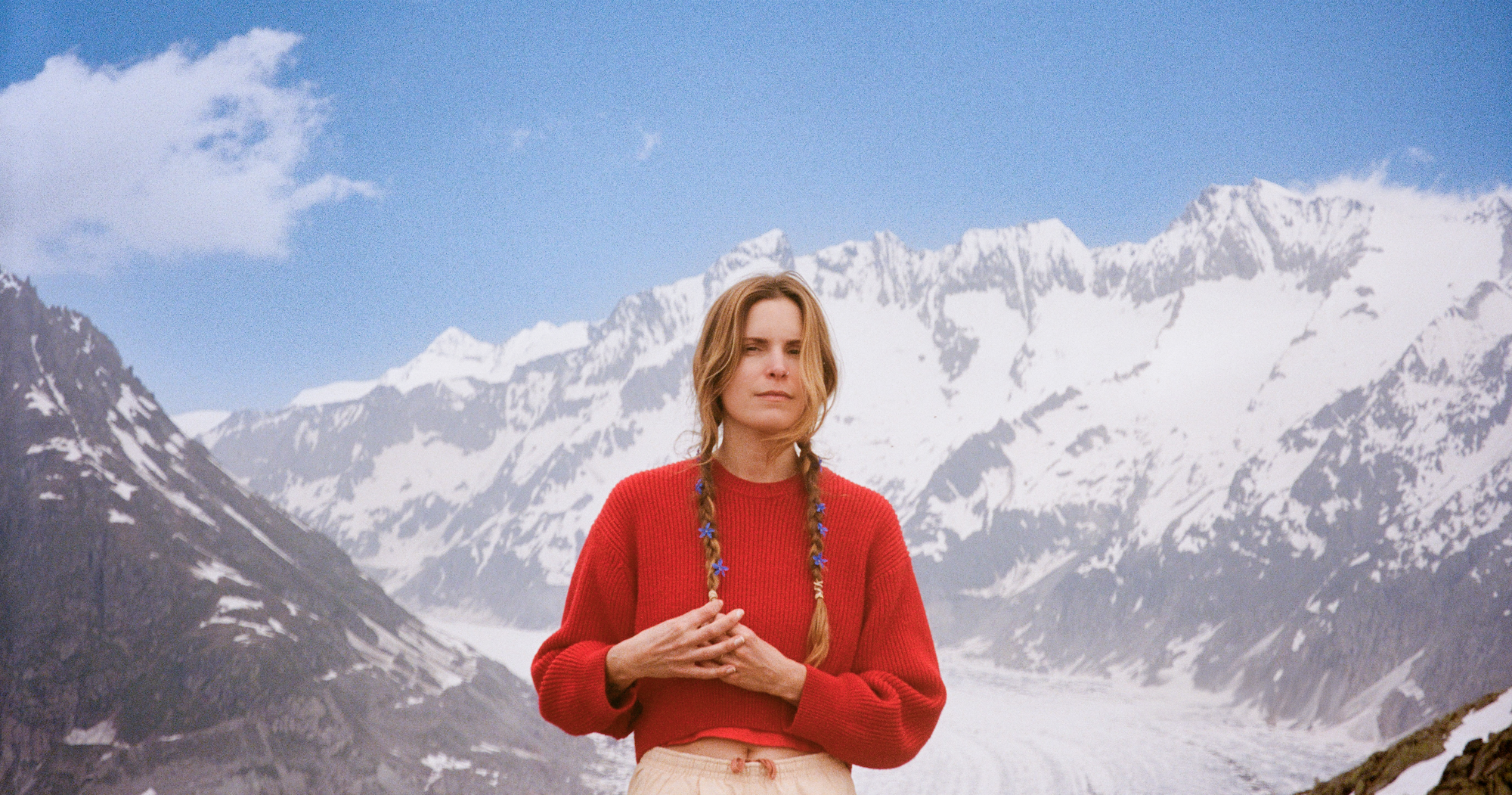
I never go on a hiking or camping trip and regret it. It always helps to put things into perspective for me. My worries and stresses feel insignificant when I’m staring out at a mountain range after climbing to a peak. The title track of my new album, Mammoth, is about hiking and all of the artwork and music videos were taken while either hiking in the Swiss Alps or the Colorado Rockies. My love for nature seeps out of this new project. I hope it finds its listeners craving the outdoors. – Lydia Luce
“Head in the Clouds” – Mocky
This song is one I keep coming back to. I have spent many moments in nature with my husband camping or in our Skoolie listening to this song. It’s one of our faves.
“Free Treasure” – Adrianne Lenker
Adrianne has a beautiful way of reminding us there is treasure all around us in nature and with loved ones – and we don’t have to pay for it. There have been so many times that I have found what I’ve been looking for just by sitting outside.
“The Wind” – Feist
This song is a perfect poem about the wind. Leslie sings about the power of nature, connecting us to ourselves and to each other. She sings, “You find you, keep on the horizon.”
“Quiet as a Star” – Jon Middleton
This song reminds me of camping by the ocean. The waves, the glow of a fire, and the stars above. It’s such a simple, stunning song.
“Hello Sunshine” – Damien Jurado, Richard Swift
In Nashville we have a big lake called Percy Priest with tons of tiny islands. I love kayaking out to the islands to camp. I’ve done a lot of solo camping trips out there and this song reminds me of those times. Paddling out to watch the sunset glow.
“Pretty Stars” – Bill Frisell
This song is so beautiful. The guitar melody reminds me of night swimming. Growing up in south Florida my brother and I used to go snorkel at night to see the bioluminescence. It feels like swimming in the stars; when you pop up out of the water you see the stars glowing up above. Some real magic.
“The Moonlight Song” – Blaze Foley
There is nothing like camping in the autumn. When the season changes and making a fire to stay warm is a necessity. This song reminds me of camping in the fall with buddies. It sounds like he’s singing to us around the fire, pulling us into the moment.
“The Ocean” – Richard Hawley
I have this distinct memory of driving out of the tunnel in Santa Monica where it turns into the PCH listening to this song. I have lived half of my life close to the ocean and I miss it so much. I moved to Nashville eight years ago from Los Angeles and this song brings me right back to staring out at the Pacific Ocean.
“Pink Moon” – Nick Drake
Who doesn’t love this song? It’s just a perfect song. I love Nick Drake’s open tunings and melodies. This song reminds me of hiking and though I have heard it a million times I never get tired of it.
“Brassy Sun” – S. Carey
This is another song that takes me back to solo camping on the lake. Microdosing mushrooms and watching the sunset. Appreciating the solitude in nature.
As you might guess, there’s tens of dollars to be made working in folk music. One of the more macabre ways I’ve made a living is… um… off the dead, performing educational programs on gender inequality in murder ballads for more than a decade with my band, ilyAIMY (i love you And I Miss You).
Maybe I was just born spooky (Halloween birthday!), but I’ve made the most of my curiosity for folk music’s unnerving and often misogynistic underbelly. All while collecting a few outliers that turn the old tales on their heads.
First found in Europe in the 1600s, murder ballad poems and songs have since become heavily associated with traditional American music. A mainstay in country and folk – whether it’s Polly or Omie falling prey to poor choices, or “Stagger Lee” (a staple since 1897), or Brokeneck Girls: The Murder Ballad Musical selling out its 2023 run – we’re still pressing play on cautionary tales of love inextricably woven with violence and remorseless outlaws. But we’re also starting to look back at the facts, wondering more at why the women of murder ballads are voiceless victims and rarely vigilantes.
I’ve kept the body count relatively low on my new album, Panic Room with a View, but there are a few graves. It is October after all. So, witches, black widows, and wanton women – who makes it out from this Mixtape alive? – Heather Aubrey Lloyd
“Bang, Bang” – Nancy Sinatra
This one might be a metaphor, but the messaging sure isn’t. Love is interlaced with violence right from childhood: “He would always win the fight,” and she should have known better. P.S. Sinatra may be singing it, but this lament from the “female perspective” was written by Sonny Bono.
“Come All Ye Fair And Tender Ladies” – Odetta
In rare cases, it’s not a man’s voice behind the mask, but women warning one another to “lock their hearts” against lying lovers. Cause of death here will eventually be sorrow, but don’t worry – we’re getting to the grisly bits and what happens when you don’t heed the warnings.
“Pretty Polly” – Coon Creek Girls
Appalachian, music academic, or horror movie fan, we all know the rules: the girl getting “busy” is the first body to drop. This song has roots in 1750s English ballads, where the pregnant and unwed victim at least sometimes gets revenge as a ghost. Not so with most American versions of Polly, or North Carolina’s Omie Wise, where the vague-but-violent tale is told with little remorse or consequence.
This is the blueprint of the classic American murder ballad. He’s dug the grave in advance or brought her to the river (no obvious sin-cleansing symbolism here) and “her blood, it did flow.” In some versions of “The Knoxville Girl,” his friends still try to bail him out of jail. Though countless renditions exist (The Byrds, Béla Fleck & Abigail Washburn, etc.), this stark presentation by the Coon Creek Girls has always been my favorite.
“Barbara Allen” – Joan Baez
Controversial opinion alert! I’ve always had a huge problem with the claim of “the world’s most-collected English-language folk ballad.”
Barbara Allen doesn’t die because she loves a man, but because she simply doesn’t. When women refuse there are still consequences, and “hard-hearted” Barb’ry follows “sweet” William to his grave, where he entwines with her in death. Ew. Still, it’s hard to argue with Baez’s perfectly mournful vocal take on this tune.
“The Dreadful End of Marianna for Sorcery” – Malinky
Or, if she says no and doesn’t die of sorrow, you can always cry “witch” and get her burned at the stake. Happy Halloween! You might think it’s a traditional, but this modern murder ballad from the year 2000 has a feminist twist; Marianna gets to tell on the men who wronged her, their hypocrisy revealed, her virtue extolled. This is a significant evolution from the third-person narrator (or male murderer’s perspective) pervasive in classic murder ballads.
“Frankie and Johnny” – Pete Seeger
Let’s get to a murderess. What if I told you Pete Seeger was singing you a lie? Did Frankie shoot her cheatin’ man? Yup, on October 14, 1899, Frankie Baker did. Was she sentenced to the electric chair for it? No. Songwriters didn’t bother waiting on the verdict. Besides, what ideas might women get if they thought they might get away with it?
Just days after the shooting, the streets of St. Louis were already singing. Frankie’s philandering beau, Allen, became “Albert” then “Johnny.” And Frankie, who unsuccessfully sued once a movie was made, was hounded by hundreds of renditions before she died in 1952.
“The Valley Is Ours” – Heather Aubrey Lloyd
Does a folk singer owe listeners absolute truth, or do we use bits and pieces of honesty to shed light on greater truths? As a songwriter and a former journalist, I’ve spent a while reconciling that question. This song from my freshly released album is a perfect example. I weave true stories from various eras of flood-ravaged Ellicott City, Maryland – a news article about a drowning victim, my time sanitizing debris from my friend’s submerged apartment – into a fictional family, unifying the experiences for the greater story representing all those who brave disaster and rebuild.
“Independence Day” – Martina McBride
If you’re an ’80s baby like me, this 1995 CMA Song of the Year (and one of Rolling Stone’s 100 Greatest Country Songs of All Time) was probably the first murder ballad you heard on the radio. Domestic violence, the standard trope, drives the battered wife to finally burn down the house with them both in it, leaving their surviving daughter to wonder, “I ain’t sayin’ it’s right or it’s wrong/ But maybe it’s the only way.”
I’ve spent years thinking about just how many other ways there should be for that woman. And maybe that’s the point of a great line like that. (I was too nervous to ask Gretchen Peters, the song’s writer, when I opened for her in 2022.)
“Silent Little Bells” – ilyAIMY
We all start by mimicking the art we loved growing up. So, it’s no wonder that in 2010 when it came time to write a murder ballad for my own band, ilyAIMY, I couldn’t seem to let the murderess get away with it, either. But my questions were starting. How do I reconcile my love of murder ballads with their problematic or outdated ideas? Can the women get more say in their stories?
“Can it be a sin/ For a woman done wrong to do the man done it/ Do that man right in?”
“Country Death Song” – The Violent Femmes
And I probably threw my fictional characters down a well, because I subconsciously remembered it from this song. We are all the culmination of everything we’ve ever heard and only think we’ve forgotten. This song’s presentation is so deadpan it’s almost parody, like a scary Halloween costume. An innocent daughter falls victim to a father’s starvation and madness. And when the victim is a woman child, at least, the murderer can’t live with the guilt and punishes himself.
“Delia’s Gone” – Johnny Cash
You can’t have a murder ballad Mixtape without Johnny Cash. The man in black – also a kind of persona/costume – put plenty of women in the ground through song, with a vocal delivery that’s dead serious. We know little about Delia’s actual “trifling” offenses, and as with early American murder ballads, much is left to the imagination.
“So if your woman’s devilish/ You can let her run/ Or you can bring her down and do her/ Like Delia got done…” references the old trope that men are somewhat justified killing sinful women, be it 1762 or 1962.
“Church Bells” – Carrie Underwood
Between 2000 and 2016 women got a lot of mixed messages about spousal abuse and murder ballads. The Chicks’ infamous “Goodbye Earl” was met with 14% of Radio & Records reporting stations refusing to play it with accusations the song “advocated premeditated murder.” Um … “Folsom Prison” much?!? Why not the same uproar for 2007’s “Gunpowder & Lead” wherein Miranda Lambert shows she’s willing, but we never get the actual trigger pull, or Underwood’s similar poisoning of an abusive husband in 2016?
Answer: It’s all about the aftermath and the attitude. The Chicks were too undeniably happy. “Church Bells,” meanwhile, walks the line that the bells toll for her in remorse and damnation, or that she finds absolution in the church.
“Pocket of God” – Cory Branan
When asked how the genre is evolving, I can’t hit play fast enough on this tune, featured on BGS in 2022. It has all the vicious, remorseless teeth I want in my bloody ballads – along with a surprising respect for its female victim. “Pocket” is reminiscent of a narcocorrido (Mexican drug ballad), narrated by a dealer who falls for a woman that becomes “a punch” he “couldn’t counter” and someone he “admired” for her intelligence. It’s only when she double-crosses him in business that he’s forced to kill her, like any other rogue henchman, as an example. But she haunts him.
“Oh (Field Recording)” – Laurel Hells Ramblers
Young artists keeping old Appalachian song traditions alive might be killing off a new kind of character – their former selves. Trans songstress Clover-Lynn follows up this boy’s murder by asking her father, “Oh, tell me daddy/ Can you ever forgive/ The death of your son/ So your daughter can live?”
“The Ballad of Yvonne Johnson” – Eliza Gilkyson
Trigger warning: this one’s a hard listen, but the truth always is. Instead of exploiting “Stagger Lee” as a Black anti-hero powerful enough to usurp the devil, or fetishizing Frankie in her kimono, we get the thorough, unflinching story of a Canadian Cree woman’s childhood abuse and the murder it drove her to, told in her words (Johnson shares a writing credit) through Gilkyson. All so that listeners can “awaken to themselves and to all people of this world.” When it comes to the fate of women in murder ballads, we’re starting to make room for greater complexity.
“Sisterly” – Jean Rohe
I’m skeptical that a song can change the world, but this song definitely changed me. When Rohe witnesses an assault on a woman from her window, she hesitates to get involved “in the name of it wasn’t me.”
“I’m not known for being sisterly/ Let the strong girls win and cut the weak ones free/ The boys lie, they say the boys are mean / Said I better get myself a spot on the boys’ team.”
We’re left uncertain of the girl’s fate, but mine was revealed. I was Rohe at the window, who didn’t like women I viewed as weak. I’d learned the rules to survive and they hadn’t. After I couldn’t look away from that part of myself, I started performing with more women, looking harder at where I stand in life and in the songs I love.
Fall marks the beginning of “over the river and through the woods season,” whether your destination is grandma’s house, an off-season beach, a u-pick apple orchard or pumpkin patch, a spangled and harlequin forest, or an autumn music and arts festival. As you navigate the changing season and enjoy leaf-peeping, apple butter, hot cocoa, and hot dogs roasted over the fire, there’s one genre certain to accompany you through each and every picturesque context the “-ber” months give us – that’s Good Country.
Country is perfect for fall, whether you’re raising a beer, whiskey, or cider alone or among friends. From driving through tobacco country during curing season in September, to tailgating at the football stadium, to winding your way over the Smoky Mountains, to soaking in the last bit of summer sun, there’s a country song ready to soundtrack your falling back in love with cozy season.
Dripping with nostalgia, evocative text painting, a rich and deep connection to nature, and a reverence for community, folkways, and tradition, country music just may be synonymous with fall – and our playlist certainly helps make that case. We hope you enjoy listening and we wanna know: what country songs always get you in an autumnal mood? Did they make the list?
Photo Credit: Album cover, New Harvest… First Gathering, Dolly Parton.
Six years ago, I found myself in the hospital for a period of a few weeks with a mystery illness, unsure of whether or not I would make it out alive. I did survive, of course; but the experience changed me fundamentally. It brought me closer to many of my heroes, both living and dead, who have walked before me, people who know a whole lot more about life and its passing than I do. As near-death experiences do for many, it led me to live differently, cherishing each present moment and honoring life’s transitory nature rather than fearing it. Retrospectively, it was a gift, because it helped me to realize that I have been fortunate to have been given a free life and my hope is to use my experience of healing to help others heal too.
My new album, Streets Of September, marks my reflection upon the anniversary of that life-altering event. It is a collection of songs that, to me, honor the beauty of being alive and the magic of alchemizing grief into something beautiful, created out of thin air in the moment we have before us. It is an ode to brevity and the wonder that can be found there: to be appreciated for a moment before being washed away.
As I have navigated the path of healing myself, these songs have served as anchors during some of the darkest of times. They are beacons of light I’ve looked to when I was uncertain of how to shift my consciousness from a place of grief to one of hope. We are all growing and healing one day at a time, and everyone else’s reality is as real to them as our own is to us. Wherever this music may find you, my hope is that there may be something here to give you the courage to press on, to continue on your journey, whatever it may be. – Jack Schneider
“Looking For Space” – John Denver
I first discovered this song when I was in middle school. That was a dark time for me. I felt different and yearned for a place to belong, wondering if it was something that even existed. This song helped me to look inward, to find peace in the home within my heart. As I continue to grow up I keep coming back to it. It reminds me to stay true to that journey, to open myself up to the space of my soul. It’s not about arriving at that place. Ultimately, it is about the continuous practice of aiming for something that we know we will never reach within our consciousness, but that the growing is what makes us who we are, stronger and more resilient, committed to the path as it disappears, which is how we can tell that it is the right one.
“Secret Of Life” – James Taylor
My parents took me to see James Taylor perform a solo acoustic show when I was nine years old. He played this song and the idea of the “secret of life” stuck out to me. At that age I barely knew what living meant. I’m still not sure I do. But coming back to that song now, having survived a near-death experience, it has more depth than I ever could have understood before. Our task in being truly present and grounded is through the power of the now and “enjoying the passing of time.” No matter how dark or difficult the road gets, nothing is forever, and if we can remember to shift our awareness and accept the unfolding of things in the time that they are meant to unfold, we can surrender to the joy of living and experience the full extent of our aliveness.
“Sweet Seasons” – Carole King
When I was growing up, my mom had an art studio in our house that she used to paint in. Every now and then I’d get to go hang out with her in there and we’d listen to music together. My mom put this song on a lot back in those days and hearing it reminds me of those special memories, of being encouraged to connect deeply with my creative energy. “Sometimes you win, sometimes you lose/ And most times you choose between the two…”
The older I get, the more I realize that we really do get to choose how we show up to the present. The hope is to be able to embrace the passing seasons as they come and go and find the beauty in watching life flow.
“I Got A Name” – Jim Croce
Jim Croce was one of my first musical heroes. I can’t remember how I found my way to his music, but his songs sound as if they always existed. I especially love this one, largely because of the last line of the chorus, “Moving ahead so life won’t pass me by.” Healing is not a linear journey and the dark times are necessary to help build and reveal our character. Time continues to pass and it is in the forward motion that we find ourselves connected to the magic of life, continuing to be reborn every time we open our eyes.
“That Lucky Old Sun” – Big Mama Thornton
A favorite song of mine and my favorite version of it. Perfect in every way.
“Shine A Light” – Rolling Stones
This was my grandmother’s favorite song. At her request, we played it at her funeral. She used to quote the lyric all the time, “May every song be your favorite tune.”
“If You Want To Sing Out, Sing Out” – Cat Stevens
My dad first showed me this song, and I’ve always loved the simplicity of its message.
“Go Wherever You Wanna Go” – Patty Griffin
I remember listening to this song leaving home, on my way to college. I cried so hard. The possibilities of the future were endless. And with that came the necessity to accept the changes happening around me and within me and the loss of the grounding presence of my family and the home I knew. I was bound to chase my dreams with tremendous uncertainty, hunger, and hope.
“One Of These Days” – Emmylou Harris
I love the line in the chorus of this song “ I won’t have this urge to go all bottled up inside.” Writing and singing songs is my outlet for processing my emotions, but I often struggle to create the space to bring them to light in my day to day life. Growing is recognizing where or who you hope to someday be, and then each day waking up and striving towards that dream, one moment at a time.
“Good Again” – Sunshine Grocery
“For us, there is only the trying. The rest is not our business” – T.S. Eliot.
“Bells Of Harlem” – Dave Rawlings Machine
A song of hope and redemption, capturing the essence of the kind of clarity that comes through after a season of darkness. The sun rises again. “A little joy, at long last.”
“Pilgrim” – Steve Earle
I was fortunate to have been at the Grand Ole Opry a couple weeks ago when Steve Earle was inducted. After becoming a member, he chose to play this song. Emmylou Harris, Vince Gill, Don Schlitz, and Connie Smith sang it with him. It was such a special moment, and I am grateful to have witnessed that kind of history. We don’t know where our journeys will lead us, but the path is homeward.
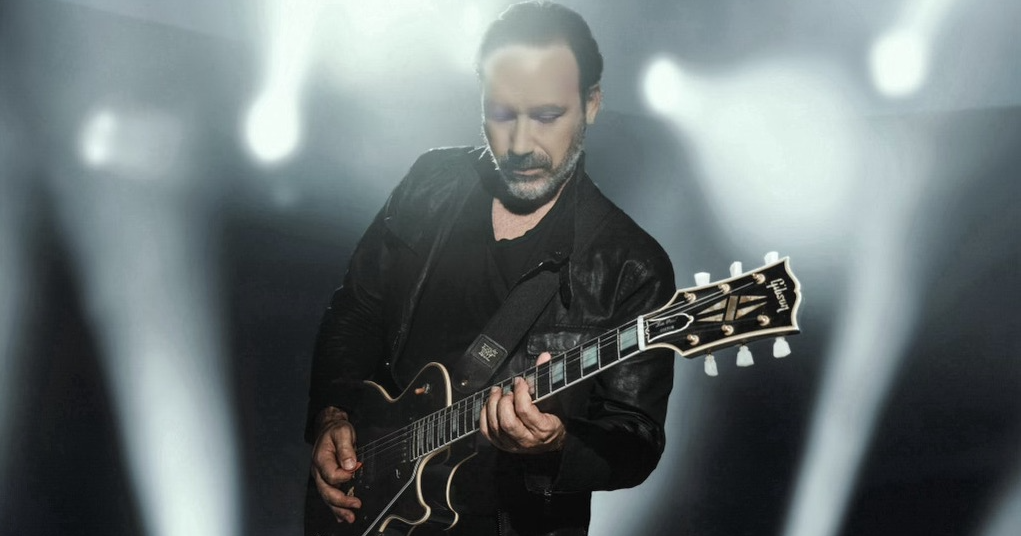
My new album’s theme, along with the theme of this Mixtape, is a roots-inspired journey through the South, with songs that evoke the feeling of traveling across its landscapes and into the heart of the Deep South. I hope the fans enjoy the journey of these songs and all the sounds and people it takes to make them come to life on Southern Sky – it takes a village.
That village comes to life across the nine-track journey of Southern Sky, where Irish roots fuse with Southern soul driven by Dobros, fiddles, and rich storytelling that soar with Appalachian tradition and Southern warmth. Inspired by the textures of the South, the spirit of the album is like Allen Toussaint’s Southern Nights, where Appalachian tales intertwine with the deep twang of the South.
Southern Sky features a multitude of musical titans – Vince Gill, Tim O’Brien, Ricky Skaggs, and Sam Bush to name a few – all contributing to the exceptional sound that I strive for. – Danny Burns
“Summer in Siam” – The Pogues
I always loved this tune, growing up listening to the Pogues and having met Shane many moons ago.
“My Old Friend the Blues” – Steve Earle
Steve is one of my favorites. I’ve had the honor to sing with him, open shows with him, and hang on his bus. His songs are epic; this is a great example of that.
“Southern Nights” – Citizen Cope
I first met Clarence Greenwood in New Orleans when I was driving him, Neal Casal, and Jon Graboff (the Cardinals) around while they were playing Tipitina’s. I fell in love with Clarence’s songs and his performances. Another great American artist and songwriter.
“Whenever You Come Around” – Vince Gill
I’m a huge fan of Vince and this track is about as good as it gets. I’ve always admired his songs, his voice, and everything he brings to the table.
“Locals Only” – ERNEST
I first heard this song down in Mexico during the pandemic while hanging out on the beach in Puerto Morelos. It became a bit of an anthem for those days by the water.
“Waiting On You” – Cecilia Castleman
A truly killer talent. Cecilia can play, she can sing, and I’m sure her skills as an engineer and producer are just as strong. This song is fantastic.
“Angel Flying Too Close To The Ground” – Willie Nelson
This has always been one of my go-to lonesome Willie tunes.
“That’s How Every Empire Falls” – John Prine
Epic song written by RB Morris out of Knoxville. I love both versions, but it was John’s take that first introduced me to it.
“The Lucky One” – Alison Krauss & Union Station
What can I say about Alison’s voice– absolutely world-class. Pair that with a world-class band, production, and song and it’s just unbeatable.
“Years” – Sierra Ferrell
This is pure ear candy. So intriguing and instantly captivating. It feels amazing and sounds incredible. Perfect work!
“Colony” – Damien Dempsey
A heavy hitter in the Irish scene, this track is a prime example of his finest work.
“Settle For A Slowdown” – Dierks Bentley
I really loved this album; it feels like a perfect introduction to where country meets bluegrass with a modern twist.
“Señor” – Tim O’Brien
Love Tim and his take on this epic Bob Dylan song.
“Linger” – Áine Burns
Love Áine’s take on this Cranberries hit – can’t wait to hear more from her before the year’s end.
Photo Credit: Jim Wright
This website uses cookies to improve your experience. We'll assume you're ok with this, but you can opt-out if you wish.AcceptRejectRead More
Privacy & Cookies Policy
Privacy Overview
This website uses cookies to improve your experience while you navigate through the website. Out of these, the cookies that are categorized as necessary are stored on your browser as they are essential for the working of basic functionalities of the website. We also use third-party cookies that help us analyze and understand how you use this website. These cookies will be stored in your browser only with your consent. You also have the option to opt-out of these cookies. But opting out of some of these cookies may affect your browsing experience.
Necessary cookies are absolutely essential for the website to function properly. This category only includes cookies that ensures basic functionalities and security features of the website. These cookies do not store any personal information.
Any cookies that may not be particularly necessary for the website to function and is used specifically to collect user personal data via analytics, ads, other embedded contents are termed as non-necessary cookies. It is mandatory to procure user consent prior to running these cookies on your website.