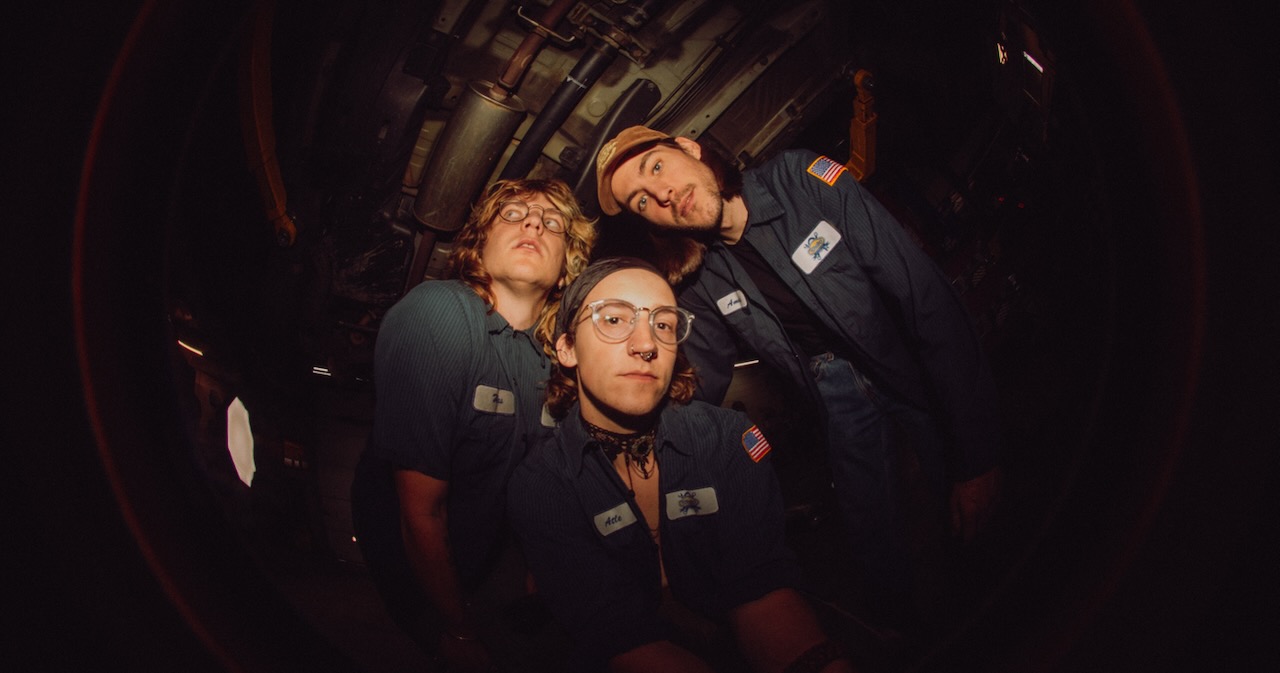
Palmyra Shakes Off Anxieties With Oh Boy Records Debut, ‘Restless’

Palmyra is a bit restless. Their emotions knot into a mangled ball, almost suffocating them.

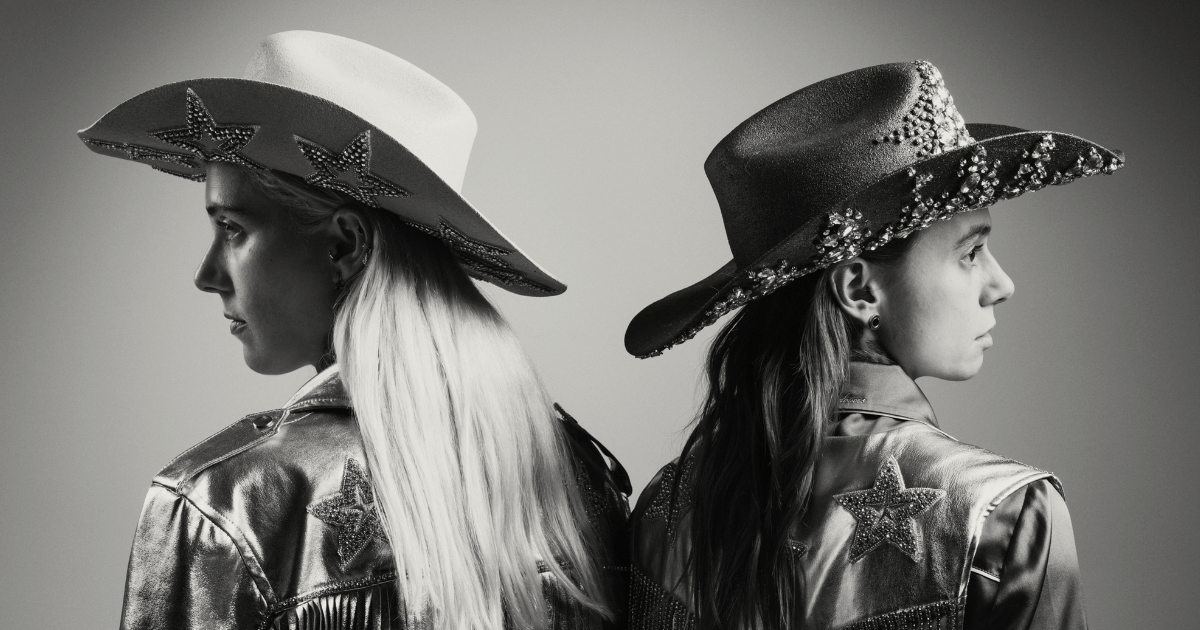
“Early hours in the morning, tossing and turning/ Everyone else in this house is asleep,” Sasha Landon pours into the microphone. “Palm Readers” emerges integral to the band’s new musical chapter. Aptly titled Restless, this album marks their debut with Oh Boy Records. It’s like reintroducing themselves to the world.

The trio – rounded out with Teddy Chipouras and Mānoa Bell – pounces from the get-go. Similar to The Lone Bellow’s tightly wound vocal work, their harmonies exude a vintage richness throughout as they do on the title track and opener. It’s quite evident that they take their work seriously, down to the lilt of their voices as they glide through the air. Palmyra makes you believe they’ve been singing together for decades, their harmonies are so electric and full of life.

“We definitely put a lot of effort into our harmonies. It’s something that always feels super important when we’re arranging a song,” shares Landon. “The three of us weren’t people who sang with others a lot before this band. When we formed, we learned a lot from old recordings of other bands and all sorts of stuff. We did a lot of transcribing harmony early on in the lockdown. The record needed to start with our voices and we wanted that to set the tone for the album.”

Perfectly performed harmonies underpin the album’s emotional currents. The trio builds guilt, frustration, and hope into the project’s backbone to create a coming-of-age story. “There was a moment when we understood what the album was about. There were separate songs that we found homes together through playing them live,” says Chipouras. “‘Palm Readers’ feels great right after ‘Restless.’ And those songs then became a pair. Their energies matched. The coming-of-age narrative emerged from the time period that the songs were written.”

Restless sprouts from the cracks between each song. Where “No Receipt” meanders through sun-caked uncertainty, the cheeky “Dishes” sees the band accepting domestication and finding peace. Along the way, they agonize over being present while time yanks them this way and that – the pressure that comes from being a working musician crushes their shoulders. The album, based on a “period of leaving college, going out on our own, starting a band, going out on the road, and just trying to figure out what the life of a musician looks like,” captures brutal truths of living, loving, and losing time.

Hopping on a Zoom call, Palmyra spoke to BGS about feeling restless, reenergized creativity, and mortality.

What is it about the title track that made sense to be the opener?

Sasha Landon: It made a lot of sense for us to have this song that starts with the three of our voices kicking off the record. Also, it is a song that has a through line to the record from the jump. The emotional center for this record is pretty heavy. And that’s not to say that there’s not a lot of light in the record. I think there’s a lot of fun on it, as well. But the overall emotional center is pretty heavy and restless, felt like a good way to jump into that.

In “No Receipt,” you lament that there just isn’t enough time. As you’ve gotten older, what’s your relationship with time been like?

Mānoa Bell: That’s the central theme of, not only the record, but questions we’re always asking ourselves. Specifically, the last line there about finding those quieter moments has proven to be such a challenge, to put it all to the side. Being an artist is such a consuming experience. Every moment of your day is a part of that journey and it can be hard to have separation from it, which is a really beautiful thing, but frustrating at times as well. You can’t get away from it.

“Can’t Slow Down” deals with a similar thematic thread. How did this one come together?

Teddy Chipouras: This one was a song that I wrote after a couple of years of not writing songs. I don’t think I wrote hardly any songs during COVID. This tune kind of came out all at once after being fed up with not writing anything for a while, and I think we had just gotten off the road. It was kind of like just throwing words at the page of how I was feeling at the time, just feeling exhausted.

That one’s funny, because it was a really big moment for me and I felt very accomplished that I had written something and finished something. I remember being nervous to send it to the band and then really not thinking anything would come from it. I did not think we would be playing that song every night. It’s one of those tunes that has changed meaning, or it means more to me now than it did when I wrote it.

“Buffalo” roots itself in a phone call during a show in Buffalo after one of your friends had taken their own life. Was this song a necessary cathartic exercise?

MB: There are songs that you try to write and then there are songs that you just have to write. I remember very clearly writing the beginning of it and immediately feeling better. It was a very therapeutic experience, not feeling good but feeling better. It’s a song that’s still hard to play. I feel a responsibility to try to connect emotionally with it every time we play it and not just phone it in. Sometimes, when you’re on stage, you’ve done something so many times, there’s a muscle memory aspect to it. But that song never really feels like muscle memory.

When someone dies, you begin questioning your mortality. Did that happen to you?

MB: I think suicide, specifically, when it’s someone who you see yourself in, and someone who you grew up with, makes you wonder what life would be like without them. It’s not just suicide. It’s just about loss and grief. There was never a point where I was like at such a level of grief that I didn’t want to continue living. But it definitely makes you wonder what life will be like moving forward.

The closing track, “Carolina Wren,” feels like a big sigh to let all the things on the record go. Why does it appear as primarily the demo you recorded?

SL: [Producer] Jake Cochran did such a great job of trying to make sure that the songs sonically matched their emotional core and that the version of the song that we were putting out felt really authentic to the lyrics and our live performance of it. This was a tune that I hadn’t played for anyone in the band yet. I wrote it right before we went to the lakehouse [to record] and played it on a whim. I think Teddy was out getting groceries or something and Jake pressed record. Mānoa is holding the bass and I think plays one note on it, and I am playing guitar and singing. We just felt, after hearing it, there was a consensus that that’s how the song is supposed to exist. It’s how it’s supposed to sound.

And Jake helped us get there, too. With some songs, like “Shape I’m In,” for example, we had to be mindful of how many performances we gave it before we exhausted it and weren’t going to get any more. When you have a song that takes a lot emotionally to perform, you can only do it so many times before it loses its meaning, or becomes muscle memory, or just wears you out from overuse. We had one take that felt earnest. It speaks to the song. It honors the song in a good way and it belongs as it is. Then we decided that it made sense as the last tune on the record. It is a nice little breath at the end.

What have been the biggest realizations you’ve had of being working musicians?

MB: I think maybe for me, I’ve learned that there’s kind of an endless amount of resilience needed. You’re constantly faced with just things you need to get through, to solve. I don’t even know if I would call that a music thing, though. I think that’s just like a growing-up thing.

TC: One thing for me is I didn’t realize how hard it would be to find creative time when you’re a full-time creative. We are full-time musicians, we’re on tour a lot of the time, and then we get home and there’s a lot of work to do. It’s almost harder to schedule the creative time than it is to schedule the work. I never thought it would be hard to find that balance.

Did this album change you in any way?

MB: This record showed all three of us that there was another level to get to and that there are endless places of growth that we will find. I think we dug deep as a band and it has continued to be rewarding for those reasons. The further we dig, the better it is. It does just keep getting better.

With the release, the songs no longer belong to you, but the world. What’s that experience?

TC: It will be interesting to see how this one feels, because this one feels bigger than our previous projects. We talk about this a lot with our songs going through different phases of us letting them go. I think the biggest one for me of letting songs go is starting to play them live. We’ve played all of these songs live before for a while. That moment, for me, is the biggest in terms of feeling like releasing full control of it, and it becoming the world’s and not ours anymore.

MB: We haven’t released something at this level before, so I don’t know. I’m excited to see how it feels releasing the whole project. Last year’s release was an EP. I think that if I’m defining what feels different about an EP versus an album, it’s like Teddy saying that this feels bigger than anything before; it’s the amount of energy we put into creating the music – the amount of energy we’ve put into getting it out to people. It’s just like we’re putting so much behind it.

SL: I’m so excited to see, to know that a listener’s first experience of Palmyra could be Restless, that the first thing that they hear is something that of all of the music we’ve put out, we have been proud of, and has been a really good snapshot of where we are at the present time.


Photo Credit: Rett Rogers
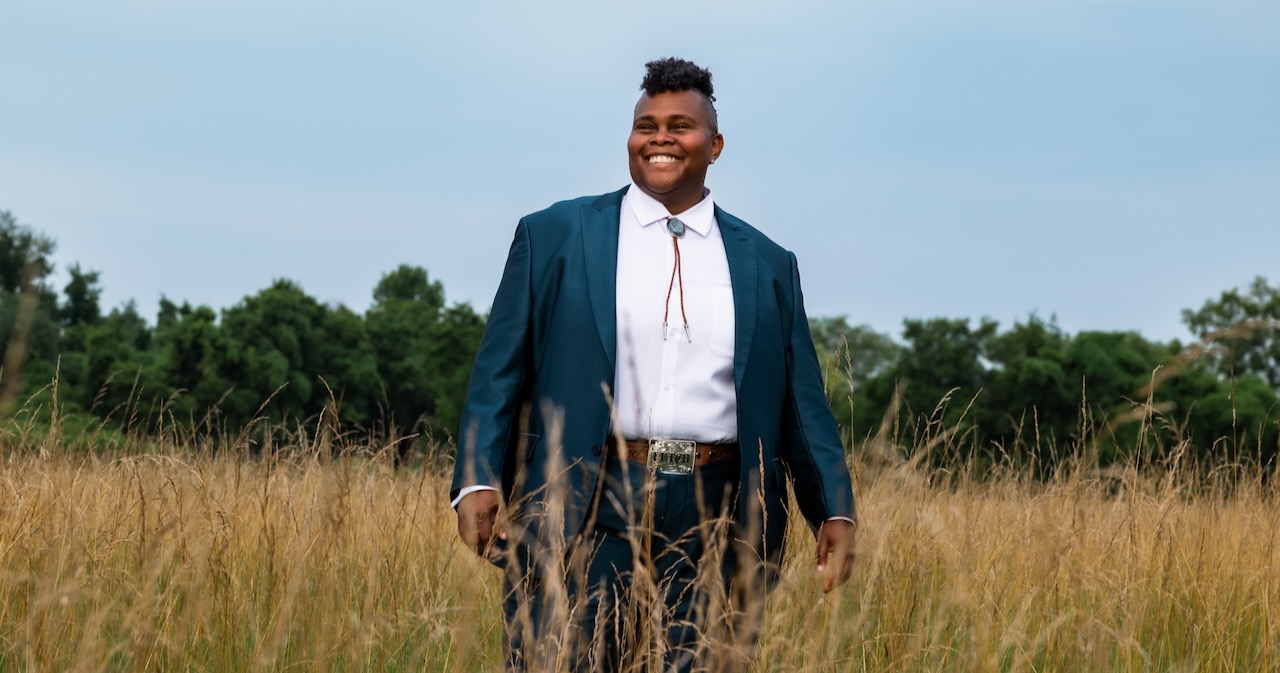
BGS 5+5: Crys Matthews

Artist: Crys Matthews
Hometown: Nashville, Tennessee
Latest Album: Reclamation
Personal Nicknames (or rejected band names): Papa Bear to my future-wife, Uncle Bear to our youngest nieces, and just Bear to my chosen nephew, River.

What’s the toughest time you ever had writing a song?

Without question, the song that took me a while to get ‘right’ is my song “Suit and Tie.” This song was written in response to the drag ban being rolled out in Tennessee. Nashville is my home now, so having a front-row seat to the fallout from that bill definitely weighed on my heart. [The ban] was intentionally loosely worded so that law enforcement could have cause to harangue anyone who they saw fit, even a singer-songwriter like me who happens to dress in suits and ties more often than not.

Gender and gender expression are both deeply, deeply personal – they are nobody’s business and certainly not our government’s business. As a social justice songwriter, I take tremendous care to avoid “speaking for someone” or inadvertently appropriating something that I only meant to appreciate. In “Suit and Tie,” only one of the verses is about me directly and offers my perspective as a Butch-identified lesbian who has been wearing clothes that bucked the patriarchy since I was four years old. The other verses are about a nonbinary person, a femme-identified gay man, and a trans woman.

My friend Holly [Near] once called my songs “truth-telling journalism,” which I took as a badge of honor. The notion of being a faithful steward of the truth means a lot to a PK (preacher’s kid) like me, and so it took me about seven drafts before I felt like I had done that with this song.

If you had to write a mission statement for your career, what would it be?

My mission statement is: To amplify the voices of the unheard, to shed light on the unseen, and to be a steadfast reminder that hope and love are the truest pathways to equity and justice.

What has been the best advice you’ve received in your career so far?

Unsurprisingly, so much of the best advice I have received during my time on this planet is from my mother. One gem in particular that has seemed more and more profound is, “Babygirl, you better remember whose you are, so you don’t forget who you are.” It was (and still is) her way of reminding me that this industry and this world can try everything in its power to try to change the things about you that make you special, those things that, so often, are the very things that drew them to you in the first place.

You have to be steadfast and secure in who you are at your core. You have to remember your ancestors and your community and the people who knew and loved you before anybody who thought they could help you ‘make it big’ even knew your name. That advice from her is why I have managed to have an actual career that centers my ideals and values. And I think it is why the people in my corner seems to also reflect that ideals and values.

Does pineapple really belong on pizza?

Absolutely not! I keep telling my future-wife that, but she keeps insisting that I’m wrong.

What is a genre, album, artist, musician, or song that you adore that would surprise people?

Tchaikovsky’s “1812 Overture” – before I realized I could write songs, I was fairly certain that I was going to be a high school band director. I have a deep love for classical music. I can conduct the 1812 like nobody’s business!

I know some musicians hope they get famous enough to sing the National Anthem at a Super Bowl or play at the GRAMMYs, but I’m just hoping that I get to conduct the 1812 with a philharmonic at least once before I die.


Photo Credit: Emily April Allen

Sugar in the Tank

We’re not always promised earnestness and raw talent from musical guests who show up on late night talk shows, but Julien Baker and TORRES brought both during their energizing joint television debut on The Tonight Show Starring Jimmy Fallon last week.

Donning brightly colored western suits embroidered with flowers and wielding an eclectic mix of acoustic and electric instruments, Baker, TORRES, and their sprawling backing band are vital and promising in their four-and-a-half minutes on stage. It feels like stepping into a slightly altered version of reality, one where past and future bleed into one another.

Together, the seasoned songwriters blend elements of ’90s-era alt-country, western, and indie-rock; their energizing harmonies feel so riddled with life they couldn’t possibly be defined by genre. Baker and TORRES are returning to the root of something honest, vulnerable and nostalgic with their sound. But they’re also acting as alchemists, creating a secret third space, almost inexplicably, using familiar, common elements. There’s just something about this performance that words can’t quite capture.

“Sugar in the Tank” starts out slightly subdued. Baker sings in a characteristic restrained-yet-emotive voice as she plucks the banjo. TORRES starts a twangy conversation between their Fender Telecaster, the fiddle and the pedal steel. But as the song builds, the energy of the performance becomes electric and infectious. When TORRES first comes in with their rich vocal harmonies and the band kicks into full gear, the song becomes bigger than the sum of its parts. But even as it becomes raucous and expansive, the performance still manages to feel tender, personal and heartfelt.

At one point, Baker sings, “I love you now, already and not yet,” and this trepidation, this confusion matched by conviction, feels deeply fitting for the energy the musicians bring to this performance.

Baker is best known as the founder of indie/folk-pop supergroup boygenius, while TORRES has been trodding a steady path as a solo artist for over a decade. The two just recently started recording and performing together, and it looks like there’s plenty more to come. While “Sugar in the Tank” is the only single Baker and TORRES have released so far, rumor has it they have a full-length country album in the works. The two will be performing in select cities throughout the U.S. this coming spring and summer, and you can check out their full list of tour dates on their website.


Photo Credit: Ybru Yildiz

Embrace the Past,
Move Forward

Music has and continues to be a form of healing for Fancy Hagood. The Arkansas-raised singer who takes his forename from the Drake song – not the Bobbie Gentry and Reba McEntire hit – first began writing songs as a queer junior high student struggling to fit in before dropping out of school at 17 to chase his newfound dreams in Nashville.

Despite growing up listening to everything from contemporary Christian music to The Chicks, Shania Twain, Tim McGraw, Destiny’s Child, and Missy Elliott, it was choir and theatre that brought Hagood’s own creative aspirations to life.

“I really found myself in those classes,” Hagood tells Good Country. “I was dealing with a lot of bullying at the time and writing music became one of the few ways I could truly express myself.”

But upon his arrival to Nashville, Hagood was told that a career as a queer country musician was unlikely. This was followed by a move to Los Angeles, coupled with a transition to pop, that led to him to opening for the likes of Meghan Trainor and Ariana Grande as he juggled a day job at Forever 21. Those opportunities coincided with a decrease in creative control over his own work, something he’s taken back for himself on 2021’s Southern Curiosity and his most recent project, American Spirit, which released October 25.

“I was hell-bent on this album not being a breakup record, but instead one about healing, moving forward, and finding yourself,” Hagood says of American Spirit. “I don’t want to be on the road singing songs about my ex, but I do want to sing about reclaiming your story, bouncing back, and that being the most powerful thing after experiencing something like that.”

Speaking on the phone from his Nashville home, Hagood detailed his ambitious Music City move, experiences with gatekeeping, his work with Apple Music, and more.

What was it like for you moving to Nashville so young? I imagine on one hand it’s quite empowering, but it can also be overwhelming too.

Fancy Hagood: On my song “Fly Away” I sing, “You were scared as hell to take the highway/ You barely knew how to drive…” and that’s the truth. I got my driver’s license when I was 16 and I never drove on the highway until I moved to Nashville, so it was very much a culture shock. I know a lot of people don’t view Nashville as a big city compared to New York or Los Angeles, but when you’re coming from small-town Arkansas it felt like the whole world had opened up for myself. There were parts of it that were really intimidating, but for the most part I had so much enthusiasm that you couldn’t really tell me anything. I had this idea that I was going to be a country superstar and you couldn’t tell me otherwise.

I know things haven’t always been easy for you though. You’ve dealt with some gatekeeping and other hurdles along the way. What’s that been like?

Before I moved to LA, I was getting all this attention in Nashville, selling out shows on my own. A lot was going on for not having any music out in the world yet. I quickly got a publishing deal, but instead of things taking off from there I started getting a bunch of people putting their own opinions on me and putting their own stuff into my music, thus limiting me because of their own fears. That was something I never had going into all of this – fear. It’s a complicated thing when you start mixing art and commerce. The powers that be recognize you have talent, but in figuring out how to make money from it they start thinking of Middle America and who’s going to buy it, leading to a fear game rather than just letting the artist be an artist.

When I moved to LA and got a record deal, that’s where other people’s fears began sinking into my own train of thought and my delusion began slipping away. I was accomplishing all these things, from performing on Dancing With the Stars to hitting the road with Ariana Grande, but on the inside I felt miserable. I realized I’d sacrificed so much of myself and my art to get to a place where other people found it comfortable for me to be successful, but a year and a half into it I just imploded and lost all the deals.

It wasn’t until moving back to Nashville in 2016 that I was able to shake all that off. In 2018 I signed a new publishing deal and began work on my album Southern Curiosity, a slow burn that didn’t release until 2021. It was a really difficult transition having [to go from] a Top 40 hit and everyone treating you like you’re the king of the castle to no hits, no deals, and nobody wants to touch you with a ten-foot pole. It was a humbling experience that taught me that the industry in place was not set up for someone like me to be successful. Because of that, my train of thought stopped being about how do I fit into the industry to thinking about how to create my own, which is exactly what I’ve been doing since Southern Curiosity.

One way you’ve been building that community you speak of is through your role as the host of Trailblazers Radio on Apple Music. What’s that gig meant to you?

I’ve never experienced a company that puts their money where their mouth is quite like Apple. They were supportive of me and my first record before hosting a radio show was even a thought. They first came to me after I guest-hosted on the late Leslie Jordan’s Apple Radio show, which I did three or four times with him. After that, they approached me with the Trailblazers idea and threw me into the deep end. When they offered it to me in 2021 I’d never done radio before and just recently we were picked up for our fourth season. My idea is to feature artists who don’t typically get those opportunities, allowing country music to be for everyone. If you look at our playlist you’ll see all kinds of artists on there, not just what country radio suggests Nashville is.

It’s also been meaningful getting to sit across from actual legends and people who have shattered the glass ceiling in country music. Each artist that’s come through our doors has taught me that not one artist’s journey is the same, which has done a lot for inspiring, motivating, and informing me as an artist.

Are there any particular moments or guests from the show that stand out?

I’d never met Jelly Roll before he came in for his interview and his heart just blew me away. Who he is at his core is so full of joy and his philanthropic side was really inspiring to me. He had just sold out Bridgestone Arena and donated all the money to an organization that helps incarcerated youth. Even when we weren’t recording he was wanting to know more about me, my art, and what I do. He’s just a stand-up person.

A moment ago you mentioned Leslie Jordan, whose loss you touch on (along with your grandmother’s) on the song “Good Grief.” I guess that goes back to songwriting being a method of healing?

Yeah, it came about during a writing session with my friend Jeremy Lutito on a particularly solemn day. We were both in sad moods, but in typical fashion when two guys are alone in a room the last thing they’ll do is ask, “What’s on your heart?” We got to talking about a situation with his family where their dog had passed away the night before, which led to a conversation about grief and having to walk his kids through it for the first time. As he was telling me this I just fell apart thinking of how grief is such a hard thing to come to terms with and reckon with, but sometimes it’s ultimately a good thing. We’d been struggling all day, but that song came about in only an hour or so. It was pure magic.

I’ve seen you refer to this album as a “breakup record,” and I feel like one song that really captures that essence is the title track, “American Spirit.” How’d it come about?

I wrote that with Gina Venier and Summer Overstreet. It started with this idea of cigarette season or a time in your life where you’re smoking and stressed. But with Gina, who’s also a queer artist, it evolved into a song about becoming someone else’s vice. It’s not an unheard-of story in the South, people not being able to fully speak to who they are or how they feel – there’s a lot of closet cases among us. I’ve dealt with that a lot in my time in Nashville and I know others have, too. The song is mostly a nod to those experiences and being an openly queer person dealing with others who aren’t open but are addicted to your openness and freedom and not being able to let that go.

What has music taught you about yourself?

It’s taught me that I’m resilient and can get through anything along with the power of believing in yourself. I’ve gone through a lot in this industry, but I keep coming back. This is what I love and I’m never going to stop.


Need more Good Country? Sign up on Substack to receive our monthly email newsletter full of Good Country direct to your inbox. 

Photo Credit: Natalie Osborne

Julie Williams’ Star Rises

“I like to say my music is mixed, like me,” laughs Julie Williams, a queer, biracial Nashville-based songwriter who happens to be one of the strongest new voices to emerge in country music this decade. “I grew up loving ‘90s country, but before I moved to Nashville I didn’t necessarily think I could make that music. I didn’t think I had a place in the genre. I had so many other influences too – like the Indigo Girls, James Taylor, and other folk music – so I thought that would be more my world. But the song that changed everything for me was ‘Southern Curls.’ I was like, whoa, this is undeniably a country song, and it feels more like me than anything else I’ve ever written.”

Released back in 2021, “Southern Curls” was a breakout single for Williams and continues to inform her subsequent work in a lot of ways. Like many of the best country songs, the track flirts with an existing trope while flipping it entirely on its head, invoking the texture of her own Black hair as a foil to disrupt the traditional image of coiffed ringlets favored by white southern belles. Williams uses her hair as a gateway to discuss the still prevalent differences between how Black and white women are treated in this country, particularly in the South, and opens the conversation with a matter-of-fact account of her personal experience.

It’s a simple, riveting song, intimate and singular, but also broad enough to provide desperately needed representation for a whole diaspora of Black female artists who, like Williams, have had a hard time making space for themselves in the predominantly whitewashed genre of mainstream country. Almost immediately, the track earned the attention of fellow Black country artist and Apple Music host Rissi Palmer, who named Williams to her 2021 Color Me Country cohort, and also caught the ear of the Black Opry, who invited the young artist to join the collective on stage and on tour in 2022.

Following this up with a self-titled EP in 2023, an appearance on a PBS special about Black women in country, and a performance at Newport Folk Festival, Williams joined the CMT Next Women of Country Class of 2023. Now, she’s touring behind another new EP, Tennessee Moon, which includes a new version of the impactful song. Williams is excited about the prospect of expanding her sound – and her writing voice – even further.

“‘Southern Curls’ gave me the bravery to write songs that feel authentic to me,” Williams says. “From there, I’ve been really lucky to work with some incredible people, like my partner Jonathan Smalt, who produced my new EP, Tennessee Moon. This is a big release for me in that it feels like an arrival.”

Another part of that feeling? Williams and “Southern Curls” were featured prominently as part of a new documentary on Hulu, It’s All Country, which features legends like Luke Combs, Wynonna Judd, and Sheryl Crow, plus a never-before-seen performances from Williams herself.

While out on tour behind Tennessee Moon, which released in October, Williams called in to speak with Good Country from the road. She talked about her experience shifting from the world of public policy to the music industry, all things ’90s country, navigating the bounds of folk and other genres in her sound, and those deeply felt, close friendships that might have always been more than… just friends.

What was your relationship to country music like when you were growing up?

Julie Williams: My mom used to play a lot of ‘90s country in the car, artists like The Chicks, Shania Twain, Trisha Yearwood, and Sara Evans – but especially The Chicks. I’ve been thinking a lot about them recently, especially in the last few weeks [since the presidential election]. A huge part of my musical introduction was around the time when The Chicks were kicked off country radio. Their song, “Not Ready To Make Nice,” I remember my mom explaining the lyrics to me. That was really where my love for storytelling and lyrics came from.

I noticed the lyrics in your songs right away, they’re not filler or frivolous, they’re stories.

I always thought people would only want to listen to me if I was playing the songs they already knew and loved. Once I started writing, I realized my stories have value. Growing up in Florida, I’d sing covers of Jimmy Buffett and Tom Petty, whatever songs I thought would get me the tips from the snowbirds. I didn’t go to school for music, I went to Duke University and studied public policy. I wanted to work for a non-profit and become a lawyer. But we had a student record label I was a part of, Small Town Records, and that was the first time I got the chance to start writing my own songs. I started to see the power in my own story.

How did you make the jump from studying public policy back into music?

I wanted the work I did to make somebody’s life just a little bit better, but I didn’t realize I could do that with music too. Some of the things I cared a lot about, too – issues of race, queer issues, and women’s issues – how do you get people to care about them? Part of it is through telling stories that move people. I soon realized I didn’t have to sit behind a desk all day and be a policy analyst. Music can also get me in spaces and in front of people that I wouldn’t be around.

Is there an artist who has a career path that you’d like to follow in the industry?

I’ve always been such a fan of Kacey Musgraves and the way that she’s always stood up for what she believes in. She’s never backed down in that, and she’s always put herself in her songs. Part of it is about love and heartbreak, but it’s also about following your arrow, and being yourself. Even the ways in which she’s created a whole new sound in country and in folk with Golden Hour. I fell in love with that album when it came out. I’ve always looked up to the way she can capture the simplest feelings of being a human in her songs.

How do you feel about your music as country or as folk? There are so many other elements to it, and you have a very layered, textured sound.

I have so many influences that aren’t from country, but pairing all of those things creates that mixed sound that really feels like me. As an artist, I’m constantly thinking about “How am I going to market this?” or “What genre is this going to be in?” and that can sometimes feel limiting. I don’t think my music would fit into a traditional pop-country radio sound, but I don’t think it fully fits into other genres either. I’m just trying to make what feels good for me.

How does Tennessee Moon fit into your current discography? It feels like another level.

It’s definitely a big release for me. That’s a testament to being here in Nashville for a few years and trying things out. Every time I put out music or write a song, I hope there’s going to be better ones that keep coming. “Tennessee Moon” was a really special one for me. It started with a film photo that I took of an ex while we were kayaking at Percy Priest lake at sunset. That relationship didn’t work out, but I took the photo to a co-write with a friend of mine, Melody Walker. I said, “I want to write a song that feels like this picture,” and I knew everything else was going to be around that song.

“Just Friends” is another one of my favorite songs on Tennessee Moon, and it seems like so many people relate to the experience of the blurred line between best friends and something more. How did it feel to address that?

I wrote this one with Melody Walker as well and it’s also one of my favorites. I love women, and I realized that I can love anyone regardless of their gender identity. I came to that realization in my twenties, but now that I know who I am – and who I love – I was looking back at a specific friendship of mine. Retrospectively, I realized I had a crush on this person. I was in love with this person. But getting the chance to create a pretty sapphic music video felt like ripping the band-aid off as far as talking about my queer identity in my songs. I hadn’t done that before. I’m really excited to write and put out music freely now.


Photo Credit: Chase Denton

On Her Debut Solo Album, MUNA’s Katie Gavin Searches for Connection and Finds It

On the album cover for singer-songwriter Katie Gavin’s solo debut album, What A Relief, she sits half-dressed in the middle of her shiny, sage-green bedspread with various clothes and possessions strewn around her and the floor; even the cat stands awkwardly mid-sit or stand, it’s hard to tell. The immediacy of this messy in-between moment conveys the intimacy Gavin reaches to again and again on the album.

I want you to see me
When you’re not looking
I want you to fuck me
When we’re not touching

The album’s opening track, “I Want It All,” exhumes a lust for connection so all-consuming she knows already, “I’m gonna lose my mind / I’m gonna lose…” But it’s also Gavin’s thirst for and attention to these acutely relatable moments of humanity that render the album enticing.

“I’m really hungry for connection. And I think that in putting out songs that express that, or putting out images that express that, and having it met with understanding gives me that experience of like ‘we’re all humans having a human experience,’” Gavin says. “I want to push myself in terms of what I allow other people to see.”

Much of Gavin’s career has been with pop band MUNA (who opened for Taylor Swift’s Eras Tour earlier this year). Solo, Gavin sheds her dazzling pop-star persona and the trappings of MUNA’s spectacular auditory and stage presence, retaining their honesty and emotional precision. What A Relief, which was produced by Tony Berg, is a collection of 12 songs Gavin wrote on the side over the past seven years. With them, and a clarity born of self-assurance and yearning for connection, Gavin pulls up a chair to settle in for a heart-to-heart with her audience.

“Some days you do your best / Some days you do what gets you out of bed…” Gavin sings on “Casual Drug Use,” possessing an inscrutable ability to pinpoint reality neatly and poignantly. That realism remains throughout the album, which unfolds as a masterful look at the human condition through the micro view of Gavin’s relationships with the world, herself, and others. Many times, she sounds so thrillingly close to the microphone it’s as if she’s singing right into your ear.

As she winnows down her experiences to a few kernels of truth, Gavin deliberately and deftly seeks accessibility and relatability without catering to weirdness or discomfort simply to make a point. “I am pleased with the same chords, over and over, as long as there’s a story and someone is saying something compelling,” she explains.

Her lack of pretense serves as shorthand for her palpably raw portraits of life: “But I think this is as good as it gets, my love/ I think this is as good as it gets/ Pray to god that you think that it is enough…” she sings in “As Good As It Gets” – which features guest vocals by Mitski – about a relationship that is not always a fairy tale. It’s an acknowledgement that you can both love someone and be underwhelmed by them, at least some of the time.

“‘As Good As It Gets’ reflects this big question that I’ve had for a long time, and I still have about what is reasonable to expect from a romantic relationship. And how good is it supposed to feel?” she says.

Elsewhere on the album, in “Sanitized,” Gavin carefully takes a wet washcloth to the bottoms of her dirty feet, afraid to stain her lover’s clean bed (“I lie perfectly still so I don’t mess up my hair/ I’m a sanitized girl, I clean up for you my dear”); or promises not to stalk her ex online, except “once in a while I’ll wanna know if you’ve died,” as she muses in “Keep Walking.”

Growing up in Illinois, Gavin’s parents gave her free reign to explore music and she gravitated unsurprisingly to pop music, entertaining preteen love for the Spice Girls and Samantha Mumba, and teen obsessions with Riot Grrrl, Gravy Train, and the Weepies’ “Gotta Have You.” She also gravitated toward queer, explicit music (Gavin is queer, but was in the closet at the time). When she started writing her own music as a teenager, her mother introduced her to Imogen Heap and her father stoked her folkie music interests with Jackson Browne and Jim Croce.

Gavin’s broad musical tastes inform her writing of course. In the case of What A Relief, she draws particularly on her love for John Prine’s flawed, human characters, and perverse, weirdo songster Loudon Wainwright III whose Attempted Mustache remains one of Gavin’s favorite albums.

“It’s the same magic that’s in a lot of John Prine songs, where these people aren’t afraid to talk about what real people experience in their real lives, even if it’s really silly, and then really mixing that with the profound.”

Silly mixed with the profound is perhaps the best possible description of Gavin’s own music. In the middle of the album, Gavin drops the bluegrass-folk portrait “Inconsolable,” about generational baggage’s impact on our well-being. Wrapped around a divinely-gratifying fiddle melody (she brought in Nickel Creek’s Sara and Sean Watkins to add a little extra bluegrass cred to the track) the song is first and foremost a reflection on learning to be vulnerable while falling in love.

It’s an experience that feels every bit as familiar as Gavin’s messy bed, but in a way that seems to make sense for the very first time – the gift of a stellar songwriter. More than that though, “Inconsolable” is a study in the way tiny moments elevate Gavin’s songs through her allegiance to the balance between silly and unvarnished experiences. We’ve all curled up on the couch hesitant to show how we’re really feeling.

But I’ve seen baby lizards running in the river
When they open their eyes
Even though no one taught them how or why
So maybe when you kiss me I can let you
See me cry
And if we keep going by the feeling
We can get by

Mid-verse, Gavin pivots from the endearing image of baby lizards learning to swim to emotional vulnerability in a fledgling relationship with the blockbuster realization that salvation and connection again might just come from that blind leap of trust.

Gavin’s quest for an honest examination of emotional intelligence stems in part from time spent with her grandparents, two of whom she lost in the last few years. Soaking up their stories, she thought about how much they endured and how many times older generations weren’t afforded a chance to be heard, or to feel their feelings.

Elders teach both by omission and by passing the torch. In “The Baton,” What A Relief’s anthemic third track, dedicated to the lineage of socially and generationally inherited womanhood, Gavin outlines her understanding of resilience as it passes from mother to daughter. Imagining what she’d say to her own daughter, Gavin also reaches to the wisdom from generations before her:

I’d pass her the baton and
I’d say you better run
‘Cause this thing has been going
For many generations
But there is so much healing
That still needs to be done

Not for rebellious reasons, but rather to instill a deep love of self, by the end of the song, Gavin’s come out the other side as her own mother.

“It’s a sense of learning, a sense of ownership and agency and learning to really listen to myself and trust myself, like if I’m going into a situation that I’m nervous about,” she explains. That’s a transformation not unlike her experiences writing the album, which she started when she was 24 and concluded at the age of 31: “You’re kind of moving from this archetype of maiden to mother.”

“I’m aware of a younger part of me that might be nervous and might have needs,” she says. “I often talk to her and say, ‘I got you, you’re coming home with me.’ And, ‘You don’t need to worry that I’m gonna forget about you or give you away to somebody else, or make you tap dance for somebody else.’”

Part of mothering yourself is finding your pitfalls and learning to prevent them. For Gavin, that includes thinking about addiction a lot, well beyond drug use.

“I can get addicted to a lot of different things; I can get addicted to different processes; I can get addicted to people; and I can get addicted to looking at furniture on Facebook marketplace,” she says. “I was thinking about this idea that when we as humans get stuck in the process of addiction, the things that make us feel good, and our actual relationship with the world gets smaller and smaller.”

That idea became the song “Sketches,” wherein Gavin distills addiction into a two-dimensional study of self reduction. In a simple acoustic guitar and cello-accompanied track, she imagines her character reduced to a sketch by an overbearing relationship: “That the deeper I’d go/ The smaller I’d get…” until she takes back control, painting herself back to size.

“The process of recovery has been really one of expansion, learning that I can feel intimacy and connection and pleasure and joy from so many different experiences in life and from so many different people,” Gavin says. “And there’s something that just feels very profound about that for me in this time.”

Even when it comes to writing about climate change, Gavin filters her stories through our relationships to one another. It feels more effective than shaming people for not recycling, she says. In “Sparrow,” she ruminates on the dangers of the quick fix, hoping in vain for the song of a sparrow in spring, only to discover that the tree it would perch on has died of a cure applied rashly and without thinking.

But perhaps Gavin’s most profound relationship moment on the album comes when she eulogizes her dog in “Sweet Abby Girl.”

“She’s taking up most of the mattress/ Can’t imagine being so un-self conscious/ She’s pushing her back up against my legs…” Abby becomes a foil for Gavin’s insecurities, as throughout the song she considers the vulnerability within unqualified love for another being.

Buried late in the album, “Keep Walking,” its penultimate track, reveals Gavin’s raison d’être: “What a relief / To know that some of this was my fault.” Superficially, it’s a breakup song. But it’s also a relief for Gavin’s to put these songs into the world, to share another side of herself, and forge new connections with listeners.

Fundamentally, we get through hard times by laughing with our friends, Gavin says. As she’s matured as a songwriter, she’s been drawn to including those moments of levity in her songs. Invariably, they feel like the best of conversations with friends and lend themselves well to What A Relief’s stripped-down, singer-songwriter format.

“There was just something funny about this idea of putting out this part of me that had up until this point been unexpressed; it does feel like a relief to just let it out,” Gavin says. “I like the sentiment in the song … ‘what a relief to know that some of this was my fault,’ which is just agency. I haven’t behaved perfectly, and that gives me some space to have compassion and forgiveness for you.”

“Real life” is such a tired phrase. Gavin’s version, though, feels scintillatingly, comfortingly relatable, and like her messy bedroom, gives the listener agency to let go and just be, too. What a relief.


Photo Credit: Alexa Viscius

8 Songs for This Exact Moment

Where do we go from here?

When you wake up in a world where hatred and fascism have been resoundingly endorsed by so many of your neighbors and fellow citizens, how do you proceed? That question becomes even more daunting at its second or third or umpteenth asking.

Yes, music will play a vital role over the next handful of years, as we continue the fight for justice, self-determination, and agency for all people, in the U.S. and around the world. But music, the arts, and creativity won’t be enough to save us. They won’t be an end-all, be-all solution to the political and cultural hurdles we will have to clear in the near future.

This is a moment that calls for so much more. Solidarity, first and foremost – the idea that, at the beginning or end of the day, all we have is each other – and community, organizing, and advocating for each other will be essential. Mutual aid will be more necessary than ever. Putting our own privilege on the line in order to protect and ensure safety for those more marginalized than ourselves is the task immediately at hand. Showing up – yes, for our country, but more importantly, for our friends and neighbors – is the very next step. Literally and figuratively.

Still, the soundtrack we will all write, that we will all curate, that we will all partake in while opposing the craven and hateful policies being proffered by our would-be dictator will be a powerful tool. Music – especially roots music, country and bluegrass, blues and old-time, folk with a lowercase and capital F, and more – are traditions steeped in populism, in worker’s rights, in justice, in standing up for the downtrodden and beleaguered. There are no better genres for this exact moment. There are no betters artists, musicians, and songs than those in and made by our very community.

BGS and Good Country include in our mission a commitment to intentionally crafting a roots music space, a bluegrass- and country-centered universe, where everyone is welcome, regardless of identity, background, nationality, ethnicity, disability, class, or belief system. We are determined to continue that work, to be a place where – hopefully – anyone and everyone can feel seen, heard, safe, and valid in their love for and appreciation of all things roots music.

As we summon courage for the work ahead and lean on our community, here are eight songs perfect for this exact moment in history, to hold up as we remind ourselves our goals are the same at the end of this week as they were at the beginning: liberty, agency, and self-determination for all. – The BGS & Good Country Team

“Mercy Now” – Mary Gauthier

A modern Americana classic, singer-songwriter Mary Gauthier shared “Mercy Now” on social media very early on Wednesday morning, after the news broke that Trump had won another term. It spread quickly on social media with many a repost and reshare. The message here, of mercy applied broadly, universally, and without qualification, is more than timely. It’s evergreen.

“Crisis” – Aoife O’Donovan

Connecting our current struggle to those of past generations is exactly how we continue to put one foot in front of the other, despite setbacks and losses and despair. Aoife O’Donovan’s latest record, All My Friends, is a perfect intergenerational connecting of the dots, centering women, girls, and femmes, and shines a light on the non-linear track that leads to victory. We know we will continue to return to this music over and over in the future, as a balm and a catalyst for progress.

And, as our friends at Basic Folk reminded us yesterday, Aoife’s and Dawn Landes’ episode of the podcast – which focuses on their similar albums centering women, feminism, and women’s issues – is an incredibly timely re-listen. Find that episode here.

“Sun to Sun” – Alice Gerrard

Looking to our roots music elders in this moment is exactly what we all need! Alice Gerrard’s most recent album, Sun to Sun, and certainly its title track, indicate a kind of perseverance and long view that we all could take on as we face the uncertain future.

With a loping, almost marching rhythm, there’s a grounded, realistic, and convicting approach here on “Sun to Sun.” While we all talk, and talk, and talk, and talk, the problems we face continue unabated and unchallenged. What will we do besides talk?

While we talk another fool goes and buys a gun…

“Listen” – Kyshona

Speaking of talking… why don’t we take a turn at listening? The challenge has been set by Kyshona, a powerful and restorative singer-songwriter and activist who channels her ancestors, connects generations, and builds community with every note and every word sung. Originally released in 2020, “Listen” is just as encouraging now as it was then, and just as indelible in its striving for a better, more compassionate world. Media, social media, and the internet all incentivize us to speak, to center ourselves, to prefer “me” and “I” over “us” and “we.” Let’s maybe listen more, instead. Especially right now.

“Beautiful” – Sam Gleaves

Appalachian singer-songwriter and multi-instrumentalist Sam Gleaves – who was raised in southwest Virginia but now lives in eastern Kentucky – released one of the most quietly and emphatically radical queer country and old-time albums of this year, Honest. “Beautiful” is the collection’s stunner, a track about how there’s endless beauty, mystique, and life lessons to be drawn from the ways we’re all different from each other. Through the lyrics, you see the world from the eyes of a young Gleaves, singing about sights and sounds unfamiliar and foreign to a boy from the mountains, loved and cherished by his family and shown that love without question.

Seeing beauty in our differences? What a way to live…

“The Numbers” – Mipso

THE ECONOMY! THE ECONOMY! THE ECONOMY!

What about those of us for whom this economy has never worked well or fully functioned? What about the millions who can’t make ends meet right now, under blue or red presidents? From their 2023 album, Book of Fools, Mipso turn over this very question, examining how and why “The Numbers” could be soaring – hiring numbers, the stock market, crypto values, Tesla market cap – while so many are still struggling day to day.

“Put No Walls Around Your Garden” – New Dangerfield

From Black string band supergroup New Dangerfield – which features Jake Blount, Kaia Kater, Tray Wellington, and Nelson Williams – “Put No Walls Around Your Garden” is an Americana-tinged old-time number, written by Kater, with a collectivist stance and a solidarity through line. There may be instincts in the near future to revert to an “every man for himself” sort of survival strategy, but the only way we’ll get through is together. Rather than hoarding, walling ourselves off, retreating, or recoiling, now is the time to throw open our garden gates and welcome each other in. Share our abundance, work through our scarcity and lack, and care for each other’s needs – big or small.

“Trees” – Laurie Lewis

Consider the trees. Consider the birds, the rivers, the oceans, the saguaro, the pikas, the whooping cranes. Did their realities change between Tuesday and Wednesday? Is the world any less or more likely to burn, to flood, to be blown away by hurricanes and tornadoes now than on Monday? Sadly, no. The march towards climate apartheid continues entirely unfettered, regardless of who holds the White House.

Laurie Lewis, a bluegrass forebear who has carried the mantle of climate justice for her entire life, embodies trees in the title track of her latest album. She and her band show how the fight for justice – climate justice, racial justice, gender equality, LGBTQ+ rights, immigrant rights – is a fight not measured by human lifespans and human time, but against earth’s clock. The trees will continue to watch, waiting, for us to either figure it all out or to fail at our mission.

We must not fail. The work continues and we’ll be working – and singing – alongside you all, the entire way.


Photo Credit: Alice Gerrard by Libby Rodenbough.

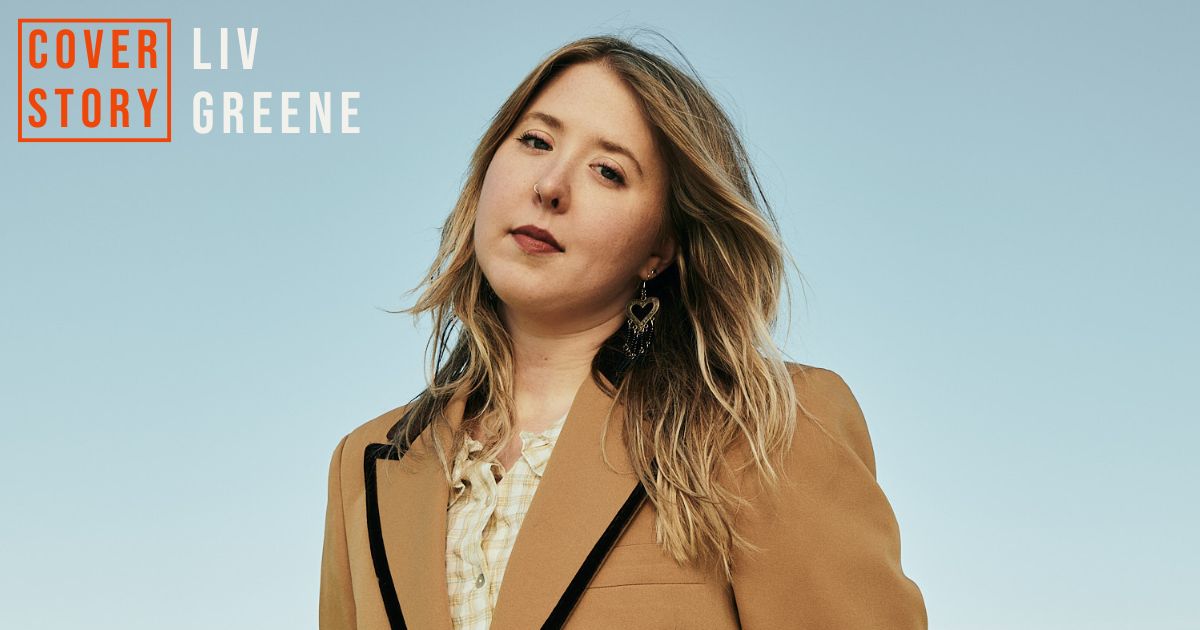
A Simple Daily Practice Brought About Liv Greene’s ‘Deep Feeler’

For Liv Greene, music is all about showing up.

The Nashville-based singer-songwriter just released her sophomore record, Deep Feeler, in mid-October and she wrote and recorded the LP guided by a simple but powerful ethos: Show up for the craft of songwriting and it will show up for you, too. In Greene’s case, that looked like committing to a daily writing practice and finding external sources of accountability – like writers’ groups and online communities – as well as learning to work through days when access to her writerly brain felt blocked.

“A lot of the songs came out of just showing up for the practice, like, ‘Okay, what is there to play with today?’” she tells BGS, calling from her home in Nashville. “‘What’s coming out of my brain today?’”

Though some days only yielded frustration, Greene soon found herself with an album’s worth of material, the bulk of which draws heavily from a concurrent stretch of curiosity-fueled introspection, during which she considered her life as a queer person as well as the quirks and habits that make her who she is.

Greene recorded Deep Feeler at Nashville’s famed Woodland Studios, the East Nashville outpost that serves as home base for David Rawlings and Gillian Welch. She and GRAMMY Award-winning engineer Matt Andrews co-produced the LP, pulling together an ace band that includes acclaimed singer-songwriter and multi-instrumentalist Sarah Jarosz, whom Greene considers a musical hero. Highlights on the record include “Flowers,” a gentle and optimistic celebration of treating oneself with love and care, and “Wild Geese,” which draws inspiration from the late poet Mary Oliver.

Below, BGS catches up with Greene about her daily writing ritual, her experience producing Deep Feeler, and her decision to take a gamble on her artistic vision.

You just released a new record, Deep Feeler. What can you share about the project’s origins and how you conceived its initial vision?

Liv Greene: Most of the songs came out of a dedication to showing up for the craft, whether or not I had an idea when I sat down. I was almost forcing myself to write, but in a way that felt like cultivating a more consistent writing practice. Given that it was during the pandemic, it makes a lot of sense that many of these songs came out of that time. I had a few things to hold me accountable, too. There was a writers’ group I was part of, where I was writing a song a week for the first half of 2021, and a songwriting workshop where I wrote “Flowers.” I also led some workshops myself and participated in the exercises I’d give my students. After moving to Nashville, I wrote “Deep Feeler” and “Wild Geese,” and then the rest of the album took shape from there.

I love the idea of showing up for the craft. It’s not easy to sit down and write when you don’t have an idea at the ready. How did you begin those sessions? Do you have a ritual that helps you shift into that writer headspace?

When I’m in a writing season – which I’m always trying to get back to, though sometimes it’s just not the time, if I’m busier with other parts of my career – it’s usually marked by time with my instrument, just improvising. I’m most inspired by windows or outdoor spaces. Sitting on a porch or in my room looking out the window, just a lot of improvisation. That’s really the core of my songwriting: spending time seeing, maybe speaking in tongues, seeing what comes out in terms of gibberish, and then noticing what starts to stick. There’s something to that diligent practice of making things up consistently, even if you hate what you make up.

Tell me about choosing “Deep Feeler” as the title track. What does feeling deeply represent for you?

The album concept came out of a self-aware period of recognizing patterns in my life and seeing that I was the common denominator. I was in a lot of situationships. While the heart of this record is about the heartache and missteps of my early 20s, I hope it resonates with people beyond that scope. I’d come out, accepted myself, and allowed myself to feel desire and joy and all of these deep romantic feelings for the first time. This record is a lot of me sitting with myself and embracing the way I’m wired, trying to find a healthier self-awareness around it. I’m working on drawing boundaries with myself, but also being proud of my wiring and how it makes me a good storyteller and a good romantic.

As I was preparing to talk to you, I found a quote from you about making this record that really stuck with me. You said, “Now, rather than an escape from myself, songwriting is communion with myself.” Could you elaborate on that?

When I started writing songs in middle and high school, I was at an all-girls Catholic high school. I went to Catholic school most of my life. Being queer, I didn’t feel like I had much representation in my world, so I felt pretty lonely in high school. I didn’t have much of a musical community in D.C., where I grew up. Guitar was always my escape. I’d come home from school, play for hours, and write. As I got older, I had to form a bit more emotional intelligence and really sit with the person I wanted to be. I realized I couldn’t keep running away from parts of myself and that those parts were actually wonderful and something I should embrace. Songwriting became a different vessel for me to explore myself, rather than viewing it academically, as a hobby, or in a scholarly way.

You got to set up shop at Woodland Studios to record the album. Woodland is such a beloved part of Nashville’s music community, and it sounds like you had an excellent roster of musicians in the studio with you. What did being in that environment open up for you creatively?

The core of the record was made in one day in July at Woodland and it was just myself, bass, and drums – no headphones, live in two adjoining rooms, live onto tape. It was very high-pressure. We did six songs that day and just fired them off, trying to keep the authenticity of a live performance at the heart of the record. The studio days were some of the scariest of my professional life, but in a good way.

There were so many nights beforehand where I’d get the Sunday scaries and think, “Oh my God. Sarah Jarosz, who’s a hero of mine, is going to come to the studio tomorrow, and I’m producing. What if we don’t have time to do everything we need to?” It was an immense amount of pressure to be in the producer’s chair for my own project. But musicians put a lot of money into their records because it’s expensive to record. So I viewed the record as, like, “Okay, this is sort of like grad school.” Friends had asked me to produce their stuff before and I’d said no because I didn’t have the experience. Now, it’s baptism by fire, and I’m my own guinea pig.

You have some shows coming up, including a couple here in Nashville. Have you gotten to play much of this material live yet, or is that still to come?

Some of the core songs on the record have been in my set list for a while, at least around town; friends already know all the words to “Wild Geese” and some other “hits” from the record. But yeah, especially the B-side songs, a lot of those will be pretty new to my live show. I’m excited to hopefully do a lot more touring in the next year and see how the songs are landing out in the world. I haven’t really gotten to do that. My last record was a pandemic record and I never really toured it, so I’m really excited for the record to come out soon and then to get out there, meet people, and reconnect with those who resonate with it.

Are you still engaging in your daily writing practice? Do you have other new material on the horizon?

I’m hoping to go into the studio again soon to do a couple of songs. I’m just taking my time getting to know different producers around Nashville. I think this winter is going to be about doing one song here and one song there. I feel like I’m about halfway toward another record, so I’m getting excited to be in the studio again. It’s my favorite place to be.


Photo Credit: Joseph Ross Smith

Out Now: The Accidentals

Our next band featured on Out Now is the Accidentals, a group that I met over a decade ago, tucked under the oak trees in Northern Michigan at Interlochen Artist Academy. Interlochen is a hub for music and arts education. Katie Larson and Savannah Buist (founders of the band) attended the academy at the same time I did. I’ve admired their artistry and dedication ever since. I remember listening to Interlochen Public Radio, hearing a song they wrote, and thinking these artists were going somewhere. Spoiler alert… they have already gone everywhere, touring all over the U.S.!

Before they attended Interlochen, Katie and Savannah were already playing together in an orchestra and exploring their musical chemistry. The pair are creative, dedicated individuals, curious souls, skilled instrumentalists, and incredible writers. They built a successful career while still very young, touring and playing festival stages in their teenage years. Both turned down college scholarships to hit the road instead. After high school, they added Michael Dause to the band as their percussionist. In 2023, Michael parted from the band; they now play as a trio again with Katelynn Corll.

The Accidentals just released their latest single, “What a Waste.” It’s an honor to highlight this phenomenal band on Out Now. Learn all about their plans for the future, why they create music, and about their incredibly creative minds in our interview with Katie Larson and Savannah Buist.

You’ve been playing together since high school. What has it been like for you to create, write, record, and travel together for the past decade?

Savannah Buist: All of those processes – creating, writing, recording, and traveling – demand different parts of us, and all of them have changed and grown over the years. Creating and writing used to be a more solitary process, and yet [now] we find ourselves collaborating and co-writing with some of the people who inspired us to become songwriters in the first place. Recording went from being solitary, to with producers, to us becoming engineers and recording many of our own projects, to recently joining forces with producer Mary Bragg for a collaborative record. Traveling together used to mean 250 days on the road, sleepless nights living on the opposite schedule of everyone we loved – and now, we ease into it, take our time with it, and the number of people in the van seats, their names and faces have changed over the years.

But the thing that remains true is the constitution of our friendship and our trust. I lean on Katie more than I’ve ever let myself lean on anybody before. She’s the reason why I constantly challenge myself to do better, not just musically but as a person too. She’s a natural listener; she’s observant and deep-thinking. She’s the kind of person who would make an incredible documentary carefully examining both sides of a complex situation and reaching some inevitable core of truth. It’s been incredible watching her grow and change, too, just like all the processes that we engage in together. I think the growth and change I’ve undergone is just as dramatic and important. It’s what keeps us open to each other and supportive of our many interests and endeavors.

Adding Katelynn Corll to the band a couple years ago was like picking up a golden retriever to tour with. She’s always positive and brings balance to the band with her ability to see the big picture, ask good questions, and amp up the energy on stage. She’s got both our backs all the time. It’s a no-ego dream band reality.

Katie Larson: Some days, 10 years sounds like a lifetime and other days it feels like a drop in the bucket. Think about how much change people go through from their late teens to late 20s, then add in the inevitable ups and downs and major transitions you go through in the music industry. What a privilege to have someone by your side who has known your heart since day one. Not only that, but a friend who’s a true collaborator, business partner, and salsa-making science geek who’s always ready to dive into philosophical rabbit holes and will fiercely have your back no matter what. We take a lot of inspiration from the Indigo Girls, a few years ago we got to watch Ann Powers interview them during Americanafest. They’ve been playing music together for almost 40 years now and are still true friends.

Your early success, including playing at various festivals, is impressive. What were some of the most memorable moments or experiences from those early days of touring?

SB: I’ve kept journals for many years and those have sort of fallen into the digital world via Tour Blogs, which we write weekly on our Patreon. Cataloging our experiences has given us a plethora of perspectives. There are times I look back through those journals and blogs and think to myself, “How are we still alive?” From busted trailers to stolen gear to pedalboards lighting on fire from faulty power, playing in caverns and drained swimming pools and stages so tiny we stood shoulder-to-shoulder trying not to poke each others’ eyes out with our bows; farmer’s markets and people’s dogs and their bookshelves when we crashed at their houses, and the strangers who became family along the way. It’s literally too much to recount, because that’s thousands of memories stacked into some neural Jenga of nostalgia. I will say that the early days are like the later days in that we’ve never stopped learning, and never thought we were incapable of learning more.

KL: As an introverted teen, I remember being shocked by kindness from strangers. It still amazes me, but back then it seemed crazy that music could be a catalyst for people making us a home-cooked meal, letting us stay in their homes, or giving us boxes of books to read on the road. One time in the Upper Peninsula of Michigan a man handed us an entire smoked salmon after our set. On another tour in Colorado, we kept accumulating homemade pumpkin bread wherever we went. It wasn’t just gifts – music was also a fast pass to personal conversations with fans at the merch table or with our hosts who became family.

I remember playing a coveted electronic festival called Electric Forest the summer after we graduated high school. Playing folk rock in our dorky dresses (mine covered in pop art chickens and Sav’s covered in cats), we were probably the biggest outlier on the bill, but our artist badges gave us all access. We could go to any stage and watch Lindsey Stirling and Phantogram and Skrillex perform from behind the curtain. In the artist lounge there was this huge juicer, and the women there made me this juice concoction with beets and apple and fresh garlic, and they laughed and said I was glowing. I couldn’t believe we were there.

What was it like for you to start touring and building a career at such a young age?

SB: It was a lot. We thought we were just having fun playing some music with each other and it took on a life of its own. Sometimes in the early years it felt surreal, like a plane taking off and you’re running down the tarmac trying to get on it. I think having a team early was key. We’ve always had the support of our respective parental units – both our moms and dads are musicians and singers and songwriters, so they understood our ambitions and goals and sought tirelessly to lift us up. Having a parent that understands the industry and was willing to support us full time was a lot of the reason we were able to be full-time musicians from a young age.

My mom took us on a brutal “trial tour” in the summer of 2012 – she booked 30 shows in 27 days with radio shows a lot of those mornings, to convince us to go to college. It didn’t work. It just solidified that Katie and I were compatible on the road. At the end of that tour, Katie and I knew we wanted to do this music thing to the extent of both of us [gave] up scholarships to college. My mom agreed to manage/tour with us and we signed our first deal right out of high school. She buffered a lot of the stigma attached to young females playing in clubs they weren’t old enough to be in and took a lot of the verbal abuse that comes with this industry and recording with people you don’t know very well and we watched her handle it.

We learned to start with respect – even when it isn’t mutual – but stand up for ourselves when necessary. We learned to compromise when we could and if we couldn’t live with it, hold our ground. We were made acutely aware of the power of “core base, fans, supporters, road family” and FAMgrove, the fanclub was born. They have kept us going through all the hardest parts.

KL: It was eye opening for a lot of reasons. We had an amazing support system and we were eager to learn and become better musicians. A lot of artists and people in the industry took us under their wing and I learned so many life lessons from those who treated us with mutual respect. There were times when people assumed we put ourselves on a pedestal and didn’t know how to use our gear or hold our own, because we were young. We learned quickly that being alone in the wrong place at the wrong time could be very dangerous and relied on our tour family to keep each other safe. Contradictions can be true. I think touring made us more independent, and also more dependent on each other. It made us more self confident, and more self-conscious.

You founded a nonprofit organization, Play It Forward, Again and Again, to empower youth and provide better access to instruments, lessons, and mentors. What led you to that kind of work, and do you have plans and hopes to continue? What is your vision?

SB: We do a lot of workshops for kids all over the country – songwriting workshops, improvisational workshops, alternative styles for strings workshops. When we were in high school, a duo called the Moxie Strings came to our school and did a performance playing electric violin and cello. That was so monumental to us; it showed us that it was possible to take those instruments to a contemporary world and succeed and it also showed us that there were women out there making it happen. We started doing workshops for exactly that reason – to perpetuate that cycle of inspiration and encouragement; to allow people of any background to have the opportunity to express themselves via music.

It’s hard to do that when budgets for music programs are typically the first to get slashed. Many schools we traveled to had only a choir or a band program, if any program existed at all. The underprivileged areas we visited often contained extremely talented kids who were naturally gifted, but lacked access to the tools due to financial constraints. Instruments can be incredibly expensive, especially in the orchestral world, and it keeps them from being accessible to kids who could use them for therapeutic purposes, who could change the world with them.

So, that led to us establishing a nonprofit with the goal to get instruments into those kids’ hands. Not only that, but we want to establish a support system for them to get follow-up lessons from a musician local to their area. This allows them not just the tools for self-expression, but also instruction on how to use those tools, too. We wanna connect schools with bands that are touring through and provide funding for the band and school to show kids that it’s possible to make a living doing something you love.

For anyone reading this who might not be out of the closet, were there any specific people, musicians, or resources that helped you find yourself as a queer individual?

KL: I’m still figuring out where I identify on the LGBTQ+ spectrum, so one of the most helpful things for me is to talk to friends about their experiences. It allows me to sort through things I resonate with and gives me a safe space for self-reflection. I’m not always the best communicator, but since I was a kid I always thought I had a good understanding of myself. That makes it hard for me to acknowledge that there are still parts of myself I’m learning about. It helps to hear other people I admire doing the same thing at various points in their life. These are a couple articles I’ve read that come to mind: Lucy Dacus on coming out and Amelia Meath of Sylvan Esso talking about her identity.

Who are your favorite LGBTQ+ artists and bands?

SB: I think it’s important to clarify that many artists and bands have LGBTQ+ members without being an “LGBTQ-themed” band, per se. It’s hard for me to definitively know if a band with LGBTQ+ members or an artist who lies somewhere on the LGBTQ+ spectrum wants to be considered an LGBTQ+ artist or band, unless they’re specifically writing songs about their queerness – otherwise it leads to assumptions that I don’t think it’s my place to make.

I think identification can be both empowering and entrapping. We contain multitudes and we are so much more than who we love. It’s a big reason why I don’t always talk about my queerness. That being said, there is an important aspect to identifying with your queerness and resonating with it that creates a safety net for others to be themselves and I am all about that kind of inclusion.

There are artists of the LGBTQ+ community paving the way for inclusivity every day: Ani DiFranco and Brandi Carlile were the firsts for me, then I had a writing session with Maia Sharp and it opened up my world. She was the first person to tell me that I was OK. Then I met Crys Matthews, Heather Mae, Ethel Cain, Spencer LaJoye, and I felt safer talking about it. There is space for queer artists to create art about their queerness and queerness as a whole, and there’s also space for queer artists to create art that’s not about their queerness, at least to themselves. My favorite LGBTQ+ artists and bands write all kinds of music, while staying true to themselves – whether they are out of the closet or still deciding how to verbalize how they feel.

What is your ideal vision for your future?

SB: We made a pie chart at the beginning of ’24 and we each decided how much time we wanted to give to each project. My ideal vision for the future is balance. Right now I’m feeling pretty good about playing as a side artist with Lainey Wilson and still sitting in with artists like Ashley McBryde, Hannah Wicklund, Beth Nielsen Chapman, and Kim Richey. Katie and I played strings (and other instruments) and sang on 40+ other albums this year and we loved that. So we’re always down for more session work.

The Accidentals are touring less in ’25 to make room for other projects and that was the plan that came out of the pie chart conversation. We’ll put out a couple albums in ’25 that we’ve been working on for two years, a TIME OUT 3 album (first single just dropped), a children’s album written with Tom Paxton, and a Christmas album with Kaboom Collective Studio Orchestra. We’ll tour those albums, but not much aside from that. We’re also looking at a “Michigan and Again” children’s book deal.

As far as long term, I’m one semester away from my bachelor’s in biology so I’ll likely finish that when time allows. The takeaway from all that is we are in love with the process, the learning, the growing, the becoming. We find gratitude everyday for the opportunity to explore all those things and become the best version of ourselves.


Photo Credit: Jay Gilbert

Jake Blount & Mali Obomsawin’s ‘symbiont’ is a Radical Act of Reclamation

Jake Blount & Mali Obomsawin’s new album symbiont is a dense nest of references across a century of Black and Indigenous music and sound making, worked into the warp and weft of synthesizers and electronic production.

The liner notes detail Obomsawin’s trips to Blount’s apartment in Providence, Rhode Island, where the two would work through music, books, and other texts they had collected, compiling sounds and ideas, building up the whole project’s sound. The album bridges the hyperlocal and the global, across time, in a historically-minded, futurist radical gesture, refusing the silence of official archives and restoring voices lost to colonial violence.

The album was released by Smithsonian Folkways, which has a history of preserving a worldwide range of music, but also industrial sounds, the songs of birds, and the noises of frogs and toads. Obomsawin’s previous band Lula Wiles was also on the label. Folkways is an archive that is institutional though, literally funded by the government, and it is often colonial – they gave money to white officials who collected songs on reservations, in prisons, and among communities where saying no was an economic or social impossibility. The official archivists, given imprimatur by the Smithsonian, and the unofficial archive, compiled by these two musicians who are working personally, across time and space, to commemorate the social and political will of marginalized people, is a difficult balance.

In a conversation over Zoom, Blount makes the archival practice explicit saying that the process “became a way for me to co-opt this thing that I have often felt; [that] archives exist to deny dead Black people our agency and cut off our communal traditions from the community.”

The community here is as small as two people in a room, or in a Zoom call, but also collapses historical pasts, the apocalyptic now, and a possible, hopeful Afro/Indigenous future. When asked about how this album was in conversation with the colonial history, Obomsawin makes the political claim as explicit and as communal as Blount, saying that this album is “in conversation and asserting continuance for our colonized ancestors and our future descendants who have overthrown their colonizers.”

How to do that overthrowing is not an abstract or intellectual consideration here. There are calls for direct action. In one of the album’s spoken word sections, an ancient outside of time and space discusses how humanity cannot be either created or destroyed, but it is like a great river (like Langston Hughes’ river) that the energy flows through.

The material throughout this album is part of that great river, and so it includes texts like Slave Songs of the United States (ed. William Francis Allen, Charles Pickard Ware, and Lucy McKim Garrison) and Indian Melodies by Thomas Commuck, who is described by Obomsawin as a “Native American author, Commuck (Narragansett/Brothertown), [who] began his life in a community heavily influenced by the Methodist Episcopal Church with the tradition of singing shape note hymns.”

The ancestor work here is nuanced as Obomsawin refuses to view Commuck as a simple victim of settler violence, acknowledging the intellectual work of his hymnal, while also acknowledging that his learning the shape note involved an erasure of more traditional forms. Obamsawin’s inclusion of western plains singing on the recordings of Commuck function like Jeremy Dutcher’s album Wolastoqiyik Lintuwakonawa, who traveled to the settler capital of Ottawa to access wax cylinders of the almost extinct songs of his people – cylinders stolen from them. Maggie Paul, an elder and song keeper from Dutcher’s community, told him to bring the songs back. symbiont does something similar.

The songs gathered here are a model of how stories from the Atlantic Triangle and from the expulsion of Indigenous people from their native homelands can be made new. These songs are stories, of stars falling out of the skies, but also of the gathering of community or private devotions. The gathering of the community is a successful part of the project.

On this album, Blount and Obomsawin inherit the hymns of colonization, hymns that were remade by Indigenous and Black writers, performers, and thinkers. On “Mother,” there is an interleaving of singing over drums and synths; a gorgeous version of the hymn “In the Garden” is scarred with feedback, synth interruptions, and technological glitches, emphasizing the shift from male to female pronouns. These formal choices interrupt the edenic expectation of the song’s tradition, while still acknowledging where the text originated from. Jazz and electroacoustic performer Mantana Roberts did similar work with the hymn in her work Coin Coin Chapter 5 – there are always riffs, always new ways of working out old songs.

The expulsion from the garden into new sounds can also be seen in the song “Stars Begin to Fall,” with the jazz stalwart Taylor Ho Bynum. Percussion and gourd banjo undergird Obomsawin’s rich harmonies singing, “When you hear the master fall as he topples from his throne…” There is a profound impact, a direct route to the kind of political work of community.

Obomsawin is in conversation with Blount; Blount and Obomsawin are in conversation with Bynum; Bynum, Obomsawin, and Blount are in conversation with Slave Songs and William Francis Allen, Charles Pickard Ware, and Lucy McKim Garrison. And, the history of the slave song, which originated American popular music. This is an album about the earth, so when “Stars Begin to Fall” talks about horns, Bynum makes his cornet flutter, speed, appear and disappear. He turns that instrument into a bird, with all of the contradictory metaphors of containment and freedom within it.

The river which carries these stories is one which loops, breaks, and returns – it has not one source, but dozens. This borrowing, this community, the pulling out of narratives, the flow, has been blocked.

There are two songs here by Alan Lomax, the folk song collector, whose relationship to the medium has become incredibly vexed. Blount, when asked about what it means to include Lomax in this canon making, his response is as patient, as angry, and as generous as the rest of the record: “I understand that this may be something he did with the best of intentions. I don’t mean to impugn that in any way. I think we are now at a point where we need to start examining. If there’s a solution to release those copyrights. I don’t know legally if that can be done, but something’s got to change, because at the point where you have Black people sampling recordings of our ancestors on their songs and they have to credit John and Alan Lomax as co-writers on that song… I had to credit a white man for my song that I wrote, because he happened to record some other Black people one time.”

This album is a reclaiming, not of authorship, but a collapsing of time and space. It’s an album of new narratives of creations, against copyright, and against Euro-centric narratives of how we imagine folk music to sound like and about what the audience means. This is an album intended for liberation, one in conversation across time and place. Specific time and place are key to the aesthetic and political work of Blount and Obomsawin – work that refuses to ask permission.

When they sing, “Come down ancients and trouble the waters/ Let the saints come in…” on the perfect, revelatory, and haunting track “Come Down Ancients,” the invocation towards the saints is as small as two people in an apartment, as smart as a grad school seminar, and as expansive as centuries of art making, both heard and unheard, censored because it scared or intimidated those who colonized.

That symbiont has no interest in asking permission anymore makes it a most radical act of reclamation.


Photo Credit: Abby Lank