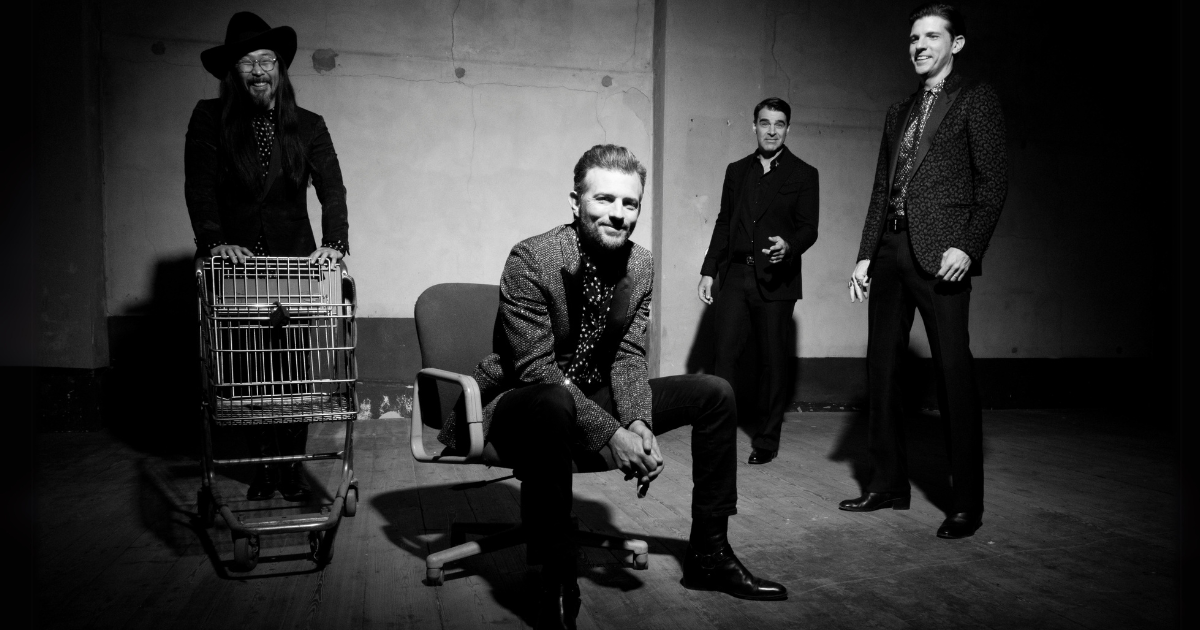
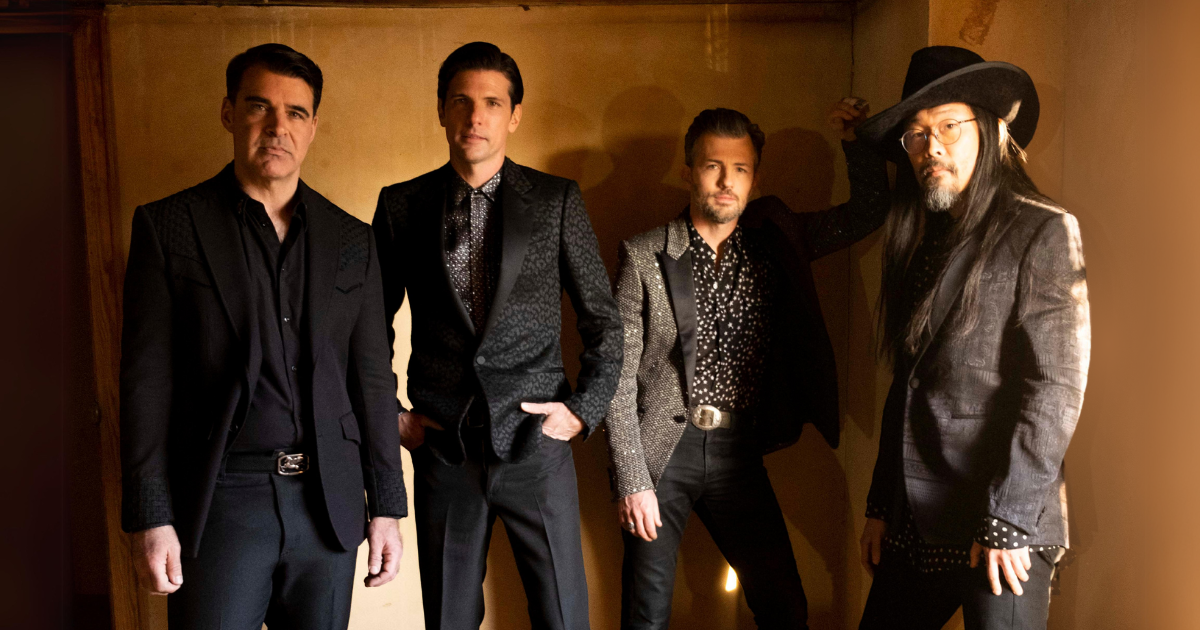
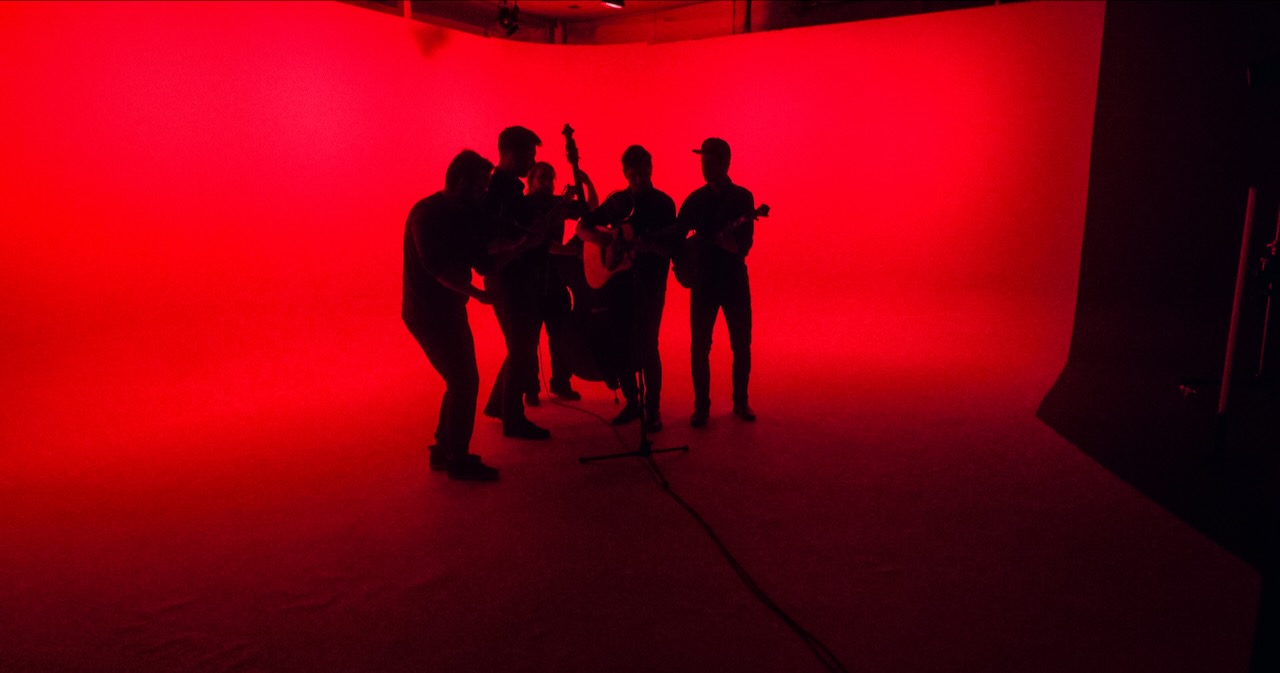
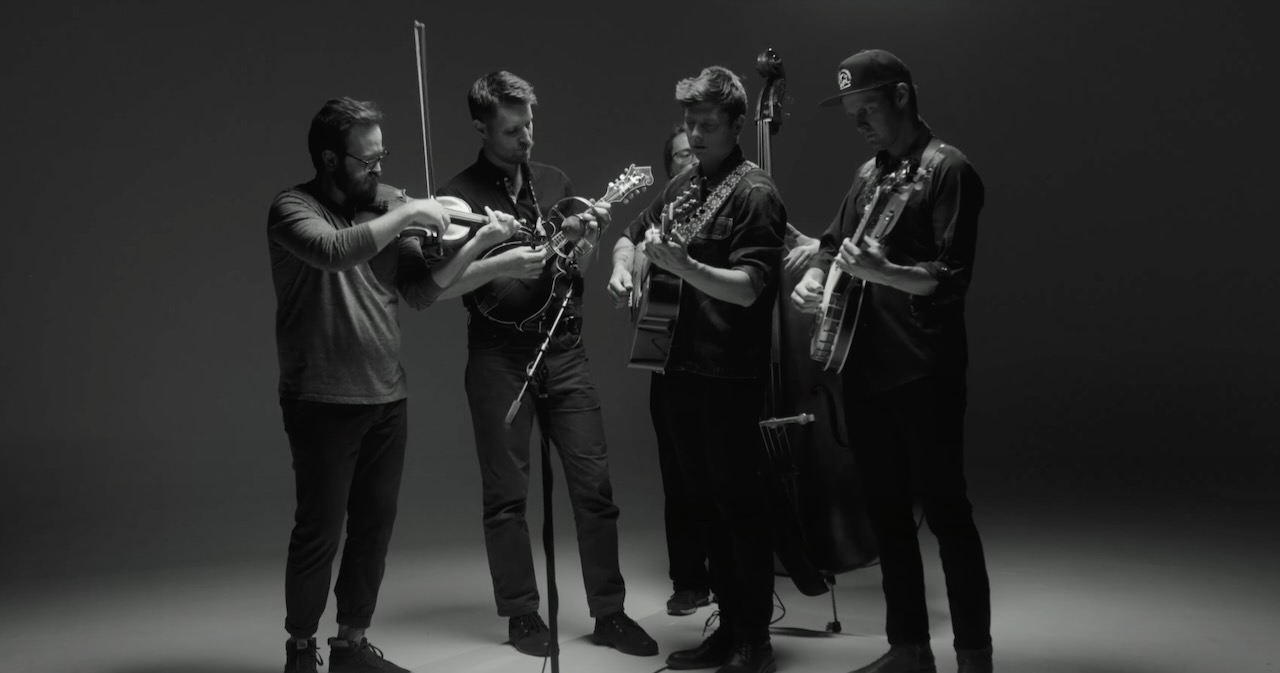
Over the nearly two-and-a-half decades since their debut, the Avett Brothers have constructed their own creative universe.
They’ve released 11 studio albums, earned a Grammy award (plus three more noms), and bounded around stages for countless tour dates and festivals the world over. May It Last, a documentary film about the influential North Carolina group, offered a glimpse at the band’s dynamic through big and small screens.
Scott has also been a working visual artist since before The Avett Brothers as a band even entered the public consciousness, earning a BFA in studio art from East Carolina University in 2000 and depicting Southern family life through paintings and sculptures that would go on to make moving exhibitions—all while he also created stunning album cover imagery (for his own band as well as the great Brandi Carlile) or provided the visuals for such epic music videos as “Head Full of Doubt / Road Full of Promise.”
Musical theater, too, has been touched by the Avetts: Their musical, Swept Away, will make its mark on Broadway this fall. But the band’s eleventh album, The Avett Brothers, feels less like a charge into new creative territory and more like a reflection on the other things that have sustained them over the years.
“There’s certainly an unsettling feeling in that shadowy twenties and thirties where you get trapped into thinking that you are what you make,” Scott told Holler Country last year. “I’m settling into a season of life where I’m welcoming the reality that I am because I am, not I am because I do.”
That realization gets top billing on The Avett Brothers. Classic ballad “2020 Regret” sounds so quintessentially Avetts that it could have easily appeared just about anywhere in their catalog, if not for the veiled references to the year. It, too, embraces the idea that a life without regrets is less about what you do than it is about the people you do it alongside.
“Life cannot be written,” read the lyrics on album standout “Never Apart.” “It can only be lived.” The song muses on a long-term relationship; it’s presumably a romantic one, but would it be so crazy to listen to it through the lens of the band and its legacy?
Most bands don’t wait twenty-plus years into their trajectory to release a self-titled album — in large part because a lot of them simply don’t last that long. It’s a banner accomplishment to forge a musical path that sustains itself in any capacity for multiple decades; it’s entirely another to push forward with nearly the exact same cast of characters you started with, still collaborating and creating with the same heart and satisfaction as before.
“It’s trust. It’s a trust that’s built in,” explained Seth to NPR last month when asked about the secret to the band’s longevity. “My trust in that Scott has my best interests in mind is something that it would never occur to me to question.” He may be referring specifically to the lifelong brotherly bond he shares with the other Avett in the group, but certainly the larger band has formed a different kind of family.
Bob Crawford, who has been playing upright bass (among other instruments) with the band since 2001, took a year off to support his daughter’s battle with cancer and Avett fans followed and supported the journey at every turn. Cellist Joe Kwon, too, has an immovable fixture in the band since 2007; crowds go wild for him at every show. “We’ve been lucky and blessed to transform with each other,” added Scott, “to change with each other and watch this happening to us.”
“Cheap Coffee,” one of the album’s underrated masterpieces, makes great fodder for the idea of a group that constantly evolves and grows together. Producer Rick Rubin, who has been with the band since their major label debut, I and Love and You, apparently cut all the lights out and had them record the song entirely in the dark. The story holds up well for a song that engages so many senses: the distant smell of coffee, the feel of an outgrown apartment, the sound of a kid imagining the very highest number they possibly can. “Didn’t know how, didn’t know how good it was,” the group sings, lyrically balancing major milestones with the types of tiny details in a memory that feel insignificant at the time, but become the stuff of nostalgia decades on.
“We’ve always had this quasi-fatalist attitude, like oh, this might be the last time we ever do it,” joked Seth in an interview between their tenth and eleventh albums. “Now we’re really like, okay, we’re probably only gonna do this one more time.” In the interview, this line reads as a joke, but fans have speculated the same thing many times, too, cobbling together similar statements from the documentary film and various other interviews to try and guess how many more albums they might get.
Regardless of the band’s plans for the future, this eleventh album embraces plenty that fans love about the past. “For the Love of a Girl” is the jump-around number you can’t wait to hear live. And “Country Kid” offers an ambling glimpse at a rural North Carolina upbringing, with a heavy twang and plenty of backwoods imagery to match.
Taken altogether, The Avett Brothers feels like a worthy prize for the five-year wait between releases. “We’re not in the same hurry we used to be,” Scott explains. “Our home lives are super busy. We’re teaching kids things.”
In a way, maybe the greater message of The Avett Brothers is that the work will always be there — the opportunity to create, to explore, to have some kind of output. So maybe it’s really not so surprising that the band would wait to release an eponymous album so many years into their career, or that they might take five years since their last full-length to release it, or that they might not make promises about the future. As their influence has grown, so have the demands for their time and the expectations around what they make — not just how much of it there should be, but what it should sound like and how it should reflect the world around them.
What a beautiful thing to ignore those voices, to be enlightened by the past without being imprisoned by it; to turn off all the lights and sing in the dark.
(Editor’s Note: Read more about our selection of the Avett Brothers as Artist of the Month, explore their discography, and check out our Essentials Playlist here.)
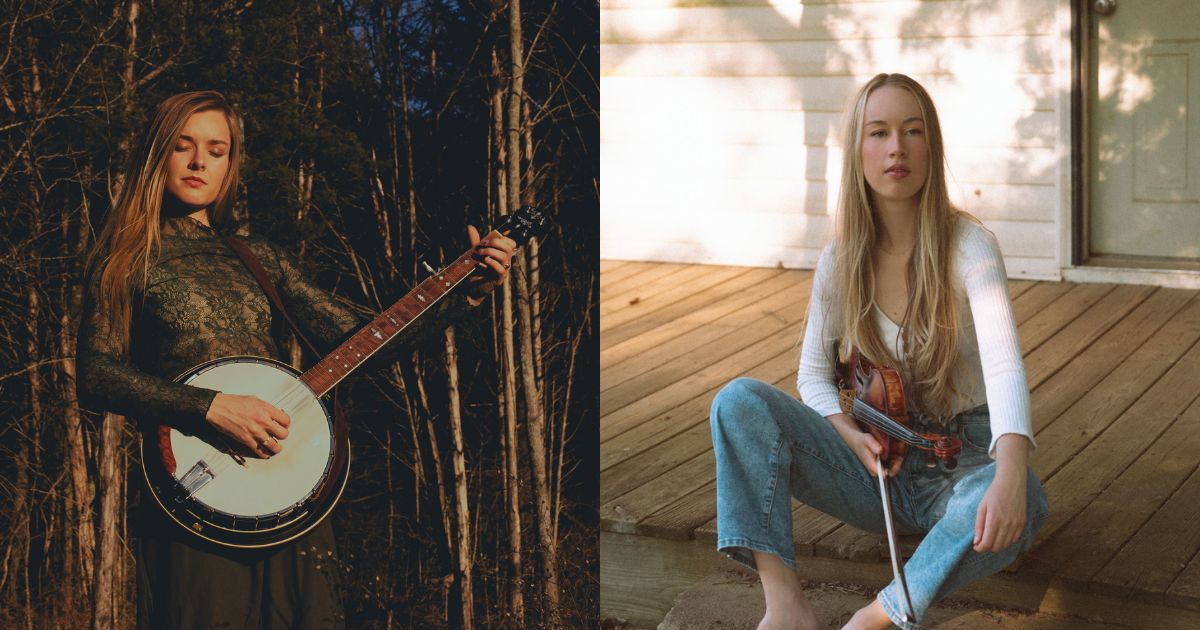
At whatever level you may be plugged into the online bluegrass scene, you have surely heard, seen, or scrolled into content by Bronwyn Keith-Hynes and Brenna MacMillan. These two young, talented pickers are part of a vibrant and blossoming community of traditional musicians and folk artists that includes folks like Cristina Vane, Victor Furtado, Hilary Klug, Wyatt Ellis, and many more.
What makes these creators stand apart, especially Keith-Hynes and MacMillan, is that they aren’t just shoehorning social media into their art-making and creative processes to move up Music City ladders and check abstract music industry boxes. Instead, they’ve intentionally demonstrated how powerful, engaging, and charming content can be when it’s made with art, creativity, tradition, and joyful, cooperative generation as its focal points. Instead of bending over backward to construct virality and lean into transient socials trends, they let their talent, their songs, and their communities do all the talking.
In May, Keith-Hynes released her second solo album, I Built a World, her first project to center songs and her recently-developed, impressive vocals. Drawing on musicians and pickers from her immediate circle and her main gig – Molly Tuttle & Golden Highway – as well as tapping notable country stars and bluegrass legends, the project finds Keith-Hynes at her most confident and unbothered. This is a fiddler-singer-front woman who has found her voice – literally, through work, practice, and vocal lessons as well as figuratively, not satisfied to craft a career on bowing the fiddle alone.
Later this year, MacMillan will release her debut solo album. Its lead single, “What’s to Come,” features Ronnie McCoury and is indeed a harbinger for the superb album to follow. This project, which highlights MacMillan’s prolific songwriting and features her musical community fleshing out the band, is built directly upon the successes she, Keith-Hynes, and others have found on the internet. Eschewing labels, management, or traditional roll outs, MacMillan will release the project herself, with funds raised on GoFundMe, bringing the music directly to her consumers on her own website and socials channels without “middle men.”
So, not only are MacMillan and Keith-Hynes innovating on ideas around what it means to be a side person, a career picker, and multi-hyphenate, professional traditional musicians, they’re taking all of their expertise as online brands and businesswomen to find success for themselves, on their own terms. They’re focusing on what matters, centering their communities, and making incredible, superlative music at the same time.
BGS connected with MacMillan and Keith-Hynes together via video chat to talk about their unique approaches to making albums, content, and music, while highlighting the deep and tight-knit “bluegrass influencer” circle they’ve each helped create since moving to Nashville and putting their all into bluegrass.
I wanted to start by talking about community and musical community – one of the reasons why I wanted to have you both in conversation with each other is how you each rely on, draw from, and center your musical communities in what you create. It may look like these are solo projects that you’re making, but they’re clearly not solitary projects – and they don’t really feel like vanity projects, either. from the outside looking in either. It really feels you’re making music with other people so you can make music with other people. Could you talk about your work, your solo albums, and working in your communities?
Bronwyn Keith-Hynes: Yeah, I think first and foremost, me and Brenna are good friends and we just ended up being drawn together. We both moved to Nashville around the same time and ended up doing a lot of things together and had a lot of similar interests. That’s cool to find. I haven’t found that many women who have my same interests until I moved to Nashville and then all of a sudden I felt like there was a whole bunch. It’s been really awesome to find that.
First of all, I’m just such a fan of so many people, and I wouldn’t want to make music any other way. My project was based around songs from my community, which was really special to me. It was like a little nerve wracking reaching out to friends and people I respected to be like, “Do you have a song that you’re not going to record that I could record?” But, thankfully, a lot of people did – including Brenna – and I ended up recording one of her songs. And, she sang on it and it was awesome!
I feel like I couldn’t do it alone. I know my strengths and then I know other people’s strengths and I want to make sure we’re all [drawing on our strenghts]. I don’t know if singing is my strength, but it’s something I feel passionate about and feel driven to do for whatever reason. I know the things that I want to put out in the world; I want to make sure the music I’m making has the best parts of myself, but then the best parts of everyone else who’s playing on it.
I think that folks who aren’t just straight white men in this industry, we realize from the get-go that we have to have others with us. We have to do it together. Otherwise we’re not going to go the distance. I feel that in both of your music, as well. But Brenna, I wonder what that question brings up for you, as you’re thinking about and positioning your album to release as well?
Brenna MacMillan: It’s funny, because when Bronwyn asked about songs that I had, I had like a bunch and at that time I wasn’t even thinking about [making] an album at all. I think it was maybe like a couple months later that I decided, based on my friends that kept being like, “You should record some of these songs!” And I was like, “I guess…” I wasn’t thinking about it at all whatsoever.
Then that’s another way like to get my songwriting out there, too. And why wait for someone to come to me for songs if they don’t even know that there are songs? Besides my friends, which is who I first would want to do my songs anyway. It’s funny, because obviously it’s really cool putting out your own music, but I still get more excited when “Riddle” comes on than when “What’s to Come” comes on. [Laughs] That is so cool!
Someone else’s vision for your song, it’s like the coolest thing ever to me. Because, I know what my brain comes up with so it’s not shocking, but someone else’s ideas around something that you wrote – it’s like the coolest thing ever, and I guess that’s why I love the community. I feel like community is like the word that I say way too much, but I do I love it. For Bronwyn, Cristina [Vane], Hilary [Klug], Emily, and Mallory, to some extent back in 2018, we all were moving to town around that time and then 2020 hit and I think that’s when we all got a little closer, because we were all bored and wandering around. I took a lot of walks with my friends, individually, we tried to stay across the path from each other, but I think those bonding moments brought us closer. We were like, “Let’s get coffee” or “let’s get dinner,” and then we ended up making a video or something and it all evolved into great friendship, plus people online being like, “Oh, we like to hear you guys play together!”
One of the things I love most about that whole community of content creators – you’re talking about Cristina Vane and a lot of these other folks you create with here in Nashville – it never feels like you’re trying to shoehorn bluegrass into contemporary content creation. It really seems that making bluegrass music and making roots music with your friends is the impetus, and then you made it fit into social media – instead of vice versa. Like, it’s happened organically and from a community standpoint first, and not just from “I have a social strategy. I have a five year plan.” Do you agree or disagree?
BM: Oh yeah, I agree. There’s not much strategy that’s happened in here. There’s not a lot of that going on. [Laughs]
And yet, I can tell you objectively from the outside looking in, y’all are still operating with 110% more strategy in mind than most of bluegrass. [Laughs]
BKH: I feel like Brenna and I have both talked about – correct me if I’m not saying this right, Brenna – wanting social media to serve us, rather than for us to serve social media. The end goal, for at least for both of us, is not like to become a social media star, it’s to have it serve us, to get our names and our music out to more people.
BM: Yeah! And it felt like it was very random that social media took off for me. I was just like, “Where are you guys coming from? Why do you want to hear me kick off a J.D. Crowe song like every day?” But at the same time, it has its own frustrations and that’s when me – and I think a bunch of the other girls that do this side by side with their music careers – we’re like, “We’re going to have this, but only if it makes sense for helping promote our live gigs and any projects we’re doing.” But as soon as I get nasty comments, or this, or that I’m like, “Oh, I will literally just get off of this app if it’s going to go this direction.” I just block people and then keep going.
I want an audience who will appreciate the things that I want them to appreciate. I think that I’ve trained my audience, too. Basically I shoved it in there, “You are going to listen to this slow song and try to enjoy that. And if you don’t, then I’m going to take you [out of my following]…” Because there have been some people who think that I am a content creator on there, and I’m like, “No, I play music and I took an hour out of my day and posted this video and we’re lucky that happened. Now I’m on my way to a gig and I don’t need some [negative] comment.” But you could come to a live gig and request a song!
Brenna, one of the things I love about your upcoming album and the messaging around it is that you’re really doing a direct-to-consumer business model and roll out. You’re being like, “Y’all can come to me. You already know how to find me, so this is where you can find the music, too.” I think it’s amazing and again, it’s the cutting edge of what the future of bluegrass will be while it’s also so fucking trad. It’s like back in the day, when bluegrass music required taking the car battery out of the car to play a show in the high school auditorium and then putting the battery back in to drive to the next high school auditorium.
It’s like you’re doing that in the 21st century. You’re being a DIY bluegrass musician, but in 2024. Can you talk a little bit about the direct to consumer model you’re using with your album roll out?
BM: I was like, I need to build a website so that there’s everything in one place – I remember why I did it, too, because there are a bunch of fake accounts. I knew I needed something out there to be authentic and to have all of my official links. That was literally my number one goal with the website. So now, here’s the link to my website, you can find my YouTube channel, my Facebook, my Instagram, my TikTok from there. And you’re going to know you’re in the right place. I’ve basically just started to try to push everything to my website and go from there to everything else, even if it’s taking you back to Instagram. Because [the website is] where everything’s going to happen, so that you know that it’s me instead of some person scamming you. I guess with that in mind, I started trying to link everything, like in my stories, when I’m talking about anything coming up, I just say, “Go to my website!”
Bronwyn, I wanted to ask you again about community and about bringing your circle, your scene into your album. I love all of the features on your album and I also love that it doesn’t just feel like you’re reaching for a Collaborative Recording of the Year nomination.
[All laugh]
But I wanted to know how it felt to you, as you were thinking about who you wanted to have on the record and why you wanted to have them on the record?
BKH: I’m glad to hear you say that it feels like it’s in service of the music, because that was definitely my intent. It was the funnest part of [recording the album], for me. I did kind of make those decisions after the tracks were done and I’d done my vocals. I just didn’t know how it was going to turn out until I heard it. Then I would brainstorm with Brent [Truitt], and Jason [Carter], and whoever about who to get on it. Dudley Connell was somebody I was really excited about and I’d never met him. I didn’t know him. Someone just gave me his number, I called him up and left him a nervous voicemail. But yeah, he turned out to be the sweetest guy ever – and he’s a bluegrass hero, I love all those Johnson Mountain Boys records.
It’s crazy especially being a new singer, I haven’t heard my voice recorded much ever. Then to hear my voice with all these other voices that I know and I’ve heard a lot – to hear like that combination for the first time – it was like very surreal!
What was it like working with Dierks [Bentley]? We all know his bluegrass pedigree and his connections to the Station Inn and to the McCourys and that he’s always had one foot so solidly in bluegrass, but y’all would have gotten to know him and got to spend some time with him on the road with Molly Tuttle & Golden Highway, too. I wondered how how that conversation happened and also what it felt like to you to have someone who has gold records and platinum records collaborating with you on your record?
BKH: I grew with his Up On The Ridge album, it was literally one of the first bluegrass albums I heard around my college years. I was obsessed with it and I thought it was so cool. It got me into listening to the more trad stuff, but I’d always loved his music and then being Jason [Carter’s] partner, and Jason and he were friends even before he was famous. So they’ve been friends from the get go.
I’d met him a few times through Jason and then again when we were on tour [opening for him], that was cool. ‘Cause I felt like we could meet [more as peers], not just because I’m somebody’s partner. But now, this is my gig and this is your gig. And you’re asking us to sit in every night. I felt a little bit more comfortable to make that ask. He just came into Brent’s studio one day and tracked it in under an hour. He’s great! Very quick.
Brenna, talk to me a little bit and if you have features on your upcoming album – and if you can’t talk about them yet, that’s totally fine.
BM: I know, I was trying to think of what I should say – I don’t know, I’m the one in charge! But let me check, I don’t know if Brenna wants to tell all that yet. [Laughs]
At the very least, we can talk about Ronnie [McCoury] and “What’s to Come.” Ronnie’s one of my favorites. Talk a bit about, again, bringing in community and bringing in the scene that already surrounds you.
BM: The core band in the studio was [Mike] Bub on bass and Jake Stargel on guitar. Me, I played banjo on four or five of the tracks, but I have been writing a lot on clawhammer lately and I know that I’m not good at it, so I had Frank Evans come in for those and then I had Cory [Walker] play on a couple very last minute. I was thinking, it’s just going to be better if he does it.
When the special guests ideas popped in my brain, I was thinking, “Do I want special guests to be like my friends, my age, or like people that I really are like heroes of mine? Is this the time to ask them? I don’t know.” Nobody knows who I am, but that’s okay. I had met Ronnie a handful of times in kind of settings where it was like, “I’m here with so and so” and I’m just a little curmudgeon. [Laughs]
“What’s to Come,” it’s like a reflective life song. I know that I sound like a small baby when I sing, and I was thinking of someone with an older sounding voice. Like wanting ancient, lonesome vibes so that there could be old and young together, pondering about life. If you’re young or if you’re old, you still ask all the same questions about life.
Also, [Ronnie’s] gritty mandolin playing. I love it so much. Jarrod Walker played on most of the core mandolin stuff, but he happened to be out of the country that session. I was like, this is perfect! But it’s funny, because I didn’t even know if Ronnie was going to bring his mandolin! [Laughs]
To wrap up, here’s a question I had for both of you, because you’re both musical shape shifters. You move in and out of musical contexts so easily; you’re both side people, you’re both front people, you’re both social media brands. How do you maintain your senses of self?
BKH: I feel like I can’t get away from myself! I don’t feel like I ever even think about that. The only way I’ve struggled with that a little bit, or thought about that more, is doing the solo projects. That’s where I’m like, “Wow. OK. What would Bronwyn do next?” But I think I know what I like and I know what I want to do. I’m just like, “How am I going to do that? I need to figure that out.
BM: I think similarly, I don’t really think about it that much. I think I know what I like, too. And I know what I don’t like. From the get go, I’ve very much just been myself online. I come home from the lab job and do a video with dark circles [under my eyes] and grunge and smelling like hemp trash. That’s what I established from the beginning. So now, I feel comfortable being myself.
Pretty much everything has been my own ideas and, it’s funny, because ten of my eleven songs are originals on the album, three of which are co writes, but hearing it come to life in the studio with other people, it still ended up being what I thought it should be. Which is weird, because there’s no way that I could bring some of these musicians into the studio who are eons beyond what I could imagine, but they knew exactly what the track needed. It does sound like me still and what my vision would have been if I had expressed it [all myself].
BKH: I feel like I’m like more myself these days than I’ve ever been. I feel like for a while, starting out in bluegrass, I had a lot of ideas of what a woman in bluegrass needed to look like, or be, or act like. In the last couple years, maybe inspired by being with Molly in Golden Highway, I feel like I’ve been able to let a lot of that stuff go – about how I should dress and whatever. Now, I embrace the things I actually like.
Photo Credit: Brenna MacMillan by Sophie Clark; Bronwyn Keith-Hynes by Alexa King Stone.
This week, it’s a tale of two Mothers in our premiere round-up! First, Gangstagrass bring us their latest single, “Mother,” ahead of their full album release next week, then Portland, Oregon-based string band Never Come Down bring us their own track, “Mother,” performed live at Ear Trumpet Labs. The serendipitously themed selections couldn’t be more distinct and unique, relative to the other, demonstrating the depth and breadth of these roots genres.
Plus, elsewhere in our collection of new music, hear fresh tracks from Jaelee Roberts, Kate Prascher, Karen Jonas, and Eddy Lee Ryder – a taste of bluegrass, a dash of singer-songwriter, a heaping helping of reckless abandon, and so much more.
It’s all right here on BGS and, honestly, You Gotta Hear This!
Gangstagrass, “Mother”
Artist:Gangstagrass Hometown: All over the USA! Rench: Brooklyn with Oklahoma roots; Dolio the Sleuth: Pensacola, Florida; R-SON the Voice of Reason: Philly; Danjo: Washington, D.C.; Farrow: Omaha; Sleevs: Baltimore. Song: “Mother” Album:The Blackest Thing on the Menu Release Date: June 7, 2024 (single); June 14, 2024 (album) Label: Rench Audio
In Their Words: “It started as a poem I wrote one day on tour. We were in the north of France, and just as described, I was sitting under a tree looking around me thinking about the world, our place in it, and what major changes we’d have to make in order to ensure the survival of humanity. My younger brother was actively deployed at the time and since my family has generations of men who’ve served, including my father, grandfather, great-grandfather, and numerous uncles and aunts and cousins, there is always real concern about why the country is involved in active aggression, especially when that same country is obsessed with committing violence against its own citizens, my community in particular. I shared it with the crew, and Rench cooked up a haunting oeuvre.” – Dolio the Sleuth
Karen Jonas, “Gold in the Sand”
Artist:Karen Jonas Hometown: Fredericksburg, Virginia Song: “Gold in the Sand” Album:The Rise and Fall of American Kitsch Release Date: June 7, 2024 (single); August 9, 2024 (album) Label: Yellow Brick Records
In Their Words: “My dreamy Las Vegas wedding song; it’s an against-all-odds love story, a starry-eyed late-night wedding, the sweet optimism of love at first sight. I pictured a very zoomed-out and very zoomed-in Vegas as I wrote this, a drone image of a city rising from the desert and her hand tightly in his as they walk down the neon-lit midnight strip. We stumbled into Benji Porecki’s bittersweet piano intro during our live-in-the-studio recording session, with fiddle by Bobby Hawk and a tearing solo by guitarist Tim Bray capturing the intimacy and boldness of this love story. The monochromatic gold-washed video by videographer Ryan Poe feels like a retro dream sequence, pairing performance with delicate details.” – Karen Jonas
Track Credits: Written by Karen Jonas. Karen Jonas – Vocals, acoustic guitar Tim Bray – Electric guitar Benji Porecki – Piano Bobby Hawk – Fiddle Seth Morrissey – Bass Ben Tufts – Drums Ahren Buchheister – Pedal steel
Video Credit: Ryan Poe at Oddbox Studios in Fredericksburg, Virginia
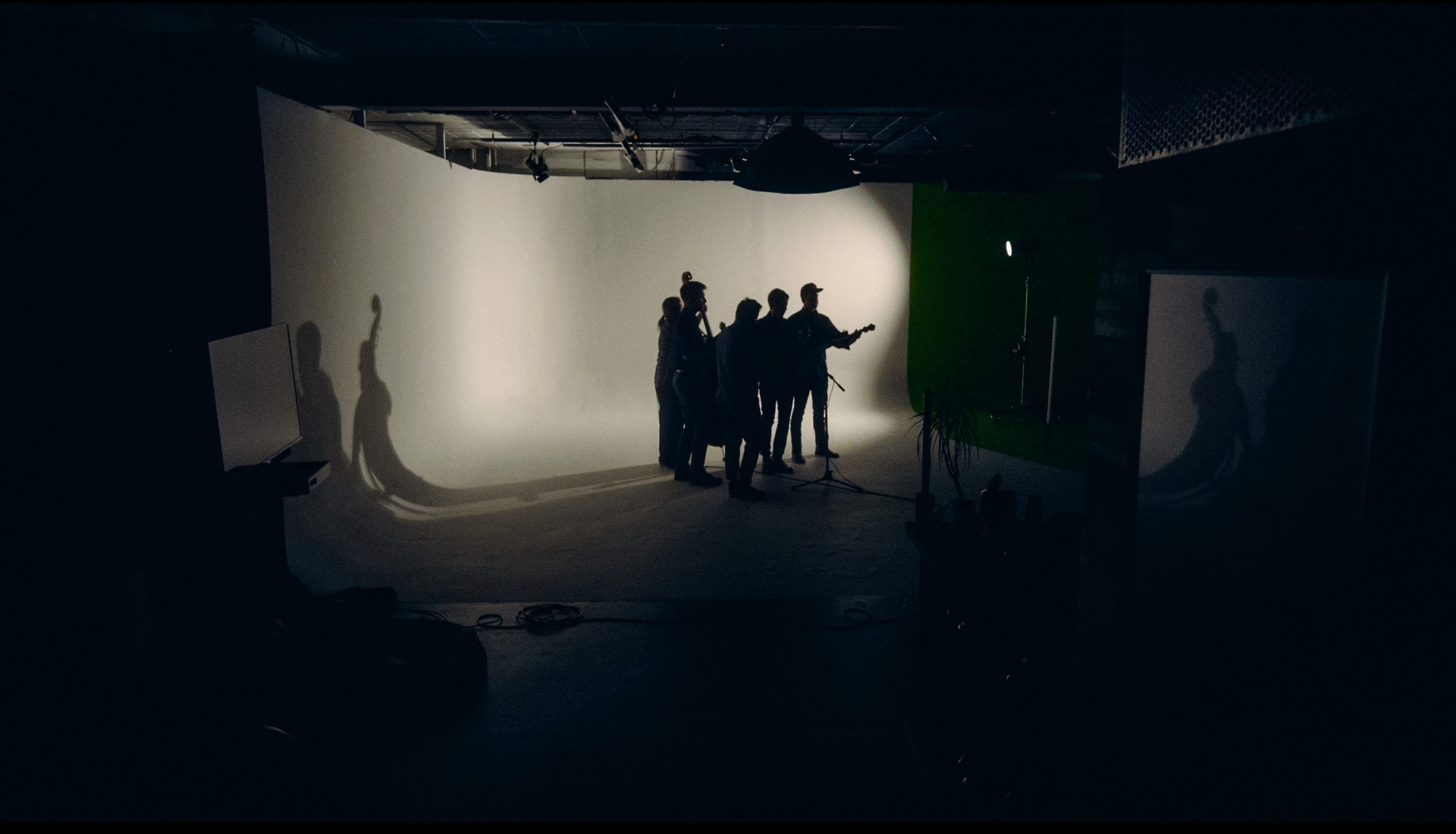
Never Come Down, “Mother”
Artist:Never Come Down Hometown: Portland, Oregon Song: “Mother” Album:Greener Pastures Release Date: June 7, 2024
In Their Words: “I wrote ‘Mother’ after finding myself living back at home, at my Mom’s house, and with my sister there, too. I had just left an emotionally turbulent relationship and was kind of broke and starting over at 29, but also extremely hopeful and grateful that I had my life back and could decide what I wanted to do with it. Having my sister and my mother around was really important for me at that time, to get me back to a place of feeling unconditionally loved and safe. The song came out of my subconscious need for those women to tell me what to do and to be there for me as I figured out what to do.
“I feel like it’s a really simple song, actually. I think most of us can relate to needing a parent or a mother figure or somebody that’s not family that’s a mother figure to be guided by. In this day and age, we all need mentors and guides more than ever and the age old wisdom of women, of mothers, of nurturers, of ‘kissing it to make it better’ and softness and the divine feminine.
“I hope all that comes through in this song. Because when I was writing it I wasn’t thinking about all those things, I was just singing my own little mantras out of my head, things that were just making me feel safe and loved. I hope this song makes people feel safe and loved. I hope people relate to it in all the ways that we relate to our mothers. Sometimes it’s hard, sometimes it’s lovely. I think if we all lived like our mothers were still watching over us or were in their presence, we’d all be happier and kinder human beings.” — Crystal Lariza
Video Credit: Ear Trumpet Labs
Kate Prascher, “Mary Ellen”
Artist:Kate Prascher Hometown: Hudson Valley, New York Song: “Mary Ellen” Album:Shake The Dust Release Date: August 30, 2024
In Their Words: “This song names the sensations of a summer’s day when she decides to leave, a taxi ride and the cigarette smoke that both soothes her and sets her free. Banjo and drums and the steady rhythm of driving wheels.” – Kate Prascher
Jaelee Roberts, “Georgia Rain”
Artist:Jaelee Roberts Hometown: Nashville, Tennessee Song: “Georgia Rain” Release Date: June 7, 2024 Label: Mountain Home Music Company
In Their Words: “I wrote ‘Georgia Rain’ after experiencing my first breakup/heartbreak when I was 16 years old. Interestingly enough, I had the melody come to me first and then the lyrics, which isn’t the normal songwriting process for me. I really do love this melody and the little twist in the chord structure. If you know me or have followed my musical journey so far, you know that I absolutely love a good ole heartbreak song and having rain be part of the scenario makes a heartbreak song even more lonesome and sad! When I wrote ‘Georgia Rain’ it really came to me like a movie and the words are really visual and I hope that y’all will be able to hear it and see it along with me when you listen.” – Jaelee Roberts
Track Credits: Jaelee Roberts – Vocals Stephen Mougin – Harmony vocal Byron House – Bass Cody Kilby – Acoustic guitar Andy Leftwitch – Mandolin Stuart Duncan – Fiddle Ron Block – Banjo John Gardner – Drums
Eddie Lee Ryder, “Bad Decisions”
Artist:Eddy Lee Ryder Hometown: Woodstock, New York (current); Irvington, New York (hometown) Song: “Bad Decisions” Album:Sweet Delusions Release Date: June 6, 2024 (single); July 19, 2024 (album)
In Their Words: “The song is a collection of fragments from a story marked by a string of bad decisions, beginning with falling for someone who misled me about their relationship status. However, the song sat in the dust-bin for a long time until I knew it would ultimately be a story about crashing and burning. I began noticing his intense jealousy, which you will find in lines woven into the song like, ‘Don’t ask me how I know those guys you wouldn’t like to know.’ The song is about being reckless and wild, which is the state we were in when we fell for each other. But when I was ready to move past being reckless and wild, to just stay home and watch crime shows together, that’s when he left. So anyways, I’m back to making ‘Bad Decisions’ and it’s going great.” – Eddy Lee Ryder
Track Credits: Written by Eddy Lee Ryder. Produced, Engineered, mixed by Dave Cerminara. Mastered by Adam Ayan.
Daniel Chae – Bass, guitar Dan Bailey – Drums Eddy Lee Ryder – Vocals Rich Hinan – Pedal steel Todd Caldwell – Organs
Photo Credit: Gangstagrass by Melodie Yvonne; Jaelee Roberts by Eric Ahlgrim.
(Editor’s Note: On May 17, The Avett Brothers released a new, self-titled album. BGS is proud to bring them back as our Artist of the Month for June 2024.
Below, enjoy a musical exploration of their illustrious career and prolific catalog. Plus, you’ll also find our Essential Avett Brothers Playlist for even more discography digging. And, you can revisit our feature from June 2016, when they were first selected to be our AOTM eight years ago.)
Depending on how you reckon it, you could say The Avett Brothers’ career goes back about two-dozen years – or Scott and Seth Avett’s entire lives. Even if you know nothing at all about them, all it takes is a few seconds of hearing them singing together to realize that they really are brothers.
Elder brother Scott’s voice is usually earthy and down below to Seth’s angelic up above. They meet in the middle to harmonize on songs about a series of quests – for love, redemption, family, pretty girls from far-away places, or just to be seen. Small wonder that one of their latest undertakings is Swept Away, a musical inspired by the mythology of their musical world.
To celebrate our Artist of the Month, here are a dozen songs about The Avett Brothers’ remarkable journey.
“Pretty Girl From Matthews” (2002)
Pretty girls are, of course, a perennial songwriting topic for the Avetts – most of them identified simply as “Pretty Girl From.” It’s taken them far and wide, from Michigan to Chile, Annapolis, San Diego, Cedar Lane, Raleigh, Feltre, Locust and even “at the Airport.” But here is the earliest example in all the Avetts’ early, detuned glory, from a town southeast of Charlotte. Originally titled “Song For Robin,” “Pretty Girl From Matthews” was the opening track on 2002’s Country Was.
“Talk on Indolence” (2006)
Folksy Americana trappings aside, Seth and Scott started out playing in bands that did a lot more screaming and thrashing than crooning and strumming. And even as their music has grown more polished and stately over time, their raw streak still comes out regularly. This breathlessly paced head-banging rant, which kicked off 2006’s Four Thieves Gone: The Robbinsville Sessions at an amphetamine pace, is one they still play at most shows.
“Distraction #74” (2006)
Another Four Thieves Gone recurrent, “Distraction #74” evokes British seafaring vibes seemingly tailor-made for raucous pub sing-alongs. And it has a perfect Avett Brothers lyrical theme: Torn between two lovers, the protagonist mostly wonders which of them he’s going to miss the most. The only certainty is that he’ll blow it with both of them.
“Die Die Die” (2007)
In which the Avetts don’t just make a simple pop move, but pull off what might be the least-likely Beatles rip ever. “Die Die Die” opened 2007’s Emotionalism, their first album to crack the Billboard 200 and a showcase for new cellist Joe Kwon. Among the Fab Four echoes here are Beatle-esque vocal harmonies and a guitar solo that’s pure George Harrison. Onstage, they’ll sometimes make it even more overt by closing with flourishes from “I Want to Hold Your Hand.”
“Paranoia in Bb Major” (2007)
Nothing fancy, just a little banjo and glockenspiel number from Emotionalism that perfectly captures the Avetts’ manic whisper-to-a-scream mood swings. Then it closes with one of their quirkiest recorded moments, wordless falsetto chanting that is somehow adorable.
“Murder in the City” (2008)
From 2008’s The Second Gleam, “Murder in the City” came out right when this cult act was about to go mainstream. It feels like one last look back before stepping into the spotlight, a series of epigrams about love, jealousy, family and forgiveness.
“Murder in the City” remains one of the Avetts’ regular live set-pieces, with lyrics that have evolved to reflect the brothers’ evolution from children to parents themselves. It’s a cinch they’ll still be playing and updating it someday when they’re grandparents, too.
“Head Full of Doubt/Road Full of Promise” (2009)
Fittingly, “Head Full of Doubt/Road Full of Promise” was the song the Avetts played during their star turn with Mumford & Sons behind Bob Dylan at the 2011 Grammy Awards. “Decide what to be and go be it” might be their most durable manifesto, which is a big reason it remains their most-performed song live. According to Avett Brothers super-fan Tim Mossberger’s database, it’s closing in on 1,000 live performances. And it still kills. All it takes is hearing Kwon’s cello riff to bring on chills.
“Laundry Room” (2009)
Like “Head Full of Doubt,” “Laundry Room” is drawn from the Avetts’ 2009 big-league debut, the Rick Rubin-produced I and Love and You – their first gold record. It’s a beautifully poignant portrait of stolen-moment love that may or may not be doomed.
“Tonight I’ll burn the lyrics/ ’Cause every chorus was your name,” Scott sighs, contemplating a “head-full of songs” he dreamed up overnight. The double-time hoedown outro plays like a bittersweet wake. “Laundry Room” ranks second on Mossberger’s live-performance database.
“Live and Die” (2012)
From 2012’s The Carpenter, the Avetts’ first to crack Billboard’s Top 10, “Live and Die” is just about the poppiest they’ve ever sounded – even with banjo as lead instrument. In contrast to the Avetts’ usual outlook, it is surprisingly optimistic, which made it the perfect upbeat closing-credits accompaniment for director Jud Apatow’s romantic comedy, This Is 40.
“Satan Pulls the Strings” (2014)
The studio version of “Satan Pulls the Strings” appeared on 2016’s True Sadness, but this one was around for years before that. In fact, its best incarnation is as entrance music for the live show. Among my favorite in-concert memories of the Avetts was watching the entire seven-piece band enter the stage one by one and start in on this song on New Year’s Eve 2014 in Raleigh, North Carolina. That performance appears on 2015’s Live Vol. Four.
“No Hard Feelings” (2016)
In recent years, “No Hard Feelings” has been the Avetts’ customary show-closer, ending each night on a prayerful, elegiac note. As depicted in the 2017 biopic May It Last: A Portrait of the Avett Brothers (overseen by Apatow and Michael Bonfiglio), recording it for 2016’s True Sadness LP was an overwhelmingly emotional experience. It triggered a meltdown by Scott immediately afterward, a sequence that proved to be the film’s most memorable moment.
“Operator (That’s Not the Way It Feels)” (2022)
On-record as well as onstage, the Avetts have always had splendid taste in covers, dipping into the songbooks of Townes Van Zandt, John Prine, Bob Wills and many others. There’s also “Operator (That’s Not the Way It Feels),” a 1972 Top-40 classic by the late great folk-rocker Jim Croce. Seth started doing a stripped-down acoustic version of “Operator” with bassist Bob Crawford back in 2012, and it’s one they still dust off regularly 12 years later.
Read more about the Avett Brothers’ eleventh and self-titled album here.
Artist:Meadow Mountain Hometown: Denver, Colorado Song: “Count Me In” Album: June Nights Release Date: May 22, 2024
(Editor’s Note: Over the last four weeks, Colorado-based bluegrass band Meadow Mountain has premiered a series of exclusive, live performance videos of tracks from their just released album, June Nights. This is the final installment of their SkyTheory Sessions. Find links to the full series below.)
In Their Words: “I originally conceived of this song as a ‘rewriting’ of ‘Rocky Mountain High’ by John Denver. The first lyric from ‘Count Me In’ is: ‘Twenty-seven came and went like a storm, hanging on by the songs I wrote on the day that I was born,’ which is an homage to Denver’s lyrics: ‘He was born in the summer of his 27th year, coming home to a place he’d never been before.’ From there, the song took on its own life. It is a celebration of life in The Rocky Mountains. You want to go play up in the talus fields and by the ice cold mountain lakes? ‘Count Me In.'” – Summers Baker
Track Credits: Written by Summers Baker
Photo Credit:Video still by Erik Fellenstein
Video Credits: Videography – Erik Fellenstein Lighting – Payden Widner Mixing – Vermillion Road Studio
Artist:Meadow Mountain Hometown: Denver, Colorado Song: “Waiting for Tomorrow” Album: June Nights Release Date: May 13, 2024 (single)
(Editor’s Note: Over the last few weeks, Colorado-based bluegrass band Meadow Mountain has premiered a series of exclusive, live performance videos of newly releasing tracks. Watch each installment of their SkyTheory Sessions right here, on BGS. The final installment will be released next week.)
In Their Words: “This song attempts to answer the question, ‘What if, instead of starting the band Foo Fighters, Dave Grohl had picked up a mandolin and spent a year exclusively listening to Alison Krauss & Union Station?’ I guess I was doing a lot of thinking and writing about time – the great healer, but also that which brings an end to all things. And then a new beginning. This is a song about time, and hope.” – Jack Dunlevie
Track Credits: Written by Jack Dunlevie
Photo Credit:Video still by Erik Fellenstein
Video Credits: Videography – Erik Fellenstein Lighting – Payden Widner Mixing – Vermillion Road Studio
Artist:Meadow Mountain Hometown: Denver, Colorado Song: “Trail to Telluride” Release Date: May 6, 2024 (single)
(Editor’s Note: Over the next few weeks, Colorado-based bluegrass band Meadow Mountain will premiere a series of four exclusive, live performance videos of newly releasing tracks. Watch each installment of their SkyTheory Sessions on Thursdays each week for the next three weeks right here, on BGS.)
In Their Words: “I have attended the Telluride Bluegrass festival every year for over 12 years now. It is where I fell in love with bluegrass music and it is where I felt my first calling to write the music of the Rocky Mountains. This song tells a fictional story of a miner in the late 1800s who traveled from Denver to Telluride in an attempt to strike it rich mining for silver. While I am no miner, I do feel that the story tracks with the life of a working musician. You go out there to try something new, and if it doesn’t stick, you reset and get back to work.” – Summers Baker, guitar and songwriter
Track Credits: Written by Summers Baker
Photo Credit:Video still by Erik Fellenstein
Video Credits: Videography – Erik Fellenstein Lighting – Payden Widner Mixing – Vermillion Road Studio
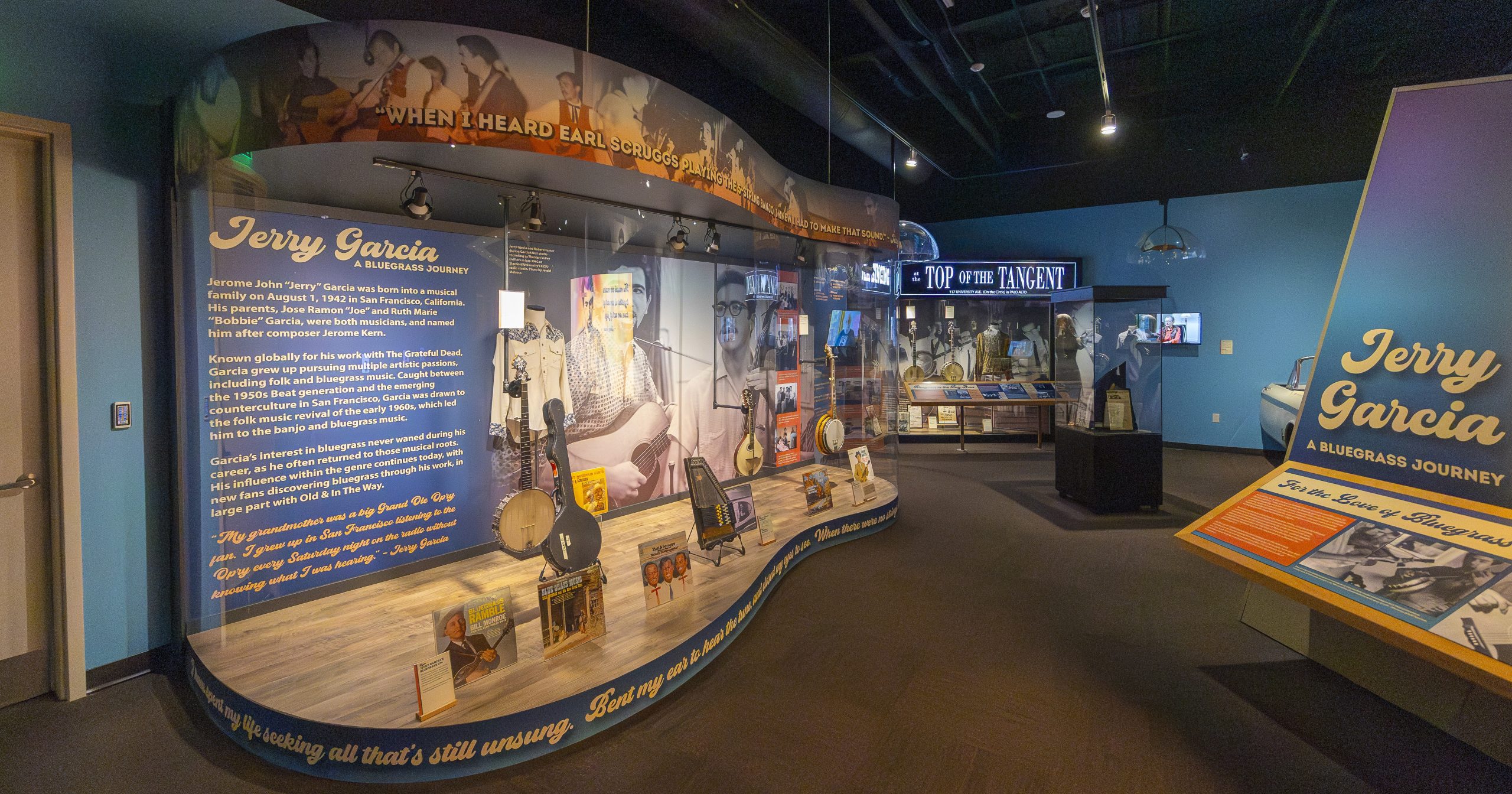
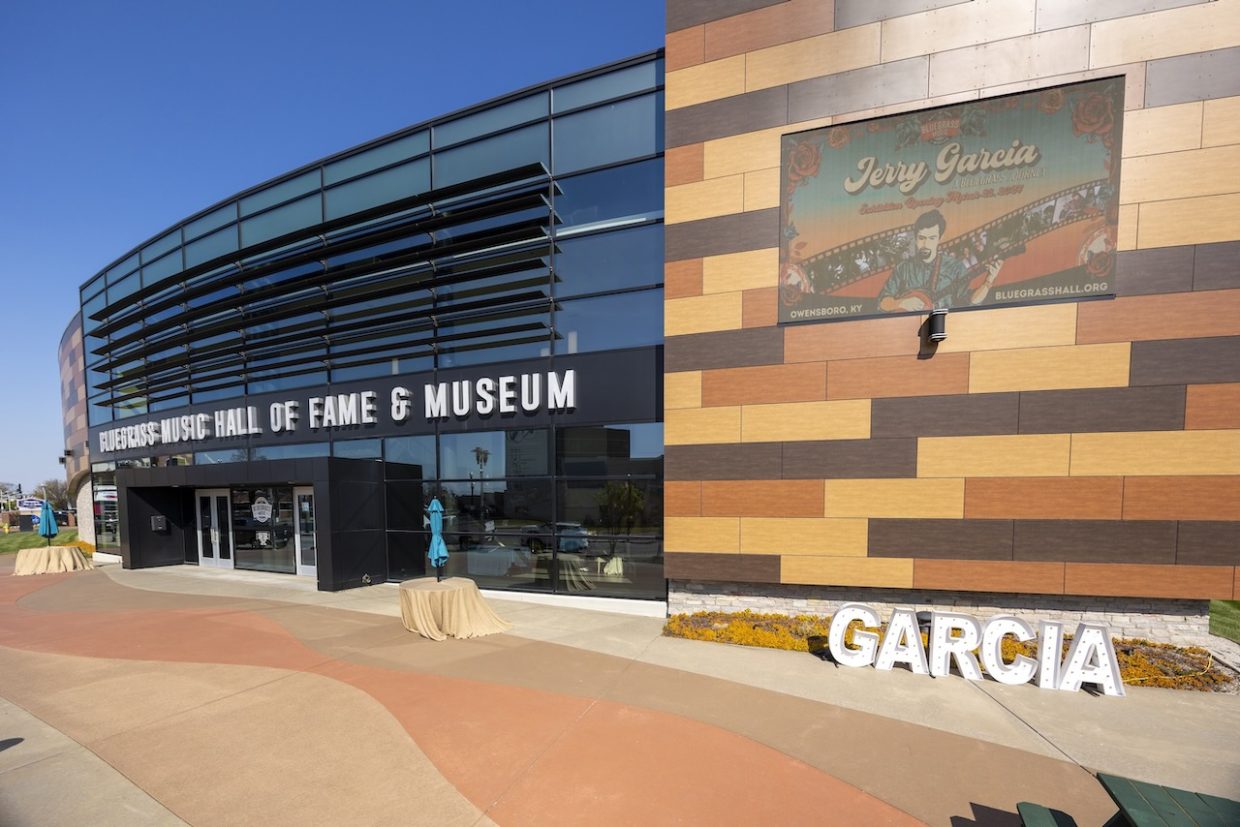
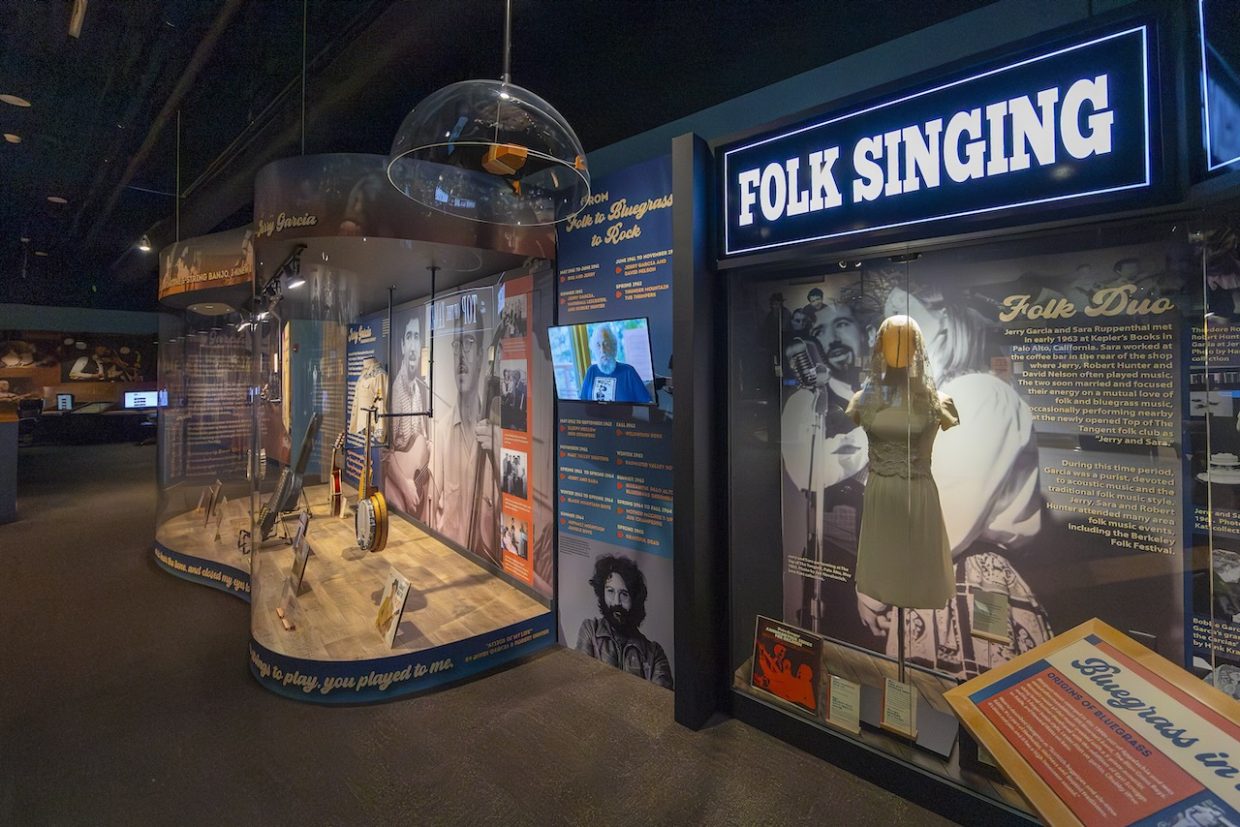
Although it will be showcased for the next two years, the recent grand opening celebration of the “Jerry Garcia: A Bluegrass Journey” exhibition at the Bluegrass Music Hall of Fame & Museum will go down as not only a monumental gathering of musical legends, but also an unforgettable moment in time for all involved.
“This exhibit is coinciding at a great moment for bluegrass,” says Carly Smith, museum curator. “[Jerry] funneled so many people to [bluegrass]. And a lot of present day artists — Billy Strings, Molly Tuttle — are incorporating Jerry’s style into what they’re playing.”
Located in downtown Owensboro, Kentucky, along the mighty Ohio River, the Bluegrass Hall of Fame has created an incredibly impressive and intricate ode to Garcia and his undying love of the “high, lonesome sound,” demonstrating how his indelible fingerprint on the genre is still clearly visible in this current high-water mark moment for bluegrass.
Known as one of the finest electric guitarists to ever pick up the six-string instrument, Garcia, who passed in 1995, is eternally known as the de facto leader and musical zeitgeist at the helm of the Grateful Dead. And yet, the foundation of Garcia’s playing and skillset lies in American roots music — folk, blues, and bluegrass.
Photo by Chris Stegner, courtesy of the Bluegrass Music Hall of Fame & Museum.
The exhibit weaves through Garcia’s early years as a folk musician in the 1950s, his lifelong friendship with musician/lyricist Robert Hunter, his time in a slew of acoustic outfits in the 1960s – including Mother McCree’s Uptown Jug Champions (an early footprint of the Dead) – as well as a keen focus on Garcia’s work in Old & In the Way and New Riders of the Purple Sage.
“I cried through the entire [opening weekend] press conference,” Cliff Seltzer, the exhibit’s creative director, says in a humbled tone. “I’ve been trying to keep my composure for this weekend because it’s overwhelming.”
For Seltzer, the journey to the opening weekend has been five years in the making. A well-known former artist manager, Seltzer was touring the museum in 2019 with one of his friends and clients, Vince Herman of Leftover Salmon. With curator Smith guiding the duo through the building, the group started kicking around ideas for what to put in a then-empty gallery portion of the second floor.
Photo by Chris Stegner, courtesy of the Bluegrass Music Hall of Fame & Museum.
“We’ve always talked about a Jerry Garcia exhibit, and it just kind of snowballed from there,” Smith says. “And it was very unexpected how open Jerry’s family was with [helping] us. What I’ve learned over the last two years, really working with them, is that bluegrass was part of [Jerry] — that’s what he was doing when he wasn’t on the road, that’s what he did at home.”
For the better part of the last half-decade, Smith, Seltzer and a small crew of folks roamed America, not only in search of Garcia artifacts to display (instruments, photographs, family heirlooms), but also numerous interviews with some of the biggest names in bluegrass to share in the exhibit — each talking at-length about Garcia’s cosmic lore, larger-than-life legends, and lasting legacy.
“Every genre of music has to morph and change. New people enter the fold and introduce new things,” Seltzer said. “With Billy [Strings], Molly Tuttle, Sierra Ferrell, and others, bluegrass is bigger [now] than it’s ever been — it’s only going to continue to grow.”
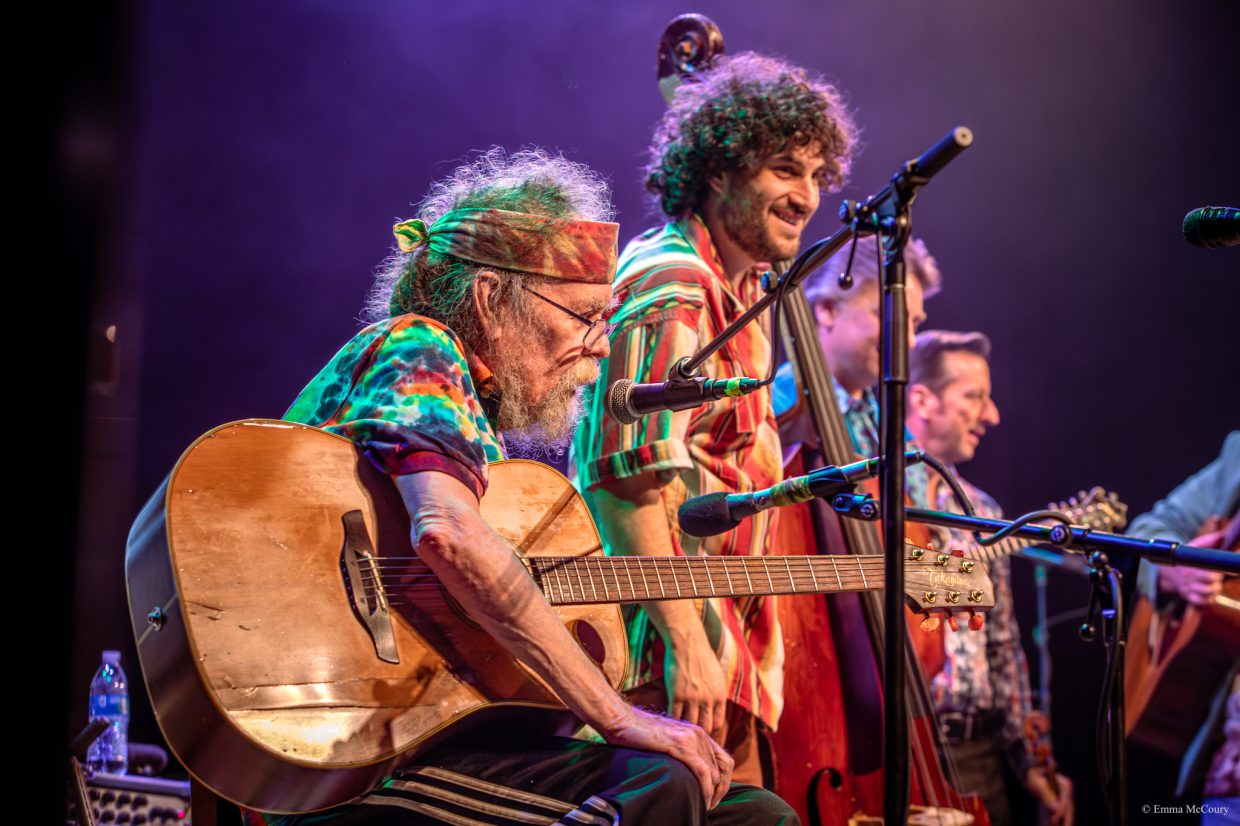
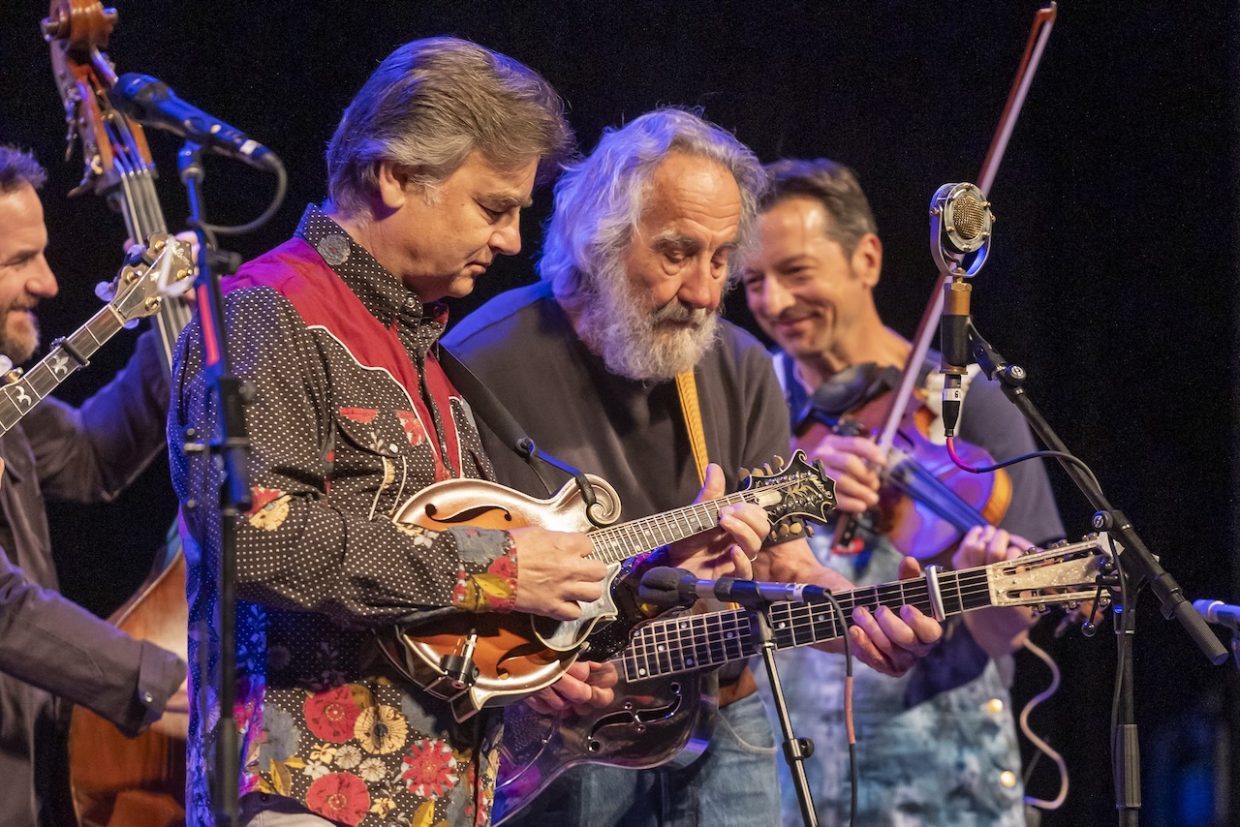
David Nelson joined by Sam Grisman, Ronnie McCoury, and Jason Carter on stage at the Bluegrass Hall of Fame. Photo by Emma McCoury.
Way before the Dead — before any of the melodic chaos and intrinsic beauty of what that band created onstage any given night for its 30-year tenure — there was Garcia himself, simply a huge bluegrass freak who, perhaps someday, would become a member of Bill Monroe & The Blue Grass Boys.
And although Garcia would eventually swerve into the electric sounds of rock and roll and blues, he was never too far from bluegrass. There were always side projects and low-key jam sessions with a bevy of acoustic musicians throughout the early years of the Dead in the 1960s and 1970s.
Most notable of those collaborations was with mandolin virtuoso David Grisman. Through Grisman, Garcia met guitarist Peter Rowan in 1972. A former member of Monroe’s Blue Grass Boys, Rowan found a kindred spirit — in sound and in attitude — with Garcia. The kismet trio would jam often at Garcia’s Stinson Beach, California, home, with Garcia plucking his trusty banjo.
“We started picking every night after supper [at Jerry’s],” Rowan says. “We went through old song books and learned a bunch of material. I remember singing ‘Land of the Navajo’ and looking at Jerry like, ‘This is really weird, isn’t it?’ He goes, ‘Keep going, man.’”
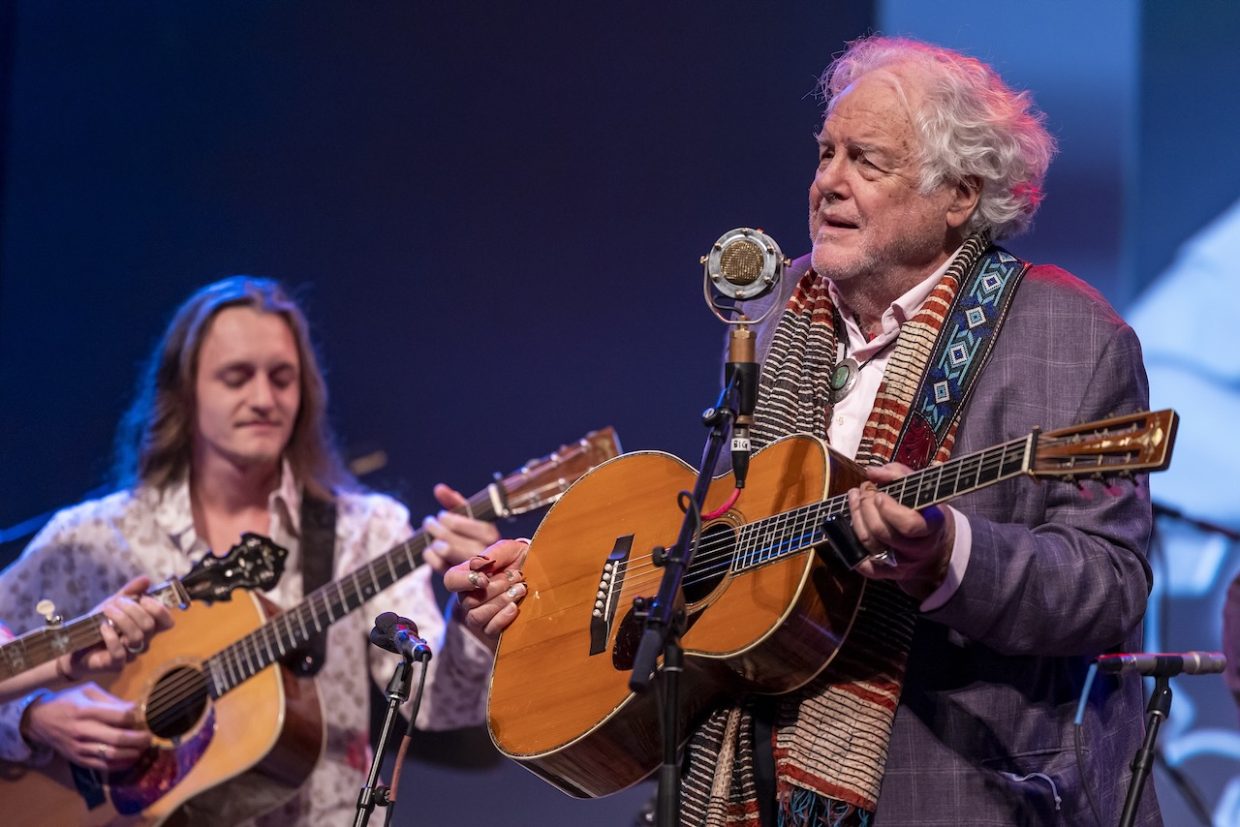
Peter Rowan speaks as Heaven McCoury looks on during the exhibition opening weekend festivities. Photo by Chris Stegner.
What was birthed from those happenstance pickin’ and grinnin’ sessions became bluegrass super group Old & In the Way. Like a shooting star in the tranquil night sky, the band — featuring Garcia, Rowan, Grisman, bassist John Kahn, and a revolving cast of fiddlers (Richard Greene, John Hartford, Vassar Clements) — would only last the better part of two years (1973-1974).
But, in it remains one of the most important and groundbreaking acts to ever emerge in the bluegrass scene. To note, Old & In the Way’s 1975 self-titled debut album went on to become the bestselling bluegrass album of all-time – until it was dethroned by the O Brother, Where Art Thou? soundtrack released in 2000.
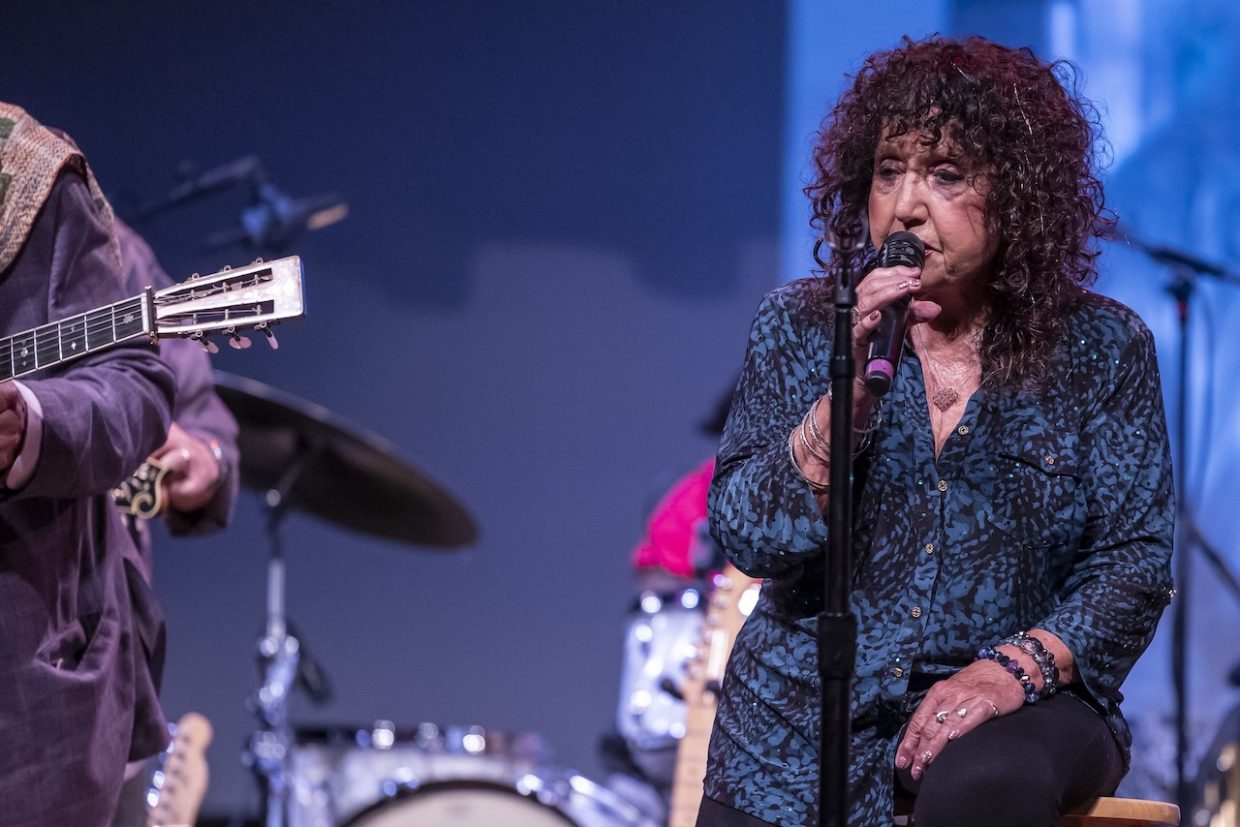
Maria Muldaur performs. Photo by Chris Stegner.
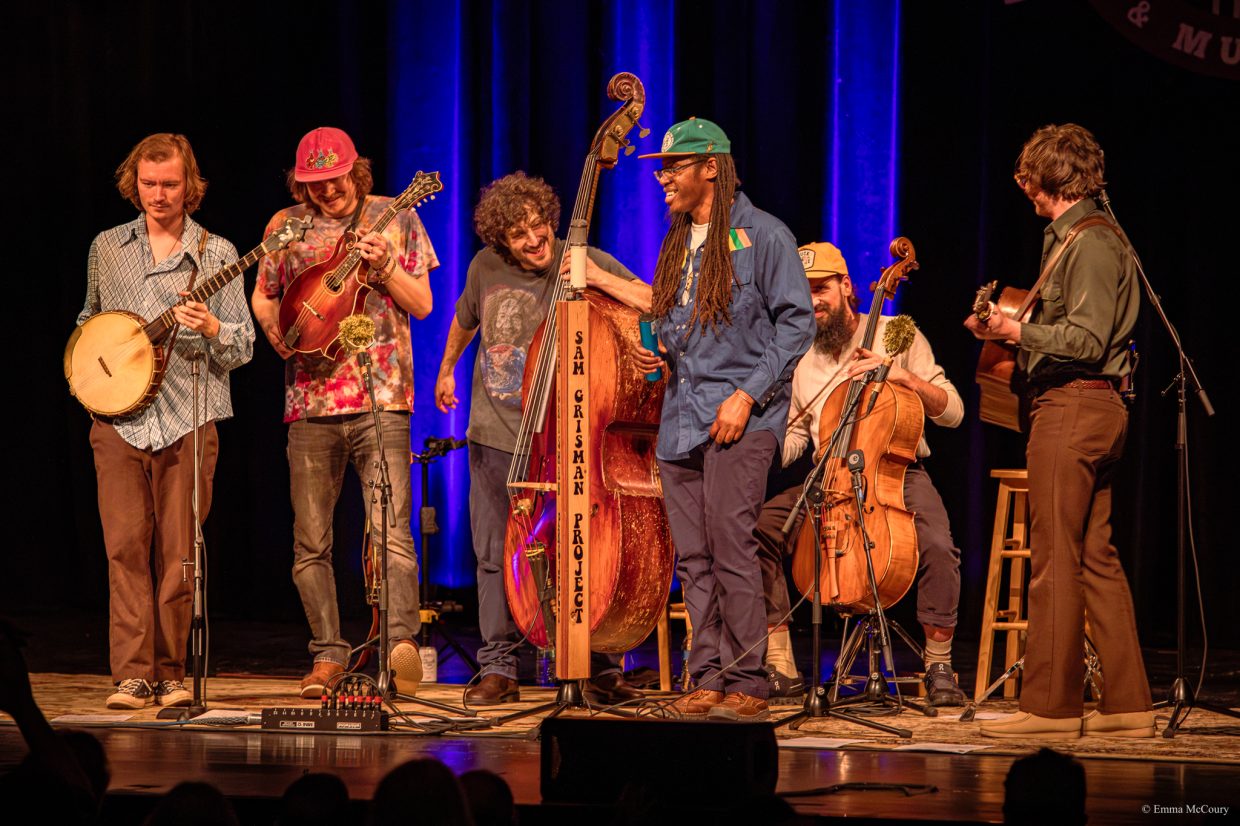
Alongside an onslaught of beautifully touching performances (Leftover Salmon, Maria Muldaur, Jim Lauderdale, Kyle Tuttle, Peter Rowan, Ronnie McCoury, Sam Grisman Project) and poignant gatherings of artists and music lovers throughout the “Jerry Garcia: A Bluegrass Journey” opening weekend, there were also several panels taking place each day at the museum.
Of which, “Garcia: Legend & Lore of a Bluegrass Freak” featured Peter Rowan (Old & In the Way), David Nelson (New Riders of the Purple Sage), Pete Wernick (Hot Rize), Sam Grisman (son of David Grisman) and Eric Thompson (Mother McCree’s Uptown Jug Champions).
“Old & In the Way really helped everything get bigger,” Wernick says. “It was this whole group of material that means so much to all of us in the bluegrass scene — it suddenly became something that people all over the world knew about.”
Greg Garrison, Ronnie McCoury, Eric Thompson, and Jason Carter perform. Photo by Chris Stegner.
Below are a few excerpts for that artist panel conversation:
Eric Thompson: I grew up in Palo Alto, California, kind of the nexus point for the folk world in the early ’60s. Joan Baez was from there. The Kingston Trio was from there. I got into the bluegrass guitar in [1961]. [Jerry] ended up there after he got thrown out of the Army. He got into all kinds of folk music and he would just devour a style. [He’d say], “Oh, I’m going to do that,” then two weeks later he’s got a whole repertoire. I was 15 years old and made friends with Jerry right away — it changed my life.
David Nelson: We’d go down to Kepler’s bookstore, which is an old hangout in Palo Alto. There was a section of it where you could get an espresso, sit down at a picnic table, and read a book. And there’s this guy [there]. It’s summer, so he’s got his shirt open and [big] hair. And he’s playing a 12-string guitar. Somebody comes up and says, “That’s Jerry Garcia.” We went over and pitched the idea [of jamming together]. Sure enough, next Tuesday night, we’re waiting and waiting. Then, all of a sudden, here comes the car and there’s Jerry coming up the stairs with a guitar and some friends. It started off a whole [jamming] thing at the Boar’s Head [Tavern], which just went on for months and years maybe. [Jerry] was interested in bluegrass banjo and I was interested in bluegrass guitar. I got me a banjo. Jerry said, “Oh, man, borrow my guitar. Can I borrow this banjo?” He happened to have a 1940 Martin D-18 [guitar].
The Sam Grisman Project – featuring Victor Furtado, Logan Ledger, and more – take a bow. Photo by Emma McCoury.
Thompson: [Jerry] brought some openness to the approach [of bluegrass music]. I know [so] many people, who are mostly not bluegrass musicians, who found out about [bluegrass] because of Old & In the Way. It was open and expressive and, at the same time, paid respect to what came before. It was this new, intelligent thing. And intelligence is what Garcia brought to the music, [as well as] imagination, articulation.
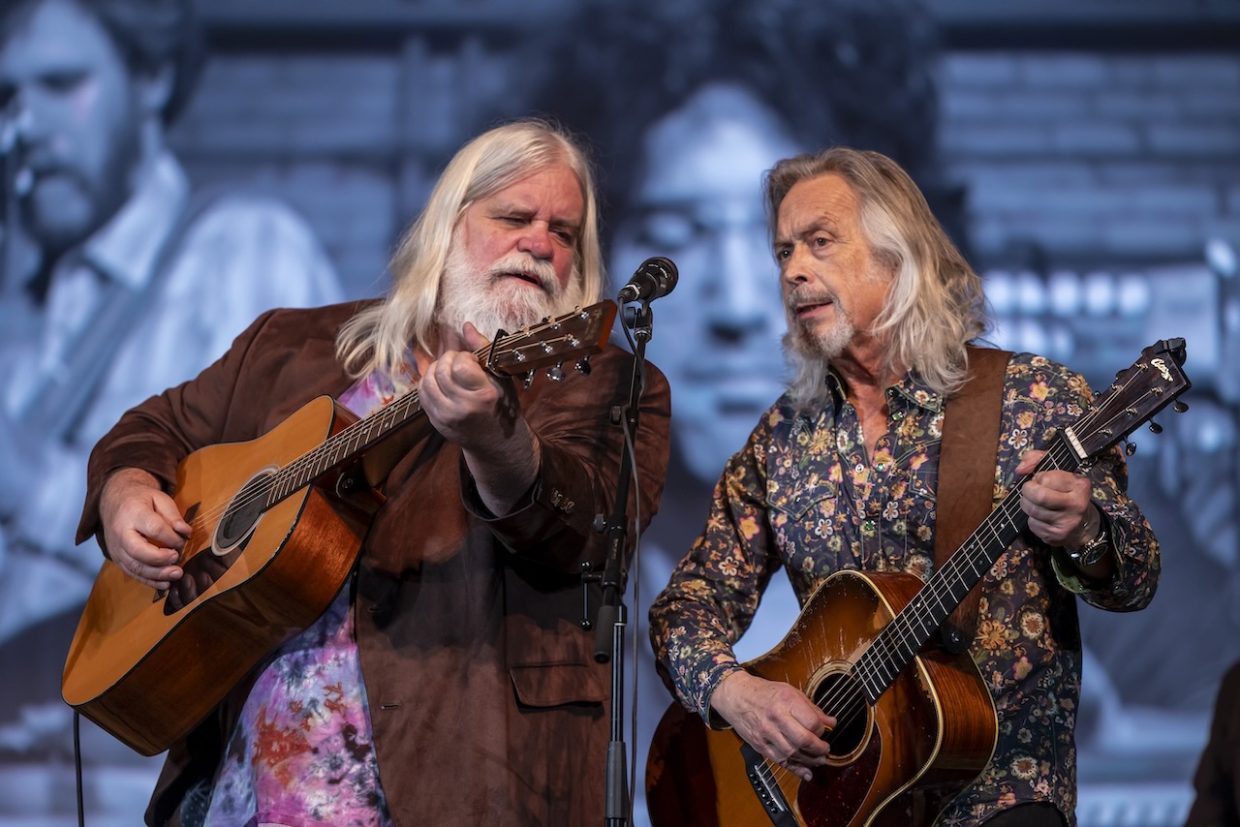
Vince Herman and Jim Lauderdale harmonize. Photo by Chris Stegner.
(Editor’s Note: Over the next few weeks, Colorado-based bluegrass band Meadow Mountain will premiere a series of four exclusive, live performance videos of newly releasing tracks. Watch each installment of their SkyTheory Sessions on Thursdays each week for the next four weeks right here, on BGS.)
In Their Words: “It sometimes feels like my life is split up into eras – periods of a year or two that, upon looking back, have a distinct, overarching feeling. As I get older I’ve started to recognize when I’m on the edge of one era, moving into the next one, and I begin to get a sense of the overall color of my recent life. I had that feeling as spring moved into summer last year and wanted to document it in a song. It recounts moments in the Colorado wilderness, misadventures in love, and my abiding wish to be Sam Bush in the 1980’s.” – Jack Dunlevie, mandolin and songwriter
Track Credits: Written by Jack Dunlevie.
Photo Credit:Video still by Erik Fellenstein
Video Credits: Videography – Erik Fellenstein Lighting – Payden Widner Mixing – Vermillion Road Studio
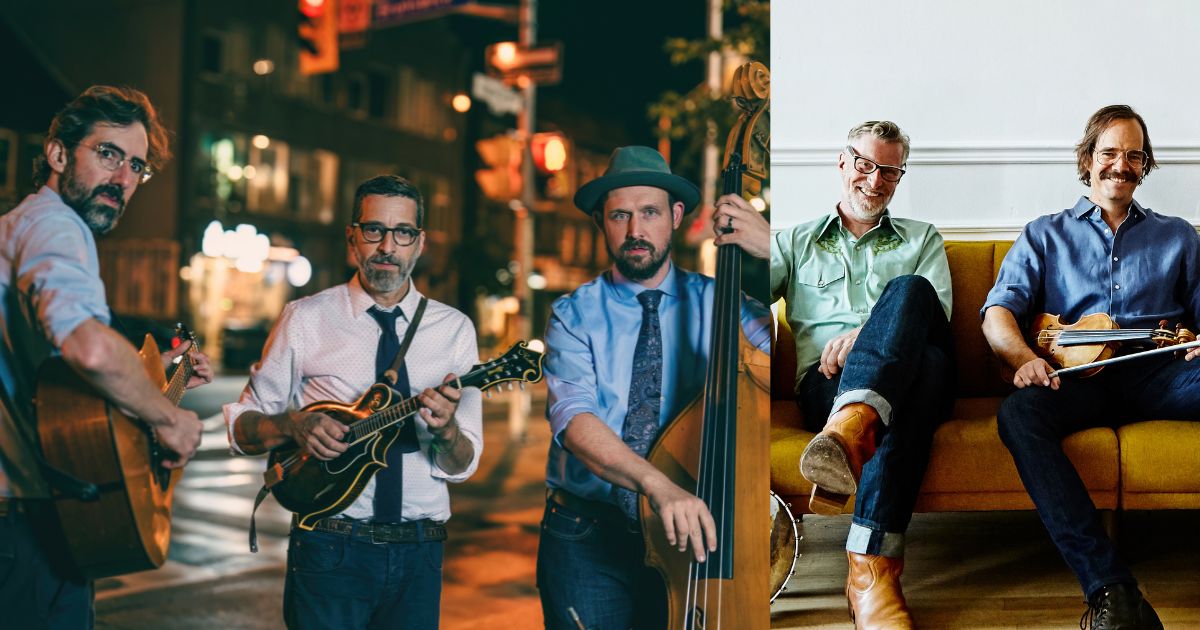
In Their Words: “Andrew and I wrote this tune together about 20 years ago. It was the first of May and we spent it in the sun, picking fiddle tunes, looking at flowers, and getting in the groove with the mycorrhizal network. This melody revealed itself to us in the early afternoon, setting the vibe for the rest of the day. I’ve always found this tune beguiling. It’s hard to put your finger on its mood; to me, it’s ultimately hopeful, but it has to go through a lot before it gets there! I’ve recorded ‘May Day’ three times now; each version is very different. I can’t seem to keep away from this tune! It was so wonderful for John and me to have the chance to collaborate with Andrew, Adam, and James on this release!” – Chris Coole, the Lonesome Ace Stringband
Track Credits:
Andrew Collins – Mandolin Chris Coole – Banjo James McEleney – Bass Adam Shier – Guitar John Showman – Fiddle
Video Credits: Edited by Chris Coole. P.D. archival footage filmed by Arthur Edward Pillsbur from the Prelinger Collection. Photo Credit: Andrew Collins Trio by Andrew Collins; the Lonesome Ace Stringband by Jen Squires.
This website uses cookies to improve your experience. We'll assume you're ok with this, but you can opt-out if you wish.AcceptRejectRead More
Privacy & Cookies Policy
Privacy Overview
This website uses cookies to improve your experience while you navigate through the website. Out of these, the cookies that are categorized as necessary are stored on your browser as they are essential for the working of basic functionalities of the website. We also use third-party cookies that help us analyze and understand how you use this website. These cookies will be stored in your browser only with your consent. You also have the option to opt-out of these cookies. But opting out of some of these cookies may affect your browsing experience.
Necessary cookies are absolutely essential for the website to function properly. This category only includes cookies that ensures basic functionalities and security features of the website. These cookies do not store any personal information.
Any cookies that may not be particularly necessary for the website to function and is used specifically to collect user personal data via analytics, ads, other embedded contents are termed as non-necessary cookies. It is mandatory to procure user consent prior to running these cookies on your website.