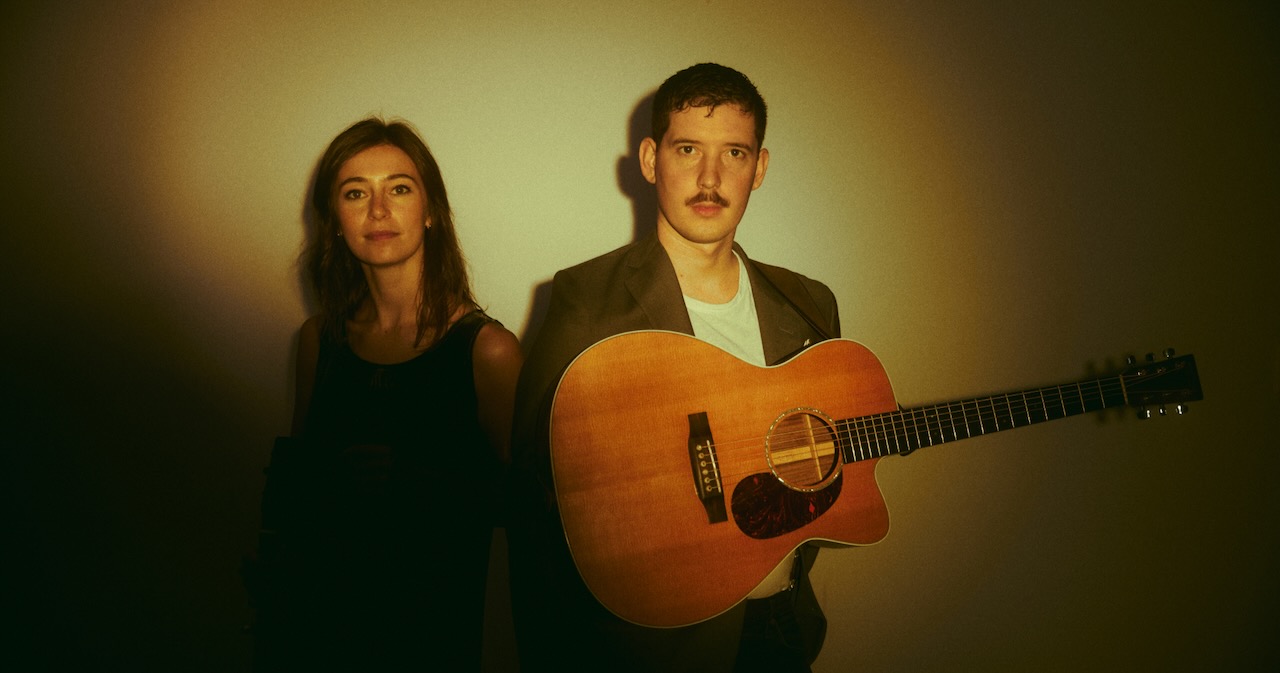
Jake Blount & Mali Obomsawin’s ‘symbiont’ is a Radical Act of Reclamation

Jake Blount & Mali Obomsawin’s new album symbiont is a dense nest of references across a century of Black and Indigenous music and sound making, worked into the warp and weft of synthesizers and electronic production.

The liner notes detail Obomsawin’s trips to Blount’s apartment in Providence, Rhode Island, where the two would work through music, books, and other texts they had collected, compiling sounds and ideas, building up the whole project’s sound. The album bridges the hyperlocal and the global, across time, in a historically-minded, futurist radical gesture, refusing the silence of official archives and restoring voices lost to colonial violence.

The album was released by Smithsonian Folkways, which has a history of preserving a worldwide range of music, but also industrial sounds, the songs of birds, and the noises of frogs and toads. Obomsawin’s previous band Lula Wiles was also on the label. Folkways is an archive that is institutional though, literally funded by the government, and it is often colonial – they gave money to white officials who collected songs on reservations, in prisons, and among communities where saying no was an economic or social impossibility. The official archivists, given imprimatur by the Smithsonian, and the unofficial archive, compiled by these two musicians who are working personally, across time and space, to commemorate the social and political will of marginalized people, is a difficult balance.

In a conversation over Zoom, Blount makes the archival practice explicit saying that the process “became a way for me to co-opt this thing that I have often felt; [that] archives exist to deny dead Black people our agency and cut off our communal traditions from the community.”

The community here is as small as two people in a room, or in a Zoom call, but also collapses historical pasts, the apocalyptic now, and a possible, hopeful Afro/Indigenous future. When asked about how this album was in conversation with the colonial history, Obomsawin makes the political claim as explicit and as communal as Blount, saying that this album is “in conversation and asserting continuance for our colonized ancestors and our future descendants who have overthrown their colonizers.”

How to do that overthrowing is not an abstract or intellectual consideration here. There are calls for direct action. In one of the album’s spoken word sections, an ancient outside of time and space discusses how humanity cannot be either created or destroyed, but it is like a great river (like Langston Hughes’ river) that the energy flows through.

The material throughout this album is part of that great river, and so it includes texts like Slave Songs of the United States (ed. William Francis Allen, Charles Pickard Ware, and Lucy McKim Garrison) and Indian Melodies by Thomas Commuck, who is described by Obomsawin as a “Native American author, Commuck (Narragansett/Brothertown), [who] began his life in a community heavily influenced by the Methodist Episcopal Church with the tradition of singing shape note hymns.”

The ancestor work here is nuanced as Obomsawin refuses to view Commuck as a simple victim of settler violence, acknowledging the intellectual work of his hymnal, while also acknowledging that his learning the shape note involved an erasure of more traditional forms. Obamsawin’s inclusion of western plains singing on the recordings of Commuck function like Jeremy Dutcher’s album Wolastoqiyik Lintuwakonawa, who traveled to the settler capital of Ottawa to access wax cylinders of the almost extinct songs of his people – cylinders stolen from them. Maggie Paul, an elder and song keeper from Dutcher’s community, told him to bring the songs back. symbiont does something similar.

The songs gathered here are a model of how stories from the Atlantic Triangle and from the expulsion of Indigenous people from their native homelands can be made new. These songs are stories, of stars falling out of the skies, but also of the gathering of community or private devotions. The gathering of the community is a successful part of the project.

On this album, Blount and Obomsawin inherit the hymns of colonization, hymns that were remade by Indigenous and Black writers, performers, and thinkers. On “Mother,” there is an interleaving of singing over drums and synths; a gorgeous version of the hymn “In the Garden” is scarred with feedback, synth interruptions, and technological glitches, emphasizing the shift from male to female pronouns. These formal choices interrupt the edenic expectation of the song’s tradition, while still acknowledging where the text originated from. Jazz and electroacoustic performer Mantana Roberts did similar work with the hymn in her work Coin Coin Chapter 5 – there are always riffs, always new ways of working out old songs.

The expulsion from the garden into new sounds can also be seen in the song “Stars Begin to Fall,” with the jazz stalwart Taylor Ho Bynum. Percussion and gourd banjo undergird Obomsawin’s rich harmonies singing, “When you hear the master fall as he topples from his throne…” There is a profound impact, a direct route to the kind of political work of community.

Obomsawin is in conversation with Blount; Blount and Obomsawin are in conversation with Bynum; Bynum, Obomsawin, and Blount are in conversation with Slave Songs and William Francis Allen, Charles Pickard Ware, and Lucy McKim Garrison. And, the history of the slave song, which originated American popular music. This is an album about the earth, so when “Stars Begin to Fall” talks about horns, Bynum makes his cornet flutter, speed, appear and disappear. He turns that instrument into a bird, with all of the contradictory metaphors of containment and freedom within it.

The river which carries these stories is one which loops, breaks, and returns – it has not one source, but dozens. This borrowing, this community, the pulling out of narratives, the flow, has been blocked.

There are two songs here by Alan Lomax, the folk song collector, whose relationship to the medium has become incredibly vexed. Blount, when asked about what it means to include Lomax in this canon making, his response is as patient, as angry, and as generous as the rest of the record: “I understand that this may be something he did with the best of intentions. I don’t mean to impugn that in any way. I think we are now at a point where we need to start examining. If there’s a solution to release those copyrights. I don’t know legally if that can be done, but something’s got to change, because at the point where you have Black people sampling recordings of our ancestors on their songs and they have to credit John and Alan Lomax as co-writers on that song… I had to credit a white man for my song that I wrote, because he happened to record some other Black people one time.”

This album is a reclaiming, not of authorship, but a collapsing of time and space. It’s an album of new narratives of creations, against copyright, and against Euro-centric narratives of how we imagine folk music to sound like and about what the audience means. This is an album intended for liberation, one in conversation across time and place. Specific time and place are key to the aesthetic and political work of Blount and Obomsawin – work that refuses to ask permission.

When they sing, “Come down ancients and trouble the waters/ Let the saints come in…” on the perfect, revelatory, and haunting track “Come Down Ancients,” the invocation towards the saints is as small as two people in an apartment, as smart as a grad school seminar, and as expansive as centuries of art making, both heard and unheard, censored because it scared or intimidated those who colonized.

That symbiont has no interest in asking permission anymore makes it a most radical act of reclamation.


Photo Credit: Abby Lank
MIXTAPE: Celtic & American Folk Inspirations From Rakish

As a duo rooted in both Celtic and American traditions, we find the intersection of these worlds to be a rich and endlessly inspiring place. From the rhythmic drive of Irish & Scottish reels to the melodic storytelling of ballads, we’ve always been captivated by how these two traditions speak to one another. They each carry a sense of community and history, and both offer the chance to push boundaries and explore something new.

Our latest album, Now, O Now, wants to embrace this duality. It’s a reflection of our love for these traditions, but also a hope to continually reinterpret them. This Mixtape is a collection of the kinds of tunes and songs that have shaped our journey – music that evokes both the wild energy of a late-night session and the quiet contemplation of a solo walk through the woods.

These tracks are selected from the voices of friends, mentors, and heroes who have inspired our original music along the way. We hope you enjoy the mix! – Rakish

“6 Then 5” – Seamus Egan

We love to put this track on at the beginning of a long drive. Seamus continues to be a master of bringing together composition, sound design, and groove.

“Goodbye” – Sean Watkins & The Bee Eaters

This whole record is great; it combines Sean Watkins’ brilliance with the thoughtfulness of The Bee Eaters, who happen to be some of our favorite musicians in the world.

“765” – Rakish, Jamie Oshima

We composed these tunes and had the idea of having our good friend Jamie Oshima produce/remix the track. He’s an incredibly thoughtful and agile musician and brings such a unique aesthetic to new fiddle music. Thanks Jamie!

“Hidden Love/Sheila Coyles” – Four Men & A Dog

We listened to this album in the car recently and this track was so good that Conor had an epiphany about how it brought together all the elements of arranging music that inspire him: highly poetic language, mystery, and an excellent Irish tune.

“City In the North” – Maeve Gilchrist

Maeve is remarkable at seemingly everything she puts her hands to; this song highlights not only her virtuosity and inventive harmony, but also her narrative ability to weave melancholy and joy.

“Bull Frogs Croon (Suite)” – Aoife O’Donovan

This whole record is potent for so many reasons. Aoife’s setting of Peter Sears’ poems is a reminder of her singular gift for putting melody to text, and Jeremy Kittel’s string arrangements are some of the best we’ve ever heard!

“Jack Dolan” – John Doyle

Just of the grooviest versions of a ballad ever from the preeminent master of Irish guitar in the modern era.

“Imaginary People” – Viv & Riley

Viv & Riley are at the forefront of writing incredible original music inspired by their traditional music backgrounds. We’ve admired them for a long time and they always blow us away.

“6 O’Clock in the Morning” – Darrell Scott

Tristan Clarridge, who always has the best listening recommendations, turned us onto this album. This track stands out with its intense lyricism and amazing instrumental orchestration.

“Turn the Page Again” – Tim O’Brien

We’ve loved this song for so long. This whole album is incredible, but this track in particular has been a source of inspiration by bringing together Tim’s songwriting, John Doyle’s groove, and Casey Driessen’s improvisational style.

“We’ve Got Our Friends” – Maura Shawn Scanlin

Maura’s solo record impeccably brings together the many things she excels at (and some of the things this playlist hopes to demonstrate): instrumental acuity, lyrical thoughtfulness, and masterful arranging.

“Strange Vessels” – Caoimhin Ó Raghallaigh & Thomas Bartlett

Conor listens to this album all the time. It’s a source of inspiration and a reminder to make music that feels relaxed and to not use too many notes.

“Dear Starling” – Pumpkin Bread

This is a favorite tune from a band with some of our best friends we were a part of in our college days. Thanks for listening!


Photo Credit: Sasha Pedro

You Gotta Hear This: New Music From Darin & Brooke Aldridge, Adam Chaffins, and more

We’re excited to kick off October with a mighty New Music Friday and our first edition of You Gotta Hear This for the month.

You’ve simply gotta check out new music videos from folks like Darin & Brooke Aldridge (who pay tribute to Byron Berline with a track featuring Vince Gill), Buffalo Wabs & the Price Hill Hustle (who’ve brought us a charming animated music video), Claire Hawkins (who wrote her selection, “Oh Daisy,” while living in France), and Rachel McIntyre Smith teams up with Janelle Arthur to premiere her Honeysuckle Friend Sessions with a live cover of “Strawberry Wine.”

Plus, Darren Nicholson premieres his bluegrass track, “Windows Have Pains,” and singer-songwriter, vocalist, and bassist Adam Chaffins feels capable of anything on “Little Bit At A Time.” Our longtime friends Jamie Drake and Justin Wade Tam have teamed up on a brand new single as well, entitled “Free.”

To wrap up, don’t miss our final Yamaha Session in our latest series with the brand. It features Jack Schneider performing his original song, “Don’t Look Down.”

It’s all right here on BGS and You’ve Gotta Hear This!

Darin & Brooke Aldridge, “A Million Memories (A Song For Byron)”

Artist: Darin & Brooke Aldridge
Hometown: Cherryville, North Carolina
Song: “A Million Memories (A Song For Byron)”
Album: Talk of The Town
Release Date: October 4, 2024 (video)
Label: Billy Blue Records

In Their Words: “We’ve all had people in our lives who have believed in us, loved us, taught us, and guided us, hoping that we could see in ourselves what they have always seen. It isn’t just about teaching and shaping someone, it’s about helping them discover what they can do from within themselves. For us, it is one of our greatest joys to invest time and encouragement to those who come behind us. It is one way to pay forward the gifts given to us from our own heroes and mentors, to help bring out the best in younger people in the same ways someone did for us.

“We were reminded of these truths the first time we heard ‘A Million Memories (A Song for Byron).’ It was written by our friend Vince Gill in honor of fiddler extraordinaire Byron Berline, who was one of Vince’s closest mentors and dearest friends. Byron invited a young Vince to play banjo and guitar in his band, Byron Berline and Sundance, in the late ’70s, and took the clearly talented Gill under his wing. They remained close until Byron’s death in 2021.

“We’re incredibly honored to share the music video for ‘A Million Memories (A Song for Byron).’ As the song is extra special to us, for the meaning behind it and having the chance to sing it with a special mentor and friend. We will always treasure this opportunity to make ‘A Million Memories.’ We hope the video brings back cherished memories to those that watch the video and hear this incredible song.” – Darin & Brooke Aldridge

Track Credits:
Darin Aldridge – Vocal, mandolin, guitar
Vince Gill – Vocal
Brooke Aldridge – Vocal
Mark Fain – Acoustic Bass
Stuart Duncan – Fiddle
Brent Rader – Percussion, piano

Video Credit: Produced and directed by Jenny Gill.


Buffalo Wabs & the Price Hill Hustle, “Vagabond’s Lament”

Artist: Buffalo Wabs & The Price Hill Hustle
Hometown: Cincinnati, Ohio
Song: “Vagabond’s Lament”
Album: Buffalo Wabs & The Price Hill Hustle
Release Date: October 24, 2024

In Their Words: “‘Vagabond’s Lament’ is an homage to so many places we know so well. The personification of each location lets the song read as a lost-love song in a way, which is a fun take on the visuals the tune lays out for the audience. It’s also a fun one to play; upbeat rhythm and driving solos get the crowds moving.

“One thing this ‘Vagabond’s’ showcases for the group is our affinity for harmony. It’s a real throwback to the sounds I personally grew up with – rich, churchy voices, the breathy ritardando at the end of the tune followed by a four-part harmonic crescendo into the final phrase, and that driving stomp of a beat. This tune really wraps up so much of what we do into three and a half minutes.

“The song fits perfectly with the overall mood and atmosphere of the album; old-time influence with modern flair. It’s a toe-tapping number that could be a hundred years old if you heard it on AM radio, which fits our style nicely. It’s something that will appeal to folkies and bluegrassers alike.” – Casey Campbell, drummer, vocalist

Track Credits:
Produced and engineered by Alex Lusht at Mind Ignition Studios in Cincinnati, Ohio.
Mixed and mastered by Alex Lusht.
Bill Baldock – Bass, guitar, vocals, banjo
Scott Risner – Mandolin, vocals, banjo
Matt Wabnitz – Guitar, vocals
Casey Campbell – Drums, vocals

Video Credits: Animation by Evan Hand; Fiddle and final image by Alex Hand.


Adam Chaffins, “Little Bit At A Time”

Artist: Adam Chaffins
Hometown: Nashville, Tennessee via Louisa, Kentucky
Song: “Little Bit At A Time”
Release Date: October 4, 2024

In Their Words: “I started writing ‘Little Bit at A Time’ with Adam Wright in the fall of 2020, socially distanced on my front porch on a chilly, rain-drizzled day. The song was pretty much finished, but we both felt it was missing some more truth. The next summer, I went on a trip to the Colorado Rockies with some new friends, and, on a whim, we decided to hike a 14,000-foot mountain before the sun came up. I still remember the surreal feeling of standing on that peak after scrambling over boulders and hiking for hours to get to the top. The air was so thin above the treeline and the surroundings felt otherworldly. It was one of the most emotionally jarring events of my life. On the steep hike back down, I felt as if I were leaving a trail of lies behind me with each step. I had just totally surpassed any physical feat I ever thought I was ever capable of, making a monumental truth out of a lifetime of lies I had told myself. I felt capable of anything. In the fall of 2021, I got married and found the truth in love. I now have some new perspectives in life and, perhaps, the missing pieces to that song about delayed gratification.” – Adam Chaffins


Jamie Drake & Justin Wade Tam, “Free”

Artist: Jamie Drake & Justin Wade Tam
Hometown: Los Angeles, California (Jamie Drake); Nashville, Tennessee (Justin Wade Tam)
Song: “Free”
Album: So Many Melodies
Release Date: October 4, 2024
Label: Soundly Music

In Their Words: “‘Free’ was written over a Zoom session in 2021 as pandemic restrictions were beginning to lift. We talked about how this historical time had affected us — how the idea of ‘connection’ had taken on a whole new meaning and how we as humans had become more disconnected from ourselves and from nature in the process. For most, the need to stay connected to technology had become imperative as well as required; a reality that continues today. Maintaining a healthy relationship with our screens is an extremely difficult balancing act. ‘Free’ is a bit of a wake up call to remind us to take a break when we feel the call, to get back into nature and live in a more balanced way, connected to each other in the present moment instead of the narrative on our screen.” – Jamie Drake & Justin Wade Tam

Track Credits:
Written by Jamie Drake and Justin Wade Tam.
Justin Wade Tam – Vocal, acoustic guitar
Jamie Drake – Vocals, acoustic guitar
Juan Solorzano – Electric guitars
Ross McReynolds – Drums
Alec Newnam – Bass
Produced, engineered, and mixed by Jordan Lehning.
Mastered by Casey Wood.
Additional engineering by Reid Sorel.


Claire Hawkins, “Oh Daisy”

Artist: Claire Hawkins
Hometown: New York City, New York
Song: “Oh Daisy”
Release Date: October 4, 2024 (video)

In Their Words: “‘Oh Daisy’ was one of the first songs I wrote during my time as an artist-in-residence in France. That time abroad really inspired me to think about my own hometown and what it means to identify as a New Yorker. In writing ‘Oh Daisy,’ I thought back to my earliest memories of wanderlust as a child growing up in New York City. Children see the world through such a different lens and it was interesting to explore how much my worldview has evolved, thanks to the time I’ve gotten to spend with different cultures around the world. When it came time to shoot the music video, I really wanted to capture a certain light-hearted free-spiritedness, but balance it with a feeling of internal conflict. Working with Meg, I think we were able to reflect the challenge of the comforts of home fighting against the curiosity that pulls us away from what we know.” – Claire Hawkins

Track Credits:
Written and performed by Claire Hawkins.
Produced by Hana Elion.

Video Credit: Directed and edited by Meg Mann.


Rachel McIntyre Smith & Janelle Arthur, “Strawberry Wine” (Honeysuckle Friend Sessions)

Artist: Rachel McIntyre Smith & Janelle Arthur
Hometown: Oliver Springs, Tennessee (both Rachel and Janelle)
Song: “Strawberry Wine” (Deana Carter cover)
Release Date: October 5, 2024

In Their Words: “The Honeysuckle Friend Sessions are a companion video series to go along with my latest EP, Honeysuckle Friend. In this series, I invite my friends who are talented musicians to cover a song with me. I was over the moon when Janelle Arthur said that she would join me for this series! Having the opportunity to sing with Janelle was such a cool experience because we are both from the same hometown (Oliver Springs, TN) and I have admired her and her artistry since I was really young. I grew up watching her perform, voting for her on American Idol, and listening to all her music. Her voice is incredible, and so is she. I love ‘Strawberry Wine’ by Deana Carter, so I was very happy when Janelle suggested it. I especially love the incredible riff that Janelle so effortlessly sings at the end of the song!Rachel McIntyre Smith

Rachel is so talented and dedicated to her craft. I was excited to collaborate and finally get to sing with my hometown girl! Strawberry Wine is such a classic and just felt like the right song to sing for this series.Janelle Arthur

(Editor’s Note: Follow the Honeysuckle Friend Sessions series on Rachel McIntyre Smith’s YouTube Channel.)

Track Credits:
Written by Matraca Berg and Gary Harrison.

Video Credit: Filmed and edited by Rachel McIntyre Smith.


Darren Nicholson, “Windows Have Pains”

Artist: Darren Nicholson
Hometown: Haywood County, North Carolina
Song: “Windows Have Pains”
Release Date: October 4, 2024
Label: Mountain Home Music Company

In Their Words: “What can I say? I love sad songs. I have since I was a small child. In an odd way, sad songs bring me comfort and happiness. I’m drawn to things that evoke emotion. When I first heard these words as a kid, I loved them. I never forgot how the hook and spirit of the song impacted me as a listener. The song was originally written by Wes Buchanan and all these years later, Mark Bumgarner and myself got down and dirty and wrote an additional verse to complete the song for us. I love this one. If you like ole timey music and enjoy your hurtin’ – this one’s for you.” – Darren Nicholson

Track Credits:
Darren Nicholson – Mandolin, octave mandolin, lead vocal, harmony vocal
Tony Creasman – Drums
Kristin Scott Benson – Banjo
Zach Smith – Upright Bass
Deanie Richardson – Fiddle
David Johnson – Acoustic guitar, Dobro
Jennifer Nicholson – Harmony vocal


Yamaha Sessions: Jack Schneider, “Don’t Look Down”

Our latest series of Yamaha Sessions concludes with a final performance from guitarist, songwriter, and producer Jack Schneider. (Watch the full series of videos, which include performances by Trey Hensley as well, here.)

For his second Yamaha Session, Schneider picks up his Yamaha FS9 R acoustic guitar to perform “Don’t Look Down,” an original song from his 2022 album, Best Be On My Way. While the studio version features Schneider’s longtime friend, Liv Greene, the track certainly shines solo in this context, as well.

Gentle fingerstyle picking gives way to tender vocals, text painting a long-suffering image with an ultimately hopeful tinge. It’s a song about keeping your chin up, literally and figuratively. Written during the turmoil of the pandemic, the message in the lyrics is certainly not one of toxic positivity, making the moral within them even more resonant. It’s easy to tell Schneider is not just speaking to his listeners, but also to himself.

More here.


Photo Credit: Darin & Brooke Aldridge by Kim Brantley; Adam Chaffins by Natia Cinco.

Bluegrass Memoirs: The Earl Scruggs Revue Beginnings

Nearly 50 years after the Earl Scruggs Revue concert I saw at the University of Maine, an internet search led me to Jaime Michaels of the opening act, Beckett. He still has vivid memories from that night in Orono. I sent him a copy of my report. He wrote back, saying:

I have no idea about the song titles but it was nice that my ’63 Gibson J50 got a mention … I still have it.

He has vivid memories of his time backstage with Scruggs.

… at the very end of Earl’s set as he walked back out for his 3rd or 4th encore he stopped and said to me “If I’d just play the darned thing right, I wouldn’t have to keep going back out …”

A little later as we were all loading out Earl came up to us and said, “Do you guys want to see my new bus?” He took us for the grand tour. I was still pretty young and had never seen a real tour bus before.

He was such a sweet guy with this humble self-effacing humor.

Earl was proud of that bus, I reckon; he’d named an instrumental after it.

When I saw them in 1975, the Earl Scruggs Revue was a polished Nashville rock act that had been together since 1969. Debuting at a folk festival that May, not long after Scruggs split from Lester Flatt, it featured Earl’s sons.

The two oldest, Gary (then 20) and Randy (then 16) were already Nashville recording studio veterans. They’d been in the Columbia studios multiple times (Gary 11 sessions, Randy 15 sessions) since May 1967, helping on the last three albums Lester and Earl made before their split (Changin’ Times, The Story of Bonnie & Clyde, Nashville Airplane).

Also new to Flatt & Scruggs, in the fall of 1967, was Columbia producer Bob Johnston, then 35. Concerned about declining record sales, Columbia had replaced Frank Jones and Don Law, highly regarded Nashville veterans who’d been producing F&S since the fifties, with Johnston, who was producing Bob Dylan.

Dylan had stunned the folk world when he went electric at the Newport Folk Festival in 1965. He first recorded in Nashville in 1966, completing Blonde On Blonde there using mainly Nashville studio musicians. In the next two years he returned, making John Wesley Harding and Nashville Skyline.

Flatt & Scruggs’ final albums reflected their move to Johnston, a leading producer at forefront of Columbia’s move from acoustic folk into electric folk rock.

Later, when asked about what led to the split with Earl, Flatt spoke of his difficulty in singing the band’s new songs. “Johnston,” He said, “…also cut Bob Dylan and we would record what he would come up with, regardless of whether I liked it or not. I can’t sing Bob Dylan stuff. I mean, Columbia has got Bob Dylan, why did they want me?”

Of the final three F&S albums, both Changin’ Times and Nashville Airplane had folk-rock repertoires. At the very first session for Changin’ Times, four folk-rock favorites were cut, three Dylan hits, one by Ian Tyson: “Don’t Think Twice,” “Four Strong Winds,” “Blowin’ In the Wind,” and “It Ain’t Me Babe.” Here, Earl’s boys Gary (singing) and Randy (lead guitar) were together for the first time in the studio with Flatt & Scruggs and Johnston.

Imagine the dismay of Lester (who, soon after splitting with Earl, would record “I Can’t Tell The Boys from the Girls“) at this session! It seemed as if the young longhairs with their strange new music were taking over.

Released in January 1968, the back cover of Changin’ Times was filled with the image of a rock poster. Unsigned notes beside it read:

With their smash appearance at the Avalon Ballroom (a West Coast temple of rock and light-shows) when they turned on the whole of San Francisco, there are no new worlds left for Flatt and Scruggs to conquer. Flatt and Scruggs are for everyone.

One of the album’s 11 tracks was a remake of Earl’s “Foggy Mountain Breakdown,” which had just become a hit through the soundtrack of Bonnie and Clyde. Five tracks were by Dylan; the album closed with Woody Guthrie’s “This Land is Your Land.”

Gary and Randy Scruggs personified the Lovin’ Spoonful’s “Nashville Cats,” but also in the studio for that album were other, older, Nashville cats – Charlie Daniels, Grady Martin, Bob Moore, Charlie McCoy and other A-team studio musicians. Randy and Gary would come to know these men well as they built life-long careers in the Nashville studios. These careers were forged during their years (1969-82) with the Earl Scruggs Revue.

Fortunately, the Revue’s earliest days were chronicled in a television documentary. David Hoffman’s ninety-minute NET TV special, Earl Scruggs: The Bluegrass Legend – Family and Friends, was recorded in 1969-70. It has been issued on DVD several times since then and can be seen on YouTube.

It’s fascinating to watch Hoffman’s documentation of Scruggs as he narrates his past, voices his present, and sets out his future directions. Along the way, Hoffman captures Earl’s music-making with a wide variety of performers and audiences. By the end of those 90 minutes, Scruggs’ cultural and political perspectives are manifest; likewise the breadth of his musical tastes.

Hoffman filmed in New York, North Carolina, Nashville, Washington, D.C., and California. The documentary opens with a five-minute jam session: Earl, Gary, and Randy are in upstate New York visiting Bob Dylan at the home of illustrator and sculptor Tom Allen, who had done many Flatt & Scruggs album covers. After Bob sings “East Virginia Blues,” Earl asks him if he’d like to hear their version of “Nashville Skyline Rag,” the instrumental title track from Dylan’s most recent album. I don’t know when this jam took place, but in mid-August of 1969, when Earl was in the studio with Lester to record Final Fling: One Last Time (Just For Kicks), an album they’d agreed to make after their split, the first track they recorded was “Nashville Skyline Rag.”

The tune became a fixture in the Revue concert repertoire, used, for example, as the show opener at Orono in 1975 and in 1977 when they played PBS’s Austin City Limits. Earl had recorded it again in 1970 for his first solo album, Nashville’s Rock.

After the jam with Dylan, the film’s next twenty minutes take the viewer with Earl and the boys to his North Carolina home with visits to the Morris Brothers (the first group he’d worked with), Doc Watson, and Scruggs family and friends in the Flint Hill community. It closes with a shot in which Earl speaks of how he’d taken the banjo to different types of music: “Now it’s easy to blend with today’s music. It works very well. I’m really happy. I had dreams of this.”

The next five minutes come from a jam session with the Byrds at a ranch outside Nashville. It begins with them doing “Nothing To It” (the title Earl used for “I Don’t Love Nobody,” when he recorded this tune with Doc Watson) followed by “You Ain’t Goin’ Nowhere,” a Dylan tune that was on the Byrds’ Sweetheart of the Rodeo, the 1968 album that is often thought of as a foundational statement of country rock.

It’s followed by four minutes with electronic music pioneer and composer Gil Trythall, who plays along on Moog synthesizer with Earl and Randy doing “Foggy Mountain Breakdown.”

Then comes an interview with Charlie Daniels, at the time an associate of Bob Johnston, soon to become one of country rock’s leading figures. The focus shifts as he, Earl, and the Revue attend the second Moratorium to End the War in Vietnam, held in Washington, D.C. on November 15, 1969 – generally considered to be the largest demonstration ever in Washington. After performing “Foggy Mountain Breakdown” there, Earl speaks of his opposition to the war.

Back in Nashville, Daniels is co-producing (with Neil Wilburn) All The Way Home, the first Scruggs Brothers album, for the New England folk and classical label Vanguard. The film follows them into a Nashville studio.

Earl is also working on an album, his first post F&S solo project, Nashville’s Rock. After listening to a demo of one track at the Scruggs home, we see an old friend of Earl’s, Dr. Nat Winston, give testimony to his character, and then Earl demonstrates how he creates his music, explaining that he’s self-taught. Next, we meet Earl’s wife Louise, who’s worked as his manager for fifteen years. She points out that Earl was immersed in the music from age five and that their son Randy has had the same experience.

A shift of focus to Randy follows, as we see him picking “Black Mountain Rag” (a guitar performance reflecting the Scruggs affinity for Doc Watson), and then go with him to class at Madison High and have a chat with his principal, who talks about Randy’s “skipping school.”

After hearing from Louise about how she met Earl at the Grand Ole Opry, we drive on a spring afternoon (in 1970) with the Scruggs family from home to the Ryman Auditorium in downtown Nashville. Inside, Earl, with Randy, joins Bill Monroe and the Blue Grass Boys in a backstage dressing room for a jam and then we witness the Revue’s debut on the Opry stage.

In the center is Earl on banjo, flanked by Randy on guitar and Gary on bass and vocals. Also in the band is Jody Maphis, a contemporary of the Scruggs brothers and son of country stars Joe and Rose Maphis, on guitar. He would subsequently move to drums and remain in the Revue for about a decade. On piano and tambourine is Leah Jane Berinati. Except for Earl, this was a group of kids, dressed like young flower power types. They perform two very conservative old traditional songs, “Nine Pound Hammer” and “Reuben,” to an enthusiastically appreciative audience.

The last twenty-five minutes of the documentary follow the Scruggs family as they travel, early in 1970, to California’s Bay Area for a visit and a jam in Joan Baez’s home. Joan, with her young newborn son Gabriel nearby, chats with Earl about their 1959 meeting at the first Newport Folk Festival. She sings two songs (both are Dylan compositions) and then, while photos are shown of her husband – Gabriel’s father David Harris, whose Vietnam protests had led to federal imprisonment for draft refusal – she sings “If I Was A Carpenter” with Gary. A heady mix of politics and music.

The film closes with Earl back in North Carolina talking again about his musical aspirations:

Keep up with the times and make as much progress with the banjo along with other instruments as long as it blends in as possible.

As the credits roll, we hear Earl playing “Folsom Prison Blues” using his tuners.

This documentary, aired at the height of the Vietnam war, included a forthright statement of opposition from a leading figure in Nashville, where there was considerable support for the war. The documentary was also a carefully crafted showcase of the Revue’s folk/country rock repertoire, musical style, and cultural connections.

The albums that Earl and his two oldest sons were working on while Hoffman was making the documentary released before its broadcast and both contain songs and tunes that appear in the film. A couple of examples: “Train Number Forty-Five” (F&S’s radio theme in the early days), which is heard in Earl and Randy’s backstage jam with Bill Monroe, is also heard on Earl’s album Nashville’s Rock. Similarly, Randy’s version of “Black Mountain Rag,” an acoustic guitar solo in the documentary, is heard on the Scruggs Brothers’ album, All The Way Home, in an extended version with not only acoustic and electric guitar breaks but also a banjo break in his father’s style.

In the next Bluegrass Memoir we’ll see how, by 1971 and 1972 when this documentary was broadcast, the Earl Scruggs Revue was appearing on a series of albums that realized Earl’s aspirations and helped launch his touring.

(Editor’s Note: Read our prior Bluegrass Memoir on the Earl Scruggs Revue here.)


Neil V. Rosenberg is an author, scholar, historian, banjo player, Bluegrass Music Hall of Fame inductee, and co-chair of the IBMA Foundation’s Arnold Shultz Fund.

Photo of Rosenberg by Terri Thomson Rosenberg. 

Edited by Justin Hiltner.

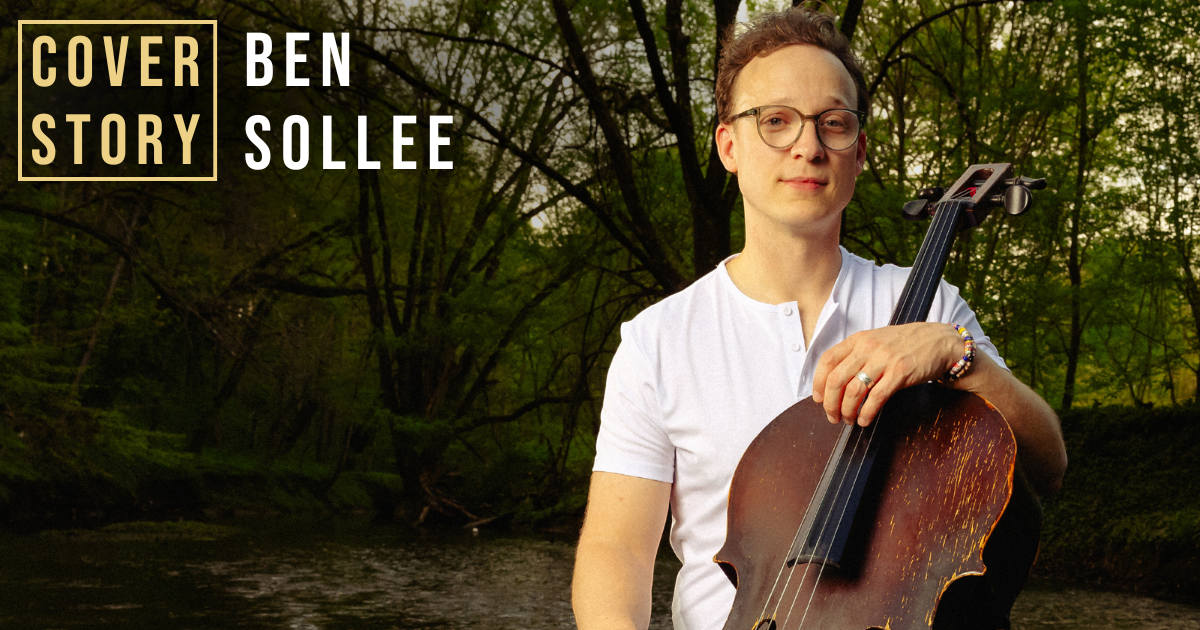
Ben Sollee’s Renewed ‘Long Haul’ Perspective on Earth, Life, and Music

Seven years have elapsed between Ben Sollee’s last studio release, his 2017 album with Kentucky Native, and his new one, Long Haul (arriving August 16). Much has happened in Sollee’s life since ‘17. His family has grown by two children. He worked on a number of soundtracks, even winning an Emmy Award in 2018 for his score on the ABC special, Base Ballet. The Kentucky born and based singer/songwriter/cellist, who has long been an advocate for environmental and other social causes, also helped launch a nonprofit named Canopy, which helps businesses in his home state positively impact people, the planet, and the future.

When COVID hit, it hit Sollee hard. “I was one of the early folks to get COVID in fall of 2020 and it stuck with me in a way that didn’t stick with other people.” During his prolonged recovery, he had to change how he ate, what he drank, how he slept, and how he exercised. “It turned into a journey of inward exploration and changing my external life. I really changed pretty much everything… It wasn’t until I started emerging from long haul [COVID], I was like, ‘Oh, I think I’ve got something to say about this.’”

While this album grew out of Sollee’s personal health crisis, it also was greatly affected by the death of his close friend and long-time collaborator, Jordon Ellis, who died by suicide in early 2023.

Always ready to blur genres, Sollee felt more free to expand his sonic palette on Long Haul, which includes a gospel-style choir, a Little Richard-inspired rock ‘n’ roll rave-up, West African rhythms, and Caribbean grooves. He purposely wanted to have lively, rhythmic melodies to balance deeply thoughtful lyrics.

“The same way,” he explained, “That Michael Jackson would have these big statements in the middle of these dance songs.” Sollee also recorded a special Dolby ATMOS Spatial Audio version for this album – a first for him – to underscore Long Haul’s immersive sound quality.

Part of what the title Long Haul refers to is your serious battle with long COVID and it also addresses life as being a long haul. How did the two interrelate for you, personally?

Ben Sollee: [COVID] definitely put me in relationship with my body in a way that I had never been before and once you start that relationship with your body, you realize just how interconnected everything is. I mean, we’re all on this long haul together… and I realized that maybe the most radical thing that I could do was to care for myself. That really shifted how I think of my live performances and really my purpose for being out on the road, [which] is to help people connect with themselves. Because once they connect with themselves, then they can have the capacity to be in relationship with nature, other people, animals, you name it. How I be in the world has shifted. It’s subtle from an external view, but internally it’s pretty profound.

How did this all affect your approach in making this album?

I realized that I had a very exploitative relationship with my creativity over the years, where it was just like: Here’s a project, just make stuff. And that was just really eye-opening.

I took a couple of different approaches in the making of this record. The passing of my friend and musical collaborator, Jordon, in the process of writing this record was really profound, because he was such a keystone to my creative process. It kind of forced me to think about how I was approaching music-making in the record without him.

So, I tried a couple different mantras, and one of them was “follow the resonance.” If it said something to me, I didn’t need to figure out why it said something to me, even if that is Polynesian flute playing or this sort of strange Tejano Caribbean groove – just follow it. In the past, I would kind of hedge; like I would hear something, I’d be really into that sound, but I wouldn’t feel like I could, for whatever reason. Like it’s not part of my cultural heritage. I would come up with a reason to be like, I shouldn’t make music with that sound or influence.

Another mantra was “show our fingerprints.” The way that we recorded the record – it was about hearing the hands and the strings and hearing the breath. I chose instruments that would really feature those human aspects of breath and touch. We incorporated woodwinds, which you can hear prominently on the first single, “Misty Miles.” We incorporated choirs in this record for the first time, because I really wanted that breath and sound. Much of the percussion is hand percussion. It’s a very tactile record… very high touch record.

You produced Long Haul. What was the recording process like?

It was a very intuitive, collective approach, and it meant that not only did the music turn out as a surprise to me and others, but it also meant that it was a very engaged, emotional journey. Adrienne Maree Brown [author of the book, Emergent Strategy] is really the inspiration for this – instead of having a singular artist’s vision, you really bring together a group of people in a facilitated way.

It made me maybe a little bit more brave and confident that wherever things went, we could execute that… I mean, musicians left the sessions crying, because they had such a good time and they felt seen and heard. And that, to me, means as much as the music that came out.

Did your experiences composing film soundtracks serve at all as an influence?

[Film work] also inspired me to explore Atmos. I really wanted this record to be an immersive experience, kind of like a sonic film. In keeping with that, there are a few songs that actually have sound design incorporated into them. It’s the first time I’ve done it in such an intentional and immersive way where we’ve got cars driving by with “Hawk and Crows.”

There is a real stylistic diversity to the sound of this album, like “Under The Spell” is one song with a funky dance groove to it.

[Laughs] I wasn’t trying to make a dance track. It started with that cello lick that you hear at the beginning. And it’s sort of this hypnotic West African loop of a lick that really began as kind of me trying to figure out some old-time banjo, like clawhammer music, on the cello.

The words are referencing this kind of duality… dealing with identity and self and how often we are under the influence of the stories that people tell of us. Every time I have this ambition, desire, and even just like the idea of me having something, it sets me down a path of being unsatisfied, which causes a lot of harm to other people and myself in the world. So, the words can go as deep as somebody wants to, but it’s also if people just want to release and have some sort of existential-like dance experience – then let’s go, let’s dance!

It touches on an evolution that I don’t expect anybody to notice in my music and career. My early records had a lot of direct social and political statements in the song. I realized that they were a little bit superficial and surface-y. They weren’t really getting it to the core of those issues. So, I’ve kind of moved into, I guess what I would call like a “post-activist” stance. My music has moved away from direct political commentary most of the time to more of a foundational, fundamental idea of togetherness, of connectedness.

“One More Day” stands out as a key song too.

I guess the original seed of that song emerged as I was beginning to travel again after Jordon had passed away – to places where he and I had traveled so many times. I started thinking about what would I have said had he called me in that moment of decision before he took his life? But the only thing that I would have really said to him is, “Listen, I hear you, I respect your decision, but what’s the rush? Like, if you’re going to do it, you’re going to do it, but you don’t have to do it right now. Just give it one more day, give it one more sunrise. Just get one last look.”

I think that’s what I would have said to him. And the song makes that case through different vignettes of our time together on the road. And, it does it over this Caribbean, Tejano groove that must have come from some jams that he and I did together. It must have. It just feels like a very Jordon groove. What I love about that is it has this real joyous, almost like early Police kind of vibe to it. There’s some really tough content in there and I just love the idea of people dancing at a festival – and just saying, “Give it one more day.”

The closing song, “When You Gonna Learn,” features a rousing gospel-style choir and addresses following your inner voice. It launches the listener out of the album and into the world in a very uplifting way.

I wanted to end with that message, because as a father I watch my four- and six-year-old who have yet to really settle into a sense of self or identity, and they are just so connected to their world and just basic truths about caring for things and protecting things and love and justice. And I think that it’s just more proof to me that there are things we know that get taught out of us. This song just is like: When are you going to learn that you already know?

You address a lot of tough issues on the album, but do so with a sense of humanism and spirited music that offer a hopeful way out of these challenging times.

I often reflect on that “Pale Blue Dot” image that Voyager took looking back at Earth and it’s just black and there’s just one little, tiny dot. And that dot really says it all, because it’s all there, as Carl Sagan says: every love, every heartbreak, every war, every church, it’s all on that one little dot.

So, we got to make it work here. And I think that’s the biggest challenge that we have right now. How do we make this work? I get that we’re going to make some big mistakes along the way. I sure have in my life. That’s where the grace comes in, but we got to make it work here. We don’t have another spot.


Photos courtesy of Big Hassle.

BGS 5+5: The Down Hill Strugglers

Artist: The Down Hill Strugglers
Hometown: Brooklyn, New York
Latest Album: Old Juniper
Personal Nicknames (or rejected band names): We are sometimes mistakenly called the Down Home Stragglers.

Editor’s Note: Answers have been provided by band member Eli Smith.

What’s your favorite memory from being on stage?

Lots of great memories there. Being on stage at the Jalopy Theatre, the Brooklyn Folk Festival, or Washington Square Park Folk Festival with Walker, Jackson, and our dear bandmate, now gone, John Cohen would probably be my favorites.

It was also wonderful to play at the Library of Congress, in that hallowed hall. And the Oldtone Music Festival is an important one for us.

What’s the most difficult creative transformation you’ve ever undertaken?

It’s been interesting running the Brooklyn Folk Festival all these years, and now running the Jalopy Theatre’s record label, Jalopy Records, while also maintaining a musical life with the Down Hill Strugglers and solo, under my own name. Many musicians are also producers, as I am. It can be a challenge to switch back and forth between those mindsets, but it is satisfying to see both types of work progress. Finally, it’s all about sharing good music, however you can.

Genre is dead – long live genre! – but how would you describe the genres and styles your music inhabits?

We are working in the field of traditional music from the United States, with an ear also turned to traditional music from all over the world. One song I wrote, that’s on our new album, was inspired by a 78rpm record from Central Asia re-issued on the Secret Museum of Mankind series. It had a sound that stuck in my head and made sense to me. We changed it around until it became our own song in our own style. That seems natural.

The Down Hill Strugglers is an old-time string band. However, old-time music is a catch all for historic American folk music. It encompasses fiddle music, banjo tunes, guitar picking, songs & ballads, blues, religious music, work songs, and more; diverse music ministering to different parts of life.

What is a genre, album, artist, musician, or song that you adore that would surprise people?

Longmont Potion Castle has remained popular with the Down Hill Strugglers, driving around on tour, for years. That’s some funny stuff…

If you didn’t work in music, what would you do instead?

I might drive a cab, or something like that. I’d have great music playing in the cab and deck the vehicle out my own way. It’d be nice. Also, I’d do more organizing work as a leftwing activist. And I used to be a clerk in record stores. The best job I had was at the Arhoolie store, Down Home Music, in El Cerrito, California.


Photo Credit: Fernando Armenghol

MIXTAPE: Blackwater Railroad’s Music From the Last Frontier

Alaska is an incredible melting pot for artists. Despite our sparse population, we are filled with wonderful creative types and a bustling music scene. Lots of our music and tradition stems from bluegrass and string music, the roots of which can be seen in so many of our incredible acts. As a band, we seek to celebrate our state and our scene, both of which are thriving and yet largely ignored by the lower 48. – Blackwater Railroad

“Heirlooms” – Josh Fortenbery

Josh’s new album is so immediately captivating. His voice is incredible, the instrumentation divine, and his songwriting is top notch. You can lose yourself instantly in the images he paints in your mind. He’s also part of Muskeg Collective, a Juneau-Based supergroup of folk musicians.

“Call Me a Fool” – Erin Heist

Erin is also part of the Muskeg Collective and another great example of the high standard that Juneau musicians bring to the world. Her smooth voice and raw lyrics speak directly to our hearts. Be sure to listen for the wonderful mandolin work by her husband, Andrew Heist, on this track. Power couple much??

“Sundays” – Wiley Post

We’ve had the pleasure of sharing the stage with these folks a few times now. They have an eclectic indie vibe that is so characteristic of our scene. Enjoy soaring fiddle lines, tasteful piano, and angelic vocals on this one!

“Brand New Love” – Black Barrel & The Bad Men

One of the more recent additions to our Alaskan scene, BB&TBM have hit the ground running. Their debut EP is gold and their live performances are top-notch. They ooze passion in their vocal arrangements and instrumentation. Their songs get stuck in my head constantly. I would not doubt big things to be coming to these (really good) Bad Men.

“Sink or Swim” – Zen Trembles

Becky Kotter has one of the most unique approaches to guitar and music that I’ve ever seen. She uses multiple capos and open tunings, playing entirely by ear to create her special brand of folk. Her voice is so nuanced and creative and every song you hear is creative and fresh!

“The Cuckoo” – Annie Bartholomew

Annie B is an undeniable talent. Her songwriting and lyrics resonate so strongly for us, and her aesthetic in general is delightful. Every time I’ve had the pleasure to see her perform live was an enchanting experience. The world needs more Annies!

“Orbiting Things” – Fireweed Fiddle

Ok, ok, yes, Fireweed Fiddle does happen to be our very own fiddle player, Rachel DeTemple. When she’s not sitting in with us all across Alaska, she’s writing brilliant music of her own. Rachel’s new album showcases her wonderful skills as both a singer and a player, all while being wrapped in a perfect folky bow.

“Traveler’s Waltz” – Hope Social Club

This is one of the most iconic acts we have in our state. They have a rich history of incredible music and live performances. Enjoy their entire catalog, and if you’re lucky enough to see one of the few shows they play a year, you’re in for a treat!

“Pray for John” – Roland Roberts

Roland is such a good storyteller. Even without guitar in hand you can listen to him wax poetic about anything. This is a slower tune, brilliant in all respects, but be sure to check out his other tunes for some more upbeat and rocking pieces as well. Roland also helped write one of the tunes on our new album, “Road to Make Believe”!

“Not Over You” – Evan Phillips

This tune has a wonderful vibe. I got to enjoy this one for the first time on a long trip back home in the band van. The dreamlike production paired with nature’s majesty on the highway made for one of the most delightful moments I’ve had in a long time. For a moment, I forgot I was stuck crammed in a van with five other stinky dudes for eight hours. I mean, that’s gotta count for something, right?

“Lucky Tennessee” – Bethlehem Shalom

This is such a cool track by such a creative artist. I think within a few seconds her iconic flavor will pour out of your speakers. A great example of the creative sounds and experiences you can get out of living in our wild state.

“Rock and Roll Man” – Blackwater Railroad

Hey, it’s us! This is the most rock-oriented song on our new album. It also might be the one that was the most exciting to make. The build up at the end features Taylor Vidic on vocals. We turned out the lights in the studio and just asked her to ad-lib based on how the track felt to her. She delivered 1000% and made for what might be the most iconic moment on the album.

“Lonely House” – Steve Brown and the Bailers

This is an awesome tune on the road. Alaska is huge and spread out so we spend a lot of time on the highway. Tunes like this keep the wheels turning and the spirits high. This song gets more and more creative as it evolves, so be sure to keep listening to see what happens. Spoiler: it’s sick.


Photo Credit: David Juarez

AJ Lee & Blue Summit’s ‘City of Glass’ is Funny, Sexy, and Empowered

At 26, the prodigy phase of AJ Lee’s music career has passed. It might take a little more time for the tendency to confuse her with a professional wrestler using the same name to fade away.

“I think I could take her!” Lee — the singing one — gamely pronounces at the conclusion of an interview on the third album by AJ Lee & Blue Summit, City of Glass (out July 19 on Signature Sounds), prompting laughter from the band’s Scott Gates, who asserts himself on the new album writing three songs on which he sings lead.

Rounding out Santa Cruz, California-based Blue Summit are fiddler Jan Purat and guitarist Sullivan Tuttle, one of the children of educator-musician Jack Tuttle and brother of breakout star Molly Tuttle. Lee also got her start with “The Tuttles with AJ Lee.”

A keen sense of humor dots City of Glass, which was produced by Lech Wierzynski of “retro-soul” band The California Honeydrops. It was Wierzynski who suggested Harlan Howard’s “He Called Me Baby,” on which Lee delivers a notably sultry lead vocal. The reference point for her version of “He Called Me Baby” is soul singer Candi Stanton, rather than Patsy Cline or Charlie Rich.

“I was raised to sing pretty straightforward. I wanted to remove as much ego as I could, because I just wanted to sing and have fun,” Lee said. “I’ve learned to put a little bit more of my personality into it and that, I think, is making me a better singer overall, which is why we wanted to work with Lech in the first place, because he’s such a powerful singer.

“That really resonated with me and I’m trying to move more in that direction.”

Gates pipes up at this point: “AJ’s not going to say this, but Lech brought ‘He Called Me Baby’ to the table because he had the foresight, coming from that soul world, he recognizes in AJ’s voice the ability to do this kind of thing.

“The cross-pollination of these American roots, is a smart move from Lech, I think,” he said.

BGS caught up with Lee and Gates as they rehearsed in Nashville, Tennessee, and prepared to do some lip synching for a video. As a seasoned bandleader, Lee takes pains to spread the credit for her success around and steers some questions toward Gates to try and ensure she doesn’t dominate the conversation.

City of Glass is AJ Lee & Blue Summit’s third album. How do you view the progression that got you to this point?

AJ Lee: The first album, [Like I Used To], we were looking for what kind of sound we wanted as a band. Because at that time, it was only four members without a fiddle player. So on that one, we had some more electric instruments and more drums. The second album, [I’ll Come Back], we went more acoustic roots, because we just wanted to play more bluegrass, because that’s what we grew up on and that’s what we do best. For this third album, we’re confident doing bluegrass, roots, and country, sticking with more stringed instruments, but also branching out. With Lech’s involvement, we’re leaning a little bit towards soul, R&B, and keeping it interesting, but still showcasing ourselves and what we like to play and what we like to do.

Several songs on City of Glass are funny. There’s one, “Toys,” making fun of a men who act like boys, another about getting “Sick on a Plane” and a humorous take on busking, “Solicitor Man.” Why so lighthearted this time around?

Scott Gates: I grew up playing bluegrass with a lot of silly guys. There’s a bouncy kind of lighthearted feel in a lot of traditional stuff. … I noticed that a lot of songs that I had written were kind of getting down into my feelings and whatnot, and I wanted to write one that I knew would be fun for my friends to play.

Are there models in bluegrass you’re following with the humor?

SG: There is a history of fun stuff like The Louvin Brothers. I’m also influenced by Jimmy Martin. Jimmy Martin is one of the pillars of bluegrass music, and he’s hilarious.

“Toys” is about a young guy or maybe an immature man. Is it about yourself, Scott?

SG: A little bit, yeah, probably as a teenager noticing the involuntary methods by which young, dumb boys go about thinking of themselves. It was mostly born out of that phrase, “The man who dies with the most toys wins.”

The title cut, “City of Glass,” is about leaving an artistic legacy. Aren’t you guys a little young to be concerned about that?

AJ: Yeah, I’m pretty young. I’m 26 now, but I have been doing music since I was really young. Collectively, we figured out that the band has about 90 years worth of experience. I’ve been playing on stage since I was about four or five years old. So I’m young, but I have been doing it for a long time. Legacy is having something that you’ve made be around even when you’re not doing it anymore. That’s a big theme of “City of Glass.”

As you say, you got started very young as musicians and Jack Tuttle was a common mentor. How did that develop?

SG: I met AJ when she was four. I knew her older sister Molly, ‘cause she’s my age. So I knew her more. But [Sullivan Tuttle] was around, and Sully and AJ had known each other since back then. I was probably about seven or eight when I first started going to the Father’s Day Festival and the music camp. So I got an opportunity to learn and play from people like John Reischman and Mike Compton and see musicians like The Osborne Brothers and Earl Scruggs. The picking scene is incredibly high quality.

AJ, you were the only non-Tuttle in the Tuttle family band when you were very young. What was that like?

AJ: I loved it. As a young kid, it’s kind of hard to be in the moment and really appreciate what you’re doing. As a seven-year-old to fifteen-year-old, I went about it as like, “OK, we’re playing a gig, I’m going to practice here and I’m going to sing my song. I’m hanging out with my friends, and that’s it.” But being in that band was definitely instrumental in my progress as a bluegrass musician, because I got to work directly with Jack Tuttle. Everyone loves Jack because he’s such a renowned teacher in the community and obviously all of his kids are talented beyond measure. So I was able to play with people who were better than me and also equal to me. My mom, growing up, she always said, “You always want to play with people who are better than you, because that’s how you’re going to get better.” And so I got to have that opportunity for many years.

Is there any competition now between yourself, Molly Tuttle and Bronwyn Keith-Hynes now that you all are competing musicians in the marketplace?

SG: Absolutely! [Laughs]

AJ: No, no, no, definitely not. For me and Molly, we’re branching off and doing our own thing. We were in a band for however many years, and now we’re off doing our own projects. And Bronwyn is branching off and doing her own projects in a similar way.

So, it’s the same in any community or genre of music, you played together and now you’re doing your own thing. Molly’s singing on our album as well, on a song [“I Can’t Find You at All”] that her dad wrote.

AJ, you could pursue a solo career, why do you prefer a band situation?

AJ: It makes me happy. I like playing with other people. I don’t really like performing by myself. I feel like I have a lot to offer, but I also like playing with people who also have a lot to offer and are amazing talents. And, you know, people compliment our band on how many singers there are. I always think that the more singers the better, the more talent you can showcase the better.

Pretty much anyone in the band could peel off and do a solo career. But I think what makes us really unique and strong as a band is that we all can be individual musicians, but we choose to play together, because it just makes the creative juices flow more and it makes us want to even continue on more than I would as a solo musician.

SG: At some point, I’ll probably do my own project. But right now, all I care about is playing music with AJ and the boys and see where this goes. I try not to plan too much. I don’t really scheme. I probably should scheme a little bit more, but I just don’t.

How does the California bluegrass scene differ from the South?

SG: A lot of people think of California as the jammy stuff, the Deadhead stuff that comes out of there. But even to this day, the California Bluegrass Association is very traditional. It’s one of the most traditional associations out there and there’s also a huge focus on singing. The singers that come out of a place like Tennessee are extremely good at blending. There’s a school of singing, and a lot of them sound very similar. Their harmonies are incredibly perfect. But California tends to reward individuality and uniqueness. The unique voices are kind of put on a pedestal.

AJ, your singing style is more subtle than showy. Why?

AJ: I agree with you. I’ve always really appreciated the subtlety of singing to where it’s not, “Look at me. Look at how well I can sing.”

“Hillside” uses the metaphor of a hill that aspires to be a mountain. What does the metaphor represent?

AJ: “Hillside” is about women empowerment. The metaphor is that you are this hill that is bombarded by all these outside elements trying to knock you down. But your foundation has become so strong and nothing’s really going to topple you over.

Have you experienced a lot of sexism in your career?

AJ: I’ve experienced some, of course. Especially after shows, you know a lot of older gentleman say things to me that obviously they mean well, but it just turns out to be very sexist. I get a lot of the, “If I was 20-years, 30-years younger” sort of statements, and it’s just like, “Ooh, gosh.”

How about general discrimination?

AJ: Yeah, especially jamming in the bluegrass community, as a woman sometimes you’ll just get into those circles that have that male energy so present and it’s really hard for women to join a jam sometimes. But I’ve learned to try to just get myself in there over the years with support from my mom and other strong women who are also in the community.

Are you on the record on where the “Blue Summit” band name originates?

AJ: Our first festival we played was a Kate Wolf festival. We actually didn’t really have a band name yet that we were happy with. The original name we hated. Our original bass player at the time, Isaac Cornelius, came up with The Highway 17 Savages, which doesn’t really resonate with our band at all. We totally needed to change this name. So we made these recordings to send in to Kate Wolf at Isaac’s house, which he grew up on the summit in Santa Cruz. So we were like bluegrass on the summit. So we became Blue Summit.


Photo Credit: Natia Cinco

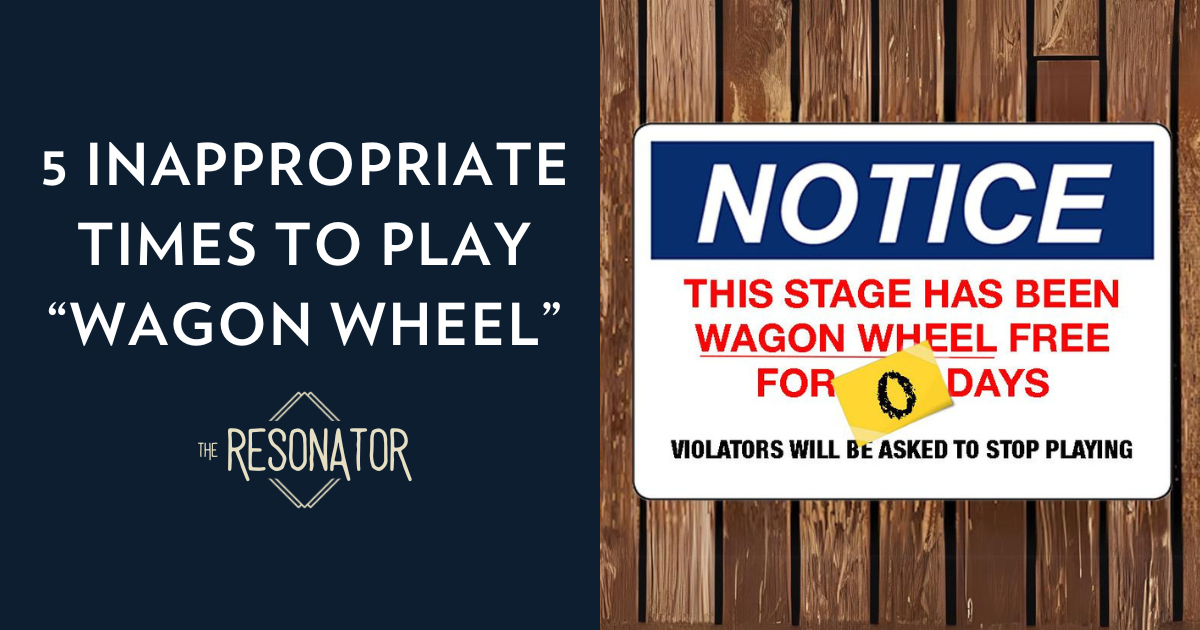
5 Inappropriate Times to Play “Wagon Wheel”

Whether you’re desperately scrambling for a karaoke number or seeking an anthem to unite your politically-opposed family this election season, Old Crow Medicine Show’s 2004 hit “Wagon Wheel” has been a safe bet for nearly two decades.

However, despite its widespread appeal, we’ve curated a list of scenarios where this ubiquitous ditty might do more harm than good. Here are five times you should firmly resist the urge to play it:

At the North American Cartographer’s Convention  

Suggesting a westward journey through the Cumberland Gap will land a trucker in Johnson City, Tennessee is geographic heresy that will incite blind fury from the map-making community. Johnson City lies east, you directionally-challenged jackwagon. Prepare for fisticuffs.


During Daycare Center Staff Training

Regaling childcare workers with tales of rocking children “any way you feel” in “the wind and the rain” is a surefire way to get your facility’s license revoked.


As the Climactic Closing Argument in the Luciano Crime Family’s RICO Trial

Defending your allegedly innocent client by randomly bursting into a tune about boxcar-hopping and ramblin’ is a strategy that will absolutely undermine their chances of avoiding jail time. Your client is already a flight risk — don’t give them any ideas.


Over the Commlink During a Navy SEAL Covert Op

It turns out that the terrorists can win against an elite force’s meticulously-planned stealth mission when this ill-timed, rousing chorus echoes through the halls of whatever compound they are infiltrating.


At a Funeral for Your Stepdad Who Died Getting Crushed by His Own Station Wagon

You never liked your mom’s third husband Keith, but kicking off your eulogy by cheerfully strumming “Headed down South to the land of the pines” might miss the solemnity mark. Especially since it was an actual wagon wheel that took him.


Greg Hess is a comedy writer and performer in Los Angeles. His work has been featured in The American Bystander, The Onion, Shouts & Murmurs, Points in Case, and he cohosts the hit satirical podcast MEGA.

Out Now: Great Aunt

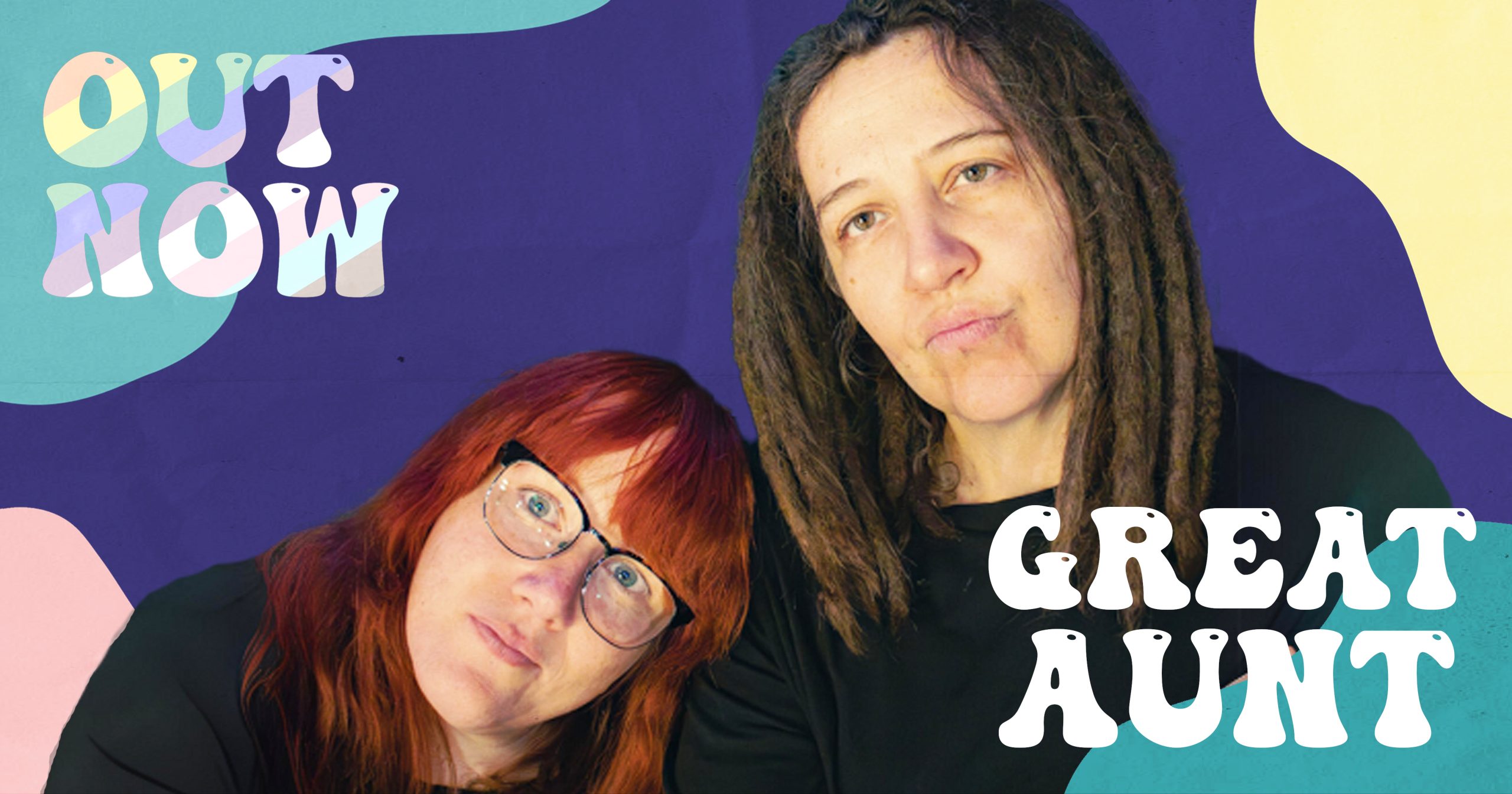
Great Aunt is an Australian folk duo composed of Megan Bird and Chelsea Allen. For a small outfit, they showcase a wide array of instruments – including mandolin, resonator guitar, acoustic guitar, double bass, percussive instruments, and vocals – with detailed harmonic arrangements.

Their music is groovy, with a foot-stomping feel as the base underlying relatable lyrics and stories, primarily drawing from Appalachian folk, bluegrass, and gospel music. Great Aunt is a duo with an impressive log of tours, festival shows, and releases that they’ve independently managed. Their most recent single, “What’s A Girl To Do Now,” covers issues around body image, identity, gender, safety, and equality.

We are eagerly awaiting the release of their debut full-length album, It’s All Downhill From Here, expected later this year. In the meantime, we are honored to highlight this incredible duo from all the way down in Australia, Great Aunt.

You just released “What’s A Girl To Do Now?” This powerful song addresses the struggles that women face around being “woman enough” – body image, identity, and more. Could you share more about the inspiration and meaning behind this song?

We started writing it when a lot of awful things were happening to women in our parliament that no man was ever held accountable for. We then spent a lot of time reflecting from our own place of privilege, as we watched First Nations women dying in [state] custody and the trans community being politicized and targeted by extreme acts of violence. We wanted to acknowledge how discrimination and acts of violence against women further intensifies at the intersections of race and gender. There’s a lot of work to do to support each other and fight for equity, where everyone feels safe, included, and as valued as any other woman. Space is infinite, there’s a place for all of us, except TERFs maybe.

You’re planning to release your debut full-length album, It’s All Downhill From Here, later this year. What has that process been like for you? What might listeners expect to hear from this much-anticipated release?

A diverse range of folk songs and a lot of personal stories to tell. We’ve been recording and mixing it ourselves with a vision to have some common themes throughout the album. Our main goal is to remain honest and sincere, and to try and translate that into the album.

As independent artists, what has the process been like for you to secure so many festival placements and shows? How do you balance the creative side of being artists with the business needs to book shows, attend conferences, and promote your music? 

We are fiercely independent! The balance is often skewed towards the business side of things with the amount of touring we’ve accomplished in the last 12 months, including three U.S. tours. The admin feels never ending, to say the least, but we both divide and conquer with festival applications, booking tours, and the PR side of things. We even do our own artwork!

Now that we’ve put in the effort, we’re starting to get invited to festivals and events around the world, which is really exciting. This year we’re balancing it in favor of writing and recording, while we start booking our next U.S. tour for 2025!

What’s your ideal vision for your future?

In the short sighted future – to continue touring the U.S., Australia, and abroad.

More importantly, we want to continue to embrace and help grow this music community so we can all thrive. We know that without the help of this community we really wouldn’t have had the incredible experiences we’ve had, so we will continue to pay it forward however we can.

What is your greatest fear?

We fear for all of us. That things don’t get better and we never find our way as humans. The feeling of being unable to make an impact or calling for change and it falls on deaf ears, is the crossroads a lot of us have been at for a while now. We see this as key as western countries enter the next round of elections.

What is your current state of mind?

Burnout and worry, yet still optimistic? Right now we make sure we find pockets of joy, away from our devices and the news.

What would a “perfect day” look like for you?

Starting off with a big pot of coffee… or two. Then sitting in our pajamas together, in our home studio, writing and recording music throughout the day, maybe sneak in a video game or two. Then we head to a show. It doesn’t matter if we or someone else we admire is on the stage, but it’s a room full of friends and heartfelt stories.

Why do you create music? What’s more satisfying to you, the process or the outcome?

It’s a form of communication and expression that is a part of both of us. Creating or writing music is a constant process of growth and exploration. When we “finish” writing a song, record it down, and release it, it still continues to grow and evolve as we perform it.

Do you create music primarily for yourself or for others?

Our songs start from personal experience, a reflection of something from our lives. While we don’t write music with an audience, we do hope that someone out there listening to it feels less alone, and can hold onto that connection.

What’s the best advice you’ve ever gotten?

That a career in music is a long journey.

Who are your favorite LGBTQ+ artists and bands?

Some of the best music out there right now is queer music, and the list is forever growing. Adeem the Artist, Jessye DeSilva, Wiley Gaby, Crys Matthews, Brittany Ann Tranbaugh, Julie Nolen, and the beacon of light that is Allison Russell! Oh my!

We also adore Flamy Grant, Karen & the Sorrows, Amythyst Kiah, Jake Blount, and some local Australian favs are Charlotte Le Lievre, Little Wise, the Double Dole String Band, Kerryn Fields, Hana and Jessie-Lee’s Bad Habits, This Way North, and the Tuck Shop Ladies.

For anyone reading this who might not be out of the closet, were there any specific people, musicians, or resources that helped you find yourself as a queer individual?

I, [Megan], was lucky enough to attend this place called Rock’n’Roll High School in Melbourne. It was a place started by Stephanie Bourke, an icon in Australian music. She created a safe space for young women, non-binary, and queer folks to start bands and taught us how to navigate the industry. On reflection, I distinctly remember I felt safe to be myself and finally found a place of belonging, where my queerness or size wasn’t singled out as an issue to fix. It was a significant turning point for me, and it came at the perfect time.

I came out when I was a young teen, and was fighting to live every day. I had the support of my family, but was constantly abused at school and even the school itself told my parents I didn’t belong. It nearly had a devastating impact. Please. Hold on. Find a space that makes you feel alive. Find people and community that don’t question or challenge your identity, and let you just be, that is your family. If you haven’t found it yet, please don’t give up. When you do find these people, the feeling of liberation will overwhelm you with joy. Great Aunt loves you, we’re rooting for you.

What does it mean to you to be an LGBTQ+ musician?

Being a musician helped me process and get comfortable within my own skin when trying to understand my own identity. We’re queer women, our music is written from our perspective, and our songs are literal stories from our lives, so it’s inherently queer music. We don’t underestimate the importance of visibility and allyship. It’s critical for us that our music is a safe space for everyone.

What has it been like for you as Australian artists touring in the US?

As folk music has such deep seated roots within American culture, we are always humbled by the breadth of the music community in the U.S. and how welcoming and supportive they have been to us. We reflect on how lucky we are to be able to do this, and the listening rooms we’ve played that have been full to the brim with people we now call friends. There’s no music scene like it.

What are your release and touring plans for the next year?

There’ll be a couple of U.S. tours, that’s for sure. Once we have this album out, we’re already thinking about another release to follow shortly after, and really want to make the most of a slightly quieter tour schedule this year.


Photo courtesy of the artist.

Out Now is presented in partnership with our friends at Queerfest. Learn more about this Nashville-based queer-centered event and collective here.