The Show on the Road – Music That Moved Me in 2022

How can one try and summarize the soundtrack to their life in a year? Indeed, we are in year three (!) of this endless pandemic and I find I am more and more drawn to pure escapism, fantasy and what I might call the “new nostalgia”? Personally, I don’t go more than a few hours in the day (or during sleep at night) without something on, whether it’s playing on my bluetooth speakers around the house, or in headphones as I walk the dog or the toddler around the neighborhood, or in the car rolling to the next spot.


LISTEN: APPLE PODCASTSSPOTIFYSTITCHER

As I teeter towards 40, I admit I love old school radio – while driving especially – and while most of the year has felt like a bit of a creative slog, I was thrilled to finally launch my own radio show on actual airwaves which you can listen to on Saturday mornings. And as a new dad, I am not ashamed to say that playlists like morning classical chill or sadgirl piano background are what actually got me through.

But what about the songs that moved me? I live for a new song that knocks me out of my reverie: unexpected lyrics, or ripping solos, or funky beats that slap me across the face and make me go, “WHAT. WAS. THAT?” And there are some songs in the list below that surely did that. But does one song sum up a whole year? A year that began with me almost losing my wife to a horrifying rare syndrome while giving birth to our daughter? Of seeing her recover courageously and witnessing my daughter growing like a grinning weed that careens from room to room like a joyful banshee? Or traveling the country playing songs I wrote to sometimes empty or sometimes full theaters or festivals or saloons of happy or heckling strangers? Or talking to dozens of hard-working bands and songwriters with my mic from Nova Scotia to London, from Minneapolis to New Orleans, or right in the front bar of LA’s hallowed Troubadour? How can songs, like short stories, be stitched together to create the novel that is your life?

Maybe one can’t really sum up a year like 2022 with a few songs. But if you are curious about some of the music that did truly move me or make me smile or got me through, this is it! I truly love these tracks. I will always love them. Are all of these safe for your to blast at work? Probably not! But let’s get started, shall we?

Anna Moss feat. Rainbow Girls, “Big Dick Energy”

While this song has only been out a month or so, it really might be my song of the year. I’m new to Anna’s work, but call me quite intrigued: her videos from around her Bay Area base keep popping into my feed like folky soul gems with plenty of dark humor to spare. Think John Prine meets Grace Slick.

But when she put out “Big Dick Energy,” with its slithering flute, pulsing beat and openly cocky lyrics (and accompanying video of a shirtless dude being chased by aggressive ladies throughout San Francisco) I couldn’t quite believe what I was hearing. She mentions in an Instagram piece that while there are plenty of jokes to be had in the tune, “being a woman in a patriarchal society can feel so heavy…” and the song arrived really because she was tired of “not being seen or heard for your full humanity, but only being seen as a sex object for mens pleasure…” However you want to confront the patriarchy, this song is a jam. I can’t get enough. Turn it up.


The Deslondes, “Five Year Plan” (Ways & Means)

Say what you want about Spotify’s discovery algorithm, but it really does know what I want a lot of the time. A song that it kept knowingly nudging me towards is this cheerfully melancholy mission statement from Sam Doores and his group who are based in New Orleans. How to describe their sound? Maybe it fits into that modern nostalgia movement I keep hinting at. Rootsy ragtime soul? No. It just feels good listening to them. Regardless, I too have been thinking how I can become a “better man” this year – while feeling like a howling child and a full grown tax paying adult (and now dad) at the same damn time.

We don’t know who or where we will be in five years – and that’s OK. And somehow we needed Sam in his wise, gravely voice and jangly piano to remind us that just keeping on is a victory in itself.


Melissa Carper, “Makin’ Memories” (Daddy’s Country Gold)

Maybe my favorite artist find of the year, Melissa has been making groovy “new old-time” music in plain sight for years with several bands from Austin to New Orleans. But it was with 2021’s Daddy’s Country Gold and this year’s Ramblin’ Soul that she put her solo work front and center. The results are marvelous. Imagine transporting yourself to a Texas honky tonk from some bygone era you just barely missed. I want to go there.

To be honest, there’s nothing revolutionary about this track I picked here – truly I just can’t get it out of my head. Her friends and bandmates may call her “daddy,” but I like how she describes herself the “Hillbilly Holiday” for she does have a similar high-lilting vocal cadence – and yet at the same time, she also is the upright bassist in her band. She may not be a young rising talent, but things are coming from her, I feel it.


Seratones, “Good Day” (Love & Algorhythms)

This funk rock outfit from Shreveport, Louisiana has been making deeply danceable jams for years, but this groovy and riotously positive bop which came out earlier in the year really lifted me up when I was in a dark spot. I remember turning on 88.5FM The Socal Sound in the parking lot of Cedars-Sinai hospital as I was on the verge of tears leaving my wife in the ICU. I was driving my tiny daughter home by myself, not sure if my wife would ever join us. I instantly forgot everything and listened to the whole thing at full volume.

This song contains multitudes: prayers, declarations, hope, dreamy synths and old school Jackson 5 guitar patterns, bubble sounds, bird sounds? Harmonies for days, massive gospel lead vocal showpieces, you name it. If you’re feeling down, this might turn you around fast.


Ondara, “An Alien in Minneapolis” (Spanish Villager No. 3)

Ondara came from Kenya and now lives in Minneapolis where he has been creating some of the most innovate modern folk music of the last five years, garnering a Grammy nod in the process. I was able to talk to him a few months back for the Show on the Road podcast, and it felt like getting a masterclass on what the immigrant artist experience really is in our fractious unfinished country. The sense of alienation and hope and expectation shine through on this catchy opening track from his sensational new LP.

Oddly, it feels like if Fleetwood Mac teamed up with Tracy Chapman. You will dig.


Onda Vaga, “Milagro”

I have tried to make a point of listening to more music from other countries, sung in other languages, this year. As Americans, we are spoiled to have an endless array of English-language art created for our every taste, from folk music to hip-hop to jazz to rock ‘n’ roll. Not to be overly obvious here, but there is a whole crazy world out there also creating magical music from Buenos Aires to Capetown, from Prague to San Juan. Why not look a bit beyond your comfort zone?

I’ve been a fan of this group for years. They began in 2007 in Uruguay but are now based in Argentina (congrats on the World Cup!) and I just rediscovered them through this beautiful harmony-rich track. Put it on and take a little vacation with your ears.


Silvana Estrada, “Tristeza” (Marchita)

The daughter of luthiers from Veracruz, Mexico, Silvana has been taking the world by storm with her rustic blend of vocal-bending flamenco and Mexican folkloric traditions, snagging the Best New Artist award at the Latin Grammys this year.

A friend of a friend who I trust to always send me the best Spanish-language music connected me to her a few years back and I can’t get enough of what she’s creating. Her videos, often shot in public squares around Mexico, are especially entrancing. I was lucky to be her first English-language podcast taping last year, and she told me that this track speaks to the pervasive sadness we all have when we wonder why a love affair went wrong.


The Heavy Heavy, “Sleeping On Grassy Ground” (Life and Life Only)

When you put this track on, the dreamy reverb and soaring harmonies alone bring you into a sun drenched field during Woodstock – or maybe onto a sandy beach in Malibu having a picnic with friends while on mushrooms. But really it’s an act of fantasy by two talented young Brits based in Brighton, which is neither sunny nor currently in the year 1969. Sure, “new retro” may be a dumb genre placeholder, but as I got to talk to them for my podcast – I realized that what they are creating is a kind of delicious time machine for our ears.

Why do those old records our parents swayed to in high school still sound so good? Maybe we all need the chance to get back to that utopian late sixties feeling where anything was possible. I often find myself feeling a bit skeptical about how the young people will change the world for the better, but somehow this self produced rock-n-roll EP (which could be a glorious Mamas and The Papas outtake) reminds me to just sit back and sway to the music, and make that be enough.


The Cactus Blossoms, “Hey Baby” (One Day)

Look, there is a time and place for music that “goes hard” or blasts you into a new headspace. Death metal remains very popular around the world, but what I needed most this year? Something chill, and sweet and deeply groovy. I love bands (unlike my own) where I know exactly what I’m about to get – like a savory double-double animal style at In-N-Out. It always hits the spot no matter the city or time of day you order it.

These Minneapolis-based brothers Jack Torrey and Page Burkum have a new record out this year in One Day that traffics in their signature sibling harmonies, chugging guitars and Everly Brothers-adjacent vintage roots-n-roll, but seems to add a little edge behind the vocal tenderness. And teams up with another forever favorite of mine, the ever squirmy Jenny Lewis. The eleven love-lorn songs hit me right where I needed it.

This opening track feels like it was written in the passenger seat of an old car as it was flying though the endless flat highways of the midwest I grew up in. The narrator casually wonders if it “will all work out.” What a question. Then he slyly reminds himself, like the quiet pep talk we all need: “It always works out.” Touché.


Dustbowl Revival, “Be (For July)” (Set Me Free)

Yes, it’s always a bit awkward to say my own music is one of my year-end favorites, but let me step back for a moment. Sometimes a song can be a savior of sorts – a comfort during dark times for us adults, but also a piano lullaby to calm even the most enraged, tired youngster.

This song was like my Swiss-army knife this year. I started writing it on the 1918 piano that arrived like magic during the pandemic from my wife’s family in Ohio. At first it was about how we couldn’t quite get pregnant and the sadness that comes from that quest. Then, my wife did get pregnant and we had no idea who this little creature would be. It was an ode to their future. Then she was born and my wife almost died bringing her to us – and the song changed one last time. It became the song I played alone at home wondering how we all would end up. How I could plan a new life and write an epitaph. It was the song that swayed my daughter to sleep. Even now when she bawls in exhaustion, all me and Mom have to do is hum the chords and she seems to know – everything might be OK in the end.

Not to gush, but I am immensely proud of how this song turned out – especially with the harmonies from our amazing new singer Lashon Halley and the cello and violin parts added from our old fiddle phenom Connor Vance. Maybe it will give you some solace or comfort if you need it. I’m simply glad it exists!


Monica Martin, “Go Easy, Kid”

Maybe my most played and beloved song of the year, this tender opus to “not being so damn hard on ourselves” has two versions: the cinematic original from 2021 (my pick) or the updated piano-forward cut featuring its co-creator James Blake. Whichever one you pick, this song is a revelation. It took me into those long tours when I wondered if my music had any meaning – but also made me grateful that I did put my heart out into the world over and over without fear. We are all trying to get better and we can all be easier on each other. Sure I didn’t need this song to remind me of that, but maybe I did.

Monica is from Wisconsin but has been a best-kept secret in the LA scene for years. Seemingly on the verge of some kind of stardom each year with her rich and intimate vocal mastery, she has appeared with funk heroes Vulfpeck and on Mumford and Sons frontman Marcus’s Self-Titled solo debut among many others, but she has yet to release a full record herself. If this is a glimpse of what’s to come, her future LP made up of poetic, lush story songs will surely be in my collection the moment it drops.


Photo Credit: Silvana Estrada by Jackie Russo, Seratones by Joshua Asante, Melissa Carper by Lyza Renee

BGS Class of 2021: Our Favorite Albums, Made With Intention

This collection of albums is not simply a “best of” 2021. That would be selling every single collection included herein far too short. These roots and roots-adjacent releases each stood as a testament to the music makers and communities that spawned them. Not simply in the face of a globe-halting, existentially challenging pandemic, but in the face of an industry, government, and culture that would just as soon have all of us pretend the last two years — and beyond — simply didn’t happen. 

These artists and creators refused to let the pandemic define their artistic output through it, while simultaneously acknowledging, processing, and healing from the pandemic through this music. Not a single album below is a “pandemic record,” yet every single one is a resounding, joyful balm because the intention in each is not simply a reaction to a global disaster or an attempt to commodify it or its by-products. Not a single one is an attempt to “return to normalcy.” They’re each challenging us as listeners, in both overt and subtle ways, to walk into our collective new reality together, wide-eyed and open-armed, and with intention.

Daddy’s Country Gold, Melissa Carper

It was a sly move on Melissa Carper’s part to give her album, Daddy’s Country Gold, a title that works on so many levels, nodding to the passing down of sounds, to her road nickname and to her ability to casually loosen postwar country perceptions of masculinity and femininity. In her songs and performances, her gestures are even more beguilingly subtle. Enlisting a fellow upright bassist to produce with her, the Time Jumpers’ Dennis Crouch, Carper claimed western swing and early honky-tonk eras as her playground, and the shrewd, crooning intimacy of Billie Holiday as her guide. Carper sings in a slight, reedy rasp, deftly phrasing her lines and curling her words to suggest the lasting nature of longing and fleeting nature of pleasure. She’s written a movingly clever ballad of broken commitment (“My Old Chevy Van”), elegantly pining tunes of both torchy and down-home varieties (“I Almost Forgot About You,” “It’s Better If You Never Know”) and whimsical fantasies of rural homesteading, sometimes making clear that she’s cast a female partner in those stories (“Old Fashioned Gal,” “Would You Like to Get Some Goats?”) Her artful knowledgeable nudging of tradition is a revelation. — Jewly Hight


Music City USA, Charley Crockett

Few artists in the last few years have us as fired up as Charley Crockett. His unapologetically individual sound and aesthetic shine through once again on his 2021 release, Music City USA. The irony, of course, is that the album sounds nothing like most of what comes out of modern-day Nashville. It’s an amalgamation of influences both old and new — blues and classic country and soul with a peppering of Texas-tinged Americana on top. Charley Crockett absolutely represents what the future of Music City sounds (and looks) like in our book. — Amy Reitnouer Jacobs


Home Video, Lucy Dacus

We must forgo the existential “Is it roots?” question at this juncture, simply because this stunning and resplendent work by Lucy Dacus refused to be excluded from this list. Perhaps the superlative album of 2021, in a year filled to bursting with objectively and subjectively superlative albums, Home Video is impossibly resonant, relatable, down-to-earth, and touching — despite its intricate specificity and deeply vulnerable personality. Dacus’ queerness, and the beautiful, humane ways it refuses categorization and labels, is the crack beneath the door through which the light of this gorgeous, fully-realized universe is let into our hearts. Her post-evangelical pondering; the challenging while awe-inspiring abstract, amorphous gray zones she doesn’t just examine, but celebrates; the anger of rock and roll paired with the tenderness of folk and the spilled ink of singer-songwriters — whether taken as a masterpiece of genre-fluid postmodernity or an experiment on the fringes of roots music, Dacus’ Home Video establishes this ineffable artist as a subtle, intellect-defying (and -encouraging), empathetic genius of our time. — Justin Hiltner


My Bluegrass Heart, Béla Fleck

It’s been over twenty years since the eminent master of the banjo, Béla Fleck, recorded a bluegrass record. My Bluegrass Heart completes a trilogy of albums (following 1988’s Drive and 1999’s The Bluegrass Sessions) and is as much a who’s who of modern bluegrass – featuring the likes of Billy Strings, Chris Thile, Sierra Hull, Bryan Sutton, Molly Tuttle, Michael Cleveland, Sam Bush and many others – as it is a showcase of Fleck’s still-virtuoso level talent.

But as much as My Bluegrass Heart is an album for a bluegrass band, we would be hard pressed to call it a bluegrass album (in the best possible way). As he has done countless times before, Fleck effectively breaks every rule and pushes every boundary by surrounding himself with fellow legendary rule breakers, creating something wholly beautiful and unique in the process.Amy Reitnouer Jacobs


A Tribute to Bill Monroe, The Infamous Stringdusters

Bluegrass loves a “back to bluegrass” album, no matter how far an artist or band may or may not have traveled from bluegrass before coming back to it. On A Tribute to Bill Monroe, the Infamous Stringdusters cement ‘80s and ‘90s ‘grass – “mash” and its subsidiaries – as an ancestor to the current generation of jamgrass. Or, at the very least, it cements that these two modern forms of bluegrass cooperatively evolved. It’s crisp, driving, bouncing bluegrass that’s as much traditional as it isn’t. Sounds like quintessential Stringdusters, doesn’t it? Their collective and individual personalities ooze through the Big Mon’s material, which is what we all want cover projects to do, in the end: Cast classics in a new light, into impossibly complicated refractions. And, in this case, infusing postgrass sensibilities back into the bluegrass forms that birthed them. — Justin Hiltner


Race Records, Miko Marks & the Resurrectors

One of the best bluegrass albums of the year most likely would not be “binned” as bluegrass, and that this album is titled Race Records demonstrates exactly why. Miko Marks returns to the primordial ooze aesthetic of country, old-time, blues and bluegrass — without a whiff of essentialism — and accomplishes a Bristol Sessions or ‘40s-era Grand Ole Opry sound that’s as firmly anchored in the present as it is elemental. Marks’ musical perspective has always highlighted her awareness that the death of genre, as it were, is nothing new, but a return to the traditions that birthed all of these roots genres, many of which can be attributed to the exact communities race records originally sought to erase. Marks & the Resurrectors joyfully and radically occupy songs and space on Race Records. The result is as light and carefree as it is profound; it’s devastatingly singular yet feels like a sing along. All quintessential elements of bluegrass and country. — Justin Hiltner


Dark in Here, Mountain Goats

John Darnielle sings at the velocity of a firehose torrent, and he writes songs with titles like “Let Me Bathe in Demonic Light” and “The Destruction of the Superdeep Kola Borehole Tower.” But rather than death metal, Mountain Goats play elegantly arranged folk-rock dressed up with saxophones and the occasional keyboard freak-out. Dark in Here, the best of five Mountain Goats albums released the past two years, coheres into tunefulness despite the clashing contrasts — especially “Mobile,” a gently gliding Biblical meditation on hurricane season, and also Darnielle’s prettiest song ever. Perfect for the whiplash jitters of this modern life. — David Menconi


In Defense Of My Own Happiness, Joy Oladokun

I don’t know if I’ve ever been so immediately captivated by an artist as I was when I first heard Joy Oladokun’s single, “Jordan,” earlier this year. On that song — and every other one on In Defense of My Own Happiness that I played over and over this year — her clear voice and searingly personal lyrics emerge as a calm, universal call to pursue something better, melting down her own painful past and re-molding it in the image of self-love, inner peace and … well, joy. Oladokun is indeed building her own promised land, and we’re all lucky to bear witness. — Dacey Orr Sivewright


Outside Child, Allison Russell

One might assume an album covering the subject of abuse could intimidate a listener with its potential heaviness. While Outside Child does indeed venture into the depths of those dark experiences, Allison Russell gleans profound lessons learned and treasures discovered from each and every detail of her experiences in her youth. The result is ethereal and uplifting — and a release of trauma through a bright musical experience swelling and overflowing with hope for the future. — Shelby Williamson


The Fray, John Smith

Most artists are pretty keen to play down the idea of a “lockdown record,” because they’re worried it will limit the music’s appeal or longevity. But the emotions John Smith pours into The Fray — born of that period when we were all taking stock of our lives, and wondering what to do next — will hold their currency for a long while yet. It’s honest, yes, but also pretty soothing on the ear, showcasing Smith’s fullest sound to date — both heart’s cry and soul’s balm at once. — Emma John


See You Next Time, Joshua Ray Walker

I wasn’t out after “Three Strikes.” Instead, I was all in. With the steel guitar weaving like a drunkard in a Buick, it sometimes seems like this Dallas musician’s third album is about to go off the rails, along with the lives of the people he’s created in these songs. It never does, though, and that’s a credit to Joshua Ray Walker’s commanding vocal and a willingness to bring his dry sense of humor to the country music landscape. From the pretty poser in “Cowboy” to the unsightly barfly known as “Welfare Chet,” these folks feel like true honky-tonk characters. — Craig Shelburne


Simple Syrup, Sunny War

“Tell me that I look like Nina,” sings Los Angeles singer-songwriter Sunny War in “Like Nina,” the keystone song of her fourth album, Simple Syrup. The Nina in question is, of course, Nina Simone. The look is the “same sad look in my eyes,” though in concert War often flashes a bright, disarmingly shy smile — that of a young Black artist demanding to be taken on her own, singular terms, not the terms of cultural expectations. She continues: She can’t dance like Tina, sing like Aretha, be styled like Beyoncé. But she can see injustice, seek love and respect, seek a sense of self, and sing about it, captivatingly, with her earthy voice and folk-blues-rooted fingerpicking, enhanced by a small cadre of friends led by producer Harlan Steinberger. Like Nina? No. Like Sunny War. — Steve Hochman


Sixteen Kings’ Daughters, Libby Weitnauer

There’s a new artist on the folk scene — Libby Weitnauer. Weitnauer is a fiddle player, violinist, singer and songwriter raised in East Tennessee and currently based in Nashville. Her debut EP and first solo effort, Sixteen Kings’ Daughters, was produced by Mike Robinson (Sarah Jarosz, Railroad Earth) and presents centuries-old Appalachian ballads that have been recast into a lush and unsettling sonic landscape. Weitnauer’s high lilting voice is reminiscent of Jean Ritchie, and she glides with ease atop eerie backdrops of electric guitar, bass, fiddle and pedal steel. A strong debut to say the least, and we’re excited to hear more. — Kaïa Kater


Urban Driftwood, Yasmin Williams

Watching Yasmin Williams play guitar can boggle your mind. She uses her full body to coax noise from the instrument, her fingers pounding on the strings, her feet clicking out counter rhythms in tap shoes, one hand even accompanying herself on kalimba. As impressive as her technique is, it’s less remarkable than her facility for compositions that are melodically direct yet structurally intricate. Urban Driftwood is a carefully and beautifully written album, and Williams’ songs lose none of their flair when she transfers them from the stage to the studio. Dense with earworm riffs and evocative textures, the album represents a crucial pivot away from the increasingly staid world of folk guitar, which has recently been dominated by white men indebted to the historical American Primitivism pioneered by John Fahey. Williams is opening that world up to new sounds and influences, insisting that her guitar can speak about our present moment in ways that are meaningful, moving, and subversive. — Stephen Deusner


BGS Class of 2020: The Albums and Songs That Inspired Us This Year

At BGS, we seek out roots music from all corners — for those readers encountering us for the first time, we’re not “just bluegrass.” With our annual year-end list, we’ve shaken off the “best of” title and instead gathered 20 recordings that inspired our staff and contributors. For many reasons (but especially the long-awaited return of live music and festivals), we look ahead to 2021, but first… here are the albums and songs that inspired us in 2020.

Courtney Marie Andrews – Old Flowers

Courtney Marie Andrews couldn’t touch my heart deeper. Her music has been the healing salve for the wounds of 2020. To me, she’s the true definition of an artist: A songwriter, a musician, a painter, a writer, a singer, a poet, an activist. My favorite song on her magical 2020 album is “Old Flowers.” It’s the perfect metaphor of resilience and rebirth after suffering, both in love and in life. Becoming whole again. If that ain’t a theme we could all grow from this year, I don’t know what is! – Beth Behrs


Anjimile – “Maker (Acoustic)”

Anjimile’s Giver Taker was the album I can’t stop (and won’t stop) telling people about in 2020. The full version of their single, “Maker” was a beautiful amalgamation of cultures and influences synthesized by an artist not constrained by cultural and creative preconceptions. To me, Anjimile’s acoustic version of the lead single distills the brilliance of their songwriting into its purest form. – Amy Reitnouer Jacobs


Danny Barnes – Man on Fire

Danny BarnesMan on Fire was a worthwhile gift to us all this year. Over the last couple of years, I’d heard chatter of a project in the works with names like Dave Matthews, John Paul Jones, and Bill Frisell involved. I am constantly in awe of what Barnes can create using the banjo as a pencil. This record was no exception, combining his unique style and songwriting with an electrified crew. – Thomas Cassell


Bonny Light Horseman – “The Roving”

There’s an odd bit of sorcery in the first measures of “The Roving,” a new version of an old folk tune on this supergroup’s debut. It opens tentatively, the instruments falling into the song like autumn leaves: First an acoustic guitar, then cymbals, then piano, all coalescing into a windblown arrangement that’s both understated and sublime. – Stephen Deusner


Bob Dylan – Rough and Rowdy Ways

Packed with jumbles of historic/cultural references and tall tales, bluesy swagger and prayerful romance, and climaxing with the shattered-mirror JFK assassination epic “Murder Most Foul,” Dylan’s first set of originals in a decade is breathtakingly masterful. It’s also, often, hilarious. Nearing 80, the Bard’s as playful as ever. And as poignant. And, justifiably, as cocky. – Steve Hochman

To me, Bob Dylan’s best era started in 1989 with his 26th studio album, Oh Mercy, and continues to this day with his 39th, Rough and Rowdy Ways. “Murder Most Foul” shows us that the master of his generation is as much in control of his folktale troubadour craft as he’s ever been. – Chris Jacobs


Justin Farren – Pretty Free

Knowing nothing about Justin Farren, I was immediately sucked into his evocatively detailed story-songs that involved returning diapers to Costco, getting a “two-paycheck ticket” while trying to impress a girl, and (in the all-too-appropriately-titled for-2020, “Last Year Was The Best Year”) a wild Disneyland adventure. Full of humor, sorrow, regrets and hope, Pretty Free was a musical world I visited often this year. – Michael Berick


Mickey Guyton – “Black Like Me”

Mickey Guyton’s lyrics illuminate the individuality and dilemma of any non-white vocalist in country music, and in particular the difficult journey of Black women in the field. Her performance is gripping and memorable, paying homage to many others who’ve faced ridicule and questions about why they’re daring to perform in an idiom many still feel isn’t suited for their musical style. – Ron Wynn


Sarah Jarosz – “Pay It No Mind”

Atop a Fleetwood Mac-style groove, Sarah Jarosz imagines the advice a distant bird might offer. But her songbird is no sweet, shallow lover. She comes with the weight and wisdom of something more timeless. Jarosz lets her fly via mandolin-fiddle interplay that personifies the tension between the endless sky and the “world on the ground.” – Kim Ruehl


Lydia Loveless – Daughter

“I’m not a liberated woman,” Lydia Loveless declares on her fifth album, “just a country bumpkin dilettante.” Don’t you believe it. Written in the shadow of her 2016 divorce and beautifully sung in a voice both epic and straightforward, Daughter finds this Americana siren at the height of her formidable powers. – David Menconi


Lori McKenna – The Balladeer

Lori McKenna‘s singular talent for capturing the joy in everyday details is on full display, from the church parking lots and hometown haunts of “This Town Is a Woman” to the stubborn tiffs and make-up kisses on “Good Fight.” But The Balladeer acknowledges the hard-as-hell times, too. With gentle accompaniment, commanding melodies, and McKenna’s signature lyrical wit, The Balladeer showcases a modern songwriting master. – Dacey Orr Sivewright


Jeff Picker – With the Bass in Mind

I love “new acoustic music,” but am often afraid I’ll be disappointed by it. Jeff Picker’s With the Bass in Mind immediately eases those worries by offering music that is creative, thoughtful, unexpected, and virtuosic while still feeling grounded and musical. All while effortlessly answering the once-rhetorical question: “What would a solo bluegrass bass album even sound like?” – Tristan Scroggins


William Prince – Reliever

William Prince‘s Reliever feels like the best pep talk I’ve ever had. In particular, “The Spark” finds him astonished with loving a partner who loves him back, no matter his own perceived flaws. As a whole, the album explores complicated emotions with a comforting arrangement (with duties shared by Dave Cobb and Scott Nolan). Sung with assurance by Prince, almost like he’s confiding in you, Reliever is both encouraging and excellent. – Craig Shelburne


Scott Prouty – Shaking Down the Acorns

We’d be remiss in our jobs as procurers of roots music culture to not include this stoically beautiful record on our year-end list of the very best. A hearty collection of 24 (mostly solo) old-time fiddle and banjo songs, there is something ever-present, comforting, and timeless about Prouty’s playing, and I have no doubt this is a record I’ll be revisiting like an old friend for years to come. – Amy Reitnouer Jacobs


Emily Rockarts – Little Flower

Montreal-based songwriter Emily Rockarts’ debut album Little Flower is one to remember. Produced by Franky Rousseau (Goat Rodeo Sessions), the album features lilting cinematic ballads punctuated with dance-in-your-room indie anthems. Rockarts’ musicianship is undeniable; her stunning melodies and refreshingly earnest lyrics make for a remarkable combination that is unlike anything else I’ve heard. Run, listen to Little Flower now! – Kaia Kater


Sarah Siskind – Modern Appalachia

Sarah Siskind brought her luminous, Nashville-honed songwriting back home to North Carolina a few years ago and let the mountains speak through her. Leading an all-star Asheville band live off the floor at iconic Echo Mountain studio, she’s made a heart-swelling set of songs that gather her special melodic signature, her meticulous craft, and her insight into how a rich musical region is evolving. – Craig Havighurst


Emma Swift – Blonde on the Tracks

Emma Swift reminded the music world of the power that artists have to control their work when she self-released Blonde on the Tracks, an eight-song collection of Bob Dylan covers. Her interpretations are as powerful and innovative as her methodical and thoughtful initial distribution sans streaming services. – Erin McAnally


Julian Taylor – The Ridge

Mohawk singer-songwriter Julian Taylor resides in what is now referred to as Toronto, but his masterful country-folk record, The Ridge, hits your ear as if plucked directly from Taylor’s childhood summers spent on his grandparents’ farm in rural British Columbia. Refracted through Taylor’s crisp, modern arrangements and undiluted emotion, The Ridge seamlessly bridges the elephant-in-the-2020-room chasm between rural and urban — musically, familially, lyrically, and spiritually. – Justin Hiltner


Molly Tuttle, “Standing on the Moon”

2020 has handed us its fair share of cover albums, with stay-at-home orders urging many to reach for the familiar — but none have meshed a variety of musical sources so creatively as Molly Tuttle’s whimsical …but i’d rather be with you. Her version of “Standing on the Moon” is the nostalgic and homesick, Earth-loving galactic trip of my pedal steel-obsessed, Deadhead dreams. – Shelby Williamson


Cory Wong – Trail Songs (Dawn)

A record that I didn’t know I needed came in early August when Vulfpeck guitarist Cory Wong released Trail Songs (Dawn). A change of pace for Wong, it features predominantly acoustic instrumentation and organic sounds. The album kicks off with “Trailhead,” which sounds like a Dan Crary instrumental until the groove drops in the second verse. BGS standbys Chris Thile and Sierra Hull make appearances as an added bonus. – Jonny Therrien


Donovan Woods – “Seeing Other People”

We may seem unsentimental, stoic, unemotional — especially when faced with something like a partner moving on, or a breakup, when it may be easier to seem fine, have a pint, and download Tinder. Donovan’s gift in this song is to show those complicated “yes, and” internal thoughts and emotions. It is beautiful. – Tom Power


BGS Top Songs of 2019

Here at The Bluegrass Situation, we’re always eager to hear a new song. This year it’s likely that thousands of them drifted by, each with their own charms. Yet, rather than ranking our favorites, we decided simply to pick tunes that reached out and grabbed our attention in 2019 — listed here in alphabetical order. Take a look.

Brad Armstrong, “Carry Your Head High”

Formerly of the great Alabama art-folk outfit 13ghosts and more recently a member of the impossible-to-kill Dexateens, this Birmingham singer-songwriter has in the last few years emerged as a solo artist who can bend old musical forms into brand new shapes. “Carry Your Head High,” off his second album, I Got No Place Remembers Me, may be his most stunning composition yet, a churchly acoustic hymn of self-reckoning and survival that builds to a weird, intensely ecstatic climax. It’s the sound of a man shaking loose every last burden. – Stephen Deusner


Bedouine, “Echo Park”

Carrying on a long legacy of Eastside LA troubadours, Bedouine’s standout track from her brilliant sophomore album captures the essence of lackadaisical days in the Southern California sunshine by Echo Park Lake. On repeat all year long. – Amy Reitnouer Jacobs


Dale Ann Bradley, “The Hard Way Every Time”

An exquisite singer, Dale Ann Bradley has put her stamp on countless cover songs, but there’s something special about the way she interprets this 1973 gem written and recorded by Jim Croce. More than just singing it, she inhabits it. The poignant lyrics allude to lessons learned and dreams broken, but also the insistence that the narrator wouldn’t have done it any other way. Through Dale Ann’s perspective, it’s presented as a blend of nostalgia and fortitude, delivered by one of bluegrass’ most believable vocalists. Musical support from Tina Adair, Tim Dishman, Jody King, and Scott Vestal round out the good vibes. – Craig Shelburne


Tyler Childers, “All Your’n”

It was a banner year for Tyler Childers, whose seemingly endless run of sold-out tour dates gave way to a staggering sophomore album, Country Squire, that took his snarly Appalachian drawl and quick-witted lyrics to the top of the Americana charts (and to college football fans everywhere). From the sweeping piano at the outset to the final wail of affection, “All Your’n” elevates van-tour vernacular to a kind of love language — “loading in, and breaking down / my road dog, door-deal dreams” — with a grin of a chorus that conveys a confident, just-gets-better-with-time kind of intimacy, miles between be damned. – Dacey Orr Sivewright


Charley Crockett, “The Valley”

A life story set to music, “The Valley” recounts the bumps along the way for this Texas musician, who somehow overcame the obstacles — from tough family situations to open-heart surgery — to create an exceptional album of the same name. Echoing his own experiences, the instrumentation on “The Valley” is a pendulum of highs and lows, yet sits squarely in classic country territory, thanks to Crockett’s magnetic voice and the through line of superb steel guitar. – Craig Shelburne


Maya de Vitry, “How Do I Get to the Morning”

This earworm caught me after seeing Maya de Vitry at The Basement in Nashville a few months before the release of her album, Adaptations. If you’re not familiar, The Basement is essentially that – a small club below the former location of Grimey’s Records. It’s dark, intimate, and sports a max capacity of about 50, but de Vitry lit the place up with this one. It’s funky, soulful, positive, and it’s bound to leave you humming the chorus for weeks after your first listen. – Carter Shilts


J.S. Ondara, “American Dream”

A kid from Kenya, obsessed with Bob Dylan, wings his way to Minneapolis, starts playing music and, a few years later, has a deal with Verve Records and an acclaimed, highly affecting debut album. American Dream, indeed. But his song of that title is full of unsettling images — guns, beasts, ghosts — the darkness at once belied and deepened by his sweet, accented voice and lilting jazz-folk settings, echoing Van Morrison as much as the Bard of Hibbing. If you see him perform or talk with him (read our BGS feature from February), though, his hope and optimism beam through. – Steve Hochman


Our Native Daughters, “Black Myself”

Though watching a majority-white audience gleefully shout along to this righteously vengeful, imposing, empowered anthem by Amythyst Kiah might justifiably raise an eyebrow or two, this phenomenon is a testament to those Black musicians and creators who lead the way in actively un-writing myths that claim Black experiences and Black stories — especially those of Black women — are not relatable to the mainstream and its consumers. Recorded with Rhiannon Giddens, Allison Russell, and Leyla McCalla on Songs of Our Native Daughters, this track demonstrates that talking about our shared history, telling our truths without censorship or defensive reflexes, is key to moving forward with healing and intention. And just a dash of raisin’ hell, too. – Justin Hiltner


Tanya Tucker, “Wheels of Laredo”

For an album with a largely decentralized creative process — Tucker herself has been quoted in numerous interviews describing having to warm up to the songs, the recordings, and the entire project — While I’m Livin’ is a perfect distillation of the persona, the vim and vigor, and the pure X-factor that makes Tanya Tanya. (Read our Artist of the Month feature from August.) “The Wheels of Laredo,” written by Brandi Carlile and Tim and Phil Hanseroth, remarkably sounds as if it’s been plucked directly from the subconscious and lived experiences of Tucker herself. A haunting refrain, “If I was a White-crowned Sparrow…” reminds us that the human barriers by which we allow ourselves to be thwarted are just that. Human. No one stops a sparrow at the border of a not-so-distant land. – Justin Hiltner


Yola, “Faraway Look”

You know an album is special when a deluxe edition is released in the same year of its debut. Yola’s Walk Through Fire is just that kind of record. (Read our interview.) The opening track, “Faraway Look,” sets up the album with a soaring chorus and vintage vibe, paving the way for what’s to come. And with four Grammy nominations, including Best New Artist, it’s sure to continue its relevance well into 2020. — Chris Jacobs


Letting Go of Time: My Soundtrack for a Year with Cancer

Many of the facets of the music industry are the way they are simply because they are the way they are, but there is one pillar of melodic and lyrical art-making that remains extraordinarily arbitrary.

Time.

Records are released on Fridays now. Except when they aren’t. Some release days are packed with albums and others are desolate. Festival season coincides with the weather-outside-is-bearable season — except when it doesn’t. Holiday records are recorded in the summer. Lead time is inflexible, though ever-changing. Deadlines are always drop-dead… until they aren’t.

Time has gone from being regarded as something that inevitably passes to being framed as a commodity that can be “spent.” Time is money, especially in this gig economy era and in creative spaces where sentiments like “If you love what you do, you don’t work a day in your life!” rapidly devolve into a workaholic culture. We’ve seen the dissolution of boundaries between professional and personal lives, and made constant comparisons to those we perceive as more productive and ambitious.

My relationship with time — from each basic, incessant twitch of the clock’s second hand to my holistic understanding of existential time — changed fundamentally and cataclysmically in August 2018 when I was diagnosed with rectal cancer. In the earliest days my doctors told me that I would “lose a year of my life” fighting the disease. Being naive, new to the realms of life-threatening illness and the omnipresent physical, mental, and spiritual alterations of such diagnoses, I believed them.

Over the months that followed, time passed not linearly, but as if it were a roller coaster operating in many more than just three dimensions, with twists, turns, and corkscrews I never considered possible. The associated cognitive impairments of cancer — from chemotherapy, an inordinate amount of prescription drugs, and the related traumas of fighting the disease — exacerbated my willy-nilly tumble through the twelve months that landed me here, writing this. Now, just over a year post-diagnosis and almost four months in remission, I am free of cancer (though not technically “cancer-free”).

Cancer is an arbitrary demon in and of itself, and as such, it’s very good at reminding: If something need not be arbitrary, perhaps it ought not to be. A rectal cancer diagnosis in an otherwise healthy 26-year-old is a perfect example. Humans cannot help trying to force such a thing to make sense, to have a direct cause and effect, but in this case and in many, many others it doesn’t. And it never will.

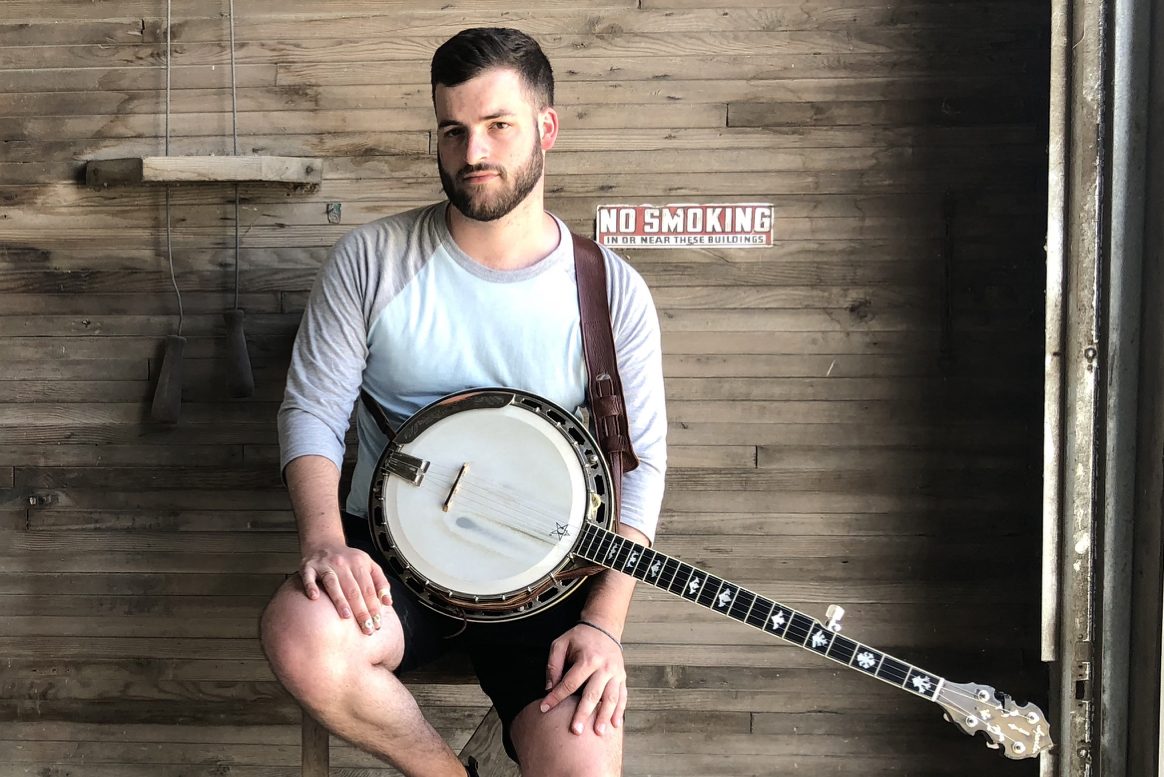
Before the final months of the 2010s elapse and we find ourselves reliving the year — and the decade — in music; while I find myself emerging from the fog of a year of pain, loss, and grief, a year fighting for my life and coming out ahead, I offer you this year-end wrap up. Not of 2019, but of a year fighting cancer. This is a soundtrack. For a few more than 365 days (and many more to come) of a queer banjo player, songwriter, and music writer holding onto life and letting go of time.

“Soon You’ll Get Better” — Taylor Swift feat. Dixie Chicks (2019)

In my eyes, the single most resonant line of any song released in the past year must be, “You’ll get better soon, ‘cause you have to.”

There’s this general, almost universal understanding of cancer, from a societal standpoint, that often does more harm than good. Almost everyone has a simplistic, rudimentary handle on what cancer is, what it means, and how to operate in relation to it. We’ve been fed countless narratives on the subject in the media, in fiction, non-fiction, through science, by the Hallmark Channel — you name it. One of the most frustrating outgrowths of this well-intentioned, though often tactless and somewhat misinformed understanding is that fighting cancer is noble. That it’s a holy war, a righteous baring of the teeth in the face of mortality and abject suffering and the quickened unraveling of existence.

But that is not how it feels. At least not to this survivor. Fighting cancer isn’t honorable. It’s necessary.

There is no choice.

It is exist or cease to exist. Because we romanticize storylines, dynamics in which “pulling the plug” seems like an actual option; because of faith systems that predicate moral truth on the existence of an afterlife; because we have heartbreaking, gut-wrenching tales of friends and family who opted for less pain, without treatment, than more time in misery with it; because there are all too many folks who shine, choosing joy against the odds, facing terminal diagnoses with bravery and aplomb, we think that the battle is wholesome, good, and virtuous.

I can tell you it is not. We get better because we have to. Sadly, there are too many who don’t. Because they can’t. Not because they are any less “noble” than those of us who “win” the fight. Not because they made a choice to give up the fight.

Choosing between being and ceasing to be is not a choice.

“The Capitalist Blues” — Leyla McCalla (2019)

Besides pain, discomfort, fear, and grief, the most present phenomenon to accompany cancer is bills. Piles and piles and piles of window envelopes. Emails. Push notifications chiming, “YOU HAVE A NEW STATEMENT.”

Each time my health insurance denied a claim on the grounds of some aspect of my care not being “medically necessary” — is the contrast used in my CT scans truly not necessary? — each time a prescription fell outside of coverage, often to the tune of hundreds and hundreds of dollars, my body and visage would grimace as if twisted from the pain of a 5cm mass in my colon.

To know, to see in plain daylight, that other human beings are getting rich off of my fight for life, causes such visceral anger and, in the wake of that anger, something that can only be described as the capitalist blues. Leyla McCalla’s wonky, off-kilter, Big Easy sound herein is a perfect wry smile in the face of a daunting, insurmountable task such as holding capitalism accountable. We’re all swimming with sharks and it’s a cold, cold world — even at the doctor’s.

“Anyone at All” — Maya de Vitry (2019)

As if to mock me, the electric guitar joins the band with a tick-tocking hook. Maya de Vitry’s narrator (however autobiographical) hasn’t been seeing anyone at all, hasn’t been drinking much at all, hasn’t been crying in the mornings, and she’s tired of hearing folks tell her it’s going to get harder.

Believe her. (Believe me.) It’s always been hard.

I spent the majority of a year at home, in my apartment, in bed, alone. Which is not to say I haven’t been supported throughout this journey by my friends, family, peers, colleagues, et cetera. It’s just that cancer is isolating in many, many more ways than one, and each of those sly, constituent methods of enforcing solitude conspire together to relegate us to these lonely spaces. Hearing de Vitry rejoice in them, embracing them, laughing in the face of what others, outsiders, might perceive as weakness and wallowing is not only redemptive, it’s liberating. I’ll see your “Have you been seeing anybody?” and raise you an “It’s been a couple of days since I’ve seen anyone at all!”

“Fixed” — Mary Bragg (2018)

The world teaches us how to regard ourselves, our bodies, our minds, our personhoods. We often don’t even realize this dictation is happening, but it is. Let me tell you, cancer brings out the worst in these tendencies, these trained reflexes. While Bragg’s message seems geared toward a childlike listener faced with society’s beauty standards, with dynamics of insiders and outsiders, cool and uncool, conformist and eccentric, I found myself returning to that refrain, “You don’t have to be fixed” over and over.

While my body image issues and low self-esteem run amok, fed on a glut of internalized ableism and materialism and superficiality and shame, the reminder in those lyrics that there is no one right way to be human, to be embodied, to be hurt or to be healed, was simply uncanny. Packaged with Bragg’s pristine, orchestrated arrangement and her powerfully tender voice, it’s a mantra in a song that we could all add to our quiver of weapons with which we face the world.

“Bad Mind” — Erin Rae (2018)

This song sounds like Ativan feels. Glossy and ethereal. The panned, double-tracked vocals, just distant enough in the mix, giving the impression that her voice is nearby, but out of reach. I was prescribed Ativan after being hospitalized due to complications from my first round of chemotherapy, namely that my nausea medications didn’t seem to be effective — until we brought Ativan on board.

That’s right, Ativan is prescribed for nausea. It’s also an effective anxiety medication, a strong benzodiazepine that’s often taken recreationally, but it’s a depressant. A strong, unyielding, psychoactive drug that guarantees dependency as a result of regular use. For months I was on an astronomical dose, without knowing it was considered high, to curb my incessant nausea.

I took two “cancer break” vacations during treatment. During the first, a country music cruise in the Caribbean, I cried myself to sleep every night. On the first night of the second trip, a solo getaway to the Bahamas, I wrote in my journal, through tears, “Perhaps I’m too depressed to enjoy an island paradise?”

As the lyrics in verse two reference indirectly, growing up gay in a conservative — and in my case, evangelical — family teaches you quite rapidly that your mind is bad. Very bad. Which, in quite a predictable turn, caused an anxiety disorder and clinical depression that I’ve been battling for more than a decade now. At times I was convinced that the problem of my erratic and burdensome mental health was simply due to my bad mind.

Ativan sank me to depths beyond those that I thought were possible. At its worst, beneath every word I spoke, beneath every layer of my thoughts, there was a constant suicidal hum. My prior struggles with suicidal ideation couldn’t even prepare me for the surprise of realizing, in some deep, hidden catacomb of my psyche, that I was fantasizing about taking my own life.

After chemo and radiation, when my nausea began to subside, I made getting off of Ativan my number one goal. I didn’t want to have a bad mind anymore. After seven months of three pills a day and after weeks of titrating, lowering my dose bit by bit to wean my dependent body and brain off of the potent, depressing, stomach-settling drug, I took my last Ativan in the hospital, after surgery to remove the mass.

It’s worth mentioning, for my sake and others’, there is no such thing as a bad mind.

“Sleepwalking” — Molly Tuttle (2019)

This year truly felt like sleepwalking. Through a world that disappeared.

In the Bahamas, after a month of daily radiation sessions and a mere handful of weeks before my operation, I walked straight into the Atlantic until the cold, steel blue water covered my head. I pleaded, I begged the sea to carry me away. To be allowed to float away with my fears. I cried into the saltwater.

Each time, as I listen to Tuttle’s voice — not angelic, no, but cosmic — grasping for the highest altitudes of her breathy vibrato, I hear my own personal flailing. My desperation to find an anchor, to not be woken up, to be left fantasizing about drifting away on the waves and the sounds of a voice that is that anchor, that is the one thing coming in clear through the static.

Another lesson learned from cancer: sometimes, you have to be your own anchor.

“Sit Here and Love Me” — Caroline Spence (2019)

My own helplessness over the last year was somewhat expected, but I was surprised that it wasn’t simply typified by the inability to help myself. There’s a deep, despairing helplessness found when you wish you could help others help you. To alleviate their helplessness. And I couldn’t. So often all I could do to help others help me was to ask them, with all of the kindness and compassion I could muster, to just sit here and love me.

I did not anticipate the hot, searing pain of telling my mother — a kind, generous, selfless woman who would admit time and time again, “If I could take your place, I would in a heartbeat” — telling her not merely once, but time and again, “This isn’t a problem you can solve. I just need you to hear me and love me.”

I know you hate to see me cry… and to hurt, and to fade into the nothingness of a round of chemotherapy, and to face doctors telling me my life and my body will be forever changed, and to know that there’s nothing you can do to step in, to interrupt the deluge pouring over me.

… But I just need you to sit here and love me.

“Keep Me Here” — Yola (2019)

Going through cancer when you’re single is difficult and complicated, but especially so as a young, gay man experiencing colorectal cancer. In the darkest moments, in the loneliest hours, when I craved physical affection, a hand to hold, a big spoon to lull me to sleep, a shoulder in which I could hide my eyes from the world — and with them, all of my worries and cares — I had nowhere to turn. Hook-up culture and the apps that have come along and monopolized queer entry to romantic and sexual relationships aren’t built for finding a security blanket for a battle with a lethal illness.

And so, in those moments, I turned to my ex. The reasons for our relationship ending notwithstanding, I think we’d both readily volunteer that we don’t think we’re a match. At least, not with a capital M. We live in that strange, queer space of happily being more familiar than platonic friends in that precipitous, somewhat intangible realm of deep connection — predicated on almost three years together — and unspoken boundaries.

He’s an entertainer, traveling the globe for work, ducking back into my life between contracts, each time leaving me with an ex-shaped chasm in my heart. My visceral yearning for closeness, for affection physical and emotional and spiritual, is a cacophony in my head each time, defiant against being denied these needs after having them finally fulfilled. Even if by someone who was not mine, nor could be, nor really should be.

Every time he left, I would love him a little more. It’s a strange thing to give love to someone so dear without being in love with them. So, I cried along with Yola, led by her expressive, assertive, grief-stricken vocals. I shouted along with Vince’s harmony in my car, trying to drown out the maximum volume. I waited a long time, for the right time to tell my ex how much I needed him, how much I wish I didn’t have to need him, I wish cancer didn’t require me to, but it did. I’m not sure the right time has happened yet, but I’ve tried — and I’m still holdin’ on.

“You’re Not Alone” — Our Native Daughters (2019)

Context matters. Circumstances matter. Privilege matters. It’s nearly impossible to listen to the stunningly timeless music of Our Native Daughters without considering these things. Songs mined from the experiences of women of color, of enslaved peoples, of folks categorically and systematically oppressed might seem like the last place a cisgender, white man like myself could seek comfort, but the salve here is twofold. First, to see and be seen. “None of us is here for long / but you’re not alone.”

Second, even in the extreme misfortune and despondency I’ve faced through my journey back to health, I ought to be reminded — I want to be reminded — of my privilege. Of how fortunate I am. Of the ample opportunities and advantages afforded to me by my race, my income level, my geography, my access to world-class medical care, my ability to work and continue working through my diagnosis and treatment, my support system, and on and on.

Yes, we all face our own trials, our own sorrows, and they are no less valid or troublesome because someone else in the world may have had it much, much worse. But the reminder is helpful, it’s cathartic, it’s therapeutic. And, while these injustices continue, while thousands and thousands of others are left in the shadows, we mustn’t take our privilege for granted.

Our Native Daughters use their platform to remind us of this, and no set of circumstances — no, not even cancer — is such that any one of us ought not hear that message. In the process, we might just uncover something limitlessly resonant that we didn’t expect to find.

“Everything’s Fine” — Jamie Drake (2018)

Maybe tomorrow we’ll find / everything’s fine.

Maybe tomorrow…

Maybe tomorrow…

Maybe tomorrow…

For 365 days. And more. Longer. And longer. And looooooonger. But you know what, the cinematic feel of this exquisite, arty folk-pop isn’t coincidental. It’s a deliberate tease. It’s dangling the carrot, leading you toward the conclusion that this is just part of the story. There is a tomorrow. You can hear the future in the sigh of the background vocals, in the whimsical harps, and it sounds good. It sounds like we might just find that everything is fine. And if we don’t (we won’t. At least not always), that’s fine too.

I hope in that future I’m able to option the rights to this story of mine and make a movie, if not for the sake of monetizing the misery I’ve endured, at least so that we can include this stunner on the literal soundtrack. Because that’s where it belongs.

Roll credits.


Photo courtesy of the author
Baylen’s Brit Pick: 10 Bands Who Deserve Love in 2018

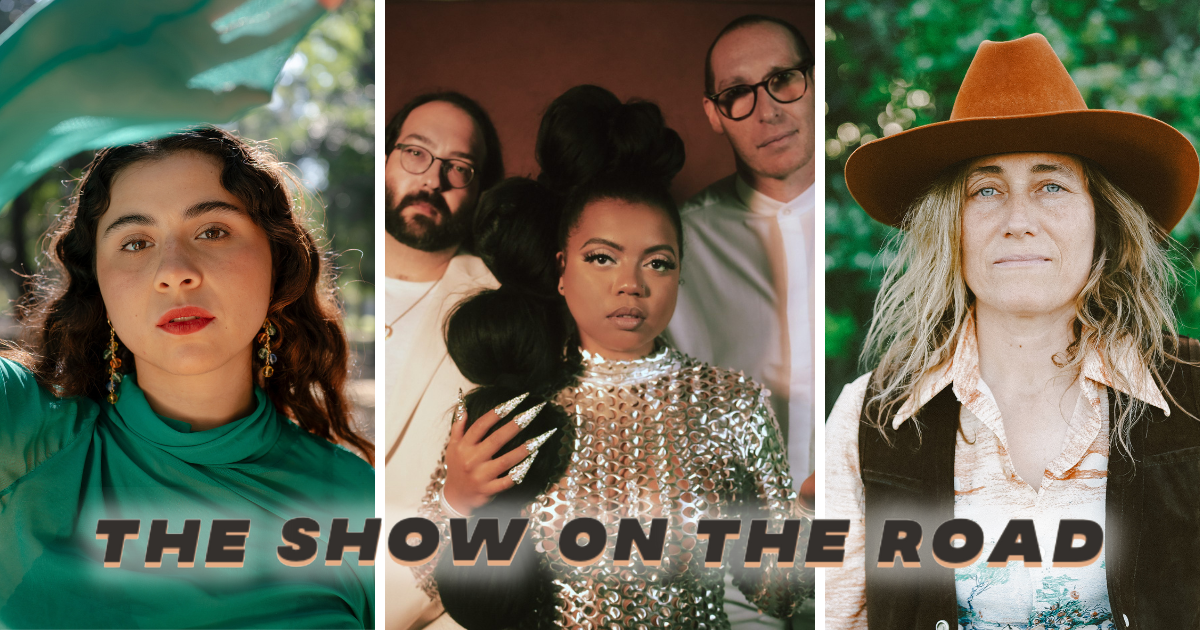
The UK scene is as varied as it is exciting, even with doing an article each month, I haven’t really scratched the surface. There are so many fantastic UK acts that deserve some love, so with it being the end of the year, and the season of giving, let’s have a quick-fire round of artists that are worth some time in your busy ears. All are worth an entire Brit Pick, but time is short, and you have present to wrap so let’s get to it.

Yola

Yola is someone who is no stranger to BGS but she’s dropped her last name (Carter) and has a new single out, “Ride Out in the Country,” with a long-awaited new album on the way in 2019. She’s one to watch for sure. Country Soul at its finest, like taking off a pair of tight shoes, Yola soothes the soul.


O&O

London duo O&O formed in Liverpool via Israel and Colorado, with harmonies for days.


Treetop Flyers

Treetop Flyers have been rocking the UK scene for a while now but their 2018 self-titled album and appearance at Americanafest in Nashville kicked it all up a notch.


Emily Barker

Emily Barker has a lovely bluesy Memphis sound, she’s from Australia, but we’ve adopted her and she’s adopted us and everyone is happy. She’s a leading light on the UK scene and was named UK Artist of the Year at the UK Americana Awards in February.


The Marriage

A duo from Edinburgh and London, The Marriage are masters of sublime truth telling.


Hannah White

Hannah White has worked hard providing a space for homegrown acts to perform at her Sound Lounge initiative in London and has fought local government and developers every step of the way to do so. She’s a mighty fine artist as well, and one who gives back.


The Luck

The Luck are a brother/sister duo with a touch of the Eagles and Fleetwood Mac about them–what’s not to love?


Noble Jacks

Noble Jacks will get your feet stomping and raise any roof that’s not nailed down properly.


 The Hungry Mothers

Aside from having an amazing name, the Hungry Mothers combine dreamy folk with indie soundscapes.


Lucas & King

Finally, Lucas & King sound like they stepped out of the ‘60s in the best way. I love them.


So there you go, an embarrassment of riches from these isles to get you through the holiday season. If you want even more, dig into my personally-curated playlist and enjoy:

As a radio and TV host, Baylen Leonard has presented country and Americana shows, specials, and commentary for BBC Radio 2, Chris Country Radio, BBC Radio London, BBC Radio 2 Country, BBC Radio 4, BBC Scotland, Monocle 24, and British Airways, as well as promoting artists through his work with the Americana Music Association UK, the Nashville Meets London Festival, and the Long Road (the UK’s newest outdoor country, Americana, and roots festival). Follow him on Twitter: @HeyBaylen


Photo of Yola: Alysse Gafkjen

BGS Top Moments of 2018

Ah, to truly live in the moment. These past twelve months often felt like myriad moments were perpetually fighting for our attention all at the same… moment. So at those junctures that did allow — or perhaps they mandated or beseeched or coaxed or compelled — us to take pause and truly be present, we found some of our favorite musical landmarks of the year, each one unified by their arresting message: Stop. Inhabit this moment. You’ll be glad you did.

Mandy Barnett Refreshes “The Fool”
A versatile vocalist who’s mostly known in classic country circles, Mandy Barnett made her newest album in Muscle Shoals, trading out the Nashville Sound for a slow-burn vibe that works particularly well on “The Fool.” This cool Lee Hazlewood/Naomi Ford tune has been kicking around since the late ‘50s when Sanford Clark gave it a rockabilly whirl. Since then it’s been covered by stylists such as Don Gibson, Robert Gordon with Link Ray, Elvis Presley, and Mac Wiseman – and like these guys, Barnett’s persuasive phrasing gives a sizzling guitar riff a run for its money. — Craig Shelburne


Mary Gauthier Joins Forces Against an Empathy Crisis

After decades upon decades of structural and systemic discrimination against LGBTQ+ service members in the U.S. armed forces, it might surprise one to encounter a queer, progressive singer-songwriter like Mary Gauthier releasing such a project as Rifles & Rosary Beads — an album populated entirely by songs crafted and co-written by military veterans and Gauthier herself. These songs are as harrowing as they are illuminating. And heartbreaking. And devastating. The beautiful, raw humanity exposed herein was captured simply by sitting across from another human being, no matter who they may be, and allowing oneself to see the other, and be seen. “The way I know how to create empathy is through song,” Gauthier describes in our Shout & Shine Q&A from early 2018. “Not preachy songs, not songs that tell people what to think, but songs that tell the story of what people are going through, so that we can see inside and know how they feel.” Clearly, Gauthier’s own life experiences — and the empathy (or, at times, lack thereof) she has experienced throughout — have enabled her to be a voice and a vessel for the tantamount importance of these soldiers, these stories, and these songs. — Justin Hiltner


Dead Horses Give “Turntable” a Surprising Spin
During this year’s AmericanaFest, I opted to go see only the bands I’d never heard of. Fortunately for me, that included Dead Horses, a Wisconsin band that caught me off-guard with their striking vocal blend and deep songwriting. Sarah Vos interprets a tumultuous upbringing in a way that even a stranger can relate to. At her side is upright bass player Daniel Wolff, propelling the set along with a steady beat. One of their standout songs, “Turntable,” already had millions of spins on Spotify, but it still felt like a discovery to me. That night also served as a polite reminder to check out the newcomers, because you never know. — Craig Shelburne


Bobbie Gentry Bridges the Generations
Bobbie Gentry’s entire catalog — eight albums in just four years — was remastered and repackaged in what may be the best reissue of 2018. The Girl from Chickasaw County spans 1967 breakthrough Ode to Billie Joe to her 1971 swan song Patchwork, each album transporting you to the fondly remembered South of Gentry’s childhood. She doesn’t just sing about growing up in rural Mississippi; she makes music that conjures up the people and the place, the humidity and the fried food, the mosquitos and the music. It’s a sprawling that presents her as a true visionary, one who used pop and country music to craft a world of her own even when the real world — and the music industry in particular — didn’t know what to do with her. — Stephen Deusner


Hawktail Goes With the Flow
It was a strong year for instrumental string band music, with projects as daring as The Hit Points (see below), which arranged classic video game music for a bluegrass ensemble, and as intimate as Simon Chrisman and Wes Corbett’s banjo/dulcimer music. But nobody brought more of today’s top talent and compositional intelligence together than Hawktail. Established as a trio with fiddler Brittany Haas, guitarist Jordan Tice, and bassist Paul Kowert, the friends brought in mandolinist Dominick Leslie to round out both the rhythmic structure and the improvisational daring of the band. The all-original album, Unless, is more about a flowing ensemble sound than a jam showcase, but the picking is state of the art. Recorded in the grandeur of Nashville’s historic Downtown Presbyterian Church, the album meditates and celebrates in equal measure. — Craig Havighurst


The Hit Points Get in the Game
The Hit Points, an ensemble of like-minded bluegrass virtuosos and video game music nerds, built themselves an album concept that, despite possibly being the most counter-intuitive vision for a record, ended up not only being aurally, aesthetically, and mentally astounding, it actually just works. Flawlessly. Fiddler Eli Bishop and banjoist Matt Menefee assembled a group of friends that would be up for the sometimes mind-numbing task of translating video game music from across the eras and consoles into bits and pieces and parts playable by a bluegrass band, bringing in bassist Royal Masat, mandolinist Sierra Hull, and engineer/guitarist Jake Stargel, among others, to deliver us a perfect nostalgia mash-up of bluegrass’ fiery, impeccable picking with the most iconic and familiar video game themes of the past couple of decades. Against the odds and intuition, it’s a truly stunning testament to the beautiful nerdy minds of bluegrass pickers and their common belief that there is no such thing as “biting off more than one can chew.” — Justin Hiltner


Kathy Mattea Rediscovers Her Voice
For the last few years, Kathy Mattea felt worried that her singing voice had essentially abandoned her. However, with medical guidance and patience, her warm alto returned. And it’s worth a nod to Pretty Bird producer Tim O’Brien, who knew how to make it shine. The folk-focused album offers beautiful songs like Dougie McLean’s “This Love Will Carry” and Mary Gauthier’s “Mercy Now,” while the Wood Brothers’ “Chocolate on My Tongue” brings a sweet perspective to looking for the meaning of life. Closing out the album, her reverential reading of Hazel & Alice’s “Pretty Bird” illuminates Mattea’s rediscovered voice with quiet power. –Craig Shelburne


Michigan Rattlers Deliver a Strong Debut
After hearing one track by Michigan Rattlers a year ago, I wondered when more music would be coming – because it gave me the same feeling as when I listened to Reckless Kelly and Turnpike Troubadours for the first time. This Midwestern band’s debut album, Evergreen, arrived in September, and proved to be a consistently compelling and well-written project. Guitarist Graham Young has just a hint of sadness in his voice, although Evergreen is by no means a sad record. With Adam Reed on upright bass and Christian Wilder on piano, the music falls somewhere between a bar band and a songwriter night, which is right where I live. Check out “Didn’t You Know” and “Baseball” for starters. — Craig Shelburne


Ricky Skaggs Shows ‘Em How It’s Done
A new member of the Bluegrass, Country, and National Fiddle Halls of Fame this year, Ricky Skaggs has been recovering from shoulder problems, but you wouldn’t know it from this fantastic performance — three songs performed with three bands, including his own Kentucky Thunder. Recapping a rich — and ongoing! — career, the medley featured several generations of musicians, from old band members like Bruce Bouton (pedal steel guitar) to guitar-picking country superstars (Keith Urban, Brad Paisley) to bluegrassers like Sierra Hull and teenaged fiddler Carson Peters. If the best lessons are taught by example rather than lecture, this one was a graduate level course. – Jon Weisberger


Chris Thile Establishes a New Radio Classic
It’s been two and a half years since mandolin virtuoso Chris Thile took the helm of the long-running public radio show A Prairie Home Companion. But it’s been a year since he fully made it his own, rechristening the program as Live From Here. In these twelve months, Thile’s show has become a powerhouse music showcase for acoustic music and far beyond: a place where St Vincent or Vulfpeck can play the same stage as I’m With Her, Brandi Carlile, and Jeff Tweedy. The host himself churns out a brand new song for each episode (an impressive feat in itself), and surrounds himself with a house band and writing staff that’s a who’s who of modern roots: Chris Eldridge, Sarah Jarosz, Joey Ryan, Brittany Haas, amongst others. It’s as if he’s been doing such a show forever, and something we can only hope will continue long into the future. –Amy Reitnouer Jacobs


Colter Wall Captures the Prairie Wilderness
Of course country music isn’t limited to the American South, but it’s been so well established in that specific locale it sometimes feels as if anything else needs an asterisk. Canadian singer-songwriter Colter Wall sets about erasing that mark with his sophomore album, Songs of the Plains. Telling tales about truck drivers, cowboys, and blue collar types at the mercy of automation, Wall uses traditional country influences to sing of his prairie homeland. Working with Nashville’s Dave Cobb, he blends an array of original songs and covers, each of which provides a formidable stage for his voice. Wall’s baritone growl feels like a barroom throwback, the kind of sound you stumble across at dusk when the jukebox finally falls silent and the guy keeping to himself in the corner finally opens his mouth. I put this on when I want to actually feel Canada’s vast prairie wilderness, and think about the ever-widening world of country music. — Amanda Wicks


The War and Treaty Share Their Love Story
In 2010 Tanya Blount and Michael Trotter fell in love after performing, separately, at a Maryland event known as, yes, the Love Festival. In 2018 many fell in love with the Michigan-based duo, now known as the War and Treaty, with the release of their Buddy Miller-produced debut album, The Healing Tide, and even more so from their concerts. Their boundless joy alone is irresistible, but the songs and performances are elevating. “I’m singing with my wife, songs I wrote for us, and we’re on the road helping bridge humanity in our way,” Michael said in an August BGS profile, Tanya adding, “This project is an act of love.” – Steve Hochman

BGS Top Albums of 2018

This year, as we revisit the albums that resonated with each of us, we may not find a tidy, overarching message. However, the diversity herein — of style, content, aesthetic, format, genre, perspective, and background — demonstrates that our strength as a musical community, or zoomed-out even further, simply as humans, indeed comes from our differences. To us, these 10 albums are testaments to the beauty, inspiration, and perseverance we found in 2018.

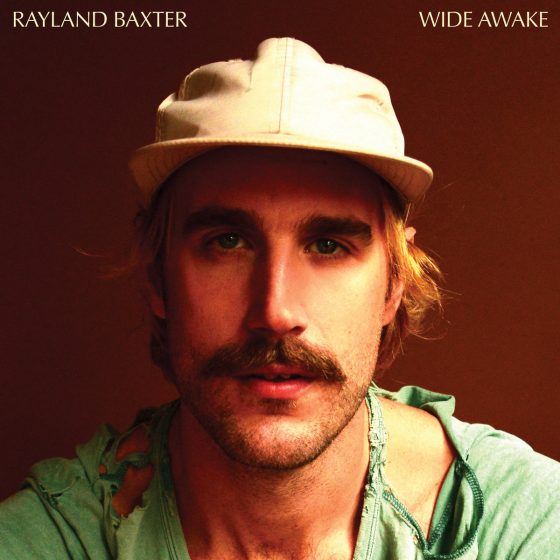
Rayland Baxter, Wide Awake
His career-launching musical epiphanies happened on a retreat in Israel some years ago, so Rayland Baxter’s decision to isolate himself in a contemplative space to write Wide Awake had precedent. The venue this time was an abandoned rubber band factory in rural Kentucky where a friend was installing a new recording studio. In that quiet, Baxter wrote songs about the noisy world beyond the cornfields, with perspective on its tenderness and absurdity. Later in the studio, his posse set the deft verses to enveloping, neo-psychedelic, Americana rock. Social commentary doesn’t have to plod, as the Beatles proved, and Baxter is farming similar terrain with vibrant melodies, saucy beats and a voice that’s entirely his own. – Craig Havighurst


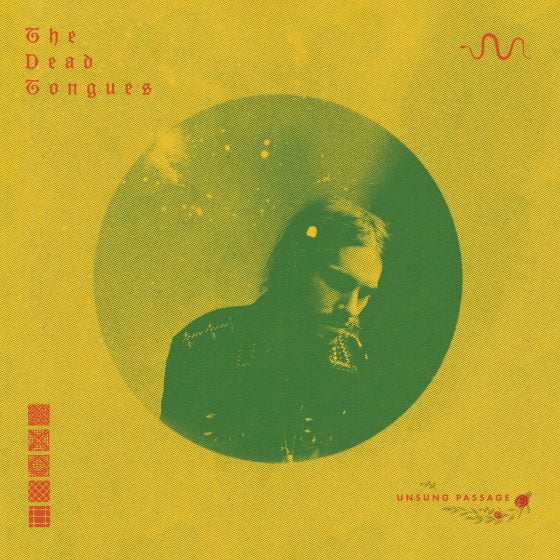
The Dead Tongues, Unsung Passage
I didn’t expect The Dead Tongues (aka Ryan Gustafson, guitarist for Hiss Golden Messenger and Phil Cook) to be my most-listened-to record of the year. But Unsung Passage is an album I find myself returning to again and again. The ten songs form a sort of travelogue for Gustafson, and you can hear the influences and rhythms of other cultures drifting throughout. It’s the rare record that’s both comforting and complex. –Amy Reitnouer Jacobs


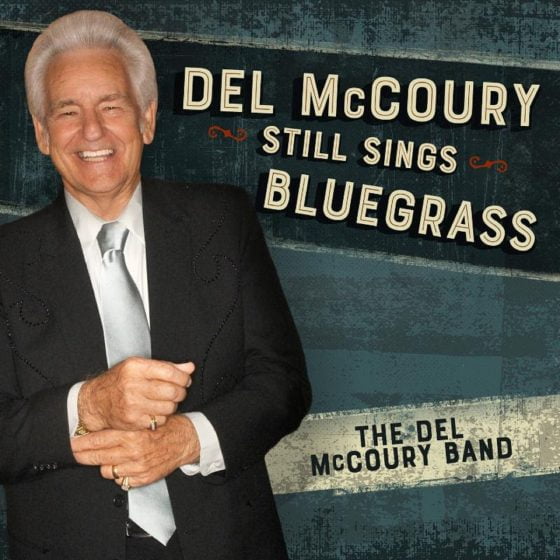
Del McCoury Band, Del McCoury Still Sings Bluegrass
Named after his debut record, which was released fifty years prior, Del McCoury Still Sings Bluegrass seems like a painfully obvious, on the nose title for a record, but upon deeper inspection we realize that, because the album was built on his signature ear for songs and his unfaltering trust in his own taste, it is an immediately digestible statement of McCoury’s worldview. At this point in his long, diverse, uniquely successful career, most listeners would give Del a bluegrass authenticity “hall pass,” letting the more innovative, less bluegrass-normative moments herein by without a blink, but Del, from the outset, avoids letting himself fall into that paradigm. He chooses songs because, well, he likes them, and he doesn’t concern himself with what is or isn’t bluegrass, he just creates music that he enjoys to make with people he enjoys making it with. It’s a simple approach that may border on simplistic, but the result is a resoundingly bluegrass album that doesn’t concern itself with the validity of that genre designation at all. Which, after all, is bluegrass to a T. — Justin Hiltner


Jason Eady, I Travel On

Jason Eady, I Travel On
A fixture on the Texas touring scene, Jason Eady offered his most satisfying album yet with I Travel On. First off, he enlisted Rob Ickes and Trey Hensley for these sessions, giving the project a bluegrass groove with plenty of cool Dobro licks and guitar runs. Second, Eady wrote from the perspective of a man with some miles on him – the album title isn’t a coincidence, after all. His expressive country baritone is made for slice-of-life story songs like “Calaveras County” and “She Had to Run.” At other times, Eady looks inward, drawing on themes like mortality, gratitude and contentment. I Travel On may not be the most obvious album for a road trip but it’s certainly a worthwhile one. – Craig Shelburne


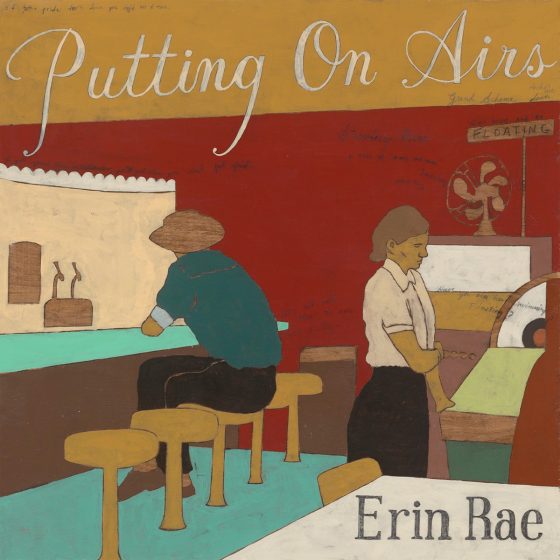
Erin Rae, Putting on Airs
Her velvety, maternal vocals and the subtle, understated alt-folk production vibes of Erin Rae’s Putting on Airs might initially disguise the millennial-reckoning being wrought through these songs and their topics; from top to bottom Rae’s brand, her musical identity, defies comparisons with any one era of music making and songwriting. Her talent oozes through her writing, her melodic hooks, and her musical and rhetorical fascinations, which together in this song sequence feel like they epitomize a microcosm that contains all of our generation’s — and this particular historical moment’s — angst, but without feeling simply capitalistic, opportunistic, or “on trend.” Instead, her viewpoint is decidedly personal, giving us a window into her own individual reckonings — with her own identity, with mental health, with family relationships, with being a young southerner in this modern era; the list is potentially endless, determined only by each listener’s willingness to curl up inside these songs and reckon along with Rae. Which is the recommended Putting on Airs listening strategy espoused by this writer. — Justin Hiltner


High Fidelity, Hills And Home
It’s in the nature of bluegrass to forever be casting backward looks at the giants of the music’s early years; nothing wrong with that, but when those who do it get aggressive about how they’re playing “real” bluegrass, well, that’s another story. High Fidelity’s eyes are firmly fixed on the musical past, but they’re also a modern, mixed-gender band who aren’t afraid to let their music do the talking — and what it says is that there’s a lot more variety, not to mention pure joy, in the under-appreciated gems of old than you might think. – Jon Weisberger


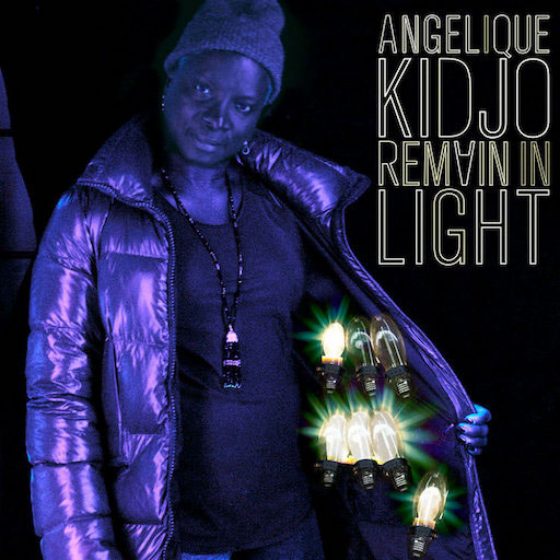
Angelique Kidjo, Remain in Light
It’s not simply a remake of the Talking Heads’ 1980 landmark, but a stunning reimagining by the visionary Benin-born artist Kidjo. She doesn’t merely repatriate (er, rematriate) the African influences that fueled TH’s revolutionary stream-of-consciousness masterpiece — which opened the door for many to discover the wealth of those inspirations — she considers and explores the worlds that have emerged in African music in the time since, all brought together via her singular talents and sensibilities. Remain in Light was arguably the album of the year for ’80, and so it may be again for ’18. – Steve Hochman


John Prine, The Tree of Forgiveness
No album this year brought me as much pure joy as John Prine’s latest. His first collection of new material in over a decade —which is way too long — The Tree of Forgiveness shows him in fine form, tossing out clever phrases and humorous asides that add to, rather than distract from, the low-level sadness thrumming through these songs. From the Buddy Holly bop of “I Have Met My Love Today” to the percolating existentialism of “Lonesome Friends of Science,” from the rapscallion reminiscences of “Egg & Daughter Nite, Lincoln, Nebraska, 1967 (Crazy Bone)” to the almost unbearable heartache of “Summer’s End,” every line and every word sounds purposeful and poignant, culminating with “When I Get to Heaven.” Prine sings about nine-mile-long cigarettes and bars filled with everyone you’ve ever loved, and it’s one of the most inviting visions of the afterlife set to tape. I hope he’ll save me a barstool. – Stephen Deusner


Jeff Tweedy, WARM
The album lives up to its name. Following last year’s quieter Together at Last project, Tweedy now hearkens back to his country punk roots from Uncle Tupelo, and makes a perfect accompaniment to his must-read autobiography, Let’s Go (So We Can Get Back). The new music reminds of his strength as a master songwriter and his place as one of the most tender and raw performers of a generation. It might have almost slid under the radar with its release at the end of November, but it definitely belongs on our year-end list. — Chris Jacobs


Marlon Williams, Make Way for Love
Mere seconds into hearing Marlon Williams croon the opening greeting of his song “Hello Miss Lonesome” in 2016, I knew I’d found a euphoric talent. After poring over his debut Dark Child, my greedy ears immediately wanted more, and this year finally brought that much-awaited second helping. On Make Way for Love, Williams moves away from the rootsy Americana that defined his first album, and leans into darker, baroque explorations that nod to Scott Walker and Roy Orbison in equal measure. Exploring heartbreak — from the puerile but pacing “Party Boy,” to the seething “I Know a Jeweller,” to the pitious “Love is a Terrible Thing”— Williams dips into the jagged crevices that naturally appear when the heart cracks wide open. – Amanda Wicks


BGS Top Songs of 2018

Here at the Bluegrass Situation, we’re always eager to hear a new song. This year it’s likely that thousands of them drifted by, each with their own charms. Yet, rather than ranking our favorites, we decided simply to pick 10 tunes that grabbed our attention — listed here in alphabetical order. Take a look.

Rachel Baiman, “Tent City” 
Written with long, tongue-twisting lines and a laconic melody reminiscent of John Hartford’s “Gentle on My Mind,” “Tent City” replaces the former’s voluntary rambler and train yard denizen with a man down on his luck and reflecting on the ease of his descent into homelessness. It’s a strong song, elevated to greatness through spirited, flawlessly idiomatic performances by Baiman and her specially-assembled posse: Justin Hiltner (banjo), Shelby Means (bass), Tristan Scroggins (mandolin) and Molly Tuttle (guitar). “Tent City” isn’t bluegrass-flavored social commentary, it’s a socially conscious and thoroughly bluegrass song. –Jon Weisberger


Birdtalker, “Be Where You Are”
Nashville’s Birdtalker took flight when husband and wife Zack and Dani Green started writing songs more for enjoyment than with career plans. But they’ve got a career now as a breakout band with an intuitive, joyful flavor of folk rock that brings listeners into a comforting fold. “Be Where You Are” is a lushly arranged meditation on staying in the moment, a rebuke to both brooding nostalgia or anxious speculation, not to mention the great screen hole. From getting the reverb just right on the opening guitar figures to the juicy intervals in the vocal harmonies, this is among the most enchanting and centering tracks of the year. –Craig Havighurst


I’m With Her, “Hannah Hunt”
It’s been a big year for I’m With Her, the supergroup comprised of Sara Watkins, Sara Jarosz, and Aoife O’Donovan. Their album was an expert blend of harmonies and modern roots craftsmanship, but it’s this single (recorded at Spotify Studios) that takes their art to a whole other level. Their cover of “Hannah Hunt” will make you forget that the original Vampire Weekend version ever existed. —Amy Reitnouer Jacobs


Loretta Lynn, “I’m Dying for Someone to Live For”
Loretta Lynn and co-writer Shawn Camp go straight to the heartache on “I’m Dying for Someone to Live For,” a highlight of Lynn’s Grammy-nominated album, Wouldn’t It Be Great. By now, the lonesome whippoorwills and the weeping willows in these lyrics are as entrenched in country music history as the Coal Miner’s Daughter herself. Contributing to the pedigree: Lynn recorded the album in Johnny Cash’s former cabin, with John Carter Cash and Loretta’s daughter, Patsy Lynn Russell, handling production. For those days when nothing but a sad country song will do, you can still count on Loretta Lynn. –Craig Shelburne


John Prine, “Summer’s End”
At 72, John Prine is churning out some of the best work of his already genius-level career. Of all the tracks from The Tree of Forgiveness, however, “Summers End” is Pure Prine Perfection. It’ll make you laugh, then cry, then want to listen to it all over again. –Amy Reitnouer Jacobs


Missy Raines, “Swept Away”
Raines and producer/banjoist Alison Brown brought in the strong-women-of-bluegrass cavalry as the backing band for 2018’s International Bluegrass Music Association Song of the Year, showcasing each woman who was first to win in her respective instrumentalist category at IBMA: Becky Buller, Molly Tuttle, Sierra Hull, and Raines and Brown themselves. Still, the song itself supersedes its virtuosic, socially-important trappings. Written and first recorded by bluegrass legend Laurie Lewis, “Swept Away” is a stunning reminder of Lewis’ artistic ingenuity, constantly creating music that all at once sounds unfathomably brand new and comfortingly timeless. Raines tipping her hat to Lewis, in this context, and then to each of her fellow first-women-to-win, is the cherry-on-top of a song that will always be a testament to the amazing women of bluegrass, in whatever form it may take. –Justin Hiltner


Moira Smiley, “Refugee”
Smiley wasn’t merely inspired by news reports to write “Refugee,” a highlight of her sparkling Unzip the Horizon album. The Vermont native drew on her global interactions with people and cultures shaped by migration and refugee experiences — particularly her experiences in refugee camps in Europe as a volunteer with the Expressive Arts Refuge organization. She even enlisted refugee residents of the so-called Calais Jungle and referenced music of medieval expulsions. “So here we are again, in a different, but related era of diaspora,” she told BGS in March. “What can we learn from the past? How can we be compassionate to each other as these big forces are hurting our brothers and sisters?” –Steve Hochman


Stick in the Wheel, “Follow Them True”
This London band may be one of the unruliest acts in the contemporary English folk scene, finding inspiration in centuries-old work songs that speak to present-day issues of class and marrying acoustic instruments with dance production techniques. Perhaps their boldest move yet is the title track to their second album: “Follow Them True” is a new song that sounds old, with a lilting, quietly majestic melody and a set of lyrics that might serve as the band’s mission statement. But it’s less about what Nicola Kearey sings and more about the way she sings it. She filters her voice through an effects pedal that she manipulates in real time, twisting and bending her voice as though the song is echoing across hundreds of years. The effect is both old and new, conjuring the past to point toward the future. –Stephen Deusner


Aaron Lee Tasjan, “If Not Now When”
I saw ALT perform previews of the songs that ultimately came out on Karma For Cheap at Nashville’s Basement East and didn’t realize how much I needed these weird guitar riffs. Led by “If Not Now When,” the recorded version of this album doesn’t disappoint. Tasjan steps away from his more countrified roots and takes it in a more cosmic, gritty direction and the results are glorious. –Chris Jacobs


Anna Vaus, “The Ground”
The first winner of the Miranda Lambert Creative Fund—which the singer-songwriter created to support women in the arts—Anna Vaus promised to be a formidable songwriter. After all, if she garnered Lady Lambert’s approval, she must have a way with words. Vaus’ debut California Kid showcases her exacting lyrical prowess, leaning into honest moments that aren’t exactly pretty, but she saves her best for last. Closing song “The Ground” opens with ponderous guitar while Vaus’ voice stretches her major moment of self-reflection taut. Laden with grace, she lays bare her penchant for messing up a good thing. “Love sure feels like flying on the way down,” she sings, twisting the final moment with a guitar riff that underscores the weight of her realization. “It ain’t the fall that hurts, it’s the ground.” –Amanda Wicks