WATCH: Jesse Colin Young, “Sugar Babe”

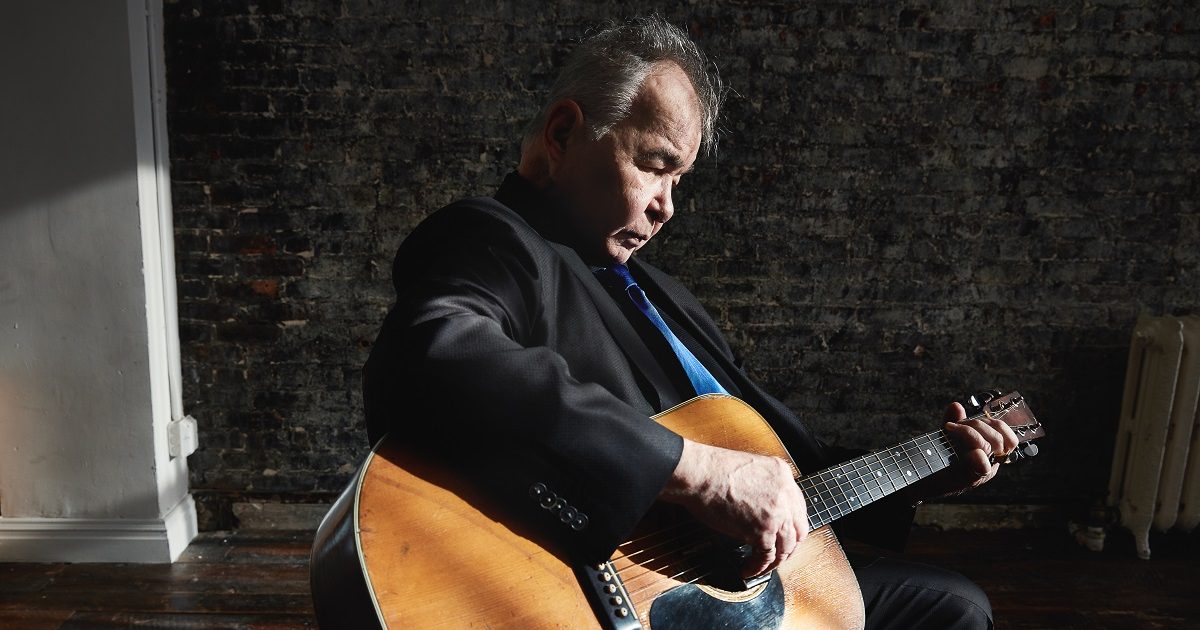
Artist: Jesse Colin Young (of The Youngbloods)
Hometown: Aiken, South Carolina
Song: “Sugar Babe”
Album: Highway Troubadour
Release Date: November 27, 2020
Label: BMG

In Their Words: “I found some lyrics in an old book of American folk songs… and they were an entrance into a life in the rural South that I knew nothing about. But I went there in my imagination and started this song while I was still in school. It’s been with me the whole way. …Highway Troubadour is not only a return to my roots, but the beginning of a surprise adventure of solo performing. I have begun to take guitar playing to a whole new level while revisiting my decades of musical catalogue.”” — Jesse Colin Young


Photo credit: Brent Cline

2021 Grammy Awards: See Nominees in American Roots Field

The 2021 Grammy Awards finalists were revealed on Thursday, November 24. Here are the nominations in the American Roots field:


Best American Roots Performance

Black Pumas, “Colors”

Bonny Light Horseman, “Deep in Love”

Brittany Howard, “Short and Sweet”

Norah Jones & Mavis Staples, “I’ll Be Gone”

John Prine, “I Remember Everything”


Best American Roots Song

“Cabin,” Laura Rogers & Lydia Rogers, songwriters (The Secret Sisters)

“Ceiling to the Floor,” Sierra Hull & Kai Welch, songwriters (Sierra Hull)

“Hometown,” Sarah Jarosz, songwriter (Sarah Jarosz)

“I Remember Everything,” Pat McLaughlin & John Prine, songwriters (John Prine)

“Man Without a Soul,” Tom Overby & Lucinda Williams, songwriters (Lucinda Williams)


Best Americana Album

Courtney Marie Andrews, Old Flowers

Hiss Golden Messenger, Terms of Surrender

Sarah Jarosz, World on the Ground

Marcus King, El Dorado

Lucinda Williams, Good Souls Better Angels


Best Bluegrass Album

Danny Barnes, Man on Fire

Thomm Jutz, To Live in Two Worlds, Vol. 1

Steep Canyon Rangers, North Carolina Songbook

Billy Strings, Home

Various Artists, The John Hartford Fiddle Tune Project, Vol. 1


Best Traditional Blues Album

Frank Bey, All My Dues are Paid

Don Bryant, You Make Me Feel

Robert Cray Band, That’s What I Heard

Jimmy “Duck” Holmes, Cypress Grove

Bobby Rush, Rawer Than Raw


Best Contemporary Blues Album

Fantastic Negrito, Have You Lost Your Mind Yet?

Ruthie Foster Big Band, Live at the Paramount

G. Love, The Juice

Bettye LaVette, Blackbirds

North Mississippi Allstars, Up and Rolling


Best Folk Album

Bonny Light Horseman, Bonny Light Horseman

Leonard Cohen, Thanks for the Dance

Laura Marling, Song for Our Daughter

The Secret Sisters, Saturn Return

Gillian Welch & David Rawlings, All the Good Times


Best Regional Roots Music Album

Black Lodge Singers, My Relatives “Nikso Kowaiks”

Cameron Dupuy and the Cajun Troubadours, Cameron Dupuy and the Cajun Troubadours

Nā Wai ʽEhā, Lovely Sunrise

New Orleans Nightcrawlers, Atmosphere

Sweet Cecilia, A Tribute to Al Berard


Photo of John Prine by Danny Clinch

From Banjo to the Blues, This North Carolina Writer Tells One Big Story

I came to North Carolina three decades ago, as music critic for the Raleigh News & Observer, knowing very little about the state’s music. Yes, I was plugged into the college-radio end of the spectrum, from Let’s Active to The Connells, and I’d at least heard of Doc and Earl (Watson and Scruggs, respectively). But there was a lot more to it, obviously, and the joy of my career was figuring out that North Carolina’s many disparate strains — old-time and bluegrass, blues and country, rock and pop, soul and r&b, jazz and hip-hop, and of course beach music — were all part of one big story.

I tried to tell that story in Step It Up and Go: The Story of North Carolina Popular Music, from Blind Boy Fuller and Doc Watson to Nina Simone and Superchunk, based on many years of reporting, researching, and listening. It’s a story that covers a lot of ground from the mountains to the coast in The Old North State and beyond, with the likes of James Brown, Bill Monroe, and R.E.M. showing up in key cameo roles at various points.

As we’ve tried to convey with the book’s subtitle, it involves a wide range of music, from the roots music of bluegrass forefather Charlie Poole and bluegrass-banjo inventor Earl Scruggs to Ben Folds Five’s “punk rock for sissies,” super-producer/deejay 9th Wonder’s hip-hop to the Avett Brothers’ post-punk folk-rock. And what ties all of it together? Glad you asked! The narrative thread running through Step It Up and Go is working-class populism, a deeply rooted North Carolina tradition that runs into the present day. The simple detail of how to earn a living is a pretty prominent feature of each chapter, starting with the four acts in the subtitle.

Fuller (whose 1940 Piedmont blues classic provides my book’s title) and Watson were both blind men who turned to music as a way to provide for their families when few other avenues were available. Eunice Waymon’s plans to be a classical pianist were derailed and she had to start singing pop songs in nightclubs for a living, taking the name Nina Simone because she knew her Methodist preacher mother would not approve. And Superchunk is a punk band known for the 1989 wage-slave anthem “Slack Motherfucker” — and also for running Merge Records, one of the most improbably successful record companies of modern times.

Across genres, the state’s musicians have a proud, idealistic pragmatism that manifests as a certain mindset in which North Carolina is “The Dayjob State.” It’s an outlook that a lot of our state’s greatest artists retain even after music stops being a hobby and they go pro. Two of the state’s best-known Piedmont blues players, Elizabeth “Libba” Cotten (of “Freight Train” fame) and master guitarist Etta Baker, had amazing careers as musicians even though they didn’t seriously pursue it until they were both in their 60s. Pastor Shirley Caesar was even older, pushing 80, when she had a viral hit with her old chestnut “Hold My Mule.”

In the modern era, Carolina Chocolate Drops alumnus Rhiannon Giddens has run her career as a lifelong learning experience, involving academic research as well as performing, bringing long-forgotten or even unknown history and ancestors to light in the 21st century. With her creative work spanning from Our Native Daughters to an original opera score, Giddens honors her musical roots while retaining a spirit of collaboration, as many North Carolina musicians have done before her.

Or consider the aforementioned Doc Watson, who died in 2012 as one of the 20th century’s greatest musicians. A flatpicking legend who played guitar better than almost anyone else ever had, he nevertheless carried himself with a self-deprecating nonchalance; he just never seemed as impressed with himself as the rest of the world was. Barry Poss, whose Durham-based bluegrass label Sugar Hill Records released 13 of Watson’s albums over the years, used to express his frustration over Watson’s retiring nature and habit of deferring to other players even though there was never a time when he wasn’t the best musician in the room.

But that didn’t hurt Watson’s legacy in the slightest, and maybe it was just his way of dealing with the world. Jack Lawrence, one of Watson’s longtime accompanists, once told me that if he had been sighted, Watson probably would have been a carpenter or mechanic while picking for fun on weekends. Turns out that Doc was a homebody who would rather have spent more time at home in Deep Gap.

“Ask Doc how he wants to be remembered, and guitar-playing really doesn’t enter into it,” Lawrence said. “He’d rather be remembered just as the good ol’ boy down the road.”

Like the rest of North Carolina’s cast of musical characters, he’s remembered for that and a whole lot more.


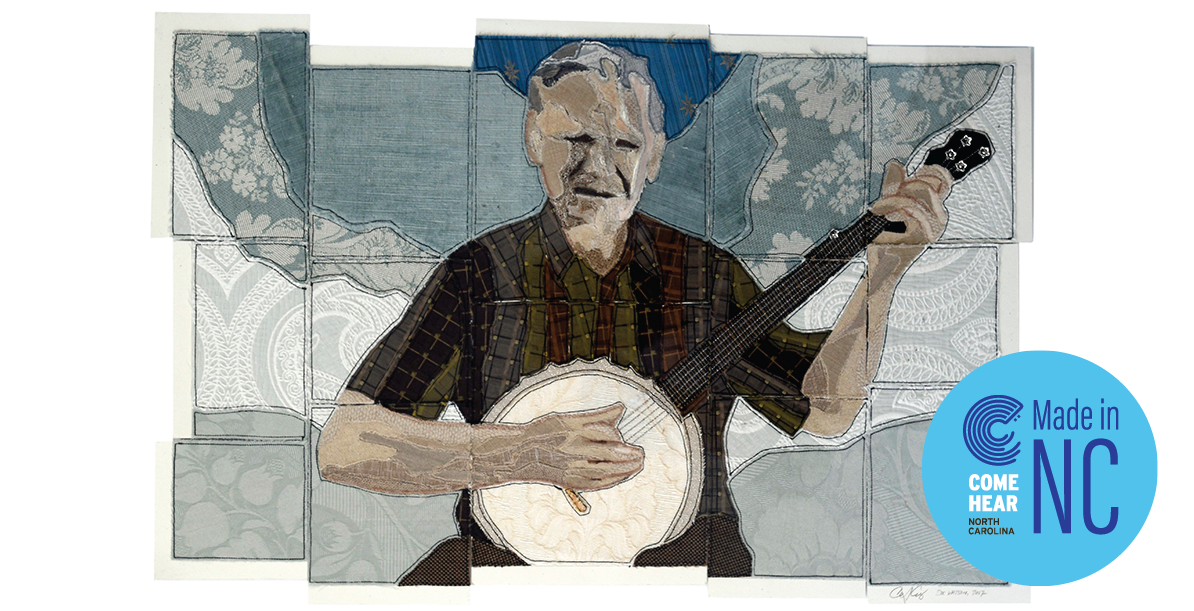
Doc Watson needleprint, fashioned out of upholstery fabric samples by artist/musician Caitlin Cary in 2017. (Photo by Scott Sharpe.)

BGS 5+5: Appalachian Road Show

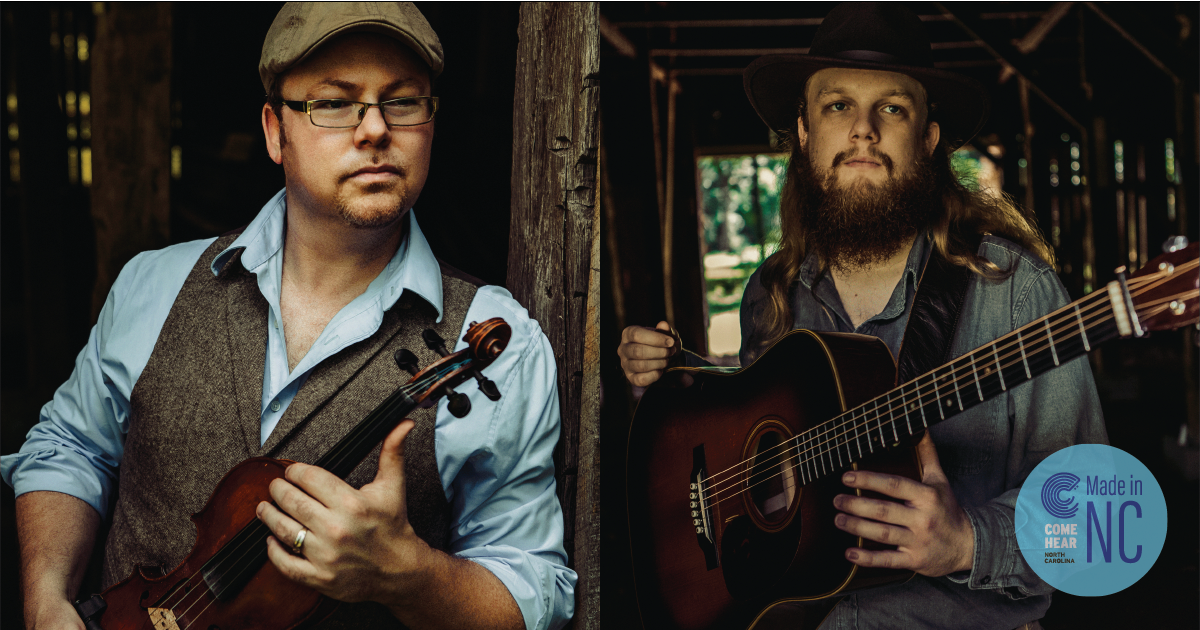
Artist: Appalachian Road Show
Hometown: Canton, North Carolina (Jim Van Cleve); Lexington, North Carolina (Zeb Snyder)
Personal Nicknames: Jibby (Jim);  Appalachian Zeb (Zeb)

Editor’s Note: As BGS and Come Hear NC team up in November, we present North Carolina natives Jim Van Cleve and Zeb Snyder of Appalachian Road Show for this edition of BGS 5+5. Their newest album is Tribulation.

What other art forms — literature, film, dance, painting, etc — inform your music?

I think in a subconscious way, film and photography likely inspire my writing and even playing in a powerful way — and especially when referring to instrumental pieces. I’ve often said that when I’m writing, I can almost see or even “feel” a scene from a movie or a compelling visual image or something. There’s almost like this “unseen visual” which informs the emotional content of the piece of music in question. In some subconscious way, the gravity of a scene from a movie, or in a powerful photograph, will inhabit the melody shapes and rhythmic feel I’ll gravitate towards.

And, I think when I’m writing, I’m often subconsciously wondering… “What is happening in the movie that THIS song is the score for?” It’s difficult to put in words, but I definitely feel it. With Appalachian Road Show, there are such compelling stories that come from the region of our namesake, that it feels like it saturates every note of every song when we’re at our emotional peak. I can often envision scenes from Cold Mountain or The Outlander or Braveheart even during certain songs we’ll perform. — Jim Van Cleve 

Which artist has influenced you the most … and how?

I’d have to say Tony Rice. When I think back on my growth as a flatpicker, I can see how Tony’s influence on me has changed and come from different directions over the years. When I first discovered his music at eleven years old, I was all about figuring out his lead playing on bluegrass songs and fiddle tunes. After that, I started getting into his original instrumentals and his work with [David] Grisman and on Béla Fleck’s albums, which taught me new chord voicings and more challenging leads.

The next and maybe the most important phase would be when I started taking rhythm playing more seriously as a teenager and started studying all of the subtleties of Tony’s rhythm pattern and embellishments, particularly on the Bluegrass Album Band stuff. I have so many favorite guitar players, but I always come back to Tony every so often and figure out things that I had never noticed or understood earlier in life. — Zeb Snyder

What’s the toughest time you ever had writing a song?

I believe maybe the one that was the most challenging for me was when I was asked to write a new IBMA Awards show theme song. The song was ultimately called “The Road From Rosine,” and there were a LOT of angles to consider with that one. For starters, the previous song, “Shoulder to Shoulder,” was written and recorded by one of my heroes Jerry Douglas, (and the whole band on that track is a bluegrass Mount Rushmore). The tune itself is a classic and had been used for years and years as the awards show theme. I’d grown up with the song, and it being a staple of the show, so I had this subconscious mountain to climb in the first place.

Then, on top of that, you have all of these “marks” — emotional and energy/dynamic-wise — that a song being used like this has to hit, because you know how it needs to be used throughout the show. So, it just had a lot of different roles it needed to fill, and in general you just want it to be as great as it can be, given the gravity of that situation. I wanted the song to capture the essence and spirit of bluegrass… the way the founding fathers of the music intended for it to feel, but I also wanted it to embody a sense of where the music is heading, with kind of a forward looking element. So basically, I was trying to write a song that would bridge all the gaps between the past, the present, and the future of our music, and also be theme-ish. — Jim Van Cleve

If you had to write a mission statement for your career, what would it be?

Every undertaking, big or small, do it to the absolute best of your ability, keeping integrity and transparency above all. If you’re going to do a thing, do it beyond the point of excellence. Be authentic and strive to treat the people you work with like you’d wish to be treated, even (and especially) when they make it difficult to do so! haha! 😉 Full disclosure: It’s been our intention from the start to adopt this philosophy in Appalachian Road Show, and we feel that it’s been an important part of our early successes. — Jim Van Cleve

What was the first moment that you knew you wanted to be a musician?

Well, I started playing music through classical lessons. I was seven years old, and my sister had just started doing Suzuki method violin lessons. My parents got me into the Suzuki classical guitar program. At that point, I enjoyed playing, but it was kind of like a favorite school subject, not a passion. Four years later I started playing bluegrass guitar. That was when everything changed. I was so passionate about playing, and I was acting on my own initiative instead of treating practice like it was homework.

I would lose track of time while I was practicing, figure songs and licks out on my own, spend hours researching and listening my favorite artists on the internet, and even get random ideas for my own little instrumentals and licks before I even really knew what I was doing. When my family band started playing a few gigs, that was it. I discovered that I could feel pretty calm and confident on stage, even though I was a shy and reserved kid by nature. My passion for the music took over, and I couldn’t imagine doing anything else for a living. — Zeb Snyder


Photo credit: Micah Schweinsberg

LISTEN: Ida Mae, “Break the Shadows”

Artist: Ida Mae
Hometown: Nashville, Tennessee
Song: “Break the Shadows”
Album: Raining for You EP
Release Date: November 20, 2020
Label: Thirty Tigers / Vow Road Records

In Their Words: “This was one of the last songs we recorded for our new album as the pandemic put an end to our touring. We played our last show in Texas, round the corner from the Alamo, and flew straight back to Nashville and into quarantine. Our plans to record the next record had been ruined so whilst in lockdown we decided to wire the whole house into a remote recording studio with the analogue equipment we’ve been collecting over the years of touring and got to work. This song was inspired by the Stephen Collins Foster song ‘Hard Times’ written in 1854 … it’s an old song that was hugely popular and has been parodied for over 150 years… it felt an appropriate moment in history to use it as inspiration again. It’s the first song I wrote and recorded with my steel-bodied National Resophonic Style 0 resonator guitar, a very special instrument.” — Chris Turpin, Ida Mae


Photo credit: Zach Pigg

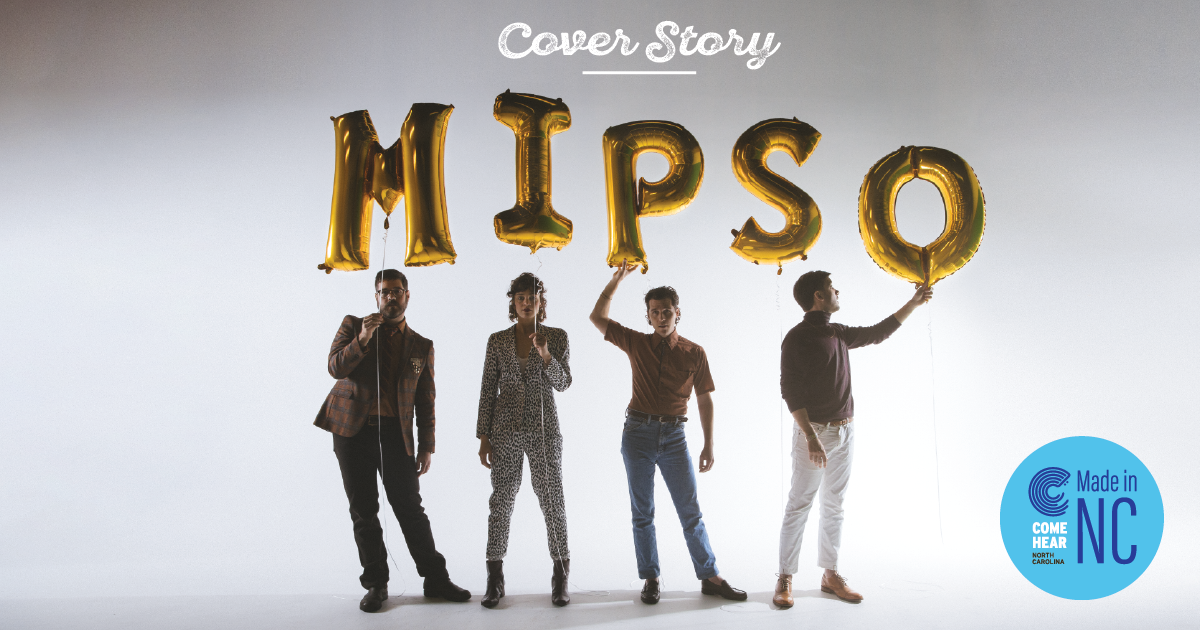
Weird (Or Not), Mipso Keep Exploring Their North Carolina Roots

To hear Mipso perform, it’s hard to believe that Libby Rodenbough, Joseph Terell, Jacob Sharp, and Wood Robinson didn’t originally get together with the intention of digging into bluegrass history or starting a band. But as the self-described “indie kids” played around with vocal harmonies and playful strings as students at UNC Chapel Hill, the traditional sounds of their native North Carolina beckoned.

“I had a need for exploring my own roots — the places I’m from and the traditions that come from North Carolina and the Piedmont specifically,” Terrell, who plays the guitar, tells BGS. “There’s a lot of depth to the music that’s been made around here, and because a lot of those folks are still making music around here, it’s still passed down in neighborhoods, at jam sessions and orally.”

As Mipso’s audience grew, its sound evolved, integrating elements of pop with traditional strings and vocal harmonies, and the foursome reckoned with more than just chords and lyrics.

“I was trying to make sense of North Carolina and being a more long-term North Carolinian — not just by birth, but by choice,” says fiddle player Rodenbough, of the early days. “There was so much context and story behind this traditional music. Every song, even if it was a modern creation, had little threads that tied it back to words that had been sung for decades or hundreds of years. It just felt like… well, in a nice way, a bottomless pit. Or, what’s a nice way to say that?”

“A well! An inexhaustible well,” offers Terrell with a laugh. And they’re still drinking from it: Last month, the group issued their fifth full-length album, a self-titled effort that embraced the band’s quirks and their past experiences.

“We’ve been living together so closely for the last eight years, and for better or for worse, we’re us now,” says Terrell. “We had phases of the band where we thought, ‘Oh, we’re supposed to be this, we need to make a song this way.’ This record, it was like, ‘Fuck it, this is how we make music.’ We like it, and we’re weird if we’re weird, and if we’re not, we’re not, but this is how we go about it. Here’s Mipso.”

BGS: Plenty of songs on this album feel like they were born from one person’s memory or experience; “Let a Little Light In,” for example, has specific lyrics about childhood. How do you bring a song from one person’s brain or notebook to the band as a whole?

Joseph Terrell: The lyrics and the melodies are certainly an important part of what makes a song, but I think when we talk about combining our voices, we’re talking about making a presentation of a song that makes an emotional impact when people hear it. “Let a Little Light In” is a great example of a song that really transformed in the studio. The lyrics mostly came from me, but Libby and Jacob and Wood had more to do than I did with building this cool, playful soundscape of dancey noises to make up a kind of funhouse mirror of childhood weirdness.

Libby Rodenbough: A lot of the songs are lyrically one person’s, or maybe two people’s, work. But we talk about the meaning of songs when we talk about the arrangements because the delivery of it has so much to do with the emotional meaning. There’ve been songs before that we’ve vetoed or decided to leave off a record because they felt too specific to one person — the rest of the band was going to feel like a backing band. Part of our standard for what makes a Mipso song is that we all have to find an in-road somewhere, something we can sink our teeth into.

You see a lot of bands packing up and moving to places like Nashville or LA, but you’ve held tight to the community where you came up in North Carolina. What makes it such a special place for you, as people and as musicians?

Terrell: For me, North Carolina is where the music comes from, and Nashville or Los Angeles is where the business comes from. In as many ways as possible, trying to keep and hearth and home on the music side of that equation is going to be really healthier in the long run.

Rodenbough: I would say, too, that there’s a part of it that’s arbitrary: Because I was born here and went to school here, and because I believe that there are benefits that you can only reap after a certain amount of time spent in one place, this is the place where I still am. It could have been somewhere else. But it’s North Carolina, because I’m a North Carolinian. This is it.

Terrell: There’s a part of you, a Libby-ness, that’s because you’re from this place. It gets a little bit vague and spiritual on some level to justify it, but I do feel that that’s true somehow.

Rodenbough: We formed the type of connection to a place that we have here by having been born here and having come of age here — by having returned here from every tour for seven or eight years. I have a more intergenerational community of people in my life. I’ve known people when they’ve had babies, and I know their kids now. I’ve met their parents and grandparents. You just can’t really rush that process.

Terrell: I had dinner on the porch with my grandparents three weeks ago — they’re 92 and 94 — and my grandma gave me a CD of my great-grandmother telling stories. It was recorded in 1985. So I’ve just been driving around in my car listening to this CD, and it’s about all these places that I still go. I feel a spiritual connection here that I can’t exactly explain. Yet I would hate to think that this answer could be spun in a way that means, “If you weren’t born in a place, you’re not valuable to that place,” because certainly the reason I love Durham is because of the immigrant community. There’s lots of ways of being from a place.


View this post on Instagram


A post shared by Mipso (@mipsomusic)

One song that feels especially prescient on the new album is “Shelter.” I think a lot of people can relate to the idea of seeking out a place to be safe and accepted. What do those lyrics mean to you?

Terrell: That song came from Wood, primarily. He had this great melody that reminded us of a British Isles folk melody. Some of his family in Robeson County in Eastern North Carolina had been really impacted by one of the bad hurricanes, and he had the idea of telling that as a snippet of a story. But instead of making this about one very specific scenario where you’d need shelter, you have four different scenes that land on the same phrase or message — kind of in the tradition of country songwriting. Whether you’re a kid, an immigrant, a person facing natural disasters because of global warming, or the richest person in New York City going up into some big tower, this is a human need for shelter. We all need it, and therefore, we should all think of ourselves as tied together.

Rodenbough: And I think that a lot of the strife — to put it really lightly — happening in the country right now comes from an anxiety about lacking shelter, lacking a feeling of safety. That applies to people who are very clearly lacking in physical shelter as well as people who seem to be lacking for nothing. Our country has failed to provide that for people from every walk of life for a long time now, and so I think that’s one of the reasons that it’s unfortunately especially relatable right now. We all feel untethered. We all feel like we don’t really have a home.

Mipso’s sound developed in part thanks to in-person communities at places like festivals and neighborhood jams. Do you feel like there’s a way to emulate that in online communities?

Rodenbough: For so many subcultures, the internet has given people the gift of knowing that others like them exist. It is very empowering, and in some cases, that’s a bad thing — there are a lot of internet subcultures that we wish probably didn’t have that vehicle. But, for better or for worse, it makes something that probably felt very geographically disparate, and therefore disconnected, feel really strong and unified.

One example during COVID has been a Facebook group called Quarantine Happy Hour: They do a concert every night, or even a couple of concerts every night, and I’ve watched more bluegrass and old time music since [joining] than I did probably in the couple of years prior. It’s like a who’s-who, especially of contemporary old-time players, with bluegrass too. Every concert, no matter how well-known the performers are, has a couple of hundred people, and folks are tipping like crazy. And it’s interesting that it took a pandemic to make that happen, because we could have done that all along.

Even before the pandemic, though, Mipso was really harnessing the power of the internet to reach new fans — even listeners who maybe never considered themselves fans of traditional music.

Terrell: I think we’re probably more like a gateway drug into bluegrass than a haven for diehard fans. We have played a good number of bluegrass festivals and traditional-oriented-type venues, but I think we’re on the fringe of what they consider to be part of that world. If people find our music and like it, they might say, “Wait… there’s something in this that’s leading me towards all these other artists.” But there’s certainly not, like, a big tag we’re putting on our foreheads to weed out bluegrass or non-bluegrass fans.

Are there any misconceptions you think people have about bluegrass or traditional music — things they really get wrong?

Terrell: I mean, I have two things. The first is the idea that it’s white music, which I think is a really pernicious and awful myth. So much of this, the only reason we’re doing this is because it came from slaves who were here, and it came from African American music.

Rodenbough: It’s one of the nastiest and almost most ridiculous perversions of the truth, that white supremacists have used this type of music as an example of anglo-cultural achievement.

Terrell: The other [misconception] is that it’s tame or like, “stripped down.” For me, the best way to understand bluegrass specifically is that it was rock ’n’ roll right before rock ’n’ roll. It was high-energy and rip-roaring — the banjo twanged right before the electric guitar. It was the head-banging music of its day. [Laughs]

Rodenbough: This was a wild music — bluegrass in particular was not an old folky hokey thing. The way that we divide up the genres of traditional music comes straight out of marketing. I think it can be useful to understand how one style of music informs another that came later chronologically or something, but it’s not necessary to draw hard lines between old time and bluegrass in order to love stringband music or to love fiddle-centric music. All the borders are so blurry, just like with everything in history and in our overlapping cultures. I think that’s so wonderful, and I wouldn’t want to try to clean it up. That would be missing what’s so special about not even traditional music, but vernacular music — music that non-professionals make in their lives, about their lives.


Photo credit: D.L. Anderson

STREAM: The Wild Feathers, ‘Medium Rarities’

Artist: The Wild Feathers
Hometown: Nashville, Tennessee
Album: Medium Rarities
Release Date: November 20, 2020

In Their Words:Medium Rarities is a group of songs that we’ve always loved, but just kinda fell through the cracks when it came to sequencing each record. We wrote and recorded some new songs and had some fun doing some covers of tunes we’ve always loved. Putting new music out into the world is always a great and strange feeling. We’re so proud of it and can’t wait for people to hear them.” — Ricky Young, The Wild Feathers


Photo credit: Rachel Moore

The BGS Radio Hour – Episode 189

For the first time, we are so excited to bring to you the BGS Radio Hour in podcast form! Since 2017 the BGS Radio Hour has been a weekly recap of the wonderful music, new and old, that we’ve covered here on BGS. Check back in every Monday to kick your weeks off with the best of BGS via the BGS Radio Hour.


LISTEN: APPLE MUSIC

Shemekia Copeland – “Clotilda’s on Fire”

Highly awarded modern blues artist — and our current Artist of the Month — Shemekia Copeland brings us a new release, Uncivil War, offering us a number of topical songs with perspectives on gun violence, LGBTQ+ rights, and more.

StillHouse Junkies – “Mountains of New Mexico”

Colorado-based StillHouse Junkies bring us a classic murder ballad inside an ode to the American West.

Marc Scibilia – “Good Times”

Recent 5+5 guest Marc Scibilia brings us a song from his new release, Seed of Joy.

Leyla McCalla – “Song for a Dark Girl”

Leyla McCalla (who you may know from folk supergroup Our Native Daughters) brings us a song from her new Smithsonian Folkways re-release, Vari-Colored Songs: a Tribute to Langston Hughes.

My Darling Clementine – “I Lost You”

UK-based duo My Darling Clementine brings us a new interpretation of an Elvis Costello/Jim Lauderdale co-write.

The Caleb Daugherty Band – “Daylight’s Burning”

The Caleb Daugherty Band pays tribute to Aubrey Holt of the acclaimed Boys From Indiana with a cover of “Daylight’s Burning.”

Madison Cunningham – “The Age Of Worry”

Madison Cunningham is back on BGS with a brand new EP, Wednesday, an interpretation of a handful of cover songs chosen by the California-based singer, songwriter, and guitarist.

Adam Hurt – “The Scolding Wife”

“Clawhammerist” Adam Hurt was a recent feature on Tunesday Tuesday with a solo gourd banjo rendition of “The Scolding Wife.”

The Avett Brothers – “Victory”

Everyone’s favorite roots music brothers — that is, the Avett Brothers — are back with The Third Gleam, a follow up to the first and second Gleam EPs. Much like their earlier sounds, the new record is stripped down, with timely discussions of gun violence, mortality, and the human condition. Check out our conversation with Scott, Seth, and Bob Crawford.

Jeff Cramer and the Wooden Sound – “Aimless Love”

Denver-based singer-songwriter Jeff Cramer brings us an edition of The Shed Sessions along with his band the Wooden Sound, and a wonderful tribute to the late, great John Prine.

Max Gomez – “He Was a Friend of Mine”

Regular friend of BGS, Max Gomez brings us a timely, social justice-inspired song.

Mipso – “Your Body”

Pop string band Mipso is just one of so many great North Carolina groups that we’re proud to feature this month in our Made in NC playlist for #NCMusicMonth!

Julian Taylor – “Love Enough”

Julian Taylor was the guest of honor on our most recent episode of Shout & Shinea series that serves as a platform for Black, Brown, Indigenous, Asian, LGBTQ+, and disabled musicians, who are so often marginalized in genres to which they’ve constantly contributed.

Tony Trischka – “Carry Me Over The Sea”

Quintessential banjo legend Tony Trischka was featured this week with a new single from his 2021 release, Shall We Hope, that also features Irish singer Maura O’Connell.

Susan Werner – “To Be There”

Like many, Susan Werner is currently hoping for better times. And better times is what this Carter Family-inspired number is all about.


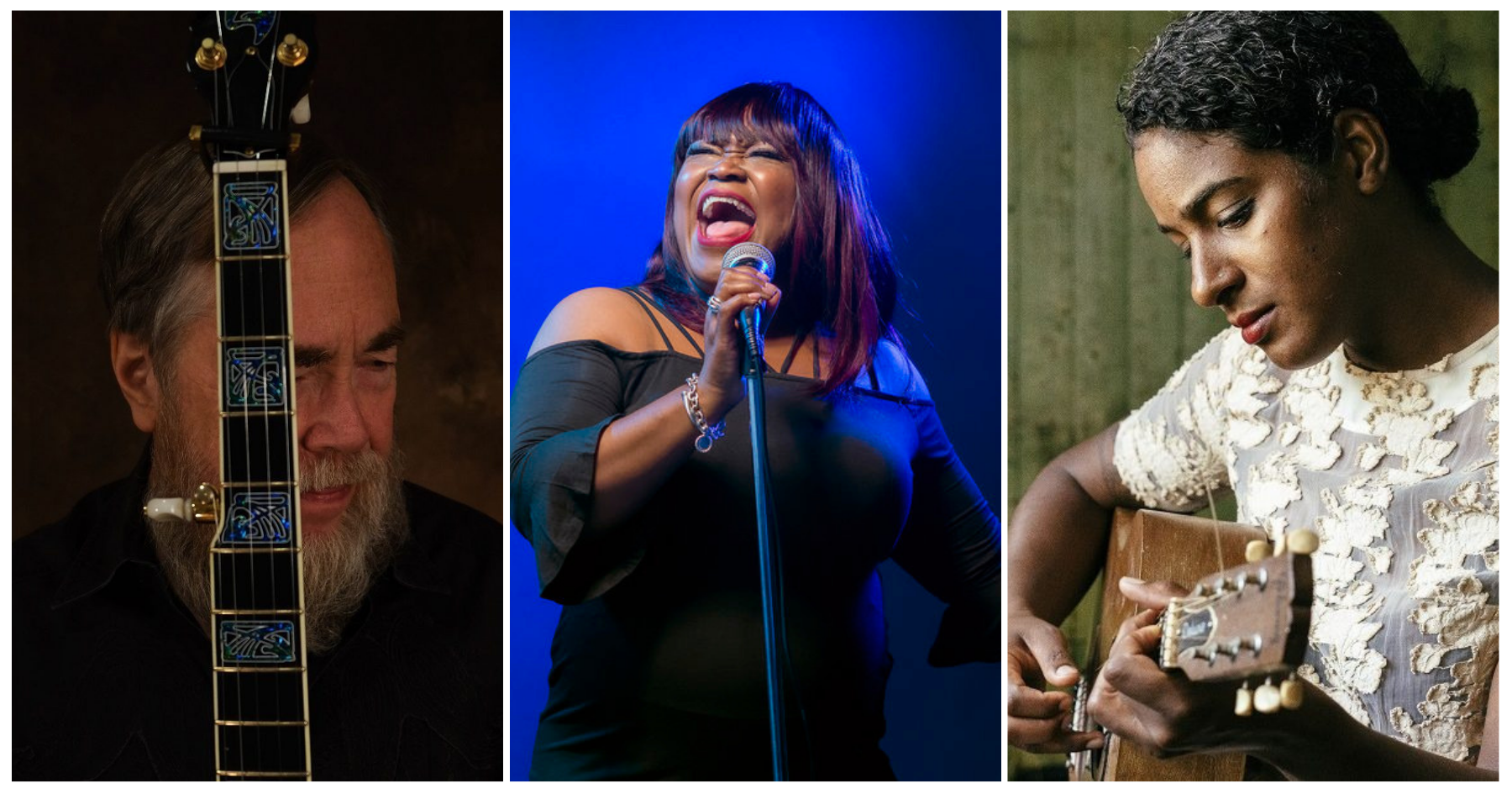
Photo credit: (L to R) Tony Trischka by Zoe Trischka; Shemekia Copeland by Mike White; Leyla McCalla by Rush Jagoe.

MIXTAPE: Front Country, How Did We Get Here?

“For our 2017 record Other Love Songs, we made the decision to record using only acoustic instruments and our voices with almost no additional production. That’s how we’d been playing live up until that point and we wanted to capture the sound we’d been working on as an acoustic unit. Soon after we found ourselves stepping outside the acoustic box and experimenting with the overall sonic picture of what we were presenting live. Roscoe (Adam Roszkiewicz) and I began using more effects pedals and started playing through amps. Melody began playing percussion and after the addition of the pandeiro (a handheld Brazilian percussion instrument that can sound very much like a small drum kit), “Front Country music,” as we like to call it, began to evolve.

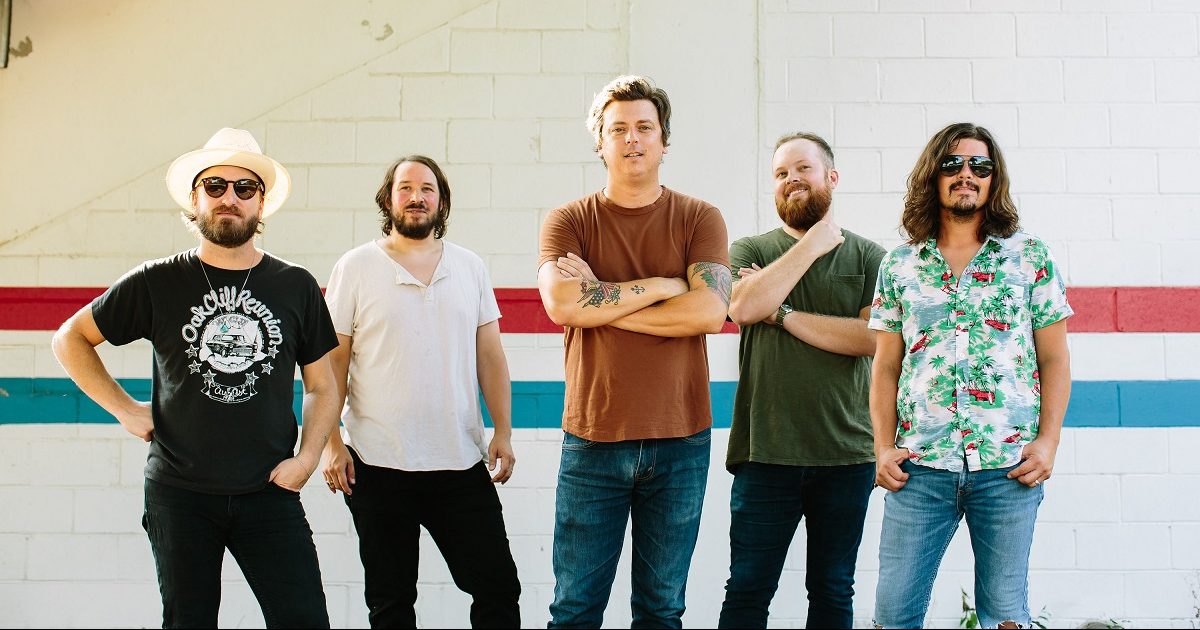
“As we began writing and arranging for the album that would become Impossible World, we made the decision not to put any limitations on production in the studio and found a producer (Dan Knobler) who could help us realize the sonic vision we were working on. This was basically a 180 from our previous record and it was very exciting! However, when any band takes a big leap forward musically, I often wonder what were some of the musical influences that helped inspire this transformation. So here is a collection of music each of us was listening to during the process and how these tracks helped inspire what we all brought to this record. For anyone who’s been following us for a while or maybe had a different impression of the band before hearing this new music this will help answer the question: ‘How did they get there!?'” — Jacob Groopman, Front Country

Brandi Carlile – “The Joke”

One of the most undeniably heartrending songs of the last decade, this song encapsulates Carlile’s emotionally earnest yet epic songwriting style. The way she wears her heart on her sleeve and doesn’t mince words has really inspired me to try and cut to the core with my own songwriting in the past few years. — Melody

Peter Gabriel – “Sledgehammer”

This track actually came up several times while we were arranging the songs for the new album, for the neo-soul vibes, the approach to instrumental hooks and, you guessed it: counterpoint. — Adam

HAIM – “If I Could Change Your Mind”

This first album from HAIM is full of throwback ’80s pop perfection and super catchy songwriting. I think their approach to dense, multi-layered backing vocal parts really influenced the harmony arrangements I did for the poppier tunes on Impossible World. — Melody

King Crimson – “Three of a Perfect Pair”

Intertwining themes and counterpoint have always been a big part of the FroCo sound and that approach was directly influenced by King Crimson and this track in particular; also we covered it on our Mixtape EP in 2016. — Adam

Los Colognes – “Flying Apart”

I came across this album randomly right as we were about to start working on the music for Impossible World and fell in love with the ’80s-meets-modern vibe. The use of electric guitar on this track had direct influence on what I brought to the table for a few of the tracks on Impossible World, especially “Miracle.” — Jacob

Paul Simon – “She Moves On”

From Graceland‘s Brazilian-themed follow up album The Rhythm of the Saints, this track is smooth and spooky in its trance-inducing worship of the dark, sacred feminine. The verse vibe of the song “Mother Nature” was loosely inspired by this one. — Melody

Lau – “Toy Tigers”

Lau is a band from Scotland that has successfully melded electronic elements with Scottish folk music and the result is something truly mind-blowing. They have become one of my all-time favorite bands. — Jacob

Muna – “Never”

I was also listening to a lot of electro-pop and aside from Muna’s production being on point, the level of risk they take in the instrumental section of this track is excellent. — Adam

Tame Impala – “Yes I’m Changing”

Kind of an ironic title for the purpose of this article, but the Tame Impala album Currents from 2015 was a big influence on creating a big sonic landscape that still completely serves the song and doesn’t overshadow it. I’d like to think we achieved this on a few tracks on the record. — Jacob

Queen – “I Want To Break Free”

I grew up on Queen’s tight aesthetic and Freddie’s vocal virtuosity, and while this is may be their most compact pop track ever, it’s edited economy inspired our arrangement of our song, “Real Love Potion.” — Melody

Squarepusher – “Welcome to Europe”

Continuing with the counterpoint theme, I was listening to a ton of electronic music while we were making the new album and this track exemplifies how you can have multiple hooks supporting each other throughout a track. Also, I love big jumps between notes in my hooks and get a lot of inspiration from tracks like this. — Adam

Dawes – “Telescope”

After we recorded the first half of our record early in 2019 I found myself listening to the Dawes’ Passwords from 2018 a lot and particularly this track. I love how the song has this slow build and new musical elements are constantly introduced throughout to keep it moving forward. It could be something really tiny that has a big impact on how the song moves. — Jacob


Photo credit: Michael Weintrob

WATCH: Watchhouse and Milk Carton Kids Perform “Wildfire”

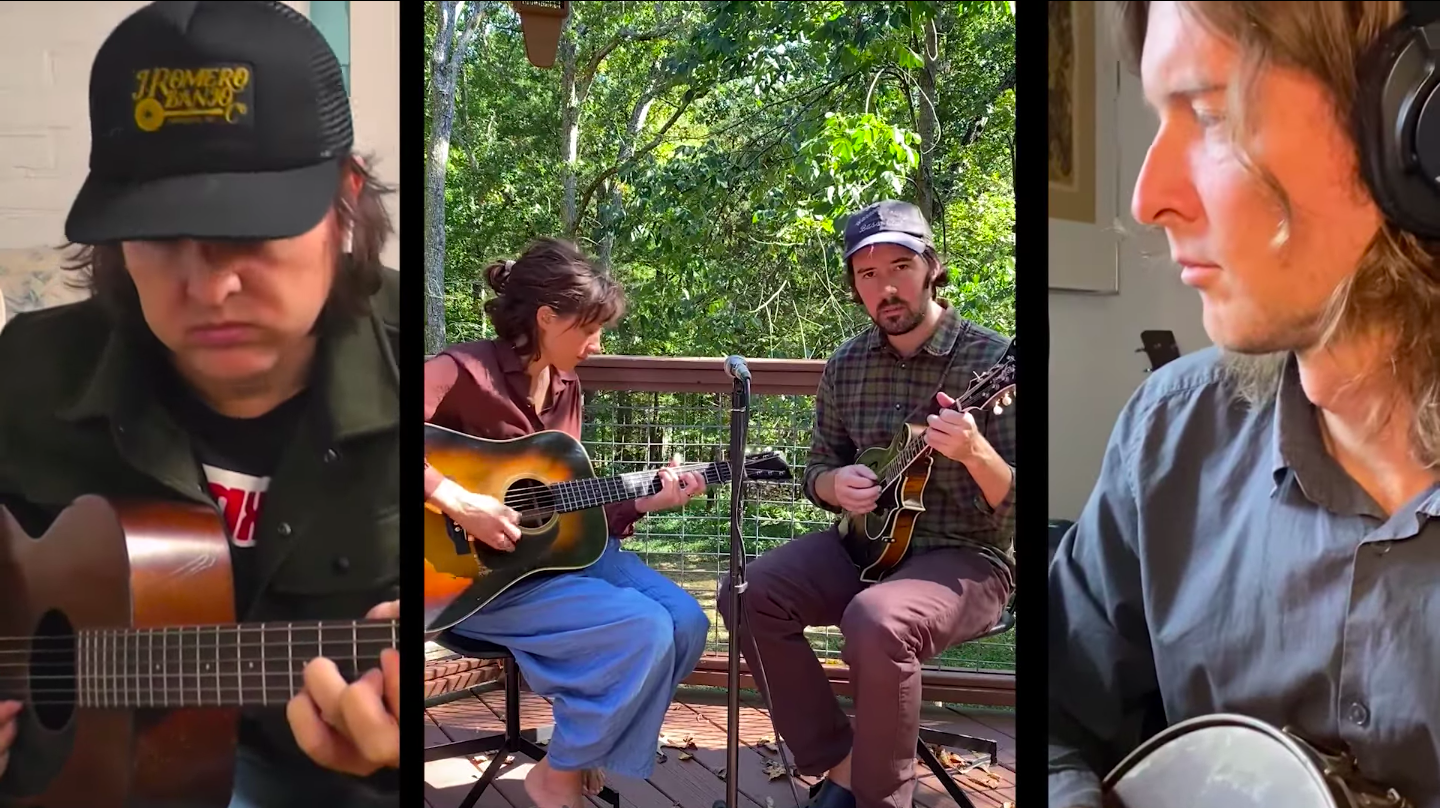
Kenneth Pattengale and Joey Ryan from the Milk Carton Kids are back with another episode of their socially distant video show, Sad Songs Comedy Hour. In their 17th episode, they bring on Watchhouse’s Andrew Marlin and Emily Frantz for an insightful conversation about all things. From the election and life in isolation to creating in stressful times, these four provide some interesting food for thought. As the show name would infer, there’s the odd joke here and there, but the episode concludes with a beautiful collaboration on Watchhouse’s “Wildfire.”

The hosting duo says, “We FINALLY got our act together to sing with Emily and Andrew, and it was worth the wait. Great talk too, as they’re deep thinkers, generous players, incisive songwriters. Hope we didn’t ruin their ‘Wildfire’ tune. As always, please support NIVA — the National Independent Venue Association — because they’re supporting all of us.”

Like a beloved book or your favorite podcast, Sad Songs Comedy Hour will surely put a smile on your face and glow with warmth and familiarity. Check out the new episode, and hear their collaborative version of “Wildfire” below.


Editor’s Note: This post has been updated to include Mandolin Orange’s new band name, Watchhouse.