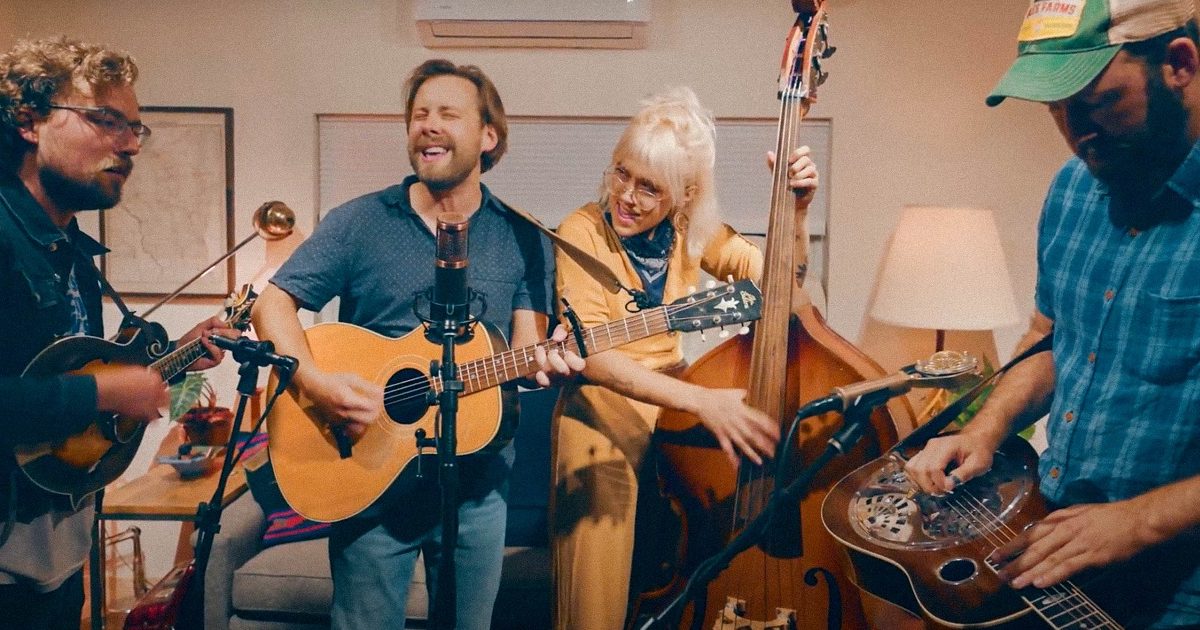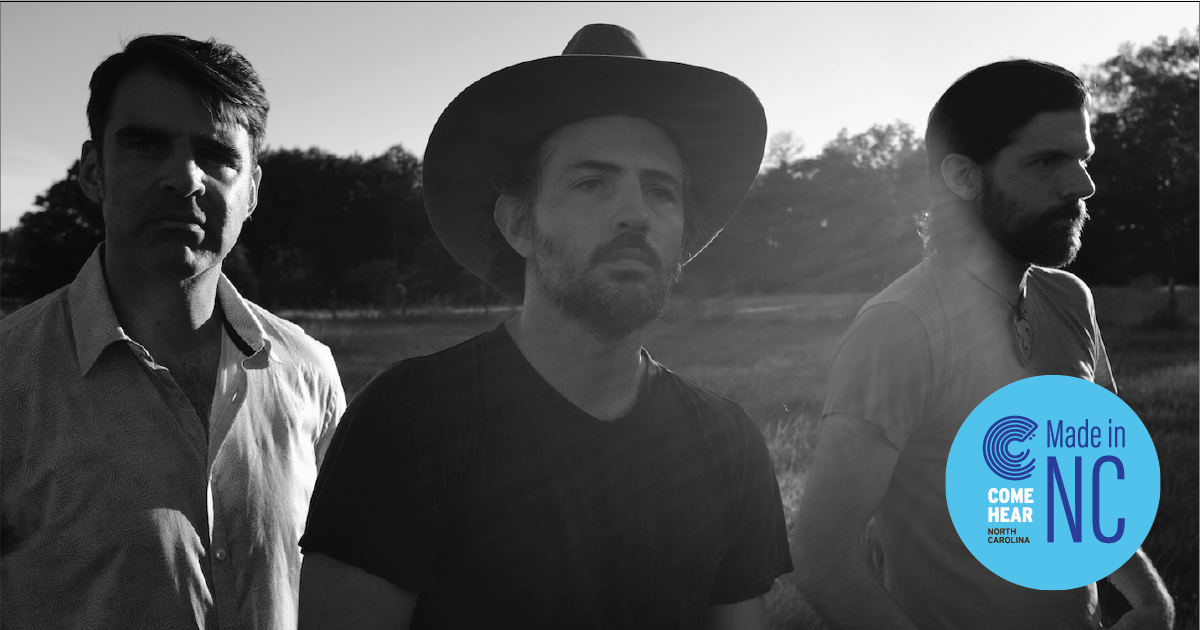
The Avett Brothers: Three Perspectives on ‘The Third Gleam’

Back in March, the Avett Brothers — Scott and Seth Avett, along with bassist Bob Crawford — were scheduled to leave their homes in North Carolina and head out West, where their longtime producer, Rick Rubin, was waiting at his studio in Malibu. They were in a prolific place at the top of the year, and eager to keep up the momentum. They had just released Closer Than Together, their tenth studio album, in October 2019, and had written and recorded The Third Gleam, the latest chapter in a series of acoustic EPs. They had also written a ton of new material — enough for another album, by Scott’s estimation — and were all set to move forward with it when the coronavirus hit. Everything, including their flights to California, ground to a halt.

The only thing that’s gone according to plan for the Avetts in 2020 is The Third Gleam, and it’s weirdly fitting — fateful, even — that it’s a homecoming in many ways. The eight-song EP was ushered into a tumultuous time they never saw coming, one that’s forcing everyone to stay put, slow down, and count their blessings more fervently than usual. It’s a return to the sparse acoustic arrangements that the Avetts perfected in their early releases before they teamed up with Rubin in 2009 for their mainstream breakthrough, I And Love And You, which brought them into the rock arena.

The Second Gleam came out in 2008 just before I And Love And You changed their lives and their sound, and though they’ve never strayed from their bluegrass and folk framework, they haven’t returned to the simplicity of Scott and Seth working through ideas with only their guitars and each other for company to this degree in over a decade. (Crawford does join them on The Third Gleam; he wasn’t brought in for the first two.)

The Third Gleam was written long before the world abruptly changed, but it touches on themes that bubbled up from the tension and strife that’s shaped recent moments of violence, unrest, uncertainty, despair, and the embers of resilience, hope, and the pursuit of social justice that smolder in spite of all of the above. Gun violence (“I Should’ve Spent the Day With My Family”), facing the unknown with grace (“Victory”), considering mortality (“Prison to Heaven”), and the deep joys and struggles of the human condition (“The Fire”) are all explored here, in soft tones, plaintive strumming, and the meditative plucking of Scott’s banjo.

Each song is striking in its approachable yet profound sincerity, and this less-is-more approach is one they found to be particularly effective in this fractured time. These issues were on their minds before the coronavirus upended life as we know it, but the Avett Brothers find themselves finding new meaning on The Third Gleam back where they started: at home, in North Carolina, trying to make sense of the world with little more than two voices and two guitars in sharp relief. For Scott, it’s simple: “The smallness of the Gleam — that’s where its power is.”

BGS: When I think of the first two Gleams, some of the saddest songs you’ve ever written come to mind, like “If It’s the Beaches,” but also gems that became fan favorites, like “Murder in the City.” How do The Gleam, the Second Gleam and The Third Gleam stand out to you? What sets them apart from the rest of your work?

Scott Avett: If there was a heart or soul or spirit to everything we do, [The Gleams] orbit a bit closer to that. If there’s layers to an entity or a life, this is kind of at the pure center of it. I’m coming up with this theory for some reason right now with you. [Laughs] At the root of the songs, a lot of the songs on other releases, we have wrung them out — put them literally through the wringer — to see what they want to become, what they can become, what we’re trying to hear and get out of them. Are we challenging them or going too far with them? With these, we don’t ever take that journey. It’s much earlier in the inception of the life of the song that we stop meddling with them. There’s a little more to just be with them, which is at the root of things.

Seth Avett: The series itself sort of represents a simplification across many aspects of this whole thing. It represents the clearing out of many great things, many great tools, and many great advantages we have with our band and our resources, and our possibilities. It simplifies the process of collaboration, the process of artwork. It simplifies recording, mixing, mastering and everything else. Across the board, it’s just a process of simplification and reduction, to where the only real star is the lyrics. I think that we’re still attempting to make something that’s engaging, musically, but it’s no secret: what we put our time into is storytelling, writing words and then sharing them onstage. It’s always at the heart of our songs, and so the Gleam is presenting only the heart rather than the entire body in a way.

Bob Crawford: They’re Scott and Seth’s sketchbooks, really. If you knew these guys as well as I do — and I know a lot of people know them very well, because they put it all out there and they always have — but if you love a great painter’s paintings, and you become a connoisseur of that painter’s paintings, their sketchbooks are widely available nowadays, be it Rembrandt or Leonardo da Vinci. That’s how I look at the Gleams, stitched in with the fabric of all our work: they’re basically more broken down, raw thoughts that they guys have. They’ve always wanted these things to be quieter and less. This is the first one, I think, I’ve played on; normally it’s just Scott and Seth doing these. It’s just a chance for them to get quiet, be alone, and be brothers.

You’ve been very busy between Gleams. How has it been to return to this acoustic space after playing arena-ready roots-rock on Closer Than Together

Seth Avett: What it does for me, personally, is it takes a new inventory of our trust, of our brotherhood — my trust for Scott and his trust for me — with no other real considerations. It’s wonderful to be reminded in such a genuine way, with such gravity, that we still trust each other completely, and we’re not moving forward based only on the efforts of others. We still have each other’s trust and care, and we still hold those things in the highest regard. It’s a funny thing: on the first two Gleams and on this one, when we go into the process of finding out what the songs are going to be, and we present them to each other, there’s very little discussion.

All these full-length records, whether one person wrote the whole song technically or not, the other one will have a certain amount of contribution to it. There’s a lot of weighing: “What does it mean?” “Can it be said better?” “Is this too much, is this too little?” We do consider them in a big way, and we consider the songs on the Gleams in a big way as well — but we hardly talk about it. It’s like, “Hey, here’s four songs that are feeling really good to me and things I want to say,” and the other brother says the same, and that’s it. We just do it. It’s cool.

Bob Crawford: These Gleams give them an opportunity to come together and work together a little more than they have in recent years. We’re coming full-circle because of the pandemic. Since the pandemic, they’ve been living very close together and spending more time together. They were always close as brothers and best friends, but closer, approximately, so they could get together. We were actually about to go to Malibu to record the week the pandemic hit, the week of the shutdown. Ultimately, we tried to do it all these different ways; it just didn’t work out, so it turned into them recording demos themselves, sending me the demos, and me recording the bass and sending them back.

Did any of these new songs pose a new challenge you hadn’t confronted in your songwriting before? 

Scott Avett: What’s different about mine — and this is a change for Seth and I — we sort of switched places. Several years ago, I probably would’ve been the one that tended to be more rapid-fire, more erratic. I just chop it up with a lot of syllables and a lot of words. On this one, we switched. We were laughing about it. Seth’s songs have a lot of words and tell stories, they’re narrative, and then mine are very much personal and have a lot less words and a lot more space.

I always look at it that there’s only one character on the record, there’s one character in the story, and the two of us kind of make that character. We would do very different things on our own, probably. There’s a contrast to it, a gemini sort of approach to it I guess. [“I Should Have Spent the Day With My Family”] is a good example of what’s changed for us. It’s minor and subtle to anybody else, but it’s a change for us.

Seth Avett: If you look at The Third Gleam, it’s impossible not to compare and contrast between me and Scott — I know it is, I’m sure all of our fans do it — where the differences between the Seth and Scott songs have never been more laid bare, in terms of the difference of the vibe. Scott’s songs, they just have so much space and breadth in them. I don’t look at “Family” or “Fire” as songs that have a ton of breadth in them; they feel a bit more urgent.

The narratives have a bit more of an agenda. Whereas, “I Go to My Heart,” “Victory,” “Back into the Light,” they have quite a lot of breadth and space, and so I’m seeing a change in him. If we are writing the songs we’re meant to write, and we are giving reverence to our form, then the changes in us are the changes in the song. If you ask, “How have I seen his writing change?” I’m thinking about how he is growing and changing, as a man, as a father, as a brother. It’s all kind of wrapped in one.

The role of advocacy and activism in music has changed, even since you released Closer Than Together, and “Family” is a turning point for you especially, Seth. You mention your wife and child by name in a song about gun violence, and you’ve never done that before. How has it been to anchor the Gleam in this moment in that regard?

Seth Avett: I can’t say that there was a point where I said, “Okay, now I’m going to open the door and start writing these types of songs.” This sort of happened incrementally. A song like “Bang Bang,” there were multiple moments where I’d go to a hotel room, and I’d turn on the television, and it’s just one [show] after the next, from ridiculous garbage to the most eloquent sci-fi — but it’s always the leading man with the gun. It’s always presented with such power, and it’s just ridiculous. The idea of holding a gun to make someone powerful is absurd; it’s preposterous.

I had many moments like that, and then there were many shootings. “I Should Have Spent the Day with My Family” is an obvious, super-literal reaction; “We Americans,” that’s the first four years of a person’s life growing up as an American. I don’t know that there’s one moment where I gave myself permission, but there have been many moments that I consider wholly unavoidable in terms of taking that into the songwriting.

This has been a tumultuous time, so I was curious if you think there’s a connection between that and going back to the foundation with an acoustic EP. Do you find that it was an organic thing to take a step back and retract to that nucleus and get to the root of all things Avett with The Third Gleam, considering everything going on?

Bob Crawford: It’s definitely a time of reflection, and it does make you appreciate all we’ve done, because you don’t know when and how we’re going to do it again. … For me, “Victory” is the greatest song they ever wrote. We only win when we submit; we only find peace when we let go. How do we hold it all together in our hearts at the same time? How do we not lose our minds at that? How do we find true peace inside while there’s chaos flowing back and forth? I think, hopefully, the Avett Brothers can be part of the center of that. If you are the center of that, you’re not polarizing. You can’t alienate anybody. No matter what you know they believe, face to face is how we live the gospel, how we can make real change.


Photo credit: Crackerfarm
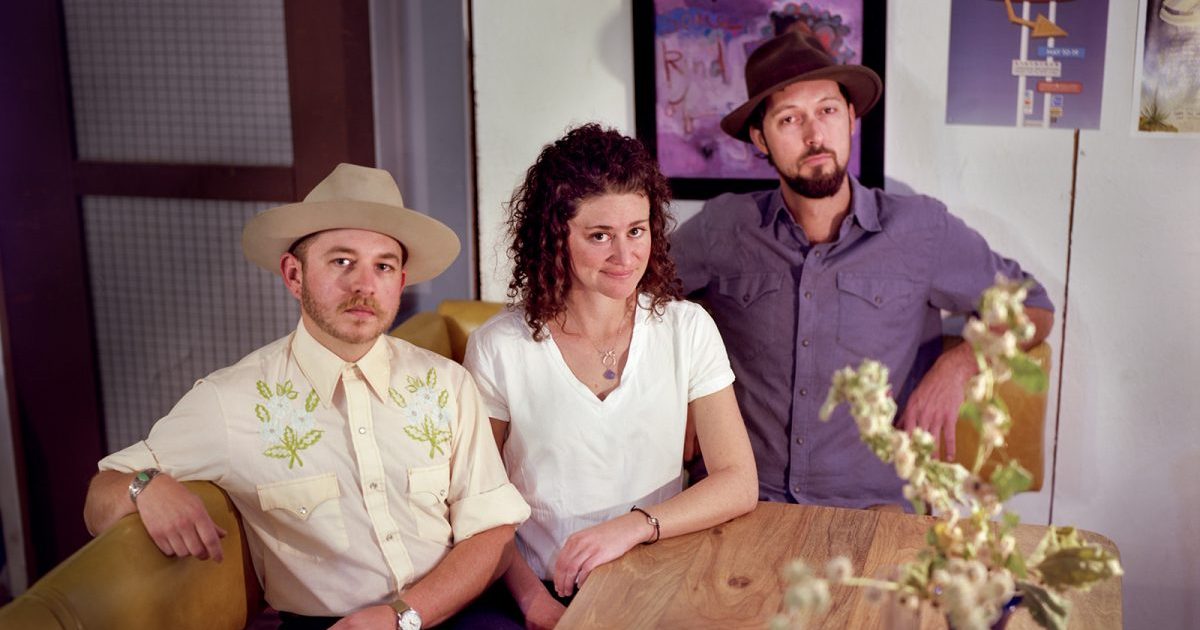
WATCH: Stillhouse Junkies, “Mountains of New Mexico”

Artist: Stillhouse Junkies
Hometown: Durango, Colorado
Song: “Mountains of New Mexico”
Album: Calamity

In Their Words: “‘Mountains of New Mexico’ is an old-school murder ballad about misunderstood victim vs. outlaw, but it’s also an ode to the great wildernesses of the American West and their ability, even in the Information Age, to humble us as they have since the beginning of time. And what better backdrop for this kind of tale than northern New Mexico’s Bisti Badlands, a sun-scarred, alien landscape of hoodoos, gullies, and maze-like washes. The August sun limited our video shoot schedule to early morning and sunset, and the light was nothing short of magical; the song’s windswept climax came to life in a way we had scarcely imagined. ‘Mountains of New Mexico’ is a reminder that trading one kind of trouble for another doesn’t always work in our favor.” — Cody Tinnin, Stillhouse Junkies


Photo credit: Renee Anna Cornue

WATCH: Jeff Cramer and The Wooden Sound, “Aimless Love”

Artist: Jeff Cramer and The Wooden Sound (Emma Rose, Dylan McCarthy, Dave Pailet)
Hometown: Denver, Colorado
Song: “Aimless Love” (John Prine cover)
Album: The Shed Sessions
Release Date: November 20, 2020

In Their Words: “I dreamt up ‘the shed’ late last year — a backyard DIY project fueled by a desire to provide space and community within Colorado’s incredible songwriter scene — which, as luck would have it, I finished building at the end of February this year. During the pandemic, it has become my office and writing space, and it ultimately brought me to a vision for a video series of live-recorded new, old, and cover songs with my new band, The Wooden Sound. I’m excited to be releasing seven videos and tracks from the The Shed Sessions over the next two weeks, starting with a cover of John Prine’s ‘Aimless Love’ here.

Aimless Love was my first John Prine record, and while it might not be amongst his most prominent, the title track especially has become one of my favorites. Maybe it was discovering it as a teenager — as a small fry kid in a Midwestern town — that caused me to feel a special closeness to it. John Prine was able to add a sense of warmth and humor to the messiest of human conditions and somehow make it personal to everyone (including me) in the process. I also vividly remember playing Aimless Love under the full moon in my backyard in Denver the moment we learned that he had passed. It felt appropriate to release this video as my little tribute to him.” — Jeff Cramer


Photo credit: Payden Widner

How Shemekia Copeland Found Fans Beyond the Blues (Part 2 of 2)

Over the last 10 years, in a series of albums recorded with producers Oliver Wood and Will Kimbrough, Shemekia Copeland has progressed from a first-class blues belter into a wider-ranging, more nuanced artist whose music touches on Americana, rock, and country — and she’s still a first-class blues belter.

In addition to working with Kimbrough on her new album Uncivil War and 2018’s America’s Child, Copeland has recorded with artists like John Prine, Emmylou Harris, and ZZ Top’s Billy Gibbons. In part two of our interview with Copeland, whose father is the late Texas blues great, Johnny Clyde Copeland, we discuss her musical development and the lessons she learned while teaming with these and other unlikely collaborators.

Editor’s Note: Read the first part of our two-part interview with Shemekia Copeland.

BGS: Over your last four albums, you’ve worked with producers Oliver Wood and Will Kimbrough, mostly in Nashville, and really started to open up the instrumentation and type of songs you’ve recorded. So I have a chicken and the egg question: did you start working differently because you wanted to change, or did you change because you worked with different people in different places?

SC: It happened organically. The first record with Oliver was in Atlanta and then he moved to Nashville, because everybody moves to Nashville, because that’s where musicians and studios are, and it’s inexpensive to work there. Oliver had Will Kimbrough come in and play and I was a big fan of his. When he played on my record, it was love at first note, because he’s just a musical genius.

We did our last record America’s Child with him and he just knows everyone. Nashville is such a small town in that way. All the musicians know, respect, and love each other. Will would say, “So-and-so would sound good on this. Let’s call him,” and within a day they’d have these guys in the studio that you couldn’t imagine working with as a blues artist, because you don’t know them. The gates of Heaven opened up being in Nashville because that’s where everybody is.

How about Oliver Wood?

I love him. He’s a very talented player and writer, and the best thing about him was that he really encouraged me to think about how I sing. I came from the blues shouter way of singing, and from him I learned that you don’t have to do that to move people. That was huge for me, to learn that you can capture people with subtlety just as much as you can capture them with the hugeness of your voice. We had that conversation and I took that away from working with him and have carried it on.

“Uncivil War” is a perfect example. I did not want to sing that song. I thought it was is a pretty song for somebody with a pretty voice to sing. I wanted the world to hear it and figured they would not if it was coming from me, because I don’t have a pretty voice. That’s when they all yelled at me and said I was being completely ridiculous and to just sing the damn song. But I still struggle with thinking that the subtleties of my voice work. I was just using the power of my voice more like a Koko Taylor, or Etta James.

Let’s talk about some of these people you’ve worked with. You did a duet with John Prine on his lesser-known blues song “Great Rain.” Tell me about that.

That happened completely organically, but here in Chicago, though he lived in Nashville. He’s originally from Illinois and we were both on a concert called Voices of Chicago. I was there to represent blues and John was there to represent the fact that he’s just frickin’ amazing. We were backstage and I’m standing there looking at John Prine thinking, “Oh my God, I’m standing here looking at John Prine.” And he looked down at my feet and said, “I love your shoes!” We started talking and I fell in love with his wife, Fiona. Amazing people. We got to talkin’, started working on projects together, and the rest is history. People like him know how to break the ice with people when they’re nervous around them.

How about Emmylou Harris?

That was just a Will Kimbrough connection. I met her a couple times, like in passing at festivals, but her being on “America’s Child” was Will. He plays with her. She heard the song, loved it, and wanted to sing on it, which was beautiful.

Steve Cropper, who produced The Soul Truth (2005), also plays on the new one.

Who doesn’t love Steve Cropper? He wrote all the hit songs that you can think of. I love working with him, loved his energy. We wanted to do something different after the Dr. John record [2002’s Talking to Strangers], so we thought, why not try to get a soulful record? And who better to make a soulful record than Steve Cropper? He also played on all the songs and Steve Cropper plays like Steve Cropper. He has a sound all his own. You know when you’re listening to him.

What about Billy Gibbons?

Billy was a big fan of Johnny Copeland; he went and saw my dad perform all the time when he was a kid. I was hanging out with him in India [at the 2017 Mahindra Blues Festival in Mumbai] and we were talking about all that. I wanted to do “Jesus Just Left Chicago” and John [Hahn, Copeland’s manager] had the bright idea to ask him. I never would have been ballsy enough to do that. Thank God for managers and producers.

I love Rhiannon Giddens on “Smoked Ham and Peaches.”

Yeah, and she sounded amazing on it. Oh, my gosh. I was a big fan of her and Dom Flemons and the Carolina Chocolate Drops! Just a group of interesting, amazing, talented people. But then I saw her perform as a headliner of the Chicago Blues Festival and she was just incredible. I really wanted to work on it and was so happy when she said she was aware of me, and would love to do it.

It’s probably the most acoustic, downhome song you’ve done and a good example of why some people started talking about you and Americana and not just blues.

I’ve always listened to country and bluegrass, even if I didn’t know who I was listening to. I just liked the instrumentation of it and the singers and lyrics. Americana was not on my radar, but I grew up listening to country music because my dad grew up in Texas and loved it. I’d walk around the house singing Patsy Cline and Hank Williams songs that my dad loved, but I hadn’t really even heard anything about the blend of country and roots music until a few years ago, so I think it’s kind of hilarious that people are saying I’m crossing over to Americana. But I welcome all listeners!

Has your audience changed over the course of these last few albums?

Yes, especially since America’s Child, but even going back to [2009’s] Never Going Back, I started getting people at my shows saying stuff like, “You know, I’m not really into blues, but I love what you do.” And I’m like, “Well, if you’re listening to me, then you could probably say you’re into blues. I think you’re more into the blues than you think you are!” I always hoped that I was getting fans that weren’t just blues fans, and I think the audience is growing a little bit for me — at least I hope so!

(Editor’s Note: Read the first part of our two-part interview with Shemekia Copeland.)


Photo credit: Mike White

Shaped by Blues and Country, Shemekia Copeland Launches ‘Uncivil War’ (Part 1 of 2)

At just 41 years old, Shemekia Copeland is already an established multi-decade blues veteran. That’s what happens when you start performing as a pre-teen with your blues legend father Johnny Clyde Copeland and make your recorded debut at 18. As one of the primary hosts on SiriusXM’s BB King’s Bluesville channel, she’s also one of the genre’s highest-profile artists. A recent series of albums have both underlined Copeland as a star of the blues and pushed her beyond the walls of the genre, further into Americana and socially conscious commentary.

Her latest, Uncivil War, is another bold step forward. Recorded in Nashville with producer Will Kimbrough, the album features a wide range of guest performers, including Jason Isbell, Christone “Kingfish” Ingram, Steve Cropper, Duane Eddy, Webb Wilder and bluegrass legends Sam Bush and Jerry Douglas. She pushes boundaries not just with the instrumentation but the topics she covers, including “Clotilda’s on Fire,” which tells the story of the last slave ship to come to the U.S., and the title track, “Uncivil War,” is a plea for healing in our increasingly divided nation.

“Americana was not on my radar, but I grew up listening to country music because my dad grew up in Texas and loved it,” Copeland tells BGS. “I’d walk around the house singing Patsy Cline and Hank Williams songs that my dad loved, but I hadn’t really even heard anything about the blend of country and roots music until a few years ago, so I think it’s kind of hilarious that people are saying I’m crossing over to Americana. But I welcome all listeners!”

Editor’s Note: Read the second half of our interview with Shemekia Copeland here.

BGS: Over the past few albums, you’ve really stretched out musically and part of that is working with a wide range of musicians, many from outside the blues world. Let’s talk about a few of them on the new record, starting with two bluegrass greats, Sam Bush and Jerry Douglas.

SC: Oh my gosh! They are just really talented guys who make anything better. I just love those guys! I think my favorite part about them is that they exemplify something I love about Nashville: nobody cares about genre. It’s all about just whether or not it’s a good song and whether they want to play on it. And that’s it.

You think that’s notably different than other places? Do you find that not to be the case in New York or Chicago, for instance?

I have to say yes to that. I think it’s different in Nashville. People just want to play music. Down there, nobody ever even asks, “How much does it pay?” They’re just like, “What time do I need to show up?” It’s really about the music and Will Kimbrough, who produced the last two records, knows everyone in town and has played with most of them.

Jason Isbell is another great guest on this album and plays a great solo on “Clotilda’s on Fire.”

Yes, that one was a little different. We did a show at the Grand Ole Opry together, so Jason knew who I was when Will called and asked him to play on this song, and he was ready to do it. “Clotilda’s on Fire” is about the slave ship that they found off the coast of Alabama, and he’s from Alabama and we wanted him to play lead guitar on it. It just felt natural. It’s amazing how organically these things happen.

That song is really powerful and it’s just one of several very topical tunes on this record. That’s something different that you’ve really established. The first four songs are not about personal things like heartbreak, but heavy topics addressed in interesting ways. You have “Clotilda’s on Fire,” about the last slave ship; “Walk Until I Ride,” a modern-day Civil Rights anthem; and “Uncivil War” and “Money Makes You Ugly,” whose titles speak for themselves. Did you make a very conscious decision to do this?

Absolutely! I’ve been doing it for several records now. And I think the more confident I get, the better I get at it, and the more comfortable I get with saying what’s on my mind. Like on America’s Child, I did “Would You Take My Blood?” which was the first time I ever tackled a song about racism. On previous records, I did songs about domestic violence, date rape, things like that. But it feels more imperative than ever with everything that’s going on in this country now — and this was before COVID-19. This record was finished when all of this crap happened.

I was struck by the story about the Clotilda ever since the ship was found off the coast of Alabama. My ancestors came over here on one of those ships. I did my DNA and I’m 87 percent African, so I was very interested in that story. I wanted people to know about it and, more importantly, to understand why it still matters so much. The line in that song that’s one of the most important to me is “We’re still living with her ghost.” I want people to know that it hasn’t ended, that we’re still going through the same stuff and it’s very, very saddening. Heartbreaking, really.

Have you had any backlash to being more outspoken?

Oh, of course.

Do you care?

Not at all. You can’t satisfy everyone. The one thing that I’ve learned in my career is you’re going to piss somebody off. Not everybody’s gonna be happy with you. It’s just that simple, and it’s okay. Nobody wants their difficult history dredged up and put out in front of their face, but I’m good as long as I can look at myself in the mirror every day and be happy with myself.

Amidst all the great new original songs is a cool cover of The Rolling Stones’ “Under My Thumb.” How did you choose that one?

Doing that song was, for me, turning the tables on men. In fact, I actually hate it as a Stones song. I don’t want a man talking about a woman in that way — but it’s a great song! I don’t want to think of a woman being under anyone’s thumb, so the tables were turned… but one critic listened to it and said, “She’s talking about Black women being oppressed in this country.” I thought, “They’re making me sound so smart!” Same thing with “No Heart at All,” which a lot of people have read a lot into and interpreted as being about the president. Okay, but that goes for anyone who doesn’t have one.

That’s interesting about “Under My Thumb.” There’s a power to a woman flipping a song as Aretha did with Otis Redding’s “Respect.” That’s a completely different song sung from a woman’s perspective.

Yeah, to me, a guy singing that is just not right. Doesn’t work. Like, I couldn’t do some standard songs, as much as I love them. I would never want to sing things like “I’d Rather Go Blind” because, shit, I don’t want to go blind. You want to go? Get to steppin’! I don’t need you here. You know what I mean? It’s like this great love song but it leaves me saying, screw that. Peace out.

And you’d never think of Etta James as a pushover in any way! You were close with Koko Taylor, who turned some songs around as well.

She did! “I’m a Woman” was her turning the tables on men. I was devastated when we lost her [in 2009] because she always checked on me. She was so worried about me being in this business because of what she went through with her musicians and managers. Meanwhile, I’m out on the road with all these square guys that only drink herbal tea and don’t even smoke cigarettes. This was not her experience at all! I don’t think that she realized that it was just a different time. She had managers stealing money and disappearing into crack dens. She went through some stuff and wanted to make sure that I could avoid them.

You have a very interesting relationship with your manager, John Hahn, who is also your primary songwriter. How did that develop?

I met John when I was 8 years old. When my friends came around, I’d say, “This is Mr. John Hahn and he’s my manager.” Really, he was working with my father and I was just a little kid talking shit. But when I was about 12, he wrote me a song called “Daddy’s Little Girl” for fun. I started to go sit in with my dad. Now fast forward 33 years or so, and John and I talk every day on the phone, about everything. Having someone who knows me so well write songs is like having a tailor make you a suit. These songs are tailor-made to me, and I’m very fortunate to have that.

Your father was a great songwriter who wrote simple but profound lyrics that really resonated with me. Obviously you agree because almost every album you do one of his tunes, this time “Love Song.”

Yes, thank you! People have suggested I could do a whole record of my daddy’s songs, but this is my subtle way of doing it. I’ve already done ten of them. And, I got to tell you, I do believe that my little boy Johnny is my father reincarnated. He acts just like him. He’s three-and-a-half years old, and is so damn sure of himself. This kid knows who he is. He is arrogant in his confidence, and I always felt my father to be that way. Kind and sweet, but definitely sure of himself. You couldn’t tell him who he was, because he knew. And this little boy is all that and a bag of chips. By the way, my dad knew that I was going to be a singer the second that I came out of the womb.

That’s amazing. How?

I don’t know, but he told my mother when she was holding me in her arms, “She’s going to be a singer.”

And you always feel that way?

No! I did not have the confidence to be a singer. I never wanted to be in front of people. Audiences scared me. I’d always ask my dad how he could get up there in front of all those people and perform. That was always a problem for me.

But you did it from such a young age. I saw you when you were about 12!

I did, but I never was comfortable with it. And it’s now my favorite part. The music business sucks, but performing in front of people is the most amazing feeling in the world. That didn’t come to me until I got older, and became more confident in myself. I had to grow up. Eventually I realized this is who I am.

When was that? You put out your first record at 19.

It’s gotten better over the years. You’re always a work in progress. I started out as a child, and a certain confidence comes in when you’ve been doing it a couple of decades! You never ever stop paying your dues, but I’ve now accepted me wholeheartedly.

(Editor’s Note: Read the second half of our interview with Shemekia Copeland here.)


Photo credit: Mike White

BGS & #ComeHearNC Celebrate the Cultural Legacy of North Carolina during #NCMusicMonth

On the national music scene, North Carolina sets itself apart by blending the heritage of traditional roots music with the innovation of modern indie and Americana sounds. The bluegrass canon of North Carolina encompasses pioneers like Charlie Poole and Earl Scruggs, as well as groundbreaking musicians like Elizabeth Cotten, Alice Gerrard, and Doc Watson. Today’s spectrum of talent spans from modern favorites such as Darin & Brooke Aldridge, Balsam Range, and Steep Canyon Rangers, and the progressive perspective of the Avett Brothers, Rhiannon Giddens, Mandolin Orange, Hiss Golden Messenger, Mipso, and many more.

One example of how the state is merging past with present is the recent opening of North Carolina’s only vinyl pressing plant — Citizen Vinyl in Asheville.


View this post on Instagram


Built over 15 months in 1938-1939, The Asheville Citizen Times Building (@citizentimes) was designed by architect Anthony Lord as the grand center for the city’s two newspapers and radio station WWNC. Located at 14 O’Henry Avenue, the massive three-story building of reinforced concrete, granite and limestone, utilizing 20,000 glass bricks, is considered Asheville’s finest example of Art Moderne design. In 2019, Citizen Vinyl claimed the first floor & mezzanine of this iconic landmark as the future home of a vinyl record pressing plant, as well as a café, bar and record store – and is reviving the historic third floor radio station as a modern recording and post-production facility.

A post shared by Citizen Vinyl (@citizenvinyl) on

According to press materials, the building’s third floor played host to Asheville’s historic WWNC (“Wonderful Western North Carolina”) which was once considered the most popular radio station in the United States. In 1927, the station hosted live performances by Jimmie Rodgers and made his first recordings shortly before he went to Bristol, Tennessee.  In 1939, the station featured  the first ever live performance by Bill Monroe and the Bluegrass Boys during its Mountain Music Time segment.  Citizen Vinyl expects to keep the live music tradition alive in this former newspaper building, too.

Here at BGS, we’ve been committed to North Carolina music from our launch, notably with our Merlefest Late Night Jams, which are always worth staying up for. And how much do we love the IBMA World of Bluegrass week in Raleigh? Looking back on our archive, we gathered these songs from the artists we’ve covered over the years — and looking ahead, you’ll see all-new interviews with the Avett Brothers and Mipso, examine the classic country stars with roots in North Carolina, and spotlight some rising talent with video performances at the state’s most scenic destinations.

In the meantime, you can discover more about the North Carolina music scene through their website and on Instagram at @comehearnc


Editor’s note: This content brought to you in part by our partners at Crossroads Label Group.

Afro-Indigenous Songwriter Julian Taylor Connects Family and Folk on ‘The Ridge’

Canadian singer-songwriter Julian Taylor didn’t set out to make a country record with The Ridge, but the album oozes with authentic tinges of the vibrant, pan-Canadian roots music scene. Based for most of his career in Toronto, it’s not surprising that the album (produced by Saam Hashemi) feels crisp, modern, and listenable, but its inextricable linkage to place — namely, the titular Maple Ridge, British Columbia, where Taylor summered on his grandparents’ farm as a child — ensures the folky, rootsy facets of the album feel entirely intuitive, raw, and perfectly placed.

Of course, Taylor is quick to point out that the pre-genre, elemental quality of The Ridge not only stems from his decades in music or geography alone, but from his family, their shared musical connections, and his Indigenous roots. His grandparents and family members feature heavily across the eight original songs’ lyrics, and cousins Gene and Barry Diabo join the band on drums and bass, respectively, literally underpinning the entire project with a sonic connection to Taylor’s Mohawk and West Indian roots. That The Ridge is a critically-acclaimed, stunning work of country-folk is due entirely to his commitment to compassion, empathy, family, and letting all of the above stand on their own merits. 

BGS connected with Taylor via phone ahead of his Shout & Shine livestream performance, available to watch live on BGS, our Facebook page, and YouTube channel on November 11 at 7pm ET / 4pm PT. 

Watch Julian Taylor’s Shout & Shine performance above.

BGS: I wanted to start by asking you about The Ridge’s connection to place, because it sounds like your story is a pretty classic, roots music/country story — spending your summers on your grandparents’ farm in British Columbia — and the title track evokes the western wild of Canada. Can you talk about the geographical spaces you’re evoking on the album and the longing I hear for them?

Taylor: When I think about Maple Ridge, BC, we’re going back now probably thirty-five years. It’s almost as if, when I close my eyes, I can see the road leading up to the house. There’s a big hill, and my grandfather used to like old cars — it’s funny, I say “old cars,” but I suppose back then they weren’t. So there’d be a big old Buick, a Mustang, and I remember taking the Buick up that hill. You’d have to get the mail way down the driveway, literally a city block’s distance, where everybody had a mailbox and you’d grab the mail, go back up the path, past these two huge trees. I don’t know if you’ve ever been to British Columbia, but I came from Toronto going to visit my grandparents, and I was always in awe of how big everything was. The trees were bigger, the mountains were there, everything was bigger. Even the slugs were bigger! [Laughs]

[My grandparents] lived in a wonderful house, a couple of wonderful places actually, one of them backed up to the Alouette River and you could see the salmon spawn. They had farmland where they had horses and a chicken coop by the horse’s stables, fields where the horses could graze, and in the basement of the house they bred boxers — the dogs. My life would’ve been composed of getting up in the morning with my grandmother, taking care of the horses, my grandfather would take me swimming because he liked to do that at the community pool in town. After that it’d be fishing, hiking, farming, and just a lot of nature. That’s what we did. 

To me, the way you’re describing it with so much imagery, it’s really clear that these memories are indelible for you. I think that comes through the music — it’s not just that you’re text-painting to check the boxes of what a country aesthetic is, you’re painting a literal picture you see in your head. 

This is true, I didn’t set out to create a country record. I didn’t, I just wrote these words and those were the melodies and arrangements that came to my mind. It was certainly, for me, more of a folk element than a country one. 

This record feels like it bridges the gap between your life in Toronto and your experiences in British Columbia, and I mean in the way it sounds, its production, its arrangements. The music is crisp and clean and feels very polished, but there’s still this raw, sort of natural element that I feel like is the mixing of rural and city. Do you agree or disagree? 

Now that you mention it, I can hear it and I know what you’re talking about. Before you had mentioned it, I didn’t. It’s a very interesting thing, because I would say the rawness of it is because these are takes that are completely right off the floor, there’s no overdubs except for when we added the fiddle, the pedal steel, and the girls’ voices. Those were the only overdubs, because we couldn’t fit everybody in the room. My cousins Gene and Barry, they’re from Kahnawake, the Indian reservation close to Montréal, so we’d go and play, jam at the campfire, jam on the back porch, jam in the garage, and we’ve been doing that for years.

So when I asked them to be part of this record, I deliberately only sent them songs that were acoustic-based, and didn’t really tell them what I wanted, because I wanted this rawness and I wanted to sing the songs as they were. That’s why I think that particular [sound is evident], it’s a family affair, there’s a conversation between the core band that’s happening anyways. Saam Hashemi, who co-produced and engineered the record, he’s from the UK originally, he’s now Canadian, and we’ve worked together before. His production style is very pristine, the way that he captured it. That’s not deliberate, but it’s a wonderful hybrid for you to pick up on it. I hope others did and after this I hope that more do!

To me, part of this record sounding so country comes out of that Western Canada, American Midwest, Great Plains tradition of Indigenous country music and country bands that come from that region. Is that a community you operate in or interact with? Was that an influence for you, pulling from the generations-long tradition of hardscrabble, garage band, Saturday-night-at-the-local-bar Indigenous country bands of the rural Canadian and American west? 

Absolutely, I wouldn’t say that it’s the West or Midwest, for me, because it directly comes from the East, actually, oddly enough! My family are East Coast Indigenous people, my mom’s family is from Kahnawake. It does come from that kitchen party, grab-your-guitar, grab-whatever-you-got — doesn’t matter if it’s a pot or a pan. It comes from that aesthetic, for sure. Absolutely! When you research that aesthetic, it’s not necessarily a country feel, either. It has elements of country and blues. Blues is very big in that, too. The way that my cousins are playing on The Ridge, there’s a gentle sort of shuffle that’s very indicative of what we’re talking about, yet it has this kind of swing to it at the same time. It’s like a country swing. That happens on a lot of the tracks where you can really feel it. On “Ballad of the Young Troubadour,” on the conga and upright bass you can feel it really strongly, as well. It’s a garage band aesthetic, for sure. 

It’s a very Indigenous thing! If you go back and watch movies like Rumble: The Indians Who Rocked the World it’s interesting because the history of American roots music — in my personal opinion, I’ve read books on this and stuff, I know others think differently — without Indigenous people and without Black people we wouldn’t have roots music at all. 

Yep. Full stop. It’s that simple. 

[Laughs] Yes! Full stop. Exactly. It’s interesting to see so many new Americana artists that are Indigenous and Black, I’m really so honored to be even considered in that group of people!

I wanted to ask you about “Human Race,” because I think that song pretty clearly lays out a framework for creating empathy and understanding and I wanted to ask you where that comes from, within you, specifically. Empathy is such an individual thing, I’m always interested in how people take it from being intensely individual and personal and turn it into something universal and relatable. What is that process like for you? Especially in writing “Human Race?” 

That empathy comes across and feels universal because I know someone who is deeply close to me that has suffered from mental disabilities and mental illness and it has affected me and my family. You learn from a very young age, even before you know exactly what it is, that you have to be quiet and patient. You have to be strong, yet at the same time very gentle. You have to allow these loved ones’ triumphs and their dreams to be bigger than anything that you can possibly imagine, just so that they have an opportunity to express themselves in a way that makes them feel important. In writing the song, my message to this particular person was that I believe in them, their strength, and their pain — and to acknowledge that I go through all of those feelings too, just like they do. That’s how that song became so universal, by allowing myself to let go and also praise someone that I absolutely adore. 

What have listeners’ or fans’ reactions to “Human Race” been like? 

When I first posted it I think people really were shocked and gravitated to it in such a way that I didn’t realize would happen. This is the song that led me to believe I had to put this record out earlier than I was intending to. It was around the time the pandemic lockdown here in Canada started, so it touched a lot of souls. I was very pleased that it did. I think the aspects of the song about inner peace and overcoming challenges resonate with people. 

It feels like “It’s Not Enough” is a song about grace, about how we all are enough, but through the opposite lens. So I wanted to ask you about the idea of applying grace to ourselves, especially right now when that feels so much more difficult. 

Applying grace to ourselves is such a difficult thing to do, but such a necessary thing to do. People who think and think a lot, other people don’t realize just how much work that is and how tiring it is to try to figure out what’s on your mind, just as simple as that. I’m a person who feels compassion for other people and myself, but I’m also extremely difficult on myself and hard on myself — as most people would say, we are our own worst critics in a lot of ways. I’m trying to be a little less critical with myself and, in turn, with others. I’m trying to accept what is. I think this song, “It’s Not Enough,” in a way is insinuating that for humans to not to believe that is kind of an insidious frame of mind. 

Can you tell me about the final track, “Ola Let’s Dance?” There’s a meditative quality to the refrain that resonates with me, the way it’s almost like a mantra, really intentional in the way you’re delivering it. Where does that song come from? 

Well, I was thinking about beats in my attic where I do a lot of my demos. The beat came first, I just held onto it forever and ever and ever and ever and ever, just sitting. When my grandmother had passed away, and my grandfather had passed years before, we had to go out and collect all of her stuff. I was the one that inherited most of it. It’s sitting in my attic as we speak. Just rummaging through memories and stuff I found poetry that was written by my grandfather. The poem I recite in “Ola Let’s Dance” was not written by me; it was written by my grandfather, John Thomas Skanks. I just loved it so much, I had to try to write it into a song. I came up with the guitar part — it was very tribal, I wanted the whole thing to feel very tribal. It’s probably the furthest thing from a country or folk song on the record, yet it comes out like that anyway. [Laughs] It’s really bizarre! 

The amalgamation of my maternal grandparents is what that song exemplifies, to me. I was trying to sing it, trying to put a melody to it, ‘til one day I just said, “Why don’t I just recite it and see what happens?” [Laughs] I did it and everyone was like, “YUP! That’s how it’s going to go.” My maternal grandmother’s name was Ola. She taught dance at the University of Buffalo for a little while. She raised four girls on her own, doing what she could to survive, and ended up teaching dance. So the song, in my heart, is both the meeting and separation of my grandparents, which brought me to life. 


Photo credit: Lisa MacIntosh

Shout & Shine is proudly supported by Preston Thompson Guitars.

LISTEN: My Darling Clementine, “I Lost You”

Artist: My Darling Clementine (with Steve Nieve)
Hometown: Manchester / Birmingham, UK
Song: “I Lost You”
Album: Country Darkness
Release Date: November 6, 2020
Label: Fretsore Records

In Their Words: “‘I Lost You’ comes from [Elvis] Costello’s 2010 album, National Ransom, and is co-written with Jim Lauderdale, who was also part of the touring ensemble Elvis put together at that time. Lou and I shared a festival bill with Jim at the River Town Festival in Bristol in 2017 and joined him on stage for a few songs. Our paths have crossed a few times since. Most recently I met him at a songwriter festival in Lafayette, Louisiana. Jim is one of the sweetest and funniest guys, a master of the high harmony, and has the closest living voice to that of the great George Jones. He is also a very fine country songwriter.

“The original version of ‘I Lost You’ opens with a guitar riff which then reoccurs later throughout the song. We replaced that with Steve [Nieve]’s arpeggiated piano motif. Although written originally for one voice, the song works particularly well as a conversational duet. The male character is regretting taking the woman for granted who, due to his negligence, ‘goes to strangers.’ He is feeling bereft and foolish having lost her. Of all the 12 songs we have reinterpreted as a duet for this Country Darkness album this was possibly the most straightforward to adapt for two voices. It also served as a timely reminder to both Lou and I, especially me, not to take each other for granted!” — Michael Weston King, My Darling Clementine


Photo credit: Marco Bakker

BGS 5+5: Madison Cunningham

Artist: Madison Cunningham
Hometown: Orange County, Califoria
Album: Wednesday EP

“I challenged myself at the beginning of last year to learn and post a cover song every week as a way to stay inspired both in writing and performing. What started as a fun prompt cracked something open in me and stayed for good, freeing me up in the areas I tend to be too cautious in. After weeks and weeks of this, I decided to release four of these songs as an EP of interpretations, in hopes that they would bring comfort to people in the same way they for did me during this painful year.” — Madison Cunningham

Which artist has influenced you the most … and how?

It’s hard to give credit to only one as so many artists helped me along in different phases of my life. But if there’s one artist that encompasses all forms of my deepest interests, which is singing, playing, and writing, it has to be Joni Mitchell. She taught me how to sing and how to be a free thinker. Her music cracked me open as a young shy writer.

What’s your favorite memory from being on stage?

I was in Aspen, Colorado, last year opening for Amos Lee. I’m not quite sure if it was the elevation or the drunk audience, but it holds the record for being one of the most comfortable and freeing shows that I’ve played to date. For me, if there’s one small accident or interruption during the tuning portion of a performance, it makes me feel right at home. The conversation is the fun of it and makes the music feel invincible. Without it, I feel like I opened the door to the wrong apartment.

Since food and music go so well together, what is your dream pairing of a meal and a musician?

I think the only answer to this question is to eat some sort of red pasta with red wine, while sitting across from Joni Mitchell underneath a New York veranda. Ideally at sunset. But the truth is, I’d jump at any chance, at any hour, to have such a meal.

What’s the toughest time you ever had writing a song?

Probably when writing “Something to Believe In.” It’s quite possibly my favorite song that I’ve written, but cost me most of my hair. I sat on the chorus, and verses one and two, for about six months. And on the day I decided to finish it, I was pounding my fist against the floor and standing on my head trying to come up with verse three. Even after I finished it, I wasn’t convinced this song was for me to sing. So I gave it to a friend and then ended up recording it myself later.

How often do you hide behind a character in a song or use “you” when it’s actually “me”?

I think every character is some three-dimensional form of myself. The only way you can write sincerely about someone is by relating to them, and you really only have your own experience to go by. Writing from a character’s perspective also gives you a kind of bravery to write about yourself, freeing you up to say things you’d normally feel was too forward. It’s an “I’m only the messenger” sort of a thing.


Photo credit: Claire Vogel

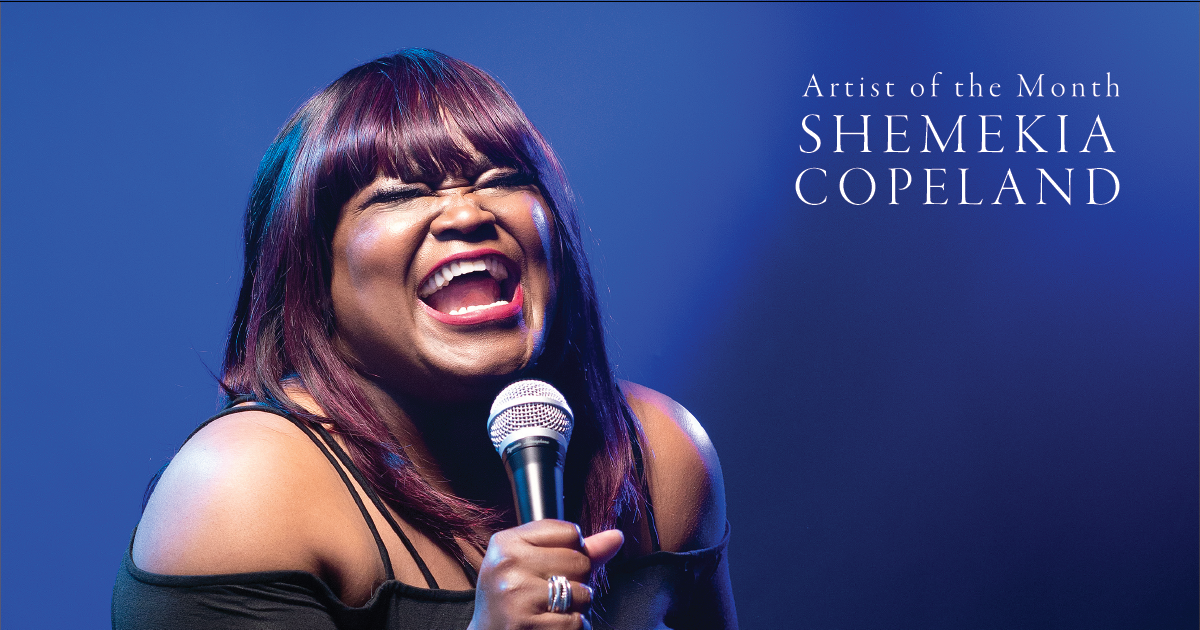
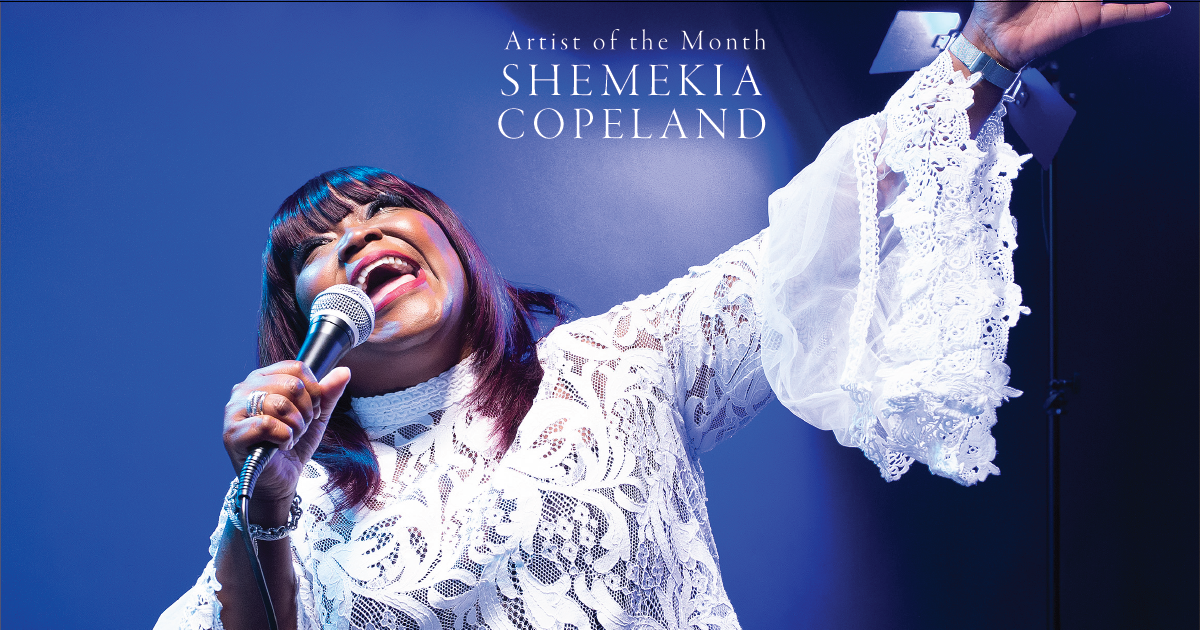
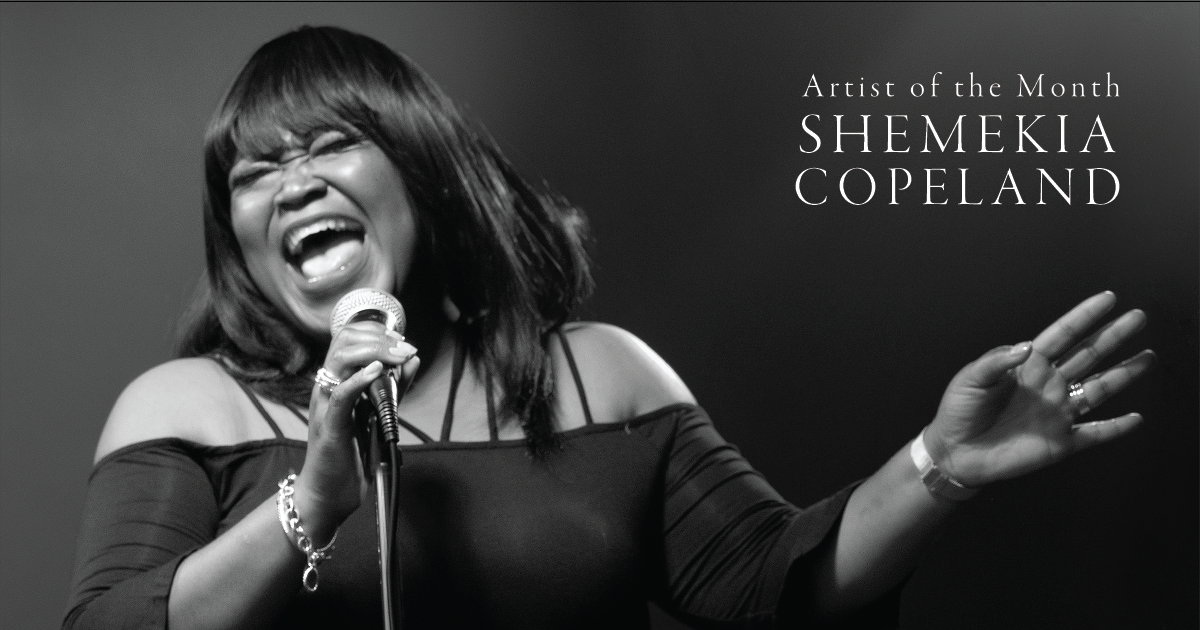
Artist of the Month: Shemekia Copeland

When it comes to modern blues, Shemekia Copeland is at the top of her game. Uncivil War, her newest release on Alligator Records, offers a number of topical songs, ranging from gun rights (“Apple Pie and a .45”) to LGBT affirmation (“She Don’t Wear Pink”). Yet as the album progresses, she delivers a few straight-up blues songs like “No Heart at All” and “In the Dark” that could have fallen anywhere in her decades-long career — or found a home with the generation of blues artists that inspired her. Throughout, her voice is strong, drawing you in to hear firsthand what’s on her mind.

Recorded in Nashville with producer Will Kimbrough, Uncivil War gives Copeland a chance to clearly speak her truth. From the historical narrative of “Clotilda’s on Fire” (with an electrifying guitar solo from Jason Isbell) to the philosophical title track (which features acoustic all-stars Sam Bush and Jerry Douglas), Copeland consistently comes across as persuasive, but not abrasive. The message of one of the album’s finest moments, “Walk Until I Ride,” is indeed empowering — but the fact that she needs to walk in the first place is not lost on the listener.

“You know, being angry doesn’t do us any justice,” Copeland told NPR in October. “I spent my time being angry and pissed off and mad about it. But at the end of the day, you know, that just doesn’t help anything.” That determination to channel her emotions into her music paid off in 2019 as she picked up multiple wins in the Blues Music Awards and Living Blues Critic’s Poll on the strength of her prior release, America’s Child. Since 2000, three of her albums have also received Grammy nominations.

In the weeks ahead, BGS will feature a two-part interview with Shemekia Copeland, where she reflects on the influence of her blues musician father, Texas legend Johnny Copeland, as well as the statement she’s making with Uncivil War. (Read part one here. Read part two here.) Author and journalist Alan Paul, who conducted these interviews, also provides us with the BGS Essentials playlist for November Artist of the Month, Shemekia Copeland.


Photo credit: Mike White