You Gotta Hear This: New Music From Tray Wellington, Corb Lund, and More

We love a week absolutely filled to the brim with music – and we don’t just mean because we’re attending Folk Alliance International and hosting a private showcase room in Kansas City this week!

This week, there were just too many exciting releases and new songs to feature, so buckle up for seven excellent premieres – cause You Gotta Hear This! From a John Hiatt cover by modernist banjo player Tray Wellington to a brand new music video from country neo-traditionalist Corb Lund, from Amelia White to the Roe Family Singers, there’s something for every taste and from every style of American roots music.

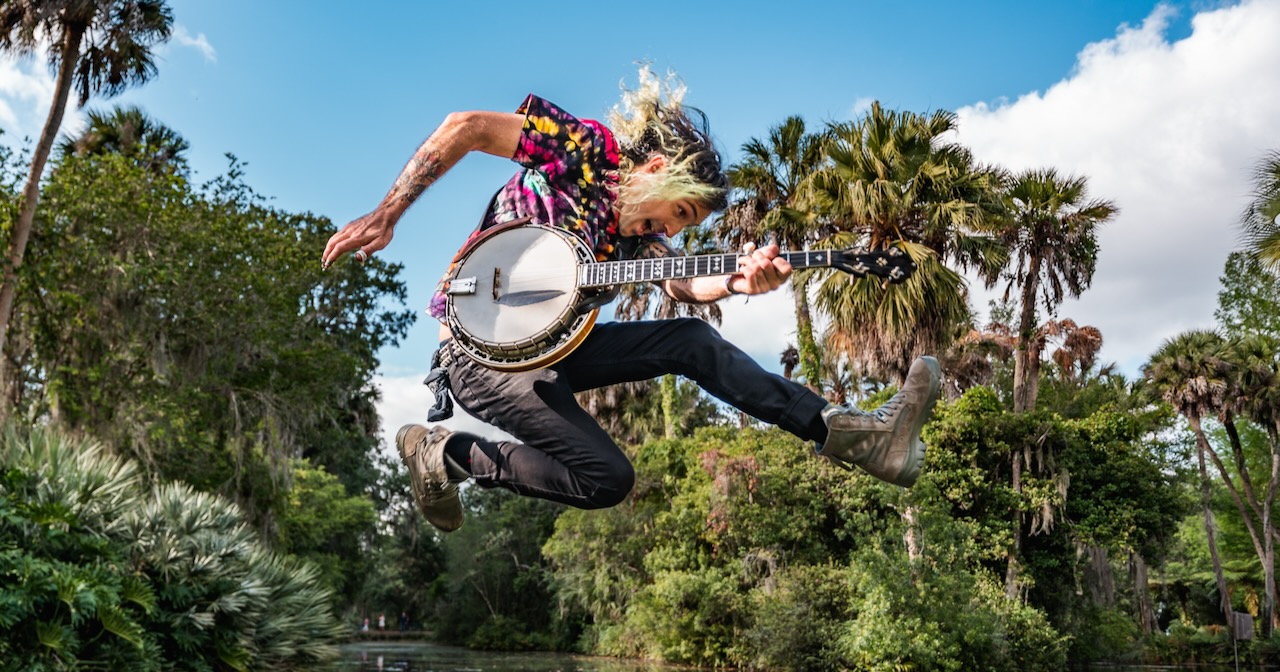
Tray Wellington, “Lift Up Every Stone”

Artist: Tray Wellington
Hometown: Raleigh, North Carolina
Song: “Lift Up Every Stone”
Release Date: February 23, 2024
Label: Mountain Home Music Company

In Their Words: “For me, ‘Lift Up Every Stone’ encompasses a sense of encouragement to fight through the hard times in life. When I first heard the John Hiatt version of this song, I loved the use of imagery to convey the lifting atmosphere. It was also a chance to try something new musically, which for anything I record, I want to be challenged more and more — and this was the perfect way to step outside of my comfort zone.” – Tray Wellington

Track Credits:
Tray Wellington – Banjo, lead vocal
Drew Matulich – Guitar, electric guitar
Katelynn Bohn – Bass
Josiah Nelson – Mandolin, fiddle
DaShawn Hickman – Pedal steel guitar
Wendy Hickman – Lead vocal, harmony vocal


Corb Lund, “El Viejo (For Ian)”

Artist: Corb Lund
Hometown: Alberta, Canada
Song: “El Viejo (For Ian)”
Album: El Viejo
Release Date: February 23, 2024
Label: New West Records

In Their Words: “We dedicated the record to our late friend, Ian Tyson, and the title track is a tribute to him. ‘El Viejo’ was our friendly nickname for him and it means ‘the old man.’ I’m pretty proud of the song, and the video, which uses a lot of cool old stock footage of him. Hope the record is as satisfying to listen to as it was for us to make. I left it all on the field for this one.” – Corb Lund

Video Credits:
Noah Fallis – Director, Director of Photography
Jamie Campbell – Producer
Brendan Schmidt – Camera Operator, Editor
Ethan Wournell – First A/C
Blair Bourque – Key Grip
Alyssa Howland – Gaffer
Archival footage of Ian Tyson courtesy of Neil McGonagle


Amelia White, “Love I Swore”

Artist: Amelia White
Hometown: Nashville, Tennessee
Song: “Love I Swore”
Album: Love I Swore
Release Date: February 23, 2024
Label: Thirty One Tigers

In Their Words: “The title track of Love I Swore is a dark and stormy love letter. I wrote it on the streets of Glasgow and Edinburgh in deep summer on tour when the sky stayed light until midnight. The ghosts of what I wished a love was and how it seemed to be slipping away were talking, and I wondered if a bird that had left the cage would be happy coming back? Kim Richey (producer) called in Eamon McLoughlin to slay our hearts with violin as the track builds. This honestly is one of my favorite guitar lines that has ever come out of me, and I hope all you troubled lovers find some strange comfort here.“ – Amelia White


Stephanie Sammons, “Faithless”

Artist: Stephanie Sammons
Hometown: Dallas, Texas
Song: “Faithless”
Album: Time and Evolution
Release Date: May 3, 2024

In Their Words: “What inspired this song was an old friend from high school who died from suicide in 2022. I kept up with her on social media. She would post pictures of her dog and her kids. Her posts seemed joyful and even funny from time to time. How could I have known she was suffering so immensely? If only I would have known! It was heartbreaking. I felt so helpless.

“And then there are the painful feelings with regards to my younger sister, who has had a rough time just doing ‘life’ in general. Even though we’re only 14 months apart, I was absent and oblivious to what she was going through during her darkest days. I’ve wondered, why does she continue to battle demons and dark places and I don’t? And why did it take me so long to realize how her anger was pain turned inward? I have guilt about not being there for my sibling.

“Because of the pain I have seen others endure and I have felt, this song explores my deep questions about faith. I’m asking myself, what do I have faith in? ‘Faithless’ is reflecting on the indiscriminate nature of suffering, generational trauma, and what ultimately happens to our souls when we depart this world.” – Stephanie Sammons

Track Credits:
Written and published by Stephanie Sammons

Stephanie Sammons – Vocals, acoustic guitar
Mary Bragg (producer) – Background vocals
Josh Kaler – Guitars and pedal steel
Jordan Perlson – Drums, percussion
Jon Estes– Bass, piano, organ


The Roe Family Singers, “Little Trouble”

Artist: The Roe Family Singers
Hometown: Minneapolis, Minnesota
Song: “Little Trouble”
Album: Sisters And Brothers
Release Date: February 2, 2024
Label: Bonfire Music Group

In Their Words: “I’ve long been interested in the folk process; specifically, the idea that newer folk songs borrow melodies and lyrics from earlier songs and repurpose them. ‘Little Trouble’ started life by borrowing part of the melody from the traditional song ‘Little Birdy,’ and reimagines some of the lyrics, too, updating them to deal with modern concerns like urban versus rural, social media, political scare-mongering and manufactured moral panics, and a culture held together through pharmacology.” – Quillan Roe


Wolf Jett, “Tavira”

Artist: Wolf Jett
Hometown: Santa Cruz Mountains
Song: “Tavira”
Album: Time Will Finally Come
Release Date: February 23, 2024

In Their Words: “Imagine leaving your cushy pharma job and rent-controlled apartment in SF to travel by bicycle and busk through southern Spain for a year. One day, you lose your wallet skinny-dipping near the Portuguese border and then you come upon the village of Tavira. Upon first glance, the cobblestone streets and whitewashed buildings seem unremarkable, until you cross the Roman bridge over the canal, break open your guitar case, and start playing. Next thing you know, a large crowd gathers around, dancing and cheering, and you make more tips than you’ve seen all month. A French expat offers for you to stay on his farm to help with the fig harvest, and next thing you know you’re closer to Eden than ever. This is a love song to Portugal and the wonderful times I spent there.” – Chris Jones, lead singer and songwriter


Pi Jacobs, “Coyote”

Artist: Pi Jacobs
Hometown: Los Angeles, California
Song: “Coyote”
Album: Soldier On
Release Date: April 26, 2024
Label: Blackbird Record Label

In Their Words: “The song began one day when a coyote stalked my dog on a walk, following us home, and even jumping our fence that night. It was a terrifying experience, but the metaphor it brought to mind was even more menacing. My best friend had been fighting cancer and every time we thought it was gone, it would spring back up, just like this dang coyote. The image was so powerful, that when I told the story to my co-writer, Ted Russell Kamp, the song just about wrote itself! But even with this bleak backstory, the song sounds ‘happy,’ and I’m happy to report that both my dog and my friend are alive and well. Take that coyote!” – Pi Jacobs

Track Credits: Written by Lisa Marie Jacobs and Ted Russell Kamp

Recorded in Los Angeles at Carriage House & Forty Below Records
Eric Corne & Pi Jacobs – Producers
Eric Corne – Engineer
Mark Chalecki – Mastering engineer
Pi Jacobs – Guitar, lead vocal, backing vocal
Adam Hall – Dobro, banjo
Zack Hall – Upright bass
Butch Norton – Drums, percussion
Philip Glen – Mandolin

Video Credit: Taylor Hungerford, Director / Silver Spark Printworks


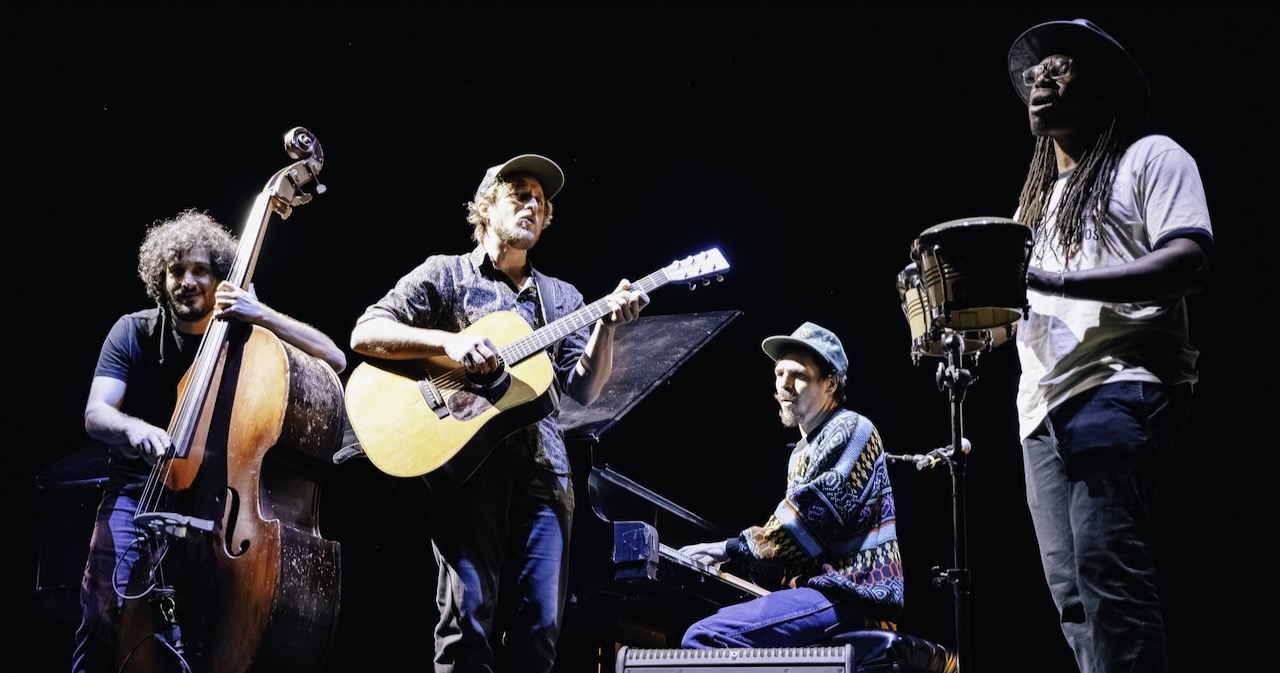
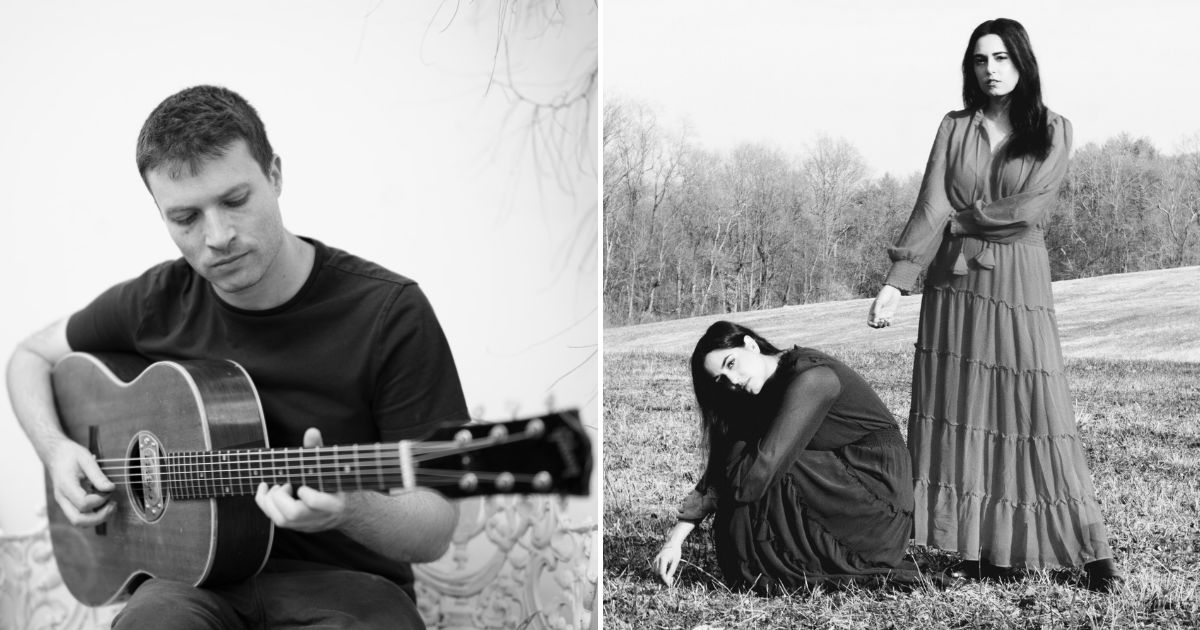
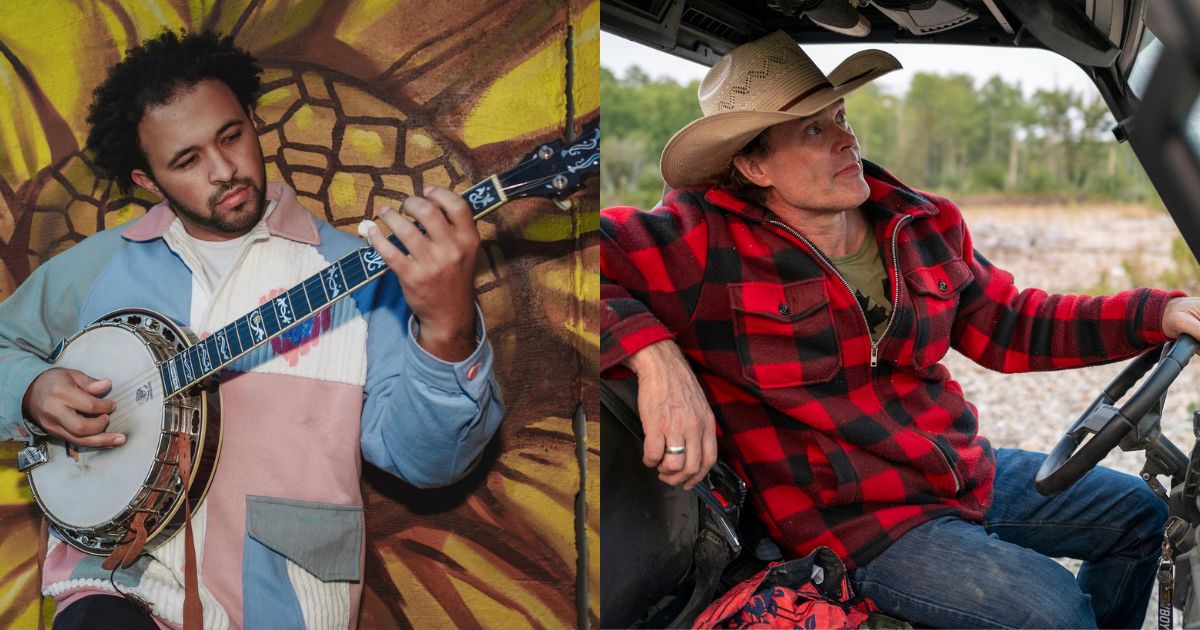
Photo Credit: Tray Wellington by Heidi Holloway; Corb Lund by Noah Fallis.
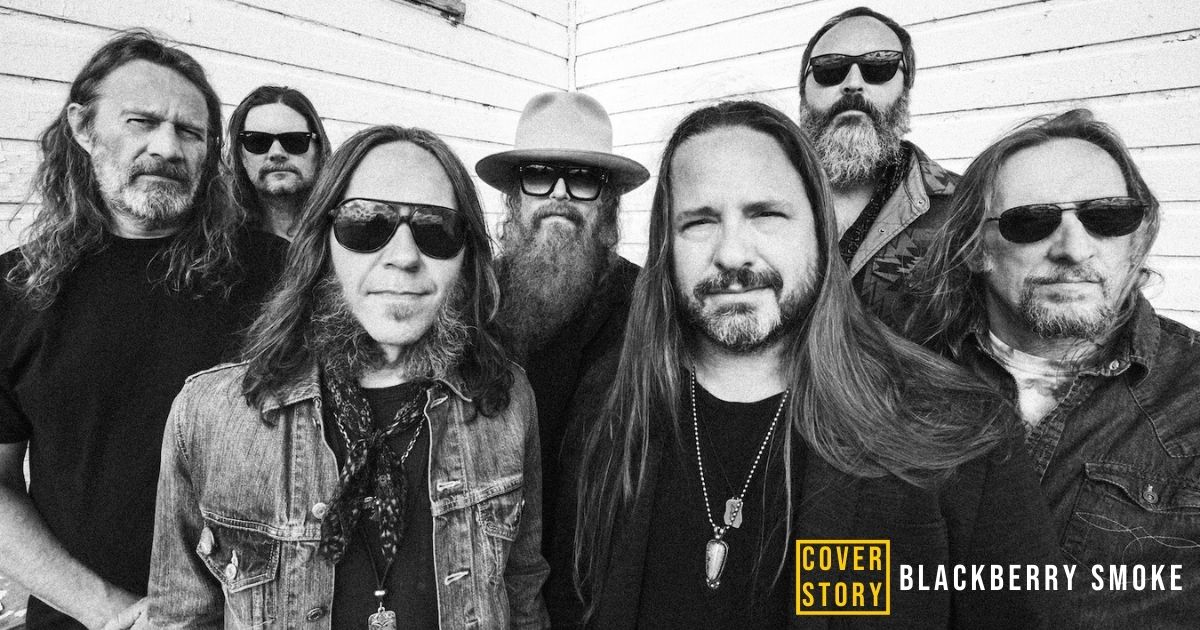
Blackberry Smoke’s New Album Offers a Crunchy Continuation of String Band Traditions

With 23 years behind them, Blackberry Smoke are still one of the best examples of Southern rock in the modern era – but what does that even mean, right?

Led by singer, guitarist, and primary songwriter Charlie Starr, the band does indeed have roots pointing straight to hard-driving ‘70s icons like Lynyrd Skynyrd, the Allman Brothers Band, and more. That’s true, but they also pull inspirations from farther back. And to Starr, Southern rock, at its core, is a continuation of the Appalachian tradition: “String band music and storytelling.”

With their latest album, Be Right Here, some of that old-time tradition shines through the cracks of a warm, distorted wall of sound, with heartfelt song craft and acoustic-guitar melodies front and center. Meanwhile, the band continue to prove crunchy, doubled guitar solos, thundering drums, and anthemic vocals never go out of style.

BGS spoke with Starr before Be Right Here was released, to see what has changed (and what will always stay the same) for one of the most dynamic Southern rock bands in history – a history they know all too well.

I thought I’d kind of start just seeing how you’re feeling at this point. You’ve been burning up the road for over two decades now, which seems crazy to me. How do you feel about where you’ve have been, and where you are now?

Charlie Starr: I mean, I’m tired. [Laughs] No, I feel good. We all do. It doesn’t seem like it’s been that long. It’s surreal to think it’s been 23 years. I don’t feel like I’m old enough to say that I’ve been doing anything for 23 years other than breathing, but I’m proud of what we’ve accomplished. It feels good.

Blackberry Smoke is one of the best pieces of evidence that Southern rock is still alive and well. But I was just wondering, do you think there’s still more to say in that? Is the form still inspiring to you?

Totally. Just listen to any song from those amazing early Skynyrd records or Allman Brothers or Marshall Tucker Band records, Blackfoot – all those bands are so different, and it really was just geography that tied ‘em all together. They all had their own fingerprint. And I think that we do, too.

I was listening to Patty Loveless in an interview and she was talking about bluegrass – which I grew up playing and I dearly love also – and she was talking about how those first generation bluegrass bands, like Bill Monroe and the Blue Grass Boys, Flatt & Scruggs, and the Stanley Brothers, they came from this rich musical heritage of the mountains where they grew up in Kentucky, Virginia, Tennessee, North Carolina. And what they were drawing from was acoustic string band music and storytelling.

Well, now, fast forward all this time, and modern bluegrass musicians not only have that, but they also have Led Zeppelin and the Beatles and the Rolling Stones and all this. There’s so much more. So I kind of look at it in a similar fashion with “Southern rock” bands, because those guys were listening to not only what I just mentioned, with the hillbilly country music and string band music, but also the British invasion and then traditional country and the Beach Boys. As time moves along, there’s just more and more that gets poured into the soup. So to answer your question in a very long-winded way, I think that it can go on forever.

So you’re kind of the third wave of popular Southern music, taking all that was done before and adding in the new influence, too.

Yeah, if we were a tribute band that just dressed up like some old ‘70s band and played their songs, then it would suck. But since we have the freedom to explore our own musicality, it can never end.

The new album is called Be Right Here. What was the spark that got this one going?

In my case, it’ll usually be a little explosion of songs. I’ll know that album time is coming, and so I’ll get to work on writing a batch of songs. It doesn’t always come quickly but it usually seems to work out, which I’m happy to say, because it kind of falls on me – which I don’t complain about that at all. I dearly love to write songs and I’m glad that it’s my job. There are worse jobs to have. Writing songs for Blackberry Smoke is much easier than working in a body shop, which I did for years.

At this point, 23 years on, are you still writing about the same stuff?

Well, I guess stories can all be new, stories of love and loss and frustration and women and men and drinking – or not – whatever. But if you look at popular music as a whole, there are new subjects that enter our culture, like cell phones and the internet and Facebook. I don’t know if I’ve ever used the word Facebook in a song. I probably won’t. But no matter what comes along technology wise, time stays the same. It’s still moving at 60 seconds per minute, and that’s not going to ever change. And human beings behave really the same way.

That said, the internet’s changed everything really. Not entirely, but it’s added a new accent to everything we do. I think John Mellencamp said it best, he goes, “I’m not sure if we’re supposed to hear this many voices at all at once.” That complicates life, really. It might push me back into my hermit hole a little more. As a songwriter even, it pushes me to the old ways more, melodically and musically. I don’t think anything really new can be said. We’re just trying to find an interesting slant on the way we say it.

You teamed up with Grammy-winning producer Dave Cobb for the second time, and he’s famous for live recording and loving first takes. Does that work well for a band like you guys, who are very live-show oriented?

It does. And in this case, it’s very interesting. We went back to RCA Studio A again, and he said, “This time I’m going to put the drums and amps and you guys all in the big room, so we’re all going to be in a little cluster.” And I was like, “Really?” As soon as we started playing together, it was like, “Oh man, okay, this is working. We don’t necessarily need all the separation.”

Some producers would be like, “Hell no. There’s no way I’d ever make a record like that.” It can be too sloppy. But Dave was like, “Well, we’re capturing this one sound. Let’s capture it all in the room, like a ‘60s record or even a ‘50s record.” So that’s what we did.

Tell me a little bit about “Dig a Hole.” It was the first track written, the first track on the album and the first one released, with a theme of choosing your own path – for better or worse. Is that kind of what you have done as a band?

We have. It’s been our only choice, really, because nobody’s ever come around with a different idea. [Laughs] It’s funny, I put together a [track list] and sent it to Dave, and I had “Hammer at the Nail” first. And Dave goes, “Are you insane? ‘Dig a Hole’ is first. Why would you think that ‘Hammer at the Nail’ should be first?” I said, “Because it’s faster.” And he said, “I don’t give a shit about fast. ‘Dig a Hole’ is like you guys are winding up to kick somebody’s ass!”

Azalea” leans more into the folky aspect of what Blackberry Smoke does. It’s got that acoustic shimmer of a classic-rock ballad. Where does that come from for you?

Man, I just love that kind of acoustic music. Again, that kind of stuff was my upbringing, and I’ll never turn it loose. That song lyrically was about fatherhood, because here we are now, our children are all growing up. I’ve already seen one go to college, graduate, now get married, so it’s like, “Well you hold on tight, but you don’t want to smother ‘em.” They have their own path to forge, so all you can do is try to be there for ‘em.

I’ll leave you with the big picture. After 23 years, what you hope people take away from this particular record?

I just hope they dig it. I mean, I don’t know if I expect people to experience it in a different way than I do or not. I don’t know. But I do get a lot of enjoyment right now listening to it.


Photo Credit: Andy Sapp

Sam Grisman Project Honor “Dawg Music” In Their Own Way

There’s something special that occurs when music is rooted in friendship and a shared mission. Perhaps no one exemplifies this better than Sam Grisman Project, founded by the youngest son of “Dawg music” pioneer David Grisman. Seeking to honor the likes of his father, Jerry Garcia & the Grateful Dead, and other musical heroes, SGP maintains a singular style and groove.

With its core iteration featuring seasoned multi-instrumentalists and songwriters Ric Robertson, Chris “Hollywood” English, and Aaron Lipp – and often featuring a host of other guests who run the musical gamut – SGP is bringing fresh authenticity, originality, and passion to the roots music and jam band scenes.

BGS spoke with Sam Grisman in early February 2024 about the origins of, inspirations, and plans for this remarkable and rising group.

What are the origins of Sam Grisman Project?

Sam Grisman: Ever since rekindling my musical friendship with the great Ric Robertson, who I’ve known since I was 14, I’ve been wanting to start a band that showcases the impact that the legacy of my dad and Jerry’s music has had on me. Ric and I started scheming on ways to make some music together and what that might look like. I figured we might have a good opportunity to play out in the live touring landscape if we paid tribute to the catalog of music that my dad and Jerry recorded together; that it could create the space for us to really do whatever we might want musically. We’re not limiting ourselves to the catalog of music that my dad and Jerry played together or individually, but we are honoring the spirit of what they did together, which was to dive into great songs that they had a shared love of.

I’ve always had a talented group of friends, going back to the time that I spent growing up at bluegrass festivals, fiddle camps, and the Mandolin Symposium. We have chemistry, and that is irreplaceable. Ric started playing music with Aaron Lipp around the time we turned 20 and he has been a part of my musical reality since then. He and Ric have developed strong chemistry, where they’ve been finishing each other’s musical sentences for years now. Aaron is from Naples, New York, about an hour away from Rochester, New York, which is where the great Chris English hails from. When Ric started making some music with Chris and telling me about what an amazing drummer and human being he is, I knew he would fit into the core of this band perfectly.

Who are you honoring with this project and why?

We’re honoring the musical heroes who influenced us the most. For me, because they provided the soundtrack to most of my earliest musical memories, that’s my dad and a lot of his friends who came through our house in Mill Valley to record. The friend who came around the most was Jerry [Garcia], but also John Hartford, Mike Seeger, Doc Watson, Tony Rice, Del McCoury and Ralph Stanley.

We honor our heroes, not just my dad and Jerry. We play lots of John Hartford music and Townes Van Zandt songs. Lots of Bob Dylan’s music, some Alan Toussaint, Dr. John, John Prine, Warren Zevon, Randy Newman, and Peter Rowan.

Can you describe what Dawg music is and what you’ve learned from your father?

Dawg music is a highly evolved form of acoustic music that is a synthesis of many different genres including old-time, bluegrass, hot club swing, jazz, and funk, with elements of classical music. It’s really a sort of genre-less genre pioneered by my father. It showcases – but is not limited to showcasing – the sound of the mandolin. The instrumentation in his quintet has traditionally been one or two mandolins, guitar, upright bass, and violin, but that’s expanded over the years to include percussion and drums.

That instrumentation of percussion, mandolin, guitar and bass is what I modeled the core of this band after. I’ve learned so much from my father about music and the music business – how to treat your friends and how to honor your elders. I am profoundly grateful to have been born to my particular set of parents and I’m grateful that there are other folks who have a deep appreciation for my dad’s impact on the musical landscape. I’d like for people to also appreciate how wonderful a human he is, so this is a small way that I get to share my dad with other people. He loves everybody, he’s grateful for the support, and he can feel it.

Who are some of the musical guests that have performed with SGP, and what does that mean to SGP?

It means a lot. It’s a representation of the community that we’re a part of. We’ve brought in some of our heroes as guests including dear family friends like Lowell Levenger “Banana” from the Youngbloods, Maria Muldaur, Eric Thompson, and Peter Rowan. We’ve had my dad sit in three times, which has been an absolute honor, and we’ve had a whole slew of our guests who bring different insights and a similar passion to the project: Dominick Leslie, Alex Hargreaves, Roy Williams, Bennett Sullivan, Nathaniel Smith, Phoebe Hunt, Lindsay Lou, my dear friend Tod Patrick Livingston, Mike Witcher, Chad Manning, Wyatt Ellis, Matt Eakle (the great flute alumnus from my dad’s quintet), and more. Eddie Barbash came and played a set with us in New York. Max Flansburg, who has a similar passion for this material and highlights a different corner of the Garcia/Hunter catalog than we do, played two of our New Year’s shows with us. We also had our old-time banjo hero, Richie Stearns, on all of those gigs that weekend. We’re going to have Logan Ledger on some shows coming up, and we’ll have Victor Furtado and Nathaniel Smith in the band.

When did SGP start touring in its current iteration, and how is the experience of touring with your best friends?

We had our first run as a band in January 2023. This conversation with you comes at the end of our longest break as a band, where we’ve had the entire month of January off. We’re starting back up on February 4th in Tucson, at a festival called Gem and Jam. It’s an absolute treat to travel the country with the people I care the most about, and to make great music and memories and friends everywhere we go. It’s important to anchor ourselves and ground ourselves in the music, because there’s a lot of work that goes into being out on the road that can make you lose perspective on how special it is to be doing something that you love for a living and to be able to do it for people who love what you’re doing.

SGP is obviously celebrating and continuing a particular musical legacy, but doing so with your own flavor. What makes SGP unique?

Our branding is our individuality and our honesty. I grew up in the house where my dad and Jerry recorded all of this music and I really do enjoy playing that music with my best friends. It gives me a sense of purpose to be able to play some of that music for folks who are passionate about it. There’s definitely room in the live music space for bands who take a preservationist approach to carrying on the musical traditions and catalogs of artists that came before them. A lot of musicians try to sound like their musical heroes, but that’s not our approach. I hired my friends to participate because I love their individuality and how they play, sing, and write music. I wouldn’t want to steer them towards sounding more like Jerry Garcia or my father.

We have been influenced by listening to tons of great music our entire lives, but we try to stay true to ourselves when we’re playing, so nobody is reaching for a sound that isn’t theirs. We all enjoy injecting our individuality into this music and having the flexibility to take the material in different directions depending on how we’re feeling. It’s amazing to have such versatile friends to work with.

How does original material fit into the broader vibe of SGP?

All three of the core guys – Ric Robertson, Aaron Lipp, and Chris English – are amazing songwriters. All the time I’ve known Ric, since we were teenagers, he’s been writing great songs. He was always a great singer, but he’s become one of my absolute favorite singers on the planet. There’s a lot of his music that lends itself incredibly well to looser, more long-form arrangements, which is something that SGP has become comfortable with.

Aaron Lipp is also an amazing songwriter who writes incredibly poignant music and aphoristic lyrics. Chris English writes amazing, feel-good music – not always overtly happy, but always with a strong message. His tunes add a lot of depth to our sets and take us to a more groove or bassline-oriented place, which is really refreshing for us and our audiences. I think there’s always going to be room for original music in SGP. As much as these guys are inspired to play their own tunes, I want to play them.

You released a great EP in 2023. Is there anything else currently in the works?

We’re gonna make a full length album at some point in 2024. Over the course of the last hundred or so gigs we’ve developed a pretty good repertoire and a strong rapport with each other. I don’t think it would take very long to put some of these tunes down in the studio, but we also multitrack most of our shows and we have an archive of live music to sort through. We’re going to be putting some shows up on Nugs.net pretty soon. We have a pro-taping policy to encourage folks to come and tape the show. I share Jerry [Garcia]’s philosophy that if you bought a ticket to the show, the performance is really yours as long as you’re not charging anybody else for it. Some of those shows have made it to archive.org, which is a free internet resource where folks can listen to live music. At some point we’ll probably put together some compilations of live material and put them up on the streaming services. I think our live show is always going to be the emphasis of what we do, so it’s important to have some recorded examples out there for people to check out.

What’s in store for SGP in 2024, and what does pursuing that mean to you?

We’ve got another solid year shaping up. We played about a hundred gigs in 2023 and we’ll probably make it pretty close to that in 2024. I’m going to expand the cast of characters a little bit in 2024 and bring some other friends into the fold. I’m looking forward to introducing my new friends and audiences to my dear musical compatriots who care about this music as much as I do. I’m grateful and humbled to get to do it. It means a lot to get to honor my father every night by playing his music. We take out the mandola that he gave me for my 21st birthday, the mandola he recorded “Opus 38” on. We get to play “Opus 38” on that very same mandola for people who appreciate what’s happening, and I feel like he and Uncle Jerry are with us every night. It’s a big blessing all around.


Photo courtesy of the artist.

You Gotta Hear This: New Music From Ben Sollee, Sideline, and More

This week, BGS readers were graced by two special, Valentine’s Day-themed premieres from jamgrass supergroup The High Hawks and singer-songwriter Caroline Cotter. Plus, our old friend, Kentucky-based cellist Ben Sollee, brought us a gorgeous new performance video of a John Prine cover shot surrounded by verdant houseplants.

Below, catch up on that new music you might have missed from earlier in the week and discover brand new, exclusive premieres from bluegrass group Sideline and indie/Americana duo the Ballroom Thieves. It’s all right here on BGS and… You Gotta Hear This!

Sideline, “The Lives of the Innocent”

Artist: Sideline
Hometown: Raleigh, North Carolina
Song: “The Lives of the Innocent”
Release Date: February 16, 2024
Label: Mountain Home Music Company

In Their Words: “It was great getting back in the studio after over two years. There was a lot of bottled-up magic that came bursting out when we hit the first downbeat. This song fit the very definition of what Sideline is as a sound and the energy we project. It certainly enters the catalog as a blood-pumping, foot stomping, Sideline hit for the ages.” – Skip Cherryholmes, guitar

“‘The Lives of the Innocent’ was a song that was inspired by the Hibriten Guards during the Civil War that mustered in Alexander County, North Carolina. They saw heavy combat during the war, suffering a high casualty rate, and this tune chronicles what potentially could have been one of the soldiers in those ranks. Steve [Dilling] and the guys bumped the tempo a little and captured the essence of the song and the singing is just top-notch!” – Shannon Slaughter, songwriter

Track Credits:
Skip Cherryholmes – Guitar
Steve Dilling – Banjo, harmony vocal
Matt Flake – Fiddle
Nick Goad – Mandolin, harmony vocal
Kyle Windbeck – Bass
Bailey Coe – Lead vocal


The Ballroom Thieves, “Tender”

Artist: The Ballroom Thieves
Hometown: Easton, Massachusetts
Song: “Tender”
Album: Sundust
Release Date: April 12, 2024
Label: Nettwerk Music Group

In Their Words: “We were listening to the band Watchhouse at Newport Folk Festival in 2022 and their sparse instrumentation and fluid melodies inspired us to start writing ‘Tender’ right on the spot. We learn a lot from our peers, and in this case, the lesson was about the importance of creating space for your songs to breathe so you can hear what’s happening between the notes.” – The Ballroom Thieves


Ben Sollee, “Only Love” (John Prine Cover)

Artist: Ben Sollee
Hometown: Louisville, Kentucky
Song: “Only Love”
Release Date: February 13, 2023

In Their Words: “John Prine had a knack for folding mantras in to his songs. This song has a message that resonates deeply with my journey as a creative, father, and husband [and] that is so needed in this fitful world. ‘When love comes your way, you learn to say, I love you!’” – Ben Sollee

More here.


The High Hawks, “This Is What Love Feels Like”

Artist: The High Hawks
Hometown: Boulder, Colorado and All Points Between, USA
Song: “This Is What Love Feels Like”
Album: Mother Nature’s Show
Release Date: February 16, 2024

In Their Words: “This song sits in a slightly different world than the rest of The High Hawks’ new record. It’s a step into the mind of a hopeless romantic at a show, waiting for the band to come on with his love by his side. Sometimes the world just seems to conspire to make everything just right. This is about one of those nights. The song came out of a co-write with Chris Gelbuda, Shawn Camp, and myself one Nashville summer afternoon. I’m glad it found a home with The High Hawks!” — Vince Herman

More here.


Caroline Cotter, “Do You Love Me?”

Artist: Caroline Cotter
Hometown: from Providence, Rhode Island; currently living in Ellsworth, Maine
Song: “Do You Love Me?”
Album: Gently As I Go
Release Date: August 18, 2023

In Their Words: “‘Do You Love Me?’ is a love song, short and sweet and perhaps a bit tongueincheek, echoing desperate and anxious attempts from a hopeless romantic to their new love (and the universe) to get some certainty in very uncertain territory. This anxiety and excitement come together in a fun little package, trading places depending on the day or the moment, and sometimes it’s best to laugh at the silliness of it all, and realize that attempts to know or pretend to know by reading the signs are likely futile, but if nothing else, they’re fun to sing about. I love how Fernando’s illustrations in the video bring out the whimsy, playfulness, and sweetness of the lyrics.” – Caroline Cotter

More here.


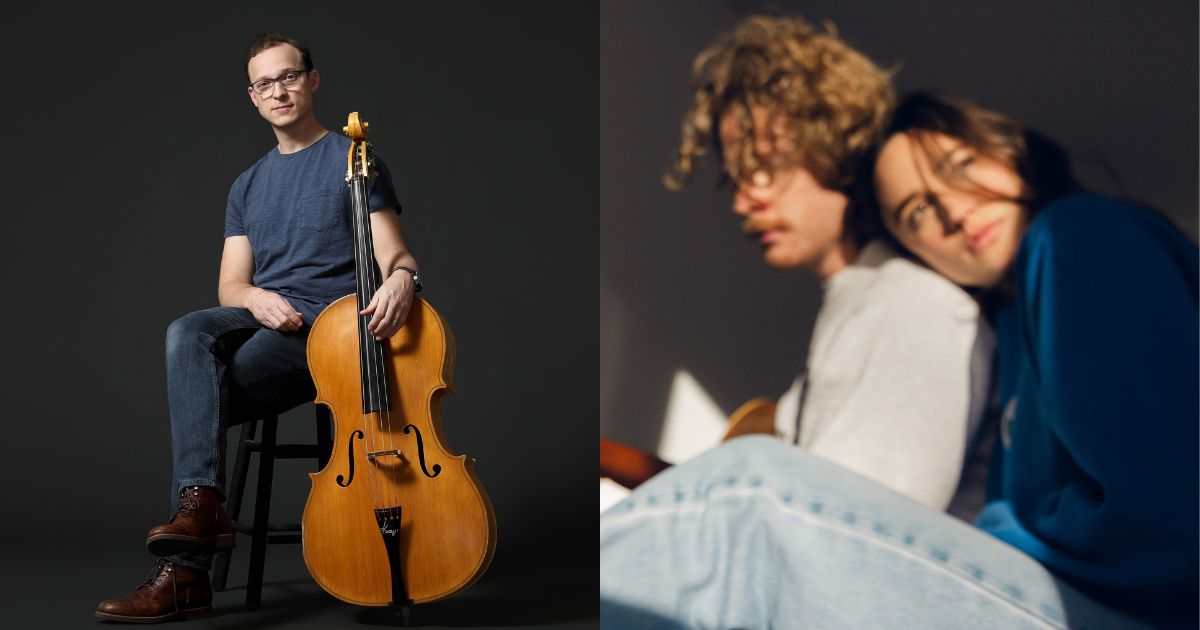
Photo Credit: The Ballroom Thieves by Meredith Brockington; Ben Sollee by Jessica Ebelhar.

LISTEN: The High Hawks, “This Is What Love Feels Like”

Artist: The High Hawks
Hometown: Boulder, Colorado and All Points Between, USA
Song: “This Is What Love Feels Like”
Album: Mother Nature’s Show
Release Date: February 16, 2024
Label: LoHi Records

In Their Words: “This song sits in a slightly different world than the rest of The High Hawks’ new record. It’s a step into the mind of a hopeless romantic at a show, waiting for the band to come on with his love by his side. Sometimes the world just seems to conspire to make everything just right. This is about one of those nights. The song came out of a co-write with Chris Gelbuda, Shawn Camp, and myself one Nashville summer afternoon. I’m glad it found a home with The High Hawks!” — Vince Herman

Track Credits: Written by Vince Herman, Shawn Camp, Chris Gelbuda

Vince Herman – lead vocals, acoustic guitar
Adam Greuel – background vocals, acoustic guitar
Tim Carbone – fiddle
Chad Staehly – piano, mellotron
Brian Adams – bass guitar
Will Trask – percussion


Photo Credit: Michael Weintrob

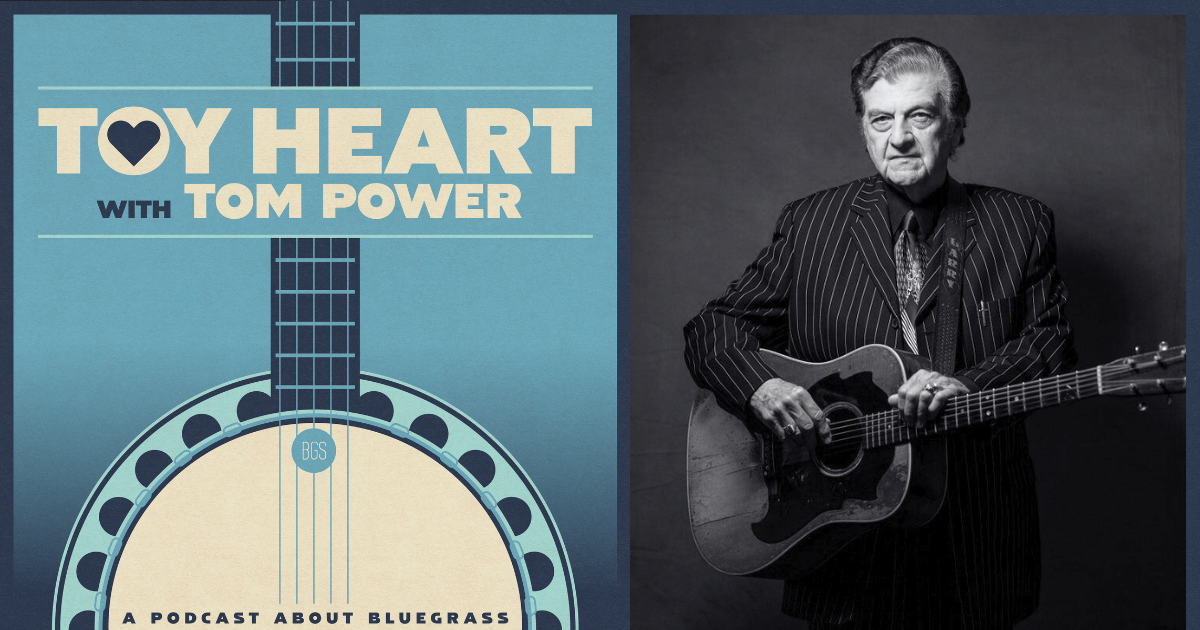
Larry Sparks – Toy Heart: A Podcast About Bluegrass

The legendary Larry Sparks, a prominent player in bluegrass for over six decades and a Bluegrass Hall of Fame inductee, joins host Tom Power for this episode of Toy Heart. Sparks shares insightful anecdotes from his early years, touring and performing with the Stanley Brothers and from his tenure with Ralph Stanley & the Clinch Mountain Boys. From traveling in a ‘67 station wagon to the challenges of navigating the music industry over so many decades, Sparks reflects on his particular journey through bluegrass, old-time, and country music. We explore his musical influences, his unique approach to bluegrass guitar playing, and the profound impact of gospel songs on his own soulful, down home sound.

LISTEN: APPLE PODCASTSSPOTIFYMP3

Sparks also offers a glimpse into his Nashville days, highlighting the unique challenges he faced in Music City. His stories reveal a dedication to preserving the essence of bluegrass and his commitment to honest storytelling. Hear Sparks describe making hits like “John Deere Tractor” as well as speaking to the spiritual resonance of gospel music. He paints a vivid picture of a musical legacy that spans more than 60 years, leaving an indelible mark on the heart and soul of the bluegrass community.


Photo Credit: Michael Wilson

Banjo Player Kyle Tuttle Reflects on Personal Growth and ‘Labor of Lust’

One of the most talented and sought after banjo players in bluegrass, Kyle Tuttle’s life has been full of the highest of highs and lowest of lows in recent years, from a marriage and divorce to the surprise death of close friend and bandmate Jeff Austin to the loss of his job due to COVID and finally hitting the road as a member of Molly Tuttle & Golden Highway.

All of that and more are documented on Labor of Lust (out February 16), an 11-song expedition taking listeners on a deeply personal and sonically diverse journey of tragedy and triumph. Recorded across three separate sessions in Nashville dating back to 2018, the record also documents a significant chunk of Tuttle’s life that, despite the length of time and changes that come with it, aren’t lacking a central theme. This led him to describing the project as “a long work-in-progress,” due to how its focus shifted throughout the more than five years of bringing it to life.

“By the time it was all said and done, this was a pretty eclectic group of songs,” Tuttle tells BGS. “There’s some stuff with an electric band that includes drums and me on electric banjo, others with traditional string band arrangements and some that meet in the middle for a more jamgrass sound.”

One of the songs that bridge the gap between these two worlds of bluegrass is “Hard to Say,” a song that sees Tuttle grieving the loss of Austin, his marriage, and his job all at the same time. It’s anchored by his blistering banjo backbone with introspective lyrics like, “Knowing that it’s gone and gone for good, makes you wonder what the hell you’re waiting on?” that serve as a message to himself and anybody listening to ask the questions you need to ask, then play another one.

“Even though the music and lyrics were written over a handful of years, loss and learning to deal with it on a personal level is central to this record,” indicates Tuttle. “That being said, there’s a lot of joy within these songs too. I don’t want to make it seem like I wrote music for five years and all I experienced was misery. Loss is something we all have to deal with at one time or another, and my way of dealing with it was to write some of this music.”

Speaking by phone from his snowed-in Nashville home following a mid-January winter storm, Tuttle opened up about how he approaches being a bandleader compared to his current gig with Golden Highway, being stuck in a Bob Ross painting, choosing to work doing something you love, and more.

You’re notorious for staying extremely busy in your musical endeavors, from sitting in with folks on stage and in the studio to your stints with the Jeff Austin band, (your current gig with) Molly Tuttle, and your own compositions and projects, like Labor of Lust. With that in mind, how do you approach your own music versus being a member of someone else’s band?

Kyle Tuttle: It’s a bit different, because with my own show I’m the bandleader, along with other variables. With my shows, I play with lots of different members, I don’t have one set group of people that know my body of material super well, but rather lots of friends I can call on who all have different strengths. For that reason, when fronting my own band I’m more in the headspace of trying to wrangle all these people and variables together for a cohesive show, whereas with Molly we all have our roles that are specifically defined. One role isn’t more comfortable to me than the other, they just both require different things from me.

Is that comfort what had you leaning on friends like Travis Book, Dominick Leslie, and Lindsay Lou in the studio instead of session players?

It speaks very similarly to what we were just talking about with putting together a version of the Kyle Tuttle Band for shows. I wouldn’t use the term session player though, because even though all of these people are my friends they can also be called “session players” for their work on other’s records, because they’re all so good at what they do. I pick them very specifically based on their strengths and what they’ll bring to the music. I’ve been lucky through my years in the business to build personal connections with an awesome group of people that I can call when I’m looking to create something.

Although not an original, I really enjoy your cover of Harry Nilsson’s “Turn On The Radio” that closes the album. What drew you to that song of his in particular instead of “Coconut” or another of Nilsson’s gems?

I’m gonna have to work on a “Coconut” cover next, because that song is awesome! In all seriousness, [“Turn On The Radio”] felt like a thematically appropriate way to close this album. At the end of the day, I’m just a jamgrass stoner that plays banjo wanting to make a record that people can enjoy and have fun with. This record has some heavy undertones, so I felt like it deserved a nice ribbon on top to end it. It speaks to me big time, [about] remembering those near and dear who you’ve lost, especially if they’re an artist doing something you can hear. That sentiment of “turn on your record player, listen to my song, turn on your night light baby, I’m gone” felt like the right words to capture that feeling even though I didn’t say them, Harry did! I’ve loved the song for a while, so when I began putting this record together it immediately made sense to close it with this.

In terms of your own songs, I understand that “Trailer In Boulder Canyon” came together at two different times, similar to the recording process for all of Labor of Lust?

That’s a funny one, because as I said previously, I’m just a jamgrass stoner banjo player. First and foremost it’s a fun, feel good song about a magical place — a shitty little trailer on the side of a mountain up in Nederland, Colorado, where you don’t have to worry about any of your troubles or cares and just get to play fiddles and banjos and have fun all day. There’s a great jamgrass scene up there due to Vince Herman and Drew Emmitt basically starting Leftover Salmon up there. Years later some of The String Cheese Incident guys moved there followed by Jeff Austin, leading to the eventual forming of Yonder Mountain String Band there as well. There’s such a rich history of the music I love so much in that goofy little mountain town.

I initially wrote the chorus and first verse for the song as a goofy little ditty after it bounced around in my head for a while. I went up there when Vince put together a memorial concert for Jeff to help raise money for his family and so people could grieve together and ended up writing the second half of the song driving up the canyon road to get there. So like a lot of things on this record, part of it came to me at one point before finishing it off much later.

You’ve got three instrumentals on this record and another mostly instrumental tune in “Two Big Hearts.” What variations do songs like those have compared to ones with lyrics in the creation process?

The process is relatively the same, because no matter if I write with lyrics or melody I’m starting with some short idea and building around that nugget of information piece by piece. If it’s a melody, it’ll probably come out as an instrumental, but if it’s with lyrics it’s probably going to come out as a song with vocals. Even though it’s one track, “Two Big Hearts” is really two songs. The lyrics in it don’t come in until the second song, nearly four minutes in, but I felt that both were similar enough that they should be together and presented as one idea. I don’t think I’ll ever play one part of it without playing the other.

On “Not Quite Spring,” you’re singing about being stuck inside a Bob Ross painting. How’d that idea come about?

That’s a COVID song. I was sitting around on the couch watching a lot of Bob Ross’s The Joy Of Painting, just killing time like we all were back then. All of his paintings were titled and each episode of his show is titled after the painting he does in it. [“Not Quite Spring” is season 25, episode 3]. It’s of this spooky, huge mountain that’s covered in snow and frozen. A lot of his paintings are happy sunsets and warm things like a pond reflecting the trees around it, a stark contrast to this one that’s cold, dark and lonely, which is exactly how I felt at the time trapped inside my house.

In the album’s liner notes you allude to a life in music often being painted in glamor, when in reality it’s a consistent grind where persistence pays off. Is that message of sticking to it what you’re singing about on “Saddle Up?”

“Saddle Up” is the term I have for getting up every day and doing it again. It’s the idea that you may not have succeeded today or done everything you wanted to do the way you wanted to do it, which is what I’m touching on with the lyric, “The past can’t be where my best is.”

I feel like persistence defines my own life and career. Anyone who works in pursuit of a skill or art is always striving to get better. Even outside of that, we’re all working on our personal relationships and doing better by the people around us. Hopefully our best work, whether it be art or personal growth, is ahead of us and it’s not all downhill from here. It’s also a message I wish to impart on any listener or friend going through a rough patch to remind them that brighter days are on the horizon.

With Labor of Lust’s themes of personal growth in mind, what’s one resolution you have for yourself, music or otherwise, in 2024?

I’m actually trying to play the banjo even more, not from the standpoint of traveling and playing more shows, but just tinkering with it more in my downtime. It’s an interesting duality, tying your work to something you love. It’s a tricky thing to do because the lines between work and play are instantly blurred and made one. If it’s all work and no play it makes Jack a dull boy, so my resolution is to just keep the banjo in my hands for fun and to work smarter, not harder, which comes back to the idea that the past is not where my best work is.


Photo courtesy of the artist.

Ed’s Picks: Tejano, Country, Bluegrass, and More

(Editor’s note: Each issue of Good Country, our co-founder Ed Helms will share a handful of good country artists, albums, and songs direct from his own earphones in Ed’s Picks. 

Sign up here to receive Good Country issues when they launch, direct to your email inbox.)


Sign up here to receive Good Country issues when they launch, direct to your inbox.

You Gotta Hear This: New Music From LULLANAS, Ethan Sherman, and More

New music Friday might just be the best day of the week, right? This week, BGS readers enjoyed an exclusive premiere from Gangstagrass featuring Jerry Douglas and a brand new Rootsy Summer Session with Emily Scott Robinson joined by Violet Bell.

In this week’s edition of You Gotta Hear This, you can check out the new Gangstagrass single, “The Only Way Out Is Through,” and Robinson’s two performances from Falkenberg, Sweden. Plus, don’t miss exclusive premieres from artists and musicians like LULLANAS, Ethan Sherman, Jake Byrne, Bri Bagwell, and Mia Dyson. Also, Angus & Julia Stone at long last release a studio version of “The Wedding Song” – a fan-favorite track and a frequent wedding ceremony and reception playlist choice – for the first time.

It’s all right here on BGS and… You Gotta Hear This!

LULLANAS, “Pretty Lies and Time Machines”

Artist: LULLANAS
Hometown: Philadelphia, Pennsylvania
Song: “Pretty Lies and Time Machines”
Album: Pretty Lies and Time Machines
Release Date: February 9, 2024 (single); June 14, 2024 (album)
Label: Nettwerk Music Group

In Their Words: “Throughout our writing process, Nishita and I almost always envision visuals or a music video concept for each song. If we can’t visualize it, the song isn’t complete yet. ‘Pretty Lies and Time Machines,’ co-written with Jake Etheridge, explores the thoughts that keep us up at night. After finishing the song, we envisioned strolling through a whimsical ghost town, surrounded only by our thoughts. Collaborating closely with our friend and producer, Keith Goodwin (Good Old War), every element added to the track helped tell that story, bringing our vision to life.” – Atisha Lulla


Ethan Sherman, “Lake Aire”

Artist: Ethan Sherman
Hometown: Los Angeles, California
Song: “Lake Aire”
Album: Passages
Release Date: March 8, 2024
Label: Indoor Recordings, distributed by Free Dirt

In Their Words: “This is a new-fangled old-time-adjacent slow-jam-rager of an instrumental. When I first wrote it, it was a lot faster and had a few extra parts. My producer extraordinaire, Wes Corbett, suggested we take out all the filler and slow the tempo down to really make it sing. Like all of the music on Passages, the thing that makes this tune ‘work’ is the way this stellar band played it – with deep interaction and lots of in-the-moment interplay. My favorite parts are Rob Ickes’s beautiful phrasing of the melody on the Dobro and the collective improvised build in the middle of the tune. It was so fun to work this up with these guys.” – Ethan Sherman

Track Credits: Ethan Sherman – guitar
Rob Ickes – Dobro
Wes Corbett – banjo
Thomas Cassell – mandolin
Avery Merritt – fiddle
Ethan Jodziewicz – bass


Jake Byrne, “Robbed A Giving Tree”

Artist: Jake Byrne
Hometown: Lake Ozark, Missouri
Song: “Robbed a Giving Tree”
Release Date: February 9, 2024

In Their Words: “I wrote ‘Robbed a Giving Tree’ when I was transitioning from a very purpose driven career to one working from home that just paid the bills. To emotionally compensate, I became overly generous with my time, talents, and resources with near strangers. I grew symbiotic relationships with some people that have flourished into beautiful friendships, but I also created toxic relationships that, to me, equate to being nothing more than ‘their giving tree.’ I unfortunately learned the difference between being useful versus being used. Ultimately for the sake of self preservation, I had cut off a bit of my generous side that was supposed to bring me a sense of purpose.” – Jake Byrne


Angus & Julia Stone, “The Wedding Song”

Artist: Angus & Julia Stone
Hometown: Sydney, Australia
Song: “The Wedding Song”
Album: Cape Forestier
Release Date: February 9, 2024 (single); May 10, 2024 (album)
Label: Nettwerk Music Group

In Their Words:“We’ve received so many requests from fans for a proper recording to use on their special day, so we decided to make that happen. ‘The Wedding Song’ was originally written for a friend’s wedding years ago. Since then, we’ve been honored to play it at several friends’ and family’s weddings, including our mum’s… We chose it as our first single from our upcoming record because it’s all about love. The song is a celebration of love and human connection. In a world that can feel disconnected and frightening, we want to share something that reflects the beauty of how humans choose to treat each other, love each other, and make promises to build something beautiful together.” – Julia Stone

Video Credits: Directed by Jarrad Seng.
Animation by Johanna Gousset.

Bri Bagwell, “The Rescue”

Artist: Bri Bagwell
Hometown: Grew up in Las Cruces, New Mexico; now New Braunfels, Texas
Song: “The Rescue”
Release Date: February 9, 2024
Label: New Texican Records

In Their Words: “I found my chihuahua, who I named Whiskey, in February of 2019 in the middle of the road, southeast of Austin, Texas. I have always heard the phrase ‘who rescued who,’ but I know in my heart that she rescued me more than I rescued her! I stopped traffic when I saw her in the middle of the road and chased her until she eventually gave in and let me catch her. She was heartworm positive, cold, and dirty; I was in a toxic relationship, sad, and tired. We’ve been inseparable ever since! The only artistic license in the song is finding her at night, when it was actually midday. The rest is our true story!

“I enlisted the help of one of my absolute favorite songwriters and friends, Helene Cronin, to help me write the tune. She is very careful with lyrics and melodies, and I trust her deeply with my important ideas. This one happened rather quickly, but Helene had to sing it for the worktape, because I was sobbing like a baby. The first few times performing it live, I couldn’t get through it… Someone even apologized to me about my dog passing away, which made me laugh with embarrassment. She’s fine and healthy, and my love for her just overflows to tears sometimes.” – Bri Bagwell


Mia Dyson, “Sunny Hills”

Artist: Mia Dyson
Hometown: Torquay, Australia
Song: “Sunny Hills”
Album: Tender Heart
Release Date: February 23, 2024

In Their Words:“My husband and I wrote this song together, thinking of the eternal Sunny Hills that all who have loved before us have played in. When we love, all the lovers from the past are with us. If we listen quietly we can hear them guiding us. Extending this love out to those we disagree with or don’t like is a radical and rebellious thing to try. Hatred and cynicism are easy. Love is difficult. My job is not to get brought down by my fear and hatred and greed. Everything changes when I look through the lens of knowing I have the company of all who have gone before.” – Mia Dyson


Gangstagrass, “The Only Way Out Is Through”

Artist: Gangstagrass
Hometown: All over the USA! Rench: Brooklyn with Oklahoma roots; Dolio the Sleuth: Pensacola, Florida; R-SON the Voice of Reason: Philly; Danjo: Washington, D.C.; Farrow: Omaha; Sleevs: Baltimore.
Song: “The Only Way Out Is Through”
Release Date: February 7, 2024 (video); February 2, 2024 (single)
Label: Rench Audio

In Their Words: “I’m really into how much we played with tension and energy to craft this track, the dynamics came out so powerfully. Especially with the horns! (Provided by Lowdown Brass Band.) We were stunned by the quick ‘yes’ from the one and only Jerry Douglas, who put in a blisteringly intense Dobro solo. I dare you to tell me you’ve heard anything like this before. I feel like this will be a great song for psyching yourself up to kick ass at whatever you are about to do.” – Rench

Read more.


Rootsy Summer Sessions: Emily Scott Robinson

Last summer, the videographers from I Know We Should were on hand for Rootsy Summer Fest ’23 in Falkenberg, Sweden, shooting a series of Rootsy Summer Sessions featuring artists from both sides of the Atlantic. At golden hour one evening during the festival, as the waning sun gleamed over the North Sea and Skrea Strand, Colorado singer-songwriter Emily Scott Robinson performed “Old Gods” and “Landslide” with Nashville-based North Carolinian duo Violet Bell.

Read more and watch both performances.


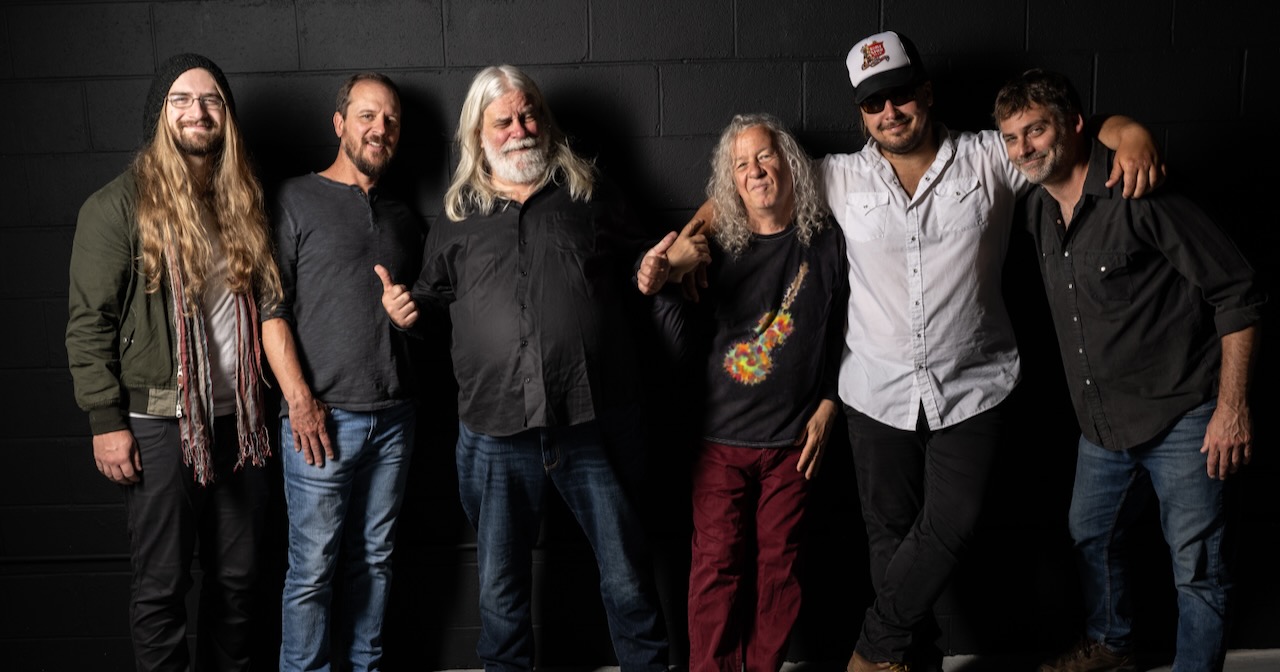
Photo Credit: LULLANAS by Luda Ronky; Ethan Sherman by Harrison Whitford.

One to Watch: AJ Lee & Blue Summit

With citrusy melodies full of zest and spark, AJ Lee & Blue Summit demonstrate that California bluegrass is alive and well. Based in the Bay Area, they first took to the stage in 2015. Though the group has morphed in shape and size over time, they have delivered musical excellence for nearly a decade.

Currently, the band is composed of four tremendous musicians – AJ Lee (vocals and mandolin), Scott Gates (guitar and vocals), Sullivan Tuttle (guitar and vocals), and Jan Purat (fiddle) with a couple of rotating bassists. AJ’s velvety vocals blend seamlessly atop the many textures and tones this uncommon instrumental lineup can accomplish.

With their third studio album set to be released sometime this year, AJ Lee & Blue Summit set sail for their tour across North America earlier this month. Their emotive, erudite songwriting is brought to life by the band’s natural compatibility.

What is the nature of your musical chemistry? How would you describe it?

Scott Gates: Well, we all grew up going to California bluegrass festivals, and that gives us kind of a through-line. We all grew up with similar mentors and similar principles, so we all have similar ideas of what bluegrass is and what it isn’t, and how to bend those boundaries.

What do you think makes the bluegrass scene in the Bay Area distinct from other bluegrass scenes?

SG: Yeah, I think that there’s more homogeneity in a lot of other bluegrass associations across the country. You know, Tennessee is known for its singers. North Carolina is known for its banjo players, and they turn out some serious musicians. But something I’ve noticed with a lot of Tennessee singers is that many of them sound the same. And it allows for incredible blend and unity in sound, but California tends to reward individual individuality. When somebody has a really unique voice, they’re exalted.

Jan Purat: In the Bay Area scene, there’s a surprisingly large interest in bluegrass that dates back a long time. There’s this really thriving jam scene with lots going on. People in California as a whole tend to really nerd out on bluegrass from from the mid ’40s to the ’60s, that era of the Stanley Brothers, Bill Monroe, Flatt & Scruggs, and such. A lot of reverence for traditional sound and energy, I think, is a big part of why people really gravitate towards it. And in California, trying to channel that kind of fiery energy that you find in the more traditional stuff is definitely part of the sound, as opposed to more of the second gen and third gen newgrass circuit.

A pretty cool aspect of the California scene has been discovering that amazing lexicon of music, especially as the one band member that got into bluegrass a little bit later. I came into it during my college years, but the rest of these guys all grew up together. I met Scott busking when he was like 19, and I met AJ and Sully shortly after I first started going up to Grass Valley, around when I was 22. I started out with second-generation exposure to bluegrass, like John Hartford and similar acts, but going to the festivals and getting turned onto all this amazing music from earlier definitely feels like a big part of why I fell in love with the California bluegrass scene.

So you all share similar roots – on the flip side, what would you say the biggest difference in your respective musicianship is?

AJ Lee: Well, we all like to listen to different things, even though we’re in the same band and we unify on bluegrass. I listen to a lot of indie punk on Spotify, and I know Sully listens to some dark metal. Jan is a little bit more cultured, and Scott likes hip hop. So, there are a lot of bases covered, but we also can all appreciate what the others listen to, which is also unifying in a way.

JP: Yeah, although we love bluegrass, after a certain point we play it so much, but we don’t always listen to it that much.

AJ: I don’t think I’ve actually had a listening session of bluegrass for maybe five years.

Fair enough! What is your collaboration process like with songwriting and figuring out arrangements?

AJ: Since the early days, I’ve been the primary songwriter. I do a lot of my own original material, but since Scott’s joined, he’s brought a lot of his original material to the table as well. And I think nowadays, the songwriting process is more like a collective band arrangement. I’ll bring an unfinished song to the band and someone will say something like, “There’s a part here that I’m not really too sure about. I think it needs this,” and then together we’ll come up with something. Unlike before, when we would mostly just play all of my finished songs, now it’s more of a collective Blue Summit songwriting style.

SG: And we’ve got to give credit to the original guitar player, Jesse Fichman, who definitely helped arrange and put together some serious parts for AJ’s earlier originals.

AJ: Yeah, for a while Jesse was really the only one that I would ever write with. So he had a lot of hand in the first album.

So the first two albums are pretty different in style and tone. Can you talk about what we should expect for your third?

Sullivan Tuttle: Well, the first one had a lot of electric and a lot of drums, basically on half of the songs. And then the second one was all acoustic, all the way through. This one’s maybe somewhere in between. It’s mostly acoustic, but with a little pinch of other things.

JP: Yeah, Lech Wierzynski from the California Honeydrops produced it, so there’s definitely some of his influence. He brought in a cover for AJ to sing and it ended up being really successful and a really good choice. It’s a bluegrass instrumentation take on an old school soul song – some new territory that I haven’t really heard too many bands do. So it’s pretty exciting. And it’s just super nice working with a producer for the first time. He’s also an amazing hang, and one of the funniest people and a great buddy. It was awesome to work with him.

SG: I would say that variety is the main name of the game. When we craft a set list for a show, our goal is to bring as much to the table as possible, so that we don’t have songs that sound similar or the same over and over and we’re not fighting ear fatigue at all times. So we try to bring as many different sounds and approaches and genres together as possible. And I think this album reflects that, more so than any of the others.

Okay, here’s a silly question for you. If we were in an alternate universe, and you guys were all still a group of some sort, but it wasn’t a musical group – you’re connected by some other thing, premise interest, etc. – what would it be?

ST: Could see like a Scooby-Doo type of scenario where we all investigate things together. [AJ, Jan, and Scott emphatically agree.]

JT: We’ve got our next Halloween costume now! I know I have to be Shaggy, it’s fine.

[Laughs] I can definitely see it. I’ve heard that you have famously had to navigate some tricky traveling situations. What’s your favorite one to tell people about?

JT: Rockygrass is a good one to talk about, because it was the second time that we had to do an all-night drive from somewhere like New York City or Boston to an entirely different city like six hours away. Our Boston flight kept getting delayed, so we drove all the way to Philly overnight and got the last flight out. It was brutal. We did not sleep a wink and barely got to Rockygrass in time to play our set on the main stage. And it was our first time playing the main stage there. We were just so haggard, but apparently it was good! I had no perspective because I was so sleepy, but people liked it!

ST: I think that was my favorite, because we actually made it. Other ones didn’t have a happy ending.

Wow. You all must be really great traveling companions.

AJ: Well, we have the perfect travel attire that a lot of people tend to notice.

What is it??

AJ: I think Scott is gonna take the lead on this one. [Scott dons an incomprehensibly fashionable and utilitarian navy blue robe.]

SG: It’s a towel. It’s a blanket. It’s a robe. It’s a pillow. It’s everything that you might possibly need on the road. It keeps you warm. It keeps you dry. You can sleep at noon facing the sun.

AJ: We all have one. And everyone is always asking, hey did you guys come from a pajama party?

Okay, I feel like the Scooby-Doo thing is making more and more sense. You’re coordinating and you’re tackling obstacles!

So the two guitars situation – how did that come to be? And how do you go about arranging with two guitars?

ST: We just formed the band with two guitars – me and Jesse Fichman. When we started, I was already used to playing with two guitars because I played in the family band with my sister, [Molly Tuttle], and we usually had two guitars for that, other than when she played banjo. So it felt pretty natural, to me at least. And then when Jesse left, Scott joined, and we already had all the parts arranged for two guitars. We wanted to keep him on guitar even though he also plays mandolin. When one guitar solos you still have the rhythm guitar behind it. And as long as we’re not both just slamming away on rhythm the whole time, it works out.

It does! No complaints here. So do you guys hate banjos?

AJ: No, we actually really like banjo! Just not in our band.

SG: It’s kind of nice having it this way, because it means that when we’re at a festival, and we have a buddy that plays banjo, then we can just invite them up to play with us. There’s definitely a banjo slot for certain songs, and we can interchange that whenever we want.

AJ: I would also say that when seeing other bluegrass bands without banjo, it feels kind of refreshing to not have that sonic space filled. It gives the music opportunities to go other directions if you wanted to. And the banjo can scratch an itch, for sure, but you can’t scratch for too long or it’s going to make a rash!

So you’re our One to Watch, but who are you watching? Are there any artists, creatives, musicians, etc. that you’re appreciating especially right now?

AJ: Crying Uncle!

SG: Yeah, best band at IBMA. Hands down!

AJ: Yes, definitely the best thing I saw at IBMA. Also, another young band that’s great is Broken Compass Bluegrass. They’re up and coming as well.

JT: I like Viv & Riley – really great music. And their old time band, The Onlies, is great as well. I hope that project continues.


Photo Credit: Natia Cinco