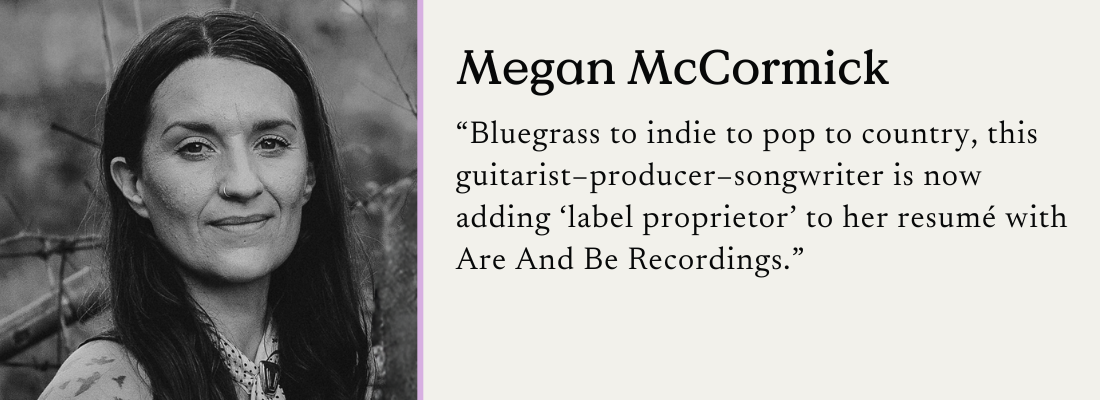
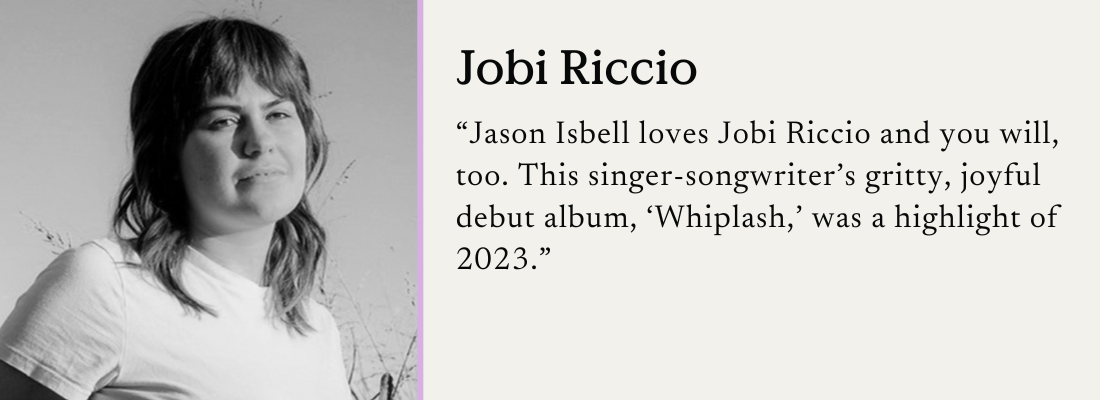
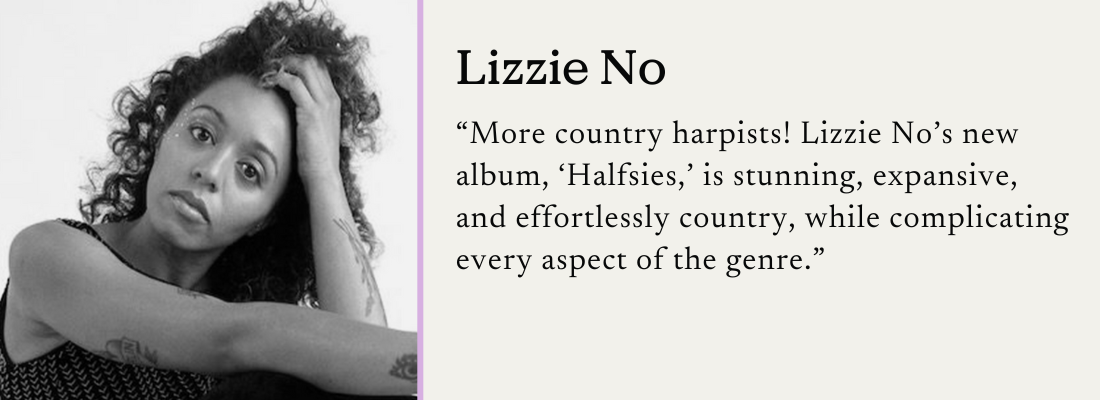
Ed’s Picks: Tejano, Country, Bluegrass, and More

(Editor’s note: Each issue of Good Country, our co-founder Ed Helms will share a handful of good country artists, albums, and songs direct from his own earphones in Ed’s Picks. 

Sign up here to receive Good Country issues when they launch, direct to your email inbox via Substack.)


Sign up here to receive Good Country issues when they launch, direct to your email inbox via Substack.

When You Listen the Land Speaks

(Editor’s Note: Sign up here to receive Good Country issues when they launch, direct to your email inbox via Substack.)

An often nameless, faceless character present in all country music is land. In a genre commonly referred to as country & western, land is a constant presence, whether foreground or background, evoked or painted, longed-for or spurned. Another nameless, faceless character that comes hand-in-hand with country and its relationship to land is colonialism – white supremacy, genocide, and imperialism advanced by music that claims to simply center nostalgia, rurality, and an “old fashioned” way of doing things.

This kind of revisionist history in country music – a sanitization of this nation’s past and present, in order to fit into widespread myths, around which this genre and our national identity is built – is no less pernicious simply because it is common and pervasive. It’s important to not only acknowledge country’s relationship with land, but to also attempt to deconstruct the ways that these roots genres perpetuate colonialist ideals and norms.

Can Good Country exist if it must deny the history of the land it professes to love? Can Good Country exist if it must deny that there would be no “country & western” without Indigenous people? These are questions that we feel are essential to ask, right out of the gate, even if their answers are not so simple. Good Country hopes to be a place that can represent all kinds of country music, but it cannot do that if we accept, uninterrogated and unexamined, that country’s relationship to the land must be good, moral, wholesome, and just.

At the heart of the second edition of Counterpublic – an artistic activation described on its website as “a civic exhibition that weaves contemporary art into the life of St. Louis for three months every three years…” – just south of downtown and the towering Gateway Arch, sits Sugarloaf Mound. From April to July 2023, Counterpublic included twenty-five public art installations at a variety of locations, including Sugarloaf Mound, a sacred site for the Osage People and the last intact mound in the city. In earlier eras, the area was home to many thousands of Indigenous people – and the largest city in what would become the United States, Cahokia.

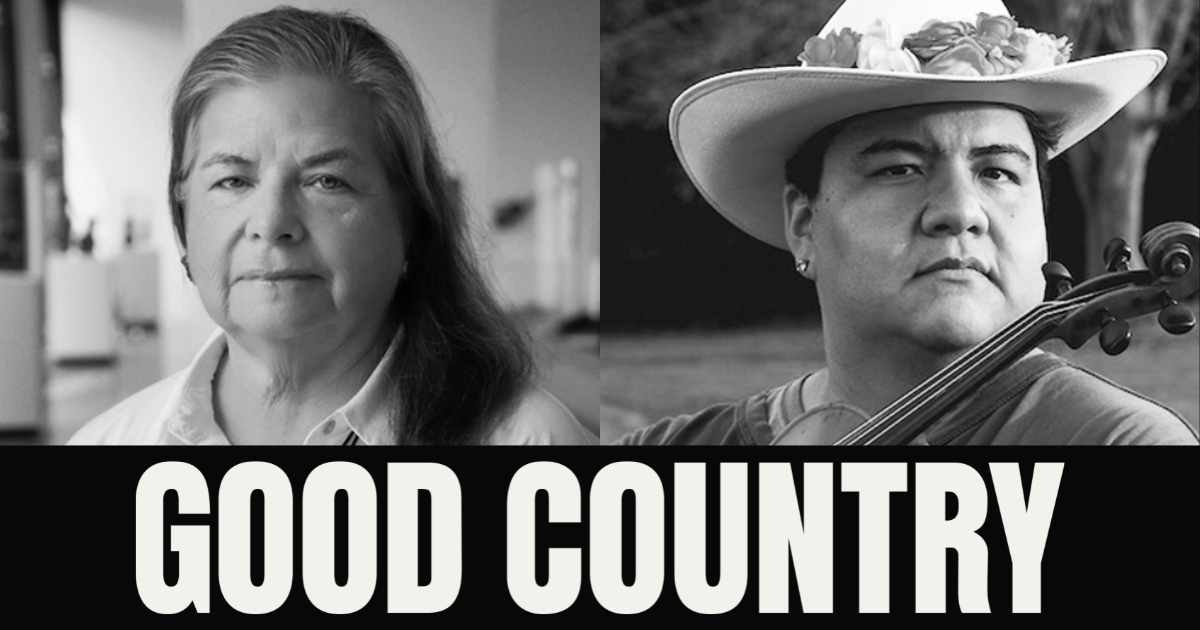
Adjacent to Sugarloaf Mound was the first Counterpublic installation and site, a collaborative piece that wove together sculpture, land, and music by mother-and-son artistic duo, Anita and Nokosee Fields. Anita Fields (Osage/Muscogee) is a fine artist who works in many media, but especially clay and textiles. Nokosee Fields (Osage/Cherokee/Muscogee) is a critically-acclaimed and in-demand old-time fiddler, equally at home in country and Americana as in old-time and string band traditions, and with a great deal of expertise on Indigenous fiddlers and Indigenous fiddling.

Their piece, WayBack, which was curated by Risa Puleo, is synopsized as such:

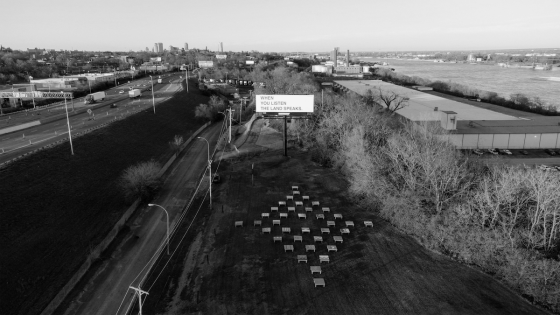
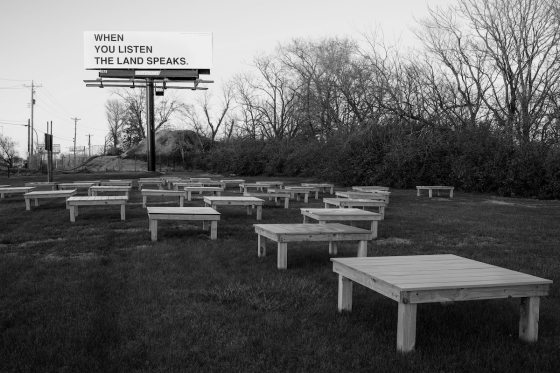
“Created in collaboration with her son Nokosee Fields (Osage/Cherokee/Muscogee), Anita Fields’s (Osage/Muscogee) WayBack invites visitors to gather in physical relation to each other, to Sugarloaf Mound, and to Osage ancestors, history, and legacy. When the Osage Nation purchased part of Sugarloaf Mound in 2007, the sacred site was reabsorbed into the Nation through the auspices of property, extending Osage territory from the site of their displacement in Oklahoma back to their ancestral homeland. Atop this site, forty platforms are installed, modeled after those found at Osage events in Oklahoma. Each platform is embellished with ribbons that reference Osage cosmologies of balance between sky, water, and earth. Nokosee Fields’s composition for wind instruments invites further consideration of the earth from which the mound was constructed, the sky that unfolds above the platforms, the sound of the Mississippi River on the banks below the quarry and the wind that flows through the surrounding trees that transform first into breath. After the exhibition, the platforms will travel from St. Louis to Tulsa where they will be distributed to Osage community members completing the link between the current home of the Osage Nation and its ancestral homelands.”

“Middle Waters,” the labyrinthine composition by Nokosee that acted as soundtrack for the installation, its platforms, and the adjacent mound (listen via the Counterpublic site here), perfectly illustrates how adept country music – and its textures, styles, and traditions – can be at capturing the ineffable, spiritual qualities of land and our relationships with it. Fiddle, field recordings, wind instruments, voices, and more intermingle in a piece that feels as organic and grounded as Anita’s sculptures.

Now, after the installation’s closing, each of the forty platforms constructed by Anita and displayed at the Counterpublic site will be moved to what’s now called Oklahoma, to be distributed to members of the Osage community and to have a continued life, further illustrating how art, music, and land gain all of their meaning from the communities that interact with and rely on them.

On the occasion of Good Country’s inaugural issue, we spoke to Anita & Nokosee Fields about WayBack, “Middle Waters,” the Counterpublic exhibition, and how humans, land, music, and art intersect and combine.

Could you just take me into the inspiration and the conception of WayBack and how you started working together and collaborating on the piece, not only with each other, but also with the land and with the site? Um, maybe Anita, do you want to start?

Anita Fields: Sure. Over two years ago now I was contacted by Risa Puelo, who was one of the curators chosen for the Counterpublic triennial in St. Louis. [Risa] asked if I would like to join and explained their purpose, what they were doing, and what their groundwork was for the triennial. She said, “I know your whole family are artists, so if you would like to invite somebody from your family to participate with you, that would be absolutely fine.”

But let’s begin with what their goal was, and that was to talk about the difficult histories of a place. St. Louis is certainly one of those. The reason that I was asked to join was that, for the Osage People, St. Louis, Missouri – and even further than that – is our ancestral homeland. It’s a large area, including St. Louis, Missouri, Arkansas, and even further than that in the beginning, migration from almost the East Coast to the Ohio Valley, to where our written and documented history begins in Missouri. So that was our homeland and there are documented villages there, still, and lots of history there, because after Lewis and Clark’s expedition we held the trade there. After Lewis and Clark, we started interacting real heavily and marrying with the French, partially because the French were trying to hold onto political power through the fur trade.

That is our history there [in St. Louis]. And then of course came displacement. A series of treaties started moving us out of that area, ‘til we came into Kansas. We had a reservation there and then we sold that reservation and with that money we bought what is our reservation today from the Cherokee Nation in Oklahoma. That’s it in a nutshell, and of course it’s way more complicated than that.

Nokosee and I don’t live in close proximity to one another, so I was like, “Oh my gosh, is this going to be able to work over the phone and Zoom? That’s going to be kind of difficult!” Then an opportunity arrived for me to go to Bogliasco, Italy for a month-long residency. I asked if I could bring a collaborator, and that’s where we landed for a month – on the Mediterranean, in this beautiful, beautiful, beautiful place, on the coast of Italy, not very far from Genoa. We schemed and dreamed and planned. And it was very difficult trying to arrive at a place where we were both happy.

Nokosee, I wonder how, as a songwriter and composer, you began approaching this? How did you take your musical vision and dovetail it with the physical vision, with the sculpture, and with the place? What was the process like as you sat down in Italy to start creating together?

Nokosee Fields: When we were both in Italy, I had a little field recording kit that I had been using. I would just roam around the grounds recording things. There’s the ocean right there, there are all these really intense waves happening, a lot of sounds to be had. There was also a poet, Robin Robertson, who was a fellow there at the foundation and I asked if he wanted to do any collaborating, because we had a lot of time there – it was a testament to the importance of having space and time to have creative thoughts. Which, I feel it’s really rare. For a lot of artists, you have to hustle a lot. We were there for one month, I was getting very regular sleep, I was eating three nourishing meals a day, and getting some exercise. And again, it’s also in this beautiful location, and we were surrounded by really smart artists. It was just a very stimulating, nourishing, and calm environment. I was able to actually have some visions and clarity. And I was able to indulge a lot of things – where, you know, most of the time I’m just barely piecing things together to make money or to pay rent.

It began with [Robertson] reciting a poem, then I started layering him reciting this poem with the waves and different sounds from around the grounds, manipulating them. I like the idea of using really intricate, small, detailed, fine sounds – using a really sensitive mic – and then turning that into something else. Or, pitching it, layering it on top of people’s voices or singing, or maybe something a little more recognizable.

For me, the space and time to have all of that creative flow happening – it took what felt like a month of just space to finally get somewhere with something. It was eye opening, a testament to needing space and time, because we kinda flip-flopped back and forth on what we were gonna do. I wouldn’t say we were struggling, it was just that we were in this new place and jet lagged. Our project was not hands-on, because it was just all conceptual, so it was a little difficult to land on something.

I do want to talk about the site, because – obviously I’ve only seen the photos – there’s an interesting juxtaposition of this kind of dreamlike soundscape for the piece with “Middle Waters” and then the site itself feeling somewhat shoehorned into modernity. You have the river there you have the highway here and of course there’s a billboard incorporated into the piece, as well. Anita, can you talk about how you wanted to play around with that juxtaposition with this sacred site that now is somewhat entrapped by modernity and by settler culture?

AF: There’s always a backstory surrounding my work, and how I came to be. I was born on the reservation and spent a lot of time with my grandmother, who was full blood, and I’ve chosen to be very close to my culture, even as an adult. As much as I could, I did what my grandmother did for me for my children, to make sure they have a place there, [in my culture]. In my own work, as I became older and older, I would be inspired by things that come from our worldview, which is a very complex worldview, but it’s very beautiful.

We still have those values. As a modern person, those values are still in place – you know, where I’m from. You can witness them in how we interact with one another, a lot of times. I think that is a very beautiful thing to know that what my ancestors left for us you can still recognize. A lot of my work surrounds that kind of thought, that there is another way of looking at the world that is not just a tunnel vision of, “We’re all like this and we’re going to go to the mall forever.”

And that’s our worldview; it’s way deeper than that. Through art, that’s a beautiful place to be able to tap into those kinds of thoughts and values. So I wanted, because that is our original homeland and that is such an important site, I wanted to be able to bring in this sense that we’re reclaiming that space again, marking it as ours, and [saying] this is who we are. I want people to know this is who we are.

Those wooden platforms are actually found throughout [our culture]. I’ll describe it to you this way, because this is the way I write about it: They have been around for a very long time. My earliest memories of them are when I was a young person, a young girl going around with my grandmother, and I would see them outside of large Osage homes or outside of our dances.
At camps, people have family camps, and these platforms would be there and you’d see older people putting their blanket down and sitting on it and then maybe somebody giving them a glass of lemonade or a Coke. And then they’d light up a cigarette and they’d be just visiting and laughing away with a relative or a friend.

And it always looked very calming and peaceful to me. Those are the kind of memories too that I often tap into. But it’s also much deeper than that. What I was seeing there was, yes peaceful and calming, that was happening, but I was also witnessing survivors who had gone through a lot just for us to be able to be here. There are always these links.

What better place to be able to bring those [platforms], because that is the place that we had to survive from, to move from St. Louis. I’m always interested in giving people a glimpse into who we are. It’s not my job to talk about ceremony or rituals or any of that kind of thing. But I want people, again, with that thought in mind, I want people to know who we are and that there’s a different way of looking at the world and it comes from very complex, intelligent thinking and is based on observing nature and the cosmos. These values and these systems are still here for us today.

With the platforms, we started by going to Google Maps, downloading maps and images, and the site was kind of big, so it wasn’t working with one platform. And we just kept going, “Guys, that platform is gonna drown in that big space!” It’s beautiful to be able to work with a great curator because between our conversations with all of us we decided, if the money can be found, maybe we can have more – it began there. That is how those arrived and then we topped them with designs that are familiar to us as Osage People. We painted those on there, designs that are used in our ribbon work clothing – which comes directly out of our interaction with the French, when we started trading for ribbons and needles and threads and thimbles and that kind of thing. This kind of interaction with the French and our time there totally changed our culture forever.

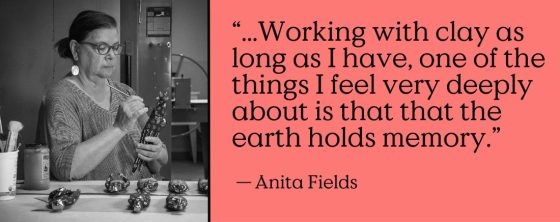
…You know, with working with clay as long as I have, one of the things I feel very deeply about is that the earth holds memory. That has been revealed to me, just because of how clay is made over time. I’m certain it holds the memories of who was there, wherever in the world.

I mean, in Italy, a couple of times when we would travel to these places and then we would read about the history, I felt that there, too. No matter where you’re at there are always the similarities to what has happened in history – “the conqueror” and “the conquered” – these stories are all threaded together and similar. I couldn’t see WayBack without sound in any way, shape, or form. It just wouldn’t have the punch that I was looking for.

I did want to ask, where are we at in the lifespan of the piece? I know that the plan is to distribute the platforms to Osage community members back around Tulsa. I just wonder where you’re at in that process?

AF: Yes, it was temporary and as soon as Counterpublic closed, I think it was within two weeks, they were picked up and shipped back to Tulsa to the [Tulsa Arts] Fellowship. The Fellowship is storing them for me. Then I got a call from the First Americans Museum in Oklahoma City, which is I think in its second year. They have a beautiful courtyard plaza and they have built a mound-like area where you can witness the solstices. The curator was at the Counterpublic closing and she said, “I want to bring these to First Americans Museum, what’s the plan for these as soon as this is over?” Well they took half of them and then half of them stayed here, displayed at a place called Guthrie Green in Tulsa for about a week. Yesterday, the ones from First Americans Art Museum were delivered to the Osage Nation. I want to distribute them to the Osage community. In my mind I’m like, “What am I going to do with 40 platforms when they return? What’s going to happen with these and who owns them?” And actually that was [curator Risa Puleo’s] suggestion: Is there any way these could be returned to the Osage community?

People are excited about it, those that know about it. Not a whole lot of people know. I’m trying to keep it [quiet] ‘til I get it all figured out, but they’re excited about it. I’m excited about it, too, because that is another way to make art accessible. To bring it back to where you come from. Because those folks are totally my inspiration, and I say this at every turn, whenever I have the opportunity. You’re my inspiration. Your grandmother, my grandmother, every interaction I’ve seen throughout my life. This is my inspiration.

Nokosee, I wonder, do you see a similar way of bringing “Middle Waters” to the people? Do you see a lifespan for that piece beyond this installation? Or do you think it’s a moment in time and it’s onto the next work?

NF: Yeah, I think it’s just a moment in time. I might edit it, but I’m pretty pleased with it. If anything, it’s more of a reason to want to do more sound installations, sound art kind of things. I’ve been wanting to transition to that kind of work. As much as I’ve enjoyed touring – and I’ll probably do it for as long as I can – I find it to be pretty taxing. It’s tons of fun, but I think I need something that’s a little more cerebral, a little more isolated, a little more supported, and also a place for my voice and creativity. I feel like I’m kind of waking up from an obsession where I just got into traditional American music, traditional fiddle. Now that I’m steeped in that world and I feel like I’m really a part of it, I also feel like there’s a lot of it I just don’t really care for.

This sounds really uppity, but making traditional fiddle music feels kind of separate from [country], it’s just melody. I like the foundational aspects of music and the research and tone, things like that. And I like it because it’s not really tied to lyrics, it’s not putting on a type of personality, like lyrical content [does].

That, to me, is often just perpetuating settler mythology about old-time music. There are a lot of things that could be said about old-time music that are also problematic. Instrumental music is where I really jive and get into stuff, but I’ve also had to constantly interface and participate in lots of country music or lyrical music that has content that, to me, just feels like propaganda with really rudimentary, basic understandings of the land.

It feels like a type of erasure. It’s just kind of designed that way – maybe not maliciously – but it’s just so deeply woven into how things work in this country. …I find a lot of country music today, a lot of the younger, popular stuff, it feels like it’s about convincing white people that they’re white or something. There’s this pseudo-woke take on country music, which I think is fine, it’s just not radical enough for me or something. It’s like it’s just enough for people to kind of maybe get their outlaw fix.

It still doesn’t work for me and I still find it very rudimentary and actually not very confrontational or very deep, as far as what’s actually going on in the world or on this continent.


Sign up here to receive Good Country issues when they launch, direct to your email inbox via Substack.

Lead Image: Anita & Nokosee Fields via Counterpublic.
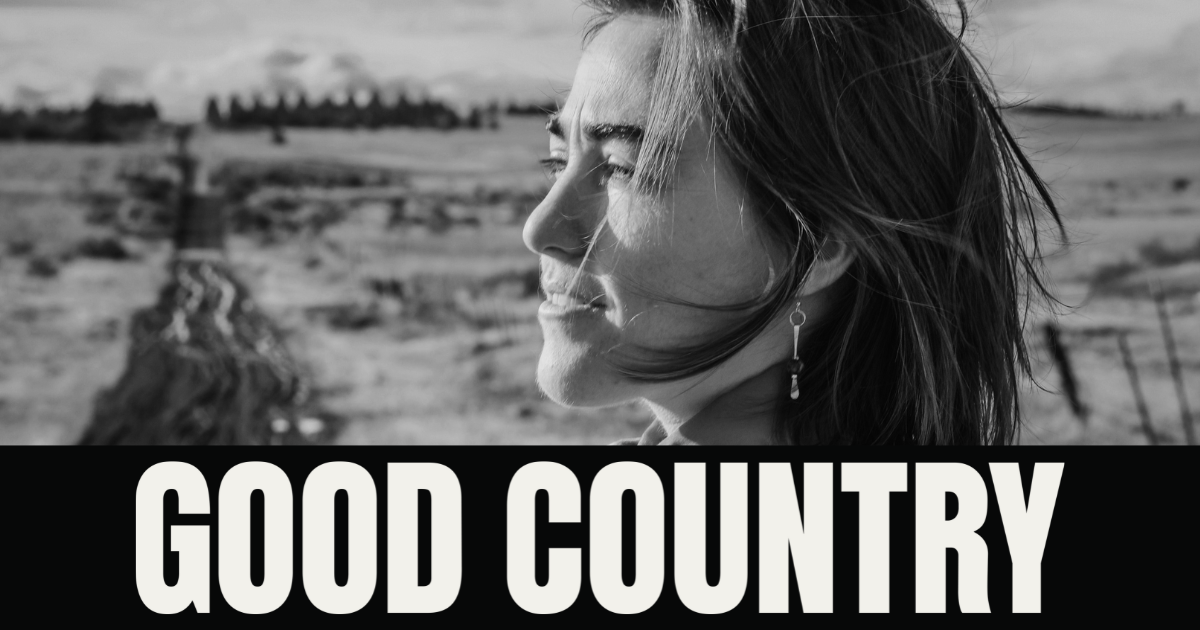
Image of Anita Fields: Courtesy of the Artist.

Headline text from Anna Tsouhlarakis, “The Native Guide Project: STL.” Billboard and digital signage. Curator: New Red Order. Counterpublic 2023, Sugarloaf Mound Site.
Ed’s Picks: Country From All Corners

(Editor’s note: Each issue of Good Country, our co-founder Ed Helms will share a handful of good country artists, albums, and songs direct from his own earphones in Ed’s Picks. 

Sign up here to receive Good Country issues when they launch, direct to your email inbox via Substack.)


Country’s Genderf*ck Tradition

(Editor’s Note: Sign up here to receive Good Country issues when they launch, direct to your email inbox via Substack.)

Country music’s gender politics have always been, well, kind of fucked up. The genre itself is rooted in class-based declarations of authenticity and individualism, all while negotiating assimilation into urban life. Like any other large group of people, country music artists are by no means monolithic, and the genre’s approach to gender – especially femininity – is diverse. But for all the treacly love songs and mincing breakup songs, the ones where country divas’ lives are at the mercy of men, there are songs that flip that dynamic right on its head.

Stephanie Vander Wel’s Hillbilly Maidens, Okies, and Cowgirls illustrates how this dichotomy has existed since the genre began. Country music has always sold the story of rugged individualism, and that sense of individualism has paved the path for women who present themselves as more rugged than the “Pollyannas” they’re expected to be. That tradition continued well into the classic country era; Loretta Lynn’s “The Pill” and Tammy Wynette’s “D-I-V-O-R-C-E” masterfully display centering women’s agency, while couching that drive in humor and a catchy tune.

It’s no coincidence that if you ask someone on the street to name a country music artist, they’re most likely to list a woman. Dolly, of course, or the ‘90s run of divas like Shania, Faith, or The Chicks. As has been oft-discussed, this generation of country stars tapped into the ‘90s exuberance for individual freedom while questioning the traditional ties that bind us to our scripted gender roles. Faith Hill’s “Wild One” and, of course, The Chicks’ “Not Ready to Make Nice” portray a femininity that is self-confident: there will be no more shrinking behind men in too-large ten-gallon hats.

Marissa Moss and Dr. Jada Watson have extensively documented the decline in women’s presence on mainstream country radio since the aughts. But that doesn’t mean women are shutting up, and we are starting to see queer women, as well as nonbinary and trans artists, use their inspiration from the ‘90s to continue using country music to challenge gender norms. Roberta Lea’s “Too Much of a Woman” is brash, rejecting any sexist norms that would expect her to dim her light. Jessye DeSilva’s “Queen of the Backyard” and Paisley Fields’ “Periwinkle” are touching tributes to young people who know they don’t fit in and never will. Desert Mambas’ “Buzz Cut Blues” is a nod to Leslie Feinberg’s legendary no novel Stone Butch Blues, making good on country music’s promise of non-normative gender performance with a meditation on moving through the world as a transmasc person.

Throughout the century’s worth of country music canon, there is one throughline: this genre that celebrates outlaws and misfits must always celebrate women, femmes, non-men, and others who are doin’ it for themselves.


Photo of Dolly Parton from the Michael Ochs Archives.

Sign up here to receive Good Country issues when they launch, direct to your email inbox via Substack.

You’re Looking At (Feminine) Country

(Editor’s Note: Sign up here to receive Good Country issues when they launch, direct to your email inbox via Substack.)

Eight years ago, in 2016, the harp-playing half of Brooklyn-based folk duo Devil & the Deep Blue Sea, found herself filing away songs for a solo project.

“There were certain songs… [that] would tell me who Lizzie No was going to be,” she explained in a recent phone interview.
“There were songs that felt very personal, very femme, and a little more country and a little more pop than would be appropriate in my band. Those songs started getting categorized into the ‘new solo project’ category. And then, I just had to come up with a name, you know. Like, I needed my Sasha Fierce alter ego, to be able to stand in myself.”

The name she landed on, Lizzie No, was a doozy. Considering the femininity she noticed her new songs projecting, the decision to include the word “No” in her name was no small thing. Women, especially feminine women – especially Black feminine women – have a special relationship with the word. It was important to No that her solo singer-songwriter persona reflect the energy she wanted to project, the space she wanted to carve for herself and her songs.

“I think there’s a real difference between singing songs that you wrote in the context of a band versus being a solo artist and having people literally look at you, in your physical body, and associate the songs with you and yourself. So I needed an identity, a performer identity, that would be able to encapsulate the confidence and the directness, and yes the femininity, that I wanted to present with these songs that I was writing.”

The idea of mindfully presenting femininity is nothing new, of course. Women in all professions must decide how they’d like to present; how many minutes or hours they will spend before each workday putting on their face and dressing to impress. But, there is a special place in the history of country music for artists taking the stage while female.

It was far less than a century ago that female country singers were expected to travel with a husband, brother, or other male family member as their escort. Women country singers were expected to eschew ambition and to primarily be a pretty face with a pretty voice.

All that started to shift when Mother Maybelle and the Carter Sisters made their Grand Ole Opry debut in 1950 – the first all-female band on that storied stage. In fact, well aware of how women were perceived and received by the country music establishment, Mother Maybelle nonetheless insisted her daughters become masterful on their instruments, develop independent business acumen, and forge a career on the stage.

For the 74 years hence, women who can and do shred have been of great interest to country music critics and fans alike.
Author and critic Marissa A. Moss dove deep into this subject with her 2023 book, Her Country: How the Women of Country Music Busted Up the Old Boys Club. Meanwhile, on social media, fans and artists alike routinely return to the evergreen topic of how much airplay women get (or, rather, don’t) on country radio.

To consider what it means to show up wholly oneself while feminine in country music can feel like engaging with a Groundhog Day loop through tired, generations-old expectations. Granted, the options for women have broadened a bit since the Carter Sisters showed up in their gingham checks and transcended what one might have expected from pretty women who sing and play. (A new documentary by Kristen Vaurio on Paramount+ about the youngest Carter Sister, JUNE, is well worth a stream.)

The modern answer to the Carters’ quietly subversive embodiment is a cadre of demonstrably feminine women like Allison Russell, Margo Price, and Amanda Shires. Recent Grammy winner Russell comes off like a clarinet-wielding, angel-voiced supermodel, self-made from equal parts awful trauma and infectious joy. Price appears as a cross between Willie Nelson and Cher, riding her biting narrative lyricism on the vehicles of magic mushrooms and low-cut, glittery fringe. Shires saunters about in spiked heels and leotards, a finer fiddler/poet than you’ll find anywhere else on God’s green earth.

That each of these women is stunningly talented as a lyricist, multi-instrumentalist, and performer, is inarguably the most important thing. But the messages they convey by leaning hard into how they wear their gender, remind us that women in country music no longer need to amplify the pretty and take the brilliance behind the scenes. There’s more than enough space for both/and.

It wouldn’t be a leap to suggest this is thanks in part to a rising tide of queer country artists. Lizzie No, Russell, and others – Jaimee Harris, Brandy Clark, Jaime Wyatt – prioritize songcraft as equivalent to crafting persona. Other queer artists like Paisley Fields subvert the masculine/feminine binary with candid expressions of personhood that transcend traditional femininity while remaining sonically adherent to traditional country music.

All of this raises numerous questions, including: What does 21st century femininity bring to the cis-het boys’ club of country music? Shouldn’t women get country airplay while also being free to show up as the full human they are?

Lizzie No is a good example of a walking answer to both questions.

A rising country singer whose music lands warmly – a stew of Dolly and Emmylou, a twinge of Kris, just a pinch of Sleater Kinney – her new album, Halfsies, is a mostly-country and occasionally rock and roll rumination on the intersections of love, identity, and freedom. While it may resonate for plenty of men and folks who don’t identify as feminine, it is, in other words, about the numerous conundrums and longing-for-transcendence of womanhood.

“There’s a patriarchal anxiety around performance and illusion, and we associate that with femininity,” No says. “[I’m] actually leaning into that and saying, ‘It’s all a mask. Gender is a mask for me and for you.’ That’s a big part of how I’ve constructed my identity as Lizzie No. I am one thousand different things and [you shouldn’t] try to narrow it down musically, or in terms of gender.”

She goes on to affirm that the way she constructed her performer persona is similar to drag. Considering country music is most often associated with Nashville (where No recently relocated from New York City), it’s worth considering that this new wave of feminine people in country music has risen at the same time as a push-back against drag performers in the same state and across the country. The tension between these two phenomena is mostly political and definitely charged.

When indie band Yo La Tengo played a show in Nashville shortly after the state passed its anti-drag bill, their decision to wear dresses onstage was a funny, tongue-in-cheek protest. An overt resistance, an assertion of allyship. This is different from when someone like nonbinary country singer Paisley Fields steps out in a sheer top and jewelry, or a dress. The former is clowning on politicians; the latter is throwing on something comfortable to engage in vulnerable, intensely personal creative expression. The former is playing to its indie rock audience, replete with left-leaning, ironic hipsters; the latter is forging a path of their own in the country music world, where femininity is a little more… complicated.

“The first thing that comes to mind when it comes to femininity in country music is just how misogynistic of a genre it is,” Fields said in a recent interview.

For example, they added, “The first time I wore a dress [onstage], I noticed the way people treat me is very different. Even if I’m just in a more, like, sort of flamboyant or more feminine look—maybe hot pink pants or something – I’m treated very differently. If I’m wearing a dress, it’s almost a little scary.”

Over the past couple of years, since coming out as nonbinary, Fields has been exploring what it means for a person assigned male at birth to express authentic femininity on a country stage. Indeed, they are just as likely to appear in the jeans-boots-hat costume of a country man as they are in a sparkly net top and purple chaps – an outfit nobody would look twice at, were it donned by Margo Price or Lizzie No. In the process, they’ve firmed up their own convictions around country music’s relationship with femininity.

“It would be better for a woman to be masculine [in country music] than for a man to be feminine,” they say. To clarify: “Some of the most successful women in country music are obviously very feminine and embrace their femininity, like Dolly Parton and [Shania] Twain. But there is this sort of like, tough as nails [persona], which I guess is perceived a lot of times as masculine.”
Granted, this tough-as-nails persona is often an outcropping of the mountains these women have needed to climb in order to make it onto the big stage.

In her 2022 memoir, Maybe We’ll Make It, Price detailed a few shady encounters with Nashville songwriters and executives who saw her as a young, hopeful girl who deserved to be exploited. That she survived these instances and earned success with her music on her own terms, in the end, perhaps lends itself to a tough-as-nails persona. But it is one that comes from being a woman with well-marked boundaries in a misogynistic boys club. When she rode into the 2022 Stagecoach Festival in a crop top and glitter skirt, on horseback, she knew she’d earned the right.

This balance of toughness and femininity (often used in a context where it’s synonymous with “weak” or “fragile” or “naïve”) is indeed not a stretch, but rather the innate characteristic of a woman with a strong moral center and the desire to get hers.

Lizzie No explains perhaps better than this writer can.

“I feel my most feminine when I am in some way using my physical body to achieve political ends,” she says. “To me, that’s my ideal of femininity. It’s like the women who lured Nazis to their death by being hot. When I want to post about taking down the government, you know, I will always use a bikini pic. … Because it’s like, hey, look over here, you’re going see my midriff and you’re going to learn about how capitalism has alienated us from ourselves.”


Photos of Lizzie No by Cole Nielsen.

Sign up here to receive Good Country issues when they launch, direct to your email inbox via Substack.

Moving & Returning

(Editor’s Note: Sign up here to receive Good Country issues when they launch, direct to your email inbox via Substack.)

I bet in the next few years, an expert taxonomist will come by and tell us exactly what country music is – and that this definition will create endless arguments. In the last few months, this argument about what exactly country music is has been growing louder. Jason Isbell has been fucking around with Nashville for decades, playing the field between rock, country, southern rock, country rock, and classic country. (He has recently said that he considers himself a rock singer). Adeem the Artist, the infamous cast iron pansexual, says that they are a folk singer. Willi Carlisle, a folk up-and-comer, has released Critterland, a certainly country album. On the other hand, Maren Morris released two singles last fall which were about burning Nashville to the ground, yet they’re perhaps the most country songs of her career – in terms of how she tells stories, how the bridges work, her vocal tones, and even some of the instrumentation. It seems lately, country is both everything and nothing.

Amanda Fields’ 2023 project deepens this ongoing problem. The album, What, When and Without, is a complex artifact of her own wrestling with genre, history, and biography. It slides into that complex sorting of genre and feeling that is key to Nashville right now. Fields calls this a country album – lushly produced, thick with strings, and dense with vocals, reminding one of an updated countrypolitan record – but sorting out what that means comes with a history of playing and listening.

Fields has a reputation on the bluegrass circuit, often an insular genre with an insistence on a certain kind of purity. She recognized how those questions of purity often don’t pay the bills, and her first major recordings were on a series of bluegrass cover records, called Pickin’ On – recorded by prominent bluegrass studio musicians, there are dozens of them, the artists covered include the expected (Bob Dylan, Johnny Cash), the unusual (Blink 182), to the fully flummoxing (Modest Mouse). Though Fields did not play on all of these records, she talks about them as an integral understanding of herself as part of a musical team: “When I look back on my experience within the ‘genres’ I’ve taken part in, I think about the groups of people I worked with… When I worked on Pickin’ On, I got that gig because of who I was hanging out with and playing music with at the time. I sang ‘gospel’ when I was growing up, because that was the community within my proximity.”

Proximity is a complex question for Fields. She has close ties to the bluegrass community, and there is something intriguing about the idea that genre is a social category – one about who one is near, or what the audience and the performer agrees to participate in. Yet there is a kind of roving that occurs here too; for Fields, roving is both a history of moving around geographically and, as she says here, moving from music that she considers bluegrass or gospel or country.

Fields moved around a lot as a child. Though she was born in Appalachia and currently lives in suburban Nashville (right next to Loretta Lynn’s old house), the line between these two legendary destinations was not direct.

Asking Fields about these roots – expecting a standard line in response – she honestly describes the complexity of her raising: “I’m originally from the mountains and it was my anchor growing up, but my dad moved us around a lot. He was one of those people who felt there was more to life than what was available to us living in that area, so he took job opportunities that carried us away from the mountains. I didn’t like that, because I was always longing to be ‘home’ with the rest of our family. I lived for summers and holidays when I got to be in Virginia and East Tennessee. Playing and listening to country and bluegrass music was my way to experience home when I couldn’t be there physically.”

This moving and returning is a common note for country musicians. Listening to her talk about the juxtaposition of moving, returning, being forced to leave, and finally finding home in an idea more than a place, I am reminded of Tanya Tucker or Merle Haggard. Tucker’s early childhood had a father who moved her from Arizona to Las Vegas to finally Nashville, chasing an acting and singing career. She broke out as a singer who fused a desire for rock and for country. It is similar to Haggard’s talk of moving – to California with his family as a consequence of economic disenfranchisement – and spending the rest of his career chasing economic stability. That idea was perhaps best written about in his tragic ballad “Kern River,” with its opening line, “I grew up in an oil town, but my gusher never came in.” (A Fields original from well before What, When and Without, “Brandywine,” strikes a similar note.)

This connection to Tucker, Haggard, and other classic country singers suggests that Fields landed not necessarily in a place, but as she says, in a music which has tight connections to place. What, When and Without, a classic country album, is infused with this kind of nostalgic listening.

Asked about her relationship to figures like Loretta Lynn or Haggard, she answers carefully: “Most of the music that really stirs my soul is older. I listen to all my friends’ new music and I’m always hunting something fresh to connect with, but on a day-to-day basis, I’m usually listening to the same stuff I’ve always loved. I’m talking Tammy Wynette, Loretta Lynn, Conway Twitty just about everyday. Classic country is what excites me (especially when I discover something I haven’t heard) and those familiar sounds and voices help me regulate my body’s nervous system.”

The album, rooted in those sounds, contains a deep knowledge of genre. Its ability to move between old school country, bluegrass chops, and deep, modern desire is one of its strengths. Figuring out how to sound both modern and historical is something Fields achieves with some skill. If her commitment to genre has a loose, rootless quality – or at least one which floats and lands depending on aesthetic or social need – then how she considers time has a similar quality.

Maybe her early commitment to bluegrass, a genre who remembers more than it forgets, and faces backwards as much as it faces forwards, and which was complicated by how hungry those covers were, suggests one way of bridging eras. But, her recent work, crafting contemporary studio craft with the careful polish of Studio A aesthetics is another. Asking her about memory and nostalgia, she again answers carefully: “One thing that was very intentional with the album was the pace. I think that going slowly is nostalgic in a way, because society and industry move so fast nowadays. I usually walk slowly and I talk slowly compared to most of my peers. My body responds to tempo and dynamics and I wanted to invite the album’s listeners to slow down with me.”

The slowness of the album can be heard in how she starts many of the tracks. There is often an instrumental intro where one waits a significant time for the vocals to be introduced and on occasion there are gaps, where her vocals recede and the band takes over – though the band itself is also quiet. There is a quality, listening to the work, of a kind of courtly two-step, the band asking Fields to dance, and vice versa.

The very first song, “What A Fool,” begins with brushed drums, and has a quite lovely open-ended moment where the pedal steel becomes central. On “I Love You Today,” the old-fashioned cheating song, heartbreak is introduced via an elegant, western swing sound, not outside of Lovett at his best. The last song, “Without You,” plays drums as solid and regular as a heartbeat. It’s another heartbreak song.

The pedal steel is crafted by Russ Pahl, who has been playing for decades. He has been nominated by the Academy of Country Music for his work on the steel guitar three times and for specialty instrument once, between 2004 and 2021. Before that, aside from being an in-demand studio musician, he was part of legendary Great Plains, another band who was excellent at moving between genres, across time, and throughout modes.

Talking to Fields about Pahl, she noted how good he was at not only playing, but matching vibes in the studio: “He came across very quiet and contemplative in the studio and I think he ‘got’ the vibe right away. After a song or two, he said, ‘…this ain’t Zip A dee Doo Dah.’ And it wasn’t. It was an album created in the midst of global pandemic [and] a time of great suffering for society and for myself personally.”

What, When and Without sounds like Fields has had some rough times, even outside of the lockdowns (regardless of how dense the record sounds, there is a yearning in the vocals that have a certain lockdown edge); but there is also an irony in this loneliness. Megan McCormick, who co-wrote on and produced the record and plays in Fields’ band, shows great intimacy throughout the project – there is a reason for this, McCormick and Fields are personal as well as professional partners. They sound good together, and the track where McCormick sings backing vocals, “Moving Mountains,” is the highest energy, most open of the entire record. It’s a great love song – but it’s a love song which calls to Mother Maybelle Carter as an avatar of country music, as a figure outside of space and time, which can tell the narrator how to love after years of heartbreak.

When asked about McCormick, Fields is still a little coy, but her commitment to their lives and sounds is made clear: “She really has a special gift and believing in her as a producer, as well as trusting her intuitions and abilities, has allowed me to grow as an artist. She’s my toughest critic, because that’s what I’ve asked of her. She’s also my constant cheerleader. We thrive when we get to travel together and both enjoy that feeling of being untethered that you get when you’re on the road.”

One can hear some of the untethered quality in Fields’ work, the road as untethering as much as time or genre, but the closeness that she has with McCormick is another kind of tethering, be it a consensual one.

Throughout the album, there is a quality of choosing which traditions are valuable, which are worth keeping, and which ones might have outlived their usefulness. When she talks about her childhood as a Pentecostal, she says: “I am very spiritual, still, and that energy I saw in church growing up is no different than the energy I feel when I’m composing music or playing music with other people with whom I am ‘tuned in.’”

She is definitely tuned with McCormick, their close contribution seen in how they work together – the harmonies without necessarily the negative consequences of some of that church life. She continues: “Those are universal aspects of the human experience that transcend dogma, class, and denomination and that’s what I carry on and value from my experience in church.”

One can see the universal quality in Fields’ work, and it contains interesting juxtapositions. A rootlessness across genre or time, which lands on something contemporary sounding; or a heartbreak record which rests on multiple commitments to one person; or even a religious tradition which widens and deepens.

Maybe we don’t need that taxonomy. An audience knows what a country record is.


Sign up here to receive Good Country issues when they launch, direct to your email inbox via Substack.

Photo Credit: John Brown

Artist of the Month: Willi Carlisle

It’s not hard to imagine Willi Carlisle’s latest album, Critterland, as a decrepit-but-lovable roadside attraction, but here, the side show has decidedly taken center stage. Carlisle, a folksy, pastoral poet and songsmith, has invited all of us inside the big tent he pitched with his last record, Peculiar, Missouri, and to celebrate all of the beautiful ugliness we find in the spotlight. Produced by Darrell Scott, Critterland finds redemption in proudly – and holistically – owning and just as often subverting expectations around rurality, authenticity, community, and belonging. It’s a deft and artful confluence of schtick and performance, vulnerability and obscurity, artifice and genuineness, that could only be accomplished by a creative like Carlisle.

In Ryan Lee Cartwright’s book, Peculiar Places: A Queer Crip History of White Rural Nonconformity, the author and academic makes an astonishing case for the American societal and imperial construction of the “rural idyll,” and thereby, the co-construction of its antonym: the rural “anti-idyll.” The rural idyll is our general understanding of how rurality and the American dream intersect; of goodness and work ethic and respectability, of insiders and good ol’ boys and our kinda folks. The anti-idyll is the amorphous, intangible opposite of those white supremacist and capitalistic constructs.

Critterland is a joyous and liberated inhabitation of the latter concept, reveling in queerness, counter culture, other-hood, and so many kinds of rural, agrarian, and American anti-idylls. What are queer folks, poor folks, Black folks, brown folks, disabled folks in the country – and in country music – besides, first and foremost, antithetical representations of the American dream? The overlooked, enshadowed folks who inhabit the American anti-idyll… who is singing music for them? Who is inviting those very folks to step into the spotlight?

Willi Carlisle is certainly one. Tracks like “When the Pills Wear Off” and “The Money Grows on Trees” synthesize broad, generational, socio-economic realities that are often discussed, understood, and intellectualized – but rarely with their subjects first in mind. Carlisle is clearly making these songs for the people most impacted by their content; any translation they have in more zoomed-out contexts or to wider audiences is simply an added bonus. Others, like “Dry County Dust,” “Two-Headed Lamb,” and the titular “Critterland” seem to wink at the rural cosplay worn by all songwriters and music makers in roots music, but again, winking first to those who already understand it was always cosplay, from the very beginning.

Whether inhabiting the character of his onstage persona, which often but not always aligns with the human himself, or merely reflecting the pantheon of folks in his own life and communities, there’s a quality to Carlisle’s music and to Critterland that’s saying, “This music is for our kind of people.” And in the words of another backwoods poet, Jimmy Martin, “It takes one to know one, and I know you.” That could almost be the entire thesis statement of the album.

Darrell Scott’s production – and his own multi-pronged relationship to the anti-idyll – makes the clumsiness and haphazardness of this set of songs feel fully like a feature and not a bug. This is Critterland, after all, these side show animatronics are on their last legs and that’s why we love them. This sort of charm is certainly carried over from Peculiar, Missouri – which has delightfully variable production styles across the tracks – and really from all of Carlisle’s releases to date. (Including, if not especially, his hugely popular sessions with Western AF.)

Critterland, in the end, may not be the most magical place on earth, but it doesn’t want to be. And, it’s still a place you’ll end up returning to again and again. Because Willi Carlisle’s big tent is really, actually big enough for all of us. On our best and on our worst days and on all of the many days in between.

BGS will spend all of February celebrating Willi Carlisle as our Artist of the Month. Watch for an in-depth feature by music journalist and author Steacy Easton coming soon and, for now, enjoy our Essential Willi Carlisle playlist. Plus, don’t miss Willi and Critterland in the debut issue of Good Country, a new bi-weekly email newsletter from BGS.


Photo Credit: Madison Hurley

ANNOUNCING: Louisville’s Bourbon & Beyond 2024 Lineup

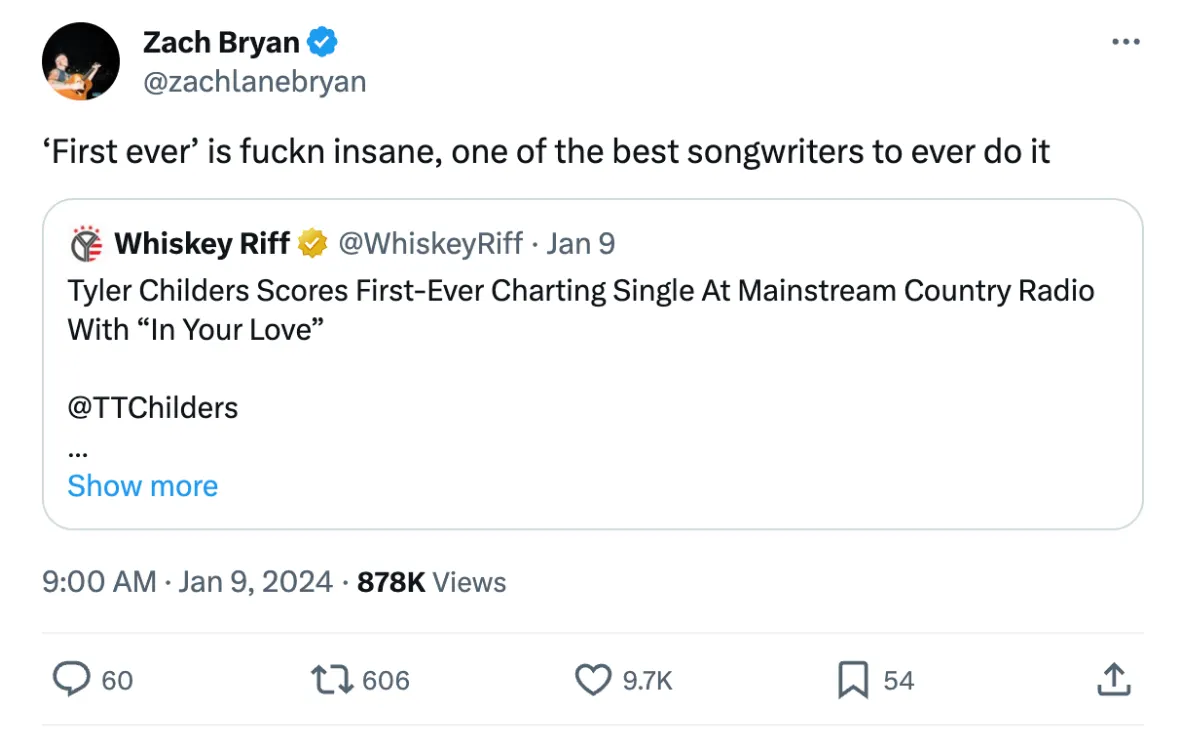
Today, Bourbon & Beyond, the world’s largest music and bourbon festival, announced its lineup for their 2024 event, to be held in Louisville at the Kentucky Expo Center September 19 through 22, 2024. With headliners such as Neil Young, Zach Bryan, Tyler Childers, and many more, the festival promises a roster filled-to-bursting with the best acts from country, Americana, bluegrass, and beyond.

BGS will return to the festival for ours and the festival’s sixth consecutive year, once again curating the musicians and bands that will grace the Bluegrass Situation Stage. Housed in the Kroger Big Bourbon Bar, the BGS stage will feature bluegrass, line dancing, and as much bourbon as you can drink from dozens of distilleries. Each day of the festival our stage will culminate with performances by Sam Bush Band, the Jerry Douglas Band, Yonder Mountain String Band, and Tony Trischka’s Earl Jam. Plus, don’t miss exciting acts like IBMA Entertainer of the Year winners Sister Sadie, newly-minted Black string band New Dangerfield, and KY neighbors the Local Honeys and the Kentucky Gentlemen. See the full list of performers for the Bluegrass Situation Stage below.

Kentucky Governor Andy Beshear, via press release, had this to say about the festival: “The Commonwealth of Kentucky is honored to be hosting Bourbon & Beyond in Louisville this September,” he said. “The festival brings in fans from all over the world and showcases the best of Kentucky; highlighting our rich culture of bourbon, the best in local culinary, and a top tier musical lineup. We can’t wait to welcome fans once again for this great tradition that we all in Kentucky are proud to call our own.”

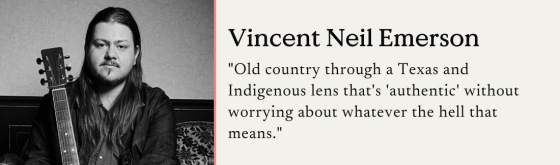
First-rate bands and artists from across the American roots music community can be found throughout Bourbon & Beyond’s lineup, not only at the Bluegrass Situation Stage. This year, Bourbon & Beyond adds two new secondary stages, as well as the usual BGS Stage and the Oak and Barrel main stages. From Tedeschi Trucks Band and Black Pumas to Melissa Etheridge and Molly Tuttle & Golden Highway, there’s truly something for everyone. Don’t miss sets by Larkin Poe, Josh Ritter, Jade Bird, Lyle Lovett, Sierra Ferrell, Devon Gilfillian, Vincent Neil Emerson, Robert Finley, Hiss Golden Messenger, and so many more.

Another highlight of Bourbon & Beyond each year are the bourbon and culinary events, workshops, and activations that feature celebrity chefs and food-and-drink experts such as Chris Blandford, Amanda Freitag, Ed Lee, Chris Santos, and more. All in all, Bourbon & Beyond promises to yet again be your complete music, bourbon, and food festival in beautiful Kentucky. Tickets are on sale now – we hope you’ll join us in Louisville for another year of Bourbon & Beyond!

The Bluegrass Situation Stage Lineup

Sam Bush Band
The Jerry Douglas Band
Yonder Mountain String Band
Tony Trischka’s Earl Jam: A Tribute to Earl Scruggs
Sister Sadie
New Dangerfield
Big Richard
Rob Ickes & Trey Hensley
The Brothers Comatose
The Local Honeys
Tray Wellington Band
Chatham County Line
The Kentucky Gentlemen
East Nash Grass
Mountain Grass Unit
Jacob Jolliff Band
…and more to be announced!


Photo Credit: Nathan Zucker, courtesy of Bourbon & Beyond.

NEWS: BGS Announces New Brand, Good Country

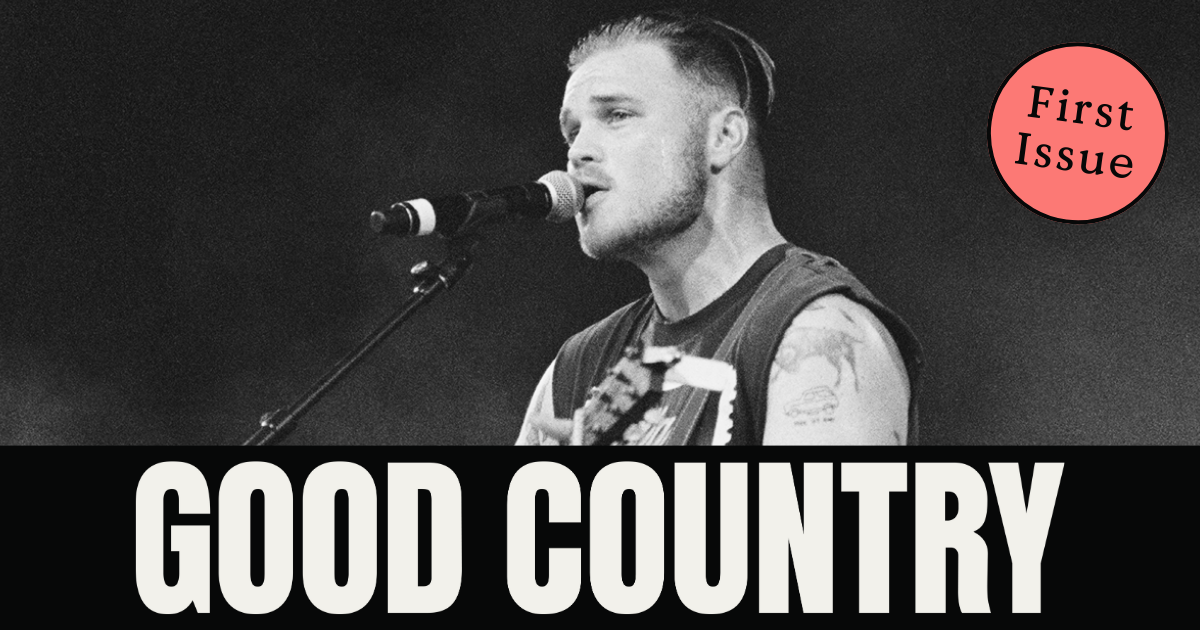
BGS is proud to announce the launch of a new brand in 2024: GOOD COUNTRY. By this point, you may have seen or heard mentions of Good Country on our site, at our events, and on our socials feeds as we prepare this exciting new expansion for our readers and fans.

Launching in mid-January 2024, Good Country is a curated, bespoke email newsletter that will highlight all good country from across the roots music landscape. Every other week, GC will deliver high-end country music reporting, long reads, playlists, videos, and exclusive content from your favorite country artists direct to your email inbox. As you scroll, you’ll dive into the deep and broad world of Good Country, from gritty and raw Americana to glitzy and glamorous radio hits, from bluegrass supergroups to southern rock ensembles and swampy string bands. Sign up for Good Country now.

“Good Country is a brand new horizon for BGS,” says managing editor Justin Hiltner. “But, at the same time, it’s nothing more than a reinforcement of our values as a media company and roots music community. Country – like its family members bluegrass, folk, and Americana – is more than just music, it’s a lifestyle, an identity, a way of being. There’s so much good country being made out there right now and we know our audience agrees. Whatever ‘good country’ means, you’ll know it when you hear it. And you’ll hear plenty of it in this newsletter!”

Each issue of Good Country will center features, think pieces, and interviews penned by the best writers and thinkers in country music highlighting not just the biggest names in the genre, but new and upstart artists as well. Exclusive newsletter content will live alongside deep dive playlists, sonic explorations, and thoughtful examinations of what country is, who makes it, and to whom it can belong – everyone.

BGS co-founder, actor, activist, and musician Ed Helms, will be featured in each issue as well with “Ed’s Picks,” artists and bands selected by Helms himself, direct from his own listening.

“From the very beginning, BGS was forged on a foundation of celebrating the full spectrum of roots music fans and artists,” explains BGS co-founder Amy Reitnouer Jacobs. “This community has never been one thing, nor has it been static. It’s a diverse, expansive, and ever-changing art form. The same can and should be said for country music. And that’s why now is the perfect time to create a more representative media landscape. It’s time for Good Country.”

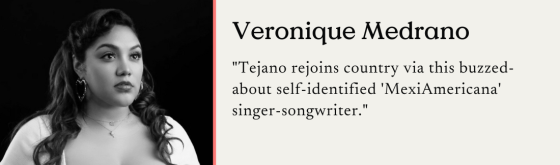
Good Country’s first issues will feature music, art, and content featuring Zach Bryan, Sierra Ferrell, Amanda Fields, Veronique Medrano, Shania Twain, Chris Stapleton, Vincent Neil Emerson, Brittney Spencer, and so many more. No matter your entry point to this music, with our new brand and newsletter you will find endless Good Country to enjoy. Interact with content in your email inbox, on our website, and on our social media – wherever you are, Good Country will meet you there.

Good Country isn’t about deciding what is or isn’t good country music. Good Country is a place. It’s a way of looking at the world, a way of enjoying music. If you think it’s good and you think it’s country, then you’ve found Good Country.

Sign up now to be one of the first readers to receive Good Country direct to your email inbox. And, begin your exploration of Good Country with our BGS Class of 2023: Good Country year-end list.


Photo Credit: Zach Bryan by Trevor Pavlik; Vincent Neil Emerson by Thomas Crabtree; Sierra Ferrell by Bobbi Rich.