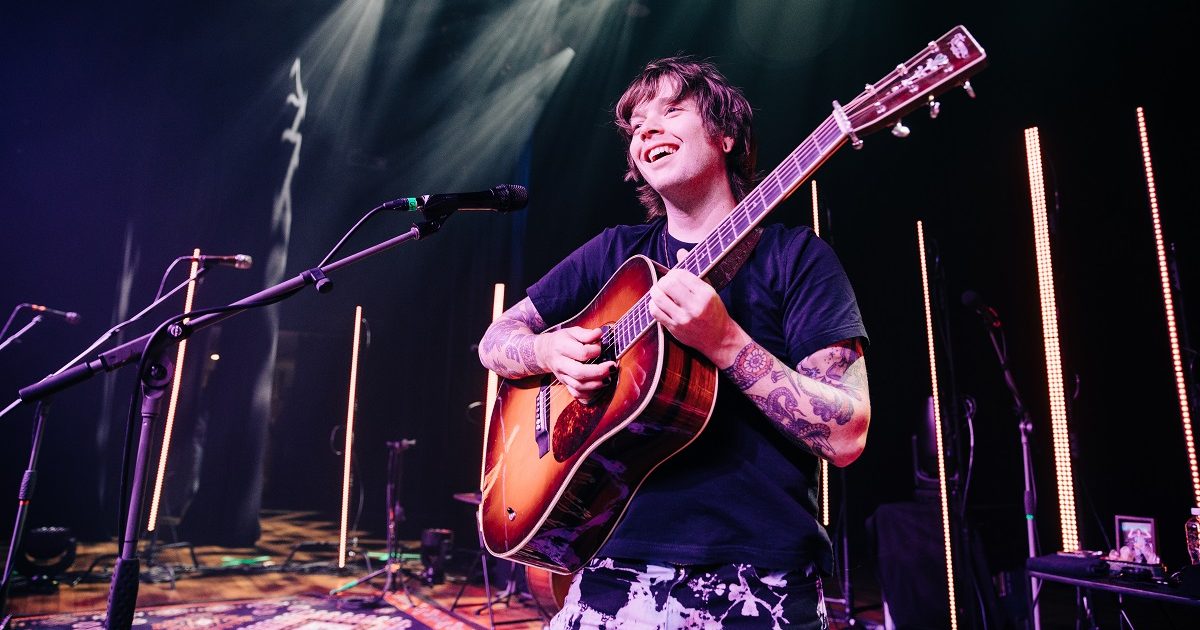
Taking a break during a live stream rehearsal, Billy Strings is pulling up a pew in the Ryman Auditorium in Nashville to talk about what makes the Mother Church of Country Music so special.
“To be able to bring the Ryman into people’s living rooms, that’s pretty cool,” he says in the video below. “Maybe they’ll check it out and realize that whenever stuff opens up, they should come see a real show here.”
As anyone who’s already attended a Ryman show can attest, the acoustics are impressive, especially when it comes to bluegrass. As the IBMA Award-winning guitarist explains, “Something about this old wood, it just… works. It’s like an old church, you know? So many amazing songs ring out in here, and all the echoes of all the amazing artists from the past. It’s almost like you’re inside of an old guitar. It’s just been resonated so much that all the sounds really work well in here.”
Later this month, Billy Strings will compete for a Grammy Award for Best Bluegrass Album, for his exceptional 2019 album, Home. Although the Michigan native’s rise to bluegrass stardom may seem like an overnight success, he’s actually been at it quite a while, as he explains in this video, presented by Nissan.
“When I was really young, from the time I was born until about 5, 6, or 7 years old, I mostly listened to bluegrass. And then when I got a little bit older, my dad started showing me Black Sabbath, Led Zeppelin, Jimi Hendrix, and stuff like that. That led to even heavier music. I got to a certain point in middle school where I wanted to play music with people that were my age. Mostly the only bands that were really happening in the town I was in were metal bands. So I acquired a taste for the music and then joined a band,” he says. “I learned a lot about what I know about music from playing bluegrass, and I suppose I learned some musical stuff from the metal as well, but I know I took a lot of the stuff that I learned about performing from playing in the metal band.”
Even as he absorbed those other styles, bluegrass beckoned and he’s now one of the genre’s most promising artists and prominent ambassadors. He adds, “I think when I was in middle school, it’s not that I was embarrassed about playing bluegrass, but it was something that I did with my dad and his older friends, so I didn’t really feel like it was that hip. But then when I got over that phase I was in, I realized that it is super hip, and the musicians are really awesome. The guys who are playing the mandolin, fiddle, bass, and banjo in these bands, they really know how to play their instruments really well, and they spent a lot of time practicing. You know, this is where it’s at, really.”
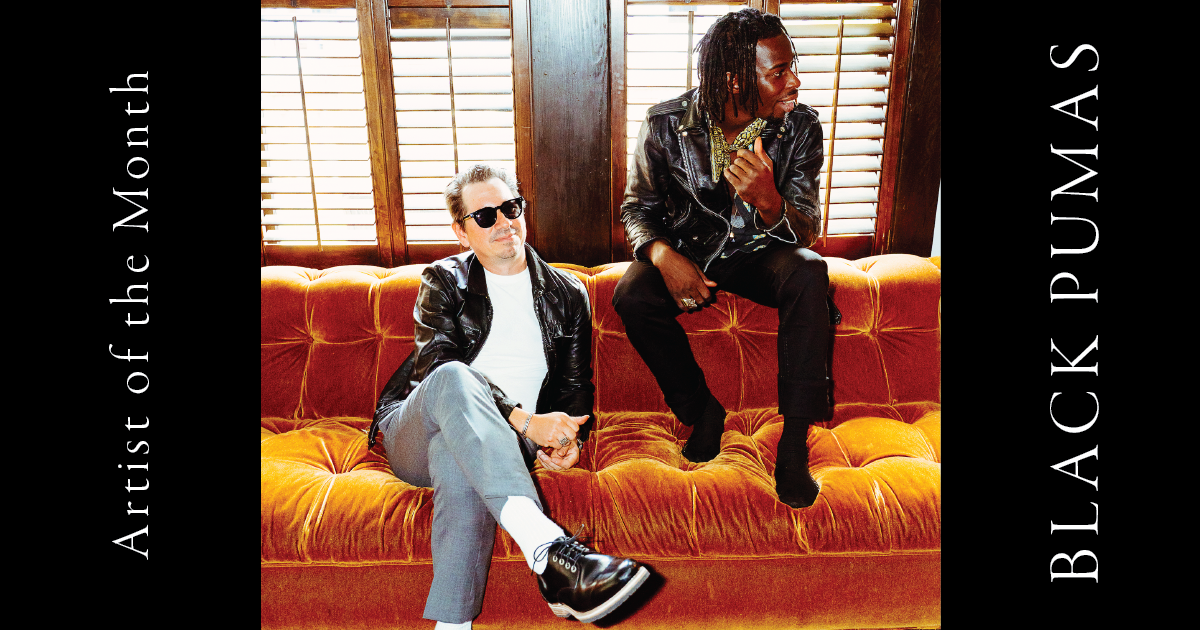
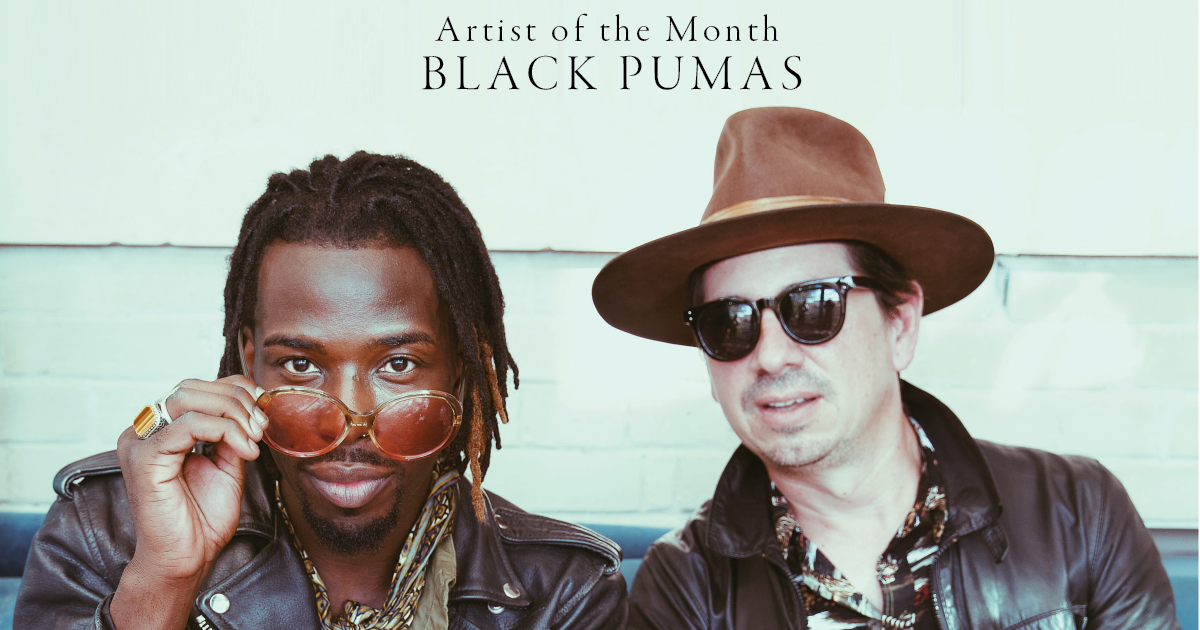
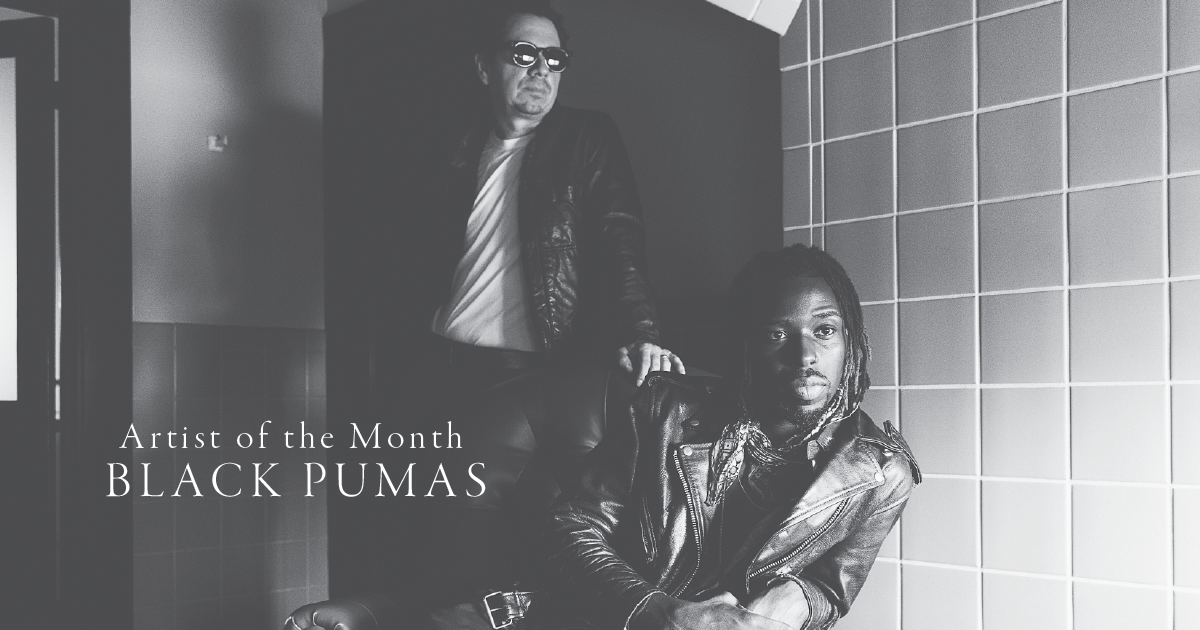
Heading into the Grammy Awards this year, Black Pumas are competing for three trophies, two of them in high-profile categories. Their breakout single, “Colors,” is up for Record of the Year, while Black Pumas (Deluxe Edition) will vie for Album of the Year. Their third nod, with “Colors” in the Best American Roots Performance category, reflects the duo’s affinity for soul and folk music, as well as the way they blend genres without losing the groove or the message. The recognition also follows their 2020 win from the Americana Music Association as Emerging Act of the Year.
From their home base in Austin, Texas, Black Pumas’ Eric Burton and Adrian Quesada caught up with BGS by phone, speaking about the music that shaped them, trusting their instincts, and the message they’d like to send out in 2021.
BGS: One of my favorite songs on this album is “Fire.” To me, it has a message of encouragement. What sparked the idea to write that song?
Eric: “Fire” was one of the tracks that Adrian first sent me. Adrian has such a brilliant way of making music that feels almost visual and vivid, almost cinematic, so when I got it, I couldn’t help but be moved to allow the song to inspire lyrics. At the time I was living with a girlfriend who was going through some health issues. She had an autoimmune deficiency and I was encouraging her to call on me. That you don’t have to feel like you’re overbearing or too much was the message that I made universal on the song “Fire.”
And lastly, with that song specifically, the funny thing was, before this I had never sung to another man on the phone. But this was one of the first songs that I was inspired to write lyrics to. When I get an idea, I like to show my friends almost right away. I called Adrian right away, not even meeting him yet. I called him and I said, “Hey, man, check this out!” I turned the song up and I started singing the melody and a few lyrics here and there, showing where it was moving, so I could integrate the space. It was really interesting to show Adrian that, and I was glad we were able to finalize the idea.
Adrian, what was going through your mind when you heard Eric sing in person, in the same room at the same time?
Adrian: Goosebumps. Trying to play it cool and not get too excited. I tried to play it off, but yeah, I knew that it was going to be a special thing, but I hadn’t heard it in the room. There was obviously a spark there, so it was just a matter of containing my enthusiasm and not getting too ahead of anything — until I finally broke down and said, “All right, man, we have to play this stuff live. Are you into doing that?” And he was like, “Yeah, let’s do it.”
It seems like you guys are in tune with your instincts. How important has that been to the success of Black Pumas?
Eric: It’s hard to put too much pressure on ourselves regarding what others are going to think about us. As opposed to trusting how easy it is to know what moves you first. It’s much more of an easygoing experience making music if you’re doing it to move yourself, knowing that what moves you has a really good chance of moving someone else. As Adrian mentioned earlier, when we started making music together, it was to have fun. We really dug what we were doing and we just kept doing it, and it turned into what it is now. Regardless if anyone was listening to the music or not, we would probably be making music every other week or so, because we enjoy doing it together. Hopefully like what we having coming up next, but if not, I think we’ll still be making music. It won’t crush it.
Adrian, who are some of your favorite guitarists?
Adrian: I personally have gravitated more toward rhythm players, and the finesse and nuance that goes into something like that. Recently I’ve been getting into Cornell Dupree, who played on thousands of recording sessions. He was in Aretha Franklin’s band for a long time and played with Donnie Hathaway and all the classic soul recordings. He’s an unsung hero of the instrument, and of the genre, too, because he didn’t always get all the shine. I don’t know if you saw that Aretha movie, Amazing Grace, from a few years ago that finally saw the light of day. I saw him playing on there and it was like, “Oh, man!” He never got that much attention, but I just started going down the rabbit hole of looking up YouTube videos.
Eric, I read that you grew up listening almost exclusively to gospel music. Is that right?
Eric: Not necessarily. My family comes from the church, and my grandparents were missionaries, so it was part of what was around, but for the most part, my family are also very artistic – musicians and writers. I would listen to my uncle write songs. He would pull out tubs and tubs of little tapes, and I would pop in one of his tapes once in a while and listen to his songwriting process. As a young kid, that was one of my toys, if you will. That’s pretty much how I learned to write music, listening to an uncle who had a really heavy hand in raising me, bringing me up, especially as an artist. For the most part, I would either hear whatever was on the radio in California, but most intimately it was through my uncle’s songmanship and his songwriting.
Adrian, who did you grow up listening to?
Adrian: I grew up listening to whatever was on MTV. I was really influenced by that. I was an only child and I was home by myself a lot. I grew up in South Texas and didn’t have a lot of places to get music from. So, when I discovered MTV, it turned me on to a lot of stuff, everything from hair rock bands to Nirvana and that whole sound. But the one thing I was really into, that had the biggest influence, is hip hop music, which I discovered through one of my neighbors who would always be playing stuff outside when they would be playing basketball. … I don’t know exactly what it was about the sound of hip-hop, but as I discovered the source of a lot of it, there was jazz and soul and funk at its core. And later on, I started getting into that music. I realized there was *that* underneath, hiding there for me to discover.
Looking ahead, what would be the best-case scenario for you in 2021? What would you hope that this year brings for you?
Eric: That we get to continue to create time and space to do exactly what we really love to do, which is to create music. We’re very fortunate that we’re seeing the opportunities we’re seeing now because people are buying the music and supporting us. Individually I look forward to creating more with Adrian, one, and also I just bought a house so I look forward creating somewhat of a studio set-up to can get into production myself.
Adrian: Yeah, I’ll second that — just the opportunity to put some new music to tape and get some out this year.
Eric: Lastly, I’ll speak for both of us briefly and say thank you [to our fans]. Thank you so much for listening to our music, for supporting us. We miss you guys, we love you guys. You guys fuel our passion and we look forward to continuing to be honest in the studio, together, that we may take what comes from our heart to allow it to move you guys’ heart.
About four years ago in Austin, Texas, Eric Burton and Adrian Quesada were recommended to one another through a mutual friend — someone who could imagine the inevitable magic of pairing Burton’s magnificent singing to Quesada’s cool, pulsating productions. Although these two musicians didn’t know each other, they somehow needed each other. As a songwriter inspired by folk music and soul music alike, Burton sought a vehicle to carry him from busking to the bigger stage, while Quesada — already a Grammy winner for his work with Grupo Fantasma — sought that voice to flesh out the instrumental tracks he’d crafted in his studio, Electric Deluxe Recorders.
Nobody could accuse them of rushing it, as phone calls turned into studio collaborations, and ultimately a few gigs at the South Austin venue, C-Boy’s, just to show their friends what they were working on. However, once the secret was out, the lines to see them perform stretched around the block and Black Pumas promptly landed a recording contract, with a self-titled debut album landing in 2019. Since then, their partnership has led to four Grammy nominations, a trophy for Emerging Act of the Year from the Americana Music Association, an invitation to perform a song for the Biden-Harris inauguration, and even a Super Bowl commercial. In conversation, they are quick to credit each other with the sonic touches that have turned this intriguing duo into an international draw.
For the first part of our two-part Artist of the Month interview with Black Pumas, Burton and Quesada chatted with BGS about the roots of “Colors,” their first show together, and what the Austin music community is really like.
BGS: Finding the acoustic version of “Colors” was such a nice surprise. What kind of vibe were you going for when you recorded that version?
Eric: I think that the first time Adrian heard “Colors” was when I brought the guitar to the studio. I had been trying to record that song with different engineers and producers, and a lot of my friends would reflect that, “Man, the acoustic version has always been my favorite!” When I finally met Adrian, who was equally moved by the song, we were able to not necessarily think about it, really. Adrian started with a palette of sound that went hand in hand with the way that I write music as well. We just did it together and it came out how it did. We have amazing band members and we were able to just press record and do the thing.
Adrian: We recorded quite a few acoustic things, and as much as “Colors” is a Black Pumas performance, at the core it’s something that Eric wrote on acoustic guitar. So whenever you get to hear it like that, it’s more from the source.
I love the acoustic version of “Fast Car,” too. What was going through your mind when you heard that on playback for the first time?
Eric: You know, any time I play that song, a tear comes to my eye because it is one of a few covers that I knew when I was busking. It was a song that would move people to stick around, or tip, or want to engage after the song. So, it was an interesting feeling listening back to that song as a Black Puma, with Adrian Quesada, because I could feel how far I’d come from busking on the Santa Monica Pier to recording at Electric Deluxe.
Is there a lyric in that song that still tugs at your heart when you sing it?
Eric: The lyric that I really attach to is “You’ve got a fast car and I want a ticket to anywhere.” The first lyric is one of the most powerful lyrics. It sets the emotional canvas for the rest of the song. It’s just reflective of the strong desire in many people who start off in the troubadour style of playing and performing, a presentation to passersby.
Adrian, how did you approach that session, being a classic song that everybody knows?
Adrian: Oh man, I just tried to stay out of the way, honestly. Eric’s played it for so long and so well. We were going to work up an arrangement for the band to start playing it at our shows, but we didn’t get it together in time, so he just did it himself as an encore one night. All of us were watching from the side of the stage. It was like, man, why would we try to reinvent the wheel? I just try to complement the song, and the way that Eric emotes it is something that doesn’t need a lot. You don’t need to overthink it.
I love the falsetto on songs like “OCT 33.” It’s effective because you don’t use it all the time. Did you have to figure that out naturally? Or was there ever a conversation like, “Whoa, too much falsetto”? Or, “I think we need more”?
Eric: Honestly I come from playing folk music. I love Neil Young and Bob Dylan and dig on the Beatles — so when I first started playing music, I was playing acoustic folk soul music. When I got Adrian some tracks, I was living with a roommate and he was saying, “Hey man, I think you’re singing a little bit soft on these songs.” I said, “What do you mean?” And he’s like, “Just go back and listen to Wilson Pickett and Marvin Gaye and Otis Redding,” and when I did that, I was able to kind of integrate the way Marvin Gaye did that head voice, like, “Oooh!” That’s kind of his move. So, I was able to borrow some of the razor-sharp vocal sounds that you hear in these individuals to make some better paints for the canvas that was Adrian’s awesome production.
Adrian, you have a great vocal range to work with. What is that like for you as a producer, knowing you could take these arrangements anywhere?
Adrian: Yeah, I’m a big fan of the falsetto, but I was digging everything he was throwing out. So, when he goes falsetto, I go for it. When it’s not falsetto, unless I feel like it doesn’t work, I just let Eric’s instincts guide him, and what he feels like singing.
What do you remember about the first show you played together?
Eric: It was amazing, right? It was rad.
Adrian: We didn’t even rehearse a lot. We threw it together in a couple of days and we didn’t know what we were getting into. I remember thinking, like, “All right, this should be fun. Worst case scenario, we could drink some liquid courage before the show and have fun. But it completely surpassed my expectations and it was a blast, man. Those early shows we did at C-Boys still live in my memory as some of the best times.
Why did C-Boys seem like a good place to kick this off?
Adrian: It feels like a cool, downhome, neighborhood bar that has amazing music. Steve Wertheimer, who’s the owner, really believed in myself and Eric early on. It’s a competitive town for live music and he’s always been a huge supporter. We just sent him a song and he dug it, and gave us a residency. It was pretty amazing that he took a chance on it. Eric did a solo residency for a while at one of his other venues. He was always a big supporter.
Tell me what you mean when you say that the Austin music scene is competitive.
Adrian: I would say “competitive” in the way that there’s a lot of talented people, but not “competitive” in a way that’s cutthroat, you know what I mean? I feel like there’s a good support system, where everybody’s supportive of people. It’s not competitive in that way. It’s like, you better bring something to the table because there are a lot of people that play and are very talented.
So when this was all happening, were you thinking of a record deal and management and all that? Or was it more about just getting together to play?
Eric: I think we were just both stoked to get on a stage. At that point, we had spent a few months together in the studio. Adrian presented some instrumentals that he was working on, for me to then write songs over. And then I was introducing myself to Adrian through my songwriting and sharing some of the music that I came up with, for him to arrange around. We were having so much fun that we were saying, “Well, we should take this to the stage, just to see what our friends think about it. I don’t think either of us invited too many people to the show, or promoted it, or anything big like that. We were just curious about how it would go over with the people that we know.
Adrian: We just played and we weren’t thinking industry. We were just going to have fun. Originally we thought we would maybe play for a month or two. We didn’t have a big plan other than to play music. We didn’t think that far into the future. We thought, “We’ll do this until it’s not fun.” There wasn’t a detailed, long-term plan for anything. One thing was just leading to another.
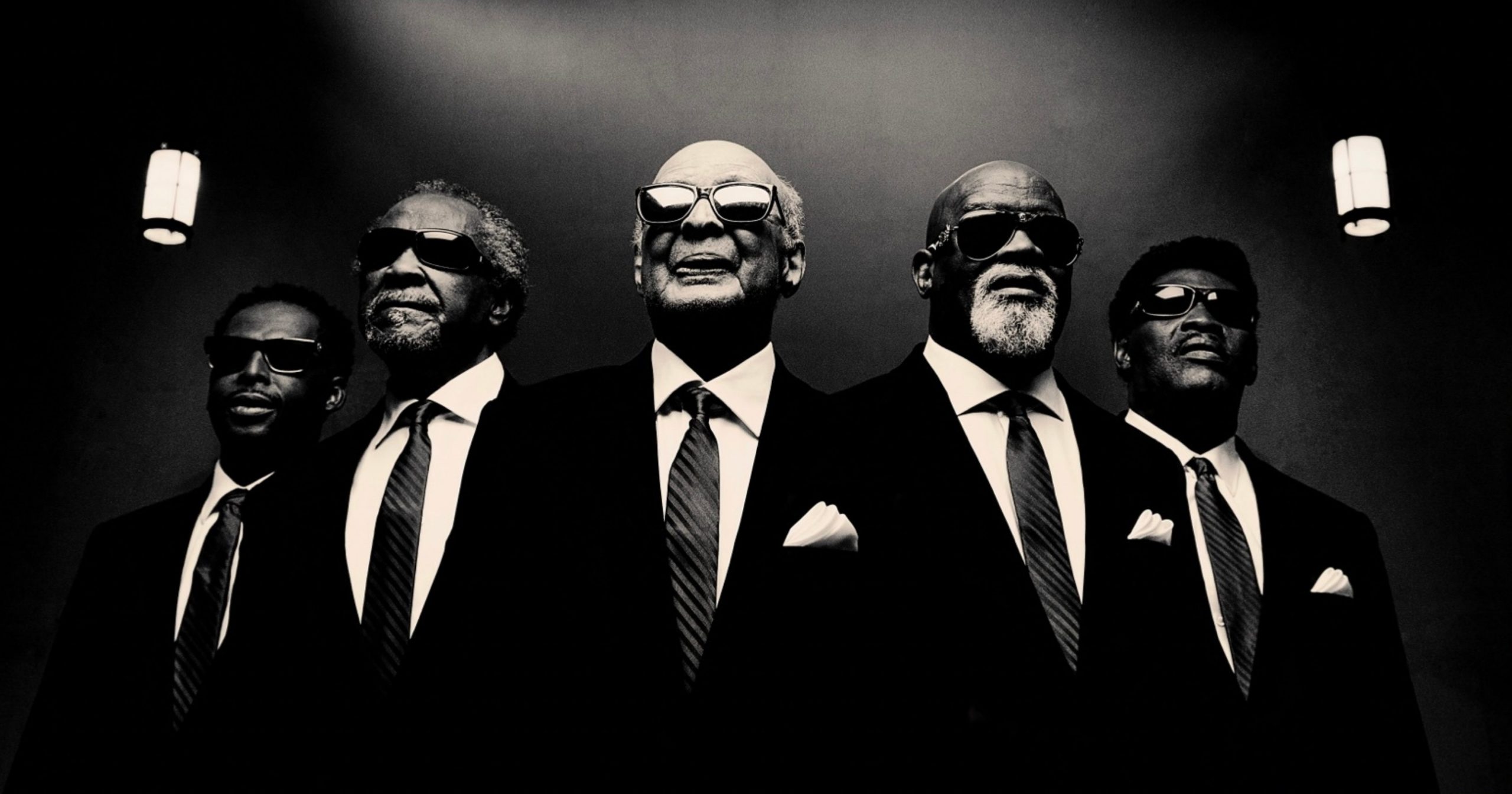
This week on The Show On The Road, in honor of Black History Month, we bring you a conversation with members of foundational gospel group, The Blind Boys Of Alabama, including longtime singer Ricky McKinnie and beloved senior member Jimmy Carter, who has been with the group for four decades.
Formed in the late 1930s with talent discovered at the Alabama Institute For The Negro Blind, the Blind Boys of Alabama have superseded limitations to bring their own high-spirited version of jubilee gospel throughout the world. Their music was often the backdrop to the Civil Rights Movement as Martin Luther King Jr. toured the south, and Jimmy and Ricky are both amazed and grateful that their message is still ringing true throughout the latest iteration Black Lives Matter movement that grew during the tumultuous last year.
While the members of the band have changed through time, the group has stayed steadfast to preserving a kinetic, church-based music that doesn’t seek to evangelize, but can bring people of all faiths together. Indeed, watching Jimmy and the other bespectacled members walk with hands on each other’s shoulders into the youthful crowds of adoring festival-goers, from Bonnaroo to Jazzfest, is really something to behold.
The Blind Boys’ body of work continues to grow. In the last few decades they’ve gamely collaborated with a wide range of secular artists from Peter Gabriel to Ben Harper to Bonnie Raitt, they made an album produced by Justin Vernon, AKA Bon Iver (2013’s stellar I’ll Find A Way), and they shrewdly reworked the ominous Tom Waits classic, “Way Down In The Hole,” which became the theme for HBO’s The Wire.
Their newest full length album, Almost Home, is a particularly moving treatise on morality and mortality. It features songs written by Marc Cohn, Valerie June, The North Mississippi All Stars and many others and was the last record that longtime member and bandleader Clarence Fountain was a part of before he passed away. He was a member of the Blind Boys of Alabama for nearly sixty years.
As Jimmy playfully mentions throughout our conversation, the Blind Boys of Alabama never let being blind stand in the way of doing what they do best: putting on a show. They’re entertainers at heart and it’s no small feat that they’ve brought a nearly lost form of swinging, soulful (and expertly arranged) gospel from the small southern towns where they grew up, all the way to the White House, where they’ve held court for three different presidents. And they’ve won five Grammy Awards along the way.
Stick around to the end of the episode hear their rich cover of Bob Dylan’s “I Shall Be Released.”
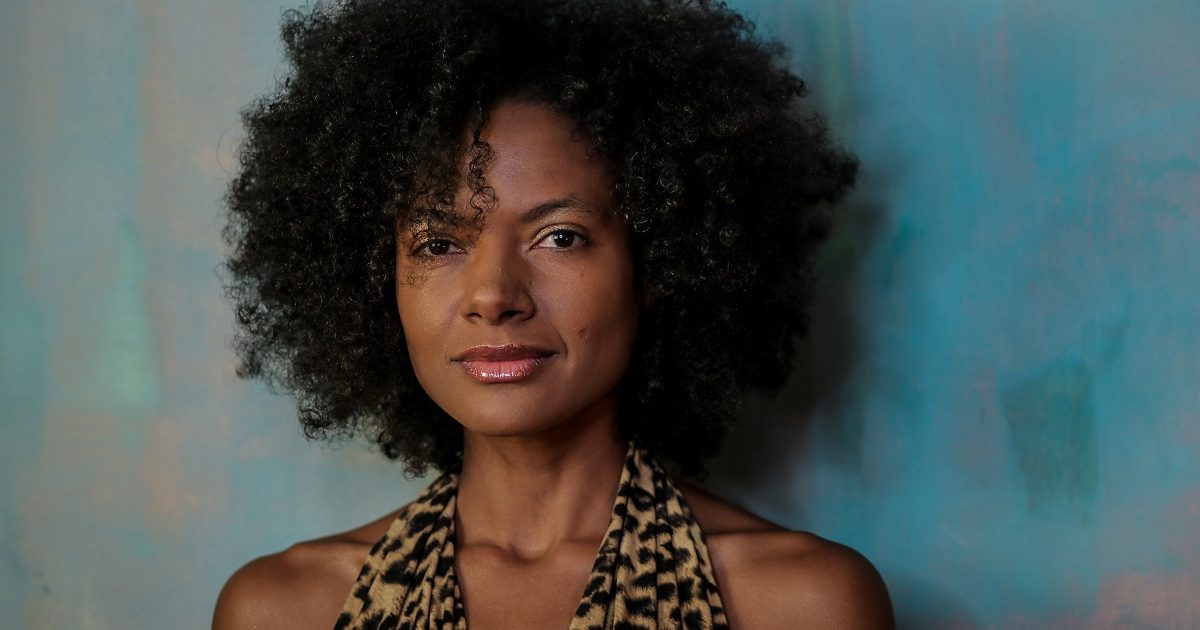
Artist:Allison Russell Hometown: Montréal, Québec, Canada Song: “By Your Side” (Sade cover) Release Date: January 29, 2021 Label: Fantasy Records
In Their Words: “An endlessly expansive and inclusive song of love — it could be the love between lovers, the love of a parent for a child, the love for an elder who is not long for this world. … It feels like it has always existed and always will — it feels like an expression of our collective unconscious. It comforts me and invokes a melancholy yearning all at once. I was singing this one to my seven-year-old daughter, Ida, like a lullaby. I couldn’t get through it without crying. This pandemic has been devastating for our little ones. I’ve returned to this song almost daily during these hard months. ‘By Your Side’ may have lost the Grammy back in 2001 but it has won the test of time. Sade lights the way for so many of us. I remember how electrified I felt the first time I heard her and saw her on television — a mixed heritage black woman like me — not fitting easily or neatly into any box, transcending them all. A living, breathing Goddess. I sing this in homage and gratitude. I hope to have the privilege of meeting her one day. Sade’s voice gives me strength and hope.” — Allison Russell
Even without continuing to tour the world, Black Pumas have lost very little momentum since the arrival of breakout singles like “Black Moon Rising,” “Fire,” and “Colors.” The duo of Eric Burton and Adrian Quesada were shocked to land on the 2019 Grammy ballot as a contender for Best New Artist, and in 2020, they picked up nominations in three more categories: Best American Roots Performance and Record of the Year for the irresistible “Colors,” and overall Album of the Year for Black Pumas (Deluxe Edition). That expanded edition collects several new tracks, a few live versions of familiar favorites, and a must-hear cover of Tracy Chapman’s “Fast Car” — a favorite song of Burton’s to sing while he was busking on the Santa Monica Pier, and later in Austin, Texas.
Drawing on folk songwriting as much as soul groove, both men agree that the term American Roots fits their sound well. The Americana Music Association seconds that notion, as Black Pumas picked up that organization’s Emerging Act of the Year in late 2020. And in January, the band performed a dazzling and powerful rendition of “Colors” on the soundstage of Austin City Limits in recognition of the historic win of President Joe Biden and Vice President Kamala Harris.
“The first thing people think of when they say ‘Americana’ is not always music that’s influenced by soul music, but it’s great to be recognized by people that are open-minded music fans,” Quesada tells BGS. “This is every bit as much American music as country music, you know?” Burton adds, “Soul music is just as a part of American music as folk music and country music. This country is a massive melting pot of the different cultures… so we’re honored to be a part of the conversation as we make music in America.”
The two musicians met through a mutual friend as Quesada sought an exceptional singer to add lyrics and a voice to the instrumental tracks he was creating. Little did he know that Burton was around the corner, literally, where Sixth Street meets Congress Avenue. In our two-part interview (Read part one here. Read part two here.), they shared their influences, their first impressions of each other’s talent, and their hopes for the year ahead as our Artist of the Month. Meanwhile, enjoy our BGS Essentials playlist below.
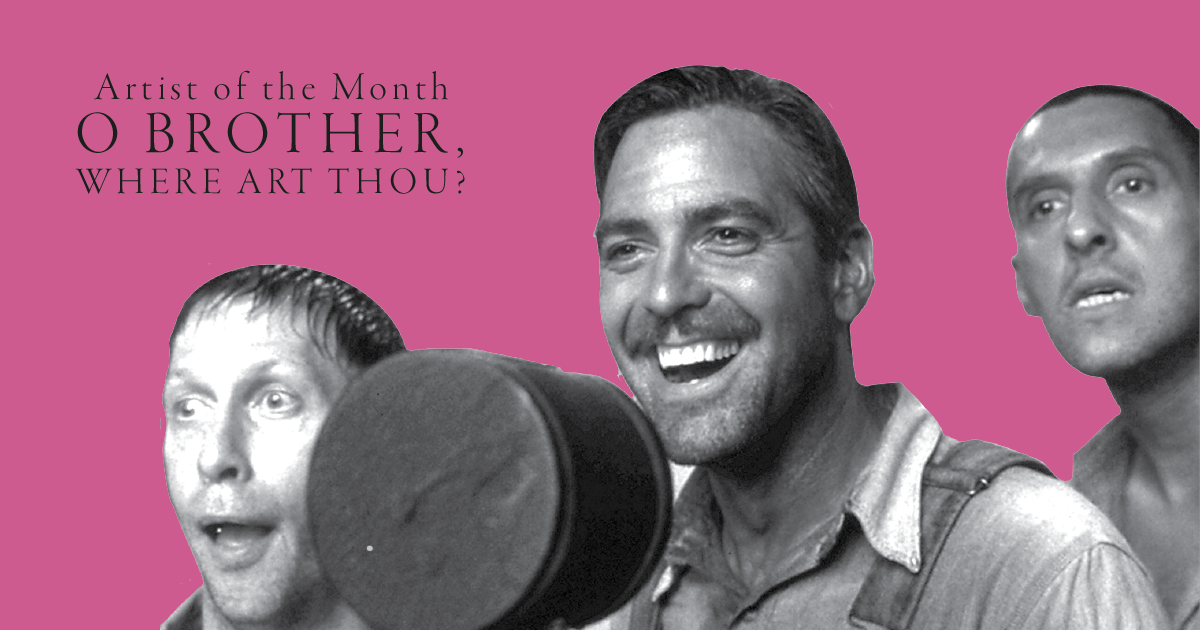
The O Brother, Where Art Thou? soundtrack, which was just starting to pick up momentum twenty years ago this winter, was both a forethought and an afterthought. The Coen Brothers had an idea for a film and even a title borrowed from Preston Sturges’ 1940 comedy, Sullivan’s Travels, but no screenplay. They commissioned T Bone Burnett to assemble a sprawling playlist of old-time music for them to use as writing prompts — original recordings from the first half of the twentieth century as well as new recordings of old songs. He gathered some of the finest vocalists and players, including Emmylou Harris, Gillian Welch, Alison Krauss, and members of Union Station, as well as Norman Blake, Sam Bush, and John Hartford. In various combinations they produced around sixty tracks covering hillbilly plaints, gospel numbers, Protestant hymns, children’s songs, labor songs, even prison songs.
From that pool the Coens selected a handful of tracks that served as the skeleton for their screenplay, which became a Deep South retelling of The Odyssey. As three yokel chain-gang fugitives wander the backwoods and cotton fields and gravel roads of Depression-era Mississippi, they inadvertently become country stars thanks to a hasty version of “Man of Constant Sorrow,” originally recorded in 1917 by Dick Burnett and re-recorded for the film by Dan Tyminski. Along the way they encounter a parade of white-clad Christians singing “Down to the River to Pray,” a blues singer who regales them with a campfire rendition of Skip James’ “Hard Time Killing Floor,” and a KKK klavern performing a Busby Berkley routine in white sheets and hoods.
Whittled down to eighteen tracks, the soundtrack hit stores just a few weeks before the film, and it seemed designed to stand alone as an upscale release. As Luke Lewis, formerly chairman/CEO of Universal Nashville, told Billboard in 2015: “When we were putting it together, a bunch of us said, ‘This is probably going to be a coffee table kind of a CD, where people will leave it around and be proud to have it.’ That turned out to be pretty much true… A lot of people that don’t buy records at all, or buy one a year, bought that record.”
Still, no one figured it would sell any more copies than your typical soundtrack, and certainly no one predicted it would so completely eclipse the film. Its success has been astounding: It has sold nearly 9 million copies, hung around the upper reaches of the Billboard Top 200 for several years, won the Grammy for Album of the Year (beating out Bob Dylan and Outkast, among others), spun off a sequel, inspired a series of tours and live albums, and redefined a massive market for traditional music in America.
Twenty years later, the gulf separating film and soundtrack remains remarkably wide. The former is glib to the point of nihilism, as though every line of dialogue and every camera angle is surrounded by quote marks. The soundtrack, by contrast, is sincere to the point of evangelism, as though these old songs were pieces of secular scripture. The music plays everything straight, while the film can’t keep a straight face. The soundtrack became a phenomenon, while the film sits in the lower tiers of its auteurs’ sprawling catalog.
Both are products of a very particular time: They were released during that short window between two defining events — the hand-wringing spectacle of Y2K and the horrific televised tragedy of 9/11. With the benefit of twenty years’ hindsight, they represent a pop-cultural pivot from the irony that defined the 1990s and much of the Coens’ output to the “New Sincerity” that defined the 2000s.
Why did this niche soundtrack become such a massive hit? Some have credited the popularity of O Brother to fin de siècle jitters and a desire to return to a rosier, more comfortable American past (never mind that the past, especially the 1930s, was never rosy or comfortable). Others have chalked it up to a rejection of the late ’90s pop music excess embodied by Britney Spears and the Backstreet Boys.
Perhaps the best reason for its success is also the most obvious: This is a good album, and an accessible one. It’s a well-curated tour through old-time music, a sampler of rural American traditions that serves as a primer on the subject without sounding like a textbook. All of these different styles are presented with an eloquence that is homespun yet modern: a balance that highlights rather than dampens their charms.
Burnett puts such an emphasis on the human voice that even the instrumental tracks sound a cappella. He wants you to hear the exquisite grain in the voices of Emmylou Harris, Gillian Welch, and Alison Krauss on “Didn’t Leave Nobody But the Baby” as well as the weight pressing on Chris Thomas King as he moans through “Hard Time Killing Floor.” Curiously, Dr. Ralph Stanley had to convince the producer to let him sing “Oh Death” without banjo, which was absolutely the right call. His voice is high and keening, a serious a death, shaken by the very subject he’s singing about.
If there’s a breakout song on O Brother — something resembling a hit — it was this very intense performance, which remains one of the finest renditions of this very odd and oft-covered song. Stanley was 73 years old when the album was released, had been playing since 1946, and was already celebrated as one of the fathers of bluegrass, but O Brother gave his career a considerable boost, introducing him to a significantly wider audience. (That said, it always struck me as deeply disrespectful that the Coens have a Klansman lip-synching Stanley’s performance in the film, as though they feared the words might actually mean something.)
Stanley performed the song a cappella at the 2002 Grammys — imagine anything a cappella at such a glitz-bound ceremony — not long before the soundtrack won Album of the Year. It might have been the climax of the soundtrack’s shelf life, but it kept selling and kept selling. It created an instant audience for old-time music, and upstart string-bands found themselves with readymade audiences, many of them shouting “Man of Constant Sorrow” the way they once might have yelled “Free Bird!” Every artist on the album got a boost, especially Alison Krauss & Union Station, who crossed over from bluegrass to pop and launched a series of hit records with the aptly titled New Favorite in August 2001. Similarly, Welch, Harris, and even Stanley enjoyed boosts in album and ticket sales in the wake of O Brother.
As with any sweeping change, there are new opportunities as well as new losses. The alt-country acts of the 1990s had already lost much of their luster, but roots suddenly had no room for punk anymore. Gone were the dark, twangy experiments like Daniel Lanois’s Americana trilogy — Harris’ Wrecking Ball in 1996, followed by Bob Dylan’s Time Out of Mind the next year and Willie Nelson’s Teatro the year after that. All three proved that roots music could accommodate new sounds, that it could look to the future without completely letting go of the past, and all three stand among the best entries in their artists’ remarkable catalogs.
But O Brother seemed to wipe most of those new avenues away, turning roots music into something largely acoustic, uniform, polite, conservative — beholden to the past and largely dismissive of the present. Watching certain acts riding that wave was like watching Civil War reenactors march on a makeshift battlefield, and ten years later groups like Mumford & Sons and the Lumineers were using roots music to sell arena-size sentiments.
Another aspect of old-time lost in the O Brother wave: politics. Previous folk revivals had a populist bent, extolling the music as the sound of the people and as an expression of a specifically American community. Woody Guthrie and Pete Seeger were branded subversives and communists, while Dylan and his early ‘60s cohort found radical possibilities in Harry Smith’s legendary Anthology of American Folk Music. But no one on O Brother is in any danger of being branded a pinko. The film itself nods to issues of race and class, but without really commenting on them in any serious or specific way. The soundtrack, by contrast, foregrounds songs about yearning, about breaking free of turmoil and hardship to find peace and contentment. Often that can be humorous, as on Harry McClintock’s fantastical “Big Rock Candy Mountain,” but more often it’s poignant, as on Krauss and Welch’s “I’ll Fly Away.” It’s a collection more concerned with needs of the spirit than of the flesh, so any earthly implications are largely ignored.
The roots market that sprang up in the soundtrack’s wake was consequently blanched of anything resembling social commentary, despite there being so much to comment on. That wave of bands might have provided a counterpart to the entrenched political conservatism that defined mainstream country music of the early 2000s, but instead it offered merely escapism.
A few artists did manage to question this rosy thinking about the past, in particular the Carolina Chocolate Drops. They traced strains of Black influence, craft, and contribution to old-time music, which is generally considered to be white, and therefore expanded its historical scope and current impact. As players, however, they injected their songs with no small amount of joy, as though taking great delight in what these old forms allowed them to express. The group’s three primary players — Dom Flemons, Rhiannon Giddens, and Justin Robinson — have carried that particular balance into their solo careers.
Any of the soundtrack’s shortcomings weren’t the fault of the musicians, who play and sing these songs much more beautifully and sympathetically than the film ever demanded. Nor is it the fault of the songs themselves, which obviously spoke to people as clearly in 2001 as they did in 1937. And it continues to speak loudly in 2021: The coffee table product wasn’t designed to bear the burden of the market it created, but the songs still inspire subsequent generations well into a new century, with its own tribulations and hardships.
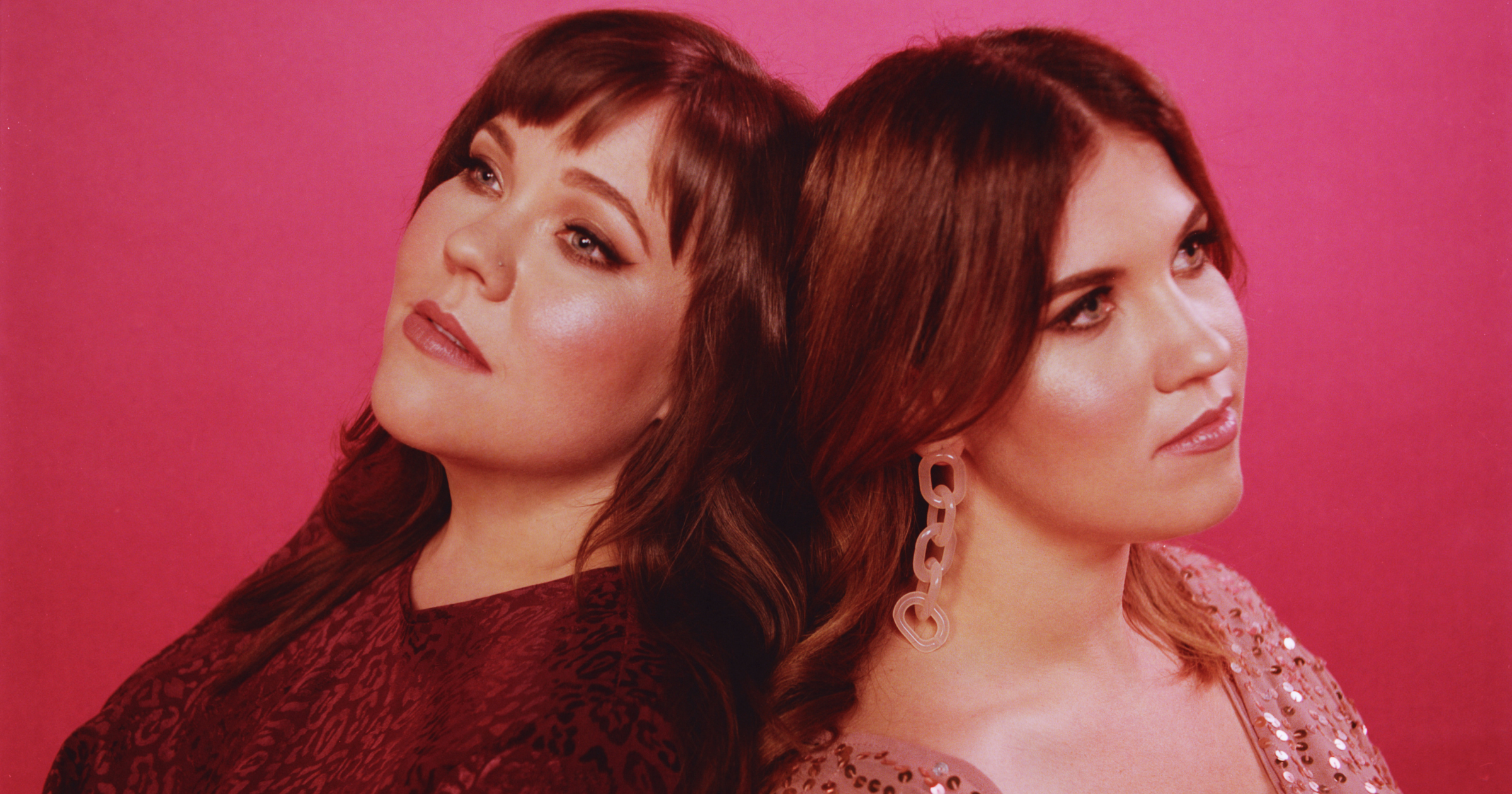
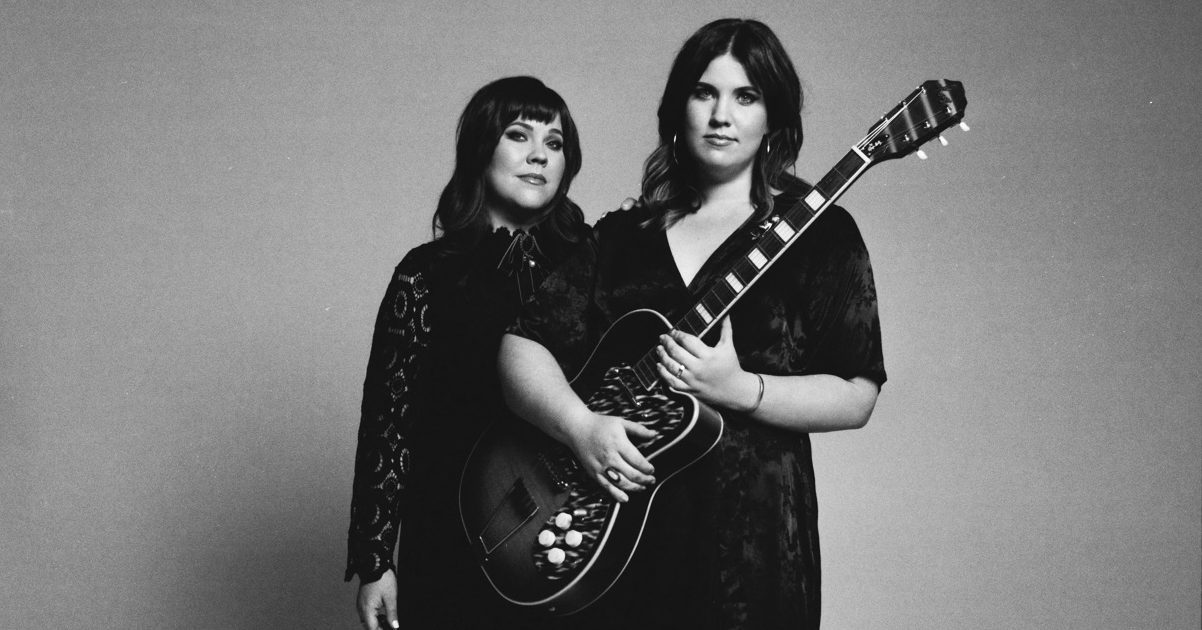
This week, host Z. Lupetin talks with Laura and Lydia Rodgers, Grammy-nominated songwriters and preeminent harmonizers from Muscle Shoals, AL, who for the last decade have recorded as The Secret Sisters.
First breaking through with their warmly-vintage, vocally-entwined self-titled record in 2010, the Secret Sisters have toured the world relentlessly, while recording with a who’s who of Americana royalty like Dave Cobb and T Bone Burnett. If you’ve ever seen them live, Laura and Lydia are known for their sharp-tongued and story-filled live shows — which, even over Zoom, made them particularly rip-roaring interviewees.
After breaking free of a major label hell which sidelined and nearly bankrupted them for a time, the sisters regrouped and created their most personal and pop-forward work yet, the heart-string pulling You Don’t Own Me Anymore (2017) and 2020’s fiery Saturn Return. Both were made with friend and producer Brandi Carlile, and both were nominated for a Grammy.
While the last year plus was hard — they lost both grandmothers — there was quite a silver lining: Lydia and Laura each become moms, and have begun to sing their own lead pieces, courageously facing uncomfortable truths about their southern upbringing, calling out the double standards and sexual politics of the music industry, and showcasing their very different experiences as young mothers.
With Carlile pushing them to find their own voices, Laura wrote the tender “Hold You Dear” while Lydia penned the more yearning and sardonic “Late Bloomer,” two favorites that stick out after repeated listens to the album. Still, the true beauty of Saturn Return — which they recorded with Carlile’s beloved band — may be how Laura and Lydia can split off into new territory and then return together in chills-inducing harmony, as only sisters could.
Stick around to the end of episode for an intimate acoustic performance of “Nowhere, Baby.”
The Secret Sisters’ Saturn Return is a beautiful record marked by stripes of maturity, grief, and resilience, reflecting the significant life experiences the sisters were sharing at the time of the album’s creation. From the hope and promise of “Late Bloomer” to the anger and passion of “Cabin,” the duo’s full range is on display, mixing incisive lyrics and truly pure arrangements to create their unique brand of roots music. In a statement, they noted, “With Saturn Return, our hope is that women can feel less alone in their journey through the modern world. We need each other more than we ever have; the less competition and the more inclusiveness and understanding, the better. We are southern women in the 21st century, convicted by our beliefs.”
Our BGS Artist of the Month in March 2020, the Secret Sisters return this year with two Grammy Award nominations. Saturn Return, produced by a roots music trinity of Brandi Carlile and the Hanseroth twins, will compete for Best Folk Album (the group’s second appearance in this category) while “Cabin” is a nominee for Best American Roots Song. To commemorate the pair of nominations, the siblings recorded an up close and personal performance of “Cabin.” Read our one-on-one interviews with Lydia and Laura, and enjoy their acoustic video below.
To launch season four of The Show On The Road, we bring you a special cross-continent episode with acclaimed Canadian singer and guitarist Afie Jurvanen, known as Bahamas.
Born in Ontario and now residing in Nova Scotia, Jurvanen connected with host Z. Lupetin from LA to discuss his playful and powerful newest record Sad Hunk and how he’s transitioned from brooding globe-trotting guitar wiz (he first became known as Feist’s right hand man) to a cheerful, mustachioed family man. Breaking out as a solo act making squirmy vocal-rich albums like Barcordes that made him a headliner across Canada, he’s also played recorder in front of Beyoncé at the Grammys (the best story of the interview), and he tells us how he’s let his recent songwriting get more personal and introspective during the 2020 upheaval in which he found himself surrounded by his kids during his writing.
This website uses cookies to improve your experience. We'll assume you're ok with this, but you can opt-out if you wish.AcceptRejectRead More
Privacy & Cookies Policy
Privacy Overview
This website uses cookies to improve your experience while you navigate through the website. Out of these, the cookies that are categorized as necessary are stored on your browser as they are essential for the working of basic functionalities of the website. We also use third-party cookies that help us analyze and understand how you use this website. These cookies will be stored in your browser only with your consent. You also have the option to opt-out of these cookies. But opting out of some of these cookies may affect your browsing experience.
Necessary cookies are absolutely essential for the website to function properly. This category only includes cookies that ensures basic functionalities and security features of the website. These cookies do not store any personal information.
Any cookies that may not be particularly necessary for the website to function and is used specifically to collect user personal data via analytics, ads, other embedded contents are termed as non-necessary cookies. It is mandatory to procure user consent prior to running these cookies on your website.