Take the Journey: 17 Songs for a Sunny and Warm Summer Vacation

In July we put together a playlist of bluegrass songs for summer vacation and once the inspiration was flowing, it was difficult to stop! We thought we should return to the theme, but slightly zoomed out, to include songs from across the roots music landscape. With the summer still shining, enjoy these 17 folk, Americana, and country songs perfect for your road trip playlist.

“Ride Out in the Country” – Yola

Yola was a 2020 Best New Artist nominee at the Grammys and she’s just returned with a new, full-length album on Easy Eye Sound, Stand For Myself. The entire project is lush and resplendent, like the glory days of orchestral, big-sound country-pop in the ‘60s and ‘70s. For this playlist, though, we return to her prior release, Walk Through Fire, and the perfectly country track, “Ride Out in the Country.” Take the scenic byways and crank the volume!


“I Like It When You’re Home” – Della Mae

One of the nicest silver linings of vacation is missing home – and that delicious feeling of returning to your own space and your own bed after being away. And your loved one(s), too! Della Mae captures that sentiment in this jammy, rootsy track from their album, Headlight. Take the day off, drive north, sit by a lake.


“A Little Past Little Rock” – Lee Ann Womack

A truly quintessential driving song. A must-add even if your vacation route comes nowhere near Arkansas. The baritone guitar intro, the shout-along-with-the-lyrics chorus, the whimsically late ‘90s production. A banger. A bop.


“Sunny and Warm” – Keb’ Mo’

Keb’ Mo’ is a master of vibes. His single “Sunny and Warm” showcases the acoustic blues musician in a more traditional R&B light – and the impact and result are simply golden. This track will have you craving your happy place, wherever that warm and sunny locale may be.


“Heavy Traffic Ahead” – Bill Monroe

Look, we’re The Bluegrass Situation! We’ve gotta get our bluegrass kicks in somewhere – bluegrass is roots music, after all. Given that we left this classic by the Big Mon himself off our Bluegrass Songs for Summer Vacation we felt it was worth inclusion here. And worth a mention so that you’ll go check out the entirely bluegrass playlist, too!


“Country Radio” – Indigo Girls

Finally a country song about country radio – and cruising around aimlessly listening to it – that is enjoyable and free of the guilt associated with the false nostalgia, conservative politics, authenticity signalling, and post-2000s country. Especially the kind most often played on the radio! This Indigo Girls track is testament to all the folks out there who love country music, even if it doesn’t always love them back. Don’t worry, it will. Eventually! (Read the BGS interview.)


“White Noise, White Lines” – Kelsey Waldon

If you catch yourself daydreaming, in a dissociative or meditative trance as you keep it between the lines, Kentucky-born singer-songwriter Kelsey Waldon has the exact soundtrack for you. “Whie Noise, White Lines,” the title track of her most recent album, speaks to that near-trope-ish phenomenon of losing oneself amid the countless miles traveled while living the life of a traveling musician. Waldon, as in most of her music, accomplishes this motif without stereotypes or clichés, and the result is a song that will be a staple on vacation playlists for decades to come.


“Table For One” – Courtney Marie Andrews

A variation on the same theme, this time from Courtney Marie Andrews, “Table For One” is gauzy and lonesomely trippy. “You don’t wanna be like me / this life ain’t free,” the singer pleads, seeking a sense of reality in a life almost entirely abided within liminal spaces. Find peace in the redwoods, but try to hold on to it. You might lose it twenty miles later.


“Two Roads” – Valerie June

Cosmic and longing, Valerie June distills Kermit the Frog’s “the lovers, the dreamers, and me” into album form with her latest outing, The Moon and Stars: Prescriptions For Dreamers. Whatever bug you’ve been bitten by – rambling, restlessness, cabin fever, listlessness – let this song and this album scratch that itch. And as you let the miles fade behind you, on whichever of the two roads you take, don’t forget to look up… at the moon and stars and beyond.


“Christine” – Lucy Dacus

Whether or not you’ve experienced the beautiful, transcendent, and heart-rending forbidden love of being queer — on the outside looking in on love that society has constructed to which you’ll never have access — Lucy Dacus’ fantastic, alt/indie roots pop universe will give you a crystalline window into this very particular iteration of unrequited love on “Christine.” The song feels almost as though you’ve woken from a warm, sunny, time-halting afternoon nap in the back seat of a car yourself.


“It’s a Great Day to Be Alive” – Darrell Scott

Darrell Scott goes two for two, landing on both our bluegrass summer vacation round-up and our rootsy list, too! “It’s a Great Day to Be Alive” is THE song for the moment you realize you’re out of the office, away from your chores, without a care in the world — whether you have rice cooking in your microwave or not.


“Hometown” – Lula Wiles

For those summers when all you can muster is a trip home. Lula Wiles don’t just trade in nostalgia and hometown praise, though, they take on the subject with a genuine, measured perspective that picks up paradoxes, turns them over, and places them back down for listeners. It’s a subtly charming earworm, too.


“Heavenly Day” – Patty Griffin

“Oh heavenly day / All the clouds blew away / Got no trouble today…” The exact intention to be channeling during vacation! Don’t let your summer getaway be one of those vacations from which you end up needing a vacation. Leave your troubles behind, have a heavenly day.


“Midnight in Harlem” – Tedeschi Trucks Band

Your travels may not bring you even within the same state as Harlem, but this song had still better be on your road trip playlist. There’s almost no song better to put on at midnight, wherever you may be roaming, than Tedeschi Trucks’ “Midnight in Harlem.”


“Outbound Plane” – Suzy Bogguss

Every time I step into an airport my anxiety seems to sing, “I don’t want to be standing here with this ticket for an outbound plane.” It’s always true. This writer has not yet returned to the jetways post-COVID, so we’ll see how that goes. At least there will be the security and comfort of this jam (composed by Nanci Griffith and Tom Russell) from Suzy Bogguss’ heyday.


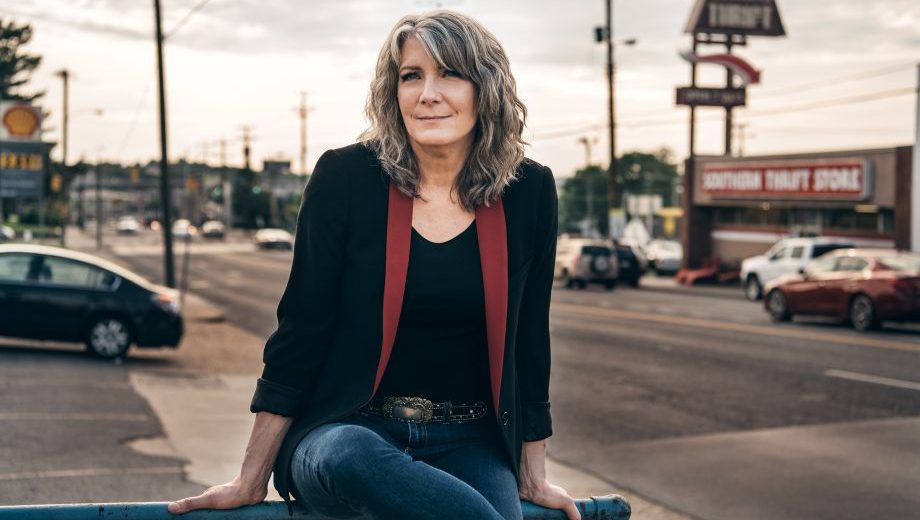
“455 Rocket” – Kathy Mattea

There are plenty of modern versions of muscle cars available and on the road today, but not a single one is an Oldsmobile 455 Rocket! Kathy Mattea represents the rockabilly/Americana tradition of paeans to automobiles and gearhead culture with this loping tribute to a 455 Rocket, an early cut for Gillian Welch and David Rawlings. If you happen to take your country drives in a muscle car, regardless of brand, this track is for you.


“Take the Journey” – Molly Tuttle

What better way to conclude our playlist than with this always-timely reminder from Molly Tuttle? It might be a cliché, though it really is true: It’s about the journey, not the destination. So take the journey! Enjoy its twists, turns, and be in the moment. And take some clawhammer guitar along with you.
They’ve Got You Covered: 10 Tributes You Need to Hear

2020 was a year of many things – COVID-19, existential elections, the shuttering of the music industry, and on and on – but one common, non-catastrophic throughline of the musical variety was cover songs. Many musicians and artists, finding themselves with more free time than usual and more standard-fare albums and cross-continental tours back-burnered, took the opportunity to explore live records, collaborations, and yes, covers. From Molly Tuttle to Wynonna, livestreams to socially-distanced shows, covers became an unofficial pandemic pastime. 

Now, in 2021, many of these cover projects conceived and created in 2020 have made it to store shelves – digital and otherwise – and we’ve collected ten tributes worth a listen:

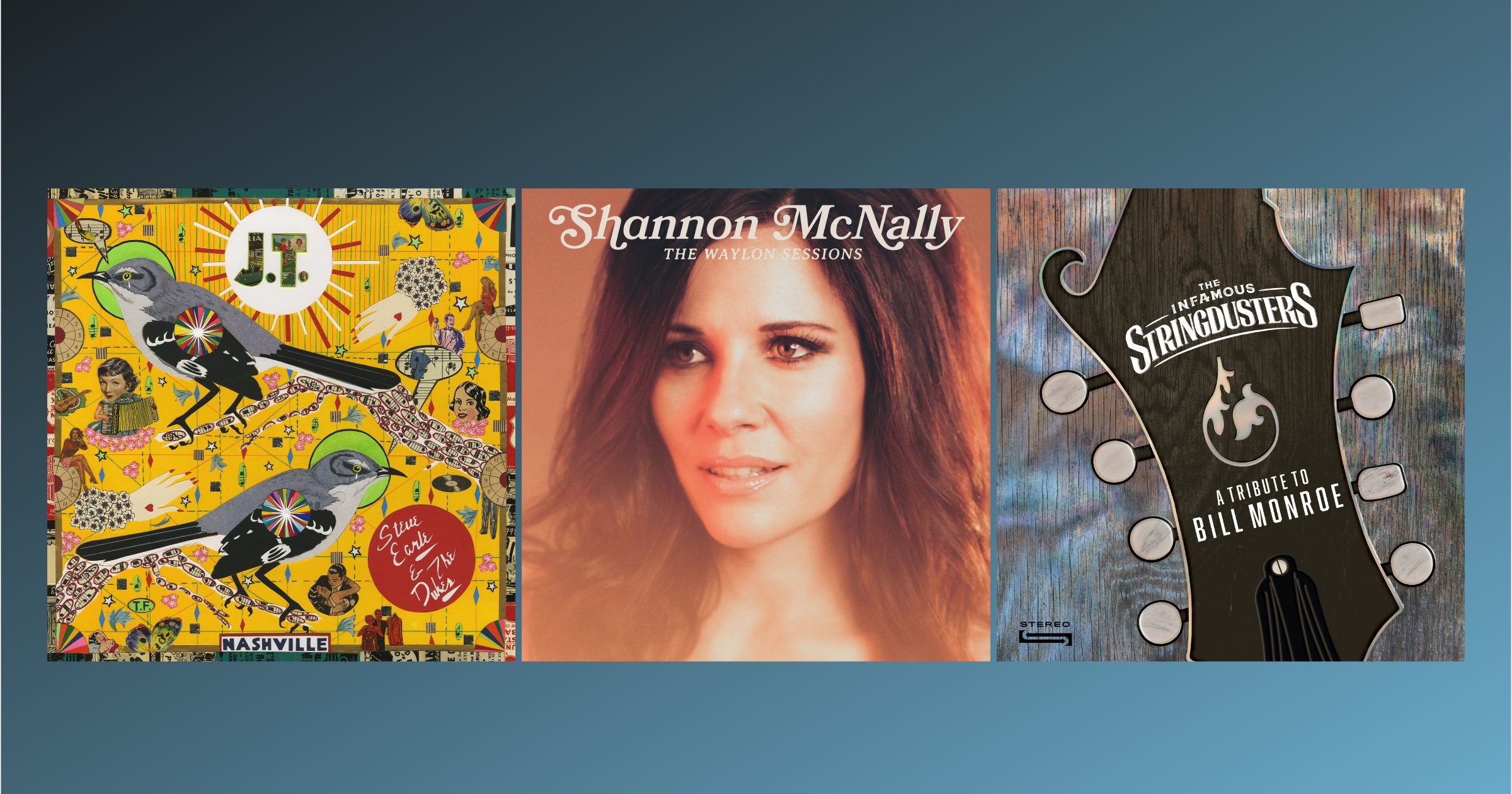
Shannon McNally covers Waylon Jennings

It’s fitting that Shannon McNally released The Waylon Sessions on Compass Records, whose headquarters now occupies “Hillbilly Central.” As Tompall Glaser’s former studio, the building helped give rise to country’s outlaw movement and it’s where Waylon himself recorded. With guests like Jessi Colter, Buddy Miller, Rodney Crowell, and Lukas Nelson, the project recontextualizes Waylon Jennings’ material, which is usually associated with hyper-masculine wings of the country scene. As McNally puts it in a press release, “What Waylon Jennings brought to country music is what country music needs right now, and that unapologetic and vulnerable sense of self are what women are tapping into artistically right now as the industry evolves.” 


Steve Earle covers Justin Townes Earle

Many a musical child has covered their parents’ catalogs in retrospect, but it’s rare that we see the reverse. A gorgeous, gutting, and laid-bare album, Steve Earle’s J.T. is a ten-song tribute to his son, Justin Townes Earle, who passed away suddenly in August 2020, shocking the Americana and folk communities. Earle’s signature emotion bristles and crackles throughout the project, giving Justin Townes’ songs an even stronger quality of visceral electricity. Proceeds from the album will go to a trust for Etta St. James Earle, Justin Townes’ daughter and Steve’s granddaughter. 


The Infamous Stringdusters cover Bill Monroe

Spread out from North Carolina to Colorado and beyond, the Infamous Stringdusters utilized home recording from their respective studios during the pandemic to accomplish musical creativity their jam-packed schedule hadn’t really allowed in the “before times.” Their brand new EP, A Tribute to Bill Monroe, returns the virtuosic jamgrass outfit to territory familiar to those who first found the group when they were cutting their teeth, striding out from traditional bluegrass into the vast, expansive newgrass-and-jamgrass unknown. The project illustrates that the true strength of this ensemble is found in utilizing traditional bluegrass aesthetics for their own creative purposes. For example, you might listen through the entire record without realizing the Stringdusters made a Bill Monroe tribute album without mandolin!


Mandy Barnett covers Billie Holiday

Mandy Barnett is a cross-genre chameleon; between her talent, her voice’s timeless Americana tinge, and her appetite for classics — from Nashville staples to the American songbook — she often finds herself reaching far beyond Music Row and classic country to R&B, standards, and in her most recent release, Billie Holiday covers. Every Star Above was recorded in 2019, pre-pandemic, and includes ten songs from Holiday’s 1958 Lady in Satin album – songs previously also covered by Frank Sinatra, Dinah Washington, and many, many others. The project feels akin to Linda Ronstadt’s pop and big band forays, never fully detached from Barnett’s country roots, but built atop their solid foundation. In another Ronstadt-esque move, Barnett partnered with recently departed jazz arranger Sammy Nestico; Every Star Above was the award-winning composer’s final project.


Charley Crockett covers James Hand

Country-western crooner Charley Crockett is truly prolific, having released nine full-length albums in the past six years. As the story goes, before his friend, acclaimed Texan singer-songwriter James “Slim” Hand passed away unexpectedly about a year ago, Crockett promised he would record his songs. “Lesson in Depression” captures the sly, winking quality of the best sort of sad-ass country, which isn’t burdened by its own melodrama. While it’s certain Crockett (as Tanya Tucker would put it) would have rather brought Slim his flowers while he was living, there’s a poignancy in how 10 For Slim – Charley Crockett Sings James Hand, like Earle’s J.T., immediately demonstrates how these impactful musical legacies will live on.


Lowland Hum cover Peter Gabriel

Lowland Hum’s album covering Peter Gabriel’s So — which they’ve cutely and aptly entitled So Low — began as a passing joke, but the folk duo of husband-and-wife Daniel and Lauren Goans followed the passion and fun that led them to Gabriel’s hit 1986 release, quickly unspooling the passing whim into inspiration for a full-blown project. “We already loved the iconic record, but in translating Gabriel’s melodies and otherworldly arrangements,” they explain on their website, “we fell even deeper in love with the songs, Gabriel’s voice, and his uncanny ability to fully inhabit both vulnerability and playfulness…” Their “quiet music,” minimalist approach is well suited to the material and the entire project is incredibly listenable, comforting, and subtly envelope-pushing.


Chrissie Hynde covers Bob Dylan

After The Bard released “Murder Most Foul” and “I Contain Multitudes” early in 2020 (and in the pandemic) founder, singer, songwriter, and guitarist for The Pretenders Chrissie Hynde was inspired to once again revisit Dylan’s catalog – a limitless fount of material with which she was already intimately familiar. Her new album, Standing in the Doorway, features nine Dylan tracks recorded with fellow Pretenders guitarist James Walbourne – almost exclusively via text message – and for their coronavirus YouTube video series. Hynde opts for deeper cuts, showcasing her affinity for swaths of Dylan’s career often overlooked by other would-be cover-ers. This classic, “Tomorrow is a Long Time,” feels appropriately sentimental and longing, a perfect encapsulation of the day-to-day of the realities of the pandemic, filtered through a Bob Dylan lens and Hynde’s distinctive voice. 


Various Artists cover John Lilly

John Lilly is a songwriter’s songwriter. Based in West Virginia, his original music has been covered by modern legends like Tim O’Brien, Kathy Mattea, and Tom Paxton. April In Your Eyes: A Tribute to the Songs of John Lilly gathers various artists from the folk, old-time, and bluegrass communities – in West Virginia and otherwise – spotlighting the incredible depth and breadth of Lilly’s catalog. The title track is stunningly rendered by Maya de Vitry and Ethan Jodziewicz, who were connected with Lilly originally through West Virginia’s iconic old-time pickers’ gathering affectionately referred to as “Clifftop.” Paxton, O’Brien, and Mattea all make appearances on the project, as do Brennen Leigh & Noel McKay, Bill Kirchen, and many other members of Lilly’s musical family and inner circle, giving the project an intentional and intimate resonance.


American Aquarium cover ’90s Country Hits

BJ Barham’s American Aquarium dropped a surprise album, Slappers, Bangers, & Certified Twangers: Volume One in May. Featuring ten covers of some of the band’s favorite ‘90s country hits, it’s a dose of all-star-tribute-concert packaged in a pandemic-friendly stay-at-home-form – and available on John Deere Green vinyl, of course. One particularly sad casualty of the coronavirus pandemic has been these sorts of musical nostalgia bombs – when was the last time any of us attended a theme night or tribute show at say, the Basement East in Nashville or Raleigh, NC’s The Brewery? – and Slappers, Bangers, & Certified Twangers has us in the mood to attend the first ‘90s country covers live show possible now that things are finally reopening.


Various Artists cover John Prine

A year without Prine seems far, far too long to travel with such a Prine-shaped hole in our musical hearts. But his presence and legacy certainly still loom large; the Prine family has announced “You Got Gold: Celebrating the Life & Songs of John Prine,” a series of special concerts and events held across various venues in Nashville in October. Oh Boy Records is also planning to release a new tribute record, Broken Hearts and Dirty Windows: Songs of John Prine, Vol. 2, to coincide with You Got Gold. The first two tracks from the project that have already been unveiled feature Sturgill Simpson performing “Paradise” and Brandi Carlile’s rendition of “I Remember Everything,” which you can hear above. Each month until October, the Prine family and Oh Boy will release another song from the project, unveiling special guests who each pay tribute to Prine, his songs, and the enormous vacuum his loss has left in the roots music industry.


WATCH: Tina Adair, “Eighteen Wheels and a Dozen Roses”

Artist: Tina Adair
Hometown: Haleyville, Alabama
Single: “Eighteen Wheels and a Dozen Roses”
Release Date: October 30, 2020
Label: EMG – Engelhardt Music Group

In Their Words: “I have loved this song and been singing it since I was a little girl. I always thought this would make a good bluegrass song and wanted to record it for some time now. So when I joined the EMG team, Adam Englehardt, Glen Duncan and I met to go through material for the album. I brought this song in and they loved the idea of doing a bluegrass version. Once it was all finished, we all looked at each other and almost at the same time said, ‘This should be the first single!’ To me, this is a song about the never-ending love story and about hope and happiness.” — Tina Adair


Photo credit: John Dorton

The Tim O’Brien Band Reaches Beyond

Tim O’Brien is only half-joking when he acknowledges, “You know, I have not been known to show up with the same people from date to date.” True enough, considering he’s been with Hot Rize for four decades, played mandolin and sang on the first Earls of Leicester album, issued numerous collaborative albums with family and friends, and carved out a career as a Grammy-winning folk artist. Along the way, he’s also produced notable roots artists ranging from the Infamous Stringdusters and Yonder Mountain String Band, to Kathy Mattea and Laurie Lewis. His multiple IBMA Awards include two trophies for Male Vocalist (1993, 2006), and another for the 2006 Song of the Year, “Look Down That Lonesome Road.”

That road is less lonesome now that he frequently travels with his partner, Jan Fabricius, a mandolin player and singer who makes her leap into professional music with O’Brien’s new album, The Tim O’Brien Band. In an effort to find players adept at both Irish and bluegrass music, the impeccable ensemble is rounded out by Mike Bub on bass, Shad Cobb on fiddle, and Patrick Sauber on banjo and guitar. Released one day after O’Brien’s 65th birthday, the project leads O’Brien and his colleagues toward tour dates in his native West Virginia… and beyond.

O’Brien invited The Bluegrass Situation into his music room for a chat about being a traveling musician, a songwriter and (much to his surprise) a role model.

BGS: Pretty early on this record, you have some traditional tunes. Why did those songs seem right for this album?

O’Brien: Let’s see, we’ve got “Doney Gal” and the two reels, and we’ve got “Pastures of Plenty” – I guess that’s traditional now. You know, I didn’t write a lot of songs this time, and I revisited one that I recorded before. I had recorded “Crooked Road” solo in the past, but I thought it would be really good with a band, and I wanted to hear that. I was happy with the way it came out.

Whenever I started doing gigs on my own in coffee houses, I always mixed it up with traditional songs and covers and my own tunes when I started writing. So it’s kind of a continuation of that. It’s my style of making a record. I’m itching to write some songs, but I didn’t do it much this time.

When you need to round out an album, how do you decide what to record?

I go to the CD shelf over there. Nowadays, I glean ‘em every year and I get rid of the ones that I know I’m never going to listen to much. The ones I keep going back to, there’s often something on there that makes me go, “Oh yeah, I love this song. Maybe I can sing this song…” And I’ll try it. I have one of those Moleskine books that are filled with lyrics of songs that I want to know — and I’ll write the lyrics of the ones that I’ve just sung on a record and need to remember.

I have to say, I’m touched by your rendition of “Last Train from Poor Valley.”

Oh man, Norman Blake is my hero! I saw him first probably in 1972. He was on that first Will the Circle Be Unbroken record and some other friends that were playing bluegrass already knew about him. They had that first Norman Blake record, which came out around the same time. And when I started playing with Hot Rize, we’d play these festivals and we would meet up with him. We got to be friendly and it was like a regular ol’ friend that you’d see. That’s the great thing about the touring community. You see people week to week in the summertime months. That’s why it’s nice to live in Nashville. I used to go home to Colorado and you wouldn’t see those people in the grocery store or the post office. [Laughs]

Norman and Nancy are old friends, and I go back to see them every now and again in recent years. Their music is just so different from what I do, and what Hot Rize did, and yet all these years later, it’s a lot closer. Even though it’s still very different, it’s a lot closer than a lot of the other stuff that’s going on. But I just love the sentiment of that song, and I knew that song from when his record came out. I like to pay tribute to somebody like that. He’s not on the circuit anymore and I don’t want him to be forgotten.

I like the feel of “Beyond.” It sounds to me like a hero’s anthem. What was on your mind when you wrote that?

I had the idea of writing something about, “Let’s get beyond the day to day.” It sounds like a gospel thing, and it fits in there, but if you could find enlightenment within your daily routine, or just get past the stumbling blocks that frustrate you and say, “Hey, man, things are going to be fine… We can go beyond this and look beyond this.” And maybe if we can live there, we can live life more freely while you’re going about the day-to-day.

Do you consider yourself an optimist?

I am an optimist, yeah. Musicians have to be! [Laughs] My friend Chris Luedecke – Old Man Luedecke, a guy I’ve produced some records for and toured with – he says, “Man, we’re the ultimate optimists. We keep getting up in the morning and trying again.” I suppose everybody does it, if you define it that way. We’re all optimists. But yeah, I’m an optimist and I think it’s possible to change, it’s possible to rise above your problems and get around ‘em somehow, and get beyond.

What is your response when younger musicians see you as a role model?

It’s a funny evolution. I guess it’s happened, that I’ve become this role model. It surprises you, but if you look at who my role models were, a lot of them aren’t there anymore. That means I’m getting closer to the checkout line, so I’ve become a role model because I’m still out there doing it. So I guess it’s an honor, but it gets to be intimidating to continue, because you think you’re not coming up with your best stuff all the time, and you wonder if you can even show it.

Hot Rize is that way. It’s hard to go and record a Hot Rize record because of nostalgia. People look at Hot Rize’s repertoire and go, “Sheesh! There are so many great songs!” But it took, I think, eight records to get all those together. It sort of magnifies things in a funny way, and it will intimidate even yourself, as you’re trying to repeat yourself. Hot Rize can repeat ourselves, but the idea of putting a new record out was like, “Oh man… we really need to be good! We better be as good as all that.” You do a lot of soul searching and you take it more seriously.

I wanted to ask you about writing “Hold to a Dream,” because that song has done well for you – it’s something of a standard, I would say.

“Hold to a Dream” is a good one. I had been into Irish music for a while, and that seemed like an Irish tune. The lyric is not necessarily very specific about anything. It’s a love song, I guess, but it’s like the theme of “Beyond” — it’s possible. We can get past everything and we can still do well. I like that one because it’s got a little rhythm, it’s got a little instrumental bit, and it’s got a little bit of a message – and it’s fun. And it’s got a nice chord progression. [Laughs] …

What I’m surprised about some of the songs that I’ve written that have translated so much, there is nothing heavy about them. But people are distracted by music and then they are allowed to think about other things while they are listening to it. And just a few words will suggest something. I think songs like “Hold to a Dream,” or other songs where there’s an instrumental section, lets people go, “Ah, yeah… hmm….” (laughs) You start singing and they might start thinking of something else.

Newgrass Revival does a magnificent version of that song, and you’ve also had cuts along the way by Garth Brooks, Dixie Chicks, Dierks Bentley, Kathy Mattea, Nickel Creek, and others. As a songwriter, what is that like to hear something you wrote come to life through another artist?

It’s really flattering when anybody sings your song, if they want to. There’s a monetary reward, which is nice, but mostly you’re just flattered. Then you realize, OK, what I’m doing is valid. It means something, so continue. That carrot is the one I really want to catch, knowing that what you’re doing is worthwhile.


Photo credit: Michael Weintrob

BGS Top Moments of 2018

Ah, to truly live in the moment. These past twelve months often felt like myriad moments were perpetually fighting for our attention all at the same… moment. So at those junctures that did allow — or perhaps they mandated or beseeched or coaxed or compelled — us to take pause and truly be present, we found some of our favorite musical landmarks of the year, each one unified by their arresting message: Stop. Inhabit this moment. You’ll be glad you did.

Mandy Barnett Refreshes “The Fool”
A versatile vocalist who’s mostly known in classic country circles, Mandy Barnett made her newest album in Muscle Shoals, trading out the Nashville Sound for a slow-burn vibe that works particularly well on “The Fool.” This cool Lee Hazlewood/Naomi Ford tune has been kicking around since the late ‘50s when Sanford Clark gave it a rockabilly whirl. Since then it’s been covered by stylists such as Don Gibson, Robert Gordon with Link Ray, Elvis Presley, and Mac Wiseman – and like these guys, Barnett’s persuasive phrasing gives a sizzling guitar riff a run for its money. — Craig Shelburne


Mary Gauthier Joins Forces Against an Empathy Crisis

After decades upon decades of structural and systemic discrimination against LGBTQ+ service members in the U.S. armed forces, it might surprise one to encounter a queer, progressive singer-songwriter like Mary Gauthier releasing such a project as Rifles & Rosary Beads — an album populated entirely by songs crafted and co-written by military veterans and Gauthier herself. These songs are as harrowing as they are illuminating. And heartbreaking. And devastating. The beautiful, raw humanity exposed herein was captured simply by sitting across from another human being, no matter who they may be, and allowing oneself to see the other, and be seen. “The way I know how to create empathy is through song,” Gauthier describes in our Shout & Shine Q&A from early 2018. “Not preachy songs, not songs that tell people what to think, but songs that tell the story of what people are going through, so that we can see inside and know how they feel.” Clearly, Gauthier’s own life experiences — and the empathy (or, at times, lack thereof) she has experienced throughout — have enabled her to be a voice and a vessel for the tantamount importance of these soldiers, these stories, and these songs. — Justin Hiltner


Dead Horses Give “Turntable” a Surprising Spin
During this year’s AmericanaFest, I opted to go see only the bands I’d never heard of. Fortunately for me, that included Dead Horses, a Wisconsin band that caught me off-guard with their striking vocal blend and deep songwriting. Sarah Vos interprets a tumultuous upbringing in a way that even a stranger can relate to. At her side is upright bass player Daniel Wolff, propelling the set along with a steady beat. One of their standout songs, “Turntable,” already had millions of spins on Spotify, but it still felt like a discovery to me. That night also served as a polite reminder to check out the newcomers, because you never know. — Craig Shelburne


Bobbie Gentry Bridges the Generations
Bobbie Gentry’s entire catalog — eight albums in just four years — was remastered and repackaged in what may be the best reissue of 2018. The Girl from Chickasaw County spans 1967 breakthrough Ode to Billie Joe to her 1971 swan song Patchwork, each album transporting you to the fondly remembered South of Gentry’s childhood. She doesn’t just sing about growing up in rural Mississippi; she makes music that conjures up the people and the place, the humidity and the fried food, the mosquitos and the music. It’s a sprawling that presents her as a true visionary, one who used pop and country music to craft a world of her own even when the real world — and the music industry in particular — didn’t know what to do with her. — Stephen Deusner


Hawktail Goes With the Flow
It was a strong year for instrumental string band music, with projects as daring as The Hit Points (see below), which arranged classic video game music for a bluegrass ensemble, and as intimate as Simon Chrisman and Wes Corbett’s banjo/dulcimer music. But nobody brought more of today’s top talent and compositional intelligence together than Hawktail. Established as a trio with fiddler Brittany Haas, guitarist Jordan Tice, and bassist Paul Kowert, the friends brought in mandolinist Dominick Leslie to round out both the rhythmic structure and the improvisational daring of the band. The all-original album, Unless, is more about a flowing ensemble sound than a jam showcase, but the picking is state of the art. Recorded in the grandeur of Nashville’s historic Downtown Presbyterian Church, the album meditates and celebrates in equal measure. — Craig Havighurst


The Hit Points Get in the Game
The Hit Points, an ensemble of like-minded bluegrass virtuosos and video game music nerds, built themselves an album concept that, despite possibly being the most counter-intuitive vision for a record, ended up not only being aurally, aesthetically, and mentally astounding, it actually just works. Flawlessly. Fiddler Eli Bishop and banjoist Matt Menefee assembled a group of friends that would be up for the sometimes mind-numbing task of translating video game music from across the eras and consoles into bits and pieces and parts playable by a bluegrass band, bringing in bassist Royal Masat, mandolinist Sierra Hull, and engineer/guitarist Jake Stargel, among others, to deliver us a perfect nostalgia mash-up of bluegrass’ fiery, impeccable picking with the most iconic and familiar video game themes of the past couple of decades. Against the odds and intuition, it’s a truly stunning testament to the beautiful nerdy minds of bluegrass pickers and their common belief that there is no such thing as “biting off more than one can chew.” — Justin Hiltner


Kathy Mattea Rediscovers Her Voice
For the last few years, Kathy Mattea felt worried that her singing voice had essentially abandoned her. However, with medical guidance and patience, her warm alto returned. And it’s worth a nod to Pretty Bird producer Tim O’Brien, who knew how to make it shine. The folk-focused album offers beautiful songs like Dougie McLean’s “This Love Will Carry” and Mary Gauthier’s “Mercy Now,” while the Wood Brothers’ “Chocolate on My Tongue” brings a sweet perspective to looking for the meaning of life. Closing out the album, her reverential reading of Hazel & Alice’s “Pretty Bird” illuminates Mattea’s rediscovered voice with quiet power. –Craig Shelburne


Michigan Rattlers Deliver a Strong Debut
After hearing one track by Michigan Rattlers a year ago, I wondered when more music would be coming – because it gave me the same feeling as when I listened to Reckless Kelly and Turnpike Troubadours for the first time. This Midwestern band’s debut album, Evergreen, arrived in September, and proved to be a consistently compelling and well-written project. Guitarist Graham Young has just a hint of sadness in his voice, although Evergreen is by no means a sad record. With Adam Reed on upright bass and Christian Wilder on piano, the music falls somewhere between a bar band and a songwriter night, which is right where I live. Check out “Didn’t You Know” and “Baseball” for starters. — Craig Shelburne


Ricky Skaggs Shows ‘Em How It’s Done
A new member of the Bluegrass, Country, and National Fiddle Halls of Fame this year, Ricky Skaggs has been recovering from shoulder problems, but you wouldn’t know it from this fantastic performance — three songs performed with three bands, including his own Kentucky Thunder. Recapping a rich — and ongoing! — career, the medley featured several generations of musicians, from old band members like Bruce Bouton (pedal steel guitar) to guitar-picking country superstars (Keith Urban, Brad Paisley) to bluegrassers like Sierra Hull and teenaged fiddler Carson Peters. If the best lessons are taught by example rather than lecture, this one was a graduate level course. – Jon Weisberger


Chris Thile Establishes a New Radio Classic
It’s been two and a half years since mandolin virtuoso Chris Thile took the helm of the long-running public radio show A Prairie Home Companion. But it’s been a year since he fully made it his own, rechristening the program as Live From Here. In these twelve months, Thile’s show has become a powerhouse music showcase for acoustic music and far beyond: a place where St Vincent or Vulfpeck can play the same stage as I’m With Her, Brandi Carlile, and Jeff Tweedy. The host himself churns out a brand new song for each episode (an impressive feat in itself), and surrounds himself with a house band and writing staff that’s a who’s who of modern roots: Chris Eldridge, Sarah Jarosz, Joey Ryan, Brittany Haas, amongst others. It’s as if he’s been doing such a show forever, and something we can only hope will continue long into the future. –Amy Reitnouer Jacobs


Colter Wall Captures the Prairie Wilderness
Of course country music isn’t limited to the American South, but it’s been so well established in that specific locale it sometimes feels as if anything else needs an asterisk. Canadian singer-songwriter Colter Wall sets about erasing that mark with his sophomore album, Songs of the Plains. Telling tales about truck drivers, cowboys, and blue collar types at the mercy of automation, Wall uses traditional country influences to sing of his prairie homeland. Working with Nashville’s Dave Cobb, he blends an array of original songs and covers, each of which provides a formidable stage for his voice. Wall’s baritone growl feels like a barroom throwback, the kind of sound you stumble across at dusk when the jukebox finally falls silent and the guy keeping to himself in the corner finally opens his mouth. I put this on when I want to actually feel Canada’s vast prairie wilderness, and think about the ever-widening world of country music. — Amanda Wicks


The War and Treaty Share Their Love Story
In 2010 Tanya Blount and Michael Trotter fell in love after performing, separately, at a Maryland event known as, yes, the Love Festival. In 2018 many fell in love with the Michigan-based duo, now known as the War and Treaty, with the release of their Buddy Miller-produced debut album, The Healing Tide, and even more so from their concerts. Their boundless joy alone is irresistible, but the songs and performances are elevating. “I’m singing with my wife, songs I wrote for us, and we’re on the road helping bridge humanity in our way,” Michael said in an August BGS profile, Tanya adding, “This project is an act of love.” – Steve Hochman

After Struggling to Sing, Kathy Mattea Soars on ‘Pretty Bird’

Kathy Mattea’s latest album, Pretty Bird, is in many ways a continuation of the West Virginia native’s journey back to the simple Appalachian sounds of her homeland. Hints of the region’s acoustic roots have popped up throughout her Grammy-winning country career, best known to most folks for her signature song, 1988’s “Eighteen Wheels and a Dozen Roses.”

With 2008’s Coal, Mattea leaned into the music of the West Virginia mountains like never before, singing about the complicated area export that is still a political hot potato in 2018. The acoustic evolution continued with 2012’s Calling Me Home, but Mattea faced an evolution of a different kind leading up to Pretty Bird.

A few years ago, Mattea suddenly discovered her voice was changing, and she couldn’t hit the notes she once found with ease. In this Q&A, Mattea explains how she worked through her vocal challenges with the eclectic group of songs she recorded for the new project.

In the past decade, you’ve stripped away a lot of the instrumentation from your music to explore more acoustic sounds. Over the past few years, you’ve also had to relearn how to use your singing voice. Did that experience of first stripping away layers from your music help prepare you to later rebuild your voice?

It felt like that, only much more extreme. I didn’t have a choice except to strip away. When I tried to do it the way I always knew how to do it, it wouldn’t work. So, I didn’t know when I began this process if what I was experiencing was the beginning of the end of my singing voice, or if it was just a shift, just a change. For instance, the transition in my chest voice to head voice, not to get too technical, had gone down a half-step after I went through menopause. So, my body has been singing the same songs in the same keys for many years and would just go for the way it knew to hit a certain note, and it wouldn’t happen. I went, “What is going on?”

Was there a physical problem with your voice or was it just part of the process of getting older?

Really, it was the latter. There was nothing wrong with my voice except that it felt wrong because it was unfamiliar. So, it wasn’t like an injury or anything like that. I got to hear Kenny Rogers during this time. He was on his final tour and he was like, “Look, I have no voice left, but I love these songs, and you guys love these songs. So, I’m coming out to sing them for you one more time.” He’s very open about it and I thought, “Yeah, I can’t do that. I’m not wired that way.” If I can’t sing in a way that I feel like I’m really expressing myself, I will have to stop. I knew this about myself. So, I thought, “OK, I’ve got to answer the question.”

Who was there with you as you went through the process of relearning your voice?

Once a week, Bill Cooley, who has played guitar for me for 28 years, would come to my house, and we’d just jam in the afternoon. We’ll just brainstorm, because sometimes, in that open-ended time, that’s when the creative process happens and surprises happen. I said, “Bill, I’ve got to get to know my voice. I’ve got to experiment around and bump up against the edges.” So, I started throwing out songs that were really different than anything I’d ever done. They were God-awful in the beginning, but it started to open up.

You’ve recorded with Tim O’Brien many times, and he’s also from West Virginia. What were you looking for from him as a producer on Pretty Bird?

I realized during this process that I needed to make another record. The songs I’d put together were all so crazy different from each other! I couldn’t figure out how I was going to do “Pretty Bird” and “October Song” and “Mercy Now” and “Chocolate on My Tongue” all on the same record and make it hang together. I’m just chewing on this and chewing on this. Then one night, I woke up at 3 o’clock in the morning and said out loud in bed, “Tim O’Brien has to produce this record! He’ll know exactly what to do!” I’ve heard Tim do jazz-flavored stuff, blues-flavored stuff, bluegrass stuff, mountain stuff — all that. He does it all from a deep understanding.

I definitely see you being drawn to documenting the way of life in West Virginia as well as the music. What’s prompting you there?

When I was growing up, I was completely eaten up by music. But there wasn’t a lot of formal training around me. So, I would learn whatever I could from anyone who would teach me. My friend’s dad had a bluegrass band and he’d jam with me. I did community theater and I did folk music in my church. We had a little folk mass thing. Choral music in school, but there was nobody around to teach me the roots music of my place. So, that woke up in me in a big way later in my life. That last album, Calling Me Home, was about that sense of place that exists in Appalachia that has been lost in so much of the rest of the culture.

Most of my family lives back in the same basic area that we all grew up in and that our parents grew up in. Cousins, second cousins, third cousins now living just a few miles from where our moms were born. So, there is a sense that the contour of the land, the mountains, the river — all of that is like a member of your family. Bill, my guitar player, he’s from Southern California, and he was like, “Kathy, why don’t people move out and move away for jobs and stuff?” I’m like, “Bill, it’s not that simple.” You don’t leave your family. You don’t leave the nest, basically. And there’s a whole exodus of people to Detroit to work in factories and stuff when all the mines shut down. There’s a whole culture of displaced people that pine for what that is and come back home eventually.

I think of it as being an expatriate, you know? Even though I moved to Tennessee when I was 19, I think of myself as a West Virginian who lives in Tennessee.

Getting into the songs you chose, let’s start out with Mary Gauthier’s “Mercy Now.” Why does it appeal to you right now?

As we had this election, and it was very contentious, and there was all this tension and polarization and all the cultural stuff was going on, I just found myself listening to that song. I pulled it out and I would listen to it every day. So, one day I said, “Bill, I’ve been listening to this song, and it really gives me a lot of solace. It’s really different than anything I’ve ever done but I want to try.” I wanted to sing that song because in a time when people are polarizing, it’s really great to say, “I have pain. I have angst. I am scared. I am upset, and I need help from some place bigger than me.”

I love it because it’s not a “You, you, you” song. It’s an “I’m looking at this, and I don’t know what to do, and I need some help from something bigger than me.” Mercy doesn’t come from me. It’s a kind of grace that comes in from somewhere else. And I thought, “Man, how lucky am I? I get to sing that song every night.” The interesting thing is my audience doesn’t know that song. So, I get to bring that song to a whole new group of people. That’s been a really satisfying experience.

I hear a similar theme in “I Can’t Stand Up Alone.” It has a real gospel flavor with The Settles Singers backing you up. It seems to me that it would speak to the community that you’ve been leaning on during your issues with your voice.

To me, “I Can’t Stand Up Alone” is like the straight-at-it gospel version of “Mercy Now.” “Can’t Stand Up Alone” is like, “Honey, you need the Lord!” [Laughs] I love the contrast of two different approaches to basically the same thing. I’m not very overt about it, but a lot of the process of this was really praying. I felt like I was praying a prayer and feeling my way in the dark over and over again.

You start the album with “Chocolate on My Tongue,” which is an ode to the small joys in life, and then you go right into “Ode to Billie Joe.” It’s such a left turn. Tell me about that juxtaposition.

Hey, I’m not pretending that all that stuff makes sense! [Laughs] I love “Chocolate on My Tongue.” It’s so playful and, for me, to have gone through such a struggle with my voice and to come out with something that light and playful — and to allow myself the freedom to do that, was such a gift.

Then, “Ode to Billie Joe,” to me, is like a familiar, old friend. Those of us of a certain age know that and have memories of that song growing up. I found that when I went to sing it, that there’s this low end — this low register in my voice that was always there, but never this rich. When I found that, it was the moment I turned the corner from thinking of my voice as something diminished to seeing that it was opening into something new that was beautiful. I was astonished by how that song brought that about in my voice.

The last song on the record is “Pretty Bird” by Hazel Dickens. You’re singing it a capella. That had to be a vulnerable experience given all that you’ve gone through.

I have loved “Pretty Bird” for a long time and I wanted to do it on my last album. I lived with it. I wrestled with it. I danced with it. It’d pin me down, and then I’d pin it down. I could not find my way into the song. I could not sing it. I could not make it come out. I think the reason is that if you tighten up at all, it will just die in your mouth. It won’t work. I couldn’t pull back enough.

One night, [my husband] Jon is on the road and I’m home alone. I’m taking a shower before I go to bed that night and I just start singing that song. I’m like, “Oh my God! I don’t know! I think I’m singing it! I think this is happening!” But I’m soaped up now and I’m soaking wet. So, I keep singing, and I rinse off and dry off. The whole house is buttoned up for the night and my cell phone is plugged in downstairs. So, I grabbed the landline and I called my voicemail and I sang it into the voicemail so I have a record of what I did — so I’d know which key I was in and where it lay and explore from there. The next thing, I was like, “OK, I’ve got it.”

I haven’t done it live very much. So, it is still super vulnerable. I’ve been making myself pull it out and do it in the show because it’s the title song for my record. It feels like taking all my clothes off. But it’s like, “Well, you’ve been through a process, and what you’ve learned, Kathy, is that it’s not about perfection. It’s about being real.” This is as blatant a demonstration of that as I can give people. You just have to trust that they’ll get it.


Photo by Reto Sterchi