Moving & Returning

(Editor’s Note: Sign up here to receive Good Country issues when they launch, direct to your email inbox via Substack.)

I bet in the next few years, an expert taxonomist will come by and tell us exactly what country music is – and that this definition will create endless arguments. In the last few months, this argument about what exactly country music is has been growing louder. Jason Isbell has been fucking around with Nashville for decades, playing the field between rock, country, southern rock, country rock, and classic country. (He has recently said that he considers himself a rock singer). Adeem the Artist, the infamous cast iron pansexual, says that they are a folk singer. Willi Carlisle, a folk up-and-comer, has released Critterland, a certainly country album. On the other hand, Maren Morris released two singles last fall which were about burning Nashville to the ground, yet they’re perhaps the most country songs of her career – in terms of how she tells stories, how the bridges work, her vocal tones, and even some of the instrumentation. It seems lately, country is both everything and nothing.

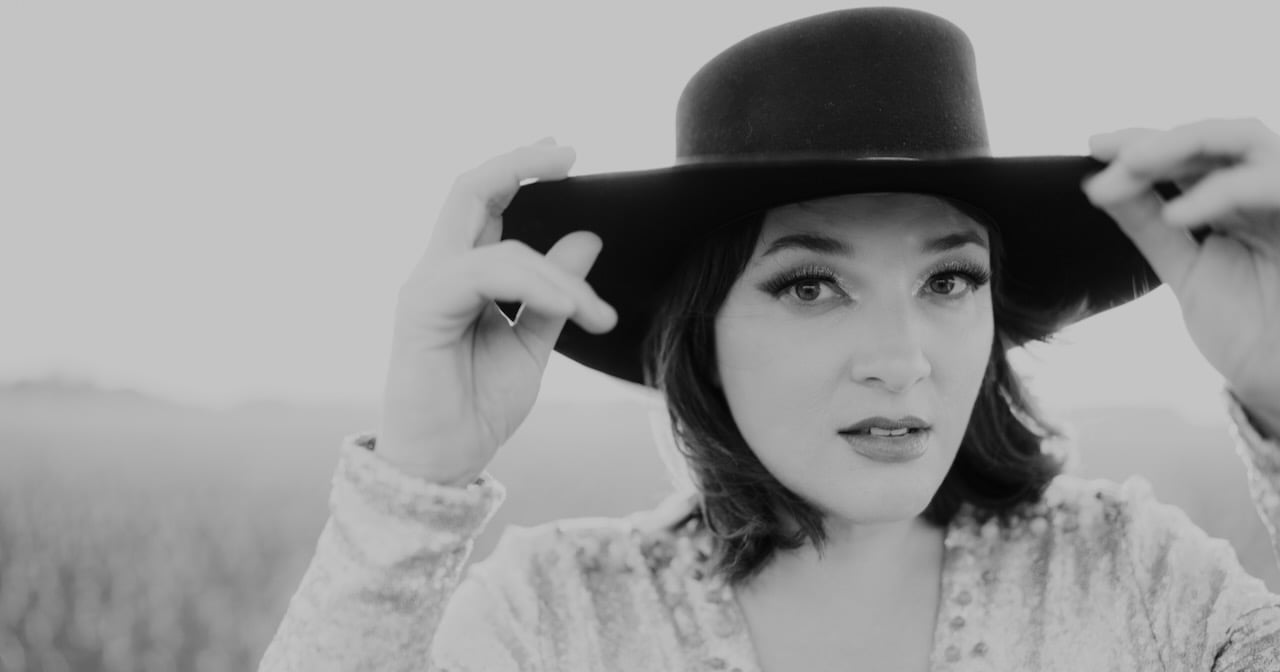
Amanda Fields’ 2023 project deepens this ongoing problem. The album, What, When and Without, is a complex artifact of her own wrestling with genre, history, and biography. It slides into that complex sorting of genre and feeling that is key to Nashville right now. Fields calls this a country album – lushly produced, thick with strings, and dense with vocals, reminding one of an updated countrypolitan record – but sorting out what that means comes with a history of playing and listening.

Fields has a reputation on the bluegrass circuit, often an insular genre with an insistence on a certain kind of purity. She recognized how those questions of purity often don’t pay the bills, and her first major recordings were on a series of bluegrass cover records, called Pickin’ On – recorded by prominent bluegrass studio musicians, there are dozens of them, the artists covered include the expected (Bob Dylan, Johnny Cash), the unusual (Blink 182), to the fully flummoxing (Modest Mouse). Though Fields did not play on all of these records, she talks about them as an integral understanding of herself as part of a musical team: “When I look back on my experience within the ‘genres’ I’ve taken part in, I think about the groups of people I worked with… When I worked on Pickin’ On, I got that gig because of who I was hanging out with and playing music with at the time. I sang ‘gospel’ when I was growing up, because that was the community within my proximity.”

Proximity is a complex question for Fields. She has close ties to the bluegrass community, and there is something intriguing about the idea that genre is a social category – one about who one is near, or what the audience and the performer agrees to participate in. Yet there is a kind of roving that occurs here too; for Fields, roving is both a history of moving around geographically and, as she says here, moving from music that she considers bluegrass or gospel or country.

Fields moved around a lot as a child. Though she was born in Appalachia and currently lives in suburban Nashville (right next to Loretta Lynn’s old house), the line between these two legendary destinations was not direct.

Asking Fields about these roots – expecting a standard line in response – she honestly describes the complexity of her raising: “I’m originally from the mountains and it was my anchor growing up, but my dad moved us around a lot. He was one of those people who felt there was more to life than what was available to us living in that area, so he took job opportunities that carried us away from the mountains. I didn’t like that, because I was always longing to be ‘home’ with the rest of our family. I lived for summers and holidays when I got to be in Virginia and East Tennessee. Playing and listening to country and bluegrass music was my way to experience home when I couldn’t be there physically.”

This moving and returning is a common note for country musicians. Listening to her talk about the juxtaposition of moving, returning, being forced to leave, and finally finding home in an idea more than a place, I am reminded of Tanya Tucker or Merle Haggard. Tucker’s early childhood had a father who moved her from Arizona to Las Vegas to finally Nashville, chasing an acting and singing career. She broke out as a singer who fused a desire for rock and for country. It is similar to Haggard’s talk of moving – to California with his family as a consequence of economic disenfranchisement – and spending the rest of his career chasing economic stability. That idea was perhaps best written about in his tragic ballad “Kern River,” with its opening line, “I grew up in an oil town, but my gusher never came in.” (A Fields original from well before What, When and Without, “Brandywine,” strikes a similar note.)
This connection to Tucker, Haggard, and other classic country singers suggests that Fields landed not necessarily in a place, but as she says, in a music which has tight connections to place. What, When and Without, a classic country album, is infused with this kind of nostalgic listening.

Asked about her relationship to figures like Loretta Lynn or Haggard, she answers carefully: “Most of the music that really stirs my soul is older. I listen to all my friends’ new music and I’m always hunting something fresh to connect with, but on a day-to-day basis, I’m usually listening to the same stuff I’ve always loved. I’m talking Tammy Wynette, Loretta Lynn, Conway Twitty just about everyday. Classic country is what excites me (especially when I discover something I haven’t heard) and those familiar sounds and voices help me regulate my body’s nervous system.”

The album, rooted in those sounds, contains a deep knowledge of genre. Its ability to move between old school country, bluegrass chops, and deep, modern desire is one of its strengths. Figuring out how to sound both modern and historical is something Fields achieves with some skill. If her commitment to genre has a loose, rootless quality – or at least one which floats and lands depending on aesthetic or social need – then how she considers time has a similar quality.

Maybe her early commitment to bluegrass, a genre who remembers more than it forgets, and faces backwards as much as it faces forwards, and which was complicated by how hungry those covers were, suggests one way of bridging eras. But, her recent work, crafting contemporary studio craft with the careful polish of Studio A aesthetics is another. Asking her about memory and nostalgia, she again answers carefully: “One thing that was very intentional with the album was the pace. I think that going slowly is nostalgic in a way, because society and industry move so fast nowadays. I usually walk slowly and I talk slowly compared to most of my peers. My body responds to tempo and dynamics and I wanted to invite the album’s listeners to slow down with me.”

The slowness of the album can be heard in how she starts many of the tracks. There is often an instrumental intro where one waits a significant time for the vocals to be introduced and on occasion there are gaps, where her vocals recede and the band takes over – though the band itself is also quiet. There is a quality, listening to the work, of a kind of courtly two-step, the band asking Fields to dance, and vice versa.

The very first song, “What A Fool,” begins with brushed drums, and has a quite lovely open-ended moment where the pedal steel becomes central. On “I Love You Today,” the old-fashioned cheating song, heartbreak is introduced via an elegant, western swing sound, not outside of Lovett at his best. The last song, “Without You,” plays drums as solid and regular as a heartbeat. It’s another heartbreak song.

The pedal steel is crafted by Russ Pahl, who has been playing for decades. He has been nominated by the Academy of Country Music for his work on the steel guitar three times and for specialty instrument once, between 2004 and 2021. Before that, aside from being an in-demand studio musician, he was part of legendary Great Plains, another band who was excellent at moving between genres, across time, and throughout modes.

Talking to Fields about Pahl, she noted how good he was at not only playing, but matching vibes in the studio: “He came across very quiet and contemplative in the studio and I think he ‘got’ the vibe right away. After a song or two, he said, ‘…this ain’t Zip A dee Doo Dah.’ And it wasn’t. It was an album created in the midst of global pandemic [and] a time of great suffering for society and for myself personally.”

What, When and Without sounds like Fields has had some rough times, even outside of the lockdowns (regardless of how dense the record sounds, there is a yearning in the vocals that have a certain lockdown edge); but there is also an irony in this loneliness. Megan McCormick, who co-wrote on and produced the record and plays in Fields’ band, shows great intimacy throughout the project – there is a reason for this, McCormick and Fields are personal as well as professional partners. They sound good together, and the track where McCormick sings backing vocals, “Moving Mountains,” is the highest energy, most open of the entire record. It’s a great love song – but it’s a love song which calls to Mother Maybelle Carter as an avatar of country music, as a figure outside of space and time, which can tell the narrator how to love after years of heartbreak.

When asked about McCormick, Fields is still a little coy, but her commitment to their lives and sounds is made clear: “She really has a special gift and believing in her as a producer, as well as trusting her intuitions and abilities, has allowed me to grow as an artist. She’s my toughest critic, because that’s what I’ve asked of her. She’s also my constant cheerleader. We thrive when we get to travel together and both enjoy that feeling of being untethered that you get when you’re on the road.”

One can hear some of the untethered quality in Fields’ work, the road as untethering as much as time or genre, but the closeness that she has with McCormick is another kind of tethering, be it a consensual one.

Throughout the album, there is a quality of choosing which traditions are valuable, which are worth keeping, and which ones might have outlived their usefulness. When she talks about her childhood as a Pentecostal, she says: “I am very spiritual, still, and that energy I saw in church growing up is no different than the energy I feel when I’m composing music or playing music with other people with whom I am ‘tuned in.’”

She is definitely tuned with McCormick, their close contribution seen in how they work together – the harmonies without necessarily the negative consequences of some of that church life. She continues: “Those are universal aspects of the human experience that transcend dogma, class, and denomination and that’s what I carry on and value from my experience in church.”

One can see the universal quality in Fields’ work, and it contains interesting juxtapositions. A rootlessness across genre or time, which lands on something contemporary sounding; or a heartbreak record which rests on multiple commitments to one person; or even a religious tradition which widens and deepens.

Maybe we don’t need that taxonomy. An audience knows what a country record is.


Sign up here to receive Good Country issues when they launch, direct to your email inbox via Substack.

Photo Credit: John Brown

MIXTAPE: Bonnie Montgomery’s Music of an Arkansas Childhood

I was born into a music-centered family in small town Arkansas near “where the Delta meets the Ozarks.” My grandparents started a music store on the court square in the 1960s and they sold instruments and equipment, et al. – and also carried the top records of the day. So, music and musicians were infused into my life from birth and my family was at the center of a vibrant musical community.

At every holiday or birthday or community event, we played music together and sang with a cast of characters ranging from the local church organist to Sun Records session players. I thought every family was like that, but as I’ve grown older and a lot of those characters have passed on, I’ve realized how rare my upbringing was and I cherish it with all my heart.

I remember the voices and the sounds of the jams like it was yesterday, and I’m honored to make a playlist of some of the favorites we played and sang together. I didn’t discover a lot of the recordings of these songs until much later in my life because we played them by rote – or sheet music – at those beautiful, heavenly hoe-downs. These songs are the soundtrack of my early life. I’m honored to share them. – Bonnie Montgomery

(Editor’s Note: Scroll to find the full Mixtape playlist below, to enjoy while you read.)

“Precious Memories” – Merle Haggard & The Strangers featuring the Carter Family

I chose Merle Haggard and the Carter Family’s version of this hymn, because it’s the closest version to what I remember our hoe-down version sounding like. My grandfather Ivan would always request this song and all the old-timers would sing with such passion, and even tears. I remember the far away look in their tear-filled eyes when they sang it, and although I never felt it like they did back then, I loved the song. We always thought it was a funny selection too, because they would always sing it “pray – shush mam -ries” over and over, which made us laugh. But now that those faces are all passed and gone across the great divide, I feel it like my grandfather used to. Now, just like them, all I have is the memories. Sacred, precious, treasured memories gathered around the piano in my grandparent’s music room – in what feels like a lifetime ago.

“Your Cheatin’ Heart” – Hank Williams Sr.

I didn’t hear the recorded Hank Williams version of this until my late teen years, but we sang it as the grand finale of the Christmas Eve hoe-down every year. After hours of singing the entire catalogue of Christmas carols and standards, my grandfather would sing this one with the most volume and gusto of them all. My mother, or our dear family friend Teddy Reidel, would play a romping walking bass line on the piano with it. So when I went Christmas caroling with friends at age 11, I was ready for the big grand finale and started in on “Your Cheatin’ Heart,” but none of my friends knew it! It was then that I realized “Your Cheatin’ Heart” in fact wasn’t a Christmas carol!

“Born to Lose” – Ted Daffin

My grandfather always requested this song when I was playing piano, whether at the jam sessions or after school, when I would be practicing piano at their house. I never understood it, because the lyrics were so depressing and I wondered why anyone in their right mind would want to profess to being such a huge loser, ha! I remember practicing my classical pieces (I rebelled in the ultimate way by falling in love with classical music at a young age) and Papaw would holler “quit playing that long hair music and play ‘Born to Lose.'” By “long hair,” he meant classical, as in Handel or Beethoven’s long hair. I still laugh about that – instead of long haired hippies, he was talking about the wild artists from centuries ago.

“Sentimental Journey” – Doris Day, Les Brown & His Orchestra

This was my grandparents’ song. They would request this one and dance together every time we played it. During the Great Depression, my grandfather left Arkansas and went to California to look for work. Once he was there, he sent for my grandmother Frances and when she was out there, they got married. They both missed home terribly, so around 1943, when they finally arranged to go back, they had to go separately because of money. My grandmother was expecting their first child by then and had to ride all the way home from California to Arkansas in the back of pickup truck. She always called it her sentimental journey and you could just see the love between them every time we played this one.

“Tennessee Waltz” – Connie Francis

This was another favorite at the hoe-downs. I must have played it a million times while everybody danced and sang. And other times, when we were just hanging out at home, my grandmother would sit in a chair near the piano and ask me to play this one. She would have such a huge smile on her face and she just seemed to melt into the song. I’m so grateful for her encouragement with my musical endeavors.

“Sweet Dreams” – Patsy Cline

This was another of my grandmother Frances’ favorites. She was a fashion-forward, tall, beautiful red-head, full of life and fire. For small town Arkansas she was way ahead of her time. She started her own businesses (the music store was her main project) and ran for mayor in the ’60s too. She adored Patsy Cline and always thought she was so classy compared to the other female country singers of her time. We didn’t jam on this song, but we listened to the recording at full volume. The string arrangements from those Patsy songs have a huge influence on my string arrangements (arranged and played by maestro Geoffrey Robson) in the studio.

“Goin Down the Road Feelin’ Bad” – Woody Guthrie

My grandfather used to take us to his farm in Garner, Arkansas almost every morning in the summer. It was pure heaven for us as children – we could run wild and do whatever we wanted, ride horses, swing on the barn swing, go fishing, drive old cars and tractors around the farm, eat turnips straight out of the ground when we got hungry, crawl around with the pigs in the pig pen, and much more. We would sing in the truck with him all the way to the farm and he loved to sing this song and make up new verses such as, “I’m goin’ where the boys don’t blow their nose…”

That farm lives in my memory every single day – and incidentally, the highway it’s on (old highway 367), got named the “Rock and Roll Highway,” because it’s the road all the Sun Records artists would drive from Memphis to Helena back in the day. I didn’t know that when I was young, but it makes sense that Johnny Cash, June Carter, Elvis, Roy Orbison, Carl Perkins, etc. knew that road well.

“The Strawberry Roan” – Sons of the Pioneers

My grandfather on my father’s side, a wild cattle auctioneer named Leon Montgomery, used to drink his whiskey and burst in the door with his cowboy hat and a grin and croon out “Oh, That Strawberry Roan” as a greeting.

“Gonna Burn Some Bridges” – Ray Price

Ray Price was another familiar voice in the musical landscape of my childhood and is pretty much the ultimate crooner in my opinion. I’m including this tune because it’s direct inspiration for a song on our new album.

“I Was Fine” – Bonnie Montgomery

I’m including one of the songs off my new album, because it was inspired by the music of my childhood and, in particular, the music of Ray Price. My bandmate and engineer, Kevin, came up with a steel guitar riff that’s a direct nod to the steel guitar riff on Price’s “Gonna Burn Some Bridges.” We recorded this one with vibraphone and full string orchestra and I sang my heart out for Ray.


Photo Credit: Jamie Lacombe

MIXTAPE: Daniel Donato’s Cosmic Country

It is a tale as old as time itself. As above so below. Yin and Yang. The explored and the unexplored. The hero’s journey, any and all of them, are exposed to the eternally enduring dance of chaos and order. We must leave the garden, enter into the forest to find the gold, kill the dragon, and return back to where we began, returning back more harmonized, realized, and higher frequency than we began.

Musically, Cosmic Country takes this pattern and uses it as its sole fuel for the soul and all of its musical fruits. Cosmic Country is an approach that uses simplicity, complexity, and truth to tell stories of life that bring beauty and goodness into reality. This 9-track mixtape I have assembled for your enjoyment and exploration today covers some ground of the far-flung lands of music that is Cosmic Country, where the high frequencies fall like rain and blossom like lilies in the fields that never end nor never began. Let’s get Cosmic. – Daniel Donato

“Honky Tonk Night Time Man” – Merle Haggard

This is a country song. But just like any country, there is more nuance to be discovered and brought to light than meets the eye. This is an archetypal honky-tonk song. A few of these will be on here. Honky-tonk songs cover truthful states of life that apply to all of our brothers and sisters sojourning in space and time together down on this chaotic planet. This song talks about relief from the grind and finally getting around to what is right for the soul when quittin’ time comes around.

“Doggone Cowboy” – Marty Robbins

This is also a country song, but it is also more nuanced than that. This is a cowboy song. The cowboy is one of the great American archetypes. The cowboy embraces a life of service, hard work, endurance, adventure, and most enduringly, faith. It takes faith to stay patient and persistent in pursuing your work through realms of chaos that you must travel through and come out on the other side stronger than you did prior. Marty had a way of personifying sorrow, acceptance, reflection, and hope in his delivery of these transcendant, simple lyrics.

“Mystery Train” – Jerry Reed

It can’t be fully Cosmic Country unless it moves you. Internally, songs move us, but sometimes the pocket and groove move us externally, which is a brilliant expression of personality. What I love about this song is that Jerry Reed always had a vision in his mind that could create a groove for people to dance to and for players to have fun-expression in. Everyone knows “Mystery Train,” but this version can make any club, honky tonk, theatre, or arena dance and move all together. Bonus points for a train song. Everyone loves a train song.

“Everybody’s Talkin’” – Harry Nilsson

The bottomline is that we are on our own trip. It is an individual experience of life, personality, and dynamics that only you experience. No one will ever live your life for you or as you. Songs that find promise and truthful reflection on the truly individualized nature of existence are my favorite. The movie Midnight Cowboy turned me onto this song when I was 16. I’ve never wished I had written another song as much as this American classic.

“I Can’t Help It (If I’m Still In Love With You)” – Hank Williams

The Shakespeare of country music. The man who was able to take the power of the word – through a Western lens of faith, hardship, and hard living – and deliver to us some of the most truthful and beautiful songs composed of themes ranging from love, loss, religious experience, jail time, honky tonkin’, and the universe. This song specifically has a brilliant form to it, just one verse and two B sections, coupled with that classic lap steel signature sound from Don Helms.

“Waiting for a Train” – Jimmie Rodgers

Any storyteller of American songs, country songs, any songs based in truth and experience, must tip their “Slouch Hat” to Jimmie Rodgers in one way or another. A lot of everything country begins with the songbook of Jimmie Rodgers. This song is just a fantastic story through and through. The lyrical furniture, the sophisticated use of actual terms of water tanks, brakemen, boxcar doors, all bring the listener into the simulated reality that this song conjures.

“Long Black Veil” – Lefty Frizzell

Murder songs are a necessity. The reaper takes his toll, and with that, law and order speak their truth. One of the brilliant elements of this song is that the perspective is from the deceased character. That is innately Cosmic, especially given the window of time this song was released. Lefty was one of Merle’s favorite vocalists, and was the band leader with which Roy Nichols and Merle Haggard first played together when Merle was 16.

“You Ain’t Goin’ Nowhere” – The Byrds

Even though Bob Dylan penned this one on the side of the road, in the rain, waiting for a motorcycle fix, The Byrds – with Gram Parsons and Clarence White – deliver to us one of the most archetypal Cosmic Country recordings there will ever be. The instrumentation, the vocal melody, and harmonies on this song alone explain this sentiment, but the lyrical detail is another universe worth noting with great reverence. The olden language of the great folk songs of America inform the meter and colloquialisms in this song, giving it an ability to exist in the past through its roots, the present through its great orchestration and arrangement, and the future through its seeds of truth, beauty, and goodness – the only values in any creation that endow it to persist through the fleeting episodes of space and time.

“Truck Drivin’ Man” – Buck Owens

If I left out truck driving songs, then everybody from my time at Robert’s Western World would be ashamed of me. The truck driver is a minister of the highways, the great vehicle of true exploration and discovery. The eternal, long white line drags on and on, and the road songs of her fruits just keep coming, but some of the great ones came from Capitol Records in L.A. in the early ’60s.

An element of Cosmic Country that this song relates to is the overall “sound.” What is “the sound?” It is ultimately unqualifiable – it cannot be fully explained or qualified by words – especially when The Sound is doing what it can be doing in potential, which is rendering feelings that hit deeper than words can describe. With the Transcendant Twang of Don Rich’s Telecaster, the immensely clean and powerfully compressed sound of Mickey Cantu’s snare drum, along with that Tic-Tac Fender Bass playing, Buck Owen’s vocal and story rests upon a divinely simple and reverberated landscape of country gold. If there ever was a record that “sounds” like a country song, this one certainly qualifies.


Photo Credit: Jason Stoltzfus

MIXTAPE: A Little Bit Gospel, A Little Bit Bluegrass, and Everything in Between

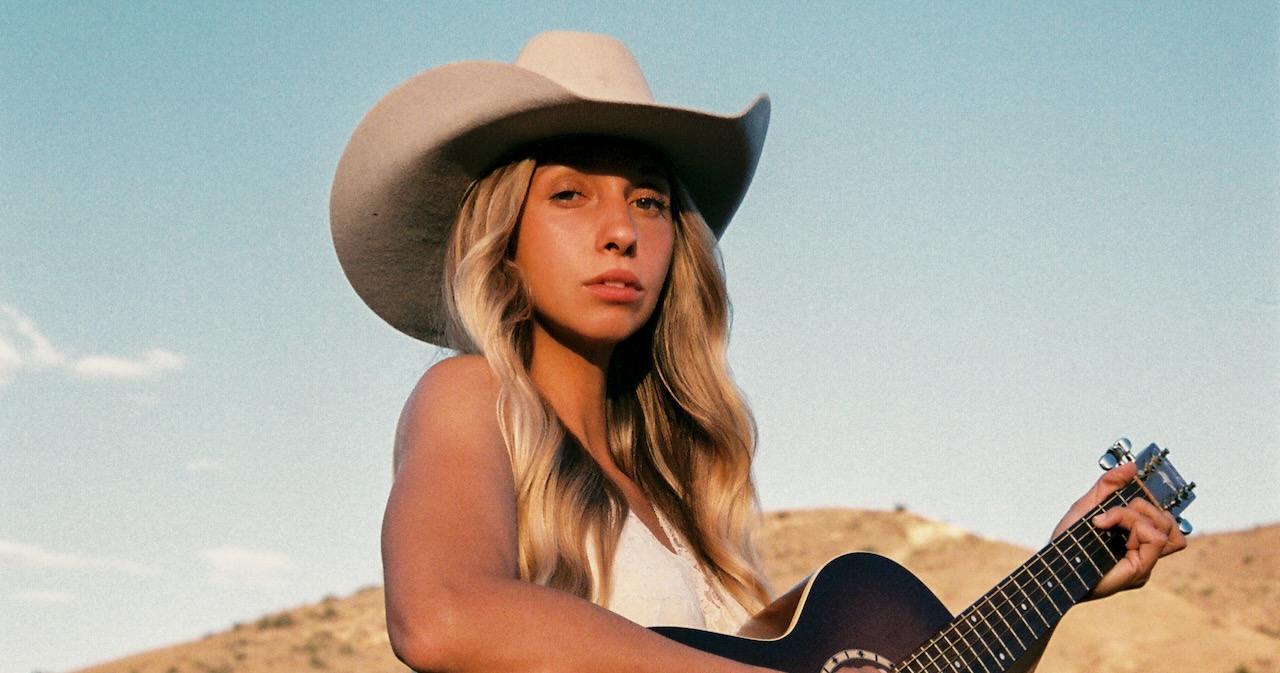
My sophomore album, A Cowgirl Rides On, set to be released October 20, 2023, is a true reflection of my heart and what keeps me going bluegrass, gospel, western, Jesus, horses, love, and even a little bit of heartache. The songs written for the record were hugely inspired by the songs I included on this playlist. All of these artists and songs are ones I hold near and dear and have moved me in some big way.

I became strong in my faith as a Christian in my early 20s, which is around the same time I began performing and writing a ton. Being introduced to gospel and bluegrass had a big impact on me, and it continues to deeply connect me to my faith.

It’s been a longtime dream to release a record that feels a little bit bluegrass, a little bit gospel, and everything in between. Here are the songs that guided me there. I hope you find so much joy in them and that they become the soundtrack to your long drives, or to enjoy over your Sunday pancakes, or during the times you just need a little light. – Victoria Bailey

 “Waiting At the Gate” – Ricky Skaggs & Kentucky Thunder

This song is one of my alltime favorites. This whole album, Soldier of the Cross, is pure gospel gold. I actually cover this song on my upcoming record, and it was one of the most fun songs for us to record in the studio. Ricky Skaggs is just simply the best.

“Wayfaring Stranger” – Emmylou Harris

This Emmylou Harris album is really the pinpoint of when I fell in love with country music. Many have covered this classic song, but Emmylou’s version of Wayfaring Stranger is my favorite by far. Her voice and the tone of this song are so haunting and beautiful… nothing compares. 

“The Seeker”– Dolly Parton

Oh, Dolly… what would a playlist be without her? Dolly is undeniably the best and has inspired me in so many ways, but especially her love for Jesus and how she ties in a little bit of the gospel to most of her records. This song really gets me moving and grooving around my house. 

“I Just Want to Thank You Lord” – Marshall Family

These harmonies are so good, and they really inspired how I wanted the harmonies to sound on my own record. I also wanted it to feel just as timeless and simple as this song by the Marshall Family. This song ends up being on most of my roadtrip playlists. 

“The Fields Have Turned Brown” – Ralph Stanley

Ralph Stanley is a huge inspiration to me and such an important figure in bluegrass music and in the banjo world. The banjo is one of my alltime favorite sounds, and I included a lot of it on my new record. It just takes you to a good place. 

“Wild and Blue” – Alan Jackson

I turn to this album quite often. What a combo! Alan Jackson and bluegrass/gospel. It’s just so good. 

“Snake Trails” – Victoria Bailey

This is by far my favorite song on the record. It is gospel song I wrote while riding my horse, Weasley, through the canyon one day. It brings me back to that place every time I sing it. It was one of the first written for the project and really sets a tone for the rest of the record. It was inspired by my horse and finding peace and connection to my faith being out on the trails. 

“I Must See Jesus” – Snooks Eaglin

This song always gives me the same feeling as when you just finished a really good movie. My whole heart swells, and it brings me to a really special, peaceful place. His voice is incredible, and you can hear all the passion and honesty and faith in his delivery. 

“End of the Line” – Moonsville Collective

These guys are like family to me and have inspired me endlessly over the years, watching them play and the way they are beautifully representing bluegrass/Americana music. This song, written by Corey Adams, is one that has always hit home hard for me at many times in my life. It is truly one of my favorite songs ever written, and it was an honor that I actually got to cover this song on my upcoming record. 

“I’ll Fly Away” – Gillian Welch, Allison Krauss

When my producer, Brian Whelan, and I sat down to talk about making this record, we referenced the O Brother, Where Art Thou? soundtrack often. Not only is this movie legendary, so are all of the musical performers on the soundtrack. We loved the style of the recordings. Live, all in one room together, where you can hear all the cracks and the love, and its exactly what we tried to emulate for my own record. Recording live was such a special part of making A Cowgirl Rides On.

“Where the Soul of Man Never Dies” – Ricky Skaggs & Tony Rice

Doesn’t get much better than this duet. This is often a Sunday soundtrack for me. 

“Long Journey Home” – Billy Strings & Terry Barber

Billy Strings is such an amazing representation of modern bluegrass. His sound is timeless, and his guitar playing and songwriting match up to some of my bluegrass heroes. I’ve always loved this song, and he covers it so well. 

“Angel Band” – The Stanley Brothers

This song just always pops in my head any time I hear the word bluegrass. It is so classic and pure, and the harmonies pull on all the heartstrings. 

“Just Like Leaving” – Bella White

I have been a longtime Bella White fan, and she is such an important female artist in keeping the bluegrass sound alive. The rest of the record is incredible as well. 

“Green Green Grass of Home” – Merle Haggard

You can’t have a playlist without Merle. This song always brings me to tears and really is a beautiful representation of Merle’s songwriting and voice. 


Photo Credit: Stefanie Lee Johnson

Marty Stuart: From Bluegrass to Psychedelia and Back

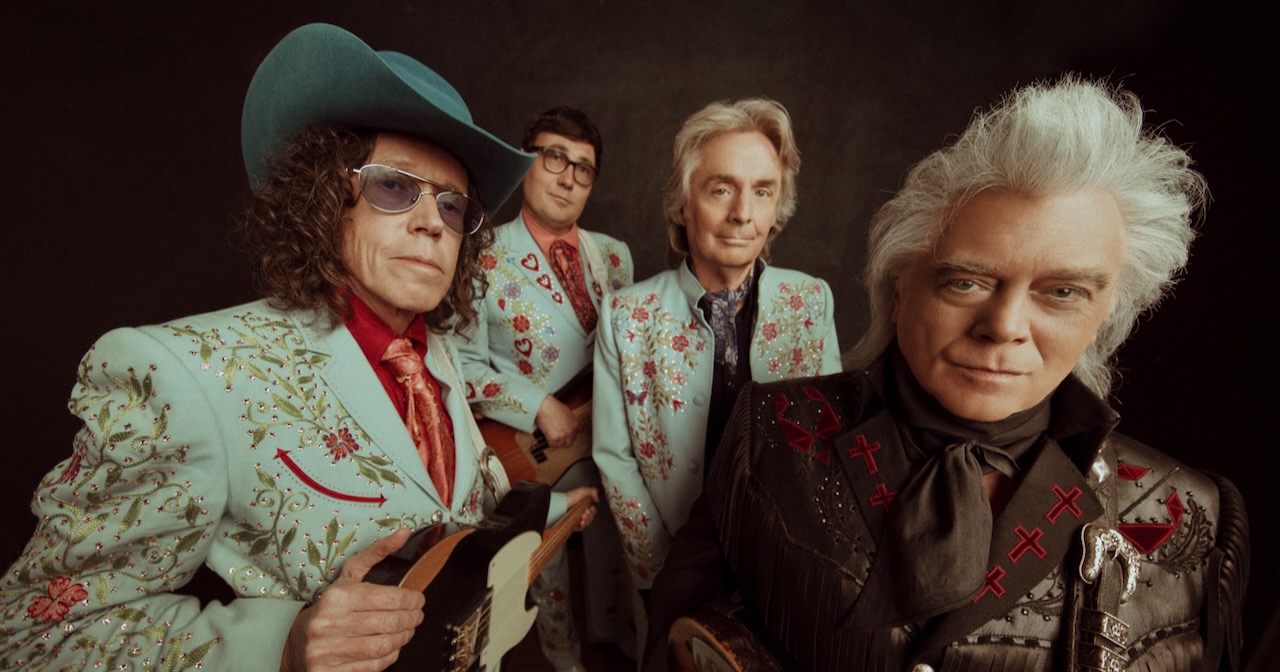
Told that a song on his new album brings to mind The Doors, Marty Stuart is bemused, but open to the idea.

“Did it?” he responds during an interview. “That’s fine. If so, why not?”

“Nightriding,” from new album Altitude by Stuart and His Fabulous Superlatives, kicks off with droning guitars, then evolves to a riff somewhat like that of Jim Morrison’s “Roadhouse Blues”   

“Cadillac, sundown,” Stuart intones. “Think I’ll investigate this town.”

To be clear, most of the cuts on the Altitude are more evocative of The Byrds than The Doors. So, is Marty Stuart really a country music traditionalist, as many people perceive him? Yes. And also no.

“I’m totally fine with it,” Stuart says when asked if the country music purist reputation is OK with him. “It’s a self-appointed mission. But my comment would be that country music has broad shoulders.”

Dante Bonutto, who heads up Snakefarm Records, which is releasing Altitude, says that Stuart has earned the right to experiment. 

“Since he’s definitely someone who pretty much invented the wheel, he’s allowed to put different spokes on it when he wants to, I think,” Bonutto said. 

Stuart, who’s been a bluegrass prodigy, a mainstream country music star, and remains a prodigious collector of country music artifacts, was born in 1958, making him a child of the 1960s, with all that comes with it. 

“I still think of when The Byrds and Bob Dylan and all those guys came to Nashville to make their records in the late ‘60s,” he says. “That is like contemporary stuff to me. …That was the stuff that touched me when I was growing up, so it was just a part of country music to me.”

At a recent benefit concert for Northwest Mississippi Community College, Stuart’s base was definitely country — he and the group appropriated the whole history of the genre as their back catalogue, doing songs by Merle Haggard (“Brain Cloudy Blues”), Marty Robbins (“El Paso”), Waylon Jennings (“Just to Satisfy You”) and Stuart’s own hits from the early 1990s such as “The Whiskey Ain’t Workin.’” 

The casually virtuosic Fabulous Superlatives band (Kenny Vaughan on guitar, Chris Scruggs on bass and Harry Stinson on drums; all of them sing) wore matching glitter-flecked black suits, and Stuart’s performing style still owes a debt to his former boss and mentor Johnny Cash.

But that wasn’t all. During the hour-long set before a well-heeled audience dressed in tuxedoes and evening gowns, there was also a Woody Guthrie indictment of the rich, a mandatory gospel number, and a big helping of surf rock, obviously a favorite of Vaughan in particular.

“We hereby declare Senatobia, Mississippi, as the surf capital of the world,” Stuart announced before Vaughan launched into a Telecaster version of “House of the Rising Sun.” Also, “Wipeout” was played by Scruggs solo on the upright bass, with Stinson slapping out the drum solo on the cheeks of his face. 

“Well, it doesn’t really matter how people categorize us,” Stinson said. “If anybody’s interested in what you’re doing, then they listen a little bit deeper and find a much wider spectrum, in terms of the music. I think Marty is much more than just a traditional country artist. He came from that world and uses that as a place to plant himself, and then branches out in different directions.”

Possibly because the Altitude album hadn’t been released yet during the March 25 concert in Mississippi, that audience didn’t get a taste of its cosmic, sometimes psychedelic country music.

The album’s beginnings go back to 2018, when Stuart, Vaughan, Stinson, and Scruggs toured with Roger McGuinn and Chris Hillman to celebrate the 50th anniversary of the pioneering country rock album Sweetheart of the Rodeo by The Byrds. McGuinn and Hillman were original members, along with the late Gene Clark, David Crosby, and Michael Clarke. 

“That was Roger McGuinn’s idea,” Hillman recalled. “Roger had done some dates with Marty; he knew him really well. …He knew the Superlatives would be right on the money because he had done a couple of Byrds songs with them onstage.”

Hillman rates the Superlatives as “the best band probably in this country right now, if not the Western Hemisphere.”

“We had so much fun doing the Sweetheart of the Rodeo Tour,” said Hillman, who was also a member of the Flying Burrito Brothers and Desert Rose Band. “The arrangements were the same as we did on the album in 1968,” he said. “We played the songs better, but we didn’t change anything. It was a joy to go back out and do those songs, especially with the Superlatives.”

Stinson says the tour with The Byrds was “a joyous experience.”

“I got to play with some of my heroes,” he said. “I grew up on those records and so to get to play that music, especially the Sweetheart record, which was kind of groundbreaking. I got to go back through it and really dissect it, and then put it on stage. It was surreal for me.”

The Sweetheart of the Rodeo Tour, coming around the same time Stuart and the Superlatives were opening for Chris Stapleton and the Steve Miller Band, had a profound effect on Stuart’s songwriting. 

“It got me in the mood to write songs with all the sounds that were left hanging around in my head,” Stuart said. “We were hot on those ideas, and I just carried the inspiration in with me.”

Like a lot of albums released in the past year, Altitude was recorded while COVID-19 was at its height. 

“We rehearsed,” Stuart said. “Most of the producing of this record was done in dressing rooms and at soundcheck and trying songs out there in shows before we ever went to the studio.” The original plan to record was ruined by the coronavirus. 

“We were hot, we were ready to go to Capitol Studios in Hollywood (California), and make a record,” Stuart said.  “Well the pandemic crashed and Capitol Studios shut down, so we found East Iris Studios (in Nashville). We put on our masks and stood 6 feet apart and soldiered on.”

“I’m glad everybody agreed to do that, because I think this record would not have sounded like it does if we would have had to wait several months and relearn it.”

The album’s Byrd-like sound, complete with the jangling guitars that are McGuinn’s trademark, has Hillman’s endorsement.

“What they’ve done is not a tribute to The Byrds,” Hillman said. “It just has a few little nice, ever-so-tasty hints of what we did.”

Hillman thinks the driving “Country Star,” which also owes a debt to Chuck Berry, has the feel of Byrd’s songs such as “So You Want to be a Rock ‘n’ Roll Star.”

“There’s a lot of influence there — not overtly, but it just is there. Marty doesn’t stray far from the well, meaning the bluegrass well. I never did either.”

Stuart’s ability on mandolin shouldn’t be overlooked, Hillman said. “Marty is an unbelievably gifted musician,” he said. “I love Ricky Skaggs’ playing and Ronnie McCoury,” he added. “But I told Marty when we were on the road, ‘You got that machine gun hand.’ He says, ‘Yeah, that’s Everett Lilly.’”

Lilly (1924-2012), played mandolin and sang tenor with the Lilly Brothers and Don Stover. He also spent a couple years with Flatt and Scruggs.

“(Lilly) had that cool right hand and when he took a break on ‘Earl’s Breakdown,’ when he played with Flatt and Scruggs, it was great,” Hillman said.  Factor in Vaughan on guitar in the Superlatives, and “you can’t get any better,” Hillman says. “But it’s two different approaches to music.

“Marty really grasped ahold of the pulled string stylings of Clarence White (who played with The Byrds and Kentucky Colonels before his 1973 death)”, and then Kenny “is so good, all over the place.” 

“He doesn’t overblow; he plays just what is needed,” Hillman said of Vaughan.

While Stuart released his last album, Way Out West, on his own Superlatone Records, he’s partnered with Snakefarm, a subsidiary of Universal Music Group, for Altitude.

Bonutto, a journalist and record company executive, heads up the roots-rock focused Snakefarm and its sister label Spinefarm Records, which specializes in heavy metal. In addition to Stuart, Snakefarm has acclaimed Southern rocker Marcus King on its roster. 

“(Stuart is) obviously an artist I’ve always been aware of, because I love country music and I’m aware of its legacy,” Bonutto said. “The first time I saw him was when he played the Country to Country (music festival) in London, which is a big annual country music event. I thought his personality was fantastic and his playing is obviously unbelievably good.”

Bonutto wrangled a quick meeting with Stuart at the festival, but had to wait a while before Stuart and his management were ready to sign a new record contract.

“I’m trying to build the Snakefarm label into a global entity [in Americana music],” he said. “The best way you can build anything is to attach yourself to people who are legendary and iconic. Hopefully you do an amazing job for them and they speak well of you and they become part of the fabric of what you do.”

Bonutto noted that Stuart, who is also a photographer and working on a facility to display his country music artifacts, is not “a one-dimensional character.”

“He’s a man with a fantastic vision,” Bonutto said. “I think that comes across in the other things.”

Stuart is a leading collector of country music memorabilia, and he’s working on a $30 million museum to display it in his hometown of Philadelphia, Mississippi. A 500-seat theater is already open, and 50,000-square-feet of exhibit space for 20,000 artifacts will be the second phase. An education center is planned after that. 

“I was a fan, going back to those country or gospel groups or bluegrass groups who come through my hometown when I was a kid,” Stuart said. “I’d always buy a record and ask for an autograph or ask one of the pickers if I could grab a pick.”

In the 1980s, he observed that “old timers, the pioneers, the people who had raised me, were being disregarded.”

“Their treasures, their personal effects, their guitars and costumes, were winding up in junk stores around Nashville,” he said. “I found Patsy Cline’s makeup kit for 75 bucks in a junk store on Eighth Avenue in Nashville. I couldn’t believe it.”

Stuart met Isaac Tigrett of Hard Rock Café in London, and he showed Stuart how that restaurant chain was investing in and exhibiting rock music memorabilia.

“Even though it was a hamburger joint, I understood the importance of them collecting and curating stuff from The Beatles and the Stones and The Who. … Beyond the Country Music Hall of Fame, I didn’t see anybody doing it, so it just became a self-appointed mission to start rescuing a lot of those things that were winding up in junk stores.”

Stuart’s collection includes treasures such as the handwritten lyrics of “I Saw the Light” and “Cold, Cold Heart” by Hank Williams Sr., the boots Patsy Cline was wearing during her 1963 fatal plane crash and Cash’s first all-black performance outfit.

Speaking of country music history, Stuart began his career in bluegrass backing up Lester Flatt before joining Cash’s band. He’d like to return to those roots and record a bluegrass album.

“I need to, I need to,” he said. “But it needs to be authentic. It needs to be the real deal, blood-curdling bluegrass.”


Photo Credit: Alysse Gafkjen 

6 Times Tanya Tucker Showed Us What Pride Is All About

Just in time for Pride Month, singer-songwriter Tanya Tucker released her new album, Sweet Western Sound, with Fantasy Records, marking the Country Music Hall of Fame inductee’s 26th solo studio record. Tucker is an American country icon, having landed her first hit single in 1972 at the age of 13 with “Delta Dawn.”

Tucker has long supported the LGBTQ+ community and queer equality, and Sweet Western Sound hits many of the same notes. The record was produced by Shooter Jennings and Brandi Carlile, the openly lesbian, roots music singer-songwriter and producer who is the only woman to receive two Grammy nominations for Song of the Year in a single year. Tucker has also collab’ed with drag queen and TV legend RuPaul and performed for GLAAD and Nashville Pride.

To celebrate her inclusivity and the new record, we’re counting down some of her most memorable – and most fabulous – stage performances and duets.

Tanya at Nashville Pride 2022 

Is there anything better than rainbows, bedazzled tassels, and feathers? Absolutely not! And Tucker brought all three in her spectacular outfit at Nashville, Tennessee’s Pride celebration in 2022. Tucker sang “If It Don’t Come Easy” on stage during the celebration and was joined by multiple drag queens wearing rainbow tees emblazoned with “Tanya Mother Tucker.” Guests during her set included her dog and her daughter; the two sang Merle Haggard’s apropos “The Way I Am.”

Tanya Shows Some “Kindness”

Tucker’s latest album features a track called “Kindness,” a country-western crooner that encourages us to be a little nicer to those around us. “I found glory in the ruin of the best laid plans,” Tucker sings. “There were times tomorrow felt so far away. It seemed as though the bitterness was here to stay. I’ve pushed down on my anger through my tears.”

The tune is a good reminder we never know what someone else is going through, and that we could all be a little softer because of it.

Tanya and RuPaul Declare “This Is Our Country”

In a totally unexpected, but absolutely harmonious collab, Tucker and RuPaul teamed up in 2021 to release a duet called “This Is Our Country,” a genre-bending blend of country and pop that celebrates inclusion and equality.

“I can be a queen or I can be a cowboy,” RuPual sings.

“Love is the answer, love always wins,” Tanya adds.

The lyrics state firmly that our country is big enough for all its diverse communities and features more than a few of RuPaul’s rap bars. The video performance features some of Drag Race’s most popular queen and contestants, as well as a couple cute, shirtless cowboys.

Tanya In the Moment With “Bring My Flowers Now”

Co-written by Tucker and Carlile — as well as twins Tim and Phil Hanseroth — “Bring My Flowers Now” is a call to show our love and appreciation for friends and family before they’ve passed away. The tune is from her 2019 album While I’m Livin’, also produced by Carlile and Jennings. In the song, Tucker reminds us there are “rainbows, sunshine, and babies” to celebrate in this life, and that we shouldn’t wait until it’s too late. The simple, slow track features a piano instrumental and Tucker’s iconic vocals — perfect for a gentle moment with the ones we cherish most.

Tanya and Brandi Have “Breakfast In Birmingham”

If it’s a classic country duet you’re craving, Tucker and Carlile’s duet on the new album is just the ticket. “Breakfast In Birmingham” features both singers’ warm, soulful vocals and paints a picture of the city’s past with descriptions of hippies, cheap gas, and crispy-fried bacon. There’s also mention of “shutting down the rebel history,” a reminder that there’s a lot to celebrate and remember this Pride.

Tanya’s First Hit, “Delta Dawn”


This would be no list of Tanya Tucker’s best moments without reaching back to her roots. “Delta Dawn” was Tucker’s first hit, and this 2019 performance at The Troubadour features her famous key change as well as beautiful dobro and electric guitar licks.

Around the 2:40 mark, Tucker pauses her singing to let the audience fill in the words and they don’t miss a beat. This tune is always worth a listen and is one of Tucker’s best-known singles.

Whether you’re a fan old or new, Tucker’s got something for everyone — including a message of equality for all. There’s almost no better country singer ally to revisit during Pride Month.


Photo Credit: Derrek Kupish

LISTEN: Brandy Clark, “She Smoked in the House”

Artist: Brandy Clark
Hometown: Morton, Washington; Nashville, Tennessee
Song: “She Smoked in the House”
Album: Buried (produced by Brandi Carlile)
Release Date: May 19, 2023
Label: Warner Records

In Their Words: “I was driving around listening to a lot of Merle Haggard. I got stuck on ‘Are the Good Times Really Over for Good’ for weeks. That song really makes me think of my grandparents and that generation. I just couldn’t get away from it. So I started on a song called ‘They Smoked in the House,’ but I just couldn’t connect with it in the way that I needed to. I remembered someone once telling me that to be general, you must be specific and so I pivoted and started working on ‘SHE Smoked in the House.’ The ‘SHE’ is my grandma Ruth. To this day, my grandma Ruth is my favorite character to ever walk the planet. Looking back, I wrote this song because I was missing her and the things that she valued in life. I never thought that it would ever be on a record. It was for me….but now it’s for you, too.

“This album is a return home to me in many ways. Musically it’s the rawest I’ve been since 12 Stories and maybe even rawer. When Brandi and I sat down and talked about working together, one thing that really intrigued me was her saying ‘I see it as your return to the Northwest.’ (Since the two of us are both from Washington state). That comment inspired so much for me. It took me back to where and how I grew up. ‘Northwest’ and ‘She Smoked in the House’ were both a result of that early conversation. Working with another recording artist on this project was such a gift that I didn’t even know I needed and changed the way I want to write songs and make records moving forward. My hope is that anyone who hears this album will feel the heart that I put into every note of it.” — Brandy Clark


Photo Credit: Victoria Stevens

BGS 5+5: Isaac Hoskins

Artist: Isaac Hoskins
Latest Album: Bender
Hometown: I spent the majority of my formative years in Wellington, Kansas. A small wheat-farming town between Wichita and the Oklahoma state line. I’ve lived in Denton, Texas, for 19 years and I definitely call it home now but Wellington still has a great deal to do with the way I see the world.

Personal nicknames: When I was a kid there was another boy who lived down the street who, for some reason, couldn’t pronounce my name instead called me Izeke (eye-zeek). My mother started calling me Zeke and it stuck. To this day, a lot of people in Kansas call me Zeke.

Which artist has influenced you the most … and how?

Oh, man! There are so many. I’d imagine that Steve Earle is probably the biggest influence that I’ve had as a songwriter and performer. Obviously, Steve’s music was and continues to be a massive influence but most any other artist that I became a fan of early on was because they were in and around his orbit. The internet was still a pretty new thing, so discovering music that wasn’t on the Top 40 chart was pretty difficult without some sort of road map. Guy Clark, Townes Van Zandt, Rodney Crowell, Jerry Jeff Walker, all of the usual suspects came to me after reading Steve’s biography (Hardcore Troubadour). Steve Earle was my gateway drug.

What’s your favorite memory from being on stage?

When I was in junior college I was in a choir that was invited to sing a piece of music entitled The Testament of Freedom at Carnegie Hall. The piece was composed by a man named Randall Thompson and inspired by writings of Thomas Jefferson. It was the spring after the 9/11 attacks and the entire experience was incredibly moving. Both the subject matter and setting were something I’ll never forget. I’m told that Kevin Bacon was there so perhaps I’m one degree closer than most.

What was the first moment that you knew you wanted to be a musician?

I knew that I wanted to be a musician from a very early age, but given my surroundings I never felt like it was something that was attainable. I attended a music festival in Helotes, Texas, called Jack Ingram’s Real American Music Festival and that was the day that I knew for sure, that was the day that I felt like it was something that I could do. I was watching all of these incredible performers that, up to that point, I had never even heard of. The Bottle Rockets, James McMurtry, Hayes Carll and so many other people were proving to me that you don’t have to be Garth Brooks to make a life in music and I was immediately obsessed.

What has been the best advice you’ve received in your career so far?

I had the opportunity to talk to Don Schlitz once. He told me, “Write the song you want to hear and you’ll be surprised who wants to hear it too.” I think of that often, so concise, so true. Thanks, Don.

Which elements of nature do you spend the most time with and how do those impact your work?

I’m a duck hunter, and more often than not, I hunt alone on public land. Hunting on public land means that you’ve got to get there earlier than anyone else if you want to be sure that you have your spot. Most days I’ll begin my walk to the lake at four o’clock which means I’ve got somewhere in the neighborhood of three hours to hike in, find my spot, put my decoys out and get a decent hide before shooting time (30 minutes before sunrise). That time before and during sunrise is my favorite. I use it to think about the people, places and things that matter to me and might also matter to someone else. Watching the day come alive is a spiritual moment for me, every time. Living in the business of making noise, it’s nice to soak up a little silence.


Photo Credit: Peter Salisbury

BGS 5+5: Joshua Hedley

Artist: Joshua Hedley
Hometown: Naples, Florida
Latest Album: Neon Blue
Personal Nicknames: Mr. Jukebox

Which artist has influenced you the most…and how?

I found Bob Wills at a very young age. Probably 10 years old or somewhere around there. I was instantly obsessed. He really struck a chord with me. Something about the blend of country and jazz resonated with me and particularly inspired me to be better at my instrument. I would lock myself in my parent’s bathroom with a CD player and my fiddle and just wear out this Bob Wills greatest hits CD for hours, trying to learn all the fiddle parts and solos and stuff. It really strengthened my ear at that age when you just soak up knowledge like a sponge. I probably wouldn’t be playing at the level I’m at today if I hadn’t discovered Bob Wills when I was so young.

What was the first moment that you knew you wanted to be a musician?

Honestly, it’s almost like I was born into it. I don’t remember the first moment I knew. I just always did. I asked my parents for a fiddle when I was 3. They told me to ask again when I was older, and I did, five years later. They got me one when I was 8 and I just took to it almost instantly. I just knew that’s what I was going to do with my life from then on. I started playing for real, professionally in bands, when I was about 12 and after that it was all over. That was it. I decided then I was going to move to Nashville and play country music for the rest of my life.

What’s the toughest time you ever had writing a song?

I always have a tough time writing. More specifically with finding inspiration and focus. I had this brief period of inspiration when I wrote Mr. Jukebox, but before that and ever since, I’ve always had a hard time writing. I struggle with ADHD, so it’s hard for me to stay focused on a single idea long enough to write a whole song. There’s also a level of self confidence needed to be a great writer that I lack. I can recognize a great song that someone else wrote, but even if other people tell me how much they love my songs, I always second-guess them myself. I always feel embarrassed playing my own music.

What has been the best advice you’ve received in your career so far?

Don’t read your press. Especially the reviews. Good or bad, they’ll affect your ego negatively. Someone once told me when I was just a kid, “You’re never as bad as they say you are, but you’re never as good as they say you are either.” You can’t control what people write about you. If it’s negative, it can crush you, but if it’s positive, it can inflate your ego too much. Neither of those things are good for you. Staying away from your own press seems like good advice to me, even if I don’t always take it.

Since food and music go so well together, what is your dream pairing of a meal and a musician?

You can probably tell just by looking at me that I enjoy food. I like everything from Michelin Star to Taco Bell. My buddy Sean Brock is absolutely crushing the food game in Nashville right now. It’d be cool to do a show where he catered it. Maybe do a bunch of traditional Florida foods like gator tail, smoked mullet, frog legs, Cuban sandwiches, key lime pie — stuff like that. Then me and Elizabeth Cook and Wade Sapp can play a bunch of country music from Floridian artists like Mel Tillis, Pam Tillis, Slim Whitman, Vassar Clements, John Anderson, Terri Gibbs, Gary Stewart (not actually Floridian, but we claim him), etc. Actually…I kind of want to make that happen now.


Photo Credit: Joshua Black Wilkins

WATCH: Eli Paperboy Reed feat. Sabine McCalla, “Today I Started Loving You Again”

Artists: Eli Paperboy Reed feat. Sabine McCalla
Song: “Today I Started Loving You Again” (written by Merle Haggard and Bonnie Owens)
Album: Down Every Road
Release Date: April 29, 2022
Label: Yep Roc Records

In Their Words: “Back in 1969, Capitol Records commissioned a duet version of this song from Buck Owens, who was their biggest country star, and Bettye Swann, who was their most successful soul singer. The label ultimately shelved it out of fears that an interracial collaboration would damage Buck’s career, but a few of the acetates eventually leaked out, and I happen to own one of them. It’s probably the most straight ahead interpretation on the album, and that’s the way I wanted it. The arrangement was good enough to be released back in 1969, but it never had a chance to get the respect it deserved. To finally officially put that song out as a duet with a woman of color after all these years feels consequential to me.” — Eli Paperboy Reed

“When Eli told me the origin story behind Merle’s famous song I knew I had to sing it. I’m so grateful that since Loving vs. Virginia interracial couples have become so widely acceptable. It’s high time the history of black musicians as creators and cultural bearers of country and soul is honored, and I hope I do justice by Bettye Swann.” — Sabine McCalla