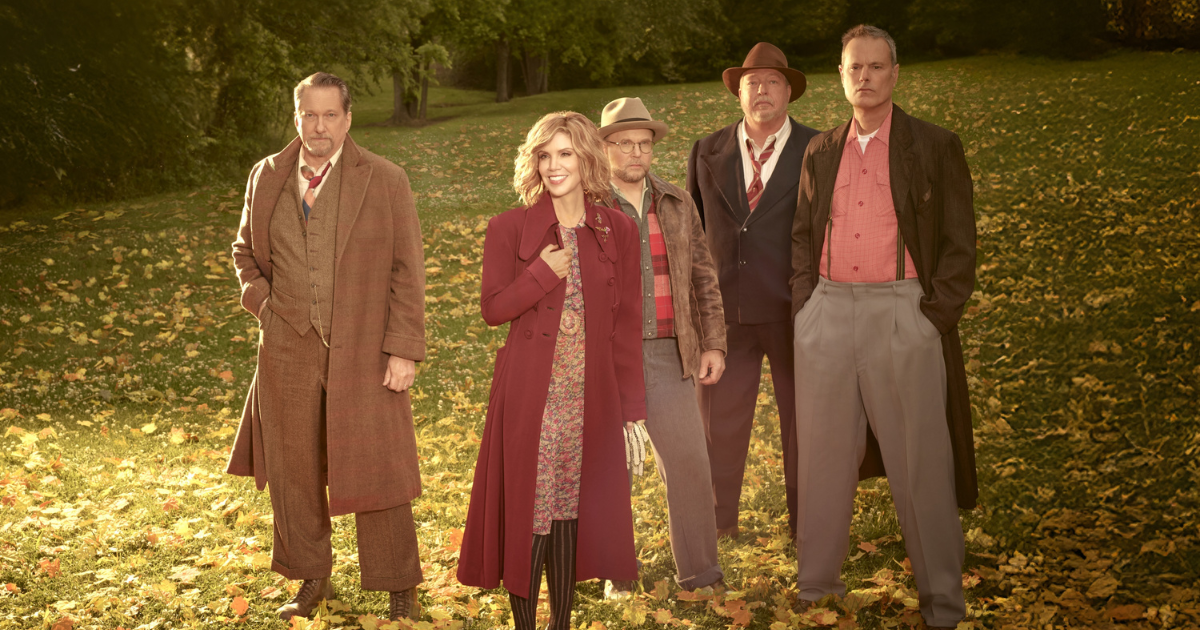
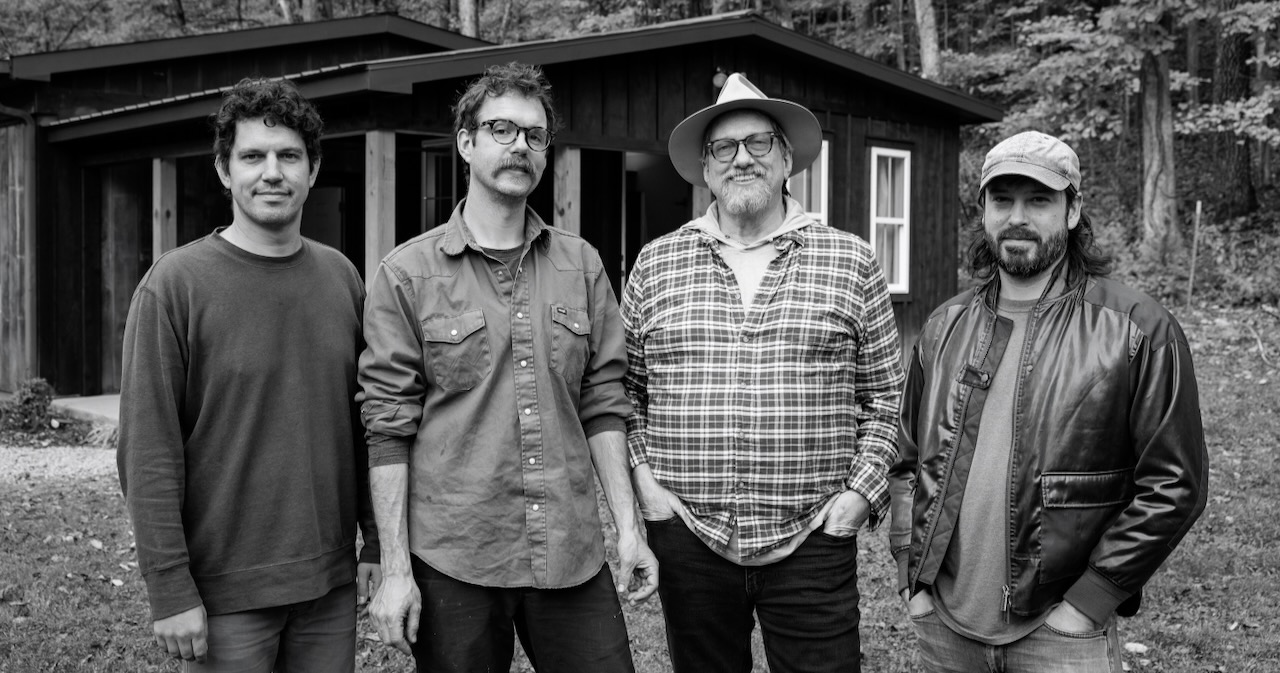
After 14 years, one of the biggest and most well-known bluegrass bands in the history of the music, Alison Krauss & Union Station, have returned with a brand new studio album, Arcadia. Released on March 28 to the delight of bluegrass and AKUS fans the world over, the collection doesn’t merely pick up where the group left off with 2011’s Paper Airplane. Instead, Arcadia soars back through the band’s deep and mighty discography landing somewhere, sonically, between So Long, So Wrong (1997) and Lonely Runs Both Ways (2004) – in other words, this iconic bluegrass band made a bluegrass album.
Alison Krauss & Union Station, by many measures, are one of the most prominent bluegrass bands to ever emerge from the genre. With the smashing success of her late ’90s to 2010s projects with Union Station and the incredible momentum behind their particular blend of bluegrass, “mash,” easy listening, country, and adult contemporary, Krauss catapulted to roots music notoriety, becoming a household name. She’d lend her voice to the blockbuster Coen Brothers film O Brother, Where Art Thou?, tour with Willie Nelson and Family, make two smash hit records with rock and roll legend Robert Plant, back up Shania Twain, duet with artists like Dolly Parton, Andrea Bocelli, Kris Kristofferson, Cyndi Lauper, Ringo Starr, and countless others. Was bluegrass, which Krauss had called her musical home since she was a pre-teen fiddle contest phenom, merely a springboard into fame and notoriety?
Of course not. This is the idiom in which Krauss has made most of her art; this is a second language – or perhaps, a first – and the fluency and virtuosity Krauss and her band have displayed are two of the most important bluegrass exports that registered and resonated with the masses who would become her fans. Krauss’s crystalline and powerful voice, sensitive and deliberate deliveries, endless grit, and one-of-a-kind skill for song curation only bolstered the electric, engaging charm of the bluegrass bones endemic in her artistry. It’s no wonder that this iteration of bluegrass ended up becoming arguably the most mainstream and most recognizable in the U.S., if not the world.
So, Krauss spread her wings and flew, carrying those bluegrass sensibilities – however overt or subtle – into everything she made. Whether the clean and country Windy City or the soulful and rockin’ pair of Raising Sand and Raise The Roof with Robert Plant, or the easy and romantic Forget About It, she had new horizons to run towards. But she always brought bluegrass with her. To arena tours, giant amphitheaters, sheds, pavilions, the biggest festivals, and beyond. By the time Paper Airplane took off, many in bluegrass regarded AKUS as bluegrass’s zenith, its peak, its maximum. Would anyone ever go further, achieve more, or play to larger audiences? This, after all, is the woman and band who up until they were bested by Beyoncé herself boasted more GRAMMY wins than any other artist in the organization’s history. Who could ever top them?
Well, it turns out Alison Krauss & Union Station weren’t just blazing a trail only they could trod down. Arcadia, fourteen years on from their most recent studio release, enters a universe – a resplendent ecosystem, a vibrant economy – that wouldn’t have existed if not for this band creating the factors that would allow it to exist. Folks like Billy Strings, Molly Tuttle, Sierra Ferrell, Tyler Childers, Zach Top, and many more have raised the roof on what’s possible for bluegrass and bluegrass-adjacent artists, what heights they can achieve, and what genre and style infusions are acceptable and marketable.
But AKUS and Arcadia, especially by returning to many of the musical markers from their ’90s and ’00s offerings, reenter the world that they created not as legacy artists or sceptered elders. They seem to be quite happy to consider themselves among these fresh giants in or around or from bluegrass as peers, contemporaries. Legends in their own rights, yes, and with a mythical gravitational pull to all of these acts and musicians they have inspired across generations, but Arcadia doesn’t feel stoic or mothballed, or almighty and shrouded by clouds high atop a sacred mountain. There’s mash that sounds direct from the halls of SPBGMA at the Music City Sheraton, there’s tender, longing romance, there’s rip roarin’ fiddle, there are transatlantic touches, there’s a dash of dystopia, and plenty of that iconoclastic melancholy for which Krauss has become known. There’s also a new voice in the mix, IIIrd Tyme Out’s frontman Russell Moore, who sings lead on four of the album’s ten tracks, filling the “big shoes” of former member Dan Tyminski.
In short, Alison Krauss & Union Station may be roots music royalty, but their status has in no way dulled their dynamism. They could rest on their laurels, but Krauss and her cohort are clearly still staring down fresh, new horizons. Could there be a new wind in their sails, as they embark alongside this new class of arena-ready, large scale bluegrassers? Has a tacit permission been given to return to their essential roots? Or maybe it’s just a matter of time. When bluegrass is in you, in the soil from which you grew, it has a tendency to ooze out all along or all at once. That trail of ‘grassy touches is what got Alison Krauss & Union Station here in the first place, and it’s what will bring them through the next fourteen years, too. Whatever sounds, songs, and stories occur between.
Alison Krauss & Union Station are our April 2025 Artist of the Month. Our 3+ hour Essentials Playlist below covers their entire discography, as well as Krauss’ own releases and other collaborations. Stay tuned for exclusive content coming later this month – like our interview with Alison about the album, powering through dysphonia, how she collects songs, and more. Plus, we have a collection of Six of the Best Alison Krauss Covers and our discography deep dive for beginners and longtime fans alike. Don’t forget about our exclusive Toy Heart podcast interview with Alison hosted by Tom Power or our recent interview with Russell Moore himself about how excited he is for this brand new gig. We’ll be diving back into the BGS Archives for all things AKUS, so follow along on social media as, for a month at least, we’ll be a proud Alison Krauss & Union Situation.
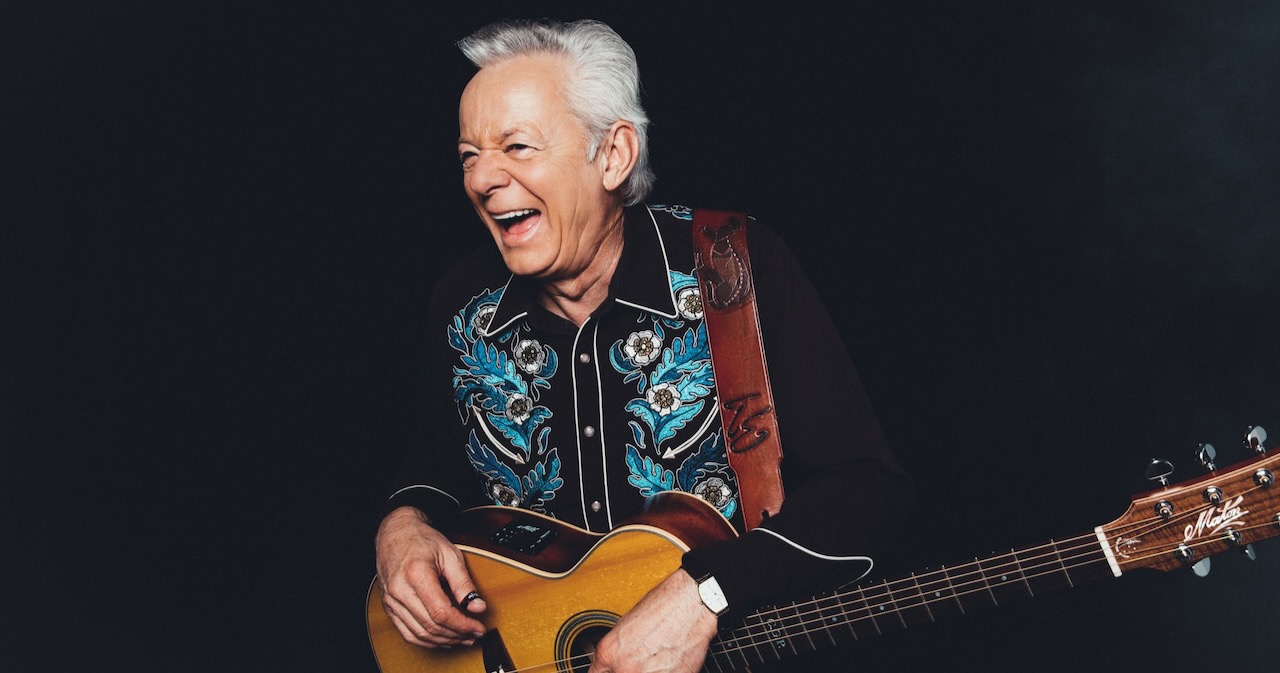
Tommy Emmanuel is in his happy place: spending a Thursday afternoon at Nashville’s Gruhn Guitars in anticipation of recording a new solo album. “I’m here getting a new pickup system featured in one of my guitars, buying strings, hanging out with the guys, and getting a little Gruhn mojo from the shop,” he says. “The weekend, I’ll spend stringing up and playing my guitars, making decisions about which guitar I’ll use for what song, and stuff like that.”
For the next hour, however, he’s upstairs in the store’s amp room, settled in to discuss his two new albums – the just-released Live at the Sydney Opera House, recorded over the course of two performances in May 2023, and a solo album in the works – along with many other topics. Highlights from that conversation follow.
I was trying to find a starting point for this interview, which is challenging because there are so many. I listened to your January interview with Rick Beato and had a “stopped me in my tracks moment” when you said you spent three days listening to Taylor Swift’s The Tortured Poets Department. I thought, “Tommy Emmanuel is a Swiftie! We’ll start there.”
Tommy Emmanuel: Taylor, as a writer, is definitely a big influence on me. Someone who achieves what she achieves is doing something beyond the norm. Even beyond talent, it’s a spiritual experience, it’s big, and it’s deep, and I like to observe, listen, and learn from people who achieve like that.
You described her songwriting as “crying from the heart.” That stood out because that’s really what music is – it comes from the heart. We always hear that tone is in the hands, but is the heart not at the core of that?
Exactly. I was [writing a new song] and trying to find something that could give me the right melody to say with the chorus what I wanted to say without words, making the melody this cry from the heart. It’s– [sings melody], the chords change underneath, and so there’s movement, but there’s this cry from the heart right in the middle of everything.
Can you tell us more about this new solo album?
Normally, I record here, fly to LA, mix and master it with my friend Marc DeSisto, and I’m the producer. With this album, I’m working here in Nashville with Vance Powell, the busiest guy on the planet. We start on Monday and we’ve got to get it all done in four days.
I have eight new songs, including this piece we’ve been talking about, “A Drowning Heart.” There’s “Black and White to Color,” “Young Travelers” – I’ve got some interesting titles. The songs are different to what I’ve written in the past. There’s a couple of typical fingerpicking tunes that I really like. They’re a little more folk-influenced. The other ones I’ve been talking about are much more ’80s rock and roll style. I have a song called “Scarlett’s World.” The introduction and ending sound a bit like Dire Straits. I did that on purpose, because it’s such a cool sound. That song is inspired by the movie Lucy with Scarlett Johansson. I love that movie. I love her work. My granddaughter is like Scarlett and she is a force of nature. I got the idea to call the song “Scarlett’s World” when I was with her.
I’m enjoying this phase of my life. Whatever page I’ve turned to get to this stage has been worth it, because some songs have come to me in this last six months that I really love playing in my shows. Playing new songs live gets rid of anything that doesn’t need to be there, because sometimes you can write a song, you’re trying to be clever, you’re trying to be creative, you’ve got all these good ideas going, and then you play it for somebody and you realize, “Oh, this part here is not necessary.” You throw it out and get to the meat and potatoes. Forget all the other stuff. Just tell me the story. Take me somewhere. That’s why I like to perform my songs to an audience before I record them. Your instincts are on a hundred. When you walk on stage, your physical and spiritual instincts have risen up and they’re ready to serve you.
Of course, you’ve also just released your live album. You’re known for working without a set list. With such a rich repertoire, how do you sequence your shows, and sequence them so that the performance speaks both to musicians and non-musicians?
That’s so important to me. My music is not for musicians; it’s for everybody. I’m trying to be an all-around artist, entertainer, writer, player, performer. I’m trying to give people a bit of everything. [The show] has to be a journey, a story, entertaining, and when it’s over, I want people to think, “I’ve got to see that again.” There’s a passage in the first Indiana Jones movie that I never forgot. One of the characters says, “What are you going to do now, Indy?” Harrison Ford says, “I don’t know. I’m just making this up as I go along.” That’s me. That’s how I live my life.
Your history with Maton Guitars goes back to your days playing electric guitar. The common trajectory is the player begins on acoustic, and then goes on to electric. True to originality, you did the opposite.
I started on electric. When I was starting to be a songwriter and making my own records, I was mostly writing on electric, 60 to 70 percent, and the rest was acoustic. I started doing solo shows on acoustic and all of a sudden I realized, “Holy smoke, this really works well.” So I started writing more songs to play as a solo acoustic player. It was more pop and rock and roll music, funky, all that sort of stuff.
The record company wanted me to do something we could get on radio, so I made some jazz-oriented records. I got a lot of airplay on jazz stations and that kind of forced me into that direction for a while. It was good, because I learned to write and perform that way. When I moved to Nashville, I wanted to be on the Opry and play the Ryman, so I focused on being more country- and bluegrass-based, which is my roots. My biggest influences when I was a kid, before Chet Atkins, were Jimmie Rogers and Hank Williams. They were my first two loves of music.
What are the biggest challenges of doing what you do the way you do it?
Everything comes down to commitment. How committed am I to be a better player? I often tell people who want to talk about my technique, “I don’t talk about my technique. It’s invisible.” The music is what counts, not how I do it. My abilities fluctuate because I’m a human being. I’m not a robot; I’m not going to be exactly the same every time.
If you want it to be good, to flow, and to be wonderful to watch, then there’s a lot of work ahead. You’re going to have to work so hard to make it that way. I never stop working on my abilities, because it’s so important. My role model, Chet Atkins, worked harder than anybody I’ve ever seen at practicing and making sure that every little detail was so smooth. I will follow that with adding that my age is challenging me as well. There are things I could do twenty years ago that I can’t do today and I have to be okay about that. I have to find new things to replace some of the things that I physically can’t do.
I’ve just come off a five-week tour, which was grueling, long, lots of travel, not a lot of chance to do some serious practice. Every day was like, get to the venue, get my guitar out, start playing, work on some songs that maybe I didn’t play the night before or the night before that, remember some of my other songs that I haven’t been playing, put them in the show, and constantly find ways of making it different and interesting from the night before.
I’ve got to be in good shape physically, mentally, and spiritually to get up there and play my heart out for nearly two hours and throw my whole life into it. I’ve got to eat well, rest well, and have enthusiasm for what I’m doing. I can’t remember a time where I was standing on the side of the stage and thought, “Not this again.” That never has entered my mind. I’m like, “I can’t wait to get out there. I can’t wait to play. I can’t wait to see how this night is going to go and what I’m going to do that’s going to surprise me.”
You’ve told us a bit about your introduction to bluegrass, coming to acoustic guitar from electric, and your passion for jazz. Can you draw a through line between all those genres? How do they shape what you do?
It’s about musical abilities and musical ideas. When I play with Ricky Skaggs, or Molly Tuttle, or anybody, it’s about me fitting into what they do and serving the music as best I can. There’s a bit of bluegrass in everything I play. There’s a bit of blues in everything I play. I don’t feel like I need to be in a box or have a style stapled to me. It’s all music to me.
When I play with Billy Strings, I can hear Doc Watson and Tony Rice, of course, but I can also hear little bits of Stevie Ray Vaughan, B.B. King, George Harrison. You know, we’ve all got it in us. It’s all styles of music together. Bluegrass is such an open-ended thing to me. If I’m playing “Highway 40 Blues” and I take a solo, I don’t necessarily think, “Oh, I’d better tap into Tony Rice.” I just play what I feel at that moment.
A number of musicians have told me that they sometimes get sick of their own playing. Does this ever happen to you, and if so, how do you climb out of that rut?
I get tired of myself sometimes and usually something comes along that lifts my faith in my gift. Right when I think I’ve had enough of me, I need a break, something happens and somebody needs me to play for them, and they remind me, “Don’t forget – you’re here for a reason. You’re here to serve others. When you play, people feel something. They feel happy. So get out of your own head and do it for someone else.”
There are times when you definitely need a break. I just had a week after the tour I finished in Zurich a week ago. I flew into England to be with my grandchildren and my daughters and I didn’t play much. I played a little bit after the girls had gone to bed. I made my dinner, played a little bit, and then watched Netflix and chilled out. It was good. I needed that break.
When your colleagues talk about you, they always describe you as a good guy, a nice guy, a mentor. How much of that comes from the kindness and mentoring you received from Chet Atkins?
I’m just trying to hand on what was handed to me. When you’ve been loved on by a guy like Chet Atkins, you know you’ve been loved. When you’ve been loved on by someone like my mother, who led by example her whole life … what a great soul, a great spirit.
When I moved to the big city when I was young, I was so used to people being almost aggressive towards me, because they thought I was showing off or thinking I was much smarter than them. And it never entered my mind. But they were full of jealousy or fear or whatever, I don’t know. So when I got to the big city and I saw musicians who did things I couldn’t do, when I got to know them, they were so encouraging to me. They were so honest with me. They treated me with a dignity that other people didn’t. And so I just want people to feel good when we play together, because it’s a very honest experience.
Who is your dream artist to work with?
Marty Stuart. What a talent! He’s a free spirit and the kind of guy I like being around. I would love to work with Marty.
You’ve spoken openly about your long battle with addiction. You are in recovery and you’ve also done the work through therapy. What part has guitar played in your recovery journey?
The guitar has always been my go-to thing to help me get through stuff. When I went through my first divorce, we’d been married for 15 years and I thought we were doing great. Everything was wonderful, I’ve got two little daughters, then my wife wanted to separate and then she was with someone else. I had to let her go and I went through a painful divorce.
I was broken beyond measure and my world went upside down. It was during that period that I wrote some of the best music I’ve ever written. It came to help me and gave me something good to focus on. Next thing I know, people are loving the music I’ve written, and I’m out, I’m starting again, I’m off on a new road.
The thing I love [about sobriety] is being clear. I’m present. My love of music and playing in general has grown so much since I’m not ruled by drugs or alcohol. I’m [five years] free and I’m so grateful. What I do now is better, it’s more honest, it’s more real. I don’t feel self-obsessed, self-absorbed, or feel sorry for myself for all the bad things that nearly destroyed me.
I know what addiction is now. I know how to deal with it. It’s finding what the problem is, being willing to talk about it, put the work in, follow the steps, and keep doing the work that has made my life so beautiful and so much better. Sometimes I think, “How the hell did I ever survive that?” I’m guessing that my maker was with me all the way. I’m totally free today, but I don’t take it lightly. It’s living one day at a time, and it’s beautiful.
And finally, what is the difference between playing guitar and being a guitarist?
Being a guitarist is being a gun for hire. Being a guitar player is a way of life. A guitar player is someone who loves to play for people and who loves his instrument deeply.
Now, our premiere roundup is pretty stellar each and every week – if we do say so ourselves – but this week feels especially excellent!
Below, you’ll find a slew of bluegrass song and video premieres. First, check out “Paris” by Aaron Burdett (a longtime rootsy singer-songwriter and recent addition to the Steep Canyon Rangers), who took an offhand comment about one of the world’s most-visited cities and turned it into a song. Greensboro, North Carolina, string duo Chatham Rabbits bring a track from their brand new album, Be Real With Me, which released today; it’s called “One Little Orange.”
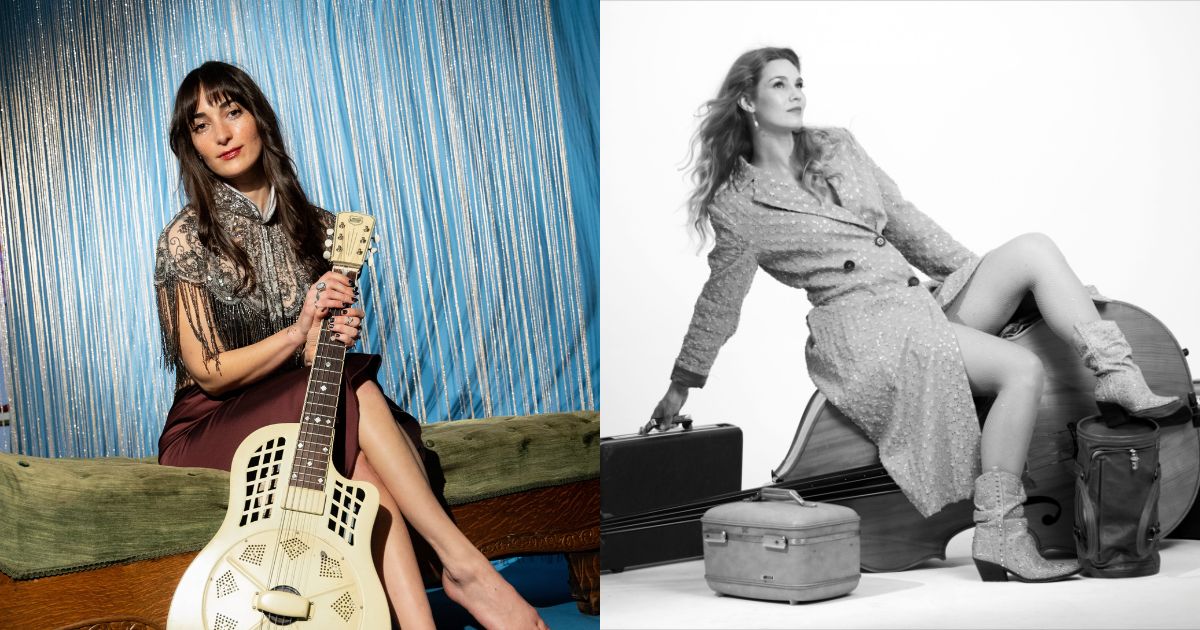
Multi-instrumentalist and singer Jesse Smathers – who you may know from the Lonesome River Band – releases his solo debut today, as well. It’s his version of “Sleepy Eyed John” that draws inspiration from his friend, banjo player Gene Parker. Plus, Grammy Award winner and in-demand bluegrass bassist Shelby Means is also stepping into the spotlight with her first-ever solo music, “Streets of Boulder,” a burning heartbreak track which features her Golden Highway bandmates Molly Tuttle, Kyle Tuttle, Bronwyn Keith-Hynes, and even more names you’ll recognize.
In a similar sonic space, Cristina Vane previews the title track for her upcoming album, Hear My Call, with an official video for the song. It’s an old-timey number built around clawhammer banjo with a tinge of blues and a dash of Americana – and it also features the inimitable Molly Tuttle. Folk duo Edie Carey & Sarah Sample can be found below as well, returning to their late 2024 release, Lantern in the Dark: Songs of Comfort and Lullabies, with a new video for its title track, “Lantern.”
To round us out, just in time for Valentine’s Day Hudson Mueller shines on his new track, “Love Is Love,” which celebrates love in all its forms and no matter who may be its recipient or subject. And Jeremy Dion has a bit of adoring tunnel vision on “All I See Is You,” a song with a video that celebrates all of the love and loved ones in his life.
It’s a full slate of impeccable roots songs and videos! You know what we think… You Gotta Hear This.
Aaron Burdett, “Paris”
Artist:Aaron Burdett Hometown: Saluda, North Carolina Song: “Paris” Release Date: February 14, 2025 Label: Organic Records
In Their Words: “I like shiny things, new things. I always think that new thing is going to make something different. It does, but just for a few moments, and then I’m the same and everything around me is the same. There wasn’t any real change, I only distracted myself briefly. ‘Paris’ is a song about yearning, looking outside of oneself, and hoping there’s more out there in some exotic place. It might be the next town down the road or the big city two states over, or maybe even somewhere across the mountains and an ocean. I hear a longing in this song now, but I also hear hope. My bandmate Barrett said ‘I’ve got a feeling about Paris’ a couple years ago during a soundcheck at the Bijou Theater in Knoxville, and when I heard that, I did what I do and I wrote it down. That line grew into this tune.” – Aaron Burdett
Artist:Edie Carey & Sarah Sample Hometown: Colorado Springs, Colorado (Edie) and Sheridan, Wyoming (Sarah) Song: “Lantern” Album:Lantern in the Dark: Songs of Comfort and Lullabies Release Date: October 18, 2024 (album); February 14, 2025 (video) Label: Groundloop Records
In Their Words: “Written by our friends and Nashville songwriters Dustin Christensen and Jill Andrews, ‘Lantern’ was a song that Sarah brought to the table. Sarah and Dustin are longtime friends from the Salt Lake music scene and he played a major role as a musician and harmony arranger on our first album in 2014. We both fell in love with the melody, the message, and the harmony possibilities for this tune. It’s a song that says, ‘I’ve got you, no matter what.’ The ascending bridge sounds like someone stepping out of wreckage after a disaster, blinking their way back into the light: ‘Shadows falling / Sirens calling / I’ll be holding on to you.’ We didn’t originally intend for the album title to come from this song, but it was the perfect symbol for what we wanted this record to be: a light in the dark for when you’re feeling lost; a beacon to guide you back to the familiar and remind you that you’re never alone along the way.” – Edie Carey & Sarah Sample
Artist:Chatham Rabbits Hometown: Greensboro, North Carolina Song: “One Little Orange” Album:Be Real With Me Release Date: February 14, 2025
In Their Words: “My maternal grandfather Ronald holds a mythic place in my mind. He died from years of drug and alcohol abuse when I was just a kid. I only have one memory of him and it’s what I wrote the song about. I think it’s only natural to want to know more about your blood relatives as you get older. My genetics and personality are tied to those that came before me and I want to know as much about them as possible. My grandfather is no different. This is a song about trusting the limited memory you have, accepting that you’ll have to live from stories instead of the real thing, and recognizing that people can be both troubled and full of life.” – Sarah McCombie
Jeremy Dion, “All I See Is You”
Artist:Jeremy Dion Hometown: Boulder, Colorado Song: “All I See Is You” Album:Bend in the Middle Release Date: October 18, 2024 (album); February 14, 2025 (video)
In Their Words: “This is my favorite video to make so far and it welcomes the viewer all the way into my personal life. Since ‘All I See is You’ is a love song, I wanted to provide an unvarnished view of my own current experiences of love. Viewers will see some beautiful shots of nature juxtaposed with recently captured images of my home, my daughter, my husband, my dog, and some of my closest friends. It gives me warm fuzzies every time I see it and I hope it has the same effect on everyone.” – Jeremy Dion
Track Credits: Jeremy Dion – Guitar, lead vocals Kate Farmer – Backing vocals Christian Teele – Percussion Bradley Morse – Bass Kyle Donovan – Guitars John McVey – Guitars Enion Pelta-Tiller – Fiddle
Video Credits: Shot and produced by Daniel Herman, Mineral Sound.
Shelby Means, “Streets of Boulder” (Featuring Molly Tuttle, Kyle Tuttle)
Artist:Shelby Means Hometown: Folly Beach, South Carolina Song: “Streets of Boulder” (Featuring Molly Tuttle, Kyle Tuttle) Release Date: February 14, 2025
In Their Words: “I wrote this song in college. It was my first attempt to write a heartbreak song and it became the first original song I performed in a band. In 2008, I was asked by my professor of world music to assemble a bluegrass band to represent the United States at an International Folk Music contest in Nitra, Slovakia. I formed High Altitude Bluegrass band and taught them ‘Streets of Boulder.’ Courtney Hartman, Sterling Masat, Reid Buckley, and my brother, Jacob Means, played in that band and helped create the instrumental line that is repeated throughout the song.
“I really wanted Jacob to play mandolin on this recording and he did a great job in the studio with Jerry Douglas, Bryan Sutton, Ron Block, and Bronwyn Keith-Hynes. I invited Molly Tuttle and Kyle Tuttle to sing harmonies with me and we spent one afternoon in a hotel room with Ethan Standard, our front-of-house engineer, recording the harmony vocals. That room sounded pretty darn good! After a few years of touring together we have developed a unique vocal blend and I think it suits this song perfectly. ‘Streets of Boulder’ has been performed live a handful of times with Molly Tuttle & Golden Highway over the 2024 Down the Rabbit Hole tour.” – Shelby Means
Track Credits: Shelby Means – Lead vocal, bass, songwriter Bryan Sutton – Guitar Jacob Means – Mandolin Ron Block – Banjo Bronwyn Keith-Hynes – Fiddle Jerry Douglas – Dobro Molly Tuttle – Harmony vocals Kyle Tuttle – Harmony vocals
Hudson Mueller, “Love is Love”
Artist:Hudson Mueller Hometown: Houston, Texas Song: “Love is Love” Album:Welcome to Earth Release Date: February 14, 2025 (single); March 28, 2025 (album)
In Their Words: “This is a love song – but not just about the romantic kind we typically celebrate on Valentine’s Day. It’s about radical inclusivity. We each get to define love for ourselves and decide who it applies to. Love can extend to neighbors, friends, and even those who may not look, think, or believe as we do. This song was inspired by my friends Bird and Carsten. We were lucky enough to attend two of their three wedding celebrations (parties) in New York and Germany. Each was a beautiful tribute to the bond between two incredible souls who just happened to share the same gender. Initially, the song leaned more into its LGBTQ+ theme, with a verse about Carl and Steve, Joan and Janet. But in the end, that felt a little too on the nose. Still, the sentiment remains: ‘Find the place where your love ends and then extend love just a little bit more.'” – Hudson Mueller
Jesse Smathers, “Sleepy Eyed John”
Artist:Jesse Smathers Hometown: Floyd, Virginia Song: “Sleepy Eyed John” Release Date: February 14, 2025 Label: Mountain Home Music Company
In Their Words: “My friend Gene Parker, the legendary banjo player of Lost & Found legacy, inspired my version of ‘Sleepy Eyed John.’ Originally written by Kentucky fiddler Tex Atchison and made a hit by country singer Johnny Horton, I wanted to give this fun, bouncy number a suitable mountainous string band flavor. I hope you enjoy listening to it, as much as I did picking and singing it!” – Jesse Smathers
Track Credits: Jesse Smathers – Guitar, lead vocal Hunter Berry – Fiddle Corbin Hayslett – Banjo Nick Goad – Mandolin, harmony vocal Joe Hannabach – Upright bass Patrick Robertson – Harmony vocal Dale Perry – Harmony vocal
Cristina Vane, “Hear My Call”
Artist:Cristina Vane Hometown: Nashville, Tennessee Song: “Hear My Call” Album:Hear My Call Release Date: February 21, 2025
In Their Words: “‘Hear My Call’ was written on tour and is the title of my album as well, because I feel that it reflects this refocused sense of purpose and intention I was channeling both in my life and in the writing of this record. It’s an assertion, a shift from my constant role of observer to someone with something to say herself. Molly Tuttle sings and plays guitar on the track and she lends such a stunning flair to it, I’m so grateful for her mastery!” – Cristina Vane
Photo Credit: Cristina Vane by Stacie Huckeba; Shelby Means by Hunter McRae;
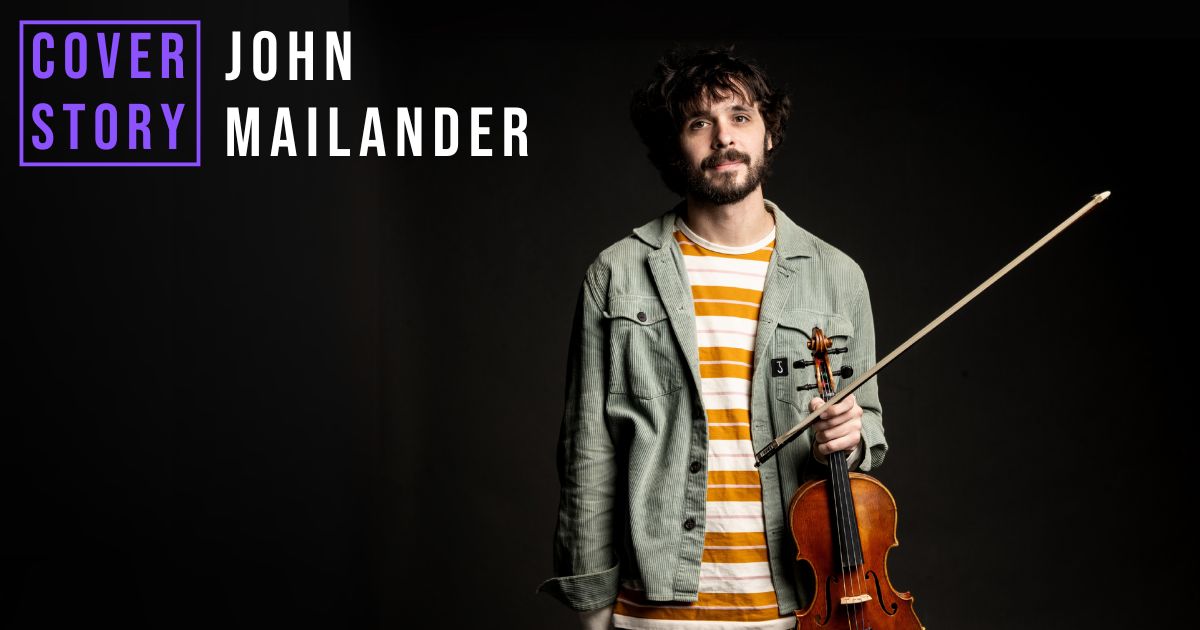
Whether or not you know it, you’ve likely heard John Mailander music. Chances are he’s even worked with one (or some) of your favorite artists, from Bruce Hornsby to Billy Strings, Noah Kahan, Joy Williams, Lucy Dacus, Molly Tuttle, and many more.
No disrespect to his work with the Noisemakers (who he’s toured with since 2018), or Strings’ GRAMMY-winning album Home, or any other projects, but it’s Mailander’s original works where his musical wizardry glows brightest. On his latest effort, Let the World In, his abilities are stronger than ever as he combines the influences from everyone he’s worked with into an adventure of orchestral bliss guided by trance-like, open-ended jazzy jams.
Helping Mailander to paint these soundscapes across nine tracks and 35 total minutes of run-time are his longtime band members in Forecast – Ethan Jodziewicz, Chris Lippincott, Mark Raudabaugh, Jake Stargel, David Williford – who he first started playing with during a Nashville residency at Dee’s Country Cocktail Lounge in 2019 to celebrate the release of his debut album of the same name. Through eight instrumental tracks (and a cover of Nick Drake’s “Road”) they send listeners on an introspective journey throughout Let the World In that brings the jazz leaning work of Hornsby and jam-fueled tendencies of Phish together, showing just how far he and Forecast have grown and evolved since first coming together.
“The first record was a blueprint, the second was settling into and discovering who we are, and this record is the most confident statement of who we are,” Mailander tells BGS. “Harmonies, colors, melodic themes, it can all be tied back to the first record in some way.”
Mailander spoke to us ahead of the album’s release about how all of his prior collaborative experiences set the stage for Let the World In to shine, writing on the piano, reality checks from recording, song sequencing, and more.
From your work with Billy Strings and Bruce Hornsby to your own music, you’ve always had a very collaborative way about you and this new record is no exception. What are your thoughts on the significance that played in the process of bringing this album to life?
John Mailander: Collaboration and improvisation are some of the most beautiful parts of being a musician. I love working with the widest variety of artists that I can. It’s a great way to become closer on a human level with the people you’re working with.
Initially, when I was starting this Forecast project, I envisioned it as more of a collective of musicians where we could all bring our own original tunes to the table and improvise freely. However, over time it’s formed into a more regular lineup with the six of us, allowing for the group to grow together as a unit.
Is the album title, Let the World In, meant to be a nod to that collaborative nature and outside influences that loom so large on the project?
Absolutely. The title has a lot of different angles to it. I hesitate to say everything it means to me because I don’t want to put it into too much of a box – I want to leave room for the listener to imagine what it means for them as well. It’s a follow-up to the last record [Look Closer] that we made in isolation during the pandemic.
While that record was very introspective, this new one is much more expansive, because of the world opening up more now and having this constant flood of information coming at us from all directions. It’s an overwhelming time to be alive, so this album feels like a companion piece to the last one, almost like the other side of the coin.
The title track also features the “Let the World In Sound Freedom Expressionists” – Hannah Delynn, Maya de Vitry, Gibb Droll, Ella Korth, Lindsay Lou, and Royal Masat. What was your intention with recruiting them for that one track, and what do you feel they brought to it that it may not have had otherwise?
They are a collection of very dear friends in Nashville who have been there for me in my personal life through a lot. It felt really important to me to credit these friends on the record in some way. That manifested into this collection of sound bites from each of them including poetry, sound effects, singing, and field recordings, which I put together into the sound collage you hear in the track. I love knowing that all of their voices are in there. I hope with each listen you can tune into different elements of it and hear new things.
In terms of outside influences on the record, I know Bruce Hornsby played a big role. What tricks and lessons from him did you implement into these songs?
Bruce is one of my greatest teachers. He’s been really encouraging over the past few years to pursue this project, grow into a band leader, and becoming more confident on the piano. I’m very rudimentary, but I’ve become obsessed with learning the piano recently, in large part thanks to Bruce and watching him play it so much. Everything on this record – except for the cover, “Road,” and the improvisational tracks – were ones I wrote on the piano, which was a huge change in direction for me.
I’ve also tried to incorporate elements of how he leads a band, like having dueling conversational solos rather than individual ones or weaving in and out of and finishing each other’s lines, into what we do with the Forecast as well.
Process-wise, how did the construction of these songs on the piano differ from when you’re composing on fiddle?
Going back to the title of this record, the piano gave it a wider scope compositionally for me, because I was thinking a lot more about bass lines and counter melodies and other things that as a fiddle player aren’t as prevalent. With the fiddle I think much more melodically – it’s kind of the top voice – which makes it harder for me to compose that way because even though it’s my primary instrument it’s hard to get a full picture with it. On the piano it felt more like writing for an entire ensemble rather than just writing a melody in chords.
You ended up knocking out the recording for this album during four consecutive days last year. What was it like doing it all rapid-fire like that compared to the more conventional, slow and steady approach?
It was intense, and we even recorded more than just what made it on the record. A lot of the work in post [production], for me, has been crafting everything we recorded into something that tells a story, which would’ve been tough to do across multiple sessions with the band over time, given that they’re all touring musicians as well. It felt good getting together with everyone from basically 10 to 6 every day and working our butts off as much as we could. It was the most concentrated and focused time we’ve ever had together as a band, as well as a reality check about things in the band we needed to work on.
It’s like putting a microscope on everything because we’ve been playing live at Dee’s every month for a few years, but now we’re in this hyper-focused environment where we can hear and analyze every minor detail. It opened up a lot of rabbit holes that I ended up going down later, but I think we really grew as a band through the process of making it this way.
You mentioned the time being a reality check for what you needed to work on as a band. What were some of those things?
It was like putting a microscope on how the particular instrumentation and individual voices on our instruments really blend and work together, revealing sonic and dynamic things that worked or not. It revealed some habits we’d gotten into through playing live that we discovered didn’t always translate to a record. The sessions were an awesome and intensive way to grow as a unit.
You’ve produced all of the Forecast records thus far. Is that something you plan to continue doing in the future?
Actually, the next record we do I’d like to have another producer. I love producing, but I’m realizing that for my own music I’d like to get another perspective in the room next time we do it. It’s really tough taking on both of those roles, but I’m really proud of what we did and grateful for producing it again this time around.
One of my favorite elements of the record is how well the songs flow from one into another – if listened through in order it presents almost as one long, 35-minute track. Tell me about sequencing this record and the importance for listeners to digest the full project from start to finish?
I’ve always been a nerd about sequencing records. I think it’s a really important part of the experience of listening to music. With this one I put a lot more attention into connecting the tracks. Some of them blend into one another, which is something that my mastering engineer Wayne Pooley – who I know through the Bruce Hornsby world – and I spent countless time laboring over the microseconds between every track to make sure each one hits you in a very intentional way.
Only one track on the album has lyrics – your cover of Nick Drake’s “Road.” Why’d you choose it, and what do you feel it contributes to the overall narrative you’re striving to present on the record?
[Nick’s] been a huge inspiration for years. Even as more of an instrumentalist I’ve always been drawn to his writing. But in terms of that song, I’ve known it for a while and love the entire record it’s on, Pink Man. About a year and a half ago – just before work on Let the World In began – I brought the song to the band. Nick Drake’s version is around two minutes long, but I thought it would be cool to use the song as a tool with our band to improvise and jam like we do at our live shows. We did just that by stretching it out to over nine minutes long. Lyrically it fits with the themes on the rest of the record, but it’s not heavy-handed either. It’s still open to interpretation, which is what I really value in it.
Initially I thought about having a guest vocalist on it, because on our last record we had a couple guest singers. But as we got closer and closer to the studio sessions I realized that it was important for me to sing this one myself, and I’m really proud with how it turned out.
If you could collaborate or have a jam session with any musician past or present, who would it be?
My hero, Trey Anastasio. It would be a dream to play or collaborate with him someday.
What has music, specifically when it comes to the creation process for Let the World In, taught you about yourself?
It’s allowed me to connect with my bandmates on a deeper level than I know how to do any other way. Through that I’m able to tap into those energies that exist between us as people, which is a type of connection I practice and strive to achieve every day.
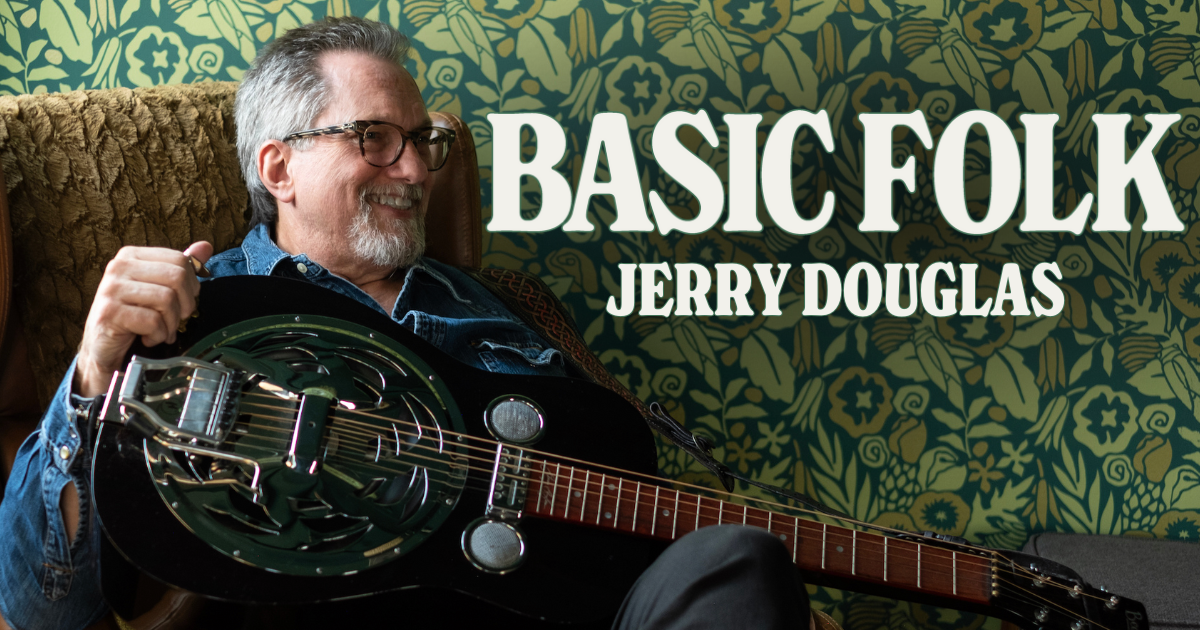
Jerry Douglas is widely regarded as the best Dobro player in the world. Alison Krauss, Emmylou Harris, and James Taylor are counted among his many collaborators and his four-decade career has earned him 16 GRAMMY Awards and numerous other accolades. In our Basic Folk conversation, he shares stories about his upbringing in Warren, Ohio, where his father’s steel mill job and love for music instilled in him a strong work ethic and a passion for playing. He also talks about getting scouted as a teenager by The Country Gentlemen, one of the greatest bluegrass bands ever, who eventually took young Jerry on tour.
In addition, we discuss Douglas’ latest album, The Set, which showcases his mastery of the resophonic guitar and features a unique blend of bluegrass, country, and Americana sounds. He also opens up about his experiences working with Molly Tuttle, John Hiatt, and other notable musicians, highlighting the importance of collaboration and creative freedom. Our chat offers a glimpse into Jerry Douglas’ life, influences, and artistic approach through his humility, humor, and dedication to his craft.
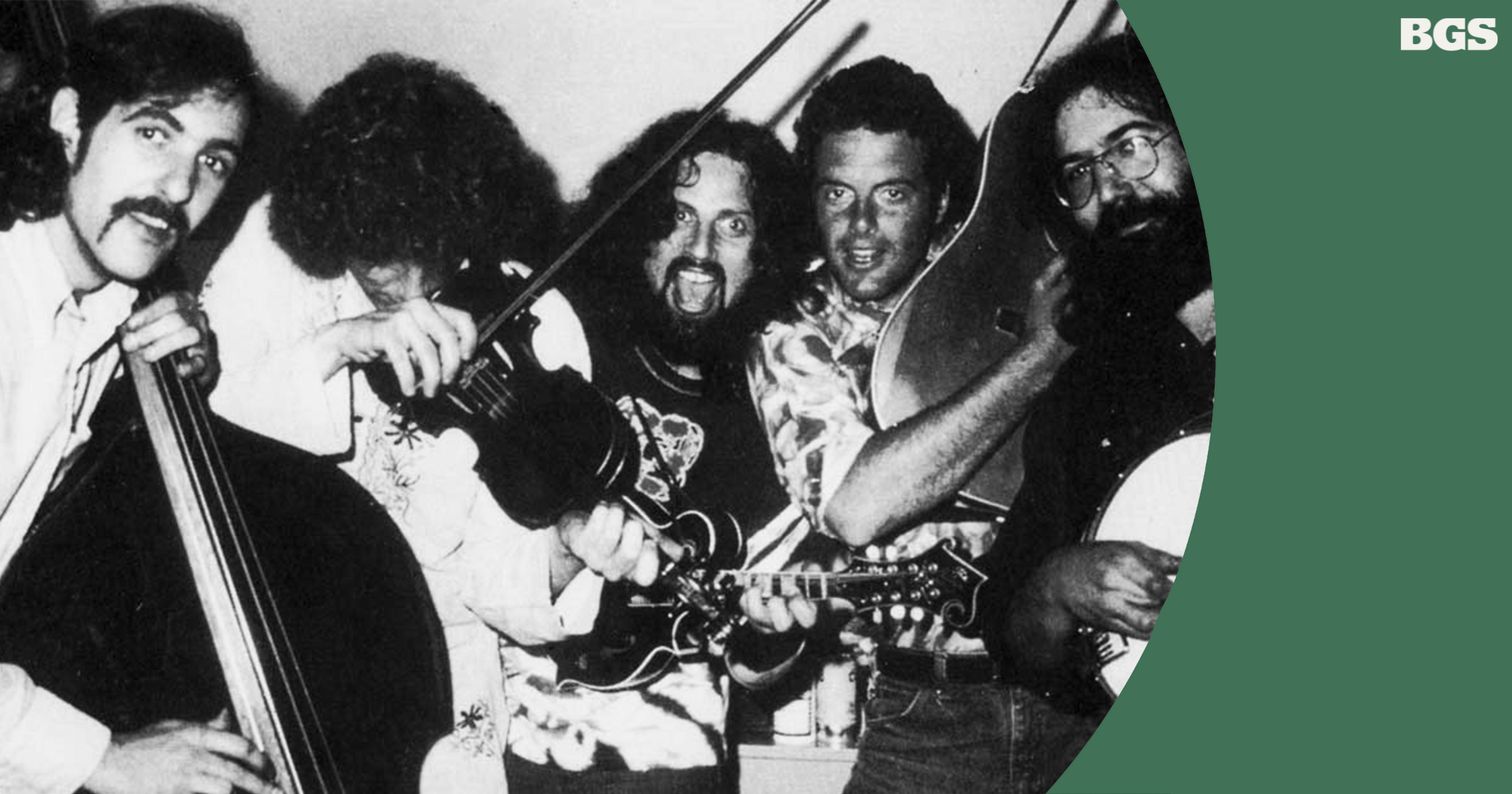
It’s certainly true that the Grateful Dead were never a bluegrass band, starting with the fact that their lineup had not just one drummer, but two. And yet it also can’t be denied that the group’s musical DNA has a wide streak of bluegrass deep within, both in terms of licks and improvisational flair.
In large part, that’s due to the late Jerry Garcia – “Captain Trips” – who started out as a banjo player before finding his most famous calling as the Grateful Dead’s lead guitarist. Before that, Garcia played in folk circles for years, and his many extracurricular collaborators included David Grisman, Peter Rowan, Don Reno, Chubby Wise and other titans of the genre. More than a quarter-century before O Brother, Where Art Thou? took bluegrass to the top of the charts, Garcia’s 1973 side project, Old & In the Way, stood as the top-selling bluegrass album of all time.
Garcia and the Dead’s bluegrass bona fides are solid indeed, as shown by artifacts like the Pickin’ on the Grateful Dead series (not to mention Grass Is Dead, a tribute act). But maybe the strongest testament to the strength of the Dead’s bluegrass-adjacent side is what other artists have made of their catalog. Countless bluegrass musicians have covered Dead songs in ways that would appeal to even the staunchest chair-snapping purists. Here are some of the best.
“Friend of the Devil” – The Travelin’ McCourys (2019)
This rounder’s tale is the granddaddy of ’em all, a bluegrass staple from almost the moment it appeared on the Dead’s 1970 proto-Americana classic, American Beauty. Long a picking-circle staple at festivals, it’s been covered by everybody from Tony Rice to Elvis Costello. But here is a fantastic cover by one of the finest family bands in all of bluegrass, captured onstage at the Grey Fox Bluegrass Festival in 2019. In contrast to the manic pace of the original, this version proceeds at more of an elegant glide. But it’s still got plenty of get-up-and-go, with killer solos over walking bass and a great Ronnie McCoury lead vocal.
“Dire Wolf” – Molly Tuttle (2022)
Among the most acclaimed young artists in bluegrass, Molly Tuttle is a two-time Guitar Player of the Year winner from the International Bluegrass Music Association. She also won IBMA’s Album of the Year trophy for 2022’s Crooked Tree, which included the 1970 Workingman’s Dead standard “Dire Wolf” as a bonus track. Equal parts folk fable and murder ballad, it’s something like “Little Red Riding Hood” with an unhappy ending. And Tuttle’s vocal is even more striking than her guitar-playing.
“Wharf Rat” – Billy Strings (2020)
Possibly even more acclaimed as a guitarist is William “Billy Strings” Apostol, another IBMA Awards fixture (and multiple Entertainer of the Year winner) who is frequently likened to Doc Watson. But few guitarists have ever conjured up Garcia’s sound, spirit, and all-around vibe as effectively as Strings. A song about a lost soul in a seaside town, “Wharf Rat” first came out on the Dead’s eponymous 1971 live album. Strings’ 2020 live version from the Capitol Theatre in Port Chester, New York, is amazing, as Strings doesn’t sing it so much as inhabit it. The money shot is his guitar solo that begins just after the five-minute mark.
“Scarlet Begonias” – The Infamous Stringdusters (2020)
Gambling is one of the Dead’s recurrent tropes and “Scarlet Begonias” gives it a playful spin with a loping guitar riff. The original dates back to 1974’s From the Mars Hotel and it’s been widely covered in oddball styles by the likes of electronic duo Thievery Corporation and the ska band Sublime. But “Scarlet Begonias” has never had it so well as in this excellent bluegrass version by The Infamous Stringdusters, shot onstage at Seattle’s Showbox just ahead of the pandemic in early 2020.
“Ripple” – Dale Ann Bradley (2019)
More often than not, vocals tended to be the Dead’s weak link. But that is not a problem for Kentucky Music Hall of Famer and five-time IBMA Female Vocalist of the Year Dale Ann Bradley. The elegiac “Ripple” began life as the B-side to the “Truckin’” single and was also a show-stopper on the Dead’s 1981 acoustic live album, Reckoning. Bradley covered it on her 2019 LP, The Hard Way, with Tina Adair providing truly lovely vocal harmonies.
“Uncle John’s Band” – Fireside Collective (2022)
One of the Dead’s folksiest numbers, “Uncle John’s Band” kicked off Workingman’s Dead at an easy-going amble – a clear departure from the psychedelic excursions of the Dead’s earliest work. This live version by the young Asheville, North Carolina, band Fireside Collective reimagines “Uncle John’s Band” as sprawling jam-band fodder.
“Cassidy” – Greensky Bluegrass (2007)
“Cassidy” first appeared on-record as a Bob Weir solo tune on his 1972 side-project album, Ace, but it’s been on multiple Dead live albums over the years. It’s always been something of an enigma, inspired by a young girl as well as Neal Cassady. Michigan jamgrass ensemble Greensky Bluegrass gets to its beat-poet heart on this version from 2007’s Live at Bell’s.
“Tennessee Jed” – Front Country (2018)
A frequent theme for the Dead was being in motion, whether traveling toward something or running away from it. So it follows that homesickness would be an aspect of their music, perhaps most overtly on this wistful song from the double-live LP, Europe ’72. California’s Front Country put “Tennessee Jed” through its paces in this 2018 version from their “Kitchen Covers” series.
“Touch of Grey” – Love Canon (2014)
If the Dead wasn’t a bluegrass band, they most definitely weren’t a pop band, either. But the group had occasional brushes with the Hot 100, most famously with the 1970 statement of purpose “Truckin’” and its “what a long strange trip it’s been” tagline (even though the group had only been together about five years by then). “Truckin’” stalled out at No. 64 and was later eclipsed by its 1987 sequel “Touch of Grey” – an actual Top 10 hit with its bittersweet conclusion, “We will get by, we will survive.”
From Charlottesville, Virginia, Love Canon strips away the ’80s pop keyboards and covers the song well as straight-up bluegrass on 2014’s “Dead Covers Project.”
Photo Credit: Old & In the Way, courtesy of Acoustic Disc.
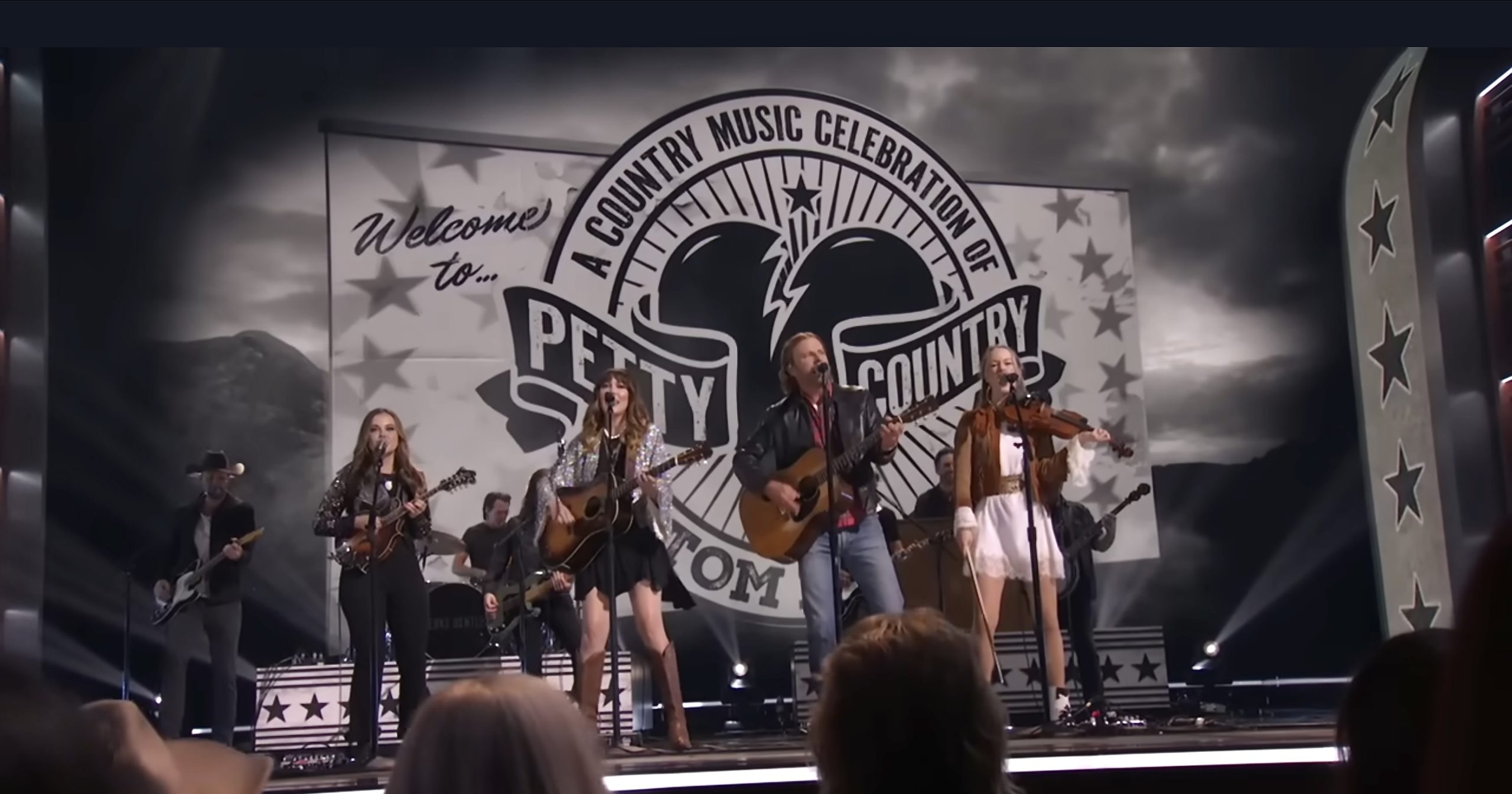
A big night for country music ended up being a big night for bluegrass as well when Sierra Hull, Molly Tuttle, and Bronwyn Keith-Hynes joined country star Dierks Bentley on the CMA Awards stage for a show-stopping performance. The quartet, backed by Bentley’s band (including the evening’s winner of Musician of the Year, Charlie Worsham) played a rousing rendition of Tom Petty’s “American Girl,” a huge single for Bentley this year from the compilation album, Petty Country.
Bentley has released plenty of ‘grassy and string band tracks across his career, especially on his 2010 album Up on the Ridge, and he is close friends with many bluegrass musicians and legends. He used to haunt the World Famous Station Inn in Nashville well before his fame and recognition – and well after, too. He’s even gifted commemorative hit records to the bar (which still hang on the walls today) and he’s appeared at the divey listening room dozens of times. He’s also a friend of the McCoury family and has collaborated with Del and sons on multiple occasions. In addition, he’s brought Tuttle and her band Golden Highway out on the road as an opening act repeatedly, and he guested on Keith-Hynes’ now GRAMMY-nominated album, I Built a World.
Tuttle even shared an image to social media from a past MerleFest where Bentley can be seen braving the North Carolina rain to catch her band’s mainstage set in the very front row of the VIP section. It’s no surprise that he would tap Hull, Tuttle, and Keith-Hynes for the CMA Awards, even if the context feels a bit out-of-left-field for diehard bluegrassers.
“American Girl” was truly a highlight of the star-studded awards show, which despite more than a few perceived flubs and snubs highlighted plenty of Good Country, Americana, roots music – and yes, bluegrass! Here’s to plenty more primetime television moments in the future highlighting incredible bluegrass pickers such as these.
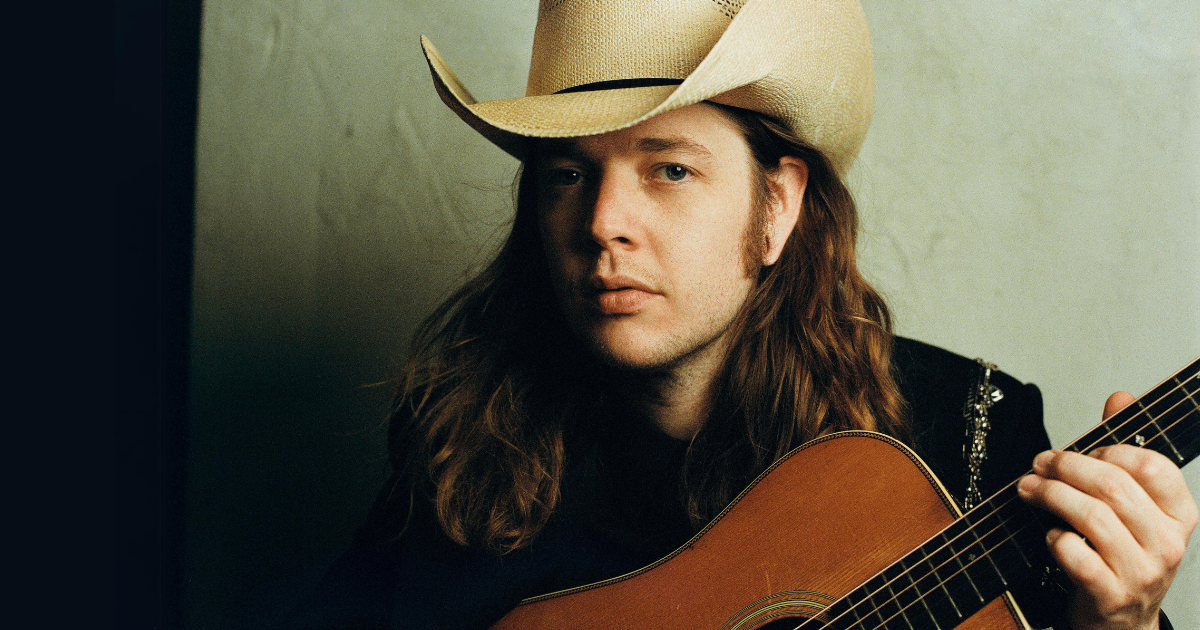
It’s hard to imagine Billy Strings as anything other than the glass-shattering guitar virtuoso he’s become. Over a decade, he’s flipped, rearranged, and altogether transformed bluegrass music. He leads with instinct, allowing the music to speak on a much deeper level than many of his contemporaries. Four albums deep into his career, in addition to a live album and several collaborative projects, Strings immerses himself in the tradition of string music while bringing a fresh, exciting perspective to the classic structures of flatpickin’.
Our November 2024 Artist of the Month, Strings continues cementing his legacy by stretching boundaries and pushing progressively forward. With a foot firmly rooted in the past, always feeling ripped from another era, the musician remains intently focused on breathing life into the genre for modern audiences. As much as he’s built upon his growing solo catalog, he’s also known to frequent other artists’ work and inject his unique charms into their shared musical performances.
Strings has remained committed to bluegrass and jamgrass through the last 10 years and more, while often stepping outside these tight genre boxes for some playful excursions. From appearing on a Dierks Bentley song to teaming up with a rap juggernaut-turned-country-star Post Malone, the Michigan native keeps an open musical mind and heart. He’s an unstoppable force, always willing to try something new.
Below, we’ve put together nine of Billy Strings’ best features, both on his own projects and on others’ releases, too.
“Things to Do” with Zach Top
Zach Top recently released a three-track collaborative EP with Billy Strings as an Apple Music exclusive. “Things to Do” sees the duo injecting the track with a healthy helping of pep. The pair swaps off verses, each bringing their strengths to the performance.
“Girl, it just ain’t right / You’re burning up my daylight,” they sing. On a wide stretch of musical canvas, Top and Strings paint with vitality and urgency. The special release also includes a cover of Ricky Skaggs’ 1983 classic “Don’t Cheat in Our Hometown” and “Bad Luck,” another Top original, which appeared on his 2024 studio album Cold Beer and Country Music.
“California Sober” featuring Willie Nelson
On the eve of Willie Nelson’s 90th birthday, the country legend hopped aboard “California Sober” with Billy Strings. The rollicking track celebrates weed in moderation, finding the pair giving up late-night parties and weekend binges for a chiller sort of high.
In classic Nelson fashion, dusty strings give an air of a traveling tune and barreling down the highway at 100 miles an hour. The one-off collab single (written by Strings, Aaron Allen, and Jon Weisberger) demonstrates someone maturing and realizing that some vices should be left in the past. But regardless, the duo still cheekily admits: “the devil on my shoulder always wins.”
“M-E-X-I-C-O” with Post Malone
Post Malone dove head first into country music with the release of 2024’s F-1 Trillion. Featuring everyone from Dolly Parton and Tim McGraw to Luke Combs and Lainey Wilson, the collaborative set made quite a splash – seeing the rapper swerve into modern country with his own special twist. “M-E-X-I-C-O” is a certified barn-burner, among the project’s standout moments. Credit should be given generously to Billy Strings, who infuses his twangy, finger-pickin’ bluegrass style into the explosive, toe-tapping experience.
“The Great Divide” with Luke Combs
“The Great Divide” arrived in 2021 as a cautionary tale during troubling sociopolitical times.
“We’re striking matches on the TV / Setting fires on our phones,” warns Combs in the opening line. The singer fuels those flames throughout the song, sending smoke signals as things methodically escalate. “We’re all so far, far apart now / It’s as deep as it is wide / We’re about to fall apart now,” the lyrics burst like dynamite.
The song isn’t all doom and gloom, though. Later on, the lyrics detail how many strangers love one another despite glaring differences. Several years later, the song rings even more eerily poignant than ever before.
“Dooley’s Farm” with Molly Tuttle
A long-time fan of The Dillards’ classic, “Dooley,” Molly Tuttle updates the story to reflect an elderly man’s penchant for growing weed. “Dooley’s Farm” is a slower ditty, unlike the giddy-up pace of the Dillards’ song, and darker in tone and feel.
Strings lends his voice for spooky backing vocals, poking through the track like a ghost in the night. Their performance is found on Tuttle’s 2022 album, Crooked Tree.
“You can hide by day, but the night will find you / They caught Dooley in the moonlight,” whispers Tuttle over the gentle cry of a fiddle.
“Too Stoned to Cry” with Margo Price
Margo Price had been wanting to record “Too Stoned to Cry” for years, ever since hearing its writer Andrew Combs perform the lonesome ballad. Working with Beau Bedford, she convinced the producer to put his magical touch on the song. When it came to enlisting a duet partner, Price turned to Billy Strings, who turns in a sinewy and evocative lead performance.
“There’s whiskey and wine and pills for the pain / Fast, easy women and a little cocaine,” they sing, their voices tangling like barbed wire. With its frayed, tired edges, the song proves to be an ample showcase for both singers’ talents. It’s as classic as you can possibly get these days.
“I Will Not Go Down” with Amythyst Kiah
On her 2024 album Still + Bright, Amythyst Kiah reaches into the depths of her songcraft for a cinematic stunner. With Billy Strings in tow, “I Will Not Go Down” pounds with alarming emotional urgency. Taking cues from such film staples as Avatar: The Last Airbender and Lord of the Rings, Kiah mounts an expedition across space and time, metaphorically speaking, as she slays dragons and seeks life’s simple truths. Strings supplies a startlingly resonant knit of guitar work that punctuates Kiah’s flame-throwing vocals.
“Muscle Car” with Andy Hall
Two musical forces collide for a bedeviling five-minute epic on “Muscle Car.” With no vocal line, the composition here sizzles and pops, as it transmits its very own story through the power of instruments.
Andy Hall’s 2023 album, Squareneck Soul, delivers a torrential downpour of raw storytelling. Hall (of the Infamous Stringdusters) expertly offers up rip-roaring string work, matched with his companions’ equally engaging performances. The track also features Sierra Hull (mandolin), Wes Corbett (banjo), and Travis Book (bass), who all band together for one of the decade’s finest bluegrass moments.
“Bells of Every Chapel” with Sierra Ferrell
Sierra Ferrell pulls Billy Strings along for a charming lovesick gallop with “Bells of Every Chapel.” Found on her 2021 album, Long Time Coming, the mid-tempo track sees Ferrell peering through rose-tinted glass, examining unrequited love that squeezes your heart.
“They were ringing so clear/ But you couldn’t hear/ And your heart could never be mine,” she sings. Old-timey in spirit, the song soars higher and higher with Strings’ choo-choo train flatpicking.
Undefinable by a single era, genre, or instrument, Jerry Douglas’ otherworldly picking prowess on Dobro and lap steel guitar knows no bounds. Whether it’s running through Flatt & Scruggs songs with the Earls of Leicester, kicking up covers like The Beatles’ “While My Guitar Gently Weeps,” or conjuring up jazz-like improv jams, the sixteen-time GRAMMY winning musician has a way of drawing the listener in with his tasteful tunes.
That trend continues on The Set, his first studio album since 2017 – although he did stay busy producing records for Molly Tuttle, Steep Canyon Rangers, John Hiatt, Cris Jacobs, and others during the time in between. Released on September 20, the record captures the sound of Douglas’ live set with his current band – Daniel Kimbro (bass), Christian Sedelmyer (violin), and multi-instrumentalist Mike Seal – with a mix of new and original compositions, reworkings of older songs from his catalog, a couple of intriguing covers, and even a concerto.
BGS caught up with Douglas ahead of his tour dates in support of the new record – and his induction into the Bluegrass Music Hall of Fame this week – to discuss the motivation behind The Set, the similarities between Molly Tuttle and Alison Krauss, and much more.
This is your first album in over seven years. What was your motivation for returning to the studio after such a large gap?
Jerry Douglas: I’ve been doing records for everyone else those past seven years. [Laughs] We’d go out and play a show and people would come up afterward and ask where they could find this song or that song. It got me thinking, since the songs I play live are scattered across many different records — some of which are out of print — that it’d be a good idea to get them all into one place, one album. It’s not a compilation record by any means, it’s just how I love to hear these songs now.
Speaking of how you love to hear these songs now, you’ve recorded many of them in the past. This includes “From Ankara To Izmir,” which you first recorded on lap steel before opting for the Dobro this time. What led to that shift?
When you first write a song you don’t know it, because you haven’t lived with it yet. You need to play it about 100 times and really flesh it out to see what all’s in there. When I originally recorded “From Ankara To Izmir” in 1987 for the MCA Master Series we had a much bigger, bolder band around it. However, the more I got to playing it out live the better the Dobro felt on it. It allows me to be more dynamic with the song, which I also cut with drums in 1993 before switching things up and leaving them out this time.
We actually haven’t used drums since the record I made with John Hiatt in 2021. He didn’t want them, so we used the rest of my band… it felt great having all that space the drums usually filled back, so we just continued as a four-piece after that. It’s gone on to inform a lot of the music on this record, not just with that one song.
I love the evolution that songs can take over time, whether it’s something as simple as changing out one instrument like you’ve done a couple times here or going from a full band to something that’s solo acoustic. Different arrangements breathe completely different life into a song, and your record is a great example of that.
Even Miles Davis recorded a lot of his songs two or three times with different bands. He wanted to hear them with the band he was with at that moment, which all included different people, personalities, characteristics, and playing styles. Music is meant to evolve over time as influences and circumstances change. Songs are traveling through their life collecting little pieces to add to themselves just like the rest of us do.
That room to experiment is only expanded with your band, who you’ve been with now for eight years. How did the chemistry you have with them help to drive the sonic exploration behind The Set?
Like you said, we’ve been together for a long time now. We’ve been everywhere together and have become good at picking up nonverbal cues from one another. A lot of times I’ll just give Daniel a look and he knows what to do. That trust allows us the freedom to experiment and keep things fresh for ourselves, which in turn keeps it fresh for the audience as well, whom we don’t ever want to leave behind.
That same attention to detail can be felt in the album artwork as well, which I understand comes from a connection you made across the pond while there for the Transatlantic Sessions?
Yes. William Matthews is a famous western watercolor artist who was in Scotland with me when we started rehearsing for the Transatlantic Sessions right after COVID. We typically tour the country at the end of January and into February for 10 days playing the entire show and William was following us around painting. One day I walked into his hotel room and his paintings were all the way around the wall. One of them was of Doune Castle – seen in both Monty Python & The Holy Grail and Game Of Thrones – that, unbeknownst to us at the time, ended up becoming The Set’s cover art.
Earlier we touched on all the producing work you’ve been up to lately. One of those has been Molly Tuttle, who you’ve worked with on her past two GRAMMY-winning albums. Given your close ties to another trailblazing woman of bluegrass, Alison Krauss, do you notice any similarities between the two and the approach they have to their craft?
They’re both amazing singers. I learned a long time ago that when Alison tells me she can do better, she does, and Molly’s the same. Both have a way of exceeding my expectations on a take when I thought they couldn’t do better than the one just before it, but every time the new one turns out head and shoulders above the one that I had been satisfied with. It’s taught me to always trust the artist no matter who it is I’m working with.
In that same sense, I think about Earls of Leicester as Flatt & Scruggs – what if they’d said “wait a minute” and gone back in [to the studio] to change one little thing? When you’re recording, everything happens so fast that you can come back to it and go in a completely different direction. That’s what I love so much about my new record, even some of the mistakes that I made on it aren’t really mistakes, they’re just different directions.
What has music taught you about yourself?
I’m an introvert who can speak in front of thousands of people and have a good time at a party, but when I’m alone I’m really alone, but in a positive way. It’s like having two lives, but I’m not acting in either one of them. What a privilege it is to be true to yourself and have a full life at the same time. I get to go out and play music, then come home and fix the faucet.
Lead Image: Madison Thorn; Alternate Image: Scott Simontacchi.
“Bluegrass music is a truly American artform. It reflects the culture and the time in which it’s created, and as with many traditional artforms, a preservationist stance is held on a pedestal. Bluegrass music’s history is very gendered, and when this happens, the music can’t reach its full potential.”
My teacher Laura Orshaw told me this.
There has been no shortage of amazing women bluegrass musicians to come out of the roots department at Berklee College of Music. Gillian Welch, Sierra Hull, Molly Tuttle, Bronwyn Keith-Hynes, and on and on. I’m going into my senior year at Berklee this fall as a mandolin principle, and one of the reasons I went to Berklee was how inspired I was by these women and their music.
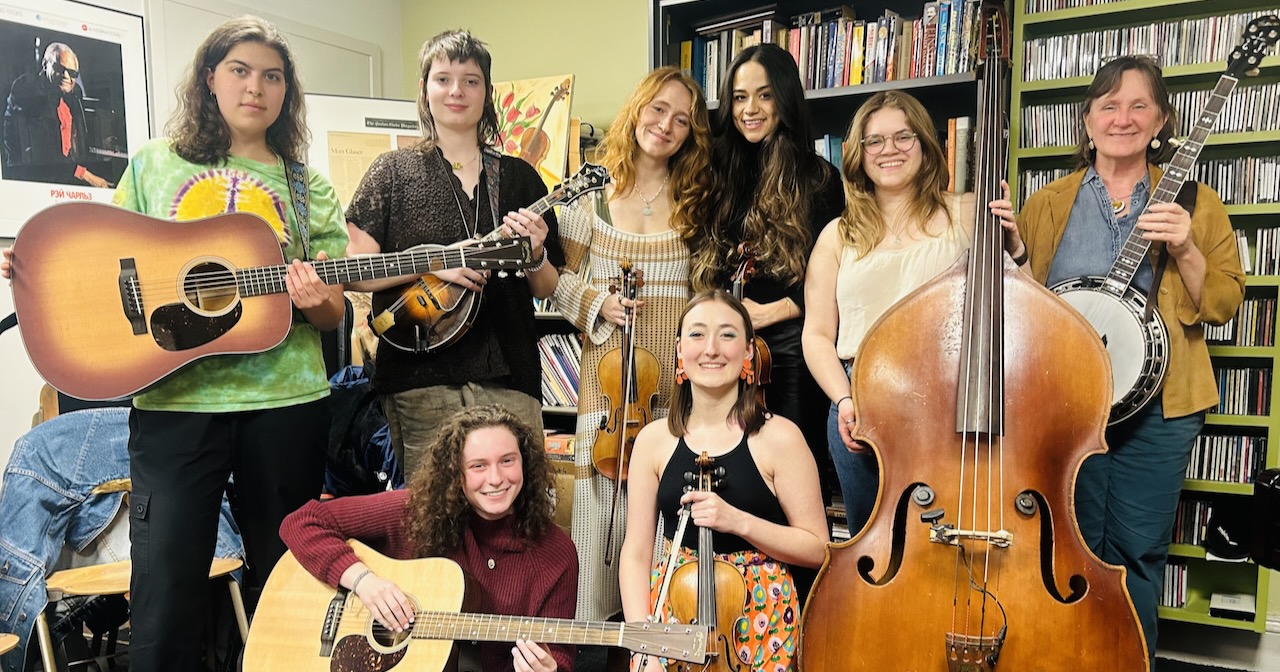
Towards the end of my sophomore year, my friend Katelynn Casper – a brilliant bluegrass fiddler – came up with an idea. She wanted to start a bluegrass ensemble of all women and non-binary folks. Katelynn approached Matt Glaser, the artistic director of the American Roots Music Program, about helping us create a class in which we would study and perform in a group. Excited by the prospect, he brought in Laura Orshaw (the Po’ Ramblin’ Boys) to be our mentor. In the past few years, there had been a strong influx of women who came to Berklee and wanted to play roots music, so it didn’t take us long to find people who wanted to join the project.
The ensemble started in October of 2023 with about 12 members, enough for us to break into two ensembles. I got to be in both groups, in one as mandolinist and the other as bassist. Our focus between both groups was to play music mostly written by women who we looked up to and were maybe overlooked.
Through the course of our year together, we moved through a catalog of songs and tunes written by our heroes and then delved into original material. We wrote songs and tunes together and on our own and fleshed them out as a band. It was an empowering experience to be a part of and it was beautiful to watch my friends explore a new kind of confidence in their music.
This past April, the American Roots Music Program sent all of us down to Washington, D.C. In June of 2022, the Smithsonian Center for Folklife and Cultural Heritage opened up an exhibit entitled Music HerStory: Women and Music of Social Change. Laura had caught wind of the exhibit and wanted us to visit, so we could witness its content and impact. The exhibit explored many women who were significantly overlooked in music, but yet the world would have been drastically different had their music not been a part of it.
We heard and read stories of when Loretta Lynn put out “The Pill” and how much of an uproar it caused; stories of how Elizabeth Cotten had to put her music on hold to raise her children and didn’t come back to it until she was in her 60s, putting out “Freight Train” and “Oh Babe It Ain’t No Lie” and still was not given much credit.
Walking through the exhibit, I couldn’t help but think about all the different musical influences I have and how so many of those influences were inspired by these women, but how that was never really talked about.
On the same trip, we also got the privilege of going to Smithsonian Folkways Recordings and learning about some of the history of their record label and how it came to be. When we were checking it out, both ensemble bands did a little recording in the archives to commemorate the trip. Playing our originals and covers written by powerful women was an incredible experience. We were surrounded by original recordings and records that made bluegrass and old-time what it is now and some of the music that brought each of us to the genres to begin with.
While we were down in D.C., we also got the chance to hang out with Kimber Ludiker (fiddle) and Avril Smith (guitar), two members of Della Mae. In both groups, the inspiration from Della Mae was so apparent – we all learned many of their songs. Getting to stand up and play their songs with them was a mind-blowing experience.
Taking part in this project has been such an inspiring experience. As a kid who grew up in the bluegrass and old-time world, there weren’t always a lot of women to play music with, so to get the opportunity to dedicate time each week to just sit down with a group of deeply passionate women and non-binary folks who are also such remarkable roots musicians was an indescribably moving experience.
A common conversation amongst us during that time was how freeing and comfortable it felt to play music in a setting like this. Whether or not you think about it, music as a whole is an intensely male dominated world – and bluegrass isn’t any different.
“Here’s a question that crossed our minds every week,” Laura said. “‘What would bluegrass be like without patriarchy or bias?’ The answer comes through music, not essays, and this project certainly chipped away at our goal.”
Being in this ensemble, I learned a lot about myself. Being surrounded by a community of women and non-binary folks playing music taught me a lot about my confidence as both a person and a musician. Being in that environment gave me an amazing place to explore.
“When Matt [Glaser] asked me to be the curator of this project, I couldn’t have guessed how impactful and enlightening it would be for me. Working in an all-women and non-binary band filled a void for all of us – creatively, academically, and socially,” Laura continued. “Students shared experiences of the not-so-glamorous parts of working in a male-dominated field. They studied the music and songs of their heroes, who sometimes got overlooked in other classes and ensembles. They wrote songs, arranged music, and tried on different leadership roles in the band.
“But most of all, they encouraged and inspired each other to be better musicians. The mutual dedication and enthusiasm were palpable in every rehearsal.”
It’s been an experience of a lifetime to learn the music I love with a group of women who want to push the boundaries of the genre. To sit with a group of people who understand the intricacies of being a woman or gender non-confirming person playing bluegrass – or even music in general – was a very comforting experience. We all grew so much as people and musicians.
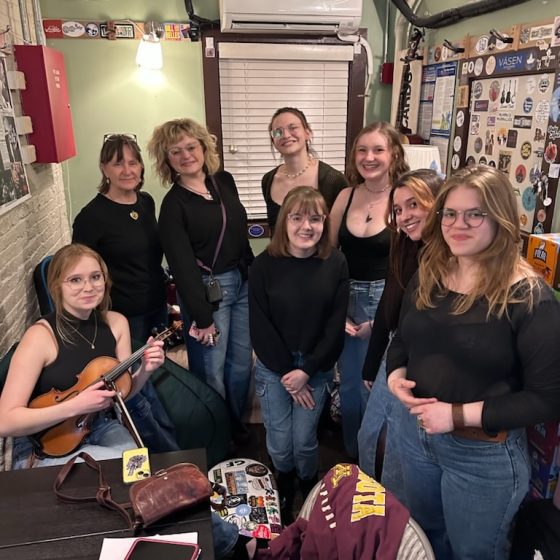
Photos courtesy of Emma Turoff. Lead image: Ensemble, No Man’s Land. Inset image: Ensemble, Ain’t That Just Like A Man.
This website uses cookies to improve your experience. We'll assume you're ok with this, but you can opt-out if you wish.AcceptRejectRead More
Privacy & Cookies Policy
Privacy Overview
This website uses cookies to improve your experience while you navigate through the website. Out of these, the cookies that are categorized as necessary are stored on your browser as they are essential for the working of basic functionalities of the website. We also use third-party cookies that help us analyze and understand how you use this website. These cookies will be stored in your browser only with your consent. You also have the option to opt-out of these cookies. But opting out of some of these cookies may affect your browsing experience.
Necessary cookies are absolutely essential for the website to function properly. This category only includes cookies that ensures basic functionalities and security features of the website. These cookies do not store any personal information.
Any cookies that may not be particularly necessary for the website to function and is used specifically to collect user personal data via analytics, ads, other embedded contents are termed as non-necessary cookies. It is mandatory to procure user consent prior to running these cookies on your website.