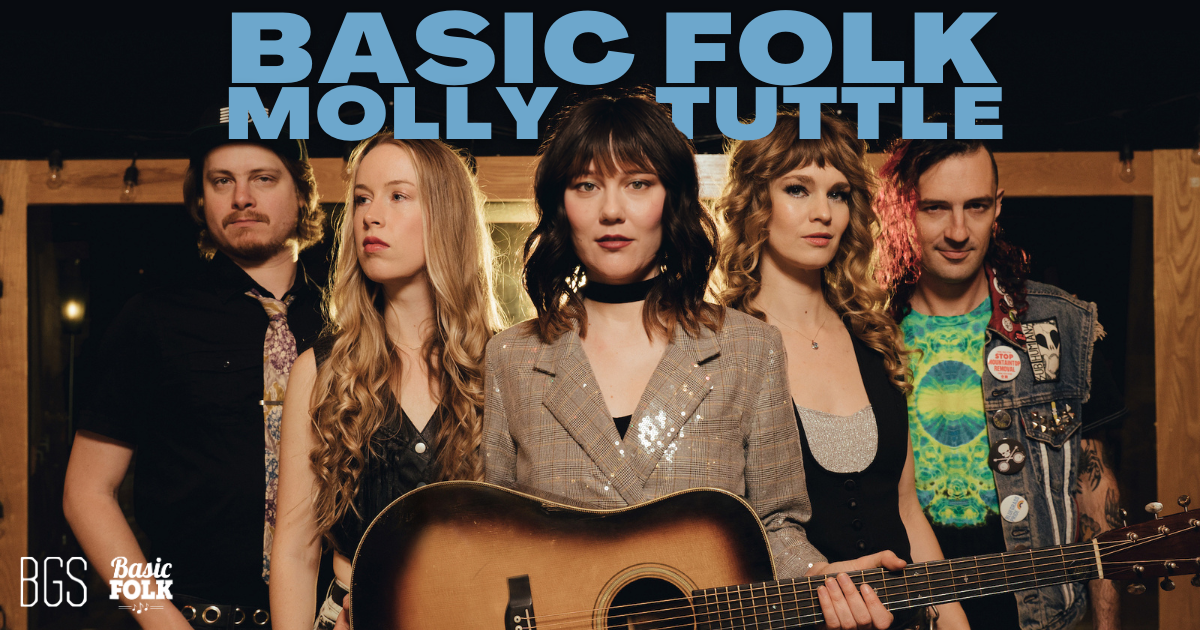
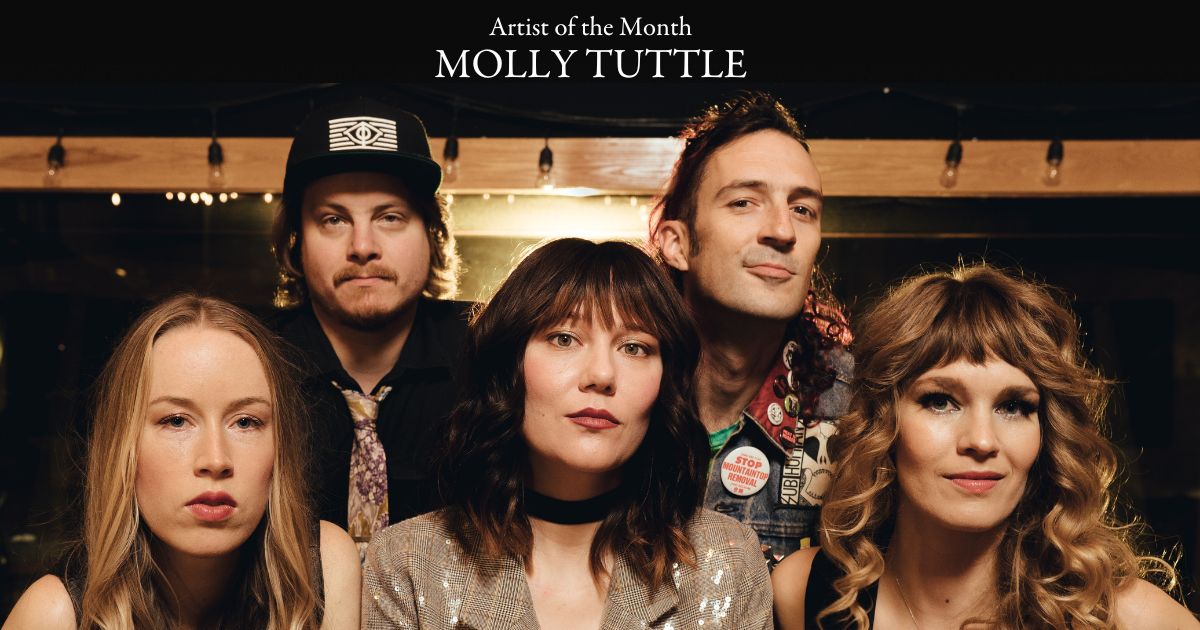
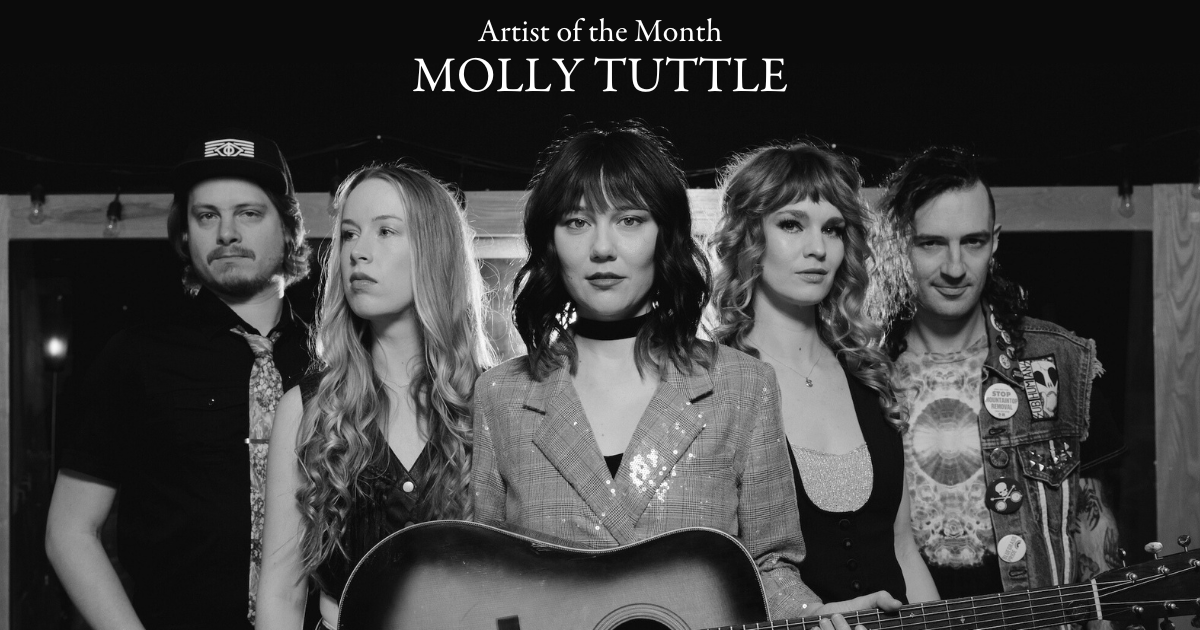
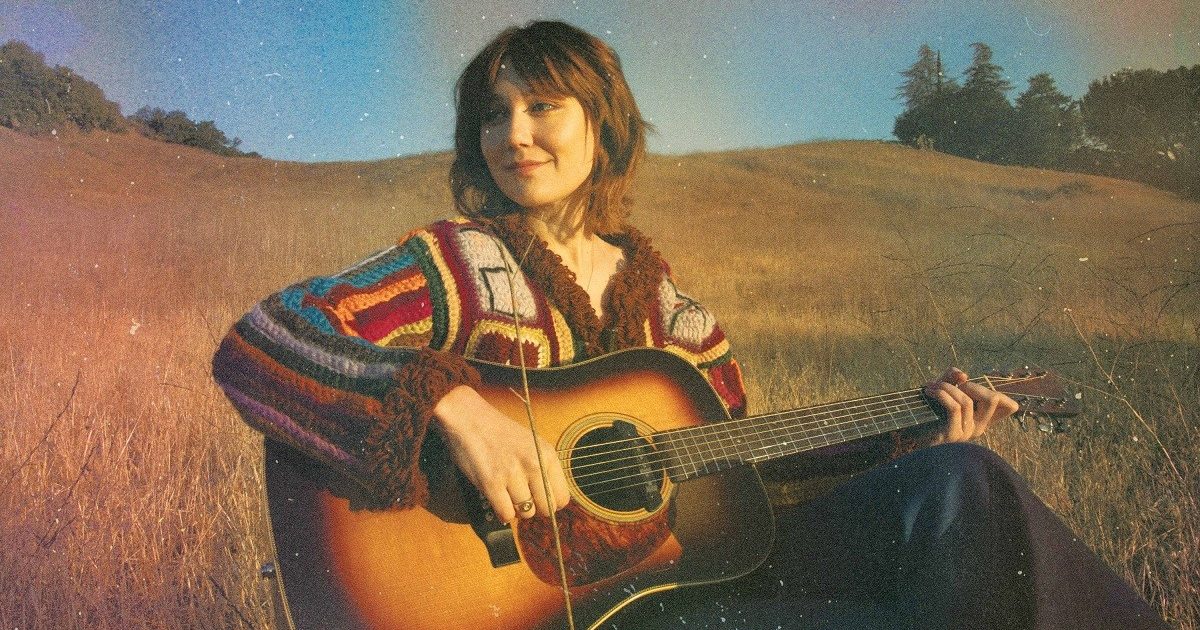
Basic Folk is thrilled to interview The Bluegrass Situation’s July 2023 Artist of the Month: Molly Tuttle! Quickly becoming the Bluegrass American Idol, Molly Tuttle’s new album City of Gold is hot off the heels of her Grammy-award winning 2022 record, Crooked Tree, which also got her a nomination in one of the coveted “Big Four” categories: Best New Artist. Aaaaand we know that WE ALL have had eyes on Molly for years, BUT since she’s fully embraced the bluegrass genre on these last new albums, Best New Artist makes a lot of sense. Bluegrass was the music she grew up with in Palo Alto, California, with her guitar-teacher father helping her soak in the vibrant scene. She’s also learning how to take control of the bluegrass narrative by telling her story and sharing her perspective through her new songs.
That rings so true with the new record, City of Gold, co-produced by Tuttle and Dobro-master Jerry Douglas (of Alison Krauss & Union Station fame), mostly co-written with her partner Ketch Secor (of Old Crow Medicine Show) and featuring her crack backing band, Golden Highway. She’s writing bluegrass songs that are fun and insightful at the same time. We get a bluegrass version of Alice In Wonderland, the story of a woman fighting for her bodily autonomy and not to mention that time she married Dave Matthews on a road trip (LOL J/K, but that is a real new song with the real Dave). She digs into her new album as well as finding her own way in the patriarchal world of bluegrass and leveling up about her alopecia, an autoimmune skin disease, causing hair loss. Molly Tuttle is a great hang, an inspiration for us all and has made a fabulous new album, City of Gold. LYLAS, Molly!
It’s halfway through 2023, and Molly Tuttle is having an incredible year. The Grammy-winning artist released her new record — made with her band, Golden Highway — on July 21 via Nonesuch Records. Only days before, Tuttle and Golden Highway were nominated in seven categories at the 34th Annual IBMA Bluegrass Music Awards.
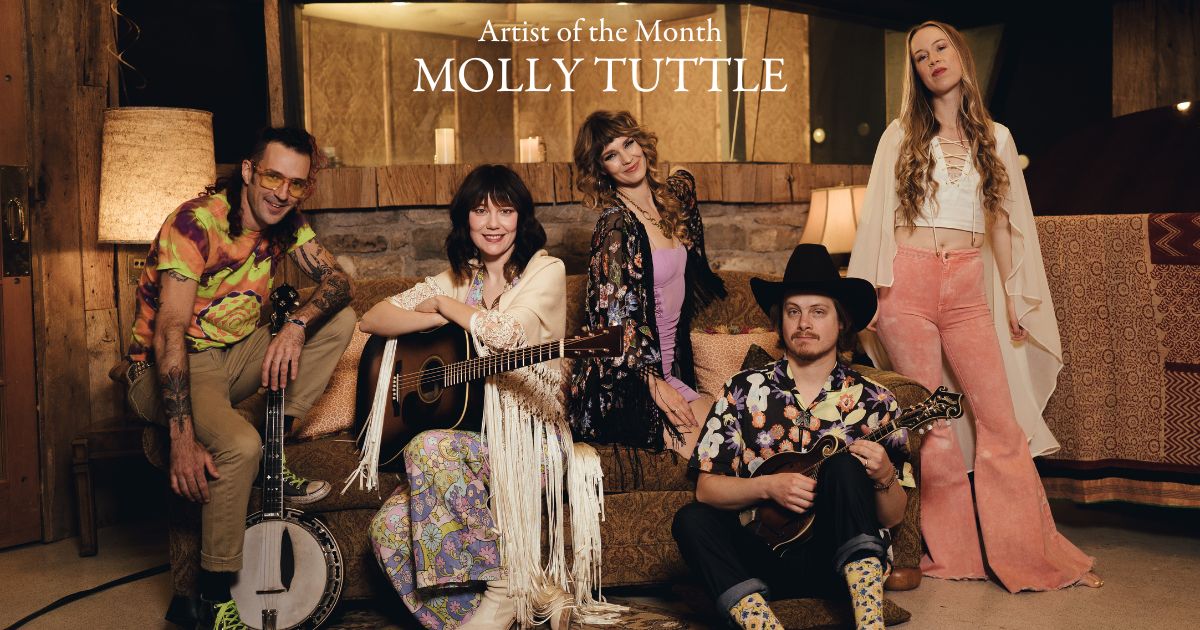
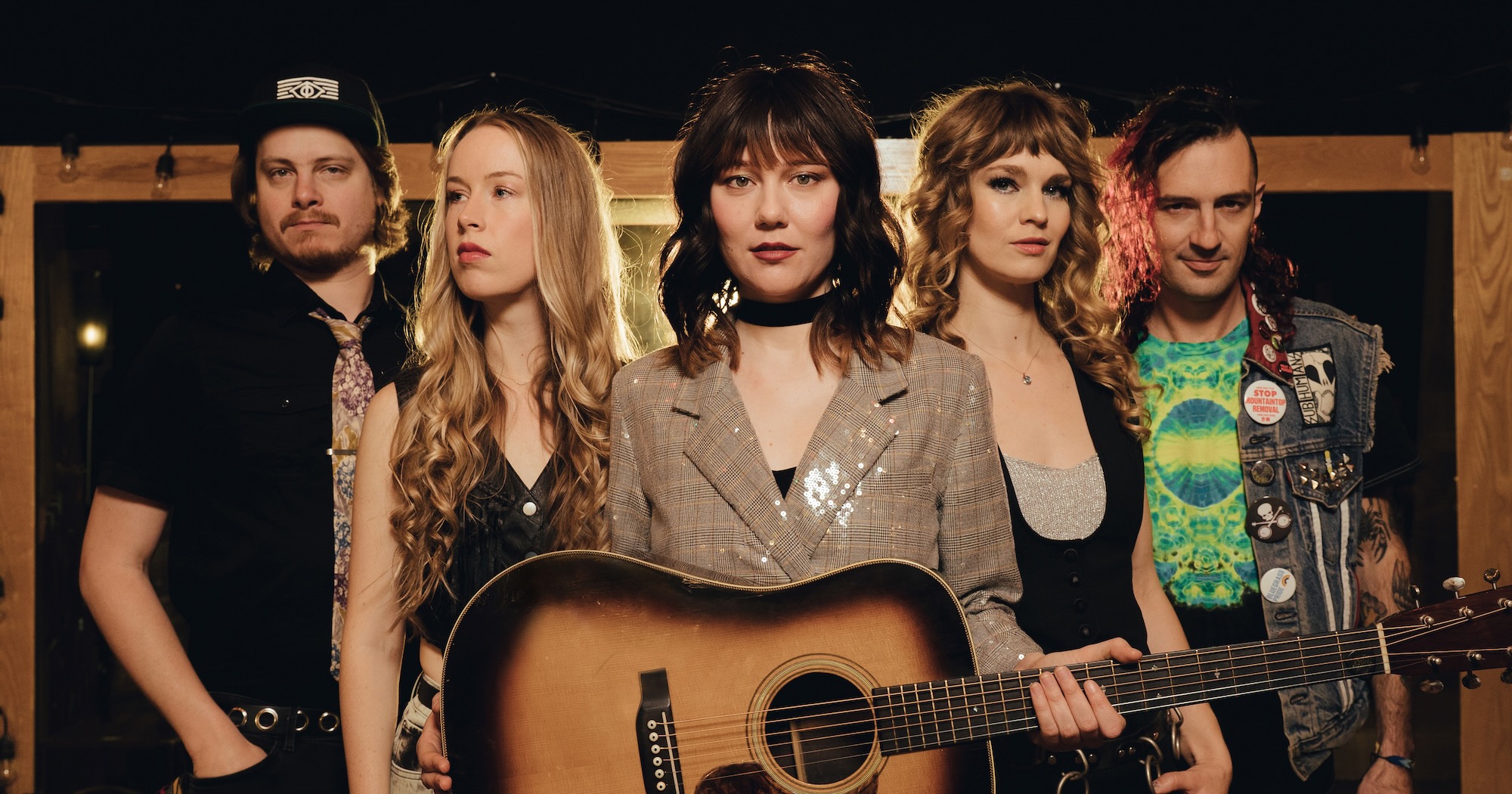
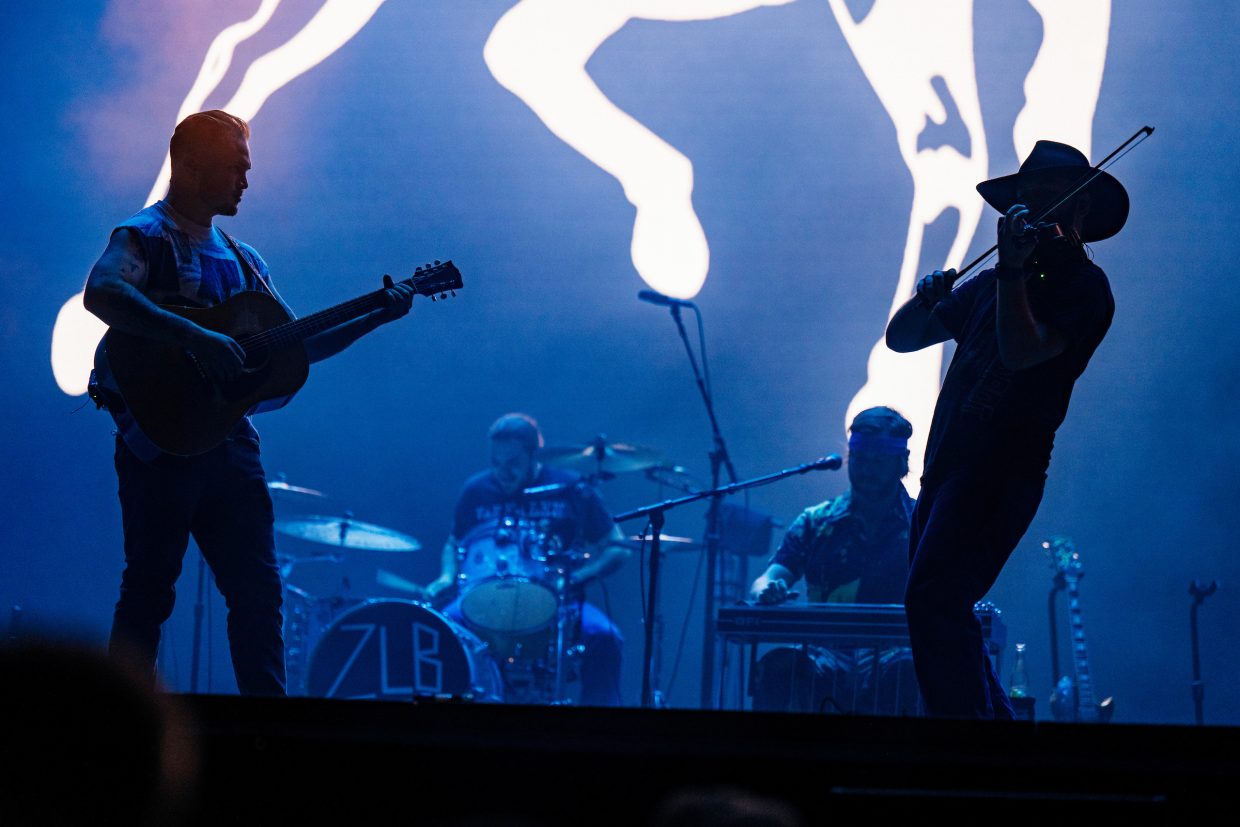
In the middle of her ongoing tour, we caught up with Tuttle and the members of Golden Highway to celebrate her selection as July’s Artist of the Month and to go behind the scenes of making City of Gold. Luckily, it’s easy to make music with friends, and the entire group goes way back. Tuttle says Bronwyn Keith-Hynes (fiddle), Dominick Leslie (mandolin), Shelby Means (bass), and Kyle Tuttle (banjo), have been a part of her musical life for years.
“I’ve known everyone in the band since I was in my late teens, early twenties,” Tuttle explains via video call.
Tuttle and Keith-Hynes attended classes and bluegrass jams together at Berklee College of Music. She met Kyle Tuttle (no relation) at around the age of 17 at an IBMA jam, and met Means while she was in Boston with the all-women string band Della Mae. Tuttle says she and Leslie met as kids, when they would both play the same bluegrass festivals.
“When Molly told me what she was planning, and asked me to join the band and told me who else was going to be in it, I was thinking, ‘I’m already friends with all these people. This is gonna be really cool!’” Means said during our group interview.
When it came time to record City of Gold, the group worked with modern roots music icon Ketch Secor of Old Crow Medicine Show on much of the writing. Tuttle says there’s a definite Old Crow influence on the tracklist, which makes sense given “Down Home Dispensary” is a tune on the record originally written for the group best known for hits like “Wagon Wheel.” Tuttle said she initially worried the song was “too Old Crow” for Golden Highway, but is glad it ended up on the record. She and Secor got “into a good groove,” as she puts it, and churned out the tunes for City of Gold in about six months, often while driving in the car or passing around instruments during jam sessions. At least one track, though, was extremely collaborative. Tuttle, Means, Secor and Melody Walker (formerly of Front Country) all had a hand in finishing the tune.
Jerry Douglas, the iconic resonator guitar player who’s worked with almost every name in the bluegrass industry, produced the album. Tuttle said that whereas she had only a few studio days booked for her previous album, Crooked Tree, the group had nearly two weeks of studio time to work with Douglas this time around. When asked what it was like working with the legend, every member of Golden Highway said they’d had a great experience.
“Working with someone who’s a hero, there’s a lot of baggage that comes along with that,” Kyle Tuttle said. “But he’s the kindest dude. He supported us in a really cool way. It wasn’t hard or intimidating or anything like that. I thought it was easy and fun. Every now and then he’d play on a track with us.”
Whether it was encouraging Golden Highway to take breaks or telling funny jokes, the group agreed that Douglas made sure everyone was comfortable and having a good time. Keith-Hynes said Douglas told the band that NASCAR drivers walk slowly to their cars to slow down their nervous systems, encouraging the musicians to do the same on walks between takes.
“Jerry has been a huge musical hero to all of us,” Leslie said. “Getting to spend all that time in the studio was the thrill of a lifetime. We all knew we were in really good hands with him musically going in, but what I didn’t realize was how good of a hang Jerry is. He [was] filling up any moment of dead air with a great story to break the ice.”
On tour, the band’s camaraderie is just as apparent as it is in the studio, or as it was in the group’s music video for “Next Rodeo.” After Tuttle catches her no-good, fictitious cowboy boyfriend cheating, the band collectively decides to kidnap him and give him what for — although, of course, all in good fun. They say they haven’t (yet) had to kidnap anybody on tour, but that doesn’t mean the on-the-road lifestyle isn’t taxing. Kyle Tuttle said he missed a connecting flight the night before the album release show and was up all night driving to make it in time.
“I was checking into the hotel and the sun was already up,” Kyle Tuttle said. “[There was] orange sky and some palm trees. I thought, ‘Damn it’s pretty. I sure wish I was in bed right now.’”
While it’s a good time to be in Golden Highway, it’s also just a great time to be in bluegrass, the group says. All agreed that bluegrass is having a moment, and were happy to report multiple sold-out festivals with lineups that include country, folk, bluegrass, blues, and other roots artists. Means said it’s incredible to see bluegrass acts opening for bigger country artists, because it means the genre is a real selling point.
“I wonder if it’s a backlash to how crazy everything is with technology,” Keith-Hynes thinks aloud. “People want something real. Nothing is more real than people playing acoustic music on acoustic instruments.”
Tuttle said the internet has also really leveled the playing field, making more music accessible to all kinds of fans. Golden Highway has had its own viral moments on TikTok, the short-form video social media app. Earlier this year Tuttle posted a 2022 Halloween clip that has now hit nearly one million views; inspired by a track on the new album, “Alice in the Bluegrass,” the band members are each dressed as a character from Alice in Wonderland, with Tuttle starring as the Queen of Hearts.
“It took people by surprise to see this bluegrass band playing Jefferson Airplane in full Alice in Wonderland dress,” Tuttle said.
As for what’s ahead, the group says they hope to see everyone out on the road. Means shared that the band will announce more dates soon, and that they’ll be touring both coasts after the annual IBMA Bluegrass Music Awards in September. Tuttle and Golden Highway are currently nominated for Entertainer of the Year, Instrumental Group of the Year, Song of the Year and Album of the Year. Tuttle is also nominated for Collaborative Recording of the Year, Female Vocalist of the Year, and Guitar Player of the Year. Bronwyn Keith-Hynes is nominated for Fiddle Player of the Year.
City of Gold can be streamed online wherever you listen to music. Check out more of our Artist of the Month coverage of Molly Tuttle & Golden Highway here and here.
The International Bluegrass Music Association announced this year’s nominees and recipients for the 34th Annual IBMA Bluegrass Music Awards today in downtown Nashville at SiriusXM’s Music City Theater. The announcement ceremony included live performances by nominees the Lonesome River Band and Sam Bush, who will be inducted into the Bluegrass Music Hall of Fame at the IBMA Awards show in Raleigh, North Carolina, this September.
Additional inductees into the Hall of Fame, which is housed at the Bluegrass Music Hall of Fame & Museum in Owensboro, Kentucky, include first-generation bluegrasser and country chart-topper Wilma Lee Cooper and an innovator and virtuoso who has expanded the borders of bluegrass and acoustic music throughout his career, David Grisman.
Recipients of the Distinguished Achievement Awards – IBMA’s highest honor outside of Hall of Fame induction – were also announced, highlighting the significant contributions of artists, musicians, and organizations such as Red Wine (Italy’s foremost bluegrass group), banjo player and band leader Terry Baucom, author and musician Tom Ewing, promoter and organizer Carl Goldstein, and media outlet and online hub BGS, The Bluegrass Situation.
“We are so honored and humbled by this recognition,” says BGS managing editor Justin Hiltner. “Bluegrass is all about community, and to have our community – the genre that built us – recognize our efforts in this way means the world. What Ed [Helms] and Amy [Reitnouer Jacobs] have created and brought all of us into is something truly special. Thank you to IBMA, the organization and its membership, for this award.” (Read more here.)
In the Instrumentalist, Recordings, and Artists’ categories, Molly Tuttle & Golden Highway, Billy Strings (and his father, Terry Barber), Michael Cleveland, Del McCoury Band, and Sam Bush Band lead the nominations. View the full list below and make plans now to attend the IBMA Awards Show in Raleigh, North Carolina, as part of IBMA’s World of Bluegrass conference on Thursday, September 28, 2023.
ENTERTAINER OF THE YEAR:
Appalachian Road Show Billy Strings Del McCoury Band Molly Tuttle & Golden Highway The Po’ Ramblin’ Boys
VOCAL GROUP OF THE YEAR:
Authentic Unlimited Balsam Range Blue Highway Del McCoury Band Sister Sadie
INSTRUMENTAL GROUP OF THE YEAR:
Billy Strings Michael Cleveland & Flamekeeper The Infamous Stringdusters Molly Tuttle & Golden Highway The Travelin’ McCourys
SONG OF THE YEAR: “Blue Ridge Mountain Baby” Artist: Appalachian Road Show Songwriters: Barry Abernathy/Jim VanCleve Label: Billy Blue Records Producer: Appalachian Road Show
“Crooked Tree” Artist: Molly Tuttle & Golden Highway Songwriters: Molly Tuttle/Melody Walker Label: Nonesuch Records Producers: Jerry Douglas and Molly Tuttle
“Heyday” Artist: Lonesome River Band Songwriters: Barry Huchens/Will Huchens Label: Mountain Home Music Company Producer: Lonesome River Band
“Power of Love” Artist: Rick Faris Songwriters: Johnny Colla/Huey Lewis/Christopher Hayes Label: Dark Shadow Recording Producer: Stephen Mougin
ALBUM OF THE YEAR:
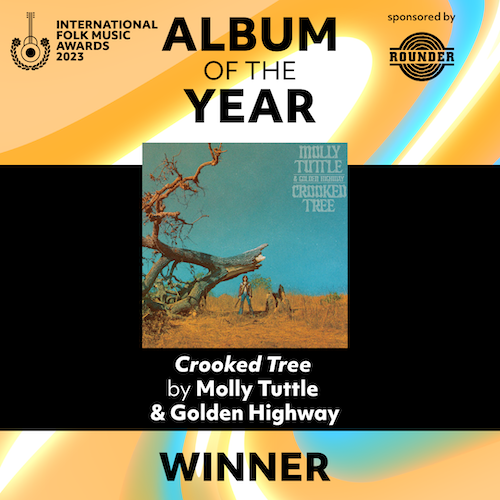
Crooked Tree Artist: Molly Tuttle & Golden Highway Label: Nonesuch Records Producer: Jerry Douglas and Molly Tuttle
Lovin’ of the Game Artist: Michael Cleveland Label: Compass Records Producers: Jeff White, Michael Cleveland, and Sean Sullivan
Lowdown Hoedown Artist: Jason Carter Label: Fiddle Man Records Producers: Jason Carter and Brent Truitt
Me/And/Dad Artist: Billy Strings and Terry Barber Label: Rounder Records Producers: Billy Strings and Gary Paczosa
Radio John: The Songs of John Hartford Artist: Sam Bush Label: Smithsonian Folkways Producer: Sam Bush
GOSPEL RECORDING OF THE YEAR: “The Glory Road” Artist: Joe Mullins & The Radio Ramblers Songwriters: Paul Martin/Harry Stinson/Marty Stuart Label: Billy Blue Records Producers: Joe Mullins and Adam McIntosh
“Jordan” Artist: Darin & Brooke Aldridge with Ricky Skaggs, Mo Pitney and Mark Fain Songwriter: Fred Rich Label: Billy Blue Records Producer: Darin Aldridge and Mark Fain
“The Scarlet Red Lines” Artist: Larry Sparks Songwriter: Daniel Crabtree Label: Rebel Records Producer: Larry Sparks
“Take a Little Time for Jesus” Artist: Junior Sisk Songwriter: David Marshall Label: Mountain Fever Records Producers: Junior Sisk and Aaron Ramsey
“Tell Me the Story of Jesus” Artist: Becky Buller with Vince Gill and Ricky Skaggs Songwriter: Fanny Crosby, arrangement by Becky Buller Label: Dark Shadow Recording Producer: Stephen Mougin
INSTRUMENTAL RECORDING OF THE YEAR:
“Contact” Artist: Michael Cleveland with Cody Kilby, Barry Bales, and Béla Fleck Songwriter: Michael Cleveland Label: Compass Records Producer: Jeff White, Michael Cleveland, and Sean Sullivan
“Foggy Morning Breaking” Artist: Alison Brown with Steve Martin Songwriters: Alison Brown/Steve Martin Label: Compass Records Producers: Alison Brown and Garry West
“Gold Rush” Artist: Scott Vestal’s Bluegrass 2022 Songwriter: Bill Monroe Label: Pinecastle Records Producer: Scott Vestal
“Kissimmee Kid” Artist: Jason Carter Songwriter: Vassar Clements Label: Fiddle Man Records Producers: Jason Carter and Brent Truitt
“Scorchin’ the Gravy” Artist: Frank Solivan & Dirty Kitchen Songwriter: Frank Solivan Label: Compass Records Producer: Frank Solivan
NEW ARTIST OF THE YEAR:
Authentic Unlimited East Nash Grass Henhouse Prowlers The Tennessee Bluegrass Band Tray Wellington
COLLABORATIVE RECORDING OF THE YEAR:
“Alberta Bound” Artist: Special Consensus with Ray Legere, John Reischman, Tisha Gagnon, Claire Lynch, Pharis & Jason Romero, Patrick Sauber Songwriter: Gordon Lightfoot Label: Compass Records Producer: Alison Brown
“Big Mon” Artist: Andy Leftwich with Sierra Hull Songwriter: Bill Monroe Label: Mountain Home Music Company Producer: Andy Leftwich
“Foggy Morning Breaking” Artist: Alison Brown with Steve Martin Songwriter: Alison Brown/Steve Martin Label: Compass Records Producer: Alison Brown and Garry West
“For Your Love” Artist: Michael Cleveland with Billy Strings and Jeff White Songwriter: Joe Ely Label: Compass Records Producer: Jeff White, Michael Cleveland, and Sean Sullivan
“From My Mountain (Calling You)” Artist: Peter Rowan with Molly Tuttle and Lindsay Lou Songwriter: Peter Rowan Label: Rebel Records Producer: Peter Rowan
MALE VOCALIST OF THE YEAR:
Greg Blake Del McCoury Danny Paisley Larry Sparks Dan Tyminski
FEMALE VOCALIST OF THE YEAR:
Brooke Aldridge Dale Ann Bradley Jaelee Roberts Molly Tuttle Rhonda Vincent
BANJO PLAYER OF THE YEAR:
Kristin Scott Benson Alison Brown Béla Fleck Ned Luberecki Scott Vestal
BASS PLAYER OF THE YEAR:
Mike Bub Todd Phillips Missy Raines Mark Schatz Vickie Vaughn
FIDDLE PLAYER OF THE YEAR:
Jason Carter Michael Cleveland Stuart Duncan Bronwyn Keith-Hynes Deanie Richardson
RESOPHONIC GUITAR PLAYER OF THE YEAR:
Jerry Douglas Andy Hall Rob Ickes Matt Leadbetter Justin Moses
GUITAR PLAYER OF THE YEAR:
Chris Eldridge Trey Hensley Billy Strings Bryan Sutton Molly Tuttle
MANDOLIN PLAYER OF THE YEAR:
Alan Bibey Jesse Brock Sam Bush Sierra Hull Ronnie McCoury
DISTINGUISHED ACHIEVEMENT AWARD RECIPIENTS:
Terry Baucom The Bluegrass Situation Tom Ewing Carl Goldstein Red Wine
BLUEGRASS MUSIC HALL OF FAME INDUCTEES:
Sam Bush Wilma Lee Cooper David Grisman
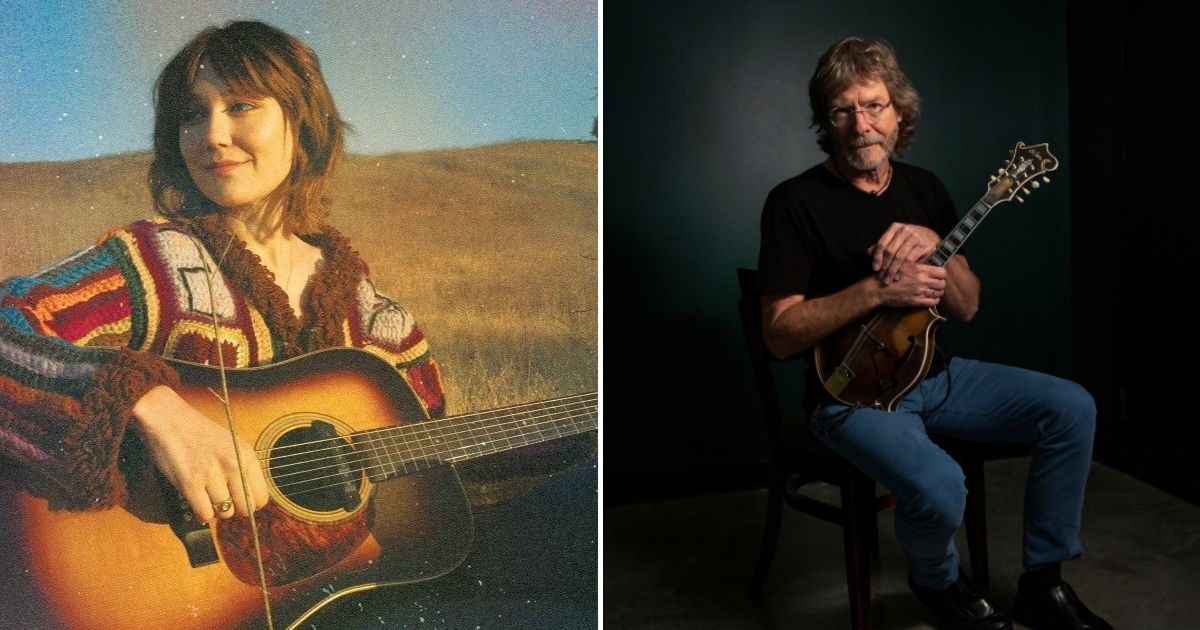
Photo of Sam Bush by Jeff Fasano; photo of Molly Tuttle by Samantha Muljat.
Over the course of her lifelong career in bluegrass, Americana and roots music, we’ve had the pleasure of interviewing and connecting with Grammy Award winner Molly Tuttle on quite a few occasions. When we selected Tuttle and her band, Golden Highway, as our Artist of the Month, we wanted to open a space to discuss her career and music in a fresh light – and we could think of no better context for such a conversation than Basic Folk.
We asked Basic Folk podcast hosts Cindy Howes and Lizzie No – who featured Tuttle on the show once prior, in 2022 – to sit back down with the International Folk Award and Americana Award winner to discuss her brand new album, City of Gold, and to dig deeper into the creative output of this buzzworthy guitar player, songwriter, and business woman.
Watch for the full podcast episode to drop later this month, but for now enjoy these excerpts from Cindy and Lizzie’s conversation with Molly Tuttle.
Cindy Howes: Molly Tuttle, welcome to Basic Folk again. It’s so great to have you back on the podcast.
Molly Tuttle: Thank you so much for having me back. It’s great to be here with you guys.
CH: Before we start our interview, I want to set the tone for our conversation. Molly Tuttle is being highlighted as Bluegrass Situations’ Artist of the Month, which is so awesome. The tone of our interview today is LYLAS. Do you know what LYLAS is?
Lizzie No:It’s spelled L-Y-L-A-S.
MT: LYLAS. Okay. I don’t know that.
LN: What it means is: “Love you like a sister.”
CH: Oh yeah. So we are total LYLAS. This is like a fun trip to the mall. This is like a really fun cruise around the harbor with your gal pals.
MT: Oh my gosh, that’s so fun. Well, it’s perfect because I’m actually in a hotel outside of Missoula. And there’s a strip mall nearby. So shopping has been on my mind today. Great.
CH: We’ll all get mani pedis together.
LN: Yes. French tip.
CH: So, when approaching the writing on City of Gold, you asked yourself, “How do I tell my story through bluegrass?” Which I can relate to, as somebody who’s sort of tried to distance themselves from folk music for a really long time. And now I am fully leaning into it. So, I take [it as] you asking that question of yourself, like “How can I fit my Molly Tuttle-ness into a world that can be rigid, patriarchal, and maybe different from what you stand for.” So how true is that? And how have these songs helped you take control of the bluegrass narrative and tradition?
MT: I think that’s something I’ve always kind of struggled with. I remember when I first started writing songs, I just thought, “I don’t know how to write a bluegrass song.” I can write a song, but they never ended up sounding like bluegrass to me and I just didn’t feel like my story fit into the bluegrass narrative of the songs that I grew up singing.
I always loved songwriters like Hazel Dickens, who wrote bluegrass songs from a woman’s perspective, wrote songs about the struggles that she had as a woman in the music industry and as a working woman, and songs about workers’ rights and things she believed in. I grew up with two really strong role models, Laurie Lewis and Kathy Kallick, out in the Bay Area. I remember early on I would go out to [Kathy Kallick’s] house and she would make me tea and listen to my songs. She always told me that when she was first getting started writing bluegrass songs, she kind of felt the same way as me. Like, maybe her story didn’t belong in the genre. But she met Bill Monroe, and he encouraged her, “Don’t try to write a song that sounds like a song I would have written, write a song from your own perspective.”
So she wrote a song called “Broken Tie” about her parents getting a divorce. She said every time she was at a festival with Bill Monroe, he specifically requested that song. That was an inspiring story to me. But when I started writing songs for Crooked Tree, it was suddenly like a floodgate opened. I think I just found my people to write with, found my groove, and ended up with a collection of songs that kind of told my story, [told] about things I believed in, and [told] my family history and personal experiences. And then other songs that were just, you know, from a woman’s perspective, or from a perspective that I resonate with.
For [City of Gold], it was fun to kind of continue that and also expand it to be songs that I felt like were inspired by my band members, or inspired by experiences we’d had on the road. This felt more like a collective vision in a way.
LN: Okay, let’s talk about Crooked Tree. The title track from your last record was partly inspired by your experience living with alopecia. You’ve said that as a kid you would wear hats and then wigs, and then you learned to talk about your wig. Eventually, you started to get more comfortable going without. Now that you’re touring with Golden Highway a ton, you sometimes take your wig off when you play that song, which is such a powerful moment of joy, courage, and vulnerability. As a performer, I can relate to those moments where you bring a little bit extra of yourself and you share a part of yourself that you might normally keep private. How do you get to that right mood? How do you gauge if the crowd is like the right crowd to share about your alopecia experience?
MT: It’s also based on how I’m feeling. I took off my wig a few times last year. But I didn’t do it as much as maybe I wanted to, or maybe I should have, just because I wasn’t always sure what to say. I’ve had so many experiences of trying to explain alopecia to people and they still think I’m sick or still feel bad for me. And it’s so hard sometimes to put it in words that aren’t going to bring the mood down at the show, you know, I want people to be having a good time. I want it to be this fun, inspiring moment, not a moment where people can go, “I feel so bad for you.”
Recently, I performed and told my whole story [for] a keynote speech at this alopecia conference out in Denver, Colorado. I think that was such an important step for me. Just getting to share my story and reflect on the pain of growing up having this really visible difference, but also like, the joy and why it’s so important to me to share that with others and share the message that it’s okay to be different. It’s okay to be a “Crooked Tree.” This last weekend, we played in Michigan, and I did take off my wig and I felt like I finally nailed what I said and the perfect mood. Everyone was cheering and it was just a moment of celebration. I think I’m gonna just continue doing that more and more, but I find that it’s so helpful for me to check in with the alopecia community and feel that support from other people who know exactly how I feel. That makes me feel confident to share my message with the world and maybe sometimes be like, “I don’t care how it’s received, maybe I’m not sure how it’s gonna be received, but I’m going to do it anyway.” That just comes with time. And I guess I’ve had to grow kind of a thick skin. It used to be a lot harder for me.
CH: The new album, City of Gold, the songs were mostly written by you and your partner Ketch Secor of Old Crow Medicine Show. What is the writing process like with you and Ketch? Like, how do you bring out the best in each other’s writing?
MT: We’re both quite different writers. He’s very fast paced. He throws out ideas and lines. [While I’ll] think it over. I’m kind of more internal. I think about the lines. We balance each other out in a way where I might think a lot about what exactly we are saying, and then he’s good. If I get stuck on something, [he can] kind of keep it moving. But our writing process is always different. It’s nice, because we’re together a lot. So we can write in a lot of different circumstances. Some of the songs we wrote in the car, like on a road trip, just throwing lines back and forth. Maybe he’d be driving, I’d be writing the lines on my phone. Maybe we’re talking about something at home or listening to music and sitting down with instruments, kind of more the conventional way of writing. I find it so hard to fit writing into my life, especially when I’m on tour and I’m on the go so much. [It’s so nice that] we got into a groove with it, where we were just doing it all the time, and it felt more naturally intertwined into my day-to-day life.
LN: The bluegrass community was a huge source of inspiration for you. Of this record, you said, “One of the things I love most about this music is how so much of the audience plays music as well.” And that you hope that people will sing along and maybe play those songs with their friends, almost like we’re all a part of one great big family. Now, how do you walk the line of making a sophisticated, bitchin’ bluegrass record, while keeping it simple enough for others who might not be musical geniuses to play along?
MT: The beauty of bluegrass music is that most of the songs have like three or four chords. You can play them really simple, you can just strum along and play as slow as you want. Beginner bluegrass musicians might go to a jam of people at the same level as them and play these songs in a lot simpler of a way. Then, as you get better and better you can play it faster, you can play more complicated solos, you can really play with the dynamics. There are infinite ways to make the songs more and more complex and sophisticated as you progress in your musical abilities.
On City of Gold, I did kind of stray away from that “three chords and the truth” format a little more than I did on my last record. It was fun, because we were working on these arrangements as a band, which was a lot different process than I’ve ever done before in the studio. I’ve always gone in with my songs and gathered musicians that I don’t normally play with on the road – studio musicians. I have a lot of my bluegrass heroes on the record, and you’re kind of learning the songs and playing them by a chart, but for this album, we really took the time to develop more complicated arrangements and add in new sections that stray away from the key. These songs are a little less accessible to the standard bluegrass jam. But I think there’s still a few that people could learn to play at any level.
• • •
CH: Okay, now we’re going to talk specifically about some of the songs on the new album, City of Gold, starting with the first song, “El Dorado.” Right now I am rewatching Deadwood, so I am super into this song. As a kid, you took a field trip to Coloma, the site of California’s first gold strike and it was the first time you heard about the legendary El Dorado, the City of Gold. In the song you sing, “El Dorado, city of gold, city of fools.” You said, “Just like gold fever, music has always captivated me.” So who are the characters in the song – like gold rush Kate from the Golden State – and how do you connect with these fools?
MT: I wrote the song with Ketch and I don’t know [exactly] how it came about… [But I told him,] when I was a kid, every school would send the kids off to gold country. You’d go to different places. The person who taught my class how to pan for gold, for some reason I have like a very vivid memory of him. He had this gold nugget on a chain around his neck and he showed us how to pan for gold. He was like, “You might find a flake of gold, but if you find an actual nugget of gold, we’re not gonna let you keep that, you have to give it back to us.” [Laughs] I remember being like, I really want to find like a nugget of gold and just squirrel it away and not tell this guy about it. So that kind of stuck with me.
CH: Literally every kid in your class thought that!
MT: Yeah! Like, we’re gonna strike it rich at this goldmine!
We were kind of doing some research on Coloma and found that it’s in El Dorado County. That seemed like a good place to start with a song just inspired by that character, but also thinking about all these characters who came together and we’re all trying to strike it rich. I feel like that is such a theme in our society. You know, we have these like little, mini gold rushes – everyone being like, “This is the next big thing. We’re all going to make so much money off of this.” But for me, I didn’t get into music thinking this is gonna make me rich, but it is something I’ve chased after for many years now.
CH: What do you think is the current gold rush? Is it dispensaries? Vape stores?
MT: The thing that just popped into my head, it’s a couple years old, maybe like a year past its prime, is crypto currency. I think I don’t know where that stands. But I think we’re a little bit past that.
• • •
LN: The second track on this album is “Where Did All the Wild Things Go?” Which is a song about gentrification’s corrosive effect on the character of once-vibrant neighborhoods nationwide – which I can very much relate to living in Brooklyn. I’d love to hear about your neighborhood where you live now. Is there a specific tradition or neighborhood institution or restaurant or store that is so special about your neighborhood? That you’re passionate about preserving? And how are you and your neighbors trying to keep your neighborhood weird and wild?
MT: Well, my neighborhood is East Nashville, and before I got there, it was totally different. It’s just in constant flux. It really changed so much when we had the tornado hit [in 2020] that took out tons of the local businesses that never returned. A lot of people moved out. The pandemic just kind of sped all of that up. Coming out of lockdown I was like, “Whoa, this is so different. Like, where do I even live anymore?”
I don’t really know how to answer how I’m trying to preserve it. I feel like I’m living in a different city every time I come back from tour, basically. Nashville’s always changing, just constantly growing, so many businesses are moving here. I do feel like there’s this constant sense of everyone missing the old Nashville. I don’t think that I was even around for the like “old Nashville” as many people who grew up in the city know it. So maybe I’m part of the problem in a way, really. I moved there just eight years ago…
• • •
CH: The next thing we want to talk about is “San Joaquin,” a new, old-style railroad song. There’s such a romance surrounding trains in song. You’ve always loved singing about trains. There is that long tradition of trains and folk songs. What do you think it is about trains that have captured artists’ hearts since they’ve been around?
MT: I think as artists, especially as musicians, we kind of have this roving spirit, where we want to see the world, we want to travel. I feel like a lot of musicians, myself included, we romanticize trains as this early way of getting across the country. And still, you’ll see musicians from time to time doing a train tour. Of course you have buskers who might hop on a train across the country and play all over the place. Now, I’ve never done that, but I think it’s just this thing that’s romanticized, especially by musicians. I’ve always loved singing [train songs]. There’s so many bluegrass train songs, but I didn’t know a specifically California bluegrass train song, so I felt like it was time to write one.
CH: What’s your favorite train song?
MT: That’s such a good question. The first one that popped into my head was Larry Sparks’ song, “I’d Like To Be A Train.” He doesn’t just want to ride a train. He wants to be a train.
• • •
CH: The song “Next Rodeo” you say, “…Reflects the miles I’ve put in with my band, Golden Highway, which has clocked in well over 100 shows.” That’s in the press release, so it’s probably 200+ shows at this point, and we’ll give a shout out to Bronwyn Keith-Hynes. Let me know if I’m mispronouncing anyone’s name–
MT: We have so many nicknames for Bronwyn in the band. We saw a YouTube comment on one of our videos where I introduce her and someone said, “What’s the fiddle player’s name? I couldn’t catch that.” Someone wrote “Ron Winky Pies.” We often call her Ron Winky Pies.
CH: Yes, that sounds right. Well, she is a hell of a fiddler. Also Dominick Leslie on the mandolin, Shelby Means on bass, and Kyle Tuttle, who is playing banjo. Can you talk about the ease and connection you feel with Golden Highway? What’s the feeling that you get when you’re on stage – and, when did it start gelling for everyone?
MT: After I made Crooked Tree, first I started thinking about who I wanted to take the songs on the road with. On the record I had the band name Golden Highway, but I didn’t actually have a band yet, so it’s kind of funny. I did it in reverse a little bit.
Dominick played on the whole record. I called him and I was like, “Hey, do you want to play with me next year?” And he said yes. So I had one band member. I was just trying to fill in the rest of the band thinking like, “Who’s gonna bring the most personality to this project? Who’s gonna bring a unique voice?” The whole record was all about being who you are, [about] individuality. I wanted to choose people who I felt like their personalities really shine through – and their music and their playing and their stage presence.
I got my dream band. We’ve all been friends in one way or another for like the past decade, so it was a cool experience. I’ve never had that before where I have this band in my head, I imagine the people playing together, and then it happens and it’s better than I could have imagined. It felt really cool. In the past I’ve had wonderful bandmates, but it’s never been this kind of brainchild where I’m trying to concoct my dream bluegrass band that will have this unique personality to it.
We all got together and everyone already knew each other and already played together in different configurations just through the bluegrass scene over the years. It all kind of started gelling really quickly. Our first couple shows we’re just kind of like, “Wow, this is something special!”
• • •
CH: We do want to ask a question about Jerry Douglas, who co-produced the record with you and is the master of the Dobro. How has your relationship with him as a producer shaped how you think about your own recordings?
MT: On this record, especially on “Stranger Things,” I just felt like I needed to hear him play on it. We had this funny thing we’d say in the studio, “Make us AKUS” – make us Alison Krauss and Union Station – cause they’re like our heroes. [Laughs]
When we got to that song we’re like, “We need that iconic Jerry Douglas dobro part.” It’s such a spooky song and he just knows how to accompany a song [like that] so well and that’s part of why I felt like he was the dream producer. He understands the musicianship side of things. He’s such a master of his instrument, but then he also has this deep connection to songs and vocalists and just knows exactly what to play behind the vocal.
That’s something I really kind of leaned on him for, just getting the best performance out of everyone, instrumentally. He has just the greatest ear. He hears a pitchy note here or like a wrong note there and really pushes everyone to do their best performance, but then he also has this side of him that’s extremely tasteful and he knows how to get behind a song and not overpower it.
LN: I want to talk about “Down Home Dispensary,” which is such a fun song. I’m fascinated by the way you’ve framed this issue, which is very hot in the news… legalizing marijuana. The way it’s framed in “Down Home Dispensary” is like a very fun political pitch about how Southern culture can evolve and is evolving. Why did you feel it was really important to frame this as a “Down Home Dispensary?” And do you notice an evolution in the way that Southerners and your audiences, more broadly, are relating to marijuana use?
MT: I think like the South is still the holdout. It’s not legal in most places in the South, but I feel like it’s become almost a bipartisan issue, where people are getting behind it. We play it and we’ve been playing it live and people are cheering no matter who they are. They’re like cheering for the “Down Home Dispensary,” because it’s this thing that’s become normalized in our society, but it still is technically not legal. That was one that Ketch and I originally wrote to be an Old Crow [Medicine Show] song and then they didn’t cut it. It’s so much fun!
CH: It’s sort of like a book end to “Big Backyard.” The world can be your down home dispensary, your backyard. You can make home and freedom anywhere.
MT: I thought it was like a funny angle to to go about it. You’re talking to a politician and just being like, you should really do this, because you’re gonna make a lot of money like this is in your best interest.
LN: How has living and working in Tennessee changed how you see your responsibilities as a feminist artist?
MT: I’m confronted with things in Tennessee that I never imagined would happen. Where I live, abortion is not legal in Tennessee at all, it was one of the first states to basically ban it for any reason.
That was really like a dark moment in our history as a country to just be going backwards completely. It’s something that I’ve feared since I was a teenage girl, like, what if this got taken away? And what if I couldn’t make decisions for my body? I can’t [access this healthcare] in the state where I live, I could maybe travel somewhere else if needed, but who knows if [someone else] could. They could make it more and more impossible to have access to this. It just breaks my heart for all the people who now don’t have that choice and don’t have the privilege of being able to go somewhere where they can get this health service.
[When writing “Goodbye Mary”] I was thinking about a story my mom told me growing up of my grandmother, whose name was Mary. She had a friend who was in an abusive relationship and she wanted to leave this relationship, but she ended up getting pregnant. So my grandmother and her friend, she would push her friend down the stairs, they would try anything to get rid of the baby. It’s a really, really dark story. But it’s somewhere that we’re going again, as a nation. When we were writing it, we were talking about my grandmother. That’s not something that happened to my grandmother personally, but it’s something that her generation had to deal with.
LN: I think it’s so important to link abortion access to women’s experiences of intimate partner violence. A lot of people who claim to be pro-life don’t want to admit that access to abortion is also access to freedom and the ability to leave an abusive situation. It’s just one more way of actually having freedom in your own body. That’s a really powerful story. It’s just so important, I think, for musicians to be talking about this issue, especially those of us that live in Nashville or are working in country and folk and bluegrass.
MT: It’s really scary to talk about, I was so scared to put that song on my record. Jerry was the one who was like, “We have to.” It was his favorite song. He was like, “If we’re gonna record one song, it needs to be this one.” And I was like, “I’m scared.”
This issue is one I care about so deeply. And it’s one of the most important social issues to me. But it’s also like, you get kind of the most backlash for it.
LN: Have you played this live yet?
MT: We haven’t, no. We’ve worked it up. And once the record is out, I think we will start playing it. But we haven’t tried it live yet.
LN: You got this.
MT: Yeah, totally. Thank you.
LN: Thank you. Thank you for this telling this story. I think that the bluegrass community needs to hear it and the world needs to hear it. I think it’s really important.
• • •
(Editor’s Note: This conversation has been abridged and lightly edited for flow and grammar. Cindy Howes’ and Lizzie No’s full Basic Folk conversation featuring Molly Tuttle will be available next week on BGS – or wherever you get podcasts.)
Somehow, it’s July and more than half the year has already blown by! In many ways it feels like 2023 is still brand new, despite the calendar saying otherwise and the overabundance of amazing music that has soundtracked the past (nearly) seven months. With many more albums and songs yet to come, we wanted to reflect on the music that has stuck with us and become new favorites of ours since January. It’s a stout list – if we do say so ourselves.
We want to hear from you, too! What albums, songs, and artists have been the underscoring of your 2023? Who’s missing from our list?
Fiddler, songwriter, and activist Rachel Baiman has been a part of the BGS family for quite a while now, but recently she joined the ranks of our contributors, as well. (See her writings here.) Her new album, Common Nation of Sorrow, has been a standout for the entire team since it arrived in late March. Though she’s always helmed her creative and musical projects, in many capacities, this record marks the first time she’s been the sole producer on one of her own releases. Her fingerprints are indelible and striking; challenging and convicting. It’s introspective, but expansive.
boygenius, the record
An album so nearly perfect we just have to include it, even though some may believe its connections to roots music are tenuous at best. (We disagree, of course– and wrote an entire list of folk bands for boygenius fans to prove our point.) Julien Baker, Phoebe Bridgers, and Lucy Dacus somehow, against the odds, rise above the simple sum of their parts while reminding of former folk supergroups like Trio (that is, Dolly, Linda, and Emmylou) and Crosby, Stills, Nash, and Young.
Caitlin Canty, Quiet Flame
With its acoustic aesthetic and simple, string band underpinnings, Caitlin Canty’s Quiet Flame is a surprise superlative among bluegrass records released in 2023. Her past albums aligning more with folk, Americana, and singer-songwriter traditions, Quiet Flame was produced by Chris Eldridge and though the production values were quite intentional, the bluegrass result was more a happy byproduct than a deliberate destination. Filmmaker and playwright Noah Altshuler spoke to Canty about the project for a recent feature.
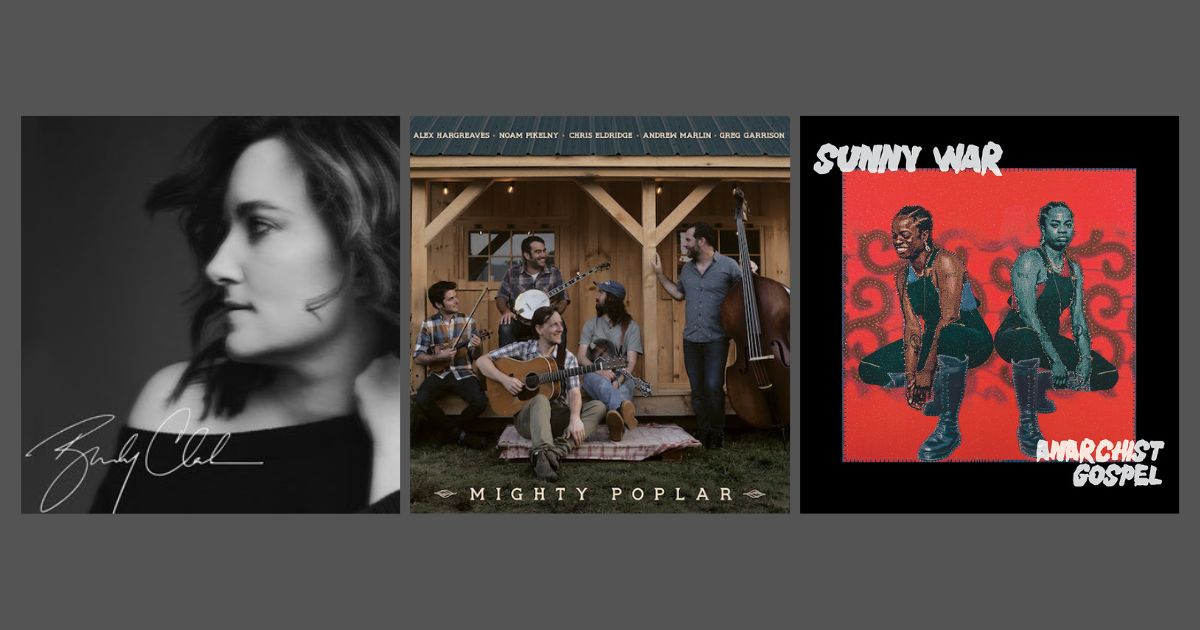
Brandy Clark, Brandy Clark
The BGS team has been fans of country singer-songwriter Brandy Clark for quite some time, so it’s more than a little bit enjoyable to watch as more and more listeners and fans discover Clark. And they have so many pathways to find her, whether through her hit, Tony Award-winning Broadway musical, Shucked, her collaboration with Brandi Carlile – who produced the new, self-titled album – or her many charting hit songs. There’s a point of view on Brandy Clark that we never knew we missed before, a maturity that she never lacked, but she has certainly distilled. It shines in its many spotlights. (Watch for a feature on Clark coming soon to BGS.)
Michael Cleveland, Lovin’ of the Game
Michael Cleveland has won IBMA’s Fiddle Player of the Year award more times than any other fiddler in the organization’s history. His obvious adoration for the instrument – and the life it has led him to – is front and center on his latest album, Lovin’ of the Game. Though he’s collaborated with virtuosos like Chris Thile, Béla Fleck, Billy Strings, and many more over the past handful of years, his perspective remains markedly down-to-earth. As is on display in our Artist of the Month interview from March.
Cat Clyde, Down Rounder
In mid-February, we premiered the music video for the lead single off Canadian alt-folk singer-songwriter Cat Clyde’s album, Down Rounder, and this collection has stuck with us since. For those of us with an affinity for a good red-dirt or red-rock hike, and for western, nomadic, cowboi (that is, all-gendered cowboys) aesthetics – since long before the recent rise of yeehaw culture – this album will provide such perfect daydream scoring. It’s ideal music for journeys internal as well as external.
Iris DeMent, Workin’ On A World
An album of hope – but zero toxic positivity. Iris DeMent knows how it feels to be burnt out, bedraggled, exasperated, defeated. But hope is a radical act and, in those dark moments where hope seems so ethereal and distant, existence is a radical act. The songs of Workin’ On A World never feel preachy or condescending, even while they remind of weeknight church – all-denominational, of course – and raising voices together in the face of oppression and fascism. DeMent isn’t just workin’ on a world, she’s imagining one, too. It’s our job to bring it to fruition, even if we never see it.
Amanda Fields, What, When and Without
Amanda Fields’ voice is impossibly tender, but do not let your guard down or it will bite you just the same. Especially when delivering a bittersweet, southwest Virginia-tinged lyric equally at home played by a bluegrass band or, like on What, When and Without, backed bya vibey, homespun, alt-country sound bed. For a voice and perspective as traditional as her’s, Fields still finds endless new ground to break and lines to color outside of. Her collaboration with guitarist and producer Megan McCormick (who has new solo music coming this year, as well) finds Fields’ musical output climbing to even higher levels of realization, innovation, and professionalism.
Ashby Frank, Leaving Is Believing
Mandolinist, singer, and songwriter Ashby Frank is in the running for IBMA’s Best New Artist award this year, and while reaching the second ballot in this category is certainly a well-deserved recognition, it’s a bit… inaccurate! Frank is not exactly a “newcomer,” as he has been a near permanent fixture in bluegrass, country, and Nashville for the greater part of two decades, performing with outfits like the Likely Culprits, the infamous Darrell Brothers, Special Consensus, Mountain Heart, John Cowan, and so many more. He’s even subbed regularly with the Earls of Leicester – and he’s a hit bluegrass songwriter, too, with charting cuts by Junior Sisk, Dale Ann Bradley, and more. His emerging solo career is where he’s truly hitting his stride, though, and in real time, with this outstanding “debut” on Mountain Home Music.
Brittany Haas & Natalie Haas, HAAS
Genre is dead, we know, but if it hadn’t already been dead, chambergrass, classical-meets-fiddle, string band music such as this would have killed it. It’s a glorious musical territory and is no better inhabited by anyone in this particular scene than sisters Natalie and Brittany Haas, who return to collaborating with one another in an “official” format on HAAS. Sometimes it’s easy to lose sight of just how toxically masculine improvisational, jammy, virtuosic bluegrass and chambergrass have become. An album like HAAS quickly grounds this aesthetic – so far outside the realm of similar more performative, self-indulgent projects – and reminds just how much newgrass and chambergrass are still out there to be discovered and made.
Jaimee Harris, Boomerang Town
A glut of queer country records are being released at this particular moment in time and Jaimee Harris’ Boomerang Town stands out in a niche that’s becoming more and more crowded. No one welcomes this quick change in country music more than ourselves – and Jaimee, too, we’re sure – but with more voices to be heard, one like Harris’ certainly cuts through. Boomerang Town isn’t exactly autobiographical, but it drips with Harris’ lived experiences and plays as if you’re sitting quietly with her, alone in her room, as she picks each intro on her favorite guitar and every track grows into a fully-realized number. It’s a not-so-idyllic snapshot of a hometown, like country does so well, and, like queer folks the world over know so intimately, the exact hometown really doesn’t matter.
Brennen Leigh, Ain’t Through Honky Tonkin’ Yet
We hope Brennen Leigh, a multi-hyphenate picker, performer, and songwriter, is never through honky tonkin’. With her latest Signature Sounds recording Leigh has raised the bar for honky tonk sounds – a bar that should never be re-lowered. Equally at home as a “sideman,” a bluegrass picker, a songwriter (with cuts by Lee Ann Womack and others), and as an in-town Nashville picker, Leigh typifies the country everyman archetype – or, perhaps, the country “renaissance man” archetype. Or both! – while doing it better than nearly everyone else in the game, currently. With Nashville’s best on the album’s roster – as band members or featured artists – Ain’t Through Honky Tonkin’ Yet is a gem.
Darren Nicholson, Wanderer
Mandolinist Darren Nicholson recently left Balsam Range, the North Carolina bluegrass group for which he’s known, after criss-crossing the country – and the globe – with the IBMA Award-winning and Grammy-nominated band for decades. He announced his departure from Balsam Range in 2022 and his first release as a solo artist, Wanderer, is a huge success. Nicholson stakes out and lays claim to his own brand of bluegrass – which is rooted equally in the high country of Western North Carolina (Nicholson hails from Haywood County) and in an effervescent joy. Besides his old-time influenced, traditional mandolin picking, his smile and laugh might be his most recognizable traits. The humor he relishes in life comes forward in his playing, too. Wanderer is a harbinger of many fine solo projects to come from Darren Nicholson.
Nickel Creek, Celebrants
Nickel Creek returned and millennial roots-music fans everywhere rejoiced, joining in the Celebrants celebration. After a nearly ten-year wait since 2014’s A Dotted Line, Celebrants seemed to once again impossibly capture the Nickel Creek lightning in a bottle. A Dotted Line felt mature and confident, self-assured but not cocky. On Celebrants, the throughline could be described as gentleness and gratitude; perhaps from Thile and Sara Watkins both becoming parents in the interim. Nevertheless, Celebrants would have been one of the most notable albums released this year – and for good reason – even without these subtle growth points and nuances.
Mighty Poplar, Mighty Poplar
If ever a bluegrass, old-time, and/or string band supergroup convenes with a pun for a name and we do not react with unabashed glee, please check the collective team BGS pulse. Mighty Poplar checks all of the boxes and then some. Yes, with its particular convention of pickers this album could be seen as a “return” to bluegrass, but that’s perhaps the most boring angle on this fascinating record. It’s not merely a return to the format that musically birthed each of these instrumentalists (Chris Eldridge, Greg Garrison, Alex Hargreaves, Andrew Marlin, and Noam Pikelny), it’s a demonstration in bluegrass not just as an aesthetic and tradition, but bluegrass as expression.
Molly Tuttle & Golden Highway, City of Gold
Though we still have a couple of weeks until City of Gold drops, Molly Tuttle is our current Artist of the Month and we would be remiss to not include the most buzzed about bluegrass album of the year on this list. Singles “El Dorado” (above), “Next Rodeo,” and “San Joaquin” are out now, tempting and teasing another record influenced so heavily by Tuttle’s growing up in the bluegrass scene of California and the West Coast. Her band, Golden Highway (Bronwyn Keith-Hynes, Dominick Leslie, Shelby Means, and Kyle Tuttle) are featured heavily on City of Gold, for which Jerry Douglas returns to producing. Turns out it’s been Molly Tuttle & Golden Highway at the end of the rainbow this whole time!
Kassi Valazza, Kassi Valazza Knows Nothing
Kassi Valazza Knows Nothing, but she does know the power and magic of live recording. Her brand new album, tracked with backing band, fellow Portland, OR-based artists TK & the Holy Know-Nothings, was all tracked live, including vocals. As a result, the entire record buzzes with energy, whether toe-tapping or subdued. Sometimes, it’s a calm, warm, and honeyed patina that feels solemn and poetic, but ultimately, the entire collection is danceable. It’s tear-in-your-beer country and boot-scootin’ country – but that doesn’t make it simplistic. Which might be surprising, from someone who famously knows nothing.
Sunny War, Anarchist Gospel
Sunny War’s latest album, Anarchist Gospel, finds her sound having grown and expanded, while still held together by the most fantastic of glues: Her confounding and entrancing right hand. Yes, War combines DIY music, punk, and grunge with roots music and fingerstyle blues, but that’s decidedly not the point – certainly not the centerpiece – of her art-making. (Despite what the guitar bros might tell you.) The truth is, at times, so much more complicated. At others, it’s really quite simple and literal. As she told us in an interview from earlier this year, she just plays the songs, the licks, the hooks, the lyrics as they’re meant to be played. And anarchy isn’t just a concept.
Bella White, Among Other Things
Bella White’s breakout debut, Just Like Leaving, had already been released when she signed to Rounder Records, who then picked up and distributed the album. It received widespread acclaim as her Alberta- and Virginia-influenced bluegrass sound and Gillian Welch-like lyrics resonated with listeners and critics alike. Her brand new album, Among Other Things, then, feels like both a debut and a sophomore outing, devoid of any sort of “sophomore slump,” but capitalizing on the excitement she continues to generate in the bluegrass realm and well beyond it, too. We featured the new project with an interview in May.
Julie Williams, Julie Williams EP
We first became acquainted with Julie Williams’ music through Black Opry, the artist collective and revue who were our June Artist of the Month. In the Black Opry Revue’s simple, writers’ round format, her songs shone, gorgeous even in their very simple trappings. On her new EP, each of her songs are given the full treatment they deserve. Though they never feel lacking when delivered intimately and stripped down, unencumbered, Williams’ songs in this context soar, especially because they each give us an individualized window into her creative process, her songwriting imagination, and the production landscape she’ll continue to conquer into the future.
Jess Williamson, Time Ain’t Accidental
In May we premiered “Chasing Spirits,” a delightfully hooky number from Jess Williamson’s latest album, Time Ain’t Accidental, which we are glad to return to here. (Williamson, you may know, is one half of duo Plains with Waxahatchee’s Katie Crutchfield.) Time Ain’t Accidental finds its home base where Williamson was raised, in Texas, and while it processes and puts under the microscope a past, failed relationship, this album is about movement, regeneration, and forward momentum. That she accomplishes this with imagery that’s pastoral, stark, and bristling is not an accident, either.
Folks in the bluegrass world have been watching Molly Tuttle’s star rise since long before her Grammy-winning 2022 album, Crooked Tree, has added even more momentum to the award-winning flatpicker’s career. Though we first crossed paths much earlier, we spoke to Tuttle initially in 2017 for an edition of Deep Sh!t that put her and guitarist James Elkington on the phone together. Even then, Elkington went out of his way to laud Tuttle’s playing, placing it on the same level as his own. (Tuttle, in a turn of mutual admiration, praised Elkington’s picking above hers, of course.)
This is a consistent phenomenon in musicians, songwriters, producers, and instrumentalists who encounter Tuttle’s work: They are all astounded by it; They all feel and hear genius within it. Tuttle is sometimes – no, often – your favorite musician’s favorite musician. Certainly your favorite musician’s favorite flatpicker.
At numerouspoints over the years since that first interview, the BGS team has latched onto songs and recordings by Tuttle. We’ve had the privilege of inviting her to join BGS lineups and stages and we’ve published more than a handfulofinterviews, as well, watching and documenting a career and creative output that continue to enjoy rapid-yet-meaningful growth. From our earliest premiere of “Good Enough” all the way to anchoring a BGS Cover Story, as Tuttle has advanced through the music industry, we’ve watched and written about those changes and the distance she’s traveled.
It’s fitting, then, as Tuttle and her band, Golden Highway, ready a second album on the heels of the wildly successful Crooked Tree, that they should at last be named BGS Artist of the Month. We know listeners and fans, whether brand new or veteran, will understand and appreciate how much pleasure and joy we have gained over the years from Tuttle’s songs, her creative vision, her passion, and perhaps above all, her fiery picking. It makes naming Tuttle our Artist of the Month that much more gratifying, highlighting the real reason we make BGS in the first place: our community.
After having a star-studded roster on Crooked Tree helmed by producer (and guest artist) Jerry Douglas, Tuttle has focused her vision slightly for City of Gold, which releases July 21 on Nonesuch Records. Douglas returns as co-producer. The new album, like the former, drips with the imagery, mythos, and mystique of California, drawing on West Coast influences like the Grateful Dead, Laurie Lewis, Kathy Kallick, and folk revival, troubadour singer-songwriters. But, instead of a rotating cast of characters and besides a stout handful of featured artists, this record centers Tuttle and her full-time road band, Bronwyn Keith-Hynes (fiddle), Dominick Leslie (mandolin), Shelby Means (bass), and Kyle Tuttle (banjo).
This lineup and the material of the Golden Highway era all seemingly mock the rare critics and naysayers of Tuttle’s music, who, especially in the earliest days of her career, could sometimes be heard describing her songs and singing as toothless or lacking energy or grit. At their sold out theater and club headline shows or in front of thousands at music festivals, Molly Tuttle and Golden Highway’s performances are jaw-dropping, electric (literally and figuratively), and enormous – fully realized. It’s jamgrass without valorizing toxic masculinity; it’s “MASH,” but with taste; it’s a shredfest, but it’s also emotive and vulnerable and theatrical.
That Tuttle’s found her stride while “returning” to bluegrass – whether intentionally, subconsciously, or merely as a framing and narrative device – is striking and impressive. There are many songs, stages, and Artist of the Month features yet to be conquered down the Golden Highway.
Watch for a special Artist of the Month episode of Basic Folk later in July featuring Tuttle as well as an interview with her band, Golden Highway. For now, enjoy our Essential Molly Tuttle Playlist.
The queen returns and she’s kicking ass and taking names. Molly Tuttle’s new video for the single “Next Rodeo” debuted last week, and with it comes an album announcement from the multi-IBMA-Award and Grammy-winning flatpicker extraordinaire.
A film by Edgar Evin, the “Next Rodeo” video finds Molly & Golden Highway (comprised of Bronwyn Keith-Hynes on fiddle, Dominick Leslie on mandolin, Kyle Tuttle on banjo, Shelby Means on bass, and Jordan Perlsan on drums) getting even with a cheating ex — complete with kidnapping, duct tape, and a super-spicy helping of “Goodbye Earl” vibes.
Tuttle’s new album, City of Gold, drops on July 21 with Nonesuch Records. Each track was co-written with Old Crow Medicine Show’s Ketch Secor and co-produced with bluegrass legend Jerry Douglas.
“When I was a kid we took a field trip to Coloma, California, to learn about the gold rush,” Tuttle said in a statement, revealing the inspiration behind the record. “I’ll never forget the dusty hills and the grizzled old miner who showed us the gold nugget around his neck—just like gold fever, music has always captivated me and driven me to great lengths to explore its depths.”
Songs include spellbinding tales about gold miners, fortune tellers, love and loss and a fast-changing world — as well as a reimagining of Alice in Wonderland set in the backwoods of Kentucky. City of Gold is a follow-up to 2022’s Crooked Tree, a beloved LP that won the Grammy Award for Best Bluegrass Album. Tuttle is also the first woman to win the IBMA’s Guitar Player of the Year award and a member of the First Ladies of Bluegrass — so you won’t want to miss her new release.
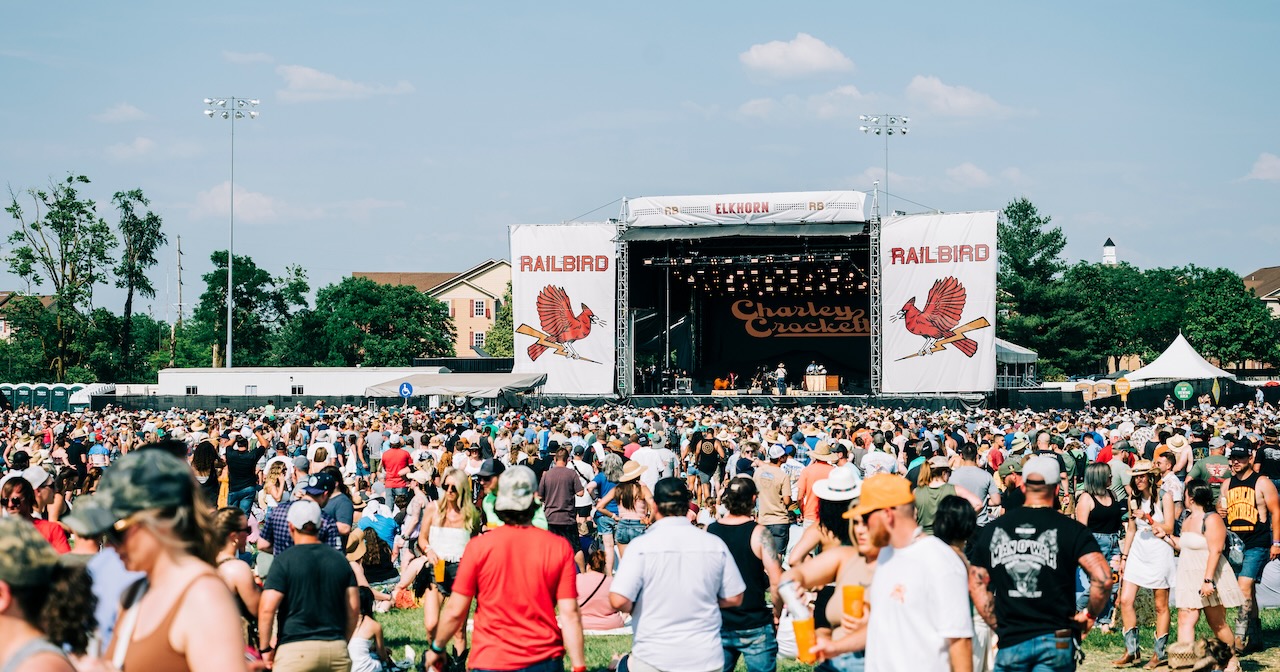
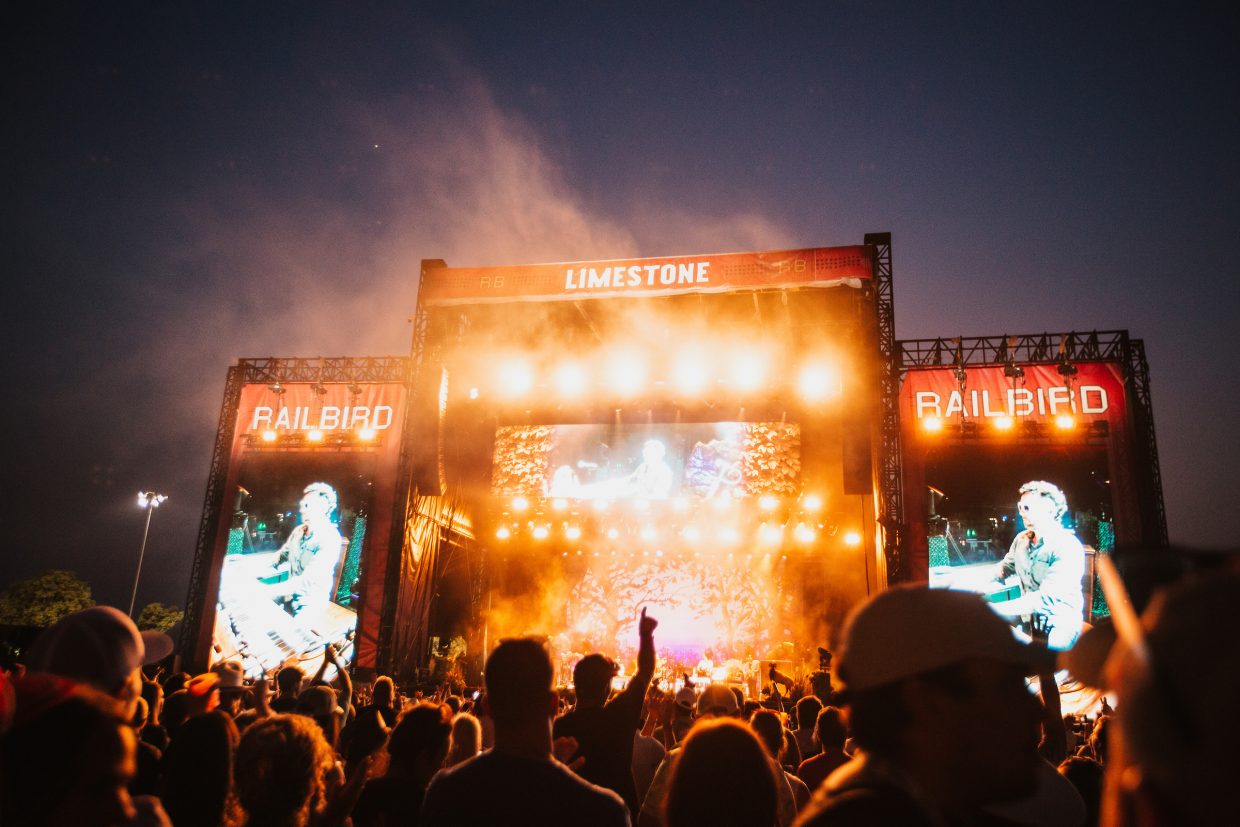
Highlighting the confluence of roots music and the mainstream, Railbird Festival welcomed 32 acts from across the rock, folk, and bluegrass spectrum to Lexington, Kentucky on June 3-4.
Boasting headliners Tyler Childers and Zach Bryan, plus Charley Crockett, Whiskey Myers, Nickel Creek and more, a sold-out crowd of 40,000-plus helped kick off festival season with a uniquely “Americana” lineup – drawing attention to this hidden gem of a city.
Set in the heart of Lexington and spread across three massive stages and a spacious lawn at The Infield at Red Mile (usually a horse racing venue and casino), 2023 marked the third year of a festival turning the “horse capital of the world” into roots-music central while celebrating the rich musical history of the area.
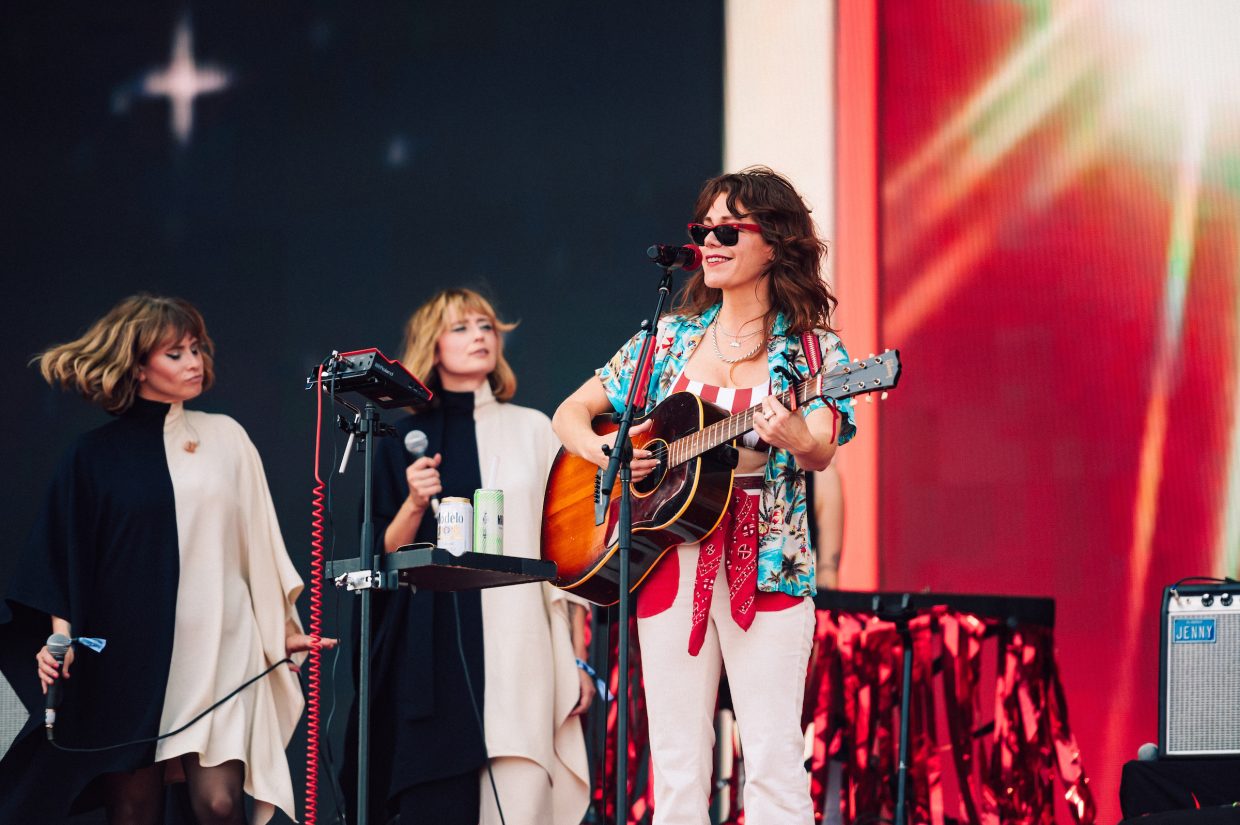
Jenny Lewis (R) with Lucius by Nathan Zucker
Day one kicked off with perfect festival weather– meaning it was blazing hot and dry as a bone. That was no worry, however, since Railbird also featured three huge shaded areas, plenty of refreshments (it is bourbon country, after all) and a merciful breeze. From just about anywhere on the grounds, fans could see everything all at once – and that included 2023’s festival-season fashions.
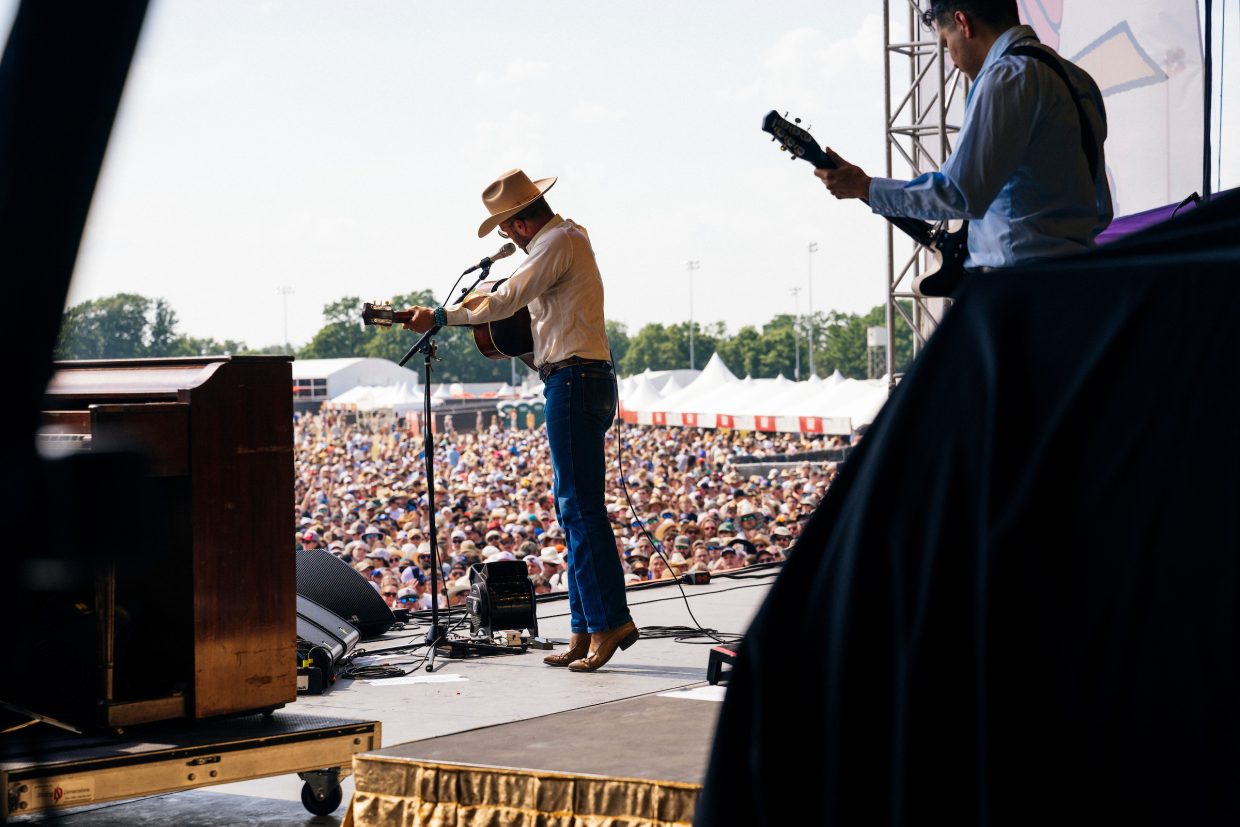
Charley Crockett (L) by Charles Reagan
Indie pop chanteuse Jenny Lewis was an early draw, singing smart tunes about “psycho men” and hypoallergenic puppies – and also welcoming Lucius, the Grammy-nominated duo who became something like the fest’s house band, for a rich duet.
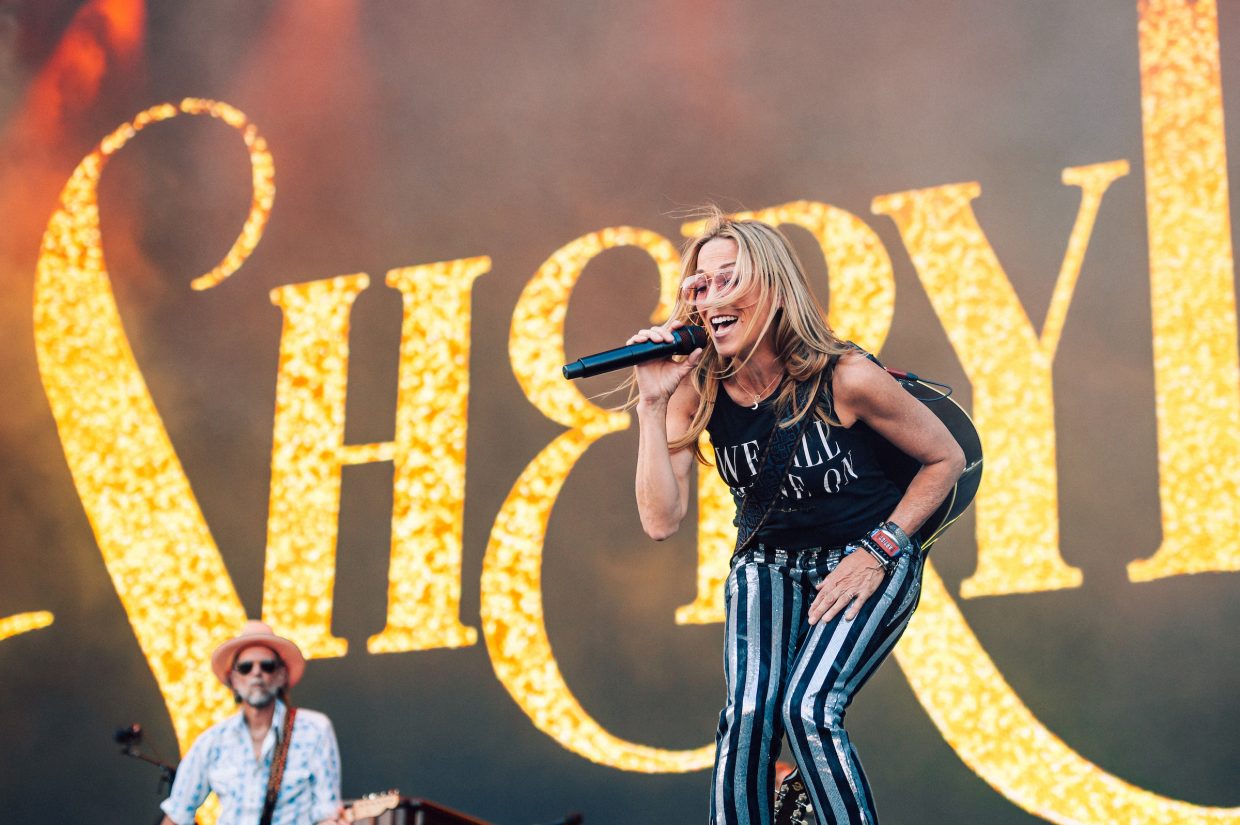
Sheryl Crow by Nathan Zucker
Later on, Charley Crockett herded everyone to the Elkhorn stage for some ballads from a modern day drifting cowboy. And Sheryl Crow showed she could still hang with the kids, even calling for more of them in politics. “I don’t have a lot of hope for people older than me,” the feisty icon said. “But you can bring change.”
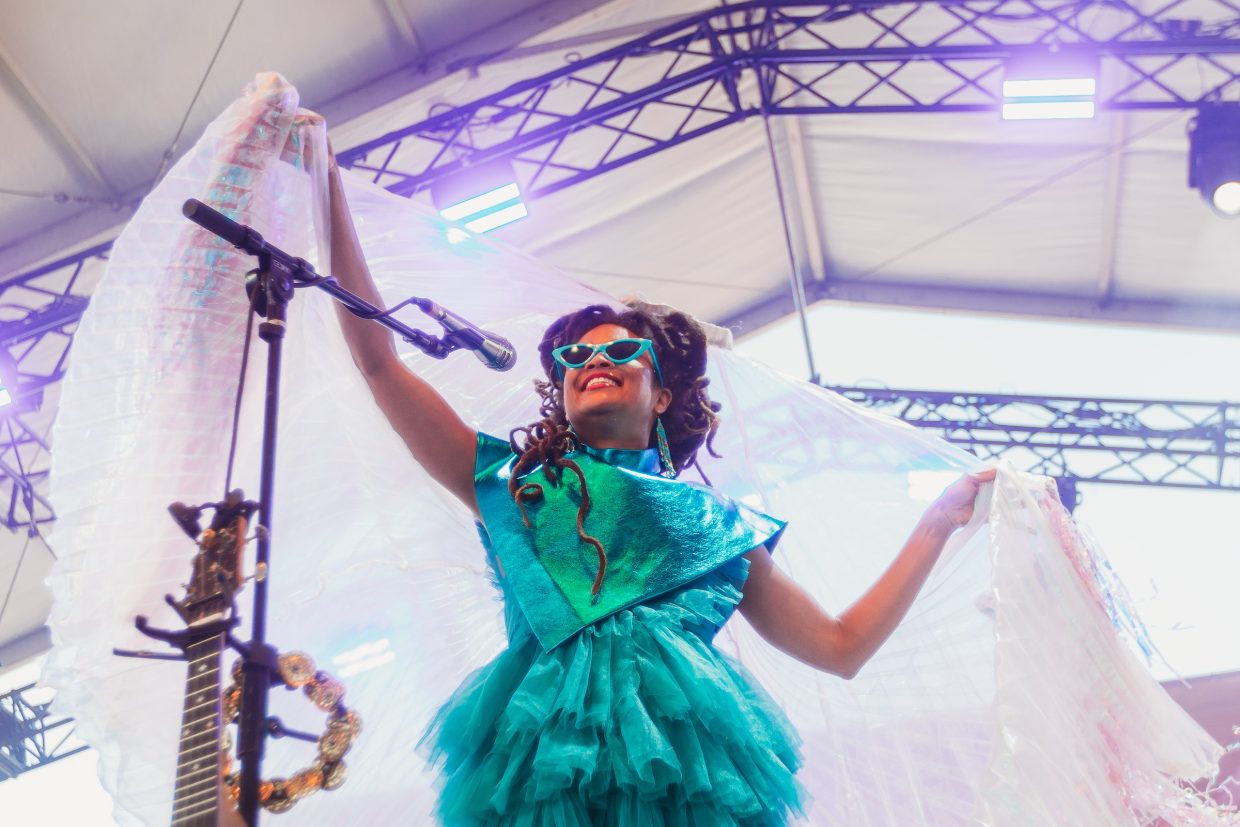
Valerie June by Cora Wagoner
Whiskey Myers brought their own gasoline (and a match), firing up a midday crowd with their rowdy roadhouse rock, and while Valerie June won her crowd over with a big smile and songs connected to the Black-folk past, emerging phenom Morgan Wade unleashed the pent up anger of country girls everywhere, sounding like a combination of Courtney Love and Loretta Lynn.
Morgan Wade by Taylor Regulski
Nineties alt-heroes Weezer united the crowd in a full set of fuzzed out awkward-teenager anthems – but also showed where they fit in the roots world, breaking out some old-timey three part harmony – and the day came to a close with breakout superstar Zach Bryan.
Zach Bryan by Charles Reagan
A self-made headliner who still carries the underground spirit, he gathered the whole crowd as the sun went down, doing his best to stay a songwriter who “keeps truth in songs.” Leading a country band with strong Class of ‘89 vibes, he mixed tender-but-edgy confessions with a well-placed vocal growl, and finished the night off in awe of the Railbird crowd, noting he was on the fest’s smallest stage just a few years earlier.
“I’m nervous as shit!” Bryan admitted. “Never in my life did I think I’d be after Weezer or Marcus Mumford.”
Marcus Mumford by Charles Reagan
Day two started off much the same as the first: hot and sunny, but with a marked increase of tow trucks prowling the Red Mile area. Great herds of humanity seem to migrate from one stage to the next, with wide smiles and a rootsier, more-acoustic lineup for them to enjoy. Luckily, the pacing was excellent and there was rarely any conflict over which stage to check out.
Sierra Ferrell by Cora Wagoner
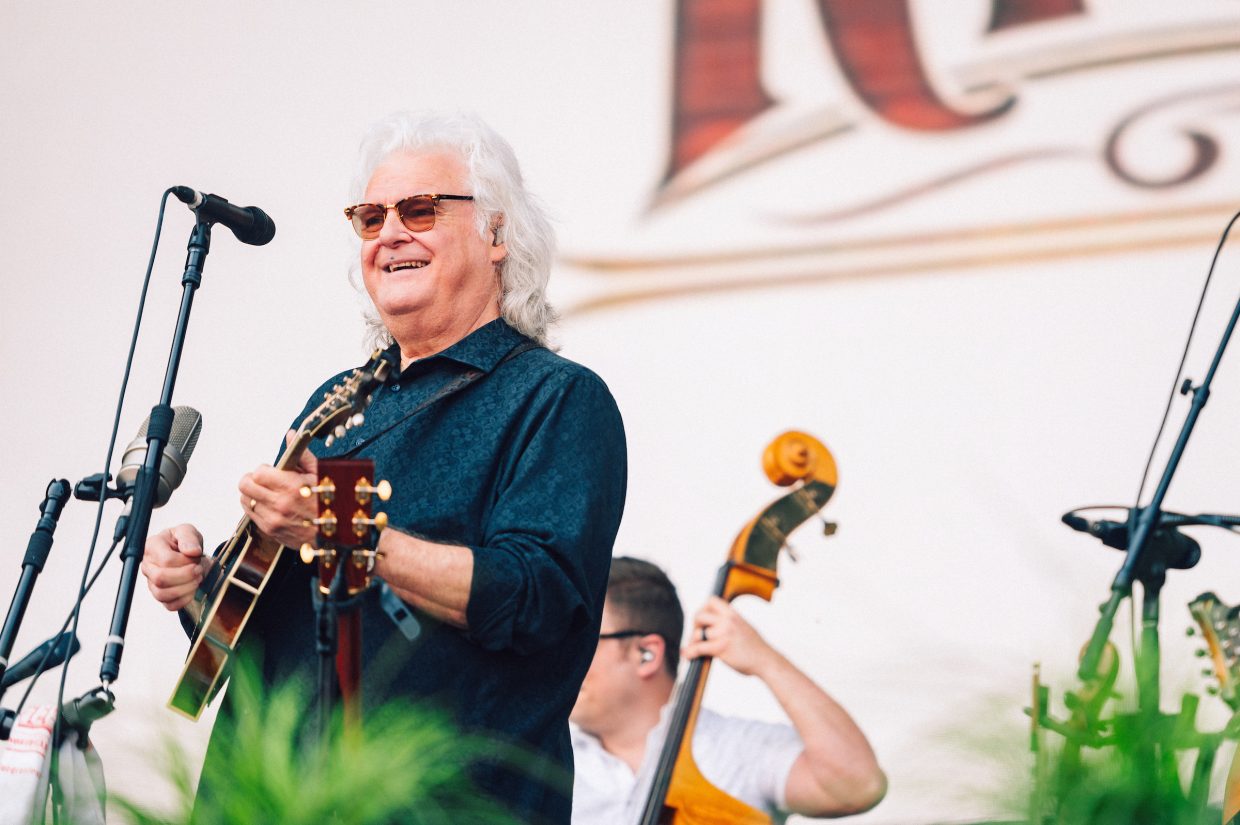
Winchester 49 took over the big stage early, dodging beach balls and blasting their gritty country/rock/soul as they welcomed the crowd back with calls to drink up life (and beer.) Old-school master Sierra Ferrell had everyone dancing a throwback jig, and while Flipturn mixed fiery rock grooves with huge, danceable swells of energy (like EDM on electric guitars), Ricky Skaggs charmed as the fest’s elder statesman, and Kentucky treasure.
Making bluegrass look beyond easy (maybe more like effortless), a “RICKY!” chant soon broke out as parents answered questions from dumbstruck kids, like “Is it just him playing right now?” – once again proving the timeless, ageless wonder of acoustic music.
Nickel Creek by Charles Reagan
Nickel Creek seasoned their simple ingredients with a playful edge, returning for their first tour as a blood-bonded neo-bluegrass trio in quite a few years, while Amos Lee sampled everything from Memphis soul to Bob Marley and a bit of New Orleans funk.
Amos Lee by Taylor Regulski
Town Mountain found a welcome home for its foot-stomping, wild-child alternative-grass over at the covered Burl stage – as did Molly Tuttle (who will surely be on a bigger stage next year) and Charles Wesley Godwin, the West Virginia troubadour who welcomed night-one’s headliner back for a re-energizing duet, late in the festival and just before its biggest draw.
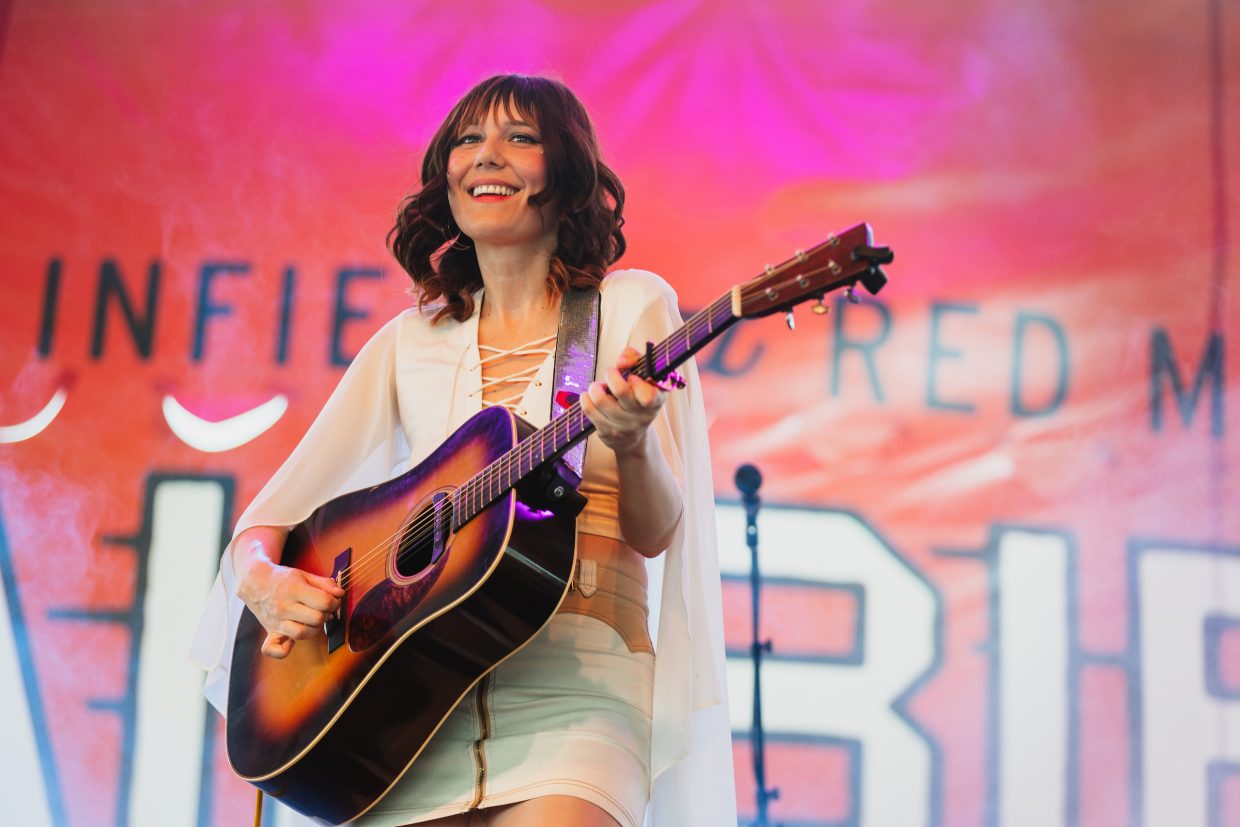
Molly Tuttle by Cora Wagoner
That moment finally came as the deep-red Strawberry Moon rose over Red Mile, with Tyler Childers putting a bold, indie-country cap on an already special event.
Tyler Childers by Charles Reagan
Welcomed to the stage by Lexington Mayor Linda Gorton – who proclaimed June 4, 2023 as Tyler Childers Day – the Lawrence County native arrived carrying the whole state’s roots-music tradition on his small frame, and never put a foot wrong.
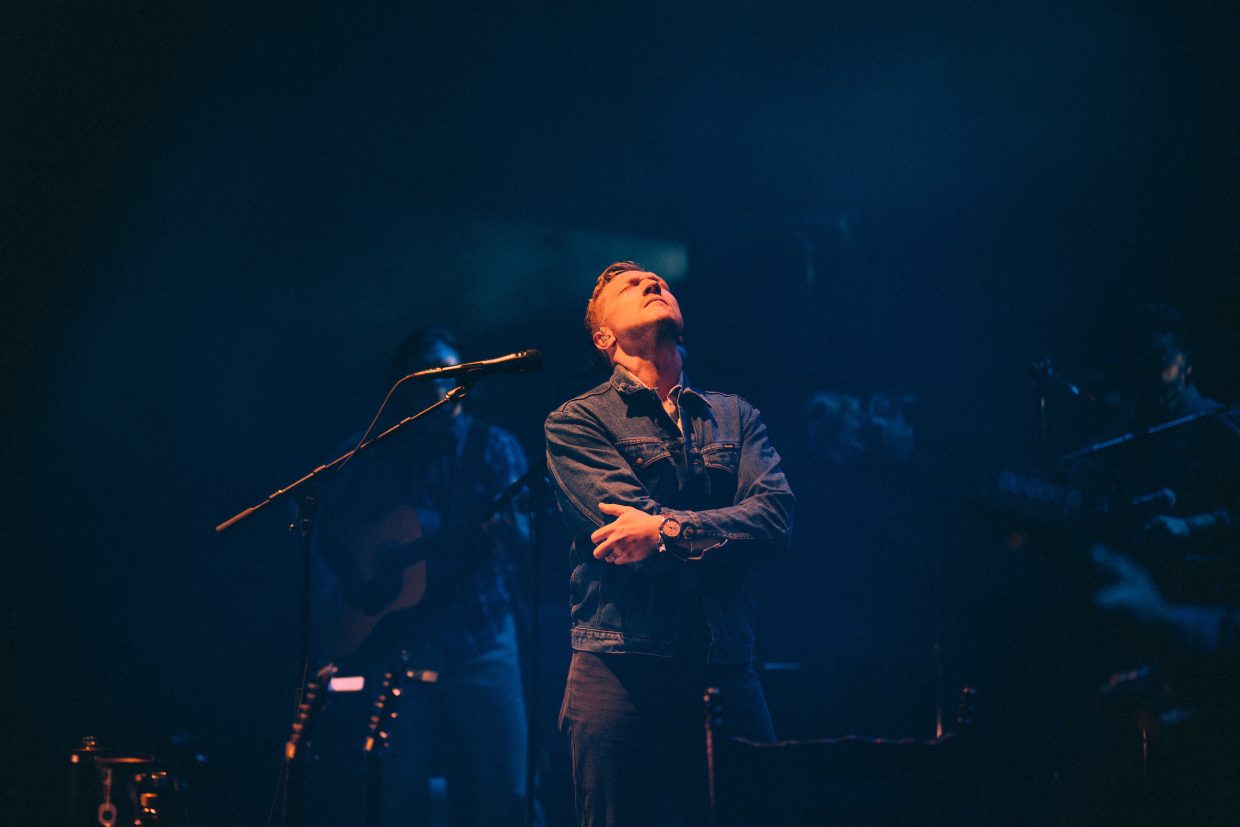
Humble as ever and wielding the witty cadence of a carnival barker, he presided over a rabid hometown crowd in a jean jacket and rusty-blond hair, matching a voice that could cut Kentucky limestone with hardscrabble poetry just as sharp.
Tyler Childers by Charles Reagan
Over a two hour set, all of Lexington seemed to sway and sing along, closing the weekend with proudly down-home tracks like “All Your’n.” On the surface, it’s a holler-kid’s rebellious pledge of true love, that’s obvious enough. But in this case, that pledge seemed applicable in other ways – to the fans, to roots music, to Lexington. Perhaps even to the Railbird Music Festival itself.
“I’ll love ya ’til my lungs give out / I ain’t lying,” Childers and his audience sang. “I’m all your’n and you’re all mine.”
Tyler Childers and band by Cora Wagoner
Photos courtesy of Railbird Festival Lead photo credit: Taylor Regulski
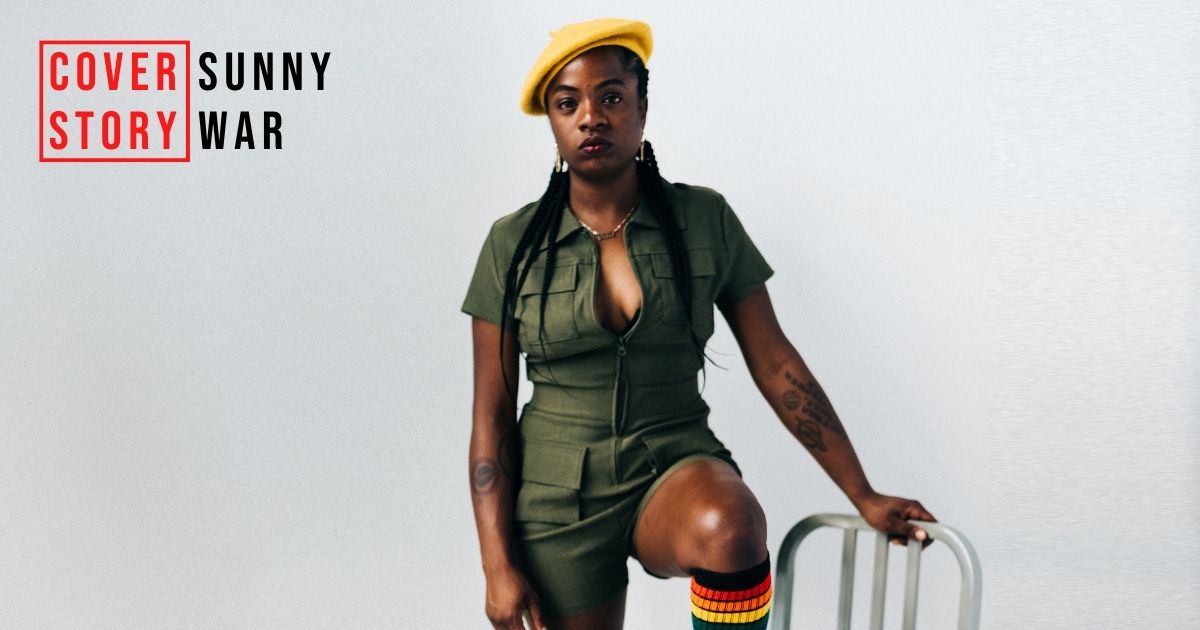
Sunny War’s stunning new album, Anarchist Gospel, is never preachy, because it doesn’t need to be. War’s evocation of both anarchy and gospel in this context is strikingly grounded, blossoming from everyday understandings and interactions with each concept. And deeper still, in these sweeping, grand arrangements built on sturdy bones of fingerstyle, folk-informed right-hand guitar techniques, she indicates actions really do speak louder than words.
These songs are active. Bold, resplendent, and broad with dense, fully-realized production leading to tender, contemplative, and microscopic moments, War draws from her lived experiences, her days and years navigating poverty, living unhoused, sheltering in abandoned buildings, relying on and offering mutual aid, to direct messages of hope, resilience, resistance, and joy, not just to us, her listeners, but also to herself.
Perhaps that’s why, in this collection of songs born out of a harrowing and challenging emotional, spiritual, and mental period of Sunny War’s more recent past, there is so much hope in hopelessness, a constant – though sometimes minute – light shimmering at the end of the tunnel. Anarchist Gospel isn’t preaching at us, because she is compassionately, kindly, and tenderly talking to herself. And we all, as listeners, audience members, and fans, are just so fortunate enough to be brought into this internal dialogue, from which we can learn and challenge ourselves, and each other, to make a better world for everyone right now.
It’s a record whose underpinning moral-to-the-story is never burdensome or heavy, but rather uplifting and soaring, exactly as an Anarchist Gospel ought to be. We began our Cover Story interview connecting with Sunny War at home in Chattanooga over the phone, discussing how anarchy is not simply an academic concept, but a real, everyday practice.
I know that in your life, anarchy isn’t just a concept, it has a very real, concrete application in your day-to-day. I think first of your work with Food Not Bombs and the mutual aid work you’ve done in Los Angeles – and wherever you’ve lived. A lot of people right now, especially in younger generations, have frames of reference for anarchy and collectivism and mutual aid work, but usually in the abstract. As if these concepts can only be for some imagined future. So why is anarchy something you wanted to represent in the album and its title, and what does the concept of anarchy mean in your life?
Sunny War: The album title isn’t really political, to me. I felt like the big choruses [on the album] felt gospel in a way, but it wasn’t religious so I felt like it was Anarchist Gospel. It was really because of the one song, “Whole,” where I just felt like the message of the song was kind of about anarchy, in a way that most people could understand. I guess I’m more of a socialist now, but it’s the same sentiment. I just want people to have what they need. That’s more what anarchy means to me. It seems like it’s government that’s in the way of people getting what they need.
For me, it’s more personal. When I was homeless, a lot of times we would be living in abandoned buildings and we’d get arrested for that. Anarchy, to me, means, “Why can’t we be here? Nobody else is going to be in here. Why are you keeping us from this?” It feels weird that we don’t get to claim where we live, but other people do. Why do they have more rights to the same places? I don’t know if that’s anarchy, so much as I just think people have a right to everything.
It feels like there’s this agnosticism to the album, this come-togetherness, as something we can all feel and inhabit without necessarily being called to by a higher power. We really can all realize, whatever our starting points, that all we have is each other.
I’m not against people that need God, or whatever. I’ve been in places where I’ve felt like I wanted to believe in that before, so I can relate to where that comes from. But then, I don’t know… [Laughs] Whether it’s religious or spiritual, I don’t know.
This sounds like a record where we’re all supposed to be singing along. Part of that is the gospel tones, the title but also in the genre and production style, but part of it is also the messages here. Uplifting people from darkness, hope in hopelessness – so to me, so many moments on this album feel like church!
I love church! I grew up in church – well, I don’t love church, but I love gospel. I still listen to gospel and I guess I’m being nostalgic, but also it just slaps. That’s just good music. If you like original R&B, it’s the basis of so much of American music. I wish it was a little more, I dunno… I guess I wish it wasn’t religious. [Laughs] Then I’d really be into it. But it’s cool how it is.
In the moments in this record that feel like they’re at the lowest point, I still hear so much hope. I hear surrender in this album, not the kind that’s giving up, but the kind that feels generative and hopeful – especially in “I Got No Fight” and “Hopeless” and “Higher.”
This record was a lot of me talking to myself. It’s definitely the loneliest I’ve ever been writing something. Every other album I’ve ever made, I was in a relationship. This was different. After me and my ex broke up, I wasn’t even really socializing with my friends, because we had the same friends and I was embarrassed about our break up. I was so bitter, I didn’t want to be around anyone. I felt like I couldn’t be around anyone. I was barely leaving the house, I was isolating myself and got really morbid. I wasn’t turning lights on. [Laughs] I would sit in the dark a lot, I was lighting candles – [Laughing] I don’t really know what was going on, but it was mostly bad, I would drink a lot, and then I’d be like, “I’m drinking too much, I gotta get sober.” It would just repeat over and over again. But I was desperately trying to finish the album, because I was broke. I had the deal with New West, but I still had to produce the album before anything could get rolling. It was just what I had to do, but I was also going insane at the same time, and really angry.
Do you feel like making the record brought closure to any of that for you? I feel like I can hear a release of tension in this album, but I wonder where that comes from, because so many of the songs, individually, have these big, emotional releases. How does it feel to be at this point, looking back with the clarity you have now?
The second I wrote “I Got No Fight” I remember immediately feeling better. I made the demo, and afterwards it made me feel like I was just having a tantrum. But it was like I had to make the song to really understand what I was going through. After making the demo, I realized, “I am just freaking out, I think I’m having a panic attack.” After hearing this song, it helped me understand like, “This is not real, this is just a temporary feeling.” But I couldn’t really feel anything else until after that.
I have spent so much time over the past couple years trying to teach myself that the point of feelings is to feel them.
Yeah, but they suck most of the time. [Laughs] I don’t want most of them.
The line in that song, “Sometimes the end is the only light I see,” might be my favorite line on the record. There’s nihilism and existentialism in it, but it doesn’t feel hopeless or despairing. It’s kind of a cheerful, “Oh right! Nothing matters!” Where did that line come from for you?
That gets me through the day, a lot. Sometimes I think of life as just a jail sentence and I always think like, “Well, I probably am only going to live fifty more years at the most.” Sometimes that helps me get through the day. [Laughs] I know that that sounds negative, but that can really be uplifting if you chose for it to be!
It feels a lot lighter, to me at least, once you realize that nothing matters. Suddenly you can laugh a little bit more, improvise more – like lately, I’ve been trying to accept that I have no idea what I’m doing. I’m trying to get comfortable with it. In my twenties, I felt like I was trying to make plans all the time, planning so far into the future and just getting disappointed with stuff. It’s better to [recognize] – which is almost like religious people – you’re just powerless. Just try to eat something, drink some water. [Laughs]
Let’s talk about your guitar playing. I love your right hand so much. I think what’s entrancing about your guitar on this album is that it’s holding these songs together, but not as much as a rhythmic instrument or comping instrument, like in your past records. It’s more textural, to add depth and complexity, but your playing is still so hooky, melodically. Your personality comes through the guitar on top of all of these tracks. How did you accomplish that balance, having the guitar front and center and immediate, but it’s also not necessarily the centerpiece of these songs?
I think it’s because this is the first record where I knew how to use Logic, so my demos were almost full tracks already. I was adding keyboard and bass and programming drums to things before even going into the studio. A lot of the songs are all based on riffs that I’ve had for a while, that I couldn’t figure out how to use. Before, a lot of my other stuff, I was just writing a song. Now, I just collect guitar parts and I try to make them work in something, but I don’t really have a [plan for them, initially.] I’m basing it more off the guitar parts now.
How do you like the banjo? Is this the first time you had banjo on a record?
Yeah!
What do you think writing on the banjo leads you to that a guitar or keys or writing on another instrument wouldn’t lead you to?
Anything that’s tuned differently makes me have to think differently about stuff. I still don’t really “get” the banjo, it’s weird because I have had a banjo for over 10 years now, but it still seems like something I’m trying to learn about. I just recently got okay with being like, “I’m just going to make sounds with it.” I’m not going to try to “learn” it. [Laughs] I definitely want to make more songs with the banjo – and maybe even without a guitar, and see what that’s like. Some of my favorite buskers I’ve ever seen are just a singer with a banjo. I think it makes people sing different. I gotta get my banjos out now…
Guitar culture – guitar shop culture, guitar show culture – it’s such a toxically masculine scene, and it’s so competitive and punishing, that I kind of have realized over the past few years that the people helping me realize I still love the guitar and guitar culture are all women and femmes. Like, Jackie Venson, Molly Tuttle, folks like Celisse and Madison Cunningham, or like Kaki King and Megan McCormick and Joy Clark – I can think of so many guitarists who aren’t just really good, but they’re also pushing the envelope, they’re innovating, and they have really strong perspectives and voices on the instrument, like yourself. So I wanted to ask you about your own relationship with guitar culture and the guitar scene, because as a queer banjo player who loves music, I kinda hate people who love guitar. But I’ve been so grateful that all these women are reminding me I can love guitar and it’s not just a patriarchal, toxically masculine instrument and scene.
I just try to stay out of it. Sometimes at shows, guitar guys talk to me and I just tell them, “I don’t know. I don’t know.” [Laughs] Because I don’t want to get into any discussion about it. I know a lot of people who can really play, but [guitar guys] make it so you have to be kinda crazy, kinda obsessive. And it’s so competitive. That doesn’t sound fun to me. I don’t get how that’s fun anymore. It’s not art, at that point. It’s almost like a sport. Which you can, go ahead and practice scales all day so you can play the fastest, but then a lot of times people can be really technically good, but there’s no soul in it. They’re just trying to cram as many riffs into something as possible. They take all the art out of it, they’re technically playing perfectly, but I don’t feel anything.
I would much rather be listening to my favorite guitar player, who is Yasmin Williams. It’s not just because of technical ability, but because it’s progressive. I’m like, “That’s outta the box, I don’t know where that’s going.” That’s what I like about it.
Four of the most accomplished women in roots music were announced as winners at the International Folk Music Awards in Kansas City, Missouri, on Wednesday, February 1. The ceremony served as an opening night celebration for Folk Alliance International, the annual conference that runs through Sunday, February 5.
Janis Ian, a longtime folk favorite, earned Artist of the Year honors, while Molly Tuttle & Golden Highway’s Crooked Tree was named Album of the Year. There was a tie in the Song of the Year category, with Aoife O’Donovan’s “B61” and Anaïs Mitchell’s “Bright Star” sharing the award.
In addition, the Elaine Weissman Lifetime Achievement Awards were presented to honor the cultural impact of legendary folk music figures: one Living, one Legacy, and one Business/Academic. As previously reported, this year’s honorees are Janis Ian; the late folk and blues singer Josh White; and Oh Boy Records, the independent record label co-founded by John Prine in 1981.
For more about Folk Alliance, check out our BGS preview about the 2023 event.
This website uses cookies to improve your experience. We'll assume you're ok with this, but you can opt-out if you wish.AcceptRejectRead More
Privacy & Cookies Policy
Privacy Overview
This website uses cookies to improve your experience while you navigate through the website. Out of these, the cookies that are categorized as necessary are stored on your browser as they are essential for the working of basic functionalities of the website. We also use third-party cookies that help us analyze and understand how you use this website. These cookies will be stored in your browser only with your consent. You also have the option to opt-out of these cookies. But opting out of some of these cookies may affect your browsing experience.
Necessary cookies are absolutely essential for the website to function properly. This category only includes cookies that ensures basic functionalities and security features of the website. These cookies do not store any personal information.
Any cookies that may not be particularly necessary for the website to function and is used specifically to collect user personal data via analytics, ads, other embedded contents are termed as non-necessary cookies. It is mandatory to procure user consent prior to running these cookies on your website.