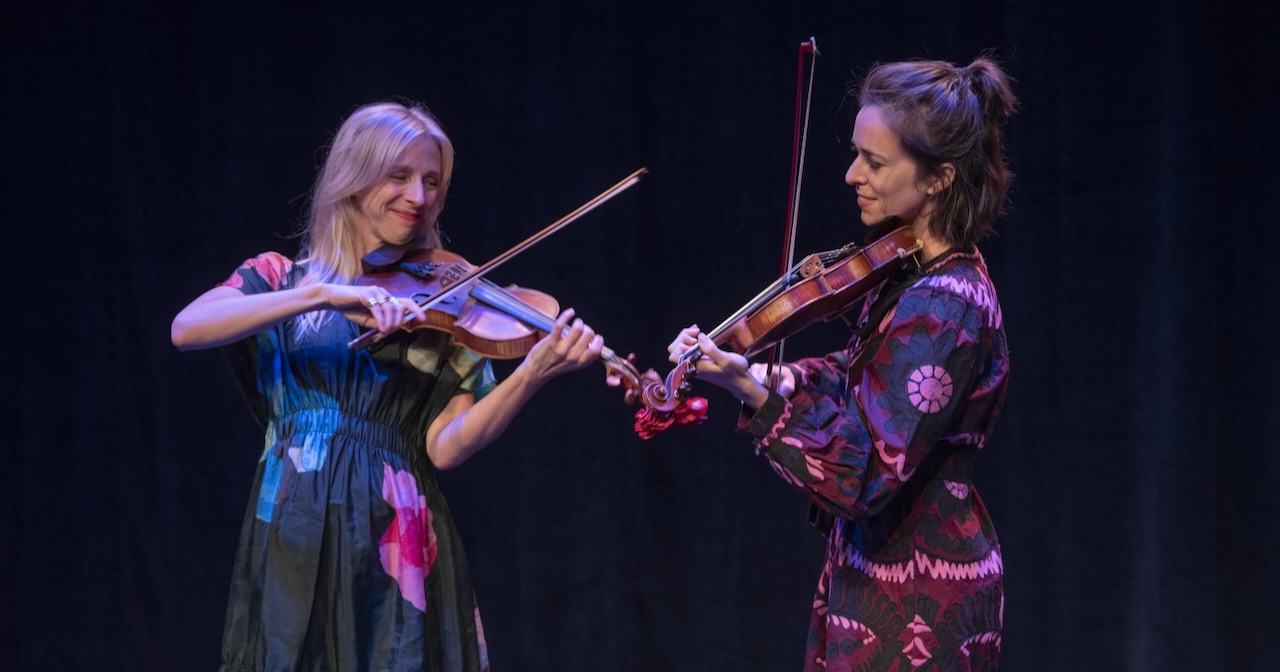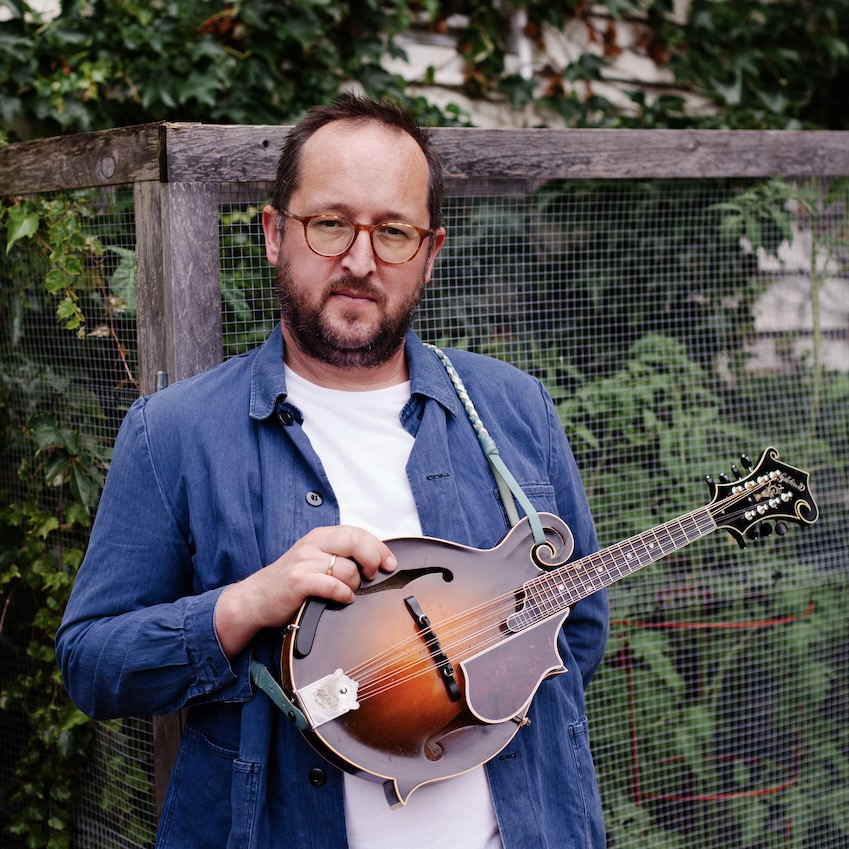
Mandolinist Joe K. Walsh on Building ‘Trust and Love’

On April 4, Joe K. Walsh released his latest album, Trust and Love. The project is an utterly gorgeous take on minimalism within music. It combines a unique instrumentation of Joe (on the mandolin family instruments), Rich Hinman (guitar, lap steel, pedal steel), Zachariah Hickman (bass), Dave Brophy (drums and percussion), John Mailander (fiddle, except track 2) and Bobby Britt (fiddle, track 2).

I’ve been very fortunate to get to study mandolin with Joe as my teacher for the last four years at Berklee College of Music. In talking with him about Trust and Love, what stood out to me in a significant way was the excitement he has in making music with his friends and finding music that brings a great amount of joy. Often as musicians, we lose track of the point of playing music–to bring joy to ourselves and those who are listening to it. Joe has always emphasized this and in listening to his new album, it brings home this powerful message.

What was the inspiration of the album and when did you start writing it?

Joe K. Walsh: Well, I’m always writing. Every day I try to write, I think it’s a good goal. I like the concept of not waiting for inspiration and there’s that line Bill Frisell had in his notebook which was, if you want to learn how to write, pick up a piece of paper and a pencil or something like that, just start doing it. So I try to write every day and most of it’s garbage, but I believe in the numbers game. This wasn’t really a batch of tunes written all together. Some of the tunes are older, probably as old as six or seven years. As for the inspiration for the album, the music I need at the moment and have [needed] for about five or six years is peaceful music. Music that has a restorative quality, as opposed to exciting or some sort of impressive stuff. I’m trying to write stuff that fills a room with beauty as opposed to stuff that’s just like, “Oh man, kick ass bro!” That was the idea with this collection of tunes.

Let’s say I have 30 or 40 tunes. In a moment where I’m like, “These might be worth giving some air to in public,” then you look for some sort of theme that ties some of them together. That was the theme here. There was a while when I was making records that I believed in, but were also partially about what I thought the mandolin was supposed to do. There was a disconnect between what I listened to and what I played, and I think it’s weird that there was a disconnect. I just became really aware I was listening to these spare and peaceful records that are entirely about interaction and trying to find beautiful melodies as a composer, but also as an improviser with the group. That’s not totally distinct from bluegrass, but it’s also not the same.

In your album description, you write that this body of work is “showcasing the power of musicians listening and reacting to each other, sensitive improvisors sharing a musical conversation and following the threads.” When you’re writing something like this and give it to the band, was there more or less an arrangement idea that you had? Or was it just you all playing with each other and experimenting with it as you went?

I think it’s a little of both. I think in situations like this record, the hiring is probably as important as the writing. Finding people whose musical instincts I completely trust and don’t want to direct was really important. I’ve been privileged to be in situations like that with people where I don’t want to give them all the answers. I know that if I do, the end result will not be as good as if I bring in some ingredients and see what collectively we come up with. I’m not saying a person wouldn’t come in with some arrangements, I like to come in with ideas and try things out. I like the phrase “remain open to revelation.”

You also say that a big concept of this album is “less is more” and that, now more than ever, we need to be thinking about that. Can you talk about how you would take those life concepts and apply them to your music and how you practice?

There’s a lot there! [Laughs] Well, first of all, I am kind of a little disenchanted with the approach to playing the mandolin or the approach to playing improvised music that is centered around technical fireworks. I think that that can be exciting, but it’s also not where I’m at emotionally these days, with the state of the world and the state of my family and everything. I do think I’m finding myself preferring music that leaves space and that doesn’t have to state everything, that has faith in its listener, where you can hear a connection without it being explicit or made insultingly explicit. I think all those things would fall into the category of less is more.

But the main thing for me, and this is not a “hot take,” this is not my solitary opinion, but obviously we’re living in a maximalist moment with just an unstopping onslaught of information and stimuli. I really need music now where we have an attention span and patience for something unfurling slowly. Obviously that’s not everybody, everybody doesn’t need that, but I do. I need a longer form. You know there’s longer form journalism, I’m drawn to that of course, and I think there’s an argument that there’s a connection with music for longer form and longer amounts of patience.

Yeah, I definitely hear that.

I feel like many people know you for your more bluegrass-adjacent mandolin playing. You also play in a not-so-bluegrass, bluegrass-related band, Mr. Sun, which sounds pretty different from this album. You talk about the idea of minimalism in a time of maximalism, do you feel like that is a newer concept that you are playing with in this album, or is that something that you are thinking about often, even when you’re playing a lot of straight ahead bluegrass? Are these concepts and feelings still in your mind?

Yeah, you know how the version that one friend knows of us is different than the version somebody else knows? Both of those versions can be true and I feel like the same thing happens with going from one musical relationship to another. What comes out may be dramatically different, and hopefully you focus on the shared value system of whomever you’re playing with. That may end up being a distinctly different sound. I guess that is to say, I feel like all these things are reflecting a similar value system; it just comes out differently with different people.

How did you come up with the instrumentation for this group?

That’s a good question. It’s unusual to have a record with mandolin and pedal steel on it together.

I love it!

Nice, awesome! You know, when I came out of Berklee, I used to think, “OK, I found a banjo player, now I need to find a fiddler.” You know, thinking about it from these “recipes” we’re getting acquainted with and understand. It took me a little while to shift to thinking about personalities that I connect with more so than instruments. I just felt a strong intuition that all the things I’m articulating were values that Rich shared, but also I knew it was the case with John, Bobby, and Zach. I knew Dave less, but I felt safe guessing. But specifically with Rich, I really felt that all the things I was trying to do were based on values that he shared and I didn’t even have to particularly discuss it. That’s always the best, when you just know that someone gets your goals and you don’t have to describe them; they’re already sharing the same goals.

I feel very grateful to have the opportunity to work with musicians that I find very inspiring and beautiful. It’s a great privilege to get to share some days with musicians like that and have them be willing to share their personalities that way. It’s not something to take for granted.

That’s pretty beautiful, especially with an album that’s just so much about time and space and overall has a sweetness to it.

I appreciate that. Like I said, I realized the things I was listening to just sometimes felt distinctly different than what I was sometimes playing. Both are great, and I’m definitely not trying to say I don’t like playing bluegrass or listening to it. I absolutely love it. It’s great and definitely a big part of my musical diet, but also, for years – decades even – I’ve been listening to these really quiet, understated records. I always think, “What’s the thing that ties Martin Hayes and Bill Frisell together?” They are very different, but they sustain my attention in a way that doesn’t use the tools that many other people do with maximalism is really what I mean.

That’s a great way to put it, because I never really thought of music as being minimal or maximal. But after listening to your album and reading what you wrote about it, I started thinking about it and it’s interesting to go back and observe things that you thought were just so sweet, realizing that actually there is so much happening.

Music, for me, is about trying to create beauty and trying to create a feeling and a shared connection through those things. I’m really adverse to the idea of music as a tool for ramping up our own egos, which is a challenge. I feel like there are choices you can make, and I’ve become more aware of the choices that I feel are serving my ego versus serving the music or moving towards a feeling. It’s not always either/or, but I’m trying to be more suspicious and adverse to the things that feel like they’re serving my ego.

On this album, you go between different members of the mandolin family–

Yeah, mandola, octave mandolin, and the mandolin of course.

How did you find the right instrument for each song?

[Laughs] It’s an experiment! They’re all tuned in fifths, so in a sense you could just argue they all feel the same, but I think when you try and write, even picking up different mandolins, even just one mandolin to another, may inspire different thoughts. Certainly switching from the mandolin to the mandola leads to me paying attention to different things and, if I’m lucky, catching inspiration to chase an idea. Some of these tunes were written specifically on the mandola and stayed there, and the same is true with the octave mandolin.

I also think, [thinking about] sustain, the octave mandolin, bizarrely enough, feels to me like it does that in the mandolin family. Sometimes I feel like playing the octave mandolin you can’t be as athletic, because of the physical challenges of the instrument, but also it can sometimes have a little more sustain. Again, you can be nudged in a nice, positive, “less is more” direction trying to be musical with a smaller collection of what’s possible.

Let’s talk about some of the tunes on the album! I feel like throughout the whole project there is this really solid vibe that you build and it’s just gorgeous. Then you get to “Cold City” and it feels to me like a different vibe. Did it feel that way to you?

I think that’s fair.

I can see what you mean with the minimalism in this song, but it also has that kind of rocking “oomph” vibe going.

No, you’re totally right. You know, part of the whole thing with this arc – of trying to just crack the code on how to make quieter music that sustains interest – is just being afraid of letting go of some of these things that I know sustain interest. I like that tune, and I think it turned out good, although I think I also could have saved it for a more bluegrass record and that maybe would have made more sense. [Laughs]

I think it works in such a cool way on this album, because it lends this new lens to what you’re already seeing through the other songs.

I also think contrast is one of the most important things in music and that song certainly is contrasting. Basically, I never walk away from a record feeling like I will no longer doubt the decisions I made. That’s not how it works for me. You kind of just get used to the idea that there won’t be a full resolution on some of these decisions you wrestle with. That’s just how it is and you move forward anyway.

The pedal and lap steel on this album are really awesome and amazing. I feel like a lot of musicians don’t seem to mess around with those sorts of textures. There is a moment in the steel solo on “Closer, Still” where it feels like the other instruments drop out a little bit and it’s just the mandolin and steel. That spot feels really special to me and feels like there is this little conversation that the mandolin and steel are having. What it evoked to me was that they are sharing a little secret. How do you think about those two instruments intertwining in general and with music on this album?

Well, one thing that is distinctly different playing with a pedal steel – and again, I really feel like it’s about personalities you can connect with. But in a more tangible way, sustain changes everything. It’s not like we don’t have sustain on the mandolin, but it’s not like a fiddle or a pedal steel. I think with sustain, you’re able to do less and I think that’s probably true for what Rich can do or doesn’t have to do. I think it’s also true that when he is sustaining something, I don’t feel as compelled to, “Quick! Do something!” I think there’s a sense that things can wait a little bit.

I also think that’s true having the drums. That buys a little space, in a sense. There’s more going on, but somehow I can do less or it feels like there’s less going on.

As I recall, there isn’t steel on the whole album. There are some songs where Rich plays other instruments. I like that, in that moment coming out of the steel solo, or still kind of in there, it’s just such a different texture and it was really cool to hear it.

One of my favorite things is listening to people who really listen to each other and for whom the next thing that’s gonna happen is not predetermined. That’s the thing that kind of ties together the people that I was excited to hire for this particular record!

You can do that, obviously, with jazz language and that’s a beautiful thing, but I also think it’s really beautiful and under-explored to do that without requiring jazz language. So often that approach, mentally, goes with advanced and more complicated harmony that some people would call “jazzier” harmony. It’s a really beautiful thing to have that mindset, but not necessarily move in a more harmonically complicated direction.


Photo Credit: Natalie Conn
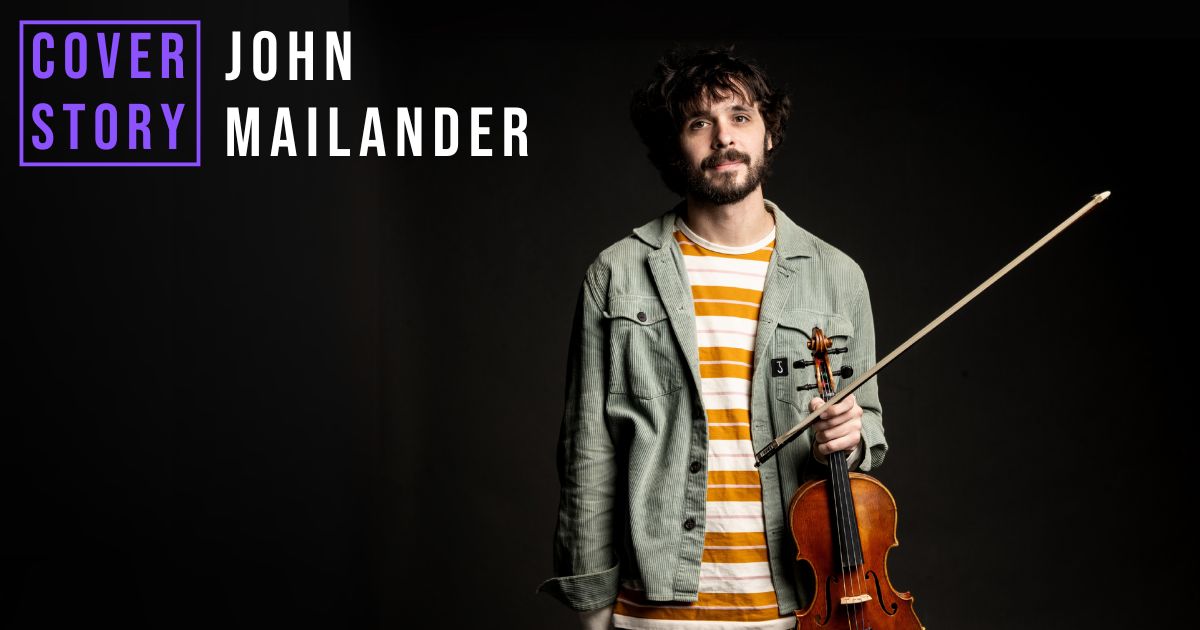
John Mailander’s Improvisational Forecast Says ‘Let The World In’

Whether or not you know it, you’ve likely heard John Mailander music. Chances are he’s even worked with one (or some) of your favorite artists, from Bruce Hornsby to Billy Strings, Noah Kahan, Joy Williams, Lucy Dacus, Molly Tuttle, and many more.

No disrespect to his work with the Noisemakers (who he’s toured with since 2018), or Strings’ GRAMMY-winning album Home, or any other projects, but it’s Mailander’s original works where his musical wizardry glows brightest. On his latest effort, Let the World In, his abilities are stronger than ever as he combines the influences from everyone he’s worked with into an adventure of orchestral bliss guided by trance-like, open-ended jazzy jams.

Helping Mailander to paint these soundscapes across nine tracks and 35 total minutes of run-time are his longtime band members in Forecast – Ethan Jodziewicz, Chris Lippincott, Mark Raudabaugh, Jake Stargel, David Williford – who he first started playing with during a Nashville residency at Dee’s Country Cocktail Lounge in 2019 to celebrate the release of his debut album of the same name. Through eight instrumental tracks (and a cover of Nick Drake’s “Road”) they send listeners on an introspective journey throughout Let the World In that brings the jazz leaning work of Hornsby and jam-fueled tendencies of Phish together, showing just how far he and Forecast have grown and evolved since first coming together.

“The first record was a blueprint, the second was settling into and discovering who we are, and this record is the most confident statement of who we are,” Mailander tells BGS. “Harmonies, colors, melodic themes, it can all be tied back to the first record in some way.”

Mailander spoke to us ahead of the album’s release about how all of his prior collaborative experiences set the stage for Let the World In to shine, writing on the piano, reality checks from recording, song sequencing, and more.

From your work with Billy Strings and Bruce Hornsby to your own music, you’ve always had a very collaborative way about you and this new record is no exception. What are your thoughts on the significance that played in the process of bringing this album to life?

John Mailander: Collaboration and improvisation are some of the most beautiful parts of being a musician. I love working with the widest variety of artists that I can. It’s a great way to become closer on a human level with the people you’re working with.

Initially, when I was starting this Forecast project, I envisioned it as more of a collective of musicians where we could all bring our own original tunes to the table and improvise freely. However, over time it’s formed into a more regular lineup with the six of us, allowing for the group to grow together as a unit.

Is the album title, Let the World In, meant to be a nod to that collaborative nature and outside influences that loom so large on the project?

Absolutely. The title has a lot of different angles to it. I hesitate to say everything it means to me because I don’t want to put it into too much of a box – I want to leave room for the listener to imagine what it means for them as well. It’s a follow-up to the last record [Look Closer] that we made in isolation during the pandemic.

While that record was very introspective, this new one is much more expansive, because of the world opening up more now and having this constant flood of information coming at us from all directions. It’s an overwhelming time to be alive, so this album feels like a companion piece to the last one, almost like the other side of the coin.

The title track also features the “Let the World In Sound Freedom Expressionists” – Hannah Delynn, Maya de Vitry, Gibb Droll, Ella Korth, Lindsay Lou, and Royal Masat. What was your intention with recruiting them for that one track, and what do you feel they brought to it that it may not have had otherwise?

They are a collection of very dear friends in Nashville who have been there for me in my personal life through a lot. It felt really important to me to credit these friends on the record in some way. That manifested into this collection of sound bites from each of them including poetry, sound effects, singing, and field recordings, which I put together into the sound collage you hear in the track. I love knowing that all of their voices are in there. I hope with each listen you can tune into different elements of it and hear new things.

In terms of outside influences on the record, I know Bruce Hornsby played a big role. What tricks and lessons from him did you implement into these songs?

Bruce is one of my greatest teachers. He’s been really encouraging over the past few years to pursue this project, grow into a band leader, and becoming more confident on the piano. I’m very rudimentary, but I’ve become obsessed with learning the piano recently, in large part thanks to Bruce and watching him play it so much. Everything on this record – except for the cover, “Road,” and the improvisational tracks – were ones I wrote on the piano, which was a huge change in direction for me.

I’ve also tried to incorporate elements of how he leads a band, like having dueling conversational solos rather than individual ones or weaving in and out of and finishing each other’s lines, into what we do with the Forecast as well.

Process-wise, how did the construction of these songs on the piano differ from when you’re composing on fiddle?

Going back to the title of this record, the piano gave it a wider scope compositionally for me, because I was thinking a lot more about bass lines and counter melodies and other things that as a fiddle player aren’t as prevalent. With the fiddle I think much more melodically – it’s kind of the top voice – which makes it harder for me to compose that way because even though it’s my primary instrument it’s hard to get a full picture with it. On the piano it felt more like writing for an entire ensemble rather than just writing a melody in chords.

You ended up knocking out the recording for this album during four consecutive days last year. What was it like doing it all rapid-fire like that compared to the more conventional, slow and steady approach?

It was intense, and we even recorded more than just what made it on the record. A lot of the work in post [production], for me, has been crafting everything we recorded into something that tells a story, which would’ve been tough to do across multiple sessions with the band over time, given that they’re all touring musicians as well. It felt good getting together with everyone from basically 10 to 6 every day and working our butts off as much as we could. It was the most concentrated and focused time we’ve ever had together as a band, as well as a reality check about things in the band we needed to work on.

It’s like putting a microscope on everything because we’ve been playing live at Dee’s every month for a few years, but now we’re in this hyper-focused environment where we can hear and analyze every minor detail. It opened up a lot of rabbit holes that I ended up going down later, but I think we really grew as a band through the process of making it this way.

You mentioned the time being a reality check for what you needed to work on as a band. What were some of those things?

It was like putting a microscope on how the particular instrumentation and individual voices on our instruments really blend and work together, revealing sonic and dynamic things that worked or not. It revealed some habits we’d gotten into through playing live that we discovered didn’t always translate to a record. The sessions were an awesome and intensive way to grow as a unit.

You’ve produced all of the Forecast records thus far. Is that something you plan to continue doing in the future?

Actually, the next record we do I’d like to have another producer. I love producing, but I’m realizing that for my own music I’d like to get another perspective in the room next time we do it. It’s really tough taking on both of those roles, but I’m really proud of what we did and grateful for producing it again this time around.

One of my favorite elements of the record is how well the songs flow from one into another – if listened through in order it presents almost as one long, 35-minute track. Tell me about sequencing this record and the importance for listeners to digest the full project from start to finish?

I’ve always been a nerd about sequencing records. I think it’s a really important part of the experience of listening to music. With this one I put a lot more attention into connecting the tracks. Some of them blend into one another, which is something that my mastering engineer Wayne Pooley – who I know through the Bruce Hornsby world – and I spent countless time laboring over the microseconds between every track to make sure each one hits you in a very intentional way.

Only one track on the album has lyrics – your cover of Nick Drake’s “Road.” Why’d you choose it, and what do you feel it contributes to the overall narrative you’re striving to present on the record?

[Nick’s] been a huge inspiration for years. Even as more of an instrumentalist I’ve always been drawn to his writing. But in terms of that song, I’ve known it for a while and love the entire record it’s on, Pink Man. About a year and a half ago – just before work on Let the World In began – I brought the song to the band. Nick Drake’s version is around two minutes long, but I thought it would be cool to use the song as a tool with our band to improvise and jam like we do at our live shows. We did just that by stretching it out to over nine minutes long. Lyrically it fits with the themes on the rest of the record, but it’s not heavy-handed either. It’s still open to interpretation, which is what I really value in it.

Initially I thought about having a guest vocalist on it, because on our last record we had a couple guest singers. But as we got closer and closer to the studio sessions I realized that it was important for me to sing this one myself, and I’m really proud with how it turned out.

If you could collaborate or have a jam session with any musician past or present, who would it be?

My hero, Trey Anastasio. It would be a dream to play or collaborate with him someday.

What has music, specifically when it comes to the creation process for Let the World In, taught you about yourself?

It’s allowed me to connect with my bandmates on a deeper level than I know how to do any other way. Through that I’m able to tap into those energies that exist between us as people, which is a type of connection I practice and strive to achieve every day.


Photo Credit: Michael Weintrob

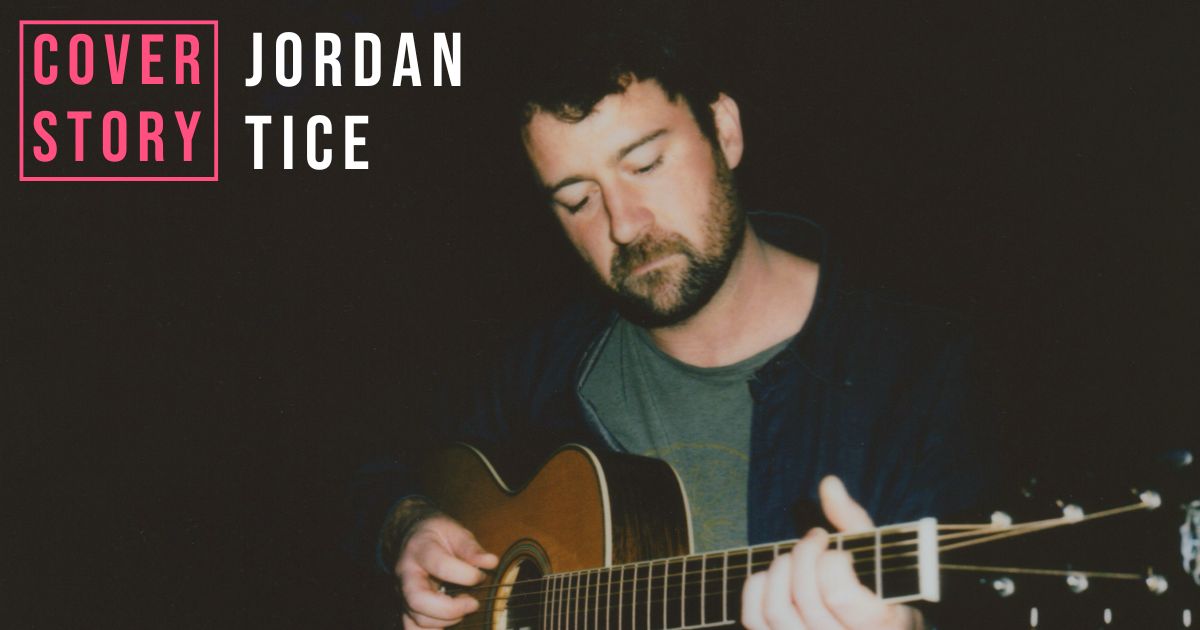
For Guitarist Jordan Tice, “Perfect” Recordings Are Never the Goal

Bluegrass. Newgrass. Chambergrass. Jamgrass. Thrashgrass. So many sub-genres, so little time. For guitarist Jordan Tice – solo artist and longtime member of Nashville-based Hawktail – there’s no time at all, because labels don’t define art and they don’t factor into his creative process.

“I don’t necessarily think about it,” he says. “I mostly do what I feel like doing and incorporate sounds that feel relevant, that I have a personal connection to and an excitement to explore, and the ability to replicate and share. I’d like to think that personality can unite disparate things if the heart is pure.”

Tice weaves a thread of musical connectivity on his new release, Badlettsville. The EP features two covers, Bob Dylan’s “Tryin’ to Get to Heaven” and Randy Newman’s “Dayton, Ohio – 1903,” as well as the originals “Mean Old World” and the instrumental title track. The four are staples of his live shows, but only now have they been committed to recordings.

“They’re all fundamental to my show and are requested as much as my other songs, but they didn’t have a place on either the last record or the next one, so they belonged in Badlettsville,” he says. “They fit together sonically as well. As soon as we got those four things down, I was like, ‘This is something.’”

Ever busy, Tice isn’t slowing down in 2025, although the emphasis is shifting somewhat. After two hectic years, Hawktail is dialing back a bit on gigging and Tice is devoting time to another solo album. “Hawktail has an EP in the can that will hopefully get out sometime soon,” he says. “We’re doing a few festival gigs but taking a much lighter year. I’m doing some dates in support of [Badlettsville], in addition to festivals with Hawktail. But I’m trying to take a little bit of a step back to focus on making this new record.”

Your website bio begins, “Jordan Tice is a musical seeker of the most dedicated sort.” What does the term “musical seeker” mean to you?

Jordan Tice: I’m always exploring my own interests and creativity, and also exploring the music that I do play, the roots of that. I want to understand myself and everything I do, and everything that came before me, better.

Part of the art of music is communicating to anybody, not particularly musicians. The more you understand about music in general, the more you understand what works and what doesn’t. The more you do it, get out there, and play and make records, the more you understand how things register and land with people – different types of thoughts and sentiments, things like that. Music is the art of sculpting sound within a given amount of time for someone who’s giving you their ear.

How has that manifested itself over the course of your solo albums and Hawktail?

With everything you do, there’s something you want to repeat about it, but there’s also things you want to do differently. I mostly grew up writing instrumental music and Hawktail is entirely instrumental. Long about 2015 or 2016, I started writing songs like crazy, just out of nowhere, and I realized I needed an outlet for that. But the instrumental stuff is still near and dear. Keeping a foot in both doors allows me to scratch this itch and this love for both of these things I do.

Did moving to Nashville have something to do with your songwriting?

I think so. I can’t provide concrete evidence, but the coincidence is too great – the fact that I started writing songs right when I moved to Nashville. So the answer is yes, but I couldn’t tell you exactly how. I also started hanging out with a lot more songwriters. My community was more instrumental-based in Boston and New York, where I lived before, so there’s definitely the influence of some new friends I made upon moving down here.

You’ve been playing guitar since you were 12. Does it sometimes feel the same today as it did then?

Yeah. I actually started taking lessons again, from a classical guitar teacher, just because I have some time off the road this winter. There’s things I wanted to improve and I decided I needed some help. I’m always trying to improve, always listening to things, and even in the music I love, there’s still the same sense of mystery of, “How did they do that?” The breadth of everything you’re aware of and assimilated expands, but at the same time it’s the same old [thing].

What led you to classical training?

We’re not doing classical music per se, I should clarify. But a lot of the things I was hoping to work on were technical-based, and classical guitar has such a codified, rigorous, technical study and a pedagogy related to technique in a way that other genres don’t necessarily have.

I’ve studied a lot of facets of music, but I’m not formally trained by any stretch. I took some jazz guitar lessons here and there, and I studied composition, but in terms of guitar I’ve never had formal technical training. I felt I was up against some roadblocks and walls with my playing and decided I needed the help of an expert, a teacher. This [teacher] came strongly recommended from my friend Chris Eldridge from Punch Brothers, and it’s been rewarding to expand the technical facility side of things.

You played a Preston Thompson Brazilian Rosewood and your main guitar, a Collings, on Badlettsville. Tell us about those guitars.

I was at Laurie Lewis’s house in Berkeley with Brittany [Haas] from Hawktail. We were in town playing and we were helping her move some furniture. She had this Preston Thompson in the corner that she was trying to sell and I was interested. It’s from 2016. She hand-selected the cut of Brazilian rosewood, a beautiful piece of wood, and had them make it with this wood that she had sourced. I absolutely love it. It’s going to be my main touring guitar for my solo stuff coming up.

The Collings is a D1A mahogany dreadnought that I bought in 2014. It’s perfectly balanced. It almost sounds like an old guitar. The overtones are exactly right. I have a relationship with Collings, but I bought this one at The Music Emporium in Boston because I liked it so much. It’s been my main axe for the last ten years. It’s what I play in Hawktail and what I recorded my last solo record on.

I brought both of those guitars to the studio, in addition to this new Yamaha FG Indian rosewood guitar that I’ve been working with them for the last couple years to promote and develop. They’re great guitars, and it was a fun process getting to work with them and help get the word out. They’re really fantastic.

How do your picking styles with Hawktail, on your solo work, and with other artists come together to create your style?

I write a lot of music, so my identity as a writer maybe puts those things in the same world. So I would say that it’s filtered through the same mind, and also the conceit is that it’s my music. Hawktail is collaborative, obviously, but it’s part of the same musical world.

I’ve always looked up to Norman Blake and Doc Watson. Norman Blake does a lot of different things, but you don’t really think about it. He plays fingerstyle, flatpicking, traditional music, writes his own music, but it all makes sense in the context of his world. I’ve always admired that as an archetype for a folk musician. He’s himself first. He’s not a historian. He picks and chooses things that work in his musical world, as opposed to something outside of himself. He’s an artist that happens to combine all these folk music techniques and sources into something that’s his own.

You’re thought of primarily as an acoustic player, but you also play electric guitar. Which ones?

I grew up playing rock and roll, in addition to bluegrass and things like that. My first music was the Allman Brothers. I got together with this guy in my church and he showed me the twin lead thing. We’d learn the two leads and then we’d switch. That music is near and dear to me – Jimi Hendrix, the Allman Brothers. So I’ve always played a little electric too. I think it’s going to work its way into the next album.

My main electric is an American Standard Telecaster that I swapped out some of the pickups and modified a little bit. I put a higher-output Seymour Duncan pickup in the neck position and I made it a four-way switch, so you have the humbucker setting in addition to the normal three settings.

Also I have a Yamaha Revstar Professional that they just sent that I’ve been having fun with as well.

What do acoustic and electric guitar each bring out in your playing?

An electric allows you the opportunity to fill up a room with less effort. You can saturate a room with sounds with less notes, with less physical effort. An acoustic is a parlor instrument. It’s meant to be played in a small room with your head right up against it. As soon as you stop making noises with your hands, the noise goes away. With electric, a lot of times less is much more, and with acoustic, a medium amount is a medium amount.

With this new record, I’m going to do it with drums, so I’ve been messing around with pickups on electrics and … I don’t want to say effects, but ways to expand the breadth of the sound, get a little bit of that electric expanse, but still treating it like it’s an acoustic. That’s been a fun and interesting pursuit.

How does collaborating with other musicians push you musically?

I have a little home studio setup, but I love going to the studio. I love there being, “This is the time that we’re making the record. What happens, happens.” I think that urgency puts you into a superpower mode. Also the camaraderie. There is truly no substitute for live chemistry. AI can try all it wants, but it will never get it. The communication and sound that happens … there’s so much subconscious and physical factors that are changing constantly. You can’t substitute it.

I love the element of not trying to perfect things, of a record being a snapshot in time. Treating it that way helps you bring your A-game because it’s, “I need to be able to do this at any given time.” It makes you focus on delivering a performance, crossing all your T’s and dotting your I’s, so that it’s all there when it’s time to push “play,” or when it’s time to play with other people, or time to get in front of people.

What snapshot does Badlettsville represent?

The tunes weren’t created or arranged with the idea that they’d be on a record, so in some ways it’s like a snapshot of the live show I’ve been doing over the last couple of years. It’s really organic in that regard.

All these arrangements came about from playing live, specifically with Paul Kowert and Patrick M’Gonigle. Patrick’s been playing a lot of shows with me, and Paul is my BFF partner in crime in Hawktail and beyond, so it represents my relationship with those two guys in a big way.

Also my interests, the fact that there’s cover songs by Randy Newman and Bob Dylan. If I had to pick my two favorite songwriters, it would be them. It’s a snapshot in time of the manner in which I’m playing and thinking about music and the people I’m doing it with right now.


Photo Credit: Cameron Knowler

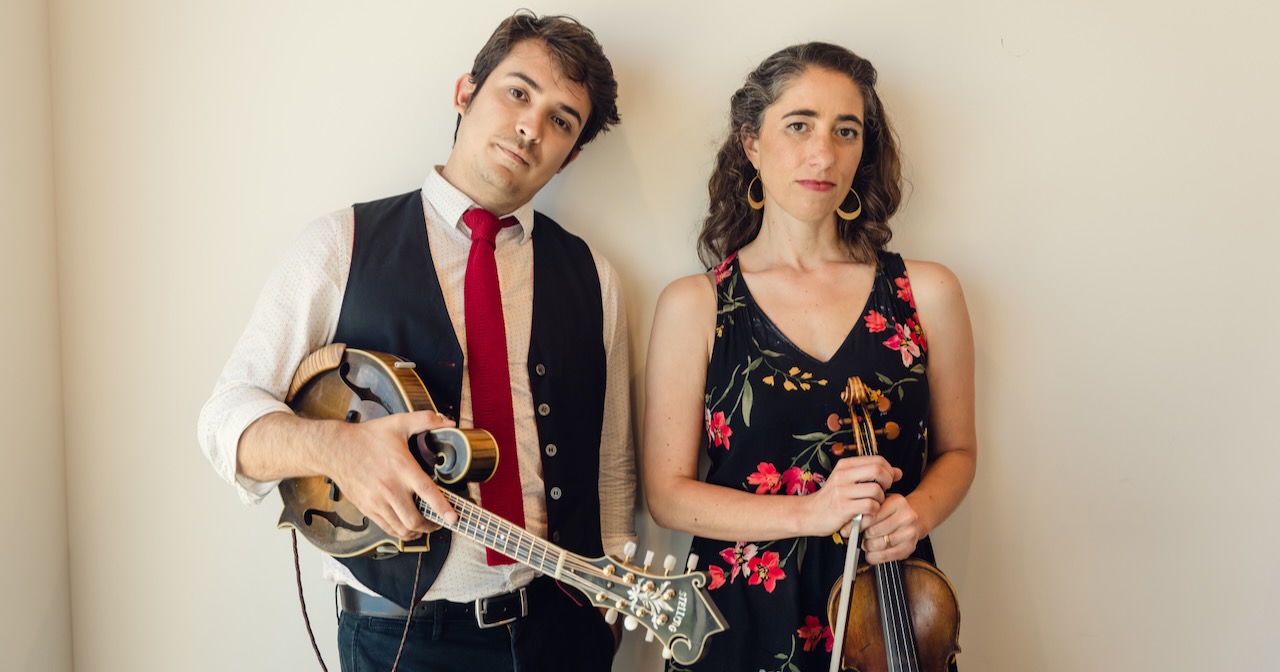
Combining Classical and Bluegrass, Scroggins & Rose Improvise and Inspire on ‘Speranza’

Acutely expressive, profoundly innovative, and ceaselessly gripping, Scroggins & Rose are masters of sonic storytelling. The project consists of Alisa Rose (violin) and Tristan Scroggins (mandolin), both virtuosic talents with a sprawling list of credits each in their own right. While Scroggins primarily forays in the bluegrass sphere and Rose spent her musical upbringing largely studying classical music, the two alchemize a blend of genres to achieve their distinct style.

The duo’s third collection, Speranza, relays a moving dialogue between fiddle and mandolin, drawing upon a diverse range of musical influences to weave together a thoughtful assortment of colors and textures. Initial ideas for the project began back in the quarantine days of 2020, and Speranza – which consists of six immersive instrumentals, a dynamic assortment of original and familiar tunes – now arrives nearly five years later in a moment where its intonations of hope feel just as crucial.

BGS had the pleasure of sitting down with Scroggins & Rose to discuss their origins, influences, and the percolation of their most recent release.

Congratulations on the album release! To start us off, could you talk about how the two of you came into playing together?

Alisa Rose: We both taught at NimbleFingers, which is a camp in British Columbia.

Tristan Scroggins: It’s a bluegrass week of workshops that has been going on for a couple decades. I always describe it on stage as “sleepaway camp for adults who want to learn how to play the banjo and drink.”

AR: There’s a really nice feel at that camp. Tristan was in a band with his dad at the time, so I did some shows with them there. Then one night, I remember the two of us improvising by a picnic table and we just had a really nice musical chemistry where we follow each other’s ideas around. Immediately it felt like, “Oh, this is a good musical fit.”

TS: At that time I was playing with my dad in Jeff Scroggins & Colorado, and we were touring full-time. So I just ended up in California a lot and I would tack on extra time to come hang out with Alisa. And we started writing music and playing shows. I live in Nashville now, so these days it’s more of a deliberate effort when I come out to collaborate.

At this point you’ve been able to flesh out that musical chemistry over the course of three collections. What would you say unites your musicality or differentiates it?

AR: I think when we improvise, it’s playful and creative and experimental – we’re not afraid to leave what may be reasonable behind, and sometimes that takes us to good places, and sometimes we fall on our faces. We also have a similar sense of rhythm and how we respond to it. It allows us to improvise freely because we feel rhythm in the same way. So that’s where we unify, but we have really different musical backgrounds.

Could you tell me more about that?

AR: Sure. Growing up I played a little bit of fiddle, but mostly I grew up in the classical world. I was a Suzuki kid, so I learned by ear initially, which I think has allowed me to play a lot of different music, but I was learning primarily classical violin growing up. Tristan grew up very much in the bluegrass world, and I’ve studied bluegrass and I’ve played in bluegrass bands, but I still have a different sense of melody and expressiveness. I think a lot about how to make music really expressive emotionally and I play with timings – those two things are less common in the bluegrass world.

TS: I think it’s been really valuable for me, generally musically and especially in the context of this project, to be exposed to those different ways of thinking about playing. I grew up playing with my dad, and in mandolin contests just learning how to play bluegrass, which does instigate this question of, is bluegrass expressive or not? I think it is sort of, but it’s so different from how classical music is expressive or how jazz is expressive. I’ve had to work a lot on navigating that challenge, because for me, I didn’t go to school at all for music. So much of how I play is very instinctual and this project often has me figuring out how to adapt those instincts in order to have more options, especially since there’s just two of us. We have to really be on the same page a lot of the time and work together to fill in spaces or leave holes where we want them to be – they have to line up, and it’s really obvious if they don’t.

Speranza does an excellent job at combining those classical and bluegrass sensibilities to achieve expression while still leaning into roots-like melodies. Can you tell me about the impetus behind your latest release? What drove you to create this third collection?

AR: So our first collection, Grana, was very improvised and we were a new duo. Basically we set out to make a demo – we wanted to record, like, three tunes and get some gigs. We got an Airbnb, rented some recording equipment, had our awesome engineer friend set it up for us, and we just hit record over and over for a weekend. By the end it seemed like it was an album, so that’s how that one came to be. Very improvised, very sort of exploratory. There were like 1000 takes of everything. Well, not actually 1000 because we didn’t have that long, but there was definitely a sort of trial and error of figuring out what we wanted to create.

And then for the second album, Curios, we worked out everything. We rearranged everything and really sought to emphasize the strength of melodies. A lot of that album was about making the melodies come out. To me, it’s also an exploration of different sound colors. We worked with Wes Corbett on that one and he helped bring that out in that album. We really tried to shape each tune into a little story, so they’re more composed. Some have solo sections, but they’re more like little pieces and arches – I mean, I would call them miniatures, but really they’re sort of standard length for bluegrass. In the classical world they might be considered miniatures– little, crafted, sparkly gems.

But we put [Curios] out in the pandemic, which was very anticlimactic. We were supposed to have a release tour and we worked really hard on that album for a long time. We had received a great grant from FreshGrass and were able to do a lot of things in the way we wanted. We worked with Dave Sinko as our engineer, who was awesome, and recorded in this pretty church in Nashville with Egyptian stained glass.

So the third one, Speranza, is more organic. We’ve grown as a duo in terms of creating, so we decided that instead of writing a whole record of stuff we would write and record as we went, or write and improvise as we went, and do some of both. So I believe this album combines the freedom of the first album and the shape and craft of the second album. And the material for Speranza came out of the pandemic – that was such a crazy time. Life seems sort of normal now, but a lot of the tunes started in that time and then we finished them once we could get back together.

TS: I think that in a lot of ways Speranza feels very shaped by the reality of the pandemic, 2020, things getting shut down – the first stuff that we worked on remotely, because we had to. It feels wild that we’ve been working on this for years now. It’s funny, similarly to the pandemic, it doesn’t feel like that was five years ago. We recorded it over different sessions and then mixed it over different sessions.

AR: “Pandemic Buddy” and “Reaper” are the darkest ones – those I did write in like that first month of the pandemic, but I just came up with the beginning idea and then as a duo, over two or three or four visits, we finished writing the pieces together. We’re often coming up with ideas, kind of sitting with them, and then recording voice memos and listening to them. It takes us a fair amount of time to do it and we really flesh out the arrangement and how our parts fit together in person. That tends to be pretty time-intensive. Basically we’re writing the pieces, but we’re memorizing them at the same time, with space for improv – everything is fluid, but the basic composition is pretty worked out. So our compositional process is pretty spacious and lengthy.

What was inspiring you during the composition of these pieces? Any art that you were ingesting or other cultural touchstones of during that moment?

AR: In the beginning of the pandemic, Tristan did a tune challenge, which is where some of these songs started. There was a word prompt every day to write a tune about. For example, “Reaper” began with the prompt “death.” “Pandemic Buddy” was for the prompt “friend.” It was a really nice way to channel energy at the beginning of the pandemic, when everything was crazy. I spent hours every day writing these tunes and trying to get a good video, and I think I got a little better at them as I went.

TS: I mean, it’s sort of an obvious one, but we talk a lot about Mike Marshall and Darol Anger. It’s the same mando and violin pairing, but I love listening to them and listening to other people who do this kind of new acoustic music/composing. I spend a lot of time in Nashville with Wes Corbett. Wes produced our second album, but he’s also a friend of mine, and I helped him with publicity for his first album, which has a lot of really beautifully written instrumental pieces.

It’s interesting – we spent so much time working on this in chunks and that was a very different part of my brain than the part of that was working very hard on, like, Texas-style fiddle tunes. Those weren’t crossing over, exactly. I think rather than being influenced by something specific, it’s more that I try to cultivate something within myself by listening to both stuff I like and new stuff. Absorbing all of that, letting it ferment inside, and then figuring out how to express that all together, rather than trying to emulate any one thing.

AR: I tend to think that when composing, everything you’ve ever listened to, everything that ever resonated with you and definitely anything you’ve ever played with your body or had in your body – whether you danced to it, or you physically played it – is a part of your musical sensibility. I don’t know what I was listening to when I was writing these tunes, but I definitely love Darol Anger and Mike Marshall. I also love Schubert string quartets, I love Beethoven piano sonatas, and I love Debussy piano music – I love a lot of different kinds of music, and I think all of that is part of what comes out. That’s all part of what’s in my head when I’m conceiving of new material.


Photo Credit: Lenny Gonzalez

BGS Wraps: Roots Music For the Season

Each year, the BGS Team likes to “wrap up” the year in music by featuring holiday, seasonal, and festive tunes and songs throughout the month of December. It’s a perfect way to generate holiday cheer while shining a light on some of the high quality new – and timeless! – seasonal music we’ve got playing on repeat each winter. And, it gives us the chance to infuse our veteran/stalwart holiday playlists with some new life, too.

This year, we’ll be sharing songs, albums, shows, and events each day for the first three weeks of December, a musical bridge to bring us to the peak holiday season, the end of one year, and the beginning of another. Check back each day as we add more selections to these weekly posts, highlighting roots music that will soundtrack our solstice, Christmas, Hanukkah, Kwanzaa, and New Year.

What are you listening to this time of year? Let us know on social media! Scroll to find our complete BGS Wraps playlist for 2024 below. You can check out Week 2 of BGS Wraps here and Week 3 of BGS Wraps here.


Chapel Hart, Hartfelt Family Christmas

Artist: Chapel Hart
Album: Hartfelt Family Christmas
Release Date: October 25, 2024

In Their Words: “The Hartfelt Family Christmas album feels like a true classic with a fresh, updated feel that I can’t get enough of. The mix of songs on the album range from ones that make you want to get up and dance to ones that will have you driving and bawling your eyes out. This album is a must-have for the holiday season, as it truly captures the spirit of Christmas, and I believe gives you a warm welcome into the Christmas season with Chapel Hart! I highly recommend adding this album to your holiday music collection.” – Danica Hart, via press release

From The Editor: “One of our favorite groups in country, Chapel Hart are continuing collectivist country sounds a la the Chicks, Pistol Annies, Little Big Town – while keeping it in the family. Sisters Danica and Devynn Hart and their cousin Trea Swindle render classic holiday songs and originals with crisp, mainstream production plus a cozy, living room family reunion vibe. Plenty of special guests appear on the project, too, from Gretchen Wilson and Rissi Palmer to Vince Gill and the Isaacs. It sometimes feels tough to discover new holiday music when the classics we return to each year are such high quality; Hartfelt Family Christmas fits right in, though, and is sure to become a wintry stalwart for many Christmas playlists to come.”


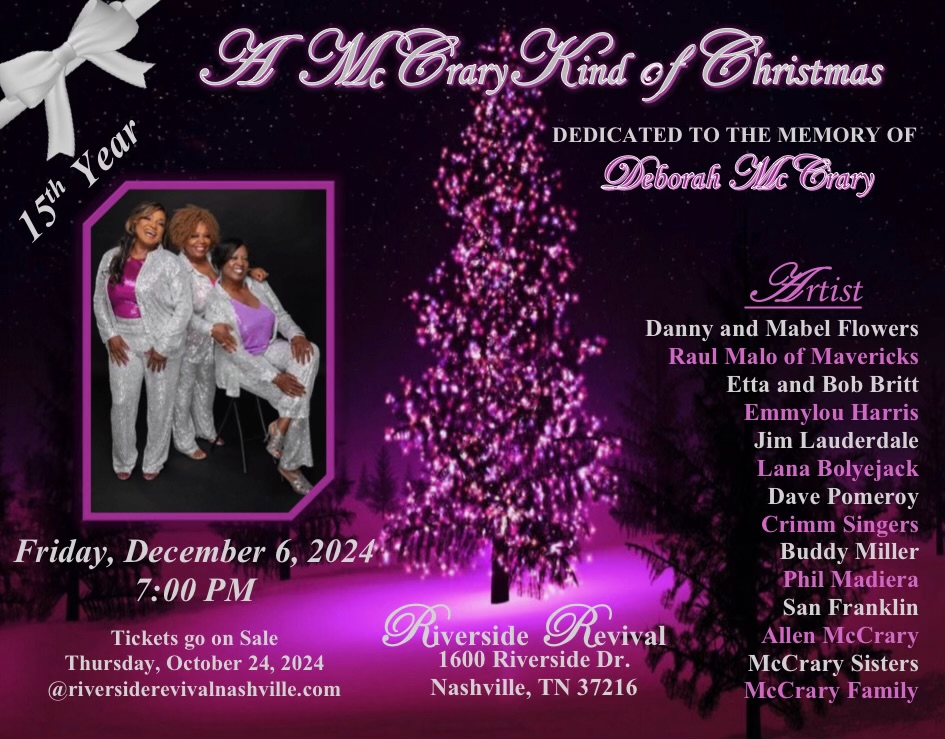
The McCrary Sisters, A McCrary Kind of Christmas

Artist: The McCrary Sisters
Event: A McCrary Kind of Christmas
Date: December 6, 2024
Location:
Riverside Revival, Nashville, Tennessee

In Their Words: “I have always loved this time of the year, because people seemed to love or like each other. We should love all year long, but unfortunately we don’t. So I will take a season of love, rather than no love at all. We take this time of the year to be a blessing to others. It brings my heart joy to be able to give to others. When you have lived without yourself, then you know how it feels when someone takes the time to acknowledge you and bless you. It is important to us to be a blessing to others. This annual benefit show has blessed so many families over the years, and each year we want to give more and more. St. Jude Children’s Research Hospital helps so many families, so it is an honor to be able to give back to them along with local Nashville families. IT IS A BLESSING TO BE A BLESSING.” – The McCrary Sisters, via press release

From The Editor: “The McCrary Sisters are a Nashville institution, as is their annual holiday celebration, A McCrary Kind of Christmas – now in its 15th year. Happening tomorrow, December 6, at Riverside Revival in Nashville, Tennessee, A McCrary Kind of Christmas will benefit St. Jude’s Children’s Research Hospital and will feature performances by Emmylou Harris, Jim Lauderdale, Buddy Miller, Raul Malo, Dave Pomeroy, the McCrarys, and many more.

“This is a Music City holiday extravaganza not to be missed! Tickets are already sold out for A McCrary Kind of Christmas, but for those who didn’t get a chance to support the music and the cause, donations can be made directly to St. Jude’s here. And, lucky for all of us, the McCrarys released their essential Christmas album, A Very McCrary Christmas, back in 2019 – so make a donation, put on the album, and enjoy your own taste of A McCrary Kind of Christmas wherever you are.”


Väsen & Hawktail, “The Tobogganist”

Artist: Väsen & Hawktail
Song: “The Tobogganist”
Release Date: September 20, 2024

In Their Words: “We can’t really believe that we got to make this album with our heroes in Väsen. But we did! It’s called Väsen & Hawktail…” – Hawktail, via social media

From The Editor: “Two virtuosic, groundbreaking trad instrumental groups join forces and cross-pollinate continents – and generations – on Väsen & Hawktail (released in September by Padiddle Records and Olov Johansson Musik). This is a standout acoustic album of the year, certainly; a perfect selection among the album’s stunning tracks for BGS Wraps is ‘The Tobogganist,’ a composition we first highlighted when it was recorded by Hawktail for their album Formations in 2020. Bluegrass, old-time, and fiddle music from any/all countries of origin have catalogs packed full of seasonal and holiday tunes that may be connected to holiday and year-end festivities by title alone. ‘The Tobogganist’ is a perfect example of the form, though its peaks and valleys text paint an exciting and joyous wintry scene for listeners, lyrics or no.”


Caylee Hammack, “Blue Christmas”

Artist: Caylee Hammack
Song: “Blue Christmas”
Release Date: October 18, 2024

In Their Words: “I never knew ‘Blue Christmas’ needed a steel guitar solo until I spent some time reimagining this song, and Bruce Bowden brought the twang we needed to country fry this classic Christmas canon. I take the holidays as a time to revisit old memories and old songs, even when it wasn’t always a happy time for me, but I’ve come around that bend. Every year that I get to produce another Christmas record to share, makes me feel more in love with this season.” – Caylee Hammack, via press release

From The Editor: “Every holiday playlist needs some Good Country – and Caylee Hammack certainly checks that box with her Blue Christmas EP released in October. Don’t miss her playful, personable reimaginations of ‘Christmas (Baby Please Come Home)’ and ‘Hard Candy Christmas’ alongside her twangy rendition of ‘Blue Christmas.’ Hammack has been on the Music City beat for years, the groundwork for the well-deserved momentum she’s enjoying at the moment being laid deliberately and intentionally over time.”


Adam Chaffins, “Layaway Momma”

Artist: Adam Chaffins
Song: “Layaway Momma”
Release Date: November 15, 2024

In Their Words: “I’m not sure co-writer Eric Paslay and I knew we were actually writing a Christmas song when we started on ‘Layaway Momma.’ Little by little, we unwrapped this tale of overcoming adversity while staying true to yourself – told through the story of a mother’s determination to ensure her little boy has a good Christmas. I think in the end, we wrote an anthem to the single parent who is not looking for pity, but is working her way towards the American Dream.” – Adam Chaffins, via press release

From The Editor: “Country and string band textures combine on Chaffins’ timely and tender seasonal track, ‘Layaway Momma.’ While much noise is made in the media, pre- and post-election, about ‘the economy’ and its performance, Chaffins – an accomplished multi-instrumentalist, vocalist, and songwriter in bluegrass, Americana, and beyond – and his co-writer Paslay point out that for many, our economy has never functioned properly. This is especially clear this time of year, as consumption snowballs and those with less feel the financial pinch even more prominently. Chaffins treats his subject, the Layaway Momma herself, with dignity and care – this isn’t just your typical holiday poverty porn, and that’s certainly a breath of fresh air.”


What’s the Magical Chemistry Behind Twisted Pine? It’s ‘Love Your Mind’

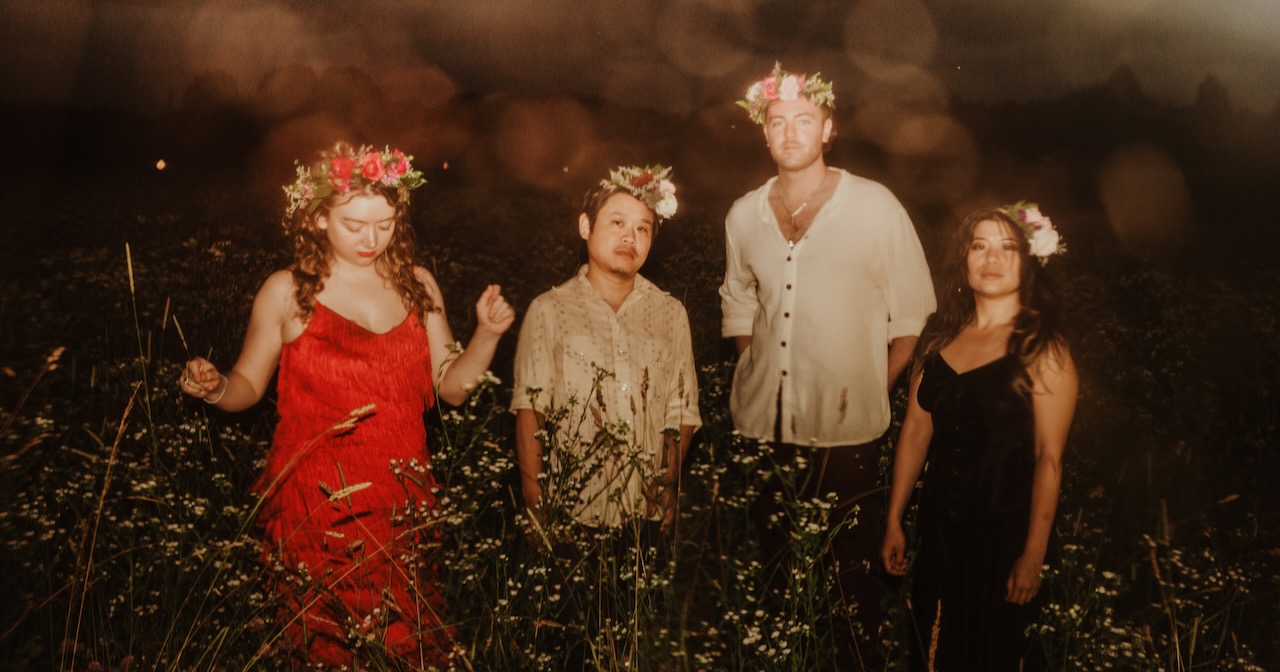
Love Your Mind, the new album from Boston/Toronto-based band Twisted Pine, is a delicious exploration of joy, growth, and self-love, packaged into tight grooves and soulful vocals. The quartet – which features Dan Bui, Kathleen Parks, Anh Phung, and Chris Sartori – is beloved for its genre-bending approach to acoustic music; they continue to defy expectations with their mandolin, fiddle, flute, and bass instrumentation.

What I noticed most about this new record, besides its refreshing positivity (in this economy?!), was the seamlessly collaborative sound. In discussing this in a BGS interview with the entire band, they explained that they’ve taken these past years to hone their collective voice as a group. With this new album, they felt that they had found that voice.

Together, we all agreed that the name “Twisted Mind(s)” might be more appropriate for the band at this point. Below is our conversation, where we cover Love Your Mind and the joy within it, the inspirations found in jamming, how flute fits in at bluegrass festivals, and so much more.

I love the amount of joy and uplift that comes through this album; it’s rare among Americana albums in this day and age. Is that feeling something that the band gravitates to organically? Or was it a choice you made specifically about this project?

Kathleen Parks: I think that happened pretty organically. Some of the songs started coming out of the post-COVID era. “After Midnight,” for example, was written after the first Ossipee [Valley Music] Festival in person after the pandemic and I tried to capture the joyful feeling of being around each other again. … Some of the album started in that appreciative state.

Dan Bui: I would add that throughout the album some subjects are a little bit more somber – there’s a theme of personal growth and learning through hardship and dealing with things like anxiety, making mistakes, and learning from them – but it’s always viewed through a positive lens, and musically, certainly, it is more of an upbeat fun vibe. That’s what we try to put out into the world and bring to our shows in general.

I love that song, “After Midnight (Nothing Good Happens).” Can you tell me more about that one?

KP: I was deciding not to party one night and [was] walking to my tent … listening to the roar of fiddle tunes and good times being had. I was like, “Oh my god that sounds so fun, but I also have two sets to play tomorrow.” My dad used to say that title phrase to me as a kid. He was also a musician who toured a lot so I always thought, “Cool people stay up super late.” My dad was like, “No, nothing good happens after midnight.”

Your fans have been starving for a new Twisted Pine record. What have you all been working on in the four years since your last release?

DB: Releasing our last record [Right Now] in 2020 was a huge challenge. We had to pivot and we weren’t able to do what we wanted to do, performance-wise, for a couple of years. So by the time we were able to get out there, we kind of went “all in” on touring and working on our live show. Before the pandemic, we had only really been playing with Anh for a short time, about six months. Since she lives in Canada, it was impossible to get together in person for a very long time.

Chris Sartori: Even getting into the studio with Anh for Right Now, it felt like we were just starting to figure out how that might work. These past couple of years have been really about ironing out the sound we had envisioned as a quartet and getting it to a place where we could write for that sound.

Anh Phung: It felt like with the 2020 record I was injected into a band that already existed, but Love Your Mind came from a place of more foundational collaboration. I was truly a part of the band before we got in there and recorded.

KP: I also feel like on this new album we had more time to discuss, “How do we want this song to sound?” We brought in players like Ethan Robbins, Ali McGuirk – just because we could. We had time and space and we weren’t being rushed into anything.

I also wanted to ask you about the “A Beautiful Phase (90’s Song).” Is it a ’90s song to you? Or is it just referencing nostalgia for the ’90s as “a beautiful phase”?

KP: For some reason, it ended up in the voice memos with that title. For me sonically, it very much has a “Bitter Sweet Symphony” vibe and I always see chrome when I sing it – that really, really specific blue chrome color, which I remember as a child.

Yes! I had that nail polish!

KP: Yep. It’s kind of looking back on a younger self, talking to a younger self. … For me, it’s about the missed opportunities with being a musician. You miss a lot of time with your family or family events [and] the song is almost apologizing for that.

DB: That song was one of the more collaborative ones. We had these early writing sessions at Kathleen’s where we got together and just jammed to see what came out. … There was this one section that turned into the chorus of that song. At one point, Chris and I were sitting around and decided, “Let’s just build this around this moody section.” We worked with that and kind of introduced a verse and this idea of having it modulate to a bunch of different keys. We roughed out a structure and that was what the lyrics were written over. When we went into the studio it was fresh – a lot of choices were happening in real time. It was cool to have it just come together like that.

Do you write a lot from jamming?

KP: It is a mix of jamming and melodic ideas. The final product is usually the outcome of playing the song down with a lot of different grooves and ideas, seeing what fits, and what we can pull off.

DB: One example is “Green Flash.” Kathleen was playing this 12-string electric guitar and this melodic idea kind of popped out and we decided to make something out of that sound.

That song also features Jerry Douglas. How did that happen?

KP: We had seen him at Earl Scruggs Music Festival and he said, “If there’s any way I can help, just let me know…” So, when that song started coming together, we were like, “We should ask Jerry to be on this!” In the studio we made this video asking if he would play on this song and sent it to him – and he said sure!

AP: Jerry has the exact style for it. I feel like the tune has the vibe of Strength In Numbers, so he fits perfectly.

OK, this question is specifically for Anh: What has your experience been like being the “flutist at the bluegrass festival?”

AP: Honestly, by the time I was playing with Twisted Pine, it was a pretty soft landing, because a lot of the work building my credibility in the scene came before that. Even going to IBMA, I was expecting a lot of pushback, but it has been pretty shocking how welcoming people have been. I think the initial expectation was pretty low. People were skeptical of how I, playing a flute, would work within this band, so when they hear it and it’s going well, it has even more of an effect!

Can you tell me about the actual recording of the album?

DB: I think a big part of the sound of the record should be credited to our co-producer, Dan Cardinal. We have worked with Dan on every record that we’ve done and he’s just someone who understands what we’re going for. He does a great job at capturing the organic sound of our instruments, but is also very creative and able to augment the sounds of our band … subtly and sometimes not so subtly. His choices make the recording sound a little bit bigger, wider and deeper. He was really valuable in that way. A lot of the songs were new, still being worked out, and he had some great third party observations.

KP: He’s good at placing sounds so that you feel them, but you’re not suddenly met with this random out-of-place soundscape in an otherwise acoustic recording.

That’s something I loved about the record. Even though you’re genre-bending, the sound is still so acoustic, where I imagine it would have been easy to add drums and synths, etc. Were there specific records you were referencing for production?

CS: I think each track has its own inspiration. Like “Start/Stop” is very Motown, “Chanel Perfume” is going more for an Aretha “Rock Steady” thing; each track we approached as kind of its own world.

Okay, last question, what does the title, Love Your Mind, mean to you?

CS: That sort of reared its head after we were finished recording and [after] looking back at what themes had emerged. We kind of identified that as a common thread that ties the record together, even though sonically it goes in all of these directions.

KP: For me, it means that whatever state you’re in – dark or frantic – you have to just try to look at yourself from someone else’s point of view and love yourself completely through all the stages.

AP: This is kind of riffing on a different idea, but I also think of Love Your Mind as – it’s common knowledge that our band has been hard to identify genre-wise, and I think that even though this album has a mixture of genres the sound that came out of this album is kind of unified in the way that the four of us play together. Twisted Pine is the four of our minds together, so the magical chemistry is loving our minds.


(Editor’s Note: Want more Twisted Pine? Check out our Basic Folk episode on the group featuring an exclusive interview with fiddler Kathleen Parks. Listen and subscribe here.)

Photo Credit: Jo Chattman

You Gotta Hear This: New Music From Mon Rovîa, Loose Cattle, and More

We’ve reached the end of the week and we’ve got your new music covered this Friday! Our premiere round-up is completely full with excellent new songs and videos from a variety of artists who work in a variety of roots styles.

Check out new music videos from folks like singer-songwriter Sadie Campbell performing “Getting Older,” a subtly spooky tune from High Horse entitled “Tombstone Territory,” country outfit Loose Cattle bring us “The Shoals,” on which they are joined by none other than Patterson Hood, and “Afro-Appalachian” artist Mon Rovîa’s lyric video for “Winter Wash 24” is colorful and engaging.

You’ll also find brand new music from folks like JD Clayton, who sings about being disappointed by a friend on “Let You Down,” Benny Sidelinger processes a difficult season of life on “Lilacs,” and roots rockers Clarence Tilton call on their pal Marty Stuart for their latest, “Fred’s Colt.”

To cap it all, we debuted our new video series, the AEA Sessions, with our partners at AEA Ribbon Mics earlier this week with an incredible performance by our longtime friend, Gaby Moreno. You can watch that debut session below, as well.

It’s all right here on BGS and, you know the routine – You Gotta Hear This!

Sadie Campbell, “Getting Older”

Artist: Sadie Campbell
Hometown: British Columbia-raised, Nashville-based
Song: “Getting Older”
Album: Metamorphosis
Release Date: October 11, 2024 (single); October 25, 2024 (album)
Label: Glory War Records

In Their Words: “In a sea of filters, fillers, and constant pressure to look young, ‘Getting Older’ is my reminder to embrace myself where I am, as I am, to be proud of every wrinkle on my face, that my body was well-earned through laughter and learning, and not everyone gets the privilege to grow older. This video is meant to symbolize the many different versions we can be throughout our lives — and that it’s really about perspective. The photo can be the same, but through a different lens, you see a different image. Just like how we see ourselves. If we can change the lens, and the way we perceive ourselves, the picture we see often changes, too.” – Sadie Campbell

Video Credits: Filmed and edited by Justin Alexis at That Good Graphic.


JD Clayton, “Let You Down”

Artist: JD Clayton
Hometown: Fort Smith, Arkansas
Song: “Let You Down”
Release Date: October 11, 2024
Label: Rounder Records

In Their Words: “‘Let You Down’ was born in a coffee shop in East Nashville called Cafe Roze. I sat next to a new friend who would later become my bass player. We had an itch to hit the town and get dinner at an unfamiliar restaurant, but to our surprise every establishment the waitress recommended was closed that day. After about the fourth restaurant it became a humorous bit. It immediately began pouring rain outside. Although the waitress meant nothing by it, I teased that she was letting us down. On my drive home that day I sang ‘sometimes people let you down’ in my voice memo. It immediately hit me and I was flooded with feelings of an old friend that had actually let me down and meant it. I then had my sweet little song. But it needed more. It wasn’t until the day of recording that I dreamed up a huge instrumental break to highlight all of my band members and bring their skills to life. On a Thursday at Sound Emporium studio on Belmont Boulevard, my band cut ‘Let You Down’ and it became in my own humble opinion a certified banger. I’m certainly biased, but I truly love the song and its flow of story to emotionally charged musical outrage.” – JD Clayton

Track Credits: 
Written by JD Clayton.
JD Clayton – Vocals, acoustic guitar, background vocals, harmonica
Bo Aleman – Electric guitar
Lee Williams – Bass guitar
Kirby Bland – Drums, percussion
Hank Long – Piano, Wurlitzer, organ


High Horse, “Tombstone Territory”

Artist: High Horse
Hometown: Boston, Massachusetts
Song: “Tombstone Territory”

In Their Words: “After coming off tour with the Jacob Jolliff Band, I had all this inspiration that I wanted to bring to a High Horse instrumental composition. The basic elements of ‘Tombstone’ come from some of the ideas in Jolliff’s music and influence from Grant Gordy/Mr. Sun recordings. And, from a practice of sending around a melodic part that I learned in an earlier Persian Music Ensemble at NEC to the band. Not only was this an academic sort of exploration for me, but it was also a great opportunity to show off some of the special skills everyone in the band has as instrumentalists. Some of my favorite solos on the record happen on this recording and it has some of our best band cohesion! After performing the piece for one of its first times in Hancock, New Hampshire we were still looking for a title when we happened upon a short dirt road named Tombstone Territory. Given the spooky vibe of the tune, that seemed to fit just perfectly!” – G Rockwell, composer, guitarist

Track Credits:
G Rockwell – Guitar
Carson McHaney – Fiddle
Karl Henry – Cello
Noah Harrington – Bass

Video Credits: Video, editing, recording, and mixing by Micah Nicol


Loose Cattle, “The Shoals” featuring Patterson Hood

Artist: Loose Cattle
Hometown: New Orleans, Louisiana
Song: “The Shoals”
Album: Someone’s Monster
Release Date: October 8, 2024 (single); November 1, 2024 (album)
Label: Single Lock Records

In Their Words:“‘The Shoals’ gives me faith good men are actually listening, since Michael pulled the lyrics from several years of my private ‘Mad As Hell/Not Gonna Take It Anymore’ rants. It’s a song about what happens when we stop twisting into pretzels trying to please everyone else and start speaking uncomfortable truths to power. Historically, there’s a long tradition of accusing women who speak uncomfortable truths aloud of possession or witchcraft, so it felt especially fitting to cast Patterson Hood as a river ‘demon’ egging on the narrator.” – Kimberly Kaye

“I started writing the song during my first stay in the Shoals some years ago, on a banged up old guitar I’d just bought there. Better writers than me have tried and failed to explain the mysterious way that stretch of the Tennessee River has sung so much unforgettable music into being. All I can say is the song kind of wrote itself there and I just tried to copy it down. And ever since, from having an original Swamper’s son tell me “hell yeah” that he wanted to sing the part of a River Demon for us, to finding the record the perfect home at Single Lock Records, has just seemed meant to be. After a hell of a lot of work, of course.” – Michael Cerveris

Track Credits:
Music and lyrics by Michael Cerveris.
Kimberly Kaye – Vocals
Michael Cerveris – Acoustic and electric guitars, harmonies
René Coman – Bass
Doug Garrison – Drums
Rurik Nunan – Fiddle, harmonies
Jay Gonzalez – Farfisa organ
Patterson Hood – Vocals, guitar


Mon Rovîa, “Winter Wash 24”

Artist: Mon Rovîa
Hometown: Liberia-born, Tennessee-based
Song: “Winter Wash 24”
Album: Act 4: Atonement
Release Date: October 11, 2024 (single); January 10, 2025 (EP)
Label: Nettwerk Music Group

In Their Words: “I wrote ‘Winter Wash 24’ while touring with Josiah and the Bonnevilles in March ’24. The theme of cognitive dissonance weighed heavily on my mind amidst everything happening in the world. Outside Seattle, I saw tanks covered in tarps treated with winter wash and the image moved me to write. The song explores how we often distance ourselves from the struggles of others when they don’t directly affect us. My goal is to raise awareness of these shared struggles, because empathy is a crucial force for change. As a refugee, I’m deeply inspired by the work of the IRC (International Rescue Committee) and am donating the song’s proceeds to support their vital efforts.” – Mon Rovîa


Benny Sidelinger, “Lilacs”

Artist: Benny Sidelinger
Hometown: Wayne, Maine (famous for a bumper sticker that says “Where the hell is Wayne, ME?”)
Song: “Lilacs”
Album: Cherry Street
Release Date: October 25, 2024

In Their Words: “I wrote ‘Lilacs’ during a particularly difficult period of my life. However, there were many joyous things happening at the time too. My then-fiancée was pregnant with our lovely daughter Tulsi and we were living in a gorgeous historical farmhouse on the Skagit River, yet I was dealing with the aftermath of a difficult divorce and was temporarily isolated from my two older kids. The juxtaposition of tragedy and joy during that time are the basis of the song. For a while, I thought I might lose my mind, but somehow I managed to hold on to a thread of sanity. Eventually I was reunited with my kids and moved on to much easier chapters of life. At the same time, we had a spring with an incredible amount of rain and there was concern that the river might overflow the dikes, which would have flooded our house. Yet, just as I managed to not go crazy, the dikes held and a catastrophic flood was avoided. So, as they say: ‘I wrote a song about it.'” – Benny Sidelinger

Track Credits:
Benny Sidelinger – Vocals, guitar, Dobro
Michael Thomas Connolly – Bass, telecaster, vocals
Aida Miller – Vocals
Jason Haugland – Drums


Clarence Tilton, “Fred’s Colt” featuring Marty Stuart

Artist: Clarence Tilton
Hometown: Omaha, Nebraska
Song: “Fred’s Colt” featuring Marty Stuart
Album: Queen of the Brawl
Release Date: October 11, 2024 (single)

In Their Words: “We asked Marty to get involved with ‘Fred’s Colt’ as we had met and opened for him a couple times in our hometown, [Omaha]. Marty agreed and played his famous pull-string telecaster, the original guitar of Clarence White of the Byrds. It’s a guitar we were well acquainted with, as we are huge Clarence White fans. Marty’s voice seemed perfect for the second verse of this song, which recounts the potentially sordid history of a strange family heirloom – an old Civil War-era Colt pistol. Marty not only lent us his voice for a verse and his guitar wizardry for a solo, but even added parts throughout that we did not realize were missing. Marty Stuart is a national treasure, and we are so honored and excited that he spent a day with our tune and did what only he can do!”

Track Credits:
Words and music by Chris Weber.
Chris Weber – Rhythm electric guitar, acoustic guitar intro, vocals
Marty Stuart – Electric guitar (Telecaster), first solo, second verse vocals
Corey Weber – Electric guitar throughout, second solo
Paul Novak – Acoustic guitar
Craig Meier – Bass
Jarron Storm – Drums, percussion, vocals


AEA Sessions: Gaby Moreno, Live at AmericanaFest 2024

Artist: Gaby Moreno
Hometown: Los Angeles, California
Songs: “New Dawn,” “Solid Ground,” and “Luna de Xelajú”

In Their Words: “It was a wonderful experience performing a few songs for AEA at Bell Tone during AmericanaFest. The sound quality and the energy in the room were unforgettable.” – Gaby Moreno

“Gaby is charismatic and energetic. She lights up a room when she walks in and when she performs, it’s electrifying.”
Julie Tan, AEA Ribbon Mics

Read more here.


Photo Credit: Mon Rovîa by Glenn Ross; Loose Cattle by Joseph Vidrine.

Jerry Douglas’ New Album, ‘The Set,’ Tracks His Musical Evolution

Undefinable by a single era, genre, or instrument, Jerry Douglas’ otherworldly picking prowess on Dobro and lap steel guitar knows no bounds. Whether it’s running through Flatt & Scruggs songs with the Earls of Leicester, kicking up covers like The Beatles’ “While My Guitar Gently Weeps,” or conjuring up jazz-like improv jams, the sixteen-time GRAMMY winning musician has a way of drawing the listener in with his tasteful tunes.

That trend continues on The Set, his first studio album since 2017 – although he did stay busy producing records for Molly Tuttle, Steep Canyon Rangers, John Hiatt, Cris Jacobs, and others during the time in between. Released on September 20, the record captures the sound of Douglas’ live set with his current band – Daniel Kimbro (bass), Christian Sedelmyer (violin), and multi-instrumentalist Mike Seal – with a mix of new and original compositions, reworkings of older songs from his catalog, a couple of intriguing covers, and even a concerto.

BGS caught up with Douglas ahead of his tour dates in support of the new record – and his induction into the Bluegrass Music Hall of Fame this week – to discuss the motivation behind The Set, the similarities between Molly Tuttle and Alison Krauss, and much more.

This is your first album in over seven years. What was your motivation for returning to the studio after such a large gap?

Jerry Douglas: I’ve been doing records for everyone else those past seven years. [Laughs] We’d go out and play a show and people would come up afterward and ask where they could find this song or that song. It got me thinking, since the songs I play live are scattered across many different records — some of which are out of print — that it’d be a good idea to get them all into one place, one album. It’s not a compilation record by any means, it’s just how I love to hear these songs now.

Speaking of how you love to hear these songs now, you’ve recorded many of them in the past. This includes “From Ankara To Izmir,” which you first recorded on lap steel before opting for the Dobro this time. What led to that shift?

When you first write a song you don’t know it, because you haven’t lived with it yet. You need to play it about 100 times and really flesh it out to see what all’s in there. When I originally recorded “From Ankara To Izmir” in 1987 for the MCA Master Series we had a much bigger, bolder band around it. However, the more I got to playing it out live the better the Dobro felt on it. It allows me to be more dynamic with the song, which I also cut with drums in 1993 before switching things up and leaving them out this time.

We actually haven’t used drums since the record I made with John Hiatt in 2021. He didn’t want them, so we used the rest of my band… it felt great having all that space the drums usually filled back, so we just continued as a four-piece after that. It’s gone on to inform a lot of the music on this record, not just with that one song.

I love the evolution that songs can take over time, whether it’s something as simple as changing out one instrument like you’ve done a couple times here or going from a full band to something that’s solo acoustic. Different arrangements breathe completely different life into a song, and your record is a great example of that.

Even Miles Davis recorded a lot of his songs two or three times with different bands. He wanted to hear them with the band he was with at that moment, which all included different people, personalities, characteristics, and playing styles. Music is meant to evolve over time as influences and circumstances change. Songs are traveling through their life collecting little pieces to add to themselves just like the rest of us do.

That room to experiment is only expanded with your band, who you’ve been with now for eight years. How did the chemistry you have with them help to drive the sonic exploration behind The Set?

Like you said, we’ve been together for a long time now. We’ve been everywhere together and have become good at picking up nonverbal cues from one another. A lot of times I’ll just give Daniel a look and he knows what to do. That trust allows us the freedom to experiment and keep things fresh for ourselves, which in turn keeps it fresh for the audience as well, whom we don’t ever want to leave behind.

That same attention to detail can be felt in the album artwork as well, which I understand comes from a connection you made across the pond while there for the Transatlantic Sessions?

Yes. William Matthews is a famous western watercolor artist who was in Scotland with me when we started rehearsing for the Transatlantic Sessions right after COVID. We typically tour the country at the end of January and into February for 10 days playing the entire show and William was following us around painting. One day I walked into his hotel room and his paintings were all the way around the wall. One of them was of Doune Castle – seen in both Monty Python & The Holy Grail and Game Of Thrones – that, unbeknownst to us at the time, ended up becoming The Set’s cover art.

Earlier we touched on all the producing work you’ve been up to lately. One of those has been Molly Tuttle, who you’ve worked with on her past two GRAMMY-winning albums. Given your close ties to another trailblazing woman of bluegrass, Alison Krauss, do you notice any similarities between the two and the approach they have to their craft?

They’re both amazing singers. I learned a long time ago that when Alison tells me she can do better, she does, and Molly’s the same. Both have a way of exceeding my expectations on a take when I thought they couldn’t do better than the one just before it, but every time the new one turns out head and shoulders above the one that I had been satisfied with. It’s taught me to always trust the artist no matter who it is I’m working with.

In that same sense, I think about Earls of Leicester as Flatt & Scruggs – what if they’d said “wait a minute” and gone back in [to the studio] to change one little thing? When you’re recording, everything happens so fast that you can come back to it and go in a completely different direction. That’s what I love so much about my new record, even some of the mistakes that I made on it aren’t really mistakes, they’re just different directions.

What has music taught you about yourself?

I’m an introvert who can speak in front of thousands of people and have a good time at a party, but when I’m alone I’m really alone, but in a positive way. It’s like having two lives, but I’m not acting in either one of them. What a privilege it is to be true to yourself and have a full life at the same time. I get to go out and play music, then come home and fix the faucet.


Lead Image: Madison Thorn; Alternate Image: Scott Simontacchi. 

Tray Wellington’s ‘Detour To The Moon’ is Out of This World Bluegrass

On his 2022 album Black Banjo, Tray Wellington thwarted stereotypes and pushed the boundaries of what bluegrass music can be. On his new EP, Detour To The Moon, he picks up right where he left off, weaving in jazz, hip-hop, country, and more into his trailblazing banjo bangers.

The meshing of influences on the seven-song project serves as a segue between full-length records; the EP is the first of a planned conceptual series showcasing the picker’s sonic and personal evolution.

“I want to keep pushing myself and growing until I’m at my max potential, and I don’t feel like I’m anywhere close to reaching that yet,” Wellington tells BGS of the project’s concept. “So if we’re talking in terms of the universe, I want to get way past the moon, because we’ve already been there and because my influences are constantly evolving and I want to be able to reflect on all of it.”

Although he’s most proficient on banjo now, Wellington’s musical development began years prior on the guitar – until he stumbled upon Doc Watson’s music while browsing his grandfather’s record collection. By middle school, the Western North Carolina native had joined a mountain music club that traveled to local communities playing traditional bluegrass music. Eventually one of his teachers, Josh Church, introduced him to the banjo and he never looked back.

“I’d never heard him play banjo to that point, but he pulled it out that day and started playing ‘Salt Creek,’” Wellington recalls. “I was instantly hooked by its sound and fell in love. From there he taught me a song or two, leading me to beg my mom for a banjo over the summer before starting ninth grade.”

Since taking to the banjo Wellington has grown to be one of it’s most promising young pickers, most notably winning the International Bluegrass Music Association’s 2019 Momentum Award for Instrumentalist of the Year, graduating from East Tennessee State University’s Bluegrass, Old-Time and Roots Music Studies program, and helping to form New Dangerfield — a Black roots supergroup also comprised of vocalist/multi-instrumentalist Kaia Kater, bassist Nelson Williams, and fiddler/vocalist Jake Blount.

That promise shines bright throughout Detour To The Moon, which sees an equal mix of him creating his own instrumental soundscapes as well as taking other’s songs, like Duke Ellington’s “Caravan,” “John Hiatt’s “Lift Up Every Stone,” and Kid Cudi’s “Pursuit Of Happiness,” and making them entirely his own.

In particular, Wellington says that Cudi’s certified diamond hit, first released in 2009, was one that he had to record upon first hearing it in 2023, due to its message of drug abuse and escapism that he resonated with deeply.

“That, and witnessing the profoundly positive impact it had on others of lifting them out of the dark places they were once in, is what made me want to record it,” Wellington explains. “If a tune has that much power, it deserves to be re-recorded and spread to as many new audiences as possible.”

In addition to pushing boundaries with his music, Wellington also pushed them with his own creative abilities on the artwork for Detour To The Moon, which he made himself. The first-time occurrence is one that he was thrust into after a graphic designer he had commissioned back out of the project as a deadline for their work was fast approaching. Rather than hire someone new to complete the work or delay it (and risk pushing back the entire project as a whole), he began completing it on his own. Featuring Wellington standing stoically with his banjo on a cratered moon surface with a looming purple glow, the artwork is a display not only of his creativity, but the improvisation and ingenuity that also make him a top notch musician.

“It took me 30 hours to create,” Wellington says with a chuckle of making the artwork. “I had to imagine the concept and find reference pictures before sketching ideas and putting it all into Photoshop. It took a long time, but I’m proud of how it turned out and now I have this new skill I can continue to hone and potentially help other artists with as well.”

Aside from Wellington’s ingenuity coming out in the EP’s cover art and in its choice of songs, it’s also displayed in the players who joined him on the project. For the first time in his three studio albums Detour To The Moon includes drums courtesy of the Steep Canyon Rangers’ Michael Ashworth. It also features fellow Asheville mainstay Drew Matulich (The Grass Is Dead) on guitar. Pedal steel guitarist DaShawn Hickman, vocalist Wendy Hickman, and Kater were other contributors.

Those pivots came after Wellington went into the recording process, planning for the players joining him to be exclusively from his traveling band – bassist Katelynn Bohn, mandolinist/fiddler Josiah Nelson, and Nick Weitzenfeld. While it does include each of them on all or a portion of the project, it also blossomed into something bigger that celebrates not only Wellington’s sonic evolution, but the many ways that Black music of old still shares with that of the present.

Connecting those dots and pushing for more diversity within bluegrass and roots music have long been part of Wellington’s creative work. While he’s done more than his part to advance those efforts, he says it’s going to take much more to see representation where it matters most – the audience.

“I’ve seen a lot more Black and other people I didn’t usually see before picking up a banjo, fiddle, or mandolin and playing bluegrass music in the last five years, but in the grand scheme of things it’s still a very small number of us,” asserts Wellington. “It’s on the venues, labels, artists, fans – all of us – to get involved and push for change because at the end of the day nobody wants to go out to shows where they know they won’t feel comfortable at.”


Photo Credit: Heidi Holloway

Fiddles In Conversation: Brittany Haas & Lena Jonsson on Their New Album, ‘The Snake’

Behold, fiddle nerds! There is a new foundational collection of tunes to sink your teeth into, from two of the foremost fiddle players in Swedish and American traditions. Brittany Haas (Nashville) and Lena Jonsson (Stockholm), are award winning instrumentalists and have been long time collaborators and friends. The duo recently released their second recording together, and their first in nearly 10 years. The Snake explores old-time and Swedish fiddle traditions with finesse and subtlety, but is even more ambitious in scope than their first, self-titled record.

As part of the new collection, Jonsson and Haas composed a three-part suite for two fiddles, made up of entirely original material, but inspired by the format and musical stylings of J.S. Bach. Over a video call between Nashville, New York, and Sweden, we discussed how to stay inspired on the fiddle, what guides their accompaniment choices, and what records folks should start with if they want to learn more about Swedish fiddle and folk music.

We’ve put together a playlist of their recommendations at the bottom of this piece.

Okay, this is a weird place to start, but I noticed a distinct lack of chopping on this album. Was that intentional? I mean as someone who played in a two fiddle format a lot, you only have so many options for how to arrange. Were you like, “WE WILL NOT CHOP” on this record?

Brittany Haas: [Laughs] Honestly, I didn’t even think about it! But you’re right, I think maybe there’s just a little bit of chop on “10 Days of Isolation?” And maybe, Lena, did you chop on “Fiddle Claw?”

Lena Jonsson: I mean, maybe I kind of chopped! I can’t really chop. I think part of it is that for Swedish tunes, chopping doesn’t feel as natural. It isn’t really in the tradition, so it wouldn’t be a “go to” choice. It would more be an option if you wanted to do something really different sounding.

BH: Yeah, in Swedish fiddle music, the most common way that fiddles play together is in harmony, but the harmonies are way more diverse than in American traditions. The Swedish harmonies are all over the place, you call it second voice I think.

Totally. And considering that the options are so open ended for harmony, how do you decide where to go with it?

BH: I think I’ve just heard it done a lot, and often the second voices will be lower, being more fluid with direction and rhythm. So when I’m playing with Lena, she will play under me, and then I don’t want to do the exactly same thing, so I might try and play something above her to explore and change it up.

LJ: The harmony above is really unusual in Swedish music, but now that I’ve heard Brit do it so much, I’ve started to do it and it sounds really cool, I love it!

BH: Because we’re just the two of us and because we are coming out of a heavily Swedish tradition on this record, the harmony is not so chordally rooted, it’s much more based on the melody and the implied chords can change completely from repeat to repeat.

That’s super interesting! So in Swedish music, what would the main chordal instruments be?

LJ: The chordal instrument would be guitar, accordion, cittern, or mandolin, an example is the band Dreamers’ Circus. But also, it’s a relatively new idea to play backup chords for fiddle tunes, so folks are always experimenting with how to do back up, but finding interesting ways to play it is always cool. For some tunes, it’s just really hard to define what are the chords are, especially with the the older tunes, the melody can be really open. So when you’re in a jam it can be very confusing, chordal instruments could be playing all completely different chords over the same tune. [Laughs]

Would it be fair to say that the Swedish tradition is very centered around the fiddle, and everything else is auxiliary?

LJ: Yes, I would say so.

You both have done a lot of playing in the old-time and Swedish traditions. In melding these two styles, I’m curious how you find a groove together? To me, these styles can traditionally land quite differently rhythmically, but it seems to be seamless between the two of you?

BH: My sense of that is that it happens pretty naturally and I think that the reason why we’re here, playing together, is because we naturally line up together on a groove.

LJ: I agree, I think that’s interesting too, to not be so decision oriented, to not say, “This tune should be traditionally this way,” or “That tune should be traditionally that way.” It’s more interesting to find the meeting of the two genres as it happens naturally.

BH: Over the years of knowing each other and playing together, we’ve probably come together groove-wise by teaching each other tunes, etc.

Of course, that makes sense. You’re learning each other’s groove within the tunes you’re learning from one another.

I wanted to ask you, there’s a really interesting series on the record called “Låt efter Back,” which is a three part composition, divided into Vals, Visa, and Polska, Can you tell me about it?

LJ: Yes! Well, I went to Nashville in March a few years ago to just visit and play tunes in Britt’s house, we didn’t have a plan to make an album. We started jamming and playing and writing typical tunes that we would write. But then, we decided to have a challenge, to write something in the style of Bach – and we wanted to write it in two fiddle parts at the same time, kind of inspired by the Bach double, so that the two parts are equal voice. It was fun but so hard, I mean much harder than the writing of a typical fiddle tune.

So, in writing this, were you through-composing it? Or were you creating a basic structure and then improvising around it.

BH: Somewhere in between, I think. I mean, sometimes we were improvising the harmony, but then that became how it went.

LJ: Yeah, because there’s long notes in the melody. You wouldn’t have those long notes in a regular fiddle tune, and it left room for another melody to come from the other part. I remember having the sheet music out, we were writing it out in front of us, and then moving things around, taking sections from here and there.

In using Bach as an inspiration, did you take any actual melodies from his work or were you just using stylistic inspiration?

BH: More the style, but we did examine it closely. Like checking out, “Where would he typically repeat a section? When do you move on from one idea?” So we were referencing it a lot.

LJ: Also, we looked at how the movements relate to each other – one fast, one slow, one medium – but we wrote it as a mix of that influence and our own, so that it would still have a part of fiddle music in it. I remember when we were on tour, there was a lady in Norwich who was a Baroque musician, and she thought it was inspiring to hear a Bach-influenced piece being played like dance music.

Yes, it’s like bringing “historical performance” full circle into the living tradition of fiddle music, which is in a way also historical performance.

Speaking of historical, it’s been some years since you two last recorded an album together. What inspired you to make this recording now?

BH: Well, we had both been doing different work for a while. I’m mainly in collaborative settings and not necessarily writing a bunch of music on my own, so it’s helpful to have someone who is really good at being creative to show up and bring me into that space. It’s really fun and I think easier than a lot of co-writing settings I’ve been in. This one is very fun and explorative.

LJ: This record was also easier, because there wasn’t a clear plan, like “We are gonna make an album.” It was kind of like, “Let’s see what happens.” I think that also opens up the creative space, because you don’t have pressure. You just want to find music that’s good and fun to play, and sounds nice. I think a lot of the time in the writing process, if it feels good to play, if it feels good on the instrument, then that’s a good indication that it’s a successful composition.

You two have both been playing fiddle music for a long time now. And as someone who struggles in my own relationship to the instrument, I’m curious how you stay inspired by the fiddle?

LJ: I’m super inspired by Brittany’s playing and in playing with her I learn so much and become a better fiddle player, so that’s a great way to stay inspired – and also a reason to do this project.

BH: I feel the same about Lena, I do think that seeing what someone else is doing is kind of the best resource for inspiration. Like, “Oh, there’s someone else doing it different than me, but it’s really cool, how does that work?”

LJ: Also, Instagram can actually be a source of inspiration, just checking out what everyone is playing and also listening to other styles of music, like classical music. Sometimes I work on a classical piece that’s really hard just to challenge myself. I don’t perform classical music, so it’s kind of disconnected from work and I don’t have to feel that I’m gonna perform it. It’s just there for me to grow and take inspiration from.

Here in the states, I think I understand where the fiddle as an instrument and fiddle music falls in the popular psyche. Of course there’s the nerds like me who go to fiddle camp, and the festivals like Clifftop that have their own entire subculture, but the general public also knows what fiddle music is as something that happens at barn dances or square dances and in their favorite country songs. They know of Charlie Daniels, and Oh Brother, Where Art Thou? And the fiddle licks in “Wagon Wheel” or Dave Matthews Band. I’m curious what relationship fiddle music has to pop culture in Sweden?

LJ: That’s a really interesting question. It’s definitely a sub-culture, but people know primarily of the fiddle players and dancers at Midsommar celebration, so everyone knows about that. But a lot of people don’t know that there are fiddle festivals and Swedish folk music, unless you’re from an area where there are fiddlers and more of a strong tradition. But there are some artists that break through a little bit, like Sara Parkman, who is a pop artist but will play a fiddle tune in the middle of her set.

But, at school for example, being a fiddle player is not “cool?”

LJ: [Laughs] definitely not. I mean some people come to school a little early just so they can hide their fiddle case away so nobody will see!

Well that feels pretty universal! Thank you both so much for your time and this wonderful album!


Photo Credit: Douglas Robertson