A True Black Country Trailblazer

The year’s most discussed, and in some respects, most controversial LP to date has been Beyoncé’s Cowboy Carter. Its admirers have painted Beyoncé as a trailblazer for Black country artists. They cite her inclusion on the album of both past – like Linda Martell – and contemporary Black country artists, including Rhiannon Giddens, plus the foursome of Brittney Spencer, Reyna Roberts, Tanner Adell, and Tiera Kennedy, all featured on the update of The Beatles classic, “Blackbird” (stylized “Blackbiird”). They also cite Beyoncé’s Texas background as ample proof of her country roots and sincerity.

Others, notably contributors to The Washington Post and The Guardian, have attacked the 27-song project for a variety of sins ranging from overproduction to such emphasis on idiomatic variety that the result to their ears is faceless, forgettable music. Beyoncé herself has repeatedly said “It’s not a country album, it’s a Beyoncé album,” a line that can and has been viewed many different ways.

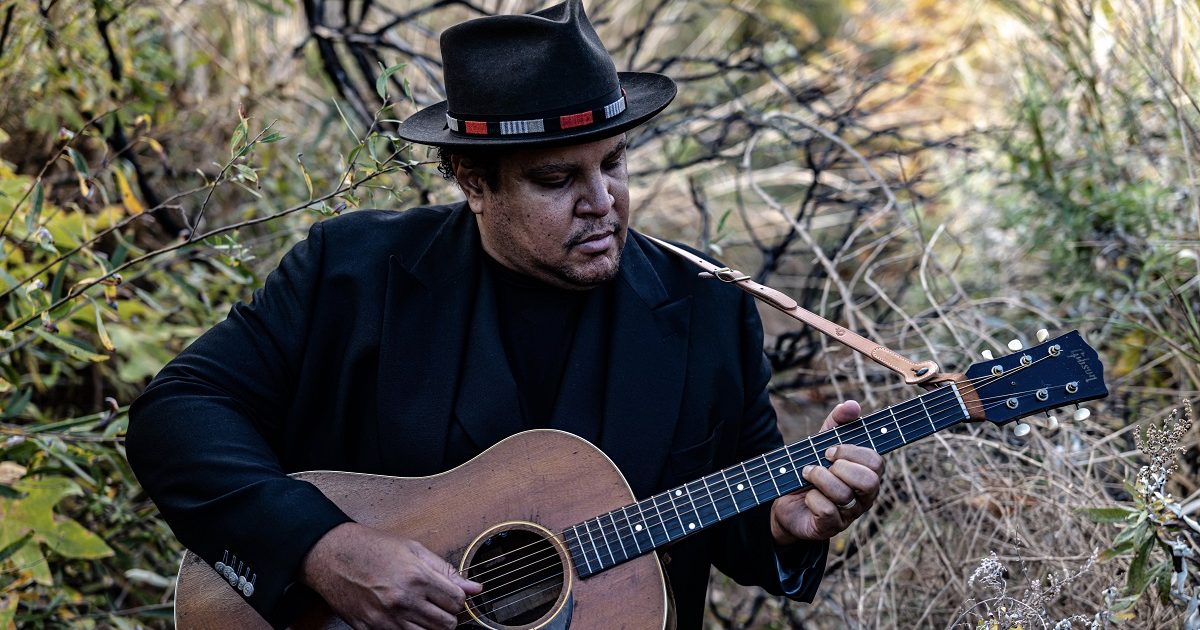
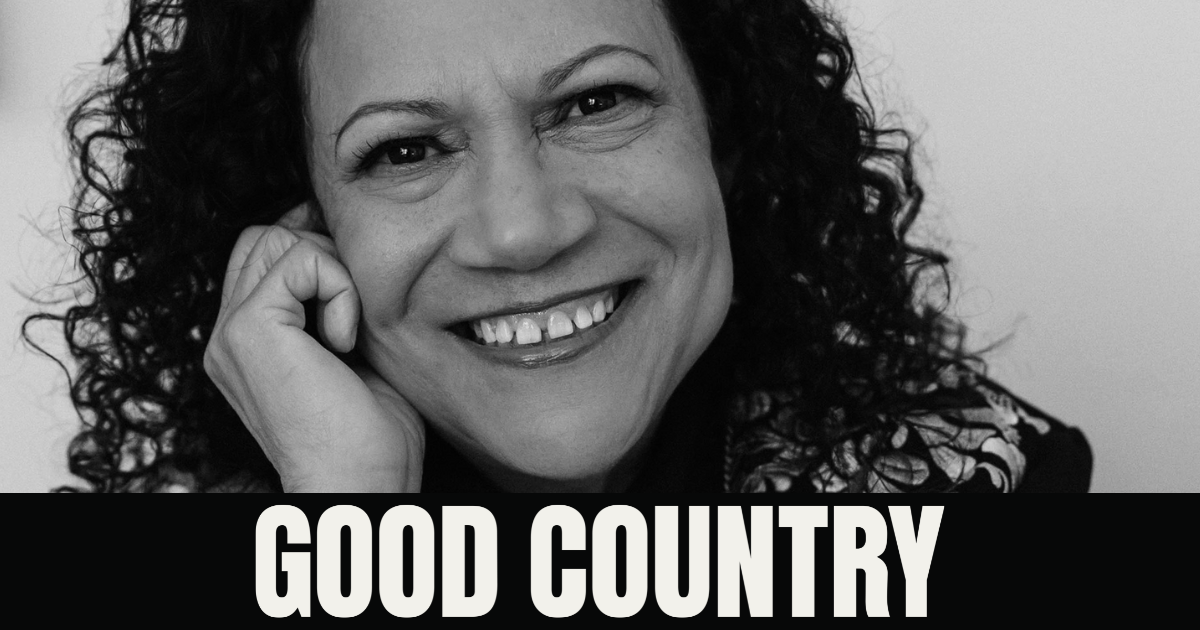
Still, there’s been a genuine explosion of interest in Black country music the past couple of years prior to the release of Cowboy Carter. It has resulted in a host of attention for artists ranging from Charley Crockett, Mickey Guyton, Miko Marks, Rissi Palmer and Brei Carter to established hitmakers like Darius Rucker and Kane Brown. But there’s one name that stands above all others as a key figure who’s been in the country music trenches over five decades. That’s author and songwriter Alice Randall, a superb novelist and academic. Randall, a Detroit native, made the move to Nashville from Washington, D.C. back in 1983, because she wanted to showcase her skills as a country songwriter and simultaneously wanted to demolish the widely held myth that the music had no links or connection to Black music and zero audience among African Americans.
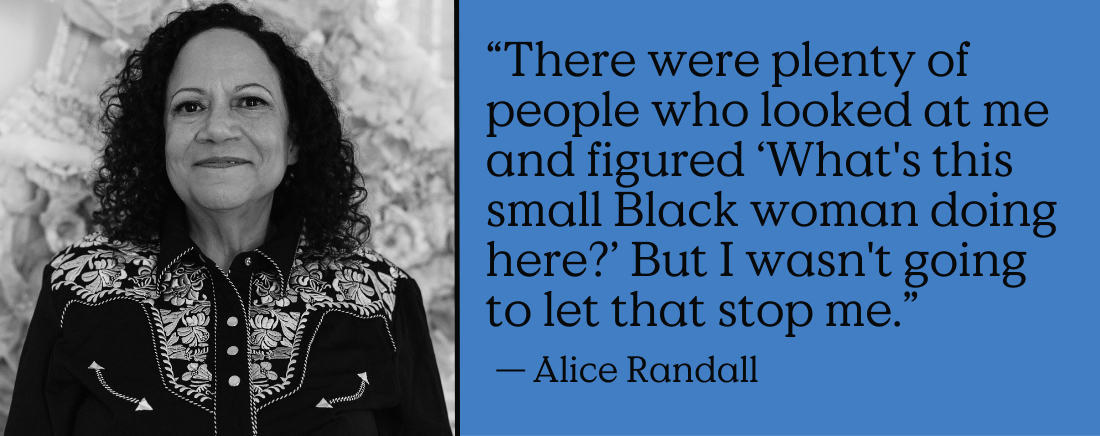
“Yes, I faced open hostility and overt racism when I began,” Randall told Good Country during a recent interview. “There were plenty of people who looked at me and figured what’s this small Black woman doing here? But I wasn’t going to let that stop me.” Randall spent plenty of time attending songwriters rounds, plus examining and analyzing the songs that were becoming hits. In her book she pays credit to Bob Doyle, who was then a songwriter liaison at ASCAP. Doyle’s Bob Doyle & Associates is the longtime management firm for Garth Brooks. Another of her early Nashville mentors was singer-songwriter Steve Earle, whom she met through Doyle. She cites Earle’s willingness to address personal and social trauma and pain as an influence on her writing style.

Randall earned her first Top 10 country hit in 1987 with the Judy Rodman-recorded “Girls Ride Horses, Too,” which she wrote with Mark D. Sanders. She also launched the publishing company Midsummer Music (which she later sold), with the aim of aiding and developing a community of storytellers. She’d soon enjoy bigger success, becoming one of the first Black women to write a No. 1 country hit, when she and Matraca Berg co-wrote “XXXs and OOOs (An American Girl),” for Trisha Yearwood in 1994. (Donna Summer previously co-wrote Dolly Parton’s “Starting Over Again” in 1980).

Randall was also a writer on Moe Bandy’s top 40 hit, “Many Mansions.” Some other notable Randall milestones include writing the treatment for Reba McEntire’s “Is There Life Out There?” music video, which won an ACM Award and features a Randall cameo. In addition, she wrote and produced the pilot for a primetime drama “XXX’s and OOO’s,” which later aired as a made-for-TV movie on CBS.

But as Randall notes in her book, additional trials can come with success. Randall recounts how after the success of “XXXs and OOOs,” a music publishing executive pressured her into signing a contract before she had time to let her lawyers look at the paperwork. That move eventually led to Randall signing away much of her writer’s share of the song’s profits, an experience she called “part of my graduate school.”

Her new book, My Black Country (and its co-released, eponymous album), nicely combines personal reflection with historical commemoration and cultural examination. It highlights Black country’s finest performers and personalities, while noting that early country music was a far more interracial activity than many realized. “It’s amazing to me how many people don’t realize that Jimmie Rodgers recorded with Louis Armstrong, or that Lil’ Hardin was also involved in that historic recording,” she continues.

Randall cites Hardin as the mother of Black Country, the premier vocalist/harmonica soloist DeFord Bailey as the papa, multi-idiomatic master Ray Charles as the genius child, Charley Pride as Bailey’s side child, and the vocalist and TV/film star Herb Jefferies, also known as the Bronze Buckaroo, as Hardin’s stepchild.

She’s equally passionate about the frequent omission from country music histories and commentary of the contributions of Black cowboys. “I fight for all the Black cowboys who have been erased, all the country and western songs through the years that did not tell those stories,” Randall told Billboard magazine in an earlier interview. “When I wrote songs like ‘Went For a Ride,’ a lot of people did not realize they were Black cowboys I was writing about… but 20 or 30% of all cowboys were Black and brown in the 19th and 20th centuries, so it’s one of the ways that African Americans have contributed so much to the legacy of country music, is through cowboy songs.”

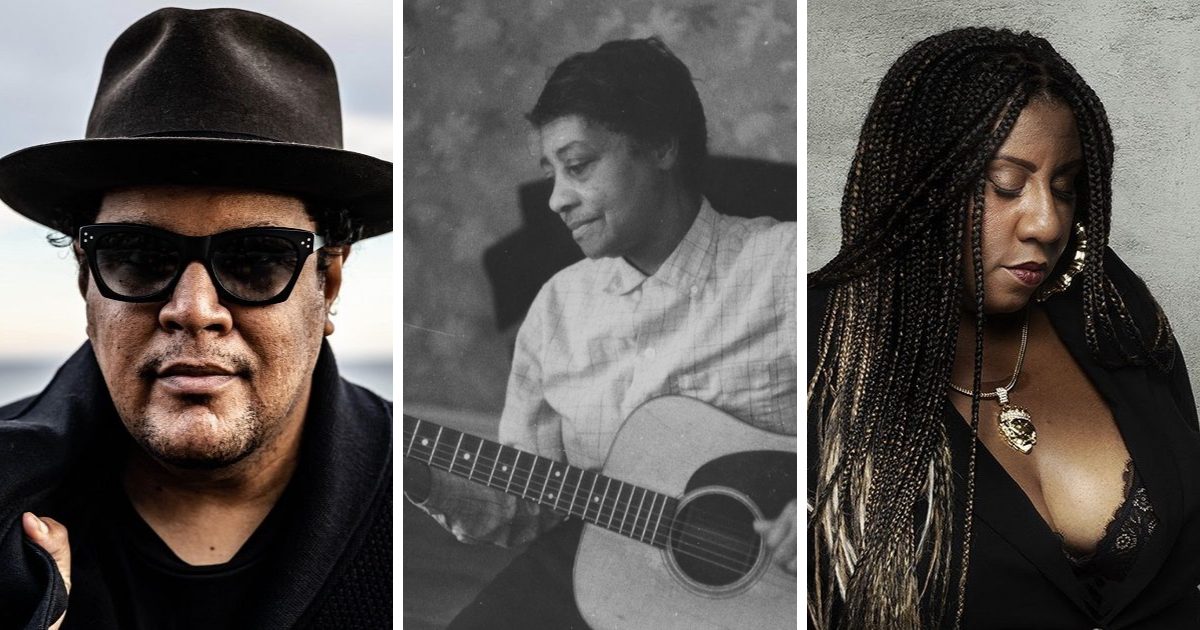
The book also chronicles a further lineage of Black country artists, including the Pointer Sisters and Linda Martell, as well as other artists like Sunny War, Miko Marks, Valerie June, and Rissi Palmer.

With 2024 being a big year for Black country, it’s only fitting that Nashville and the music world at large recognize and celebrate Alice Randall’s achievements. Last month she published the memoir, My Black Country (Simon & Schuster), while an accompanying LP, My Black Country: The Songs Of Alice Randall (Oh Boy Records), was also released.

A pair of sold out events in Music City – a book signing at Parnassus bookstore and a combination celebration/Black Opry concert at the City Winery where contemporary Black country vocalists performed Randall tunes – were just the first events to honor the current Vanderbilt Professor of African American and Diaspora Studies as well as writer-in residence. Randall’s other notable literary feats include The Wind Done Gone, a blistering examination and parody of the book and film, Gone With The Wind.

During Black Music Month in June, Randall will appear at the Smithsonian National Museum of African American History & Culture on June 7, and she’ll return to Nashville on June 15 for another in-person conversation about Blacks and country music.

Randall’s book traces her love for country to a family relocation. While growing up in Detroit, she was also a fan of Motown and even spent some time with Stevie Wonder. But upon moving with her mother to Washington, D.C., country became the dominant music she regularly heard. As a student at Harvard studying both English and American Literature & Language Randall says it was after closely surveying Bobby Bare’s 1976 song, “Dropkick Me Through Jesus (Through the Goalposts of Life),” she really began to understand the depth and breadth of country music storytelling.

That knowledge, along with her excellence as a lyricist and storyteller, resonates throughout the many memorable and unforgettable numbers on the album My Black Country: The Songs Of Alice Randall. The roster of 12 women selected to perform the various tunes features many of today’s finest country stylists. The honor roll includes Ada Victoria’s soaring “Went For a Ride,” Allison Russell’s glorious “Many Mansions,” Rhiannon Giddens’ routinely spectacular rendition of “The Ballad of Sally Anne,” and Rissi Palmer’s poignant performance on “Who’s Minding the Garden.” Randall’s daughter, poet and commentator Caroline Randall Williams, delivers a strong performance on “XXXs and OOOs.”
Randall credits Russell for introducing her to Ebonie Smith, better known for her work as a producer on Sturgill Simpson’s Grammy-winning album, A Sailor’s Guide to Earth.

And it’s no surprise Randall would conclude our interview by weighing in on the Beyoncé LP, herself.

“She’s the only Black woman to achieve those feats [No. 1 country single and album], but I don’t think she’ll be the last,” Randall concludes. “I’m more proud of the fact that there are so many great Black country artists out there, that the Black Opry is getting national attention, and that we’re finally putting to rest that garbage about country only being for white people.”

“In fact, to me, Nashville’s becoming a town for wild women, and for Black women to freely express themselves any way they choose.”


Photo Credit: Alice Randall by Keren Trevino.
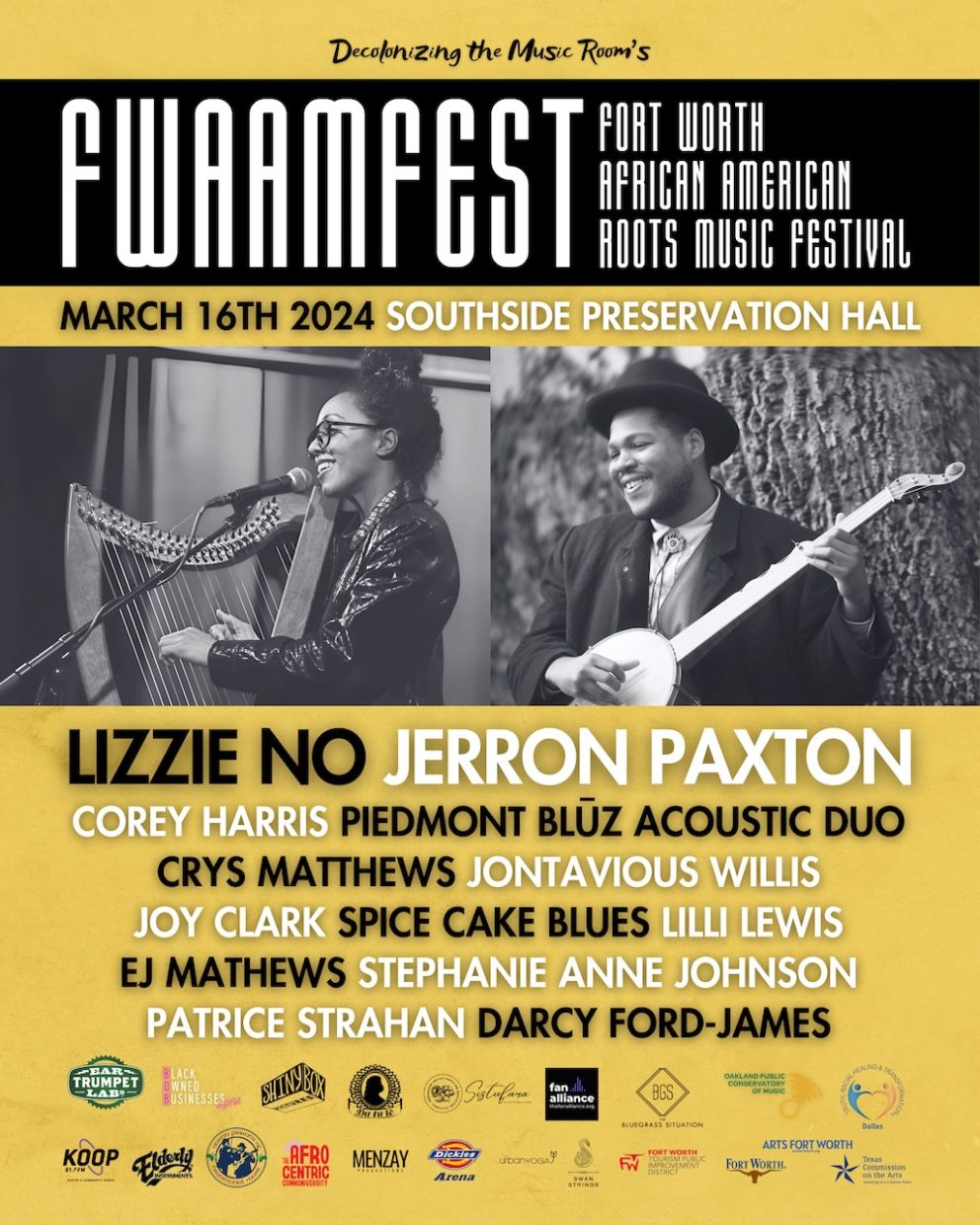
Meet the Lineup of This Year’s Edition of Fort Worth’s FWAAMFest

The fourth annual edition of the Fort Worth African American Roots Music Festival (AKA FWAAMFest) will take place this weekend, on Saturday, March 16, at Southside Preservation Hall in Fort Worth, Texas. BGS has been proud to support and sponsor this quickly up-and-coming event over the past few years and 2024’s edition of the all-day festival will be the biggest FWAAMFest yet.

The festival has a mission of centering the vital and transformative contributions of Black and African-American folks to American roots music. Though their purview at first glance may seem “niche,” this is a concept that is as broad and expansive as it is pointed and specific. Festival organizer, Decolonizing the Music Room founding director Brandi Waller-Pace – a regular contributor to and collaborator of BGS – goes out of her way each year to demonstrate Black music, Black artists, and Black stories are not monoliths. Each year’s lineup is carefully curated to show FWAAMFest audience members the depth and breadth of Black musical traditions, not only in Fort Worth but around the country.

Tickets for the event are competitively priced ($50 general admission, $30 for students, with discounts for educators and children) and are truly an excellent value. Where else under one roof can you enjoy workshops, partake in Oakland Public Conservatory of Music’s Black Banjo & Fiddle Fellowship, dine on excellent barbeque and soul food, and hear sets from Jerron Paxton, Lizzie No, Crys Matthews, Joy Clark, Jontavious Willis, Corey Harris, Piedmont Bluz Acoustic Duo, Spice Cake Blues, Lilli Lewis, EJ Mathews, Stephanie Anne Johnson, Patrice Strahan, and Darcy Ford-James?

Below, take some time to familiarize yourself with this year’s FWAAMFest lineup while you make your plans to join Fort Worth at Southside Preservation hall this Saturday for an incomparable day filled with music, history, fellowship, and community building.

Jerron Paxton

Well known to BGS, Jerron Paxton – who you may know as “Blind Boy” Paxton – is a blues, old-time, and ragtime musician adept on many instruments, from piano to banjo to harmonica and beyond. Paxton was on BGS’s Shout & Shine Online lineup in 2020, a virtual showcase also curated by Brandi Waller-Pace. We’ve spoken to Paxton a few times about his incredible, timeless sound – and how he doesn’t view his music as coming from the past, but being rooted in the present. With his material and storytelling, he demonstrates how all of these American roots genres are so closely intertwined.

Lizzie No

Lizzie No’s new album, Halfsies, is certainly one of the best releases of the year. An Americana and country singer-songwriter and multi-instrumentalist, No has a perspective that’s effortlessly modern while steeped in country traditions of the ’80s, ’90s, and 2000s. There’s introspective indie touches, pop infusions, and an end result that’s truly singular. Her music has plenty to sink your teeth into, and we go back to it time and time again.

Check out a recent GOOD COUNTRY feature about feminine country that highlights No and Halfsies and take some time to discover why our co-founder, Ed Helms, highly recommends her music via Ed’s Picks. Oh, and did we mention No co-hosts a BGS podcast, Basic Folk, too? An entire multi-hyphenate, right here!

Corey Harris

Corey Harris is a blues musician who has busked the streets of New Orleans, lived in Cameroon and West Africa, collaborated with Taj Mahal, and garnered millions of streams. His is an old-fashioned sound, but without essentialism or facing backwards. The lead single and title track from his upcoming album, Chicken Man, is out now – watch for the full record later this month. Based in Charlottesville, Virginia, don’t miss your opportunity to see this world-traveling blues picker and singer in Fort Worth.

Piedmont Bluz Acoustic Duo

Valerie and Benedict Turner are Piedmont Bluz Acoustic Duo, inductees of the New York Blues Hall of Fame. They’re committed to bringing “awareness to these unique aspects of African-American culture,” especially Piedmont style fingerpicking, washboard, and what they (rightly) call “country blues.” They’ve traveled all around the world playing Piedmont blues and they’re especially adept at preserving songs and sounds from artists like Mississippi John Hurt, Etta Baker, and Libba Cotten while showing how important their music is in modern contexts – in the present moment.

Crys Matthews

Singer-songwriter-picker Crys Matthews is another FWAAMFest 2024 artist that’s a well known name to BGS readers. An activist in songwriter form, Matthews writes pointed, sharp, and compassionate protest music that’s never saccharine or blinders-on, a rare feat in folk music. She also has a guitar playing style all her own – playing left handed, with the guitar upside down, she also reminds of musicians like Elizabeth Cotten. But still, what listeners take away from her joyful and encouraging sets, filled to bursting with solidarity, is an understanding that what Matthews does with her music is an art form all her own. Check out a BGS fan favorite from 2023, Matthews’ collaboration with Heather Mae and Melody Walker on a rousing community-minded number, “Room.”

Jontavious Willis

Grammy nominee Jontavious Willis was born and raised in rural Georgia and his childhood was filled with gospel music and connections to deep cultural traditions. As a teenager, he discovered Muddy Waters and the blues; it wasn’t long ’til he was sharing stages with Taj Mahal, Keb’ Mo’, and so many of his heroes and forebears. (Mahal called him “Wonderboy,” a certainly fitting and worthy title!) Willis makes music with a huge scope and limitless lifespan, but in that same DIY, hard-scrabble, down to earth way so highly valued in the blues. In 2018, he won the Blues Foundation’s International Blues Challenge Award for Best Self-Produced CD, and his 2019 follow up, Spectacular Class, garnered his Grammy nomination and millions of streams on digital platforms.

Joy Clark

Guitarist Joy Clark is rapidly on the rise – and deservedly so! She tours and performs with the Black Opry Revue, with Allison Russell’s Rainbow Coalition, and as an incredibly accomplished solo picker-singer-songwriter. Just last month, she wowed the Folk Alliance International audience at the International Folk Music Awards with her tribute to Tracy Chapman, showing the intuitive and intentional connections between Clark and queer, Black guitarists, musicians, and songwriters who came before her. The most remarkable thing about Clark’s music, though, is not that it reminds of other musicians and artists – even when it does. Instead, it’s impossible to deny that Clark has a voice on the guitar that is all her own and she’s on a steady march to bring that voice to the world. Thank goodness!

Spice Cake Blues

FWAAMFest has it all, from internationally known artists to insider favorites to gem-like discoveries, like duo Spice Cake Blues. A new introduction to BGS and our readers, Spice Cake features Miles Spicer and Jael Patterson and they are based out of Maryland. Spicer is a co-founder of the Archie Edwards Blues Heritage Foundation and an accomplished Piedmont (and multi-style) guitar picker. Jael, who also goes by Yaya, is a powerful and soulful singer. Spicer also performs with Jackie Merritt and Resa Gibbs in the M.S.G. Acoustic Blues Trio. (M.S.G. = Merritt, Spicer, Gibbs.)

Lilli Lewis

You may know her as “Folk Rock Diva,” Lilli Lewis is a powerhouse vocalist, pianist, songwriter, former record label runner, and forever community builder. Her shows are entrancing, like a combination of Wednesday-night church and a New Orleans Saturday night. Lewis is prolific and critically-acclaimed, and something of a genre and context shapeshifter, unifying the many sounds and styles she inhabits with her heartfelt stories and encouraging words of insight. Her latest album, All is Forgiven, was released in December 2023. Don’t miss her cover of Radiohead’s “Creep,” though, too – there’s a reason it’s so often requested at her concerts!

EJ Mathews

EJ Mathews was born and raised in Atlanta… Texas. A small town near the Arkansas border, Mathews grew up listening to the music of his grandpa – an even mix of country and blues. As such, his sound infuses as much modern blues as country, southern rock, and gospel, with infinite feel and groove. His 2020 single, “Smokin’ & Drankin'” shows so many of the styles he effortlessly combines. Now living in Dallas, Mathews will make the relatively short hike over to Fort Worth for FWAAMFest to bring his unique, melting-pot sound to Southside Preservation Hall.

Stephanie Anne Johnson

Stephanie Anne Johnson is a singer-songwriter and radio host based in the Pacific Northwest. Born and raised in Tacoma, they were already becoming a common sight in folk and Americana circles when they seemingly burst onto the national scene appearing on season five of NBC’s The Voice. Johnson is another FWAAMFest artist who was featured on the Shout & Shine Online lineup in 2020 curated by Waller-Pace. Criminally underrated in national folk, Americana, and indie circles, Johnson creates powerful music that brings love, mental health, togetherness, and redemption all under a compassionate lens – and with a remarkably grounded sensibility. Whether solo or with their band, the HiDogs, Stephanie Anne Johnson is an entrancing musician and songwriter. Don’t miss their 2023 album, Jewels.

You can see all these artists and so much more this weekend at FWAAMFest in Fort Worth! Get your tickets now.


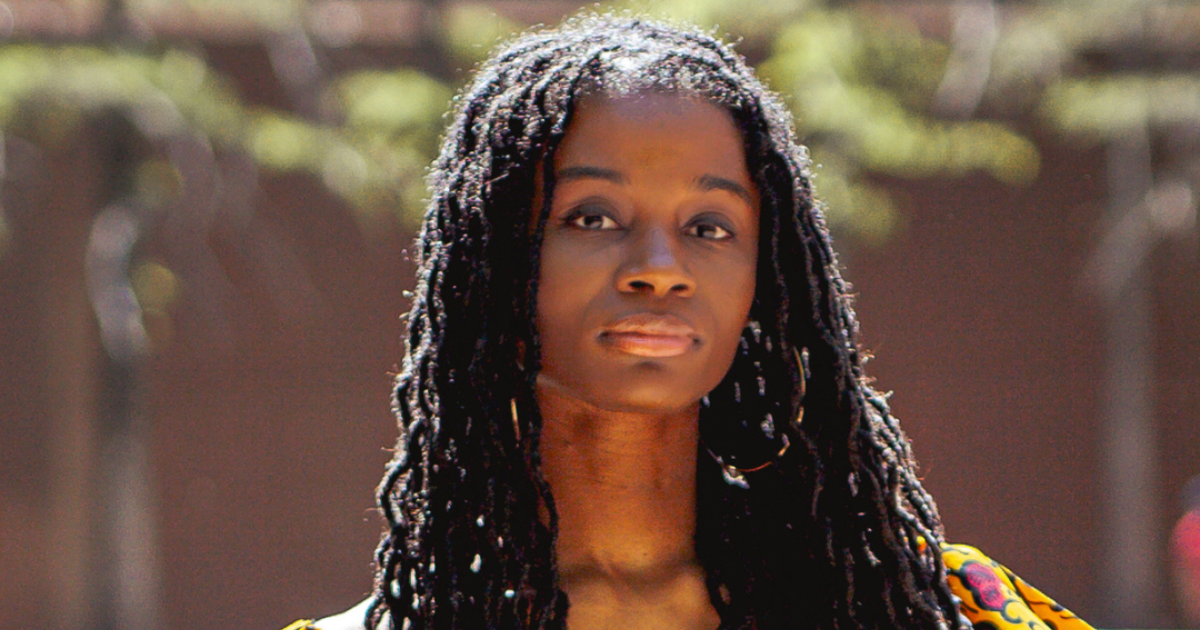
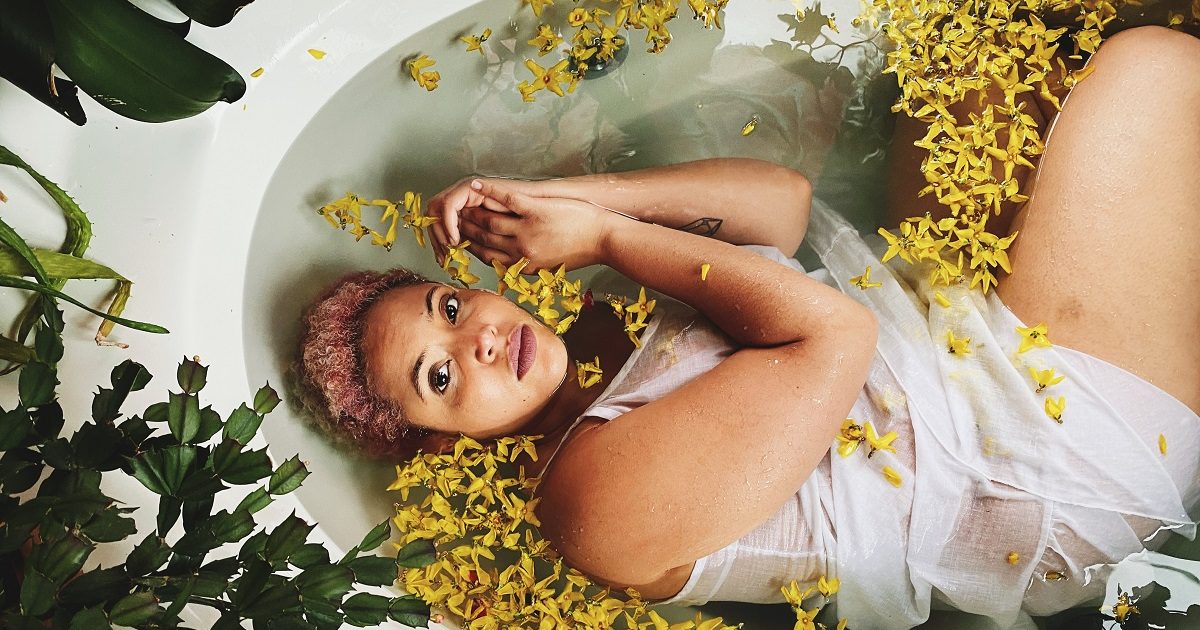
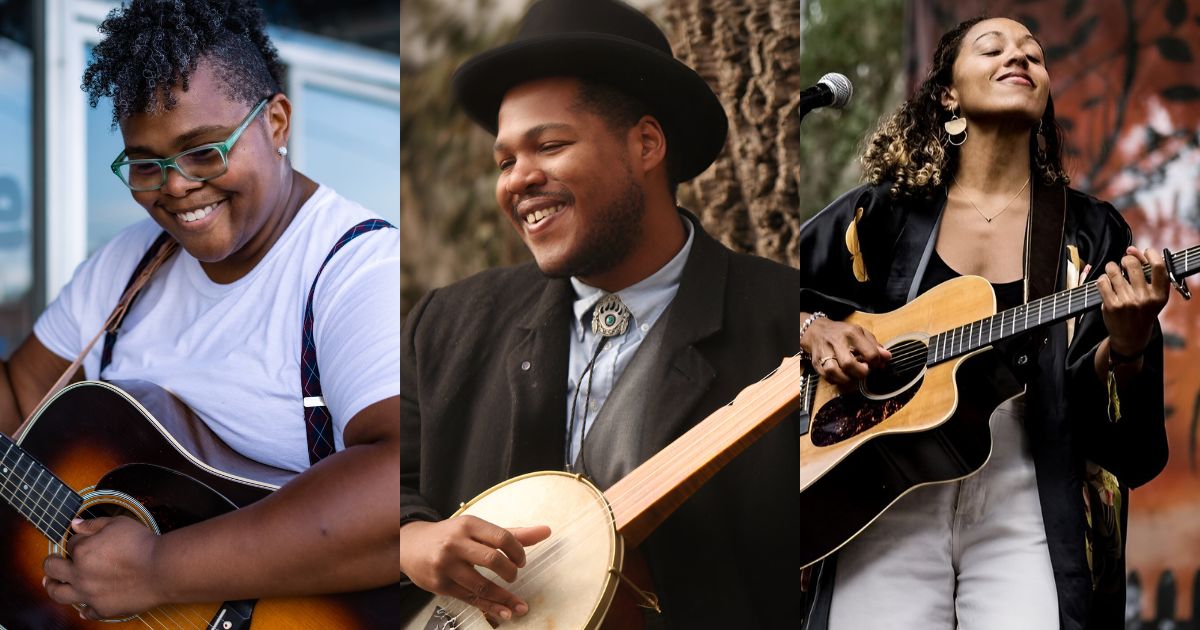
Photos courtesy of FWAAMFest. L to R: Crys Matthews; Jerron Paxton; Lizzie No. 

Putting Black History Month in Perspective with Brandi Waller-Pace

[Editor’s note: To mark the conclusion of Black History Month, we’ve invited BGS collaborator and contributor Brandi Waller-Pace to share her thoughts on how to take the ethos, mission, and action of BHM with us throughout the year.]

Dr. Carter G. Woodson, Black American writer and historian, is known as the Father of Black History Month. One of the first scholars of African American history, he founded the Association for the Study of African American Life and History in 1915 and established Negro History Week in February of 1926. He chose the week of February that contained the birthdays of both Frederick Douglas (February 14th) and Abraham Lincoln (February 12th) as both birthdays were already being celebrated in Black communities. In 1970 The Black United Students organization at Kent State University began a celebration of Black History Month, and in 1976 President Ford declared Black History Month nationwide.”

– Brandi Waller-Pace, Decolonizing the Music Room, 2001 

Dr. Woodson’s selection of Douglass and Lincoln’s birthday indicates how significant they were, especially since the 1920s being just one generation removed from the Civil War – with many formerly enslaved Black people still alive. Even today, we are not nearly as removed from that time period as we think we are. In 1976, the year of the United States’ bicentennial and fifty years after the first Negro History Week, President Ford expanded the commemoration to last an entire month and Black History Month was born. 

Some folks ask, “If Black history is important all the time, why is it just a month?” But the literal history of the month itself, the fact that it exists at all, is part of Black history. It was a push to validate and celebrate the experiences, culture, study, and background of Black people in the land that came to be known as the United States, people who were viewed legally and societally as less than fully human, alongside the denial of their contributions to this country’s foundation and culture. Negro History Week was created to shine light on everything Blackness has created in the U.S. – and that week of recognition itself was created by a Black scholar. We know that Blackness and Black history is broader than just the U.S., and I find it important to look at that expanse in the context of Black History Month. 

When we talk about heritage months in general, we have to think about how we use terms: “Black,” “African American,” and so on. These ideas and terms didn’t all begin at the same point, they didn’t come out of the same movements, and they aren’t all used interchangeably or even in the same fashion. They also are not universally claimed by people we would place under their umbrella.

This is exactly what this month is for, to have these conversations and to open up these spaces, not to relegate Blackness to one month. Celebrating Blackness isn’t geared toward denying other groups their history – framing the month in terms of what it means for the recognition of other groups perpetuates false binaries, as if the only options available are honoring BHM at others’ expense, or ignoring BHM altogether. Celebrating Blackness is just that– acknowledging the history and the continuing traditions, culture, and advances of Black folks, who continue to make history. That sort of celebration is huge, especially considering the erasure and exclusion of so much of Black history in curriculum, media, and literature. 

It’s interesting to consider our ideas around Black History Month as they relate to our changing perceptions of time. As the world became more industrialized, mass communication advanced, and now we’re in the age of the internet where things seem to move lightning-fast and we are inundated with content, with emphasis on trends. This contributes to the impression of even meatier information simply being trends and waves in popular culture or only being flashes in the pan. This helps reinforce the idea that our celebrations of heritage months are just a moment, something for short attention spans, to be consumed in a second before scrolling on. You’ll see memes or posts like, “Now everybody is doing such-and-such a thing!” When that “thing” – almost always mocked as “woke” or “politically correct” – has possibly been around for hundreds of years. 

It’s a function and arm of the myth of white supremacy to present the “other” as invalid, unless there is something about it upon which one can capitalize. Time and time again, Black folks’ creations – our foodways and folkways, our cultural creations, our music, our ways of dress – have been erased, ignored, or derided unless there’s a point at which some kind of value can be extracted from it. It is then taken up by the mainstream, gates are built around it, and Black folks are purposefully distanced from it while others profit from it.

It’s like so many of the linguistic trends that have pervaded TikTok and internet culture, which are referred to as “Gen Z language,” but they are really rooted in African American Vernacular English and Black language that have been adopted by the internet writ large, but without understanding of or general reference to their origins. Because of how quickly the world moves and how information is passed along in the age of the internet, these pieces of culture are picked up, stripped down, and decontextualized so quickly.

Or consider the banjo – which is still represented in the mainstream specifically as a “white Appalachian instrument.” In the past, this representation was even upheld broadly among many trad communities in a factual way. In recent decades – thanks to the labor and diligence of some great humans – the banjo’s true origins have become more and more widely known, along with the story of how it was taken up into mainstream popular culture and how many Black people were distanced from their connection to the instrument while many white people continued to profit materially and/or reputationally from playing it.

In this time, Black cultural appropriation is so often perpetuated that it’s easy to have no awareness of these phenomena as they happen. Part of the work here is understanding that intention – or lack of intention – doesn’t mitigate impact. It’s important for all of us to understand how we perpetuate what we perpetuate and how we co-opt what we co-opt, whether mistruths about the banjo, slang and language trends, or Black History Month.

When we talk about privilege and perpetuation of this sort of appropriation, we tend to individualize, because in our society and culture we are conditioned to think individually. This manifests itself in a lot of ways; for instance, many speak against funding community care for people who need it, against investing in and giving people what they need – income, shelter, nutrition, access, resources. This comes from being taught that each gets their own – if you do, it’s because you are sufficient as a person, if you don’t it’s because you are deficient. While our society individualizes, it’s important to remember these are systemic, holistic, endemic issues that must be solved collectively. We must collaborate to repair the legacy of antiblackness, erasure, and exclusion that Black folks have experienced on this land for centuries.

This doesn’t mean there isn’t individual responsibility. Each of us can and should make individual efforts – as well as collective – to reckon with our privilege and our roles in perpetuating this status quo. And I would caution against positioning the individual against the collective; it’s collective and individual work. People interact with one another individually and interact with collective systems and groups. It’s such a balance; not taking away the need for individual focus and responsibility, but understanding that that same individual is part of the collective and should also drive the collective. Something like voting– when you’re in that booth, you’re by yourself, but your vote is collective action.

So, what is needed for others to make progress toward Black people and their creations being treated equitably? Start by building human relationships, first of all. Representation within ranks shouldn’t just be for “diversity’s sake.” Diversify spaces not just for the sake of diversifying spaces, but so these spaces aren’t just white-dominated and white-led, talking about these issues and what to do about these issues. Having actual human connection, being in relationship with one another, is vital. Have a willingness to invest in real, human relationships with the Black folks that you’re inviting in. There’s a huge difference in how one cares for and handles people they’re in real relationships with – not as just a representative identity, but as a human, a community member. It’s easier to listen to folks and really hear them, if you care about them.

Make sure not to employ a “color avoidant” (AKA “colorblind”) approach. If you care about me as a Black person and my full humanity, don’t erase my Blackness, because it is an important part of my identity, of which I am proud. But it also is something society has painted as negative and caring for me means acknowledging that that affects me. The status quo, white supremacist norms, are intertwined with our particularly fierce brand of capitalism, and it all seeks to completely individualize us and strip away our sense of collective care. So, one must be intentional in building relationships. But don’t stop connecting at those of us who are the easiest to access, who have the most resources and the privilege to already be in exclusive spaces you regularly encounter. That has us tokenized and other Black folks still erased, outside of the gates.

Then, based on these real, personal relationships with Black folks, you can step in when necessary to check your peers who are perpetuating the erasure, marginalization, tokenization we regularly experience among organizations and groups. In bluegrass, old-time, and roots music the number of Black folks present is never equal to the true cultural contributions of Black folks, which can result in heavy tokenization. We can feel actions are being taken just to check a box, versus work being done to make structural change over time. 

There is a great deal of societal resistance against taking deliberate, intentional actions to address antiblackness. It is important to view this work through the lens of reparation, in a real material and financial sense and to direct resources to Black communities, giving Black folks the discretion to use those resources as they see fit, rather than insisting on providing your oversight. At the same time, those who hold this industry and community power should understand that people aren’t always going to want to be hired in or brought on to diversify or as a solution to a diversity problem.

 You can do both at the same time. I had a conversation recently with someone about the festival I founded, the Fort Worth African American Roots Music Festival, about pushes to diversify spaces, versus creating new ones. Both of these strategies are completely valid – if you run a festival, by all means bring on more Black artists next year. But at the same time, donate money to spaces specifically aimed at building a more involved Black community within roots music – ones in which we don’t often get to participate.

It’s also important to address the concept of inclusion. The word “inclusion” can be frustrating, because the baseline for inclusion is, “We made something in which you weren’t included upfront, and now we have to figure out how to put you in it.” The focus can’t always be on bringing Black presence into those spaces; there is also a responsibility to support what Black people are already building, letting us do our thing. If your support is given upon the condition that we stick within your established frameworks, is it really support?

I often remind people that it takes time and energy to process all this information, put it into a historical context, and really understand disparities caused by antiblackness – especially because, for instance, not all white folks are rich, not all privilege is financial privilege, and so on. On the grand scale, huge financial disparities exist between white and Black people in the U.S. Confronting this may cause discomfort; sitting in discomfort is hard. But I see it the way I see physical exercise – when you’re working out, if you aren’t pushing your muscles to failure you can’t grow. This work is building muscle. This is why understanding that you, even as individuals, are part of the collective is so important. Because, at this point, the individual gets fed up. The individual tires when it gets tough. It can feel so insurmountable, but this is when people can remind themselves that they are part of a collective and have others to help with the load.

When discomfort creeps up, one may go to, for lack of a better idiom, black-and-white thinking. So many people who aren’t Black want to ignore that antiblackness is so deeply rooted in the history of our country, in our economy, in this industry, in our perceptions of the world around us – whose full humanity is or isn’t acknowledged; what defines beauty; what defines intelligence; and much more. When we’re talking about these issues more broadly, going back to the original question of “Why Black History Month?” Why is this distinction, this specificity important? If you’re striving for justice, working to dismantle white supremacy, working toward creating pathways to success for Black folks in this industry and within capitalism, but aren’t talking at all about Blackness specifically, you’re missing something major. There’s something distinct about Black people’s position in this society – just as there’s something distinct about the position of Indigenous, Asian, Latine and other non-white folks in this society.

These white supremacist narratives that erase Blackness’ contributions on this land, that heritage months like Black History Month work to interrupt, became what they are today over centuries of very dedicated legal, cultural, and personal efforts to entrench them. That process took hundreds of years, so why do we expect one workshop, one presentation, one article to be all it takes?


Photo courtesy of Brandi Waller-Pace

LISTEN: Naomi Westwater, “Americana”

Artist: Naomi Westwater
Hometown: Brockton, Massachusetts
Song: “Americana”
Album: Feelings
Release Date: September 3, 2021

In Their Words: “‘Americana’ is a song about race and pain. It’s a song about being in the in-between. This is a song for multiracial Americans — for every person who’s been asked, ‘What are you?’ This is for the people who are white, and Black, and brown all at once, and at the same time never white, or Black, or brown enough. This is my love letter to America, I think we need to break up? This song is me asking, post-racial America? For who?” — Naomi Westwater


Photo credit: blahnik x westwater

Folk Hero Reggie Harris Faces a Moment of Reckoning ‘On Solid Ground’

Reggie Harris is a songwriter, storyteller, educator, and folk icon. No, literally. This year, Harris was awarded The Spirit of Folk Award from Folk Alliance International — as well as W.E.B. Du Bois Legacy Award by the Du Bois Legacy Festival in Great Barrington, Mass. His career as a folksinger has spanned four decades, with musical collaborators and activist compatriots such as Pete Seeger, Dr. Kim Harris, C.T. Vivian, Cathy Fink & Marcy Marxer, Greg Greenway, David Roth, and many more. BGS is proud to host Harris on the sixth episode of our Shout & Shine livestream series on Wednesday, June 23 at 4pm PDT / 7pm EDT. (Tune in here via the video player below, our YouTube channel, or our Facebook page.)

The joy and hope evident in Harris’ 2021 release, On Solid Ground, stem from a rooted sense of perseverance and from his intentional decision to face each and every moment, in the moment, and to find hope within each. It’s why such heavy topics don’t feel gargantuan or burdensome as they make appearances and anchor songs on the album. Harris, watching the social, political, and racial reckonings that bubbled onto the sidewalks and streets of every city in America over the course of the last year, didn’t sit down or give up in the face of the unclimbable summit of translating that reckoning into song. 

Instead, Harris draws upon the wisdom, insight, and hope given to him by his own elders and communities throughout On Solid Ground. In choosing to keep himself open in each moment, Harris found himself receiving inspiration, nuggets of ideas and stories, glimpses of songs and arrangements in so many of those moments, simply because he was there, with a still heart and still soul, to receive them.

On Solid Ground feels solid and grounded, but also soars – unencumbered by whatever aspects of its content and lyrics might be perceived as pitfalls or minefields to so many. Harris, as only a folksinger-storyteller can, weaves a reality that can indeed rise to the occasion of this twenty-first century civil rights movement. We just have to choose to be present to usher in that reality — which, it’s important to note, will have an excellent soundtrack.

BGS caught up with Reggie Harris over the phone on May 28, Memorial Day weekend and the 100th anniversary of the Tulsa Massacre.

BGS: I wanted to start off with “It’s Who We Are,” which leads off the album. It makes the point that the political and social turmoil of the last few years aren’t really anything new, but rather are pretty natural outgrowths of who we’ve always been — as a culture and as a society. I wonder if you could talk a little bit about why you wanted to reinforce that point and kick off your album with that song? You’re making the point that this isn’t an aberration, this is who we are. 

RH: [Laughs] I do a lot of work, a lot of educational and historical performing — both in schools and around the country — and the question always comes up, with audiences of all ages, “How far have we come?” And, “Who are we?” These things happen around the country, incidents like George Floyd and Breonna Taylor, and also the incident in New York City with the Coopers — Amy Cooper and [Black birder, Christian Cooper]. People are constantly tweeting as if [these incidents] are one-offs, that each is an aberration. So I’d been working on writing a song for a while that basically says our nation was founded with white supremacy and racial issues from the very beginning. And we have been struggling with that. Obviously, we have made some progress over time, but we see that these things are so temporary — and the proliferation of them over the last two years particularly, and through the pandemic, really brought it to the fore. 

I kept looking at all of that, and I started writing that song– I’m not a writer that likes to just put things out there, constantly pointing out all the difficult and sometimes dangerous events. I love to tie into hope and I couldn’t talk my way through it. I wrote about twenty-seven verses. And it was getting more and more dark all the time! [Laughs] 

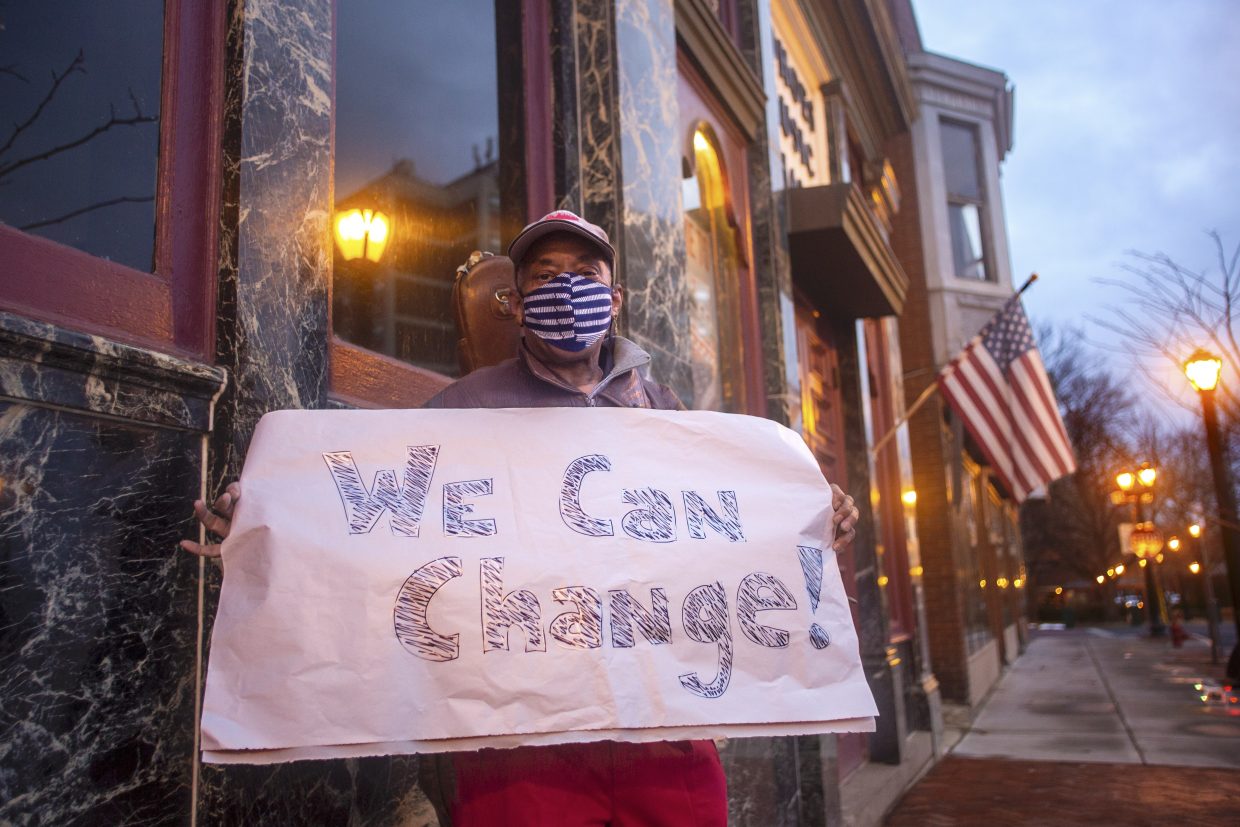
Even this week, we’re acknowledging the massacre in Tulsa, Oklahoma, a hundred years ago. All of those — there are so many of those incidents and events, I really wanted to say, “Yes. This is our legacy, this really is who we are.” But, there is something about what is happening, particularly with young people, particularly in the last year. So, when I saw people flooding into the streets all across the nation, in Portland, Louisville, and all these places I saw the diversity of faces and the diversity of ages. I thought, “You know, something has changed.” We’ve had a lot of false starts in our nation, but that became the critical point when I sing, “Yes, we can change! / Reshape the future of our reality.” We can define ourselves. Any way we choose to.

I have to admit, when I finished recording the song, I turned to Greg Greenway, my co-producer, and said, “I don’t know if I want to put this first.” [Laughs] We went back and forth and back and forth and finally — I was actually going to begin with Malvina Reynolds’ “It Isn’t Nice” and Greg turned to me one day and said, “No, this is the album statement. I think we gotta just put it out there.” And I said yes, and there you go! You need to have some courage in the work that you do. I’ve been looking to people like C.T. Vivian and John Lewis and all the sacrifices that people like Fannie Lou Hamer made. And all the amazing icons of civil rights history. 

As I was thinking about this point — that this is exactly who we are and always have been — I was listening to “Let’s Meet Up Early,” and there’s a lyric, “It ain’t no mystery… don’t try to act surprised.” 

[Laughs]

So this is a point you are making indelibly across the record! [Laughs]

Yes, well it is. And this came out of about three weeks of just sitting at home, watching the nation unravel. I wrote “On Solid Ground,” because that’s kind of where I live, you know, in the spirituals, saying that we can make it through this, we can persevere. But we can’t make it through it if we don’t acknowledge it. 

Exactly.

I’m glad you bring up perseverance, because something I find striking about the record is that even though the songs do feel that they carry strong messages and morals, and explicit calls for justice and equity — and perseverance — they don’t feel too heavy, they don’t feel burdened by the gravity of the issues they confront. Like, “Maybe It’s Love” is very whimsical and wry and sweet. And you just mentioned “On Solid Ground,” which is gorgeous, but really also fun, a cappella, bouncy and bubbly with cheer. How do you strike that balance, when you’re thinking about writing music that has a strong sense of conviction like this, but you do want it to also evoke hope and joy?

I feel very blessed to have come up in a community in Philadelphia and throughout that demonstrated having hope. The folks that I grew up with, in Philadelphia, my elders, and then as I progressed not only as a person, but as a musician I have had such amazing [role models]. If you look at the musicians — and all those folks in my community, they’d sing, “Ain’t gonna let nobody turn me ‘round!” And, “Oh, Freedom:” “Before I’d be a slave/ I’d be buried in my grave/” 

One day we will be free. And we’re going to keep working at this. 

We had C.T. Vivian at a conference I helped to put on in 2015 and he said, “We knew that we were working for something bigger than ourselves. We knew that we needed to have good leadership — and we did. We knew that we were working in the frame of love. For something, not against.” I try to keep those messages at the forefront of my writing, at the forefront of my performing. I know that a lot of white Americans have trouble embracing a lot of this because it brings up a lot of guilt, or it brings up this feeling there’s this huge thing you weren’t aware of. I just want to say to people: There are forces and systems that are trying to make sure you don’t know about this stuff. You’re not to blame for not knowing, but once you know — I think it was Maya Angelou that said, “When you know better you do better.” [Laughs] 

I look at that and my own role in this is just to pass along what was given to me. I came up in a community that understood the nature of perseverance, that understood the nature of hope and working towards hope realizing that you’re not going to get everything at once. But, you might get some of it and then you pass that along. I think the songs, for me, are conduits to giving away this gift that I’ve been given. As I write I just always try to remember that people always gave me hope – and they did it mostly through songs. 

As I was reading some of the song inspirations and contexts in the liner notes, I noticed you seem to really keep yourself so open to inspiration and new song ideas. You mention that “Come What May” came to you right after one of your regular livestreams and you began writing “Tree of Life” you were teaching. How do you keep your mind — and your heart — open to those kernels of inspirations, when new song ideas present themselves to you?

I’m not a writer who’s working at it all the time. I know friends of mine, folks who sit down every day and they either write a song or they tape something. I’ve never been that way, I really have kind of evolved into a person who’s eyes-wide-open in the moment. I’m very much focused on what’s happening around me and focused on noticing those opportunities. That’s one of the things that doing a lot of work with kids [has honed]. You really have to be present with kids. [Laughs] You come in with an idea of what you want to do, but if it feels at all like you aren’t including them or that you aren’t present, they’ll entertain themselves! I think I’ve developed a real sense of being in the moment, being charged with seeing those small windows of opportunity. Of course, I had a lot more of them in the pandemic! [Laughs] At home an unbelievably impressive amount of time. 

A lot of it is also balancing. I’m very careful not to watch the news early in the day. I think my liver transplant, in 2008, really shifted me, in a way. It changed the temperature of my observations in the world. I think that it’s really benefited my writing, because as I approach life living hour by hour, I notice things. I live out in the country, so I have time and atmosphere to hear myself think. Particularly with the time I started writing the album, right at the end of March [2020]. I’m kind of in my own element, I’m watching, carefully and selectively, what’s happening in the world, but I’m also in an environment where my heart and soul could get quiet. I love what happens when those two things occur. It allows me to then go to that other place and to find the message. 

A lot of times when you start to write a song, you think you know what you’re going to say. [Laughs] And the song has another idea altogether! It might be pulling things out of your subconscious you might have been working on for months — or years! It could be a thought I jotted down in my journal, or some phrase that I had been playing with. I think, for several of the songs, I was doing these online performances and it could just be the look in some peoples’ eyes as I sang a song. Or some comment someone would leave. Someone once said, “I wasn’t going to tune in, but you look hopeful.” I thought, “Wow, what a responsibility.” I try to carry that responsibility and be accountable for not making things… harder than the world. 


Lead photo: Courtesy of Reggie Harris
Inset photo: Anthony Salamone

Chris Pierce Writes an Anthem for the Young, Black, and Beautiful

Chris Pierce has cultivated a significant following in the Los Angeles area and beyond, usually writing soulful and emotional songs that have populated fifteen years’ worth of albums and appeared in TV shows like This Is Us. But in 2020, accompanied by little more than his 1949 Gibson J-45 (“Blondie”) or his 1973 Martin D-18 (“Doriella”), the California native recorded the album American Silence with a mission of social activism against racial disparities.

Pierce gained a love of language from his mother, an English teacher who taught at-risk youth. She introduced him to the lyrical writings of Shel Silverstein and Dr. Seuss, as well as essential writers like Langston Hughes and Walt Whitman. The economy of words in all of those authors is immediately evident in original compositions like “American Silence” and “It’s Been Burning for a While,” where Pierce gets his point across directly, and with power. His convictions are never more optimistically presented than in the album’s closing anthem, “Young, Black and Beautiful,” which details the experience of maturing from a cute little kid to a perceived threat.

Calling from Los Angeles, he had a lot to say about American Silence, which is poised to become one of the most resounding folk albums of 2021.

BGS: To me, “American Silence” is like a message from a folksinger to an audience. What was on your mind when you wrote the song?

Pierce: History and resilience, and that cycle of bad things happening and people becoming aware of those things. Jumping on the train of, “Let’s try to end this,” and doing what we can to create awareness about a problem. And then kind of fading away. That song, for me, I was thinking about being young and cuffed on the streets, and stopped for things, and how being a Black kid – and now a Black man – can sometimes feel like a crime in itself, just walking around.

I wanted to write a song that addressed complacency, and remind people like myself, and Black people, and anybody’s been oppressed, to never give up. And also, to remind songwriters and artists that it’s important to not give up on reaching out to people, even though it’s sometimes hard. It’s important to keep that fight going in whatever way you can. And it asks those folks: “Hey, you come to my shows, you say you support, but if something were actually happening to me and you saw it, would you do something? And are you willing to do something in your everyday life that would create a more positive experience for people who aren’t like you?” That’s the short answer. [Laughs]

What has been the response so far?

It’s been getting good response from folks who have had my albums through the years. I’ve been getting emails and notes, and I’ve gotten to speak for a couple of schools, which is great. I’ve been invited to speak at events and play songs, and I think it’s doing a little bit of what I wanted it to do — which is to open up the continued conversation. And through a song, let it be another reminder to not let this moment, and these horrific things that happen, and how appalled you are by them, fade into the distance.

Does it change the vibe in the room when you walk in with a guitar?

Yeah, you know, I’m not a petite individual. I’m 6’4” and I’m a big man! And I’m a Black man, and I think walking into a room with a guitar raises a few eyebrows, to where folks will want to listen to a few lines and open their hearts, and to hear what I have to say. It’s being a gentle giant — a man of stature and size, and having this sensitive heart. In a lot of ways, the core of who I am is somebody who really wants to make music and make a difference and spread love. To get into a room with a guitar and sing about our history, and some of the ways I think we could change for the better, is thrilling for me. I’m really looking forward to walking into more rooms soon to play live. I miss it so much!

“Sound All the Bells” is a call to action, too, but it’s also very personal. What’s that like for you to put those experiences in a song and then share it with people?

All of the songs from this album came out of me last year, and for me it was a moment of clarity. Here I was, at home, trying to be safe and responsible, and in a lot of ways being still forced my heart to open to some of these compartmentalized feelings that I tucked away over the years to survive – and face them in a way that I’ve never faced them before. …

“Sound All the Bells” is almost like a timeline through different experiences that I’ve personally gone through, but it also offers the message of, “You know, I consider myself one of the lucky ones, for getting broken ribs and thrown in jail and stabbed and shot at – I’m still here, to sing songs.” So, I want people to really consider that perspective, in hope that it encourages them to do something about it.

One of the lyrics is about seeing a cross burning in your yard when you were 5 years old. That’s a powerful image.

Yeah, throughout the years I’ve had little flashes of memories about that. And a couple of years ago, I was sitting at lunch with my mom, in the town where that happened. We were talking about how things have changed over the years, and she started walking me through exactly what happened, and what she and my late father felt, being the first interracial couple in the neighborhood and the pushback from that. That wasn’t the only instance of hate that they encountered. And once I came along, there was this protectiveness from both of them, having a young child.

When that happened, from my mother’s perspective, it was something that [told them] they had a choice. And their choice was to be strong and to carry on and stay in the house, and try to be an example of love and acceptance. And that’s what they did. I’m so proud of them. It’s one thing to go through that when you’re a kid, but it’s another thing to imagine young parents having that happen. I feel like, in a lot of way, that example of their strength and resilience carries on into who I am, and the kind of music I make. And just the fact that I keep going is part of that moment.

On this record, it’s essentially just you and the guitar. Why did you choose that approach?

A big part of it was the pandemic and wanting to be safe and responsible, and not add to the problem of people getting sick and dying. It made me want to set up a session like this. And the other thing was, I wanted the listeners to not have anything in the way, and to let the words sink in. I have some extremely talented friends and folks that I’m around that are incredible at their instruments, but instead of picking up the phone and calling them, which was very tempting, I just said, you know, let me sit down with a guitar and sing these truths. Sing them in a way that means something to me and see if that translates.

“Young, Black and Beautiful,” feels like an encore to me. You’re closing the album with a message of encouragement, and I think the strength of your voice is part of that, too. Why did you want to end the album with that song?

The song in general was inspired by reading a friend’s Instagram post. She was talking about her Black son and how he was getting to the age that instead of folks on the street saying, “He’s so cute,” it’s turning into folks feeling threatened by him. That got me thinking about my own history, and what happens in that pivotal moment as a Black child that people are starting to look at you differently. You start hearing doors lock and you see purses clenched, and people walking to the other side of the street.

I wanted to offer something that went along the lines of the old term from the ‘60s, that Black is beautiful. It doesn’t mean that other things are not beautiful! It’s just a reminder that Black is beautiful. It’s about Black self-love, and I feel like it’s a song that I have benefitted from hearing when I was that age. I also wanted it to feel like an anthem that people could sing along to.

And at the end, I wanted to hold the word “Black” as long as I could, to give an example that you should never be ashamed of your Blackness. Sing it loud! And give folks as many examples as you can of your authentic self. And walk on through all these things that you’ve experienced, and that I’ve experienced, and find a new purpose in each days, knowing that your authenticity makes you beautiful.


Photo credit: Mathieu Bitton

BGS Celebrates Black History Month (Part 2 of 2)

We invite our readers to celebrate Black History Month as we always do, by denoting that celebrating Black contributions in bluegrass, country, and old-time — and roots music as a whole — requires centering Black creators, artists, musicians, and perspectives in our community daily, not just in February.

Over the past year we’ve recommitted ourselves to fully incorporating Black Voices into everything we do and we hope that our readers and listeners, our followers and fans, and our family of artists constantly celebrate, acknowledge, and pay credit to Blackness and Black folks, who we have to thank for everything we love about American roots music.

Following a look back on our BGS Artists of the Month, Cover Story, and Shout & Shine subjects, we close our listicle celebration of Black History Month this year with a sampling of some of the most popular features, premieres, music videos, Friends & Neighbors posts, and 5+5 interviews that have featured Black, African American, and otherwise Afro-centric music. We are so grateful for the ongoing, vital contributions of Black artists, writers, creators, and journalists to American roots music and we’re proud to pay credit exactly where it’s due, in this small way.

Black history is American roots music history and all of these incredible folks certainly prove that point.

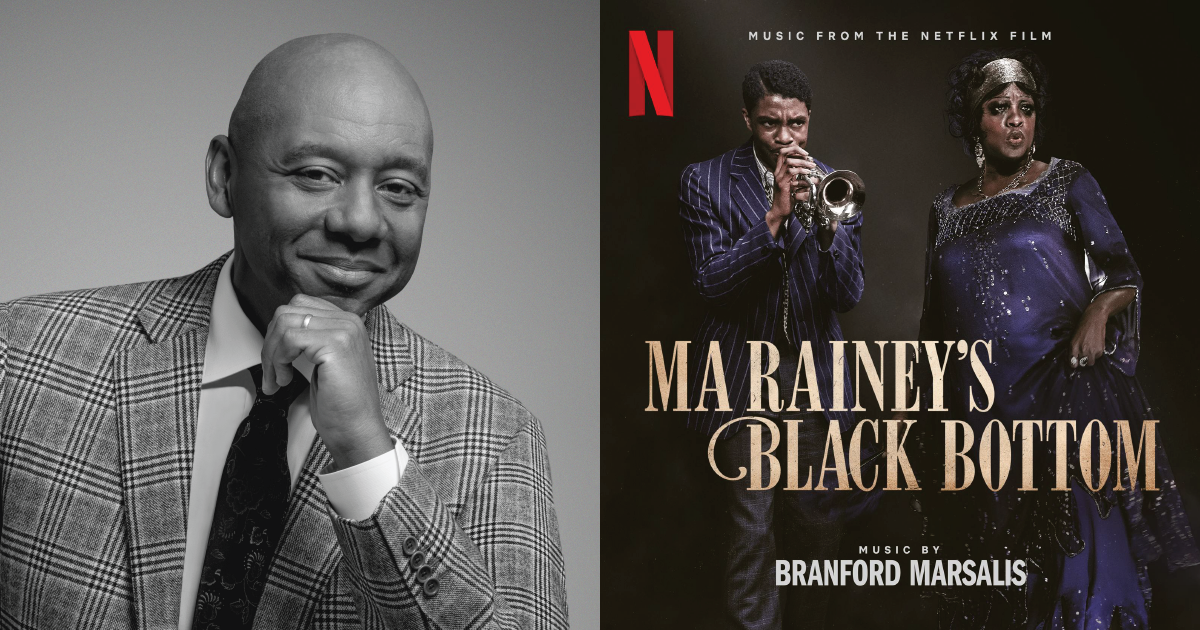
An edition of our Roots on Screen column featured an interview with Branford Marsalis and dove into his soundtrack for the new Netflix film based on August Wilson’s 1982 play, Ma Rainey’s Black Bottom.

Bona fide soul man Jerry “Swamp Dogg” Williams took us behind the scenes of his album, Sorry You Couldn’t Make It, showing humorous, casual, candid moments from the project’s creation — and giving us all the opportunity to be there, even though we “couldn’t make it.”

Sabine McCalla simply blew us away with her Western AF video session of an original, “Baby, Please Don’t Go,” last year, and we were ecstatic to include her on the BGS Stage lineup for Cabin Fever Fest last weekend, too.

Joy Oladokun’s vision and determination, and her unrelenting trust in both, paid off on a texturally varied second album, in defense of my own happiness (vol. 1), a self-produced exercise in vulnerability and subject of a feature interview. Oladokun will perform a few of her folk-pop songs as part of our Yamaha Guitars + BGS Spotlight Showcase during Folk Alliance’s virtual Folk Unlocked conference this week, as well.

The preeminent hip-hop-meets-bluegrass band, Gangstagrass, stopped by for a 5+5 and to plug their latest, No Time for Enemies. Gangstagrass were another excellent addition to our Cabin Fever Fest lineup and we look forward to being able to catch them in-person again, soon.

To mark Juneteenth 2020, we published a thoughtful round up of new movement music, a sort of patchwork soundtrack for protest, struggle, civil rights, and progress including songs by Leon Bridges, Chastity Brown, Kam Franklin (listen above), and more.

We were ecstatic to feature Valerie June, Rhiannon Giddens & Francesco Turrisi, Ben Harper, and Yola during our five-episode virtual online variety show, Whiskey Sour Happy Hour, last spring. The show raised over $50,000 for COVID-19 relief — through MusiCares and personal protective equipment via Direct Relief. WSHH season 2? We want that to happen, too! Stay tuned.

Pianist Matt Rollings’ collaboration with Americana-soul duo The War & Treaty was — UNDERSTANDABLY — a mini viral hit, taking off on our social media channels.

Rhiannon Giddens also powerfully and captivatingly warned all of us not to call her names with a new song recently: “The framework in the song is a love affair, but it can happen in any kind of connection,” she explained in a press release. “The real story was accepting my inner strength and refusing to continue being gaslit and held back; and refusing to keep sacrificing my mental health for the sake of anything or anyone.”

We visited once again with now mononymous Kenyan songwriter, Ondara, whose pandemic album, Folk n’ Roll Vol. 1: Tales of Isolation, kept many of us company during sheltering in place.

Speaking of which, Crys Matthews and Heather Mae didn’t let guidelines around social distancing keep them down, as evidenced on “Six Feet Apart.

Our country-soul queen, Yola, wowed all of us with a Tiny Desk (Home) Concert and some acoustic renderings of her resplendent countrypolitan songs.

As did veteran bluesman Don Bryant, who after a lifelong career writing and recording earned his first Grammy nomination in 2020 for You Make Me Feel, a record that is nothing less than a physical incarnation of rhythm and blues. His Tiny Desk (Home) Concert is entrancing.

Selwyn Birchwood rightly reminded blues fans that it isn’t all sad; in fact, if you aren’t partying to the blues you’re doing it wrong. Just listen to “I Got Drunk, Laid and Stoned” to find out.

Leigh Nash and Ruby Amanfu joined forces on a Congressman John Lewis-inspired number entitled “Good Trouble” just last week, a perfect song to mark Black History Month.

Last year, to mark Women’s History Month (coming up again in March!) we spotlighted the huge influence and contributions of Elizabeth “Libba” Cotten, a folk singer and picker famous for playing her guitar left-handed — and upside down and “backwards!” Though Cotten spent most of her adult life working as a housekeeper, her original folksongs and her idiosyncratic picking style still inspire bluegrass, old-time, and blues musicians alike.

Country singer-songwriter Miko Marks returns this year with new music for the first time in thirteen years, after effectively being shut out of Music City and its country music machine because of her Blackness. A recent single release reclaims “Hard Times,” a song composed by Stephen Foster, who was an American songbook stalwart and folk music legend who performed in minstrel shows and in blackface.

Chris Pierce challenges his listeners with a new song this month, “American Silence,” because as he puts it, “It’s important to not give up on reaching out to those who have stayed silent for too long about the issues that affect those around us all.” A timely reminder to all of us — especially those of us who are allies and accomplices — as we approach the one-year anniversary of this most recent racial reckoning in the United States.

And finally, to close this gargantuan list — which is still just the tip of the iceberg of Black music in bluegrass, country, and Americana — we’ll leave you with a relative newcomer in country-soul and Americana, Annie Mack. Mack’s gorgeous blend of genres and styles is anchored by her powerful and tender voice and we were glad to be stopped in our tracks by her debut EP, Testify. 

Editor’s Note: Read part one of our Black History Month collection here.


Photo credit (L to R): Chris Pierce by Mathieu Bitton; Elizabeth Cotten; Annie Mack by Shelly Mosman.

This Nashville Museum Shows the Vital Role of Black Music in American History

Nashville’s “Music City” nickname has always been broader and more inclusive than the national impression, which largely has been built on two things: the city’s impressive country music legacy and its equal importance as a hub for the general music business, with major emphasis on recording and publishing. But what hasn’t been as well recognized and celebrated, at least by those outside particular communities in Nashville, is its contribution to numerous other idioms and its role in their evolution and development.

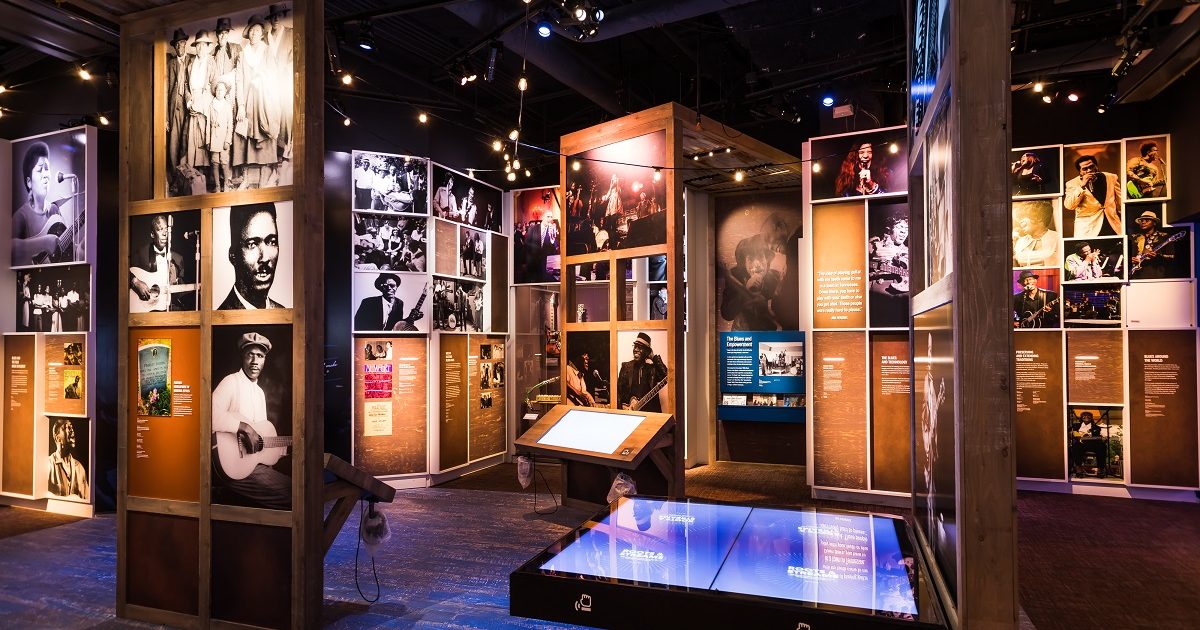
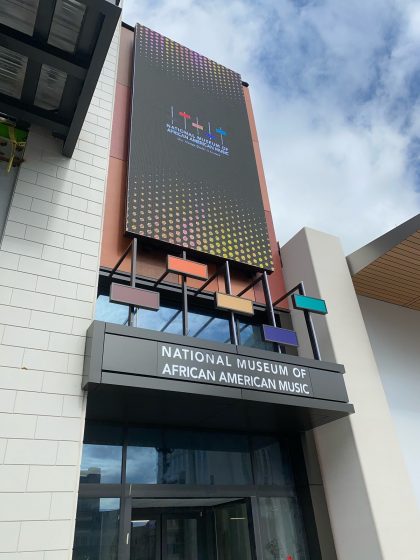
Hopefully that’s going to change with the new National Museum of African American Music (NMAAM), now open across the street from the historic Ryman Auditorium in downtown Nashville. The Fifth and Broadway entrance to NMAAM and its proximity to one of the nation’s music shrines couldn’t be more appropriate, and it is notable that the museum isn’t located in one of the sites better known as a Black music hotbed such as Detroit, New York, Los Angeles or even Memphis. Nashville has always been a major player in the African American music world, from the days of the Fisk Jubilee Singers to radio station WLAC breaking R&B, soul and blues hits, and the Jefferson Street nightclub scene providing both valuable training for emerging artists and a vital showcase for established ones.

However, the museum isn’t focused mainly or wholly on Nashville, nor any single city or musical style. The 56,000-square-foot entity aims to spotlight the entirety of the music made in this nation by Blacks, to demonstrate its impact on the totality of American sounds, and to celebrate its history and multiple influences. As CEO/president Henry Hicks repeatedly told media members who attended tours in January, “We’re showing how music through the prism of the Black experience has played a vital role in the growth of this country and how it’s affected every fabric of the culture.”

The sleek, architecturally striking building has the same visual splendor and attractiveness as the National Museum of African American History and Culture in Washington D.C. Upon entrance, visitors to NMAAM will be immediately drawn to the central corridor that’s billed as the Rivers of Rhythm. It features touch panel interactive exhibits, something that’s a recurring sight throughout the halls housing exhibits and other items designed to showcase 50 genres and sub-genres of Black music.

The corridor leads into The Roots Theater, which is actually where the museum tour formally begins. There’s an introductory film presentation that provides the African background and heritage of the various exhibits. It also offers a cinematic shorthand of what visitors later see presented in more exacting, visually striking manner: the multiple sounds and styles of notable Black music creators and performers. The theater seats approximately 190, and in later weeks and months will serve as the location for various screenings, lectures, music performances, and concerts.

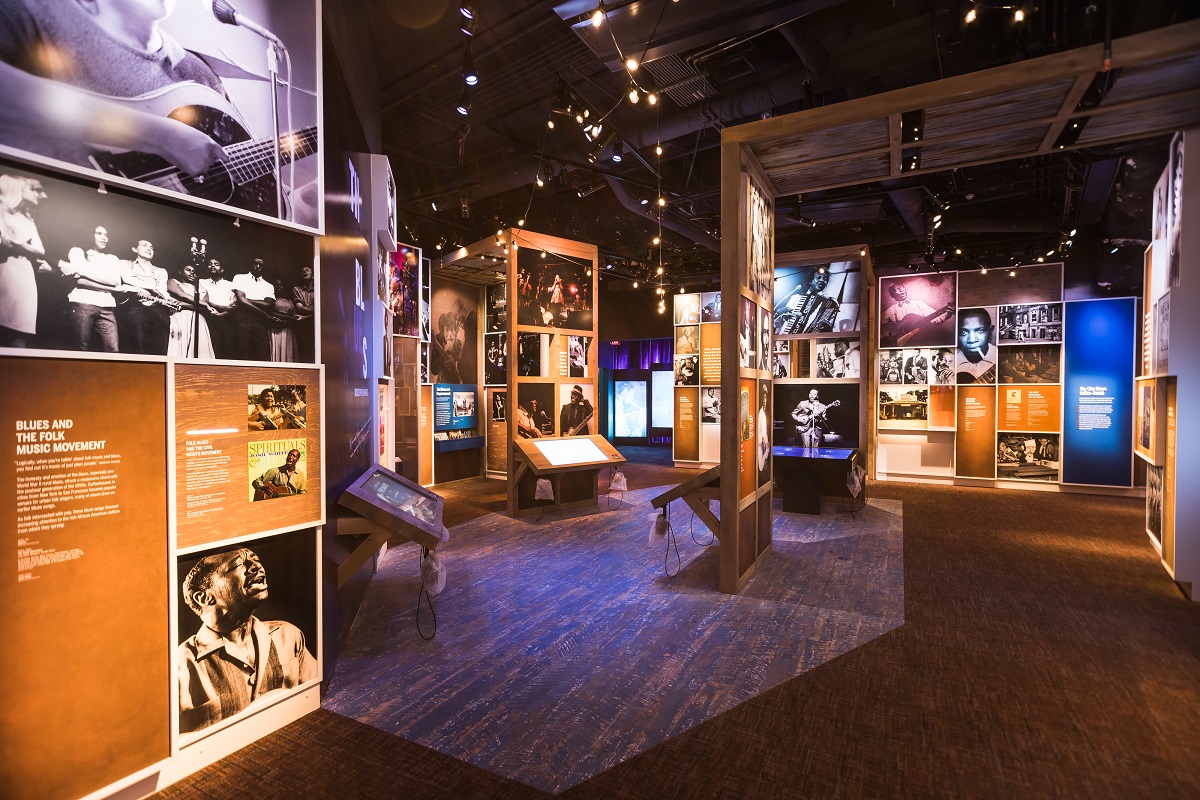
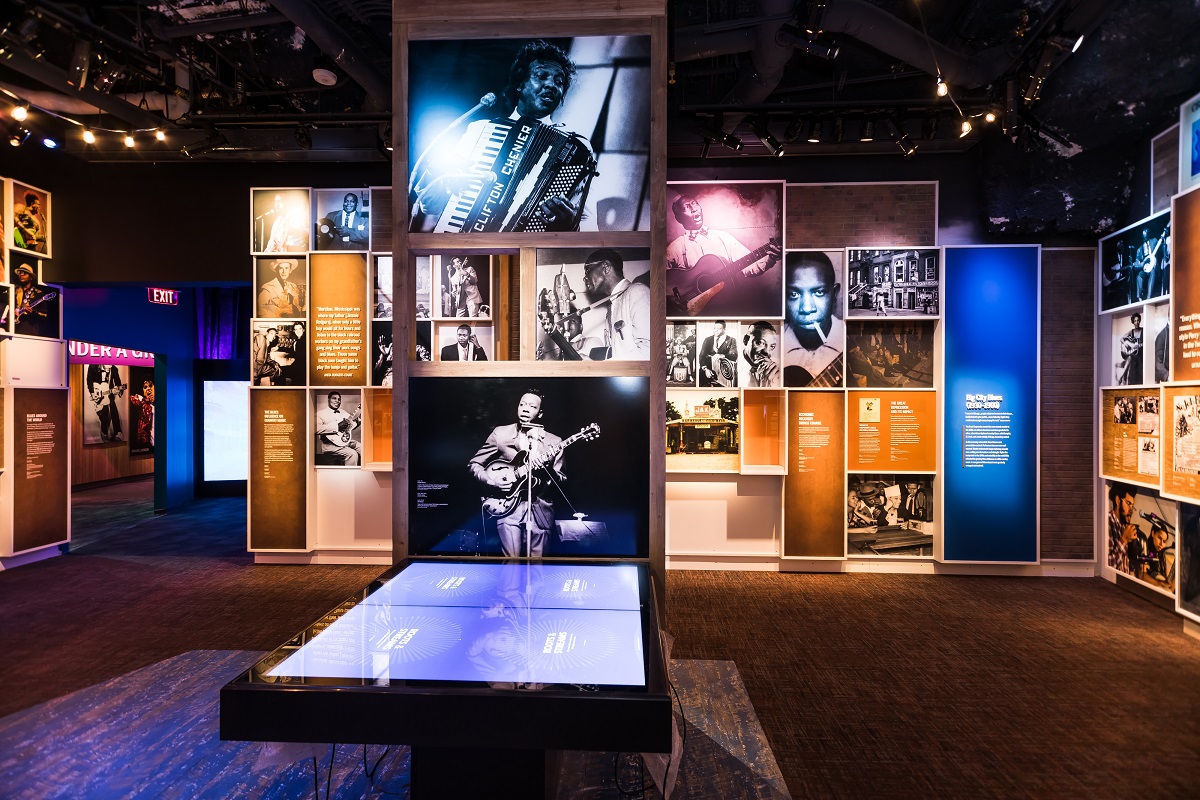
The different genre exhibitions feature everything from more interactive exhibits with timelines to cases containing such items as one of Louis Armstrong’s trumpets, one of B.B. King’s “Lucille” guitars, or costumes worn on key nights by performers like Billie Holiday, Nat “King” Cole, Ella Fitzgerald, Ray Charles, or Aretha Franklin. The museum doesn’t neglect any area of Black music, going from the earliest spirituals to pre-jazz, traditional and modern jazz, blues, R&B/soul, funk, disco, and into contemporary hip-hop and EDM. There’s also a detailed storyboard for every idiom.

The greatest examples of Black music influencing other idioms that are sometimes mistakenly assumed not to have any links with African Americans can be seen in the Crossroads section. It includes an essay that traces how country founding fathers like Jimmie Rodgers and Hank Williams were influenced by the blues, and how the acoustic guitar playing of people like Sister Rosetta Tharpe and the gospel-tinged shouting of Odetta in turn influenced white folkies like Joan Baez and Bob Dylan.

One of Chuck Berry’s biggest hits, “Maybellene,” was a reworked version of Bob Wills’ “Ida Red” with new lyrics, while certainly Elvis Presley, Carl Perkins, Jerry Lee Lewis and other white rock ‘n’ roll and rockabilly types were performing a hybrid of country, blues, and R&B. In both cases, as well as early string band music played by white and Black performers, these artists were hearing and creating a fresh sound based on their love of multiple genres, which the Crossroads section reflects in text and exhibits.

Along the way, depending on your musical preferences, you’re able to become an active part of the experience. There’s a disco dance room that inserts a neon silhouette onto the wall. You can construct your own blues song, improvise within a personal jazz composition, become part of a gospel choir, or craft your own freestyle raps. Any or all of this activity is recorded on a personal RFID wristband and automatically uploaded so that it can be shared online with friends, assuming you really want those efforts heard by others.

But most importantly, the mission, one frequently cited by tour guides and reinforced through the various exhibits, displays, and films, is Black music’s cross-generational links and the way it’s been both a voice of protest and a force for unity across diverse backgrounds. The role music played both in rallying Blacks into the World War II effort and helping inspire and fortify the Civil Rights Movement are just two parts of that underlying joint theme.

Whether it’s “One Nation Under a Groove” or “A Love Supreme,” regardless of spiritual or secular content, Black music has been at the core and forefront of American culture. No single building better exemplifies and reveals that than the National Museum of African American Music. No matter what kind of music you love, or even if you’re tone deaf, this museum will have something of value for you to see, hear and enjoy, as well as valuable lessons to learn and history to remember.


Photo Credit: NMAAM/353 Media Group

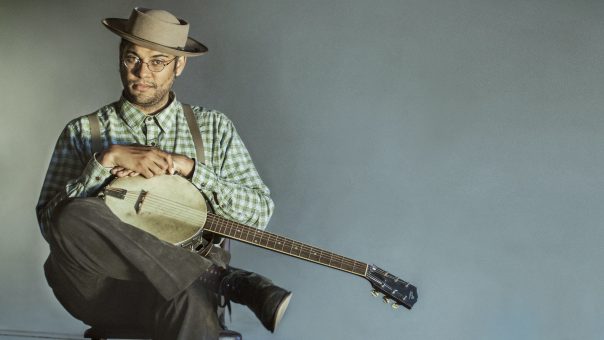
LISTEN: Dom Flemons, “Hot Chicken”

Artist: Dom Flemons
Hometown: Phoenix, Arizona; now living in Washington D.C.
Song: “Hot Chicken”
Album: Prospect Hill: The American Songster Omnibus
Release Date: February 28, 2020
Record Label: Omnivore Recordings

In Their Words: “In 2012, I was in Murfreesboro, Tennessee, doing a tintype photo session with photographer Bill Steber. Knowing that I was in the area for a few days, Bill recommended that I try one of the best-known regional dishes, hot chicken. After the session, I made my way over to the strip mall in East Nashville, Tennessee, where Prince’s Hot Chicken, the original restaurant, was located. I was fortunate to have my friend Bill prepare me for what I was about to encounter with this amazing dish. He explained that it would take me on a mystical journey if I ordered the extra hot. So, I decided to indulge in the medium-hot flavor and I was instantly inspired to write this song.

“This hokum song is reminiscent of the 1930s era of music that was developed by songsters like Thomas A. Dorsey, Tampa Red, Bo Carter, and Papa Charlie Jackson. Songs like these use small lyrical vignettes to frame a chorus that has a free changing meaning throughout each verse. The vignettes I’ve created incorporate a lot of animal imagery and parables, which is a strong part of early African American music and folktales. This version from What Got Over (a 2015 EP released for Record Store Day) features my vocals and harmonica accompanied by a muscular guitar vibe from Guy Davis. Here’s something I shared in my podcast about the song in a special bonus episode of American Songster Radio.” — Dom Flemons, The American Songster


Photo credit: Timothy Duffy

Black Vaudeville: Tracing the Origins of the Blues

Scholars Doug Seroff and Lynn Abbott have worked together for nearly 40 years researching the history of African-American music. Tracing the origins of jubilee, quartet, vaudeville, ragtime, and early blues music, they’ve co-authored four books — Out of Sight: The Rise of African-American Popular Music (2009); Ragged But Right: Black Traveling Shows, “Coon Songs,” and the Dark Pathway to Blues and Jazz (2012); To Do This You Must Know How: Music Pedagogy in the Black Gospel Quartet Tradition (2015); and their latest, The Original Blues: The Emergence of the Blues in African-American Vaudeville, published in February.

Abbott, a researcher at the Hogan Jazz Archive at Tulane University in New Orleans, and Seroff, an independent scholar, met serendipitously through music. “I buy and sell old phonograph records. It’s something I’ve been doing since 1975 and that was how I first got in touch with Lynn,” Seroff recalls. “He was buying records from me, and the records he was buying were things that were also of interest to me, so we kind of precipitated a correspondence.”

When Seroff made a field trip to the Tidewater region to interview a group of singers, he made a pit stop in Richmond, Virginia, where Abbott was living at the time. “I visited him and hit it off, and he got interested in pursuing the same sort of research and we started collaborating, or at least exchanging and sharing the information that we had gathered,” says Seroff.

Seroff and Abbott then began researching Black gospel quartet singing in the late 1970s. They collected oral histories and dug up concert recordings and programs. Seroff’s access to historical recordings by proxy of buying and selling records helped the process. They also combed through African-American community newspapers on microfilm in special collections and university libraries. Although it wasn’t related to the subject matter they were studying, a pattern emerged that Seroff says was hard to ignore.

“Lynn and I had already been working together for 10 years … he was looking through some of the notes and Xerox’s that I had [of the Indianapolis Freeman] and he noticed that there were some years of the Freeman that he’d reviewed that I didn’t have,” Seroff explains. “So he sent them to me, and they were a period in the early teens and, in reading through them, I saw repeated references to Ma Rainey and Bessie Smith — they’re well-known blues artists — and, to the best of my knowledge, none of that information had appeared in any other scholarship before.”

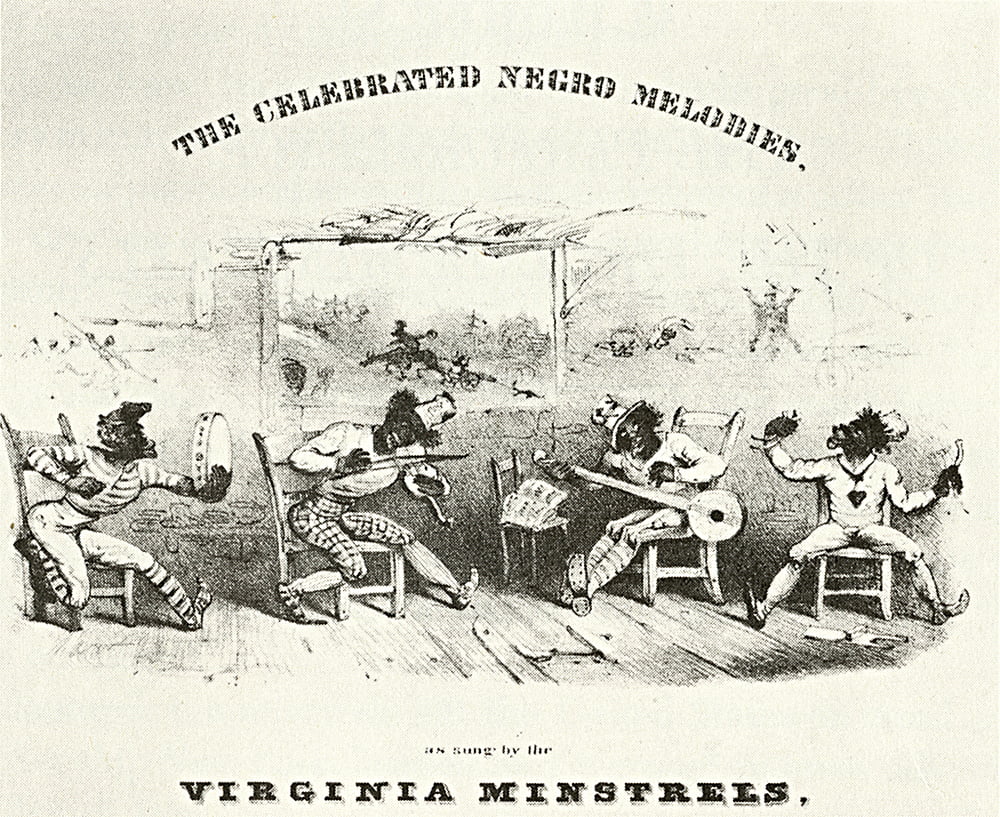
When minstrelsy gave way to vaudeville as the popular form of American entertainment in the late 1800s, African-American vaudeville theaters for exclusively African-American audiences arose due to segregation. What Seroff and Abbott found indicated that the original blues came to fruition on these stages in theaters across the Southeast in the 1910s. While ragtime “coon songs” were standards in vaudeville clubs, they were given new life with the development of blues songs in African-American Southern theaters.

“[We] shed light on phenomena that generations haven’t wanted to contemplate or have proven impossible to comprehend from a modern perspective,” Seroff explains. “But when you get more details of the context and the historical context, it makes some of these very difficult issues like ‘coon songs’ and Black performers entertaining Black audiences in blackface makeup … it clarifies these things.”

Detail from cover of The Celebrated Negro Melodies, as Sung by the Virginia Minstrels, arranged by Th. Comer, Boston, 1843. Scanned from Dan Emmett and the Rise of Early Negro Minstrelsy by Hans Nathan.

Seroff and Abbott set to work putting together a manuscript based on the information they found in the Indianapolis Freeman.

“First, we wanted to tell the story of the performers, of course, and it also became clear that we needed to tell the story behind the theaters and the booking agencies and such,” Seroff says. “And then there was the matter of Butler “String Beans” May, who turned out to be such an important character that he skewed the narrative of all the other people because we couldn’t really talk about the movement of performers from the Southern vaudeville into the northern theaters without first explaining how String Beans had blazed the trail.”

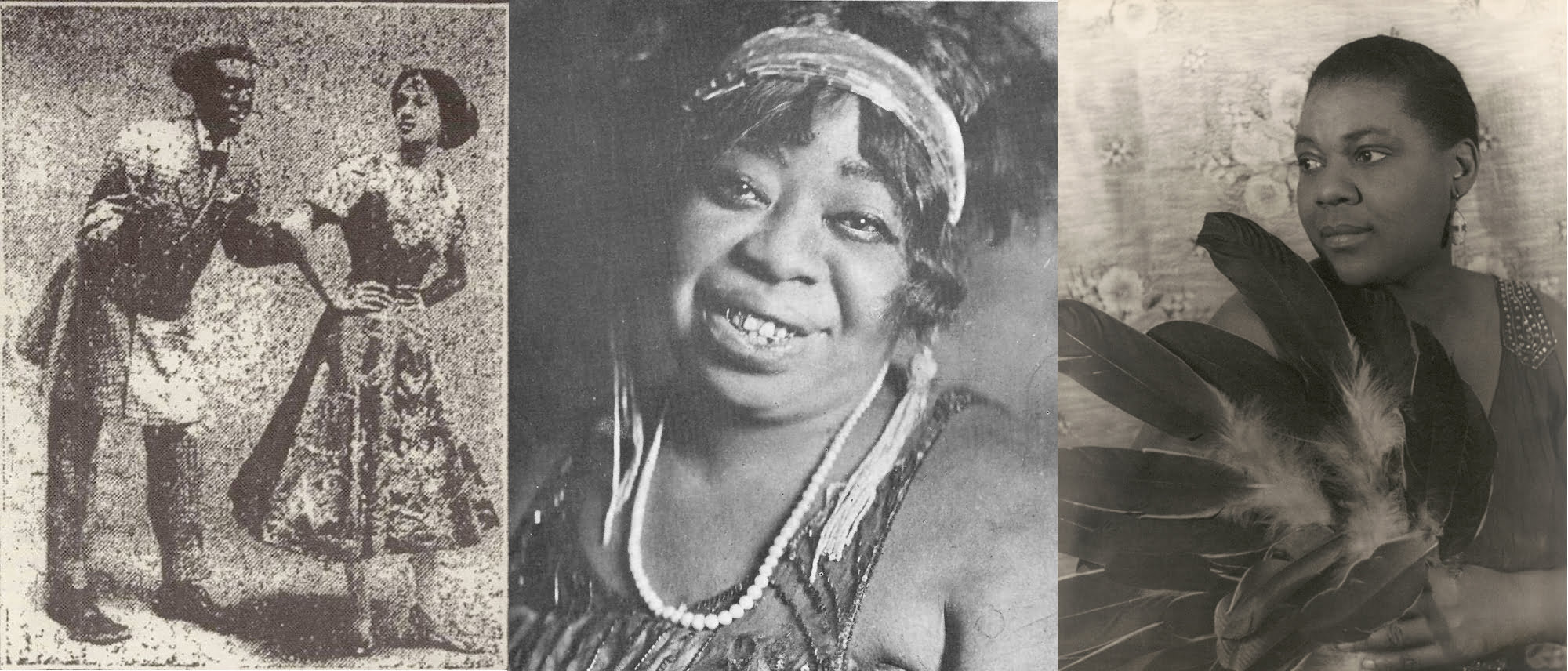
Butler May was a blackface comedian from Montgomery, Alabama, who was referred to as the “blues master piano player of the world.” Seroff and Abbott credit String Beans with perpetuating the rise of blues in Black vaudeville.

“[String Beans] was like some sort of a forgotten phantom and a central, seminal figure who had been just written out of the history entirely and the newspaper was full of good information about him,” Seroff says. “There are runs in the newspaper covering years where almost every issue has something of interest about him. And so, you know, to bring String Beans back to life is the most satisfying and pleasurable experience in writing this book.”

While sifting through the muddy waters of vaudeville and the blues, Seroff and Abbott unearthed several other performers who have otherwise been left out of history — singers like Ora Criswell and Trixie Smith who, along with well-known performers like Ma Rainey and Bessie Smith, ushered in the era of the “blues queen.” Seroff and Abbott had difficulty organizing all the different facets that emerged from their research and ended up setting the manuscript aside. They came back to it on and off throughout the years, all the while publishing other works. Thus, the release of The Original Blues marks the completion of decades of research.

“Reading the newspaper on microfilm is a very different process than Googling something. A lot of Black community weekly newspapers have now been digitized, but when we started our project, none of them had been digitized, and I’m glad of it,” Seroff says. “As much time has gone into it, I suppose it was very difficult at the time, but it was also very rewarding. It’s amazing to find this stuff. You’re sitting in front of a microfilm reader and you find out about Bessie Smith’s partnership with Buzzin’ Burton? No one had known anything about that before and it’s very important historical background.”

While the origin of the blues sparks discussions amongst historians when it comes to region, Seroff and Abbott’s work is a pioneering contribution to scholarship. By unpacking a complicated time in history, they ensure that the emergence of these musical traditions and the figures who made them are ushered into the modern era.


Images of Butler May, Ma Rainey, and Bessie Smith courtesy of public domain.