The Show On The Road – Robert Ellis

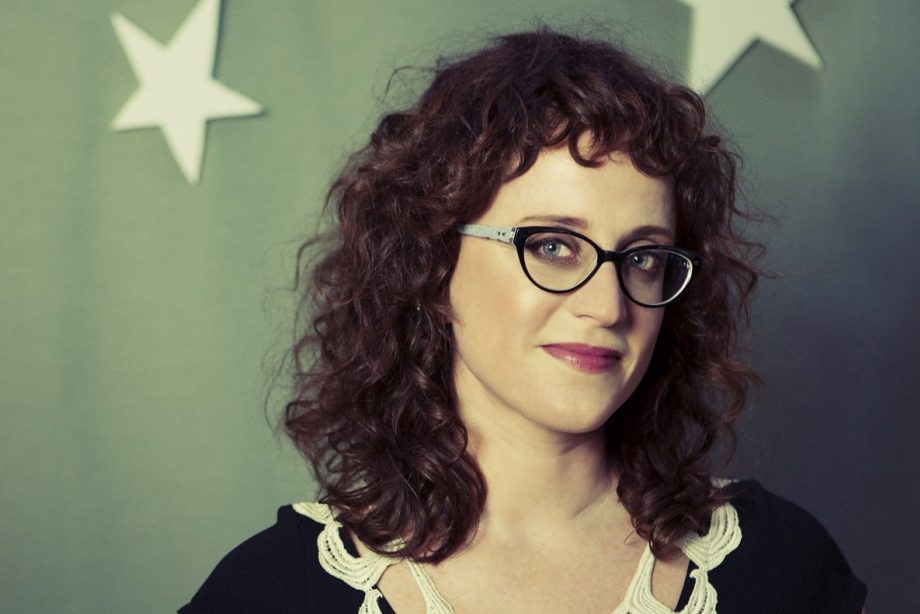
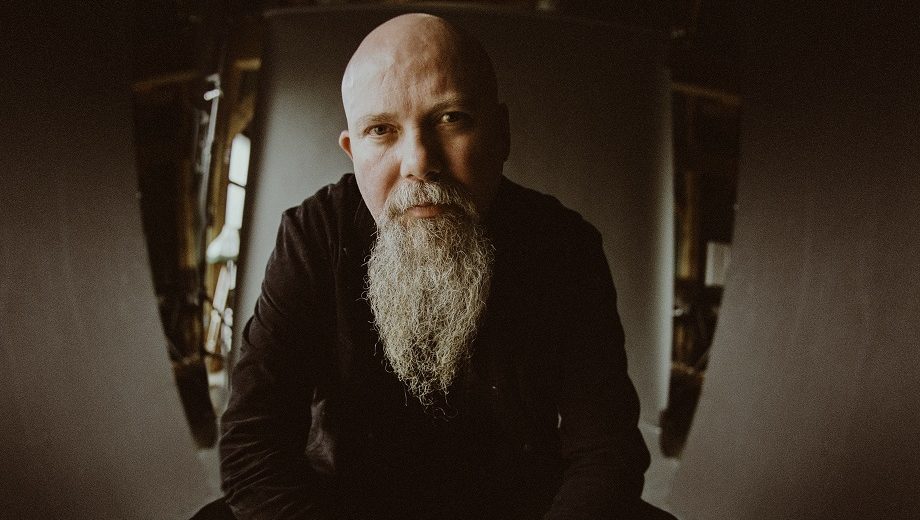
This week, Z. Lupetin speaks with Robert Ellis, the restless, tuxedoed, Texas piano-man who has paired his fleet-fingered, high-humored, “jazz in an Austin roadhouse” keys playing with machete-sharp lyrical turns of phrase — all backed up with his smile-through-the-apocalypse country-rock band.

LISTEN: APPLE PODCASTSMP3

Ellis has gained a beloved international following all the while creating a persona that is half the tender brilliance of early Billy Joel, and half high-hatted, Southern huckster who might tell you a story that will make you cry one minute, and then steal your watch when you’re not looking the next.

Z. met up with Robert Ellis on the road together in the Netherlands.

Old Crow Medicine Show’s Ketch Secor Learned This From ‘Country Music’ (Part 2 of 2)

In Ken Burns’ documentary opus Country Music, a weaving path from the hollers of Appalachia to Garth Brooks’ theatrical stadium concerts was laid out for all to see. But mapping that trail has always been a complicated, cumbersome task.

The sheer number of influences at play required 16 hours of footage for Burns to tell the story – and lots of help from the artists themselves. One of those artists was Old Crow Medicine Show’s Ketch Secor, who gladly jumped in to tackle the unwieldy narrative of his favorite subject.

Secor had a two important roles to play in the series. Most obviously, he related a lifetime’s study of country’s earliest touchstones and how they combined into something uniquely American. But the outspoken frontman was also tapped in the beginning of Burns’ process as a behind-the-scenes consultant, helping guide the project’s tone and ultimately delivering one of its final and most powerful lines.

“It’s almost like [country music] needs to be exhumed, and new life breathed into it,” Secor proclaimed. “The part that is the songs of the people, the hopes and aspirations of the people — the pain and suffering of the people — that needs to remain embedded in country music. If it isn’t there, I’m out.”

Backstage at the Grand Ole Opry House on the night the series premiered, Secor explained what the project meant to a history buff like himself, and how Burns unwittingly played a role in Old Crow’s founding.

BGS: Old Crow Medicine Show’s music has always shined a light on the past. What made you interested in that to begin with?

Secor: I was always interested in history, and I really attribute that to Ken Burns – I saw The Civil War when I was 11 years old. I lived in the Shenandoah Valley, and I wondered why the kids went to Robert E. Lee High School and why we played Stonewall Jackson, why the name of the shopping mall and the subdivision and the motel was what it was — it was all the war. It was everywhere, and we took some field trips but I didn’t really understand it. I could feel this echo, though. Seeing that movie on PBS really helped me to take this tour of my own backyard and see how history was alive. I credit that to him.

Knowing how deeply you care about country music’s history, what did you think when you found out Burns was going to present it?

I thought immediately, “Thank God. Finally somebody is going to tell our story and get it right.” I don’t trust any of these people to our story [gestures to photos Opry stars dotting the dressing room walls] because they’re all right in the middle of it. Everyone here has a very, very different story, and everybody has “The True Story” — but only their truth. Country music is richer than any one truth, so it takes an outsider’s perspective because of Nashville’s tendency toward this clan-ishness, the good ol’ boys network and these sorts of forces.

I mean, we’re the genre that has told its own history ever since it started. The radio charts today are full of songs about the good old days — and they’re talking about the ‘90s. That’s the good old days now. But it doesn’t matter, whatever the good old days were, the ethos here is that times ain’t like they used to be, they used to be better. That’s what they’ve been selling from the start, but they can’t tell our history without making it a commodity. So it takes this outsider, and you can’t ask for a better outsider than America’s most beloved documentarian, because he was the outsider who told us how jazz was born and flourished, how baseball was created, the Roosevelts, the National Parks, the Brooklyn Bridge. Country music is just as important as all that.

What did they actually ask of you?

I talked about slavery and the plantation system, the penal system — because incarceration was a great cultural conversationalist. It kept people locked up in isolation, which is one of the keys to making country music so rich. How long did the Scotch-Irish people live in Appalachia before being disturbed? Well, the great disturbance comes in Bristol in 1927. The record companies came in and said “Whaddya got?” And what they had was so specific to one region that it might sound different one holler over.

Then I talked about the Opry, and then I tried to talk about more New Age-y hip-fangled things, but they didn’t use any of that [laughs]. The other way I’ve been involved is by being an advisor to the film, so I read all the early scripts for the past eight years. But it was great, they just asked me, “How would you tell the story? Where was the birth? Who was important to mention?”

This has been in the works for eight years?

Yeah, he conducted like 140 interviews, and of that maybe 50 or 60 of his interviewees have died. See, the other thing about Ken is he knows when it’s time to tell a story, and by doing the story when he did, he was able to get Little Jimmy Dickens, Merle Haggard, numerous artists who wouldn’t be here — George Jones is in this film.

Did you get surprised by anything?

Oh yeah, a trove of knowledge is in this documentary, I learned a ton. And lots of things made me cry. What I learned primarily was a real self-reflective thought of, “Oh my God, this is my life.” I think almost all of these folks on the wall are in the movie, and when they watch they’ll be crying, too, because they’ll see themselves in the Bristol Sessions. They’ll see themselves at the earliest days of the Grand Ole Opry, they’ll compare themselves to the Outlaw movement and the traditional movement of the ‘80s, the development of the star system, and contextualize their own career.

You talked about isolation. We’re in this weird moment where country is more popular than ever, but rural life is changing fast. It’s easy to connect with people all over the world. How does the film address that?

One of the things that’s great about the film is that it stops around 1996, because Ken Burns isn’t a journalist, he’s a documentarian. He’s not making a movie about today, and here’s why: Historians say you’ve gotta have a generation pass before you can tell what happened. I just think it’s gonna go a lot deeper than anybody could say right now.

Like if you told the story of why Randy Travis mattered in 1986, it would be a lot different. And also the forces that are at play in country music, they need time to gestate for us to understand what they’re saying. Who’s gonna last? Who are we going to be talking about in 25 years? Blanco Brown? Chris Stapleton? Who’s gonna have their picture on this wall in 25 years? I don’t know.

Editor’s Note: Read Part 1 of our interview with Old Crow Medicine Show’s Ketch Secor.


Photo credit: Crackerfarm

Laurel Premo, “Polly Put The Kettle On”

If you haven’t been paying close enough attention you may have missed the fact that the absolute cutting edge of American roots music these days — some of the most exciting art to be born out of this latest renaissance in Americana, bluegrass, and folk — is old-time. Artists like Rhiannon Giddens, Allison de Groot & Tatiana Hargreaves, Victor Furtado, Amythyst Kiah, Jontavious Willis, Dom Flemons, and so many more are utilizing this moment to demonstrate that old-time music is expansive. It has relatively low barriers to entry, it’s representative, it’s queer, it’s Black, it’s Indigenous, it demands egalitarianism, it’s woven into the fabric of all genres downstream of it, and most importantly, it’s ceaselessly relevant. In our attention economy, which requires all of this and more from any pastime worth its merit, old-time delivers. 

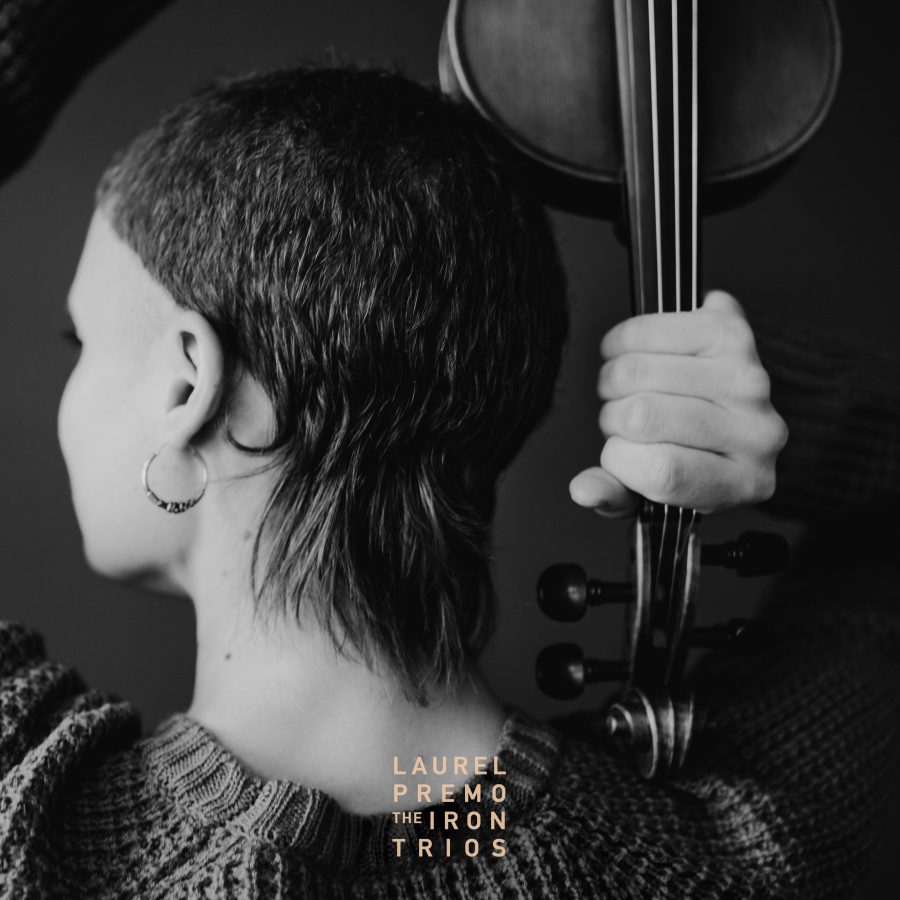
A new album from fiddler, composer, and multi-instrumentalist Laurel Premo perfectly reinforces these points, in content, intention, and certainly execution. The Iron Trios is a collection of nine more or less traditional old-time fiddle tunes and two Premo originals, the majority of which are played by a trio: fiddle, upright bass, and electric guitar. For an album demonstrably unconcerned with even the basic premise of the construct of “authenticity,” it accomplishes that squishy term impeccably and effortlessly. 

Yes, with electric guitar. Tunes such as “Old Time Sally Goodin” and “The Original Grey Eagle” nod to string band settings that beg us to play these games surrounding legitimacy and “authenticity” while turning them all on their ears. With bassist Evan Premo, guitarists Owen Marshall and Joshua Davis, and an appearance here and there by fiddler Aaron Jonah Lewis, Premo takes old-time fiddle, melodies, and rhythms into spaces usually dominated by electronics. 

It’s trance, it’s dreamscape, it’s meditative, it code switches with ease, sometimes sounding like a film score, or a square dance, or public radio at one in the morning (“Echoes” with John Diliberto, anyone?), or modern chamber strings, or the soundbed for an abandoned-warehouse-turned-cooperative-art-space. At the same time, it refuses to be any more complicated than good, old-time fiddle music. And that simple fact is another compelling reason why old-time is truly the most exciting space in the Americana, folk, and bluegrass realms today.

Hiss Golden Messenger: Hope, Joy, and ‘Terms of Surrender’

To make his eighth proper album as Hiss Golden Messenger, M.C. Taylor left his adopted hometown of Durham, North Carolina, and went… everywhere? He booked studio time in Nashville, tracked songs in New Orleans, and headed north to upstate New York, where he recorded at the studio owned by The National’s Aaron Dessner. There might have been even more cities in that list, but logistics and time cut his traveling sessions short.

“I wanted to make a record anywhere other than Durham,” he says. “I felt like I needed a change, and it felt like the songs were asking for a change. This is a wandering record. It just felt like the songs were wandering around a little bit. So I felt like maybe I should, too.”

Travel is a major theme of his music, both as inspiration and consequence. Working as a musician means touring; providing for his family means leaving them. Out on the road, however, he finds new reasons to make music. Taylor peppers Hiss Golden Messenger songs with place names, references to home and elsewhere. For Terms of Surrender he decided he needed to make that part of the creative process, which meant recording wherever he landed.

Taylor’s wanderlust extends to the music, too, which draws from a range of roots traditions: psychedelic folk and rural funk, southern soul and classic rock, American primitive guitar and ‘60s frat rock, J.J. Cale and the Staple Singers, Neil Young and composer Harry Partch. The result is a sober but hardly somber album that surveys America at the end of the 2010s, during a moment that is — to say the very least — tumultuous.

BGS: Place always feels so important to your music, so it made me wonder if getting away from a place was as important as getting to a place. Could you have made this record back home in Durham?

Taylor: Yeah, I could have made it in Durham. Definitely. But it would have a very different character. I try not to think of the records as the final form of the songs. I think of them as snapshots of the songs, snapshots in time — a documentation of the tunes as they exist among a certain group of people on a certain day in a certain city. So this particular version of Terms of Surrender is a document of that particular time in my life.

Given that these are wandering songs, and given that you’ve talked about the album coming out of a very hard year, how did that inform the music?

The trials and tribulations I was experiencing are obviously threaded through the songs. Some of that is maybe obvious lyrically, and some of it is a little more coded. It’s something that is obvious only to me. I was dealing with those issues in the composition of the songs, but the making of the record was pretty joyous. Actually, the writing was, too, because it’s always a cathartic experience.

So I can’t really say that I went into the writing of the songs in a tortured place and came out with all the answers. The songs were just a way for me to speak about that stuff, to process it in a way that made me feel like I was evolving emotionally. Not that I was solving my problems, but I was at least beginning to understand what they were. We don’t find an answer in an instant, but we can identify the issue and over time find ways to address it.

To what degree can you talk about the events that informed this album?

It’s a tricky question, because it was something that was part of the fabric of my life for the last year or two. It’s something that comes up in the one-sheet because every record has to have a story, but then when it comes time to talk about it, it’s tough. You never know how much you want to reveal, you know what I mean? I’m a pretty open person but there’s this curtain between all of the stuff that I make public and all the stuff that I keep private.

So I’ll just say that I had some personal problems with someone that I worked very closely with. It felt like over the years they had become an emotionally abusive person. I couldn’t even put a name to the things I was feeling because of that relationship. I thought I had lost my way a little bit. Over time I came to understand what was going on and was able to extricate myself from that relationship. That was important. And then to have all that against the backdrop of the way our country feels right now… it was a lot. I’m a sensitive guy, I guess.

That definitely seems like something that informs these songs, but it’s not a political record. It’s more about living at a certain time when these things are encroaching on your mental health.

And I want to be clear: I’m one of the fortunate ones. I’m a white man in this country. I’m living on Easy Street compared to people of color, queer people, women. But that was a question that came up on the last record, Hallelujah Anyhow. That wasn’t really a political record either, unless you realize that everything is political. The personal is political; the emotional is political. But that record and the new one were made a different times, so the relationship to hope is different.

That’s something I picked up on: this sense of optimism as well as something like joy. That’s not necessarily a word that I associate with this time in history, but it comes through on a lot of these songs.

On Hallelujah Anyhow joy and hope seemed like these bright, sharp things, a nice glinting in the sunlight. They could cut through just about anything. But they work differently on this record, I think, because you realize that we have to work at them every day. If we don’t, they’ll become dull and unwieldy.

And hope and joy are things that I have to work at. Some of these songs are reminders to myself to work at these things that bring me hope and joy. You have to keep that bright thing sharp. It’s like marriage: If you stay in a marriage long enough, you realize that it takes a lot of hard work to keep it going. I’m pretty sure that that’s the way forward for me if I want to survive.

Is it difficult to get into that mindset when you’re writing, to remind yourself of these larger goals?

There are days when I wake up and think, I don’t want to make this music anymore. I don’t want to make any music anymore. This isn’t something that’s making me happy anymore. There’s too much competition, too much saber-rattling, which is all so superfluous to what we all actually do. I guess I’m interested in people who have been making music for a long time, because I want to be in this for the long haul. How does their language change over time? How do they adapt to survive in the world?

You mentioned that you wrote these songs as reminders to yourself. Does that change how you relate to them on the road, when you have to perform them night after night?

That’s why I try to approach records as snapshots. I know the songs are going to change every night, because of the emotional content in them. That changes the phrasing of how I sing certain things. Part of that comes from my emotional understanding of the songs, you know? The other part of that is that my favorite songs are the one I write without totally understanding. Usually I’m not very satisfied with them when I get them down on paper, but eventually I realize that if I live with that dissatisfaction, it’ll becomes something different.

It’s like there’s a hand that is guiding this stuff. It’s not God-like; it’s more an unconscious feeling that it’s okay to feel that way. It’s OK to feel like, “OK, this is as good as I can do right now. I don’t have the time or the emotional capacity right now to make this any better.” And then you just leave it. It’s like planting a seed. It grows even though the words on the page don’t change.

Is there a particular song in your catalog that changed or grown like that?

I would say most of the songs that are in live rotation remain in the set list because there is that element of discovery from day to day or week to week. “Blue Country Mystic” [from 2012’s Poor Moon] is a good one. And there’s one on the new record called “Down at the Uptown,” which is about this dive bar where we all used to hang out in the Mission District in San Francisco. This was many years ago, late ‘90s. It was a formative place for many of us.

I knew that I wanted to write about that time in my life, and I did the best I could. But it felt clunky. I thought, I’m just going to leave these words here and hope that if something better does come along, it’ll be better than what’s on the page now. But the process of singing it in rehearsals has made me realize that no, this is really good. Not a great song, but for me it’s good. It does the thing that I needed it to do.

That one did stand out because it seemed like a very specific reference to a very specific place. I thought it might be in North Carolina, but I was on the wrong side of the country.

I don’t even know if the Uptown is still there. When my friends and I moved to San Francisco in the late ‘90s, we found this bar on the corner of 17th and Capp in the Mission District. It was pretty scuzzy, you know. But the Uptown was this little hidden waystation where all of us learned to drink. There were a lot of promises made at that place, some of which we kept and some of which we didn’t. It was a clubhouse. And the jukebox was very educational. Lots of stuff on there was way above my pay grade. That’s where I heard Patti Smith’s “Horses” for the first time. I’d be lying if I said I loved it immediately. But all of my favorite music is not something that’s immediate.

I was an adult, but I was still a child in a lot of ways. I was out of the punk rock phase of my life — at least musically, not spiritually. I wanted more, but I didn’t know how to do it. It was a time when I was discovering all of the music that has continued to inform my life. So Patti Smith, but also the Silver Jews, Johnny Paycheck, Merle Haggard. All of that stuff was coming into my life at that time, and it was overwhelming in the most beautiful way.

That discovery of oneself is thrilling. It’s exhilarating to find a formative record one day and the very next day it’s another record that brings a similar emotional resonance. It happens less now because I’ve heard more. But every time I have that feeling, it’s wonderful.

That gets at something I’ve been thinking about regarding Hiss Golden Messenger. You’ve got eight albums in ten years, which is very prolific. How do you manage to keep things fresh for yourself?

Just trying to remember why I started doing this in the first place is usually the best way. I try to make sure what I’m doing feels vulnerable and genuine. Whether or not it feels fresh to other people? I don’t know if that’s something that I necessarily feel I should concern myself with. I hope people continue to find things in my music that moves them, because I’m still discovering new things in the music.


Photo credit: Graham Tolbert
LISTEN: Miss Tess, “The Moon Is an Ashtray”

Artist: Miss Tess
Hometown: Nashville, Tennessee
Song: “The Moon Is an Ashtray”
Album: The Moon Is an Ashtray
Release Date: February 7, 2020
Label: Miss Tess/Tone Tree Music

In Their Words: “This song came out of an experiment with metaphor, smashing two unrelated words together to derive a new meaning. This is one of the few songs in my writing career than just fell out of my brain in about an hour. I grew up with a lot of fairy-tale ideas of how life and love might pan out, but reality can be a harsh mistress. ‘The Moon Is an Ashtray’ is a tongue-in-cheek vintage-kitsch metaphor discussing the idea that romance isn’t real. When you get up close to the moon, you realize it’s not as pretty it seems from a distance, or is just plain fake, or not as it originally appeared. The whole idealism and cruel optimism wrapped up in an image like the moon — or new love — is just an illusion.

“For me, it kind of ties into getting older and realizing some of your childlike views are not what they seem. On a professional level the music industry is really rough when you get up close. Fairy-tale ideas of relationships are never real. I think a lot of the songs on the album speak to that.” — Miss Tess


Photo credit: Gina Binkley

How a Stranger in a Bar Inspired Michaela Anne’s “Desert Dove”

Michaela Anne put a lot on the line to make her new record, Desert Dove. Working for the first time with producers Sam Outlaw and Kelly Winrich, the self-funded album was recorded in San Clemente, California. With many of the songs written either on the West Coast or in the Southwest, the pervasive theme of manifesting her own destiny resounds.

All of the songs pull from a mixture of her own life (potentially even her past lives), characters she’s met in real life, and some of whom she’s envisioned in her imagination. We sat down with Michaela Anne to discuss everything from her inspirations, to her transient childhood as the daughter of a submarine captain, to the anticipation of releasing this very personal new material.

BGS: Can you talk about growing up on the move? Were you playing music and writing back then?

Michaela Anne: I started playing piano when I was about 5. I wrote a few songs right away, instrumental piano pieces and the first one I wrote was called “When Daddy Comes Home.” So from the very beginning, it has always been a sad longing feeling, because I missed my dad when he was out to sea. Then we moved a year later and every time we moved there would be a transition period of, “OK, hurry up and find a music teacher!”

I wasn’t writing. I didn’t write any more songs until I was 17, when my grandfather was diagnosed with lung cancer. That was the first time I wrote a song with lyrics. Then the second time I wrote a song with lyrics was when I moved to college. So everything for me, and I’m actually just realizing this, has all been a result of something that was sad. A sad experience or a longing for.

Do you find there is a transient parallel in touring at all?

Oh yeah. It is different because you live in one place but you miss out on a lot of stuff. It is hard to keep friendships together when you’re gone for a month and then you come home and you’re tired and you don’t really feel like going out. How do you stay in people’s lives when you are missing the big events? That feeling of not really being a part of friend circles because you are missing out, that’s been my entire life. This deep FOMO. It isn’t a fear of missing out. I actually miss out a lot.

What led you to record this album in California? When you were writing it, did you know you’d be making the record there?

I didn’t, which is interesting to me because multiple songs mention California. The West Coast, in general, has always had a nostalgic, warm, romantic feeling to me. It’s funny. I’ve never thought I would move back to the West Coast because I feel like I want to keep it as a magical reprieve. So I wrote some songs out there and for some reason, it kept coming up.

I also wrote a bunch of songs in Arizona. So the Southwest, paired with the West, infiltrated my songwriting. But that wasn’t part of the plan when I was writing the songs. I’d toured a bunch with Sam Outlaw and he’d said in passing that he wanted to produce my next record. I blew it off as a joke and thought it was funny.

Then I started considering it when I was really figuring out how to make a new record. I entertained a few different producers and Sam brought in Kelly Winrich, who is from this band called Delta Spirit and he has this more indie rock background. He doesn’t really come from the more country world, which I really wanted.

It just kind of all organically came together. Kelly is from San Clemente and his parents built out their basement into a studio. I went out there for two days to do a trial run to see what it would be like. I’d also never worked with two producers at the same time and didn’t know if that would make things more complicated.

Had they worked together before?

They had. They had worked on one of Sam’s early records together and they were longtime friends. I felt like I was very cautious before I made a decision but it all went really well. Then we hired a bunch of LA-based musicians with the addition of my friend Kristin Weber, who is from here in Nashville. She flew out and did strings and background vocals.

It happened naturally and it was really amazing to record in a beautiful setting but be really focused. I didn’t have to deal with the day-to-day living of making sure my cats are fed and making sure my house is clean and all that stuff. It was an ideal setting, for sure.

Was there a fleeing from Nashville to California to make the record?

I don’t know, maybe a little bit. I feel like I might be one of those people who has a love-hate relationship with wherever I am. I felt this way about New York and I now feel this way about Nashville — that I see the good and the bad. I think when you are surrounded by a lot of people pursuing similar career paths and when everyone around you is about music, it can feel like a bubble, and I think it is not healthy to live in that bubble.

It’s important to remember that there is such a diverse, large world out there of different careers, different pursuits, different passions. I’m really inspired looking around and seeing so many people figuring it out and being creative but it also can trigger insecurities of, “Oh my gosh, everyone is doing this. Why do we need my voice? What do I have to contribute and how am I saying what I’m saying and how is it different or alike with somebody else?”

That can be really distracting. So getting away from it is helpful. To just be creating your work and not be thinking about it in terms of who else is doing what and where you fit in with all of it. That can be poisonous.

How do you typically write lyrics? Does the melody follow or lead that process?

I usually come up with a melody first. I’m never someone who is just writing lyrics. I’m not a poet. I think in melodies and the words come with it. Then I have to consciously go back once I have a melodic structure and think about where I want to get to with it.

I was comforted when I read Jeff Tweedy’s memoir that he just released. He said that the way that he writes songs is that he mumbles a lot and crafts the song while mumbling gibberish. It was the first time I’d heard of a songwriter doing that and it makes me feel so much better. I’ve considered it a weakness. Like I’m just writing based on what sound feels good in my mouth and not looking at it as a piece of literature. I felt very seen when I heard that Jeff Tweedy does that.

The character in “Desert Dove” seems like one that you know a lot about.

I’m always saying I feel like I could write a novel about that song. It is so many different people to me. I see myself in that character in many ways. I met this woman years ago at Pappy and Harriet’s who was a stripper. Her name was Madeline and she was wearing a white dress that was off her shoulder.

She was this beautiful charismatic woman who I was really drawn to in that one evening’s conversation and then from there it expands to all these other women characters that I’ve read about or learned about from talking to friends. This book Soiled Dove is an historical account of different real-life women who were prostitutes or madames in the Wild West.

It’s like a lifetime of research. How long did it take you to actually write it?

That song came out so fast. I was in Arizona in Cave Creek on a little writing retreat. I knew I had this song about a Wild West prostitute in me for years for some reason. When I was really young, I went to a spiritual healer who told me I was a prostitute in a past life. Maybe that gives you a little glimpse of the complexities of my upbringing.

I was raised in a very traditional family home. That my dad was a nuclear submarine captain but my parents were very interested in lots of different spiritualities and dynamics. When I was back at the apartment I was staying at, I was making a sandwich and I opened my mouth and the first line of the song came out. I think I finished it within a day or two.

Your characters have dimensions of the good, the bad, and the ugly. They feel honest, particularly in “Somebody New.” I read that someone told you once that women shouldn’t be the perpetrator in songs or be in a guilty position. Did that advice ever inform your writing or is it informing your writing now as an act of rebellion from that advice?

I feel like with so many songs there are a few different narratives. Especially in the country world, and this is a huge generalization, but the idea that the woman is the one that gets cheated on but she’s the one that has to then be vengeful. Or like the sad, sullen songs that are like, “I was wronged and as the narrator, I’m the innocent victim in this.”

I just feel like no situation is actually that clear cut. I feel like we have a role in every single situation we find ourselves in. I think it is hard to portray that in a three-to-four-minute song because you’re telling this very complex story of, “I’m really hurt but also I did something that hurt you.” I think that’s real life. How do I portray these very human characteristics? I create these characters, but you know, I’m in every one of those.


Photo Credit: Matt Wignall

Dori Freeman: From Appalachian Roots to ‘Every Single Star’

Dori Freeman has been hurt and felt torn. We know because she’s told us so, always with unblinking frankness in crisp pop songs with deep Appalachian roots. But even if we couldn’t understand her words, we’d hear the pain in her soprano, which rings out with melancholy strength only gained from living.

In her new album Every Single Star, the Galax, Virginia, native pushes her blend of familial mountain grit and mid-century-inspired polish even further into its own creative territory. Never one to shy away from truth, Freeman writes about motherhood, expectations, and relationships from a distinctly female perspective.

BGS: In the songs on Every Single Star we seem to hear real contentment. While there’s still some conflict, especially when it comes to having to be away from your daughters, there is peace, too. Was writing these songs a different experience than writing your first two albums?

Dori Freeman: Definitely. I had recently been married when I started writing a lot of the songs on this record. It was the first time I’d been in a happy, stable relationship, which obviously will have an effect on the themes in the songs you write. I was in a different headspace. For the previous two records, I was in different phases. Whether it was getting over a particularly difficult relationship or looking back on that and thinking what I didn’t want to have. With this one, I was with someone that I really love. So the songwriting was different.

I did a lot of imagining scenarios, which I didn’t do as much with the first two records. Those were based more on very direct experiences. On Every Single Star, the songs about my daughter are very direct and personal, but some of the other ones, like “Of Me and You” — that was a song that I wrote for a friend of mine who’d had a relationship that didn’t work out so well. I’ve had to look for different sources of inspiration this time around. When you’re happy, it definitely makes songwriting harder. [Laughs]

I’m happy you have that problem.

It’s a great problem to have. [Laughs]

Do you have a favorite memory of playing one of these new songs live over the past several months?

Nothing too specific stands out, but one of my favorite songs on the record is “All I Ever Wanted.” One of the things that’s nice about performing that song is almost every time I’ve done it, I’ve had women come up to me afterwards and say how much they enjoyed the song. That was the intention: to write a song fully from a woman’s perspective that other women could relate to. So it’s nice to have girls come up and tell me they liked it.

You’ve said you admire Peggy Lee and the mid-century aesthetic. What is it about the ’50s and ’60s sound that you like?

Peggy Lee is one of my favorite singers of all time. I don’t know what it is. I think for one thing, they still recorded in a more live situation, in a bigger room, so everything sounded a lot fuller on records back then. I also like the style people sang in in that era. My dad played a lot of that music for me growing up. Actually, he just made a record with mandolin, playing a bunch of swing tunes, so he’s really drawn to that music too. I think that it’s that I always listened to it, and I can’t help but have it influence what I do.

You grew up in such a musical family. When you were a kid, did y’all just sit around and play music together?

Yeah, definitely. I was always in choir in school. I didn’t really start to play guitar and sing in front of people by myself until I was about 15 or 16, but even when I was little, I would go jam at parties and festivals with my dad and grandpa, and then sit around and watch people play music.

As I got older, I started to perform with my dad and grandpa on stage. They used to have a little show on Friday nights at the frame shop that my family runs. So that’s one of the first places I really got some good practice performing in front of people. We still do shows together. We still play together as a trio with my husband as well, who plays drums with us now. So yeah, it’s still very much a family thing.

You’ve said that people don’t really talk about motherhood in the music industry. Are there specific experiences you’ve had or witnessed that made the great motherhood omission personally more evident to you?

Yeah, I can think of one in particular, when my daughter was not quite a baby, but not quite 2 years old — so she was still pretty little and motherhood was still a pretty new thing to me. It was also around the same time I was putting out my first record, so it was hard to manage all those things and to figure out how to balance them. I was at a music conference. I won’t say which one. They had this thing where they wanted a bunch of women to get together and talk about problems they faced in the industry as women. So people were raising their hands, going around, and sharing their experiences.

There was a lot we’d all been through, with sexism and dealing with men being inappropriate in a whole variety of ways. That is obviously a huge issue too. But I remember raising my hand and saying, “You know, it’s hard being a mom on tour, especially if there’s no green room, or you don’t have a babysitter to look after your child while you’re playing and then figuring out logistics — you can’t just stay anywhere after a show.”

I just remember crickets in the room. It got overlooked so quickly — everyone moved on. No one really seemed to care. And this was in a group of women. I think most of them, if not all of them, probably didn’t have children. I can understand why it didn’t seem important. But it was not a good feeling to share something personal and important to me and have it seemingly immediately overlooked and dismissed.

I can imagine. You’ve said it was cathartic to write songs about your daughter for this album. What kind of healing do you experience when you write songs about her?

I feel like she becomes more a part of what I’m doing, especially when she’s not physically present. If I can perform on stage and sing songs that are about her, I feel like she’s involved in some way. That makes me feel better because sometimes I’m on the road for four or five days at a time, which I know is not that long, but when you have a child — especially a young one — it starts to feel like a long time after a while.

It was really important for me with this record to write a couple of songs about her, and also to make sure that people knew when I was performing them on stage that they were about her. I always introduce the songs as being about my daughter. I want the audience to know she is an important part of my life. I want to feel like my daughter is involved, even when she’s not there. I guess it helps me feel better about missing her.

It helps you, but it also seems like talking about it openly — just saying, “This song is for my daughter” — could go a long way toward normalizing motherhood in music. Many women artists are also mothers.

Absolutely. I feel like in most industries, it’s hard to be a working mother, but being a musician brings a very specific set of challenges. One of the questions I get so often — and it’s one of my least favorite questions — is, “Do you travel with your daughter?” or “How come your daughter’s not with you?”

I just think, “Well, do you bring your daughter to a board meeting? Do you bring your child on your business trips?” I realize that music seems like fun and not a lot of work, but it is a lot of work. It’s a job, as much as I love it. So it doesn’t always make sense to have my child there, and I don’t think it’s fair to be judged for that.

You’ve stepped confidently into this tradition of strong Appalachian women — strong Appalachian women artists, in particular. Instead of me assigning a definition to what that means, how would you describe the particular strength of an Appalachian woman?

Oh gosh. That’s a tough one. I can give you one example: When I think of a strong, Appalachian woman, I think of my great grandmother. She was from eastern Kentucky and had seven or eight siblings that were younger than she was. She raised them from the time she was 13 on. When she was an adult, she went right into having her own children. She took care of everything. She did the housework. She raised the children. She killed the chickens to cook. It was classic, what you imagine when you think of Appalachia 70 years ago.

If her life had been different — if she’d grown up somewhere else or maybe with more opportunity or more money — she would have pursued music in some way. I know she really loved music. She loved to sing and play guitar. She taught my grandfather how to play guitar.

I feel like in a roundabout way, she has some part in my choice to be a musician. My grandfather has been such a big influence on me musically, and if it wasn’t for her passing on her love of music to him, then it wouldn’t have made its way to me. Even though she couldn’t pursue those things in her own life, she wanted to make sure she passed them on so that someone eventually could.


Photo Credit: Kristina LeBlanc

MIXTAPE: Kendell Marvel’s Inspiration on the Run

“Listening to music when I run keeps my mind from wandering. It keeps me motivated and helps me keep a pace so I can sweat out whatever evil I got into the night before.” – Kendell Marvel

“Running on Empty” – Jackson Browne
Those days when I don’t really feel like going for a run, all I have to do is put on this tune to get moving. That classic ‘70s feel and the lyric to this song are pure motivation. Hell, look what it did for Forrest Gump.

“Against The Wind” – Bob Seger
There isn’t any other song that feels more open-road than this song. Bob Seger may be the greatest songwriter of our time. This song paints a perfect picture of the wind in your face. It just feels like freedom.

“It Ain’t My Fault” – Brothers Osborne
Not only does this song have the stomp, but the guitar riffs, the B3 and the hand claps! Combined, they all make this the perfect tune to kick it up a notch. The first time I heard this ditty I was sitting around the fire in Lake Creek, Alaska, with John and TJ and they played it acoustic. It blew me away.

“Life in the Fast Lane” – Eagles
From the opening riff of “Life in the Fast Lane” it is pure adrenaline. Southern California ‘70s rock ‘n’ roll had it all. From the great melodies to the even greater lyrics, these guys were head and shoulders above any other bands of that era. Except Petty, of course.

“Wrong Side Of Memphis” – Trisha Yearwood
“Wrong Side Of Memphis,” was written by Matraca Berg and Gary Harrison and sung by the great Trisha Yearwood in the early ‘90s. It has that swampy, gritty feel that fires me up. It’s the perfect mid-tempo for an early morning run.

“Boots On” – Randy Houser
This tune by my buddy Randy Houser is the perfect in your face, barn burner country song to work up a sweat to. His vocals are stellar on everything, but this one is exceptionally good. Not many people can sing like that cat.

“Hippies and Cowboys” – Cody Jinks
This one’s my cooldown tune. After a good 4- or 5-mile run, Jinks’ laid-back retro sound brings the heart rate back down. Badass vocal by a badass dude.

“Fast as You” – Dwight Yoakam
Dwight Yoakam is the king of cool and this song from the get-go gets me going. Pete Anderson’s guitar work and production on this song [make it] everything an uptempo song should be.

“Cocaine Country Dancing” – Paul Cauthen
Good Lord, this song! It’s new to my playlist, but all I gotta do is push play and imagine wild man Paul Cauthen runnin’ up behind me. Immediately I knock a minute off my next mile.

“La Grange” – ZZ Top
“La Grange” is dripping with angst. It either make me wanna fight or run. Since I’m a little older now I better stick to runnin’ with this Little Ol’ Band from Texas blaring in my AirPods.

“I Ain’t Living Long Like This” – Waylon Jennings
The title of this Waylon tune, written by Rodney Crowell, pretty well sums up my reason for running every day. A musician’s lifestyle ain’t always the healthiest lifestyle. So I figure if I wanna hang around this world for a while I better stay in half-assed shape, so this title alone is motivation. Plus, this song just feels so good.

“Mowin’ Down the Roses” – Jamey Johnson
I think Jamey Johnson is a modern-day Willie Nelson. This song has so much grit and cockiness it’s hard not to run with a little swagger when it’s on.

“Runnin’ Down a Dream” – Tom Petty
Well, I saved this one for last because who do you play after Petty? Nobody! “Runnin Down a Dream” is the perfect rock ‘n’ roll song as far as I’m concerned. It’s reckless, it’s rockin’, it’s brilliant, and it makes me feel young. How else do you wanna feel when you’re on a run?


Photo credit: Alysse Gafkjen

You Need to Listen to More Indigenous Artists

American roots music wouldn’t exist without Indigenous people. Full stop.

Just as Black voices and stories largely informed the creation of these genres of music — old-time, bluegrass, blues, Americana, folk, etc. — Indigenous voices and stories often informed those black creators as well as those of greater privilege and power. Erasure prevents many examples of these cross-pollinations and accurate attributions from being readily accessible today, but Indigenous people are still here. They continually carve out spaces for themselves in these circles and these communities that directly spawned from them, though they continue to exclude Natives today.

Even as conversations surrounding diversity, equity, and inclusion permeate the furthest reaches of roots music communities around the world, Indigenous identities and perspectives are still routinely left in the shadows.

We can do better.

Part of “doing better” is making a concerted effort, whenever we are able, to expand our perspectives to include as many Indigenous people and their vantage points as possible. So, let’s return to the idea that American roots music was created by Indigenous people. Such as it is, if one is a roots music fan, it’s quite easy to infuse one’s day-to-day with Indigenous folks, as evidenced by the following list of Indigenous artists, performers, instrumentalists, and musicians that you NEED to be listening to.

Cary Morin

An award-winning, renowned blues guitarist Cary Morin is a Crow tribal member who has performed around the globe. “…I could say that I’m really the only finger-style Crow guy on the entire planet,” he told BGS in a 2017 interview. “That’s unique. But we all can say that, to some degree. We all have unique things that make us who we are…” He counts David Bromberg, Norman Blake, Tony Rice, and Trey Anastasio among his influences, but his sound is truly uniquely his.


Lakota John

Lakota John (Locklear) opened his set at our 2019 iteration of Shout & Shine at IBMA with a land acknowledgment and a captivating piece on Native American flute. His music nimbly toggles between old-time blues, modern acoustic blues, folk, down home country and more, while remaining firmly rooted in and informed by his Lumbee and Lakota heritage. We interviewed Lakota John just last month, in anticipation of Shout & Shine.


R. Carlos Nakai

Possibly the world’s foremost performer on Native American flute, R. Carlos Nakai began his career in music trained in classical trumpet. He’s received eleven Grammy nominations and his iconic album, Canyon Trilogy, went platinum, becoming the first album by a solo Native American flutist to ever do so.


Lula Wiles

Folk trio Lula Wiles cover a lot of the same ground as their millennial-aged string band and Americana counterparts, but with the grounding, legitimizing force of Indigenous perspective, brought to the group by bassist Mali Obomsawin, a member of the Abenaki Nation. Obomsawin and bandmates Isa Burke and Ellie Buckland spoke to BGS about Indigenous rights and the group’s approach to writing socially conscious material earlier this year.


Celeigh Cardinal 

Z. Lupetin, host of BGS podcast The Show On The Road, called Métis musician Celeigh Cardinal “the high priestess of Canadiana soul” in a February episode. Cardinal is also the first Indigenous radio personality on Alberta’s CKUA Radio Network. “The Devil is a Blue-Eyed Man” is the lead track off of her most recent album, Stories From a Downtown Apartment.


Jeremy Dutcher

A classically-trained, Canadian, Indigenous tenor, Jeremy Dutcher creates sweeping, cinematic art-folk with pop twinges, jazz undertones, and often lofty, operatic melodies. Perhaps the most striking aspect of Dutcher’s music, however, is his overt presentation of the fact that its intended audience is first and foremost his people, the Wolastoqiyik. His representations of queerness are firmly rooted in the traditions of his tribe and his language — he is one of only around 100 people who speak Wolastoq — which has no gendered pronouns.


Buffy Sainte-Marie

Academy Award-winning singer-songwriter Buffy Sainte-Marie has been touring and performing professionally since the early ’60s. Her accolades, awards, and accomplishments are vast and varied, touching almost every nook and cranny of this content in almost every medium — and as an activist, as well. In 2015 the Americana Music Association and the First Amendment Center awarded Sainte-Marie the Spirit of Americana Free Speech in Music Award.


Raye Zaragoza

Singer/songwriter Raye Zaragoza has a message to deliver through all of her music. “In the River” was written during the violence at the Standing Rock Sioux reservation protests over the Dakota Access Pipeline being constructed across Indigenous lands and sacred waters. Zaragoza explains in an interview with Billboard in 2018, “Being a young, brown girl who on one side of my family is immigrant (Mexican, Japanese, and Taiwanese), the other indigenous, I can help [but put] a voice and put words to the way so many people are feeling…”


Charly Lowry

In 2004 singer/songwriter Charly Lowry was a semi-finalist on American Idol, but over the past decade she rose to prominence with Dark Water Rising, a North Carolina-based, soulful blues band of Indigenous folks. Her solo music is entrancing and expansive, with an ethereal quality only matched by the conviction with which she sings. This performance of “Brownskin” is a perfect example.

Led Kaapana

Grammy nominee and Native Hawaiian Led Kaapana is one of the world’s foremost experts in slack key guitar, or Kī Hō’alu, for which a guitar’s strings are detuned (til “slack”) to an open chord. His playing reminds of Chet Atkins and Phil Keaggy and references blues, ragtime, and even bluegrass flatpicking at times, too — which makes sense considering he’s worked and collaborated with Chet Atkins himself, and folks like Dolly Parton, Jerry Douglas, and Alison Krauss, too.

To wrap up we should note, this is an infinitesimal, inherently myopic attempt at a cross-section of Indigenous artists in American roots music spaces. There are so so so so many more to discover. You should poke around the Native American Music Awards website for more ideas, and a historical/archival look, too.


Photo of Celeigh Cardinal: Megan Kemshead Photography

LISTEN: Marcus King Takes on Tough Times with Blues Guitar in “The Well”

Marcus King has a voice that’s made for the blues, with a story to match. An undiagnosed bipolar disorder and the death of a close friend at 13 deeply affected him, so he turned to music to cope. At 23 years old, he’s been playing professionally for half of his life. His incredible gift as a guitarist has led to appearances with Chris Stapleton, at Crossroads Guitar Festival, and even on the Grand Ole Opry.

These experiences have led him to “The Well,” his latest single. “When you have a $70 check go bad, you know times are tough,” King tells Rolling Stone. “’The Well’ for me symbolizes the source of all my influences. It is everything that has happened to me to make me the man I am today.”

Dan Auerbach produced King’s upcoming album, El Dorado. Set for release on Fantasy Records in 2020, the 12-track project was written and recorded at Auerbach’s Nashville studio, Easy Eye Sound, with legendary songwriters including Paul Overstreet, Ronnie Bowman and Pat McLaughlin.


Photo Credit: Alysse Gafkjen