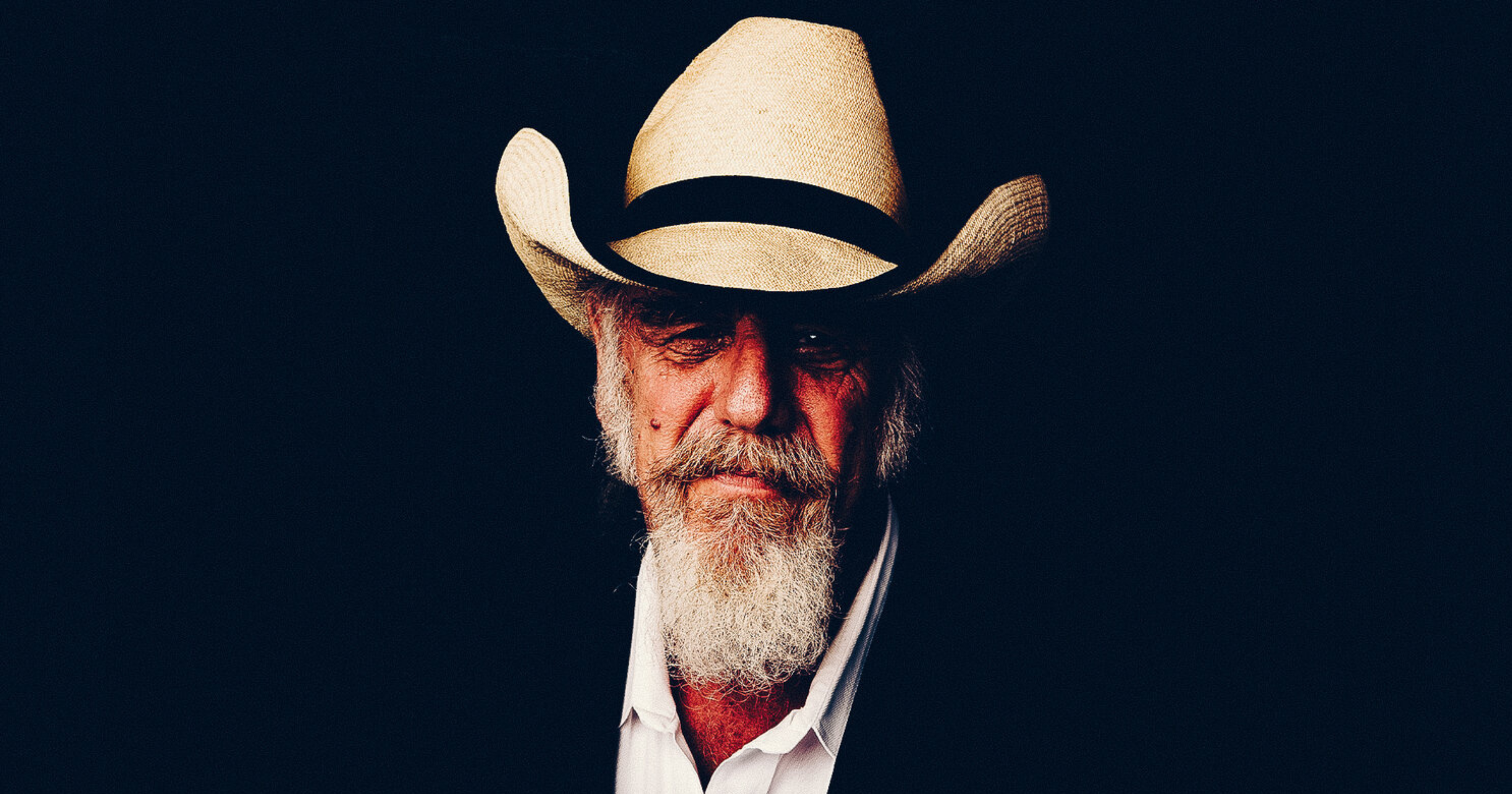
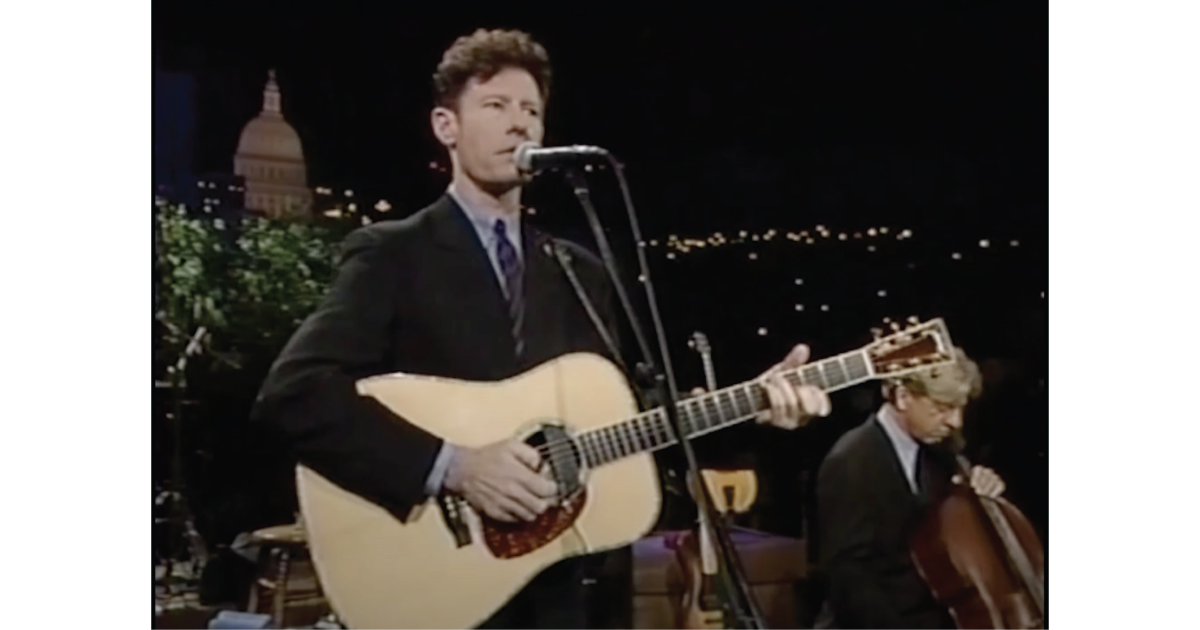
WATCH: Lyle Lovett, “Teach Me About Love” (From ‘Austin City Limits,’ 1997)

Artist: Lyle Lovett
Hometown: Klein, Texas
Song: “Teach Me About Love”
Album: Mighty Fine: An Austin City Limits Tribute to Walter Hyatt
Release Date: October 1, 2021
Label: Omnivore Recordings

Editor’s Note: This Lyle Lovett performance of Walter Hyatt’s “Teach Me About Love” was filmed in 1997 for Austin City Limits as part of a tribute to Hyatt, who was killed in a 1996 plane crash. Cut from the episode due to time constraints, the performance has been unseen until now, coinciding with the release of the full concert on CD and digital, titled Mighty Fine: An Austin City Limits Tribute to Walter Hyatt. Four unheard Hyatt recordings also appear on the album.

In Their Words: “Walter Hyatt is one of the most creative souls to come out of the Austin music scene in the past two decades. Although raised in Spartanburg, S.C., and spent his last years in Nashville, he represented the spirit of Austin. An artist of personal vision, original style and artistic integrity. During the late ‘70s and ‘80s, Uncle Walt’s Band developed a strong loyal following in Austin thanks to their expressive blend of music styles, songs that were street smart, energetic, honest, and inspirational to a lot of younger singer-songwriters like me. Walter Hyatt explored many styles – New Orleans jazz, country honky-tonk, with a bit of Elvis and course Bob Wills. His dry sense of humor made him very special in the eyes of fans and critics. His death was a personal loss for those of us who knew him, and for anyone who ever heard his music. This program is a celebration of extraordinary music by an extraordinary man with a gift for reaching hearts and minds of so many people.” — Lyle Lovett

The BGS Radio Hour – Episode 221

Welcome to the BGS Radio Hour! For the past five years, this weekly radio show and podcast has been a recap of all the great music, new and old, featured on the digital pages of BGS. And this week, we say a bittersweet goodbye to the airwaves with our final episode. We want to give a special thank you to our partner station, WMOT Roots Radio 89.5 FM in Murfreesboro / Nashville, and all the stations that have aired our show over the years! And of course, a huge thank you to our readers and listeners for following along as well.

For this final week of the BGS Radio Hour, we have a recap of last week’s IBMA Awards, brand new music from our Artist of the Month — and newly crowned IBMA Entertainer and Guitar Player of the Year — Billy Strings, and much more.

APPLE PODCASTS, SPOTIFY

Billy Strings – “Secrets”

With a brand new album, Renewal, and his win this past week of IBMA’s highest honor, Entertainer of the Year, there’s no one else we’d rather have as our October Artist of the Month than Billy Strings. Check out our Essential Billy Strings playlist and stay tuned for more Billy content all month long.

RC & the Ambers – “Gravy and Biscuits”

Oklahoma-based RC & the Ambers spoke on their biggest musical influence, watching The Golden Girls as a pre-show ritual, kayaking on the Illinois River, and more in a recent edition of 5+5.

Asleep at the Wheel (feat. George Strait and Willie Nelson) – “Take Me Back to Tulsa”

On the latest episode of The Show on the Road, we bring you a conversation with Ray Benson: ringleader of the Grammy-winning, half-century-spanning group, and one of American roots music’s most durable and iconic bands, Asleep at the Wheel.

High Fidelity – “Banjo Player’s Blues”

This song from traditional bluegrass group High Fidelity was nominated for Song of the Year at last week’s IBMA Awards. Hard to have the “Banjo Player’s Blues” when you have news like that to share!

Haunted Like Human – “Ohio”

Americana duo Haunted Like Human wrote “Ohio” inspired by a true story, and the end result is a tale told through letters of a man wanting to do right by his family while also wanting to get back home to them.

Single Girl, Married Girl – “Wreck Cut Loose”

Single Girl, Married Girl has always loved torch songs and big weepy ballads — especially country ones! “Wreck Cut Loose” is placed in a more modern aesthetic and setting, but the lineage — and ties to the likes of Patsy Cline — should be obvious.

Patrick Dethlefs – “If You Listen”

The title track for Patrick Dethlefs’ brand new album explores the idea of still feeling connected to loved ones who have passed on. Patrick tells us, “[It’s] maybe even asking the question, ‘Is this person with me now more than they have ever been?'”

Balsam Range – “Richest Man”

Balsam Range, hailing from Haywood County, North Carolina, are no strangers to the IBMA Awards, having won the 2014 and 2018 award for Entertainer of the Year, among other accolades and awards over the years. And now in 2021, they’ve won Song of the Year for “Richest Man.”

Fireside Collective – “And The Rain Came Down”

Asheville bluegrass band Fireside Collective wrote “And the Rain Came Down” inspired by the many “storms” of COVID and the Great Flood tale from the Old Testament. But, despite the song’s somber overtones and the uncertainty of the story, there is still a message of hope.

Kris Gruen – “Pictures Of”

Alt-folk singer-songwriter Kris Gruen wrote “Pictures Of” about his daughter, as a tribute to her maturation and readiness for the world. In different words “Pictures Of” says, “Be excited for and in love with the world! Regardless of our collective fear in the unknown…”

James McMurtry – “Canola Fields”

Holding a conversation with James McMurtry is similar to experiencing his music. He is frank, eloquent, and gets to the heart of the matter with few words. On The Horses and the Hounds, his first album of new material in nearly seven years, he tells sometimes complicated emotional stories through his fictional characters, crafted within the limits of rhyme and meter. His deft chronicling of human nature woven with descriptions of place and scene give the listener context beyond the experience, almost like each song is the essence of a short story or novel. Listen to “Canola Fields” and read our conversation with McMurtry.

Appalachian Road Show – “The Appalachian Road”

At this year’s IBMA Awards, Appalachian Road Show was the second most nominated group, and they were awarded the honors of Instrumental Group of the Year and New Artist of the Year. On top of those wins, this tune, “The Appalachian Road,” was nominated for Instrumental Recording of the Year.

Clinton Davis – “Curly Headed Woman”

Old-time musician Clinton Davis has recorded his own version of “Curly Headed Woman,” a rare rendition of one of the most common American folk songs: “The Hesitation Blues” or “If the River Was Whisky” as most people call it.

Sideline – “Old Guitar Case”

Sideline reminisces on how they became a band, the importance of teamwork, prioritizing having fun every time they step out on stage, and more in a recent 5+5.


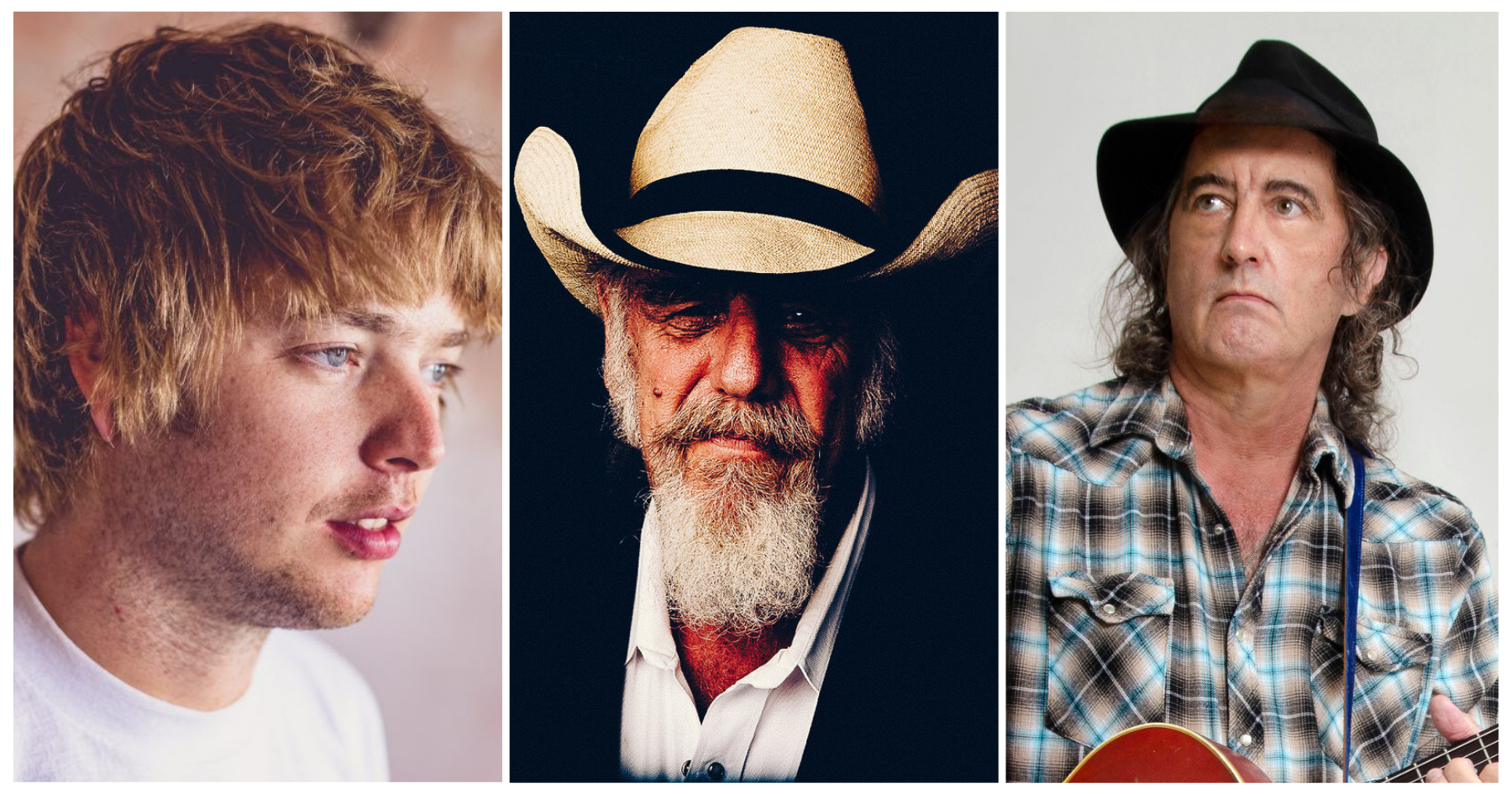
Photos: (L to R) Billy Strings by Jesse Faatz; Ray Benson by Mike Shore; James McMurtry by Mary Keating-Bruton

The Show on the Road – Asleep at the Wheel (Ray Benson)

This week on The Show On The Road, we bring you a talk with the half-century-spanning, Grammy-winning ringleader of one of American roots music’s most durable and iconic bands, Ray Benson of Asleep at the Wheel. The episode is a celebration of their fifty years of diligent song collecting, Western swing camaraderie, and epic genre-spanning collaboration — and features first listens of their new record, Half a Hundred Years, which drops on October 1. The record covers old classics and tells new stories, with spritely cameos from fellow Texans Lyle Lovett and Willie Nelson.

LISTEN: APPLE PODCASTSSPOTIFYSTITCHER

Aligning behind Benson’s commanding, deep voice and impeccable song-historian’s taste, Asleep at the Wheel has managed what few bands in country music — or any genre — have: Keeping a talented, rotating band of mostly-acoustic players together from 1972 on, with little break from the road. Willie Nelson and others have long championed their work, and indeed the band has had fans in even higher places: on September 11, 2001, the group was set to perform at The White House.

Asleep at the Wheel’s story is really one of perseverance and transformation. How did a Jewish kid from the the Philly suburbs end up as a Texas cowboy music icon who toured with Bob Dylan and George Strait (just ask Bob about changing identities), wrote songs and acted in movies with Dolly Parton and Blondie, and became the foremost interpreter of the rollicking music of Bob Wills & His Texas Playboys? Only in America, you could say, but Benson would just tell you that he loves the music deep in his bones, and it’s what he wakes up every day to create and save.

One of the most forward-thinking things Benson did from the very beginning was share the mic with a myriad of talented female vocalists, which maybe confused some radio programmers (“Who is leader of this outfit?”), but made their road shows eternally entertaining and unique. That tradition continues. Also featured on the new record are lovely collabs with Lee Ann Womack and Emmylou Harris.


Photo credit: Mike Shore

Rose Maddox: The Remarkable Hillbilly Singer Who Made Bluegrass History

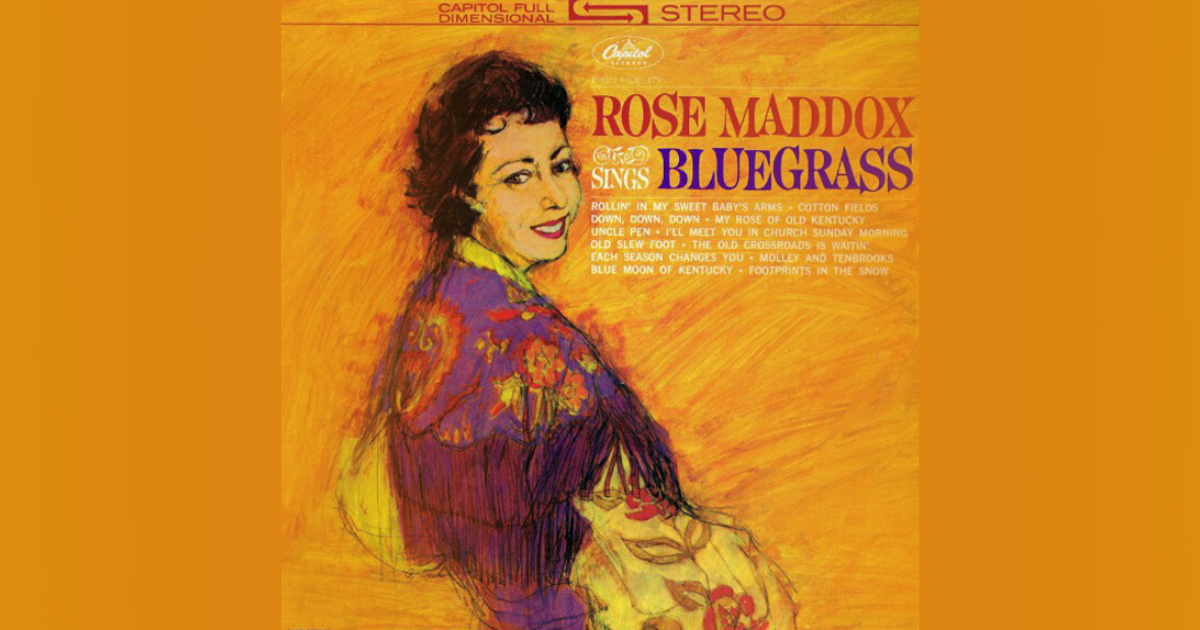
Rose Maddox, the lead singer of the Most Colorful Hillbilly Band in America, made a significant mark in bluegrass, too, as the first woman ever to record a bluegrass album. Her incredible rags to-riches story touches on boxcars and sharecropping, the Grand Ole Opry and Buck Owens, and finally the Father of Bluegrass Music himself, Bill Monroe, who laid the foundation for that seminal 1962 Capitol Records LP, Rose Maddox Sings Bluegrass.

Born on August 15, 1925, in Boaz, Alabama, Roselea Arbana Maddox arrived in a family with some musical heritage. Her paternal grandfather was a fiddler and roaming preacher, while her uncle Foncey gave lessons to locals and performed in blackface. Rose’s father, Charlie Maddox, worked as a sharecropper and hired hand. After getting stiffed for a job chopping wood, Charlie decided to skip town and finally indulge his wife Lula’s lifelong dream of living in California, panning for gold. They sold everything they had and stashed away the proceeds — just $35. The two oldest children stayed behind, while the youngest five and their parents set out for the Golden State in the spring of 1933.

How? On foot. Then hitchhiking. And after crossing over the state line to Mississippi and encountering another family who explained train-hopping, the seven Maddoxes rode the boxcars all the way west. Rose was 7 years old. They settled and resettled in various towns, with their situation once so dire that Lula had to place Rose with another family — but Rose acted up so often that the family gave her back. When Charlie got harvesting work in Modesto, the family followed and became what they called “fruit tramps.”

With some stability, the kids were putting down roots in Modesto. They collected whiskey bottles, turned them in for a penny a piece, then spent their dimes on movies. One Sunday the Sons of the Pioneers appeared in person at the Strand Theater. At that moment, Rose had found her calling — to be a singer. Her brother Fred had a similar epiphany while picking cotton that fall. After hearing that the band who’d just played the rodeo made $100, he decided it was time to get into the music business. Acting as manager, he found a furniture store to sponsor some radio spots. The caveat was simple: The furniture store owner wanted a girl singer. Thus, the Maddox Brothers & Rose were launched — with the spunky lead vocalist just 11 years old.

They followed the California rodeo circuit and played bars for tips, then won a State Fair competition that crowned them California’s best hillbilly band. However, things unraveled for a time in the early 1940s, as Fred, Don, and Cal were drafted in World War I, and Rose became an unhappy bride at 16, then a single mother at 18. Auditions with Roy Acuff and Bob Wills went nowhere. She played occasional gigs with other bands until the war ended and the Maddox Brothers & Rose reformed, with the youngest Maddox child, Henry, now joining on mandolin.

Playing dances as well as radio shows, the group shifted their sound to get people moving. Their look got an overhaul after Roy Rogers recommended Los Angeles tailor Nathan Turk, a pioneer of flashy Western stagewear. They also signed a deal with 4 Star Records, an indie label that marketed them as Most Colorful Hillbilly Band in America. Their repertoire ranged from Woody Guthrie’s “Philadelphia Lawyer” to Hank Williams’ “Honky Tonkin'” to the gospel tune “Gathering Flowers for the Master’s Bouquet.” They made their Opry debut in 1949, where they met Bill Monroe, and became the first hillbilly band the play the Las Vegas Strip. That same year, however, Charlie and Lula Maddox divorced.

By 1950, various members of the family were living in Hollywood. A beautiful woman of 25, Rose took courses in modeling and vocal control, although Lula would not allow her to date. The band appeared on broadcasts like Hometown Jamboree and Town and Country in Southern California, as well as the regional show, the Louisiana Hayride. Columbia Records signed her as a solo act in 1953. With rock ‘n’ roll in full force in 1956, the Maddox Brothers & Rose sputtered, then disbanded, and not without some bitterness as Rose’s career still flourished. The Opry didn’t appreciate her first solo appearance though, when she wore a blue satin skirt that exposed her bare midriff. Nonetheless she relocated to Nashville (with the ever-vigilant Lula) and became an Opry member in 1956, but quit about six months later when Roy Acuff complained she (and not other Opry members who were touring) made appearances on too many local TV shows.

That professional setback might have given the perception that Rose couldn’t have a career without her brothers. That proved quite untrue. Hometown Jamboree in Los Angeles hired her, which led to plenty of gigs. When the Columbia deal ended, she recorded for two independent labels before signing with Capitol Records in 1959. When Lula tried to boss around producer Ken Nelson, he banned her from all future sessions. Rose, by this time 33 years old and still under her mother’s thumb, was secretly delighted. Taking things a step further, Rose eloped with a nightclub owner that December, then embarked on a European tour.

For Capitol, she made her first Billboard chart appearance ever with the honky-tonk weeper “Gambler’s Love,” climbing to No. 22 in 1959. Her first solo album, The One Rose, dropped in 1960, followed by a gospel set titled Glorybound Train. By 1961, she took “Kissing My Pillow” and “I Want to Live Again” to No. 14 and No. 15, respectively. Johnny Cash invited her to join his road show and Buck Owens asked to record some duets. Those twangy tracks, “Loose Talk” and “Mental Cruelty,” both entered the Top 10 in 1961. Her third album for Capitol, A Big Bouquet of Roses, appeared later that year.

The year 1962 proved to be the pinnacle of her career, as Bill Monroe encouraged her to make a bluegrass album. Because they recorded for competing labels, Big Mon anonymously played on the first day of the two-day session, recording several numbers from his own repertoire. Donna Stoneman stepped in on mandolin on the second day with the remainder of the material. Reno & Smiley joined the session too. Monroe later told Maddox biographer Jonny Whiteside, “The Maddox Brothers & Rose always had their own style, but you must remember their home was Alabama, and I always thought they sang a lot of the old Southern style of singin’. So I enjoyed helpin’ her on one of her albums. She had some great entertainers workin’ on it, and it didn’t take long at all.”

Maddox herself explained, “Bill Monroe has always told me that I sang bluegrass, and to me what he was talkin’ about is just what I call ‘hillbilly.'” She may not have agreed with the terminology, but she certainly adhered to the enthusiasm of the best bluegrass singers. Rose Maddox Sings Bluegrass became the first bluegrass LP recorded by a woman. Its release coincided with the chart success of an earlier country single, “Sing a Little Song of Heartache,” which rose to No. 3 (and practically begs for a bluegrass remake).

Without Lula to intervene, Rose’s life on the road nearly derailed her, with infidelity, volatility toward band members, and a propensity for Benzedrene wrecking her marriage and her professional reputation. A heavy schedule of international touring wreaked havoc on her voice, too. The singles she did release were moody, if not morbid. Although she eclipsed Patsy Cline and Kitty Wells to be named Cashbox‘s female country artist of 1963, her chart momentum fizzled out after her final album with Capitol, 1963’s Alone With You. Still she continued to tour with Buck Owens and Merle Haggard, with her grown son Donnie as her sideman.

Maddox occasionally recorded for small labels in the ’70s and ’80s to modest results, while her venues now included the San Francisco gay bars that embraced the Urban Cowboy phenomenon, as well as the annual gay rodeo in Reno, Nevada. She performed with the Vern Williams Band in folk clubs, too, and recorded a 1984 album with Merle Haggard & the Strangers that was funded by fans. A number of Arhoolie Records reissues helped keep her loyal audience appeased, while introducing her vivacious music to a new generation. She and her brother Fred patched things up for a 50th anniversary celebration of the Maddox Brothers & Rose in Delano, California.

Too often overlooked among the country performers of her era, Maddox landed her first Grammy nomination for her 1994 Arhoolie release, $35 and a Dream, in the category of Best Bluegrass Album. She recounted her exceptional career in the 1997 biography, Ramblin’ Rose: The Life and Career of Rose Maddox, and died the following year at age 71 in Ashland, Oregon. Remarkably, her life story has not been adapted for Hollywood, nor has she been inducted into the Country Music Hall of Fame or the Bluegrass Hall of Fame. Yet her catalog still shines as a beacon for listeners who seek out traditional music with an undeniable West Coast flair.

On the final track of that final album, Johnny Cash intones, “I worked with Rose Maddox a lot back over the years. And I found that when she started working my show that she was probably the most fascinating, exciting performer that I’d ever seen in my life. She was a total performer. She captivated the audience. She held them in the palm of her hand and made ‘em do whatever she wanted to. The songs that she sang were classics, and I loved the way she sang and kind of danced at the same time. I thought there was, and still think that, there will never be a woman who could outperform Rose Maddox. She’s an American classic.”


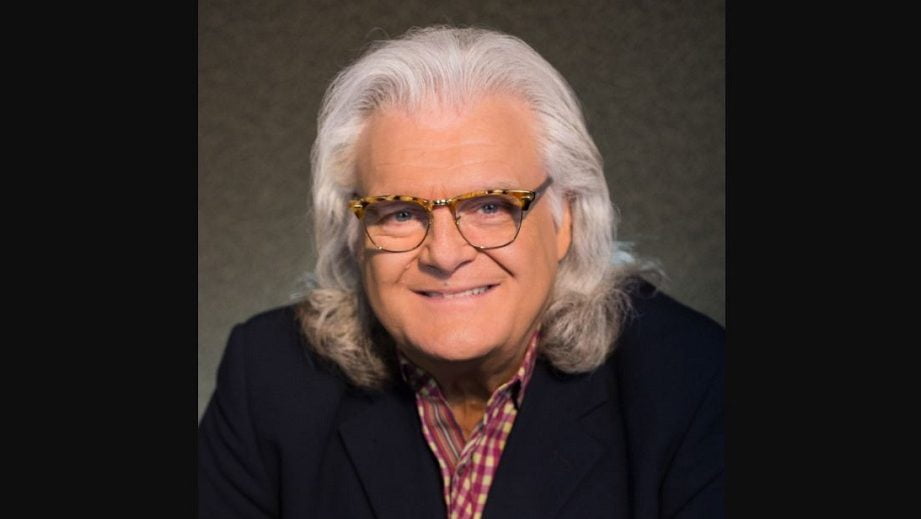
2018: The Year of Ricky Skaggs

Though he’s just now hitting nominal retirement age, Ricky Skaggs has been a virtuosic presence in the worlds of bluegrass, country, and Americana music for close to 50 years. With his childhood friend, Keith Whitley, he began touring and recording with Ralph Stanley while still in high school; by the time he turned 21, he had done a stint with the Country Gentlemen and become a member of the J. D. Crowe & The New South lineup whose eponymous 1975 album was (and is!) so influential that it’s been known for more than 40 years simply by its catalog number, Rounder 0044.

From there he moved on to intensive studio work; partnering with Jerry Douglas in Boone Creek; a stretch with Emmylou Harris’s Hot Band; and then, in 1981, launching a country career so meteoric that he earned, within four years of his debut recording, the Country Music Association’s top Entertainer of the Year award. Fifteen years later, he returned to bluegrass in spectacular fashion with the album Bluegrass Rules!

It’s no wonder, then, that he’s a newly minted member of the Country Music Hall of Fame and the Bluegrass Music Hall of Fame, though it’s a nifty kind of surprise that he was inducted into both this year — and, while it’s less widely known, he hit the trifecta when he was inducted into the Fiddlers Hall of Fame, too. In short, if you were to call 2018 the Year of Ricky Skaggs, it would be hard to mount a real counter-argument.

A conversation with Skaggs is always a journey through a myriad of subjects, and this one was no exception; we touched on many topics, from his nearly complete recovery from shoulder troubles to his recollection of a conversation with Art Satherly, the legendary producer who worked with Bob Wills, Bill Monroe, and many others. Still, a couple of themes emerged, and it’s fitting that one began with an examination of his under-appreciated role as a fiddle player.

It occurred to me that there are fiddle players in the Bluegrass Hall of Fame already—Chubby Wise, Paul Warren, Kenny Baker, Benny Martin, Bobby Hicks—but there are some other members, like John Hartford, who folks might not think of first as a fiddler but who were players, and that led me to you. I think there’s a whole generation of fans and musicians who might not realize how much you’ve done on the fiddle. Is that something you still do from time to time?

When we went out on the Cooder-White-Skaggs tour, I played quite a bit of fiddle, because we were doing so many country things, like Hank Snow’s “Now And Then (There’s A Fool Such As I),” that Chubby Wise played on, and Ry wanted that fiddle. Sharon did songs that I’d play on, and I played swing fiddle on “Sweet Temptation.” So I played quite a bit on that tour. But I haven’t taken it as seriously as I should have, especially in the last 20 years; I just haven’t kept up on it. And you know, when you do pick one up and it sounds like a cat killing, you start thinking, maybe my days are over on this.

But I’ll tell you, when I was just a kid, and I decided I wanted to play another instrument besides the mandolin, my dad got a guy named Santford Kelly to come over to our house, and he recorded him playing—because especially when it came to playing fiddle, he wanted me to sit at the feet of some old cats that he knew. And now, I’ll play something by Santford Kelly for Andy [Leftwich], or now for Mike [Barnett], and their eyes are as big as silver dollars, and they say, “Oh, my god, will you please teach me how to play that? That doesn’t need to die with you—that sound and that bowing style, and that stuff from the mountains of Appalachia, that’s got to live on.”

When that happened a couple of times, I started really seeing how important it was. I’m always thinking maybe too much about perfection, and I’ve gotta tell you, when I heard Santford Kelly—he was 84 or 85 at the time, and he was scratchy. But it didn’t bother me that he was a little flat and sharp here and there, and a little scratchy on the bow. It was what was coming out of him that went into my heart, that moved me deeply. I thought, this is like Elijah coming off the mountain. This man is carrying something.

So I’ve kind of been saying, well, I’m not really up on it, but I need to shut that crap up. I just do need to play more of that.

You’ve entered three halls of fame this year, so maybe this is a good time to look back. One of the things I’d like to get your impression on is the idea that tradition is not a style, but a way of learning. And you did that, learning directly from older guys like Santford Kelly and Ralph Stanley, but it seems like there’s less of that these days. From the beginning of your return to bluegrass, you’ve made having young people in your band a priority. When you talk about Mike or [banjo player] Russ [Carson] hearing these things, is that something you feel is important — to mentor young musicians, be an active transmitter?

It absolutely is. To me, it’s vital — it’s necessary for the journey, it truly is. It’s manna, it’s food. In the tabernacle of David, where there were four thousand musicians and two thousand singers, you didn’t just fall off a turnip truck and then decide, hey, I’m going to be a musician. No! King David said, “My fingers are trained for battle.” To me, there is training that goes into perfection, goes into your craft. There is something that is really spiritual about this; it’s part of our spirit, it’s part of our nature to be trained.

And that’s truly part of what makes my heart beat, is to train up and to pour into young musicians — and not just men. Like Sarah Jarosz told me one time, “Thank you for letting me get up on stage and play with you when I was 12 years old in Austin.” Or Sierra Hull, or how my music affected Alison [Krauss] in her teenaged years — listening to J. D. [Crowe]’s records, and Boone Creek, and my early country stuff, the harmony singing and just the musicianship, how that encouraged her. I was talking to Becky Buller at the IBMA Red Hat [Amphitheatre], and she talked about how influential the music has been, too.

One of the things that I learned from Ralph was to play it like it was recorded. I remember one time, I’d been listening to Jimmy Gaudreau and some of the other mandolin players of that time a little bit, and one night I played a solo that was a little bit out of the ballpark for the Stanley sound. And I caught Ralph’s face move just slightly over toward me. He didn’t eyeball me, he just kind of turned to the right and listened to me. And when we got off he said, “Rick, you know what I do, when I take breaks, I play it just like I sing it. I want them people to know that when I played that break, they didn’t have to hear me sing, they knowed what that song was. That’s the way I do it.” He didn’t say, the way you did it was not cool, or out of bounds. He did not teach that way; it was so soft, and so nurturing.

And now, I’m always showing Mike stuff — even from the first time I met him, when he auditioned. We sat down and I played him the Stanley Brothers’ Starday recording of “Little Maggie”— one lick, one phrase, after [fiddler] Ralph Mayo’s first solo. Ralph kicks it off, sings one verse, and then Ralph Mayo takes a solo. Well, it’s that next verse, on the line “pretty women are made for lovin’,” on the word “lovin,” Mayo plays this counter-note that’s not even in B, where Ralph’s at. That thing came out of him, and that one note just spoke so loudly right there for me. When I really heard that, I thought “What did he just play!?” and it just lifted my heart to such a place. It was something. And I played it for Mike, and he said “play it again,” and I thought, all right, he’s going to get this job, I know. He’s hearing what I heard, so I knew he was the right one for the job. He heard what Mayo was playing, and he heard my passion for it. And those are the kind of things I want to teach.

Looking at your career, the frequency of your record releases seems to have slowed down. And it seems to me that the recorded end of the business is almost going back to the 50s. Are you just too busy to get into the studio, or is it a lower priority because the business is heading away from that?

Well, as a record company owner, it’s become a financial issue. Having a studio of my own, you’d think that I could do records so much cheaper, but it’s just a fact that the numbers just don’t work when I look at putting $30,00 or $40,000 into a CD and the chances of getting it back in the next three or four years. And I’ve got a big name! I don’t know how, well I guess I do know how, a lot of these record companies do them for $10,000. I would feel really bad about having to do a Kickstarter for Ricky Skaggs. But there’s so much music in my heart that I really want to go in the studio and make, and make it with this incredible band.

But here’s what we’re thinking: I guess I’ve probably got nearly every show that I’ve done in the last four or five years—and recorded on separate tracks, where they could be remixed. So I’ve got a ton of stuff. We’ve got Cooder-White-Skaggs, we’ve got Skaggs and Hornsby stuff, we’ve got Ricky Skaggs with Cody Kilby, Bryan Sutton, all kinds of guests that we’ve had. We’ve got all that recorded. So I really do believe there’s ways of doing it, and I don’t have to own everything; I could just have part ownership.

And I just want to get the music out. I want the world to be able to hear Mike Barnett and Jake Workman, Jeff Picker and Russ Carson. And of course Andy, or hearing Jake playing mandolin or banjo. We’ve got all that stuff, and maybe perfection doesn’t matter so much. I can get stuck in thinking about what used to happen in my life, and what used to be—and here again, I’m figuring out it doesn’t have to be that way. There’s a feel thing that we can miss by having endless tracks on ProTools, endless chances to go back and get another take; usually the first thought that comes into your mind on almost anything is the right one. It’s our stinking thinking that gets involved, and we get to overanalyzing stuff when the spirit is saying, “This is the right way, this is what I put in your mind at that time.” Sometimes you’re better off to just go with that.
MIXTAPE: Eric Corne’s California Country

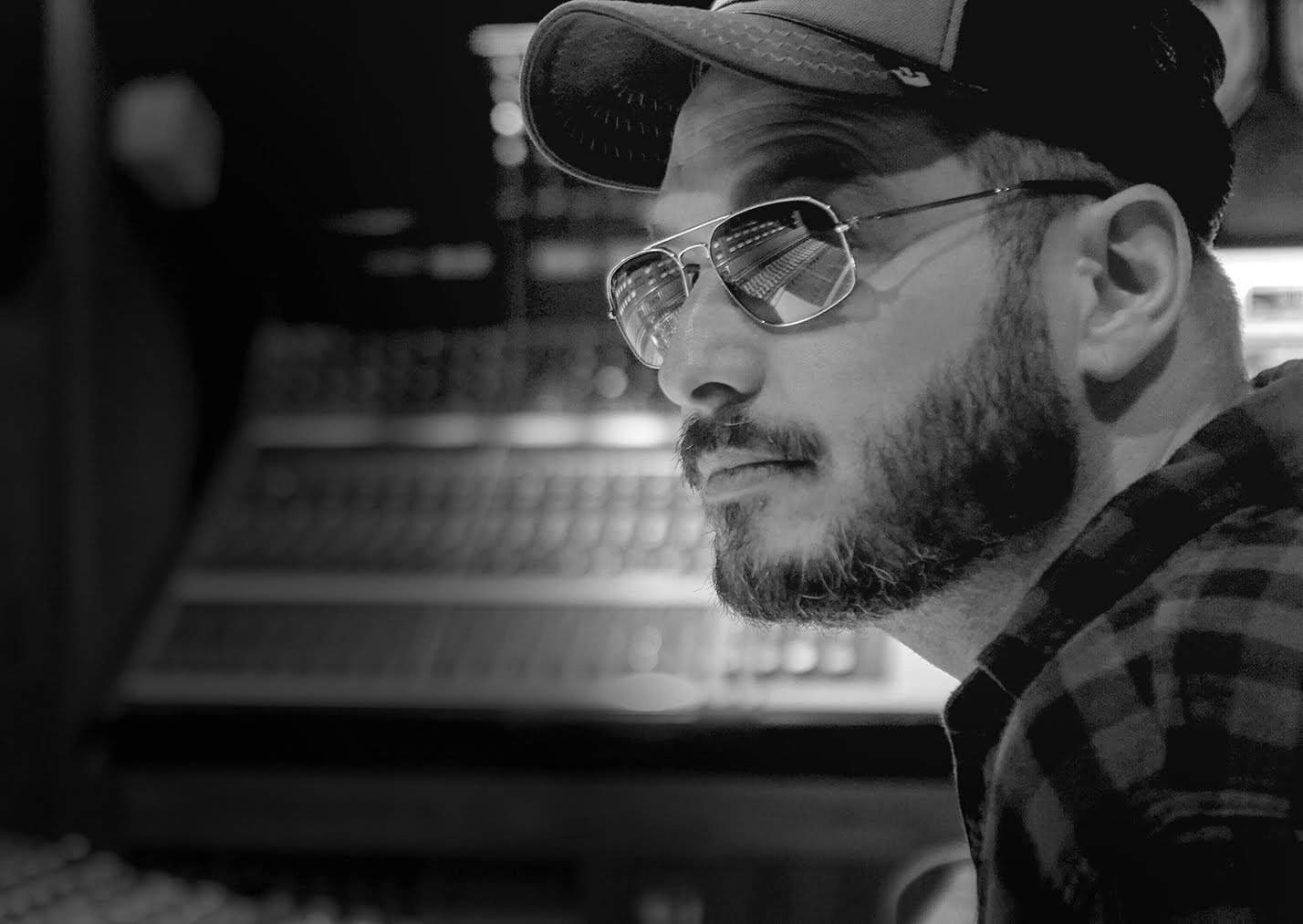
California country has deep roots and an enduring influence. It’s given us the Bakersfield Sound, country-rock, cosmic country, cow punk, and much more. I love the more raw/less polished sound and how its artists tend to chart their own course. Nashville was a company town; California was where the mavericks went. I have a strong personal connection to California country, stemming from my work as Dusty Wakeman’s engineer at Mad Dog Studios in Los Angeles. Dusty played bass with Buck Owens, engineered Dwight Yoakam’s seminal albums, and co-produced Lucinda Williams’ first two albums. There’s still a strong core of musicians in L.A. with roots stretching back to these earlier generations, and it’s a thrill and an honor to be writing and producing records with such soulful and beautiful people, many of whom populate the selections below. — Eric Corne

Buck Owens — “Streets of Bakersfield”

Buck Owens is, of course, a pillar of California country and a pioneer of the Bakersfield Sound. An iconic harmony guitar riff provides the instrumental theme, with gorgeous vocal harmonies and pedal steel lifting the choruses. This song really encapsulates what California country represents to me — the desire to be oneself.

Merle Haggard — “Working Man”

This is one of my favorite Merle songs. It’s got a great groove and terrific guitar playing with lyrics that clearly represent the blue-collar ethic he embodied.

Lucinda Williams — “Sweet Ole World”

Lucinda really helped broaden the boundaries of country just by doing her own thing. This song has an angelic vocal melody with beautiful harmony and precise responses from the guitar. Immaculately recorded and co-produced by my mentor Dusty Wakeman.

Dwight Yoakam — “It Only Hurts When I Cry”

Dwight and Pete Anderson were real students of classic country music, especially the Bakersfield Sound, and they were at the center of the cow punk movement, along with X, Lone Justice, and others. This is a great song with witty lyrics, perfect production, and top-notch performances.

Jean Shepard — “If Teardrops Were Silver”

Raised in Bakersfield, Jean Shepard was a pioneer for female country singers and one of its first great stars, following on the heels of Kitty Wells’ breakthrough. She had a really pure voice with a lovely vibrato and a great ability to interpret a song.

Bob Wills — “Bubbles in My Beer”

It could be argued that Bob Wills is the godfather of the Bakersfield Sound. He played there regularly and had a strong influence on both Buck and Merle … something I can really hear in this song.

Sam Morrow — “Skinny Elvis” (Featuring Jaime Wyatt)

I’m really proud to work with these two brilliant, young, California country artists who are getting well-deserved national attention. I wrote this one for Sam’s album, Concrete and Mud. It’s a little reminiscent of the Gram/Emmylou song “Ooh, Las Vegas,” so I thought it’d make a great duet with Jaime. I recruited legendary Gram Parsons/Byrds pedal steel player Jay Dee Maness to play on it, which was quite a thrill, as you can imagine.

Guy Clark — “L.A. Freeway”

Guy Clark wasn’t in L.A. for long, and this song is about leaving, but it’s a beautiful farewell song. The song makes reference to another beloved and iconic figure of California country — “Skinny” Dennis Sanchez who played bass with Clark, and ran in circles with the likes of Townes Van Zandt, Rodney Crowell, and Steve Earle. There’s also a thriving honkytonk in Brooklyn named after him. It’s an incredible performance, very dynamic, with a sympathetic arrangement including Wurlitzer piano, weepy fiddle, moaning harmonica, and gorgeous chorus harmonies.

Jade Jackson — “Motorcycle”

Here’s another great, young country singer coming out of Cali right now. I love this lyric and vocal performance — intimate with a dark, rebellious under current.

Linda Ronstadt — “Silver Threads and Golden Needles”

Her early career country records are really underrated. This is a killer country-rock version of a Dick Reynolds/Jack Rhodes classic song with strong ties to the Flying Burrito Brothers. I think Ronstadt is also important to include here, due to her work with Neil Young, the Eagles, Jackson Browne, and others in the L.A. country scene of the late ’60s and early ’70s.

The Byrds — “Hickory Wind”

No playlist of California country would be complete without a song from the Byrds’ seminal country album Sweetheart of the Rodeo. My first gig in Los Angeles was assisting Dusty Wakeman on the mixes for the Gram Parsons tribute concert at which Keith Richards did a beautiful heartfelt version of this song by his old pal, Gram.

Sam Outlaw — “Jesus Take the Wheel (And Drive Me to a Bar)”

An instant classic by one of the brightest stars of the current generation of California country singers with outstanding production by Ry Cooder and Bo Koster of My Morning Jacket on keys, who also guests on my new record.

The Flying Burrito Brothers — “Hot Burrito #1”

Even though Gram Parsons and Chris Hillman’s importance is already represented here via the Byrds, I wanted to include this achingly beautiful Burrito song, partly because of Gram’s incredible vocal and melody, and partly due to Bernie Leadon and the link he represented as a member of both the Burritos and the Eagles, the latter heavily influenced by the former.

Gene Autry — “Mexicali Rose”

Gene Autry’s singing cowboy films were instrumental in bringing country music to a national audience in the 1940s. I was very fortunate to record Glen Campbell on his version of “Mexicali Rose,” but thought I’d include Autry’s version here.

Crosby, Stills, Nash, & Young — “Helpless”

I think the Laurel Canyon music scene played an important role in California country and Neil Young, in particular — first with Buffalo Springfield, with songs like “Learning to Fly” and “I Am a Child,” and later with his Nashville-recorded classic, Harvest. “Helpless” to me represents the seeds of Harvest.

Eagles — “Tequila Sunrise”

Not much needs to be said about the first two Eagles’ albums and their role in the popularity of country-rock. Not to include them would seem an oversight. This also represents the beginning of the fruitful Glenn Frey/Don Henley songwriting partnership.

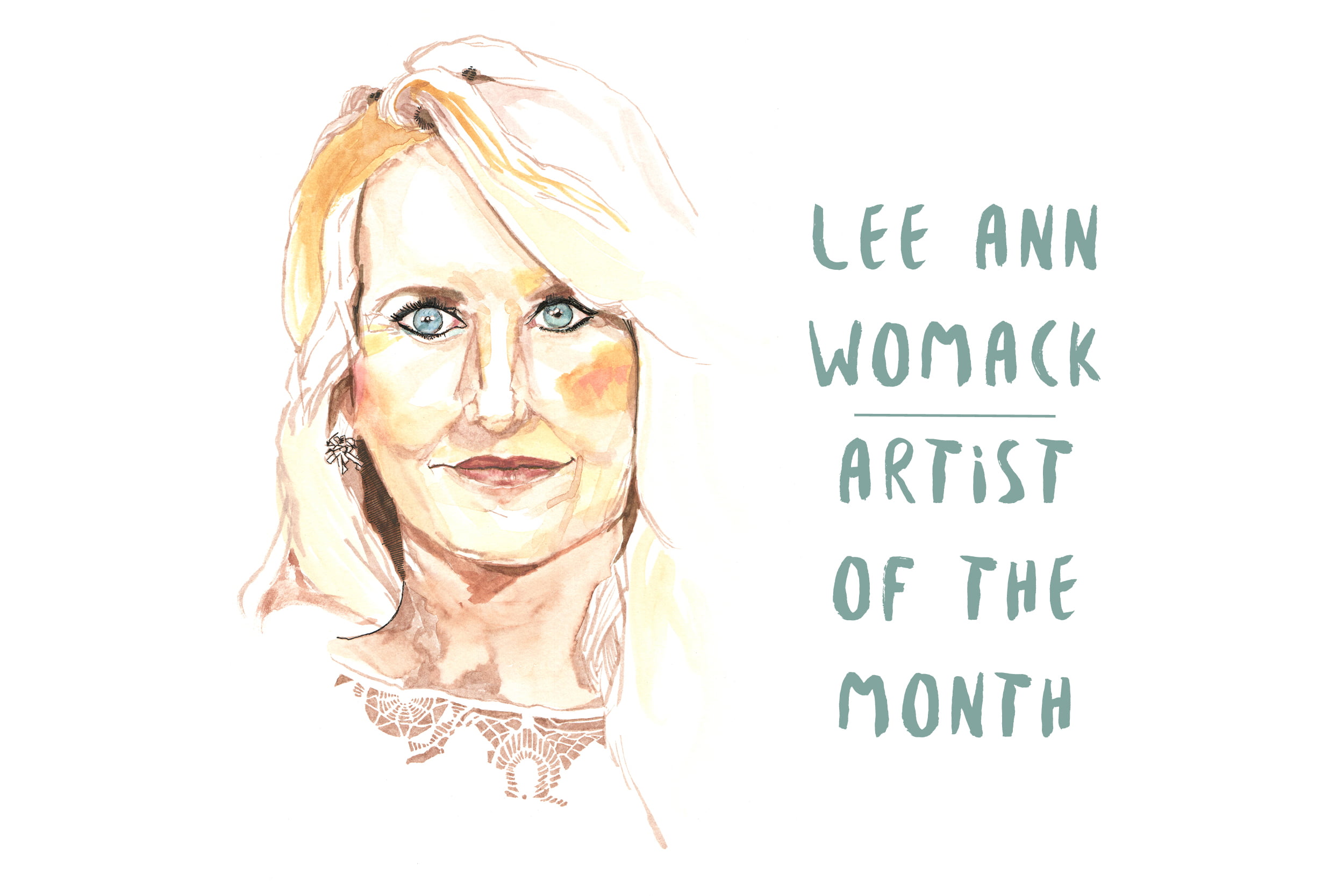
Lee Ann Womack: Keeping it Real

Lee Ann Womack had to get out of Nashville to make what she calls a real country music record. Specifically, she had to get about 800 miles away. For her eighth — and maybe her best — album, The Lonely, the Lonesome & the Gone, Womack trekked down to Houston, Texas, and set up camp at the historic SugarHill Studio, which has hosted famed sessions by some of her musical heroes: Lightnin’ Hopkins, the Sir Douglas Quintet, George Jones, and many others. Nashville has plenty of similarly legendary rooms, of course, but Womack needed to get away from the grinding gears of the country music machine — what she derides as “McRecords.”

“It’s like a factory,” she says. “What was great about being down there in Texas is that you’re in a studio where people go to work everyday and you have all kinds of music being recorded there. Nobody’s going in thinking, ‘We’ve got to lay down a three-minute uptempo love song for radio.’ They’re not thinking about how we’re going to make the most money out of three minutes of music. All they’re thinking about is going in and making great music.”

Womack is one of the few artists who can drop a phrase like “real country music” into conversation without sounding defensive, dismissive, or derisive — in other words, without buying into received notions of authenticity. Her definition of “real” is deeply personal and based on the country music that was popular 40 or 50 or even 60 years ago, but Lonely proves that even old tunes and old sounds can speak to this modern moment. Rather than restrictive, the term becomes freeing: These new songs range from the stately countrypolitan of “Hollywood” to the gritty blues of “All the Trouble,” from the beautiful reimagining of the 1959 Lefty Frizzell “Long Black Veil” to the remarkable insights of the title track, a country song about country songs.

Recording in Houston actually brought her closer to some of her Nashville heroes. Womack grew up in a small town called Jacksonville, Texas, about three hours due north of Houston. Her father was a country radio DJ, a profession that provided his daughter with a deep grounding in the music’s history. As a child, she loved Bob Wills & His Texas Playboys. “I thought he was funny. The music was upbeat and bouncy, which any kid would like, and then you’ve got this guy talking all over the tracks: [Imitating Wills’ falsetto] ‘Shoot low, sheriff! I think he’s riding a Shetland!’” She might have been laughing at the bandleader’s antics, but she was subconsciously absorbing the complex horns and fiddles. “It becomes part of the fabric of your musical DNA.”

As she grew up, Womack raided her parents’ record collection, which was full of albums by Ray Price, George Jones, Porter Waggoner, Dolly Parton, and, of course, Willie Nelson. “Twin fiddles and steel guitar and story songs — these were the things that I thought were country music, and I thought my idea of country music was everybody’s idea of country music.” Ironically, being in Nashville only distanced Womack from her first loves. “Growing up in East Texas, I was full of dreams and hope. Then I moved to Nashville and, after 20 years, you get kind of jaded. Things change,” she says. “Every time I go back home, I have a spark of that feeling I had growing up. I wanted that again. I haven’t made a record in that frame of mind in so long. I just wanted to be surrounded again by the things that shaped me growing up.”

All of those old sounds inform the new record, which was produced by her husband, Frank Liddell, and finds Womack moving even further away from the country mainstream. Disregarding the need for radio airplay and signing with ATO Records [home to the Drive-By Truckers and Hurray for the Riff Raff] suggests she is cementing her place within the Americana market, adopting a rootsier sound for a very different kind of audience. As she recounts her career, however, Womack insists she has always gravitated toward this kind of music, even when she was just starting out. “When I walked into the offices of Decca Records to audition, I walked in with just an upright bass, myself, and an acoustic guitar. We played as a trio, right there in the office,” she recounts. “And that’s exactly who I was. My first record had a song on it called ‘Never Again, Again,’ and that was stone-cold country. Even in 1997, I felt like I needed to remind people of what country music really was.”

And yet, within the country sphere and without, she is best known for 2000’s smash single, “I Hope You Dance,” which achieved the crossover success so many Nashville artists covet. Recorded with Sons of the Desert, it’s a slick and sentimental pop-country anthem whose uplifting lyrics could double as a graduation speech or a Hallmark card: “I hope you still feel small, when you stand beside the ocean. Whenever one door closes, I hope one more opens.”

To her credit, Womack doesn’t ignore or disregard her biggest hit, no matter that it is something of an outlier in her catalog. She still performs it at almost every concert, still sings it like it’s a brand-new song, still invests those lyrics with sincerity and immense generosity, even as she strips it down to its core. “Those lyrics still stand up with just an acoustic guitar,” she says. “I might have cut a couple of lightweight pieces along the way, but I tried to cut the best songs I could find. And now when I go out and play with fewer musicians in a more stripped-down setting, those songs hold up because they were great songs to begin with. I guess a lot of shit got put on them to make them more commercial.”

That is perhaps one of Womack’s most undervalued talents: She is a sensitive and intuitive song collector with a discerning ear for complex sentiments, sturdy melodies, and relatable characters. On her last album, 2014’s The Way I’m Livin’, she covered the Texas singer/songwriter Hayes Carll and managed to outdo Neil Young on her tender version of “Out on a Weekend.” Lonely includes a handful of old-school covers, but the standouts are those penned by young scribes like Brent Cobb, Adam Wright, and Jay Knowles.

During the sessions in Houston, there were discussions about the title track, which includes the line, “[Hank Williams] never wrote about watching a Camry pulling out of a crowded apartment parking lot.” According to Wright, who co-wrote the tune, “Some people were like, ‘Camry isn’t very cool. Is there another car we can use?’ But Lee Ann said, ‘No, it’s a Camry. Those are the lyrics and that’s what it is.’ And that’s the point, after all. It’s not a Jaguar. It’s not a cool car. It’s not romantic.” As she sings it, that is one of the most arresting lines in a song this year — country or otherwise — and she delivers it with a gentle despair and even a little resignation, as though measuring the romance of an old country song and the reality of everyday life. “The care she takes with these songs left a big impression on me,” says Wright.

For Womack, country music is real when it’s about real people — not just the musicians who write and sing the songs, but the listeners who play those tunes over and over again, who hear their own dreams and hopes echoed back to them. “I have this theme about myself and about others,” says Womack. “I don’t know how else to describe it, except to say that I am drawn to losers. I hate to call anybody a loser, but I throw myself in that pile.”

By “losers,” she means people facing down challenges bigger than they are, and that accounts for just about everybody on earth. “That’s why I’m drawn to songs like ‘All the Trouble’ and ‘I Hope You Dance.’ They’re about challenges, about hard moments in life,” she muses. “There was a time when country music spoke more to those types of people. Now it’s speaking to a different group of people. That’s fine, but I want to speak to the challenges of life. The lonely, the lonesome, and the gone? Those are my people.”


Lede illustration by Cat Ferraz.

MIXTAPE: Kacy & Clayton’s Traditional Folk Favorites

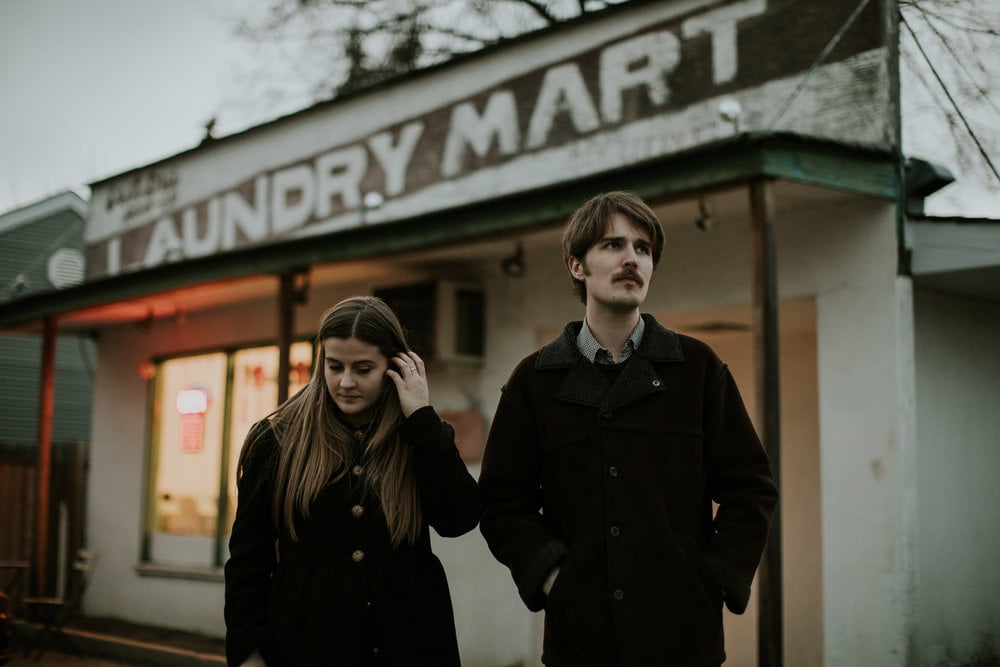
The traditional folk realm spans several countries and numerous styles. But Canadian folk duo Kacy & Clayton know their way around the terrain. That’s why we asked them to gather up a bundle of their favorites. Taking a break from promoting their new album, The Siren’s Song, Clayton answered the call.

Bob Wills & the Texas Playboys — “Ida Red”

This song has its origins in the country square dancing tradition. Bob Wills & the Texas Playboys recorded it in 1938, with the lead vocal provided by Tommy Duncan. I once read that Tommy Duncan got his job with the Texas Playboys through a series of auditions that eliminated 64 contenders down to two — Tommy Duncan and a cross-eyed man who sound just like him. Subsequently, Duncan got the job.

Bert Jansch — “The Waggoner’s Lad”

The first track on the first Bert Jansch album I heard (Jack Orion). That plunky, buzzy guitar sound you hear in the left speaker has had a lasting impression on my own playing. It was only a couple years ago that I learned John Renbourn was the one playing guitar and Bert’s on the banjo.

Steeleye Span — “The Lowlands of Holland”

Gay Woods sings this Scottish tune on Steeleye Span’s 1970 debut album, Hark! The Village Wait. It is a dramatic story of a young lady mourning the death of her husband who died in the navy.

Henry Thomas — “Arkansas”

Something about Henry Thomas’s guitar style has always mystified me. I never tire of hearing him plunk away on bass runs and slap out those big thumb strums on every beat.

The Stanley Brothers — “Mother Left Me Her Bible”

The Stanley Brothers at their very best. Carter on the soaring lead vocal, Ralph taking the tenor, and George Shuffler singing baritone and picking the guitar triplets. I don’t know how many songs they recorded about their mother, but I think it’s around 11.

Willie O’Winsbury — “Anne Briggs”

I find this song very peculiar. The king meets the boy who impregnated his daughter out of wedlock: “And it is no wonder,” said the king, “that my daughter’s love you did win. If I was a woman as I am a man, my bedfellow you would have been.”

Ron Kane & Skip Gorman — “If Your Saddle Is Good and Tight”

Despite growing up on a cow ranch and seeing working cowboys regularly, I’ve never been too keen on riding and roping myself. However, our friend Mike Tod (Calgary, AB) turned me onto the music of Carl T. Sprague, the Original Singing Cowboy, and I’ve since developed an obsession with cowboy songs. I love the humorous side of this old song and the style in which Ron Kane sings it.

Davy Graham — “Mustapha”

Davy Graham is my favourite, and certainly the most influential British acoustic guitar player of the 1960s. I’m not sure where he sourced this song, but I know it has roots in both the Mediterranean and Middle East.

Cilla Fisher — “Blue Bleezin’ Blind Drunk”

Topic Records included this on their 70th anniversary compilation, Three Score and Ten. The title got my attention, and Cilla Fisher’s intense diction and phrasing had me hanging on every line.

Peter Bellamy — “A-Roving on a Winter’s Night”

Peter Bellamy is undoubtedly my favourite singer of traditional material. Though he typically sang songs from his home county of Norfolk, he learned “A-Roving on a Winter’s Night” from a Doc Watson recording. Bellamy’s version of the song is a rewarding homecoming to Britain, after a couple centuries of transformation in the Appalachians.  

The Balfa Brothers — “‘Tit galop pour Mamou”

I love Cajun things and I love these guys.

Nic Jones — “Bonny Light Horseman”

Nic Jones is a master of melody and phrase. His guitar playing and singing are so perfectly unified, hearing him is like being struck by a tidal wave of musicality.

Incredible String Band — “Black Jack Davy”

The origins of this folk song can be traced back to Greece in the 4th century B.C. My favourite version of the last few centuries was made in 1970 by the Incredible String Band.

Jean Ritchie — “False Sir John”

The plain, innocent voice of Jean Ritchie perfectly explains the scandal of this European tale.

The Green River Boys featuring Glen Campbell — “Brown’s Ferry Blues”

For a good part of last year, “Witchita Lineman” was the song my alarm clock played. That Bass VI solo really fired me up for the day. Before his days of international celebrity, Glen Campbell made a couple unsuccessful bluegrass records for Capitol. This song’s from his debut LP, Big Bluegrass Special.

Shirley Collins & the Albion Country Band — “Poor Murdered Woman”

A straightforward re-telling of hunters searching through bushes with their dogs and coming across a woman’s decomposing body.