Artist of the Month: Alison Krauss & Union Station

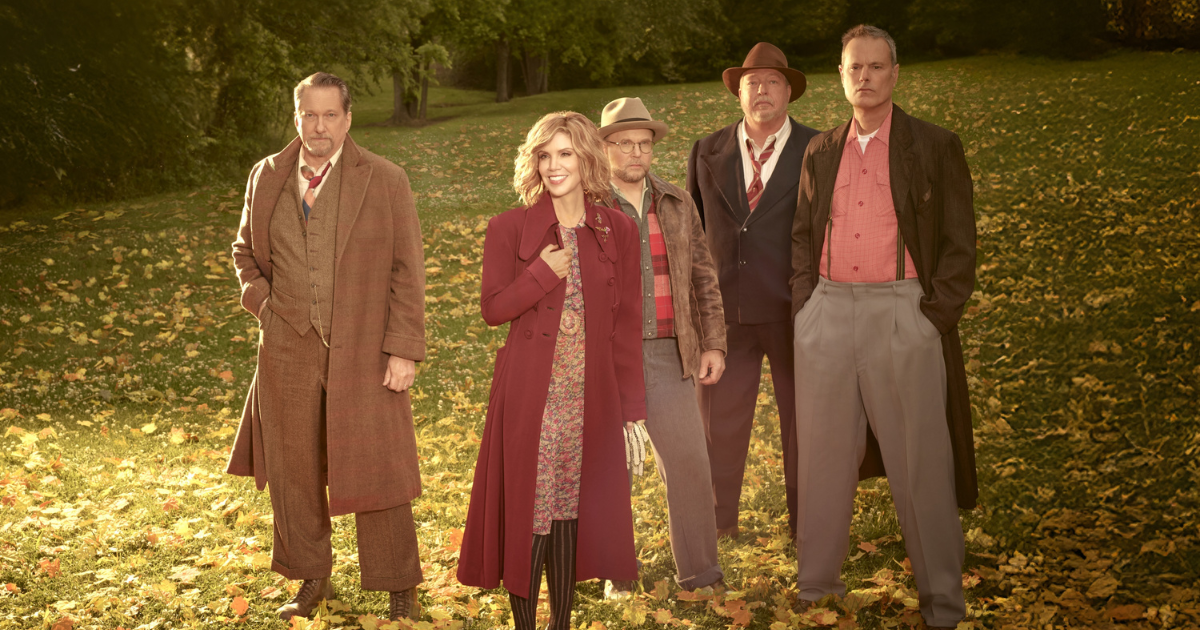
After 14 years, one of the biggest and most well-known bluegrass bands in the history of the music, Alison Krauss & Union Station, have returned with a brand new studio album, Arcadia. Released on March 28 to the delight of bluegrass and AKUS fans the world over, the collection doesn’t merely pick up where the group left off with 2011’s Paper Airplane. Instead, Arcadia soars back through the band’s deep and mighty discography landing somewhere, sonically, between So Long, So Wrong (1997) and Lonely Runs Both Ways (2004) – in other words, this iconic bluegrass band made a bluegrass album.

Alison Krauss & Union Station, by many measures, are one of the most prominent bluegrass bands to ever emerge from the genre. With the smashing success of her late ’90s to 2010s projects with Union Station and the incredible momentum behind their particular blend of bluegrass, “mash,” easy listening, country, and adult contemporary, Krauss catapulted to roots music notoriety, becoming a household name. She’d lend her voice to the blockbuster Coen Brothers film O Brother, Where Art Thou?, tour with Willie Nelson and Family, make two smash hit records with rock and roll legend Robert Plant, back up Shania Twain, duet with artists like Dolly Parton, Andrea Bocelli, Kris Kristofferson, Cyndi Lauper, Ringo Starr, and countless others. Was bluegrass, which Krauss had called her musical home since she was a pre-teen fiddle contest phenom, merely a springboard into fame and notoriety?

Of course not. This is the idiom in which Krauss has made most of her art; this is a second language – or perhaps, a first – and the fluency and virtuosity Krauss and her band have displayed are two of the most important bluegrass exports that registered and resonated with the masses who would become her fans. Krauss’s crystalline and powerful voice, sensitive and deliberate deliveries, endless grit, and one-of-a-kind skill for song curation only bolstered the electric, engaging charm of the bluegrass bones endemic in her artistry. It’s no wonder that this iteration of bluegrass ended up becoming arguably the most mainstream and most recognizable in the U.S., if not the world.

So, Krauss spread her wings and flew, carrying those bluegrass sensibilities – however overt or subtle – into everything she made. Whether the clean and country Windy City or the soulful and rockin’ pair of Raising Sand and Raise The Roof with Robert Plant, or the easy and romantic Forget About It, she had new horizons to run towards. But she always brought bluegrass with her. To arena tours, giant amphitheaters, sheds, pavilions, the biggest festivals, and beyond. By the time Paper Airplane took off, many in bluegrass regarded AKUS as bluegrass’s zenith, its peak, its maximum. Would anyone ever go further, achieve more, or play to larger audiences? This, after all, is the woman and band who up until they were bested by Beyoncé herself boasted more GRAMMY wins than any other artist in the organization’s history. Who could ever top them?

Well, it turns out Alison Krauss & Union Station weren’t just blazing a trail only they could trod down. Arcadia, fourteen years on from their most recent studio release, enters a universe – a resplendent ecosystem, a vibrant economy – that wouldn’t have existed if not for this band creating the factors that would allow it to exist. Folks like Billy Strings, Molly Tuttle, Sierra Ferrell, Tyler Childers, Zach Top, and many more have raised the roof on what’s possible for bluegrass and bluegrass-adjacent artists, what heights they can achieve, and what genre and style infusions are acceptable and marketable.

But AKUS and Arcadia, especially by returning to many of the musical markers from their ’90s and ’00s offerings, reenter the world that they created not as legacy artists or sceptered elders. They seem to be quite happy to consider themselves among these fresh giants in or around or from bluegrass as peers, contemporaries. Legends in their own rights, yes, and with a mythical gravitational pull to all of these acts and musicians they have inspired across generations, but Arcadia doesn’t feel stoic or mothballed, or almighty and shrouded by clouds high atop a sacred mountain. There’s mash that sounds direct from the halls of SPBGMA at the Music City Sheraton, there’s tender, longing romance, there’s rip roarin’ fiddle, there are transatlantic touches, there’s a dash of dystopia, and plenty of that iconoclastic melancholy for which Krauss has become known. There’s also a new voice in the mix, IIIrd Tyme Out’s frontman Russell Moore, who sings lead on four of the album’s ten tracks, filling the “big shoes” of former member Dan Tyminski.

In short, Alison Krauss & Union Station may be roots music royalty, but their status has in no way dulled their dynamism. They could rest on their laurels, but Krauss and her cohort are clearly still staring down fresh, new horizons. Could there be a new wind in their sails, as they embark alongside this new class of arena-ready, large scale bluegrassers? Has a tacit permission been given to return to their essential roots? Or maybe it’s just a matter of time. When bluegrass is in you, in the soil from which you grew, it has a tendency to ooze out all along or all at once. That trail of ‘grassy touches is what got Alison Krauss & Union Station here in the first place, and it’s what will bring them through the next fourteen years, too. Whatever sounds, songs, and stories occur between.

Alison Krauss & Union Station are our April 2025 Artist of the Month. Our 3+ hour Essentials Playlist below covers their entire discography, as well as Krauss’ own releases and other collaborations. Stay tuned for exclusive content coming later this month – like our interview with Alison about the album, powering through dysphonia, how she collects songs, and more. Plus, we have a collection of Six of the Best Alison Krauss Covers and our discography deep dive for beginners and longtime fans alike. Don’t forget about our exclusive Toy Heart podcast interview with Alison hosted by Tom Power or our recent interview with Russell Moore himself about how excited he is for this brand new gig. We’ll be diving back into the BGS Archives for all things AKUS, so follow along on social media as, for a month at least, we’ll be a proud Alison Krauss & Union Situation.


Photo Credit: Randee St. Nicholas

With New Double-Album, Nefesh Mountain Send Out ‘Beacons’ for Dark Times

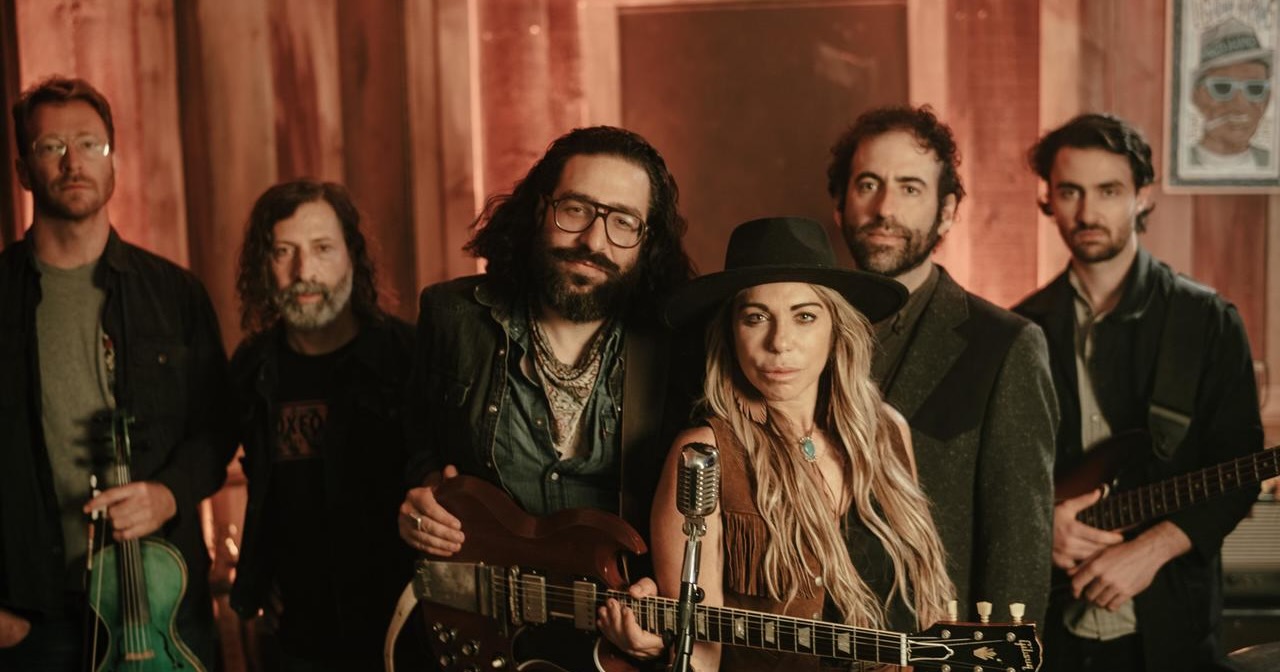
It’s been a decade since Doni Zasloff and Eric Lindberg became musical and life partners, melding her background in musical theater and singer-songwriter music together with his blues, jazz, and banjo-picking roots. Now, with a new double album, Beacons, their band Nefesh Mountain dives deep into the myriad ways music can serve as a light in dark times.

The album’s eighteen tracks across two discs convey not only a ferocious command of numerous roots styles, but also a level of compassion and empathy lacking from so much topical music.

“We’re always trying to … walk that high wire between trying to provide an escape … and not neglect[ing] what’s so clearly happening day by day to all of us, as we watch the news and look at our phones and feel this fear and anger and depression,” says Lindberg. The news, he adds, has become “this thing that we can’t run from.”

For many artists on the folk/roots continuum, this desire to comment on the state of the world might mean focusing entirely on our current political leadership. For Nefesh Mountain, though, it means relating with their audience on an even more personal level than usual.

“That’s really part of our job, I think, as artists right now,” Lindberg says.

This echoes a message of “revolutionary love” that many other artists have gotten behind, courtesy of author Valerie Karr.

“Wonder is where love begins,” Karr wrote in her 2020 memoir, See No Stranger: A Memoir and Manifesto of Revolutionary Love. “When we choose to wonder about people we don’t know, when we imagine their lives and listen for their stories, we begin to expand the circle of who we see as part of us.”

This notion is what inspired Ani DiFranco’s 2021 album Revolutionary Love and seems to be echoed on Beacons, with Nefesh Mountain’s determination to weave radical love into their approach to progressive bluegrass and Americana music. Indeed, Beacons seems to strive toward illuminating our common humanity.

Granted, this mission of “radical love” began with the name Lindberg and Zasloff chose for their band in the first place. “Nefesh” is a Hebrew word denoting life force, the sentience that pervades all living things. Radical love requires as much vulnerable expression as it does being open to the array of scary, emotional, dark trepidation so many people have in common. Among the topics Lindberg and Zasloff breach on Beacons: coming clean about a history of substance use, discussing the hard truths around their seven-year fertility journey, and their shared determination to maintain a sense of wonder in a world that can feel relentlessly staid. (“If we’re looking for some heaven, babe/ There’s some right here on the ground,” Lindberg sings in “Heaven Is Here.”)

The first disc of Beacons features a deft exploration of the group’s Americana tones. Though Lindberg and Zasloff are from the Northeast, their Nashville connections and twang-centric improv skills deliver a set of songs that could play just fine on say WSM, the radio home of the Grand Ole Opry.

The set begins with “Race to Run” – a radio-friendly country song about overthinking the struggles of the creative life (“I’m tired of trying to stay out in front/ But you remind me … it’s your own race to run”). “What Kind of World” is a rumination on a sense so many folks share these days, of powerlessness in the face of climate change. (“Is it just me? Can you feel it too?”) But, the song’s lyrics extend into geopolitics and the sense of divide that leaves so many feeling unstable.

Asked about the song’s vulnerable and rather personal honesty, Lindberg notes: “Remember, it was a year and a half ago when the fires from Canada kind of made their way down. We live in the New York area … so the line in the song is, ‘I saw the golden hour at 11 a.m./ They say it’s from the fires, it’s not us or them.’

“Now, a year later or so,” he adds, linking last year’s fire headlines with those of 2025, this time in California. “We had to sing this in Orange County a few weeks back while they were [still seeing smoke].”

As Lindberg’s proverbial camera pans out, the song considers the role of the average citizen in the face of such behemoth powers as climate and politics. “What’s it all for if we’re not all free,” the lyrics ask, shifting from fear about climate disasters to a purpose of climate justice. This ability to move from complaint to action item in a single verse, all couched in infectious twang, is what sets Nefesh Mountain apart from many others in the country space.

The Americana disc’s finest moment, however, is “Mother,” a song written by Lindberg that addresses so many of motherhood’s side effects. “I’ve lived many lives,” Zasloff sings. “…It’s all part of the job as a mother.”

Zasloff notes that her first two children – from a previous relationship – were practically grown when she and Lindberg began trying for a child of their own. What ensued was a seven-year fertility process that echoes what so many women encounter when they discover becoming pregnant is not always as easy as it seems.

“I burst out crying when [Eric] first shared [‘Mother’] with me,” she says, “because it was so personal and so empowering and beautiful for my husband to write that about me.”

In addition to the way the song tackles their infertility journey, it also reckons with Zasloff’s history with alcohol – something she chose to leave behind in order to become a mother. “I decided in that moment of having that song come into the world,” she says, “that I was wanting to talk about something personal that I had never talked about publicly, ever. Which is the fact that I am sober. I’m an alcoholic and I just celebrated 20 years of sobriety. And I actually became sober to become a mother. It’s part of my whole story.”

Livin’ with that drink, Lord,
Always left me wanting more
But I was saved
When I became a mother

After that high point, the group moves into the traditional “Keep Your Lamp Trimmed and Burning,” which Lindberg notes has long been a part of their live show. “We’d always mess with the arrangement,” he says. “I kind of just called it in the studio. We had a little bit of extra time. I didn’t know it was going to be on the album, but it’s one that the band knew when we were down in Nashville and we kind of arranged it on the fly.”

“We’re all New York guys and jazz players,” he adds. “So we wanted to lean into that a little bit and bring this real Americana spiritual into a different sonic space, really let improvisation take over, and help that add to the obviously beautiful meaning of the song.”

Nine tracks in, Beacons switches to bluegrass, bringing in giants of the form to round out the band. Of course, anytime Sam Bush, Jerry Douglas, Stuart Duncan, Rob McCoury, Cody Kilby, and Mark Schatz come together in any room, the sound is bound to slap. Toss in Lindberg, whose pre-Nefesh background is jazz improvisation, and something truly special crops up.

“Regrets in the Rearview” opens this second disc, feeling like a bluegrass answer to the Americana set’s opener, “Race to Run.” Its instrumental section sets a high bar for the rest of the collection, as the band hands around lead duties, featuring some of the finest bluegrass instrumentals in the biz.

But it’s “This Is Me,” coming in at bluegrass track number three, that delivers one of the double album’s finest moments. Capitalizing on the band’s commitment to building connections and “radical love,” “This Is Me” tells the bluegrass side’s most personal story.

“A question that’s been thrown at us for years now, and especially to Eric,” says Zasloff, “is: How did a Jewish kid from Brooklyn get into bluegrass? … He came to me and he said, ‘I think I wrote a response song so that people will stop asking me that question.”

“I was thinking about it,” Lindberg says. “How did I get into bluegrass? [“This Is Me” is] more about if we’re lucky enough to find that thing that really makes us come alive and makes our soul kind of catch fire –whether it’s writing a song … or painting or sculpture or any trade anyone does. If that’s the thing, then it doesn’t matter, geographically, where we’re from.

“I’m of the belief, nowadays especially, with what we’re trying to do in the roots world, [that it’s important to] try to break down all the barriers,” he continues. No matter where people are from, he adds, “there are people that find this music and go, ‘Wow, that is lighting me up!'”

With that, Lindberg hearkens back to the title of the album. That music might be a light in dark times is, of course, no new concept. (Consider “This Little Light of Mine.”) But the fact that the idea has been floated before doesn’t mean it’s not worth mentioning. At a time when so many folks feel powerless to the onslaught of news and information coursing through the internet and the real world alike, it can be easy to feel like none of us are enough to meet the moment. But Beacons is a reminder that there is no darkness without light.

“No one knows how we become who we are,” Lindberg says, before offering a word of advice. “Everyone just be yourself –regardless of the questions you get or the pain or the hate that you see. You’ve just got to stay true.”


Photo Credit: Kelin Verrette & Rafael Roy   

“Not Easy Shoes to Fill” – Russell Moore Gets the Gig of a Lifetime: Alison Krauss & Union Station

Russell Moore has been a professional musician and bandleader for 40 years and, though he wouldn’t describe himself as complacent, he does readily admit he generally knows what he can expect from that job.

“It’s almost like, ‘Okay, I know what this week is going to bring and what next week is going to bring,’” he shares over the phone. “It’s the same thing, even though you try to explore different opportunities … I never would have thought that at this point in my career that this opportunity would arise.”

Back in early December 2024, Alison Krauss & Union Station announced their first headline tour in nearly ten years and, with that announcement, that Moore himself would be joining the band. The bluegrass community responded with an outpouring of love for Moore, his talent, and his iconic, long-running bluegrass band IIIrd Tyme Out while marveling at how perfectly he and his voice would fit into one of the most prominent, best-loved, and best-selling string bands in music history.

Once fears of IIIrd Tyme Out being benched were totally allayed – the band has lasted 34 years so far and has no plans to curtail their efforts with Moore’s new gig – the ‘grass community set their sights on the next announcement from AKUS, which came in January: Arcadia, their first album since 2011’s Paper Airplane, will release March 28.

Arcadia will be the starting pistol for a breakneck six-month tour that will find Alison Krauss & Union Station (and their newest member, Moore) criss-crossing the continent to perform at some of the most notable venues and festivals in the scene. Many of which Moore will find himself checking off his bucket list for the very first time.

To mark the occasion, and as we anxiously count down the weeks to Arcadia and the Arcadia Tour, we sat down with Russell Moore to chat about his career, his plans for IIIrd Tyme Out, and how energized and excited he is by this once-in-a-lifetime chance. As he puts it, he has very big shoes to fill – but perhaps he is the only one concerned about having the chops to fill them.

You’ve been leading your own band for so long and you’ve been the person to “make the call” – hiring a sideman, or hiring someone to fill in, or finding a new band member. So how does it feel at this stage in your career to get this kind of call to join a band like Allison Krauss & Union Station? How does it feel to be on the receiving end for a change?

Russell Moore: What a blessing. It’s definitely the other side of the fence! For 34 years I’ve been running IIIrd Tyme Out and making the decisions or helping make the decisions. That’s a job in itself. You wear many different hats when you’re doing that.

The last time that I was in a situation like I’m going into with AKUS was back when I was with Doyle Lawson & Quicksilver. That was basically, “I’m the guy that plays guitar and I sing” and everything else was pretty much taken care of. Since then, up ‘til now with IIIrd Tyme Out, I’ve been heavily involved with all the decisions and making things happen, which like I said, it requires several different hats to wear day-in and day-out.

This is going back to that time, before IIIrd Tyme Out. And I’m excited about it. It really gives me the opportunity to focus totally on the music and my part in the band, rather than anything else that goes along with running a band. That’s exciting in itself. I will say, it’s going to take some getting used to, because I know that I’m going to be saying, “Oh, what can I do today to help this thing out?” That’s going to be a change of pace for me!

But I’m looking forward to it. Honestly, I’m looking forward to not having to worry about anything else other than my position in AKUS and just doing my job to the best of my ability and that’s it. That’s gonna be pretty cool. I guess you would say a little weight off of my shoulders.

You can set down the CEO hat and pick up the “being an instrumentalist and a vocalist and a technician” hat. Of course it’s got to feel exciting in some ways to get to step back into that role of being an equal part collaborator in a band instead of having to wear so many hats and having to be a lightning rod for everything.

RM: It is. It definitely is. I did experience just a little bit of this a few years ago. Jerry Douglas called and asked if I could go out for a few days with the Earls of Leicester, which I did and it was the same thing. I played mandolin and I sang my harmony parts with Shawn [Camp]. And I didn’t have to do anything else. That was all I had to do. For a few days there, I got to relieve myself of all the responsibilities of running a touring band on the road, and it was cool. I enjoyed it. I really did.

I’m not going to lie, I’m not saying that I don’t enjoy running a band, I’m not saying that whatsoever! But it was nice to step back for a few days and just be that. So I see this, for the six months between April and September, being sort of in the same picture. I wanna focus everything I can, all the time I’ve got, on playing the music, being in the position that I’m in, and doing the best I can. Just focusing on that. That’s going to be cool. I’m not going to have to worry about, “Did the bus get there on time? Is there something wrong with the bus?”

I know I’m not the only one who was super excited to hear this news and also thought immediately, “I never would have connected these dots myself, but who else has a better voice for that gig?” You think of Dan Tyminski, of Adam Steffey, the guys who have been singing vocals in this band, they have that sort of warm, honeyed, Mac Wiseman-like bluegrass voice – less of the high lonesome and piercing, even though you have the range and you can get up there, too.

So many people’s reaction to the announcement was that you have a voice that’s perfect for this gig and for what we all come to expect as the AKUS sound. Did you have that realization too? Did you think, “Oh yeah, this is perfect for my voice”? Or did you feel like, “I’m going to have to work at this.”

What was your general reaction, musically, to coming into this? Not just as a guitarist, but also as a vocalist – and then, I assume you’ll be playing some mandolin too, like you said you were doing with Earls of Leicester. So how are you approaching it musically?

RM: I will be playing a little bit of mandolin, not a whole lot, but my main gig I guess you’d say would be playing guitar and vocals – harmony vocals and some lead vocals as well. I’ll be honest with you, Justin, I was concerned about some of the harmony singing. That’s the biggest thing.

It’s really intricate.

RM: It is very intricate! It’s not in the same breath that I usually sing at. I tend to sing very full throated. For lack of a better term, it’s a male voice trying to sing very high. I do it in a robust way. I do have subtleties that I use as well, but this application of trying to blend with Alison’s voice is a different place to be, for me, for sure.

I do sing harmony and I have for years, here and there, but still my vocal technique has always been full throated and far more harsh, a male vocalist trying to sing very high. This is a different application. I tried to do that on all the songs that I’m going to be singing harmony on with Alison, it would be too abrasive. I’m learning how to make it work with my voice and her voice. That is a really nice combination, [you don’t want] me standing out because of my approach to the harmony.

Of course, I do have songs that I’ll be singing lead on. Those, I’m just back to my old self doing my thing. But when it comes to the harmony stuff, most of the time I’m having to really listen and focus on how to project my voice to make her sound as best as she can and not interfere.

Are you going to be singing lead on some of your own music with AKUS?

RM: No. There might be one song, and I’m not going to give away any of the stuff that she has planned for the set list, but there might be one song that people recognize from IIIrd Tyme Out during the performance. For the most part, this is Union Station. We’re not trying to bring in Russell Moore and IIIrd Tyme Out into the project whatsoever. We’re still around, we’re going to be performing when I’m not on the road with AKUS. There might be a small ode to IIIrd Tyme Out during the show, but it will be very small.

I’m not here to promote IIIrd Tyme Out with Alison Krauss. I’m here to promote Alison Krauss & Union Station and to be a part of that group and promote what this record release is and the stage show. I am a team player and I told them all, “You’ll never find anybody that’s more of a team player than I am, because I understand what that means.”

You’ve seen it on both sides. I’m glad you mentioned IIIrd Tyme Out continuing, because I think a lot of people’s natural reaction to the news was, “What about IIIrd Tyme Out!?” Of course IIIrd Tyme Out’s been going for so long, they’re gonna keep going.

RM: IIIrd Tyme Out is here to stay. When the conversations started about my being a part of Union Station going forward, I had a lot of questions. Can I do this? Should I do this? And that was one of them: “Will my band support me in this decision, or if I say yes, will they support me?”

[I consulted] my family, my wife, and everybody around me – it wasn’t a decision that was made quickly. I had to talk to people. Once I talked to my band members and I got their total support and thumbs-up affirmation – along with my wife, family, and friends – it was just like, “Okay, I have no reason not to do this. Everybody says I should and it’s a great opportunity.” At that point, I said yes.

Hopefully I can fulfill the position, because it’s not easy shoes to fill. I can tell you that right now I’m a huge Dan Tyminski fan. I have been since he came onto the scene way back – we’re talking Lonesome River Band days. He is so unique and his position with Union Station, until recently with his own band, that was the epitome of his career in my opinion.

Then, of course, he gets the head nod for Oh Brother, Where Art Thou? And the Stanley Brothers song, “Man of Constant Sorrow,” it’s still incorporated into his shows. I love the Stanley Brothers’ [version of the] song. I really do. But when I think about that song, I think about Dan Tyminski.

I guess the point is I’m a huge fan of Dan and his work. He is such an intricate part of what Union Station has been up to now. I think that those are big shoes to fill. I just hope I can facilitate that to everybody’s liking. I know there’s going to be some people that say, “No, it’s not Dan, it’s just not the same.” But I do want to say there are [many] eras of Union Station that were awesome, as well. You go back to when other people were in the group. Adam Steffey–

I’m partial to the Alison Brown era, too.

RM: Alison Brown! Oh, gosh, yes. Tim Stafford along that same time. I can’t say there’s been a bad ensemble for AKUS. It’s just evolved. And the fact that Dan was there for so long, that kind of solidifies that is the sound that most people – especially younger people who didn’t really start listening to AKUS until let’s say 20 years ago – are hearing. What they’re hearing is Dan Tyminski on guitar, singing harmony, and singing lead. That’s what they’re used to. That’s what they realize is AKUS music, and here’s this Texas guy coming in here trying to fill those shoes. I just hope I can satisfy everybody. I’ll do the best I can.

Alison Krauss & Union Station shot by Randee St. Nicholas with Russell Moore second from right.

It’s gotta feel exciting, especially after having done something like this your whole entire life, to have that sort of childlike wonder at it feeling so brand new and so fresh. Even after you have done literally exactly this for so long, there are still things that you’re excited to accomplish and new territory you’re excited to explore. That sounds really energizing and really positive.

RM: It is energizing. I’ll be honest, Justin, I’ve been playing music full time for a good 40 years. That’s awesome. And at this point, after 34 years of IIIrd Tyme Out – I’m not going to say I’ve become complacent, but it’s almost like, “Okay, I know what this week is going to bring and what next week is going to bring.” It’s the same thing, even though you try to explore different opportunities and things that come within that.

But this, I never would have thought that at this point in my career that this opportunity would arise and I’d get to do something like this. Because, like I said, I’m not so much complacent, but I know what’s ahead. When the phone call was made and we talked, I had no idea that I had another option, another fork in the road. This is absolutely surreal, in a lot of ways, for me to get this opportunity and without giving up IIIrd Tyme Out. All the support from everybody that I know, like I said, there was no reason to say no.

Another part of this that I’m really excited about [is being] able to experience some of these places, these venues, these shows that I’ve never been to before. Just being able to experience it – like playing Red Rocks Amphitheatre – and just so many places that I’ve always wanted to go to and perform at. I’m going to get to do that!

Checking them off the bucket list.

RM: There you go. It wouldn’t be possible, I don’t believe, with IIIrd Tyme Out. I was always exploring new opportunities and things like that, but I don’t think it would have been possible to perform at some of these places without being a part of AKUS.

To me, “Looks Like the End of the Road,” the first single from the upcoming album, feels like classic AKUS. The So Long, So Wrong era is what it reminded me of first. You still have those tinges of adult contemporary, you have the pads and the synth-y sound bed underneath it, and it almost feels transatlantic a bit here and there. Overall, it sounds like classic, iconic Allison Krauss & Union Station. What are your thoughts or feelings on the single or what can you tell us about that first track?

RM: I think that the song is a great representation of what is coming out with the full album release, Arcadia. It is a great nod to Alison Krauss & Union Station music over the last several years and the last several recordings.

I think that the song itself is just well written and perfect for Alison to sing. There’s a small part of harmony vocals – and what I love about the way she constructs her arrangements is that it’s not overdone with harmonies. This is Alison Krauss & Union Station, it’s not just Union Station. So the focus is on Alison and her vocals. In my opinion, that’s the way it should be. This song doesn’t come out from the get go with a five-string banjo just blasting off. It’s a great construction of the arrangement and the vocals.I think it was perfect.

The only thing that people have said is that the title itself made them think that this was the end of Allison Krauss & Union Station! Which is so far detached from the truth. It was just the first single that was released. It’s a beautifully constructed song.
I will say, this song is just a piece of the puzzle to the rest of the recording. It just paints a beautiful picture and a wonderful listening experience. When people get to hear the full album, they’ll understand what I’m talking about. It’s just awesome. It’s just, it’s a piece of the puzzle.

You’re going to be blown away. Absolutely blown away, as I was. I had my headphones on. I can’t tell you how many nights before I’d go to sleep, I’d have my headphones on [listening]. I listened to it two, three times a night, just because it was so enjoyable. It was just that good. I know that everybody else is gonna feel the same way when they hear the whole project.


Photo Credit: Matt Morrison

BGS 5+5: Max Wareham

Artist: Max Wareham
Hometown: Middletown, Connecticut
Latest Album: DAGGOMIT! (releasing February 21)
Personal Nicknames or Rejected Band Names: The Bluegrass Pagans, The Bluegrass Feds, The Bluegrass Paranormal Investigators, The Bluegrass Rats

Which artist has influenced you the most – and how?

I play in Peter Rowan’s Bluegrass Band – he’s been a pretty big influence on me. His spirit as an artist burns strong; he has a vision that isn’t restricted by parameters of tradition or genre and he has an incredible way of singing and playing from the heart. Who else has played in a band with both Bill Monroe and Jerry Garcia? I was honored to have him produce my album, DAGGOMIT!. He’s also a distant cousin of mine.

What other art forms – literature, film, dance, painting, etc. – inform your music?

I like to write and practice photography, especially film. The great French photographer Eugene Atget is a huge inspiration to me. His photographs have profound harmony in them – every proportion is perfect and the simplest lines can be so expressive. To me, it’s very musical. I also love the German author W.G. Sebald. His writing often explores themes of decay and loss through a gauzy lens of nostalgia, not unlike bluegrass music.

What’s the most difficult creative transformation you’ve ever undertaken?

I’ve worn lots of different musical hats, so I generally don’t find it difficult to transform creatively. While bluegrass and the banjo are my primary focus, I played electric bass for years in psych-pop band, Sun Parade, and studied jazz guitar performance at school. I write and record some non-bluegrass songs under the name Sir Orfeo and was in the chamber-pop studio band Cousin Moon – to me, it’s all music.

If you didn’t work in music, what would you do instead?

I’d probably work in archaeology. I quit music for a short while and worked on an archaeological dig in eastern Tennessee, excavating a 16th century Cherokee settlement. There’s something I love about digging, whether that’s literal or uncovering the history of forgotten banjo players.

I crewed for a hot air balloon pilot for a while, too, but that’s a tough gig.

Since food and music go so well together, what is your dream pairing of a meal and a musician?

Well, I did once find myself grilling a steak in a parking lot behind a venue with Dobro legend Jerry Douglas. I thought his company and the steak were a perfect pairing. He was wearing denim and the steak was medium-rare.


Photo Credit: Sasha Pedro

You Gotta Hear This: New Music From Cristina Vane, Shelby Means, and More

Now, our premiere roundup is pretty stellar each and every week – if we do say so ourselves – but this week feels especially excellent!

Below, you’ll find a slew of bluegrass song and video premieres. First, check out “Paris” by Aaron Burdett (a longtime rootsy singer-songwriter and recent addition to the Steep Canyon Rangers), who took an offhand comment about one of the world’s most-visited cities and turned it into a song. Greensboro, North Carolina, string duo Chatham Rabbits bring a track from their brand new album, Be Real With Me, which released today; it’s called “One Little Orange.”

Multi-instrumentalist and singer Jesse Smathers – who you may know from the Lonesome River Band – releases his solo debut today, as well. It’s his version of “Sleepy Eyed John” that draws inspiration from his friend, banjo player Gene Parker. Plus, Grammy Award winner and in-demand bluegrass bassist Shelby Means is also stepping into the spotlight with her first-ever solo music, “Streets of Boulder,” a burning heartbreak track which features her Golden Highway bandmates Molly Tuttle, Kyle Tuttle, Bronwyn Keith-Hynes, and even more names you’ll recognize.

In a similar sonic space, Cristina Vane previews the title track for her upcoming album, Hear My Call, with an official video for the song. It’s an old-timey number built around clawhammer banjo with a tinge of blues and a dash of Americana – and it also features the inimitable Molly Tuttle. Folk duo Edie Carey & Sarah Sample can be found below as well, returning to their late 2024 release, Lantern in the Dark: Songs of Comfort and Lullabies, with a new video for its title track, “Lantern.”

To round us out, just in time for Valentine’s Day Hudson Mueller shines on his new track, “Love Is Love,” which celebrates love in all its forms and no matter who may be its recipient or subject. And Jeremy Dion has a bit of adoring tunnel vision on “All I See Is You,” a song with a video that celebrates all of the love and loved ones in his life.

It’s a full slate of impeccable roots songs and videos! You know what we think… You Gotta Hear This.

Aaron Burdett, “Paris”

Artist: Aaron Burdett
Hometown: Saluda, North Carolina
Song: “Paris”
Release Date: February 14, 2025
Label: Organic Records

In Their Words: “I like shiny things, new things. I always think that new thing is going to make something different. It does, but just for a few moments, and then I’m the same and everything around me is the same. There wasn’t any real change, I only distracted myself briefly. ‘Paris’ is a song about yearning, looking outside of oneself, and hoping there’s more out there in some exotic place. It might be the next town down the road or the big city two states over, or maybe even somewhere across the mountains and an ocean. I hear a longing in this song now, but I also hear hope. My bandmate Barrett said ‘I’ve got a feeling about Paris’ a couple years ago during a soundcheck at the Bijou Theater in Knoxville, and when I heard that, I did what I do and I wrote it down. That line grew into this tune.” – Aaron Burdett

Track Credits:
Aaron Burdett – Vocals, acoustic guitar
Kristin Scott Benson – Banjo
Carley Arrowood – Fiddle
Tristan Scroggins – Mandolin
Jon Weisberger – Upright bass


Edie Carey & Sarah Sample, “Lantern”

Artist: Edie Carey & Sarah Sample
Hometown: Colorado Springs, Colorado (Edie) and Sheridan, Wyoming (Sarah)
Song: “Lantern”
Album: Lantern in the Dark: Songs of Comfort and Lullabies
Release Date: October 18, 2024 (album); February 14, 2025 (video)
Label: Groundloop Records

In Their Words: “Written by our friends and Nashville songwriters Dustin Christensen and Jill Andrews, ‘Lantern’ was a song that Sarah brought to the table. Sarah and Dustin are longtime friends from the Salt Lake music scene and he played a major role as a musician and harmony arranger on our first album in 2014. We both fell in love with the melody, the message, and the harmony possibilities for this tune. It’s a song that says, ‘I’ve got you, no matter what.’ The ascending bridge sounds like someone stepping out of wreckage after a disaster, blinking their way back into the light: ‘Shadows falling / Sirens calling / I’ll be holding on to you.’ We didn’t originally intend for the album title to come from this song, but it was the perfect symbol for what we wanted this record to be: a light in the dark for when you’re feeling lost; a beacon to guide you back to the familiar and remind you that you’re never alone along the way.” – Edie Carey & Sarah Sample

Track Credits:
Edie Carey – Vocals, baritone acoustic
Sarah Sample – Vocals, acoustic
Dustin Christensen – Acoustic
Maren Gayle – Keys

Video Credits: Directed by Rachel DeWeber.


Chatham Rabbits, “One Little Orange”

Artist: Chatham Rabbits
Hometown: Greensboro, North Carolina
Song: “One Little Orange”
Album: Be Real With Me
Release Date: February 14, 2025

In Their Words: “My maternal grandfather Ronald holds a mythic place in my mind. He died from years of drug and alcohol abuse when I was just a kid. I only have one memory of him and it’s what I wrote the song about. I think it’s only natural to want to know more about your blood relatives as you get older. My genetics and personality are tied to those that came before me and I want to know as much about them as possible. My grandfather is no different. This is a song about trusting the limited memory you have, accepting that you’ll have to live from stories instead of the real thing, and recognizing that people can be both troubled and full of life.” – Sarah McCombie


Jeremy Dion, “All I See Is You”

Artist: Jeremy Dion
Hometown: Boulder, Colorado
Song: “All I See Is You”
Album: Bend in the Middle
Release Date: October 18, 2024 (album); February 14, 2025 (video)

In Their Words: “This is my favorite video to make so far and it welcomes the viewer all the way into my personal life. Since ‘All I See is You’ is a love song, I wanted to provide an unvarnished view of my own current experiences of love. Viewers will see some beautiful shots of nature juxtaposed with recently captured images of my home, my daughter, my husband, my dog, and some of my closest friends. It gives me warm fuzzies every time I see it and I hope it has the same effect on everyone.” – Jeremy Dion

Track Credits:
Jeremy Dion – Guitar, lead vocals
Kate Farmer – Backing vocals
Christian Teele – Percussion
Bradley Morse – Bass
Kyle Donovan – Guitars
John McVey – Guitars
Enion Pelta-Tiller – Fiddle

Video Credits: Shot and produced by Daniel Herman, Mineral Sound.


Shelby Means, “Streets of Boulder” (Featuring Molly Tuttle, Kyle Tuttle)

Artist: Shelby Means
Hometown: Folly Beach, South Carolina
Song: “Streets of Boulder” (Featuring Molly Tuttle, Kyle Tuttle)
Release Date: February 14, 2025

In Their Words: “I wrote this song in college. It was my first attempt to write a heartbreak song and it became the first original song I performed in a band. In 2008, I was asked by my professor of world music to assemble a bluegrass band to represent the United States at an International Folk Music contest in Nitra, Slovakia. I formed High Altitude Bluegrass band and taught them ‘Streets of Boulder.’ Courtney Hartman, Sterling Masat, Reid Buckley, and my brother, Jacob Means, played in that band and helped create the instrumental line that is repeated throughout the song.

“I really wanted Jacob to play mandolin on this recording and he did a great job in the studio with Jerry Douglas, Bryan Sutton, Ron Block, and Bronwyn Keith-Hynes. I invited Molly Tuttle and Kyle Tuttle to sing harmonies with me and we spent one afternoon in a hotel room with Ethan Standard, our front-of-house engineer, recording the harmony vocals. That room sounded pretty darn good! After a few years of touring together we have developed a unique vocal blend and I think it suits this song perfectly. ‘Streets of Boulder’ has been performed live a handful of times with Molly Tuttle & Golden Highway over the 2024 Down the Rabbit Hole tour.” – Shelby Means

Track Credits:
Shelby Means – Lead vocal, bass, songwriter
Bryan Sutton – Guitar
Jacob Means – Mandolin
Ron Block – Banjo
Bronwyn Keith-Hynes – Fiddle
Jerry Douglas – Dobro
Molly Tuttle – Harmony vocals
Kyle Tuttle – Harmony vocals


Hudson Mueller, “Love is Love”

Artist: Hudson Mueller
Hometown: Houston, Texas
Song: “Love is Love”
Album: Welcome to Earth
Release Date: February 14, 2025 (single); March 28, 2025 (album)

In Their Words: “This is a love song – but not just about the romantic kind we typically celebrate on Valentine’s Day. It’s about radical inclusivity. We each get to define love for ourselves and decide who it applies to. Love can extend to neighbors, friends, and even those who may not look, think, or believe as we do. This song was inspired by my friends Bird and Carsten. We were lucky enough to attend two of their three wedding celebrations (parties) in New York and Germany. Each was a beautiful tribute to the bond between two incredible souls who just happened to share the same gender. Initially, the song leaned more into its LGBTQ+ theme, with a verse about Carl and Steve, Joan and Janet. But in the end, that felt a little too on the nose. Still, the sentiment remains: ‘Find the place where your love ends and then extend love just a little bit more.'” – Hudson Mueller


Jesse Smathers, “Sleepy Eyed John”

Artist: Jesse Smathers
Hometown: Floyd, Virginia
Song: “Sleepy Eyed John”
Release Date: February 14, 2025
Label: Mountain Home Music Company

In Their Words: “My friend Gene Parker, the legendary banjo player of Lost & Found legacy, inspired my version of ‘Sleepy Eyed John.’ Originally written by Kentucky fiddler Tex Atchison and made a hit by country singer Johnny Horton, I wanted to give this fun, bouncy number a suitable mountainous string band flavor. I hope you enjoy listening to it, as much as I did picking and singing it!” – Jesse Smathers

Track Credits:
Jesse Smathers – Guitar, lead vocal
Hunter Berry – Fiddle
Corbin Hayslett – Banjo
Nick Goad – Mandolin, harmony vocal
Joe Hannabach – Upright bass
Patrick Robertson – Harmony vocal
Dale Perry – Harmony vocal


Cristina Vane, “Hear My Call”

Artist: Cristina Vane
Hometown: Nashville, Tennessee
Song: “Hear My Call”
Album: Hear My Call
Release Date: February 21, 2025

In Their Words: “‘Hear My Call’ was written on tour and is the title of my album as well, because I feel that it reflects this refocused sense of purpose and intention I was channeling both in my life and in the writing of this record. It’s an assertion, a shift from my constant role of observer to someone with something to say herself. Molly Tuttle sings and plays guitar on the track and she lends such a stunning flair to it, I’m so grateful for her mastery!” – Cristina Vane


Photo Credit: Cristina Vane by Stacie Huckeba; Shelby Means by Hunter McRae; 

Alison Krauss & Union Station Announce ‘Arcadia,’ Their First Album in 14 Years

A few short weeks ago, Alison Krauss & Union Station made roots music waves announcing their first headlining tour since 2015, featuring dozens of dates stretching from April ’til September of this year. Now, the 14-time GRAMMY-winning bluegrass band is announcing their first album in 14 years, Arcadia, set for release on March 28 on Down The Road Records. This marks the return of Krauss & Union Station to collaborating with Rounder Records founders Ken Irwin, Marian Leighton Levy, Bill Nowlin, and John Virant, who recently began Down The Road Records. Decades ago, Irwin first signed the fiddle phenom when she was still a teenager.

With the album’s announcement, the band have released Arcadia‘s first single, “Looks Like the End of the Road,” a song written by Jeremy Lister that hearkens back to the emotive slow burns of classic AKUS albums like 1997’s So Long, So Wrong. (Listen above.) Gritty Dobro, by none other than Jerry Douglas of course, and pining mandolin tremolos are underpinned by sweeping pads and transatlantic textures. It all at once sounds like idiomatic Union Station while clearly signaling their transition from a former era to a newly minted one. “Looks Like the End of the Road” is an apropos beginning for this world-renowned group starting down a new highway.

“Usually, I find something that’s a first song, and then things fall into place,” says Krauss via press release. “That song was ‘Looks Like the End of the Road.’ Jeremy Lister wrote it, and it just felt so alive – and as always, I could hear the guys already playing it.”

“The guys,” at this juncture, include longtime band members Douglas, Ron Block, Barry Bales, and a new addition, Russell Moore, a 6-time winner of the IBMA Male Vocalist of the Year Award and a veteran frontman of bluegrass mainstays IIIrd Tyme Out.

“To say I’m excited about recording and touring with Alison Krauss & Union Station would be a huge understatement,” Moore gushed in the band’s December 2024 tour announcement. “After 40 years of playing music full-time and leading my own group for 34 years, this opportunity is among the few things at the top of the list that my music career has offered me. My hopes and desires are to fill this spot in AKUS with the same professionalism, precision, and thoughtfulness as other members who have held this position before me, and I’m looking forward to the ‘ride!'”

Tickets for the gargantuan Arcadia tour – which will feature special guest Willie Watson – are already on sale. Anticipation for the first studio album in 14 years from one of the most prominent and impactful bluegrass groups in history is remarkably high. Yet again, with Arcadia, Alison Krauss & Union Station are poised to bring their singular blend of bluegrass, Americana, adult contemporary, and stellar song interpretations to millions of fans and listeners around the world.


Want more? Listen to our exclusive Toy Heart interview with Alison Krauss here.

Photo Credit: Randee St. Nicholas

Basic Folk Joins BGS Podcast Network as Official BGS Production

BGS is pleased to announce a new partnership with its signature podcast, Basic Folk, which is now an official BGS production! Hosted by Cindy Howes & lizzie no, Basic Folk had been previously distributed on the BGS Podcast Network since 2021, but now officially becomes part of our brand’s stable of first-rate, original shows. We’re excited to continue to invest in this superlative folk podcast with creative visuals, more live appearances, and our commitment to fresh and envelope-pushing editorial content front-and-center. This announcement follows the recent debut of Basic Folk’s brand new logo (designed by Belhum) and theme song (composed and performed by Dietrich Strause), which both festively mark this new era of collaboration.

LISTEN: APPLE • SPOTIFY • AMAZON • MP3

“BGS is one of the coolest media platforms in any musical space,” the hosts share via press release. “As the landscape of podcasting, social media, and roots music evolves at hyperspeed, we are stoked to be docked on ‘The International Space Station’ known as BGS. Our evolution is tied in with theirs. Cheers to another year of telling folk stories and making queer mischief on Basic Folk.”

2025 is already destined to be big for Basic Folk. The show and its hosts will be back onboard Cayamo’s signature roots music cruise, Journey Through Song – and with even more live events to come throughout the year. Already we have brand new interviews with the legendary Dobro player Jerry Douglas and visceral folk-artist Lutalo on the docket for January. Later this winter, Basic Folk will reach the momentous mile marker of their 300th episode.

“The spirit and mission of BGS are completely in line with Basic Folk,” Howes says. “It’s an honor to create this platform alongside BGS to dig deep into artists’ perspectives of the human condition. It only makes sense for Basic Folk to do the work of dignifying folk musicians in collaboration with one of the most rad music orgs operating today.”

Since 2018, Basic Folk has uplifted under-the-radar roots musicians by providing a platform that they might not otherwise have, alongside interviews from GRAMMY-winning guitar gods like Molly Tuttle, or Haitian American folk legends like Leyla McCalla, or deep feelers like legendary songwriter John Hiatt. The show is dedicated to showcasing the best in folk, bluegrass, acoustic, and Americana while including Black, Brown, and queer folx who have been excluded from the folk world or felt like they did not belong.

Cindy & lizzie each bring unique perspectives to their honest conversations with folk professionals. Basic Folk is equally dedicated to repainting the broad landscape of folk music as we are to tearing down the ivory towers of the music industry. BGS is proud to welcome the show into our family of programs.


Find out more and subscribe to Basic Folk here.

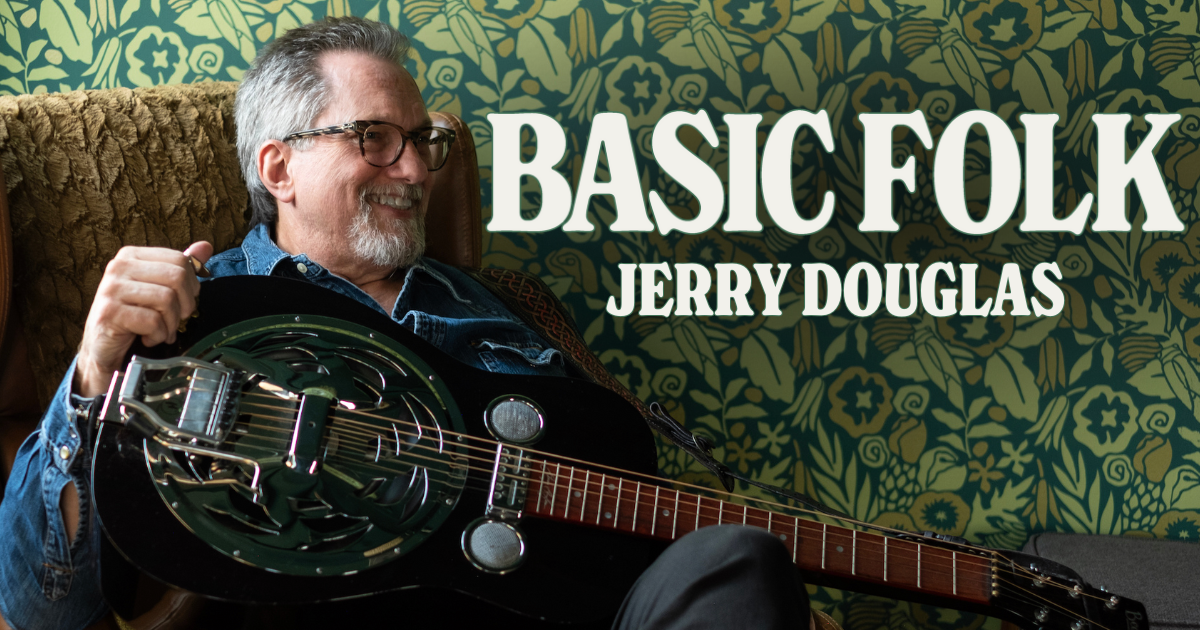
Basic Folk: Jerry Douglas

Jerry Douglas is widely regarded as the best Dobro player in the world. Alison Krauss, Emmylou Harris, and James Taylor are counted among his many collaborators and his four-decade career has earned him 16 GRAMMY Awards and numerous other accolades. In our Basic Folk conversation, he shares stories about his upbringing in Warren, Ohio, where his father’s steel mill job and love for music instilled in him a strong work ethic and a passion for playing. He also talks about getting scouted as a teenager by The Country Gentlemen, one of the greatest bluegrass bands ever, who eventually took young Jerry on tour.

LISTEN: APPLE • SPOTIFY • AMAZON • MP3

In addition, we discuss Douglas’ latest album, The Set, which showcases his mastery of the resophonic guitar and features a unique blend of bluegrass, country, and Americana sounds. He also opens up about his experiences working with Molly Tuttle, John Hiatt, and other notable musicians, highlighting the importance of collaboration and creative freedom. Our chat offers a glimpse into Jerry Douglas’ life, influences, and artistic approach through his humility, humor, and dedication to his craft.


Photo Credit: Scott Simontacchi

What’s the Magical Chemistry Behind Twisted Pine? It’s ‘Love Your Mind’

Love Your Mind, the new album from Boston/Toronto-based band Twisted Pine, is a delicious exploration of joy, growth, and self-love, packaged into tight grooves and soulful vocals. The quartet – which features Dan Bui, Kathleen Parks, Anh Phung, and Chris Sartori – is beloved for its genre-bending approach to acoustic music; they continue to defy expectations with their mandolin, fiddle, flute, and bass instrumentation.

What I noticed most about this new record, besides its refreshing positivity (in this economy?!), was the seamlessly collaborative sound. In discussing this in a BGS interview with the entire band, they explained that they’ve taken these past years to hone their collective voice as a group. With this new album, they felt that they had found that voice.

Together, we all agreed that the name “Twisted Mind(s)” might be more appropriate for the band at this point. Below is our conversation, where we cover Love Your Mind and the joy within it, the inspirations found in jamming, how flute fits in at bluegrass festivals, and so much more.

I love the amount of joy and uplift that comes through this album; it’s rare among Americana albums in this day and age. Is that feeling something that the band gravitates to organically? Or was it a choice you made specifically about this project?

Kathleen Parks: I think that happened pretty organically. Some of the songs started coming out of the post-COVID era. “After Midnight,” for example, was written after the first Ossipee [Valley Music] Festival in person after the pandemic and I tried to capture the joyful feeling of being around each other again. … Some of the album started in that appreciative state.

Dan Bui: I would add that throughout the album some subjects are a little bit more somber – there’s a theme of personal growth and learning through hardship and dealing with things like anxiety, making mistakes, and learning from them – but it’s always viewed through a positive lens, and musically, certainly, it is more of an upbeat fun vibe. That’s what we try to put out into the world and bring to our shows in general.

I love that song, “After Midnight (Nothing Good Happens).” Can you tell me more about that one?

KP: I was deciding not to party one night and [was] walking to my tent … listening to the roar of fiddle tunes and good times being had. I was like, “Oh my god that sounds so fun, but I also have two sets to play tomorrow.” My dad used to say that title phrase to me as a kid. He was also a musician who toured a lot so I always thought, “Cool people stay up super late.” My dad was like, “No, nothing good happens after midnight.”

Your fans have been starving for a new Twisted Pine record. What have you all been working on in the four years since your last release?

DB: Releasing our last record [Right Now] in 2020 was a huge challenge. We had to pivot and we weren’t able to do what we wanted to do, performance-wise, for a couple of years. So by the time we were able to get out there, we kind of went “all in” on touring and working on our live show. Before the pandemic, we had only really been playing with Anh for a short time, about six months. Since she lives in Canada, it was impossible to get together in person for a very long time.

Chris Sartori: Even getting into the studio with Anh for Right Now, it felt like we were just starting to figure out how that might work. These past couple of years have been really about ironing out the sound we had envisioned as a quartet and getting it to a place where we could write for that sound.

Anh Phung: It felt like with the 2020 record I was injected into a band that already existed, but Love Your Mind came from a place of more foundational collaboration. I was truly a part of the band before we got in there and recorded.

KP: I also feel like on this new album we had more time to discuss, “How do we want this song to sound?” We brought in players like Ethan Robbins, Ali McGuirk – just because we could. We had time and space and we weren’t being rushed into anything.

I also wanted to ask you about the “A Beautiful Phase (90’s Song).” Is it a ’90s song to you? Or is it just referencing nostalgia for the ’90s as “a beautiful phase”?

KP: For some reason, it ended up in the voice memos with that title. For me sonically, it very much has a “Bitter Sweet Symphony” vibe and I always see chrome when I sing it – that really, really specific blue chrome color, which I remember as a child.

Yes! I had that nail polish!

KP: Yep. It’s kind of looking back on a younger self, talking to a younger self. … For me, it’s about the missed opportunities with being a musician. You miss a lot of time with your family or family events [and] the song is almost apologizing for that.

DB: That song was one of the more collaborative ones. We had these early writing sessions at Kathleen’s where we got together and just jammed to see what came out. … There was this one section that turned into the chorus of that song. At one point, Chris and I were sitting around and decided, “Let’s just build this around this moody section.” We worked with that and kind of introduced a verse and this idea of having it modulate to a bunch of different keys. We roughed out a structure and that was what the lyrics were written over. When we went into the studio it was fresh – a lot of choices were happening in real time. It was cool to have it just come together like that.

Do you write a lot from jamming?

KP: It is a mix of jamming and melodic ideas. The final product is usually the outcome of playing the song down with a lot of different grooves and ideas, seeing what fits, and what we can pull off.

DB: One example is “Green Flash.” Kathleen was playing this 12-string electric guitar and this melodic idea kind of popped out and we decided to make something out of that sound.

That song also features Jerry Douglas. How did that happen?

KP: We had seen him at Earl Scruggs Music Festival and he said, “If there’s any way I can help, just let me know…” So, when that song started coming together, we were like, “We should ask Jerry to be on this!” In the studio we made this video asking if he would play on this song and sent it to him – and he said sure!

AP: Jerry has the exact style for it. I feel like the tune has the vibe of Strength In Numbers, so he fits perfectly.

OK, this question is specifically for Anh: What has your experience been like being the “flutist at the bluegrass festival?”

AP: Honestly, by the time I was playing with Twisted Pine, it was a pretty soft landing, because a lot of the work building my credibility in the scene came before that. Even going to IBMA, I was expecting a lot of pushback, but it has been pretty shocking how welcoming people have been. I think the initial expectation was pretty low. People were skeptical of how I, playing a flute, would work within this band, so when they hear it and it’s going well, it has even more of an effect!

Can you tell me about the actual recording of the album?

DB: I think a big part of the sound of the record should be credited to our co-producer, Dan Cardinal. We have worked with Dan on every record that we’ve done and he’s just someone who understands what we’re going for. He does a great job at capturing the organic sound of our instruments, but is also very creative and able to augment the sounds of our band … subtly and sometimes not so subtly. His choices make the recording sound a little bit bigger, wider and deeper. He was really valuable in that way. A lot of the songs were new, still being worked out, and he had some great third party observations.

KP: He’s good at placing sounds so that you feel them, but you’re not suddenly met with this random out-of-place soundscape in an otherwise acoustic recording.

That’s something I loved about the record. Even though you’re genre-bending, the sound is still so acoustic, where I imagine it would have been easy to add drums and synths, etc. Were there specific records you were referencing for production?

CS: I think each track has its own inspiration. Like “Start/Stop” is very Motown, “Chanel Perfume” is going more for an Aretha “Rock Steady” thing; each track we approached as kind of its own world.

Okay, last question, what does the title, Love Your Mind, mean to you?

CS: That sort of reared its head after we were finished recording and [after] looking back at what themes had emerged. We kind of identified that as a common thread that ties the record together, even though sonically it goes in all of these directions.

KP: For me, it means that whatever state you’re in – dark or frantic – you have to just try to look at yourself from someone else’s point of view and love yourself completely through all the stages.

AP: This is kind of riffing on a different idea, but I also think of Love Your Mind as – it’s common knowledge that our band has been hard to identify genre-wise, and I think that even though this album has a mixture of genres the sound that came out of this album is kind of unified in the way that the four of us play together. Twisted Pine is the four of our minds together, so the magical chemistry is loving our minds.


(Editor’s Note: Want more Twisted Pine? Check out our Basic Folk episode on the group featuring an exclusive interview with fiddler Kathleen Parks. Listen and subscribe here.)

Photo Credit: Jo Chattman

See the Winners of the 35th Annual IBMA Bluegrass Music Awards

Last night, the International Bluegrass Music Association announced the winners of their 35th Annual Bluegrass Music Awards in Raleigh, North Carolina, the final awards show held in Raleigh before IBMA’s move to Chattanooga, Tennessee next year. The star-studded, three-hour awards show was hosted by bassists John Cowan and Missy Raines and featured performances by many nominees and featured special guests and collaborations.

Billy Strings, Sister Sadie, Authentic Unlimited, and Molly Tuttle & Golden Highway lead the nominations going into the evening. Authentic Unlimited walked away with the most trophies, with the group as a whole landing three awards – including a tie for Music Video of the Year with Special Consensus. Molly Tuttle & Golden Highway took home the honor for Album of the Year, while Billy Strings’ sole win of the night was for his feature on Tony Trischka’s collaborative Earl Jam track, “Brown’s Ferry Blues.”

Also honored during the event were this year’s Bluegrass Music Hall of Fame inductees. Entered into the Hall of Fame – the highest honor awarded by IBMA and its membership – were Jerry Douglas, Katy Daley, and Alan Munde.

Find the full list of winners and recipients of this year’s IBMA Awards below. Congratulations to all of the nominees, bands, artists, labels, and industry stakeholders represented at this year’s awards.

ENTERTAINER OF THE YEAR
Billy Strings
Molly Tuttle & Golden Highway
Del McCoury Band
Sister Sadie
The Po’ Ramblin’ Boys

VOCAL GROUP OF THE YEAR
Authentic Unlimited
Sister Sadie
Blue Highway
Del McCoury Band
Molly Tuttle & Golden Highway

INSTRUMENTAL GROUP OF THE YEAR
Billy Strings
Michael Cleveland & Flamekeeper
Travelin’ McCourys
East Nash Grass
Molly Tuttle & Golden Highway

SONG OF THE YEAR
“Fall in Tennessee” – Authentic Unlimited
Songwriters: John Meador/Bob Minner
Producer: Authentic Unlimited
Label: Billy Blue Records

“Willow” – Sister Sadie
Songwriter: Ashley McBryde
Producer: Sister Sadie
Label: Mountain Home

“Too Lonely, Way Too Long” – Rick Faris with Del McCoury
Songwriter: Rick Faris
Producer: Stephen Mougin
Label: Dark Shadow Recording

“Forever Young” – Daniel Grindstaff with Paul Brewster & Dolly Parton
Songwriters: Jim Cregan/Kevin Savigar/Bob Dylan/Rod Stewart
Producer: Daniel Grindstaff
Label: Bonfire Music Group

“Kentucky Gold” – Dale Ann Bradley with Sam Bush
Songwriters: Wayne Carson/Ronnie Reno
Producer: Dale Ann Bradley
Label: Pinecastle

ALBUM OF THE YEAR
City of Gold – Molly Tuttle & Golden Highway
Producers: Jerry Douglas/Molly Tuttle
Label: Nonesuch

Last Chance to Win – East Nash Grass
Producer: East Nash Grass
Label: Mountain Fever

Jubilation – Appalachian Road Show
Producer: Appalachian Road Show
Label: Billy Blue Records

No Fear – Sister Sadie
Producer: Sister Sadie
Label: Mountain Home

So Much for Forever – Authentic Unlimited
Producer: Authentic Unlimited
Label: Billy Blue Records

GOSPEL RECORDING OF THE YEAR
“When I Get There” – Russell Moore & IIIrd Tyme Out
Songwriter: Michael Feagan
Producer: Russell Moore & IIIrd Tyme Out
Label: Independent

“Thank You Lord for Grace” – Authentic Unlimited
Songwriter: Jerry Cole
Producer: Authentic Unlimited
Label: Billy Blue Records

“Just Beyond” – Barry Abernathy with John Meador, Tim Raybon, Bradley Walker
Songwriters: Rick Lang/Mike Richards/Windi Robinson
Producer: Jerry Salley
Label: Billy Blue Records

“God Already Has” – Dale Ann Bradley
Songwriter: Mark “Brink” Brinkman/David Stewart
Producer: Dale Ann Bradley
Label: Pinecastle

“Memories of Home” – Authentic Unlimited
Songwriter: Jerry Cole
Producer: Authentic Unlimited
Label: Billy Blue Records

INSTRUMENTAL RECORDING OF THE YEAR
“Rhapsody in Blue(grass)” – Béla Fleck
Songwriter: George Gershwin arr. Ferde Grofé/Béla Fleck
Producer: Béla Fleck
Label: Béla Fleck Productions/Thirty Tigers

“Knee Deep in Bluegrass” – Ashby Frank
Songwriter: Terry Baucom
Producer: Ashby Frank
Label: Mountain Home

“Panhandle Country” – Missy Raines & Allegheny
Songwriter: Bill Monroe
Producer: Alison Brown
Label: Compass Records

“Lloyd’s of Lubbock” – Alan Munde
Songwriter: Alan Munde
Producer: Billy Bright
Label: Patuxent

“Behind the 8 Ball” – Andy Leftwich
Songwriter: Andy Leftwich
Producer: Andy Leftwich
Label: Mountain Home

NEW ARTIST OF THE YEAR
East Nash Grass
Bronwyn Keith-Hynes
AJ Lee & Blue Summit
Wyatt Ellis
The Kody Norris Show

COLLABORATIVE RECORDING OF THE YEAR
“Brown’s Ferry Blues” – Tony Trischka featuring Billy Strings
Songwriters: Alton Delmore/Rabon Delmore
Producer: Béla Fleck
Label: Down the Road

“Fall in Tennessee” – Authentic Unlimited with Jerry Douglas
Songwriters: John Meador/Bob Minner
Producer: Authentic Unlimited
Label: Billy Blue Records

“Forever Young” – Daniel Grindstaff with Paul Brewster, Dolly Parton
Songwriters: Jim Cregan/Kevin Savigar/Bob Dylan/Rod Stewart
Producer: Daniel Grindstaff
Label: Bonfire Music Group

“Bluegrass Radio” – Alison Brown and Steve Martin
Songwriters: Steve Martin/Alison Brown
Producers: Alison Brown/Garry West
Label: Compass Records

“Too Old to Die Young” – Bobby Osborne and CJ Lewandowski
Songwriters: Scott Dooley/John Hadley/Kevin Welch
Producer: CJ Lewandowski
Label: Turnberry Records

MALE VOCALIST OF THE YEAR
Dan Tyminski
Greg Blake
Del McCoury
Danny Paisley
Russell Moore

FEMALE VOCALIST OF THE YEAR
Molly Tuttle
Jaelee Roberts
Dale Ann Bradley
AJ Lee
Rhonda Vincent

BANJO PLAYER OF THE YEAR
Kristin Scott Benson
Gena Britt
Alison Brown
Béla Fleck
Rob McCoury

BASS PLAYER OF THE YEAR
Missy Raines
Mike Bub
Vickie Vaughn
Todd Phillips
Mark Schatz

FIDDLE PLAYER OF THE YEAR
Jason Carter
Bronwyn Keith-Hynes
Michael Cleveland
Stuart Duncan
Deanie Richardson

RESOPHONIC GUITAR PLAYER OF THE YEAR
Justin Moses
Rob Ickes
Jerry Douglas
Andy Hall
Gaven Largent

GUITAR PLAYER OF THE YEAR
Billy Strings
Molly Tuttle
Trey Hensley
Bryan Sutton
Cody Kilby

MANDOLIN PLAYER OF THE YEAR
Sierra Hull
Sam Bush
Ronnie McCoury
Jesse Brock
Alan Bibey

MUSIC VIDEO OF THE YEAR
“Willow” – Sister Sadie
Label: Mountain Home

“Fall in Tennessee” – Authentic Unlimited
Label: Billy Blue Records (TIE)

“The City of New Orleans” – Rhonda Vincent & The Rage
Label: Upper Management Music

“I Call Her Sunshine” – The Kody Norris Show
Label: Rebel Records

“Alberta Bound” – Special Consensus with Ray Legere, John Reischman, Patrick Sauber, Trisha Gagnon, Pharis & Jason Romero, and Claire Lynch
Label: Compass Records (TIE)

BLUEGRASS MUSIC HALL OF FAME INDUCTEES
Alan Munde
Jerry Douglas
Katy Daley

DISTINGUISHED ACHIEVEMENT AWARD RECIPIENTS
Cindy Baucom
Laurie Lewis
Richard Hurst
ArtistWorks
Bloomin’ Bluegrass Festival


Photo Credit: Authentic Unlimited with special guest Jerry Douglas perform at the IBMA Awards show. Shot by Dan Schram.