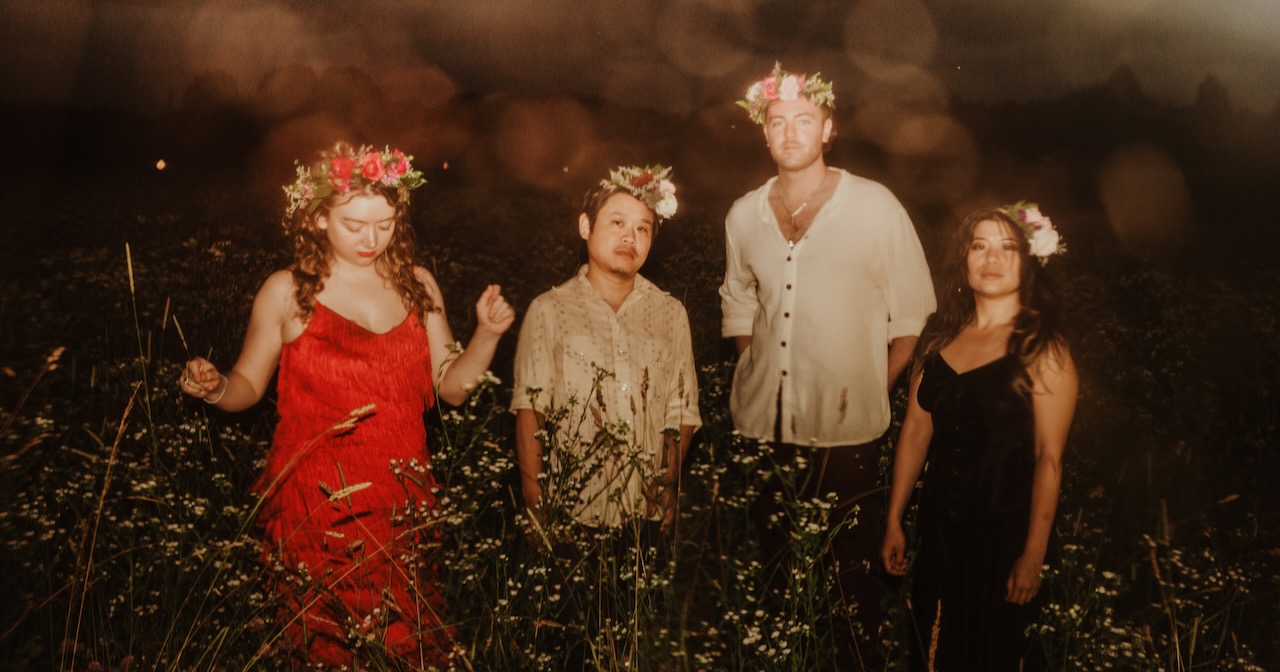
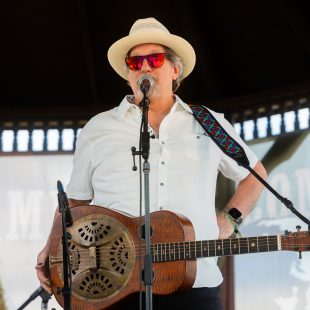
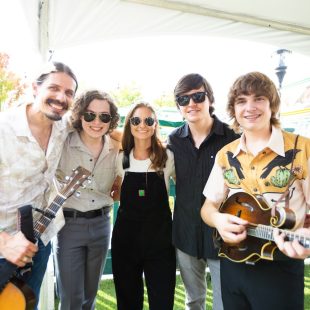
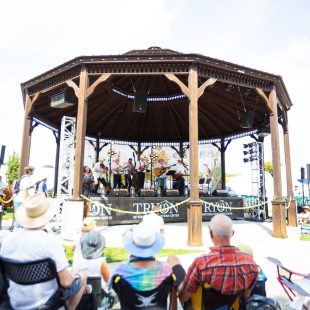
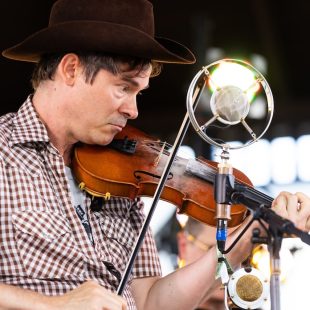
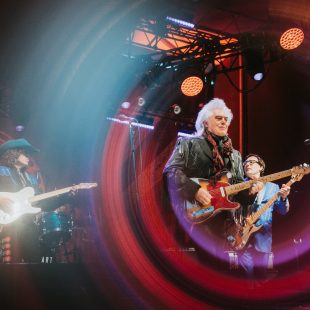
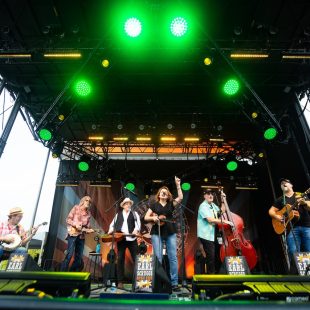
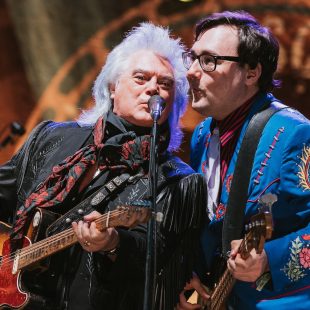
Love Your Mind, the new album from Boston/Toronto-based band Twisted Pine, is a delicious exploration of joy, growth, and self-love, packaged into tight grooves and soulful vocals. The quartet – which features Dan Bui, Kathleen Parks, Anh Phung, and Chris Sartori – is beloved for its genre-bending approach to acoustic music; they continue to defy expectations with their mandolin, fiddle, flute, and bass instrumentation.
What I noticed most about this new record, besides its refreshing positivity (in this economy?!), was the seamlessly collaborative sound. In discussing this in a BGS interview with the entire band, they explained that they’ve taken these past years to hone their collective voice as a group. With this new album, they felt that they had found that voice.
Together, we all agreed that the name “Twisted Mind(s)” might be more appropriate for the band at this point. Below is our conversation, where we cover Love Your Mind and the joy within it, the inspirations found in jamming, how flute fits in at bluegrass festivals, and so much more.
I love the amount of joy and uplift that comes through this album; it’s rare among Americana albums in this day and age. Is that feeling something that the band gravitates to organically? Or was it a choice you made specifically about this project?
Kathleen Parks: I think that happened pretty organically. Some of the songs started coming out of the post-COVID era. “After Midnight,” for example, was written after the first Ossipee [Valley Music] Festival in person after the pandemic and I tried to capture the joyful feeling of being around each other again. … Some of the album started in that appreciative state.
Dan Bui: I would add that throughout the album some subjects are a little bit more somber – there’s a theme of personal growth and learning through hardship and dealing with things like anxiety, making mistakes, and learning from them – but it’s always viewed through a positive lens, and musically, certainly, it is more of an upbeat fun vibe. That’s what we try to put out into the world and bring to our shows in general.
I love that song, “After Midnight (Nothing Good Happens).” Can you tell me more about that one?
KP: I was deciding not to party one night and [was] walking to my tent … listening to the roar of fiddle tunes and good times being had. I was like, “Oh my god that sounds so fun, but I also have two sets to play tomorrow.” My dad used to say that title phrase to me as a kid. He was also a musician who toured a lot so I always thought, “Cool people stay up super late.” My dad was like, “No, nothing good happens after midnight.”
Your fans have been starving for a new Twisted Pine record. What have you all been working on in the four years since your last release?
DB: Releasing our last record [Right Now] in 2020 was a huge challenge. We had to pivot and we weren’t able to do what we wanted to do, performance-wise, for a couple of years. So by the time we were able to get out there, we kind of went “all in” on touring and working on our live show. Before the pandemic, we had only really been playing with Anh for a short time, about six months. Since she lives in Canada, it was impossible to get together in person for a very long time.
Chris Sartori: Even getting into the studio with Anh for Right Now, it felt like we were just starting to figure out how that might work. These past couple of years have been really about ironing out the sound we had envisioned as a quartet and getting it to a place where we could write for that sound.
Anh Phung: It felt like with the 2020 record I was injected into a band that already existed, but Love Your Mind came from a place of more foundational collaboration. I was truly a part of the band before we got in there and recorded.
KP: I also feel like on this new album we had more time to discuss, “How do we want this song to sound?” We brought in players like Ethan Robbins, Ali McGuirk – just because we could. We had time and space and we weren’t being rushed into anything.
I also wanted to ask you about the “A Beautiful Phase (90’s Song).” Is it a ’90s song to you? Or is it just referencing nostalgia for the ’90s as “a beautiful phase”?
KP: For some reason, it ended up in the voice memos with that title. For me sonically, it very much has a “Bitter Sweet Symphony” vibe and I always see chrome when I sing it – that really, really specific blue chrome color, which I remember as a child.
Yes! I had that nail polish!
KP: Yep. It’s kind of looking back on a younger self, talking to a younger self. … For me, it’s about the missed opportunities with being a musician. You miss a lot of time with your family or family events [and] the song is almost apologizing for that.
DB: That song was one of the more collaborative ones. We had these early writing sessions at Kathleen’s where we got together and just jammed to see what came out. … There was this one section that turned into the chorus of that song. At one point, Chris and I were sitting around and decided, “Let’s just build this around this moody section.” We worked with that and kind of introduced a verse and this idea of having it modulate to a bunch of different keys. We roughed out a structure and that was what the lyrics were written over. When we went into the studio it was fresh – a lot of choices were happening in real time. It was cool to have it just come together like that.
Do you write a lot from jamming?
KP: It is a mix of jamming and melodic ideas. The final product is usually the outcome of playing the song down with a lot of different grooves and ideas, seeing what fits, and what we can pull off.
DB: One example is “Green Flash.” Kathleen was playing this 12-string electric guitar and this melodic idea kind of popped out and we decided to make something out of that sound.
That song also features Jerry Douglas. How did that happen?
KP: We had seen him at Earl Scruggs Music Festival and he said, “If there’s any way I can help, just let me know…” So, when that song started coming together, we were like, “We should ask Jerry to be on this!” In the studio we made this video asking if he would play on this song and sent it to him – and he said sure!
AP: Jerry has the exact style for it. I feel like the tune has the vibe of Strength In Numbers, so he fits perfectly.
OK, this question is specifically for Anh: What has your experience been like being the “flutist at the bluegrass festival?”
AP: Honestly, by the time I was playing with Twisted Pine, it was a pretty soft landing, because a lot of the work building my credibility in the scene came before that. Even going to IBMA, I was expecting a lot of pushback, but it has been pretty shocking how welcoming people have been. I think the initial expectation was pretty low. People were skeptical of how I, playing a flute, would work within this band, so when they hear it and it’s going well, it has even more of an effect!
Can you tell me about the actual recording of the album?
DB: I think a big part of the sound of the record should be credited to our co-producer, Dan Cardinal. We have worked with Dan on every record that we’ve done and he’s just someone who understands what we’re going for. He does a great job at capturing the organic sound of our instruments, but is also very creative and able to augment the sounds of our band … subtly and sometimes not so subtly. His choices make the recording sound a little bit bigger, wider and deeper. He was really valuable in that way. A lot of the songs were new, still being worked out, and he had some great third party observations.
KP: He’s good at placing sounds so that you feel them, but you’re not suddenly met with this random out-of-place soundscape in an otherwise acoustic recording.
That’s something I loved about the record. Even though you’re genre-bending, the sound is still so acoustic, where I imagine it would have been easy to add drums and synths, etc. Were there specific records you were referencing for production?
CS: I think each track has its own inspiration. Like “Start/Stop” is very Motown, “Chanel Perfume” is going more for an Aretha “Rock Steady” thing; each track we approached as kind of its own world.
Okay, last question, what does the title, Love Your Mind, mean to you?
CS: That sort of reared its head after we were finished recording and [after] looking back at what themes had emerged. We kind of identified that as a common thread that ties the record together, even though sonically it goes in all of these directions.
KP: For me, it means that whatever state you’re in – dark or frantic – you have to just try to look at yourself from someone else’s point of view and love yourself completely through all the stages.
AP: This is kind of riffing on a different idea, but I also think of Love Your Mind as – it’s common knowledge that our band has been hard to identify genre-wise, and I think that even though this album has a mixture of genres the sound that came out of this album is kind of unified in the way that the four of us play together. Twisted Pine is the four of our minds together, so the magical chemistry is loving our minds.
(Editor’s Note: Want more Twisted Pine? Check out our Basic Folk episode on the group featuring an exclusive interview with fiddler Kathleen Parks. Listen and subscribe here.)
Last night, the International Bluegrass Music Association announced the winners of their 35th Annual Bluegrass Music Awards in Raleigh, North Carolina, the final awards show held in Raleigh before IBMA’s move to Chattanooga, Tennessee next year. The star-studded, three-hour awards show was hosted by bassists John Cowan and Missy Raines and featured performances by many nominees and featured special guests and collaborations.
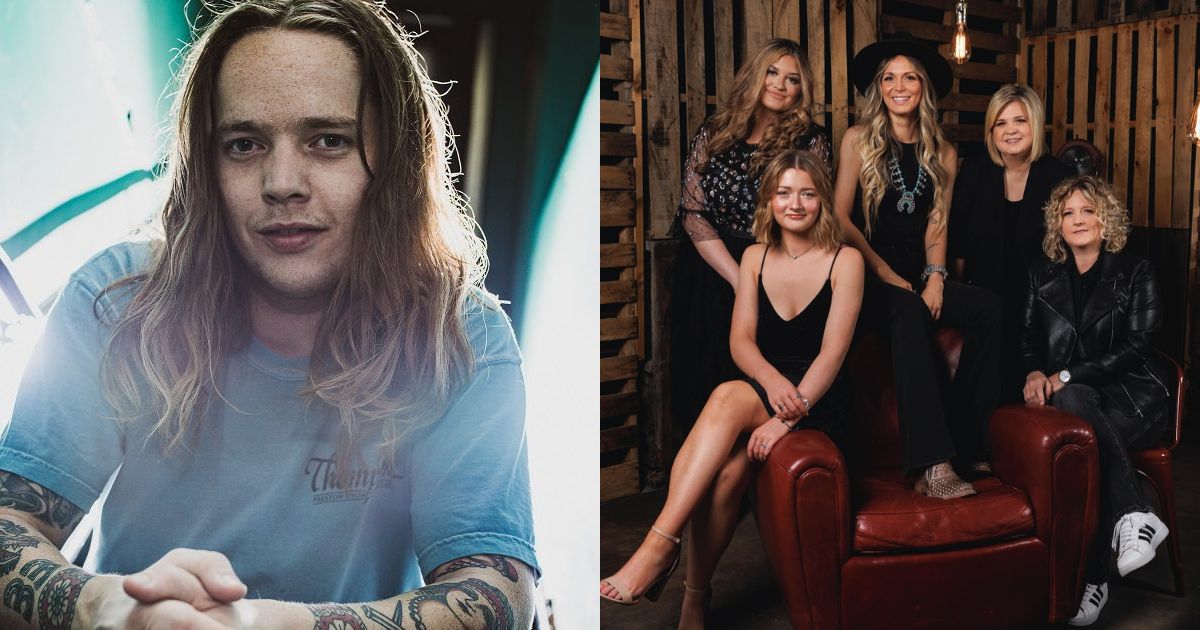
Billy Strings, Sister Sadie, Authentic Unlimited, and Molly Tuttle & Golden Highway lead the nominations going into the evening. Authentic Unlimited walked away with the most trophies, with the group as a whole landing three awards – including a tie for Music Video of the Year with Special Consensus. Molly Tuttle & Golden Highway took home the honor for Album of the Year, while Billy Strings’ sole win of the night was for his feature on Tony Trischka’s collaborative Earl Jam track, “Brown’s Ferry Blues.”
Also honored during the event were this year’s Bluegrass Music Hall of Fame inductees. Entered into the Hall of Fame – the highest honor awarded by IBMA and its membership – were Jerry Douglas, Katy Daley, and Alan Munde.
Find the full list of winners and recipients of this year’s IBMA Awards below. Congratulations to all of the nominees, bands, artists, labels, and industry stakeholders represented at this year’s awards.
ENTERTAINER OF THE YEAR Billy Strings Molly Tuttle & Golden Highway Del McCoury Band Sister Sadie The Po’ Ramblin’ Boys
VOCAL GROUP OF THE YEAR Authentic Unlimited Sister Sadie Blue Highway Del McCoury Band Molly Tuttle & Golden Highway
INSTRUMENTAL GROUP OF THE YEAR Billy Strings Michael Cleveland & Flamekeeper Travelin’ McCourys East Nash Grass Molly Tuttle & Golden Highway
SONG OF THE YEAR “Fall in Tennessee” – Authentic Unlimited Songwriters: John Meador/Bob Minner Producer: Authentic Unlimited Label: Billy Blue Records
“Too Lonely, Way Too Long” – Rick Faris with Del McCoury Songwriter: Rick Faris Producer: Stephen Mougin Label: Dark Shadow Recording
“Forever Young” – Daniel Grindstaff with Paul Brewster & Dolly Parton Songwriters: Jim Cregan/Kevin Savigar/Bob Dylan/Rod Stewart Producer: Daniel Grindstaff Label: Bonfire Music Group
“Kentucky Gold” – Dale Ann Bradley with Sam Bush Songwriters: Wayne Carson/Ronnie Reno Producer: Dale Ann Bradley Label: Pinecastle
ALBUM OF THE YEAR City of Gold – Molly Tuttle & Golden Highway Producers: Jerry Douglas/Molly Tuttle Label: Nonesuch
Last Chance to Win – East Nash Grass Producer: East Nash Grass Label: Mountain Fever
Jubilation – Appalachian Road Show Producer: Appalachian Road Show Label: Billy Blue Records
No Fear – Sister Sadie Producer: Sister Sadie Label: Mountain Home
So Much for Forever – Authentic Unlimited Producer: Authentic Unlimited Label: Billy Blue Records
GOSPEL RECORDING OF THE YEAR “When I Get There” – Russell Moore & IIIrd Tyme Out Songwriter: Michael Feagan Producer: Russell Moore & IIIrd Tyme Out Label: Independent
“Thank You Lord for Grace” – Authentic Unlimited Songwriter: Jerry Cole Producer: Authentic Unlimited Label: Billy Blue Records
“Just Beyond” – Barry Abernathy with John Meador, Tim Raybon, Bradley Walker Songwriters: Rick Lang/Mike Richards/Windi Robinson Producer: Jerry Salley Label: Billy Blue Records
“God Already Has” – Dale Ann Bradley Songwriter: Mark “Brink” Brinkman/David Stewart Producer: Dale Ann Bradley Label: Pinecastle
“Memories of Home” – Authentic Unlimited Songwriter: Jerry Cole Producer: Authentic Unlimited Label: Billy Blue Records
INSTRUMENTAL RECORDING OF THE YEAR “Rhapsody in Blue(grass)” – Béla Fleck Songwriter: George Gershwin arr. Ferde Grofé/Béla Fleck Producer: Béla Fleck Label: Béla Fleck Productions/Thirty Tigers
“Knee Deep in Bluegrass” – Ashby Frank Songwriter: Terry Baucom Producer: Ashby Frank Label: Mountain Home
“Panhandle Country” – Missy Raines & Allegheny Songwriter: Bill Monroe Producer: Alison Brown Label: Compass Records
“Lloyd’s of Lubbock” – Alan Munde Songwriter: Alan Munde Producer: Billy Bright Label: Patuxent
“Behind the 8 Ball” – Andy Leftwich Songwriter: Andy Leftwich Producer: Andy Leftwich Label: Mountain Home
NEW ARTIST OF THE YEAR East Nash Grass Bronwyn Keith-Hynes AJ Lee & Blue Summit Wyatt Ellis The Kody Norris Show
COLLABORATIVE RECORDING OF THE YEAR “Brown’s Ferry Blues” – Tony Trischka featuring Billy Strings Songwriters: Alton Delmore/Rabon Delmore Producer: Béla Fleck Label: Down the Road
“Fall in Tennessee” – Authentic Unlimited with Jerry Douglas Songwriters: John Meador/Bob Minner Producer: Authentic Unlimited Label: Billy Blue Records
“Forever Young” – Daniel Grindstaff with Paul Brewster, Dolly Parton Songwriters: Jim Cregan/Kevin Savigar/Bob Dylan/Rod Stewart Producer: Daniel Grindstaff Label: Bonfire Music Group
“Bluegrass Radio” – Alison Brown and Steve Martin Songwriters: Steve Martin/Alison Brown Producers: Alison Brown/Garry West Label: Compass Records
“Too Old to Die Young” – Bobby Osborne and CJ Lewandowski Songwriters: Scott Dooley/John Hadley/Kevin Welch Producer: CJ Lewandowski Label: Turnberry Records
MALE VOCALIST OF THE YEAR Dan Tyminski Greg Blake Del McCoury Danny Paisley Russell Moore
FEMALE VOCALIST OF THE YEAR Molly Tuttle Jaelee Roberts Dale Ann Bradley AJ Lee Rhonda Vincent
BANJO PLAYER OF THE YEAR Kristin Scott Benson Gena Britt Alison Brown Béla Fleck Rob McCoury
BASS PLAYER OF THE YEAR Missy Raines Mike Bub Vickie Vaughn Todd Phillips Mark Schatz
FIDDLE PLAYER OF THE YEAR Jason Carter Bronwyn Keith-Hynes Michael Cleveland Stuart Duncan Deanie Richardson
RESOPHONIC GUITAR PLAYER OF THE YEAR Justin Moses Rob Ickes Jerry Douglas Andy Hall Gaven Largent
GUITAR PLAYER OF THE YEAR Billy Strings Molly Tuttle Trey Hensley Bryan Sutton Cody Kilby
MANDOLIN PLAYER OF THE YEAR Sierra Hull Sam Bush Ronnie McCoury Jesse Brock Alan Bibey
MUSIC VIDEO OF THE YEAR “Willow” – Sister Sadie Label: Mountain Home
“Fall in Tennessee” – Authentic Unlimited Label: Billy Blue Records (TIE)
“The City of New Orleans” – Rhonda Vincent & The Rage Label: Upper Management Music
“I Call Her Sunshine” – The Kody Norris Show Label: Rebel Records
“Alberta Bound” – Special Consensus with Ray Legere, John Reischman, Patrick Sauber, Trisha Gagnon, Pharis & Jason Romero, and Claire Lynch Label: Compass Records (TIE)
BLUEGRASS MUSIC HALL OF FAME INDUCTEES Alan Munde Jerry Douglas Katy Daley
DISTINGUISHED ACHIEVEMENT AWARD RECIPIENTS Cindy Baucom Laurie Lewis Richard Hurst ArtistWorks Bloomin’ Bluegrass Festival
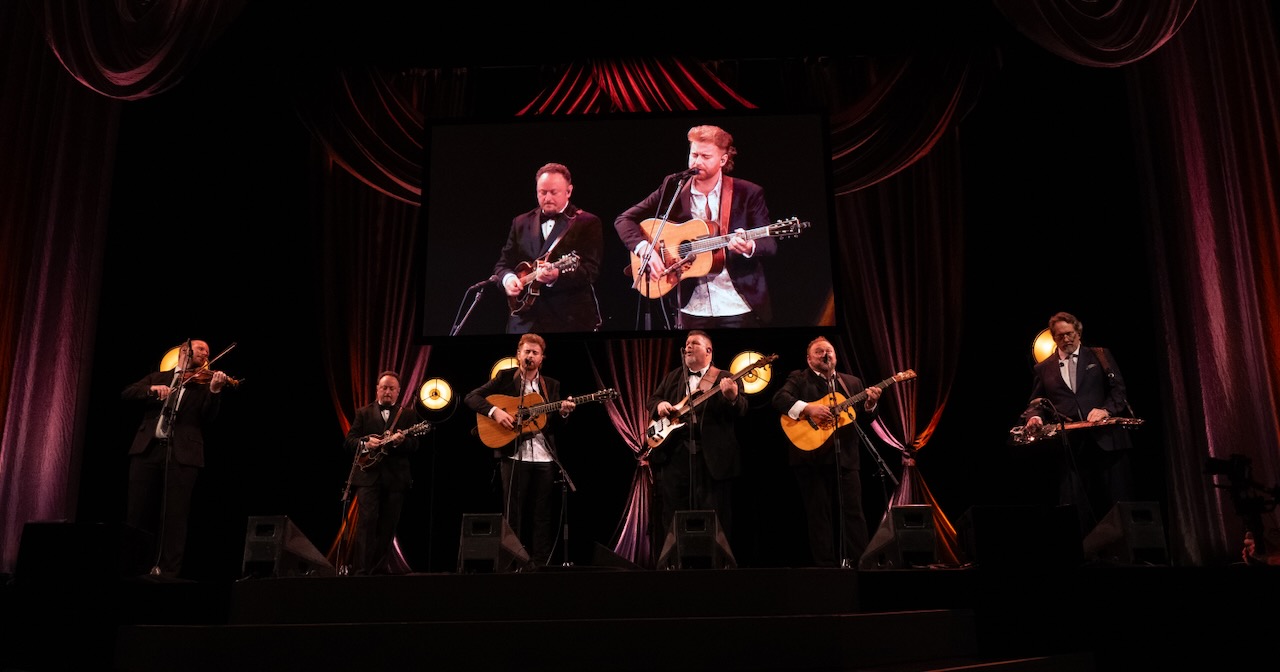
Photo Credit: Authentic Unlimited with special guest Jerry Douglas perform at the IBMA Awards show. Shot by Dan Schram.
Quality over quantity is sometimes what it’s all about. This week’s edition of our premiere round-up is small but mighty, with brand new tracks and videos from a stellar collection of roots musicians.
To kick us off, singer-songwriter Juliet Lloyd brings us a properly spooky video for her track, “Call Your Wife,” which was filmed at an abandoned amusement park in West Virginia. The song is about anger and shame, growth and change, running away and getting caught back up in it again, too. It’s an excellent lead in to spooky and scary season, that’s for sure.
Next, our friends Nefesh Mountain have a gorgeous new fall-tinged video for an original song, “Regrets In The Rearview,” that features an all-star lineup of bluegrass legends. It’s a paean to gratitude, to living life for the moment, and celebrates finding peace – and a home – in movement and change. We think it’s the perfect song to put on for your drive to the pumpkin patch or apple orchard.
To wrap us up, California roots duo Two Runner – made up of Paige Anderson and Emilie Rose – perform “Late Dinner” live from a cozy front porch. They combine old-time, bluegrass, Americana, folk, and more into their own exemplary sound, which highlights the slightly melancholy story just perfectly.
It’s an apropos musical triptych for fall, for golden hour, for sipping some hot cider or cozying up beneath a blanket as the autumn rain falls outside. And, you know what we think… You Gotta Hear This!
Juliet Lloyd, “Call Your Wife”
Artist:Juliet Lloyd Hometown: Washington, D.C. Song: “Call Your Wife” Album:Carnival Release Date: October 25, 2024
In Their Words: “It’s funny to me that the most carnival-sounding song on the entire album is not the title track – it’s this one. ‘Call Your Wife’ was inspired by an anonymous text message that I got in the middle of the night. I had released another single from the album, ‘Pretty,’ a few weeks before, and it was a really personal song that parsed through my complicated feelings about an old relationship that I’ve mostly run from in the 20 years since. The text message said I wasn’t being fair to the guy in the song– and all of a sudden I was 18 again, feeling afraid and ashamed. And then I got angry.
“Todd Wright (who co-wrote and produced) and I managed to channel those feelings into a track that goes to a really unexpected place. It starts sweetly threatening and builds to a really satisfying, vengeful final chorus. I love the unhinged banjo and bass lines that kick in in the second verse. After we finished the track, I knew I wanted a video to match the vibe. The song and video for me are really about using art to process, to heal, and to connect with anyone else who has ever felt like they couldn’t speak up and confront their gaslighters and abusers.” – Juliet Lloyd
Track Credits: Written by Juliet Lloyd & Todd Wright. Video Credits: Produced by Mind in Motion. Directed by Joshua Land and Victor Fink. Featuring Todd Wright and Steve Quintilian. Colleen Laffey, Zachary Buckley, Abigail Sussman – Production assistants Shot at Lake Shawnee Abandoned Amusement Park in Rock, West Virginia.
Nefesh Mountain, “Regrets In The Rearview”
Artist:Nefesh Mountain Hometown: New York, New York Song: “Regrets In The Rearview” Album:Beacons Release Date: September 25, 2024 (single); January 2025 (album) Label: Eden Sky Records
In Their Words: “We’ve spent the last number of years on the road, getting the band out there as much as possible, all with our now 3-year-old daughter, Willow! Needless to say, it can be hard to balance touring with writing sometimes, but when we finally sat down in early 2024 to write new material, dozens of songs just poured out of us. We spent those early months feverishly creating, composing, and refining our vision and voice for this next iteration of the band. The result of this musical alchemy is Beacons; our new double LP containing eight Americana songs with our electric band on disc one, and 10 more on the bluegrass-oriented disc two.
“We feel eternally grateful and beyond lucky to have become close with our heroes over the years and while our own band makes up much of the two discs, we also called on our friends Sam Bush, Jerry Douglas, Stuart Duncan, Rob McCoury and Mark Schatz to bring this song to life! This particular song also marks an incredibly special first for us – our older daughter Millie is on it, beautifully singing the third part in the chorus and duetting with mom on verse four.” – Eric Lindberg
“‘Regrets In The Rearview’ kicks off the bluegrass half of Beacons and is a tune all about gratitude and living in the moment. It’s our own personal reminder to stay present and keep moving forward instead of dwelling too much on the past. It’s about finding some peace with the struggles we have, and we wanted to channel the blissful freedom we feel when we’re out there hitting the road.” – Doni Zasloff
Track Credits: Written by Eric Lindberg and Doni Zasloff. Doni Zasloff – Vocals Eric Lindberg – Vocals, guitar Stuart Duncan – Fiddle Jerry Douglas – Dobro Sam Bush – Mandolin Rob McCoury – Banjo Mark Schatz – Bass
Video Credits: Shot in and around the communities surrounding Woodstock, New York. Directed and conceptualized by Lindberg and Zasloff along with Rafael Roy & Kelin Verrette with All Solid Things.
Two Runner, “Late Dinner”
Artist:Two Runner Hometown: Nevada City, California Song: “Late Dinner” Album:Late Dinner Release Date: September 13, 2024 Label: Gar Hole Records
In Their Words: “‘Late Dinner’ is a song for all the people who have been ghosted and let down. That feeling of yearning for the perfect relationship dinner where everything feels glowy-warm amongst the candle light. I was cheated on/ghosted in a somewhat new relationship and cooked dinner that night yearning for the person to be there and wishing things were different. This song is a reminiscence about that time and hopefully relates to those who have made the ‘late dinner’ without the person ever showing up.” – Two Runner, Paige Anderson and Emilie Rose
Track Credits: Written by Paige Anderson. Performed by Paige Anderson and Emilie Rose. Video Credits: Filmed, recorded, mixed, and edited by Nick Futch.
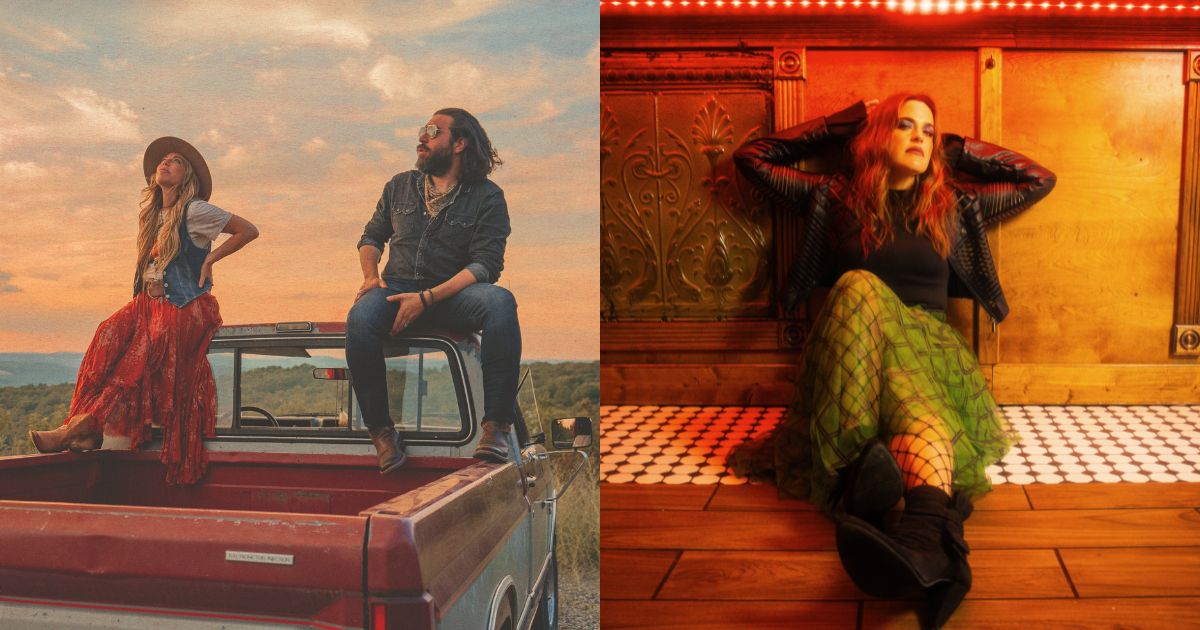
Photo Credit: Nefesh Mountain by Rafael Roy & Kelin Verrette; Juliet Lloyd by Anna Haas.
Undefinable by a single era, genre, or instrument, Jerry Douglas’ otherworldly picking prowess on Dobro and lap steel guitar knows no bounds. Whether it’s running through Flatt & Scruggs songs with the Earls of Leicester, kicking up covers like The Beatles’ “While My Guitar Gently Weeps,” or conjuring up jazz-like improv jams, the sixteen-time GRAMMY winning musician has a way of drawing the listener in with his tasteful tunes.
That trend continues on The Set, his first studio album since 2017 – although he did stay busy producing records for Molly Tuttle, Steep Canyon Rangers, John Hiatt, Cris Jacobs, and others during the time in between. Released on September 20, the record captures the sound of Douglas’ live set with his current band – Daniel Kimbro (bass), Christian Sedelmyer (violin), and multi-instrumentalist Mike Seal – with a mix of new and original compositions, reworkings of older songs from his catalog, a couple of intriguing covers, and even a concerto.
BGS caught up with Douglas ahead of his tour dates in support of the new record – and his induction into the Bluegrass Music Hall of Fame this week – to discuss the motivation behind The Set, the similarities between Molly Tuttle and Alison Krauss, and much more.
This is your first album in over seven years. What was your motivation for returning to the studio after such a large gap?
Jerry Douglas: I’ve been doing records for everyone else those past seven years. [Laughs] We’d go out and play a show and people would come up afterward and ask where they could find this song or that song. It got me thinking, since the songs I play live are scattered across many different records — some of which are out of print — that it’d be a good idea to get them all into one place, one album. It’s not a compilation record by any means, it’s just how I love to hear these songs now.
Speaking of how you love to hear these songs now, you’ve recorded many of them in the past. This includes “From Ankara To Izmir,” which you first recorded on lap steel before opting for the Dobro this time. What led to that shift?
When you first write a song you don’t know it, because you haven’t lived with it yet. You need to play it about 100 times and really flesh it out to see what all’s in there. When I originally recorded “From Ankara To Izmir” in 1987 for the MCA Master Series we had a much bigger, bolder band around it. However, the more I got to playing it out live the better the Dobro felt on it. It allows me to be more dynamic with the song, which I also cut with drums in 1993 before switching things up and leaving them out this time.
We actually haven’t used drums since the record I made with John Hiatt in 2021. He didn’t want them, so we used the rest of my band… it felt great having all that space the drums usually filled back, so we just continued as a four-piece after that. It’s gone on to inform a lot of the music on this record, not just with that one song.
I love the evolution that songs can take over time, whether it’s something as simple as changing out one instrument like you’ve done a couple times here or going from a full band to something that’s solo acoustic. Different arrangements breathe completely different life into a song, and your record is a great example of that.
Even Miles Davis recorded a lot of his songs two or three times with different bands. He wanted to hear them with the band he was with at that moment, which all included different people, personalities, characteristics, and playing styles. Music is meant to evolve over time as influences and circumstances change. Songs are traveling through their life collecting little pieces to add to themselves just like the rest of us do.
That room to experiment is only expanded with your band, who you’ve been with now for eight years. How did the chemistry you have with them help to drive the sonic exploration behind The Set?
Like you said, we’ve been together for a long time now. We’ve been everywhere together and have become good at picking up nonverbal cues from one another. A lot of times I’ll just give Daniel a look and he knows what to do. That trust allows us the freedom to experiment and keep things fresh for ourselves, which in turn keeps it fresh for the audience as well, whom we don’t ever want to leave behind.
That same attention to detail can be felt in the album artwork as well, which I understand comes from a connection you made across the pond while there for the Transatlantic Sessions?
Yes. William Matthews is a famous western watercolor artist who was in Scotland with me when we started rehearsing for the Transatlantic Sessions right after COVID. We typically tour the country at the end of January and into February for 10 days playing the entire show and William was following us around painting. One day I walked into his hotel room and his paintings were all the way around the wall. One of them was of Doune Castle – seen in both Monty Python & The Holy Grail and Game Of Thrones – that, unbeknownst to us at the time, ended up becoming The Set’s cover art.
Earlier we touched on all the producing work you’ve been up to lately. One of those has been Molly Tuttle, who you’ve worked with on her past two GRAMMY-winning albums. Given your close ties to another trailblazing woman of bluegrass, Alison Krauss, do you notice any similarities between the two and the approach they have to their craft?
They’re both amazing singers. I learned a long time ago that when Alison tells me she can do better, she does, and Molly’s the same. Both have a way of exceeding my expectations on a take when I thought they couldn’t do better than the one just before it, but every time the new one turns out head and shoulders above the one that I had been satisfied with. It’s taught me to always trust the artist no matter who it is I’m working with.
In that same sense, I think about Earls of Leicester as Flatt & Scruggs – what if they’d said “wait a minute” and gone back in [to the studio] to change one little thing? When you’re recording, everything happens so fast that you can come back to it and go in a completely different direction. That’s what I love so much about my new record, even some of the mistakes that I made on it aren’t really mistakes, they’re just different directions.
What has music taught you about yourself?
I’m an introvert who can speak in front of thousands of people and have a good time at a party, but when I’m alone I’m really alone, but in a positive way. It’s like having two lives, but I’m not acting in either one of them. What a privilege it is to be true to yourself and have a full life at the same time. I get to go out and play music, then come home and fix the faucet.
Lead Image: Madison Thorn; Alternate Image: Scott Simontacchi.
Though she downplays notions of fame and exposure, vocalist, songwriter, and bandleader Shemekia Copeland qualifies as a genuine star.
Among 21st century blues artists, she’s right there with Christone “Kingfish” Ingram, Gary Clark Jr., Robert Cray, and Eric Gales as performers whose audience outreach and cache extend far beyond the restrictive circle of specialty radio shows and festivals, where far too many fine performers in that genre are confined. From profiles in The Washington Post, Chicago Tribune, New York Times, Philadelphia Inquirer, CNN, and NPR to coverage in such journals as Rolling Stone and No Depression, Copeland’s ascendency as a performer, her maturation, and her poignant and important vocal and compositional force are consistent and impressive.
It’s accurate, if a bit cliched, to say Copeland was born to sing the blues. The daughter of the legendary Texas shuffle blues great Johnny Copeland, she grew up in Harlem and was accompanying her father as an eight-year-old on the stage of the famed Cotton Club in New York. A decade later she signed with Alligator Records and began a career that’s done nothing but soar since the release of her first album for the label, Turn Up The Heat, in 1978.
Her two most recent LPs, 2018’s America’s Child and 2020’s Uncivil War have cemented her stature. America’s Child featured a rousing version of Ray Wylie Hubbard’s “Barefoot In Heaven,” the personalized romantic tune “Fell In Love With A Honky,” and a tough cover of “Nobody But You,” a tune immortalized decades before by her father. Uncivil War reflected a major happening in Copeland’s life – the birth of a son – and also included memorable numbers once again addressing contemporary issues. America’s Child won both the Blues Music and Living Blues Awards as Album of the Year. Uncivil War won the same honor from not only Living Blues, but DownBeat and MOJO magazines, too. Copeland’s earned multiple Blues Music honors and GRAMMY nominations to date.
Yet many, Copeland included, feel the best is yet to come. Evidence of that can be heard throughout the 12 songs on her newest Alligator LP, Blame It On Eve, which was released August 30. This latest effort again superbly combines social insight, humorous reflection, and tremendous musical numbers. The results are a dynamic presentation of the ideal combination of modern studio technology, distinctive personal commentary, plus the lyrical flair and expressiveness that’s characterized great blues since its inception.
Blame It On Eve, also recorded in Nashville, is her fourth project produced by Will Kimbrough and Copeland gives him high praises for his continuing contributions to her music.
“With Will it’s always magic and the ideal collaboration,” Copeland told BGS during a recent interview. “He really understands my music and how to get the best out of what I’m doing in the studio. No matter what I bring him, he finds a way to improve it, to make it better, and make it work. He’s really been a huge key to the success that I’ve had, and I also really love working in Nashville.”
Kimbrough utilized a host of outstanding special guests for the session. They include Alejandro Escovedo, Luther Dickinson, Jerry Douglas, DeShawn Hickman, Charlie Hunter, and Pascal Danae (of Paris-based band, Delgres).
While Copeland has never shied away from addressing social issues on her albums, she doesn’t like or embrace the notion she’s being “political.” Instead, she prefers the term “topical,” while freely acknowledging that she sees it as important to discuss a variety of subjects, topics and ideas in her music. “I don’t want to be labeled or pigeonholed in any fashion,” she says. “But at the same time, I’ve always felt that my music should speak to contemporary things, to the things that I see and experience. If you want to say that I do cover topical or current issues, that’s accurate. But I don’t see it being political so much as I see it being real, being willing to talk about things that are important to me as a woman, a blues musician and a Black artist.”
From that standpoint, the title track’s forthright dive into the issue of women’s reproductive rights is a prime example of Copeland’s willingness to express herself on thorny and controversial topics. Douglas brings his superb skills on Dobro to a song about Tee Tot Payne, the 20th century Black musician who tutored Hank Williams on the blues. “I was really glad to do that one,” Copeland adds. “There are too many people who don’t know that story or haven’t heard about Tee Tot Payne. If I can inform them about who he was and why’s he important, then I’ve done a service.”
Hickman’s stirring sacred steel contributions enrich “Tell The Devil,” while Copeland took on a special challenge with the song “Belle Sorciere,” singing the chorus in French with the tune’s melody supplied by Danae. “Hardly,” Copeland laughs when asked if she’s fluent in French. “I really tried to make sure that I had the correct words and sang them the right way. I’ve always wanted to do songs in other languages, and I really enjoyed doing that one but it wasn’t easy.”
The release also has its share of fun tunes, notably “Wine O’Clock” and rollicking strains of “Tough Mother.” Copeland also has a pair of excellent cover numbers. One is a heartfelt version of “Down on Bended Knee,” previously done by her father, and an equally compelling rendition of Stevie Wonder’s “Heaven Help Us All,” which serves as a fitting and dynamic closer to a marvelous LP.
Interestingly, when asked how much she enjoys her stature at or near the top of the blues world, Copeland discounts that contention. “In my mind, I’ve still got a long way to go in terms of how far and where I want to see my music go,” Copeland concludes. “I don’t think I’m at the stage of some of the blues rockers like Jon Bonamassa. I’m still aiming for higher places and peaks artistically. You should never be satisfied or settle for things, but keep pushing and striving for excellence. I learned that lesson early and that’s how I’ve continued my career and plan to keep on striving and pushing.”
Nashville audiences will get the chance to hear Copeland in multiple settings this September. She will be featured during AmericanaFest on September 17 at 3rd and Lindsley. The next day, her showcase at Eastside Bowl will air live on Wednesday afternoon, September 18, on WMOT-FM (89.5) Roots Radio. It will also be video streamed on NPR, filmed for NPR Live Sessions, and recorded for NPR’s World Café’s “Best Of AmericanaFest” feature to air later.
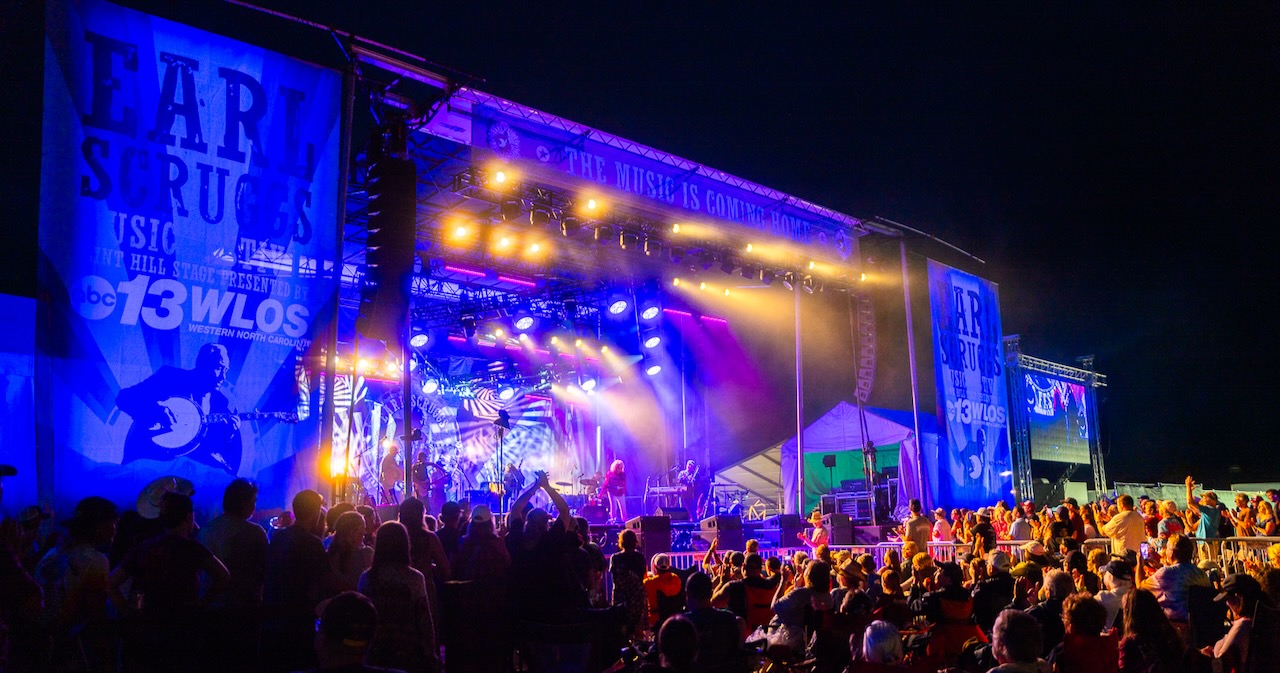
The 3rd Annual Earl Scruggs Music Festival was a smash hit! Held over Labor Day weekend at the stunning, luxurious grounds of the Tryon International Equestrian Center in Mill Spring, North Carolina – a short drive from Scruggs’ hometown of Shelby and the small crossroads of Flint Hill, where he was born and raised – the event featured bluegrass, old-time, country, and Americana made at the highest levels on three stages. Featuring brick-and-mortar restaurants, a shaded grandstand, dozens of vendors and boutiques, a large campground, posh tiny home cabin stays, and so much more, this is not your standard flatbed-trailer-in-a-hay-field festival. It’s so much more.
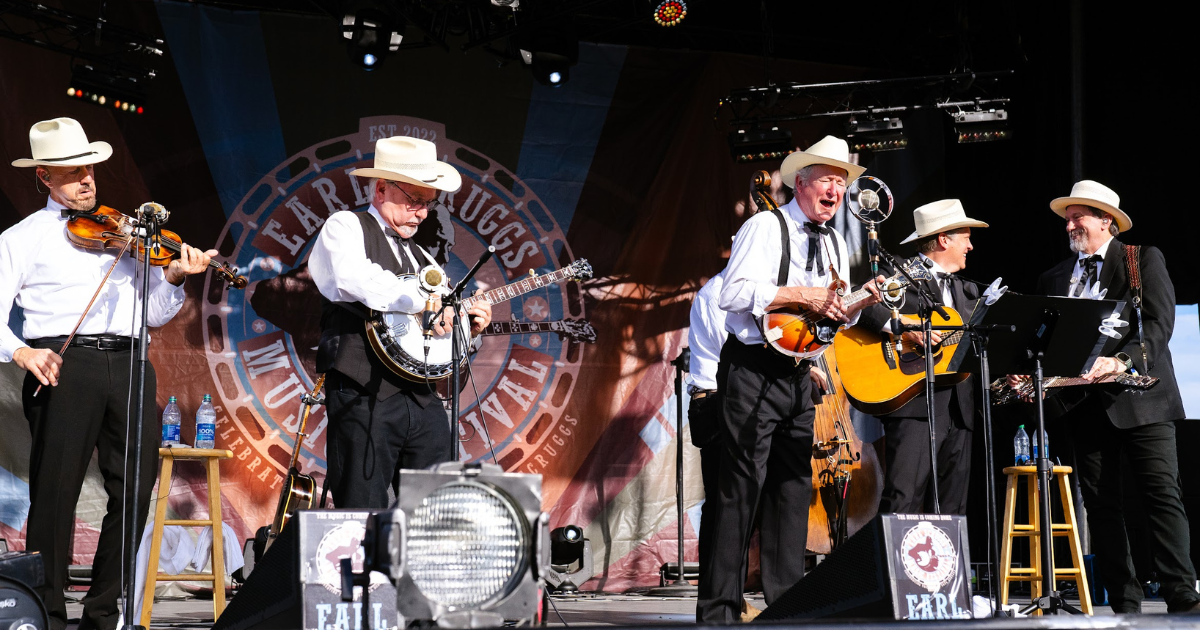
BGS was on hand at this year’s event to once again co-present a special tribute set, renamed The Scruggs Sessions and paying tribute to Flatt & Scruggs’ iconic live album, At Carnegie Hall! Festival hosts Jerry Douglas and the Earls of Leicester helmed the special show on the Foggy Mountain Stage, a crowd favorite in years past that formerly highlighted the Earl Scruggs Revue. This year, artists and bands like Shadowgrass, Wyatt Ellis, Lindsay Lou, Chris Jones & the Night Drivers, Twisted Pine, the Faux Paws, Old Crow Medicine Show, and more played selections from Flatt & Scruggs’ legendary performance at Carnegie Hall in 1962. The ESMF crowd delighted in note-for-note replications alongside brand new reimaginations of the album’s essential songs and tunes – complete with a rendering of “Martha White” that elicited plenty of raucous singing along.
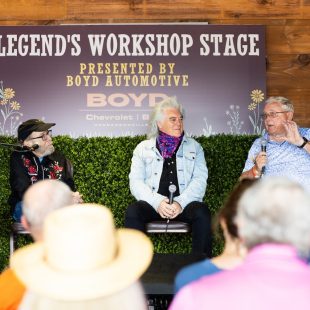
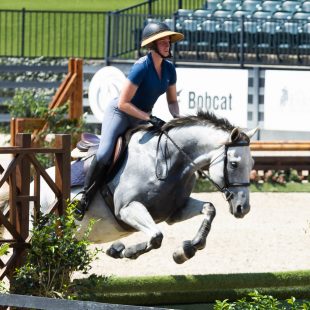
Horse jumping demonstrations were held nearby the Legend’s Workshop Stage, where artists from the lineup told stories, shared songwriting pointers, talked about banjo techniques, and so much more. Fine spirits and wines were available for sale at the Spirits of Bluegrass stands and the Earl Scruggs Center – a fantastic museum focused on Scruggs that calls the former courthouse in Shelby its home – sold their Scruggs-ian wares and passed out hand fans to festival goers throughout the weekend.
It was a perfect festival to mark the 100th year since Scruggs’ birth, with artists, bands, and musicians from across the musical spectrum demonstrating the wide scope of the innovative banjo picker’s impact and legacy. On the Flint Hill Stage, headliners like Marty Stuart & His Fabulous Superlatives – featuring Chris Scruggs, who received multiple standing ovations from the audience – Mighty Poplar, Yonder Mountain String Band, Old Crow Medicine Show, and Tanya Tucker illustrated that bluegrass is certainly not a monolith. And, that traditional-leaning festivals such as ESMF can be just as expansive and broad as their more Americana-geared or rootsy competitors.
Though Friday and Saturday were blisteringly hot and Sunday saw more than one weather delay while lightning storms rolled out of the Appalachians and over the foothills, the crowds were resilient and energized and the festival showed, yet again, that this event is being built for the long haul. Conveniently located a short drive from Greenville, SC, Asheville and Charlotte, NC and a mere five hour drive from Nashville, ESMF is a must-visit destination festival where everything you could ever need – from banjos to horse jumping to wood-fired pizza to glamorous camping to high-quality interviews and workshops to international superstars – are all combined in one convenient, luxurious location.
Below, check out select photos from the 2024 edition of the Earl Scruggs Music Festival – and make plans to join us next year over Labor Day weekend in 2025! Tickets are on sale now.
A Friday songwriting workshop featured Louisa Branscomb, Darrell Scott, and Jon Weisberger with moderator Tommy Goldsmith. Photo by Cora Wagoner.
Campers jam during the day throughout the Earl Scruggs Music Festival campground. Photo by Cora Wagoner.
Festival host Jerry Douglas kicks off The Scruggs Sessions tribute to 'Flatt & Scruggs At Carnegie Hall!' Photo by Jess Maples.
Wyatt Ellis and band pose backstage during the Scruggs Sessions. Photo by Cora Wagoner.
Festival hosts Jerry Douglas and the Earls of Leicester helmed the Scruggs Sessions presented by BGS. Photo by Cora Wagoner.
Ketch Secor of Old Crow Medicine Show wound up the crowd during the Scruggs Sessions. Photo by Cora Wagoner.
Lindsay Lou joined by the Faux Paws for the Scruggs Sessions on the Foggy Mountain Stage. Photo by Jess Maples.
Old Crow Medicine Show brought down the house paying tribute to 'Flatt & Scruggs At Carnegie Hall!' Photo by Jess Maples.
Chris Jones & the Night Drivers also made an appearance for the Scruggs Sessions, presented by BGS. Photo by Jess Maples.
Shawn Camp, Jeff White, Charlie Cushman, and Johnny Warren of the Earls of Leicester perform at The Scruggs Sessions. Photo by Cora Wagoner
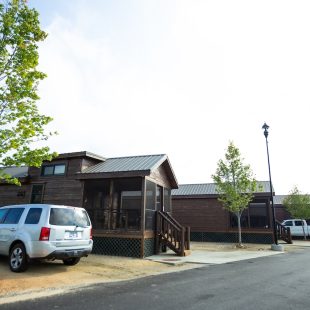
The Tryon International Equestrian Center has fabulous amenities, including tiny home "Getaway Cabins." Photo by Cora Wagoner.
Journalist and BGS Contributor Tommy Goldsmith moderated the Legend's Workshop Stage each day, including a session featuring Marty Stuart and JT Scruggs sharing stories about Earl. Photo by Cora Wagoner.
AJ Lee & Blue Summit perform on the Flint Hill Stage on Saturday at Earl Scruggs Music Festival. Photo by Cora Wagoner.
Mighty Poplar, with special guest Caleb Klauder, were a Sunday afternoon main stage treat. Photo by Cora Wagoner.
Horse jumping demonstrations were held each day during the festival. Photo by Cora Wagoner.
Marty Stuart and His Fabulous Superlatives gave an incredible Flint Hill Stage performance on Saturday evening. Photo by Cora Wagoner.
The SteelDrivers brought their bluesy bluegrass – that they call "uneasy listening" – to ESMF. Photo by Cora Wagoner.
Marty Stuart and Chris Scruggs sing in duet on the Flint Hill Stage. Photo by Cora Wagoner.
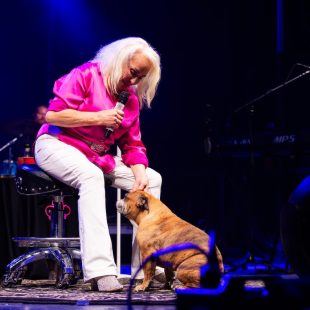
Tanya Tucker brought out her bulldog, Stella, for a cameo at ESMF. Photo by Cora Wagoner.
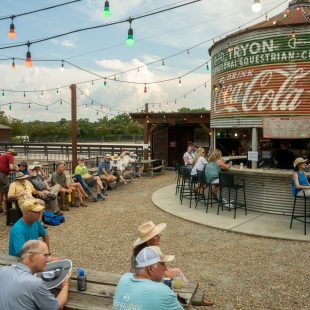
The Silo Bar, home to the brand new Silo Sessions hosted by Craig Havighurst. Photo by Jess Maples.
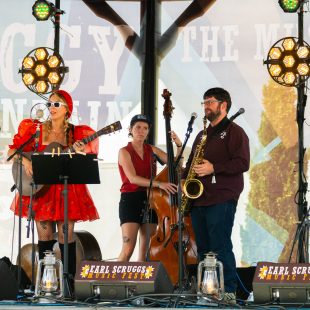
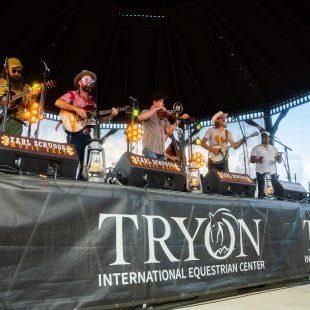
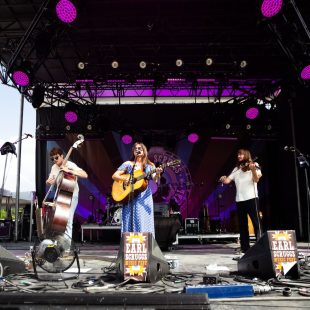
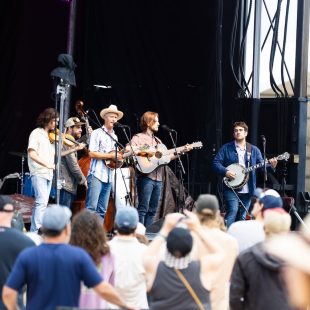
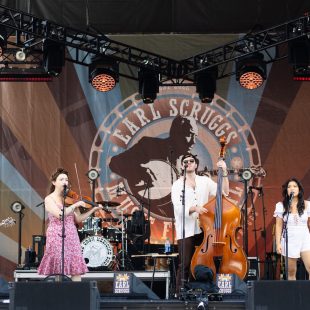
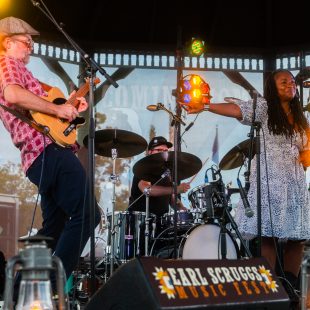
Twisted Pine returned to ESMF for the second year in a row, performing several times. Photo by Cora Wagoner.
Tanya Tucker and her band gave an excellent final performance on the Flint Hill Stage Sunday Night. Photo by Cora Wagoner.
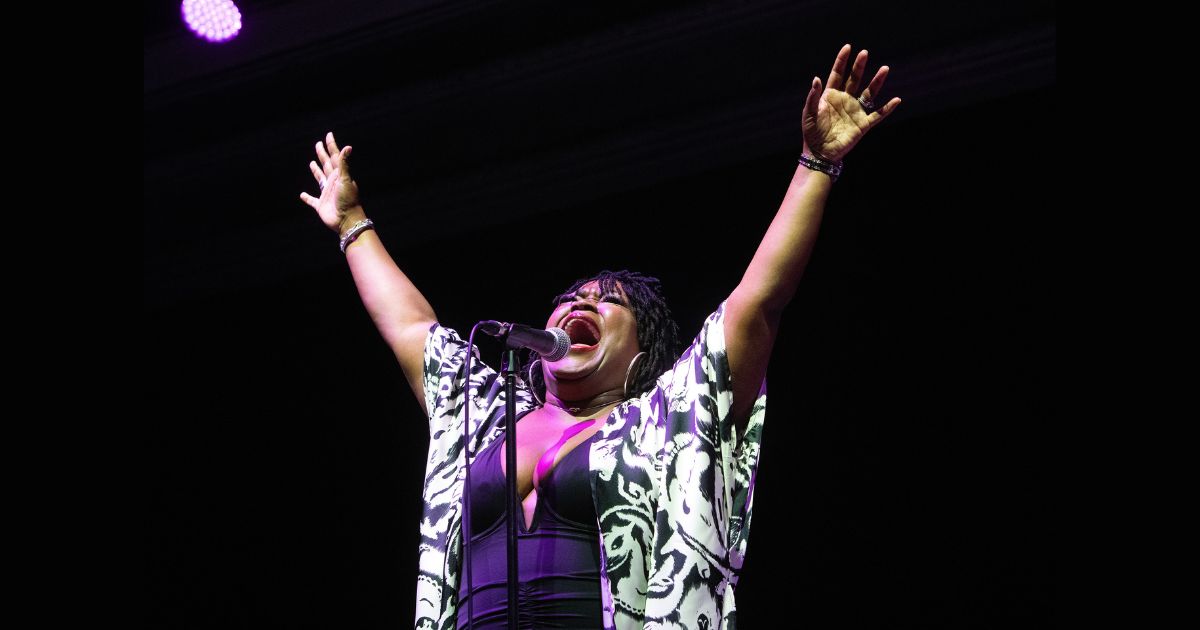
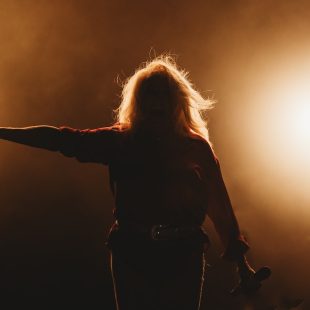
Miko Marks delighted the crowd with her soulful and divine Americana. Photo by Jess Maples.
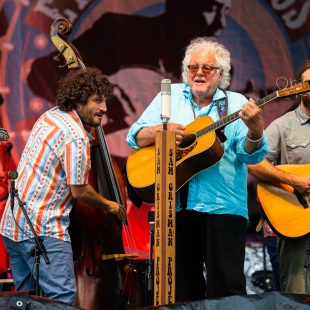
Peter Rowan joined the Sam Grisman Project for a main stage set that was sadly interrupted by weather. Photo by Jess Maples.
Tanya Tucker brought down the house with her Sunday night set on the Flint Hill Stage. Photo by Cora Wagoner.
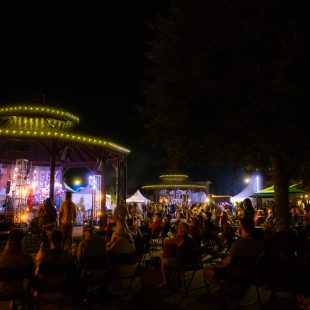
The crowd packs in for Casey Driessen's Red Shoestring Jam, the festival's final performance. Photo by Jess Maples.
Tickets for Earl Scruggs Music Festival 2025 are on sale now.
All photos courtesy of Earl Scruggs Music Festival and shot by Cora Wagoner and Jess Maples, as marked. Lead Image: Tanya Tucker performs on the Flint Hill Stage, photo by Jess Maples.
From August 30 to September 1, the legacy of banjo innovator and bluegrass forebear Earl Scruggs will be celebrated once again at the 3rd Annual Earl Scruggs Music Festival. Held at Tryon International Equestrian Center in the western North Carolina foothills – just beyond where the Bluegrass and Country Music Hall of Fame inductee was born and raised – the festival will see Jerry Douglas and the Earls of Leicester return as hosts and will include performances by roots superstars like Tanya Tucker, Old Crow Medicine Show, Marty Stuart & His Fabulous Superlatives, Yonder Mountain String Band, and many more. (Full lineup below.)
BGS is excited to be returning to ESMF for the third year in a row, this time presenting the Scruggs Sessions with the Earls of Leicester. On Saturday, August 31, from 3 to 4:30p.m. on the Foggy Mountain Stage – nearest the festival gates – the Earls of L will pay tribute to Flatt & Scruggs’ seminal live album, Flatt & Scruggs At Carnegie Hall!, with special guests and appearances from across the festival lineup. This is a brand new iteration of our fan favorite tribute sets from the past two years that highlighted albums by the Earl Scruggs Revue. Last year’s performance was hosted by Tony Trischka and included guests such as Della Mae, Tray Wellington, members of Greensky Bluegrass, and more. We cannot wait for you to see what’s in store for this year’s Scruggs Session.
Below, find a few of our tips and insider tricks for attending ESMF, plus we’ll highlight a few of the acts, artists, and bands we’re most excited to catch at this year’s festival. From the posh grounds to engaging workshops and sessions, horse jumping demonstrations to excellent brick-and-mortar restaurants and local food trucks, up-and-coming groups and world-class talents, Earl Scruggs Music Festival truly has something for everyone.
The Grounds: Tryon International Equestrian Center
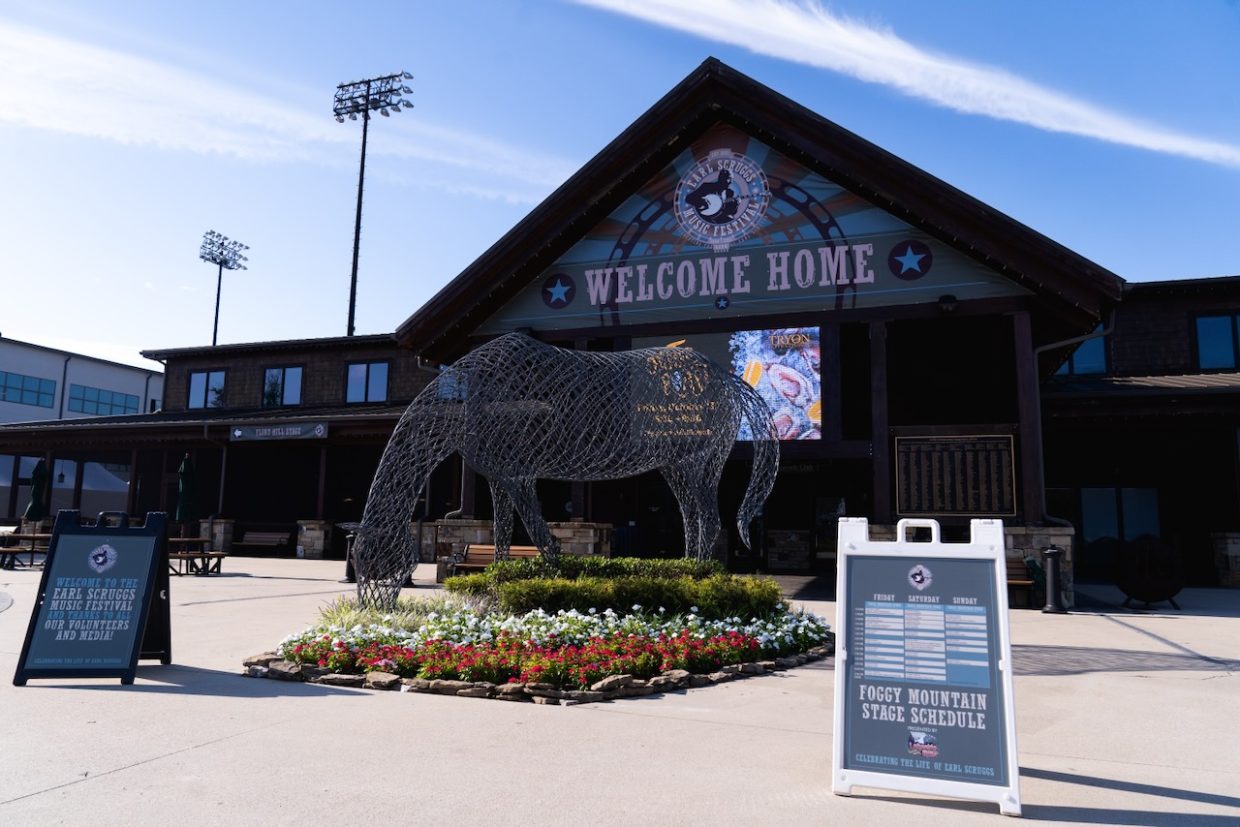
The Earl Scruggs Music Festival entrance. Photo by Eli Johnson.
Your first impression of the Earl Scruggs Music Festival grounds – the Tryon International Equestrian Center in Mill Spring, North Carolina – might be that this is a very fancy locale for a bluegrass festival. But after your first day, or even your first few hours, you’ll see how perfect a setting this state-of-the-art equestrian park is for a music festival. It can be very hot in late August in Mill Spring, but the permanent amenities, ample shade, high quality air-conditioned restaurants, and relatively compact footprint make the usual pitfalls and inconveniences of a hot summer festival fade to the background.
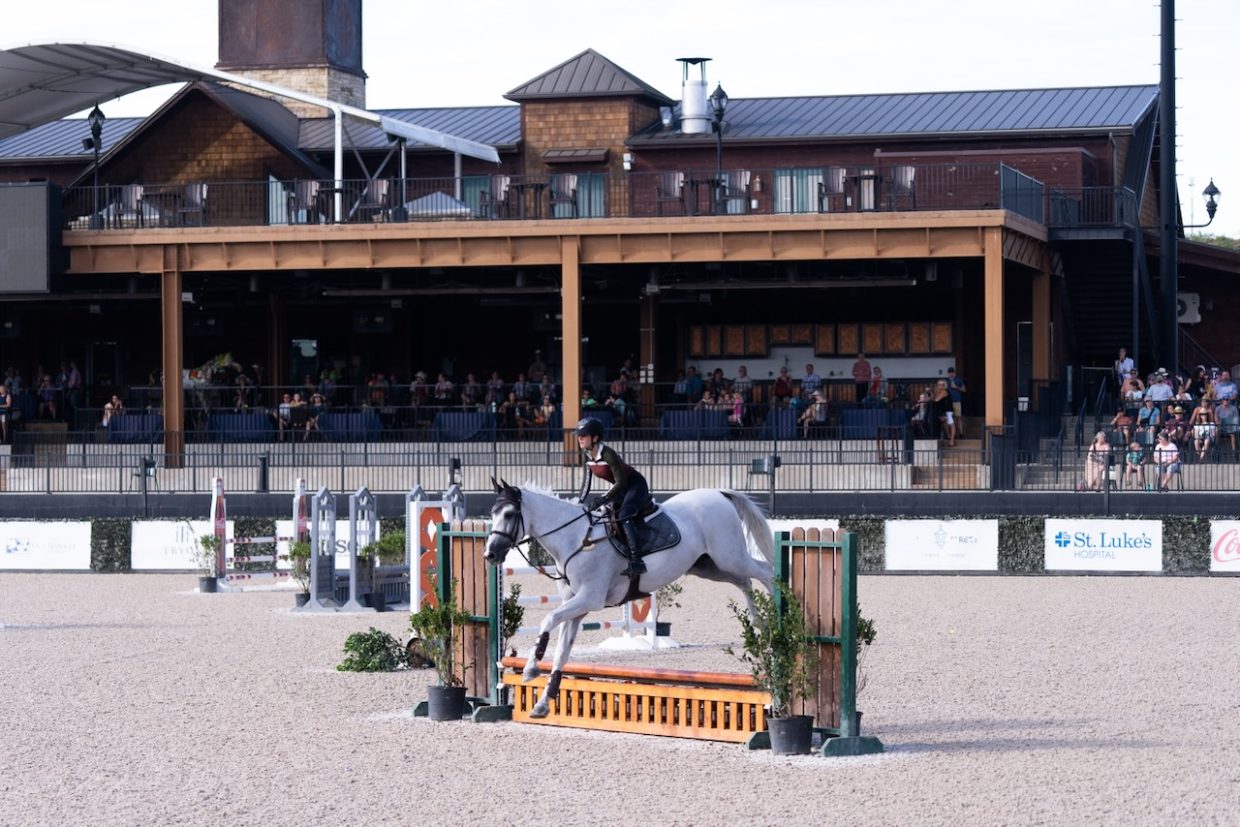
A horse jumping demonstration held during the festival. Photo by Eli Johnson.
Catch a horse jumping demonstration or one of the center’s mini-horse ambassadors doing a meet and greet to get the full equestrian experience. VIP ticket holders can enjoy the shady grandstand with perfect views of the main stage. There’s plenty of space in the sandy arena grounds for folding chairs, too. The General Store, near to the festival entrance, sells drinks, ice cream, snacks, and treats and has many festival essentials you may need – whether you’re camping on site or just visiting for the day.
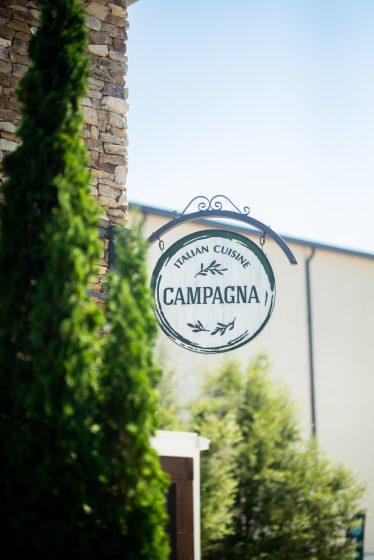
Definitely don’t miss the delicious Italian restaurant, Campagna, on the grounds, as well. Pro tip: order their delicious wood-fired pizzas to go and enjoy while watching your favorite bluegrass bands take the stage. Or, dine in and cool off – whether lunch or dinner, we loved always having Campagna nearby. Other brick-and-mortar options on site include Blue Ginger Sushi, Legends Grille, Roger’s Diner, and more. Plus, plenty of delicious fair foods are on sale with carnival-style vendors and food trucks coming out in force for the fest.
Campagna Italian Cuisine raises the bar for bluegrass festival food. Photo by Eli Johnson.
Sure, there’s not much to mention directly surrounding the oasis that is the Tryon International Equestrian Center, but there is so much to explore just beyond the festival grounds. Whether you head up towards the mountains and Tryon proper (hometown of Nina Simone, where you can visit her historic home place) or head down the road to Shelby (Scruggs’ home turf), this area of North Carolina holds so many treasures. A visit to the Earl Scruggs Center, which calls the former Shelby county courthouse home and is located just up the road from Scruggs’ homeplace(s) in Flint Hill, is essential. The museum tells the story of Scruggs, his banjo, and his music within and outside of Shelby county and includes plenty of local history, too. If you’re not able to make it the short drive to Shelby to see the Center, don’t worry! They have a great booth set up at the festival for the entire weekend.
There are a few excellent trails and hikes nearby, like Alexander’s Ford Trail at Bradley Nature Preserve pretty near to Mill Spring, and there are so many mountain-y treks and water fall hikes just a short drive west – we recommend Little Bradley Falls. If you like cute little railroad towns, Saluda, North Carolina is worth a stop. Just up the mountainside, it used to be the home of the steepest standard gauge railway line in the United States. As you drive back down the interstate east, down the titular Saluda grade toward Tryon and Mill Spring, it’s a stunning view of North and South Carolina beneath you, with the Appalachians at your back. It’s lovely country!
The Music
ESMF does an excellent job demonstrating the sheer depth, width, and breadth of Earl Scruggs’ impact on American roots music. The lineup boasts country, Americana, singer-songwriter, old-time, and endless bluegrass. It’s curated thoughtfully and intentionally and there’s always someone new to discover and someone legendary to nerd out over. Here are a few of the sets we’re most excited for, below. Plus you can peruse the entire announced lineup and find links to the full schedule of events. We hope we see you this year at Earl Scruggs Music Festival!
Casey Driessen’s Red Shoe Stringjam (Sunday)
Fiddler Casey Driessen has turned his infamous and beloved Red Shoe Stringjam into a traveling roots music festival variety hour! We can’t wait to see what he cooks up at ESMF with this superlative lineup. His recent appearance at Grey Fox earlier this summer boasted and incredible roster of guests and collaborators.
AJ Lee & Blue Summit (Saturday)
We can’t wait to catch up with our pals AJ Lee & Blue Summit, fresh off their Grand Ole Opry debut and the release of their critically-acclaimed new album, City of Glass. Our recent feature on that new record has been a reader favorite ever since it published – check it out here. Don’t miss their main stage (Flint Hill Stage) performance and their Foggy Late Night set (Foggy Mountain Stage), which will surely be a raucous and rowdy end to day two of the festival.
Marty Stuart & His Fabulous Superlatives (Saturday)
If you’re a true fan of Marty Stuart, you know just how intimately his own story in music is woven into the stories of Flatt & Scruggs. What a perfect addition to the lineup. From psychedelic country to surf rock to driving bluegrass to shredding the mandolin – like he did with F&S as a kid all those years ago – Marty and His Fabulous Superlatives epitomize so many distinct facets of Earl’s music and legacy. This is especially noticeable with Stuart carrying on the bluegrass tradition of mentorship bestowed on him by Flatt & Scruggs – like with young mandolinist, Wyatt Ellis, who is also on the festival roster this year.
Miko Marks (Sunday)
Bay Area-based country singer, songwriter, and recording artist Miko Marks is a “must-see” on our list! She’ll be playing the Foggy Mountain Stage on Sunday evening, bringing her thoughtful, engaging, fun, and polished post-genre country to western North Carolina. Marks is a musical activist, a truth teller, and a community builder who has blazed a trail – nationally, in Nashville, and in the Bay Area, as well – in country and roots music.
Darrell Scott’s String Band (Friday)
Even though Darrell Scott’s solo shows are just as engaging and jaw-dropping as when he tours with a band, we’re certainly pleased that his recent string band album, Old Cane Back Rocker, included Shad Cobb, Bryn Davies, and Matt Flinner – and doubly pleased to still be able to catch this crack ensemble on the road! Darrell will also play a set on the Foggy Mountain Stage in the evening Friday, after the band’s afternoon appearance on the Flint Hill Stage.
The Scruggs Sessions with the Earls of Leicester (Saturday)
There is no one better to tribute a classic and iconic bluegrass album like Flatt & ScruggsAt Carnegie Hall! than the Earls of Leicester. We’re tickled to be presenting the Scruggs Sessions, where the Earls and many special guests will perform songs from Flatt & Scruggs’ appearance at Carnegie Hall, a set and an album that have become keystones in the bluegrass canon. We’ll see you at the Foggy Mountain Stage on Saturday at 3p.m.!
Twisted Pine (Saturday)
Twisted Pine blew us away last year at Earl Scruggs Music Festival, so we were especially excited to see them set to return to the event this year, too. They’ll be doing double duty, again, playing both stages at different points on Saturday – catch them at 12p.m. on the Flint Hill Stage and at 5p.m. on the Foggy Mountain Stage.
The Wilder Flower (Friday)
A local string band trio based in western North Carolina and upstate South Carolina – making them essentially festival neighbors! – the Wilder Flower are a group to look out for. Made up of Danielle Yother (guitar), Madeline Dierauf (fiddle), and Molly Johnson (banjo), we’re looking forward to catching the band’s set on the Foggy Mountain Stage on Friday at 3p.m. Especially given their debut album, If I Wait Anymore, will be released in September. Keep your eyes and ears on this trio!
Featuring: Tanya Tucker Old Crow Medicine Show Marty Stuart & His Fabulous Superlatives Yonder Mountain String Band The Steeldrivers Peter Rowan & Sam Grisman Project Mighty Poplar Lindsay Lou Pony Bradshaw Darrell Scott’s String Band Miko Marks Shawn Camp The Grascals Darin & Brooke Aldridge AJ Lee & Blue Summit Chris Jones & The Night Drivers Travis Book Band Shadowgrass The Scruggs Sessions, Hosted by The Earls of Leicester Casey Driessen’s Red Shoe Stringjam Twisted Pine Wyatt Ellis Rachel Sumner & Traveling Light Carley Arrowood The Faux Paws Larry & Joe Martha Spencer & The Wonderland Country Band Tanasi The Wilder Flower The Well Drinkers Warren Wilson College Bluegrass Band Ryn Riley and Appalachian Roots PacJAM Ramblers The Biscuit Eaters Creekwater Collective Fine Tuned Sessions Presented by Rare Bird Farm & Blue Ridge Music Trails
All photos courtesy of Earl Scruggs Music Festival. Photo credits as marked. Lead photo by Eli Johnson.
It’s seven months into the year and music and media outlets are looking back while looking forward, pondering and collating all of the incredible music that’s been released in 2024… so far. From Beyoncé to Zach Bryan to “brat summer,” there’s certainly been no shortage of seismic album drops – and in our bluegrass corner of the roots music world, the same holds true.
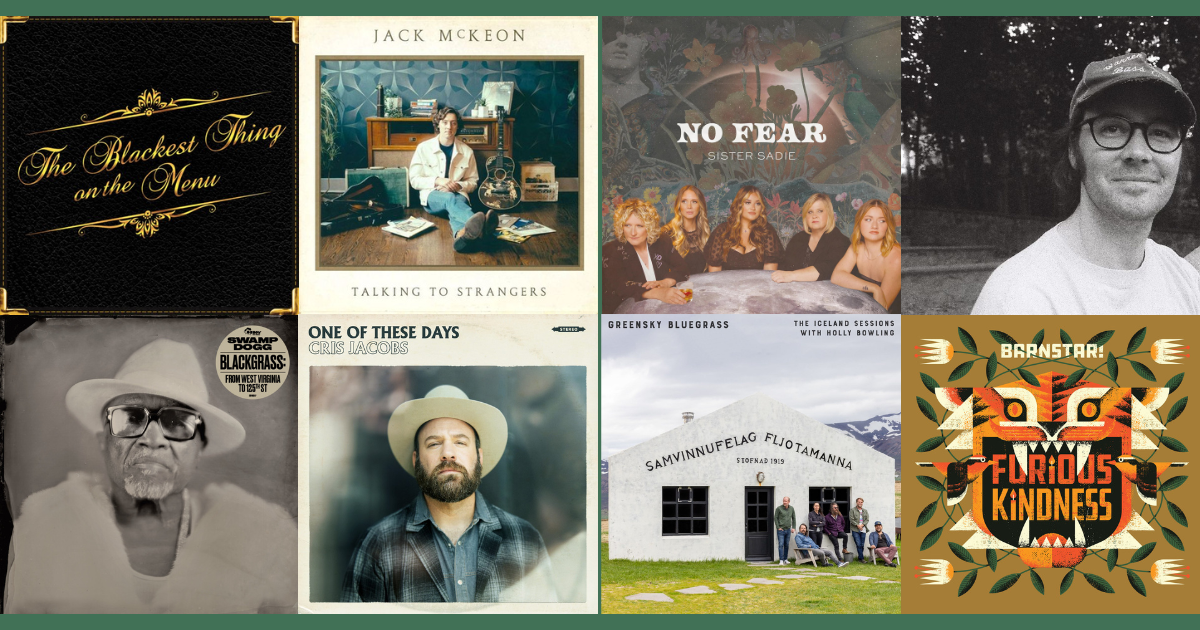
So far this year, there have been stellar releases by the biggest names in the genre, like Béla Fleck, Billy Strings, Tony Trischka, Laurie Lewis, and the Del McCoury Band. Country singer-songwriter Brit Taylor and roots-soul legend Swamp Dogg both released bluegrass titles this year as well, demonstrating how the age-old tradition of various styles and sounds cross-pollinating with bluegrass continues in the present day.
Supergroups like Sister Sadie, Greensky Bluegrass, and Gangstagrass have all unleashed critically-acclaimed projects in 2024, too, while newcomers like Wyatt Ellis and Jack McKeon impressed with records that sound mature and fully-realized for debut releases. And of course there’s plenty yet to come, as anticipation builds for long-awaited albums from bluegrass stalwarts and heroes like Jerry Douglas – who was just unveiled as a 2024 Bluegrass Hall of Fame inductee – and Gillian Welch & David Rawlings, who recently announced a new project, Woodland, their tenth studio album and first release in four years.
No matter how you cut it, 2024 has been a banner year for superlative bluegrass albums – and there is still so much more to come! Take a minute to amble through our favorite bluegrass releases of the year so far (in approximate chronological order), plus a few honorable mentions that pull heavily from bluegrass traditions and inspirations, and we’ll set the table for the albums we can’t wait to arrive later this year, too.
Cary Morin, Innocent Allies
A jaw-dropping acoustic guitarist who toggles between flatpicking, fingerstyle, blues, and many other styles, Cary Morin released a gorgeous visual art-inspired album earlier this year entitled Innocent Allies. The entire project oozes images of the West done up in bluegrass textures and tones, especially so in Morin’s rendition of “Whiskey Before Breakfast.” Read our feature on the album here.
Sister Sadie, No Fear
For a band that boasts alumni like Dale Ann Bradley and Tina Adair, it’s saying quite a lot to make the statement that this may be the best lineup of Sister Sadie yet. Their latest offering, No Fear, brings striking Nashville vibes together with a dash of the Chicks and features collaborations with country stars like Cam and Ashley McBryde. It’s no surprise this supergroup and their newest album are all over this year’s IBMA Awards nominations. Read our March Cover Story on No Fear here.
Wyatt Ellis, Happy Valley
A mere 15 years old, mandolin picker Wyatt Ellis certainly deserves the “bluegrass prodigy” designation he often receives, but dare not sell this young virtuoso short with such a moniker. There’s musicality, touch, and taste evident across his debut album, Happy Valley, well beyond his teenaged years. That’s just part of the reason behind why he’s able to attract such notable collaborators and guests as Marty Stuart, Sierra Hull, Mike Compton, and more. Keep an eye on this one, ‘cause there’s no telling just how far he will go in music, but it’s sure to be way up there!
Brit Taylor, Kentucky Bluegrassed
Pulling a page out of the bluegrass playbook of the ‘60s through ‘90s, country singer-songwriter Brit Taylor demonstrates the inseparable interconnectedness of country and bluegrass with Kentucky Bluegrassed, a reimagination of her 2023 country album, Kentucky Blue, played by a cracking bluegrass band. There are touches of Alan Jackson, Vince Gill, Patty Loveless, and so many more through the project. It certainly reminds of those eras, in which bluegrass artists and bands were just as likely to identify simply as “country” as they were “bluegrass.” The lines between these genres used to be much more blurry; we’re happy to see folks like Taylor – and many others – smear, complicate, and dirty up those genre demarcations once again. Kentucky Bluegrassed is a “don’t miss” album that may not be on every diehard grasser’s radar.
Missy Raines & Allegheny, Highlander
Missy Raines never left bluegrass, but Highlander feels like something of a return by this trophied and exalted bassist, singer, and songwriter after her last few more experimental and Americana-geared outings. This is her first recording with her “new” backing band, Allegheny, who have performed with her now for a handful of years. It’s a rollicking, up-tempo, dynamo of an album, but it’s never one note or stolid – or trying to pander to digital radio. There are calm moments, songs that will bring a tear to your eye, and political tones, too, all bolstering the tightness of the band and the trad-tastic, meta-mash energy herein. “Who Needs a Mine,” the stand out track in a superlative song sequence, will most likely go down in history as one of the best issues-oriented bluegrass songs ever written. Every bit as biting and timely as Hazel Dickens, Jean Ritchie, and so many other activist artists from the regions Raines grew up in. Read our recent feature interview here.
Béla Fleck, Rhapsody in Blue
The most traditional aspect of Béla Fleck’s music-making across his lifelong career is his constant and effortless innovation. As a community, we lose sight so easily of the fact that every first generation bluegrass star was an innovator, so many consummate musicians just “making it up as they go along.” Referring to Fleck’s Rhapsody in Blue as “making it up as he goes along” might raise an eyebrow at first, but one of the most fascinating threads throughout Fleck’s countless albums is his ability to ground whatever musical vocabulary he chooses within the traditions, styles, and physicality of bluegrass banjo. He doesn’t so much care what “does” or “doesn’t” fit on the banjo, he follows his whims, fancies, and inspirations and always makes it work. Perhaps only he could do so with Gerswhin! (And we are so glad that he did.)
Kyle Tuttle, Labor of Lust
Banjo player Kyle Tuttle released his second studio album, Labor of Lust, in February. You may know him from Molly Tuttle’s band, Golden Highway, or from his ubiquitous presence in jamgrass scenes over the past decade or so. The new album demonstrates his particular approach to newgrass, jamgrass, and engaging and exciting improvisational picking. His voice on the instrument is indelible. A modernist banjo player with endless panache, a strong sense of humor, and buckets of stamina and drive. We spoke to Tuttle about the project earlier this year.
Barnstar!, Furious Kindness
New Englander and Northeastern-based bluegrassers will be more than familiar with this raucous outfit, but the national bluegrass scene may need to be put onto the singular sounds of Barnstar! Made up of Mark Erelli, Zachariah Hickman, Charlie Rose, and Taylor and Jake Armerding, Barnstar! started as a side project for these in-demand musicians and songwriters and quickly blossomed into a chaotic, bombastic, and hilarious group that can just as easily go earnest, emotive, and touching. Furious Kindness is another selection here that you may not have yet encountered – and we’re here to rectify that. Need more? We hosted Erelli and Hickman on Basic Folk to chat about the project.
Cris Jacobs, One of These Days
If your first introduction to Cris Jacobs was the above song – “Poor Davey,” featuring Billy Strings – fed to you by the algorithm or a roots DJ or found via the “appears on” section of Strings’ streaming profiles, you certainly aren’t alone. A well-known musician in alt-country, rock and roll, and the often nebulous regions between these genres, Americana, and bluegrass, Jacobs may read as a newcomer in bluegrass, but his Jerry Douglas-produced album, One of These Days, is anything but a one-off or novelty project or ‘grassy interloping. This is deep and broad bluegrass that feels straight ahead and genre-expansive at the same time, drawing on guests like Lindsay Lou, the McCrary Sisters, Sam Bush, and more. The Strings track may be what first grabs you, but this album deserves a deep dive follow-up, immediately.
Greensky Bluegrass, The Iceland Sessions(featuring Holly Bowling)
An EP we loved so much it just had to be included on our Best Bluegrass Albums list. Pianist and keys player Holly Bowling joins illustrious jamgrass group Greensky Bluegrass to revive the often latent, near extinct, and severely underrated tradition of bluegrass piano. Over four tracks recorded in remote northern Iceland in 2023, the band and Bowling have curated a vibe that hinges on the present, focusing in on the exact moments in time wherein they captured these sounds and songs. It’s why we love jamgrass to begin with, right? The way the music calls all of us to be grounded in the present. That’s the exact spirit in which these recordings were made and the translation of that intention is more than just successful, it’s deeply resonant.
Bronwyn Keith-Hynes, I Built A World
Fiddler Bronwyn Keith-Hynes has found her voice – literally and figuratively. While her last studio release, Fiddler’s Pastime (2020), was more instrumental-focused, her latest project, I Built A World, finds her stepping up to the vocal mic with confidence. Her voice is strong and well-practiced while homey and down to earth, too. The song selections are bold, her collaborators are glitzy and first-rate, but each feature, guest, and musician serves the track they’re on and the album as a whole first and foremost. Keith-Hynes has certainly found her groove and her creative community, and we’re all reaping the benefits of her commitment to challenging herself and looking ahead to the future. We recently chatted with Bronwyn and her pal Brenna MacMillan about their respective solo projects – check it out here.
Swamp Dogg, Blackgrass: From West Virginia to 125th St
When the initial announcement of Swamp Dogg’s latest album, Blackgrass, reached the BGS team, electricity and excitement shot through our ranks. Here’s a project that speaks deeply to one of our highest-priority missions in bluegrass: to showcase the multi-ethnic, melting pot, diverse roots of our favorite genre of music. Bluegrass has never been a music for white folks only, no matter how prevalent that narrative is today, and this legendary multi-hyphenate musician, creator, and producer, Swamp Dogg, demonstrates that fact part and parcel over the course of this impeccable collection of music – with a backing band that includes many of the best pickers around today. There are countless remarkable aspects of this album, too many to include in this simple blurb, so head to Lizzie No’s feature on the project to learn more about why this project is purposefully rebellious and revolutionary.
Laurie Lewis, TREES
California bluegrass keystone Laurie Lewis was just announced as one recipient of this year’s IBMA Distinguished Achievement Awards. For decades she has been a center of gravity around which the California and West Coast bluegrass scenes orbit, like a perseverant mother tree from which so many young shoots and saplings have sprung. Her brand new album, TREES, draws upon her wellspring of through-hiking and naturalist knowledge to encounter, process, and challenge so many modern day realities – health issues, the ever-quickening climate crisis, personal and professional life hurdles, and much more. The result is touching, emotional, encouraging, and inspiring, wrapped in traditional bluegrass trappings that feel more in service to the songs than to legalistic genre criteria. Lewis is one of the best to ever make bluegrass and TREES is one of the best releases in her lauded and superlative catalog. We recently published our exclusive interview, which you won’t want to miss.
Tony Trischka, Earl Jam
One of the greatest banjo players today, our current Artist of the Month Tony Trischka has made a career trailblazing on melodic-style three-finger banjo, writing, composing, and recording music that only he could’ve made. For his latest album, Earl Jam, though, he instead leans on the timeless bluegrass task of emulating the greats – namely, Earl Scruggs. The track list is pulled from recordings of casual, at-home jam sessions between Earl, John Hartford, and others, and with his all-star band and fabulous guests, Trischka reiterates Earl’s idiosyncratic playing from these previously unheard recordings. It’s a fascinating context in which to rediscover the limitless intricacies behind Trischka’s playing and the way he synthesizes others’ influences into his own musical vocabulary. Whether stepping into the role – or, shall we say, roll – of Scruggs or making modern banjo compositions out on his own creative limbs, Tony Trischka makes it look effortless and executes everything he does at the highest level. Don’t miss our Artist of the Month feature and our discography deep dive.
Gangstagrass, The Blackest Thing on the Menu
With a band as incisive and forward-looking as Gangstagrass, there will always be countless reasons naysayers will attempt to use to disqualify their music as “bluegrass.” But when viewing this now 15-year-old group through an objective lens, you can see many more bluegrass qualities than not. Innovation (the oldest bluegrass tradition), improvisation, virtuosity, conversational lyrics, a blending of styles, genres, and textures, and the bringing together of creators and inspirations from a variety of backgrounds – that all sounds like bluegrass to us! Gangstagrass’s latest opus, The Blackest Thing on the Menu, finds the critically-acclaimed group at their strongest yet, with a Jerry Douglas track feature (“The Only Way Out is Through”) and plenty of hip-hop-meets-bluegrass excellence. In the present, folks may errantly write off this band as a novelty or an aberration, but in the future we will all view Gangstagrass as they have always been: one of the firsts in the quickly-developing tradition of roots hip-hop, rap string bands, and postmodern bluegrass re-interpreters.
Jack McKeon, Talking to Strangers
In the vein of country songwriters with bluegrass careers – or bluegrass songwriters with country careers (think Shawn Camp, Tom T. Hall, John Prine, Darrell Scott) – Jack McKeon’s debut album, Talking To Strangers, isn’t just bluegrass, but it certainly tracks as first class ‘grassy, down home, front porch music. These thoughtful, introspective lyrics are perfectly set, to a straight ahead bluegrass band like Ashby Frank, Justin Moses, Christian Sedelmeyer, and Vickie Vaughn. McKeon is inaugurating his catalog of recorded works demonstrating that his songs and his voice can be shapeshifters, at home on Music Row and on bluegrass stages and radio, both.
The Del McCoury Band, Songs of Love and Life
Del McCoury is one of the most-awarded personalities in the history of bluegrass and it’s truly no wonder why. He’s spent his entire life honing the family trade: the highest quality bluegrass around. At 85 years-old, every album, concert, performance, and festival we enjoy from Del and the boys is a gift that we’re determined to cherish and savor. His latest full length album, Songs of Love and Life, is sure to be shortlisted for the highest honors handed out by the Grammys and IBMA. This particular track, “Only the Lonely,” is a Roy Orbison cover that showcases Del’s lifelong penchant for not worrying about what is or isn’t bluegrass and instead doing his utmost to serve the song – hence the tasty, honky-tonkin’ bluegrass piano. (Bluegrass piano? Twice in one list??) The record includes a few more charming covers, plenty of brand new tracks, and a Molly Tuttle feature, too.
Brandon Godman, I Heard the Morgan Bell
A killer fiddler from Kentucky who’s performed with Laurie Lewis, Dale Ann Bradley, Jon Pardi, and many, many more, Brandon Godman recently released his first studio album as a solo artist since he was a teenager. Based in San Francisco, Godman is a touring fiddler turned luthier who remains an expert in so many musical styles from his home turf in northern Kentucky. From contest fiddling to western swing to pop country to bluegrass breakdowns and transatlantic hornpipes, Godman’s playing has grit, drive, and aggression, sure, but what stands out the most on I Heard the Morgan Bell, his album of all original compositions, is his emotional range, lyricism, and heartfelt tenderness. Throw in guests like Darol Anger, Patrick Sauber, Sam Reider, and more and you’ve got what will end up being one of the best fiddle-centric albums of this decade.
Tray Wellington, Detour to the Moon
Carrying the banjo innovation banner for millennial cuspers and Gen Z, Tray Wellington is anything but a traditional bluegrass banjo player – and that fact alone is what will always land him in the “solidly bluegrass” camp, by our reckoning. Like fellow listees Trischka, Tuttle, and Fleck, Wellington has found a voice of his very own on the five-string banjo and in recent years his musical offerings – which were already top-notch – have become exponentially more fascinating, fun, and entrancing as a result. His new EP, Detour to the Moon, includes seemingly through-composed, instrumental new acoustic music a la Punch Brothers alongside more straightforward original banjo tunes and a Kid Cudi cover that may just be the best bluegrass cover of a non-bluegrass hit in recent memory. Watching the excited recognition of “Pursuit of Happiness” ripple through the audience at a bluegrass festival while Tray Wellington Band is on stage kicking off the number will certainly never get old.
Billy Strings, Billy Strings Live Vol. 1
The People’s Bluegrass President, Billy Strings, is out with his first live album, Billy Strings Live Vol. 1. No one is doing it like Billy; selling out arenas, coliseums, and gigantic amphitheaters with what’s actually just a five-piece bluegrass band will always be remarkable and noteworthy. Plus, the way he and his team bring his audience into the creative process, feeding their insatiable appetites for content, for music, for four-hour-long tribute shows, is not simply to sell tickets, fill seats, and move product. Strings, at the beginning of the day and at the end of the day, is just a big ol’ bluegrass and guitar nerd. We love that about him. There’s almost no one else in the history of this music from whom we’d tolerate a 13 minute track. (By the way, that’s not the longest runtime on the album!) Keep doing it like only you do it, Billy, and we’ll all stick with you the whole entire way.
AJ Lee & Blue Summit, City of Glass
The last time we had a bluegrass artist take off on our website and socials like AJ Lee & Blue Summit are taking off now, it was Billy Strings playing “Meet Me at the Creek.” We’ve been following this Santa Cruz, California-based string band – featuring AJ Lee, Jan Purat, Scott Gates, and Sully Tuttle – for years, so it’s no surprise to us that the greater bluegrass audience is catching onto the special sound and style of Blue Summit and their brand new album, City of Glass. This is pointedly Californian bluegrass, meaning it is effortlessly traditional and organically inventive and generative. High lonesome harmonies and fiery pickin’ skills combine with soul, groove, emotion, and thoughtful writing. There are country moments, there are barn burners, but overall, it’s clear this young band have hit their stride and know who they are. We aren’t here to tell you the best of the best, per se, but if we were City of Glass would be at the very top.
Andrew Marlin, how dare you surprise release this divine album!? (Seriously, thank you, it was indeed a wonderful surprise.) Out last week with hardly more fanfare than a handful of social media posts, Marlin’s brand new collection, Phthalo Blue, has already charmed its way onto our “Best So Far” list. Featuring Stephanie Coleman, Allison de Groot, Clint Mullican, Josh Oliver, and Nat Smith, this is the perfect kind of bluegrass to put on while you work, tidy the house, or tend to your garden. You’ll find the healing effects herein don’t just come from rabbit tobacco.
Near-Bluegrass Honorable Mentions
Whatever you think about our list so far – and whether or not the albums on it qualify as bluegrass to you – here are just a handful of albums we would have regretted not including, but may have more tangential relationships to the genre than their fellows in this piece. Still, each of these fine records has obvious bluegrass bones, however subtle or overt they may be.
Willi Carlisle, Critterland
Many an old-time troubadour/poet such as Willi Carlisle has been a bluegrass musician, but perhaps Carlisle himself wouldn’t identify in that way. Still, there’s bluegrass throughout the critters and characters on this critically-acclaimed album, Critterland. We did a feature on the project, read that here.
Sierra Ferrell, Trail of Flowers
Her new album is markedly post-genre, but those in the know are already well aware that Sierra Ferrell came up through bluegrass circles. From her patinaed West Virginia voice – that brings Hazel Dickens to mind – to her cutting fiddle bowings, wherever she may roam musically, Ferrell will always have a home in bluegrass.
Rachel Sumner, Heartless Things
Rachel Sumner (formerly of Twisted Pine) is decidedly bluegrass, but somehow that seems too simplistic an umbrella for the nuanced music she creates and the special tones she strikes. She infuses so much of the Northeastern bluegrass, folk, Celtic, and jazz scenes and their respective vocabularies into her songs – they may not be exactly bluegrass, but they certainly don’t fall entirely outside that umbrella, either.
Zach Top, Cold Beer & Country Music
Now, this ain’t no bluegrass album – it’s Good Country, that’s for sure – but there’s a bluegrass story embedded within Zach Top’s hugely popular debut, Cold Beer & Country Music, that we’re determined to tell. Once a winner of SPBGMA’s band contest, Top grew up idolizing Tony Rice and Keith Whitley and playing in a bluegrass family band on the weekends. You can see bluegrass touches throughout this mainstream country record, just like when Ricky Skaggs, Whitley, the Osborne Brothers, and more targeted country radio with their songs and sound. Our Good Country feature interview explores all the ways bluegrass filters into his music.
Kaia Kater, Strange Medicine
Kaia Kater is another genre expander who hasn’t ever quite made bluegrass music, but has never been too far from that sonic space, either. She pulls more readily from indie and old-time and folk traditions, but her new album, Strange Medicine, feels like she’s developed an entirely new thing, where genre is a third space, something liminal, or purposefully transitional. Perhaps the most bluegrass thing about this stunning collection is groove, an ever present character through these gorgeous and intricate songs. Kater was our Artist of the Month in May.
Anticipated Albums Still to Come This Year
There’s plenty more where all that came from! Here are just a few of the as yet unreleased recordings we’re sure will be on our “Best Of” lists when we reach the end of the year. It’s not as far off as you think! Luckily, we’ll have a stellar soundtrack to get us there.
Alison Brown, Simple Pleasures (reissue) – available August 9
Rhonda Vincent, Destinations And Fun Places – available August 9
Bella White, Five For Silver– available August 16
Po’ Ramblin’ Boys, Wanderers Like Me – available August 16
Dan Tyminski, Whiskey Drinking Man – available August 16
Fruition, How to Make Mistakes – available August 23
Gillian Welch & David Rawlings, Woodland – available August 23
Caleb Caudle, Sweet Critters – available August 30
Various Artists, Bluegrass Sings Paxton – available August 30
Willie Watson, Willie Watson – available September 13
Jerry Douglas, The Set – available September 20
Twisted Pine, Love Your Mind– available October 18
Brenna MacMillan, Title TBA – release date TBA
BGS Staff also contributed to and assisted curating this list.
Earlier today, the International Bluegrass Music Association announced their nominees, recipients, and inductees to be honored at the 35th Annual Bluegrass Music Awards show to be held on September 26 in Raleigh, North Carolina. The nominations and honorees were revealed at a radio broadcast at SiriusXM in downtown Nashville, Tennessee that featured live performances by nominees Missy Raines & Allegheny and Authentic Unlimited.
Billy Strings, Sister Sadie, Authentic Unlimited, and Molly Tuttle & Golden Highway lead the nominations. Also announced during the event were this year’s Bluegrass Music Hall of Fame inductees and Distinguished Achievement Awards Recipients. Entering the Hall of Fame – the highest honor awarded by IBMA and its membership – are Jerry Douglas, Katy Daley, and Alan Munde.
Find the full list of nominees, inductees, and recipients below and make plans now to attend the IBMA Bluegrass Music Awards on Thursday, September 26, at the Martin Marietta Center for the Performing Arts in Raleigh, North Carolina during IBMA’s headline event of the year, their World of Bluegrass business conference and Bluegrass Live! festival.
ENTERTAINER OF THE YEAR Billy Strings Molly Tuttle & Golden Highway Del McCoury Band Sister Sadie The Po’ Ramblin’ Boys
VOCAL GROUP OF THE YEAR Authentic Unlimited Sister Sadie Blue Highway Del McCoury Band Molly Tuttle & Golden Highway
INSTRUMENTAL GROUP OF THE YEAR Billy Strings Michael Cleveland & Flamekeeper Travelin’ McCourys East Nash Grass Molly Tuttle & Golden Highway
SONG OF THE YEAR “Fall in Tennessee” – Authentic Unlimited Songwriters: John Meador/Bob Minner Producer: Authentic Unlimited Label: Billy Blue Records
“Too Lonely, Way Too Long” – Rick Faris with Del McCoury Songwriter: Rick Faris Producer: Stephen Mougin Label: Dark Shadow Recording
“Forever Young” – Daniel Grindstaff with Paul Brewster & Dolly Parton Songwriters: Jim Cregan/Kevin Savigar/Bob Dylan/Rod Stewart Producer: Daniel Grindstaff Label: Bonfire Music Group
“Kentucky Gold” – Dale Ann Bradley with Sam Bush Songwriters: Wayne Carson/Ronnie Reno Producer: Dale Ann Bradley Label: Pinecastle
ALBUM OF THE YEAR City of Gold – Molly Tuttle & Golden Highway Producers: Jerry Douglas/Molly Tuttle Label: Nonesuch
Last Chance to Win – East Nash Grass Producer: East Nash Grass Label: Mountain Fever
Jubilation – Appalachian Road Show Producer: Appalachian Road Show Label: Billy Blue Records
No Fear – Sister Sadie Producer: Sister Sadie Label: Mountain Home
So Much for Forever – Authentic Unlimited Producer: Authentic Unlimited Label: Billy Blue Records
GOSPEL RECORDING OF THE YEAR “When I Get There” – Russell Moore & IIIrd Tyme Out Songwriter: Michael Feagan Producer: Russell Moore & IIIrd Tyme Out Label: Independent
“Thank You Lord for Grace” – Authentic Unlimited Songwriter: Jerry Cole Producer: Authentic Unlimited Label: Billy Blue Records
“Just Beyond” – Barry Abernathy with John Meador, Tim Raybon, Bradley Walker Songwriters: Rick Lang/Mike Richards/Windi Robinson Producer: Jerry Salley Label: Billy Blue Records
“God Already Has” – Dale Ann Bradley Songwriter: Mark “Brink” Brinkman/David Stewart Producer: Dale Ann Bradley Label: Pinecastle
“Memories of Home” – Authentic Unlimited Songwriter: Jerry Cole Producer: Authentic Unlimited Label: Billy Blue Records
INSTRUMENTAL RECORDING OF THE YEAR “Rhapsody in Blue(grass)” – Béla Fleck Songwriter: George Gershwin arr. Ferde Grofé/Béla Fleck Producer: Béla Fleck Label: Béla Fleck Productions/Thirty Tigers
“Knee Deep in Bluegrass” – Ashby Frank Songwriter: Terry Baucom Producer: Ashby Frank Label: Mountain Home
“Panhandle Country” – Missy Raines & Allegheny Songwriter: Bill Monroe Producer: Alison Brown Label: Compass Records
“Lloyd’s of Lubbock” – Alan Munde Songwriter: Alan Munde Producer: Billy Bright Label: Patuxent
“Behind the 8 Ball” – Andy Leftwich Songwriter: Andy Leftwich Producer: Andy Leftwich Label: Mountain Home
NEW ARTIST OF THE YEAR East Nash Grass Bronwyn Keith-Hynes AJ Lee & Blue Summit Wyatt Ellis The Kody Norris Show
COLLABORATIVE RECORDING OF THE YEAR “Brown’s Ferry Blues” – Tony Trischka featuring Billy Strings Songwriters: Alton Delmore/Rabon Delmore Producer: Béla Fleck Label: Down the Road
“Fall in Tennessee” – Authentic Unlimited with Jerry Douglas Songwriters: John Meador/Bob Minner Producer: Authentic Unlimited Label: Billy Blue Records
“Forever Young” – Daniel Grindstaff with Paul Brewster, Dolly Parton Songwriters: Jim Cregan/Kevin Savigar/Bob Dylan/Rod Stewart Producer: Daniel Grindstaff Label: Bonfire Music Group
“Bluegrass Radio” – Alison Brown and Steve Martin Songwriters: Steve Martin/Alison Brown Producers: Alison Brown/Garry West Label: Compass Records
“Too Old to Die Young” – Bobby Osborne and CJ Lewandowski Songwriters: Scott Dooley/John Hadley/Kevin Welch Producer: CJ Lewandowski Label: Turnberry Records
MALE VOCALIST OF THE YEAR Dan Tyminski Greg Blake Del McCoury Danny Paisley Russell Moore
FEMALE VOCALIST OF THE YEAR Molly Tuttle Jaelee Roberts Dale Ann Bradley AJ Lee Rhonda Vincent
BANJO PLAYER OF THE YEAR Kristin Scott Benson Gena Britt Alison Brown Béla Fleck Rob McCoury
BASS PLAYER OF THE YEAR Missy Raines Mike Bub Vickie Vaughn Todd Phillips Mark Schatz
FIDDLE PLAYER OF THE YEAR Jason Carter Bronwyn Keith-Hynes Michael Cleveland Stuart Duncan Deanie Richardson
RESOPHONIC GUITAR PLAYER OF THE YEAR Justin Moses Rob Ickes Jerry Douglas Andy Hall Gaven Largent
GUITAR PLAYER OF THE YEAR Billy Strings Molly Tuttle Trey Hensley Bryan Sutton Cody Kilby
MANDOLIN PLAYER OF THE YEAR Sierra Hull Sam Bush Ronnie McCoury Jesse Brock Alan Bibey
MUSIC VIDEO OF THE YEAR “Willow” – Sister Sadie Label: Mountain Home
“Fall in Tennessee” – Authentic Unlimited Label: Billy Blue Records
“The City of New Orleans” – Rhonda Vincent & The Rage Label: Upper Management Music
“I Call Her Sunshine” – The Kody Norris Show Label: Rebel Records
“Alberta Bound” – Special Consensus with Ray Legere, John Reischman, Patrick Sauber, Trisha Gagnon, Pharis & Jason Romero, and Claire Lynch Label: Compass Records
BLUEGRASS MUSIC HALL OF FAME INDUCTEES Alan Munde Jerry Douglas Katy Daley
DISTINGUISHED ACHIEVEMENT AWARD RECIPIENTS Cindy Baucom Laurie Lewis Richard Hurst ArtistWorks Bloomin’ Bluegrass Festival
Photo Credit: Billy Strings by Jesse Faatz; Sister Sadie by Eric Ahlgrim.
Banjo master Tony Trischka is a bluegrass and roots music renaissance man whose career goes back nearly 60 years, to his early days with his first group, the Down City Ramblers. He’s been making recordings for almost as long, appearing on-record for the first time on Country Cooking’s 1971 debut for the fabled Rounder Records label.
Given the width and breadth of Trischka’s career and sprawling discography, summarizing the man’s recorded legacy is not just a tall order, but a mountainous one. Nevertheless, we’ve made the attempt. Here are a dozen recordings that give a sense of Trischka’s many artistic sides as collaborator, innovator, teacher, keeper of the flame, and all-around musical good spirit.
“Kentucky Bullfight” – Country Cooking (1974)
Trischka was one of two banjo players in this collegiate ensemble. The other was future Hot Rize member Pete Wernick, who spent some time talking up his bandmate to Rounder Records co-founder Ken Irwin. “I was writing a bunch of tunes, and Pete told Ken, ‘Tony should do a solo album,’” Trischka remembered. “Ken said, ‘Sure, go ahead.’”
Irwin cites “Kentucky Bullfight” as the Country Cooking song that convinced him Trischka would be worth signing as a solo act, too.
“China Grove” – Tony Trischka (1974)
Trischka hails from the Northern environs of Syracuse, New York, and it was fairly common for Yankee banjo players of his era to indulge some unusual tangents. “My first album was, comparatively speaking, a little on the bizarre side,” Trischka himself admits. That’s certainly the case for this instrumental from his 1974 solo debut, Bluegrass Light. “China Grove” has East Asian accents throughout and even a saxophone solo from his Country Cooking bandmate, Andy Statman.
“Roll in My Sweet Baby’s Arms” – Tony Trischka (1976)
It seems like a rite of passage that everybody has to put their own stamp on the venerable Flatt & Scruggs bluegrass classic, “Roll in My Sweet Baby’s Arms.” That goes for Trischka on his 1976 album, Heartlands, but few other artists would have the imaginative audacity to kick it off with a drum solo (plus more saxophone).
“Don’t Let Your Deal Go Down” – Tony Trischka (1978)
Another piece of classic repertoire from the wayback machine, “Don’t Let Your Deal Go Down” is the song that made bluegrass forerunner Charlie Poole a star in 1925. Trischka cut it on 1978’s Banjoland in an ambitious all-star arrangement alongside fellow banjo players Bill Keith and Béla Fleck. Also present are resonator guitarist Jerry Douglas, mandolinist Buck White, and guitarist Tony Rice, who adds a definitive vocal.
“They’ll Never Keep Us Down” – Hazel Dickens (1981)
Formerly half of the pioneering female duo Hazel & Alice (with Alice Gerrard), the late great Hazel Dickens was one of Trischka’s best longtime collaborators. His elegant banjo and her emotionally raw voice were a great match on many songs, among them this classic from Dickens’ 1981 album, Hard Hitting Songs For Hard Hit People.
“Bill Cheatham” – Béla Fleck, Bill Keith, and Tony Trischka (1981)
In which three of the foremost roots music banjo virtuosos of the 20th century mesh with tasteful seamlessness while deftly keeping out of each other’s way. From 1981’s Fiddle Tunes for Banjo, this was one of the album’s three tunes that featured Trischka, Fleck, and Keith all playing together.
“Country Death Song” – Violent Femmes (1984)
From Milwaukee, this folk-punk trio puts a gothic spin on folk music. To that end, they often enlist unexpected collaborators to do cameo appearances, adding just-right punctuation. Here is one of the Femmes’ early examples, featuring Trischka’s banjo on their 1984 second album, Hallowed Ground. Nearly two decades later, the Femmes would return the favor by appearing on “Down in the Cider House,” a track on Trischka’s World Turning album.
“New York Chimes” – Tony Trischka (1985)
Trischka has always had a way with clever puns, “New York Chimes” among them. From 1985’s Béla Fleck-produced Hill Country album, “New York Chimes” is also a fine example of Trischka’s higher-gear fast playing. And the band is, of course, spectacular – Jerry Douglas, Tony Rice, Sam Bush.
“Old Joe Clark” – Tony Trischka (1992)
As a dedicated keeper of the flame and teacher/mentor, Trischka has always been up for putting the music into unusual places. One of the most unusual was a 1992 episode of the children’s cartoon, “Where in the World is Carmen Sandiego?,” on which Trischka wandered on camera playing the 19th-century fiddle tune “Old Joe Clark” during a game-show segment.
“World Turning” – Tony Trischka (1993)
Among Trischka’s many virtues as a player, one of the best is that he knows how to back up great singers. And here is a classic example from Trischka’s wildly eclectic 1993 album, World Turning. The title track is a cover of the 1975 Fleetwood Mac song, sung by Dudley Connell and Alison Krauss with Trischka adding just-right banjo flair.
“Shifting Sands of Time” – The Wayfaring Strangers (2001)
Another of Trischka’s far-flung, multi-hyphenate genre experiments is his 2001 album, Shifting Sands of Time, with a wide-ranging guest list that goes from bluegrass patriarch Ralph Stanley to ’90s pop star Tracy Bonham. The title track is at least as worldly as anything his longtime mate Béla Fleck ever put out.
“Brown’s Ferry Blues” – Tony Trischka (2024)
We close with another of Trischka’s all-star collaborations, the opening track from this year’s Earl Scruggs tribute album Earl Jam. “Brown’s Ferry Blues” kicks off with very choice guitar and vocals from modern-day superstar Billy Strings, and Trischka, Fleck, Bush, and fiddler Michael Cleveland are all right there with him.
This website uses cookies to improve your experience. We'll assume you're ok with this, but you can opt-out if you wish.AcceptRejectRead More
Privacy & Cookies Policy
Privacy Overview
This website uses cookies to improve your experience while you navigate through the website. Out of these, the cookies that are categorized as necessary are stored on your browser as they are essential for the working of basic functionalities of the website. We also use third-party cookies that help us analyze and understand how you use this website. These cookies will be stored in your browser only with your consent. You also have the option to opt-out of these cookies. But opting out of some of these cookies may affect your browsing experience.
Necessary cookies are absolutely essential for the website to function properly. This category only includes cookies that ensures basic functionalities and security features of the website. These cookies do not store any personal information.
Any cookies that may not be particularly necessary for the website to function and is used specifically to collect user personal data via analytics, ads, other embedded contents are termed as non-necessary cookies. It is mandatory to procure user consent prior to running these cookies on your website.