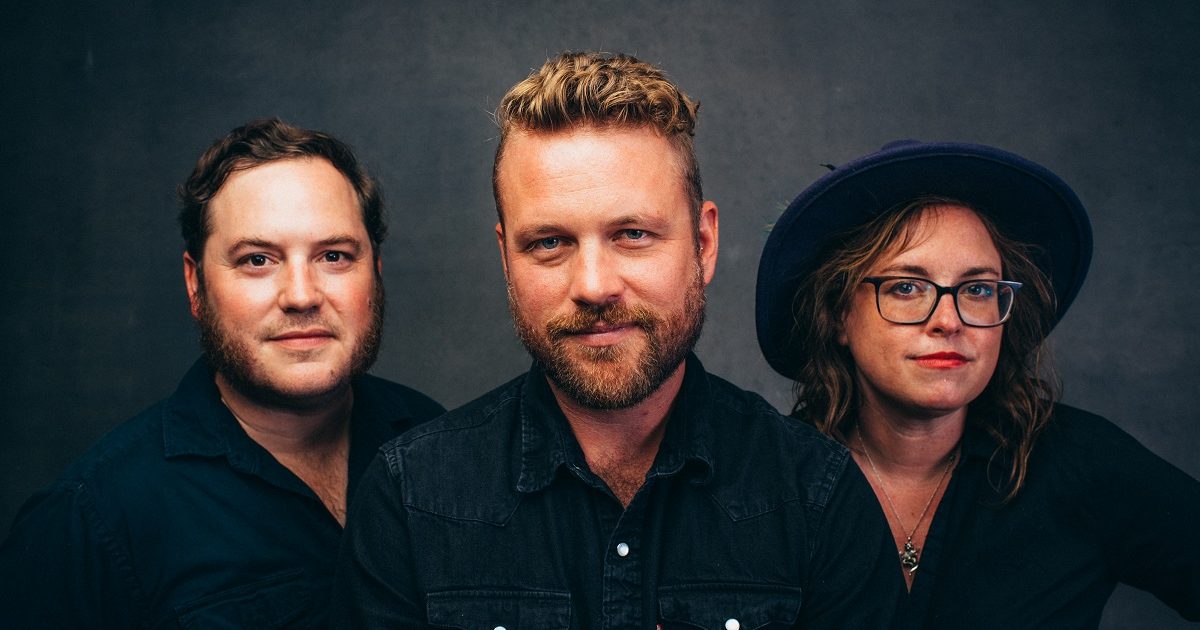
Nominees for the 31st Annual IBMA Bluegrass Music Awards have been revealed, with six nominees competing for Entertainer of the Year in 2020: Balsam Range, Billy Strings, Del McCoury Band, Doyle Lawson & Quicksilver, Sister Sadie, and Special Consensus. The extra nominee is due to a tie; in addition, the Album of the Year category has seven nominees, also due to a tie.
Three inductees will join the Bluegrass Hall of Fame: owner of Nashville’s iconic Station Inn, J.T. Gray; hardcore bluegrass traditionalists The Johnson Mountain Boys; and one of the premier bands at the forefront of the contemporary/progressive bluegrass movements of the 1970s and ’80s, New Grass Revival.
Additionally, the following will receive the Distinguished Achievement Award: festival pioneers Norman & Judy Adams, Musicians Against Childhood Cancer (MACC) founders Darrel & Phyllis Adkins, fiddle virtuoso/educator Darol Anger, San Diego’s KSON Bluegrass Special host Wayne Rice, and bluegrass innovator Jack Tottle.
The IBMA Awards will be broadcast on SiriusXM’s Bluegrass Junction on Thursday, October 1. However, the annual World of Bluegrass Conference will be virtual-only, due to COVID-19 concerns.
The IBMA Bluegrass Music Awards nominations are below.
ENTERTAINER OF THE YEAR (Tie)
Balsam Range Billy Strings Del McCoury Band Doyle Lawson & Quicksilver Sister Sadie Special Consensus
VOCAL GROUP OF THE YEAR
Balsam Range Blue Highway Doyle Lawson & Quicksilver Sister Sadie Russell Moore & IIIrd Tyme Out
INSTRUMENTAL GROUP OF THE YEAR
Michael Cleveland & Flamekeeper Mile Twelve Ricky Skaggs & Kentucky Thunder Sam Bush Band The Travelin’ McCourys
ALBUM OF THE YEAR (Tie)
Chicago Barn Dance Artist: Special Consensus Label: Compass Records Producer: Alison Brown
Home Artist: Billy Strings Label: Rounder Records Producer: Glenn Brown
Live in Prague, Czech Republic Artist: Doyle Lawson & Quicksilver Label: Billy Blue Records Producers: Doyle Lawson and Rosta Capek
New Moon Over My Shoulder Artist: Larry Sparks Label: Rebel Records Producer: Larry Sparks
Tall Fiddler Artist: Michael Cleveland Label: Compass Records Producers: Jeff White, Michael Cleveland, and Sean Sullivan
Toil, Tears & Trouble Artist: The Po’ Ramblin’ Boys Label: Rounder Records Producer: Dave Maggard
Tribulation Artist: Appalachian Road Show Label: Billy Blue Records Producers: Jim VanCleve, Barry Abernathy, and Appalachian Road Show
SONG OF THE YEAR
“Both Ends of the Train” Artist: Blue Highway Writers: Tim Stafford/Steve Gulley Label: Rounder Records Producers: Blue Highway
“Chicago Barn Dance” Artist: Special Consensus with Michael Cleveland & Becky Buller Writers: Becky Buller/Missy Raines/Alison Brown Label: Compass Records Producer: Alison Brown
“Haggard” Artist: The Grascals Writer: Harley Allen Label: Mountain Home Music Company Producers: The Grascals
“Hickory, Walnut & Pine” Artist: The Po’ Ramblin’ Boys Writers: Slaid Cleaves/Nathan Hamilton Label: Rounder Records Producer: Dave Maggard
“Living Like There’s No Tomorrow” Artist: Doyle Lawson & Quicksilver Writers: Jim McBride/Roger Alan Murrah Label: Billy Blue Records Producers: Doyle Lawson and Rosta Capek
GOSPEL RECORDING OF THE YEAR
“Angel Too Soon” Artist: Balsam Range Label: Mountain Home Music Company Producers: Balsam Range
“Because He Loved Me” Artist: Dale Ann Bradley Label: Pinecastle Records Producer: Dale Ann Bradley
“Gonna Rise and Shine” Artist: Alan Bibey & Grasstowne Label: Mountain Fever Records Producer: Mark Hodges
“I’m Going to Heaven” Artist: Doyle Lawson & Quicksilver Label: Billy Blue Records Producers: Doyle Lawson and Rosta Capek
“Little Black Train” Artist: Appalachian Road Show Label: Billy Blue Records Producers: Barry Abernathy, Darrell Webb, and Ben Isaacs
INSTRUMENTAL RECORDING OF THE YEAR
“Tall Fiddler” Artist: Michael Cleveland with Tommy Emmanuel Label: Compass Records Producers: Jeff White, Michael Cleveland, and Sean Sullivan
“Shenandoah Breakdown” Artist: Doyle Lawson & Quicksilver Label: Billy Blue Records Producers: Doyle Lawson and Rosta Capek
“Soldier’s Joy” Artist: Jesse McReynolds with Michael Cleveland Label: Pinecastle Records Producer: Jesse McReynolds
“The Appalachian Road” Artist: Appalachian Road Show Label: Billy Blue Records Producer: Jim VanCleve, Barry Abernathy, and Appalachian Road Show
“Guitar Peace” Artist: Billy Strings Label: Rounder Records Producer: Glenn Brown
NEW ARTIST OF THE YEAR
Appalachian Road Show Carolina Blue High Fidelity Merle Monroe Mile Twelve
COLLABORATIVE RECORDING OF THE YEAR
“Chicago Barn Dance” Artists: Special Consensus with Michael Cleveland & Becky Buller Label: Compass Records Producer: Alison Brown
“I’m So Lonesome I Could Cry” Artists: Jason Barie featuring Del McCoury & Paul Williams Label: Billy Blue Records Producer: Jason Barie
“Tall Fiddler” Artists: Michael Cleveland with Tommy Emmanuel Label: Compass Records Producers: Jeff White, Michael Cleveland, and Sean Sullivan
“The Barber’s Fiddle” Artists: Becky Buller with Shawn Camp, Jason Carter, Laurie Lewis, Kati Penn, Sam Bush, Michael Cleveland, Johnny Warren, Stuart Duncan, Deanie Richardson, Bronwyn Keith-Hynes, Jason Barie, Fred Carpenter, Tyler Andal, Nate Lee, Dan Boner, Brian Christianson, and Laura Orshaw Label: Dark Shadow Recording Producer: Stephen Mougin
“On and On” Artists: Gena Britt with Brooke Aldridge Label: Pinecastle Records Producer: Gena Britt
MALE VOCALIST OF THE YEAR
Ronnie Bowman Del McCoury Russell Moore Danny Paisley Larry Sparks
FEMALE VOCALIST
Brooke Aldridge Dale Ann Bradley Amanda Smith Molly Tuttle Rhonda Vincent
BANJO PLAYER OF THE YEAR
Kristin Scott Benson Gena Britt Gina Furtado Ned Luberecki Scott Vestal
BASS PLAYER OF THE YEAR
Barry Bales Mike Bub Todd Phillips Missy Raines Marshall Wilborn
FIDDLE PLAYER OF THE YEAR
Becky Buller Jason Carter Michael Cleveland Stuart Duncan Deanie Richardson
RESOPHONIC GUITAR PLAYER OF THE YEAR
Jerry Douglas Andy Hall Rob Ickes Phil Leadbetter Justin Moses
GUITAR PLAYER OF THE YEAR
Trey Hensley Billy Strings Bryan Sutton Molly Tuttle Jake Workman
MANDOLIN PLAYER OF THE YEAR
Alan Bibey Jesse Brock Sam Bush Sierra Hull Ronnie McCoury
For Black Americans, this day, Juneteenth, has long been a celebration of the momentous historical event of emancipation from slavery — and the nearly two and a half years it took for that news to reach all enslaved peoples in this country. Juneteenth is belatedly gaining wider recognition and arrives at a time of reckoning with systemic patterns of white supremacy, especially police brutality, that remain deeply entrenched.
Like many waves of national protest before it, the uprising in the wake of the deaths of George Floyd, Breonna Taylor, Ahmaud Arbery, Tony McDade and many others has spurred the creation of its own soundtrack, and the following list spotlights the contributions of seven roots-savvy, Black music makers. Some draw on lessons learned from how songs gave spiritual succor to those on the front lines of the 1960s Civil Rights struggle, with righteously raised fists and declarations of passion and purpose. Others opt for expression that feels far more personalized or particular, articulating an adamantly complex range of emotions and letting profoundly unsettled, and unsettling, questions hang in the air. All of them are fleshing out their own vivid, timely incarnations of movement music.
Leon Bridges specializes in sophisticated soul, sometimes artfully retro in presentation and other times landing at the thoroughly contemporary end of that musical lineage. His new song “Sweeter” is an example of the latter, two minutes and 50 seconds during which his buttery vocals glide over a lean drum machine pattern, delicate, gospel-dusted bits of guitar, keyboard, piano and bass and Terrace Martin’s saxophone figures. Bridges’ words land with the devastated finality of a black man whose life is leaving his body, taken from him by police. “I thought we moved on from the darker days,” he sings, his cadence fluttery and tone ruminative. “Did the words of the King disappear in the air, like a butterfly?” The blame-laying next line arrives in a burst: “Somebody should hand you a felony.”
Then, Bridges elongates his phrasing with righteous indignation, before steadying himself to spell out the loss: “‘Cause you stole from me/my chance to be.” The elegance he chose gives his performance subtly striking, emotional heft. “From adolescence we are taught how to conduct ourselves when we encounter police to avoid the consequences of being racially profiled,” Bridges wrote in a statement. “I have been numb for too long, calloused when it came to the issues of police brutality. The death of George Floyd was the straw that broke the camel’s back for me. It was the first time I wept for a man I never met. I am George Floyd, my brothers are George Floyd, and my sisters are George Floyd. I cannot and will not be silent any longer. Just as Abel’s blood was crying out to God, George Floyd is crying out to me.”
Chastity Brown has been honing her ability to create space for emotional resistance within her songs for a while now. She draws on the pointed, confessional potential of folk and soul and the digital texturing techniques of contemporary pop and hip-hop, while depicting the patient pursuit and safekeeping of self-knowledge as a sign of strength — one that differs wildly from the sort of dominance modeled by systemic power.
In her new song “Golden,” created on her iPad in her garage studio and shared with the world this week, Brown sounds willfully unhurried singing over a skittery programmed beat: “I’ve got joy, even when I’m a target/If ya think that’s political, don’t get me started/You know I’m golden and I flaunt it.” That savoring of selfhood is in striking contrast to the furious question she circles around during the chorus: “Why have I got to be angry?”
In the artist notes accompanying the song, Brown explained that she began writing it when her nephew was beaten by four white cops while walking home in Harlem, mere weeks before George Floyd died in her adopted hometown. “This collective trauma that black, indigenous, immigrant, and queer/trans folk feel is real,” she spelled out. “It’s every god damn day. Yet, we still thrive and flourish in our nature beauty, we still have swag and songs for days. We still have wild and wondrous imaginations like we are all the children of Octavia [Butler]. …This is for me, my people, and the UPRISING to defund police here in Minneapolis and thereby set a new standard for how communities want to be protected.”
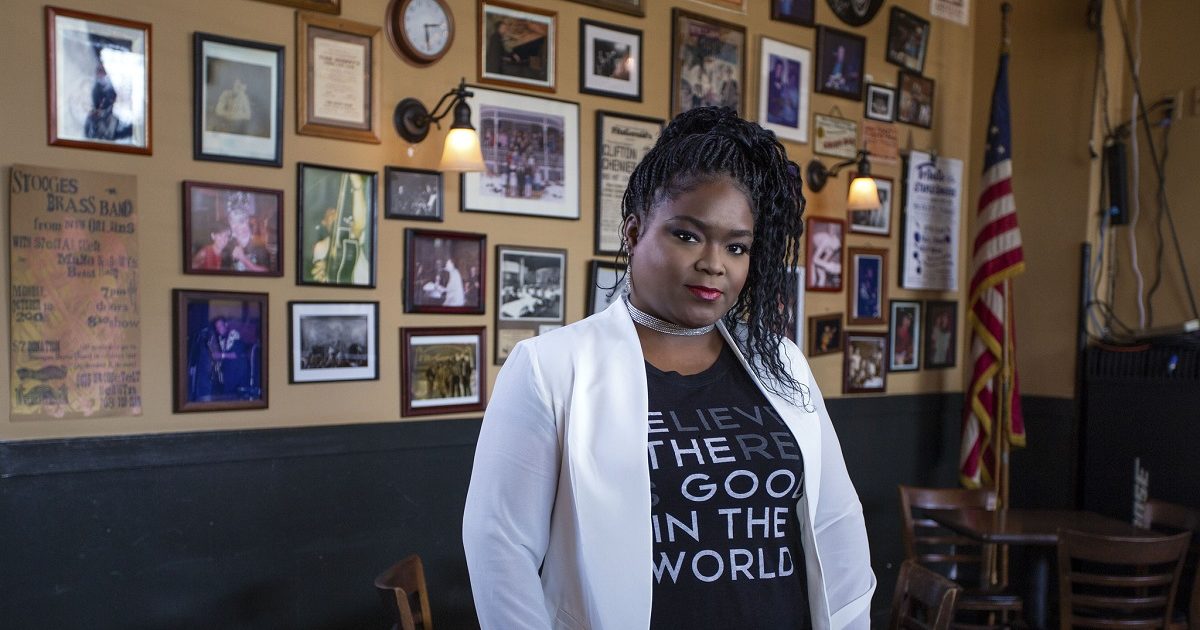
Shemekia Copeland, one of the brightest stars in contemporary blues, has been deliberate for years about broadening her repertoire and approach to encompass countrified styles, singer-songwriter song sources and statement-making folk and soul sensibilities and, in the process, positioning herself in the midst of roots music discourse. That’s the insightful perspective she brings to her just-released “Uncivil War,” whose string band style accompaniment boasts the contributions of Sam Bush and Jerry Douglas.
Coming from Copeland, and delivered with measured, dignified vibrato, the simple flipping of the name of the nation’s most notorious war to “uncivil” slyly strips a veneer of respectability from the racist and romanticized Lost Cause religion. She strikes a tone of weary but resolute optimism throughout. “It’s not just a song,” she clarified in a statement. “I’m trying to put the ‘united’ back in the United States. Like many people, I miss the days when we treated each other better. For me, this country’s all about people with differences coming together to be part of something we all love. That’s what really makes America beautiful.”
Kam Franklin, on her own and with her Houston horn band The Suffers, has the wide-ranging musical instincts, imagination, nerve, and ear for earthy verisimilitude to make big statements while zeroing in on small interactions. A couple of weeks back, she posted a brand new, self-recorded song fragment to SoundCloud, a platform well suited to off-the-cuff expression, and with it, this comment: “I saw a photo of Breonna Taylor with her homegirls earlier today, and it gutted me. I won’t forget her. I wrote this birthday song for her, her friends that wondered where she was before the news came out, and everyone that loved her.”
Titled “Happy Birthday Breonna,” it’s a pensive, sinuous bit of ‘70s soul that drives home the fact that Taylor was ripped from a web of close relationships. The first, and only verse, lands like a voicemail from a friend who grew worried when she couldn’t reach Taylor. Franklin’s graceful trills and softly insistent phrasing have an understatement that suggests fretful preoccupation. Then she moves into a point-counterpoint refrain, murmuring birthday wishes to Taylor in her breathy upper register and making a devastating declaration beneath: “You should be here.”
Singer-guitarist and actor Celisse Henderson began work on writing, recording, and filming a video for her song “FREEDOM” four years ago, following the slayings of Philando Castile and Alton Sterling, and watched as black deaths and protest momentum multiplied before she finally completed and released her project earlier this month.
In a message on her website, Henderson explained, “I, along with millions of people, watched video footage of these unarmed black men losing their lives in the most horrific ways. The truth that these unjust deaths revealed about our country, including the systemic failings of our criminal justice system, became my personal call-to-action. Then the 2016 election night happened, and the results added a whole new layer to the purpose of this song and project. Now, almost four years later, too little has been done, and the story remains the same. With the horrific and unjust killings of Ahmaud Arbery, Breonna Taylor, and George Floyd weighing heavily on our hearts and minds, it is time to release ‘FREEDOM’ as a rallying cry and a call to action to stand up and fight for our freedom.”
Historic footage of the March on Washington that opens the clip is a reminder of the buoying role that spirituals played in the Civil Rights movement of the 1960s, and serves the narrative function of positioning Henderson to measure the too-meager progress for Black Americans since. The track is gospel-schooled and hard-rocking, powered by a thunderous, syncopated drum pattern and grinding electric guitar attack. With gospel fervor and a touch of theatrical flourish, Henderson summons a spirit of urgency and extends a broad welcome to all who are affected or disturbed by injustice.
Joy Oladokun, a Nigerian-American singer-songwriter who’s quietly carving out her place in Nashville’s professional songwriting community with introspective, melancholy warmth, steered a co-writing appointment with Natalie Hemby toward an expression of grief. The result was “Who Do I Turn To?” a naked airing of fear and distrust.
Oladokun’s reedy, plaintive performance is accompanied only by minimal piano chords. She spends the chorus adding up horrifying realizations that lead her to a resounding question: “If I can’t save myself/If it’s all black and white/If I can’t call for help/in the middle of the night/If I can’t turn to god/If I can’t turn to you/Who do I turn to?” Her voice subtly catches on the word “help,” as though knowing that life-giving protection is unavailable to her constricts her breath. Oladokun underscored the importance of the chorus lyrics to an interviewer: “[I]t’s illustrating that I don’t trust the police since I’m black. I don’t trust the police enough to know that they would think I’m not robbing my own home. I don’t think a lot of people understand what that is like. The feeling sucks.” In a separate statement she summarized her intent: “I wanted to write a firsthand account of how I feel and the question black people like me ask when this happens over and over again while nothing changes. I want it out now to help an already traumatized people cope, heal, and put words to their struggle.”
Wyatt Waddell, a young Chicago music-maker who’s been expertly, wittily, and self-sufficiently arranging home recordings of classic covers and singer-songwriter soul originals for the past few years, wrote “FIGHT!” as an anthem of admiration and uplift for young, Black Americans putting their bodies on the line in the streets and facing off against police force to agitate for change. “This song is me looking at what’s happening and what I’d tell the people protesting,” he specified in a statement. “I had to look outside of myself at what’s going on and how people are being affected. Hearing people’s fears, anxieties, and watching everything happening on TV really helped me write the song. I hope that it can be an anthem for my people as they’re fighting for a better America.”
Waddell begins with gospel-style repetition, creating a call-and-response pattern made up of his own layered vocals over a churchly foot stomp and hand clap groove: “There’s already so much pain/So much pain/So much pain/There’s already so much pain/And there ain’t nothin’ else we can do.” It seems like he could be building up to a confession of helplessness; instead, his funky refrain is bolstered by a sense of resolve and inevitability: “Nothin’ to do but fight.”
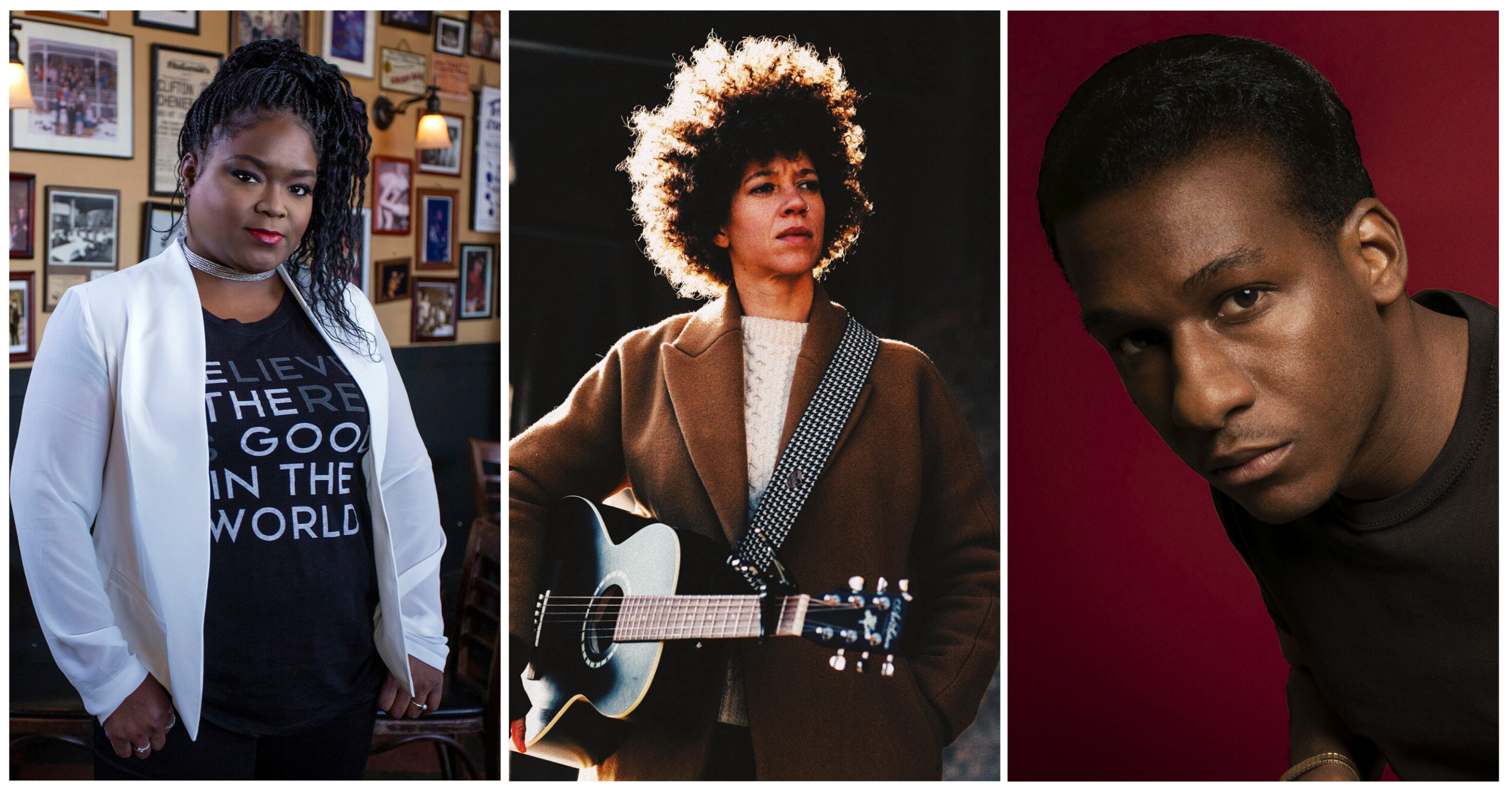
Photo credit: (L to R) Shemekia Copeland by Mike White; Chastity Brown by Wale Agboola; Leon Bridges by Jack McKain.
Artist:Shemekia Copeland Single: “Uncivil War” (feat. Sam Bush, Jerry Douglas, and the Orphan Brigade) Release Date: June 19, 2020 Record Label: Alligator Records
In Their Words: “It’s not just a song. I’m trying to put the ‘united’ back in the United States. Like many people, I miss the days when we treated each other better. For me, this country’s all about people with differences coming together to be part of something we all love. That’s what really makes America beautiful.” — Shemekia Copeland
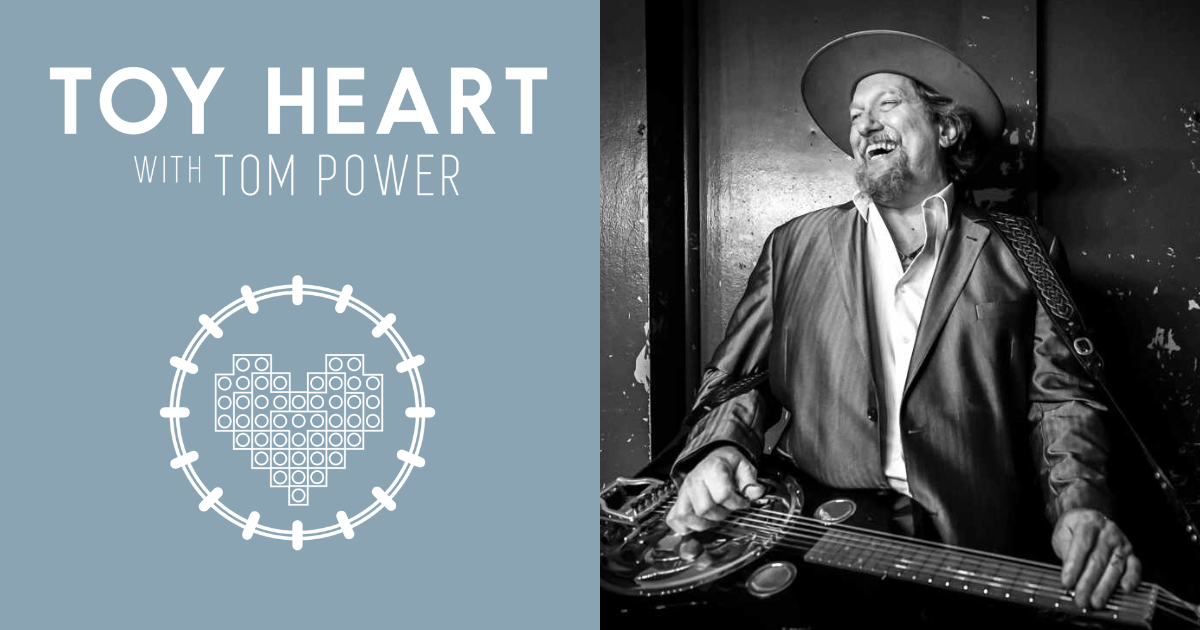
For the final episode of season one of Toy Heart, we have host Tom Power’s 2019 sit down with legendary artist, musician, and sideman Jerry Douglas at the International Bluegrass Music Association’s annual business conference in Raleigh, NC.
Douglas talks all about hearing “Uncle Josh” Graves for the first time with Flatt & Scruggs and, in the early days, using a toothbrush to turn his own guitar into something like a Dobro. He tells stories of his father’s band, the The West Virginia Travellers, and being discovered by the Country Gentlemen. He shares about his lifelong friendship with Ricky Skaggs — and his connections with Tony Rice, J.D. Crowe, Alison Krauss, Ray Charles, to O Brother, and more. Jerry Douglas will go down as one of the finest American musicians of his generation, but for this episode we focus on his true love — his life in bluegrass.
When I was a senior in high school, my lacrosse teammate Andy Thorn loaned me a couple CDs and a mandolin. The two CDs were the original David Grisman Quintet album and Sam Bush’s Glamour and Grits. I was an angsty teen drummer in a punk band, and when I popped the Grisman album in my Sony Discman and pushed play, my life changed forever.
We started a little band and I started learning mandolin and making weekly trips to the local record store to buy every “newgrass” album I could. I didn’t know anything, so searching through the bluegrass/country section was an adventure of discovery. I learned to recognize the font that Rounder Records used and started using liner notes to find other musicians to listen to.
A lot of the tracks on this list are track #1 on the album, and I think that’s because when I heard them for the first time, they magically seared themselves into my brain. When I hear them today they inspire the same excitement as they did when I first heard them, and they have had an enormous impact on the music that I create for the Jon Stickley Trio. — Jon Stickley
David Grisman – “E.M.D.”
The first track I ever heard in the vein of bluegrass/newgrass. I heard David Count “1,2,3,4…” just like the Ramones! Then they launch into the most indescribable, unbelievable, clean, rockin’ jam I’ve ever heard. Also my first introduction to my guitar hero, Tony Rice. Nothing compares to this track!
Sam Bush – “Whayasay”
Another leading cut. This was my introduction to the one and only Sam Bush. His kickoff tells you everything you need to know about Sam’s music. It’s masterful, tasteful, and it freakin’ ROCKS. Then he goes totally Mark Knopfler at the end. Blew my young mind!
Jerry Douglas, Russ Barenburg & Edgar Meyer – “Big Sciota”
I picked this record up at the store because, on the back cover, they are dressed in gorilla suits. I thought, these dudes MUST be cool. Something about the tone of this record is unparalleled. It’s just the nicest-sounding acoustic record I’ve ever heard. Still cook dinner to it almost every night and my wife walked down the aisle to another track from the album called “The Years Between.”
Ricky Skaggs & Kentucky Thunder – “Pig In A Pen”
Holy crap. This is another album I bought blind at the record shop knowing absolute nothing about the music. To this day I have never heard anything rock this hard! Also, my first intro to a big guitar hero, Bryan Sutton.
Bryan Sutton – “Decision At Glady Fork”
Senior year of high school my uncle Pat took me to the Béla Fleck Bluegrass Sessions concert. I knew who Sam Bush and Béla were, but it was my first time hearing Jerry Douglas, Stuart Duncan, and the young Bryan Sutton. They played this song and the audience pooped their pants!
Béla Fleck – “Blue Mountain Hop”
The ultimate supergroup in my opinion. This song got me thinking about composition and arrangement in a new way. It seems like each new part of the song was written with each individual soloist in mind. Also the giggles and growls in the intro remind you that they’re having a ball.
Béla Fleck & the Flecktones – “Sinister Minister”
Two words. Victor Wooten. Blew. My. Young. Mind! I’ve listened to this version of this song more times than I can count, and it’s one of the covers that we do in the trio. The Flecktones probably had more of an impact on our trio than anyone else out there.
The Bluegrass Album Band – “Blue Ridge Cabin Home”
This is another album where I had no idea what I was buying. It wasn’t until I looked at the back of the CD that I realized that Tony Rice was on it. It was my introduction to J.D. Crowe, Doyle Lawson, Bobby Hicks, and Todd Phillips. I fell in love with bluegrass banjo by listening to this song, and I was thrilled to find out there were five more volumes!!!
The Nashville Bluegrass Band – “Dog Remembers Bacon”
Another record store score that I grabbed just because “bluegrass” was in the title. LOL. These guys became my favorite group for years and this was always one of my favorite tracks. I learned about Gillian Welch from this album. Stuart Duncan is the best fiddler in the world!
Acoustic Syndicate – “No Time”
Man, I love these dudes SO much. My Uncle Pat gave this album to my dad around ‘98, and I promptly stole it. The chill energy of this album really spoke to me and I feel like it really embodies the spirit of the North Carolina festival scene. Super sentimental band for me!
Tracks from our new album “Scripting the Flip” that draw heavy on these influences:
Jon Stickley Trio – “Scripting the Flip”
This song is pretty much a bluegrass fiddle tune turned on its head. It reminds me of some of my favorite newgrass instrumentals that take the music somewhere new.
Jon Stickley Trio – “Driver”
Well, given that my buddy Andy Thorn got me into this music waaaaay back in the day, I had to bring it full circle and write a tune for him to come in and play on. This piece definitely draws on the music of the Flecktones and some of the tunes they play in odd meters.
Jon Stickley Trio – “Bluegrass in the Backwoods”
Kenny Baker, Bill Monroe’s longtime fiddler, was surprisingly one of the most innovative of the classic bluegrass pickers! He is thought of as a traditional fiddler, but his music is really anything but. I think this tune was way ahead of its time and we love the elements of gypsy jazz and Latin music in the melody. We HAD to cover this on at some point and it was so much fun!
In the past, we’ve been pretty much adamant in our command to GET. OFF. YOUR. ASS. Supporting musicians, writers, and creators means going out to shows, buying drinks at venues, volunteering at festivals, and so much more — except… not right now.
So here’s what you can do to help the music business — and all of your favorite hard-working, paycheck-to-paycheck artists. Just stay on your ass! Each week, we’ll round up a few of our favorite events, livestreams, and COVID-19 coping resources that we’ve scrolled by on our feeds or found in our inboxes.
What music are you spending your time with, now that you’re staying on your ass, too? Let us know in the comments.
Margo Price Plays a Tiny Desk (Home) Concert
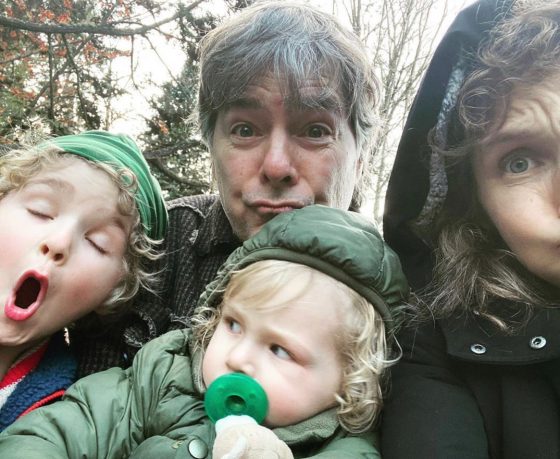
Thirteen days into self-quarantining with their two children, dog, and cat, husband and wife Margo Price and Jeremy Ivey play three songs — including an unreleased original, “Someone Else’s Problem” — for a recently retooled version of the ever-popular (and BGS favorite) Tiny Desk Concert series.
Béla Fleck & Abigail Washburn’s Banjo House Lockdown Livestream Series
Everyone’s favorite banjo power couple has been making the most of their isolation time, broadcasting on Facebook Live on Friday nights at 7:00 pm EDT (upcoming shows on March 27, April 3, and April 10). Whether you’re a banjo nerd or not, Fleck and Washburn are delightful entertainers, with innovative double banjo arrangements, traditional step dance, and the most adorable cameos made by their two cherubic children. It’s worth a tune-in.
Fleck’s expanded boxed set, Throw Down Your Heart – The Complete Africa Sessions, releases on March 27 and Washburn’s duo album with guzheng virtuoso Wu Fei drops April 3.
The International Bluegrass Music Association is curating a resources page specifically geared toward the bluegrass community and its working professionals, who, due to the grassroots, DIY nature of the genre, are set to be disproportionately impacted by this crisis. While IBMA is careful to point out this is not a complete list, it’s an excellent starting point for any performer who may feel like the proverbial “rug” has just been pulled out from underneath their feet.
A philanthropic arm of the Recording Academy / GRAMMY Awards, MusiCares has been supporting professionals in music industries with financial support for decades, providing a safety net of critical assistance in times of need. Artists and industry professionals can apply for assistance, but those who are able can donate as well — a rare opportunity for direct action! Find more information here, and apply for assistance here.
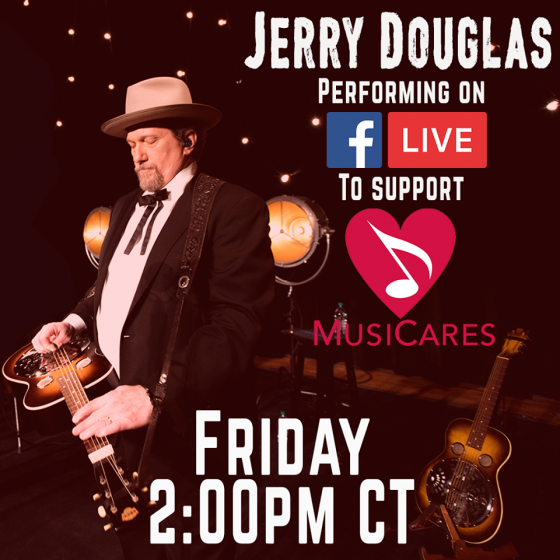
Jerry Douglas Performs LIVE to Raise Money for MusiCares
Speaking of MusiCares, the king of the resonator guitar himself, Jerry Douglas, will be going live on his Facebook page tomorrow, March 27, at 2:oopm CDT. So, if you’d like your donation with a side of the tastiest Dobro in the land, here’s your best bet!
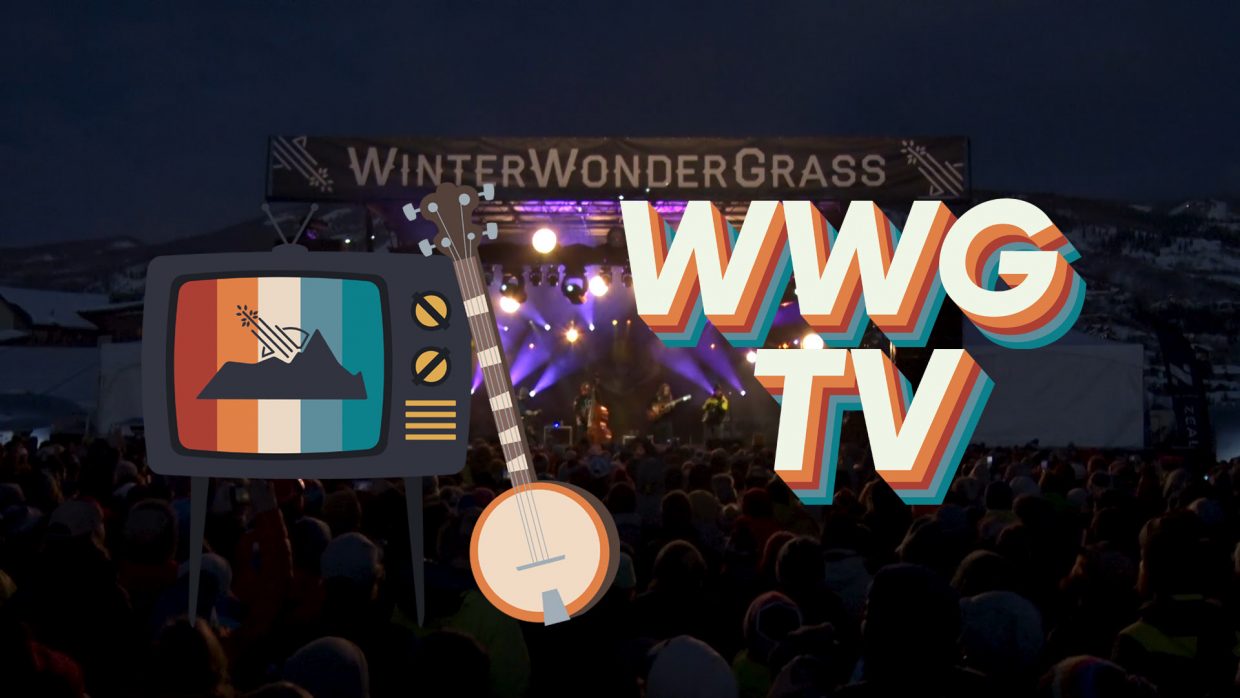
WinterWonderGrass TV
Our friends at WinterWonderGrass, who’ve unfortunately had to postpone both remaining WWG events in 2020, remain undaunted! Starting tomorrow, March 27, at 8:00 pm EDT, they’ll release a series of hour-long livestream “episodes” featuring music and performances from artists on WWG’s cream-of-the-crop lineups and sneak peeks at events and highlights of the wintry, ski-centered festivals that make them so special. You can tune in on Facebook, either on WWG’s page, or with your old pals, BGS, too. Two more episodes will follow, on April 3 and 10.
Banjoist, ethnomusicologist, and artist Jake Blount was interviewed by TIME regarding the financial repercussions of so many canceled events and shows so quickly. The report details how Blount was on his way to the airport to fly to Norway for a festival when he got word it was canceled. Blount’s upcoming album, Spider Tales, is set for release May 29.
This is real, folks. Voting is the best way to ensure that this pandemic and its effects — economic, social, mental, spiritual, and so on — are actually addressed in a way that centers workers and those most at risk, including freelance and gig economy workers who make all of our jobs, our music, and our art possible. You can register to vote or volunteer here, and get more info on voter registration here.
A familiar voice across Canada’s airwaves, Tom Power hosts CBC Radio’s q, an all-encompassing public radio talk show that perhaps best compares to NPR’s Fresh Air or PRI’s Studio 360. Though it does air on some public radio stations in the United States, Power is best known to the north, not only as a radio personality, but as a musician — he’s an accomplished guitarist with remarkable prowess in Irish and traditional Newfoundland musics — and musical scholar.
As it turns out, he’s also a diehard, lifelong fan of bluegrass. As a teenager he picked up the five-string banjo and took lessons (which had a much broader reach than just banjo techniques) from once Blue Grass Boy and now Bluegrass Hall of Famer Neil Rosenberg, who just so happened to live nearby in Power’s native Newfoundland. Though his work as host on q reaches far beyond his home island and his favorite chosen folk musics, his ethnomusicological expertise still centers on bluegrass — and he is a devout and starry-eyed fan.
BGS is proud to partner with Power and his co-producer Stephanie Coleman to present Toy Heart: A Podcast About Bluegrass, a platform for bluegrass storytelling and an examination of the true narratives that gave rise to this singular genre. Over eight episodes in its inaugural season Power will interview Grammy Award-winning, IBMA Award-winning, and truly earth-shattering artists in bluegrass about their lives, their stories, and their songs.
At Folk Alliance International in New Orleans last week BGS and Tom Power unveiled the first five minutes of the first episode of Toy Heart, which features Del McCoury accompanied by his sons Ronnie and Rob. Listen to that trailer right here on BGS, and read our interview, where Power discusses the pros and cons of his status as an “outsider,” the never-before-heard stories he unearthed in his recordings, and much more.
Our BGS audience, being largely American, might not have an understanding of who you are already. Then the audience there in Canada will know who you are as an interviewer and on-air personality, but maybe not that you are a dyed-in-the-wool bluegrass nerd of the best kind.
[Tom laughs]
How does it feel being the person executing these interviews, creating this podcast, and being in the center of that odd Venn diagram between really traditional bluegrass and folks who love it, and your more outward-facing persona on the radio in Canada and, to a lesser degree, here in America?
Tom Power: I am a little apprehensive and a little scared, but I also know that the things that are making me scared about this are making our podcast good. I feel like I have a lot of bona fides in this music, in terms of my knowledge of it. I’ve been obsessed with it since I was about fifteen years old, studied it extensively, did a lot of work on it. When I went down to Nashville and met the community there I started to understand that I was an outsider, that I was not someone who was part of that community. I’m from a very different group, I play very, very different music.
I’m kind of a new member, [everyone has] been very welcoming, but it’s a little intimidating. That being said, I think the perspective I have allows me to ask different questions, or at least think differently about the music than someone who’s in it. In this case I’m on the outside looking in, which allows me to ask different questions, allows me to have different conversations. I wouldn’t know the history of say, Ricky Skaggs and Bill Monroe as well as others. I know the history of how they got together, but I was able to look at Ricky and say, “Hey man, I don’t remember a lot from when I was four years old. Do you actually remember him handing you that mandolin? How is that possible?” Which is a question that maybe someone who was a little more involved in this community may not have thought of. They may have just accepted it as part of the lore.
As you’re describing this apprehension I’m wondering, are you thinking about how to mitigate for folks being like, “What about my favorite Del McCoury song? What about my favorite Ricky Skaggs anecdote?” How much of that are you anticipating and/or how much of this is you specifically turning over stones that haven’t been turned over before?
The format of the podcast is largely autobiographical. Each episode begins with, “Where were you born?” Or, “What was it like growing up?” I try to let the guest [lead]. On the radio show, q, say I have twenty minutes and ten pieces I really need to hit. In this case I have an hour, I have an hour and a half. I’m able to let them guide me where they want to go and I can steer them back around.
One nice thing about my interviewing background, and I think the reason q has been in any way successful in Canada and a bit in the U.S. as well, is because we focus on what the listener might want to know most. When I’m doing an interview I’m always thinking about how it’s coming out in someone’s headphones, how it’s coming out over somebody’s car stereo. What are they shouting at the radio? What are they shouting at their phone? I’m always trying to keep that in mind.
When you imagine that hypothetical listener, the average person you’re trying to target with the podcast, is it a diehard who knows everything about bluegrass, or is it somebody who’s maybe a new initiate? Who do you hope will come into the audience of this podcast?
More than anything what I’m trying to do is trying to get a record of some of this music. I think the podcast format is a great opportunity to get these kind of biographical stories on record. I found myself listening to people like Marc Maron, Howard Stern, and Terry Gross thinking, “Why can’t I do this for the music I love the most? Who’s doing this work?” The music that Del McCoury’s making, the music that Ricky Skaggs is making, or Alice Gerrard or Alison Brown, is as valid to me as something nominated for an Oscar or nominated for the Booker Prize. Who’s treating this music this way? Who’s giving it this attention to detail?
In any kind of music there’s a lot of myth-making and a lot of legend-making. I’m really interested in what the actual story is. Even if it might seem a little boring to them. The eight-hour drive from Nashville to somewhere else, I want to know what they talk about on that bus ride! I want to know the minutiae.
Some of my favorite interviews have been with people who I didn’t know. I’ve turned it on and I’ve gone, “Who is this person? Who is this director? Who is this actor?” And I found myself engrossed in the story. Take Jesse McReynolds, who told me on this podcast about driving around with his brother Jim from schoolhouse to schoolhouse, taking the car battery out of their car, putting it on stage, plugging the PA into it, and seeing if they could just get people to come. Is that not just a beautiful, human story? Bluegrass is the story of the original DIY music, as far as I can tell. These people were living what punks thought they were living for the first time in the 1970s. [Laughs]
I am aware that I’m entering sort of a hallowed ground of music and music aficionados. I really believe that this is just a matter of getting it on the record and using the little bit of training that I’ve had on public radio. Being able to sit down with Del McCoury and go through his entire life, his entire career, and ask, “What was it like when you had to quit music and go work in the logging industry? What was it like working in a sawmill? Tell me about the actual moment. I know the story that you were playing banjo [in your audition] for Bill Monroe and then Bill Keith came in, how’d that happen? Didn’t that hurt? You lost that gig — what was it like playing in a band with a guy you lost a job to?”
You do have these moments with so many of these icons that we know and love. We know their “mythology” intimately, yet you get stories out of them that people like you and I have never heard before, let alone people who don’t think and write about music every day for a living. You mention Del and Jim & Jesse, but is there another story that you’ve uncovered in your recording so far that you were surprised to hear?
I spoke to Del McCoury about the time he [spent] in the military. I said, “So you were in the military, how did that go?” Pretty broad, right? He tells a story about being in the military, about a couple of things that transpired while he was in the military that were hilarious. We laugh about it, and on the way out Ronnie and Rob McCoury stopped me and said, “Tom, we’ve never heard that story before.” These were his sons! Not just sons, but his business partners, his bandmates, and they said they had never heard him tell that story before.
I can tell you, Alice Gerrard told me what it was like to sing at Hazel Dickens’ funeral. I felt so honored that she would even be able to tell me that. I asked Béla Fleck, “Where is Tony Rice?” And what his relationship with Tony is like these days. I asked Jerry Douglas about drug use in bluegrass, something that often gets overlooked. And I should be clear, the goal is not to be in any way sensational. The world I come from in public radio, I find stories about humans way more interesting than stories about legends. What I was able to do is have human conversations while finding out the history of how a bunch of people created this thing that changed my life and it changed the lives of people all around the world. How is that possible? It’s largely by an unglamorous industry, a hard life on the road, touring nonstop, playing small barns, having lean years — the story of what actually happened there is more interesting to me than anything else.
I’ll give you one more. Ricky Skaggs, for the first time ever, tells the story of how Bill Monroe almost hired him to be a Blue Grass Boy. Hearing Ricky’s tone when he told me that story — he says to me, “I haven’t really talked about this before.” I felt so honored that I saw not a bluegrass legend on the Opry, but I saw a kid still being blown away because his hero spoke to him.
I think that’s one of the most beautiful things about bluegrass and even folks with even the most casual relationships to bluegrass understand that the community is just as important a part of the whole thing as the music itself. The legends that you’re describing just so happen to also still be human.
And they have stories they want to tell! And maybe haven’t even had the chance to tell them. I want to hear about it. I want to hear the story of how Béla Fleck heard that Tony Rice was making records without banjo and he thought, “That’s not right, and I gotta be the banjo player.” So he leaves New York! These are the stories of ambition, of love of music, honoring a tradition, and wanting to further things. Of humanity. I find it fascinating.
Ideally, if enough people listen to it, this season will just be one of many. I want to get to everybody! I mean, my white whale is Tony Rice. If you listen to these interviews a lot of them close with, “How do I get in touch with Tony Rice?” [Laughs] Alison Krauss is another I’d love to speak to, because other than Bill Monroe she is maybe the most transformative artist in the music’s history. I want to know what it was like to be a twelve-, thirteen-, fourteen-year-old child prodigy playing this music. I want to know what emails — I know there weren’t Tweets back then — or messages she got when she started adding drums to her music. I’m dying to talk to Larry Sparks! And the Osborne Brothers! These are crucial — I had to limit myself to eight people this time around and it was so challenging.
As someone who got a Bluegrass Unlimited subscription mailed to Newfoundland when he was fifteen, and a Banjo Newsletter subscription mailed to Newfoundland when he was sixteen, I still would not know anything about this if I wasn’t under the tutelage of, in my mind, the greatest mind in the history of bluegrass, Neil Rosenberg. It changed my life forever. When I first took this on the first thing I did was fly back to Newfoundland to see Neil. I told him, “I’m doing this thing, what should we talk about?” And he helped me out. If I can be a pebble onto the beach of the work he has done that would make me very happy.
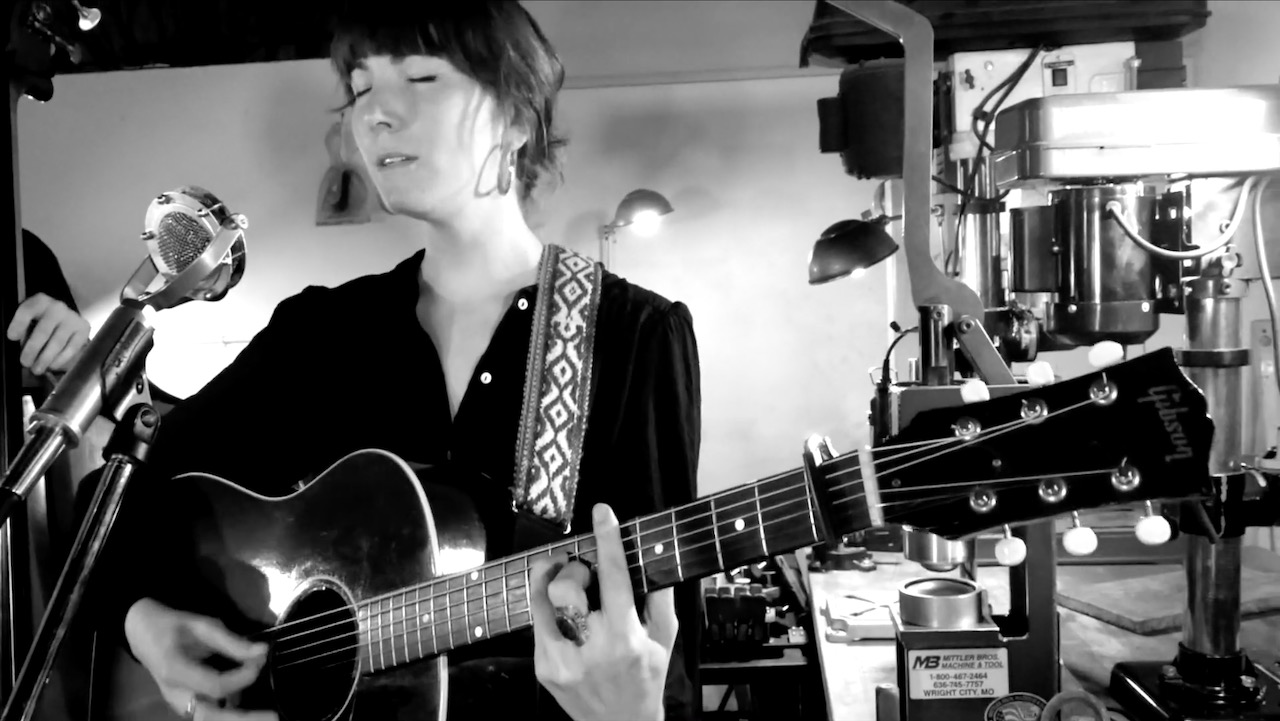
Since 2011 Portland, Oregon-based Ear Trumpet Labs has been blessing the music world with their finely crafted microphones, with their clean, natural sound and designs reminiscent of the styles of the 1930s and 40s. And for the past three years, they’ve been gifting us listeners with beautiful examples of their high quality equipment through their Workshop Sessions, pairing exquisite videography with master musicianship. We’re looking back at some of our favorites from 2019 as we move into the new year, when BGS + ETL will be partnering to bring you more content live at Ear Trumpet Labs!
We’re not alone in our love for this session: it was one of our BGS readers’ favorite stories of the year. But really how could it not be? It doesn’t get much better than two masters of their crafts getting together in a workshop and just letting it rip.
Both are using Edwina microphones, and there’s also a stereo pair of Delphinas as room mics.
In their unfortunately rare ode to the female traveller amidst a plethora of hobo songs in American folk music, the Local Honeys bring us what they call “a lovey-dovey, yodelly-wodelly one.” Is there anything better than a yodelly-wodelly love song from the perspective of a female hobo? No. Is there anything better than the Local Honeys? No.
Once the holiday cheer has passed, this time of year can be heavy. Tivel tells BGS this song is about “that stagnant winter sadness that can take over everything until you have to physically move yourself to shake it loose.” This stirring string arrangement may envelop you in those depths of winter, but it just might give you the hope to get yourself un-stuck.
Scottish folk musician Sermanni’s gentle delivery and sparse accompaniment of this Richard Thompson tune draws out the influence of the British folk ballad even more than the original Fairport Convention release in the late ‘60s. We dare you to not be completely drawn in by this breathtaking rendition.
Adam and David Moss’s arrangement of this devastating Peter Rowan-penned story of a Chinese immigrant couple separated and detained at San Francisco’s Angel Island, a regrettably common occurrence during the years of the immigration station’s operation from 1910-1940, is almost unbearably haunting, and for good reason. This is a story that we as a culture shouldn’t soon forget.
Aside from the beautiful lyrics painting the picture of our leading lady, and the easy, light vocal delivery, the look of pure peace on Hitchins’ face might just be the cherry on top of this session. “We’ll rise with love, my love, I believe we are worthy.”
Amsterdam folk duo The Lasses team up with Portland singer-songwriter Kathryn Claire to create this captivating session featuring violin, guitar, bodhrán, and trio vocals that could warm any lonely heart this cold winter.
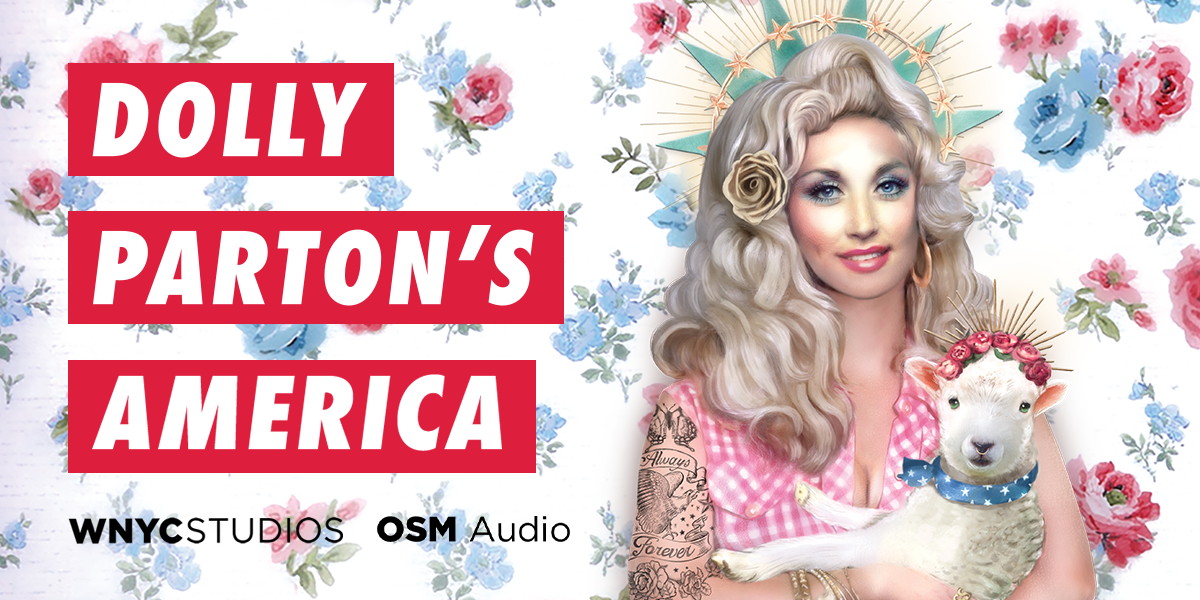
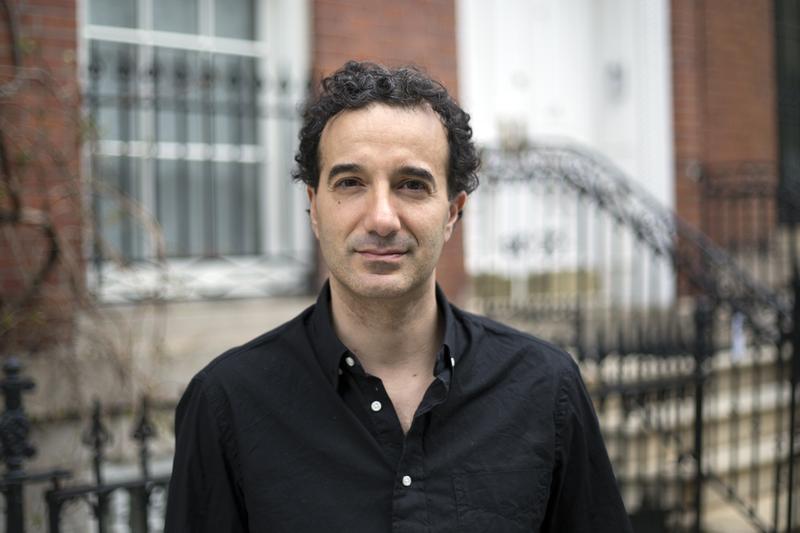
In public radio and podcast fandom Jad Abumrad’s voice is not only immediately recognizable, it’s iconic. As a host of WNYC’s hit show, Radiolab, Abumrad has explored myriad topics ranging from secret World War II missions to the social and cultural impacts of contagious diseases. He has a knack for storytelling, uncovering and contextualizing minute details that many other writers and journalists may have simply shrugged at or glossed over.
This instinct, a sixth sense that guides him to these subtle nuances that often rest undisturbed just below the surface or hide in plain sight, is focused on a new subject in his brand-new podcast (also produced and distributed by WNYC), Dolly Parton’s America. The nine-part series lives up to the oft-invoked, seldom accurate characterization of “a deep dive,” covering ground that even the most ardent Dolly experts and fans may have never trod.
A self-described “new initiate” of country music, Abumrad grew up in Nashville, but given Dolly’s standing as an almost omnipresent cultural touchstone he realized much later that during those Tennessee years he almost couldn’t see the Dolly Parton forest for the Dolly Parton trees. “I knew her music, in terms of the crossover stuff — ‘9 to 5’ and ‘Islands in the Stream,’” he admits. “But the first place I started was going back to ‘60s Dolly and ‘70s Dolly. That’s a very different Dolly.”
Though what he found in those early decades of her career was often unexpected, it was never truly shocking or surprising, especially given the pop culture monolith that Parton has become since those years. A monolith that Abumrad describes as being able to bring people together across all manner of divides — something particularly remarkable in this current global moment.
“You see these stories emerge of not only her changing over time, but what was happening around her in the south, in Appalachia, and in America,” he continues. “The early Dolly music and lyrics became almost like a portal that I could step through to talk about history, to talk about politics, to talk about culture, to talk about feminism. It’s all there in her music.”
And so, it’s all in the podcast. In the two already released episodes Abumrad et. al. cover topics as broad and varied as Dolly’s constantly being undervalued as a songwriter, her being “typecast” as a secondary character (a “dumb blonde”), her shift from the sad, forlorn songs of her early career to her jubilant, encouraging anthems later on, and even her own struggles with suicidal ideation.
With such an entity as Parton, a bystander might assume that any approach to unspooling the many tendrils of her vastly variable and dynamic career would be insufficient, myopic, and/or excruciatingly intimidating. Abumrad faces this daunting task with aplomb, acknowledging the many ways such a project can go awry, but not allowing that acknowledgment to dissuade him. Rather than shy away from storytelling that might open him and the podcast up to criticism about omissions or oversights or missteps, he leans into the humanity that allows for those scenarios. “This is a project where I was trying to see Dolly through other people’s eyes, so that I could understand them and understand their lives and their experiences… I wanted to understand Dolly not simply as a performer and an icon, but as somebody who’s created all this culture… Why do they love it? What do they see in it? What is it about it that calls them? I felt like that was a way to understand the country at this moment.”
BGS editor and contributor Justin Hiltner spoke to Abumrad on the phone about Dolly Parton’s America; the two took turns picking their favorite Dolly tracks, as if standing in front of a Dolly-only jukebox in a Dolly-themed dive bar.
JH: If you and I were standing in front of a jukebox full of Dolly Parton songs what would be your “pick” if you were asked to play Dolly Parton for a room full of people? What would be the first song you would think of?
JA: I think [with] any jukebox selection you have to disclaim: There’s no way to be comprehensive, so any selection you make is going to be one tiny sliver of a tremendous catalog of thousands and thousands of songs.
But, I think the first one I’m going to have to pick is “Muleskinner Blues.” I think it was 1970? I think that’s right. 1970. I would play this one because that song is just… it is pure fire. The rhythm section is so badass and her on top of it, you just cannot — you have to move when you hear it. And I say this as somebody who didn’t grow up with this genre. I grew up in a house full of opera and bad hair metal. Country music was not my jam. But this is one of the first songs that when I heard it I was like, “Oh my god. This SONG.”
The moment that she ad-libs, “I’m a lady muleskinner–”
Oh my god, it’s so good.
It’s so good! And I think about it all the time. When we talk about bluegrass, [people like to say,] “Oh, you know, we don’t have that many women forebears, we don’t have many [women] to point to.” I hear that [ad-lib] and I hear her telling the history of women in roots music and American music. “I’m a lady muleskinner” is like, “I’m not just singing this song that’s always been sung by men, this song is MINE now.” I love that.
Let me follow that inspiration, because one of the things that I think about that song is where it falls in her history. She was on the Porter Wagoner show, right? She’s this crazy prolific songwriter, but she’s kind of under the thumb of this guy, who’s a legend and an amazing hitmaker in his own right, but he was kind of holding her back. At that point she’s starting to bristle. We talked to a bunch of people… I think of them as “Dolly-ologists,” these new academics who think about Dolly a lot, before this song it was a lot of sad songs, often sung from the perspectives of little girls, about something that had been done wrong to them. This is the first song that she grabs her power, in some way.
When she holds that first note she holds it as long as she wants and the band has to follow her. So she’s like, “Y’all gonna follow me.” Then as soon as she lets go the band follows her. It’s literally her taking charge of the band. You feel that power, you feel that energy. It’s such a good song. I’ve been listening to it non-stop.
I think my first jukebox pick, what might be my favorite Dolly cut ever, is “Do I Ever Cross Your Mind” with Chet Atkins. Have you heard this?
Yeah!
It’s just two guitars, it’s just them. They’re kind of conversing while they play. There’s this subtle moment where Chet makes a joke like, “Why don’t you pick one, Dolly?” Then he continues to pick a solo and Dolly laughs like, “That’s not me, that’s not me!” But there’s this sort of respect in his voice, where he’s telling the listeners that she’s a picker. Like, “Don’t forget, don’t sleep on Dolly Parton. She can play guitar!” She’s the real deal.
They mix up the words at one point, they aren’t singing the right harmonies together. Then at the end, they’re just laughing together, and Dolly sighs, “Oh, I love you Chet.” He’s like, “Oh, I love you Dolly.” I think it’s my all-time favorite Dolly Parton recording ever. And for a song that she’s re-recorded so many times, to hear it pared down like that — definitely my number one pick.
Wow. That’s awesome.
What’s another one for you?
Let’s see, I’m really zoned in on ‘70s Dolly right now. I hope you don’t mind that most of my picks are going to be in that era.
Nothing wrong with that!
I just love the moment that her songs go kinda funky and percussive. I’ve always been less of a lyric guy and more of a music/tambour kind of guy. I love from “Jolene” on when she starts adding different instrumentations to her songs.
I have a couple of picks here… let’s go with “Joshua.” Again, it’s a song she did right after “Muleskinner” and I feel like that’s the moment when she truly becomes [a star] — if you want to look at her ascent to global superstardom, I think it begins in those few years and “Joshua” was her first number one. I just love the production of the song, I love how her voice was recorded, it’s a little bit distorted. I love how all the instruments are panned hard left or right. The rhythm guitar is over on the right and Dolly’s voice is on the left — or maybe it’s vice versa. I love the whole ‘70s production of it.
It’s such a weird story! It’s [about] an orphan girl meeting a crazy old man living by himself in the woods and they fall in love. There’s something kind of offbeat and oddball, but also kind of poetic about it. When it modulates, it goes up a semitone, like somewhere in the middle. It’s just cookin’. I love it.
My next pick, and really this is hard, I would probably pick something off of The Grass is Blue. And I think that my favorite one is “Train, Train.” I mean, you can’t be upset at a bluegrass song about a train, for one, but also that album means so much to me. You have this woman who has conquered every genre, has hits on so many different charts, and for her to come back to bluegrass — and I always make sure to emphasize the “back” to bluegrass because she’s been based in this. Her music since day one has been bluegrass music, the mountain music, as she calls it.
And the band on that record, the band that she toured with doing promo for that record, they were ridiculous! Chris Thile was in the band, if Chris Thile wasn’t, Sam Bush was. Jim Mills — it’s everybody. Jerry Douglas. This stacked roster of bluegrass pickers and then she takes that band to like, the CMA awards. To see bluegrass in primetime, in the mainstream like that always means so much to those of us who have always loved bluegrass first and foremost. I keep beating the drum of, “Induct Dolly Parton into the Bluegrass Hall of Fame! Induct Dolly Parton into the Bluegrass Hall of Fame!” I think it’s a no-brainer, and “Train, Train” is the perfect distillation of that for me.
Totally! You know, it’s interesting, what I remember is being in the UK — we went to the UK to shadow her for the premiere of 9 to 5 the musical — and on the way to the show I had to be in the car [with her] posse from the Dollywood Foundation and the Imagination Library, like David Dotson and some of these folks. They all were echoing basically what you just said. That album, more than any other album of hers, is most meaningful to the people around her. I think a lot of people feel like you feel. I don’t want to say it was one of her less successful [records], but it didn’t have the crazy crossover [appeal.] That album meant a lot to a lot of people.
Do you have another one? Maybe to close us out? One more for you, one more for me.
Sure, let’s see. I’ll give you a choice and you can tell me which one will be more interesting. “Love is Like a Butterfly” or “He’s Alive.”
Oh shoot, do both.
Okay, I’ll do both in one shot. So, “He’s Alive” is not the kind of song I’d ordinarily choose to put on, as a — I’ll be completely transparent — godless liberal. I come from a country that was torn apart by religion and my parents are scientists, so when we came from Lebanon my parents were like, “Don’t you damn set foot in a church!” [Laughs]
The first time I heard “He’s Alive” I got goosebumps. I hadn’t been that moved by a song in a long time. We were driving from Knoxville to Dollywood, actually, with one of Dolly’s biggest fans, and she put that song on for us. It was crazy, driving through the hills seeing signs like “Jesus saves you” and “Jesus loves you.” Then that song comes on and, as you know, the first few minutes are kind of a little bit overblown and orchestral and there’s this bombast going on, but when the chorus and the gospel chorus come in? Oh my god. That is more intense than any techno DJ drop. We were all just pinned to our seats for that. It feels like she’s alive, right? [Laughs]
I played it for my wife and my family the other day and they were like, “You like this?” But when it gets to the chorus they were like, “Oh, I get it.”
I’ll throw in “Love is Like a Butterfly” because when she had a string of number ones going from Dolly the “girl singer” to being Dolly the superstar, that was one [important song.] I don’t know, there’s something about her voice on that song. She’s describing this almost trance of love, she’s in love with someone and she’s weightless and entranced the way a butterfly is in the wind. The song isn’t as poetic as some of her others, but there’s something in the way she sings it that I just feel what she’s describing without even hearing the words. Something about her voice that is so… it literally flies. It’s like a butterfly. Her voice captures that. I’m so mystified by her voice on that recording.
I think my last choice would be, “Why’d You Come in Here Lookin’ Like That,” not only because it’s just a really good jukebox song — it is a perfect rollicking country song for a night at the dive bar. But also I realized — I’m openly gay, I’m a career banjo player who happens to moonlight (during the day) as a music writer, and so I went through this whole dynamic [when I was younger] of discovering my sexuality after I had already been in this music for my whole life. I realized, “Oh wait, I don’t think I belong here. I don’t think this space is for me. I play banjo, I love bluegrass.”
Something that I really appreciate about Dolly, from long ago, before I even knew she was a queer icon — and rightly so! — I could project my queerness onto and into her art and see myself in it. There’s something about “Why’d You Come in Here Lookin’ Like That” that’s just like, “Why does this straight man have to come up in my business and remind me that he’s unavailable to me?” That’s what I hear listening to that song, and it’s funny that I could go down a list of like ten other Dolly songs that feel like that to me. That feel like the queer experience realized through Dolly’s lens.
That’s really interesting… how so many of her songs create that space, so you can read it that way. I love that you have a list that goes beyond that. I might have to call you back and ask you to elaborate on that. [Laughs]
It was something that I really didn’t want to have this conversation happen without mentioning. I mean, even if you don’t count the rhinestones and the false nails and the big boobs, and everything. Boiled down to just nuts and bolts, and thinking of her as just a songwriter, she’s still allowing space for people to see their own experiences in her music. That’s not a very common thing in country. It is because heartbreak is all through country and everybody’s heart gets broken all the time, but other than that it really takes that sort of [approach] — well, what you’re talking about through this whole entire project. She touches on all of these issues that are sort of endemic to our culture, in a way that’s so organic that we ingest them almost without realizing it until now, in retrospect, I look back thinking, “Well of course she’s a queer icon, she’s creating space for us to relate to her music.” Even if it’s coming from such a specific place.
She, as a songwriter like you say, has created that space. Even without having to look at the persona in any way.
She still has not gotten her due as a songwriter, and it’s painful at times. To see that be such a big part of what you’re doing [is important.]
Yeah, I appreciate that, that’s where we start the series is taking her seriously as a songwriter, cause I agree. Robert Oermann said in one of our episodes that if she had been born two hundred years ago she’d be Mozart. (I think maybe he means more than two hundred.) Because she’s that touched by that creative spirit. That’s never been acknowledged. Bob Dylan gets it, Johnny Cash gets it, but she hasn’t.
Photo of Jad Abumrad: Bo Jacober Illustration: Christine de Carvalho
This website uses cookies to improve your experience. We'll assume you're ok with this, but you can opt-out if you wish.AcceptRejectRead More
Privacy & Cookies Policy
Privacy Overview
This website uses cookies to improve your experience while you navigate through the website. Out of these, the cookies that are categorized as necessary are stored on your browser as they are essential for the working of basic functionalities of the website. We also use third-party cookies that help us analyze and understand how you use this website. These cookies will be stored in your browser only with your consent. You also have the option to opt-out of these cookies. But opting out of some of these cookies may affect your browsing experience.
Necessary cookies are absolutely essential for the website to function properly. This category only includes cookies that ensures basic functionalities and security features of the website. These cookies do not store any personal information.
Any cookies that may not be particularly necessary for the website to function and is used specifically to collect user personal data via analytics, ads, other embedded contents are termed as non-necessary cookies. It is mandatory to procure user consent prior to running these cookies on your website.