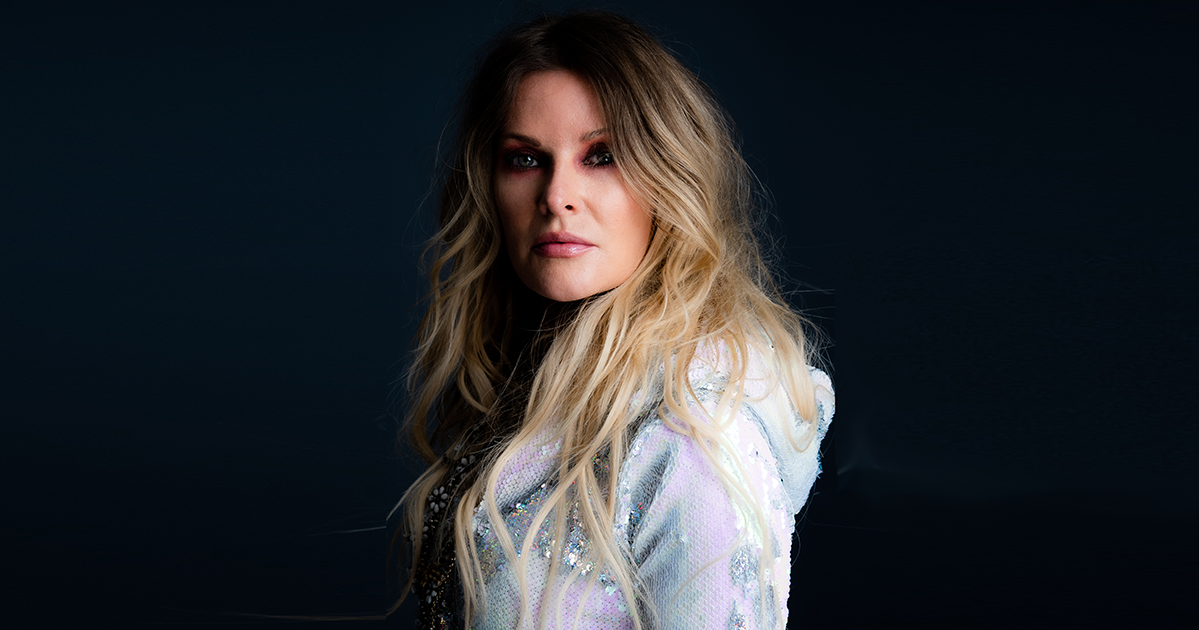
The 63rd Annual Grammy Awards were held yesterday afternoon and evening, Sunday March 14, 2021. Here are the nominees and winners in the American Roots Music fields:
Best American Roots Performance
Black Pumas, “Colors”
Bonny Light Horseman, “Deep in Love”
Brittany Howard, “Short and Sweet”
Norah Jones & Mavis Staples, “I’ll Be Gone”
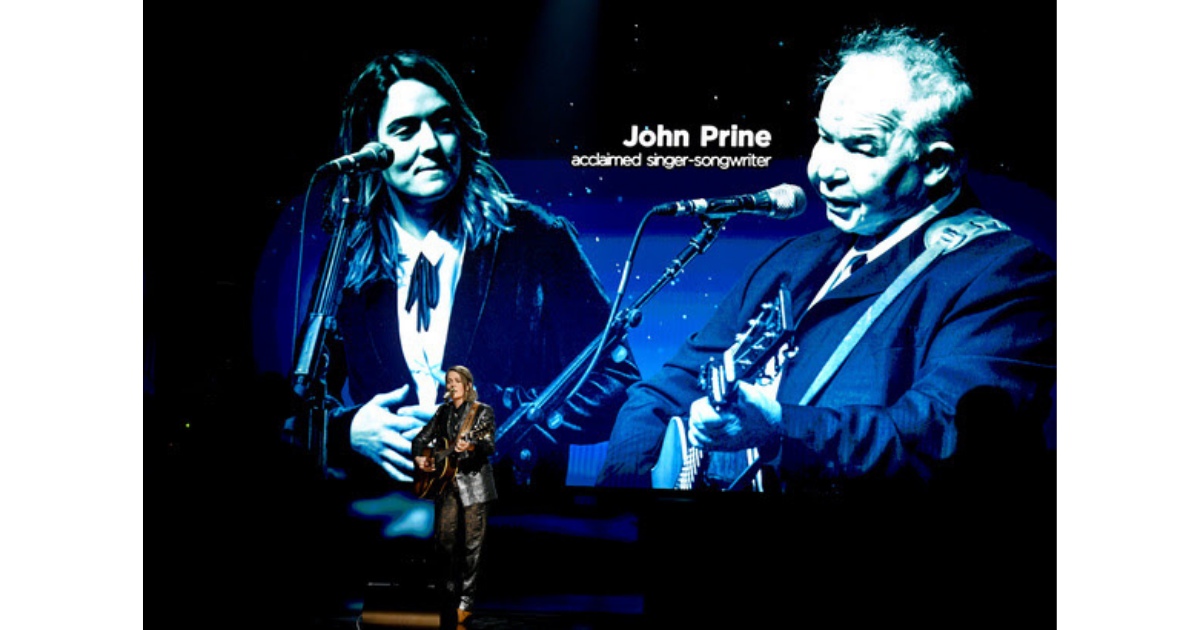
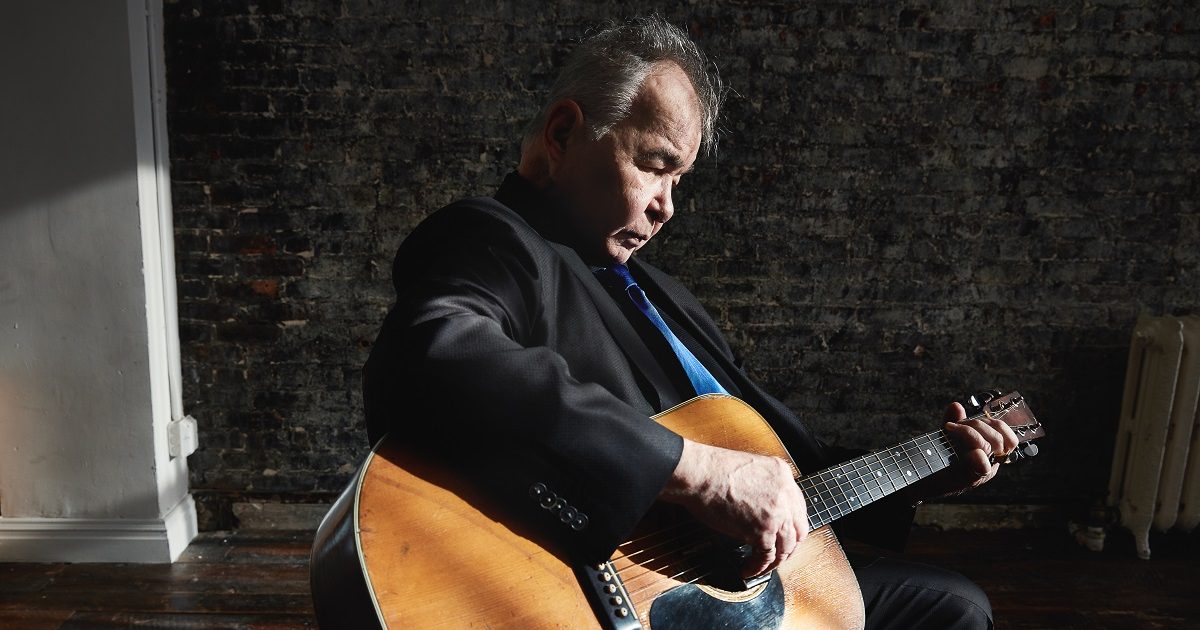
John Prine, “I Remember Everything”
Best American Roots Song
“Cabin,” Laura Rogers & Lydia Rogers, songwriters (The Secret Sisters)
“Ceiling to the Floor,” Sierra Hull & Kai Welch, songwriters (Sierra Hull)
“Hometown,” Sarah Jarosz, songwriter (Sarah Jarosz)
“I Remember Everything,” Pat McLaughlin & John Prine, songwriters (John Prine)
“Man Without a Soul,” Tom Overby & Lucinda Williams, songwriters (Lucinda Williams)
Best Americana Album
Courtney Marie Andrews, Old Flowers
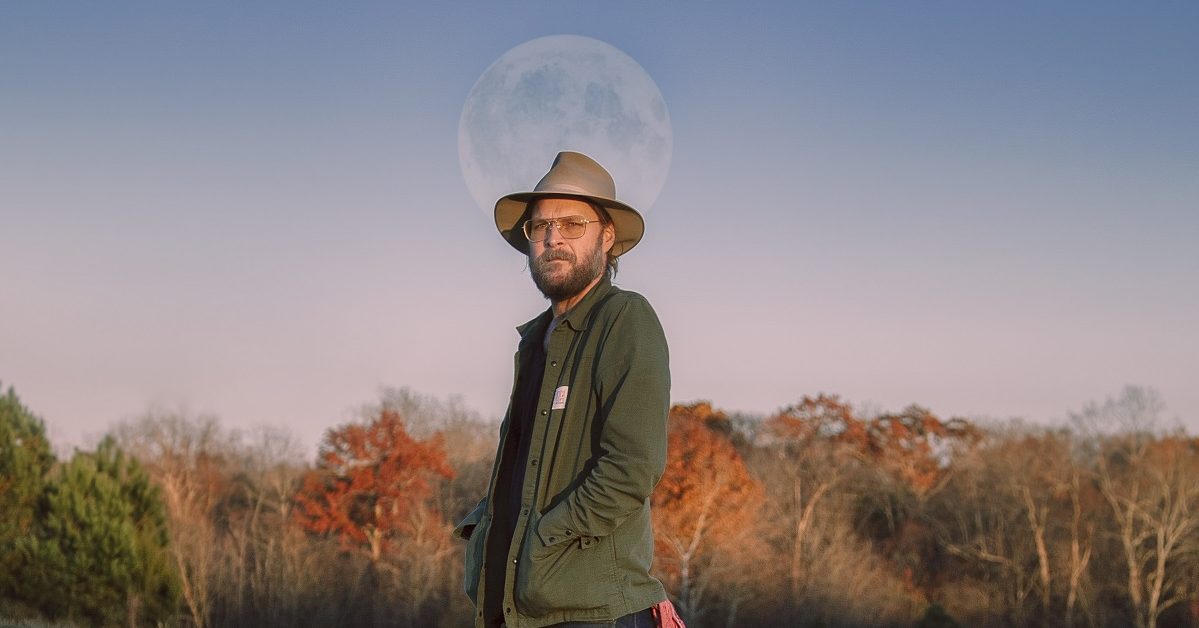
Hiss Golden Messenger, Terms of Surrender
Sarah Jarosz, World on the Ground
Marcus King, El Dorado
Lucinda Williams, Good Souls Better Angels
Best Bluegrass Album
Danny Barnes, Man on Fire
Thomm Jutz, To Live in Two Worlds, Vol. 1
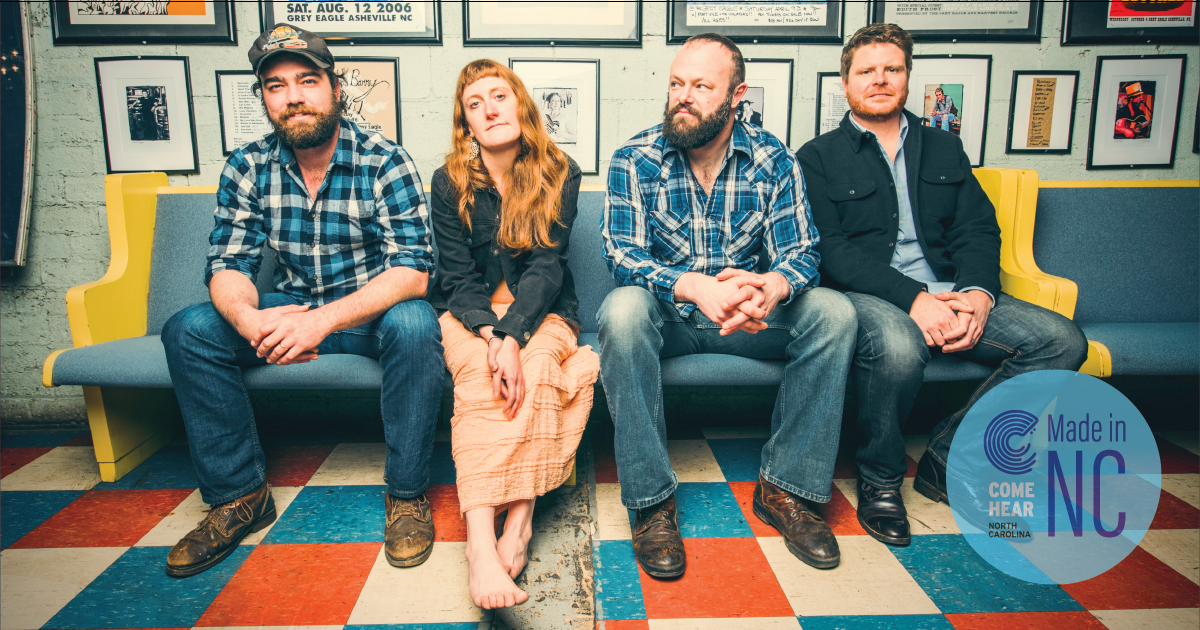
Steep Canyon Rangers, North Carolina Songbook
Billy Strings, Home
Various Artists, The John Hartford Fiddle Tune Project, Vol. 1
Best Traditional Blues Album
Frank Bey, All My Dues are Paid
Don Bryant, You Make Me Feel
Robert Cray Band, That’s What I Heard
Jimmy “Duck” Holmes, Cypress Grove
Bobby Rush, Rawer Than Raw
Best Contemporary Blues Album
Fantastic Negrito, Have You Lost Your Mind Yet?
Ruthie Foster Big Band, Live at the Paramount
G. Love, The Juice
Bettye LaVette, Blackbirds
North Mississippi Allstars, Up and Rolling
Best Folk Album
Bonny Light Horseman, Bonny Light Horseman
Leonard Cohen, Thanks for the Dance
Laura Marling, Song for Our Daughter
The Secret Sisters, Saturn Return
Gillian Welch & David Rawlings, All the Good Times
Best Regional Roots Music Album
Black Lodge Singers, My Relatives “Nikso Kowaiks”
Cameron Dupuy and the Cajun Troubadours, Cameron Dupuy and the Cajun Troubadours
Nā Wai ʽEhā, Lovely Sunrise
New Orleans Nightcrawlers, Atmosphere
Sweet Cecilia, A Tribute to Al Berard
Also, note these Americana winners in other categories:
Not every songwriter can get away with an opening line like: “The world outside my window / looks like Nintendo / but I’m not playing games anymore.” Leave it to Aaron Lee Tasjan, who guides us past those lyrics into “Not That Bad,” a subtle and sincere song about confidence and capability that showcases the Nashville-based musician’s gift as an acoustic instrumentalist as well.
Tasjan wrote the song just after suggesting to his longtime label that he wanted to produce the next album — an idea that the executives weren’t sure about. So, Tasjan went ahead and did it anyway, working with co-producer Gregory Lattimer. The result is Tasjan! Tasjan! Tasjan!, likely his most revealing album yet, and one that embraces his fondness of guitar, video games, and his own self-proclaimed dumb songs. He chatted with BGS by phone leading up to the release.
BGS: “Up All Night” sounds like a pop song, but it’s also very personal. What was on your mind as you were writing that song?
Tasjan: A couple of things. I love songs that I would call silly little pop songs. Something as simple as “Sugar” by the Archies. I just love simple, but with a good hook. I’ve been listening to music like that for a long time. As far as the lyrical content, all that stuff came directly out of my life. There’s not one thing that I’m singing about in that song that isn’t 100 percent me, really. And honestly, if I could say there was a mission statement for the record, it was to just be as unabashedly me as I possibly could. So, “Up All Night” became a front-runner early on, a cool blueprint of anything else that I wanted to do.
To me, that song is about the things in life that come and go — you mention money and love and health. And then you’re ultimately realizing that’s just how life is. Is that a fair assessment?
Exactly. I’ve been a very analytical person in my life. And there are some things that you don’t have to analyze. Like, if you are analyzing it, you’re spinning your wheels, or in some cases, creating scenarios that wouldn’t even exist otherwise. It’s kind of a mental health tip for myself to realize, “Look, man, that’s just the way it is, dude.” [Laughs]
It’s refreshing when you come to that realization and you just go on and live your life.
Right! I think that’s true. Control is part of it — you want to feel like you’re in control. But all of that is an illusion. Certainly we have been witness to several moments recently where it feels like reality is coming undone, so we’ve had to reckon with how little control we have over everything. But at the same time, for a guy like me, it’s helped me to reassert the parts of what I can do, of being seen, asking to be seen, and seeing others. That’s not something that I’ve always been that comfortable with — the asking to be seen part. It’s been hard for me, but on this record, I felt more called to do that.
Speaking of that, there’s a lyric in “Up All Night” about breaking up with your boyfriend to go out with your girlfriend. Is that the first time you’ve addressed that topic on a record?
I think so, yeah. Well… on the Silver Tears album, there’s a song called “Hard Life,” and a verse in that where I sang, “There’s a redneck bummer in an H2 Hummer and he sure does hate the queers.” That was true. That happened to me. I got stuck in a drive-through at Taco Bell one time in small-town Ohio with some football team kids who, in their mind, had me pegged. They were yelling all kinds of stuff. I parked my car later to eat the food I’d gotten in the drive-through and they came over and were banging on the windows, calling me names. It was scary, man.
I didn’t know that happened to you. That’s frightening.
But at the same time, that is a tiny part of what someone who is transgender encounters. You kind of put in perspective. What’s it like for somebody who has to deal with that every day? It’s heartbreaking. In a lot of ways, I’m trying to show this side of myself because I feel like, especially if I’m going to be the most “me” that I’ve ever been on a record, it’s imperative to stand in that truth.
The videos for “Up All Night” and a few other songs resemble really cool arcade games. What is it about that visual presentation that grabbed you?
I think a lot of it is in because of the time I grew up in, which was the late ‘80s and the ‘90s. Video games were just huge! And something to do was to go over to the arcade for the whole day. [Laughs] Like, drop me off at 11 in the morning and come pick me up at 8 p.m., and I’ll have the time of my life! I thought with the music, sonically, I wanted to create sounds that were almost like a Polaroid picture, colors that didn’t quite exist in real life. There’s a lot of guitars on the record that sound like synthesizers almost. They’re sort of this weird hybrid combination somewhere between a guitar and a synthesizer, which was very intentional.
When did you get interested in guitar?
I was really young! In fact, I remember when it was. I was 8 or 9 years and my family took a summer vacation and my parents hired a girl who went to the local high school to watch me and my sister, because we were so young. And this girl was obsessed with MTV, of course! So, that’s what we watched all summer long.
My two favorite music videos were “Runaway Train” by Soul Asylum — because I loved that driving, strumming, acoustic guitar, which has become something I use in my own music all the time — and the other one that I really, really loved was the Black Crowes’ cover of “Hard to Handle.” I loved how Chris Robinson looked and I loved how the song sounded. It made me turn every single thing that I had in my possession that could be a guitar, into a guitar. So, my tennis racket became a guitar. My baseball bat became a guitar.
The place where we staying that summer at the beach, somebody who played guitar must have stayed there before, because I actually found a tortoise-shell guitar pick in that house. I didn’t play guitar for years after that, but I carried that pick with me EVERYWHERE. It was my most prized possession. So, when my family moved to Southern California a few years later, there wasn’t a lot to do when I first got there, and I was able to talk my parents into letting me get a guitar and start trying to go for it. I was 11 or 12 by that point.
Were you listening to any bluegrass or country at that time?
The first thing I heard that set me off in that direction was played for me by my mom, and that was early Bob Dylan stuff. That got me into acoustic music, and I remembered the “Runaway Train” video, and I thought, “Let me find some more stuff like that.” I actually started writing songs almost right away. I was a really funny kid, you know what I mean? I was like the class clown, so making my songs kind of humorous felt natural to me. I was only 13 or 14 years old when I played a song I had written to an older guy, and he said, “Man, let me help you out. It sounds like what you’re trying to do, is something like what this guy does.”
And he gave me a cassette tape of Prime Prine, which was a John Prine greatest hits collection. And that was the day I decided that I wanted to be a songwriter. [Laughs] Not only was he doing what I had been trying to do, he was doing it in this way where it was like I’d only ever seen Clark Kent – this super-nice guy, mild-mannered, kind of plain. Then you press play and you hear “Please don’t bury me down in the cold cold ground…” and Superman showed up! That was everything, you know? I got obsessed with that.
Listening to your new album on the whole now, what do you like most about it?
I just love how dumb it is. [Laughs] I love how simple it is! I know that sounds silly, but it forces you to consider how much of what’s there really needs to be there. I really do like hearing people sing about their stories, so the more that’s in the way of that, the less enchanted I am. I just wanted to make these songs kind of simple and plain spoken. To have some poetry, certainly, if it’s possible for me to do that, but also to really lay it out there in this dumb but hopefully sweet way. I don’t look at it as though I’ve made some sort of amazing artistic statement or whatever. I just got really got down to it and said what I wanted to say, how I wanted to say it.
Artist:Hiss Golden Messenger Hometown: Durham, North Carolina Song: “Sanctuary” Release Date: January 13, 2021 Label: Merge Records
In Their Words: “Over the past year, I’ve been thinking a lot about how we care for ourselves and each other, and how hard it is to live truthfully in a world that is so tangled. ‘We sell the world to buy fire, our way lighted by burning men,’ says the poet Wendell Berry. The song ‘Sanctuary’ is one small piece of my own personal reckoning with what it feels like to search for some kind of shelter in the storm. Fare thee well, John Prine, AKA Handsome Johnny, a speaker of truth if ever there was one.” – M.C. Taylor / Hiss Golden Messenger
The Highwomen picked up three trophies for the Americana Music Association’s 19th Annual Americana Honors & Awards, which were revealed online today. The collective of Brandi Carlile, Natalie Hemby, Maren Morris, and Amanda Shires, joined fellow winners Black Pumas, Brittany Haas, and the late John Prine.
The Highwomen received the following awards: Album of the Year for their self-titled debut, produced by Dave Cobb; Song of the Year for “Crowded Table,” written by Carlile, Hemby and Lori McKenna; and Duo/Group of the Year.
Prine, who died in April, was named Artist of the Year for the fourth time since 2005. Black Pumas carried the Emerging Act of the Year category, while fiddler Brittany Haas won the Instrumentalist of the Year award.
For nearly two decades, the Americana Honors & Awards program has provided a unique platform for commemorating the best and brightest musicians in the Americana music scene at the historic Ryman Auditorium in Nashville. Due to the COVID-19 pandemic, in an effort to preserve the safety of musicians, fans and other members of the close-knit roots community, the Americana Music Association chose to forego having an in-person ceremony this year.
Photo of Black Pumas: Lyza Renee; Photo of The Highwomen: Alysse Gafkjen; Photo of John Prine: Danny Clinch; Photo of Brittany Hass: Michael George
Artist name:Amanda Anne Platt & The Honeycutters (answered by Amanda) Hometown: Asheville, North Carolina Latest singles: “Desert Flowers” and “There May Come a Day” Personal nicknames (or rejected band names): I was in a band with my brother and my cousin when I was 8 that was called Crusty Chinchilla Rejects Recently Escaped from a Mental Institution…
What’s your favorite memory from being on stage?
I feel really lucky as I sit here and try to work out what my favorite memory of being on stage is… it’s nice that there have been so many. I think one of my favorites from recent memory was the last show of our 2019 tour opening for Amy Ray. It was at Club Café in Pittsburgh and I got to get up on stage for her last song, “I Didn’t Know a Damn Thing,” which is one of my favorites from her album Holler, and then the encore which was Tom Petty’s “Refugee.” I was enormously pregnant and the stage was already crowded so it was a tight squeeze! But I felt so cool just getting to sing along and dance. The energy in the room was fantastic.
What other art forms — literature, film, dance, painting, etc — inform your music?
Probably literature and film, the most. When someone can tell a story in a highly relatable, moving way, I am very inspired by that. When I finish a good book or leave the theater after a really well-made film I almost always want to sit down and write a song.
What rituals do you have, either in the studio or before a show?
I really enjoy making my band “quack” like the Mighty Ducks, but I would be lying if I said they were as into it as I am. And you can’t do it alone. So, mostly I just cry in the bathroom. Actually I am usually just scrambling to write a set list and eat something moments before we go on stage.
Since food and music go so well together, what is your dream pairing of a meal and a musician?
I grew up in the land of all-night diners, and I’ve really been missing that especially now during the pandemic. So I would love to have a post-show burger at a proper diner somewhere… I feel like John Prine would have been a great guy to share a booth at a diner with. I have some questions for him about his songs that I kind of always hoped I’d have a chance to ask him in person.
How often do you hide behind a character in a song or use “you” when it’s actually “me”?
I might actually do the reverse more… I tend to always use “I” even though I don’t write autobiographically very often. So in that way I guess I turn every character into “me” and I hide myself in that way…?
Artist:Jeff Cramer and The Wooden Sound (Emma Rose, Dylan McCarthy, Dave Pailet) Hometown: Denver, Colorado Song: “Aimless Love” (John Prine cover) Album:The Shed Sessions Release Date: November 20, 2020
In Their Words: “I dreamt up ‘the shed’ late last year — a backyard DIY project fueled by a desire to provide space and community within Colorado’s incredible songwriter scene — which, as luck would have it, I finished building at the end of February this year. During the pandemic, it has become my office and writing space, and it ultimately brought me to a vision for a video series of live-recorded new, old, and cover songs with my new band, The Wooden Sound. I’m excited to be releasing seven videos and tracks from the The Shed Sessions over the next two weeks, starting with a cover of John Prine’s ‘Aimless Love’ here.
“Aimless Love was my first John Prine record, and while it might not be amongst his most prominent, the title track especially has become one of my favorites. Maybe it was discovering it as a teenager — as a small fry kid in a Midwestern town — that caused me to feel a special closeness to it. John Prine was able to add a sense of warmth and humor to the messiest of human conditions and somehow make it personal to everyone (including me) in the process. I also vividly remember playing Aimless Love under the full moon in my backyard in Denver the moment we learned that he had passed. It felt appropriate to release this video as my little tribute to him.” — Jeff Cramer
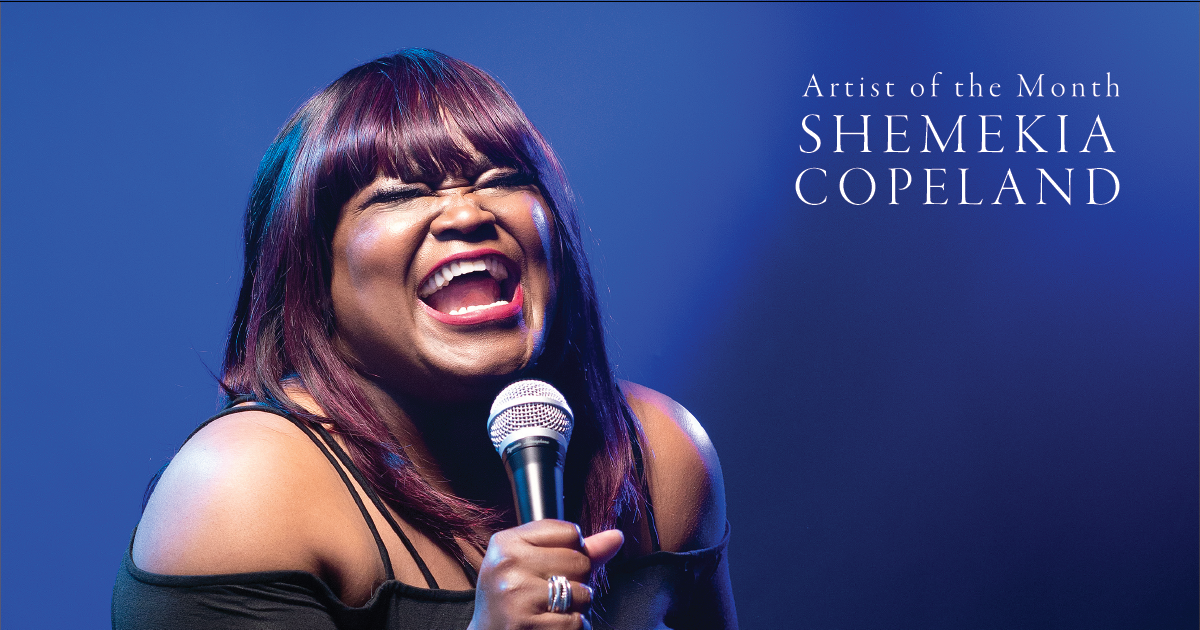
Over the last 10 years, in a series of albums recorded with producers Oliver Wood and Will Kimbrough, Shemekia Copeland has progressed from a first-class blues belter into a wider-ranging, more nuanced artist whose music touches on Americana, rock, and country — and she’s still a first-class blues belter.
In addition to working with Kimbrough on her new album Uncivil War and 2018’s America’s Child, Copeland has recorded with artists like John Prine, Emmylou Harris, and ZZ Top’s Billy Gibbons. In part two of our interview with Copeland, whose father is the late Texas blues great, Johnny Clyde Copeland, we discuss her musical development and the lessons she learned while teaming with these and other unlikely collaborators.
BGS: Over your last four albums, you’ve worked with producers Oliver Wood and Will Kimbrough, mostly in Nashville, and really started to open up the instrumentation and type of songs you’ve recorded. So I have a chicken and the egg question: did you start working differently because you wanted to change, or did you change because you worked with different people in different places?
SC: It happened organically. The first record with Oliver was in Atlanta and then he moved to Nashville, because everybody moves to Nashville, because that’s where musicians and studios are, and it’s inexpensive to work there. Oliver had Will Kimbrough come in and play and I was a big fan of his. When he played on my record, it was love at first note, because he’s just a musical genius.
We did our last record America’s Child with him and he just knows everyone. Nashville is such a small town in that way. All the musicians know, respect, and love each other. Will would say, “So-and-so would sound good on this. Let’s call him,” and within a day they’d have these guys in the studio that you couldn’t imagine working with as a blues artist, because you don’t know them. The gates of Heaven opened up being in Nashville because that’s where everybody is.
How about Oliver Wood?
I love him. He’s a very talented player and writer, and the best thing about him was that he really encouraged me to think about how I sing. I came from the blues shouter way of singing, and from him I learned that you don’t have to do that to move people. That was huge for me, to learn that you can capture people with subtlety just as much as you can capture them with the hugeness of your voice. We had that conversation and I took that away from working with him and have carried it on.
“Uncivil War” is a perfect example. I did not want to sing that song. I thought it was is a pretty song for somebody with a pretty voice to sing. I wanted the world to hear it and figured they would not if it was coming from me, because I don’t have a pretty voice. That’s when they all yelled at me and said I was being completely ridiculous and to just sing the damn song. But I still struggle with thinking that the subtleties of my voice work. I was just using the power of my voice more like a Koko Taylor, or Etta James.
Let’s talk about some of these people you’ve worked with. You did a duet with John Prine on his lesser-known blues song “Great Rain.” Tell me about that.
That happened completely organically, but here in Chicago, though he lived in Nashville. He’s originally from Illinois and we were both on a concert called Voices of Chicago. I was there to represent blues and John was there to represent the fact that he’s just frickin’ amazing. We were backstage and I’m standing there looking at John Prine thinking, “Oh my God, I’m standing here looking at John Prine.” And he looked down at my feet and said, “I love your shoes!” We started talking and I fell in love with his wife, Fiona. Amazing people. We got to talkin’, started working on projects together, and the rest is history. People like him know how to break the ice with people when they’re nervous around them.
How about Emmylou Harris?
That was just a Will Kimbrough connection. I met her a couple times, like in passing at festivals, but her being on “America’s Child” was Will. He plays with her. She heard the song, loved it, and wanted to sing on it, which was beautiful.
Steve Cropper, who produced The Soul Truth (2005), also plays on the new one.
Who doesn’t love Steve Cropper? He wrote all the hit songs that you can think of. I love working with him, loved his energy. We wanted to do something different after the Dr. John record [2002’s Talking to Strangers], so we thought, why not try to get a soulful record? And who better to make a soulful record than Steve Cropper? He also played on all the songs and Steve Cropper plays like Steve Cropper. He has a sound all his own. You know when you’re listening to him.
What about Billy Gibbons?
Billy was a big fan of Johnny Copeland; he went and saw my dad perform all the time when he was a kid. I was hanging out with him in India [at the 2017 Mahindra Blues Festival in Mumbai] and we were talking about all that. I wanted to do “Jesus Just Left Chicago” and John [Hahn, Copeland’s manager] had the bright idea to ask him. I never would have been ballsy enough to do that. Thank God for managers and producers.
I love Rhiannon Giddens on “Smoked Ham and Peaches.”
Yeah, and she sounded amazing on it. Oh, my gosh. I was a big fan of her and Dom Flemons and the Carolina Chocolate Drops! Just a group of interesting, amazing, talented people. But then I saw her perform as a headliner of the Chicago Blues Festival and she was just incredible. I really wanted to work on it and was so happy when she said she was aware of me, and would love to do it.
It’s probably the most acoustic, downhome song you’ve done and a good example of why some people started talking about you and Americana and not just blues.
I’ve always listened to country and bluegrass, even if I didn’t know who I was listening to. I just liked the instrumentation of it and the singers and lyrics. Americana was not on my radar, but I grew up listening to country music because my dad grew up in Texas and loved it. I’d walk around the house singing Patsy Cline and Hank Williams songs that my dad loved, but I hadn’t really even heard anything about the blend of country and roots music until a few years ago, so I think it’s kind of hilarious that people are saying I’m crossing over to Americana. But I welcome all listeners!
Has your audience changed over the course of these last few albums?
Yes, especially since America’s Child, but even going back to [2009’s] Never Going Back, I started getting people at my shows saying stuff like, “You know, I’m not really into blues, but I love what you do.” And I’m like, “Well, if you’re listening to me, then you could probably say you’re into blues. I think you’re more into the blues than you think you are!” I always hoped that I was getting fans that weren’t just blues fans, and I think the audience is growing a little bit for me — at least I hope so!
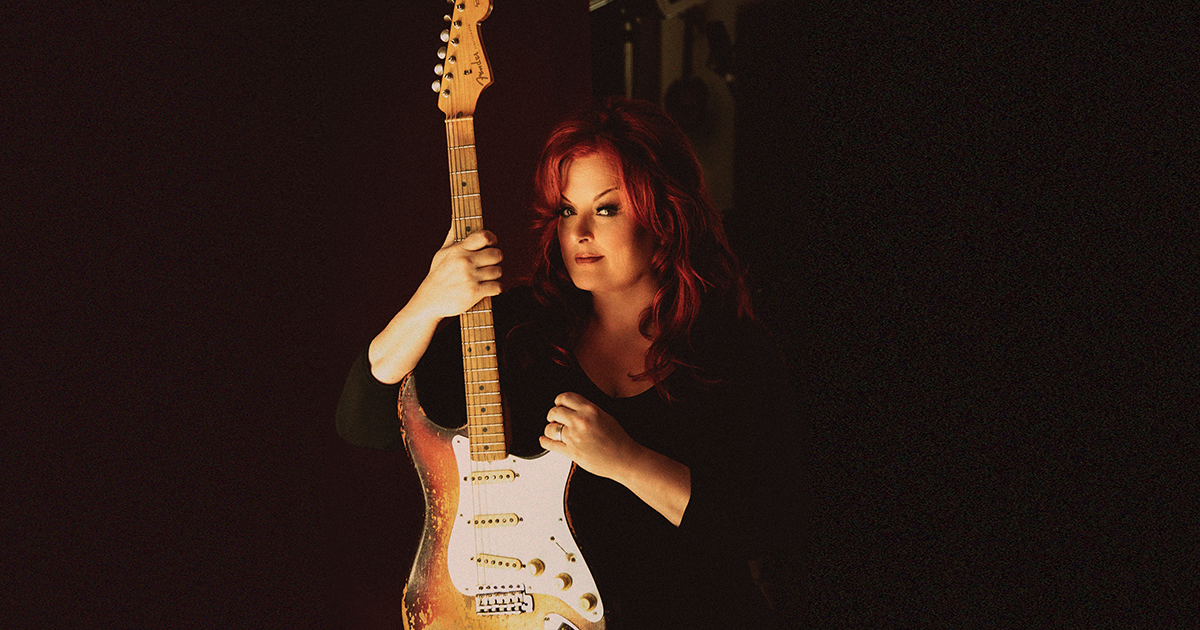
Although she’s been an entertainer for decades, Wynonna says she hasn’t ever been much for making music around the house – at least not until this year.
“I think it’s because I was so famous at 18 that the time home was spent just being quiet, because my world was so noisy,” she tells BGS. “Somebody who came to stay with us for a couple of days made a comment, ‘How come I never hear you hum or sing around the house?’ And I looked at her and I was like, ‘I don’t know!’ I had never thought of it.”
If nothing else, life in quarantine has given this country legend time to think. After all, she’s been touring since the ‘80s, first with the Judds, then as a solo artist, and eventually some of both. 2020 is the first extended break she’s taken since late ’94 and early ’95, for the birth of her son, Elijah, who is now a first responder. (She’s making a lunch for him as we’re speaking.) Off the road now for six months, she says her routine has gone from staring off into space every night, to doing Facebook Live sessions with her husband Cactus Moser, to calling up old friends and dusting off her vinyl records.
And to show for her efforts, she’s releasing an EP of covers titled Recollections. The five-song set offers her intimate, off-the-cuff renditions of classics like Grateful Dead’s “Ramblin’ Rose,” Nina Simone’s “Feelin’ Good” and John Prine’s “Angel From Montgomery,” with some of the project’s audio tracks taken directly from her Facebook live sets. She called BGS from her farm in Franklin, Tennessee, to talk about all of it, and offered a film recommendation, too.
BGS: While listening to this EP, I was pleased to hear that you and I have the same favorite verse of “Angel From Montgomery.” What was on your mind when you recorded that one?
Wynonna: Well, it’s tough and it’s a part of life… I was in the living room and I was just practicing. I haven’t done this much practicing in a long time, but I’m home and what else is there to do?! [Laughs] And I got a text from my agent who was a personal friend of John Prine and his family, and he said that John had passed. I sat there, and it’s one of those weird moments in your life when you get that call. I was overwhelmed, sitting there, and all of a sudden — I’m not kidding — I just started to play it on my guitar. I thought, “Oh my God! Oh my God!” I’ve known this song since I was 15 years old, and I started playing it like I played it all those years ago.
I kid you not, Cactus comes in and I looked at him, he looked at me, and I started singing it – he got tears in his eyes, because it was a moment. It’s like that moment when you stand there doing your vows, it’s just a heavy moment. And I said, “I think we need to do this tonight.” So we did it on Facebook Live, which is what you’re hearing. We’re sitting there together and it’s me paying tribute to my hero. One of my heroes is John Prine and we must not forget what this man gave to us. It was one of those sweet, beautiful moments of reflection on my part of how far I’ve come as an artist.
I know you play acoustic guitar on that, too. Which guitar did you play?
I played the biggest Gibson you can get. I’ve always played a big guitar, for obvious reasons. I’ve always felt like the one I have is my weapon. It’s like the biggest guitar you can buy. I was 18 years old and I needed — like when soldiers go into battle and like in Game of Thrones they’d always hold up the shield — it’s my shield. It’s my weapon. So, yeah, I just played it that night and he recorded it and kept it. I said, “Honey, I think this is important.” Because it’s a snapshot of my experience that day.
I love to hear you sing “Feelin’ Good.” I’d read you sang this at a women’s prison, too. Tell me about that experience.
Pretty deep. It was pretty deep. I had played down the hair. I thought, “Now is not the time. I’m not on stage.” I found myself being in that moment with the women. I was standing there, telling my story, talking to the women. It was one of those moments where I don’t know what to say. … So, I just started to sing. I think it made a difference in the room, because these women could sit there for a moment and feel better. That’s what I do as my go-to — I start singing.
I don’t know what you do, but we all have a coping skill, and I think for me that day it was music. I think it’s an important as an artist to not forget your gift. Sometimes we can, if we get distracted. So, this time at home has been devastating at times, yet so life-giving, that the music reflects just that. You’ll hear tough and tender in my voice because there are days when I can’t even get out of bed without crying. And then there are some days I hop out of bed and I am freakin’ Wonder Woman.
Now that you’ve been home probably longer than you ever have in your life, have you developed any morning routines to propel you through your day?
So, on March 14, I cleared the bus. I’ve had a bus since 1984, so that was bizarre. It was like moving to another country. I came into the house and I went, “What the hell do I do now?” So I spent five weeks – you can tell I counted – of doing absolutely nothing. I got really frustrated, because I was lost! It was 8 o’clock at night and I would stare off into the night and go, “I should be doing a show. I should be with my fans. I should be with people. I should be on the road.”
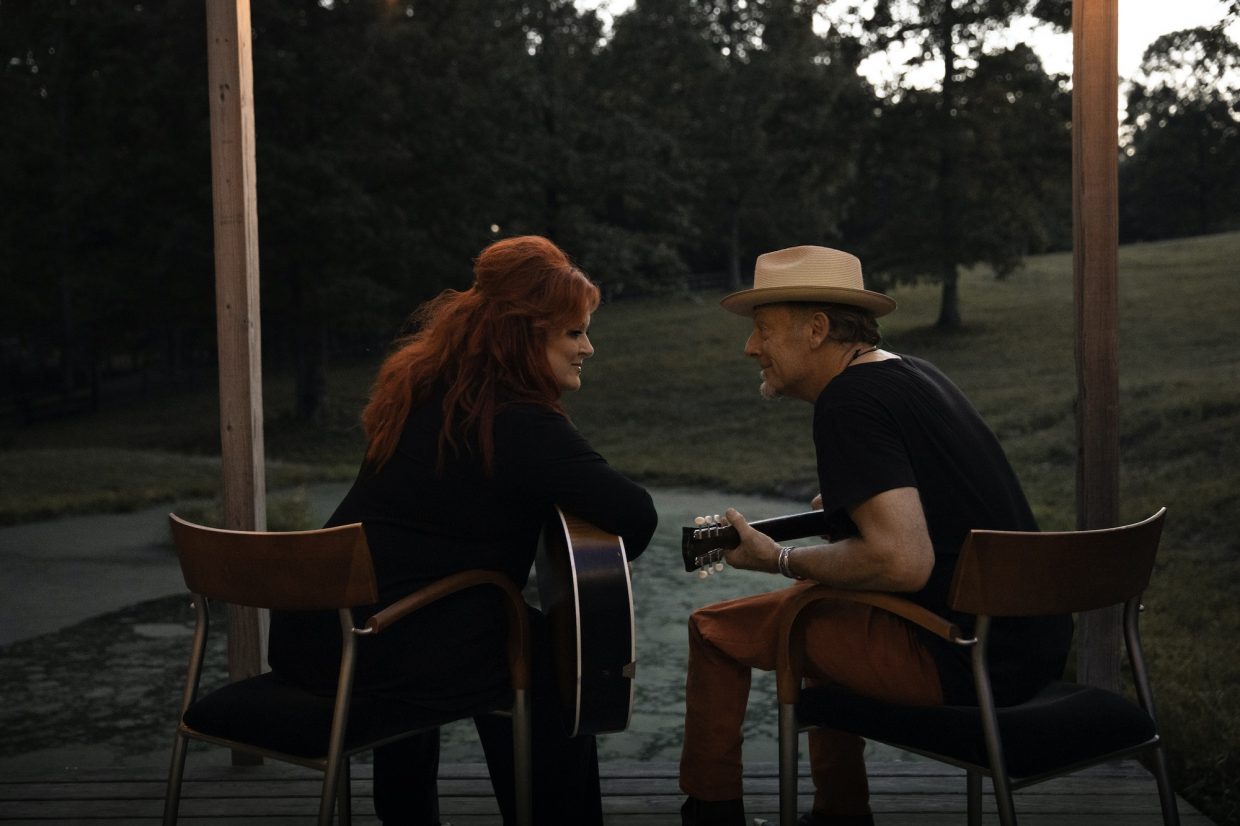
Wynonna and Cactus Moser
I found myself doing nothing. And I think that’s what I needed. I’m going to do a testimonial. I’m writing a book in my head right now, and I’m going to put it to paper, like you as a writer: “What do I do today? What did I do today? What did I want to do today? What do I have to do today?” And how do you find life in that? So I went through the same stuff you have, like most of my fan family: “What do I do?” …
And I started to practice. My husband goes, “Yeah, honey, um… I don’t know if you’ve done this in a while.” It took a minute though. I had to self-start, which was hard for me, because I’ve always been given my schedule, and I go to the airport, and I hustle through, and I make it. You know what I’m saying? We’re used to doing and going and being really successful! What do you do when you’re home for six months?! What do you do, man!!
So when you say “practice,” were you practicing songwriting? Guitar?
Yes, all of it! I came home and, like the rest of America, I gained weight and let my roots grow out. I’m not wearing any undergarments. … And when you come home, and you’re on the farm – I haven’t left but maybe half a dozen times in six months — it’s very strange. What do you do? You have to find a new purpose. And my new purpose was writing, and I started calling people on the phone. Ooh!
You know how it is, you start reconnecting with people you want to reconnect with. There was a lot of forgiveness. There were a lot of relationships where I needed to go back and say, “Hey, man, I missed your wedding and I’m really, really sad about that.” Then you start a conversation. This is really important stuff, right? You don’t have time for that – you don’t make time for that – because you’re too busy being fabulous.
Have you been pulling out your vinyl records, too? And listening to music you’ve loved in the past?
Yep! I’m doing it in a way I needed to, and I don’t know that I would have if it hadn’t been for me being at home like I am. I’ll be honest. I was taught to be a doer, a mover and a shaker. I got caught up in that, and when I came home, I felt like, “If I put everything away, that means I’m stuck at home.” It took months and months and months, and finally I was like, “Oh, for God’s sake, I’m tired of looking at all my stage clothes and my undergarments! Put ‘em away!” And I was like, “No, I don’t want to because that means you’re dead!”
Anyway, I did it, and I thought, “You have to find life at home, woman!” You know, you’ve got life on the road. What is it like at home? So I started to do that, and I started to… listen to music! I started to watch documentaries. You have to watch the two-part documentary on Laurel Canyon. You have to watch it, dude, you have to. You know why? Because it’s important! You see the Eagles, when they’re teenagers, and they’re in L.A. trying to write songs. You see Jackson Browne, who’s 19, standing in line at the Whisky a Go Go. It’s awesome!
BGS did a story on that movie and interviewed Chris Hillman about it, too. It’s a fascinating history.
Oh, that’s another thing! I wanted to throw this in here: So I started to have a beautiful relationship with people I never see, and Chris is one of them. Because I got the number from my husband, I’m texting Robert Weir — and he’s texting me back! And I’m going, “OK… what are the chances?!” [Laughs]
Bob Weir’s on this new record, too.
He is, and it started out being a little bit of a dare. Cactus said, “I want you to learn a Grateful Dead song,” and I said, “Why?” Seriously, I said “Why?” Now, how arrogant is that?! I didn’t understand, not really. All of a sudden I’m learning the song and I’m going, “What the heck is this line about writing Frankenstein?” Then I started learning the song’s history and the meaning of it, so now I’ve become a student of rock ‘n’ roll. I started to study and learn the song and understand. “Ramble on Rose” – oh, there’s a story here. It’s not just a song that’s in the background as you’re smoking a joint!
I believe that when something is a God thing, and meant to be, it’s easy. There’s an ease to it. It doesn’t require an agenda or manipulation. And the next thing I know — and this is no exaggeration — the guy, the legend, the man is coming to Nashville to do something with Dwight Yoakam. And he’s at our gate! We’re buzzing him in to come down to the home studio, which is basically a shed with a lot of nice flooring. And we do a song together! And I go, well, nobody would believe me: “Hey, Robert Weir’s over here and we’re singing ‘Ramble on Rose.’ Yeah, cool!” [Laughs] It’s just fun and I want to get away with as much of this as I possibly can.
Artist:Elizabeth Cook Hometown: Wildwood, Florida Latest album:Aftermath Personal nicknames: Shug
What’s your favorite memory from being on stage?
Forgetting that I’m on stage and then coming to and being like, “Oh my god, I’m on stage!” That, and one night in Phoenix, this group of young girls stood at the front of the stage and sang along to every one of my songs.
What was the first moment that you knew you wanted to be a musician?
I didn’t really know that I wanted to be. I was a kid singer — so, I came to it from a funny angle. I fought it for years and tried to do other things, but never found a really gratifying way to fit into the world. I got asked to open for Todd Snider once in Wilmington, North Carolina, at this outdoor amphitheater. He threw a one-man acoustic folk show party riot throwdown. I’d never seen anything like it and really haven’t since. But I thought if this is on the table — I will try it.
What other art forms — literature, film, dance, painting, etc — inform your music?
All of it. I’m always collecting details that ping me in some way… and it can be something that I see, read, taste, touch or hear.
What’s the toughest time you ever had writing a song?
I wrote a song about my mama’s funeral. And of course it’s not something you want to write about, because it’s not something you want to even happen in the first place. But it did. And I was really dreading this event, and the responsibility I felt in the throes of my grieving. I was resenting the whole process. But then, it turned out to be a really beautiful day and it was helpful and healing. And I owed it to the world, almost a right to the wrong for my attitude towards it in the beginning. The song is called “Mama’s Funeral” and it’s on Welder.
What rituals do you have, either in the studio or before a show?
I have a “hard hat” bag! I can get really fussy and anxious right before I go on and dig neurotically for things I think I need. So I made this little bag… it has all the comforts from Advil to throat sprays and drops, a neck and hand massager, extra guitar picks, my lucky rock and some dice.
Photo credit: Electropogram
This website uses cookies to improve your experience. We'll assume you're ok with this, but you can opt-out if you wish.AcceptRejectRead More
Privacy & Cookies Policy
Privacy Overview
This website uses cookies to improve your experience while you navigate through the website. Out of these, the cookies that are categorized as necessary are stored on your browser as they are essential for the working of basic functionalities of the website. We also use third-party cookies that help us analyze and understand how you use this website. These cookies will be stored in your browser only with your consent. You also have the option to opt-out of these cookies. But opting out of some of these cookies may affect your browsing experience.
Necessary cookies are absolutely essential for the website to function properly. This category only includes cookies that ensures basic functionalities and security features of the website. These cookies do not store any personal information.
Any cookies that may not be particularly necessary for the website to function and is used specifically to collect user personal data via analytics, ads, other embedded contents are termed as non-necessary cookies. It is mandatory to procure user consent prior to running these cookies on your website.