WATCH: Go Behind the Scenes of Swamp Dogg’s ‘Sorry You Couldn’t Make It’

In the winter of 2019, bona fide soul man Jerry “Swamp Dogg” Williams made his return to Nashville after nearly 50 years away from Music City. His aim was to cut a new record, and a slew of artists joined him in collaboration, chief among them guitarist Jim Oblon, singer/songwriter Justin Vernon, and the late great John Prine. The music that came from those winter sessions feels like a time machine right back to the late 1960s.

The album, titled Sorry You Couldn’t Make It, is a shade more country than Swamp Dogg’s other material, but his warm, rough voice wears his many years on its sleeve, allowing him to sit comfortably in the common core of soul, country, and blues. Portions of the album have moxie for miles while others hold abundant sincerity and sadness. NPR’s Fresh Air reviewed one song, “Sleeping Without You is a Dragg,” which was joined by two other selections from other artists classified as beautiful, comforting songs. A reminiscent sound ties the whole record together beautifully.

A Noisey mini-documentary about the star-studded recording sessions for Sorry You Couldn’t Make It shows humorous, casual, behind-the-scenes moments from the album’s creation. While Dogg had the bad luck of the COVID-19 lockdown slow its rollout, don’t let this music slip through the cracks of your social media timelines!


Photo credit: David McMurry

BGS 5+5: Grant-Lee Phillips

Artist: Grant-Lee Phillips
Hometown: Nashville, Tennessee
Latest album: Lightning, Show Us Your Stuff
Personal nicknames (or rejected band names): Pistol, Ranchero

Which artist has influenced you the most … and how?

Neil Young I suppose. His music hit me at just the right time. I had been playing guitar for two years when I first heard “Down by the River” and “Cortez the Killer.” I was 16. My ears were wide open. Young’s songs spoke to me like no other. He was also the first singer I saw in concert. All alone, with a rack of acoustic guitars, an upright piano on one side of the stage, a grand on the other, a pump organ. I was mesmerized.

What was the first moment that you knew you wanted to be a musician?

My family loved music. Hee Haw was a big one. We never missed a show. My grandma loved Elvis and Johnny Cash. The excitement I felt when Roy Clark played “Orange Blossom Special” or “Foggy Mountain Breakdown” on the electric guitar, I wanted to feel that all the time. The TV show Austin City Limits introduced me to Lightning Hopkins, John Prine and Tom Waits. I recall those moments like yesterday.

What’s the toughest time you ever had writing a song?

The hardest prolonged period of song wrestling was back in the ‘90s after Grant Lee Buffalo had put out a few albums. The pressure was on to deliver. The question was, deliver what to whom? I did my best to put all that noise out of my head. You can go from dancing on a ledge like Buster Keaton one minute to vertigo the next. Thankfully I had come across the film director Andrei Tarkovsky’s defiant book Sculpting in Light and that became a temporary manifesto.

What other art forms — literature, film, dance, painting, etc. — inform your music?

I paint a great deal these days. Landscapes and still life. It slows me down and demands another degree of focus. Composition involves strategic thinking but there’s a wild side to painting. I like that balance. It gives me insight to making music.

Which elements of nature do you spend the most time with and how do those impact your work?

Tennessee is one of the greenest states in the country. I’m never so in tune with my own spirit as when I surrounded by elms and oaks. During this pandemic our family has made a point to take a drive every day. We drive through the country, roll down the windows and breathe some fresh air. One of my other rituals involves drawing. Every day I set aside 20-30 minutes to sketch. I have notebooks full of trees, landscapes in the works. Trees, clouds — that’s my sanctuary. Some of these images find their way into my lyrics, which is just another way of painting a picture.


Photo credit: Denise Siegel-Phillips

Mary Chapin Carpenter Walks Us Through ‘The Dirt and the Stars’

Mary Chapin Carpenter’s fans have got to know her kitchen well since the start of lockdown. It is a beautiful space, often ornamented with bright, round peonies from her garden. It makes you long to be as tidy, and as tasteful, as Mary Chapin Carpenter.

It’s in this kitchen that she records her Songs from Home series. She greets us with the tender familiarity of a family member on a weekly Zoom call. Guitar slung around her neck, she’ll share some snippet of news or wisdom before singing to us from a back catalogue so deep that there’s always something appropriate to the mood of the day. Often there’s an unscripted appearance, even an added harmony, from Angus, her golden retriever, or her cat, White Kitty. It’s less a house concert than a singalong with an old friend.

She’s in her kitchen again as we talk, this time making chicken stock. “I’ve got two enormous pots of chicken bones and carrots and celery boiling on the stove,” she says, and for a moment, it’s like an audience with Julia Child. “I get it started just before noon and then it simmers for about five hours. Just before dinner time I take it off and put it in jars. Then it’s there for whenever I need it.”

I tell her that I’d been wondering, from seeing the immaculate state of her kitchen on her lockdown videos, if she ever cooked at all. “Well, I make sure I clean the dishes out of the sink!” she laughs. “I love to cook. This kitchen is a place where I’m so happy. I wish everybody could come over and hang out!”

She pauses, as the thought strikes her. “These are things that you didn’t even think about, when this all started, about half the things you’d miss. It’s one of the pleasures of my life, feeding people around a table. I miss it so much.”

Carpenter was supposed to have continued her nationwide tour alongside Shawn Colvin this spring, playing songs from her new album, The Dirt and the Stars. With all gigs cancelled, and the travel that usually “balances” her introvert tendencies curtailed, lockdown has been challenging for Carpenter, who lives alone in the Blue Ridge Mountains.

“I’ve been very, very isolated for many months now,” she admits. “It’s a remote rural area, and I don’t need to leave the farm very often except to pick up groceries curbside and use the drive-through drug store. And just like everyone it can be tremendously lonesome and at times very hard, but my reality check at that moment is to remember that so many people are struggling so much more than I am. The minute I start feeling sorry for myself, that’s all I have to think about and I stand up a little straighter.”

After all, Carpenter quickly reminds herself, she is not completely alone — there’s Angus and White Kitty. “And here I am in this beautiful part of the world and I walk every morning for miles, I’m out in nature as much as possible and I really do try to use those elements of my life as meditation and medicine and inspiration.”

Her songwriting walks are a long-established part of her process, although she’s trying not to put pressure on herself to be creative during these extraordinary times. A friend recently phoned her and told her how the various things she’d hoped to accomplish while stuck at home were coming to nought, and how bad it made her feel.

“I said to her, and I think I was saying it to myself at the same time, who among us is going to be accomplished during this time? It’s asking too much. The best you can do in that moment of frustration is to be still and inhale and be kind to yourself.” She catches herself. “I know, it sounds very woo-woo and Oprah-like.”

Carpenter’s new album, recorded in January and February of this year, is arguably the most intimate and autobiographical of her career. But what’s particularly noticeable is the powerful thread of empathy that runs through it, along with a repeated message of tolerance for our fellow humans, all of us carrying our private burdens and flaws.

It’s there in the titles: “It’s OK to Be Sad,” “Secret Keepers,” “Everybody’s Got Something.” In “Where the Beauty Is,” she takes the image of kintsugi pottery — “the shattered pieces of a bowl/ Filled and fused with dust and gold” — to illustrate that our brokenness is what makes us beautiful.

The final song of the album, “Farther Along and Further In,” suggests that these discoveries are ones that Carpenter has been making herself: “There’s a crack in the armor, an opening/ My heart seeing out and my eyes see in/ Where they’ve never seen before.” She agrees with the analysis. “It’s like I’m writing about my own experience, but talking to myself at the same moment. And that new reckoning with self has everything to do with growing older, it’s directly connected to that. The wisdom that comes to you with growing older is the sense that you don’t care as much anymore about little things that used to nag at you. You’re able to let them go. You’re able to realise you can find sustenance and comfort and meaning in things you never did before.”

So much of life, she says, is struggling with oneself — wanting to be better, smarter, more accomplished. “It’s as if as you grow older you’re able to shed that somehow and not care as much. That’s the gift of growing older.” Even still, there are things that are hard to share, even in song. In her excellent three-part podcast, recorded with poet Sarah Kay, Carpenter shared the inspiration behind the song, “Secret Keepers” — born of a #MeToo experience in her past — and admitted to Kay that she found it difficult to reveal too much of herself in her work.

There are other difficult, poignant subjects, not least the death of her friend John Jennings, to whom she pays moving tribute in “Old D 35.” Her fellow songwriter and longtime producer passed away five years ago from cancer, aged 61. “We weren’t just musical partners — he was my best friend,” says Carpenter. “He had been my boyfriend years ago and we’d evolved into being oldest friends. I miss him every day — there’s a hole in my life that’s always going to be there.”

The talk of loss brings us to John Prine, who died of Covid-19 in April. “People are experiencing these losses and have been unable in many instances to even be there with their loved one when they pass away. There’s probably nothing crueller. I may be wrong, I’m just guessing, but I think this terrible disease and catastrophe became a lot more real when someone like John died of it. Sometimes things don’t seem quite real until they touch you directly.”

The scale of the pandemic was only just becoming apparent as Carpenter finished mixing the album. She had chosen to return to England, in order to work once again with Ethan Johns, who produced her last album, Sometimes Just the Sky. The West Country, where Johns’ studio is based, is one of the parts of the world Carpenter loves most, and she finds a beautiful symmetry with her own Virginia countryside. “I live in the northern part of the Blue Ridge, where the mountains aren’t so dramatic as North Carolina. It’s gentler hills and pastures and valleys and whenever I’ve spent time in that area in England near Bath, it’s real similar.”

She performed in a show in London before heading home to the growing crisis. “Someone said to me since, ‘You’ll be one of the few people who can say you had a gig in London in 2020!’” Even now, she can’t bear to ponder when her next live gig might be. “If I think about it too much I get really sad.”

It is no surprise to hear her vent her fury with the Trump White House. “This country is burning up because of the absolute abdication of responsibility of the current administration,” she says. “It’s a debacle, and I feel equal parts rage and sadness.” Her political outspokenness has often caused a backlash among parts of her audience — what she calls the “shut up and sing brigade” — and she says she’s still “incredulous” to hear it. “They’re saying that by deciding to be a songwriter or a singer you’re not permitted to have a conscience. I would direct them to Nina Simone, who said it’s an artist’s duty to reflect the times in which we live.”

Her passion for justice, both in her songs and through her support of organizations like the Women’s Refugee Commission, stems partly from the unusually global worldview she received during her childhood. Her father, an executive for the Asian edition of Life magazine, took his family to live in Japan for a couple of years when Carpenter was 11 years old. Her parents, prescient enough to know that they might never have the chance again, brought the children back to the US the long way, travelling through India, Hong Kong, Greece, Italy, and France.

It was, she says, a magical and eye-opening experience, and gave her “an understanding of what is necessary to be a contributing citizen of the world.” She notes, “My parents raised us to always speak out on behalf of people who have less than we do. That’s why it’s such an insult when people condemn artists for speaking out. I always think it’s a great loss when people feel they’re not able to speak their conscience.”

Still, a seam of hope for the future runs through this record, whatever present trials we face. “It’s disappointing to me when people think it’s a sad record – it’s almost as if they hear it and say, ‘There’s a lot of slow songs on here.’ Inherently it’s a record of looking toward the unknown future and believing that’s the best part.”

It’s certainly something she believes, as she return to the “solace and serenity” of the quiet farmland — to Angus, to White Kitty, and to her bubbling chicken stock.


Photo credit: Aaron Farrington

BGS 5+5: Arlo McKinley

Artist: Arlo McKinley
Hometown: Norwood, Ohio
Latest Album: Die Midwestern (Oh Boy Records)
Rejected Band Names: Hatchet Wounds, Black Locust Inn, Thousand Dollar Car

Which artist has influenced you the most … and how?

With so many influences I could name, I always go back to Blaze Foley. His ability to put so much feeling and emotion into a simple song without ever taking himself so seriously. He always influenced me in my writing, and has been a reminder to always be myself.

What’s your favorite memory from being on stage?

I would have to say that performing and knowing that one of my heroes, John Prine, had taken the time out of his day in the middle of the week to come see me play would probably top the list. He came to watch the band play at the High Watt in Nashville. That was a night I’ll never forget.

What other art forms — literature, film, dance, painting, etc. — inform your music?

I read a lot when not listening to or writing music. Charles Bukowski, Hunter S. Thompson, Greil Marcus, Ted Chiang and many others. Ted Chiang writes very smart, socially-conscious science fiction that really stands out to me. I highly recommend checking him out if you haven’t already.

What was the first moment that you knew you wanted to be a musician?

That would have to be growing up in the Baptist church. Seeing that music could be so much more to people than just a sound and evoke real emotions in people appealed to me in a way that is hard to put into words. Along with that I grew up constantly surrounded by so many kinds of music that my family would be listening to. Country, punk, bluegrass, folk, metal, hip-hop, etc. It’s the only thing that I ever thought that I should be doing so I’d say the simple answer is, from the moment I discovered music I knew that’s what I wanted to do with my life.

If you had to write a mission statement for your career, what would it be?

It would be to keep pushing myself to grow as a musician, always pushing myself to never create the same album twice. It would be to also keep creating music that people can correlate to their own lives in one way or another.


Photo credit: David McClister

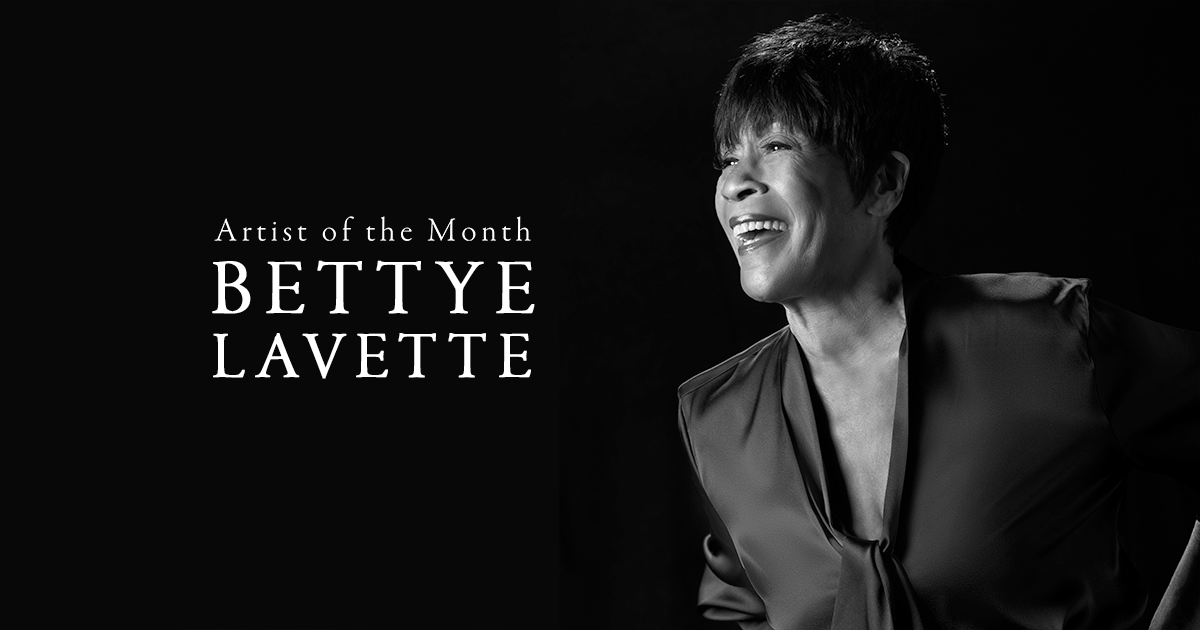
How Bettye LaVette Finally Learned to Let The Songs Sound Like Her (Part 1 of 2)

When Bettye LaVette covered “Your Time to Cry” nearly fifty years ago, she wrung every ounce of hurt and drama from the lyrics, but especially on the chorus. She stretches out the word “time” until it breaks into two syllables, implying a similar emotional break that doesn’t undercut the song’s determination, but shows what cost she has paid for it. It’s a riveting performance, a raw, southern soul slow burner that should have established her as one of the finest R&B voices of the 1970s.

During those same sessions, she also covered Neil Young’s “Heart of Gold” and John Prine’s “Souvenirs,” among other tunes, yet for reasons that were never made clear, Atlantic Records shelved the project, declining to promote “Your Time to Cry” as a single or to release her debut album. That has been a defining moment in LaVette’s long career — and one she subtly and slyly addresses on her new album, Blackbirds. She is the woman wronged, the embodiment of the music industry’s disregard for talent, especially that of Black women. For three decades LaVette continued to work, developing and strengthening her voice and expanding her repertoire. She explains, “When people say I had a resurgence, I want to say, ‘No, I never stopped. You just didn’t come to where I was!’”

Now, nearly fifty years after recording “Your Time to Cry” in Muscle Shoals, Alabama, she has become one of the finest and most accomplished singers in R&B or any other genre for that matter, with a string of albums that showcase her stylistic range as well as her deep understanding of pop history. After releasing a comeback record on the tiny Blues Express label in 2003, she caught the ear of Andy Kaulkin at Anti- Records, who signed her as a new artist at the height of the soul revival of the 2000s.

Since then, she’s covered The Who for the Kennedy Centers Honors ceremony (famously bringing Pete Townshend to tears), recorded with Drive-By Truckers (back in the Shoals, for an album appropriately titled The Scene of the Crime), and reimagined Dylan tunes so thoroughly even his own bandleader didn’t recognize them. And those original Shoals sessions did finally get an official release, first in 2000 on a small Dutch label and again in 2018 from vinyl specialists Run Out Groove.

Blackbirds is among her most powerful albums: a collection of songs by female artists active from the late 1940s through the early 1960s, including Nancy Wilson, Dinah Washington, and Nina Simone, whom LaVette refers to collectively as “the bridge I came across on.” It’s an album that celebrates these artists, but also emphasizes their shared experiences as Black women in the music industry. “Every broken promise broke my heart,” she sings on “Book of Lies,” a song made famous by Ruth Brown. Her voice is lower than it was in 1972, but no less expressive, and she makes that sentiment more than just romantic; it’s also a professional lament, addressed to the industry that derailed her career so long ago.

We spoke with LaVette about Blackbirds in our second half of the interview; here, she tells BGS about her early hopes and disappointments.

BGS: What was your impression when you were down in Muscle Shoals? Had you been there before you recorded?

LaVette: No! What would I be doing there?! What would you go there for, if you weren’t going to record? They had to win me over. I’d wanted to record in New York and Chicago. I always wanted to be very bougie. But after I had accepted how different my voice was — how un-girly-like it was — I identified more with Solomon Burke and Wilson Pickett and Otis Redding. After I was down there for a day, I was absolutely as happy as I could be. They were absolutely wonderful — and wonderful to me. When I got back to Detroit, I could not stop talking about them, especially with the way they wrote and read music.

Were you ever told why your ‘72 sessions were never released?

That has been one of the big mysteries in my career. I can think of that album and my dog Mickey, that I had when I was 11, and just burst into tears at any time. I had Brad Shapiro, who was Wilson Pickett’s producer. I had the Swampers, who I had wanted. I was at the label that I had loved. But when they told me they weren’t going to release the album, I got up under the dining room table and stayed three or four days. My friends brought me food and wine and joints. I’m telling you, I’m about to cry now. It was to be my first album, after having already had a string of singles. For years, all I had was “Your Turn to Cry.” Whenever people would come in with their latest whatever-it-is at my house or at a party, I always kept that song handy, maybe on a cassette. I’d say, “I made a record that was really, really good one time. Y’all wanna hear it?”

I just found out — when I say “just found out,” I meant in the last twenty years, maybe — that it was a split between Ahmet Ertegun and Jerry Wexler. Jerry Wexler was on my side and Ahmet was on Aretha’s side. For the longest time I never knew what happened. I had no idea, and it sounded so stupid, for thirty years, to tell people, “I have no idea.” Many people had heard “Your Time to Cry,” and they said, “If that stuff is anything like this, I can’t understand.” When Atlantic put “Your Time to Cry” out, it was just out. They didn’t mention it to anyone. They just put it out. What you wanted at a label was to have one of everything, and maybe a junior one of everything, too. So they could see where that wouldn’t work with me and Aretha. I think Diana [Ross] is probably the reason I was never at Motown. Those personalities wouldn’t have worked.

Judging by reissues from those sessions, you had already worked up a pretty diverse repertoire.

My manager, Jim Lewis, who was the assistant to the president of the musicians’ union in Detroit and a trombone player with the Jimmie Lunceford Orchestra, was a hard, hard taskmaster. When we started to work this management thing out, he said, “You’re cute. You’ve got a cute little waistline and a cute little butt, but you’re going to have to learn some songs, because there’s a possibility you may not be a big star.” That’s not a given, but you can be a singer for the rest of your life, if you will learn a lot of songs. He said, “You’re a different kind of singer, and you should learn that.”

How so?

I’ve accepted that I sound more like James Brown than Doris Day. But I used to think I had to sound the way Nancy Wilson sounds, which discouraged me from even wanting to learn how to sing. The thought that I could sing it and it didn’t have to sound beautiful didn’t even occur to me, until Jim came along. He told me, “Just let ‘em come out of your mouth. They’re gonna sound like you.” So I had to satisfy myself with the songs. I had to choose songs that I really like, and I would tell people, “Do you like the song or do you like the record? Because those are two different things.”

Jim made me learn a lot of songs. He insisted I learn “Lush Life,” which permitted me to be comfortable at the Carlyle Hotel for ten years. He insisted I learn “Sweet Georgia Brown” and “God Bless the Child,” which put me in the lead role in Bubbling Brown Sugar. He made me learn country and western. Otherwise, I would have been fighting with the local songwriters over them giving songs to Aretha and not giving them to me, you know? I was able to say, “Hey, I can go on and just be real good.” So I approach what I’m doing a little differently. I thought Jim was telling me to sing these songs like these people, but he just wanted me to sing them how they came out of my mouth. However they come out, sing them like that. Now that I’ve accepted that, I’m not so concerned about how it sounds, but how I feel about the song. That helps me present it. I’m very grateful to him.

That comes through on these sessions from 1972, where you’re covering Neil Young and John Prine and doing a song that Bowie was doing at the same time. There’s that range.

Well, it was after that that I did “What Condition My Condition Is In” by Kenny Rogers and the First Edition. And that got me another record contract. Kenny Rogers came to Detroit and Jim said, “Why don’t you take it and let him hear it?” I didn’t think he’d like it, but Jim said, “You don’t know how it’ll sound to him.” So I took it to him and Kenny loved it. His brother, Lelan Rogers, was just starting a record label called Silver Fox, and they flew me down to Nashville. I was with them for four or five years, but still no album. All these albums were set to come out and didn’t come out.

After finally breaking out in the 2000s, you established yourself as an interpreter of songs. What do you bring to a song? How do you make something familiar sound like you? Or is that even something you’re thinking about at this point?

That isn’t something that I plan or set out to do. When I hear the song and start to sing it, that’s just the way I sing it. The thing that makes it new is that it’s different. I doubt I could come up with anything new. But it is different, and so I need for people to change their attitude about it. That was one of the things with Interpretations, my British rock album. The thing that helped me the most recording that album was that I didn’t know most of the songs. I had never heard most of them. They didn’t play them a lot on Black radio. So all I did was just lift the lyrics and sing them the want I wanted to.

Michael Stevens was brilliant, and he did the arrangement of “Love, Reign O’er Me” by The Who that I did for the Kennedy Center Honors. When I went to rehearsal, they got ready to go into the tune, and I told him, “I can’t sing it like that.” And he said, “Well, sing it the way you want to sing it.” So I sang the song to him a cappella, and he took a break and after a while came back and redirected everybody. He’d been listening to this song for thirty years — since he was a teenager! — and I’d only been listening to it for three or four days.

Something similar happened on the Bob Dylan album, Things Have Changed. We had Bob Dylan’s guitarist, Larry Campbell, playing on it, and he had a ball. He said, “I’ve wanted to hear these a different way for seventeen years!” Because he knew about the inner workings of each one of the tunes, more than any of us, he started to find clever little things, probably, that he had always wanted to play, and he played them for me.

How was working with these songs on Blackbirds different?

Working on this album was intimidating, in that I didn’t want to bastardize any of the songs or cast them off. I didn’t want to do anything to them just for the sake of doing something, you know? That was kind of daunting. But that’s the thing that makes Steve [Jordan, producer] so important to me. When we develop an arrangement, what I usually do is I’ll get my keyboard player to go in the direction that I want to take the song.

When Steve hears me with the piano, singing it the way I want to sing it, that speaks to him to put something else in there. He no longer hears Billie Holiday’s interpretation of “Strange Fruit,” and he arranges what he hears in his head, not what the other record was. I’m not going to change any of the notes — I’m just going to put them in different places and say them differently, so you can’t follow that trajectory that you know from the record. It has to be different.

(Editor’s Note: Read part two of our interview with Bettye LaVette.)


Photo credit: Joseph A. Rosen
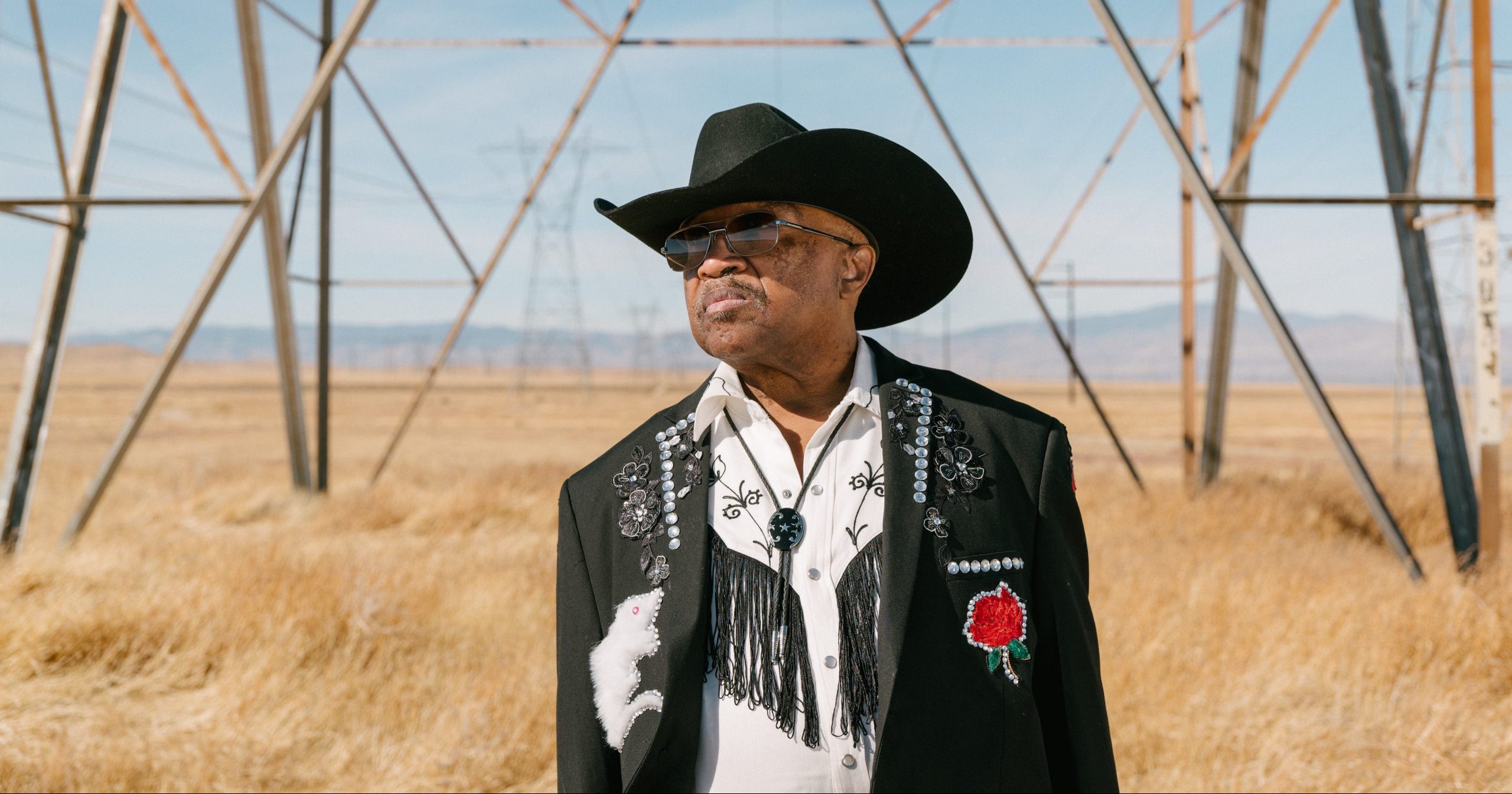
The Show On The Road – David Bromberg

This week, The Show On The Road features living folk-blues legend and underground guitar icon David Bromberg.


LISTEN: APPLE PODCASTS • MP3

Host Z. Lupetin got to speak with the now 74-year-old Bromberg in a hotel room before the pandemic shutdown, prior to Bromberg playing a show at the El Rey Theatre in Los Angeles back in February, 2020.

Coming out of the fertile Greenwich Village scene on the heels of Bob Dylan, Ramblin Jack Elliot and other shaggy troubadour-storytellers, Bromberg’s encyclopedic knowledge of American songwriting traditions made him a coffee house wunderkind who refused to be pigeonholed in one genre. By the age of thirty, Bromberg was the go-to guitarist for Dylan, Willie Nelson, John Prine and Ringo Starr, and he could be found jamming at dinner parties with George Harrison.

A man of many interests and talents, Bromberg actually stepped away from performing for nearly two decades at the height of his notoriety, moving to Chicago to learn how to build and then appraise violins. He became obsessed with identifying the best instruments just by sight, and even opened a respected instrument shop in Wilmington, Delaware called David Bromberg Fine Violins.

He returned after twenty two years off the road with the triumphant and Grammy-nominated Try Me One More Time in 2006, and has assembled an energetic band of friends that continues to join him on his new, high energy offerings.

Bromberg’s muscular and ever genre-bending 2020 release, Big Road pays homage to his heroes like Charlie Rich and 1930’s bluesman Tommy Johnson, but also injects heavy doses of swampy rock, horn-heavy funk, and good-humored, folk storytelling along the way.

Stick around to the end of the episode to hear him play a new acoustic tune called “Buddy Brown’s Blues.”


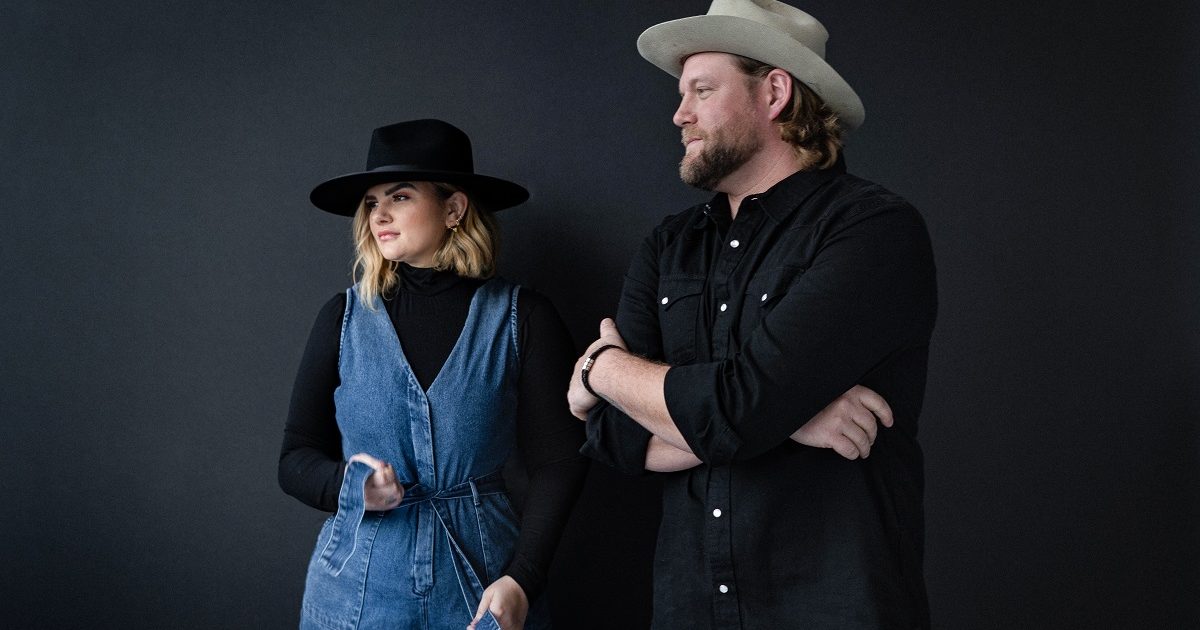
BGS 5+5: Carolina Story

Artist: Carolina Story
Hometown: Nashville, Tennessee
Latest album: Dandelion (to be released September 4, 2020)
Personal nicknames (or rejected band names): Ben – Big Ben, Kingfish, Burly; Emily – Emmy, Em, Merley

Which artist has influenced you the most … and how?

This is a toss-up between Neil Young and Kurt Cobain. When I was a kid, my dad and I used to go fishing south of town from where I grew up in Arkansas. I’ll never forget the day he put CSNY’s 4 Way Street cassette into the tape deck. I was impacted by it all, but once I heard Neil do “Cowgirl in the Sand” I was hooked. I’ve been trying to play the acoustic and harmonica like him ever since. As far as Kurt goes, once I heard “Smells Like Teen Spirit” I begged my mom to get me a guitar and lessons so that I could start a band as soon as possible. – Ben

What other art forms — literature, film, dance, painting, etc. — inform your music?

If I’m feeling uninspired I will turn to any outlet that brings me a way to be creative. I have taught myself how to macrame, which is ropes tied in tedious knots to make a beautiful wall hanging. I always have canvas on hand to paint using acrylics and watercolor paper for watercolors. I love interior design and really spend a lot of time creating an aesthetic that is pleasing to the eye but also relaxing and inspiring. Most of what I find for our home is from hours of me at antique or thrift stores to find pieces that weren’t made in mass productions. Last fall I took my first pottery class and look forward to when I can sit in another class again. And most recently, I have taken an interest in woodworking. We have a pile of scrap wood and I am determined to make some sort of wood sculpture. All that to say, I would love to go to art school someday. – Emily

What was the first moment that you knew you wanted to be a musician?

In the summer of ‘97, once I had discovered Nirvana, Oasis, Stone Temple Pilots and many others, I started guitar lessons. I was 11 years old. After I had taken four or five lessons, I quit and just stayed in my room most of that summer with my ear glued to my jam box learning new songs. I took “Wonderwall” and made up all new words and played it in my 6th grade talent show and got some great applause from my peers. It was called “Another Night Downtown.” (I know, I know. What in the hell does a 6th grader know about a night downtown, much less another one?) That was definitely a defining moment for me. – Ben

Which elements of nature do you spend the most time with and how do those impact your work?

About a year ago we moved just outside of Nashville. We have about three acres of land with two small children so the outdoors has become a dear friend. We spend a lot of time outside our own home saving turtles crossing the road, burying a blue bird who looked to have fallen peacefully from the sky, or removing a snake on its way to eat bird eggs. But also just down the road from us is our family farm, Harpeth Moon Farm. We spend a lot of time there helping harvest and pack produce for the upcoming farmer’s markets or spend relaxing days canoeing down the Harpeth River. This lifestyle has helped give us some major mental clarity and to really treasure the things that matter most. – Emily

Since food and music go so well together, what is your dream pairing of a meal and a musician?

Unfortunately my ultimate meal pairing with a musician will never happen. I would have loved to have written a song with John Prine and see if we could get it finished before they ran out of meatloaf that day at Arnold’s Country Kitchen here in Nashville. But to take that a step further, the cherry on top would have been to have John and Anthony Bourdain over to my house outside of town for a Nashville Pt. 2 episode of Parts Unknown. I would have smoked an 18-hour brisket and made collard greens fresh from Harpeth Moon Farm. We would have all had one or two too many vodka and ginger ales. – Ben


Photo credit: Chrissy Nix

MIXTAPE: Daniel Rodriguez’s Songs of Authenticity

I love all types of music and song. How beautiful a thing to hear the invisible insides of someone shared outwardly. A culmination of dynamic forces, experiences and sensibilities dialed into pulsating, Pythagorean waveforms, giving color to the space in between. The only catch is we have to trust what we’re hearing is authentic. Whether it’s the tonal intention of a singer or the specific touch of an instrumentalist, the song has to move me in some way or else I’m changing the station. Authenticity is subjective to each listener where no authority exists, though goosebumps, tears, movement, lofty notions and inspiration have always been my litmus tests to playing something thrice or more.

Here’s a list of songs that have moved me in some way worthy of mention. Also, if you’re so moved, check out my album Sojourn of Burning Sun out on August 28. — Daniel Rodriguez

Bill Monroe – “Uncle Pen”

From what I hear, this song is Bill giving gratitude and paying tribute to his actual uncle, Pen [James Pendleton Vandiver]. Pen played the fiddle at family gatherings and inspired Bill to join the musical world. The song structure of “Uncle Pen,” though only a few chords, is kind of complex. It’s a jubilant song with a great melody and has those goosebumping, Appalachian harmonies that Bill and his band often showcased. Probably what I like most about the song is that it appears to skip a beat before the head of each verse. It happens during a G run directly after the chorus that impossibly lands at the head of the next section. Simple genius.

Gregory Alan Isakov – “Amsterdam”

I like pretty much all of Gregory’s songs and his recordings. Catching his band live or him solo is a remarkable experience. I’m lucky to call him a longtime friend and I keep my fandom of his music separate from that. Gregory paints imagery that is most times not specific, which leaves you, as a listener, more in an abstract state of mind. Yet he threads a powerful emotion throughout, which his voice and arrangements unavoidably invoke. He uses imagery of a woman often, which comes across as more a mythical character of the sacred feminine, rather than one of a romantic endeavor. This is apparent in “Amsterdam”: “That howling wind, she’s waving hi, her other hand’s in mine.” The song ascends towards the end in some epic way when Greg moves his voice up an octave and sings “Churches and trains, they all look the same to me now / They shoot you some place, while we ache to come home somehow.” Goosebumps to follow.

Bruce Springsteen – “Youngstown”

The Boss has never failed to paint us the pictures of the struggling American working class. Our popular culture seems to only highlight the celebrities and billionaires, and yet The Boss celebrates and sheds light on the untold stories of the common man, the backbone of our culture. His stories are always rich with the American story, full of its hypocrisies and triumphs. “Youngstown” paints a very real picture of the uphill and endless bogging down of industry and war. The arrangement has a suiting Americana feel, stripped down and intimate. The pedal steel and fiddle give an eerie voice to the emotion of the character in the story who sings, “My sweet Jenny, I’m sinking down, here darling in Youngstown.”

John Prine – “Lake Marie”

When John Prine passed on earlier this year I cried constantly for three days. I’ve been lucky enough to catch him live more than a few times at festivals that we both played. The authenticity in his delivery has healing properties that only a few possess. John touches on all the hidden sadnesses and joys of humanity, and gives color to the seemingly opaque hidden corners of the human condition. “Lake Marie” is a special song with all the ingredients: New love, tenured love, relationship struggles and cold-blooded murder. John delivers this story in a very light-hearted and humorous way. He speaks the verses and accentuates certain parts, which become vital to the song’s DNA. The chorus is maybe the best chorus ever written, beautiful and joyous, juxtaposed with a very brutal and tragic story.

Levon Helm – “The Mountain” (written by Steve Earle)

Just like any song that Levon sings of someone else’s, he makes it his own. That is very much the case with “The Mountain” by Steve Earle. Steve recorded a great version of this song with Del McCoury, but my favorite version is the one Levon sings. It’s about the coal industry brutalizing the natural wonder of a homeplace. Removing mountaintops from where once majestic mountains stood. Filling in swimming holes that you once could cool off from the summer’s heat within its cool mountain runoff. Levon brings you there to those mountains, and he takes you to that swimming hole, and then he shows you the pain of it being no more.

Gillian Welch – “Everything is Free”

When speaking of Gillian’s songs it would be prudent to also mention David Rawlings. The line is blurred when trying to understand who wrote what — and it’s fitting that their voices in harmony become an entity of grace and grit that is alive and well. “Everything Is Free” is a song that hits home for the majority of musicians and artists who are at large suffering in an age where the fruits of their labors are taken for granted. This is certainly reflected by our culture, which would ironically feel the worth of music in its absence. In regards to this, Gillian sings: “If there’s something that you wanna hear you can sing it yourself.”

Leon Bridges – “River”

I’m not a religious person, but I am spiritual. Even though Leon uses biblical terminology in this beautiful song of yearning, and being cleansed from your sins — it’s the intention of the song that shines through and transcends all the negative connotations that might come with organized religion. It’s the true Christian values that are evoked here, of actively wanting to become a better person. It sounds like it was recorded live around one mic in a big room and really captures a beautiful moment of music.

Bob Dylan – “Murder Most Foul”

Bob is my favorite artist and songwriter. I love all the phases of his expression. I don’t subscribe to picking a favorite era or compare everything he creates to what he produced in the 1960s. This brings us to “Murder Most Foul,” a recent release of his. It is a nearly seventeen-minute song that talks about the day and days that followed the assassination of John F. Kennedy. Bob beautifully describes this tragic and heightened moment in history, giving us a stream of consciousness of images peripherally and directly happening around the time of the assassination. The production of this song is very minimal which allows the lyrics to be absorbed and breathe.

Mandolin Orange – “Wildfire”

Growing up and residing in the hills of North Carolina, Mandolin Orange has lived and been more than aware of the culture that exists below the Mason-Dixon Line. Not buying into the rhetoric of those holding on to the nostalgia of the Confederacy, Mandolin Orange gives a historical and psychological look at the wildfire that unfortunately still is fueled today. “Wildfire” is a bit of medicine to us all, and carries a hope that some who might need the medicine most. Listen to this song that is served in the musical genre of its commonplace.

The Del McCoury Band – “Hot Wired” (written by Shawn Camp)

This song is a hoot. It’s very well-written, witty and might even spark a belly laugh or two. It talks about all the things the author’s girlfriend is capable of hot-wiring. My favorite lyric is “She might hot wire your Chevy, she might hot wire your Ford / And if she ever gets to Heaven she might hot wire the Lord.” Del breaks the bluegrass rules on this song and introduces an electric guitar after singing about his girlfriend hot-wiring his acoustic guitar to play like the “doggone Rolling Stones.”

Billie Holiday – “Strange Fruit” (written by Abel Meeropol)

This song is so powerful. Billie Holiday recorded it in 1939. The emotion and dynamics of her timing are delivered in a powerful and haunting way. The fruit that hangs from the trees is not fruit at all. [The song’s titular analogy references lynchings of Black folks.] It is perplexing to me that humanity can stoop so low to such an evil as to think one is inferior to another, where murder is rationalized within such a vitriolic mindset. In this specific case it is rationalized within the minds of pale complexion below the Mason-Dixon line. How those trees still stand and the fruit still hangs, though embedded within policy, social structures, the psychology of an unexamined people and history books with whole chapters missing. Music and song throughout time has been utilized to pass stories down and convey emotions. This is a song that passes down and conveys a traumatic truth; its shockwaves still crash on the shores of our everyday.

Josh Ritter – “Girl in the War”

This is one of my favorite songs. I’ve had the fortunate opportunity to play a bunch of shows with Josh and actually back him up on this song with my old band. I’ve heard him say in an interview that this song is about America. I’ll take his word for it. I’m not quite sure what the song is about myself, but I do know it’s a goosebumper. The recording of the song is stunning and I sure do like to play this song around the fire at gatherings.


Photo credit: Jesse Borrell

MIXTAPE: Ocie Elliott’s Favourite Folk Through the Ages

Folk music, especially acoustic ballad folk, country folk, and early blues, has always held a special place in my heart and soul. From a young age, my dad would pull out his acoustic guitar when we’d go camping and around the campfire he would sing the family a folk song or two, mostly acoustic versions of Johnny Horton’s “The Battle of New Orleans” and “Sink the Bismarck.” The sound of the acoustic guitar and voice and their telling of a tale touched something deep inside me and my love for folk music was begun. Here are some of my (and our) favourite songs in this genre through the ages. — Jon Middleton, Ocie Elliott

The Carter Family – “Chewing Gum”

While not necessarily my favourite song by the Carter Family, there is something unique and uplifting about this one. I’ve always thought that Kurt Cobain would have loved it.

Lead Belly – “The Grey Goose”

Lead Belly is definitely one of the best ever, such an incredible songwriter. To me his power lies in the uniqueness of his sound; no one wrote songs like him either. The first time I heard this it filled me with so much joy: I could hear it being performed with a big group of people all singing the “lord, lord, lord” part. I’ve also always imagined Toots and the Maytals covering this song.

Blind Willie Johnson – “Trouble Will Soon Be Over”

My favourite blues artist of all time, Blind Willie Johnson’s voice and slide-guitar playing are otherworldly. This tune has such a beautiful melody and feel, it also displays the softer side of his voice and the female accompaniment adds a lovely depth to it all.

Mississippi John Hurt – “Spike Driver Blues”

The first time I heard his 1928 recordings my mind was blown. He has had the biggest influence on my fingerpicking without a doubt. The melody he picks in this song is just so beautifully circular, bouncy and perfect.

Doc Watson and Clarence Ashley – “Old Ruben”

I love the recordings these two did together — there is something very vibrant, authentic and alive in them. I think this song is my favourite of all of them, although “The Coo-Coo Bird” is a close second.

Johnny Cash – “Dark as a Dungeon” (Live at Folsom State Prison)

This whole album is amazing, but this song has always stood out, partly because it sounds like something to be sung around a campfire, but also because his voice is so rich and deep — it’s the perfect voice for this song.

Bob Dylan – “I Threw it All Away”

It’s impossible to pick a favourite from someone who has written more classics than most songwriter’s output in total. But I choose this one because oddly enough, this album (Nashville Skyline) was what led me into Dylan’s universe (I purchased it because it had Johnny Cash singing with Dylan on one song). Needless to say, I fell in deep.

John Prine – “Mexican Home”

We cover a number of John Prine’s songs, including “In Spite of Ourselves” and “Long Monday,” but one of our favourites that we don’t cover is “Mexican Home.” Both recorded versions are great in their own way, but the studio version feels truer to the content.

Guy Clark – “Anyhow, I Love You”

One of our favourite duets. A friend of ours showed us this song a few years back and we immediately started to learn it and sing it. It’s a very special and unique tune, especially in the lyrical phrasing.

The Country Gentlemen – “Fox on the Run” (Live)

I love that this was first recorded as a rock ‘n’ roll song by Manfred Mann. The Country Gentlemen’s version and harmonies literally sound like the lyrics, especially the line: “Her hair shone like gold in the hot morning sun.”

Loudon Wainwright III – “The Swimming Song”

We were also introduced to this by a friend and ever since then we’ve been in love with it. It’s uplifting, but also has this tinge of melancholy to it.

Mason Jennings – “Crown”

A favourite songwriter of ours, I’ve been in love with his music ever since I bought one of his albums on a whim in L.A. and drove with it the whole way back up the coast to San Francisco. Once there, I immediately pulled into Amoeba Records and purchased another.

Gillian Welch – “Winter’s Come and Gone”

Gillian Welch and David Rawlings are one of our biggest influences as a group. When Sierra and I first met, our first connection was made over a mutual love for Gillian Welch, and the first song we ever played together was “Look at Miss Ohio.” Something about this song though, the whole album really.

Gregory Alan Isakov – “Amsterdam”

This song has a rich, wonderful vibe to it — the recording quality, the playing, the mixing and of course, the tune itself. It feels like a warm blanket on a rainy day.


Photo credit: Dustin Rabin

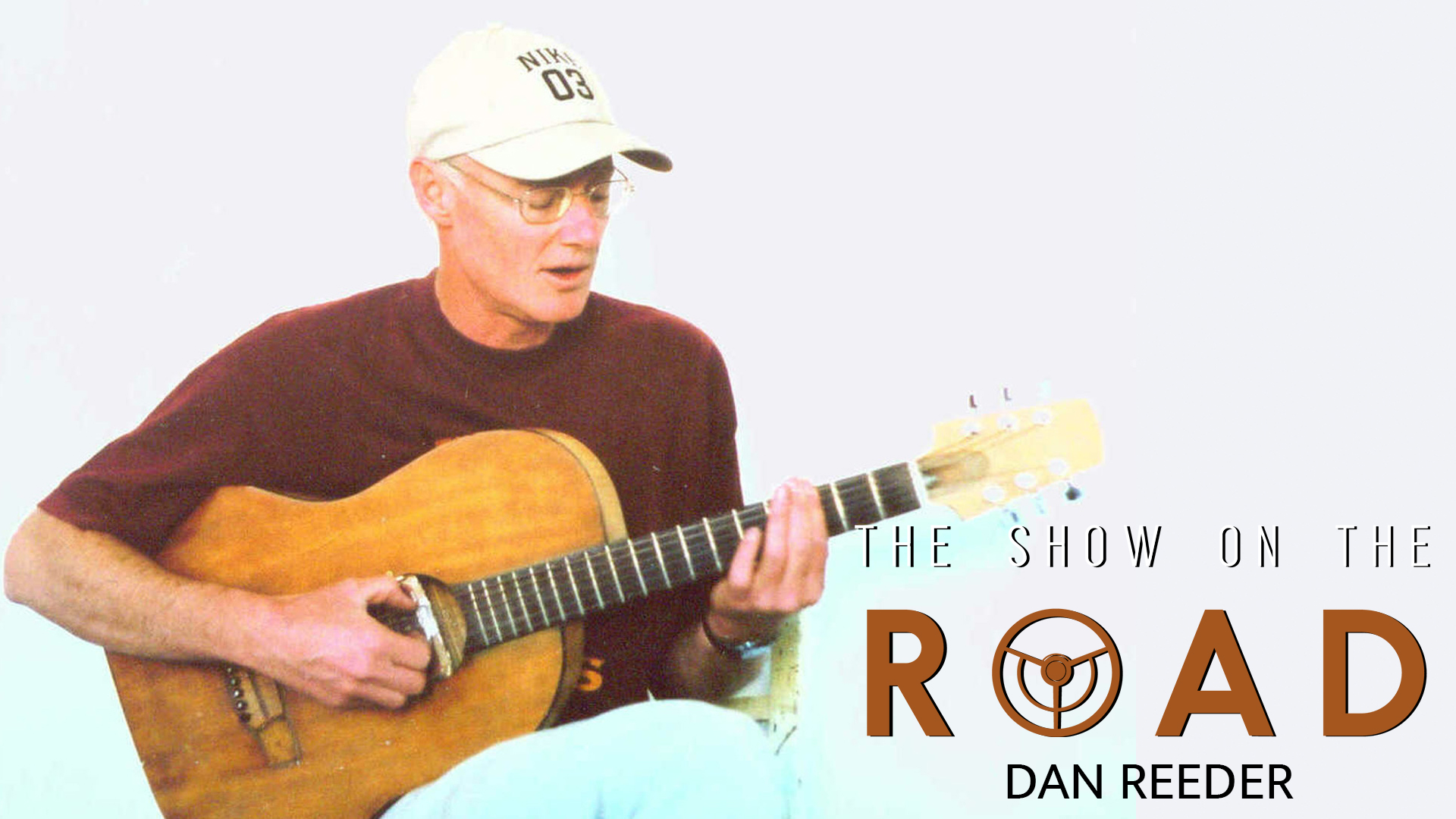
The Show On The Road – Dan Reeder

This week on The Show On The Road, a conversation with renegade roots songwriter, painter and NSFW self-taught poet Dan Reeder.

LISTEN: APPLE PODCASTSMP3

Reeder is rarely interviewed, but has collected a legion of devoted fans after putting out a series of beloved albums on John Prine’s Oh Boy Records – including the much-anticipated new LP, Every Which Way.

For the uninitiated, diving into Reeder’s uniquely absurdist, harmony-drenched body of work can feel like reading a rich short story collection in one sitting. His normal routine is to layer lush close-mic’d vocals on top of one another using himself as a conspiratorial choir. He sketches tiny but poignant moments from his life and imagination, often repeating a simple phrase again and again like one of his most-listened to tunes, “Work Song,” which tells us bluntly through gospel claps: “I’ve got all the fucking work I need.” 

The new album may seem intimidating at first. It features a whopping 20 songs (or cinematic vignettes of a sort), but a closer look shows it clocking in at a succinct 39 minutes. Controversial-while-gentle acoustic offerings like “Porn Song” come in at just under minute long. New favorites like the wide-eyed (and foul-mouthed) piano ballad “Born a Worm” ask the deepest of questions of an indifferent, endlessly beautiful universe in only the way Reeder could — by plainly inquiring about a caterpillar’s mysterious transformation into a butterfly: “what the fuck is that about?”

Much more than a one man band, Reeder often builds every instrument he plays in his recordings, from steel string guitars, to banjos, drums, basses, cellos, violins, clarinets, and even the computer he records on. This episode was recorded in his garage studio in Nuremberg, Germany, where he’s lived with his wife for 30 years. 

Host Z. Lupetin spoke to Reeder right after John Prine passed away from complications of COVID-19, and they spoke about his tours together with Prine and how much his music inspired him through the years.