Jett Holden’s Dreams Come to Life on ‘The Phoenix’

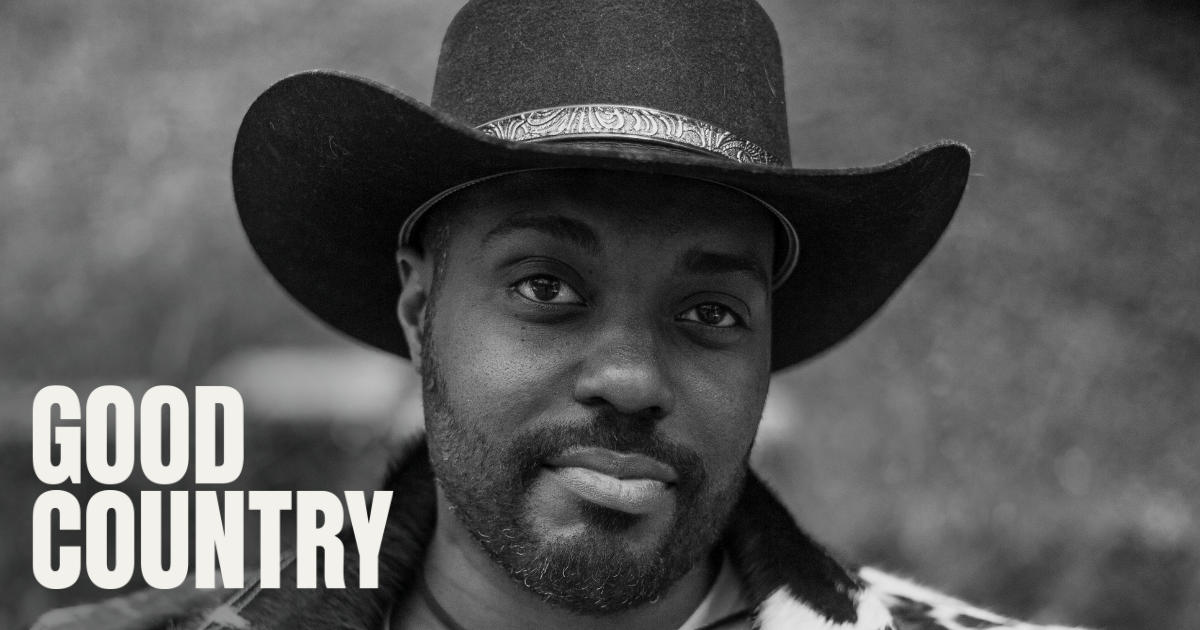
For years, Jett Holden dreamt and dreamt about making a living through music, but everywhere he turned he was met with doubt, subtle prejudice, and closeted racism that left him running on empty and searching for something new.

Following a journey to rock bottom, Holden is back stronger than ever on The Phoenix, a 10-song collection that catalogs his rise from the ashes and spotlights the community that embraced him when it seemed nobody else would. Told through a mix of countrypolitan, rock, punk, metal, and R&B sounds, the record is proof that there are no boundaries to who, where, and what good music can come from – and that we all benefit from everyone having a seat at the table, sharing their stories and perspectives.

“This album reflects who I’ve been throughout my entire life,” Holden explains to Good Country. “It’s been really cool to look back on when and where my different influences come from while bringing these songs to life. For example, ‘Karma’ is definitely Paramore meets Stapleton, while ‘West Virginia Sky’ harkens to my Tracy Chapman and Jim Croce influences.”

Fresh off a move to Nashville, Holden spoke with GC over the phone about the doubt and prejudice he’s faced along his musical journey, his work with the Black Opry, using music to heal past trauma, and more.

There’s a lot going on in your song ‘Scarecrow,’ from exploring your family’s reaction to coming out to masking the crippling weight of other’s doubts of what you’re capable of – along with a slew of Wizard of Oz references to the scarecrow, tin man, and cowardly lion. Mind sharing how all those ideas coalesced into one?

Jett Holden: It’s the first song I finished for the album. I wrote it back when I was 25, and at that point my family and I didn’t really have a personal relationship. It had gotten to the point where I came out 10 years earlier and wasn’t sure where I stood with them. I wasn’t disowned, but I also didn’t have anyone to turn to – they all pretty much told me they didn’t want to hear about it. I didn’t want to keep living in limbo, so a few years later I skipped town and moved to East Tennessee, which is where [Black Opry founder Holly G] found me in 2021.

You also had a brief stint living in California around this time that left you on the brink of quitting music for good. What all transpired out there?

I moved out to Long Beach after dropping out of community college. I was in talks about a development deal and during the “get-to-know-you” phase I let it slip that I was gay and they responded by saying that I wasn’t marketable as a Black, gay man doing the kind of music that I wanted to do. Things fell apart from there, which is why I left California and moved back to Virginia before eventually relocating to Tennessee.

Aside from that moment, were there any other circumstances that contributed to you feeling so defeated about your music prospects?

When I first moved out West, there was a very steep trajectory that isn’t common for most people, but it quickly deteriorated after I mentioned being gay, making for a really high peak and a really low low. When I returned to Virginia things got stagnant and didn’t progress at all, even moving backwards at times. It was a frustrating time of trying to figure myself out that culminated in the move to East Tennessee where I was roommates with a close friend before coming home one day after she committed suicide.

Another of my friends got cancer around the same time and just recently passed too, so those were very traumatic years for me.
By 2020, I just couldn’t do it anymore, so I started going to therapy right before the pandemic hit and the world shut down. Suddenly [music] was just too much to deal with, so I stopped making it. Being online was toxic so I shut down, got a stay-at-home job with AT&T, and accepted that as my future, working my way up in the company.

Then Holly — and the Black Opry — came around?

Exactly. I’d already called it quits when she found me on Instagram through a video I’d posted of my song “Taxidermy.” I only had that and a couple other covers posted, but it was enough for her to take interest and slowly pull me back into the industry. A couple months later she launched the Black Opry as a blog and it’s crazy to see where things have gone since then.

Within a year I’d gotten to tour all over the country, appear on The Kelly Clarkson Show, and I recorded my first single and EP through a grant I received from [Rissi Palmer’s] Color Me Country. Holly has made so many things possible that had been unavailable to me for my entire career until then, fighting for me in ways nobody else had before. She took chances because she wasn’t an industry person, but rather a flight attendant who was just a fan of country music and wanted to feel connected to it and the artists she was listening to, which is something a lot of others were in search of as well.

When I went to the first outlaw house she threw at Americanafest in 2021, I was expecting a bunch of Black country fans to show up, but it was also the queer community, the Latin community, and the women in country music that didn’t feel like they were getting a fair shake of things. Everyone who felt “othered” in country music showed up and it felt like immediate family. Seeing the excitement around that is what drew me back in.

Speaking of your song “Taxidermy,” I remember you being brought to tears while singing it during a Black Opry panel at Americanafest that same year. What’s that song meant to you, both in its message and what it’s meant to your career?

That song relaunched my career essentially, because I wasn’t chasing music when I wrote it. In fact, when I posted it online I only had one verse and the chorus. Despite it not being complete, Holly still sent it off to Rissi Palmer and got me the grant and I finished writing it the day we recorded. It’s a song of frustration that I didn’t expect many people to watch when I posted it, but Holly really connected with it, spread it around, and helped it blow up into something bigger than I ever imagined.

I was just singing about my frustrations with what was going on around our country at the time concerning police brutality, which was a big reason why I quit social media and music altogether in 2020. Instagram was the [only] online account I had when Holly found me. That song allowed me to vent about those things, but it also helped me gain the community I needed to break myself out of the news cycle that we were constantly absorbing, because we had nowhere to go. The song came about out of all that negativity, but had a huge positive impact on me that I never expected.

In addition to the support you’ve received from the Black Opry, you’ve also got a helluva team behind you for this record including the folks at Thirty Tigers, [producer] Will Hoge, and collaborators like John Osborne and Charlie Worsham (“Backwoods Proclamation”), Cassadee Pope (“Karma”), and Emily Scott Robinson (“When I’m Gone”). I imagine that, after everything you’ve been through, having folks like that working alongside you is incredibly validating?

Definitely! Emily was the first person I asked, since she was a very early supporter of the Black Opry. We both connected over “When I’m Gone” and our similar stories [around] suicide, so it was a no-brainer to have her sing with me on it. Holly ended up reaching out to Cassadee after I mentioned wanting someone similar to Hayley Williams featured, and she nailed it. It’s very cool seeing all these people I’ve looked up to legitimately wanting to work with me. I still haven’t met Charlie or John, but it’s wild knowing that they’ve heard my song and wanted to be involved in it.

Regarding “When I’m Gone,” is that a reference to your friend in East Tennessee that you walked in on after committing suicide? If so I’m sorry for your loss, but I love how you used the song to memorialize them and bring attention to the plight of suicide. It’s an awful thing to experience, but putting your feelings from it to song is a great way to bring beauty to an otherwise unimaginable situation.

You’re completely right. When I play songs like “When I’m Gone” or “Scarecrow” live I always have people coming up to talk to me about them afterwards, whether it’s someone who’s come out, dealt with religious trauma, or a person who’s just lost somebody close to them. There’s something very cathartic and heavy all at once that’s led to a lot of crying, but more importantly a lot of growth. It’s been great feeling like I’m not going unheard – which I did for over a decade – and having interest in what I’m doing where there wasn’t any before.

We’ve talked about a lot of the trauma captured in these songs, which brings me to the album’s title, The Phoenix. Is that reference meant to reflect how your life — specifically your musical dreams — have been reborn in recent years?

That was the intention. It was about the resurrection of my career, plus I also referenced the phoenix in “West Virginia Sky,” so it felt appropriate. Then, weirdly enough, just after recording the album I had a friend, also named Holly, give me a phoenix bolo tie for Christmas. It was a very kismet occurrence and a sign that that was the correct title to move forward with on the project. It makes for the perfect project, one where I have creative control and wrote every song (besides co-writing “Backwoods Proclamation”). I put my heart and soul into it, and am really excited for people to hear it.

If you could go back in time to speak with yourself when you were about to call it quits, what would you tell them?

Prioritize the relationships you build, because those are the people that will help you get to where you are supposed to be.

(Editor’s Note: Sign up on Substack to receive even more Good Country content direct to your email inbox.)


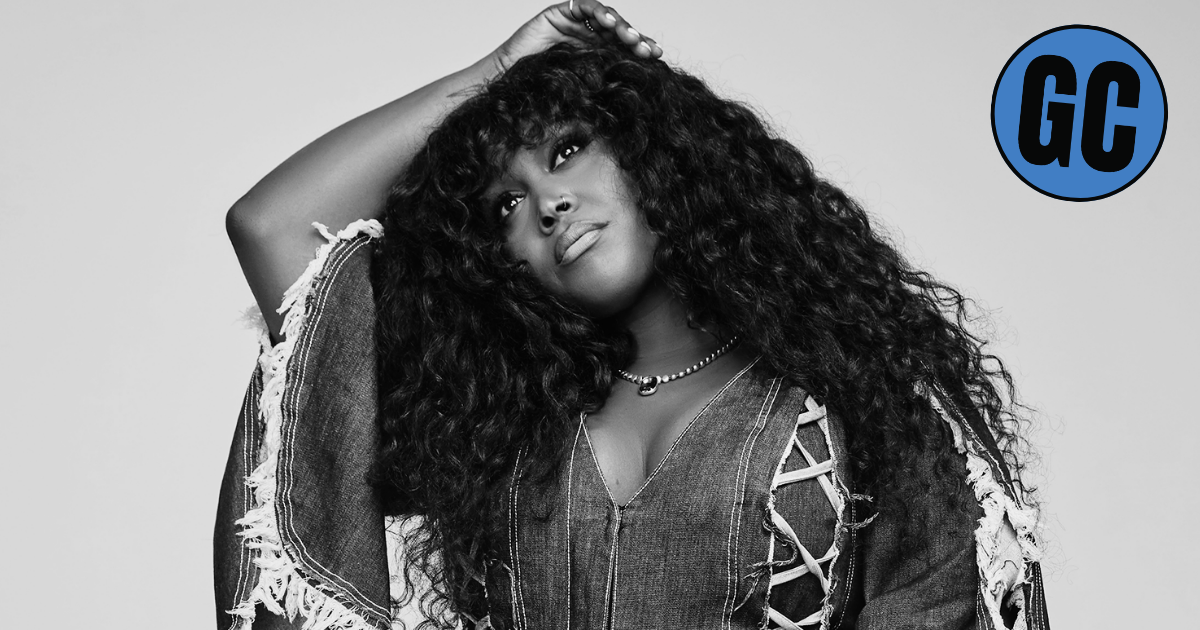
Photo Credit: Kai Lendzion
Open Mic: Charlie Peacock Pushes Through Chronic Pain on ‘EVERY KIND OF UH-OH’

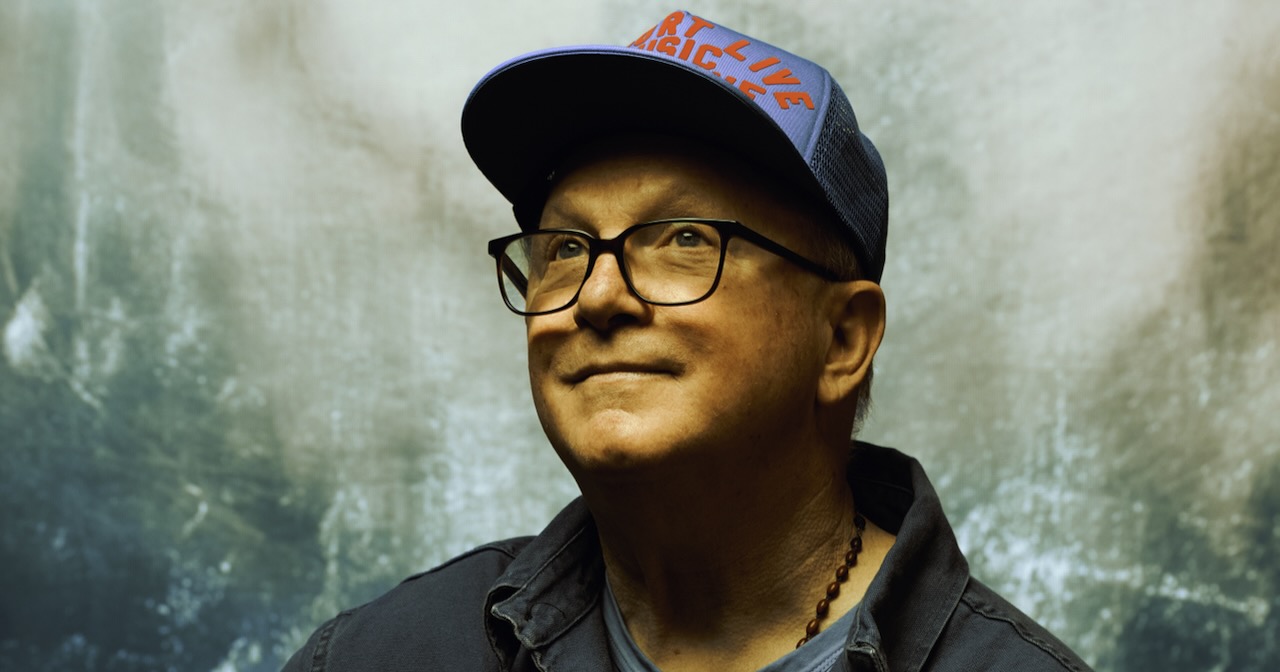
With a 40+ year career spanning virtually every aspect of the music business – from performing and songwriting to production, development and even education – Charlie Peacock has battled myriad creative challenges. A standout in the Contemporary Christian format who was also deeply involved in the Americana folk boom of the 2010s (he was even the driving force behind The Civil Wars’ mainstream emergence), no problem seemed too big to handle. But for his new album EVERY KIND OF UH-OH, Peacock had to overcome an obstacle unlike the rest: a rare, debilitating health condition.

Diagnosed with Dysautonomia and Central Sensitization, Peacock has essentially been experiencing a never-ending headache since 2017 – seven grueling years and counting. Needless to say, it has upended the GRAMMY winner’s life, and while some days are better than others, the chronic pain prevented him from music making all together– until a flash of writing in 2023, that is.

Featuring 10 all-new songs penned in a two-week flurry, EVERY KIND OF UH-OH finds Peacock getting back to work, but with fresh appreciation for life’s messy beauty. Co-produced with his son Sam Ashworth, a peaceful mix of dream-folk and gospel match a tender, feathery tenor, as Peacock explores against-the-odds optimism with spirituality, purpose, and humor. In the end, it feels like a veteran songsmith’s statement of revelation; and a set of life lessons delivered with knowledge, not judgement.

Still fighting symptoms on the morning after a party celebrating the album’s arrival, Peacock spoke with BGS about how his life transformed and how it forever changed the way he makes music. Peacock also plans to release his memoir, Roots & Rhythm: A Life in Music in February.

We’re really interested in the way things like creativity and mindfulness and health intersect, so I’m fascinated by your story. Can you just tell me how you’re feeling today – both in a micro sense and in terms of the bigger picture with everything you’ve been through?

Charlie Peacock: Well, just for the background, I have a neurological disorder called Central Sensitization, which is a pain management disorder between the brain and the central nervous system about how pain is managed. So, my brain got tricked into thinking I am in trouble, and it’s sending me pain signals. Basically in the same way that if I scratched my arm on something, that scratch pain is there to tell me, “Hey, there’s something wrong with your arm. You might want to take a look at it.” Well, the brain functions in that way for all our pain management throughout our entire body.

So mine, this disorder that I have is that everyday for almost eight years, I’ve had an intractable headache. I’ve had an eight-year headache basically, and it goes up and down in terms of intensity. Sometimes it’s “You’ve got to go to the hospital” intensity. And most of the time it’s just sort of like a three or a four [on a scale of one to 10]. And I’ve learned to function through various methodologies and mindfulness and various kinds of treatments that I’ve done.

I imagine on top of the physical side of things, it has impacted your creativity. How did this change the way you look at making music?

Well, it got me back in some ways. It got me out of the music business and back into music making.

Really? How so?

At the point when I got sick, I was just turning 60 years old. So I was a 60-year-old man who’d been in the music business for 42 years, who was in writing rooms with 20-somethings. And even though part of my whole thing as a songwriter and a producer is that I’ve stayed relatively current, you’re still a person of your time and your generation. It’s like, could I make a trap song? Absolutely. But will I make one that is convincing to people who listen to trap? Maybe not. …

I was functioning more as the older, experienced sage that comes in and cleans up people’s songs. And so what the illness did was it put me back in that more childlike place of working on my own music and experiencing just the joy of creating, rather than coming in as the expert who’s going to be the song doctor or the producer who’s going to give that artist that extra 23% that makes them commercially viable or something like that. So that has been a real joy. And then of course, as I’ve said many times, it’s like you take care of the music and it takes care of you. That’s been the case just in terms of imagination and creativity during this illness, where it’s been a part of my medicine for sure.

Here we are eight years after the illness started and you’ve got a new record. What changed to bring this music out?

Well, [before] this illness period I had gone to Lipscomb University and created their commercial music program, and then became the head of the School of Music for a year. And it was during that time that I got sick. I was already kind of moving out of the producer-for-hire model and kind of had this education piece that was on my bucket list. So I had gone and done that and then I was just here working, making a lot of music, doing a lot of writing, working on a family, a screenplay for a family story from the 1800s, just doing a bunch of different creative things. …

[After the illness], I just had a willingness to say, “If my music career is over at this point, then I will have been really grateful.” And this memoir is kind the period on the end of the sentence. Then all of a sudden it was like I woke up one morning like “Is that an idea for a song?” It was brewing. So I started working on it and then a few more. And then I asked my son, “Hey, you want to help me finish this song?” I go out to his house and we hang and work on this song. We’re both super excited about it. And then he finally, after hearing more of the music, he was like, “Dad, you got to promise me you’ll take this seriously. Don’t just tell everybody, ‘Hey, I have a new record out on Friday and buy a couple ads on Facebook and call it a day.’ I think you need to actually do an old school release and get a distributor and have them set the record up.”

I said, “I don’t know if I have the energy for that.” But [Sam] said, “Well, I’ll help you.” And so he did help me. Really, the whole family has been a huge help. Sam came alongside me and he co-produced the record and we co-wrote three songs on it. And literally, it’s a 10-song album. Within 14 days. I had all 10 songs written. And it was just one of those times where it was just time to do that. I didn’t know it was, but it was.

Fortunately, I also had some pretty good windows of health that I could [record]. I had some days when I tried to sing where it’s just like, “Man, it’s just not happening.” But I’d wait a few days and get rested up again and go up to the studio and sing, and it would still be there. I was actually surprised myself, some of the range that I was able to sing at still.

Have the songs taken on a new shape for you or a new dimension, topic-wise and thematically?

Well, my great-grandfather was a fiddler in Louisiana and my grandfather from Oklahoma loved to sing all the Okie songs of the era. And I thought, let me just lean into that a little bit. So I would say this record is a little taste of that, especially the instrumentation is pretty much still the same in terms of rootsy guitars and just simple drums and bass and fiddle and pedal steel. And the only difference between this record is I really leaned into the gospel vocal sound. A lot of my friends that have been dominant in Black gospel music. And so that’s a difference. Narrative-wise, I was really trying to do this kind of literary thing that was a mix of plain-speak American roots, with these literary elements, and then also take a spiritual element, but not make it religious, and try to create a narrative that was uniquely American. I think in its influence, it’s almost like reading some of the classic American novelists.

There’s a wonderful mix of storytelling and deeper spirituality, for sure. Thank you, Charlie. I’ll just leave you with the big picture. What do you hope people take away from this record?

I think for me, even listening to the songs and seeing the reaction from folks, what they said afterwards is, “This is a world that I want to enter into. There’s something about what you’re creating on this record, this musical world, and this invitation to come on in that feels really safe and that I will belong here and I’ll be well loved, cared for, not judged – allowed to just be myself.”

And I think that’s what we want. I mean, I think that’s what makes our heart beat, is that we just want to be known totally. We want to be known like the intricacies of our personalities. We don’t want to be known superficially. And I hope there’s something about this music that sends that signal that, yeah, I do too. Come on in and listen and see if you find some of that here.


Photo Credit: Jeremy Cowart

The Remarkable Rootsiness of the 2024 CMA Awards Nominations

(Editor’s Note: Sign up on Substack to receive even more Good Country content direct to your email inbox!)

The headline takeaways from this year’s CMA Awards nominations may be the inclusion (and exclusion) of pop superstars, with understandable interest in what that says about today’s country format. But the 2024 field features plenty of roots and bluegrass influence, too. Regular BGS and Good Country readers might even be surprised at the confluence of the modern mainstream and its traditional tributaries.

We want to highlight that dynamic as well. Country has always been a big tent, but is it now becoming more receptive to its roots?

Let’s start with the superstars. These days, many can claim a rootsy kind of rebelliousness, and chief among those is Chris Stapleton. With his long history – in bluegrass, in Southern rock, in classic country songwriting, and with a train load of CMA trophies – Stapleton vies once again for what would be his first Entertainer of the Year award – after a record-setting eight nominations. Yet he still sings with the fiery Appalachian soul he debuted at the front of The SteelDrivers.

Others earning top billing this year include Zach Bryan and Lainey Wilson – and both have a reputation for gritty, creative realism. Some of the hottest new names country has to offer, Bryan has been selling out stadiums with his confessional alt-country and Wilson’s bluesy Louisiana swagger earned her last year’s Entertainer of the Year title. Those are not the only established artists holding true to the cause, though.

Kacey Musgraves continues to show salt-of-the-earth songcraft is not mutually exclusive to shimmering pop decadence. And while Ashley McBryde has perfected the art of making arenas feel like a massive, county-line roadhouse, Cody Johnson proves the appetite for hardcore Texas twang did not die with King George’s (semi) abdication. All have become perennial fixtures in the format’s upper echelons.

Likewise, this year’s nominees offer excitement for the future, awash with fresh talent. Shaboozey turned heads with the Number One ear worm, “A Bar Song (Tipsy),” but dig beyond the single and his catalog marks an elusive missing link between the hard-times inspirations of both hip-hop and country. Artists like Zach Top – who also came up through bluegrass – accept no substitute for twangy telecasters and shuffling, two-step beats. And while The War and Treaty continue their mission to bring soul and gospel back into the heart of country, The Red Clay Strays find a home for their blend of heady roots rock and commanding, fire-and-brimstone vocals.

Even the behind-the-scenes nominees highlight this rootsy resurgence, with the Musician of the Year category dominated by keepers of the instrumental flame. Fiddle phenom Jenee Fleenor goes head to head with steel-guitar legend Paul Franklin and the multi-talented guitarist/Americana artist Charlie Worsham – while the other two, guitarists Tom Bukovac and Rob McNelley, are certainly no slouches when it comes to six-string scholarship.

In fact, the commonalities between this year’s CMA Awards nominees and the artists covered by BGS and GC are so striking, we wonder what you think. Take a look at the full list of nominees below, and let us know.

THE 58TH ANNUAL CMA AWARDS – FINAL NOMINEES (by ballot category order):

ENTERTAINER OF THE YEAR

Luke Combs
Jelly Roll
Chris Stapleton
Morgan Wallen
Lainey Wilson

SINGLE OF THE YEAR
Award goes to Artist(s), Producer(s) and Mix Engineer(s)

“A Bar Song (Tipsy)” – Shaboozey
Producers: Sean Cook, Nevin Sastry
Mix Engineer: Raul Lopez

“Dirt Cheap” – Cody Johnson
Producer: Trent Willmon
Mix Engineer: Jack Clarke

“I Had Some Help” – Post Malone (Feat. Morgan Wallen)
Producers: Louis Bell, Charlie Handsome, Hoskins
Mix Engineer: Ryan Gore

“Watermelon Moonshine” – Lainey Wilson
Producer: Jay Joyce
Mix Engineers: Jason Hall, Jay Joyce

“White Horse” – Chris Stapleton
Producers: Dave Cobb, Chris Stapleton, Morgane Stapleton
Mix Engineer: Vance Powell

ALBUM OF THE YEAR
Award goes to Artist, Producer(s) and Mix Engineer(s)

Deeper Well – Kacey Musgraves
Producers: Ian Fitchuk, Kacey Musgraves, Daniel Tashian
Mix Engineers: Shawn Everett, Konrad Snyder

Fathers & Sons – Luke Combs
Producers: Luke Combs, Chip Matthews, Jonathan Singleton
Mix Engineer: Chip Matthews

Higher – Chris Stapleton
Producers: Dave Cobb, Chris Stapleton, Morgane Stapleton
Mix Engineer: Vance Powell

Leather – Cody Johnson
Producer: Trent Willmon
Mix Engineer: Jack Clarke

Whitsitt Chapel – Jelly Roll
Producers: Andrew Baylis, Brock Berryhill, Zach Crowell, Jesse Frasure, David Garcia, Kevin “Thrasher” Gruft, Austin Nivarel, David Ray Stevens
Mix Engineers: Jeff Braun, Jim Cooley

SONG OF THE YEAR
Award goes to Songwriter(s)

“Burn It Down”
Songwriters: Hillary Lindsey, Parker McCollum, Lori McKenna, Liz Rose

“Dirt Cheap”
Songwriter: Josh Phillips

“I Had Some Help”
Songwriters: Louis Bell, Ashley Gorley, Charlie Handsome, Hoskins, Austin Post, Ernest Keith Smith, Morgan Wallen, Chandler Paul Walters

“The Painter”
Songwriters: Benjy Davis, Kat Higgins, Ryan Larkins

“White Horse”
Songwriters: Chris Stapleton, Dan Wilson

FEMALE VOCALIST OF THE YEAR

Kelsea Ballerini
Ashley McBryde
Megan Moroney
Kacey Musgraves
Lainey Wilson

MALE VOCALIST OF THE YEAR

Luke Combs
Jelly Roll
Cody Johnson
Chris Stapleton
Morgan Wallen

VOCAL GROUP OF THE YEAR

Lady A
Little Big Town
Old Dominion
The Red Clay Strays
Zac Brown Band

VOCAL DUO OF THE YEAR

Brooks & Dunn
Brothers Osborne
Dan + Shay
Maddie & Tae
The War And Treaty

MUSICAL EVENT OF THE YEAR
Award goes to Artists and Producer(s)

“Cowboys Cry Too” – Kelsea Ballerini (with Noah Kahan)
Producers: Kelsea Ballerini, Alysa Vanderheym

“I Had Some Help” – Post Malone (Feat. Morgan Wallen)
Producers: Louis Bell, Charlie Handsome, Hoskins

“I Remember Everything” – Zach Bryan (ft. Kacey Musgraves)
Producer: Zach Bryan

“Man Made A Bar” – Morgan Wallen (feat. Eric Church)
Producer: Joey Moi

“you look like you love me” – Ella Langley (feat. Riley Green)
Producer: Will Bundy

MUSICIAN OF THE YEAR

Tom Bukovac – Guitar
Jenee Fleenor – Fiddle
Paul Franklin – Steel Guitar
Rob McNelley – Guitar
Charlie Worsham – Guitar

MUSIC VIDEO OF THE YEAR
Award goes to Artist(s) and Director(s)

“Dirt Cheap” – Cody Johnson
Director: Dustin Haney

“I Had Some Help” – Post Malone (Feat. Morgan Wallen)
Director: Chris Villa

“I’m Not Pretty” – Megan Moroney
Directors: Jeff Johnson, Megan Moroney

“The Painter” – Cody Johnson
Director: Dustin Haney

“Wildflowers and Wild Horses” – Lainey Wilson
Director: Patrick Tracy

NEW ARTIST OF THE YEAR

Megan Moroney
Shaboozey
Nate Smith
Mitchell Tenpenny
Zach Top
Bailey Zimmerman


Sign up on Substack to receive even more Good Country content direct to your email inbox!

Country’s Cool Again: Lainey Wilson’s ‘Whirlwind’ Will Blow You Away

(Editor’s Note: Be one of the first to read our Good Country email newsletter, including exclusive features, interviews, and articles by signing up on Substack today.)

Few artists have changed country music like Lainey Wilson.

The bell bottom-wearing, slow-talking singer-songwriter from small-town Louisiana has taken the genre by storm since dropping her breakout third studio album, Sayin’ What I’m Thinkin’, in 2021, and she’s reshaped the country music industry along the way. With Wilson’s highly anticipated fifth studio album, Whirlwind, due August 23, she’s bound to shake things up once again.

If you’ve engaged with just about any form of media in recent years, chances are you’re already familiar with Wilson, who also starred on the fifth season of the wildly popular Paramount Network show Yellowstone. She’s racked up a room’s worth of trophies, including a Grammy, six ACM Awards and seven CMA Awards, including the coveted Entertainer of the Year award in 2023, which made her the first woman to win the honor since Taylor Swift’s win in 2009.

And somehow, in a genre that infamously allows mostly men to dominate charts and radio air time, Wilson has found mainstream country success commensurate with her critical acclaim. She’s notched four number ones on country radio when many women can’t even get their music played. She’s lent assists to big names like HARDY (2022’s “Wait in the Truck”) and Jelly Roll (2023’s “Save Me”), and for a while seemed to be country’s favorite feature – since 2021, she’s also collaborated with Dolly Parton, Lauren Alaina, Ernest, and Cole Swindell.

So, what is it about Wilson that resonates with so many people?

Her breakout single, 2020’s “Things A Man Oughta Know,” is a great place to start. Wilson’s voice is undeniable – like Parton or Loretta Lynn, Wilson has an inimitable sound and style – and a ballad like “Things A Man Oughta Know” gives her ample room to shine. Her voice is nimble and elastic, rich and dynamic. She knows when to stretch a note for emotional effect, like when she sings, “How to keep it hidden when a heart gets broke,” bending the final syllable to reinforce its ache. Lyrically, the track epitomizes the grittier side of Wilson’s persona, as she shows herself to be as adept at love as she is “chang[ing] a tire on the side of a road.”

That tune first appeared on Wilson’s 2020 EP, Redneck Hollywood, and would be reprised on Sayin’ What I’m Thinkin’. It would prove to be no fluke, too, as the LP released to near-universal acclaim. While much of commercial country music was steeped in pop and hip-hop influences, Wilson’s music was traditional but forward-thinking, sounding like AM radio classics, but from a fresh perspective.

It seemed as though Sayin’ What I’m Thinkin’ made Wilson an overnight success, but like most artists who come to Nashville seeking a big break, she had paid serious dues. After graduating high school, Wilson moved to Nashville from Louisiana in 2011, living in a camper van while she found her footing in town.

She’d honed her musical chops as a kid, first discovering a love for music as a young child. As she grew older, Wilson’s dream of pursuing a career in music grew, too, and by the time she was a teenager she had regular gigs as a Miley Cyrus impersonator, showing up at weekend birthday parties to perform for kids.

That would be good practice for building a career in Nashville, as grinding it out at local writers’ rounds, bars, showcases, and open mic nights is, for most artists, a Music City rite of passage. Nashville’s “10-year town” reputation, which posits that an artist must keep at it for a decade to break through, proved true for Wilson, who had spotty success between 2011 and 2021 before finally clearing the hurdle.

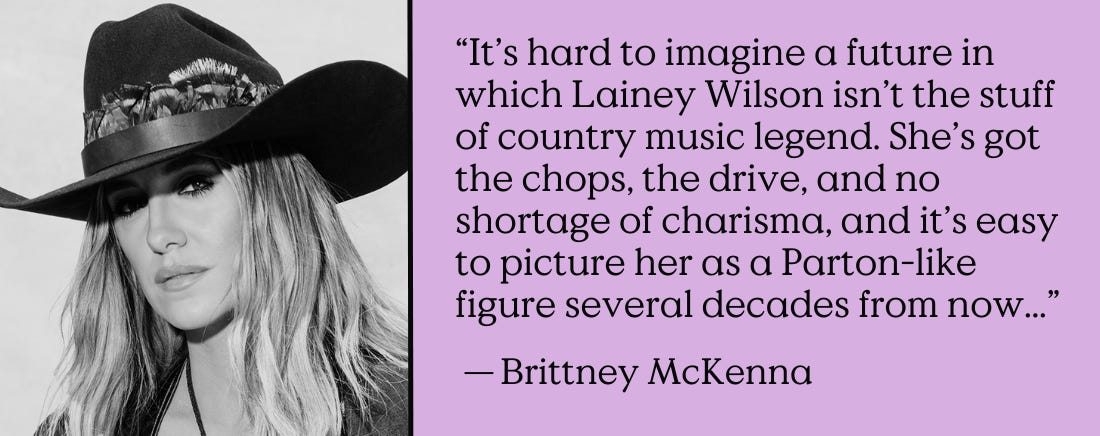
Image: Lainey Wilson. Quote: "It's hard to imagine a future in which Lainey Wilson isn't the stuff of country music legend. She's got the chops, the drive, and no shortage of charisma, and it's easy to picture her as a Parton-like figure several decades from now..." – Brittney McKenna

Wilson would follow Sayin’ What I’m Thinkin’ just a year later, eschewing a more traditional two to three years between records in favor of maintaining her momentum. Bell Bottom Country did just that and then some, catapulting Wilson from up-and-coming country star to household name.

The album, with its retro, Stevie Nicks-coded cover photo, also further developed the Lainey Wilson brand, which is more hippie than hillbilly. (Or rather, it’s both – the second track is called “Hillbilly Hippie,” after all.) Her bell bottoms quickly became part of her iconography, like Dolly Parton’s colorful makeup or Brad Paisley’s traditional cowboy hat. The imagery matches the mood of the music, as even Wilson’s more somber songs still have a sense of looseness, of freedom.

Perhaps a product of her decade-plus in the game, that ease is evident on Bell Bottom Country hit “Watermelon Moonshine,” a spiritual descendent of Deana Carter’s “Strawberry Wine” that is sure to be a country classic. Steeped in nostalgia and illustrated with vivid imagery (“kudzu vines,” “old farm ruts,” “a blanket ‘neath the sunset”), the song is a tender ode to young love, balancing youthful abandon with the melancholy of hindsight. It’s also a showcase for Wilson’s melodies, which are sticky but not cloying, and just poppy enough to catch the ear without distracting from the story.

Bell Bottom Country also birthed “Heart Like a Truck,” a massive hit for Wilson thanks, partially, to its use in a Dodge Ram commercial. The song is, blessedly, proof that a “truck song” can still be creative, as Wilson likens her aching heart to a truck that’s “been drug through the mud.” It’s also one of Wilson’s most powerful vocal performances, letting her play with dynamics before letting go and wailing toward the end of the song.

Wilson uses Bell Bottom Country to show off her broader musical ambitions, too. “Grease” is syncopated and funky, reminiscent of more recent work from The Cadillac Three or Brothers Osborne. “This One’s Gonna Cost Me” flirts with arena rock, made epic with production from Jay Joyce, famous for his work with Eric Church. And Wilson surprises with a vibrant cover of “What’s Up (What’s Going On),” the iconic 4 Non Blondes hit.

Such sonic detours hint at what might come with Whirlwind, whose title no doubt references the wild last few years of Wilson’s life. Lead single “Hang Tight Honey” is tight and catchy but sonically complex, with girl-group vocals and a rockabilly beat accompanying Wilson’s soulful, swaggering delivery. “4x4xU” recalls the mid-tempo drama of the best Lee Ann Womack songs, though with a funkier groove. And on “Country’s Cool Again,” Wilson reminds that her country roots run deep, with a deliciously twangy chorus that more than earns the song’s Garth Brooks and Brooks & Dunn references.

Despite these country bona fides, Wilson has still faced accusations of inauthenticity, particularly around her thick Louisiana accent. In a January interview with Glamour, she says, “I think sometimes, especially when people were first getting introduced to me, they heard my accent and immediately thought, ‘There’s no way this girl could be that country.’ The truth is, you can say anything you want to about me, but when you start talking about my accent, I’m ready to fight somebody because then I start feeling you’re talking about my family.”

Debates about authenticity in country music are a dime a dozen, though they tend to be directed at women artists more often than their male counterparts. You don’t hear skeptics of, say, Morgan Wallen’s accent or Tennessee roots, or of Jelly Roll’s history with incarceration. But a quick search of “Lainey Wilson fake” turns up video after video dissecting her accent, most of which barely – if at all – engage with her actual music.

For her part, Wilson seems largely unfazed by doubters and detractors. In that same Glamour piece, she later shares, “When you grow up somewhere like I did with the kind of people that I did, you can’t help but to be country. You can’t escape it no matter if you move eight hours away like I did. Country music was the soundtrack of our lives. We lived it out.”

While Wilson’s musical talents will always be her biggest draw, her larger-than-life personality is a close second. She’s a famously electric live performer, vamping across the stage and bantering with fans with such ease it seems second nature. That she does this without missing a note is what elevates her artistry – that CMA Award isn’t called “Entertainer” of the Year for no reason.

It’s hard to imagine a future in which Lainey Wilson isn’t the stuff of country music legend. She’s got the chops, the drive, and no shortage of charisma, and it’s easy to picture her as a Parton-like figure several decades from now, ushering in and supporting a new generation of country artists whose reverence for and innovation of the genre will help keep it alive.

Until then, at least country’s cool again.

(Editor’s Note: Don’t forget to sign up to receive Good Country direct to your email inbox.)


Photo Credit: Eric Ryan Anderson

Producer Randall Deaton Makes Impressive Return to Music World

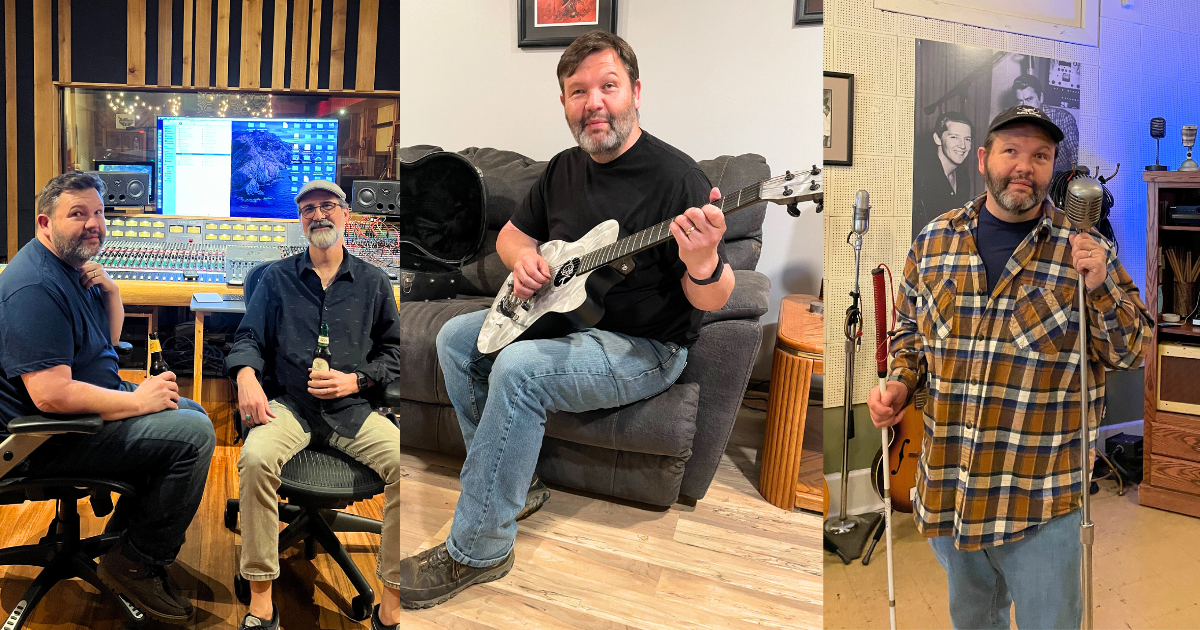
Though Randall Deaton’s excellence as a producer and engineer has been well known for many years in the bluegrass world, he had taken a hiatus from music for nearly nine years before returning in 2024. His latest venture is both a conceptual and musical triumph. The new release, Silver Bullet Bluegrass (Lonesome Day Records), pays tribute to the great rocker Bob Seger with an all-star corps of bluegrass vocalists and instrumentalists performing his tunes reworked, bluegrass style. The lineup of performers includes Gary Nichols, Tim Shelton, Shonna Tucker, Bo Bice, Tim Stafford, Bill Taylor, Larry Cordle, and more.

The project’s origin dates back even further, as Deaton detailed during a recent extensive interview with BGS conducted via email.

“(I got the idea) probably sometime around 2009,” Deaton said. “We released records by the band Blue Moon Rising and Ralph Stanley II in 2008 and each of those records contained songs that were pulled from non-traditional bluegrass sources. Blue Moon Rising did a cover of Bruce Springsteen’s ‘Youngstown’ and Fred Eaglesmith’s ‘Freight Train,’ while Ralph II did Elton John’s ‘Georgia’ and Townes Van Zandt’s ‘Loretta.’ I brought all those songs to the artists and I was really pleased with the way they turned out. They ended up being very legitimate takes on the songs without having any of the ‘pickin’ on’ vibe. I think the first thoughts of a Seger bluegrass record came from the idea of wondering how ‘Hollywood Nights’ would sound in a bluegrass style.”

However, the project took longer to happen than anticipated. “The overall recording process took over 12 years, but that was because I took about an eight year break from music in the middle to pursue other things,” Deaton continued. “The original challenge was to track the songs without the final lead vocalist. Seger is such a great vocalist and can comfortably sing in keys that most other male singers can’t, so I had to consider which keys to track some of the songs in. Some songs I left in the original keys and just knew that those songs needed to stay right there. Other songs we dropped down a step or so in order to have more options when it came to finding the right singer. The actual studio work was pretty easy once we knew who was doing what.”

“A great deal of the tracking band was the same group of musicians that we used on a record by Jeff Parker entitled Go Parker!” Deaton continued. “Mike Bub, Stephen Mougin, Ned Luberecki, and Shawn Brock all had plenty of experience playing and recording traditional bluegrass, but they also had experience outside of that – including Mike playing with Steve Earle on The Mountain record and Stephen touring with Sam Bush. Ned is a very progressive banjo player and Shawn is simply one of the best musicians I know. Other musicians were added based on what I thought the track needed. We used several fiddle players on this record and each of them brought something special and unique.”

When asked about personal favorites from the session Deaton responded: “The first singer to agree to perform on the record was Josh Shilling of the band Mountain Heart. He did “Main Street.” He did such an awesome job on that song that he set a bar for the rest of the record. That song is definitely one of my favorites. I am also partial to that track, because Megan Lynch [Chowning] played my grandfather’s fiddle on that track. It was just an old catalog fiddle from the 1930s, but I was told that he used to sit on the front porch and play it.”

“He passed away before I was born, but somehow I ended up with the fiddle. I think it is really neat that the same fiddle is doing that signature melody on ‘Main Street.’ The last two vocals that we recorded for the record were the Carson Peters and Bill Taylor tracks. Producing those vocals and in Carson’s case the fiddle was the first time I had been in a studio in many years and I wasn’t sure how effective I would be after so much time away. I am very proud of how those tracks turned out because they made me feel like I could do this again in the future if the right situation came up.”

An interesting thing about Deaton is bluegrass wasn’t his initial musical love growing up. “When I was a kid, we listened to country music around the house,” he recalled in his bio. “I knew more about Exile than I did about The Police. I knew a little bit about bluegrass, but I didn’t really get into bluegrass until I started learning how to play guitar. All the people that I could play with around home were mostly playing bluegrass music. That’s how I really got introduced to it.”

From that early start as a guitarist, Deaton converted a church left him by his grandmother in 1999 to a studio and started focusing on engineering. That led to the creation of the Lonesome Day label, which took its name off a Springsteen tune. Their first project was by Eastern Kentucky bluegrass artist Sam Wilson. The label soon became celebrated in bluegrass circles for turning out both hits and classic albums by a host of greats. The list includes Jeff Parker, Lou Reid, Blue Moon Rising, Larry Cordle, Steve Gulley, Ralph Stanley II, Ernie Thacker, Darrell Webb, Richard Bennett, Shotgun Holler, Wildfire, Fred Eaglesmith, and more.

Deaton’s accomplishments aren’t limited solely to the music world. He’s overcome retinitis pigmentosa, a genetic condition that affects nerve cells in the retina that causes functional failure and an inability to transmit information from the eye to the brain. But that hasn’t prevented Deaton from continuing his brilliance in the studio, nor from expanding into other musical areas as a label owner and producer. In 2011, Lonesome Day would release Sweet Nothings by Girls Guns & Glory – now known as Ward Hayden & the Outliers – which was produced by Paul Kolderie and recorded in Boston.

Kolderie would later produce Tim Shelton’s album, Jackson Browne Revisited. In 2014, A second Girls Guns & Glory project titled Good Luck was produced by Eric “Roscoe” Ambel. Prior to taking his break from music, Deaton’s label would also issue three albums by bluegrass guitar master Richard Bennett. But, by 2015, Deaton was both a bit disillusioned by some things happening in the music business and ready to do something else.

“Something else” included converting his music studio into an AirBnb, investing in short-term rentals in Eastern Kentucky, and later buying resorts in two different areas in Michigan, as well as a restaurant. Deaton also did a bit of concert promotion in the meantime. Eventually, he’d return to making music, with the latest result being Silver Bullet Bluegrass.

When asked about his favorite projects over his career, Deaton offers these selections:

“I really like the work I did with the band Blue Moon Rising. Their first record, On The Rise, was very well received and made me feel like I could make records that would find their place in the bluegrass genre. The second record I did with them entitled, One Lonely Shadow, is the record that contained ‘Youngstown’ and to me that is still probably the single best record I have been a part of. The song selection, the performances, and the engineering work of Mike Latterell are all outstanding. I am also very proud of the Ralph Stanley II record entitled, This One Is II. Again, the performances and song selections were outstanding and Mike also tracked and mixed this record.”

“We did both of these records in the same timeframe so they are kind of linked for me,” he continued. “These are consistently the two records that people still bring up to me saying that one of them is their favorite. One of my very first things that I still think guided me was my work on the record entitled Time by Lou Reid & Carolina. This was a band record and most everything on the record was done by Lou’s current band. Lou brought the song ‘Time’ that ended up being the title track to the record and it was clear to me that the song needed more than just what the band could bring.”

“We ended up using some great outside musicians,” he continued, “Such as Ron Stewart, Randy Kohrs, and Harold Nixon to get a track that was more solid. We also ended up getting Vince Gill and Ricky Skaggs to sing on the track. The final track turned out great and it ended up being a #1 song on the Bluegrass Unlimited chart in 2005. The song was also a challenge, because I felt like I was pushing for greatness and the artist was taking into account other things besides the record – such as the feelings of the band (which also included his then wife) and how those considerations would always be there moving forward. I always thought that if you were going to make a record you should do everything that is possible to make it as good as it can be within the means that you have.”

Deaton hesitates to pick personal favorites in terms of artists he’s worked with, but acknowledges a few names. “That is a tough one, because I have worked with so many talented people. Since I am such a proponent for great records, I would have to say that the audio engineers that I have worked with are always very special to me. In the very beginning I worked a lot with a guy named Harold Nixon and Harold introduced me to Ron Stewart.”

“Harold and Ron were very big parts of a lot of the Lonesome Day work from the beginning through when I got out in 2015. I also did a lot of work with Mike Latterell starting in 2005. Mike is one of the best audio engineers that I know and we still keep in touch to this day. I also had the chance to work with Brandon Bell on a couple records. He is also an incredible engineer and just a great guy in the studio. Gary Nichols introduced me to Jimmy Nutt back around 2013 or so, and he has been awesome to work with on this Silver Bullet Bluegrass record. When I got back in the studio in 2023 with Carson Peters, Jimmy made me feel like it was just yesterday that we were in the studio together, not eight years ago. Jimmy and his wife Angie have also become great friends to me and my wife, Shelagh, so if there is music in my future Jimmy will definitely be involved.”

“One musician that I have known for years, but never have worked with is Shawn Camp,” is Deaton’s first response when asked about possible future collaborations. “I think he is so talented and such a nice guy that I would love to work with him sometime in the future. A lot of the singers on Silver Bullet Bluegrass I had worked with in the past. Carson Peters and Bill Taylor were great in the studio and I think they have immense talent and I would like to work with those guys sometime in the future.”

As for possibly adapting other musicians’ tunes to the bluegrass idiom, Deaton immediately cites one name. “I think it would be great to do a Bruce Springsteen record. I am a big Springsteen fan and even named my label after one of his songs. I’ve lost count of the number of [his] concerts I have been to, but it is well over 100 from 1999 to 2024.”

His first response to the final question, regarding what’s next for his label, is “I don’t know.”

“I have been really focused on finally getting Silver Bullet Bluegrass finished and released that I haven’t thought about anything else. The landscape of the music business has changed so much since I started that I am in the middle of a learning curve again. I know that I like making records and I know that I don’t need to make records in order to make money. Whatever I end up doing, if anything, I want it to be fun and I want to at least think that it may matter somehow.”


Photos courtesy of Lonesome Day Records.

Watch Brittney Spencer’s Gorgeous Tiny Desk Concert

Artists from all across the genre spectrum shine in the stripped down and focused setting of NPR’s Tiny Desk Concert series, but roots musicians often stand out from the rest. Even a big-voiced, high concept, maximally-produced country artist like Brittney Spencer is seemingly at her best in this simplified context, where her impeccable, controlled, and artful voice can deliver songs from her 2024 debut release, My Stupid Life, as if they were always intended to be played by only a handful of musicians behind a desk in a corporate headquarters.

Spencer and her ensemble utilize space and restraint to center her acrobatic and athletic vocals, which are tender and powerful, passionate and nuanced. The group kicks off their six-song Tiny Desk set with “Bigger Than The Song,” a track that’s something of a mission statement for Spencer and the new album. The lyrics name check artists who have inspired and blazed a trail for the vocalist and songwriter, from Beyoncé – with whom Spencer collaborated on Cowboy Carter and “Blackbiird” – to Whitney Houston to Maren Morris, an adept and technical singer who’s not only a peer of Spencer, but a community member of hers, as well. The number points out how, even in Music City and on Music Row, the priorities of creators in country and beyond should always be bigger than just a profitable, “hit” song.

The concert continues with an easy, deliberate flow and with Spencer confidently inhabiting a vibe that feels most like a living room guitar pull or a back porch jam session. Her energy may be off the cuff, but this singer is intentional and in the driver’s seat. The group play through a handful more tracks from My Stupid Life, culminating with “I Got Time,” an apropos closer that longs to run away from the noise and the rat race to a kudzu-draped back road. Spencer is more than comfortable playing around in these classic and familiar country idioms and she uses her variable and virtuosic singing to sell each and every archetype and stereotype she references. But it’s remarkable that she does so as often with touches and styles from outside of “traditional country” as from within it. And that might just be the most traditionally country thing about Brittney Spencer.

Read more about Spencer, My Stupid Life, and her unique approach to utilizing her voice as an instrument in our recent Good Country feature, from BGS and GC contributor Jewly Hight. You can find that story here.


Ed’s Picks: All Kinds of Country

Editor’s note: Each issue, our co-founder Ed Helms will share a handful of good country artists, albums, and songs direct from his own earphones in Ed’s Picks.

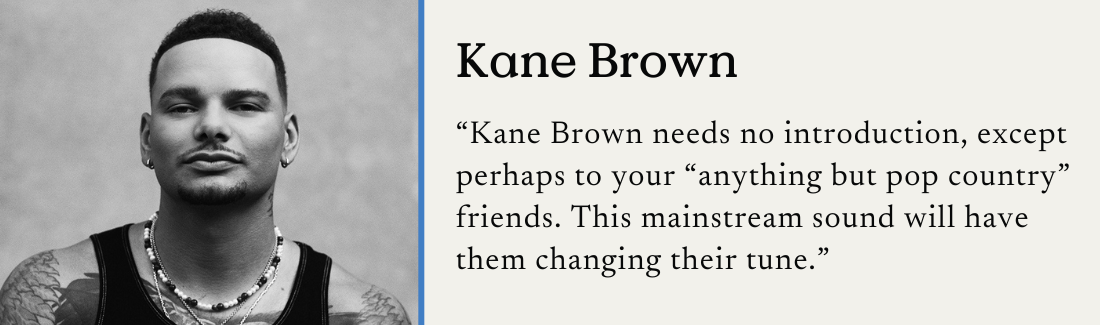
Kane Brown. "Kane Brown needs no introduction, except perhaps to your 'anything but pop country' friends. This mainstream sound will have them changing their tune."


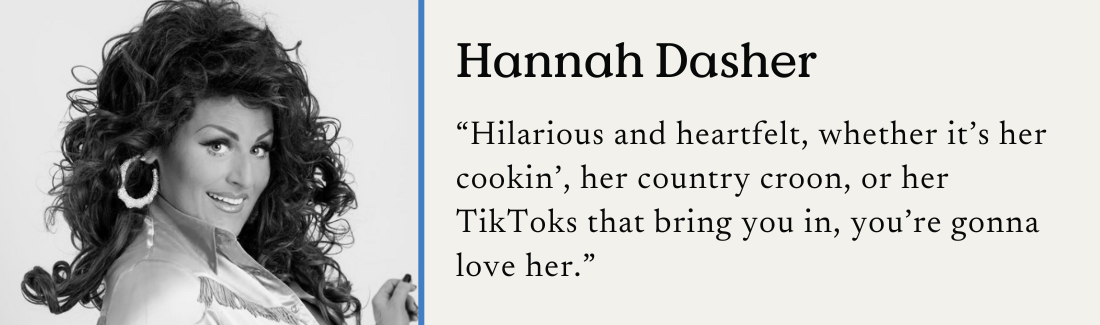
Hannah Dasher. "Hilarious and heartfelt, whether it's her cookin', her country croon, or her TikToks that bring you in, you're gonna love her."


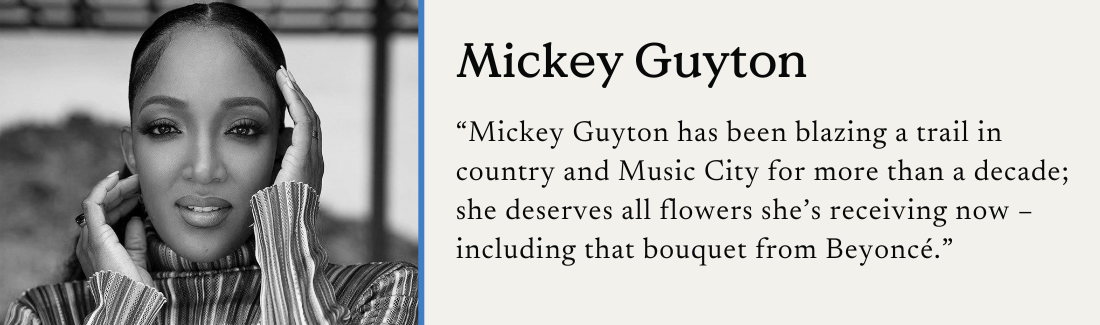
Mickey Guyton. "Mickey Guyton has been blazing a trail in country and Music City for more than a decade; she deserves all the flowers she's receiving now – including that bouquet from Beyoncé."


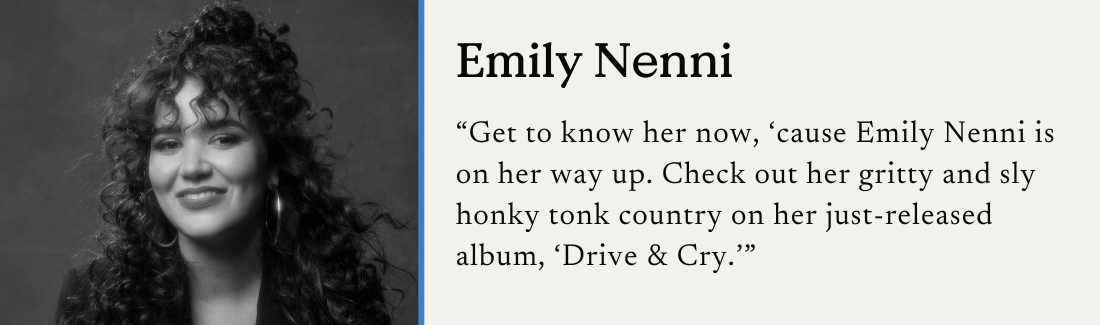
Emily Nenni. "Get to know her now, 'cause Emily Nenni is on her way up. Check out her gritty and sly honky-tonk country on her just-released album, 'Drive & Cry.'"


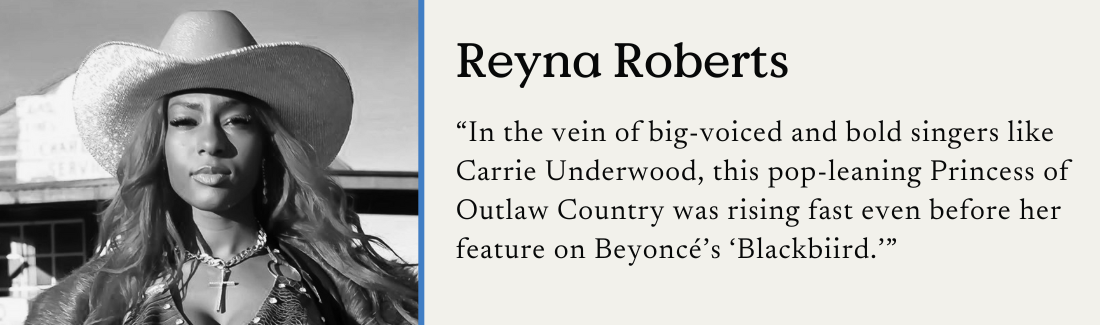
Reyna Roberts. "In the vein of big-voiced and bold singers like Carrie Underwood, this pop-leaning Princess of Outlaw Country was rising fast even before her feature on Beyoncé's 'Blackbiird.'"


Photos: Kane Brown by Diwang Valdez; Hannah Dasher, courtesy of the artist; Mickey Guyton by Bonnie Nichols; Emily Nenni by Alysse Gafkjen; Reyna Roberts, courtesy of the artist.

Black Writers Shine on Music Row

In 1993, Alice Randall became the first Black female songwriter to pen a #1 country hit (“XXX’s and OOO’s” recorded by Trisha Yearwood). 

Even today, over thirty years later, the representation of Black writers on Music Row is seriously lacking. But that doesn’t diminish the immense talents that have found success in Nashville, both writing for themselves and others. From Shy Carter to Brittney Spencer, here are eight Black songwriters changing the country music scene one song at a time

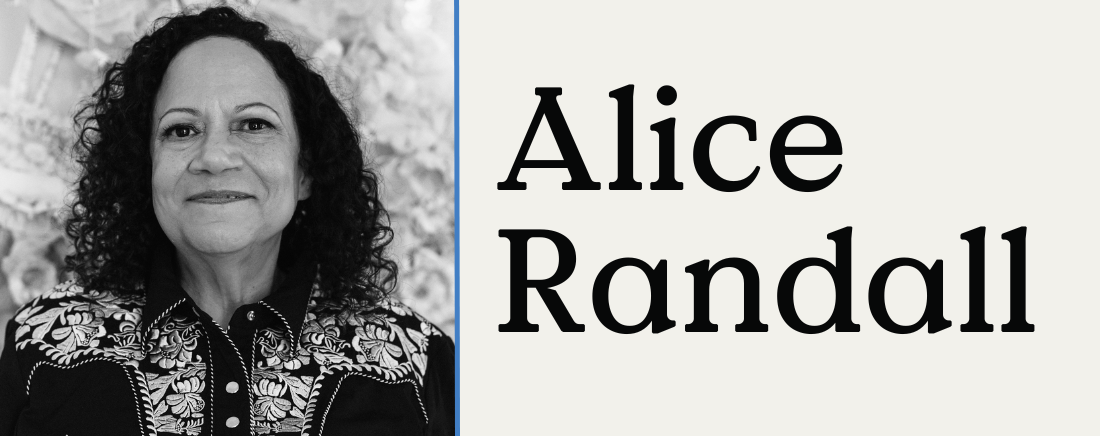
Alice Randall

Hometown: Detroit, MI

Songwriter, author, and educator Alice Randall is a Harvard grad, a New York Times best-selling novelist, a professor of African American and Diaspora Studies at Vanderbilt University, and was the first Black woman to co-write a number-one country song with Trisha Yearwood’s “XXX’s and OOO’s.” Her songs have been cut by artists like Glen Campbell, Mark O’Connor, Radney Foster, Holly Dunn, and many others.

Alice is a preeminent historian telling the story of the immense and foundational influence of Black people on country music, a narrative largely eclipsed by Nashville’s retelling of the origins of the genre. She recently released a new book called My Black Country, alongside an Oh Boy Records album release of Randall’s songs performed by prominent Black women artists.


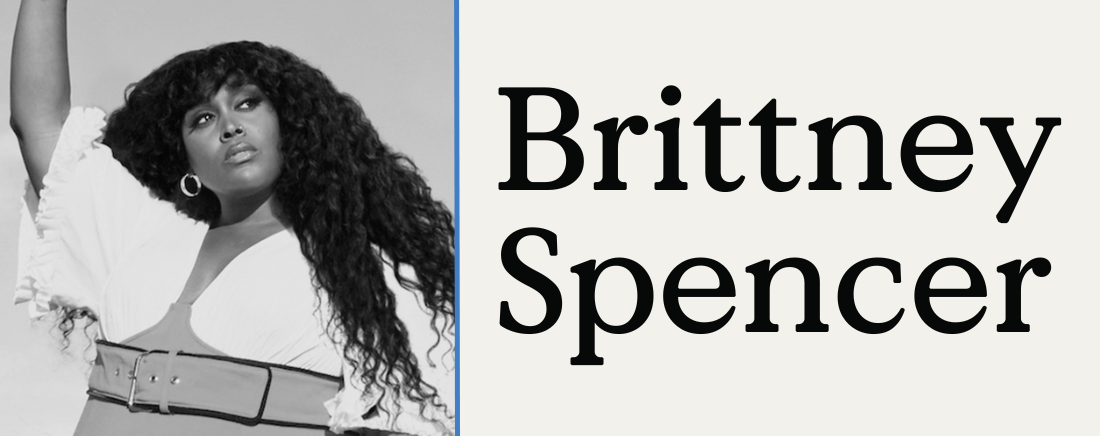
Brittney Spencer

Hometown: Baltimore, MD

A fateful viral tweet in 2020 may have brought powerhouse performer and songwriter Brittney Spencer to the spotlight but her phenomenal songwriting and performing talents have positioned her as a key voice in the zeitgeist. Raised in a musical family, she began singing at an early age at her church in Baltimore. She honed her musical abilities on the piano and guitar before moving to Nashville in 2013 to attend MTSU and pursue a career in country music.

Her candid truth-telling pushes boundaries and opens doors that were previously hard to open. She told CBS News, “I don’t know, I’m a plus-size Black girl from Baltimore City, in Nashville doing country music. On paper that sounds weird as hell!”

Her meteoric rise has placed her on stages with some of the all-time greats like Willie Nelson, The Chicks, Reba, and Maren Morris, and appearing on shows like The Today Show, The Late Show, the CMAs, and ACMS.

In January 2024, Spencer released her first full-length album, My Stupid Life, to much critical acclaim. She recently appeared as a guest artist on Beyoncé’s Cowboy Carter album rendition of The Beatles’ “Blackbiird.”


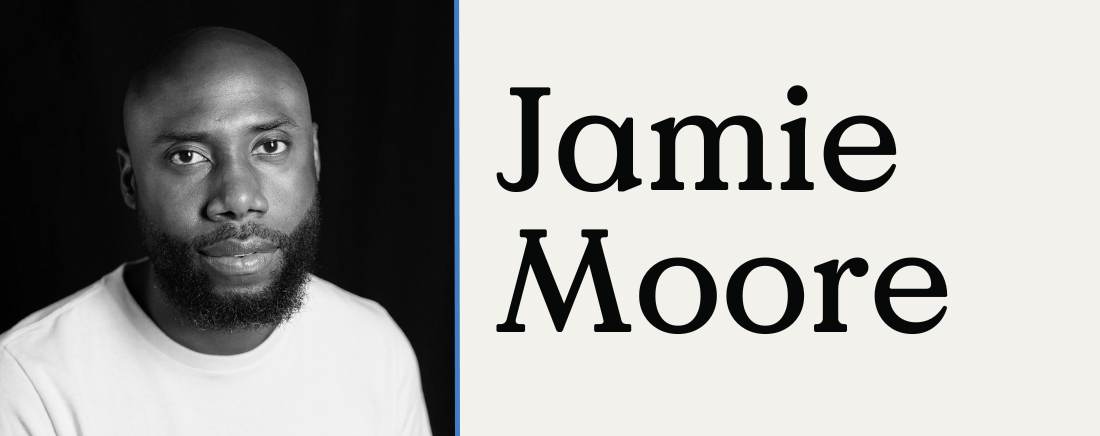
Jamie Moore

Hometown: Muscle Shoals, AL

Three-time Grammy nominee Jamie Moore is a multi-hyphenate embodied. As a producer, songwriter, and multi-instrumentalist, Moore’s rise began soon after arriving in Nashville. As a songwriter, he’s received cuts from artists across many genres like Meghan Trainor, Idina Menzel, Carrie Underwood, TobyMac, Chris Lane, Bren Joy, Blake Shelton, Florida Georgia Line, Tim McGraw, Carly Pearce, and Andy Grammer. He had 2020’s fourth most streamed song of the year with Morgan Wallen’s double platinum number-one, “Chasin’ You.” In 2016, Moore found his song “May We All” at the top of the charts with Florida Georgia Line.

Moore recently testified in front of the Tennessee House Banking and Consumer Affairs Subcommittee on behalf of the Human Artistry Campaign on the importance of protecting human creation in the face of AI developments, which led to the passage of the historic ELVIS Act.


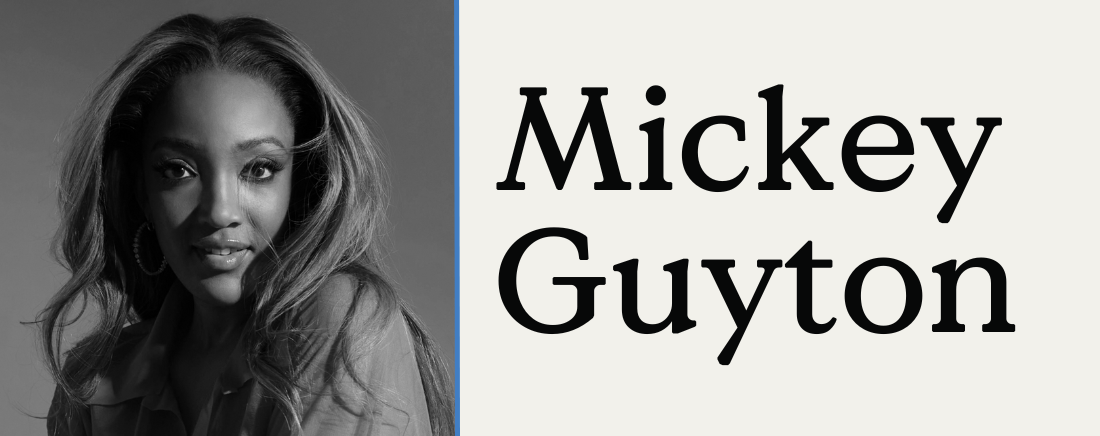
Mickey Guyton

Hometown: Arlington, TX

Raised in Texas, Mickey Guyton began singing and performing at an early age, inspired by a LeAnn Rimes’ performance of “The Star-Spangled Banner.” Her resilient career has been bolstered by her commitment and passion for addressing societal issues and her own, sometimes bumpy, journey to the forefront of country music.

Leaving Texas for California, Guyton spent the early years of her career in Los Angeles before arriving in Nashville in 2011. She signed to Capitol Records and released Unbreakable, her first EP, in 2015 and hit the charts topping out at #34 with her single “Better Than You Left Me.”

Out of the events of the momentous summer of 2020, in the wake of the George Floyd protests and the Black Lives Matter movement, Guyton released “Black Like Me” to much critical acclaim and her first GRAMMY nomination. With a shift to an open and passionate reflection on her experiences with racism and sexism in the country music world, her songwriting and performances launched her to international stardom. She was the first Black woman to host the Academy of Country Music Awards in 2021. In a full circle moment for the performer, Guyton performed “The Star-Spangled Banner” at the 2024 Super Bowl.


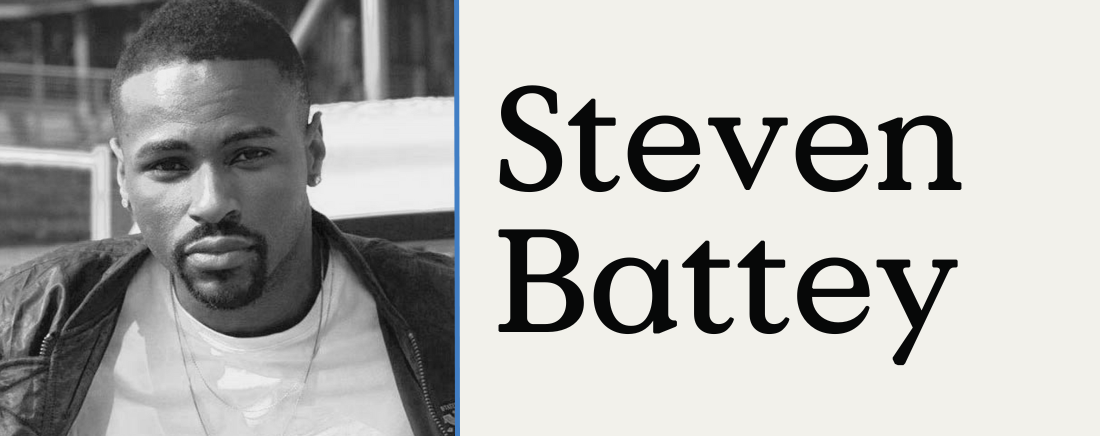
Steven Battey

Hometown: Savannah, GA

Along with his brother Carlos, as songwriting duo Jackie Boyz, the Batteys have written and produced songs for artists like Madonna, Justin Bieber, and David Guetta. Raised in Georgia and named after their mother Jackie, the two moved to Los Angeles and together received a GRAMMY Award for 2011’s David Guetta-led remix of Madonna’s “Revolver” and went on to receive many more nominations.

Steven relocated from LA to Nashville in 2014 to pursue a shift to country music, and quickly fell in with country darling Luke Combs. Together, they penned “One Number Away,” which reached Billboard Country Airplay’s number-one spot in 2018 and won Battey ASCAP’s Song of the Year award in 2019.


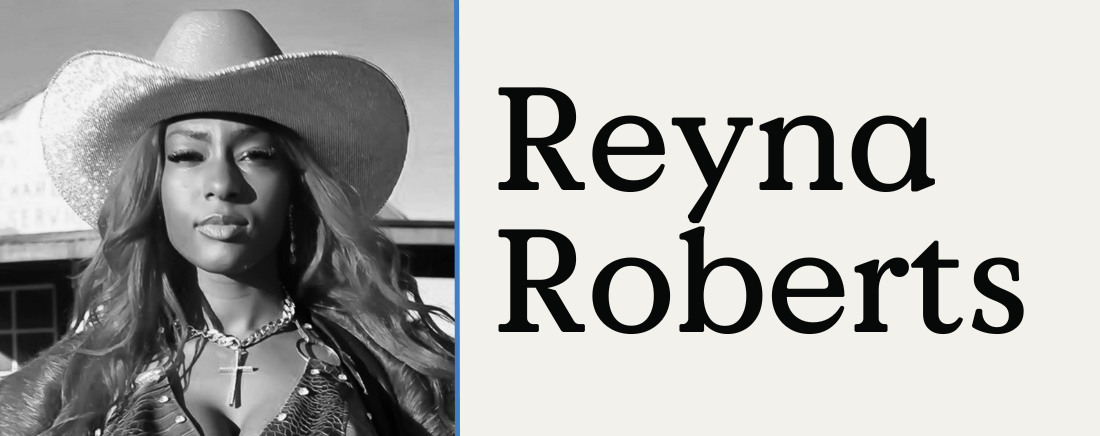
Reyna Roberts

Hometown: Anchorage, AK

Though born in Alaska, Reyna Roberts’ journey to country music brought her to the American south due to her parents’ military careers. Her childhood passion for performing took the family to California so that Roberts’ could pursue a career in music. She bounced between Nashville and Los Angeles for years, honing her songwriting and performing craft before permanently relocating to Nashville in 2020. It was in Nashville that Roberts quickly became a key figure in the country music scene and a leader in the new generation of Black country artists.

Pianist, songwriter and performer Roberts released her 2020 debut single, “Stompin’ Grounds,” followed by multiple appearances on Monday Night Football. In 2021, Roberts opened for country superstar Jamey Johnson on his 2021 summer tour and shortly thereafter signed a publishing deal with Nashville-based Eclipse Music Group.

In the fall of 2023, Roberts released her debut album Bad Girl Bible, Vol. 1. Alongside Brittney Spencer, Roberts was featured on Beyoncé’s version of The Beatles’ “Blackbiird” on 2024’s Cowboy Carter.


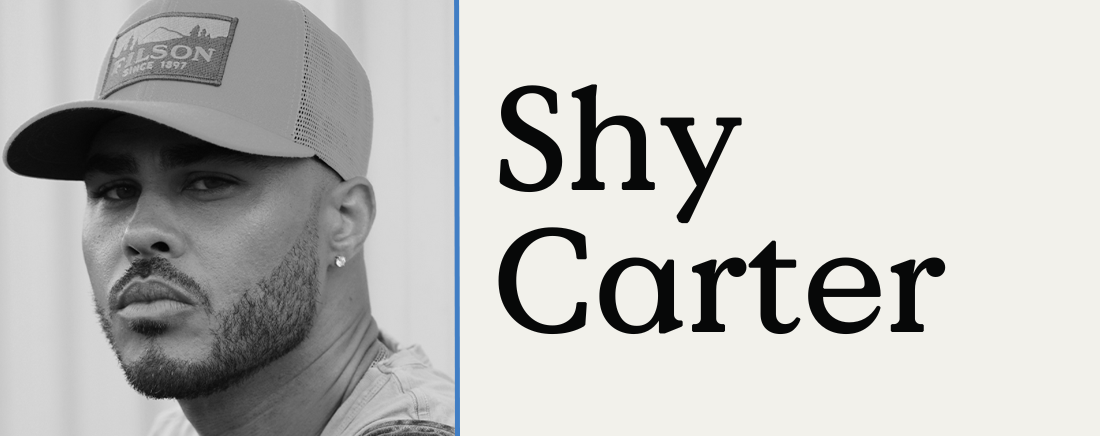
Shy Carter

Hometown: Memphis, TN

Genre defying songwriter, artist and producer Shy Carter was raised between the suburbs of Atlanta and Memphis. Steeped in the music of church and Beale Street and playing saxophone from an early age, Carter was discovered by a talent scout in 2007.

He had his first hit as a songwriter with Rob Thomas’ “Someday” in 2009. He secured his name in the Nashville songwriting lexicon when he penned Sugarland’s infectious bop “Stuck Like Glue” in 2010.

With production, featured artist, and songwriting credits a mile long, including Charlie Puth, Billy Currington, Tim McGraw and Faith Hill, Kane Brown, TobyMac, Jamie Foxx, Keith Urban, and Meghan Trainor, Shy Carter is solidified as a go-to creator in the Nashville country music scene.


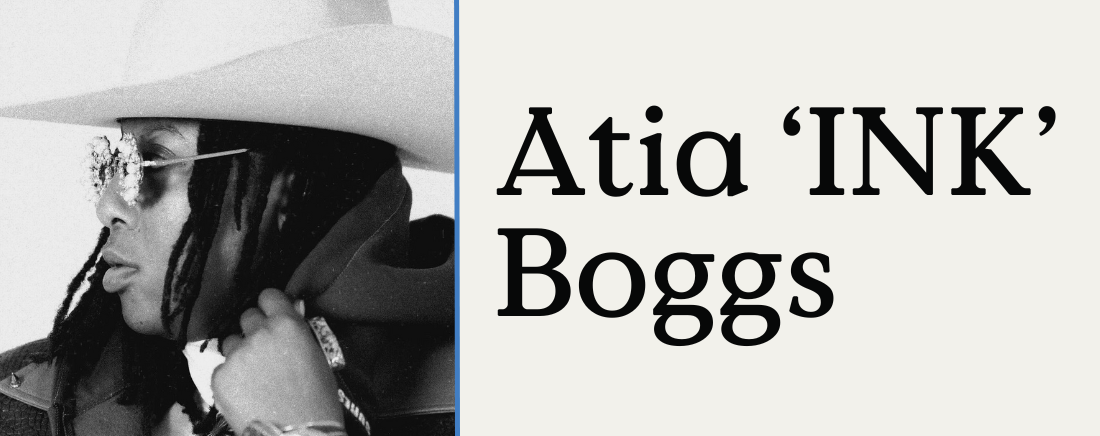
Atia 'INK' Boggs

Hometown: Columbus, GA

Grammy-nominated, multi-genre, and multi-hyphenate INK has been on the songwriting scene since 2015. She has collaborated with artists like Tamar Braxton, Monica, Rick Ross, Chris Brown, and Leon Bridges. In 2022, she penned three songs on Beyoncé’s powerhouse album Renaissance, including “Alien Superstar.”

Always rooted in her southern upbringing, INK was a natural call for Beyoncé to collaborate with on Cowboy Carter (which INK revealed was actually completed prior to the release of Renaissance). INK wrote and produced the wildly successful single “16 Carriages.” She also recently penned songs for artists Joy Oladukon and Jennifer Lopez.


Lead Photo: Brittney Spencer by Jimmy Fontaine.

Boot Scootin’ Country Soul

(Editor’s Note: Sign up here to receive Good Country issues when they launch, direct to your email inbox via Substack.)

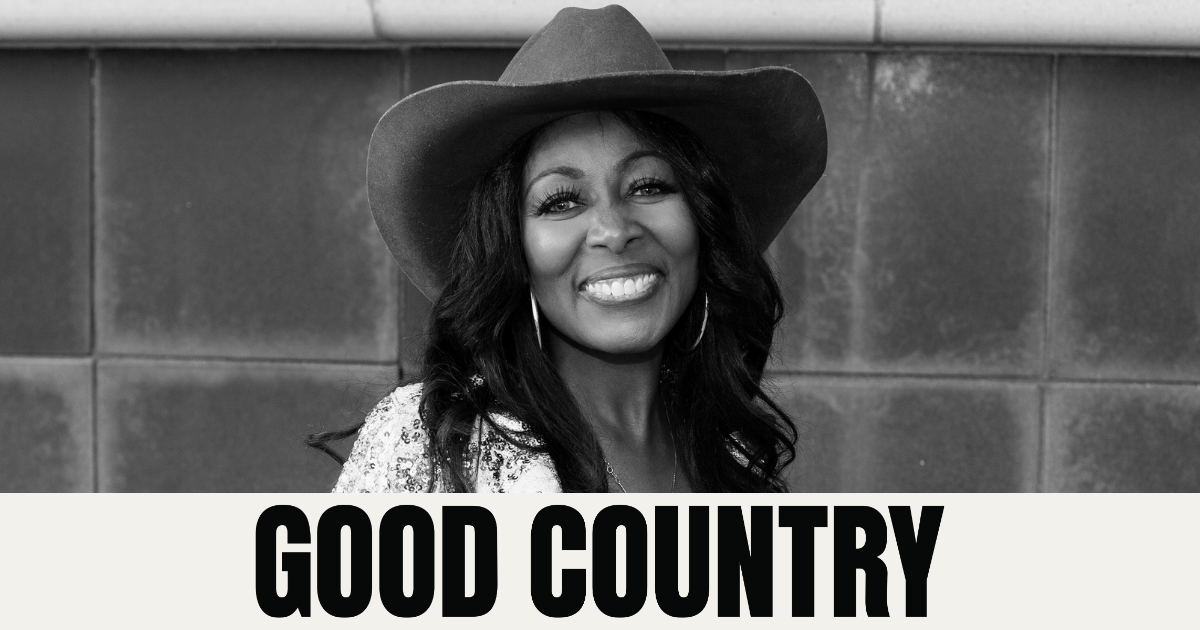
Recording artist Brei Carter is currently enjoying the best of both worlds for any performer. She’s found her niche artistically and is thriving in it, excelling in a hybrid sound she calls “country soul,” one that nicely blends each genre’s special characteristics: soul’s emotional fury and country’s narrative focus. Louisiana born, she relocated to Nashville in 2019 is now working on an upcoming LP that she promises will really show listeners how much these two genres can be combined into her own distinctive style.

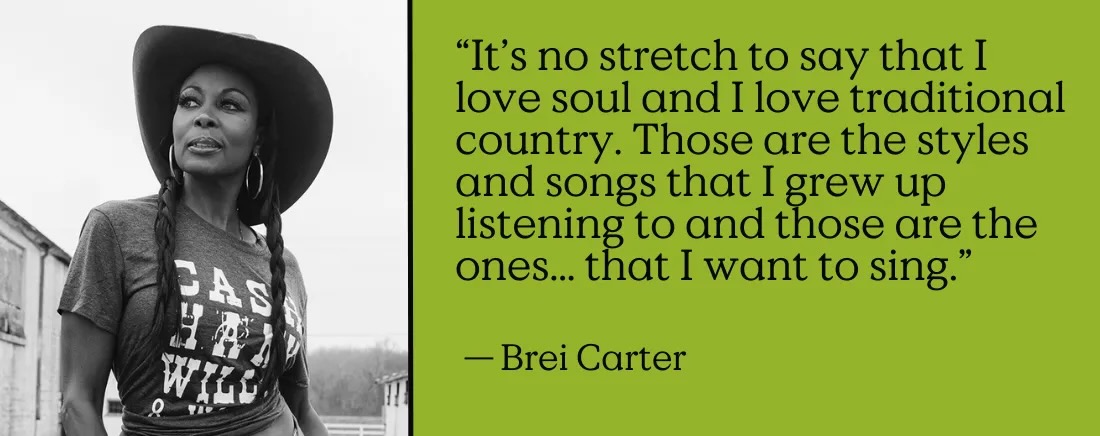
“I’ve always kind of gravitated towards all kinds of music, but vocally I’ve found that soul and country are the styles that work best,” Carter said during a recent interview. “For me, it’s no stretch to say that I love soul and I love traditional country. Those are the styles and songs that I grew up listening to and those are the ones that really are suited for the types of things that I want to sing.”

Considering the long history of performers who’ve taken soul tunes and made them into country hits or vice versa, Carter’s certainly in good company.

But, she’s also enjoying commercial success in a different vein. Her single, “Boots Get To Talking,” has quickly become a line dance staple. An energetic, engaging number that’s also a collaboration with the person she calls “my mentor and inspiration,” Elektrohorse, the song has generated its own line dance, something that Carter immediately credits Elektrohorse with enhancing and developing.

“When I first played him the song and told him what I wanted to do, I had my own ideas for how it would work as a line dance,” Carter continued. “He told me, ‘Brei, I’ve got some ideas, too. I think we can really do something with this.’ He took it and did some things with it that I never would have considered and he made it into something huge.”

“Boots Get To Talking” is one of those songs that really has something for every taste. It certainly has a catchy backbeat, equal parts honky-tonk and hip-hop. There’s some underlying blues feel to it as well, but when utilized in the line-dance environment the tune has an added energy and fury. “It’s my new anthem,” Carter adds, “And I’m so happy that it’s getting such a great reaction and response everywhere. It’s also a signal that people will always respond to good music and songs that make them happy and make them feel good.”

That desire, to reach across boundaries and unite people through music, has always been a big part of Carter’s performing mission. Her musical background growing up in Monroe, Louisiana included equal parts Loretta Lynn, Aretha Franklin, Charley Pride, and gospel music: “Plus a healthy dose of Cajun and Zydeco,” Carter adds. “That’s where my love of dance was developed. In those dance halls, no one ever sits down.”

Carter’s earned impressive academic credentials: a Bachelors in Business from University of Louisiana in Monroe, a Masters in International Relations from Webster University, and a Doctorate in Theology from New Foundation Theological Seminary. She’s also a proud U.S. Army veteran, having served as an enlisted soldier and as an officer.

After deciding that music would be her career path, Carter’s been carefully crafting her style. Her first single, “Gave Him A Girl,” got enough positive attention to lead to appearances on RFD-TV, WSMV-TV, WoodSongs’ Old-Time Radio Hour, among others. She made her CMA Fest debut in 2022, and released her debut album, Brand New Country, which featured a fine cover of Charley Pride’s “Kiss an Angel Good Morning,” and the powerful biographical piece, “Stronger Than That.” Carter released her most recent single last year, “Straight Up Country Crazy,” as well as her first Holiday EP, the critically acclaimed Twinkling Tales of Christmas.

Still, she acknowledges it took a while before she really understood exactly what she wanted to do from a technical perspective. “I realize now that my voice really does fall right in that middle area between country and soul,” Carter continued. “That’s a territory where I’m comfortable, and that’s really the area that I want to emphasize now.” With an upcoming series of concert dates set to begin this month, plus her new LP that will be coming later this year, Brei Carter feels really confident about the future.

“I’m really happy about where things are going for me musically, and what the future holds,” Carter concludes. “I’ve found the right mix musically, and the line-dance hit has really been a blessing, as has working with Elektrohorse. I’m very much ready to see what’s coming next.”

Sign up here to receive Good Country issues when they launch, direct to your email inbox via Substack.


Lead Image: Brei Carter by Heather Carpenter.
Inlay Image: Brei Carter by Berlin M.

This Nashville Museum Shows the Vital Role of Black Music in American History

Nashville’s “Music City” nickname has always been broader and more inclusive than the national impression, which largely has been built on two things: the city’s impressive country music legacy and its equal importance as a hub for the general music business, with major emphasis on recording and publishing. But what hasn’t been as well recognized and celebrated, at least by those outside particular communities in Nashville, is its contribution to numerous other idioms and its role in their evolution and development.

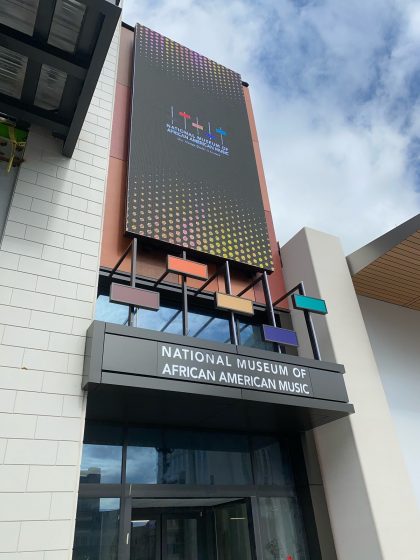
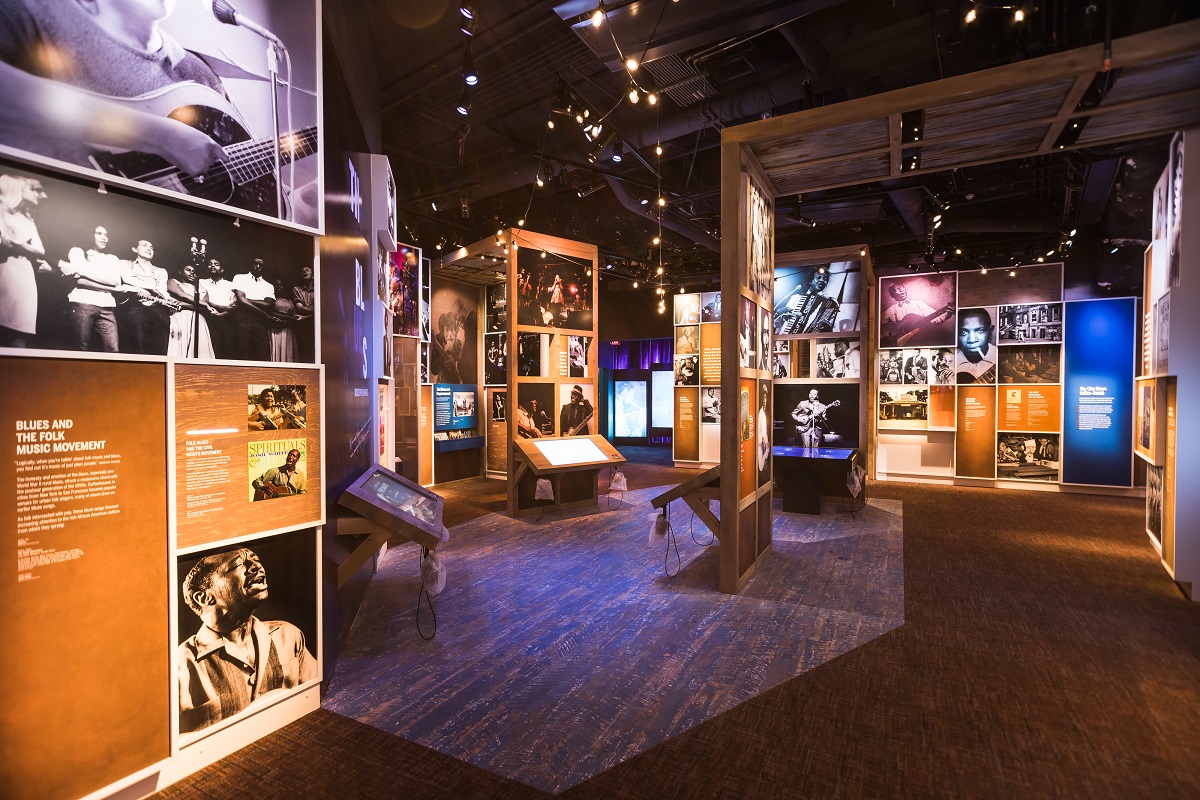
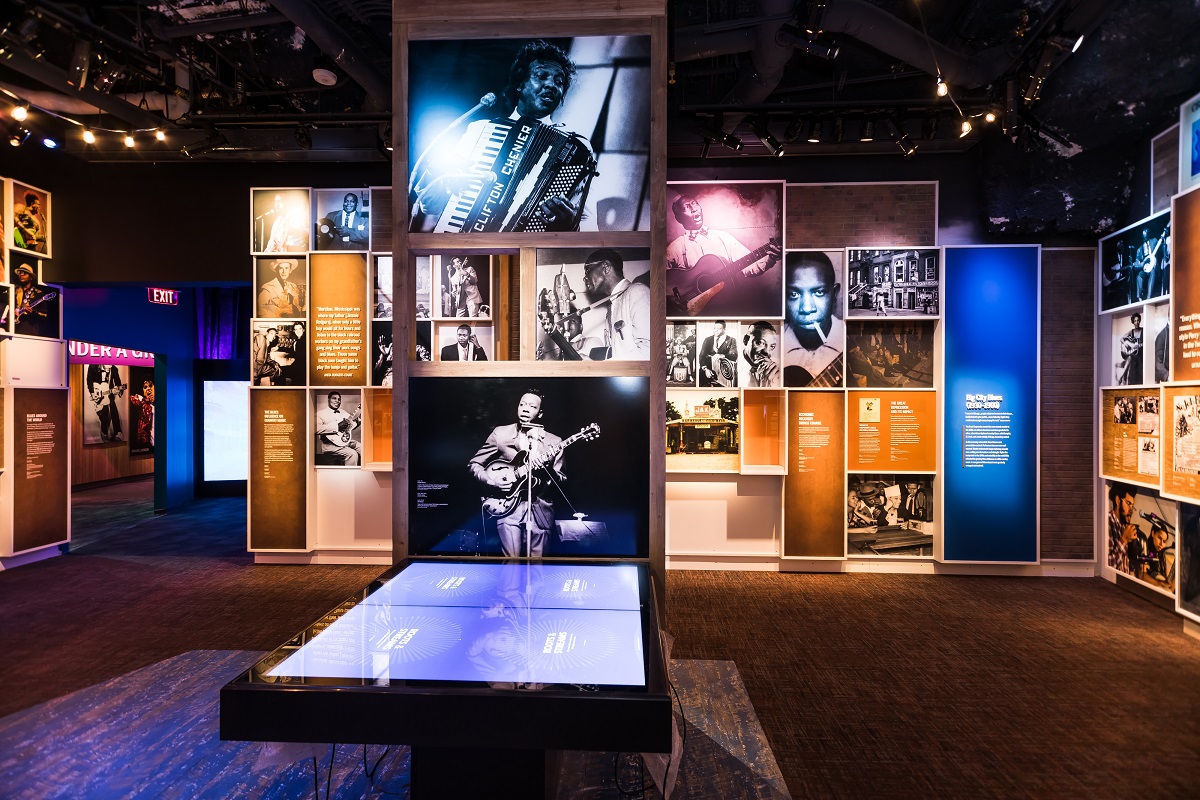
Hopefully that’s going to change with the new National Museum of African American Music (NMAAM), now open across the street from the historic Ryman Auditorium in downtown Nashville. The Fifth and Broadway entrance to NMAAM and its proximity to one of the nation’s music shrines couldn’t be more appropriate, and it is notable that the museum isn’t located in one of the sites better known as a Black music hotbed such as Detroit, New York, Los Angeles or even Memphis. Nashville has always been a major player in the African American music world, from the days of the Fisk Jubilee Singers to radio station WLAC breaking R&B, soul and blues hits, and the Jefferson Street nightclub scene providing both valuable training for emerging artists and a vital showcase for established ones.

However, the museum isn’t focused mainly or wholly on Nashville, nor any single city or musical style. The 56,000-square-foot entity aims to spotlight the entirety of the music made in this nation by Blacks, to demonstrate its impact on the totality of American sounds, and to celebrate its history and multiple influences. As CEO/president Henry Hicks repeatedly told media members who attended tours in January, “We’re showing how music through the prism of the Black experience has played a vital role in the growth of this country and how it’s affected every fabric of the culture.”

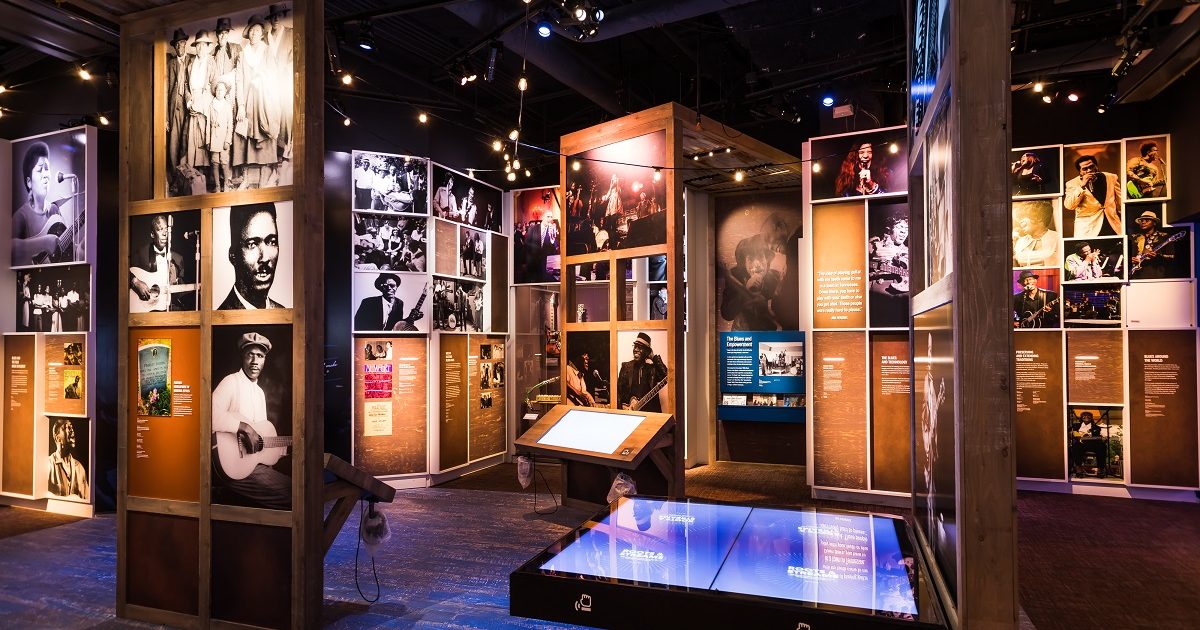
The sleek, architecturally striking building has the same visual splendor and attractiveness as the National Museum of African American History and Culture in Washington D.C. Upon entrance, visitors to NMAAM will be immediately drawn to the central corridor that’s billed as the Rivers of Rhythm. It features touch panel interactive exhibits, something that’s a recurring sight throughout the halls housing exhibits and other items designed to showcase 50 genres and sub-genres of Black music.

The corridor leads into The Roots Theater, which is actually where the museum tour formally begins. There’s an introductory film presentation that provides the African background and heritage of the various exhibits. It also offers a cinematic shorthand of what visitors later see presented in more exacting, visually striking manner: the multiple sounds and styles of notable Black music creators and performers. The theater seats approximately 190, and in later weeks and months will serve as the location for various screenings, lectures, music performances, and concerts.

The different genre exhibitions feature everything from more interactive exhibits with timelines to cases containing such items as one of Louis Armstrong’s trumpets, one of B.B. King’s “Lucille” guitars, or costumes worn on key nights by performers like Billie Holiday, Nat “King” Cole, Ella Fitzgerald, Ray Charles, or Aretha Franklin. The museum doesn’t neglect any area of Black music, going from the earliest spirituals to pre-jazz, traditional and modern jazz, blues, R&B/soul, funk, disco, and into contemporary hip-hop and EDM. There’s also a detailed storyboard for every idiom.

The greatest examples of Black music influencing other idioms that are sometimes mistakenly assumed not to have any links with African Americans can be seen in the Crossroads section. It includes an essay that traces how country founding fathers like Jimmie Rodgers and Hank Williams were influenced by the blues, and how the acoustic guitar playing of people like Sister Rosetta Tharpe and the gospel-tinged shouting of Odetta in turn influenced white folkies like Joan Baez and Bob Dylan.

One of Chuck Berry’s biggest hits, “Maybellene,” was a reworked version of Bob Wills’ “Ida Red” with new lyrics, while certainly Elvis Presley, Carl Perkins, Jerry Lee Lewis and other white rock ‘n’ roll and rockabilly types were performing a hybrid of country, blues, and R&B. In both cases, as well as early string band music played by white and Black performers, these artists were hearing and creating a fresh sound based on their love of multiple genres, which the Crossroads section reflects in text and exhibits.

Along the way, depending on your musical preferences, you’re able to become an active part of the experience. There’s a disco dance room that inserts a neon silhouette onto the wall. You can construct your own blues song, improvise within a personal jazz composition, become part of a gospel choir, or craft your own freestyle raps. Any or all of this activity is recorded on a personal RFID wristband and automatically uploaded so that it can be shared online with friends, assuming you really want those efforts heard by others.

But most importantly, the mission, one frequently cited by tour guides and reinforced through the various exhibits, displays, and films, is Black music’s cross-generational links and the way it’s been both a voice of protest and a force for unity across diverse backgrounds. The role music played both in rallying Blacks into the World War II effort and helping inspire and fortify the Civil Rights Movement are just two parts of that underlying joint theme.

Whether it’s “One Nation Under a Groove” or “A Love Supreme,” regardless of spiritual or secular content, Black music has been at the core and forefront of American culture. No single building better exemplifies and reveals that than the National Museum of African American Music. No matter what kind of music you love, or even if you’re tone deaf, this museum will have something of value for you to see, hear and enjoy, as well as valuable lessons to learn and history to remember.


Photo Credit: NMAAM/353 Media Group